Month: June 2025

  • Wilson’s Disease Drugs Industry Insights 2025 – Market Forecast for Executives and Planners

    Wilson’s Disease Drugs Industry Insights 2025 – Market Forecast for Executives and Planners

    Claim your 30% discount on Global Market Reports with code ONLINE30. Limited time only.

    How Has the Wilson’s Disease Drugs Market Size Changed, over the years?

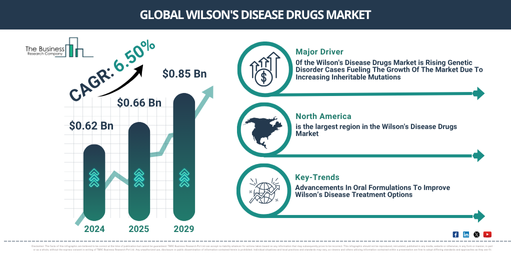
    In recent times, the market size for Wilson’s disease drugs has shown robust growth. The market is projected to expand from $0.62 billion in 2024 to $0.66 billion in 2025, with a compound annual growth rate (CAGR) of 6.8%. Factors contributing to the historical period’s growth rate include enhanced understanding of Wilson’s disease along with its signs, an upswing in clinical research activities, more availability of standard treatments, improved healthcare infrastructure, and an increasing number of diagnosed cases.

    How Much Will the Wilson’s Disease Drugs Market Be Worth in 2029?

    Expectations are high for robust expansion in the Wilson’s disease drugs market in the coming years, with projections indicating a surge to $0.85 billion by 2029, exhibiting a compound annual growth rate (CAGR) of 6.5%. This anticipated growth over the forecast period can be linked to accelerated investments in pioneering drug development and gene therapy, the rising trend of personalized medicine, an increase in patient awareness programs, expanded healthcare funding, and a surge in regulatory approvals. Key trends over the forecast period comprise the evolution of gene therapy approaches, amplified use of biomarkers in tracking disease progression, the incorporation of digital health tools, the growth in orphan drug designations, favorable investments, and a wider range of treatment options via combination therapies.

    Download The Free Sample Report Here:

    https://www.thebusinessresearchcompany.com/sample.aspx?id=24748&type=smp

    Which is the Largest Company in the Wilson’s Disease Drugs Market?

    Major companies operating in the wilson’s disease drugs market are Pfizer Inc., Merck & Co. Inc., Sanofi S.A., AstraZeneca plc, Teva Pharmaceutical Industries Ltd., Bausch Health Companies Inc., Intas Pharmaceuticals Ltd., Sun Pharmaceutical Industries Ltd., Dr. Reddy’s Laboratories, Lupin Pharmaceuticals, Ultragenyx Pharmaceutical Inc., Taj Pharmaceutical Limited, Biophore Pharma Inc., Orphalan SA, Nobelpharma Co. Ltd, Eton Pharmaceuticals, LogicBio Therapeutics, DepYmed, Vivet Therapeutics, Telomir Pharmaceuticals Inc., Innorna.

    What Are the Main Market Drivers in the Wilson’s Disease Drugs Industry?

    The escalation in the occurrence of genetic diseases is anticipated to push the progression of the Wilson’s disease drugs market further. Genetic diseases are conditions that arise due to anomalies in a person’s DNA, which could be a result of mutations, deletions or changes in chromosomes. Higher parental age, leading to an increased likelihood of inheritable mutations being passed onto future generations, is primarily responsible for the rise in genetic disorders. Drugs for Wilson’s disease mitigate this genetic condition by reducing the harmful copper levels that result from ATP7B gene mutations. This is achieved by increasing copper excretion or preventing its absorption, in turn, protecting key organs like the liver and brain. For instance, data from Cystic Fibrosis Trust, a UK-based national charity, in September 2023 showed a notable rise in the number of cystic fibrosis patients, with 11,148 registrations in 2022 compared to 10,908 in 2021. As such, the escalating occurrence of genetic conditions is fuelling the growth of the market for Wilson’s disease drugs.

    Request For A Customized Report:

    https://www.thebusinessresearchcompany.com/customise?id=24748&type=smp

    How Is the Wilson’s Disease Drugs Market Segments Structured?

    The wilson’s disease drugs market covered in this report is segmented –

    1) By Type: Chelating Agents, Zinc Therapy, Liver Transplant, Symptomatic Treatments

    2) By Route Of Administration: Oral, Intravenous, Subcutaneous

    3) By Distribution Channel: Hospital Pharmacy, Retail Pharmacy, Online Pharmacies, Other Distribution Channels

    4) By End-Users: Hospitals, Homecare, Specialty Clinics, Other End-Users

    Subsegments:

    1) By Chelating Agents: Penicillamine, Trientine, Tetrathiomolybdate, Experimental Chelators

    2) By Zinc Therapy: Zinc Acetate, Zinc Gluconate, Zinc Sulfate

    3) By Liver Transplant: Orthotopic Liver Transplantation, Living Donor Liver Transplantation, Deceased Donor Liver Transplantation

    4) By Symptomatic Treatments: Antipsychotic Medications, Antiepileptic Drugs, Antidepressants, Muscle Relaxants, Anticholinergics

    What Strategic Trends Are Transforming the Wilson’s Disease Drugs Market?

    Leading firms in the Wilson’s disease drug market have shifted their focus on the innovation of advanced drugs, such as formulations based on trientine tetrahydrochloride (TETA-4HCl), with the aim of improving treatment results and making it easier for patients to manage rare diseases. A TETA-4HCl-based formulation can be described as a superior oral copper-chelating therapeutic strategy specifically engineered to sustain the copper equilibrium in mature patients with stable Wilson disease. As an example, in April 2023, Orphalan SA, a company in France known for orphan drug development and commercialization, introduced Cuvrior. The drug received approval and Orphan Drug Exclusivity from the Food Drug Administration (FDA). This novel TETA-4HCl drug is designed for adult patients with stable Wilson’s disease who have already been decoppered and are tolerant to penicillamine. It offers an oral therapy that is stable at room temperature, providing more flexibility and convenience in dosing as compared to prior treatments.

    Access The Full Report Here:

    https://www.thebusinessresearchcompany.com/report/wilsons-disease-drugs-global-market-report

    Which Global Regions Offer the Highest Growth in the Wilson’s Disease Drugs Market?

    North America was the largest region in the wilson’s disease drugs market in 2024. The regions covered in the wilson’s disease drugs market report are Asia-Pacific, Western Europe, Eastern Europe, North America, South America, Middle East, Africa.

    Purchase The Full Report Today:

    https://www.thebusinessresearchcompany.com/purchaseoptions.aspx?id=24748

    This Report Delivers Insight On:

    1. How big is the wilson’s disease drugs market, and how is it changing globally?

    2. Who are the major companies in the wilson’s disease drugs market, and how are they performing?

    3. What are the key opportunities and risks in the wilson’s disease drugs market right now?

    4. Which products or customer segments are growing the most in the wilson’s disease drugs market?

    5. What factors are helping or slowing down the growth of the wilson’s disease drugs market?

    About The Business Research Company:

    With over 15000+ reports from 27 industries covering 60+ geographies, The Business Research Company has built a reputation for offering comprehensive, data-rich research and insights. Armed with 1,500,000 datasets, the optimistic contribution of in-depth secondary research, and unique insights from industry leaders, you can get the information you need to stay ahead in the game.

    Get in touch with us:

    The Business Research Company: https://www.thebusinessresearchcompany.com/

    Americas +1 3156230293

    Asia +44 2071930708

    Europe +44 2071930708

    Email us at info@tbrc.info

    Follow us on:

    LinkedIn: https://in.linkedin.com/company/the-business-research-company

    YouTube: https://www.youtube.com/channel/UC24_fI0rV8cR5DxlCpgmyFQ

    Global Market Model: https://www.thebusinessresearchcompany.com/global-market-model
  • Handheld Multi-Parameter Monitoring Device Industry Valued at $5 Billion by 2029 With CAGR of 7.9% | Size and Share Insights

    Handheld Multi-Parameter Monitoring Device Industry Valued at $5 Billion by 2029 With CAGR of 7.9% | Size and Share Insights

    Claim your 30% discount on Global Market Reports with code ONLINE30. Limited time only.

    What Is the Forecast for the Handheld Multi-Parameter Monitoring Device Market from 2024 to 2025?

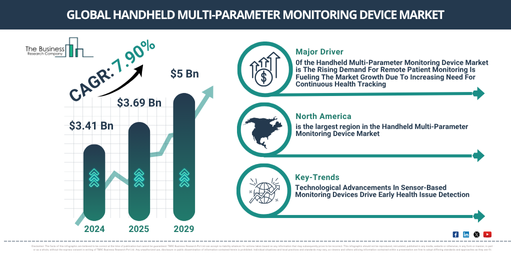
    The market for handheld multi-parameter monitoring devices has seen robust growth lately and is anticipated to expand from $3.41 billion in 2024 to $3.69 billion in 2025, reflecting a compound annual growth rate (CAGR) of 8.2%. Factors propelling the market growth during the historical phase include a surge in chronic illnesses, increased need for remote patient surveillance, growing incorporation of wireless technology in the healthcare sector, a rise in elderly population necessitating constant monitoring, and heightened consciousness regarding early detection and prevention of diseases.

    What Is the Projected Market Size of the Handheld Multi-Parameter Monitoring Device Market?

    In the coming years, the market size for handheld multi-parameter monitoring devices is projected to experience robust growth, reaching $5 billion by 2029 with a 7.9% compound annual growth rate (CAGR). Various factors fueling such growth in the projection period include enhanced investments in the healthcare sector, growing inclination towards easy-to-use and portable medical tools, incorporation of advanced analytical tools into monitoring devices, escalating need for immediate data during emergency and critical care, with a rising emphasis on personalized and home-based healthcare solutions. The forecast period will also witness trends such as advancements in wireless communication technologies, incorporation of artificial intelligence and machine learning, sensor accuracy and miniaturization technology enhancements, advancements in real-time data analytics and cloud connectivity, and telemedicine platform integration with the monitoring devices.

    Download The Free Sample Report Here:

    https://www.thebusinessresearchcompany.com/sample.aspx?id=24551&type=smp

    Who are the Major Competitors in the Handheld Multi-Parameter Monitoring Device Market Outlook?

    Major companies operating in the handheld multi-parameter monitoring device market are Abbott Laboratories, Medtronic Public Limited Company, Becton Dickinson and Company, Koninklijke Philips N.V., GE HealthCare Technologies Inc., Baxter International Inc., Omron Healthcare Co. Ltd., Shenzhen Mindray Bio-Medical Electronics Co. Ltd., Masimo Corporation, Nihon Kohden Corporation, Lepu Medical Technology (Beijing) Co. Ltd., Qingdao Meditech Equipment Co. Ltd., Wuhan Zoncare Bio-Medical Electronics Co. Ltd., BPL Medical Technologies Pvt. Ltd., Schiller Healthcare India Pvt. Ltd., Allengers Medical Systems Limited, Contec Medical Systems Co. Ltd., aXcent medical GmbH, Jiangsu Yuyue Medical Instruments Co. Ltd., Genuine Medica Pvt. Ltd., Drx Laboratories

    What Is Fueling Growth in the Handheld Multi-Parameter Monitoring Device Market?

    The growth of the handheld multi-parameter monitoring device market is expected to be fueled by the increasing need for remote patient monitoring. This entails the use of digital technologies to gather patients’ health information from one site and electronically send it to medical professionals at a different site for evaluation and advice. The surge in remote patient monitoring demand is largely a result of the increasing incidence of chronic illnesses, which necessitate regular health monitoring to control symptoms, avoid complications, and minimize hospital visits. A handheld multi-parameter monitoring device facilitates remote patient monitoring by monitoring crucial vital signs such as heart rate, blood pressure, and oxygen levels. It enables the early identification of health problems, continuous management of chronic diseases, and instant data sharing with healthcare providers, enhancing comfort and reducing hospital visits. For instance, the Alliance for Connected Care, a US-based nonprofit advocacy organization, reported in August 2023 that remote patient monitoring (RPM) usage had grown by 305% since 2021, with 81% of clinicians now deploying it and 84% intending to increase its use in 2024. 45% of providers utilize RPM for acute care, including hospital-at-home programs. Therefore, the growing demand for remote patient monitoring is propelling the expansion of the handheld multi-parameter monitoring device market.

    Request For A Customized Report:

    https://www.thebusinessresearchcompany.com/customise?id=24551&type=smp

    Which Handheld Multi-Parameter Monitoring Device Market Segments Are Growing the Fastest?

    The handheld multi-parameter monitoring device market covered in this report is segmented –

    1) By Device Type: Basic Vital Sign Monitors, Advanced Multi-Parameter Monitors, Fetal Monitors, Remote Patient Monitoring Devices (RPM) Devices

    2) By Connectivity: Wired Devices, Wireless Devices

    3) By Application: Intensive Care, Clinical Care, Ambulatory Care, Pediatric Care, Other Applications

    4) By End User: Hospitals, Ambulatory Surgical Centers, Homecare Settings, Other End Users

    Subsegments:

    1) By Basic Vital Sign Monitors: Pulse Oximeters, Blood Pressure Monitors, Thermometers, Glucose Monitors, Heart Rate Monitors

    2) By Advanced Multi-Parameter Monitors: Electrocardiogram Monitors (ECG) Monitors, Capnography Monitors, Respiratory Rate Monitors, Blood Gas Analyzers, Hemoglobin Monitors

    3) By Fetal Monitors: Doppler Fetal Monitors, Cardiotocography (CTG) Monitors, Fetal Heart Rate Monitors, Uterine Contraction Monitors

    4) By Remote Patient Monitoring Devices (RPM) Devices: Wearable Health Trackers, Telehealth Monitoring Devices, Mobile Health (mHealth) Devices, Wireless Vital Sign Monitors

    Which Industry Trends Are Shaping the Future of the Handheld Multi-Parameter Monitoring Device Market?

    Leading businesses operating in the handheld multi-parameter monitoring device sector are concentrating on medical technology advancements, like sensor technology, to boost performance, dependability, and real-time vital sign monitoring capabilities, allowing health problems to be identified at an early stage. Sensor technology involves the use of devices capable of detecting and quantifying physical or environmental modifications, such as movement, temperature, or pressure. For example, BUZUD, a healthcare solutions producer from Singapore, debuted its Multi-Parameter Monitor and PulseBit EX electrocardiogram tracker – advanced medical equipment for both hospital and home use – in July 2022. This new technology allows for real-time monitoring of crucial signs such as ECG, blood oxygen levels, heart rate, respiration rate, and body temperature. The devices are expertly engineered for high precision, and their portability, user-friendly designs, and extremely precise measurements meet the growing requirement for available and sustained health monitoring across various healthcare environments.

    Access The Full Report Here:

    https://www.thebusinessresearchcompany.com/report/handheld-multi-parameter-monitoring-device-global-market-report

    Which Countries Are Leading the Handheld Multi-Parameter Monitoring Device Market?

    North America was the largest region in the handheld multi-parameter monitoring device market in 2024. The regions covered in the handheld multi-parameter monitoring device market report are Asia-Pacific, Western Europe, Eastern Europe, North America, South America, Middle East, Africa.

    Purchase The Full Report Today:

    https://www.thebusinessresearchcompany.com/purchaseoptions.aspx?id=24551

    This Report Delivers Insight On:

    1. How big is the handheld multi-parameter monitoring device market, and how is it changing globally?

    2. Who are the major companies in the handheld multi-parameter monitoring device market, and how are they performing?

    3. What are the key opportunities and risks in the handheld multi-parameter monitoring device market right now?

    4. Which products or customer segments are growing the most in the handheld multi-parameter monitoring device market?

    5. What factors are helping or slowing down the growth of the handheld multi-parameter monitoring device market?

    About The Business Research Company:

    With over 15000+ reports from 27 industries covering 60+ geographies, The Business Research Company has built a reputation for offering comprehensive, data-rich research and insights. Armed with 1,500,000 datasets, the optimistic contribution of in-depth secondary research, and unique insights from industry leaders, you can get the information you need to stay ahead in the game.

    Get in touch with us:

    The Business Research Company: https://www.thebusinessresearchcompany.com/

    Americas +1 3156230293

    Asia +44 2071930708

    Europe +44 2071930708

    Email us at info@tbrc.info

    Follow us on:

    LinkedIn: https://in.linkedin.com/company/the-business-research-company

    YouTube: https://www.youtube.com/channel/UC24_fI0rV8cR5DxlCpgmyFQ

    Global Market Model: https://www.thebusinessresearchcompany.com/global-market-model
  • H2 Antagonists Market to Reach $23.63 Billion by 2029 | Key Drivers and Future Outlook

    Claim your 30% discount on Global Market Reports with code ONLINE30. Limited time only.

    What Is the Growth Rate of the H2 Antagonists Market?

    The market size for h2 antagonists has seen significant growth in the past few years. The market is expected to soar from $17.14 billion in 2024 to an estimated $18.32 billion in 2025, with a compound annual growth rate (CAGR) of 6.9%. The historical growth of this market can be credited to a rise in acid-related disorders, an expanding older population, increasing understanding of gastrointestinal health, their cost-effectiveness compared to proton pump inhibitors, an increased occurrence of stress-related ulcers, and a growing preference for non-surgical treatment options.

    What Growth Rate Is Forecasted for the H2 Antagonists Market by 2029?

    Strong expansion is predicted for the h2 antagonists market over the next several years, with its value increasing to $23.63 billion in 2029 at a compound annual growth rate (CAGR) of 6.6%. Factors contributing to this growth during the forecast period include the escalating demand for cost-effective acid reduction drugs, a rise in gastrointestinal issues linked to contemporary living habits, a burgeoning global elderly population, ongoing studies on combination treatments, heightened use in animal healthcare, and an increased awareness of health among consumers. Forecast trends include advancements in medication delivery systems, the incorporation of AI in drug development, targeted delivery via nanotechnology, improved bioavailability resulting from formulation breakthroughs, digital health platforms for tracking patient metrics, and individualized treatment strategies.

    Download The Free Sample Report Here:

    https://www.thebusinessresearchcompany.com/sample.aspx?id=24550&type=smp

    Which Key Companies Are Shaping the Future of the H2 Antagonists Market?

    Major companies operating in the h2 antagonists market are Pfizer Inc., F. Hoffmann-La Roche AG, AbbVie Inc., Bayer AG, Novartis International AG, GlaxoSmithKline plc, Eli Lilly and Company, Teva Pharmaceutical Industries Limited, Boehringer Ingelheim International GmbH, Sun Pharmaceutical Industries Limited, Apotex Inc., Dr. Reddy’s Laboratories Limited, Apex Biotechnology Corporation, Ajanta Pharma Limited, Medochemie Ltd., Torrent Pharmaceuticals Limited, Phathom Pharmaceuticals Inc., Tocris Bioscience, Cadila Healthcare Limited, Modi Lifecare Industries Limited.

    Which Factors Are Driving Demand in the H2 Antagonists Industry?

    The rise in gastrointestinal disorders is anticipated to spur the expansion of the H2 antagonists market. Gastrointestinal (GI) disorders, which impact the digestive system including the esophagus, stomach, intestines, liver, pancreas, and gallbladder, are increasingly prevalent due to unhealthy eating habits that stimulate overproduction of stomach acid and irritation of the digestive tract. H2 antagonists aid in the management of these GI disorders by lowering the production of stomach acid. This makes them effective in treating conditions such as acid reflux and ulcers by alleviating symptoms quickly and promoting long-term digestive health. The World Health Organization (WHO), for instance, reported in March 2024 that diarrheal diseases contribute to roughly 1.7 billion cases annually and result in the fatalities of approximately 443,832 children under 5 years of age plus an extra 50,851 deaths among children between the ages of 5 and 9. Consequently, the continuously rising prevalence of gastrointestinal disorders is propelling the H2 antagonists market’s growth. Higher healthcare spending is set to boost the expansion of the H2 antagonists market. Healthcare spending involves the total sum of money utilized on medical services, treatments, facilities, research, and public health initiatives to sustain or improve health outcomes. The escalation in healthcare spending can be attributed to the growing burden of chronic illnesses which necessitate continuous treatment and management, resulting in escalating medical costs over time. Healthcare spending contributes to the growth of the H2 antagonist market by increasing the funding available for advanced treatment and medication access, supporting research and development leading to enhanced drug formulations and better patient outcomes. For instance, according to the Centers for Medicare and Medicaid Services (CMS), a US federal agency, national health expenditures (NHE) saw a growth of 7.5%, amounting to $4.9 trillion in 2023, making up 17.6% of the Gross Domestic Product (GDP). Between 2023 and 2032, the average annual growth rate of national health expenditures (NHE) is forecasted at 5.6%, resulting in the health spending share of GDP rising from 17.3% in 2022 to 19.7% in 2032. Therefore, the upswing in healthcare spending is catalyzing the expansion of the H2 antagonists market.

    Request For A Customized Report:

    https://www.thebusinessresearchcompany.com/customise?id=24550&type=smp

    How Is the H2 Antagonists Market Segmented by Several Divisions?

    The h2 antagonists market covered in this report is segmented –

    1) By Drug Type: Prescription H2 Antagonists, Over-The-Counter H2 Antagonists

    2) By Indication: Gastroesophageal Reflux Disease (GERD), Peptic Ulcer Disease, Zollinger-Ellison Syndrome, Other Indications

    3) By Dosage Form: Tablets, Capsules, Injectable Solutions, Liquid Formulations

    4) By Distribution Channel: Retail Pharmacies, Hospital Pharmacies, Online Pharmacies, Drug Stores

    Subsegments:

    1)By Prescription H2 Antagonists: Gastroesophageal Reflux Disease (GERD), Peptic Ulcers, Zollinger-Ellison Syndrome

    2) By Over-The-Counter (OTC) H2 Antagonist: Heartburn, Occasional Acid Reflux, Indigestion

    What are the Emerging Market Trends Driving the Growth of the H2 Antagonists Industry?

    Primary players in the H2 antagonists market are prioritizing the development of new treatment strategies, such as generic drugs, to increase treatment potency, promote adherence among patients, and extend the life span of their products. A generic drug is a pharmaceutical medication that matches a brand-name drug in dosage, potency, and means of administration. For example, in August 2022, the U.S. Food and Drug Administration (FDA) granted Amneal Pharmaceuticals Inc., a pharmaceutical corporation based in the U.S., approval for its Abbreviated New Drug Application (ANDA) for famotidine oral suspension (40 mg/5 mL). Famotidine oral suspension, which is an H2 antagonist taken orally in liquid form, is used to manage ulcers and gastroesophageal reflux disease (GERD) and is sold under the reference brand name, Pepcid. It serves as a cost-effective treatment for patients needing acid reduction therapy, therefore providing a vital alternative for managing conditions associated with ulcers and acid reflux.

    Access The Full Report Here:

    https://www.thebusinessresearchcompany.com/report/h2-antagonists-global-market-report

    Which Regions Are Driving Growth in the H2 Antagonists Market?

    North America was the largest region in the H2 receptor antagonists market in 2024. Asia-Pacific is expected to be the fastest-growing region in the forecast period. The regions covered in the h2 antagonists market report are Asia-Pacific, Western Europe, Eastern Europe, North America, South America, Middle East, Africa.

    Purchase The Full Report Today:

    https://www.thebusinessresearchcompany.com/purchaseoptions.aspx?id=24550

    This Report Delivers Insight On:

    1. How big is the h2 antagonists market, and how is it changing globally?

    2. Who are the major companies in the h2 antagonists market, and how are they performing?

    3. What are the key opportunities and risks in the h2 antagonists market right now?

    4. Which products or customer segments are growing the most in the h2 antagonists market?

    5. What factors are helping or slowing down the growth of the h2 antagonists market?

    About The Business Research Company:

    With over 15000+ reports from 27 industries covering 60+ geographies, The Business Research Company has built a reputation for offering comprehensive, data-rich research and insights. Armed with 1,500,000 datasets, the optimistic contribution of in-depth secondary research, and unique insights from industry leaders, you can get the information you need to stay ahead in the game.

    Get in touch with us:

    The Business Research Company: https://www.thebusinessresearchcompany.com/

    Americas +1 3156230293

    Asia +44 2071930708

    Europe +44 2071930708

    Email us at info@tbrc.info

    Follow us on:

    LinkedIn: https://in.linkedin.com/company/the-business-research-company

    YouTube: https://www.youtube.com/channel/UC24_fI0rV8cR5DxlCpgmyFQ

    Global Market Model: https://www.thebusinessresearchcompany.com/global-market-model
  • Gynecomastia Procedures Market Size to Exceed $1.51 Billion by 2029 | Growth and Industry Trends

    Gynecomastia Procedures Market Size to Exceed $1.51 Billion by 2029 | Growth and Industry Trends

    Claim your 30% discount on Global Market Reports with code ONLINE30. Limited time only.

    How Has the Gynecomastia Procedures Market Grown from 2024 to 2025?

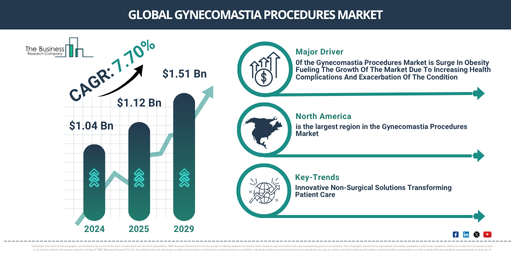
    The market for gynecomastia procedures has seen significant expansion in recent times. It is projected to increase from $1.04 billion in 2024 to $1.12 billion in 2025, with an 8.0% compound annual growth rate (CAGR). The growth during the historical period can be considered a result of greater acceptance of cosmetic surgery for males, increasing impact of social media on body perception, growth in number of plastic surgeons and clinics, higher demand for minimally invasive procedures, and a rise in medical tourism for aesthetic treatments.

    What Growth Rate Is Anticipated for the Gynecomastia Procedures Market in the Coming Years?

    The market size for gynecomastia procedures is projected to experience a substantial rise in the next few years, expanding to $1.51 billion in 2029 with a Compound Annual Growth Rate (CAGR) of 7.7%. This growth during the predicted period is linked to the increased emphasis on physical looks among males, a surge in the demand for cosmetic procedures on an outpatient basis, the rise in popularity of combined treatments, better access to funding alternatives for surgery, and increased investments in cosmetic surgery research and innovations. Major trends over the forecast period are predicted to involve improvements in minimally invasive surgical procedures, breakthroughs in liposuction technologies, advanced protocols for anesthesia and recovery, the incorporation of Artificial Intelligence in pre-surgery planning, and progress in methods for scar reduction and skin tightening.

    Download The Free Sample Report Here:

    https://www.thebusinessresearchcompany.com/sample.aspx?id=24549&type=smp

    Who Are the Leading Companies in the Gynecomastia Procedures Market?

    Major companies operating in the gynecomastia procedures market are Sun Pharmaceutical Industries Limited, Cadila Pharmaceuticals Limited, Spire Healthcare Group plc, InMode Ltd., Lumenis Ltd., Cynosure LLC, Max Healthcare Institute Limited, Alma Lasers Ltd., Pristyn Care Private Limited, Sterling Addlife India Limited, Cutera Inc., Solta Medical Inc., Erchonia Corporation, MicroAire Surgical Instruments LLC, Allure Medspa, Florida Plastic Surgery Group P.A., BioZen Healthcare, Dermawear, The Aesthetica, Austin Gynecomastia Center

    What Are the Key Drivers of the Gynecomastia Procedures Market?

    The escalating instances of obesity are projected to drive the advancement of the gynecomastia procedures market. Obesity, a health condition denoted by excessive fat accumulation in the body often evaluated by a body mass index (BMI) of 30 and beyond, can lead to numerous health problems. The growth in obesity is aided by sedentary lifestyles that promote weight gain and poor metabolic health due to minimal physical activity and long periods of sitting. Gynecomastia procedures assist in managing enlarged male breasts, a condition often worsened by obesity, since surplus fat tissue in the chest can intensify or mimic the look of gynecomastia, making surgical intervention a helpful resolution. For instance, it was reported by the World Heart Foundation, a Switzerland-based non-government organization, in March 2023 that roughly 2.3 billion adults and children globally are obese or overweight. Furthermore, following the current trend in obesity, they estimate the count of individuals living with obesity to reach 2.7 billion by 2025. Hence, the escalating instances of obesity are instrumental in propelling the growth of the gynecomastia procedures market.

    Request For A Customized Report:

    https://www.thebusinessresearchcompany.com/customise?id=24549&type=smp

    What Are the Key Market Segments in the Gynecomastia Procedures Industry?

    The gynecomastia procedures market covered in this report is segmented –

    1) By Procedure Type: Liposuction, Mastectomy, Thyroid Hormone Therapy, Medications, Ultrasound

    2) By Age Group: Adolescents, Adults, Elderly

    3) By End-User: Hospitals, Cosmetic Surgery Centers, Other End-Users

    Subsegment:

    1) By Liposuction: Tumescent Liposuction, Ultrasound-Assisted Liposuction, Power-Assisted Liposuction, Laser-Assisted Liposuction

    2) By Mastectomy: Subcutaneous Mastectomy, Bilateral Mastectomy, Nipple-Sparing Mastectomy

    3) By Thyroid Hormone Therapy: Synthetic Thyroid Hormones, Natural Desiccated Thyroid, Combination Therapy

    4) By Medications: Anti-Estrogen Medications, Aromatase Inhibitors, Selective Estrogen Receptor Modulators (SERMs)

    5) By Ultrasound: High-Intensity Focused Ultrasound (HIFU), Low-Intensity Focused Ultrasound, Acoustic Wave Therapy

    What Are the Latest Trends in the Gynecomastia Procedures Market?

    Leading firms in the gynecomastia procedures industry are concentrating on cutting-edge innovations such as non-invasive treatments to lessen surgical risks, enhance patient results, and meet the unaddressed healthcare requirement for safer and more efficacious solutions. A non-invasive treatment is a method that circumvents surgery by administering oral drugs or external therapies to treat gynecomastia without incisions or anesthesia. For instance, BioZen Limited, a biotech firm based in the UK, launched an innovative daily pill regimen in June 2024, aimed at treating gynecomastia. This unique dual-therapy blend merges a minimal dose of tamoxifen (TAM) and indole-3-carbinol (I3C), a naturally existent compound sourced from cruciferous vegetables. It is given as a convenient once-daily oral medication. Preliminary data from BioZen indicate that this two-pronged strategy may wholly rectify the hormonal discrepancy causing gynecomastia, potentially providing a safe, effective, and expandable alternative to surgery.

    Access The Full Report Here:

    https://www.thebusinessresearchcompany.com/report/gynecomastia-procedures-global-market-report

    What Are the Key Regional Markets in the Gynecomastia Procedures Industry?

    North America was the largest region in the gynecomastia procedures market in 2024. Asia-Pacific is expected to be the fastest-growing region in the forecast period. The regions covered in the gynecomastia procedures market report are Asia-Pacific, Western Europe, Eastern Europe, North America, South America, Middle East, Africa.

    Purchase The Full Report Today:

    https://www.thebusinessresearchcompany.com/purchaseoptions.aspx?id=24549

    This Report Delivers Insight On:

    1. How big is the gynecomastia procedures market, and how is it changing globally?

    2. Who are the major companies in the gynecomastia procedures market, and how are they performing?

    3. What are the key opportunities and risks in the gynecomastia procedures market right now?

    4. Which products or customer segments are growing the most in the gynecomastia procedures market?

    5. What factors are helping or slowing down the growth of the gynecomastia procedures market?

    About The Business Research Company:

    With over 15000+ reports from 27 industries covering 60+ geographies, The Business Research Company has built a reputation for offering comprehensive, data-rich research and insights. Armed with 1,500,000 datasets, the optimistic contribution of in-depth secondary research, and unique insights from industry leaders, you can get the information you need to stay ahead in the game.

    Get in touch with us:

    The Business Research Company: https://www.thebusinessresearchcompany.com/

    Americas +1 3156230293

    Asia +44 2071930708

    Europe +44 2071930708

    Email us at info@tbrc.info

    Follow us on:

    LinkedIn: https://in.linkedin.com/company/the-business-research-company

    YouTube: https://www.youtube.com/channel/UC24_fI0rV8cR5DxlCpgmyFQ

    Global Market Model: https://www.thebusinessresearchcompany.com/global-market-model
  • Genitourinary Drugs Industry Insights 2025 – Market Forecast for Executives and Planners

    Genitourinary Drugs Industry Insights 2025 – Market Forecast for Executives and Planners

    Claim your 30% discount on Global Market Reports with code ONLINE30. Limited time only.

    How Has the Genitourinary Drugs Market Size Changed, over the years?

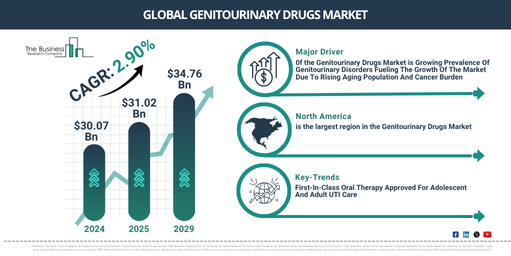
    The market for genitourinary drugs has seen consistent expansion over the years. There is a projection for this market to increase from $30.07 billion in 2024 to $31.02 billion in 2025, with a compound annual growth rate (CAGR) of 3.2%. The previous growth in the market is attributed to factors such as a rise in urinary tract infection cases, increased instances of benign prostatic hyperplasia, a growing understanding of sexual health, an increase in the aging population, and an ever-increasing occurrence of chronic kidney diseases.

    How Much Will the Genitourinary Drugs Market Be Worth in 2029?

    In the coming years, the genitourinary drugs market is projected to experience consistent expansion, reaching a total value of $34.76 billion by 2029, with a compound annual growth rate (CAGR) of 2.9%. This growth trajectory during the forecast period could be a result of heightened occurrences of urinary tract infections, increased public consciousness of sexual health, a growing healthcare base, surging demand for hormone replacement treatments, and a rise in the use of oral contraceptives. The forecast period is also expected to witness a progression in drug formulations and delivery systems, the infusion of digital health solutions, personalized medicine backed by technology, innovations in biologic therapies, and breakthroughs in precision medicine.

    Download The Free Sample Report Here:

    https://www.thebusinessresearchcompany.com/sample.aspx?id=24548&type=smp

    Which is the Largest Company in the Genitourinary Drugs Market?

    Major companies operating in the genitourinary drugs market are Pfizer Inc., Johnson & Johnson, F. Hoffmann-La Roche AG, Merck & Co. Inc., Bayer AG, Novartis AG, Sanofi S.A., Bristol Myers Squibb, AstraZeneca plc, Abbott Laboratories, GSK plc, Eli Lilly and Company, Amgen Inc., Teva Pharmaceutical Industries Ltd., Astellas Pharma Inc., Ipsen Société Anonyme, Aurobindo Pharma Limited, Dr. Reddy’s Laboratories Limited, Cipla Limited, Hikma Pharmaceuticals Public Limited Company, Zydus Lifesciences Limited, Endo International Public Limited Company, Takeda Pharmaceutical Company Limited, Zydus Lifesciences Limited, Melinta Therapeutics Inc., Asieris Pharmaceuticals, Sun Pharmaceutical Industries Ltd.

    What Are the Main Market Drivers in the Genitourinary Drugs Industry?

    Anticipated growth in the genitourinary drugs market is attributed to the increase in genitourinary disorders. These medical conditions, which impact both the urinary and reproductive organs and include infections, cancers, and functional or structural illnesses, are seeing an uptick due to an aging population. This demographic change elevates the risk of urinary and reproductive health problems. Genitourinary drugs are critical in addressing these disorders as they alleviate symptoms of infections, inflammation, and dysfunction by targeting conditions in the urinary and reproductive system. They enhance the overall quality of life by providing effective, convenient, and disorder-specific treatment options which improve patient outcomes. For example, a report by the American Cancer Society in April 2024, a non-profit organization in the U.S., stated that an estimated 20 million new cancer cases were diagnosed globally in 2022, resulting in 9.7 million deaths, and this figure is predicted to surge to 35 million by 2050. Hence, the genitourinary drugs market is expanding due to the increasing incidence of genitourinary disorders.

    Request For A Customized Report:

    https://www.thebusinessresearchcompany.com/customise?id=24548&type=smp

    How Is the Genitourinary Drugs Market Segments Structured?

    The genitourinary drugs market covered in this report is segmented –

    1) By Product: Urologicals, Hormonal Therapy, Gynecological, Anti-Infectives, Other Products

    2) By Route Of Administration: Oral, Parenteral, Topical

    3) By Application: Urinary Tract Infections (UTIs), Benign Prostatic Hyperplasia (BPH), Prostate Cancer, Overactive Bladder, Bladder Cancer, Other Applications

    4) By Distribution Channel: Hospital Pharmacies, Drug Store And Retail Pharmacies, Online Pharmacies

    Subsegments:

    1) By Urologicals: Benign Prostatic Hyperplasia (BPH) Drugs, Urinary Incontinence Drugs, Overactive Bladder (OAB) Drugs, Urolithiasis (Kidney Stone) Drugs, Erectile Dysfunction Drugs

    2) By Hormonal Therapy: Estrogen Therapy, Progestin Therapy, Gonadotropin-Releasing Hormone (GnRH) Agonists/Antagonists, Androgen Replacement Therapy, Selective Estrogen Receptor Modulators (SERMs)

    3) By Gynecological: Contraceptives, Menopausal Hormone Therapy, Fertility Drugs, Drugs for Endometriosis, Drugs for Polycystic Ovary Syndrome (PCOS)

    4) By Anti-Infectives: Urinary Tract Infection (UTI) Drugs, Sexually Transmitted Infection (STI) Drugs, Vaginal Antifungals, Antivirals

    5) By Other Products: Drugs for Chronic Pelvic Pain, Bladder Cancer Therapies, Interstitial Cystitis Drugs, Pelvic Organ Prolapse Treatment Drugs, Adjunctive Therapies

    What Strategic Trends Are Transforming the Genitourinary Drugs Market?

    Prominent players in the genitourinary drugs market are prioritizing the development of cutting-edge products such as oral antibiotics. These companies aim to amplify treatment ease, bolster patient compliance, and effectively tackle infections. Oral antibiotics are antibacterial medication administered orally to deal with bacterial infections. As an illustration, GSK plc, a global pharmaceutical organization headquartered in the UK, obtained endorsement from the US Food and Drug Administration (FDA) in March 2025 for Blujepa (gepotidacin). The approved medication is designed for the treatment of uncomplicated urinary tract infections brought about by susceptible bacteria in females and girls aged 12 and older. Blujepa is an innovative, pioneer oral antibiotic that functions by blocking bacterial DNA replication. It specifically targets two significant enzymes, DNA gyrase and topoisomerase IV. In comparison to conventional antibiotics, it adheres to unique sites to bypass resistance, thereby providing a specific mechanism with enhanced safety and effectiveness.

    Access The Full Report Here:

    https://www.thebusinessresearchcompany.com/report/genitourinary-drugs-global-market-report

    Which Global Regions Offer the Highest Growth in the Genitourinary Drugs Market?

    North America was the largest region in the genitourinary drugs market in 2024. Asia-Pacific is expected to be the fastest-growing region in the forecast period. The regions covered in the genitourinary drugs market report are Asia-Pacific, Western Europe, Eastern Europe, North America, South America, Middle East, Africa.

    Purchase The Full Report Today:

    https://www.thebusinessresearchcompany.com/purchaseoptions.aspx?id=24548

    This Report Delivers Insight On:

    1. How big is the genitourinary drugs market, and how is it changing globally?

    2. Who are the major companies in the genitourinary drugs market, and how are they performing?

    3. What are the key opportunities and risks in the genitourinary drugs market right now?

    4. Which products or customer segments are growing the most in the genitourinary drugs market?

    5. What factors are helping or slowing down the growth of the genitourinary drugs market?

    About The Business Research Company:

    With over 15000+ reports from 27 industries covering 60+ geographies, The Business Research Company has built a reputation for offering comprehensive, data-rich research and insights. Armed with 1,500,000 datasets, the optimistic contribution of in-depth secondary research, and unique insights from industry leaders, you can get the information you need to stay ahead in the game.

    Get in touch with us:

    The Business Research Company: https://www.thebusinessresearchcompany.com/

    Americas +1 3156230293

    Asia +44 2071930708

    Europe +44 2071930708

    Email us at info@tbrc.info

    Follow us on:

    LinkedIn: https://in.linkedin.com/company/the-business-research-company

    YouTube: https://www.youtube.com/channel/UC24_fI0rV8cR5DxlCpgmyFQ

    Global Market Model: https://www.thebusinessresearchcompany.com/global-market-model
  • Gastrointestinal Over-The-Counter (OTC) Drugs Market Trends Report 2025 – For Business Development and Strategy Teams

    Gastrointestinal Over-The-Counter (OTC) Drugs Market Trends Report 2025 – For Business Development and Strategy Teams

    Claim your 30% discount on Global Market Reports with code ONLINE30. Limited time only.

    What Is the Forecast for the Gastrointestinal Over-The-Counter (OTC) Drugs Market Growth in 2025?

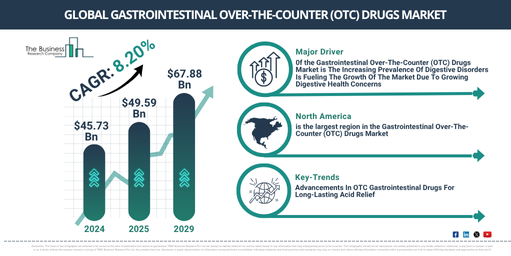
    The market for over-the-counter (OTC) gastrointestinal drugs has seen robust growth lately. It is projected to expand from $45.73 billion in 2024 to $49.59 billion in 2025, delivering a compound annual growth rate (CAGR) of 8.4%. Factors contributing to the growth during the historic period include the increased incidence of gastrointestinal disorders, a growing tendency among consumers to self-medicate, a rise in the supply of OTC proton pump inhibitors, increased awareness about digestive health, and a growing elderly population susceptible to GI problems.

    What Is the Forecast for the Gastrointestinal Over-The-Counter (OTC) Drugs Market Size Through 2029?

    In the coming years, the over-the-counter (OTC) drugs market for gastrointestinal issues is likely to experience robust expansion. It’s anticipated to reach $67.88 billion in 2029, showcasing a compound annual growth rate (CAGR) of 8.2%. Several factors fuel this projected growth, such as increasing demand for quick symptom relief, greater penetration of online pharmacies, wider access to combination OTC therapies, heightened focus on maintaining gut microbiome health, and enhanced marketing along with awareness initiatives from leading market players. Key trends shaping the forecast period encompass new generations of rapid-acting antacids, innovative probiotic-based OTC offerings, inclusion of herbal ingredients in digestive treatments, progress in dose-accuracy and portable packaging, and the introduction of sustained-release therapies for gastrointestinal conditions.

    Download The Free Sample Report Here:

    https://www.thebusinessresearchcompany.com/sample.aspx?id=24547&type=smp

    What are the Key Market Players in Gastrointestinal Over-The-Counter (OTC) Drugs Market and How They’re Evolving?

    Major companies operating in the gastrointestinal over-the-counter (OTC) drugs market are Pfizer Inc., Procter & Gamble Co., Johnson & Johnson, Merck & Co. Inc., Bayer AG, Novartis AG, Sanofi S.A., AstraZeneca plc, Abbott Laboratories, GlaxoSmithKline plc, Takeda Pharmaceutical Company Limited, Teva Pharmaceutical Industries Ltd., Reckitt Benckiser Group plc, Boehringer Ingelheim GmbH, Haleon plc, Sandoz AG, Bausch Health Companies Inc., Sun Pharmaceutical Industries Ltd., Perrigo Company plc, Dr. Reddy’s Laboratories Ltd.

    What Are the Primary Growth Drivers in the Gastrointestinal Over-The-Counter (OTC) Drugs Market?

    The escalating occurrence of digestive issues is anticipated to fuel the expansion of the gastrointestinal OTC drugs market in the future. These issues range from conditions affecting the stomach, intestines, and other related organs. The surge in such disorders is predominantly caused by the increased consumption of processed, low-fiber foods that negatively impact gut health and hamper the digestion process. Gastrointestinal OTC drugs aid in alleviating symptoms of these disorders by decreasing stomach acid, promoting regular bowel movements, and boosting gut health. They deliver immediate, handy relief from typical problems like acidity, irregular bowel movements, and digestive discomfort. For example, figures from December 2023 show that over 5,300 individuals were suffering from inflammatory bowel disease (IBD), as reported by IBD Registry Ltd., a non-profit organization based in the UK. This was a significant increase of more than 3,000 cases from the previous year. Thus, the rising occurrence of digestive issues is stimulating the growth of the gastrointestinal OTC drugs market.

    Request For A Customized Report:

    https://www.thebusinessresearchcompany.com/customise?id=24547&type=smp

    What Are the Leading Segments in the Global Gastrointestinal Over-The-Counter (OTC) Drugs Industry?

    The gastrointestinal over-the-counter (OTC) drugs market covered in this report is segmented –

    1) By Product: Antacid, Laxatives, Anti-Diarrheal, Anti-Emetics, Other Products

    2) By Formulation: Tablets, Capsules, Liquids, Other Formulations

    3) By Indications: Heartburn, Diarrhoea, Constipation, Gastroesophageal Reflux Disease (GERD), Nausea, Vomiting, Motion Sickness, Other Indications

    4) By Distribution Channel: Direct Tender, Hospital Pharmacy, Retail Pharmacy, Online Pharmacy, Other Distribution Channels

    5) By End-Users: Hospitals, Clinics, Home Healthcare, Other End-Users

    Subsegments:

    1) By Antacid: Proton Pump Inhibitors (PPIs), H2-Receptor Antagonists, Calcium Carbonate, Magnesium Hydroxide, Sodium Bicarbonate, Combination Antacids

    2) By Laxatives: Bulk-Forming Laxatives, Stimulant Laxatives, Osmotic Laxatives, Stool Softeners, Lubricant Laxatives

    3) By Anti-Diarrheal: Loperamide, Bismuth Subsalicylate, Probiotics, Electrolyte Solutions

    4) By Anti-Emetics: Antihistamines, Bismuth Subsalicylate, Phosphorated Carbohydrate Solution, Ginger Supplements

    5) By Other Products: Digestive Enzymes, Antispasmodics, Simethicone, Herbal Remedies, Activated Charcoal

    What Are the Key Market Trends in the Gastrointestinal Over-The-Counter (OTC) Drugs Industry?

    Key players in the gastrointestinal OTC drugs market are focusing their efforts on the creation of advanced products like OTC proton pump inhibitors to offer enduring and effective relief from acid-related conditions. Over-the-counter proton pump inhibitors are medicines which can be acquired without any prescription and work by reducing stomach acid production. These are generally used to alleviate common conditions such as regular heartburn, acid reflux, and gastric ulcers. For example, in March 2025, Japan-based pharmaceutical company Eisai Co., Ltd. obtained approval in Japan to change the status of its Pariet S (rabeprazole sodium 10 mg) from prescription drug to over-the-counter product, marking it as the first OTC proton pump inhibitor in Japan with the same active ingredient and dosage as its prescription counterpart. Pariet S is recommended for treating stomach pain, heartburn, and bloating, facilitating 24-hour relief with a single daily tablet, and striving to fulfill the increasing requirement for effective gastric acid-related treatments due to changes in lifestyle and demographics.

    Access The Full Report Here:

    https://www.thebusinessresearchcompany.com/report/gastrointestinal-over-the-counter-otc-drugs-global-market-report

    What Is the Regional Outlook for the Gastrointestinal Over-The-Counter (OTC) Drugs Market?

    North America was the largest region in the gastrointestinal over-the-counter (OTC) drugs market in 2024. Asia-Pacific is expected to be the fastest-growing region in the forecast period. The regions covered in the gastrointestinal over-the-counter (OTC) drugs market report are Asia-Pacific, Western Europe, Eastern Europe, North America, South America, Middle East, Africa.

    Purchase The Full Report Today:

    https://www.thebusinessresearchcompany.com/purchaseoptions.aspx?id=24547

    This Report Delivers Insight On:

    1. How big is the gastrointestinal over-the-counter (otc) drugs market, and how is it changing globally?

    2. Who are the major companies in the gastrointestinal over-the-counter (otc) drugs market, and how are they performing?

    3. What are the key opportunities and risks in the gastrointestinal over-the-counter (otc) drugs market right now?

    4. Which products or customer segments are growing the most in the gastrointestinal over-the-counter (otc) drugs market?

    5. What factors are helping or slowing down the growth of the gastrointestinal over-the-counter (otc) drugs market?

    About The Business Research Company:

    With over 15000+ reports from 27 industries covering 60+ geographies, The Business Research Company has built a reputation for offering comprehensive, data-rich research and insights. Armed with 1,500,000 datasets, the optimistic contribution of in-depth secondary research, and unique insights from industry leaders, you can get the information you need to stay ahead in the game.

    Get in touch with us:

    The Business Research Company: https://www.thebusinessresearchcompany.com/

    Americas +1 3156230293

    Asia +44 2071930708

    Europe +44 2071930708

    Email us at info@tbrc.info

    Follow us on:

    LinkedIn: https://in.linkedin.com/company/the-business-research-company

    YouTube: https://www.youtube.com/channel/UC24_fI0rV8cR5DxlCpgmyFQ

    Global Market Model: https://www.thebusinessresearchcompany.com/global-market-model
  • Wearable Patch Forecast Report – Designed for Decision Makers and Product Teams

    Wearable Patch Forecast Report – Designed for Decision Makers and Product Teams

    Claim your 30% discount on Global Market Reports with code ONLINE30. Limited time only.

    What Is the Growth Rate of the Wearable Patch Market?

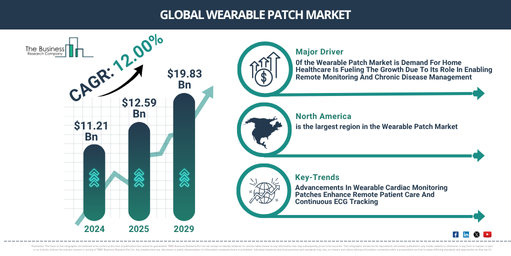
    Recent years have seen a rapid expansion in the size of the wearable patch market. The projections suggest that the market is expected to increase from a size of $11.21 billion in 2024 to $12.59 billion in 2025, representing a compound annual growth rate of 12.4%. This significant growth during the historical period can be tied back to the advancement in the miniaturization of sensors, a growing demand for chronic disease monitoring, the expansion of fitness and wellness trends, the ever-increasing use of smartphones, and its early incorporation into clinical research settings.

    What Growth Rate Is Forecasted for the Wearable Patch Market by 2029?

    Forecasts predict a swift expansion in the wearables patch market in the coming years. The market is projected to reach $19.83 billion by 2029, exhibiting a compound annual growth rate (CAGR) of 12.0%. This surge during the forecast period can be credited to the growth of remote patient monitoring programs, integration with AI and predictive analytics, an increasing need for elderly care technologies, its wider application in enhancing sports performance, and regulatory encouragement for digital health solutions. The anticipation for the forecast period includes AI integration for on-the-spot health monitoring, expansion in managing chronic diseases, the acceptance of flexible and stretchable electronics, the enlargement in remote patient monitoring solutions, and progress in energy-saving and self-reliant technologies.

    Download The Free Sample Report Here:

    https://www.thebusinessresearchcompany.com/sample.aspx?id=24745&type=smp

    Which Key Companies Are Shaping the Future of the Wearable Patch Market?

    Major companies operating in the wearable patch market are Samsung Electronics Co. Ltd., Johnson & Johnson, Abbott Laboratories, Qualcomm Inc., Covestro AG, Koninklijke Philips N.V., GE Healthcare, Molex LLC, DuPont de Nemours Inc., VARTA AG,  Tapecon Inc., VitalConnect Inc., LifeSignals Group Inc., greenTEG AG, 2M Engineering Ltd., Beneli AB, GENTAG Inc., Kenzen Inc., Nemaura Medical Inc., PKvitality S.A.S., Hudson Medical Innovations

    Which Factors Are Driving Demand in the Wearable Patch Industry?

    The wearable patch market’s expansion is projected to be powered by an increasing need for home healthcare. Home healthcare involves medical and support services being provided in a patient’s home to treat diseases, injuries or manage chronic health conditions. The growth in home healthcare is facilitated by an aging demographic that requires consistent care for chronic conditions, spurring the need for cost-effective, easy-to-access services at home. Wearable patches augment home healthcare by monitoring vital signs and transmitting real-time data to medical experts. This facilitates early problem identification, swift care, and a decreased necessity for hospital visits. For example, in April 2025, the Bureau of Labor Statistics, a governmental agency in the US, forecasted a 21% growth in employment for home health and personal care aides from 2023 to 2033, with an average of around 718,900 job vacancies predicted each year throughout the decade. Consequently, the escalating demand for home healthcare is fueling the expansion of the wearable patch market.

    Request For A Customized Report:

    https://www.thebusinessresearchcompany.com/customise?id=24745&type=smp

    How Is the Wearable Patch Market Segmented by Several Divisions?

    The wearable patch market covered in this report is segmented –

    1) By Product Type: Biometric Patches, Therapeutic Patches, Diagnostic Patches, Fitness Tracking Patches, Smart Textile Patches

    2) By Technology: Biosensors, Radio-Frequency Identification (RFID) Technology, Bluetooth Connectivity, Near Field Communication (NFC), Microelectromechanical Systems (MEMS)

    3) By Distribution Channel: Online Retail, Offline Retail, Direct Sales, Pharmacies, Third-Party Distributors

    4) By Application: Clinical, Non-Clinical

    5) By End-Use: Healthcare Providers, Individual Consumers, Fitness Centers, Research Institutions

    Subsegments:

    1) By Biometric Patches: Heart Rate Monitoring Patches, Electrocardiogram (ECG) Patches, Blood Oxygen Level Monitoring Patches (SpO2), Temperature Monitoring Patches, Respiratory Rate Monitoring Patches

    2) By Therapeutic Patches: Transdermal Drug Delivery Patches, Pain Relief Patches, Nicotine Patches, Hormone Replacement Patches, Neuromodulation Patches

    3) By Diagnostic Patches: Glucose Monitoring Patches, Cardiac Monitoring Patches, Sleep Monitoring Patches, Hydration And Electrolyte Monitoring Patches, Sweat-Based Biomarker Detection Patches

    4) By Fitness Tracking Patches: Activity Tracking Patches, Calorie Burn Monitoring Patches, Sleep Quality Tracking Patches, Step Count Patches, Stress And Recovery Monitoring Patches

    5) By Smart Textile Patches: E-Textile Biosensor Patches, Motion Sensing Textile Patches, Pressure Sensing Textile Patches, Electromyography (EMG) Textile Patches, Temperature-Regulating Textile Patches

    What are the Emerging Market Trends Driving the Growth of the Wearable Patch Industry?

    Key players in the wearable patches market are prioritizing the creation of innovative products such as ambulatory cardiac monitoring wearable patches in order to maximize remote patient care and facilitate prompt medical responses. These wearable patches are small, skin-adhesive gadgets capable of monitoring heart activity consistently throughout the wearer’s daily activities. A case in point is Vivalink, Inc., a company from the US specializing in digital health technology solutions, who in May 2023 debuted the Live Stream Wearable Electrocardiogram (ECG) Patch. This multi-sensor wearable patch can continuously monitor electrocardiogram for up to 14 days and enables medical professionals to monitor their patients’ cardiac activity remotely anytime, anywhere, thereby decreasing the demand on both patient and clinician for long-term ambulatory monitoring.

    Access The Full Report Here:

    https://www.thebusinessresearchcompany.com/report/wearable-patch-global-market-report

    Which Regions Are Driving Growth in the Wearable Patch Market?

    North America was the largest region in the wearable patch market in 2024. The regions covered in the wearable patch market report are Asia-Pacific, Western Europe, Eastern Europe, North America, South America, Middle East, Africa.

    Purchase The Full Report Today:

    https://www.thebusinessresearchcompany.com/purchaseoptions.aspx?id=24745

    This Report Delivers Insight On:

    1. How big is the wearable patch market, and how is it changing globally?

    2. Who are the major companies in the wearable patch market, and how are they performing?

    3. What are the key opportunities and risks in the wearable patch market right now?

    4. Which products or customer segments are growing the most in the wearable patch market?

    5. What factors are helping or slowing down the growth of the wearable patch market?

    About The Business Research Company:

    With over 15000+ reports from 27 industries covering 60+ geographies, The Business Research Company has built a reputation for offering comprehensive, data-rich research and insights. Armed with 1,500,000 datasets, the optimistic contribution of in-depth secondary research, and unique insights from industry leaders, you can get the information you need to stay ahead in the game.

    Get in touch with us:

    The Business Research Company: https://www.thebusinessresearchcompany.com/

    Americas +1 3156230293

    Asia +44 2071930708

    Europe +44 2071930708

    Email us at info@tbrc.info

    Follow us on:

    LinkedIn: https://in.linkedin.com/company/the-business-research-company

    YouTube: https://www.youtube.com/channel/UC24_fI0rV8cR5DxlCpgmyFQ

    Global Market Model: https://www.thebusinessresearchcompany.com/global-market-model
  • Market Analysis on Gastrointestinal Cancer Industry – Insights for Corporate Strategy and R&D

    Market Analysis on Gastrointestinal Cancer Industry – Insights for Corporate Strategy and R&D

    Claim your 30% discount on Global Market Reports with code ONLINE30. Limited time only.

    What Is the Forecast for the Gastrointestinal Cancer Market from 2024 to 2025?

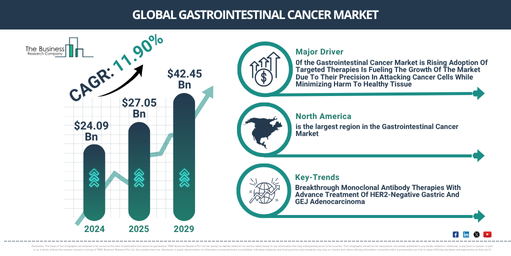
    There has been a swift expansion in the market size of gastrointestinal cancer in the past few years. It is predicted to climb up from $24.09 billion in 2024 to $27.05 billion in 2025, progressing at a compound annual growth rate (CAGR) of 12.3%. The earlier growth phase can be linked to an increase in cases of gastrointestinal cancers, enhanced tobacco and alcohol usage, the rise in the elderly population, unhealthy eating habits, and progress in oncology diagnostic procedures and treatments.

    What Is the Projected Market Size of the Gastrointestinal Cancer Market?

    Achieving swift expansion in the coming years, the size of the gastrointestinal cancer market is projected to reach $42.45 billion by 2029, with a compound annual growth rate (CAGR) of 11.9%. The anticipated expansion during this forecast period is due in part to the growing preference for biomarker-driven therapies, an increase in consciousness regarding early screening, enhancements in healthcare infrastructure, government-driven programs for cancer support, and an amplified focus on minimally invasive techniques. The upcoming period will see a surge in trends like technological advancements related to diagnostic tools, innovative targeted therapies, breakthroughs in immunotherapy, the expanding use of artificial intelligence in treating cancer, along with continued research and development in the field of precision oncology.

    Download The Free Sample Report Here:

    https://www.thebusinessresearchcompany.com/sample.aspx?id=24546&type=smp

    Who are the Major Competitors in the Gastrointestinal Cancer Market Outlook?

    Major companies operating in the gastrointestinal cancer market are Pfizer Inc., Johnson & Johnson, Roche Holding AG, Merck & Co. Inc., Bayer AG, Sanofi S.A., Bristol-Myers Squibb Company, AstraZeneca PLC, Novartis AG, GlaxoSmithKline plc, Takeda Pharmaceutical Company Limited, Eli Lilly and Company, Amgen Inc., Parexel International Corporation, Ipsen Biopharmaceuticals Inc., Exelixis Inc., BeiGene Ltd., Boehringer Ingelheim International GmbH, Zai Lab Limited, Taiho Pharmaceutical Co. Ltd.

    What Is Fueling Growth in the Gastrointestinal Cancer Market?

    The growing use of targeted therapies is set to stimulate the expansion of the market for gastrointestinal cancer. These specific treatments inhibit the growth of cancer cells by acting on particular molecular targets, thereby minimizing damage to healthy, normal cells. Targeted therapies are created to influence specific molecular pathways or genetic mutations responsible for a disease, particularly in cancer. Unlike conventional treatments like chemotherapy, which affect both healthy and diseased cells, targeted therapies concentrate on the unique features of a patient’s disease. These therapies for gastrointestinal (GI) cancer influence specific genes or proteins in charge of tumor growth, delivering accurate and efficient treatment. This leads to improved outcomes and fewer side effects compared to traditional chemotherapy. For example, in July 2023, as reported by the American Society of Gene & Cell Therapy (ASGCT), a professional membership organization based in the US, and Citeline, a US-based supplier of drugs and devices, there were 247 gene therapies in Phase II at the end of the first quarter (Q1) 2023. This number increased by 5% to 260 by the end of the second quarter (Q2). As such, the growing use of targeted therapies is fueling the expansion of the gastrointestinal cancer market.

    Request For A Customized Report:

    https://www.thebusinessresearchcompany.com/customise?id=24546&type=smp

    Which Gastrointestinal Cancer Market Segments Are Growing the Fastest?

    The gastrointestinal cancer market covered in this report is segmented –

    1) By Cancer Type: Colorectal Cancer, Stomach Cancer, Esophageal Cancer, Pancreatic Cancer, Liver Cancer, Other Cancer Types

    2) By Diagnostics: Endoscopy, Biopsy, Molecular Diagnostics, Imaging, Other Diagnostics

    3) By Treatment: Chemotherapy, Immunotherapy, Targeted Therapy, Radiation Therapy, Surgery, Other Treatments

    4) By End-User: Hospitals, Oncology Centers, Research Institutes, Diagnostic Laboratories, Other End-Users

    Subsegments:

    1) By Colorectal Cancer: Colon Cancer, Rectal Cancer, Recurrent Colorectal Cancer, Metastatic Colorectal Cancer

    2) By Stomach Cancer: Adenocarcinoma, Gastrointestinal Stromal Tumors (GIST), Lymphoma, Carcinoid Tumors

    3) By Esophageal Cancer: Adenocarcinoma, Squamous Cell Carcinoma, Small Cell Carcinoma, Other Rare Esophageal Tumors

    4) By Pancreatic Cancer: Exocrine Pancreatic Cancer, Endocrine (Neuroendocrine) Pancreatic Tumors, Metastatic Pancreatic Cancer, Resectable Or Unresectable Tumors

    5) By Liver Cancer: Hepatocellular Carcinoma (HCC), Intrahepatic Cholangiocarcinoma, Hepatoblastoma, Secondary (Metastatic) Liver Cancer

    6) By Other Cancer Types: Small Intestine Cancer, Anal Cancer, Gallbladder Cancer, Gastrointestinal Carcinoid Tumor

    Which Industry Trends Are Shaping the Future of the Gastrointestinal Cancer Market?

    Key players in the gastrointestinal cancer market are concentrating their efforts on the creation of innovative solutions, such as monoclonal antibody therapy, to enhance patient’s survival rates and lessen the negative impacts of treatment. This therapy involves the utilization of lab-made antibodies that can accurately identify and attach to cancer cells, aiding the immune system in its detection and eradication of these cells. To illustrate, Astellas Pharma Inc., a pharmaceutical firm based in Japan, rolled out VYLOY (zolbetuximab) in conjunction with fluoropyrimidine- and platinum-centric chemotherapy in September 2024, after getting the green light from the European Commission. This is the initial line of treatment for adults suffering from advanced, non-surgical locally-advanced or metastatic HER2-negative gastric or gastroesophageal junction (GEJ) adenocarcinoma, in which tumors express claudin 18.2 (CLDN18.2). This nod from the European Commission makes VYLOY the only therapy available in the European Union that targets CLDN18.2, a biomarker found in roughly 38% of these patients. This stat is based on the encouraging results seen in the SPOTLIGHT and GLOW clinical trials.

    Access The Full Report Here:

    https://www.thebusinessresearchcompany.com/report/gastrointestinal-cancer-global-market-report

    Which Countries Are Leading the Gastrointestinal Cancer Market?

    North America was the largest region in the gastrointestinal cancer market in 2024. Asia-Pacific is expected to be the fastest-growing region in the forecast period. The regions covered in the gastrointestinal cancer market report are Asia-Pacific, Western Europe, Eastern Europe, North America, South America, Middle East, Africa.

    Purchase The Full Report Today:

    https://www.thebusinessresearchcompany.com/purchaseoptions.aspx?id=24546

    This Report Delivers Insight On:

    1. How big is the gastrointestinal cancer market, and how is it changing globally?

    2. Who are the major companies in the gastrointestinal cancer market, and how are they performing?

    3. What are the key opportunities and risks in the gastrointestinal cancer market right now?

    4. Which products or customer segments are growing the most in the gastrointestinal cancer market?

    5. What factors are helping or slowing down the growth of the gastrointestinal cancer market?

    About The Business Research Company:

    With over 15000+ reports from 27 industries covering 60+ geographies, The Business Research Company has built a reputation for offering comprehensive, data-rich research and insights. Armed with 1,500,000 datasets, the optimistic contribution of in-depth secondary research, and unique insights from industry leaders, you can get the information you need to stay ahead in the game.

    Get in touch with us:

    The Business Research Company: https://www.thebusinessresearchcompany.com/

    Americas +1 3156230293

    Asia +44 2071930708

    Europe +44 2071930708

    Email us at info@tbrc.info

    Follow us on:

    LinkedIn: https://in.linkedin.com/company/the-business-research-company

    YouTube: https://www.youtube.com/channel/UC24_fI0rV8cR5DxlCpgmyFQ

    Global Market Model: https://www.thebusinessresearchcompany.com/global-market-model
  • Wearable Medication Adherence Tracker Market Outlook 2025 – Insights for Executive and Strategic Planning

    Wearable Medication Adherence Tracker Market Outlook 2025 – Insights for Executive and Strategic Planning

    Claim your 30% discount on Global Market Reports with code ONLINE30. Limited time only.

    How Has the Wearable Medication Adherence Tracker Market Grown from 2024 to 2025?

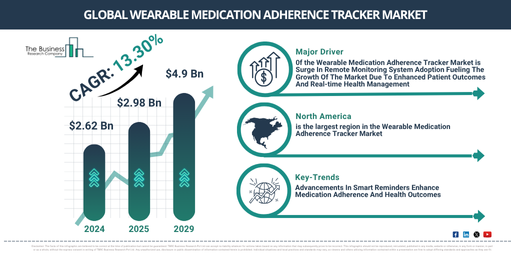
    The market size of the wearable medication adherence tracker has experienced fast growth recently. From $2.62 billion in 2024, it is expected to expand to $2.98 billion in 2025, marking a compound annual growth rate (CAGR) of 13.7%. Factors contributing to the expansion in the historical phase include the growing cases of chronic illnesses, the increase in the elderly population, the upsurge in demand for remote patient supervision, heightened attention towards personalized healthcare, and the rising awareness concerning medication adherence.

    What Growth Rate Is Anticipated for the Wearable Medication Adherence Tracker Market in the Coming Years?

    The market size of the wearable medication adherence tracker is projected to experience accelerated growth in the coming years, reaching $4.9 billion by 2029, with a compound annual growth rate (CAGR) of 13.3%. This upcoming growth could be due to factors such as the integration of AI and IoT in healthcare, the rise in the use of telehealth services, an increased level of investment in digital health technologies, the larger utilization of real-time data analytics, and an enhanced focus on preventive healthcare solutions. Key trends for the forecast period include advanced sensor technology, improved form factors for wearable, innovative drug-device combination products, incorporation of wearable trackers with electronic health records, and groundbreaking advancements in battery life and energy-efficient designs.

    Download The Free Sample Report Here:

    https://www.thebusinessresearchcompany.com/sample.aspx?id=24744&type=smp

    Who Are the Leading Companies in the Wearable Medication Adherence Tracker Market?

    Major companies operating in the wearable medication adherence tracker market are Apple Inc., Samsung Electronics Co. Ltd., Huawei Technologies Co. Ltd., Philips Healthcare, Otsuka Holdings Co. Ltd., Garmin Ltd., Guangdong Transtek Medical Electronics Co. Ltd., Bethesda Health Group Inc., Empatica Inc., CADEX Electronics Inc., PIXTA Inc., Fitbit LLC, TabTime Ltd., WatchMinder Company, Pivotell Ltd., MiniFinder Sweden AB, CareBand Inc., EtectRx Inc., Medema Group AG, Sensorem AB

    What Are the Key Drivers of the Wearable Medication Adherence Tracker Market?

    The wearable medication adherence tracker market is projected to grow due to the increased use of remote monitoring systems. These systems incorporate technology to frequently monitor and manage a patient’s health data from afar. The surging utilization of remote monitoring systems is driven by the demand for immediate access to data and intelligent decision-making, supplemented by the evolution of the Internet of Things (IoT) and superior connectivity for efficient remote handling. Wearable medication adherence trackers improve remote monitoring systems by offering live patient medication intake data, facilitating prompt interventions, and enhancing treatment efficacy. For instance, in January 2025, LondonWorld, a UK-based media company, reported that over half of the UK adult population utilized remote health tracking devices as wellness becomes increasingly prevalent. Therefore, the use of remote monitoring systems bolsters the expansion of the wearable medication adherence tracker market.

    Request For A Customized Report:

    https://www.thebusinessresearchcompany.com/customise?id=24744&type=smp

    What Are the Key Market Segments in the Wearable Medication Adherence Tracker Industry?

    The wearable medication adherence tracker market covered in this report is segmented –

    1) By Product Type: Smartwatches With Medication Features, Pill-tracking Wearables, Wearables With Biometric Monitoring And Adherence Tracking, Patch-based Wearables, Multifunctional Health Devices, Medication Adherence Platforms With Wearables

    2) By Medication Type: Chronic Disease Medications, Mental Health And Neurology, Oncology Medications, Lifestyle Or General Wellness

    3) By End-User: Patients Or Individuals, Healthcare Providers, Caregivers

    Subsegments:

    1) By Smartwatches With Medication Features: Reminder Alerts, Dose Tracking, Vibration Or Alarm Notifications, Integration With Mobile Apps, Voice Assistance Features

    2) By Pill-Tracking Wearables: Smart Pillboxes, Connected Pill Bottles, Electronic Pill Dispensers, Medication Reminder Caps, Cellular-Enabled Pill Trackers

    3) By Wearables With Biometric Monitoring And Adherence Tracking: Heart Rate Monitors, Blood Pressure Monitors, Glucose Monitors, Oxygen Saturation Sensors, Activity Or Movement Trackers

    4) By Patch-Based Wearables: Skin Patches With Drug Delivery, Adhesive Monitoring Patches, Sensor-Embedded Medication Patches, Transdermal Drug Release Patches, Connected Patch Monitors

    5) By Multifunctional Health Devices: All-In-One Health Trackers, Hybrid Smartwatches With Medication Features, Wearables Combining Vital Sign Monitoring And Adherence, Health Bands With Medication Alerts, Portable Diagnostic Devices With Adherence Features

    6) By Medication Adherence Platforms With Wearables: Cloud-Based Adherence Management Platforms, Mobile App Integration Platforms, Remote Patient Monitoring Platforms, AI-driven Adherence Analytics Platforms, Healthcare Provider Dashboard Platforms

    What Are the Latest Trends in the Wearable Medication Adherence Tracker Market?

    Key businesses in the market for wearable medication adherence trackers are prioritizing the advancement of products, like intelligent priority-based alerts, aiming to increase patient compliance and optimize overall health results through customization. The term intelligent priority-based alerts relates to artificial intelligence-driven medication notifications that modulate urgency levels, from gentle to robust, depending on the medicine’s significance and possible hazards. Samsung Electronics, an appliances firm based in South Korea, for example, launched a novel medication tracking attribute in its Samsung Health app in December 2023. This improvement is intended to assist users in effectively managing their medication timetables by offering prompt reminders and tracking features. This function smoothly combines with the existing health observation tools, thus encouraging better compliance with recommended therapies.

    Access The Full Report Here:

    https://www.thebusinessresearchcompany.com/report/wearable-medication-adherence-tracker-global-market-report

    What Are the Key Regional Markets in the Wearable Medication Adherence Tracker Industry?

    North America was the largest region in the wearable medication adherence tracker market in 2024. Asia-Pacific is expected to be the fastest-growing region in the forecast period. The regions covered in the wearable medication adherence tracker market report are Asia-Pacific, Western Europe, Eastern Europe, North America, South America, Middle East, Africa.

    Purchase The Full Report Today:

    https://www.thebusinessresearchcompany.com/purchaseoptions.aspx?id=24744

    This Report Delivers Insight On:

    1. How big is the wearable medication adherence tracker market, and how is it changing globally?

    2. Who are the major companies in the wearable medication adherence tracker market, and how are they performing?

    3. What are the key opportunities and risks in the wearable medication adherence tracker market right now?

    4. Which products or customer segments are growing the most in the wearable medication adherence tracker market?

    5. What factors are helping or slowing down the growth of the wearable medication adherence tracker market?

    About The Business Research Company:

    With over 15000+ reports from 27 industries covering 60+ geographies, The Business Research Company has built a reputation for offering comprehensive, data-rich research and insights. Armed with 1,500,000 datasets, the optimistic contribution of in-depth secondary research, and unique insights from industry leaders, you can get the information you need to stay ahead in the game.

    Get in touch with us:

    The Business Research Company: https://www.thebusinessresearchcompany.com/

    Americas +1 3156230293

    Asia +44 2071930708

    Europe +44 2071930708

    Email us at info@tbrc.info

    Follow us on:

    LinkedIn: https://in.linkedin.com/company/the-business-research-company

    YouTube: https://www.youtube.com/channel/UC24_fI0rV8cR5DxlCpgmyFQ

    Global Market Model: https://www.thebusinessresearchcompany.com/global-market-model

  • Ganciclovir Forecast Report – Designed for Decision Makers and Product Teams

    Ganciclovir Forecast Report – Designed for Decision Makers and Product Teams

    Claim your 30% discount on Global Market Reports with code ONLINE30. Limited time only.

    What Is the Growth Rate of the Ganciclovir Market?

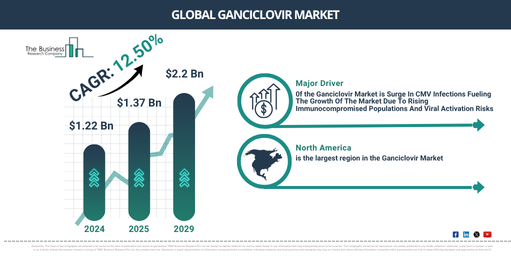
    In recent times, the ganciclovir market has seen a swift expansion. The market is projected to escalate from $1.22 billion in 2024 to $1.37 billion in 2025, witnessing a compound annual growth rate (CAGR) of 12.8%. The historic surge is tied to several factors, such as the heightened requirement for antiviral remedies, increased embracing of focused therapies, a rising need for efficient cures among transplant patients, an enhanced emphasis on persistent viral infections, and improving healthcare accessibility in developing regions.

    What Growth Rate Is Forecasted for the Ganciclovir Market by 2029?

    In the forthcoming years, the ganciclovir market, which is forecasted to attain a size of $2.2 billion in 2029, is predicted to experience a swift expansion at a compound annual growth rate (CAGR) of 12.5%. This development during the forecast period could be credited to the escalating adoption of antiviral therapies, the increasing instances of immunocompromised states, the rising consciousness about CMV infections, enhancements made in diagnostic technologies, and a surge in the improvement of healthcare infrastructure in burgeoning markets. Key trends projected during the forecast period encompass progressions in drug delivery systems, the advancement of extended-release formulations, the advent of innovative combination therapies, state-of-the-art diagnostic aids for early CMV detection, and the creation of tailored treatment schemes for CMV infections.

    Download The Free Sample Report Here:

    https://www.thebusinessresearchcompany.com/sample.aspx?id=24545&type=smp

    Which Key Companies Are Shaping the Future of the Ganciclovir Market?

    Major companies operating in the ganciclovir market are Roche Holding AG, Teva Pharmaceutical Industries Ltd., Fresenius Kabi AG, Dr. Reddy’s Laboratories Ltd., Cipla Ltd., Fareva Group, Zydus Lifesciences Ltd., Natco Pharma Ltd., Ajanta Pharma Ltd., Micro Labs Ltd., Taj Pharmaceuticals Ltd., Sunways Pvt. Ltd., Accord Healthcare Ltd., AdvaCare Pharma USA, Trifarma S.p.A., Actiza Pharmaceutical Pvt. Ltd., Bakul Group of Companies, Doctor Wonder Healthcare Pvt. Ltd., Sujalam Chemicals, Aetos Pharma Pvt. Ltd.

    Which Factors Are Driving Demand in the Ganciclovir Industry?

    The upward trend in occurrences of cytomegalovirus (CMV) infections is anticipated to invigorate the ganciclovir market’s expansion. CMV infections, triggered by a commonplace herpesvirus, can stay dormant and reactivate in individuals with compromised immunity, leading to severe issues like retinitis, pneumonia, and disorders of the gastrointestinal system, specifically in transplant recipients and HIV/AIDS patients. The proliferation of CMV infections is spurred by the increasing count of individuals with compromised immunity, who have diminished immune defenses, thereby escalating their vulnerability to viral activation and spread. Ganciclovir emphasizes the urgent requirement for efficacious antiviral treatment and underscores its importance in handling the escalating occurrences of CMV infections amidst individuals with compromised immunity. For instance, as stated by the Centers for Disease Control and Prevention, a government agency of the US, in January 2025, 1 out of 3 kids in the US contracts CMV by the age of 5, and over half of the adults by the age of 40. Additionally, the National Library of Medicine, a medical library in the US, reported in October 2022 that approximately 40,000 infants are born annually with congenital CMV (cCMV) of these, about 400 (1%) die as a result of the infection and nearly 8,000 (25%) experience long-term effects. Hence, the upward trend of incidences of cytomegalovirus (CMV) infections is fuelling the ganciclovir market’s growth. The augmentation in healthcare expenditure is predicted to fuel the ganciclovir market’s enlargement moving ahead. Healthcare expenditure is the cumulative amount spent on medical services, treatments, and public health by individuals, insurers, and governments. The escalation in healthcare expenditure is attributed to advanced medical technologies, which often entail big developmental and implementation costs, necessitate specialized training and devices, and result in the increased utilization of costly diagnostic and treatment procedures. Healthcare expenditure facilitates the use of ganciclovir by expanding access to antiviral treatments for handling cytomegalovirus (CMV) infections, particularly in patients with compromised immunity. For instance, the Office for National Statistics, a government department in the UK, revealed in May 2024 that the UK’s healthcare expenditure had reached approximately $421.32 billion (£317 billion) in 2024, marking a 6.5% growth in comparison to 2023. As such, the growth in healthcare expenditure is steering the ganciclovir market’s growth.

    Request For A Customized Report:

    https://www.thebusinessresearchcompany.com/customise?id=24545&type=smp

    How Is the Ganciclovir Market Segmented by Several Divisions?

    The ganciclovir market covered in this report is segmented –

    1) By Type: Injection, Oral

    2) By Dosage Form: Tablets, Intravenous (IV) Solution, Ophthalmic Gel

    3) By Distribution Channel: Hospital Pharmacies, Retail Pharmacies, Online Pharmacies

    4) By Application: Cytomegalovirus (CMV) Retinitis, Cytomegalovirus (CMV) Prevention In Organ Transplant Patients, Other Viral Applications

    Subsegments:

    1) By Injection: Lyophilized Powder for Injection, Premixed IV Bags, Intravitreal Injection

    2) By Oral: Capsules, Oral Solution

    Access The Full Report Here:

    https://www.thebusinessresearchcompany.com/report/ganciclovir-global-market-report

    Which Regions Are Driving Growth in the Ganciclovir Market?

    North America was the largest region in the ganciclovir market in 2024. Asia-Pacific is expected to be the fastest-growing region in the forecast period. The regions covered in the ganciclovir market report are Asia-Pacific, Western Europe, Eastern Europe, North America, South America, Middle East, Africa.

    Purchase The Full Report Today:

    https://www.thebusinessresearchcompany.com/purchaseoptions.aspx?id=24545

    This Report Delivers Insight On:

    1. How big is the ganciclovir market, and how is it changing globally?

    2. Who are the major companies in the ganciclovir market, and how are they performing?

    3. What are the key opportunities and risks in the ganciclovir market right now?

    4. Which products or customer segments are growing the most in the ganciclovir market?

    5. What factors are helping or slowing down the growth of the ganciclovir market?

    About The Business Research Company:

    With over 15000+ reports from 27 industries covering 60+ geographies, The Business Research Company has built a reputation for offering comprehensive, data-rich research and insights. Armed with 1,500,000 datasets, the optimistic contribution of in-depth secondary research, and unique insights from industry leaders, you can get the information you need to stay ahead in the game.

    Get in touch with us:

    The Business Research Company: https://www.thebusinessresearchcompany.com/

    Americas +1 3156230293

    Asia +44 2071930708

    Europe +44 2071930708

    Email us at info@tbrc.info

    Follow us on:

    LinkedIn: https://in.linkedin.com/company/the-business-research-company

    YouTube: https://www.youtube.com/channel/UC24_fI0rV8cR5DxlCpgmyFQ

    Global Market Model: https://www.thebusinessresearchcompany.com/global-market-model