Month: June 2025

  • Hypoparathyroidism Forecast Report – Designed for Decision Makers and Product Teams

    Claim your 30% discount on Global Market Reports with code ONLINE30. Limited time only.

    What Is the Growth Rate of the Hypoparathyroidism Market?

    The market for hypoparathyroidism has seen robust expansion in the past few years. The market, which was projected at $0.95 billion in 2024, is anticipated to reach $1.03 billion in 2025 with an 8.6% compound annual growth rate (CAGR). This substantial increase during the historic period can be traced back to the growth in the number of thyroid surgeries, enhanced awareness about hypoparathyroidism, a climb in post-surgical complications, expanding demand for supplements of calcium and vitamin D, and an amplified emphasis on managing endocrine disorders.

    What Growth Rate Is Forecasted for the Hypoparathyroidism Market by 2029?

    The market for hypoparathyroidism is projected to experience significant expansion in the coming years, with forecasts predicting an increase to $1.42 billion by 2029, representing a compound annual growth rate (CAGR) of 8.3%. The upcoming growth can be linked to the increased uptake of recombinant parathyroid hormone therapies, more funds being directed towards hypoparathyroidism research, improvements in healthcare infrastructure, a growing older population susceptible to endocrine conditions, and heightened initiatives for awareness and early detection. The period under forecast is set to witness major trends like progress in parathyroid hormone therapies, cutting-edge diagnostic methods for hypoparathyroidism, production of sustained-release calcium supplements, breakthroughs in minimally invasive thyroid surgery, and progress in patient monitoring technologies.

    Download The Free Sample Report Here:

    https://www.thebusinessresearchcompany.com/sample.aspx?id=24565&type=smp

    Which Key Companies Are Shaping the Future of the Hypoparathyroidism Market?

    Major companies operating in the hypoparathyroidism market are Pfizer Inc., F. Hoffmann-La Roche Ltd., Merck & Co Inc., AbbVie Inc., Sanofi S.A., Novartis AG, GlaxoSmithKline plc , Takeda Pharmaceutical Company Limited, Eli Lilly and Company, Amgen Inc., Teva Pharmaceutical Industries Ltd., Dr. Reddy’s Laboratories Ltd., Cipla Limited , Lupin Limited, Torrent Pharmaceuticals Ltd., Eagle Pharmaceuticals Inc., BridgeBio Pharma Inc., Ascendis Pharma A/S, Extend Biosciences Inc., Entera Bio Ltd.

    Which Factors Are Driving Demand in the Hypoparathyroidism Industry?

    The growth of the hypoparathyroidism market is foreseen to be driven by the rise in thyroid cancer incidences. Thyroid cancer occurs when abnormal cells multiply in the thyroid gland, creating a noticeable lump in the neck. The rise in thyroid cancer cases is attributed to improvements in diagnostic imaging technologies. These technologies facilitate the early and frequent detection of small thyroid nodules, even when they don’t cause symptoms. The progression of thyroid cancer exacerbates hypoparathyroidism due to increased requirements for thyroid surgeries. These surgeries can unintentionally harm the parathyroid glands, causing a calcium imbalance and a persistent shortage of hormones, which necessitates the need for long-term disease management strategies. For example, data from the US-based non-profit organization, ‘the American Cancer Society’, showed that the number of new thyroid cancer cases rose to 44,020 in 2025, up from 43,720 in 2023. Hence, the growth of the hypoparathyroidism market is being propelled by the escalating thyroid cancer incidences.

    Request For A Customized Report:

    https://www.thebusinessresearchcompany.com/customise?id=24565&type=smp

    How Is the Hypoparathyroidism Market Segmented by Several Divisions?

    The hypoparathyroidism market covered in this report is segmented –

    1) By Treatment: Hormone Replacement Therapy, Adjunctive Therapies

    2) By Type: Hormone Replacement Therapy, Calcium And Vitamin D Supplements, Emerging Therapies

    3) By Route Of Administration: Oral, Parenteral

    4) By Distribution Channel: Hospital Pharmacy, Retail Pharmacy, Online Pharmacy

    5) By End User: Hospitals, Specialty Clinics, Homecare Settings

    Subsegments:

    1) By Hormone Replacement Therapy: Recombinant Parathyroid Hormone, Parathyroid Hormone Analogues, Calcimimetics, Calcium And Vitamin D Supplements

    2) By Adjunctive Therapies: Magnesium Supplements, Phosphate Binders, Other Supportive Therapies

    What are the Emerging Market Trends Driving the Growth of the Hypoparathyroidism Industry?

    Leading corporations in the hypoparathyroidism market are directing their efforts towards the creation of products based on advanced technology, such as transition technology, in order to improve treatment efficiency and enhance patient results. TransCon (Transient Conjugation) technology is being utilized for the development of these products as it aids in optimized drug delivery. Ascendis Pharma A/S, a biopharmaceutical firm based in Denmark, for instance, introduced YORVIPATH (palopegteriparatide), its second product based on TransCon technology, in Germany and Austria in January 2024. This product aims to address chronic hypoparathyroidism in adults by maintaining physiological PTH levels over a 24 hour period, with its once-daily administration.

    Access The Full Report Here:

    https://www.thebusinessresearchcompany.com/report/hypoparathyroidism-global-market-report

    Which Regions Are Driving Growth in the Hypoparathyroidism Market?

    North America was the largest region in the hypoparathyroidism market in 2024. Asia-Pacific is expected to be the fastest-growing region in the forecast period. The regions covered in the hypoparathyroidism market report are Asia-Pacific, Western Europe, Eastern Europe, North America, South America, Middle East, Africa.

    Purchase The Full Report Today:

    https://www.thebusinessresearchcompany.com/purchaseoptions.aspx?id=24565

    This Report Delivers Insight On:

    1. How big is the hypoparathyroidism market, and how is it changing globally?

    2. Who are the major companies in the hypoparathyroidism market, and how are they performing?

    3. What are the key opportunities and risks in the hypoparathyroidism market right now?

    4. Which products or customer segments are growing the most in the hypoparathyroidism market?

    5. What factors are helping or slowing down the growth of the hypoparathyroidism market?

    About The Business Research Company:

    With over 15000+ reports from 27 industries covering 60+ geographies, The Business Research Company has built a reputation for offering comprehensive, data-rich research and insights. Armed with 1,500,000 datasets, the optimistic contribution of in-depth secondary research, and unique insights from industry leaders, you can get the information you need to stay ahead in the game.

    Get in touch with us:

    The Business Research Company: https://www.thebusinessresearchcompany.com/

    Americas +1 3156230293

    Asia +44 2071930708

    Europe +44 2071930708

    Email us at info@tbrc.info

    Follow us on:

    LinkedIn: https://in.linkedin.com/company/the-business-research-company

    YouTube: https://www.youtube.com/channel/UC24_fI0rV8cR5DxlCpgmyFQ

    Global Market Model: https://www.thebusinessresearchcompany.com/global-market-model
  • Neurogenic Detrusor Overactivity Market Size to Exceed $2.45 Billion by 2029 | Growth and Industry Trends

    Neurogenic Detrusor Overactivity Market Size to Exceed $2.45 Billion by 2029 | Growth and Industry Trends

    Claim your 30% discount on Global Market Reports with code ONLINE30. Limited time only.

    How Has the Neurogenic Detrusor Overactivity Market Grown from 2024 to 2025?

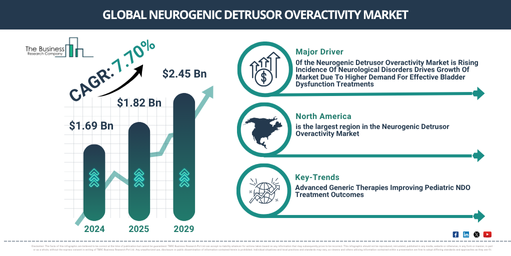
    In the past few years, the market for neurogenic detrusor overactivity has seen significant growth. It is expected to expand from a size of $1.69 billion in 2024 to $1.82 billion in 2025, experiencing a compound annual growth rate (CAGR) of 7.9%. The expansion during the historic period can be linked to several factors. These include a growing number of neurological disorder cases, heightened awareness among healthcare professionals, increasing use of pharmaceutical remedies, development of hospital and clinic facilities, and a surge in the rates of diagnosis.

    What Growth Rate Is Anticipated for the Neurogenic Detrusor Overactivity Market in the Coming Years?

    The market size for neurogenic detrusor overactivity is projected to experience robust growth in the forthcoming years, expected to hit $2.45 billion in 2029 with a compound annual growth rate (CAGR) of 7.7%. This predicted growth during the forecast period is due to factors such as an increasing elderly population, a rise in occurrences of spinal cord injuries, heightened healthcare spending, broadening of minimally invasive treatment alternatives, and the elevation in patient knowledge and education. Key trends observed within the forecast period are advancements in stem cell methodologies, innovation in drug delivery systems, progression in neuromodulation devices, R&D in bespoke medicine, and advances in minimally invasive techniques.

    Download The Free Sample Report Here:

    https://www.thebusinessresearchcompany.com/sample.aspx?id=24619&type=smp

    Who Are the Leading Companies in the Neurogenic Detrusor Overactivity Market?

    Major companies operating in the neurogenic detrusor overactivity market are Pfizer Inc., Johnson & Johnson Services Inc., AbbVie Inc., Sanofi S. A., Medtronic plc, Teva Pharmaceutical Industries Ltd., Astellas Pharma Inc., Intas Pharmaceuticals Ltd., Macleods Pharmaceuticals Ltd., Sun Pharmaceutical Industries, Apotex Inc., Viatris Inc., Sumitomo Pharma America Inc., Galderma, Ipsen, Coloplast A/S, Aurobindo Pharma Limited, Hisamitsu Pharmaceutical Co. Inc., Kaken Pharmaceutical Co. Ltd., Hugel Inc.

    What Are the Key Drivers of the Neurogenic Detrusor Overactivity Market?

    The neurogenic detrusor overactivity market is projected to expand due to the increasing prevalence of neurological disorders. These disorders, which impact the brain, nerves, or spinal cord, can lead to issues with cognition, sensation, movement, or other bodily functions. The rate of neurological disorders is on the rise as longevity increases, which ups the probability of age-associated cerebral deterioration. Neurogenic detrusor overactivity, commonly tied to neurological disorders such as Parkinson’s disease, multiple sclerosis, and spinal cord injuries, is a type of bladder malfunction. These ailments interrupt the normal nerve communication pathway from the brain to the bladder, which can result in involuntary bladder contractions. For example, a study published by the American Academy of Neurology (AAN) in April 2024 estimated that the global count of brain disorders will reach 4.9 billion cases by 2050, marking a 22% surge from the roughly 4 billion cases in 2021. Consequently, the escalating prevalence of neurological disorders is propelling the growth in the neurogenic detrusor overactivity market.

    Request For A Customized Report:

    https://www.thebusinessresearchcompany.com/customise?id=24619&type=smp

    What Are the Key Market Segments in the Neurogenic Detrusor Overactivity Industry?

    The neurogenic detrusor overactivity market covered in this report is segmented –

    1) By Types: Non-Surgical Treatment, Surgical Treatment, Follow-Up Treatment

    2) By Application: Adult, Child

    3) By End-User: Hospitals, Urology Clinics, Rehabilitation Centers, Private Practices, Long-Term Care Facilities

    Subsegments:

    1) By Non-Surgical Treatment: Antimuscarinic Drugs, Beta-3 Adrenergic Agonists, Behavioral Therapy, Neuromodulation, Clean Intermittent Catheterization, Intravesical Therapies

    2) By Surgical Treatment: Botulinum Toxin Injection, Augmentation Cystoplasty, Urinary Diversion, External Sphincterotomy, Artificial Urinary Sphincter Implantation

    3) By Follow-Up Treatment: Urodynamic Evaluation, Ultrasound Monitoring, Laboratory Tests, Ongoing Catheterization, Repeat Botulinum Toxin Injections, Patient and Caregiver Training, Quality of Life Assessment

    What Are the Latest Trends in the Neurogenic Detrusor Overactivity Market?

    Companies leading the neurogenic detrusor overactivity (NDO) treatment market are pouring their resources into the development of advanced generic therapies like beta-3 adrenergic receptor agonists, in a bid to provide cost-effective bladder control remedies. This class of medicines, including mirabegron, work by relaxing the bladder’s detrusor muscle which ultimately expands the bladder’s capacity while diminishing such symptoms as urgency and incontinence. For example, in April 2024, the U.S. Food and Drug Administration (USFDA) gave its approval to Lupin Ltd., a pharmaceutical firm based in India, for the introduction of Mirabegron, the generic counterpart of Myrbetriq, into the U.S. market. Mirabegron, which is a progressive, once-daily, oral therapy, presents a practical and efficient treatment alternative for overactive bladder (OAB) and NDO within paediatric demographics. This endorsement from the USFDA further strengthens Lupin Ltd.’s dedication towards widening the availability of affordable, top-quality generic medicines in essential therapeutic fields.

    Access The Full Report Here:

    https://www.thebusinessresearchcompany.com/report/neurogenic-detrusor-overactivity-global-market-report

    What Are the Key Regional Markets in the Neurogenic Detrusor Overactivity Industry?

    North America was the largest region in the neurogenic detrusor overactivity market in 2024. The regions covered in the neurogenic detrusor overactivity market report are Asia-Pacific, Western Europe, Eastern Europe, North America, South America, Middle East, Africa.

    Purchase The Full Report Today:

    https://www.thebusinessresearchcompany.com/purchaseoptions.aspx?id=24619

    This Report Delivers Insight On:

    1. How big is the neurogenic detrusor overactivity market, and how is it changing globally?

    2. Who are the major companies in the neurogenic detrusor overactivity market, and how are they performing?

    3. What are the key opportunities and risks in the neurogenic detrusor overactivity market right now?

    4. Which products or customer segments are growing the most in the neurogenic detrusor overactivity market?

    5. What factors are helping or slowing down the growth of the neurogenic detrusor overactivity market?

    About The Business Research Company:

    With over 15000+ reports from 27 industries covering 60+ geographies, The Business Research Company has built a reputation for offering comprehensive, data-rich research and insights. Armed with 1,500,000 datasets, the optimistic contribution of in-depth secondary research, and unique insights from industry leaders, you can get the information you need to stay ahead in the game.

    Get in touch with us:

    The Business Research Company: https://www.thebusinessresearchcompany.com/

    Americas +1 3156230293

    Asia +44 2071930708

    Europe +44 2071930708

    Email us at info@tbrc.info

    Follow us on:

    LinkedIn: https://in.linkedin.com/company/the-business-research-company

    YouTube: https://www.youtube.com/channel/UC24_fI0rV8cR5DxlCpgmyFQ

    Global Market Model: https://www.thebusinessresearchcompany.com/global-market-model
  • Human Epidermal Growth Factor Market Outlook 2025 – Insights for Executive and Strategic Planning

    Human Epidermal Growth Factor Market Outlook 2025 – Insights for Executive and Strategic Planning

    Claim your 30% discount on Global Market Reports with code ONLINE30. Limited time only.

    How Has the Human Epidermal Growth Factor Market Grown from 2024 to 2025?

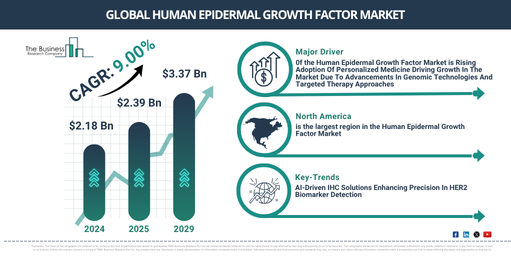
    The human epidermal growth factor market has seen considerable growth in the past few years. The market, which was worth $2.18 billion in 2024, is projected to reach $2.39 billion in 2025, growing at a compound annual growth rate of 9.3%. The increase during the historical period can be attributed to the rising aging population who are more susceptible to skin conditions, increased support and funding from governments for biopharmaceutical advancements, a surge in diabetes cases leading to more incidents of chronic wounds, increased partnerships between pharmaceutical firms and research institutions, and the growing preference of consumers for non-invasive skincare options.

    What Growth Rate Is Anticipated for the Human Epidermal Growth Factor Market in the Coming Years?

    The human epidermal growth factor market is predicted to experience a robust growth in the years to come. It is anticipated to reach a value of $3.37 billion by 2029, with an impressive compound annual growth rate (CAGR) of 9.0%. This growth during the forecast period is likely to be driven by factors such as growing demand for regenerative medicine and procedures related to wound healing, increased instances of chronic skin disorders and injuries, heightened understanding about anti-aging and skincare items containing hegf, boosted investment in the field of biotech research and development, along with growing implementation of customised medicine and targeted treatments. Key trends in the forecast period incorporate advancements in recombinant dna technology, progress in protein engineering to enhance the stability and efficacy of hegf, the technological incorporation of nanotechnology, breakthroughs in bioprocessing tactics, and progress in cell culture technology.

    Download The Free Sample Report Here:

    https://www.thebusinessresearchcompany.com/sample.aspx?id=24564&type=smp

    Who Are the Leading Companies in the Human Epidermal Growth Factor Market?

    Major companies operating in the human epidermal growth factor market are Pfizer Inc., Johnson & Johnson Services Inc, F. Hoffmann-La Roche AG, Merck & Co. Inc., Bayer AG, AstraZeneca plc, Novartis AG, GlaxoSmithKline Plc, Amgen Inc., Lonza Group AG, STEMCELL Technologies, Abcam plc., BioLegend Inc., Bharat Biotech International Limited, RayBiotech Inc., Enzo Life Sciences Inc., Neocutis S.A, Proteintech Group Inc., Creative BioMart Co. Ltd., Abbkine Scientific Co. Ltd.

    What Are the Key Drivers of the Human Epidermal Growth Factor Market?

    The growth of the human epidermal growth factor market is anticipated to surge due to the increasing utilization of personalized medicine. This healthcare approach, which customizes treatments based on a person’s genetic profile, lifestyle, and environment, allows for more precise and efficient healthcare. Advances in genomic technologies have facilitated personalized medicine by allowing faster and more accurate identification of individual genetic profiles. HER2 role in personalized medicine is vital as it enables the categorization of tumors based on HER2 protein overexpression, which aids in selecting the appropriate targeted therapies. This not only results in improved treatment outcomes but also decreases unnecessary side effects. For example, in 2022, the Personalized Medicine Coalition, a US professional membership organization, reported that 34% of all new approved therapies comprised of 12 new personalized medicines. This was a considerable increase from previous years. Consequently, the surge in the personalized medicine application is driving the human epidermal growth factor market’s growth. Also, the human epidermal growth factor market is anticipated to experience significant growth due to the mounting number of clinical trials, leading to the demand for improved wound healing therapies. Clinical trials are required to assess the safety, effectiveness, and potential side effects of medical treatments or interventions. There’s a rising demand for these trials owing to the requirement for personalized and innovative treatments that necessitate thorough safety and efficacy testing. Human epidermal growth factor (hEGF) is a critical component in these trials as it fosters cell growth and tissue repair. This allows for evaluation of therapies for conditions such as wound healing and skin regeneration. For example, according to a report by the Association of the British Pharmaceutical Industry, a London-based trade association, industry clinical trials in the UK saw a 15% increase in annual recruitment from 36,722 participants in 2021-22 to 42,088 in 2022-23. Therefore, the escalating number of clinical trials is propelling the human epidermal growth factor market’s growth.

    Request For A Customized Report:

    https://www.thebusinessresearchcompany.com/customise?id=24564&type=smp

    What Are the Key Market Segments in the Human Epidermal Growth Factor Industry?

    The human epidermal growth factor market covered in this report is segmented –

    1) By Product Type: Recombinant Human Epidermal Growth Factor, Natural Human Epidermal Growth Factor

    2) By Formulation: Injectable Form, Topical Form, Oral Form

    3) By Distribution Channel: Direct Sales, Online Pharmacies, Retail Pharmaceis, Hospital Pharmacies, Specialty Clinics

    4) By Application: Dermatology, Oncology, Opthalmology, Wound Healing, Cosmetic Procedures

    5) By End-User: Hospitals, Clincs, Research Institutes, Other End Users

    Subsegments:

    1) By Recombinant Human Epidermal Growth Factor: Injectable solutions, Oncology therapeutics, Eye drops, Wound healing agents

    2) By Natural Human Epidermal Growth Factor: Plasma-derived products, Colostrum-based products, Amniotic fluid-derived products, Salivary-derived formulations

    What Are the Latest Trends in the Human Epidermal Growth Factor Market?

    Leading firms in the human epidermal growth factor marketplace are placing emphasis on producing technological innovations such as AI-driven immunohistochemistry (IHC) scoring systems to increase the accuracy, speed, and repeatability of biomarker detection and cancer diagnosis. The AI-driven immunohistochemistry (IHC) scoring technology implicates the use of artificial intelligence protocols to autonomously examine and quantify protein levels in tissue samples stained via IHC, boosting reliability, consistency, and expedition in diagnostic pathology. For example, in September 2023, Ibex Medical Analytics, a company based in Israel, introduced their product, Ibex Breast HER2. This enhances the accuracy and consistency of HER2 biomarker scoring in cases of breast cancer, particularly in problematic HER2-low instances, facilitating the optimization of treatment procedures and bettering patient results. The key advantages of this are highly precise, repeatable, and effectual HER2 IHC scoring, aiding pathologists in reaching assured, impartial choices for the selection of targeted therapy.

    Access The Full Report Here:

    https://www.thebusinessresearchcompany.com/report/human-epidermal-growth-factor-global-market-report

    What Are the Key Regional Markets in the Human Epidermal Growth Factor Industry?

    North America was the largest region in the human epidermal growth factor market in 2024. Asia-Pacific is expected to be the fastest-growing region in the forecast period. The regions covered in the human epidermal growth factor market report are Asia-Pacific, Western Europe, Eastern Europe, North America, South America, Middle East, Africa.

    Purchase The Full Report Today:

    https://www.thebusinessresearchcompany.com/purchaseoptions.aspx?id=24564

    This Report Delivers Insight On:

    1. How big is the human epidermal growth factor market, and how is it changing globally?

    2. Who are the major companies in the human epidermal growth factor market, and how are they performing?

    3. What are the key opportunities and risks in the human epidermal growth factor market right now?

    4. Which products or customer segments are growing the most in the human epidermal growth factor market?

    5. What factors are helping or slowing down the growth of the human epidermal growth factor market?

    About The Business Research Company:

    With over 15000+ reports from 27 industries covering 60+ geographies, The Business Research Company has built a reputation for offering comprehensive, data-rich research and insights. Armed with 1,500,000 datasets, the optimistic contribution of in-depth secondary research, and unique insights from industry leaders, you can get the information you need to stay ahead in the game.

    Get in touch with us:

    The Business Research Company: https://www.thebusinessresearchcompany.com/

    Americas +1 3156230293

    Asia +44 2071930708

    Europe +44 2071930708

    Email us at info@tbrc.info

    Follow us on:

    LinkedIn: https://in.linkedin.com/company/the-business-research-company

    YouTube: https://www.youtube.com/channel/UC24_fI0rV8cR5DxlCpgmyFQ

    Global Market Model: https://www.thebusinessresearchcompany.com/global-market-model
  • Hormone Replacement Therapy Market Projected at $37.9 Billion by 2029 | Strategic Insights and Forecast Data

    Hormone Replacement Therapy Market Projected at $37.9 Billion by 2029 | Strategic Insights and Forecast Data

    Claim your 30% discount on Global Market Reports with code ONLINE30. Limited time only.

    How Has the Hormone Replacement Therapy Market Size Changed, over the years?

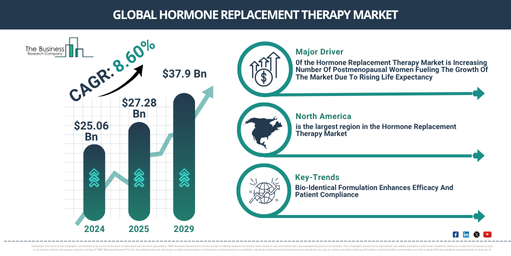
    The market for hormone replacement therapy has seen robust expansion in the recent past. The market will experience growth from $25.06 billion in 2024 to $27.28 billion in 2025, indicating a compound annual growth rate (CAGR) of 8.9%. This growth during the historic period can be credited to various factors. These include a surge in the occurrence of menopausal symptoms in older women, increased awareness about treatments for hormone deficiency, a longer life expectancy coupled with an aging population, a rise in global healthcare spending, and a heightened propensity for estrogen therapy amongst women after menopause.

    How Much Will the Hormone Replacement Therapy Market Be Worth in 2029?

    Over the coming years, the hormone replacement therapy market is poised for robust growth, with projections of reaching $37.9 billion by 2029, reflecting a compound annual growth rate (CAGR) of 8.6%. Factors contributing to this growth during the forecast period include an increased incidence of hormonal disorders, a heightened focus on menopausal health, a rising global elderly population, wider access to healthcare in developing markets, and growing preference for minimally invasive treatment methods. Key trends anticipated during this forecast period encompass progress in bio-identical hormone formulations, advanced transdermal drug delivery systems, personalized hormone therapy resulting from genetic profiling, innovative developments in long-lasting hormone injectables, and advancements in the integration of telehealth for hormone therapy management.

    Download The Free Sample Report Here:

    https://www.thebusinessresearchcompany.com/sample.aspx?id=24563&type=smp

    Which is the Largest Company in the Hormone Replacement Therapy Market?

    Major companies operating in the hormone replacement therapy market are Pfizer Inc., F. Hoffmann-La Roche Ltd., AbbVie Inc., Bayer AG, Sanofi S.A., Abbott Laboratories, Novartis AG, GSK plc, Eli Lilly and Company, Amgen Inc., Novo Nordisk A/S, Teva Pharmaceutical Industries Ltd., Mylan N.V., Bausch Health Companies Inc., Cipla Inc., Gedeon Richter Plc., Lupin Limited, Orion Corporation, Halozyme Therapeutics Inc., Theramex HQ UK Limited

    What Are the Main Market Drivers in the Hormone Replacement Therapy Industry?

    The hormone replacement therapy market is anticipated to expand due to the rising number of women experiencing menopause after their reproductive years, known as postmenopausal women. This increase is primarily attributed to increased longevity, leading to a larger population of aged women undergoing menopause. Postmenopausal symptoms such as hot flashes and night sweats are mitigated through hormone replacement therapy, boosting their quality of life. The therapy, tailored to individual needs, promotes balance in hormones, lessens discomfort and fosters overall well-being. As stated by Mayo Clinic Health System, a healthcare corporation based in the U.S., in July 2022, the global population of postmenopausal and menopausal women is projected to surge to 1.2 billion by 2030, with an annual addition of 47 million women. Thus, the growing population of postmenopausal women is fuelling the expansion of the hormone replacement therapy market.

    Request For A Customized Report:

    https://www.thebusinessresearchcompany.com/customise?id=24563&type=smp

    How Is the Hormone Replacement Therapy Market Segments Structured?

    The hormone replacement therapy market covered in this report is segmented –

    1) By Therapy Type: Estrogen Replacement Therapy, Human Growth Hormone Replacement Therapy, Thyroid Hormone Replacement Therapy, Testosterone Replacement Therapy, Other Therapy Types

    2) By Indication: Menopause, Hypothyroidism, Male Hypogonadism, Growth Hormone Deficiency, Other Indications

    3) By Route Of Administration: Oral, Transdermal, Injectable, Other Of Administartions

    4) By Distribution Channel: Hospital Pharmacies, Retail Pharmacies, Online Pharmacies, Other Distribution Channels

    Subsegments:

    1) By Estrogen Replacement Therapy: Oral Estrogen, Transdermal Estrogen, Topical Estrogen, Vaginal Estrogen, Injectable Estrogen

    2) By Human Growth Hormone (hGH) Replacement Therap: Somatropin, Somatrem, Recombinant Human Growth Hormone (rhGH), Pegylated hGH, Other Human Growth Hormone (hGH) Replacement Therapies

    3) By Thyroid Hormone Replacement Therapy: Levothyroxine (T4), Liothyronine (T3), Natural Desiccated Thyroid (NDT), Combination T3 Or T4 Therapy

    4) By Testosterone Replacement Therapy: Gels And Creams, Injections, Patches, Oral Testosterone, Pellets

    5) By Other Therapy Types: Progesterone Replacement Therapy, Combined Estrogen-Progesterone Therapy, Dehydroepiandrosterone Therapy, Melatonin Replacement Therapy

    What Strategic Trends Are Transforming the Hormone Replacement Therapy Market?

    Major participants in the hormone replacement therapy market are prioritizing the creation of innovative solutions like bio-identical hormone mixes to increase the effectiveness of treatment and ensure patient satisfaction. Bio-identical hormone therapies utilize hormones that are chemically identical to those naturally occurring in the human body. They aim to deliver more natural and efficient relief of symptoms with minimized side effects. For example, Jagsonpal Pharmaceuticals Ltd., a pharmaceutical enterprise based in India, introduced MemUp, a bio-identical hormone replacement therapy, in May 2024. This groundbreaking treatment merges estradiol and progesterone into one, simple to take, daily oral pill. MemUp is engineered to efficiently alleviate widespread menopausal symptoms like hot flashes and night sweats. It also simplifies the treatment process to increase patient comfort and consistency.

    Access The Full Report Here:

    https://www.thebusinessresearchcompany.com/report/hormone-replacement-therapy-global-market-report

    Which Global Regions Offer the Highest Growth in the Hormone Replacement Therapy Market?

    North America was the largest region in the hormone replacement therapy market in 2024. Asia-Pacific is expected to be the fastest-growing region in the forecast period. The regions covered in the hormone replacement therapy market report are Asia-Pacific, Western Europe, Eastern Europe, North America, South America, Middle East, Africa.

    Purchase The Full Report Today:

    https://www.thebusinessresearchcompany.com/purchaseoptions.aspx?id=24563

    This Report Delivers Insight On:

    1. How big is the hormone replacement therapy market, and how is it changing globally?

    2. Who are the major companies in the hormone replacement therapy market, and how are they performing?

    3. What are the key opportunities and risks in the hormone replacement therapy market right now?

    4. Which products or customer segments are growing the most in the hormone replacement therapy market?

    5. What factors are helping or slowing down the growth of the hormone replacement therapy market?

    About The Business Research Company:

    With over 15000+ reports from 27 industries covering 60+ geographies, The Business Research Company has built a reputation for offering comprehensive, data-rich research and insights. Armed with 1,500,000 datasets, the optimistic contribution of in-depth secondary research, and unique insights from industry leaders, you can get the information you need to stay ahead in the game.

    Get in touch with us:

    The Business Research Company: https://www.thebusinessresearchcompany.com/

    Americas +1 3156230293

    Asia +44 2071930708

    Europe +44 2071930708

    Email us at info@tbrc.info

    Follow us on:

    LinkedIn: https://in.linkedin.com/company/the-business-research-company

    YouTube: https://www.youtube.com/channel/UC24_fI0rV8cR5DxlCpgmyFQ

    Global Market Model: https://www.thebusinessresearchcompany.com/global-market-model
  • Home Medical Alert Systems Industry Growth Expected to Reach $6.85 Billion by 2029 at a CAGR of 11.7% | Segmentation and Growth Opportunities

    Home Medical Alert Systems Industry Growth Expected to Reach $6.85 Billion by 2029 at a CAGR of 11.7% | Segmentation and Growth Opportunities

    Claim your 30% discount on Global Market Reports with code ONLINE30. Limited time only.

    What Is the Forecast for the Home Medical Alert Systems Market Growth in 2025?

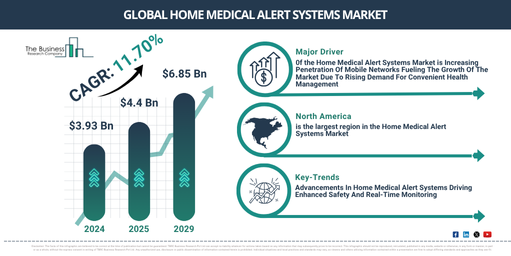
    Over the past few years, the size of the home medical alert systems market has expanded substantially. Projected growth is from $3.93 billion in 2024 to $4.4 billion in 2025, boasting a compound annual growth rate (CAGR) of 12.0%. This notable growth during the historic period is linked to a surge in the senior citizen population, escalating incidences of chronic diseases, heightening consciousness about the safety of the elderly, an uptick in the utilization of telehealth technologies, and a rising demand for patient monitoring remotely.

    What Is the Forecast for the Home Medical Alert Systems Market Size Through 2029?

    In the coming years, the home medical alert systems market size is predicted to witness significant growth. By 2029, it is expected to reach a value of $6.85 billion, with a compound annual growth rate (CAGR) of 11.7%. The anticipated growth during this forecast period can be credited to factors like a burgeoning elderly population, growing integration of AI and IoT, increasing demand for wearable medical appliances, expansion of telehealth services, and enhanced government support for elderly care. Trends guiding the growth during the forecast period consist of advancements in AI-operated alert systems, innovations in wearable and non-wearable devices, integration with smart home technologies, upsurge in utilization of mobile apps for monitoring, alongside the proliferation of subscription-based service models.

    Download The Free Sample Report Here:

    https://www.thebusinessresearchcompany.com/sample.aspx?id=24562&type=smp

    What are the Key Market Players in Home Medical Alert Systems Market and How They’re Evolving?

    Major companies operating in the home medical alert systems market are ADT Inc., Connect America LLC, Lifeline Systems Pvt. Ltd., LifeStation Inc., Medical Guardian LLC, LifeFone Inc., AlertOne Services LLC, Life Alert Emergency Response Inc., Rescue Alert of California, MyNotifi by MedHab Inc., Bay Alarm Medical, SafeGuardian LLC, LifeCall Medical Alert Systems, Senior Safety Medical Alert, AlertCare Medical Alert Systems, LifeSignals Group Inc., LogicMark Inc., ResponseNow Medical Alert Systems, Rescue Touch LLC, Vital Alert Communication Inc.

    What Are the Primary Growth Drivers in the Home Medical Alert Systems Market?

    The growth of the home medical alert systems market is projected to be fueled by the escalating prevalence of mobile networks. Mobile networks, which employ radio waves to provide internet and telephone services to mobile devices, are seeing an uptick due to the rising need for internet access in both urban and rural areas. Home medical alert systems often necessitate mobile connectivity to operate, prompting more network setups in residential locations. For instance, the GSM Association, a UK-based international organization that includes mobile operators and businesses, stated in February 2025 that globally there were 5.8 billion unique mobile subscribers, achieving a 71% penetration rate. This figure is anticipated to expand to 6.5 billion by 2030. Therefore, the amplified penetration of mobile networks is propelling the growth of the home medical alert systems market.

    Request For A Customized Report:

    https://www.thebusinessresearchcompany.com/customise?id=24562&type=smp

    What Are the Leading Segments in the Global Home Medical Alert Systems Industry?

    The home medical alert systems market covered in this report is segmented –

    1) By Type: Personal Emergency Response Systems (PERS), Wearable Alert Systems, Smartphone Based Alert Systems, In Home Alert Systems

    2) By Service Model: Subscription Based Services, One Time Purchase Models, Bundled Services, Pay-As-You-Go Services

    3) By Applications: Home Based Use, Nursing Home, Assisted Living Facilities, Hospices, Other Applications

    4) By Distribution Channel: Online Retailers, Medical Equipment Stores, Direct Sales, Healthcare Facilities

    5) By End User: Seniors, Disabled Individuals, Patients With Chronic Conditions, Other End Users

    Subsegments:

    1) By Personal Emergency Response Systems (PERS): Landline-Based PERS, Cellular-Based PERS, GPS-Enabled PERS, Two-Way Voice Communication PERS, Fall Detection-Integrated PERS

    2) By Wearable Alert Systems: Medical Alert Smartwatches, Emergency Pendant Alarms, Wristband Alert Devices, Necklace Alert Devices, Clip-On Wearable Sensors

    3) By Smartphone-Based Alert Systems: Dedicated Medical Alert Apps, Hybrid Smartphone + Wearable Systems, AI-Powered Emergency Response Apps, Family-Connected Alert Apps, GPS Location Tracking Apps

    4) By In-Home Alert Systems: Wall-Mounted Emergency Buttons, Bedside Alert Systems, Voice-Activated Home Assistants, Motion-Sensor Based Alarms, Smart Home-Integrated Medical Alerts

    What Are the Key Market Trends in the Home Medical Alert Systems Industry?

    Key players in the home medical alert systems industry are pivoting towards cutting-edge technologies like artificial intelligence (AI) fuelled fall detection for improved emergency responses, enhanced safety for users, and personalized health supervision. Using artificial intelligence algorithms in equipment, AI-fuelled fall detection can precisely recognize falls and notify caregivers immediately, enhancing the effectiveness of emergency responses while reducing incorrect alarms. For instance, in November 2024, LogicMark, a medical alert systems specialist based in the United States, introduced the Freedom Alert Max, a high-tech home medical alert gadget. This revolutionary system combines AI-driven fall detection, geographical tracking, and emergency video call facilities in one device. It offers flawless integration with mobile apps and round-the-clock monitoring by US-based professionals. The Freedom Alert Max improves safety and autonomy for senior citizens and individuals at risk.

    Access The Full Report Here:

    https://www.thebusinessresearchcompany.com/report/home-medical-alert-systems-global-market-report

    What Is the Regional Outlook for the Home Medical Alert Systems Market?

    North America was the largest region in the home medical alert systems market in 2024. Asia-Pacific is expected to be the fastest-growing region in the forecast period. The regions covered in the home medical alert systems market report are Asia-Pacific, Western Europe, Eastern Europe, North America, South America, Middle East, Africa.

    Purchase The Full Report Today:

    https://www.thebusinessresearchcompany.com/purchaseoptions.aspx?id=24562

    This Report Delivers Insight On:

    1. How big is the home medical alert systems market, and how is it changing globally?

    2. Who are the major companies in the home medical alert systems market, and how are they performing?

    3. What are the key opportunities and risks in the home medical alert systems market right now?

    4. Which products or customer segments are growing the most in the home medical alert systems market?

    5. What factors are helping or slowing down the growth of the home medical alert systems market?

    About The Business Research Company:

    With over 15000+ reports from 27 industries covering 60+ geographies, The Business Research Company has built a reputation for offering comprehensive, data-rich research and insights. Armed with 1,500,000 datasets, the optimistic contribution of in-depth secondary research, and unique insights from industry leaders, you can get the information you need to stay ahead in the game.

    Get in touch with us:

    The Business Research Company: https://www.thebusinessresearchcompany.com/

    Americas +1 3156230293

    Asia +44 2071930708

    Europe +44 2071930708

    Email us at info@tbrc.info

    Follow us on:

    LinkedIn: https://in.linkedin.com/company/the-business-research-company

    YouTube: https://www.youtube.com/channel/UC24_fI0rV8cR5DxlCpgmyFQ

    Global Market Model: https://www.thebusinessresearchcompany.com/global-market-model
  • Home Health Monitoring Devices Industry Valued at $1.74 Billion by 2029 With CAGR of 5.3% | Size and Share Insights

    Home Health Monitoring Devices Industry Valued at $1.74 Billion by 2029 With CAGR of 5.3% | Size and Share Insights

    Claim your 30% discount on Global Market Reports with code ONLINE30. Limited time only.

    What Is the Forecast for the Home Health Monitoring Devices Market from 2024 to 2025?

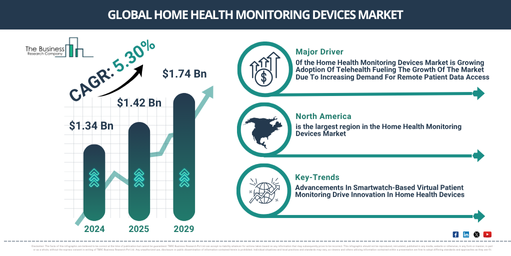
    The market size of home health monitoring devices has been expanding robustly in the last few years. The market, which stood at $1.34 billion in 2024, is predicted to rise to $1.42 billion in 2025, reflecting a compound annual growth rate (CAGR) of 5.5%. Factors contributing to this historic period growth include increased cases of chronic diseases, a rising global elderly population, greater consciousness about preventative healthcare, escalating healthcare expenses promoting home care solutions, and the expanding use of IoT in the medical field.

    What Is the Projected Market Size of the Home Health Monitoring Devices Market?

    The market for home health monitoring devices is predicted to experience significant expansion in the coming years, with forecasts indicating a growth to $1.74 billion by 2029, and a compound annual growth rate (CAGR) of 5.3%. Several factors are contributing to this projected growth within the forecast period such as: an escalating need for remote patient surveillance, governmental policies encouraging telehealth and distant monitoring, better internet availability and mobile network coverage, a surge in smartphone usage, and a heightened requirement for real-time health monitoring systems and warnings. Prominent trends during the forecast period will include advancements in wearable tech, the introduction of AI-enhanced health monitoring gadgets, widespread adoption of chronic disease control plans, technological progress in biosensors and medical-grade sensors, and improved precision and dependability of home health devices.

    Download The Free Sample Report Here:

    https://www.thebusinessresearchcompany.com/sample.aspx?id=24561&type=smp

    Who are the Major Competitors in the Home Health Monitoring Devices Market Outlook?

    Major companies operating in the home health monitoring devices market are Abbott Laboratories Inc., Omron Healthcare Co. Ltd., Garmin Ltd., ResMed Inc., Masimo Corporation, ChoiceMMed America Corp., Beurer GmbH, iRhythm Technologies Inc., A&D Company Limited, Microlife Corporation, Telli Health LLC, AliveCor Inc., CareSimple Inc., BioBeat Technologies Ltd., BioIntelliSense Inc., Tenovi Inc., 100Plus Inc., BodiMetrics LLC, Oxitone Medical Ltd., Guangdong Transtek Medical Electronics Co. Ltd.

    What Is Fueling Growth in the Home Health Monitoring Devices Market?

    The anticipated expansion of the home health monitoring devices market is largely attributed to the increasing usage of telehealth. This application of technology allows for medical care and consultations to take place without any need for physical visitation. The attractiveness of telehealth lies in its ability to provide convenient access to healthcare, sparing patients the trouble of travel by facilitating quick consultations from the comfort of their homes. The uptick in telehealth usage consequently fortifies the demand for home health monitoring devices as it permits healthcare providers to remotely monitor patients’ real-time data – a crucial element for precise diagnosis, timely intervention, and effective continuous care without the necessity for direct visits. Evidence of this growing inclination towards telehealth was observed in a survey run by Rock Health, a US-based company specialising in digital health and healthcare innovation. The survey took place between July to August 2022, with 8,014 respondents, where a jump from 72% in 2021 to 80% in February 2023 was reported in the usage of telemedicine at least once. Therefore, the continuousembracement of telehealth indicates a positive trajectory for the home health monitoring devices market.

    Request For A Customized Report:

    https://www.thebusinessresearchcompany.com/customise?id=24561&type=smp

    Which Home Health Monitoring Devices Market Segments Are Growing the Fastest?

    The home health monitoring devices market covered in this report is segmented –

    1) By Type: Heart Monitors, Breath Monitors, Hematology Monitors, Multi-Parameter Monitors, Other Types

    2) By Application: Care Centre, Household, Other Applications

    3) By End User: Elderly Population, Chronic Disease Patients, General Health-Conscious Consumers, Post-Operative And Rehabilitation Patients, Healthcare Providers And Caregivers

    Subsegments:

    1) By Heart Monitors: ECG Monitors, Heart Rate Monitors, Blood Pressure Monitors, Holter Monitors, Implantable Loop Recorders

    2) By Breath Monitors: Pulse Oximeters, Spirometers, Capnographs, Breath Analyzers

    3) By Hematology Monitors: Blood Glucose Monitors, INR Monitors, Hemoglobin Monitors, Blood Clotting Time Monitors

    4) By Multi-Parameter Monitors: Vital Signs Monitors, Portable ICU Monitors, Wearable Multi-Parameter Devices

    5) By Other Types: Body Temperature Monitors, Sleep Apnea Monitors, Urine Analyzers, Electrolyte Monitors, Activity And Fitness Trackers

    Which Industry Trends Are Shaping the Future of the Home Health Monitoring Devices Market?

    Major players in the home health monitoring devices market are concentrating their efforts on the creation of innovative solutions like smartwatches for virtual patient tracking. These devices integrate smoothly with health applications and telehealth platforms, facilitating effortless data transmission to healthcare providers. A smartwatch for monitoring virtual patients is a wearable tech device created to continually monitor and transmit health data in real-time. This enable healthcare providers to remotely keep track of a patient’s health status and respond accordingly. For example, KORE, a US-based company who specializes in Internet of Things (IoT), launched the mCareWatch 241, a smartwatch intended for virtual patient monitoring, in July 2024. This smartwatch includes an emergency SOS function for quick assistance and features such as calling capabilities, GPS tracking, and quick-dial options for reliable communication and safety. Notable health monitoring features include a heart rate monitor, step counter, fall detection, and inactivity alerts. Users can also set geo-fencing alarms and reminders through a dedicated mobile application and web dashboard.

    Access The Full Report Here:

    https://www.thebusinessresearchcompany.com/report/home-health-monitoring-devices-global-market-report

    Which Countries Are Leading the Home Health Monitoring Devices Market?

    North America was the largest region in the home health monitoring devices market in 2024. Asia-Pacific is expected to be the fastest-growing region in the forecast period. The regions covered in the home health monitoring devices market report are Asia-Pacific, Western Europe, Eastern Europe, North America, South America, Middle East, Africa.

    Purchase The Full Report Today:

    https://www.thebusinessresearchcompany.com/purchaseoptions.aspx?id=24561

    This Report Delivers Insight On:

    1. How big is the home health monitoring devices market, and how is it changing globally?

    2. Who are the major companies in the home health monitoring devices market, and how are they performing?

    3. What are the key opportunities and risks in the home health monitoring devices market right now?

    4. Which products or customer segments are growing the most in the home health monitoring devices market?

    5. What factors are helping or slowing down the growth of the home health monitoring devices market?

    About The Business Research Company:

    With over 15000+ reports from 27 industries covering 60+ geographies, The Business Research Company has built a reputation for offering comprehensive, data-rich research and insights. Armed with 1,500,000 datasets, the optimistic contribution of in-depth secondary research, and unique insights from industry leaders, you can get the information you need to stay ahead in the game.

    Get in touch with us:

    The Business Research Company: https://www.thebusinessresearchcompany.com/

    Americas +1 3156230293

    Asia +44 2071930708

    Europe +44 2071930708

    Email us at info@tbrc.info

    Follow us on:

    LinkedIn: https://in.linkedin.com/company/the-business-research-company

    YouTube: https://www.youtube.com/channel/UC24_fI0rV8cR5DxlCpgmyFQ

    Global Market Model: https://www.thebusinessresearchcompany.com/global-market-model
  • Herbal Sleep Aid Supplement Market to Reach $4.21 Billion by 2029 | Key Drivers and Future Outlook

    Herbal Sleep Aid Supplement Market to Reach $4.21 Billion by 2029 | Key Drivers and Future Outlook

    Claim your 30% discount on Global Market Reports with code ONLINE30. Limited time only.

    What Is the Growth Rate of the Herbal Sleep Aid Supplement Market?

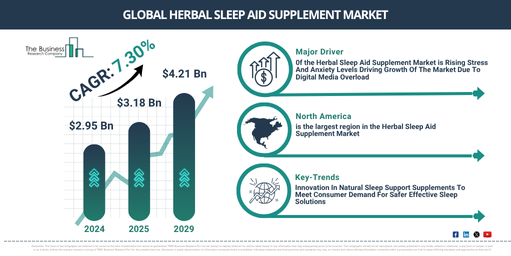
    The market size for herbal sleep aid supplements has experienced significant growth in recent years. The market, which was worth $2.95 billion in 2024, is expected to increase to $3.18 billion in 2025, with a Compound Annual Growth Rate (CAGR) of 7.6%. This historical growth can be credited to the rising number of sleep disorder cases, heightened knowledge about natural and substitute remedies, a heightened preference for herbal and plant-based supplements, an increasing trend towards wellness and self-care among consumers, and a growing elderly population.

    What Growth Rate Is Forecasted for the Herbal Sleep Aid Supplement Market by 2029?

    In the coming years, the herbal sleep aid supplement market is predicted to witness robust growth, eventually reaching $4.21 billion in 2029 with a compound annual growth rate (CAGR) of 7.3%. The growth for the predicted period can be owed to increasing stress and anxiety due to contemporary lifestyles, rising urbanization, an increase in disposable income, the growing influence of social media and health influencers, and an increasing number of clinical studies backing herbal sleep aids. The forecast period will also see trends like a broad variety of herbal sleep aid products, a preference for non-habit forming and safe sleep aid options, awareness campaigns by herbal supplement manufacturers, the implementation of comprehensive health practices, and the use of personalized nutrition and supplements.

    Download The Free Sample Report Here:

    https://www.thebusinessresearchcompany.com/sample.aspx?id=24560&type=smp

    Which Key Companies Are Shaping the Future of the Herbal Sleep Aid Supplement Market?

    Major companies operating in the herbal sleep aid supplement market are GNC Holdings LLC, Thorne HealthTech Inc., Life Extension, OLLY Public Benefit Corporation, Gaia Herbs Inc., Mountain Rose Herbs, Natrol LLC, Herb Pharm LLC, Douglas Laboratories, Solgar Inc., Makers Nutrition LLC, Banyan Botanicals, Moon Juice LLC, SMPNutra Inc., WishGarden Herbs Inc., Sandland Sleep, Enzymatic Therapy Inc., Jarrow Formulas Inc., RidgeCrest Herbals Co., Source Naturals Inc., American Standard Supplements.

    Which Factors Are Driving Demand in the Herbal Sleep Aid Supplement Industry?

    The surge in stress and anxiety is expected to propel the expansion of the herbal sleep aid supplements market in the future. Stress refers to the body’s reaction to external pressures or demands, while anxiety denotes feelings of fear or apprehension concerning possible future threats or uncertainties. The constant exposure to digital media, which inundates people with an overload of information and unrealistic comparisons, is causing stress and anxiety levels to intensify, leading to mental fatigue and emotional strain. The escalation in stress and anxiety is bolstering the demand for herbal sleep aid supplements, as more individuals are searching for natural solutions to ease their minds and enhance sleep quality without the side effects of pharmaceutical options. For example, a report by the American Psychiatric Association (APA), a professional organization based in the US, stated in May 2024 that 43% of adults reported an increase in anxiety in 2024 as compared to the previous year, rising from 37% in 2023 and 32% in 2022, with stress (53%) and sleep issues (40%) being the key factors affecting their mental health. Consequently, the rise in stress and anxiety levels is predicted to foster the growth of the herbal sleep aid supplements market.

    Request For A Customized Report:

    https://www.thebusinessresearchcompany.com/customise?id=24560&type=smp

    How Is the Herbal Sleep Aid Supplement Market Segmented by Several Divisions?

    The herbal sleep aid supplement market covered in this report is segmented –

    1) By Product: Melatonin, Chamomile, Valerian, Lavender, Tryptophan, Other Products

    2) By Form: Capsules, Tablets, Powder, Soft Gels, Liquid

    3) By Distribution Channel: Online Retail, Offline Retail, Health Food Stores, Pharmacies, Supermarkets

    4) By End-User: Adults, Children, Elderly

    Subsegments:

    1) By Melatonin: Synthetic Melatonin, Natural Or Plant-Based Melatonin, Fast-Release Melatonin, Time-Release Or Extended-Release Melatonin

    2) By Chamomile: Chamomile Extract Capsules, Chamomile Tea Bags, Chamomile Liquid Extract Or Tinctures, Chamomile Powder

    3) By Valerian: Valerian Root Capsules, Valerian Root Extract Liquid, Valerian Root Tea, Valerian Root Powder

    4) By Lavender: Lavender Essential Oil Capsules, Lavender Tea, Lavender Extract Liquid, Lavender Powder

    5) By Tryptophan: L-Tryptophan Capsules, Tryptophan Complex Formulations, Sublingual Tryptophan, Tryptophan-Infused Powders

    6) By Other Products: Passionflower Extract, Hops Extract, Magnesium-Based Herbal Blends, Lemon Balm Extract, Ashwagandha Extract, Other Botanical Extracts Or Blends

    What are the Emerging Market Trends Driving the Growth of the Herbal Sleep Aid Supplement Industry?

    Leading businesses in the herbal sleep aid supplement market are concentrating on creating innovative products like sleep support supplements to accommodate varied customer needs and provide safer, more natural alternatives for improved sleep quality. Sleep support supplements are either natural or scientifically developed products aimed to encourage relaxation and enhance the duration and quality of sleep. For example, Natrol LLC, an American nutraceutical enterprise, introduced Soothing Night gummies and capsules in September 2023. This was their maiden sleep aid supplement devoid of melatonin. Soothing Night is composed of clinically approved natural ingredients such as Lactium, L-theanine, and botanical extracts which work harmoniously to soothe the mind and alleviate occasional stress. It presents a melatonin-free choice for consumers who aim to achieve longer, superior sleep and enhanced mental sharpness.

    Access The Full Report Here:

    https://www.thebusinessresearchcompany.com/report/herbal-sleep-aid-supplement-global-market-report

    Which Regions Are Driving Growth in the Herbal Sleep Aid Supplement Market?

    North America was the largest region in the herbal sleep aid supplement market in 2024. Asia-Pacific is expected to be the fastest-growing region in the forecast period. The regions covered in the herbal sleep aid supplement market report are Asia-Pacific, Western Europe, Eastern Europe, North America, South America, Middle East, Africa.

    Purchase The Full Report Today:

    https://www.thebusinessresearchcompany.com/purchaseoptions.aspx?id=24560

    This Report Delivers Insight On:

    1. How big is the herbal sleep aid supplement market, and how is it changing globally?

    2. Who are the major companies in the herbal sleep aid supplement market, and how are they performing?

    3. What are the key opportunities and risks in the herbal sleep aid supplement market right now?

    4. Which products or customer segments are growing the most in the herbal sleep aid supplement market?

    5. What factors are helping or slowing down the growth of the herbal sleep aid supplement market?

    About The Business Research Company:

    With over 15000+ reports from 27 industries covering 60+ geographies, The Business Research Company has built a reputation for offering comprehensive, data-rich research and insights. Armed with 1,500,000 datasets, the optimistic contribution of in-depth secondary research, and unique insights from industry leaders, you can get the information you need to stay ahead in the game.

    Get in touch with us:

    The Business Research Company: https://www.thebusinessresearchcompany.com/

    Americas +1 3156230293

    Asia +44 2071930708

    Europe +44 2071930708

    Email us at info@tbrc.info

    Follow us on:

    LinkedIn: https://in.linkedin.com/company/the-business-research-company

    YouTube: https://www.youtube.com/channel/UC24_fI0rV8cR5DxlCpgmyFQ

    Global Market Model: https://www.thebusinessresearchcompany.com/global-market-model
  • Hepatitis C Testing Market Size to Exceed $1.68 Billion by 2029 | Growth and Industry Trends

    Hepatitis C Testing Market Size to Exceed $1.68 Billion by 2029 | Growth and Industry Trends

    Claim your 30% discount on Global Market Reports with code ONLINE30. Limited time only.

    How Has the Hepatitis C Testing Market Grown from 2024 to 2025?

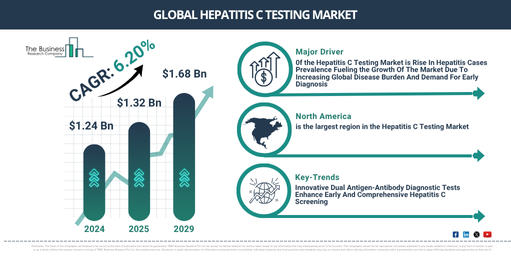
    Over the past few years, the market size for hepatitis C testing has significantly amplified. Its growth is predicted to rise from $1.24 billion in 2024, to $1.32 billion in 2025, with a compound annual growth rate (CAGR) of 6.6%. The historic growth can be correlated with the increasing prevalence of hepatitis C, the enlargement of public health initiatives, the escalating use of intravenous drugs, heightened awareness regarding the risks of hepatitis C, and government grants aimed at controlling infectious diseases.

    What Growth Rate Is Anticipated for the Hepatitis C Testing Market in the Coming Years?

    Expectations are high for the hepatitis c testing market, with predictions suggesting substantial growth in the coming years. By 2029, the market is projected to amass a value of $1.68 billion, propelled by a compound annual growth rate (CAGR) of 6.2%. The expansion in the forecast period is as a result of factors such as the surge in demand for the initial detection of the disease, improved healthcare availability, increased focus on preventive health, support from leading global health organizations, and state-run initiatives aimed at eradicating hepatitis C. Significant trends that are associated with this forecast period encompass the application of multiplex diagnostic platforms, the incorporation of artificial intelligence (AI) into diagnostic instruments, a move towards home-based testing kits, enlarged cooperation for test formulation, and the creation of affordable testing solutions.

    Download The Free Sample Report Here:

    https://www.thebusinessresearchcompany.com/sample.aspx?id=24559&type=smp

    Who Are the Leading Companies in the Hepatitis C Testing Market?

    Major companies operating in the hepatitis c testing market are F. Hoffmann-La Roche Ltd., Bayer AG, Thermo Fisher Scientific Inc., Abbott Laboratories, Siemens Healthineers AG, Quest Diagnostics Incorporated, Hologic Inc., QuidelOrtho Corporation, Sysmex Corporation, Bio-Rad Laboratories Inc., SD Biosensor INC., QIAGEN N.V., DiaSorin S.p.A., Cepheid, Abcam Plc, OraSure Technologies Inc., Meridian Bioscience Inc., Trivitron Healthcare Private Limited, General Biologicals Corporation, Biogate Laboratories Ltd., Cosara Diagnostics Private Limited, BioGenex Life Sciences Private Limited, BIOGENIX INC. PVT. LTD.

    What Are the Key Drivers of the Hepatitis C Testing Market?

    The growth of the hepatitis C testing market is expected to be fuelled by the increasing prevalence of hepatitis cases. Hepatitis C is a viral infection that can cause severe liver damage if left untreated owing to inflammation. The lack of adequate vaccination rates, leaving many people vulnerable to the virus, is the primary reason for the increased hepatitis cases. Hepatitis C testing plays a crucial role in early virus detection, enabling immediate treatment to prevent severe liver damage and complications. Furthermore, it helps identify infected individuals, mitigating the spread of the virus and improving disease control. The World Health Organization (WHO), a Switzerland-based global public health intergovernmental organization, reported in April 2024 that over 50 million people worldwide are living with chronic hepatitis C virus infection. Roughly 1.0 million new infections are reported every year. Consequently, the surging prevalence of hepatitis cases is fuelling the growth of the hepatitis C testing market.

    Request For A Customized Report:

    https://www.thebusinessresearchcompany.com/customise?id=24559&type=smp

    What Are the Key Market Segments in the Hepatitis C Testing Industry?

    The hepatitis c testing market covered in this report is segmented –

    1) By Type: Antibody Tests, Nucleic Acid Tests, Genotyping Tests

    2) By Product: Test Kits, Instruments, Reagents, Consumables

    3) By Technology: Enzyme-Linked Immunosorbent Assay (ELISA), Rapid Diagnostic Tests, Polymerase Chain Reaction, Next-Generation Sequencing

    4) By Application: Blood Screening, Viral Load Monitoring, Disease Diagnosis

    5) By End-User: Hospital-Based Laboratories, Stand-Alone Laboratories, Other End-Users

    Subsegments:

    1) By Antibody Tests: Enzyme Immunoassay (EIA), Recombinant Immunoblot Assay (RIBA), Rapid Diagnostic Tests (RDTs)

    2) By Nucleic Acid Tests (NATs): Quantitative Ribonucleic Acid (RNA) Tests, Qualitative Ribonucleic Acid (RNA) Tests, Transcription-Mediated Amplification (TMA), Reverse Transcription Polymerase Chain Reaction (RT-PCR)

    3) By Genotyping Tests: Line Probe Assay (LiPA), Sequencing-Based Assay, Real-Time Polymerase Chain Reaction (PCR)-Based Genotyping

    What Are the Latest Trends in the Hepatitis C Testing Market?

    Prominent corporations within the hepatitis C testing market are concentrating on creating improved solutions such as dual antigen-antibody diagnostic assessments for more efficient screening and surveillance of the ailment. The dual antigen-antibody diagnostic examination identifies viral proteins (antigens) and immune response proteins (antibodies) to distinguish between active and previous infections. This methodology provides an in-depth analysis of the infection status. To put it in context, Roche Diagnostics India Pvt. Ltd., a diagnostic tests and systems enterprise based in India, unveiled the Elecsys HCV Duo in July 2023. This fully automated immunoassay can independently and simultaneously detect both HCV antibodies and antigens from a single plasma or serum sample. This revolutionary technique facilitates early detection, aids patient care, and is consistent with India’s national approach to eradicate hepatitis C through comprehensive and prompt screening.

    Access The Full Report Here:

    https://www.thebusinessresearchcompany.com/report/hepatitis-c-testing-global-market-report

    What Are the Key Regional Markets in the Hepatitis C Testing Industry?

    North America was the largest region in the hepatitis C testing market in 2024. Asia-Pacific is expected to be the fastest-growing region in the forecast period. The regions covered in the hepatitis c testing market report are Asia-Pacific, Western Europe, Eastern Europe, North America, South America, Middle East, Africa.

    Purchase The Full Report Today:

    https://www.thebusinessresearchcompany.com/purchaseoptions.aspx?id=24559

    This Report Delivers Insight On:

    1. How big is the hepatitis c testing market, and how is it changing globally?

    2. Who are the major companies in the hepatitis c testing market, and how are they performing?

    3. What are the key opportunities and risks in the hepatitis c testing market right now?

    4. Which products or customer segments are growing the most in the hepatitis c testing market?

    5. What factors are helping or slowing down the growth of the hepatitis c testing market?

    About The Business Research Company:

    With over 15000+ reports from 27 industries covering 60+ geographies, The Business Research Company has built a reputation for offering comprehensive, data-rich research and insights. Armed with 1,500,000 datasets, the optimistic contribution of in-depth secondary research, and unique insights from industry leaders, you can get the information you need to stay ahead in the game.

    Get in touch with us:

    The Business Research Company: https://www.thebusinessresearchcompany.com/

    Americas +1 3156230293

    Asia +44 2071930708

    Europe +44 2071930708

    Email us at info@tbrc.info

    Follow us on:

    LinkedIn: https://in.linkedin.com/company/the-business-research-company

    YouTube: https://www.youtube.com/channel/UC24_fI0rV8cR5DxlCpgmyFQ

    Global Market Model: https://www.thebusinessresearchcompany.com/global-market-model
  • Hematology Analyzers Industry Insights 2025 – Market Forecast for Executives and Planners

    Hematology Analyzers Industry Insights 2025 – Market Forecast for Executives and Planners

    Claim your 30% discount on Global Market Reports with code ONLINE30. Limited time only.

    How Has the Hematology Analyzers Market Size Changed, over the years?

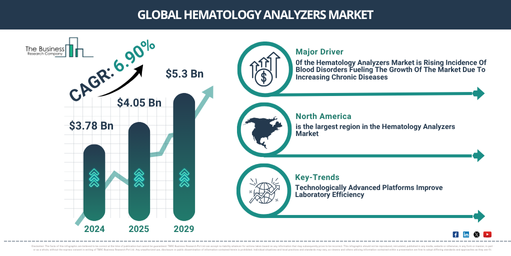
    In recent times, the market size of hematology analyzers has seen substantial growth. The market, which was valued at $3.78 billion in 2024, is projected to increase to $4.05 billion in 2025, demonstrating a compound annual growth rate (CAGR) of 7.2%. Factors contributing to this growth during the historic period include an increase in blood disorders, an aging demographic, a surge in health consciousness, improvements in healthcare facilities, and enhanced government backing for health initiatives.

    How Much Will the Hematology Analyzers Market Be Worth in 2029?

    Expectations are high for the hematology analyzers market to significantly surge in size in the coming years. Predictions put it at a value of $5.3 billion in 2029, with a compound annual growth rate (CAGR) of 6.9%. The forecasted growth during this period is believed to be fueled by factors such as an increase in chronic diseases, expansion of diagnostic labs, the rising need for personalized medicine, enhanced healthcare awareness, and a maturing global populace. The period is also expected to witness key trends like the implementation of artificial intelligence (AI) and machine learning, device miniaturization, cloud-based data management systems, enhanced automation and robotics, and wearable hematology monitoring devices.

    Download The Free Sample Report Here:

    https://www.thebusinessresearchcompany.com/sample.aspx?id=24558&type=smp

    Which is the Largest Company in the Hematology Analyzers Market?

    Major companies operating in the hematology analyzers market are F. Hoffmann-La Roche AG, Abbott Laboratories, Danaher Corporation, Siemens Healthineers AG, Shenzhen Mindray Bio-Medical Electronics Co. Ltd., Sysmex Corporation, Horiba Medical Ltd., Nihon Kohden Corporation, Trivitron Healthcare Pvt. Ltd., Transasia Bio-Medicals Ltd., Erba Mannheim GmbH, Boule Diagnostics AB, Diatron MI PLC, Awareness Technology Inc., Analyticon Biotechnologies AG, Rayto Life and Analytical Sciences Co. Ltd., Diagon Ltd., Perlong Medical, Drew Scientific Inc., PZ Cormay S.A.

    What Are the Main Market Drivers in the Hematology Analyzers Industry?

    The increase in blood-related diseases is anticipated to fuel the hematology analyzers market’s expansion. Blood disorders can impact the components of blood such as red blood cells, white blood cells, platelets, or plasma. The growing occurrence of these disorders can be attributed largely to the escalating prevalence of chronic conditions which directly influence blood health and necessitate consistent monitoring. Hematology analyzers help in the diagnosis of this disease by providing quick and precise analysis of blood components, thus leading to prompt detection and cure. They assist in making sound clinical decisions which leads to better patient care and results. For instance, the Perth Blood Institute, a non-profit organization in Australia, reported in April 2024 that there was an increase in the number of individuals diagnosed with Hemophilia (a inherited blood disorder where the blood lacks sufficient clotting factors leading to prolonged bleeding) which was 257,146 in 2022, a considerable rise from 233,577 in 2021. The escalating incidence of blood disorders is thus propelling the growth of the hematology analyzers market.

    Request For A Customized Report:

    https://www.thebusinessresearchcompany.com/customise?id=24558&type=smp

    How Is the Hematology Analyzers Market Segments Structured?

    The hematology analyzers market covered in this report is segmented –

    1) By Type: Fully-Automated Hematology Analyzers, Semi-Automated Hematology Analyzers

    2) By Component: Instruments, Consumables

    3) By Modality: Standalone, Point Of Care

    4) By Technology: Flow Cytometry, Electrical Impedance, Optical Technology

    5) By End User: Hospitals, Clinical Laboratories, Research Institutes, Other End Users

    Subsegments:

    1) By Fully-Automated Hematology Analyzers: 3-Part Differential Analyzers, 5-Part Differential Analyzers, 6-Part And Above Differential Analyzers, Integrated Hematology Systems

    2) By Semi-Automated Hematology Analyzers: Hemoglobin Analyzers, Coagulation Analyzers, Erythrocyte Sedimentation Rate (ESR) Analyzers, Platelet Function Analyzers

    What Strategic Trends Are Transforming the Hematology Analyzers Market?

    Major firms in the market for hematology analyzers are prioritizing the development of technologically progressive products, such as automated hematology systems to bolster diagnostic precision, augment workflow productivity, and accelerate test results with reduced manual input. Automated hematology systems imply the innovative diagnostic tools implemented in clinical laboratories to carry out an array of hematological tests with the least human interference. For instance, Horiba Medical, a diagnostics company based in Japan, introduced its HELO 2.0 high-throughput automated hematology platform in January 2024. This platform has received approval under Conformité Européenne In Vitro Diagnostic Regulation (CE-IVDR) and is awaiting United States Food and Drug Administration’s (FDA) green light. The HELO 2.0 is a flexible, scalable, and efficient apparatus tailored to the requirements of mid-range to large laboratories. It incorporates advanced technologies from the Yumizen H2500 and H1500 analyzers to ensure premier performance, including 360-degree sample blending, enhanced turnaround time, space management, and reagent storage. It also provides support for ISO-15189 accreditation aid to handle all pre-analytical, analytical, and post-analytical requirements.

    Access The Full Report Here:

    https://www.thebusinessresearchcompany.com/report/hematology-analyzers-global-market-report

    Which Global Regions Offer the Highest Growth in the Hematology Analyzers Market?

    North America was the largest region in the hematology analyzers market in 2024. Asia-Pacific is expected to be the fastest-growing region in the forecast period. The regions covered in the hematology analyzers market report are Asia-Pacific, Western Europe, Eastern Europe, North America, South America, Middle East, Africa.

    Purchase The Full Report Today:

    https://www.thebusinessresearchcompany.com/purchaseoptions.aspx?id=24558

    This Report Delivers Insight On:

    1. How big is the hematology analyzers market, and how is it changing globally?

    2. Who are the major companies in the hematology analyzers market, and how are they performing?

    3. What are the key opportunities and risks in the hematology analyzers market right now?

    4. Which products or customer segments are growing the most in the hematology analyzers market?

    5. What factors are helping or slowing down the growth of the hematology analyzers market?

    About The Business Research Company:

    With over 15000+ reports from 27 industries covering 60+ geographies, The Business Research Company has built a reputation for offering comprehensive, data-rich research and insights. Armed with 1,500,000 datasets, the optimistic contribution of in-depth secondary research, and unique insights from industry leaders, you can get the information you need to stay ahead in the game.

    Get in touch with us:

    The Business Research Company: https://www.thebusinessresearchcompany.com/

    Americas +1 3156230293

    Asia +44 2071930708

    Europe +44 2071930708

    Email us at info@tbrc.info

    Follow us on:

    LinkedIn: https://in.linkedin.com/company/the-business-research-company

    YouTube: https://www.youtube.com/channel/UC24_fI0rV8cR5DxlCpgmyFQ

    Global Market Model: https://www.thebusinessresearchcompany.com/global-market-model
  • Heavy Metal Poisoning Drugs Market Trends Report 2025 – For Business Development and Strategy Teams

    Heavy Metal Poisoning Drugs Market Trends Report 2025 – For Business Development and Strategy Teams

    Claim your 30% discount on Global Market Reports with code ONLINE30. Limited time only.

    What Is the Forecast for the Heavy Metal Poisoning Drugs Market Growth in 2025?

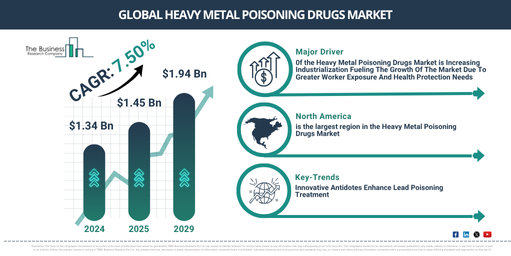
    The market size of heavy metal poisoning drugs has seen robust growth in recent years, flourishing from $1.34 billion in 2024 to $1.45 billion in 2025 with a compound annual growth rate (CAGR) of 7.9%. Factors that contributed to the growth during this historical period include the rise in industrial pollution, the surge in occupational exposure in mining and manufacturing, increased awareness and diagnosis of heavy metal toxicity, extended use of chelation therapy, and the implementation of government regulations on environmental and safety at workplaces.

    What Is the Forecast for the Heavy Metal Poisoning Drugs Market Size Through 2029?

    The market size for heavy metal poisoning drugs is anticipated to see substantial growth in the upcoming years, reaching a value of $1.94 billion in 2029 while growing at a compound annual growth rate (CAGR) of 7.5%. This projected growth for the forecasted period can be linked to factors such as the increasing occurrence of environmental catastrophes, the heightened demand for pediatric treatments for heavy metal detox, expansion to emerging markets, and the inclusion of heavy metal tests in routine health check-up programs. The forecast period is also expected to witness trends like the adoption of nanoparticle-based systems for drug delivery, the creation of chelators that are selective and have less toxicity, the application of gene editing and RNA therapies for detoxification, the use of artificial intelligence (AI) for personalized treatments, as well as the advancements in biosensor technology for the immediate detection and monitoring of metals.

    Download The Free Sample Report Here:

    https://www.thebusinessresearchcompany.com/sample.aspx?id=24557&type=smp

    What are the Key Market Players in Heavy Metal Poisoning Drugs Market and How They’re Evolving?

    Major companies operating in the heavy metal poisoning drugs market are Sun Pharmaceutical Industries Ltd., Aurobindo Pharma Ltd., Dr. Reddy’s Laboratories Ltd., Hikma Pharmaceuticals, Lupin Pharmaceuticals Inc., Zydus Cadila, Aristo Pharmaceuticals Pvt. Ltd., Medopharm Pvt. Ltd., Cayman Chemical, Recordati Rare Diseases Inc., Midas Pharma GmbH, EmeraMed Limited, Ambrosia Remedies Pvt. Ltd., SGPharma Pvt. Ltd., Nouryon, Actavis Pharma, Captura Biopharma, Hope Pharmaceuticals, HOPO Therapeutics Inc., Triveni Interchem Pvt. Ltd.

    What Are the Primary Growth Drivers in the Heavy Metal Poisoning Drugs Market?

    The growth of the heavy metal poisoning drugs market is expected to be fueled by increasing industrialization. Industrialization, the process of shifting an economy from primarily agriculture-based to one focused on manufacturing goods and services, is on the rise due to fast-paced urban development and the expansion of infrastructure. These factors provide a suitable environment for business growth and economic progression. Heavy metal poisoning drugs aid in this industrial growth by safeguarding workers’ health, minimizing potential hazards from toxic exposure, and ensuring adherences to safety standards—boosting both production and safety in the workplace. For instance, the Office for National Statistics, a government agency in the UK, reported in September 2024 that the total sales from UK manufacturers reached $574.6 billion (£456.1 billion) in 2023. That’s a rise of about $21.7 billion (£17.2 billion), or 3.9%, from $553.2 billion (£438.9 billion) in 2022, implying that thriving industrialization is a key factor in the growth of the heavy metal poisoning drugs market.

    Request For A Customized Report:

    https://www.thebusinessresearchcompany.com/customise?id=24557&type=smp

    What Are the Leading Segments in the Global Heavy Metal Poisoning Drugs Industry?

    The heavy metal poisoning drugs market covered in this report is segmented –

    1) By Product Type: ALN-TMP, Deferasirox, Deferoxamine Mesylate, Emeramide, Other Product Types

    2) By Application: Arsenic Toxicity, Chromium Toxicity, Copper Toxicity, Lead Toxicity, Other Applications

    3) By End-User: Hospitals, Clinics, Home Healthcare, Poison Control Centers

    Subsegments:

    1) By ALN-TMP: Small Interfering RNA (siRNA)-Based Chelation Therapies, Targeted RNA Interference Mechanisms, Intravenous Formulations, Hepatic Iron Overload Applications

    2) By Deferasirox: Oral Tablet Formulations, Dispersible Tablets (DT), Generic Deferasirox Products, Iron Overload From Blood Transfusions, Beta-Thalassemia Related Use

    3) By Deferoxamine Mesylate: Intramuscular Injections, Subcutaneous Infusion Pumps, Iron Poisoning Emergency Kits, Aluminum Toxicity In Dialysis Patients, Pediatric And Adult Formulations

    4) By Emeramide: Mercury-Specific Chelation, Oral Capsule Form, Lipophilic Chelators, Environmental Toxic Exposure Applications, Investigational Therapies

    5) By Other Product Types: Dimercaprol (BAL), Dimercaptosuccinic Acid (DMSA), 2,3-Dimercapto-1-Propanesulfonic Acid (DMPS), Penicillamine, Calcium Disodium Ethylenediaminetetraacetate (EDTA)

    What Are the Key Market Trends in the Heavy Metal Poisoning Drugs Industry?

    Leading firms in the heavy metal poisoning drugs market are prioritizing the development of inventive solutions. These include antidotes for lead poisoning intended to heighten effective treatment, minimize adverse effects and cope with rising cases of environmental and work-related toxic metal exposure. Chelating agents are used as antidotes for treating lead poisoning, binding with the lead found in the blood and assisting its removal from the body via urination. A relevant example is the launch of an edetate calcium disodium injection by Rising Pharmaceuticals, a pharmaceutical company from the USA in August 2023. This antidote, which can be administered in injectable form, reduces the levels of lead in blood and tissues. It is particularly crucial in managing severe circumstances, such as lead encephalopathy, in both kids and adults.

    Access The Full Report Here:

    https://www.thebusinessresearchcompany.com/report/heavy-metal-poisoning-drugs-global-market-report

    What Is the Regional Outlook for the Heavy Metal Poisoning Drugs Market?

    North America was the largest region in the heavy metal poisoning drugs market in 2024. The regions covered in the heavy metal poisoning drugs market report are Asia-Pacific, Western Europe, Eastern Europe, North America, South America, Middle East, Africa.

    Purchase The Full Report Today:

    https://www.thebusinessresearchcompany.com/purchaseoptions.aspx?id=24557

    This Report Delivers Insight On:

    1. How big is the heavy metal poisoning drugs market, and how is it changing globally?

    2. Who are the major companies in the heavy metal poisoning drugs market, and how are they performing?

    3. What are the key opportunities and risks in the heavy metal poisoning drugs market right now?

    4. Which products or customer segments are growing the most in the heavy metal poisoning drugs market?

    5. What factors are helping or slowing down the growth of the heavy metal poisoning drugs market?

    About The Business Research Company:

    With over 15000+ reports from 27 industries covering 60+ geographies, The Business Research Company has built a reputation for offering comprehensive, data-rich research and insights. Armed with 1,500,000 datasets, the optimistic contribution of in-depth secondary research, and unique insights from industry leaders, you can get the information you need to stay ahead in the game.

    Get in touch with us:

    The Business Research Company: https://www.thebusinessresearchcompany.com/

    Americas +1 3156230293

    Asia +44 2071930708

    Europe +44 2071930708

    Email us at info@tbrc.info

    Follow us on:

    LinkedIn: https://in.linkedin.com/company/the-business-research-company

    YouTube: https://www.youtube.com/channel/UC24_fI0rV8cR5DxlCpgmyFQ

    Global Market Model: https://www.thebusinessresearchcompany.com/global-market-model