Month: June 2025

  • From Insight to Impact: Strategic Growth Mapping in the Early Toxicity Testing Market

    Discover trends, market shifts, and competitive outlooks for the early toxicity testing industry through 2025-2034 with The Business Research Company’s reliable data and in-depth research

    How Has The Early Toxicity Testing Market Size Shifted, And What Is the Outlook Through 2034?

    In recent times, there has been a considerable expansion in the early toxicity testing market size. Projected growth from $1.47 billion in 2024 to $1.60 billion in 2025, at a compound annual growth rate (CAGR) of 8.9%, signifies a strong market trajectory. The growth observed in the past is largely due to reasons such as enhanced ethical considerations, increased cognizance about human and ecological health, amplified public health emergencies and environmental calamities, a heightened focus on endocrine disruptors, and the growing necessity for uniform standards.

    In the coming years, the market size for early toxicity testing is predicted to witness robust growth. The market is forecasted to reach $2.22 billion by 2029, expanding at a compound annual growth rate (CAGR) of 8.5%. The expected growth during the forecast period can be accredited to factors such as increasing drug safety regulations, an uptick in adverse drug reactions, heightened aesthetic awareness, an incremental rise in early toxicity testing, and overall improved awareness regarding toxicity. Predominant trends for the forecasted period include the adoption of in silico toxicity prediction models, organ-on-a-chip technology, high-throughput screening (HTS), developments in molecular toxicology, and utilization of stem cells in toxicity testing.

    Download a free sample to assess the report’s scope and structure:

    https://www.thebusinessresearchcompany.com/sample.aspx?id=21947&type=smp

    What are the Fundamental Drivers and Innovations Shaping the Early Toxicity Testing Market?

    The escalating emphasis on personalized medicine is anticipated to fuel the expansion of the early toxicity testing market in the forthcoming period. Personalized medicine provides an individualized approach to treatment and healthcare strategies, tailored to the patient’s unique genetic, environmental and lifestyle factors. As it allows for treatments to be customized according to each person’s distinctive genetic composition, it can result in increased effectiveness, diminished side effects, and assurance that each patient receives the correct drug dosage. This approach bolsters early toxicity testing by utilizing genetic, biomarker, and patient-specific data to forecast individual reactions to drugs. This aids in minimizing negative effects and bolstering safety evaluations. In example, a February 2024 report by the Personalized Medicine Coalition stated that in 2023, the FDA approved 16 new personalized treatments aimed at patients with rare diseases, a sharp increase from six in 2022. The approved treatments in 2023 also comprised seven cancer drugs and three for other diseases and conditions. Therefore, the surging emphasis on personalized medicine is facilitating the growth of the early toxicity testing market.

    How Is the Early Toxicity Testing Market Segmented?

    The early toxicity testing market covered in this report is segmented –

    1) By Type: In-Vivo, In-Vitro, In-Silico

    2) By Toxicity Type: Cytotoxicity, Genotoxicity, Carcinogenicity, Reproductive Toxicity, Ecotoxicity

    3) By Technology: Microfluidics Technology, Bioinformatics, High-Content Screening, 3D Cell Cultures

    4) By Application: Drug Development, Environmental Monitoring, Cancer Research, Material Testing, Regulatory Compliance

    5) By End User: Pharmaceuticals Industry, Food Industry, Chemicals Industry, Cosmetics Industry, Other End-Users

    Subsegmentss:

    1) By In-Vivo Type: Acute Toxicity Testing, Chronic Toxicity Testing, Carcinogenicity Testing, Developmental & Reproductive Toxicity (DART) Testing, Neurotoxicity Testing

    2) By In-Vitro Type: Cell-Based Assays, Biochemical Assays, High-Throughput Screening (HTS), 3D Cell Culture Systems, Organ-on-a-Chip Models

    3) By In-Silico Type: Computational Toxicology, Predictive Modeling, Quantitative Structure-Activity Relationship (QSAR) Models, Machine Learning-Based Toxicity Prediction, Physiologically Based Pharmacokinetic (PBPK) Modeling

    Request customized data on this market:

    https://www.thebusinessresearchcompany.com/customise?id=21947&type=smp

    Which Regions Are Driving the Next Phase of the Early Toxicity Testing Market Growth?

    North America was the largest region in the early toxicity testing market in 2024. Aisa-Pacific is expected to be the fastest-growing region in the forecast period. The regions covered in the early toxicity testing market report are Asia-Pacific, Western Europe, Eastern Europe, North America, South America, Middle East, Africa.

    What Key Trends Are Shaping the Future of the Early Toxicity Testing Market?

    Leading corporations in the early toxicity testing market are concentrating on technological advancements like ZBEScreen to increase precision, productivity, and forecasting abilities in toxicity evaluations. ZBEScreen is an innovation that employs zebrafish embryos for comprehensive early toxicity testing to identify potentially damaging effects of compounds. For example, in March 2025, AsedaSciences, a preclinical contract research entity based in Ghana that provides advanced early toxicity testing using zebrafish models, introduced a groundbreaking zebrafish screening service with the collaboration of the renowned Tanguay Lab, an American academic research lab specializing in zebrafish toxicology and developmental health studies. The cutting-edge zebrafish screening service utilises sophisticated high-throughput technologies to gauge toxicity in real-time, furnishing accurate, expedient, and ethical testing of drug and chemical safety through meticulous monitoring of developmental and behavioural shifts.

    View the full report here:

    https://www.thebusinessresearchcompany.com/report/early-toxicity-testing-global-market-report

    How Is the Early Toxicity Testing Market Defined and What Are Its Core Parameters?

    Early toxicity testing refers to the initial evaluation of a substance’s potential toxic effects before it progresses to later stages of development, such as clinical trials or commercial use. This testing is primarily conducted in drug development, chemical safety assessment, and environmental health studies.

    Purchase the full report and get a swift delivery:

    https://www.thebusinessresearchcompany.com/purchaseoptions.aspx?id=21947

    About The Business Research Company:

    With over 15000+ reports from 27 industries covering 60+ geographies, The Business Research Company has built a reputation for offering comprehensive, data-rich research and insights. Armed with 1,500,000 datasets, the optimistic contribution of in-depth secondary research, and unique insights from industry leaders, you can get the information you need to stay ahead in the game.

    Get in touch with us:

    The Business Research Company: https://www.thebusinessresearchcompany.com/

    Americas +1 3156230293

    Asia +44 2071930708

    Europe +44 2071930708

    Email us at info@tbrc.info

    Follow us on:

    LinkedIn: https://in.linkedin.com/company/the-business-research-company

    YouTube: https://www.youtube.com/channel/UC24_fI0rV8cR5DxlCpgmyFQ

    Global Market Model: https://www.thebusinessresearchcompany.com/global-market-model
  • DysthymiaMarket Overview 2025–2034: CAGR Trends, Long-Term Growth Paths, and Business Implications

    DysthymiaMarket Overview 2025–2034: CAGR Trends, Long-Term Growth Paths, and Business Implications

    Discover trends, market shifts, and competitive outlooks for the dysthymia industry through 2025-2034 with The Business Research Company’s reliable data and in-depth research

    How Has the Dysthymia Market Growth Performance Trended Historically, And What Lies Ahead?

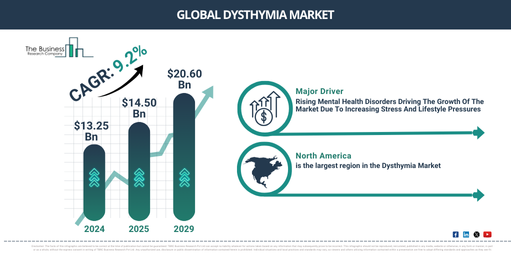
    In recent times, the dysthymia market scale has seen robust growth. It is projected to surge from $13.25 billion in 2024 to $14.50 billion in 2025, with a compound annual growth rate (CAGR) of 9.5%. The notable growth during the historic period can be credited to the enhanced understanding of mental health disorders, breakthroughs in antidepressant treatments, growing instances of chronic depression, better availability of healthcare and therapy, along with changing diagnostic benchmarks in the field of psychiatry.

    Strong expansion is anticipated for the dysthymia market size over the upcoming years, reaching a worth of $20.60 billion by 2029, reflecting a compound annual growth rate (CAGR) of 9.2%. This surge in the projection period can be credited to factors such as the increasing occurrence of persistent depressive disorder, enhancements in diagnosis rates and awareness, advancements in antidepressant treatments, the increase in endorsement of digital mental health solutions, and the broadening of insurance coverage specific to mental health treatments. Notable trends throughout the projected period include the implementation of AI-powered mental health diagnostics, personalized treatment and pharmacogenomics, the integration of digital therapies and mental health apps, telepsychiatry and distance counseling, along with the development of new antidepressant drugs including psychedelics.

    Download a free sample to assess the report’s scope and structure:

    https://www.thebusinessresearchcompany.com/sample.aspx?id=21946&type=smp

    What Are the Primary Drivers Supporting the Market Growth of the Dysthymia Market?

    The growing prevalence of mental health disorders is projected to fuel the dysthymia market’s expansion. Mental health disorders, also termed mental illnesses or psychiatric disorders, include a wide array of conditions impacting mood, cognition, and behavior. Modern lifestyles’ continuous stress, stemming from relentless work demands, financial stress, and digital overload, contributes to chronic anxiety and various mental health conditions. Therapies, medications, and lifestyle modifications that dysthymia treatment provides as long-term strategies assist in mood stabilization, emotional resilience improvement, and overall well-being enhancement. The National Alliance On Mental Illness, a US-based organization, noted in 2024 that psychosis spectrum and mood disorders cause nearly 600,000 hospitalizations annually among individuals aged 18-44 in the U.S. Therefore, the rising prevalence of mental health disorders drives the dysthymia market’s growth. The growth of the dysthymia market is also projected to be fueled by the expansion of healthcare facilities, thanks to advances in medical needs and infrastructure. Healthcare facilities, which refer to fundamental physical infrastructures, systems, and resources essential for delivering efficient healthcare services, are being expanded due to evolving medical needs. These needs, driven by advancements in diagnostics and treatments, require updated infrastructure to adequately handle complex health conditions. The dysthymia treatment is supported by healthcare infrastructure by ensuring medical facilities’ availability, the presence of trained health professionals for effective administration, and patient access to medication. The American Hospital Association, a US-based non-profit organization, reported that there were 6,120 hospitals in the United States in 2024, a rise from 6,093 hospitals in 2022. Therefore, the growing healthcare infrastructure contributes to the dysthymia market’s growth.

    Which Primary Segments of the Dysthymia Market Are Driving Growth and Industry Transformations?

    The dysthymia market covered in this report is segmented –

    1) By Treatment: Psychotherapy, Pharmacotherapy, Combination Of Psychotherapy And Pharmacotherapy

    2) By Severity: Mild, Moderate, Severe

    3) By Comorbidities: Anxiety Disorders, Depression, Substance Abuse

    4) By Distribution Channel: Online, Offline

    5) By End-Users: Hospitals, Clinics

    Subsegmentss:

    1) By Psychotherapy: Cognitive Behavioral Therapy (CBT), Interpersonal Therapy (IPT), Psychodynamic Therapy

    2) By Pharmacotherapy: Antidepressants (SSRIs, SNRIs, Tricyclic Antidepressants), Antipsychotics, Mood Stabilizers

    3) By Combination of Psychotherapy and Pharmacotherapy: Cognitive Behavioral Therapy (CBT) with Antidepressants, Interpersonal Therapy (IPT) with Antipsychotics, Psychodynamic Therapy with Mood Stabilizers

    Request customized data on this market:

    https://www.thebusinessresearchcompany.com/customise?id=21946&type=smp

    Which Regions Are Key Players in the Growth of the #What Are the Primary Drivers Supporting the Market Growth of the Dysthymia Market?# Market?

    North America was the largest region in the dysthymia market in 2024. Asia-Pacific is expected to be the fastest-growing region in the forecast period. The regions covered in the dysthymia market report are Asia-Pacific, Western Europe, Eastern Europe, North America, South America, Middle East, Africa.

    View the full report here:

    https://www.thebusinessresearchcompany.com/report/dysthymia-global-market-report

    What Parameters Are Used to Define the Dysthymia Market?

    Dysthymia, also known as persistent depressive disorder (PDD), is a chronic form of depression that lasts for at least two years (one year in children and adolescents). It is characterized by a low mood that persists most of the time.

    Purchase the full report and get a swift delivery:

    https://www.thebusinessresearchcompany.com/purchaseoptions.aspx?id=21946

    About The Business Research Company:

    With over 15000+ reports from 27 industries covering 60+ geographies, The Business Research Company has built a reputation for offering comprehensive, data-rich research and insights. Armed with 1,500,000 datasets, the optimistic contribution of in-depth secondary research, and unique insights from industry leaders, you can get the information you need to stay ahead in the game.

    Get in touch with us:

    The Business Research Company: https://www.thebusinessresearchcompany.com/

    Americas +1 3156230293

    Asia +44 2071930708

    Europe +44 2071930708

    Email us at info@tbrc.info

    Follow us on:

    LinkedIn: https://in.linkedin.com/company/the-business-research-company

    YouTube: https://www.youtube.com/channel/UC24_fI0rV8cR5DxlCpgmyFQ

    Global Market Model: https://www.thebusinessresearchcompany.com/global-market-model
  • Dyslipidemia Outlook 2034: Key Drivers, Trends, and Market Frontiers

    Discover trends, market shifts, and competitive outlooks for the dyslipidemia industry through 2025-2034 with The Business Research Company’s reliable data and in-depth research

    What Are the Projected Market Size and Growth Rates for the Dyslipidemia Market From 2025 To 2029?

    The size of the dyslipidemia market has experienced swift expansion in the past few years. It is projected to escalate from $16.31 billion in 2024 to approximately $18.08 billion in 2025, exhibiting a compound annual growth rate (CAGR) of 10.8%. The expansion in the previous period can be credited to factors such as increased genetic susceptibility, the prevalence of a sedentary lifestyle, the consummation of unhealthy food, a growing elderly population, and escalating obesity rates.

    Anticipations suggest a swift expansion of the dyslipidemia market size in the forthcoming years, projecting a surge up to $27.04 billion by 2029 with a compound annual growth rate (CAGR) of 10.6%. The escalation during the prediction phase could be linked to the emerging enhancements in therapies aimed at reducing lipids, increasing consciousness and screening programs, a surge in metabolic disorder cases, growth in healthcare expenditures, and an increased occurrence of dyslipidemia. The primary trends likely to be seen during the forecast phase are progress in gene therapies, innovations in RNA-based treatments, improvements in AI-driven drug development, advancements in personalized medicine, and novel innovations in digital health tracking.

    Download a free sample to assess the report’s scope and structure:

    https://www.thebusinessresearchcompany.com/sample.aspx?id=21945&type=smp

    How Are Key Drivers in the Industry Acting as Catalysts for the Growth of the Dyslipidemia Market?

    The growth of the dyslipidemia market is projected to be fueled by the rising population of obese individuals. The term obese population pertains to people who possess surplus body fat that could potentially harm their health. Changes in lifestyle have led to a continued imbalance of energy, triggering a steady weight increase along with associated health risks. Dyslipidemia is brought on by obesity through the disruption of lipid metabolism, leading to irregular levels of cholesterol and triglycerides, consequently increasing the likelihood of cardiovascular diseases. For example, according to the World Health Organization (WHO), a Switzerland-based intergovernmental organization, around one in every eight individuals around the globe, including 2.5 billion adults aged 18 and above, experiences obesity as of March 2024. In addition, the count of overweight children, aged under five years old, has hit 37 million. Thus, the expansion of the obese population is pushing the dyslipidemia market forward.

    Which Segments in the Dyslipidemia Offer the Most Growth?

    The dyslipidemia market covered in this report is segmented –

    1) By Treatment: Statins, Bile Acid Sequestrants, PCSK9 Inhibitors, Small Interfering RNA (siRNA), Cholesterol Absorption Inhibitors, Fibrates, Niacins, Omega-3 Fatty Acid Derivatives, Other Treatments

    2) By Route Of Administration: Oral, Parental

    3) By Distribution Channel: Hospital Pharmacies, Retail Pharmacies, Drug Store, Online Pharmacies

    Subsegmentss:

    1) By Statins: Atorvastatin, Simvastatin, Rosuvastatin, Pravastatin

    2) By Bile Acid Sequestrants: Cholestyramine, Colesevelam

    3) By PCSK9 Inhibitors: Evolocumab, Alirocumab

    4) By Small Interfering RNA (siRNA): Inclisiran

    5) By Cholesterol Absorption Inhibitors: Ezetimibe

    6) By Fibrates: Fenofibrate, Gemfibrozil

    7) By Niacins: Nicotinic Acid

    8) By Omega-3 Fatty Acid Derivatives: Eicosapentaenoic Acid (EPA), Docosahexaenoic Acid (DHA)

    9) By Other Treatments: Herbal Supplements, Combination Therapies

    Request customized data on this market:

    https://www.thebusinessresearchcompany.com/customise?id=21945&type=smp

    What Are the Fastest-Growing Geographies in the #How Are Key Drivers in the Industry Acting as Catalysts for the Growth of the Dyslipidemia Market?# Market?

    North America was the largest region in the dyslipidemia market in 2024. Asia-Pacific is expected to be the fastest-growing region in the forecast period. The regions covered in the dyslipidemia market report are Asia-Pacific, Western Europe, Eastern Europe, North America, South America, Middle East, Africa.

    What Are the Current Market Growth and Trends in the Dyslipidemia Industry?

    Leading firms in the dyslipidemia sector are directing their efforts towards the creation of state-of-the-art combination therapies. These therapies aim to boost treatment effectiveness, enhance patient adherence, and tackle various lipid irregularities concurrently. Combining diverse therapeutic agents into a single treatment plan is a strategy used to heighten potency, minimize adverse effects, and address various disease mechanisms at once. A case in point is Esperion Therapeutics Inc., a pharmaceutical company situated in the US, which proclaimed the approval of NEXLETOL (bempedoic acid) and NEXLIZET (a mix of bempedoic acid and ezetimibe) by the Food and Drug Administration in March 2024. These innovative oral medications without statins are engineered to decrease low-density lipoprotein cholesterol (LDL-C) and cut down the probability of cardiovascular incidents. The updated labelling permits the usage of NEXLETOL and NEXLIZET in isolation or paired with statins, a popular category of cholesterol-reducing drugs. This flexibility is especially advantageous for patients who either can’t tolerate statins or opt for non-statin alternatives.

    View the full report here:

    https://www.thebusinessresearchcompany.com/report/dyslipidemia-global-market-report

    What Are the Key Elements That Define the Dyslipidemia Market?

    Dyslipidemia is a health condition where the levels of lipids (fats) in the blood become abnormal. Managing dyslipidemia primarily aims to regulate lipid levels, reduce the risk of cardiovascular diseases, and improve heart health through a combination of lifestyle modifications, medication, and routine monitoring.

    Purchase the full report and get a swift delivery:

    https://www.thebusinessresearchcompany.com/purchaseoptions.aspx?id=21945

    About The Business Research Company:

    With over 15000+ reports from 27 industries covering 60+ geographies, The Business Research Company has built a reputation for offering comprehensive, data-rich research and insights. Armed with 1,500,000 datasets, the optimistic contribution of in-depth secondary research, and unique insights from industry leaders, you can get the information you need to stay ahead in the game.

    Get in touch with us:

    The Business Research Company: https://www.thebusinessresearchcompany.com/

    Americas +1 3156230293

    Asia +44 2071930708

    Europe +44 2071930708

    Email us at info@tbrc.info

    Follow us on:

    LinkedIn: https://in.linkedin.com/company/the-business-research-company

    YouTube: https://www.youtube.com/channel/UC24_fI0rV8cR5DxlCpgmyFQ

    Global Market Model: https://www.thebusinessresearchcompany.com/global-market-model
  • Global Dupuytren’s Disease Market Trends: Regional Breakdowns and Strategic Insights

    Discover trends, market shifts, and competitive outlooks for the dupuytren’s disease industry through 2025-2034 with The Business Research Company’s reliable data and in-depth research

    What Is the Estimated Market Size of the Dupuytren’s Disease Market In 2029?

    In recent times, there has been robust growth in the market size of Dupuytren’s disease. It is projected to expand from $4.28 billion in 2024 to $4.55 billion in 2025, indicating a compound annual growth rate (CAGR) of 6.3%. Factors contributing to the growth during the historic period include an increasing aging population, a rise in genetic predisposition, a growing prevalence of diabetes, a surge in alcohol consumption, and an increase in manual labor leading to repeated hand trauma.

    Anticipations strongly suggest a robust expansion of the market for Dupuytren’s disease in the forthcoming years, projecting a rise to around $5.76 billion by 2029, ensuing a Compound Annual Growth Rate (CAGR) of roughly 6.0%. This surge during the forecast period can be credited to factors like enhanced progression in therapeutic solutions, increasing realization and timely detection, escalated spending on healthcare, growth in acceptance of less invasive procedures, and widening of research and development activities. Foreseen trends for this period include advances in gene treatment, breakthroughs in restorative medicine and stem cell treatment, progress in AI-fueled diagnostic apparatus, development in 3D printing for customized orthotics, and creative minimally invasive surgical methods.

    Download a free sample to assess the report’s scope and structure:

    https://www.thebusinessresearchcompany.com/sample.aspx?id=21944&type=smp

    What Are the Major Market Drivers Behind the Rising Adoption of Dupuytren’s Disease Market?

    The augmentation of minimally invasive treatments are predicted to boost the expansion of the dupuytren’s disease market in the future. These treatments involve less incisions or tissue damage, providing pain relief and minimized scarring. Because of their advantages which include expedited recovery, minimized discomfort and considerably reduced risk of complications compared to traditional surgery, minimally invasive treatments are gaining traction among people. They offer considerable relief to patients with Dupuytren’s disease by re-establishing hand functionality, diminishing contracture, and enabling a swifter, more pleasant recovery. For example, a report from the Royal Australasian College of Surgeons (RACS), an Australian governmental institution, disclosed in June 2023 that procedures undertaken with da Vinci platforms saw a 12% growth, surging from 17,852 in 2021 to 19,989 in 2022 in Australia. Hence, the surging popularity of minimally invasive treatments serves as a crucial catalyst for the growth of the dupuytren’s disease market.

    Which Key Market Segments Comprise the Dupuytren’s Disease Market and Drive Its Revenue Growth?

    The dupuytren’s disease market covered in this report is segmented –

    1) By Disease Type: Type I, Type II, Type III

    2) By Treatment: Surgery, Radiation Therapy, Needle Aponeurotomy, Steroid Shot, Enzyme Injection, Occupational Therapy, Other Treatments

    3) By Route of Administration: Oral, Parenteral, Other Routes Of Administration

    4) By Diagnosis: Physical Examination, X-Ray, Other Diagnosis

    5) By End-User: Hospitals, Clinics, Academic And Research Institute, Other End-Users

    Subsegmentss:

    1) By Type I: Classical Dupuytren’s Disease, Familial Dupuytren’s Disease

    2) By Type II: Palmar Fasciitis, Ledderhose Disease

    3) By Type III: Garrod’s Pads, Peyronie’s Disease

    Request customized data on this market:

    https://www.thebusinessresearchcompany.com/customise?id=21944&type=smp

    Which Areas Are Leading Regions in the Dupuytren’s Disease Market Expansion Across the Globe?

    North America was the largest region in the dupuytren’s disease market in 2024. Asia-Pacific is expected to be the fastest-growing region in the forecast period. The regions covered in the dupuytren’s disease market report are Asia-Pacific, Western Europe, Eastern Europe, North America, South America, Middle East, Africa.

    What Are the Strategic Trends Steering theDupuytren’s Disease Market Direction?

    Key players in the dupuytren’s disease market are concentrating their efforts on clinical trials to innovate first-line, disease-altering therapies. Clinical trials are investigative studies that assess the safety, efficacy, and possible side effects of new healthcare treatments, medications, or procedures in human volunteers before they receive authorization for general use. For example, in April 2023, Ventoux Biosciences, an American biopharmaceutical firm with a focus on creating non-surgical treatments for Dupuytren’s diseases, revealed encouraging pre-clinical findings for its fibrosis therapy, aimed specifically at Dupuytren’s contracture, a disease affecting around five percent of the American population. Ventoux’s primary candidate, VEN-201, is a re-designed drug available in the market that has proven effective in decreasing skin fibrosis in mice models. This critical discovery has led Ventoux to commence a round of fundraising to further the development of VEN-201.

    View the full report here:

    https://www.thebusinessresearchcompany.com/report/dupuytrens-disease-global-market-report

    How Is the Dupuytren’s Disease Market Conceptually Defined?

    Dupuytren’s disease, also known as dupuytren’s contracture is a condition that affects the connective tissue (fascia) in the palm and fingers, causing thickening and tightening. The condition causes the fingers to bend toward the palm over time, making it difficult to straighten them or perform everyday tasks.

    Purchase the full report and get a swift delivery:

    https://www.thebusinessresearchcompany.com/purchaseoptions.aspx?id=21944

    About The Business Research Company:

    With over 15000+ reports from 27 industries covering 60+ geographies, The Business Research Company has built a reputation for offering comprehensive, data-rich research and insights. Armed with 1,500,000 datasets, the optimistic contribution of in-depth secondary research, and unique insights from industry leaders, you can get the information you need to stay ahead in the game.

    Get in touch with us:

    The Business Research Company: https://www.thebusinessresearchcompany.com/

    Americas +1 3156230293

    Asia +44 2071930708

    Europe +44 2071930708

    Email us at info@tbrc.info

    Follow us on:

    LinkedIn: https://in.linkedin.com/company/the-business-research-company

    YouTube: https://www.youtube.com/channel/UC24_fI0rV8cR5DxlCpgmyFQ

    Global Market Model: https://www.thebusinessresearchcompany.com/global-market-model
  • Disposable Contact Lenses Market Valuation Expected To Reach $3.63 Billion By 2029, Growing At A Rate Of 21.3%

    Disposable Contact Lenses Market Valuation Expected To Reach $3.63 Billion By 2029, Growing At A Rate Of 21.3%

    Discover trends, market shifts, and competitive outlooks for the disposable contact lenses industry through 2025-2034 with The Business Research Company’s reliable data and in-depth research

    What is the Projected CAGR for the Disposable Contact Lenses Market Size from 2025 to 2034?

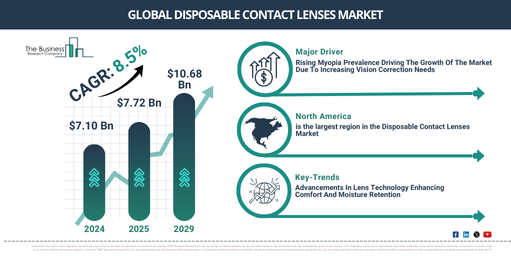
    The market for disposable contact lenses has seen significant expansion in the recent past. The market size is set to inflate from $7.10 billion in 2024 to $7.72 billion in 2025, registering a compound annual growth rate (CAGR) of 8.7%. The rise in the historic phase can be tied to the escalation in vision impairments, heightened awareness regarding ocular health, the increase in choosing contact lenses over glasses, the growing effect of digital eye strain necessitating lenses, and the surge in use of subscription-based services for lens distribution.

    The market for disposable contact lenses is projected to experience a significant increase in the coming years, with an expected rise to $10.68 billion in 2029, exhibiting a Compound Annual Growth Rate (CAGR) of 8.5%. Various factors contributing to this anticipated expansion over the forecast period include an escalating demand for daily disposable lenses, a surge in occurrences of myopia among young individuals, an increased inclination towards hygiene and ease-of-use, a growing elderly population requiring vision correction, and a rise in tailoring and individualization of lenses. The forecast period is also set to be marked by key trends such as the progression in lens materials technology, improvements in silicone hydrogel lenses, a transition towards eco-friendly and decomposable lenses, incorporation of advanced technology in contact lenses, and enhancements in moisture retainment and oxygen permeability.

    Download a free sample to assess the report’s scope and structure:

    https://www.thebusinessresearchcompany.com/sample.aspx?id=21940&type=smp

    Which Factors and External Forces Are Driving Demand in the Disposable Contact Lenses Market?

    The disposable contact lens market’s expansion is anticipated to be fuelled by the growing occurrence of myopia. Myopia, also known as nearsightedness, is a vision condition in which faraway objects appear fuzzy, while near objects remain clear. Limited exposure to the outdoors contributes significantly to the raising prevalence of this condition since natural light is crucial in managing eye growth and in preventing the eyeball from excessively elongating. This spike in myopia incidence heightens the demand for disposable contact lenses, which offer a practical and sanitary option for correcting vision. For example, the Lions Eye Institute, a non-profit entity based in Australia, reported in October 2024 that global rates of myopia are soaring, affecting over 90% of students at Chinese universities and more than 6 million Australians (constituting over 20% of the population). If current trends continue, myopia could affect half of the global population by 2050. Hence, the escalating prevalence of myopia is propelling the disposable contact lens market’s progression.

    Which Segments in the Disposable Contact Lenses Offer the Most Growth?

    The disposable contact lenses market covered in this report is segmented –

    1) By Type: Cylindrical Lenses, Toric Lenses, Spherical Lenses

    2) By Material: Silicon, Hydrogel, Polymers

    3) By Distribution Channel: Optical Stores, Online Stores

    4) By Applications: Corrective, Therapeutic, Cosmetic

    Subsegments:

    1) By Cylindrical Lenses: Soft Cylindrical Lenses, Rigid Gas Permeable (RGP) Cylindrical Lenses, Hybrid Cylindrical Lenses

    2) By Toric Lenses: Daily Disposable Toric Lenses, Weekly Disposable Toric Lenses, Monthly Disposable Toric Lenses

    3) By Spherical Lenses: Daily Disposable Spherical Lenses, Weekly Disposable Spherical Lenses, Monthly Disposable Spherical Lenses

    Request customized data on this market:

    https://www.thebusinessresearchcompany.com/customise?id=21940&type=smp

    What Are the Fastest-Growing Geographies in the Disposable Contact Lenses Market?

    North America was the largest region in the disposable contact lenses market in 2024. Asia-Pacific is expected to be the fastest-growing region in the forecast period. The regions covered in the disposable contact lenses market report are Asia-Pacific, Western Europe, Eastern Europe, North America, South America, Middle East, Africa.

    Which Cutting-Edge Market Trends Are Expected to Drive theDisposable Contact Lenses Market’s Growth?

    Focus on the development of advanced lens technology, such as ProBalance technology, are the primary scope for major enterprises in the disposable contact lenses market to gain a significant market advantage. ProBalance technology marks a breakthrough in lens innovation by utilizing moisturizing elements to sustain ocular surface balance, lessen eye dryness, and improve comfort during the use of contact lenses. As an illustration, Bausch + Lomb Incorporated, a U.S.-based medical company, rolled out Infuse Multifocal silicone hydrogel everyday disposable contact lenses in the United States in May 2023. These lenses have been designed to offer clear sight across all lengths for individuals with presbyopia. They employ ProBalance technology to retain moisture and alleviate dryness, thus addressing prevalent challenges experienced by people who use multifocal lenses. They are manufactured using the advanced SiHy material (kalifilcon A), becoming high in breathability, comfort, and extended moisture preservation.

    View the full report here:

    https://www.thebusinessresearchcompany.com/report/disposable-contact-lenses-global-market-report

    What Are the Key Elements That Define the Disposable Contact Lenses Market?

    Disposable contact lenses are soft lenses designed for short-term use and discarded after a specified period, such as daily, biweekly, or monthly. They are used for vision correction or cosmetic purposes, offering convenience and reducing the risk of infections compared to reusable lenses.

    Purchase the full report and get a swift delivery:

    https://www.thebusinessresearchcompany.com/purchaseoptions.aspx?id=21940

    About The Business Research Company:

    With over 15000+ reports from 27 industries covering 60+ geographies, The Business Research Company has built a reputation for offering comprehensive, data-rich research and insights. Armed with 1,500,000 datasets, the optimistic contribution of in-depth secondary research, and unique insights from industry leaders, you can get the information you need to stay ahead in the game.

    Get in touch with us:

    The Business Research Company: https://www.thebusinessresearchcompany.com/

    Americas +1 3156230293

    Asia +44 2071930708

    Europe +44 2071930708

    Email us at info@tbrc.info

    Follow us on:

    LinkedIn: https://in.linkedin.com/company/the-business-research-company

    YouTube: https://www.youtube.com/channel/UC24_fI0rV8cR5DxlCpgmyFQ

    Global Market Model: https://www.thebusinessresearchcompany.com/global-market-model

  • Dermatomycoses Market Trends 2025-2034: Growth, Strategic Insights, and Opportunities Ahead

    Discover trends, market shifts, and competitive outlooks for the dermatomycoses industry through 2025-2034 with The Business Research Company’s reliable data and in-depth research

    What Are the Projected Market Size and Growth Rates for the Dermatomycoses Market From 2025 To 2029?

    In the past few years, the dermatomycoses market has expanded significantly. The market, which was valued at $14.12 billion in 2024, is projected to reach $14.95 billion in 2025, equating to a compound annual growth rate (CAGR) of 5.9%. This considerable growth during the historical period results from factors such as advancing antifungal treatments, growing incidences of fungal infections, heightened skin health consciousness, improved diagnostic strategies, and the growth of over-the-counter antifungal products.

    Strong expansion is projected for the dermatomycoses market in the coming years, with estimations reaching $18.59 billion by 2029, achieving a compound annual growth rate (CAGR) of 5.6%. Factors contributing to this growth throughout the forecast period include increased aging demographics, the emergence of drug-resistant fungal strains, heightened demand for organic antifungal products, progressing biotechnological developments and research in antifungal studies, and growth in healthcare reach in emerging regions. The forecast period is also likely to see trendsetting changes such as the invention of new antifungal medications, enhancements in quick diagnostic methods, the incorporation of artificial intelligence in dermatology, advancements in nanotechnology-infused antifungal remedies, and pioneering work in microbiome-centered treatments.

    Download a free sample to assess the report’s scope and structure:

    https://www.thebusinessresearchcompany.com/sample.aspx?id=21934&type=smp

    What Are the Major Market Drivers Behind the Rising Adoption of Dermatomycoses Market?

    The dermatomycoses market is likely to grow due to the escalating prevalence of fungal infections. These infections are triggered by fungi that impact the skin, nails, hair, or even the internal organs, leading to assorted health complications. The unfettered use of broad-spectrum antibiotics causes an imbalance in the natural microbiome, offering an ideal environment for fungi to flourish and cause infections. Such an imbalance weakens the body’s natural defense systems, exposing people to opportunistic fungal infections. Dermatomycoses, caused by impure yeasts, dermatophytes, and molds, result in fungal diseases affecting different tissues and leading to common superficial and systemic infections. For example, in November 2023, the UK Health Security Agency, a public health regulator dedicated to safeguarding public health from infectious diseases, estimated a yearly incident rate of 6.5 million invasive fungal infections globally, which led to about 3.8 million deaths. Out of these, 2.5 million deaths were directly linked to these infections. Thus, the rise in fungal infections is fuelling the growth of the dermatomycoses market. Additionally, the soaring demand for oral drugs is anticipated to encourage the growth of the dermatomycoses market. Oral medications, including tablets, capsules, or fluids taken by mouth, and absorbed through the gastrointestinal tract, are increasingly in demand. The preference for oral medicines stems from their simple usage and effectiveness in managing diverse conditions, and they are often chosen over injections or other means of delivery. Oral drugs, with the help of systemic antifungal agents, can penetrate the affected skin, hair, or nails through bloodstream, ensuring a deeper and more extended treatment compared to topical applications. For example, the Centers for Disease Control and Prevention, a US-based governmental agency, reported in October 2022, that the dispensation of oral antivirals had risen by 57%, leaping from 643 per 100,000 individuals between April 24 and May 21, 2022, to 1,012 per 100,000 individuals between July 31 and August 28, 2022. Thus the burgeoning demand for oral drugs is fostering the expansion of the dermatomycoses market.

    Which Key Market Segments Comprise the Dermatomycoses Market and Drive Its Revenue Growth?

    The dermatomycoses market covered in this report is segmented –

    1) By Drugs: Corticosteroids, Corticosteroid-Sparing Agents, Immunosuppressive, Immunomodulator, Antifungals, Other Drugs

    2) By Route Of Administration: Oral, Parenteral, Topical, Other Routes Of Administration

    3) By End-User: Hospitals, Specialty Clinics, Other End-Users

    Subsegmentss:

    1) By Corticosteroids: Topical Corticosteroids, Oral Corticosteroids, Injectable Corticosteroids

    2) By Corticosteroid-Sparing Agents: Tacrolimus, Pimecrolimus

    3) By Immunosuppressive: Methotrexate, Azathioprine, Cyclophosphamide

    4) By Immunomodulator: Interferon-Gamma, Thalidomide

    5) By Antifungals: Topical Antifungals, Oral Antifungals, Systemic Antifungals

    6) By Other Drugs: Antihistamines, Antibacterial Agents

    Request customized data on this market:

    https://www.thebusinessresearchcompany.com/customise?id=21934&type=smp

    Which Areas Are Leading Regions in the Dermatomycoses Market Expansion Across the Globe?

    North America was the largest region in the dermatomycoses market in 2024. Asia-Pacific is expected to be the fastest-growing region in the forecast period. The regions covered in the dermatomycoses market report are Asia-Pacific, Western Europe, Eastern Europe, North America, South America, Middle East, Africa.

    What Are the Strategic Trends Steering theDermatomycoses Market Direction?

    Leading firms in the dermatomycoses market are prioritizing the development of investigational new drugs to enhance onychomycosis treatment and boost its effectiveness. Investigational new drugs (IND) are therapeutic compounds currently in the preclinical or clinical trial stages, being assessed for safety, efficacy, and regulatory approval potential before they become sanctioned treatments. For example, Vanda Pharmaceuticals Inc., a biopharmaceutical company from the US, was granted approval for its Investigational New Drug VTR-297 by the US Food and Drug Administration (FDA) in January 2024, targeted for onychomycosis treatment. The uniqueness of VTR-297 lies in its topical antifungal properties linked to its histone deacetylase (HDAC) inhibitory attributes, which sets it apart from conventional antifungal medications. It functions by attacking the fundamental cause of fungal proliferation, indicating potent antifungal activity against dermatophytes and other types of fungi. This innovative action mode could offer quicker and more effective treatment outcomes, while also lowering the chances of infection reappearance, fulfilling a critical gap in onychomycosis therapy.

    View the full report here:

    https://www.thebusinessresearchcompany.com/report/dermatomycoses-global-market-report

    How Is the Dermatomycoses Market Conceptually Defined?

    Dermatomycoses are a group of fungal infections affecting the skin, hair, and nails, primarily caused by dermatophytes, yeasts, or molds. These infections often lead to itching, scaling, redness, and skin inflammation, impacting overall skin health. The main goal of treatment is to eliminate the fungal infection, alleviate symptoms, and prevent recurrence through the use of antifungal medications, maintaining proper hygiene, and following effective skin care practices.

    Purchase the full report and get a swift delivery:

    https://www.thebusinessresearchcompany.com/purchaseoptions.aspx?id=21934

    About The Business Research Company:

    With over 15000+ reports from 27 industries covering 60+ geographies, The Business Research Company has built a reputation for offering comprehensive, data-rich research and insights. Armed with 1,500,000 datasets, the optimistic contribution of in-depth secondary research, and unique insights from industry leaders, you can get the information you need to stay ahead in the game.

    Get in touch with us:

    The Business Research Company: https://www.thebusinessresearchcompany.com/

    Americas +1 3156230293

    Asia +44 2071930708

    Europe +44 2071930708

    Email us at info@tbrc.info

    Follow us on:

    LinkedIn: https://in.linkedin.com/company/the-business-research-company

    YouTube: https://www.youtube.com/channel/UC24_fI0rV8cR5DxlCpgmyFQ

    Global Market Model: https://www.thebusinessresearchcompany.com/global-market-model
  • Major Drivers Propelling the Growth oh theCryptococcosis Market Forward: Rising Incidence Of Respiratory Infections Fueling The Growth Of The Cryptococcosis Market Due To Increasing Susceptibility To Opportunistic Diseases

    Major Drivers Propelling the Growth oh theCryptococcosis Market Forward: Rising Incidence Of Respiratory Infections Fueling The Growth Of The Cryptococcosis Market Due To Increasing Susceptibility To Opportunistic Diseases

    Discover trends, market shifts, and competitive outlooks for the cryptococcosis industry through 2025-2034 with The Business Research Company’s reliable data and in-depth research

    What is the Projected CAGR for the Cryptococcosis Market Size from 2025 to 2034?

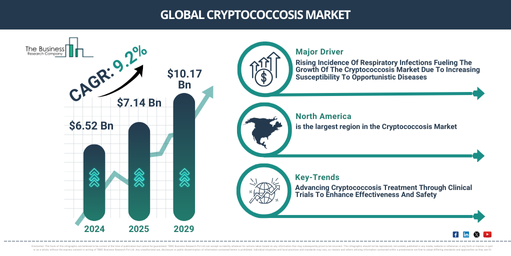
    The market for cryptococcosis has seen notable expansion in the recent past. The market size is projected to climb from $6.52 billion in 2024 to $7.14 billion come 2025, with a compound annual growth rate of 9.5%. The past growth can be attributed to a variety of factors including an increased prevalence of immunosuppressive disorders, advancements in antifungal therapies, surge in organ transplant procedures, heightened awareness about fungal infections, the introduction of amphotericin B formulations – a significant development, the occurrence of cryptococcus gattii outbreaks, expansion in the healthcare infrastructure, and the approval of antifungal drugs by regulatory bodies.

    Expectations are high for a robust expansion of the cryptococcosis market size, with forecasts suggesting growth to $10.17 billion by 2029, with a compound annual growth rate (CAGR) of 9.2%. The surge anticipated over this timeframe can be attributed to various factors. These include an escalating number of HIV/AIDS and immunosuppressive disease cases, increased adoption of innovative antifungal treatments, growth in investment towards research and development in antifungal medications, improvements in healthcare accessibility in emerging regions, and the advent of combination antifungal therapy. Moreover, heightened governmental efforts towards managing infectious diseases and greater public awareness about cryptococcal infections are also contributing to this growth. Key trends predicted to shape this market during the forecast period involve the development of next-gen antifungal drugs, the use of AI for outbreak predictive analytics, nanotech-driven drug delivery systems, wearable biosensors for early detection, blockchain to ensure secure pharmaceutical supply chains, 3D bioprinting for fungal infection modeling, machine learning’s role in antifungal drug discovery and advancements in immunotherapy for treating cryptococcosis.

    Download a free sample to assess the report’s scope and structure:

    https://www.thebusinessresearchcompany.com/sample.aspx?id=21929&type=smp

    Which Major Market Drivers Are Expected to Boost the Growth Potential of the Cryptococcosis Market?

    An increasing number of respiratory infections, predicted in the future, are expected to drive the growth of the cryptococcosis market. These infections, which can affect the nose, throat, airways, and lungs, are brought on by viruses, bacteria, or fungi. The rise in such infections can be attributed to air pollution, particularly the damage caused to lung function by harmful pollutants like smoke, dust, and chemicals. This increases vulnerability to diseases as the immune system weakens, significantly offering a perfect breeding ground for diseases like cryptococcosis. This fungal infection mainly affects the lungs and the central nervous system, placing immunocompromised people at risk. According to the Australian Bureau of Statistics, in December 2024, influenza-related fatalities in 2024 were noted to be 951, a considerable jump from 427 in 2022. Hence, the increase of respiratory infections is a primary driver for cryptococcosis market growth. Continuing to advance the cryptococcosis market is the rising prevalence of human immunodeficiency virus (HIV). HIV is known for attacking the immune system, particularly the CD4 cells, and this leaves the body prone to infections and diseases. The prevalence of HIV is on the rise due to a deficit in awareness and education about the virus’s transmission and preventive methods. This can lead to risky behaviors, late diagnosis, and unintentional spreading of the virus. A weakened immune system due to HIV makes individuals susceptible to opportunistic infections, including cryptococcosis. As the number of HIV cases rises, so too does the risk of cryptococcal infections, resulting in greater demand for efficient treatments, thereby fueling market growth. For instance, the UK Health Security Agency in October 2024 recorded 6,008 diagnoses of human immunodeficiency virus (HIV) in 2023, marking a 51% increase from 3,975 in 2022. Consequently, the increasing cases of human immunodeficiency virus (HIV) are a driving force for the growth of the cryptococcosis market.

    Which Key Market Segments Comprise the Cryptococcosis Market and Drive Its Revenue Growth?

    The cryptococcosis market covered in this report is segmented –

    1) By Treatment Type: Adjunctive Therapies, Antifungal Drugs

    2) By Diagnostic Technique: Culture Methods, Microscopic Examination, Molecular Methods

    3) By Infection Type: Cerebral Cryptococcosis, Pulmonary Cryptococcosis

    4) By End User: Clinics, Home Healthcare, Hospitals, Research Institutes

    Subsegments:

    1) By Adjunctive Therapies: Immunotherapy, Surgery, Supportive Care

    2) By Antifungal Drugs: Amphotericin B, Fluconazole, Itraconazole, Voriconazole, Other Azoles

    Request customized data on this market:

    https://www.thebusinessresearchcompany.com/customise?id=21929&type=smp

    Which Areas Are Leading Regions in the Cryptococcosis Market Expansion Across the Globe?

    North America was the largest region in the cryptococcosis market in 2024. Asia-Pacific is expected to be the fastest-growing region in the forecast period. The regions covered in the cryptococcosis market report are Asia-Pacific, Western Europe, Eastern Europe, North America, South America, Middle East, Africa.

    What Are the Key Market Trends in theCryptococcosis Market Over the Coming Years?

    Leading firms in the cryptococcosis market are actively participating in clinical trials to produce more effective and safer antifungal therapies. Such trials play a vital role in assessing new treatments and optimizing results for patients with serious fungal infections. For example, in August 2023, biopharmaceutical company Matinas BioPharma Holdings Inc., based in the US, unveiled promising findings from the Phase II EnACT trial of MAT2203, aimed at treating cryptococcal meningitis. MAT2203 is a lipid nanocrystal formulation of amphotericin B that targets and disrupts the structure of fungal cell membranes, leading to the death of the fungi. The trial showed increased patient survival rates and a positive safety record, indicating MAT2203’s potential as a revolutionary treatment for cryptococcosis, including cryptococcal meningitis.

    View the full report here:

    https://www.thebusinessresearchcompany.com/report/cryptococcosis-global-market-report

    How Is the Cryptococcosis Market Conceptually Defined?

    Cryptococcosis is a fungal infection caused by cryptococcus species such as Cryptococcus neoformans and Cryptococcus gattii, primarily affecting the lungs and central nervous system (CNS). It occurs in immunocompromised individuals, such as those with human immunodeficiency virus (HIV) or acquired immunodeficiency syndrome (AIDS), organ transplant recipients, and patients on immunosuppressive therapy. This infection can lead to cryptococcal meningitis, which is life-threatening if untreated.

    Purchase the full report and get a swift delivery:

    https://www.thebusinessresearchcompany.com/purchaseoptions.aspx?id=21929

    About The Business Research Company:

    With over 15000+ reports from 27 industries covering 60+ geographies, The Business Research Company has built a reputation for offering comprehensive, data-rich research and insights. Armed with 1,500,000 datasets, the optimistic contribution of in-depth secondary research, and unique insights from industry leaders, you can get the information you need to stay ahead in the game.

    Get in touch with us:

    The Business Research Company: https://www.thebusinessresearchcompany.com/

    Americas +1 3156230293

    Asia +44 2071930708

    Europe +44 2071930708

    Email us at info@tbrc.info

    Follow us on:

    LinkedIn: https://in.linkedin.com/company/the-business-research-company

    YouTube: https://www.youtube.com/channel/UC24_fI0rV8cR5DxlCpgmyFQ

    Global Market Model: https://www.thebusinessresearchcompany.com/global-market-model

  • Strategic Growth Drivers Shaping the Ayurvedic Toothpaste Market Outlook 2025- 2034:Rising Prevalence Of Oral Diseases Driving The Growth Of The Market Due To Increasing Demand For Natural Oral Care Solutions

    Strategic Growth Drivers Shaping the Ayurvedic Toothpaste Market Outlook 2025- 2034:Rising Prevalence Of Oral Diseases Driving The Growth Of The Market Due To Increasing Demand For Natural Oral Care Solutions

    Discover trends, market shifts, and competitive outlooks for the ayurvedic toothpaste industry through 2025-2034 with The Business Research Company’s reliable data and in-depth research

    What Is the Estimated Market Size of the Ayurvedic Toothpaste Market In 2029?

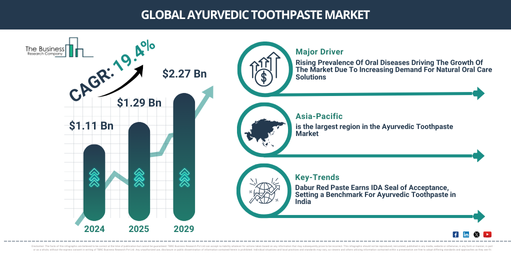
    The market scale of ayurvedic toothpaste has experienced a swift expansion in the latest years. The market is set to rise from $1.11 billion in 2024 to $1.29 billion in 2025, equating to a compound annual growth rate (CAGR) of 15.5%. The remarkable surge during the past years could be credited to factors such as enhanced health alertness, growth in the interest for organic items, a heightened understanding of oral cleanliness, an increase in eco-aware clientele, and improved accessibility of Ayurvedic products.

    Expectations are high for rapid expansion of the ayurvedic toothpaste market in the upcoming years. This market is forecasted to swell to a value of $2.27 billion by 2029, with a compound annual growth rate (CAGR) of 19.4%. Various factors propelling this growth during the outlook period include increasing disposable incomes, rising demand for eco-friendly goods, growth in online shopping, an expanding urban populace, increased awareness of preventive healthcare, a heightened emphasis on personal grooming, and a growing acceptance of ayurvedic and herbal wellness trends. Key trends to note for the anticipated period include partnerships with health influencers, bespoke oral care, botanical formulations, online marketing strategies, high-end product selections, and a shift towards products without chemical content.

    Download a free sample to assess the report’s scope and structure:

    https://www.thebusinessresearchcompany.com/sample.aspx?id=21900&type=smp

    Which Factors and External Forces Are Driving Demand in the Ayurvedic Toothpaste Market?

    The increase in oral health conditions is anticipated to significantly contribute to the growth of the market for ayurvedic toothpaste. These conditions, which can affect various oral structures including the mouth, teeth, gums, and tongue, often results in pain, discomfort, and potential systemic health issues. Poor oral hygiene, such as insufficient brushing and flossing, is largely responsible for the spread of these conditions, as it lets plaque and bacteria accumulate, thereby leading to tooth decay and gum disorders. Ayurvedic toothpaste can be beneficial for those suffering from oral diseases, as it contains natural herbs and medicinal ingredients with antibacterial, anti-inflammatory, and healing characteristics, which can aid in plaque reduction, gum reinforcement, and overall oral health improvement. For instance, the World Health Organization, a Switzerland-based governmental entity, reported in November 2024 that an estimated 3.5 billion people globally were affected by oral diseases. In addition, according to a February 2024 report by the British Dental Association, a health organization based in the UK, over 12 million adults in England lack suitable dental care for their needs. As a result, the surge in oral disease prevalence triggers an expansion in the ayurvedic toothpaste market.

    Which Segments in the Ayurvedic Toothpaste Offer the Most Growth?

    The ayurvedic toothpaste market covered in this report is segmented –

    1) By Type: Paste, Cream, Gels, Powdered

    2) By Ingredient: Neem, Mint, Basil, Spice Extract, Meswak, Other Ingredients

    3) By Formulation Type: Herbal, Organic, Natural

    4) By Consumer Age Group: Children, Adults, Seniors

    5) By Distribution Channel: General Store, Hypermarket And Supermarket, Pharmacy Store, Online Retail, Other Distribution Channels

    Subsegmentss:

    1) By Paste: Herbal Paste, Medicinal Paste, Whitening Paste

    2) By Cream: Herbal Cream, Fluoride-Free Cream, Medicinal Cream

    3) By Gels: Gel with Aloe Vera, Gel with Neem, Whitening Gel

    4) By Powdered: Herbal Powder, Whitening Powder, Medicinal Powder

    Request customized data on this market:

    https://www.thebusinessresearchcompany.com/customise?id=21900&type=smp

    What Are the Fastest-Growing Geographies in the Ayurvedic Toothpaste Market?

    Asia-Pacific was the largest region in the ayurvedic toothpaste market in 2024. North America is expected to be the fastest-growing region in the forecast period. The regions covered in the ayurvedic toothpaste market report are Asia-Pacific, Western Europe, Eastern Europe, North America, South America, Middle East, Africa.

    Which Cutting-Edge Market Trends Are Expected to Drive theAyurvedic Toothpaste Market’s Growth?

    Key players in the ayurvedic toothpaste industry are concentrating on creating out-of-the-box toothpaste varieties and obtaining coveted endorsements to boost customer confidence, confirm product effectiveness, and adhere to safety and performance industry standards. These notable endorsements represent a seal of approval from recognized dental, health, or regulatory bodies for products that meet particular safety, effectiveness, and quality standards. For example, in November 2024, Dabur Red Paste, an Indian consumer goods company that produces ayurvedic toothpaste, reached an important achievement. It became India’s first locally produced ayurvedic toothpaste brand to be accorded the esteemed Seal of Acceptance by the Indian Dental Association (IDA). This accolade underscores the brand’s dedication to providing secure and efficient oral care solutions. Dabur Red Paste incorporates a distinctive concoction of 13 potent Ayurvedic components. This formulation offers a comprehensive solution to oral health, killing bacteria, viruses, and fungi, thereby reducing chances of oral infections.

    View the full report here:

    https://www.thebusinessresearchcompany.com/report/ayurvedic-toothpaste-global-market-report

    What Are the Key Elements That Define the Ayurvedic Toothpaste Market?

    Ayurvedic toothpaste refers to a natural oral care product formulated using traditional Ayurvedic ingredients, known for their medicinal properties. It is free from synthetic chemicals, artificial flavors, and fluoride, making it a preferred choice for consumers seeking herbal and holistic dental solutions. These toothpastes focus on promoting overall oral health by preventing cavities, strengthening gums, and providing long-lasting freshness through herbal extracts.

    Purchase the full report and get a swift delivery:

    https://www.thebusinessresearchcompany.com/purchaseoptions.aspx?id=21900

    About The Business Research Company:

    With over 15000+ reports from 27 industries covering 60+ geographies, The Business Research Company has built a reputation for offering comprehensive, data-rich research and insights. Armed with 1,500,000 datasets, the optimistic contribution of in-depth secondary research, and unique insights from industry leaders, you can get the information you need to stay ahead in the game.

    Get in touch with us:

    The Business Research Company: https://www.thebusinessresearchcompany.com/

    Americas +1 3156230293

    Asia +44 2071930708

    Europe +44 2071930708

    Email us at info@tbrc.info

    Follow us on:

    LinkedIn: https://in.linkedin.com/company/the-business-research-company

    YouTube: https://www.youtube.com/channel/UC24_fI0rV8cR5DxlCpgmyFQ

    Global Market Model: https://www.thebusinessresearchcompany.com/global-market-model

  • Arteriovenous Malformations Market Overview 2025: Competitive Shifts, Forecast Models, and Emerging Opportunities

    Arteriovenous Malformations Market Overview 2025: Competitive Shifts, Forecast Models, and Emerging Opportunities

    Discover trends, market shifts, and competitive outlooks for the arteriovenous malformations industry through 2025-2034 with The Business Research Company’s reliable data and in-depth research

    How Fast Is The Arteriovenous Malformations Market Expected to Grow Between 2025 And 2029?

    The market for arteriovenous malformations has seen robust growth in recent years. The market, which was $2.88 billion in 2024, is expected to rise to $3.11 billion in 2025, registering a compound annual growth rate (CAGR) of 7.7%. This past growth can be credited to a higher prevalence of arteriovenous malformations and neurological or brain disorders, a growing need for improved treatments for rare diseases, increased government backing for research and development, and an upswing in the business sector.

    Expectations are high for the arteriovenous malformations market in the forthcoming years, with projections predicting a compelling increase. The market is slated to expand to a staggering $4.13 billion by 2029, demonstrating a compound annual growth rate (CAGR) of 7.4%. The surge anticipated during this projection period could be ascribed to factors such as the rising application of gene therapy, augmented demand for top-tier medical technology and quality healthcare, increased usage of neurological medications, and growth mirrored alongside the elderly population. The market trends to watch out for in the forecast period encompass progress in treatment alternatives, breakthroughs in medical technology, advances in microsurgical procedures, inventions in catheter technology, and improvements in minimally invasive surgeries.

    Download a free sample to assess the report’s scope and structure:

    https://www.thebusinessresearchcompany.com/sample.aspx?id=21888&type=smp

    What Are the Core Growth Drivers Propelling the Arteriovenous Malformations Market Forward?

    The arteriovenous malformations market is projected to expand in the future, driven by the growing preference for minimally invasive procedures. These operations, involving minor cuts or the use of catheters, appeal due to their reduced trauma, shorter healing time, and fewer complications, advantages that allow a quicker return to daily activities compared to traditional surgeries. One innovative technique made possible by arteriovenous malformations (AVMs) within this approach is endovascular embolization, employing catheters and image-guided interventions to manage irregular blood flow without necessitating open surgery. This technique ensures lesser risks, speedier recoveries, and improved patient results. The appeal of these procedures is reflected by the fact that, as per the American Society of Plastic Surgeons, the number of cosmetic minimally invasive procedures completed in 2023 jumped by 7% to 25,442,640, up from 23,672,269 in 2022. Thus, the growing trend towards minimally invasive procedures is boosting the arteriovenous malformations market. Furthermore, advancements in arteriovenous malformations treatment and neurovascular innovations, driven by increased investment in biotechnology, are fueling the market’s growth. Biotechnology entails the application of biological processes, organisms, or systems in the development of healthcare solutions. The surge in biotechnology investments is linked to medical breakthroughs like CRISPR, which facilitates accurate genetic modifications. Arteriovenous malformations (AVMs) add value to biotechnology, enhancing medical imaging, gene therapy, and minimally invasive treatments. This collaboration results in biotechnology-based solutions such as targeted drug delivery, vascular repair biomaterials, and AI-aided diagnostics. According to The BioIndustry Association (BIA), a UK-based trade group for innovative life sciences and the biotech sector, the life sciences and biotech sector of the UK recorded a phenomenal investment quarter in 2024, generating $2.55 billion in the first six months, outstripping the $2.32 billion received in 2023. As a result, the increased biotechnology investment is also aiding the arteriovenous malformations market’s growth.

    What Segment Types Define the Arteriovenous Malformations Market Structure?

    The arteriovenous malformations market covered in this report is segmented –

    1) By Type: True Arteriovenous Malformation, Occult Or Cryptic, Cavernous Malformations, Venous Malformation, Hemangioma, Dural Fistula, Other Types

    2) By Diagnosis: Physical examination, Brain Scans, Other Diagnosis

    3) By Treatment: Endovascular Embolization, Neurosurgery

    4) By Age Group: Adult Patients, Pediatric Patients

    5) By End-User: Hospitals And Clinics, Research laboratories, Other End-Users

    Subsegmentss:

    1) By True Arteriovenous Malformation Type: Pial AVMs, Spinal AVMs, Brain AVMs, Extremity AVMs, Visceral AVMs

    2) By Occult or Cryptic Type: Micro-AVMs, Hidden AVMs, Asymptomatic AVMs, Deep-Seated AVMs, Small-Scale AVMs

    3) By Cavernous Malformations Type: Cerebral Cavernous Malformations (CCMs), Spinal Cavernous Malformations, Familial Cavernous Malformations, Solitary Cavernous Malformations, Multiple Cavernous Malformations

    4) By Venous Malformation Type: Superficial Venous Malformations, Deep Venous Malformations, Mixed Venous Malformations, Syndromic Venous Malformations, Blue Rubber Bleb Nevus Syndrome

    5) By Hemangioma Type: Infantile Hemangiomas, Capillary Hemangiomas, Lobular Capillary Hemangiomas, Cavernous Hemangiomas, Compound Hemangiomas

    6) By Dural Fistula Type: Cranial Dural Arteriovenous Fistula (dAVF), Spinal Dural Arteriovenous Fistula, Direct Dural AV Fistula, Indirect Dural AV Fistula, High-Flow Dural Fistula

    7) By Other Types: Lymphatic Malformations, Mixed Vascular Malformations, Arteriovenous Aneurysms, Hereditary Hemorrhagic Telangiectasia (HHT)-Associated AVMs, Rare Congenital AVMs

    Request customized data on this market:

    https://www.thebusinessresearchcompany.com/customise?id=21888&type=smp

    Which Geographic Areas Hold the Strongest Growth Potential in the Arteriovenous Malformations Market?

    North America was the largest region in the arteriovenous malformations market in 2024. Asia-Pacific is expected to be the fastest-growing region in the forecast period. The regions covered in the arteriovenous malformations market report are Asia-Pacific, Western Europe, Eastern Europe, North America, South America, Middle East, Africa.

    Which Emerging Trends that Are Influencing theArteriovenous Malformations Industry Evolution?

    Key players in the arteriovenous malformations sector are prioritizing technological advancements, like liquid embolic system procedural kits, to refine treatment methods and elevate patient outcomes. The liquid embolic system procedural kit alludes to a pre-packaged, sterilized set incorporated with vital components to administer liquid embolic agents for treating vascular irregularities such as arteriovenous malformations (AVMs). For example, in March 2024, CERENOVUS Inc., an American neurovascular care corporation affiliated with Johnson and Johnson MedTech, introduced the TRUFILL n-BCA liquid embolic system procedural kit. This novel kit consists of two layouts and the necessary equipment for arranging and dispensing the n-BCA liquid embolic system in a solitary sterilized package, enhancing procedure organization for managing cerebral arteriovenous malformations (AVMs).

    View the full report here:

    https://www.thebusinessresearchcompany.com/report/arteriovenous-malformations-global-market-report

    What Is the Definition of the Arteriovenous Malformations Market?

    Arteriovenous malformations refer to abnormal tangles of blood vessels that create direct connections between arteries and veins, bypassing the normal capillary system. This disrupts normal blood flow and oxygen circulation, potentially leading to complications. Early diagnosis and appropriate treatment are crucial to managing symptoms and reducing the risk of serious complications.

    Purchase the full report and get a swift delivery:

    https://www.thebusinessresearchcompany.com/purchaseoptions.aspx?id=21888

    About The Business Research Company:

    With over 15000+ reports from 27 industries covering 60+ geographies, The Business Research Company has built a reputation for offering comprehensive, data-rich research and insights. Armed with 1,500,000 datasets, the optimistic contribution of in-depth secondary research, and unique insights from industry leaders, you can get the information you need to stay ahead in the game.

    Get in touch with us:

    The Business Research Company: https://www.thebusinessresearchcompany.com/

    Americas +1 3156230293

    Asia +44 2071930708

    Europe +44 2071930708

    Email us at info@tbrc.info

    Follow us on:

    LinkedIn: https://in.linkedin.com/company/the-business-research-company

    YouTube: https://www.youtube.com/channel/UC24_fI0rV8cR5DxlCpgmyFQ

    Global Market Model: https://www.thebusinessresearchcompany.com/global-market-model

  • Biocompatible 3D Printing MaterialsMarket Overview 2025–2034: CAGR Trends, Long-Term Growth Paths, and Business Implications

    Biocompatible 3D Printing MaterialsMarket Overview 2025–2034: CAGR Trends, Long-Term Growth Paths, and Business Implications

    Our market reports now include the latest updates on global tariffs, trade impacts, and evolving supply chain dynamics.

    What Is the Current and Projected Market Size of the Biocompatible 3D Printing Materials Market Through 2034?

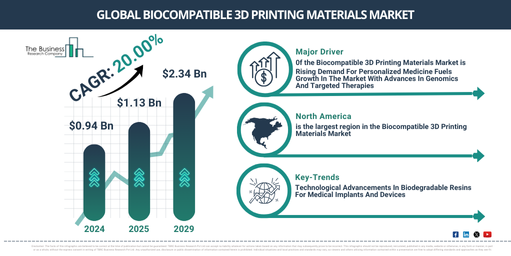
    The market size for biocompatible 3D printing materials has seen significant expansion in the past few years. The market is anticipated to escalate from $0.94 billion in 2024 to $1.13 billion in 2025, showing a compound annual growth rate (CAGR) of 20.3%. Factors contributing to the growth in the preceding period include the increased incidence of chronic diseases, a higher number of elderly individuals, elevated spending on healthcare, heightened environmental awareness, and a rise in the use of metal implants.

    In the upcoming years, the market size for biocompatible 3D printing materials is anticipated to experience a significant surge. The projection is a growth to $2.34 billion in 2029 with a compound annual growth rate (CAGR) of 20.0%. Several factors are driving this growth over the forecast period such as increased 3D printing tech adoption, escalated demand for tailor-made medical instruments, increased disposable income, the emergence of individualized medicine, and growing government initiatives. Prominent trends during this period are expected to be strategic partnerships, the development of improved biomaterials, expansion of personalized medicine, intelligent medical devices, and 3D printed solutions for dentistry.

    Download a free sample to assess the report’s scope and structure:

    https://www.thebusinessresearchcompany.com/sample.aspx?id=21324&type=smp

    What Are the Primary Drivers Supporting the Market Growth of the Biocompatible 3D Printing Materials Market?

    The surging necessity for individualized medical treatments is predicted to stimulate the expansion of the biocompatible 3D printing materials market. Personalized medicine denotes a healthcare approach that customizes procedures and therapies based on the genetic, environmental, and lifestyle peculiarities of the patient, leading to enhanced health outcomes. This uptick in the need for personalized medicine is a byproduct of advancements in genomics, molecular diagnostics, and data analysis driven by Artificial Intelligence, which allow for treatments customized to the individual’s genetic makeup, thereby augmenting efficacy and minimizing side effects. Biocompatible 3D printing materials facilitate this individualized approach to medicine by enabling the creation of patient-tailored implants, prosthetics, and tissue scaffolds that increase the precision of treatment, compatibility with the body, and overall patient results. To illustrate, in February 2024, the US-based non-profit organization, the Personalized Medicine Coalition announced that in 2023, the FDA greenlit 16 fresh individualized treatments for patients suffering from rare diseases, an increase from six in 2022. Out of these approvals, seven were for cancer medicines, and three targeted other diseases and conditions. Consequently, this growing requirement for personalized medicine is catalyzing the expansion of the biocompatible 3D printing materials market.

    Which Primary Segments of the Biocompatible 3D Printing Materials Market Are Driving Growth and Industry Transformations?

    The biocompatible 3d printing materials market covered in this report is segmented –

    1) By Product Type: Polymer; Metal; Other Product Types

    2) By Printing Technology: Fused Deposition Modeling (FDM); Selective Laser Sintering (SLS); Stereolithography (SLA); Multi-Jet Modeling (MJM)

    3) By Property: Biocompatibility; Strength; Durability; Porosity; Flexibility

    4) By Form: Powder; Liquid; Other Forms

    5) By End Use Application: Medical And Dental; Aerospace and Defense; Automotive; Consumer Products; Electronics

    Subsegments:

    1) Polymer: Biodegradable Polymers; Photopolymer Resins; Thermoplastic Polymers

    2) Metal: Titanium And Titanium Alloys; Stainless Steel; Cobalt-Chrome Alloys

    3) Other Product Types: Ceramic-Based Materials; Bio-Ink And Hydrogels; Composite Materials

    Request customized data on this market:

    https://www.thebusinessresearchcompany.com/customise?id=21324&type=smp

    Which Regions Are Key Players in the Growth of the #What Are the Primary Drivers Supporting the Market Growth of the Biocompatible 3D Printing Materials Market?# Market?

    North America was the largest region in the biocompatible 3D printing materials market in 2024. Asia-Pacific is expected to be the fastest-growing region in the forecast period. The regions covered in the biocompatible 3d printing materials market report are Asia-Pacific, Western Europe, Eastern Europe, North America, South America, Middle East, Africa.

    What Are the Most Significant Market Trends in the Biocompatible 3D Printing Materials Market?

    Leading firms in the biocompatible 3D printing materials market are prioritizing the creation of novel products such as biodegradable resin for light-based (bio) printing. Such developments aim to boost sustainability and broaden uses in the health and tissue engineering sectors. Biodegradable resin for light-based (bio)printing, a material that can be cured using light, finds usage in various 3D printing methods like stereolithography (SLA), digital light processing (DLP), or two-photon polymerization (TPP). For example, in June 2024, Belgium-based bioprinting materials firm, BIO INX BV, introduced DEGRES INX, the inaugural biodegradable and biocompatible resin with shape memory features for light-based (bio)printing. This progressive material can be deformed into a temporary shape following 3D printing and reclaim its original form when exposed to body heat. This opens up revolutionary applications in biomedical engineering. Such a significant advancement aids in the creation of intelligent medical implants and tissue scaffolds, setting the stage for future bioprinting applications.

    View the full report here:

    https://www.thebusinessresearchcompany.com/report/biocompatible-3d-printing-materials-global-market-report

    What Parameters Are Used to Define the Biocompatible 3D Printing Materials Market?

    Biocompatible 3D printing materials refer to substances that are safe for use in medical applications and can interact with biological systems without causing harm. These materials are designed to integrate with the human body, promoting healing and tissue regeneration. They are primarily used in creating medical implants, prosthetics, and scaffolds for tissue engineering.

    Purchase the full report and get a swift delivery:

    https://www.thebusinessresearchcompany.com/purchaseoptions.aspx?id=21324

    About The Business Research Company:

    With over 15000+ reports from 27 industries covering 60+ geographies, The Business Research Company has built a reputation for offering comprehensive, data-rich research and insights. Armed with 1,500,000 datasets, the optimistic contribution of in-depth secondary research, and unique insights from industry leaders, you can get the information you need to stay ahead in the game.

    Get in touch with us:

    The Business Research Company: https://www.thebusinessresearchcompany.com/

    Americas +1 3156230293

    Asia +44 2071930708

    Europe +44 2071930708

    Email us at info@tbrc.info

    Follow us on:

    LinkedIn: https://in.linkedin.com/company/the-business-research-company

    YouTube: https://www.youtube.com/channel/UC24_fI0rV8cR5DxlCpgmyFQ

    Global Market Model: https://www.thebusinessresearchcompany.com/global-market-model