Month: June 2025

  • Top Trends Driving Innovation and Change in the Polymyalgia Rheumatica Market: FDA Approval Of Advanced IL-6 Receptor Blocker Offers New Treatment For Polymyalgia Rheumatica

    Top Trends Driving Innovation and Change in the Polymyalgia Rheumatica Market: FDA Approval Of Advanced IL-6 Receptor Blocker Offers New Treatment For Polymyalgia Rheumatica

    Discover trends, market shifts, and competitive outlooks for the polymyalgia rheumatica industry through 2025-2034 with The Business Research Company’s reliable data and in-depth research

    What is the Anticipated CAGR of the Polymyalgia Rheumatica Market, and What Factors Will Drive It?

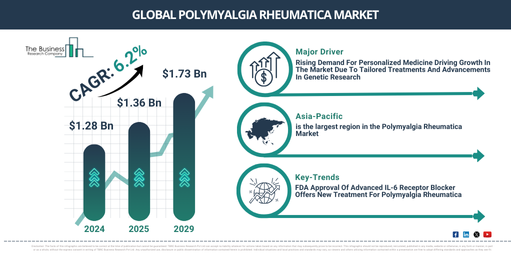
    In the past few years, the polymyalgia rheumatica market size has witnessed significant growth. The projection is that it will expand from $1.28 billion in 2024 to $1.36 billion in 2025 with a compound annual growth rate (CAGR) of 6.6%. Factors that contributed to this historical growth include heightened awareness among healthcare professionals, increased utilization of corticosteroids, proliferation of specialty clinics, the advent of biologic therapies, and boosted healthcare budgets.

    Strong expansion is anticipated in the polymyalgia rheumatica market in the coming years, with predictions estimating its value will reach $1.73 billion in 2029, stemming from a compound annual growth rate (CAGR) of 6.2%. This predicted increases are mainly due to the increased use of biologics, the broadening of precision medicine, an acceleration in drug approvals, more comprehensive reimbursements, and an enlargement in clinical trials. During the forecast period, key trends are expected to be the creation of combination therapies, breakthroughs in personalized medicine, precision medicine development, the inclusion of electronic health records, as well as progress in biomarkers.

    Download a free sample to assess the report’s scope and structure:

    https://www.thebusinessresearchcompany.com/sample.aspx?id=22103&type=smp

    What External and Internal Drivers Are Contributing to the Growth of the Polymyalgia Rheumatica Market?

    The ascension in demand for tailored medical treatment, known as personalized medicine, is anticipated to boost the expansion of the polymyalgia rheumatica market. This individual-oriented medicine approach, influenced by an individual’s unique genetic makeup, lifestyle, and personal health state, brings more effective results. This personalized medical revolution has been propelled by progressive genetic studies, rising patient desires for bespoke treatment plans, and technological improvements in diagnostics. Understanding individual genetic variations through genetic studies has allowed for the creation of customized treatments targeting specific genetic markers. This individualized approach to medicine aids in drug selection, based on patient’s unique characteristics for a safer and more effective treatment agenda. For instance, the Personalised Medicine Coalition, a health care organisation based in the US, reported that in February 2024, the Food and Drug Administration approved 16 new bespoke treatments for rare disease patients in 2023, as compared to six in 2022. This surge in personalized medicine subsequently maneuvering the growth of the polymyalgia rheumatica market. As the ascension in telemedicine services is anticipated to encourage the expansion of the polymyalgia rheumatica market. Telemedicine services utilize digital communicative technologies, such as video and phone calls and online chatting, to extend remote medical consultations, diagnoses, treatment, and patients’ post-treatment care without the requirement of physical appointments. This ascension in telemedicine services is a response to rising demand for convenient and economical healthcare solutions. Telemedicine eradicates the necessity for physical appointments, offering convenience particularly for non-urgent consultations. The growth of these remote healthcare services is beneficial for managing polymyalgia rheumatica (PMR) as it enables distant symptom tracking, medication supervision, and regular patient follow-ups, all essential for managing long-lasting pain and inflammation. For example, the Australian Bureau of Statistics, a governmental agency based in Australia, reported in November 2024 that the proportion of individuals using telehealth consultations rose from 87.7% in 2022-23 to 89.2% in 2023-24. The escalating use of telemedicine services subsequently contributes to the expansion of the polymyalgia rheumatica market.

    What Segment Types Define the Polymyalgia Rheumatica Market Structure?

    The polymyalgia rheumatica market covered in this report is segmented –

    1) By Treatment: Corticosteroids, Nonsteroidal Anti-Inflammatory Drugs, Disease-Modifying Antirheumatic Drugs, Biologics

    2) By Route Of Administration: Oral, Intravenous, Subcutaneous

    3) By Patient Type: Adult, Geriatric, Periatric

    4) By Distribution Channel: Hospital Pharmacies, Retail Pharmacies, Online Pharmacies

    Subsegments:

    1) By Corticosteroids: Prednisone, Methylprednisolone, Hydrocortisone, Dexamethasone

    2) By Nonsteroidal Anti-Inflammatory Drugs (NSAIDs): Ibuprofen, Naproxen, Aspirin, Celecoxib

    3) By Disease-Modifying Antirheumatic Drugs (DMARDs): Methotrexate, Leflunomide, Sulfasalazine, Hydroxychloroquine

    4) By Biologics: Tumor Necrosis Factor (TNF) Inhibitors, Interleukin-6 (IL-6) Inhibitors, B-Cell Inhibitors, Janus Kinase (JAK) Inhibitors

    Request customized data on this market:

    https://www.thebusinessresearchcompany.com/customise?id=22103&type=smp

    Which Geographic Areas Hold the Strongest Growth Potential in the Polymyalgia Rheumatica Market?

    Asia-Pacific was the largest region in the polymyalgia rheumatica market in 2024. The regions covered in the polymyalgia rheumatica market report are Asia-Pacific, Western Europe, Eastern Europe, North America, South America, Middle East, Africa.

    What Long-Term Trends Are Transforming the Competitive Landscape of the Polymyalgia Rheumatica Market?

    Notable companies navigating the polymyalgia rheumatica market are prioritizing the creation of advanced medicinal treatments, particularly interleukin-6 (IL-6) receptor blockers, which offer a more precise, effective mode of action. These biological therapeutics function by inhibiting IL-6, an integral pro-inflammatory cytokine in the context of autoimmune diseases. By obstructing IL-6, these interventions create a cascade of effects that decrease inflammation and ameliorate symptoms, improving life quality for those suffering from PMR. As an example, Regeneron Pharmaceuticals Inc., originating from the U.S., and Sanofi, a healthcare enterprise based in France, publicly stated in February 2023 that the FDA had approved their joint product, Kevzara (sarilumab), for the treatment of polymyalgia rheumatica in adults who are not optimally responsive to corticosteroids or who have trouble easing off them. Kevzara is singular in its status as the first and only biological agent approved for this condition, and it accomplishes its therapeutic goal by interfering with IL-6-mediated signaling. This approval was fueled by the results of a trial where 28.3% of patients under sarilumab obtained sustained remission by the 52nd week, as opposed to only the 10.3% who were given a placebo. The treatment protocol for Kevzara involves a subcutaneous injection every fortnight, and it carries an additional approval for the management of moderately to severely active rheumatoid arthritis. Sanofi’s shares (SNY) are presently valued at $54.13 on the NASDAQ market.

    View the full report here:

    https://www.thebusinessresearchcompany.com/report/polymyalgia-rheumatica-global-market-report

    What Is the Definition of the Polymyalgia Rheumatica Market?

    Polymyalgia rheumatica (PMR) is an inflammatory disorder that primarily affects older adults, causing muscle pain and stiffness, particularly in the shoulders, hips, and neck. It is characterized by aching and swelling in the muscles around the shoulders and hips, leading to difficulty in movement and daily activities.

    Purchase the full report and get a swift delivery:

    https://www.thebusinessresearchcompany.com/purchaseoptions.aspx?id=22103

    About The Business Research Company:

    With over 15000+ reports from 27 industries covering 60+ geographies, The Business Research Company has built a reputation for offering comprehensive, data-rich research and insights. Armed with 1,500,000 datasets, the optimistic contribution of in-depth secondary research, and unique insights from industry leaders, you can get the information you need to stay ahead in the game.

    Get in touch with us:

    The Business Research Company: https://www.thebusinessresearchcompany.com/

    Americas +1 3156230293

    Asia +44 2071930708

    Europe +44 2071930708

    Email us at info@tbrc.info

    Follow us on:

    LinkedIn: https://in.linkedin.com/company/the-business-research-company

    YouTube: https://www.youtube.com/channel/UC24_fI0rV8cR5DxlCpgmyFQ

    Global Market Model: https://www.thebusinessresearchcompany.com/global-market-model
  • Emerging Trends Redefining the Poly(ADP-Ribose) Polymerase (PARP) Inhibitors Market Landscape: Advancements In Targeted Cancer Therapies Driving Innovation In PARP Inhibitors

    Emerging Trends Redefining the Poly(ADP-Ribose) Polymerase (PARP) Inhibitors Market Landscape: Advancements In Targeted Cancer Therapies Driving Innovation In PARP Inhibitors

    Discover trends, market shifts, and competitive outlooks for the poly(adp-ribose) polymerase (parp) inhibitors industry through 2025-2034 with The Business Research Company’s reliable data and in-depth research

    What Are the Key Milestones in the Poly(ADP-Ribose) Polymerase (PARP) Inhibitors Market’s Growth Trajectory From 2025 To 2034?

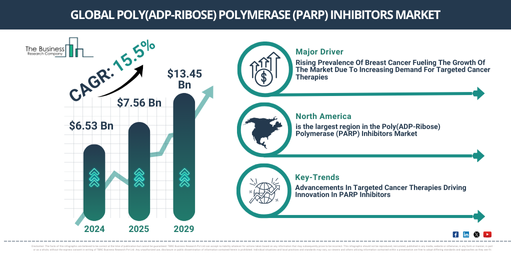
    The market size for poly(ADP-ribose) polymerase (PARP) inhibitors has been on a swift upward trend in the past few years. This market is projected to expand from $6.53 billion in 2024 to $7.56 billion in 2025, signaling a compound annual growth rate (CAGR) of 15.7%. The historic growth pattern can be traced back to factors such as a surge in cancer cases, an increase in genetic testing, successful clinical trials, broader insurance coverage, and a boom in cancer research.

    In the forthcoming years, the market size of poly(ADP-ribose) polymerase (PARP) inhibitors is set to experience substantial growth, estimated to reach a value of $13.45 billion in 2029, with an impressive compound annual growth rate (CAGR) of 15.5%. This growth is primarily driven by factors like an increase in the production and distribution of drugs, heightened incidences of BRCA-mutated cancers and breast cancer, the escalating use of monoclonal antibodies, and a hike in healthcare spending. Key trends during the forecast period encompass improvements in biomarker research, the advent of combination therapies, the incorporation of artificial intelligence in drug creation, progression in biomarker-guided therapy, and the creation of next-generation PARP inhibitors.

    Download a free sample to assess the report’s scope and structure:

    https://www.thebusinessresearchcompany.com/sample.aspx?id=22102&type=smp

    What Are the Core Market Drivers Propelling Growth in the Poly(ADP-Ribose) Polymerase (PARP) Inhibitors Industry?

    The escalating incidence rates of breast cancer are set to catalyze the expansion of the poly(ADP-ribose) polymerase (PARP) inhibitors market. Breast cancer is typified by unregulated cell proliferation in the breast, eventually forming a malignant growth capable of metastasizing to various body parts. The uptick in breast cancer incidences is traced back to aging demographics, alterations in lifestyle, hereditary predisposition, hormonal imbalances, obesity, consumption of alcohol and enhanced susceptibility to environmental risks. PARP inhibitors aid in the treatment of breast cancer by thwarting the DNA repair function of the PARP enzyme in cancerous cells, which induces cell death, specifically in tumours possessing BRCA1 or BRCA2 mutations. For instance, the National Breast Cancer Foundation, a US-centric organization, stated in January 2025, that one in every eight women in the United States will be diagnosed with breast cancer at some point in her lifetime. Stats from 2024 revealed 310,720 women and 2,800 men diagnosed with invasive forms of breast cancer. Consequently, this surge in breast cancer incidences is stimulating the growth of the poly(ADP-ribose) polymerase (PARP) inhibitors market.

    How Is the Poly(ADP-Ribose) Polymerase (PARP) Inhibitors Market Segmented?

    The poly(ADP-ribose) polymerase (PARP) inhibitors market covered in this report is segmented –

    1) By Type: Olaparib, Rucaparib, Niraparib, Talazoparib, Other Types

    2) By Indication: Ovarian Cancer, Breast Cancer, Prostate Cancer, Pancreatic Cancer

    3) By Distribution Channel: Hospital Pharmacies, Retail Pharmacies, Online Pharmacies

    4) By End-User: Hospitals, Specialty Clinics, Research Institutions, Other End-Users

    Subsegments:

    1) By Olaparib: BRCA-Mutated Cancers, HRD-Positive Cancers, Maintenance Therapy

    2) By Rucaparib: Ovarian Cancer, Prostate Cancer, Pancreatic Cancer

    3) By Niraparib: First-Line Treatment, Recurrent Cancer Treatment, Late-Stage Cancer

    4) By Talazoparib: Breast Cancer, Germline BRCA-Mutated Tumors, Neoadjuvant Or Adjuvant Therapy

    5) By Other Types: Emerging PARP Inhibitors, Investigational Therapies, Novel Combinations

    Request customized data on this market:

    https://www.thebusinessresearchcompany.com/customise?id=22102&type=smp

    Which Regions Are Driving the Next Phase of the Poly(ADP-Ribose) Polymerase (PARP) Inhibitors Market Growth?

    North America was the largest region in the poly(ADP-ribose) polymerase (PARP) inhibitors market in 2024. Asia-Pacific is expected to be the fastest-growing region in the forecast period. The regions covered in the poly(ADP-ribose) polymerase (PARP) inhibitors market report are Asia-Pacific, Western Europe, Eastern Europe, North America, South America, Middle East, Africa.

    What Key Market Trends and Innovations Are Shaping the Future of the Poly(ADP-Ribose) Polymerase (PARP) Inhibitors Industry?

    Prominent firms in the poly(ADP-ribose) polymerase (PARP) inhibitors market are concentrating their efforts on creating innovative cancer therapies, such as anticancer drugs, aimed at specific genetic mutations found in certain types of cancer. These anticancer drugs are designed to combat cancer by inhibiting cancer cell growth, hindering their expansion, or annihilating them. They function in a variety of ways, such as disrupting cell division, obstructing vital proteins necessary for tumor growth, or boosting the immune system’s capacity to resist cancer. For example, Zydus Lifesciences Limited, a pharmaceutical entity based in India, introduced IBYRA, a generic form of the PARP inhibitor olaparib, to the Indian market in March 2024. This medication offers a cost-effective and targeted treatment alternative for HRD-positive and BRCA-positive cancer patients, drastically reducing treatment expenses compared to the original drug.

    View the full report here:

    https://www.thebusinessresearchcompany.com/report/polyadp-ribose-polymerase-parp-inhibitors-global-market-report

    How Is the Poly(ADP-Ribose) Polymerase (PARP) Inhibitors Market Defined and What Are Its Core Parameters?

    PARP inhibitors (poly(ADP-ribose) polymerase inhibitors) are a group of drugs mainly used in cancer therapy. These medications work by blocking DNA repair in cancer cells, particularly in cancers with BRCA mutations. They are commonly used to treat ovarian and breast cancer and are usually taken orally. PARP inhibitors help reduce the risk of cancer returning after chemotherapy and can cause side effects such as fatigue and low blood cell counts.

    Purchase the full report and get a swift delivery:

    https://www.thebusinessresearchcompany.com/purchaseoptions.aspx?id=22102

    About The Business Research Company:

    With over 15000+ reports from 27 industries covering 60+ geographies, The Business Research Company has built a reputation for offering comprehensive, data-rich research and insights. Armed with 1,500,000 datasets, the optimistic contribution of in-depth secondary research, and unique insights from industry leaders, you can get the information you need to stay ahead in the game.

    Get in touch with us:

    The Business Research Company: https://www.thebusinessresearchcompany.com/

    Americas +1 3156230293

    Asia +44 2071930708

    Europe +44 2071930708

    Email us at info@tbrc.info

    Follow us on:

    LinkedIn: https://in.linkedin.com/company/the-business-research-company

    YouTube: https://www.youtube.com/channel/UC24_fI0rV8cR5DxlCpgmyFQ

    Global Market Model: https://www.thebusinessresearchcompany.com/global-market-model

  • Medical PendantMarket Overview 2025–2034: CAGR Trends, Long-Term Growth Paths, and Business Implications

    Medical PendantMarket Overview 2025–2034: CAGR Trends, Long-Term Growth Paths, and Business Implications

    Get 30% off on our Global Market Reports with code ONLINE30 – Hurry, limited time offer!

    What Are the Key Milestones in the Medical Pendant Market’s Growth Trajectory From 2025 To 2034?

    The size of the medical pendant market has seen strong growth in the preceding years. This market is projected to expand from a valuation of $0.62 billion in 2024 to $0.67 billion in 2025, reflecting a compound annual growth rate (CAGR) of 9.5%. Factors that have contributed to the growth during the historical period include the escalating demand for ergonomic solutions, the aging population, increasing cases of chronic diseases, a surge in healthcare spending, and the growing requirements of critical care settings.

    The medical pendant industry’s enlargement is projected to drastically escalate in the imminent years, with projections indicating it will reach $0.96 billion by 2029 with a Compound Annual Growth Rate (CAGR) of 9.2%. This prospective amplification during the forecast phase is linked to many factors: tailored development practices, a surge in surgical procedures, an escalating count of healthcare institutions, an augmented consciousness about personal health, and a burgeoning number of health care professionals. Noteworthy trends anticipated during the forecast period encompass the amalgamation of state-of-the-art technologies, tactical partnership, the incorporation of telemedicine, the automation in healthcare systems, and the manufacture of user-friendly medical pendant solutions.

    Download a free sample to assess the report’s scope and structure:

    https://www.thebusinessresearchcompany.com/sample.aspx?id=23448&type=smp

    What Are the Primary Drivers Supporting the Market Growth of the Medical Pendant Market?

    The increase in surgical operations is anticipated to fuel the expansion of the medical pendant market during the projected period. Surgical operations, encompassing incisions or manipulations to heal ailments, injuries, or conditions, are escalating due to the higher incident rate of chronic illnesses like cardiovascular diseases and cancer. These diseases, necessitating surgical procedures for their cure, are propelled by factors like growing elderly population, lifestyle modifications, and medical technology improvements, which augment the success and accessibility of surgeries. A medical pendant features as an essential tool in surgeries to streamline and organize vital medical tools, gases, and electrical connections, thereby facilitating a sterile, clutter-free, and safe operation environment. Such an environment aids in enhancing surgical accuracy, shortening procedure duration, and diminishing the risk associated with equipment. For instance, the Australian Institute of Health and Welfare, a government agency of Australia, reported in November 2024 that there was a 4.9% rise to a total of 771,600 patients admitted for surgery from public hospital elective surgery waiting lists during 2023-24, as opposed to the previous year, 2022-23. Consequently, the upsurge in surgical operations is stimulating the expansion of the medical pendant market.

    Which Primary Segments of the Medical Pendant Market Are Driving Growth and Industry Transformations?

    The medical pendant market covered in this report is segmented –

    1) By Type: Fixed Pendant, Single Arm Movable Pendant, Double And Multi Arm Movable Pendant, Accessories

    2) By Technology: Manual, Motorized, Pneumatic

    3) By Installation: Ceiling Mounted Pendants, Wall Mounted Pendants, Other Installations

    4) By Application: Surgery, Endoscopy, Anesthesia, Intensive Care Unit (ICU), Other Applications

    5) By End-User: Hospitals, Clinics, Other End-Users

    Subsegments:

    1) By Fixed Pendant: Ceiling-Mounted Fixed Pendant, Wall-Mounted Fixed Pendant

    2) By Single Arm Movable Pendant: Motorized Single Arm Pendant, Manual Single Arm Pendant

    3) By Double And Multi-Arm Movable Pendant: Motorized Multi-Arm Pendant, Manual Multi-Arm Pendant

    4) By Accessories: Gas Outlets, Shelves And Drawers, IV Poles, Monitor Holders, Cable Management Systems

    Request customized data on this market:

    https://www.thebusinessresearchcompany.com/customise?id=23448&type=smp

    Which Regions Are Key Players in the Growth of the Medical Pendant Market?

    North America was the largest region in the medical pendant market in 2024. Asia-Pacific is expected to be the fastest-growing region in the forecast period. The regions covered in the medical pendant market report are Asia-Pacific, Western Europe, Eastern Europe, North America, South America, Middle East, Africa.

    Which Technological Trends Are Reshaping the Medical Pendant Industry Dynamics?

    The medical pendant market’s dominant players are intensifying their focus on strategic alliances as a tool to incorporate their collective strengths, mitigate uncertainties, speed up breakthroughs, and extend their market sphere more effectively. Typically, these strategic alliances refer to partnerships between organizations wherein resources, expertise, or technologies are intermingled to achieve shared objectives, spur innovation, or secure a competitive edge. An illustration of this came in July 2022, when Arthrex, a US company specializing in less invasive orthopedic products, formed an alliance with Skytron, a US firm manufacturing medical pendants. The aim was to deliver a wide range of comprehensive room solutions catering to the changing demands and obstacles faced by surgical healthcare facilities. This alliance has empowered the company to bring advanced technology and a fully consolidated operating room set-up within one single offering. This deliverable comprises a full set of harmonized products developed to heighten surgical productivity and elevate patient results. Working in unison, Arthrex and Skytron are poised to provide top-tier solutions tailored to the needs of hospitals and surgical centers.

    View the full report here:

    https://www.thebusinessresearchcompany.com/report/medical-pendant-global-market-report

    What Parameters Are Used to Define the Medical Pendant Market?

    A medical pendant is a ceiling-mounted device used in hospitals and healthcare facilities to efficiently manage medical gases, electrical outlets, and equipment in critical care areas such as operating rooms, intensive care units (ICUs), and emergency rooms. It provides a space-saving solution by suspending essential medical utilities, allowing for improved workflow, easy access to life-support systems, and enhanced infection control.

    Purchase the full report and get a swift delivery:

    https://www.thebusinessresearchcompany.com/purchaseoptions.aspx?id=23448

    About The Business Research Company:

    With over 15000+ reports from 27 industries covering 60+ geographies, The Business Research Company has built a reputation for offering comprehensive, data-rich research and insights. Armed with 1,500,000 datasets, the optimistic contribution of in-depth secondary research, and unique insights from industry leaders, you can get the information you need to stay ahead in the game.

    Get in touch with us:

    The Business Research Company: https://www.thebusinessresearchcompany.com/

    Americas +1 3156230293

    Asia +44 2071930708

    Europe +44 2071930708

    Email us at info@tbrc.info

    Follow us on:

    LinkedIn: https://in.linkedin.com/company/the-business-research-company

    YouTube: https://www.youtube.com/channel/UC24_fI0rV8cR5DxlCpgmyFQ

    Global Market Model: https://www.thebusinessresearchcompany.com/global-market-model

  • Medical Mammography Equipment  Outlook 2034: Key Drivers, Trends, and Market Frontiers

    Medical Mammography Equipment Outlook 2034: Key Drivers, Trends, and Market Frontiers

    Get 30% off on our Global Market Reports with code ONLINE30 – Hurry, limited time offer!

    How Has The Medical Mammography Equipment Market Size Shifted, And What Is the Outlook Through 2034?

    In recent years, the market size for medical mammography equipment has seen strong growth. The market is forecasted to expand from $2.07 billion in 2024 to $2.23 billion in 2025, with a compound annual growth rate (CAGR) of 7.4%. The historic growth has been fueled by factors such as growing cognizance of breast cancer, an upward trend in demand for early detection technologies, increased government initiatives and funding for breast cancer screenings, a boost in healthcare spending, and an increase in breast cancer cases amongst women.

    The market size of medical mammography equipment is anticipated to experience robust growth in the upcoming years, expected to reach a worth of $2.93 billion in 2029, with a compound annual growth rate (CAGR) of 7.1%. Factors contributing to the growth during this period include the accelerating adoption of digital mammography systems, an increase in the elderly population, development in healthcare infrastructure, advances in AI for breast cancer detection, and an increased emphasis on preventive healthcare and initial diagnosis. Noteworthy trends expected during this period encompass advancements in 3D mammography techniques, superior unification of AI, and machine learning for enhanced diagnosis, the creation of portable and compact mammography units, and new developments in customised breast cancer screening alongside progress in contrast-enhanced mammography methods.

    Download a free sample to assess the report’s scope and structure:

    https://www.thebusinessresearchcompany.com/sample.aspx?id=23447&type=smp

    How Are Key Drivers in the Industry Acting as Catalysts for the Growth of the Medical Mammography Equipment Market?

    The medical mammography equipment market’s expansion is anticipated to be fuelled by the growing incidence of breast cancer. This disease is characterized by uncontrolled cell growth in the breast, which creates a tumor often detectable on an x-ray or by touch as a lump. The increasing instances of breast cancer are attributed to heightened exposure to endocrine-disrupting chemicals, increasing hormone-related tumor growth risk due to disturbances in hormonal balance. Medical mammography equipment plays a crucial role in early breast cancer detection, paving the way for prompt treatment and enhanced survival rates. For example, Cancer Australia, a government agency, stated in September 2024 that in 2022, 12.7% of all new cancer cases were attributable to breast cancer with 20,640 diagnoses and 3,214 related deaths. Hence, the increasing occurrence of breast cancer is propelling the medical mammography equipment market’s growth.

    Which Segments in the Medical Mammography Equipment Offer the Most Growth?

    The medical mammography equipment market covered in this report is segmented –

    1) By Product Type: Analog Mammography Equipment, Digital Mammography Equipment, 3D Mammography (Tomosynthesis), MRI Mammography, Screening Mammography Systems

    2) By Technology: Film-Based Technology, Digital Technology, Computed Radiography, Computed Radiography

    3) By Application: Screening For Breast Cancer, Diagnostic Mammography, Monitoring Treatment Responses, Research And Development In Breast Health

    4) By End-User: Hospitals, Diagnostic Imaging Centers, Specialized Clinics, Research Institutions

    Sub Segments:

    1) By Analog Mammography Equipment: Film-Screen Mammography Systems, Dedicated Analog Mammography Units, Retrofit Analog Systems

    2) By Digital Mammography Equipment: Full-Field Digital Mammography (FFDM), Computed Radiography (CR) Mammography, Digital Breast Imaging Workstations

    3) By 3D Mammography (Tomosynthesis): Standalone Tomosynthesis Systems, Combo 2D/3D Systems, Mobile Tomosynthesis Units

    4) By MRI Mammography: Breast MRI Scanners, Dedicated Breast Coils, Contrast Agents for Breast MRI

    5) By Screening Mammography Systems: Hospital-Based Screening Systems, Mobile Screening Units, Public Health Screening Programs

    Request customized data on this market:

    https://www.thebusinessresearchcompany.com/customise?id=23447&type=smp

    What Are the Fastest-Growing Geographies in the Medical Mammography Equipment Market?

    North America was the largest region in the medical mammography equipment market in 2024. Asia-Pacific is expected to be the fastest-growing region in the forecast period. The regions covered in the medical mammography equipment market report are Asia-Pacific, Western Europe, Eastern Europe, North America, South America, Middle East, Africa.

    Which Cutting-Edge Market Trends Are Expected to Drive the Medical Mammography Equipment Market’s Growth?

    Key players in the medical mammography equipment market are striving to introduce innovative technologies such as digital breast chemosynthesis (DBT). This approach not only enhances early detection of breast cancer but also improves diagnostic precision, minimizes recall rates, and enables more personalized and effective patient care. Digital breast tomosynthesis (DBT) is an advanced imaging procedure that generates 3D-like breast images by capturing multiple X-ray shots from various angles. For example, in October 2023, Siemens Healthineers, a medical technology firm based in Germany, unveiled the Mammomat B. Brilliant, a revolutionary tomosynthesis mammography system. This groundbreaking device comes with a wide-angle tube design that enhances 3D imaging of the breast, thereby improving cancer detection. The system is engineered to provide high-resolution images while ensuring patient comfort and minimizing radiation. The goal is to revolutionize breast cancer diagnostics by enabling more precise and efficient screening. The introduction of the Mammomat B. Brilliant underscores the company’s dedication to utilizing leading-edge imaging technologies in women’s health.

    View the full report here:

    https://www.thebusinessresearchcompany.com/report/medical-mammography-equipment-global-market-report

    What Are the Key Elements That Define the Medical Mammography Equipment Market?

    Medical mammography equipment is specialized imaging technology used for early detection and diagnosis of breast cancer. It utilizes low-dose X-rays to create detailed images of the breast tissue, helping identify abnormalities such as tumors or calcifications. The equipment typically includes a mammography machine, image processing systems, and advanced software for analysis.

    Purchase the full report and get a swift delivery:

    https://www.thebusinessresearchcompany.com/purchaseoptions.aspx?id=23447

    About The Business Research Company:

    With over 15000+ reports from 27 industries covering 60+ geographies, The Business Research Company has built a reputation for offering comprehensive, data-rich research and insights. Armed with 1,500,000 datasets, the optimistic contribution of in-depth secondary research, and unique insights from industry leaders, you can get the information you need to stay ahead in the game.

    Get in touch with us:

    The Business Research Company: https://www.thebusinessresearchcompany.com/

    Americas +1 3156230293

    Asia +44 2071930708

    Europe +44 2071930708

    Email us at info@tbrc.info

    Follow us on:

    LinkedIn: https://in.linkedin.com/company/the-business-research-company

    YouTube: https://www.youtube.com/channel/UC24_fI0rV8cR5DxlCpgmyFQ

    Global Market Model: https://www.thebusinessresearchcompany.com/global-market-model

  • Global Medical Low Value Consumables Market Trends: Regional Breakdowns and Strategic Insights

    Global Medical Low Value Consumables Market Trends: Regional Breakdowns and Strategic Insights

    Get 30% off on our Global Market Reports with code ONLINE30 – Hurry, limited time offer!

    How Has the Medical Low Value Consumables Market Growth Performance Trended Historically, And What Lies Ahead?

    There has been significant expansion in the medical low value consumables market size in the past few years. The market is projected to enlarge from $12.46 billion in 2024 to $13.26 billion in 2025, following a compound annual growth rate (CAGR) of 6.4%. The historic period growth is ascribed to a surge in healthcare expenditure, an escalated demand for single-use medical items, an uptick in chronic illnesses, an intensified emphasis on infection prevention, and a rise in the number of surgical procedures.

    The market size of medical low value consumables is projected to experience significant growth within the next few years, escalating to a total of $16.78 billion in 2029 with a compound annual growth rate (CAGR) of 6.1%. This projected increase during the forecast period can be attributed to factors such as the growth of the aging population, expanded healthcare access in emerging markets, an uptick in outpatient surgeries, heightened awareness surrounding hygiene and safety standards, and a rising demand for affordable medical solutions. Key trends anticipated during the forecast period encompass advancements in automation and packaging technologies, innovations in advanced materials for enhanced safety, an evolution in eco-friendly and sustainable consumables, the creation of custom-designed low-value consumables, and progression in point-of-care diagnostic consumables.

    Download a free sample to assess the report’s scope and structure:

    https://www.thebusinessresearchcompany.com/sample.aspx?id=23446&type=smp

    What Are the Major Market Drivers Behind the Rising Adoption of Medical Low Value Consumables Market?

    The increase in chronic diseases is predicted to fuel the expansion of the medical low value consumables market. Chronic diseases, such as diabetes, heart disease, and cancer, are slowly progressive, long-term conditions. Lifestyle modifications and environmental influences, which lead to a poor diet, lack of physical activity, and prolonged exposure to harmful substances, are contributing to the increase in chronic illnesses. The usage of medical low value consumables inadvertently promotes the rise of these diseases through excessive or inadequate use of healthcare resources, leading to misdiagnosis, delayed treatments, and unnecessary patient exposure to interventions. For example, in December 2023, the Australian bureau of Statistics, a government agency based in Australia, reported that 81.4% of individuals had at least one long-term health condition, while 49.9% had at least one chronic condition. Consequently, the increasing prevalence of chronic diseases is propelling the growth of the medical low value consumables market.

    Which Key Market Segments Comprise the Medical Low Value Consumables Market and Drive Its Revenue Growth?

    The medical low value consumables market covered in this report is segmented –

    1) By Product Type: Syringes, Needles, Gloves, Bandages, Catheters

    2) By Material Type: Plastic, Glass, Metal, Biodegradable Materials, Synthetic Polymers

    3) By Usage Type: Single Use Products, Reusable Products, Disposables, Repairable Products

    4) By End User: Hospitals, Clinics, Diagnostic Laboratories, Home Care Settings, Research Laboratories

    Subsegments:

    1) By Syringes: Insulin Syringes, Tuberculin Syringes, Prefilled Syringes, Disposable Syringes, Safety Syringes

    2) By Needles: Hypodermic Needles, Suture Needles, Biopsy Needles, Spinal Needles, Dental Needles

    3) By Gloves: Examination Gloves, Surgical Gloves, Nitrile Gloves, Latex Gloves, Vinyl Gloves

    4) By Bandages: Adhesive Bandages, Elastic Bandages, Gauze Bandages, Cohesive Bandages, Triangular Bandages

    5) By Catheters: Foley Catheters, Intermittent Catheters, Central Venous Catheters, Peripheral IV Catheters, Suprapubic Catheters

    Request customized data on this market:

    https://www.thebusinessresearchcompany.com/customise?id=23446&type=smp

    Which Areas Are Leading Regions in the Medical Low Value Consumables Market Expansion Across the Globe?

    North America was the largest region in the medical low-value consumables market in 2024. Asia-Pacific is expected to be the fastest-growing region in the forecast period. The regions covered in the medical low value consumables market report are Asia-Pacific, Western Europe, Eastern Europe, North America, South America, Middle East, Africa.

    What Are the Key Market Trends in the Medical Low Value Consumables Market Over the Coming Years?

    Key players in the medical low-value consumables industry are turning their attention towards innovations such as glass prefillable syringes with the aim of increasing drug delivery precision, enhancing patient safety, and catering to a rising demand for ready-to-use injectable solutions in both hospital and out-patient environments. Glass prefillable syringes are sterile and ready-to-fill syringes fashioned from glass, employed in the packaging and administration of drugs that are injected. They display elevated chemical resistance, are compatible with a multitude of medicines, and assist in lowering the risk of drug contamination. For instance, in September 2022, the BD Effivax Glass Prefillable Syringe was launched by Becton, Dickinson and Company (BD), a medical technology enterprise based in the U.S. The enhancements in its design minimize the chances of production line halts and improve the dependability of the container. This helps to improve manufacturing efficiency and optimize costs. The syringe enables quicker administration, supports saving doses, minimizes waste of vaccines, and is designed to accommodate next-gen vaccines like mRNA formulations that necessitate very cold storage (up to -75°C).

    View the full report here:

    https://www.thebusinessresearchcompany.com/report/medical-low-value-consumables-global-market-report

    How Is the Medical Low Value Consumables Market Conceptually Defined?

    Medical low-value consumables refer to inexpensive, single-use items commonly used in healthcare settings, such as gloves, bandages, syringes, and masks. These products are typically disposable and used in routine medical procedures. Their low cost makes them essential for daily operations, but not significant drivers of revenue in healthcare systems.

    Purchase the full report and get a swift delivery:

    https://www.thebusinessresearchcompany.com/purchaseoptions.aspx?id=23446

    About The Business Research Company:

    With over 15000+ reports from 27 industries covering 60+ geographies, The Business Research Company has built a reputation for offering comprehensive, data-rich research and insights. Armed with 1,500,000 datasets, the optimistic contribution of in-depth secondary research, and unique insights from industry leaders, you can get the information you need to stay ahead in the game.

    Get in touch with us:

    The Business Research Company: https://www.thebusinessresearchcompany.com/

    Americas +1 3156230293

    Asia +44 2071930708

    Europe +44 2071930708

    Email us at info@tbrc.info

    Follow us on:

    LinkedIn: https://in.linkedin.com/company/the-business-research-company

    YouTube: https://www.youtube.com/channel/UC24_fI0rV8cR5DxlCpgmyFQ

    Global Market Model: https://www.thebusinessresearchcompany.com/global-market-model

  • Medical High Pressure Syringe Market Outlook 2025: Mapping Growth, Innovation, and Regional Shifts

    Medical High Pressure Syringe Market Outlook 2025: Mapping Growth, Innovation, and Regional Shifts

    Get 30% off on our Global Market Reports with code ONLINE30 – Hurry, limited time offer!

    What Are the Projected Market Size and Growth Rates for the Medical High Pressure Syringe Market From 2025 To 2029?

    The scale of the medical high pressure syringe market has seen robust growth in the past few years. The market is projected to escalate from a value of $1.52 billion in 2024 to $1.65 billion in 2025, marking a compound annual growth rate (CAGR) of 8.6%. Factors that contributed to the growth during the historical period include the surging demand for diagnostic imaging procedures, a higher incidence of chronic illnesses, an increase in minimally invasive surgeries, greater usage of contrast agents, and escalating investments in healthcare infrastructure.

    In the coming years, the medical high-pressure syringe market is anticipated to experience substantial growth, reaching a market worth of $2.26 billion in 2029 with a compound annual growth rate (CAGR) of 8.2%. Several factors are fuelling this growth, including an aging population, a surge in the usage of CT and MRI scans, increasing demand for precise imaging, broadening healthcare accessibility in developing markets, and a stronger emphasis on patient safety and accurate injections. Expected trends in the forecast period encompass advancements in syringe automation technology, the use of advanced materials to enhance durability, the creation of dual-head and multi-head injectors, disposable syringe systems innovation, and the development of comprehensive injector software solutions.

    Download a free sample to assess the report’s scope and structure:

    https://www.thebusinessresearchcompany.com/sample.aspx?id=23445&type=smp

    What External and Internal Drivers Are Contributing to the Growth of the Medical High Pressure Syringe Market?

    The medical high pressure syringes market is anticipated to expand due to the growing preference for minimally invasive procedures. These procedures, which use small incisions or non-invasive methods, cause less tissue damage, lead to quicker recovery times, and minimize postoperative pain compared to conventional surgeries. The popularity of such procedures is on the rise given the patient’s desire for faster recovery and less invasive treatments, which typically result in shorter hospital stays, lower risk of complications, and quicker return to everyday routines. Medical high pressure syringes play a crucial role in these procedures as they facilitate the precise and controlled administration of contrast media, improving the imaging accuracy crucial for guiding interventions. For instance, in February 2024, reports from the American Academy of Facial Plastic and Reconstructive Surgery, a non-profit organization based in the US, showed that nearly 83% of all medical procedures carried out in 2023 were minimally invasive, leaving a mere 17% for standard surgical procedures. Furthermore, the American Society of Plastic Surgeons, another US-based specialty organization, revealed an increase in cosmetic minimally invasive procedures from 23.7 million in 2022 to 25.4 million in 2023. Therefore, the mounting demand for minimally invasive procedures is a significant driver for the growth of the medical high pressure syringes market.

    What Segment Types Define the Medical High Pressure Syringe Market Structure?

    The medical high pressure syringe market covered in this report is segmented –

    1) By Product Type: CT Injector Systems, MRI Injector Systems, Angiographic Injector Systems

    2) By Material: Plastic Syringes, Glass Syringes, Metal Syringe

    3) By Application: Cardiology, Radiology, Urology, Orthopedics

    4) By End User: Hospitals, Diagnostic Centers, Ambulatory Surgical Centers

    Subsegments:

    1) By CT Injector Systems: Single-head CT Injectors, Dual-head CT Injectors, Syringeless Injectors,

    2) By MRI Injector Systems: MR-Compatible Injectors, Non-Ferromagnetic Injectors, Syringeless MRI Injectors

    3) By Angiographic Injector Systems: Fixed Angiographic Injectors, Mobile Angiographic Injectors, Dual-syringe Injectors

    Request customized data on this market:

    https://www.thebusinessresearchcompany.com/customise?id=23445&type=smp

    Which Geographic Areas Hold the Strongest Growth Potential in the Medical High Pressure Syringe Market?

    North America was the largest region in the medical high pressure Syringe market in 2024. Asia-Pacific is expected to be the fastest-growing region in the forecast period. The regions covered in the medical high pressure syringe market report are Asia-Pacific, Western Europe, Eastern Europe, North America, South America, Middle East, Africa.

    Which Emerging Trends that Are Influencing the Medical High Pressure Syringe Industry Evolution?

    Leading businesses in the medical high pressure syringe market are prioritizing the creation of innovative technologies, such as needle-free technology, to increase patient safety and injection efficiency. This groundbreaking technology entails administering medicines or fluids without the use of traditional needles, aimed at decreasing pain, reducing the risk of infection, and improving patient adherence. For instance, the Sol-Millennium Medical Group, based in the United States, introduced a Revolutionary Needle-Free Injection Device for Insulin Administration in Canada in November 2024. This invention is designed specifically to increase patient comfort and adherence by getting rid of the discomfort and fear usually linked with traditional needles. The device utilizes high-pressure technology to administer insulin through the skin without piercing it. The introduction of this device is a considerable step forward in diabetes treatment, providing a more user-friendly option for those dependent on insulin. This also indicates Sol-Millennium’s tactical entrance into the Canadian medical device market.

    View the full report here:

    https://www.thebusinessresearchcompany.com/report/medical-high-pressure-syringe-global-market-report

    What Is the Definition of the Medical High Pressure Syringe Market?

    A medical high-pressure syringe is a specialized device used to inject contrast agents during imaging procedures like CT and MRI scans. It is designed to withstand the high pressures required for rapid and controlled delivery of fluids. These syringes ensure accurate dosing and enhanced imaging quality for diagnostic purposes.

    Purchase the full report and get a swift delivery:

    https://www.thebusinessresearchcompany.com/purchaseoptions.aspx?id=23445

    About The Business Research Company:

    With over 15000+ reports from 27 industries covering 60+ geographies, The Business Research Company has built a reputation for offering comprehensive, data-rich research and insights. Armed with 1,500,000 datasets, the optimistic contribution of in-depth secondary research, and unique insights from industry leaders, you can get the information you need to stay ahead in the game.

    Get in touch with us:

    The Business Research Company: https://www.thebusinessresearchcompany.com/

    Americas +1 3156230293

    Asia +44 2071930708

    Europe +44 2071930708

    Email us at info@tbrc.info

    Follow us on:

    LinkedIn: https://in.linkedin.com/company/the-business-research-company

    YouTube: https://www.youtube.com/channel/UC24_fI0rV8cR5DxlCpgmyFQ

    Global Market Model: https://www.thebusinessresearchcompany.com/global-market-model

  • Leber Hereditary Optic Neuropathy Treatment Market Forecast 2025–2034: Trends Reshaping Demand, Investment, and Innovation

    Leber Hereditary Optic Neuropathy Treatment Market Forecast 2025–2034: Trends Reshaping Demand, Investment, and Innovation

    Get 30% off on our Global Market Reports with code ONLINE30 – Hurry, limited time offer!

    What is the Anticipated CAGR of the Leber Hereditary Optic Neuropathy Treatment Market, and What Factors Will Drive It?

    In the past few years, the market size for treatments of leber hereditary optic neuropathy has seen substantial growth. This market is projected to expand from $0.36 billion in 2024 to $0.39 billion in 2025, with a compound annual growth rate (CAGR) of 8.1%. This significant growth during the historical period is largely due to factors such as an increase in the cases of leber hereditary optic neuropathy, an aging global population, a higher incidence of diabetes, a growing demand for cell-free DNA in maternal plasma tests, as well as increased investments in the healthcare sector.

    In the coming years, the market for leber hereditary optic neuropathy treatment is projected to experience robust growth, with its value expected to reach $0.53 billion in 2029, which means a compound annual growth rate (CAGR) of 7.8%. This growth in the projected period can be linked to the rise in demand for innovative therapy options and interventions, the growing need for specialized diagnostic services, enhanced awareness, and early diagnosis of optic neuropathies. There’s also an increased demand for new LHON treatments, and continuous advancement in product design and quality upliftment. Key trends to track in this forecast period include the evolution of targeted therapies, breakthroughs in genetic testing, developments in surgical and pharmacological treatments, technological progress in gene therapy, and the broadening scope of gene therapy.

    Download a free sample to assess the report’s scope and structure:

    https://www.thebusinessresearchcompany.com/sample.aspx?id=23438&type=smp

    What Are the Primary Drivers Supporting the Market Growth of the Leber Hereditary Optic Neuropathy Treatment Market?

    The leber hereditary optic neuropathy treatment market is poised for growth, driven by the rising cases of glaucomas and optic neuritis. These eye conditions, which result in optic nerve damage, are typically caused by increased intraocular pressure in glaucoma, while optic neuritis is often linked to inflammatory autoimmune diseases causing vision loss. The escalation in glaucoma and optic neuritis cases is attributed to an aging global populace and enhanced diagnostic methods. As people age, the likelihood of developing glaucoma, characterized by increased intraocular pressure causing optic nerve damage, significantly spikes. Glaucoma and optic neuritis, both involving optic nerve damage and vision loss, share commonalities with LHON. As the rate of these conditions increases, more research is being conducted to create treatments focusing on optic nerve degeneration, which can also benefit LHON therapies since the optic nerve damage mechanisms are critical to all three conditions. For example, The Centers for Disease Control and Prevention, a US federal agency, reported in October 2024 that over 3 million Americans have glaucoma and this figure is expected to jump to 6.3 million by 2050 due to the aging US population. Therefore, the rising cases of glaucoma and optic neuritis are propelling the leber hereditary optic neuropathy treatment market growth.

    Which Primary Segments of the Leber Hereditary Optic Neuropathy Treatment Market Are Driving Growth and Industry Transformations?

    The leber hereditary optic neuropathy treatment market covered in this report is segmented –

    1) By Treatment: Medication, Stem Cell Therapy, Gene Therapy, Genetic Counseling

    2) By Route Of Administration: Intramuscular, Oral, Other Routes Of Administration

    3) By Diagnosis: Molecular Genetic Testing, Magnetic Resonance Imaging (MRI), Blood tests, Other Diagnosis

    4) By Distribution Channel: Hospital Pharmacy, Retail Pharmacy, Online Pharmacy

    5) By End-Users: Clinic, Hospital, Other End-Users

    Subsegments:

    1) By Medication: Idebenone, Antioxidants, Mitochondrial-Targeted Therapies, Neuroprotective Agents

    2) By Stem Cell Therapy: Autologous Stem Cell Therapy, Allogeneic Stem Cell Therapy, Induced Pluripotent Stem Cell (iPSC) Therapy

    3) By Gene Therapy: Adeno-Associated Virus (AAV)-Mediated Therapy, Mitochondrial Gene Editing, RNA-Based Therapies

    4) By Genetic Counseling: Carrier Screening, Predictive Testing, Family Risk Assessment, Pre-Symptomatic Genetic Counseling

    Request customized data on this market:

    https://www.thebusinessresearchcompany.com/customise?id=23438&type=smp

    Which Regions Are Key Players in the Growth of the Leber Hereditary Optic Neuropathy Treatment Market?

    North America was the largest region in the leber hereditary optic neuropathy treatment market in 2024. Asia-Pacific is expected to be the fastest-growing region in the forecast period. The regions covered in the leber hereditary optic neuropathy treatment market report are Asia-Pacific, Western Europe, Eastern Europe, North America, South America, Middle East, Africa.

    Which Technological Trends Are Reshaping the Leber Hereditary Optic Neuropathy Treatment Industry Dynamics?

    Leading firms in the leber hereditary optic neuropathy (LHON) treatment market are concentrating on creating novel solutions, such as clinical trials for gene therapy, in order to enhance treatment effectiveness, revive mitochondrial activity, and tackle the integral genetic origins of LHON. These gene therapy trials are designed to restore vision by introducing functional versions of faulty mitochondrial genes like ND4 into the body. Such studies need to progress through several stages like preclinical testing, phase 1, 2, and 3 trials before they can be given regulatory clearance. For example, Neurophth Therapeutics, a Chinese-based gene therapy firm, initiated a Phase I/II clinical trial targeting ND1-LHON to cure leber hereditary optic neuropathy in China and the U.S. in August 2023. The goal of the trial is to determine the safety, tolerability, and effectiveness of NFS-02 after it has been approved by the U.S. FDA and China’s NMPA. The first patient has received the treatment, symbolizing a significant progress in Neurophth’s global pursuit for early drug approval and market launch. The company is also expediting patient recruitment and investigating further gene therapy uses for other unfulfilled medical requirements.

    View the full report here:

    https://www.thebusinessresearchcompany.com/report/leber-hereditary-optic-neuropathy-treatment-global-market-report

    What Parameters Are Used to Define the Leber Hereditary Optic Neuropathy Treatment Market?

    Leber hereditary optic neuropathy (LHON) treatment refers to medical approaches aimed at managing or mitigating the effects of LHON, a rare genetic disorder that causes sudden vision loss, typically in young adults. LHON is caused by mutations in mitochondrial DNA, leading to optic nerve degeneration and severe vision impairment. The disorder stems from impaired retinal ganglion cell function, resulting in optic nerve degeneration.

    Purchase the full report and get a swift delivery:

    https://www.thebusinessresearchcompany.com/purchaseoptions.aspx?id=23438

    About The Business Research Company:

    With over 15000+ reports from 27 industries covering 60+ geographies, The Business Research Company has built a reputation for offering comprehensive, data-rich research and insights. Armed with 1,500,000 datasets, the optimistic contribution of in-depth secondary research, and unique insights from industry leaders, you can get the information you need to stay ahead in the game.

    Get in touch with us:

    The Business Research Company: https://www.thebusinessresearchcompany.com/

    Americas +1 3156230293

    Asia +44 2071930708

    Europe +44 2071930708

    Email us at info@tbrc.info

    Follow us on:

    LinkedIn: https://in.linkedin.com/company/the-business-research-company

    YouTube: https://www.youtube.com/channel/UC24_fI0rV8cR5DxlCpgmyFQ

    Global Market Model: https://www.thebusinessresearchcompany.com/global-market-model

  • Microtome Market Forecast 2025–2034: Trends Reshaping Demand, Investment, and Innovation

    Microtome Market Forecast 2025–2034: Trends Reshaping Demand, Investment, and Innovation

    Our market reports now include the latest updates on global tariffs, trade impacts, and evolving supply chain dynamics.

    What is the Anticipated CAGR of the Minimal Residual Disease Market, and What Factors Will Drive It?

    The market size of minimal residual disease has been burgeoning in recent times. From being evaluated at $1.78 billion in 2024, it is predicted to escalate to $2.01 billion in 2025, showcasing a compound annual growth rate (CAGR) of 12.9%. The aforementioned surge during the historical period is linked with factors such as the augmenting count of cancer patients, growing expenditure on research & development, enhanced accessibility of healthcare, an increasing occurrence of blood cancer, and a surge in public awareness.

    The market size for minimal residual disease is predicted to experience a swift surge in the coming years and is estimated to expand to $3.22 billion by 2029 with a compound annual growth rate of 12.5%. Multiple factors will contribute to this predicted growth within the projected period including an increasing cancer patient count, elevated awareness efforts by the government, improvements in healthcare affordability, rising per capita income in developing economies, and government-led initiatives to raise cancer awareness. Trends that are anticipated to prevail during the forecast period encompass the advancement of next-generation sequencing technology, normalization of MRD testing, personalized MRD monitoring adoption, advancements in liquid biopsy methodologies, and treatment focusing on minimal residual disease.

    Download a free sample to assess the report’s scope and structure:

    https://www.thebusinessresearchcompany.com/sample.aspx?id=21224&type=smp

    What Are the Primary Drivers Supporting the Market Growth of the Minimal Residual Disease Market?

    The escalating incidence of cancer is projected to fuel the expansion of the minimal residual disease market in the future. Cancer refers to a collection of diseases marked by uninhibited growth and distribution of abnormal cells within the body. The surge in cancer incidence can be attributed to elements such as an aging demographic, greater exposure to environmental carcinogens, unhealthy ways of living, and genetic predispositions. The increased occurrence of cancer heightens the need for accurate MRD testing to identify remaining cancer cells, facilitating early action and tailored treatment. This enhances the forecast of relapse and improves the results for patients. For example, as reported by the National Cancer Institute (NCI), a government agency in the United States, in May 2024, there were approximately 20 million new cancer cases and 9.7 million cancer-induced deaths globally in 2022. The estimates for 2040 indicate 29.9 million fresh cases and 15.3 million cancer-related fatalities. Thus, the escalating incidence of cancer is a significant factor contributing to the expansion of the minimal residual disease market.

    Which Primary Segments of the Minimal Residual Disease Market Are Driving Growth and Industry Transformations?

    The minimal residual disease market covered in this report is segmented –

    1) By Detection Target: Lymphoma, Leukemia, Solid Tumors, Other Detection Targets

    2) By Test Technique: Flow Cytometry, Polymerase Chain Reaction (PCR), Next Generation Sequencing (NGS), Other Test Techniques

    3) By End-User: Banking, Financial Services, And Insurance (BFSI), Retail And E-Commerce, Hospitals, Diagnostic Laboratories, Research Institutions

    Subsegments:

    1) By Lymphoma: Hodgkin Lymphoma, Non-Hodgkin Lymphoma

    2) By Leukemia: Acute Lymphoblastic Leukemia, Acute Myeloid Leukemia, Chronic Lymphocytic Leukemia, Chronic Myeloid Leukemia

    3) By Solid Tumors: Breast Cancer, Lung Cancer, Colorectal Cancer, Prostate Cancer

    4) By Other Detection Targets: Multiple Myeloma, Neuroblastoma, Sarcomas

    Request customized data on this market:

    https://www.thebusinessresearchcompany.com/customise?id=21224&type=smp

    Which Regions Are Key Players in the Growth of the What Are the Primary Drivers Supporting the Market Growth of the Minimal Residual Disease Market? Market?

    North America was the largest region in the minimal residual disease market in 2024. Asia-Pacific is expected to be the fastest-growing region in the forecast period. The regions covered in the minimal residual disease market report are Asia-Pacific, Western Europe, Eastern Europe, North America, South America, Middle East, Africa.

    What Are the Most Significant Market Trends in the Minimal Residual Disease Market?

    Key players in the minimal residual disease (MRD) market are focusing on the creation of advanced In Vitro Diagnostic (IVD) testing services. These services aim to offer bespoke therapy options that will improve patient results. Specifically, an In Vitro Diagnostic (IVD) test service can identify remaining cancer cells following treatment in a lab setting, enabling the prediction of recurrence and refinement of therapeutic strategies. For example, Adaptive Biotechnologies Corporation, a biotechnology firm based in the US, launched clonoSEQ Assay in December 2022. This test was designed to detect MRD in patients with diffuse large B-cell lymphoma (DLBCL) by examining circulating tumor DNA (ctDNA) in blood samples. This approach allows for a non-invasive, highly sensitive way to observe cancer progression and early signs of a relapse. This assay gives medical professionals a more detailed view of a patient’s disease load, assisting them in creating tailored treatment plans. This is the first MRD test for DLBCL to be covered by Medicare, bringing it into wide accessibility for all treatment schedules and time points.

    View the full report here:

    https://www.thebusinessresearchcompany.com/report/minimal-residual-disease-global-market-report

    What Parameters Are Used to Define the Minimal Residual Disease Market?

    Minimal residual disease (MRD) refers to the few cancer cells that persist in the body after treatment, despite clinical remission. Monitoring minimal residual disease (MRD) helps detect early signs of relapse, evaluate treatment effectiveness, and predict the risk of recurrence. This sensitive detection can guide tailored therapies to improve outcomes and reduce the likelihood of relapse.

    Purchase the full report and get a swift delivery:

    https://www.thebusinessresearchcompany.com/purchaseoptions.aspx?id=21224

    About The Business Research Company:

    With over 15000+ reports from 27 industries covering 60+ geographies, The Business Research Company has built a reputation for offering comprehensive, data-rich research and insights. Armed with 1,500,000 datasets, the optimistic contribution of in-depth secondary research, and unique insights from industry leaders, you can get the information you need to stay ahead in the game.

    Get in touch with us:

    The Business Research Company: https://www.thebusinessresearchcompany.com/

    Americas +1 3156230293

    Asia +44 2071930708

    Europe +44 2071930708

    Email us at info@tbrc.info

    Follow us on:

    LinkedIn: https://in.linkedin.com/company/the-business-research-company

    YouTube: https://www.youtube.com/channel/UC24_fI0rV8cR5DxlCpgmyFQ

    Global Market Model: https://www.thebusinessresearchcompany.com/global-market-model
  • Key Factors Fueling the Growth of the Traveler’s Diarrhea Treatment Market in 2025: Impact Of Increasing Travel On The Market

    Key Factors Fueling the Growth of the Traveler’s Diarrhea Treatment Market in 2025: Impact Of Increasing Travel On The Market

    Our market reports now include the latest updates on global tariffs, trade impacts, and evolving supply chain dynamics.

    #What Are the Key Projections for the CAGR of the Traveler’s Diarrhea Treatment Market Size From 2025 to 2034?#_x000D_

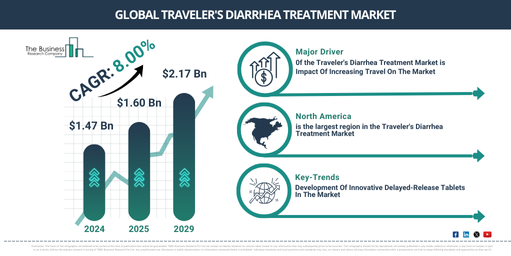
    In recent times, there has been substantial growth in the market size of treatments for traveler’s diarrhea. Predictions suggest this market will expand from $1.47 billion in 2024 to $1.60 billion in 2025, with a compound annual growth rate (CAGR) of 8.3%. The past rise in this sector is linked to increasing instances of viral, bacterial, and parasitic infections, growing incidence of chronic diseases, heightened awareness about illnesses related to travel, an amplified prevalence of traveler’s diarrhea, and a surge in food poisoning cases._x000D_

    _x000D_

    The market size for treatment of traveler’s diarrhea is projected to experience significant expansion in the forthcoming years, reaching a valuation of $2.17 billion by 2029 with an 8.0% compound annual growth rate (CAGR). This surge in the predicted timeframe can be linked to a rising number of food poisoning incidents, an increased prevalence of celiac disease, a growing need for anti-diarrheal medications, the emerging popularity of adventure and eco-tourism, and an uptick in international travel. Key anticipated trends during this forecasted period include the introduction of novel therapies, the use of probiotics and treatments based on microbiomes, advancement in diagnostic tools, preventative vaccines, and gastrointestinal drugs._x000D_

    _x000D_

    #Download a free sample to assess the report’s scope and structure:#_x000D_

    https://www.thebusinessresearchcompany.com/sample.aspx?id=21305&type=smp_x000D_

    _x000D_

    #What are the Fundamental Drivers and Innovations Shaping the Traveler’s Diarrhea Treatment Market?#_x000D_

    The traveler’s diarrhea treatment market is projected to experience significant growth due to the increasing number of people traveling. Whether for pleasure, business, or other reasons, more people are traveling, and this can be credited to factors such as higher disposable income, the rise of budget airlines, easier visa procedures, and a heightened interest in exploring new experiences. Treatments for traveler’s diarrhea can swiftly alleviate symptoms and prevent dehydration, facilitating faster recovery and continuation of travels. The U.S.-based Bureau of Transportation Statistics reported that U.S. airlines saw an increase in passenger numbers, transporting 853 million passengers between January and December 2022. This was a rise of 194 million from the 658 million passengers they carried in the preceding year, 2021. As such, the increasing number of travelers is clearly fueling the traveler’s diarrhea treatment market’s growth. The traveler’s diarrhea treatment market will also benefit from the rise in food poisoning instances. Food poisoning typically occurs when people consume food or drinks that are contaminated, usually by bacteria, viruses, parasites, or toxins. The increase of food contamination is attributed to factors such as poor food handling, bacterial contamination, inefficient refrigeration, and more consumption of ready-made and processed foods. Treating traveler’s diarrhea can address issues like dehydration and abdominal cramps, brought about by food poisoning, through rehydration therapy, antimicrobial medications, and probiotics. This promotes swift recovery and decreases complications. The Italy-based European Food Safety Authority reported a 44% increase in foodborne outbreaks in 2022, with the figure standing at 5,763 compared to the previous year, 2021. Hence, the escalation in the number of food poisoning incidents is triggering the growth of the traveler’s diarrhea treatment market._x000D_

    _x000D_

    #How Is the Traveler’s Diarrhea Treatment Market Segmented?#_x000D_

    The traveler’s diarrhea treatment market covered in this report is segmented –_x000D_

    _x000D_

    1) By Drug Type: Antibiotics, Anti-diarrheal, Other Drug Types_x000D_

    2) By Route Of Administration: Oral, Parenteral_x000D_

    3) By Application: Adult Traveler’s Diarrhea, Children Traveler’s Diarrhea_x000D_

    4) By End-Users: Hospitals, Homecare, Specialty Clinics, Other End-Users_x000D_

    _x000D_

    Subsegments:_x000D_

    1) By Antibiotics: Fluoroquinolones, Macrolides, Rifamycins_x000D_

    2) By Anti-diarrheal: Loperamide, Bismuth Subsalicylate_x000D_

    3) By Other Drug Types: Oral Rehydration Therapy, Probiotics, Zinc Supplements_x000D_

    _x000D_

    #Request customized data on this market:#_x000D_

    https://www.thebusinessresearchcompany.com/customise?id=21305&type=smp_x000D_

    _x000D_

    #Which Regions Are Driving the Next Phase of the Traveler’s Diarrhea Treatment Market Growth?#_x000D_

    North America was the largest region in the traveler’s diarrhea treatment market in 2024. Asia-Pacific is expected to be the fastest-growing region in the forecast period. The regions covered in the traveler’s diarrhea treatment market report are Asia-Pacific, Western Europe, Eastern Europe, North America, South America, Middle East, Africa._x000D_

    _x000D_

    #What Key Trends Are Shaping the Future of the Traveler’s Diarrhea Treatment Market?#_x000D_

    Leading corporations in the traveler’s diarrhea treatment market are channeling their efforts towards the creation of groundbreaking drugs such as delayed-release tablets. These tablets are designed to ensure extended drug activity and cut back on the frequency of dosage. These are drugs engineered to discharge their active components at designated timings post ingestion, ensuring they make it to the intestines prior to dissolution. This method allows for effective traveler’s diarrhea treatment while mitigating stomach irritation. To illustrate, in September 2023, Adalvo Ltd., a pharmaceutical firm based in Malta, collaborated with Cosmo Pharmaceuticals N.V., a medical company from Ireland, to develop Rifamycin SV MMX 200 mg, commercially known as Aemcolo. This drug combats traveler’s diarrhea by dispensing a non-absorbable antibiotic straight to the colon, lessening symptoms and limiting disturbance to beneficial gut microbiota. The targeted delivery method contributes to effective relief with a decreased risk of systemic side effects and resistance to multiple drugs._x000D_

    _x000D_

    #View the full report here:#_x000D_

    https://www.thebusinessresearchcompany.com/report/travelers-diarrhea-treatment-global-market-report_x000D_

    _x000D_

    #How Is the Traveler’s Diarrhea Treatment Market Defined and What Are Its Core Parameters?#_x000D_

    Traveler’s diarrhea is a common illness caused by consuming contaminated food or water while traveling. It is typically characterized by frequent, loose stools, abdominal cramps, and sometimes nausea or vomiting. Treatment includes rehydration with oral rehydration solutions, taking anti-diarrheal medications such as loperamide, and antibiotics in severe cases._x000D_

    _x000D_

    #Purchase the full report and get a swift delivery:#_x000D_

    https://www.thebusinessresearchcompany.com/purchaseoptions.aspx?id=21305_x000D_

    _x000D_

    #About The Business Research Company:#_x000D_

    With over 15000+ reports from 27 industries covering 60+ geographies, The Business Research Company has built a reputation for offering comprehensive, data-rich research and insights. Armed with 1,500,000 datasets, the optimistic contribution of in-depth secondary research, and unique insights from industry leaders, you can get the information you need to stay ahead in the game._x000D_

    _x000D_

    #Get in touch with us:#_x000D_

    The Business Research Company: https://www.thebusinessresearchcompany.com/_x000D_

    Americas +1 3156230293_x000D_

    Asia +44 2071930708_x000D_

    Europe +44 2071930708_x000D_

    Email us at info@tbrc.info_x000D_

    _x000D_

    #Follow us on:#_x000D_

    _x000D_

    LinkedIn: https://in.linkedin.com/company/the-business-research-company_x000D_

    YouTube: https://www.youtube.com/channel/UC24_fI0rV8cR5DxlCpgmyFQ_x000D_

    Global Market Model: https://www.thebusinessresearchcompany.com/global-market-model
  • Emerging Growth Drivers in the Juvenile Macular Degeneration Treatment Market Landscape: Rising Retinal Disorders Driving The Growth Of The Market Due To Increasing Diabetes Prevalence

    Emerging Growth Drivers in the Juvenile Macular Degeneration Treatment Market Landscape: Rising Retinal Disorders Driving The Growth Of The Market Due To Increasing Diabetes Prevalence

    Get 30% off on our Global Market Reports with code ONLINE30 – Hurry, limited time offer!

    What Is the Estimated Market Size of the Juvenile Macular Degeneration Treatment Market In 2029?

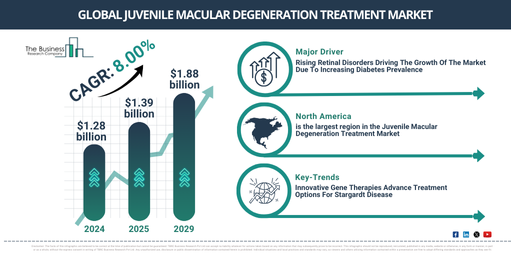
    The market for treating juvenile macular degeneration has experienced substantial growth in recent years. The market is projected to expand from $1.28 billion in 2024 to $1.39 billion in 2025, with a compound annual growth rate (CAGR) of 8.2%. Growth during the historic period is due to factors such as the increased occurrence of genetic eye diseases, more investment in ophthalmology research, heightened attention on eye care for children, increasing instances of vision problems in children, and the advancing integration of artificial intelligence in eye care diagnostics.

    There is a prediction for substantial expansion in the juvenile macular degeneration treatment market in the foreseeable future. This market is set to escalate to $1.88 billion in 2029 with an 8.0% Compound Annual Growth Rate (CAGR). Factors contributing to this projected growth during the forecast period include an increasing elderly population, the emergence of ophthalmic biotechnology startups, heightened focus on targeted drug delivery systems, more clinical trials, and amplified investments in gene therapy. Foreseeable trends during this period encompass advancements in genetic testing, the progress of gene therapies, stem cell research, regulatory backing for innovative therapies, and the adoption of personalized medicine tactics.

    Download a free sample to assess the report’s scope and structure:

    https://www.thebusinessresearchcompany.com/sample.aspx?id=23433&type=smp

    Which Primay Drivers Are Accelerating Growth in the Juvenile Macular Degeneration Treatment Market?

    The expansion of the juvenile macular degeneration treatment market is poised to get influenced by the growing instances of retinal disorders. These disorders, linked to the retina’s functionality – the light-sensitive aspect of the eye, can prompt vision deterioration or even loss. Escalating diabetes instances contribute significantly to these disorders, causing conditions such as diabetic retinopathy, resulting in progressive retina damage. Treatments targeted towards juvenile macular degeneration aid to control retinal disorders by safeguarding vision through early treatment methods, which are extremely beneficial for young patients. As indicated by a report from Retina Australia, a non-profit organization from Australia, in November 2024, approximately 19,000 people or around 1 in every 1,380 individuals, are presumed to be affected by inherited retinal disease (IRD) in Australia. Moreover, as per the National Eye Institute, a health institute based in the US, the count for Americans dealing with advanced age-related macular degeneration (AMD) is projected to rise from the present 2.1 million to somewhere around 3.7 million by 2030. Hence, the climbing occurrences of retinal disorders act as a significant driving factor for the upward trend in the juvenile macular degeneration treatment market.

    Which Primary Segments of the Juvenile Macular Degeneration Treatment Market Are Driving Growth and Industry Transformations?

    The juvenile macular degeneration treatment market covered in this report is segmented –

    1) By Type: Wet Age-Related Macular Degeneration, Dry Age-Related Macular Degeneration

    2) By Treatment: Devices, Drugs, Surgery

    3) By Application: Vision Preservation, Disease Management, Symptom Relief, Preventive Care, Clinical Trials

    4) By Sales Channel: Hospitals, Ambulatory Surgical Centres, Other Sales Channel

    Subsegments:

    1) By Wet Age-Related Macular Degeneration: Anti-Vascular Endothelial Growth Factor (Anti-VEGF) Therapy, Photodynamic Therapy (PDT), Laser Therapy

    2) By Dry Age-Related Macular Degeneration: Nutritional Supplements, Gene Therapy, Stem Cell Therapy

    Request customized data on this market:

    https://www.thebusinessresearchcompany.com/customise?id=23433&type=smp

    Which Regions Are Key Players in the Growth of the Juvenile Macular Degeneration Treatment Market?

    North America was the largest region in the juvenile macular degeneration treatment market in 2024. The regions covered in the juvenile macular degeneration treatment market report are Asia-Pacific, Western Europe, Eastern Europe, North America, South America, Middle East, Africa.

    What Are the Most Significant Market Trends in the Juvenile Macular Degeneration Treatment Market?

    Major corporations in the juvenile macular degeneration treatment market are concentrating their efforts on pioneering innovative solutions, such as dual adeno-associated viral (AAV) vectors, with the aim of advancing gene therapy delivery and augmenting the effectiveness of the treatment for juvenile macular degeneration patients. The function of a dual AAV vector in gene therapy is to utilise two AAV vectors for the delivery of therapeutic genes which are too large to be packed within one AAV. To illustrate, in March 2025, SpliceBio, a biotechnology firm based in Spain, revealed the first patient dosage in its Phase 1/2 ASTRA study for SB-007. SB-007 is a dual AAV vector gene therapy constructed to restore the full expression of the ABCA4 protein. The objective of this therapy is to offer a potential cure for juvenile macular degeneration, also known as Stargardt disease. This is an inherited retinal disorder which currently has no approved treatments, aiming to assist all patients regardless of the type of mutations they have. This progress marks a considerable advancement towards the creation of effective gene therapies for uncommon retinal disorders.

    View the full report here:

    https://www.thebusinessresearchcompany.com/report/juvenile-macular-degeneration-treatment-global-market-report

    What Parameters Are Used to Define the Juvenile Macular Degeneration Treatment Market?

    Juvenile macular degeneration (stargardt disease) treatment refers to a range of strategies aimed at managing vision loss and improving quality of life for individuals affected by this genetic eye disorder. It is caused by genetic mutations that damage the macula, the central part of the retina, leading to gradual vision loss and difficulty with tasks like reading and recognizing faces.

    Purchase the full report and get a swift delivery:

    https://www.thebusinessresearchcompany.com/purchaseoptions.aspx?id=23433

    About The Business Research Company:

    With over 15000+ reports from 27 industries covering 60+ geographies, The Business Research Company has built a reputation for offering comprehensive, data-rich research and insights. Armed with 1,500,000 datasets, the optimistic contribution of in-depth secondary research, and unique insights from industry leaders, you can get the information you need to stay ahead in the game.

    Get in touch with us:

    The Business Research Company: https://www.thebusinessresearchcompany.com/

    Americas +1 3156230293

    Asia +44 2071930708

    Europe +44 2071930708

    Email us at info@tbrc.info

    Follow us on:

    LinkedIn: https://in.linkedin.com/company/the-business-research-company

    YouTube: https://www.youtube.com/channel/UC24_fI0rV8cR5DxlCpgmyFQ

    Global Market Model: https://www.thebusinessresearchcompany.com/global-market-model