Month: August 2025

  • Sleep Apnea Diagnostic Systems Market Insights: In-Depth Look at Growth Trends, Market Size, and Opportunities for 2025-2034

    Sleep Apnea Diagnostic Systems Market Insights: In-Depth Look at Growth Trends, Market Size, and Opportunities for 2025-2034

    Claim your 30% discount on Global Market Reports with code ONLINE30. Limited time only.

    What Is the Estimated Market Size of the Sleep Apnea Diagnostic Systems Market In 2029?

    A significant growth has been observed in recent years in the market size of sleep apnea diagnostic systems. It is projected to escalate from $6.28 billion in 2024 to $6.78 billion in 2025, showcasing a compound annual growth rate (CAGR) of 8.0%. Factors contributing to the growth during this historical period include increased awareness about sleep disorders, a surge in obesity and aging populations, a rise in the use of home sleep testing devices, favorable healthcare policies, and expanded healthcare infrastructure in developing economies.

    The market for sleep apnea diagnostic systems is projected to experience significant growth in the upcoming years, expanding to$9.16 billion in 2029″ with a compound annual growth rate (CAGR) of 7.8%. Factors contributing to this projected growth during the forecast period include the surge in the use of at-home sleep testing devices, heightened awareness about sleep disorders and the health complications they can cause, supportive government, and insurance policies, the growing number of obese and aging people, as well as the expansion of telemedicine. The prediction period will also see major trends such as the introduction of portable diagnostic devices, the utilization of cloud-based data management systems, progress in polysomnography technology, integration with smart home ecosystems, enhancements to home sleep testing devices, and the employment of AI for improved data review and diagnosis.

    Download a free sample to assess the report’s scope and structure:

    https://www.thebusinessresearchcompany.com/sample.aspx?id=20956&type=smp

    What External and Internal Drivers Are Contributing to the Growth of theSleep Apnea Diagnostic Systems Market?

    The escalating trend of inactive living habits is projected to catalyze the growth of the market for sleep apnea diagnostic systems. Inactivity in lifestyle refers to a mode of life typified by lack of adequate physical activity, and extended times of sitting or lying. This kind of lifestyle is on the rise given factors such as dependence on technology, urbanization, amenity-based lifestyle and prolonged working hours. Sleep apnea diagnostic systems are instrumental in countering health problems related to sedentary living by identifying and tracking sleep disturbances early, thus facilitating timely interventions to enhance sleep quality and alleviate related problems such as obesity, heart distress, and fatigue. For instance, in June 2024, the Australian Institute of Health and Welfare, a governmental agency in Australia, revealed in 2022 through self-reported ABS National Health Survey (NHS) data, that 83% of adolescents aged 15-17 and nearly 37% of adults aged 18-64 were not sufficiently active to meet the suggested levels. Additionally, in December 2022, according to statistics from the UK’s Office for National Statistics, between April 2021 and March 2022, 15.8% of people aged 50-54, 24.1% aged 55-59, 43.4% aged 60-64, and 89.3% aged 65 and above were categorized as inactive. Hence, the surge in sedentary ways of living is directing the growth of the sleep apnea diagnostic systems market.

    What Segment Types Define the Sleep Apnea Diagnostic Systems Market Structure?

    The sleep apnea diagnostic systemsmarket covered in this report is segmented –

    1) By Product: Polysomnography Devices; Nasal Flow Sensors; Peripheral Capillary Oxygen Saturation; Actigraphy Monitoring Devices

    2) By Technology: Non-Invasive Technology; Invasive Technology; Wearable Technology; Diagnostic Software

    3) By End Users: Home Care Settings; Hospitals; Sleep Centers And Clinics

    Subsegments:

    1) By Polysomnography Devices: Full-Polysomnography Systems; Portable Polysomnography Devices; Wireless Polysomnography Devices

    2) By Nasal Flow Sensors: Single-Channel Nasal Flow Sensors; Multi-Channel Nasal Flow Sensors; Wireless Nasal Flow Sensors

    3) By Peripheral Capillary Oxygen Saturation (SpO2) Monitors: Finger Pulse Oximeters; Wrist Pulse Oximeters; Fingertip Pulse Oximeters

    4) By Actigraphy Monitoring Devices: Wrist-Worn Actigraphs; Chest-Worn Actigraphs; Smartwatch-Based Actigraphy Systems

    Request customized data on this market:

    https://www.thebusinessresearchcompany.com/customise?id=20956&type=smp

    Which Geographic Areas Hold the Strongest Growth Potential in the Sleep Apnea Diagnostic Systems Market?

    North America was the largest region in the sleep apnea diagnostic systems market in 2024. Asia-Pacific is expected to be the fastest-growing region in the forecast period. The regions covered in the sleep apnea diagnostic systems market report are Asia-Pacific, Western Europe, Eastern Europe, North America, South America, Middle East, Africa.

    What Long-Term Trends Are Transforming the Competitive Landscape of the Sleep Apnea Diagnostic Systems Market?

    Key industry players in the sleep apnea diagnostic systems market are concentrating their efforts on technological innovation, especially in areas like pneumatic sensors, to elevate efficiency, precision, and user comfort in sleep apnea detection and monitoring. This innovation not only enhances patient outcomes but also amplifies their market footprint. Pneumatic sensors work by tracking variations in airflow and pressure within the respiratory system, assisting in identifying abnormal respiration, a key characteristic of sleep apnea. To illustrate, in September 2024, French electronics firm, Withings Inc., achieved U.S. Food and Drug Administration approval for its diagnostic tool, the Sleep Rx Mat. This contact-free device for diagnosing sleep apnea monitors sleep, detects apnea incidents, and suggests actionable insights to enhance sleep health. The sophisticated sleep monitoring device comes equipped with a pneumatic sensor that observes respiratory rate, movements of the body, and a continuous heart rate. The design of this discreet mat requires only a one-time setup and can be easily slipped under any mattress, doing away with the need for masks or cumbersome equipment. Once in place, it offers in-depth analyses of sleep patterns, breath, and cardiovascular activity throughout the sleeping duration.

    View the full report here:

    https://www.thebusinessresearchcompany.com/report/sleep-apnea-diagnostic-systems-global-market-report

    What Is the Definition of the Sleep Apnea Diagnostic Systems Market?

    Sleep apnea diagnostic systems refer to medical technologies and devices designed to detect, monitor, and evaluate sleep-related breathing disorders, particularly sleep apnea. It is used for assessing physiological parameters such as airflow, oxygen saturation, heart rate, and brain activity during sleep to identify disruptions, enabling accurate diagnosis and effective management of the condition.

    Purchase the full report and get a swift delivery:

    https://www.thebusinessresearchcompany.com/purchaseoptions.aspx?id=20956

    About The Business Research Company:

    With over 15000+ reports from 27 industries covering 60+ geographies, The Business Research Company has built a reputation for offering comprehensive, data-rich research and insights. Armed with 1,500,000 datasets, the optimistic contribution of in-depth secondary research, and unique insights from industry leaders, you can get the information you need to stay ahead in the game.

    Get in touch with us:

    The Business Research Company: https://www.thebusinessresearchcompany.com/

    Americas +1 310-496-7795

    Europe +44 7882 955267

    Asia & Others +44 7882 955267 & +91 8897263534

    Email us at info@tbrc.info

    Follow us on:

    LinkedIn: https://in.linkedin.com/company/the-business-research-company

    YouTube: https://www.youtube.com/channel/UC24_fI0rV8cR5DxlCpgmyFQ

    Global Market Model: https://www.thebusinessresearchcompany.com/global-market-model

  • Single Tooth Implants And Dental Bridges Market Outlook 2025–2034: Identifying Growth Drivers, Technology Trends, and Policy Impact

    Single Tooth Implants And Dental Bridges Market Outlook 2025–2034: Identifying Growth Drivers, Technology Trends, and Policy Impact

    Claim your 30% discount on Global Market Reports with code ONLINE30. Limited time only.

    How Fast Is The Single Tooth Implants And Dental Bridges Market Expected to Grow Between 2025 And 2029?

    The market size of individual tooth implants and dental bridges has witnessed a significant boost in the past years. The market, which stood at $6.22 billion in 2024, is anticipated to escalate to $6.76 billion in 2025, attributing to a compound annual growth rate (CAGR) of 8.7%. Factors such as enhancement in implant technology, an expanding elderly demographic, greater dental insurance schemes, better longevity of materials, and an increase in awareness about dental beauty contribute to the growth during the historical period.

    The market for single tooth implants and dental bridges is projected to experience a robust expansion in the forthcoming years. The estimated growth is to reach$9.44 billion in 2029″, with a compound annual growth rate (CAGR) of 8.7%. This anticipated growth can be attributed to advancements in 3D printing technology, the increasing popularity of minimally invasive surgeries, heightened consciousness about oral health, an aging populace, and the burgeoning dental healthcare infrastructure. Predominant trends encompass the implementation of artificial intelligence in treatment strategies, the surge in tailored dental solutions, increasing preference for metal-free implants, advancements in the technology of implant surfaces, and a shift toward more cost-effective dental care alternatives.

    Download a free sample to assess the report’s scope and structure:

    https://www.thebusinessresearchcompany.com/sample.aspx?id=20955&type=smp

    What Are the Core Market Drivers Propelling Growth in the Single Tooth Implants And Dental Bridges Industry?

    The surge in dental conditions is predicted to drive the expansion of the single tooth implants and dental bridges market. Dental problems encompass a variety of issues that impact the teeth, gums, and oral cavity, undermining oral health and function. The escalating prevalence of these conditions can be attributed to factors such as increased intake of sugar-rich diets, neglect of oral hygiene, aging demographics, and the rise of lifestyle-related diseases such as diabetes. Single tooth implants and dental bridges offer effective remedies by replacing missing or damaged teeth, enhancing oral function, improving aesthetic value, and increasing overall self-esteem. This solution also helps avoid issues such as shifting teeth and degradation of the jawbone. For instance, the National Board of Health and Welfare, a government agency in Sweden, reported in May 2024 that roughly 3.9 million individuals aged 24 or older sought dental care in Sweden in 2023, a rise from the previous year. Therefore, the growing occurrence of dental conditions is spurring the expansion of the single tooth implants and dental bridges market.

    How Is the Single Tooth Implants And Dental Bridges Market Segmented?

    The single tooth implants and dental bridgesmarket covered in this report is segmented –

    1) By Type: 3-Unit Bridges; 4-Unit Bridges; Titanium Bridges; Silicone Bridges; Maryland Bridges; Cantilever Bridges; Partial Bridges

    2) By Material: Porcelain-Fused-To-Metal (PFM); All Ceramics; Metal Alloys

    3) By Application: Hospitals; Density; Ambulatory Surgical Centers; Organ Transplant Centers; Orthopedic And Traumas Centers

    Subsegments:

    1) By 3-Unit Bridges: Fixed 3-Unit Bridges; Resin-Bonded 3-Unit Bridges

    2) By 4-Unit Bridges: Fixed 4-Unit Bridges; Cantilever 4-Unit Bridges

    3) By Titanium Bridges: Titanium-Alloy Bridges; Titanium-Based Fixed Bridges

    4) By Silicone Bridges: Flexible Silicone Bridges; Temporary Silicone Bridges

    5) By Maryland Bridges: Resin-Bonded Maryland Bridges; Metallic Framework Maryland Bridges

    6) By Cantilever Bridges: Single Cantilever Bridges; Multiple Cantilever Bridges

    7) By Partial Bridges: Partial Fixed Bridges; Removable Partial Bridges

    Request customized data on this market:

    https://www.thebusinessresearchcompany.com/customise?id=20955&type=smp

    Which Regions Are Driving the Next Phase of the Single Tooth Implants And Dental Bridges Market Growth?

    North America was the largest region in the single tooth implants and dental bridges market in 2024. Asia-Pacific is expected to be the fastest-growing region in the forecast period. The regions covered in the single tooth implants and dental bridges market report are Asia-Pacific, Western Europe, Eastern Europe, North America, South America, Middle East, Africa.

    What Key Market Trends and Innovations Are Shaping the Future of the Single Tooth Implants And Dental Bridges Industry?

    Prominent players in the market of single tooth implants and dental bridges are introducing innovative product developments such as tapered implant technology, aimed at enhancing osseointegration, stability, and patient recovery times. Tapered implant technology is a unique design feature of dental implants, possessing a conical or tapered shape which mirrors the natural root structure of a tooth. This particular technology serves to enhance primary stability by providing a secure fit within the jawbone, especially in areas with reduced bone density or volume. For example, ZimVie Inc., a dental implant manufacturer based in the US, unveiled its T3 PRO Tapered Implant and Encode System utilizing tapered implant technology in June 2022. The tapered shape of the implant facilitates simpler placement across various bone types and augments primary stability, especially in softer bone. It employs an exclusive surface treatment which encourages osseointegration, thereby expediting healing times and enhancing long-term results.

    View the full report here:

    https://www.thebusinessresearchcompany.com/report/single-tooth-implants-and-dental-bridges-global-market-report

    How Is the Single Tooth Implants And Dental Bridges Market Defined and What Are Its Core Parameters?

    Single Tooth Implants and Dental Bridges refer to advanced dental prosthetic solutions designed to replace missing teeth. They are used for restoring oral functionality, enhancing aesthetics, and preventing further dental complications by filling gaps caused by tooth loss. Single tooth implants are individual, standalone replacements anchored in the jawbone, while dental bridges involve multiple connected prosthetic teeth supported by adjacent natural teeth or implants.

    Purchase the full report and get a swift delivery:

    https://www.thebusinessresearchcompany.com/purchaseoptions.aspx?id=20955

    About The Business Research Company:

    With over 15000+ reports from 27 industries covering 60+ geographies, The Business Research Company has built a reputation for offering comprehensive, data-rich research and insights. Armed with 1,500,000 datasets, the optimistic contribution of in-depth secondary research, and unique insights from industry leaders, you can get the information you need to stay ahead in the game.

    Get in touch with us:

    The Business Research Company: https://www.thebusinessresearchcompany.com/

    Americas +1 310-496-7795

    Europe +44 7882 955267

    Asia & Others +44 7882 955267 & +91 8897263534

    Email us at info@tbrc.info

    Follow us on:

    LinkedIn: https://in.linkedin.com/company/the-business-research-company

    YouTube: https://www.youtube.com/channel/UC24_fI0rV8cR5DxlCpgmyFQ

    Global Market Model: https://www.thebusinessresearchcompany.com/global-market-model
  • Emerging Growth Drivers in the Robotic Radiotherapy Market Landscape: Advancing Precision In Minimally Invasive Treatments

    Emerging Growth Drivers in the Robotic Radiotherapy Market Landscape: Advancing Precision In Minimally Invasive Treatments

    Claim your 30% discount on Global Market Reports with code ONLINE30. Limited time only.

    What Are the Key Projections for the CAGR of the Robotic Radiotherapy Market Size From 2025 to 2034?

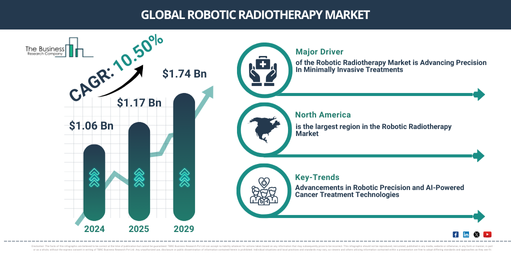
    In recent times, there has been a swift expansion in the size of the robotic radiotherapy market. Its anticipated growth is from $1.06 billion in 2024 to $1.17 billion in 2025, with a compound annual growth rate (CAGR) registering at 10.1%. The significant growth observed in the historical period is due to the surge in the precision of the robotic systems, the incorporation of Artificial Intelligence in treatment planning, the enhancement of healthcare accessibility, a rising emphasis on personalised patient treatments, and an increase in the private healthcare sector’s investments.

    In the coming years, the robotic radiotherapy market is projected to experience speedy expansion, escalating to$1.74 billion in 2029 at a compound annual growth rate of 10.5%. Factors such as the surge in the elderly population globally, advancements in machine learning for treatment planning, increasing inclination towards outpatient treatments, expansion of robotic-assisted surgical systems, and collaboration between healthcare providers and tech firms contribute to the projected growth. Noteworthy trends include the development in motion management systems, expansion of cloud-based radiotherapy platforms, the incorporation of wearable technology for patient monitoring, the creation of more compact and efficient robotic systems, and the escalating use of stereotactic radiosurgery techniques.

    Download a free sample to assess the report’s scope and structure:

    https://www.thebusinessresearchcompany.com/sample.aspx?id=20946&type=smp

    Which Primay Drivers Are Accelerating Growth in the Robotic Radiotherapy Market?

    The escalating demand for minimally invasive procedures is anticipated to drive the growth of the robotic radiotherapy market in the future. Medical technology advancements, increased patient preference for fewer complications and shorter recovery periods, and heightened readiness by healthcare providers for cost-effective treatments with enhanced clinical results fuel minimally invasive procedures. Robotic radiotherapy, by delivering highly specific radiation doses to tumors and minimizing harm to adjacent healthy tissues, amplifies the accuracy and efficiency of minimally invasive procedures. This reduces complications, betters recovery spans, and aligns with the rising demand for sophisticated, patient-focused treatment alternatives. For instance, a US-based medication company reported a 7% growth in minimally invasive procedures in 2023 compared to the prior year, as per the American Society of Plastic Surgeons’ June 2024 data. Therefore, the increasing demand for minimally invasive procedures is facilitating the expansion of the robotic radiotherapy market.

    Which Primary Segments of the Robotic Radiotherapy Market Are Driving Growth and Industry Transformations?

    The robotic radiotherapymarket covered in this report is segmented –

    1) By Product: Radiotherapy Systems; Softwares; 3D Cameras (Surface Guided)

    2) By Technology: Linear Accelerators; Conventional Linear Accelerators; Magnetic Resonance Imaging (MRI) – Linear Accelerators; Stereotactic Radiation Therapy Systems; Cyberknife; Gamma Knife; Particle Therapy; Proton Beam Therapy

    3) By Application: Prostate Cancer; Breast Cancer; Lung Cancer; Head & Neck Cancer; Colorectal Cancer

    4) By End User: Hospitals; Independent Radiotherapy Centers

    Subsegments:

    1) By Radiotherapy Systems: Robotic Linear Accelerators; Proton Therapy Systems; Stereotactic Radiosurgery Systems; Image-Guided Radiotherapy (IGRT) Systems; Intensity-Modulated Radiotherapy (IMRT) Systems

    2) By Softwares: Treatment Planning Software; Radiation Therapy Management Software; Robotic Radiotherapy Control Software; Integration Software For Robotic Systems

    3) By 3D Cameras (Surface Guided): 3D Optical Surface Imaging Systems; 3D Camera Systems For Patient Positioning; 3D Motion Tracking Cameras For Radiotherapy; Real-Time 3D Surface Imaging For Tumor Localization

    Request customized data on this market:

    https://www.thebusinessresearchcompany.com/customise?id=20946&type=smp

    Which Regions Are Key Players in the Growth of the #Which Primay Drivers Are Accelerating Growth in the Robotic Radiotherapy Market?# Market?

    North America was the largest region in the robotic radiotherapy market in 2024. Asia-Pacific is expected to be the fastest-growing region in the forecast period. The regions covered in the robotic radiotherapy market report are Asia-Pacific, Western Europe, Eastern Europe, North America, South America, Middle East, Africa.

    Which Technological Trends Are Reshaping the Robotic Radiotherapy Industry Dynamics?

    Major players in the robotic radiotherapy market are emphasizing on creating innovative products with cutting-edge technologies like artificial intelligence (AI) for precision in executing tasks with incredible accuracy, consistency, and least errors. Robotic precision boosts accuracy, diminishes human mistakes, adds to consistency, limits tissue harm, and speeds up recovery thanks to sensors, actuators, and algorithms. For example, Tampa General Hospital, a cancer institute based in the US, unveiled CyberKnife S7, a radiosurgery tool powered by AI, in January 2024. This vital development in the cancer care field offers a precise, non-invasive treatment alternative for patients suffering from a range of conditions, inclusive of both benign and malignant tumors, and neurological conditions. CyberKnife S7 facilitates targeted radiation delivery, sparing damage to the healthy tissues surrounding and providing a less invasive option compared to conventional surgical techniques.

    View the full report here:

    https://www.thebusinessresearchcompany.com/report/robotic-radiotherapy-global-market-report

    What Parameters Are Used to Define the Robotic Radiotherapy Market?

    Robotic radiotherapy is an advanced cancer treatment method that combines robotic technology with precision radiation delivery to target tumors with sub-millimeter accuracy. It uses real-time imaging and motion tracking to adapt to tumor movement, such as that caused by breathing, ensuring minimal damage to surrounding healthy tissues. This approach allows for non-invasive, highly personalized treatments, improving patient outcomes and reducing side effects.

    Purchase the full report and get a swift delivery:

    https://www.thebusinessresearchcompany.com/purchaseoptions.aspx?id=20946

    About The Business Research Company:

    With over 15000+ reports from 27 industries covering 60+ geographies, The Business Research Company has built a reputation for offering comprehensive, data-rich research and insights. Armed with 1,500,000 datasets, the optimistic contribution of in-depth secondary research, and unique insights from industry leaders, you can get the information you need to stay ahead in the game.

    Get in touch with us:

    The Business Research Company: https://www.thebusinessresearchcompany.com/

    Americas +1 310-496-7795

    Europe +44 7882 955267

    Asia & Others +44 7882 955267 & +91 8897263534

    Email us at info@tbrc.info

    Follow us on:

    LinkedIn: https://in.linkedin.com/company/the-business-research-company

    YouTube: https://www.youtube.com/channel/UC24_fI0rV8cR5DxlCpgmyFQ

    Global Market Model: https://www.thebusinessresearchcompany.com/global-market-model
  • Strategic Growth Drivers Shaping the Robotic Dentistry Market Outlook 2025- 2034:Rising Demand For Minimally Invasive Procedures Driving Market Growth

    Strategic Growth Drivers Shaping the Robotic Dentistry Market Outlook 2025- 2034:Rising Demand For Minimally Invasive Procedures Driving Market Growth

    Claim your 30% discount on Global Market Reports with code ONLINE30. Limited time only.

    How Has The Robotic Dentistry Market Growth Evolved From 2024 To 2025, And What’s Ahead?

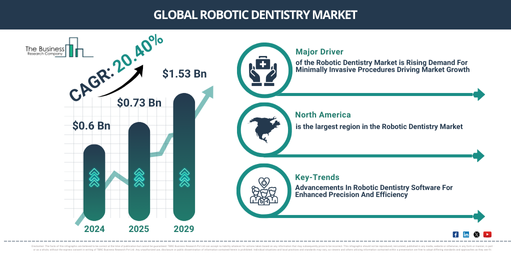
    In recent times, the market size for robotic dentistry has seen rapid expansion. The market, which is anticipated to escalate from $0.6 billion in 2024 to $0.73 billion in 2025, is projected to witness a compound annual growth rate (CAGR) of 21.4%. The surge in growth during the historic period is largely owing to the widespread application of robotics in pediatric dental care, advancements in conducting intricate oral surgeries, heightened emphasis on patient safety, digitization in dental processes, and the surging demand for time-efficient dental solutions.

    The market size of robotic dentistry is anticipated to experience substantial expansion in the upcoming years. We can expect an escalation to $1.53 billion by 2029, with a Compound Annual Growth Rate (CAGR) of 20.4%. The predicted growth during this period can be linked to factors such as expansion in the tele-industry, an increase in the usage of robotic technology in orthodontics, a rise in dental tourism, investments in healthcare innovation, and an uptick in patient-centered dental solutions. Significant trends projected for this forecast period incorporate the creation of portable instruments, the design of compact robotic dental devices, advancements in haptic technology, the integration of Augmented Reality (AR) in training exercises, and the improvement in precision-related gadgetry.

    Download a free sample to assess the report’s scope and structure:

    https://www.thebusinessresearchcompany.com/sample.aspx?id=20945&type=smp

    Which Factors and External Forces Are Driving Demand in the Robotic Dentistry Market?

    The increasing preference for minimally invasive medical procedures is anticipated to fuel the growth of the robotic dentistry market. Minimally invasive techniques are medical practices that limit or avoid making incisions, resulting in less tissue damage, quicker healing, and fewer hazards than traditional surgical procedures. Factors such as expedited recovery periods, decreased likelihood of complications, and enhanced patient comfort are propelling the demand for these procedures. Robotic dentistry systems enhance dental operations by offering better accuracy, facilitating smaller cuts, reducing tissue harm, lowering risks, and contributing to more successful outcomes overall. For instance, the British Association of Aesthetic Plastic Surgeons, a surgical organization based in the UK, reported that 31,057 cosmetic surgeries took place in 2022 in the UK, indicating a significant 102% growth from 2022. Hence, the escalating demand for minimally invasive techniques is stimulating the robotic dentistry market.

    Which Segments in the Robotic Dentistry Offer the Most Growth?

    The robotic dentistrymarket covered in this report is segmented –

    1) By Products And Services: Standalone Robots; Robot-Assisted System; Services

    2) By Applications: Implantology; Endodontics; Other Applications

    3) By End-Users: Dental Hospitals And Clinics; Dental Academics; Other End-Users

    Subsegments:

    1) By Standalone Robots: Robotic Surgery Systems; Robotic Tooth Restoration Systems; Robotic Implant Placement Systems; Robotic Orthodontic Systems

    2) By Robot-Assisted Systems: Image-Guided Robotic Systems; Dental Navigation Systems; Robotic-Assisted Drilling And Cutting Systems; Robotic-Assisted Endodontic Systems; Robotic-Assisted Tooth Extraction Systems

    3) By Services: Installation Services; Maintenance And Repair Services; Training And Support Services; Consulting Services For Robotic Integration; Software Upgrades And Customization Services

    Request customized data on this market:

    https://www.thebusinessresearchcompany.com/customise?id=20945&type=smp

    What Are the Fastest-Growing Geographies in the #Which Factors and External Forces Are Driving Demand in the Robotic Dentistry Market?# Market?

    North America was the largest region in the robotic dentistry market in 2024. Asia-Pacific is expected to be the fastest-growing region in the forecast period. The regions covered in the robotic dentistry market report are Asia-Pacific, Western Europe, Eastern Europe, North America, South America, Middle East, Africa.

    Which Cutting-Edge Market Trends Are Expected to Drive theRobotic Dentistry Market’s Growth?

    The key players in the robotic dentistry market are concentrating their efforts on the creation of advanced dental robotic software suites in order to offer patients more tailored care. These state-of-the-art platforms are designed to fine-tune dental robotics systems, incorporating features that enable precise, efficient, and minimally invasive dental procedures for improved patient results. In line with this, Neocis, a medical equipment manufacturer from the United States, introduced its YomiPlan Go Workflow for commercial use in August 2023. This revolutionary software suite enables medical professionals to carry out implant surgeries without the need for preoperative scans, dramatically improving the speed and accuracy of the procedures. With the use of the Yomi robotic system, surgeons can establish implant positioning and angulation in real-time during the surgery, perfectly merging freehand and robotic guided techniques for superior precision.

    View the full report here:

    https://www.thebusinessresearchcompany.com/report/robotic-dentistry-global-market-report

    What Are the Key Elements That Define the Robotic Dentistry Market?

    Robotic dentistry refers to the application of robotic systems and technologies to assist or automate dental procedures, enhancing precision, efficiency, and patient outcomes. These systems often incorporate advanced imaging, navigation, and artificial intelligence to aid in tasks such as implant placements, orthodontics, and minimally invasive surgeries. Robotic dentistry aims to improve treatment accuracy, reduce recovery times, and provide a better overall patient experience.

    Purchase the full report and get a swift delivery:

    https://www.thebusinessresearchcompany.com/purchaseoptions.aspx?id=20945

    About The Business Research Company:

    With over 15000+ reports from 27 industries covering 60+ geographies, The Business Research Company has built a reputation for offering comprehensive, data-rich research and insights. Armed with 1,500,000 datasets, the optimistic contribution of in-depth secondary research, and unique insights from industry leaders, you can get the information you need to stay ahead in the game.

    Get in touch with us:

    The Business Research Company: https://www.thebusinessresearchcompany.com/

    Americas +1 310-496-7795

    Europe +44 7882 955267

    Asia & Others +44 7882 955267 & +91 8897263534

    Email us at info@tbrc.info

    Follow us on:

    LinkedIn: https://in.linkedin.com/company/the-business-research-company

    YouTube: https://www.youtube.com/channel/UC24_fI0rV8cR5DxlCpgmyFQ

    Global Market Model: https://www.thebusinessresearchcompany.com/global-market-model

  • Major Drivers Propelling the Growth oh theRenal Cell Carcinoma Market Forward: Impact Of The Growing Geriatric Population On Healthcare Demands

    Major Drivers Propelling the Growth oh theRenal Cell Carcinoma Market Forward: Impact Of The Growing Geriatric Population On Healthcare Demands

    Claim your 30% discount on Global Market Reports with code ONLINE30. Limited time only.

    What is the Projected CAGR for the Renal Cell Carcinoma Market Size from 2025 to 2034?

    In the past few years, a steady increase has been observed in the market size of renal cell carcinoma. The market, which is currently valued at $4.81 billion in 2024, is expected to escalate to $4.96 billion by 2025, exhibiting a compound annual growth rate (CAGR) of 3.0%. The significant expansion during the historical period is predominantly driven by several factors, such as the rising frequency of kidney cancer, a growing aging population, escalated adoption of targeted therapies, increased awareness about cancer screening, upgraded healthcare facilities, and augmented investments in research and development in oncology.

    Over the coming years, a consistent growth rate is predicted for the renal cell carcinoma market. This sector is projected to reach $5.84 billion in 2029, with a Compound Annual Growth Rate (CAGR) of 4.2%. The expected growth during the forecast period can be ascribed to factors such as the increased acceptance of personalized medicine, heightened awareness surrounding early cancer detection, growing investments in oncology in the healthcare sector, improved healthcare access, and enlarged clinical trials and research into new therapies. The forecast period will also see trends like the use of AI in precision diagnostics, creation of targeted therapies, advancements in immunotherapy, progress in biomarker identification, the use of minimally invasive surgical procedures, and advancements in imaging technology.

    Download a free sample to assess the report’s scope and structure:

    https://www.thebusinessresearchcompany.com/sample.aspx?id=20944&type=smp

    Which Major Market Drivers Are Expected to Boost the Growth Potential of the Renal Cell Carcinoma Market?

    The growth of the renal cell carcinoma market is anticipated to be propelled by the increasing geriatric population. This population comprises individuals typically 65 years and older, with distinctive healthcare and societal needs. Factors such as advancements in healthcare, improved nutrition, and increased life expectancy are contributing to the expansion of the elderly population. Renal cell carcinoma (RCC) is seen more frequently in older individuals, underscoring the importance of unique screening and treatment plans for this age group. For example, a study issued by the Population Reference Bureau, a US-based organization committed to collating data for research and scholarly purposes, stated in January 2024 that there would be a growth in Americans aged 65 and older from 58 million in 2022 to 82 million by 2050, a surge of 47%. Hence, the increase in the elderly population is fostering the expansion of the renal cell carcinoma market.

    Which Key Market Segments Comprise the Renal Cell Carcinoma Market and Drive Its Revenue Growth?

    The renal cell carcinomamarket covered in this report is segmented –

    1) By Type: Clear Cell Renal Cell Carcinoma (RCC); Papillary Renal Cell Carcinoma (RCC); Chromophobe Renal Cell Carcinoma (RCC)

    2) By Diagnosis: Urine Tests; Computed Tomography (CT) Scan; Nephrectomy; Blood Tests; Ultrasound; Biopsy

    3) By Treatment: Medication; Ablation; Targeted Therapy; Chemotherapy; Surgery; Other Treatments

    4) By End-Users: Hospitals; Specialty Clinics; Homecare; Other End-Users

    Subsegments:

    1) By Clear Cell Renal Cell Carcinoma (RCC): Sporadic Clear Cell RCC; Hereditary Clear Cell RCC

    2) By Papillary Renal Cell Carcinoma (RCC): Type 1 Papillary RCC; Type 2 Papillary RCC

    3) By Chromophobe Renal Cell Carcinoma (RCC): Classic Chromophobe RCC; Hybrid Chromophobe RCC

    Request customized data on this market:

    https://www.thebusinessresearchcompany.com/customise?id=20944&type=smp

    Which Areas Are Leading Regions in the Renal Cell Carcinoma Market Expansion Across the Globe?

    North America was the largest region in the renal cell carcinoma market in 2024. Asia-Pacific is expected to be the fastest-growing region in the forecast period. The regions covered in the renal cell carcinoma market report are Asia-Pacific, Western Europe, Eastern Europe, North America, South America, Middle East, Africa.

    What Are the Key Market Trends in theRenal Cell Carcinoma Market Over the Coming Years?

    Major players in the renal cell carcinoma market are making strides to produce technology-forward products such as AI-powered solutions devised for kidney biopsy analysis. These innovations aim to augment diagnostic precision, streamline methodologies, and enhance patient prognosis. AI-powered solutions are tech-savvy applications that utilize machine learning algorithms and computer vision to help pathologists and nephrologists evaluate kidney tissue specimens. They endeavor to boost accuracy, efficacy, and uniformity in kidney disease diagnosis and renal health assessment. For example, in March 2024, Aiosyn, a software firm based in the Netherlands, introduced the NephroPath platform. This cutting-edge AI solution is specifically engineered to evaluate kidney biopsies. It employs computational pathology algorithms to scrutinize histological biomarkers in kidney biopsies, from identifying tissue types to exact glomeruli counting and evaluation of interstitial fibrosis. This algorithm-based approach enables consistent, comprehensive, and repeatable scoring of renal pathology biomarkers, surmounting the limitations and subjectivity of conventional scoring techniques.

    View the full report here:

    https://www.thebusinessresearchcompany.com/report/renal-cell-carcinoma-global-market-report

    How Is the Renal Cell Carcinoma Market Conceptually Defined?

    Renal cell carcinoma (RCC) is a form of kidney cancer originating in the renal tubules, the structures in the kidneys responsible for filtering waste and producing urine. This cancer begins when cells in the kidney become abnormal and grow uncontrollably, forming a tumor. This can disrupt the kidney’s function, including its ability to filter waste from the blood and produce urine.

    Purchase the full report and get a swift delivery:

    https://www.thebusinessresearchcompany.com/purchaseoptions.aspx?id=20944

    About The Business Research Company:

    With over 15000+ reports from 27 industries covering 60+ geographies, The Business Research Company has built a reputation for offering comprehensive, data-rich research and insights. Armed with 1,500,000 datasets, the optimistic contribution of in-depth secondary research, and unique insights from industry leaders, you can get the information you need to stay ahead in the game.

    Get in touch with us:

    The Business Research Company: https://www.thebusinessresearchcompany.com/

    Americas +1 310-496-7795

    Europe +44 7882 955267

    Asia & Others +44 7882 955267 & +91 8897263534

    Email us at info@tbrc.info

    Follow us on:

    LinkedIn: https://in.linkedin.com/company/the-business-research-company

    YouTube: https://www.youtube.com/channel/UC24_fI0rV8cR5DxlCpgmyFQ

    Global Market Model: https://www.thebusinessresearchcompany.com/global-market-model

  • Key Factors Fueling the Growth of the Radiation Shielding Material Market in 2025: Rising Medical Imaging Procedures Fuel Growth In The Market

    Key Factors Fueling the Growth of the Radiation Shielding Material Market in 2025: Rising Medical Imaging Procedures Fuel Growth In The Market

    Claim your 30% discount on Global Market Reports with code ONLINE30. Limited time only.

    What is the Anticipated CAGR of the Radiation Shielding Material Market, and What Factors Will Drive It?

    The market size for radiation shielding materials has seen substantial growth in the past few years. It is projected to expand from $0.67 billion in 2024 to $0.72 billion in 2025, achieving a compound annual growth rate (CAGR) of 7.2%. Factors contributing to the growth during this historical period include a surge in the use of ionizing radiation in medical imaging, a rise in demand for radiotherapy procedures, a growing incidence of cancer, heightened consciousness about radiation safety, and an increment in healthcare expenditure.

    Expectations are high for the radiation shielding material market as it is projected to experience significant expansion in the upcoming years. The market value could reach $0.92 billion in 2029 with a compound annual growth rate (CAGR) of 6.4%. Multiple factors will contribute to the growth, including an increase in nuclear medicine use, diagnostic imaging procedures, the prevalence of diseases demanding radiation treatment, a surge in interest in medical imaging, and increased investment in health infrastructure. Key trends anticipated during the forecast period are diagnostic and therapeutic technologies, advancements in medical and material sciences, incorporating nanotechnology, and the use of advanced composites for lightweight solutions.

    Download a free sample to assess the report’s scope and structure:

    https://www.thebusinessresearchcompany.com/sample.aspx?id=20941&type=smp

    What are the Fundamental Drivers and Innovations Shaping the Radiation Shielding Material Market?

    The escalating number of medical imaging procedures is anticipated to fuel the expansion of the radiation shielding material market. Medical imaging procedures, diagnostic techniques employing technologies like X-rays, MRI, and ultrasound to capture visuals of the body’s interior for disease detection and health monitoring, are on the rise. This surge is due to progress in imaging technology, increasing prevalence of chronic illnesses, expanded accessibility and awareness, as well as regulatory backing for cutting-edge health technologies. To shield patients and medical professionals from harmful radiation while facilitating high-quality imaging, radiation shielding materials like lead and lead-free alloys are utilized. As an example, the National Health Service, a government department in the UK, reported in November 2023 that England had witnessed 45.0 million imaging tests in the year ending March 2023, indicating a 2.2% augmentation from 44.0 million the prior year. Hence, the burgeoning number of medical imaging procedures is propelling the radiation shielding material market.

    How Is the Radiation Shielding Material Market Segmented?

    The radiation shielding materialmarket covered in this report is segmented –

    1) By Type: Electromagnetic Radiation; Particle Radiation

    2) By Material: Lead Shielding; Lead Composite Shielding; Non-Lead And Lead Free Shielding

    3) By Form: Sheets; Blocks; Bricks; Panels; Castings

    4) By Application: Diagnostic X-Ray Room Shielding; CT Scanner Shielding Facility; MRI Room Shielding; Nuclear Medicine Imagingshielding; Radiotherapy Shielding; Radiation Protection Safety Aprons And Apparel And Equipments

    5) By End User: Healthcare; Manufacturing; Construction; Energy; Research

    Subsegments:

    1) By Electromagnetic Radiation: X-Rays; Gamma Rays; Ultraviolet (UV) Radiation; Microwaves; Radiofrequency (RF) Radiation

    2) By Particle Radiation: Neutron Radiation; Alpha Particles; Beta Particles; Heavy Ions

    Request customized data on this market:

    https://www.thebusinessresearchcompany.com/customise?id=20941&type=smp

    Which Regions Are Driving the Next Phase of the Radiation Shielding Material Market Growth?

    North America was the largest region in the radiation shielding material market in 2024. Asia-Pacific is expected to be the fastest-growing region in the forecast period. The regions covered in the radiation shielding material market report are Asia-Pacific, Western Europe, Eastern Europe, North America, South America, Middle East, Africa.

    What Key Trends Are Shaping the Future of the Radiation Shielding Material Market?

    Major organizations active in the radiation shielding material market are concentrating on the creation of inventive products, such as polymer tungsten for radiation shielding. This approach is aimed at enhancing radiation protection and boosting its durability, all while cutting down on weight for diverse industrial uses. Polymer tungsten, used for radiation shielding, is essentially a composite material that results from mixing tungsten with a polymer matrix, providing an effective, lighter substitute to traditional lead-based shielding. In a noteworthy development, Stanford Advanced Materials (SAM), a manufacturing company based in the US, unveiled Polymer Tungsten in November 2024 – a ground-breaking radiation shielding material that merges tungsten powder alongside polymer resins. This innovative product provides a flexible and eco-friendly replacement to the traditional lead-based shielding, notorious for its toxic health effects. Polymer tungsten, while maintaining its high resistance to radiation, is easier to mold and handle, thus making it appropriate for use in medical devices like X-ray machines and computed tomography (CT) scanners.

    View the full report here:

    https://www.thebusinessresearchcompany.com/report/radiation-shielding-material-global-market-report

    How Is the Radiation Shielding Material Market Defined and What Are Its Core Parameters?

    Radiation shielding materials refer to substances designed to protect individuals, equipment, or environments from harmful ionizing radiation, such as X-rays, gamma rays, and neutron radiation. These materials work by absorbing or scattering radiation, thereby reducing its intensity and mitigating its potential effects.

    Purchase the full report and get a swift delivery:

    https://www.thebusinessresearchcompany.com/purchaseoptions.aspx?id=20941

    About The Business Research Company:

    With over 15000+ reports from 27 industries covering 60+ geographies, The Business Research Company has built a reputation for offering comprehensive, data-rich research and insights. Armed with 1,500,000 datasets, the optimistic contribution of in-depth secondary research, and unique insights from industry leaders, you can get the information you need to stay ahead in the game.

    Get in touch with us:

    The Business Research Company: https://www.thebusinessresearchcompany.com/

    Americas +1 310-496-7795

    Europe +44 7882 955267

    Asia & Others +44 7882 955267 & +91 8897263534

    Email us at info@tbrc.info

    Follow us on:

    LinkedIn: https://in.linkedin.com/company/the-business-research-company

    YouTube: https://www.youtube.com/channel/UC24_fI0rV8cR5DxlCpgmyFQ

    Global Market Model: https://www.thebusinessresearchcompany.com/global-market-model
  • Major Trends and Emerging Patterns in the Pollen Allergy Market: Innovative Allergy Care Platforms Transforming Diagnosis And Treatment

    Major Trends and Emerging Patterns in the Pollen Allergy Market: Innovative Allergy Care Platforms Transforming Diagnosis And Treatment

    Claim your 30% discount on Global Market Reports with code ONLINE30. Limited time only.

    What Are the Key Milestones in the Pollen Allergy Market’s Growth Trajectory From 2025 To 2034?

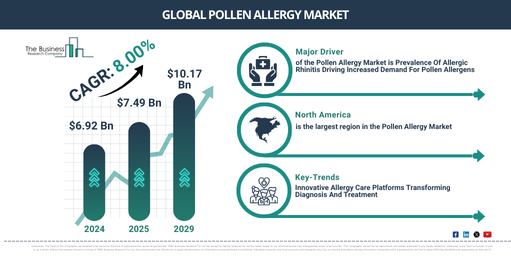
    In recent years, the market size for pollen allergies has seen robust expansion. It’s predicted to rise from $6.92 billion in 2024 to $7.49 billion in 2025, boasting a compound annual growth rate (CAGR) of 8.2%. The growth witnessed in the historic period is the result of increased awareness about allergic conditions, greater investment in healthcare infrastructure, a surge in climate change causing prolonged pollen seasons, and increased urbanization leading to higher exposure to allergens.

    In the coming years, the market size for pollen allergies is predicted to witness robust growth, surging to $10.17 billion by 2029, wilth a compound annual growth rate (CAGR) of 8.0%. Factors such as a rise in allergy conditions, increased pollution, climate change, heightened awareness about allergy therapies, improved access to a variety of treatment options, broader healthcare accessibility, and an amplified emphasis on preventive steps and environmental health are responsible for this growth in the forecast period. Looking ahead, major trends include enhancements in immunotherapy treatments, personalized allergy medications, the introduction of innovative pollen-blocking nasal filters, advancements in air cleaning systems featuring HEPA filters, improvements in nasal spray solutions, the emergence of natural and organic allergy solutions, and the development of wearable tech that tracks allergen exposure in real-time.

    Download a free sample to assess the report’s scope and structure:

    https://www.thebusinessresearchcompany.com/sample.aspx?id=20930&type=smp

    What Are the Primary Drivers Supporting the Market Growth of the Pollen Allergy Market?

    The pollen allergen market’s expansion is anticipated to be propelled by the increasing prevalence of allergic rhinitis. Allergic rhinitis, an allergy-triggered condition characterized by nose inflammation, sneezing, blocked nose, and itchy eyes, is usually provoked by pollen or dust. The escalation in allergic rhinitis is linked to environmental pollution, shifting climate, urban growth, and lifestyle changes, all of which augment the exposure to allergens and pollutants. Pollen allergies commonly cause allergic rhinitis, triggering inflammation in the nasal areas upon exposure to pollen. For example, as per the World Allergy Organization, a US-based overarching entity for clinical allergy research, in October 2023, over 400 million people worldwide are affected by allergic rhinitis, with prevalence rates falling between 10% and 30% in adults and even exceeding 40% in the child population. As such, the pollen allergen market’s growth is fueled by the surge in allergic rhinitis cases.

    Which Primary Segments of the Pollen Allergy Market Are Driving Growth and Industry Transformations?

    The pollen allergymarket covered in this report is segmented –

    1) By Product Type: Instruments; Consumables; Services

    2) By Allergen Type: Food; Inhaled; Drug; Other Allergen Types

    3) By Therapeutics Drug class: Antihistamines; Decongestants; Corticosteroids; Mast Cell Stabilizers; Leukotriene Inhibitors; Nasal Anticholinergics; Immunomodulators; Auto injectable Epinephrine; Immunotherapy

    4) By End-User: Diagnostic Laboratories; Hospitals

    Subsegments:

    1) By Instruments: Allergy Testing Equipment; Diagnostic Devices; Monitoring Devices

    2) By Consumables: Allergy Test Kits; Pollen Filters; Diagnostic Reagents; Treatment Medications (Antihistamines)

    3) By Services: Allergy Testing Services; Immunotherapy Services; Consultation And Diagnostic Services

    Request customized data on this market:

    https://www.thebusinessresearchcompany.com/customise?id=20930&type=smp

    Which Regions Are Key Players in the Growth of the #What Are the Primary Drivers Supporting the Market Growth of the Pollen Allergy Market?# Market?

    North America was the largest region in the pollen allergy market in 2024. Asia-Pacific is expected to be the fastest-growing region in the forecast period. The regions covered in the pollen allergy market report are Asia-Pacific, Western Europe, Eastern Europe, North America, South America, Middle East, Africa.

    What Are the Most Significant Market Trends in the Pollen Allergy Market?

    Leading companies in the pollen allergy market are concentrating on designing inclusive allergy care platforms that offer combined services for the identification, treatment, and control of allergies, ensuring enhanced patient outcomes and ease. A comprehensive allergy care platform for pollen allergy signifies a unified system or service offering complete support to individuals afflicted with pollen allergies. For instance, in February 2023, Nectar Life Sciences, a pharmaceutical company based in India, unveiled Nectar, an inclusive allergy care platform, with the introduction of customized sublingual immunotherapy drops as its premier product. The Nectar allergy drops are made to order based on a CLIA-certified at-home allergy test, directed at the root cause of allergies. They present a convenient and effective substitute to conventional shots and antihistamines. The program alleviates the process of treating allergies with home deliveries and continuous prescriptions every quarter, empowering patients with moderate to severe allergies to develop an enduring tolerance and lessen symptoms over time. This ground-breaking approach intends to transform allergy care by blending personalization, convenience, and established effectiveness.

    View the full report here:

    https://www.thebusinessresearchcompany.com/report/pollen-allergy-global-market-report

    What Parameters Are Used to Define the Pollen Allergy Market?

    Pollen allergy is an allergic reaction to pollen from trees, grasses, and weeds. It occurs when the immune system mistakenly identifies pollen as harmful and releases chemicals such as histamine to combat it. Pollen allergies are often seasonal, peaking during spring, summer, or fall, depending on the pollen an individual is sensitive to.

    Purchase the full report and get a swift delivery:

    https://www.thebusinessresearchcompany.com/purchaseoptions.aspx?id=20930

    About The Business Research Company:

    With over 15000+ reports from 27 industries covering 60+ geographies, The Business Research Company has built a reputation for offering comprehensive, data-rich research and insights. Armed with 1,500,000 datasets, the optimistic contribution of in-depth secondary research, and unique insights from industry leaders, you can get the information you need to stay ahead in the game.

    Get in touch with us:

    The Business Research Company: https://www.thebusinessresearchcompany.com/

    Americas +1 310-496-7795

    Europe +44 7882 955267

    Asia & Others +44 7882 955267 & +91 8897263534

    Email us at info@tbrc.info

    Follow us on:

    LinkedIn: https://in.linkedin.com/company/the-business-research-company

    YouTube: https://www.youtube.com/channel/UC24_fI0rV8cR5DxlCpgmyFQ

    Global Market Model: https://www.thebusinessresearchcompany.com/global-market-model

  • Key Developments and Trends Steering the Phosphor Screen Scanners Market Forward: Advancements In Phosphor Screen Scanning With Cutting-Edge Imaging Systems For Enhanced Accuracy And Resolution

    Key Developments and Trends Steering the Phosphor Screen Scanners Market Forward: Advancements In Phosphor Screen Scanning With Cutting-Edge Imaging Systems For Enhanced Accuracy And Resolution

    Claim your 30% discount on Global Market Reports with code ONLINE30. Limited time only.

    How Has The Phosphor Screen Scanners Market Size Shifted, And What Is the Outlook Through 2034?

    The market of phosphor screen scanners has witnessed robust growth in the last few years. The market size is predicted to escalate from $1.76 billion in 2024 to reach $1.94 billion during 2025, growing at a compound annual growth rate (CAGR) of 10.0%. Factors such as increased prevalence of dental disorders, growing adoption of digital imaging technology in dental practices, enhanced image resolution and sensitivity, demand for high-efficiency healthcare services, and expansion in the medical diagnostics sector have contributed to the growth observed during the historic period.

    The market size for phosphor screen scanners is projected to experience a swift growth in the ensuing years, reaching a value of $2.85 billion in 2029 with a Compound Annual Growth Rate (CAGR) of 10.1%. This predicted growth within the forecast period is associated with the escalating demand for diagnostic procedures for a range of medical conditions, increased spending on healthcare infrastructure, a rising demand for superior imaging solutions, a growing need for effective healthcare services, and the progressive digitalization and incorporation of technology. The upcoming trends within the forecast period are likely to include the integration of thermal and X-ray imaging, real-time 3D imaging, advancements in digital imaging technology, the integration of wireless technologies and the exploration of digitally advanced technologies.

    Download a free sample to assess the report’s scope and structure:

    https://www.thebusinessresearchcompany.com/sample.aspx?id=20927&type=smp

    How Are Key Drivers in the Industry Acting as Catalysts for the Growth of thePhosphor Screen Scanners Market?

    As the need for superior imaging solutions increases, so does the expected growth rate of the phosphor screen scanners market. Superior imaging solutions entail state-of-the-art systems and technologies designed to develop precise, clear, and detailed human body images for monitoring, diagnosis and therapeutic reasons. The interest in high-standard medical imaging solutions is on an upward trend due to increased chronic disease rates, technological progress, a growing elderly population and larger healthcare infrastructure. Phosphor screen scanners provide excellent imaging solutions by taking detailed, high-contrast, high-resolution images using a photostimulable phosphor screen. This screen stores the image when it is exposed to radiation or light. For example, according to the National Health Service in the UK, England reported 44.0 million imaging tests in the year preceding March 2022. This represents a 26% rise from the previous year, which saw 34.9 million tests carried out. As such, the increasing demand for superior imaging solutions is fuelling the growth of the phosphor screen scanners market.

    Which Segments in the Phosphor Screen Scanners Offer the Most Growth?

    The phosphor screen scannersmarket covered in this report is segmented –

    1) By Product Type: Desktop Phosphor Screen Scanners; Portable Phosphor Screen Scanners

    2) By Application: Medical Imaging; Industrial Testing; Research Laboratories; Other Application

    3) By End-User: Hospitals; Diagnostic Centers; Research Institutes; Other End Users

    Subsegments:

    1) By Desktop Phosphor Screen Scanners: Standard Desktop Scanners; High-Resolution Desktop Scanners

    2) By Portable Phosphor Screen Scanners: Battery-Operated Portable Scanners; Compact Portable Scanners

    Request customized data on this market:

    https://www.thebusinessresearchcompany.com/customise?id=20927&type=smp

    What Are the Fastest-Growing Geographies in the #How Are Key Drivers in the Industry Acting as Catalysts for the Growth of thePhosphor Screen Scanners Market?# Market?

    Asia-Pacific was the largest region in the phosphor screen scanners market in 2024. The regions covered in the phosphor screen scanners market report are Asia-Pacific, Western Europe, Eastern Europe, North America, South America, Middle East, Africa.

    What Are the Current Market Growth and Trends in the Phosphor Screen Scanners Industry?

    In the phosphor screen scanners market, leading corporations are emphasizing on the creation of technologically superior solutions like laser-based scanning systems. These systems are orchestrated to improve the precision, swiftness, and resolution of their scanner solutions. A laser scanning system is a technology that employs laser rays to take accurate measurements, create detailed images, or scan items and surroundings. For example, Azure Biosystems Inc., an American company specializing in high-performance image capture instruments, rolled out the Sapphire FL Biomolecular Imager in March 2023. This sophisticated system merges phosphor imaging capabilities and facilitates the identification of radiolabeled specimens by taking images from storage phosphor screens with extraordinary sensitivity. The system enables filmless autoradiography since the light emission from the stimulated phosphor screen via a laser is directly tied to the sample’s radioactivity.

    View the full report here:

    https://www.thebusinessresearchcompany.com/report/phosphor-screen-scanners-global-market-report

    What Are the Key Elements That Define the Phosphor Screen Scanners Market?

    Phosphor screen scanners are devices used to digitize images captured on a phosphor imaging screen, which is commonly employed in medical, scientific, and industrial imaging. These screens are coated with a phosphor material that stores energy from exposure to radiation, such as X-rays, and later emits light when stimulated by a laser.

    Purchase the full report and get a swift delivery:

    https://www.thebusinessresearchcompany.com/purchaseoptions.aspx?id=20927

    About The Business Research Company:

    With over 15000+ reports from 27 industries covering 60+ geographies, The Business Research Company has built a reputation for offering comprehensive, data-rich research and insights. Armed with 1,500,000 datasets, the optimistic contribution of in-depth secondary research, and unique insights from industry leaders, you can get the information you need to stay ahead in the game.

    Get in touch with us:

    The Business Research Company: https://www.thebusinessresearchcompany.com/

    Americas +1 310-496-7795

    Europe +44 7882 955267

    Asia & Others +44 7882 955267 & +91 8897263534

    Email us at info@tbrc.info

    Follow us on:

    LinkedIn: https://in.linkedin.com/company/the-business-research-company

    YouTube: https://www.youtube.com/channel/UC24_fI0rV8cR5DxlCpgmyFQ

    Global Market Model: https://www.thebusinessresearchcompany.com/global-market-model

  • Market Trends Influencing Strategic Decisions in the Peritoneal Dialysis Equipment Industry: Advancements In At-Home Patient Monitoring Systems For Peritoneal Dialysis

    Market Trends Influencing Strategic Decisions in the Peritoneal Dialysis Equipment Industry: Advancements In At-Home Patient Monitoring Systems For Peritoneal Dialysis

    Claim your 30% discount on Global Market Reports with code ONLINE30. Limited time only.

    How Has the Peritoneal Dialysis Equipment Market Growth Performance Trended Historically, And What Lies Ahead?

    The market size for peritoneal dialysis equipment has been consistently expanding over the past few years. Expected to rise from $4.17 billion in 2024 to $4.35 billion in 2025, it is projected to experience a compound annual growth rate (CAGR) of 4.2%. The past growth can be credited to factors like the growing demand for peritoneal dialysis equipment, more product approvals, rising instances of kidney damage, an escalating demand for peritoneal dialysis, and a surge in the number of dialysis service providers.

    The market size of peritoneal dialysis equipment is predicted to experience consistent growth in the upcoming years, reaching a value of$5.13 billion in 2029 with a Compound Annual Growth Rate (CAGR) of 4.2%. Several factors leading to this growth can be identified, which include an aging population, escalating diabetes cases, increased investments by governments and public-private sectors, and a rise in the incidences of chronic kidney disease, diabetes, and hypertension. Additionally, the forecast period will display key market trends such as the advent of technological improvements, the innovation of product offerings, the development of advanced continuous ambulatory peritoneal dialysis materials, the invention of innovative bag materials, and an increase in collaborations and partnerships.

    Download a free sample to assess the report’s scope and structure:

    https://www.thebusinessresearchcompany.com/sample.aspx?id=20924&type=smp

    What Are the Major Market Drivers Behind the Rising Adoption of Peritoneal Dialysis Equipment Market?

    The rise in kidney-related health issues is anticipated to fuel the expansion of the peritoneal dialysis equipment market. Kidney disorders, which disrupt the kidneys’ ability to purge waste and control fluid and electrolyte equilibrium, can fluctuate from lasting illnesses to abrupt injuries and contagions. The escalating rate of such disorders is mostly attributed to increasing diabetes cases, unhealthy living habits, aging demographics, and lack of early-phase therapies. Peritoneal dialysis equipment addresses kidney disorders by utilizing the peritoneum to eliminate waste and surplus liquids from the bloodstream when the kidneys cease to function appropriately. For example, a report published by Kidney Research UK called “The health economics of kidney disease to 2033” in June 2023 indicates that in the same year, around 3.25 million adults in the UK had chronic kidney disease stages 3-5; by 2033, the total population with any stage of chronic kidney disease is forecasted to rise to 7.6 million. Hence, the increased occurrence of kidney disorders is propelling the growth of the peritoneal dialysis equipment market.

    Which Key Market Segments Comprise the Peritoneal Dialysis Equipment Market and Drive Its Revenue Growth?

    The peritoneal dialysis equipmentmarket covered in this report is segmented –

    1) By Product Type: Systems; Consumables

    2) By Treatment Type: Continuous Ambulatory Peritoneal Dialysis; Automated Peritoneal Dialysis

    3) By End-Users: Home Based Dialysis; Dialysis Center; Hospital-Based Dialysis

    Subsegments:

    1) By Systems: Automated Peritoneal Dialysis (APD) Systems; Continuous Ambulatory Peritoneal Dialysis (CAPD) Systems; Portable Peritoneal Dialysis Systems; Home Peritoneal Dialysis Machines; Hemodialysis-Peritoneal Dialysis Combination Systems

    2) By Consumables: Peritoneal Dialysis Solution; Dialysis Catheters; Dialysis Bags; Transfer Sets; Catheter Insertion Kits; Filters And Connectors; Drainage Bags

    Request customized data on this market:

    https://www.thebusinessresearchcompany.com/customise?id=20924&type=smp

    Which Areas Are Leading Regions in the Peritoneal Dialysis Equipment Market Expansion Across the Globe?

    North America was the largest region in the peritoneal dialysis equipment market in 2024. Asia-Pacific is expected to be the fastest-growing region in the forecast period. The regions covered in the peritoneal dialysis equipment market report are Asia-Pacific, Western Europe, Eastern Europe, North America, South America, Middle East, Africa.

    What Are the Strategic Trends Steering thePeritoneal Dialysis Equipment Market Direction?

    Leading entities in the peritoneal dialysis equipment market are prioritizing the development of inventive solutions like the at-home patient monitoring system for peritoneal dialysis (PD). This technology aims to offer better patient results, increased convenience, and decreased medical expenses. An at-home patient monitoring system for peritoneal dialysis (PD) is a tech-based method that permits consistent observation and regulation of a patient’s dialysis treatment at home. As an example, CloudCath, a medical technology firm based in the United States, achieved FDA approval for its revolutionary at-home patient monitoring system for peritoneal dialysis (PD) in February 2022, signifying a major stride in kidney care. The CloudCath System, the first-of-its-kind cloud-run, data-fueled platform, permits the constant scrutiny of dialysate fluid, sending immediate notifications to both patients and healthcare administrators. With this technology at hand, patient management can be improved by tackling conventional monitoring issues, potentially paving the way for earlier medical responses and improved health results.

    View the full report here:

    https://www.thebusinessresearchcompany.com/report/peritoneal-dialysis-equipment-global-market-report

    How Is the Peritoneal Dialysis Equipment Market Conceptually Defined?

    Peritoneal dialysis equipment refers to medical devices used in a treatment that filters waste, toxins, and excess fluid from the blood when the kidneys are not functioning properly. It includes a catheter for access, dialysate solution, and a system for inflow and outflow of the solution, such as manual or automated systems.

    Purchase the full report and get a swift delivery:

    https://www.thebusinessresearchcompany.com/purchaseoptions.aspx?id=20924

    About The Business Research Company:

    With over 15000+ reports from 27 industries covering 60+ geographies, The Business Research Company has built a reputation for offering comprehensive, data-rich research and insights. Armed with 1,500,000 datasets, the optimistic contribution of in-depth secondary research, and unique insights from industry leaders, you can get the information you need to stay ahead in the game.

    Get in touch with us:

    The Business Research Company: https://www.thebusinessresearchcompany.com/

    Americas +1 310-496-7795

    Europe +44 7882 955267

    Asia & Others +44 7882 955267 & +91 8897263534

    Email us at info@tbrc.info

    Follow us on:

    LinkedIn: https://in.linkedin.com/company/the-business-research-company

    YouTube: https://www.youtube.com/channel/UC24_fI0rV8cR5DxlCpgmyFQ

    Global Market Model: https://www.thebusinessresearchcompany.com/global-market-model
  • Top Trends Driving Innovation and Change in the Peripheral Nerve Stimulators Market: Advancements In Peripheral Nerve Stimulators Focus On Ultra-Miniaturized Systems For Enhanced Patient Care

    Top Trends Driving Innovation and Change in the Peripheral Nerve Stimulators Market: Advancements In Peripheral Nerve Stimulators Focus On Ultra-Miniaturized Systems For Enhanced Patient Care

    Claim your 30% discount on Global Market Reports with code ONLINE30. Limited time only.

    What Are the Projected Market Size and Growth Rates for the Peripheral Nerve Stimulators Market From 2025 To 2029?

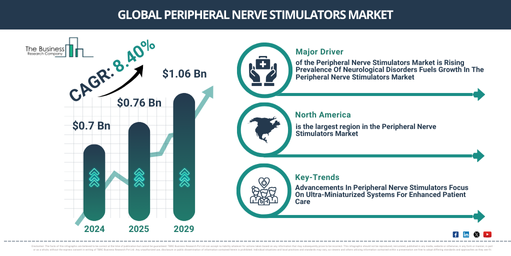
    The market size for peripheral nerve stimulators has substantially expanded over the past years. Its growth is projected to take a jump from $0.7 billion in 2024 to $0.76 billion in 2025, with a compound annual growth rate (CAGR) pegged at 9.2%. The significant growth in the preceding period is linked to the increasing need for non-pharmacological solutions to manage pain, heightened consciousness about alternative pain relief therapies, an upswing in the acceptance of minimally invasive procedures, growth in the population of elderly people, and a rise in the count of pain management clinics.

    The market for peripheral nerve stimulators is projected to experience substantial growth in the coming years, with its worth predicted to reach $1.06 billion 2029, expanding at a compound annual growth rate (CAGR) of 8.4%. This growth in the anticipated period is credited to various factors such as supportive government policies and initiatives, the increasing preference for outpatient and home-based care, proliferating pain management clinics, an upsurge in demand for personalized PNS devices, and escalating healthcare infrastructure. Emerging trends for the forecast period encompass the creation of wireless peripheral nerve stimulators, incorporation of mobile applications for distant monitoring of PNS devices, the inception of wearable, non-intrusive PNS devices, and the unveiling of advanced PNS systems with AI-powered pain management features.

    Download a free sample to assess the report’s scope and structure:

    https://www.thebusinessresearchcompany.com/sample.aspx?id=20923&type=smp

    What External and Internal Drivers Are Contributing to the Growth of thePeripheral Nerve Stimulators Market?

    The escalating occurrence of neurological diseases is anticipated to fuel the expansion of the peripheral nerve stimulators market. Neurological diseases, medical conditions directly affecting the brain, spine, or peripheral nerves, result in a variety of functional, structural, or biochemical abnormalities. The aging population, genetic predilections, environmental factors, personal lifestyle decisions, and improved detection and awareness have all been linked to the rise in neurological diseases prevalence. Peripheral nerve stimulators play a vital part in reducing the rate of these disorders by offering specific relief from chronic pain, boosting motor functionality, and fostering nerve rejuvenation in afflicted areas. For instance, the Alzheimer’s Association, a US-based nonprofit health organization, reported that in March 2023, around 6.7 million Americans aged 65 and above are dealing with Alzheimer’s dementia, and this figure is predicted to reach 13.8 million by 2060. As a result, the peripheral nerve stimulators market is being propelled by the increased prevalence of neurological disorders.

    What Segment Types Define the Peripheral Nerve Stimulators Market Structure?

    The peripheral nerve stimulatorsmarket covered in this report is segmented –

    1) By Product: Transcutaneous; Percutaneous; Implantable

    2) By Device: Stimulators; CPNB Catheters; Pain Pumps; Other Devices

    3) By Mode of Purchase: Disposable Devices; Rechargeable Devices

    4) By Application: Hospitals; Physiotherapy Centers; Ambulatory Surgical Centers; Clinics; Other Applications

    Subsegments:

    1) By Transcutaneous: TENS (Transcutaneous Electrical Nerve Stimulation) Units; Surface Electrodes

    2) By Percutaneous: Single-Needle Percutaneous Stimulators; Multi-Needle Percutaneous Stimulators; Radiofrequency Percutaneous Stimulators

    3) By Implantable: Spinal Cord Stimulators (SCS); Peripheral Nerve Stimulation (PNS) Devices; Neurostimulator Implants

    Request customized data on this market:

    https://www.thebusinessresearchcompany.com/customise?id=20923&type=smp

    Which Geographic Areas Hold the Strongest Growth Potential in the Peripheral Nerve Stimulators Market?

    North America was the largest region in the peripheral nerve stimulators market in 2024. Asia-Pacific is expected to be the fastest-growing region in the forecast period. The regions covered in the peripheral nerve stimulators market report are Asia-Pacific, Western Europe, Eastern Europe, North America, South America, Middle East, Africa.

    What Long-Term Trends Are Transforming the Competitive Landscape of the Peripheral Nerve Stimulators Market?

    Leading enterprises in the peripheral nerve stimulators market are channeling their efforts towards creating novel products such as ultra-miniaturized systems. The goal is to augment patient comfort, boost treatment results, and broaden usage in various therapeutic domains. Ultra-miniaturized systems are extremely compact devices engineered to facilitate advanced functions. These systems typically capitalize on state-of-the-art technologies for improved performance, portability, and integration in diverse applications. An illustration of this is the news from April 2023, where NeuSpera Medical Inc., a US-based implantable medical devices producer, publicized receiving clearance from the U.S. Food and Drug Administration (FDA) for their next-generation Neuspera ultra-miniaturized system for managing chronic peripheral nerve pain. The device’s revolutionary design enables it to provide precise electrical stimuli to peripheral nerves, eliminating the need for conventional leads, hence it’s minimally invasive and lowers the risks of complications linked to lead-based appliances. Due to its miniature size, the implant procedure is simplified resulting in less tissue damage and hastened recovery periods. This micro-implant also holds promise for enduring pain relief by directly triggering the ailing nerve channels, offering a sophisticated remedy for patients afflicted with chronic peripheral nerve pain.

    View the full report here:

    https://www.thebusinessresearchcompany.com/report/peripheral-nerve-stimulators-global-market-report

    What Is the Definition of the Peripheral Nerve Stimulators Market?

    Peripheral nerve stimulators refer to medical devices designed to deliver electrical impulses to peripheral nerves in order to manage pain or improve motor function. They are used for treating chronic pain conditions, such as neuropathy, and for aiding in the rehabilitation of patients with nerve injuries or disorders by stimulating nerve activity.

    Purchase the full report and get a swift delivery:

    https://www.thebusinessresearchcompany.com/purchaseoptions.aspx?id=20923

    About The Business Research Company:

    With over 15000+ reports from 27 industries covering 60+ geographies, The Business Research Company has built a reputation for offering comprehensive, data-rich research and insights. Armed with 1,500,000 datasets, the optimistic contribution of in-depth secondary research, and unique insights from industry leaders, you can get the information you need to stay ahead in the game.

    Get in touch with us:

    The Business Research Company: https://www.thebusinessresearchcompany.com/

    Americas +1 310-496-7795

    Europe +44 7882 955267

    Asia & Others +44 7882 955267 & +91 8897263534

    Email us at info@tbrc.info

    Follow us on:

    LinkedIn: https://in.linkedin.com/company/the-business-research-company

    YouTube: https://www.youtube.com/channel/UC24_fI0rV8cR5DxlCpgmyFQ

    Global Market Model: https://www.thebusinessresearchcompany.com/global-market-model