Month: August 2025

  • Neurodiagnostics Market in Focus: Forecasting Growth Drivers, Scaling Potential, and Global Opportunities

    Neurodiagnostics Market in Focus: Forecasting Growth Drivers, Scaling Potential, and Global Opportunities

    Claim your 30% discount on Global Market Reports with code ONLINE30. Limited time only.

    What Are the Projected Market Size and Growth Rates for the Neurodiagnostics Market From 2025 To 2029?

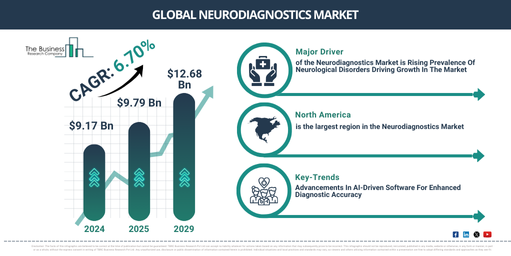
    Recent years have seen a robust expansion in the size of the neurodiagnostics market. It is projected to swell from $9.17 billion in 2024 to $9.79 billion in 2025, with a compound annual growth rate (CAGR) of 6.8%. This growth during the historical period can be ascribed to several factors, including a surge in the prevalence of neurological disorders, escalated adoption of advanced imaging technologies, a swelling geriatric population, heightened awareness of early disease detection, expanding healthcare infrastructure, and increased investment in neuroscience research and development.

    The size of the neurodiagnostics market is forecasted to undergo substantial growth in the upcoming years, swelling to $12.68 billion by 2029, climbing at a compound annual growth rate (CAGR) of 6.7%. This growth during the projection period can be ascribed to the rising demand for non-invasive diagnostic methods, the increasing instances of neurological disorders, the escalation in government funding in healthcare facilities, heightened awareness and early detection initiatives, and the broadening of personalized medicine strategies. Notable trends during the forecasting period encompass the emergence of portable EEG devices, the incorporation of AI to enhance diagnostic preciseness, improved MRI techniques for brain imaging, the integration of wearable technology for continuous monitoring, progression in neurogenetic testing, and the implementation of real-time data analysis for individualized treatment schedules.

    Download a free sample to assess the report’s scope and structure:

    https://www.thebusinessresearchcompany.com/sample.aspx?id=20902&type=smp

    What Are the Core Market Drivers Propelling Growth in the Neurodiagnostics Industry?

    The surge in neurological disorders is projected to fuel the expansion of the neurodiagnostics market in the future. Neurological disorders affect the brain, spinal cord, and nerves, leading to cognitive, motor, and sensory impairments. Aging populations, environmental factors, lifestyle shifts, genetics, and enhanced diagnostic methods all contribute to the increase in neurological disorders. Neurodiagnostics are critical for accurately identifying, evaluating, and tracking neurological disorders, allowing for accurate diagnosis, informed treatment strategies, and efficient management of brain, spinal cord, and nerve disorders. For example, in April 2023, the National Library of Medicine, a US-based library for medical research data, reported that 6.7 million Americans were affected by Alzheimer’s in 2023, and this figure is predicted to rise to 13.8 million by 2060. Hence, the increased prevalence of neurological disorders is propelling the growth of the neurodiagnostics market.

    How Is the Neurodiagnostics Market Segmented?

    The neurodiagnosticsmarket covered in this report is segmented –

    1) By Type: Diagnostic And Imaging Solutions; In-Vitro Diagnostics

    2) By Technology: Neuroimaging Technologies; Computed Tomography (CT); Magnetic Resonance Imaging (MRI); Nuclear Medicine Imaging (PET, SPECT); Near Infrared Spectroscopic Imaging (NIRS); Electro-Encephalography (EEG); Magneto-Encephalography (MEG); Voxel Based Morphometry (VBM); Neuroinformatics

    3) By Condition: Epilepsy; Alzheimer’s Disease; Parkinson’s Disease; Stroke; Joint Health; Other Conditions

    4) By End Use : Hospitals And Clinics; Diagnostic Laboratories; Imaging Centers; Other End Uses

    Subsegments:

    1) By Diagnostic And Imaging Solutions: MRI (Magnetic Resonance Imaging) Systems; CT (Computed Tomography) Scanners; EEG (Electroencephalogram) Systems; EMG (Electromyography) Systems; MEG (Magnetoencephalography) Systems; PET (Positron Emission Tomography) Scanners; SPECT (Single Photon Emission Computed Tomography) Scanners; Functional MRI (fMRI) Systems; Intracranial Pressure Monitors

    2) By In-Vitro Diagnostics: Blood-Based Diagnostics; Cerebrospinal Fluid (Csf) Analysis; Genetic Testing And Biomarkers; Neurochemical Diagnostics; Point-Of-Care Neurodiagnostics; Diagnostic Kits For Neurodegenerative Disorders

    Request customized data on this market:

    https://www.thebusinessresearchcompany.com/customise?id=20902&type=smp

    Which Regions Are Driving the Next Phase of the Neurodiagnostics Market Growth?

    North America was the largest region in the neurodiagnostics market in 2024. Asia-Pacific is expected to be the fastest-growing region in the forecast period. The regions covered in the neurodiagnostics market report are Asia-Pacific, Western Europe, Eastern Europe, North America, South America, Middle East, Africa.

    What Key Market Trends and Innovations Are Shaping the Future of the Neurodiagnostics Industry?

    Top-tier businesses in the neurodiagnostics market are emphasising on technological innovations like sophisticated software algorithms to augment diagnostic precision and enhance patient results. The advanced software algorithm is a complex command set which utilises artificial intelligence (AI) or machine learning techniques to process and interpret data, thereby aiding in decision-making and diagnosis. For instance, Ceribell Inc., a medical equipment manufacturer from the US, in October 2023, initiated the ClarityPro AI algorithm that marked considerable progress in the electrographic status epilepticus (ESE) detection. This groundbreaking software incorporated in the Ceribell EEG system employs machine learning to scrutinise EEG waveforms and issue instantaneous alerts for potential seizures. Importantly, ClarityPro has the distinction of being the first acute care appliance to secure FDA approval for independent diagnosis. This cutting-edge technology is crafted to refine clinical judgment via continuous brain activity monitoring, providing actionable intelligence and facilitating swifter and efficient treatment reactions.

    View the full report here:

    https://www.thebusinessresearchcompany.com/report/neurodiagnostics-global-market-report

    How Is the Neurodiagnostics Market Defined and What Are Its Core Parameters?

    Neurodiagnostics refers to the medical field focused on diagnosing and monitoring disorders of the nervous system, including the brain, spinal cord, and peripheral nerves. It involves the use of advanced technologies and tests to assess neurological function, identify abnormalities, and aid in the diagnosis of conditions such as epilepsy, stroke, multiple sclerosis, neuropathies, and other neurological diseases.?

    Purchase the full report and get a swift delivery:

    https://www.thebusinessresearchcompany.com/purchaseoptions.aspx?id=20902

    About The Business Research Company:

    With over 15000+ reports from 27 industries covering 60+ geographies, The Business Research Company has built a reputation for offering comprehensive, data-rich research and insights. Armed with 1,500,000 datasets, the optimistic contribution of in-depth secondary research, and unique insights from industry leaders, you can get the information you need to stay ahead in the game.

    Get in touch with us:

    The Business Research Company: https://www.thebusinessresearchcompany.com/

    Americas +1 310-496-7795

    Europe +44 7882 955267

    Asia & Others +44 7882 955267 & +91 8897263534

    Email us at info@tbrc.info

    Follow us on:

    LinkedIn: https://in.linkedin.com/company/the-business-research-company

    YouTube: https://www.youtube.com/channel/UC24_fI0rV8cR5DxlCpgmyFQ

    Global Market Model: https://www.thebusinessresearchcompany.com/global-market-model
  • Strong CAGR to Propel in the Neuroblastoma Market and Beyond upto $3.91 Billion by 2029

    Strong CAGR to Propel in the Neuroblastoma Market and Beyond upto $3.91 Billion by 2029

    Claim your 30% discount on Global Market Reports with code ONLINE30. Limited time only.

    What Is the Estimated Market Size of the Neuroblastoma Market In 2029?

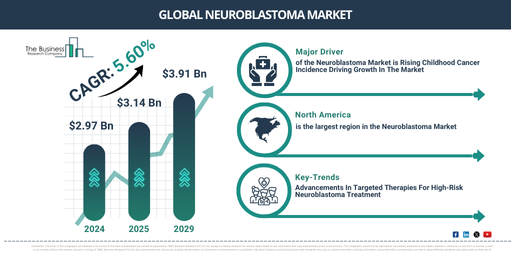
    There has been robust growth in the neuroblastoma market in recent years. The market is projected to expand from a $2.97 billion valuation in 2024 to $3.14 billion in 2025, reflecting a Compound Annual Growth Rate (CAGR) of 5.7%. The upward trend during the historical period is due to several factors, including a rise in neuroblastoma cases, heightened research and development activities for pediatric neuroblastoma therapies, an increasing rate of cancer among children, and growing governmental funding and support.

    The market size for neuroblastoma is anticipated to witness substantial growth in the coming years, reaching$3.91 billion in 2029″ with a compound annual growth rate (CAGR) of 5.6%. The projected rise during this forecast period can be associated with numerous factors such as the rise in government funding, an upward trend in the disease incidence, intensifying efforts towards early diagnosis, an escalating frequency of genetic mutations, and progressing understanding and research. The forecast period is also expected to see certain key trends such as the creation of drugs targeting specific molecular pathways, breakthroughs in non-invasive imaging technologies, advancements in gene-editing methods, an increasing emphasis on personalized treatment, and the creation of radiolabeled compounds.

    Download a free sample to assess the report’s scope and structure:

    https://www.thebusinessresearchcompany.com/sample.aspx?id=20901&type=smp

    Which Primay Drivers Are Accelerating Growth in the Neuroblastoma Market?

    Anticipated growth in the neuroblastoma market is largely due to the increasing occurrence of cancer in children. Childhood cancer encompasses a range of cancers that usually strike children and adolescents, frequently targeting organs such as the brain, blood, and bones. Requiring unique treatment plans, its incidence is on the rise due to factors like enhanced diagnostic methods, increased awareness, environmental exposures, genetic predilections, and progress in medical study. Targeted therapies for childhood cancer are offered through neuroblastoma treatment, enabling early intervention that is efficacious and reduces chances of relapse, thereby improving results for young among patients. For instance, the American Cancer Society, a professional organization in the US, projected that around 9,620 children under the age of 15 are expected to be diagnosed with cancer in the year 2024, reflecting an increase from the 5,290 cases in 2023. Hence, the rise in childhood cancer incidence is fueling the growth of the neuroblastoma market.

    Which Primary Segments of the Neuroblastoma Market Are Driving Growth and Industry Transformations?

    The neuroblastomamarket covered in this report is segmented –

    1) By Product Types: Tablets; Vaccines; Other Product Types

    2) By Treatment Type: Chemotherapy; Immunotherapy; Other Treatment Types

    3) By Distribution Channel: Online; Offline

    4) By End-User: Hospitals; Clinics

    Subsegments:

    1) By Tablets: Oral Chemotherapy Tablets; Targeted Therapy Tablets

    2) By Vaccines: Immunotherapy Vaccines; Therapeutic Vaccines

    3) By Other Product Types: Injectable Drugs; Monoclonal Antibodies; Cell Therapy Products

    Request customized data on this market:

    https://www.thebusinessresearchcompany.com/customise?id=20901&type=smp

    Which Regions Are Key Players in the Growth of the #Which Primay Drivers Are Accelerating Growth in the Neuroblastoma Market?# Market?

    North America was the largest region in the neuroblastoma market in 2024. Asia-Pacific is expected to be the fastest-growing region in the forecast period. The regions covered in the neuroblastoma market report are Asia-Pacific, Western Europe, Eastern Europe, North America, South America, Middle East, Africa.

    Which Technological Trends Are Reshaping the Neuroblastoma Industry Dynamics?

    Leading businesses in the neuroblastoma market are concentrating on formulating cutting-edge therapeutic treatments, such as humanized anti-GD2 monoclonal antibodies, to specifically target and safely combat cancer cells. The humanized anti-GD2 monoclonal antibody is structured to aim at the GD2 molecule on cancer cells and diminish immune rejection by incorporating human elements. For example, in August 2023, Renaissance Pharma Ltd., a clinical-stage pharmaceutical company from the UK, divulged the in-licensing of Hu14.18K322A (Hu14.18) from St. Jude Children’s Research Hospital. This antibody is intended to address newly diagnosed high-risk neuroblastoma, which is a rare and aggressive pediatric cancer. As per the agreement’s terms, Renaissance has obtained exclusive authority to develop, produce, and market Hu14.18 in significant world markets like the United States, Canada, Europe, China, Japan, and Turkey.

    View the full report here:

    https://www.thebusinessresearchcompany.com/report/neuroblastoma–global-market-report

    What Parameters Are Used to Define the Neuroblastoma Market?

    Neuroblastoma is a type of cancer that primarily affects children and arises from immature nerve cells called neuroblasts. It commonly develops in the adrenal glands, located on top of the kidneys, and occurs in other areas of the abdomen, chest, neck, or pelvis. The cancer can cause symptoms such as abdominal pain, swelling, fatigue, and sometimes bone pain or lumps.

    Purchase the full report and get a swift delivery:

    https://www.thebusinessresearchcompany.com/purchaseoptions.aspx?id=20901

    About The Business Research Company:

    With over 15000+ reports from 27 industries covering 60+ geographies, The Business Research Company has built a reputation for offering comprehensive, data-rich research and insights. Armed with 1,500,000 datasets, the optimistic contribution of in-depth secondary research, and unique insights from industry leaders, you can get the information you need to stay ahead in the game.

    Get in touch with us:

    The Business Research Company: https://www.thebusinessresearchcompany.com/

    Americas +1 310-496-7795

    Europe +44 7882 955267

    Asia & Others +44 7882 955267 & +91 8897263534

    Email us at info@tbrc.info

    Follow us on:

    LinkedIn: https://in.linkedin.com/company/the-business-research-company

    YouTube: https://www.youtube.com/channel/UC24_fI0rV8cR5DxlCpgmyFQ

    Global Market Model: https://www.thebusinessresearchcompany.com/global-market-model
  • Neonatal Respiratory Distress Syndrome Treatment Market Valuation Expected To Reach $1.39 Billion By 2029, Growing At A Rate Of 7.9%

    Neonatal Respiratory Distress Syndrome Treatment Market Valuation Expected To Reach $1.39 Billion By 2029, Growing At A Rate Of 7.9%

    Claim your 30% discount on Global Market Reports with code ONLINE30. Limited time only.

    How Fast Is The Neonatal Respiratory Distress Syndrome Treatment Market Expected to Grow Between 2025 And 2029?

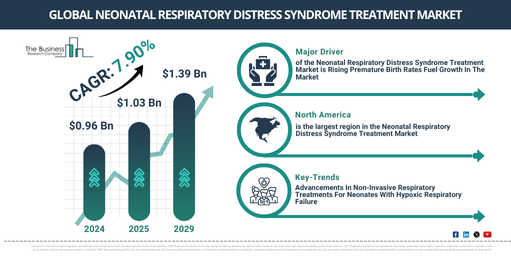
    The market size of neonatal respiratory distress syndrome treatment has witnessed significant growth in the past few years. The growth is projected to increase from $0.96 billion in 2024 to $1.03 billion in 2025, registering a compound annual growth rate (CAGR) of 7.0%. This growth during the historic period can be attributed to several factors such as the enhanced permeability and fluid accumulation within the alveoli, amplified alveolar-capillary permeability, surging use of mechanical ventilation, heightened awareness amid healthcare providers and parents regarding the crucialness of neonatal care, and escalated healthcare investments.

    In the coming years, the market for neonatal respiratory distress syndrome treatment is forecasted to experience significant expansion. The market is predicted to reach $1.39 billion in 2029, growing at a compound annual growth rate (CAGR) of 7.9%. This growth during the forecast period is due to factors like an elevated inclination towards accessories and consumables, a surge in NICU admissions, the rise in personalized medicine demand, an increase in premature birth phenomena, and augmented research and development activities. The upcoming trends for the forecast period involve the incorporation of automation in neonatal intensive care units (NICUs), integration of artificial intelligence (AI) into systems, advances in neonatal care technology, innovative surfactant therapy, and enhanced ventilator technologies.

    Download a free sample to assess the report’s scope and structure:

    https://www.thebusinessresearchcompany.com/sample.aspx?id=20899&type=smp

    Which Factors and External Forces Are Driving Demand in the Neonatal Respiratory Distress Syndrome Treatment Market?

    The neonatal respiratory distress syndrome treatment market’s growth is anticipated to be fuelled by the escalating prevalence of premature births. Premature birth or preterm birth occurs when a baby is delivered before the 37th week of gestation, with those births occurring before the 32nd week posing the gravest health hazards, considering a typical pregnancy endures about 40 weeks. The surge in premature births can be attributed to reasons like advanced maternal age, multifetal pregnancies, certain health ailments, lifestyle preferences, fertility treatment usage, infections, and environmental influences. Neonatal respiratory distress syndrome (NRDS) treatment is often necessitated for preterm babies due to their underdeveloped lungs and inadequate surfactant production. This intervention increases lung functionality, normalizes respiration, and diminishes the likelihood of respiratory failure in preterm infants. For instance, Tommy’s, a charity organization based in the UK, stated in December 2022 that the rate of premature live births in England and Wales escalated to 7.9% in 2022 from 7.5% in 2021, marking the second consecutive year of an increase in premature births. Over 53,000 infants were delivered prematurely in 2022. Consequently, the burgeoning occurrence of premature births is propelling the neonatal respiratory distress syndrome treatment market.

    Which Segments in the Neonatal Respiratory Distress Syndrome Treatment Offer the Most Growth?

    The neonatal respiratory distress syndrome treatmentmarket covered in this report is segmented –

    1) By Therapy: Oxygen Therapy; Surfactant Therapy

    2) By Route Of Administration: Parenteral; Inhalation; Other Routes Of Administration

    3) By End User: Hospitals; Sub-Acute Facilities; Home Care; Retail Pharmacies

    Subsegments:

    1) By Oxygen Therapy: Conventional Oxygen Therapy; High-Flow Nasal Cannula (HFNC) Oxygen Therapy; Continuous Positive Airway Pressure (CPAP) Oxygen Therapy; Invasive Mechanical Ventilation With Oxygen Therapy

    2) By Surfactant Therapy: Natural Surfactants; Synthetic Surfactants; Combined Surfactant Therapy (Natural + Synthetic); Prophylactic Surfactant Therapy; Rescue Surfactant Therapy

    Request customized data on this market:

    https://www.thebusinessresearchcompany.com/customise?id=20899&type=smp

    What Are the Fastest-Growing Geographies in the #Which Factors and External Forces Are Driving Demand in the Neonatal Respiratory Distress Syndrome Treatment Market?# Market?

    North America was the largest region in the neonatal respiratory distress syndrome treatment market in 2024. Asia-Pacific is expected to be the fastest-growing region in the forecast period. The regions covered in the neonatal respiratory distress syndrome treatment market report are Asia-Pacific, Western Europe, Eastern Europe, North America, South America, Middle East, Africa.

    Which Cutting-Edge Market Trends Are Expected to Drive theNeonatal Respiratory Distress Syndrome Treatment Market’s Growth?

    Key industry players in the treatment market for neonatal respiratory distress syndrome are focusing on creating cutting-edge technologies such as nitric oxide generators. These innovations aim to improve oxygenation, reduce respiratory issues and provide non-invasive treatment options for newborns suffering from hypoxic respiratory failure. Medical devices like nitric oxide generators enable the production and administration of nitric oxide gas, typically used to enhance oxygenation and lessen pulmonary hypertension especially in neonates and severely sick patients. For example, Beyond Air Inc., a US-based firm specializing in medical devices and biopharmaceuticals, was granted FDA approval for LungFit PH in June 2022. This state-of-the-art nitric oxide generator is developed to assist term and near-term neonates struggling with hypoxic respiratory failure, including persistent pulmonary hypertension of the newborn (PPHN). Leveraging on their proprietary Ionizer technology, the device produces nitric oxide from surrounding air anytime it’s needed, ensuring an unlimited supply without worrying about the dosage or flow. The device uses a low-power compressor to ionize nitrogen and oxygen, subsequently lowering the production of nitrogen dioxide (NO2), which is eventually safely eliminated using a smart filter.

    View the full report here:

    https://www.thebusinessresearchcompany.com/report/neonatal-respiratory-distress-syndrome-treatment-global-market-report

    What Are the Key Elements That Define the Neonatal Respiratory Distress Syndrome Treatment Market?

    Neonatal respiratory distress syndrome treatment refers to the management of premature infants with insufficient surfactant production, leading to breathing difficulties. It involves administering exogenous surfactant therapy, providing respiratory support with mechanical ventilation or continuous positive airway pressure (CPAP), and oxygen supplementation.

    Purchase the full report and get a swift delivery:

    https://www.thebusinessresearchcompany.com/purchaseoptions.aspx?id=20899

    About The Business Research Company:

    With over 15000+ reports from 27 industries covering 60+ geographies, The Business Research Company has built a reputation for offering comprehensive, data-rich research and insights. Armed with 1,500,000 datasets, the optimistic contribution of in-depth secondary research, and unique insights from industry leaders, you can get the information you need to stay ahead in the game.

    Get in touch with us:

    The Business Research Company: https://www.thebusinessresearchcompany.com/

    Americas +1 310-496-7795

    Europe +44 7882 955267

    Asia & Others +44 7882 955267 & +91 8897263534

    Email us at info@tbrc.info

    Follow us on:

    LinkedIn: https://in.linkedin.com/company/the-business-research-company

    YouTube: https://www.youtube.com/channel/UC24_fI0rV8cR5DxlCpgmyFQ

    Global Market Model: https://www.thebusinessresearchcompany.com/global-market-model
  • Neonatal Phototherapy Market Forecast Reaching $1.42 Billion by 2029 at 6% CAGR

    Neonatal Phototherapy Market Forecast Reaching $1.42 Billion by 2029 at 6% CAGR

    Claim your 30% discount on Global Market Reports with code ONLINE30. Limited time only.

    What Are the Key Projections for the CAGR of the Neonatal Phototherapy Market Size From 2025 to 2034?

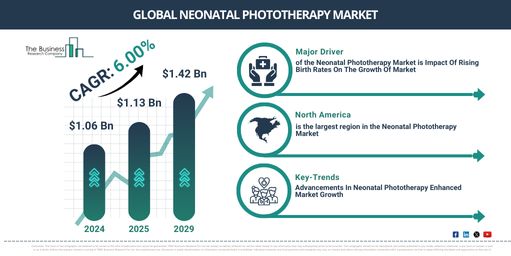
    There has been a significant expansion of the neonatal phototherapy market in the previous years. The market, which was valued at $1.06 billion in 2024, is predicted to escalate to $1.13 billion in 2025, experiencing a compound annual growth rate (CAGR) of 6.3%. The historical period’s growth can be explained by the enhancement in healthcare facilities, public health initiatives, instructional and educational programs, the aid of non-profit entities, and contributions from clinical research and studies.

    Overcoming the next few years, substantial growth is anticipated in the neonatal phototherapy market size. With a compound annual growth rate (CAGR) of 6.0%, it is projected to reach$1.42 billion by 2029. This growth in the projected timeline could be due to broadened healthcare access, governmental health policies, economic progression in growing economies, improved training programs, and public health campaigns. Key trends expected within this period include mobile phototherapy tools, LED phototherapy, compact devices, the incorporation of artificial intelligence in phototherapy, and the use of blue and green light technologies.

    Download a free sample to assess the report’s scope and structure:

    https://www.thebusinessresearchcompany.com/sample.aspx?id=20898&type=smp

    Which Major Market Drivers Are Expected to Boost the Growth Potential of the Neonatal Phototherapy Market?

    The growth of the neonatal phototherapy market is projected to be fueled by the escalating birth rates. Factors like enhanced healthcare facilities, an uptick in fertility rates, cultural inclinations towards larger families, and the surge in immigration in some regions typically contribute to increasing birth rates. Neonatal phototherapy plays a crucial role in managing jaundice in premature infants as it uses light to decrease the levels of bilirubin in their bloodstream. This is vital in reducing the potential for severe complications like brain damage, which are generally more prevalent in premature infants due to their immature liver function and an elevated chance of developing jaundice. As an illustration, a report by the Centers for Disease Control and Prevention, a national public health organization based in the US, noted that in January 2023, the United States experienced a 1% boost in recorded births, amounting to 3,664,292, compared to the preceding year. Consequently, the rising birth rates are propelling the neonatal phototherapy market’s expansion.

    Which Key Market Segments Comprise the Neonatal Phototherapy Market and Drive Its Revenue Growth?

    The neonatal phototherapymarket covered in this report is segmented –

    1) By Type: Convectional Phototherapy Equipment; LED Phototherapy Equipment; Fiber Optic Phototherapy Equipment

    2) By Product Type: Traditional Phototherapy Lamps; Phototherapy Beds; Flexible Phototherapy Lamps

    3) By Application: Skin Diseases Treatment; Neonatal Jaundice Management

    Subsegments:

    1) By Conventional Phototherapy Equipment: Fluorescent Tube Phototherapy Units; Incandescent Lamp Phototherapy Units

    2) By LED Phototherapy Equipment: Blue LED Phototherapy Units; White LED Phototherapy Units

    3) By Fiber Optic Phototherapy Equipment: Overhead Fiber Optic Phototherapy Units; Blanket Or Pad-Type Fiber Optic Phototherapy Units

    Request customized data on this market:

    https://www.thebusinessresearchcompany.com/customise?id=20898&type=smp

    Which Areas Are Leading Regions in the Neonatal Phototherapy Market Expansion Across the Globe?

    North America was the largest region in the neonatal phototherapy market in 2024. The regions covered in the neonatal phototherapy market report are Asia-Pacific, Western Europe, Eastern Europe, North America, South America, Middle East, Africa.

    What Are the Key Market Trends in theNeonatal Phototherapy Market Over the Coming Years?

    Predominant businesses in the neonatal phototherapy market are prioritizing the development of innovative solutions, such as high-tech open warmers to improve postnatal care for newborn babies. The high-tech open warmer is a medical equipment typically utilized in neonatal and pediatric environments to sustain consistent body temperature in newborns and infants, particularly those who are premature or have low birth weight. For example, in October 2024, Draeger India Pvt. Ltd, a medical and safety technology firm based in India, unveiled the BabyRoo TN300, built to provide flexibility in labor and delivery rooms as well as neonatal intensive care wards. This groundbreaking device is designed to deliver peak care for newborns, especially those requiring intensive care post-delivery. The BabyRoo TN300 incorporates dual heat sources for steady temperature management, skin temperature control for personalized warming, a quick readiness function, a built-in thermo monitor to observe thermal stress, a lung-safe respiratory aid with an AutoBreath module and a family-focused design encouraging parental participation in baby care.

    View the full report here:

    https://www.thebusinessresearchcompany.com/report/neonatal-phototherapy-global-market-report

    How Is the Neonatal Phototherapy Market Conceptually Defined?

    Neonatal phototherapy is a medical treatment used to manage jaundice in newborns by exposing them to specific light wavelengths. This process helps break down excess bilirubin in the baby’s blood, which is the cause of the yellowing of the skin and eyes. It is a non-invasive and effective method to reduce the risk of complications associated with high bilirubin levels, promoting safer recovery in newborns.

    Purchase the full report and get a swift delivery:

    https://www.thebusinessresearchcompany.com/purchaseoptions.aspx?id=20898

    About The Business Research Company:

    With over 15000+ reports from 27 industries covering 60+ geographies, The Business Research Company has built a reputation for offering comprehensive, data-rich research and insights. Armed with 1,500,000 datasets, the optimistic contribution of in-depth secondary research, and unique insights from industry leaders, you can get the information you need to stay ahead in the game.

    Get in touch with us:

    The Business Research Company: https://www.thebusinessresearchcompany.com/

    Americas +1 310-496-7795

    Europe +44 7882 955267

    Asia & Others +44 7882 955267 & +91 8897263534

    Email us at info@tbrc.info

    Follow us on:

    LinkedIn: https://in.linkedin.com/company/the-business-research-company

    YouTube: https://www.youtube.com/channel/UC24_fI0rV8cR5DxlCpgmyFQ

    Global Market Model: https://www.thebusinessresearchcompany.com/global-market-model

  • $2.85 Billion Forecast for Natural Insect Repellents Market by 2029, Backed by Demand and Innovation

    $2.85 Billion Forecast for Natural Insect Repellents Market by 2029, Backed by Demand and Innovation

    Claim your 30% discount on Global Market Reports with code ONLINE30. Limited time only.

    How Has The Natural Insect Repellents Market Growth Evolved From 2024 To 2025, And What’s Ahead?

    In recent times, there has been a robust growth in the size of the natural insect repellents market. It is projected to increase from a value of $1.9 billion in 2024 to approximately $2.06 billion in 2025, with a compound annual growth rate (CAGR) of 8.3%. The substantial growth observed in the historic period can be related to governmental actions towards preventing vector-borne diseases, environmental safeguarding policies promoting products that are friendly to the ecosystem, a consumer trend favoring toxin-free items, a surge in demand for repellents that are safe for children and pets, and the escalating preference for sustainable and biodegradable products.

    Expectations indicate a robust upward trend in the natural insect repellents market in the upcoming years. The projected growth is to reach$2.85 billion by 2029, registering a compound annual growth rate (CAGR) of 8.5%. The principal reasons for this anticipated surge within the forecast period include an increase in vector-borne diseases, heightened global health initiatives for disease prevention, a growing patronage for aromatherapy-based repellents, an upswing in disposable income, and a burgeoning middle-class demographic. Significant trends projected for the forecast period encases advancements in botanical extraction methods, the invention of long-lasting natural repellents, the launch of multi-purpose products, innovative packaging aiming at portability and ease of use, as well as a preference for organic and plant-derived products.

    Download a free sample to assess the report’s scope and structure:

    https://www.thebusinessresearchcompany.com/sample.aspx?id=20896&type=smp

    What Are the Core Growth Drivers Propelling the Natural Insect Repellents Market Forward?

    The growth of the natural insect repellents market is anticipated to be fueled by increasing cases of insect-borne diseases. These are ailments provoked by pathogens which are transferred to humans or animals through infected insects such as mosquitoes, ticks, and flies. The upsurge in insect-borne diseases is attributable to climate change, urbanization, deforestation, and the growth in global travel, which have expanded the habitats and transmission opportunities of these disease-carrying insects. Natural insect repellents come in handy in dealing with insect-borne diseases by offering a safe, environmentally-friendly, and non-toxic alternative to synthetic repellents. They effectively lower the risk of insect bites and disease transmission. For example, in June 2024, the European Centre for Disease Prevention and Control, a governmental agency based in Sweden, reported that there were 130 local cases of dengue in the EU/EEA in 2023, a major escalation from the 71 cases noted in 2022. There was also a significant growth in imported dengue cases, escalating from 1,572 in 2022 to over 4,900 in 2023. Hence, the increasing prevalence of insect-borne diseases is propelling the growth of the natural insect repellents market.

    What Segment Types Define the Natural Insect Repellents Market Structure?

    The natural insect repellentsmarket covered in this report is segmented –

    1) By Product Type: Spray Or Aerosols; Creams Or Lotions; Others Product Types

    2) By Distribution: Supermarkets Or Hypermarkets; Online; Other Distributions

    3) By Application: Special Population; General Population

    Subsegments:

    1) By Spray Or Aerosols: Pump Sprays; Aerosol Sprays; Natural Mist Sprays

    2) By Creams Or Lotions: Herbal Creams; Essential Oil-based Lotions; Organic Insect Repellent Creams; Gel-based Repellents

    3) By Other Product Types: Insect Repellent Patches; Insect Repellent Bracelets; Insect Repellent Candles; Insect Repellent Oils (Essential Oils); Insect Repellent Powders

    Request customized data on this market:

    https://www.thebusinessresearchcompany.com/customise?id=20896&type=smp

    Which Geographic Areas Hold the Strongest Growth Potential in the Natural Insect Repellents Market?

    Asia-Pacific was the largest region in the natural insect repellents market in 2024 and it is expected to be the fastest-growing region in the forecast period. The regions covered in the natural insect repellents market report are Asia-Pacific, Western Europe, Eastern Europe, North America, South America, Middle East, Africa.

    Which Emerging Trends that Are Influencing theNatural Insect Repellents Industry Evolution?

    Top firms in the natural insect repellents market are prioritizing the creation of novel formulas such as mosquito-deterrent sprays, to ensure instant protection from mosquito bites thus curbing the spread of insect-related diseases. These mosquito-deterrent sprays, available in aerosols or liquids, function by forming a protective barrier of potent ingredients over the skin or nearby area, discouraging mosquito bites. For example, Diptyque, a luxury fragrance brand from France, unveiled a body spray with mosquito-deterrent characteristics in June 2023. This limited edition summer body spray cleverly combines functionality with indulgence, offering a distinctive mix of mosquito-deterrent essential oils like lemongrass, geranium, and lemon eucalyptus. These oils are blended perfectly with the vibrant, aromatic hints of neroli and orange blossom, resulting in a vibrant and floral scent that offers protection from mosquitoes.

    View the full report here:

    https://www.thebusinessresearchcompany.com/report/natural-insect-repellents-global-market-report

    What Is the Definition of the Natural Insect Repellents Market?

    Natural insect repellents are substances derived from plant-based or mineral sources, formulated to deter insects without the use of synthetic chemicals. They typically use essential oils such as citronella, eucalyptus, lemongrass, lavender, or cedarwood, which are known for their insect-repelling properties. These repellents offer a safer and eco-friendly alternative to conventional products, making them suitable for individuals with sensitive skin, children, and environmentally conscious users.

    Purchase the full report and get a swift delivery:

    https://www.thebusinessresearchcompany.com/purchaseoptions.aspx?id=20896

    About The Business Research Company:

    With over 15000+ reports from 27 industries covering 60+ geographies, The Business Research Company has built a reputation for offering comprehensive, data-rich research and insights. Armed with 1,500,000 datasets, the optimistic contribution of in-depth secondary research, and unique insights from industry leaders, you can get the information you need to stay ahead in the game.

    Get in touch with us:

    The Business Research Company: https://www.thebusinessresearchcompany.com/

    Americas +1 310-496-7795

    Europe +44 7882 955267

    Asia & Others +44 7882 955267 & +91 8897263534

    Email us at info@tbrc.info

    Follow us on:

    LinkedIn: https://in.linkedin.com/company/the-business-research-company

    YouTube: https://www.youtube.com/channel/UC24_fI0rV8cR5DxlCpgmyFQ

    Global Market Model: https://www.thebusinessresearchcompany.com/global-market-model
  • Global Nasal Cannula Market Projected to Reach $14.05 Billion by 2029 at a CAGR of 9.4%

    Global Nasal Cannula Market Projected to Reach $14.05 Billion by 2029 at a CAGR of 9.4%

    Claim your 30% discount on Global Market Reports with code ONLINE30. Limited time only.

    What is the Projected CAGR for the Nasal Cannula Market Size from 2025 to 2034?

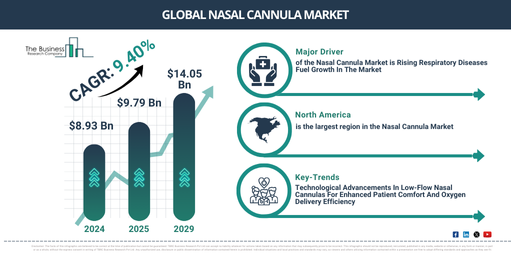
    The market size for nasal cannula has witnessed robust growth in recent times. The market which is projected to be worth $8.93 billion in 2024, is estimated to escalate to $9.79 billion in 2025, reflecting a compound annual growth rate (CAGR) of 9.7%. The growth during the historical period is owed to factors such as enhanced personalized patient care, escalating cases of obstructive sleep apnea, increased awareness about respiratory ailments, significant changes in lifestyle, and an increasing global population.

    In the coming years, substantial growth is anticipated in the nasal cannula market, projecting a rise to$14.05 billion in 2029, with a compound annual growth rate (CAGR) of 9.4%. The expected increase in this period is linked to rising occurrences of respiratory ailments, escalating healthcare costs, growing elderly population, enhanced government efforts, and a surge in surgical procedures. Key future trends that could further bolster the market include technological advancements, strategic alliances, infrastructure expansion, increased investment in R&D, and a concentrated effort on product introductions.

    Download a free sample to assess the report’s scope and structure:

    https://www.thebusinessresearchcompany.com/sample.aspx?id=20895&type=smp

    What are the Fundamental Drivers and Innovations Shaping the Nasal Cannula Market?

    The rise in respiratory illnesses is having a substantial impact on the expansion of the nasal cannula market. These illnesses negatively affect the lungs and airways, hindering the process of breathing and oxygen circulation. Factors such as air pollution, smoking, viral infections, and higher allergen exposure can lead to an increase in these diseases. A nasal cannula, which provides additional oxygen directly into the nostrils, plays a crucial role in treating respiratory diseases by enhancing patients’ oxygen levels. For instance, the American Lung Association, a nonprofit organization based in the US, stated that in 2022, around 44.2 million Americans, representing 13.5% of the total population, had been diagnosed with asthma by a medical professional. Consequently, the growing prevalence of respiratory diseases is fueling the growth of the nasal cannula market.

    How Is the Nasal Cannula Market Segmented?

    The nasal cannulamarket covered in this report is segmented –

    1) By Type: Low Flow Nasal Cannula; High Flow Nasal Cannula

    2) By Material: Plastic; Silicone

    3) By Size: Neonate; Infant; Child; Adult

    4) By Prongs: Straight; Curved; Flared; Other Prongs

    5) By End User: Hospitals; Ambulatory Healthcare Services; Long Term Care Centers; Others End Users

    Subsegments:

    1) By Low Flow Nasal Cannula: Adult Low Flow Nasal Cannula; Pediatric Low Flow Nasal Cannula; Disposable Low Flow Nasal Cannula; Reusable Low Flow Nasal Cannula

    2) By High Flow Nasal Cannula: Adult High Flow Nasal Cannula; Pediatric High Flow Nasal Cannula; Disposable High Flow Nasal Cannula; Reusable High Flow Nasal Cannula

    Request customized data on this market:

    https://www.thebusinessresearchcompany.com/customise?id=20895&type=smp

    Which Regions Are Driving the Next Phase of the Nasal Cannula Market Growth?

    North America was the largest region in the nasal cannula market in 2024. The regions covered in the nasal cannula market report are Asia-Pacific, Western Europe, Eastern Europe, North America, South America, Middle East, Africa.

    What Key Trends Are Shaping the Future of the Nasal Cannula Market?

    Leading enterprises in the nasal cannula market are centering their efforts on technological advancements such as low-flow nasal cannulas to increase patient comfort, enhance the efficiency of oxygen delivery and cater to unique clinical needs. A low-flow nasal cannula serves as a device engineered to supplement oxygen at lesser flow rates, typically between 1 and 6 liters per minute, via two prongs inserted into the nose. As an example, CNSAC MedShop, an organization based in Germany that specializes in diagnostics and consumables, launched NasalOxy in May 2024. This innovative patented low-flow nasal cannula is devised to overcome the limitations of conventional oxygen delivery mechanisms. Not only does this novel device provide superior comfort and efficiency to patients undergoing long-term oxygen therapy, but it also offers flexibility in supporting both nasal and oral respiration. The state-of-the-art design of NasalOxy minimizes contact with the mucus membrane, consequently reducing irritation and discomfort and doing away with typical side effects related to traditional nasal cannulas.

    View the full report here:

    https://www.thebusinessresearchcompany.com/report/nasal-cannula-global-market-report

    How Is the Nasal Cannula Market Defined and What Are Its Core Parameters?

    A nasal cannula is a medical device used to deliver supplemental oxygen to patients who require respiratory support. It consists of two small prongs that fit into the nostrils, connected by a thin tube to an oxygen source. This device allows for comfortable, continuous oxygen flow while enabling the patient to speak and eat.

    Purchase the full report and get a swift delivery:

    https://www.thebusinessresearchcompany.com/purchaseoptions.aspx?id=20895

    About The Business Research Company:

    With over 15000+ reports from 27 industries covering 60+ geographies, The Business Research Company has built a reputation for offering comprehensive, data-rich research and insights. Armed with 1,500,000 datasets, the optimistic contribution of in-depth secondary research, and unique insights from industry leaders, you can get the information you need to stay ahead in the game.

    Get in touch with us:

    The Business Research Company: https://www.thebusinessresearchcompany.com/

    Americas +1 310-496-7795

    Europe +44 7882 955267

    Asia & Others +44 7882 955267 & +91 8897263534

    Email us at info@tbrc.info

    Follow us on:

    LinkedIn: https://in.linkedin.com/company/the-business-research-company

    YouTube: https://www.youtube.com/channel/UC24_fI0rV8cR5DxlCpgmyFQ

    Global Market Model: https://www.thebusinessresearchcompany.com/global-market-model
  • Mosquito Borne Diseases Market Forecast 2025–2034: Trends Reshaping Demand, Investment, and Innovation

    Mosquito Borne Diseases Market Forecast 2025–2034: Trends Reshaping Demand, Investment, and Innovation

    Claim your 30% discount on Global Market Reports with code ONLINE30. Limited time only.

    What Is the Current and Projected Market Size of the Myopia Treatment Market Through 2034?

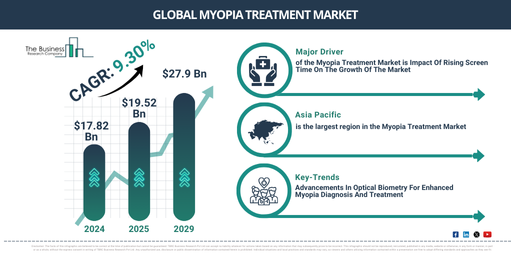
    The market for myopia treatment has seen robust growth in recent years. Its size is set to rise from $17.82 billion in 2024 to approximately $19.52 billion in 2025 with a compound annual growth rate (CAGR) of 9.6%. Several factors contributed to this growth in the historic period, including the rising number of elderly people, increased awareness of myopia treatment through government programs, higher investment in research and development, and a surge in instances of distance vision impairment.

    Expectations are high for the myopia treatment market, as it is set for significant expansion in the coming years. Estimates suggest that it could reach $27.9 billion by 2029, with a compound annual growth rate (CAGR) of 9.3%. The anticipated surge during the forecast period can be linked to the rise in distance vision impairment, increased reliance on digital mediums, improvement of healthcare facilities, growth in myopia cases, and an upturn in visibility loss. The forecast period is also expected to see the adoption of rigid gas-permeable contact lenses, breakthroughs in light-based treatments, pioneering research on genetic factors, utilization of digital platforms and apps, as well as advances in atropine eye drop formulation.

    Download a free sample to assess the report’s scope and structure:

    https://www.thebusinessresearchcompany.com/sample.aspx?id=20892&type=smp

    What Are the Primary Drivers Supporting the Market Growth of the Myopia Treatment Market?

    The boost in the time spent viewing screens is anticipated to fuel the expansion of the myopia treatment market. Screen time involves the duration an individual devotes to using screen-based devices such as smartphones, tablets, computers, or TVs. The surge in screen time can be attributed to the escalated usage of streaming services, social media, remote working, and online meetings. Methods for treating myopia help to lessen the strain on the eyes and discomfort caused by sustained periods of screen use, enhancing focus, comfort, and visual clarity. To elucidate, the Centers for Disease Control and Prevention, a government body in the US, reported in October 2024 that from July 2021 to December 2023, about 50.4% of teenagers aged 12-17 viewed screens for four or more hours daily, 22.8% for three hours daily, 17.8% for two hours, 6.1% for one hour and 3.0% for less than an hour every day. Consequently, the escalation in screen time is prompting growth in the myopia treatment market.

    Which Primary Segments of the Myopia Treatment Market Are Driving Growth and Industry Transformations?

    The myopia treatmentmarket covered in this report is segmented –

    1) By Type: Simple Myopia; High Myopia; Pathological Myopia

    2) By Treatment: Eyeglasses; Contact Lenses; Refractive Surgery; Laser-Assisted In Situ Keratomileusis (LASIK); Photorefractive Keratectomy (PRK); Orthokeratology (Ortho-K)

    3) By Route Of Administration: Oral; Parenteral; Other Routes Of Administration

    4) By Distribution Channel: Direct Tender; Retail Sales; Other Distribution Channels

    5) By End-User: Hospital Or Clinical Laboratories; Physician Offices; Reference Laboratories; Other End-Users

    Subsegments:

    1) By Simple Myopia: Mild Myopia; Moderate Myopia

    2) By High Myopia: Severe Myopia; Very Severe Myopia

    3) By Pathological Myopia: Degenerative Myopia; Malignant Myopia

    Request customized data on this market:

    https://www.thebusinessresearchcompany.com/customise?id=20892&type=smp

    Which Regions Are Key Players in the Growth of the #What Are the Primary Drivers Supporting the Market Growth of the Myopia Treatment Market?# Market?

    Asia Pacific was the largest region in the myopia treatment market in 2024. Asia-Pacific is expected to be the fastest-growing region in the forecast period. The regions covered in the myopia treatment market report are Asia-Pacific, Western Europe, Eastern Europe, North America, South America, Middle East, Africa.

    What Are the Most Significant Market Trends in the Myopia Treatment Market?

    Leading firms in the myopia treatment market are emphasizing on the creation of innovative products like optical biometers in order to increase diagnostic accuracy and customize efficient treatments. These optical biometers employ light to gauge eye-related parameters such as axial length and corneal curvature, allowing for accurate diagnosis and monitoring of eye conditions. For example, NIDEK Co., Ltd., a Japanese company specializing in ophthalmic products, introduced an AL-Scan M and MV-1 in February 2023. The AL-Scan M device is equipped with 3D auto-tracking and auto-shot features, making measurements as efficient and simple as those of an autorefractor. These aspects enhance patient turnover, especially among younger demographics. Precise axial length measurements, a crucial element in tracking the advancement of myopia, are ensured by the meticulously designed AL-Scan M. Moreover, it effortlessly interfaces with the MV-1 Myopia Viewer software, aiding in maintaining a record of treatment history and patient behavior.

    View the full report here:

    https://www.thebusinessresearchcompany.com/report/myopia-treatment-global-market-report

    What Parameters Are Used to Define the Myopia Treatment Market?

    Myopia treatment refers to medical or corrective interventions used to manage or correct myopia, also known as nearsightedness. Myopia is a common refractive error of the eye where distant objects appear blurry, but close objects are clear. Myopia treatment’s main goal is to improve vision and quality of life by correcting refractive errors. It also helps manage myopia progression, reducing reliance on corrective lenses for long-term vision health.

    Purchase the full report and get a swift delivery:

    https://www.thebusinessresearchcompany.com/purchaseoptions.aspx?id=20892

    About The Business Research Company:

    With over 15000+ reports from 27 industries covering 60+ geographies, The Business Research Company has built a reputation for offering comprehensive, data-rich research and insights. Armed with 1,500,000 datasets, the optimistic contribution of in-depth secondary research, and unique insights from industry leaders, you can get the information you need to stay ahead in the game.

    Get in touch with us:

    The Business Research Company: https://www.thebusinessresearchcompany.com/

    Americas +1 310-496-7795

    Europe +44 7882 955267

    Asia & Others +44 7882 955267 & +91 8897263534

    Email us at info@tbrc.info

    Follow us on:

    LinkedIn: https://in.linkedin.com/company/the-business-research-company

    YouTube: https://www.youtube.com/channel/UC24_fI0rV8cR5DxlCpgmyFQ

    Global Market Model: https://www.thebusinessresearchcompany.com/global-market-model

  • Mosquito Borne Diseases Market 2025-2034: Key Highlights, Growth Dynamics, and Emerging Trends

    Mosquito Borne Diseases Market 2025-2034: Key Highlights, Growth Dynamics, and Emerging Trends

    Claim your 30% discount on Global Market Reports with code ONLINE30. Limited time only.

    What is the Anticipated CAGR of the Mosquito Borne Diseases Market, and What Factors Will Drive It?

    The market size for diseases transmitted by mosquitoes has experienced substantial growth in the past few years. It is projected to expand from $3.06 billion in 2024 to $3.3 billion in 2025, demonstrating a compound annual growth rate (CAGR) of 7.9%. The acceleration in growth during the previous period is largely due to the escalating occurrences of malaria and dengue, the surge in global temperatures, deficient public health infrastructure, the rise in urbanization and population, along with an increase in healthcare awareness.

    The market size of diseases transmitted by mosquitoes is projected to display robust growth in the coming years, expected to reach a value of $4.47 billion in 2029, with a compound annual growth rate (CAGR) of 7.9%. This expansion during the forecast period can be linked to increased funding for vector control programs, an intensified emphasis on healthcare facilities, a surge in travel and tourism to regions endemic with these diseases, the rise of drug-resistant breeds of mosquitoes, and governmental efforts aimed at disease extermination. Key trends for the forecast period encompass the fabrication of bed nets treated with insecticide, the launch of expedient diagnostic test kits, advancements in vector control protocols, the evolution of technology, and the creation of refined diagnostic tools.

    Download a free sample to assess the report’s scope and structure:

    https://www.thebusinessresearchcompany.com/sample.aspx?id=20888&type=smp

    How Are Key Drivers in the Industry Acting as Catalysts for the Growth of theMosquito Borne Diseases Market?

    The anticipated increase in international travel is set to boost the trajectory of the mosquito borne diseases market. The rise in global journeys can be attributed to an amplified demand for leisure, business, and post-pandemic family reunions, along with enhanced access and advancements in travel infrastructure. The contribution of international travel to the spread of mosquito-borne diseases lies in its capacity to increase contact with mosquito-rich environments, enable the dispersion of mosquitoes carrying diseases, and obstruct effective vector control initiatives. To illustrate, the UN Tourism, a Spain-based tourism organization, reported around 1.1 billion international tourist arrivals (overnight visitors) from January to September 2024 in record, marking a surge of about 11% in comparison to the identical period in 2023. Thus, the rapid increase in international travel is stimulating growth in the mosquito borne diseases market.

    Which Segments in the Mosquito Borne Diseases Offer the Most Growth?

    The mosquito borne diseasesmarket covered in this report is segmented –

    1) By Disease Type: Malaria; Dengue; Yellow Fever; West Nile Virus; Chikungunya; Zika Virus; Other Disease Types

    2) By Treatment Type: Medication; Vaccination; Vector Control Methods; Immunotherapy; Supportive Care; Other Treatment Types

    3) By End User: Hospitals; Clinics; Diagnostic Centers; Research Institutes; Government Organizations; Non-Governmental Organizations; Other End Users

    Subsegments:

    1) By Malaria: Plasmodium Falciparum Malaria; Plasmodium Vivax Malaria; Other Malaria Types

    2) By Dengue: Dengue Fever; Severe Dengue (Dengue Hemorrhagic Fever)

    3) By Yellow Fever: Acute Yellow Fever; Chronic Yellow Fever

    4) By West Nile Virus: Neuroinvasive Disease (Encephalitis, Meningitis); Non-neuroinvasive Disease

    5) By Chikungunya: Acute Chikungunya; Chronic Chikungunya

    6) By Zika Virus: Acute Zika Infection; Congenital Zika Syndrome

    7) By Other Disease Types: Japanese Encephalitis; La Crosse Encephalitis; Eastern Equine Encephalitis (EEE); Other Mosquito-Borne Infections

    Request customized data on this market:

    https://www.thebusinessresearchcompany.com/customise?id=20888&type=smp

    What Are the Fastest-Growing Geographies in the #How Are Key Drivers in the Industry Acting as Catalysts for the Growth of theMosquito Borne Diseases Market?# Market?

    North America was the largest region in the mosquito borne diseases market in 2024. Latin America is expected to be the fastest-growing region in the forecast period. The regions covered in the mosquito borne diseases market report are Asia-Pacific, Western Europe, Eastern Europe, North America, South America, Middle East, Africa.

    What Are the Current Market Growth and Trends in the Mosquito Borne Diseases Industry?

    Leading corporations in the market of mosquito-borne diseases are emphasizing the creation of novel products, such as upgraded mosquito repellents, to improve the defense effectiveness against ailments like malaria, dengue, and Zika. Upgraded mosquito repellents pertain to novel items that employ durable, efficient ingredients or methodologies, such as microencapsulation, organic compounds or wearable tech, to furnish improved safeguards against mosquitoes. To illustrate, Mortein, a household insecticide brand from Australia, in March 2023, rolled out Mortein Smart+, a state-of-the-art liquid vaporizer intended to offer defense against mosquitoes. This product delivers two hours of extra protection even after it is switched off, dealing with the increasing prevalence of mosquito-borne diseases with rapid and more efficient repulsion. This unveils Mortein’s commitment to providing trustworthy resolutions, especially in the campaign against mosquito-borne infections.

    View the full report here:

    https://www.thebusinessresearchcompany.com/report/mosquito-borne-diseases-global-market-report

    What Are the Key Elements That Define the Mosquito Borne Diseases Market?

    Mosquito borne diseases are a group of infectious illnesses caused by parasites, viruses, and bacteria transmitted to humans through the bites of infected female mosquitoes, leading to widespread health concerns, increased morbidity and mortality rates, and the need for effective prevention and control measures in both endemic and non-endemic regions worldwide.

    Purchase the full report and get a swift delivery:

    https://www.thebusinessresearchcompany.com/purchaseoptions.aspx?id=20888

    About The Business Research Company:

    With over 15000+ reports from 27 industries covering 60+ geographies, The Business Research Company has built a reputation for offering comprehensive, data-rich research and insights. Armed with 1,500,000 datasets, the optimistic contribution of in-depth secondary research, and unique insights from industry leaders, you can get the information you need to stay ahead in the game.

    Get in touch with us:

    The Business Research Company: https://www.thebusinessresearchcompany.com/

    Americas +1 310-496-7795

    Europe +44 7882 955267

    Asia & Others +44 7882 955267 & +91 8897263534

    Email us at info@tbrc.info

    Follow us on:

    LinkedIn: https://in.linkedin.com/company/the-business-research-company

    YouTube: https://www.youtube.com/channel/UC24_fI0rV8cR5DxlCpgmyFQ

    Global Market Model: https://www.thebusinessresearchcompany.com/global-market-model
  • Microscope Camera Market Trends 2025-2034: Growth, Strategic Insights, and Opportunities Ahead

    Microscope Camera Market Trends 2025-2034: Growth, Strategic Insights, and Opportunities Ahead

    Claim your 30% discount on Global Market Reports with code ONLINE30. Limited time only.

    What Are the Key Milestones in the Microscope Camera Market’s Growth Trajectory From 2025 To 2034?

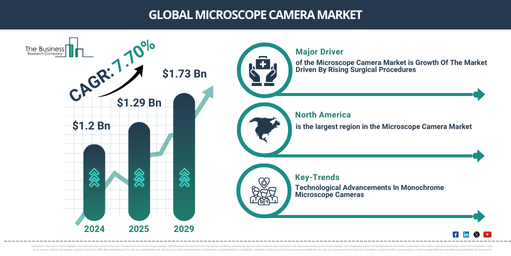
    The market size for microscope cameras has experienced robust growth in the past few years. Estimations predict expansion from $1.2 billion in 2024 to $1.29 billion in 2025, at a compound annual growth rate (CAGR) of 7.2%. The past growth can be linked to a rise in surgical procedures, an increase in chronic diseases, a heightened focus on biotechnology, the rising application of virtual and augmented reality in education, and the growth of the aging population.

    Anticipations show a robust enlargement of the microscope camera market size in the upcoming years, reaching an estimated value of$1.73 billion by 2029, growing at a compound annual growth rate (CAGR) of 7.7%. The anticipated growth over the forecast period is attributed to factors such as an increasing need for real-time depictions, a higher demand for high-definition image capture, a surging need for automation and digitization in microscopy, a heightened awareness around disease prevention and therapy, and a growing consumer inclination toward online. Key forecast period trends include seamless software and connectivity integration, innovative device miniaturization, implementation of cloud-based platforms, inventive modifications in camera architecture, and technological progressions.

    Download a free sample to assess the report’s scope and structure:

    https://www.thebusinessresearchcompany.com/sample.aspx?id=20882&type=smp

    What Are the Major Market Drivers Behind the Rising Adoption of Microscope Camera Market?

    The microscope camera market is projected to expand due to the rise in surgical procedures. Such operations involve a surgeon intervening physically to address diseases, wounds, or deformities through cutting, eliminating, fixing, or modifying tissue to improve a patient’s health or functionality. The increment in surgical procedures is linked to factors like the aging population, advancements in medical technology, increased chronic diseases, better healthcare accessibility, heightened medical awareness, more favorable surgical results, and the expansion of medical tourism. Microscope cameras add value to surgical procedures by offering high-definition, enlarged views of the surgical site, enhancing accuracy, allowing real-time documentation, and facilitating remote cooperation for improved patient outcomes. For example, in 2023, the UK Health Security Agency, a UK government agency, reported an increase in coronary artery bypass graft surgeries, with 27,524 surgeries in 2023 compared to the previous year. As a result, the rise in surgical procedures will bolster the expansion of the microscope camera market.

    Which Key Market Segments Comprise the Microscope Camera Market and Drive Its Revenue Growth?

    The microscope cameramarket covered in this report is segmented –

    1) By Type: Monochrome Cameras; Color Cameras

    2) By Sensor Type: Complementary Metal-Oxide-Semiconductor (CMOS) Sensors; Charge-Coupled Device (CCD) Sensors

    3) By Resolution: High-Definition Cameras; Standard-Definition Cameras

    4) By Distribution Channel: Online; Offline

    5) By Application: Medical; Industry; Education; Other Applications

    Subsegments:

    1) By Monochrome Cameras: CMOS Monochrome Cameras; CCD Monochrome Cameras

    2) By Color Cameras: CMOS Color Cameras; CCD Color Cameras

    Request customized data on this market:

    https://www.thebusinessresearchcompany.com/customise?id=20882&type=smp

    Which Areas Are Leading Regions in the Microscope Camera Market Expansion Across the Globe?

    North America was the largest region in the microscope camera market in 2024. Asia-Pacific is expected to be the fastest-growing region in the forecast period. The regions covered in the microscope camera market report are Asia-Pacific, Western Europe, Eastern Europe, North America, South America, Middle East, Africa.

    What Are the Strategic Trends Steering theMicroscope Camera Market Direction?

    Prominent corporations in the microscope camera market are focusing on advancing their technological solutions, such as monochrome microscope cameras. These cameras are designed to improve image quality and precision, especially for high-resolution scientific and medical imaging purposes. The concept of a monochrome microscope camera refers to a digital microscope camera that captures high-contrast grayscale visuals, frequently recognized for their capacity to deliver clearer, more detailed images, particularly in high-sensitivity or low-light conditions. For example, Nikon Corporation, a Japanese firm specializing in cameras and optical instruments, introduced the Digital Sight 50M monochrome microscope camera in January 2023. This camera is intended for high-precision analysis and large-volume sampling, specifically useful in plate screening applications. The camera provides a resolution of 50 megapixels, ensuring improved imaging performance and accurate detection across various scientific and medical uses. The addition of advanced features, such as enhanced light sensitivity and a 50-megapixel sensor, enables accurate and clear image capture, making it perfect for laboratory-based quality control, medical diagnostics, and scientific research.

    View the full report here:

    https://www.thebusinessresearchcompany.com/report/microscope-camera-global-market-report

    How Is the Microscope Camera Market Conceptually Defined?

    A microscope camera refers to a digital camera designed to capture images or videos through a microscope. It is typically attached to the eyepiece or a special adapter on a microscope, allowing the user to view and record magnified images of small objects or samples. These cameras are commonly used in fields such as biology, materials science, medicine, and forensics to document detailed specimens, perform analysis, or share findings in real time.

    Purchase the full report and get a swift delivery:

    https://www.thebusinessresearchcompany.com/purchaseoptions.aspx?id=20882

    About The Business Research Company:

    With over 15000+ reports from 27 industries covering 60+ geographies, The Business Research Company has built a reputation for offering comprehensive, data-rich research and insights. Armed with 1,500,000 datasets, the optimistic contribution of in-depth secondary research, and unique insights from industry leaders, you can get the information you need to stay ahead in the game.

    Get in touch with us:

    The Business Research Company: https://www.thebusinessresearchcompany.com/

    Americas +1 310-496-7795

    Europe +44 7882 955267

    Asia & Others +44 7882 955267 & +91 8897263534

    Email us at info@tbrc.info

    Follow us on:

    LinkedIn: https://in.linkedin.com/company/the-business-research-company

    YouTube: https://www.youtube.com/channel/UC24_fI0rV8cR5DxlCpgmyFQ

    Global Market Model: https://www.thebusinessresearchcompany.com/global-market-model

  • Metabolic Dysfunction-Associated Steatohepatitis (MASH) Treatment Market Insights: In-Depth Look at Growth Trends, Market Size, and Opportunities for 2025-2034

    Metabolic Dysfunction-Associated Steatohepatitis (MASH) Treatment Market Insights: In-Depth Look at Growth Trends, Market Size, and Opportunities for 2025-2034

    Claim your 30% discount on Global Market Reports with code ONLINE30. Limited time only.

    How Has The Metabolic Dysfunction-Associated Steatohepatitis (MASH) Treatment Market Size Shifted, And What Is the Outlook Through 2034?

    The market size for treatment of metabolic dysfunction-associated steatohepatitis (mash) has witnessed formidable expansion in the recent past. Expected to rise from $2 billion in 2024 to $2.59 billion in 2025, it showcases a compound annual growth rate (CAGR) of 29.7%. The growth observed in the previous period is due in part to an increase in cases of non-alcoholic steatohepatitis, changes in dietary customs leaning towards processed foods, sedentary living patterns, and a growing prevalence of metabolic issues.

    Expectations are high for the metabolic dysfunction-associated steatohepatitis (mash) treatment market to experience significant growth in the coming years. Specialists project that it will expand to $7.29 billion in 2029, demonstrating a compound annual growth rate (CAGR) of 29.5%. Factors contributing to this growth in the prediction period include the rising occurrence of obesity and related health conditions, early medical intervention, reimbursement processes, insurance plans, and increasing awareness about liver disorders. Key trends anticipated during the forecast period involve enhancements in technology, developments in the pipeline, strategic alliances and collaborations, individualized treatment and precision therapeutics, and investments in clinical studies and research.

    Download a free sample to assess the report’s scope and structure:

    https://www.thebusinessresearchcompany.com/sample.aspx?id=20876&type=smp

    What External and Internal Drivers Are Contributing to the Growth of theMetabolic Dysfunction-Associated Steatohepatitis (MASH) Treatment Market?

    The metabolic dysfunction-associated steatohepatitis (MASH) treatment market is projected to expand due to the escalating occurrence of obesity. Obesity, defined as an excessive build-up of body fat negatively impacting health and marked by a body mass index (BMI) of 30 or more, is on the rise globally. Factors such as inactive lifestyles, poor eating habits, and metabolic risk aspects contribute to obesity. Addressing insulin resistance, lowering liver fat, and enhancing metabolic health through lifestyle modifications and specific therapies constitute the focus of MASH treatment in obese patients. For example, the Switzerland-based World Heart Foundation, a global non-governmental cardiovascular community, revealed in March 2023 that approximately 2.3 billion children and adults around the world are overweight or obese. With the current trend, this figure is expected to climb up to 2.7 billion by 2025. Hence, the growing occurrence of obesity is fueling the advancement in the metabolic dysfunction-associated steatohepatitis (MASH) treatment market.

    What Segment Types Define the Metabolic Dysfunction-Associated Steatohepatitis (MASH) Treatment Market Structure?

    The metabolic dysfunction-associated steatohepatitis (mash) treatmentmarket covered in this report is segmented –

    1) By Treatment: By Drug; By Therapy

    2) By End-User: Hospitals; Specialty Clinics; Homecare; Other End-User

    3) By Distribution Channel: Hospital Pharmacies; Online Pharmacies; Retail Pharmacies

    Subsegments:

    1) By Drug: Antifibrotic Agents; Antidiabetic Drugs; Lipid-Lowering Agents; Vitamin E; Obeticholic Acid (OCA); GLP-1 Agonists; Other Drugs (Anti-Inflammatory Agents)

    2) By Therapy: Pharmacotherapy; Lifestyle Modifications (Dietary Changes, Exercise); Bariatric Surgery; Liver Transplantation

    Request customized data on this market:

    https://www.thebusinessresearchcompany.com/customise?id=20876&type=smp

    Which Geographic Areas Hold the Strongest Growth Potential in the Metabolic Dysfunction-Associated Steatohepatitis (MASH) Treatment Market?

    North America was the largest region in the metabolic dysfunction-associated steatohepatitis (MASH) treatment market in 2024. Asia-Pacific is expected to be the fastest-growing region in the forecast period. The regions covered in the metabolic dysfunction-associated steatohepatitis (MASH) treatment market report are Asia-Pacific, Western Europe, Eastern Europe, North America, South America, Middle East, Africa.

    What Long-Term Trends Are Transforming the Competitive Landscape of the Metabolic Dysfunction-Associated Steatohepatitis (MASH) Treatment Market?

    Leading corporations in the metabolic dysfunction-associated steatohepatitis (MASH) treatment field, are making strides towards devising innovative products like liver fibrosis therapy solutions. These solutions cater to patients struggling with metabolic dysfunction-associated steatohepatitis (MASH) and moderate to severe liver fibrosis. The emphasis of liver fibrosis therapy solutions is on dealing with the root causes of liver injury through changes in lifestyle, application of antiviral drugs, and the advent of antifibrotic treatments with the aim to arrest or reverse the advancement of fibrosis and enhance liver performance. For example, in March 2024, an announcement was made by Madrigal Pharmaceuticals, Inc., a biopharmaceutical organization based in the US, about the FDA’s approval of Rezdiffra (resmetirom), the inaugural treatment for metabolic dysfunction-associated steatohepatitis (MASH) with moderate to severe liver fibrosis. Rezdiffra is a daily tablet which exhibited effectiveness in countering MASH without aggravating fibrosis and ameliorating liver fibrosis in phase 3 clinical studies. This pioneering solution presents a non-invasive treatment option, removing the requirement for liver biopsies, and significantly augmenting patient access and results in the administration of fatty liver disease.

    View the full report here:

    https://www.thebusinessresearchcompany.com/report/metabolic-dysfunction-associated-steatohepatitis-mash-treatment-global-market-report

    What Is the Definition of the Metabolic Dysfunction-Associated Steatohepatitis (MASH) Treatment Market?

    Metabolic dysfunction-associated steatohepatitis (MASH) treatment refers to medical and lifestyle interventions aimed at addressing inflammation and liver damage caused by fat accumulation in the liver associated with metabolic dysfunctions like obesity, diabetes, and insulin resistance, focusing on improving liver health and metabolic outcomes.

    Purchase the full report and get a swift delivery:

    https://www.thebusinessresearchcompany.com/purchaseoptions.aspx?id=20876

    About The Business Research Company:

    With over 15000+ reports from 27 industries covering 60+ geographies, The Business Research Company has built a reputation for offering comprehensive, data-rich research and insights. Armed with 1,500,000 datasets, the optimistic contribution of in-depth secondary research, and unique insights from industry leaders, you can get the information you need to stay ahead in the game.

    Get in touch with us:

    The Business Research Company: https://www.thebusinessresearchcompany.com/

    Americas +1 310-496-7795

    Europe +44 7882 955267

    Asia & Others +44 7882 955267 & +91 8897263534

    Email us at info@tbrc.info

    Follow us on:

    LinkedIn: https://in.linkedin.com/company/the-business-research-company

    YouTube: https://www.youtube.com/channel/UC24_fI0rV8cR5DxlCpgmyFQ

    Global Market Model: https://www.thebusinessresearchcompany.com/global-market-model