Month: August 2025

  • Dry Age Related Macular Degeneration (AMD)Market Overview 2025–2034: CAGR Trends, Long-Term Growth Paths, and Business Implications

    Dry Age Related Macular Degeneration (AMD)Market Overview 2025–2034: CAGR Trends, Long-Term Growth Paths, and Business Implications

    Claim your 30% discount on Global Market Reports with code ONLINE30. Limited time only.

    What Are the Key Milestones in the Dry Age Related Macular Degeneration (AMD) Market’s Growth Trajectory From 2025 To 2034?

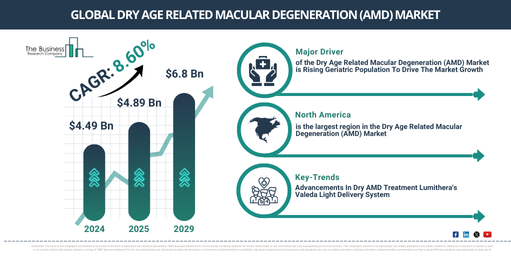
    Over the past few years, the dry age related macular degeneration (amd) market has seen significant growth. The market is predicted to expand from a value of $4.49 billion in 2024 to an estimated $4.89 billion in 2025, presenting a compound annual growth rate (CAGR) of 8.8%. Factors contributing to this growth during the historical period include an increasing elderly population, a rise in chronic illness prevalence, heightened consciousness about eye health, a surge in clinical investigations centered around dry AMD, and an escalating demand for minimally invasive therapeutic methods.

    In the ensuing years, the market for dry age related macular degeneration (amd) is projected to witness robust growth, expanding to$6.8 billion by 2029″ at a Compound Annual Growth Rate (CAGR) of 8.6%. Factors such as the advent of innovative therapies, an increase in healthcare expenditure, the heightened use of laser photocoagulation therapy, advancements in genetic research, and an increased emphasis on personalized medicine are expected to drive this growth during the forecast period. Notable trends for this period include advancements in diagnostic technologies, a rise in the adoption of teleophthalmology, cutting-edge treatments, approvals of products, and the launch of new products.

    Download a free sample to assess the report’s scope and structure:

    https://www.thebusinessresearchcompany.com/sample.aspx?id=21176&type=smp

    What Are the Primary Drivers Supporting the Market Growth of the Dry Age Related Macular Degeneration (AMD) Market?

    The surge in the elderly population is anticipated to boost the expansion of the dry age-related macular degeneration (AMD) market. The term elderly population usually refers to individuals who are 65 years old and above. The growth in this demographic is attributed to various factors like advanced medical technology, better chronic disease management, increased lifespan, and improved elderly care. With the assistance of dry age-related macular degeneration (AMD), the elderly population receives specialized treatments and management choices aiming to reduce disease progression, maintain visibility, and enhance the life quality of these older individuals affected by AMD. For example, reports released by the National Council on Aging, a US-based organization, in June 2024, indicated that in 2022, around 57.8 million adults aged 65 and above were present, making up 17.3% of the total U.S. population. This percentage had shown an upward trend from 16.9% in 2021. Consequently, the growing geriatric population is set to propel the growth of the dry age-related macular degeneration (AMD) market.

    Which Primary Segments of the Dry Age Related Macular Degeneration (AMD) Market Are Driving Growth and Industry Transformations?

    The dry age related macular degeneration (amd)market covered in this report is segmented –

    1) By Stages: Early Age-Related Macular Degeneration; Intermediate Age-Related Macular Degeneration; Late Age-Related Macular Degeneration

    2) By Age Group: Above 75 Years; Above 60 Years; Above 40 Years

    3) By Route Of Administration: Oral; Injectables

    4) By End Users: Hospitals And Clinics; Diagnostic Centers; Academic And Research Institutes

    Subsegments:

    1) By Early Age-Related Macular Degeneration: Drusen Accumulation; Retinal Pigment Epithelium Changes

    2) By Intermediate Age-Related Macular Degeneration: Larger Drusen Deposits; Increased Pigmentary Abnormalities

    3) By Late Age-Related Macular Degeneration: Geographic Atrophy; Central Vision Loss

    Request customized data on this market:

    https://www.thebusinessresearchcompany.com/customise?id=21176&type=smp

    Which Regions Are Key Players in the Growth of the #What Are the Primary Drivers Supporting the Market Growth of the Dry Age Related Macular Degeneration (AMD) Market?# Market?

    North America was the largest region in the dry age-related macular degeneration (AMD) market in 2024. The regions covered in the dry age related macular degeneration (AMD) market report are Asia-Pacific, Western Europe, Eastern Europe, North America, South America, Middle East, Africa.

    What Are the Most Significant Market Trends in the Dry Age Related Macular Degeneration (AMD) Market?

    Key players in the dry age related macular degeneration (AMD) industry are gearing up to introduce new, innovative technologies and therapies such as light delivery systems. These systems, aimed at activating and targeting retinal cells, may hinder the progress of the disease. Light delivery systems are a form of technology developed to channel light with therapeutic purposes, especially with regards to medical treatments. Take for instance, LumiThera Inc., a US medical device firm. In January 2024, they introduced photobiomodulation (PBM) for dry age-related macular degeneration (AMD) through the Valeda Light Delivery System. This solution, the first of its kind with FDA approval, targets vision loss in dry AMD patients who presently have few treatment choices. To gather data on long-term patient outcomes following treatment with the Valeda system, LumiThera launched the EUROLIGHT registry study. The Valeda system makes use of a multi-wavelength light delivery approach featuring three specific wavelengths (590 nm, 660 nm, and 850 nm). This non-invasive procedure can be carried out with either an open or shut eyelid and generally necessitates nine sessions spanning three to four weeks.

    View the full report here:

    https://www.thebusinessresearchcompany.com/report/dry-age-related-macular-degeneration-amd-global-market-report

    What Parameters Are Used to Define the Dry Age Related Macular Degeneration (AMD) Market?

    Dry age related macular degeneration (AMD) refers to a progressive eye condition characterized by the gradual deterioration of the macula, the central part of the retina, leading to blurred central vision. They are used for managing and slowing the progression of the disease through treatments like vitamins, nutritional supplements, and emerging pharmaceutical therapies.

    Purchase the full report and get a swift delivery:

    https://www.thebusinessresearchcompany.com/purchaseoptions.aspx?id=21176

    About The Business Research Company:

    With over 15000+ reports from 27 industries covering 60+ geographies, The Business Research Company has built a reputation for offering comprehensive, data-rich research and insights. Armed with 1,500,000 datasets, the optimistic contribution of in-depth secondary research, and unique insights from industry leaders, you can get the information you need to stay ahead in the game.

    Get in touch with us:

    The Business Research Company: https://www.thebusinessresearchcompany.com/

    Americas +1 310-496-7795

    Europe +44 7882 955267

    Asia & Others +44 7882 955267 & +91 8897263534

    Email us at info@tbrc.info

    Follow us on:

    LinkedIn: https://in.linkedin.com/company/the-business-research-company

    YouTube: https://www.youtube.com/channel/UC24_fI0rV8cR5DxlCpgmyFQ

    Global Market Model: https://www.thebusinessresearchcompany.com/global-market-model
  • Dravet Syndrome Outlook 2034: Key Drivers, Trends, and Market Frontiers

    Dravet Syndrome Outlook 2034: Key Drivers, Trends, and Market Frontiers

    Claim your 30% discount on Global Market Reports with code ONLINE30. Limited time only.

    How Has The Dravet Syndrome Market Size Shifted, And What Is the Outlook Through 2034?

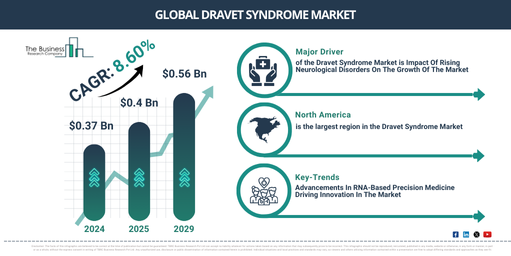
    The market size of Dravet syndrome has witnessed robust growth in the past few years. It is anticipated to expand from $0.37 billion in 2024 to $0.4 billion in 2025, displaying an 8.7% compound annual growth rate (CAGR). This upward trend in the historic period can be traced back to factors such as the surging incidence of Dravet syndrome, enhanced screening leading to an increase in diagnosis rates, escalated funding for epilepsy-related studies, regulatory benefits for orphan drugs, and a wider acceptability for treatments based on cannabis.

    In the coming years, the market size for Dravet syndrome is projected to experience significant growth, reaching$0.56 billion in 2029″ with a Compound Annual Growth Rate (CAGR) of 8.6%. Several factors will contribute to this growth, including increased insurance coverage of rare diseases, the rise of patient advocacy, the affordability of genetic testing, governmental support for rare disease treatment, and an increase in the availability of specialized neurology clinics. Expected trends within this period involve improvements in gene therapy for seizure management, the utilization of AI for early detection, the creation of precision medicine for tailored treatment, innovation in drug delivery systems for epilepsy care, and the extension of telehealth services for distance patient monitoring.

    Download a free sample to assess the report’s scope and structure:

    https://www.thebusinessresearchcompany.com/sample.aspx?id=21175&type=smp

    How Are Key Drivers in the Industry Acting as Catalysts for the Growth of theDravet Syndrome Market?

    The escalating occurrence of neurological conditions is projected to drive the growth of the dravet syndrome market in the future. Neurological conditions encompass a wide range of disorders that impact the brain, spinal cord, and nervous system, resulting in impairments in sensation, cognition, movement, and other bodily functions. The rise of these disorders is attributed to aging populations, lifestyle modifications, environmental elements, improved diagnostic methods, and an increasing prevalence of neuroinfections and autoimmune diseases. Dravet syndrome contributes significantly to our understanding of neurological conditions by promoting research into genetic mutations, brain excitability, and targeting therapies that could bring benefits to a wide spectrum of neurological conditions. For instance, in April 2022, the European Brain Council, a non-profit organization based in Belgium, reported that over 600 neurological diseases and nearly 300 psychiatric conditions afflict millions of people globally, including 65 million people suffering from epilepsy. In Europe, 10.5 million people are living with dementia, with projections suggesting an increase to 18.7 million by 2050. Hence, the escalating occurrence of neurological conditions is fueling the growth of the dravet syndrome market.

    Which Segments in the Dravet Syndrome Offer the Most Growth?

    The dravet syndromemarket covered in this report is segmented –

    1) By Treatment And Management: Seizure Medications; Ketogenic Diet; Vagus Nerve Stimulation; Other Treatments And Management

    2) By Diagnosis: Magnetic Resonance Imaging Testing; Electroencephalography Testing; Sodium Voltage-Gated Channel Alpha Subunit 1 Testing; Other Diagnosis

    3) By Route Of Administration: Parenteral Route; Oral Route; Other Routes Of Administration

    4) By End-user: Pharmaceutical Companies; Hospitals; Diagnostic Laboratories; Academic And Research Institutes; Other End-users

    Subsegments:

    1) By Seizure Medications: Anticonvulsants; Benzodiazepines; Levetiracetam; Cannabidiol (CBD) based medications; Topiramate; Lamotrigine

    2) By Ketogenic Diet: Standard Ketogenic Diet (SKD); Modified Atkins Diet (MAD); Low Glycemic Index Treatment (LGIT); MCT (Medium Chain Triglyceride) Diet

    3) By Vagus Nerve Stimulation: Implantable Vagus Nerve Stimulator (VNS); Non-invasive Vagus Nerve Stimulation (NIVNS); Adjunct Therapy With VNS For Seizure Control

    4) By Other Treatments and Management: Physical and Occupational Therapy; Speech Therapy; Epilepsy Surgery; Cognitive Behavioral Therapy (CBT); Genetic Counseling And Support

    Request customized data on this market:

    https://www.thebusinessresearchcompany.com/customise?id=21175&type=smp

    What Are the Fastest-Growing Geographies in the #How Are Key Drivers in the Industry Acting as Catalysts for the Growth of theDravet Syndrome Market?# Market?

    North America was the largest region in the dravet syndrome market in 2024. Asia-Pacific is expected to be the fastest-growing region in the forecast period. The regions covered in the dravet syndrome market report are Asia-Pacific, Western Europe, Eastern Europe, North America, South America, Middle East, Africa.

    What Are the Current Market Growth and Trends in the Dravet Syndrome Industry?

    Leading firms in the dravet syndrome market are emphasizing on advancements in precision medicine like RNA-based therapies with the goal of creating efficient and targeted treatments aimed at the core genetic mutations associated with Dravet syndrome, which in turn aims to enhance efficacy and minimize side effects. RNA-based therapies are interventions that employ RNA molecules to alter gene expression or protein generation, which aids in treating genetic diseases by targeting their root causes on a molecular scale. For example, Stoke Therapeutics Inc., a biotechnology company based in the US, gained approval from the U.S. Food and Drug Administration (FDA) for zorevunersen to treat dravet syndrome in December 2024. This treatment is formulated to boost the expression of the SCN1A gene commonly mutated in patients with dravet syndrome, thus concentrating on the fundamental genetic deficiency rather than just symptom management. This therapy capitalizes on RNA-based precision medicine to reinstate proper neuronal function, which could potentially reduce the frequency of seizures and enhance cognitive results.

    View the full report here:

    https://www.thebusinessresearchcompany.com/report/dravet-syndrome-global-market-report

    What Are the Key Elements That Define the Dravet Syndrome Market?

    Dravet syndrome refers to a rare and severe form of epilepsy that begins in infancy, characterized by prolonged and frequent seizures that are often resistant to treatment. It is used for studying genetic mutations in the SCN1A gene and developing targeted therapies to manage seizure activity and improve patient outcomes.

    Purchase the full report and get a swift delivery:

    https://www.thebusinessresearchcompany.com/purchaseoptions.aspx?id=21175

    About The Business Research Company:

    With over 15000+ reports from 27 industries covering 60+ geographies, The Business Research Company has built a reputation for offering comprehensive, data-rich research and insights. Armed with 1,500,000 datasets, the optimistic contribution of in-depth secondary research, and unique insights from industry leaders, you can get the information you need to stay ahead in the game.

    Get in touch with us:

    The Business Research Company: https://www.thebusinessresearchcompany.com/

    Americas +1 310-496-7795

    Europe +44 7882 955267

    Asia & Others +44 7882 955267 & +91 8897263534

    Email us at info@tbrc.info

    Follow us on:

    LinkedIn: https://in.linkedin.com/company/the-business-research-company

    YouTube: https://www.youtube.com/channel/UC24_fI0rV8cR5DxlCpgmyFQ

    Global Market Model: https://www.thebusinessresearchcompany.com/global-market-model

  • Global DNA And Gene Cloning Services Market Trends: Regional Breakdowns and Strategic Insights

    Global DNA And Gene Cloning Services Market Trends: Regional Breakdowns and Strategic Insights

    Claim your 30% discount on Global Market Reports with code ONLINE30. Limited time only.

    How Has the DNA And Gene Cloning Services Market Growth Performance Trended Historically, And What Lies Ahead?

    The market for DNA and gene cloning services has seen significant expansion in the past few years. The market, which stood at $2.69 billion in 2024, is predicted to rise to $3.06 billion in 2025, reflecting a compound annual growth rate (CAGR) of 13.9%. The historical growth can be credited to a surge in demand for tailored medical treatments, an influx of investments in biopharmaceutical research, an increase in the number of cases of genetic disorders, a broader range of applications in agriculture and biotechnology sectors, and the government’s supportive funding policies for genomic research.

    Over the forthcoming years, an impressive surge is expected in the dna and gene cloning services market, with its value escalating to $5.11 billion by 2029, developing at a compound annual growth rate (CAGR) of 13.7%. Reasons backing this growth projection encompass a mounting requirement for personalized healthcare, proliferating uses in gene therapy, hefty investments pumped into biopharmaceutical R&D, the widening usage of synthetic biology, favorable regulations and financial backing by the government for biotech initiatives, and escalating instances of genetic disorders. The upcoming period is also expected to present noteworthy trends like the honing of CRISPR-Cas9 accuracy, cost-effective alternatives for next-gen sequencing, automation in cloning platforms, high-throughput screening methodologies, innovatory advancements in synthetic biology, AI-enabled gene analysis, and optimized vector designing for therapeutic applications.

    Download a free sample to assess the report’s scope and structure:

    https://www.thebusinessresearchcompany.com/sample.aspx?id=21173&type=smp

    What Are the Major Market Drivers Behind the Rising Adoption of DNA And Gene Cloning Services Market?

    The increasing application of gene therapy is slated to propel the expansion of the DNA and gene cloning services market. Gene therapy, which can modify a person’s genes to treat or prevent diseases, includes methods such as replacing defective genes, disabling harmful ones, or incorporating new genes to fight diseases. The upsurge in gene therapy is attributed to its capacity to treat hitherto incurable genetic conditions, advancements in biotechnology, and increased awareness among both healthcare practitioners and patients. DNA and gene cloning services play a vital role in gene therapy, facilitating targeted modifications of genes to address genetic disorders. As an example, as reported by the American Society of Gene & Cell Therapy, a US-based non-profit medical and scientific organization, there was a 10% increase in the number of phase III gene therapy clinical trials in the fourth quarter of 2024, representing the first quarterly rise since the third quarter of 2022. Consequently, the surge in gene therapy is primarily driving the DNA and gene cloning services market.

    Which Key Market Segments Comprise the DNA And Gene Cloning Services Market and Drive Its Revenue Growth?

    The dna and gene cloning servicesmarket covered in this report is segmented –

    1) By Type Of Gene: Standard Gene; Complex Gene; Other Types Of Genes

    2) By Service Type: Gene Synthesis; Custom Cloning; Subcloning; Other Service Types

    3) By Application: DNA Sequencing; Mutagenesis; Genotyping; Other Applications

    4) By End-User Industry: Academic And Research And Development (RAndD); Pharmaceutical And Biotechnology Companies; Other End User Industries

    Subsegments:

    1) By Standard Gene: Cloning Of Protein-coding Genes; Non-coding Genes

    2) By Complex Gene: Multi-exon Genes; Genes With Alternative Splicing; Large Or Multi-structural Genes

    3) By Other Types Of Genes: Synthetic Genes; Viral Genes; Genomic DNA Cloning

    Request customized data on this market:

    https://www.thebusinessresearchcompany.com/customise?id=21173&type=smp

    Which Areas Are Leading Regions in the DNA And Gene Cloning Services Market Expansion Across the Globe?

    North America was the largest region in the DNA and gene cloning services market in 2024. Asia-Pacific is expected to be the fastest-growing region in the forecast period. The regions covered in the DNA and gene cloning services market report are Asia-Pacific, Western Europe, Eastern Europe, North America, South America, Middle East, Africa.

    What Are the Strategic Trends Steering theDNA And Gene Cloning Services Market Direction?

    Major companies in the DNA and gene cloning services market are concentrating on technological advancements including artificial intelligence (AI)-developed gene editors to boost precision, cut down development duration, and simplify processes for tailored genetic alterations and therapeutic uses. An AI-engineered gene editor is a gene-editing tool or system that has been designed, optimized, or improved with artificial intelligence (AI). For instance, in April 2024, Profluent, a biotechnology research firm based in the US, introduced OpenCRISPR-1, an AI-fashioned gene editor. This demonstrates precision genome editing with adjustable CRISPR-like proteins constructed using extensive language models, remarkably enlarging CRISPR capacities and transfiguring genetic science.

    View the full report here:

    https://www.thebusinessresearchcompany.com/report/dna-and-gene-cloning-services-global-market-report

    How Is the DNA And Gene Cloning Services Market Conceptually Defined?

    Deoxyribonucleic acid (DNA) and gene cloning services refer to laboratory techniques used to create copies of specific DNA sequences or genes. These services involve inserting a gene of interest into a plasmid vector, which is then introduced into a host organism (such as bacteria) to replicate and produce multiple copies of the gene. This process is essential for various applications in research, medicine, and biotechnology.

    Purchase the full report and get a swift delivery:

    https://www.thebusinessresearchcompany.com/purchaseoptions.aspx?id=21173

    About The Business Research Company:

    With over 15000+ reports from 27 industries covering 60+ geographies, The Business Research Company has built a reputation for offering comprehensive, data-rich research and insights. Armed with 1,500,000 datasets, the optimistic contribution of in-depth secondary research, and unique insights from industry leaders, you can get the information you need to stay ahead in the game.

    Get in touch with us:

    The Business Research Company: https://www.thebusinessresearchcompany.com/

    Americas +1 310-496-7795

    Europe +44 7882 955267

    Asia & Others +44 7882 955267 & +91 8897263534

    Email us at info@tbrc.info

    Follow us on:

    LinkedIn: https://in.linkedin.com/company/the-business-research-company

    YouTube: https://www.youtube.com/channel/UC24_fI0rV8cR5DxlCpgmyFQ

    Global Market Model: https://www.thebusinessresearchcompany.com/global-market-model

  • Disseminated Intravascular Coagulation (DIC) Market Outlook 2025: Mapping Growth, Innovation, and Regional Shifts

    Disseminated Intravascular Coagulation (DIC) Market Outlook 2025: Mapping Growth, Innovation, and Regional Shifts

    Claim your 30% discount on Global Market Reports with code ONLINE30. Limited time only.

    What Are the Projected Market Size and Growth Rates for the Disseminated Intravascular Coagulation (DIC) Market From 2025 To 2029?

    Over the past few years, the disseminated intravascular coagulation (dic) market has expanded steadily. It is projected to increase from $0.46 billion in 2024 to $0.49 billion in 2025, exhibiting a compound annual growth rate (CAGR) of 5.0%. The growth during the historical period is driven by factors such as the increasing occurrence of sepsis, rise in trauma incidents, growth in cancer cases, increased healthcare expenditure, heightened awareness among healthcare practitioners, and an uptick in the adoption of targeted therapies.

    In the upcoming years, the market size for disseminated intravascular coagulation (dic) is predicted to experience steady growth, ballooning to a value of$0.59 billion by 2029 with a compound annual growth rate (CAGR) of 4.9%. Factors contributing to this predicted growth in the forecast period include the rising uptake on targeted therapies, an increasing emphasis on early detection of diseases, surge in healthcare infrastructure investments, growth in clinical research concerning coagulopathy treatments, and increased awareness about rare blood disorders. The forecast period is expected to see trending enhancements like better diagnostic tests, popularity of innovative anticoagulant therapies, tailored medicine strategies, use of AI in diagnostics, sophisticated patient monitoring technologies, and the progression of targeted treatments.

    Download a free sample to assess the report’s scope and structure:

    https://www.thebusinessresearchcompany.com/sample.aspx?id=21172&type=smp

    What External and Internal Drivers Are Contributing to the Growth of theDisseminated Intravascular Coagulation (DIC) Market?

    The rise in cancer incidence is poised to propel the expansion of the disseminated intravascular coagulation (DIC) market. Cancer, a disease marked by uncontrolled cell growth and spread, potentially damaging normal tissues, is on the rise due to an aging population, lifestyle shifts, environmental factors, infections, and genetic predisposition. Cancer can precipitate disseminated intravascular coagulation (DIC) by excessively activating the coagulation sequence with tumor-produced procoagulant substances, leading to widespread clotting and bleeding. As per the National Cancer Institute, an American government agency, there were nearly 20 million new cancer cases and 9.7 million cancer-related deaths globally in 2022. Forecasts indicate that these numbers could grow to 29.9 million new cases and 15.3 million deaths per year by 2040. Subsequently, the growing incidence of cancer is fueling the expansion of the disseminated intravascular coagulation (DIC) market.

    What Segment Types Define the Disseminated Intravascular Coagulation (DIC) Market Structure?

    The disseminated intravascular coagulation (dic)market covered in this report is segmented –

    1) By Treatment: Medicines; Transfusions; Surgery; Other Treatments

    2) By Diagnosis: Complete Blood Count With Blood Smear Exam; Partial Thromboplastin Time (PTT); Fibrinogen Blood Test; D-dimer; Other Diagnoses

    3) By Route Of Administration: Oral; Parenteral; Other Routes Of Administration

    4) By Distribution Channel: Hospital Pharmacy; Retail Pharmacy; Online Pharmacy

    5) By End-Users: Hospitals; Specialty Clinics; Homecare; Other End-Users

    Subsegments:

    1) By Medicines: Anticoagulants; Antiplatelet Drugs; Fibrinolytics; Procoagulants; Antithrombin Therapy

    2) By Transfusions: Platelet Transfusion; Fresh Frozen Plasma (FFP); Cryoprecipitate Transfusion; Red Blood Cell Transfusion

    3) By Surgery: Surgical Removal Of Thrombus; Organ Surgery

    4) By Other Treatments: Plasma Exchange; Supportive Care; Steroid Therapy

    Request customized data on this market:

    https://www.thebusinessresearchcompany.com/customise?id=21172&type=smp

    Which Geographic Areas Hold the Strongest Growth Potential in the Disseminated Intravascular Coagulation (DIC) Market?

    North America was the largest region in the disseminated intravascular coagulation (DIC) market in 2024. The regions covered in the disseminated intravascular coagulation (DIC) market report are Asia-Pacific, Western Europe, Eastern Europe, North America, South America, Middle East, Africa.

    What Long-Term Trends Are Transforming the Competitive Landscape of the Disseminated Intravascular Coagulation (DIC) Market?

    Leading firms in the disseminated intravascular coagulation (DIC) market are evolving their focus towards the improvement of coagulation diagnostic technologies. This includes the development of next-generation blood clotting tests to bolster the precision, swiftness, and simplicity of DIC diagnosis, promoting prompt treatment actions and enhanced patient results. Next-generation blood clotting tests suggest the development of cutting-edge diagnostic means and approaches to gauge blood coagulation more precisely and comprehensively than conventional tests. For example, in June 2022, LumiraDx Limited, a healthcare company based in the UK, enriched its cardiovascular testing suite with CE Mark approvals for its NT-proBNP and updated D-Dimer tests, thus augmenting the LumiraDx Platform’s capacity to assist medical practitioners in diagnosing heart failure and excluding venous thromboembolism at the point of care. These advancements are aimed at enhancing the early identification and management of cardiovascular and thrombotic conditions, such as disseminated intravascular coagulation (DIC).

    View the full report here:

    https://www.thebusinessresearchcompany.com/report/disseminated-intravascular-coagulation-dic-global-market-report

    What Is the Definition of the Disseminated Intravascular Coagulation (DIC) Market?

    Disseminated intravascular coagulation (DIC) is a complex, life-threatening condition characterized by excessive blood clotting followed by severe bleeding due to the depletion of clotting factors and platelets. It is triggered by underlying conditions such as sepsis, trauma, malignancies, and obstetric complications.

    Purchase the full report and get a swift delivery:

    https://www.thebusinessresearchcompany.com/purchaseoptions.aspx?id=21172

    About The Business Research Company:

    With over 15000+ reports from 27 industries covering 60+ geographies, The Business Research Company has built a reputation for offering comprehensive, data-rich research and insights. Armed with 1,500,000 datasets, the optimistic contribution of in-depth secondary research, and unique insights from industry leaders, you can get the information you need to stay ahead in the game.

    Get in touch with us:

    The Business Research Company: https://www.thebusinessresearchcompany.com/

    Americas +1 310-496-7795

    Europe +44 7882 955267

    Asia & Others +44 7882 955267 & +91 8897263534

    Email us at info@tbrc.info

    Follow us on:

    LinkedIn: https://in.linkedin.com/company/the-business-research-company

    YouTube: https://www.youtube.com/channel/UC24_fI0rV8cR5DxlCpgmyFQ

    Global Market Model: https://www.thebusinessresearchcompany.com/global-market-model
  • Diagnostic Biomarkers Market in Focus: Forecasting Growth Drivers, Scaling Potential, and Global Opportunities

    Diagnostic Biomarkers Market in Focus: Forecasting Growth Drivers, Scaling Potential, and Global Opportunities

    Claim your 30% discount on Global Market Reports with code ONLINE30. Limited time only.

    What Is the Estimated Market Size of the Diagnostic Biomarkers Market In 2029?

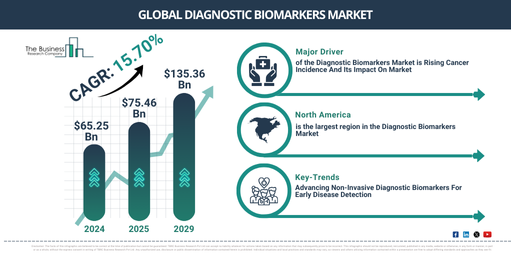
    The scale of the diagnostic biomarkers market has seen substantial expansion in the previous few years. This market is expected to inflate from $65.25 billion in 2024 to $75.46 billion in 2025, marking an impressive compound annual growth rate (CAGR) of 15.7%. Factors contributing to this growth during the historic period include an increase in chronic disease cases, advancements in omics technologies, a higher demand for personalized medicine, improved awareness about early detection of diseases, and a rise in non-invasive diagnosis strategies.

    In the coming years, it’s predicted that the diagnostic biomarkers market will witness substantial growth, expanding to a value of $135.36 billion in 2029 with a compound annual growth rate of 15.7%. Various factors will contribute to this expected growth during the projected period, such as the rising adoption of liquid biopsy techniques, escalating investment in the research of biomarkers, growing emphasis on precision medicine, and enlarged application scope within the field of neurodegenerative diseases. Forecasted period trends involve advancements in both machine learning and artificial intelligence, the merging of multi-omics methods, the creation of point-of-care diagnostic instruments, a shift towards digital biomarkers, increased utilization of wearable health monitoring gadgets, and a heightened focus on the validation and standardization of biomarkers.

    Download a free sample to assess the report’s scope and structure:

    https://www.thebusinessresearchcompany.com/sample.aspx?id=21171&type=smp

    What Are the Core Market Drivers Propelling Growth in the Diagnostic Biomarkers Industry?

    The upward trend in the incidence of cancer propels the expansion of the diagnostic biomarkers market. Contributing factors to the rise in cancer cases include an aging demographic, changes in lifestyle, exposure to environmental hazards, and advancements in diagnostic techniques. Diagnostic biomarkers are critical in the fight against cancer as they aid in early detection, precision diagnosis, and the creation of individualized treatment plans, thereby enhancing patient results. To illustrate, data from the American Cancer Society, a US-based non-profit cancer advocacy group, showed that in January 2024, cancer case numbers had risen to 2,001,140, a 2.19% increase from 1,958,310 cases in 2023. The escalating frequency of cancer diagnosis contributes to the continued expansion of the diagnostic biomarkers market.

    How Is the Diagnostic Biomarkers Market Segmented?

    The diagnostic biomarkersmarket covered in this report is segmented –

    1) By Product: Safety Biomarkers; Efficacy Biomarkers; Validation Biomarkers

    2) By Application: Oncology; Metabolic Disease; Neurological Disease

    3) By End User: Hospitals; Cancer Research Institutes; Diagnostic Labs

    Subsegments:

    1) By Safety Biomarkers: Toxicity Biomarkers; Organ-Specific Safety Biomarkers; Drug-Induced Injury Biomarkers

    2) By Efficacy Biomarkers: Predictive Biomarkers; Prognostic Biomarkers; Pharmacodynamic Biomarkers

    3) By Validation Biomarkers: Genomic Biomarkers; Proteomic Biomarkers; Metabolomic Biomarkers

    Request customized data on this market:

    https://www.thebusinessresearchcompany.com/customise?id=21171&type=smp

    Which Regions Are Driving the Next Phase of the Diagnostic Biomarkers Market Growth?

    North America was the largest region in the diagnostic biomarkers market in 2024. The regions covered in the diagnostic biomarkers market report are Asia-Pacific, Western Europe, Eastern Europe, North America, South America, Middle East, Africa.

    What Key Trends Are Shaping the Future of the Diagnostic Biomarkers Market?

    Leading companies in the diagnostic biomarkers market are prioritizing the advancement of non-invasive testing procedures, such as blood-based biomarker tests, in an effort to provide both convenience and personalized treatment plans for patients. Blood-based biomarker tests, which analyze precise biological markers in the blood, create an opportunity for less invasive detection and monitoring of diseases, such as Alzheimer’s. For example, Quanterix Corporation, a life sciences company based in the US, introduced LucentAD, a blood-based biomarker test, in July 2023. This test is aimed at supporting healthcare professionals in identifying Alzheimer’s disease in patients exhibiting initial cognitive symptoms. LucentAD measures plasma levels of p-Tau 181, a specific type of phosphorylated tau protein and biomarker linked to amyloid pathology in the brain, which is a distinguishing feature of Alzheimer’s. The core purpose of LucentAD is to provide a more accessible and less intrusive diagnosis method than traditional ones, such as cerebrospinal fluid analysis or amyloid positron emission tomography, thus simplifying the examination process for potential Alzheimer’s patients.

    View the full report here:

    https://www.thebusinessresearchcompany.com/report/diagnostic-biomarkers-global-market-report

    How Is the Diagnostic Biomarkers Market Defined and What Are Its Core Parameters?

    A diagnostic biomarker is a biological measure that assists in the diagnosis of a disease, helping to differentiate it from other conditions. It can encompass various findings, including laboratory results, radiological images, genetic markers, and physiological changes, and may also provide insights into disease progression and treatment efficacy.

    Purchase the full report and get a swift delivery:

    https://www.thebusinessresearchcompany.com/purchaseoptions.aspx?id=21171

    About The Business Research Company:

    With over 15000+ reports from 27 industries covering 60+ geographies, The Business Research Company has built a reputation for offering comprehensive, data-rich research and insights. Armed with 1,500,000 datasets, the optimistic contribution of in-depth secondary research, and unique insights from industry leaders, you can get the information you need to stay ahead in the game.

    Get in touch with us:

    The Business Research Company: https://www.thebusinessresearchcompany.com/

    Americas +1 310-496-7795

    Europe +44 7882 955267

    Asia & Others +44 7882 955267 & +91 8897263534

    Email us at info@tbrc.info

    Follow us on:

    LinkedIn: https://in.linkedin.com/company/the-business-research-company

    YouTube: https://www.youtube.com/channel/UC24_fI0rV8cR5DxlCpgmyFQ

    Global Market Model: https://www.thebusinessresearchcompany.com/global-market-model
  • Strong CAGR to Propel in the Diabetic Peripheral Neuropathy Market and Beyond upto $5.39 Billion by 2029

    Strong CAGR to Propel in the Diabetic Peripheral Neuropathy Market and Beyond upto $5.39 Billion by 2029

    Claim your 30% discount on Global Market Reports with code ONLINE30. Limited time only.

    How Fast Is The Diabetic Peripheral Neuropathy Market Expected to Grow Between 2025 And 2029?

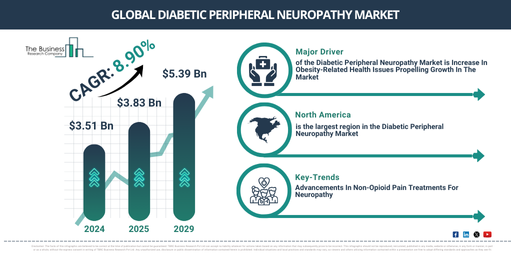
    There has been a robust growth in the market size of diabetic peripheral neuropathy in the past few years. The market value is projected to increase from $3.51 billion in 2024 to $3.83 billion in 2025, showing a compound annual growth rate (CAGR) of 9.1%. Factors leading to this upward trend during the historical period include a growing elderly population, increased diabetes cases, expanding healthcare spending, heightened awareness of diabetes-related complications, and a rise in healthcare resources.

    The market size for diabetic peripheral neuropathy is forecasted to exhibit robust growth in the coming years, reaching a worth of$5.39 billion by 2029″, progressing at a compound annual growth rate (CAGR) of 8.9%. This expansion in the projected period can be associated with a rise in inactive lifestyles, amplified government initiatives and funding, escalating prevalence of risk factors associated with neuropathy, increased diagnostic precision, and heightened emphasis on early detection and prevention measures. Prevalent trends within the estimation period incorporate developments in diagnostic technologies, advancements in treatment methodologies, greater allocation in research and development, the advent of minimally invasive procedures, and a reinforced focus on collaborative research and development.

    Download a free sample to assess the report’s scope and structure:

    https://www.thebusinessresearchcompany.com/sample.aspx?id=21170&type=smp

    Which Primay Drivers Are Accelerating Growth in the Diabetic Peripheral Neuropathy Market?

    The surge in health problems related to obesity is anticipated to stimulate the expansion of the diabetic peripheral neuropathy market. Obesity, characterized by an excess accumulation of body fat, can negatively impact health and heighten the risk for various long-term diseases. The escalation in health complications stemming from obesity can be attributed to increased awareness, modifications in lifestyle, and a rising demand for preventative and treatment strategies, thus escalating the need for healthcare. Diabetic peripheral neuropathy is beneficial in the control of obesity, offering vital knowledge about nerve damage resulting from obesity-related conditions, and directing custom treatments to enhance patient wellness and life quality. For example, as per data from the World Health Organization (WHO), an agency of the United Nations based in Switzerland tasked with worldwide public health, in March 2024, it was revealed that 43% of adults over the age of 18 were classed as overweight, and 16% were living with obesity in 2022. Additionally, 37 million children below the age of 5 were considered overweight. Among children and adolescents aged between 5 and 19 years, over 390 million were overweight, with 160 million suffering from obesity. Hence, the growth in health issues related to obesity is contributing to the expansion of the diabetic peripheral neuropathy market.

    Which Primary Segments of the Diabetic Peripheral Neuropathy Market Are Driving Growth and Industry Transformations?

    The diabetic peripheral neuropathymarket covered in this report is segmented –

    1) By Disease: Type 2 Diabetic Peripheral Neuropathy; Type 1 Diabetic Peripheral Neuropathy

    2) By Treatment: Pain Management Drugs; Gene Therapies

    3) By Therapy: Antidepressants; Anticonvulsants

    4) By Patient Population: Adult Patients; Geriatric Patients

    Subsegments:

    1) By Type 2 Diabetic Peripheral Neuropathy: Sensory Neuropathy; Motor Neuropathy; Autonomic Neuropathy

    2) By Type 1 Diabetic Peripheral Neuropathy: Distal Symmetric Neuropathy; Mononeuropathy; Polyradiculopathy

    Request customized data on this market:

    https://www.thebusinessresearchcompany.com/customise?id=21170&type=smp

    Which Regions Are Key Players in the Growth of the #Which Primay Drivers Are Accelerating Growth in the Diabetic Peripheral Neuropathy Market?# Market?

    North America was the largest region in the diabetic peripheral neuropathy market in 2024. Asia-Pacific is expected to be the fastest-growing region in the forecast period. The regions covered in the diabetic peripheral neuropathy market report are Asia-Pacific, Western Europe, Eastern Europe, North America, South America, Middle East, Africa.

    Which Technological Trends Are Reshaping the Diabetic Peripheral Neuropathy Industry Dynamics?

    In the diabetic peripheral neuropathy market, predominant companies are turning their attention towards technological breakthroughs such as NaV1.8 pain signal inhibitors, with the aim of delivering superior, non-opioid treatment options that enhance pain control and overall life quality for patients. NaV1.8 pain signal inhibitors are specialized medications that obstruct the NaV1.8 sodium channel, a critical conduit of pain signals in sensory neurons, enabling the alleviation of acute and neuropathic pain without dependence on opioids. To illustrate, Vertex Pharmaceuticals Incorporated, a biotech organization based in the US, in April 2024, made progress in its suzetrigine pain program. The progress includes the initialization of a Phase 3 crucial program to treat pain linked with diabetic peripheral neuropathy (DPN). Suzetrigine, a selective NaV1.8 pain signal inhibitor, has demonstrated encouraging outcomes in preliminary studies and has recently earned a breakthrough therapy designation for diabetic Peripheral Neuropathy (DPN) pain control from the Food and Drug Administration (FDA), a federal agency based in the US.

    View the full report here:

    https://www.thebusinessresearchcompany.com/report/diabetic-peripheral-neuropathy-global-market-report

    What Parameters Are Used to Define the Diabetic Peripheral Neuropathy Market?

    Diabetic Peripheral Neuropathy (DPN) is a nerve disorder caused by prolonged high blood sugar levels in individuals with diabetes, leading to nerve damage primarily in the legs, feet, arms, and hands. This condition occurs due to long-term high blood sugar levels, which damage the nerves and blood vessels, impairing nerve function and blood flow to the affected areas.

    Purchase the full report and get a swift delivery:

    https://www.thebusinessresearchcompany.com/purchaseoptions.aspx?id=21170

    About The Business Research Company:

    With over 15000+ reports from 27 industries covering 60+ geographies, The Business Research Company has built a reputation for offering comprehensive, data-rich research and insights. Armed with 1,500,000 datasets, the optimistic contribution of in-depth secondary research, and unique insights from industry leaders, you can get the information you need to stay ahead in the game.

    Get in touch with us:

    The Business Research Company: https://www.thebusinessresearchcompany.com/

    Americas +1 310-496-7795

    Europe +44 7882 955267

    Asia & Others +44 7882 955267 & +91 8897263534

    Email us at info@tbrc.info

    Follow us on:

    LinkedIn: https://in.linkedin.com/company/the-business-research-company

    YouTube: https://www.youtube.com/channel/UC24_fI0rV8cR5DxlCpgmyFQ

    Global Market Model: https://www.thebusinessresearchcompany.com/global-market-model

  • Diabetic Macular Edema (DME) Market Valuation Expected To Reach $5.77 Billion By 2029, Growing At A Rate Of 4.3%

    Diabetic Macular Edema (DME) Market Valuation Expected To Reach $5.77 Billion By 2029, Growing At A Rate Of 4.3%

    Claim your 30% discount on Global Market Reports with code ONLINE30. Limited time only.

    What Are the Key Projections for the CAGR of the Diabetic Macular Edema (DME) Market Size From 2025 to 2034?

    The market size of diabetic macular edema (dme) has experienced a steady increase in the last few years. It is projected to elevate from $4.67 billion in 2024 to $4.88 billion in 2025, marking a compound annual growth rate (CAGR) of 4.4%. This escalation during the historic period is a result of factors such as the rising frequency of diabetes, elevated incidences of disorders related to edema, increased instances of diabetic eye ailments, a surge in the population of elderly people, and the growing number of blindness cases.

    In the coming years, the market for diabetic macular edema (dme) is projected to experience consistent growth, expected to reach the value of$5.77 billion in 2029 with a compound annual growth rate (CAGR) of 4.3%. A combination of factors such as increasing healthcare access, heightened government backing in healthcare, more awareness about diabetes-related complications, the rise in use of telemedicine for eye care, and growth in specialized centers for diabetic eye care contribute to this forward trend. Key market trends during the forecast period would be the development of therapies targeting anti-VEGF, the utilization of corticosteroid implants, breakthroughs in drug delivery systems, innovation in retinal laser therapy, AI-driven diagnostic tools, and the acceptance of less invasive surgical procedures.

    Download a free sample to assess the report’s scope and structure:

    https://www.thebusinessresearchcompany.com/sample.aspx?id=21169&type=smp

    Which Factors and External Forces Are Driving Demand in the Diabetic Macular Edema (DME) Market?

    The rise in diabetes cases is anticipated to propel the progression of the diabetic macular edema (DME) market in the future. The escalating incidence of diabetes is due to aspects like inactive lifestyles, poor food habits, increasing obesity, aging societies, and genetic susceptibility. Diabetes engenders diabetic macular edema through harm to retinal blood vessels, initiating fluid seepage into the macula, leading to swelling. For example, in June 2023, the Institute for Health Metrics and Evaluation, a US-based public health research institute, revealed that over 500 million people worldwide were dealing with diabetes. This figure is predicted to more than double, amounting to 1.3 billion people by 2050. Thus, the escalating occurrence of diabetes is fuelling the expansion of the diabetic macular edema (DME) market.

    Which Segments in the Diabetic Macular Edema (DME) Offer the Most Growth?

    The diabetic macular edema (dme)market covered in this report is segmented –

    1) By Treatment: Anti-VEGF Therapy; Corticosteroids; Laser Therapy; Surgical Intervention

    2) By Disease Stage: Early Stage; Moderate Stage; Advanced Stage

    3) By Patient Demographics: Adults; Elderly; Children

    4) By Route Of Administration: Intravitreal Injection; Topical; Systemic

    5) By Distribution Channel: Hospital Pharmacies; Retail Pharmacies; Online Pharmacies

    Subsegments:

    1) By Anti-VEGF Therapy: Monoclonal Antibodies; Recombinant Protein-Based Therapies

    2) By Corticosteroids: Intravitreal Steroid Injections; Injectable Sustained-Release Corticosteroids

    3) By Laser Therapy: Focal Laser Photocoagulation; Panretinal Photocoagulation

    4) By Surgical Intervention: Vitrectomy; Membrane Peeling

    Request customized data on this market:

    https://www.thebusinessresearchcompany.com/customise?id=21169&type=smp

    What Are the Fastest-Growing Geographies in the #Which Factors and External Forces Are Driving Demand in the Diabetic Macular Edema (DME) Market?# Market?

    North America was the largest region in the diabetic macular edema (DME) market in 2024. Europe is expected to be the fastest-growing region in the forecast period. The regions covered in the diabetic macular edema (DME) market report are Asia-Pacific, Western Europe, Eastern Europe, North America, South America, Middle East, Africa.

    Which Cutting-Edge Market Trends Are Expected to Drive theDiabetic Macular Edema (DME) Market’s Growth?

    Leading corporations in the diabetic macular edema (DME) treatment market are centering their efforts on technological advances such as sophisticated drug treatment methods to enhance patient management and treatment results. Innovative drug therapies employ the latest technology and research to optimise treatment of intricate health issues. Aiming to increase effectiveness, decrease adverse effects, and assure enhanced patient outcomes, they herald a new era in healthcare. A case in point is the approval by the European Commission in March 2022 for the use of Beovu, a product of the Switzerland-based pharmaceutical firm, Novartis AG, for managing visual issues arising from DME. The green light was given after Phase III KESTREL and KITE studies showed that Beovu was as effective as aflibercept in improving vision after the first year. It is worth noting that more than half of the patients treated with Beovu adhered to a 12-week treatment plan and experienced less retinal fluid than those treated with aflibercept.

    View the full report here:

    https://www.thebusinessresearchcompany.com/report/diabetic-macular-edema-dme-global-market-report

    What Are the Key Elements That Define the Diabetic Macular Edema (DME) Market?

    Diabetic macular edema (DME) is a complication of diabetes that occurs when fluid accumulates in the macula, the central part of the retina responsible for sharp vision. This swelling is caused by damaged blood vessels leaking fluid and proteins into the retinal tissue, leading to vision impairment or blindness if left untreated. DME is a common cause of vision loss in diabetic patients and is associated with diabetic retinopathy.

    Purchase the full report and get a swift delivery:

    https://www.thebusinessresearchcompany.com/purchaseoptions.aspx?id=21169

    About The Business Research Company:

    With over 15000+ reports from 27 industries covering 60+ geographies, The Business Research Company has built a reputation for offering comprehensive, data-rich research and insights. Armed with 1,500,000 datasets, the optimistic contribution of in-depth secondary research, and unique insights from industry leaders, you can get the information you need to stay ahead in the game.

    Get in touch with us:

    The Business Research Company: https://www.thebusinessresearchcompany.com/

    Americas +1 310-496-7795

    Europe +44 7882 955267

    Asia & Others +44 7882 955267 & +91 8897263534

    Email us at info@tbrc.info

    Follow us on:

    LinkedIn: https://in.linkedin.com/company/the-business-research-company

    YouTube: https://www.youtube.com/channel/UC24_fI0rV8cR5DxlCpgmyFQ

    Global Market Model: https://www.thebusinessresearchcompany.com/global-market-model

  • Diabetic Ketoacidosis (DKA) Market Forecast Reaching $4.34 Billion by 2029 at 8.4% CAGR

    Diabetic Ketoacidosis (DKA) Market Forecast Reaching $4.34 Billion by 2029 at 8.4% CAGR

    Claim your 30% discount on Global Market Reports with code ONLINE30. Limited time only.

    How Has The Diabetic Ketoacidosis (DKA) Market Growth Evolved From 2024 To 2025, And What’s Ahead?

    In recent years, the market size for diabetic ketoacidosis (DKA) has seen significant growth. It is projected to rise from $2.9 billion in 2024 to hit $3.15 billion in 2025, equating to a compound annual growth rate (CAGR) of 8.5%. The ascension during the historical period can be accredited to factors like an amplified prevalence of diabetes, late detection of type 1 diabetes, non-compliance with insulin therapy, a surge in obesity rates, and a dearth of educational programs regarding diabetes.

    There’s a predicted robust surge in the size of the diabetic ketoacidosis (dka) market in the coming years, with predictions forecasting a rise to$4.34 billion in 2029. This is linked to a compound annual growth rate (CAGR) of 8.4 percent. Various factors contributing to this growth over the projected period include advancements in the systems used for insulin delivery, an increased acceptance of continuous glucose monitoring, enhanced understanding of diabetes-related health issues, the widening scope of telemedicine for handling diabetes, and an increment in healthcare spending. The forecast period is expected to witness major advancements such as the incorporation of artificial intelligence in diabetes treatment, the creation of closed-loop systems for insulin delivery, the rise of individualized medicine, utilization of advanced technologies, and the introduction of innovative treatment methods.

    Download a free sample to assess the report’s scope and structure:

    https://www.thebusinessresearchcompany.com/sample.aspx?id=21168&type=smp

    Which Major Market Drivers Are Expected to Boost the Growth Potential of the Diabetic Ketoacidosis (DKA) Market?

    The escalating incidence of obesity is fueling the growth of the diabetic ketoacidosis (DKA) market. Obesity is a health condition characterized by an excess accumulation of body fat that can harm health and boost the likelihood of various illnesses. The rise in obesity is attributed to several factors such as diets laden with processed foods, sugars, and fats, reduced physical activity, increased time spent on screens, and social-economic aspects including access to economically feasible healthful food and healthcare. Higher rates of obesity escalate the danger of diabetic ketoacidosis (DKA), promoting insulin resistance and the onset of type 2 diabetes which can result in inadequate blood sugar regulation and subsequent DKA incidents. For example, in March 2024, the World Health Organization (WHO), a Switzerland-based intergovernmental organization, declared that around one in eight people globally were grappling with obesity. This included 2.5 billion adults (18 years and older) who were overweight, amongst which 890 million were living with obesity. In terms of adults, 43% were overweight, and 16% were categorized as obese. Furthermore, the quantity of overweight children under the age of 5 peaked at 37 million. Thus, the growing prevalence of obesity is propelling the expansion of the diabetic ketoacidosis market.

    Which Key Market Segments Comprise the Diabetic Ketoacidosis (DKA) Market and Drive Its Revenue Growth?

    The diabetic ketoacidosis (dka)market covered in this report is segmented –

    1) By Type: Pediatric Diabetic Ketoacidosis, Adult Diabetic Ketoacidosis

    2) By Treatment Type: Fluid Replacement, Electrolyte Replacement, Insulin Therapy, Intermediate-Acting Insulin, Long-Acting Insulin

    3) By Route of Administration: Oral, Parenteral, Other

    4) By Distribution Channel: Online Channel, Offline Channel

    5) By End Use: Hospitals, Ambulatory Care Center, Specialty Clinics

    Subsegments:

    1) By Pediatric Diabetic Ketoacidosis: Mild Pediatric DKA; Moderate Pediatric DKA; Severe Pediatric DKA

    2) By Adult Diabetic Ketoacidosis: Mild Adult DKA; Moderate Adult DKA; Severe Adult DKA

    Request customized data on this market:

    https://www.thebusinessresearchcompany.com/customise?id=21168&type=smp

    Which Areas Are Leading Regions in the Diabetic Ketoacidosis (DKA) Market Expansion Across the Globe?

    North America was the largest region in the diabetic ketoacidosis (DKA) market in 2024. Asia-Pacific is expected to be the fastest-growing region in the forecast period. The regions covered in the diabetic ketoacidosis (DKA) market report are Asia-Pacific, Western Europe, Eastern Europe, North America, South America, Middle East, Africa.

    What Are the Key Market Trends in theDiabetic Ketoacidosis (DKA) Market Over the Coming Years?

    The primary players in the diabetic ketoacidosis arena are concentrating their efforts on the creation of pioneering technologies, including continuous glucose monitoring tools, in an effort to enhance early diagnosis, effectively control blood sugar and ketone levels, and ultimately decrease the frequency and harshness of DKA events among diabetics. Continuous glucose monitor (CGM) instruments are gadgets that constantly measure glucose levels in the body, providing immediate data to help diabetics maintain stable blood sugar levels. Take for example, Abbott Laboratories, a medical device company based in the US, who in June 2022, introduced cutting-edge continuous glucose-ketone monitoring systems to offer real-time tracking of both glucose and ketone levels. This system synchronizes the real-time monitoring of both glucose and ketones, thereby offering an all-inclusive perspective on a patient’s metabolic status. The simultaneous measurement of glucose and ketones facilitates the early discovery of possible diabetic complications like diabetic ketoacidosis (DKA) prior to them reaching a critical stage. This system is engineered for uninterrupted monitoring, offering users convenient and regular data updates without the necessity for manual examinations.

    View the full report here:

    https://www.thebusinessresearchcompany.com/report/diabetic-ketoacidosis-dka-global-market-report

    How Is the Diabetic Ketoacidosis (DKA) Market Conceptually Defined?

    Diabetic ketoacidosis (DKA) refers to a serious diabetes complication where the body produces high levels of blood acids called ketones, often due to insufficient insulin, leading to dehydration, electrolyte imbalances, and potentially life-threatening conditions. They are used for diagnosing and managing severe metabolic imbalances in diabetic patients to prevent complications such as dehydration, organ failure, and coma.

    Purchase the full report and get a swift delivery:

    https://www.thebusinessresearchcompany.com/purchaseoptions.aspx?id=21168

    About The Business Research Company:

    With over 15000+ reports from 27 industries covering 60+ geographies, The Business Research Company has built a reputation for offering comprehensive, data-rich research and insights. Armed with 1,500,000 datasets, the optimistic contribution of in-depth secondary research, and unique insights from industry leaders, you can get the information you need to stay ahead in the game.

    Get in touch with us:

    The Business Research Company: https://www.thebusinessresearchcompany.com/

    Americas +1 310-496-7795

    Europe +44 7882 955267

    Asia & Others +44 7882 955267 & +91 8897263534

    Email us at info@tbrc.info

    Follow us on:

    LinkedIn: https://in.linkedin.com/company/the-business-research-company

    YouTube: https://www.youtube.com/channel/UC24_fI0rV8cR5DxlCpgmyFQ

    Global Market Model: https://www.thebusinessresearchcompany.com/global-market-model
  • $36.42 Billion Forecast for Diabetes Diagnostics Market by 2029, Backed by Demand and Innovation

    $36.42 Billion Forecast for Diabetes Diagnostics Market by 2029, Backed by Demand and Innovation

    Claim your 30% discount on Global Market Reports with code ONLINE30. Limited time only.

    What is the Projected CAGR for the Diabetes Diagnostics Market Size from 2025 to 2034?

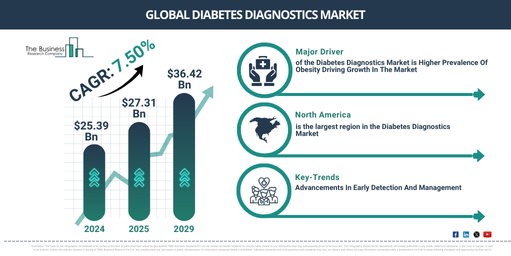
    The size of the diabetes diagnostics market has significantly expanded in the past years. The market is estimated to rise from $25.39 billion in 2024 to $27.31 billion in 2025, reflecting a compound annual growth rate (CAGR) of 7.6%. The historical growth is linked to several factors such as the increasing cases of diabetes, growing elderly population, surge in sedentary lifestyles, greater preference for minimally invasive diagnostic techniques, and the rising prevalence of obesity.

    In the coming years, the market size for diabetes diagnostics is predicted to experience significant expansion. The projection sees it escalating to a worth of $36.42 billion in 2029, progressing at a CAGR of 7.5%. Contributing to this predicted growth, during the forecast period, are factors such as the increased use of insulin pumps, numerous developments in diabetes technologies, a rise in unhealthy lifestyles, a surge in incidences of type 1 and type 2 diabetes, and the growth of the healthcare infrastructure. Expected market trends for the period include progress in biosensor technology, technological advancements, developments in diagnostic technologies, personalized medical treatments, targeted therapies, and progressive technologies in in vitro diagnostic products.

    Download a free sample to assess the report’s scope and structure:

    https://www.thebusinessresearchcompany.com/sample.aspx?id=21167&type=smp

    What Are the Core Growth Drivers Propelling the Diabetes Diagnostics Market Forward?

    The rise in obesity rates is predicted to fuel advances in the diabetes diagnostics market. Obesity, characterized by an excessive buildup of body fat, elevates the risk of numerous health issues, including heart diseases and diabetes. Such a widespread presence of obesity can be accredited to a combination of factors such as sedentary lifestyles, an increased intake of processed and high-calorie foods, genetic susceptibility, and lack of physical exercise. Diabetes diagnostics play a critical role in arresting obesity progression by detecting early signs of insulin resistance and problems with glucose metabolism, allowing for prompt intervention to prevent weight escalation and related health risks. Take for example, data from the Centers for Disease Control and Prevention, a government agency based out of the US, that reveals an increase in adult obesity rate – in September 2023, 22 states were found to have an adult obesity rate of 35% or higher, up from 19 states in 2021. This rising incidence of obesity thus forms the basis of expansion for the diabetes diagnostics market.

    What Segment Types Define the Diabetes Diagnostics Market Structure?

    The diabetes diagnosticsmarket covered in this report is segmented –

    1) By Product Type: Blood Glucose Meters; Continuous Glucose Monitoring Devices; Lancets; Test Strips; Other Product Types

    2) By Diabetes Type: Diabetes I; Diabetes II; Gestational Diabetes

    3) By End-User: Hospitals; Diagnostic Centers; Homecare Settings; Other End-Users

    Subsegments:

    1) By Blood Glucose Meters: Traditional Blood Glucose Meters; Smart Blood Glucose Meters; Bluetooth-enabled Blood Glucose Meters

    2) By Continuous Glucose Monitoring Devices: Wearable CGM Systems; Implantable CGM Systems; Flash Glucose Monitoring Devices

    3) By Lancets: Single-use Lancets; Multi-use Lancets

    4) By Test Strips: Standard Test Strips; Smart Test Strips

    5) By Other Product Types: Hemoglobin A1c Testing Kits; Urine Glucose Test Strips; Blood Ketone Meters

    Request customized data on this market:

    https://www.thebusinessresearchcompany.com/customise?id=21167&type=smp

    Which Geographic Areas Hold the Strongest Growth Potential in the Diabetes Diagnostics Market?

    North America was the largest region in the diabetes diagnostics market in 2024. The regions covered in the diabetes diagnostics market report are Asia-Pacific, Western Europe, Eastern Europe, North America, South America, Middle East, Africa.

    Which Emerging Trends that Are Influencing theDiabetes Diagnostics Industry Evolution?

    Key companies in the diabetes diagnostics market are concentrating on creating novel products, including tools for diagnosing gestational diabetes, to broaden their product range and meet increasing demand for early diagnosis and management of diabetes in pregnancy. These diagnostic tools for gestational diabetes typically involve blood glucose tests such as the oral glucose tolerance test (OGTT), geared towards monitoring how a woman’s body handles sugar during pregnancy. For example, an Austria-based biotech firm, DirectSens GmbH, released an innovative biosensor instrument, the XpressGT RUO kit, in August 2024. It is designed for detecting conditions related to insulin resistance like gestational diabetes, endometriosis, and liver disease. The kit quicky measures 2-hydroxybutyrate (2-HB) levels in venous blood and can be used with standard clinical analyzers. The objective behind this revolutionary product is to present early detection solutions, potentially enhancing the health outcomes for patients on a global scale.

    View the full report here:

    https://www.thebusinessresearchcompany.com/report/diabetes-diagnostics-global-market-report

    What Is the Definition of the Diabetes Diagnostics Market?

    Diabetes diagnostics refers to the methods and tests used to identify and monitor diabetes by measuring blood glucose levels and other relevant biomarkers. It involves various medical assessments to detect abnormal glucose metabolism and assess the risk or presence of diabetes. Accurate diagnostics aid in early detection, disease management, and treatment planning.

    Purchase the full report and get a swift delivery:

    https://www.thebusinessresearchcompany.com/purchaseoptions.aspx?id=21167

    About The Business Research Company:

    With over 15000+ reports from 27 industries covering 60+ geographies, The Business Research Company has built a reputation for offering comprehensive, data-rich research and insights. Armed with 1,500,000 datasets, the optimistic contribution of in-depth secondary research, and unique insights from industry leaders, you can get the information you need to stay ahead in the game.

    Get in touch with us:

    The Business Research Company: https://www.thebusinessresearchcompany.com/

    Americas +1 310-496-7795

    Europe +44 7882 955267

    Asia & Others +44 7882 955267 & +91 8897263534

    Email us at info@tbrc.info

    Follow us on:

    LinkedIn: https://in.linkedin.com/company/the-business-research-company

    YouTube: https://www.youtube.com/channel/UC24_fI0rV8cR5DxlCpgmyFQ

    Global Market Model: https://www.thebusinessresearchcompany.com/global-market-model
  • Global Dermatological Drugs Market Projected to Reach $31.49 Billion by 2029 at a CAGR of 9.4%

    Global Dermatological Drugs Market Projected to Reach $31.49 Billion by 2029 at a CAGR of 9.4%

    Claim your 30% discount on Global Market Reports with code ONLINE30. Limited time only.

    What Is the Current and Projected Market Size of the Dermatological Drugs Market Through 2034?

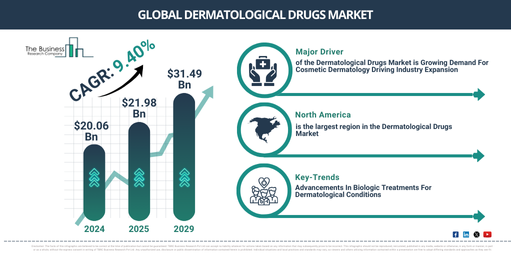
    The market for dermatological drugs has seen considerable expansion in the past few years. Projected growth is expected to take it from $20.06 billion in 2024 to $21.98 billion in 2025, reflecting a compound annual growth rate (CAGR) of 9.5%. Factors contributing to this growth in the historical time frame include an increased occurrence of skin conditions, improvements in drug formulation and delivery methods, heightened public consciousness about skincare and aesthetics, a larger older population, and a heightened demand for over-the-counter dermatological items.

    In the coming years, the dermatological drugs market is expected to experience substantial growth, forecasted to reach a size of $31.49 billion in 2029 with a Compound Annual Growth Rate (CAGR) of 9.4%. The projected growth during this forecast period can be credited to the advancements in biologics and targeted therapies, the widening adoption of teledermatology and digital health, an uptick in lifestyle-related skin conditions, an increased demand for personalized and regenerative medicine, and extended research in microbiome-based dermatological treatments. The forecast period is also likely to witness significant trends like drug delivery through nanotechnology, artificial intelligence-driven dermatological diagnostics, therapies targeting microbiome, 3D bioprinting for skin regeneration, and treatments based on gene editing and RNA.

    Download a free sample to assess the report’s scope and structure:

    https://www.thebusinessresearchcompany.com/sample.aspx?id=21166&type=smp

    What are the Fundamental Drivers and Innovations Shaping the Dermatological Drugs Market?

    The surge in demand for cosmetic dermatology procedures is predicted to accelerate the expansion of the dermatological drugs market. Cosmetic dermatology is a field of dermatology that specializes in improving an individual’s appearance using various non-surgical treatments. Increasing consumer awareness about aesthetic treatments, advancements in skincare technology, and an inclination towards non-invasive procedures for enhancing appearance and combating aging are fueling the demand for cosmetic dermatology. This escalating demand for services like anti-aging and skin rejuvenation treatments is propelling the creation of advanced dermatological drugs that provide safe, effective, and minimally invasive solutions. For example, the international Society of Aesthetic Plastic Surgery, a US-based professional organization, reported in January 2023 that over 12.8 million surgical and 17.5 million non-surgical procedures were performed worldwide, marking a 19.3% increase from the previous reporting period. In addition, more than 14.9 million surgical and 18.8 million non-surgical procedures will be performed globally by plastic surgeons in 2022, predicting an 11.2% growth in total procedures. Hence, the increasing number of cosmetic dermatology procedures is fueling the dermatological drugs market’s growth.

    How Is the Dermatological Drugs Market Segmented?

    The dermatological drugsmarket covered in this report is segmented –

    1) By Drug Class: Corticosteroids; Retinoids; Antibiotics; Antifungals; Calcineurin Inhibitors; Other Drug Classes

    2) By Administration: Topical Administration; Oral Administration; Parenteral Administration

    3) By Indication: Acne; Psoriasis; Rosacea; Alopecia; Other Indications

    4) By Distribution Channel: Hospital Pharmacies; Retail Pharmacies; Other Distribution Channels

    Subsegments:

    1) By Corticosteroids: Topical Corticosteroids; Oral Corticosteroids; Injectable Corticosteroids

    2) By Retinoids: Topical Retinoids; Oral Retinoids

    3) By Antibiotics: Topical Antibiotics; Oral Antibiotics

    4) By Antifungals: Topical Antifungals; Oral Antifungals

    5) By Calcineurin Inhibitors: Topical Calcineurin Inhibitors; Systemic Calcineurin Inhibitors

    6) By Other Drug Classes: Biologics; JAK Inhibitors; Antihistamines; Photodynamic Therapy Agents

    Request customized data on this market:

    https://www.thebusinessresearchcompany.com/customise?id=21166&type=smp

    Which Regions Are Driving the Next Phase of the Dermatological Drugs Market Growth?

    North America was the largest region in the dermatological drugs market in 2024. Asia-Pacific is expected to be the fastest-growing region in the forecast period. The regions covered in the dermatological drugs market report are Asia-Pacific, Western Europe, Eastern Europe, North America, South America, Middle East, Africa.

    What Key Trends Are Shaping the Future of the Dermatological Drugs Market?

    Prominent firms in the dermatological drugs market are focusing on creating biologic treatments to tackle chronic skin issues including psoriasis, atopic dermatitis, and hidradenitis suppurativa. Biologics target specific immune pathways, providing more sustained and effective relief compared to conventional therapies. For example, in September 2024, Eli Lilly and Company, a pharmaceutical firm based in the US, was granted approval for Ebglyss (lebrikizumab), a drug that inhibits interleukin-13 (IL-13), for the treatment of moderate-to-severe atopic dermatitis in adults and children over 12. This endorsement signifies a major development by presenting a new biologic treatment alternative for patients whose symptoms have not been sufficiently controlled with topical therapies. Ebglyss is designed to boost the quality of life for patients by lessening severe itching and skin inflammation linked to moderate-to-severe atopic dermatitis.

    View the full report here:

    https://www.thebusinessresearchcompany.com/report/dermatological-drugs-global-market-report

    How Is the Dermatological Drugs Market Defined and What Are Its Core Parameters?

    Dermatological drugs refer to medications designed to treat conditions affecting the skin, hair, and nails by reducing inflammation, controlling infections, or managing symptoms such as itching and redness. These drugs play a crucial role in dermatology by addressing both common and severe skin disorders, improving patient comfort and quality of life.

    Purchase the full report and get a swift delivery:

    https://www.thebusinessresearchcompany.com/purchaseoptions.aspx?id=21166

    About The Business Research Company:

    With over 15000+ reports from 27 industries covering 60+ geographies, The Business Research Company has built a reputation for offering comprehensive, data-rich research and insights. Armed with 1,500,000 datasets, the optimistic contribution of in-depth secondary research, and unique insights from industry leaders, you can get the information you need to stay ahead in the game.

    Get in touch with us:

    The Business Research Company: https://www.thebusinessresearchcompany.com/

    Americas +1 310-496-7795

    Europe +44 7882 955267

    Asia & Others +44 7882 955267 & +91 8897263534

    Email us at info@tbrc.info

    Follow us on:

    LinkedIn: https://in.linkedin.com/company/the-business-research-company

    YouTube: https://www.youtube.com/channel/UC24_fI0rV8cR5DxlCpgmyFQ

    Global Market Model: https://www.thebusinessresearchcompany.com/global-market-model