Month: August 2025

  • Industry Trends Show Rheumatoid Arthritis Drugs Market Set to Expand at 2.1% CAGR Until 2029

    Industry Trends Show Rheumatoid Arthritis Drugs Market Set to Expand at 2.1% CAGR Until 2029

    Claim your 30% discount on Global Market Reports with code ONLINE30. Limited time only.

    Claim your 30% discount on Global Market Reports with code ONLINE30. Limited time only.

    How Much Is the Global Rheumatoid Arthritis Drugs Market Valued at Present and by 2029?

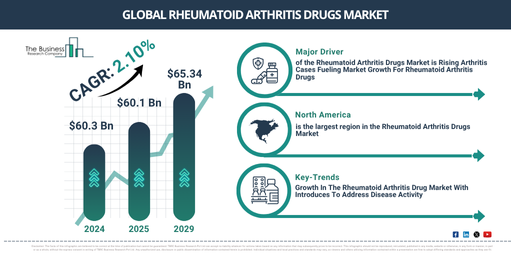
    In recent times, the market size for rheumatoid arthritis medications has seen a slight downfall. The market which is expected to be $60.3 billion in 2024, is projected to decrease to $60.1 billion in 2025 with a compound annual growth rate (CAGR) of -0.3%. The earlier growth seen in this market was due to an increase in the prevalence of the disease, expansion of healthcare infrastructures, heightened awareness and education efforts, governmental support and initiatives, as well as strategic collaborations.

    Predicted growth in the rheumatoid arthritis drugs market signifies a stable advancement in the next couple of years. The expected increase is up to $65.34 billion by 2029, with a compound annual growth rate (CAGR) of 2.1%. The surge in the forecast period is due to the influence of personalized medicine trends, the progression of emerging markets, pipeline development, emphasis on combination treatments, and heightened healthcare expenditure. The most prominent trends expected during the forecast period include the prevalence of biological therapies, the impact of biosimilars, advancements in personalized medicine, the amplification of oral therapies, and an emphasis on early diagnosis and intercession.

    Download The Free Sample Report Here:

    https://www.thebusinessresearchcompany.com/sample.aspx?id=10120&type=smp

    #What Drivers Are Influencing Growth In The Rheumatoid Arthritis Drugs Market?

    The escalating rate of arthritis is predicted to stimulate the development of the rheumatoid arthritis drugs market in the future. Rheumatoid arthritis is an autoimmune and inflammatory disorder in which the immune system intentionally damages healthy cells, resulting in inflammation in the impacted areas of the body. Remedies for rheumatoid arthritis, including drugs and self-management methods, are easily accessible. These drugs reduce pain, improve joint mobility, and prevent the disease from progressing. The National Center for Health Statistics, a US government agency, reported in February 2024 that the age-adjusted prevalence of diagnosed arthritis in adults was 18.9% in 2022, with a larger proportion of women (21.5%) being affected than men (16.1%). The occurrence significantly increased with age, from 3.6% among adults aged 18–34 to 53.9% amongst those who were 75 and older. As a result, the rising number of arthritis cases is expected to fuel the rheumatoid arthritis drugs market.

    What Are The Main Segments Identified In The Rheumatoid Arthritis Drugs Market Research?

    The rheumatoid arthritis drugs market covered in this report is segmented –

    1) By Drug Type: Nonsteroidal Anti-Inflammatory Drugs (NSAIDs), Corticosteroids, Disease-Modifying Antirheumatic Drugs (DMARDs), Biologic Response Modifiers (BRMs), Other Drug Types

    2) By Route Of Administration: Oral, Parenteral, Topical, Other Route Of Administrations

    3) By Distribution Channel: Hospital Pharmacy, Retail Pharmacy, Online Pharmacy

    Subsegments:

    1) By Nonsteroidal Anti-Inflammatory Drugs (NSAIDs): Ibuprofen, Naproxen, Diclofenac, Indomethacin

    2) By Corticosteroids: Prednisone, Methylprednisolone, Dexamethasone

    3) By Disease-Modifying Antirheumatic Drugs: Methotrexate, Sulfasalazine, Hydroxychloroquine, Leflunomide

    4) By Biologic Response Modifiers: Tumor Necrosis Factor (TNF) Inhibitors, Interleukin Inhibitors, B-cell Inhibitors

    5) By Other Drug Types: Janus Kinase Inhibitors, Other Novel Therapies

    What Are The Leading Trends And Opportunities In The Rheumatoid Arthritis Drugs Sector?

    The rise of product innovation is a critical trend being observed in the Remicade biosimilar market. Leading corporations in this market are committing to the production of inventive products to maintain their market standing. A case in point is the introduction of Amjevita, a biosimilar to AbbVie’s Humira, by Amgen Inc., a biotechnology firm based in the United States, in January 2023. Amjevita aims to match the original drug in terms of safety and effectiveness and poses as the first biosimilar to Humira, setting it up as a rival for market capital. This biological medication, under use for a range of autoimmune diseases such as rheumatoid arthritis and Crohn’s disease, competes with one of the world’s most costly drugs that generate billions in annual returns for AbbVie. However, Amjevita is projected to be considerably more affordable. Beyond monetary savings, Amjevita also has the potential to provide patients with a greater variety of treatment choices.

    Which Companies Play A Key Role In The Development Of The Rheumatoid Arthritis Drugs Market?

    Major companies operating in the rheumatoid arthritis drugs market include Pfizer Inc., Abbvie Inc., Amgen Inc., Novartis AG, Boehringer Ingelheim International GmbH, Eli Lilly and Company, F-Hoffmann La Roche AG, Bristol-Myers Squibb Company, AstraZeneca PLC, Merck & Co Inc., Johnson & Johnson Inc., Bayer AG, Teva Pharmaceuticals Industries Ltd., Sun Pharmaceutical Industries Ltd., Sanofi S.A, Biogen Inc., Regeneron Pharmaceuticals Inc., Galapagos NV, Abbott Laboratories, Takeda Pharmaceutical Company Limited, Mitsubishi Tanabe Pharma Corporation, UCB S.A., Astellas Pharma Inc., Corbus Pharmaceuticals Holdings Inc., Roche Holding AG, Daiichi Sankyo Company Limited, Mallinckrodt Pharmaceuticals, Gilead Sciences Inc.

    Get The Full Report Here:

    https://www.thebusinessresearchcompany.com/report/rheumatoid-arthritis-drugs-global-market-report

    What Are The Key Regional Developments Shaping The Rheumatoid Arthritis Drugs Market?

    North America was the largest region in the rheumatoid arthritis drugs market in 2024.North America is expected to be the fastest-growing region in the global rheumatoid arthritis market report during the forecast period. The regions covered in the rheumatoid arthritis drugs market report are Asia-Pacific, Western Europe, Eastern Europe, North America, South America, Middle East, Africa.

    Request For A Customized Report:

    https://www.thebusinessresearchcompany.com/customise?id=10120&type=smp

    About The Business Research Company:

    With over 15000+ reports from 27 industries covering 60+ geographies, The Business Research Company has built a reputation for offering comprehensive, data-rich research and insights. Armed with 1,500,000 datasets, the optimistic contribution of in-depth secondary research, and unique insights from industry leaders, you can get the information you need to stay ahead in the game.

    Get in touch with us:

    The Business Research Company: https://www.thebusinessresearchcompany.com/

    Americas +1 310-496-7795

    Asia +44 7882 955267 & +91 8897263534

    Europe +44 7882 955267

    Email us at info@tbrc.info

    Follow us on:

    LinkedIn: https://in.linkedin.com/company/the-business-research-company

    YouTube: https://www.youtube.com/channel/UC24_fI0rV8cR5DxlCpgmyFQ

    Global Market Model: https://www.thebusinessresearchcompany.com/global-market-model
  • CAGR of 6.8% Projected for Neurology Clinical Trials Market From 2025 to 2029

    CAGR of 6.8% Projected for Neurology Clinical Trials Market From 2025 to 2029

    Claim your 30% discount on Global Market Reports with code ONLINE30. Limited time only.

    Claim your 30% discount on Global Market Reports with code ONLINE30. Limited time only.

    How Will the Neurology Clinical Trials Market Evolve in Terms of Growth and Size by 2029?

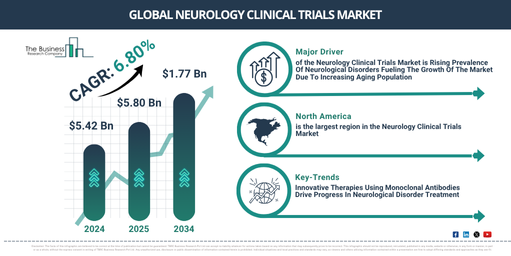
    The neurology clinical trials market has seen considerable growth in recent years. The market that was valued at $5.42 billion in 2024 will increase to $5.80 billion in 2025, exhibiting a compound annual growth rate of 7.0%. This growth during the historic period is attributed to the escalating prevalence of neurological disorders, the rising need for innovative therapies, the growing aging population, higher investment in research and development by pharmaceutic companies, and enhanced knowledge and diagnostic rates for neurological diseases.

    Projected to see robust growth in the coming years, the neurology clinical trials market is estimated to reach $7.54 billion by 2029, with a compound annual growth rate (CAGR) of 6.8%. This anticipated growth can be linked to increasing acceptance of precision medicine, heightened focus on research involving biomarkers, the rising application of artificial intelligence in trial design, a growing neurology drug pipeline, and enhanced governmental support and funding for neurologic research. Looking ahead, key trends include improvements in neuroimaging technologies, enhanced data analytics to support patient stratification, adaptive trial design advancements, novel developments in wearable neurological monitoring tools, and the creation of decentralized clinical trial models.

    Download The Free Sample Report Here:

    https://www.thebusinessresearchcompany.com/sample.aspx?id=25847&type=smp

    What factors are expected to fuel Neurology Clinical Trials market growth in the coming years?

    The anticipated rise in neurological disorders is predicted to fuel the expansion of the neurology clinical trials market. Neurological disorders are conditions that impact the brain, spinal cord, or nerves, thus disrupting the regular operation of the nervous system. The growth of these disorders is primarily attributed to the aging population, who are more prone to age-associated ailments like Alzheimer’s and Parkinson’s disease. Neurology clinical trials contribute to neurological disorder research by assessing novel treatments, drugs, or approaches to enhance diagnosis, symptom management, disease progression reduction, and better patient results. For example, the Australian Institute of Health and Welfare, a government agency based in Australia, forecasted in September 2024, that the number of Australians suffering from dementia would more than double, going from 411,100 in 2023 to 849,300 by 2058. Moreover, by 2058, it is estimated that 315,500 men and 533,800 women will have dementia. Consequently, the rising prevalence of neurological disorders is fuelling the expansion of the neurology clinical trials market.

    What Are The Key Findings From The Segmentation Analysis Of The Neurology Clinical Trials Market?

    The neurology clinical trials market covered in this report is segmented –

    1) By Phase: Phase I, Phase II, Phase III, Phase IV

    2) By Study Design: Interventional, Observational, Expanded Access

    3) By Indication: Epilepsy, Parkinson’s Disease (PD), Huntington’s Disease, Stroke, Traumatic Brain Injury (TBI), Amyotrophic Lateral Sclerosis (ALS), Muscle Regeneration, Other Indications

    4) By End-User: Hospitals, Clinics, Research Institutes, Other End- Users

    Subsegments:

    1) By Phase I: Drug Safety Evaluation, Pharmacokinetics Assessment, Dosage Range Finding, Tolerability Studies

    2) By Phase II: Efficacy Evaluation, Dose Response Studies, Therapeutic Effectiveness, Biomarker Identification

    3) By Phase III: Large Scale Efficacy Studies, Safety Monitoring, Comparative Effectiveness, Risk Benefit Analysis

    4) By Phase IV: Post Marketing Surveillance, Long Term Safety Follow Up, Real World Evidence Collection, Quality Of Life Assessment

    What Notable Trends Are Shaping The Direction Of The Neurology Clinical Trials Market?

    The neurology clinical trials market, driven by major companies aiming to create innovative solutions, such as monoclonal antibodies, these solutions are designed to target specific neurological pathways, enhance the effectiveness of treatments, and quicken the development of new therapies. Monoclonal antibodies are laboratory-created molecules designed to identify and attach to certain proteins or antigens, and are often utilized to accurately target disease mechanisms in both treatments and diagnostics. For instance, in July 2024, U.S. pharmaceutical firm Eli Lilly and Company, introduced Kisunla (donanemab-azbt), designed to treat early symptomatic Alzheimer’s disease. This slows down cognitive and functional deterioration, enabling suitable patients to maintain their independence and engage in daily activities for longer periods. It targets and diminishes brain amyloid plaques, with clinical trials demonstrating up to a 35% disease progression slowdown when compared to a placebo in patients with less advanced disease.

    What Are The Most Active Companies In The Neurology Clinical Trials Market Today?

    Major companies operating in the neurology clinical trials market are AbbVie Inc., Sanofi S.A., Novartis AG, Eli Lilly and Company, Teva Pharmaceutical Industries Ltd., IQVIA Holdings Inc., Biogen Inc., ICON plc., Syneos Health, Charles River Laboratories International Inc., Parexel International Corporation, CMIC Holdings Co. Ltd., Medpace Holdings Inc., PSI CRO AG., Supernus Pharmaceuticals Inc., Worldwide Clinical Trials LLC., Ergomed plc., Biotrial S.A.S., Clinilabs Drug Development Corporation, Lindus Health Ltd.

    Get The Full Report Here:

    https://www.thebusinessresearchcompany.com/report/neurology-clinical-trials-global-market-report

    Which Regional Markets Are Attracting The Most Investment In Neurology Clinical Trials?

    North America was the largest region in the neurology clinical trials market in 2024. Asia-Pacific is expected to be the fastest-growing region in the forecast period. The regions covered in the neurology clinical trials market report are Asia-Pacific, Western Europe, Eastern Europe, North America, South America, Middle East, Africa.

    Request For A Customized Report:

    https://www.thebusinessresearchcompany.com/customise?id=25847&type=smp

    About The Business Research Company:

    With over 15000+ reports from 27 industries covering 60+ geographies, The Business Research Company has built a reputation for offering comprehensive, data-rich research and insights. Armed with 1,500,000 datasets, the optimistic contribution of in-depth secondary research, and unique insights from industry leaders, you can get the information you need to stay ahead in the game.

    Get in touch with us:

    The Business Research Company: https://www.thebusinessresearchcompany.com/

    Americas +1 310-496-7795

    Asia +44 7882 955267 & +91 8897263534

    Europe +44 7882 955267

    Email us at info@tbrc.info

    Follow us on:

    LinkedIn: https://in.linkedin.com/company/the-business-research-company

    YouTube: https://www.youtube.com/channel/UC24_fI0rV8cR5DxlCpgmyFQ

    Global Market Model: https://www.thebusinessresearchcompany.com/global-market-model
  • Competitive and Market Trend Analysis of Retinal Disorder Treatment Industry Through 2029

    Competitive and Market Trend Analysis of Retinal Disorder Treatment Industry Through 2029

    Claim your 30% discount on Global Market Reports with code ONLINE30. Limited time only.

    Claim your 30% discount on Global Market Reports with code ONLINE30. Limited time only.

    What Is the Current and Projected Market Size of the Retinal Disorder Treatment Industry?

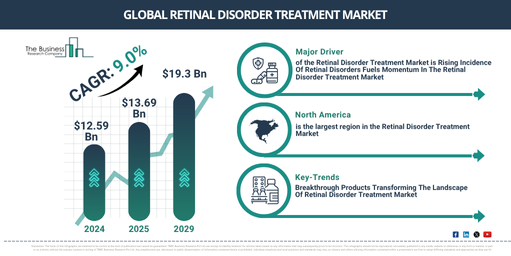
    The market for treating retinal disorders has seen robust growth recently. It is projected to expand from $12.59 billion in 2024 to $13.69 billion in 2025, with a Compound Annual Growth Rate (CAGR) of 8.7%. The past growth can be credited to several factors such as the advent of anti-VEGF therapies, an aging population, a rise in retinal disorder cases, enhanced early detection diagnostic tools, raised awareness and screening initiatives, and wider accessibility to healthcare services.

    Predictions show a robust upswing in the retinal disorder treatment market size over the forthcoming years, potentially reaching $19.3 billion by 2029 with a compound annual growth rate (CAGR) of 9.0%. Contributing factors to this upward trend during the projection period may include the focus on patient-oriented retinal healthcare, an increase in worldwide healthcare spending, heightened attention on combined therapies for retinal ailments, an uptick in at-home retinal disorder monitoring, a rise in use of implantable tools for retinal treatments, and the embracement of regenerative medical practices in retinal therapy. Forecasts for the period also suggest key trends like progress in eye imaging technologies, the introduction of minor surgical procedures, the application of artificial intelligence in diagnosis, improved drug delivery systems, the incorporation of virtual reality in retinal recuperation, collaborative efforts between research establishments and pharmaceutical firms, and the progression of gene therapies in tackling inherited retinal disorders.

    Download The Free Sample Report Here:

    https://www.thebusinessresearchcompany.com/sample.aspx?id=12701&type=smp

    #Which Factors Are Currently Driving The Growth Of The Retinal Disorder Treatment Market?

    As the occurrence of retinal diseases increases, the retinal disorder treatment market is forecasted to expand. Retinal diseases, which affect the retina and the light-sensitive tissue at the back of the eye leading to vision loss or substantial visual impairment, can be controlled and their symptoms reduced with treatments such as laser therapy, vitrectomy, and retinal implants. For example, in January 2023, the International Agency for the Prevention of Blindness, an organization based in the UK, predicted that age-related macular degeneration (AMD) would account for 5% of global blindness. Moreover, AMD is expected to influence around 288 million individuals by 2040. Thus, the escalating occurrence of retinal disorders is fueling the growth of the market for retinal disorder treatments.

    How Is The Global Retinal Disorder Treatment Market Structured In Terms Of Segments?

    The retinal disorder treatment market covered in this report is segmented –

    1) By Type: Macular Degeneration, Diabetic Retinopathy, Other Types

    2) By Dosage Form: Gels, Eye Solutions, Capsules And Tablets, Eye Drops, Ointments

    3) By Distribution Channel: Hospital Pharmacy, Online Pharmacy, Retail Pharmacy

    Subsegments:

    1) By Macular Degeneration: Dry Macular Degeneration, Wet Macular Degeneration

    2) By Diabetic Retinopathy: Non-Proliferative Diabetic Retinopathy, Proliferative Diabetic Retinopathy

    3) By Other Types: Retinal Detachment, Retinitis Pigmentosa, Uveitis, Other Retinal Disorders

    What Trends Are Currently Influencing Growth In The Retinal Disorder Treatment Market?

    One significant trend emerging in the rare kidney disease market is product innovation. Major contenders in the market focus on producing novel products as a means of solidifying their market position. For example, in September 2022, STADA Arzneimittel AG, a company based in Germany specializing in generics, specialty pharma, and over-the-counter consumer healthcare products, launched Kinpeygo (budesonide), making it the first official EU-authorised drug for the rare kidney condition known as immunoglobulin A nephropathy (IgAN). The EU’s first and only approved treatment for primary IgAN is these modified-release budesonide capsules, a scarce, progressive autoimmune kidney disease where there’s a high unfulfilled need, with around 25%-30% of patients eventually progressing to terminal kidney insufficiency necessitating dialysis or a kidney transplant.

    Who Are The Main Participants Shaping The Retinal Disorder Treatment Market Landscape?

    Major companies operating in the retinal disorder treatment market include Pfizer Inc., F. Hoffmann-La Roche Ltd., AbbVie Inc., Bayer AG, Novartis AG, Takeda Pharmaceutical Company Limited, Regeneron Pharmaceuticals Inc., Bausch Health Companies Inc., Genentech Inc., Santen Pharmaceutical Co. Ltd., Apellis Pharmaceuticals Inc., Kubota Pharmaceutical Holdings Co. Ltd, Alimera Sciences Inc., Ocular Therapeutix Inc., EyePoint Pharmaceuticals Inc., Adverum Biotechnologies Inc., Kodiak Sciences Inc., Acucela Inc., IVERIC bio Inc., Oxurion NV, Graybug Vision Inc., Icon Bioscience Inc., Clearside Biomedical Inc., Aerpio Pharmaceuticals Inc., Neurotech Pharmaceuticals Inc., Ophthotech Corporation, Opthea Limited, PanOptica Inc., ThromboGenics NV

    Get The Full Report Here:

    https://www.thebusinessresearchcompany.com/report/retinal-disorder-treatment-global-market-report

    Which Region Currently Holds The Largest Share In The Retinal Disorder Treatment Market?

    North America was the largest region in the retinal disorder treatment market in 2024. Asia-Pacific is expected to be the fastest-growing region in the forecast period. The regions covered in the retinal disorder treatment market report are Asia-Pacific, Western Europe, Eastern Europe, North America, South America, Middle East, Africa

    Request For A Customized Report:

    https://www.thebusinessresearchcompany.com/customise?id=12701&type=smp

    About The Business Research Company:

    With over 15000+ reports from 27 industries covering 60+ geographies, The Business Research Company has built a reputation for offering comprehensive, data-rich research and insights. Armed with 1,500,000 datasets, the optimistic contribution of in-depth secondary research, and unique insights from industry leaders, you can get the information you need to stay ahead in the game.

    Get in touch with us:

    The Business Research Company: https://www.thebusinessresearchcompany.com/

    Americas +1 310-496-7795

    Asia +44 7882 955267 & +91 8897263534

    Europe +44 7882 955267

    Email us at info@tbrc.info

    Follow us on:

    LinkedIn: https://in.linkedin.com/company/the-business-research-company

    YouTube: https://www.youtube.com/channel/UC24_fI0rV8cR5DxlCpgmyFQ

    Global Market Model: https://www.thebusinessresearchcompany.com/global-market-model
  • Industry Forecast: Neurointerventional Devices Market to Generate $3.65  Billion Revenue by 2029

    Industry Forecast: Neurointerventional Devices Market to Generate $3.65 Billion Revenue by 2029

    Claim your 30% discount on Global Market Reports with code ONLINE30. Limited time only.

    Claim your 30% discount on Global Market Reports with code ONLINE30. Limited time only.

    What CAGR Is Anticipated for the Neurointerventional Devices Market Through 2029?

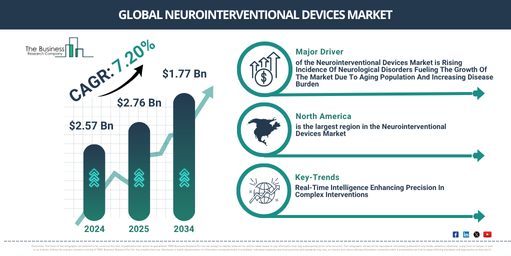
    The market size of neurointerventional devices has recently seen a significant increase. The market is projected to expand from $2.57 billion in 2024 to $2.76 billion in 2025, yielding a compound annual growth rate (CAGR) of 7.5%. Factors such as heightened awareness about early diagnosis, a rising number of speciality centers for neurointervention, a surge in lifestyle diseases like hypertension and diabetes that increase the demand for these devices, a desire for enhanced patient results, and increased backing from public and private health entities have all contributed to the historic growth.

    Expectations are high for robust growth in the neurointerventional devices market over the next few years, with projections of it expanding to $3.65 billion by 2029 at a compound annual growth rate (CAGR) of 7.2%. The forecasted growth can be attributed to an increased inclination towards image-guided surgeries, escalations in neurovascular research funding, approval for new neurointerventional products, increasing collaborations and purchases among device producers, and a rising requirement for tailor-made treatment methods. The forecast period could also experience notable trends like improvements in robot-assisted neurointerventions, advancements in the design of catheters and stents, an enhanced incorporation of artificial intelligence in diagnostic imaging, the integration of augmented reality into surgical planning, and innovative developments in embolization and thrombectomy techniques.

    Download The Free Sample Report Here:

    https://www.thebusinessresearchcompany.com/sample.aspx?id=25846&type=smp

    What Market Forces Are Driving The Neurointerventional Devices Sector In 2025 And Beyond?

    The neurointerventional devices market is poised for expansion due to the increasing prevalence of neurological disorders. These disorders, which disturb normal functioning, affect the brain, spinal cord, or nerves. The rise in neurological disorders is attributed to the aging global population, given that the risk of neurodegenerative conditions heightens with age, due to the natural deterioration of brain function and cell repair mechanisms. Neurointerventional devices provide a way to diagnose and treat these disorders through minimally invasive procedures. They can effectively manage conditions such as brain aneurysms, strokes, and vascular malformations, reducing risk, recovery time and enhancing patient outcomes. For example, a report by the Alzheimer’s Association, a US-based nonprofit voluntary health organisation, stated that the number of Americans aged 65 and older diagnosed with Alzheimer’s dementia rose from 6.5 million in 2022 to 6.9 million in April 2024. Consequently, the growing prevalence of neurological disorders is fuelling the expansion of the neurointerventional devices market.

    How Is The Global Neurointerventional Devices Market Categorized By Segments?

    The neurointerventional devices market covered in this report is segmented –

    1) By Product: Embolic Coils, Carotid Stents, Intracranial Stents, Neurovascular Thrombectomy, Embolic Protection Device, Flow Diverters Device, Intrasaccular Device, Other Products

    2) By Indication: Brain Aneurysm, Stroke, Other Indications

    3) By Technique: Neurothrombectomy Procedure, Cerebral Angiography, Stenting, Coiling Procedures, Flow Disruption

    4) By End User: Hospitals, Ambulatory Surgical Centers, Specialty Clinics, Research Institutes

    Subsegments:

    1) By Embolic Coils: Bare Platinum Coils, Coated Or Modified Coils, Complex-Shaped Coils, Detachable Coils

    2) By Carotid Stents: Open-Cell Stents, Closed-Cell Stents, Hybrid-Cell Stents, Drug-Eluting Stents

    3) By Intracranial Stents: Self-Expanding Stents, Balloon-Expandable Stents, Drug-Eluting Stents

    4) By Neurovascular Thrombectomy Devices: Stent Retrievers, Aspiration Catheters, Combined Thrombectomy Systems

    5) By Embolic Protection Devices: Distal Filters, Proximal Occlusion Devices, Distal Occlusion Devices

    6) By Flow Diverters Devices: Braided Flow Diverters, Dual-Layer Flow Diverters, Coated Flow Diverters

    7) By Intrasaccular Devices: Woven Mesh Implants, Expandable Mesh Baskets, Flow Disrupting Implants

    8) By Other Products: Microcatheters, Guidewires, Balloon Catheters, Distal Access Catheters

    What Upcoming Trends Are Expected To Impact The Neurointerventional Devices Market Globally?

    Prominent companies in the neurointerventional devices marketplace are prioritizing advancements in technology like AI-powered navigation systems. The purpose of this shift is to amplify procedure accuracy, diminish the time taken for interventions, and enhance the results of intricate neurovascular treatments for patients. AI-supported navigation systems engage cutting-edge technological solutions using AI algorithms in real time to control neurointerventional processes. The systems scrutinize medical imaging data for improved visualization, automate the planning of pathways, and aid in the exact navigation of devices amidst complex cranial vascular structures. This is intended to enhance precision, lessen procedure time, and mitigate potential risks. For instance, Medtronic plc, a medical technology firm based in Ireland, unveiled the Medtronic Neurovascular Co Lab Platform in October 2022. This scheme encourages cooperation between startups, doctors, and institutions via a continuously active virtual portal for idea contributions. These are then assessed and progressed utilizing Medtronic’s expertise, financial backing, and networks to swiftly cultivate promising solutions for neurovascular treatments and enhance patient results.

    Which Firms Are Considered Leaders In The Neurointerventional Devices Market Space?

    Major companies operating in the neurointerventional devices market are Johnson & Johnson, Abbott Laboratories, Medtronic plc, Stryker Corporation, Boston Scientific Corporation, Terumo Corporation, Kaneka Corporation, Cook Medical LLC, Integra LifeSciences Holdings Corporation, Merit Medical Systems Inc., MicroPort Scientific Corporation, Penumbra Inc., Asahi Intecc Co. Ltd., MicroVention Inc., Phenox GmbH, Balton Sp. z o.o., Zylox-Tonbridge Medical Technology Co. Ltd., Balt Group SAS, Veiva Scientific Co. Ltd., InspireMD Inc.

    Get The Full Report Here:

    https://www.thebusinessresearchcompany.com/report/neurointerventional-devices-global-market-report

    What Role Do Regional Policies And Investments Play In Neurointerventional Devices Market Expansion?

    North America was the largest region in the neurointerventional market in 2024. The regions covered in the neurointerventional devices market report are Asia-Pacific, Western Europe, Eastern Europe, North America, South America, Middle East, Africa.

    Request For A Customized Report:

    https://www.thebusinessresearchcompany.com/customise?id=25846&type=smp

    About The Business Research Company:

    With over 15000+ reports from 27 industries covering 60+ geographies, The Business Research Company has built a reputation for offering comprehensive, data-rich research and insights. Armed with 1,500,000 datasets, the optimistic contribution of in-depth secondary research, and unique insights from industry leaders, you can get the information you need to stay ahead in the game.

    Get in touch with us:

    The Business Research Company: https://www.thebusinessresearchcompany.com/

    Americas +1 310-496-7795

    Asia +44 7882 955267 & +91 8897263534

    Europe +44 7882 955267

    Email us at info@tbrc.info

    Follow us on:

    LinkedIn: https://in.linkedin.com/company/the-business-research-company

    YouTube: https://www.youtube.com/channel/UC24_fI0rV8cR5DxlCpgmyFQ

    Global Market Model: https://www.thebusinessresearchcompany.com/global-market-model
  • Global Retinal Biologics Market Landscape: Trends and Market Share to 2029

    Global Retinal Biologics Market Landscape: Trends and Market Share to 2029

    Claim your 30% discount on Global Market Reports with code ONLINE30. Limited time only.

    Claim your 30% discount on Global Market Reports with code ONLINE30. Limited time only.

    How Will the Retinal Biologics Market Evolve in Terms of Growth and Size by 2029?

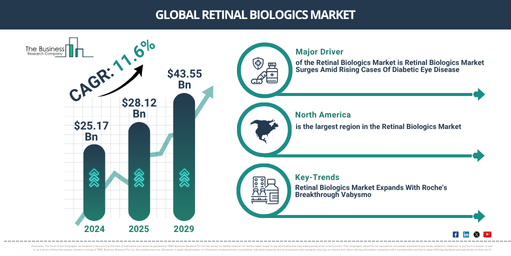
    In recent times, there has been a significant expansion in the size of the retinal biologics market. The market, valued at $25.17 billion in 2024, is forecasted to reach $28.12 billion in 2025, indicating a compound annual growth rate (CAGR) of 11.7%. This growth during the historic period is primarily due to the rising prevalence of retinal disorders, an aging global population, growing consciousness and early disease detection, advancements in healthcare infrastructure, and an increase in healthcare spending.

    Expectations are high for substantial growth in the retinal biologics market size in the upcoming years. Predictions show it will reach $43.55 billion in 2029, rising at a compound annual growth rate (CAGR) of 11.6%. The projected growth during the forecast period is due to factors such as increasing therapeutic applications, the rise of personalized medicine, growth in emerging markets, a robust biologics pipeline, collaborations and partnerships, and government initiatives and support. The major developments to watch during this forecast period include non-invasive delivery methods, utilization of real-world evidence, an expansion of indications, regulatory pathway streamlining, and a focus on patient-centric outcomes.

    Download The Free Sample Report Here:

    https://www.thebusinessresearchcompany.com/sample.aspx?id=11911&type=smp

    What factors are expected to fuel Retinal Biologics market growth in the coming years?

    The forecasted expansion of the retinal biologics market is attributed to the escalating occurrence of diabetic eye disease. As a consequence of diabetes, this disorder impairs the eyes, resulting in vision impairment and blindness among those diagnosed. Retinal biologics offer hope for more precise and successful treatments, providing early intervention and enhanced results to prevent vision loss linked to diabetic eye disease. For example, data from the Australian Bureau of Statistics in December 2023 revealed that, in 2022, diabetes affected 5.3% of the Australian population, equating to around 1.3 million individuals. This represented a significant surge from the previous 3.3%. Consequently, the escalating rate of diabetic eye disease is propelling the retinal biologics market’s expansion.

    What Are The Key Findings From The Segmentation Analysis Of The Retinal Biologics Market?

    The retinal biologics market covered in this report is segmented –

    1) By Drug Class: Vascular Endothelial Growth Factor (VEGF)-A Antagonist, Tumor Necrosis Factor (TNF)-A Inhibitor

    2) By Indication: Macular Degeneration, Diabetic Retinopathy, Uveitis, Diabetic Macular Edema, Other Indications

    3) By Distribution Channel: Hospitals, Pharmacies, Specialty Clinics, Online Pharmacies, Other Distribution Channels

    Subsegments:

    1) By Vascular Endothelial Growth Factor (VEGF)-A Antagonist: Monoclonal Antibodies, Small Molecule Inhibitors

    2) By Tumor Necrosis Factor (TNF)-A Inhibitor: Monoclonal Antibodies, Fusion Proteins

    Which Trends Are Expected To Shape The Future Of The Retinal Biologics Market?

    The prominent players in the pruritus therapeutics market are concentrating on creating specialized treatments for specific patient demographics and rare diseases, such as the non-systemic ileal bile acid transport inhibitor which aims to provide personal, customized medicine addressing unresolved medical requirements. This specific medication targets the absorption of bile acid in the intestines without substantially impacting the systemic circulation, hence limiting potential negative effects. For example, in June 2023, Ipsen, a pharmaceutical company based in France, obtained approval from the Food and Drug Administration (FDA), a U.S based federal agency under the Department of Health and Human Services, for their medication Bylvay (odevixibat). It is used to treat cholestatic pruritus in ALGS patients who are 12 months old and above. Bylvay, an IBATi, is a daily drug with limited systemic exposure and is the first ever medication approved for progressive familial intrahepatic cholestasis (PFIC)-related cholestatic pruritus in the United States. Prior to this, it had been accepted for PFIC treatment in Europe and can currently be prescribed for eligible ALGS patients.

    What Are The Most Active Companies In The Retinal Biologics Market Today?

    Major companies operating in the retinal biologics market include Regeneron Pharmaceuticals Inc., AbbVie Inc., MeiraGTx Limited, Oxurion NV, Novartis AG, Amgen Inc., Spark Therapeutics Inc., Bayer AG, Bausch Health Companies Inc., Merck & Co. Inc., Santen Pharmaceutical Co. Ltd., Pfizer Inc., Boehringer Ingelheim, Eyenovia Inc., EyePoint Pharmaceuticals Inc., Iveric Bio Inc., Kodiak Sciences Inc., Aerie Pharmaceuticals Inc., Alimera Sciences Inc., Ocular Therapeutix Inc., Acucela Inc., Clearside Biomedical Inc., Ophthotech Corporation, Xcovery Holdings, Athenex Inc., Fidia Farmaceutici S.p.A, Eton Pharmaceuticals Inc.

    Get The Full Report Here:

    https://www.thebusinessresearchcompany.com/report/retinal-biologics-global-market-report

    Which Regional Markets Are Attracting The Most Investment In Retinal Biologics?

    North America was the largest region in the retinal biologics market in 2024. Asia-Pacific is expected to be the fastest-growing region in the forecast period. The regions covered in the retinal biologics market report are Asia-Pacific, Western Europe, Eastern Europe, North America, South America, Middle East, Africa.

    Request For A Customized Report:

    https://www.thebusinessresearchcompany.com/customise?id=11911&type=smp

    About The Business Research Company:

    With over 15000+ reports from 27 industries covering 60+ geographies, The Business Research Company has built a reputation for offering comprehensive, data-rich research and insights. Armed with 1,500,000 datasets, the optimistic contribution of in-depth secondary research, and unique insights from industry leaders, you can get the information you need to stay ahead in the game.

    Get in touch with us:

    The Business Research Company: https://www.thebusinessresearchcompany.com/

    Americas +1 310-496-7795

    Asia +44 7882 955267 & +91 8897263534

    Europe +44 7882 955267

    Email us at info@tbrc.info

    Follow us on:

    LinkedIn: https://in.linkedin.com/company/the-business-research-company

    YouTube: https://www.youtube.com/channel/UC24_fI0rV8cR5DxlCpgmyFQ

    Global Market Model: https://www.thebusinessresearchcompany.com/global-market-model

  • Neurogenomics Market Revenue Outlook: Strategic Insights and Forecast to 2029

    Neurogenomics Market Revenue Outlook: Strategic Insights and Forecast to 2029

    Claim your 30% discount on Global Market Reports with code ONLINE30. Limited time only.

    Claim your 30% discount on Global Market Reports with code ONLINE30. Limited time only.

    What Are the Latest Market Insights for the Neurogenomics Industry?

    In the last few years, the neurogenomics market has experienced a rapid expansion. The market value is projected to increase from $1.31 billion in 2024 to $1.50 billion in 2025, exhibiting a compound annual growth rate (CAGR) of 15.0%. This expansion during the historic period was propelled by an increased demand for genetic testing for neurological conditions, enhanced research on the link between the brain, behavior, and genome, an escalation in the prevalence of neurodegenerative ailments, a rise in funding for neuroscience research, and an increase in both biobanks and genomic databases.

    In the coming years, the neurogenomics market is predicted to experience a quick proliferation. It is projected to amplify to $2.60 billion by 2029 at a compound annual growth rate (CAGR) of 14.7%. The upward trend during the forecast period can be linked to the rising interest in customized treatments for mental health conditions, an increment in the utilization of direct-to-consumer neurogenetic testing, higher acceptance of multi-omics strategies, increased precision neurology initiatives, and a growing uptake of tailored therapies. The projection period sees key tendencies like the inception of artificial intelligence-powered genomic analysis, the creation of non-invasive diagnostic platforms, the amalgamation of multi-omics strategies, the integration of genomics into precision neurology, and advancements in neurodegenerative disease modeling.

    Download The Free Sample Report Here:

    https://www.thebusinessresearchcompany.com/sample.aspx?id=25845&type=smp

    What Forces Are Driving The Growth Of The Neurogenomics Industry?

    The neurogenomics market is anticipated to experience significant growth due to the increasing incidence of neurological diseases. These medical conditions, which can affect the brain, spinal cord, or nerves, can cause symptoms like muscle weakness, seizures, pain, or cognitive impairments. Lifestyle factors like poor diet, insufficient exercise, chronic stress, and greater exposure to environmental toxins are primarily responsible for the high prevalence of neurological disorders. Neurogenomics offers a more comprehensive understanding of the genetic causes behind brain function and dysfunction, paving the way for accurate diagnosis and specific treatments for neurological disorders. For example, the Alzheimer’s Association, a nonprofit health organization in the US, reported in March 2023 that around 6.7 million Americans aged 65 and older were living with Alzheimer’s dementia. This statistic is expected to increase to 13.8 million by 2060. Hence, the growing incidence of neurological diseases is fueling the expansion of the neurogenomics market.

    What Is The Overview Of Market Segmentation In The Neurogenomics Industry?

    The neurogenomics market covered in this report is segmented –

    1) By Offering: Next-Generation Sequencing, Polymerase Chain Reaction, Microarray, Software And Services

    2) By Application: Variant Discovery, Research Applications, Target Identification, Transcription Factor Binding Analysis, Functional Studies, Clinical Applications

    3) By End User: Pharmaceutical And Biotechnology Companies, Academic And Research Institutes, Hospitals And Diagnostic Laboratories

    Subsegments:

    1) By Next-Generation Sequencing: Whole Genome Sequencing, Whole Exome Sequencing, Targeted Sequencing, Ribonucleic Acid Sequencing

    2) By Polymerase Chain Reaction: Real-Time Polymerase Chain Reaction, Reverse Transcription Polymerase Chain Reaction, Digital Polymerase Chain Reaction

    3) By Microarray: Deoxyribonucleic Acid Microarray, Ribonucleic Acid Microarray, Protein Microarray

    4) By Software And Services: Data Analysis And Interpretation Software, Genomic Data Management Tools, Custom Services, Cloud-Based Platforms And Reporting Tools

    How Are Key Trends Driving Expansion In The Neurogenomics Industry?

    Prominent firms in the neurogenomics market are concentrating on the development of sophisticated solutions like whole genome sequencing platforms. These advancements are designed to improve the diagnosis and comprehension of intricate neurological disorders. Whole genome sequencing platforms serve as devices for examining a person’s full DNA sequence, therefore uncovering genetic aspects associated with neurological conditions. For instance, Centogene N.V., a German firm that specializes in diagnosing and researching rare diseases, introduced CentoGenome in April 2023. This is universally esteemed as the most extensive whole-genome sequencing (WGS) solution for diagnosing rare and neurodegenerative conditions. The platform uses PCR-free technology for high-quality, impartial sequencing across sophisticated genetic regions. It further boosts variant detection with an advanced bioinformatics pipeline and specialist interpretation, pinpointing almost all illness-causing variants in a single test. It also delivers continuous diagnostic support throughout a patient’s life, including free variant reclassification and confirmatory testing as new scientific data emerges.

    Who Are The Primary Players Operating Across The Global Neurogenomics Market?

    Major companies operating in the neurogenomics market are F. Hoffmann-La Roche Limited, Thermo Fisher Scientific Incorporated, Danaher Corporation, Quest Diagnostics Incorporated, Eurofins Scientific SE, Agilent Technologies Inc., Illumina Inc., Revvity Inc., QIAGEN N.V., Myriad Genetics Inc., GeneDx LLC, Fulgent Genetics Inc., Oxford Nanopore Technologies Plc, Vigil Neuroscience Inc., PacBio, MedGenome Labs Ltd., MGI Tech Co. Ltd., Centogene N.V., Variantyx Inc., Neurogene.

    Get The Full Report Here:

    https://www.thebusinessresearchcompany.com/report/neurogenomics-global-market-report

    Which Region Offers The Most Growth Potential For The Neurogenomics Market Through 2029?

    North America was the largest region in the neurogenomics market in 2024. Asia-Pacific is expected to be the fastest-growing region in the forecast period. The regions covered in the neurogenomics market report are Asia-Pacific, Western Europe, Eastern Europe, North America, South America, Middle East, Africa.

    Request For A Customized Report:

    https://www.thebusinessresearchcompany.com/customise?id=25845&type=smp

    About The Business Research Company:

    With over 15000+ reports from 27 industries covering 60+ geographies, The Business Research Company has built a reputation for offering comprehensive, data-rich research and insights. Armed with 1,500,000 datasets, the optimistic contribution of in-depth secondary research, and unique insights from industry leaders, you can get the information you need to stay ahead in the game.

    Get in touch with us:

    The Business Research Company: https://www.thebusinessresearchcompany.com/

    Americas +1 310-496-7795

    Asia +44 7882 955267 & +91 8897263534

    Europe +44 7882 955267

    Email us at info@tbrc.info

    Follow us on:

    LinkedIn: https://in.linkedin.com/company/the-business-research-company

    YouTube: https://www.youtube.com/channel/UC24_fI0rV8cR5DxlCpgmyFQ

    Global Market Model: https://www.thebusinessresearchcompany.com/global-market-model
  • Comprehensive Forecast: Respules Market Share, Growth, and Opportunities Through 2029

    Comprehensive Forecast: Respules Market Share, Growth, and Opportunities Through 2029

    Claim your 30% discount on Global Market Reports with code ONLINE30. Limited time only.

    Claim your 30% discount on Global Market Reports with code ONLINE30. Limited time only.

    What CAGR Is Anticipated for the Respules Market Through 2029?

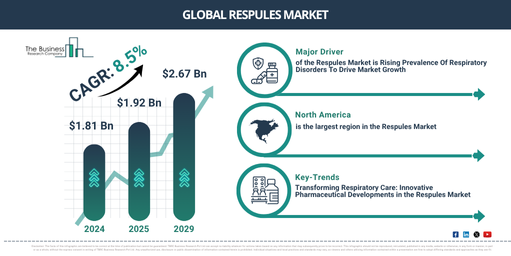
    In the past few years, the respules market size has seen substantial growth. The market is predicted to grow from a value of $1.81 billion in 2024 to reach a size of $1.92 billion in 2025, with a compound annual growth rate (CAGR) of 6.6%. Reasons for this growth in the historic period include endorsements by physicians, improvements in healthcare access, advances in clinical research and development, increased adoption of inhalation therapy, awareness initiatives, and expansion in the pharmaceutical industry.

    In the coming years, the respules market is projected to experience robust growth. It’s anticipated to expand to $2.67 billion in 2029, with a compound annual growth rate (CAGR) of 8.5%. This growth during the forecast period is likely due to breakthroughs in drug formulations, biologic therapies, smart inhalers, connectivity, personalized medicine strategies, telemedicine, and remote care. Regulatory endorsements for inhalation therapy also contribute to this growth. Major trends for the forecast period include sustainable manufacturing procedures, remote tracking and adherence tools, patient-focused inhalation solutions, respiratory inhalation vaccinations, and customisable dosage respules.

    Download The Free Sample Report Here:

    https://www.thebusinessresearchcompany.com/sample.aspx?id=12497&type=smp

    What Market Forces Are Driving The Respules Sector In 2025 And Beyond?

    The acceleration of the respules market is predicted to be driven by the increased prevalence of respiratory diseases. These diseases and conditions that affect the lungs include tuberculosis, lung cancer, pulmonary hypertension, mesothelioma, cystic fibrosis, emphysema, and asthma. Respules are used to treat many of these conditions, including bronchial asthma, emphysema, spasmodic stenosis, and excessive bronchial mucus production. The Australian Bureau of Statistics, a government agency in Australia, reported in December 2023 that 2.5% of the population, or 638,100 people, had Chronic Obstructive Pulmonary Disease (COPD) in 2022. The occurrence was roughly the same among males (2.4%) and females (2.6%). Daily smokers were far more likely to have COPD (8.1%) compared with former smokers (4.4%) and those who had never smoked (1.6%). As a result, the increasing prevalence of respiratory diseases is fueling the expansion of the respules market.

    How Is The Global Respules Market Categorized By Segments?

    The respules market covered in this report is segmented –

    1) By Drug Type: Budesonide, Albuterol, Ipratropium Bromide, Salbutamol Sulphate And Ipratropium Bromide

    2) By Dosage And Strength: 0.25 mg/2 mL, 0.5 mg/2 mL, 1mg/2 mL, Other Dosage And Strength Types

    3) By Distribution Channel: Hospital Pharmacy, Retail Pharmacy, Online Pharmacy, Other Distribution Channels

    Subsegments:

    1) By Budesonide: Budesonide Respules 0.25 mg, Budesonide Respules 0.5 mg, Budesonide Respules 1 mg

    2) By Albuterol: Albuterol Sulfate Respules 0.083%, Albuterol Sulfate Respules 0.5%

    3) By Ipratropium Bromide: Ipratropium Bromide Respules 0.02%, Ipratropium Bromide Respules 0.5 mg

    4) By Salbutamol Sulphate And Ipratropium Bromide: Salbutamol Sulphate Respules 0.083%, Salbutamol Sulphate Respules 2.5 mg

    What Long-Term Trends Are Likely To Affect The Respules Market?

    Key players in the proton pump inhibitors market are directing their attention to technological enhancements like the Rabeprazole + Levosulpiride SR Capsules to improve acid-related disorder treatments. The Rabeprazole + Levosulpiride SR Capsules, a cutting-edge medication, has been developed to treat gastroenterological conditions including gastroesophageal reflux disease (GERD) and irritable bowel syndrome (IBS). In June 2024, for example, Akums Drugs & Pharmaceuticals, a pharmaceutical firm based in India, unveiled their Rabeprazole + Levosulpiride SR Capsules. These Sustained Release capsules combine both medicines and are used for treating gastrointestinal disorders associated with excessive stomach acid and impaired digestive functionality, such as GERD, functional dyspepsia, among others.

    Which Firms Are Considered Leaders In The Respules Market Space?

    Major companies operating in the respules market include AstraZeneca PLC, GlaxoSmithKline PLC, Teva Pharmaceutical Industries Ltd., Sandoz International GmbH, Macleods Pharmaceuticals Ltd., Sun Pharmaceutical Industries Ltd., Aurobindo Pharma Ltd., Cipla Limited, Intas Pharmaceuticals Ltd., Lupin Limited, Cadila Healthcare Limited, Torrent Pharmaceuticals Ltd., Glenmark Pharmaceuticals Ltd., Jubilant Life Sciences Limited, Systopic Laboratories Pvt. Ltd., Koye Pharmaceuticals Pvt. Ltd., Amanta Healthcare Ltd., Lucky Pharmaceuticals, Medicamen Biotech Limited, Axa Parenterals Ltd., Zuche Pharmaceuticals Pvt. Ltd., Jaksh Pharma, Biochemix Healthcare Private Limited, Intra Life Pvt. Ltd., Wellona Pharmaceuticals Private Limited, Percept Pharma Limited, Eurocrit Labs, Iskon Remedies

    Get The Full Report Here:

    https://www.thebusinessresearchcompany.com/report/respules-global-market-report

    What Role Do Regional Policies And Investments Play In Respules Market Expansion?

    North America was the largest region in the respules market in 2024. Asia-Pacific is expected to be the fastest-growing region in the forecast period. The regions covered in the respules market report are Asia-Pacific, Western Europe, Eastern Europe, North America, South America, Middle East, Africa

    Request For A Customized Report:

    https://www.thebusinessresearchcompany.com/customise?id=12497&type=smp

    About The Business Research Company:

    With over 15000+ reports from 27 industries covering 60+ geographies, The Business Research Company has built a reputation for offering comprehensive, data-rich research and insights. Armed with 1,500,000 datasets, the optimistic contribution of in-depth secondary research, and unique insights from industry leaders, you can get the information you need to stay ahead in the game.

    Get in touch with us:

    The Business Research Company: https://www.thebusinessresearchcompany.com/

    Americas +1 310-496-7795

    Asia +44 7882 955267 & +91 8897263534

    Europe +44 7882 955267

    Email us at info@tbrc.info

    Follow us on:

    LinkedIn: https://in.linkedin.com/company/the-business-research-company

    YouTube: https://www.youtube.com/channel/UC24_fI0rV8cR5DxlCpgmyFQ

    Global Market Model: https://www.thebusinessresearchcompany.com/global-market-model
  • Future Projections: Nerve Conduit, Nerve Wrap, and Nerve Graft Repair Product Market to Reach $3.30  Billion by 2029 at 11.5% CAGR

    Future Projections: Nerve Conduit, Nerve Wrap, and Nerve Graft Repair Product Market to Reach $3.30 Billion by 2029 at 11.5% CAGR

    Claim your 30% discount on Global Market Reports with code ONLINE30. Limited time only.

    Claim your 30% discount on Global Market Reports with code ONLINE30. Limited time only.

    What Are the Forecasted Growth Rate and Market Size of the Nerve Conduit, Nerve Wrap, and Nerve Graft Repair Product Market?

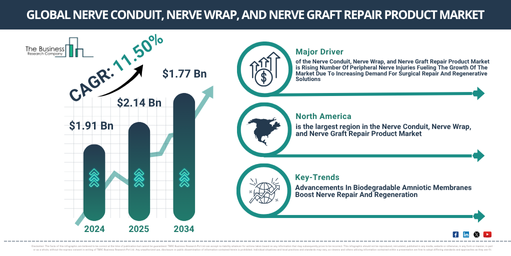
    The market size for products including nerve conduits, nerve wraps, and nerve graft repairs has seen significant growth in recent years. The expectation is for this market to escalate from a valuation of $1.91 billion in 2024 to $2.14 billion in 2025, which represents a compound annual growth rate (CAGR) of 11.8%. This historical growth is largely due to the increasing frequency of peripheral nerve injuries, a rise in the elderly population, an elevation in the number of surgeries related to nerve repairs, enhanced awareness among healthcare professionals, and an increase in diabetes-associated neuropathies.

    The market for nerve conduit, nerve wrap, and nerve graft repair products will witness swift expansion in the approaching years, potentially accruing to a sum of $3.30 billion by 2029 with a compound annual growth rate of 11.5%. Factors contributing to this projected growth over the forecasting period include the rising trend of bio-implant use, an increased preference for minimally invasive surgery, booming investments in nerve regeneration studies, growing number of regulatory consents for innovative products, and an escalating spend on healthcare within developing markets. Key upcoming trends for this period consist of bioactive molecule integration in nerve repair items, creation of 3D-printed nerve conduits, implementation of stem cell-derived grafts, advancements in biodegradable polymers, and inception of synthetic nerve wraps boasting better elasticity.

    Download The Free Sample Report Here:

    https://www.thebusinessresearchcompany.com/sample.aspx?id=25844&type=smp

    Which Factor Is Shaping The Future Of The Nerve Conduit, Nerve Wrap, and Nerve Graft Repair Product Market?

    The anticipated surge in surgeries is predicted to stimulate the expansion of the market for nerve conduit, nerve wrap, and nerve graft repair products. Defined as medical operations involving the use of specific tools to diagnose, rectify, or treat various bodily health problems, surgeries are seeing a rise primarily due to the backlog triggered by COVID-19. This virus led to numerous elective surgical procedures being postponed, they are now being realized, resulting in a spike in surgical volumes across healthcare systems. These nerve repair products play a vital role in surgeries, helping to guide nerve repair and creating a safe and structured space for improving nerve function recovery. As an illustration, in December 2023, the Health Security Agency, a government agency in the UK, indicated between the fiscal years 2021 and 2022, a 10.2% rise was seen in the total procedures noted under compulsory orthopedic surveillance, escalating from 92,608 operations. Therefore, this surge in surgical procedures is set to fuel the expansion of the nerve conduit, nerve wrap, and nerve graft repair product market.

    What Is The Segment-Wise Breakdown Of The Nerve Conduit, Nerve Wrap, and Nerve Graft Repair Product Market?

    The nerve conduit, nerve wrap, and nerve graft repair product market covered in this report is segmented –

    1) By Product Type: Nerve Conduit, Nerve Wrap, Nerve Grafts

    2) By Material: Natural Materials, Synthetic Materials

    3) By Application: Neurology, Tissue Repair, Nerve Injury, Orthopedics, Regenerative Medicine

    4) By Distribution Channel: Direct Sales, Third-Party Distributors, Online Marketplaces

    5) By End User: Hospitals, Ambulatory Surgical Centers, Academic Research Institutions

    Subsegments:

    1) By Nerve Conduit: Biodegradable Nerve Conduits, Non-Biodegradable Nerve Conduits

    2) By Nerve Wrap: Collagen Nerve Wraps, Polyglactin-Based Nerve Wraps, Other Synthetic Nerve Wraps

    3) By Nerve Grafts: Autografts, Allografts, Xenografts, Synthetic Nerve Grafts

    Which Trends Are Expected To Shape The Future Of The Nerve Conduit, Nerve Wrap, and Nerve Graft Repair Product Market?

    Main market players in the field of nerve conduit, nerve wrap, and nerve graft repair products are focusing their efforts on creating advanced solutions, such as biodegradable amniotic membranes. These are seen as a progressive approach to encourage quicker tissue regeneration and integration when compared to synthetic alternatives. The biodegradable amniotic membrane is a biologically produced, naturally dissolvable tissue membrane that finds its application in the medical field, especially in wound healing, ophthalmology, and regenerative medicine. An example of this is the Avive+ Soft Tissue Matrix, a multi-layered, biodegradable amniotic membrane, launched by US biotech company Axogen Inc. in June 2024. It acts as a protective barrier and enhances effective healing in peripheral nerve procedures. Developed via Axogen’s proprietary MatriFlex technology, it preserves the native architecture and biological factors of the tissue to assist in healing. It’s designed for use in surgeries that require soft tissue protection or coverage, like nerve decompression, neurolysis, and revision procedures, where it aids in reducing inflammation and the development of scar tissue.

    Which Companies Hold The Largest Market Share In The Nerve Conduit, Nerve Wrap, and Nerve Graft Repair Product Sector?

    Major companies operating in the nerve conduit, nerve wrap, and nerve graft repair product market are Medtronic plc, Stryker Corporation, Boston Scientific Corporation, Collagen Matrix Inc., Synovis Micro Companies Alliance (Baxter), Toyobo Co. Ltd., Integra LifeSciences, Axogen Inc., AlloSource Inc., MyndTec, Phagenesis, Orthocell Ltd., Checkpoint Surgical, Monarch Medical (Checkpoint Surgical), Polyganics B.V., Auxilium Biotechnologies, VivaZome Therapeutics, Neurotex Ltd., Salumedica LLC

    Get The Full Report Here:

    https://www.thebusinessresearchcompany.com/report/nerve-conduit-nerve-wrap-and-nerve-graft-repair-product-global-market-report

    How Does Regional Performance Compare Across The Nerve Conduit, Nerve Wrap, and Nerve Graft Repair Product Industry?

    North America was the largest region in the nerve conduit, nerve wrap, and nerve graft repair product market in 2024. Asia-Pacific is expected to be the fastest-growing region in the forecast period. The regions covered in the nerve conduit, nerve wrap, and nerve graft repair product market report are Asia-Pacific, Western Europe, Eastern Europe, North America, South America, Middle East, Africa.

    Request For A Customized Report:

    https://www.thebusinessresearchcompany.com/customise?id=25844&type=smp

    About The Business Research Company:

    With over 15000+ reports from 27 industries covering 60+ geographies, The Business Research Company has built a reputation for offering comprehensive, data-rich research and insights. Armed with 1,500,000 datasets, the optimistic contribution of in-depth secondary research, and unique insights from industry leaders, you can get the information you need to stay ahead in the game.

    Get in touch with us:

    The Business Research Company: https://www.thebusinessresearchcompany.com/

    Americas +1 310-496-7795

    Asia +44 7882 955267 & +91 8897263534

    Europe +44 7882 955267

    Email us at info@tbrc.info

    Follow us on:

    LinkedIn: https://in.linkedin.com/company/the-business-research-company

    YouTube: https://www.youtube.com/channel/UC24_fI0rV8cR5DxlCpgmyFQ

    Global Market Model: https://www.thebusinessresearchcompany.com/global-market-model
  • 2025 Nebivolol Tablets Market Outlook: Opportunities, Growth Trends, and Strategic Analysis

    2025 Nebivolol Tablets Market Outlook: Opportunities, Growth Trends, and Strategic Analysis

    Claim your 30% discount on Global Market Reports with code ONLINE30. Limited time only.

    Claim your 30% discount on Global Market Reports with code ONLINE30. Limited time only.

    What Is the Estimated Industry Valuation for the Nebivolol Tablets Sector?

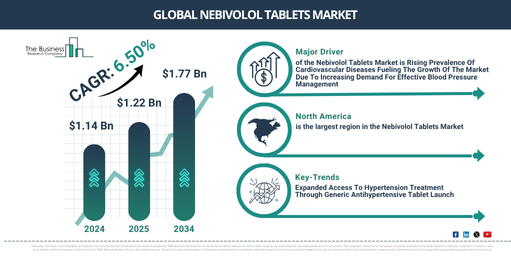
    In recent times, a robust growth has been observed in the market for nebivolol tablets. The market, which was valued at $1.14 billion in 2024, is projected to reach $1.22 billion in 2025, expanding at a compound annual growth rate (CAGR) of 6.7%. The historical growth can be linked to a global increase in hypertension cases, growing consciousness concerning heart health, a rising aging populace who are vulnerable to cardiac conditions, development of healthcare facilities in emerging areas, and a surge in the diagnosis rate for heart failure.

    Over the coming years, the nebivolol tablets market is projected to witness significant growth, with expectations to reach $1.57 billion by 2029 at a compound annual growth rate (CAGR) of 6.5%. Factors contributing to this predicted growth during the forecast period include increasing per capita healthcare expenditure, escalating prevalence of sedentary lifestyles which heighten cardiovascular risks, the continuous spread of urbanization linked to diet and stress-related factors, growth in comorbid conditions such as diabetes, and enhanced investment in public cardiovascular health initiatives. Key trends for the forecast period comprise continuous innovations in drug delivery technologies, the creation of extended-release formulations, the growing incorporation of digital health platforms for medication compliance, progress in manufacturing effectiveness and quality assurance, and a rising commitment to sustainable pharmaceutical packaging.

    Download The Free Sample Report Here:

    https://www.thebusinessresearchcompany.com/sample.aspx?id=25843&type=smp

    What Forces Are Driving The Growth Of The Nebivolol Tablets Market?

    The growing incidence of cardiovascular diseases is anticipated to drive up the nebivolol tablets market. Conditions such as heart attacks or strokes often result from cardiovascular diseases, which can involve a host of disorders affecting the heart and blood vessels. Sedentary lifestyles lead to limited physical activity, heightening the risk of health issues such as obesity, high blood pressure, and compromised heart function, thereby contributing to an upsurge in cardiovascular diseases. Nebivolol tablets play a fundamental role in reducing the odds of cardiovascular diseases by controlling blood pressure via selective beta-1 receptor blocking and boosting nitric oxide-enabled vasodilation, thus promoting blood circulation and lightening the load on the heart. In light of this, data from the Australian Institute of Health and Welfare in December 2024 showed that Australia registered 331,400 cardiovascular disease-related emergency-room visits (equivalent to 1,300 per 100,000 people) in the period spanning 2022-23. Among these cases, resuscitation was necessary for 5.2%, 44% classified as emergencies, 37% were immediately sought, 12% were fairly urgent, while 1.4% were not urgent. Owing to the uptick in cardiovascular diseases, the nebivolol tablets market is currently experiencing growth. Due to the burgeoning demand for cost-effective cardiovascular medications, the market is witnessing a shift towards generic drugs, positively impacting the nebivolol tablets market. Generic drugs, which essentially contain the same active ingredients and are administered in similar dosages and methods as branded versions, tend to hit the market under their chemical names once the patents of original drugs expiry. These drugs not only provide the same curative effect but also cost significantly less than their branded counterparts, thus allowing more individuals to afford them. Nebivolol tablets are part of this market, offering a budget-friendly yet equally efficacious alternative to brand-name drugs for hypertension and heart-related conditions. As per information from the Association for Accessible Medicines (AAM) in September 2024, savings earned from using biosimilars grew by over 30%, reaching $12.4 billion in 2023, while combined savings from both generics and biosimilars spiked by $37 billion to accumulate to $445 billion from $408 billion in 2022. Hence, the rise in demand for generic drugs is spurring the expansion of the nebivolol tablets market.

    How Is The Nebivolol Tablets Industry Segmented Across Key Parameters?

    The nebivolol tablets market covered in this report is segmented –

    1) By Dosage Form: Immediate Release Tablets, Extended Release Tablets

    2) By Strength: 2.5 Mg Tablets, 5 Mg Tablets, 10 Mg Tablets

    3) By Distribution Channel: Hospital Pharmacies, Retail Pharmacies, Online Pharmacies, Other Distribution Channels

    4) By Application: Hypertension, Heart Failure, Other Applications

    Subsegments:

    1) By Immediate Release Tablets: Film-Coated Tablets, Uncoated Tablets, Dispersible Tablets, Orally Disintegrating Tablets, Sugar-Coated Tablets

    2) By Extended Release Tablets: Modified-Release Matrix Tablets, Delayed-Release Tablets, Controlled-Release Tablets, Dual-Layer Tablets, Extended-Release Osmotic Tablets

    What Long-Term Trends Are Likely To Affect The Nebivolol Tablets Market?

    Leading firms in the nebivolol tablets market are directing their efforts towards the creation of inventive products like generic antihypertensive tablets. The goal is to improve the availability of critical hypertension treatments via more affordable substitutes. Generic antihypertensive tablets, which are non-branded pharmaceutical compounds, offer the identical active ingredients, dosage, safety, and effectiveness as their branded equivalents, aiding in the control of high blood pressure. In May 2024, an example of this was when Apnar Pharma LP, an American pharmaceutical firm, introduced a generic version of Bystolic (Nebivolol Hydrochloride Tablets). The product was launched in its four available potencies, namely 2.5 milligrams, 5 milligrams, 10 milligrams, and 20 milligrams, offering a comprehensive dosage selection for healthcare providers and patients. This launch signals the company’s strategic move into the American antihypertensive market, enhancing the availability of a key cardiovascular treatment.

    Which Companies Currently Dominate The Competitive Landscape In The Nebivolol Tablets Industry?

    Major companies operating in the nebivolol tablets market are AbbVie Inc., Abbott Laboratories Inc., Eli Lilly and Company, Viatris Inc., Sandoz International GmbH, Macleods Pharmaceuticals Ltd., Menarini Group, Aurobindo Pharma, Cipla Inc., Lupin Limited, Zydus Group, Ranbaxy Laboratories Ltd., Glenmark Pharmaceuticals, Alkem Laboratories Ltd., Torrent Pharmaceuticals Ltd., Zhejiang Huahai Pharmaceutical Co. Ltd., Aristo Pharmaceuticals Pvt. Ltd., Fuan Pharmaceutical Group Co. Ltd., ANI Pharmaceuticals Inc., Camber Pharmaceuticals Inc., Octavius Pharma

    Get The Full Report Here:

    https://www.thebusinessresearchcompany.com/report/nebivolol-tablets-global-market-report

    Which Geographic Regions Are Driving Demand In The Nebivolol Tablets Market?

    North America was the largest region in the nebivolol tablets market in 2024. Asia-Pacific is expected to be the fastest-growing region in the forecast period. The regions covered in the nebivolol tablets market report are Asia-Pacific, Western Europe, Eastern Europe, North America, South America, Middle East, Africa.

    Request For A Customized Report:

    https://www.thebusinessresearchcompany.com/customise?id=25843&type=smp

    About The Business Research Company:

    With over 15000+ reports from 27 industries covering 60+ geographies, The Business Research Company has built a reputation for offering comprehensive, data-rich research and insights. Armed with 1,500,000 datasets, the optimistic contribution of in-depth secondary research, and unique insights from industry leaders, you can get the information you need to stay ahead in the game.

    Get in touch with us:

    The Business Research Company: https://www.thebusinessresearchcompany.com/

    Americas +1 310-496-7795

    Asia +44 7882 955267 & +91 8897263534

    Europe +44 7882 955267

    Email us at info@tbrc.info

    Follow us on:

    LinkedIn: https://in.linkedin.com/company/the-business-research-company

    YouTube: https://www.youtube.com/channel/UC24_fI0rV8cR5DxlCpgmyFQ

    Global Market Model: https://www.thebusinessresearchcompany.com/global-market-model
  • Global Insights: Nasal Corticosteroids Market Expected to Surpass $9.14  Billion by 2029

    Global Insights: Nasal Corticosteroids Market Expected to Surpass $9.14 Billion by 2029

    Claim your 30% discount on Global Market Reports with code ONLINE30. Limited time only.

    Claim your 30% discount on Global Market Reports with code ONLINE30. Limited time only.

    How Large Is the Nasal Corticosteroids Market Expected to Be in 2029?

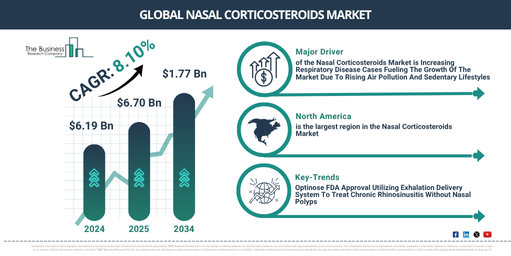
    Recent years have seen a solid expansion of the nasal corticosteroids market. It’s expected to burgeon from $6.19 billion in 2024 to reach $6.70 billion in 2025, manifesting a compound annual growth rate (CAGR) of 8.3%. The market’s trajectory during the historic period can be traced back to a rise in awareness about nasal corticosteroid therapies, an increased prevalence of chronic sinusitis, growing preference for over-the-counter nasal sprays, an enhanced focus on outpatient care, and improved accessibility to generic formulations.

    In the coming years, the nasal corticosteroids market is predicted to experience robust growth. By 2029, the market is projected to expand to $9.14 billion, with a compound annual growth rate (CAGR) of 8.1%. This expected growth during the forecast period can be linked to the heightened focus on non-invasive drug delivery methods, amplified investment in innovative intranasal drugs, improved healthcare accessibility in emerging regions, an increased need for combined nasal therapies, and the rise of e-commerce platforms facilitating the distribution of nasal medications. The forecast period will also witness trends such as enhancements in intranasal delivery systems, refined formulations of combined therapies, growth of over-the-counter nasal corticosteroids, breakthroughs in kid-friendly nasal sprays, and the emergence of preservative-free nasal spray solutions.

    Download The Free Sample Report Here:

    https://www.thebusinessresearchcompany.com/sample.aspx?id=25842&type=smp

    What Are The Contributors To Demand In The Nasal Corticosteroids Market?

    The escalating incidence of respiratory issues is projected to drive the expansion of the nasal corticosteroids market in the future. Respiratory diseases, which affect the lungs making breathing difficult, often result in coughing or breathlessness. This increased incidence can be attributed to higher levels of air pollution and modern busy lifestyles that involve exposure to harmful pollutants, smoking, and insufficient physical exercise, all of which negatively affects the health of the lungs and heightens the chances of respiratory issues. Nasal corticosteroids can assist with these diseases by decreasing inflammation within the nasal cavities, easing the process of breathing, mitigating symptoms like congestion and sneezing, and enhancing the overall airflow for enhanced respiratory comfort. For instance, as per the Office for Health Improvement and Disparities, a UK-based government agency, it was revealed that between the fiscal years of 2023 and 2024, the rate of emergency admissions related to respiratory diseases in England increased by 7%, with COPD seeing a 9% increase, adult asthma witnessing a rise of 17%, and pneumonia showing a 16% spike. Therefore, the escalating incidence of respiratory issues is contributing to the expansion of the nasal corticosteroids market.

    What Segmentation Categories Are Included In The Nasal Corticosteroids Market Analysis?

    The nasal corticosteroids market covered in this report is segmented –

    1) By Product Type: Aqueous Nasal Sprays, Non-Aqueous Nasal Sprays

    2) By Drug Type: Fluticasone Propionate, Budesonide, Beclomethasone Dipropionate, Mometasone Furoate, Triamcinolone Acetonide, Ciclesonide, Other Drug Types

    3) By Distribution Channel: Hospital Pharmacies, Retail Pharmacies, Online Pharmacies, Other Distribution Channels

    4) By Application: Allergic Rhinitis, Nasal Polyps, Sinusitis, Other Applications

    5) By End-User: Hospitals, Clinics, Homecare Settings, Other End-Users

    Subsegments:

    1) By Aqueous Nasal Sprays: Metered-Dose Aqueous Nasal Sprays, Pump-Action Aqueous Nasal Sprays

    2) By Non-Aqueous Nasal Sprays: Hydroalcoholic Nasal Sprays, Oil-Based Nasal Sprays

    What Future Market Trends Are Projected For The Nasal Corticosteroids Industry?

    Key players in the nasal corticosteroids market are honing in on securing regulatory approvals for innovative medicinal advancements, such as exhalation delivery systems (EDS)-based nasal sprays, which augment the efficacy of drug delivery, better treatment results, and boost patient adherence. Traditional nasal sprays utilizing the patient’s exhaled breath to close the soft palate and administer medication deep into the nasal cavities are what EDS-based nasal sprays refer to. These sprays enhance drug delivery at inflamed spots. For example, in May 2024, Optinose, Inc., a pharmaceutical firm established in the US, earned FDA validation for XHANCE (fluticasone propionate) nasal spray, the unique medication indicated for treating adults with chronic rhinosinusitis minus nasal polyps (CRSsNP). XHANCE employs a distinctive exhalation delivery system (EDS) modality to administer corticosteroids deep into the nasal cavities using a gentle breath-out, offering targeted anti-inflammatory action for chronic rhinosinusitis. This methodology presents an alternative to traditional nasal sprays, which generally have restrained reach inside the nasal cavity, by making possible effectual drug delivery to not easily reachable, inflamed zones. XHANCE aids in reducing nasal blockage and facial pressure associated with chronic rhinosinusitis minus nasal polyps. It offers backing to patients who need prolonged management of the condition devoid of invasive processes or the usual systemic side-effects linked with oral corticosteroids.

    Who Are The Top-Ranked Companies In The Nasal Corticosteroids Market Today?

    Major companies operating in the nasal corticosteroids market are Pfizer Inc., Merck & Co Inc., Bayer AG, Sanofi S.A., GSK plc , Amgen Inc., Viatris Inc., Teva Pharmaceutical Industries Ltd., Sandoz International GmbH, Sun Pharmaceutical Industries Ltd., Apotex Inc., Perrigo Company plc, Aurobindo Pharma Limited, Cipla Limited, Glenmark Pharmaceuticals Ltd, Alkem Laboratories Ltd, Pharmascience Inc., Mylan N.V, Aspire Pharma (UK), AdvaCare Pharma.

    Get The Full Report Here:

    https://www.thebusinessresearchcompany.com/report/nasal-corticosteroids-global-market-report

    How Is Nasal Corticosteroids Market Adoption Varying Across Different Regions And Sectors?

    North America was the largest region in the nasal corticosteroids market in 2024. Asia-Pacific is expected to be the fastest-growing region in the forecast period. The regions covered in the nasal corticosteroids market report are Asia-Pacific, Western Europe, Eastern Europe, North America, South America, Middle East, Africa.

    Request For A Customized Report:

    https://www.thebusinessresearchcompany.com/customise?id=25842&type=smp

    About The Business Research Company:

    With over 15000+ reports from 27 industries covering 60+ geographies, The Business Research Company has built a reputation for offering comprehensive, data-rich research and insights. Armed with 1,500,000 datasets, the optimistic contribution of in-depth secondary research, and unique insights from industry leaders, you can get the information you need to stay ahead in the game.

    Get in touch with us:

    The Business Research Company: https://www.thebusinessresearchcompany.com/

    Americas +1 310-496-7795

    Asia +44 7882 955267 & +91 8897263534

    Europe +44 7882 955267

    Email us at info@tbrc.info

    Follow us on:

    LinkedIn: https://in.linkedin.com/company/the-business-research-company

    YouTube: https://www.youtube.com/channel/UC24_fI0rV8cR5DxlCpgmyFQ

    Global Market Model: https://www.thebusinessresearchcompany.com/global-market-model