Month: August 2025

  • Industry Trends Show Pharmaceutical Contract Development And Manufacturing Organization (CDMO) For Formulations Market Set to Expand at 10.7% CAGR Until 2029

    Industry Trends Show Pharmaceutical Contract Development And Manufacturing Organization (CDMO) For Formulations Market Set to Expand at 10.7% CAGR Until 2029

    Claim your 30% discount on Global Market Reports with code ONLINE30. Limited time only.

    Claim your 30% discount on Global Market Reports with code ONLINE30. Limited time only.

    What CAGR Is Anticipated for the Pharmaceutical Contract Development And Manufacturing Organization (CDMO) For Formulations Market Through 2029?

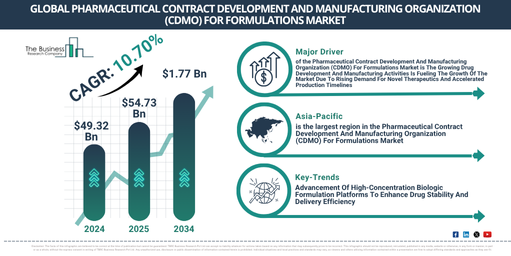
    The market size for the pharmaceutical contract development and manufacturing organization (CDMO) for formulations has experienced significant expansion in the last few years. The value of the market is expected to increase from $49.32 billion in 2024 to $54.73 billion in 2025, exhibiting a compound annual growth rate (CAGR) of 11.0%. The notable growth during the historical period is a result of the increase in pharmaceutical outsourcing, greater complexity in drug formulations, cost-reduction strategies by pharmaceutical corporations, a surge in demand for generics and biosimilars, as well as growth in small and mid-scale pharmaceutical companies.

    Expect a swift expansion in the pharmaceutical contract development and manufacturing organization (CDMO) for formulations market in the next couple of years, as it’s projected to reach a staggering $82.15 billion in 2029 with a 10.7% compound annual growth rate (CAGR). This anticipated growth during the forecast period is due to several contributing factors. These include the rise in biologics and advanced therapies, broader input in personalized medicine, increased emphasis on continuous production, strong regulatory backing for outsourcing, and an upsurge in digitalization and manufacturing automation. Foreseen trends during this period encompass enhanced growth in continuous manufacturing, inclusion of AI and machine learning in drug advancement, improved handling capacity of high-potency API (HPAPI), an escalating trend of using biologics and intricate injectable formulations, and an emerging focus on ecologically friendly and sustainable manufacturing protocols.

    Download The Free Sample Report Here:

    https://www.thebusinessresearchcompany.com/sample.aspx?id=25876&type=smp

    What Market Forces Are Driving The Pharmaceutical Contract Development And Manufacturing Organization (CDMO) For Formulations Sector In 2025 And Beyond?

    The pharmaceutical contract development and manufacturing organization (CDMO) for formulations market is anticipated to grow, prompted by substantial drug development and manufacturing activities. These terms encompass the expanding commitments of pharmaceutical and biopharmaceutical companies towards research, the creation of new drugs and production. The surge in such activities is largely owing to an increasing global demand for innovative and productive therapeutics. This pressure fuels the expansion of development pipelines and accelerates manufacturing schedules. By assisting in drug development, pharmaceutical CDMOs contribute to dosage formation and optimization, conduct stability tests and ensure regulatory compliance. They also oversee production and scale-up which leads to swift and economically efficient product launches. For example, data from the European Federation of Pharmaceutical Industries and Associations (EFPIA) for June 2023, stated that total pharmaceutical production in Europe came to $422,803 million (€390,000 million) in 2023, which was a rise from $393,857 million (€363,300 million) in 2022. As a result, flourishing drug development and manufacturing activities are triggering the development of the pharmaceutical contract development and manufacturing organization (CDMO) for formulations market.

    How Is The Global Pharmaceutical Contract Development And Manufacturing Organization (CDMO) For Formulations Market Categorized By Segments?

    The pharmaceutical contract development and manufacturing organization (cdmo) for formulations market covered in this report is segmented –

    1) By Dosage Form: Oral Solids, Oral Liquids, Injectables, Topicals, Inhalation Products, Transdermal And Patches, Other Dosage Forms

    2) By Therapeutic Area: Oncology, Cardiology, Central Nervous System, Gastroenterology, Infectious Diseases, Endocrinology

    3) By End-User: Pharmaceutical Companies, Biopharmaceutical Companies, Other End-Users

    Subsegments:

    1) By Oral Solids: Tablets, Capsules, Granules, Powders, Modified-Release Formulations

    2) By Oral Liquids: Syrups, Suspensions, Solutions, Emulsions, Elixirs

    3) By Injectables: Vials, Ampoules, Prefilled Syringes, Lyophilized Injections, Injectable Emulsions

    4) By Topicals: Creams, Ointments, Gels, Lotions, Foams,

    5) By Inhalation Products: Metered Dose Inhalers (MDIs), Dry Powder Inhalers (DPIs), Nebulizer Solutions, Nasal Sprays, Inhalation Capsules

    6) By Transdermal And Patches: Matrix Patches, Reservoir Patches, Drug-In-Adhesive Patches, Microneedle Patches, Iontophoretic Patches

    7) By Other Dosage Forms: Suppositories, Ophthalmic Preparations, Buccal Tablets, Sublingual Tablets, Implants

    Which Trends Are Redefining The Future Landscape Of The Pharmaceutical Contract Development And Manufacturing Organization (CDMO) For Formulations Industry?

    Leading corporations in the pharmaceutical contract development and manufacturing organization (CDMO) for formulations sector are honing their focus on innovating with solutions such as biologic formulation platforms to advance drug stability and speed up market entry for complex biologic treatments. These platforms are specialized systems crafted to develop robust and effective formulations of biologic medications, refining elements like pH, excipients, and administration techniques to amplify stability, bioavailability, and safety throughout the product lifespan. As an example, WuXi Biologics, a China-based contract research, development, and manufacturing entity, rolled out WuXiHigh 2.0, a state-of-the-art high-concentration formulation platform, in June 2025. This sophisticated platform facilitates biologic formulations with protein concentrations reaching up to 230 mg/mL, outpacing the present maximum of 200 mg/mL sanctioned by the Food and Drug Administration, while decreasing viscosity up to 90% through unique excipient combinations and sophisticated instrumentation. It responds to significant complications in creating high-concentration biologics, like viscosity and accumulation, and is constructed to enhance injection efficiency, patient adherence, and production results in both clinical and commercial phases.

    Which Firms Are Considered Leaders In The Pharmaceutical Contract Development And Manufacturing Organization (CDMO) For Formulations Market Space?

    Major companies operating in the pharmaceutical contract development and manufacturing organization (cdmo) for formulations market are Thermo Fisher Scientific Inc., Lonza Group, Catalent Inc., WuXi Biologics, Samsung Biologics, Recipharm AB, Siegfried Holding AG, Evonik Industries AG, Almac Group, Aenova Group, Piramal Pharma Limited, Cambrex, Jubilant Pharmova Limited, CordenPharma, Altasciences, Hovione, Aurigene Pharmaceutical Services Ltd., DPT Laboratories Ltd., CARBOGEN AMCIS, Biopharma Group, LGM Pharma, Aarti Pharmalabs Limited.

    Get The Full Report Here:

    https://www.thebusinessresearchcompany.com/report/pharmaceutical-contract-development-and-manufacturing-organization-cdmo-for-formulations-global-market-report

    What Role Do Regional Policies And Investments Play In Pharmaceutical Contract Development And Manufacturing Organization (CDMO) For Formulations Market Expansion?

    Asia-Pacific was the largest region in the pharmaceutical contract development and manufacturing organization (CDMO) for formulations market in 2024. North America is expected to be the fastest-growing region in the forecast period. The regions covered in the pharmaceutical contract development and manufacturing organization (cdmo) for formulations market report are Asia-Pacific, Western Europe, Eastern Europe, North America, South America, Middle East, Africa.

    Request For A Customized Report:

    https://www.thebusinessresearchcompany.com/customise?id=25876&type=smp

    About The Business Research Company:

    With over 15000+ reports from 27 industries covering 60+ geographies, The Business Research Company has built a reputation for offering comprehensive, data-rich research and insights. Armed with 1,500,000 datasets, the optimistic contribution of in-depth secondary research, and unique insights from industry leaders, you can get the information you need to stay ahead in the game.

    Get in touch with us:

    The Business Research Company: https://www.thebusinessresearchcompany.com/

    Americas +1 310-496-7795

    Asia +44 7882 955267 & +91 8897263534

    Europe +44 7882 955267

    Email us at info@tbrc.info

    Follow us on:

    LinkedIn: https://in.linkedin.com/company/the-business-research-company

    YouTube: https://www.youtube.com/channel/UC24_fI0rV8cR5DxlCpgmyFQ

    Global Market Model: https://www.thebusinessresearchcompany.com/global-market-model

  • Latest Market Developments in Ketamine Clinic Industry: Forecast 2025–2029

    Latest Market Developments in Ketamine Clinic Industry: Forecast 2025–2029

    Claim your 30% discount on Global Market Reports with code ONLINE30. Limited time only.

    Claim your 30% discount on Global Market Reports with code ONLINE30. Limited time only.

    What Are the Forecasted Growth Rate and Market Size of the Ketamine Clinic Market?

    The market size for ketamine clinics has seen a robust growth in recent times. It is expected to rise from $1.21 billion in 2024 to $1.32 billion in 2025, witnessing a compound annual growth rate (CAGR) of 9.7%. Factors contributing to this surge during the historic period include the escalating demand for alternative treatments in mental health, an increase in the establishment of mental health treatment facilities, wider reach of outpatient infusion clinics, elevation in personal expenditure on mental health, and the improved financial accessibility of generic ketamine.

    Over the next several years, the ketamine clinic market is projected to experience robust growth, reaching $1.90 billion in 2029 with a Compound Annual Growth Rate (CAGR) of 9.4%. This growth during the projected period can be tied to the increased incidences of treatment-resistant depression, rising cases of anxiety disorders, escalating diagnoses of post-traumatic stress disorder, high occurrence of chronic pain conditions, and the expanding acknowledgment of mental health disorders as long-term diseases. Notable trends expected during this period include the rise of telemedicine for ketamine therapy screening, the use of remote patient monitoring tools for support after infusion, the creation of mobile apps for monitoring mood during ketamine treatment, integration of electronic medical records with ketamine therapy protocols, and the advent of AI-powered tools to identify suitable candidates for treatment.

    Download The Free Sample Report Here:

    https://www.thebusinessresearchcompany.com/sample.aspx?id=25804&type=smp

    Which Factor Is Shaping The Future Of The Ketamine Clinic Market?

    The escalating occurrence of mental health issues is anticipated to fuel the advancement of the ketamine clinic market. Mental health problems encompass disruptions in an individual’s emotions, cognition, or behavior, potentially jeopardizing their daily routines and social relationships. The rising sense of social isolation, characterized by lessened human interaction and support, intensifying emotional and psychological stress, is a key factor triggering the uptick of mental health disorders. Ketamine clinics play a vital role in combating these conditions by providing rapid treatments that alleviate anxiety and depression symptoms, thereby blocking these issues from evolving into severe mental health ailments. For example, as per the US-based government agency, the Centers for Disease Control and Prevention, in June 2025, it was reported that 11% of children aged 3 to 17 were identified to have anxiety during the diagnosis periods of 2022 and 2023. The rates were 9% for boys and 12% for girls, while 8% were diagnosed with a behavioral disorder, influencing 10% of boys and 5% of girls. Consequently, the mounting occurrence of mental health issues is stimulating the expansion of the ketamine clinic market.

    What Is The Segment-Wise Breakdown Of The Ketamine Clinic Market?

    The ketamine clinic market covered in this report is segmented –

    1) By Therapy: Online Therapy, On-Site Therapy

    2) By Treatment: Anxiety, Depression, Post-Traumatic Stress Disorder (PTSD), Other Treatments

    3) By Referral Source: Primary Care Physicians, Online Advertising, Mental Health Professionals

    4) By Mode Of Administration: Injectables, Nasally Administered, Oral Tablets

    5) By End User: Individuals, Hospitals And Clinics, Specialized Ketamine Centers, Research Institutions

    Subsegments:

    1) By Online Therapy: Video Consultation, Phone-Based Therapy, Mobile App-Based Sessions, Virtual Reality-Assisted Therapy, Asynchronous Messaging Therapy

    2) By On-Site Therapy: Intravenous (IV) Infusion Therapy, Intramuscular (IM) Injection, Sublingual Or Buccal Administration, Nasal Spray Therapy, Oral Tablet Therapy, Group Therapy Sessions, One-On-One Psychotherapy Integration Sessions

    Which Trends Are Redefining The Future Landscape Of The Ketamine Clinic Industry?

    Leading companies in the ketamine clinic market are concentrating on innovation, particularly in the form of evidence-backed therapies. These methodologies are designed through comprehensive research and clinical trials to deliver consistent results for specific psychological or behavioral challenges. For example, Rooted Rhythm Therapy, a US-based outfit specializing in mental health therapy, collaborated with Noma Therapy, a provider of ketamine-assisted psychotherapy in the US, to roll out a ketamine therapy program covered by insurance in June 2025. This plan is specifically designed to help parents dealing with depression, anxiety, burnout, or trauma. It combines ketamine-supported therapy from Noma, supplemented by clinical oversight, along with Rooted Rhythm’s strategy of promoting healing via targeted parental education and emotional guidance. Services comprise insurance-covered ketamine treatments, professional help for dosage and medicine management. Added perks for parents include personalized and group therapy organized around emotional regulation, bodily practices, and flexible scheduling that fits conveniently into family routines.

    Which Companies Hold The Largest Market Share In The Ketamine Clinic Sector?

    Major companies operating in the ketamine clinic market are Mindbloom Inc., Mindful Health Solutions, Neuro Wellness Spa, The Ketamine Clinic, Clarity Clinic, Revitalist Lifestyle and Wellness Ltd., Nushama, Innerwell, Klarisana Health, NY Ketamine Infusions, Axon Therapies Inc., Alleviant Health Centers, Lone Peak Psychiatry, MindPeace Clinics, NeuroRelief Ketamine & Infusion Therapy, Choose Your Horizon Inc., Innerbloom Ketamine Therapy, Viking Psychiatry, Norcal Ketamine Infusion Centers, Pacific KLN Infusions.

    Get The Full Report Here:

    https://www.thebusinessresearchcompany.com/report/ketamine-clinic-global-market-report

    How Does Regional Performance Compare Across The Ketamine Clinic Industry?

    North America was the largest region in the ketamine clinic market in 2024. Asia-Pacific is expected to be the fastest-growing region in the forecast period. The regions covered in the ketamine clinic market report are Asia-Pacific, Western Europe, Eastern Europe, North America, South America, Middle East, Africa.

    Request For A Customized Report:

    https://www.thebusinessresearchcompany.com/customise?id=25804&type=smp

    About The Business Research Company:

    With over 15000+ reports from 27 industries covering 60+ geographies, The Business Research Company has built a reputation for offering comprehensive, data-rich research and insights. Armed with 1,500,000 datasets, the optimistic contribution of in-depth secondary research, and unique insights from industry leaders, you can get the information you need to stay ahead in the game.

    Get in touch with us:

    The Business Research Company: https://www.thebusinessresearchcompany.com/

    Americas +1 310-496-7795

    Asia +44 7882 955267 & +91 8897263534

    Europe +44 7882 955267

    Email us at info@tbrc.info

    Follow us on:

    LinkedIn: https://in.linkedin.com/company/the-business-research-company

    YouTube: https://www.youtube.com/channel/UC24_fI0rV8cR5DxlCpgmyFQ

    Global Market Model: https://www.thebusinessresearchcompany.com/global-market-model
  • Competitive and Market Trend Analysis of Pharmaceutical Cold Chain Packaging Industry Through 2029

    Competitive and Market Trend Analysis of Pharmaceutical Cold Chain Packaging Industry Through 2029

    Claim your 30% discount on Global Market Reports with code ONLINE30. Limited time only.

    Claim your 30% discount on Global Market Reports with code ONLINE30. Limited time only.

    What Are the Latest Market Insights for the Pharmaceutical Cold Chain Packaging Industry?

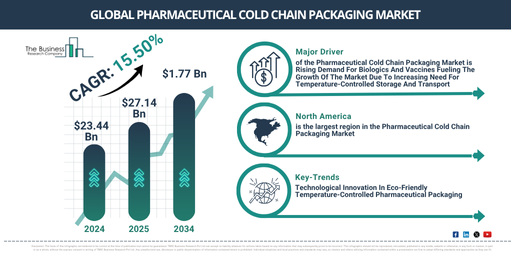
    In recent years, the market size of pharmaceutical cold chain packaging has experienced a swift expansion. The forecast predicts a progression from $23.44 billion in 2024 to a substantial $27.14 billion in 2025, indicating a compound annual growth rate (CAGR) of 15.8%. Several factors contributed to the historic period’s growth including a surge in vaccine production, the escalating global pharmaceutical imports and exports, amplified investment in healthcare logistics, the expansion of clinical trials demanding worldwide shipping, and budding cold chain infrastructure in emerging markets.

    Expectations are high for a swift expansion in the pharmaceutical cold chain packaging market in the coming years, with predictions of a growth to $48.34 billion by 2029, accompanied by a robust compound annual growth rate (CAGR) of 15.5%. Several factors are propelling this growth during the forecast period including the development of mRNA and cell and gene therapies, increased interest in biologics and personalized medicine, fluctuations in global temperature, the worldwide spread of pharmaceuticals and supply chains, and a growing elderly population. The future trends to look out for include intelligent packaging utilizing IoT-enabled sensors, the use of blockchain for tracking and temperature history, phase change materials (PCMs) for improved insulation, the application of AI/ML for managing predictive temperature deviations, and cohesive software systems for cold chain logistics.

    Download The Free Sample Report Here:

    https://www.thebusinessresearchcompany.com/sample.aspx?id=25875&type=smp

    What Forces Are Driving The Growth Of The Pharmaceutical Cold Chain Packaging Industry?

    The pharmaceutical cold chain packaging market’s expansion is fueled by the escalating need for biologics and vaccines. Biologics and vaccines, which are therapeutic substances derived from living organisms, are seeing an increase in demand due to their use in treating a variety of diseases, such as cancer, autoimmune disorders, and diabetes. Pharmaceutical cold chain packaging is crucial in ensuring these biologics and vaccines are stored and transported within prescribed temperature limits, thus maintaining their stability and effectiveness. For example, according to a UK government website, GOV.UK, vaccination coverage for the first dose of the measles, mumps, and rubella (MMR1) vaccine saw an increase in all regions in June 2025, compared to the first quarter of 2025. The East of England, London, and the Southwest witnessed a 0.5 percentage point increase. The Southeast and Midlands saw a minor increase of 0.1 percentage points, and the Northeast and Yorkshire, as well as the Northwest, saw an increase of 0.2 percentage points. Consequently, the surging demand for biologics and vaccines is crucial to the growth trajectory of the pharmaceutical cold chain packaging market.

    What Is The Overview Of Market Segmentation In The Pharmaceutical Cold Chain Packaging Industry?

    The pharmaceutical cold chain packaging market covered in this report is segmented –

    1) By Product Type: Insulated Shippers, Insulated Containers, Gel Packs And Ice Packs, Phase Change Materials, Dry Ice

    2) By Packaging Format: Active Packaging, Passive Packaging

    3) By Distribution Channel: Direct Sales, Distributors, Online Sales, Retail Pharmacies, Cold Chain Logistics Providers

    4) By Application: Vaccines, Biologics, Pharmaceuticals, Clinical Trials, Laboratory Samples

    5) By End Use: Biopharmaceutical Companies, Clinical Research Organizations, Hospitals, Research Institutes, Logistics And Distribution Companies, Other End Uses

    Subsegments:

    1) By Insulated Shippers: Passive Insulated Shippers, Active Insulated Shippers, Single-Use Shippers, Reusable Shippers

    2) By Insulated Containers: Small Payload Containers, Medium Payload Containers, Large Payload Containers, Pallet-Sized Containers

    3) By Gel Packs And Ice Packs: Water-Based Gel Packs, Polymer-Based Ice Packs, Foam Brick Refrigerants, Reusable Cold Packs

    4) By Phase Change Materials: Organic Phase Change Materials, Inorganic Phase Change Materials, Eutectic Mixtures, Bio-Based Phase Change Materials

    5) By Dry Ice: Dry Ice Pellets, Dry Ice Blocks, Dry Ice Slabs, Dry Ice Slices For Small Parcel Use

    What Notable Trends Are Shaping The Direction Of The Pharmaceutical Cold Chain Packaging Market?

    Primary corporations active in the medicinal cold chain packaging sphere are prioritizing introducing technologically groundbreaking solutions such as environmentally-friendly temperature-regulated packaging solutions. These solutions aim to improve the stability, safeguarding and effectiveness of temperature-sensitive medical supplies during storage and transfer. Environmentally-friendly temperature-controlled packaging alternatives are durable systems that achieve sustained product temperatures while reducing the environmental footprint via recyclable, decomposable or reusable materials. For instance, in April 2025, American-based packaging firm, Cold Chain Technologies, LLC, released TailorTemp, a fiber-built, temperature-regulated packaging option specifically crafted for the medicinal field. Entirely produced from recyclable, corrugated cardboard and devoid of plastic, TailorTemp offers an environmentally-friendly substitute to expanded polystyrene (EPS) containers. The system utilizes a digital-based parametric formula, collaboratively developed with a thermal transfer laboratory, to fine-tune its size, insulation, and coolant needs for each individual client, ensuring product temperatures are maintained for up to 36 hours. This also facilitates quick prototype creation and thorough validation. Flat-pack shipping further augments its efficiency, and sustainability advantages and ongoing research aims to extend performance and strengthen its cold chain logistical capabilities.

    Who Are The Primary Players Operating Across The Global Pharmaceutical Cold Chain Packaging Market?

    Major companies operating in the pharmaceutical cold chain packaging market are Sonoco Products Company, Sealed Air Corporation, Biobase Group, Csafe Global LLC, Cryoport Systems LLC, Cold Chain Technologies LLC, Topa Thermal BV, Envirotainer AB, Haier Biomedical Co. Ltd., Peli BioThermal Limited, SkyCell AG, Cryopak Industries Inc., Sofrigam SAS, Intelsius LLC, Softbox Systems Ltd., Inmark Global Holdings LLC, Insulated Products Corporation, Chill-Pak, CoolPac Pty Ltd, Practical Packaging Solutions Inc., The Wool Packaging Solutions Limited, Thermal Energy Service Solutions Pvt. Ltd., Thermal Packaging Solutions Ltd.

    Get The Full Report Here:

    https://www.thebusinessresearchcompany.com/report/pharmaceutical-cold-chain-packaging-global-market-report

    Which Region Offers The Most Growth Potential For The Pharmaceutical Cold Chain Packaging Market Through 2029?

    North America was the largest region in the pharmaceutical cold chain packaging market in 2024. Asia-Pacific is expected to be the fastest-growing region in the forecast period. The regions covered in the pharmaceutical cold chain packaging market report are Asia-Pacific, Western Europe, Eastern Europe, North America, South America, Middle East, Africa.

    Request For A Customized Report:

    https://www.thebusinessresearchcompany.com/customise?id=25875&type=smp

    About The Business Research Company:

    With over 15000+ reports from 27 industries covering 60+ geographies, The Business Research Company has built a reputation for offering comprehensive, data-rich research and insights. Armed with 1,500,000 datasets, the optimistic contribution of in-depth secondary research, and unique insights from industry leaders, you can get the information you need to stay ahead in the game.

    Get in touch with us:

    The Business Research Company: https://www.thebusinessresearchcompany.com/

    Americas +1 310-496-7795

    Asia +44 7882 955267 & +91 8897263534

    Europe +44 7882 955267

    Email us at info@tbrc.info

    Follow us on:

    LinkedIn: https://in.linkedin.com/company/the-business-research-company

    YouTube: https://www.youtube.com/channel/UC24_fI0rV8cR5DxlCpgmyFQ

    Global Market Model: https://www.thebusinessresearchcompany.com/global-market-model
  • Global Personalized Knee Implants Market Landscape: Trends and Market Share to 2029

    Global Personalized Knee Implants Market Landscape: Trends and Market Share to 2029

    Claim your 30% discount on Global Market Reports with code ONLINE30. Limited time only.

    Claim your 30% discount on Global Market Reports with code ONLINE30. Limited time only.

    What Are the Forecasted Growth Rate and Market Size of the Personalized Knee Implants Market?

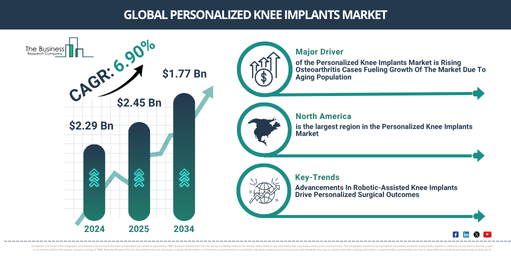
    The market for personalized knee implants has seen substantial growth in recent years. It is predicted to grow from a net worth of $2.29 billion in 2024 to an impressive $2.45 billion in 2025 – this represents a compound annual growth rate (CAGR) of 7.1%. Such robust growth in the historic period can be traced back to advancements in imaging and diagnostic procedures, the implementation of government healthcare policies that encourage such advancements, growing patient awareness about alternative joint replacement methods, a rise in the preference for knee replacement surgeries, and an increasing demand for superior surgical outcomes post-procedure.

    In the forthcoming years, the market size of personalized knee implants is anticipated to witness robust growth. It is projected to reach $3.20 billion by 2029, expanding at a compound annual growth rate (CAGR) of 6.9%. Several factors contribute to this potential growth in the forecast period. These include the rising concern for patient-specific fit and alignment of implants, increased emphasis on speedy recovery following surgery, broader insurance coverage, an upsurge in sports-related and trauma-induced knee injuries, and escalating health care expenses. Foreseen trends during this period involve the application of virtual reality for surgical planning and training, utilisation of wearable devices for post-surgery monitoring, the incorporation of augmented reality in surgical assistance, and the integration of nanotechnology and remote patient monitoring with implants.

    Download The Free Sample Report Here:

    https://www.thebusinessresearchcompany.com/sample.aspx?id=25874&type=smp

    Which Factor Is Shaping The Future Of The Personalized Knee Implants Market?

    The personalized knee implants market is set to experience significant growth due to the rising prevalence of osteoarthritis. This degenerative joint disease gradually diminishes the cartilage cushioning the ends of bones, resulting in pain, stiffness, and decreased joint mobility. The prevalence increases with aging, a factor that also contributes to the overall wear and tear of joint cartilage. Personalized knee implants, designed to perfectly fit each patient’s unique anatomy, improve joint alignment, alleviate pain, and enhance mobility more efficiently than traditional implants. As an illustration, a report by the Australian Institute of Health and Welfare, a government organization based in Australia, established that in June 2024, osteoarthritis was responsible for 143,410 disability-adjusted years (DALYs) (4.46 per 1,000 individuals) in 2023 and 2,314 fatalities (8.9 per 100,000) in 2022. These figures represented 2.5% of the total disease burden and 1.2% of all deaths, respectively. Consequently, the rising frequency of osteoarthritis is propelling the growth of the personalized knee implants market.

    What Is The Segment-Wise Breakdown Of The Personalized Knee Implants Market?

    The personalized knee implants market covered in this report is segmented –

    1) By Type: Femoral, Tibia, Patella

    2) By Fixation Material: Cemented, Cementless, Hybrid

    3) By Material: Metal-On-Plastic, Ceramic-On-Plastic, Metal-On-Metal, Ceramic-On-Ceramic

    4) By Procedure: Primary, Partial, Revision

    5) By End Use: Hospitals, Ambulatory Surgical Centers, Other End Uses

    Subsegments:

    1) By Femoral Type: Standard Femoral Implants, Customized Femoral Implants, Gender-Specific Femoral Implants

    2) By Tibia Type: Standard Tibial Implants, Customized Tibial Implants, Modular Tibial Baseplates

    3) By Patella Type: Standard Patellar Implants, Customized Patellar Implants, Patellar Resurfacing Implants

    What Upcoming Trends Are Expected To Impact The Personalized Knee Implants Market Globally?

    Major firms in the personalized knee implants market are concentrating on technological innovations like robotic-assisted total knee arthroplasty to improve surgical accuracy, implant alignment precision, patient-specific customization, and the overall clinical outcome. Primarily, robotic-assisted total knee arthroplasty is a knee replacement surgery procedure that employs a robotic system to assist the surgeon in executing the operation with increased precision. For instance, THINK Surgical, Inc., a company based in the US that supplies robotic surgical systems, launched and initially used the Freedom Total Knee Implant in April 2025. This marked the first utilization of the TMINI miniature robotic system by Maxx Orthopedics. The Freedom total knee implant brings a high level of patient-focused customization while preserving surgical efficiency. The implant includes a design that spares bone, leading to less bone extraction during implantation and presents various sizing and configuration alternatives tailored to each patient’s anatomy. The TMINI system supports both cemented and cementless fixation and features a polyethylene insert optimized for better wear resistance and smooth articulation. It aims to offer natural knee motion, stability throughout the movement range, and enduring durability.

    Which Companies Hold The Largest Market Share In The Personalized Knee Implants Sector?

    Major companies operating in the personalized knee implants market are Stryker Corporation, DePuy Synthes Inc., Zimmer Biomet Holdings Inc., Smith & Nephew plc, Arthrex Inc., Stanmore Implants Worldwide Ltd, Globus Medical Inc., Exactech Inc., Medacta International SA, Corin Group PLC, MicroPort Orthopedics Inc., B. Braun Melsungen AG, LimaCorporate S.p.A., Baumer S.A., Waldemar Link GmbH & Co. KG, THINK Surgical Inc., Signature Orthopaedics Pty Ltd, Maxx Orthopedics Inc., restor3d Inc., NanoKnee LLC

    Get The Full Report Here:

    https://www.thebusinessresearchcompany.com/report/personalized-knee-implants-global-market-report

    How Does Regional Performance Compare Across The Personalized Knee Implants Industry?

    North America was the largest region in the personalized knee implants market in 2024. Asia-Pacific is expected to be the fastest-growing region in the forecast period. The regions covered in the personalized knee implants market report are Asia-Pacific, Western Europe, Eastern Europe, North America, South America, Middle East, Africa.

    Request For A Customized Report:

    https://www.thebusinessresearchcompany.com/customise?id=25874&type=smp

    About The Business Research Company:

    With over 15000+ reports from 27 industries covering 60+ geographies, The Business Research Company has built a reputation for offering comprehensive, data-rich research and insights. Armed with 1,500,000 datasets, the optimistic contribution of in-depth secondary research, and unique insights from industry leaders, you can get the information you need to stay ahead in the game.

    Get in touch with us:

    The Business Research Company: https://www.thebusinessresearchcompany.com/

    Americas +1 310-496-7795

    Asia +44 7882 955267 & +91 8897263534

    Europe +44 7882 955267

    Email us at info@tbrc.info

    Follow us on:

    LinkedIn: https://in.linkedin.com/company/the-business-research-company

    YouTube: https://www.youtube.com/channel/UC24_fI0rV8cR5DxlCpgmyFQ

    Global Market Model: https://www.thebusinessresearchcompany.com/global-market-model

  • Comprehensive Forecast: Personalized Cranial Implant Market Share, Growth, and Opportunities Through 2029

    Claim your 30% discount on Global Market Reports with code ONLINE30. Limited time only.

    Claim your 30% discount on Global Market Reports with code ONLINE30. Limited time only.

    What Is the Estimated Industry Valuation for the Personalized Cranial Implant Sector?

    In the past few years, the personalized cranial implant market has seen a significant surge in growth. The industry, which was valued at $0.90 billion in 2024, is predicted to rise to $0.96 billion in 2025 with a compound annual growth rate (CAGR) of 7.1%. The historical growth can be credited to several factors such as a higher prevalence of traumatic brain injuries, the escalating adoption of 3D printing in the healthcare sector, increasing instances of neurosurgical procedures, greater understanding and recognition of cranial reconstruction, and a surge in demand for aesthetic restoration after a head injury.

    Anticipated to experience considerable expansion in the imminent years, the personalized cranial implant market is projected to rise to $1.25 billion by 2029, advancing at a compound annual growth rate (CAGR) of 6.8%. This projected growth for the upcoming years can be credited to a surge in the elderly population presenting cranial defects, growing preference for tailor-made implants, increasing healthcare funding in developing economies, gradual expansion of neurorehabilitation facilities, and an increasing inclination towards biocompatible materials. Significant trends in the forecast period consist of progress in 3D printing technology, the evolution of biocompatible and lightweight implant materials, assimilation of artificial intelligence in cranial surgery procedures, advancements in surgical navigation systems, and ongoing research and development in the field of regenerative cranial solutions.

    Download The Free Sample Report Here:

    https://www.thebusinessresearchcompany.com/sample.aspx?id=25873&type=smp

    What Forces Are Driving The Growth Of The Personalized Cranial Implant Market?

    The growing number of Traumatic Brain Injuries (TBIs) is anticipated to fuel the expansion of the personalized cranial implant market. TBIs are injuries to the brain resulting from external mechanical pressures. Enhanced public consciousness of the risks associated with head injuries, combined with advancements in medical diagnostic technology, has led to an increased prevalence of these injuries. Personalized cranial implants play a significant role in the treatment of traumatic brain injuries, providing tailor-made skull reconstruction that enhances brain safety, appearance, and the recovery process of the patient. As an example, the Tennessee Department of Health, a US government agency, reported a 2.4% increase in the number of patients registered in the Traumatic Brain Injury (TBI) database in 2024, compared to the number in 2023. Consequently, the escalating frequency of traumatic brain injuries and cranial defects is driving growth in the personalized cranial implant industry.

    How Is The Personalized Cranial Implant Industry Segmented Across Key Parameters?

    The personalized cranial implant market covered in this report is segmented –

    1) By Implant Material: Titanium, Polymethylmethacrylate (PMMA), Polyether Ether Ketone (PEEK), Other Implant Materials

    2) By Indication: Traumatic Brain Injury, Oncology (Tumor Resection), Congenital Disorders, Infections, Cosmetic Or Deformity Correction

    3) By End Use: Hospitals, Ambulatory Surgical Centers, Other End Uses

    Subsegments:

    1) By Titanium: Pure Titanium, Titanium Alloy, Mesh Titanium Implants, Solid Titanium Plates

    2) By Polymethylmethacrylate: Preformed Polymethylmethacrylate Implants, Hand-Molded Polymethylmethacrylate, Custom Molded Polymethylmethacrylate, Antibiotic-Impregnated Polymethylmethacrylate

    3) By Polyether Ether Ketone: Standard Polyether Ether Ketone Implants, Reinforced Polyether Ether Ketone Implants, Three-Dimensionally Printed Polyether Ether Ketone Implants, Patient-Specific Polyether Ether Ketone Implants

    4) By Other Implant Materials: Ceramic Implants, Composite Material Implants, Bioactive Glass Implants, Bioresorbable Polymer Implants

    How Are Key Trends Driving Expansion In The Personalized Cranial Implant Industry?

    Leading firms in the personalized cranial implant industry are turning their attention to progressive technologies such as onsite hospital sterile 3D printing, in an effort to optimize production and enhance customization in implant delivery. Onsite hospital sterile 3D printing technology employs cleanroom-compatible 3D printers, designed to manufacture medical-grade implants within healthcare settings. This minimizes the risk of contamination and expedites the process. In the context, the US-based additive manufacturing organization, 3D Systems, introduced the VSP PEEK Cranial Implant in April 2024. This revolutionary cranial implant solution applies high-performance PEEK components and an FDA-approved 3D printing procedure, encompassing modeling software, a sterile-context 3D printer, and a simplified post-processing platform. The design is aimed at replicating the mechanical properties of human bone, with superior features including biocompatibility, radiolucency, and resistivity to bodily fluids. The innovative system cuts material usage by up to 85% when compared with conventional methods, hence dramatically reducing costs. The quick sterile onsite deployment enriches surgical planning and results, making it a pivotal asset in cranioplasty and neurosurgery.

    Which Companies Currently Dominate The Competitive Landscape In The Personalized Cranial Implant Industry?

    Major companies operating in the personalized cranial implant market are Johnson & Johnson Services Inc., Medtronic PLC, Stryker Corporation, Zimmer Biomet Holdings Inc., Renishaw PLC, KLS Martin Group, B. Braun Melsungen AAG, Medartis Holding AG, CranioTech GmbH, evonos GmbH & Co. KG, Matrix Surgical USA LLC, Jeil Medical Corporation, Anatomics Pty Ltd., Calavera Surgical Design Inc., KELYNIAM Global Incorporated, Xilloc Medical B.V., INCREDIBLE AM Private Limited, Poriferous LLC, LUCID Implants Private Limited, Ortho Baltic Joint-Stock Company.

    Get The Full Report Here:

    https://www.thebusinessresearchcompany.com/report/personalized-cranial-implant-global-market-report

    Which Geographic Regions Are Driving Demand In The Personalized Cranial Implant Market?

    North America was the largest region in the personalized cranial implant market in 2024. Asia-Pacific is expected to be the fastest-growing region in the forecast period. The regions covered in the personalized cranial implant market report are Asia-Pacific, Western Europe, Eastern Europe, North America, South America, Middle East, Africa.

    Request For A Customized Report:

    https://www.thebusinessresearchcompany.com/customise?id=25873&type=smp

    About The Business Research Company:

    With over 15000+ reports from 27 industries covering 60+ geographies, The Business Research Company has built a reputation for offering comprehensive, data-rich research and insights. Armed with 1,500,000 datasets, the optimistic contribution of in-depth secondary research, and unique insights from industry leaders, you can get the information you need to stay ahead in the game.

    Get in touch with us:

    The Business Research Company: https://www.thebusinessresearchcompany.com/

    Americas +1 310-496-7795

    Asia +44 7882 955267 & +91 8897263534

    Europe +44 7882 955267

    Email us at info@tbrc.info

    Follow us on:

    LinkedIn: https://in.linkedin.com/company/the-business-research-company

    YouTube: https://www.youtube.com/channel/UC24_fI0rV8cR5DxlCpgmyFQ

    Global Market Model: https://www.thebusinessresearchcompany.com/global-market-model
  • CAGR of 10.1% Projected for Intravenous Therapy Solutions Market From 2025 to 2029

    CAGR of 10.1% Projected for Intravenous Therapy Solutions Market From 2025 to 2029

    Claim your 30% discount on Global Market Reports with code ONLINE30. Limited time only.

    Claim your 30% discount on Global Market Reports with code ONLINE30. Limited time only.

    How Large Is the Intravenous Therapy Solutions Market Expected to Be in 2029?

    In recent times, the market size for intravenous therapy solutions has seen a significant rise. The market, which was valued at $11.95 billion in 2024, is predicted to escalate to $13.17 billion in 2025, demonstrating a compound annual growth rate (CAGR) of 10.3%. The expansion during the historical period can be credited to factors such as an increase in hospital admissions, a rise in surgical operations, a growing prevalence of dehydration, a higher incidence of chronic illnesses, and improvements in healthcare infrastructure accessibility.

    The market size for intravenous therapy solutions is forecasted to experience a swift expansion in the coming years, ballooning to $19.33 billion in 2029 with a 10.1% Compound Annual Growth Rate (CAGR). The escalation predicted for this period is associated with factors such as the growth in the aging demographic, the broadening of home health care services, an uptick in the need for quick rehydration therapy, a surge in the occurrences of gastrointestinal conditions, and the heightened utilization of disposable IV parts. Key trends during the forecast period encompass advancements in the IV medication delivery mechanisms, a transition towards home-based IV treatment, the incorporation of intelligent infusion pumps, an increase in biological and specialty drug infusions, and a growing inclination towards personalized IV nutritional therapy.

    Download The Free Sample Report Here:

    https://www.thebusinessresearchcompany.com/sample.aspx?id=25802&type=smp

    What Are The Contributors To Demand In The Intravenous Therapy Solutions Market?

    The intravenous therapy solutions market is predicted to expand due to the rising demand for minimally invasive therapies. These are medical treatments that entail tiny incisions or entry points into the body, often leading to faster recovery and fewer complications. The increasing demand for these therapies is due to their capability to lessen postoperative discomfort, consequently speeding up patient recuperation and enhancing overall comfort during the healing phase. Intravenous therapy solutions bolster minimally invasive treatments by facilitating the effective administration of vital fluids, medicines, and nutrients straight into the bloodstream, thus ensuring top-notch patient care and quicker healing. For example, the American Society of Plastic Surgeons, a non-profit organization based in the US, stated in June 2024 that minimally invasive procedures had risen by 7% in 2023, surpassing surgical procedures by 2%. Thus, the increasing desire for minimally invasive treatments is propelling the intravenous (IV) therapy solutions market’s expansion.

    What Segmentation Categories Are Included In The Intravenous Therapy Solutions Market Analysis?

    The intravenous therapy solutions market covered in this report is segmented –

    1) By Product Type: Crystalloids, Colloids, Blood Products, Other Product Types

    2) By Application: Fluid And Electrolyte Imbalance, Nutritional Support, Medication Administration, Blood Transfusion, Other Applications

    3) By End-User: Hospitals, Clinics, Ambulatory Surgical Centers, Home Care Settings, Other End-Users

    Subsegments:

    1) By Crystalloids: Normal Saline (0.9% Sodium Chloride), Half Normal Saline (0.45% Sodium Chloride), Lactated Ringer’s Solution, Dextrose Solutions, Hypertonic Saline

    2) By Colloids: Albumin, Dextran, Hydroxyethyl Starch (HES), Gelatin

    3) By Blood Products: Packed Red Blood Cells (PRBCs), Platelets, Fresh Frozen Plasma (FFP), Cryoprecipitate

    4) By Other Product: Intravenous Immunoglobulins (IVIG), Parenteral Nutrition Solutions, Specialty Intravenous Drugs And Additives

    What Upcoming Trends Are Expected To Impact The Intravenous Therapy Solutions Market Globally?

    Leading organizations in the intravenous therapy solutions market are concentrating on producing cutting-edge solutions such as ready-to-use drug infusions to improve the effectiveness of treatments and minimize preparation time in clinical environments. The concept of ready-to-use drug infusion pertains to pre-blended, pre-labelled intravenous (IV) medications that are prepared in standard doses and packaging, thereby eliminating the need for compounding or dilution on-site. Take for example, in May 2024, B. Braun Medical Inc., a manufacturing company based in the US, released Levetiracetam in Sodium Chloride Injection, a ready-to-use IV anticonvulsant solution. The product is intended for treating seizures and comes in standardized volumes and concentrations, thus negating the requirement for dilution or compounding at the point of care. The IV formulation of Levetiracetam is pre-mixed in a flexible container, which guarantees precise dosing, diminishes the chance of contamination, and increases convenience for healthcare professionals in emergency and inpatient scenarios.

    Who Are The Top-Ranked Companies In The Intravenous Therapy Solutions Market Today?

    Major companies operating in the intravenous therapy solutions market are Pfizer Inc., Johnson & Johnson, Otsuka Pharmaceutical Co. Ltd., Baxter International Inc., Fresenius Kabi AG, Grifols S.A., Terumo Corporation, Dr. Reddy’s Laboratories Limited, Sichuan Kelun Pharmaceutical Co. Ltd., Teleflex Incorporated, Hikma Pharmaceuticals PLC, ICU Medical Inc., Biocon Limited, B. Braun Melsungen Aktiengesellschaft, JW Life Science Corporation, AdvaCare Pharma USA, Soxa Formulations & Research Pvt. Ltd., Vifor Pharma Management Ltd., Aetos Pharma Private Limited, LXIR Medilabs Private Limited

    Get The Full Report Here:

    https://www.thebusinessresearchcompany.com/report/intravenous-therapy-solutions-global-market-report

    How Is Intravenous Therapy Solutions Market Adoption Varying Across Different Regions And Sectors?

    North America was the largest region in the intravenous therapy solutions market in 2024. The regions covered in the intravenous therapy solutions market report are Asia-Pacific, Western Europe, Eastern Europe, North America, South America, Middle East, Africa.

    Request For A Customized Report:

    https://www.thebusinessresearchcompany.com/customise?id=25802&type=smp

    About The Business Research Company:

    With over 15000+ reports from 27 industries covering 60+ geographies, The Business Research Company has built a reputation for offering comprehensive, data-rich research and insights. Armed with 1,500,000 datasets, the optimistic contribution of in-depth secondary research, and unique insights from industry leaders, you can get the information you need to stay ahead in the game.

    Get in touch with us:

    The Business Research Company: https://www.thebusinessresearchcompany.com/

    Americas +1 310-496-7795

    Asia +44 7882 955267 & +91 8897263534

    Europe +44 7882 955267

    Email us at info@tbrc.info

    Follow us on:

    LinkedIn: https://in.linkedin.com/company/the-business-research-company

    YouTube: https://www.youtube.com/channel/UC24_fI0rV8cR5DxlCpgmyFQ

    Global Market Model: https://www.thebusinessresearchcompany.com/global-market-model

  • Future Demand and Leading Companies Shaping the Personal Protective Equipment For Infection Control Market to 2029

    Future Demand and Leading Companies Shaping the Personal Protective Equipment For Infection Control Market to 2029

    Claim your 30% discount on Global Market Reports with code ONLINE30. Limited time only.

    Claim your 30% discount on Global Market Reports with code ONLINE30. Limited time only.

    How Large Is the Personal Protective Equipment For Infection Control Market Expected to Be in 2029?

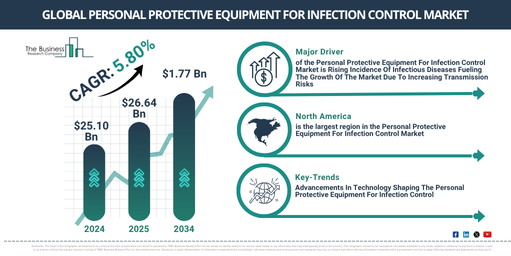
    In recent times, the market for personal protective equipment that aids in infection control has seen substantial growth. The market value, which stood at $25.10 billion in 2024, is predicted to reach $26.64 billion in 2025, indicating a compound annual growth rate (CAGR) of 6.1%. This growth during the historic period is associated with multiple factors including rising fears over hospital-acquired infections, the enforcement of more stringent workplace safety laws, expanding healthcare infrastructure, an upswing in surgical procedures, governmental stockpiling programs, and a surge in medical tourism.

    The market size of personal protective equipment for infection control is forecasted to experience robust growth in the imminent years, projecting a rise to $33.43 billion by 2029 at a compound annual growth rate (CAGR) of 5.8%. This anticipated growth for the future years can be credited to factors such as the aging international population, the ascension of telehealth and home healthcare initiatives, enhanced infection control protocols, growth of ambulatory surgical centers, and heightened investments in the sphere of public health. Significant trends for this forecast period comprise the invention of smart personal protective equipment, novel tech innovations in the fabrication of PPE materials, progressive changes in infection control technologies, sophisticated filtration technologies, and their integration with telehealth and IoT platforms.

    Download The Free Sample Report Here:

    https://www.thebusinessresearchcompany.com/sample.aspx?id=25872&type=smp

    What Are The Contributors To Demand In The Personal Protective Equipment For Infection Control Market?

    The escalating instances of infectious illnesses are anticipated to fuel the expansion of the personal protective equipment for infection control market in the future. Pathogenic microorganisms like bacteria, viruses, fungi, or parasites cause infectious diseases that can be transferred either directly or indirectly from one individual to another, or from animals or the environment to people. The urban lifestyle preference coupled with increased global travel, which expedites the spread of diseases, accounts for the upsurge in infectious diseases. Personal protective equipment (PPE) for infection control helps lower the prevalence of infectious diseases by providing healthcare workers and individuals a physical barrier against pathogens, thereby avoiding direct contact with infectious agents. For example, as per a report by the UK Health Security Agency in March 2025, hospital admission rates for infectious diseases and infections in England between 2023 and 2024 were almost double for individuals residing in the most deprived 20% of areas compared to those in the least deprived areas. Additionally, GOV.UK revealed in February 2024 that tuberculosis (TB) cases in England had surged from 4,380 in 2022 to 4,850 in 2023, showing a 10.7% increase. Accordingly, the accelerating incidence of infectious diseases is propelling the growth of the personal protective equipment for infection control market.

    What Segmentation Categories Are Included In The Personal Protective Equipment For Infection Control Market Analysis?

    The personal protective equipment for infection control market covered in this report is segmented –

    1) By Product Type: Gloves, Face Masks, Gowns And Coveralls, Eye Protection, Respirators

    2) By Material Type: Latex, Nitrile, Polyethylene, Polypropylene, Other Advanced Materials

    3) By Distribution Channel: Direct Sales, Online Retail, Traditional Retail, Catalog Sales, Wholesalers And Distributors

    4) By Application Area: Infection Prevention, Occupational Safety, Emergency Response, Aerosol Transmission Protection, Healthcare Settings

    5) By End-User: Hospitals, Ambulatory Surgical Centers, Pharmacies, Diagnostic Laboratories, Public Health Institutions

    Subsegments:

    1) By Gloves: Disposable Gloves, Sterile Gloves, Non-Sterile Gloves, Latex Gloves, Nitrile Gloves, Vinyl Gloves, Polyethylene Gloves

    2) By Face Masks: Surgical Masks, N95 Respirators, KN95 Masks, Cloth Masks, Respirator Masks With Valves, Face Shields

    3) By Gowns And Coveralls: Isolation Gowns, Surgical Gowns, Coveralls, Reusable Gowns, Disposable Gowns, Fluid-Resistant Gowns

    4) By Eye Protection: Safety Goggles, Face Shields, Protective Glasses, Prescription Safety Glasses

    5) By Respirators: Half-Face Respirators, Full-Face Respirators, Powered Air-Purifying Respirators (PAPR), Reusable Respirators, Disposable Respirators

    Which Trends Are Expected To Shape The Future Of The Personal Protective Equipment For Infection Control Market?

    Leading firms in the personal protective equipment for infection control sector are rolling out new and inventive solutions, such as cutting-edge personal protective shields, to boost user safety, enhance comfort, and provide improved defense against airborne diseases. The term cutting-edge personal protective shields is associated with advanced body and face protectors, constructed with superior materials, ergonomic designs, and augmented protective features for premium protection against contagious agents. An apt example is the March 2025 launch of the Steri-Shield 8 personal protection system by Stryker Corporation, an American medical technology firm. This state-of-the-art personal protective equipment (PPE) is intended for medical professionals and includes a customizable helmet that offers a dependable and tailored fit with its three contact points, including a separate ponytail path for individuals with longer hair. The system provides enhanced visibility thanks to a 22% increase in the field of view and a bright helmet light, as well as a revamped fan system that cools the frontal and posterior neck regions for heightened comfort. The system is available in three toga styles, all offering AAMI level 4 (2012) protection and thus ensuring the utmost barrier against fluid and microbial agents. Furthermore, the system includes a redesigned battery and a more effective charging station, demonstrating Stryker’s dedication to both innovation and usability in PPE.

    Who Are The Top-Ranked Companies In The Personal Protective Equipment For Infection Control Market Today?

    Major companies operating in the personal protective equipment for infection control market are Cardinal Health Inc., Honeywell International Inc., 3M Company, Kimberly-Clark Corporation, Stryker Corporation, DuPont de Nemours Inc., STERIS plc, ELIS UK Limited, Ansell Limited, SHOWA Group, SAS Safety Corp., Moldex-Metric Inc., Uvex Arbeitsschutz GmbH, MEC Industries Inc., Alpha Pro Tech Ltd., Polyco Healthline Ltd., Berner International GmbH, Gateway Safety Inc., Plasti Surge Industries Pvt. Ltd., Phillips Safety Products Inc., Franz Mensch GmbH, Univet S.p.A., Dastex Reinraumzubehör GmbH & Co. KG

    Get The Full Report Here:

    https://www.thebusinessresearchcompany.com/report/personal-protective-equipment-for-infection-control-global-market-report

    How Is Personal Protective Equipment For Infection Control Market Adoption Varying Across Different Regions And Sectors?

    North America was the largest region in the personal protective equipment for infection control market in 2024. Asia-Pacific is expected to be the fastest-growing region in the forecast period. The regions covered in the personal protective equipment for infection control market report are Asia-Pacific, Western Europe, Eastern Europe, North America, South America, Middle East, Africa.

    Request For A Customized Report:

    https://www.thebusinessresearchcompany.com/customise?id=25872&type=smp

    About The Business Research Company:

    With over 15000+ reports from 27 industries covering 60+ geographies, The Business Research Company has built a reputation for offering comprehensive, data-rich research and insights. Armed with 1,500,000 datasets, the optimistic contribution of in-depth secondary research, and unique insights from industry leaders, you can get the information you need to stay ahead in the game.

    Get in touch with us:

    The Business Research Company: https://www.thebusinessresearchcompany.com/

    Americas +1 310-496-7795

    Asia +44 7882 955267 & +91 8897263534

    Europe +44 7882 955267

    Email us at info@tbrc.info

    Follow us on:

    LinkedIn: https://in.linkedin.com/company/the-business-research-company

    YouTube: https://www.youtube.com/channel/UC24_fI0rV8cR5DxlCpgmyFQ

    Global Market Model: https://www.thebusinessresearchcompany.com/global-market-model

  • Industry Forecast: Intraoral Flat Panel Detector Market to Generate $2.62  Billion Revenue by 2029

    Industry Forecast: Intraoral Flat Panel Detector Market to Generate $2.62 Billion Revenue by 2029

    Claim your 30% discount on Global Market Reports with code ONLINE30. Limited time only.

    Claim your 30% discount on Global Market Reports with code ONLINE30. Limited time only.

    What Is the Outlook for the Intraoral Flat Panel Detector Market Heading Into 2029?

    The size of the intraoral flat panel detector market has seen a swift increase in recent years. The market, which stood at $1.48 billion in 2024, is predicted to reach $1.66 billion in 2025 with a compound annual growth rate (CAGR) of 12.3%. The notable growth during the historic phase was driven by factors like the increasing acceptance of digital radiography, a surge in demand for cosmetic dentistry, the rise in dental issues among the elderly, favorable reimbursement policies, and an increase in the requirement for point-of-care dental diagnostics.

    It is anticipated that the market size for intraoral flat panel detectors will appreciably augment in the forthcoming years. By 2029, the market is predicted to reach a value of $2.62 billion, with a compound annual growth rate (CAGR) of 12.1%. This development in the prognosis stretch can be accredited to factors such as the rise in dental tourism in developing economies, the proliferation of dental clinics and imaging centers, heightened awareness about preliminary detection of oral ailments, increased utilization of cloud-based mechanisms for image storage, and a growing inclination towards environmentally sound imaging systems. Significant trends projected for the forecast period encompass the migration towards cordless intraoral detectors, the miniaturization of detector technology, the amalgamation with 3d dental imaging solutions, advancements in dental imaging technology, and confluence with artificial intelligence.

    Download The Free Sample Report Here:

    https://www.thebusinessresearchcompany.com/sample.aspx?id=25801&type=smp

    Which Factors Are Pushing The Intraoral Flat Panel Detector Market Forward?

    The increased number of dental disorders is anticipated to fuel the growth of the intraoral flat panel detector market in the future. Dental disorders, which include conditions affecting the teeth and oral cavity like tooth decay, gum disease, and oral infections, are on the rise largely due to insufficient oral care. The improper or irregular brushing, flossing, and dental appointments can lead to plaque accumulation and bacterial development, resulting in cavities, gum disease, and even tooth loss. The intraoral flat panel detector assists in diagnosing these dental disorders more accurately by offering high-resolution digital imagery that allows for early identification and accurate evaluation of oral health. The World Health Organization offered an example of this in March 2025, stating that oral diseases are anticipated to impact approximately 3.7 billion individuals globally each year. Thus, the increasing prevalence of dental disorders is boosting the intraoral flat panel detector market’s growth. The accelerating investments in dental care, spurred by a growing demand for advanced diagnostic imaging technologies, are positively impacting the intraoral flat panel detector market. Such investments, made by governments, private entities, or individuals, aim to enhance oral healthcare infrastructure and services. The rise in these investments can be attributed to a growing awareness about oral health. This increasing awareness is reflected in the growing number of individuals who understand the importance of regular dental check-ups, preventative care, and early treatments for general health and to avoid expensive complications. Financial input into dental care thus enables the introduction of advanced imaging technologies like intraoral flat panel detectors, offering clinics the ability to update diagnostic equipment, in turn, leading to more accurate, efficient, and patient-friendly dental examinations. An illustration of this was presented by the US-based federal agency, Centers for Medicare & Medicaid Services, in December 2023. The agency reported that dental services spending had seen a substantial growth rate of 18.2% in 2021, rising just 0.3% in 2022 to reach $165.3 billion. Consequently, the increased investments in dental care are fuelling the intraoral flat panel detector market’s growth.

    Which Segment Held The Largest Share In The Intraoral Flat Panel Detector Market In 2025?

    The intraoral flat panel detector market covered in this report is segmented –

    1) By Product Type: Direct Conversion Detectors, Indirect Conversion Detectors

    2) By Technology: Complementary Metal-Oxide-Semiconductor (C-MOS), Thin Film Transistors (TFT)

    3) By Application: Diagnostic Imaging, Treatment Planning

    4) By Distribution Channel: Direct Sales, Online Retail, Distributors And Wholesalers

    5) By End-User: Dental Clinics, Hospitals

    Subsegments:

    1) By Direct Conversion Detectors: Amorphous Selenium (a-Se) Detectors, Cadmium Telluride (CdTe) Detectors, Cadmium Zinc Telluride (CZT) Detectors

    2) By Indirect Conversion Detectors: Cesium Iodide (CsI) Scintillators, Gadolinium Oxysulfide (GOS) Scintillators, Sodium Iodide (NaI) Scintillators

    How Are Key Trends Driving Expansion In The Intraoral Flat Panel Detector Industry?

    Leading firms in the intraoral flat panel detector market are turning to cutting-edge technologies like indium gallium zinc oxide thin-film transistor (IGZO-TFT) technology to improve image resolution and minimize radiation dosage. IGZO-TFT technology, a semiconductor used in flat panel displays, outperforms traditional amorphous silicon in terms of higher electron mobility. It enhances image quality with its higher resolution, quicker response times, and reduced power consumption in intraoral flat panel detectors. For example, in March 2025, the Finland-headquartered semiconductor manufacturer, Detection Technology Plc, introduced the X-Panel 2520z FOM, a revolutionary flat panel detector that redefines dental imaging. This one-of-a-kind 25 cm x 20 cm detector employs advanced IGZO-TFT technology, becoming the biggest of its type to integrate this advancement. The X-Panel 2520z FOM provides a field of view that is 95% larger and 30% better resolution than conventional a-Si panels, facilitating the acquisition of high-clarity, full-resolution cone beam computed tomography (CBCT) scans. It also doubles the frame rate of traditional detectors, reaching up to 50 fps, thus expediting workflow without compromising image quality.

    Which Organizations Are Driving Progress In The Intraoral Flat Panel Detector Industry?

    Major companies operating in the intraoral flat panel detector market are Dentsply Sirona Inc., Planmeca Oy, DEXIS LLC, Teledyne DALSA Inc., Acteon Group Ltd., Dabi Atlante Equipamentos Médicos Odontológicos Ltda., Polaroid B.V., Vatech Co. Ltd., Trixell S.A.S., XDR Radiology LLC, Trident S.r.l., Apixia Inc., DentiMax LLC, Owandy Radiology S.A.S., Ningbo Runyes Medical Instrument Co. Ltd., Video Dental Concepts Inc., FONA Dental s.r.o., HDXWILL Co. Ltd., Saevo Equipamentos Odontológicos Ltda., Simple and Smart

    Get The Full Report Here:

    https://www.thebusinessresearchcompany.com/report/intraoral-flat-panel-detector-global-market-report

    Which Region Is Expected To Experience The Highest Growth In The Intraoral Flat Panel Detector Industry?

    North America was the largest region in the intraoral flat panel detector market in 2024. Asia-Pacific is expected to be the fastest-growing region in the forecast period. The regions covered in the intraoral flat panel detector market report are Asia-Pacific, Western Europe, Eastern Europe, North America, South America, Middle East, Africa.

    Request For A Customized Report:

    https://www.thebusinessresearchcompany.com/customise?id=25801&type=smp

    About The Business Research Company:

    With over 15000+ reports from 27 industries covering 60+ geographies, The Business Research Company has built a reputation for offering comprehensive, data-rich research and insights. Armed with 1,500,000 datasets, the optimistic contribution of in-depth secondary research, and unique insights from industry leaders, you can get the information you need to stay ahead in the game.

    Get in touch with us:

    The Business Research Company: https://www.thebusinessresearchcompany.com/

    Americas +1 310-496-7795

    Asia +44 7882 955267 & +91 8897263534

    Europe +44 7882 955267

    Email us at info@tbrc.info

    Follow us on:

    LinkedIn: https://in.linkedin.com/company/the-business-research-company

    YouTube: https://www.youtube.com/channel/UC24_fI0rV8cR5DxlCpgmyFQ

    Global Market Model: https://www.thebusinessresearchcompany.com/global-market-model
  • 2025–2029 Peripheral Interventions Market Outlook: Regional Trends and Growth Forecast

    2025–2029 Peripheral Interventions Market Outlook: Regional Trends and Growth Forecast

    Claim your 30% discount on Global Market Reports with code ONLINE30. Limited time only.

    Claim your 30% discount on Global Market Reports with code ONLINE30. Limited time only.

    What Is the Outlook for the Peripheral Interventions Market Heading Into 2029?

    The market size for peripheral interventions has been on a strong upward trajectory in recent years. It is projected to escalate from $9.16 billion in 2024 to $10.00 billion in 2025, with a compound annual growth rate (CAGR) of 9.1%. The substantial growth during the historic period can be accredited to the increasing prevalence of diabetes and hypertension, higher demand for outpatient and same-day medical procedures, expansion of awareness and screening programs, mounting clinical validation and sanctioning of innovative devices, and the increasing toll of lifestyle-associated disorders.

    The market size for peripheral interventions is predicted to experience significant expansion in the coming years, with the value projected to reach $14.06 billion in 2029, reflecting a compound annual growth rate (CAGR) of 8.9%. The augmentation over the forecast period can be linked to the increasing appeal for vascular access processes and patients favoring shorter durations of hospitalization. Further contributing factors include the rising access to compensation for peripheral operations, the increasing emphasis on early detection via imaging technologies, and the expanding accessibility of healthcare in rural and underserviced areas. Key trends observed in the forecast period comprise advances in intravascular imaging technologies, the evolution of technology in drug-eluting devices, progress in robotic-assisted peripheral interventions, the inclusion of telehealth and remote supervising systems, and advancements in biodegradable stents and scaffolds.

    Download The Free Sample Report Here:

    https://www.thebusinessresearchcompany.com/sample.aspx?id=25871&type=smp

    Which Factors Are Pushing The Peripheral Interventions Market Forward?

    The anticipated increase in demand for minimally invasive procedures is predicted to fuel the rise of the peripheral interventions market. Such procedures involve surgical interventions or surgeries performed through minuscule incisions or naturally occurring body openings, leading to less trauma, diminished pain, and expedited recovery compared to traditional open surgery. Enhanced precision and safety in operations, brought about by improvements in surgical technologies and medical imaging, are the key drivers of this surge in minimally invasive procedures. Peripheral interventions augment minimally invasive procedures by facilitating targeted treatment of vascular conditions via small incisions, thus obviating the need for open surgery. For instance, the American Society of Plastic Surgeons, a professional body based in the US, reported that approximately 25.4 million minimally invasive procedures were done in 2023, depicting an increase of 7% compared to 2022. Consequently, the mounting demand for minimally invasive procedures is pushing forward the expansion of the peripheral interventions market.

    Which Segment Held The Largest Share In The Peripheral Interventions Market In 2025?

    The peripheral interventions market covered in this report is segmented –

    1) By Product Type: Catheters, Sheath, Stents, Guide Wires, Atherectomy Devices, Embolic Devices, Thrombectomy Devices, Inferior Vena Cava (IVC) Filters, Other Types

    2) By Technology: Drug-Eluting Stents, Balloon-Expandable Stents, Self-Expanding Stents, Rotational Atherectomy, Directional Atherectomy

    3) By Application: Peripheral Artery Disease, Venous Thromboembolism, Other Applications

    4) By End User: Hospitals, Ambulatory Surgical Centers, Clinics, Research Institutes

    Subsegments:

    1) By Catheters: Angiographic Catheters, Balloon Catheters, Guiding Catheters, Support Catheters

    2) By Sheath: Introducer Sheaths, Guiding Sheaths

    3) By Stents: Bare Metal Stents, Drug-Eluting Stents, Covered Stents, Self-Expanding Stents, Balloon-Expandable Stents

    4) By Guide Wires: Hydrophilic Guide Wires, Nitinol Guide Wires, Stainless Steel Guide Wires

    5) By Atherectomy Devices: Directional Atherectomy Devices, Rotational Atherectomy Devices, Orbital Atherectomy Devices, Laser Atherectomy Devices

    6) By Embolic Devices: Embolization Coils, Embolic Protection Devices, Liquid Embolic Agents

    7) By Thrombectomy Devices: Mechanical Thrombectomy Devices, Aspiration Thrombectomy Devices, Rheolytic Thrombectomy Devices

    8) By Inferior Vena Cava (IVC) Filters: Permanent Filters, Retrievable Filters

    9) By Other Types: Vascular Closure Devices, Hemostatic Agents, Guide Catheter

    What Long-Term Trends Are Likely To Affect The Peripheral Interventions Market?

    In an effort to improve the safety and effectiveness of treating calcified peripheral artery disease, major corporations in the peripheral interventions market are concentrating on creating innovative solutions such as peripheral intravascular lithotripsy catheters. These are devices that utilize sonic pressure waves to dissolve calcified plaque in peripheral arteries, thus simplifying and securing the processes of angioplasty or stent placement. For instance, Shockwave Medical Inc., a U.S. medical device company, unveiled the Shockwave Javelin Peripheral IVL Catheter in March 2025. This is an advanced forward IVL platform engineered for patients with peripheral artery disease (PAD) who have difficult-to-cross, severely calcified lesions. With a 150 cm working length and a single distal emitter that emits up to 120 shockwave pulses, this unique catheter produces a spherical energy field that alters calcium and allows the device to traverse extremely narrow or blocked vessels where other devices might fail. Clinical studies showed that the Javelin’s safety and effectiveness are on par with current balloon-based IVL catheters, thereby introducing a revolutionary method for addressing intricate calcified peripheral lesions and enhancing procedural success for PAD patients.

    Which Organizations Are Driving Progress In The Peripheral Interventions Industry?

    Major companies operating in the peripheral interventions market are Cardinal Health Inc., Johnson & Johnson, Abbott Laboratories, Medtronic plc, Siemens Healthineers AG, Becton Dickinson and Company, Koninklijke Philips N.V., Stryker Corporation, Boston Scientific Corporation, B. Braun Melsungen AG, Terumo Corporation, Nipro Corporation, Getinge AB, Teleflex Incorporated, Cook Group Incorporated, Merit Medical Systems Inc., Lepu Medical Technology (Beijing) Co. Ltd., Cordis Corporation, MicroPort Scientific Corporation, Penumbra Inc., W. L. Gore & Associates Inc., Reflow Medical Inc., ArtVentive Medical Group Inc.

    Get The Full Report Here:

    https://www.thebusinessresearchcompany.com/report/peripheral-interventions-global-market-report

    Which Region Is Expected To Experience The Highest Growth In The Peripheral Interventions Industry?

    North America was the largest region in the peripheral interventions market in 2024. Asia-Pacific is expected to be the fastest-growing region in the forecast period. The regions covered in the peripheral interventions market report are Asia-Pacific, Western Europe, Eastern Europe, North America, South America, Middle East, Africa.

    Request For A Customized Report:

    https://www.thebusinessresearchcompany.com/customise?id=25871&type=smp

    About The Business Research Company:

    With over 15000+ reports from 27 industries covering 60+ geographies, The Business Research Company has built a reputation for offering comprehensive, data-rich research and insights. Armed with 1,500,000 datasets, the optimistic contribution of in-depth secondary research, and unique insights from industry leaders, you can get the information you need to stay ahead in the game.

    Get in touch with us:

    The Business Research Company: https://www.thebusinessresearchcompany.com/

    Americas +1 310-496-7795

    Asia +44 7882 955267 & +91 8897263534

    Europe +44 7882 955267

    Email us at info@tbrc.info

    Follow us on:

    LinkedIn: https://in.linkedin.com/company/the-business-research-company

    YouTube: https://www.youtube.com/channel/UC24_fI0rV8cR5DxlCpgmyFQ

    Global Market Model: https://www.thebusinessresearchcompany.com/global-market-model

  • Intraocular Lens (IOL) Implants Market Revenue Outlook: Strategic Insights and Forecast to 2029

    Intraocular Lens (IOL) Implants Market Revenue Outlook: Strategic Insights and Forecast to 2029

    Claim your 30% discount on Global Market Reports with code ONLINE30. Limited time only.

    Claim your 30% discount on Global Market Reports with code ONLINE30. Limited time only.

    What Does the Forecast Indicate for the Intraocular Lens (IOL) Implants Market From 2025 to 2029?

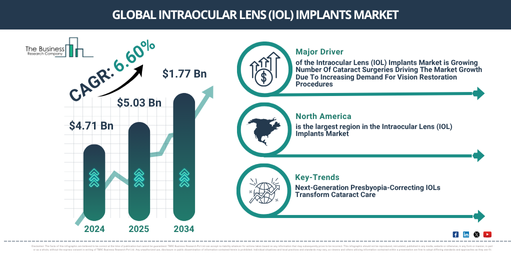
    There’s been significant expansion in the market size for intraocular lens (IOL) implants in the past few years. The market is expected to swell from $4.71 billion in 2024 to $5.03 billion in 2025, marking a compound annual growth rate (CAGR) of 6.9%. Several factors have driven this growth in the historical period, including an aging population, the increased prevalence of cataracts, heightened awareness of eye health, a surge in the adoption of monofocal lenses, and a rise in the number of minimally invasive surgeries.

    The market size for intraocular lens (IOL) implants is projected to experience substantial growth over the next few years, reaching $6.51 billion by 2029 with an annual compound growth rate (CAGR) of 6.6%. Factors contributing to this predicted expansion during the forecast period include a surge in demand for premium IOLs, a rise in outpatient cataract procedures, an inclination towards femtosecond laser-assisted surgery, government-led vision care initiatives, and broader access in burgeoning markets. The forecast period is also expected to see prominent trends such as a shift towards toric and multifocal IOLs, advances in surgical techniques, the inclusion of AI in ophthalmology, the creation of light-adjustable lenses, and a growing partiality for personalized vision correction.

    Download The Free Sample Report Here:

    https://www.thebusinessresearchcompany.com/sample.aspx?id=25800&type=smp

    What Elements Are Contributing To Growth In The Intraocular Lens (IOL) Implants Market?

    An increase in cataract procedures is projected to push forward the expansion of the intraocular lens (IOL) implants market. The surgical removal of an eye’s opaque lens – cataract surgery – involves replacing it with a synthetic intraocular lens to regain clear vision. The rising occurrences of these procedures can be largely attributed to the growing older population, as it is more common for elderly individuals to develop cataracts. This heightens their vulnerability to vision damage that necessitates surgical treatment. IOL implants enhance the cataract operation by substituting the eye’s foggy natural lens with a transparent synthetic one, thereby re-establishing sharp vision and enhancing overall visual result. This also lessens the reliance on prescription glasses and facilitates a speedier recovery paired with long-term visual consistency. Reportedly, in April 2022, EyeWorld Magazine, a US-based ophthalmology journal, announced that approximately 9,750 cataract surgeons in the U.S conducted 4.6 million procedures in 2022, averaging 472 surgeries per surgeon. It is projected that by 2030, about 10,000 surgeons are anticipated to carry out approximately 600 cases per year. For this reason, the rising incidences of cataract surgeries are fueling the expansion of the IOL implants market.

    Which Segments Are Detailed In The Global Intraocular Lens (IOL) Implants Market Report?

    The intraocular lens (iol) implants market covered in this report is segmented –

    1) By Types: Non-Foldable Intraocular Lens (IOL) Implants, Foldable Intraocular Lens (IOL) Implants

    2) By Material Of Intraocular Lens (IOL): Silicone Intraocular Lens, Polymethyl Methacrylate (PMMA) Intraocular Lens, Hydrophilic Acrylic Intraocular Lens, Hydrophobic Acrylic Intraocular Lens, Combination Materials Intraocular Lens

    3) By Surgical Technique: Phacoemulsification, Extracapsular Cataract Extraction (ECCE), Small Incision Cataract Surgery (SICS), Femtosecond Laser-Assisted Surgery

    4) By Application: Cataract Surgery, Refractive Surgery, Presbyopia Correction, Secondary Intraocular Lens Implantation

    5) By End User: Hospitals, Ambulatory Surgical Centers (ASCs), Ophthalmology Clinics, Eye Research Institutes, Other End Users

    Subsegments:

    1) By Non-Foldable Intraocular Lens (IOL) Implants: Rigid Polymethyl Methacrylate (PMMA) Intraocular Lenses, Anterior Chamber Intraocular Lenses, Posterior Chamber Intraocular Lenses

    2) By Foldable Intraocular Lens (IOL) Implants: Hydrophilic Acrylic Intraocular Lenses, Hydrophobic Acrylic Intraocular Lenses, Silicone Intraocular Lenses, Collamer Intraocular Lenses

    Which Emerging Trends And Strategic Shifts Are Shaping The Intraocular Lens (IOL) Implants Market?

    Leading corporations in the intraocular lens (IOL) implants market are working towards the creation of ground-breaking products, such as state-of-the-art presbyopia-correcting lenses, with an aim to advance visual outcomes and decrease the necessity for patients to wear glasses. The state-of-the-art presbyopia-correcting lenses are a newer form of intraocular lenses purposed to reinstate clear vision at a variety of distances, including near, intermediate, and far, for those suffering from presbyopia. By limiting or completely doing away with the requirement for reading glasses or bifocals post cataract surgery, these lenses offer their patients an increase in visual independence and an improved standard of life. For instance, in June 2025, US pharmaceutical industry giant Johnson & Johnson introduced the Tecnis Odyssey next-generation intraocular lens (IOL), a complete visual range presbyopia-correcting lens. This lens is designed to accomplish clear vision at all distances and in diverse illumination circumstances, this improved visual outcomes while decreasing patients’ need for glasses. This revolutionary product pairs cutting-edge optics with a distinct diffractive surface to provide continuous, high-contrast sight, and is specially designed to diminish night-time vision issues like halos and glare, providing cataract patients with increased visual autonomy and an elevated lifestyle quality.

    Who Are The Key Contributors To Growth In The Intraocular Lens (IOL) Implants Market?

    Major companies operating in the intraocular lens (iol) implants market are Bausch & Lomb Incorporated, Carl Zeiss Meditec AG, Appasamy Associates Private Limited, STAAR Surgical Company, Aurolab, Lenstec Inc., Rayner Intraocular Lenses Limited, Omni Lens Private Limited, Ophtec B.V., Hanita Lenses R.C.A Ltd., Shanghai Haohai Biological Technology Co. Ltd., Biotech Vision Care Pvt. Ltd., HumanOptics AG, Soleko S.p.A., Care Group Sight Solutions Private Limited, Cristalens Industrie SAS, SAV-IOL SA, Eyebright Medical Technology (Beijing) Co. Ltd., Eagle Optics Pvt. Ltd., SIFI S.p.A.

    Get The Full Report Here:

    https://www.thebusinessresearchcompany.com/report/intraocular-lens-iol-implants-global-market-report

    Which Region Is Projected To Lead The Intraocular Lens (IOL) Implants Market By 2025?

    North America was the largest region in the intraocular lens (IOL) implants market in 2024. Asia-Pacific is expected to be the fastest-growing region in the forecast period. The regions covered in the intraocular lens (iol) implants market report are Asia-Pacific, Western Europe, Eastern Europe, North America, South America, Middle East, Africa.

    Request For A Customized Report:

    https://www.thebusinessresearchcompany.com/customise?id=25800&type=smp

    About The Business Research Company:

    With over 15000+ reports from 27 industries covering 60+ geographies, The Business Research Company has built a reputation for offering comprehensive, data-rich research and insights. Armed with 1,500,000 datasets, the optimistic contribution of in-depth secondary research, and unique insights from industry leaders, you can get the information you need to stay ahead in the game.

    Get in touch with us:

    The Business Research Company: https://www.thebusinessresearchcompany.com/

    Americas +1 310-496-7795

    Asia +44 7882 955267 & +91 8897263534

    Europe +44 7882 955267

    Email us at info@tbrc.info

    Follow us on:

    LinkedIn: https://in.linkedin.com/company/the-business-research-company

    YouTube: https://www.youtube.com/channel/UC24_fI0rV8cR5DxlCpgmyFQ

    Global Market Model: https://www.thebusinessresearchcompany.com/global-market-model