Month: August 2025

  • Global Insights: Sustained Release Excipients Market Expected to Surpass $2.1 Billion by 2029

    Global Insights: Sustained Release Excipients Market Expected to Surpass $2.1 Billion by 2029

    Claim your 30% discount on Global Market Reports with code ONLINE30. Limited time only.

    Claim your 30% discount on Global Market Reports with code ONLINE30. Limited time only.

    How Will the Sustained Release Excipients Market Evolve in Terms of Growth and Size by 2029?

    In the past few years, the market size for sustained release excipients has seen substantial growth. The market is projected to expand from $1.4 billion in 2024 to $1.51 billion in 2025, with an 8.1% compound annual growth rate (CAGR). This upward trend in the historical period can be credited to factors such as the rising demand for controlled drug release, the prevalent cases of chronic diseases, patient compliance and convenience, innovative strides in the pharmaceutical industry, and regulatory backing for extended-release formulations.

    The market size of sustained release excipients is projected to significantly expand in the coming years, with an estimation of reaching $2.1 billion in 2029, growing at a compound annual growth rate (CAGR) of 8.5%. The driving forces behind this anticipated growth during the forecast period may be the growing elderly population, increased attention towards personalized medication, patient adherence challenges, the rise of complex drug formulations, advancements in disease management, and the expansion of global healthcare. Key trends predicted within this time frame include a focus on patient-focused drug delivery, partnerships for formulation development, regulatory compliance and safety, worldwide extension of drug formulation technologies, and the impact of biopharmaceuticals.

    Download The Free Sample Report Here:

    https://www.thebusinessresearchcompany.com/sample.aspx?id=10822&type=smp

    What factors are expected to fuel Sustained Release Excipients market growth in the coming years?

    The sustained-release excipients market growth is anticipated to surge owing to the escalating prevalence of chronic and acute diseases. Chronic ailments, which last for an extended time, typically more than three months, and acute illnesses, characterized by rapid and usually severe but short-lived symptoms, are two categories that illnesses are classified into. The formulations of pharmaceutical products for both types of diseases extensively involve the use of sustained-release excipients. It enhances patient compliance, ensures uniform drug levels, minimizes side effects, and streamlines disease management, factors that augment the sales of sustained-release excipients. As reported by the World Health Organization (WHO), a health agency based in Switzerland, in September 2022, the most deaths from non-communicable diseases were due to cardiovascular diseases, amounting to 17.9 million people annually. This was followed by chronic respiratory diseases (4.1 million), diabetes (2.0 million, inclusive of deaths from kidney disease caused by diabetes), and cancer (9.3 million). An August 2022 report published by the American College of Cardiology, a non-profit medical association based in the US, projected significant rises from 2025 to 2060 in all four major cardiovascular risk factors in the US. It anticipates diabetes witnessing the highest proportional rise, soaring by 39.3% to 55 million individuals. This will be closely followed by dyslipidemia (increasing by 27.6% to 126 million), hypertension (rising by 25.1% to 162 million), and obesity (escalating by 18.3% to 126 million). Moreover, considerable rises are predicted in stroke rates (33.8% to 15 million) and heart failure (33.4% to 13 million), with ischemic heart disease (30.7% to 29 million) and heart attack (16.9% to 16 million) right on their heels. Therefore, the burgeoning prevalence of chronic and acute diseases is projected to drive the growth of the sustained-release excipients market.

    What Are The Key Findings From The Segmentation Analysis Of The Sustained Release Excipients Market?

    The sustained release excipients market covered in this report is segmented –

    1) By Product: Gelatin, Polymers, Minerals, Sugars, Alcohol, Chitosan

    2) By Route of Administration: Oral, Intramuscular, Subcutaneous, Transdermal, Vaginal, Ophthalmic, Intravenous, Other Routes of Administration

    3) By Technology: Targeted Delivery, Micro Encapsulation, Wurster Technique, Transdermal, Implants, Coacervation

    Subsegments:

    1) By Gelatin: Type A Gelatin, Type B Gelatin

    2) By Polymers: Natural Polymers, Synthetic Polymers

    3) By Minerals: Calcium Compounds, Magnesium Compounds, Other Mineral Excipients

    4) By Sugars: Sucrose, Lactose, Glucose, Other Sugars

    5) By Alcohol: Ethanol, Isopropyl Alcohol, Other Alcohols

    6) By Chitosan: Low Molecular Weight Chitosan, High Molecular Weight Chitosan

    Which Trends Are Expected To Shape The Future Of The Sustained Release Excipients Market?

    Innovations in product development are becoming a significant trend in the scar treatment market. Key market players are evolving skincare technology with the intention to boost treatment effectiveness, better patient outcomes, and offer non-invasive alternatives for those desiring scar diminution. The objective of this technology is to augment the efficiency of treatments, increase safety measures, and deliver ideal results for a range of skin worries. For example, Doctors Aesthetics Centre, a company based in India, introduced Picocare Majesty, an innovative laser skincare gadget, for the first time in South India in March 2023. This tool employs the latest picosecond technology to specifically address and manage diverse scar issues, encompassing acne scars, surgical scars, and pigmentation problems.

    What Are The Most Active Companies In The Sustained Release Excipients Market Today?

    Major companies operating in the sustained release excipients market include BASF SE, Ashland Global Holdings Inc., Colorcon Inc., Croda International Plc, Dow Chemical Company, DuPont de Nemours Inc., Roquette Frères, Evonik Industries AG, Lubrizol Corporation, Merck KGaA, JRS Pharma GmbH & Co. KG, Shin-Etsu Chemical Co.Ltd., Gattefossé SAS, Eastman Chemical Company, Cellulose Solutions Private Limited, Avantor Inc., SPI Pharma Inc., Asahi Kasei Corporation, Chemische Fabrik Budenheim KG, Associated British Foods plc, Ransom Naturals Ltd, Balchem Corporation, IMCD Group, Lonza Group AG

    Get The Full Report Here:

    https://www.thebusinessresearchcompany.com/report/sustained-release-excipients-global-market-report

    Which Regional Markets Are Attracting The Most Investment In Sustained Release Excipients?

    North America was the largest region in the global sustained release excipients market in 2024.Asia-Pacific is expected to be the fastest-growing region in the forecast period. The regions covered in the sustained release excipients market report are Asia-Pacific, Western Europe, Eastern Europe, North America, South America, Middle East, Africa

    Request For A Customized Report:

    https://www.thebusinessresearchcompany.com/customise?id=10822&type=smp

    About The Business Research Company:

    With over 15000+ reports from 27 industries covering 60+ geographies, The Business Research Company has built a reputation for offering comprehensive, data-rich research and insights. Armed with 1,500,000 datasets, the optimistic contribution of in-depth secondary research, and unique insights from industry leaders, you can get the information you need to stay ahead in the game.

    Get in touch with us:

    The Business Research Company: https://www.thebusinessresearchcompany.com/

    Americas +1 310-496-7795

    Asia +44 7882 955267 & +91 8897263534

    Europe +44 7882 955267

    Email us at info@tbrc.info

    Follow us on:

    LinkedIn: https://in.linkedin.com/company/the-business-research-company

    YouTube: https://www.youtube.com/channel/UC24_fI0rV8cR5DxlCpgmyFQ

    Global Market Model: https://www.thebusinessresearchcompany.com/global-market-model

  • Future Projections: Anti-D Immunoglobulin Market to Reach $3.34  Billion by 2029 at 6.6% CAGR

    Future Projections: Anti-D Immunoglobulin Market to Reach $3.34 Billion by 2029 at 6.6% CAGR

    Claim your 30% discount on Global Market Reports with code ONLINE30. Limited time only.

    Claim your 30% discount on Global Market Reports with code ONLINE30. Limited time only.

    What Are the Forecasted Growth Rate and Market Size of the Anti-D Immunoglobulin Market?

    In recent times, there has been a robust growth in the market size of anti-D immunoglobulin. We can anticipate seeing the market grow from $2.42 billion in 2024 to $2.59 billion in 2025, which translates to a compound annual growth rate (CAGR) of 6.9%. This growth in previous years has been driven by several factors such as burgeoning awareness about the risks of rhesus incompatibility, expansion of national immunization programs, establishment of maternal and neonatal health policies, an increase in global birth rates, and a surge in blood transfusion procedures.

    In the coming years, the market size of anti-D immunoglobulin is predicted to experience robust growth, reaching $3.34 billion in 2029 at a 6.6% Compound Annual Growth Rate (CAGR). The surge within the forecasted period can be linked to the increasing demand for antenatal and perinatal care, the heightened focus on maternal health in low- to middle-income countries, a rise in investments in healthcare infrastructure, the expansion of universal health coverage programs, and legal support for immunoglobulin treatments. Major trends to watch during the forecast period include enhancements in plasma fractionation technology, the creation of recombinant antibody alternatives, increased automation in immunoglobulin production, the use of high-purity formulation methods, and the incorporation of cold chain monitoring systems.

    Download The Free Sample Report Here:

    https://www.thebusinessresearchcompany.com/sample.aspx?id=25694&type=smp

    Which Factor Is Shaping The Future Of The Anti-D Immunoglobulin Market?

    The anticipated spike in birth rates is predicted to spur the expansion of the anti-D immunoglobulin market. The annual tally of live births per 1,000 people within a populace is referred to as birth rates. Limited access to education and family planning services contributes to an increase in birth rates by fostering higher fertility and larger families. With its crucial role in mitigating Rh conflict during pregnancy, anti-D immunoglobulin promotes healthier birth outcomes and decreases the threat of hemolytic disease in newborns. As noted by the Centers for Disease Control and Prevention, a US-based government organization, in April 2025, there was a 1% surge in the birth rate in 2024 with 3,622,673 reported births, compared to the previous year. Hence, the escalating birth rates have been instrumental in boosting the anti-D immunoglobulin market. The rise of healthcare infrastructure attributes to better access to maternal health services, thereby promoting the growth of the anti-D immunoglobulin market. Healthcare infrastructure denotes the integral resources including facilities, equipment, workforce and support services necessary to provide healthcare within a populace. The ever-increasing global populace necessitates the expansion of healthcare infrastructure to meet the ever-growing medical needs, paving the way for more hospitals, clinics and complementary resources. This escalated infrastructure growth improves access to maternal health services, facilitating effective screening and timely administration of anti-D immunoglobulin to avert hemolytic disease in newborns. Illustratively, in May 2023, the UK-based Department of Health and Social Care announced an allocation exceeding $27 billion (£20 billion) towards building new hospital facilities. Under the New Hospital Programme, while two facilities are already operational and five are in progress, over 20 others are scheduled to be either underway or finalized by the end of the subsequent year. Hence, the expansion of healthcare infrastructure contributes significantly to the progression of the anti-D immunoglobulin market.

    What Is The Segment-Wise Breakdown Of The Anti-D Immunoglobulin Market?

    The anti-d immunoglobulin market covered in this report is segmented –

    1) By Product Type: Intramuscular Anti-D Immunoglobulin, Intravenous Anti-D Immunoglobulin

    2) By Distribution Channel: Hospital Pharmacies, Retail Pharmacies, Online Pharmacies, Other Distribution Channel

    3) By Application: Hemolytic Disease Of The Newborn, Immune Thrombocytopenic Purpura, Antenatal And Postnatal Prophylaxis, Other Applications

    4) By End-User: Hospitals, Clinics, Blood Banks, Research Laboratories

    Subsegments:

    1) By Intramuscular Anti-D Immunoglobulin: Standard Dose, High Dose, Pre-Filled Syringes, Vials

    2) By Intravenous Anti-D Immunoglobulin: Lyophilized Powder, Liquid Formulation, Single-Use Vials, Multi-Dose Vials

    Which Trends Are Redefining The Future Landscape Of The Anti-D Immunoglobulin Industry?

    Top-tier entities in the anti-D immunoglobulin sector are emphasizing on the creation of cutting-edge solutions like recombinant anti-D immunoglobulin, intending to broaden the scope of safe and trustworthy prophylaxis for Rh-negative expectant individuals, thus enhancing maternal results. A recombinant anti-D immunoglobulin is a laboratory-fashioned monoclonal antibody that aims to curtail Rh incompatibility in Rh-negative personalities, giving another possibility over plasma-derived anti-D therapies with augmented consistency, safety, and scalability. For example, Bharat Serums and Vaccines (BSV), an Indian biopharmaceutical firm, launched the first worldwide marketed recombinant anti-Rho(D) immunoglobulin in January 2022. The offering leverages a scientifically advanced method for Rh prophylaxis via recombinant tech, increasing product dependability while decreasing variability linked with plasma-derived alternatives. This product is notably vital in areas reporting high occurrences of Rh-negative pregnancies as it can enhance preventive treatment and lower the threat of hemolytic disease in infants.

    Which Companies Hold The Largest Market Share In The Anti-D Immunoglobulin Sector?

    Major companies operating in the anti-d immunoglobulin market are Merck Group, Bayer AG, CSL Behring, Baxter International Inc., Intas Pharmaceuticals Ltd., Octapharma AG, Zydus Lifesciences Limited, Emergent BioSolutions Inc., Kedrion Biopharma Inc., Biotest AG, Sanquin, Taj Pharmaceuticals Limited, Kamada Pharmaceuticals, Bharat Serums and Vaccines Limited, Saol Therapeutics Inc., Aetos Pharma Private Limited, Avin Darou, PV Pharma Healthcare Pvt. Ltd., Sichuan Yuanda Shuyang Pharmaceutical Co. Ltd., Ocean Pharmacoat Pvt. Ltd.

    Get The Full Report Here:

    https://www.thebusinessresearchcompany.com/report/anti-d-immunoglobulin-global-market-report

    How Does Regional Performance Compare Across The Anti-D Immunoglobulin Industry?

    North America was the largest region in the anti-D immunoglobulin market in 2024. Asia-Pacific is expected to be the fastest-growing region in the forecast period. The regions covered in the anti-d immunoglobulin market report are Asia-Pacific, Western Europe, Eastern Europe, North America, South America, Middle East, Africa.

    Request For A Customized Report:

    https://www.thebusinessresearchcompany.com/customise?id=25694&type=smp

    About The Business Research Company:

    With over 15000+ reports from 27 industries covering 60+ geographies, The Business Research Company has built a reputation for offering comprehensive, data-rich research and insights. Armed with 1,500,000 datasets, the optimistic contribution of in-depth secondary research, and unique insights from industry leaders, you can get the information you need to stay ahead in the game.

    Get in touch with us:

    The Business Research Company: https://www.thebusinessresearchcompany.com/

    Americas +1 310-496-7795

    Asia +44 7882 955267 & +91 8897263534

    Europe +44 7882 955267

    Email us at info@tbrc.info

    Follow us on:

    LinkedIn: https://in.linkedin.com/company/the-business-research-company

    YouTube: https://www.youtube.com/channel/UC24_fI0rV8cR5DxlCpgmyFQ

    Global Market Model: https://www.thebusinessresearchcompany.com/global-market-model

  • 2025 Analysis: Opportunities and Risks in the Evolving STAY-C For Feed Market

    2025 Analysis: Opportunities and Risks in the Evolving STAY-C For Feed Market

    Claim your 30% discount on Global Market Reports with code ONLINE30. Limited time only.

    Claim your 30% discount on Global Market Reports with code ONLINE30. Limited time only.

    What CAGR Is Anticipated for the STAY-C For Feed Market Through 2029?

    In recent times, the Stay-C for feed market has experienced significant growth. Its size is projected to increase from $4.34 billion in 2024 to $4.68 billion in 2025, with a compound annual growth rate (CAGR) of 7.8%. This growth during the historic period is attributed to factors such as concerns about livestock health, compliance with regulations, increased meat consumption, a focus on feed efficiency, and disease outbreaks.

    In the upcoming years, the market size for the stay-C for feed is anticipated to undergo robust growth. It is projected to expand to $6.38 billion by 2029 with a Compound Annual Growth Rate (CAGR) of 8.1%. This growth expected in the forecast period can be ascribed to the growing preference for alternatives to antibiotics, a surge in consumer demand for high-quality meat, concerns about environmental sustainability, precision livestock farming, and strategic partnerships within the livestock sector. Significant trends for the forecast period encompass improvements in feed additive technology, enhanced research and development, traceability in feed supply chains using blockchain, plant-based additives, and the digital transformation of feed management.

    Download The Free Sample Report Here:

    https://www.thebusinessresearchcompany.com/sample.aspx?id=12007&type=smp

    What Market Forces Are Driving The STAY-C For Feed Sector In 2025 And Beyond?

    The surge in demand for meat and poultry products is anticipated to stimulate the expansion of the STAY-C for feed market. Meat, encompassing fish and poultry, is the consumption of animal flesh as sustenance. The inclusion of STAY-C in feed is essential to sustain its health and generate collagen, a component crucial for the wellbeing of muscles, vascular tissues, bones, and cartilage. For instance, as per the records of The United States Department of Agriculture (USDA), a federal agency based in the US, in February 2023, consumers devoured an average of 227 pounds of poultry, beef, and pork in 2022, regardless of the hike in meat prices, a rise from 224.9 pounds in 2021. Hence, the escalating demand for meat and poultry products fuels the growth of the STAY-C for feed market.

    How Is The Global STAY-C For Feed Market Categorized By Segments?

    The stay-c for feed market covered in this report is segmented –

    1) By Function: Single Functioned, Multi Functioned

    2) By Formulation: Dry, Liquid, Other Formulations

    3) By Livestock: Swine, Ruminants, Poultry, Aquatic Animals, Other Livestock

    Subsegments:

    1) By Single Functioned: Stay-c For Specific Feed Types, Basic Formulations With A Single Benefit

    2) By Multi Functioned: Stay-c With Multiple Benefits, Formulations Combining Various Ingredients For Enhanced Performance

    What Long-Term Trends Are Likely To Affect The STAY-C For Feed Market?

    Leading corporations in the sarcoma drugs landscape are investing efforts to devise innovative, modern oral medicines to amplify patient compliance and augment the results of treatment. Oral medications, which are typically ingested in forms like tablets, capsules, or liquid concoctions, are processed through the digestive system and offer a practical and non-invasive approach to treatment administration. For example, in April 2024, Novugen Pharma LLC, a company in the pharmaceutical field based in the United States, introduced pazopanib tablets of 200 mg as a generic substitute for votrient which has received approval from the USFDA for the therapy of advanced renal cell carcinoma (RCC) and advanced soft tissue sarcoma (STS). This introduction underscores Novugen’s proficiency in complicated anti-cancer formulas and expands patient accessibility to effective treatments, creating a substantial impact on the sarcoma drug market by responding to a formerly restrained competition field.

    Which Firms Are Considered Leaders In The STAY-C For Feed Market Space?

    Major companies operating in the stay-C for feed market include Cargill Incorporated, Archer-Daniels-Midland Company, BASF SE, Charoen Pokphand Foods Public Company Limited, Evonik Industries AG, CP Group, Solvay Group, DSM, Guangdong Haid Group Co Ltd, ForFarmers N.V., Nutreco N.V., Chr. Hansen Holding A/S, New Hope Group, Balchem Corporation, Longxing Chemical Stock Co. Ltd., Spectrum Chemical Manufacturing Corporation, Plamed Group, Lallemand Inc., Polifar Group, Hugestone Enterprise Co. Ltd., Kangcare Bioindustry Co. Ltd., Shanghai Longyu Biotechnology Co. Ltd., Tianjin YR Chemspec Technology Co. Ltd., Ajinomoto Co. Inc., Hubei Artec Biotechnology Co. Ltd.

    Get The Full Report Here:

    https://www.thebusinessresearchcompany.com/report/stay-c-for-feed-global-market-report

    What Role Do Regional Policies And Investments Play In STAY-C For Feed Market Expansion?

    Asia-Pacific was the largest region in the STAY-C for feed market in 2024. The regions covered in the stay-C for feed market report are Asia-Pacific, Western Europe, Eastern Europe, North America, South America, Middle East, Africa.

    Request For A Customized Report:

    https://www.thebusinessresearchcompany.com/customise?id=12007&type=smp

    About The Business Research Company:

    With over 15000+ reports from 27 industries covering 60+ geographies, The Business Research Company has built a reputation for offering comprehensive, data-rich research and insights. Armed with 1,500,000 datasets, the optimistic contribution of in-depth secondary research, and unique insights from industry leaders, you can get the information you need to stay ahead in the game.

    Get in touch with us:

    The Business Research Company: https://www.thebusinessresearchcompany.com/

    Americas +1 310-496-7795

    Asia +44 7882 955267 & +91 8897263534

    Europe +44 7882 955267

    Email us at info@tbrc.info

    Follow us on:

    LinkedIn: https://in.linkedin.com/company/the-business-research-company

    YouTube: https://www.youtube.com/channel/UC24_fI0rV8cR5DxlCpgmyFQ

    Global Market Model: https://www.thebusinessresearchcompany.com/global-market-model

  • 2025 Anti-CD20 Monoclonal Antibodies Market Outlook: Opportunities, Growth Trends, and Strategic Analysis

    2025 Anti-CD20 Monoclonal Antibodies Market Outlook: Opportunities, Growth Trends, and Strategic Analysis

    Claim your 30% discount on Global Market Reports with code ONLINE30. Limited time only.

    Claim your 30% discount on Global Market Reports with code ONLINE30. Limited time only.

    What Is the Estimated Industry Valuation for the Anti-CD20 Monoclonal Antibodies Sector?

    In the past few years, the market size for anti-CD20 monoclonal antibodies has seen a robust expansion. It is anticipated to develop from $8.33 billion in 2024 to $9.00 billion in 2025, maintaining a compound annual growth rate (CAGR) of 7.9%. The surge in growth during the historical period can be associated with the escalating prevalence of B-cell malignancies, increased utilization in autoimmune disease remedies, a rise in FDA and EMA approvals for new anti-CD20 treatments, and an expanding elderly population worldwide.

    The market for anti-CD20 monoclonal antibodies is projected to experience significant expansion in the coming years, reaching a value of $12.05 billion by 2029, growing at a compound annual growth rate (CAGR) of 7.6%. The surge during this forecasted period can be ascribed to factors such as escalating strategic partnerships and licensing transactions, widening use in combination treatments, increasing instances of relapsed or unresponsive cases, growth in healthcare spending and access in emerging markets, and the rise in biosimilar creation and approvals. Key trends for this forecast period encompass progress in monoclonal antibody engineering, the incorporation of anti-CD20 antibodies into combination treatments, technological enhancements in personalizing cancer treatments, improvements in subcutaneous and long-acting formulations, as well as strides in bispecific and next-generation antibodies.

    Download The Free Sample Report Here:

    https://www.thebusinessresearchcompany.com/sample.aspx?id=25693&type=smp

    What Forces Are Driving The Growth Of The Anti-CD20 Monoclonal Antibodies Market?

    The surge in autoimmune diseases is anticipated to drive the expansion of the anti-CD20 monoclonal antibodies market in the future. When the body’s own cells are inaccurately targeted as threats by the immune system, such diseases occur. The rise in autoimmune diseases can be attributed to the increase in exposure to environmental pollutants which can damage immune regulation, leading to the body’s tissues being targeted. The treatment of autoimmune diseases involves the use of anti-CD20 monoclonal antibodies which eliminate B cells responsible for the production of autoantibodies and inflammation. They oversee the immune response and ease the symptoms of the disease. For example, the Australian Institute of Health and Welfare, a government organization based in Australia, reported in June 2024 that in 2022, approximately 514,000 individuals (2.0%) in Australia suffered from rheumatoid arthritis, a systemic autoimmune disorder. This affected 2.5% of females and 1.6% of males. Hence, the uptick in autoimmune diseases is fueling the growth of the anti-CD20 monoclonal antibodies market.

    How Is The Anti-CD20 Monoclonal Antibodies Industry Segmented Across Key Parameters?

    The anti-cd20 monoclonal antibodies market covered in this report is segmented –

    1) By Product Type: Rituximab, Obinutuzumab, Ofatumumab, Other Product Types

    2) By Route Of Administration: Intravenous, Subcutaneous

    3) By Distribution Channel: Hospital Pharmacies, Retail Pharmacies, Online Pharmacies

    4) By Application: Non-Hodgkin’s Lymphoma (NHL), Chronic Lymphocytic Leukemia (Cll), Rheumatoid Arthritis, Multiple Sclerosis, Pemphigus Vulgaris, Other Applications

    5) By End-User: Hospitals, Surgical Centers and Diagnostic Centers, Maternity Centers, Ambulatory Care Centers, Research And Academia, Other End-Users

    Subsegments:

    1) By Rituximab: Rituxan, Truxima, Ruxience, Reditux

    2) By Obinutuzumab: Gazyva, Biosimilar Candidates

    3) By Ofatumumab: Arzerra, Kesimpta

    4) By Other Product Types: Ublituximab, Veltuzumab, Ocrelizumab, Mosunetuzumab

    What Notable Trends Are Shaping The Direction Of The Anti-CD20 Monoclonal Antibodies Market?

    Leading firms in the anti-CD20 monoclonal antibody sector are concentrating their efforts on the creation of sophisticated products such as obinutuzumab in order to more effectively tackle resistant or recurring B-cell malignancies. Obinutuzumab, a humanized type II anti-CD20 monoclonal antibody, is engineered to specifically target and eradicate CD20-positive B cells, which are implicated in certain blood cancers and autoimmune disorders. For example, in March 2025, Roche, a biopharmaceutical corporation based in Switzerland, disclosed that the U.S. Food and Drug Administration (FDA) approved a supplemental Biologics License Application (sBLA) for Gazyva/Gazyvaro (obinutuzumab) to be used in the treatment of lupus nephritis. This action is driven by promising findings from the Phase III REGENCY clinical trial, which revealed a better complete renal response (CRR) when integrated with a regular treatment plan compared to a standard treatment alone. This achievement distinguishes Gazyva/Gazyvaro as the only anti-CD20 monoclonal antibody to display such an advantage in treating lupus nephritis, a severe inflammation triggered by lupus that can result in kidney failure.

    Which Companies Currently Dominate The Competitive Landscape In The Anti-CD20 Monoclonal Antibodies Industry?

    Major companies operating in the anti-cd20 monoclonal antibodies market are Pfizer Inc., F. Hoffmann-La Roche Ltd., AbbVie Inc., Novartis AG, GlaxoSmithKline plc, Amgen Inc., Teva Pharmaceutical Industries Ltd., Regeneron Pharmaceuticals, Inc., Chugai Pharmaceutical Co. Ltd., Dr. Reddy’s Laboratories, Genmab A/S, Celltrion Inc., Innovent Biologics, Immunomedics, HLL Lifecare Limited, Shanghai Henlius Biotech Inc., TG Therapeutics, Biogen Idec, Aetos Pharma, Nycomed GmbH

    Get The Full Report Here:

    https://www.thebusinessresearchcompany.com/report/anti-cd20-monoclonal-antibodies-global-market-report

    Which Geographic Regions Are Driving Demand In The Anti-CD20 Monoclonal Antibodies Market?

    North America was the largest region in the Anti-CD20 monoclonal antibodies market in 2024. Asia-Pacific is expected to be the fastest-growing region in the forecast period. The regions covered in the anti-cd20 monoclonal antibodies market report are Asia-Pacific, Western Europe, Eastern Europe, North America, South America, Middle East, Africa.

    Request For A Customized Report:

    https://www.thebusinessresearchcompany.com/customise?id=25693&type=smp

    About The Business Research Company:

    With over 15000+ reports from 27 industries covering 60+ geographies, The Business Research Company has built a reputation for offering comprehensive, data-rich research and insights. Armed with 1,500,000 datasets, the optimistic contribution of in-depth secondary research, and unique insights from industry leaders, you can get the information you need to stay ahead in the game.

    Get in touch with us:

    The Business Research Company: https://www.thebusinessresearchcompany.com/

    Americas +1 310-496-7795

    Asia +44 7882 955267 & +91 8897263534

    Europe +44 7882 955267

    Email us at info@tbrc.info

    Follow us on:

    LinkedIn: https://in.linkedin.com/company/the-business-research-company

    YouTube: https://www.youtube.com/channel/UC24_fI0rV8cR5DxlCpgmyFQ

    Global Market Model: https://www.thebusinessresearchcompany.com/global-market-model

  • In-Depth Skin Booster Market Report: Business Trends, Growth Factors, and Forecast to 2029

    Claim your 30% discount on Global Market Reports with code ONLINE30. Limited time only.

    Claim your 30% discount on Global Market Reports with code ONLINE30. Limited time only.

    What Are the Latest Market Insights for the Skin Booster Industry?

    The market size for skin boosters has witnessed considerable growth in recent years. The market, which was valued at $1.17 billion in 2024, is projected to achieve a value of $1.27 billion in 2025, at a compound annual growth rate (CAGR) of 8.7%. The growth observed in the historical period can be ascribed to factors such as the evolution of the cosmetic industry, progress in cosmetic science, increased awareness of beauty standards, the impact of medical aesthetics, as well as endorsements from celebrities and influencers.

    The skin booster market is projected to experience robust expansion in the years to come, reaching a valuation of $1.88 billion by 2029 with a compound annual growth rate (CAGR) of 10.3%. The increase projected within this duration can be associated with the escalating demand for non-invasive methods, personalized and targeted treatments, the advent of digitalization in the beauty sector, the growing needs of the aging population, and heightened beauty awareness. Noteworthy trends for the forecast period incorporate AI-driven natural and clean beauty, hydration emphasis, personalized solutions, and product novelties.

    Download The Free Sample Report Here:

    https://www.thebusinessresearchcompany.com/sample.aspx?id=10456&type=smp

    What Forces Are Driving The Growth Of The Skin Booster Industry?

    The skin booster market’s growth is predicted to be fueled by the rising demand for wrinkle treatments. Wrinkle treatments, which include the use of creams, laser therapy, Botox, and other methods to manage skin creases, folds, or ridges, are aimed at minimizing the visibility of wrinkles to enhance aesthetic appeal. Skin boosters, which frequently involve the injection of hyaluronic acid into the skin, are often used in wrinkle treatments. These treatments tend to enhance the skin’s texture, elasticity, and moisture levels by boosting hydration and volume, contributing to a younger-looking appearance. For example, the British Association of Aesthetic Plastic Surgeons reported in March 2023 that there were 31,057 cosmetic procedures in the UK in 2022, an increase of 102% compared to the previous year. Hence, the growing demand for wrinkle treatments is fuelling the expansion of the skin booster market.

    What Is The Overview Of Market Segmentation In The Skin Booster Industry?

    The skin booster market covered in this report is segmented –

    1) By Type: Mesotherapy, Micro-Needle

    2) By Gender: Male, Female

    3) By End-Use: Dermatology Clinics, MedSpa

    Subsegments:

    1) By Mesotherapy: Injectables, Non-Invasive Treatments

    2) By Micro-Needle: Dermarollers, Automated Micro-Needling Devices

    What Future Market Trends Are Projected For The Skin Booster Industry?

    The growth of strategic collaborations is a notable prevailing trend in the RNA-targeting small molecule therapeutics market. Numerous leading firms in this market are embarking on partnerships to develop fresh collaborative ideas, resulting in the invention of novel products. For instance, Otsuka Pharmaceutical Co. Ltd., a pharmaceutical producer from Japan, entered into a partnership with the Japan-based drug discovery platform developer, xFOREST Therapeutics Co. Ltd., in June 2022. This association enables Otsuka to utilize the Forest technology offered by xFOREST for enhancing systemic small-molecule drug discovery research focused on RNA structures. Additionally, in April 2024, Ipsen, a biopharmaceutical company from France, collaborated with Skyhawk Therapeutics, an American clinical-stage biotechnology firm dealing with RNA-targeting small molecule therapeutics. Through this alliance, Ipsen is aiming towards the creation of RNA-targeting small molecule medication for rare neurological conditions, and also integrates several datasets for identifying and creating small molecules capable of modulating RNA.

    Who Are The Primary Players Operating Across The Global Skin Booster Market?

    Major companies operating in the skin booster market include Galderma S.A., Merz Pharmaceuticals GmbH, Bloomage BioTechnology Corporation Limited, Teoxane Laboratories, Filorga, Professional Derma SA, IBSA Group, Lemonbottle SA, Fox Group International, Sinclair Pharma, BioScience GmbH, Vivacy Laboratories, SciVision Biotech Inc., Prollenium Medical Technologies Inc., MD Skin Solutions, Cytocare International, Cellfill SA, BCN Medical Institute, Hymagic Corporation, Skin Tech Pharma Group, Regenyal Laboratories LLC, Bioxis Pharmaceuticals Inc., Aqtis Medical Inc., Q-Med AB, Luminera Derm, Suneva Medical Inc., Polymekon Incorporated, Fidia Farmaceutici S.p.A., Aesthetic Dermal LLC, Genyal Global

    Get The Full Report Here:

    https://www.thebusinessresearchcompany.com/report/skin-booster-global-market-report

    Which Region Offers The Most Growth Potential For The Skin Booster Market Through 2029?

    North America was the largest region in the skin boosters market in 2024. Asia-Pacific is expected to be the fastest-growing region in the global skin booster market during the forecast period. The regions covered in the skin booster market report are Asia-Pacific, Western Europe, Eastern Europe, North America, South America, Middle East, Africa

    Request For A Customized Report:

    https://www.thebusinessresearchcompany.com/customise?id=10456&type=smp

    About The Business Research Company:

    With over 15000+ reports from 27 industries covering 60+ geographies, The Business Research Company has built a reputation for offering comprehensive, data-rich research and insights. Armed with 1,500,000 datasets, the optimistic contribution of in-depth secondary research, and unique insights from industry leaders, you can get the information you need to stay ahead in the game.

    Get in touch with us:

    The Business Research Company: https://www.thebusinessresearchcompany.com/

    Americas +1 310-496-7795

    Asia +44 7882 955267 & +91 8897263534

    Europe +44 7882 955267

    Email us at info@tbrc.info

    Follow us on:

    LinkedIn: https://in.linkedin.com/company/the-business-research-company

    YouTube: https://www.youtube.com/channel/UC24_fI0rV8cR5DxlCpgmyFQ

    Global Market Model: https://www.thebusinessresearchcompany.com/global-market-model

  • Global Insights: Androgen Deprivation Therapy Market Expected to Surpass $10.49  Billion by 2029

    Global Insights: Androgen Deprivation Therapy Market Expected to Surpass $10.49 Billion by 2029

    Claim your 30% discount on Global Market Reports with code ONLINE30. Limited time only.

    Claim your 30% discount on Global Market Reports with code ONLINE30. Limited time only.

    How Large Is the Androgen Deprivation Therapy Market Expected to Be in 2029?

    In the past few years, the market size of androgen deprivation therapy has seen substantial growth. There is an expected increase from $7.81 billion in 2024 to $8.31 billion in 2025, with a compound annual growth rate (CAGR) of 6.3%. The growth observed in the historic period has been led by factors such as a global rise in prostate cancer cases, an expanding aging male demographic, a high recurrence rate of prostate cancer, enhanced survival rates prompting extended treatment, and growing cognizance regarding early prostate cancer screening.

    Strong expansion is predicted for the androgen deprivation therapy market in the coming years, with an expected growth to $10.49 billion in 2029 and a compound annual growth rate (CAGR) of 6.0%. This projected growth over the forecast period is due to factors such as the rising acceptance of combination therapies in oncology, an increase in hormone-sensitive cancers, a high number of localized and advanced prostate cancer diagnoses, expanded usage of ADT for non-oncologic hormonal conditions, and a growing preference among patients for non-invasive treatments. Key trends anticipated for the forecast period involve advancements in depot formulations and delivery methods, the creation of oral ADT drugs, the rise of long-acting ADT injectables, the introduction of innovative androgen receptor inhibitors, and technological advancements in digital pathology and diagnostics.

    Download The Free Sample Report Here:

    https://www.thebusinessresearchcompany.com/sample.aspx?id=25692&type=smp

    What Are The Contributors To Demand In The Androgen Deprivation Therapy Market?

    The escalation in prostate cancer cases is anticipated to propel the expansion of the androgen deprivation therapy market in the imminent years. Prostate cancer, which starts in the prostate gland responsible for creating seminal fluid in the male reproductive system, is seeing a rising trend primarily due to extended lifespans, as advancing age notably increases the likelihood of this disease. The primary treatment approach for prostate cancer is Androgen deprivation therapy (ADT), which works by reducing androgen levels that stimulate tumor growth. This treatment is commonly used in advanced or metastatic phases to decelerate disease progression. For example, a report published by Prostate Cancer UK, a prostate cancer research, awareness, and support organisation based in the UK, showed that the number of prostate cancer diagnoses in England rose from 50,751 cases in 2022 to 55,033 cases in 2023, clearly showing annual growth. As a result, the growing incidence of prostate cancer is driving the surge in the androgen deprivation therapy market.

    What Segmentation Categories Are Included In The Androgen Deprivation Therapy Market Analysis?

    The androgen deprivation therapy market covered in this report is segmented –

    1) By Type: Medicine, Surgery, Other Types

    2) By Route Of Administration: Injectable, Oral

    3) By Patient Demographics: Men Aged 40-60, Men Aged 61-75, Men Above 75

    4) By Application: Prostate Cancer, Other Applications

    5) By End-User: Hospitals, Specialty Clinics, Other End-Users

    Subsegments:

    1) By Medicine: LHRH Agonists, LHRH Antagonists, Anti-Androgens, CYP17 Inhibitors, Steroidal Anti-Androgens, Non-Steroidal Anti-Androgens, Estrogen-Based Therapies, Combination Therapies

    2) By Surgery: Bilateral Orchiectomy, Subcapsular Orchiectomy, Simple Orchiectomy

    3) By Other Types: Radiopharmaceutical Therapy, Gene Therapy, Immunotherapy, Targeted Therapy, Cryotherapy, High-Intensity Focused Ultrasound (HIFU

    What Upcoming Trends Are Expected To Impact The Androgen Deprivation Therapy Market Globally?

    Leading corporations in the androgen deprivation therapy market are concentrating on the creation of cutting-edge solutions such as combination therapies to enhance the results of advanced prostate cancer treatments. This involves employing multiple treatment types, including hormone therapy and chemotherapy, to bolster therapeutic efficiency and slow the development of the disease. For example, in August 2022, Bayer AG, a German company specializing in life sciences, obtained approval from the U.S. Food and Drug Administration for the additional use of darolutamide in conjunction with docetaxel to treat metastatic hormone-sensitive prostate cancer (mHSPC). The newly authorized combination therapy seeks to improve survival rates and postpone disease escalation in patients with metastatic hormone-sensitive prostate cancer (mHSPC), a scenario where the cancer is spread but remains responsive to hormone therapy. The therapy’s key distinguishing feature is darolutamide – an orally ingested medication that concentrates on androgen receptors. Its distinct molecular structure allows it to securely bind to these receptors, functionally limiting their activity to assist in preventing the growth and dispersion of prostate cancer cells.

    Who Are The Top-Ranked Companies In The Androgen Deprivation Therapy Market Today?

    Major companies operating in the androgen deprivation therapy market are Pfizer Inc., Johnson & Johnson Services Inc., Merck & Co. Inc., Bayer AG, Bristol-Myers Squibb Company, AstraZeneca PLC, Novartis AG, Astellas Pharma Inc., Ipsen S.A., Dr. Reddy’s Laboratories Ltd., Orion Corporation, Arvinas Inc., Ferring Pharmaceuticals SA, Tolmar Pharmaceuticals Inc., Besins Healthcare S.A., Veru Inc., Kintor Pharmaceutical Limited, Foresee Pharmaceuticals Co. Ltd., Verity Pharmaceuticals Inc., Lawley Pharmaceuticals Pty Ltd.

    Get The Full Report Here:

    https://www.thebusinessresearchcompany.com/report/androgen-deprivation-therapy-global-market-report

    How Is Androgen Deprivation Therapy Market Adoption Varying Across Different Regions And Sectors?

    North America was the largest region in the androgen deprivation therapy market in 2024. Asia-Pacific is expected to be the fastest-growing region in the forecast period. The regions covered in the androgen deprivation therapy market report are Asia-Pacific, Western Europe, Eastern Europe, North America, South America, Middle East, Africa.

    Request For A Customized Report:

    https://www.thebusinessresearchcompany.com/customise?id=25692&type=smp

    About The Business Research Company:

    With over 15000+ reports from 27 industries covering 60+ geographies, The Business Research Company has built a reputation for offering comprehensive, data-rich research and insights. Armed with 1,500,000 datasets, the optimistic contribution of in-depth secondary research, and unique insights from industry leaders, you can get the information you need to stay ahead in the game.

    Get in touch with us:

    The Business Research Company: https://www.thebusinessresearchcompany.com/

    Americas +1 310-496-7795

    Asia +44 7882 955267 & +91 8897263534

    Europe +44 7882 955267

    Email us at info@tbrc.info

    Follow us on:

    LinkedIn: https://in.linkedin.com/company/the-business-research-company

    YouTube: https://www.youtube.com/channel/UC24_fI0rV8cR5DxlCpgmyFQ

    Global Market Model: https://www.thebusinessresearchcompany.com/global-market-model

  • Single-Cell Omics Industry Poised for Rapid Expansion, Projected to Hit $4.45 Billion by 2029

    Single-Cell Omics Industry Poised for Rapid Expansion, Projected to Hit $4.45 Billion by 2029

    Claim your 30% discount on Global Market Reports with code ONLINE30. Limited time only.

    Claim your 30% discount on Global Market Reports with code ONLINE30. Limited time only.

    What Are the Forecasted Growth Rate and Market Size of the Single-Cell Omics Market?

    In recent times, the market size for single-cell omics has experienced a significant escalation. The expectations are that it will escalate from $2.08 billion in 2024 to $2.39 billion in 2025, portraying a compound annual growth rate (CAGR) of 14.9%. The profound growth observed in the historic period could be credited to factors such as the discovery of cellular heterogeneity, the advent of tools for single cell analysis, advancements in biomedical research, characterization of the immune system, and the burgeoning field of precision medicine.

    The market size of single-cell omics is projected to witness rapid expansion in the approaching years, expanding to $4.45 billion in 2029 with a compound annual growth rate (CAGR) of 16.8%. The surge during the forecast period can be ascribed to its clinical use and diagnosis, combined with multi-omics strategies, its implementation in regenerative medication, drug discovery and development, cell treatments, and immune therapies. Prominent trends during the forecast time frame encompass in vivo single-cell investigations, single-cell omics in research for infectious disease, microfluidics coupled with single-cell sorting, the integration of single-cell multi-omics, and spatial single-cell profiling.

    Download The Free Sample Report Here:

    https://www.thebusinessresearchcompany.com/sample.aspx?id=12379&type=smp

    Which Factor Is Shaping The Future Of The Single-Cell Omics Market?

    The increase in cancer cases is projected to drive the expansion of the single-cell omics market. Cancer, a class of diseases that can occur in almost any organ or tissue when rogue cells multiply beyond control, breach their normal limits, and either spread to other organs or infiltrate adjacent body parts, has been a significant factor. The role of single-cell omics data has been instrumental in identifying cancer biomarkers, prognosis predictions, and the exploration of new therapeutic targets within set clinical cohorts. For illustration, the National Institutes of Health, a United States government agency, disclosed in May 2024 that as of January 2022, the United States had about 18.1 million people living as cancer survivors. This estimate is predicted to surge to 22.5 million by 2032. Therefore, the escalating incidence of cancer is pushing the growth of the single-cell omics market.

    What Is The Segment-Wise Breakdown Of The Single-Cell Omics Market?

    The single-cell omics market covered in this report is segmented –

    1) By Product: Single-Cell Genomics, Single-Cell Transcriptomics, Single-Cell Proteomics, Single-Cell Metabolomics

    2) By Technology: Cell Isolation Technologies, Sample Preparation Technologies, Analysis Of Next-Generation Sequencing

    3) By Application: Oncology, Cell Biology, Neurology, Immunology

    4) By End-User: Pharmaceutical And Biotechnology Companies, Academic And Research Organizations, Hospital And Diagnostic Laboratories, Other End Users

    Subsegments:

    1) By Single-Cell Genomics: Whole Genome Sequencing (WGS), Targeted Sequencing, Single-Cell DNA Analysis Kits

    2) By Single-Cell Transcriptomics: RNA Sequencing (RNA-seq), Quantitative PCR (qPCR) For Single Cells, Single-Cell Gene Expression Analysis Kits

    3) By Single-Cell Proteomics: Mass Spectrometry-Based Proteomics, Antibody-Based Protein Analysis, Single-Cell Protein Analysis Kits

    4) By Single-Cell Metabolomics: Mass Spectrometry For Metabolites, Nuclear Magnetic Resonance (NMR) Metabolomics, Single-Cell Metabolite Profiling Kits

    Which Trends Are Redefining The Future Landscape Of The Single-Cell Omics Industry?

    The incorporation of Artificial Intelligence (AI) within the drug discovery sector is becoming a prominent trend in the small-molecule drug discovery market. Major firms within this market are using AI as a tool to expedite their drug discovery processes and maintain a competitive edge. In May 2023, an illustration of this trend was seen when Google Cloud, Google’s cloud computing component based in the US, introduced the Target and Lead Identification Suite along with the Multiomics Suite. These initiatives aim to streamline drug discovery. The Multiomics Suite aids in the swift identification and analysis of genetic information, helping businesses to develop precision medicines. Meanwhile, the Target and Lead Identification Suite assists researchers to comprehend the function of amino acids and predict protein structures.

    Which Companies Hold The Largest Market Share In The Single-Cell Omics Sector?

    Major companies operating in the single-cell omics market include Danaher Corporation, Merck KGaA, Becton Dickinson and Company, GE HealthCare Technologies Inc., Thermo Fischer Scientific Inc., Agilent Technologies Inc., Sartorius AG, Illumina Inc., PerkinElmer Inc., Bio-Rad Laboratories Inc., Qiagen N.V, DiaSorin S.p.A., Tecan Group Ltd., BGI Genomics Co. Ltd., Promega Corporation, 10x Genomics Inc., Takara Bio Inc., NanoString Technologies Inc., Vizgen, HiFiBiO Therapeutics, Deepcell, Immunai, Mission Bio Inc., Standard BioTools Inc., CYTENA GmbH, Celsius Therapeutics, Scailyte AG, Single Cell Discoveries, ImmunoScape Pte. Ltd., Nodexus Inc., 1CellBio Inc.

    Get The Full Report Here:

    https://www.thebusinessresearchcompany.com/report/single-cell-omics-global-market-report

    How Does Regional Performance Compare Across The Single-Cell Omics Industry?

    North America was the largest region in the single-cell omics market in 2024. Asia-Pacific is expected to be the fastest-growing region in the forecast period. The regions covered in the single-cell omics market report are Asia-Pacific, Western Europe, Eastern Europe, North America, South America, Middle East, Africa

    Request For A Customized Report:

    https://www.thebusinessresearchcompany.com/customise?id=12379&type=smp

    About The Business Research Company:

    With over 15000+ reports from 27 industries covering 60+ geographies, The Business Research Company has built a reputation for offering comprehensive, data-rich research and insights. Armed with 1,500,000 datasets, the optimistic contribution of in-depth secondary research, and unique insights from industry leaders, you can get the information you need to stay ahead in the game.

    Get in touch with us:

    The Business Research Company: https://www.thebusinessresearchcompany.com/

    Americas +1 310-496-7795

    Asia +44 7882 955267 & +91 8897263534

    Europe +44 7882 955267

    Email us at info@tbrc.info

    Follow us on:

    LinkedIn: https://in.linkedin.com/company/the-business-research-company

    YouTube: https://www.youtube.com/channel/UC24_fI0rV8cR5DxlCpgmyFQ

    Global Market Model: https://www.thebusinessresearchcompany.com/global-market-model
  • 2025 Analysis: Opportunities and Risks in the Evolving Ambulance Stretchers Market

    2025 Analysis: Opportunities and Risks in the Evolving Ambulance Stretchers Market

    Claim your 30% discount on Global Market Reports with code ONLINE30. Limited time only.

    Claim your 30% discount on Global Market Reports with code ONLINE30. Limited time only.

    What Is the Outlook for the Ambulance Stretchers Market Heading Into 2029?

    Over the past few years, there’s been robust growth in the ambulance stretcher market size. It’s projected to increase from $2.07 billion in 2024 to $2.21 billion in 2025, with a compound annual growth rate (CAGR) of 6.9%. The historical growth trend can be linked to factors such as the rising demand for patient comfort and safety, enhanced awareness pertaining to pre-hospital emergency care, the increase in urbanization and traffic congestion, the increasing occurrence of natural disasters and mass casualty events, and a surge in healthcare spending.

    In the forthcoming years, the ambulance stretcher market is projected to experience significant growth, escalating to a value of $2.84 billion at a compound annual growth rate (CAGR) of 6.5% by the year 2029. Multiple factors will drive this growth in the prediction timeline, including an escalated need for emergency medical services, a surging aged population, the escalating prevalence of chronic ailments, an increase in the number of ambulance services, and enhanced investments in the healthcare infrastructure sector. The forecasted period will also see several prominent trends, such as advancements in stretcher technology, the incorporation of electronic lifting functions, the evolution of lightweight composite materials, improvements in foldable and compact stretcher systems, and the progression of technology-based remote patient monitoring capabilities.

    Download The Free Sample Report Here:

    https://www.thebusinessresearchcompany.com/sample.aspx?id=25691&type=smp

    Which Factors Are Pushing The Ambulance Stretchers Market Forward?

    The escalating rate of road mishaps is anticipated to fuel the expansion of the ambulance stretchers market in the future. These accidents consist of unforeseen occurrences or crashes involving one or multiple vehicles on roads or highways, often leading to injuries, deaths, or damage to property. The rising trend of road accidents can be attributed to the burgeoning problem of distracted driving due to mobile phone usage, as it shifts the drivers’ focus and heightens the potential of crashes. Ambulance stretchers play a critical role in road accidents by guaranteeing the secure and efficient transfer of the injured parties from the accident spot to medical facilities, averting further injuries and facilitating immediate medical treatment. For instance, the Transport Accident Commission, a government agency based in Australia, reported in June 2024 that a total of 289 deaths occurred on Victorian roads, revealing an 8.6% surge with 23 more deaths compared to the corresponding period in the preceding year. Consequently, the mounting frequency of road accidents is stimulating the expansion of the ambulance stretchers market.

    Which Segment Held The Largest Share In The Ambulance Stretchers Market In 2025?

    The ambulance stretchers market covered in this report is segmented –

    1) By Type: Manual Stretchers, Electric Stretchers, Foldable Stretchers, Stretcher Chairs

    2) By Technology: Non-Motorized, Motorized

    3) By Material: Aluminum, Steel, Plastic, Composite Materials

    4) By End Users: Emergency Medical Service Providers, Hospitals, Ambulatory Service Centers, Other End-Users

    Subsegments:

    1) By Manual Stretchers: Wheeled Stretchers, Non-wheeled Stretchers, Scoop Stretchers, Basket Stretchers

    2) By Electric Stretchers: Hydraulic Electric Stretchers, Battery-powered Electric Stretchers, Adjustable Height Electric Stretchers, Self-loading Electric Stretchers

    3) By Foldable Stretchers: Canvas Foldable Stretchers, Aluminum Foldable Stretchers, Pole-Type Foldable Stretchers, Spinal Board Foldable Stretchers

    4) By Stretcher Chairs: Convertible Stretcher Chairs, Stair Climbing Stretcher Chairs, Foldable Stretcher Chairs, Transport Wheelchair Stretchers

    How Are Key Trends Driving Expansion In The Ambulance Stretchers Industry?

    Key players in the ambulance stretcher market are focusing on groundbreaking innovations like self-loading electric stretchers to improve patient safety, alleviate physical strain on emergency service personnel, and increase efficiency in patient transportation. A self-loading electric stretcher is a patient transportation tool equipped with automated loading and unloading mechanisms, which eliminate the need for medical staff to physically lift patients. As an example, in December 2023, Spain’s KARTSANA, S.L., unveiled a superbrava electric stretcher to enhance the safety and efficiency of patient transportation. Its features include unmatched strength, security, and maneuverability with a a hydraulic lift capable of supporting up to 320 kg and adjustable handrails configurable to multiple positions for patient comfort and safety. This innovative design simplifies safe patient transport, easing the workload of emergency medical technicians in critical scenarios.

    Which Organizations Are Driving Progress In The Ambulance Stretchers Industry?

    Major companies operating in the ambulance stretchers market are Medline Industries LP, Stryker Corporation, Baxter International Inc., Hill-Rom Holdings Inc., Hebei Pukang Medical Instruments Co. Ltd., Ferno-Washington Inc., Spencer Italia S.r.l., Narang Medical Limited, Advin Health Care, Kartsana Medical GmbH, IndoSurgicals Private Limited, Frima Concept SARL, Dragon Industry Co. Ltd., PVS S.p.A., Desco Medical India, Fu Shun Hsing Technology Co. Ltd., Besco Medical Limited, Red Leaf Medical Inc., Sarvottam Appliances Private Limited, EMS Mobil Sistemler A.S

    Get The Full Report Here:

    https://www.thebusinessresearchcompany.com/report/ambulance-stretchers-global-market-report

    Which Region Is Expected To Experience The Highest Growth In The Ambulance Stretchers Industry?

    North America was the largest region in the ambulance stretchers market in 2024. Asia-Pacific is expected to be the fastest-growing region in the forecast period. The regions covered in the ambulance stretchers market report are Asia-Pacific, Western Europe, Eastern Europe, North America, South America, Middle East, Africa.

    Request For A Customized Report:

    https://www.thebusinessresearchcompany.com/customise?id=25691&type=smp

    About The Business Research Company:

    With over 15000+ reports from 27 industries covering 60+ geographies, The Business Research Company has built a reputation for offering comprehensive, data-rich research and insights. Armed with 1,500,000 datasets, the optimistic contribution of in-depth secondary research, and unique insights from industry leaders, you can get the information you need to stay ahead in the game.

    Get in touch with us:

    The Business Research Company: https://www.thebusinessresearchcompany.com/

    Americas +1 310-496-7795

    Asia +44 7882 955267 & +91 8897263534

    Europe +44 7882 955267

    Email us at info@tbrc.info

    Follow us on:

    LinkedIn: https://in.linkedin.com/company/the-business-research-company

    YouTube: https://www.youtube.com/channel/UC24_fI0rV8cR5DxlCpgmyFQ

    Global Market Model: https://www.thebusinessresearchcompany.com/global-market-model

  • In-Depth Aerosol Drug Delivery Devices Market Report: Business Trends, Growth Factors, and Forecast to 2029

    In-Depth Aerosol Drug Delivery Devices Market Report: Business Trends, Growth Factors, and Forecast to 2029

    Claim your 30% discount on Global Market Reports with code ONLINE30. Limited time only.

    Claim your 30% discount on Global Market Reports with code ONLINE30. Limited time only.

    What Does the Forecast Indicate for the Aerosol Drug Delivery Devices Market From 2025 to 2029?

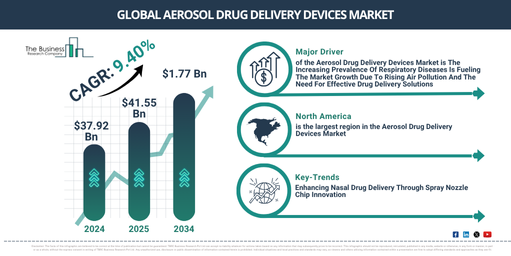
    In recent times, the market of aerosol drug delivery devices has shown robust growth. The market is projected to expand from $37.92 billion in 2024 to $41.55 billion in 2025, exhibiting a compound annual growth rate (CAGR) of 9.6%. Factors contributing to the growth witnessed during the historic period include an increase in respiratory diseases cases, rising numbers of the elderly population worldwide, heightened public awareness about air quality, a surge in demand for home healthcare settings, enhanced access to generic inhalation therapies, and beneficial reimbursement policies in developed markets.

    The market for aerosol drug delivery devices is predicted to witness robust expansion in the upcoming years, potentially reaching $59.45 billion by 2029, with a compound annual growth rate (CAGR) of 9.4%. This growth in the anticipated period could be ascribed to the escalating prevalence of chronic respiratory diseases globally, the rise in the implementation of digital and intelligent inhaler devices, heightened financial input in the innovation of drug-device combo products, quick urbanization, and deteriorating pollution in developing economies, the growth of telemedicine, and remote patient observing systems. Key trends for the projection period include the emergence of connected inhalers integrated with adherence monitoring, an increase in the deployment of dry powder inhalers (DPIs), advent of propellant-free or environmentally friendly aerosol mechanisms, reduction in size and increase in mobility of nebulizers for domestic and travel purposes, amalgamation of AI and mobile applications for tracking usage, and a transition towards person-specific aerosol therapy.

    Download The Free Sample Report Here:

    https://www.thebusinessresearchcompany.com/sample.aspx?id=25690&type=smp

    What Elements Are Contributing To Growth In The Aerosol Drug Delivery Devices Market?

    The rise in respiratory illnesses is anticipated to stimulate the advancement of the aerosol drug delivery devices market. Such diseases typically affect the lungs and other elements of the respiratory system, rendering regular breathing challenging. These respiratory conditions are largely due to escalating levels of air pollution. Contaminants like particulate substance, nitrogen dioxide (NO2), and ozone (O3) aggravate the respiratory system, resulting in persistent ailments like asthma, bronchitis, and chronic obstructive pulmonary disease (COPD). Aerosol drug delivery devices facilitate respiratory disease treatments by introducing medicine straight into the lungs. This results in quicker therapeutic impacts and improved treatment efficacy, while also limiting systemic adverse effects and boosting patient compliance via targeted and non-invasive administration. As per the National Asthma Council, a non-profit organization in Australia, in 2022, Australia witnessed 467 asthma-related fatalities, which included 299 females and 168 males. This representation is an escalation from the 355 deaths documented in 2021. Consequently, the mounting prevalence of respiratory maladies is propelling the expansion of the aerosol drug delivery devices market.

    Which Segments Are Detailed In The Global Aerosol Drug Delivery Devices Market Report?

    The aerosol drug delivery devices market covered in this report is segmented –

    1) By Product Type: Metered Dose Inhalers (MDIs), Dry Powder Inhalers (DPIs), Nebulizers, Smart Inhalers, Other Types

    2) By Component: Delivery Devices, Compressor Units, Medication Containers, Accessories And Consumables

    3) By Application: Asthma, Chronic Obstructive Pulmonary Disease, Cystic Fibrosis, Non-Respiratory Diseases, Diabetes, Analgesia, Parkinson’s Diseases

    4) By Distribution Channel: Hospital Pharmacies, Retail Pharmacies, Online Pharmacies, Other Distribution Channels

    5) By End User: Hospitals, Homecare Settings, Pharmaceutical Companies, Research Institutions, Other End Users

    Subsegments:

    1) By Metered Dose Inhalers (MDIs): Conventional Metered Dose Inhalers, Breath-Actuated Metered Dose Inhalers, Pressurized Metered Dose Inhalers

    2) By Dry Powder Inhalers (DPIs): Single-Dose Dry Powder Inhalers, Multi-Dose Dry Powder Inhalers, Reservoir Dry Powder Inhalers

    3) By Nebulizers: Jet Nebulizers, Ultrasonic Nebulizers, Mesh Nebulizers

    4) By Smart Inhalers: Bluetooth-Enabled Smart Inhalers, Sensor-Based Smart Inhalers, App-Connected Smart Inhalers

    5) By Other Types: Soft Mist Inhalers, Nasal Spray Inhalers, Disposable Inhalers

    Which Emerging Trends And Strategic Shifts Are Shaping The Aerosol Drug Delivery Devices Market?

    Primary organizations within the aerosol drug delivery devices market are turning their efforts towards the creation of cutting-edge technologies such as spray nozzle chip technology. The goal of these advancements is to refine the precision of drug delivery, extend nasal cavity coverage, and elevate the comfort of patients. The spray nozzle chip technology is a micro-engineered element that creates a fine, evenly spread aerosol fog for medication delivery. For example, Aero Pump GmbH, a manufacturing company based in Germany, collaborated with Resyca B.V., a pharmaceutical company from the Netherlands, to introduce the Ultra Soft Nasal Pump Spray in October 2024. This tool utilizes spray nozzle chip technology to produce a fine, uniformly dispersed soft mist, enhancing the precision of drug delivery, the coverage of the nasal cavity, and the comfort of the patient. This is particularly relevant for uses such as nose-to-brain therapies and nasal vaccinations. The revolutionary spray nozzle chip allows for slow-traveling aerosol particles to penetrate deeper into the nasal passage, consequently improving drug absorption in difficult-to-reach areas such as the olfactory zone.

    Who Are The Key Contributors To Growth In The Aerosol Drug Delivery Devices Market?

    Major companies operating in the aerosol drug delivery devices market are Merck & Co. Inc., Novartis AG, AstraZeneca PLC, GSK PLC, Boehringer Ingelheim Pharma GmbH & Co. KG, Medline Industries LP, Koninklijke Philips N.V., Teva Pharmaceutical Industries Ltd., Omron Healthcare Inc., AptarGroup Inc., Chiesi Farmaceutici S.p.A., Cipla Inc., Gerresheimer AG, Drive DeVilbiss Healthcare LLC, Beximco Pharmaceuticals Limited, Sensirion AG, Aerogen Limited, PARI GmbH, Pneuma Respiratory Inc., Iconovo AB.

    Get The Full Report Here:

    https://www.thebusinessresearchcompany.com/report/aerosol-drug-delivery-devices-global-market-report

    Which Region Is Projected To Lead The Aerosol Drug Delivery Devices Market By 2025?

    North America was the largest region in the aerosol drug delivery devices market in 2024. Asia-Pacific is expected to be the fastest-growing region in the forecast period. The regions covered in the aerosol drug delivery devices market report are Asia-Pacific, Western Europe, Eastern Europe, North America, South America, Middle East, Africa.

    Request For A Customized Report:

    https://www.thebusinessresearchcompany.com/customise?id=25690&type=smp

    About The Business Research Company:

    With over 15000+ reports from 27 industries covering 60+ geographies, The Business Research Company has built a reputation for offering comprehensive, data-rich research and insights. Armed with 1,500,000 datasets, the optimistic contribution of in-depth secondary research, and unique insights from industry leaders, you can get the information you need to stay ahead in the game.

    Get in touch with us:

    The Business Research Company: https://www.thebusinessresearchcompany.com/

    Americas +1 310-496-7795

    Asia +44 7882 955267 & +91 8897263534

    Europe +44 7882 955267

    Email us at info@tbrc.info

    Follow us on:

    LinkedIn: https://in.linkedin.com/company/the-business-research-company

    YouTube: https://www.youtube.com/channel/UC24_fI0rV8cR5DxlCpgmyFQ

    Global Market Model: https://www.thebusinessresearchcompany.com/global-market-model

  • Global Scar Treatment Market Forecast to Reach $40.36 Billion by 2029, Driven by 10.8% CAGR

    Global Scar Treatment Market Forecast to Reach $40.36 Billion by 2029, Driven by 10.8% CAGR

    Claim your 30% discount on Global Market Reports with code ONLINE30. Limited time only.

    Claim your 30% discount on Global Market Reports with code ONLINE30. Limited time only.

    What Is the Estimated Industry Valuation for the Scar Treatment Sector?

    In recent years, the size of the scar treatment market has seen rapid expansion. The market, which is predicted to be worth $24.19 billion in 2024, is projected to increase to $26.74 billion in 2025. This represents a compound annual growth rate (CAGR) of 10.5%. Factors contributing to growth during the historic period include the integration of minimally invasive procedures, enhanced market accessibility, advancements in wound care, clinical trials, and research, and the progression of cosmetic surgery.

    The market size for scar treatment is forecasted to experience a swift expansion in the coming years. It’s projected to ascend to $40.36 billion in 2029, showing a compound annual growth rate (CAGR) of 10.8%. The growth during the forecast period can be credited to breakthroughs in topical care, advances in regenerative medicine, improvements in cosmetic surgery procedures, tailored treatment strategies, and less invasive methods. The key trends during this period include an increasing interest in aesthetic procedures, innovation in topical care, growth in regenerative medicine, breakthroughs in cosmetic surgery, and a patient-oriented approach.

    Download The Free Sample Report Here:

    https://www.thebusinessresearchcompany.com/sample.aspx?id=10572&type=smp

    What Forces Are Driving The Growth Of The Scar Treatment Market?

    The surge in road accidents is forecasted to fuel the expansion of the scar treatment market moving forward. Road mishaps, defined as events involving one or more vehicles on a public road causing at least one injury or death, lead to accidental skin burns, abrasions, scrapes, or cuts. These wounds naturally heal and replace tissue, which often leaves scars. This scarring can be substantially minimized using special scar treatments that correct the injured skin layers and demonstrate visible results. For example, the National Highway Traffic Safety Administration, a U.S.-based federal government agency, reported in September 2022 that an estimated 20,175 people died in car accidents on roads in the first half of 2022 in the United States, showing a 0.5% increase from 2021. Hence, the escalating volume of road mishaps is facilitating the growth of the scar treatment market.

    How Is The Scar Treatment Industry Segmented Across Key Parameters?

    The scar treatment market covered in this report is segmented –

    1) By Scar Type: Atrophic Scars, Hypertrophic And Keloid Scars, Contracture Scars, Other Scar Types

    2) By Treatment Type: Topical, Laser, Surface, Surgical, Injectable

    3) By End User: Hospitals, Clinics, Pharmacies and Drug Store, E-commerce

    Subsegments:

    1) By Atrophic Scars: Acne Scars, Surgical Scars, Other Atrophic Scars

    2) By Hypertrophic And Keloid Scars: Hypertrophic Scars, Keloid Scars

    3) By Contracture Scars: Post-Burn Contracture Scars, Other Contracture Scars

    4) By Other Scar Types: Stretch Marks, Other Types of Scars

    What Notable Trends Are Shaping The Direction Of The Scar Treatment Market?

    A prominent trend emerging in the rheumatoid arthritis drug market is the focus on product innovations. Firms operating in this market sector are leaning towards launching new products to maintain their market standing. For instance, in August 2022, R-Pharm, a private pharmaceutical firm from Russia, introduced Olokizumab, a humanized monoclonal antibody that specifically targets the cytokine interleukin-6. This transmission molecule is instrumental in the progression of joint-related damage in patients with rheumatoid arthritis and, similar to TNF (tumor necrosis factor), it initiates inflammatory reactions within the body. This tends to reduce the disease’s activity in several patients suffering from rheumatoid arthritis.

    Which Companies Currently Dominate The Competitive Landscape In The Scar Treatment Industry?

    Major companies operating in the scar treatment market include Smith & Nephew plc, Lumenis Ltd., Merz Pharmaceuticals GmbH, Sonoma Pharmaceuticals Inc., Cynosure LLC, CCA Industries Inc., Avita Medical Limited, Mölnlycke Health Care AB, Sientra Inc., Sisram Medical Ltd., Revitol Corporation, Scarguard Labs LLC, Scar Heal Inc., Enaltus LLC, Sumed International Ltd., Syneron Medical Ltd., Bausch Health Companies Inc., Hologic Inc., Beijing Toplaser Technology Co. Ltd., Pacific World Corporation, Suneva Medical Inc., Newmedical Technology Inc., Stratpharma AG, Perrigo Company plc, Alliance Pharma plc, Galderma Laboratories L.P., Acelity L.P. Inc., Advanced Medical Solutions Group plc, Aesthetic Factors LLC, Apyx Medical Corporation, Biofrontera AG, Cutera Inc., Derma Sciences Inc., Ellipse A/S, EndyMed Medical Ltd., Erchonia Corporation, Fotona d.o.o., InMode Ltd., Lutronic Corporation, Medtronic plc

    Get The Full Report Here:

    https://www.thebusinessresearchcompany.com/report/scar-treatment-global-market-report

    Which Geographic Regions Are Driving Demand In The Scar Treatment Market?

    North America was the largest region in the scar treatment market in 2024.Asia-Pacific is expected to be the fastest-growing region in the global scar treatment market report during the forecast period. The regions covered in the scar treatment market report are Asia-Pacific, Western Europe, Eastern Europe, North America, South America, Middle East, Africa

    Request For A Customized Report:

    https://www.thebusinessresearchcompany.com/customise?id=10572&type=smp

    About The Business Research Company:

    With over 15000+ reports from 27 industries covering 60+ geographies, The Business Research Company has built a reputation for offering comprehensive, data-rich research and insights. Armed with 1,500,000 datasets, the optimistic contribution of in-depth secondary research, and unique insights from industry leaders, you can get the information you need to stay ahead in the game.

    Get in touch with us:

    The Business Research Company: https://www.thebusinessresearchcompany.com/

    Americas +1 310-496-7795

    Asia +44 7882 955267 & +91 8897263534

    Europe +44 7882 955267

    Email us at info@tbrc.info

    Follow us on:

    LinkedIn: https://in.linkedin.com/company/the-business-research-company

    YouTube: https://www.youtube.com/channel/UC24_fI0rV8cR5DxlCpgmyFQ

    Global Market Model: https://www.thebusinessresearchcompany.com/global-market-model