Month: August 2025

  • 2025 Dental 3D Printing Devices Market Outlook: Opportunities, Growth Trends, and Strategic Analysis

    2025 Dental 3D Printing Devices Market Outlook: Opportunities, Growth Trends, and Strategic Analysis

    Claim your 30% discount on Global Market Reports with code ONLINE30. Limited time only.

    Claim your 30% discount on Global Market Reports with code ONLINE30. Limited time only.

    What Are the Latest Market Insights for the Dental 3D Printing Devices Industry?

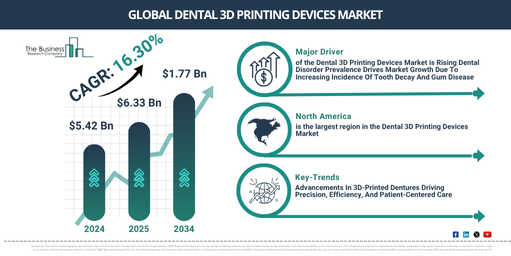
    The market for dental 3D printing devices has experienced swift expansion in recent times. It’s projected that its size will increase from $5.42 billion in 2024 to $6.33 billion in 2025, with a compound annual growth rate (CAGR) of 16.7%. Factors contributing to its historic growth include the increased accessibility of biocompatible printing materials, enhanced investment in dental health infrastructure, a rise in dental clinics and laboratories, a shift towards chairside dental solutions, and a trend towards patient-specific dental equipment.

    In the following years, a significant expansion is anticipated in the dental 3D printing devices market. The market size is predicted to reach $11.57 billion in 2029, with a compound annual growth rate (CAGR) of 16.3%. Factors such as a boost in dental disorder cases, an increased demand for cosmetic dentistry, a rising elderly population, the growing utilization of digital dentistry procedures, and heightened awareness around oral health contribute to the growth during the forecast period. The forecast period will also witness major trends such as improvements in 3D printing technologies, progression in biocompatible printing materials, tech innovation in resin-based printing, enhancements in multi-material printing systems, and advancements in hot lithography technology.

    Download The Free Sample Report Here:

    https://www.thebusinessresearchcompany.com/sample.aspx?id=25735&type=smp

    What Forces Are Driving The Growth Of The Dental 3D Printing Devices Industry?

    The increase in dental disorders is anticipated to spur the growth of the dental 3D printing devices market. Dental disorders, a range of conditions that affect the health, function, or structure of the teeth and surrounding oral tissues, are largely caused by poor dietary habits, particularly high sugar and acid intake that lead to tooth decay and gum disease. Dental 3D printing devices play a significant role in managing these disorders by facilitating quick, accurate, and cost-friendly production of personalized dental products such as crowns, bridges, aligners, dentures, and surgical guides, enhancing the precision of treatments and patient results. For example, a report by the American Cancer Society, a nonprofit cancer advocacy organization in the U.S, revealed that approximately 58,450 adults in the United States, consisting of 41,510 men and 16,940 women, are expected to be diagnosed with oral or oropharyngeal cancer in 2024, an increase from 54,000 adults in 2022. Thus, the escalating prevalence of dental disorders is fueling the growth of the dental 3D printing devices market.

    What Is The Overview Of Market Segmentation In The Dental 3D Printing Devices Industry?

    The dental 3d printing devices market covered in this report is segmented –

    1) By Device Type: Desktop 3D Printers, Industrial 3D Printers, Dental Specific 3D Printers

    2) By Technology Type: Stereolithography (SLA), Digital Light Processing (DLP), Selective Laser Sintering (SLS), Material Jetting

    3) By Material Type: Resins, Biocompatible Materials, Thermoplastics, Wax

    4) By Application Area: Orthodontics, Prosthodontics, Implantology, Maxillofacial Surgery, Custom Dental Devices

    5) By End-User: Dental Laboratories, Dental Clinics, Educational Institutions, Research Organizations

    Subsegments:

    1) By Desktop 3D Printers: Resin-Based Desktop Printers, Fused Deposition Modeling (FDM) Desktop Printers, Multi-Material Desktop Printers

    2) By Industrial 3D Printers: Selective Laser Sintering (SLS) Industrial Printers, Multi-Jet Fusion (MJF) Printers, Binder Jetting Printers, Polyjet Printers

    3) By Dental Specific 3D Printers: Crown And Bridge Printers, Denture Printers, Orthodontic Appliance Printers, Surgical Guide Printers

    What Future Market Trends Are Projected For The Dental 3D Printing Devices Industry?

    Top-tier businesses engaged in the dental 3D printing devices sector are concentrating on evolving advanced tech such as 3D-printed dentures to augment precision in treatment, cut down on processing times, and boost personalized treatment for patients. 3D-printed dentures are digitally drafted and created using 3D printing technology, making it possible for detailed, adaptively customizable and efficient replacement of lost teeth. To illustrate, the US-based computer manufacturing company, 3D Systems Corporation, released the dental industry’s inaugural multi-material, jetted, one-piece dentures in February 2024. This advanced technology combines unique materials for both teeth and gums into one piece, offering exceptional durability, resistance to breakage, and realistic aesthetics, drastically trimming down on production time and labour effort for dental laboratories. This breakthrough delivers speedier, more pleasant, and enduring dentures for patients thereby improving both the clinical results and patient satisfaction.

    Who Are The Primary Players Operating Across The Global Dental 3D Printing Devices Market?

    Major companies operating in the dental 3d printing devices market are Renishaw, Stratasys Ltd., 3D Systems Corporation, Roland DG Corporation, Formlabs Inc., Materialise NV, Desktop Metal Inc., Carbon Inc., EnvisionTEC GmbH, SprintRay Inc., Prodways Group SA, UnionTech, Structo Pte. Ltd., Zortrax S.A., Kulzer GmbH, BEGO GmbH & Co. KG., Sisma S.p.A., Asiga Pty Ltd., Rapid Shape GmbH, Raise3D Technologies Inc.

    Get The Full Report Here:

    https://www.thebusinessresearchcompany.com/report/dental-3d-printing-devices-global-market-report

    Which Region Offers The Most Growth Potential For The Dental 3D Printing Devices Market Through 2029?

    North America was the largest region in the dental 3D printing devices market in 2024. Asia-Pacific is expected to be the fastest-growing region in the forecast period. The regions covered in the dental 3d printing devices market report are Asia-Pacific, Western Europe, Eastern Europe, North America, South America, Middle East, Africa.

    Request For A Customized Report:

    https://www.thebusinessresearchcompany.com/customise?id=25735&type=smp

    About The Business Research Company:

    With over 15000+ reports from 27 industries covering 60+ geographies, The Business Research Company has built a reputation for offering comprehensive, data-rich research and insights. Armed with 1,500,000 datasets, the optimistic contribution of in-depth secondary research, and unique insights from industry leaders, you can get the information you need to stay ahead in the game.

    Get in touch with us:

    The Business Research Company: https://www.thebusinessresearchcompany.com/

    Americas +1 310-496-7795

    Asia +44 7882 955267 & +91 8897263534

    Europe +44 7882 955267

    Email us at info@tbrc.info

    Follow us on:

    LinkedIn: https://in.linkedin.com/company/the-business-research-company

    YouTube: https://www.youtube.com/channel/UC24_fI0rV8cR5DxlCpgmyFQ

    Global Market Model: https://www.thebusinessresearchcompany.com/global-market-model
  • Latest Market Developments in Environmental Biotechnology Industry: Forecast 2025–2029

    Latest Market Developments in Environmental Biotechnology Industry: Forecast 2025–2029

    Claim your 30% discount on Global Market Reports with code ONLINE30. Limited time only.

    Claim your 30% discount on Global Market Reports with code ONLINE30. Limited time only.

    How Large Is the Environmental Biotechnology Market Expected to Be in 2029?

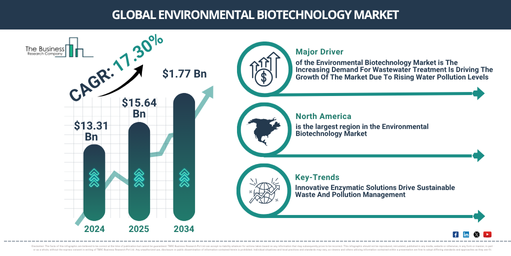
    S1: The market size for environmental biotechnology has experienced swift expansion in the preceding years. The market is projected to grow from $13.31 billion in 2024 to $15.64 billion by 2025, with a compound annual growth rate (CAGR) of 17.5%. The historical growth of this market is linked to rising industrial pollution, escalating worries about soil and water pollution, an increase in regulatory pressure for environmental compliance, a growing understanding of the deficiencies of chemical treatments, and an upsurge in waste production owing to urbanization.

    Anticipations have been made about a swift expansion of the environmental biotechnology market size in the approaching years. The projections indicate that it will accelerate to $29.61 billion by 2029, demonstrating a compound annual growth rate (CAGR) of 17.3%. The escalation during the predicted duration could be accredited to the heightened attention on counteracting climate change, an upsurge in investment for circular bioeconomy models, growth in demand for eco-friendly industrial practices, an increase in preference for low-carbon industrial processes, and a rise in climate-related catastrophes. The major expected trends during this duration encompass the production of bioplastics from agricultural remains, the invention of bioleaching techniques for recycling electronic waste, the fusion of bioinformatics in pollution gene mapping, the merger of sustainable methods into industrial biotechnology, and technological advancements in enzyme-based soil detoxification.

    Download The Free Sample Report Here:

    https://www.thebusinessresearchcompany.com/sample.aspx?id=25762&type=smp

    What Are The Contributors To Demand In The Environmental Biotechnology Market?

    The environmental biotechnology market’s expansion is anticipated to be fueled by the escalating need for wastewater treatment. The latter refers to the removal of detrimental substances, contaminants, and pollutants from dirty or used water, rendering it safe for reuse or environmental discharge. The growing need for wastewater treatment is principally attributed to an increase in water pollution, which poses threats to public health, ecosystems, and the availability of clean water. By employing biological processes and organisms, environmental biotechnology optimizes wastewater treatment, effectively breaking down pollutants, decreasing toxic waste, and facilitating cleaner water discharge. For example, a report from the American Society of Civil Engineers, a professional organization based in the US, revealed that by 2024, the projected annual investment deficit for water infrastructure, encompassing drinking water, wastewater, and stormwater, stood at $99 billion, a marked increase from the $81 billion indicated in ASCE’s 2021 study. Consequently, the burgeoning need for wastewater treatment is spurring the expansion of the environmental biotechnology market.

    What Segmentation Categories Are Included In The Environmental Biotechnology Market Analysis?

    The environmental biotechnology market covered in this report is segmented –

    1) By Product: Microbial Blends, Nutrients, Enzymes, Microbes

    2) By Technology: Tissue Engineering And Regeneration, Cell-Based Assays, Nanobiotechnology, Fermentation, Chromatography, Deoxyribonucleic Acid (DNA) Sequencing, Polymerase Chain Reaction Technology, Other Technologies

    3) By Application: Wastewater Treatment, Bioremediation, Other Applications

    4) By End User: Agriculture, Water Treatment, Energy, Waste Management, Food And Beverage, Pharmaceuticals

    Subsegments:

    1) By Microbial Blends: Bioaugmentation Blends, Bioremediation Microbial Consortia, Waste Decomposition Microbial Mixes, Odor Control Microbial Formulations

    2) By Nutrients: Nitrogen Supplements, Phosphorus Additives, Trace Mineral Blends, Carbon Source Additives

    3) By Enzymes: Waste Degrading Enzymes, Oil And Grease-Degrading Enzymes, Sludge Reduction Enzymes, Odor Control Enzymes

    4) By Microbes: Bacteria, Fungi, Algae, Genetically Engineered Microorganisms

    What Upcoming Trends Are Expected To Impact The Environmental Biotechnology Market Globally?

    Leading corporations in the environmental biotechnology sector are prioritizing the creation of inventive strategies such as enzyme-based biocatalysts, that can amplify both the effectiveness and sustainability of waste management and pollution control systems. Enzyme-based biocatalysts, which are biological molecules, quicken chemical reactions, allowing for swifter and more productive processes in environmental applications like waste decomposition and pollutant elimination. To illustrate, Novonesis A/S, a biotechnology firm established in Denmark, introduced Eversa Advance in November 2024. This enzymatic solution is designed to augment the efficacy and sustainability of biodiesel feedstock processing, predominantly for materials holding up to 20% of free fatty acids. This cutting-edge solution lets biodiesel manufacturers operate with waste-based feedstocks without resorting to acid esterification, thereby reducing pretreatment operational expenses by a substantial 45%. It also curtails equipment wear and tear and minimizes downtime. Enhancing feedstock versatility through this solution escalates plant profitability and fosters more environmentally-conscious biodiesel production.

    Who Are The Top-Ranked Companies In The Environmental Biotechnology Market Today?

    Major companies operating in the environmental biotechnology market are BASF SE, Dow Chemical Company, Thermo Fisher Scientific Inc., Merck KGaA, Evonik Industries AG, Ecolab Inc., DuPont de Nemours Inc., Suez SA, Agilent Technologies Inc., Novonesis A/S, LCY Chemical Corporation, Ginkgo Bioworks Holdings Inc., Praj Industries Limited, Genomatica Inc., LanzaTech Global Inc., Biorem Inc., Green Biologics Ltd., Veolia Environnement S.A., Alken-Murray Corporation, SynBioBeta LLC.

    Get The Full Report Here:

    https://www.thebusinessresearchcompany.com/report/environmental-biotechnology-global-market-report

    How Is Environmental Biotechnology Market Adoption Varying Across Different Regions And Sectors?

    North America was the largest region in the environmental biotechnology market in 2024. The regions covered in the environmental biotechnology market report are Asia-Pacific, Western Europe, Eastern Europe, North America, South America, Middle East, Africa.

    Request For A Customized Report:

    https://www.thebusinessresearchcompany.com/customise?id=25762&type=smp

    About The Business Research Company:

    With over 15000+ reports from 27 industries covering 60+ geographies, The Business Research Company has built a reputation for offering comprehensive, data-rich research and insights. Armed with 1,500,000 datasets, the optimistic contribution of in-depth secondary research, and unique insights from industry leaders, you can get the information you need to stay ahead in the game.

    Get in touch with us:

    The Business Research Company: https://www.thebusinessresearchcompany.com/

    Americas +1 310-496-7795

    Asia +44 7882 955267 & +91 8897263534

    Europe +44 7882 955267

    Email us at info@tbrc.info

    Follow us on:

    LinkedIn: https://in.linkedin.com/company/the-business-research-company

    YouTube: https://www.youtube.com/channel/UC24_fI0rV8cR5DxlCpgmyFQ

    Global Market Model: https://www.thebusinessresearchcompany.com/global-market-model
  • Global Insights: Cytokine-Based Therapies And Inhibitors Market Expected to Surpass $173.32  Billion by 2029

    Global Insights: Cytokine-Based Therapies And Inhibitors Market Expected to Surpass $173.32 Billion by 2029

    Claim your 30% discount on Global Market Reports with code ONLINE30. Limited time only.

    Claim your 30% discount on Global Market Reports with code ONLINE30. Limited time only.

    What Are the Forecasted Growth Rate and Market Size of the Cytokine-Based Therapies And Inhibitors Market?

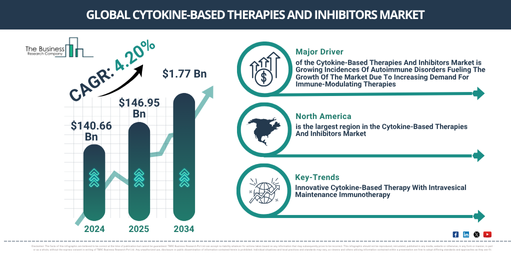
    The market size for cytokine-based therapies and inhibitors has been experiencing a steady growth in recent years. The market, valued at $140.66 billion in 2024, is projected to increase to $146.95 billion in 2025 with a compound annual growth rate (CAGR) of 4.5%. Factors contributing to this growth during the historic period include a rise in autoimmune diseases, a surge in cancer cases, an increase in the burden of infectious diseases, a growing demand for personalized medicine, advancements in vaccine production, and increased understanding and awareness about immunotherapies.

    Anticipated consistent expansion is in the forecast for the cytokine-based therapies and inhibitors market, with a predicted valuation of $173.32 billion by 2029, boasting a compound annual growth rate (CAGR) of 4.2%. The progression during the forecast period can be traced back to aspects such as an aging global demographic, a rise in the utilization of focused treatments, a growing occurrence of chronic inflammatory illnesses, a swelling pipeline of clinical trials, governmental aid for immunology studies, and a heightened consideration towards patient results and security. The period is also set to witness breakthroughs in protein engineering, the advent of inhibitors targeting multiple cytokines, the application of artificial intelligence in drug development, the use of next-generation sequencing in biomarker identification, digital health platforms’ integration, and improved formulation methodologies for enhanced stability.

    Download The Free Sample Report Here:

    https://www.thebusinessresearchcompany.com/sample.aspx?id=25734&type=smp

    Which Factor Is Shaping The Future Of The Cytokine-Based Therapies And Inhibitors Market?

    The cytokine-based therapies and inhibitors market is anticipated to grow due to an increase in the rate of autoimmune disorders. These disorders occur when the body’s immune system incorrectly attacks its own healthy cells and tissues, believing them to be harmful intruders. The mounting cases of autoimmune disorders can be linked to changes in diet, specifically a rise in the intake of heavily processed foods. These foods can disrupt gut microbiota and impair immune regulation. Therapies and inhibitors based on cytokines can control the immune response by focusing on particular cytokines that play a role in inflammation, which makes them effective at controlling autoimmune disorders. For instance, a study by Versorgungsatlas.de, a healthcare portal based in Germany, reported that in November 2024, out of 73,241,305 insured individuals in 2022, 6,304,340 were diagnosed with a minimum of one autoimmune disease, leading to a crude prevalence rate of 8.61%. Consequently, the rising cases of autoimmune disorders are fueling the growth of the cytokine-based therapies and inhibitors market.

    What Is The Segment-Wise Breakdown Of The Cytokine-Based Therapies And Inhibitors Market?

    The cytokine-based therapies and inhibitors market covered in this report is segmented –

    1) By Type: Interleukins, Tumor Necrosis Factor, Epidermal Growth Factor, Interferon, Chemokine

    2) By Application: Cancer And Malignancies, Inflammatory And Immune Disorders, Infectious Diseases, Asthma And Airway Inflammation, Other Applications

    3) By End User: Hospitals, Clinics, Research Laboratories, Academic And Research Institutes, Specialty Centers, Other End Users

    Subsegments:

    1) By Interleukins: Interleukin-2, Interleukin-6, Interleukin-10, Interleukin-12, Interleukin-17, Interleukin-23

    2) By Tumor Necrosis Factor (TNF): Tumor Necrosis Factor-Alpha Inhibitors, Tumor Necrosis Factor-Beta Inhibitors

    3) By Epidermal Growth Factor (EGF): Epidermal Growth Factor Receptor Inhibitors, Human Epidermal Growth Factor Receptor 2 Inhibitors

    4) By Interferon: Interferon-Alpha, Interferon-Beta, Interferon-Gamma

    5) By Chemokine: C-C Chemokine Receptor Type 5 Antagonists, C-X-C Chemokine Receptor Type 4 Inhibitors, C-X-C Chemokine Receptor Type 1/2 Inhibitors

    Which Trends Are Redefining The Future Landscape Of The Cytokine-Based Therapies And Inhibitors Industry?

    Leading companies in the cytokine-based therapy and inhibitor market are centering their attention on pioneering therapies such as intravesical cytokine maintenance immunotherapy. This approach is aimed at boosting the longevity of complete responses and diminishing relapse rates in patients affected by BCG-unresponsive non-muscle invasive bladder cancer (NMIBC). Intravesical cytokine maintenance immunotherapy includes the straight delivery of immune-activating proteins into the bladder, after which long-term maintenance dosage is administered to persistently stimulate local immune reactions and hinder tumor regrowth. For instance, nogapendekin alfa inbakicept-pmln (Anktiva) received approval from the US government regulatory body, Food and Drug Administration, in April 2024. Recognized as a unique cytokine-based therapy, Anktiva is used with Bacillus Calmette-Guérin (BCG), functioning as a fusion protein that targets interleukin-15 (IL-15) pathways, consequently activating CD122-positive immune cells including natural killer (NK) cells and CD8-positive T cells. These workings are consistent with cytokine-based therapy principles that employ signaling proteins like IL-15 to reinforce immune surveillance and anti-tumor activity within the body.

    Which Companies Hold The Largest Market Share In The Cytokine-Based Therapies And Inhibitors Sector?

    Major companies operating in the cytokine-based therapies and inhibitors market are Pfizer Inc., Johnson & Johnson, F. Hoffmann-La Roche Ltd, AbbVie Inc., Bayer AG, Novartis AG, Sanofi SA, Bristol-Myers Squibb Company, Thermo Fisher Scientific Inc., AstraZeneca Plc, GlaxoSmithKline plc, Eli Lilly and Company, Amgen Inc, Lonza Group AG, Cytiva, UCB S.A., Sartorius CellGenix GmbH, Biocon Limited, Bio-Techne Corporation, Miltenyi Biotec B.V. & Co. KG.

    Get The Full Report Here:

    https://www.thebusinessresearchcompany.com/report/cytokine-based-therapies-and-inhibitors-global-market-report

    How Does Regional Performance Compare Across The Cytokine-Based Therapies And Inhibitors Industry?

    North America was the largest region in the cytokine-based therapies and inhibitors market in 2024. Asia-Pacific is expected to be the fastest-growing region in the forecast period. The regions covered in the cytokine-based therapies and inhibitors market report are Asia-Pacific, Western Europe, Eastern Europe, North America, South America, Middle East, Africa.

    Request For A Customized Report:

    https://www.thebusinessresearchcompany.com/customise?id=25734&type=smp

    About The Business Research Company:

    With over 15000+ reports from 27 industries covering 60+ geographies, The Business Research Company has built a reputation for offering comprehensive, data-rich research and insights. Armed with 1,500,000 datasets, the optimistic contribution of in-depth secondary research, and unique insights from industry leaders, you can get the information you need to stay ahead in the game.

    Get in touch with us:

    The Business Research Company: https://www.thebusinessresearchcompany.com/

    Americas +1 310-496-7795

    Asia +44 7882 955267 & +91 8897263534

    Europe +44 7882 955267

    Email us at info@tbrc.info

    Follow us on:

    LinkedIn: https://in.linkedin.com/company/the-business-research-company

    YouTube: https://www.youtube.com/channel/UC24_fI0rV8cR5DxlCpgmyFQ

    Global Market Model: https://www.thebusinessresearchcompany.com/global-market-model
  • 2025 Analysis: Opportunities and Risks in the Evolving Cryptococcosis Therapeutics Market

    2025 Analysis: Opportunities and Risks in the Evolving Cryptococcosis Therapeutics Market

    Claim your 30% discount on Global Market Reports with code ONLINE30. Limited time only.

    Claim your 30% discount on Global Market Reports with code ONLINE30. Limited time only.

    What Is the Estimated Industry Valuation for the Cryptococcosis Therapeutics Sector?

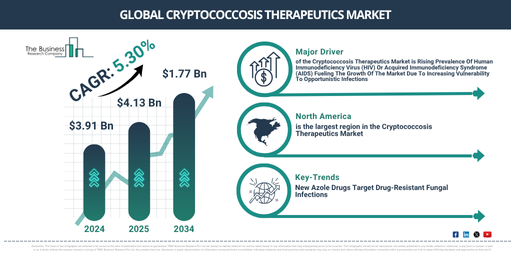
    The market for cryptococcosis therapeutics has seen substantial growth in recent years. It is set to grow from a valuation of $3.91 billion in 2024 to reach $4.13 billion in 2025, exhibiting a compound annual growth rate (CAGR) of 5.6%. This growth recorded in the historical period can be associated with an increased prevalence of HIV or AIDS, heightened awareness about fungal infections, improved availability of antifungal drugs, expansion in worldwide monitoring and fungal disease awareness initiatives, and the development in non-governmental health projects.

    In the coming years, robust expansion is expected in the cryptococcosis therapeutics market, with a projection to attain $5.07 billion by 2029. A compound annual growth rate (CAGR) of 5.3% will drive this growth. The predicted growth in the forecast period can be traced back to increased funding in antifungal research and the development of new drugs. Other contributing factors include the growing cases of immunosuppressive conditions and treatments, a rise in global fungal diseases, and an increased demand for quick diagnostic tools and combined therapies. Important trends in the forecast period feature a shift towards combined antifungal therapy, the invention of next-generation antifungals with unique mechanisms, the incorporation of artificial intelligence and machine learning, adoption of innovative drug delivery systems, and a holistic approach towards managing fungal diseases.

    Download The Free Sample Report Here:

    https://www.thebusinessresearchcompany.com/sample.aspx?id=25733&type=smp

    What Forces Are Driving The Growth Of The Cryptococcosis Therapeutics Market?

    The growth of the cryptococcosis therapeutics market is anticipated to be driven by the increasing cases of human immunodeficiency virus (HIV) or acquired immunodeficiency syndrome (AIDS). HIV/AIDS is a significant global health issue, characterized by a chronic, fatal virus that compromises the immune system, making the body susceptible to various infections and diseases. The escalation in HIV/AIDS in certain regions is largely due to restricted access to healthcare services, inhibiting early detection, continuous treatment, and effective prevention strategies. Through targeting the frequent fungal infections in those with compromised immune systems, cryptococcosis therapeutics contributes significantly to HIV/AIDS management. It minimizes the chance of severe complications, such as cryptococcal meningitis, thereby elevating life quality and fostering ongoing disease management. To illustrate, the UK Health Security Agency reported in October 2024 that the number of HIV diagnoses in England had increased by 51% from 3,975 in 2022, registering 6,008 cases (including foreign diagnoses) in 2023. Consequently, the increasing prevalence of HIV/AIDS is fueling the cryptococcosis therapeutics market growth. In addition, the cryptococcosis therapeutics market’s expansion is expected to be spurred by the surge in healthcare expenditures. Healthcare spending encompasses the total funds allocated for procedures, treatments, facilities, research and public health measures to bolster health outcomes. The growth in healthcare spending is largely attributed to an aging population with elevated needs for healthcare services and treatments. This increased expenditure facilitates the accessibility of advanced treatments for cryptococcosis, promotes early diagnosis, and fosters research for more potent antifungal therapies. The US Centers for Medicare & Medicaid Services (CMS) stated in December 2024 that national health expenditures (NHE) inflated by 7.5% to $4.9 trillion in 2023, comprising 17.6% of the gross domestic product (GDP). Moreover, the NHE is forecasted to rise annually at an average of 5.6% between 2023 and 2032, pushing the health spending share of GDP from 17.3% in 2022 to 19.7% in 2032. Consequently, the upsurge in healthcare expenditure is a key driver for the cryptococcosis therapeutics market’s growth.

    How Is The Cryptococcosis Therapeutics Industry Segmented Across Key Parameters?

    The cryptococcosis therapeutics market covered in this report is segmented –

    1) By Drug Type: Branded, Generic

    2) By Treatment: Amphotericin B, Flucytosine, Fluconazole, Other Treatments

    3) By Route Of Administration: Oral, Intravenous, Inhalation

    4) By Distribution Channel: Hospital Pharmacies, Retail Pharmacies, Online Pharmacies

    5) By End-User: Hospitals, Ambulatory Surgical Centers, Other End Users

    Subsegments:

    1) By Branded Drugs: Ambisome, Diflucan, Vfend, Noxafil, Cresemba

    2) By Generic Drugs: Amphotericin B Deoxycholate, Fluconazole, Voriconazole, Itraconazole, Flucytosine

    What Notable Trends Are Shaping The Direction Of The Cryptococcosis Therapeutics Market?

    The cryptococcosis therapeutics market is seeing a surge of activity from leading companies who are striving to develop innovative products and secure regulatory approvals. They aim to optimize treatment, fight resistance, and enhance their market footprint through such strategies. They are particularly interested in azole antifungal drugs, a series of medications designed to limit the growth of fungi by interfering with the creation of ergosterol – an integral component of fungal cell membranes. For example, Asahi Kasei Pharma Corporation, a company originating in Japan, obtained approval in December 2022 from the country’s Ministry of Health, Labour, and Welfare (MHLW) to produce and distribute Cresemba capsule 100 mg and Cresemba intravenous infusion 200 mg. These products are intended to combat serious fungal infections like aspergillosis, mucormycosis, and cryptococcosis. Cresemba, or isavuconazonium sulfate, is an azole antifungal product available in capsule form or as an intravenous infusion. It functions by hindering ergosterol production in fungal cell membranes, which results in the death of fungal cells. The capsule variant is appropriate for patients who are at least 6 years old and weigh no less than 16 kg. Meanwhile, the IV version can be used for patients as young as one year old.

    Which Companies Currently Dominate The Competitive Landscape In The Cryptococcosis Therapeutics Industry?

    Major companies operating in the cryptococcosis therapeutics market are Pfizer Inc., Merck & Co. Inc., Bayer AG, Bristol-Myers Squibb Company, Gilead Sciences Inc., Asahi Kasei Pharma Corporation, Astellas Pharma Inc., Bausch Health Companies Inc., Sun Pharmaceutical Industries Limited, Eisai Co. Ltd., Dr. Reddy’s Laboratories Ltd., Cipla Limited, Takeda Pharmaceutical Company Limited, Luminex Corporation, Evotec SE, Kaken Pharmaceutical Co. Ltd., Basilea Pharmaceutica AG, Vical Incorporated, F2G Limited, Century Pharmaceuticals Ltd., LGM Pharma LLC, Zeon Health Industries Pvt. Ltd., Matinas BioPharma Holdings Inc.

    Get The Full Report Here:

    https://www.thebusinessresearchcompany.com/report/cryptococcosis-therapeutics-global-market-report

    Which Geographic Regions Are Driving Demand In The Cryptococcosis Therapeutics Market?

    North America was the largest region in the cryptococcosis therapeutics market in 2024. Asia-Pacific is expected to be the fastest-growing region in the forecast period. The regions covered in the cryptococcosis therapeutics market report are Asia-Pacific, Western Europe, Eastern Europe, North America, South America, Middle East, Africa.

    Request For A Customized Report:

    https://www.thebusinessresearchcompany.com/customise?id=25733&type=smp

    About The Business Research Company:

    With over 15000+ reports from 27 industries covering 60+ geographies, The Business Research Company has built a reputation for offering comprehensive, data-rich research and insights. Armed with 1,500,000 datasets, the optimistic contribution of in-depth secondary research, and unique insights from industry leaders, you can get the information you need to stay ahead in the game.

    Get in touch with us:

    The Business Research Company: https://www.thebusinessresearchcompany.com/

    Americas +1 310-496-7795

    Asia +44 7882 955267 & +91 8897263534

    Europe +44 7882 955267

    Email us at info@tbrc.info

    Follow us on:

    LinkedIn: https://in.linkedin.com/company/the-business-research-company

    YouTube: https://www.youtube.com/channel/UC24_fI0rV8cR5DxlCpgmyFQ

    Global Market Model: https://www.thebusinessresearchcompany.com/global-market-model
  • Emerging Trends and Growth Drivers in the Endoscopy Sterilization Market Through 2029

    Emerging Trends and Growth Drivers in the Endoscopy Sterilization Market Through 2029

    Claim your 30% discount on Global Market Reports with code ONLINE30. Limited time only.

    Claim your 30% discount on Global Market Reports with code ONLINE30. Limited time only.

    What Is the Outlook for the Endoscopy Sterilization Market Heading Into 2029?

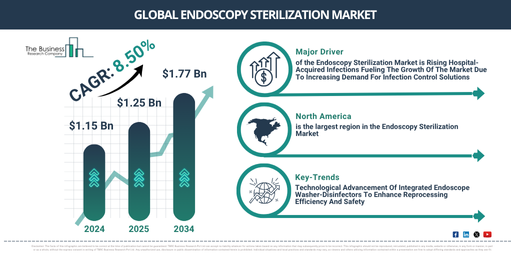
    In recent times, the market size for endoscopy sterilization has seen robust growth. The market is expected to grow from $1.15 billion in 2024 to $1.25 billion in 2025, showcasing a compound annual growth rate (CAGR) of 8.7%. The historic growth trajectory is a result of the surge in hospital-acquired infections, increased endoscopic procedures, the expansion of the surgical infrastructure within hospitals, growing demand for reusable endoscopy equipment, and heightened focus on patient safety measures.

    The market size for endoscopy sterilization is poised for robust expansion in the coming years, with projections to reach $1.73 billion in 2029, reflecting a compound annual growth rate (CAGR) of 8.5%. This anticipated surge during the forecasting period can be linked to the escalating interest in minimally invasive treatments, surging demand for automated sterilization systems, heightened fear of cross-contamination threats, growth of outpatient surgical establishments, and mounting regulatory emphasis on device disinfection. Key patterns during the forecast duration are anticipated to be state-of-the-art enhancements in sterilization equipment, innovation within low-temperature sterilization processes, increased funding towards infection control solutions, the creation of environmentally friendly sterilants, and advancements in the automation of endoscope reprocessing.

    Download The Free Sample Report Here:

    https://www.thebusinessresearchcompany.com/sample.aspx?id=25761&type=smp

    Which Factors Are Pushing The Endoscopy Sterilization Market Forward?

    The escalating number of hospital-acquired infections (HAIs) is anticipated to boost the expansion of the endoscopy sterilization market in the future. Hospital-acquired infections (HAIs) are those infections which patients acquire while getting treatment in a healthcare facility, usually after 48 hours of admission, that were not present or incubating when the patient arrived. The surge in the incidence of HAIs can primarily be traced back to the excessive use of broad-spectrum antibiotics, leading to antimicrobial resistance and providing a conducive environment for drug-resistant pathogens to thrive in healthcare settings. The rise of HAIs has heightened the demand for trustworthy endoscopy sterilization solutions, as inadequately reprocessed endoscopic devices can be potential transmission mediums for multidrug-resistant pathogens during diagnostic and surgical procedures. For instance, an observational study in a tertiary hospital in southwest China in June 2025, conducted by BMC Infectious Diseases (BioMed Central), a UK-based journal publisher, with 2808 HAI cases, reported an increase in nosocomial infection rates: from 0.98 per 1,000 patient-days in 2021 to 1.31 in 2022. Thus, the escalating number of hospital-acquired infections is propelling the expansion of the endoscopy sterilization market.

    Which Segment Held The Largest Share In The Endoscopy Sterilization Market In 2025?

    The endoscopy sterilization market covered in this report is segmented –

    1) By Product Type: Device, Consumables And Accessories

    2) By Sterilization Method: Hydrogen Peroxide Sterilization, Ethylene Oxide (EtO) Sterilization, Liquid Chemical Sterilization, Other Sterilization Methods

    3) By End Use: Hospitals, Ambulatory Surgical Centers, Other End Uses

    Subsegments:

    1) By Device: Low-Temperature Sterilizers, High-Temperature Sterilizers, Ultrasonic Cleaners, Automated Endoscope Reprocessors (AER), Washer Disinfectors, Drying And Storage Cabinets

    2) By Consumables And Accessories: Sterilization Indicators, Sterilization Wraps And Pouches, Cleaning Brushes, Enzymatic Detergents, Disinfectant Solutions, Lubricants And Oiling Agents

    How Are Key Trends Driving Expansion In The Endoscopy Sterilization Industry?

    Leading businesses in the endoscopy sterilization market are concentrating on introducing advanced technologies like comprehensive endoscope washer-disinfectors that have automatic wash, disinfection, and documentation features to improve the processes and safety of reprocessing. Endoscope washer-disinfector devices integrate cleaning, disinfecting, and data monitoring into a single closed-loop system to reduce human mistake and maintain consistent hygiene benchmarks. For example, in June 2023, Olympus Corporation, a firm based in Japan specializing in the production of optics and reprography items, introduced the new EndoThermo Disinfector (ETD) Endoscope Washer Disinfector in both basic and superior versions. The device boasts quicker cycle durations, live digital tracking, and operations that are energy-efficient and environmentally friendly, thereby enhancing workflow and safety of the patient. The ETD system is specifically designed to comply with the current infection management standards and assist staff through intuitive automation and easy upkeep.

    Which Organizations Are Driving Progress In The Endoscopy Sterilization Industry?

    Major companies operating in the endoscopy sterilization market are 3M Company, Ecolab Inc., Olympus Corporation, STERIS plc, Getinge AB, Shinva Medical Instrument Co. Ltd., Belimed AG, ARC Group of Companies Inc., AURORA Cold Plasma Sterilisation (Aurora Sterilisation), Matachana S.A., Bionics Scientific, Tuttnauer Europe B.V., Life Science Outsourcing, Inc., H.W. Andersen Products Ltd., MMM Group, Cistron Systems, MDD Company Gmbh, UV Smart Technologies B.V., HUMAN MEDITEK GmbH, Sharkclave Systems

    Get The Full Report Here:

    https://www.thebusinessresearchcompany.com/report/endoscopy-sterilization-global-market-report

    Which Region Is Expected To Experience The Highest Growth In The Endoscopy Sterilization Industry?

    North America was the largest region in the endoscopy sterilization market in 2024. Asia-Pacific is expected to be the fastest-growing region in the forecast period. The regions covered in the endoscopy sterilization market report are Asia-Pacific, Western Europe, Eastern Europe, North America, South America, Middle East, Africa.

    Request For A Customized Report:

    https://www.thebusinessresearchcompany.com/customise?id=25761&type=smp

    About The Business Research Company:

    With over 15000+ reports from 27 industries covering 60+ geographies, The Business Research Company has built a reputation for offering comprehensive, data-rich research and insights. Armed with 1,500,000 datasets, the optimistic contribution of in-depth secondary research, and unique insights from industry leaders, you can get the information you need to stay ahead in the game.

    Get in touch with us:

    The Business Research Company: https://www.thebusinessresearchcompany.com/

    Americas +1 310-496-7795

    Asia +44 7882 955267 & +91 8897263534

    Europe +44 7882 955267

    Email us at info@tbrc.info

    Follow us on:

    LinkedIn: https://in.linkedin.com/company/the-business-research-company

    YouTube: https://www.youtube.com/channel/UC24_fI0rV8cR5DxlCpgmyFQ

    Global Market Model: https://www.thebusinessresearchcompany.com/global-market-model
  • In-Depth Cryopreservation Equipment Market Report: Business Trends, Growth Factors, and Forecast to 2029

    Claim your 30% discount on Global Market Reports with code ONLINE30. Limited time only.

    Claim your 30% discount on Global Market Reports with code ONLINE30. Limited time only.

    How Large Is the Cryopreservation Equipment Market Expected to Be in 2029?

    The market size for cryopreservation equipment has seen a swift increase in the recent past. It is projected to expand from $9.52 billion in 2024 to $11.01 billion in 2025, demonstrating a compound annual growth rate (CAGR) of 15.7%. The historic growth is due to various factors such as the rising demand for regenerative medicine, the expansion of stem cell research, the growth of biobanking, advancements in the area of fertility preservation, escalating healthcare expenditures, government efforts for stem cell preservation, technological breakthroughs in cryopreservation equipment, heightened awareness of personalized medicine, increased organ transplantation procedures, and the emergence of cryogen-free preservation systems.

    Anticipated rapid expansion is on the horizon for the cryopreservation equipment market, with projections indicating growth to $19.55 billion by 2029 at a 15.4% Compound Annual Growth Rate (CAGR). This surge during the forecast period can be associated with multiple factors, including an increase in demand for cell-based therapies, progress in the field of regenerative medicine, widespread adoption of biobanking, an enhanced understanding of personalized medicine, growth in stem cell research, technological advancements in cryopreservation equipment, government backing for stem cell preservation, a rise in healthcare spending, an expansion in organ transplantation procedures, and the emergence of cryogen-free preservation systems. Key trends over the forecast period include the incorporation of automation into cryopreservation processes, the advancement of cryogen-free preservation systems and vitrification techniques, the application of nanotechnology for better preservation, the use of AI and machine learning for process efficiency optimization, the creation of portable cryopreservation equipment, superior monitoring and control systems, fine-tuned cryoprotective formulas, integration with digital health records, and progress in ultra-low temperature storage solutions.

    Download The Free Sample Report Here:

    https://www.thebusinessresearchcompany.com/sample.aspx?id=25732&type=smp

    What Are The Contributors To Demand In The Cryopreservation Equipment Market?

    The cryopreservation equipment market is expected to expand with the growing demand for regenerative medicines. Such therapeutic approaches, which can repair, replace, or regenerate impaired tissues or organs, are surging in popularity thanks to their potential to revitalize damaged tissues. These provide lasting solutions and decrease the necessity for repeated treatments. The cryopreservation equipment is a crucial element in this process, as it allows for the long-term storage of cells, tissues, and other biological materials without hindering their viability or therapeutic potential. For instance, a UK-based biotech company, Catapult, highlighted in January 2025 that clinical trials involving gene therapies, cell therapies, and tissue-engineered products made up 9.5% of worldwide trials and almost 50% of all European trials during 2024. This growth in clinical trials underlines the expansion of regenerative medicine, which is in turn boosting the cryopreservation equipment market.

    What Segmentation Categories Are Included In The Cryopreservation Equipment Market Analysis?

    The cryopreservation equipment market covered in this report is segmented –

    1) By Type: Freezers, Incubators, Sample Preparation Systems, Accessories

    2) By Application: Cord Blood Stem Cells, Sperms, Semen And Testicular Tissues, Embryos And Oocytes, Other Applications

    3) By End User: Stem Cells Banks, Biotechnology And Pharmaceutical Organizations, Contract Research Organizations, Stem Cell Research Laboratories, Research And Academic Institutes

    Subsegments:

    1) By Freezers: Ultra-Low Temperature Freezers (ULT Freezers), Mechanical Freezers, Liquid Nitrogen Freezers, Cryogenic Freezers, Portable Freezers

    2) By Incubators: CO2 Incubators, Non-CO2 Incubators, Hypoxia Incubators, Shaking Incubators, Vacuum Incubators

    3) By Sample Preparation Systems: Automated Sample Thawing Systems, Controlled Rate Freezing Systems, Vial Filling and Sealing Systems, Cryovial Handling Systems, Cell Processing Systems

    4) By Accessories: Cryovials And Cryotubes, Storage Boxes And Racks, Temperature Monitoring Devices, Labels And Markers, Cryogenic Gloves And Protective Gear

    What Upcoming Trends Are Expected To Impact The Cryopreservation Equipment Market Globally?

    Major corporations in the cryopreservation equipment industry are prioritizing the creation of innovative solutions like all-in-one centres for cell and gene therapy. These solutions are aimed at easing the preservation, storage and transportation of biological resources, boosting process effectivity and aiding the swift commercialization of avant-garde therapies. All-in-one centres for cell and gene therapy are integrated facilities that offer a full range of services from processing and cryopreservation to storage and distribution within one venue. One such example occurred in October 2024, when Cryoport Inc., an American firm specializing in temperature-controlled supply chain solutions for the life science sector, launched their IntegriCell cryopreservation services. These services are provided via Cryoport Systems at a newly inaugurated, state-of-the-art facility in its Houston supply chain campus. The new centre is dedicated to standardized cryopreservation of leukapheresis material and integrates fluently with Cryoport’s international logistics platform to enable cell therapy development and commercialization. This strategy fortifies Cryoport’s capabilities in the areas of biostorage and cell therapy logistics.

    Who Are The Top-Ranked Companies In The Cryopreservation Equipment Market Today?

    Major companies operating in the cryopreservation equipment market are Thermo Fisher Scientific Inc., Linde LLC, Danaher Corporation, Merck KGaA, Avantor Inc., Beckman Coulter Inc., PHC Corporation, Chart Biomedical Co. Ltd., Hamilton Company, Azenta Life Sciences, Cryoport Systems Inc., Chemglass Life Sciences Inc., BioLife Solutions Inc., Charter Medicals, Planer PLC, CellBios Healthcare and Lifesciences Pvt. Ltd., Antech Group Inc., Cryologic Pty. Ltd., Bluechiip Ltd., Haimen United Laboratory Equipment Development Co. Ltd.

    Get The Full Report Here:

    https://www.thebusinessresearchcompany.com/report/cryopreservation-equipment-global-market-report

    How Is Cryopreservation Equipment Market Adoption Varying Across Different Regions And Sectors?

    North America was the largest region in the cryopreservation equipment market in 2024. Asia-Pacific is expected to be the fastest-growing region in the forecast period. The regions covered in the cryopreservation equipment market report are Asia-Pacific, Western Europe, Eastern Europe, North America, South America, Middle East, Africa.

    Request For A Customized Report:

    https://www.thebusinessresearchcompany.com/customise?id=25732&type=smp

    About The Business Research Company:

    With over 15000+ reports from 27 industries covering 60+ geographies, The Business Research Company has built a reputation for offering comprehensive, data-rich research and insights. Armed with 1,500,000 datasets, the optimistic contribution of in-depth secondary research, and unique insights from industry leaders, you can get the information you need to stay ahead in the game.

    Get in touch with us:

    The Business Research Company: https://www.thebusinessresearchcompany.com/

    Americas +1 310-496-7795

    Asia +44 7882 955267 & +91 8897263534

    Europe +44 7882 955267

    Email us at info@tbrc.info

    Follow us on:

    LinkedIn: https://in.linkedin.com/company/the-business-research-company

    YouTube: https://www.youtube.com/channel/UC24_fI0rV8cR5DxlCpgmyFQ

    Global Market Model: https://www.thebusinessresearchcompany.com/global-market-model
  • CAGR of 6.8% Projected for Electrocardiograph (ECG) Stress Test Market From 2025 to 2029

    CAGR of 6.8% Projected for Electrocardiograph (ECG) Stress Test Market From 2025 to 2029

    Claim your 30% discount on Global Market Reports with code ONLINE30. Limited time only.

    Claim your 30% discount on Global Market Reports with code ONLINE30. Limited time only.

    What Does the Forecast Indicate for the Electrocardiograph (ECG) Stress Test Market From 2025 to 2029?

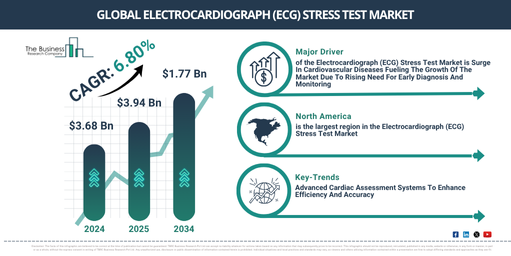
    In recent times, the market size for the stress test utilizing electrocardiograph (ECG) has witnessed considerable growth. The market forecast predicts an increase from $3.68 billion in 2024 to $3.94 billion in 2025, yielding a compound annual growth rate (CAGR) of 7.1%. Several factors played part in this market growth observed in the historic period, including a heightened awareness about cardiac care prevention, the rise in routine healthcare screenings, an escalation in healthcare expenditure in developed countries, an increase in demand for early detection of heart-related issues, and a growing preference for exercise-based heart evaluations.

    In the electrocardiograph (ECG) test stress test sector, substantial expansion is anticipated in the upcoming years. The market’s projected growth is to culminate at $5.13 billion by 2029 with a compound annual growth rate (CAGR) of 6.8%. Various factors contributing to this growth within the predicted period include the increasing adoption of portable and wearable ECG devices, a surging demand for home-based and remote cardiac monitoring, a heightened emphasis on early diagnosis of cardiovascular diseases, rising inclination towards personalized cardiac care, and escalated government-led initiatives for heart disease screening. Key trends to watch out for in the forecast period are the progression of wearable ECG technology, breakthroughs in AI-enabled ECG interpretation, the merging of ECG systems with telemedicine platforms, advancements in handheld stress test gadgets, and innovations in cloud-based ECG data storing and sharing.

    Download The Free Sample Report Here:

    https://www.thebusinessresearchcompany.com/sample.aspx?id=25760&type=smp

    What Elements Are Contributing To Growth In The Electrocardiograph (ECG) Stress Test Market?

    The escalating occurrence of cardiovascular ailments is believed to be driving the expansion of the electrocardiograph (ECG) test market. With conditions such as heart attacks, strokes, and hypertension classified under cardiovascular diseases, the increasing episodes of high blood pressure serve as a contributing factor, putting extra strain on the heart and blood vessels and thereby leading to heightened risk of heart attacks and strokes. The role of an electrocardiograph (ECG) test then becomes crucial in diagnosing these diseases by assessing the heart’s performance under physical tension, uncovering concealed problems like reduced blood flow, narrowed arteries, and irregular heart rhythms which might go unnoticed during a resting state. As an example, the Centers for Disease Control and Prevention, a US-based government institution, revealed in October 2024 that nearly 805,000 people in the United States suffer a heart attack each year. These include 605,000 initial incidents and 200,000 cases of individuals with a history of prior heart attacks. Hence, because of the ever-increasing occurrence of cardiovascular diseases, the electrocardiograph (ECG) test market is experiencing substantial growth.

    Which Segments Are Detailed In The Global Electrocardiograph (ECG) Stress Test Market Report?

    The electrocardiograph (ecg) stress test market covered in this report is segmented –

    1) By Product Type: Standalone Electrocardiograph (ECG) Test Devices, Electrocardiograph (ECG) Test Software, Holter Monitors, Event Monitors, Portable Electrocardiograph (ECG) Monitors

    2) By Test Type: Exercise Stress Test, Pharmacological Stress Test, Combined Exercise And Pharmacological Stress Test

    3) By Technology: Analog Electrocardiograph (ECG) Stress Testing Devices, Digital Electrocardiograph (ECG) Stress Testing Devices, Cloud-based Electrocardiograph (ECG) Stress Test Solutions, Wearable Electrocardiograph (ECG) Monitors, Telemedicine Enabled Electrocardiograph (ECG) Stress Tests

    4) By Sales Channel: Direct Sales, Distributors, Online Retailers, Third party Resellers, Healthcare Procurement Organizations

    5) By End User: Hospitals, Outpatient Clinics, Cardiology Centers, Home Healthcare Settings, Rehabilitation Centers

    Subsegments:

    1) By Standalone Electrocardiograph (ECG) Stress Test Devices: Treadmill-Based Stress Test Systems, Bicycle Ergometer-Based Stress Test Systems, Multi-Channel ECG Recorders, Wireless ECG Stress Systems, Touchscreen ECG Systems, Modular Stress Testing Workstations

    2) By Electrocardiograph (ECG) Stress Test Software: Data Acquisition And Analysis Software, Arrhythmia Detection Software, Cloud-Based Stress Test Platforms, Integration Software With EMR Or EHR Systems, Signal Noise Reduction Algorithms, Remote Diagnostic And Reporting Software

    3) By Holter Monitors: 3-Channel Holter Monitors, 12-Lead Holter Monitors, Patch-Type Holter Monitors, Long-Term Holter Monitoring, Wireless Or Bluetooth-Enabled Holter Monitors, AI-Powered ECG Analysis Holters

    4) By Event Monitors: Loop Memory Event Monitors, Post-Event Recorders, Auto-Triggered Event Monitors, Implantable Event Monitors (ILRs), Patient-Activated Event Monitors, Mobile Cardiac Telemetry (MCT)

    5) By Portable Electrocardiograph (ECG) Monitors: Smartphone-Connected ECG Devices, Handheld ECG Devices, Wearable ECG Monitors, Single-Lead Portable ECGs, Multi-Lead Portable ECGs, Home-Use Cardiac Monitoring Devices

    Which Emerging Trends And Strategic Shifts Are Shaping The Electrocardiograph (ECG) Stress Test Market?

    Leading corporations in the ECG stress test market are prioritizing technological innovation, including the use of cardiosoft technology, to improve diagnostic accuracy, increase workflow efficiency, and establish better connectivity within the cardiology care pathway. Cardiosoft technology is a PC-based ECG and stress test system that allows medical professionals to track and examine a patient’s cardiac activity during rest or exercise with the assistance of computer software, thus facilitating easy data storage and analysis. For example, in March 2025, GE HealthCare, an American healthcare technology company, introduced a cardiac evaluation system specific to stress testing, which allows healthcare providers to unlock critical insights quickly while ensuring a seamless flow of data, a critical aspect for heart patients. The system provides unique features like sophisticated ECG analysis, stress test capabilities, and smooth integration with electronic medical records for efficient management of data. It usually comes with easy-to-use software that provides real-time tracking, customizable reports, and automatic measurement tools for precise diagnosis. A number of these systems also have wireless connectivity, providing mobility and flexibility in diverse clinical environments, while upholding superior signal capturing and patient safety during cardiac assessments.

    Who Are The Key Contributors To Growth In The Electrocardiograph (ECG) Stress Test Market?

    Major companies operating in the electrocardiograph (ecg) stress test market are Cardinal Health Inc., Koninklijke Philips N.V. , GE HealthCare Technologies Inc., Baxter International Inc., Nihon Kohden Corporation, BTL Industries Inc., Fukuda Denshi Co Ltd., Neurosoft LLC, Schiller AG, Meditech Equipment Co Ltd., CAIRE Inc., COSMED Srl , MGC Diagnostics Corporation, Allengers Global Healthcare Pvt Ltd., EB Neuro S.p.A., custo med GmbH, Clarity Medical Technologies Pvt Ltd., Cortex Biophysik GmbH, Norav Medical Ltd., Medset Medizintechnik GmbH.

    Get The Full Report Here:

    https://www.thebusinessresearchcompany.com/report/electrocardiograph-ecg-stress-test-global-market-report

    Which Region Is Projected To Lead The Electrocardiograph (ECG) Stress Test Market By 2025?

    North America was the largest region in the electrocardiograph (ECG) test market in 2024. Asia-Pacific is expected to be the fastest-growing region in the forecast period. The regions covered in the electrocardiograph (ecg) stress test market report are Asia-Pacific, Western Europe, Eastern Europe, North America, South America, Middle East, Africa.

    Request For A Customized Report:

    https://www.thebusinessresearchcompany.com/customise?id=25760&type=smp

    About The Business Research Company:

    With over 15000+ reports from 27 industries covering 60+ geographies, The Business Research Company has built a reputation for offering comprehensive, data-rich research and insights. Armed with 1,500,000 datasets, the optimistic contribution of in-depth secondary research, and unique insights from industry leaders, you can get the information you need to stay ahead in the game.

    Get in touch with us:

    The Business Research Company: https://www.thebusinessresearchcompany.com/

    Americas +1 310-496-7795

    Asia +44 7882 955267 & +91 8897263534

    Europe +44 7882 955267

    Email us at info@tbrc.info

    Follow us on:

    LinkedIn: https://in.linkedin.com/company/the-business-research-company

    YouTube: https://www.youtube.com/channel/UC24_fI0rV8cR5DxlCpgmyFQ

    Global Market Model: https://www.thebusinessresearchcompany.com/global-market-model
  • Cryo-Electron Microscopy Industry Poised for Rapid Expansion, Projected to Hit $2.84  Billion by 2029

    Cryo-Electron Microscopy Industry Poised for Rapid Expansion, Projected to Hit $2.84 Billion by 2029

    Claim your 30% discount on Global Market Reports with code ONLINE30. Limited time only.

    Claim your 30% discount on Global Market Reports with code ONLINE30. Limited time only.

    What Is the Outlook for the Cryo-Electron Microscopy Market Heading Into 2029?

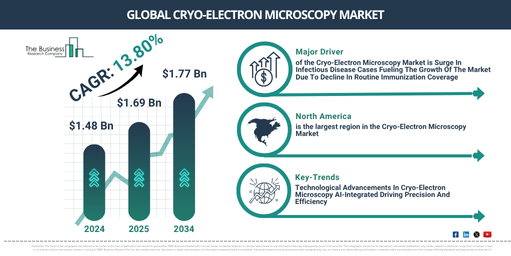
    In the last few years, there has been a swift expansion in the cryo-electron microscopy market size. It is projected to escalate from $1.48 billion in 2024 to $1.69 billion in 2025, experiencing a compound annual growth rate (CAGR) of 14.0%. The historical growth is being credited to an enhanced demand for high-resolution imaging in structural biology, advancements in the physical components of electron microscopy, an upward trend in research related to infectious diseases and virology, increased adoption in educational and research institutions, and the drawbacks of conventional microscopy techniques.

    The market for cryo-electron microscopy is set for swift expansion in the coming years, with projections suggesting it will reach a worth of $2.84 billion in 2029. This will reflect a compound annual growth rate (CAGR) of 13.8%. The predicted growth is due to various factors such as the rising use of cryo-em technology in pharmaceutical development, enhanced funding for biotechnology and life science research, advancements in automation, and image processing. Additionally, expanding usage in clinical diagnostics and breakthroughs in structural insights are influencing this growth. Key trends for the forecasted period include the integration of AI with cryo-em technology, reduction in size and increase in transportability of cryo-em systems, transition to cloud-based platforms for data analysis, high-resolution imaging technologies, and the creation of hybrid imaging systems.

    Download The Free Sample Report Here:

    https://www.thebusinessresearchcompany.com/sample.aspx?id=25731&type=smp

    Which Factors Are Pushing The Cryo-Electron Microscopy Market Forward?

    The rise in instances of infectious diseases is anticipated to fuel the expansion of the cryo-electron microscopy market. These maladies – malaria, for example – can spread directly or indirectly and are caused by bacteria, viruses, fungi, or parasites; they’re referred to as infectious diseases. Rapid urbanization, resulting in denser populations and closer human interactions, is the primary reason for their rise, as it paves the way for the transmission of these diseases. Cryo-electron microscopy contributes to infectious disease research by permitting the high-resolution view of viruses, bacteria, and the interplay between hosts and pathogens in their native-like states. This helps speed up the identification of viral structures, the comprehension of how infections occur, and the development of antivirals and vaccines. For example, the Switzerland-based World Health Organization reported in November 2023 that there were approximately 249 million cases of malaria worldwide in 2022, rising by 5 million cases (2%) from the previous year. Thus, the increasing prevalence of infectious diseases is boosting growth in the cryo-electron microscopy market.

    Which Segment Held The Largest Share In The Cryo-Electron Microscopy Market In 2025?

    The cryo-electron microscopy market covered in this report is segmented –

    1) By Product: Instruments, Fully Automated Instruments, Semi-Automated Instruments, Software, Services

    2) By Nano Formulations: Lipid Nanoparticle Formulations (LNFS), Metal Oxide Formulations, Metal Formulations, Other NanoForms

    3) By Technology: Electron Crystallography, Single Particle Analysis, Cryo-Electron Tomography, Other Technologies

    4) By Application: Life Science Research And Academia, Cancer Research, Omics Research, Pharma And Biotech Manufacturing, Cell And Gene Therapy, Vaccines, Preclinical And Clinical Research, Healthcare Or Medical Applications, Disease Diagnosis And Pathology

    5) By End-User: Research Laboratories And Institutes, Forensic And Diagnostic Laboratories, Pharmaceutical And Biotechnology Companies, Contract Research Organization, Other End-Users

    Subsegments:

    1) By Instruments, Electron Microscopes: Sample Preparation Equipment, Detectors And Cameras, Cryo-Transfer Holders

    2) By Fully Automated Instruments: Automated Sample Loading Systems, Automated Data Acquisition Systems, Automated Imaging Systems

    3) By Semi-Automated Instruments: Semi-Automated Sample Preparation Systems, Semi-Automated Imaging Systems, Semi-Automated Data Processing Units

    4) By Software: Image Analysis Software, 3D Reconstruction Software, Data Processing Software, Workflow Management Software

    4) By Services: Sample Preparation Services, Data Analysis Services, Training And Support Services, Maintenance And Repair Services

    How Are Key Trends Driving Expansion In The Cryo-Electron Microscopy Industry?

    Firms leading the cryo-electron microscopy industry are prioritizing advances in technology, such as those found in AI-integrated cryo-transmission electron microscope (cryo-TEM) systems. These systems use AI to improve image processing, automated data collection, resolution enhancement, and speed up the 3D modelling of biomolecular structures. The AI-integrated cryo-TEM systems fuse artificial intelligence with high-definition optics to optimize sample targeting, reduce user variables, and quicken data collection. To illustrate, Thermo Fisher Scientific, a US company that specializes in producing scientific apparatus and lab equipment, introduced their Thermo Scientific Krios 5 Cryo-TEM in April 2025. This latest atomic-resolution platform utilizes superior optics and AI-driven automation. The Thermo Scientific Krios 5 Cryo-TEM contains novel attributes like sophisticated automated data harvesting, increased sample throughput, and high-definition imaging abilities that allow researchers to observe molecular and cellular arrangements with exceptional precision. It also includes an improved stability and automation system which minimizes manual handling and boosts output for bulk cryo-EM processes.

    Which Organizations Are Driving Progress In The Cryo-Electron Microscopy Industry?

    Major companies operating in the cryo-electron microscopy market are Hitachi High-Tech Corporation , Thermo Fisher Scientific Inc., Danaher Corporation, Charles River Laboratories International Inc., Intertek Group plc, Bruker Corporation, Carl Zeiss AG, Japan Electron Optics Laboratory Ltd., Leica Microsystems GmbH, Gatan Inc., Oxford Instruments plc, Rigaku Corporation, TESCAN ORSAY HOLDING a.s., Nanoscience Instruments Inc., Protochips Inc., E.A. Fischione Instruments Inc., NanoImaging Services Inc., DENSsolutions B.V., Direct Electron LP, Hummingbird Scientific LLC

    Get The Full Report Here:

    https://www.thebusinessresearchcompany.com/report/cryo-electron-microscopy-global-market-report

    Which Region Is Expected To Experience The Highest Growth In The Cryo-Electron Microscopy Industry?

    North America was the largest region in the cryo-electron microscopy market in 2024. Asia-Pacific is expected to be the fastest-growing region in the forecast period. The regions covered in the cryo-electron microscopy market report are Asia-Pacific, Western Europe, Eastern Europe, North America, South America, Middle East, Africa.

    Request For A Customized Report:

    https://www.thebusinessresearchcompany.com/customise?id=25731&type=smp

    About The Business Research Company:

    With over 15000+ reports from 27 industries covering 60+ geographies, The Business Research Company has built a reputation for offering comprehensive, data-rich research and insights. Armed with 1,500,000 datasets, the optimistic contribution of in-depth secondary research, and unique insights from industry leaders, you can get the information you need to stay ahead in the game.

    Get in touch with us:

    The Business Research Company: https://www.thebusinessresearchcompany.com/

    Americas +1 310-496-7795

    Asia +44 7882 955267 & +91 8897263534

    Europe +44 7882 955267

    Email us at info@tbrc.info

    Follow us on:

    LinkedIn: https://in.linkedin.com/company/the-business-research-company

    YouTube: https://www.youtube.com/channel/UC24_fI0rV8cR5DxlCpgmyFQ

    Global Market Model: https://www.thebusinessresearchcompany.com/global-market-model
  • Industry Forecast: eHealth 2.0 Market to Generate $686.26  Billion Revenue by 2029

    Industry Forecast: eHealth 2.0 Market to Generate $686.26 Billion Revenue by 2029

    Claim your 30% discount on Global Market Reports with code ONLINE30. Limited time only.

    Claim your 30% discount on Global Market Reports with code ONLINE30. Limited time only.

    How Much Is the Global eHealth 2.0 Market Valued at Present and by 2029?

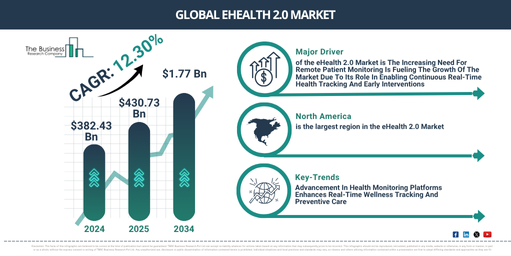
    In recent years, the eHealth 2.0 market has experienced a significant expansion. Its size is projected to increase from $382.43 billion in 2024 to $430.73 billion in 2025, with a compound annual growth rate (CAGR) of 12.6%. This substantial growth in the previous years is due to multiple factors such as the increased knowledge and understanding of digital health tools, a surge in the usage of wearable health technology, escalating government backing of eHealth schemes, the growing incorporation of Information and Communication Technology (ICT) in healthcare, and the rising popularity of telehealth consultation platforms.

    Expectations are high for the eHealth 2.0 market, with a projected rapid growth in the coming years. Predictions estimate that this market will rise to $686.26 billion by 2029, with a compound annual growth rate (CAGR) of 12.3%. This growth, expected in the forecast period, is due to the expanded use of AI in healthcare, increased demand for custom-tailored medicine, rise in funding for digital health startups, growing adoption of blockchain for securing health data, and an amplified emphasis on care that is centered around the patient. Upcoming trends during the forecast period include advancements in technologies for remote monitoring, the emergence of virtual health assistants, enhancement of mobile health app features, progression in interoperability standards and the evolution of predictive analytics in healthcare.

    Download The Free Sample Report Here:

    https://www.thebusinessresearchcompany.com/sample.aspx?id=25759&type=smp

    #What Drivers Are Influencing Growth In The eHealth 2.0 Market?

    The escalating necessity for monitoring patients remotely is predicted to fuel the development of the eHealth 2.0 market. Remote patient monitoring (RPM), which utilizes digital solutions to gather and transfer patient health information from non-clinical environments, promotes prompt interventions and decreases hospital visits. Due to a rise in chronic disease prevalence, the demand for RPM is growing as it allows consistent health surveillance, which enables early intervention and lessens the need for regular hospital trips. RPM facilitates eHealth 2.0 by obtaining real-time health information from beyond clinical environments, promoting personalized and preventive healthcare. It offers timely observations for initial intervention, thereby lightening the burden on hospitals and enhancing patient engagement. For example, in August 2023, as per Vivalink, a healthcare technology firm based in the US, the utilization of RPM by clinicians dramatically jumped to 81% from just 20% in 2021, marking a 305% increment. Moreover, 84% of existing RPM users plan to broaden their application of this technology in 2024. Hence, the growing requirement for RPM is stimulating the expansion of the eHealth 2.0 market.

    What Are The Main Segments Identified In The eHealth 2.0 Market Research?

    The ehealth 2.0 market covered in this report is segmented –

    1) By Type: Telemedicine, Electronic Health Records (EHRS), E-Prescription, Remote Patient Monitoring, Mobile Health (mHealth), Health Information Exchange (HIE), Other Types

    2) By Service: Monitoring, Diagnostic, Treatment

    3) By End-User: Healthcare Providers, Insurers, Other End-Users

    Subsegments:

    1) By Telemedicine: Real-time Telemedicine, Store-And-Forward Telemedicine, Remote Patient Monitoring Telemedicine, Mobile Health (mHealth) Telemedicine

    2) By Electronic Health Records (EHRs): Web-Based Electronic Health Records (EHRs), Client Server-Based Electronic Health Records (EHRs), Hybrid Electronic Health Records (EHRs)

    3) By E-Prescription: Controlled Substances E-Prescription, Non-Controlled Substances E-Prescription, Renewal And Refill E-Prescription

    4) By Remote Patient Monitoring: Chronic Disease Monitoring, Post-Acute Care Monitoring, Wearable Device Monitoring

    5) By Mobile Health (mHealth): Fitness And Wellness Apps, Chronic Disease Management Apps, Medication Management Apps, Women’s Health Apps

    6) By Health Information Exchange (HIE): Directed Exchange, Query-Based Exchange, Consumer-Mediated Exchange

    7) By Other Types: Clinical Decision Support Systems, Medical Imaging Systems, Patient Portals, Healthcare Analytics Platforms

    What Are The Leading Trends And Opportunities In The eHealth 2.0 Sector?

    Leading firms in the eHealth 2.0 market are putting their efforts towards the creation of cutting-edge technology, like health and fitness tracking systems, to promote active patient participation and encourage proactive healthcare management. These digital solutions in the form of health and fitness tracking systems constantly monitor essential signs, activity patterns, and general health. They aid both the users and healthcare providers in handling health issues, setting objectives, and making preventive care choices. For instance, in August 2024, the Chinese firm Huawei Technologies Co., Ltd., known for their health monitoring equipment, introduced their latest HUAWEI TruSense System. This system aims to give more precise, all-inclusive, and real-time insights into health for wearable devices. TruSense combines high-end sensors and algorithms to oversee over 60 health parameters like heart rate, stress levels, mood, respiratory health, and calorie count, providing quicker and more thorough health reports than its predecessors.

    Which Companies Play A Key Role In The Development Of The eHealth 2.0 Market?

    Major companies operating in the ehealth 2.0 market are CVS Health, Optum Inc., International Business Machines Corporation, Oracle Corporation, Siemens Healthineers, GE Healthcare, Athenahealth, Teladoc Health, eClinicalWorks, Telecare Corporation, Veradigm, Doximity, American Well, Greenway Health, Tebra Technologies Inc., AdvancedMD, Doctor on Demand, Medisafe, AMD Global Telemedicine, CompuMed Inc.

    Get The Full Report Here:

    https://www.thebusinessresearchcompany.com/report/ehealth-20-global-market-report

    What Are The Key Regional Developments Shaping The eHealth 2.0 Market?

    North America was the largest region in the eHealth 2.0 market in 2024. Asia-Pacific is expected to be the fastest-growing region in the forecast period. The regions covered in the ehealth 2.0 market report are Asia-Pacific, Western Europe, Eastern Europe, North America, South America, Middle East, Africa.

    Request For A Customized Report:

    https://www.thebusinessresearchcompany.com/customise?id=25759&type=smp

    About The Business Research Company:

    With over 15000+ reports from 27 industries covering 60+ geographies, The Business Research Company has built a reputation for offering comprehensive, data-rich research and insights. Armed with 1,500,000 datasets, the optimistic contribution of in-depth secondary research, and unique insights from industry leaders, you can get the information you need to stay ahead in the game.

    Get in touch with us:

    The Business Research Company: https://www.thebusinessresearchcompany.com/

    Americas +1 310-496-7795

    Asia +44 7882 955267 & +91 8897263534

    Europe +44 7882 955267

    Email us at info@tbrc.info

    Follow us on:

    LinkedIn: https://in.linkedin.com/company/the-business-research-company

    YouTube: https://www.youtube.com/channel/UC24_fI0rV8cR5DxlCpgmyFQ

    Global Market Model: https://www.thebusinessresearchcompany.com/global-market-model

  • Global Corticosteroid Eyedrops Market Forecast to Reach $12.88  Billion by 2029, Driven by 6.5% CAGR

    Global Corticosteroid Eyedrops Market Forecast to Reach $12.88 Billion by 2029, Driven by 6.5% CAGR

    Claim your 30% discount on Global Market Reports with code ONLINE30. Limited time only.

    Claim your 30% discount on Global Market Reports with code ONLINE30. Limited time only.

    What Does the Forecast Indicate for the Corticosteroid Eyedrops Market From 2025 to 2029?

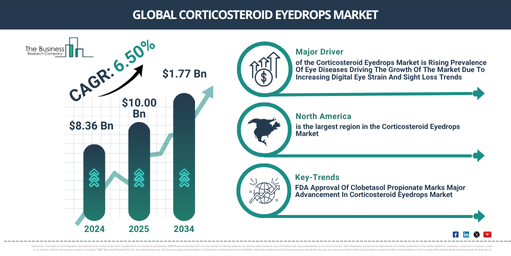
    The market for corticosteroid eyedrops has seen substantial growth in recent years and is projected to expand from $8.36 billion in 2024 to $10.00 billion in 2025, boasting a compound annual growth rate (CAGR) of 6.8%. Factors contributing to this expansion during the historic period include an aging demographic, an upswing in eye inflammation cases, a rise in cataract surgeries, the proliferation of ophthalmology clinics, an increase in allergic conjunctivitis prevalence, and enhanced understanding of eye health.

    Anticipated to witness robust growth in the coming years, the corticosteroid eyedrops market is projected to swell to $12.88 billion by 2029, expanding at a compound annual growth rate (CAGR) of 6.5%. Factors propelling growth in the said period include rising cases of diabetic eye troubles, mounting preference for minimally invasive procedures, increase in digital screen-induced eye weariness, extended reach of teleophthalmology, escalating chronic eye conditions, and a surge in worldwide surgical eye operations. Future market trends encompass nano-structured delivery systems, preservative-less formulations, intelligent packaging facilitating dosage monitoring, AI-enabled prescription platforms, and blended medications offering better bioavailability.

    Download The Free Sample Report Here:

    https://www.thebusinessresearchcompany.com/sample.aspx?id=25730&type=smp

    What Elements Are Contributing To Growth In The Corticosteroid Eyedrops Market?

    The escalating occurrence of illnesses affecting the eyes is set to drive the expansion of the corticosteroid eyedrops industry. Eye afflictions can deteriorate the eyes’ health and functionality, possibly causing vision issues or even blindness if not adequately treated. An increase in the use of screens is leading to a surge in eye diseases, causing digital eye strain and contributing to ailments like dry eyes and blurred vision. To manage eye illnesses, corticosteroid eyedrops are typically used as they curtail inflammation and alleviate symptoms like redness, swelling, and unease. For instance, the Joint Strategic Needs Assessment, a community health center in the UK, noted in their May 2024 report that around 2 million people in the UK are living with some level of vision loss. This figure is expected to rise to 2.7 million by 2030. Consequently, the surging occurrence of eye diseases is fueling the expansion of the corticosteroid eyedrops industry.

    Which Segments Are Detailed In The Global Corticosteroid Eyedrops Market Report?

    The corticosteroid eyedrops market covered in this report is segmented –

    1) By Product Type: Topical Corticosteroid Eyedrops, Systemic Corticosteroid Eyedrops, Combination Therapy Eyedrops

    2) By Delivery Device: Dropper Bottles, Spray Formulations, Ointments And Gels, Punctal Plugs

    3) By Distribution Channel: Hospital Pharmacy, Retail Pharmacy, Online Pharmacy, Other Distribution Channels

    4) By Application: Adult, Children

    5) By End User: Hospitals, Specialty Clinics, Community Pharmacies, Online Pharmacies

    Subsegments:

    1) By Topical Corticosteroid Eyedrops: Prednisolone Acetate Eyedrops, Dexamethasone Eyedrops, Fluorometholone Eyedrops, Loteprednol Etabonate Eyedrops, Rimexolone Eyedrops

    2) By Systemic Corticosteroid Eyedrops: Hydrocortisone-Based Eyedrops, Methylprednisolone-Based Eyedrops, Triamcinolone-Based Eyedrops, Betamethasone-Based Eyedrops

    3) By Combination Therapy Eyedrops: Corticosteroid + Antibiotic Combination Eyedrops, Corticosteroid + Non-Steroidal Anti-Inflammatory Drug (NSAID) Eyedrops, Corticosteroid + Antihistamine Eyedrops, Corticosteroid + Antiglaucoma Agent Eyedrops

    Which Emerging Trends And Strategic Shifts Are Shaping The Corticosteroid Eyedrops Market?

    Primary players in the corticosteroid eyedrops market are directing their efforts towards securing regulatory approval to broaden their offerings and increase their market presence. These permissions from health agencies certify that the corticosteroid eyedrops conform to essential safety, effectiveness, and quality benchmarks prior to being promoted and prescribed. For example, in March 2024, Taiwan’s Formosa Pharmaceuticals Inc. and U.S.-based AimMax Therapeutics obtained FDA approval for clobetasol propionate ophthalmic suspension 0.05% (APP13007) to treat inflammation and pain after eye operations. This drug was made using Formosa’s APNT nanoparticle technology which enables effective drug delivery through a simple, twice-daily dose for 14 days without tapering. Clinical studies proved its potent anti-inflammatory impact, marking it as an emerging choice for corticosteroid treatments to control pain and swelling post eye surgery. Being the first ophthalmic corticosteroid with clobetasol and the first new steroid endorsed in this category in over a decade and a half, it signifies a remarkable progress in ocular corticosteroid treatment.

    Who Are The Key Contributors To Growth In The Corticosteroid Eyedrops Market?

    Major companies operating in the corticosteroid eyedrops market are Pfizer Inc., AbbVie Inc., Novartis AG, Alcon Inc., Bausch Health Companies Inc., Sun Pharmaceutical Industries Ltd., Cipla Ltd., Santen Pharmaceutical Co. Ltd., Lupin Limited, Zydus Lifesciences Limited, Glenmark Pharmaceuticals Ltd., Alkem Laboratories Ltd., Sunways Pvt. Ltd., FDC Limited, Alimera Sciences Inc., Eurocrit Labs International Pvt. Ltd., Entod Pharmaceuticals Pvt. Ltd., Akorn Pharmaceuticals Inc., Pace Biotech Pvt. Ltd., Wellona Pharma Pvt. Ltd., Kala Pharmaceuticals Inc., Ophdenas Lifesciences Pvt. Ltd.

    Get The Full Report Here:

    https://www.thebusinessresearchcompany.com/report/corticosteroid-eyedrops-global-market-report

    Which Region Is Projected To Lead The Corticosteroid Eyedrops Market By 2025?

    North America was the largest region in the corticosteroid eyedrops market in 2024. Asia-Pacific is expected to be the fastest-growing region in the forecast period. The regions covered in the corticosteroid eyedrops market report are Asia-Pacific, Western Europe, Eastern Europe, North America, South America, Middle East, Africa.

    Request For A Customized Report:

    https://www.thebusinessresearchcompany.com/customise?id=25730&type=smp

    About The Business Research Company:

    With over 15000+ reports from 27 industries covering 60+ geographies, The Business Research Company has built a reputation for offering comprehensive, data-rich research and insights. Armed with 1,500,000 datasets, the optimistic contribution of in-depth secondary research, and unique insights from industry leaders, you can get the information you need to stay ahead in the game.

    Get in touch with us:

    The Business Research Company: https://www.thebusinessresearchcompany.com/

    Americas +1 310-496-7795

    Asia +44 7882 955267 & +91 8897263534

    Europe +44 7882 955267

    Email us at info@tbrc.info

    Follow us on:

    LinkedIn: https://in.linkedin.com/company/the-business-research-company

    YouTube: https://www.youtube.com/channel/UC24_fI0rV8cR5DxlCpgmyFQ

    Global Market Model: https://www.thebusinessresearchcompany.com/global-market-model