Month: September 2025

  • Comprehensive Forecast: Ursodeoxycholic Acid Market Share, Growth, and Opportunities Through 2029

    Comprehensive Forecast: Ursodeoxycholic Acid Market Share, Growth, and Opportunities Through 2029

    Claim your 30% discount on Global Market Reports with code ONLINE30. Limited time only.

    What Is the Estimated Industry Valuation for the Ursodeoxycholic Acid Sector?

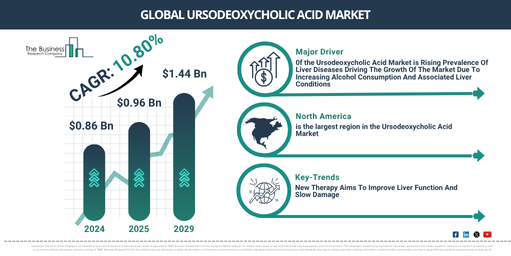
    The market size for ursodeoxycholic acid has seen a quick escalation in the past few years. It is projected to increase from $0.86 billion in 2024 to $0.96 billion in 2025, representing a compound annual growth rate (CAGR) of 11.1%. The growth experienced during the historical period can be linked to the rise in gallstone disease incidents, heightened consciousness about liver health, increased detection rates of primary biliary cholangitis, the expanded use of non-invasive liver function assessments, along with a growing senior citizen demographic.

    Expectations indicate a swift expansion of the ursodeoxycholic acid market in the coming years, with the market predicted to reach a value of $1.44 billion by 2029, growing at a compound annual growth rate (CAGR) of 10.8%. Several factors contribute to this predicted growth, including a rise in lifestyle-related ailments, increased demand for liver-protective drugs, a growing need for treatments for chronic liver diseases, a broadening clinical trial pipeline for bile acid derivatives, and the escalating demand for minimally invasive surgeries. The forecast period also anticipates significant trends like the development of targeted drug delivery systems, the incorporation of ursodeoxycholic acid with other hepatoprotective compounds, drug formulation innovation, the creation of new bile acid analogs, and the advancement of RNA-based therapies aimed at liver regeneration.

    Download The Free Sample Report Here:

    https://www.thebusinessresearchcompany.com/sample.aspx?id=24734&type=smp

    What Forces Are Driving The Growth Of The Ursodeoxycholic Acid Market?

    An uptick in incidences of liver conditions is anticipated to stimulate the ascension of the ursodeoxycholic acid market. Liver conditions encompass a wide range of health issues that hinder the liver’s functionality, including infections, inflammation, fatty liver, cirrhosis, and liver cancer. The increased consumption of alcohol is seen as the primary cause of escalated liver diseases prevalence since continuous heavy drinking significantly impairs the liver. Ursodeoxycholic acid plays a critical role in treating liver diseases by enhancing bile flow and curtailing the production of harmful bile acids, thus proving efficient for conditions such as primary biliary cholangitis. It facilitates improved patient results by decelerating the progression of liver damage and assisting in the dissolution of cholesterol gallstones, therefore maximizing treatment efficacy. For instance, the Office for Health Improvement and Disparities, a government department based in the UK, reported in April 2024 that there were 6,664 premature deaths from liver disease in males and 3,929 in females, representing a 22.8% increase for males and a 33.1% surge for females compared to past years. Hence, the increasing occurrences of liver diseases are stimulating the growth of the ursodeoxycholic acid market.

    How Is The Ursodeoxycholic Acid Industry Segmented Across Key Parameters?

    The ursodeoxycholic acid market covered in this report is segmented –

    1) By Type: Synthetic Ursodeoxycholic Acid, Extraction Ursodeoxycholic Acid

    2) By Route Of Administration: Oral, Intravenous, Subcutaneous

    3) By Application: Gallstones, Primary Biliary Cholangitis, Primary Sclerosing Cholangitis, Non-Alcoholic Fatty Liver Disease, Other Liver And Biliary Diseases

    4) By Distribution Channel: Hospital Pharmacies, Retail Pharmacies, Online Pharmacies, Other Distribution Channels

    5) By End User: Hospitals, Specialty Clinics, Research Institutions, Other End Users

    Subsegments:

    1) By Synthetic Ursodeoxycholic Acid: Chemically Synthesized Ursodeoxycholic Acid, Biosynthetic Ursodeoxycholic Acid, Enzymatically Synthesized Ursodeoxycholic Acid

    2) By Extraction Ursodeoxycholic Acid: Animal-Derived Ursodeoxycholic Acid, Bile Extracted Ursodeoxycholic Acid, Natural Source Extracted Ursodeoxycholic Acid

    What Notable Trends Are Shaping The Direction Of The Ursodeoxycholic Acid Market?

    Companies leading the market for ursodeoxycholic acid (UDCA) are honing in on creating modern therapies like bile acid derivatives, designed to boost the treatment of liver disorders, particularly cholestatic liver ailments. Bile acid derivatives are essentially altered forms of bile acids, employed in medical treatments to enhance liver function and manage liver diseases. An example of this is seen in November 2024 when Nora Pharma Inc., a pharmaceutical enterprise based in Canada, unveiled a generic version of Ursodiol (ursodeoxycholic acid) aimed towards treating cholestatic liver diseases such as primary biliary cholangitis (PBC). This pharmaceutical is primarily utilized to boost liver function and decelerate liver damage, especially when introduced early in the disease’s cycle. It also helps in dissolving and preventing cholesterol gallstones by modifying bile composition and reducing the presence of harmful bile acids.

    Which Companies Currently Dominate The Competitive Landscape In The Ursodeoxycholic Acid Industry?

    Major companies operating in the ursodeoxycholic acid market are Mankind Pharma Pvt. Ltd, Abbott Healthcare Pvt. Ltd., Shandong Octagon Chemicals Limited, J.S.C. Grindeks, Arch Pharmalabs, Ind Swift Laboratories Ltd., Symbiotec Pharmalab, Suzhou Tianlu Bio-pharmaceutical Co. Ltd, Zeal MediPharma, Prodotti Chimici e Alimentari S.P.A., Mitsubishi Tanabe Pharma Corporation, ICE Pharma Inc, Xi’an Tian Guangyuan Biotech Co. Ltd, Aamorb Pharmaceuticals Inc., Axplora Inc, Octavius Pharma Pvt. Ltd, Sichuan Elixir Pharmaceutical Co. Ltd, Signova Pharma Pvt. Ltd., Sinoway Industrial Co. Ltd, Valence Labs Pvt. Ltd.

    Get The Full Report Here:

    https://www.thebusinessresearchcompany.com/report/ursodeoxycholic-acid-global-market-report

    Which Geographic Regions Are Driving Demand In The Ursodeoxycholic Acid Market?

    North America was the largest region in the ursodeoxycholic acid market in 2024. Asia-Pacific is expected to be the fastest-growing region in the forecast period. The regions covered in the ursodeoxycholic acid market report are Asia-Pacific, Western Europe, Eastern Europe, North America, South America, Middle East, Africa.

    Request For A Customized Report:

    https://www.thebusinessresearchcompany.com/customise?id=24734&type=smp

    About The Business Research Company:

    With over 15000+ reports from 27 industries covering 60+ geographies, The Business Research Company has built a reputation for offering comprehensive, data-rich research and insights. Armed with 1,500,000 datasets, the optimistic contribution of in-depth secondary research, and unique insights from industry leaders, you can get the information you need to stay ahead in the game.

    Get in touch with us:

    The Business Research Company: https://www.thebusinessresearchcompany.com/

    Americas +1 310-496-7795

    Asia +44 7882 955267 & +91 8897263534

    Europe +44 7882 955267

    Email us at info@tbrc.info

    Follow us on:

    LinkedIn: https://in.linkedin.com/company/the-business-research-company

    YouTube: https://www.youtube.com/channel/UC24_fI0rV8cR5DxlCpgmyFQ

    Global Market Model: https://www.thebusinessresearchcompany.com/global-market-model
  • Future Demand and Leading Companies Shaping the Urine Test Strips Market to 2029

    Future Demand and Leading Companies Shaping the Urine Test Strips Market to 2029

    Claim your 30% discount on Global Market Reports with code ONLINE30. Limited time only.

    How Large Is the Urine Test Strips Market Expected to Be in 2029?

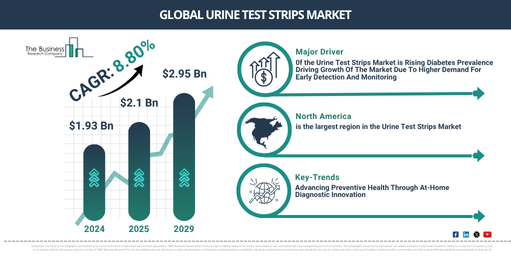
    There has been significant growth in the urine test strips market in the past few years. The market value is expected to increase from $1.93 billion in 2024 to $2.1 billion in 2025, displaying a compound annual growth rate (CAGR) of 9.1%. The expansion during the historic period stems from factors such as increased consciousness about routine health examinations, escalating healthcare expenses, a surge in urinary tract infections, growing needs for personalized medicine, and an increase in transplant surgeries.

    Anticipations indicate a robust growth trajectory for the urine test strips market in the forthcoming years. The market is projected to inflate to a valuation of $2.95 billion in 2029, charting a compound annual growth rate (CAGR) of 8.8%. The predicted expansion during the forecast span can be ascribed to the increasing instances of chronic diseases, surge in the aging population, mounting focus on preventive healthcare, growth in point-of-care testing adoption, and escalating demand for home-based testing kits. Key trends to look out for in the forecast period encompass progressions in sensor technology, incorporation with digital health frameworks, the creation of smartphone-compatible test kits, incorporations of IoT in diagnostic tools, and the launch of multiparameter strips.

    Download The Free Sample Report Here:

    https://www.thebusinessresearchcompany.com/sample.aspx?id=24733&type=smp

    What Are The Contributors To Demand In The Urine Test Strips Market?

    The surge in diabetes cases is anticipated to drive the expansion of the urine test strips market. Due to either inadequate insulin production or insulin resistance, diabetes, a chronic disease, hampers the body’s ability to effectively manage blood sugar. The rise in diabetes is linked to unhealthy eating habits and a lack of physical activity. These urine test strips aid with diabetes regulation by identifying high glucose or ketone levels in urine, which signals elevated blood sugar levels or the potential for diabetic complications. For example, in June 2023, the Institute for Health Metrics and Evaluation, a public health research institute based in the US, reported that over 500 million people worldwide have diabetes. This figure is projected to more than double, reaching 1.3 billion individuals by 2050. As a result, the burgeoning issue of diabetes is promoting the growth of the urine test strips market.

    What Segmentation Categories Are Included In The Urine Test Strips Market Analysis?

    The urine test strips market covered in this report is segmented –

    1) By Type: Protein Testing, Haemoglobin, Myoglobin Testing, Glucose Testing, Nitrites Testing, Other Types

    2) By Function: Automated Test Strips, Visual Test Strips

    3) By Distribution Channel: Online Retail, Pharmacies, Supermarkets Or Hypermarkets

    4) By Application: Urinary Tract Infection, Diabetes, Liver Disease, Kidney, Pregnancy

    5) By End User: Institutes, Research Laboratories, Hospitals And Clinics, Diagnostic Laboratories, Consumers

    Subsegments:

    1) By Protein Testing: Albumin, Total Protein, Microalbumin

    2) By Haemoglobin Testing: Hematuria Detection, Occult Blood Detection

    3) By Myoglobin Testing: Rhabdomyolysis Monitoring, Cardiac Event Screening

    4) By Glucose Testing: Diabetes Monitoring, Gestational Diabetes Screening

    5) By Nitrites Testing: Urinary Tract Infection (UTI) Detection, Bacterial Infection Screening

    6) By Other Types: Ketone Testing, Bilirubin Testing, pH Level Testing

    What Upcoming Trends Are Expected To Impact The Urine Test Strips Market Globally?

    Leading businesses in the urine test strip market are pioneering fresh products such as at-home urine test strips, aiming to improve customer convenience, encourage preventive healthcare, offer immediate diagnostic insights, and satisfy the increasing demand for tailored health and wellness solutions. At-home urine test strips serve as diagnostic tools enabling individuals to examine their urine for multiple health parameters like hydration, pH, and nutrient levels right from the confines of their homes. For example, in September 2024, the Japan-based Otsuka Pharmaceutical Co. Ltd. collaborated with the American company Vivosens Inc., to bring the US-originated nutrition tracking service, Vivoo, to Japan. This partnership combines Otsuka’s medical expertise with Vivosens’s state-of-the-art technology to devise a unique health solution based on at-home urine test strips. Using Vivoo, people can conduct a urine test at home and scan the test strip with the Vivoo application. The application employs proprietary artificial intelligence and image recognition to provide instant nutritional insights. Resulting from the test outcomes, users get personal dietary and lifestyle guidance from professional dieticians.

    Who Are The Top-Ranked Companies In The Urine Test Strips Market Today?

    Major companies operating in the urine test strips market are Cardinal Health Inc., F. Hoffmann-La Roche AG, Bayer AG, Thermo Fisher Scientific Inc., Abbott Laboratories, Siemens Healthineers AG, Henry Schein Inc., Quidel Corporation, Sysmex Corporation, Beckman Coulter, Eiken Chemical Co. Ltd., Ascensia Diabetes Care Holdings AG, Trividia Health Inc., MACHEREY-NAGEL GmbH & Co. KG, Acon Laboratories Inc., ARKRAY Inc., Teco Diagnostics, Clarity Diagnostics LLC, Analyticon Biotechnologies AG, Bioway Biological Technology Co. Ltd.

    Get The Full Report Here:

    https://www.thebusinessresearchcompany.com/report/urine-test-strips-global-market-report

    How Is Urine Test Strips Market Adoption Varying Across Different Regions And Sectors?

    North America was the largest region in the urine test strips market in 2024. Asia-Pacific is expected to be the fastest-growing region in the forecast period. The regions covered in the urine test strips market report are Asia-Pacific, Western Europe, Eastern Europe, North America, South America, Middle East, Africa.

    Request For A Customized Report:

    https://www.thebusinessresearchcompany.com/customise?id=24733&type=smp

    About The Business Research Company:

    With over 15000+ reports from 27 industries covering 60+ geographies, The Business Research Company has built a reputation for offering comprehensive, data-rich research and insights. Armed with 1,500,000 datasets, the optimistic contribution of in-depth secondary research, and unique insights from industry leaders, you can get the information you need to stay ahead in the game.

    Get in touch with us:

    The Business Research Company: https://www.thebusinessresearchcompany.com/

    Americas +1 310-496-7795

    Asia +44 7882 955267 & +91 8897263534

    Europe +44 7882 955267

    Email us at info@tbrc.info

    Follow us on:

    LinkedIn: https://in.linkedin.com/company/the-business-research-company

    YouTube: https://www.youtube.com/channel/UC24_fI0rV8cR5DxlCpgmyFQ

    Global Market Model: https://www.thebusinessresearchcompany.com/global-market-model
  • 2025–2029 Tumor Microenvironment Market Outlook: Regional Trends and Growth Forecast

    2025–2029 Tumor Microenvironment Market Outlook: Regional Trends and Growth Forecast

    Claim your 30% discount on Global Market Reports with code ONLINE30. Limited time only.

    What Is the Outlook for the Tumor Microenvironment Market Heading Into 2029?

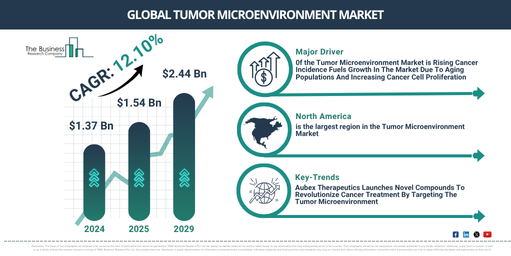
    Over the recent years, the size of the tumor microenvironment market has seen a swift expansion. The market is predicted to increase from $1.37 billion in 2024 to $1.54 billion in 2025, exhibiting a compound annual growth rate (CAGR) of 12.4%. The prior period’s growth can be credited to the enhanced understanding amongst oncologists and researchers, a surge in clinical trials conducted, the expanded use of single-cell sequencing technologies, the rise in collaborations between pharmaceutical and biotech firms, and amplified regulatory backing for pioneering oncology treatments.

    Over the next several years, the tumor microenvironment market size is predicted to experience significant growth, escalating to $2.44 billion by 2029 with a compound annual growth rate (CAGR) of 12.1%. Factors contributing to this growth in the forecasted period encompass an increased emphasis on precision oncology, bolstered investments in cancer immunotherapy research, rising prevalence of cancer, augmented implementation of personalized medication, and a growing interest in utilizing 3D tumor models and organoids. Upcoming trends in this projection period are improvements in immunotherapy technologies, developments in 3D tumor models and organoids, the merging of artificial intelligence and machine learning, the advancement of multiplex imaging technologies, and progress in spatial transcriptomics.

    Download The Free Sample Report Here:

    https://www.thebusinessresearchcompany.com/sample.aspx?id=24732&type=smp

    Which Factors Are Pushing The Tumor Microenvironment Market Forward?

    The tumor microenvironment market is expected to experience significant growth due to the increasing prevalence of cancer. Typically, cancer is a collective term for various diseases that are marked by unregulated cell growth and the dissemination of these abnormal cells within the body. The spike in cancer cases is often tied to an aging population, as the likelihood of cancer increases with age due to a longer exposure to environmental factors and a decrease in the body’s capacity for cell damage repair. A tumor’s microenvironment (TME) enhances the progression of cancer by providing nutrients, promoting immune evasion, increasing cancer cell proliferation, and facilitating metastasis via interactions with neighboring cells, signaling pathways, and the extracellular matrix. For instance, in 2024, per the Australian Institute of Health and Welfare, a governmental body based in Australia, there was a considerable increase in diagnosed cancer cases in Australia, from 160,570 in 2022 to 164,694 in 2023. Therefore, the mounting incidence of cancer is a key driving factor for the expansion of the tumor microenvironment market.

    Which Segment Held The Largest Share In The Tumor Microenvironment Market In 2025?

    The tumor microenvironment market covered in this report is segmented –

    1) By Cancer Type: Lung Cancer, Colorectal Cancer, Breast Cancer, Prostate Cancer, Bladder Cancer, Kidney Cancer, Other Cancer Types

    2) By Target: T Cells, Tumor-Associated Macrophages (TAMs), Myeloid-Derived Suppressor Cells (MDSCs), Cancer-Associated Fibroblasts (CAFs), Regulatory T Cells (Tregs), Other Targets

    3) By Therapy: Monoclonal Antibodies, Cytokines, Cancer Vaccines, Oncolytic Viruses, Adoptive Cell Therapies, Other Therapies

    4) By End User: Biopharmaceutical Companies, Hospitals, Diagnostic Laboratories, Research Institutes, Contract Research Organizations, Other End Users

    Subsegments

    1) By Lung Cancer: Non-Small Cell Lung Cancer (NSCLC), Small Cell Lung Cancer (SCLC)

    2) By Colorectal Cancer: Colon Cancer, Rectal Cancer

    3) By Breast Cancer: Hormone Receptor Positive Breast Cancer, Triple-Negative Breast Cancer, HER2-Positive Breast Cancer

    4) By Prostate Cancer: Hormone-Sensitive Prostate Cancer, Castration-Resistant Prostate Cancer

    5) By Bladder Cancer: Non-Muscle Invasive Bladder Cancer (NMIBC), Muscle Invasive Bladder Cancer (MIBC)

    6) By Kidney Cancer: Renal Cell Carcinoma (RCC), Urothelial Carcinoma of the Renal Pelvis

    7) By Other Cancer Types: Pancreatic Cancer, Head and Neck Cancer, Ovarian Cancer

    How Are Key Trends Driving Expansion In The Tumor Microenvironment Industry?

    Leading firms in the tumor microenvironment market are concentrating their efforts on the creation of innovative treatment methods that raise efficacy and conquer resistance mechanisms, such as targeted treatments. These therapies are specially formulated to detect and eliminate cancer cells based on distinct molecular markers, without causing harm to most healthy cells. For example, in April 2024, Aubex Therapeutics Inc., a biotechnology company based in the United States, introduced a novel category of substances with the aim to revolutionize cancer treatment by specifically focusing on the tumor microenvironment (TME). These innovative substances are designed to interact with the complex interplay within the TME, which involves cancer cells, immune cells, blood vessels, and stromal elements. With Aubex’s method, the immune system’s capability to tackle tumors is amplified and the processes that encourage tumor growth and metastasis are disrupted. This approach aims to defeat resistance to traditional therapies, providing a new promising alternative for patients unresponsive to current treatments.

    Which Organizations Are Driving Progress In The Tumor Microenvironment Industry?

    Major companies operating in the tumor microenvironment market are Pfizer Inc., Johnson & Johnson, Merck & Co. Inc., AbbVie Inc., Bayer AG, Sanofi S.A., AstraZeneca plc, Novartis International AG, GlaxoSmithKline plc, Takeda Pharmaceutical Company Limited, Eli Lilly and Company, Gilead Sciences Inc., Amgen Inc., Boehringer Ingelheim GmbH, Regeneron Pharmaceuticals Inc., Genentech Inc., BeiGene Ltd., MacroGenics Inc., Arcus Biosciences Inc., Adaptimmune Therapeutics plc

    Get The Full Report Here:

    https://www.thebusinessresearchcompany.com/report/tumor-microenvironment-global-market-report

    Which Region Is Expected To Experience The Highest Growth In The Tumor Microenvironment Industry?

    North America was the largest region in the tumor microenvironment market in 2024. Asia-Pacific is expected to be the fastest-growing region in the forecast period. The regions covered in the tumor microenvironment market report are Asia-Pacific, Western Europe, Eastern Europe, North America, South America, Middle East, Africa.

    Request For A Customized Report:

    https://www.thebusinessresearchcompany.com/customise?id=24732&type=smp

    About The Business Research Company:

    With over 15000+ reports from 27 industries covering 60+ geographies, The Business Research Company has built a reputation for offering comprehensive, data-rich research and insights. Armed with 1,500,000 datasets, the optimistic contribution of in-depth secondary research, and unique insights from industry leaders, you can get the information you need to stay ahead in the game.

    Get in touch with us:

    The Business Research Company: https://www.thebusinessresearchcompany.com/

    Americas +1 310-496-7795

    Asia +44 7882 955267 & +91 8897263534

    Europe +44 7882 955267

    Email us at info@tbrc.info

    Follow us on:

    LinkedIn: https://in.linkedin.com/company/the-business-research-company

    YouTube: https://www.youtube.com/channel/UC24_fI0rV8cR5DxlCpgmyFQ

    Global Market Model: https://www.thebusinessresearchcompany.com/global-market-model
  • Latest Market Developments in Tubulin Inhibitors For Breast Cancer Industry: Forecast 2025–2029

    Latest Market Developments in Tubulin Inhibitors For Breast Cancer Industry: Forecast 2025–2029

    Claim your 30% discount on Global Market Reports with code ONLINE30. Limited time only.

    What Does the Forecast Indicate for the Tubulin Inhibitors For Breast Cancer Market From 2025 to 2029?

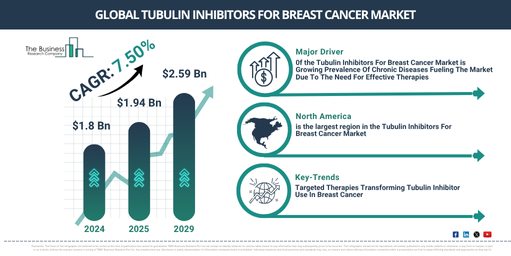
    In recent times, there has been a substantial growth in the market size for tubulin inhibitors, which are used in treating breast cancer. The market is projected to rise from $1.8 billion in 2024 to $1.94 billion in 2025, representing a compound annual growth rate (CAGR) of 7.7%. The surge experienced during the historic period can be accredited to significant reasons, such as the high global incidence of breast cancer, the escalated use of chemotherapy, the extension of treatment towards metastatic breast cancers, increasing acceptance in developing healthcare systems, and elevated spending on healthcare.

    The market for tubulin inhibitors used in breast cancer treatment is likely to experience robust growth in the coming years, with expected growth to $2.59 billion by 2029 at an annual growth rate of 7.5%. This projected growth during the forecast period can be tied to heightened incidences of breast cancer, the development and use of personalized and targeted therapies, increased demand for combination therapies, the growth in cancer care infrastructure, and escalating healthcare costs. Key trends to note during this period include personalized cancer treatments, next-generation tubulin inhibitors, orally administered tubulin inhibitors, AI-empowered drug discovery and design, and application of nanoparticle-based drug delivery systems.

    Download The Free Sample Report Here:

    https://www.thebusinessresearchcompany.com/sample.aspx?id=24731&type=smp

    What Elements Are Contributing To Growth In The Tubulin Inhibitors For Breast Cancer Market?

    The increasing incidence of chronic diseases is predicted to fuel the expansion of the tubulin inhibitors for breast cancer market in the future. Chronic ailments like breast cancer, characterized by unregulated cell multiplication and high relapse rates, demand continuous treatment protocols. Sedentary lifestyles largely contribute to the escalation of such diseases, leading to conditions such as obesity, diabetes, and cardiovascular diseases. Tubulin inhibitors play a pivotal role in curbing these chronic illnesses by disrupting irregular cell division, lessening inflammation, decelerating disease progression, and aiding in managing diseases related to uncontrolled cell growth. For example, the National Breast Cancer Foundation, a US-based non-profit entity, reported that 1 in 8 women in the United States will be detected with breast cancer in their lifetime in April 2025. It is projected that 316,950 women and 2,800 men will be diagnosed with invasive breast cancer in 2025, with an additional 59,080 new non-invasive (in situ) breast cancer cases. Hence, the rising incidence of chronic illnesses is steering the growth of the tubulin inhibitors for breast cancer market.

    Which Segments Are Detailed In The Global Tubulin Inhibitors For Breast Cancer Market Report?

    The tubulin inhibitors for breast cancer market covered in this report is segmented –

    1) By Drug Class: Colchicine, Taxanes, Vinca Alkaloids, Epothilones, Other Drug Classes

    2) By Mechanism Of Action: Microtubule Destabilizers, Microtubule Polymerization Inhibitors, Modulators Of Tubulin Dynamics, Targeted Microtubule-Associated Proteins

    3) By Stage Of Breast Cancer: Early-stage Breast Cancer, Locally Advanced Breast Cancer, Metastatic Breast Cancer

    4) By Treatment Approach: Chemotherapy, Combination Therapy, Adjuvant Therapy, Neoadjuvant Therapy

    5) By Application: Hospital, Clinic, Drug Center, Other Applications

    Subsegment:

    1) By Colchicine: Oral Colchicine, Intravenous Colchicine

    2) By Taxanes: Paclitaxel, Docetaxel

    3) By Vinca Alkaloids: Vinorelbine, Vincristine, Vindesine

    4) By Epothilones: Ixabepilone, Epothilone B Derivatives

    5) By Other Drug Classes: Maytansinoids, Eribulin Mesylate, Cabazitaxel, Discodermolide

    Which Emerging Trends And Strategic Shifts Are Shaping The Tubulin Inhibitors For Breast Cancer Market?

    Leading corporations in the tubulin inhibitors for breast cancer market are devising novel therapeutic strategies, such as antibody-drug conjugates (ADCs), to escalate the accuracy of treatment and decrease adverse effects. ADCs that merge tubulin inhibitors connect potent anti-mitotic pharmaceuticals to monoclonal antibodies, targeting breast cancer cells specifically, and facilitating direct medicine delivery to the tumor. This targeted technique enhances the efficacy of tubulin inhibitors while concurrently cutting down systemic toxicity. For instance, Roche, a Swiss pharmaceutical firm, further broadened its usage of Kadcyla (ado-trastuzumab emtansine), a HER2-focused ADC in December 2023. This delivers the tubulin inhibitor DM1 directly to HER2-positive breast cancer cells, improving results for advanced breast cancer instances. Through this cutting-edge therapy, enhanced results are obtained for advanced breast cancer patients by offering a more personalized, potent, and secure treatment plan.

    Who Are The Key Contributors To Growth In The Tubulin Inhibitors For Breast Cancer Market?

    Major companies operating in the tubulin inhibitors for breast cancer market are Pfizer Inc., F. Hoffmann-La Roche Ltd, AbbVie Inc., Sanofi S.A., Bristol-Myers Squibb Company, Novartis AG, GlaxoSmithKline plc, Eli Lilly and Company, Eisai Co. Ltd., Sun Pharmaceutical Industries Limited, Genentech Inc., CSPC Pharmaceutical Group Limited, Jiangsu Hengrui Pharmaceuticals Co. Ltd., Khandelwal Laboratories Pvt. Ltd., Natco Pharma Limited, Samyang Biopharmaceuticals Corporation, Qilu Pharmaceutical Co. Ltd., Beijing Biostar Pharmaceuticals Co. Ltd., Beijing Youcare Pharmaceutical Group Co. Ltd., Luye Pharma Group Ltd.

    Get The Full Report Here:

    https://www.thebusinessresearchcompany.com/report/tubulin-inhibitors-for-breast-cancer-global-market-report

    Which Region Is Projected To Lead The Tubulin Inhibitors For Breast Cancer Market By 2025?

    North America was the largest region in the tubulin inhibitors for breast cancer market in 2024. Asia-Pacific is expected to be the fastest-growing region in the forecast period. The regions covered in the tubulin inhibitors for breast cancer market report are Asia-Pacific, Western Europe, Eastern Europe, North America, South America, Middle East, Africa.

    Request For A Customized Report:

    https://www.thebusinessresearchcompany.com/customise?id=24731&type=smp

    About The Business Research Company:

    With over 15000+ reports from 27 industries covering 60+ geographies, The Business Research Company has built a reputation for offering comprehensive, data-rich research and insights. Armed with 1,500,000 datasets, the optimistic contribution of in-depth secondary research, and unique insights from industry leaders, you can get the information you need to stay ahead in the game.

    Get in touch with us:

    The Business Research Company: https://www.thebusinessresearchcompany.com/

    Americas +1 310-496-7795

    Asia +44 7882 955267 & +91 8897263534

    Europe +44 7882 955267

    Email us at info@tbrc.info

    Follow us on:

    LinkedIn: https://in.linkedin.com/company/the-business-research-company

    YouTube: https://www.youtube.com/channel/UC24_fI0rV8cR5DxlCpgmyFQ

    Global Market Model: https://www.thebusinessresearchcompany.com/global-market-model
  • Emerging Trends and Growth Drivers in the Tuberculous Meningitis Treatment Market Through 2029

    Claim your 30% discount on Global Market Reports with code ONLINE30. Limited time only.

    How Much Is the Global Tuberculous Meningitis Treatment Market Valued at Present and by 2029?

    The market capacity for tuberculous meningitis treatment has seen a swift expansion in recent years. The prediction sees an upswing from $169.67 billion in 2024 to $187.95 billion in 2025, indicating a Compound Annual Growth Rate (CAGR) of 10.8%. Factors such as the widespread incidence of tuberculosis, the escalating HIV/AIDS crisis, governmental strategies towards TB management, heightened awareness within the healthcare community, and insufficient healthcare facilities have significantly contributed to the expansion during the historical period.

    The market for the treatment of tuberculous meningitis is predicted to experience a swift increase in the coming years, expected to reach a value of $279.39 billion in 2029, with a CAGR of 10.4%. The expected growth is linked to several factors such as the increase in drug-resistant and extensively drug-resistant TBM cases, advancements in pediatric drug formulations, funding from government bodies and global health organizations, along with rising awareness and screening programs. Notable trends during the forecast period encompass digital health and telemedicine integration, progress in creating new anti-TB drugs and supplemental therapies, joining the management of TBM treatment with HIV, developments in swift and precise diagnostics, and innovation in combination therapies.

    Download The Free Sample Report Here:

    https://www.thebusinessresearchcompany.com/sample.aspx?id=24730&type=smp

    #What Drivers Are Influencing Growth In The Tuberculous Meningitis Treatment Market?

    The increasing occurrence of meningitis is anticipated to accelerate the progress of the market for tuberculous meningitis treatments. This condition refers to the inflammation of the protective layers surrounding the brain and spinal cord, caused primarily by infections, with potentially serious neurological consequences that necessitate immediate medical intervention. The frequency of meningitis infections is on the rise due to growing antimicrobial resistance, which complicates the effective treatment of bacterial infections, resulting in extended illness periods, elevated transmission rates, and an increased likelihood of outbreaks. Tuberculous meningitis treatments are essential for managing meningitis by eradicating the tuberculosis bacteria, minimizing brain inflammation, and alleviating brain pressure to prevent complications and expedite patient recovery. For example, as per Meningitis Now, a Meningitis charity in the UK, in September 2024, there were 396 confirmed instances of invasive meningococcal disease in 2023, an increase from 205 cases in 2022. This rising frequency of meningitis is therefore contributing to the expansion of the tuberculous meningitis treatment market. Continued escalation in healthcare spending is promoting the growth of the tuberculous meningitis treatment market due to augmented funding for superior TBM Treatments and Services

    What Are The Main Segments Identified In The Tuberculous Meningitis Treatment Market Research?

    The tuberculous meningitis treatment market covered in this report is segmented –

    1) By Treatment: Antibiotic Therapy, Adjunctive Corticosteroid Therapy, Neurosurgical Management

    2) By Distribution Channel: Hospital Pharmacy, Retail Pharmacy, Online Pharmacy

    3) By End User: Hospitals, Specialty Clinics, Other End Users

    Subsegments:

    1) By Antibiotic Therapy: First-Line Anti-Tuberculosis Drugs, Second-Line Anti-Tuberculosis Drugs

    2) By Adjunctive Corticosteroid Therapy: Dexamethasone, Prednisolone

    3) By Neurosurgical Management: Ventriculoperitoneal Shunt, External Ventricular Drainage (EVD), Surgical Removal Of Tuberculoma

    What Are The Leading Trends And Opportunities In The Tuberculous Meningitis Treatment Sector?

    Leading players in the tuberculous meningitis treatment market are placing their focus on the progression of treatments via continuous clinical trials in order to boost their effectiveness and better patient results. Clinical trials encompass studies conducted on humans to assess the safety, efficiency, and best applications of health care interventions, including drugs, vaccines, or procedures. These tests are crucial to ascertain the efficacy of a new treatment, its possible side effects, and how it matches up to existing treatments before obtaining approval for broad-based use. For example, in December 2023, the IMAGINE-TBM (A5384) clinical trial was initiated by the AIDS Clinical Trials Group, an American HIV clinical trials organization. This study is an international, randomized, open-label phase 2 trial designed to evaluate a novel six-month treatment routine for tuberculous meningitis (TBM). This approach involves high doses of rifampicin and isoniazid, linezolid, and pyrazinamide, and it will be pitted against the existing nine-month standard care. The trial seeks to recruit 330 participants who are aged 15 and above, irrespective of their HIV status, from various countries with a high incidence of TB. The study’s objective is to examine the safety and efficiency of the shorter regimen, with the aim of improving treatment results and shortening the duration of treatment for this fatal disease.

    Which Companies Play A Key Role In The Development Of The Tuberculous Meningitis Treatment Market?

    Major companies operating in the tuberculous meningitis treatment market are Merck & Co. Inc., Sanofi S.A., GlaxoSmithKline plc, Otsuka Pharmaceutical Co. Ltd., Sun Pharmaceutical Industries Limited, Aurobindo Pharma Limited, Cipla Limited, Cadila Pharmaceuticals Ltd., Amneal Pharmaceuticals Inc., Lupin Limited, Alkem Laboratories Limited, Macleods Pharmaceuticals Ltd., Torrent Pharmaceuticals Limited, Strides Pharma Science Limited, Ajanta Pharma Limited, Wockhardt Limited, Orchid Pharma Limited, Panacea Biotec Limited, Anuh Pharma Ltd., Rusan Pharma Ltd.

    Get The Full Report Here:

    https://www.thebusinessresearchcompany.com/report/tuberculous-meningitis-treatment-global-market-report

    What Are The Key Regional Developments Shaping The Tuberculous Meningitis Treatment Market?

    Asia-Pacific was the largest region in the tuberculous meningitis treatment market in 2024. The regions covered in the tuberculous meningitis treatment market report are Asia-Pacific, Western Europe, Eastern Europe, North America, South America, Middle East, Africa.

    Request For A Customized Report:

    https://www.thebusinessresearchcompany.com/customise?id=24730&type=smp

    About The Business Research Company:

    With over 15000+ reports from 27 industries covering 60+ geographies, The Business Research Company has built a reputation for offering comprehensive, data-rich research and insights. Armed with 1,500,000 datasets, the optimistic contribution of in-depth secondary research, and unique insights from industry leaders, you can get the information you need to stay ahead in the game.

    Get in touch with us:

    The Business Research Company: https://www.thebusinessresearchcompany.com/

    Americas +1 310-496-7795

    Asia +44 7882 955267 & +91 8897263534

    Europe +44 7882 955267

    Email us at info@tbrc.info

    Follow us on:

    LinkedIn: https://in.linkedin.com/company/the-business-research-company

    YouTube: https://www.youtube.com/channel/UC24_fI0rV8cR5DxlCpgmyFQ

    Global Market Model: https://www.thebusinessresearchcompany.com/global-market-model
  • CAGR of 7.5% Projected for Tramadol Drug Market From 2025 to 2029

    CAGR of 7.5% Projected for Tramadol Drug Market From 2025 to 2029

    Claim your 30% discount on Global Market Reports with code ONLINE30. Limited time only.

    What Is the Current and Projected Market Size of the Tramadol Drug Industry?

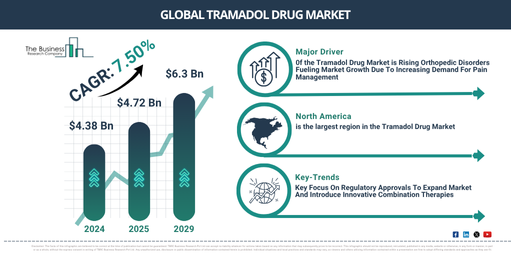
    The market size for the drug tramadol has seen robust growth in the recent past. The market will swell from $4.38 billion in 2024 to $4.72 billion in 2025, demonstrating a compound annual growth rate (CAGR) of 7.7%. The escalation observed in the historical phase is due to factors such as the increasing instances of chronic pain, an expanding elderly population, a greater need for opioid analgesics, more knowledge about pain management options, and better accessibility to prescription drugs.

    In the upcoming years, a significant escalation is predicted in the tramadol drug market size, with an anticipated valuation of $6.3 billion by 2029. This growth, at a compound annual growth rate (CAGR) of 7.5%, is expected largely due to factors such as expanded insurance coverage for pain treatment, increased post-surgery processes, a surge in orthopedic disorders, proliferation of online pharmacies, and penetration into evolving markets. Prominent trends for the projection period involve advancements in drug delivery technology, creation of abuse-deterrent formulations, synergistic approaches with non-opioids, the introduction of artificial intelligence in drug formulation, and the use of intelligent packaging for tracking medication.

    Download The Free Sample Report Here:

    https://www.thebusinessresearchcompany.com/sample.aspx?id=24729&type=smp

    #Which Factors Are Currently Driving The Growth Of The Tramadol Drug Market?

    The increasing occurrence of orthopedic disorders is predicted to spur the tramadol drug market’s expansion in the future. These medical conditions, which involve the bones, joints, muscles, ligaments, or tendons, result in pain and reduced mobility. With the growing aging population, orthopedic disorders are becoming more prevalent, leading to a rise in age-related conditions like osteoarthritis and osteoporosis, which induce joint breakdown and bone weakening. Tramadol is advantageous in managing orthopedic conditions as it alleviates moderate to severe pain resulting from issues like fractures, arthritis, or recovery from surgery by acting on the central nervous system to lessen pain perception. For example, a report released by the Office for Health Improvement & Disparities, a UK government department, in March 2023 revealed that as of 2022, 17.6% of people aged 16 and over reported a long-term musculoskeletal (MSK) condition, an increase from 17.0% in 2021. Therefore, the increased occurrence of orthopedic disorders is stimulating the tramadol drug market’s expansion. The tramadol drug market’s growth is also expected to be fueled by escalating healthcare expenditure due to heightened demand for medical services and pain management. Healthcare expenditure, which is the total amount spent on medical treatments and health-related resources, is on the rise, particularly amidst the growing aging population. This has led to increased demand for medical services, long-term care, and age-related treatments, significantly straining healthcare budgets. This heightened expenditure supports tramadol, a prescription pain medicine, by providing the necessary funds for its research, regulation, distribution, and safe application. For instance, in April 2025, the American Medical Association, a professional association based in the US, noted that healthcare spending in the US had gone up by 7.5% in 2023, reaching $4.9 trillion or $14,570 per person. This marked a significant rise from the 4.6% growth seen in 2022. Therefore, the escalating healthcare expenditure is catalyzing the growth of the tramadol drug market.

    How Is The Global Tramadol Drug Market Structured In Terms Of Segments?

    The tramadol drug market covered in this report is segmented –

    1) By Type: Tablet, Capsule, Liquid, Suspension, Other Types

    2) By Therapeutic Use: Pain Management, Anxiety Disorder, Postoperative Pain

    3) By Route Of Administration: Oral, Intravenous, Intramuscular

    4) By Distribution Channel: Hospital Pharmacies, Retail Pharmacies, Online Pharmacies

    5) By Application: Clinic, Hospital, Other Applications

    Subsegments:

    1) By Tablet: Immediate-Release Tablets, Extended-Release Tablets, Orally Disintegrating Tablets, Effervescent Tablets

    2) By Capsule: Hard Gelatin Capsules, Soft Gelatin Capsules, Modified-Release Capsules

    3) By Liquid: Oral Solution, Injectable Solution, Intravenous (IV) Formulation

    4) By Suspension: Reconstitutable Powder Suspension, Ready-To-Use Oral Suspension

    5) By Other Types: Suppositories, Transdermal Patches, Sublingual Tablets, Buccal Films, Topical Creams Or Gels

    What Trends Are Currently Influencing Growth In The Tramadol Drug Market?

    Leading corporations in the tramadol drug industry are concentrating on securing regulatory consents to broaden their range of products and infiltrate new international markets. Such regulatory approvals are formal authorizations given by health officials or regulatory bodies that enable a drug company to legally distribute and vend a drug in a certain territory or country. For example, in July 2022, Kowa Pharmaceuticals America Inc., a pharmaceutical firm based in the US, revealed the launch of Phase 3 clinical trial data for SEGLENTIS. This is a concoction of celecoxib 56 mg and tramadol hydrochloride 44 mg, a co-crystal formation designed to treat moderate to severe short-term pain in appropriate adult patients, sanctioned by the Food and Drug Administration, a US government agency. SEGLENTIS is a multimodal analgesic that utilizes four supplementary pain relief systems, both peripheral and central, making it an innovative choice for managing acute pain in adults when alternative treatments prove insufficient. This amalgamated analgesic, which utilizes various pain relief systems, offers a viable alternative for managing acute pain in adults when other treatments fall short.

    Who Are The Main Participants Shaping The Tramadol Drug Market Landscape?

    Major companies operating in the tramadol drug market are Teva Pharmaceutical Industries Ltd., Sun Pharmaceutical Industries Ltd., Apotex Inc., Aurobindo Pharma Limited, Grünenthal GmbH, Nippon Shinyaku Co., Ltd., Ipca Laboratories Ltd., Piramal Pharma Solutions Limited, MSN Laboratories Pvt. Ltd., Ajanta Pharma Limited, Wockhardt Ltd., Troikaa Pharmaceuticals Ltd., Sakar Healthcare Limited, Unosource Pharma Limited, Labopharm Inc., Hiral Laboratories Limited, Nuray Chemicals Pvt. Ltd., Lavybens Pharma Private Limited, Jubilant Generics Limited, SLR Pharma Pvt. Ltd.

    Get The Full Report Here:

    https://www.thebusinessresearchcompany.com/report/tramadol-drug-global-market-report

    Which Region Currently Holds The Largest Share In The Tramadol Drug Market?

    North America was the largest region in the tramadol drug market in 2024. The regions covered in the tramadol drug market report are Asia-Pacific, Western Europe, Eastern Europe, North America, South America, Middle East, Africa.

    Request For A Customized Report:

    https://www.thebusinessresearchcompany.com/customise?id=24729&type=smp

    About The Business Research Company:

    With over 15000+ reports from 27 industries covering 60+ geographies, The Business Research Company has built a reputation for offering comprehensive, data-rich research and insights. Armed with 1,500,000 datasets, the optimistic contribution of in-depth secondary research, and unique insights from industry leaders, you can get the information you need to stay ahead in the game.

    Get in touch with us:

    The Business Research Company: https://www.thebusinessresearchcompany.com/

    Americas +1 310-496-7795

    Asia +44 7882 955267 & +91 8897263534

    Europe +44 7882 955267

    Email us at info@tbrc.info

    Follow us on:

    LinkedIn: https://in.linkedin.com/company/the-business-research-company

    YouTube: https://www.youtube.com/channel/UC24_fI0rV8cR5DxlCpgmyFQ

    Global Market Model: https://www.thebusinessresearchcompany.com/global-market-model
  • CAGR of 21.7% Projected for Remote Healthcare Market From 2025 to 2029

    CAGR of 21.7% Projected for Remote Healthcare Market From 2025 to 2029

    Claim your 30% discount on Global Market Reports with code ONLINE30. Limited time only.

    How Large Is the Remote Healthcare Market Expected to Be in 2029?

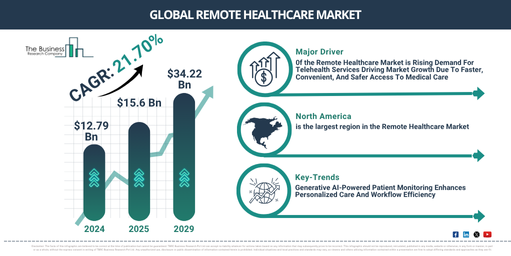
    There has been a significant expansion in the size of the remote healthcare market in the last few years. The market size is anticipated to rise from $12.79 billion in 2024 to a staggering $15.6 billion in 2025, with a compound annual growth rate (CAGR) of 22.0%. Factors like enhanced smartphone and internet usage, rising instances of chronic illnesses, favorable government reimbursement policies, a heightened attention towards home healthcare, and an aging global population have all contributed to the growth observed in the historic period.

    Anticipations for substantial expansion in the remote healthcare market size is expected in a few years to come. The size, raising to $34.22 billion in 2029 at a 21.7% CAGR reflects this expectation. The surge in this period can be traced back to factors such as the emergence of personalized medicine, rapid development in teletherapy and mental health crisis, policy and regulatory provisions, the public’s preference for instant healthcare provision, and the increasing use of cloud-based solutions. Notable trends during this period include the utilization of 5G for instant patient care, blockchain for safeguarding health data, virtual reality (VR) for remote therapy, cloud-assisted healthcare platforms, and voice-based technology and virtual health assistants.

    Download The Free Sample Report Here:

    https://www.thebusinessresearchcompany.com/sample.aspx?id=24681&type=smp

    What Are The Contributors To Demand In The Remote Healthcare Market?

    The rising desire for telehealth services is projected to fuel the expansion of the remote healthcare market. Digital technology’s application to deliver healthcare from a distance, known as telehealth services, allows an online connection between patients and healthcare providers for evaluations, diagnoses, monitoring, and treatment. This growth in the uptake of telehealth services is attributed to the public’s need for expeditious, accessible, and safer healthcare alternatives that offer remote consultations, continuous surveillance, and minimize travel requirements. Telehealth services augment remote healthcare by offering quick and suitable access to medical aid and consultations for individuals in remote or inadequately serviced areas, eliminating the necessity for travel. For example, USAFacts, a non-profit civic initiative based in the U.S., reported that telehealth appointments for Medicare receivers jumped from roughly 5 million to over 53 million between April 2021 and August 2022. Consequently, the burgeoning demand for telehealth services is propelling the ascendancy of the remote healthcare market.

    What Segmentation Categories Are Included In The Remote Healthcare Market Analysis?

    The remote healthcare market covered in this report is segmented –

    1) By Service: Remote Patient Monitoring, Real Time Virtual Health, Tele-ICU (Telemedicine Intensive Care Unit)

    2) By Deployment Mode: On-Premises, Cloud

    3) By Application: Diagnosis, Cardiology, Obstetrics, Senior Care, Other Applications

    4) By End-User: Hospitals, Clinics, Home Care Settings, Other End-Users

    Subsegments:

    1) By Remote Patient Monitoring: Chronic Disease Monitoring, Postoperative Monitoring, Vital Signs Monitoring, Medication Adherence Monitoring, Remote Fetal Monitoring

    2) By Real Time Virtual Health: Video Consultations, Audio Consultations, Remote Diagnosis And Treatment, Virtual Specialist Consultations, Mental Health Teletherapy Sessions

    3) By Tele-ICU (Telemedicine Intensive Care Unit): Continuous Patient Monitoring, Remote Specialist Consultation, Alarm And Event Management, Data Analytics And Decision Support, Remote Ventilator Management

    What Upcoming Trends Are Expected To Impact The Remote Healthcare Market Globally?

    Leading businesses in the remote healthcare market are concentrating their efforts on the creation of technologically sophisticated solutions like generative AI-powered remote patient monitoring assistants and immediate diagnostics. These advancements aim to enhance patient interaction and allow for tailored healthcare delivery. A remote patient monitoring assistant powered by generative AI is a smart system that uses AI to understand real-time health data, generate individualized insights, and automate patient communication, thereby improving the quality of remote healthcare. For example, in February 2025, Validic Inc., a digital health firm based in the US, incorporated a generative AI assistant into its Validic Impact platform to boost remote patient monitoring. This AI assistant automatically processes and summarizes intricate health data, recognizes health trends, creates brief data summaries, facilitates time-based comparisons, simplifies clinical workflows, and lightens the administrative burden on providers. It operates on a safe, HITRUST-certified, HIPAA-compliant structure, accommodates various health conditions, and is compatible with a multitude of devices. This enables healthcare professionals to offer more personalized, proactive, and effective treatments.

    Who Are The Top-Ranked Companies In The Remote Healthcare Market Today?

    Major companies operating in the remote healthcare market are Medtronic plc, Siemens Healthcare GmbH, Koninklijke Philips N.V., GE Healthcare Limited, Resideo Technologies Inc., Teladoc Health Inc., Comarch S.A., American Well Corporation, MDLive Inc., Doctor on Demand Inc., CallHealth Services Pvt. Ltd., Talkspace, AMC Health Inc., 98point6 Technologies, Altibbi Inc., GlobalMed Inc., Binah.ai Ltd., InTouch Health Inc., Vivify Health Inc., VSee Lab Inc.

    Get The Full Report Here:

    https://www.thebusinessresearchcompany.com/report/remote-healthcare-global-market-report

    How Is Remote Healthcare Market Adoption Varying Across Different Regions And Sectors?

    North America was the largest region in the remote healthcare market in 2024. The regions covered in the remote healthcare market report are Asia-Pacific, Western Europe, Eastern Europe, North America, South America, Middle East, Africa.

    Request For A Customized Report:

    https://www.thebusinessresearchcompany.com/customise?id=24681&type=smp

    About The Business Research Company:

    With over 15000+ reports from 27 industries covering 60+ geographies, The Business Research Company has built a reputation for offering comprehensive, data-rich research and insights. Armed with 1,500,000 datasets, the optimistic contribution of in-depth secondary research, and unique insights from industry leaders, you can get the information you need to stay ahead in the game.

    Get in touch with us:

    The Business Research Company: https://www.thebusinessresearchcompany.com/

    Americas +1 310-496-7795

    Asia +44 7882 955267 & +91 8897263534

    Europe +44 7882 955267

    Email us at info@tbrc.info

    Follow us on:

    LinkedIn: https://in.linkedin.com/company/the-business-research-company

    YouTube: https://www.youtube.com/channel/UC24_fI0rV8cR5DxlCpgmyFQ

    Global Market Model: https://www.thebusinessresearchcompany.com/global-market-model
  • Industry Forecast: Toxicology Drug Screening Market to Generate $30.67 Billion Revenue by 2029

    Industry Forecast: Toxicology Drug Screening Market to Generate $30.67 Billion Revenue by 2029

    Claim your 30% discount on Global Market Reports with code ONLINE30. Limited time only.

    How Will the Toxicology Drug Screening Market Evolve in Terms of Growth and Size by 2029?

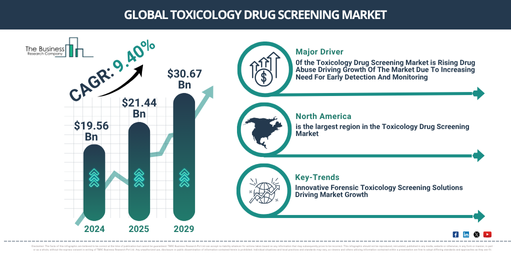
    The market size for toxicology drug screening has experienced robust growth in the recent past. The market is predicted to expand from a value of $19.56 billion in 2024 to reach $21.44 billion in 2025, reflecting a compound annual growth rate (CAGR) of 9.6%. Factors contributing to the expansion in the historic period include an escalation in drug misuse incidents, execution of drug testing rules at workplaces, the growing preference for toxicology screening in sports, the broadening scope of forensic toxicology services, and an increase in criminal inquiries necessitating toxicology reports.

    The market size of toxicology drug screening is predicted to experience significant growth in the upcoming years, escalating to $30.67 billion in 2029, with a compound annual growth rate (CAGR) of 9.4%. This anticipated growth during the forecast period can be attributed to factors such as the rising demand for personalized medicine, increased focus on drug safety regulations, heightened usage of cannabis and synthetic drugs, expansion of healthcare infrastructure in developing markets, and an upsurge in substance abuse cases. Noteworthy trends for the forecast period include progress in high-throughput screening technologies, the advanced incorporation of AI in toxicology examinations, creation of point-of-care toxicology tests, breakthroughs in biomarker-based screening techniques, and advancements in automation and robotics in drug screening.

    Download The Free Sample Report Here:

    https://www.thebusinessresearchcompany.com/sample.aspx?id=24728&type=smp

    What factors are expected to fuel Toxicology Drug Screening market growth in the coming years?

    The increased instances of drug misuse are projected to fuel the expansion of the toxicology drug screening market in the future. Drug misuse is the harmful or surplus use of substances for non-therapeutic reasons, adversely influencing an individual’s wellbeing and life. The spread of drug misuse is amplifying due to increased levels of stress and mental health problems, coaxing many people to exploit substances as a method of coping. Toxicology drug screening is helpful in instances of drug misuse as it aids in detecting the existence of drugs or their by-products in an individual’s body, facilitating early recognition, diagnosis, and tracking of substance misuse or overdose. For example, as per the National Records of Scotland (NRS), a government department based in Scotland, it was recorded that there were 1,172 drug misuse-related deaths in 2023, representing a 12% increase or 121 additional deaths compared to 2022. Consequently, the escalating instances of drug misuse are stimulating the growth of the toxicology drug screening market.

    What Are The Key Findings From The Segmentation Analysis Of The Toxicology Drug Screening Market?

    The toxicology drug screening market covered in this report is segmented –

    1) By Type: Monitoring And Logging, Security, Storage And Continuous Integration Or Continuous Deployment, Management And Orchestration, Networking And Data Management Services, Other Types

    2) By Test Type: Acute Systemic Toxicity, Dermal Toxicity, Carcinogenicity, Ocular Toxicity, Genotoxicity, Neurotoxicity, Organ-Specific Toxicity

    3) By Technology Type: High-Throughput Screening, Genomics, Transcriptomics, Toxicogenomics, Molecular Screening

    4) By Application: Immunotoxicity, Systemictoxicity, Developmental And Reproductive Toxicity (DART), Endocrine Disruption, Other Applications

    5) By End Users: Hospitals, Clinics, Contract Research Organizations (CROs), Pharmaceutical Companies, Workplace Testing Facilities

    Subsegments:

    1) By Monitoring And Logging: Real-Time Drug Monitoring Systems, Bioanalytical Instrumentation Logs, Toxicity Alert Notification Systems, Compliance And Audit Trail Monitoring

    2) By Security: Data Encryption Solutions For Lab Reports, Access Control Systems For Toxicology Data, Secure Sample Tracking Systems, HIPAA Or GDPR-Compliant Drug Testing Platforms

    3) By Storage And Continuous Integration Or Continuous Deployment: Cloud-Based Sample Data Storage Solutions, Automated Toxicology Report Generation Pipelines, LIMS (Laboratory Information Management Systems) Integration Tools, Version Control For Test Protocols And Databases

    4) By Management And Orchestration: Workflow Automation Tools For Toxicology Labs, Centralized Dashboard For Drug Screening Management, Multi-Site Test Scheduling And Coordination Platforms, Vendor Management Systems For Lab Supplies

    5) By Networking And Data Management Services: Interoperability Platforms For Healthcare Data Exchange, Toxicology Data Integration Services With EHR/EMR Systems, Remote Access For Toxicology Results And Analysis, Data Warehousing For Toxicology And Screening Records

    6) By Other Types: AI-Powered Predictive Toxicology Platforms, Mobile Drug Screening Applications, Blockchain-Based Chain Of Custody Solutions, Voice And Image Recognition Tools In Toxicology

    Which Trends Are Expected To Shape The Future Of The Toxicology Drug Screening Market?

    Leading firms in the toxicology drug screening market are concentrating on the development and launch of innovative solutions, including forensic toxicology screening. This approach aims to improve the precision and speed of substance detection in clinical, forensic, and occupational environments. Forensic toxicology screening involves the examination of biological samples to uncover and identify drugs, toxins, or poisons connected with crimes, accidents, or fatalities for legal inquiries. In June 2022, for example, Thermo Fisher Scientific Inc., a biotechnology and life sciences enterprise based in the United States, introduced the ToxSpec Analyzer. This comprehensive LC-MS (liquid chromatography-mass spectrometry) solution is specifically designed for clinical and forensic toxicology screening. It comprises hardware, software and proven methodologies that automate and streamline the drug analyte screening process, ensuring it is manageable even for labs unfamiliar with LC-MS/MS technology. The ToxSpec Analyzer enhances operational efficiency, heightens the confidence in identification, and provides the capacity to incorporate new compounds as required.

    What Are The Most Active Companies In The Toxicology Drug Screening Market Today?

    Major companies operating in the toxicology drug screening market are Thermo Fisher Scientific Inc., Abbott Laboratories, Danaher Corporation, Merck KGaA, Siemens Healthineers, BD Bioscience, Quest Diagnostics, ICON plc, Agilent Technologies Inc., Eurofins Scientific SE, Wuxi AppTec, Charles River Laboratories International Inc., Shimadzu Corporation, Waters Corporation, Bio-Rad Laboratories Inc., Bruker Corporation, Evotec AG, Promega Corporation, The Jackson Laboratory, Clinical Reference Laboratory Inc., Enzo Life Sciences Inc., Covance Inc., Randox Toxicology, Alere Inc.

    Get The Full Report Here:

    https://www.thebusinessresearchcompany.com/report/toxicology-drug-screening-global-market-report

    Which Regional Markets Are Attracting The Most Investment In Toxicology Drug Screening?

    North America was the largest region in the toxicology drug screening market in 2024. Asia-Pacific is expected to be the fastest-growing region in the forecast period. The regions covered in the toxicology drug screening market report are Asia-Pacific, Western Europe, Eastern Europe, North America, South America, Middle East, Africa.

    Request For A Customized Report:

    https://www.thebusinessresearchcompany.com/customise?id=24728&type=smp

    About The Business Research Company:

    With over 15000+ reports from 27 industries covering 60+ geographies, The Business Research Company has built a reputation for offering comprehensive, data-rich research and insights. Armed with 1,500,000 datasets, the optimistic contribution of in-depth secondary research, and unique insights from industry leaders, you can get the information you need to stay ahead in the game.

    Get in touch with us:

    The Business Research Company: https://www.thebusinessresearchcompany.com/

    Americas +1 310-496-7795

    Asia +44 7882 955267 & +91 8897263534

    Europe +44 7882 955267

    Email us at info@tbrc.info

    Follow us on:

    LinkedIn: https://in.linkedin.com/company/the-business-research-company

    YouTube: https://www.youtube.com/channel/UC24_fI0rV8cR5DxlCpgmyFQ

    Global Market Model: https://www.thebusinessresearchcompany.com/global-market-model
  • Industry Forecast: Raynauds Disease Treatment Market to Generate $1.98 Billion Revenue by 2029

    Industry Forecast: Raynauds Disease Treatment Market to Generate $1.98 Billion Revenue by 2029

    Claim your 30% discount on Global Market Reports with code ONLINE30. Limited time only.

    What Is the Outlook for the Raynauds Disease Treatment Market Heading Into 2029?

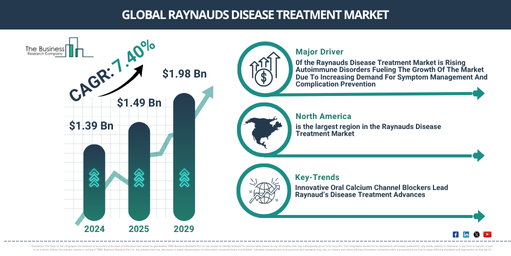
    In recent years, the market size for the treatment of Raynaud’s disease has seen robust growth. It is projected to expand from a valuation of $1.39 billion in 2024 to $1.49 billion in 2025, boasting a compound annual growth rate (CAGR) of 7.6%. Factors which contributed to the significant growth in the past include heightened awareness about autoimmune disorders, advancements in diagnostic capabilities, broadened application of calcium channel blockers, a rise in the prevalence of connective tissue disorders, and an upswing in the elderly population.

    In the upcoming years, the market size for the treatment of Raynaud’s disease is predicted to witness substantial growth, likely reaching $1.98 billion by 2029 with a compound annual growth rate (CAGR) of 7.4%. The forecasted increase over the years can be associated with factors such as the rising usage of telehealth for vascular check-ups, the expansion of tailored medicine, intensified research on endothelial dysfunction, and the soaring incidence due to extreme climates, coupled with the growth in health infrastructure. Some of the key trends shifting the market dynamics in the forecast period include AI integration for early diagnosis and disease tracking, the progress in digital thermal monitoring devices, the creation of targeted biologics, breakthroughs in cell therapy and gene alteration, and the emergence of telemedicine and digital health technologies.

    Download The Free Sample Report Here:

    https://www.thebusinessresearchcompany.com/sample.aspx?id=24680&type=smp

    Which Factors Are Pushing The Raynauds Disease Treatment Market Forward?

    The growth of the raynauds disease treatment market is expected to be driven by an increase in the prevalence of autoimmune diseases. Such conditions occur when the immune system mistakenly attacks healthy tissues of the body, leading to inflammation and damage. This increase is attributed to people living in more sanitized, urban environments that provide less immune system training, coupled with modern lifestyle factors like poor diet, stress, and environmental pollutants. Treatment for Raynaud’s disease helps manage the autoimmune disease by bettering symptom management, reducing tissue damage, and preventing complications resulting from impaired blood flow. For example, a report by the Australia-based governmental organization, the Australian Institute of Health and Welfare in June 2024, mentioned that in 2021-22, hospitalizations due to rheumatoid arthritis were 10,000, a 25% increase from the previous year’s 8,000, coming out to a rate of 39 hospitalizations per 100,000 people. Accordingly, the growing occurrence of autoimmune diseases is propelling the raynauds disease treatment market. The forward momentum of the raynauds disease treatment market is also expected to be driven by increased healthcare spending. This refers to the aggregated sum of money used on medical services, treatments, and health-related resources in a specific timeframe. As the aging population expands, there’s a greater demand for medical services, long-term and age-related care, which places a significant financial strain on healthcare systems and leads to a surge in healthcare expenditure. This increasing expense can improve Raynaud’s disease treatment by facilitating better access to pharmaceuticals, sophisticated diagnostics, specialized care, research for novel therapies, and public awareness initiatives that enable efficient symptom management. For example, according to the American Medical Association, a professional group based in the U.S, in April 2025, U.S. health spending surged by 7.5% in 2023, hitting $4.9 trillion, or $14,570 per person, a marked increase compared to the 4.6% rise noted in 2022. Hence, the escalation in healthcare spending is facilitating the progress of the raynauds disease treatment market.

    Which Segment Held The Largest Share In The Raynauds Disease Treatment Market In 2025?

    The raynauds disease treatment market covered in this report is segmented –

    1) By Treatment Type: Medication, Thermal Therapies, Surgical Procedures, Alteative Therapies

    2) By Drug Class: Calcium Channel Blockers, Vasodilators, Antiplatelet Agents

    3) By Route of Administration: Oral, Topical, Injectable, Intravenous

    4) By End-User: Hospitals, Specialty Clinics, Homecare Settings, Pharmacies

    Subsegments:

    1) By Medication: Calcium Channel Blockers, Alpha Blockers, Vasodilators, Topical Nitrates, Selective Serotonin Reuptake Inhibitors (SSRIs), Phosphodiesterase Inhibitors, Angiotensin Receptor Blockers (ARBs)

    2) By Thermal Therapies: Hand Warmers, Thermal Gloves, Heated Pads, Biofeedback-Controlled Thermal Devices

    3) By Surgical Procedures: Sympathectomy, Nerve Decompression Surgery, Vascular Surgery

    4) By Alternative Therapies: Acupuncture, Biofeedback Therapy, Herbal Remedies, Nutritional Supplements, Stress Management Techniques

    How Are Key Trends Driving Expansion In The Raynauds Disease Treatment Industry?

    Key players in the Raynaud’s disease treatment sector are heavily focused on developing cutting-edge treatment options, like oral calcium channel blockers, aiming to boost blood circulation by relaxing and expanding blood vessels, which in turn decreases both the occurrence and intensity of vasospastic attacks. Oral calcium channel blockers are a category of medications consumed orally that work in facilitating the relaxation and widening of blood vessels by blocking calcium’s entry to the muscle cells located in the heart and blood vessel walls. For instance, in June 2023, the US-based clinical-stage biopharmaceutical firm, Aisa Pharma Inc., initiated the second half of its RECONNOITER Phase 2b trial, examining Profervia (cilnidipine), an oral calcium channel blocker purposed for treating Raynaud’s syndrome in systemic sclerosis (SSc) patients. This comes after encouraging outcomes from the trial’s initial phase, in which Profervia displayed superior attack frequency and SSc disease severity reduction in comparison to other calcium channel blockers, while also delivering a positive safety track record and good tolerability. The now-progressing trial, armed with a 20 mg dosage, is targeting the significant treatment need for Raynaud’s in SSc, presently a condition devoid of approved treatments.

    Which Organizations Are Driving Progress In The Raynauds Disease Treatment Industry?

    Major companies operating in the raynauds disease treatment market are Pfizer Inc., Johnson & Johnson, Bayer AG, Novartis AG, Sanofi SA, Bristol-Myers Squibb Company, AstraZeneca PLC, GlaxoSmithKline plc, Takeda Pharmaceutical Company Limited, Eli Lilly and Company, Merck & Co. Inc., Teva Pharmaceutical Industries Ltd., CSL Vifor, Orion Corporation, Apricus Biosciences Inc., Vicore Pharma Holding AB, MediQuest Therapeutics Inc., Gesynta Pharma AB, Aisa Pharma Inc., Concert Pharmaceuticals Inc.

    Get The Full Report Here:

    https://www.thebusinessresearchcompany.com/report/raynauds-disease-treatment-global-market-report

    Which Region Is Expected To Experience The Highest Growth In The Raynauds Disease Treatment Industry?

    North America was the largest region in the raynauds disease treatment market in 2024. Asia-Pacific is expected to be the fastest-growing region in the forecast period. The regions covered in the raynauds disease treatment market report are Asia-Pacific, Western Europe, Eastern Europe, North America, South America, Middle East, Africa.

    Request For A Customized Report:

    https://www.thebusinessresearchcompany.com/customise?id=24680&type=smp

    About The Business Research Company:

    With over 15000+ reports from 27 industries covering 60+ geographies, The Business Research Company has built a reputation for offering comprehensive, data-rich research and insights. Armed with 1,500,000 datasets, the optimistic contribution of in-depth secondary research, and unique insights from industry leaders, you can get the information you need to stay ahead in the game.

    Get in touch with us:

    The Business Research Company: https://www.thebusinessresearchcompany.com/

    Americas +1 310-496-7795

    Asia +44 7882 955267 & +91 8897263534

    Europe +44 7882 955267

    Email us at info@tbrc.info

    Follow us on:

    LinkedIn: https://in.linkedin.com/company/the-business-research-company

    YouTube: https://www.youtube.com/channel/UC24_fI0rV8cR5DxlCpgmyFQ

    Global Market Model: https://www.thebusinessresearchcompany.com/global-market-model

  • Rapid Diagnostics Market Revenue Outlook: Strategic Insights and Forecast to 2029

    Rapid Diagnostics Market Revenue Outlook: Strategic Insights and Forecast to 2029

    Claim your 30% discount on Global Market Reports with code ONLINE30. Limited time only.

    What Does the Forecast Indicate for the Rapid Diagnostics Market From 2025 to 2029?

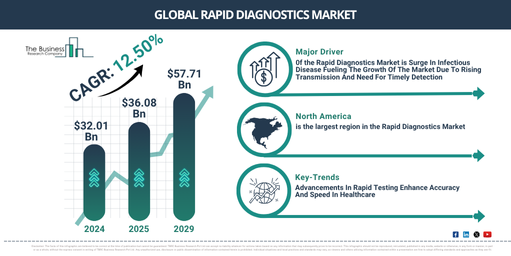
    In recent times, there has been a swift upsurge in the size of the rapid diagnostics market. It is set to expand from $32.01 billion in 2024 to a higher value of $36.08 billion in 2025, growing at a compound annual growth rate (CAGR) of 12.7%. Factors such as the growing occurrence of infectious diseases, surging need for point-of-care testing, an increase in antimicrobial resistance, heightened cognizance of early disease discovery, and ascending health care expenditure in budding markets, have all contributed to the historical growth of this market.

    In the coming years, a swift enlargement is projected for the rapid diagnostics market, with predictions of it reaching $57.71 billion in 2029, at a compound annual growth rate (CAGR) of 12.5%. The upsurge throughout this forecast period is linked to the escalating adoption of personalized medicine, an increase in AI incorporation in diagnostics, a surge in the demand for testing kits for at-home use, considerable investments towards improving healthcare infrastructure, and a boosted focus on readiness for future pandemics. The prediction period is expected to witness several trends, notably advancements in microfluidics technology, breakthroughs in biosensor-based diagnostics, development of smartphone apps that are integrated with diagnostic tools, progress in lab-on-a-chip systems, and innovative strides in multiplexed testing platforms.

    Download The Free Sample Report Here:

    https://www.thebusinessresearchcompany.com/sample.aspx?id=24679&type=smp

    What Elements Are Contributing To Growth In The Rapid Diagnostics Market?

    The rapid diagnostics market is projected to experience significant growth, fueled by the escalating prevalence of infectious diseases. Such diseases arise from harmful microorganisms, including bacteria, parasites, viruses, or fungi, and can be communicated either directly or indirectly between individuals. They increased due to extensive global travel, leading to their faster spread and increased infection rates. Quick and precise detection of these pathogens by rapid diagnostics aids in prompt treatment decisions mitigating transmission and enhancing patient outcomes. For instance, the World Health Organization (WHO), a specialized UN agency focusing on international public health in Switzerland, revealed that since mid-February 2025, the global incidence of SARS-CoV-2, the virus causing the infectious disease COVID-19, has seen an upward trend. This information, based on data from sentinel sites, showed the test positivity rate reaching 11% – a rate last seen in July 2024. Thus, the rising occurrence of infectious diseases is propelling the growth of the rapid diagnostics market.

    Which Segments Are Detailed In The Global Rapid Diagnostics Market Report?

    The rapid diagnostics market covered in this report is segmented –

    1) By Product Type: Kits, Reagents, Instruments, Other Product Types

    2) By Platform: Immunoassays, Molecular Detection, Other Rapid Diagnostic Platforms

    3) By Application: Blood Glucose Testing, Infectious Disease Testing, Cardiometabolic Testing, Pregnancy and Fertility Testing, Fecal Occult Blood Testing, Coagulation Testing, Toxicology Testing

    4) By Distribution Channel: Hospital Pharmacies, Brick and Mortar, E-Commerce, Other Distribution Channels

    5) By End Use: Diagnostic Centers, Homecare Settings, Hospital Pharmacies, Other End Users

    Subsegments:

    1) By Kits: Lateral Flow Assay Kits, PCR Kits, Immunoassay Kits, Microfluidic Kits, Molecular Diagnostic Kits, Multiplex Kits

    2) By Reagents: Enzymes, Buffers, Probes and Primers, Stains and Dyes, Antibodies, Calibration and Control Reagents

    3) By Instruments: PCR Machines, Lateral Flow Readers, Immunoassay Analyzers, Microfluidic Analyzers, Automated Sample Processors, Biosensors

    4) By Other Product Types: Software and Data Management Tools, Sample Collection Devices, Accessories and Consumables, Calibration Standards, Point-of-Care Devices

    Which Emerging Trends And Strategic Shifts Are Shaping The Rapid Diagnostics Market?

    Leading businesses in the rapid diagnostics industry are prioritizing forward-thinking strategies and ingenuity, such as quick diagnostic testing instruments, to improve diagnostic precision, decrease processing times, and enhance patient results in point-of-care situations. Quick diagnostic testing tools are essentially medical equipment that can swiftly identify certain diseases or conditions, generally delivering results in mere minutes at the point of care. For instance, in May 2025, SEKISUI Diagnostics, an American medical diagnostics firm, introduced the OSOM RSV Test, a swift diagnostic instrument for identifying respiratory syncytial virus (RSV). Designed for use in professional healthcare environments, this test offers results in just 15 minutes. It utilizes a fast immunochromatographic test to detect the presence of RSV nucleoprotein antigen qualitatively. This test operates on anterior nasal swab samples obtained from patients displaying respiratory infection symptoms. The rapid delivery of results aids in efficient and effective clinical decision-making.

    Who Are The Key Contributors To Growth In The Rapid Diagnostics Market?

    Major companies operating in the rapid diagnostics market are Johnson & Johnson Services Inc., F. Hoffmann-La Roche Ltd., Thermo Fisher Scientific Inc., Abbott Laboratories, Danaher Corporation, Siemens Healthineers AG, Becton Dickinson and Company, Quest Diagnostics Incorporated, Hologic Inc., bioMérieux S.A., QuidelOrtho Corporation, Bio-Rad Laboratories Inc., QIAGEN N.V., Cepheid Inc., OraSure Technologies Inc., Nova Biomedical Corporation, Fujirebio Holdings Inc., Sekisui Diagnostics LLC, EKF Diagnostics Holdings plc, Trinity Biotech plc, Abingdon Health plc, Abionic SA

    Get The Full Report Here:

    https://www.thebusinessresearchcompany.com/report/rapid-diagnostics-global-market-report

    Which Region Is Projected To Lead The Rapid Diagnostics Market By 2025?

    North America was the largest region in the rapid diagnostics market in 2024. Asia-Pacific is expected to be the fastest-growing region in the forecast period. The regions covered in the rapid diagnostics market report are Asia-Pacific, Western Europe, Eastern Europe, North America, South America, Middle East, Africa.

    Request For A Customized Report:

    https://www.thebusinessresearchcompany.com/customise?id=24679&type=smp

    About The Business Research Company:

    With over 15000+ reports from 27 industries covering 60+ geographies, The Business Research Company has built a reputation for offering comprehensive, data-rich research and insights. Armed with 1,500,000 datasets, the optimistic contribution of in-depth secondary research, and unique insights from industry leaders, you can get the information you need to stay ahead in the game.

    Get in touch with us:

    The Business Research Company: https://www.thebusinessresearchcompany.com/

    Americas +1 310-496-7795

    Asia +44 7882 955267 & +91 8897263534

    Europe +44 7882 955267

    Email us at info@tbrc.info

    Follow us on:

    LinkedIn: https://in.linkedin.com/company/the-business-research-company

    YouTube: https://www.youtube.com/channel/UC24_fI0rV8cR5DxlCpgmyFQ

    Global Market Model: https://www.thebusinessresearchcompany.com/global-market-model