Month: September 2025

  • CAGR of 17.7% Projected for T Cell Receptor (TCR) Based Antibody Market From 2025 to 2029

    CAGR of 17.7% Projected for T Cell Receptor (TCR) Based Antibody Market From 2025 to 2029

    Claim your 30% discount on Global Market Reports with code ONLINE30. Limited time only.

    Claim your 30% discount on Global Market Reports with code ONLINE30. Limited time only.

    How Large Is the T Cell Receptor (TCR) Based Antibody Market Expected to Be in 2029?

    There has been a swift expansion in the size of the T-cell receptor (TCR)-based antibody market in the recent past. The market which was worth $2.57 billion in 2024 is projected to escalate to $3.04 billion in 2025, boasting a compound annual growth rate (CAGR) of 18.1%. This spike in growth during the previous period is linked to the growing need for specific cancer treatments, the increasing emphasis on intracellular antigen targeting, the surge in scientific studies pertaining to T cell receptor-based methods, the amplified investment into immunotherapy platforms, and the expanded use of personalized medicine strategies.

    The market size for the T-cell receptor-(TCR)-based antibody is set to experience swift expansion in the next few years, reaching a value of $5.84 billion in 2029 with a compound annual growth rate (CAGR) of 17.7%. This substantial growth projected for the forecast period could be due to the increased demand for precision and specifically targeted treatments, a mounting focus on neoantigen targeting in cancer therapy, the growing number of orphan drug approvals for uncommon cancers, escalating public and private investments in immuno-oncology, and an intensified focus on targeting neoantigens. Key trends anticipated during this forecast period are advancements in the design of T-cell receptor-mimic antibodies, the evolution of bispecific T-cell receptor-antibody formats, innovations in targeting restricted antigen through the major histocompatibility complex, advancement in the discovery of epitope driven by artificial intelligence, and the development of off-the-shelf therapeutics based on T-cell receptors.

    Download The Free Sample Report Here:

    https://www.thebusinessresearchcompany.com/sample.aspx?id=27428&type=smp

    What Are The Contributors To Demand In The T Cell Receptor (TCR) Based Antibody Market?

    The T-cell receptor-based antibody market is slated for expansion, driven by the rising prevalence of cancer. The term ‘prevalence of cancer’ refers to the total number of individuals, those newly diagnosed as well as those already diagnosed, who live with a history of cancer at a specific time. Lifestyle-related risk factors such as unhealthy diets, smoking, consuming alcohol, and exposure to environmental pollutants contribute to an increased prevalence of various cancers. The role of T cell receptor-based antibodies in cancer treatment is to target tumor cells specifically, thereby fine-tuning the therapeutic strategy. They allow the immune system to identify and eradicate cancer cells more efficiently, boosting treatment efficacy while minimizing side effects. For example, as per the Australian Institute of Health and Welfare, a government-run agency in Australia, there were 160,570 cancer cases diagnosed in Australia in 2022, a rise of 3,789 cases from 156,781 in 2021. Consequently, the growing prevalence of cancer acts as a catalyst for the growth of the T-cell receptor-based antibody market.

    What Segmentation Categories Are Included In The T Cell Receptor (TCR) Based Antibody Market Analysis?

    The T cell receptor (TCR) based antibody market covered in this report is segmented

    1) By Type Of Antibody: Monoclonal Antibodies, Polyclonal Antibodies, Bispecific Antibodies, Conjugated Antibodies

    2) By Target Antigen: Tumor-Associated Antigens, Viral Antigens, Autoimmune Antigens, Others Target Antigens

    3) By Therapeutic Approach: Cytotoxic T-Cell Therapies, Regulator T-Cell Therapies, Dual-Targeting Therapies

    4) By Application: Cancer Immunotherapy, Infectious Diseases, Autoimmune Diseases, Transplant Rejection, Diagnostic Testing

    5) By End-Users: Hospitals, Research Institutes, Specialty Clinics, Other End-Users

    Subsegments:

    1) By Monoclonal Antibodies: Fully Human Antibodies, Humanized Antibodies, Chimeric Antibodies, Murine Antibodies

    2) By Polyclonal Antibodies: Rabbit Derived Antibodies, Goat Derived Antibodies, Sheep Derived Antibodies, Donkey Derived Antibodies

    3) By Bispecific Antibodies: Tandem Single Chain Variable Fragment Antibodies, Dual Variable Domain Immunoglobulin Antibodies, Bispecific T Cell Engager Antibodies, Dual Affinity Re-Targeting Antibodies

    4) By Conjugated Antibodies: Antibody Drug Conjugates, Radioimmunoconjugates, Immunotoxins, Fluorescent Conjugated Antibodies

    What Upcoming Trends Are Expected To Impact The T Cell Receptor (TCR) Based Antibody Market Globally?

    Leading corporations in the T cell receptor-based antibody market are striving to develop innovative products such as TCR mimic antibodies, aiming to increase accuracy, elevate therapeutic efficiency, and broaden treatment alternatives for cancer and other maladies. TCR mimic antibodies are essentially engineered antibodies that identify intracellular antigens presented by MHC molecules in a similar manner to T cell receptors, hence enabling precise immune reactions against affected cells. For example, in September 2022, Biocytogen Pharmaceuticals (Beijing) Co. Ltd., a biotechnology firm based in China, formed an alliance with Guangzhou FineImmune Biotechnology Co. Ltd., another China-based biotechnology company, and launched TCR-mimic antibody-based cell therapy for cancer treatment. Biocytogen will employ its exclusive RenMice platform to create fully human antibodies that target specific peptide-MHC complexes, and FineImmune will apply its knowledge in T cell engager and cell therapy development. The goal of this partnership is to accelerate the development of the next generation of immunotherapies with enhanced specificity and lower off-target effects, potentially providing new options for individuals suffering from difficult-to-treat cancers.

    Who Are The Top-Ranked Companies In The T Cell Receptor (TCR) Based Antibody Market Today?

    Major companies operating in the t cell receptor (tcr) based antibody market are Pfizer Inc., Bristol-Myers Squibb Company, Novartis AG, GSK plc, Amgen Inc., Bio-Rad Laboratories Inc., GenScript Biotech Corporation, Biocytogen Pharmaceuticals Co. Ltd., Abcam plc, Immunocore Holdings plc, Xencor Inc., Fate Therapeutics Inc., Eureka Therapeutics Inc., Proteintech Group Inc., Santa Cruz Biotechnology Inc., Creative Biolabs Inc., TScan Therapeutics Inc., Alloy Therapeutics Inc., Affini-T Therapeutics Inc., Medigene AG, 3T Biosciences Inc., Nona Biosciences, Alithea Biotechnology GmbH, Nextera Therapeutics Inc., TCRCure Biopharma Ltd.

    Get The Full Report Here:

    https://www.thebusinessresearchcompany.com/report/t-cell-receptor-tcr-based-antibody-global-market-report

    How Is T Cell Receptor (TCR) Based Antibody Market Adoption Varying Across Different Regions And Sectors?

    North America was the largest region in the T cell receptor (TCR)-based antibody market in 2024. Asia-Pacific is expected to be the fastest-growing region in the forecast period. The regions covered in the T cell receptor (TCR) based antibody market report are Asia-Pacific, Western Europe, Eastern Europe, North America, South America, Middle East, Africa.

    Request For A Customized Report:

    https://www.thebusinessresearchcompany.com/customise?id=27428&type=smp

    About The Business Research Company:

    With over 15000+ reports from 27 industries covering 60+ geographies, The Business Research Company has built a reputation for offering comprehensive, data-rich research and insights. Armed with 1,500,000 datasets, the optimistic contribution of in-depth secondary research, and unique insights from industry leaders, you can get the information you need to stay ahead in the game.

    Get in touch with us:

    The Business Research Company: https://www.thebusinessresearchcompany.com/

    Americas +1 310-496-7795

    Asia +44 7882 955267 & +91 8897263534

    Europe +44 7882 955267

    Email us at info@tbrc.info

    Follow us on:

    LinkedIn: https://in.linkedin.com/company/the-business-research-company

    YouTube: https://www.youtube.com/channel/UC24_fI0rV8cR5DxlCpgmyFQ

    Global Market Model: https://www.thebusinessresearchcompany.com/global-market-model

  • Industry Forecast: Syndromic Multiplex Diagnostics Market to Generate $4.96 Billion Revenue by 2029

    Industry Forecast: Syndromic Multiplex Diagnostics Market to Generate $4.96 Billion Revenue by 2029

    Claim your 30% discount on Global Market Reports with code ONLINE30. Limited time only.

    Claim your 30% discount on Global Market Reports with code ONLINE30. Limited time only.

    What Is the Outlook for the Syndromic Multiplex Diagnostics Market Heading Into 2029?

    In recent years, there has been a substantial growth in the size of the syndromic multiplex diagnostics market. It is projected to escalate from a value of $3.11 billion in 2024, reaching $3.43 billion in 2025, demonstrating a compound annual growth rate (CAGR) of 10.0%. Factors such as the surge in demand for quick and precise diagnostic procedures, the increased knowledge concerning early detection of diseases, an upswing in hospital-acquired infections, the expanded use of molecular diagnostics, escalating healthcare expenditure, and an increased necessity for point-of-care testing have been instrumental in contributing to the historical growth period.

    The market size of syndromic multiplex diagnostics is anticipated to experience considerable growth in the coming years. It is estimated to expand to $4.96 billion by 2029, with a compound annual growth rate (CAGR) of 9.7%. Factors contributing to this surge during the forecast period include escalating investments in research and development, increased utilization in settings with limited resources, growth of healthcare infrastructure in underdeveloped nations, escalating governmental initiatives for the control of infectious diseases, and an upsurge in demand for decentralized testing. The forecast period is also expected to see key trends such as the progression in multiplex polymerase chain reaction (PCR) technologies, introductions in microfluidics and lab-on-chip systems, advanced automation in processing samples, development in point-of-care molecular platforms, incorporation of cloud-based diagnostic data systems, and progress in portable diagnostic devices.

    Download The Free Sample Report Here:

    https://www.thebusinessresearchcompany.com/sample.aspx?id=27427&type=smp

    Which Factors Are Pushing The Syndromic Multiplex Diagnostics Market Forward?

    The rise in infectious diseases is anticipated to boost the syndromic multiplex diagnostics market’s growth. These diseases are brought on by harmful microorganisms such as bacteria, viruses, fungi, or parasites that infest the body and proliferate, leading to symptoms and health issues. The growth in infectious diseases is propelled by increased worldwide travel, which speeds up the distribution of pathogens across territories and populations. Syndromic multiplex diagnostics augment the management of infectious diseases by providing quick and concurrent detection of numerous pathogens from a single sample. This enhances diagnostic precision and speed, enabling prompt treatment decisions and enhanced patient results. For example, in March 2023, the Centers for Disease Control and Prevention, a US-based national public health organization, reported 8,331 tuberculosis (TB) cases in 2022, a 5.9% rise from 7,874 cases in 2021. Consequently, the escalating prevalence of infectious diseases is contributing to the growth of the syndromic multiplex diagnostics market.

    Which Segment Held The Largest Share In The Syndromic Multiplex Diagnostics Market In 2025?

    The syndromic multiplex diagnostics market covered in this report is segmented

    1) By Product Type: Instruments, Reagents, Software And Services

    2) By Sample Type: Blood Samples, Urine Samples, Saliva Samples, Tissue Samples

    3) By Technology: Polymerase Chain Reaction, Mass Spectrometry, Nucleic Acid Amplification Tests, Next-Generation Sequencing

    4) By Application: Infectious Diseases, Respiratory Diseases, Gastrointestinal Diseases, Sexually Transmitted Infections, Central Nervous System Diseases

    5) By End User: Clinical Laboratories, Hospitals, Pharmaceutical And Biotechnology Companies, Research Institutes, Other End Users

    Subsegments:

    1) By Instruments: Real-Time Polymerase Chain Reaction (PCR) Systems, Microfluidic-Based Systems, Automated Sample-To-Answer Systems, Cartridge-Based Systems, Multiplex Polymerase Chain Reaction (PCR) Platforms

    2) By Reagents: Assay Panels, Primers And Probes, Enzymes, Buffers And Solutions, Sample Preparation Reagents

    3) By Software And Services: Data Analysis Software, Cloud-Based Diagnostic Platforms, Integration And Connectivity Solutions, Technical Support Services, Maintenance And Calibration Services, Training And Installation Services

    How Are Key Trends Driving Expansion In The Syndromic Multiplex Diagnostics Industry?

    Prominent firms in the syndromic multiplex diagnostics sector are concentrating on creating high-tech solutions, such as AI-boosted diagnostic systems, to increase the pace, precision, and comprehensiveness of disease-causing agent detection. Advanced computational tools that apply artificial intelligence, specifically machine learning and deep learning approaches, to interpret intricate clinical and lab data for quicker and more precise disease detection are referred to as AI-boosted diagnostic systems. For example, Qiagen N.V., a company specialising in molecular diagnostics located in the Netherlands, introduced two syndromic testing panels for its QIAstat Dx platform in January 2024: the Gastrointestinal Panel 2 and the Meningitis and Encephalitis Panel. These panels facilitate prompt and precise diagnosis of infectious diseases by identifying multiple pathogens in one test, thereby enhancing clinical judgment and patient results. The QIAstat-Dx system includes progressive data analytics, assisting healthcare professionals in effectively recognising and handling infectious disease outbreaks.

    Which Organizations Are Driving Progress In The Syndromic Multiplex Diagnostics Industry?

    Major companies operating in the syndromic multiplex diagnostics market are Roche Molecular Systems Inc., Abbott Laboratories, Becton Dickinson and Company, Hologic Inc., Bio-Rad Laboratories Inc., Qiagen N.V., Cepheid, Bosch Healthcare Solutions GmbH, Biocartis NV, Luminex Corporation, Curetis GmbH, Accelerate Diagnostics Inc., Applied BioCode Inc., Ador Diagnostics Ltd., Akonni Biosystems Inc., Alveo Technologies Inc., Atlas Genetics Ltd., BioFire Diagnostics LLC, Nanomix Inc., Primerdesign Ltd.

    Get The Full Report Here:

    https://www.thebusinessresearchcompany.com/report/syndromic-multiplex-diagnostics-global-market-report

    Which Region Is Expected To Experience The Highest Growth In The Syndromic Multiplex Diagnostics Industry?

    North America was the largest region in the syndromic multiplex diagnostics market in 2024. Asia-Pacific is expected to be the fastest-growing region in the forecast period. The regions covered in the syndromic multiplex diagnostics market report are Asia-Pacific, Western Europe, Eastern Europe, North America, South America, Middle East, Africa.

    Request For A Customized Report:

    https://www.thebusinessresearchcompany.com/customise?id=27427&type=smp

    About The Business Research Company:

    With over 15000+ reports from 27 industries covering 60+ geographies, The Business Research Company has built a reputation for offering comprehensive, data-rich research and insights. Armed with 1,500,000 datasets, the optimistic contribution of in-depth secondary research, and unique insights from industry leaders, you can get the information you need to stay ahead in the game.

    Get in touch with us:

    The Business Research Company: https://www.thebusinessresearchcompany.com/

    Americas +1 310-496-7795

    Asia +44 7882 955267 & +91 8897263534

    Europe +44 7882 955267

    Email us at info@tbrc.info

    Follow us on:

    LinkedIn: https://in.linkedin.com/company/the-business-research-company

    YouTube: https://www.youtube.com/channel/UC24_fI0rV8cR5DxlCpgmyFQ

    Global Market Model: https://www.thebusinessresearchcompany.com/global-market-model

  • Surgery Management System Market Revenue Outlook: Strategic Insights and Forecast to 2029

    Claim your 30% discount on Global Market Reports with code ONLINE30. Limited time only.

    Claim your 30% discount on Global Market Reports with code ONLINE30. Limited time only.

    What Does the Forecast Indicate for the Surgery Management System Market From 2025 to 2029?

    In recent years, the market size of the surgery management system has seen a robust growth. The market is projected to expand from $2.23 billion in 2024 to $2.44 billion in 2025, marking a compound annual growth rate (CAGR) of 9.6%. This exceptional growth during the historical period can be credited to factors such as the escalating adoption of hospital information systems, a mounting usage of standalone surgical documentation tools, an amplified investment in on-premise IT infrastructure, increased deployment of legacy or scheduling software, and a growing dependency on paper-based surgical records.

    The market for surgery management systems is projected to experience significant expansion in the coming years, with an anticipated growth to $3.48 billion by 2029 at a 9.3% Compound Annual Growth Rate (CAGR). Factors contributing to this projected growth for the forecast period include an increase in mobile-based surgery management application adoption, a surge in telehealth and remote monitoring tools, heightened demand for predictive analytics in surgery planning, increased usage of compatible cloud platforms, and a noticeable trend towards outcome-oriented reimbursement methods. Major trends to watch out for during the forecast period include advancements in mobile-first surgery management interfaces, increased utilization of NLP for automating surgical documentation, the advent of decentralized OR scheduling through blockchain, emergence of voice-assisted surgical workflow tools and improvements in AR-based surgical team coordination platforms.

    Download The Free Sample Report Here:

    https://www.thebusinessresearchcompany.com/sample.aspx?id=27426&type=smp

    What Elements Are Contributing To Growth In The Surgery Management System Market?

    The surgery management system market’s expansion is projected to be driven by the increasing number of surgical procedures. These refer to medical methods that involve cuts or manipulations to address diseases, injuries, or anomalies. This surge in surgical procedures is attributed to the escalating prevalence of chronic illnesses often necessitating surgical attention. Surgery management systems help facilitate these procedures by simplifying the preoperative preparation process, enhancing operating theatre scheduling, coordinating surgical teams, and providing real-time access to patient data. This, as a result, increases efficiency, minimizes mistakes, and boosts overall surgical results. For example, in June 2024, liposuction surpassed breast augmentation as the most frequently performed surgical procedure among women, with 1.8 million procedures carried out as reported by the International Society of Aesthetic Plastic Surgery (ISAPS), an American organization for certified aesthetic plastic surgeons. This was a 29% rise from 2021. Consequently, the mounting frequency of surgical procedures is spurring the growth of the surgery management system market.

    Which Segments Are Detailed In The Global Surgery Management System Market Report?

    The surgery management system market covered in this report is segmented

    1) By Component: Software, Services

    2) By Deployment Type: On-Premise, Cloud-Based, Hybrid

    3) By Functionality: Scheduling, Inventory Management, Patient Management, Billing And Payments, Reporting And Data Analysis

    4) By Application: Preoperative Management, Intraoperative Management, Postoperative Management, Reporting and Analytics

    5) By End-User: Hospitals, Ambulatory Surgical Centers, Clinics, Research Institutions, Other End-Users

    Subsegments:

    1) By Software: Surgical Scheduling Software, Operating Room (OR) Management Software, Surgical Workflow Automation Software, Patient Tracking And Monitoring Software, Electronic Health Record (EHR) Integration Software, Analytics And Reporting Software, Inventory And Resource Management Software, Compliance And Regulatory Management Software

    2) By Services: Preoperative Services, Intraoperative Services, Postoperative Services, Surgical Scheduling And Coordination, Patient Management Services, Documentation And Reporting Services, Training And Support Services

    Which Emerging Trends And Strategic Shifts Are Shaping The Surgery Management System Market?

    Firms dominating the surgical management system sector are pursuing the development of innovative solutions like the full surgical coordination platform to improve the productivity of surgical processes, enhance patient results and employ resources effectively. The comprehensive surgical coordination platform is a system that oversees all aspects related to surgery, from patient scheduling to surgical preparation and operation execution. For example, LeanTaaS Inc., an analytics software supplier in the USA, launched iQueue for Surgical Clinics in June 2025 to facilitate improved patient access, increased surgeries, and more intelligent operations. The platform provides benefits such as real-time data analysis and AI-powered predictive tools that smooth-en scheduling by aligning surgical needs with available means. The platform strengthens collaboration between surgeons, anesthesiologists, and nurses to lower delays and cancellations. Also, it offers automated capacity management, allowing clinics to optimize operating room performance without overloading staff. Moreover, iQueue seamlessly integrates with current electronic health records (EHR) systems, providing a consolidated perspective of surgical processes that enhances transparency and decision-making.

    Who Are The Key Contributors To Growth In The Surgery Management System Market?

    Major companies operating in the surgery management system market are GE HealthCare, Epic Systems Corporation, Getinge AB, CompuGroup Medical SE & Co. KGaA, Barco N.V., Medical Information Technology Inc., Veradigm LLC, Greenway Health LLC, Nexus AG, Surgical Information Systems Inc. (SIS), iQueue Health Inc., Provation Medical Inc., Picis Clinical Solutions Inc., Caresyntax GmbH, HST Pathways Inc., Buddy Healthcare Ltd., Surgimate Inc., OeHealth Software, Ortech Systems Inc., Nimble Solutions Inc.

    Get The Full Report Here:

    https://www.thebusinessresearchcompany.com/report/surgery-management-system-global-market-report

    Which Region Is Projected To Lead The Surgery Management System Market By 2025?

    North America was the largest region in the surgery management system market in 2024. Asia-Pacific is expected to be the fastest-growing region in the forecast period. The regions covered in the surgery management system market report are Asia-Pacific, Western Europe, Eastern Europe, North America, South America, Middle East, Africa.

    Request For A Customized Report:

    https://www.thebusinessresearchcompany.com/customise?id=27426&type=smp

    About The Business Research Company:

    With over 15000+ reports from 27 industries covering 60+ geographies, The Business Research Company has built a reputation for offering comprehensive, data-rich research and insights. Armed with 1,500,000 datasets, the optimistic contribution of in-depth secondary research, and unique insights from industry leaders, you can get the information you need to stay ahead in the game.

    Get in touch with us:

    The Business Research Company: https://www.thebusinessresearchcompany.com/

    Americas +1 310-496-7795

    Asia +44 7882 955267 & +91 8897263534

    Europe +44 7882 955267

    Email us at info@tbrc.info

    Follow us on:

    LinkedIn: https://in.linkedin.com/company/the-business-research-company

    YouTube: https://www.youtube.com/channel/UC24_fI0rV8cR5DxlCpgmyFQ

    Global Market Model: https://www.thebusinessresearchcompany.com/global-market-model

  • Future Projections: Superconducting Magnet For Medical Magnetic Resonance Imaging (MRI) System Market to Reach $2.87 Billion by 2029 at 7.8% CAGR

    Future Projections: Superconducting Magnet For Medical Magnetic Resonance Imaging (MRI) System Market to Reach $2.87 Billion by 2029 at 7.8% CAGR

    Claim your 30% discount on Global Market Reports with code ONLINE30. Limited time only.

    Claim your 30% discount on Global Market Reports with code ONLINE30. Limited time only.

    How Much Is the Global Superconducting Magnet For Medical Magnetic Resonance Imaging (MRI) System Market Valued at Present and by 2029?

    In recent years, the superconducting magnet for the medical magnetic resonance imaging (MRI) system market has experienced robust growth. The market size is predicted to increase from $1.97 billion in 2024 to $2.13 billion in 2025, reflecting a compound annual growth rate (CAGR) of 8.1%. The significant growth during the historic period is owing to the increased demand for high-definition imaging, the proliferation of diagnostic imaging procedures, surging incidences of chronic diseases, substantial government investment in medical imaging, the growing number of the elderly, and heightened awareness about the benefits of early disease detection.

    The market size for the superconducting magnet in medical magnetic resonance imaging (MRI) systems is predicted to experience robust growth in the upcoming years, projecting it to expand to $2.87 billion by 2029 at a compound annual growth rate (CAGR) of 7.8%. Factors contributing to this growth forecast include the advent of compact superconducting magnets, broadening into burgeoning healthcare markets, escalating demand for outpatient imaging services, the evolution of personalized medicine, and increased necessity for non-invasive diagnostic tools. Furthermore, anticipated trends for this timeline include the transition towards superior magnetic field strength, the growth of helium-free and zero boil-off magnet technologies, advancements in superconducting materials, the emergence of compact superconducting magnet systems, and a focus on sustainability and operational efficacy.

    Download The Free Sample Report Here:

    https://www.thebusinessresearchcompany.com/sample.aspx?id=27425&type=smp

    #What Drivers Are Influencing Growth In The Superconducting Magnet For Medical Magnetic Resonance Imaging (MRI) System Market?

    As the need for diagnostic imaging swells, it’s anticipated to fuel the expansion of the superconducting magnet for medical magnetic resonance imaging (MRI) system market. Diagnostic imaging constitutes techniques and procedures utilized to generate visual depictions of the human body’s interior for clinical scrutiny and medical treatments. The escalating prevalence of chronic diseases necessitating precise and early diagnosis is contributing to the uptick in demand for diagnostic imaging. Superconducting magnets for medical magnetic resonance imaging (MRI) systems are instrumental to this surge, offering high-field strength that results in clearer, more exact scans. These magnets enhance diagnostic accuracy, trim down scanning times, boost patient throughput, and heighten clinical efficiency. For example, a survey study conducted in February 2025 involving 348,214,053 insured Medicare fee-for-service, Medicare Advantage, Medicaid, and commercially insured individuals from 2018 to 2022 by the National Library of Medicine, a US federal government entity, anticipates imaging utilization to soar 16.9% to 26.9% by 2055 relative to 2023. Therefore, the burgeoning demand for diagnostic imaging is propelling the superconducting magnet for medical MRI system market’s advancement.

    What Are The Main Segments Identified In The Superconducting Magnet For Medical Magnetic Resonance Imaging (MRI) System Market Research?

    The superconducting magnet for medical magnetic resonance imaging (MRI) system market covered in this report is segmented

    1) By Type: Low-Temperature Superconductors (LTS), High-Temperature Superconductors (HTS)

    2) By System Type: Open Magnetic Resonance Imaging (MRI) Systems, Closed Magnetic Resonance Imaging (MRI) Systems, Dedicated Magnetic Resonance Imaging (MRI) Systems For Specific Applications

    3) By Magnetic Field Strength: 1.5 Tesla, 3 Tesla, 7 Tesla, Ultra-High Field Magnetic Resonance Imaging (MRI)

    4) By Application: Neurological Imaging, Musculoskeletal Imaging, Cardiac Imaging, Pediatric Imaging, Oncology Imaging

    5) By End-User: Hospitals, Diagnostic Imaging Centers, Research Institutions, Academic Medical Centers

    Subsegments:

    1) By Low-Temperature Superconductors (LTS): Niobium-Titanium (NbTi), Niobium-Tin (Nb3Sn), Other Low-Temperature Superconductors (LTS) Materials

    2) By High-Temperature Superconductors (HTS): Yttrium Barium Copper Oxide (YBCO), Bismuth Strontium Calcium Copper Oxide (BSCCO), Other High-Temperature Superconductors (HTS) Materials

    What Are The Leading Trends And Opportunities In The Superconducting Magnet For Medical Magnetic Resonance Imaging (MRI) System Sector?

    Leading companies in the medical magnetic resonance imaging (MRI) system superconducting magnet market, are focusing their energies on creating advanced tech products like sealed magnet systems. These can conserve helium, improve operational effectiveness, and bolster system reliability. Sealed magnet systems are superconducting magnet technologies that function with barely any or no helium boil-off, as the cryogen is contained within a fully sealed, maintenance-free cryostat. An example of this is the introduction of Freelium, a latest sealed magnet platform, by US-based health technology firm, GE HealthCare Technologies Inc., in February 2025. Freelium provides top-notch MRI imaging, using less than 1% of the helium typically required by traditional systems. It doesn’t require additional cooling or power infrastructure and uses smart sensor technology for remote monitoring and automated recovery, thus reducing independence on field engineers. Its sealed design simplifies transportation and installation, making MRI services more accessible.

    Which Companies Play A Key Role In The Development Of The Superconducting Magnet For Medical Magnetic Resonance Imaging (MRI) System Market?

    Major companies operating in the superconducting magnet for medical magnetic resonance imaging (mri) system market are Hitachi Medical Corporation, Siemens Healthineers AG, Fujifilm Healthcare Corporation, Philips Medical Systems Nederland B.V., GE Healthcare Technologies Inc., Bruker Corporation, Shanghai United Imaging Healthcare Co. Ltd., Oxford Instruments plc, Canon Medical Systems Corporation, Japan Superconductor Technology Inc., Tesla Engineering Ltd., Cryogenic Ltd., Alltech Medical Systems America Inc., Aurora Imaging Technology Inc., American Magnetics Inc., Cryomagnetics Inc., Scientific Magnetics Ltd., Western Superconducting Technologies Co. Ltd., Yangzhou Kindsway Biotech Co. Ltd., Ningbo Jansen Superconducting Technologies Co. Ltd.

    Get The Full Report Here:

    https://www.thebusinessresearchcompany.com/report/superconducting-magnet-for-medical-magnetic-resonance-imaging-mri-system-global-market-report

    What Are The Key Regional Developments Shaping The Superconducting Magnet For Medical Magnetic Resonance Imaging (MRI) System Market?

    North America was the largest region in the superconducting magnet for medical magnetic resonance imaging (MRI) system market in 2024. Asia-Pacific is expected to be the fastest-growing region in the forecast period. The regions covered in the superconducting magnet for medical magnetic resonance imaging (MRI) system market report are Asia-Pacific, Western Europe, Eastern Europe, North America, South America, Middle East, Africa.

    Request For A Customized Report:

    https://www.thebusinessresearchcompany.com/customise?id=27425&type=smp

    About The Business Research Company:

    With over 15000+ reports from 27 industries covering 60+ geographies, The Business Research Company has built a reputation for offering comprehensive, data-rich research and insights. Armed with 1,500,000 datasets, the optimistic contribution of in-depth secondary research, and unique insights from industry leaders, you can get the information you need to stay ahead in the game.

    Get in touch with us:

    The Business Research Company: https://www.thebusinessresearchcompany.com/

    Americas +1 310-496-7795

    Asia +44 7882 955267 & +91 8897263534

    Europe +44 7882 955267

    Email us at info@tbrc.info

    Follow us on:

    LinkedIn: https://in.linkedin.com/company/the-business-research-company

    YouTube: https://www.youtube.com/channel/UC24_fI0rV8cR5DxlCpgmyFQ

    Global Market Model: https://www.thebusinessresearchcompany.com/global-market-model

  • 2025 Suction And Aspiration Devices Market Outlook: Opportunities, Growth Trends, and Strategic Analysis

    2025 Suction And Aspiration Devices Market Outlook: Opportunities, Growth Trends, and Strategic Analysis

    Claim your 30% discount on Global Market Reports with code ONLINE30. Limited time only.

    Claim your 30% discount on Global Market Reports with code ONLINE30. Limited time only.

    What Is the Current and Projected Market Size of the Suction And Aspiration Devices Industry?

    The market size for suction and aspiration devices has expanded significantly in the past years. The market value is projected to increase from $1.08 billion in 2024 to $1.18 billion in 2025, with a compound annual growth rate (CAGR) of 9.5%. The historic growth is attributable to factors such as the global escalation in surgical operations, an increasing prevalence of respiratory ailments, a higher number of emergency care hospitalizations, an increased uptake in dental professions, and the growing market demand for portable suction devices.

    The market for suction and aspiration devices is set to experience substantial growth in the forthcoming years, expanding to a size of $1.68 billion by 2029, with a compound annual growth rate (CAGR) of 9.1%. The anticipated growth within the forecast period owes to factors such as the rising requirements for minimally invasive surgeries, an enhanced need for sophisticated critical care infrastructure, the escalating prevalence of chronic conditions, greater use in home healthcare setups, and increasing consideration towards patient safety and recuperation. Prominent progressions in the forecast period encompass technological enhancements in battery-operated suction devices, advancements in the creation of quiet and small-sized suction devices, novel developments in disposable suction fittings, capital infusion in portable medical device design, and advancements in dual-powered aspiration systems.

    Download The Free Sample Report Here:

    https://www.thebusinessresearchcompany.com/sample.aspx?id=27424&type=smp

    #Which Factors Are Currently Driving The Growth Of The Suction And Aspiration Devices Market?

    The growth of the suction and aspiration devices market is expected to be fuelled by the mounting occurrence of respiratory conditions. Respiratory ailments pertain to an array of health issues impacting the lungs and various other components of the respiratory system, which facilitate breathing. The rise in such diseases can be attributed to air pollution, which, upon prolonged exposure, impairs the lungs and airways due to harmful pollutants like particulate matter and nitrogen dioxide, thus leading to diseases like asthma, COPD and other enduring respiratory diseases. In terms of respiratory care, suction and aspiration devices are crucial as they efficiently unclog airways, ensure constant airway management and minimise the likelihood of complications. These devices are indispensable in critical and emergency situations to enhance the health outcomes of patients with respiratory issues. For example, in June 2025, data from the Office for Health Improvement and Disparities, a UK-based government body, showed that the region of North East and Yorkshire NHS England had the highest rate of admissions for respiratory diseases in 2024, with 1,765 admissions recorded for every 100,000 population (with a range between 1,753 and 1,777). This illustrates a 7% uptick compared to the prior year. Hence, the growing incidence of respiratory conditions is fuelling the expansion of the suction and aspiration devices market.

    How Is The Global Suction And Aspiration Devices Market Structured In Terms Of Segments?

    The suction and aspiration devices market covered in this report is segmented

    1) By Type: Alternating Current (AC) Powered Devices, Battery Powered Devices, Dual Powered Devices, Manually Operated Devices

    2) By Portability: Hand Held Suction Device, Wall Mounted Suction Device

    3) By Vacuum System: Electrically Powered, Manual, Venturi

    4) By Application: Airway Clearing, Surgical Applications, Research And Diagnostics

    5) By End User: Gastric, Respiratory, Wound Section, Delivery Rooms, Other End Users

    Subsegments:

    1) By Alternating Current (AC) Powered Devices: Wall-Mounted Suction Units, Portable AC-Powered Aspirators, High-Vacuum Suction Devices, Continuous Suction Systems

    2) By Battery Powered Devices: Rechargeable Handheld Suction Devices, Battery-Powered Portable Suction Pumps, Emergency Medical Suction Units, Pediatric Battery Suction Devices

    3) By Dual Powered Devices: AC Or DC Convertible Suction Systems, Hybrid Emergency Aspirators, Field-Deployable Suction Units, Multi-Mode Hospital Suction Devices

    4) By Manually Operated Devices: Handheld Manual Suction Pumps, Foot-Operated Suction Devices, Manual Mucus Extractors, Manual Resuscitator With Suction Integration

    What Trends Are Currently Influencing Growth In The Suction And Aspiration Devices Market?

    Key players in the suction and aspiration devices market are striving to innovate superior solutions such as first-line mechanical thrombectomy procedures with the goal of improving procedure speed, safety, and outcomes in the treatment of acute ischemic stroke. The term first-line mechanical thrombectomy procedures pertains to the primary process used to eliminate a thrombus from an obstructed cerebral artery during an ischemic stroke event. For instance, Imperative Care Inc., a medical tech firm based in the US, launched a two-catheter stroke aspiration system for eradicating blood clots that hinder oxygen flow in May 2025. This bi-catheter system provides unique advantages like simultaneous aspiration from proximal and distal points, enabling consecutive clot handling and elimination. Additional features include a bi-lumen model which reduces the necessity for multiple device replacements, improved tractability and flexibility for navigating intricate cerebral vessels, sturdy and stable suction power for efficient clot removal, and a physician-friendly ergonomic design enhancing procedural efficiency and control during acute ischemic stroke procedures.

    Who Are The Main Participants Shaping The Suction And Aspiration Devices Market Landscape?

    Major companies operating in the suction and aspiration devices market are Cardinal Health Inc., Medtronic Plc, Stryker Corporation, Boston Scientific Corporation, Draegerwerk AG & Co. KGaA, Cook Medical Inc., Schuco International KG, Penumbra Inc., Laerdal Medical AS, Drive DeVilbiss Healthcare, B. Braun Melsungen AG, Karl Storz SE & Co. KG, Integra Biosciences AG, Amsino International Inc., Labcoco Corporation, Precision Medical Inc., SunMed LLC, Allied Healthcare Products Inc., Pacific Hospital Supply Co. Ltd., and Medicop Inc.

    Get The Full Report Here:

    https://www.thebusinessresearchcompany.com/report/suction-and-aspiration-devices-global-market-report

    Which Region Currently Holds The Largest Share In The Suction And Aspiration Devices Market?

    North America was the largest region in the suction and aspiration devices market in 2024. Asia-Pacific is expected to be the fastest-growing region in the forecast period. The regions covered in the suction and aspiration devices market report are Asia-Pacific, Western Europe, Eastern Europe, North America, South America, Middle East, Africa.

    Request For A Customized Report:

    https://www.thebusinessresearchcompany.com/customise?id=27424&type=smp

    About The Business Research Company:

    With over 15000+ reports from 27 industries covering 60+ geographies, The Business Research Company has built a reputation for offering comprehensive, data-rich research and insights. Armed with 1,500,000 datasets, the optimistic contribution of in-depth secondary research, and unique insights from industry leaders, you can get the information you need to stay ahead in the game.

    Get in touch with us:

    The Business Research Company: https://www.thebusinessresearchcompany.com/

    Americas +1 310-496-7795

    Asia +44 7882 955267 & +91 8897263534

    Europe +44 7882 955267

    Email us at info@tbrc.info

    Follow us on:

    LinkedIn: https://in.linkedin.com/company/the-business-research-company

    YouTube: https://www.youtube.com/channel/UC24_fI0rV8cR5DxlCpgmyFQ

    Global Market Model: https://www.thebusinessresearchcompany.com/global-market-model
  • Global Insights: Space-Based Emergency Medical Services Market Expected to Surpass $2.41 Billion by 2029

    Global Insights: Space-Based Emergency Medical Services Market Expected to Surpass $2.41 Billion by 2029

    Claim your 30% discount on Global Market Reports with code ONLINE30. Limited time only.

    Claim your 30% discount on Global Market Reports with code ONLINE30. Limited time only.

    How Will the Space-Based Emergency Medical Services Market Evolve in Terms of Growth and Size by 2029?

    In recent times, the market size of emergency medical services based in space has witnessed a rapid expansion. The prediction is that it will escalate from $1.23 billion in 2024 to an estimated $1.41 billion in 2025, with an impressive compound annual growth rate (CAGR) of 14.6%. This significant growth in the previous years can be accredited to various factors such as the escalating need for health monitoring of astronauts, an increase in the number of space exploration missions, the heightened demand for remote healthcare services in secluded environments, a surge in government funding for space programs, and an increased emphasis on the safety of astronauts during missions of extended duration.

    Expectations are high for the space-based emergency medical services market to experience significant expansion in the imminent years. There are projections that by 2029, the market would have grown to $2.41 billion, with a compound annual growth rate (CAGR) of 14.3%. This noticeable growth within the anticipated period is connected to factors such as greater private sector involvement in space healthcare, expanding manned spaceflight initiatives, a surge in funding for space medicine studies, and a growing need for self-sustaining medical support in space. Prominent trends in the forecasted period encompass advances in remote diagnostic technology, sophisticated AI-supported medical assistance systems, innovations in wearable bio sensors for space utilization, the integration of robotics in medical processes, as well as enhanced satellite communication within healthcare service provision.

    Download The Free Sample Report Here:

    https://www.thebusinessresearchcompany.com/sample.aspx?id=27423&type=smp

    What factors are expected to fuel Space-Based Emergency Medical Services market growth in the coming years?

    The growth of the space-based emergency medical services market is anticipated to be fueled by increasing investments in space activities. Human undertakings in outer space, such as launching satellites, executing missions, and providing space-related services constitute space activities. The escalating demand for satellite-driven communication and data services has led to a surge in investments in these activities. These expenditures bolster space-based emergency medical services by facilitating the creation of innovative technologies in telemedicine, remote monitoring, and life-support that can be utilized in space settings. For example, the World Economic Forum, a non-profit organization based in Switzerland, projected in April 2024 that the space economy is expected to increase from $630 billion in 2023 to $1.8 trillion by 2035, generating an average yearly growth rate of 9%. Hence, the burgeoning investments in space activities are steering the growth of the space-based emergency medical services market.

    What Are The Key Findings From The Segmentation Analysis Of The Space-Based Emergency Medical Services Market?

    The space-based emergency medical services market covered in this report is segmented

    1) By Service Type: Telemedicine, Medical Evacuation, On-Site Medical Assistance, Other Service Types

    2) By Application: Space Missions, Space Tourism, Other Applications

    3) By End-User: Government Agencies, Private Space Companies, Other End Users

    Subsegments:

    1) By Telemedicine: Remote Diagnosis, Virtual Consultations, Monitoring Services, Telepharmacy

    2) By Medical Evacuation: Spacecraft-Based Evacuation, Air-Based Support Systems, Emergency Reentry Services, Orbital Station Transfers

    3) By On-Site Medical Assistance: Mobile Medical Units, Robotic Surgical Systems, First Aid Kits and Supplies, On-Site Diagnostic Tools

    4) By Other Service Types: Psychological Support Services, Preventive Health Programs, Rehabilitation Services, Research-Based Medical Trials

    Which Trends Are Expected To Shape The Future Of The Space-Based Emergency Medical Services Market?

    Leading firms in the space-based emergency medical services industry are prioritizing the development of sophisticated space medical research in order to create cutting-edge technologies for remote diagnosis, life preservation, and treatment in space, thereby ensuring the wellbeing of astronauts and space tourists on their missions. The term ‘space medical research’ encompasses the examination of how factors such as microgravity, radiation and isolation in space can impact human health, alongside crafting medical technologies, cures and guidelines that promote astronaut health during space travel. For example, in February 2025, Bio Astra, a space research firm based in Canada, kicked off Twin Astra. This revolutionary deep-space medical research endeavour offers medical services. The trailblazing program compares genetically identical twins, with one in space and the other on Earth, to gain insights into the biological impacts of space journeys. The project is aimed at propelling advancements in space exploration and terrestrial healthcare, and it is expected to spark progressive innovations in precision medicine, the aging process, cancer therapies, and regenerative treatments.

    What Are The Most Active Companies In The Space-Based Emergency Medical Services Market Today?

    Major companies operating in the space-based emergency medical services market are The Boeing Company, Lockheed Martin Corporation, Airbus SE, Northrop Grumman Corporation, National Aeronautics and Space Administration (NASA), Thales Group, Space Exploration Technologies Corp (SpaceX), KBR Inc., Blue Origin LLC, Maxar Technologies, Sierra Nevada Corporation, StemRad, Spacelabs Healthcare, Relativity Space, Rocket Lab, David Clark Company, Flight Medicine Systems, XRHealth, Advacam, Orbital Rx.

    Get The Full Report Here:

    https://www.thebusinessresearchcompany.com/report/space-based-emergency-medical-services-global-market-report

    Which Regional Markets Are Attracting The Most Investment In Space-Based Emergency Medical Services?

    North America was the largest region in the space-based emergency medical services market in 2024. Asia-Pacific is expected to be the fastest-growing region in the forecast period. The regions covered in the space-based emergency medical services market report are Asia-Pacific, Western Europe, Eastern Europe, North America, South America, Middle East, Africa.

    Request For A Customized Report:

    https://www.thebusinessresearchcompany.com/customise?id=27423&type=smp

    About The Business Research Company:

    With over 15000+ reports from 27 industries covering 60+ geographies, The Business Research Company has built a reputation for offering comprehensive, data-rich research and insights. Armed with 1,500,000 datasets, the optimistic contribution of in-depth secondary research, and unique insights from industry leaders, you can get the information you need to stay ahead in the game.

    Get in touch with us:

    The Business Research Company: https://www.thebusinessresearchcompany.com/

    Americas +1 310-496-7795

    Asia +44 7882 955267 & +91 8897263534

    Europe +44 7882 955267

    Email us at info@tbrc.info

    Follow us on:

    LinkedIn: https://in.linkedin.com/company/the-business-research-company

    YouTube: https://www.youtube.com/channel/UC24_fI0rV8cR5DxlCpgmyFQ

    Global Market Model: https://www.thebusinessresearchcompany.com/global-market-model
  • 2025 Analysis: Opportunities and Risks in the Evolving Space Medicine Market

    2025 Analysis: Opportunities and Risks in the Evolving Space Medicine Market

    Claim your 30% discount on Global Market Reports with code ONLINE30. Limited time only.

    Claim your 30% discount on Global Market Reports with code ONLINE30. Limited time only.

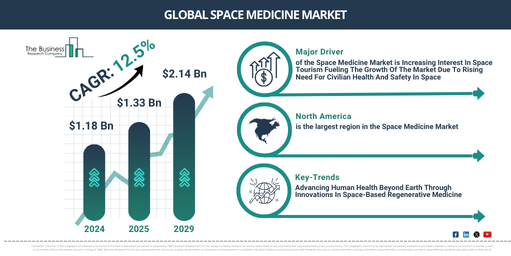
    What CAGR Is Anticipated for the Space Medicine Market Through 2029?

    The market size for space medicine has seen a rapid expansion in the recent past. The industry which was valued at $1.18 billion in 2024 is projected to reach $1.33 billion in 2025, growing at a compound annual growth rate (CAGR) of 12.9%. The growth during this period can be linked to factors such as heightened understanding of health risks associated with space, escalation in the training provided to spaceflight participants, an upsurge in government backing for health programs related to space, advancements in emergency medical response mechanisms for space, and a rise in activities related to space tourism.

    Anticipations suggest a swift expansion for the space medicine market over the coming years, with projections of it reaching $2.14 billion in 2029, and achieving a compound annual growth rate (CAGR) of 12.5%. The upswing anticipated during the forecast window is fueled by an increase in the span of space missions, a rise in commercial spaceflights, burgeoning astronaut health monitoring requirements, the essential need for psychological assistance in space, along with surged investments directed towards space healthcare infrastructure. Noteworthy trends for the projected phase include the introduction of wearable biometric monitoring devices, systems for telemedicine and remote surgery, 3D bioprinting meant for tissue renewal, compact tools for medical imaging, drug delivery systems adjusted for microgravity, as well as the use of virtual reality for addressing mental health needs.

    Download The Free Sample Report Here:

    https://www.thebusinessresearchcompany.com/sample.aspx?id=27422&type=smp

    What Market Forces Are Driving The Space Medicine Sector In 2025 And Beyond?

    The escalating fascination with cosmic tourism is forecasted to stimulate the expansion of the space medicine market. Cosmic tourism involves sending private citizens into space for pleasure, relaxation, or thrilling experiences, not for scientific or governmental objectives. The growing demand for space tourism is due to enhanced accessibility and affordability of commercial space voyages, courtesy of reusable launch innovations significantly decreasing space travel expenses. Space medicine augments space tourism by guaranteeing the welfare and protection of civilians in space through sophisticated health monitoring and preventive medical care. It minimizes health hazards by tackling obstacles related to space physiology, enhancing the overall journey for space tourists. For instance, a survey conducted in July 2023 by the U.S.-based Pew Research Center among 10,329 U.S. adults from May 30 to June 4, 2023, revealed that 55% of Americans anticipate that space tourism will become commonplace by 2073, and 35% have a personal interest in space exploration. As a result, the growing fascination with space tourism is contributing to the expansion of the space medicine market.

    How Is The Global Space Medicine Market Categorized By Segments?

    The space medicine market covered in this report is segmented

    1) By Type: Private Aerospace Service, Non-private Aerospace Service

    2) By Technology: Telemedicine Solutions, Artificial Intelligence And Machine Learning In Health Monitoring, Remote Diagnostics

    3) By Application: Oncology, Regeneration Medicine, Neurobiology, Microbiology

    4) By End-User: Commercial, Government, Military

    Subsegments:

    1) By Private Aerospace Service: Space Tourism Medical Support, In-Flight Health Monitoring Systems, Commercial Spaceflight Emergency Care, Private Astronaut Training And Health Programs, Telemedicine Solutions For Private Missions

    2) By Non-private Aerospace Service: Government-Funded Space Health Research, Astronaut Health Monitoring For National Missions, Military Space Medicine Programs, Space Agency Medical Facilities, Public-Sector Space Rehabilitation Programs

    What Long-Term Trends Are Likely To Affect The Space Medicine Market?

    Leading firms within the space medicine market are channeling their focus towards crafting innovative medical solutions such as space-based regenerative medicine. This specific medical advancement is targeted at boosting tissue repairs, stem cell functionality and overall human health during long-duration space trips. The concept of space-based regenerative medicine utilizes microgravity settings to magnify the effects of tissue repair, stem cell generation, and organ regrowth. For instance, in May 2025, Cedars-Sinai, a US-based health institution, inaugurated the Center for Space Medicine Research. The goal of this center is to propel studies on the behavior of human bodies and stem cells in outer space. In addition, they offer instructional courses in space biomedicine as part of their regenerative medicine training plan. This strategic move bridges the gap between space science and clinical research, with the ultimate goal of heightening astronaut healthcare while promoting medical discoveries that will be beneficial to individuals on Earth.

    Which Firms Are Considered Leaders In The Space Medicine Market Space?

    Major companies operating in the space medicine market are The Boeing Company, Lockheed Martin Corporation, Novartis AG, Collins Aerospace, KBR Inc., Boryung Corp., Sierra Space Corporation, Redwire Corporation, Axiom Space Inc., Varda Space Industries Inc., Nanoracks LLC , RevBio Inc. , StemoniX Inc. , SpacePharma SA, Angiex Inc., Vaxxinity Inc., rHEALTH Inc., Delta Biosciences LLC, Virgin Galactic Holdings Inc., Level Ex Inc.

    Get The Full Report Here:

    https://www.thebusinessresearchcompany.com/report/space-medicine-global-market-report

    What Role Do Regional Policies And Investments Play In Space Medicine Market Expansion?

    North America was the largest region in the space medicine market in 2024. Asia-Pacific is expected to be the fastest-growing region in the forecast period. The regions covered in the space medicine market report are Asia-Pacific, Western Europe, Eastern Europe, North America, South America, Middle East, Africa.

    Request For A Customized Report:

    https://www.thebusinessresearchcompany.com/customise?id=27422&type=smp

    About The Business Research Company:

    With over 15000+ reports from 27 industries covering 60+ geographies, The Business Research Company has built a reputation for offering comprehensive, data-rich research and insights. Armed with 1,500,000 datasets, the optimistic contribution of in-depth secondary research, and unique insights from industry leaders, you can get the information you need to stay ahead in the game.

    Get in touch with us:

    The Business Research Company: https://www.thebusinessresearchcompany.com/

    Americas +1 310-496-7795

    Asia +44 7882 955267 & +91 8897263534

    Europe +44 7882 955267

    Email us at info@tbrc.info

    Follow us on:

    LinkedIn: https://in.linkedin.com/company/the-business-research-company

    YouTube: https://www.youtube.com/channel/UC24_fI0rV8cR5DxlCpgmyFQ

    Global Market Model: https://www.thebusinessresearchcompany.com/global-market-model

  • In-Depth Somatic Genetic Testing Market Report: Business Trends, Growth Factors, and Forecast to 2029

    In-Depth Somatic Genetic Testing Market Report: Business Trends, Growth Factors, and Forecast to 2029

    Claim your 30% discount on Global Market Reports with code ONLINE30. Limited time only.

    Claim your 30% discount on Global Market Reports with code ONLINE30. Limited time only.

    What Are the Latest Market Insights for the Somatic Genetic Testing Industry?

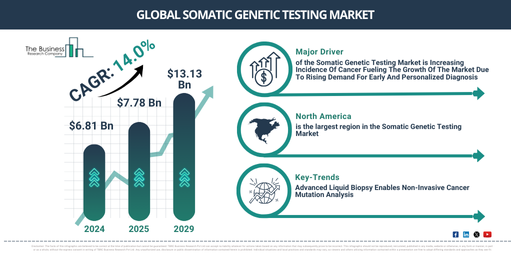
    In recent times, the somatic genetic testing market has witnessed a swift expansion. The market value will rise from $6.81 billion in 2024 to $7.78 billion in 2025, indicating a compound annual growth rate (CAGR) of 14.3%. Factors contributing to the growth during the historic period include rising awareness of genetic ailments, increase in cancer cases, widespread acceptance of genetic testing in medical clinics, improved healthcare infrastructure, and a surge in patients’ demand for tailored treatment.

    In the years to come, the somatic genetic testing market is projected to experience a swift growth, reaching a market size of $13.13 billion in 2029 with a compound annual growth rate (CAGR) of 14.0%. Factors contributing to this anticipated growth during the forecast period include an increased focus on early detection of diseases, a surge in collaborations between biotech and pharmaceutical firms, a rise in public-private partnerships, and enhanced accessibility of diagnostic tools. The predicted period will also see trends like advanced technology in sequencing, breakthroughs in bioinformatics and AI, investments in R&D, a surge in non-invasive test methods, and enhancements in next-generation sequencing platforms.

    Download The Free Sample Report Here:

    https://www.thebusinessresearchcompany.com/sample.aspx?id=27421&type=smp

    What Forces Are Driving The Growth Of The Somatic Genetic Testing Industry?

    The growth of the somatic genetic testing market is set to be spurred on by the rising prevalence of cancer. Cancer, a term for a collection of diseases defined by the unrestrained growth and proliferation of abnormal cells, is becoming more common due to lifestyle factors such as poor nutrition, smoking, lack of exercise, and excessive drinking. Somatic genetic testing plays a key role in diagnosing cancer by identifying unique genetic mutations in tumors, which allows for tailored treatment options. By employing innovative technology, this form of testing reduces the need for invasive procedures and enhances the precision of diagnoses and the quality of patient outcomes. For instance, data from the Australian Institute of Health and Welfare, a government body in Australia, noted that in July 2024, the number of diagnosed cancer cases in the country had risen to 160,570 in 2022, showing an increase of 3,789 cases from 156,781 the previous year. Given these circumstances, the escalating prevalence of cancer is fuelling the expansion of the somatic genetic testing market.

    What Is The Overview Of Market Segmentation In The Somatic Genetic Testing Industry?

    The somatic genetic testing market covered in this report is segmented

    1) By Type: Targeted Gene Panels, Whole Exome Sequencing, Whole Genome Sequencing, Carrier Screening, Other Testing Methods

    2) By Sample: Tissue-Based, Blood-Based, Bone Marrow Aspirates, Other Samples

    3) By Technology: Polymerase Chain Reaction (PCR), Next-Generation Sequencing (NGS), Microarray, Sanger Sequencing, Other Technologies

    4) By Application: Cancer Diagnosis, Cardiovascular Disorders, Neurological Disorders, Inherited Genetic Disorders, Other Applications

    5) By End-User: Hospitals, Clinical Laboratories, Research Institutes, At-Home Testing Providers, Other End-Users

    Subsegments:

    1) By Targeted Gene Panels: Oncology Panels, Neurology Panels, Cardiovascular Panels, Rare Disease Panels, Pharmacogenomics Panels

    2) By Whole Exome Sequencing: Diagnostic Whole Exome Sequencing, Clinical Research Whole Exome Sequencing, Population-Based Whole Exome Sequencing

    3) By Whole Genome Sequencing: Clinical Whole Genome Sequencing, Research Whole Genome Sequencing, De Novo Whole Genome Sequencing, Cancer Whole Genome Sequencing

    4) By Carrier Screening: Expanded Carrier Screening, Ethnicity-Based Carrier Screening, Universal Carrier Screening

    5) By Other Testing Methods: Copy Number Variation Testing, Mitochondrial Deoxyribonucleic Acid (DNA) Testing, Ribonucleic Acid (RNA) Sequencing, Epigenetic Testing

    What Future Market Trends Are Projected For The Somatic Genetic Testing Industry?

    Leading firms in the somatic genetic testing sector are concentrating on developing cutting-edge diagnostic tools, like liquid biopsy tests, to enhance precision, facilitate early detection, and minimize the necessity for invasive techniques. Liquid biopsy tests are non-invasive procedures that examine circulating tumor DNA (ctDNA) or other blood sample biomarkers to identify cancer-linked genetic alterations. For example, in September 2024, Strand Life Sciences, a genomics and bioinformatics firm based in India, introduced the Somatic Advantage 74 Liquid Biopsy (SA74 LB) test, a next-gen liquid biopsy test formulated to determine circulating tumor DNA (ctDNA) from blood specimens. The SA74-LB is a comprehensive next-gen sequencing (NGS)-based test designed to identify somatic mutations across 74 critical cancer-associated genes. This test contributes to personalized cancer therapy by pinpointing actionable mutations, tracking treatment results, and identifying minimal residual disease (MRD) without the requirement for traditional tissue biopsies. It fosters precision oncology, aiding in the direction of targeted therapies and monitoring disease progression or resistance in real-time.

    Who Are The Primary Players Operating Across The Global Somatic Genetic Testing Market?

    Major companies operating in the somatic genetic testing market are F. Hoffmann-La Roche Ltd., Thermo Fisher Scientific Inc., Laboratory Corporation of America Holdings, Quest Diagnostics Incorporated, Agilent Technologies Inc., Illumina Inc., QIAGEN N.V., Exact Sciences Corp., ARUP Laboratories Inc., Natera Inc., Myriad Genetics Inc., Fulgent Genetics Inc., Invitae Corporation, NeoGenomics Laboratories Inc., Guardant Health Inc., MedGenome Labs Ltd., Caris Life Sciences Inc., Oxford Nanopore Technologies Ltd., Pacific Biosciences of California Inc., Invivoscribe Inc., Centogene N.V., and Circulogene Theranostics LLC.

    Get The Full Report Here:

    https://www.thebusinessresearchcompany.com/report/somatic-genetic-testing-global-market-report

    Which Region Offers The Most Growth Potential For The Somatic Genetic Testing Market Through 2029?

    North America was the largest region in the somatic genetic testing market in 2024. Asia-Pacific is expected to be the fastest-growing region in the forecast period. The regions covered in the somatic genetic testing market report are Asia-Pacific, Western Europe, Eastern Europe, North America, South America, Middle East, Africa.

    Request For A Customized Report:

    https://www.thebusinessresearchcompany.com/customise?id=27421&type=smp

    About The Business Research Company:

    With over 15000+ reports from 27 industries covering 60+ geographies, The Business Research Company has built a reputation for offering comprehensive, data-rich research and insights. Armed with 1,500,000 datasets, the optimistic contribution of in-depth secondary research, and unique insights from industry leaders, you can get the information you need to stay ahead in the game.

    Get in touch with us:

    The Business Research Company: https://www.thebusinessresearchcompany.com/

    Americas +1 310-496-7795

    Asia +44 7882 955267 & +91 8897263534

    Europe +44 7882 955267

    Email us at info@tbrc.info

    Follow us on:

    LinkedIn: https://in.linkedin.com/company/the-business-research-company

    YouTube: https://www.youtube.com/channel/UC24_fI0rV8cR5DxlCpgmyFQ

    Global Market Model: https://www.thebusinessresearchcompany.com/global-market-model

  • Smart Wearable Snore Detector Industry Poised for Rapid Expansion, Projected to Hit $1.47 Billion by 2029

    Claim your 30% discount on Global Market Reports with code ONLINE30. Limited time only.

    Claim your 30% discount on Global Market Reports with code ONLINE30. Limited time only.

    What Are the Forecasted Growth Rate and Market Size of the Smart Wearable Snore Detector Market?

    Recently, the smart wearable snore detector market has seen significant growth and is projected to increase from a $0.82 billion value in 2024 to $0.93 billion in 2025, with a compound annual growth rate (CAGR) of 12.6%. This development in the historic era can be credited to factors such as elevated diagnosis rates, expansion in telemedicine services, a growing incidence of comorbidities, a rise in clinical trials, and multiplying regulatory approvals.

    In the coming years, the smart wearable snore detector market is anticipated to witness robust growth. It is projected to expand to $1.47 billion by 2029, at a compound annual growth rate (CAGR) of 12.2%. The surge in the speculated period can be linked to increasing consciousness about sleep health problems, a growing incidence of obstructive sleep apnea, escalating health care outlay, and an expanding middle-class populace. Key trends projected for the forecast period encompass technological innovation, incorporation with smartwatches, integration with mobile health interfaces, assimilation of wearable snore data, and advancement of AI models.

    Download The Free Sample Report Here:

    https://www.thebusinessresearchcompany.com/sample.aspx?id=27420&type=smp

    Which Factor Is Shaping The Future Of The Smart Wearable Snore Detector Market?

    The increasing understanding and acknowledgement of sleep-related health problems is anticipated to spur the expansion of the smart wearable snore detector market in the future. The term sleep health awareness is used to describe the growing societal understanding of the critical role that good, quality sleep plays in overall health, productivity, and disease prevention. This heightened understanding stems from the growing acknowledgment of the correlation between inadequate sleep and chronic ailments such as obesity, diabetes, and heart disease. Smart wearable anti-snoring devices aid in this growing awareness by providing immediate insights and data aiding in the early identification and treatment of potential sleep disorders. For example, the Sleep Foundation, a US-based entity committed to enhancing sleep health through research and evidence-based information, reported in December 2023 that approximately 37% of U.S. adults stated a decline in sleep quality in contrast to 28% from prior years. Hence, the escalating awareness of sleep health issues is driving the growth of the smart wearable snore detector market.

    What Is The Segment-Wise Breakdown Of The Smart Wearable Snore Detector Market?

    The smart wearable snore detector market covered in this report is segmented

    1) By Product Type: Wristband Snore Detectors, Patch Snore Detectors, Headband Snore Detectors, Other Products

    2) By Technology: Sound-Based, Vibration-Based, Motion Sensor-Based, Other Technologies

    3) By Distribution Channel: Online Stores, Pharmacies, Specialty Stores, Other Distribution Channels

    4) By Application: Home Care, Sleep Clinics, Hospitals, Other Applications

    Subsegments:

    1) By Wristband Snore Detectors: Vibration-Based Snore Alerts, Bluetooth-Enabled Wristbands, Sleep Tracking Integrated Wristbands, Adjustable Sensitivity Bands.

    2) By Patch Snore Detectors: Adhesive Chest Patches, Throat Vibration Patches, Multi-Sensor Sleep Patches, Disposable Snore Detection Patches

    3) By Headband Snore Detectors: Electroencephalogram-Based Headbands, Bone Conduction Feedback Headbands, Sleep Position Monitoring Headbands, Wireless Smart Headbands

    4) By Other Products: Smart Neckbands, In-Ear Snore Monitors, Jaw-Support Wearables, Smart Sleep Masks With Snore Detection

    Which Trends Are Redefining The Future Landscape Of The Smart Wearable Snore Detector Industry?

    Major players in the intelligent wearable snore detection market are concentrating their efforts on creating advanced technological products like AI-powered biofeedback wristbands. These products are aimed at monitoring snoring patterns, enhancing sleep quality and decreasing sleep-disorder related breathing incidents. AI-enhanced Biofeedback wristbands are intelligent wearables that utilize artificial intelligence to monitor bodily signals and provide subtle feedback, like vibrations, assisting users in modifying behaviours and mitigating issues such as snoring. A case in point, digital health firm based in Israel, AppYea Inc., in September 2024, introduced the AppySleep device, a superior AI-enabled wearable wristband created to mitigate snoring and observe sleep patterns. The device flawlessly integrates with a mobile app, registering snoring and abnormal breathing while the user sleeps. Upon detecting snoring, the wristband emits a gentle vibration, causing the user to change positions, typically encouraging side-sleeping to facilitate better airflow. The vibration settings can be adjusted according to individual requirements. Besides, the app supplies users with extensive sleep data, including snoring records, breathing routines, and progress charts. Furthermore, users gain access to a personal cloud account to track long-term advancements in sleep quality.

    Which Companies Hold The Largest Market Share In The Smart Wearable Snore Detector Sector?

    Major companies operating in the smart wearable snore detector market are Samsung Electronics Co. Ltd., Koninklijke Philips N.V., Fitbit Inc., Zeus Sleep Inc., Ozlo Inc., Hupnos Inc., Imagimob AB, VVFLY Electronics Co. Ltd., Meditas Ltd., AppYea Inc., Beddr Inc., Shenzhen Xinhui Technology Co. Ltd., Snore Circle, Wellue Health, Go2Silence, Sleepmi, Walkervo, Snooor Ltd., ELBME, AMAZHEAL.

    Get The Full Report Here:

    https://www.thebusinessresearchcompany.com/report/smart-wearable-snore-detector-global-market-report

    How Does Regional Performance Compare Across The Smart Wearable Snore Detector Industry?

    North America was the largest region in the smart wearable snore detector market in 2024. Asia-Pacific is expected to be the fastest-growing region in the forecast period. The regions covered in the smart wearable snore detector market report are Asia-Pacific, Western Europe, Eastern Europe, North America, South America, Middle East, Africa.

    Request For A Customized Report:

    https://www.thebusinessresearchcompany.com/customise?id=27420&type=smp

    About The Business Research Company:

    With over 15000+ reports from 27 industries covering 60+ geographies, The Business Research Company has built a reputation for offering comprehensive, data-rich research and insights. Armed with 1,500,000 datasets, the optimistic contribution of in-depth secondary research, and unique insights from industry leaders, you can get the information you need to stay ahead in the game.

    Get in touch with us:

    The Business Research Company: https://www.thebusinessresearchcompany.com/

    Americas +1 310-496-7795

    Asia +44 7882 955267 & +91 8897263534

    Europe +44 7882 955267

    Email us at info@tbrc.info

    Follow us on:

    LinkedIn: https://in.linkedin.com/company/the-business-research-company

    YouTube: https://www.youtube.com/channel/UC24_fI0rV8cR5DxlCpgmyFQ

    Global Market Model: https://www.thebusinessresearchcompany.com/global-market-model

  • Global Smart Wearable Kidney Monitor Market Forecast to Reach $2.10 Billion by 2029, Driven by 18.2% CAGR

    Global Smart Wearable Kidney Monitor Market Forecast to Reach $2.10 Billion by 2029, Driven by 18.2% CAGR

    Claim your 30% discount on Global Market Reports with code ONLINE30. Limited time only.

    Claim your 30% discount on Global Market Reports with code ONLINE30. Limited time only.

    What Is the Estimated Industry Valuation for the Smart Wearable Kidney Monitor Sector?

    The market for smart wearable kidney monitors has seen substantial growth in recent years. The market size is projected to expand from $0.91 billion in 2024 to $1.07 billion in 2025, reflecting a compound annual growth rate (CAGR) of 18.6%. Various factors are driving this robust growth during the said period. These include a rise in investments in digital health startups with a focus on nephrology, an increase in government initiatives, an uptick in clinical trials, expansion in home healthcare services, and proliferation in digital health startups.

    Over the coming years, the market size for smart wearable kidney monitors is predicted to experience a swift expansion, reaching $2.10 billion by 2029 with a compound annual growth rate (CAGR) of 18.2%. This impending growth during the forecast period can be credited to a surge in healthcare spending, an increasing incidence of chronic renal diseases, the expanded reach of e-commerce platforms, a rise in cases of diabetes and hypertension, and a boost in the frequency of kidney transplant operations. Upcoming trends for the forecast period involve collaborations with telemedicine, the incorporation of artificial intelligence, sensor miniaturization, and innovations in biosensor technology.

    Download The Free Sample Report Here:

    https://www.thebusinessresearchcompany.com/sample.aspx?id=27419&type=smp

    What Forces Are Driving The Growth Of The Smart Wearable Kidney Monitor Market?

    The rise in kidney transplant procedures is anticipated to boost the growth of the smart wearable kidney monitor market. Surgical procedures involving the transplantation of a healthy kidney from a donor into a patient suffering from kidney failure, known as kidney transplant procedures, have seen an increase with rising cases of chronic kidney disease (CKD) as more patients progress to end-stage renal failure, necessitating a transplant for survival. Wearable smart kidney monitors are valuable as they offer continuous, non-invasive monitoring of kidney function, helping in early detection of complications. They help tailor the treatment to individual needs and decrease the need for hospital visits, thus enhancing post-transplant results and patient ease. As per the U.S. Department of Health & Human Services, a government agency in the US, the number of kidney transplants rose to 27,759 in 2024, marking an increase of 1.6% compared to 2023. Hence, the mounting number of kidney transplant procedures is driving the growth of the smart wearable kidney monitor market.

    How Is The Smart Wearable Kidney Monitor Industry Segmented Across Key Parameters?

    The smart wearable kidney monitor market covered in this report is segmented

    1) By Product Type: Patch-Based Monitors, Wristband Monitors, Belt Monitors, Other Types

    2) By Distribution Channel: Online, Offline

    3) By Application: Chronic Kidney Disease Monitoring, Dialysis Monitoring, Post-Transplant Monitoring, Other Applications

    4) By End-User: Hospitals And Clinics, Home Care Settings, Ambulatory Surgical Centers, Other End-Users

    Subsegments:

    1) By Patch-Based Monitors: Electrolyte Monitoring Patches, Hydration Monitoring Patches, Uremic Toxin Monitoring Patches, Hemodynamic Monitoring Patches, Multi-Parameter Biomarker Monitoring Patches

    2) By Wristband Monitors: Potassium Monitoring Wristbands, Fluid Balance Tracking Wristbands, Blood Pressure Monitoring Wristbands, Heart Rate And Vital Sign Monitoring Wristbands, Smart Alert-Enabled Wristbands

    3) By Belt Monitors: Dialysate Flow Tracking Belts, Portable Hemodialysis Support Belts, Renal Function Monitoring Belts, Wireless Data-Transmission Belts

    4) By Other Types: Smart Clothing With Embedded Renal Sensors, Implantable Kidney Monitoring Devices, Clip-On Monitoring Modules, Wearable Artificial Kidney Devices, Sensor-Integrated Headbands Or Chest Straps

    What Notable Trends Are Shaping The Direction Of The Smart Wearable Kidney Monitor Market?

    Leading firms in the smart wearable kidney monitor market are putting emphasis on the creation of cutting-edge products like biowearable sensors. The main objective is to boost precision, enhance patient results, and facilitate real-time tracking of chronic kidney disease (CKD). Compact, non-intrusive devices, biowearable sensors consistently monitor vital biomarkers related to kidney function such as creatinine and urea levels, by analyzing sweat or interstitial fluid. Take the example of Metyos, a biowearable technology firm based in France, which introduced a biowearable sensor device in April 2024. This lightweight biosensor, worn on the wrist, monitors essential kidney biomarkers in real-time, providing continuous information to patients and healthcare providers for superior disease management. With the use of sophisticated nanotechnology and AI-derived analysis, the biowearable device can identify early indications of kidney dysfunction, minimizing frequent hospital visits and blood tests. Moreover, syncing with a mobile app enables the device to provide bespoke health insights and abnormal biomarker level warnings, leading to preemptive care and timely medical intervention.

    Which Companies Currently Dominate The Competitive Landscape In The Smart Wearable Kidney Monitor Industry?

    Major companies operating in the smart wearable kidney monitor market are Cardinal Peak Inc., KidneyX, Alio Inc., Nephria Bio Inc., Vivance Technologies Inc., GFR90 Inc., Kite Medical Ltd., Metyos SAS, Proton Intelligence Inc., Kalium Health Ltd., WearTech Applied Research Center.

    Get The Full Report Here:

    https://www.thebusinessresearchcompany.com/report/smart-wearable-kidney-monitor-global-market-report

    Which Geographic Regions Are Driving Demand In The Smart Wearable Kidney Monitor Market?

    North America was the largest region in the smart wearable kidney monitor market in 2024. Asia-Pacific is expected to be the fastest-growing region in the forecast period. The regions covered in the smart wearable kidney monitor market report are Asia-Pacific, Western Europe, Eastern Europe, North America, South America, Middle East, Africa.

    Request For A Customized Report:

    https://www.thebusinessresearchcompany.com/customise?id=27419&type=smp

    About The Business Research Company:

    With over 15000+ reports from 27 industries covering 60+ geographies, The Business Research Company has built a reputation for offering comprehensive, data-rich research and insights. Armed with 1,500,000 datasets, the optimistic contribution of in-depth secondary research, and unique insights from industry leaders, you can get the information you need to stay ahead in the game.

    Get in touch with us:

    The Business Research Company: https://www.thebusinessresearchcompany.com/

    Americas +1 310-496-7795

    Asia +44 7882 955267 & +91 8897263534

    Europe +44 7882 955267

    Email us at info@tbrc.info

    Follow us on:

    LinkedIn: https://in.linkedin.com/company/the-business-research-company

    YouTube: https://www.youtube.com/channel/UC24_fI0rV8cR5DxlCpgmyFQ

    Global Market Model: https://www.thebusinessresearchcompany.com/global-market-model