Month: September 2025

  • Emerging Trends and Growth Drivers in the Robot-Assisted Percutaneous Coronary Intervention (PCI) Market Through 2029

    Emerging Trends and Growth Drivers in the Robot-Assisted Percutaneous Coronary Intervention (PCI) Market Through 2029

    Claim your 30% discount on Global Market Reports with code ONLINE30. Limited time only.

    Claim your 30% discount on Global Market Reports with code ONLINE30. Limited time only.

    How Large Is the Robot-Assisted Percutaneous Coronary Intervention (PCI) Market Expected to Be in 2029?

    In recent times, the market size for robot-assisted percutaneous coronary intervention (PCI) has seen significant growth. The market, which stands at $19.59 billion in 2024, is projected to increase to a hefty $27.56 billion in 2025, representing a compound annual growth rate (CAGR) of 40.7%. Factors contributing to this historical growth include an increase in clinical trials validating robotic percutaneous coronary intervention, higher success rates of these procedures compared to traditional interventions, a surge in training programs for doctors on robotic systems, a rising patient preference for advanced treatment methods, and the increasing inclusion of reimbursement policies in more developed regions.

    The market for robot-assisted percutaneous coronary intervention (PCI) is forecasted to experience significant growth in the coming years, ballooning to a value of $106.86 billion by 2029, with a compound annual growth rate (CAGR) of 40.3%. This projected growth during the forecast period is due to several factors, including the increasing use of 5G technology and remote operations capabilities in real-time, the expansion of robotic PCI systems in ambulatory surgical centers, the focus on minimizing the hospital stay following PCI, a heightened interest from venture capitalists in robotic cardiology startups, and the elevated use of machine learning in procedural planning and guidance. Future trends anticipated in the forecast period include the progression of cloud-based robotic PCI platforms for immediate data sharing, improved cybersecurity measures for the safeguarding of robot-assisted procedural data, the creation of robotic systems designed specifically for outpatient cardiac care, advancements in AI-driven robotic learning using procedural datasets, and the development of miniaturized robotic instruments for highly accurate coronary navigation.

    Download The Free Sample Report Here:

    https://www.thebusinessresearchcompany.com/sample.aspx?id=27408&type=smp

    What Are The Contributors To Demand In The Robot-Assisted Percutaneous Coronary Intervention (PCI) Market?

    The surge in cardiovascular ailments is likely to stimulate the expansion of the market for robot-assisted percutaneous coronary intervention (PCI). These diseases encompass various disorders afflicting the heart and blood vessels such as coronary artery disease, stroke, and heart attacks. Sedentary lifestyles are causing an increase in these diseases, leading to issues like obesity, hypertension and poor cardiac health. The robot-assisted percutaneous coronary intervention (PCI) addresses these ailments by adeptly unblocking or dilating constricted coronary arteries, thereby restoring heart’s blood supply while minimizing procedure-associated risks and exposure to radiation, thus improving patient outcomes. As an illustration, data from the American Heart Association, a nonprofit based out of the US, points out that there were 131,454 deaths primarily due to high blood pressure in January 2024, which marks an upturn from the 124,508 deaths recorded in 2021. Consequently, the escalating incidence of cardiovascular diseases is propelling the expansion of the robot-assisted percutaneous coronary intervention (PCI) market.

    What Segmentation Categories Are Included In The Robot-Assisted Percutaneous Coronary Intervention (PCI) Market Analysis?

    The robot-assisted percutaneous coronary intervention (PCI) market covered in this report is segmented

    1) By Component: Robotic Systems, Catheters And Guidewires, Control Consoles

    2) By Application: Coronary Angioplasty, Stent Placement, Thrombectomy

    3) By End-User: Hospitals, Cardiac Catheterization Laboratories, Ambulatory Surgical Centers, Other End-Users

    Subsegments:

    1) By Robotic Systems: Electromechanical Robotic Arms, Imaging Integration Units, Robotic Drive Systems

    2) By Catheters And Guidewires: Coronary Guidewires, Balloon Catheters, Drug-Eluting Catheters

    3) By Control Consoles: Touchscreen Interfaces, Joystick Controllers, Imaging Display Panels

    What Upcoming Trends Are Expected To Impact The Robot-Assisted Percutaneous Coronary Intervention (PCI) Market Globally?

    Leading businesses in the robot-assisted percutaneous coronary intervention (PCI) market are concentrating on the creation of state-of-the-art robotic cardiology systems, aimed at enhancing patient safety and making complicated coronary procedures more manageable. Robotic cardiology platforms, equipped with high-tech features, assist healthcare professionals in executing precise, controlled coronary interventions. Such platforms help enhance precision, minimize human errors, and reduce radiation exposure to both patients and the medical workforce. For instance, in May 2023, Robocath SAS, a French company known for its expertise in robotic vascular intervention solutions, unveiled the R-One+. This groundbreaking robotic technology empowers interventional cardiologists to carry out coronary angioplasties (percutaneous coronary intervention, or PCI) by controlling the devices via a centralized command unit situated either in the cath lab or control room. The R-One+ boosts the accuracy of device manoeuvres, enhances safety through reduced radiation exposure for patients and medical specialists, and offers more conducive working conditions for operators. Debuted at the EuroPCR conference in Paris, the revolutionary platform showcased never-before-seen capabilities that simplify PCI procedures, and safeguard the cardiac team from injuries due to radiation. This technological advancement exhibits Robocath’s dedication to enhance the treatment of cardiovascular illnesses via intelligent robotic backing.

    Who Are The Top-Ranked Companies In The Robot-Assisted Percutaneous Coronary Intervention (PCI) Market Today?

    Major companies operating in the robot-assisted percutaneous coronary intervention (pci) market are Medtronic plc, Siemens Healthineers AG, Stryker Corporation, Boston Scientific Corporation, Intuitive Surgical, BIOTRONIK SE & Co. KG, MicroPort Scientific Corporation, Biosensors International Group Ltd., OrbusNeich Medical Group Holdings Limited, Medical Microinstruments, Quantum Surgical, Stereotaxis Inc., THINK Surgical Inc., Perfint Healthcare, Robocath Inc., SS Innovations, Auris Health, EP Solutions SA, NDR Medical Technology, Meril Life Sciences Pvt. Ltd.

    Get The Full Report Here:

    https://www.thebusinessresearchcompany.com/report/robot-assisted-percutaneous-coronary-intervention-pci-global-market-report

    How Is Robot-Assisted Percutaneous Coronary Intervention (PCI) Market Adoption Varying Across Different Regions And Sectors?

    North America was the largest region in the robot-assisted percutaneous coronary intervention (PCI) market in 2024. Asia-Pacific is expected to be the fastest-growing region in the forecast period. The regions covered in the robot-assisted percutaneous coronary intervention (PCI) market report are Asia-Pacific, Western Europe, Eastern Europe, North America, South America, Middle East, Africa.

    Request For A Customized Report:

    https://www.thebusinessresearchcompany.com/customise?id=27408&type=smp

    About The Business Research Company:

    With over 15000+ reports from 27 industries covering 60+ geographies, The Business Research Company has built a reputation for offering comprehensive, data-rich research and insights. Armed with 1,500,000 datasets, the optimistic contribution of in-depth secondary research, and unique insights from industry leaders, you can get the information you need to stay ahead in the game.

    Get in touch with us:

    The Business Research Company: https://www.thebusinessresearchcompany.com/

    Americas +1 310-496-7795

    Asia +44 7882 955267 & +91 8897263534

    Europe +44 7882 955267

    Email us at info@tbrc.info

    Follow us on:

    LinkedIn: https://in.linkedin.com/company/the-business-research-company

    YouTube: https://www.youtube.com/channel/UC24_fI0rV8cR5DxlCpgmyFQ

    Global Market Model: https://www.thebusinessresearchcompany.com/global-market-model

  • CAGR of 8.6% Projected for Ribonucleic Acid (RNA) Editing Market From 2025 to 2029

    CAGR of 8.6% Projected for Ribonucleic Acid (RNA) Editing Market From 2025 to 2029

    Claim your 30% discount on Global Market Reports with code ONLINE30. Limited time only.

    Claim your 30% discount on Global Market Reports with code ONLINE30. Limited time only.

    What Is the Outlook for the Ribonucleic Acid (RNA) Editing Market Heading Into 2029?

    The ribonucleic acid (RNA) editing industry has seen significant expansion recently, with projections showing an increase from $16.10 billion in 2024 to $17.55 billion in 2025 – a compound growth rate (CAGR) of 9.0%. This uptrend during the historic period is due to a rise in interest in transient and reversible editing techniques, greater utilization in neurodegenerative disease studies, increasing incidence of rare and orphan illnesses, heightened focus on synthetic biology and bioengineering, along with enhanced academic and translational research efforts.

    Forecasting robust expansion in the coming years, the ribonucleic acid (RNA) editing market is set to reach $24.42 billion by 2029, with a compound annual growth rate (CAGR) of 8.6%. The market’s expansion during this period is likely to be driven by factors such as a growing prevalence of genetic disorders, an increased emphasis on personalized medicine, a surge in cancer treatment applications, improvements in delivery system technology, and escalating support from government and regulatory bodies. Some significant trends contributing to this projection include technological enhancements in RNA editing platforms, evolution in in vivo delivery technologies, advancement in sequencing and transcriptomics, progression in transient gene modulation methods, and the emergence of synthetic biology applications.

    Download The Free Sample Report Here:

    https://www.thebusinessresearchcompany.com/sample.aspx?id=27407&type=smp

    Which Factors Are Pushing The Ribonucleic Acid (RNA) Editing Market Forward?

    The growing prevalence of genetic disorders is set to drive the expansion of the ribonucleic acid (RNA) editing market. These disorders, stemming from alterations or mutations in genetic material either passed down from parents or emerging spontaneously, are on the rise, largely due to increased parental age. Older parents are more likely to pass on chromosomal irregularities. The RNA editing process can address these disorders by rectifying mutations at the RNA level. This allows cells to generate operational proteins without modifying the DNA underneath. As an example, in May 2024, the Centers for Disease Control and Prevention (CDC), a public health agency in the United States, revealed that around 100,000 people in the country suffer from sickle cell disease (SCD). As such, the increase in genetic disorders is fuelling the ribonucleic acid (RNA) editing market’s growth.

    Which Segment Held The Largest Share In The Ribonucleic Acid (RNA) Editing Market In 2025?

    The ribonucleic acid (RNA) editing market covered in this report is segmented

    1) By Type: Messenger Ribonucleic Acid (RNA) Modification, Transfer Ribonucleic Acid (RNA) Modification, Ribosomal Ribonucleic Acid (RNA) Modification

    2) By Technique: Insertion Or Deletion, Deamination

    3) By Application: Cancer, Genetic Disorders, Temporary Maladies

    Subsegments:

    1) By Messenger Ribonucleic Acid (MRNA) Modification: Base Editing, Adenosine Deaminase Acting On Ribonucleic Acid (RNA)-Mediated Editing, Site-Directed Ribonucleic Acid(RNA) Editing

    2) By Transfer Ribonucleic Acid (TRNA) Modification: Pseudouridylation, Transfer Ribonucleic Acid Splicing, Inosine Modification

    3) By Ribosomal Ribonucleic Acid (Rrna) Modification: Pseudouridylation, Ribosomal Ribonucleic Acid (RNA) Maturation Pathway Modulation, Site-Specific Ribosomal Ribonucleic Acid (RNA) Editing

    How Are Key Trends Driving Expansion In The Ribonucleic Acid (RNA) Editing Industry?

    The focus is on novel methodologies such as in vivo gene editing by key players in the ribonucleic acid (RNA) editing market, which allows for precise and effective remediation of disease-causing genetic alterations within living beings. In vivo gene editing is a cutting-edge technique that corrects genetic deformities or alters gene activity directly within an organism’s cells for therapeutic purposes. To illustrate, the Rett Syndrome Research Trust, an American non-profit organization, initiated the MECP2 Editing Consortium in April 2024 to expedite gene editing treatments for Rett syndrome. Six premier laboratories collaborate through this initiative to develop DNA and RNA editing therapies aimed at tackling the genetic roots of Rett syndrome, with the aim of hastening their progress towards clinical trials. This joint endeavor encourages swift advancement by harnessing collective expertise to provide accurate and potentially healing answers for this severe neurological disease.

    Which Organizations Are Driving Progress In The Ribonucleic Acid (RNA) Editing Industry?

    Major companies operating in the ribonucleic acid (RNA) editing market are Moderna Inc., Arcturus Therapeutics Holdings Inc., CureVac AG, Beam Therapeutics Inc., EdiGene Inc., Ethris GmbH, Deep Genomics Incorporated, ProQR Therapeutics NV, ReCode Therapeutics, Capstan Therapeutics Inc., TriLink BioTechnologies, ADARx Pharmaceuticals Inc., Storm Therapeutics Limited, Ascidian Therapeutics Inc., Rznomics Inc., Airna Biotech S.L., hC Bioscience Inc., Korro Bio Inc., Shape TX, and Turn Biotechnologies.

    Get The Full Report Here:

    https://www.thebusinessresearchcompany.com/report/ribonucleic-acid-rna-editing-global-market-report

    Which Region Is Expected To Experience The Highest Growth In The Ribonucleic Acid (RNA) Editing Industry?

    North America was the largest region in the ribonucleic acid (RNA) editing market in 2024. Asia-Pacific is expected to be the fastest-growing region in the forecast period. The regions covered in the ribonucleic acid (RNA) editing market report are Asia-Pacific, Western Europe, Eastern Europe, North America, South America, Middle East, Africa.

    Request For A Customized Report:

    https://www.thebusinessresearchcompany.com/customise?id=27407&type=smp

    About The Business Research Company:

    With over 15000+ reports from 27 industries covering 60+ geographies, The Business Research Company has built a reputation for offering comprehensive, data-rich research and insights. Armed with 1,500,000 datasets, the optimistic contribution of in-depth secondary research, and unique insights from industry leaders, you can get the information you need to stay ahead in the game.

    Get in touch with us:

    The Business Research Company: https://www.thebusinessresearchcompany.com/

    Americas +1 310-496-7795

    Asia +44 7882 955267 & +91 8897263534

    Europe +44 7882 955267

    Email us at info@tbrc.info

    Follow us on:

    LinkedIn: https://in.linkedin.com/company/the-business-research-company

    YouTube: https://www.youtube.com/channel/UC24_fI0rV8cR5DxlCpgmyFQ

    Global Market Model: https://www.thebusinessresearchcompany.com/global-market-model

  • Industry Forecast: Reprocessed Medical Devices Market to Generate $5.86 Billion Revenue by 2029

    Industry Forecast: Reprocessed Medical Devices Market to Generate $5.86 Billion Revenue by 2029

    Claim your 30% discount on Global Market Reports with code ONLINE30. Limited time only.

    Claim your 30% discount on Global Market Reports with code ONLINE30. Limited time only.

    What Does the Forecast Indicate for the Reprocessed Medical Devices Market From 2025 to 2029?

    Over the past few years, the market size for reprocessed medical devices has seen exponential growth. The market, which is predicted to rise from $3.22 billion in 2024 to $3.64 billion in 2025, will witness a Compound Annual Growth Rate (CAGR) of 13.0%. Factors such as escalated healthcare expenses, burgeoning environmental concerns, the escalating prevalence of chronic illnesses, the rising acceptance of minimally invasive processes, and heightened awareness about waste reduction have all contributed to the robust growth experienced in the historic period.

    In the upcoming years, a swift expansion is projected for the reprocessed medical devices market, estimated to reach a size of $5.86 billion in 2029, growing at a compound annual growth rate (CAGR) of 12.7%. The expected growth within this period can be linked to the heightened attention on the healthcare sector’s circular economy, increasing emphasis on patient safety and quality guarantee, expansion of hospital budgets dedicated to sustainability initiatives, collaboration growth between hospitals and reprocessing firms, and the intensifying pressure from healthcare payers to reduce costs. Developing sterilization technologies, enhancements in cleaning and decontamination methods, data analytics integration for quality assurance, advancements in material science technology, and improvements in automated reprocessing equipment technology are some of the major trends to watch during this forecast period.

    Download The Free Sample Report Here:

    https://www.thebusinessresearchcompany.com/sample.aspx?id=27406&type=smp

    What Elements Are Contributing To Growth In The Reprocessed Medical Devices Market?

    The reprocessed medical devices market’s projected growth is largely attributed to the increase in surgical procedures. These procedures, which can either be manual or instrumental, are performed by surgeons to diagnose, treat or prevent a myriad of health conditions and diseases. The surge in surgical procedures is a result of the advancements in medical technology that have made surgeries more effective, safer, and less invasive. This has led to higher patient demand and broader applications for surgery. Reprocessed medical devices act as a cost-effective solution for surgical procedures by providing a consistent supply of sterilized instruments for continuous safe use. As an illustration, data from the International Society of Aesthetic Plastic Surgery (ISAPS), a US-based organization for board-certified aesthetic plastic surgeons, disclosed that in June 2024, liposuction surpassed breast augmentation, becoming the top surgical procedure among women, with an impressive 1.8 million procedures – marking a 29% increase from 2021. This rise in surgical procedures thereby pushes the growth of the reprocessed medical devices market.

    Which Segments Are Detailed In The Global Reprocessed Medical Devices Market Report?

    The reprocessed medical devices market covered in this report is segmented

    1) By Type: Third-Party Reprocessing, In-House Reprocessing

    2) By Device Type: Electrophysiology Devices, Surgical Instruments, Catheters, Endoscopes, Implants, Dialysis Devices

    3) By Material: Metal, Plastic, Silicone, Rubber, Composite Materials

    4) By Application: Cardiology, Orthopedics, Gastroenterology, Urology, Neurology, Oncology

    5) By End User: Hospitals, Clinics, Ambulatory Surgical Centers, Community Healthcare, Diagnostic Laboratories, Other End Users

    Subsegments:

    1) By Third-Party Reprocessing: Cardiovascular Devices, Gastroenterology Devices, Laparoscopic Devices, Orthopedic Devices, General Surgery Devices, Other Devices

    2) By In-House Reprocessing: Surgical Instruments, Respiratory Devices, Endoscopy Devices, Ultrasound Probes, Other Devices

    Which Emerging Trends And Strategic Shifts Are Shaping The Reprocessed Medical Devices Market?

    Prominent firms in the reprocessed medical devices market are prioritizing the expansion of facilities such as the circular business model to diminish environmental harm, cut expenses, and foster eco-friendly healthcare procedures. The circular business model advocates a green strategy centred on reutilising, refurbishing, and repurposing products and materials, thereby promoting product longevity and waste reduction. For example, Arjo, an established medical technology firm based in Sweden, launched an upgraded facility dedicated to reprocessing medical devices in August 2024. This new facility is 50% larger than its predecessor and is engineered for greater efficiency to cater to escalating customer needs. The move further solidifies Arjo’s dedication towards ecological preservation through its commitment to its circular business model, embodied by its Arjo ReNu initiative. The facility is equipped with cutting-edge automated cleaning, disinfection, and testing systems to guarantee the adherence of medical beds, patient lifts, slings, and sanitation systems to rigorous safety and quality prerequisites prior to re-usage. The additional area provided promotes Arjo’s environmental objectives by decreasing water and energy usage, facilitating circular healthcare practices, prolonging device longevity, and minimizing medical debris.

    Who Are The Key Contributors To Growth In The Reprocessed Medical Devices Market?

    Major companies operating in the reprocessed medical devices market are Cardinal Health Inc., Johnson & Johnson, Siemens AG, 3M Company, Medline Industries, LP, Fresenius SE & Co. KGaA, Stryker Corporation, GE HealthCare Technologies Inc., Olympus Corporation, Getinge AB, Arjo AB, Vanguard AG, Nanosonics Limited, Steripro Canada Inc., Integrity Medical Systems Inc., Innovative Health Inc., Medicon eG, NEScientific Inc., SureTek Medical, and Vitruvia Medical AG.

    Get The Full Report Here:

    https://www.thebusinessresearchcompany.com/report/reprocessed-medical-devices-global-market-report

    Which Region Is Projected To Lead The Reprocessed Medical Devices Market By 2025?

    North America was the largest region in the reprocessed medical devices market in 2024. Asia-Pacific is expected to be the fastest-growing region in the forecast period. The regions covered in the reprocessed medical devices market report are Asia-Pacific, Western Europe, Eastern Europe, North America, South America, Middle East, Africa.

    Request For A Customized Report:

    https://www.thebusinessresearchcompany.com/customise?id=27406&type=smp

    About The Business Research Company:

    With over 15000+ reports from 27 industries covering 60+ geographies, The Business Research Company has built a reputation for offering comprehensive, data-rich research and insights. Armed with 1,500,000 datasets, the optimistic contribution of in-depth secondary research, and unique insights from industry leaders, you can get the information you need to stay ahead in the game.

    Get in touch with us:

    The Business Research Company: https://www.thebusinessresearchcompany.com/

    Americas +1 310-496-7795

    Asia +44 7882 955267 & +91 8897263534

    Europe +44 7882 955267

    Email us at info@tbrc.info

    Follow us on:

    LinkedIn: https://in.linkedin.com/company/the-business-research-company

    YouTube: https://www.youtube.com/channel/UC24_fI0rV8cR5DxlCpgmyFQ

    Global Market Model: https://www.thebusinessresearchcompany.com/global-market-model
  • Regenerative Aesthetics Market Revenue Outlook: Strategic Insights and Forecast to 2029

    Regenerative Aesthetics Market Revenue Outlook: Strategic Insights and Forecast to 2029

    Claim your 30% discount on Global Market Reports with code ONLINE30. Limited time only.

    Claim your 30% discount on Global Market Reports with code ONLINE30. Limited time only.

    How Much Is the Global Regenerative Aesthetics Market Valued at Present and by 2029?

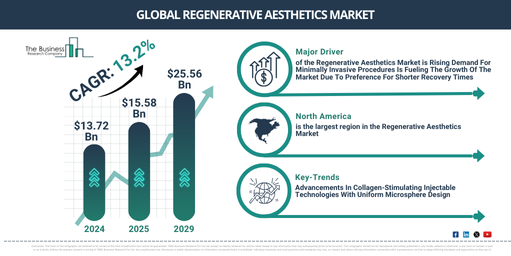
    The market size of regenerative aesthetics has seen drastic growth in the past few years. Estimated to increase from a $13.72 billion market in 2024 to $15.58 billion market in 2025, it is predicted to experience a compound annual growth rate (CAGR) of 13.5%. Factors contributing to this growth throughout the historical period include an increased demand for natural-looking results, heightened awareness of anti-aging solutions, a rising preference for less invasive procedures, growth in the adoption of stem-cell based therapies, and an uptick in disposable income and expenditure on beauty.

    The market for regenerative aesthetics is predicted to expand significantly in the upcoming years, with projections estimating it to reach a value of $25.56 billion by 2029, with a compound annual growth rate (CAGR) of 13.2%. This projected acceleration during the forecast period can be traced back to the increasing adoption of biological and autologous treatments, the rise in clinical trials and research focused on aesthetic regeneration, a growing elderly population looking to maintain a youthful appearance, the expansion of medical tourism for regenerative aesthetic procedures, and the progressively more prevalent use of artificial intelligence (AI) and imaging in aesthetic planning. Key trends expected to emerge during the forecast period are cell therapies enhanced by technology, advancements in exosome delivery systems fueled by technology, progress in bioprinting technology, the development of personalized aesthetic protocols, and the integration of AI for forecasting aesthetic results.

    Download The Free Sample Report Here:

    https://www.thebusinessresearchcompany.com/sample.aspx?id=27405&type=smp

    #What Drivers Are Influencing Growth In The Regenerative Aesthetics Market?

    The regenerative aesthetics market is set to witness significant growth due to the increasing demand for minimally invasive procedures. Such procedures are carried out through small incisions or natural body passages, as opposed to extensive cuts, owing to a preference for quicker recovery periods that enable people to return to their everyday activities swiftly. Regenerative aesthetics aid in enhancing minimally invasive procedures by employing the body’s innate healing capabilities to offer lasting results with negligible downtime. For example, in June 2024, the American Society of Plastic Surgeons, a non-profit organization based in the US, reported that the number of procedures involving hyaluronic acid filler, a minimally invasive technique, reached 5.29 million in 2023, reflecting an 8% hike from 2022. Consequently, the growing requirement for minimally invasive procedures is fueling expansion in the regenerative aesthetics market.

    What Are The Main Segments Identified In The Regenerative Aesthetics Market Research?

    The regenerative aesthetics market covered in this report is segmented

    1) By Product Type: Exosome-Based Therapies, Other Product Types

    2) By Application: Skin Rejuvenation, Hair Restoration, Scar Reduction And Wound Healing, Anti-Inflammatory Treatments, Combination Therapies

    3) By End-User: Aesthetic Clinics, Dermatology Clinics, Home Use

    Subsegments:

    1) By Exosome-Based Therapies: Stem Cell Derived Exosomes, Platelet Derived Exosomes, Plant Derived Exosomes

    2) By Other Product Types: Platelet Rich Plasma, Autologous Conditioned Serum, Peptide Based Products, Growth Factor Enriched Formulations

    What Are The Leading Trends And Opportunities In The Regenerative Aesthetics Sector?

    Leading entities in the regenerative aesthetics field are prioritizing the development of groundbreaking technologies, such as uniform microsphere technology. This approach aims to yield superior collagen-stimulating injectables which assure a smoother application process, exact treatment, and dependable outcomes. Uniform microsphere technology is a formulation structure that results in uniformly sized and shaped microspheres – this ensures a smooth injecting process, precise positioning, and consistent therapeutic effects. For example, Koru Pharma Co. Ltd, a biopharmaceutical entity based in South Korea, came up with a cutting-edge product called Reversal Neo in July 2025. This next-era collagen-stimulating injectable consists of high-grade Poly-L-Lactic Acid (PLLA) and is crafted to enable a smoother injection process, increased accuracy, and durable, natural-looking aesthetic outcomes. Reversal Neo presents a state-of-the-art collagen biostimulator filled with 200 mg of high-grade Poly-L-Lactic Acid (PLLA) and uniform microsphere structure, allowing for smoother and highly precise injections. Its pioneering formulation supports continued collagen regrowth, leading to natural-looking, long-standing results. The product also assures excellent biocompatibility, reduced inflammation, and improved patient comfort.

    Which Companies Play A Key Role In The Development Of The Regenerative Aesthetics Market?

    Major companies operating in the regenerative aesthetics market are AbbVie Inc., Huadong Medical Company Ltd., Galderma SA, Rohto Pharmaceutical Co. Ltd., Daewoong Pharmaceutical Co. Ltd., BTL Industries Inc., Cutera Inc., Medytox Korea Co. Ltd., ABG Lab LLC, Koru Pharma Co. Ltd., Global Stem Cells Group, Cytori Therapeutics Inc., Aesthetic Regenerative Therapies Inc., EmCyte Corp., Geneo, Plasmolifting World GmbH, ReGen Lab, RepliCel Life Sciences Inc., Theraderm Clinical Skin Care, and NuEra Medical Inc.

    Get The Full Report Here:

    https://www.thebusinessresearchcompany.com/report/regenerative-aesthetics-global-market-report

    What Are The Key Regional Developments Shaping The Regenerative Aesthetics Market?

    North America was the largest region in the regenerative aesthetics market in 2024. Asia-Pacific is expected to be the fastest-growing region in the forecast period. The regions covered in the regenerative aesthetics market report are Asia-Pacific, Western Europe, Eastern Europe, North America, South America, Middle East, Africa.

    Request For A Customized Report:

    https://www.thebusinessresearchcompany.com/customise?id=27405&type=smp

    About The Business Research Company:

    With over 15000+ reports from 27 industries covering 60+ geographies, The Business Research Company has built a reputation for offering comprehensive, data-rich research and insights. Armed with 1,500,000 datasets, the optimistic contribution of in-depth secondary research, and unique insights from industry leaders, you can get the information you need to stay ahead in the game.

    Get in touch with us:

    The Business Research Company: https://www.thebusinessresearchcompany.com/

    Americas +1 310-496-7795

    Asia +44 7882 955267 & +91 8897263534

    Europe +44 7882 955267

    Email us at info@tbrc.info

    Follow us on:

    LinkedIn: https://in.linkedin.com/company/the-business-research-company

    YouTube: https://www.youtube.com/channel/UC24_fI0rV8cR5DxlCpgmyFQ

    Global Market Model: https://www.thebusinessresearchcompany.com/global-market-model

  • Future Projections: Rare Disease Genetic Testing Market to Reach $1.93 Billion by 2029 at 13.3% CAGR

    Future Projections: Rare Disease Genetic Testing Market to Reach $1.93 Billion by 2029 at 13.3% CAGR

    Claim your 30% discount on Global Market Reports with code ONLINE30. Limited time only.

    Claim your 30% discount on Global Market Reports with code ONLINE30. Limited time only.

    What Is the Current and Projected Market Size of the Rare Disease Genetic Testing Industry?

    The market size of genetic testing for rare diseases has seen swift expansion in the past few years. Projected growth points towards a rise from $1.03 billion in 2024 to $1.17 billion in 2025, with a compound annual growth rate (CAGR) of 13.6%. Factors contributing to this increase during the historical period include growing consciousness about rare genetic diseases, an escalating demand for timely and precise diagnosis, growth in governmental funding for researching rare ailments, expanded access to genetic testing services, an upsurge in investments in precision medicine, and a surge in the prevalence of uncommon genetic conditions.

    In the coming years, the market size for genetic testing for rare diseases is predicted to experience substantial growth, reaching $1.93 billion by 2029 with a compound annual growth rate (CAGR) of 13.3%. This growth in the projected timeline is credited to the rising implementation of next-generation sequencing, heightened focus on tailored medical treatments, increased funding for genetic research, improved healthcare facilities in developing markets, a growing prevalence of diagnostic testing, an upsurge in genetic cancer screening, and the burgeoning demand for non-invasive diagnostic procedures. Key trends during this projection period will include advancements in genome editing technology, sophisticated bioinformatics tools for the analysis of genetic data, progress in multi-gene panel tests, developments in portable genetic testing equipment, and novel techniques for sample collection.

    Download The Free Sample Report Here:

    https://www.thebusinessresearchcompany.com/sample.aspx?id=27404&type=smp

    #Which Factors Are Currently Driving The Growth Of The Rare Disease Genetic Testing Market?

    The rise in genetic disorders is anticipated to fuel the expansion of the rare disease genetic testing market in the future. Genetic disorders are medical conditions that result from abnormalities in a person’s DNA, which can be inherited from both or one parent, or due to new mutations. The upswing in genetic disorders can be linked to an increase in parental age, since older parents are more likely to pass on genetic mutations to their offspring. Rare disease genetic testing aids in identifying these specific mutations, facilitating the accurate and early diagnosis of genetic disorders. It allows for tailored treatments, thereby improving patient care and long-term health outcomes. As per the data shared by the National Health Service, a government department based in the UK, in May 2024, about 17,000 people are living with sickle cell disease, a hereditary genetic blood disorder with approximately 250 new cases diagnosed each year. Hence, the burgeoning genetic disorders are steering the growth of the rare disease genetic testing market.

    How Is The Global Rare Disease Genetic Testing Market Structured In Terms Of Segments?

    The rare disease genetic testing market covered in this report is segmented

    1) By Disease Type: Immunological Disorders, Cardiovascular Disorders, Neurological Disease, Endocrine And Metabolism Disorders Diseases, Hematological Diseases, Dermatological Disease, Other Disease Types

    2) By Technology: Next-Generation Sequencing, Sanger Sequencing, Polymerase Chain Reaction Based Testing, Array Based Testing, Fluorescence In Situ Hybridization, Other Technologies

    3) By Specialty: Molecular Genetic Tests, Chromosomal Genetic Tests, Biochemical Genetic Tests

    4) By End-User: Hospitals And Clinics, Research Laboratories And Contract Research Organizations, Diagnostic Laboratories, Other End Users

    Subsegments:

    1) By Immunological Disorders: Autoimmune Disorders, Allergic Conditions, Primary Immunodeficiency Disorders, Inflammatory Disorders

    2) By Cardiovascular Disorders: Congenital Heart Defects, Cardiomyopathies, Aortic Aneurysms, Pulmonary Hypertension

    3) By Neurological Disease: Neurodegenerative Disorders, Neuromuscular Disorders, Epileptic Syndromes, Movement Disorders

    4) By Endocrine And Metabolism Disorders Diseases: Inherited Metabolic Disorders, Thyroid Disorders, Adrenal Disorders, Diabetes Related Genetic Conditions

    5) By Hematological Diseases: Hemophilia, Thalassemia, Sickle Cell Disease, Clotting Disorders

    6) By Dermatological Disease: Genetic Skin Disorders, Connective Tissue Disorders, Pigmentary Disorders, Keratinization Disorders

    7) By Other Disease Types: Skeletal Dysplasia, Renal Genetic Disorders, Ophthalmic Genetic Conditions, Gastrointestinal Genetic Conditions

    What Trends Are Currently Influencing Growth In The Rare Disease Genetic Testing Market?

    The focus of key players in the rare disease genetic testing market has been on creating superior tech-powered solutions such as digital genomics platforms. These platforms aim to increase the efficiency, reliability and scalability of diagnosing rare diseases. Digital genomics platforms are technologically advanced software systems that combine genomic data analysis, insight, and reporting to simplify and hasten the process of genetic testing and diagnosis. Strand Life Sciences Private Limited, headquartered in India and specializing in computer software, for example, initiated their digital platform StrandOmics Portal in March 2025. This platform is designed to improve efficiency and precision in rare disease diagnosis by providing clinicians with comprehensive insights into genetic variants, thereby allowing for faster, more accurate diagnoses. The platform also allows genetic data reviews to be done independently and supports sophisticated variant interpretation, including prenatal diagnostics. This introduction highlights the strong dedication to improve precision medicine and arm healthcare professionals with effective resources to boost patient results.

    Who Are The Main Participants Shaping The Rare Disease Genetic Testing Market Landscape?

    Major companies operating in the rare disease genetic testing market are Thermo Fisher Scientific Inc., Quest Diagnostics Inc., Eurofins Scientific SE, Agilent Technologies Inc., Illumina Inc., QIAGEN N.V., Natera Inc., OPKO Health Inc., Myriad Genetics Inc., Fulgent Genetics Inc., BioReference Laboratories Inc., Invitae Corporation, Ambry Genetics Corporation, Centogene N.V., Baylor Genetics Company, PreventionGenetics, Blueprint Genetics Oy, Realm IDX Inc., Artemis DNA Inc., BGI Genomics Co. Ltd.

    Get The Full Report Here:

    https://www.thebusinessresearchcompany.com/report/rare-disease-genetic-testing-global-market-report

    Which Region Currently Holds The Largest Share In The Rare Disease Genetic Testing Market?

    North America was the largest region in the rare disease genetic testing market in 2024. Asia-Pacific is expected to be the fastest-growing region in the forecast period. The regions covered in the rare disease genetic testing market report are Asia-Pacific, Western Europe, Eastern Europe, North America, South America, Middle East, Africa.

    Request For A Customized Report:

    https://www.thebusinessresearchcompany.com/customise?id=27404&type=smp

    About The Business Research Company:

    With over 15000+ reports from 27 industries covering 60+ geographies, The Business Research Company has built a reputation for offering comprehensive, data-rich research and insights. Armed with 1,500,000 datasets, the optimistic contribution of in-depth secondary research, and unique insights from industry leaders, you can get the information you need to stay ahead in the game.

    Get in touch with us:

    The Business Research Company: https://www.thebusinessresearchcompany.com/

    Americas +1 310-496-7795

    Asia +44 7882 955267 & +91 8897263534

    Europe +44 7882 955267

    Email us at info@tbrc.info

    Follow us on:

    LinkedIn: https://in.linkedin.com/company/the-business-research-company

    YouTube: https://www.youtube.com/channel/UC24_fI0rV8cR5DxlCpgmyFQ

    Global Market Model: https://www.thebusinessresearchcompany.com/global-market-model
  • 2025 Radioligand Therapy Market Outlook: Opportunities, Growth Trends, and Strategic Analysis

    2025 Radioligand Therapy Market Outlook: Opportunities, Growth Trends, and Strategic Analysis

    Claim your 30% discount on Global Market Reports with code ONLINE30. Limited time only.

    Claim your 30% discount on Global Market Reports with code ONLINE30. Limited time only.

    How Will the Radioligand Therapy Market Evolve in Terms of Growth and Size by 2029?

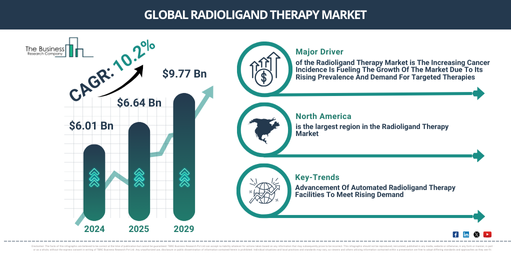
    The market size of radioligand therapy has seen significant growth recently and is anticipated to rise from $6.01 billion in 2024 to $6.64 billion in 2025, accounting for a compound annual growth rate (CAGR) of 10.5%. Several factors contributed to this growth during the historic period, including an upsurge in liquid biopsy usage, the advent of tumor-agnostic therapies, application of artificial intelligence in oncology, the expanding pipeline of bispecific antibodies, and amplified government funding towards cancer.

    Over the coming years, the radioligand therapy market is set to experience considerable expansion, with projections indicating growth to a value of $9.77 billion by 2029, reflecting a compound annual growth rate (CAGR) of 10.2%. This growth over the forecast period is likely to be influenced by factors such as increased financial backing from large pharmaceutical companies in oncology startups, a growing reliance on real-world evidentiary data, developments in radiopharmaceutical and theranostics studies, expanded collaborations between the academic and industrial sectors, and an uptick in the occurrence of rare and orphan cancers. Expected trends over the forecast period encompass advancements in AI-mediated radiopharmaceutical design, dual imaging-therapy platforms in theranostics, the synthesis of microfluidics-based radiotracers, the emergence of next-generation alpha-emitting isotopes, and the creation of 3D-printed personalized dosimetry devices.

    Download The Free Sample Report Here:

    https://www.thebusinessresearchcompany.com/sample.aspx?id=27403&type=smp

    What factors are expected to fuel Radioligand Therapy market growth in the coming years?

    The rise in cancer incidence is anticipated to boost the radioligand therapy market’s expansion. Characterized by the uncontrolled multiplication of abnormal cells that can infiltrate nearby tissues and metastasize throughout the body, cancer is becoming more common due to the prolonged exposure to environmental pollutants. These pollutants harm DNA, disrupt cellular function, and encourage anomalous cell proliferation. Radioligand therapy takes on the task of treating cancer by using ligands to guide radiation to tumorous cells. This method minimizes damage to healthy tissue and destroys cancer cells from within. As reported by the American Cancer Society, a prominent cancer awareness charity in the US, in January 2022, the country anticipates around 1.9 million new cancer diagnoses and approximately 609,360 cancer-linked fatalities, resulting in an estimate of 1,670 deaths each day. Therefore, the escalating incidence of cancer propels the growth of the radioligand therapy market.

    What Are The Key Findings From The Segmentation Analysis Of The Radioligand Therapy Market?

    The radioligand therapy market covered in this report is segmented

    1) By Type Of Radioligand: Alpha Emitters, Beta Emitters, Auger Emitters, Combined Emissions

    2) By Molecular Target: Hormone Receptors, Growth Factor Receptors, Antigen Tumor Markers, Other Molecular Targets

    3) By Route Of Administration: Intravenous (IV), Intramuscular (IM), Subcutaneous, Oral

    4) By Application: Oncology, Cardiovascular Disorders, Neurological Disorders, Infectious Diseases

    5) By End-User: Hospitals, Diagnostic Laboratories, Research Institutions, Home Care Settings

    Subsegments:

    1) By Alpha Emitters: Actinium-225 (Ac-225), Radium-223 (Ra-223), Astatine-211 (At-211), Bismuth-213 (Bi-213)

    2) By Beta Emitters: Lutetium-177 (Lu-177), Iodine-131 (I-131), Yttrium-90 (Y-90), Samarium-153 (Sm-153)

    3) By Auger Emitters: Iodine-125 (I-125), Indium-111 (In-111), Gallium-67 (Ga-67), Thallium-201 (Tl-201)

    4) By Combined Emissions: Terbium-161 (Tb-161), Copper-67 (Cu-67), Rhenium-186 (Re-186), Lead-212 (Pb-212)

    Which Trends Are Expected To Shape The Future Of The Radioligand Therapy Market?

    Leading organizations in the radioligand therapy market are concentrating on creating innovative solutions like radioligand therapy facilities to boost production efficiency and enforce consistent quality and safety norms in the production and distribution of targeted cancer therapies. These facilities are specialized centers equipped to manage and dispense radioactive drugs for targeted cancer treatments, utilizing state-of-the-art imaging systems and radiation shield, all while maintaining safety through well-trained staff and rigorous procedures. In January 2024, Novartis AG, a pharmaceutical firm based in Switzerland, disclosed the automation of its new high-capacity radioligand therapy (RLT) manufacturing plant in Indiana, which has been approved by the Food and Drug Administration (FDA) for commercial production. Spanning 70,000 square feet, this facility is the biggest and most sophisticated Novartis site committed to RLT. It’s designed for efficient, timely production and incorporates plans for fully automated production lines, facilitating significant supply expansions to cater to the increasing patient demand in the US and Canada.

    What Are The Most Active Companies In The Radioligand Therapy Market Today?

    Major companies operating in the radioligand therapy market are Bayer AG, Novartis AG, Eli Lilly and Company, Lantheus Holdings Inc., Curium LLC, Eckert & Ziegler Strahlen- und Medizintechnik AG, Molecular Partners AG, Telix Pharmaceuticals, Nanobiotix S.A., Mariana Oncology Inc., Artios Pharma Limited, AdvanCell Pty Ltd., Evergreen Theragnostics Inc., Fusion Pharmaceuticals Inc., RadioMedix Inc., Ariceum Therapeutics GmbH, Radiopharm Theranostics Limited, Convergent Therapeutics Inc., C-Ray Therapeutics Inc., OncoSil Medical Ltd.

    Get The Full Report Here:

    https://www.thebusinessresearchcompany.com/report/radioligand-therapy-global-market-report

    Which Regional Markets Are Attracting The Most Investment In Radioligand Therapy?

    North America was the largest region in the radioligand therapy market in 2024. Asia-Pacific is expected to be the fastest-growing region in the forecast period. The regions covered in the radioligand therapy market report are Asia-Pacific, Western Europe, Eastern Europe, North America, South America, Middle East, Africa.

    Request For A Customized Report:

    https://www.thebusinessresearchcompany.com/customise?id=27403&type=smp

    About The Business Research Company:

    With over 15000+ reports from 27 industries covering 60+ geographies, The Business Research Company has built a reputation for offering comprehensive, data-rich research and insights. Armed with 1,500,000 datasets, the optimistic contribution of in-depth secondary research, and unique insights from industry leaders, you can get the information you need to stay ahead in the game.

    Get in touch with us:

    The Business Research Company: https://www.thebusinessresearchcompany.com/

    Americas +1 310-496-7795

    Asia +44 7882 955267 & +91 8897263534

    Europe +44 7882 955267

    Email us at info@tbrc.info

    Follow us on:

    LinkedIn: https://in.linkedin.com/company/the-business-research-company

    YouTube: https://www.youtube.com/channel/UC24_fI0rV8cR5DxlCpgmyFQ

    Global Market Model: https://www.thebusinessresearchcompany.com/global-market-model
  • Global Insights: Radiation Protection Market Expected to Surpass $2.50 Billion by 2029

    Global Insights: Radiation Protection Market Expected to Surpass $2.50 Billion by 2029

    Claim your 30% discount on Global Market Reports with code ONLINE30. Limited time only.

    Claim your 30% discount on Global Market Reports with code ONLINE30. Limited time only.

    What CAGR Is Anticipated for the Radiation Protection Market Through 2029?

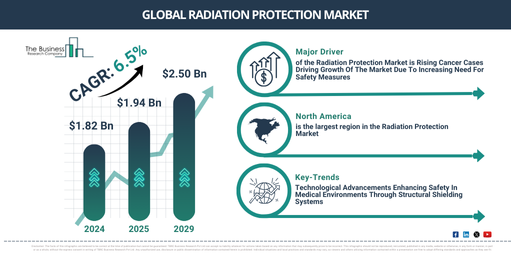
    In recent years, the market for radiation protection has experienced a significant expansion. It is predicted to increase from $1.82 billion in 2024 up to $1.94 billion in 2025, with a compound annual growth rate (CAGR) of 6.9%. The growth witnessed in the historic phase can be credited to factors such as the increasing application of diagnostic imaging technologies, growth of nuclear power generation, amplified radiation exposure during medical procedures, heightened awareness around occupational safety, regulatory requirements for radiation shielding, and the expansion of cancer radiotherapy treatments.

    In the coming years, the radiation protection market is projected to experience a considerable expansion, growing to an estimated $2.50 billion by 2029, with a compound annual growth rate (CAGR) of 6.5%. Numerous factors contribute to this forecasted growth, such as the heightened utilization of nuclear medicine and radiotherapy, increased investments in nuclear power production, growing requirement for protection solutions in the aerospace and defence fields, an elevated consciousness of professional radiation safety, broadening of interventional radiology methods, and more rigorous international control measures concerning radiation exposure limitations. Development of lightweight and lead-free protection materials, amplified employment of AI and robotics in radiation surveillance, advancement in nuclear medicine and radiology procedures, increased use of personal dosimeters, introduction of wearable radiation protection equipment, broadening of radiation safety regulations, and groundbreaking developments in shielding technologies for nuclear power and space exploration are significant trends projected for the upcoming period.

    Download The Free Sample Report Here:

    https://www.thebusinessresearchcompany.com/sample.aspx?id=27402&type=smp

    What Market Forces Are Driving The Radiation Protection Sector In 2025 And Beyond?

    The escalating incidence of cancer is predicted to boost the expansion of the radiation protection market. Cancer encompasses a variety of diseases defined by the unchecked expansion and proliferation of abnormal cells that can encroach on adjacent tissues and metastasize to other parts of the body. The growing occurrence of cancer is mainly due to extended life expectancy since the risk of contracting cancer increases with age. Radiation protection plays a crucial role in diminishing exposure to detrimental radiation, thus reducing the risk of radiation-related cancers. For example, a report from Macmillan Cancer Support, a charity based in the UK, stated in August 2024 that over 3 million people are currently living with cancer in the UK. These numbers are expected to rise to 3.5 million by 2025, 4 million by 2030, and 5.3 million by 2040. Hence, the escalating incidence of cancer is fuelling the expansion of the radiation protection market.

    How Is The Global Radiation Protection Market Categorized By Segments?

    The radiation protection market covered in this report is segmented

    1) By Product Type: Protective Barriers And Booths, Shields, Radiation Detection And Monitoring Equipment, Lead Liner Doors, Other Product Types

    2) By Technology: Ionizing Radiation Protection, Non-Ionizing Radiation Protection, Radiation Dosimetry, Remote Monitoring Technology, Radiation Measurement Software

    3) By Solution: Radiation Therapy Shielding, Diagnostic Shielding

    4) By End-User: Hospitals, Ambulatory Surgical Centers, Other End Users

    Subsegments:

    1) By Protective Barriers And Booths: Mobile Radiation Barriers, Fixed Radiation Barriers, Leaded Glass Panels, X-ray Protection Booths

    2) By Shields: Gonad Shields, Thyroid Shields, Breast Shields, Eye Shields, Full-body Shields

    3) By Radiation Detection And Monitoring Equipment: Dosimeters, Geiger Counters, Scintillation Detectors, Ionization Chambers, Personal Radiation Detectors

    4) By Lead Liner Doors: Sliding Lead Lined Doors, Swinging Lead Lined Doors, Manual Lead Lined Doors, Automatic Lead Lined Doors

    5) By Other Product Types: Lead Aprons, Lead Gloves, Lead Glasses, Lead Curtains, Radiation Protection Drapes

    What Long-Term Trends Are Likely To Affect The Radiation Protection Market?

    Major companies in the radiation protection industry are moving towards the development of innovative products like structural shielding systems to improve the safety from radiation in medical settings. These systems are defined as fixed, engineered barriers such as lead-infused doors and walls that aim to prevent damaging ionizing radiation, safeguarding healthcare workers and patients during imaging and radiological procedures. For illustration, in February 2023, Specialist Door Solutions Ltd. (SDS), a UK-based health service company, introduced a lead-lined X-ray door, known as Shieldoor, specifically tailored for healthcare establishments. Shieldoor provides excellent radiation attenuation, aligns with strict NHS safety regulations, and enhances safety in radiology and diagnostic imaging departments with its durable, hygienic, and adaptable design attributes.

    Which Firms Are Considered Leaders In The Radiation Protection Market Space?

    Major companies operating in the radiation protection market are Infab Corporation, Barrier Technologies LLC, Techno-Aide Inc., AliMed Inc., Trivitron Healthcare Pvt. Ltd., Bio-X Diagnostics Pvt. Ltd., Electronic & Engineering Co. (I) Pvt. Ltd., AADCO Medical Inc., Protech Medical Inc., Ultraray Radiation Protection Inc., Lancs Industries Inc., IndoSurgicals Private Limited, AmRay Medical, Akshay Enterprises, Uniray Medical LLP, Enviro Tech Industrial Products, Radiation Shield Technologies Inc., Ray-Bar Engineering Corp., StemRad Ltd., and BLOXR Solutions LLC.

    Get The Full Report Here:

    https://www.thebusinessresearchcompany.com/report/radiation-protection-global-market-report

    What Role Do Regional Policies And Investments Play In Radiation Protection Market Expansion?

    North America was the largest region in the radiation protection market in 2024. Asia-Pacific is expected to be the fastest-growing region in the forecast period. The regions covered in the radiation protection market report are Asia-Pacific, Western Europe, Eastern Europe, North America, South America, Middle East, Africa.

    Request For A Customized Report:

    https://www.thebusinessresearchcompany.com/customise?id=27402&type=smp

    About The Business Research Company:

    With over 15000+ reports from 27 industries covering 60+ geographies, The Business Research Company has built a reputation for offering comprehensive, data-rich research and insights. Armed with 1,500,000 datasets, the optimistic contribution of in-depth secondary research, and unique insights from industry leaders, you can get the information you need to stay ahead in the game.

    Get in touch with us:

    The Business Research Company: https://www.thebusinessresearchcompany.com/

    Americas +1 310-496-7795

    Asia +44 7882 955267 & +91 8897263534

    Europe +44 7882 955267

    Email us at info@tbrc.info

    Follow us on:

    LinkedIn: https://in.linkedin.com/company/the-business-research-company

    YouTube: https://www.youtube.com/channel/UC24_fI0rV8cR5DxlCpgmyFQ

    Global Market Model: https://www.thebusinessresearchcompany.com/global-market-model

  • 2025 Analysis: Opportunities and Risks in the Evolving Push-To-Talk Telemedicine And mHealth Convergence Market

    2025 Analysis: Opportunities and Risks in the Evolving Push-To-Talk Telemedicine And mHealth Convergence Market

    Claim your 30% discount on Global Market Reports with code ONLINE30. Limited time only.

    Claim your 30% discount on Global Market Reports with code ONLINE30. Limited time only.

    What Are the Latest Market Insights for the Push-To-Talk Telemedicine And mHealth Convergence Industry?

    The telemedicine and mHealth convergence market, specifically in push-to-talk technology, has seen a swift expansion lately. Anticipated to rise from $4.54 billion in 2024 to $5.24 billion in 2025, the compound annual growth rate (CAGR) stands at 15.5%. Factors driving the growth during the historic period include increased healthcare costs, the progression of emergency medical communication, the proliferation of 5G and low-latency networks, a surge in telehealth startups, and mounting pressure on healthcare infrastructures.

    The market for push-to-talk telemedicine and mHealth convergence is projected to experience rapid expansion in the coming years, with an estimated worth of $9.20 billion by 2029, expanding at a compound annual growth rate (CAGR) of 15.1%. The predicted growth during the forecast period can be credited to a rising need for remote healthcare offerings, escalating incidences of chronic and eye diseases, a heightened focus on patient-centered care, and an escalating mental health crisis. The forecast period will also witness significant trends such as enhancements in cloud security technology, incorporation of voice artificial intelligence (AI), compatibility with wearable devices, integration into electronic health records, and advancements in AI-fueled telemedicine platforms.

    Download The Free Sample Report Here:

    https://www.thebusinessresearchcompany.com/sample.aspx?id=27401&type=smp

    What Forces Are Driving The Growth Of The Push-To-Talk Telemedicine And mHealth Convergence Industry?

    The escalating need for healthcare services from a remote location is anticipated to fuel the expansion of the push-to-talk (PTT) telemedicine and mHealth convergence market. These remote services provide medical aid and assistance over long distances making use of digital innovations, negating the need for physical patient-presence. An increased desire for these services stems from patients’ need for convenience and availability. It helps individuals to obtain medical attention without travel, saving time, and limiting exposure to infections. PTT telemedicine and mHealth convergence facilitate remote healthcare by providing real-time audio interaction between patients and healthcare professionals. They help improve care coordination through instant connectivity, enhancing response times and availability in regular and emergency health situations. For example, a survey study done by Rock Health, a US-based nonprofit, in February 2023, among 8,000 U.S. adults showed about 80% of the participants reporting use of telemedicine at least once, which is an 8% increase from the 72% in 2021. As a result, the geographical demand for remote healthcare services is propelling the push-to-talk (PTT) telemedicine and mHealth convergence market growth. The rising occurrence of persistent illnesses is another factor pushing the growth of the PTT telemedicine and mHealth convergence market. These chronic diseases are long-lasting health issues that develop slowly, requiring regular medical attention. The increased occurrence of such diseases is influenced by sedentary lifestyles that increase the risk of illnesses like heart conditions and diabetes. PTT telemedicine and mHealth convergence technologies help monitor and manage chronic diseases by providing continuous real-time interaction between patients and healthcare providers. They improve treatment adherence and long-term health outcomes by enabling timely interventions and remote observation, especially for individuals with chronic conditions. According to the UK’s National Health Service in June 2024, there was an 18% rise in the diagnosis of non-diabetic hyperglycemia or pre-diabetes from 2022 to 2023. Hence, the rising prevalence of chronic diseases is propelling the growth of the PTT telemedicine and mHealth convergence market.

    What Is The Overview Of Market Segmentation In The Push-To-Talk Telemedicine And mHealth Convergence Industry?

    The push-to-talk telemedicine and mhealth convergence market covered in this report is segmented

    1) By Device Type: Smartphones And Tablets, Telehealth Kiosks, Wearable Health Monitors, Dedicated Push-To-Talk Devices, Medical-Grade Smartphones

    2) By Deployment Type: Cloud-Based Solutions, On-Premise Solutions, Hybrid Deployment Models

    3) By Technology: Voice Over Internet Protocol, Mobile Messaging Services, Video Conferencing Solutions, Push-To-Talk Applications, Wearable Telehealth Devices

    4) By Application: Remote Patient Monitoring, Virtual Consultations, Emergency Response Services, Medication Management, Chronic Disease Management

    5) By End User: Healthcare Providers, Patients, Emergency Medical Services (EMS), Healthcare Payers, Clinics And Hospitals

    Subsegments:

    1) By Smartphones and Tablets: Android-Based Devices, iOS-Based Devices, Enterprise or Medical App-Enabled Devices, Consumer Health App-Enabled Devices, Ruggedized Smartphones for Field Use

    2) By Telehealth Kiosks: Stationary Telehealth Kiosks, Mobile or Portable Telehealth Kiosks, Pharmacy-Based Kiosks, Workplace or Corporate Wellness Kiosks, School-Based Kiosks

    3) By Wearable Health Monitors: Smartwatches with Health Sensors, Fitness Bands with Push-To-Talk Capability, Wearable ECG or Heart Monitors, Wearable Blood Pressure Monitors, Wearable Respiratory Monitors

    4) By Dedicated Push-To-Talk Devices: Two-Way Radio Medical Communication Devices, Field-Use Push-To-Talk Medical Handsets, Rugged Push-To-Talk Devices for Emergency Responders, Wi-Fi Enabled Push-To-Talk Devices for Hospitals, Long-Term Evolution or 5G Push-To-Talk Communication Devices

    5) By Medical-Grade Smartphones: Antimicrobial Smartphones, Intrinsically Safe Medical Smartphones, Push-To-Talk-Enabled Smartphones for Clinical Staff, Smartphones Integrated with Electronic Health Record Systems, Hospital-Specific Communication Devices

    Who Are The Primary Players Operating Across The Global Push-To-Talk Telemedicine And mHealth Convergence Market?

    Major companies operating in the push-to-talk telemedicine and mhealth convergence market are Kyocera Corporation, Motorola Solutions Inc., Zebra Technologies Corporation, Avaya Inc., Alcatel-Lucent Enterprise SA, Doximity Inc., Vocera Communications Inc., Thuraya Telecommunications Company, TigerConnect Inc., QliqSOFT Inc., AVTEC Inc., A&D Company Limited, pMDsoft Inc., Zello Inc., Hytera Communications Corporation Limited, Diga-Talk Plus, SwyMed Inc., Spruce Health Inc., Voxer LLC, and Cardiocom LLC.

    Get The Full Report Here:

    https://www.thebusinessresearchcompany.com/report/push-to-talk-telemedicine-and-mhealth-convergence-global-market-report

    Which Region Offers The Most Growth Potential For The Push-To-Talk Telemedicine And mHealth Convergence Market Through 2029?

    North America was the largest region in the push-to-talk telemedicine and mhealth convergence market in 2024. Asia-Pacific is expected to be the fastest-growing region in the forecast period. The regions covered in the push-to-talk telemedicine and mhealth convergence market report are Asia-Pacific, Western Europe, Eastern Europe, North America, South America, Middle East, Africa.

    Request For A Customized Report:

    https://www.thebusinessresearchcompany.com/customise?id=27401&type=smp

    About The Business Research Company:

    With over 15000+ reports from 27 industries covering 60+ geographies, The Business Research Company has built a reputation for offering comprehensive, data-rich research and insights. Armed with 1,500,000 datasets, the optimistic contribution of in-depth secondary research, and unique insights from industry leaders, you can get the information you need to stay ahead in the game.

    Get in touch with us:

    The Business Research Company: https://www.thebusinessresearchcompany.com/

    Americas +1 310-496-7795

    Asia +44 7882 955267 & +91 8897263534

    Europe +44 7882 955267

    Email us at info@tbrc.info

    Follow us on:

    LinkedIn: https://in.linkedin.com/company/the-business-research-company

    YouTube: https://www.youtube.com/channel/UC24_fI0rV8cR5DxlCpgmyFQ

    Global Market Model: https://www.thebusinessresearchcompany.com/global-market-model

  • In-Depth Psychiatry Clinics Market Report: Business Trends, Growth Factors, and Forecast to 2029

    Claim your 30% discount on Global Market Reports with code ONLINE30. Limited time only.

    Claim your 30% discount on Global Market Reports with code ONLINE30. Limited time only.

    What Are the Forecasted Growth Rate and Market Size of the Psychiatry Clinics Market?

    The market size of psychiatry clinics has seen a robust growth in the past few years. An expansion from $89.47 billion to $94.95 billion is projected from the year 2024 to 2025, marking a compound annual growth rate (CAGR) of 6.1%. Factors contributing to this historical growth are the increase in awareness and reduction in stigma, the uptick in the utilization of cutting-edge psychiatric therapies and technologies, a rise in stress, anxiety, and depression incidents, the expansion of online mental health services, and an upswing in private insurance coverage.

    In the coming years, the market size for psychiatry clinics is projected to experience substantial growth. It’s predicted to reach a value of $118.82 billion by 2029, expanding at a compound annual growth rate (CAGR) of 5.8%. This predicted growth over the forecast period can be ascribed to factors such as increased focus on early detection and action, extensified collaboration between psychiatry clinics and primary healthcare providers, surging demand for outpatient psychiatric services, amplified attention to mental health programs in the workplace, and an increasing number of dual diagnosis cases. Key trends forecasted to emerge during this period encompass advancements in neurostimulation therapies, incorporation of telepsychiatry platforms, technology-powered mental health evaluation tools, progress in digital therapeutics, enhancements in pharmacogenomics and personalized medicine, and the evolution of collaborative care models.

    Download The Free Sample Report Here:

    https://www.thebusinessresearchcompany.com/sample.aspx?id=27400&type=smp

    Which Factor Is Shaping The Future Of The Psychiatry Clinics Market?

    Expectations are that the increasing occurrence of mental health disorders will drive the expansion of the psychiatry clinics market. Mental health disorders cover a broad spectrum of conditions that impact a person’s mood, thought process, behavior, and entire psychological wellness. Increasing levels of stress, which can overpower a person’s ability to cope, lead to such conditions, resulting in issues like anxiety and depression. Psychiatry clinics provide specialized treatment, initial diagnosis, and unique treatment plans for mental health disorders, allowing people to effectively handle their conditions and enhance their overall life quality. For example, the American Psychiatric Association, a government organization in the US, reported in May 2024 that 43% of US adults claimed to be more anxious than they were in the previous year, a rise from 37% in 2023 and 32% in 2022. This points to an upward trend in anxiety amongst adults. As a result, the psychiatry clinics market’s growth is being propelled by the increasing prevalence of mental health disorders.

    What Is The Segment-Wise Breakdown Of The Psychiatry Clinics Market?

    The psychiatry clinics market covered in this report is segmented

    1) By Treatment Type: Combined Therapy, Psychotherapy, Psychotropic Medication

    2) By Insurance Type: Private Insurance, Public Insurance, Self Pay

    3) By Service Setting: Inpatient, Outpatient, Telepsychiatry

    4) By Patient Age Group: Adult, Child And Adolescent, Geriatric

    5) By Disorder Category: Anxiety Disorders, Mood Disorders, Psychotic Disorders

    Subsegments:

    1) By Combined Therapy: Cognitive Behavioral Therapy With Medication, Dialectical Behavior Therapy With Medication, Interpersonal Therapy With Medication, Family Therapy With Medication

    2) By Psychotherapy: Cognitive Behavioral Therapy, Dialectical Behavior Therapy, Interpersonal Therapy, Psychodynamic Therapy, Family And Couples Therapy, Group Therapy

    3) By Psychotropic Medication: Antidepressants, Antipsychotics, Mood Stabilizers, Anxiolytics, Stimulants

    Which Trends Are Redefining The Future Landscape Of The Psychiatry Clinics Industry?

    The psychiatry clinics market is witnessing the advent of innovative treatment methods by leading firms aimed at enhancing treatment effectiveness, broadening non-invasive treatment options, and bettering patient outcomes for mental health conditions, such as transcranial magnetic stimulation (TMS) therapy. This non-invasive treatment leverages magnetic fields to activate nerve cells in the brain. A clear example is the Neuro Wellness Spa, a US-based mental health service company, which in August 2024, rolled out its 10th Psychiatry and TMS Clinic to provide accessible and advanced mental health care. The clinic renders advanced, patient-focused mental health services with the goal of increasing access to effective and affordable care. It provides non-invasive transcranial magnetic stimulation (TMS) therapy for conditions like treatment-resistant depression, anxiety, OCD, along with tailoring treatment plans encompassing psychiatric assessments, medication management, and psychotherapy services such as cognitive behavioral therapy. In addition, it offers integrative wellness programs that include nutritional counseling and stress management for a holistic approach to patient care. The clinic also employs advanced TMS devices with adjustable protocols for accurate treatment in a contemporary, comfortable setting. Furthermore, the clinic provides insurance and flexible payment options for improved affordability and telepsychiatry services for continuous virtual care, enhancing treatment continuity and patient outcomes.

    Which Companies Hold The Largest Market Share In The Psychiatry Clinics Sector?

    Major companies operating in the psychiatry clinics market are Universal Health Services, Ramsay Health Care Limited, Acadia Healthcare, Rogers Behavioral Health, AltaPointe Health, Thriveworks Counseling, The Center for Health Care Services, Sheppard Pratt Health System, Oceans Healthcare, Harris Center for Mental Health and IDD, Amen Clinics, Med Park Hospital, Menninger Clinic, Bay Psychiatric Associates, Austen Riggs Center, Peninsula Behavioral Health, MindSpot Clinic, Oakland Psychological Clinic, Citrus Health Group LLC, and Tucker Psychiatric Clinic.

    Get The Full Report Here:

    https://www.thebusinessresearchcompany.com/report/psychiatry-clinics-global-market-report

    How Does Regional Performance Compare Across The Psychiatry Clinics Industry?

    North America was the largest region in the psychiatry clinics market in 2024. Asia-Pacific is expected to be the fastest-growing region in the forecast period. The regions covered in the psychiatry clinics market report are Asia-Pacific, Western Europe, Eastern Europe, North America, South America, Middle East, Africa.

    Request For A Customized Report:

    https://www.thebusinessresearchcompany.com/customise?id=27400&type=smp

    About The Business Research Company:

    With over 15000+ reports from 27 industries covering 60+ geographies, The Business Research Company has built a reputation for offering comprehensive, data-rich research and insights. Armed with 1,500,000 datasets, the optimistic contribution of in-depth secondary research, and unique insights from industry leaders, you can get the information you need to stay ahead in the game.

    Get in touch with us:

    The Business Research Company: https://www.thebusinessresearchcompany.com/

    Americas +1 310-496-7795

    Asia +44 7882 955267 & +91 8897263534

    Europe +44 7882 955267

    Email us at info@tbrc.info

    Follow us on:

    LinkedIn: https://in.linkedin.com/company/the-business-research-company

    YouTube: https://www.youtube.com/channel/UC24_fI0rV8cR5DxlCpgmyFQ

    Global Market Model: https://www.thebusinessresearchcompany.com/global-market-model

  • Psoriasis Biosimilars Industry Poised for Rapid Expansion, Projected to Hit $12.43 Billion by 2029

    Psoriasis Biosimilars Industry Poised for Rapid Expansion, Projected to Hit $12.43 Billion by 2029

    Claim your 30% discount on Global Market Reports with code ONLINE30. Limited time only.

    Claim your 30% discount on Global Market Reports with code ONLINE30. Limited time only.

    What Is the Estimated Industry Valuation for the Psoriasis Biosimilars Sector?

    The market size for biosimilars for psoriasis has expanded at a swift pace in the past few years. The market is projected to increase from a worth of $7.32 billion in 2024 to $8.16 billion in 2025 with a compound annual growth rate (CAGR) of 11.5%. Various factors can be attributed to this growth during the historic period, including the escalating cost of original biologics, the efficacy and safety record of initial market entrants, widening of indications beyond just psoriasis, increase in chronic disease incidents, and modifications in hospital procurement policies.

    In the forthcoming years, the psoriasis biosimilars market is anticipated to witness a swift expansion, reaching a worth of $12.43 billion in 2029, progressing at a compound annual growth rate (CAGR) of 11.1%. The growth projected for this period can be associated with factors such as a global rise in psoriasis cases, policy changes and interchangeability laws, growth in biosimilar production, enhanced education for patients and physicians, and the implementation of bundled pricing and value-based contracts. The forecast period is expected to be characterized by significant trends such as groundbreaking biosimilar manufacturing platforms, patient stratification driven by artificial intelligence, the introduction of sophisticated drug delivery devices, the development of next-generation formulations, and strategic collaborations in the industry.

    Download The Free Sample Report Here:

    https://www.thebusinessresearchcompany.com/sample.aspx?id=27399&type=smp

    What Forces Are Driving The Growth Of The Psoriasis Biosimilars Market?

    Increased diagnosis rates of psoriatic arthritis are anticipated to boost the expansion of the psoriasis biosimilars industry in the future. Psoriatic arthritis is an autoimmune disease that triggers inflammation in joints and skin, usually affecting people with previous psoriasis instances. Detection and accurate diagnosis of psoriatic arthritis are becoming more common, mainly due to heightened screening procedures in individuals with psoriasis. These procedures are proficient in identifying minor joint symptoms that could have been overlooked in the past. Psoriasis biosimilars offer an economical alternative to biologic therapies for managing psoriatic arthritis, effectively mitigating joint inflammation and skin symptoms. As an illustration, in May 2024, the National Institutes of Health (NIH), an American government agency, reported that in 2022, the prevalence of psoriatic arthritis (PsA) was 0.221%, with an incidence rate of 13.54 per 100,000 people. Hence, the expanding rates of psoriatic arthritis diagnosis are propelling the psoriasis biosimilars market’s growth.

    How Is The Psoriasis Biosimilars Industry Segmented Across Key Parameters?

    The psoriasis biosimilars market covered in this report is segmented

    1) By Drug Class: TNF-Alpha Inhibitors, Infliximab, Etanercept, Adalimumab, Other Biosimilars

    2) By Disease Type: Plaque Psoriasis, Guttate Psoriasis, Inverse Psoriasis, Pustular Psoriasis

    3) By Route Of Administration: Subcutaneous, Intravenous, Oral, Topical

    4) By Distribution Channel: Hospital Pharmacies, Retail Pharmacies, Online Pharmacies

    Subsegments:

    1) By TNF-Alpha Inhibitors: Monoclonal Antibody Biosimilars, Fusion Protein Biosimilars

    2) By Infliximab: Remicade Biosimilars, CT-P13 Biosimilars

    3) By Etanercept: Enbrel Biosimilars, SB4 Biosimilars

    4) By Adalimumab: Humira Biosimilars, ABP 501 Biosimilars

    5) By Other Biosimilars: Ustekinumab Biosimilars, Secukinumab Biosimilars

    What Notable Trends Are Shaping The Direction Of The Psoriasis Biosimilars Market?

    Key players in the psoriasis biosimilars market are prioritizing the development of unique solutions, including biosimilars for plaque psoriasis. These are aimed at increasing treatment availability, cutting healthcare expenses, and enhancing patient results. Biosimilars for such a condition are more affordable, yet comparable substitutes for validated biologic medicine utilized for this persistent autoimmune skin disorder marked by red, scaly patches. For example, Sandoz Group AG, a Swiss organization specializing in generic pharmaceuticals and biosimilars, rolled out the Pyzchiva autoinjector in May 2025. This is the first commercial ustekinumab biosimilar autoinjector. Pyzchiva is sanctioned for treating adult patients affected by plaque psoriasis, psoriatic arthritis, Crohn’s disease, and children aged six and above (weighing more than 60 kg) with plaque psoriasis. The autoinjector, designed to improve patient compliance and lifestyle, is notable for its precise automatic dosage, less painful injection, sleek structure, and adaptable storage options for an easier self-administration.

    Which Companies Currently Dominate The Competitive Landscape In The Psoriasis Biosimilars Industry?

    Major companies operating in the psoriasis biosimilars market are Pfizer Inc., Merck & Co. Inc., Amgen Inc., Biogen Inc., Sandoz Group AG, Fresenius Kabi AG, Intas Pharmaceuticals Ltd., STADA Arzneimittel AG, Aurobindo Pharma Ltd., Dr. Reddy’s Laboratories Ltd., Cipla Ltd., Samsung Bioepis Co. Ltd., Lupin Ltd., Zydus Lifesciences Ltd., Celltrion Inc., Torrent Pharmaceuticals Ltd., Bio-Thera Solutions Ltd., Coherus BioSciences Inc., mAbxience S.A., Reliance Life Sciences Pvt. Ltd., and Alvotech hf.

    Get The Full Report Here:

    https://www.thebusinessresearchcompany.com/report/psoriasis-biosimilars-global-market-report

    Which Geographic Regions Are Driving Demand In The Psoriasis Biosimilars Market?

    North America was the largest region in the psoriasis biosimilars market in 2024. Asia-Pacific is expected to be the fastest-growing region in the forecast period. The regions covered in the psoriasis biosimilars market report are Asia-Pacific, Western Europe, Eastern Europe, North America, South America, Middle East, Africa.

    Request For A Customized Report:

    https://www.thebusinessresearchcompany.com/customise?id=27399&type=smp

    About The Business Research Company:

    With over 15000+ reports from 27 industries covering 60+ geographies, The Business Research Company has built a reputation for offering comprehensive, data-rich research and insights. Armed with 1,500,000 datasets, the optimistic contribution of in-depth secondary research, and unique insights from industry leaders, you can get the information you need to stay ahead in the game.

    Get in touch with us:

    The Business Research Company: https://www.thebusinessresearchcompany.com/

    Americas +1 310-496-7795

    Asia +44 7882 955267 & +91 8897263534

    Europe +44 7882 955267

    Email us at info@tbrc.info

    Follow us on:

    LinkedIn: https://in.linkedin.com/company/the-business-research-company

    YouTube: https://www.youtube.com/channel/UC24_fI0rV8cR5DxlCpgmyFQ

    Global Market Model: https://www.thebusinessresearchcompany.com/global-market-model