Month: September 2025

  • Global Automated Sample Storage Systems Market Forecast to Reach $2.67 Billion by 2029, Driven by 11% CAGR

    Global Automated Sample Storage Systems Market Forecast to Reach $2.67 Billion by 2029, Driven by 11% CAGR

    Claim your 30% discount on Global Market Reports with code ONLINE30. Limited time only.

    Claim your 30% discount on Global Market Reports with code ONLINE30. Limited time only._x000D_

    _x000D_

    #How Much Is the Global Automated Sample Storage Systems Market Valued at Present and by 2029?#_x000D_

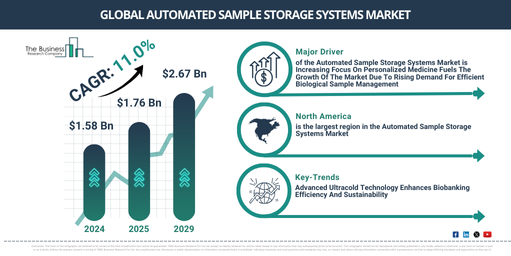
    In recent years, there has been a swift expansion in the market size of automated sample storage systems. The market is projected to grow from $1.58 billion in 2024, to $1.76 billion in 2025, implying a compound annual growth rate (CAGR) of 11.4%. The historical period’s growth can be linked to increasing demand for high-throughput screening, an escalation in the usage of robotics in laboratory procedures, a heightened dependency on centralized laboratory functions, growing emphasis on sample traceability and audit checks, and a widening acceptance of barcode and Radio Frequency Identification (RFID)-based inventory systems._x000D_

    _x000D_

    The size of the automated sample storage systems market is expected to exponentially increase in the upcoming years, with anticipations of reaching $2.67 billion by the year 2029, expanding at a compound annual growth rate (CAGR) of 11.0%. The increase over the prediction period is connected to a surge in biobanking needs, the acceptance of personalized medicine, a rising requirement for secure and traceable samples, an increase in laboratory digitization, and a surge in diagnostic tests and clinical trials. Key trends across the period of prediction incorporate improvements in the integration of hybrid cloud-LIMS, enhanced cybersecurity measures for labs dealing with sensitive data, compact benchtop automated storage units’ development, advancements in remote monitoring and control interfaces, and progress in eco-friendly refrigeration technologies._x000D_

    _x000D_

    #Download The Free Sample Report Here:#_x000D_

    https://www.thebusinessresearchcompany.com/sample.aspx?id=27217&type=smp_x000D_

    _x000D_

    #What Drivers Are Influencing Growth In The Automated Sample Storage Systems Market?_x000D_

    The growing focus on personalized medicine is projected to spur the expansion of the automated sample storage systems market. Personalized medicine is a medical strategy that customizes care and treatment based on individual patient traits, including genetic profile, lifestyle, and surroundings, to enhance health outcomes. The rise of personalized medicine is being facilitated by advances in genetic testing, allowing for more accurate treatments tailored to a person’s distinctive genetic makeup. Automated sample storage systems play a critical role in personalized medicine by securely preserving and managing biological samples, facilitating seamless access and analysis for tailoring patient-specific treatment plans. As an illustration, in February 2024, the Personalized Medicine Coalition, a non-profit organization based in the US, reported that the Food and Drug Administration (FDA) sanctioned 16 groundbreaking personalized therapies designed for patients with uncommon diseases in 2023, which was a marked increase from six in 2022. Consequently, the growing emphasis on personalized medicine is stimulating the expansion of the automated sample storage systems services market._x000D_

    _x000D_

    #What Are The Main Segments Identified In The Automated Sample Storage Systems Market Research?#_x000D_

    The automated sample storage systems market covered in this report is segmented_x000D_

    _x000D_

    1) By Type: Liquid Nitrogen Storage Systems, Mechanical Freezers, Automated Cryogenic Storage_x000D_

    2) By Technology: Robotics, Liquid Handling Systems, Temperature Monitoring Systems, Cloud-Based Storage Solutions_x000D_

    3) By Sample: Blood Samples, Tissue Samples, Cellular Samples, DNA Or RNA Samples _x000D_

    4) By Application: Biobanking, Pharmaceuticals, Clinical Research, Genomics _x000D_

    5) By End User: Hospitals, Neurological Clinics, Rehabilitation Centers, Sports Medicine Clinics, Other End Users_x000D_

    _x000D_

    Subsegments:_x000D_

    1) By Liquid Nitrogen Storage Systems: Vapor Phase Storage Systems, Liquid Phase Storage Systems, Manual Fill LN2 Systems, Auto-fill LN2 Systems, Dewar Vessels And Canisters_x000D_

    2) By Mechanical Freezers: Ultra-Low Temperature Freezers (ULT, -80°C), Low Temperature Freezers (-20°C to -40°C), High-Capacity Mechanical Freezers, Single-Door And Double-Door Units, Energy-Efficient Mechanical Freezers_x000D_

    3) By Automated Cryogenic Storage: Robotic Sample Retrieval Systems, Modular Cryogenic Storage Units, High-Throughput Cryo Storage Systems, RFID Or Barcode-Enabled Cryo Units, Integrated Cryo-Inventory Management Systems_x000D_

    _x000D_

    #What Are The Leading Trends And Opportunities In The Automated Sample Storage Systems Sector?#_x000D_

    A significant trend in the automated sample storage systems market is the focus of major players on introducing innovative solutions such as ultracold automated technology. This technology aims to improve the preservation of sensitive biological samples by maintaining ultra-low temperatures with high precision and minimal human intervention. The advanced systems of ultracold automated technology handle the storage and management of biological samples at very low temperatures, which increases their stability and decreases manual labour in laboratories. For example, in July 2023, Azenta Life Sciences, an American biotechnology research firm, unveiled the BioArc Ultra, a sophisticated and environmentally friendly ultracold automated sample storage system. The system, designed for large-scale biorepositories, facilitates automated storage and retrieval at temperatures as low as -80°C, and manages up to 10 million 2D barcoded tubes securely and efficiently. Scalability is assured via the BioArc Ultra’s modular design, while reliability is enhanced through redundant cooling and power systems. Additionally, the system’s user-friendly interface simplifies operations. The BioArc Ultra’s energy-efficient setup minimizes environmental harm while enhancing uptime and sample integrity, thus catering to contemporary biobanking requirements in a revolutionary manner._x000D_

    _x000D_

    #Which Companies Play A Key Role In The Development Of The Automated Sample Storage Systems Market?#_x000D_

    Major companies operating in the automated sample storage systems market are Thermo Fisher Scientific Inc., Micronic Holding B.V., Revvity Inc., Beckman Coulter Inc., Getinge, Eppendorf SE, Brooks Automation Inc., Hamilton Company, Azenta Inc., Oxford Instruments plc, SPT Labtech Ltd., B Medical Systems S.à r.l., Hier Biomedical Corporation, Simport Scientific Inc., LiCONiC AG, Starlab International GmbH, Biotron Healthcare (India) Pvt. Ltd., ASKION GmbH, Biofortuna Limited, and Angelantoni Life Science S.r.l. _x000D_

    _x000D_

    #Get The Full Report Here:#_x000D_

    https://www.thebusinessresearchcompany.com/report/automated-sample-storage-systems-global-market-report_x000D_

    _x000D_

    #What Are The Key Regional Developments Shaping The Automated Sample Storage Systems Market?#_x000D_

    North America was the largest region in the automated sample storage systems market in 2024. Asia-Pacific is expected to be the fastest-growing region in the forecast period. The regions covered in the automated sample storage systems market report are Asia-Pacific, Western Europe, Eastern Europe, North America, South America, Middle East, Africa._x000D_

    _x000D_

    #Request For A Customized Report:#_x000D_

    https://www.thebusinessresearchcompany.com/customise?id=27217&type=smp_x000D_

    _x000D_

    #About The Business Research Company:#_x000D_

    _x000D_

    With over 15000+ reports from 27 industries covering 60+ geographies, The Business Research Company has built a reputation for offering comprehensive, data-rich research and insights. Armed with 1,500,000 datasets, the optimistic contribution of in-depth secondary research, and unique insights from industry leaders, you can get the information you need to stay ahead in the game._x000D_

    _x000D_

    #Get in touch with us:#_x000D_

    _x000D_

    The Business Research Company: https://www.thebusinessresearchcompany.com/_x000D_

    Americas +1 310-496-7795_x000D_

    Asia +44 7882 955267 & +91 8897263534_x000D_

    Europe +44 7882 955267_x000D_

    Email us at info@tbrc.info_x000D_

    _x000D_

    #Follow us on:#_x000D_

    _x000D_

    LinkedIn: https://in.linkedin.com/company/the-business-research-company_x000D_

    YouTube: https://www.youtube.com/channel/UC24_fI0rV8cR5DxlCpgmyFQ_x000D_

    Global Market Model: https://www.thebusinessresearchcompany.com/global-market-model

  • Emerging Trends and Growth Drivers in the Non-Opioid Pain Treatment Market Through 2029

    Emerging Trends and Growth Drivers in the Non-Opioid Pain Treatment Market Through 2029

    Claim your 30% discount on Global Market Reports with code ONLINE30. Limited time only.

    Claim your 30% discount on Global Market Reports with code ONLINE30. Limited time only.

    What Does the Forecast Indicate for the Non-Opioid Pain Treatment Market From 2025 to 2029?

    The market for non-opioid pain remedies has seen substantial expansion in the recent past. The size of this market is expected to increase from $50.63 billion in 2024 to $55.31 billion in 2025, showcasing a compound annual growth rate (CAGR) of 9.2%. The past growth of this market can be attributed to factors like rising instances of chronic pain, growing preference amongst patients for safer alternatives, heightened public awareness of the risks associated with opioids, an increase in demand for non-addictive treatment options, and initiatives from healthcare providers.

    In the coming years, the non-opioid pain treatment market is predicted to experience substantial expansion. With a compound annual growth rate (CAGR) of 8.9%, the market is projected to reach $77.67 billion by 2029. The anticipated escalation in the coming period is ascribed to the growing demand for tailored pain management, the escalating acceptance of non-opioid therapies, the expanding senior population, increased investment in non-opioid drug innovation, and reinforced governmental support and repayment policies. Key trends for the predicted period involve enhancements in drug delivery systems, fusion of multidisciplinary care methods, the influence of technology on personalized medicine, breakthroughs in non-opioid pharmacological alternatives, and progress in patient tracking tools.

    Download The Free Sample Report Here:

    https://www.thebusinessresearchcompany.com/sample.aspx?id=27366&type=smp

    What Elements Are Contributing To Growth In The Non-Opioid Pain Treatment Market?

    The non-opioid pain treatment market is expected to expand primarily due to a surge in sports-related injuries. Occurring during or as a result of sports or exercise activities, these injuries are increasing as more individuals participate in high-intensity sports and recreational activities. Such participation increases the likelihood of sustaining physical trauma. Non-opioid pain treatment offers a valuable solution to sports-related injuries by delivering effective pain relief and reducing inflammation, without the associated risks of opioid use. It aids in quicker recovery, enhanced functioning, and safer sustained management. For example, the 2023/24 football season saw a 4% increase in injuries, recording 4,123 cases in Europe’s top five leagues, according to the UK insurance intermediary company, Howden Group Holdings Ltd, as of October 2024. Consequently, the growth of the non-opioid pain treatment market is primarily driven by the growing prevalence of sports-related injuries.

    Which Segments Are Detailed In The Global Non-Opioid Pain Treatment Market Report?

    The non-opioid pain treatment market covered in this report is segmented

    1) By Product: Medical Cannabis, Menthol-Containing, Omega 3 Fatty Acid-Containing, Botulinum Toxins, Capsaicin-Derived, Other Products

    2) By Drug Class: Nonsteroidal Anti-Inflammatory Drugs (Nsaids), Acetaminophen, Local Anesthetics, Antidepressants, Anticonvulsants, Corticosteroids, Other Drug Classes

    3) By Route Of Administration: Oral, Topical, Injectable, Other Route Of Administrations

    4) By Distribution Channel: Hospitals Pharmacies, Retail Pharmacies, Drug Stores, Mail Order Pharmacies

    5) By Application: Orthopedic And Musculoskeletal Pain, Postoperative Pain, Cancer Pain, Neuropathic Pain, Other Applications

    Subsegments:

    1) By Medical Cannabis: Cannabidiol Based Products, Tetrahydrocannabinol Based Products, Combined Cannabinoid Products

    2) By Menthol Containing: Topical Creams, Gels, Sprays

    3) By Omega 3 Fatty Acid Containing: Fish Oil Derived Supplements, Algae Derived Supplements, Krill Oil Derived Supplements

    4) By Botulinum Toxins: Onabotulinumtoxin A, Abobotulinumtoxin A, Incobotulinumtoxin A

    5) By Capsaicin Derived: Low Concentration Creams, High Concentration Patches, Nasal Sprays

    6) By Other Products: Magnesium Based Products, Acupuncture Devices, Transcutaneous Electrical Nerve Stimulation Devices

    Which Emerging Trends And Strategic Shifts Are Shaping The Non-Opioid Pain Treatment Market?

    Leading firms in the non-opioid pain treatment sector are channeling their resources towards the creation of innovative drug formulas, such as non-opioid oral treatments, to provide effective pain relief while mitigating risks associated with opioid usage and dependency. Non-opioid oral treatment involves pain-eliminating drugs taken orally that function through alternative modes, such as minimizing inflammation, altering nerve messages, or interacting with specific receptors to manage pain without the respiratory depression and addiction issues typically connected with opioids. For instance, Vertex Pharmaceuticals Incorporated, a biotech firm based in the U.S, launched JOURNAVX in July 2025, marking a milestone with its pioneering non-opioid therapy for moderate to severe acute pain. This advanced non-opioid treatment concentrates on modulating pain pathways and is characterized by a desirable safety profile and a swift action initiation, allowing robust pain management, decreased likelihood of dependency, and improved patient health. JOURNAVX enables targeted pain control, reduces addiction probabilities, and aides quicker recovery and superior quality of life for individuals suffering from acute pain.

    Who Are The Key Contributors To Growth In The Non-Opioid Pain Treatment Market?

    Major companies operating in the non-opioid pain treatment market are Pfizer Inc., Johnson & Johnson Services Inc., AbbVie Inc, Novartis AG, GSK plc, Amgen Inc., Teva Pharmaceutical Industries Limited, Vertex Pharmaceuticals Incorporated, SUN PHARMACEUTICAL INDUSTRIES LIMITED, Perrigo Company Public Limited Company, Dr. Reddy’s Laboratories, HIKMA PHARMACEUTICALS PUBLIC LIMITED COMPANY, Pacira BioSciences Inc, Heron Therapeutics Inc, AFT Pharmaceuticals Limited, Vivozon Pharmaceutical Co. Ltd, Levicept Ltd, Algiax Pharmaceuticals GmbH, Latigo Biotherapeutics Inc, Hyloris Pharmaceuticals SA.

    Get The Full Report Here:

    https://www.thebusinessresearchcompany.com/report/non-opioid-pain-treatment-global-market-report

    Which Region Is Projected To Lead The Non-Opioid Pain Treatment Market By 2025?

    North America was the largest region in the non-opioid pain treatment market in 2024. Asia-Pacific is expected to be the fastest-growing region in the forecast period. The regions covered in the non-opioid pain treatment market report are Asia-Pacific, Western Europe, Eastern Europe, North America, South America, Middle East, Africa.

    Request For A Customized Report:

    https://www.thebusinessresearchcompany.com/customise?id=27366&type=smp

    About The Business Research Company:

    With over 15000+ reports from 27 industries covering 60+ geographies, The Business Research Company has built a reputation for offering comprehensive, data-rich research and insights. Armed with 1,500,000 datasets, the optimistic contribution of in-depth secondary research, and unique insights from industry leaders, you can get the information you need to stay ahead in the game.

    Get in touch with us:

    The Business Research Company: https://www.thebusinessresearchcompany.com/

    Americas +1 310-496-7795

    Asia +44 7882 955267 & +91 8897263534

    Europe +44 7882 955267

    Email us at info@tbrc.info

    Follow us on:

    LinkedIn: https://in.linkedin.com/company/the-business-research-company

    YouTube: https://www.youtube.com/channel/UC24_fI0rV8cR5DxlCpgmyFQ

    Global Market Model: https://www.thebusinessresearchcompany.com/global-market-model

  • CAGR of 14.3% Projected for Next-Generation Sequencing Library Preparation Market From 2025 to 2029

    CAGR of 14.3% Projected for Next-Generation Sequencing Library Preparation Market From 2025 to 2029

    Claim your 30% discount on Global Market Reports with code ONLINE30. Limited time only.

    Claim your 30% discount on Global Market Reports with code ONLINE30. Limited time only.

    How Much Is the Global Next-Generation Sequencing Library Preparation Market Valued at Present and by 2029?

    Over the recent years, the market size of next-generation sequencing library preparation has witnessed a sharp uptick. The market value is predicted to soar from $1.42 billion in 2024 to $1.63 billion in 2025, marking a compound annual growth rate (CAGR) of 14.7%. The ballooning market during the historic period is a result of escalating use in monitoring infectious diseases, swelling funds for genomic research, amped-up implementation amidst the pandemic, enlarging accessibility for research laboratories, and proliferating application in precision medicine.

    In the coming years, the market size for next-generation sequencing library preparation is predicted to experience a fast-paced expansion. By 2029, it is projected to reach a valuation of $2.78 billion, growing at a compound annual growth rate (CAGR) of 14.3%. Factors contributing to expected growth during the forecast period include increased utilization in clinical diagnostic processes, rising demand for individualized medical treatments, expended use in the field of oncology research, a growing necessity for high-throughput sequencing, and enhanced emphasis on minimizing turnaround time. Key future market trends comprise of improvements in workflow efficiency, incorporation of artificial intelligence for data analysis, standardization of protocols enabled by technology, progress in user-friendly system designs, and advancements in cloud-based data solution technologies.

    Download The Free Sample Report Here:

    https://www.thebusinessresearchcompany.com/sample.aspx?id=27365&type=smp

    #What Drivers Are Influencing Growth In The Next-Generation Sequencing Library Preparation Market?

    The growth of the next-generation sequencing library preparation market is anticipated to be driven by the surge in gene therapy. This form of treatment, which involves modifying a person’s genes to either cure or prevent diseases is becoming increasingly popular with the rise in genetic disorders that demand durable and targeted treatment approaches. Next-generation sequencing (NGS) library preparations, which prepare top-notch DNA or RNA samples for sequencing, are employed in gene therapy to precisely validate and analyze genetic modifications. For instance, the American Society of Gene and Cell Therapy, a US-based non-profit scientific and medical organization, reported in April 2024 that the phase III gene therapy clinical trials had increased by 10%, marking the first time there had been a quarterly rise since the third quarter of 2022. Thus, the expansion of gene therapy is propelling the growth of the next-generation sequencing library preparation market.

    What Are The Main Segments Identified In The Next-Generation Sequencing Library Preparation Market Research?

    The next-generation sequencing library preparation market covered in this report is segmented

    1) By Sequencing Type: Targeted Genome Sequencing, Whole Genome Sequencing, Whole Exome Sequencing, Other Sequencing Types

    2) By Product: Reagents And Consumables, DNA Library Preparation Kits, Library Preparation Kits, RNA Library Preparation Kits, Other Products

    3) By Technology: Ion Semiconductor Sequencing, Sequencing By Synthesis (SBS), Nanopore Sequencing, Single-Molecule Real-Time Sequencing (SMRT), Other Technologies

    4) By Application: Drug And Biomarker Discovery, Disease Diagnostics, Cancer Diagnostics, Reproductive Health Diagnostics, Infectious Disease Diagnostics, Other Applications

    5) By End-User: Hospitals And Clinics, Academic And Research Institutions, Pharmaceutical And Biotechnology Companies, Other End Users

    Subsegments:

    1) By Targeted Genome Sequencing: Amplicon Sequencing, Hybridization Capture-Based Sequencing, CRISPR-Based Target Enrichment, Multiplex PCR

    2) By Whole Genome Sequencing: Human Whole Genome Sequencing, Animal Whole Genome Sequencing, Plant Whole Genome Sequencing, Microbial Whole Genome Sequencing

    3) By Whole Exome Sequencing: Clinical Whole Exome Sequencing, Research Whole Exome Sequencing, Custom Exome Sequencing, Population-Scale Exome Sequencing

    4) By Other Sequencing Types: RNA Sequencing, ChIP Sequencing (ChIP-Seq), Methylation Sequencing, Single-Cell Sequencing

    What Are The Leading Trends And Opportunities In The Next-Generation Sequencing Library Preparation Sector?

    Leading corporations in the next-generation sequencing library preparation market are concentrating on the advancement of superior technologies like Xpandomer technology, to augment sequencing pace, boost data precision, and expand scalability. This serves to optimize workflows and facilitates more effective and dependable genomic evaluation. The Xpandomer technology is a sophisticated DNA or RNA sequencing technique that transforms the target nucleic acid molecule into an artificial, increased polymer known as an Xpandomer, which is 50 times bigger than the initial DNA or RNA sequence. For example, in February 2025, Roche AG, a Biotech firm based in Switzerland, introduced Sequencing by Expansion, an advanced sequencing platform aimed at elevating genomic resolution for advanced diagnostics, disease investigation, and precision medicine applications. This inventive, automated next-generation sequencing (NGS) library preparation system simplifies intricate workflows, improves data quality, and hastens genomic analysis to assist advanced study and personalized medicine. The Sequencing by Expansion platform is extremely flexible and allows for detailed analysis of various genomic alterations in numerous diseases, such as cancer and rare genetic disorders, by enhancing resolution and accuracy for deeper biological comprehension.

    Which Companies Play A Key Role In The Development Of The Next-Generation Sequencing Library Preparation Market?

    Major companies operating in the next-generation sequencing library preparation market are F. Hoffmann-La Roche Ltd., Thermo Fisher Scientific Inc., Agilent Technologies India Private Limited, Illumina Inc., Beckman Coulter Inc., Bio-Rad Laboratories Inc., IDT Corporation, Tecan Group AG, Hamilton Company, Takara Bio Inc., 10x Genomics Inc., Oxford Nanopore Technologies Plc, Twist Bioscience Corporation, New England Biolabs Inc., SPT Labtech Limited, Watchmaker Genomics Inc., Pillar Biosciences Inc., Aurora Biomed Inc., BGI Group, and SEQWELL INC.

    Get The Full Report Here:

    https://www.thebusinessresearchcompany.com/report/next-generation-sequencing-library-preparation-global-market-report

    What Are The Key Regional Developments Shaping The Next-Generation Sequencing Library Preparation Market?

    North America was the largest region in the next-generation sequencing library preparation market in 2024. Asia-Pacific is expected to be the fastest-growing region in the forecast period. The regions covered in the next-generation sequencing library preparation market report are Asia-Pacific, Western Europe, Eastern Europe, North America, South America, Middle East, Africa.

    Request For A Customized Report:

    https://www.thebusinessresearchcompany.com/customise?id=27365&type=smp

    About The Business Research Company:

    With over 15000+ reports from 27 industries covering 60+ geographies, The Business Research Company has built a reputation for offering comprehensive, data-rich research and insights. Armed with 1,500,000 datasets, the optimistic contribution of in-depth secondary research, and unique insights from industry leaders, you can get the information you need to stay ahead in the game.

    Get in touch with us:

    The Business Research Company: https://www.thebusinessresearchcompany.com/

    Americas +1 310-496-7795

    Asia +44 7882 955267 & +91 8897263534

    Europe +44 7882 955267

    Email us at info@tbrc.info

    Follow us on:

    LinkedIn: https://in.linkedin.com/company/the-business-research-company

    YouTube: https://www.youtube.com/channel/UC24_fI0rV8cR5DxlCpgmyFQ

    Global Market Model: https://www.thebusinessresearchcompany.com/global-market-model

  • Industry Forecast: Next-Generation Mass Spectrometer Market to Generate $5.24 Billion Revenue by 2029

    Industry Forecast: Next-Generation Mass Spectrometer Market to Generate $5.24 Billion Revenue by 2029

    Claim your 30% discount on Global Market Reports with code ONLINE30. Limited time only.

    Claim your 30% discount on Global Market Reports with code ONLINE30. Limited time only.

    What Is the Current and Projected Market Size of the Next-Generation Mass Spectrometer Industry?

    The market for advanced mass spectrometers has experienced significant expansion in the past few years. Projected growth is from $3.26 billion in 2024, to a more substantial $3.60 billion in 2025, with a compound annual growth rate (CAGR) of 10.2%. This substantial increase in the historic period is due to escalating usage in pharmaceutical research, a heightened requirement for food safety examinations, the rise in environmental monitoring applications, the growth of academic proteomics studies, and an increase in government funding directed towards clinical diagnostics.

    The market size for next-generation mass spectrometers is set to experience a notable surge in the coming years, expanding to a worth of $5.24 billion in 2029, representing a compound annual growth rate (CAGR) of 9.9%. The growth projected during the forecasted period is tied to factors like the escalating requirement for customized medicine, increasing usage in biotech and life sciences, higher instances of chronic illnesses necessitating molecular diagnostics, the extension of forensic and toxicology examinations, and rising regulatory mandates for contamination tests. Key trends anticipated throughout this period consist of miniaturized and mobile devices, progressive developments in software and AI for data analysis, R&D in proteomics and metabolomics, as well as the automation and amalgamation in high-volume analytical procedures.

    Download The Free Sample Report Here:

    https://www.thebusinessresearchcompany.com/sample.aspx?id=27364&type=smp

    #Which Factors Are Currently Driving The Growth Of The Next-Generation Mass Spectrometer Market?

    The escalating focus on personalized medicine is forecasted to stimulate the expansion of the next-generation mass spectrometer market in the future. Personalized medicine refers to a healthcare strategy that adapts treatments and healthcare decisions to the unique genetic, environmental, and lifestyle attributes of an individual for more effective results. Because of the desire to administer more individualized treatments that enhance patient outcomes, minimize side effects, and maximize healthcare efficiency based on unique genetic and lifestyle attributes, there’s an escalating emphasis on personalized medicine. The next-generation mass spectrometer aids in the uptake of personalized medicine by delivering highly accurate and comprehensive molecular analysis, assisting in the identification of individual biomarkers, monitoring of therapeutic responses, and guidance of tailored treatment schemes for improved patient outcomes. For example, a report by the Personalized Medicine Coalition, a non-profit entity based in the US, revealed in February 2024 that the US-based federal agency, the Food and Drug Administration (FDA), approved 16 new personalized medicines for patients with rare diseases in 2023, an increase from six in 2022. Hence, the escalating focus on personalized medicine is expected to fuel the expansion of the next-generation mass spectrometer market.

    How Is The Global Next-Generation Mass Spectrometer Market Structured In Terms Of Segments?

    The next-generation mass spectrometer market covered in this report is segmented

    1) By Type: Fourier Transform, Linear Ion Trap Mass Spectrometry, Other Types

    2) By Application: Pharmaceuticals, Biotechnology, Clinical Diagnostics, Environmental Analysis, Food And Beverage Testing, Forensic Science, Other Applications

    3) By End User: Research Laboratories, Academic Institutions, Pharmaceutical Companies, Biotechnology Firms, Clinical Laboratories, Government Agencies

    Subsegments:

    1) By Fourier Transform Mass Spectrometry: Fourier Transform Ion Cyclotron Resonance (FT-ICR), Fourier Transform Orbitrap Mass Spectrometry, Hybrid FT-MS Systems, High-Resolution Accurate Mass (HRAM) FT-MS

    2) By Linear Ion Trap Mass Spectrometry: Quadrupole Ion Trap, Three-Dimensional Linear Ion Trap, Dual-Pressure Linear Ion Trap, Linear Ion Trap-Time Of Flight (LIT-TOF) Hybrid

    3) By Other Types: Time-Of-Flight Mass Spectrometry (TOF-MS), Quadrupole Mass Spectrometry, Orbitrap Mass Spectrometry (Non-FT Applications), Magnetic Sector Mass Spectrometry, Ion Mobility Mass Spectrometry, Hybrid Mass Spectrometers

    What Trends Are Currently Influencing Growth In The Next-Generation Mass Spectrometer Market?

    Significant corporations in the next-generation mass spectrometer market are making strides towards creating highly effective tools, enabling scientists to examine complex biological samples with unmatched speed and accuracy. These advancements aim to bolster biomarker detection, promote early illness identification and hasten the creation of customized treatments. For example, US-based clinical research firm Thermo Fisher Scientific Inc. introduced the Orbitrap Astral mass spectrometer in June 2023. It’s considered one of the most substantial leaps forward in mass spectrometry in the past 15 years, offering rapid throughput, high sensitivity, and comprehensive proteome coverage. This cutting-edge tool allows scientists to uncover previously undetectable proteins of low abundance by combining ultra-quick scan speeds, extraordinary sensitivity, and extensive proteome coverage, greatly elevating large-scale proteomic studies. Furthermore, it features superior ion transmission efficiency, amplified dynamic range, and throughput up to four times faster, paving the way for quicker biomarker detection, accurate quantification, and the creation of disease-specific therapies.

    Who Are The Main Participants Shaping The Next-Generation Mass Spectrometer Market Landscape?

    Major companies operating in the next-generation mass spectrometer market are Hitachi Ltd., F. Hoffmann-La Roche Ltd, Thermo Fisher Scientific Inc., Danaher Corporation, Agilent Technologies Inc., PerkinElmer Inc., Shimadzu Corporation, Waters Corporation, Bruker Corporation, HORIBA Ltd., JEOL Ltd., Rigaku Corporation, LECO Corporation, Hiden Analytical Ltd., Scion Instruments Ltd., MOBILion Systems Inc., Jiangsu Skyray Instrument Co. Ltd., Spacetek Technology Inc., and Hexsor Scientific Ltd.

    Get The Full Report Here:

    https://www.thebusinessresearchcompany.com/report/next-generation-mass-spectrometer-global-market-report

    Which Region Currently Holds The Largest Share In The Next-Generation Mass Spectrometer Market?

    North America was the largest region in the next-generation mass spectrometer market in 2024. Asia-Pacific is expected to be the fastest-growing region in the forecast period. The regions covered in the next-generation mass spectrometer market report are Asia-Pacific, Western Europe, Eastern Europe, North America, South America, Middle East, Africa.

    Request For A Customized Report:

    https://www.thebusinessresearchcompany.com/customise?id=27364&type=smp

    About The Business Research Company:

    With over 15000+ reports from 27 industries covering 60+ geographies, The Business Research Company has built a reputation for offering comprehensive, data-rich research and insights. Armed with 1,500,000 datasets, the optimistic contribution of in-depth secondary research, and unique insights from industry leaders, you can get the information you need to stay ahead in the game.

    Get in touch with us:

    The Business Research Company: https://www.thebusinessresearchcompany.com/

    Americas +1 310-496-7795

    Asia +44 7882 955267 & +91 8897263534

    Europe +44 7882 955267

    Email us at info@tbrc.info

    Follow us on:

    LinkedIn: https://in.linkedin.com/company/the-business-research-company

    YouTube: https://www.youtube.com/channel/UC24_fI0rV8cR5DxlCpgmyFQ

    Global Market Model: https://www.thebusinessresearchcompany.com/global-market-model

  • Next Generation Tissue Biomarkers Market Revenue Outlook: Strategic Insights and Forecast to 2029

    Next Generation Tissue Biomarkers Market Revenue Outlook: Strategic Insights and Forecast to 2029

    Claim your 30% discount on Global Market Reports with code ONLINE30. Limited time only.

    Claim your 30% discount on Global Market Reports with code ONLINE30. Limited time only.

    How Will the Next Generation Tissue Biomarkers Market Evolve in Terms of Growth and Size by 2029?

    The market size for next generation tissue biomarkers has experienced brisk expansion lately. It is anticipated to surge from $2.68 billion in 2024 to $3.03 billion in 2025, spearheading a compound annual growth rate (CAGR) of 13.1%. This significant growth in the historic period is the result of factors like the mounting demand for personalized medicine, a rise in the application of immunohistochemistry techniques, an amplified need for early disease detection, increased spending on healthcare, a surge in diagnostic imaging technologies, heightened awareness surrounding biomarker-based diagnostics, and a growing emphasis on companion diagnostics.

    In the coming years, the anticipated growth in the market size for next generation tissue biomarkers is speculated to trend upwards swiftly, with a projection of reaching $4.89 billion by 2029. The compound annual growth rate (CAGR) is estimated to be at 12.7%. The increase for the predicted duration can be credited to factors like the escalating demand for multiplex biomarker assays, the amplified use of next-generation sequencing, expansion in cancer research investments, applications in digital pathology widening, more use of AI in diagnostics, clinical trials for targeted therapies gaining momentum, and a rise in the accessibility of tissue-based genomic data. Key trends for the forecast period comprise progress in next generation sequencing, the integration of artificial intelligence (AI) in digital pathology, the evolution of advanced mass spectrometry-based proteomics, advancement in ribonucleic acid biomarker detection technologies, and synchronization with cloud based data platforms.

    Download The Free Sample Report Here:

    https://www.thebusinessresearchcompany.com/sample.aspx?id=27363&type=smp

    What factors are expected to fuel Next Generation Tissue Biomarkers market growth in the coming years?

    The surge in demand for customized medical treatment is anticipated to drive the expansion of the next generation tissue biomarkers market. Customized medical treatment is a healthcare tactic that pivots treatment decisions on the individual’s genetic composition, lifestyle, and environmental factors. The increasing acceptance of personalized medicine is due to constant improvements in genomic technologies. These technologies facilitate the creation of highly accurate and individual-specific treatment plans. The popularity of personalized medicine is enhancing the creation of next-generation tissue biomarkers. These biomarkers offer exact and personalized data required to customize treatments based on each patient’s unique tissue pattern. For example, the Personalized Medicine Coalition, a non-profit organization based in the US, stated in February 2024 that the FDA sanctioned 16 new personalized treatments for patients with rare diseases in 2023. This represented an increase from 2022 when six were approved. The personalized treatments approved in 2023 also encompassed seven medications for cancer and three for other diseases and health conditions. As a result, the escalating demand for personalized medicine is fuelling the evolution of the next generation tissue biomarkers market.

    What Are The Key Findings From The Segmentation Analysis Of The Next Generation Tissue Biomarkers Market?

    The next generation tissue biomarkers market covered in this report is segmented

    1) By Type: Genomic Biomarkers, Proteomic Biomarkers, Epigenetic Biomarkers, Transcriptomic Biomarkers, Metabolomic Biomarkers

    2) By Technology: Immunohistochemistry, Next-Generation Sequencing, Mass Spectrometry (Ms)-Based Proteomics, Spatial Biology Platforms, Digital Pathology And Artificial Intelligence Analysis, Other Technologies

    3) By Application: Oncology, Companion Diagnostics, Drug Discovery And Development, Neurology, Other Applications

    4) By End Use: Hospitals And Reference Labs, Pharma And Biotech Companies, Academic And Research Institutes, Contract Research Organizations

    Subsegments:

    1) By Genomic Biomarkers: Single Nucleotide Polymorphisms, Copy Number Variations, Gene Fusions

    2) By Proteomic Biomarkers: Protein Expression Levels, Post-Translational Modifications, Protein-Protein Interactions

    3) By Epigenetic Biomarkers: Histone Modification Patterns, Chromatin Remodeling Biomarkers, Non-Coding Ribonucleic Acid Regulation

    4) By Transcriptomic Biomarkers: Long Non-Coding Ribonucleic Acids, Circular Ribonucleic Acids, Alternative Splicing Variants

    5) By Metabolomic Biomarkers: Lipid Profiles, Amino Acid Signatures, Organic Acids

    Which Trends Are Expected To Shape The Future Of The Next Generation Tissue Biomarkers Market?

    Predominant corporations in the next generation tissue biomarkers sector are prioritizing the enhancement of advanced solutions such as genomic-based diagnostic assays and sequencing solutions. These initiatives aim to improve the precision, speed, and customization of cancer diagnosis and treatment procedures. Genomic-based diagnostic assays and sequencing solutions encompass tools and techniques that scrutinize genetic data to pinpoint disease-related biomarkers, facilitating more accurate and individualized diagnostics and treatment plans. For instance, in August 2024, biotechnology company Illumina Inc. based in the US received FDA endorsement for its TruSight Oncology Comprehensive test, and two adjunct diagnostics, to quickly align cancer patients with targeted treatments. This test screens over 500 genes from a single tissue specimen, thereby ensuring accurate treatment choices for numerous solid tumors. It introduces an automatic detection of biomarkers and facilitates round-the-clock deployment, remarkably lowering turnaround periods and boosting clinical productivity. This represents a contemporary methodology to streamline cancer diagnostics within a regulatory structure.

    What Are The Most Active Companies In The Next Generation Tissue Biomarkers Market Today?

    Major companies operating in the next generation tissue biomarkers market are Roche Diagnostics, Thermo Fisher Scientific Inc., LabCorp., Quest Diagnostics Incorporated, Agilent Technologies Inc., Illumina Inc., Bio-Rad Laboratories Inc., QIAGEN N.V., Bio-Techne Corporation, Myriad Genetics Inc., NeoGenomics Laboratories Inc., Guardant Health Inc., Foundation Medicine Inc., NanoString Technologies Inc., PathAI Inc., Biocartis Group NV, Personalis Inc., Ultivue Inc., Indica Labs Inc., Strata Oncology Inc., Genialis Inc., Alida Biosciences Inc., and Biofidelity Ltd.

    Get The Full Report Here:

    https://www.thebusinessresearchcompany.com/report/next-generation-tissue-biomarkers-global-market-report

    Which Regional Markets Are Attracting The Most Investment In Next Generation Tissue Biomarkers?

    North America was the largest region in the next generation tissue biomarkers market in 2024. Asia-Pacific is expected to be the fastest-growing region in the forecast period. The regions covered in the next generation tissue biomarkers market report are Asia-Pacific, Western Europe, Eastern Europe, North America, South America, Middle East, Africa.

    Request For A Customized Report:

    https://www.thebusinessresearchcompany.com/customise?id=27363&type=smp

    About The Business Research Company:

    With over 15000+ reports from 27 industries covering 60+ geographies, The Business Research Company has built a reputation for offering comprehensive, data-rich research and insights. Armed with 1,500,000 datasets, the optimistic contribution of in-depth secondary research, and unique insights from industry leaders, you can get the information you need to stay ahead in the game.

    Get in touch with us:

    The Business Research Company: https://www.thebusinessresearchcompany.com/

    Americas +1 310-496-7795

    Asia +44 7882 955267 & +91 8897263534

    Europe +44 7882 955267

    Email us at info@tbrc.info

    Follow us on:

    LinkedIn: https://in.linkedin.com/company/the-business-research-company

    YouTube: https://www.youtube.com/channel/UC24_fI0rV8cR5DxlCpgmyFQ

    Global Market Model: https://www.thebusinessresearchcompany.com/global-market-model

  • Future Projections: Next Generation Surgical Robotics Market to Reach $15.12 Billion by 2029 at 24.5% CAGR

    Future Projections: Next Generation Surgical Robotics Market to Reach $15.12 Billion by 2029 at 24.5% CAGR

    Claim your 30% discount on Global Market Reports with code ONLINE30. Limited time only.

    Claim your 30% discount on Global Market Reports with code ONLINE30. Limited time only.

    What CAGR Is Anticipated for the Next Generation Surgical Robotics Market Through 2029?

    The size of the market for next-generation surgical robotics has seen significant expansion in the past few years. From a market worth $5.03 billion in 2024, it is projected to increase to $6.29 billion in 2025, boasting a compound annual growth rate (CAGR) of 24.9%. The increase during the historic period is due to factors such as the heightened acceptance of minimally invasive surgeries, a rising need for precise surgical procedures, a growing elderly population, the broadening of hospital infrastructure, and an increased consciousness about robotic-assisted surgery.

    In the upcoming years, the next-generation surgical robotics market is predicted to witness a drastic increase in its size. It is projected to reach up to $15.12 billion by 2029, with a CAGR of 24.5%. The projected growth in the given period can be attributed to multiple factors like increased funding in healthcare automation, heightened demand for outpatient surgical procedures, introduction of more surgical robotics training programs, amiable reimbursement policies, and a rising emphasis on precision surgery. Prominent trends in the forecast period encompass the miniaturization of robotic systems, emergence of autonomous robotic systems, investment in R&D, enhancements in haptic feedback and imaging, and progress in cloud-based surgical platforms.

    Download The Free Sample Report Here:

    https://www.thebusinessresearchcompany.com/sample.aspx?id=27362&type=smp

    What Market Forces Are Driving The Next Generation Surgical Robotics Sector In 2025 And Beyond?

    The expected expansion of the next-generation surgical robotics market is largely attributed to the growing demand for minimally invasive surgeries. These surgeries, which require small incisions and specialized tools, are preferred for their ability to minimize pain, accelerate recovery, and decrease surgical risks. The interest in minimally invasive surgeries lies in their potential to reduce incisions that in turn decreases patient discomfort, infection risks, shortens hospital stays, and quickens recovery times. Next-generation surgical robotics bolsters minimally invasive surgeries by providing surgeons with better precision, enhanced visualization, and exceptional instrument control; all the while, reducing errors, limiting tissue damage, aiding faster patient recovery. To illustrate, the British Association of Aesthetic Plastic Surgeons, a UK-based surgical entity, reported that in March 2023 around 31,057 minimally invasive cosmetic surgeries occurred in the UK in 2022, a significant 102% surge from the previous year. Consequently, the mounting demand for minimally invasive surgeries is fueling the growth of the next-generation surgical robotics market.

    How Is The Global Next Generation Surgical Robotics Market Categorized By Segments?

    The next generation surgical robotics market covered in this report is segmented

    1) By Components: Systems, Accessories, Services

    2) By Technology: Master-Slave Robotic Technology, Minimally Invasive Robotic Technology, Robotic-Assisted Laparoscopy, Artificial Intelligence and Machine Learning Integration

    3) By Application: Gynecological Surgery, Urological Surgery, Neurosurgery, Orthopedic Surgery, General Surgery, Other Applications

    4) By End-User: Hospitals, Ambulatory Surgical Centers, Other End-Users

    Subsegments:

    1) By Systems: Autonomous Surgical Robots, Semi-Autonomous Surgical Robots, Telesurgical Robots, Haptic Feedback Robots

    2) By Accessories: Surgical Instrument Sets, Endoscopic Tools, Robotic Arms And Graspers, Visualization And Imaging Modules

    3) By Services: Maintenance And Support Services, Training And Education Services, Software Updates And Integration Services, Consulting And Implementation Services

    What Long-Term Trends Are Likely To Affect The Next Generation Surgical Robotics Market?

    Key organizations within the upcoming surgical robotics industry are concentrating on the development of ground-breaking tech such as orthopedic robotic systems, aimed at delivering superior patient outcomes via minimal invasive methods. The introduction of progressive orthopedic robotic platforms enables surgeons to perform intricate bone and joint operations with heightened precision, while improving the placement of implants and backing less invasive techniques. For example, Stryker Corporation, a medical technology firm based in the US, introduced its Mako 4, the latest installment of its Mako SmartRobotics system, in March 2025. This system incorporates top-tier 3D CT-based planning and the company’s fourth-generation Q Guidance System to broaden its applications within hip, knee, spine, and shoulder operations. Mako 4 aims to aid surgeons in initial and correctional procedures by facilitating customized surgical preparation, live intraoperative guidance, and amplified workflow productivity. It also supports challenging cases, such as robotic hip revision, by offering features like augment and screw planning, real-time screw trajectory guidance, and compatibility with revision implant portfolios.

    Which Firms Are Considered Leaders In The Next Generation Surgical Robotics Market Space?

    Major companies operating in the next generation surgical robotics market are Johnson & Johnson Services Inc., Medtronic plc, Stryker Corporation, Zimmer Biomet Holdings Inc., Smith & Nephew plc, Intuitive Surgical Inc., Accuray Incorporated, Medical Microinstruments Inc., PROCEPT BioRobotics Corporation, CMR Surgical Ltd., Noah Medical Inc., Distalmotion SA, Stereotaxis Inc., Neocis Inc., Moon Surgical SAS, Quantum Surgical SAS, Activ Surgical Inc., THINK Surgical Inc., Mendaera Inc., Galen Robotics Inc.

    Get The Full Report Here:

    https://www.thebusinessresearchcompany.com/report/next-generation-surgical-robotics-global-market-report

    What Role Do Regional Policies And Investments Play In Next Generation Surgical Robotics Market Expansion?

    North America was the largest region in the next-generation surgical robotics market in 2024. Asia-Pacific is expected to be the fastest-growing region in the forecast period. The regions covered in the next generation surgical robotics market report are Asia-Pacific, Western Europe, Eastern Europe, North America, South America, Middle East, Africa.

    Request For A Customized Report:

    https://www.thebusinessresearchcompany.com/customise?id=27362&type=smp

    About The Business Research Company:

    With over 15000+ reports from 27 industries covering 60+ geographies, The Business Research Company has built a reputation for offering comprehensive, data-rich research and insights. Armed with 1,500,000 datasets, the optimistic contribution of in-depth secondary research, and unique insights from industry leaders, you can get the information you need to stay ahead in the game.

    Get in touch with us:

    The Business Research Company: https://www.thebusinessresearchcompany.com/

    Americas +1 310-496-7795

    Asia +44 7882 955267 & +91 8897263534

    Europe +44 7882 955267

    Email us at info@tbrc.info

    Follow us on:

    LinkedIn: https://in.linkedin.com/company/the-business-research-company

    YouTube: https://www.youtube.com/channel/UC24_fI0rV8cR5DxlCpgmyFQ

    Global Market Model: https://www.thebusinessresearchcompany.com/global-market-model

  • 2025 Next Generation Sequencing (NGS) In Agrigenomics Market Outlook: Opportunities, Growth Trends, and Strategic Analysis

    2025 Next Generation Sequencing (NGS) In Agrigenomics Market Outlook: Opportunities, Growth Trends, and Strategic Analysis

    Claim your 30% discount on Global Market Reports with code ONLINE30. Limited time only.

    Claim your 30% discount on Global Market Reports with code ONLINE30. Limited time only.

    What Are the Latest Market Insights for the Next Generation Sequencing (NGS) In Agrigenomics Industry?

    Recent years have seen quick growth in the size of the agrigenomics market due to next-generation sequencing (NGS). The market, which was valued at $2.25 billion in 2024, is set to reach $2.53 billion in 2025, and the compound annual growth rate (CAGR) is expected to be 12.5%. The growth during the historic period can be traced back to the rising demand for crop varieties that are disease-resistant and high-yielding, escalating need for sustainable practices in agriculture to tackle climate change, increased application of precision farming along with genomics-assisted breeding methods, growth in investment towards research and development of agricultural biotechnology, and enhanced understanding of food security and the crucial role of genetic diversity.

    In the coming years, the agrigenomics market anticipates rapid growth where the next-generation sequencing (NGS) sector, in particular, is projected to reach $4.00 billion by 2029, expanding at a compound annual growth rate (CAGR) of 12.2%. Factors contributing to this projected growth include increased government funding and favorable policies for agrigenomics initiatives, greater accessibility of advanced sequencing technologies, the escalating integration of big data and bioinformatics for crop and livestock enhancement, expanding partnerships among agribiotech firms, research establishments, and farmers, as well as an amplified emphasis on enhancing livestock health and productivity via genetic analysis. Noteworthy trends for the forecast period comprise advancements in high-throughput sequencing technologies, the integration of bioinformatics and big data analytics, improvements in technology that lower cost and complexity, progress in long-read sequencing methods, along with advancements in gene editing tools.

    Download The Free Sample Report Here:

    https://www.thebusinessresearchcompany.com/sample.aspx?id=27361&type=smp

    What Forces Are Driving The Growth Of The Next Generation Sequencing (NGS) In Agrigenomics Industry?

    The growth of next-generation sequencing (NGS) in the agrigenomics market is anticipated to be fueled by the escalating worries about food security. Food security involves guaranteeing regular access to ample, safe, and nutrient-rich food for everyone to support a healthy and energetic lifestyle. The increased demand for food due to population growth, which exceeds the present agricultural production capability, leads to these mounting worries about food security. Next-generation sequencing (NGS) in agrigenomics aids food security by promoting the creation of enhanced crop sorts with increased yield, disease resistance, and adaptability to climate changes. To illustrate, as reported by the United States Department of Agriculture, a government agency based in the US, 13.5% (18.0 million) of the American families faced food insecurity in 2023, a significant increase from 12.8% (17.0 million) in 2022. Hence, these escalating concerns regarding food security are fostering growth of next-generation sequencing (NGS) in the agrigenomics market.

    What Is The Overview Of Market Segmentation In The Next Generation Sequencing (NGS) In Agrigenomics Industry?

    The next generation sequencing (NGS) in agrigenomics market covered in this report is segmented

    1) By Types: Nanopore, NextSeq, NovaSeq, Sequel

    2) By Sample Type: Blood Samples, Plant Tissue Samples, Soil Samples, Microbial Cultures, Seed Samples

    3) By Workflow Type: Sample Preparation, Sequencing, Data Analysis, Data Interpretation, Bioinformatics, Management

    4) By Application: Plant Genomics, Animal Genomics, Microbial Genomics, Food Safety Testing, Biodiversity Conservation

    5) By End-User Type: Agricultural Biotechnology Companies, Research Institutions, Food And Beverage Companies, Government, Regulatory Bodies, Farmers

    Subsegments:

    1) By Nanopore: MinION, GridION, PromethION

    2) By NextSeq: NextSeq 500, NextSeq 550

    3) By NovaSeq: NovaSeq 6000, NovaSeq X

    4) By Sequel: Sequel I, Sequel II, Sequel Iie

    What Future Market Trends Are Projected For The Next Generation Sequencing (NGS) In Agrigenomics Industry?

    Key players in the next generation sequencing (NGS) in the field of agrigenomics are concentrating their efforts on creating cutting-edge solutions like single-reaction sequencing. This technique provides cost-effective and precise genomic revelations that fast-track enhancements in crops and livestock for eco-friendly farming. Single-reaction sequencing merges numerous sequencing processes into a single molecular test, facilitating genome-wide sequencing and focused genotyping at the same time. For example, Gencove Inc., a biotech company from the US, collaborated with NEOGEN Corporation in May 2022 to introduce InfiniSEEK. This NEOGEN-developed product consolidates low-pass whole genome sequencing with high-coverage genotyping in a unified test, generating economical, precise genomic insights, which in turn help to perform exhaustive sequencing of cattle populations. It aids in the avoidance of selection bias, the detection of new genetic characteristics, and the management of over 400 bovine traits with clinical-grade precision validated to be more than 99% in accordance with deep sequencing.

    Who Are The Primary Players Operating Across The Global Next Generation Sequencing (NGS) In Agrigenomics Market?

    Major companies operating in the next generation sequencing (ngs) in agrigenomics market are Thermo Fisher Scientific Inc., Eurofins Scientific SE, Agilent Technologies Inc., Illumina Inc., Daicel Corporation, Takara Holdings Inc., Tecan Group Ltd., Azenta Life Sciences, 10x Genomics Inc., Novogene Corporation, Twist Bioscience Inc., Oxford Nanopore Technologies Ltd., Genotypic Technology Pvt. Ltd., CD Genomics Inc., Zymo Research Corp., Genome Life Sciences Pvt. Ltd., Arraygen Technologies Pvt. Ltd., SciGenom Labs Pvt. Ltd., BGI Group, and Paragon Genomics Inc.

    Get The Full Report Here:

    https://www.thebusinessresearchcompany.com/report/next-generation-sequencing-ngs-in-agrigenomics-global-market-report

    Which Region Offers The Most Growth Potential For The Next Generation Sequencing (NGS) In Agrigenomics Market Through 2029?

    North America was the largest region in the next generation sequencing (NGS) in agrigenomics market in 2024. Asia-Pacific is expected to be the fastest-growing region in the forecast period. The regions covered in the next generation sequencing (NGS) in agrigenomics market report are Asia-Pacific, Western Europe, Eastern Europe, North America, South America, Middle East, Africa.

    Request For A Customized Report:

    https://www.thebusinessresearchcompany.com/customise?id=27361&type=smp

    About The Business Research Company:

    With over 15000+ reports from 27 industries covering 60+ geographies, The Business Research Company has built a reputation for offering comprehensive, data-rich research and insights. Armed with 1,500,000 datasets, the optimistic contribution of in-depth secondary research, and unique insights from industry leaders, you can get the information you need to stay ahead in the game.

    Get in touch with us:

    The Business Research Company: https://www.thebusinessresearchcompany.com/

    Americas +1 310-496-7795

    Asia +44 7882 955267 & +91 8897263534

    Europe +44 7882 955267

    Email us at info@tbrc.info

    Follow us on:

    LinkedIn: https://in.linkedin.com/company/the-business-research-company

    YouTube: https://www.youtube.com/channel/UC24_fI0rV8cR5DxlCpgmyFQ

    Global Market Model: https://www.thebusinessresearchcompany.com/global-market-model
  • Global Insights: Next Generation Complement Therapeutics Market Expected to Surpass $13.24 Billion by 2029

    Claim your 30% discount on Global Market Reports with code ONLINE30. Limited time only.

    Claim your 30% discount on Global Market Reports with code ONLINE30. Limited time only.

    What Are the Forecasted Growth Rate and Market Size of the Next Generation Complement Therapeutics Market?

    The market size of next generation complement therapeutics has witnessed a brisk expansion lately. It is foreseen to balloon from $6.36 billion in 2024 to about $7.38 billion in 2025, keeping a compound annual growth rate (CAGR) of 16.1%. The surge experienced in the past period is owing to the increasing implementation of companion diagnostics, a rise in tailored treatment strategies, the spread of telemedicine and digital health platforms, an escalated focus on rare and genetic diseases, and the augmented use of AI and machine learning in the sphere of drug detection.

    It is anticipated that the market size for the next generation of complement therapeutics will experience rapid expansion over the next several years, growing to $13.24 billion in 2029, with a compound annual growth rate of 15.7%. This projected growth within the forecast period can be tied to an increase in investment from venture capital and private equity firms, the worldwide reach of clinical trials, a rise in the application of real-world evidence, a surge in the diagnosis rates of neurodegenerative diseases, and the development of microbiome-based therapeutics. Key trends during the forecast period will include the inclusion of digital biomarkers in clinical trials, implementation of CRISPR and gene editing technologies, the creation of multi-specific antibodies, incorporation of digital twins in patient simulation and precision care, and utilization of 3D bioprinting for customized drug testing and implant creation.

    Download The Free Sample Report Here:

    https://www.thebusinessresearchcompany.com/sample.aspx?id=27360&type=smp

    Which Factor Is Shaping The Future Of The Next Generation Complement Therapeutics Market?

    The surge in the occurrence of chronic illnesses is anticipated to propel the expansion of the next-generation complement therapeutics market. A chronic disease is a persisting health issue that necessitates continuous management for symptom control and enhancement of life quality. The escalation in chronic diseases is propelled by inactive lifestyles that constrain physical exercise, hinder metabolism, and increase long-term health threats. Next-generation complement therapeutics address chronic illnesses by accurately targeting and regulating the overactive complement system to lessen inflammation and avert tissue damage. For instance, as reported by the American Cancer Society, an organization dedicated to cancer awareness in the US, in January 2022, around 1.9 million fresh cancer instances and 609,360 cancer-linked deaths are predicted, amounting to nearly 1,670 deaths every day. Hence, the surge in the occurrence of chronic diseases is fueling the expansion of the next-generation complement therapeutics market.

    What Is The Segment-Wise Breakdown Of The Next Generation Complement Therapeutics Market?

    The next generation complement therapeutics market covered in this report is segmented

    1) By Type Of Therapy: Monotherapy, Adjunctive Therapy

    2) By Molecule Type: Biologic, Small Molecule

    3) By Route Of Administration: Intravenous, Oral, Intravitreal, Subcutaneous

    4) By Indication: Paroxysmal Nocturnal Hemoglobinuria, Geographic Atrophy (GA) Secondary To Age-Related Macular Degeneration, Generalized Myasthenia Gravis, Atypical Hemolytic Uremic Syndrome, Other Indications

    5) By Therapeutic Area: Hematology, Ophthalmology, Neurology, Immunology Or Rheumatology, Other Therapeutic Areas

    Subsegments:

    1) By Monotherapy: C3 Inhibitors, C5 Inhibitors, Factor D Inhibitors, Factor B Inhibitors, C1 Inhibitors, MASP-2 Inhibitors

    2) By Adjunctive Therapy: Combination With Immunosuppressants, Combination With Steroids, Combination With Plasma Exchange, Combination With Biologics, Combination With Chemotherapeutics, Combination With Anticoagulants

    Which Trends Are Redefining The Future Landscape Of The Next Generation Complement Therapeutics Industry?

    Leading entities participating in the cutting-edge market of complement therapeutics are concentrating their efforts on creating sophisticated treatments like innovative anti-C5 recycling monoclonal antibodies. These can offer more powerful and infrequent medication options for conditions caused by an overactive complement system. These antibodies are expertly manipulated molecules designed to target and inhibit the C5 protein to control inflammation rates, all while self-regulating within the system to prolong its half-life and enhance therapeutic efficacy. As an illustration, Roche AG, a Swiss pharmaceutical firm, disclosed positive Phase III data in December 2022 from its COMMODORE 3 study. The study reported that the cutting-edge Anti-C5 antibody, crovalimab, has shown effectiveness and is well-received by PNH patients in China. The new treatment was successful in achieving its primary goals of reducing the need for regular blood transfusions and managing hemolysis. The medication is designed for subcutaneous application every four weeks, presenting a handy, self-administered alternative to existing therapies. With Chinese authorities granting it Priority Review, it is poised to become a significant therapeutic method for PNH, especially where the availability of C5 inhibitors is notably scarce.

    Which Companies Hold The Largest Market Share In The Next Generation Complement Therapeutics Sector?

    Major companies operating in the next generation complement therapeutics market are AstraZeneca PLC, Novartis AG, Amgen Inc., Regeneron Pharmaceuticals Inc., Astellas Pharma Inc., Vertex Pharmaceuticals, Genentech Inc., Genmab A/S, Mallinckrodt Pharmaceuticals Ltd., Alnylam Pharmaceuticals Inc., Apellis Pharmaceuticals Inc., Omeros Corporation, CANbridge Pharmaceuticals Inc., Alexion Pharmaceuticals Inc., Molecular Partners AG, NovelMed Therapeutics Inc., InflaRx GmbH, Amyndas Pharmaceuticals S.A., Kira Pharmaceuticals Inc., ReAlta Life Sciences Inc.

    Get The Full Report Here:

    https://www.thebusinessresearchcompany.com/report/next-generation-complement-therapeutics-global-market-report

    How Does Regional Performance Compare Across The Next Generation Complement Therapeutics Industry?

    North America was the largest region in the next generation complement therapeutics market in 2024. Asia-Pacific is expected to be the fastest-growing region in the forecast period. The regions covered in the next generation complement therapeutics market report are Asia-Pacific, Western Europe, Eastern Europe, North America, South America, Middle East, Africa.

    Request For A Customized Report:

    https://www.thebusinessresearchcompany.com/customise?id=27360&type=smp

    About The Business Research Company:

    With over 15000+ reports from 27 industries covering 60+ geographies, The Business Research Company has built a reputation for offering comprehensive, data-rich research and insights. Armed with 1,500,000 datasets, the optimistic contribution of in-depth secondary research, and unique insights from industry leaders, you can get the information you need to stay ahead in the game.

    Get in touch with us:

    The Business Research Company: https://www.thebusinessresearchcompany.com/

    Americas +1 310-496-7795

    Asia +44 7882 955267 & +91 8897263534

    Europe +44 7882 955267

    Email us at info@tbrc.info

    Follow us on:

    LinkedIn: https://in.linkedin.com/company/the-business-research-company

    YouTube: https://www.youtube.com/channel/UC24_fI0rV8cR5DxlCpgmyFQ

    Global Market Model: https://www.thebusinessresearchcompany.com/global-market-model

  • 2025 Analysis: Opportunities and Risks in the Evolving Neurosurgical Robotics Market

    2025 Analysis: Opportunities and Risks in the Evolving Neurosurgical Robotics Market

    Claim your 30% discount on Global Market Reports with code ONLINE30. Limited time only.

    Claim your 30% discount on Global Market Reports with code ONLINE30. Limited time only.

    What Is the Estimated Industry Valuation for the Neurosurgical Robotics Sector?

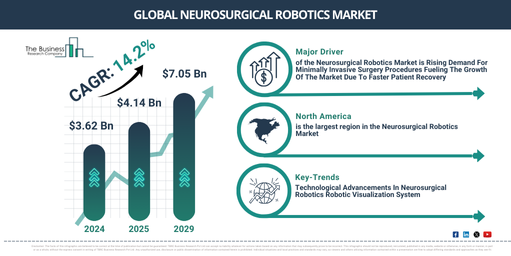
    The market size for neurosurgical robotics has seen impressive growth in the last few years. Its expansion is projected to continue from $3.62 billion in 2024 to $4.14 billion in 2025, reflecting a compound annual growth rate (CAGR) of 14.6%. The historical growth of this market is linked to several factors: the increased need for less intrusive surgeries, a rise in cases of neurological disorders, an aging global population, the expansion in the number of neurosurgeons and their training programs, and enhanced healthcare expenditure in prosperous countries.

    The neurosurgical robotics sector is anticipated to witness significant expansion in the coming years, with the market size predicted to reach $7.05 billion in 2029, boasting a compound annual growth rate (CAGR) of 14.2%. The upswing during the forecast period can be ascribed to the escalating demand for accuracy in intricate neurosurgical procedures, the rising prevalence of reimbursement policies, the development of health care infrastructure in developing economies, an increased understanding of the advantages of robotic surgery, and the growing collaborations between med-tech firms and hospitals. Key emerging trends within this prediction period include advancements in neurosurgical navigation technology, constant innovation in robotic arms and tools, increasing investment in research and development, progress in real-time imaging, and the growing inclusion of cloud-based data solutions in surgical systems.

    Download The Free Sample Report Here:

    https://www.thebusinessresearchcompany.com/sample.aspx?id=27359&type=smp

    What Forces Are Driving The Growth Of The Neurosurgical Robotics Market?

    The growth of the neurosurgical robotics market is anticipated to be fueled by the increasing preference for minimally invasive surgical procedures. This surgical method, which involves limiting the size and quantity of incisions, minimizes physical trauma during surgery, thus promoting a faster recovery for patients. This increase in demand is due to the fact that minimally invasive surgeries cause less trauma, leading to less pain, shorter hospitalization periods, and faster resumption of everyday tasks. Neurosurgical robotics is instrumental in such surgery by improving surgical accuracy, consistency, and control, allowing surgeons to operate with more precision via smaller incisions, consequently decreasing the likelihood of complications. For example, the American Society of Plastic Surgeons reported in June 2024, that there was a 7% increase in minimally invasive procedures in the United States in 2023, exceeding a total of 25 million. As a result, the neurosurgical robotics market is being propelled by this surge in preference for minimally invasive surgical procedures.

    How Is The Neurosurgical Robotics Industry Segmented Across Key Parameters?

    The neurosurgical robotics market covered in this report is segmented

    1) By Type Of Robot: Precision Robotic Systems, Navigation Systems, Surgical Assist Systems

    2) By Surgery Type: Minimally Invasive, Open Surgery

    3) By Application: Brain Tumor Resection, Deep Brain Stimulation (DBS), Spine Surgery

    4) By End User: Hospitals, Ambulatory Surgical Centers

    Subsegments:

    1) By Precision Robotic Systems: Robotic Tumor Resection Systems, Robotic Biopsy Devices, Robotic Laser Ablation Systems

    2) By Navigation Systems: Image-Guided Navigation Platforms, Electromagnetic Tracking Systems, Optical Tracking Navigation Systems

    3) By Surgical Assist Systems: Robotic Arm Positioning Devices, Endoscopic Assistance Robots, Instrument Guidance And Stabilization Systems

    What Notable Trends Are Shaping The Direction Of The Neurosurgical Robotics Market?

    Leading enterprises in the neurosurgical robotics market are prioritizing the creation of cutting-edge solutions like robotic exoscope systems, aimed at amplifying surgical accuracy, visualization, and less invasive methods for intricate cranial and spinal procedures. A robotic exoscope system is a sophisticated surgical visualization tool, merging a high-definition external scope (exoscope) with robot-aided controls for augmented, hands-off imaging during surgery. For example, Zeiss Medical Technology, a medical tech solution provider based in Germany, introduced the Kinevo 900 S robotic visualization system for neurosurgery procedures in September 2024. The ZEISS KINEVO 900 S robotic visualization system features unique attributes that markedly improve precision and workflow in neurosurgery. It incorporates high-definition 4K 3D hybrid visualization, giving surgeons the ability to effortlessly toggle between optical and digital perspectives for improved comfort and precision. The system has top-tier cobotic capabilities such as PointLock, PositionMemory, and AutoCenter, facilitating hands-off, AI-enabled positioning of the surgical view. Its DepthPro mode augments depth of field with a single click, ensuring a larger portion of the surgical field remains in focus.

    Which Companies Currently Dominate The Competitive Landscape In The Neurosurgical Robotics Industry?

    Major companies operating in the neurosurgical robotics market are Medtronic Plc, Stryker Corporation, Zimmer Biomet Holdings Inc., Renishaw Plc, Brainlab AG, Panda Surgical Limited, Monteris Medical Inc., Synaptive Medical Inc., Novarad Corporation, Myomo Inc., ClearPoint Neuro Inc., ZAP Surgical Systems Inc., Robeauté SAS, Galen Robotics Limited, Axilum Robotics SA, AiM Medical Robotics Inc., NaoTrac, Zeta Surgical Inc., Brain Navi Biotechnology Co. Ltd., and Artedrone SAS.

    Get The Full Report Here:

    https://www.thebusinessresearchcompany.com/report/neurosurgical-robotics-global-market-report

    Which Geographic Regions Are Driving Demand In The Neurosurgical Robotics Market?

    North America was the largest region in the neurosurgical robotics market in 2024. Asia-Pacific is expected to be the fastest-growing region in the forecast period. The regions covered in the neurosurgical robotics market report are Asia-Pacific, Western Europe, Eastern Europe, North America, South America, Middle East, Africa.

    Request For A Customized Report:

    https://www.thebusinessresearchcompany.com/customise?id=27359&type=smp

    About The Business Research Company:

    With over 15000+ reports from 27 industries covering 60+ geographies, The Business Research Company has built a reputation for offering comprehensive, data-rich research and insights. Armed with 1,500,000 datasets, the optimistic contribution of in-depth secondary research, and unique insights from industry leaders, you can get the information you need to stay ahead in the game.

    Get in touch with us:

    The Business Research Company: https://www.thebusinessresearchcompany.com/

    Americas +1 310-496-7795

    Asia +44 7882 955267 & +91 8897263534

    Europe +44 7882 955267

    Email us at info@tbrc.info

    Follow us on:

    LinkedIn: https://in.linkedin.com/company/the-business-research-company

    YouTube: https://www.youtube.com/channel/UC24_fI0rV8cR5DxlCpgmyFQ

    Global Market Model: https://www.thebusinessresearchcompany.com/global-market-model

  • In-Depth Neuroregeneration Therapy Market Report: Business Trends, Growth Factors, and Forecast to 2029

    In-Depth Neuroregeneration Therapy Market Report: Business Trends, Growth Factors, and Forecast to 2029

    Claim your 30% discount on Global Market Reports with code ONLINE30. Limited time only.

    Claim your 30% discount on Global Market Reports with code ONLINE30. Limited time only.

    How Large Is the Neuroregeneration Therapy Market Expected to Be in 2029?

    Over recent years, there has been a substantial increase in the market size for neuroregeneration therapies. The market is set to expand from $9.98 billion in 2024 to reach $11.29 billion in 2025, representing a compound annual growth rate (CAGR) of 13.1%. This significant growth during the historical period was caused by several factors, including a higher occurrence of neurological disorders, a surge in the global geriatric population, more investment in research and development, increased government support and funding, and thriving partnerships between academic institutions and industries.

    The market size for neuroregeneration treatment is predicted to witness swift escalation in the coming years, expanding to $18.23 billion by 2029 with a 12.7% compound annual growth rate (CAGR). The spurt in the projected period can be tied to the surging demand for neuroregeneration treatments, escalated demand for cellular therapies, growing healthcare requirements, increased investment in biotechnology, and an aging population on the rise. Key trends anticipated during the forecast period comprise advancements in stem cell-centric therapies, the progression in personalized medicine, novel gene editing techniques for neurodegenerative conditions, utilization of nanotechnology in drug conveyance, and the progression in pharma-biotech.

    Download The Free Sample Report Here:

    https://www.thebusinessresearchcompany.com/sample.aspx?id=27358&type=smp

    What Are The Contributors To Demand In The Neuroregeneration Therapy Market?

    The neuroregeneration therapy market is projected to grow significantly due to the increasing prevalence of neurological disorders. These disorders, which affect the brain, spinal cord or peripheral nerves, are often linked to environmental toxins boosting their incidence. As these toxins, including heavy metals, pesticides, and industrial chemicals, can damage the nervous system, they often lead to neurodegenerative diseases. Neurological disorders can be treated with neuroregeneration therapy, which repairs or replaces damaged neurons and tissues enhancing bodily functions and overall life quality. For instance, the World Federation of Neurology, a UK-based conglomerate of national neurological societies, reported in October 2023 that over 40% of the global population suffers from some neurological condition. This figure is anticipated to nearly double by 2050. This increase in prevalence of such disorders is fuelling the growth of the neuroregeneration therapy market. The neuroregeneration therapy market is also expected to grow substantially due to the increase in the aging population. The aging population describes a population trend where there is an increase in elderly individuals creating economic and social hurdles. This trend is primarily due to better healthcare and improved living standards. Neuroregeneration therapy is beneficial for the elderly as it helps in repair of damaged neurons, enhancing mobility, and slowing age-related cognitive decline. The House of Commons Library, a UK-based information hub of the British Parliament’s lower house, reported in July 2024 that in 2022, about 19% (nearly 12.7 million) of the UK’s total population was over the age of 65. This trend is projected to grow even more, reaching 22.1 million by 2072 representing 27% of the total population. Thus, the growing aging population is fuelling the growth of the neuroregeneration therapy market.

    What Segmentation Categories Are Included In The Neuroregeneration Therapy Market Analysis?

    The neuroregeneration therapy market covered in this report is segmented

    1) By Type Of Neuroregeneration Therapy: Stem Cell Therapy, Gene Therapy, Pharmacological Therapy, Neurostimulation Therapy, Other Types Of Neuroregeneration Therapy

    2) By Technology: Tissue Engineering, Cranial And Spinal Stimulation, Nanotechnology In Drug Delivery, Biomaterials Development

    3) By Mode Of Administration: Oral, Injectable, Implantable, Other Modes Of Administration

    4) By Indication: Spinal Cord Injury, Traumatic Brain Injury, Stroke, Parkinson’s Disease, Multiple Sclerosis, Alzheimer’s Disease, Peripheral Nerve Injury, Other Indications

    5) By End-User: Hospitals, Clinical Research Institutes, Academic Institutions, Pharmaceutical And Biotechnology Companies

    Subsegment:

    1) By Stem Cell Therapy: Embryonic Stem Cell Therapy, Mesenchymal Stem Cell Therapy, Neural Stem Cell Therapy, Induced Pluripotent Stem Cell Therapy, Hematopoietic Stem Cell Therapy

    2) By Gene Therapy: In Vivo Gene Therapy, Ex Vivo Gene Therapy, Viral Vector Based Gene Therapy, Non Viral Vector Based Gene Therapy, Genome Editing Gene Therapy

    3) By Pharmacological Therapy: Neuroprotective Drugs, Neurotrophic Factor Based Drugs, Anti Inflammatory Drugs, Antioxidant Drugs, Cholinesterase Inhibitors

    4) By Neurostimulation Therapy: Deep Brain Stimulation, Transcranial Magnetic Stimulation, Vagus Nerve Stimulation, Spinal Cord Stimulation, Transcranial Direct Current Stimulation

    5) By Other Types Of Neuroregeneration Therapy: Nanotechnology Based Therapy, Exosome Based Therapy, Biomaterial Based Therapy, Electromagnetic Field Therapy, Hyperbaric Oxygen Therapy

    What Upcoming Trends Are Expected To Impact The Neuroregeneration Therapy Market Globally?

    Prominent organizations active in the neuroregeneration therapy market are diverting their efforts towards the development of advanced solutions such as resorbable implants. This is done with the objective of enhancing nerve regeneration, supporting axonal growth, and ameliorating clinical outcomes in the sphere of peripheral nerve repair. Essentially, a resorbable implant is a medical apparatus that dissolves, being subsequently absorbed by the human body after serving its intended purpose, making the process of surgical removal redundant. To illustrate, Integra LifeSciences Holdings Corporation, an American biotechnology enterprise, unveiled the NeuraGen 3D Nerve Guide Matrix in March 2022. This product, specifically developed for peripheral nerve discontinuities repair, combines Integra’s bovine type 1 collagen and an innovative inner matrix with porous channels to facilitate an ideal environment for nerve healing, guiding Schwann cell migration and directing axonal growth. This breakthrough represents a major leap in peripheral nerve repair, equipping surgeons with an alternative solution for short-to-mid-gap nerve repairs. Furthermore, it is the fruit of years of concerted research and innovative partnership, aimed at enhancing patients’ functional recovery post nerve injuries.

    Who Are The Top-Ranked Companies In The Neuroregeneration Therapy Market Today?

    Major companies operating in the neuroregeneration therapy market are F. Hoffmann-La Roche Ltd., Merck & Co. Inc., AbbVie Inc., Sanofi S.A., AstraZeneca PLC, Novartis International AG, Stryker Corporation, Biogen Inc., Synovis Life Technologies Inc., Integra LifeSciences Holdings Corporation, AxoGen Inc., Denali Therapeutics Inc., Aspen Neuroscience Inc., Neurona Therapeutics Inc., Lineage Cell Therapeutics Inc., Checkpoint Surgical Inc., Stemedica Cell Technologies Inc., Polyganics B.V., Epineuron Technologies Inc., NeuExcell Therapeutics Inc.

    Get The Full Report Here:

    https://www.thebusinessresearchcompany.com/report/neuroregeneration-therapy-global-market-report

    How Is Neuroregeneration Therapy Market Adoption Varying Across Different Regions And Sectors?

    North America was the largest region in the neuroregeneration therapy market in 2024. Asia-Pacific is expected to be the fastest-growing region in the forecast period. The regions covered in the neuroregeneration therapy market report are Asia-Pacific, Western Europe, Eastern Europe, North America, South America, Middle East, Africa.

    Request For A Customized Report:

    https://www.thebusinessresearchcompany.com/customise?id=27358&type=smp

    About The Business Research Company:

    With over 15000+ reports from 27 industries covering 60+ geographies, The Business Research Company has built a reputation for offering comprehensive, data-rich research and insights. Armed with 1,500,000 datasets, the optimistic contribution of in-depth secondary research, and unique insights from industry leaders, you can get the information you need to stay ahead in the game.

    Get in touch with us:

    The Business Research Company: https://www.thebusinessresearchcompany.com/

    Americas +1 310-496-7795

    Asia +44 7882 955267 & +91 8897263534

    Europe +44 7882 955267

    Email us at info@tbrc.info

    Follow us on:

    LinkedIn: https://in.linkedin.com/company/the-business-research-company

    YouTube: https://www.youtube.com/channel/UC24_fI0rV8cR5DxlCpgmyFQ

    Global Market Model: https://www.thebusinessresearchcompany.com/global-market-model