Month: September 2025

  • Nanotechnology In Cancer Treatment Industry Poised for Rapid Expansion, Projected to Hit $278.07 Billion by 2029

    Nanotechnology In Cancer Treatment Industry Poised for Rapid Expansion, Projected to Hit $278.07 Billion by 2029

    Claim your 30% discount on Global Market Reports with code ONLINE30. Limited time only.

    Claim your 30% discount on Global Market Reports with code ONLINE30. Limited time only.

    What Is the Outlook for the Nanotechnology In Cancer Treatment Market Heading Into 2029?

    In recent times, we have observed a swift expansion in the market size of nanotechnology in cancer treatment. The forecast predicts a rise from $137.90 billion in 2024 to $159.09 billion in 2025, indicating a compound annual growth rate (CAGR) of 15.4%. The historic growth phase can be credited to a global increase in early cancer detection awareness, an upsurge in the prevalence of cancer, escalating investments in nanomedicine research and development, growing preference for minimally invasive procedures, and government’s increasing financial support for oncology nanotech studies.

    The forecast for the nanotechnology market in cancer treatment indicates swift expansion in the coming years, expecting to reach $278.07 billion in 2029 with a 15.0% compound annual growth rate (CAGR). The anticipated growth over the forecast timeframe is attributed to the escalating demand for targeted cancer treatments, integration of nanotechnology into drug delivery systems, a deeper concentration on individualized oncology treatment, a rise in clinical trials for nano-enabled cancer drugs, and an increase in the adoption of nanotheranostics for cancer care. Key trends predicted include advancements in nanoparticle drug delivery systems, innovative cancer-specific nanocarriers, the incorporation of AI into nanotechnology for precise oncology, the invention of multi-functional nanodevices for diagnosis and treatment, and the spread of nanotheranostics into personalized healthcare.

    Download The Free Sample Report Here:

    https://www.thebusinessresearchcompany.com/sample.aspx?id=27357&type=smp

    Which Factors Are Pushing The Nanotechnology In Cancer Treatment Market Forward?

    The expansion of the cancer treatment market through nanotechnology is anticipated due to the increasing need for targeted therapies. Targeted therapies are cancer treatments uniquely designed to pinpoint molecular markers or pathways that are crucial to the growth and advancement of tumors. The escalated requirement for these specific therapies can be attributed to their capability to not only accurately assault cancer cells but also limit the harm brought to healthy tissue and control potential side effects. By administering accurate drug delivery to cancer cells, nanotechnology enhances targeted therapies, which boosts their effectiveness while mitigating harm to healthy tissues. For example, the American Society of Gene & Cell Therapy (ASGCT), a professional organization based in the US, revealed in a report in July 2023 that by the end of the first quarter of 2023, there were 247 gene therapies in Phase II. This number experienced a 5% increase, reaching 260 by the conclusion of the second quarter in 2023. Consequently, the expanding need for targeted therapies is propelling the development of nanotechnology in the cancer treatment market.

    Which Segment Held The Largest Share In The Nanotechnology In Cancer Treatment Market In 2025?

    The nanotechnology in cancer treatment market covered in this report is segmented

    1) By Nanotechnology Type: Liposomes, Dendrimers, Nanoparticles

    2) By Treatment Type: Chemotherapy, Immunotherapy, Targeted Therapy, Combined Therapy Approaches, Surgery Assistance

    3) By Cancer Type: Breast Cancer, Lung Cancer, Prostate Cancer, Colorectal Cancer, Blood Cancer, Other Cancer Types

    4) By Application: Targeted Drug Delivery, Photothermal Therapy, Radiation Therapy Enhancement, Diagnostics And Imaging, Gene Delivery Systems

    5) By End-User: Hospitals, Research Institutions, Diagnostics Laboratories, Pharmaceutical Companies, Contract Research Organizations (CROs)

    Subsegments:

    1) By Liposomes: Conventional Liposomes, Stealth Liposomes, Cationic Liposomes, Immunoliposomes

    2) By Dendrimers: Polyamidoamine Dendrimers, Polypropyleneimine Dendrimers, Peptide-Based Dendrimers, Carbosilane Dendrimers

    3) By Nanoparticles: Gold Nanoparticles, Magnetic Nanoparticles, Polymeric Nanoparticles, Quantum Dots, Lipid Nanoparticles

    How Are Key Trends Driving Expansion In The Nanotechnology In Cancer Treatment Industry?

    Key players in the nanotechnology cancer treatment market are turning their focus to develop advanced solutions such as nano formulations for immunotherapy, with an aim to improve immune targeting and reduce negative effects in cancer patients. Nano formulation within immunotherapy leverages nanotechnology to deliver immunity-centric treatments directly to the target areas, enhancing precise treatment plans while boosting drug stability, bioavailability, and the activation of immune response. For example, in December 2023, Cello Therapeutics, an American biotech firm, introduced its broad-spectrum therapeutic cancer nano vaccine known as CE120, which received approval from the Food and Drug Administration. This significant breakthrough treatment is the first to use platelet membrane-coated nanoparticles to treat solid tumors clinically. CE120 merges targeted drug delivery with immune system activation, seeking to eradicate tumors and prevent their future return. Its unique nanotechnology framework heightens both the precision of the treatment and immune response. This achievement establishes CE120 as a ground-breaking nanomedicine in the cancer treatment domain.

    Which Organizations Are Driving Progress In The Nanotechnology In Cancer Treatment Industry?

    Major companies operating in the nanotechnology in cancer treatment market are Pfizer Inc., AstraZeneca PLC, Novartis AG, Amgen Inc., GE Healthcare Technologies Inc., Eisai Co. Ltd., Jazz Pharmaceuticals plc, Arrowhead Pharmaceuticals Inc., Nanobiotix S.A., EnGeneIC Ltd., Nanospectra Biosciences Inc., Sona Nanotech Inc., CritiTech Inc., Immix Biopharma Inc., DNA Nanobots LLC, Nanovery Limited, CytImmune Sciences Inc., NanOlogy LLC, NanoApps Medical Inc., ARIZ Precision Medicine.

    Get The Full Report Here:

    https://www.thebusinessresearchcompany.com/report/nanotechnology-in-cancer-treatment-global-market-report

    Which Region Is Expected To Experience The Highest Growth In The Nanotechnology In Cancer Treatment Industry?

    North America was the largest region in the nanotechnology in cancer treatment market in 2024. Asia-Pacific is expected to be the fastest-growing region in the forecast period. The regions covered in the nanotechnology in cancer treatment market report are Asia-Pacific, Western Europe, Eastern Europe, North America, South America, Middle East, Africa.

    Request For A Customized Report:

    https://www.thebusinessresearchcompany.com/customise?id=27357&type=smp

    About The Business Research Company:

    With over 15000+ reports from 27 industries covering 60+ geographies, The Business Research Company has built a reputation for offering comprehensive, data-rich research and insights. Armed with 1,500,000 datasets, the optimistic contribution of in-depth secondary research, and unique insights from industry leaders, you can get the information you need to stay ahead in the game.

    Get in touch with us:

    The Business Research Company: https://www.thebusinessresearchcompany.com/

    Americas +1 310-496-7795

    Asia +44 7882 955267 & +91 8897263534

    Europe +44 7882 955267

    Email us at info@tbrc.info

    Follow us on:

    LinkedIn: https://in.linkedin.com/company/the-business-research-company

    YouTube: https://www.youtube.com/channel/UC24_fI0rV8cR5DxlCpgmyFQ

    Global Market Model: https://www.thebusinessresearchcompany.com/global-market-model

  • Global Mutation Detection Kits In Genome Editing Market Forecast to Reach $1.86 Billion by 2029, Driven by 13.1% CAGR

    Global Mutation Detection Kits In Genome Editing Market Forecast to Reach $1.86 Billion by 2029, Driven by 13.1% CAGR

    Claim your 30% discount on Global Market Reports with code ONLINE30. Limited time only.

    Claim your 30% discount on Global Market Reports with code ONLINE30. Limited time only.

    What Does the Forecast Indicate for the Mutation Detection Kits In Genome Editing Market From 2025 to 2029?

    In recent times, the market size of mutation detection kits in the genome editing sector has witnessed prompt escalation. By 2024, it is projected to be valued at $1.01 billion before leaping to $1.14 billion in 2025, denoting an impressive compound annual growth rate (CAGR) of 13.4%. This significant surge during the historic period can be connected to the intensification in research pertaining to genetic ailments, amplified government backing for genomics, escalating collaborations in academic and clinical research, the increased accessibility of sophisticated molecular biology tools, and the upswing in investments from biotech corporations.

    In the genome editing market, the mutation detection kits are anticipated to grow significantly in the next few years. This market is projected to reach $1.86 billion in 2029, increasing at a compound annual growth rate (CAGR) of 13.1%. A surge in the adoption of autonomous mobile robots (AMRs), increased emphasis on supply chain visibility, significant investments in digital twin technologies, an increased need for real-time asset tracking, and a rising adoption of industrial automation can all contribute to this growth during the forecast period. The forecast period is also likely to see key trends including advancements in real-time location systems (RTLS), breakthroughs in AI-powered asset tracking, the merging of RFID with IoT platforms, advancements in ultra-wideband (UWB) technology, and the incorporation of digital twin solutions in industrial automation.

    Download The Free Sample Report Here:

    https://www.thebusinessresearchcompany.com/sample.aspx?id=27356&type=smp

    What Elements Are Contributing To Growth In The Mutation Detection Kits In Genome Editing Market?

    The increasing occurrence of genetic disorders is anticipated to drive the expansion of the mutation detection kits in the genome editing market. Genetic disorders, diseases or conditions caused by DNA abnormalities that can be inherited or result from new genetic mutations, are on the rise due to more awareness and advanced diagnostic technologies. These advancements enable faster and more precise condition identification, leading to increased reported prevalence rates. Through the accurate identification of mutations causing diseases, genome editing mutation detection kits aid in addressing genetic disorders. They facilitate targeted research and the creation of exact therapeutic interventions. For example, the National Health Service, a government department based in the UK, reported in May 2024 that approximately 17,000 people in England live with sickle cell disease, an inherited blood disorder, with about 250 new diagnoses each year. Consequently, the escalating prevalence of genetic disorders is fuelling the growth of the mutation detection kits in the genome editing market.

    Which Segments Are Detailed In The Global Mutation Detection Kits In Genome Editing Market Report?

    The mutation detection kits in genome editing market covered in this report is segmented

    1) By Product Type: Reagents, Kits, Software Solutions

    2) By Technology: Clustered Regularly Interspaced Short Palindromic Repeats (CRISPR), Transcription Activator-Like Effector Nucleases Or Meganuclease-TAL Effector Nucleases (TALENs/MegaTALs), Zinc Finger Nucleases (ZFN), Other Technologies

    3) By Application: Research, Clinical Diagnostics, Drug Development, Other Applications

    4) By End Use: Academic Institutions, Hospitals And Diagnostic Centers, Biotechnology Companies

    Subsegments:

    1) By Reagents: Deoxyribonucleic Acid Polymerases (DNA) Polymerases, Nucleases, Buffers And Enzymes, Fluorescent Dyes And Probes, Primers And Oligonucleotides

    2) By Kits: Polymerase Chain Reaction (PCR)-Based Mutation Detection Kits, Next-Generation Sequencing-Based Mutation Analysis Kits, Clustered Regularly Interspaced Short Palindromic Repeats (CRISPR) Mutation Validation Kits, Gel Electrophoresis-Based Detection Kits

    3) By Software Solutions: Mutation Analysis And Visualization Tools, Clustered Regularly Interspaced Short Palindromic Repeats (CRISPR) Off-Target Prediction Software, Genomic Alignment and Annotation Software, Data Interpretation Platforms For Next-Generation Sequencing, Cloud-Based Bioinformatics Platforms

    Which Emerging Trends And Strategic Shifts Are Shaping The Mutation Detection Kits In Genome Editing Market?

    Leading firms in the genome editing market, particularly in mutation detection kits, are prioritizing the creation of cutting-edge products like ultrasensitive multiplexed assays, geared at boosting accuracy, pace, and sensitivity in identifying genetic mutations. These advanced diagnostic tests have the ability to concurrently detect and quantify multiple genetic mutations at extremely low levels, thus providing quicker, more accurate, and in-depth mutation analysis that can enhance disease diagnosis and treatment tracking. For example, the ddPLEX ESR1 Mutation Detection Kit, an ultrasensitive multiplexed digital PCR assay created for breast cancer mutation detection, was unveiled by Bio-Rad Laboratories Inc., a research company based in the US in April 2024. This kit gives a simultaneous identification and precise quantification of seven ESR1 mutations with an analytical sensitivity as low as 0.01% variant allele fraction, and it is compatible with both plasma and tissue sample analysis. These advances reflect the industry’s dedication to enhancing diagnostic precision and the development of more effective disease monitoring and personalized treatment strategies.

    Who Are The Key Contributors To Growth In The Mutation Detection Kits In Genome Editing Market?

    Major companies operating in the mutation detection kits in genome editing market are F. Hoffmann-La Roche Ltd, Merck KGaA, Thermo Fisher Scientific Inc., QIAGEN N.V., Eurofins Scientific SE, Agilent Technologies Inc., Illumina Inc., Bio-Rad Laboratories Inc., Integrated DNA Technologies Inc., GenScript Biotech Corporation, Takara Bio Inc., Promega Corporation, Analytik Jena AG, Twist Bioscience Corporation, New England Biolabs Inc., Applied Biological Materials Inc., Synthego Corporation, Cell Signaling Technology Inc., BioVision Inc., Creative Biogene Corporation.

    Get The Full Report Here:

    https://www.thebusinessresearchcompany.com/report/mutation-detection-kits-in-genome-editing-global-market-report

    Which Region Is Projected To Lead The Mutation Detection Kits In Genome Editing Market By 2025?

    North America was the largest region in the mutation detection kits in genome editing market in 2024. Asia-Pacific is expected to be the fastest-growing region in the forecast period. The regions covered in the mutation detection kits in genome editing market report are Asia-Pacific, Western Europe, Eastern Europe, North America, South America, Middle East, Africa.

    Request For A Customized Report:

    https://www.thebusinessresearchcompany.com/customise?id=27356&type=smp

    About The Business Research Company:

    With over 15000+ reports from 27 industries covering 60+ geographies, The Business Research Company has built a reputation for offering comprehensive, data-rich research and insights. Armed with 1,500,000 datasets, the optimistic contribution of in-depth secondary research, and unique insights from industry leaders, you can get the information you need to stay ahead in the game.

    Get in touch with us:

    The Business Research Company: https://www.thebusinessresearchcompany.com/

    Americas +1 310-496-7795

    Asia +44 7882 955267 & +91 8897263534

    Europe +44 7882 955267

    Email us at info@tbrc.info

    Follow us on:

    LinkedIn: https://in.linkedin.com/company/the-business-research-company

    YouTube: https://www.youtube.com/channel/UC24_fI0rV8cR5DxlCpgmyFQ

    Global Market Model: https://www.thebusinessresearchcompany.com/global-market-model
  • Outlook for Multiomics Services Market: Key Developments and Future Strategies to 2029

    Outlook for Multiomics Services Market: Key Developments and Future Strategies to 2029

    Claim your 30% discount on Global Market Reports with code ONLINE30. Limited time only.

    Claim your 30% discount on Global Market Reports with code ONLINE30. Limited time only.

    How Much Is the Global Multiomics Services Market Valued at Present and by 2029?

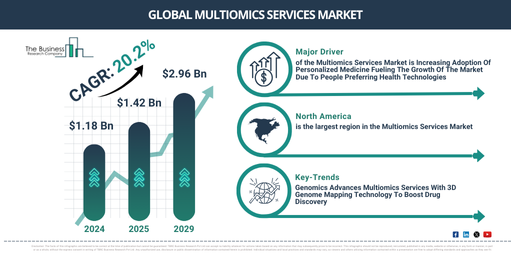
    In the past few years, the multiomics services market has seen substantial growth. The market value is set to increase from $1.18 billion in 2024, to $1.42 billion in 2025, with a compound annual growth rate (CAGR) of 20.6%. The growth experienced during the historic period is due to various factors such as the widespread use of next-generation sequencing platforms, increased application of bioinformatics tools in research, a surge in the demand for the discovery of biomarkers, growth of academic partnerships in the field of systems biology, and the enhanced use of multiomics in plant science.

    In the coming years, an explosive increase is anticipated in the size of the multiomics services market. By the year 2029, it is predicted to have grown to a staggering $2.96 billion, with a compound annual growth rate (CAGR) of 20.2%. This growth in the forecast period is linked to sustainable agricultural practices’ ascent, an amplified focus on single-cell multiomics, the surge in using spatial omics in disease investigation, a climbing requirement for personalized nutrition, and the expanded initiation of clinical trials that employ multiomics. Future trends encompass advancements in spatial transcriptomics tools, heightened microfluidics-enabled omics workflows, the creation of real-time multiomics monitoring systems, discoveries in cross-species multiomics applications, and developments in wearable omics diagnostic technology.

    Download The Free Sample Report Here:

    https://www.thebusinessresearchcompany.com/sample.aspx?id=27355&type=smp

    #What Drivers Are Influencing Growth In The Multiomics Services Market?

    The growth of the multiomics services market is being fuelled by the rising implementation of personalized medicine. This term refers to a medical approach that uses a person’s genetic and lifestyle information to individualize their healthcare and treatment strategies. The increasing preference for health technologies offering real-time monitoring and treatments tailored to a person’s unique biological makeup has led to wider acceptance of personalized medicine. Multiomics services contribute to the progression of personalized medicine by synthesizing diverse biological data such as genomics, transcriptomics, proteomics, and metabolomics. This offers a comprehensive picture of an individual’s health, thus enabling personalized diagnosis, treatment, and disease prevention plans. For instance, the Personalized Medicine Coalition, a professional membership organization in the US, reported in February 2023 that there had been approval for 12 new personalized medicines in 2022, constituting about 34% of all newly approved therapies. This was a significant rise from previous years. So, it is clear that the growing adoption of personalized medicine is spurring the growth of the multiomics services market.

    What Are The Main Segments Identified In The Multiomics Services Market Research?

    The multiomics services market covered in this report is segmented

    1) By Type: Single-Cell Multiomics, Bulk Multiomics

    2) By Application: Biomarker Discovery, Drug Discovery And Development, Synthetic Biology, Other Applications

    3) By End Users: Academic And Research Institutes, Pharmaceutical And Biotechnology Companies, Other End Users

    Subsegments:

    1) By Single-Cell Multiomics: Single-Cell Genomics Services, Single-Cell Transcriptomics Services, Single-Cell Proteomics Services, Single-Cell Epigenomics Services

    2) By Bulk Multiomics: Genomics And Transcriptomics Integration Services, Genomics And Proteomics Integration Services, Transcriptomics And Proteomics Integration Services, Epigenomics And Transcriptomics Integration Services

    What Are The Leading Trends And Opportunities In The Multiomics Services Sector?

    Major corporations in the multiomics services market are developing innovative techniques, such as 3D genome mapping, to bolster understanding of gene regulation, mechanisms of diseases, and individualized treatment plans. 3D genome mapping is the practice of identifying the three-dimensional configuration of the genome present in a cell’s nucleus. Example, in January 2025, Enhanc3D Genomics, a biotechnology firm based in the UK, introduced a variety of 3D multi-omics solutions designed to expedite and increase the accuracy of drug discovery. They offer distinctive features such as merging genome-wide regulatory interaction data with multi-omics profiles in one assay, this provides a thorough overview of gene regulation. Their Promoter Capture Hi-C technology enables accurate mapping of extensive interactions between regulatory components and target genes, including non-coding regions. The GenLinkConnect, GenLinkResponse, and GenLinkProfile features of the platform’s modular design support SNP-to-gene connection, drug reaction analysis, and cell-specific regulatory profiling respectively. Additionally, their GenLinkHub software offers an instinctive interface for 3D visualisation, data handling, and quality control, enhancing researchers’ interpretation skills of complex datasets and speeding up drug discovery.

    Which Companies Play A Key Role In The Development Of The Multiomics Services Market?

    Major companies operating in the multiomics services market are Thermo Fisher Scientific Inc., Agilent Technologies Inc., PerkinElmer Inc., Bruker Corporation, QIAGEN NV, Azenta Inc., BGI Group, 10x Genomics Inc., BioLegend Inc., Oxford Nanopore Technologies Plc, NanoString Technologies Inc., Pacific Biosciences Inc., Metware Biotechnology Inc., Source BioScience Limited, CD Genomics Inc., Psomagen Inc., Creative Proteomics, Sapient Bioanalytics LLC, Dalton Bioanalytics Inc., and Clinical Microbiomics A/S.

    Get The Full Report Here:

    https://www.thebusinessresearchcompany.com/report/multiomics-services-global-market-report

    What Are The Key Regional Developments Shaping The Multiomics Services Market?

    North America was the largest region in the multiomics services market in 2024. Asia-Pacific is expected to be the fastest-growing region in the forecast period. The regions covered in the multiomics services market report are Asia-Pacific, Western Europe, Eastern Europe, North America, South America, Middle East, Africa.

    Request For A Customized Report:

    https://www.thebusinessresearchcompany.com/customise?id=27355&type=smp

    About The Business Research Company:

    With over 15000+ reports from 27 industries covering 60+ geographies, The Business Research Company has built a reputation for offering comprehensive, data-rich research and insights. Armed with 1,500,000 datasets, the optimistic contribution of in-depth secondary research, and unique insights from industry leaders, you can get the information you need to stay ahead in the game.

    Get in touch with us:

    The Business Research Company: https://www.thebusinessresearchcompany.com/

    Americas +1 310-496-7795

    Asia +44 7882 955267 & +91 8897263534

    Europe +44 7882 955267

    Email us at info@tbrc.info

    Follow us on:

    LinkedIn: https://in.linkedin.com/company/the-business-research-company

    YouTube: https://www.youtube.com/channel/UC24_fI0rV8cR5DxlCpgmyFQ

    Global Market Model: https://www.thebusinessresearchcompany.com/global-market-model
  • Key Market Drivers, Trends, and Forecast for the Global Multi-Channel Remote Electrocardiogram (ECG) Monitors Industry

    Key Market Drivers, Trends, and Forecast for the Global Multi-Channel Remote Electrocardiogram (ECG) Monitors Industry

    Claim your 30% discount on Global Market Reports with code ONLINE30. Limited time only.

    Claim your 30% discount on Global Market Reports with code ONLINE30. Limited time only.

    What Is the Current and Projected Market Size of the Multi-Channel Remote Electrocardiogram (ECG) Monitors Industry?

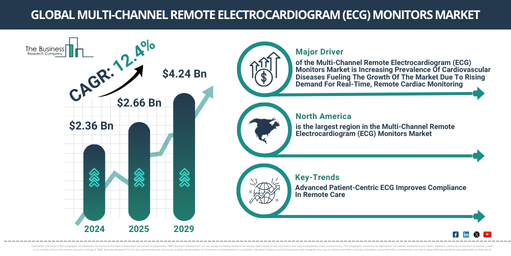
    In the last few years, the market size of the multi-channel remote electrocardiogram (ECG) monitor has expanded swiftly. It is set to escalate from $2.36 billion in 2024 to $2.66 billion in 2025, achieving a compound annual growth rate (CAGR) of 12.7%. Factors contributing to this growth in the historical period include an aging population, a surge in the occurrence of cardiovascular diseases, increased consciousness about preventive healthcare, swift adoption of telemedicine, and a tilt towards personalized cardiac care.

    The market size for multi-channel remote electrocardiogram (ECG) monitors is predicted to experience significant growth in the upcoming years, ballooning to $4.24 billion in 2029 with a 12.4% compound annual growth rate (CAGR). The projected growth during this period can be linked to increasing demands for cardiac monitoring at home, a rise in compatibility with smartphones and wearable devices, expansion services for remote patient monitoring, a surge in health insurance policies covering digital health tools, and its escalating use in fitness and sports diagnostics. Notable trends to look out for in this forecast period include integration with Artificial Intelligence (AI) and data analytics, advances in wireless monitoring technology, adoption of ECG data platforms based in the cloud, device miniaturization, and collaborations between technological businesses and healthcare providers.

    Download The Free Sample Report Here:

    https://www.thebusinessresearchcompany.com/sample.aspx?id=27354&type=smp

    #Which Factors Are Currently Driving The Growth Of The Multi-Channel Remote Electrocardiogram (ECG) Monitors Market?

    The escalation in the occurrence of heart diseases is anticipated to drive the expansion of the market for multi-channel remote electrocardiogram (ECG) monitors. Cardiovascular diseases are a set of disorders affecting the heart and blood vessels, and include conditions like coronary heart disease, heart failure, stroke, and hypertension. Physical inactivity majorly contributes to the escalation of these diseases, as lack of movement leads to risk factors like obesity, elevated blood pressure, and unhealthy cholesterol levels, which considerably up the probability of heart-related ailments. Multi-channel remote electrocardiogram (ECG) monitors act as a support system for managing cardiovascular diseases by providing uninterrupted, real-time heart monitoring from any place. These monitors augment diagnostic precision through multi-lead data and enhance the quality of patient care by diminishing the frequency of hospital visits. For example, in January 2024, the American Heart Association, a NGO based in the US, reported that the age-adjusted mortality rate due to cardiovascular diseases jumped to 233.3 per 100,000 in 2022, showing a 4.0% surge from 224.4 per 100,000 in 2021. Hence, the escalating occurrence of heart diseases is fueling the expansion of the market for multi-channel remote electrocardiogram (ECG) monitors.

    How Is The Global Multi-Channel Remote Electrocardiogram (ECG) Monitors Market Structured In Terms Of Segments?

    The multi-channel remote electrocardiogram (ECG) monitors market covered in this report is segmented

    1) By Type: Wired Multi Channel Remote Electrocardiogram (ECG) Monitor, Wireless Multi Channel Remote Electrocardiogram (ECG) Monitor

    2) By Technology: Wireless Electrocardiogram (ECG) Monitors, Bluetooth-Enabled Electrocardiogram (ECG) Monitors, Wi-Fi-Based Electrocardiogram (ECG) Monitors

    3) By Application: Home Care, Ambulatory Monitoring, Hospitals And Clinics

    4) By Distribution Channel: Direct Sales, Online Sales, Third-Party Distributors

    5) By End-User: Patients, Healthcare Providers, Diagnostic Centers

    Subsegments:

    1) By Wired Multi-Channel Remote Electrocardiogram (ECG) Monitor: Hospital-Based Wired Electrocardiogram Monitors, Ambulatory Care Wired Electrocardiogram Devices, Diagnostic Wired Electrocardiogram Systems, Resting Electrocardiogram Monitors, Stress Test Electrocardiogram Monitors

    2) By Wireless Multi-Channel Remote Electrocardiogram (ECG) Monitor: Bluetooth-Enabled Electrocardiogram Devices, Wi-Fi-Enabled Electrocardiogram Monitors, Wearable Electrocardiogram Monitors, Mobile-Connected Electrocardiogram Devices, Home-Based Wireless Electrocardiogram Systems

    What Trends Are Currently Influencing Growth In The Multi-Channel Remote Electrocardiogram (ECG) Monitors Market?

    Primary entities in the multi-channel remote electrocardiogram (ECG) monitor market are directing their efforts towards the creation of unique solutions, such as progressive patient-centric electrocardiograms (ECGs), aiming to enhance the precision of remote cardiac monitoring and adherence of patients. This sophisticated patient-centric electrocardiogram represents wearable, instantaneous monitoring devices constructed for continuous, customised, and effortless heart health evaluation. For instance, Koninklijke Philips N.V., a Dutch health technology firm, introduced a comprehensive, at-home, 12-lead electrocardiogram (ECG) solution in January 2022. The goal was to facilitate decentralized clinical investigations and promote patient compliance via real-time, remote cardiac surveillance. This state-of-the-art, patient-centric electrocardiogram, comes with a body-worn patch, ensuring accurate ECG lead placement for compliant use, and thus enabling the attainment of clinical-grade data that rivals that of traditionally site-based systems. It also provides secure, near real-time data transmission without the requirement for repeated site visits, onsite technicians, or home healthcare staff.

    Who Are The Main Participants Shaping The Multi-Channel Remote Electrocardiogram (ECG) Monitors Market Landscape?

    Major companies operating in the multi-channel remote electrocardiogram (ecg) monitor market are Medtronic plc, Koninklijke Philips N.V., GE HealthCare Technologies Inc., Boston Scientific Corporation, Shenzhen Mindray Bio-Medical Electronics Co. Ltd., Nihon Kohden Corporation, iRhythm Technologies Inc., Schiller AG, Edan Instruments Inc., BPL Medical Technologies Pvt. Ltd., Bionet Co. Ltd., AliveCor Inc., Turtle Shell Technologies Pvt. Ltd., LifeSignals Inc., VivaLNK Inc., Biotricity Inc., Cardiac Insight Inc., CardioComm Solutions Inc., Movesense Oy, Norav Medical Ltd.

    Get The Full Report Here:

    https://www.thebusinessresearchcompany.com/report/multi-channel-remote-electrocardiogram-ecg-monitors-global-market-report

    Which Region Currently Holds The Largest Share In The Multi-Channel Remote Electrocardiogram (ECG) Monitors Market?

    North America was the largest region in the multi-channel remote electrocardiogram (ECG) monitor market in 2024. Asia-Pacific is expected to be the fastest-growing region in the forecast period. The regions covered in the multi-channel remote electrocardiogram (ECG) monitors market report are Asia-Pacific, Western Europe, Eastern Europe, North America, South America, Middle East, Africa.

    Request For A Customized Report:

    https://www.thebusinessresearchcompany.com/customise?id=27354&type=smp

    About The Business Research Company:

    With over 15000+ reports from 27 industries covering 60+ geographies, The Business Research Company has built a reputation for offering comprehensive, data-rich research and insights. Armed with 1,500,000 datasets, the optimistic contribution of in-depth secondary research, and unique insights from industry leaders, you can get the information you need to stay ahead in the game.

    Get in touch with us:

    The Business Research Company: https://www.thebusinessresearchcompany.com/

    Americas +1 310-496-7795

    Asia +44 7882 955267 & +91 8897263534

    Europe +44 7882 955267

    Email us at info@tbrc.info

    Follow us on:

    LinkedIn: https://in.linkedin.com/company/the-business-research-company

    YouTube: https://www.youtube.com/channel/UC24_fI0rV8cR5DxlCpgmyFQ

    Global Market Model: https://www.thebusinessresearchcompany.com/global-market-model
  • Strategic Report on Motion Stimulation Therapy Market: Growth Opportunities and Emerging Challenges

    Strategic Report on Motion Stimulation Therapy Market: Growth Opportunities and Emerging Challenges

    Claim your 30% discount on Global Market Reports with code ONLINE30. Limited time only.

    Claim your 30% discount on Global Market Reports with code ONLINE30. Limited time only.

    How Will the Motion Stimulation Therapy Market Evolve in Terms of Growth and Size by 2029?

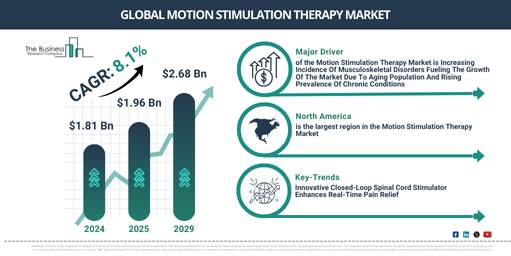
    In recent times, there has been a strong expansion in the market size of motion stimulation therapy. The market is set to escalate from $1.81 billion in 2024 to $1.96 billion in 2025, projecting a compound annual growth rate (CAGR) of 8.5%. The surge in growth during the historical period is due to factors such as the increasing occurrence of neurodegenerative afflictions, heightened awareness about the importance of physical rehabilitation, growing preference for non-invasive treatment methods, a rising number of elderly individuals needing help with mobility, and an escalation in sports-related injuries.

    The market size for motion stimulation therapy is projected to experience substantial expansion in the forthcoming years, eventually reaching a value of $2.68 billion by 2029, growing at a compound annual growth rate (CAGR) of 8.1%. Several factors contributing to this growth during the forecast period include the rising demand for portable and wearable therapy devices, growing adoption of telehealth and remote monitoring systems, increasing cases of disorders related to lifestyle, escalating demand for personalized and targeted motion therapy solutions, and a heightened emphasis on preventative healthcare boosting the use of motion therapy. Key trends during the forecast period encompass the creation of compact simulation platforms, advancements in haptic feedback technologies, technological innovation in simulators powered by artificial intelligence, the creation of portable devices suited for at-home therapy sessions, and the incorporation of biofeedback systems to enhance the effectiveness of therapy.

    Download The Free Sample Report Here:

    https://www.thebusinessresearchcompany.com/sample.aspx?id=27353&type=smp

    What factors are expected to fuel Motion Stimulation Therapy market growth in the coming years?

    The continuous rise in the occurrence of musculoskeletal disorders is anticipated to drive the expansion of the motion stimulation therapy market in the future. Disorders associated with muscles, bones, joints, tendons, and ligaments, which lead to pain or restrict movement, are referred to as musculoskeletal disorders. The aging global populace is the key factor behind the increasing prevalence of these disorders, as over time, individuals inherently experience degradation of the joint and decline of bone density. The treatment of musculoskeletal disorders is enhanced by motion stimulation therapy, which facilitates better mobility and pain reduction. This therapy offers targeted stimulation to the affected areas, promoting quick recovery and improved patient results. For instance, the Office for Health Improvement and Disparities, a government department based in the UK, reported in January 2024 that the prevalence of long-term musculoskeletal (MSK) conditions in individuals aged 16 and above who self-reported was 18.4% in 2023, which was up from 17.6% in 2022. Therefore, the upward trend in the occurrence of musculoskeletal disorders is fueling the expansion of the motion stimulation therapy market.

    What Are The Key Findings From The Segmentation Analysis Of The Motion Stimulation Therapy Market?

    The motion stimulation therapy market covered in this report is segmented

    1) By Therapy Type: Functional Neuromuscular Motion Stimulation Therapy, Peripheral Motion Stimulation Therapy, Deep Brain Motion Stimulation Therapy, Therapeutic Electrical Motion Stimulation Therapy

    2) By Applications: Diabetes Management, Pain Management, Oncology, Cardiovascular Diseases, Infectious Diseases, Others Applications

    3) By End User: Hospitals, Specialty Clinics, Other End Users

    Subsegments:

    1) By Functional Neuromuscular Motion Stimulation Therapy: Muscle Activation, Nerve Stimulation, Reflex Enhancement

    2) By Peripheral Motion Stimulation Therapy: Limb Motion Stimulation, Joint Motion Stimulation, Soft Tissue Motion Stimulation

    3) By Deep Brain Motion Stimulation Therapy: Subthalamic Nucleus Stimulation, Globus Pallidus Stimulation, Thalamic Stimulation

    4) By Therapeutic Electrical Motion Stimulation Therapy: Transcutaneous Electrical Nerve Stimulation, Functional Electrical Stimulation, Neuromuscular Electrical Stimulation

    Which Trends Are Expected To Shape The Future Of The Motion Stimulation Therapy Market?

    Major corporations involved in the motion stimulation therapy sector are concentrating on creating novel solutions like closed-loop spinal cord stimulators to boost real-time pain management and enhance patient outcomes. These state-of-the-art technologies continuously record neural signals and autonomously regulate stimulation intensities to offer personalized and efficient pain relief. For instance, in April 2024, Medtronic plc, a medical technology corporation situated in Ireland, received U.S. Food and Drug Administration (FDA) approval for its Inceptiv closed-loop rechargeable spinal cord stimulator for treating chronic pain. This groundbreaking device is set to advance motion stimulation therapy by dynamically catering to each patient’s movements and pain degrees. It surveils nerve signals at a rate of 50 times per second and instantaneously adjusts stimulation to supply consistent, personalized pain relief in the midst of everyday tasks. Besides, it is the slimmest and smallest spinal cord stimulator on the market, proving MRI compatibility for the entire body at both 1.5T and 3T, ensuring enhanced patient satisfaction and unceasing diagnostic imaging accessibility.

    What Are The Most Active Companies In The Motion Stimulation Therapy Market Today?

    Major companies operating in the motion stimulation therapy market are Abbott Laboratories, Boston Scientific Corporation, Medtronic plc, Ottobock SE & Co. KGaA, Nevro Corporation, Zynex Medical Inc., BTL Industries Inc., Onward Medical Inc., Enraf-Nonius B.V., Hocoma AG, Tyromotion GmbH, EW Motion Therapy, Ekso Bionics Holdings Inc., Mettler Electronics Corporation, Bioness Inc., Restorative Therapies Inc., ARPwave Therapy, Innovative Neurotronics Inc., St. Jude Medical Inc., Technomed Electronics Co Ltd.

    Get The Full Report Here:

    https://www.thebusinessresearchcompany.com/report/motion-stimulation-therapy-global-market-report

    Which Regional Markets Are Attracting The Most Investment In Motion Stimulation Therapy?

    North America was the largest region in the motion simulation therapy market in 2024. The regions covered in the motion stimulation therapy market report are Asia-Pacific, Western Europe, Eastern Europe, North America, South America, Middle East, Africa.

    Request For A Customized Report:

    https://www.thebusinessresearchcompany.com/customise?id=27353&type=smp

    About The Business Research Company:

    With over 15000+ reports from 27 industries covering 60+ geographies, The Business Research Company has built a reputation for offering comprehensive, data-rich research and insights. Armed with 1,500,000 datasets, the optimistic contribution of in-depth secondary research, and unique insights from industry leaders, you can get the information you need to stay ahead in the game.

    Get in touch with us:

    The Business Research Company: https://www.thebusinessresearchcompany.com/

    Americas +1 310-496-7795

    Asia +44 7882 955267 & +91 8897263534

    Europe +44 7882 955267

    Email us at info@tbrc.info

    Follow us on:

    LinkedIn: https://in.linkedin.com/company/the-business-research-company

    YouTube: https://www.youtube.com/channel/UC24_fI0rV8cR5DxlCpgmyFQ

    Global Market Model: https://www.thebusinessresearchcompany.com/global-market-model

  • Industry Trends Show Mortuary Bags Market Set to Expand at 11.8% CAGR Until 2029

    Industry Trends Show Mortuary Bags Market Set to Expand at 11.8% CAGR Until 2029

    Claim your 30% discount on Global Market Reports with code ONLINE30. Limited time only.

    Claim your 30% discount on Global Market Reports with code ONLINE30. Limited time only.

    What CAGR Is Anticipated for the Mortuary Bags Market Through 2029?

    The scale of the mortuary bags market has seen a quick expansion in the past few years. The market is projected to increase from $1.59 billion in 2024 to $1.79 billion in 2025, with a compound annual growth rate (CAGR) of 12.1%. The historical growth is associated with a rise in deaths due to traffic incidents, a higher frequency of infectious diseases, a robust public health framework, a well-established funeral services sector, and a growing focus by the government on disaster readiness.

    The market size for mortuary bags is anticipated to experience fast expansion in the upcoming years. By 2029, it is projected to reach $2.79 billion, with a compound annual growth rate (CAGR) of 11.8%. The predicted growth in this era can be linked to an increase in death rates from chronic diseases, escalating demand for cleanliness and safety, the growth of the medical infrastructure, heightened investments in disaster response mechanisms, and greater awareness of infection prevention. Noteworthy trends anticipated over the forecast period include the creation of body bags that are biodegradable, antimicrobial and leak-proof materials, digitization of procurement and inventory management, advanced production processes for lighter and more durable bags, and the use of RFID tags for improved tracking and traceability.

    Download The Free Sample Report Here:

    https://www.thebusinessresearchcompany.com/sample.aspx?id=27352&type=smp

    What Market Forces Are Driving The Mortuary Bags Sector In 2025 And Beyond?

    A surge in deadly road mishaps is predicted to accelerate the mortuary bags market’s growth. These accidents are unforeseen vehicular conflicts that lead to harm, injuries or death. The escalating number of such incidents can be attributed to distracted driving that diminishes the driver’s focus and reaction time, resulting in more common and critical collisions. Mortuary bags aid in road accidents by offering a secure, sanitary, and dignified method of transferring deceased victims from the accident site to medical establishments or morgues. For example, in May 2025, the Department for Transport in the UK reported 1,633 fatalities, a 1% rise over 2023, and 29,537 severe or fatal casualties, a figure nearly unchanged from 2023. Hence, the growing number of fatal road incidents is a key driver for the expansion of the mortuary bags market. The escalation in terrorism and international strife is also anticipated to fuel the mortuary bags market’s growth. These violent conflicts and actions disrupt global tranquility and security, often resulting in wide-scale unrest and damage. The increase in these incidents is motivated by geopolitical conflicts, escalating disputes, and perpetration of violence across geographical regions. Mortuary bags play a vital role in these situations by securely containing and ferrying deceased victims, aiding effective disaster handling, and preserving public health safety. For instance, the US-based humanitarian portal reported in March 2025 that the number of terrorist acts rose from 58 to 66, with the most lethal groups causing an 11% increase in fatalities in 2024. Consequently, the rise in terrorism and global conflict is boosting the mortuary bags market’s growth.

    How Is The Global Mortuary Bags Market Categorized By Segments?

    The mortuary bags market covered in this report is segmented

    1) By Type: Double Layer, Gusseted Bag, Single Layer, Zipper Bag

    2) By Raw Material: Polyvinyl Chloride, Polyethylene, Nylon, Polyester, Other Raw Materials

    3) By Bags Size: Adult Bags, Child And Infant Bags, Heavy Duty And Bariatric Bags

    4) By End Use: Hospitals, Mortuaries And Funeral Homes, Forensic Departments, Other End Users

    Which Firms Are Considered Leaders In The Mortuary Bags Market Space?

    Major companies operating in the mortuary bags market are Medline Industries LP, Busse Hospital Disposables, Peerless Plastics, Ferno-Washington Inc., Vezzani Group, EMSRUN, Extra Packaging LLC, Roftek Ltd., Span Surgical Co., Classic Plastics Corporation, SmartChoice Funeral Supplies, Baymro, Action Health, Barber Medical, Uniflex Healthcare, 3D Barrier Bags, Slik Pak, Deluxe Scientific Surgico Pvt. Ltd., Bi Quadro, and VISION MEDICAL.

    Get The Full Report Here:

    https://www.thebusinessresearchcompany.com/report/mortuary-bags-global-market-report

    What Role Do Regional Policies And Investments Play In Mortuary Bags Market Expansion?

    North America was the largest region in the mortuary bags market in 2024. Asia-Pacific is expected to be the fastest-growing region in the forecast period. The regions covered in the mortuary bags market report are Asia-Pacific, Western Europe, Eastern Europe, North America, South America, Middle East, Africa.

    Request For A Customized Report:

    https://www.thebusinessresearchcompany.com/customise?id=27352&type=smp

    About The Business Research Company:

    With over 15000+ reports from 27 industries covering 60+ geographies, The Business Research Company has built a reputation for offering comprehensive, data-rich research and insights. Armed with 1,500,000 datasets, the optimistic contribution of in-depth secondary research, and unique insights from industry leaders, you can get the information you need to stay ahead in the game.

    Get in touch with us:

    The Business Research Company: https://www.thebusinessresearchcompany.com/

    Americas +1 310-496-7795

    Asia +44 7882 955267 & +91 8897263534

    Europe +44 7882 955267

    Email us at info@tbrc.info

    Follow us on:

    LinkedIn: https://in.linkedin.com/company/the-business-research-company

    YouTube: https://www.youtube.com/channel/UC24_fI0rV8cR5DxlCpgmyFQ

    Global Market Model: https://www.thebusinessresearchcompany.com/global-market-model

  • Competitive and Market Trend Analysis of Molecular Diagnostics For Sexually Transmitted Diseases Industry Through 2029

    Competitive and Market Trend Analysis of Molecular Diagnostics For Sexually Transmitted Diseases Industry Through 2029

    Claim your 30% discount on Global Market Reports with code ONLINE30. Limited time only.

    Claim your 30% discount on Global Market Reports with code ONLINE30. Limited time only.

    What Are the Latest Market Insights for the Molecular Diagnostics For Sexually Transmitted Diseases Industry?

    The market size for molecular diagnostics used for sexually transmitted diseases has experienced a speedy growth recently. It is predicted to rise from $3.31 billion in 2024 to $3.67 billion by 2025, suggesting a compound annual growth rate (CAGR) of 10.9%. Factors like increased instances of sexually transmitted infections, the rising application of nucleic acid amplification tests, growing cognizance through government instituted screening programs, assistance from worldwide health organizations, and swift adoption in diagnostic laboratories have contributed to the expansion observed in the historic period.

    The demand for molecular diagnostics in the marketplace for sexually transmitted diseases is predicted to experience significant expansion in the coming years. The market size is projected to reach $5.48 billion by 2029, propelled by a compound annual growth rate (CAGR) of 10.5%. The projected surge during the forecast period can be linked to an emphasis on early detection of diseases, surging demand for individualized diagnostics, the growth of sexually transmitted infection monitoring programs, the proliferation of public-private partnerships, and an escalating preference for non-invasive testing methods. The forecast period will also witness technological advancements in the field of molecular assay platforms, point-of-care diagnostic device innovation, the evolution of multiplex polymerase chain reaction (PCR)-based testing panels, in-depth research and improvement of portable and automated systems, as well as the adoption of artificial intelligence in result interpretation.

    Download The Free Sample Report Here:

    https://www.thebusinessresearchcompany.com/sample.aspx?id=27351&type=smp

    What Forces Are Driving The Growth Of The Molecular Diagnostics For Sexually Transmitted Diseases Industry?

    An upward trend in sexually transmitted infections (STIs) is anticipated to fuel the expansion of the molecular diagnostics market for sexually transmitted diseases. STIs, infections transmitted primarily through sexual activity, can be caused by bacteria, viruses, or parasites and can affect the urinary and reproductive systems. The rising incidence of STIs is largely attributed to inconsistent use of protective methods, elevating the risk of transmitting infections among sexually active people. The crucial role of molecular diagnostics in the management of STIs cannot be understated. It allows for earlier and more precise pathogen detection – even in asymptomatic individuals. This leads to punctual treatment, minimized transmission of the disease, and improved patient outcomes overall. For example, The National Association of County and City Health Officials (NACCHO), a US nonprofit organization, reported a total of 3,755 congenital syphilis cases in January 2024, marking a 31% increase between 2021 and 2022. Hence, the expanding prevalence of STIs is contributing to the growth of the molecular diagnostics market for sexually transmitted diseases.

    What Is The Overview Of Market Segmentation In The Molecular Diagnostics For Sexually Transmitted Diseases Industry?

    The molecular diagnostics for sexually transmitted diseases market covered in this report is segmented

    1) By Product: Instruments And Services, Consumables, Software

    2) By Technology: Laboratory Testing, Point-Of-Care Testing

    3) By Application: Chlamydia Trachomatis (CT) Or Neisseria Gonorrhoeae (NG) Testing, Syphilis Testing, Gonorrhea Testing, Herpes Simplex Virus (HSV) Testing, Human Papillomavirus (HPV) Testing, Human Immunodeficiency Virus (HIV) Testing, Trichomonas, Ureaplasma And Mycoplasma, Other Applications

    Subsegment:

    1) By Instruments And Services: Molecular Diagnostic Analyzers, Automated Polymerase Chain Reaction Systems, Nucleic Acid Extraction Instruments, Diagnostic Service Providers, Maintenance And Calibration Services, Installation And Training Services

    2) By Consumables: Deoxyribonucleic Acid Extraction Kits, Ribonucleic Acid Extraction Kits, Polymerase Chain Reaction Reagents, Nucleic Acid Probes, Control And Reference Standards, Detection Enzymes And Buffers

    3) By Software: Data Interpretation And Reporting Software, Polymerase Chain Reaction Workflow Management Software, Laboratory Information Management Systems, Diagnostic Decision Support Software, Quality Control Monitoring Software

    What Future Market Trends Are Projected For The Molecular Diagnostics For Sexually Transmitted Diseases Industry?

    Leading firms in the sexually transmitted diseases molecular diagnostics market are primarily concentrating on the creation of innovative solutions, including quick point-of-care polymerase chain reaction (PCR) devices, to augment diagnostic speed, precision, and approachability. Quick point-of-care polymerase chain reaction (PCR) devices are mobile molecular diagnostic instruments that integrates the preparation, amplification, and detection of a sample into a single, convenient unit, thereby enabling swift and highly sensitive pathogen identification beyond traditional laboratory environments. For instance, in March 2025, Visby Medical, a diagnostic technology firm based in the US, introduced the Visby Medical Women’s Sexual Health Test. This product is a single-use, portable PCR device built to detect chlamydia, gonorrhea, and trichomoniasis from vaginal samples in under 30 minutes. It functions without external instruments or cold-chain logistics, has a built-in amplification system, and provides lab-grade results right at the point of care to aid instant clinical decisions. The test has been authorized for prescription home use, making it the first molecular diagnostic test for multiple sexually transmitted infections (STIs) approved by the U.S. Food and Drug Administration (FDA) for use outside of clinical settings. This release signifies a transition towards decentralized diagnostic solutions that expand accessibility, majorly among underserved or distant populations.

    Who Are The Primary Players Operating Across The Global Molecular Diagnostics For Sexually Transmitted Diseases Market?

    Major companies operating in the molecular diagnostics for sexually transmitted diseases market are F. Hoffmann-La Roche Ltd, Thermo Fisher Scientific Inc., Abbott Laboratories, Siemens Healthineers AG, Illumina Inc., Hologic Inc., bioMérieux S.A., QuidelOrtho Corporation, QIAGEN N.V., Cepheid, Sansure Biotech Inc., OraSure Technologies Inc., Meridian Bioscience, Seegene Inc., Visby Medical Inc., Zeesan Biotech, Binx Health Inc., GCC Biotech, GeneProof, and Solone Life Sciences India (P) Ltd.

    Get The Full Report Here:

    https://www.thebusinessresearchcompany.com/report/molecular-diagnostics-for-sexually-transmitted-diseases-global-market-report

    Which Region Offers The Most Growth Potential For The Molecular Diagnostics For Sexually Transmitted Diseases Market Through 2029?

    North America was the largest region in the molecular diagnostics for sexually transmitted diseases market in 2024. Asia-Pacific is expected to be the fastest-growing region in the forecast period. The regions covered in the molecular diagnostics for sexually transmitted diseases market report are Asia-Pacific, Western Europe, Eastern Europe, North America, South America, Middle East, Africa.

    Request For A Customized Report:

    https://www.thebusinessresearchcompany.com/customise?id=27351&type=smp

    About The Business Research Company:

    With over 15000+ reports from 27 industries covering 60+ geographies, The Business Research Company has built a reputation for offering comprehensive, data-rich research and insights. Armed with 1,500,000 datasets, the optimistic contribution of in-depth secondary research, and unique insights from industry leaders, you can get the information you need to stay ahead in the game.

    Get in touch with us:

    The Business Research Company: https://www.thebusinessresearchcompany.com/

    Americas +1 310-496-7795

    Asia +44 7882 955267 & +91 8897263534

    Europe +44 7882 955267

    Email us at info@tbrc.info

    Follow us on:

    LinkedIn: https://in.linkedin.com/company/the-business-research-company

    YouTube: https://www.youtube.com/channel/UC24_fI0rV8cR5DxlCpgmyFQ

    Global Market Model: https://www.thebusinessresearchcompany.com/global-market-model

  • Global Minimally Invasive Urinary Incontinence Device Market Landscape: Trends and Market Share to 2029

    Global Minimally Invasive Urinary Incontinence Device Market Landscape: Trends and Market Share to 2029

    Claim your 30% discount on Global Market Reports with code ONLINE30. Limited time only.

    Claim your 30% discount on Global Market Reports with code ONLINE30. Limited time only.

    What Are the Forecasted Growth Rate and Market Size of the Minimally Invasive Urinary Incontinence Device Market?

    The market size of minimally invasive devices for urinary incontinence has seen a robust growth in the past few years. The market is projected to rise from $1.15 billion in 2024 to $1.25 billion in 2025, marking a compound annual growth rate (CAGR) of 9.2%. This growth during the historical period stems from factors such as increased awareness of treatments for urinary incontinence, more access to minimally invasive procedures, an increasing population of older individuals needing bladder control solutions, the introduction of innovative sling and bulking agent systems, and enhanced surgical training for managing incontinence.

    In the coming years, the market size for minimally invasive urinary incontinence devices is anticipated to witness considerable growth, ballooning to $1.76 billion by 2029 with a CAGR of 8.9%. Factors contributing to the growth during the forecasted timeframe include the widening scope of reimbursement support for minor urinary treatments, a rising demand for outpatient as well as same-day procedures, enhanced focus on patient comfort and faster recovery, growing acceptance in developing economies, and the increasing prevalence of incontinence owing to lifestyle and medical ailments. Key market trends for the forecasted period include ongoing innovation in device miniaturization and material safety, the incorporation of wireless monitoring and control features, R&D in nerve stimulation technologies, progress in adjustable and reusable sling systems, and the use of 3D printing for tailored urinary devices.

    Download The Free Sample Report Here:

    https://www.thebusinessresearchcompany.com/sample.aspx?id=27350&type=smp

    Which Factor Is Shaping The Future Of The Minimally Invasive Urinary Incontinence Device Market?

    The rise in cases of prostate cancer is predicted to stimulate the expansion of the minimally invasive urinary incontinence device market. Prostate cancer, characterized by the unchecked proliferation of cells in the prostate gland, can influence both urinary and reproductive health. The increasing prevalence of this disease is primarily due to an aging male demographic, given that older age is a major risk factor. Minimally invasive urinary incontinence devices are instrumental in managing urinary complications linked to prostate cancer as they provide specialized support to manage bladder leakage, reinstate normal urinary function, and significantly enhance the overall quality of life for patients in treatment or recovery. For example, the Centers for Disease Control and Prevention, a government agency in the United States, reported in June 2025 that there had been an estimated 255,395 new cases of prostate cancer diagnosed in 2022 in the United States. In 2023, the disease had resulted in about 33,881 men’s deaths. Therefore, the increasing cases of prostate cancer are fueling the expansion of the minimally invasive urinary incontinessce device market.

    What Is The Segment-Wise Breakdown Of The Minimally Invasive Urinary Incontinence Device Market?

    The minimally invasive urinary incontinence device market covered in this report is segmented

    1) By Type: Tension Free Vaginal Tape (TVT), Tension Free Vaginal Tape (TVT) Obturator System, Other Types

    2) By Age Group: Adults (18-65 years), Senior Population (65 Years And Above), Pediatric Population

    3) By End-User: Hospitals, Clinics, Home Healthcare Settings, Research Institutions

    Subsegments:

    1) By Tension Free Vaginal Tape (TVT): Mid Urethral Sling, Retropubic Sling, Single Incision Sling

    2) By Tension Free Vaginal Tape Obturator System (TVTO): Inside Out Approach, Outside In Approach

    3) By Other Types: Bulking Agents, Artificial Urinary Sphincter, Sling Systems

    Which Trends Are Redefining The Future Landscape Of The Minimally Invasive Urinary Incontinence Device Industry?

    Prominent entities in the domain of minimally invasive urinary incontinence devices are directing their efforts towards the creation of advanced products. These include neuromodulation therapy devices, which present effective, long-term solutions requiring minimal surgical procedures. Neuromodulation therapy devices are implants designed to stimulate bladder control nerves, enhancing bladder function and alleviating incontinence by reducing unintended leakage. For instance, in December of 2023, BlueWind Medical Ltd., a neurostimulation device producer based in the US, unveiled its Revi implantable tibial neuromodulation (iTNM) device. This battery-free, minimally invasive implant aims to alleviate urge urinary incontinence (UUI) through stimulation of the posterior tibial nerve. The device, which is planted near the ankle during a single-opportunity outpatient procedure, is activated by a lightweight wearable. This allows patients to manage their symptoms conveniently in a home setting. This product introduction attests to the continuing trend of novel, patient-centric neuromodulation solutions in the urinary incontinence device market.

    Which Companies Hold The Largest Market Share In The Minimally Invasive Urinary Incontinence Device Sector?

    Major companies operating in the minimally invasive urinary incontinence device market are Johnson & Johnson Services Inc., Medtronic plc, Becton Dickinson and Company, Stryker Corporation, Boston Scientific Corporation, Olympus Corporation, Coloplast A/S, Teleflex Incorporated, Hollister Incorporated, CooperSurgical Inc., B. Braun Melsungen Aktiengesellschaft, LiNA Medical ApS, BlueWind Medical Ltd., Caldera Medical Inc., Neuspera Medical Inc., InControl Medical LLC, UroMems Inc., Rigicon Inc., Valencia Technologies Corporation, Zephyr Surgical Implants SA.

    Get The Full Report Here:

    https://www.thebusinessresearchcompany.com/report/minimally-invasive-urinary-incontinence-device-global-market-report

    How Does Regional Performance Compare Across The Minimally Invasive Urinary Incontinence Device Industry?

    North America was the largest region in the minimally invasive urinary incontinence device market in 2024. Asia-Pacific is expected to be the fastest-growing region in the forecast period. The regions covered in the minimally invasive urinary incontinence device market report are Asia-Pacific, Western Europe, Eastern Europe, North America, South America, Middle East, Africa.

    Request For A Customized Report:

    https://www.thebusinessresearchcompany.com/customise?id=27350&type=smp

    About The Business Research Company:

    With over 15000+ reports from 27 industries covering 60+ geographies, The Business Research Company has built a reputation for offering comprehensive, data-rich research and insights. Armed with 1,500,000 datasets, the optimistic contribution of in-depth secondary research, and unique insights from industry leaders, you can get the information you need to stay ahead in the game.

    Get in touch with us:

    The Business Research Company: https://www.thebusinessresearchcompany.com/

    Americas +1 310-496-7795

    Asia +44 7882 955267 & +91 8897263534

    Europe +44 7882 955267

    Email us at info@tbrc.info

    Follow us on:

    LinkedIn: https://in.linkedin.com/company/the-business-research-company

    YouTube: https://www.youtube.com/channel/UC24_fI0rV8cR5DxlCpgmyFQ

    Global Market Model: https://www.thebusinessresearchcompany.com/global-market-model

  • Comprehensive Forecast: Minimally Invasive Treatment Of Lung Cancer Market Share, Growth, and Opportunities Through 2029

    Comprehensive Forecast: Minimally Invasive Treatment Of Lung Cancer Market Share, Growth, and Opportunities Through 2029

    Claim your 30% discount on Global Market Reports with code ONLINE30. Limited time only.

    Claim your 30% discount on Global Market Reports with code ONLINE30. Limited time only.

    What Is the Estimated Industry Valuation for the Minimally Invasive Treatment Of Lung Cancer Sector?

    There has been robust growth in the market size of lung cancer’s minimally invasive treatment in the past few years. It is expected to expand from a value of $3.06 billion in 2024 to $3.35 billion in 2025, with a compound annual growth rate (CAGR) of 9.7%. The surge in growth during the historical period can be traced back to the rising incidence of lung cancer, enhanced consciousness about minimally invasive approaches, an increasing elderly population, adoption of early detection techniques, and development of healthcare infrastructure.

    The market for minimally invasive lung cancer treatments is set to experience robust expansion in the coming years. The market size is projected to escalate to $4.78 billion in 2029 with a compound annual growth rate (CAGR) of 9.3%. This anticipated growth during the forecast period is largely tied to the escalating demand for outpatient procedures, amplified investments in lung cancer specialized centers, improved accessibility to minimally invasive treatment choices, government-led initiatives towards progressive healthcare, and a concentrated effort to decrease postoperative complications. The projection period will witness trending advancements in surgical instrument technology, breakthroughs in patient monitoring systems, the evolution of precision therapy methods, ramped up research and development in less invasive interventions, and the incorporation of artificial intelligence in treatment planning.

    Download The Free Sample Report Here:

    https://www.thebusinessresearchcompany.com/sample.aspx?id=27349&type=smp

    What Forces Are Driving The Growth Of The Minimally Invasive Treatment Of Lung Cancer Market?

    The upward trend in lung cancer incidents is anticipated to stimulate the minimally invasive treatment of lung cancer market’s expansion in the future. The surge in lung cancer, which originates in the lungs and involves unrestrained cell growth, can be primarily attributed to the rise in tobacco smoking. This habit heightens the possibility of uncontrolled cell growth and tumour development. Minimally invasive treatment provides a reprieve for lung cancer sufferers by focusing on, isolating or collapsing tumours through small surgical cuts or imaging-guided probes. This approach hastens recovery time, lessens harm to healthy lung tissues, reduces the chance of complications, and expedites the return to everyday activities. For example, in June 2025, the Centers for Disease Control and Prevention, a government agency based in the US, reported that in 2022, there were 218,893 fresh lung cancer incidents in the United States, resulting in 131,584 fatalities. Thus, the mounting incidence of lung cancer is fueling the minimally invasive treatment of lung cancer market’s growth.

    How Is The Minimally Invasive Treatment Of Lung Cancer Industry Segmented Across Key Parameters?

    The minimally invasive treatment of lung cancer market covered in this report is segmented

    1) By Type: Lung Tumor Ablation, Lung Tumor Embolization

    2) By Stage: Stage I, Stage II, Stage III, Stage IV

    3) By Age Group: Under 30 Years, 31 To 45 Years, 46 To 60 Years

    4) By End-User: Hospitals, Ambulatory Surgical Centers (ASCs), Specialty Clinics, Research Institutions

    Subsegments:

    1) By Lung Tumor Ablation: Radiofrequency Ablation, Microwave Ablation, Cryoablation, Laser Ablation

    2) By Lung Tumor Embolization: Bronchial Artery Embolization, Pulmonary Artery Embolization, Chemoembolization, Radioembolization

    What Notable Trends Are Shaping The Direction Of The Minimally Invasive Treatment Of Lung Cancer Market?

    Leading businesses in the market for minimally intrusive lung cancer treatments are prioritizing the creation of sophisticated systems like fluoroscopic navigation platforms. These platforms are designed to increase precision and facilitate focused, localized therapy for the lungs. These medical imaging systems combine real-time fluoroscopy with navigation technology, enabling precise instrument guidance to the targeted areas of the lung. This technology allows for the minimally invasive biopsy and treatment of difficult-to-reach lesions, thereby lowering the risk of complications. For example, in July 2022, Medtronic plc, a medical technology firm based in Ireland, reported the world’s first endoluminal lung ablation procedure utilizing the ILLUMISITE. The ILLUMISITE platform was used by physicians in Hong Kong in a minimally invasive operation to navigate accurately through a patient’s lungs. It generated a personalized virtual pathway based on the patient’s CT scan. The navigation catheter of the platform directed the bronchoscope to the lung lesion, and a specialized ablation catheter performed the targeted treatment. This achievement marks a notable progress in the diagnosis and treatment of lung masses, integrating precise navigation with localized ablation technology.

    Which Companies Currently Dominate The Competitive Landscape In The Minimally Invasive Treatment Of Lung Cancer Industry?

    Major companies operating in the minimally invasive treatment of lung cancer market are Johnson & Johnson, Medtronic plc, Siemens Healthineers AG, Stryker Corporation, Boston Scientific Corporation, Olympus Corporation, Intuitive Surgical Inc., Weill Cornell Medicine, Accuray Incorporated, Richard Wolf GmbH, AngioDynamics Inc., CMR Surgical Ltd., Biodesix Inc., Guangzhou Geyi Medical Instrument Co. Ltd., Quantum Surgical SA, Scanlan International Inc., RZ Medizintechnik GmbH & Co. KG, August Reuchlen GmbH, SBH Surgical GmbH & Co. KG, Geister Medizintechnik GmbH.

    Get The Full Report Here:

    https://www.thebusinessresearchcompany.com/report/minimally-invasive-treatment-of-lung-cancer-global-market-report

    Which Geographic Regions Are Driving Demand In The Minimally Invasive Treatment Of Lung Cancer Market?

    North America was the largest region in the minimally invasive treatment of lung cancer market in 2024. Asia-Pacific is expected to be the fastest-growing region in the forecast period. The regions covered in the minimally invasive treatment of lung cancer market report are Asia-Pacific, Western Europe, Eastern Europe, North America, South America, Middle East, Africa.

    Request For A Customized Report:

    https://www.thebusinessresearchcompany.com/customise?id=27349&type=smp

    About The Business Research Company:

    With over 15000+ reports from 27 industries covering 60+ geographies, The Business Research Company has built a reputation for offering comprehensive, data-rich research and insights. Armed with 1,500,000 datasets, the optimistic contribution of in-depth secondary research, and unique insights from industry leaders, you can get the information you need to stay ahead in the game.

    Get in touch with us:

    The Business Research Company: https://www.thebusinessresearchcompany.com/

    Americas +1 310-496-7795

    Asia +44 7882 955267 & +91 8897263534

    Europe +44 7882 955267

    Email us at info@tbrc.info

    Follow us on:

    LinkedIn: https://in.linkedin.com/company/the-business-research-company

    YouTube: https://www.youtube.com/channel/UC24_fI0rV8cR5DxlCpgmyFQ

    Global Market Model: https://www.thebusinessresearchcompany.com/global-market-model

  • Future Demand and Leading Companies Shaping the Minimally Invasive Thoracic Surgery Market to 2029

    Future Demand and Leading Companies Shaping the Minimally Invasive Thoracic Surgery Market to 2029

    Claim your 30% discount on Global Market Reports with code ONLINE30. Limited time only.

    Claim your 30% discount on Global Market Reports with code ONLINE30. Limited time only.

    How Large Is the Minimally Invasive Thoracic Surgery Market Expected to Be in 2029?

    The market size of minimally invasive thoracic surgery has seen considerable growth in past years. It is predicted to expand from $4.04 billion in 2024 to $4.38 billion in 2025, marking a compound annual growth rate (CAGR) of 8.4%. The previous growth could be credited to factors such as the heightened occurrence of thoracic disorders and lung cancer, the escalating application of robotic-assisted thoracic procedures, an ageing population, enhanced patient awareness, and increased spending on healthcare.

    The market for minimally invasive thoracic surgery is projected to experience robust growth in the coming years, soaring to $5.98 billion by 2029 with a CAGR of 8.1%. This expansion during the forecast period can be credited to factors such as the heightened demand for reduced hospital stays, increased adaptation of pioneering imaging and navigation technologies, growing popularity among surgeons, escalating governmental and private investments, and a rising focus on value-centred healthcare models. Key trends projected for this forecast period encompass advancements in the spheres of robot-assisted surgical systems, enhancements in the design of minimally invasive instruments, incorporation of artificial intelligence, application of augmented and virtual reality tools, and technological innovations related to 3D and 4K imaging systems.

    Download The Free Sample Report Here:

    https://www.thebusinessresearchcompany.com/sample.aspx?id=27348&type=smp

    What Are The Contributors To Demand In The Minimally Invasive Thoracic Surgery Market?

    The increasing prevalence of lung diseases is anticipated to be a significant driver for the expansion of the minimally invasive thoracic surgery market in the future. Health conditions that hamper the functionality of lungs and hinder breathing, like lung cancer, pneumonia, COPD, and asthma, are grouped as lung diseases. A significant reason for the escalating number of lung diseases is tobacco smoking, as it gradually deteriorates the DNA of lung cells due to harmful chemicals, escalating the chances of unregulated cell growth and tumor development. Minimally invasive procedures provide relief to patients suffering from lung diseases by specifically targeting tumors and eliminating or annihilating them through tiny incisions or probes guided by imaging. This not only expedites the recovery process but also reduces potential harm to healthy lung tissues, minimizes the potential of complications, and fast-tracks the patient’s return to normalcy. The Centers for Disease Control and Prevention, a government agency based in the United States, reported in June 2025 that the country registered 218,893 fresh cases of lung cancer in 2022 and lung cancer was responsible for 131,584 deaths in 2023. Thus, the surge in lung diseases is fuelling the growth of the minimally invasive thoracic surgery market.

    What Segmentation Categories Are Included In The Minimally Invasive Thoracic Surgery Market Analysis?

    The minimally invasive thoracic surgery market covered in this report is segmented

    1) By Type: Lobectomy, Wedge Resection, Pneumonectomy, Other Types

    2) By Product: Energy Devices, Instruments, Staplers And Disposables, Visualization Systems

    3) By Procedure Type: Video-Assisted Thoracoscopic Surgery (VATS), Robotic-Assisted Thoracic Surgery, Endoscopic Thoracic Surgery, Other Procedure Types

    4) By Application: Lung Cancer Surgery, Esophageal Surgery, Mediastinal Surgery, Other Applications

    5) By End-User: Hospitals, Specialty Clinics, Ambulatory Surgical Centers, Other End-Users

    Subsegments:

    1) By Lobectomy: Bilobectomy, Sleeve Lobectomy, Thoracoscopic Lobectomy (VATS Lobectomy), Robotic-Assisted Lobectomy

    2) By Wedge Resection: Video-Assisted Thoracoscopic Surgery (VATS) Wedge Resection, Robotic-Assisted Wedge Resection, Open Wedge Resection

    3) By Pneumonectomy: Standard Pneumonectomy, Extended Pneumonectomy, Sleeve Pneumonectomy, Thoracoscopic

    4) By Other Types: Segmentectomy, Sleeve Resection, Decortication, Bullectomy, Thoracoscopic Resection For Metastasectomy

    What Upcoming Trends Are Expected To Impact The Minimally Invasive Thoracic Surgery Market Globally?

    Major players in the minimally invasive thoracic surgery market are putting their efforts into the advancement of new technology, such as robotic-assisted surgery platforms, aiming to enhance surgical precision and boost overall patient outcomes. The robotic-assisted surgery platform is a medical system that allows surgeons to use robotic arms to carry out minimally invasive operations with superior accuracy, better dexterity, and improved visualization when compared to conventional surgical procedures. For instance, in June 2024, the US-based institution Monmouth Medical Centre (MMC) launched the Ion Robotic platform, the Aliya PEF system, and intraoperative AI-driven CT imaging. The technology provides multiple advantages including improved surgical accuracy, enhanced patient results, and real-time imaging for better decision-making support. Together, these technologies facilitate minimally invasive, precise lung cancer diagnosis and treatment resulting in faster recovery and premium outcomes. Features like real-time navigation, non-thermal tumor ablation, and decreased radiation exposure further contribute to the early identification and effective treatment of the condition.

    Who Are The Top-Ranked Companies In The Minimally Invasive Thoracic Surgery Market Today?

    Major companies operating in the minimally invasive thoracic surgery market are Johnson And Johnson Services Inc., Medtronic Plc, Koninklijke Philips N.V., Stryker Corporation, GE Healthcare Inc., Olympus Corporation, Intuitive Surgical Operations Inc., Smith & Nephew plc, Teleflex Incorporated, Karl Storz SE & Co. KG, Cook Group Incorporated, CONMED Corporation, NuVasive Inc., Applied Medical Resources Corporation, KLS Martin Group, Aesculap Inc., Medela Inc., Richard Wolf GmbH, B. Braun Melsungen AG, Ackermann Instrumente GmbH, Cmr Surgical, Genesee Biomedical Inc.

    Get The Full Report Here:

    https://www.thebusinessresearchcompany.com/report/minimally-invasive-thoracic-surgery-global-market-report

    How Is Minimally Invasive Thoracic Surgery Market Adoption Varying Across Different Regions And Sectors?

    North America was the largest region in the minimally invasive thoracic surgery market in 2024. Asia-Pacific is expected to be the fastest-growing region in the forecast period. The regions covered in the minimally invasive thoracic surgery market report are Asia-Pacific, Western Europe, Eastern Europe, North America, South America, Middle East, Africa.

    Request For A Customized Report:

    https://www.thebusinessresearchcompany.com/customise?id=27348&type=smp

    About The Business Research Company:

    With over 15000+ reports from 27 industries covering 60+ geographies, The Business Research Company has built a reputation for offering comprehensive, data-rich research and insights. Armed with 1,500,000 datasets, the optimistic contribution of in-depth secondary research, and unique insights from industry leaders, you can get the information you need to stay ahead in the game.

    Get in touch with us:

    The Business Research Company: https://www.thebusinessresearchcompany.com/

    Americas +1 310-496-7795

    Asia +44 7882 955267 & +91 8897263534

    Europe +44 7882 955267

    Email us at info@tbrc.info

    Follow us on:

    LinkedIn: https://in.linkedin.com/company/the-business-research-company

    YouTube: https://www.youtube.com/channel/UC24_fI0rV8cR5DxlCpgmyFQ

    Global Market Model: https://www.thebusinessresearchcompany.com/global-market-model