Month: September 2025

  • In-Depth Medical Device Labeling Market Report: Business Trends, Growth Factors, and Forecast to 2029

    In-Depth Medical Device Labeling Market Report: Business Trends, Growth Factors, and Forecast to 2029

    Claim your 30% discount on Global Market Reports with code ONLINE30. Limited time only.

    Claim your 30% discount on Global Market Reports with code ONLINE30. Limited time only.

    What Is the Outlook for the Medical Device Labeling Market Heading Into 2029?

    In recent times, there has been significant growth in the medical device labeling market. This market is poised to expand, increasing in value from $1.14 billion in 2024 to $1.23 billion in 2025, accounting for a compound annual growth rate (CAGR) of 7.4%. Factors contributing to this growth during the historical period include heightened regulatory oversight and compliance demands, growing needs for reliable and precise patient data, augmented use of throwaway and single-use devices, expanding application of intelligent and digital labeling technologies, and increasing product recall and legal risk situations.

    Expectations are high for robust expansion in the medical device labeling market over the upcoming years, with projections predicting a growth to $1.61 billion in 2029 and an impressive compound annual growth rate (CAGR) of 7.1%. Several factors can account for this expected growth in the forecast period, such as rising demand for bespoke and integrated medical equipment, increased investments in eco-friendly and biocompatible label materials, the worldwide extension of medical device supply routes, uptick in hospital infrastructure initiatives, and the growing influence of contract manufacturing organizations. Several emerging trends expected to influence the forecast period include the evolution of intelligent labeling technologies, digital printing technology uptake for immediate labeling requirements, progress in durable and biocompatible labeling materials, advancements in labeling automation and robotics, and strides in individualized labeling pertaining to patient-focused appliances.

    Download The Free Sample Report Here:

    https://www.thebusinessresearchcompany.com/sample.aspx?id=27337&type=smp

    Which Factors Are Pushing The Medical Device Labeling Market Forward?

    The growth of the medical device labeling market is anticipated to be fueled by an increase in product recalls. These recalls signify the retraction of faulty or potentially hazardous products from the users, makers, or distributors in order to prevent health risks and maintain safety standards compliance. The escalation of recalls is linked to heightened consumer safety worries, with quality expectations and safeguarding against health and safety dangers becoming more stringent. Medical device labeling promotes product recalls by providing precise identification, instructions for use, and information on traceability, thus ensuring the thorough location and extraction of compromised devices from the market. Sedgwick LP, a company based in the United States that offers claims and risk management services, reported in March 2023, that the occurrences of medical device recall events had risen from 837 in 2021 to 911 in 2022. Hence, the surge in product recalls is boosting the expansion of the medical device labeling market.

    Which Segment Held The Largest Share In The Medical Device Labeling Market In 2025?

    The medical device labeling market covered in this report is segmented

    1) By Type: Pressure Sensitive Labels, Glue Applied Labels, Sleeve Labels, In Mold Labels, Other Types

    2) By Device Type: Diagnostic Devices, Therapeutic Devices, Surgical Devices, Monitoring Devices, Assistive Devices

    3) By Material: Paper, Plastic, Other Materials

    4) By Technology: Traditional Labeling, Smart Labeling Systems, Interactive Labels, Quick Response Code And Barcoding Technologies, Digital Printing Technologies

    5) By End User: Hospitals, Clinics, Home Healthcare, Diagnostic Laboratories, Research Institutions

    Subsegments:

    1) By Pressure Sensitive Labels: Removable Labels, Permanent Labels, High-Temperature Labels, Freezer-Grade Labels, Tamper-Evident Labels

    2) By Glue Applied Labels: Cut-And-Stack Labels, Wrap-Around Labels, Wet Glue Labels, Cold Glue Labels, Gummed Labels

    3) By Sleeve Labels: Shrink Sleeve Labels, Stretch Sleeve Labels, Full-Body Sleeve Labels, Partial Sleeve Labels, Tamper-Evident Sleeve Labels

    4) By In Mold Labels: Blow Molding Labels, Injection Molding Labels, Thermoforming Labels, Polypropylene Labels, High-Density Polyethylene Labels

    5) By Other Types: Laser Labels, Thermal Transfer Labels, Direct Thermal Labels, Smart Labels, Radio Frequency Identification Labels

    How Are Key Trends Driving Expansion In The Medical Device Labeling Industry?

    Leading enterprises in the medical device labeling market are concentrating on creating innovative adhesive solutions like the enduring solvent-based biocompatible adhesive. This is to improve the durability of labels, ensure the safety of patients, and meet strict regulatory criteria for long-term identification of medical devices. The term ‘permanent solvent-based biocompatible adhesive’ refers to a medical-grade adhesive formulation that uses solvent chemistry to form a durable bond that is safe for interaction with human tissue or medical devices. For instance, in December 2023, the U.S.-based manufacturer Flexcon Company Inc. introduced the Flexcon MedFlex range of polyester printable films and overlaminates. This range is specifically designed for permanent labeling and tracking of FDA Class I, II, and III medical devices that are utilized outside the human body. The MedFlex products fulfil all FDA UDI performance standards and incorporate UL-acknowledged, biocompatible adhesive solutions with sustainability attributes. This move is intended to streamline product choice and boost durability, safety, and regulatory compliance in the medical device labeling sector.

    Which Organizations Are Driving Progress In The Medical Device Labeling Industry?

    Major companies operating in the medical device labeling market are Avery Dennison Corporation, Trumpf SE + Co. KG, Zebra Technologies Corporation, CCL Industries Inc., Brady Corporation, SATO Holdings Corporation, UFP Technologies Inc., Herma Holding GmbH + Co. KG, Freyr Solutions, Weber Packaging Solutions Inc, Tapecon Inc, Europlaz Ltd, Denny Bros Ltd., Tursso Companies Inc., Techsol Life Sciences, Batching Systems Inc., JH Bertrand Inc, Royal Label Co. Inc, Schreiner Group GmbH & Co. KG, Sidco Labeling Systems.

    Get The Full Report Here:

    https://www.thebusinessresearchcompany.com/report/medical-device-labeling-global-market-report

    Which Region Is Expected To Experience The Highest Growth In The Medical Device Labeling Industry?

    North America was the largest region in the medical device labeling market in 2024. Asia-Pacific is expected to be the fastest-growing region in the forecast period. The regions covered in the medical device labeling market report are Asia-Pacific, Western Europe, Eastern Europe, North America, South America, Middle East, Africa.

    Request For A Customized Report:

    https://www.thebusinessresearchcompany.com/customise?id=27337&type=smp

    About The Business Research Company:

    With over 15000+ reports from 27 industries covering 60+ geographies, The Business Research Company has built a reputation for offering comprehensive, data-rich research and insights. Armed with 1,500,000 datasets, the optimistic contribution of in-depth secondary research, and unique insights from industry leaders, you can get the information you need to stay ahead in the game.

    Get in touch with us:

    The Business Research Company: https://www.thebusinessresearchcompany.com/

    Americas +1 310-496-7795

    Asia +44 7882 955267 & +91 8897263534

    Europe +44 7882 955267

    Email us at info@tbrc.info

    Follow us on:

    LinkedIn: https://in.linkedin.com/company/the-business-research-company

    YouTube: https://www.youtube.com/channel/UC24_fI0rV8cR5DxlCpgmyFQ

    Global Market Model: https://www.thebusinessresearchcompany.com/global-market-model

  • Medical Alert System Personal Emergency Response System Industry Poised for Rapid Expansion, Projected to Hit $16.49 Billion by 2029

    Medical Alert System Personal Emergency Response System Industry Poised for Rapid Expansion, Projected to Hit $16.49 Billion by 2029

    Claim your 30% discount on Global Market Reports with code ONLINE30. Limited time only.

    Claim your 30% discount on Global Market Reports with code ONLINE30. Limited time only.

    What Does the Forecast Indicate for the Medical Alert System Personal Emergency Response System Market From 2025 to 2029?

    There has been a significant increase in the size of the medical alert system personal emergency response system market recently. The market, currently valued at $10.42 billion in 2024, is expected to expand to $11.46 billion in 2025, indicating a Compound Annual Growth Rate (CAGR) of 9.9%. The market’s historic growth can be traced back to a surge in demand for self-reliant living options for older individuals, an upswing in fall and accident occurrences among the elderly populace, an escalating requirement for health monitoring systems operating in real-time, a burgeoning integration of telehealth with remote monitoring solutions, and rising financial inflows towards healthcare infrastructure and digital health.

    Over the coming years, the market size for the medical alert system personal emergency response system is anticipated to undergo considerable growth, with projections indicating a rise to $16.49 billion in 2029 and a compound annual growth rate (CAGR) of 9.5%. The anticipated growth during the forecast period can be credited to factors such as an aging population, an increased incidence of chronic illnesses, a rise in the number of individuals living solo, an escalating demand for services pertaining to home healthcare, and expanded healthcare spending. The forecast period is also likely to see key trends such as enhancements in wearable technology, progressive improvements in fall detection systems, advancements in wireless communication technologies, a technology-led swing towards cloud-based monitoring platforms, and innovative upgrades in user interface design technology.

    Download The Free Sample Report Here:

    https://www.thebusinessresearchcompany.com/sample.aspx?id=27336&type=smp

    What Elements Are Contributing To Growth In The Medical Alert System Personal Emergency Response System Market?

    The growth of the personal emergency response system and medical alert system market is anticipated to surge due to the escalating occurrence of chronic diseases. Such diseases are ongoing health issues that develop gradually and last for a lengthy period, typically necessitating consistent medical attention. The rise in chronic diseases can be partly attributed to sedentary lifestyles, as prolonged sitting and limited physical activity enhance the risk of conditions like heart diseases and diabetes. The personal emergency response and medical alert systems improve the management of chronic diseases by facilitating real-time health surveillance and urgent assistance. They boost patient safety and autonomy by issuing prompt alerts and linking users to caregivers or health services when serious health problems occur. For instance, in June 2024, as per the National Health Service, a UK-based government agency, a total of 3,615,330 individuals registered with a general practitioner (GP) were diagnosed with non-diabetic hyperglycemia or pre-diabetes (a condition characterized by raised blood sugar levels, not high enough to be classified as diabetes) in 2023, reflecting an 18% growth from 3,065,825 cases in 2022. Consequently, the escalating occurrence of chronic diseases is fueling the growth of the personal emergency response system and medical alert system market.

    Which Segments Are Detailed In The Global Medical Alert System Personal Emergency Response System Market Report?

    The medical alert system personal emergency response system market covered in this report is segmented

    1) By Device Type: Wearable Devices, Fixed Devices, Smartphone Applications

    2) By Service Type: Monitoring Services, Emergency Response Services, Installation Services

    3) By Application: Home Care, Senior Living Facilities, Assisted Living

    4) By End User: Elderly Individuals, Individuals With Disabilities, Caregivers

    Subsegments:

    1) By Wearable Devices: Pendants, Smartwatches, Wristbands

    2) By Fixed Devices: Landline-Based Systems, Wall-Mounted Emergency Buttons, Cellular-Based Systems

    3) By Smartphone Applications: Android-Based Apps, Health Monitoring Apps, Global Positioning System-Enabled Apps

    Which Emerging Trends And Strategic Shifts Are Shaping The Medical Alert System Personal Emergency Response System Market?

    The primary firms in the personal emergency response system aspect of the medical alert system sphere are concentrating on the creation of cutting-edge products, including modern personal emergency response gadgets, to amplify response time, augment safety, and facilitate autonomous living. Modern personal emergency response devices are intelligent systems that have integration capabilities and features like fall detection, GPS, and health surveillance ensuring prompt and trustworthy emergency assistance. In an exemplary development in February 2025, LogicMark Inc., an American medicinal company, released the Guardian Alert 911 Plus. This is a cutting-edge personal emergency response infrastructure delivering dependable, round-the-clock protection with 4G LTE access, fall detection, and without monthly charges, enabling users to get in touch with 911 instantly. This offering enables elderly people and individuals with health problems to exist self-reliantly, providing tranquility for both the users and caregivers.

    Who Are The Key Contributors To Growth In The Medical Alert System Personal Emergency Response System Market?

    Major companies operating in the medical alert system personal emergency response system market are Koninklijke Philips N.V, ADT Inc., Acadian On Call, Connect America LLC, Valued Relationships Inc., Tunstall Healthcare Group Ltd, Life Alert Emergency Response Inc., Medical Guardian LLC, GetSafe LLC, LifeStation Inc., SafeWise LLC, LifeFone Inc., Bay Alarm Medical, MobileHelp, LogicMark Inc., AlertOne Services LLC, Lively Inc., Aloe Care Health Inc., Galaxy Medical Alert Systems, UnaliWear Inc., Rescue Alert.

    Get The Full Report Here:

    https://www.thebusinessresearchcompany.com/report/medical-alert-system-personal-emergency-response-system-global-market-report

    Which Region Is Projected To Lead The Medical Alert System Personal Emergency Response System Market By 2025?

    North America was the largest region in the medical alert system personal emergency response system market in 2024. The regions covered in the medical alert system personal emergency response system market report are Asia-Pacific, Western Europe, Eastern Europe, North America, South America, Middle East, Africa.

    Request For A Customized Report:

    https://www.thebusinessresearchcompany.com/customise?id=27336&type=smp

    About The Business Research Company:

    With over 15000+ reports from 27 industries covering 60+ geographies, The Business Research Company has built a reputation for offering comprehensive, data-rich research and insights. Armed with 1,500,000 datasets, the optimistic contribution of in-depth secondary research, and unique insights from industry leaders, you can get the information you need to stay ahead in the game.

    Get in touch with us:

    The Business Research Company: https://www.thebusinessresearchcompany.com/

    Americas +1 310-496-7795

    Asia +44 7882 955267 & +91 8897263534

    Europe +44 7882 955267

    Email us at info@tbrc.info

    Follow us on:

    LinkedIn: https://in.linkedin.com/company/the-business-research-company

    YouTube: https://www.youtube.com/channel/UC24_fI0rV8cR5DxlCpgmyFQ

    Global Market Model: https://www.thebusinessresearchcompany.com/global-market-model

  • Global Mechanical Thrombectomy Devices Market Forecast to Reach $2.16 Billion by 2029, Driven by 9.2% CAGR

    Global Mechanical Thrombectomy Devices Market Forecast to Reach $2.16 Billion by 2029, Driven by 9.2% CAGR

    Claim your 30% discount on Global Market Reports with code ONLINE30. Limited time only.

    Claim your 30% discount on Global Market Reports with code ONLINE30. Limited time only.

    How Much Is the Global Mechanical Thrombectomy Devices Market Valued at Present and by 2029?

    In recent times, the market size for mechanical thrombectomy devices has witnessed strong growth. The market is projected to rise from $1.39 billion in 2024 to $1.52 billion in 2025, showing a compound annual growth rate (CAGR) of 9.5%. The significant growth seen in the past can be linked to the increasing incidence of strokes, the growth of the elderly population, a sustained demand for less invasive procedures, an increase in hospital admissions due to acute ischemic strokes, and the early authorization of thrombectomy devices.

    Strong growth is projected for the mechanical thrombectomy devices market in upcoming years, with an expected increase to $2.16 billion by 2029 at a CAGR of 9.2%. This predicted expansion for the forecast period is due to factors like increased usage of mechanical thrombectomy in newly developing markets, improved reimbursement for stroke-related interventions, a rise in cardiovascular disease prevalence, an increase in ambulatory surgical centers, and growth in stroke incidents caused by lifestyle factors. Key trends expected to emerge during the forecast period encompass the integration of AI in stroke detection, the advancement of robotic-assisted thrombectomy systems, enhanced catheter navigation technology, miniaturization of thrombectomy devices, and the application of 3D printing in device prototyping.

    Download The Free Sample Report Here:

    https://www.thebusinessresearchcompany.com/sample.aspx?id=27335&type=smp

    #What Drivers Are Influencing Growth In The Mechanical Thrombectomy Devices Market?

    Mechanical thrombectomy devices market’s expansion is likely to be ignited by the escalating cases of stroke. Stroke is a health ailment that arises when the brain’s blood supply is either lowered or disrupted, leading to the death of brain cells due to insufficient oxygen and nutrients availability. Aging is a prominent cause of increasing stroke cases as older individuals are susceptible to stroke because of the natural alterations in blood vessels and overall well-being. Mechanical thrombectomy tools are advantageous in treating stroke, as they rapidly eliminate blood clots from the brain’s obstructed arteries, reviving blood flow, decreasing brain harm, and substantially enhancing patient recovery outcomes. For example, the World Economic Forum, a non-profit organization based in Switzerland, noted in October 2023 that by 2050, stroke fatalities could escalate by 50%. Hence, the escalating cases of stroke are propelling the growth of the mechanical thrombectomy devices market.

    What Are The Main Segments Identified In The Mechanical Thrombectomy Devices Market Research?

    The mechanical thrombectomy devices market covered in this report is segmented

    1) By Product Type: Stent Retrievers, Catheter-Based Thrombectomy Devices, Mechanical Aspiration Devices, Combined Devices

    2) By Technology: Manual Mechanical Thrombectomy Devices, Automated Mechanical Thrombectomy Devices, Electromechanical Thrombectomy Devices, Hybrid Devices

    3) By Application: Ischemic Stroke, Peripheral Artery Disease (PAD), Coronary Thrombosis, Post-Surgical Thrombosis

    4) By Distribution Channel: Direct Sales, Distributors And Wholesalers, Online Sales, Retail Pharmacies

    5) By End User: Hospitals, Ambulatory Surgical Centers, Specialized Invasive Care Centers, Research And Academic Institutions

    Subsegments:

    1) By Stent Retrievers: Closed-Cell Stent Retrievers, Open-Cell Stent Retrievers, Hybrid Stent Retrievers

    2) By Catheter-Based Thrombectomy Devices: Aspiration Catheters, Guide Catheters, Micro Catheters

    3) By Mechanical Aspiration Devices: Manual Aspiration Devices, Powered Aspiration Devices

    4) By Combined Devices: Aspiration Plus Stent Retrievers, Aspiration Plus Mechanical Devices

    What Are The Leading Trends And Opportunities In The Mechanical Thrombectomy Devices Sector?

    Leading corporations in the mechanical thrombectomy devices market are putting their efforts into creating novel strategies, such as dual clot detection algorithms, to create sophisticated systems that heighten the effectiveness of clot removal and enhance patient safety. Dual clot detection algorithms represent state-of-the-art, computer-assisted techniques that utilize both pressure and flow data to precisely distinguish and separate blood clots from regular blood flow during thrombectomy operations. For example, Penumbra Inc., a healthcare firm based in the United States, introduced the Lightning Flash in January 2023. This is an advanced mechanical thrombectomy system engineered to revolutionize how blood clots are eliminated from the body. This inventive device incorporates potent aspiration technology with a meticulously designed catheter to safely and efficiently extract large blood clots, encompassing venous thrombi and pulmonary emboli. This assists physicians in executing faster procedures, reducing possible complications, and enhancing overall patient results.

    Which Companies Play A Key Role In The Development Of The Mechanical Thrombectomy Devices Market?

    Major companies operating in the mechanical thrombectomy devices market are Johnson & Johnson, Abbott Laboratories, Medtronic plc, Becton Dickinson and Company, Koninklijke Philips N.V., Stryker Corporation, Shandong Weigao Group Medical Polymer Co. Ltd., Boston Scientific Corporation, Terumo Corporation, Teleflex Incorporated, Merit Medical Systems Inc., Inari Medical Inc., AngioDynamics Inc., LeMaitre Vascular Inc., Imperative Care Inc., Wallaby Medical Inc., Acandis GmbH & Co. KG, Inquis Medical Inc., NeuroVasc Technologies Inc., and Route 92 Medical Inc.

    Get The Full Report Here:

    https://www.thebusinessresearchcompany.com/report/mechanical-thrombectomy-devices-global-market-report

    What Are The Key Regional Developments Shaping The Mechanical Thrombectomy Devices Market?

    North America was the largest region in the mechanical thrombectomy devices market in 2024. Asia-Pacific is expected to be the fastest-growing region in the forecast period. The regions covered in the mechanical thrombectomy devices market report are Asia-Pacific, Western Europe, Eastern Europe, North America, South America, Middle East, Africa.

    Request For A Customized Report:

    https://www.thebusinessresearchcompany.com/customise?id=27335&type=smp

    About The Business Research Company:

    With over 15000+ reports from 27 industries covering 60+ geographies, The Business Research Company has built a reputation for offering comprehensive, data-rich research and insights. Armed with 1,500,000 datasets, the optimistic contribution of in-depth secondary research, and unique insights from industry leaders, you can get the information you need to stay ahead in the game.

    Get in touch with us:

    The Business Research Company: https://www.thebusinessresearchcompany.com/

    Americas +1 310-496-7795

    Asia +44 7882 955267 & +91 8897263534

    Europe +44 7882 955267

    Email us at info@tbrc.info

    Follow us on:

    LinkedIn: https://in.linkedin.com/company/the-business-research-company

    YouTube: https://www.youtube.com/channel/UC24_fI0rV8cR5DxlCpgmyFQ

    Global Market Model: https://www.thebusinessresearchcompany.com/global-market-model

  • Outlook for Mechanical Circulatory Support Devices Market: Key Developments and Future Strategies to 2029

    Outlook for Mechanical Circulatory Support Devices Market: Key Developments and Future Strategies to 2029

    Claim your 30% discount on Global Market Reports with code ONLINE30. Limited time only.

    Claim your 30% discount on Global Market Reports with code ONLINE30. Limited time only.

    What Is the Current and Projected Market Size of the Mechanical Circulatory Support Devices Industry?

    In the past few years, there has been a notable expansion in the size of the mechanical circulatory support devices market. The market size is projected to enlarge from $3.14 billion in 2024 to $3.47 billion in 2025, with a compound annual growth rate (CAGR) of 10.4%. Factors influencing this historic growth include a heightened incidence of end-stage heart failure, amplified survival rates following surgery, an increase in bridge-to-transplant procedures, increased cognizance among cardiologists, and a surging aging global population.

    In the coming years, the market for mechanical circulatory support devices is predicted to experience swift expansion. By 2029, the market is anticipated to reach a size of $5.08 billion, with a compound annual growth rate (CAGR) of 10.0%. This growth over the projected period is linked to the escalating occurrence of cardiovascular diseases, increased uptake of destination therapy, growth in global healthcare spending, more clinical trials for next-generation devices, supportive regulatory environment, and a dearth of heart donors for transplant procedures. Notable trends for the forecast period involve the creation of fully implantable ventricular assist device (VAD) systems, incorporating smart sensors into these devices, utilizing artificial intelligence in patient monitoring, developments in magnetically levitated pumps, and the advent of biocompatible polymers and coatings.

    Download The Free Sample Report Here:

    https://www.thebusinessresearchcompany.com/sample.aspx?id=27334&type=smp

    #Which Factors Are Currently Driving The Growth Of The Mechanical Circulatory Support Devices Market?

    The mechanical circulatory support devices market is expected to proliferate due to the increased occurrence of heart failure. Heart failure, a persistent condition where the heart is unable to sufficiently pump blood to fulfill the body’s demands, is especially common in the aging population who are at a higher risk of cardiovascular diseases and related complications. Mechanical circulatory support devices aid heart failure victims by reinforcing the heart’s pumping function, enriching blood circulation, and reducing the stress on the weakened heart. For instance, as reported by the Heart Failure Society of America (HFSA), a non-profit organization based in the US, the figure of Americans over the age of 20 suffering from heart failure stands at 6.7 million as of September 2024. The projection for 2030 is 8.7 million, 10.3 million by 2040, and a staggering 11.4 million by 2050. Therefore, the sharp increase in heart failure cases is fueling the advancement of the mechanical circulatory support devices market.

    How Is The Global Mechanical Circulatory Support Devices Market Structured In Terms Of Segments?

    The mechanical circulatory support devices market covered in this report is segmented

    1) By Type: Intra-Aortic Balloon Pump, Ventricular Assist Device, Total Artificial Heart, Extracorporeal Membrane Oxygenation

    2) By Technology: Pulsatile Flow Devices, Non-Pulsatile Flow Devices

    3) By Application: Cardiac Surgery, Heart Failure Management, Myocardial Infraction, Cardiogenic Shock

    4) By End User: Hospitals, Ambulatory Surgical Centers, Specialty Clinics, Other Healthcare Facilities

    Subsegments:

    1) By Intra-Aortic Balloon Pump: Percutaneous Intra-Aortic Balloon Pump, Surgical Intra-Aortic Balloon Pump

    2) By Ventricular Assist Device: Left Ventricular Assist Device, Right Ventricular Assist Device, Biventricular Assist Device

    3) By Total Artificial Heart: Pneumatic Total Artificial Heart, Electric Total Artificial Heart

    4) By Extracorporeal Membrane Oxygenation: Venoarterial Extracorporeal Membrane Oxygenation, Venovenous Extracorporeal Membrane Oxygenation

    What Trends Are Currently Influencing Growth In The Mechanical Circulatory Support Devices Market?

    Leading businesses in the mechanical circulatory support devices market are concentrating on the invention of progressive technologies, for instance, magnetically levitated rotor (MAGLEV) technology. Such technologies work towards providing patients with more reliable and efficient devices that boost heart function and increase survival time. The MAGLEV technology employs magnetic fields to hold and spin a rotor without physical interaction, reducing wear and tear and ensuring a smoother, longer-lasting device operation. BiVACOR Inc., a clinical-stage medical device company from the US, for example, introduced the first-ever implantation of its Total Artificial Heart (TAH) in humans in July 2024. This novel device, engineered to fully replace both ventricles of a failing heart, offers a crucial bridge-to-transplant solution for patients with critical biventricular or univentricular heart failure ineligible for traditional left ventricular assist devices. Such patients, burdened with few treatment alternatives due to the insufficient availability of donor hearts, stand a chance to experience improved survival and life quality with this device.

    Who Are The Main Participants Shaping The Mechanical Circulatory Support Devices Market Landscape?

    Major companies operating in the mechanical circulatory support devices market are Johnson & Johnson, Abbott Laboratories, Medtronic Plc, Fresenius Medical Care AG & Co. KGaA, Boston Scientific Corporation, Terumo Corporation, Teleflex Incorporated, Getinge AB, LivaNova PLC, Supira Medical Inc., BrioHealth Solutions Inc., Magenta Medical Ltd., CorWave SA, Jarvik Heart Inc., Carmat SAS, Procyrion Inc., BiVACOR Inc., CardioBridge GmbH, Evaheart Inc., and ReliantHeart Inc.

    Get The Full Report Here:

    https://www.thebusinessresearchcompany.com/report/mechanical-circulatory-support-devices-global-market-report

    Which Region Currently Holds The Largest Share In The Mechanical Circulatory Support Devices Market?

    North America was the largest region in the mechanical circulatory support devices market in 2024. Asia-Pacific is expected to be the fastest-growing region in the forecast period. The regions covered in the mechanical circulatory support devices market report are Asia-Pacific, Western Europe, Eastern Europe, North America, South America, Middle East, Africa.

    Request For A Customized Report:

    https://www.thebusinessresearchcompany.com/customise?id=27334&type=smp

    About The Business Research Company:

    With over 15000+ reports from 27 industries covering 60+ geographies, The Business Research Company has built a reputation for offering comprehensive, data-rich research and insights. Armed with 1,500,000 datasets, the optimistic contribution of in-depth secondary research, and unique insights from industry leaders, you can get the information you need to stay ahead in the game.

    Get in touch with us:

    The Business Research Company: https://www.thebusinessresearchcompany.com/

    Americas +1 310-496-7795

    Asia +44 7882 955267 & +91 8897263534

    Europe +44 7882 955267

    Email us at info@tbrc.info

    Follow us on:

    LinkedIn: https://in.linkedin.com/company/the-business-research-company

    YouTube: https://www.youtube.com/channel/UC24_fI0rV8cR5DxlCpgmyFQ

    Global Market Model: https://www.thebusinessresearchcompany.com/global-market-model

  • Key Market Drivers, Trends, and Forecast for the Global Maternal Infant Care Equipment Industry

    Key Market Drivers, Trends, and Forecast for the Global Maternal Infant Care Equipment Industry

    Claim your 30% discount on Global Market Reports with code ONLINE30. Limited time only.

    Claim your 30% discount on Global Market Reports with code ONLINE30. Limited time only.

    How Will the Maternal Infant Care Equipment Market Evolve in Terms of Growth and Size by 2029?

    In recent years, there has been a significant increase in the market size for maternal infant care equipment. The market, which is projected to rise from $5.84 billion in 2024 to $6.28 billion in 2025, will experience a compound annual growth rate (CAGR) of 7.4%. The expansion during the historical period was a result of factors such as increasing maternal age, heightened understanding of neonatal health, a surge in hospital birth rates in developing nations, increased governmental investment in maternal health initiatives, and a heightened demand for home-based neonatal monitoring solutions.

    The market for maternal infant care equipment is anticipated to experience substantial growth in the upcoming years, expanding to $8.25 billion in 2029 with a compound annual growth rate (CAGR) of 7.1%. The surge during the forecast period can be credited to the increasing incidence of fertility procedures and high-risk pregnancies, enhanced healthcare infrastructure in developing economies, the expansion of e-commerce and online distribution of medical devices, growing rates of cesarean births, and increased private sector investments in maternal and child healthcare. Significant trends throughout the forecast period encompass advancements in phototherapy and incubator technologies, the incorporation of remote patient monitoring and telemedicine solutions, advancements in technology-driven fetal and maternal monitoring systems, improvement in smart breast pumps and feeding devices technology, and the progression in portable and home-based maternal care equipment.

    Download The Free Sample Report Here:

    https://www.thebusinessresearchcompany.com/sample.aspx?id=27333&type=smp

    What factors are expected to fuel Maternal Infant Care Equipment market growth in the coming years?

    The surge in preterm births experiences globally is anticipated to escalate the expansion of the market for maternal infant care equipment. Preterm births are defined as deliveries that occur prior to the completion of the 37th week of pregnancy, shortening the typical gestation period. The rise in these premature deliveries is linked to the advancing maternal age as it increases the probability of complications during pregnancy that may necessitate early birthing. Maternal infant care equipment plays a crucial role in managing preterm births through enhanced monitoring, respiratory assistance, and thermal regulation; thereby improving the chances of survival and the health of prematurely born infants. The Centers for Disease Control and Prevention, a US government body, reported in March 2025 that singleton preterm births experienced a slight increase to 8.71% in 2023 from 8.67% in 2022. Therefore, the escalating prevalence of preterm births contributes to the expansion of the maternal infant care equipment market. Increasing climacteric population is forcing a rise in healthcare expenses that is expected to drive the progression of the maternal-infant care equipment market. Healthcare expenses encapsulate the monetary value expended on healthcare services and goods such as hospital care, doctor’s services, prescription medicines, and preventative care by individuals, governmental bodies, and organizations. These expenditures are ballooning due to the growing climacteric population, who frequently require more sophisticated medical services; thereby intensifying the demand for healthcare resources. The surge in the healthcare outlay augments the demand for maternal and infant care equipment by facilitating substantial investment in state-of-the-art technology and improved neonatal and maternal services. In June 2025, the Centers for Medicare and Medicaid Services, a US federal body, reported a substantial surge of 10.4% in hospital expenses to $1,519.7 billion in 2023, representing a hefty escalation from the modest growth of 3.2% observed in 2022. Therefore, the escalating healthcare expenditures are facilitating the progression of the maternal-infant care equipment market.

    What Are The Key Findings From The Segmentation Analysis Of The Maternal Infant Care Equipment Market?

    The maternal infant care equipment market covered in this report is segmented

    1) By Product Type: Infant Incubators, Infant Warmers, Phototherapy Equipment, Suction Devices, Breast Pumps

    2) By Material Type: Plastic, Wood, Fabric, Metal, Organic Materials

    3) By Application: Neonatal Care, Maternal Care, Pediatric Care

    4) By Distribution Channel: Online Stores, Offline Stores

    5) By End-User: Hospitals, Clinics, Home Care, Ambulatory Surgical Centers

    Subsegments:

    1) By Infant Incubators: Closed Incubators, Open Incubators, Transport Incubators

    2) By Infant Warmers: Radiant Warmers, Conductive Warmers, Combination Warmers

    3) By Phototherapy Equipment: Conventional Phototherapy Units, Fiber-Optic Phototherapy Units, Compact Phototherapy Devices

    4) By Suction Devices: Portable Suction Devices, Wall-Mounted Suction Devices, Battery Operated Suction Devices

    5) By Breast Pumps: Manual Breast Pumps, Electric Breast Pumps, Hospital Grade Breast Pumps

    Which Trends Are Expected To Shape The Future Of The Maternal Infant Care Equipment Market?

    Leading firms in the maternal infant care equipment market are concentrating on technological improvements such as artificial intelligence-powered ultrasound systems to boost diagnostic accuracy, increase workflow efficiency, and enable quicker and more sure clinical decisions in women’s and neonatal health care. Artificial intelligence-powered ultrasound systems are medical imaging devices that use AI algorithms to automate image analysis, increase diagnostic precision, and streamline clinical workflows. For example, in April 2024, GE Healthcare Technologies Inc., an American medical technology firm, introduced Voluson Signature 20 and 18 ultrasound systems to improve women’s health imaging. These systems use artificial intelligence to enhance image clarity, automate routine tasks, and assist clinical decision-making with tools like sonolyst and sonobiometry. With their ergonomic design and customizable features, they offer advanced reporting capabilities and improved connectivity for straightforward integration into clinical workflows. This groundbreaking technology allows healthcare professionals to efficiently evaluate and monitor maternal and fetal health, especially in high-risk pregnancies.

    What Are The Most Active Companies In The Maternal Infant Care Equipment Market Today?

    Major companies operating in the maternal infant care equipment market are Cardinal Health Inc, Medtronic plc, Koninklijke Philips N.V, GE Healthcare Technologies, Inc, Drägerwerk AG And Co. KGaA, Masimo Corporation, Natus Medical Incorporated, Atom Medical Corporation, Edan Instruments Inc, BPL Medical Technologies Pvt. Ltd., Narang Medical Limited., Europlaz Technologies Ltd., GPC Medical Ltd., Instromedix Pvt Ltd., Weyer GmbH, OxygenCare Private Limited., Janitri Innovations Private Limited., Maternova Inc., Medical Technology Transfer and Services (MTTS) Co. Ltd., Spectra Baby USA LLC.

    Get The Full Report Here:

    https://www.thebusinessresearchcompany.com/report/maternal-infant-care-equipment-global-market-report

    Which Regional Markets Are Attracting The Most Investment In Maternal Infant Care Equipment?

    North America was the largest region in the maternal infant care equipment market in 2024. Asia-Pacific is expected to be the fastest-growing region in the forecast period. The regions covered in the maternal infant care equipment market report are Asia-Pacific, Western Europe, Eastern Europe, North America, South America, Middle East, Africa.

    Request For A Customized Report:

    https://www.thebusinessresearchcompany.com/customise?id=27333&type=smp

    About The Business Research Company:

    With over 15000+ reports from 27 industries covering 60+ geographies, The Business Research Company has built a reputation for offering comprehensive, data-rich research and insights. Armed with 1,500,000 datasets, the optimistic contribution of in-depth secondary research, and unique insights from industry leaders, you can get the information you need to stay ahead in the game.

    Get in touch with us:

    The Business Research Company: https://www.thebusinessresearchcompany.com/

    Americas +1 310-496-7795

    Asia +44 7882 955267 & +91 8897263534

    Europe +44 7882 955267

    Email us at info@tbrc.info

    Follow us on:

    LinkedIn: https://in.linkedin.com/company/the-business-research-company

    YouTube: https://www.youtube.com/channel/UC24_fI0rV8cR5DxlCpgmyFQ

    Global Market Model: https://www.thebusinessresearchcompany.com/global-market-model

  • Strategic Report on Lymphocyte Activating Gene 3 (LAG3) Antibody Market: Growth Opportunities and Emerging Challenges

    Strategic Report on Lymphocyte Activating Gene 3 (LAG3) Antibody Market: Growth Opportunities and Emerging Challenges

    Claim your 30% discount on Global Market Reports with code ONLINE30. Limited time only.

    Claim your 30% discount on Global Market Reports with code ONLINE30. Limited time only.

    What CAGR Is Anticipated for the Lymphocyte Activating Gene 3 (LAG3) Antibody Market Through 2029?

    In recent times, a notable escalation has been observed in the LAG3 antibody market’s size. Predictions indicate an increase from $0.70 billion in 2024 to $0.80 billion in 2025, exhibiting a compound annual growth rate (CAGR) of 14.2%. Factors contributing to this upward trend throughout the historical period include an increase in cancer cases, heightened demand for immune checkpoint inhibitors, more widespread use of targeted treatments, broader applications in the field of immuno-oncology, and government funding boosts for cancer research.

    In the coming years, the market for Lymphocyte Activating Gene 3 (LAG3) antibody is predicted to experience a swift expansion, with an expectation to reach $1.34 billion by 2029, growing at a Compound Annual Growth Rate (CAGR) of 13.9%. The upcoming growth can be equated to factors such as an increasing number of Lymphocyte Activating 3 antibody candidates in the pipeline, a surge in clinical trials and approvals, enhanced collaboration among biotech firms, wider scope of use in autoimmune diseases, and an overall growth in global expenditure on healthcare. Through the forecast period, the major emerging trends include improvements in antibody engineering technology, persistent investments in research and development, the creation of new lymphocyte-activating 3-focused bispecific and trispecific antibodies, artificial intelligence integration in antibody investigation, and advancements in drug delivery systems.

    Download The Free Sample Report Here:

    https://www.thebusinessresearchcompany.com/sample.aspx?id=27332&type=smp

    What Market Forces Are Driving The Lymphocyte Activating Gene 3 (LAG3) Antibody Sector In 2025 And Beyond?

    The lymphocyte activating gene 3 (LAG3) antibody market’s expansion is anticipated to be fuelled by the escalating incidence of cancer. This cancer incidence indicates the count of fresh cancer cases appearing within a distinct group over a defined timeframe. The increased incidence of cancer can be attributed to lifestyle-related hazards like an unhealthy diet, smoking, consuming alcohol, and encountering environmental pollutants, heightening the risk of multiple cancers. LAG3 antibodies contribute to cancer therapy by rejuvenating the function of exhausted T cells, making them potent in escalating the immune system’s activity against tumors. They enhance treatment results by amplifying anti-tumor responses, providing a glimmer of hope for patients battling advanced cancers. For example, the Australian Institute of Health and Welfare, a governmental agency in Australia, reported in July 2024 that the count of cancer cases diagnosed in Australia hit 160,570 in 2022, denoting a rise of 3,789 cases from 156,781 in 2021. Consequently, the escalating incidence of cancer is fuelling the growth of the LAG3 antibody market.

    How Is The Global Lymphocyte Activating Gene 3 (LAG3) Antibody Market Categorized By Segments?

    The lymphocyte activating gene3 (LAG3) antibody market covered in this report is segmented

    1) By Type Of Antibodies: Monoclonal Antibody, Polyclonal Antibody, Bispecific Antibodies

    2) By Drug Class: Monotherapy, Combination Therapy

    3) By Mechanism Of Action: Immune Checkpoint Inhibitors, Immunomodulatory Antibodies, Co-Stimulatory Antibodies

    4) By Application: Cancer Immunotherapy, Autoimmune Diseases, Infectious Diseases

    5) By End-User: Pharmaceutical And Biotechnology Companies, Academic Research Institutions, Diagnostic Laboratories

    Subsegments:

    1) By Monoclonal Antibody: Human Monoclonal Antibody, Humanized Monoclonal Antibody, Chimeric Monoclonal Antibody, Murine Monoclonal Antibody

    2) By Polyclonal Antibody: Rabbit Polyclonal Antibody, Goat Polyclonal Antibody, Mouse Polyclonal Antibody, Donkey Polyclonal Antibody

    3) By Bispecific Antibodies: Tandem ScFv Based Bispecific Antibody, Dual Variable Domain Based Bispecific Antibody, Bispecific T Cell Engager, Immunoglobulin G such as Bispecific Antibody

    What Long-Term Trends Are Likely To Affect The Lymphocyte Activating Gene 3 (LAG3) Antibody Market?

    Key players in the lymphocyte activating gene 3 (LAG3) antibody market are directing their efforts towards creating novel therapies, such as fixed-dose dual immunotherapy. Their goal is to increase anti-tumor immune responses, extend the longevity of treatments, and offer more choices to patients suffering from advanced cancers. The fixed-dose dual immunotherapy treatment involves the combination of two different drugs in a pre-determined quantity with the intent of heightening its effectiveness, simplifying its administration, and decreasing variability in patient reactions. A case in point would be Bristol Myers Squibb Company, a U.S. biopharmaceutical firm, which, as of March 2022, got clearance from the U.S. FDA for Opdualag. This is a combined fixed-dose medicine composed of nivolumab – a programmed cell death protein 1 (PD-1) blocking antibody – and relatlimab-rmbw – a lymphocyte activating 3 (LAG3) blocking antibody, for treating adult and pediatric patients aged 12 and over with unresectable or metastatic melanoma. This signifies the first time a lymphocyte activating 3 (LAG3)-blocking antibody has been granted approval in combination therapy, making this a marked progression in the area of immuno-oncology treatment.

    Which Firms Are Considered Leaders In The Lymphocyte Activating Gene 3 (LAG3) Antibody Market Space?

    Major companies operating in the lymphocyte activating gene 3 (lag3) antibody market are F. Hoffmann-La Roche Ltd., Merck & Co. Inc., Novartis AG, Bristol-Myers Squibb Company, Regeneron Pharmaceuticals Inc., Daiichi Sankyo Company Limited, Ono Pharmaceutical Co. Ltd., Xencor Inc., Innovent Biologics Inc., Zai Lab Limited, MacroGenics Inc., Akeso Inc., Agenus Inc., Alphamab Oncology, Adaptimmune Therapeutics plc, AnaptysBio Inc., Crescendo Biologics Ltd., EpimAb Biotherapeutics Inc., Shanghai Henlius Biotech Inc., Immutep Limited.

    Get The Full Report Here:

    https://www.thebusinessresearchcompany.com/report/lymphocyte-activating-gene-3-lag3-antibody-global-market-report

    What Role Do Regional Policies And Investments Play In Lymphocyte Activating Gene 3 (LAG3) Antibody Market Expansion?

    North America was the largest region in the lymphocyte activating gene 3 (LAG3) antibody market in 2024. Asia-Pacific is expected to be the fastest-growing region in the forecast period. The regions covered in the lymphocyte activating gene 3 (LAG3) antibody market report are Asia-Pacific, Western Europe, Eastern Europe, North America, South America, Middle East, Africa.

    Request For A Customized Report:

    https://www.thebusinessresearchcompany.com/customise?id=27332&type=smp

    About The Business Research Company:

    With over 15000+ reports from 27 industries covering 60+ geographies, The Business Research Company has built a reputation for offering comprehensive, data-rich research and insights. Armed with 1,500,000 datasets, the optimistic contribution of in-depth secondary research, and unique insights from industry leaders, you can get the information you need to stay ahead in the game.

    Get in touch with us:

    The Business Research Company: https://www.thebusinessresearchcompany.com/

    Americas +1 310-496-7795

    Asia +44 7882 955267 & +91 8897263534

    Europe +44 7882 955267

    Email us at info@tbrc.info

    Follow us on:

    LinkedIn: https://in.linkedin.com/company/the-business-research-company

    YouTube: https://www.youtube.com/channel/UC24_fI0rV8cR5DxlCpgmyFQ

    Global Market Model: https://www.thebusinessresearchcompany.com/global-market-model

  • Competitive and Market Trend Analysis of Low Temperature Plasma Sterilizer Industry Through 2029

    Competitive and Market Trend Analysis of Low Temperature Plasma Sterilizer Industry Through 2029

    Claim your 30% discount on Global Market Reports with code ONLINE30. Limited time only.

    Claim your 30% discount on Global Market Reports with code ONLINE30. Limited time only.

    What Are the Forecasted Growth Rate and Market Size of the Low Temperature Plasma Sterilizer Market?

    The market for low-temperature plasma sterilizers has seen a swift expansion recently. The market will witness growth from $1.34 billion in 2024 to $1.49 billion in 2025, demonstrating a compound annual growth rate (CAGR) of 11.2%. Factors contributing to this historical growth include a higher demand for heat-sensitive medical equipment, a surge in hospital-acquired infections (HAIs), an increase in global awareness regarding infection control measures, a rise in the number of surgical procedures performed around the world, and wider acceptance of minimally invasive tools.

    In the coming years, the market size of low temperature plasma sterilizer is predicted to witness a swift expansion, reaching a valuation of $2.24 billion in 2029 with a CAGR of 10.8%. The ascension during the forecast period can be credited to factors such as escalating investment in hospital build-outs, heightening regulations concerning patient safety and sterility of medical apparatus, increasing inclination towards green, residue-less sterilization procedures, advancement of outpatient surgical centers, and rising adoption of plasma-based sterilization gear. The forecast period is anticipated to see trends such as a transition towards low-temperature sterilization, leaps in plasma sterilizer design, incorporation of digital surveillance and automation, and sustainability emphasis with manufacturers establishing plasma sterilizers and regulatory concurrence.

    Download The Free Sample Report Here:

    https://www.thebusinessresearchcompany.com/sample.aspx?id=27330&type=smp

    Which Factor Is Shaping The Future Of The Low Temperature Plasma Sterilizer Market?

    The rise in infections related to healthcare is projected to fuel the expansion of the market for low-temperature plasma sterilizers. These infections, known as healthcare-associated infections (HAIs), are contracted by patients while they are undergoing treatment in medical facilities for various conditions. The primary factor contributing to the increase in these infections is the growing use of invasive medical techniques and devices, which amplify the chances of transmitting pathogens in a clinical environment. Low-temperature plasma sterilizers help curtail these infections, as they can sterilize heat-sensitive medical instruments effectively without leaving behind any harmful residues. This makes it safer to reuse the equipment and boosts overall disease control within healthcare facilities. As an example, in July 2025, the UK Health Security Agency (UKHSA), a government organization based in the UK, reported that the incidence rate of MRSA bacteraemia was 1.8 cases per 100,000 population between January and March 2025. This marked an increase from the 1.7 cases per 100,000 population recorded during the same period in 2024. Therefore, the surge in healthcare-related infections is driving the expansion of the low-temperature plasma sterilizer market.

    What Is The Segment-Wise Breakdown Of The Low Temperature Plasma Sterilizer Market?

    The low temperature plasma sterilizer market covered in this report is segmented

    1) By Product Type: Tabletop Sterilizers, Large-Automated Sterilizers, Portable Sterilizers, Accessories And Consumables

    2) By Technology: Cold Plasma Technology, Atmospheric Pressure Plasma Technology, Low-Temperature Hydrogen Peroxide Plasma Technology, Radiofrequency Plasma Technology

    3) By Material Compatibility: Metal Instruments, Plastic Instruments, Glass Instruments, Textiles And Porous Materials

    4) By Application: Surgical Instrument Sterilization, Hospital Environment Sterilization, Pharmaceutical Packaging Sterilization, Dental Product Sterilization

    5) By End-User: Healthcare Facilities, Pharmaceutical Companies, Research Laboratories, Homecare Settings

    Subsegments:

    1) By Tabletop Sterilizers: Dental Clinics Use, Small Laboratory Use, Outpatient Facilities, Home Healthcare Settings

    2) By Large-Automated Sterilizers: Hospital Central Sterile Supply Department (CSSD), Pharmaceutical Manufacturing Units, Research Institutes, Industrial Sterilization Facilities

    3) By Portable Sterilizers: Field Medical Units, Emergency Response Teams, Mobile Clinics, Military Applications

    4) By Accessories And Consumables: Sterilization Trays, Indicator Strips And Tapes, Sterilant Cartridges, Filters And Replacement Parts

    Which Trends Are Redefining The Future Landscape Of The Low Temperature Plasma Sterilizer Industry?

    Leading firms in the low-temperature plasma sterilizer market are centering their efforts on engineering innovative products with advanced technologies. These products, such as wholly automated, medical-grade sterilization devices, aim to elevate effectiveness, decrease the need for human intervention, and guarantee the safe sterilization of heat-sensitive medical equipment. A wholly automated, medical-grade sterilizer is a system entirely driven by advanced technologies such as plasma or hydrogen peroxide, designed to sterilize medical instruments to superior clinical standards without the need for human involvement. For example, in April 2025, the Chinese medical equipment firm, Zhejiang Sada Medical Technology Co. Ltd., introduced the SD-D 100L Low-Temperature Hydrogen Peroxide Plasma Sterilizer. This is a fully self-operating, medical-grade sterilizer that works at a low temperature of 50°C ± 5°C, ideally suitable for sterilizing heat-sensitive tools such as endoscopes and exacting surgical instruments. The SD-D 100L features fast sterilization cycles of 40–60 minutes, an incorporated HEPA filter, and progressive safety features like overpressure and overheating protection, meaning it ensures both regulatory adherence and the smooth running of operations.

    Which Companies Hold The Largest Market Share In The Low Temperature Plasma Sterilizer Sector?

    Major companies operating in the low temperature plasma sterilizer market are Getinge AB, Shinva Medical Instrument Co. Ltd., Belimed AG, Advanced Sterilization Products, Tuttnauer Ltd., Sakura Seiki Co. Ltd., Matachana S.A., Cisa Production S.r.l., Sterile Safequip and Chemicals LLP, Genist Technocracy Pvt. Ltd., Cistron Systems Pvt. Ltd., Renosem Co. Ltd., Human Meditek Co. Ltd., Steelco S.p.A., Hanshin Medical Co. Ltd., Instech Systems Pvt. Ltd., Sun Sterifaab Pvt. Ltd., Aurora Sterilisation, Sharkclave Systems, G.S. Enterprises.

    Get The Full Report Here:

    https://www.thebusinessresearchcompany.com/report/low-temperature-plasma-sterilizer-global-market-report

    How Does Regional Performance Compare Across The Low Temperature Plasma Sterilizer Industry?

    North America was the largest region in the low temperature plasma sterilizer market in 2024. Asia-Pacific is expected to be the fastest-growing region in the forecast period. The regions covered in the low temperature plasma sterilizer market report are Asia-Pacific, Western Europe, Eastern Europe, North America, South America, Middle East, Africa.

    Request For A Customized Report:

    https://www.thebusinessresearchcompany.com/customise?id=27330&type=smp

    About The Business Research Company:

    With over 15000+ reports from 27 industries covering 60+ geographies, The Business Research Company has built a reputation for offering comprehensive, data-rich research and insights. Armed with 1,500,000 datasets, the optimistic contribution of in-depth secondary research, and unique insights from industry leaders, you can get the information you need to stay ahead in the game.

    Get in touch with us:

    The Business Research Company: https://www.thebusinessresearchcompany.com/

    Americas +1 310-496-7795

    Asia +44 7882 955267 & +91 8897263534

    Europe +44 7882 955267

    Email us at info@tbrc.info

    Follow us on:

    LinkedIn: https://in.linkedin.com/company/the-business-research-company

    YouTube: https://www.youtube.com/channel/UC24_fI0rV8cR5DxlCpgmyFQ

    Global Market Model: https://www.thebusinessresearchcompany.com/global-market-model

  • Global Life Science Tools Market Landscape: Trends and Market Share to 2029

    Global Life Science Tools Market Landscape: Trends and Market Share to 2029

    Claim your 30% discount on Global Market Reports with code ONLINE30. Limited time only.

    Claim your 30% discount on Global Market Reports with code ONLINE30. Limited time only.

    What Is the Estimated Industry Valuation for the Life Science Tools Sector?

    The market size for life science tools has seen a swift expansion in the recent past. The market is projected to escalate from $176.74 billion in 2024 to $201.37 billion in 2025, with a compound annual growth rate (CAGR) of 13.9%. Factors such as the increasing incidence of chronic and infectious diseases, augmented production volumes within the pharmaceutical and biotech sectors, a rise in the demand for clinical diagnostic testing, the expansion of environmental and food safety testing, and the enhanced incorporation of automation in laboratory procedures have contributed to this historical period’s growth.

    Expectations point to the life science tools market expanding rapidly over the coming years, reaching a market size of $335.13 billion in 2029 with a compound annual growth rate (CAGR) of 13.6%. This predicted uptick during the forecast period derives from the growing demand for tools tailored to the development of personalized treatments, the broadening of cell and gene therapy manufacturing capabilities, a surge in the requirement for high-purity reagents in industrial sectors, the rise in the adoption of decentralized diagnostic testing, and an upturn in the production of biologics and biosimilars. The period is also set to see trends such as the widespread use of cloud-based platforms for managing laboratory data, a movement towards integrating multi-omics in research, the application of cryo-electron microscopy for high-resolution imaging, tailoring of lab instruments for specialized research fields, and increased usage of lab-on-a-chip and microfluidic technologies.

    Download The Free Sample Report Here:

    https://www.thebusinessresearchcompany.com/sample.aspx?id=27329&type=smp

    What Forces Are Driving The Growth Of The Life Science Tools Market?

    Increased interest in biopharmaceuticals is projected to spur the expansion of the life science tools market in the future. Biopharmaceuticals, medical drugs developed using biotechnology, employ biological elements like living cells or organisms to produce various therapies like proteins, antibodies, or vaccines. The popularity of biopharmaceuticals is mainly attributed to their effectiveness in dealing with serious and chronic illnesses that conventional small-molecule pharmaceuticals fail to sufficiently combat. Life science tools facilitate the production and elaboration of biopharmaceuticals, offering indispensable technology for research, examination, and quality assurance throughout the drug’s manufacturing process, thus securing precision, effectiveness, and adherence to regulation policies. To exemplify, Cardinal Health Inc., a healthcare firm based in the US, revealed in January 2023 that 33 biosimilar products had received FDA approval in the US as of January 2022, with 21 available in the market. By 2023, the number of FDA-authorized biosimilars had escalated to 40, with 25 available for commercial purchase. Hence, the escalating demand for biopharmaceuticals is fuelling the growth of the life science tools market.

    How Is The Life Science Tools Industry Segmented Across Key Parameters?

    The life science tools market covered in this report is segmented

    1) By Type: Instruments, Consumables, Services

    2) By Technology: Polymerase Chain Reaction(PCR) And Quantitative Polymerase Chain Reaction (qPCR), Sanger Sequencing, Separation Technologies, Flow Cytometry, Nucleic Acid Microarray, Mass Spectrometry, Other Technologies

    3) By Application: Drug Discovery And Development, Clinical Diagnostics, Genomic And Proteomic Research, Cell Biology Research, Other Applications

    4) By End-User: Academic And Research Institutions, Biotechnology And Pharmaceutical Companies, Hospitals And Diagnostic Laboratories, Contract Research Organizations (CROs), Government And Regulatory Agencies

    Subsegments:

    1) By Instruments: Microscopes, Sequencers, Analyzers, Spectrometers, Centrifuges, Chromatography Systems, Laboratory Automation Equipment

    2) By Consumables: Reagents, Kits, Culture Media, Pipettes And Tips, Plasticware, Laboratory Chemicals, Assay Kits

    3) By Services: Calibration Services, Maintenance And Repair, Laboratory Testing Services, Consulting Services, Training And Support, Research And Development Services

    What Notable Trends Are Shaping The Direction Of The Life Science Tools Market?

    The companies leading the life science tools market are prioritizing the creation of groundbreaking solutions such as automated sequencing platforms. These innovative tools are designed to bolster efficiency, precision, and access in genetic analysis, thereby speeding up both research and clinical diagnostics. Automated sequencing platforms represent state-of-the-art systems capable of executing DNA or RNA sequencing with limited human input, via the use of robotics and software. This facilitates the expansion of throughput, the minimization of errors and the provision of faster, more dependable genetic research and diagnostics. A compelling example is the launch of the MiSeq i100 series by Illumina Inc., a biotechnology company based in the US, in October 2024. The series signifies the company’s quickest and most straightforward benchtop sequencers aimed at broadening the availability of next-generation sequencing to a larger variety of labs. Both the MiSeq i100 and MiSeq i100 Plus Systems present the advantage of room-temperature kit storage and shipping, sidestepping any potential delays caused by reagent thawing and permitting sample-to-analysis workflows on the same day. Boasting rapid sequencing with run times of just four hours, affordable consumables, and easy-to-use, push-button workflows that play a part in numerous applications across microbiology, infectious disease, and oncology, these platforms demonstrate the market’s inclination towards efficient, scalable, and simple sequencing tools that aid researchers and clinicians.

    Which Companies Currently Dominate The Competitive Landscape In The Life Science Tools Industry?

    Major companies operating in the life science tools market are F. Hoffmann-La Roche Ltd., Merck KGaA, Thermo Fisher Scientific Inc., Danaher Corporation, Agilent Technologies Inc., Lonza Group Ltd., Illumina Inc., Sartorius AG, Shimadzu Corporation, Revvity Inc., Waters Corporation, Bio-Rad Laboratories Inc., Bruker Corporation, Eppendorf AG, Tecan Group Ltd., Bio-Techne Corporation, Takara Bio Inc., GenScript Biotech Corporation, 10x Genomics Inc., and Hamilton Company.

    Get The Full Report Here:

    https://www.thebusinessresearchcompany.com/report/life-science-tools-global-market-report

    Which Geographic Regions Are Driving Demand In The Life Science Tools Market?

    North America was the largest region in the life science tools market in 2024. Asia-Pacific is expected to be the fastest-growing region in the forecast period. The regions covered in the life science tools market report are Asia-Pacific, Western Europe, Eastern Europe, North America, South America, Middle East, Africa.

    Request For A Customized Report:

    https://www.thebusinessresearchcompany.com/customise?id=27329&type=smp

    About The Business Research Company:

    With over 15000+ reports from 27 industries covering 60+ geographies, The Business Research Company has built a reputation for offering comprehensive, data-rich research and insights. Armed with 1,500,000 datasets, the optimistic contribution of in-depth secondary research, and unique insights from industry leaders, you can get the information you need to stay ahead in the game.

    Get in touch with us:

    The Business Research Company: https://www.thebusinessresearchcompany.com/

    Americas +1 310-496-7795

    Asia +44 7882 955267 & +91 8897263534

    Europe +44 7882 955267

    Email us at info@tbrc.info

    Follow us on:

    LinkedIn: https://in.linkedin.com/company/the-business-research-company

    YouTube: https://www.youtube.com/channel/UC24_fI0rV8cR5DxlCpgmyFQ

    Global Market Model: https://www.thebusinessresearchcompany.com/global-market-model
  • Comprehensive Forecast: Leuprorelin Drugs Market Share, Growth, and Opportunities Through 2029

    Comprehensive Forecast: Leuprorelin Drugs Market Share, Growth, and Opportunities Through 2029

    Claim your 30% discount on Global Market Reports with code ONLINE30. Limited time only.

    Claim your 30% discount on Global Market Reports with code ONLINE30. Limited time only.

    How Large Is the Leuprorelin Drugs Market Expected to Be in 2029?

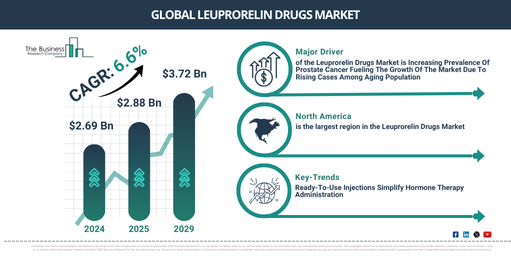
    In the last few years, the leuprorelin drug market has seen substantial growth. The market size is estimated to expand from $2.69 billion in 2024 to reach $2.88 billion in 2025, recording a compound annual growth rate (CAGR) of 7.0%. The notable growth experienced in the past years can be associated with various factors such as heightened healthcare spending, an upturn in gynecological disorders, an increase in government-driven initiatives, a surge in the establishment of specialty clinics, and a rising trend in infertility rates.

    We can anticipate a robust expansion of the leuprorelin drug market in the upcoming years. The market is slated for growth, reaching $3.72 billion by 2029, with a compound annual growth rate (CAGR) of 6.6%. The expected growth during the forecast period can be linked to several factors. These include the increased cases of prostate cancer, a surge in demand for in vitro fertilization (IVF) treatments, heightened need for breast cancer drugs, a rise in treatments affirming gender, and the growing impact of digitization in the healthcare sector. Key trends during the forecast period are likely to be innovative biodegradable implant research, incorporation of artificial intelligence (AI), customized hormone treatments, development of extended-release formulations, and advancements in the field of peptide synthesis.

    Download The Free Sample Report Here:

    https://www.thebusinessresearchcompany.com/sample.aspx?id=27328&type=smp

    What Are The Contributors To Demand In The Leuprorelin Drugs Market?

    The escalating occurrence of prostate cancer is anticipated to boost the expansion of the leuprorelin drugs market in the future. Prostate cancer is a form of cancer that originates in the prostate gland, a small gland situated below the bladder and in front of the rectum in men. The increase in prostate cancer prevalence can be attributed to an aging population, given that the likelihood of being diagnosed with prostate cancer significantly increases as one gets older. Leuprorelin drugs aid in the treatment of prostate cancer by regulating hormone levels to slow down tumor growth, improving patient outcomes by providing consistent dosages, reducing the cancer’s progression rate, and enhancing the patient’s quality of life. As per the information released by the National Health Service, a UK-based government department, in November 2024, the number of new prostate cancer cases surged to 54,732 in 2022, indicating an increase of 11,354 cases in comparison to 2021. Hence, the burgeoning prevalence of prostate cancer is fueling the expansion of the leuprorelin drugs market.

    What Segmentation Categories Are Included In The Leuprorelin Drugs Market Analysis?

    The leuprorelin drugs market covered in this report is segmented

    1) By Type: Injections, Tablets, Implants

    2) By Dosage Formulation: Depot Injection, Ready-To-Use Injections

    3) By Route Of Administration: Intramuscular, Subcutaneous

    4) By Application: Advanced Prostate Cancer, Central Precocious Puberty, Uterine Fibroids, Endometriosis, Other Applications

    5) By End Users: Home Care Settings, Hospitals, Specialty Clinics

    Subsegments:

    1) By Injections: Monthly Depot Injections, 3-Month Depot Injections, 6-Month Depot Injections, Pediatric Doses, Subcutaneous Injections, Intramuscular Injections, Pre-Filled Syringes, Multi-Dose Vials

    2) By Tablets: Low-Dose Hormone Regulation Tablets, High-Dose Hormonal Suppression Tablets, Combination Hormone Therapy Tablets, Extended-Release Oral Tablets

    3) By Implants: Biodegradable Polymer Implants, Non-Biodegradable Subdermal Implants, Short-Term Release Implants, Long-Term Release Implants, Implant Kits For Fertility Suppression, Pediatric Hormonal Implants

    What Upcoming Trends Are Expected To Impact The Leuprorelin Drugs Market Globally?

    Key players in the leuprorelin drugs market such as Avenacy Inc. are channeling their efforts into developing improved formulations like ready-to-use injections. This focus aims to enhance user convenience, improve adherence to treatments, and minimize errors during preparation. Pre-filled and sterile leuprolide acetate injections, or ready-to-use injections, are developed to eliminate the need for reconstitution, thereby easing the process of administration for patients and healthcare providers. For example, in June 2025, the US-based biopharmaceutical firm, Avenacy Inc., introduced a leuprolide acetate injection, a synthetic hormone therapy principally used for palliative treatments of advanced prostate cancer. This ready-to-use variant serves as a reliable and handy treatment option that negates the need for manual mixing, thereby alleviating the risks of incorrect dosages and contamination, and offering consistent therapeutic effectiveness. The drug works as a gonadotropin-releasing hormone (GnRH) agonist, initially escalating and then markedly declining testosterone levels, assisting in decelerating the growth of hormone-sensitive cancer cells.

    Who Are The Top-Ranked Companies In The Leuprorelin Drugs Market Today?

    Major companies operating in the leuprorelin drugs market are AbbVie Inc., Takeda Pharmaceutical Company Limited, Astellas Pharma Inc., Sandoz Group AG, Sun Pharmaceutical Industries Limited, Aurobindo Pharma Limited, Cipla Limited, Ferring B.V., Hikma Pharmaceuticals PLC, Amneal Pharmaceuticals LLC, Zydus Lifesciences Limited, Lupin Limited, Livzon Pharmaceutical Group Inc., Alkem Laboratories Limited, Daewoong Pharmaceutical Co. Ltd., Emcure Pharmaceuticals Limited, Gland Pharma Limited, Tolmar Pharmaceuticals Inc., Beijing Biote Pharmaceutical Co. Ltd., Accord Healthcare Limited, Intas Pharmaceuticals Limited, Foresee Pharmaceuticals Co Ltd., and Samarth Life Sciences Private Limited.

    Get The Full Report Here:

    https://www.thebusinessresearchcompany.com/report/leuprorelin-drugs-global-market-report

    How Is Leuprorelin Drugs Market Adoption Varying Across Different Regions And Sectors?

    North America was the largest region in the leuprorelin drugs market in 2024. Asia-Pacific is expected to be the fastest-growing region in the forecast period. The regions covered in the leuprorelin drugs market report are Asia-Pacific, Western Europe, Eastern Europe, North America, South America, Middle East, Africa.

    Request For A Customized Report:

    https://www.thebusinessresearchcompany.com/customise?id=27328&type=smp

    About The Business Research Company:

    With over 15000+ reports from 27 industries covering 60+ geographies, The Business Research Company has built a reputation for offering comprehensive, data-rich research and insights. Armed with 1,500,000 datasets, the optimistic contribution of in-depth secondary research, and unique insights from industry leaders, you can get the information you need to stay ahead in the game.

    Get in touch with us:

    The Business Research Company: https://www.thebusinessresearchcompany.com/

    Americas +1 310-496-7795

    Asia +44 7882 955267 & +91 8897263534

    Europe +44 7882 955267

    Email us at info@tbrc.info

    Follow us on:

    LinkedIn: https://in.linkedin.com/company/the-business-research-company

    YouTube: https://www.youtube.com/channel/UC24_fI0rV8cR5DxlCpgmyFQ

    Global Market Model: https://www.thebusinessresearchcompany.com/global-market-model

  • Future Demand and Leading Companies Shaping the Latex Medical Disposables Market to 2029

    Future Demand and Leading Companies Shaping the Latex Medical Disposables Market to 2029

    Claim your 30% discount on Global Market Reports with code ONLINE30. Limited time only.

    Claim your 30% discount on Global Market Reports with code ONLINE30. Limited time only.

    What Is the Outlook for the Latex Medical Disposables Market Heading Into 2029?

    In recent years, the latex medical disposables market has experienced robust growth. Expected to increase from $7.40 billion in 2024 to $8.05 billion in 2025, this market is predicted to see a compound annual growth rate (CAGR) of 8.7%. The historical growth in this market can be associated with numerous factors including a rising demand for disposable surgical tools, an enhanced focus on patient safety protocols, a growing awareness about one-time use medical items, a heightened preference for less invasive surgical procedures, and an escalating demand from domestic health care environments.

    The market size for latex medical disposables is projected to experience significant expansion in the coming years. It is predicted to elevate to $11.10 billion by 2029, thriving at a compound annual growth rate (CAGR) of 8.4%. Factors contributing to the growth during the forecasted period include the surge in daycare surgical procedures, heightened attention towards maintaining sterile environments, ascending need for budget-friendly medical solutions, an upswing in medical waste necessitating more disposable usage, and the burgeoning awareness about safe diagnostic atmospheres. The anticipated major trends during this period encompass the creation of eco-friendly latex products, the adoption of supply chain technologies, amalgamation with digital health platforms, advances in powder-free latex gloves, and progression in latex-free alternatives for patients with sensitivity.

    Download The Free Sample Report Here:

    https://www.thebusinessresearchcompany.com/sample.aspx?id=27327&type=smp

    Which Factors Are Pushing The Latex Medical Disposables Market Forward?

    The latex medical disposables market is anticipated to flourish due to the rising number of surgical procedures. These procedures, carried out by trained professionals, are methods of diagnosing, treating, or managing diseases and injuries using manual or instrumental techniques. The growing prevalence of chronic diseases requiring surgical response for effective treatment leads to the escalation in the number of these procedures. Latex medical disposables contribute to these procedures by offering critical barrier protection, improving hygiene, and mitigating the risk of infection. For example, statistics from the International Society of Aesthetic Plastic Surgery, a US-based professional medical non-profit organization, revealed that over 14.9 million surgical and 18.8 million non-surgical procedures were conducted globally by plastic surgeons in 2022, marking an 11.2% overall increase from September 2023. Hence, the escalating number of surgical procedures is catalyzing the growth of the latex medical disposables market.

    Which Segment Held The Largest Share In The Latex Medical Disposables Market In 2025?

    The latex medical disposables market covered in this report is segmented

    1) By Product Type: Latex Foley Catheters, Latex Gloves, Latex Probe Covers, Urine Bags, Other Product Types

    2) By Material Type: Plastic, Rubber, Metal, Textiles, Biodegradable Materials

    3) By Application: Cardiovascular Procedures, Orthopedic Surgeries, Urology Procedures, Gynecological Procedures, General Surgeries

    4) By Distribution Channel: Direct Sales, Distributors Or Wholesalers, Online Retail, Medical Supply Stores, Pharmacies

    5) By End-User: Hospitals, Clinics, Ambulatory Surgical Centers, Longterm Care Facilities, Home Healthcare

    Subsegments:

    1) By Latex Foley Catheters: Two-Way Latex Foley Catheters, Three-Way Latex Foley Catheters, Specialty Latex Foley Catheters

    2) By Latex Gloves: Examination Latex Gloves, Surgical Latex Gloves, Powdered Latex Gloves, Powder-Free Latex Gloves

    3) By Latex Probe Covers: Endocavitary Latex Probe Covers, General Purpose Latex Probe Covers, Sterile Latex Probe Covers, Non-Sterile Latex Probe Covers

    4) By Urine Bags: Bedside Urine Bags, Leg Urine Bags, Disposable Urine Bags, Reusable Urine Bags

    5) By Other Product Types: Latex Bulb Syringes, Latex Suction Catheters, Latex Tourniquets, Latex Breathing Bags

    How Are Key Trends Driving Expansion In The Latex Medical Disposables Industry?

    Key businesses in the latex medical disposables market, such as INTCO Medical Technology Co. Ltd., are concentrating on the creation of innovative solutions like synthetic latex gloves to mitigate the potential for allergic reactions and boost patient safety. Synthetic latex gloves, made from alternative materials such as nitrile or neoprene, are designed to replicate the properties of natural latex while also decreasing the chance of allergies. INTCO, a notable Chinese manufacturer of high-tech goods, unveiled its Syntex synthetic disposable latex gloves in April 2025, boasting both touch sensitivity and tough barrier protection. These gloves, made from a patented synthetic formula, offer over 650% stretch, robust resistance to punctures and chemicals, and a feel akin to that of natural latex, without the natural latex proteins, hence significantly decreasing chances of allergy. Furthermore, these gloves, while meeting stringent medical standards (EN455, FDA, ASTM D6319), offer enhanced durability, comfort, and support supply stability as well as promote environmental sustainability by reducing dependence on natural rubber plantations.

    Which Organizations Are Driving Progress In The Latex Medical Disposables Industry?

    Major companies operating in the latex medical disposables market are Cardinal Health Inc., Thermo Fisher Scientific Inc., Medline Industries LP, Sri Trang Agro-Industry PCL, Paul Hartmann AG, B Braun Medical Inc., Molnlycke Health Care AB, Ansell Healthcare Products LLC, Top Glove Corporation Berhad, INTCO Medical Technology Co. Ltd., Halyard Health Inc., YTY Industry Sendirian Berhad, Comfort Rubber Gloves Industries Sdn Bhd, Dynarex Corporation, RFB Latex Limited, Amkay Products Pvt Ltd, Kanam Latex Industries Pvt Ltd, Sara Healthcare Pvt. Ltd, Secured Medical Direction Limited, and Reflexx S.p.A.

    Get The Full Report Here:

    https://www.thebusinessresearchcompany.com/report/latex-medical-disposables-global-market-report

    Which Region Is Expected To Experience The Highest Growth In The Latex Medical Disposables Industry?

    North America was the largest region in the latex medical disposables market in 2024. Asia-Pacific is expected to be the fastest-growing region in the forecast period. The regions covered in the latex medical disposables market report are Asia-Pacific, Western Europe, Eastern Europe, North America, South America, Middle East, Africa.

    Request For A Customized Report:

    https://www.thebusinessresearchcompany.com/customise?id=27327&type=smp

    About The Business Research Company:

    With over 15000+ reports from 27 industries covering 60+ geographies, The Business Research Company has built a reputation for offering comprehensive, data-rich research and insights. Armed with 1,500,000 datasets, the optimistic contribution of in-depth secondary research, and unique insights from industry leaders, you can get the information you need to stay ahead in the game.

    Get in touch with us:

    The Business Research Company: https://www.thebusinessresearchcompany.com/

    Americas +1 310-496-7795

    Asia +44 7882 955267 & +91 8897263534

    Europe +44 7882 955267

    Email us at info@tbrc.info

    Follow us on:

    LinkedIn: https://in.linkedin.com/company/the-business-research-company

    YouTube: https://www.youtube.com/channel/UC24_fI0rV8cR5DxlCpgmyFQ

    Global Market Model: https://www.thebusinessresearchcompany.com/global-market-model