Month: September 2025

  • High End Cellomics Market Size, Share & Trends Analysis Report By Product | Forecast to 2029

    High End Cellomics Market Size, Share & Trends Analysis Report By Product | Forecast to 2029

    Claim 30% Off Global Market Reports With Code ONLINE30 – Insights on Tariff Effects, Global Trade, and Industry Disruptors

    What CAGR And Valuation Are Anticipated For The High End Cellomics Market?

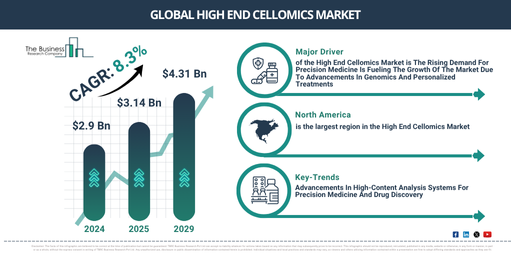
    Over the years, we have observed a robust development in the high-end cellomics market size. It is predicted that this growth will escalate from $2.9 billion in 2024 to $3.14 billion in 2025 with a Compound Annual Growth Rate (CAGR) of 8.3%. Several factors have contributed to this growth in the historic period including, an increased demand for high-content screening in the field of drug discovery, advancements in imaging system technologies, the progression of personalized medicine research, augmented investments in academic and pharmaceutical research and development, and the widening scope of stem cell and cancer research applications.

    The upscale cellomics market is projected to experience robust growth in the upcoming years, expanding to “$4.31 billion by 2029” at a compound annual growth rate (CAGR) of 8.3%. This growth over the forecast period is likely due to the incorporation of AI and machine learning into cell analysis, increased acceptance of 3D cell culture models, the escalating demand for automated and high-throughput systems, and an amplified emphasis on regenerative medicine and gene therapy. Additionally, the enlargement into emerging markets with enhanced healthcare facilities also contributes to this growth. Trends that will shape the forecast period include AI-powered image analysis, integration of high-content screening with CRISPR technologies, development of 3D cell culture and organoid models, automation and reduction in size of cell-based assays and the use of cloud-based platforms for data management and analytics.

    Get A Free Sample Of The Report:

    https://www.thebusinessresearchcompany.com/sample.aspx?id=24237&type=smp

    Which Industry Forces Are Driving The High End Cellomics Market Forward?

    The high-end cellomics market is anticipated to grow due to the escalating demand for precision medicine. This type of medical practice tailors treatment plans to each patient by accounting for their genetic make-up, living conditions, and lifestyle habits. Advancements in the field of genomics, which allow for customized treatments based on genetic profiles, are fueling the surge of precision medicine. The latter not only increases treatment effectiveness but also reduces side effects. The high-end cellomics field utilizes cutting-edge imaging to monitor cellular behavior in real-time, which assists in identifying biomarkers and tracking the progression of diseases. This amplifies precision medicine through the refinement of personalized treatments and enhancement of diagnostic accuracy. For example, as reported by the Personalized Medicine Coalition – a hospital and healthcare organization based in the US – in February 2024, the FDA greenlighted 16 novel personalized treatment options for patients with rare diseases in 2023, a significant increase from only six in 2022. Hence, the increasing demand for precision medicine is a significant driver for the high-end cellomics market.

    Which Sub-Segments Are Driving Growth Within The High End Cellomics Market?

    The high end cellomics market covered in this report is segmented –

    1) By Product Type: Instruments, Reagents And Consumables, Software And Services

    2) By Technology: Microscopy, Flow Cytometry, Single-Cell Genomics, Mass Spectrometry, Next Generation Sequencing, Other Technologies

    3) By Application: Drug Discovery, Cancer Research, Neuroscience, Stem Cell Research And Regenerative Medicine, Personalized Medicine, Other Applications

    4) By End-User: Biotechnology And Pharmaceutical Companies, Hospitals And Diagnostic Laboratories, Contract Research Organizations, Other End-Users

    Subsegments:

    1) By Instruments: High-Content Screening Systems, Flow Cytometers, Confocal Microscopes, Automated Microscopy Systems, Image Analysis Workstations, Robotic Cell Handling Systems

    2) By Reagents And Consumables: Fluorescent Dyes And Probes, Cell Staining Kits, Cell Culture Reagents, Assay Kits, Microplates, Slide And Cover Glasses, Fixatives And Buffers

    3) By Software And Services: Image Analysis Software, Data Management And Integration Tools, Artificial Intelligence (AI)-Based Predictive Analytics Software, Cloud-Based Data Storage Solutions, Technical Support And Maintenance Services, Custom Assay Development Services, Training And User Support Programs

    What Future-Focused Trends Are Anticipated In The High End Cellomics Market?

    Leading industries in the upscale cellomics market are directing their efforts towards the creation of innovative products such as the high-content analysis (HCA) system. This specific tool, instrumental in precision medicine, provides a meticulous phenotypic analysis. The HCA system is a state-of-the-art imaging tool that measures numerous cellular factors in a high-throughput environment simultaneously. This facilitates the examination of intricate biological operations at a cellular scale, supplying valuable data for personalised medicine, drug discoveries, and toxicity testing. For example, the Yokogawa Electric Corporation, an electrical engineering and software firm based in Japan, launched the CellVoyager CQ3000, a high-content analysis system designed for benchtop use, in February 2024. The system captures high-definition 3D images of live cell cultures swiftly, thus allowing for a thorough and efficient inspection of cellular responses and drug interactions. It is equipped with a proprietary confocal scanner unit from Yokogawa that employs dual spinning-disk technology for minimal phototoxicity, accurate temperature regulation for stable long-term live cell imaging, and other options. When used in conjunction with the CellPathfinder image analysis software, it aids in sophisticated data analysis, including deep learning, which aids in drug discovery, regenerative medicine research, and basic biology studies.

    Who Are The Dominant Players In The High End Cellomics Market Today?

    Major companies operating in the high end cellomics market are Thermo Fisher Scientific Inc., Danaher Corporation, Becton, Dickinson and Company (BD), GE Healthcare, Agilent Technologies Inc., Sartorius AG, Bio-Rad Laboratories, Yokogawa Electric Corporation, Bruker Corporation, Carl Zeiss AG, Miltenyi Biotec GmbH, Leica Microsystems GmbH, 10x Genomics, Promega Corporation, Abcam plc, Molecular Devices LLC, NanoString Technologies, Sphere Fluidics, Nikon Instruments Inc., Tecan Group Ltd.

    Access The Complete Report Here:

    https://www.thebusinessresearchcompany.com/report/high-end-cellomics-global-market-report

    How Do Regional Dynamics Influence The High End Cellomics Market Performance?

    North America was the largest region in the high-end cellomics market in 2024. Asia-Pacific is expected to be the fastest-growing region in the forecast period. The regions covered in the high end cellomics market report are Asia-Pacific, Western Europe, Eastern Europe, North America, South America, Middle East, Africa.

    Customize Your Report Here:

    https://www.thebusinessresearchcompany.com/customise?id=24237&type=smp

    About The Business Research Company:

    With over 15000+ reports from 27 industries covering 60+ geographies, The Business Research Company has built a reputation for offering comprehensive, data-rich research and insights. Armed with 1,500,000 datasets, the optimistic contribution of in-depth secondary research, and unique insights from industry leaders, you can get the information you need to stay ahead in the game.

    Get in touch with us:

    The Business Research Company: https://www.thebusinessresearchcompany.com/

    Americas +1 310-496-7795

    Asia +44 7882 955267 & +91 8897263534

    Europe +44 7882 955267

    Email us at info@tbrc.info

    Follow us on:

    LinkedIn: https://in.linkedin.com/company/the-business-research-company

    YouTube: https://www.youtube.com/channel/UC24_fI0rV8cR5DxlCpgmyFQ

    Global Market Model: https://www.thebusinessresearchcompany.com/global-market-model
  • What Are The Strategic Insights Behind The Healthcare And Consumer Care Ayurveda Products Market Expansion To $40.28 Billion?

    What Are The Strategic Insights Behind The Healthcare And Consumer Care Ayurveda Products Market Expansion To $40.28 Billion?

    Claim 30% Off Global Market Reports With Code ONLINE30 – Insights on Tariff Effects, Global Trade, and Industry Disruptors

    What Are The Market Size Estimates For The Healthcare And Consumer Care Ayurveda Products Market?

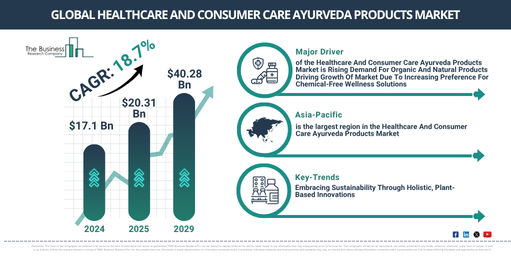
    The market size for healthcare and consumer care ayurveda products has seen significant expansion in recent times. The market, which is projected to increase from $17.1 billion in 2024 to $20.31 billion in 2025, is expected to experience a compound annual growth rate (CAGR) of 18.8%. Factors contributing to the growth during the historical period include heightened consumer awareness about natural treatments, a surge in chronic disease cases, an increased inclination towards preventive healthcare, governmental backing for traditional medicine, the spread of ayurvedic products through e-commerce, a growing interest in wellness and holistic living, and a worldwide embrace of ayurveda.

    In the coming years, the market size for ayurvedic products in healthcare and consumer care is anticipated to witness swift expansion, estimated to reach “$40.28 billion by 2029”, evolving at a compound annual growth rate (CAGR) of 18.7%. This projected development during the forecast period is primarily due to increasing consumer inclination towards organic and natural products, amplification in the awareness related to preventive healthcare, the expansion of e-commerce distribution networks, escalating investments in ayurvedic research and progress, as well as supportive governmental endeavours. The roadmap of future trends includes advancements in tailor-made ayurvedic formulas, amalgamation with contemporary healthcare systems, the trend towards virtual ayurvedic consultations, the use of AI and biotech in the creation of products, and the adoption of sustainable, organic, and ethically-acquired ingredients.

    Get A Free Sample Of The Report:

    https://www.thebusinessresearchcompany.com/sample.aspx?id=24231&type=smp

    What Are The Primary Factors Supporting The Healthcare And Consumer Care Ayurveda Products Market Expansion?

    The upward trend of organic and natural product preferences is anticipated to boost future growth in the healthcare and consumer care Ayurveda products market. These organic and natural products encompass those goods produced from resources obtained from plants, minerals, and other natural sources, void of synthetic chemicals, pesticides, or artificial fertilizers. The shift towards these products is stimulated by increased consumer consciousness about potential health concerns tied to synthetic chemicals. These organic and natural items are utilized in healthcare and consumer care Ayurveda products, promoting all-round wellness via plant-based, chemical-free ingredients that foster healing and equilibrium. For instance, in 2024, the Soil Association, a UK-based environmental charity, indicated that UK organic retail sales amounted to $3.22 billion (£2.43 billion) with organic product sales inflation at 4.7%, quadrupling non-organic sales growth of 1.2%, and 73% of customers choosing certified products. Thus, the swelling traction for organic and natural products propels the enhancement of the healthcare and consumer care ayurveda products market.

    What Segmentation Insights Are Provided In The Healthcare And Consumer Care Ayurveda Products Market Research?

    The healthcare and consumer care ayurveda products market covered in this report is segmented –

    1) By Product: Tablets And Capsules, Soaps And Shampoo, Body Wash, Moisturizers And Lotions, Oil, Facewash, Toothpaste Or Mouthwash, Creams And Serums, Aftershaves And Shaving Creams, Other Products

    2) By Route Of Administration: Oral, Topical

    3) By Application: Healthcare, Diabetes, Pregnancy And Postpartum Care, Respiratory Disorders 86, Cardiovascular Diseases, Eye Health, Gut And Digestive Health, Hair Care, Oral Care, Other Applications

    4) By Distribution Channel: Online, Offline, Retail Pharmacies, Supermarkets And Hypermarkets, Other Distributions

    Subsegments:

    1) By Tablets and Capsules: Herbal Supplements, Digestive Health Tablets, Immunity Boosters, Energy Capsules, Detox Tablets

    2) By Soaps and Shampoo: Neem Soap, Sandalwood Soap, Herbal Anti-Dandruff Shampoo, Aloe Vera Shampoo, Reetha and Shikakai Shampoo

    3) By Body Wash: Ayurvedic Hydrating Body Wash, Exfoliating Herbal Body Wash, Neem and Tulsi Body Wash, Aromatic Ayurvedic Body Wash

    4) By Moisturizers and Lotions: Aloe Vera Moisturizer, Anti-Aging Herbal Lotion, Skin Brightening Ayurvedic Cream, Neem and Turmeric Lotion

    5) By Oil: Hair Growth Oil, Body Massage Oil, Joint Pain Relief Oil, Aromatherapy Essential Oils, Baby Massage Oil

    6) By Facewash: Neem and Turmeric Facewash, Anti-Acne Herbal Facewash, Brightening Aloe Vera Facewash, Charcoal Ayurvedic Facewash

    7) By Toothpaste/Mouthwash: Herbal Whitening Toothpaste, Clove and Mint Mouthwash, Neem Toothpaste, Sensitive Teeth Herbal Toothpaste

    8) By Creams and Serums: Anti-Wrinkle Cream, Brightening Face Serum, Anti-Pigmentation Cream, Under-Eye Cream

    9) By Aftershaves and Shaving Creams: Herbal Shaving Foam, Cooling Aftershave Balm, Anti-Irritation Shaving Gel, Moisturizing Aftershave Lotion

    10) By Other Products: Ayurvedic Lip Balm, Herbal Foot Cream, Ayurvedic Hand Sanitizers, Ayurvedic Deodorants, Herbal Bath Salts

    Which Notable Trends Are Transforming The Healthcare And Consumer Care Ayurveda Products Market Outlook?

    Many of the leading enterprises in the ayurveda healthcare and consumer care product industry are honing in on product development—particularly plant-based products—to meet increasing consumer demand for natural, sustainable, and free-of-chemical alternatives that suit holistic wellness and environmental ideals. These plant-based offerings are crafted from plant sources and have no synthetic or animal ingredients. As an example, the National Institute of Ayurveda (NIA)—an Indian university that falls under the Ministry of Ayush—unveiled a range of plant-based skincare items in February 2025. This range includes aloe vera gel, lip balm, foot care cream, and a host of herbal soaps, all of which use plant-based extracts to establish efficient skincare solutions. The aloe vera gel, one of the main products in the range, is particularly favored for its hydration, soothing, and healing abilities, cementing its place in contemporary skincare regimens.

    Which Companies Are Contributing Significantly To The Healthcare And Consumer Care Ayurveda Products Market Growth?

    Major companies operating in the healthcare and consumer care ayurveda products market are Nutralite Wellness, ITC Ltd., Hindustan Unilever Ltd., Dabur India Ltd., Glenmark Pharmaceuticals, Marico Ltd., Patanjali Ayurved Ltd., Colgate-Palmolive India Ltd., Emami Ltd., Himalaya Wellness Company, Charak Pharma Pvt. Ltd., Arya Vaidya Sala, Hamdard Laboratories, Maharishi Ayurveda Products Pvt. Ltd., Sri Sri Tattva, Sandu Pharmaceuticals Ltd., Nagarjuna Herbal Concentrates Ltd., Ayush Herbs Inc., Vicco Laboratories, Kerala Ayurveda Ltd.

    Access The Complete Report Here:

    https://www.thebusinessresearchcompany.com/report/healthcare-and-consumer-care-ayurveda-products-global-market-report

    Which Geographic Regions Are Creating Strong Demand In The Healthcare And Consumer Care Ayurveda Products Market?

    Asia-Pacific was the largest region in the healthcare and consumer care ayurveda products market in 2024. North America is expected to be the fastest-growing region in the forecast period. The regions covered in the healthcare and consumer care ayurveda products market report are Asia-Pacific, Western Europe, Eastern Europe, North America, South America, Middle East, Africa.

    Customize Your Report Here:

    https://www.thebusinessresearchcompany.com/customise?id=24231&type=smp

    About The Business Research Company:

    With over 15000+ reports from 27 industries covering 60+ geographies, The Business Research Company has built a reputation for offering comprehensive, data-rich research and insights. Armed with 1,500,000 datasets, the optimistic contribution of in-depth secondary research, and unique insights from industry leaders, you can get the information you need to stay ahead in the game.

    Get in touch with us:

    The Business Research Company: https://www.thebusinessresearchcompany.com/

    Americas +1 310-496-7795

    Asia +44 7882 955267 & +91 8897263534

    Europe +44 7882 955267

    Email us at info@tbrc.info

    Follow us on:

    LinkedIn: https://in.linkedin.com/company/the-business-research-company

    YouTube: https://www.youtube.com/channel/UC24_fI0rV8cR5DxlCpgmyFQ

    Global Market Model: https://www.thebusinessresearchcompany.com/global-market-model
  • How Will The Hair Removal Devices Market Reach $3.83 Billion By 2029 Amid Global Shifts?

    Claim 30% Off Global Market Reports With Code ONLINE30 – Insights on Tariff Effects, Global Trade, and Industry Disruptors

    How Is The Hair Removal Devices Market Expected To Grow In Terms Of Size?

    The market for hair removal devices has experienced significant growth recently. Anticipated to expand from $1.98 billion in 2024 to about $2.26 billion in 2025, this represents a compound annual growth rate of 13.7%. Factors contributing to this growth during the historic period include heightened awareness of personal grooming, growth of disposable incomes, the strengthening effect of media and beauty standards, an increased preference for non-invasive aesthetic procedures, and the swelling of urban populations.

    Projected to experience fast-paced expansion in the coming years, the hair removal devices market is estimated to inflate to a sizable “$3.83 billion by 2029, recording an impressive compound annual growth rate (CAGR) of 14.1%. The anticipated elevation during this forecast period can be linked to several factors including the burgeoning use of beauty devices at home, an enlarging male consumer base, a mounting inclination for grooming solutions that offer convenience, proliferating e-commerce infiltration, and a surge in the establishment of dermatology clinics. Leading the trends during the forecast interval are the trim down and intelligent integration of hair removal devices, an escalating popularity of multi-purpose beauty apparatus, customization via AI and sensor-oriented technology, the development of sustainable and eco-friendly products, and the emergence of subscription-led device sales models.

    Get A Free Sample Of The Report:

    https://www.thebusinessresearchcompany.com/sample.aspx?id=24229&type=smp

    Which Growth Drivers Are Shaping The Hair Removal Devices Market Outlook?

    The increasing focus on visual attractiveness is anticipated to boost the expansion of the hair removal devices market. Visual attractiveness involves an individual’s visual qualities that contribute to their overall physical allure, including features such as skin quality, hair care, and body form, all influenced by personal care and cosmetic procedures. The rise of social media and digital culture has increased beauty standards, resulting in a significant emphasis on visual attractiveness. Hair removal devices assist in maintaining this attractiveness by offering smooth, hairless skin via convenient, long-lasting, and non-invasive procedures. For example, the Bureau of Labor Statistics, a US federal agency, projected in September 2022 that skincare specialist employment will increase by 10% from 2023 to 2033, with approximately 12,800 job opportunities expected each year during this period, exceeding the average growth rate for all jobs. Hence, the rising focus on visual attractiveness is fuelling the expansion of the hair removal devices market.

    How Does The Hair Removal Devices Market Differ By Segment?

    The hair removal devices market covered in this report is segmented –

    1) By Product: Energy-Based Devices, Laser Devices, Intense Pulsed Light (IPL) Devices, Other Products

    2) By Distribution Channel: Supermarkets And Hypermarkets, Drug-Stores, Online

    3) By Application: Facial Hair Removal, Legs, Hands, Other Applications

    4) By End-Users: Dermatology Clinics, Beauty Clinics, Home Use, Other End-Users

    Subsegments:

    1) By Energy-Based Devices: Radiofrequency Devices, Ultrasound-Based Devices, Infrared-Based Devices

    2) By Laser Devices: Diode Laser Devices, Nd:YAG Laser Devices, Alexandrite Laser Devices, Ruby Laser Devices

    3) By Intense Pulsed Light (IPL) Devices: Handheld IPL Devices, Professional IPL Systems

    4) By Other Products: Razor Devices, Epilators, Waxing Devices, Threading Devices

    What New Opportunities Are Emerging From Trends In The Hair Removal Devices Market?

    Leading firms in the hair removal devices industry are prioritizing the development of innovative products like dual-wavelength laser devices to improve the effectiveness and versatility of professional hair removal procedures. The dual-wavelength laser device is a type of laser system that emits light at two separate wavelengths. This feature enables it to target different chromophores or different depths of tissue in the skin for more advanced versatility and efficacy of the treatment. For example, in April 2025, Lumenis Be Ltd., a health technology firm based in Israel, diversified its product range by launching LightSheer INFINITY and LightSheer DESIRE laser hair removal technologies. These additions improved its primary products in the aesthetic treatment industry. These high-end devices use diode laser technology, offering efficient and painless hair removal options suitable for a variety of skin and hair colors. Importantly, the LightSheer INFINITY has the benefit of dual-wavelength capacities, enabling medical practitioners to tailor treatments to the specific needs of each patient. Conversely, the LightSheer DESIRE prioritizes simplicity in use and productivity, thereby amplifying patient contentment and the number of patients a clinic can handle.

    Who Are The Primary Market Leaders In The Hair Removal Devices Market?

    Major companies operating in the hair removal devices market are Procter & Gamble Company, Panasonic Corporation, Koninklijke Philips N.V., Lumenis Be Ltd., Cynosure Inc., Solta Medical, Cutera Inc., Lutronic Corp., Venus Concept, Sciton Inc., Syska, Silk’n – Home Skinovations Ltd., Tria Beauty, CosBeauty, Iskin, Lynton Lasers Ltd., iluminage Beauty Inc., LASERBIO OPTOTECH LLP, Dermacell Pvt. Ltd., SmoothSkin.

    Access The Complete Report Here:

    https://www.thebusinessresearchcompany.com/report/hair-removal-devices-global-market-report

    Which Region Is Likely To Register The Fastest Growth In The Hair Removal Devices Market?

    North America was the largest region in the hair removal devices market in 2024. Asia-Pacific is expected to be the fastest-growing region in the forecast period. The regions covered in the hair removal devices market report are Asia-Pacific, Western Europe, Eastern Europe, North America, South America, Middle East, Africa.

    Customize Your Report Here:

    https://www.thebusinessresearchcompany.com/customise?id=24229&type=smp

    About The Business Research Company:

    With over 15000+ reports from 27 industries covering 60+ geographies, The Business Research Company has built a reputation for offering comprehensive, data-rich research and insights. Armed with 1,500,000 datasets, the optimistic contribution of in-depth secondary research, and unique insights from industry leaders, you can get the information you need to stay ahead in the game.

    Get in touch with us:

    The Business Research Company: https://www.thebusinessresearchcompany.com/

    Americas +1 310-496-7795

    Asia +44 7882 955267 & +91 8897263534

    Europe +44 7882 955267

    Email us at info@tbrc.info

    Follow us on:

    LinkedIn: https://in.linkedin.com/company/the-business-research-company

    YouTube: https://www.youtube.com/channel/UC24_fI0rV8cR5DxlCpgmyFQ

    Global Market Model: https://www.thebusinessresearchcompany.com/global-market-model
  • What Is The Long-Term Forecast For The Hair Loss Treatment Products Market Growing At 8.5% CAGR?

    What Is The Long-Term Forecast For The Hair Loss Treatment Products Market Growing At 8.5% CAGR?

    Claim 30% Off Global Market Reports With Code ONLINE30 – Insights on Tariff Effects, Global Trade, and Industry Disruptors

    What Is The Projected Valuation Of The Hair Loss Treatment Products Market In The Coming Years?

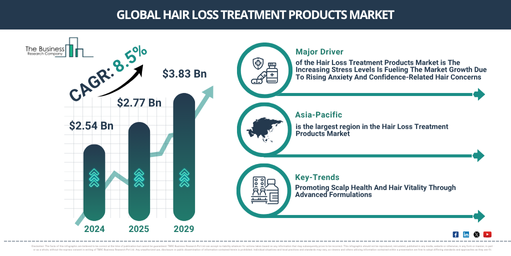
    The market for hair loss treatment products has seen significant growth lately. The market size, currently standing at $2.54 billion in 2024, is projected to grow to $2.77 billion in 2025, with a compound annual growth rate (CAGR) of 8.8%. The notable growth during the historic period can be credited to factors such as the rising occurrence of androgenetic alopecia, increased stress levels, a heightened consciousness about personal grooming, a burgeoning aging population, and better access to dermatologic care.

    The market for hair loss remedies is projected to expand significantly in the ensuing years, reaching a value of $3.83 billion in 2029 with a compounded annual growth rate (CAGR) of 8.5%. This growth within the projected period can be linked to an increased interest in non-invasive treatment options, higher disposable income levels, the growing impact of social media on beauty ideals, the extensive availability of products over-the-counter, and a surge in the use of ingredients derived from plants. Key trends forecasted for this period involve progress in biotechnology, the preference for laser-based treatments, the implementation of artificial intelligence in suggesting treatments, the launch of products tailored for specific genders, and the increased preference for subscription-based treatment programs.

    Get A Free Sample Of The Report:

    https://www.thebusinessresearchcompany.com/sample.aspx?id=24228&type=smp

    What Market Forces Are Contributing To The Growth Of The Hair Loss Treatment Products Market?

    The escalating levels of stress are predicted to augment the expansion of the hair loss treatment products market in the upcoming years. The term stress levels point to the emotional turmoil or mental pressure experienced by an individual. The surge in stress levels is primarily due to mounting work-related demands as workers have to cope with long working hours, stricter deadlines, and elevated performance standards in highly competitive professions. The rise in stress levels contributes to an increase in hair loss incidents, compelling more individuals to seek treatment options. This escalating concern is fuelling the demand for hair loss treatment products. For instance, data from the American Psychiatric Association, a US-based entity, showed that in May 2024, 43% of U.S. adults confessed to feeling more anxious compared to the previous year, a surge from 37% in 2023 and 32% in 2022, pointing out a consistent increase in anxiety levels over the past three years. Therefore, the escalating stress levels are facilitating the growth of the hair loss treatment products market.

    Which Segment Accounts For The Largest Share In The Hair Loss Treatment Products Market?

    The hair loss treatment products market covered in this report is segmented –

    1) By Product Type: Shampoo And Conditioner, Supplements And Vitamins, Serum And Oil, Other Product Types

    2) By Disease Type: Alopecia Areata, Cicatricial Alopecia, Traction Alopecia, Alopecia Totalis, Alopecia Universalis, Other Disease Types

    3) By Distribution Channel: Supermarkets And Hypermarkets, Convenience Stores, Specialist Retailers, Pharmacies Or Drugstores, Online Retail, Medical Or Pharmacy Stores, E-Commerce, Departmental Stores, Other Distribution Channels

    4) By End-User: Hospitals, Home Healthcare Settings, Dermatology Centres, Other End-Users

    Subsegments:

    1) By Shampoo And Conditioner: Anti-Dandruff Shampoo, Thickening Or Volumizing Shampoo, Sulfate-Free Shampoo, Hair Regrowth Conditioner, Herbal Or Natural Shampoo And Conditioner

    2) By Supplements And Vitamins: Biotin Supplements, Multivitamins, Iron Supplements, Collagen Supplements, Omega-3 Fatty Acids

    3) By Serum And Oil: Minoxidil-Based Serums, Herbal Hair Serums, Essential Oil Blends, Argan Oil-Based Products, Castor Oil-Based Treatments

    4) By Other Product Types: Hair Masks, Hair Sprays and Mists, Scalp Exfoliators, Leave-In Treatments, Laser Hair Growth Devices

    Which Long-Term Trends Will Play A Crucial Role In The Hair Loss Treatment Products Market?

    Key players in the hair loss treatment products market are concentrating on the design of groundbreaking items like anti-hair loss systems to improve effectiveness and cater to a variety of consumer requirements. These systems, which combine various products or treatments, stimulate hair growth and prevent thinning by nourishing the scalp, bolstering hair follicles, and curbing hair loss. A prime example of this is the Invati Ultra Advanced Collection introduced by Aveda Corporation, an American cosmetics firm, in July 2024. This collection, designed to combat hair loss and fortify thinning hair, leverages plant-powered technology. It includes a shampoo, conditioner, and scalp serum made up of botanical elements. Regular usage aims to yield noticeably denser, fuller hair. Additionally, the product range assists in maintaining a healthy scalp environment, thereby enhancing long-term hair health.

    Which Organizations Are At The Forefront Of The Hair Loss Treatment Products Market?

    Major companies operating in the hair loss treatment products market are Pfizer Inc., Johnson & Johnson Services Inc., Unilever PLC, Bayer Aktiengesellschaft, L’Oréal S.A., The Estée Lauder Companies Inc., Kao Corporation, Shiseido Company Limited, Galderma S.A., Dr. Reddy’s Laboratories Ltd., Taisho Pharmaceutical Holdings Co. Ltd., Revlon Inc., Merz Pharma GmbH & Co. KGaA, Hims & Hers Health Inc., Pierre Fabre S.A., Roman Health Ventures Inc, Aclaris Therapeutics Inc., HUM Nutrition Inc., OMI Industries Inc., Thirty Madison Inc., ULO LLC, TYPEBEA Inc.

    Access The Complete Report Here:

    https://www.thebusinessresearchcompany.com/report/hair-loss-treatment-products-global-market-report

    Which Region Is Forecasted To Lead The Hair Loss Treatment Products Market In The Coming Years?

    Asia-Pacific was the largest region in the hair loss treatment products market in 2024. North America is expected to be the fastest-growing region in the forecast period. The regions covered in the hair loss treatment products market report are Asia-Pacific, Western Europe, Eastern Europe, North America, South America, Middle East, Africa.

    Customize Your Report Here:

    https://www.thebusinessresearchcompany.com/customise?id=24228&type=smp

    About The Business Research Company:

    With over 15000+ reports from 27 industries covering 60+ geographies, The Business Research Company has built a reputation for offering comprehensive, data-rich research and insights. Armed with 1,500,000 datasets, the optimistic contribution of in-depth secondary research, and unique insights from industry leaders, you can get the information you need to stay ahead in the game.

    Get in touch with us:

    The Business Research Company: https://www.thebusinessresearchcompany.com/

    Americas +1 310-496-7795

    Asia +44 7882 955267 & +91 8897263534

    Europe +44 7882 955267

    Email us at info@tbrc.info

    Follow us on:

    LinkedIn: https://in.linkedin.com/company/the-business-research-company

    YouTube: https://www.youtube.com/channel/UC24_fI0rV8cR5DxlCpgmyFQ

    Global Market Model: https://www.thebusinessresearchcompany.com/global-market-model
  • Which Emerging Trends Are Driving The H2 Receptor Antagonist Market Toward $5.23 Billion By 2029?

    Which Emerging Trends Are Driving The H2 Receptor Antagonist Market Toward $5.23 Billion By 2029?

    Claim 30% Off Global Market Reports With Code ONLINE30 – Insights on Tariff Effects, Global Trade, and Industry Disruptors

    How Much Will The H2 Receptor Antagonist Market Be Worth By 2029?

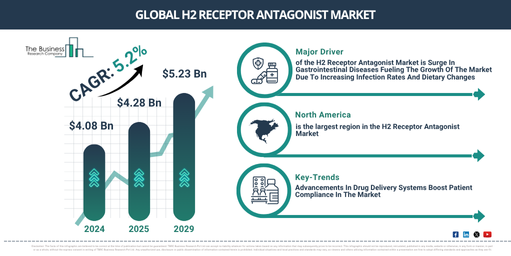
    The expansion of the H2 receptor antagonist market has been consistent over the recent years. The market, which currently stands at $4.08 billion in 2024, will experience an incline to $4.28 billion in 2025, representing a compound annual growth rate (CAGR) of 4.8%. Factors contributing to this steady growth during the historic period include a rising number of peptic ulcer cases, increased usage of over-the-counter antacids, growth in diagnosing gastroesophageal reflux disease (GERD), a higher acceptance in hospital environments, and an increase in gastrointestinal disorders.

    The market for H2 receptor antagonists is predicted to witness significant expansion over the upcoming years, expecting to reach $5.23 billion in 2029 with a compound annual growth rate (CAGR) of 5.2%. Factors that are contributing to the growth over the forecast period include an increase in lifestyle-related digestive ailments, a surge in the demand for over-the-counter gastrointestinal remedies, a rising elderly population suffering from persistent acidity problems, the growth of generic drugs’ accessibility, and the creation of pediatric-friendly prescriptions. The anticipated period will see trends such as the advent of slow-release formulations, connection with digital health tracking devices, innovation in pediatric dosage methods, the merging of therapies with probiotics, and progress in compound stability suitable for warm environments.

    Get A Free Sample Of The Report:

    https://www.thebusinessresearchcompany.com/sample.aspx?id=24227&type=smp

    What Drivers Are Accelerating Expansion Of The H2 Receptor Antagonist Market?

    The surge in gastrointestinal ailments is anticipated to fuel the expansion of the H2 receptor antagonist market in the future. Gastrointestinal ailments are those that impact the digestive tract, encompassing infections, inflammation, stomach-related and intestinal disorders. The escalation in these diseases can be attributed to poor eating habits and the escalated consumption of processed foods, both of which can harm gut health and lead to various digestive issues like acid reflux, irritable bowel syndrome (IBS), and ulcers. H2 receptor antagonists aid in the treatment of these diseases by inhibiting histamine receptors in the stomach, decreasing acid production, and mitigating symptoms such as acid reflux, ulcers, and gastritis. To add context, data from the U.S based professional organization, American Cancer Society (ACS), revealed in January 2023, that gastrointestinal cancer cases in the United States climbed by 3.18%, mounting from 338,090 in 2022 to 348,840 in 2023. Consequently, the growing prevalence of gastrointestinal ailments is catalyzing the expansion of the H2 receptor antagonist market.

    What Are The Main Segment Classifications In The H2 Receptor Antagonist Market?

    The h2 receptor antagonist market covered in this report is segmented –

    1) By Drug Class: Cimetidine, Ranitidine, Famotidine, Nizatidine

    2) By Route of Administration: Oral, Intravenous, Intramuscular

    3) By Indication: Gastroesophageal Reflux Disease (GERD), Peptic Ulcers, Zollinger-Ellison Syndrome, Other Indications

    4) By Distribution Channel: Hospital Pharmacies, Retail Pharmacies, Online Pharmacies, Other Distribution Channels

    5) By End-User: Hospitals, Clinics, Home Care Settings

    How Are Industry Trends Steering The Expansion Of The H2 Receptor Antagonist Market?

    Key companies within the H2 receptor antagonist sector are prioritizing the development of unique solutions, such as cutting-edge drug delivery systems, to boost the effectiveness, convenience, and patient adherence of acid-reducing treatments. The term ‘cutting-edge drug delivery systems’ refers to sophisticated technology aimed at optimizing the targeted, controlled, and persistent release of therapeutic drugs to boost their effectiveness and patient adherence. As an example, Zydus Lifesciences Limited, a pharmaceutical company from India, released Famotidine ODT, an orally disintegrating tablet for acid-related disorders like GERD, in June 2022. This formulation enables patients, particularly those who have a hard time swallowing, to take the medicine without needing water, thereby enhancing convenience and observance. The firm emphasized that this breakthrough aids in enhancing treatment outcomes due to its improved ease of use and quicker action. Consequently, the embracing of unique delivery systems is contributing to the expansion of the H2 receptor antagonist sector by enhancing the therapeutic experience and access for patients.

    Who Are The Major Stakeholders Operating In The H2 Receptor Antagonist Market?

    Major companies operating in the H2 receptor antagonist market are Pfizer Inc., Sanofi S.A., Abbott Laboratories, Novartis AG, GlaxoSmithKline plc, Takeda Pharmaceutical Company Limited, Eli Lilly and Company, Viatris Inc., Teva Pharmaceutical Industries Limited, Boehringer Ingelheim International GmbH, Sun Pharmaceutical Industries Limited, Apotex Inc., Aurobindo Pharma Limited, Dr. Reddy’s Laboratories Limited, Cipla Limited, Hikma Pharmaceuticals plc, Lupin Ltd., Zydus Lifesciences Limited, Torrent Pharmaceuticals Limited, Accord Healthcare Limited

    Access The Complete Report Here:

    https://www.thebusinessresearchcompany.com/report/h2-receptor-antagonist-global-market-report

    What Are The Emerging Regional Trends Driving The H2 Receptor Antagonist Market?

    North America was the largest region in the H2 receptor antagonist market in 2024. Asia-Pacific is expected to be the fastest-growing region in the forecast period. The regions covered in the H2 receptor antagonist market report are Asia-Pacific, Western Europe, Eastern Europe, North America, South America, Middle East, Africa.

    Customize Your Report Here:

    https://www.thebusinessresearchcompany.com/customise?id=24227&type=smp

    About The Business Research Company:

    With over 15000+ reports from 27 industries covering 60+ geographies, The Business Research Company has built a reputation for offering comprehensive, data-rich research and insights. Armed with 1,500,000 datasets, the optimistic contribution of in-depth secondary research, and unique insights from industry leaders, you can get the information you need to stay ahead in the game.

    Get in touch with us:

    The Business Research Company: https://www.thebusinessresearchcompany.com/

    Americas +1 310-496-7795

    Asia +44 7882 955267 & +91 8897263534

    Europe +44 7882 955267

    Email us at info@tbrc.info

    Follow us on:

    LinkedIn: https://in.linkedin.com/company/the-business-research-company

    YouTube: https://www.youtube.com/channel/UC24_fI0rV8cR5DxlCpgmyFQ

    Global Market Model: https://www.thebusinessresearchcompany.com/global-market-model
  • What Is The Predicted Revenue Outlook For The Genomic Cancer Panel And Profiling Market To Surpass $14.27 Billion?

    What Is The Predicted Revenue Outlook For The Genomic Cancer Panel And Profiling Market To Surpass $14.27 Billion?

    Claim 30% Off Global Market Reports With Code ONLINE30 – Insights on Tariff Effects, Global Trade, and Industry Disruptors

    What Is The Present And Forecasted Size Of The Genomic Cancer Panel And Profiling Market?

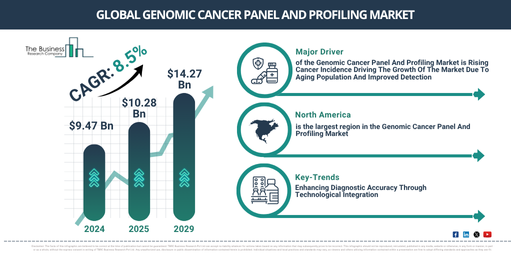
    In recent years, the market size of genomic cancer panel and profiling has seen robust growth. The market is projected to expand from a value of $9.47 billion in 2024 to $10.28 billion in 2025, registering a compound annual growth rate (CAGR) of 8.6%. The exceptional growth during the historical period can be credited to factors like escalating global cancer rates, amplified use in clinical trials, development of diagnostic infrastructure, heightened awareness regarding genetic testing, and augmented government and research funding.

    There is a promising surge projected for the market size of genomic cancer panel and profiling in the coming times. The expansion is anticipated to reach “$14.27 billion by 2029, exhibiting a compound annual growth rate (CAGR) of 8.5%. This growth during the projected time frame is linked to the broader implementation of liquid biopsy applications, the escalating use in early disease detection, the expansion of personalized therapies, and the rise in approvals for companion diagnostics. The forthcoming period is also expected to see major trends such as the utilization of AI and machine learning for interpreting genomic data, the birth of multi-omics methodologies, the transition to cloud-based genomic data storage and analysis, the integration with electronic medical records, and the growth of Next-Generation Sequencing (NGS) platforms.

    Get A Free Sample Of The Report:

    https://www.thebusinessresearchcompany.com/sample.aspx?id=24225&type=smp

    Which Key Factors Are Fueling Growth In The Genomic Cancer Panel And Profiling Market?

    Expectations are that the genomic cancer panel and profiling market will experience growth due to a surge in cancer incidences. The disorder known as cancer exhibits abnormal cell growth and spread without control in the body. The escalating cancer incidence is linked to factors like an aging populace, which increases the likelihood of cancer as people’s lifespan extends. Genomic cancer panels and profiling assist in spotting genetic mutations and biomarkers in cancer, which helps in formulating personalized treatment plans and amplifying early detection and disease monitoring. For instance, data from the American Cancer Society, a nonprofit organization based in the U.S., revealed that in 2022, an estimated 20 million new cancer cases were globally reported, causing about 9.7 million fatalities. The anticipation is that the global cancer burden, mainly propelled by population growth, will escalate to 35 million incidences by 2050. Consequently, the upsurge in cancer incidence is projected to boost the genomic cancer panel and profiling market growth.

    How Is The Genomic Cancer Panel And Profiling Market Organized By Different Segments?

    The genomic cancer panel and profiling market covered in this report is segmented –

    1) By Tissue Testing: Solid Tissue Testing, Liquid Tissue Testing

    2) By Technology: Next-Generation Sequencing (NGS), Polymerase Chain Reaction (PCR), Fluorescence In-Situ Hybridization (FISH), Immunohistochemistry (IHC), Other Technologies

    3) By Cancer Panel Type: Single-Gene Panel, Multi-Gene Panel

    4) By Application: Clinical, Research

    5) By End User: Hospitals, Research And Academic Institutes, Clinical And Diagnostic Laboratories, Other End Users

    Subsegments:

    1) By Solid Tissue Testing: Biopsy Samples, Surgical Resection Samples, Formalin-Fixed Paraffin-Embedded (FFPE) Tissues, Fresh Frozen Tissues

    2) By Liquid Tissue Testing: Blood, Urine, Saliva, Cerebrospinal Fluid (CSF), Other Bodily Fluids

    What Current And Upcoming Trends Are Shaping The Genomic Cancer Panel And Profiling Market?

    Major players within the genomic cancer panel and profiling market are prioritizing the advancement of technology such as next-generation sequencers. This is in an effort to enhance the accuracy, speed, and scope of cancer diagnostics and contribute to more tailored treatment decisions. Next-generation sequencers are highly advanced DNA sequencing technologies that facilitate quick, high-throughput examinations of genetic content in order to detect mutations, variants and other genomic characteristics. For instance, QIAGEN N.V., a biotechnology company based in Netherlands, introduced QIAseq panels in April 2025, which are specially designed for next-generation sequencers. By scrutinizing over 700 genes, they offer comprehensive genomic profiling. These panels are directed at both research and clinical undertakings, with the intent of elevating the standards of cancer diagnostics and treatment approaches.

    Which Firms Are Making The Biggest Impact In The Genomic Cancer Panel And Profiling Market?

    Major companies operating in the genomic cancer panel and profiling market are Hoffmann-La Roche Ltd, Thermo Fisher Scientific Inc., Agilent Technologies Inc., Hologic Inc., Illumina Inc., Sysmex Corporation, QIAGEN N.V., Exact Sciences Corporation, ARUP Laboratories, Tempus Labs, Genscript Biotech Corporation, NeoGenomics Inc., Foundation Medicine, Invitae Corporation, Guardant Health Inc., Caris Life Sciences, Fulgent Genetics, NanoString Technologies Inc., Genecast Biotechnology Co. Ltd, Burning Rock DX, HTG Molecular Diagnostics Inc., Predictive Oncology Inc.

    Access The Complete Report Here:

    https://www.thebusinessresearchcompany.com/report/genomic-cancer-panel-and-profiling-global-market-report

    Which Region Dominates The Genomic Cancer Panel And Profiling Market Today?

    North America was the largest region in the genomic cancer panel and profiling market in 2024. The regions covered in the genomic cancer panel and profiling market report are Asia-Pacific, Western Europe, Eastern Europe, North America, South America, Middle East, Africa.

    Customize Your Report Here:

    https://www.thebusinessresearchcompany.com/customise?id=24225&type=smp

    About The Business Research Company:

    With over 15000+ reports from 27 industries covering 60+ geographies, The Business Research Company has built a reputation for offering comprehensive, data-rich research and insights. Armed with 1,500,000 datasets, the optimistic contribution of in-depth secondary research, and unique insights from industry leaders, you can get the information you need to stay ahead in the game.

    Get in touch with us:

    The Business Research Company: https://www.thebusinessresearchcompany.com/

    Americas +1 310-496-7795

    Asia +44 7882 955267 & +91 8897263534

    Europe +44 7882 955267

    Email us at info@tbrc.info

    Follow us on:

    LinkedIn: https://in.linkedin.com/company/the-business-research-company

    YouTube: https://www.youtube.com/channel/UC24_fI0rV8cR5DxlCpgmyFQ

    Global Market Model: https://www.thebusinessresearchcompany.com/global-market-model
  • How Is The Gene Silencing Market Expected To Grow At 12.6% CAGR Over 2025–2029?

    How Is The Gene Silencing Market Expected To Grow At 12.6% CAGR Over 2025–2029?

    Claim 30% Off Global Market Reports With Code ONLINE30 – Insights on Tariff Effects, Global Trade, and Industry Disruptors

    How Big Is The Gene Silencing Market Today And What Is Its Future Size?

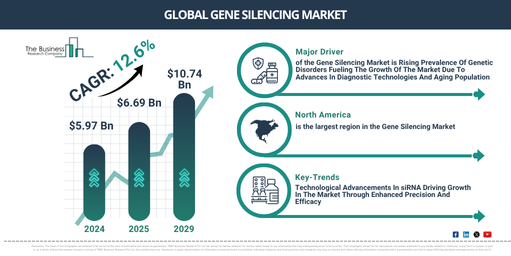
    The market size for gene silencing has seen a rapid expansion in recent years. Projected growth indicates an increase from $5.97 billion in 2024 to $6.69 billion in 2025, reflecting a compound annual growth rate (CAGR) of 12.0%. The historic growth pattern is associated with the intensifying research in genetical therapies, preliminary advancements in RNA interference, escalating frequency of genetic disorders, burgeoning investments in biotechnology, and the expansion of biopharmaceutical manufacturing capabilities.

    Predictions indicate a speedy expansion for the gene silencing market in the upcoming years, estimating it to reach $10.74 billion by 2029, with a compound annual growth rate (CAGR) of 12.6%. This anticipated growth throughout the forecast period is linked to factors such as the growing utilization in the treatment of uncommon diseases, advancement in delivery systems’ technology, an upsurge in the need for personalized medicine, encouraging government initiatives, and rising collaboration between pharmaceutical and biotechnological organizations. Some dominant trends throughout this forecast period include breakthroughs in targeted gene therapies, the popularity of CRISPR-based silencing methods, heightened concentration on rare and orphan diseases, the development of nanoparticle delivery technologies, and the outreach to agricultural gene silencing applications.

    Get A Free Sample Of The Report:

    https://www.thebusinessresearchcompany.com/sample.aspx?id=24224&type=smp

    Which Market Dynamics Are Playing A Critical Role In The Growth Of The Gene Silencing Market?

    The gene silencing market is anticipated to expand owing to the escalating occurrence of genetic disorders. These disorders, which occur due to anomalies in a person’s DNA, are being increasingly identified due to developments in diagnostic technology, elevated consciousness, and widespread availability of genetic testing. The surge in genetic disorders is attributed to the increasing age of parents, which raises the probability of passing on genetic mutations to their children. Gene silencing presents an innovative solution to these disorders by specifically inhibiting the expression of errant or disease-causing genes. For example, statistics from Down Syndrome UK, a charity based in the UK, reveal that as of August 2023, Down syndrome impacted nearly 40,000 individuals in the UK, with roughly 1 in every 800 newborns diagnosed with the condition. As a result, the escalating occurrence of genetic disorders is contributing to the expansion of the gene silencing market.

    Which Segmentation Categories Are Highlighted In The Gene Silencing Market Analysis?

    The gene silencing market covered in this report is segmented –

    1) By Type: Transcriptional, Post-Transcriptional, Meiotic

    2) By Gene Silencing: RNA Interference (RNAi), Antisense Oligonucleotides (ASOs), Clustered Regularly Interspaced Short Palindromic Repeats(CRISPR) Or Cas9 -Based Gene Silencing, Other Gene Silencings

    3) By Application: Neurology, Oncology, Infectious Diseases, Metabolic Diseases, Therapeutics Manufacturing, Other Applications

    4) By End-Users: Pharmaceutical And Biotechnology Companies, Research Institutes and Academic Centers, Hospitals, Clinics, Other End-Users

    Subsegments:

    1) By Transcriptional: DNA Methylation, Histone Modification

    2) By Post-Transcriptional: RNA Interference (RNAi), Antisense Oligonucleotides, MicroRNA (miRNA) Mediated Silencing

    3) By Meiotic: Meiotic Gene Conversion, Transposable Element Silencing

    Which Market Trends Are Expected To Define The Future Of The Gene Silencing Market?

    Key players in the gene silencing market are concentrating on creating groundbreaking technologies like small interfering RNA (siRNA) for enhancing accuracy and efficiency in gene therapy. Small interfering RNA is a class of RNA molecules that impact the RNA interference (RNAi) pathway crucially by targeting specific messenger RNA (mRNA) and instigating its disintegration, blocking the proliferation of proteins causing diseases. As an example, Judo Bio Inc., a biotech company based in the US, introduced siRNA, a novel drug in October 2024. It uses small interfering RNA (siRNA) to mute genes. This development sets itself apart with its patented delivery mechanisms like lipid nanoparticles or conjugated ligands that promise excellent absorption by specific cells or tissues and AI-powered platforms that speed up the identification of feasible gene targets.

    Which Players Are Shaping The Competitive Landscape Of The Gene Silencing Market?

    Major companies operating in the gene silencing market are Roche Holding AG, Merck & Co. Inc., AstraZeneca plc, Novartis International AG, Thermo Fisher Scientific Inc., Danaher Corporation, Agilent Technologies Inc., Illumina Inc., Bio-Rad Laboratories Inc., Bio-Techne Corporation, Alnylam Pharmaceuticals Inc., GenScript Biotech Corporation, Oxford BioMedica plc, Ionis Pharmaceuticals Inc., Arrowhead Pharmaceuticals Inc., Dicerna Pharmaceuticals Inc., New England Biolabs Inc., Quark Pharmaceuticals Inc., Sirion Biotech GmbH, Benitec Biopharma Limited, GeneCopoeia Inc., Revvity Inc.

    Access The Complete Report Here:

    https://www.thebusinessresearchcompany.com/report/gene-silencing-global-market-report

    Which Regional Markets Are Emerging As Key Hubs For The Gene Silencing Market?

    North America was the largest region in the gene silencing market in 2024. Asia-Pacific is expected to be the fastest-growing region in the forecast period. The regions covered in the gene silencing market report are Asia-Pacific, Western Europe, Eastern Europe, North America, South America, Middle East, Africa.

    Customize Your Report Here:

    https://www.thebusinessresearchcompany.com/customise?id=24224&type=smp

    About The Business Research Company:

    With over 15000+ reports from 27 industries covering 60+ geographies, The Business Research Company has built a reputation for offering comprehensive, data-rich research and insights. Armed with 1,500,000 datasets, the optimistic contribution of in-depth secondary research, and unique insights from industry leaders, you can get the information you need to stay ahead in the game.

    Get in touch with us:

    The Business Research Company: https://www.thebusinessresearchcompany.com/

    Americas +1 310-496-7795

    Asia +44 7882 955267 & +91 8897263534

    Europe +44 7882 955267

    Email us at info@tbrc.info

    Follow us on:

    LinkedIn: https://in.linkedin.com/company/the-business-research-company

    YouTube: https://www.youtube.com/channel/UC24_fI0rV8cR5DxlCpgmyFQ

    Global Market Model: https://www.thebusinessresearchcompany.com/global-market-model
  • Which Factors Will Push The Gemcitabine Hydrochloride Market To Achieve $1.08 Billion By 2029?

    Which Factors Will Push The Gemcitabine Hydrochloride Market To Achieve $1.08 Billion By 2029?

    Claim 30% Off Global Market Reports With Code ONLINE30 – Insights on Tariff Effects, Global Trade, and Industry Disruptors

    How Will The Gemcitabine Hydrochloride Market Valuation Change Between Now And 2029?

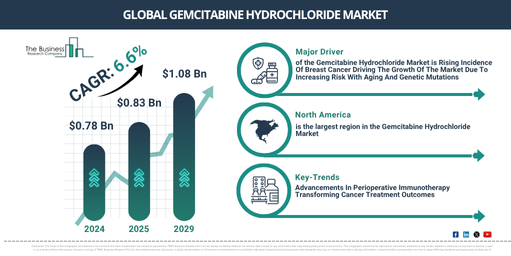
    In recent times, there’s been a robust expansion of the gemcitabine hydrochloride market. It’s projected to escalate from $0.78 billion in 2024 to $0.83 billion in 2025, exhibiting a compound annual growth rate (CAGR) of 6.2%. The noticeable growth during the historical period can be traced back to the increase in early cancer detection initiatives, the broadening of oncology drug distribution channels, enhanced accessibility through both public and private healthcare infrastructures, a growing prevalence in hospital oncology formularies, and a worldwide rise in healthcare spending.

    In the coming years, the gemcitabine hydrochloride market is predicted to witness significant growth. The market is set to rise to “$1.08 billion in 2029” with a compound annual growth rate (CAGR) of 6.6%. This expected growth during the forecast period can be ascribed to the increasing global prevalence of cancer, an aging global population, a rise in non-small cell lung cancer cases, an increase in pancreatic and metastatic breast cancer cases, and a growing number of patients qualified for combined chemotherapy. Key trends for the forecasted period are ongoing clinical trials testing new combinations and indications, the use in combined treatments with cisplatin, carboplatin, and paclitaxel, improved drug delivery technologies, advanced formulation technologies reducing toxicity, and automation in the pharmaceutical manufacturing industry.

    Get A Free Sample Of The Report:

    https://www.thebusinessresearchcompany.com/sample.aspx?id=24223&type=smp

    What External And Internal Drivers Are Influencing The Gemcitabine Hydrochloride Market?

    The gemcitabine hydrochloride market is predicted to grow, largely due to the increasing occurrence of breast cancer. This type of cancer begins in the cells of the breast, often in the milk ducts or glands. The rising life expectancy is leading to an increase in these cases, since as people age, they have more time for genetic mutations to pile up and likely cause the disease. Gemcitabine hydrochloride is essential for treating breast cancer because it hampers DNA replication, thus effectively restricting the swift propagation of abnormal cells. For example, in September 2024, the Australian Government disclosed that about 20,640 individuals in Australia were predicted to be diagnosed with the disease in 2022, comprising 212 males and 20,428 females. It was also estimated that year that the possibility of being diagnosed with breast cancer by the age of 85 was 1 in 15 (6.7%) in general—1 in 668 (0.15%) for males and 1 in 8 (13%) for females. As a result, the escalating frequency of breast cancer diagnoses is set to fuel the expansion of the gemcitabine hydrochloride market.

    What Is The Segment Breakdown Of The Gemcitabine Hydrochloride Market?

    The gemcitabine hydrochloride market covered in this report is segmented –

    1) By Product Type: Injection, Solution, Other Product Types

    2) By Route of Administration: Intravenous Injection, Subcutaneous Injection, Intramuscular Injection

    3) By Distribution Channel: Hospital Pharmacies, Retail Pharmacies, Online Pharmacies, Specialty Clinics

    4) By Application: Pancreatic Cancer, Non-Small Cell Lung Cancer, Bladder Cancer, Breast Cancer, Ovarian Cancer, Other Applications

    Subsegments:

    1) By Injection: Single-Dose Vials, Multi-Dose Vials, Prefilled Syringes

    2) By Solution: Ready-To-Use Liquid Solutions, Concentrated Solutions For Dilution, Oral Liquid Formulations

    3) By Other Product Types: Lyophilized Powder, Capsules, Combination Formulations With Other Chemotherapeutic Agents

    How Are Global Trends Impacting The Development Of The Gemcitabine Hydrochloride Market?

    Leading businesses in the gemcitabine hydrochloride market are emphasizing on the creation of superior therapies, such as perioperative immunotherapy, to augment treatment results. Perioperative immunotherapy pertains to cancer therapy provided pre-surgery (neoadjuvant) and post-surgery (adjuvant) to enhance patient prognosis and minimize relapse. For example, AstraZeneca, a pharmaceutical organization based in the UK, received authorization from the US Food and Drug Administration (FDA) for Imfinzi (durvalumab) in March 2025. This represents the pioneering and sole perioperative immunotherapy approved for the management of muscle-invasive bladder cancer (MIBC). The therapy incorporates Imfinzi with chemotherapy (gemcitabine and cisplatin) pre-surgery and continues with only Imfinzi post-surgery. Clinical studies indicate an increase in survival rate and a decrease in recurrence risks.

    Who Are The Leading Companies Driving The Gemcitabine Hydrochloride Market?

    Major companies operating in the gemcitabine hydrochloride market are Fresenius Kabi, Eli Lilly and Company, Teva Pharmaceutical Industries Ltd., Intas Pharmaceuticals Ltd., Mylan NV, Accord Healthcare, Sandoz Group AG, Sun Pharmaceutical Industries Ltd., Apotex Inc., Dr. Reddy’s Laboratories, Cipla Ltd., Amneal Pharmaceuticals, Alkem Laboratories, Gland Pharma Ltd., Strides Pharma Science Ltd., Shilpa Medicare Ltd., ScinoPharm Taiwan Ltd., Orchid Pharma Ltd., Arevipharma GmbH, Qilu Pharmaceutical Co. Ltd.

    Access The Complete Report Here:

    https://www.thebusinessresearchcompany.com/report/gemcitabine-hydrochloride-global-market-report

    Which Region Is Leading Innovation In The Gemcitabine Hydrochloride Market?

    North America was the largest region in the gemcitabine hydrochloride market in 2024. Asia-Pacific is expected to be the fastest-growing region in the forecast period. The regions covered in the gemcitabine hydrochloride market report are Asia-Pacific, Western Europe, Eastern Europe, North America, South America, Middle East, Africa.

    Customize Your Report Here:

    https://www.thebusinessresearchcompany.com/customise?id=24223&type=smp

    About The Business Research Company:

    With over 15000+ reports from 27 industries covering 60+ geographies, The Business Research Company has built a reputation for offering comprehensive, data-rich research and insights. Armed with 1,500,000 datasets, the optimistic contribution of in-depth secondary research, and unique insights from industry leaders, you can get the information you need to stay ahead in the game.

    Get in touch with us:

    The Business Research Company: https://www.thebusinessresearchcompany.com/

    Americas +1 310-496-7795

    Asia +44 7882 955267 & +91 8897263534

    Europe +44 7882 955267

    Email us at info@tbrc.info

    Follow us on:

    LinkedIn: https://in.linkedin.com/company/the-business-research-company

    YouTube: https://www.youtube.com/channel/UC24_fI0rV8cR5DxlCpgmyFQ

    Global Market Model: https://www.thebusinessresearchcompany.com/global-market-model
  • What Key Growth Drivers Are Shaping The Gastric Antisecretory Drug Market Forecast Toward $19.56 Billion?

    What Key Growth Drivers Are Shaping The Gastric Antisecretory Drug Market Forecast Toward $19.56 Billion?

    Claim 30% Off Global Market Reports With Code ONLINE30 – Insights on Tariff Effects, Global Trade, and Industry Disruptors

    What Are The Future Growth Projections For The Gastric Antisecretory Drug Market Size?

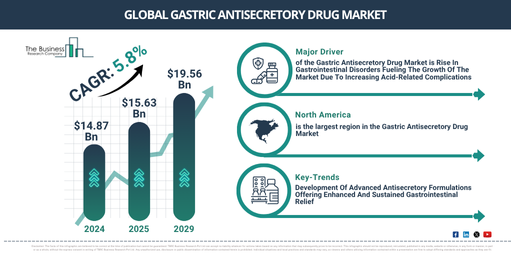
    In the past few years, the market size for gastric antisecretory drugs has seen robust growth. The market, valuing at $14.87 billion in 2024, is estimated to magnify to $15.63 billion in 2025, showcasing a compound annual growth rate (CAGR) of 5.1%. The growth witnessed in the historic period is due to factors such as escalating stress levels and sedentary lifestyles, a surge in helicobacter pylori infections, favorable government health care policies, burgeoning medical tourism, and the growth of e-commerce and online pharmacies.

    Strong expansion is anticipated in the gastric antisecretory drug market in the coming years, with a predicted value of $19.56 billion in 2029 and a compound annual growth rate (CAGR) of 5.8%. The expected growth during the forecast period may be due to an increase in gastrointestinal disorder cases, a burgeoning elderly population, a rise in digestive health awareness, developments in healthcare infrastructure, and a higher intake of fast and processed foods. The forecast period is likely to see major trends such as common usage of NSAIDs, over-the-counter availability of antisecretory drugs, technological evolution in drug delivery systems, the availability of generic drugs, and advances in combination therapies.

    Get A Free Sample Of The Report:

    https://www.thebusinessresearchcompany.com/sample.aspx?id=24222&type=smp

    What Underlying Factors Are Supporting The Gastric Antisecretory Drug Market Growth?

    An increase in gastrointestinal diseases is predicted to drive the expansion of the gastric antisecretory drug market in the future. These disorders, impacting the digestive system such as the stomach, intestines, and related organs, can cause symptoms including pain, bloating, and changes in bowel movements. Unhealthy eating habits, typified by overconsumption of processed food and lack of fiber, primarily contribute to the growth of these disorders by causing gut microbiota imbalances and digestive issues. Gastric antisecretory drugs play a critical role in managing these conditions because excess stomach acid can erode the gastro tract’s protective lining, which these drugs mitigate by controlling acid production. For instance, a 2025 report by ScienceDirect, an American bibliographic database, indicated that approximately 23.5 million gastrointestinal endoscopies were conducted in 2022. Consequently, the swelling occurrence of gastrointestinal disorders is expected to enhance the gastric antisecretory drug market’s growth.

    Which Segments Define The Structure Of The Gastric Antisecretory Drug Market?

    The gastric antisecretory drug market covered in this report is segmented –

    1) By Drug Class: Proton Pump Inhibitors (PPIs), H2 Receptor Antagonists, Antacids, Prostaglandin Analogs

    2) By Route Of Administration: Oral, Intravenous, Topical

    3) By Distribution Channel: Hospital Pharmacies, Retail Pharmacies, Online Pharmacies, Other Distribution Channels

    4) By Application: Gastroesophageal Reflux Disease, Peptic Ulcer Disease, Zollinger-Ellison Syndrome, Other Applications

    Subsegments:

    1) By Proton Pump Inhibitors (PPIs): Omeprazole, Esomeprazole, Lansoprazole, Pantoprazole, Rabeprazole, Dexlansoprazole

    2)By H2 Receptor Antagonists: Ranitidine, Famotidine, Cimetidine, Nizatidine

    3) By Antacids: Magnesium Hydroxide, Calcium Carbonate, Aluminum Hydroxide, Sodium Bicarbonate, Combination Antacids

    4) By Prostaglandin Analogs: Misoprostol, Enprostil

    What Strategic Shifts And Innovations Are Influencing The Gastric Antisecretory Drug Market?

    The main players in the gastric antisecretory drug market are concentrating on the advancement of improved products such as antisecretory compounds, which offer extended relief. Antisecretory compounds are entities that control or lower the secretion of bodily fluids, particularly gastric acid, by impacting certain cellular receptors or pathways. For example, Akums Drugs and Pharmaceuticals, a pharmaceutical firm based in India, introduced Rabeprazole + Levosulpiride SR Capsules in June 2024, a new formulation for patients with Gastrointestinal issues. This unique blend combines rabeprazole sodium, a robust antisecretory agent that selectively halts the H?/K? ATPase in gastric parietal cells, with levosulpiride, recognized for its central antidopaminergic and antiemetic attributes. The capsule contributes 40 mg of enteric-coated rabeprazole and 75 mg of long-lasting levosulpiride, ensuring focused and lasting therapeutic impact. The double mechanism tackles both acid suppression and the regulation of gastrointestinal motility.

    Who Are The Global Leaders Steering The Gastric Antisecretory Drug Market Forward?

    Major companies operating in the gastric antisecretory drug market are Pfizer Inc., Bayer AG, AstraZeneca plc, Takeda Pharmaceutical Company Ltd., Sun Pharmaceutical Industries, Dr. Reddy’s Laboratories, Chemo Biological, Spansules Pharmatech Pvt. Ltd., Phoenix Biologicals Pvt. Ltd., Centurion Remedies Private Limited, Solitaire Pharmacia Pvt. Ltd., Shreeji Pharma International, Estrellas Life Sciences Private Limited, 3s Corporation, Actiza Pharmaceutical Private Limited, Lark Laboratories, Cytonova Labs International Private Limited, Luckys Pharma Lab Pvt. Ltd., Lexicare Pharma Pvt. Ltd., Mustcure Healthcare LLP

    Access The Complete Report Here:

    https://www.thebusinessresearchcompany.com/report/gastric-antisecretory-drug-global-market-report

    What Regional Factors Are Accelerating Growth In The Gastric Antisecretory Drug Market?

    North America was the largest region in the gastric antisecretory drug market in 2024. Asia-Pacific is expected to be the fastest-growing region in the forecast period. The regions covered in the gastric antisecretory drug market report are Asia-Pacific, Western Europe, Eastern Europe, North America, South America, Middle East, Africa.

    Customize Your Report Here:

    https://www.thebusinessresearchcompany.com/customise?id=24222&type=smp

    About The Business Research Company:

    With over 15000+ reports from 27 industries covering 60+ geographies, The Business Research Company has built a reputation for offering comprehensive, data-rich research and insights. Armed with 1,500,000 datasets, the optimistic contribution of in-depth secondary research, and unique insights from industry leaders, you can get the information you need to stay ahead in the game.

    Get in touch with us:

    The Business Research Company: https://www.thebusinessresearchcompany.com/

    Americas +1 310-496-7795

    Asia +44 7882 955267 & +91 8897263534

    Europe +44 7882 955267

    Email us at info@tbrc.info

    Follow us on:

    LinkedIn: https://in.linkedin.com/company/the-business-research-company

    YouTube: https://www.youtube.com/channel/UC24_fI0rV8cR5DxlCpgmyFQ

    Global Market Model: https://www.thebusinessresearchcompany.com/global-market-model

  • How Will The Fracture Management Products Market Expand At A CAGR Of 6.1% Through 2029?

    How Will The Fracture Management Products Market Expand At A CAGR Of 6.1% Through 2029?

    Claim 30% Off Global Market Reports With Code ONLINE30 – Insights on Tariff Effects, Global Trade, and Industry Disruptors

    What Is The Current Size And Growth Outlook For The Fracture Management Products Market?

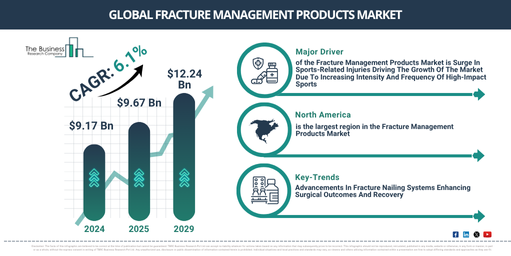
    The market for fracture management products has displayed significant growth in the past few years. The market valuation is expected to rise from $9.17 billion in 2024 to $9.67 billion in 2025, corresponding to a compound annual growth rate (CAGR) of 5.5%. Factors contributing to this notable growth in the historical period include the escalating demand for orthopedic implants for fracture management, an increase in osteoporosis cases, a rise in chronic conditions prevalence, the expansion of outpatient surgical procedures, and a broadening of insurance coverage for fracture treatments.

    The market size for fracture management products is predicted to witness robust expansion in the coming years, reaching “$12.24 billion by 2029 at a compound annual growth rate (CAGR) of 6.1%. This growth during the projected period can be attributed to factors such as the rising incidence of fractures due to an aging population, an increase in road accidents and injuries leading to fractures, heightened awareness of fracture management alternatives, growing health care spending, and a surge in sports-related injuries and fractures among athletes. Key trends expected during the forecast period include progress in fracture management technology, advancement in biomaterials for fracture fixation devices, the utilization of 3D printing technologies for personalized fracture management solutions, the advent of robot-assisted surgeries in fracture treatment, and progress in bone grafting and substitute products.

    Get A Free Sample Of The Report:

    https://www.thebusinessresearchcompany.com/sample.aspx?id=24219&type=smp

    Which Demand Drivers Are Strengthening The Fracture Management Products Market?

    An increase in sports-related injuries is projected to propel the fracture management products market’s expansion in future years. These sports-related injuries refer to musculoskeletal system damages that stem from overuse, blunt force, or flawed technique during athletic endeavors or workout sessions. The rising number of these injuries stems from the escalated intensity and frequency of high-impact sports, thereby heightening the body’s stress levels and consequently amplifying the risks of injuries. This is particularly accurate as athletes, both professionals and hobbyists, push their boundaries without taking appropriate preventative measures or allowing time for recovery. Products for fracture management are key to establishing stability in fractured bones, ensuring their correct alignment, and supporting their healing process, thus enabling athletes to regain their complete functionality and return to their sport. As per a report generated in July 2024 by the Australian Institute of Health and Welfare, an organization based in Australia, during 2021 and 2022, 17% (9,300 cases) of all sports injury hospitalizations were due to soft-tissue damages, with fractures representing over half of these (53% or 29,900). Also, more than half (56%) of all sports injury-related hospital admissions were the result of falls and transportation accidents. Therefore, the escalating frequency of sports-related injuries contributes to the growth of the fracture management products market.

    What Are The Primary Segmentation Parameters In The Fracture Management Products Market?

    The fracture management products market covered in this report is segmented –

    1) By Product Type: Internal Fixation Devices, External Fixation Devices, Fracture Fixation Consumables

    2) By Material Type: Stainless Steel, Titanium, Biodegradable Materials, Polymer-Based Products, Composite Materials

    3) By Distribution Channel: Direct Sales, Online Sales, Distributors And Wholesalers, Retail Pharmacies, Speciality Centers

    4) By Application: Upper Extremity Fractures, Lower Extremity Fractures, Other Applications

    5) By End-User: Hospitals, Orthopedic Clinics, Ambulatory Surgery Centers, Rehabilitation Centers, Research Institutes, Home Care Settings

    Subsegments:

    1) By Internal Fixation Devices: Plates And Screws, Intramedullary Nails Or Rods, Pins And Wires, Bone Screws, Orthopedic Compression Devices

    2) By External Fixation Devices: Unilateral And Bilateral Fixators, Circular Fixators, Hybrid Fixators, Bone Lengthening Devices

    3) By Fracture Fixation Consumables: Orthopedic Drills And Blades, Bone Cements, Bone Grafts And Substitutes, Surgical Sutures, Screws And Pins

    Which Emerging Trends Are Reshaping The Fracture Management Products Market Landscape?

    Leading firms in the fracture management products market are prioritizing the development of advanced technological solutions to minimize complications and optimize recovery results. This includes the invention of fracture nailing systems, which are internal fixation tools used to stabilize and align fractures. These metal rods or nails are inserted into the bone marrow and are especially useful for fractures in long bones like the femur or tibia. Take for example, In March 2024, Stryker Corporation, a medical technology firm based in the US, introduced the Gamma4 Hip Fracture Nailing System. This system, which has an advanced intramedullary nailing design for hip and femur fractures, is customized for an improved anatomical fit, using the SOMA database of over 34,000 3D bone models. The system’s distinct features like its chamfered distal tip, 5mm shorter proximal body, and a length-dependent radius of curvature for long nails all contribute to its advantages. Also, its precision pin reduces skiving by 66% and offers greater pull-out resistance compared to typical Ø3.2 K-wires. Furthermore, the Gamma4 and T2Alpha nails can be used interchangeably with the same instrument platform, which enhances surgical procedures and promotes uniformity in operations.

    Which Companies Hold A Competitive Edge In The 647 Market?

    Major companies operating in the fracture management products market are Johnson & Johnson Inc, Medtronic plc, Stryker Corporation, Zimmer Biomet Holdings Inc., Olympus Corporation, Smith & Nephew plc, DePuy Synthes Inc, Arthrex Inc., Integra LifeSciences Corporation, NuVasive Inc., Conmed Corporation, Globus Medical Inc, DJO Global Inc., Ossur hf., Wright Medical Group, KLS Martin SE, Orthofix Medical Inc., Richard Wolf GmbH, Acumed LLC, B. Braun Melsungen AG, Paragon 28 Inc., Narang Medical Ltd., TriMed Inc., Sonoma Orthopedic Products Inc, Extremity Medical LLC, Synthes Inc.

    Access The Complete Report Here:

    https://www.thebusinessresearchcompany.com/report/fracture-management-products-global-market-report

    Which Region Holds The Greatest Opportunity For Fracture Management Products Market Expansion?

    North America was the largest region in the fracture management products market in 2024. Asia-Pacific is expected to be the fastest-growing region in the forecast period. The regions covered in the fracture management products market report are Asia-Pacific, Western Europe, Eastern Europe, North America, South America, Middle East, Africa.

    Customize Your Report Here:

    https://www.thebusinessresearchcompany.com/customise?id=24219&type=smp

    About The Business Research Company:

    With over 15000+ reports from 27 industries covering 60+ geographies, The Business Research Company has built a reputation for offering comprehensive, data-rich research and insights. Armed with 1,500,000 datasets, the optimistic contribution of in-depth secondary research, and unique insights from industry leaders, you can get the information you need to stay ahead in the game.

    Get in touch with us:

    The Business Research Company: https://www.thebusinessresearchcompany.com/

    Americas +1 310-496-7795

    Asia +44 7882 955267 & +91 8897263534

    Europe +44 7882 955267

    Email us at info@tbrc.info

    Follow us on:

    LinkedIn: https://in.linkedin.com/company/the-business-research-company

    YouTube: https://www.youtube.com/channel/UC24_fI0rV8cR5DxlCpgmyFQ

    Global Market Model: https://www.thebusinessresearchcompany.com/global-market-model