Month: September 2025

  • What Is The Predicted Revenue Outlook For The Acquired Autoimmune Hemolytic Anemia Market To Surpass $2.81 Billion?

    What Is The Predicted Revenue Outlook For The Acquired Autoimmune Hemolytic Anemia Market To Surpass $2.81 Billion?

    Claim 30% Off Global Market Reports With Code ONLINE30 – Insights on Tariff Effects, Global Trade, and Industry Disruptors

    How Big Is The Acquired Autoimmune Hemolytic Anemia Market Today And What Is Its Future Size?

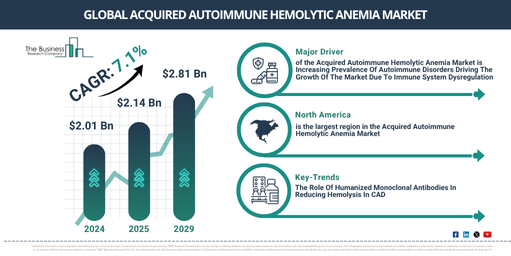
    In recent times, there has been a substantial growth in the market size of acquired autoimmune hemolytic anemia. Its market size is expected to escalate from $2.01 billion in 2024 to about $2.14 billion in 2025, with a compound annual growth rate (CAGR) of roughly 6.5%. The notable growth during the historical period is due to factors like enhanced diagnosis rates, a surge in the occurrence of secondary AIHA, development of hospital hematology units, support from the government and regulatory bodies, and increased fund allocation towards hematology.

    Expectations are high for a robust expansion in the market size for acquired autoimmune hemolytic anemia in the coming years. By 2029, it’s predicted to reach $2.81 billion with a compound annual growth rate (CAGR) of 7.1%. Factors contributing to this projected growth include a rise in autoimmune diseases, a better comprehension of the complement system’s function, increased collaborations between biopharma and academic establishments, a surge in personalized medicine usage, and an aging population. Foreseen trends for this period encompass the incorporation of targeted biologic therapies, progress in complement pathway inhibitors, the application of AI and data analysis in illness management, AI-assisted clinical trial formations, and enhancements in orphan drug development.

    Get A Free Sample Of The Report:

    https://www.thebusinessresearchcompany.com/sample.aspx?id=24132&type=smp

    Which Factors Are Steering Growth In The Acquired Autoimmune Hemolytic Anemia Market?

    The escalating incidence of autoimmune diseases is projected to drive the advancement of the acquired autoimmune hemolytic anemia market in the future. Autoimmune diseases occur when the immune system mistakenly attacks the body’s own healthy cells and tissues, viewing them as harmful invaders. The surge in autoimmune diseases is primarily due to increased environmental triggers and lifestyle changes that interfere with immune system control. This rise in autoimmune diseases results in an increased rate of acquired autoimmune hemolytic anemia, as people with autoimmune diseases are more likely to develop secondary AIHA due to immune system malfunctions. For example, the autoimmune registry, an organization based in the US that collects and assesses data on autoimmune diseases, reported in 2022 that the percentage of patients diagnosed with multiple autoimmune conditions increased from 52% in 2021 to 55% in 2022. Consequently, the growing incidence of autoimmune diseases is expected to propel the acquired autoimmune hemolytic anemia market.

    How Is The Acquired Autoimmune Hemolytic Anemia Market Organized By Different Segments?

    The acquired autoimmune hemolytic anemia market covered in this report is segmented –

    1) By Diagnosis Method: Complete Blood Count, Peripheral Blood Smear, Direct Coombs Test, Indirect Coombs Test

    2) By Treatment Type: Corticosteroids, Immunosuppressive Agents, Intravenous Immunoglobulin, Rituximab

    3) By Severity: Mild, Moderate, Severe

    4) By End User: Hospitals, Specialty Clinics, Research Institutions

    Subsegments:

    1) By Complete Blood Count: Hemoglobin Level, Hematocrit (HCT), Reticulocyte Count, White Blood Cell Count, Platelet Count

    2) By Peripheral Blood Smear: Spherocytes, Polychromasia, Schistocytes, Increased Reticulocyte Count

    3) By Direct Coombs Test: Immunoglobulin G Coombs Test, Immunoglobulin M Coombs Test, Complement Coombs Test

    4) By Indirect Coombs Test: Screening For Alloantibodies, Detection Of Sensitizing Antibodies, Crossmatch Testing

    What Current And Upcoming Trends Are Shaping The Acquired Autoimmune Hemolytic Anemia Market?

    Major corporations active in the autoimmune hemolytic anemia market are prioritizing developments in targeted treatments, such as humanized monoclonal antibodies, with the goals of enhancing the success of therapies, reducing adverse effects, and offering more customized care possibilities to patients suffering from autoimmune hemolytic anemia. Humanized monoclonal antibodies are laboratory-crafted proteins engineered to simulate human antibodies. They are primarily composed of human structures, but they incorporate a small fraction of non-human, typically mouse, antibodies to augment their antigen targeting ability while reducing the risk of rejection by the immune system. For example, in February 2022, the French healthcare firm Sanofi gained the approval of the U.S. Food and Drug Administration (FDA), a US governmental agency, for Enjaymo (sutimlimab-jome), the first and only treatment for cold agglutinin disease (CAD), a scarce form of autoimmune hemolytic anemia. Enjaymo acts by selectively blocking C1s in the classical complement pathway, thereby preventing the immune system from erroneously attacking and eliminating healthy red blood cells, and thus reducing the necessity for red blood cell transfusions among CAD patients. More specifically, Enjaymo targets C1-activated hemolysis without interfering with the lectin or alternative complement pathways.

    Who Are The Primary Market Leaders In The Acquired Autoimmune Hemolytic Anemia Market?

    Major companies operating in the acquired autoimmune hemolytic anemia market are Johnson & Johnson, F. Hoffmann-La Roche Ltd., AbbVie Inc., Sanofi SA, Novartis AG, Amgen Inc., Incyte Corporation, Alexion Pharmaceuticals Inc., BioCryst Pharmaceuticals Inc., Annexon Inc., Rigel Pharmaceuticals Inc., Nanjing IASO Biotherapeutics Co. Ltd., Apellis Pharmaceuticals Inc., Momenta Pharmaceuticals Inc., Zenas BioPharma Inc., Immunovant Sciences GmbH, Alpine Immune Sciences Inc., Agios Pharmaceuticals Inc., Rakshit Drugs Private Limited, Aarti Pharmalabs Ltd.

    Access The Complete Report Here:

    https://www.thebusinessresearchcompany.com/report/acquired-autoimmune-hemolytic-anemia-global-market-report

    How Do Regional Dynamics Influence The Acquired Autoimmune Hemolytic Anemia Market Performance?

    North America was the largest region in the acquired autoimmune hemolytic anemia market in 2024. Europe is expected to be the fastest-growing region in the forecast period. The regions covered in the acquired autoimmune hemolytic anemia market report are Asia-Pacific, Western Europe, Eastern Europe, North America, South America, Middle East, Africa.

    Customize Your Report Here:

    https://www.thebusinessresearchcompany.com/customise?id=24132&type=smp

    About The Business Research Company:

    With over 15000+ reports from 27 industries covering 60+ geographies, The Business Research Company has built a reputation for offering comprehensive, data-rich research and insights. Armed with 1,500,000 datasets, the optimistic contribution of in-depth secondary research, and unique insights from industry leaders, you can get the information you need to stay ahead in the game.

    Get in touch with us:

    The Business Research Company: https://www.thebusinessresearchcompany.com/

    Americas +1 310-496-7795

    Asia +44 7882 955267 & +91 8897263534

    Europe +44 7882 955267

    Email us at info@tbrc.info

    Follow us on:

    LinkedIn: https://in.linkedin.com/company/the-business-research-company

    YouTube: https://www.youtube.com/channel/UC24_fI0rV8cR5DxlCpgmyFQ

    Global Market Model: https://www.thebusinessresearchcompany.com/global-market-model
  • How Is The Zoledronic Acid Market Expected To Grow At 4.4% CAGR Over 2025–2029?

    How Is The Zoledronic Acid Market Expected To Grow At 4.4% CAGR Over 2025–2029?

    Claim 30% Off Global Market Reports With Code ONLINE30 – Insights on Tariff Effects, Global Trade, and Industry Disruptors

    How Will The Zoledronic Acid Market Valuation Change Between Now And 2029?

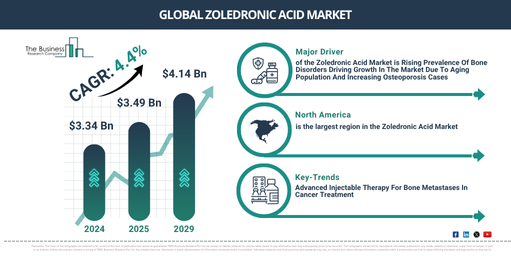
    The market for zoledronic acid has seen consistent growth in recent years. The market size is set to increase from $3.34 billion in 2024 to $3.49 billion in 2025, with a compound annual growth rate (CAGR) of 4.4%. Factors that contributed to the growth during the historical period include the expansion of home healthcare services, increasing need for customised medicine, enhanced knowledge about bone health, and a surge in obesity.

    Expectations are set for the zoledronic acid market to experience consistent expansion over the next few years, reaching a value of “$4.14 billion in 2029” with a compound annual growth rate (CAGR) of 4.4%. This predicted growth during the forecast period is attributed to an increase in bone disorders and osteoporosis, the escalating demand for zoledronic acid, and the emergence of telemedicine. Key trends projected for the forecast period are improvements in healthcare infrastructure, the creation of new formulations, the evolution of combination therapies, and the production of biosimilars.

    Get A Free Sample Of The Report:

    https://www.thebusinessresearchcompany.com/sample.aspx?id=23588&type=smp

    What Core Drivers Are Expected To Influence The Zoledronic Acid Market?

    The escalating prevalence of bone disorders is projected to stimulate the expansion of the zoledronic acid market. Bone disorders, which affect the formation, robustness, and functionality of the bones, are on the rise due to aging populations where bone density naturally diminishes. This increases the risk towards susceptibility to conditions like osteoporosis and fractures. Zoledronic acid effectively treats bone disorders by interfering with osteoclast activity, diminishing bone reabsorption, enhancing bone density, and averting fractures. For instance, the Australian Institute of Health and Welfare, a government agency based in Australia, reported in June 2024 that an estimated 853,600 Australians, or 3.4% of the population, had osteoporosis or osteopenia in 2022. In the 2021-2022 period, osteoporosis led to 9,500 hospitalizations, translating to 89 incidents per 100,000 individuals aged 45 and above. As such, the escalating prevalence of bone disorders is fueling the expansion of the zoledronic acid market.

    Which Segmentation Categories Are Highlighted In The Zoledronic Acid Market Analysis?

    The zoledronic acid market covered in this report is segmented –

    1) By Product Form: Injection, Powder

    2) By Distribution Channel: Pharmacies, Online Pharmacies, Hospital Pharmacies

    3) By Application: Metastatic Bone Cancers, Systemic Metabolic Bone Diseases, Osteoporosis, Paget’s Disease, Other Applications

    4) By End-Users: Hospitals, Clinics, Home Healthcare

    Subsegments:-

    1) By Injection: Single-Dose Vial, Multi-Dose Vial, Prefilled Syringe

    2) By Powder: Lyophilized Powder, Sterile Powder For Reconstitution

    Which Market Trends Are Expected To Define The Future Of The Zoledronic Acid Market?

    Key players in the zoledronic acid market are concentrating on the creation of innovative products, such as injectables for treating bone metastases of solid tumors, in order to increase the effectiveness of treatment, decrease skeletal-related incidents, and boost patient results. This type of medication for bone metastases of solid tumors is administered via injection to manage and mitigate the complications caused by cancer spread to the bones. For example, in February 2025, Avenacy Inc., a US pharmaceutical firm, introduced Zoledronic Acid Injection, USP, to the U.S. market. This therapeutic generic equivalent of Zometa, approved by the FDA, is used to treat hypercalcemia of malignancy, multiple myeloma, and bone metastases from solid tumors, along with standard antineoplastic therapy. The product is available in 4 mg/5 mL single-dose vials and includes specialized packaging to enhance medication precision.

    Which Organizations Are At The Forefront Of The Zoledronic Acid Market?

    Major companies operating in the zoledronic acid market are Abbott Laboratories, Novartis AG, Intas Pharmaceuticals Limited, Hetero Labs Limited, Dr. Reddy’s Laboratories Ltd., Cipla Limited, Alkem Laboratories Limited, Emcure Pharmaceuticals Limited, Accord Healthcare Limited, NATCO Pharma Limited, Taj Pharmaceuticals Limited, ScinoPharm Taiwan Ltd., Panacea Biotec Limited, GLS Pharma Private Limited, Miracalus Pharma Pvt. Ltd., Midas Pharma GmbH, AdvaCare Pharma, Tecoland Corporation, Eugia Pharma Specialties Limited, Lianyungang Runzhong Pharmaceutical Co. Ltd.

    Access The Complete Report Here:

    https://www.thebusinessresearchcompany.com/report/zoledronic-acid-global-market-report

    Which Geographic Regions Are Creating Strong Demand In The Zoledronic Acid Market?

    North America was the largest region in the zoledronic acid market in 2024. The regions covered in the zoledronic acid market report are Asia-Pacific, Western Europe, Eastern Europe, North America, South America, Middle East, Africa.

    Customize Your Report Here:

    https://www.thebusinessresearchcompany.com/customise?id=23588&type=smp

    About The Business Research Company:

    With over 15000+ reports from 27 industries covering 60+ geographies, The Business Research Company has built a reputation for offering comprehensive, data-rich research and insights. Armed with 1,500,000 datasets, the optimistic contribution of in-depth secondary research, and unique insights from industry leaders, you can get the information you need to stay ahead in the game.

    Get in touch with us:

    The Business Research Company: https://www.thebusinessresearchcompany.com/

    Americas +1 310-496-7795

    Asia +44 7882 955267 & +91 8897263534

    Europe +44 7882 955267

    Email us at info@tbrc.info

    Follow us on:

    LinkedIn: https://in.linkedin.com/company/the-business-research-company

    YouTube: https://www.youtube.com/channel/UC24_fI0rV8cR5DxlCpgmyFQ

    Global Market Model: https://www.thebusinessresearchcompany.com/global-market-model
  • Which Factors Will Push The Wingless-Related Integration Site (WNT) Signaling Pathway Inhibitor Market To Achieve $4.5 Billion By 2029?

    Which Factors Will Push The Wingless-Related Integration Site (WNT) Signaling Pathway Inhibitor Market To Achieve $4.5 Billion By 2029?

    Claim 30% Off Global Market Reports With Code ONLINE30 – Insights on Tariff Effects, Global Trade, and Industry Disruptors

    What Are The Future Growth Projections For The Wingless-Related Integration Site (WNT) Signaling Pathway Inhibitor Market Size?

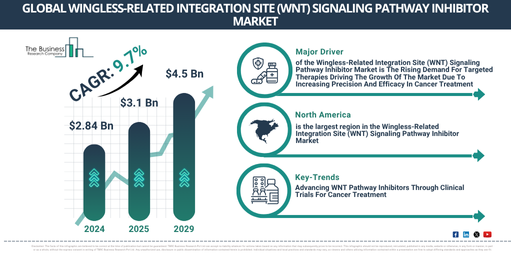
    The market for inhibitors of the wingless-related integration site (WNT) signaling pathway has experienced solid growth recently. It is projected to increase from $2.84 billion in 2024 to $3.1 billion in 2025, reflecting a compound annual growth rate (CAGR) of 9.2%. Factors contributing to the growth during the historical period include the rising incidence of cancer, an increasing number of chronic disease cases, advancements in drug development, and the escalating prevalence of pulmonary arterial hypertension.

    The market size of the inhibitor for the wingless-related integration site (WNT) signaling pathway is set to experience significant expansion in the coming years. It is predicted to reach $4.5 billion by 2029, with a compound annual growth rate (CAGR) of 9.7%. This growth during the projection period is largely due to factors such as increased acceptance of therapies, more supportive regulations, broader clinical trials, a rise in precision medicine usage, and more funds being allocated to research and development. Dominant trends during this period will be therapies gaining more acceptance, progressively supportive regulations, the widening of clinical trials, and a growth in the usage of precision medicine.

    Get A Free Sample Of The Report:

    https://www.thebusinessresearchcompany.com/sample.aspx?id=23583&type=smp

    Which Industry Forces Are Driving The Wingless-Related Integration Site (WNT) Signaling Pathway Inhibitor Market Forward?

    The burgeoning need for specific therapies is anticipated to stimulate the expansion of the wingless-related integration site (WNT) signaling pathway inhibitor market in the future. Such treatments concentrate on unique molecules or pathways that contribute to the progression of disease. The surge in specific therapies stems from precision medicine, which heightens effectiveness by targeting particular genetic changes while also diminishing adverse reactions. WNT signaling pathway inhibitors provide a support in specific therapies by preventing the irregular trigger of the WNT pathway, commonly associated with cancer cell expansion and metastasis; hence, decelerating tumor development and enhancing treatment results. As an example, the American Society of Gene and Cell Therapy (ASGCT), a professional membership organization based in the USA, reported in July 2024 that 76 gene therapy trials had begun in the second quarter of 2024, reflecting a 25% growth in comparison to the former quarter. Thus, the escalating requirement for specific therapies is propelling the expansion of the wingless-related integration site (WNT) signaling pathway inhibitor market.

    What Is The Segment Breakdown Of The Wingless-Related Integration Site (WNT) Signaling Pathway Inhibitor Market?

    The wingless-related integration site (wnt) signaling pathway inhibitor market covered in this report is segmented –

    1) By Drug Type: Small molecule Inhibitors, Monoclonal Antibodies, Gene Therapies

    2) By Mechanism Of Action: Porcupine Inhibitors, Frizzled Inhibitors, ß-Catenin Inhibitors, Wingless-Related Integration Site (WNT)-Protein Inhibitors

    3) By Stage Of Development: Pre-Clinical, Clinical Trials, Approved Products

    4) By Indications: Cancers, Bone Diseases, Neurological Disorders

    5) By End-Users: Pharmaceutical Companies, Research Institutions, Hospitals, Diagnostic Laboratories

    Subsegments:

    1) By Small Molecule Inhibitors: Porcupine Inhibitors, Tankyrase Inhibitors, ß-Catenin Inhibitors

    2) By Monoclonal Antibodies: Wingless-Related Integration Site (WNT) Ligand-Targeting Antibodies, Frizzled Receptor-Blocking Antibodies, Dickkopf (DKK) Antibodies

    3) By Gene Therapies: Clustered Regularly Interspaced Short Palindromic Repeats (CRISPR)-Based Gene Editing, RNA Interference (RNAi) Therapies, Antisense Oligonucleotides (ASOs)

    How Are Global Trends Impacting The Development Of The Wingless-Related Integration Site (WNT) Signaling Pathway Inhibitor Market?

    Leading firms in the wingless-related integration site (WNT) signaling pathway inhibitor market are concentrating their efforts on the creation of improved solutions including conducting clinical trials for WNT signaling pathway inhibitors. This strategy seeks to widen the range of treatment alternatives and address the issue of drug resistance. These clinical trials evaluate the efficacy and potential benefits of drugs that target the WNT pathway, which plays a pivotal role in the development of cancer and other diseases. For instance, a US-based biopharmaceutical company, FogPharma, disclosed in June 2023 that the first patient was administered a dose in the first stage of its Phase 1/2 clinical trials for FOG-001. This drug, which is the first TCF-blocking ß-catenin inhibitor of its kind, targets advanced solid tumors, including those seen in colorectal cancer. This non-randomized, open-label study intends to register a maximum of 200 patients to investigate the safety, tolerability, pharmacokinetics, pharmacodynamics, and the anticancer activity of FOG-001. This drug works by interrupting ß-catenin-dependent signaling in the Wnt pathway, which is a significant factor in oncogenesis.

    Who Are The Major Stakeholders Operating In The Wingless-Related Integration Site (WNT) Signaling Pathway Inhibitor Market?

    Major companies operating in the wingless-related integration site (WNT) signaling pathway inhibitor market are Bayer AG, Novartis AG, Merck KGaA, Eisai Co. Ltd, STEMCELL Technologies Inc., Abcam Limited, MedChemExpress LLC, Enzo Life Sciences International Inc., FogPharma Inc., Selleck Chemicals LLC, Santa Cruz Biotechnology, Inc., Creative BioMart Inc., Redx Pharma plc, REPROCELL Inc., CHEMDIV INC, PRISM BioLab Co., Ltd., Allarity Therapeutics Inc., Verastem Oncology Inc., OncoMed Pharmaceuticals Inc, Allied-Bristol Life Sciences LLC.

    Access The Complete Report Here:

    https://www.thebusinessresearchcompany.com/report/wingless-related-integration-site-wnt-signaling-pathway-inhibitor-global-market-report

    Which Region Is Likely To Register The Fastest Growth In The Wingless-Related Integration Site (WNT) Signaling Pathway Inhibitor Market?

    North America was the largest region in the wingless-related integration site (WNT) signaling pathway inhibitor market in 2024. Asia-Pacific is expected to be the fastest-growing region in the forecast period. The regions covered in the wingless-related integration site (WNT) signaling pathway inhibitor market report are Asia-Pacific, Western Europe, Eastern Europe, North America, South America, Middle East, Africa.

    Customize Your Report Here:

    https://www.thebusinessresearchcompany.com/customise?id=23583&type=smp

    About The Business Research Company:

    With over 15000+ reports from 27 industries covering 60+ geographies, The Business Research Company has built a reputation for offering comprehensive, data-rich research and insights. Armed with 1,500,000 datasets, the optimistic contribution of in-depth secondary research, and unique insights from industry leaders, you can get the information you need to stay ahead in the game.

    Get in touch with us:

    The Business Research Company: https://www.thebusinessresearchcompany.com/

    Americas +1 310-496-7795

    Asia +44 7882 955267 & +91 8897263534

    Europe +44 7882 955267

    Email us at info@tbrc.info

    Follow us on:

    LinkedIn: https://in.linkedin.com/company/the-business-research-company

    YouTube: https://www.youtube.com/channel/UC24_fI0rV8cR5DxlCpgmyFQ

    Global Market Model: https://www.thebusinessresearchcompany.com/global-market-model
  • What Key Growth Drivers Are Shaping The Venlafaxine Market Forecast Toward $4.13 Billion?

    What Key Growth Drivers Are Shaping The Venlafaxine Market Forecast Toward $4.13 Billion?

    Claim 30% Off Global Market Reports With Code ONLINE30 – Insights on Tariff Effects, Global Trade, and Industry Disruptors

    What Is The Current Size And Growth Outlook For The Venlafaxine Market?

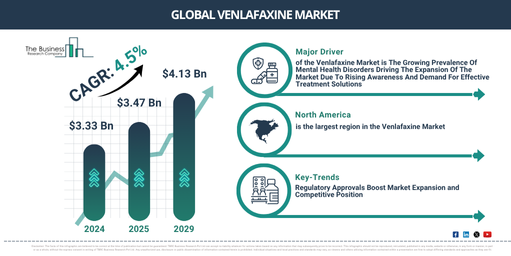
    The market for venlafaxine has experienced steady expansion in the past few years. The market is forecasted to expand from $3.33 billion in 2024 to $3.47 billion in 2025, indicating a compound annual growth rate (CAGR) of 4.1%. Factors such as a rise in the intensity of depression, enhanced symptoms of anxiety, growing resistance to treatments, the need for dosing modifications, ascending patient age, and deteriorating health conditions have all contributed to this historical growth.

    The market size of venlafaxine is projected to experience consistent expansion in the upcoming years, estimated to reach “$4.13 billion by 2029”, at a compound annual growth rate (CAGR) of 4.5%. The anticipated growth during the forecast duration can be credited to several factors such as escalating chronic stress concerns, an increase in the occurrence of panic attacks, improved understanding of treatment-resistant conditions, heightened awareness about neurobiological elements, and a surging emphasis on tailored medical treatment. Significant trends projected over this period encompass digital health tracking, AI-aided pharmaceutical discoveries, advances in drug delivery systems, updates in regulations and policies, and the use of AI in the tracking of treatment efficacy.

    Get A Free Sample Of The Report:

    https://www.thebusinessresearchcompany.com/sample.aspx?id=23565&type=smp

    What Are The Primary Factors Supporting The Venlafaxine Market Expansion?

    The venlafaxine market is predicted to expand, mainly due to the rising occurrence of mental health disorders. Such conditions, affecting an individual’s thought process, emotional state, mannerism, or mood, often result in discomfort or hindered functionality in daily activities. The growth rate of these disorders is escalating due to the overuse of social media, which promotes unrealistic expectations, cyber harassment, and a decrease in face-to-face communication, thereby causing increased levels of anxiety and depression. Venlafaxine aids in managing these disorders by elevating serotonin and norepinephrine levels in the brain. This dual function mechanism aids in mood regulation and assists in easing symptoms related to depression, anxiety, and panic disorders. As per the National Institute of Mental Health (NIMH), a US-based federal agency, in 2022, 59.3 million adults, constituting 23.1% of the adult American population, suffered from any mental illness (AMI). The incidence was more prevalent amongst females (26.4%) than males (19.7%). Consequently, the growing rate of mental health disorders is fostering the expansion of the venlafaxine market.

    Which Segments Define The Structure Of The Venlafaxine Market?

    The venlafaxine market covered in this report is segmented –

    1) By Formulation: Extended-Release Capsules, Immediate-Release Tablets, Oral Solution

    2) By Drug Class: Antidepressant, Selective Serotonin And Norepinephrine Reuptake Inhibitors (SNRIs)

    3) By Demographic: Adult, Pediatric, Geriatric

    4) By Application: Panic Disorder, Depression, Anxiety, Social Anxiety Disorder, Other Application

    5) By End-User: Clinic, Hospital, Other End-Users

    Subsegments:

    1) By Extended-Release Capsules: 37.5 Mg Capsules, 75 Mg Capsules, 150 Mg Capsules, 225 Mg Capsules

    2) By Immediate-Release Tablets: 25 Mg Tablets, 37.5 Mg Tablets, 50 Mg Tablets, 75 Mg Tablets, 100 Mg Tablets

    3) By Oral Solution: 25 Mg/Ml Oral Solution, 37.5 Mg/Ml Oral Solution, 50 Mg/Ml Oral Solution

    What Strategic Shifts And Innovations Are Influencing The Venlafaxine Market?

    Companies with a significant presence in the venlafaxine market are concentrating their efforts on acquiring regulatory approvals, with the hope of increasing their product lines, extending their market reach, and solidifying their competitive standing. Regulatory approvals are formal permissions issued by healthcare entities, granting businesses the ability to produce, distribute, and sell pharmaceutical products once their safety, effectiveness, and quality have been verified. For example, in August 2022, the USFDA gave Zydus Lifesciences, an Indian pharmaceutical firm, permission to sell generic incarnations of venlafaxine and pregabalin extended-release tablets. The venlafaxine formulations that were approved, which are used for treating depression and anxiety disorders, come in dosages of 37.5 mg, 75 mg, 150 mg, and 225 mg. Pregabalin has been approved to treat neuropathic pain resulting from diabetes-related peripheral neuropathy, postherpetic neuralgia, fibromyalgia, injuries to the spinal cord, and also as an additional treatment for partial onset seizures.

    Which Firms Are Making The Biggest Impact In The Venlafaxine Market?

    Major companies operating in the venlafaxine market are Pfizer Inc., Merck & Co. Inc., Sanofi SA, Thermo Fisher Scientific Inc., AstraZeneca plc, Novartis AG, Takeda Pharmaceutical Company Limited., Viatris Inc., Teva Pharmaceutical Industries, Sun Pharmaceutical Industries Ltd., Aurobindo Pharma, Dr Reddy’s Laboratories., Zydus Cadila, Lupin Pharmaceuticals, Torrent Pharmaceuticals, Taylor & Francis , Stada Arzneimittel, Taj Pharma, Mesha Pharma, Suzhou Pharmaceutical.

    Access The Complete Report Here:

    https://www.thebusinessresearchcompany.com/report/venlafaxine-global-market-report

    Which Region Is Forecasted To Lead The Venlafaxine Market In The Coming Years?

    North America was the largest region in the venlafaxine market in 2024. The regions covered in the venlafaxine market report are Asia-Pacific, Western Europe, Eastern Europe, North America, South America, Middle East, Africa.

    Customize Your Report Here:

    https://www.thebusinessresearchcompany.com/customise?id=23565&type=smp

    About The Business Research Company:

    With over 15000+ reports from 27 industries covering 60+ geographies, The Business Research Company has built a reputation for offering comprehensive, data-rich research and insights. Armed with 1,500,000 datasets, the optimistic contribution of in-depth secondary research, and unique insights from industry leaders, you can get the information you need to stay ahead in the game.

    Get in touch with us:

    The Business Research Company: https://www.thebusinessresearchcompany.com/

    Americas +1 310-496-7795

    Asia +44 7882 955267 & +91 8897263534

    Europe +44 7882 955267

    Email us at info@tbrc.info

    Follow us on:

    LinkedIn: https://in.linkedin.com/company/the-business-research-company

    YouTube: https://www.youtube.com/channel/UC24_fI0rV8cR5DxlCpgmyFQ

    Global Market Model: https://www.thebusinessresearchcompany.com/global-market-model
  • How Will The Urinary Retention Drug Market Expand At A CAGR Of 5.8% Through 2029?

    How Will The Urinary Retention Drug Market Expand At A CAGR Of 5.8% Through 2029?

    Claim 30% Off Global Market Reports With Code ONLINE30 – Insights on Tariff Effects, Global Trade, and Industry Disruptors

    What Is The Predicted Market Size Of The Urinary Retention Drug Industry By 2029?

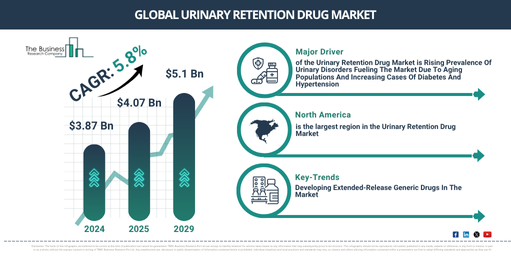
    The market size for drugs treating urinary retention has seen robust growth lately. The market is projected to burgeon from $3.87 billion in 2024 to $4.07 billion in 2025, indicating a compound annual growth rate (CAGR) of 5.2%. The earlier growth phase can be linked to factors such as a surge in the elderly population, amplification of healthcare investments, enhancements in medical facilities, a growing aged demographic, an increase in the global elderly population, and a rise in the incidence of BPH.

    The market for urinary retention medication is set to experience significant expansion in the coming years. Experts predict it will reach a size of $5.1 billion by 2029, with a compound annual growth rate (CAGR) of 5.8%. Factors contributing to this projected growth during the forecast period include an uptick in cases of urinary retention and postoperative urinary retention, an increased occurrence of urinary incontinence (UI), heightened awareness of the importance of timely diagnosis and treatment, and a rise in benign prostatic hyperplasia occurrences. The forecast period is also expected to see key developments such as advanced drug delivery systems, improvements in drug formulations, the use of artificial intelligence and machine learning, telemedicine and remote patient monitoring, and groundbreaking solutions.

    Get A Free Sample Of The Report:

    https://www.thebusinessresearchcompany.com/sample.aspx?id=23552&type=smp

    Which Growth Drivers Are Shaping The Urinary Retention Drug Market Outlook?

    The urinary retention drug market is projected to expand due to the growing instances of urinary disorders. These disorders, which affect the urinary system, can cause complications such as difficulty in urination, discomfort, incontinence, or retention. The surge in urinary disorders can be attributed to a rise in diabetes cases as elevated blood sugar levels can harm the kidneys and urinary tract. This can cause conditions like diabetic nephropathy and regular urinary tract infections. Drugs for urinary retention assist in handling these disorders by increasing urine flow, calming bladder muscles, and easing symptoms such as issues with urination, thereby bolstering bladder functionality and comfort. For instance, in October 2023, hospitals in England reported 147,285 admissions due to urinary tract infections (UTI) in 2022/23 according to the National Health Service (NHS), a UK government department. Of these cases, 56% or 82,392 admissions were for individuals over the age of 65. The majority of these admissions pertained to the 80-84 age group, reporting 17,280 cases. Therefore, the escalating instances of urinary disorders are fuelling the advancement of the urinary retention drug market.

    What Are The Primary Segmentation Parameters In The Urinary Retention Drug Market?

    The urinary retention drug market covered in this report is segmented –

    1) By Drug Class: Alpha Blockers, Beta-3 Agonists, Anticholinergics, Surgical Agents

    2) By Indication: Chronic Urinary Retention, Postoperative Urinary Retention, Neurogenic Bladder

    3) By Administration: Oral, Injectable, Transdermal

    4) By End Users: Hospitals, Homecare, Specialty Clinics, Other End Users

    Subsegments:

    1) By Alpha Blockers: Alpha-1 Blockers, Alpha-2 Blockers

    2) By Beta-3 Agonists: Selective Beta-3 Agonists

    3) By Anticholinergics: Antimuscarinics, Non-Selective Anticholinergics

    4) By Surgical Agents: Anesthetics, Hemostatic Agents, Muscle Relaxants, Antibiotic Prophylaxis

    Which Emerging Trends Are Reshaping The Urinary Retention Drug Market Landscape?

    Leading firms in the urinary retention drug market are strategizing to create new formulations such as extended-release tablets to enhance patient adherence and offer extended symptom relief. Extended-release (ER) tablets are a pharmaceutical formulation that allows the gradual release of the active substance over an extended time. Such a controlled release method ensures a steady concentration of the drug in the blood, thus reducing the dosage frequency compared to immediate-release tablets. For example, in April 2024, an Indian pharmaceutical corporation, Zydus Lifesciences Limited, launched a Mirabegron generic equivalent for treating overactive bladder (OAB). Mirabegron, a selective beta-3 adrenergic agonist, relaxes the bladder muscles, reducing the need to urinate frequently, and reducing incontinence. Although it is primarily used for OAB, it also aids in the treatment of urinary retention related to overactive bladder conditions. This medication is consumed once a day orally.

    Which Players Are Shaping The Competitive Landscape Of The Urinary Retention Drug Market?

    Major companies operating in the urinary retention drug market are Pfizer Inc., Johnson & Johnson, Merck & Co. Inc., AbbVie Inc., Sanofi S.A., Bristol-Myers Squibb Company, AstraZeneca PLC, Novartis International AG, GlaxoSmithKline plc, Medtronic plc, Takeda Pharmaceutical Company Limited, Eli Lilly and Company, Teva Pharmaceutical Industries Limited, Boehringer Ingelheim International GmbH, Astellas Pharma Inc., Sun Pharmaceutical Industries Limited, Aurobindo Pharma Limited, Lupin Limited, Cadila Healthcare Limited, Torrent Pharmaceuticals Limited, Ajanta Pharma Limited, Ferring Pharmaceuticals Inc., UroGen Pharma Ltd.

    Access The Complete Report Here:

    https://www.thebusinessresearchcompany.com/report/urinary-retention-drug-global-market-report

    What Are The Emerging Regional Trends Driving The Urinary Retention Drug Market?

    North America was the largest region in the urinary retention drug market in 2024. The regions covered in the urinary retention drug market report are Asia-Pacific, Western Europe, Eastern Europe, North America, South America, Middle East, Africa.

    Customize Your Report Here:

    https://www.thebusinessresearchcompany.com/customise?id=23552&type=smp

    About The Business Research Company:

    With over 15000+ reports from 27 industries covering 60+ geographies, The Business Research Company has built a reputation for offering comprehensive, data-rich research and insights. Armed with 1,500,000 datasets, the optimistic contribution of in-depth secondary research, and unique insights from industry leaders, you can get the information you need to stay ahead in the game.

    Get in touch with us:

    The Business Research Company: https://www.thebusinessresearchcompany.com/

    Americas +1 310-496-7795

    Asia +44 7882 955267 & +91 8897263534

    Europe +44 7882 955267

    Email us at info@tbrc.info

    Follow us on:

    LinkedIn: https://in.linkedin.com/company/the-business-research-company

    YouTube: https://www.youtube.com/channel/UC24_fI0rV8cR5DxlCpgmyFQ

    Global Market Model: https://www.thebusinessresearchcompany.com/global-market-model
  • What Is The Forecast Valuation Of The Urinary pH Modifier Market Projected To Reach $3.9 Billion By 2029?

    What Is The Forecast Valuation Of The Urinary pH Modifier Market Projected To Reach $3.9 Billion By 2029?

    Claim 30% Off Global Market Reports With Code ONLINE30 – Insights on Tariff Effects, Global Trade, and Industry Disruptors

    What CAGR And Valuation Are Anticipated For The Urinary pH Modifier Market?

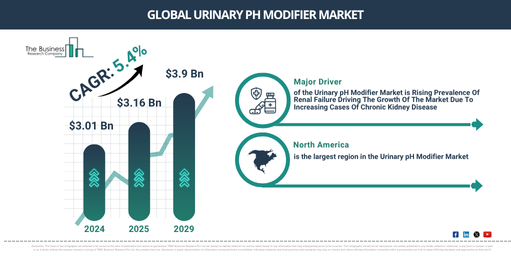
    In recent times, there has been consistent growth in the market size of urinary pH modifiers. It’s projected to expand from $3.01 billion in 2024 to a considerable $3.16 billion in 2025, boasting a compound annual growth rate (CAGR) of 5.0%. The previous growth phase can be tied to the surge in incidents of renal failure, rising affinity for online platforms, a burgeoning demand for pH modifier solutions, elevated urinary tract infection rates, as well as a growing prevalence of diabetes.

    The market size of urinary pH modifiers is predicted to experience robust expansion in the upcoming years, escalating to “$3.9 billion in 2029 with a compound annual growth rate (CAGR) of 5.4%. The increase during the projected period is due to the growing occurrence of cancer, rise in emerging markets, heightened prevalence of urinary tract infections, escalating emphasis on preventive healthcare, and surging demand for dietary supplements. Notable trends during the future predicting period involve technology enhancements, non-invasive monitoring technologies, personalized treatment strategies, improvements in technology, and innovative product development.

    Get A Free Sample Of The Report:

    https://www.thebusinessresearchcompany.com/sample.aspx?id=23551&type=smp

    What Market Forces Are Contributing To The Growth Of The Urinary pH Modifier Market?

    The urinary pH modifiers market is set to expand, backed by the growing number of renal failure cases. Loss of kidney function, denoted by renal failure, results in the inability of the kidneys to filter waste, balance fluids and regulate electrolytes inside the body. Rising diabetes incidences, which over time, wreak havoc to kidney filtration and ultimately lead to chronic kidney disease or renal failure, are the main factors fuelling the surge of renal failure cases. Urinary pH modifiers are highly sought after due to their usefulness in managing acid-base discrepancies, mitigating kidney stone development, and minimizing complications arising from impaired kidney functions. Kidney Research UK, a charitable organization based in the UK, indicated that as of June 2023, over 10% of the UK population or about 7.19 million individuals have chronic kidney disease. These figures are expected to escalate to 7.61 million by 2033. Hence, the swell in renal failure incidences is propelling the growth of the urinary pH modifiers market.

    How Is The Urinary pH Modifier Market Segmented Across Key Categories?

    The urinary ph modifier market covered in this report is segmented –

    1) By Drug: Potassium Acid Phosphate, Sodium Bicarbonate, Sodium Citrate, Potassium Citrate

    2) By Dosage: Injection, Tablets, Solution, Powder, Other Dosages

    3) By Indication: Alkalosis, Alkylating Agent Cystitis, Asystole, Gastroesophageal Reflux Disease, Diabeitc Ketoacidosis, Hyperkalemia, Hyponatremia, Indigestion, Metabolic Acidosis, Other Indications

    4) By Distribution Channel: Online Retail, Pharmacies, Supermarkets, Health Food Stores

    5) By End-User: Hospitals, Clinics, Home Care

    Subsegments:-

    1) By Potassium Acid Phosphate: Monobasic Potassium Phosphate, Dibasic Potassium Phosphate, Combination Formulations

    2) By Sodium Bicarbonate: Oral Sodium Bicarbonate Tablets, Intravenous Sodium Bicarbonate Injection, Effervescent Sodium Bicarbonate Powder

    3) By Sodium Citrate: Sodium Citrate Dihydrate, Sodium Citrate Anhydrous, Sodium Citrate Oral Solution

    4) By Potassium Citrate: Potassium Citrate Extended-Release Tablets, Potassium Citrate Oral Solution, Combination Therapy With Other Alkalizing Agents

    Who Are The Leading Companies Driving The Urinary pH Modifier Market?

    Major companies operating in the urinary ph modifier market are Cargill Incorporated, Intas Pharmaceuticals Ltd., Virbac, Vetoquinol, Otto Chemie Pvt. Ltd., Ashish Life Science, Vitalac, Apex Laboratories, Neo Kumfurt Solutions Pvt. Ltd., Millpledge Ltd., Vizag Chemical, Swiss Chemie, Ennore India Chemicals, East India Chemicals International, RX Chemical, Aptus, Rishi Chemical, Tricon Biochem Corporation, Orion Pharma Animal Health, Beach Pharmaceuticals.

    Access The Complete Report Here:

    https://www.thebusinessresearchcompany.com/report/urinary-ph-modifier-global-market-report

    Which Region Dominates The Urinary pH Modifier Market Today?

    North America was the largest region in the urinary pH modifier market in 2024. The regions covered in the urinary ph modifier market report are Asia-Pacific, Western Europe, Eastern Europe, North America, South America, Middle East, Africa.

    Customize Your Report Here:

    https://www.thebusinessresearchcompany.com/customise?id=23551&type=smp

    About The Business Research Company:

    With over 15000+ reports from 27 industries covering 60+ geographies, The Business Research Company has built a reputation for offering comprehensive, data-rich research and insights. Armed with 1,500,000 datasets, the optimistic contribution of in-depth secondary research, and unique insights from industry leaders, you can get the information you need to stay ahead in the game.

    Get in touch with us:

    The Business Research Company: https://www.thebusinessresearchcompany.com/

    Americas +1 310-496-7795

    Asia +44 7882 955267 & +91 8897263534

    Europe +44 7882 955267

    Email us at info@tbrc.info

    Follow us on:

    LinkedIn: https://in.linkedin.com/company/the-business-research-company

    YouTube: https://www.youtube.com/channel/UC24_fI0rV8cR5DxlCpgmyFQ

    Global Market Model: https://www.thebusinessresearchcompany.com/global-market-model
  • Synthetic Cannabinoids Market – Opportunities, Share, Growth and Competitive Analysis and Forecast 2029

    Synthetic Cannabinoids Market – Opportunities, Share, Growth and Competitive Analysis and Forecast 2029

    Claim 30% Off Global Market Reports With Code ONLINE30 – Insights on Tariff Effects, Global Trade, and Industry Disruptors

    What Are The Market Size Estimates For The Synthetic Cannabinoids Market?

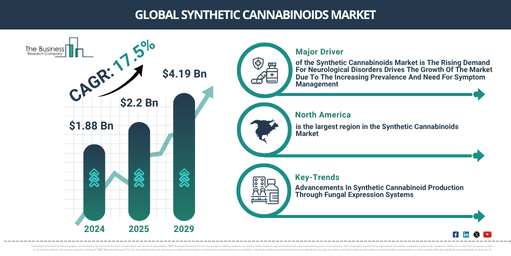
    In recent years, an accelerated growth has been observed in the synthetic cannabinoids market’s size. The market, which is projected to expand from $1.88 billion in 2024 to $2.2 billion in 2025, is predicted to have a compound annual growth rate (CAGR) of 17.1%. Increased demand for substitute drugs, a rise in the number of cannabis users, expanding applications in the pharmaceutical industry, growing demand for legalized highs, and a trend towards self-medication are some of the factors linked with the notable growth in the historic period.

    The market for synthetic cannabinoids is projected to experience significant expansion in the coming years, with a projected value of $4.19 billion by 2029, reflecting a compound annual growth rate (CAGR) of 17.5%. Factors contributing to this growth are the increasing popularity of designer drugs, more prevalent legalization of cannabis, improved online availability of synthetic drugs, a spike in the popularity of vaping, and an uptick in the customization of cannabinoid products. Key trends predicted for the forecast period include more advanced forensic toxicology practices, the application of machine learning in detecting chemical patterns, the use of cloud technology for tracking illicit drugs, breakthroughs in synthetic cannabinoid formulations, and the creation of innovative cannabinoid analogs.

    Get A Free Sample Of The Report:

    https://www.thebusinessresearchcompany.com/sample.aspx?id=23536&type=smp

    What Drivers Are Accelerating Expansion Of The Synthetic Cannabinoids Market?

    An escalating necessity for therapies for neurological conditions is anticipated to spur the expansion of the synthetic cannabinoids market in future. Neurological conditions, which affect the brain, spinal cord, and nerves, impede movement, perception, cognition, or general functioning. The surge in occurrences of these disorders is largely dependent on the maturing global populace, as diseases such as Alzheimer’s increase in prevalence with age due to the brain’s natural aging process and accumulated cellular damage. Synthetic cannabinoids interact with cannabinoid receptors in the brain, modulating neurotransmitter activity and potentially relieving symptoms correlated with neurological diseases. For example, as per data from the European Brain Council, a health organization based in Belgium, there were 7 million Alzheimer’s patients in Europe as of September 2024. This figure is expected to double to 14 million by 2030 due to an aging population, symbolizing a substantial worldwide public health obstacle. Thus, an escalating necessity for therapies for neurological conditions is the key driving force behind the expansion of the synthetic cannabinoids market.

    How Is The Global Synthetic Cannabinoids Market Broken Down By Segment?

    The synthetic cannabinoids market covered in this report is segmented –

    1) By Product Type: High-Pure Synthetic Cannabinoids, Ultra-Pure Synthetic Cannabinoids

    2) By Formulation: Oil, Capsules, Edibles, Vapes, Topicals

    3) By Indication: Pain Management, Nausea Or Vomiting, Neurological Disorder Management, Other Indications

    4) By Application: Pharmaceuticals, Research, Recreational Use, Agriculture, Nutraceuticals

    5) By Distribution Channel: Hospital Pharmacies, Retail Pharmacies, Online Pharmacies

    Subsegments:

    1) By High-Pure Synthetic Cannabinoids: Pharmaceutical-Grade Cannabinoids, Research-Grade Cannabinoids, Industrial-Use Cannabinoids

    2) By Ultra-Pure Synthetic Cannabinoids: Medical-Grade Cannabinoids, Biotechnology-Grade Cannabinoids, Analytical-Standard Cannabinoids

    Which Trends Are Likely To Redefine Growth Paths In The Synthetic Cannabinoids Market?

    Prominent firms in the synthetic cannabinoids market are concentrating on devising sophisticated solutions, like fungal expression systems, to improve the efficacy of production and curtail expenses. Genetically modified fungi are utilized in fungal expression systems to bioengineer synthetic cannabinoids, thereby presenting an environment-friendly and expandable alternative to chemical compound synthesis or extracting from plants. For pharmaceutical and research applications, these systems facilitate the production of high-purity compounds. For instance, in January 2022, Dyadic International Inc., a bio-tech firm based in the United States, presented a C1-cell protein production mechanism to generate synthetic cannabinoids. The groundbreaking approach uses filamentous fungal cell factories to produce cannabinoids like cannabidiol (CBD) and its forerunners in a more economical and sustainable manner. The method is energy-efficient and environmentally sustainable, offering the possibility of producing cleaner, regulation-compliant cannabinoids with potential therapeutic uses for medical conditions such as chronic pain, inflammation, and others.

    Who Are The Global Leaders Steering The Synthetic Cannabinoids Market Forward?

    Major companies operating in the synthetic cannabinoids market are Johnson Matthey, Harmony Biosciences, BioVectra, Restek Corporation, Noramco Inc., Cayman Chemical, Cerilliant Corporation, Skye Bioscience, Purisys LLC, Chiron AS, Lygos Inc., Botanix Pharmaceuticals, CB Therapeutics Inc., BayMedica, Zynerba Pharmaceuticals Inc., Kannalife Sciences Inc., SciSparc Ltd., 180 Life Science, Tetra Bio-Pharma Inc., Canntab Therapeutics Ltd.

    Access The Complete Report Here:

    https://www.thebusinessresearchcompany.com/report/synthetic-cannabinoids-global-market-report

    Which Regional Markets Are Emerging As Key Hubs For The Synthetic Cannabinoids Market?

    North America was the largest region in the synthetic cannabinoids market in 2024. Asia-Pacific is expected to be the fastest-growing region in the forecast period. The regions covered in the synthetic cannabinoids market report are Asia-Pacific, Western Europe, Eastern Europe, North America, South America, Middle East, Africa.

    Customize Your Report Here:

    https://www.thebusinessresearchcompany.com/customise?id=23536&type=smp

    About The Business Research Company:

    With over 15000+ reports from 27 industries covering 60+ geographies, The Business Research Company has built a reputation for offering comprehensive, data-rich research and insights. Armed with 1,500,000 datasets, the optimistic contribution of in-depth secondary research, and unique insights from industry leaders, you can get the information you need to stay ahead in the game.

    Get in touch with us:

    The Business Research Company: https://www.thebusinessresearchcompany.com/

    Americas +1 310-496-7795

    Asia +44 7882 955267 & +91 8897263534

    Europe +44 7882 955267

    Email us at info@tbrc.info

    Follow us on:

    LinkedIn: https://in.linkedin.com/company/the-business-research-company

    YouTube: https://www.youtube.com/channel/UC24_fI0rV8cR5DxlCpgmyFQ

    Global Market Model: https://www.thebusinessresearchcompany.com/global-market-model
  • Rhinovirus Infections Drug Market Trends 2025–2029: Regional Outlook and Sizing Analysis

    Rhinovirus Infections Drug Market Trends 2025–2029: Regional Outlook and Sizing Analysis

    Claim 30% Off Global Market Reports With Code ONLINE30 – Insights on Tariff Effects, Global Trade, and Industry Disruptors

    How Is The Rhinovirus Infections Drug Market Expected To Grow In Terms Of Size?

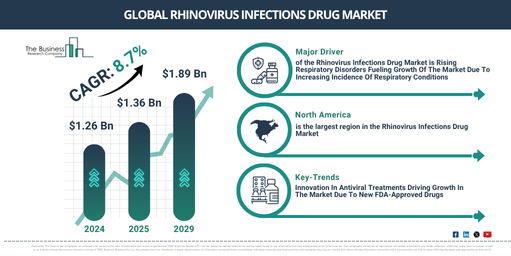
    In recent years, the market size for drugs treating rhinovirus infections has shown robust growth. The value of this market is anticipated to climb from $1.26 billion in 2024 to $1.36 billion in 2025, marking a Compound Annual Growth Rate (CAGR) of 7.7%. Factors like the increased occurrence of the common cold, enhanced knowledge regarding respiratory infections, rising need for over-the-counter medications, escalated healthcare spending, and the growing acceptance of combination therapies can be credited for this growth during the historic period.

    The market for rhinovirus infections medications is predicted to witness substantial growth over the next few years, expanding to $1.89 billion in 2029 with a compound annual growth rate (CAGR) of 8.7%. This growth during the forecast period may be due to an increase in antiviral drugs investment, a rising demand for specific therapies, the mounting prevalence of respiratory diseases, broader healthcare access in emerging markets, and a heightened usage of biologics and monoclonal antibodies. Trends to watch for in the forecast period encompass progression in antiviral research, vaccine research advancements, innovation in biologics and monoclonal antibodies, the creation of broad-spectrum antivirals, and the ongoing breakthroughs in nanotechnology for drug delivery.

    Get A Free Sample Of The Report:

    https://www.thebusinessresearchcompany.com/sample.aspx?id=23503&type=smp

    Which Key Factors Are Fueling Growth In The Rhinovirus Infections Drug Market?

    The surge in respiratory illnesses is anticipated to boost the expansion of the rhinovirus infections drug market in the near future. These ailments, which include asthma, chronic obstructive pulmonary disease (COPD), and pneumonia, have an impact on the lungs and air passages and cause breathing complications. The escalation of such disorders can be attributed mainly to the growth in air pollution and being exposed to occupational risks. These factors result in conditions like asthma, COPD, and pneumonia becoming more widespread among the affected groups of people. Drugs for rhinovirus infections aid respiratory disorders by focusing on viral replication, lessening inflammation, and relieving symptoms to enhance respiratory functioning. For instance, data from the National Asthma Council, a non-profit organization from Australia, in November 2023, showed that 467 asthma-linked deaths occurred in Australia in 2022, which involved 299 women and 168 men. This was a rise from 355 deaths in 2021. Thus, the escalating occurrence of respiratory disorders is propelling growth in the rhinovirus infections drug market.

    Which Segmentation Factors Are Critical In The Rhinovirus Infections Drug Market Analysis?

    The rhinovirus infections drug market covered in this report is segmented –

    1) By Product: Antivirals, Immunomodulators, Vaccines, Nasal Sprays, Symptomatic Treatments

    2) By Patient Age Group: Infants, Children, Adults, Elderly

    3) By Route Of Administration: Oral, Intranasal, Injectable

    4) By Indication: Common Cold, Asthma Exacerbation, Chronic Obstructive Pulmonary Disease (COPD) Exacerbation, Other Indications

    5) By Distribution Channel: Hospital Pharmacies, Retail Pharmacies, Online Pharmacies, Specialty Pharmacies

    Subsegments:

    1) By Antivirals: Pleconaril, Vapendavir, Rupintrivir, Other Antivirals

    2) By Immunomodulators: Interferons, Toll-Like Receptor Agonists, Other Immunomodulators

    3) By Vaccines: Live Attenuated Vaccines, Inactivated Vaccines, Recombinant Vaccines

    4) By Nasal Sprays: Antihistamine Nasal Sprays, Decongestant Nasal Sprays, Steroid Nasal Sprays, Saline Nasal Sprays

    5) By Symptomatic Treatments: Analgesics, Antipyretics, Cough Suppressants, Expectorants, Antihistamines

    What Are The Dominant Trends Currently Seen In The Rhinovirus Infections Drug Market?

    In the rhinovirus infections drug market, major players are concentrating their efforts on the development of innovative products such as antiviral medications. The purpose of this focus is to improve treatment effectiveness, lessen the severity of symptoms, and hasten patient recovery. Antiviral drugs work by stifling the replication of viruses within the human body and can be effective against viruses such as influenza, HIV, hepatitis, and rhinovirus. Some of these drugs function by preventing viruses from entering host cells, while others stop viral replication or assembly. For instance, in March 2025, the U.S. Food and Drug Administration (FDA) gave clearance to Altesa BioSciences Inc., a biotechnology company based in the US, for its Investigational New Drug (IND) application for vapendavir. This is an oral, broad-spectrum antiviral drug intended to treat rhinovirus infections in individuals with COPD. Vapendavir works to prevent rhinovirus from entering human cells and replicating, thereby proving effective against 97% of rhinoviruses and other respiratory enteroviruses. Altesa BioSciences has exclusive global rights to the development, production, and sale of vapendavir. The drug targets vulnerable populations, including those suffering from COPD and asthma, providing them with tailored treatment.

    Which Companies Hold A Competitive Edge In The 599 Market?

    Major companies operating in the rhinovirus infections drug market are Pfizer Inc., Gilead Sciences Inc., Teva Pharmaceutical Industries Ltd., BioFire Diagnostics LLC, hVIVO Services Limited, Romark Laboratories L.C., Cocrystal Pharma Inc., Altamira Therapeutics Ltd., Biota Pharmaceuticals Inc., Aditum Bio Management Company LLC, MetP Pharma AG, Via Nova Therapeutics Inc., Maxwell Biosciences Inc., Altesa BioSciences Inc., Apollo Therapeutics Group Limited, AIM ImmunoTech Inc., Bakar Labs, Ntvirin Pharma, bioRxiv, Pneumagen Ltd.

    Access The Complete Report Here:

    https://www.thebusinessresearchcompany.com/report/rhinovirus-infections-drug-global-market-report

    Which Region Is Leading Innovation In The Rhinovirus Infections Drug Market?

    North America was the largest region in the rhinovirus infection drug market in 2024. Asia-Pacific is expected to be the fastest-growing region in the forecast period. The regions covered in the rhinovirus infections drug market report are Asia-Pacific, Western Europe, Eastern Europe, North America, South America, Middle East, Africa.

    Customize Your Report Here:

    https://www.thebusinessresearchcompany.com/customise?id=23503&type=smp

    About The Business Research Company:

    With over 15000+ reports from 27 industries covering 60+ geographies, The Business Research Company has built a reputation for offering comprehensive, data-rich research and insights. Armed with 1,500,000 datasets, the optimistic contribution of in-depth secondary research, and unique insights from industry leaders, you can get the information you need to stay ahead in the game.

    Get in touch with us:

    The Business Research Company: https://www.thebusinessresearchcompany.com/

    Americas +1 310-496-7795

    Asia +44 7882 955267 & +91 8897263534

    Europe +44 7882 955267

    Email us at info@tbrc.info

    Follow us on:

    LinkedIn: https://in.linkedin.com/company/the-business-research-company

    YouTube: https://www.youtube.com/channel/UC24_fI0rV8cR5DxlCpgmyFQ

    Global Market Model: https://www.thebusinessresearchcompany.com/global-market-model
  • Respiratory Biologics Market 2025–2029: Unveiling Growth Developments with the Latest Updates

    Respiratory Biologics Market 2025–2029: Unveiling Growth Developments with the Latest Updates

    Claim 30% Off Global Market Reports With Code ONLINE30 – Insights on Tariff Effects, Global Trade, and Industry Disruptors

    What Is The Projected Valuation Of The Respiratory Biologics Market In The Coming Years?

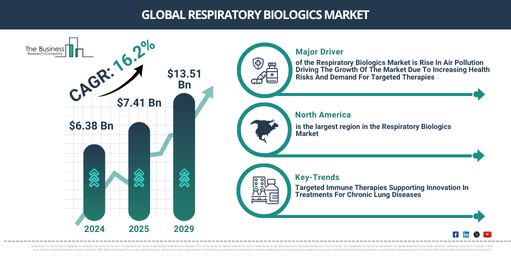
    The market for respiratory biologics has experienced swift growth in past years. Its size is projected to escalate from $6.38 billion in 2024 to $7.41 billion in 2025, exhibiting a compound annual growth rate (CAGR) of 16.1%. The significant enlargement during the historical period can be credited to the escalating prevalence of respiratory ailments, the growing acceptance of personalized medication, the global escalation in healthcare expenditure, heightened awareness and diagnosis rates of respiratory problems, and a burgeoning aged population afflicted with respiratory conditions.

    The size of the respiratory biologics market is predicted to witness a rapid escalation in the coming years, predicted to expand to “$13.51 billion in 2029” with a Compound Annual Growth Rate (CAGR) of 16.2%. This anticipated growth within the forecast period can be ascribed to the growing occurrences of asthma and COPD, enhanced acceptance of biologic therapies, increased R&D investments, rising demand for non-coda drug delivery, and the broadening of reimbursement policies. Noteworthy trends expected to dominate the forecast period include the usage of monoclonal antibodies for treating respiratory ailments, improvements in biologic drug formulas and their delivery mechanisms, obtaining regulatory consents, strategic alliances and takeovers among leading players, as well as the integration of artificial intelligence in the discovery and production of drugs.

    Get A Free Sample Of The Report:

    https://www.thebusinessresearchcompany.com/sample.aspx?id=23497&type=smp

    Which Market Dynamics Are Playing A Critical Role In The Growth Of The Respiratory Biologics Market?

    The escalating levels of air pollution are expected to fuel the expansion of the respiratory biologics market in the future. The term air pollution denotes the existence of detrimental elements such as gases, microscopic matter, and biological molecules in the Earth’s atmosphere, which can adversely affect human health and the environment. The rise in industrialization and urbanization lead to an increase in air pollution, as the emission of pollutants from production units, vehicles, and building activities increases. Respiratory biologics are useful in countering the health consequences of air pollution as they offer specialized therapies that decrease inflammation and enhance lung function in people exposed to airborne contaminants. For example, the Environmental Protection Agency, a US government agency, revealed in January 2025 that over 66 million tons of pollutants were emitted into the atmosphere in the United States in 2023. Additionally, as per the United Nations Environment Programme, a Kenya-based environmental authority, in September 2022, air pollution causes 7 million premature deaths each year, and 99% of the world’s population inhales polluted air. Consequently, the escalation in air pollution is spurring the expansion of the respiratory biologics market.

    What Are The Key Segment Trends Observed In The Respiratory Biologics Market?

    The respiratory biologics market covered in this report is segmented –

    1) By Disease Indication: Asthma, Chronic Rhinosinasitis, Hypereosinophilic Syndrome

    2) By Route Of Administration: Intravenous, Subcuteneous

    3) By Sales Channel: Hospitals, Specialty Clinics, Retail Pharmacies, Mail Order Pharmacies

    Subsegments:

    1) By Asthma: Severe Eosinophilic Asthma, Allergic Asthma, Non-Allergic Asthma

    2) By Type: Chronic Rhinosinusitis: Chronic Rhinosinusitis with Nasal Polyps, Chronic Rhinosinusitis without Nasal Polyps

    3) By Hypereosinophilic Syndrome (HES): Idiopathic HES, Lymphocytic Variant HES, Myeloproliferative HES

    Which Disruptive Trends Are Driving Change Across The Respiratory Biologics Market?

    Leading firms in the respiratory biologics market are concentrating their efforts on crafting innovative biologic therapies such as targeted immune therapies for chronic respiratory diseases. These specialized treatments are designed to modulate the body’s defense mechanism reducing inflammation and enhancing lung function. A notable example of such advancements is Sanofi S.A., a French-based pharmaceutical firm, which publicized in September 2024 that the US Food and Drug Administration (FDA) gave the green light to Dupixent (dupilumab). This is an add-on maintenance therapy for adults grappling with inadequately controlled chronic obstructive pulmonary disease (COPD) characterized by an eosinophilic phenotype. This authorization sets a pivotal precedent as Dupixent is the premier biologic medicine approved in the US specifically for this category of COPD patients.

    Which Firms Are Driving Innovation Within The Respiratory Biologics Market?

    Major companies operating in the respiratory biologics market are Pfizer Inc., Johnson & Johnson, F. Hoffmann-La Roche Ltd., Merck & Co. Inc., AbbVie Inc., Sanofi S.A., AstraZeneca plc, Novartis AG, GlaxoSmithKline plc, Amgen Inc., Viatris Inc., Regeneron Pharmaceuticals Inc., Boehringer Ingelheim International GmbH, Biogen Inc., Vertex Pharmaceuticals Incorporated, Swedish Orphan Biovitrum AB, Glenmark Pharmaceuticals Ltd., Zymeworks Inc., Kiniksa Pharmaceuticals Ltd., Pieris Pharmaceuticals Inc.

    Access The Complete Report Here:

    https://www.thebusinessresearchcompany.com/report/respiratory-biologics-global-market-report

    What Regional Factors Are Accelerating Growth In The Respiratory Biologics Market?

    North America was the largest region in the respiratory biologics market in 2024. Asia-Pacific is expected to be the fastest-growing region in the forecast period. The regions covered in the respiratory biologics market report are Asia-Pacific, Western Europe, Eastern Europe, North America, South America, Middle East, Africa.

    Customize Your Report Here:

    https://www.thebusinessresearchcompany.com/customise?id=23497&type=smp

    About The Business Research Company:

    With over 15000+ reports from 27 industries covering 60+ geographies, The Business Research Company has built a reputation for offering comprehensive, data-rich research and insights. Armed with 1,500,000 datasets, the optimistic contribution of in-depth secondary research, and unique insights from industry leaders, you can get the information you need to stay ahead in the game.

    Get in touch with us:

    The Business Research Company: https://www.thebusinessresearchcompany.com/

    Americas +1 310-496-7795

    Asia +44 7882 955267 & +91 8897263534

    Europe +44 7882 955267

    Email us at info@tbrc.info

    Follow us on:

    LinkedIn: https://in.linkedin.com/company/the-business-research-company

    YouTube: https://www.youtube.com/channel/UC24_fI0rV8cR5DxlCpgmyFQ

    Global Market Model: https://www.thebusinessresearchcompany.com/global-market-model
  • Renin-Angiotensin-System (RAS)-Acting Agents Market Emerging Trends and Growth Drivers Through 2029 | Reach USD $7.55 Billion

    Renin-Angiotensin-System (RAS)-Acting Agents Market Emerging Trends and Growth Drivers Through 2029 | Reach USD $7.55 Billion

    Claim 30% Off Global Market Reports With Code ONLINE30 – Insights on Tariff Effects, Global Trade, and Industry Disruptors

    How Much Will The Renin-Angiotensin-System (RAS)-Acting Agents Market Be Worth By 2029?

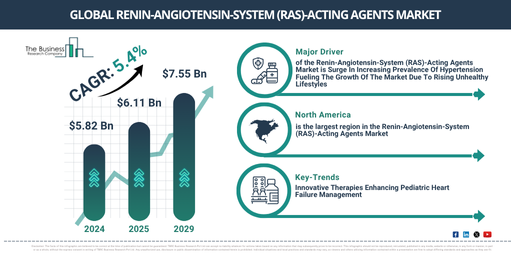
    The market for agents that act on the renin-angiotensin-system (RAS) has witnessed consistent expansion in the recent past. Projections for growth indicate an increase from $5.82 billion in 2024 to $6.11 billion in 2025, with a compound annual growth rate (CAGR) of 5.0%. Several factors have spurred growth during the historic period, including a higher prevalence of hypertension, a rise in cardiovascular disease cases, an aging population, enhanced awareness about managing blood pressure, substantial support from clinical research, and approval of new drugs by regulatory bodies.

    The market for agents targeting the renin-angiotensin-system (RAS) is forecasted to experience significant growth in the coming years, reaching a value of $7.55 billion by 2029, with a compound annual growth rate (CAGR) of 5.4%. Factors contributing to the projected growth include the increasing emphasis on individualized treatment strategies, amplified demand for fixed-dose combination therapy, escalated funding for cardiovascular research, enhanced health service accessibility in developing markets, and a rising incidence of lifestyle-associated diseases. Trends predicted to drive the market within this forecast timeframe involve the use of artificial intelligence in drug development, the incorporation of nanotechnology in drug delivery systems, advances in personalized medicine, using blockchain for the secure transfer of clinical data, the application of wearable biosensors for tracking hypertension, and the use of digital twin technology for creating patient models.

    Get A Free Sample Of The Report:

    https://www.thebusinessresearchcompany.com/sample.aspx?id=23496&type=smp

    What External And Internal Drivers Are Influencing The Renin-Angiotensin-System (RAS)-Acting Agents Market?

    The growth of the renin-angiotensin system (RAS)-acting agents market is anticipated to surge due to the amplified cases of hypertension. Hypertension, also known as high blood pressure, is a long-term health issue characterised by a persistently high force of blood applied to the artery walls. Factors such as unhealthy eating habits, especially the consumption of salt and processed foods, are contributing to the spike in hypertension cases, leading to an increased burden on the cardiovascular system. RAS-acting agents serve to mitigate the prevalence of hypertension by controlling blood pressure. This is achieved by inhibiting angiotensin II, a hormone that narrows blood vessels and promotes fluid retention, thereby facilitating vasodilation and decreasing blood pressure. As an example, the Australian Bureau of Statistics, a government agency in Australia, reported in October 2024 that 11.6% (3.0 million) of Australians suffered from hypertension in 2022, with the rates equally distributed among males (11.7%) and females (11.6%). Hence, the rising cases of hypertension provide impetus for the expansion of the renin-angiotensin system (RAS)-acting agents market.

    How Is The Renin-Angiotensin-System (RAS)-Acting Agents Market Categorized Across Applications And Types?

    The renin-angiotensin-system (ras)-acting agents market covered in this report is segmented –

    1) By Drug Class: Angiotensin-Converting Enzyme (ACE) Inhibitors, Angiotensin II Receptor Blockers (ARBs), Renin Inhibitors, Aldosterone Antagonists, Other Drug Classes

    2) By Indication: Hypertension, Heart Failure, Chronic Kidney Disease, Diabetic Nephropathy, Coronary Artery Disease

    3) By Distribution Channel: Hospital Pharmacies, Retail Pharmacies, Online Pharmacies, Specialty Clinics

    4) By End-User: Hospitals, Research Institutes, Pharmaceutical Companies, Other End-Users

    Subsegments:

    1) By Angiotensin-Converting Enzyme (ACE) Inhibitors: Captopril, Enalapril, Lisinopril, Ramipril, Perindopril

    2) By Angiotensin II Receptor Blockers (ARBs): Losartan, Valsartan, Irbesartan, Olmesartan, Telmisartan

    3) By Renin Inhibitors: Aliskiren

    4) By Aldosterone Antagonists: Spironolactone, Eplerenone

    5) By Other Drug Classes: Dual Angiotensin Receptor-Neprilysin Inhibitors (ARNIs), Endothelin Receptor Antagonists, Vasopeptidase Inhibitors, Mineralocorticoid Receptor Antagonists (MRAs), Angiotensin Receptor Blockers With Neprilysin Inhibitors (ARNBIs)

    How Are Market Trends Influencing Competition In The Renin-Angiotensin-System (RAS)-Acting Agents Market?

    Leading firms in the market for renin-angiotensin system (RAS)-acting agents are dedicating their effort in the creation of advanced renin-angiotensin system (RAS) inhibitors, such as angiotensin-converting enzyme (ACE) inhibitors, in a bid to maximize effectiveness, reduce adverse reactions, boost patient adherence, and cater to conditions such as high blood pressure, heart failure, and renal diseases. An angiotensin-converting enzyme (ACE) inhibitor is a drug that suppresses blood pressure by impeding the enzyme that transforms angiotensin I into angiotensin II, a compound that tightens blood vessels. To demonstrate, in November 2023, Proveca Ltd. a pharmaceutical firm from the UK, was awarded a grant by the European Commission for pediatric use marketing authorization (PUMA) for Aqumeldi (enalapril maleate) orodispersible tablets, which are intended for addressing heart failure in children from birth up to 18 years of age. Aqumeldi is an angiotensin-converting enzyme (ACE) inhibitor that eases the conditions of pediatric heart failure patients by inhibiting the angiotensin-converting enzyme (ACE), blocking the transformation of angiotensin I into angiotensin II, consequently dilating blood vessels, enhancing blood circulation, and reducing heart strain.

    Who Are The Most Influential Companies In The Renin-Angiotensin-System (RAS)-Acting Agents Market?

    Major companies operating in the renin-angiotensin-system (RAS)-acting agents market are Pfizer Inc., Merck And Co. Inc., Bayer AG, Sanofi S.A., Bristol-Myers Squibb Company, AstraZeneca plc, Novartis AG, GSK plc, Teva Pharmaceutical Industries Ltd., Boehringer Ingelheim GmbH, Sandoz International GmbH, Astellas Pharma Inc., Bausch Health Companies Inc., Aurobindo Pharma Limited, Cipla Limited, Dr. Reddy’s Laboratories Ltd., Biocon Limited, Daiichi Sankyo Company Limited, Glenmark Pharmaceuticals Ltd., Torrent Pharmaceuticals Ltd.

    Access The Complete Report Here:

    https://www.thebusinessresearchcompany.com/report/renin-angiotensin-system-ras-acting-agents-global-market-report

    Which Region Holds The Greatest Opportunity For Renin-Angiotensin-System (RAS)-Acting Agents Market Expansion?

    North America was the largest region in the renin-angiotensin-system (RAS)-acting agents market in 2024. Asia-Pacific is expected to be the fastest-growing region in the forecast period. The regions covered in the renin-angiotensin-system (RAS)-acting agents market report are Asia-Pacific, Western Europe, Eastern Europe, North America, South America, Middle East, Africa.

    Customize Your Report Here:

    https://www.thebusinessresearchcompany.com/customise?id=23496&type=smp

    About The Business Research Company:

    With over 15000+ reports from 27 industries covering 60+ geographies, The Business Research Company has built a reputation for offering comprehensive, data-rich research and insights. Armed with 1,500,000 datasets, the optimistic contribution of in-depth secondary research, and unique insights from industry leaders, you can get the information you need to stay ahead in the game.

    Get in touch with us:

    The Business Research Company: https://www.thebusinessresearchcompany.com/

    Americas +1 310-496-7795

    Asia +44 7882 955267 & +91 8897263534

    Europe +44 7882 955267

    Email us at info@tbrc.info

    Follow us on:

    LinkedIn: https://in.linkedin.com/company/the-business-research-company

    YouTube: https://www.youtube.com/channel/UC24_fI0rV8cR5DxlCpgmyFQ

    Global Market Model: https://www.thebusinessresearchcompany.com/global-market-model