Month: September 2025

  • Cholinesterase (ChE) Inhibitors Market Size, Share & Trends Analysis Report By Product | Forecast to 2029

    Cholinesterase (ChE) Inhibitors Market Size, Share & Trends Analysis Report By Product | Forecast to 2029

    Claim 30% Off Global Market Reports With Code ONLINE30 – Insights on Tariff Effects, Global Trade, and Industry Disruptors

    What Is The Predicted Market Size Of The Cholinesterase (ChE) Inhibitors Industry By 2029?

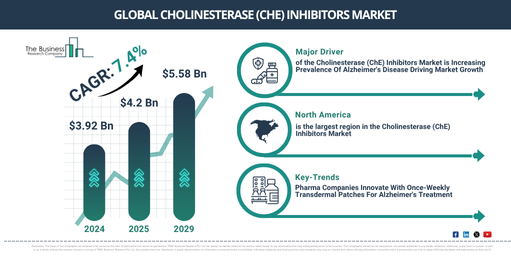
    In recent times, the cholinesterase (ChE) inhibitors market has been exhibiting robust growth. The market worth is projected to rise from $3.92 billion in 2024 to $4.2 billion in 2025, translating to a compound annual growth rate (CAGR) of 7.1%. This notable growth during the historic duration is due to factors such as a higher incidence of neurological conditions, rising cases of Alzheimer’s disease, an increase in later-life illness among the elderly population, an upsurge in the proportion of older individuals, enhanced healthcare facilities, and a growing frequency of glaucoma.

    In the forthcoming years, the cholinesterase (ChE) inhibitors market is predicted to experience robust growth, expanding to a value of $5.58 billion in 2029, thanks to a compound annual growth rate (CAGR) of 7.4%. The surge during the forecast period can be ascribed to various factors such as the early detection of degenerative brain disorders, an escalating demand for preliminary diagnosis and treatment, an increase in the release of new drugs and products, a higher need for treatments specifically in Alzheimer’s and dementia domains, as well as the growing financial significance of cholinesterase inhibitors. Other major developments expected during the forecast timeframe include technological advancements, progressive diagnostic technologies, the invention of novel cholinesterase inhibitors, the introduction of new products, strategic partnerships, and the injection of new capital into separate companies.

    Get A Free Sample Of The Report:

    https://www.thebusinessresearchcompany.com/sample.aspx?id=21141&type=smp

    What Market Forces Are Contributing To The Growth Of The Cholinesterase (ChE) Inhibitors Market?

    The cholinesterase (ChE) inhibitors market is likely to be driven by the increasing incidence of Alzheimer’s disease. Alzheimer’s, a brain disorder that progressively erodes memory and cognitive abilities, ultimately leading to intellectual decline and loss of independence, is becoming more common due to factors like aging populations, longer life spans, genetic factors, lifestyle choices, and increasing exposure to neurological risks. By inhibiting the breakdown of acetylcholine, a key neurotransmitter for memory and cognitive function, ChE inhibitors offer support to Alzheimer’s patients. This aids with neural communication, decelerates the progression of symptoms, and improves daily function, assisting in coping with the cognitive decline associated with the disease. According to the Alzheimer’s Association, a US-based nonprofit voluntary health organization, about 6.9 million Americans 65 years old and above are expected to have Alzheimer’s by 2024, with 73% of these cases in people aged 75 and older, and by 2050, approximately 12.7 million Americans could be afflicted with the disease. Consequently, the rising prevalence of Alzheimer’s disease is spurring the growth of the ChE inhibitors market.

    Which Sub-Segments Are Driving Growth Within The Cholinesterase (ChE) Inhibitors Market?

    The cholinesterase (che) inhibitors market covered in this report is segmented –

    1) By Drug Class: Reversible Cholinesterase Inhibitors, Irreversible Cholinesterase Inhibitors, Acetylcholinesterase Inhibitors

    2) By Indication: Alzheimer’s Disease, Myasthenia Gravis, Glaucoma, Pediatric Urinary Incontinence

    3) By Distribution Channel: Hospital Pharmacies, Retail Pharmacies, Online Pharmacies

    Subsegments:

    1) By Reversible Cholinesterase Inhibitors: Donepezil, Rivastigmine, Galantamine

    2) By Irreversible Cholinesterase Inhibitors: Organophosphates, Carbamates

    3) By Acetylcholinesterase Inhibitors: Tacrine, Huperzine A

    What Future-Focused Trends Are Anticipated In The Cholinesterase (ChE) Inhibitors Market?

    Leading entities in the cholinesterase (ChE) inhibitors market are concentrating on the evolution of innovative solutions, like once-weekly transdermal patches. These patches function as an efficient treatment method for Alzheimer’s patients, ensuring consistent drug delivery and improved acceptability. A once-weekly transdermal patch is a medicated stick-on that releases a consistent dosage of medication into the person’s bloodstream over a duration of seven days. In September 2022, Corium, Inc., an American pharmaceutical company, became the first to receive approval from the Food and Drug Administration – a US federal agency, for its once-weekly transdermal product, ADLARITY. The patch effectively delivers donepezil to combat Alzheimer’s. This acetylcholinesterase inhibitor provides a sustained drug delivery through the skin, presenting a better tolerated alternative to daily oral donepezil.

    Who Are The Dominant Players In The Cholinesterase (ChE) Inhibitors Market Today?

    Major companies operating in the cholinesterase (ChE) inhibitors market are Pfizer Inc., F. Hoffmann-La Roche Ltd., Sanofi S.A., Novartis International AG, Takeda Pharmaceutical Company Limited, Merck KGaA, Viatris Inc., Teva Pharmaceutical Industries Ltd., C.H. Boehringer Sohn AG & Co. KG, Eisai Co. Ltd., Apotex Inc., Dr. Reddy’s Laboratories Ltd., Hikma Pharmaceuticals plc, Amneal Pharmaceuticals Inc., Lupin Pharmaceuticals Inc., Torrent Pharmaceuticals Ltd., Essential Pharma Group, Tocris Bioscience, Sparsha Pharma, Janssen Pharmaceuticals

    Access The Complete Report Here:

    https://www.thebusinessresearchcompany.com/report/cholinesterase-che-inhibitors-global-market-report

    How Do Regional Dynamics Influence The Cholinesterase (ChE) Inhibitors Market Performance?

    North America was the largest region in the cholinesterase (ChE) inhibitors market in 2024. Asia-Pacific is expected to be the fastest-growing region in the forecast period. The regions covered in the cholinesterase (ChE) inhibitors market report are Asia-Pacific, Western Europe, Eastern Europe, North America, South America, Middle East, Africa.

    Customize Your Report Here:

    https://www.thebusinessresearchcompany.com/customise?id=21141&type=smp

    About The Business Research Company:

    With over 15000+ reports from 27 industries covering 60+ geographies, The Business Research Company has built a reputation for offering comprehensive, data-rich research and insights. Armed with 1,500,000 datasets, the optimistic contribution of in-depth secondary research, and unique insights from industry leaders, you can get the information you need to stay ahead in the game.

    Get in touch with us:

    The Business Research Company: https://www.thebusinessresearchcompany.com/

    Americas +1 310-496-7795

    Asia +44 7882 955267 & +91 8897263534

    Europe +44 7882 955267

    Email us at info@tbrc.info

    Follow us on:

    LinkedIn: https://in.linkedin.com/company/the-business-research-company

    YouTube: https://www.youtube.com/channel/UC24_fI0rV8cR5DxlCpgmyFQ

    Global Market Model: https://www.thebusinessresearchcompany.com/global-market-model
  • What Are The Strategic Insights Behind The CD40 Ligand (CD40L) Antibody Market Expansion To $1.01 Billion?

    What Are The Strategic Insights Behind The CD40 Ligand (CD40L) Antibody Market Expansion To $1.01 Billion?

    Claim 30% Off Global Market Reports With Code ONLINE30 – Insights on Tariff Effects, Global Trade, and Industry Disruptors

    What CAGR And Valuation Are Anticipated For The CD40 Ligand (CD40L) Antibody Market?

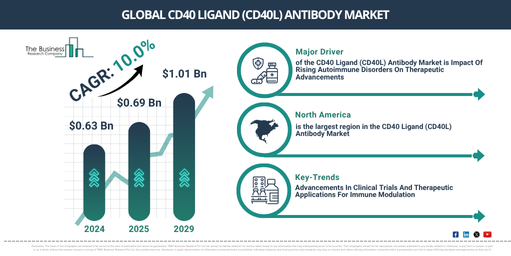
    The market for the CD40 ligand (CD40L) antibody has seen sturdy growth in recent years. It is predicted to expand from $0.63 billion in 2024 to $0.69 billion in 2025, with a compound annual growth rate (CAGR) of 9.7%. Factors contributing to growth in the historical period include a rise in autoimmune diseases, increased demand for specialized cancer treatments, the broadening of immune modulation research, the granting of regulatory approvals for new biologics, higher healthcare spending levels, and a growing trend towards personalized medicine approaches.

    Expectations are high for significant expansion of the CD40 ligand (CD40L) antibody market in the forthcoming years, with a projected growth to $1.01 billion by 2029, demonstrating a compound annual growth rate (CAGR) of 10.0%. Factors leading to this growth during the projection period include the rising uptake of personalized medicine, increased investment in research related to autoimmune and transplant therapies, an uptrend in regulatory approvals for innovative treatments, an increase in awareness regarding the advantages of CD40L antibodies in organ transplants, and the scale of clinical trials focusing on immunosuppressive applications. The period also forecasts progress in antibody engineering, creation of bispecific antibodies aimed at targeted therapies, innovation in delivery techniques, advancement in combined therapies, personal medicine, and the development of biomarkers to enhance patient selection.

    Get A Free Sample Of The Report:

    https://www.thebusinessresearchcompany.com/sample.aspx?id=21132&type=smp

    What Drivers Are Accelerating Expansion Of The CD40 Ligand (CD40L) Antibody Market?

    The escalating cases of autoimmune disorders are predicted to propel the expansion of the CD40 ligand (CD40L) antibody market in the future. Autoimmune disorders are conditions where the immune system mistakenly attacks the body’s cells, resulting in harm that includes diseases such as rheumatoid arthritis, lupus, and type 1 diabetes. The growing prevalence of these disorders can be linked to elements like environmental triggers, genetic predisposition, alterations in lifestyle, and a heightened awareness of diagnosis, all of which collectively lead to a larger detection and incidence rate. CD40 Ligand (CD40L) antibodies are gaining recognition as a potential therapy for addressing autoimmune disorders by adjusting the heightened response of the immune system. For example, in July 2024, as per the Australian Institute of Health and Welfare, a government organization based in Australia producing information and statistics regarding Australia’s health and welfare, an estimated 514,000 Australians, constituting 2.0% of the population, were reported to be living with rheumatoid arthritis, a kind of autoimmune disorder, in 2022, with 2.5% of females and 1.6% of males being affected. Therefore, the escalating cases of autoimmune disorders are anticipated to propel the expansion of the CD40 ligand (CD40L) antibody market.

    What Segmentation Insights Are Provided In The CD40 Ligand (CD40L) Antibody Market Research?

    The cd40 ligand (cd40l) antibody market covered in this report is segmented –

    1) By Type: Monoclonal Antibody, Polyclonal Antibody

    2) By Application: Flow Cytometry, Enzyme-Linked Immunosorbent Assay (ELISA), Western Blot, Immunoprecipitation, Immunofluorescence, Other Applications

    3) By End-User: Hospitals, Research Institutes, Specialty Clinics, Other End-Users

    Subsegments:

    1) By Monoclonal Antibody: Fully Human Monoclonal Antibodies, Humanized Monoclonal Antibodies, Chimeric Monoclonal Antibodies

    2) By Polyclonal Antibody: Rabbit Polyclonal Antibodies, Goat Polyclonal Antibodies, Mouse Polyclonal Antibodies

    Which Notable Trends Are Transforming The CD40 Ligand (CD40L) Antibody Market Outlook?

    Prominent corporations in the CD40 ligand (CD40L) antibody market are centering their efforts on progressing clinical trials and broadening therapeutic applications. Clinical trials can be defined as systematic investigations looking into the safety, effectiveness, and optimal usage of a medical treatment or intervention. For example, in September 2023, Eledon Pharmaceuticals Inc., a biotechnology firm from the US, reported using Tegoprubart anti-CD40L antibody in a clinical trial subsequent to the second-ever genetically modified pig heart transplant. The goal of the trial was to appraise its part in averting organ rejection and advancing therapeutic applications in organ transplantation. Tegoprubart has additionally demonstrated potential as a treatment for autoimmune diseases through modulating immune reactions.

    Which Companies Are Contributing Significantly To The CD40 Ligand (CD40L) Antibody Market Growth?

    Major companies operating in the CD40 ligand (CD40L) antibody market are Thermo Fisher Scientific Co. Ltd., Amgen Inc., Bio-Rad Laboratories Inc., Bio-Techne Corporation, Kiniksa Pharmaceuticals Ltd., BioLegend, Cytek Biosciences Inc., Sino Biological Inc., ACROBiosystems, Elabscience Biotechnology Inc., Cayman Chemical, Eledon Pharmaceuticals, Cell Signaling Technology, Enzo Biochem, GeneTex, GeminiBio, Creative Biolabs, BPS Bioscience Inc., LSBio, MyBiosource Inc., Boster Biological Technology, Bio X Cell, Assay Genie, Abeomics, Leinco Technologies Inc.

    Access The Complete Report Here:

    https://www.thebusinessresearchcompany.com/report/cd40-ligand-cd40l-antibody-global-market-report

    Which Geographic Regions Are Creating Strong Demand In The CD40 Ligand (CD40L) Antibody Market?

    North America was the largest region in the CD40 ligand (CD40L) antibody market in 2024. Asia-Pacific is expected to be the fastest-growing region in the forecast period. The regions covered in the CD40 ligand (CD40L) antibody market report are Asia-Pacific, Western Europe, Eastern Europe, North America, South America, Middle East, Africa.

    Customize Your Report Here:

    https://www.thebusinessresearchcompany.com/customise?id=21132&type=smp

    About The Business Research Company:

    With over 15000+ reports from 27 industries covering 60+ geographies, The Business Research Company has built a reputation for offering comprehensive, data-rich research and insights. Armed with 1,500,000 datasets, the optimistic contribution of in-depth secondary research, and unique insights from industry leaders, you can get the information you need to stay ahead in the game.

    Get in touch with us:

    The Business Research Company: https://www.thebusinessresearchcompany.com/

    Americas +1 310-496-7795

    Asia +44 7882 955267 & +91 8897263534

    Europe +44 7882 955267

    Email us at info@tbrc.info

    Follow us on:

    LinkedIn: https://in.linkedin.com/company/the-business-research-company

    YouTube: https://www.youtube.com/channel/UC24_fI0rV8cR5DxlCpgmyFQ

    Global Market Model: https://www.thebusinessresearchcompany.com/global-market-model
  • How Will The CD-19 Antibody Market Reach $2.64 Billion By 2029 Amid Global Shifts?

    How Will The CD-19 Antibody Market Reach $2.64 Billion By 2029 Amid Global Shifts?

    Claim 30% Off Global Market Reports With Code ONLINE30 – Insights on Tariff Effects, Global Trade, and Industry Disruptors

    What Are The Market Size Estimates For The CD-19 Antibody Market?

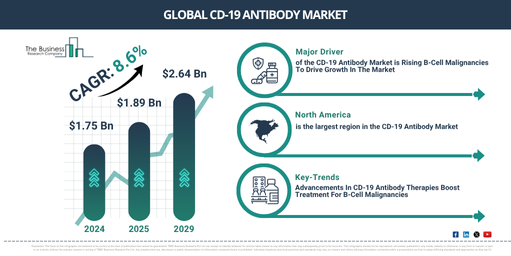
    Recent years have seen a robust growth in the size of the CD-19 antibody market. The market, which will expand from $1.75 billion in 2024 to $1.89 billion in 2025, is anticipated to have a compound annual growth rate of 8.3%. The growth during the historical period is linked to factors such as the rising incidence of B-cell malignancies, the advent of immunotherapy, an escalation in funding for oncology research, the emergence of CAR-T cell therapies, increasing awareness about healthcare, and the growing field of personalized medicine.

    The market for CD-19 antibodies is predicted to experience significant expansion in the coming years, with its value expected to reach “$2.64 billion by 2029”, witnessing a compound annual growth rate of 8.6%. This growth during the projected period can be due to factors including an increasing demand for cancer treatments aimed specifically at tumours, a surge in the acceptance of smart cell therapies, a growing incidence of blood cancer, extended accessibility to health care services in developing markets, and the advancement of next-generation immune therapies coupled with enhancement in bio-manufacturing technologies. The forecast period will also likely showcase trends such as progress in antibody-drug combinations, the evolution of bispecific antibodies, incorporation of AI into antibody design, advancements in cell-cell therapy platforms, the implementation of single-use bioreactors, the appearance of therapeutic treatments based on nanobodies, and the automation in the manufacturing of biological products.

    Get A Free Sample Of The Report:

    https://www.thebusinessresearchcompany.com/sample.aspx?id=21130&type=smp

    Which Key Factors Are Fueling Growth In The CD-19 Antibody Market?

    The CD-19 antibody market is anticipated to experience robust growth due to the increasing incidences of B-cell malignancies. B-cell malignancies comprise a variety of cancers that originate from irregular B lymphocytes and includes illnesses like B-cell lymphomas and leukemias. These conditions impact the immune system and can result in unchecked cell growth. The escalating occurrence of B-cell malignancies is connected to multiple factors such as an aging population, genetic predispositions, environmental exposure, lifestyle choices, improved diagnostics, and alterations in the immune system. The CD19 antibody is utilized to treat B-cell malignancies by selectively targeting the CD19 protein found on the surface of the malignant B cells. This specific targeting results in the eradication of these cells while preserving the healthy cells and bolstering the body’s immune defenses. For example, the American Cancer Society, a US-based non-profit organization, reported that 80,620 individuals in the USA were expected to be diagnosed with non-Hodgkin lymphoma in January 2024, and 20,240 individuals, including 44,590 males and 36,030 females, were projected to succumb to non-Hodgkin lymphoma. Thus, the increasing incidences of B-cell malignancies are fuelling the expansion of the CD-19 antibody market.

    How Does The CD-19 Antibody Market Differ By Segment?

    The cd-19 antibody market covered in this report is segmented –

    1) By Disease Type: B-Cell Non-Hodgkin Lymphoma, Chronic Lymphocytic Leukemia, Acute Lymphoblastic Leukemia, Other Disease Types

    2) By Type: Polyclonal, Monoclonal

    3) By Route Of Administration: Intravenous, Subcutaneous

    4) By Application: Enzyme Linked Immunosorbent Assay, Flow Cytometry, Immunohistochemistry Frozen, Immunohistochemistry Paraffin, Other Applications

    Subsegments:

    1) By B-Cell Non-Hodgkin Lymphoma: Diffuse Large B-Cell Lymphoma (DLBCL), Follicular Lymphoma, Mantle Cell Lymphoma

    2) By Chronic Lymphocytic Leukemia: Relapsed Or Refractory CLL, Treatment-Naïve CLL

    3) By Acute Lymphoblastic Leukemia: B-Cell Precursor ALL, Philadelphia Chromosome-Positive ALL

    4) By Other Disease Types: Hairy Cell Leukemia, Waldenström’s Macroglobulinemia, Marginal Zone Lymphoma

    What New Opportunities Are Emerging From Trends In The CD-19 Antibody Market?

    Leading firms in the CD-19 antibody market are directing their efforts towards technological advancements, such as genetically engineered autologous T-cell immunotherapy, to improve the effectiveness of cancer therapies, especially in terms of hematologic malignancies. The described therapy involves genetically modifying a patient’s own T cells to identify and combat cancer cells, these are then reintroduced to the patient’s body to boost the immune response against the disease. An example of this is Autolus Therapeutics plc, a biopharmaceutical firm based in the US, which announced in November 2024 that it had received U.S. FDA approval for AUCATZYL (obecabtagene autoleucel). This is used for the treatment of adult patients suffering from relapsed or refractory B-cell precursor acute lymphoblastic leukemia (ALL). This method is designed to curtail excess T-cell activation, thus reducing toxicity and improving the longevity of the therapeutic cells. The treatment is administered in split-dose infusion on the first and tenth days, with dosage determined through a bone marrow assessment prior to treatment.

    Who Are The Primary Market Leaders In The CD-19 Antibody Market?

    Major companies operating in the CD-19 antibody market are Pfizer Inc., F. Hoffmann-La Roche Ltd., AstraZeneca plc, Novartis AG, Thermo Fisher Scientific Inc., Amgen Inc., Bio-Rad Laboratories Inc., Miltenyi Biotec GmbH, Abcam Plc, Kite Pharma Inc., BioLegend Inc., Xencor Inc., Juno Therapeutics Inc., BD Biosciences, Zenas BioPharma Inc., Cell Signaling Technology Inc., Santa Cruz Biotechnology Inc., Novus Biologicals LLC, Tonbo Biosciences Inc., Bio X Cell Inc.

    Access The Complete Report Here:

    https://www.thebusinessresearchcompany.com/report/cd-19-antibody-global-market-report

    Which Region Is Likely To Register The Fastest Growth In The CD-19 Antibody Market?

    North America was the largest region in the CD-19 antibody market in 2024. The regions covered in the CD-19 antibody market report are Asia-Pacific, Western Europe, Eastern Europe, North America, South America, Middle East, Africa.

    Customize Your Report Here:

    https://www.thebusinessresearchcompany.com/customise?id=21130&type=smp

    About The Business Research Company:

    With over 15000+ reports from 27 industries covering 60+ geographies, The Business Research Company has built a reputation for offering comprehensive, data-rich research and insights. Armed with 1,500,000 datasets, the optimistic contribution of in-depth secondary research, and unique insights from industry leaders, you can get the information you need to stay ahead in the game.

    Get in touch with us:

    The Business Research Company: https://www.thebusinessresearchcompany.com/

    Americas +1 310-496-7795

    Asia +44 7882 955267 & +91 8897263534

    Europe +44 7882 955267

    Email us at info@tbrc.info

    Follow us on:

    LinkedIn: https://in.linkedin.com/company/the-business-research-company

    YouTube: https://www.youtube.com/channel/UC24_fI0rV8cR5DxlCpgmyFQ

    Global Market Model: https://www.thebusinessresearchcompany.com/global-market-model
  • What Is The Long-Term Forecast For The Budesonide Market Growing At 6% CAGR?

    What Is The Long-Term Forecast For The Budesonide Market Growing At 6% CAGR?

    Claim 30% Off Global Market Reports With Code ONLINE30 – Insights on Tariff Effects, Global Trade, and Industry Disruptors

    How Is The Budesonide Market Expected To Grow In Terms Of Size?

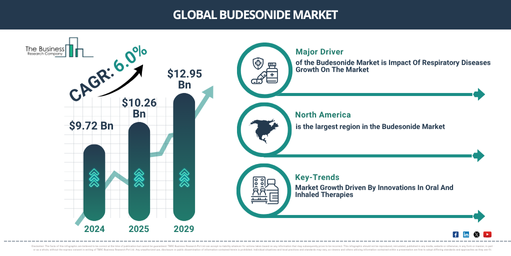
    The budesonide market has witnessed significant expansion in the past few years. From $9.72 billion in 2024, it is projected to reach $10.26 billion in 2025, with a Compound Annual Growth Rate (CAGR) of 5.6%. Factors that contributed to this increase throughout the historic period encompass the escalating instances of respiratory ailments, heightened awareness regarding inhaled corticosteroids, the launch of budesonide-based combined therapies, enhanced access to healthcare and improvement in healthcare infrastructures, as well as the approval of budesonide for off-label use to treat inflammatory bowel diseases.

    In the upcoming years, the budesonide market is projected to experience robust growth, expanding to “$12.95 billion in 2029 with a compound annual growth rate (CAGR) of 6.0%. The anticipated increase in the forecast period is due to rising demand for effective therapies, the introduction of innovative drug delivery systems, the growing usage of budesonide, an increase in the elderly population susceptible to asthma, and the proliferation of generic budesonide products. Key trends expected during the forecast period include the implementation of biologics and biosimilars, advancements in drug delivery methods, regulatory approvals for new formulations, breakthroughs in drug delivery system development, and technological progression.

    Get A Free Sample Of The Report:

    https://www.thebusinessresearchcompany.com/sample.aspx?id=21121&type=smp

    Which Market Dynamics Are Playing A Critical Role In The Growth Of The Budesonide Market?

    The growth of the budesonide market is expected to be accelerated by a surge in the incidence of respiratory conditions. Such conditions include diseases impacting the organs and tissues in air-breathing animals that are involved in gas exchange. The rising prevalence of these conditions can be attributed to increased air pollution, including exposure to particulates and allergens, which notably influence the occurrence of asthma and chronic obstructive lung disease. Budesonide is employed as treatment for these conditions, including asthma and chronic obstructive pulmonary disease (COPD), as it reduces inflammation, improves airflow, and prevents symptoms like wheezing and breathlessness. For instance, the National Center for Health Statistics (NCHS), a US-based health statistics agency, reported in May 2024 that the current asthma prevalence among adults over 18 in the United States climbed from 8.4% in 2021 to 8.7% in 2022. Moreover, the number of asthma episodes that occurred among adults of the same age group in the past 12 months increased from 3.3% in 2021 to 3.7% in 2022. Consequently, the rising incidence of respiratory conditions is expected to prompt growth within the budesonide market.

    Which Segment Accounts For The Largest Share In The Budesonide Market?

    The budesonide market covered in this report is segmented –

    1) By Type: Inhalation Powder, Aerosols, Injectable Suspension, Tablets And Capsules

    2) By Distribution Channel: Hospital Pharmacies, Retail Pharmacies, Online Pharmacies

    3) By Application: Nose Disease Treatment, Inflammatory Bowel Disease Treatment, Respiratory Disease Treatment, Other Applications

    Subsegments:

    1) By Inhalation Powder: Dry Powder Inhalers (DPI), Soft Mist Inhalers (SMI)

    2) By Aerosols: Metered-Dose Inhalers (MDI), Breath-Activated Inhalers

    3) By Injectable Suspension: Pre-filled Syringes, Vials

    4) By Tablets And Capsules: Oral Tablets, Oral Capsules

    Which Long-Term Trends Will Play A Crucial Role In The Budesonide Market?

    Leading firms in the budesonide market are prioritizing innovations in respiratory care, like oral treatments, to not only enhance patient comfort but also expand therapy choices for dealing with asthma and other respiratory diseases. Oral budesonide, which is ingested, is mainly used for inflammatory conditions. For example, in February 2024, Japan’s Takeda Pharmaceuticals revealed that EOHILIA, an oral suspension of budesonide, has been approved as the first and sole oral drug for eosinophilic esophagitis (EoE) in patients aged 11 and older by the Food and Drug Administration (FDA), a federal agency in the US. Moreover, based on efficacy and safety data from two multicenter, randomized, double-blind, parallel-group, placebo-controlled 12-week studies in people aged 11 to 56 with EoE, the FDA also greenlighted EOHILIA 2 mg to be used twice daily.

    Which Organizations Are At The Forefront Of The Budesonide Market?

    Major companies operating in the budesonide market are AstraZeneca AB, Novartis AG, Takeda Pharmaceuticals Company Limited, Viatris Inc., Teva Pharmaceutical Industries Ltd., Sandoz AG, Aurobindo Pharma Limited, Chiesi Farmaceutici S.p.A., Cipla Limited, Lupin Limited, Orion Corporation, Salix Pharmaceuticals Inc., Synmosa Biopharma Corporation, Cosmo Pharmaceuticals N.V., Skyepharma Holdings Inc., Manus Aktteva Biopharma LLP, Cennet Biopharma Private Limited, Santarus Inc., SiNi Pharma Private Limited, Shanghai Sine Promod Pharmaceutical Co. Ltd.

    Access The Complete Report Here:

    https://www.thebusinessresearchcompany.com/report/budesonide-global-market-report

    Which Region Is Forecasted To Lead The Budesonide Market In The Coming Years?

    North America was the largest region in the budesonide market in 2024. The regions covered in the budesonide market report are Asia-Pacific, Western Europe, Eastern Europe, North America, South America, Middle East, Africa.

    Customize Your Report Here:

    https://www.thebusinessresearchcompany.com/customise?id=21121&type=smp

    About The Business Research Company:

    With over 15000+ reports from 27 industries covering 60+ geographies, The Business Research Company has built a reputation for offering comprehensive, data-rich research and insights. Armed with 1,500,000 datasets, the optimistic contribution of in-depth secondary research, and unique insights from industry leaders, you can get the information you need to stay ahead in the game.

    Get in touch with us:

    The Business Research Company: https://www.thebusinessresearchcompany.com/

    Americas +1 310-496-7795

    Asia +44 7882 955267 & +91 8897263534

    Europe +44 7882 955267

    Email us at info@tbrc.info

    Follow us on:

    LinkedIn: https://in.linkedin.com/company/the-business-research-company

    YouTube: https://www.youtube.com/channel/UC24_fI0rV8cR5DxlCpgmyFQ

    Global Market Model: https://www.thebusinessresearchcompany.com/global-market-model

  • Which Emerging Trends Are Driving The Aryl Hydrocarbon Receptor Market Toward $6.63 Billion By 2029?

    Which Emerging Trends Are Driving The Aryl Hydrocarbon Receptor Market Toward $6.63 Billion By 2029?

    Claim 30% Off Global Market Reports With Code ONLINE30 – Insights on Tariff Effects, Global Trade, and Industry Disruptors

    What Is The Projected Valuation Of The Aryl Hydrocarbon Receptor Market In The Coming Years?

    The market size of the aryl hydrocarbon receptor has seen robust growth in recent years. Its growth is projected, to increase from $4.64 billion in 2024 to $4.97 billion in 2025 with a compound annual growth rate (CAGR) of 7.1%. The impressive growth during the historical period can be credited to factors such as heightened awareness of environmental toxins, escalated research in the field of oncology, an increase in studies on autoimmune diseases, a growing fascination towards targeted therapies, and a wide expansion in its application in drug development.

    Expectations for the aryl hydrocarbon receptor market are set high as robust growth is predicted in the approaching years. At a compound annual growth rate (CAGR) of 7.5%, it is expected to expand to a size of “$6.63 billion by 2029. This considerable growth over the forecast period can be ascribed to several factors. These include increased investments in precision medicine, a burgeoning demand for immunotherapy, growing concern for environmental health, rising applications for inflammatory diseases, and ongoing advancements in drug discovery. Key trends for the forecast period encompass progress in targeted cancer treatments, embracing precision medicine tactics, advancements in toxicology research, the use of AI in drug discovery, and progress in the treatment of autoimmune diseases.

    Get A Free Sample Of The Report:

    https://www.thebusinessresearchcompany.com/sample.aspx?id=21106&type=smp

    What External And Internal Drivers Are Influencing The Aryl Hydrocarbon Receptor Market?

    The surge in autoimmune diseases and long-term chronic conditions is predicted to fuel the expansion of the aryl hydrocarbon receptor market. These diseases and conditions, where the immune system is dysfunctional or health problems are continuous, are increasing due to factors such as genetics, environment, lifestyle choices, gut imbalances, and enhanced diagnostics. Aryl hydrocarbon receptor (AHR) agonists have the ability to modify immune responses and inflammation, thereby potentially providing therapeutic advantages in combating autoimmune and chronic diseases by managing T-cell differentiation and the functionality of immune cells. For instance, data from Public Health Scotland, a government agency based in Scotland, reported in July 2023 that the percentage of newly diagnosed cases of multiple sclerosis (MS) rose to 87.2% in 2022, a rise from 85.7% with an additional 491 new cases, totalling to 6,359 in 2022. Hence, the growing prevalence of autoimmune and chronic diseases is pushing the aryl hydrocarbon receptor (AHR) agonist market further.

    What Are The Main Segment Classifications In The Aryl Hydrocarbon Receptor Market?

    The aryl hydrocarbon receptor market covered in this report is segmented –

    1) By Type: CB-993113, CDR-914K058, Cinnabarinic Acid, Other Types

    2) By Distribution Channel: Direct Sales, Online Platforms, Distributors, Retail Pharmacies, Wholesale Suppliers

    3) By Application: Hepatocellular Carcinoma, Multiple Sclerosis, Obesity, Osteoporosis, Other Applications

    4) By End-User Industry: Pharmaceuticals, Biotechnology, Agriculture, Environmental Consultancy, Research Institutions

    Subsegments:

    1) By CB-993113: Preclinical Stage CB-993113, Clinical Trials of CB-993113, Targeted Applications of CB-993113

    2) By CDR-914K058: Preclinical Development of CDR-914K058, CDR-914K058 in Immunological Disorders, Targeted Therapeutic Areas for CDR-914K058

    3) By Cinnabarinic Acid: Mechanism Of Action Of Cinnabarinic Acid, Cinnabarinic Acid In Inflammatory Conditions, Potential Applications In Neurodegenerative Diseases

    4) By Other Types: Synthetic Aryl Hydrocarbon Receptor Agonists, Natural Aryl Hydrocarbon Receptor Ligands, Novel Aryl Hydrocarbon Receptor Modulators

    How Are Industry Trends Steering The Expansion Of The Aryl Hydrocarbon Receptor Market?

    Industry leaders in the aryl hydrocarbon receptor market are honing their focus on the creation of innovative products like topical medicines that target specific inflammation processes. These products are aimed at offering effective solutions for autoimmune diseases such as psoriasis and multiple sclerosis, as well as other ongoing inflammatory conditions, whilst keeping systemic side effects to the minimum. Topical medicines refer to therapeutic agents applied to the skin or mucous membranes for localized treatment. As an example, in May 2022, the U.S-based biopharmaceutical firm, Dermavant Sciences, received the go-ahead from the U.S. Food and Drug Administration (FDA) for their 1% concentration VTAMA (tapinarof) cream. This unprecedented non-steroidal medication offers a ground-breaking method of action via its selective modulation of the aryl hydrocarbon receptor. This cream is engineered for once-a-day application, offering ease of use for patients. It has demonstrated an encouraging safety record with minimal systemic uptake, setting it apart from conventional therapies.

    Who Are The Major Stakeholders Operating In The Aryl Hydrocarbon Receptor Market?

    Major companies operating in the aryl hydrocarbon receptor market are Bayer AG, Eli Lilly and Company, Organon & Co., Sigma-Aldrich Corporation, Bio-Techne Corporation, Abcam plc, R&D Systems Inc., Dermavant Sciences Inc., Cayman Chemical Company, Enzo Life Sciences Inc., Tocris Bioscience, Ikena Oncology Inc., MedChemExpress LLC, Hercules Pharmaceuticals BV, Active Biotech AB, AnTolRx Inc., Aqilion AB, Azora Therapeutics Australia Pty Ltd, Sol-Gel Technologies Ltd., Actavalon Inc.

    Access The Complete Report Here:

    https://www.thebusinessresearchcompany.com/report/aryl-hydrocarbon-receptor-global-market-report

    What Are The Emerging Regional Trends Driving The Aryl Hydrocarbon Receptor Market?

    North America was the largest region in the aryl hydrocarbon receptor market in 2024. Asia-Pacific is expected to be the fastest-growing region in the forecast period. The regions covered in the aryl hydrocarbon receptor market report are Asia-Pacific, Western Europe, Eastern Europe, North America, South America, Middle East, Africa.

    Customize Your Report Here:

    https://www.thebusinessresearchcompany.com/customise?id=21106&type=smp

    About The Business Research Company:

    With over 15000+ reports from 27 industries covering 60+ geographies, The Business Research Company has built a reputation for offering comprehensive, data-rich research and insights. Armed with 1,500,000 datasets, the optimistic contribution of in-depth secondary research, and unique insights from industry leaders, you can get the information you need to stay ahead in the game.

    Get in touch with us:

    The Business Research Company: https://www.thebusinessresearchcompany.com/

    Americas +1 310-496-7795

    Asia +44 7882 955267 & +91 8897263534

    Europe +44 7882 955267

    Email us at info@tbrc.info

    Follow us on:

    LinkedIn: https://in.linkedin.com/company/the-business-research-company

    YouTube: https://www.youtube.com/channel/UC24_fI0rV8cR5DxlCpgmyFQ

    Global Market Model: https://www.thebusinessresearchcompany.com/global-market-model

  • What Is The Predicted Revenue Outlook For The Anakinra Market To Surpass $8.6 Billion?

    What Is The Predicted Revenue Outlook For The Anakinra Market To Surpass $8.6 Billion?

    Claim 30% Off Global Market Reports With Code ONLINE30 – Insights on Tariff Effects, Global Trade, and Industry Disruptors

    How Much Will The Anakinra Market Be Worth By 2029?

    The market size for anakinra has experienced swift growth in the past few years. Projected to rise from $4.89 billion in 2024 to $5.46 billion in 2025, it is anticipated to expand at a compound annual growth rate (CAGR) of 11.8%. The expansion in the market during the historic period is largely due to several factors such as, an increase in occurrence of rheumatoid arthritis, the endorsement of anakinra in treating uncommon autoinflammatory conditions such as NOMID, a heightened awareness of biologics’ role in managing persistent inflammatory conditions, and a surge in the adoption of targeted therapies.

    The market for anakinra is projected to experience significant expansion in the imminent years, with a forecasted size of “$8.6 billion in 2029” representing a compound annual growth rate (CAGR) of 12.0%. This predicted surge over the forecast period can be associated with expanded usage indications for anakinra, an intensified focus on tailored medical treatments, a growing occurrence of uncommon autoinflammatory disorders, progress in drug delivery systems, and increased health care availability in developing markets driving biologics demand. Notable trends anticipated during the forecast period involve the emergence of biosimilars and next-generation IL-1 inhibitors, the uptake of home-based and self-administered treatments, partnerships between biotech firms and educational establishments, and the application of digital health technologies to enhance patient compliance.

    Get A Free Sample Of The Report:

    https://www.thebusinessresearchcompany.com/sample.aspx?id=21095&type=smp

    What Underlying Factors Are Supporting The Anakinra Market Growth?

    The increasing number of autoimmune disorder cases is predicted to boost the anakinra market’s expansion. Autoimmune disorders are conditions where the body’s immune system wrongly attacks and damages its own healthy tissues and organs, considering them as external threats. The surge in the number of these disorders is influenced by both genetic predisposition and environmental elements, such as contaminations, pollution, and shifts in diet, all of which play a part in this upsurge. Anakinra is utilized to manage autoimmune disorders by inhibiting interleukin-1 (IL-1) activity, thus reducing inflammation in problems like rheumatoid arthritis, Still’s disease, and periodic fever syndromes. For example, as per an Australian Institute of Health and Welfare’s report in June 2024, an organization based in Australia, the hospitalizations for rheumatoid arthritis was 10,000 in the year 2021-22, marking a 25% growth from the preceding year’s 8,000. This translates to 39 hospitalizations per 100,000 population. Consequently, the growing prevalence of autoimmune disorders acts as a driving force for the anakinra market’s advancement.

    How Is The Anakinra Market Organized By Different Segments?

    The anakinra market covered in this report is segmented –

    1) By Indication: Rheumatoid Arthritis, Cryopyrin-Associated Periodic Syndromes, Familial Cold Autoinflammatory Syndrome, Systemic Juvenile Idiopathic Arthritis, Adult-Onset Still’s Disease, Neonatal-Onset Multisystem Inflammatory Disease, Other Indications

    2) By Distribution Channel: Hospital Pharmacies, Retail Pharmacies, Online Pharmacies, Wholesale Pharmacies

    3) By End-User: Hospitals, Clinics, Homecare Settings

    Subsegments:

    1) By Rheumatoid Arthritis: Moderate-to-Severe Disease, Early-stage Disease

    2) By Cryopyrin-Associated Periodic Syndromes: Muckle-Wells Syndrome, Neonatal-Onset Multisystem Inflammatory Disease

    3) By Familial Cold Autoinflammatory Syndrome: Acute Episodes, Chronic Symptoms

    4) By Systemic Juvenile Idiopathic Arthritis: Active Systemic Disease, Inactive Disease With Flares

    5) By Adult-Onset Still’s Disease: Active Disease, Remission Induction

    6) By Neonatal-Onset Multisystem Inflammatory Disease: Acute Disease Episodes, Long-term Disease Management

    7) By Other Indications: Gouty Arthritis, Osteoarthritis, Spondyloarthritis

    What Current And Upcoming Trends Are Shaping The Anakinra Market?

    Significant organizations operating in the Anakinra market are achieving regulatory clearances to broaden their implications for novel therapeutic uses. Regulatory clearances denote formal permissions from government bodies that permit a drug to be marketed and prescribed for specific health conditions, following assessment of its safety, effectiveness, and quality. For example, in November 2022 the US governmental agency, Food and Drug Administration, provided Emergency Use Authorization (EUA) for Kineret (anakinra), designed to treat adult hospital patients with pneumonia related to COVID-19 and requiring additional oxygen, with the objective of mitigating the risk of acute respiratory failure. This authorization arose from the SAVE-MORE phase 3 trial, which indicated that earlier treatment with Kineret enhanced patient outcomes. Kineret functions by inhibiting cytokines IL-1a and IL-1ß, factors contributing to the hyperinflammatory reaction in severe COVID-19 instances. Although it hasn’t obtained full FDA approval for this indication, it has been authorized for temporary usage during the public health crisis.

    Which Firms Are Making The Biggest Impact In The Anakinra Market?

    Major companies operating in the anakinra market are Swedish Orphan Biovitrum AB, Boehringer Ingelheim, Amgen Inc.

    Access The Complete Report Here:

    https://www.thebusinessresearchcompany.com/report/anakinra-global-market-report

    Which Region Dominates The Anakinra Market Today?

    North America was the largest region in the anakinra market in 2024. Asia-Pacific is expected to be the fastest-growing region in the forecast period. The regions covered in the anakinra market report are Asia-Pacific, Western Europe, Eastern Europe, North America, South America, Middle East, Africa.

    Customize Your Report Here:

    https://www.thebusinessresearchcompany.com/customise?id=21095&type=smp

    About The Business Research Company:

    With over 15000+ reports from 27 industries covering 60+ geographies, The Business Research Company has built a reputation for offering comprehensive, data-rich research and insights. Armed with 1,500,000 datasets, the optimistic contribution of in-depth secondary research, and unique insights from industry leaders, you can get the information you need to stay ahead in the game.

    Get in touch with us:

    The Business Research Company: https://www.thebusinessresearchcompany.com/

    Americas +1 310-496-7795

    Asia +44 7882 955267 & +91 8897263534

    Europe +44 7882 955267

    Email us at info@tbrc.info

    Follow us on:

    LinkedIn: https://in.linkedin.com/company/the-business-research-company

    YouTube: https://www.youtube.com/channel/UC24_fI0rV8cR5DxlCpgmyFQ

    Global Market Model: https://www.thebusinessresearchcompany.com/global-market-model

  • How Is The Vitamin Biomarkers Market Expected To Grow At 12.3% CAGR Over 2025–2029?

    How Is The Vitamin Biomarkers Market Expected To Grow At 12.3% CAGR Over 2025–2029?

    Claim 30% Off Global Market Reports With Code ONLINE30 – Insights on Tariff Effects, Global Trade, and Industry Disruptors

    What Is The Present And Forecasted Size Of The Vitamin Biomarkers Market?

    Recently, there has been a swift expansion in the size of the vitamin biomarkers market. An increase from $3.59 billion in 2024 to $4.02 billion in 2025, at a compound annual growth rate (CAGR) of 12.1% is expected. Key factors driving this growth during the historic period include heightened awareness about vitamin deficiencies, rising cases of chronic illnesses, escalating demand for customized nutrition, growing research in the area of nutritional biomarkers, and an uptick in the elderly population.

    Anticipated to experience accelerated expansion in the impending years, the vitamin biomarkers market is projected to reach “$6.41 billion by 2029”. This growth, set to occur at a compound annual growth rate (CAGR) of 12.3%, is predicted to be driven by several key factors. Such factors include the expanding use of digital health solutions, a heightened emphasis on early disease diagnosis, increased demand for at-home testing kits, a rise in healthcare spending, and growing consumer interest in health and wellbeing. Key future trends may include the utilization of wearable health tech, the creation of multi-biomarker panels, advancements in high-throughput screening methods, the introduction of novel biomarker-based tests, and improvements in digital and remote health monitoring.

    Get A Free Sample Of The Report:

    https://www.thebusinessresearchcompany.com/sample.aspx?id=21003&type=smp

    Which Demand Drivers Are Strengthening The Vitamin Biomarkers Market?

    The rise in instances of nutritional deficiencies is anticipated to spur the expansion of the vitamin biomarker market. Nutritional deficiencies, which indicate insufficient essential nutrients in an individual’s diet resulting in negative health consequences, are on the rise due to poor eating habits, limited access to a range of food types, and socio-economic factors. Vitamin biomarkers play a crucial role in identifying these deficiencies by gauging specific vitamins in the blood as a means of assessing nutritional health and informing interventions. An example is when, in July 2023, a report by the Italy-based non-profit Food and Agriculture Organization revealed that the global undernourishment prevalence (PoU) – a measure of the percentage of a population with insufficient dietary energy intake to maintain a healthy and active lifestyle – affected nearly 9.2% of the world’s population in 2022. This was a rise from 7.9% in the previous year. Additionally, the undernourishment prevalence in Africa saw a 0.3 percentage point increase, moving from 19.4% in 2021 up to 19.7% in 2022. Given these facts, it’s clear that the escalating instance of nutritional deficiencies will fuel the vitamin biomarker market’s development.

    Which Segmentation Categories Are Highlighted In The Vitamin Biomarkers Market Analysis?

    The vitamin biomarkers market covered in this report is segmented –

    1) By Biomarker Type: Serum Retinol (Vitamin A), Ascorbic Acid (Vitamin C), Serum 25(OH)D (Vitamin D), Serum Alpha-tocopherol (Vitamin E), Serum Prothrombin (Vitamin K), Serum Thiamine Diphosphate (Vitamin B1), Serum Glycolate (Vitamin B2), Serum Niacin (Vitamin B3), Serum Plasma PLP (Vitamin B6), Other Biomarker Types

    2) By Product: Analyzers, Test Kits, Reagents And Consumables

    3) By Testing Method: Enzyme Linked Immunosorbent Assay (ELISA), Liquid Chromatography With Tandem Mass Spectrometry (LC MS MS), High Performance Liquid Chromatography (HPLC), Chemiluminescent Immunoassay (CLIA)

    4) By End User: Hospitals, Diagnostic Laboratories, Ambulatory Diagnostic Centers, Homecare Settings

    Subsegments:

    1) By Serum Retinol (Vitamin A): Retinol Measurement Kits, Retinol Assay Reagents

    2) By Ascorbic Acid (Vitamin C): Vitamin C Detection Kits, Ascorbic Acid Assay Reagents

    3) By Serum 25(OH)D (Vitamin D): Vitamin D Testing Kits, 25-Hydroxyvitamin D Assay Reagents

    4) By Serum Alpha-tocopherol (Vitamin E): Alpha-tocopherol Measurement Kits, Vitamin E Assay Reagents

    5) By Serum Prothrombin (Vitamin K): Prothrombin Time Testing Kits, Vitamin K Assay Reagents

    6) By Serum Thiamine Diphosphate (Vitamin B1): Thiamine Measurement Kits, Vitamin B1 Assay Reagents

    Which Players Are Shaping The Competitive Landscape Of The Vitamin Biomarkers Market?

    Major companies operating in the vitamin biomarkers market are Thermo Fisher Scientific Inc., Abbott Laboratories, Merck KGaA, Siemens Healthineers AG, Roche Diagnostics International Ltd., Agilent Technologies Inc, PerkinElmer Inc, bioMérieux SA, Beckman Coulter Inc, Shimadzu Corporation, QuidelOrtho Corporation, Sysmex Corporation, Waters Corporation, Bio-Rad Laboratories Inc, Tecan Group Ltd, Randox Laboratories Ltd, Ortho Clinical Diagnostics Inc, Molecular Devices LLC, Cambridge Isotope Laboratories Inc, Luminex Corporation, DiaSorin SpA, Analytik Jena AG, SeraCare Life Sciences Inc, Biopanda Reagents Ltd, SiPhox Inc

    Access The Complete Report Here:

    https://www.thebusinessresearchcompany.com/report/vitamin-biomarkers-global-market-report

    Which Regional Markets Are Emerging As Key Hubs For The Vitamin Biomarkers Market?

    North America was the largest region in the vitamin biomarkers market in 2024. The regions covered in the vitamin biomarkers market report are Asia-Pacific, Western Europe, Eastern Europe, North America, South America, Middle East, Africa.

    Customize Your Report Here:

    https://www.thebusinessresearchcompany.com/customise?id=21003&type=smp

    About The Business Research Company:

    With over 15000+ reports from 27 industries covering 60+ geographies, The Business Research Company has built a reputation for offering comprehensive, data-rich research and insights. Armed with 1,500,000 datasets, the optimistic contribution of in-depth secondary research, and unique insights from industry leaders, you can get the information you need to stay ahead in the game.

    Get in touch with us:

    The Business Research Company: https://www.thebusinessresearchcompany.com/

    Americas +1 310-496-7795

    Asia +44 7882 955267 & +91 8897263534

    Europe +44 7882 955267

    Email us at info@tbrc.info

    Follow us on:

    LinkedIn: https://in.linkedin.com/company/the-business-research-company

    YouTube: https://www.youtube.com/channel/UC24_fI0rV8cR5DxlCpgmyFQ

    Global Market Model: https://www.thebusinessresearchcompany.com/global-market-model

  • Which Factors Will Push The Schizophrenia Drugs Market To Achieve $10.61 Billion By 2029?

    Which Factors Will Push The Schizophrenia Drugs Market To Achieve $10.61 Billion By 2029?

    Claim 30% Off Global Market Reports With Code ONLINE30 – Insights on Tariff Effects, Global Trade, and Industry Disruptors

    How Big Is The Schizophrenia Drugs Market Today And What Is Its Future Size?

    In recent times, the schizophrenia drugs market has experienced robust growth. Projected to rise from $7.96 billion in 2024 to $8.41 billion in 2025, it has a compound annual growth rate (CAGR) of 5.6%. The substantial growth during the historic period can be credited to the introduction of novel drugs like second and third-generation antipsychotics, an escalation in instances of mental disorders and schizophrenia, increased mindfulness about mental health, and a boost in mental health awareness initiatives by both government and non-government organizations. This growth is further supported by the rising geriatric population numbers.

    The market for schizophrenia drugs is predicted to experience substantial growth in the upcoming years, with projections suggesting it will reach $10.61 billion by 2029, realizing a compound annual growth rate (CAGR) of 6.0%. Various factors contributing to this growth forecast include an increased demand for improved and efficient treatment results, expanded research and development for enhanced antipsychotic drugs, a slew of product launches and approvals, as well as increased funding for the creation of new pharmaceuticals addressing mental health problems. Enhanced insurance provision for mental health treatments and governmental initiatives also play a significant role. In the forecast period, primary trends will revolve around the production of long-lasting injectable formulas, adoption of digital tools like mobile applications and wearable devices, the development of drugs that target glutamatergic pathways, usage of genetic and biomarker research, and a growing emphasis on supplementary therapies.

    Get A Free Sample Of The Report:

    https://www.thebusinessresearchcompany.com/sample.aspx?id=20948&type=smp

    What Growth-Enabling Forces Are Impacting The Schizophrenia Drugs Market?

    The escalating number of schizophrenia incidents is anticipated to fuel the expansion of the schizophrenia drugs market in the future. Schizophrenia is a chronic mental disorder characterized by disrupted thoughts, sensations, emotions, and conduct, frequently leading to hallucinations and delusions. The surge in schizophrenia incidents is linked to factors such as hereditary susceptibility, environmental stressors, drug misuse, and anomalies in brain chemistry. Medication for schizophrenia is utilized to alleviate the instances of schizophrenia via efficient symptom management, lessening the burden of the disorder on patients’ day-to-day lives and enhancing overall therapeutic results. For example, in February 2024, the National Library of Medicine, a biomedical library based in the US, reported the prevalence of schizophrenia and related psychotic disorders ranged from 0.25% to 0.64% in the US population. Additionally, in January 2024, the British Columbia Schizophrenia Society, a non-profit organization based in Canada, stated that schizophrenia is a significant reason for hospitalization for mental disorders, accounting for 19.9% of general hospital admissions and 30.9% of stays in psychiatric hospitals. Consequently, the escalating number of schizophrenia incidents will stimulate the growth of the schizophrenia drugs market.

    What Is The Segment Breakdown Of The Schizophrenia Drugs Market?

    The schizophrenia drugs market covered in this report is segmented –

    1) By Therapeutic Class: Second Generation, Third Generation, Other Therapeutic Classes

    2) By Treatment: Oral, Injectable

    3) By Distribution Channel: Hospital Pharmacies, Retail Pharmacies, Online Pharmacies, Other Distribution Channels

    Subsegments:

    1) By Second Generation: Risperidone, Olanzapine, Quetiapine, Aripiprazole, Paliperidone, Ziprasidone, Others

    2) By Third Generation: Brexpiprazole, Cariprazine, Others

    3) By Other Therapeutic Classes: First-Generation Antipsychotics, Combination Therapies, Others

    How Are Global Trends Impacting The Development Of The Schizophrenia Drugs Market?

    Key players in the schizophrenia drugs market are concentrating efforts on producing innovative products, for example, oral medications for treating schizophrenia, aiming to improve patient care and treatment results. These oral drugs, commonly made up of antipsychotics, are ingested to manage symptoms of the disease by helping stabilize emotions, thoughts, and perceptions. To illustrate, Bristol Myers Squibb, a biopharmaceutical firm based in America announced in September 2024, that the U.S. Food and Drug Administration (FDA) had endorsed Cobenfy, a revolutionary oral drug developed to address schizophrenia in adults. The drug, a blend of xanomeline and trospium chloride, shifts away from the traditional method of focusing on dopamine receptors and targets cholinergic receptors instead. This innovative method can potentially alleviate symptoms such as misperceptions and disjointed thinking, while lessening the side effects usually linked to older antipsychotic drugs. Therefore, Cobenfy is emerging as a potent substitute in the field of schizophrenia treatment.

    Who Are The Leading Companies Driving The Schizophrenia Drugs Market?

    Major companies operating in the schizophrenia drugs market are Pfizer Inc., Johnson & Johnson Services Inc., Merck & Co., Novartis AG, Sanofi S.A., Bristol Myers Squibb, AstraZeneca PLC, Eli Lilly and Company, Amgen Inc., F. Hoffmann-La Roche Ltd., Teva Pharmaceutical Industries Ltd., UCB S.A., Sun Pharmaceutical Industries Ltd., AbbVie Inc., H. Lundbeck A/S, Cipla Ltd., Lupin Limited, Alkermes plc, Vanda Pharmaceuticals Inc., Sumitomo Pharma Co. Ltd., Mylan NV, Otsuka Pharmaceutical Co. Ltd., Reviva Pharmaceuticals Holdings Inc., Lifegenix, Flagship Biotech International Pvt. Ltd.

    Access The Complete Report Here:

    https://www.thebusinessresearchcompany.com/report/schizophrenia-drugs-global-market-report

    Which Region Is Leading Innovation In The Schizophrenia Drugs Market?

    North America was the largest region in the schizophrenia drugs market in 2024. Asia-Pacific is expected to be the fastest-growing region in the forecast period. The regions covered in the schizophrenia drugs market report are Asia-Pacific, Western Europe, Eastern Europe, North America, South America, Middle East, Africa.

    Customize Your Report Here:

    https://www.thebusinessresearchcompany.com/customise?id=20948&type=smp

    About The Business Research Company:

    With over 15000+ reports from 27 industries covering 60+ geographies, The Business Research Company has built a reputation for offering comprehensive, data-rich research and insights. Armed with 1,500,000 datasets, the optimistic contribution of in-depth secondary research, and unique insights from industry leaders, you can get the information you need to stay ahead in the game.

    Get in touch with us:

    The Business Research Company: https://www.thebusinessresearchcompany.com/

    Americas +1 310-496-7795

    Asia +44 7882 955267 & +91 8897263534

    Europe +44 7882 955267

    Email us at info@tbrc.info

    Follow us on:

    LinkedIn: https://in.linkedin.com/company/the-business-research-company

    YouTube: https://www.youtube.com/channel/UC24_fI0rV8cR5DxlCpgmyFQ

    Global Market Model: https://www.thebusinessresearchcompany.com/global-market-model

  • What Key Growth Drivers Are Shaping The Pulmonary Or Respiratory Drug Delivery Market Forecast Toward $105.32 Billion?

    What Key Growth Drivers Are Shaping The Pulmonary Or Respiratory Drug Delivery Market Forecast Toward $105.32 Billion?

    Claim 30% Off Global Market Reports With Code ONLINE30 – Insights on Tariff Effects, Global Trade, and Industry Disruptors

    How Will The Pulmonary Or Respiratory Drug Delivery Market Valuation Change Between Now And 2029?

    The market for pulmonary or respiratory drug delivery has seen a robust growth in the recent past. The market value, which is projected to be $69.83 billion in 2024, is expected to increase to $75.67 billion in 2025, with a compound annual growth rate (CAGR) of 8.4%. The historical growth trend is mainly due to an increased incidence of asthma, the use of more sophisticated inhalation devices, a global surge in healthcare spending, heightened awareness about respiratory ailments, and a growing occurrence of allergic conditions.

    The market size of pulmonary or respiratory drug delivery is predicted to witness robust expansion in the coming years. It is set to reach “$105.32 billion by 2029, with a compound annual growth rate (CAGR) of 8.6%. This surge during the projected period can be ascribed to factors like the escalating demand for individualized medication, the increasing instances of chronic respiratory conditions, intensifying focus on telemedicine, augmented investments in the healthcare sector’s infrastructure, and the expansion of e-commerce for pharmaceutical items. The forecast period will also see major trends such as advancements in particle engineering, the creation of advanced nebulizers, the evolution of liposomal formulations, progressions in computational fluid dynamics, and the establishment of smart inhalers.

    Get A Free Sample Of The Report:

    https://www.thebusinessresearchcompany.com/sample.aspx?id=20939&type=smp

    Which Factors Are Steering Growth In The Pulmonary Or Respiratory Drug Delivery Market?

    The escalating occurrence of pneumonia is projected to fuel the expansion of the pulmonary or respiratory drug delivery market in the future. Pneumonia, a lung affliction, results in the inflammation of air sacs and these can then be filled with fluid or pus, which can lead to symptoms such as coughing, fever, and difficulty in breathing. The uptick in pneumonia cases can be attributed to factors such as elderly populations, diminished immune systems, respiratory infections, air pollution, smoking, and the prevalence of bacteria resistant to antibiotics. Pulmonary or respiratory drug delivery aids individuals with pneumonia by directly focusing medicine, like antibiotics, bronchodilators, or anti-inflammatory agents, on the lungs. This results in a quicker and more potent treatment that can relieve symptoms, decrease inflammation, get rid of infections, and enhance respiratory functionality, all of which can augment recovery and inhibit complications. For illustration, as reported by the Centre for Tropical Medicine and Global Health, a prominent health research institution based in the UK, there was a significant growth in pneumonia cases in Kenya, which climbed up to 793,864 in 2022/2023 during November 2023. Consequently, the growth in pneumonia cases propels the pulmonary or respiratory drug delivery market.

    Which Segments Define The Structure Of The Pulmonary Or Respiratory Drug Delivery Market?

    The pulmonary or respiratory drug delivery market covered in this report is segmented –

    1) By Product: Formulation Type, Device Type

    2) By Canister Type: Plain Canister, Coated Canister

    3) By Application: Chronic Obstructive Pulmonary Disease, Asthma, Cystic Fibrosis, Other Applications

    4) By End-User: Hospitals, Clinics, Home Care Settings

    Subsegments:

    1) By Formulation Type: Dry Powder Inhalers (DPIs), Metered Dose Inhalers (MDIs), Nebulizers, Liquid Aerosols, Nasal Sprays

    2) By Device Type: Inhalers (Manual and Digital), Nebulizers (Compressor, Ultrasonic, Mesh), Breath-Activated Devices, Spacer Devices, Nasal Drug Delivery Devices

    What Strategic Shifts And Innovations Are Influencing The Pulmonary Or Respiratory Drug Delivery Market?

    Leading organizations in the pulmonary or respiratory drug delivery market are prioritizing advancements in technology, such as complex drug delivery systems, to boost the effectiveness of treatments and patient compliance. These systems are cutting-edge technologies designed to enhance the targeted provision and controlled release of therapeutic agents, leading to improved drug efficacy and patient outcomes. For example, in July 2023, U.S. healthcare company Viatris Inc., which produces generic and branded medicines, along with Kindeva Drug Delivery L.P., a US company specializing in drug delivery, introduced Breyna Inhalation Aerosol. Approved by the Food and Drug Administration, a U.S. government agency, this inhalation aerosol is the first generic version of AstraZeneca’s Symbicort. It’s a metered-dose inhaler that integrates budesonide and formoterol for the treatment of asthma and chronic obstructive pulmonary disease. Breyna is available in concentrations of 80 and 160 micrograms, combined with 4.5 micrograms of formoterol.

    Who Are The Global Leaders Steering The Pulmonary Or Respiratory Drug Delivery Market Forward?

    Major companies operating in the pulmonary or respiratory drug delivery market are Merck & Co. Inc., Novartis AG, Thermo Fisher Scientific Inc., AstraZeneca plc, Abbott Laboratories, 3M Company, Koninklijke Philips N.V., GlaxoSmithKline, Omron Corporation, Teva Pharmaceutical Industries Ltd., Aptar Pharma, Sumitomo Pharma America Inc., Chiesi Farmaceutici S.p.A., Cipla Inc., Boehringer Ingelheim GmbH, Kindeva Drug Delivery Limited, Nemera Group, Hovione, H And T Presspart Group, Vectura Group plc

    Access The Complete Report Here:

    https://www.thebusinessresearchcompany.com/report/pulmonary-or-respiratory-drug-delivery-global-market-report

    What Regional Factors Are Accelerating Growth In The Pulmonary Or Respiratory Drug Delivery Market?

    North America was the largest region in the pulmonary or respiratory drug delivery market in 2024. Asia-Pacific is expected to be the fastest-growing region in the forecast period. The regions covered in the pulmonary or respiratory drug delivery market report are Asia-Pacific, Western Europe, Eastern Europe, North America, South America, Middle East, Africa.

    Customize Your Report Here:

    https://www.thebusinessresearchcompany.com/customise?id=20939&type=smp

    About The Business Research Company:

    With over 15000+ reports from 27 industries covering 60+ geographies, The Business Research Company has built a reputation for offering comprehensive, data-rich research and insights. Armed with 1,500,000 datasets, the optimistic contribution of in-depth secondary research, and unique insights from industry leaders, you can get the information you need to stay ahead in the game.

    Get in touch with us:

    The Business Research Company: https://www.thebusinessresearchcompany.com/

    Americas +1 310-496-7795

    Asia +44 7882 955267 & +91 8897263534

    Europe +44 7882 955267

    Email us at info@tbrc.info

    Follow us on:

    LinkedIn: https://in.linkedin.com/company/the-business-research-company

    YouTube: https://www.youtube.com/channel/UC24_fI0rV8cR5DxlCpgmyFQ

    Global Market Model: https://www.thebusinessresearchcompany.com/global-market-model

  • How Will The Medulloblastoma Drug Market Expand At A CAGR Of 8.2% Through 2029?

    How Will The Medulloblastoma Drug Market Expand At A CAGR Of 8.2% Through 2029?

    Claim 30% Off Global Market Reports With Code ONLINE30 – Insights on Tariff Effects, Global Trade, and Industry Disruptors

    What Are The Future Growth Projections For The Medulloblastoma Drug Market Size?

    There has been a substantial expansion of the medulloblastoma drug market in recent times. A rise from $2.8 billion in 2024 to $3.03 billion in 2025 is anticipated with an 8.3% compound annual growth rate (CAGR). The growth observed in the historic period is credited to factors such as the surge in cases of brain tumors in children, increased investment towards oncology-focused biotech firms, advancements in brain tumor diagnostic methods, heightened consciousness about cancer in children, and a deepened comprehension of tumor biology and genetics.

    Predictions for the medulloblastoma treatment market indicate a robust expansion in the coming years, with the market size expected to reach “$4.16 billion by 2029, growing at compound annual growth rate (CAGR) of 8.2%. Factors contributing to this growth include the increase in clinical trials targeting medulloblastoma, the evolution of precision medicine and customized treatment plans, heightened demand for multi-faceted therapies in cancer treatment, an increased emphasis on the development of drugs for rare and orphan diseases, and a favorable regulatory landscape for the approval of new drugs. Key trends that will shape the forecast period involve the formulation of combined therapies, the usage of artificial intelligence in drug discovery, progress in the field of liquid biopsy for the identification of brain tumors, breakthroughs in gene therapy for targeting tumor treatments, and partnerships between pharmaceutical corporations and research organizations.

    Get A Free Sample Of The Report:

    https://www.thebusinessresearchcompany.com/sample.aspx?id=20874&type=smp

    What Core Drivers Are Expected To Influence The Medulloblastoma Drug Market?

    The escalation in the prevalence of brain tumors is anticipated to drive the progression of the medulloblastoma drug market. Brain tumors, defined as unusual cell growth in the brain or spinal canal, can be either benign or malignant and pose risks to brain function. This upsurge is attributed to improved detection strategies, an aging demographic, environmental elements, heightened awareness, and genetic factors. Medulloblastoma drugs treat this malignancy by reducing tumor size, eliminating cancerous cells, and impeding their spread using chemotherapy, radiation, and targeted therapies. As an illustration, data from the National Institutes of Health, a US governmental agency, found an uptick in new cases of primary brain tumors in the US, rising from 93,470 in 2022 to 94,390 in 2023. As such, the escalating prevalence of brain tumors is contributing to the advancement of the medulloblastoma drug market.

    What Are The Primary Segmentation Parameters In The Medulloblastoma Drug Market?

    The medulloblastoma drug market covered in this report is segmented –

    1) By Type: Dianhydrogalactitol, Investigational Medicinal Product 5471, Ipilimumab, Indoximod, Other Types

    2) By Product: Chemotherapy Drugs, Targeted Therapy Drugs, Radiation Therapy Drugs

    3) By Route Of Administration: Intravenous, Oral, Intrathecal

    4) By Distribution Channel: Hospital Pharmacy, Online Pharmacy, Retail Pharmacy

    5) By End-Users: Hospitals, Homecare, Speciality Centres, Other End-Users

    Subsegments:

    1) By Dianhydrogalactitol: Dianhydrogalactitol Oral Formulations, Dianhydrogalactitol Intravenous Formulations

    2) By Investigational Medicinal Product 5471: Oral Investigational Medicinal Product 5471, Intravenous Investigational Medicinal Product 5471

    3) By Ipilimumab: Ipilimumab Monotherapy, Ipilimumab Combination Therapy

    4) By Indoximod: Indoximod Oral Formulations, Indoximod Combination Therapy

    5) By Other Types: Temozolomide, Lomustine, Cyclophosphamide, Targeted Therapy Drugs

    Which Emerging Trends Are Reshaping The Medulloblastoma Drug Market Landscape?

    Main players in the medulloblastoma drug market are zeroing in on improvements in drug innovations, notably chemotherapy drugs employed to combat specific brain tumors, as a strategy to maintain a competitive position in the sector. A popular drug utilized for several brain tumors, including glioblastoma and occasionally medulloblastoma, is temozolomide, which combats cancer growth by damaging the DNA of cancer cells. Highlighting a case in August 2022, Accord Healthcare, Inc., an American generic pharmaceutical firm, introduced a generic form of Carmustine, a chemotherapy medicine notably beneficial for treating medulloblastoma, a common type of brain tumor in children. The updated formulation comes in two different potencies: 50 mg and a larger 300 mg vial, making treatment more straightforward by reducing the necessity for multiple smaller vials. Carmustine, an FDA-approved alkylating agent, is utilized as a standalone treatment or in conjunction with other therapies for several cancers, including medulloblastoma, glioblastoma, and particular blood malignancies. It operates by obstructing the proliferation of cancer cells.

    Which Companies Hold A Competitive Edge In The 527 Market?

    Major companies operating in the medulloblastoma drug market are Pfizer Inc., Merck & Co. Inc., Bayer AG, Sanofi S.A., Bristol-Myers Squibb Company, Novartis AG, GSK plc, Eli Lilly and Company, Amgen Inc., Biocon Limited, Teva Pharmaceutical Industries Ltd, Eisai Co. Ltd., Ipsen S.A., Daiichi Sankyo Co. Ltd., Lumos Pharma Inc., Biodexa Pharmaceuticals plc, Eagle Biosciences Inc., Cayman Chemical Company, Biosynth Carbosynth AG, Curtana Pharmaceuticals Inc., VBI Vaccines Inc.

    Access The Complete Report Here:

    https://www.thebusinessresearchcompany.com/report/medulloblastoma-drug-global-market-report

    Which Region Holds The Greatest Opportunity For Medulloblastoma Drug Market Expansion?

    North America was the largest region in the medulloblastoma drug market in 2024. Asia-Pacific is expected to be the fastest-growing region in the forecast period. The regions covered in the medulloblastoma drug market report are Asia-Pacific, Western Europe, Eastern Europe, North America, South America, Middle East, Africa.

    Customize Your Report Here:

    https://www.thebusinessresearchcompany.com/customise?id=20874&type=smp

    About The Business Research Company:

    With over 15000+ reports from 27 industries covering 60+ geographies, The Business Research Company has built a reputation for offering comprehensive, data-rich research and insights. Armed with 1,500,000 datasets, the optimistic contribution of in-depth secondary research, and unique insights from industry leaders, you can get the information you need to stay ahead in the game.

    Get in touch with us:

    The Business Research Company: https://www.thebusinessresearchcompany.com/

    Americas +1 310-496-7795

    Asia +44 7882 955267 & +91 8897263534

    Europe +44 7882 955267

    Email us at info@tbrc.info

    Follow us on:

    LinkedIn: https://in.linkedin.com/company/the-business-research-company

    YouTube: https://www.youtube.com/channel/UC24_fI0rV8cR5DxlCpgmyFQ

    Global Market Model: https://www.thebusinessresearchcompany.com/global-market-model