Month: March 2026

  • Global Decentralized Trial Wearable Market Set for Strong Expansion Reaching $6.18 Billion by 2030 at 20.5% CAGR

    Global Decentralized Trial Wearable Market Set for Strong Expansion Reaching $6.18 Billion by 2030 at 20.5% CAGR

    The Business Research Company’s 2026 market reports include new capabilities such as market attractiveness scoring and analysis, total addressable market analysis, company scoring matrix, interactive excel data dashboard, improved supply chain analysis, upcoming startups in the market, and overview of key products, aimed at improving the depth, usability, and strategic value of the insights delivered.

    What Will Be The Estimated Market Valuation Of The Decentralized Trial Wearable Market By The End Of 2030?

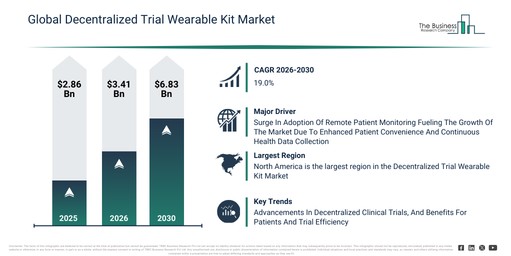
    The decentralized trial wearable market size has experienced significant expansion in recent years. It is projected to increase from $2.43 billion in 2025 to $2.93 billion in 2026, exhibiting a compound annual growth rate (CAGR) of 20.8%. The growth observed in the past period is attributable to the increasing adoption of decentralized clinical trial models, the rising use of wearable health devices in research, growing demand for remote patient engagement, advancements in sensor miniaturization, and the expansion of digital clinical trial infrastructure.

    The decentralized trial wearable market is projected to experience rapid expansion over the coming years. Its valuation is anticipated to reach $6.18 billion by 2030, demonstrating a compound annual growth rate (CAGR) of 20.5%. This projected growth is driven by several factors, including heightened investments in virtual trial platforms, a surge in demand for generating real-world evidence, the expanding embrace of hybrid clinical trials, a greater focus on remote monitoring that complies with regulations, and the increasing application of AI-driven trial analytics. Key trends anticipated during this period involve the growing acceptance of continuous remote health monitoring wearables, an increase in the integration of multi-parameter biosensing devices, the expanding utilization of real-time data transmission within clinical trials, the broader implementation of patient-centric trial designs, and a heightened commitment to ensuring data accuracy and compliance.

    Download the Free Sample Report to Explore Key Market Insights:

    https://www.thebusinessresearchcompany.com/sample.aspx?id=29012&type=smp

    Which Market Drivers Are Supporting The Expansion Of The Decentralized Trial Wearable Market?

    The increasing need for real-time patient monitoring is anticipated to fuel the expansion of the decentralized trial wearable market in the foreseeable future. Real-time patient monitoring involves the ongoing gathering and transfer of health data through interconnected medical devices that automatically transmit physiological measurements to healthcare professionals for immediate evaluation and intervention. The need for real-time patient monitoring is escalating due to the growing incidence of chronic conditions such as diabetes, cardiovascular disorders, and respiratory illnesses, which necessitate constant tracking of patients’ health for prompt action and improved disease management. Decentralized trial wearable kits facilitate real-time patient monitoring by continuously collecting and forwarding health data from individuals in their natural settings to central repositories, thereby allowing researchers and healthcare providers to monitor patient health remotely, identify irregularities early, and make prompt, evidence-based clinical choices. For example, in August 2023, Vivalink, a US-based healthcare technology company, reported survey findings indicating that 84% of existing remote patient monitoring (RPM) users intend to increase their usage in 2024, 45% of healthcare providers are deploying RPM for critical monitoring within hospital-at-home programs, and 77% foresee RPM-based care superseding conventional inpatient hospital care within the next five years. Consequently, the rising demand for real-time patient monitoring is a key factor propelling the growth of the decentralized trial wearable market.

    Which Segment Classifications Shape The Decentralized Trial Wearable Market?

    The decentralized trial wearable market covered in this report is segmented –

    1) By Product Type: Smartwatches, Fitness Trackers, Biosensors, Smart Clothing, Other Product Types

    2) By Distribution Channel: Online, Offline

    3) By Application: Remote Patient Monitoring, Clinical Trials, Disease Management, Other Applications

    4) By End-User: Pharmaceutical Companies, Contract Research Organizations, Healthcare Providers, Other End-Users

    Subsegments:

    1) By Smartwatches: Health Monitoring Smartwatches, Electrocardiogram (ECG) Smartwatches, Blood Oxygen Tracking Smartwatches, Multi-Sensor Smartwatches

    2) By Fitness Trackers: Heart Rate Monitoring Fitness Trackers, Activity Tracking Fitness Trackers, Sleep Tracking Fitness Trackers, Multi-Metric Fitness Trackers

    3) By Biosensors: Glucose Monitoring Biosensors, Electrocardiogram (ECG) Biosensors, Temperature Sensing Biosensors, Multi-Parameter Biosensors

    4) By Smart Clothing: Sensor-Embedded Smart Shirts, Smart Pants With Biometric Sensors, Compression Wear Smart Clothing, Smart Athletic Wear

    5) By Other Product Types: Hybrid Wearable Devices, Remote Patient Monitoring Wearables, Medical Grade Wearables, Innovative Material Wearables

    What Industry Trends Are Redefining The Decentralized Trial Wearable Market?

    Leading companies in the decentralized trial wearable market are concentrating on developing innovative products like ultra-compact health monitoring devices to improve patient comfort and enhance remote data collection. These ultra-compact health monitoring devices are miniature, wearable gadgets designed for continuous tracking of physiological and behavioral data with minimal intrusion, thereby boosting patient compliance, enabling remote supervision, and providing high-quality data for clinical trials. For instance, in June 2025, Empatica Inc., a US-based medical technology firm, introduced EmbraceMini, which is the world’s smallest wrist-worn actigraphy device tailored for clinical research. Measuring just 12mm thick and 14mm wide, a size comparable to a USB flash drive or AA battery, it is engineered for exceptionally comfortable, non-invasive wear, facilitating continuous monitoring of over 200 digital measures, including activity, sleep, gait, and light exposure. The device wirelessly transmits data to Empatica’s FDA-cleared Health Monitoring Platform, supporting remote data acquisition, digital biomarker analysis, and integration with existing clinical trial systems, all while prioritizing participant experience and adherence. It is specifically built for studies on sleep disorders, movement disorders, obesity, depression, and pain, among other conditions, offering high-resolution insights into participants’ physiological and behavioral patterns. Its long battery life allows at least seven days of uninterrupted monitoring, reducing the burden on participants and enhancing compliance. Additionally, the modular design enables it to be worn on the wrist, ankle, leg, or waist, and multiple units can be utilized simultaneously for richer datasets.

    Which Companies Are Expanding Their Footprint In The Decentralized Trial Wearable Market?

    Major companies operating in the decentralized trial wearable market are Oracle Corporation, IQVIA Holdings Inc., LabCorp Drug Development Inc., ICON Public Limited Company, Garmin Ltd., Clario Inc., Medidata Solutions Inc., BioTelemetry Inc., Signant Health Holding Corp, Withings France SA, Medable Inc., Science 37 Holdings Inc., THREAD Research Inc., Huma Therapeutics Ltd., Empatica S.r.l., Clinical Ink Inc., VivaLNK Inc., Sempulse Ltd., Activinsights Ltd., Mahalo Health Inc.

    Read the full decentralized trial wearable market report here:

    https://www.thebusinessresearchcompany.com/report/decentralized-trial-wearable-global-market-report

    How Is The Decentralized Trial Wearable Market Distributed Across Key Geographic Regions?

    North America was the largest region in the decentralized trial wearable market in 2025. Asia-Pacific is expected to be the fastest-growing region in the forecast period. The regions covered in the decentralized trial wearable market report are Asia-Pacific, South East Asia, Western Europe, Eastern Europe, North America, South America, Middle East, Africa.

    Request A Tailored Decentralized Trial Wearable Market Research Report For Competitive Advantage:

    https://www.thebusinessresearchcompany.com/customise?id=29012&type=smp

    Browse Through More Reports Similar to the Global Decentralized Trial Wearable Market 2026, By The Business Research Company

    Virtual Clinical Trials Global Market Report

    https://www.thebusinessresearchcompany.com/report/virtual-clinical-trials-global-market-report

    Clinical Trial Management System Global Market Report

    https://www.thebusinessresearchcompany.com/report/clinical-trial-management-system-global-market-report

    Clinical Trial Supply And Logistics Global Market Report

    https://www.thebusinessresearchcompany.com/report/clinical-trial-supply-and-logistics-global-market-report

    Get in touch with us:

    The Business Research Company: https://www.thebusinessresearchcompany.com/

    Americas +1 310-496-7795

    Asia +44 7882 955267 & +91 8897263534

    Europe +44 7882 955267

    Email us at info@tbrc.info

    Follow us on:

    LinkedIn: https://in.linkedin.com/company/the-business-research-company

    YouTube: https://www.youtube.com/channel/UC24_fI0rV8cR5DxlCpgmyFQ

    Global Market Model: https://www.thebusinessresearchcompany.com/global-market-model
  • Decentralized Clinical Trials Market Growth Expected to Reach $19.55 Billion by 2030 with 17.3% CAGR

    Decentralized Clinical Trials Market Growth Expected to Reach $19.55 Billion by 2030 with 17.3% CAGR

    The Business Research Company’s 2026 market reports include new capabilities such as market attractiveness scoring and analysis, total addressable market analysis, company scoring matrix, interactive excel data dashboard, improved supply chain analysis, upcoming startups in the market, and overview of key products, aimed at improving the depth, usability, and strategic value of the insights delivered.

    What Market Size Growth Is Projected For The Decentralized Clinical Trials Market During The Forecast Period 2026–2030?

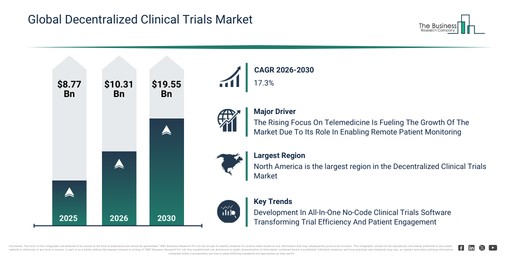
    The decentralized clinical trials market has seen rapid expansion in recent years. It is projected to increase from $8.77 billion in 2025 to $10.31 billion in 2026, at a compound annual growth rate (CAGR) of 17.7%. Historically, this growth can be ascribed to factors such as the increasing complexity of clinical trials, a heightened need for patient recruitment efficiency, the proliferation of digital health technologies, the expanding use of electronic data capture systems, and a growing regulatory acceptance of decentralized models.

    The market size for decentralized clinical trials is anticipated to experience substantial expansion over the upcoming years. This market is projected to reach $19.55 billion by 2030, expanding at a compound annual growth rate (CAGR) of 17.3%. The expansion during the forecast period is primarily driven by the increasing integration of hybrid trial designs, a growing need for quicker drug development timelines, the broadening scope of global virtual trials, the rising application of AI-driven trial optimization, and an intensified focus on diverse patient involvement. Significant trends expected in this period involve the wider uptake of remote patient monitoring tools, the increased utilization of virtual trial platforms, the expansion of data collection through wearables, the growing implementation of real-time trial analytics, and an elevated emphasis on patient-centric trial design.

    Download the Free Sample Report to Explore Key Market Insights:

    https://www.thebusinessresearchcompany.com/sample.aspx?id=28189&type=smp

    What Underlying Factors Are Accelerating The Growth Of The Decentralized Clinical Trials Market?

    An increasing emphasis on telemedicine is anticipated to drive expansion within the decentralized clinical trials market in the future. Telemedicine involves providing health services remotely through digital communication technologies, enabling medical consultations and patient monitoring without requiring physical presence at healthcare facilities. This growing focus on telemedicine largely stems from the demand for accessible healthcare delivery, particularly in response to global health challenges and social distancing requirements. Decentralized clinical trials leverage telemedicine to remotely engage and oversee patients, thereby minimizing in-person visits while simultaneously enabling real-time data collection, enhanced access, and continuous supervision. For instance, in September 2024, according to the Australian Bureau of Statistics (ABS), the national statistical agency of Australia, in 2023–24, 83.5% of males reported using telehealth services, an increase from 78.6% in 2022–23. Consequently, the rising focus on telemedicine is propelling the growth of the decentralized clinical trials market.

    What Market Segments Are Evaluated Within The Decentralized Clinical Trials Market?

    The decentralized clinical trials market covered in this report is segmented –

    1) By Type: Interventional, Observational, Expanded Access

    2) By Technology Used: Wearable Devices, Mobile Health Applications, Telemedicine Platforms, Electronic Data Capture Systems

    3) By Study Phase: Phase I, Phase II, Phase III, Phase IV

    4) By Therapeutic Area: Oncology, Cardiology, Neurology, Infectious Diseases

    5) By End-User: Pharmaceutical Companies, Biotechnology Firms, Contract Research Organizations, Regulatory Authorities, Academic And Research Institutions

    Subsegments:

    1) By Interventional: Randomized Controlled Trials (RCTs), Non-Randomized Trials, Adaptive Clinical Trials, Pragmatic Clinical Trials

    2) By Observational: Cohort Studies, Case-Control Studies, Cross-Sectional Studies, Prospective Studies, Retrospective Studies, Longitudinal Studies

    3) By Expanded Access: Treatment Investigational New Drug (IND) Applications, Intermediate-Size Patient Population Investigational New Drug (IND) Applications, Single-Patient Investigational New Drug (IND) Applications, Emergency Use Investigational New Drug (IND) Applications

    What Key Developments And Trends Are Impacting The Decentralized Clinical Trials Market?

    Leading companies within the decentralized clinical trials market are concentrating on creating sophisticated tools, such as integrated, no-code clinical trials software. This aims to streamline trial setup and administration, boosting overall efficiency and patient involvement. Such all-in-one, no-code software enables researchers to conceptualize, manage, and execute trials without requiring programming knowledge, while seamlessly consolidating patient acquisition, data collection, oversight, and analysis onto a singular, easy-to-use platform. For example, in August 2024, Medable, a clinical technology company based in the US, introduced Medable Studio. This is an all-in-one, no-code software solution engineered to simplify and speed up the configuration, translation, validation, and deployment of electronic Clinical Outcome Assessments (eCOA), eConsent, Televisit, and sensors Plus within clinical trials. It allows biopharmaceutical firms to craft protocol-specific study designs in hours rather than months, affording users increased command, clarity, and pace. Furthermore, it provides adaptable self-service, full-service, or combined approaches, significantly cutting down study initiation periods and expenditures. The platform’s objective is to transform trial execution by making the study construction process quicker, more effective, and less reliant on specialized external assistance.

    Who Are The Top Market Participants Influencing The Decentralized Clinical Trials Market?

    Major companies operating in the decentralized clinical trials market are Walgreens Boots Alliance Inc., Pfizer Inc., Oracle Corporation, Thermo Fisher Scientific Inc., IQVIA Holdings Inc., Labcorp Holdings Inc., ICON Public Limited Company, Dassault Systèmes SE, LEO Pharma A/S, Verily Life Sciences LLC, ProPharma, Signant Health Holding Corp., PCM Trials, Huma Therapeutics Limited, Medable Inc., Science 37 Inc., Obvio Health, EmVenio Research Inc., Grove AI Inc., Phesi Inc.

    Read the full decentralized clinical trials market report here:

    https://www.thebusinessresearchcompany.com/report/decentralized-clinical-trials-global-market-report

    Which Region Is Projected To Dominate The Decentralized Clinical Trials Market During The Forecast Period?

    North America was the largest region in the decentralized clinical trials market in 2025. Asia-Pacific is expected to be the fastest-growing region in the forecast period. The regions covered in the decentralized clinical trials market report are Asia-Pacific, South East Asia, Western Europe, Eastern Europe, North America, South America, Middle East, Africa.

    Request A Tailored Decentralized Clinical Trials Market Research Report For Competitive Advantage:

    https://www.thebusinessresearchcompany.com/customise?id=28189&type=smp

    Browse Through More Reports Similar to the Global Decentralized Clinical Trials Market 2026, By The Business Research Company

    Healthcare Data Integration Global Market Report

    https://www.thebusinessresearchcompany.com/report/healthcare-data-integration-global-market-report

    Personal Health Record Software Global Market Report

    https://www.thebusinessresearchcompany.com/report/personal-health-record-software-global-market-report

    Genomics Personalized Health Global Market Report

    https://www.thebusinessresearchcompany.com/report/genomics-personalized-health-global-market-report

    Get in touch with us:

    The Business Research Company: https://www.thebusinessresearchcompany.com/

    Americas +1 310-496-7795

    Asia +44 7882 955267 & +91 8897263534

    Europe +44 7882 955267

    Email us at info@tbrc.info

    Follow us on:

    LinkedIn: https://in.linkedin.com/company/the-business-research-company

    YouTube: https://www.youtube.com/channel/UC24_fI0rV8cR5DxlCpgmyFQ

    Global Market Model: https://www.thebusinessresearchcompany.com/global-market-model
  • Data-Driven Precision Medical Service Market Forecast 2026–2035 Reflecting Expansion Opportunities Across Industries

    Data-Driven Precision Medical Service Market Forecast 2026–2035 Reflecting Expansion Opportunities Across Industries

    The Business Research Company’s 2026 market reports include new capabilities such as market attractiveness scoring and analysis, total addressable market analysis, company scoring matrix, interactive excel data dashboard, improved supply chain analysis, upcoming startups in the market, and overview of key products, aimed at improving the depth, usability, and strategic value of the insights delivered.

    How Will The Market Size Of The Data-Driven Precision Medical Service Market Evolve From 2026 To 2030?

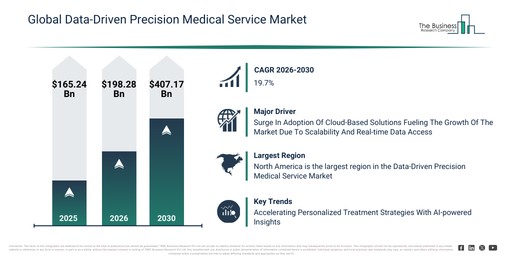
    The data-driven precision medical service market has witnessed rapid expansion in recent years. This market is projected to grow from $165.24 billion in 2025 to $198.28 billion in 2026, reflecting a compound annual growth rate (CAGR) of 20.0%. The historical growth of this market can be ascribed to several factors, including the increasing digitization of healthcare records, the rising availability of genomic data, the growing adoption of analytics-driven care models, the expansion of healthcare IT infrastructure, and enhanced collaboration between technology and healthcare providers.

    The data-driven precision medical service market is projected for significant expansion in the upcoming years. It is anticipated to reach a valuation of $407.17 billion by 2030, exhibiting a compound annual growth rate (CAGR) of 19.7%. This growth over the forecast period is fueled by increasing investments in AI-powered healthcare platforms, a rising demand for personalized treatment pathways, the expansion of real-time clinical decision support, growing adoption of wearable health data integration, and a stronger emphasis on preventive precision medicine. Key trends identified for the forecast period include the wider adoption of AI-driven clinical analytics, growing integration of multi-omics data platforms, the proliferation of cloud-based precision medicine services, an increasing use of predictive healthcare models, and an enhanced focus on outcome-based care.

    Download the Free Sample Report to Explore Key Market Insights:

    https://www.thebusinessresearchcompany.com/sample.aspx?id=28188&type=smp

    Which Growth Drivers Are Contributing To The Progress Of The Data-Driven Precision Medical Service Market?

    The increasing integration of cloud-based solutions is anticipated to boost the expansion of the data-driven precision medical service market in the future. Cloud solutions encompass software, platforms, or infrastructure delivered via the internet, offering on-demand access, storage, and processing capabilities without the need for local setup. A key factor driving the uptake of cloud-based solutions is their inherent scalability, which enables organizations to readily modify computing resources according to demand, avoiding substantial initial infrastructure costs. This scalability particularly benefits healthcare organizations by allowing swift resource adjustments to support real-time patient data analysis, predictive modeling, and customized care. For example, Ace Cloud (Ace Cloud Hosting), a US-based cloud computing provider specializing in healthcare and HealthTech, reports that the healthcare sector is quickly adopting cloud technology, with 95% of organizations utilizing it for patient data management. Furthermore, in 2025, cloud adoption within healthcare saw a significant 41% year-over-year increase, representing the highest growth across all industry sectors. Consequently, the rising adoption of cloud-based solutions is projected to fuel the growth of the data-driven precision medical service market.

    Which Segment Areas Are Covered In The Data-Driven Precision Medical Service Market Analysis?

    The data-driven precision medical service market covered in this report is segmented –

    1) By Type: Cloud-Based, On-Premises

    2) By Technology: Artificial Intelligence And Machine Learning, Big Data Analytics, Genomics And Sequencing, Cloud Computing, Blockchain, Digital Twin Technology, Wearables And Internet Of Things

    3) By Application: Hospital, Clinic, Other Applications

    Subsegments:

    1) By Cloud-Based: Public Cloud Deployment, Private Cloud Deployment, Hybrid Cloud Deployment

    2) By On Premises: Dedicated Server Infrastructure, Enterprise Data Center Deployment, Localized Computing Environment

    What Trends Are Projected To Affect The Data-Driven Precision Medical Service Market?

    Leading companies in the data-driven precision medical service market are increasingly concentrating on advanced innovations, such as deep learning for multi-omics discovery. This focus aims to expedite biomarker identification, refine personalized treatment strategies, and improve clinical decision-making across oncology and other therapeutic domains. Deep learning for multi-omics discovery involves leveraging artificial intelligence algorithms to analyze complex genomic, epigenomic, transcriptomic, and proteomic data, facilitating the discovery of novel biomarkers and therapeutic targets. For instance, in January 2023, Guardant Health, a US-based biotechnology company, introduced Guardant Galaxy, a comprehensive suite of sophisticated analytical tools. Developed through both internal research and external collaborations, this platform is designed to enhance the accuracy and clinical utility of Guardant Health’s existing cancer testing portfolio. By integrating cutting-edge analytics, Guardant Galaxy supports more precise patient diagnostics and personalized treatment planning, while also accelerating the identification of new biomarkers and therapeutic targets, thereby fueling the next generation of drug development.

    Which Global Companies Are Actively Competing In The Data-Driven Precision Medical Service Market?

    Major companies operating in the data-driven precision medical service market are Samsung Electronics Co. Ltd., Roche Holding AG, Novartis AG, Thermo Fisher Scientific Inc., Agilent Technologies Inc., Illumina Inc., BioNTech SE, QIAGEN N.V., Natera Inc., Precision Medicine Group Inc., Guardant Health Inc., Tempus Labs Inc., Flatiron Health Inc., Certara L.P., Verily Life Sciences LLC, GenomOncology Inc., SOPHiA GENETICS SA, Recursion Pharmaceuticals Inc., DNAnexus Inc., Biomea Fusion Inc.

    Read the full data-driven precision medical service market report here:

    https://www.thebusinessresearchcompany.com/report/data-driven-precision-medical-service-global-market-report

    What Are The Leading Geographic Regions In The Data-Driven Precision Medical Service Market?

    North America was the largest region in the data-driven precision medical service market in 2025. The regions covered in the data-driven precision medical service market report are Asia-Pacific, South East Asia, Western Europe, Eastern Europe, North America, South America, Middle East, Africa.

    Request A Tailored Data-Driven Precision Medical Service Market Research Report For Competitive Advantage:

    https://www.thebusinessresearchcompany.com/customise?id=28188&type=smp

    Browse Through More Reports Similar to the Global Data-Driven Precision Medical Service Market 2026, By The Business Research Company

    Artificial Intelligence Ai In Precision Medicine Global Market Report

    https://www.thebusinessresearchcompany.com/report/artificial-intelligence-ai-in-precision-medicine-global-market-report

    Healthcare Data Integration Global Market Report

    https://www.thebusinessresearchcompany.com/report/healthcare-data-integration-global-market-report

    Healthcare Data Interoperability Global Market Report

    https://www.thebusinessresearchcompany.com/report/healthcare-data-interoperability-global-market-report

    Get in touch with us:

    The Business Research Company: https://www.thebusinessresearchcompany.com/

    Americas +1 310-496-7795

    Asia +44 7882 955267 & +91 8897263534

    Europe +44 7882 955267

    Email us at info@tbrc.info

    Follow us on:

    LinkedIn: https://in.linkedin.com/company/the-business-research-company

    YouTube: https://www.youtube.com/channel/UC24_fI0rV8cR5DxlCpgmyFQ

    Global Market Model: https://www.thebusinessresearchcompany.com/global-market-model
  • Global Da Vinci Systems Market Analysis for 2026–2030 with Strategic Forecast Insights for Businesses

    Global Da Vinci Systems Market Analysis for 2026–2030 with Strategic Forecast Insights for Businesses

    The Business Research Company’s 2026 market reports include new capabilities such as market attractiveness scoring and analysis, total addressable market analysis, company scoring matrix, interactive excel data dashboard, improved supply chain analysis, upcoming startups in the market, and overview of key products, aimed at improving the depth, usability, and strategic value of the insights delivered.

    What Is The Forecasted Market Value Of The Da Vinci Systems Market Across 2026–2030?

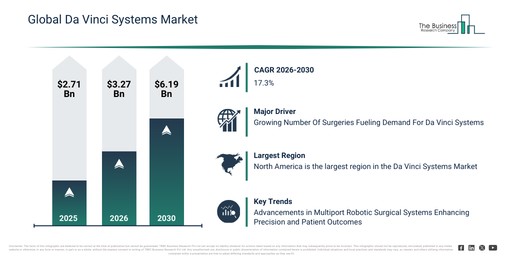
    The market size for da vinci systems has experienced substantial, rapid growth in recent years. This market is set to expand from $2.71 billion in 2025 to $3.27 billion in 2026, exhibiting a compound annual growth rate (CAGR) of 20.5%. Historically, this expansion has been propelled by the increasing demand for surgical precision, the inherent limitations of laparoscopic surgery, rising hospital investments in robotics, the necessity for surgeon skill enhancement, and the clear benefits for patient recovery.

    The da vinci systems market size is anticipated to experience substantial growth over the next few years. It is forecast to expand to $6.19 billion by 2030, achieving a compound annual growth rate (CAGR) of 17.3%. This projected growth during the forecast period is primarily driven by advancements in robotic platforms, an expansion into emerging markets, the increase in outpatient robotic surgery, ongoing cost optimization efforts, and a rise in surgical volumes. Significant trends characterizing this period include the growing adoption of robotic-assisted surgery, the wider application of minimally invasive procedures, the integration of surgical data analytics, the development of surgeon training programs, and an increasing deployment in multi-specialty surgeries.

    Download the Free Sample Report to Explore Key Market Insights:

    https://www.thebusinessresearchcompany.com/sample.aspx?id=14890&type=smp

    What Primary Drivers Are Shaping The Development Of The Da Vinci Systems Market?

    The increasing volume of surgical procedures is anticipated to fuel the expansion of the da Vinci systems market moving ahead. This rise in surgeries stems from advancements in medical technology, an aging demographic experiencing more health concerns, improved healthcare awareness and accessibility, and a move towards proactive and preventative surgical approaches. Da Vinci surgical platforms find application across diverse surgical fields, such as urology, gynecology, general surgery, cardiothoracic surgery, and colorectal surgery. These systems empower surgeons to execute intricate operations with enhanced precision, smaller cuts, less blood loss, and quicker patient recovery when contrasted with conventional open surgeries. To illustrate, data from June 2024 provided by the International Society of Aesthetic Plastic Surgery (ISAPS), a US-based non-profit professional organization, indicates that around 15.8 million surgical aesthetic procedures were conducted globally in 2023. Among these, face and head procedures constituted 6.5 million operations, with specific increases seen in eyelid surgery, which went up by 24% to 1.7 million procedures, rhinoplasty, which climbed by 21.6% to 1.1 million procedures, and lip enhancement/perioral procedures, which expanded by 29% to 0.9 million. For women, liposuction, totaling 1.8 million procedures, surpassed breast augmentation as the most frequently performed surgical intervention. The United States recorded the highest number worldwide, performing over 6.1 million surgical aesthetic procedures in 2023. Consequently, the increasing volume of surgeries is propelling the expansion of the da Vinci systems market in the foreseeable future.

    What Segmentation Levels Are Considered In The Da Vinci Systems Market?

    The da vinci systems market covered in this report is segmented –

    1) By Product Type: Systems, Instruments And Accessories, Services, Data Analytics Software

    2) By Application: General Surgery, Urological Surgery, Gynecological Surgery, Cardiothoracic Surgery, Colorectal Surgery, Other Applications

    3) By End User: Hospitals, Ambulatory Surgical Centers, Academic And Research Centers

    Subsegments:

    1) By Systems: Robotic Surgical Systems, Robotic Surgery Platforms, Surgical Robots

    2) By Instruments And Accessories: Surgical Instruments, Endoscopic Instruments, Robotic Arms And Tools, Specialized Accessories

    3) By Services: Maintenance And Repair Services, Training And Support Services, Installation And Setup Services, Consulting Services

    4) By Data Analytics Software: Surgical Data Management Software, Patient Monitoring Software, Performance And Analytics Software, Post-Operative Care Software

    Which Upcoming Trends Are Expected To Influence The Da Vinci Systems Market?

    Leading companies in the surgical robotics market are developing innovative products, such as multiport robotic surgical systems, to maintain their market position. Multiport robotic systems, like the da Vinci platform, provide surgeons with enhanced dexterity, 3D high-definition visualization, and precise control of instruments through small, minimally invasive incisions, which improves patient outcomes and shortens recovery times compared to traditional open or laparoscopic surgery. For instance, in March 2024, Intuitive Surgical, a US-based medical device company, secured U.S. Food and Drug Administration (FDA) 510(k) clearance for its fifth-generation multiport robotic platform, da Vinci 5. This advanced system features over 150 design and performance enhancements, including optional force-feedback instruments that allow surgeons to sense tissue resistance, advanced tremor reduction, a next-generation surgeon console, and substantially more onboard computing power. These functionalities enhance surgical precision, reduce tissue trauma, and enable integration with real-time software tools, ultimately boosting procedural efficiency and patient outcomes.

    Which Leading Firms Are Contributing To The Growth Of The Da Vinci Systems Market?

    Major companies operating in the da vinci systems market are Johnson & Johnson, Medtronic Plc, Stryker Corporation, Zimmer Biomet Holdings Inc, Intuitive Surgical Inc, Smith & Nephew plc, Karl Storz, Applied Medical, CMR Surgical Ltd, Avatera Medical, THINK Surgical Inc, Titan Medical, XACT Robotics Ltd, Asensus Surgical, Medrobotics Corporation, Renishaw plc, Distalmotion, AVRA Medical Robotics Inc, EndoMaster Surgical, Synaptive Medical, Virtual Incision Corporation, SS Innovations International Inc, Sina Robotics and Medical Innovators Co, Neocis Inc, Dextera Surgical, Human Xtensions, Procept BioRobotics

    Read the full da vinci systems market report here:

    https://www.thebusinessresearchcompany.com/report/da-vinci-systems-global-market-report

    How Does The Da Vinci Systems Market Perform Across Major Global Regions?

    North America was the largest region in the da Vinci systems market in 2025. Asia Pacific is expected to be the fastest-growing region in the forecast period. The regions covered in the da vinci systems market report are Asia-Pacific, South East Asia, Western Europe, Eastern Europe, North America, South America, Middle East, Africa.

    Request A Tailored Da Vinci Systems Market Research Report For Competitive Advantage:

    https://www.thebusinessresearchcompany.com/customise?id=14890&type=smp

    Browse Through More Reports Similar to the Global Da Vinci Systems Market 2026, By The Business Research Company

    Fiction Books Global Market Report

    https://www.thebusinessresearchcompany.com/report/fiction-books-global-market-report

    Non Fiction Books Global Market Report

    https://www.thebusinessresearchcompany.com/report/non-fiction-books-global-market-report

    Immersive Technology Global Market Report

    https://www.thebusinessresearchcompany.com/report/immersive-technology-global-market-report

    Get in touch with us:

    The Business Research Company: https://www.thebusinessresearchcompany.com/

    Americas +1 310-496-7795

    Asia +44 7882 955267 & +91 8897263534

    Europe +44 7882 955267

    Email us at info@tbrc.info

    Follow us on:

    LinkedIn: https://in.linkedin.com/company/the-business-research-company

    YouTube: https://www.youtube.com/channel/UC24_fI0rV8cR5DxlCpgmyFQ

    Global Market Model: https://www.thebusinessresearchcompany.com/global-market-model
  • D Dimer Testing Market Outlook 2026–2035 Driven by Key Growth Factors and Industry Projections

    D Dimer Testing Market Outlook 2026–2035 Driven by Key Growth Factors and Industry Projections

    The Business Research Company’s 2026 market reports include new capabilities such as market attractiveness scoring and analysis, total addressable market analysis, company scoring matrix, interactive excel data dashboard, improved supply chain analysis, upcoming startups in the market, and overview of key products, aimed at improving the depth, usability, and strategic value of the insights delivered.

    What Market Size Increase Is Anticipated For The D Dimer Testing Market Over The 2026–2030 Period?

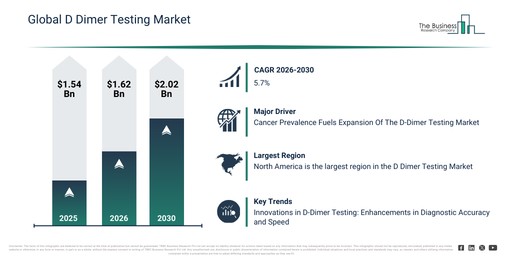
    The d dimer testing market size has shown substantial growth in recent years. It is anticipated to increase from $1.54 billion in 2025 to $1.62 billion in 2026, exhibiting a compound annual growth rate (CAGR) of 5.2%. Historically, this expansion can be linked to the significant occurrence of thrombotic disorders, widespread hospital-based laboratory testing, a reliance on elisa methods, the demand for emergency diagnostics, and limited access to rapid testing solutions.

    The d dimer testing market size is poised for robust expansion in the coming years. It is forecast to achieve a value of $2.02 billion by 2030, progressing at a compound annual growth rate (CAGR) of 5.7%. This expected growth during the forecast period is attributable to factors such as the rise of point-of-care diagnostics, the increasing burden of cardiovascular diseases, advancements in immunoassay technologies, the demand for faster turnaround times, and the spread of decentralized testing. Prominent trends for the forecast period involve the growing acceptance of point-of-care testing, its expanded application in emergency diagnostics, the wider deployment of automated laboratory analyzers, the proliferation of rapid testing kits, and its incorporation into clinical decision protocols.

    Download the Free Sample Report to Explore Key Market Insights:

    https://www.thebusinessresearchcompany.com/sample.aspx?id=12341&type=smp

    Which Major Factors Are Driving The Expansion Of The D Dimer Testing Market?

    The future expansion of the d-dimer testing market is anticipated due to the rising occurrence of cancer. Cancer describes a group of illnesses where abnormal cells multiply uncontrollably within almost any body organ or tissue, exceeding their normal limits, and potentially spreading or invading nearby areas. D-dimer testing serves a key role in assisting the diagnosis, monitoring, and treatment of cancer patients, as well as evaluating the likelihood of blood clot formation by tracking thrombotic events across diverse clinical environments. For example, in May 2025, the National Cancer Institute (NCI), a US-based government agency dedicated to cancer research and education, projected that in 2025 approximately 2,041,910 new cancer cases would be diagnosed in the United States, with 618,120 fatalities from the illness. Among males, prostate, lung, and colorectal cancers are forecast to comprise around 48% of all new cancer diagnoses, while among females, breast, lung, and colorectal cancers will constitute approximately 51% of all new cases. Furthermore, an estimated 14,690 children and adolescents aged 0 to 19 are expected to be diagnosed with cancer in 2025, with 1,650 projected to succumb to the disease. Consequently, the growing prevalence of cancer is fueling the expansion of the d-dimer testing market.

    How Is The D Dimer Testing Market Segmented Across Key Categories?

    The d dimer testing market covered in this report is segmented –

    1) By Test: Clinical Laboratory Tests, Point-Of-Care Tests

    2) By Product: Analyzers, Reagents And Consumables

    3) By Method: Enzyme-Linked Immunosorbent Assay (ELISA), Latex-Enhanced Immuno-Turbidimetric Assays, Fluorescence Immunoassays, Other Testing Methods

    4) By Application: Deep Vein Thrombosis (DVT), Pulmonary Embolism (PE), Disseminated Intravascular Coagulation (DIC), Other Applications

    5) By End-User: Hospitals, Academic And Research Institutes, Diagnostic Centers, Other End-Users

    Subsegments:

    1) By Clinical Laboratory Tests: Enzyme-Linked Immunosorbent Assay (Elisa), Chemiluminescent Immunoassay (CLIA), Latex Agglutination Assays

    2) By Point-Of-Care Tests: Rapid Test Kits, Portable Testing Devices, Lateral Flow Assays

    How Are Trends Shaping The Direction Of The D Dimer Testing Market?

    Leading firms within the d-dimer testing market are innovating products, including the D-dimer test kit, to enhance the precision and rapidity of blood clot disorder diagnosis. A D-dimer test kit serves as a medical diagnostic instrument designed to quantify D-dimer levels, a specific fibrin degradation product found in the blood. This measurement assists in evaluating the existence of blood clots and associated conditions such as deep vein thrombosis, pulmonary embolism, or disseminated intravascular coagulation. For instance, Bionote Inc., a medical equipment manufacturer located in South Korea, unveiled its Vcheck D-dimer 5Tests/Kit in July 2024. This new D-dimer 5-Test Kit, developed for Vcheck immunodiagnostic equipment, is tailored for use in veterinary clinics, facilitating the diagnosis of conditions like thrombosis and DIC, and proving particularly suitable for smaller clinics managing fewer emergency situations.

    Who Are The Dominant Players Shaping The D Dimer Testing Market Landscape?

    Major companies operating in the d dimer testing market are F. Hoffmann-La Roche Ltd., Thermo Fisher Scientific Inc., Abbott Laboratories, Siemens Healthcare GmbH, Becton Dickinson and Company (BD), Laboratory Corporation, Quest Diagnostics Inc., bioMérieux SA, Beckman Coulter Inc., Quidel Corporation, QuidelOrtho Corporation, Sysmex Corporation, Horiba Ltd., Werfen SA, Helena Laboratories Corporation, Abcam plc, LumiraDx Limited, Sekisui Diagnostics LLC, Diagnostica Stago S.A.S., RayBiotech Inc., CTK Biotech Inc., Diazyme Laboratories Inc., UCP Biosciences Inc., AccuBioTech Co Ltd., Response Biomedical Corporation

    Read the full d dimer testing market report here:

    https://www.thebusinessresearchcompany.com/report/d-dimer-testing-global-market-report

    Which Region Currently Holds The Largest Share Of The D Dimer Testing Market?

    North America was the largest region in the D dimer testing market in 2025. Asia-Pacific is expected to be the fastest-growing region in the forecast period. The regions covered in the d dimer testing market report are Asia-Pacific, South East Asia, Western Europe, Eastern Europe, North America, South America, Middle East, Africa.

    Request A Tailored D Dimer Testing Market Research Report For Competitive Advantage:

    https://www.thebusinessresearchcompany.com/customise?id=12341&type=smp

    Browse Through More Reports Similar to the Global D Dimer Testing Market 2026, By The Business Research Company

    Dimer Acid Global Market Report

    https://www.thebusinessresearchcompany.com/report/dimer-acid-global-market-report

    Dimethyl Ether Global Market Report

    https://www.thebusinessresearchcompany.com/report/dimethyl-ether-global-market-report

    Medical Device Testing Global Market Report

    https://www.thebusinessresearchcompany.com/report/medical-device-testing-global-market-report

    Get in touch with us:

    The Business Research Company: https://www.thebusinessresearchcompany.com/

    Americas +1 310-496-7795

    Asia +44 7882 955267 & +91 8897263534

    Europe +44 7882 955267

    Email us at info@tbrc.info

    Follow us on:

    LinkedIn: https://in.linkedin.com/company/the-business-research-company

    YouTube: https://www.youtube.com/channel/UC24_fI0rV8cR5DxlCpgmyFQ

    Global Market Model: https://www.thebusinessresearchcompany.com/global-market-model
  • Cytokine Release Syndrome Management Market Developments and Growth Opportunities Across 2026–2030

    Cytokine Release Syndrome Management Market Developments and Growth Opportunities Across 2026–2030

    The Business Research Company’s 2026 market reports include new capabilities such as market attractiveness scoring and analysis, total addressable market analysis, company scoring matrix, interactive excel data dashboard, improved supply chain analysis, upcoming startups in the market, and overview of key products, aimed at improving the depth, usability, and strategic value of the insights delivered.

    How Much Is The Cytokine Release Syndrome Management Market Expected To Grow In Terms Of Market Value Between 2026 And 2030?

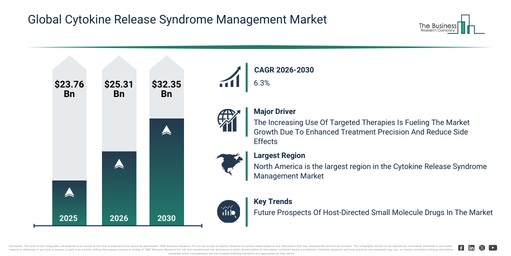
    The cytokine release syndrome management market size has seen significant growth over recent years. It is anticipated to increase from $23.76 billion in 2025 to $25.31 billion in 2026, demonstrating a compound annual growth rate (CAGR) of 6.5%. This market’s expansion in previous periods can be linked to the rise of CAR-T therapies, the scarcity of CRS treatment choices, a reliance on corticosteroids, management primarily occurring in hospitals, and the elevated risk of mortality.

    The market for cytokine release syndrome management is anticipated to show significant expansion in the coming years. It is predicted to reach $32.35 billion by 2030, growing at a compound annual growth rate (CAGR) of 6.3%. This expansion during the forecast period is primarily driven by the increasing application of cell therapies, progress in immunomodulators, better early detection techniques, established treatment guidelines, and wider adoption in oncology. Important trends for this period include the rising use of il-6 inhibitors, the broadening scope of crs management in car-t therapy, a greater emphasis on early intervention protocols, the growth of intensive care monitoring, and the creation of targeted immunomodulators.

    Download the Free Sample Report to Explore Key Market Insights:

    https://www.thebusinessresearchcompany.com/sample.aspx?id=24199&type=smp

    What Key Drivers Are Influencing The Growth Of The Cytokine Release Syndrome Management Market?

    The future expansion of the cytokine release syndrome management market is anticipated to be driven by the growing adoption of targeted therapies. These therapies are medications or interventions specifically designed to impede cancer proliferation and dissemination by disrupting molecular targets implicated in tumor formation. The rising application of targeted therapies stems mainly from their capacity to accurately identify and attack cancer cells, thereby minimizing harm to healthy tissues, enhancing treatment effectiveness, and lessening adverse reactions in contrast to conventional treatments. Effective management of cytokine release syndrome is crucial for maximizing the benefits of targeted therapies, as it controls severe inflammatory responses, consequently boosting the safety and efficacy of treatments like CAR-T cell therapy and immune checkpoint inhibitors. As an illustration, data from the American Society of Gene and Cell Therapy, a US-based organization dedicated to gene and cell therapy, indicated that in January 2024, the fourth quarter of 2023 saw a 10% increase in the count of gene therapies undergoing Phase III clinical trials. This represented the initial quarterly uptick of its nature since the third quarter of 2022. Consequently, the expanding deployment of targeted therapies is fueling the expansion of the cytokine release syndrome management market.

    What Major Segment Divisions Exist Within The Cytokine Release Syndrome Management Market?

    The cytokine release syndrome management market covered in this report is segmented –

    1) By Treatment Type: Monoclonal Antibodies, Corticosteroids, Intravenous Immunoglobulin (IVIG), Targeted Therapy, Supportive Care, Other Treatment Types

    2) By Indication: Chimeric Antigen Receptor (CAR) T-Cell Therapy, Immune Checkpoint Inhibitors, Hematopoietic Stem Cell Transplantation (HSCT), Autoimmune Diseases, Infections, Other Indications

    3) By Route Of Administration: Intravenous (IV), Subcutaneous (SC), Oral, Intramuscular (IM), Intrathecal, Other Routes Of Administration

    4) By End Users: Hospital Pharmacies, Retail Pharmacies, Online Pharmacies, Specialty Clinics, Research Institutions, Other End Users

    Subsegments:

    1) By Monoclonal Antibodies: Tocilizumab, Siltuximab, Infliximab, Rituximab

    2) By Corticosteroids: Dexamethasone, Prednisone, Methylprednisolone, Hydrocortisone

    3) By Intravenous Immunoglobulin (IVIG): Immunoglobulin G (IgG)-Based Intravenous Immunoglobulin, Immunoglobulin A (IgA)-Based Intravenous Immunoglobulin, Immunoglobulin M (IgM)-Based Intravenous Immunoglobulin, Polyvalent Intravenous Immunoglobulin

    4) By Targeted Therapy: Janus Kinase (JAK) Inhibitors, Interleukin-6 (IL-6) Inhibitors, Tumor Necrosis Factor-Alpha (TNF-a) Inhibitors, Bruton’s Tyrosine Kinase (BTK) Inhibitors

    5) By Supportive Care: Antipyretic Medications, Analgesic Medications, Intravenous Fluids And Electrolyte Solutions, Oxygen Therapy, Vasopressor Agents

    6) By Other Treatment Types: Plasmapheresis (Therapeutic Plasma Exchange), Antihistamine Medications, Leukapheresis, Experimental Therapies, Nutritional Support

    Which Market Trends Are Creating New Opportunities In The Cytokine Release Syndrome Management Market?

    Key players within the cytokine release syndrome management market are dedicating efforts to clinical trials, with the goal of developing novel treatments, including host-directed small molecule drugs. These therapies seek to modulate the immune response and diminish the intensity of cytokine storms while preserving the body’s capacity to combat infections or cancer. A host-directed small molecule drug is defined as a low molecular weight compound engineered to target the host’s immune signaling pathways, thereby inhibiting excessive cytokine production. This mechanism aids in the management of cytokine release syndrome (CRS) by averting the overactivation of the immune system. Illustrating this trend, in April 2025, the US-based biotechnology firm CytoAgents Inc. reported the successful conclusion of the initial dose-escalation cohort in its Phase 1b/2a clinical trial for CTO1681. This specific host-directed small molecule drug is being developed to both prevent and treat CRS in individuals undergoing CAR T-cell therapy. The experimental treatment showed a positive safety profile, exhibiting no dose-limiting toxicities and no negative impact on CAR T-cell effectiveness. The ongoing trial, which employs a rolling six dose-escalation approach, is designed to evaluate the safety, tolerability, and preliminary efficacy of CTO1681, in addition to determining the appropriate phase 2 dose.

    Which Companies Are Leading Innovation In The Cytokine Release Syndrome Management Market?

    Major companies operating in the cytokine release syndrome management market are Pfizer Inc., Johnson & Johnson Private Limited, F. Hoffmann-La Roche Ltd., AbbVie Inc., Sanofi S.A., Bristol Myers Squibb Company, Novartis AG, GlaxoSmithKline plc, Amgen Inc., Gilead Sciences Inc., Regeneron Pharmaceuticals Inc., Genentech Inc., Incyte Corporation, Swedish Orphan Biovitrum AB, Biocon Limited, MacroGenics Inc., Legend Biotech Corporation, Bluebird Bio Inc., InflaRx N.V., Humanigen Inc.

    Read the full cytokine release syndrome management market report here:

    https://www.thebusinessresearchcompany.com/report/cytokine-release-syndrome-management-global-market-report

    Which Region Is Expected To Register The Fastest Growth In The Cytokine Release Syndrome Management Market?

    North America was the largest region in the cytokine release syndrome management market in 2025. Asia-Pacific is expected to be the fastest-growing region in the forecast period. The regions covered in the cytokine release syndrome management market report are Asia-Pacific, South East Asia, Western Europe, Eastern Europe, North America, South America, Middle East, Africa.

    Request A Tailored Cytokine Release Syndrome Management Market Research Report For Competitive Advantage:

    https://www.thebusinessresearchcompany.com/customise?id=24199&type=smp

    Browse Through More Reports Similar to the Global Cytokine Release Syndrome Management Market 2026, By The Business Research Company

    Sustained Release Excipients Global Market Report

    https://www.thebusinessresearchcompany.com/report/sustained-release-excipients-global-market-report

    Leukocyte Adhesion Deficiency Management Global Market Report

    https://www.thebusinessresearchcompany.com/report/leukocyte-adhesion-deficiency-management-global-market-report

    Release Agents Global Market Report

    https://www.thebusinessresearchcompany.com/report/release-agents-global-market-report

    Get in touch with us:

    The Business Research Company: https://www.thebusinessresearchcompany.com/

    Americas +1 310-496-7795

    Asia +44 7882 955267 & +91 8897263534

    Europe +44 7882 955267

    Email us at info@tbrc.info

    Follow us on:

    LinkedIn: https://in.linkedin.com/company/the-business-research-company

    YouTube: https://www.youtube.com/channel/UC24_fI0rV8cR5DxlCpgmyFQ

    Global Market Model: https://www.thebusinessresearchcompany.com/global-market-model
  • Global Cyclic Heavy Menstrual Bleeding Market Forecast 2026–2035 Presenting Long-Term Industry Expansion Insights

    Global Cyclic Heavy Menstrual Bleeding Market Forecast 2026–2035 Presenting Long-Term Industry Expansion Insights

    The Business Research Company’s 2026 market reports include new capabilities such as market attractiveness scoring and analysis, total addressable market analysis, company scoring matrix, interactive excel data dashboard, improved supply chain analysis, upcoming startups in the market, and overview of key products, aimed at improving the depth, usability, and strategic value of the insights delivered.

    What Market Value Is Expected For The Cyclic Heavy Menstrual Bleeding Market At The End Of The 2026–2030 Forecast Period?

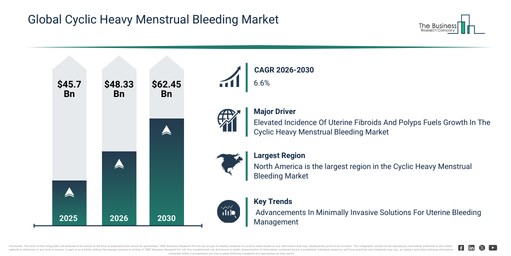
    The cyclic heavy menstrual bleeding market has shown robust growth in recent years. This market is anticipated to expand from $45.7 billion in 2025 to $48.33 billion in 2026, registering a compound annual growth rate (CAGR) of 5.8%. Historically, this expansion has been primarily due to the high incidence of hormonal disorders, insufficient understanding of menstrual conditions, a reliance on oral drug treatments, issues with underdiagnosis, and the focus on hospital-based care.

    The cyclic heavy menstrual bleeding market is projected to experience substantial expansion in the coming years. This market is anticipated to reach a valuation of $62.45 billion by 2030, exhibiting a compound annual growth rate (CAGR) of 6.6%. Factors contributing to this growth during the forecast period include progress in hormonal treatments, the rise of minimally invasive gynecological procedures, heightened patient understanding, the proliferation of specialized clinics, and enhancements in diagnostic imaging techniques. Key trends identified for the forecast period encompass an increasing reliance on hormonal therapy choices, a greater embrace of minimally invasive interventions, evolving knowledge regarding women’s reproductive health, the broadening scope of outpatient gynecological services, and an emphasis on sustained symptom alleviation.

    Download the Free Sample Report to Explore Key Market Insights:

    https://www.thebusinessresearchcompany.com/sample.aspx?id=12929&type=smp

    What Major Growth Drivers Are Shaping The Outlook Of The Cyclic Heavy Menstrual Bleeding Market?

    The increasing occurrence of uterine fibroids and polyps is projected to stimulate the expansion of the cyclic heavy menstrual bleeding market. These conditions represent common noncancerous growths developing in the female uterus. Treatment for uterine fibroids and polyps aims to decrease blood loss, normalize the menstrual cycle, prevent complications, and boost the emotional well-being of patients experiencing menstrual disorders. For example, as reported by the US-based non-profit Society for Women’s Health Research (SWHR) in January 2025, an estimated 6.5 million women of reproductive age are impacted by endometriosis, while 26 million women between the ages of 15 and 50 have uterine fibroids. Despite their high prevalence, research into uterine fibroids continues to be underfunded, ranking among the lowest 50 out of more than 300 conditions financed by the National Institutes of Health in 2023. Thus, the escalating incidence of uterine fibroids and polyps propels the cyclic heavy menstrual bleeding market.

    What Segment Types Make Up The Cyclic Heavy Menstrual Bleeding Market?

    The cyclic heavy menstrual bleeding market covered in this report is segmented –

    1) By Treatment Type: Pharmaceuticals, Surgical Or Procedural, Medical Devices

    2) By Etiology: Hormonal Disorders, Structural Abnormalities, Coagulopathies, Iatrogenic, Idiopathic

    3) By Age: Adolescents, Reproductive Age, Perimenopausal Women

    4) By Payer: Private Insurance, Public Or Government Insurance, Out-Of-Pocket, Ngo Or Subsidized Programs

    5) By User: Hospitals, Outpatient Clinics, Diagnostic Labs And Imaging Centers

    Subsegments:

    1) By Pharmaceuticals: Hormonal (Oral Contraceptives, Progestins), Non-hormonal (NSAIDs, Tranexamic Acid)

    2) By Surgical Or Procedural: Endometrial Ablation, Hysterectomy

    3) By Medical Devices: Levonorgestrel IUS, Ablation Devices

    What Trends Are Affecting The Expansion Of The Cyclic Heavy Menstrual Bleeding Market?

    Leading companies active in the cyclic heavy menstrual bleeding market are concentrating on incorporating procedure-simplification trends, for example, single-use, pre-assembled hysteroscopy kits, to improve efficiency, achieve workflow standardization, and expand in-office treatment capabilities. These advanced kits consolidate all essential components required for hysteroscopic evaluation into one sterile package, which streamlines setup and lessens inventory complexity. For instance, in May 2025, Minerva Surgical Inc., a US-based medical technology company specializing in minimally invasive gynecologic solutions, launched the HERizon Hysto-Kit. This single-use, pre-assembled hysteroscopy kit is designed to support the evaluation and treatment of abnormal uterine bleeding through office-based procedures. The kit features integrated irrigation and suction tubing, a drape equipped with a fluid-collection pouch, and is compatible with Minerva’s disposable hysteroscope and instrument accessories. The HERizon Hysto-Kit improves procedure efficiency, supply management, and clinical workflow, ultimately enhancing point-of-care decision-making for abnormal uterine bleeding (AUB) management.

    Who Are The Key Players Driving Competition In The Cyclic Heavy Menstrual Bleeding Market?

    Major companies operating in the cyclic heavy menstrual bleeding market are Pfizer Inc., Merck and Co. Inc., Novartis AG, Abbott Laboratories, GlaxoSmithKline Plc, Medtronic Plc, Takeda Pharmaceutical Company Limited, Eli Lilly and Company, Amgen Inc., Boehringer Ingelheim International GmbH, Reckitt Benckiser Group Plc, Teva Pharmaceutical Industries Ltd., Mylan N.V., Bausch Health Companies Inc., Eisai Co. Ltd., Sun Pharmaceutical Industries Ltd., Perrigo Company PLC, Dr. Reddy’s Laboratories Ltd., Aurobindo Pharma Limited, Cipla Limited, Ferring B.V., Amneal Pharmaceuticals LLC, Zydus Lifesciences Ltd., Lupin Limited, Torrent Pharmaceuticals Ltd.

    Read the full cyclic heavy menstrual bleeding market report here:

    https://www.thebusinessresearchcompany.com/report/cyclic-heavy-menstrual-bleeding-global-market-report

    Which Regions Are Projected To Dominate The Cyclic Heavy Menstrual Bleeding Market In The Coming Years?

    North America was the largest region in the cyclic menstrual bleeding market in 2025. The regions covered in the cyclic heavy menstrual bleeding market report are Asia-Pacific, South East Asia, Western Europe, Eastern Europe, North America, South America, Middle East, Africa.

    Request A Tailored Cyclic Heavy Menstrual Bleeding Market Research Report For Competitive Advantage:

    https://www.thebusinessresearchcompany.com/customise?id=12929&type=smp

    Browse Through More Reports Similar to the Global Cyclic Heavy Menstrual Bleeding Market 2026, By The Business Research Company

    Bleeding Disorder Testing Global Market Report

    https://www.thebusinessresearchcompany.com/report/bleeding-disorder-testing-global-market-report

    Bleeding Disorders Treatment Global Market Report

    https://www.thebusinessresearchcompany.com/report/bleeding-disorders-treatment-global-market-report

    Endometriosis Global Market Report

    https://www.thebusinessresearchcompany.com/report/endometriosis-global-market-report

    Get in touch with us:

    The Business Research Company: https://www.thebusinessresearchcompany.com/

    Americas +1 310-496-7795

    Asia +44 7882 955267 & +91 8897263534

    Europe +44 7882 955267

    Email us at info@tbrc.info

    Follow us on:

    LinkedIn: https://in.linkedin.com/company/the-business-research-company

    YouTube: https://www.youtube.com/channel/UC24_fI0rV8cR5DxlCpgmyFQ

    Global Market Model: https://www.thebusinessresearchcompany.com/global-market-model
  • C-X-C Chemokine Receptor 4 (CXCR4) Antagonists Market Outlook 2026–2030 Exploring New Business Opportunities

    C-X-C Chemokine Receptor 4 (CXCR4) Antagonists Market Outlook 2026–2030 Exploring New Business Opportunities

    The Business Research Company’s 2026 market reports include new capabilities such as market attractiveness scoring and analysis, total addressable market analysis, company scoring matrix, interactive excel data dashboard, improved supply chain analysis, upcoming startups in the market, and overview of key products, aimed at improving the depth, usability, and strategic value of the insights delivered.

    What Is The Estimated Market Size Of The C-X-C Chemokine Receptor 4 (CXCR4) Antagonists Market During 2026–2030?

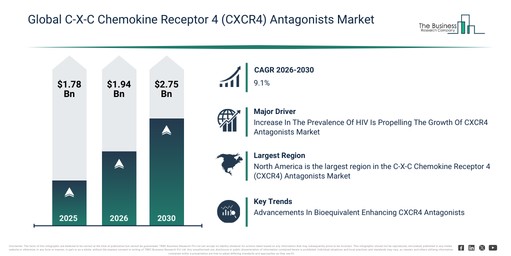
    The c-x-c chemokine receptor 4 (cxcr4) antagonists market size has experienced significant expansion over recent years. It is projected to increase from $1.78 billion in 2025 to $1.94 billion in 2026, growing at a compound annual growth rate (CAGR) of 9.3%. This growth during the historic period can be ascribed to elements such as the discovery of the cxcr4 cxcl12 pathway, unfulfilled requirements in oncology, reliance on injectable treatments, initial positive clinical outcomes, and regulatory backing for rare indications.

    The c-x-c chemokine receptor 4 (cxcr4) antagonists market size is projected to experience robust expansion over the coming years. It is anticipated to reach $2.75 billion by 2030, exhibiting a compound annual growth rate (CAGR) of 9.1%. The expansion during the forecast period can be attributed to the approval of novel cxcr4 drugs, their increased application in autoimmune diseases, the growth of precision oncology, enhancements in oral formulations, and rising clinical trial investments. Prominent trends for the forecast period include the broadening of oncology drug pipelines, increased adoption in stem cell mobilization, a heightened focus on combination cancer therapies, advancements in oral cxcr4 antagonists, and escalating clinical trial activity.

    Download the Free Sample Report to Explore Key Market Insights:

    https://www.thebusinessresearchcompany.com/sample.aspx?id=18329&type=smp

    What Drivers Are Expected To Influence The C-X-C Chemokine Receptor 4 (CXCR4) Antagonists Market During The Forecast Period?

    The rising prevalence of Human Immunodeficiency Virus (HIV) is projected to drive expansion in the spasmodic dysphonia treatment market in the future. HIV is a viral infection that specifically attacks and compromises the immune system by targeting CD4 (T) cells, with the potential to progress to AIDS without appropriate treatment. The increasing prevalence of HIV stems from factors such as insufficient awareness, restricted access to healthcare, elevated transmission rates, and inadequate preventative measures in certain regions. CXCR4 antagonists function by blocking the CXCR4 receptor, thereby preventing HIV from gaining entry to and infecting immune cells, which in turn helps manage the virus and strengthens the body’s immune response. For example, data from November 2024 by the Centers for Disease Control and Prevention, a US-based government organization, indicated that a 2023 survey of U.S. high school students revealed 32% had engaged in sexual intercourse at least once, while 48% reported not using a condom during their most recent sexual activity. Consequently, the growing prevalence of Human Immunodeficiency Virus (HIV) is fueling the expansion of the CXCR4 antagonist market.

    How Are The Various Segments Of The C-X-C Chemokine Receptor 4 (CXCR4) Antagonists Market Categorized?

    The c-x-c chemokine receptor 4 (cxcr4) antagonists market covered in this report is segmented –

    1) By Type: BL-8040, GMI-1359, Plerixafor (AMD3100), Balixafortide (POL6326), USL311, Burixafor (GPC-100), Other Types

    2) By Route Of Administration: Oral, Injectable

    3) By Product Pipeline: Approved, Clinical Trials, Pre-Clinical

    4) By Application: Cancer, Human Immunodeficiency Virus (HIV), Chronic Inflammatory Disease, Stem Cell Mobilization, Immune And Autoimmune Diseases

    5) By Distribution Channel: Hospital Pharmacies, Retail Pharmacies, Online Pharmacies

    Subsegments:

    1) By BL-8040: Oncology Applications (Leukemia, Lymphoma), Stem Cell Mobilization

    2) By GMI-1359: Cancer Treatment (Breast Cancer, Solid Tumors), Bone Marrow Mobilization

    3) By Plerixafor (AMD3100): Hematopoietic Stem Cell Mobilization, Cancer Treatment (Multiple Myeloma), HIV Treatment (HIV Reservoirs)

    4) By Balixafortide (POL6326): Cancer Treatment (Solid Tumors, Breast Cancer)

    5) By USL311: Stem Cell Mobilization, Oncology Applications

    6) By Burixafor (GPC-100): Cancer Treatment (Lymphoma, Solid Tumors), Stem Cell Mobilization

    7) By Other Types: Experimental Or Preclinical CXCR4 Antagonists, Combination Therapies With CXCR4 Antagonists

    Which Trends Are Influencing The C-X-C Chemokine Receptor 4 (CXCR4) Antagonists Market?

    Leading companies active in the CXCR4 antagonist market are prioritizing the development of bioequivalents to expand therapeutic options and improve patient outcomes across various diseases. Bioequivalence indicates pharmaceutical products that exhibit comparable bioavailability when assessed under uniform conditions. For example, in May 2024, Gland Pharma, an India-based generic injectable manufacturing company, obtained approval from the United States Food and Drug Administration (US FDA) for Plerixafor Injection. The approved product is both bioequivalent and therapeutically equivalent to the reference listed drug (RLD), MOZOBIL (plerixafor) injection, from Genzyme Corporation. Plerixafor functions as a CXCR4 antagonist that, when administered with granulocyte-colony stimulating factor, assists in mobilizing hematopoietic stem cells into the peripheral blood for collection and autologous transplantation in patients diagnosed with non-Hodgkin’s lymphoma and multiple myeloma.

    Which Major Firms Influence Developments In The C-X-C Chemokine Receptor 4 (CXCR4) Antagonists Market?

    Major companies operating in the c-x-c chemokine receptor 4 (cxcr4) antagonists market are Pfizer Inc., F Hoffmann La Roche Ltd, Sanofi, Bristol Myers Squibb Company, AstraZeneca plc, GlaxoSmithKline, Eli Lilly and Company, Amgen Inc., Takeda Chemical Industries Ltd, Kyowa Kirin Co Ltd, X4 Pharmaceuticals Inc., BioLineRx Ltd, Spexis Ltd, GlycoMimetics, AnorMED Inc., Kura Oncology Inc., Biokine Therapeutics Ltd, Novartis AG, Merck & Co Inc., Johnson & Johnson, AbbVie Inc., Boehringer Ingelheim GmbH, Daiichi Sankyo Company Ltd.

    Read the full c-x-c chemokine receptor 4 (cxcr4) antagonists market report here:

    https://www.thebusinessresearchcompany.com/report/c-x-c-chemokine-receptor-4-cxcr4-antagonists-global-market-report

    Which Region Is Forecast To Lead The C-X-C Chemokine Receptor 4 (CXCR4) Antagonists Market In Terms Of Market Size?

    North America was the largest region in the C-X-C chemokine receptor type 4 antagonists market in 2025. The regions covered in the c-x-c chemokine receptor 4 (cxcr4) antagonists market report are Asia-Pacific, South East Asia, Western Europe, Eastern Europe, North America, South America, Middle East, Africa.

    Request A Tailored C-X-C Chemokine Receptor 4 (CXCR4) Antagonists Market Research Report For Competitive Advantage:

    https://www.thebusinessresearchcompany.com/customise?id=18329&type=smp

    Browse Through More Reports Similar to the Global C-X-C Chemokine Receptor 4 (CXCR4) Antagonists Market 2026, By The Business Research Company

    Non Hodgkin Lymphoma Nhl Global Market Report

    https://www.thebusinessresearchcompany.com/report/non-hodgkin-lymphoma-nhl-global-market-report

    Non Hodgkin Lymphoma Nhl Global Market Report

    https://www.thebusinessresearchcompany.com/report/non-hodgkin-lymphoma-nhl-global-market-report

    Non Hodgkin Lymphoma Nhl Global Market Report

    https://www.thebusinessresearchcompany.com/report/non-hodgkin-lymphoma-nhl-global-market-report

    Get in touch with us:

    The Business Research Company: https://www.thebusinessresearchcompany.com/

    Americas +1 310-496-7795

    Asia +44 7882 955267 & +91 8897263534

    Europe +44 7882 955267

    Email us at info@tbrc.info

    Follow us on:

    LinkedIn: https://in.linkedin.com/company/the-business-research-company

    YouTube: https://www.youtube.com/channel/UC24_fI0rV8cR5DxlCpgmyFQ

    Global Market Model: https://www.thebusinessresearchcompany.com/global-market-model
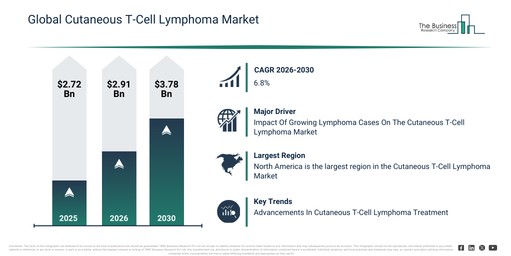
  • Global Cutaneous T-Cell Lymphoma Market Report 2026–2035 Highlighting Expansion Outlook and Forecast Opportunities

    Global Cutaneous T-Cell Lymphoma Market Report 2026–2035 Highlighting Expansion Outlook and Forecast Opportunities

    The Business Research Company’s 2026 market reports include new capabilities such as market attractiveness scoring and analysis, total addressable market analysis, company scoring matrix, interactive excel data dashboard, improved supply chain analysis, upcoming startups in the market, and overview of key products, aimed at improving the depth, usability, and strategic value of the insights delivered.

    What Market Size Expansion Is Predicted For The Cutaneous T-Cell Lymphoma Market Between 2026 And 2030?

    The cutaneous t-cell lymphoma market size has experienced significant growth in recent years. Projections indicate it will expand from $2.72 billion in 2025 to $2.91 billion in 2026, demonstrating a compound annual growth rate (CAGR) of 7.0%. The growth observed in the historical period is attributable to factors such as rare disease underdiagnosis, reliance on chemotherapy and radiation, limited treatment options, hospital-centered oncology care, and delayed disease progression recognition.

    The cutaneous t-cell lymphoma market size is projected to experience robust growth over the next few years. It is forecast to expand to $3.78 billion by 2030, demonstrating a compound annual growth rate (CAGR) of 6.8%. This expansion during the forecast period is primarily driven by developments in targeted therapies, the proliferation of precision oncology, greater understanding of the disease, the establishment of more specialty oncology clinics, and enhanced diagnostic accuracy. Significant trends expected in the forecast period include the increasing uptake of targeted immunotherapies, a heightened focus on early disease detection, the evolution of skin-directed treatment methods, the broadening of combination therapy options, and more effective long-term monitoring of the disease.

    Download the Free Sample Report to Explore Key Market Insights:

    https://www.thebusinessresearchcompany.com/sample.aspx?id=21164&type=smp

    What Drivers Are Influencing The Cutaneous T-Cell Lymphoma Market?

    The increasing prevalence of lymphoma is anticipated to fuel the expansion of the cutaneous T-cell lymphoma market in the future. Lymphoma refers to a form of cancer that develops from lymphocytes, which are white blood cells located within the lymphatic system. An increase in lymphoma diagnoses is linked to elements like older demographics, exposure to environmental factors, and genetic susceptibility. Cutaneous T-cell lymphoma plays a crucial role in managing lymphoma cases by offering a distinct diagnostic and therapeutic strategy for individuals whose lymphoma appears primarily on the skin, thereby differentiating it from other types of lymphoma and enabling precise treatments. As an illustration, in October 2025, the American Cancer Society, a US-based nonprofit research entity, projected approximately 8,720 new instances of Hodgkin lymphoma in the United States for 2025, comprising 4,840 males and 3,880 females. This organization additionally reported an estimated 1,150 deaths, with 720 occurring in males and 430 in females, indicating an ongoing burden of the disease. Hodgkin lymphoma continues to be the most frequently diagnosed cancer among adolescents aged 15 to 19 years. Consequently, the increasing incidence of lymphoma cases is a key driver for the cutaneous T-cell lymphoma market.

    Which Market Segments Are Examined In The Cutaneous T-Cell Lymphoma Market Study?

    The cutaneous t-cell lymphoma market covered in this report is segmented –

    1) By Type: Mycosis Fungoides, Sezary Syndrome

    2) By Treatment: Radiation Therapy, Chemotherapy, Immunotherapy, Targeted Therapy, Other Treatments

    3) By End-User: Hospitals, Diagnostic Centres, Clinics

    Subsegments:

    1) By Mycosis Fungoides: Patch-Stage Mycosis Fungoides, Plaque-Stage Mycosis Fungoides, Tumor-Stage Mycosis Fungoides, Erythrodermic Mycosis Fungoides

    2) By Sezary Syndrome: Classic Sezary Syndrome, Atypical Sezary Syndrome

    What Trends Are Advancing Progress In The Cutaneous T-Cell Lymphoma Market?

    Leading companies in the cutaneous T-cell lymphoma market are focusing on developing advanced treatments, including targeted mechanisms of action that simultaneously address both malignant T-cells and immunosuppressive regulatory T-cells (Tregs) to gain a competitive advantage. This dual targeting approach allows LYMPHIR to directly eliminate tumor cells and also transiently reduce Tregs, which can enhance the body’s immune response against tumors. For example, in August 2024, a US-based pharmaceutical company received FDA approval for LYMPHIR (denileukin diftitox-cxdl), marking a significant breakthrough in the treatment of relapsed or refractory cutaneous T-cell lymphoma (CTCL). This innovative method distinguishes LYMPHIR from other therapies, providing a novel treatment option for patients with relapsed or refractory cutaneous T-cell lymphoma (CTCL).

    Who Are The Primary Competitors In The Cutaneous T-Cell Lymphoma Market?

    Major companies operating in the cutaneous t-cell lymphoma market are Merck & Co. Inc., Pfizer Inc., Bristol Myers Squibb Company, Novartis AG, Takeda Pharmaceutical Company Limited, GlaxoSmithKline plc, Eisai Co. Ltd., Kyowa Hakko Kirin Co. Ltd., Actelion Pharmaceuticals Ltd., Soligenix Inc., Helsinn Healthcare SA, Innate Pharma SA, 4SC AG, Equillium Inc., Citius Pharmaceuticals Inc., Medivir AB, Amgen Inc., Roche Holding AG, Johnson & Johnson, AbbVie Inc., AstraZeneca plc, Sanofi, Regeneron Pharmaceuticals Inc.

    Read the full cutaneous t-cell lymphoma market report here:

    https://www.thebusinessresearchcompany.com/report/cutaneous-t-cell-lymphoma-global-market-report

    Which Regions Are Expected To Experience Rapid Expansion In The Cutaneous T-Cell Lymphoma Market?

    North America was the largest region in the cutaneous T-cell lymphoma market in 2025. Asia-Pacific is expected to be the fastest-growing region in the forecast period. The regions covered in the cutaneous t-cell lymphoma market report are Asia-Pacific, South East Asia, Western Europe, Eastern Europe, North America, South America, Middle East, Africa.

    Request A Tailored Cutaneous T-Cell Lymphoma Market Research Report For Competitive Advantage:

    https://www.thebusinessresearchcompany.com/customise?id=21164&type=smp

    Browse Through More Reports Similar to the Global Cutaneous T-Cell Lymphoma Market 2026, By The Business Research Company

    Basal Cell Carcinoma Treatment Global Market Report

    https://www.thebusinessresearchcompany.com/report/basal-cell-carcinoma-treatment-global-market-report

    Non Small Cell Lung Cancer Nsclc Global Market Report

    https://www.thebusinessresearchcompany.com/report/non-small-cell-lung-cancer-nsclc-global-market-report

    Skin Cancer Drugs Global Market Report

    https://www.thebusinessresearchcompany.com/report/skin-cancer-drugs-global-market-report

    Get in touch with us:

    The Business Research Company: https://www.thebusinessresearchcompany.com/

    Americas +1 310-496-7795

    Asia +44 7882 955267 & +91 8897263534

    Europe +44 7882 955267

    Email us at info@tbrc.info

    Follow us on:

    LinkedIn: https://in.linkedin.com/company/the-business-research-company

    YouTube: https://www.youtube.com/channel/UC24_fI0rV8cR5DxlCpgmyFQ

    Global Market Model: https://www.thebusinessresearchcompany.com/global-market-model
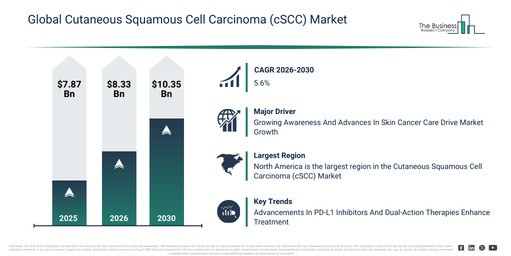
  • Cutaneous Squamous Cell Carcinoma (cSCC) Market Growth Prospects 2026–2030 with Innovation Trends and Competitive Landscape

    Cutaneous Squamous Cell Carcinoma (cSCC) Market Growth Prospects 2026–2030 with Innovation Trends and Competitive Landscape

    The Business Research Company’s 2026 market reports include new capabilities such as market attractiveness scoring and analysis, total addressable market analysis, company scoring matrix, interactive excel data dashboard, improved supply chain analysis, upcoming startups in the market, and overview of key products, aimed at improving the depth, usability, and strategic value of the insights delivered.

    How Large Is The Cutaneous Squamous Cell Carcinoma (cSCC) Market Projected To Become By 2030 Based On Its 2026 Valuation?

    The market size for cutaneous squamous cell carcinoma (cscc) has shown robust expansion in recent years. It is projected to increase from $7.87 billion in 2025 to $8.33 billion in 2026, demonstrating a compound annual growth rate (CAGR) of 5.8%. The growth observed in the historic period can be ascribed to several factors, including high UV exposure rates, aging population growth, increased skin cancer awareness, reliance on surgical excision, and hospital-based oncology care.

    The market for cutaneous squamous cell carcinoma (cSCC) is projected to experience substantial expansion in the coming years, anticipated to reach a valuation of $10.35 billion by 2030, exhibiting a compound annual growth rate (CAGR) of 5.6%. Factors driving this expansion during the projection period include progress in skin cancer diagnostics, increasing embrace of outpatient procedures, the proliferation of dermatologic oncology centers, enhanced accessibility to early detection, and the creation of targeted therapies. Significant trends anticipated over the forecast duration encompass the growing popularity of Mohs micrographic surgery, greater utilization of non-surgical treatments, an increase in early skin cancer screening initiatives, the broadened availability of outpatient cancer care, and a pronounced emphasis on minimally invasive medical interventions.

    Download the Free Sample Report to Explore Key Market Insights:

    https://www.thebusinessresearchcompany.com/sample.aspx?id=21163&type=smp

    What Drivers Are Shaping The Future Growth Of The Cutaneous Squamous Cell Carcinoma (cSCC) Market?

    Increased understanding of skin cancer is expected to drive the expansion of the cutaneous squamous cell carcinoma (cSCC) market in the future. This condition involves the irregular proliferation of skin cells, frequently resulting from too much UV radiation, and its severity varies from benign to fatal. Enhanced public knowledge of skin cancer stems from more public health initiatives, better availability of information, and a stronger focus on prompt diagnosis and protective measures, which in turn boosts the need for diagnostic and therapeutic options. Cutaneous squamous cell carcinoma (cSCC) plays a crucial role in advancing skin cancer treatment through facilitating specific therapies, refining diagnostic methods, and improving results for patients, thereby contributing to more effective disease control. An example supporting this is the data from January 2024, where the American Cancer Society, a US non-profit focused on cancer eradication, reported 104,930 skin cancer cases in 2023. This represents a 3.2% rise compared to the 108,270 cases documented in 2022. Consequently, the increased recognition of skin cancer will stimulate growth within the cutaneous squamous cell carcinoma (cSCC) market.

    What Segment Groups Are Identified Within The Cutaneous Squamous Cell Carcinoma (cSCC) Market?

    The cutaneous squamous cell carcinoma (cscc) market covered in this report is segmented –

    1) By Treatment: Surgical Treatment, Non-Surgical Treatment

    2) By Diagnosis: Computed Tomography (CT), Magnetic Resonance Imaging (MRI), Biopsy

    3) By Application: Hospitals, Cancer Institutes, Ambulatory Surgical Centers, Other Applications

    Subsegments:

    1) By Surgical Treatment: Excisional Surgery, Mohs Micrographic Surgery, Curettage And Electrodessication

    2) By Non-Surgical Treatment: Radiation Therapy, Cryotherapy, Photodynamic Therapy, Topical Therapies, Systemic Therapies

    How Are Trends Transforming The Cutaneous Squamous Cell Carcinoma (cSCC) Market Landscape?

    Leading companies in the cutaneous squamous cell carcinoma (cSCC) market are prioritizing advancements in immuno-oncology therapies, such as PD-L1 inhibitors and targeted therapies, with the goal of improving patient outcomes and offering effective solutions for advanced skin cancer management. PD-L1, or programmed death-ligand 1, is a protein known to suppress the immune response by binding to PD-1 receptors on T-cells, which aids cancer cells in evading immune detection. As an illustration, in December 2024, Checkpoint Therapeutics Inc., a US-based biotech company, obtained FDA approval for Unloxcyt (cosibelimab-ipdl). This innovative treatment works by blocking PD-L1, thereby enhancing the immune system’s capability to fight cancer and providing a safer, more effective option. Moreover, its dual mechanisms of action present a promising method for managing advanced cutaneous squamous cell carcinoma (cSCC). The approval was supported by results from the CK-301-101 trial, which revealed clinically meaningful objective response rates and durable responses among patients with advanced cSCC.

    Which Companies Hold Significant Positions In The Cutaneous Squamous Cell Carcinoma (cSCC) Market?

    Major companies operating in the cutaneous squamous cell carcinoma (cscc) market are F. Hoffmann-La Roche AG, Merck & Co. Inc., Sanofi S.A., Bristol-Myers Squibb Company, Novartis AG, GSK plc, Eli Lilly and Company, Amgen Inc., Regeneron Pharmaceuticals Inc., Astellas Pharma Inc., Incyte Corporation, Shanghai Henlius Biotech Inc., Fortress Biotech Inc., Rakuten Medical Inc., Morphogenesis Inc., Vidac Pharma Inc., Pfizer Inc., AstraZeneca plc, AbbVie Inc., Johnson & Johnson, Bayer AG, LEO Pharma A/S, Sun Pharmaceutical Industries Ltd.

    Read the full cutaneous squamous cell carcinoma (cscc) market report here:

    https://www.thebusinessresearchcompany.com/report/cutaneous-squamous-cell-carcinoma-cscc-global-market-report

    Which Geographic Regions Are Influencing Demand In The Cutaneous Squamous Cell Carcinoma (cSCC) Market?

    North America was the largest region in the cutaneous squamous cell carcinoma (CSCC) market in 2025. Asia-Pacific is expected to be the fastest-growing region in the forecast period. The regions covered in the cutaneous squamous cell carcinoma (cscc) market report are Asia-Pacific, South East Asia, Western Europe, Eastern Europe, North America, South America, Middle East, Africa.

    Request A Tailored Cutaneous Squamous Cell Carcinoma (cSCC) Market Research Report For Competitive Advantage:

    https://www.thebusinessresearchcompany.com/customise?id=21163&type=smp

    Browse Through More Reports Similar to the Global Cutaneous Squamous Cell Carcinoma (cSCC) Market 2026, By The Business Research Company

    Systemic Lupus Erythematosus Treatment Global Market Report

    https://www.thebusinessresearchcompany.com/report/systemic-lupus-erythematosus-treatment-global-market-report

    Lupus Therapeutics Global Market Report

    https://www.thebusinessresearchcompany.com/report/lupus-therapeutics-global-market-report

    Dermatitis Drugs Global Market Report

    https://www.thebusinessresearchcompany.com/report/dermatitis-drugs-global-market-report

    Get in touch with us:

    The Business Research Company: https://www.thebusinessresearchcompany.com/

    Americas +1 310-496-7795

    Asia +44 7882 955267 & +91 8897263534

    Europe +44 7882 955267

    Email us at info@tbrc.info

    Follow us on:

    LinkedIn: https://in.linkedin.com/company/the-business-research-company

    YouTube: https://www.youtube.com/channel/UC24_fI0rV8cR5DxlCpgmyFQ

    Global Market Model: https://www.thebusinessresearchcompany.com/global-market-model