Month: March 2026

  • Global Magnetic Bead Purification Kits Market Report 2026–2035 Highlighting Expansion Outlook and Forecast Opportunities

    Global Magnetic Bead Purification Kits Market Report 2026–2035 Highlighting Expansion Outlook and Forecast Opportunities

    The Business Research Company’s 2026 market reports include new capabilities such as market attractiveness scoring and analysis, total addressable market analysis, company scoring matrix, interactive excel data dashboard, improved supply chain analysis, upcoming startups in the market, and overview of key products, aimed at improving the depth, usability, and strategic value of the insights delivered.

    What Market Size Expansion Is Predicted For The Magnetic Bead Purification Kits Market Between 2026 And 2030?

    The market for magnetic bead purification kits has experienced rapid expansion in recent years. This market is expected to grow from $4.08 billion in 2025 to $4.75 billion in 2026, exhibiting a compound annual growth rate (CAGR) of 16.4%. The historical growth can be attributed to several factors, including a reliance on manual membrane column-based kits, the limited availability of standardized reagents, increasing biotechnology research initiatives, growing diagnostic testing requirements, and a heightened awareness of the importance of nucleic acid purification.

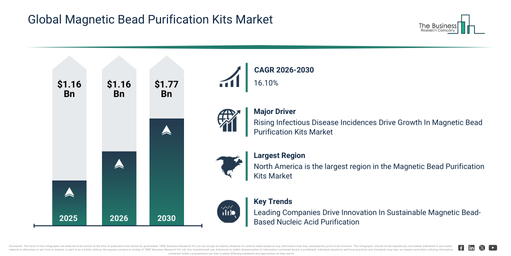
    The magnetic bead purification kits market size is anticipated to undergo significant growth in the coming years, reaching **$8.64 billion in 2030 at a compound annual growth rate (CAGR) of 16.1%**. The projected growth within this period is attributed to several factors, including the development of advanced semi-automated purification systems, the expansion of genomics and proteomics research, an increase in pharmaceutical and diagnostic applications, rising regulatory compliance and quality standards, and integration with high-throughput laboratory automation. Major trends expected during the forecast period encompass a surging demand for high-purity DNA, RNA, and protein isolation, the increased adoption of semi-automated magnetic bead-based kits, an expansion in academic and pharmaceutical research applications, the growing use of miRNA purification kits in diagnostics, and a focus on purification processes that are rapid, efficient, and require minimal handling.

    Download the Free Sample Report to Explore Key Market Insights:

    https://www.thebusinessresearchcompany.com/sample.aspx?id=20570&type=smp

    What Drivers Are Influencing The Magnetic Bead Purification Kits Market?

    The magnetic bead purification kits market is anticipated to expand due to the growing occurrence of infectious diseases. These diseases are conditions resulting from pathogenic microorganisms like bacteria, viruses, fungi, or parasites entering and replicating inside the body. Examples of common infectious diseases encompass tuberculosis (TB), streptococcal infections, methicillin-resistant Staphylococcus aureus (MRSA), influenza (Flu), among others. A surge in the prevalence of these diseases can be attributed to factors such as inadequate antimicrobial resistance, environmental shifts, and various behavioral and social elements. Diagnostic methods like virology and bacteriology testing are crucial for identifying the precise pathogens causing infectious diseases, thus enabling specific treatment and management strategies. As an illustration, GOV.UK, a UK government department, reported in February 2024 that tuberculosis (TB) cases in England saw a 10.7% increase in 2023, climbing from 4,380 in 2022 to 4,850. Consequently, the escalating number of infectious disease cases acts as a key driver for the magnetic bead purification kits market.

    Which Market Segments Are Examined In The Magnetic Bead Purification Kits Market Study?

    The magnetic bead purification kits market covered in this report is segmented –

    1) By Type: Semi-Automated Magnetic Bead-based Kits, Manual Membrane Column-Based Kits, Isolation Reagents

    2) By Nucleic Acid Type: DNA Purification Kits, RNA Purification Kits, miRNA Purification Kits

    3) By End-User: Biotechnology And Pharmaceutical Companies, Academic And Research Institutes, Diagnostic Laboratories

    Subsegments:

    1) By Semi-Automated Magnetic Bead-based Kits: Semi-Automated RNA Purification Kits, Semi-Automated DNA Purification Kits, Semi-Automated Protein Purification Kits, Semi-Automated Cell Isolation Kits, Semi-Automated Immunoprecipitation Kits

    2) By Manual Membrane Column-Based Kits: Manual RNA Isolation Kits, Manual DNA Isolation Kits, Manual Protein Purification Kits, Manual Antibody Purification Kits, Manual Cell Isolation Kits

    3) By Isolation Reagents: RNA Isolation Reagents, DNA Isolation Reagents, Protein Isolation Reagents, Cell Isolation Reagents, Immunoprecipitation Reagents

    Which Trends Are Influencing The Magnetic Bead Purification Kits Market?

    Leading companies in the magnetic bead purification kits market are concentrating on developing innovative products, such as magnetic bead-based extraction kits, to improve the efficiency and accuracy of nucleic acid and protein purification, streamline sample preparation, and reduce processing times across various applications in research, diagnostics, and biotechnology. A magnetic bead-based extraction kit functions as a tool for isolating and purifying specific biomolecules from a mixture, utilizing magnetic beads coated with capture molecules that specifically bind to target biomolecules like DNA, RNA, or proteins. For instance, in April 2024, New England Biolabs, Inc., a US-based life sciences company, introduced the Monarch Mag Viral DNA/RNA Extraction Kit, which is a magnetic bead-based extraction kit. This kit enhances the recovery of low quantities of viral nucleic acids, thereby facilitating sensitive detection. Employing a magnetic bead-based method, it efficiently and reproducibly extracts viral RNA and DNA and is scalable for high-throughput automation. After an enrichment step, it is compatible with various sample types, including saliva, respiratory swabs, and wastewater samples. The Monarch Mag Viral DNA/RNA Extraction Kit is designed to integrate seamlessly with NEB’s downstream amplification and library preparation products for next-generation sequencing applications and can be used in conjunction with these product lines.

    Who Are The Primary Competitors In The Magnetic Bead Purification Kits Market?

    Major companies operating in the magnetic bead purification kits market are Thermo Fisher Scientific Inc., Roche Holdings AG, E. Merck KG, Corning Inc., Agilent Technologies Inc., Bio-Rad Laboratories Inc., Qiagen N.V., Promega Corporation, Takara Bio Inc., New England Biolabs Inc., Analytik Jena AG, Omega Bio-tek Inc., RayBiotech Inc., Diagenode Inc., Zymo Research Corporation, Covaris LLC, Bioneer Corporation, Creative Diagnostics Inc., TIANGEN Biotech Co. Ltd., Geneaid Ltd., Norgen Biotek Corp., Magbio Genomics Inc.

    Read the full magnetic bead purification kits market report here:

    https://www.thebusinessresearchcompany.com/report/magnetic-bead-purification-kits-global-market-report

    Which Regions Are Expected To Experience Rapid Expansion In The Magnetic Bead Purification Kits Market?

    North America was the largest region in the magnetic bead purification kits market in 2025. The regions covered in the magnetic bead purification kits market report are Asia-Pacific, South East Asia, Western Europe, Eastern Europe, North America, South America, Middle East, Africa.

    Request A Tailored Magnetic Bead Purification Kits Market Research Report For Competitive Advantage:

    https://www.thebusinessresearchcompany.com/customise?id=20570&type=smp

    Browse Through More Reports Similar to the Global Magnetic Bead Purification Kits Market 2026, By The Business Research Company

    Commercial Fan And Air Purification Equipment Market Report 2026

    https://www.thebusinessresearchcompany.com/report/commercial-fan-and-air-purification-equipment-global-market-report

    Air Purification Equipment Market Report 2026

    https://www.thebusinessresearchcompany.com/report/air-purification-equipment-global-market-report

    Protein Purification And Isolation Market Report 2026

    https://www.thebusinessresearchcompany.com/report/protein-purification-and-isolation-global-market-report

    Get in touch with us:

    The Business Research Company: https://www.thebusinessresearchcompany.com/

    Americas +1 310-496-7795

    Asia +44 7882 955267 & +91 8897263534

    Europe +44 7882 955267

    Email us at info@tbrc.info

    Follow us on:

    LinkedIn: https://in.linkedin.com/company/the-business-research-company

    YouTube: https://www.youtube.com/channel/UC24_fI0rV8cR5DxlCpgmyFQ

    Global Market Model: https://www.thebusinessresearchcompany.com/global-market-model
  • Lyophilization Equipment Market Growth Prospects 2026–2030 with Innovation Trends and Competitive Landscape

    Lyophilization Equipment Market Growth Prospects 2026–2030 with Innovation Trends and Competitive Landscape

    The Business Research Company’s 2026 market reports include new capabilities such as market attractiveness scoring and analysis, total addressable market analysis, company scoring matrix, interactive excel data dashboard, improved supply chain analysis, upcoming startups in the market, and overview of key products, aimed at improving the depth, usability, and strategic value of the insights delivered.

    How Large Is The Lyophilization Equipment Market Projected To Become By 2030 Based On Its 2026 Valuation?

    The lyophilization equipment market has experienced rapid growth in its size over recent years. It is projected to increase from $7.32 billion in 2025 to $8.13 billion in 2026, achieving a compound annual growth rate (CAGR) of 11.1%. Historically, this expansion was driven by factors such as rising biopharmaceutical production, growth in vaccine manufacturing, a demand for stable drug formulations, the adoption of freeze-drying in the food industry, and advancements in lab-scale lyophilization equipment.

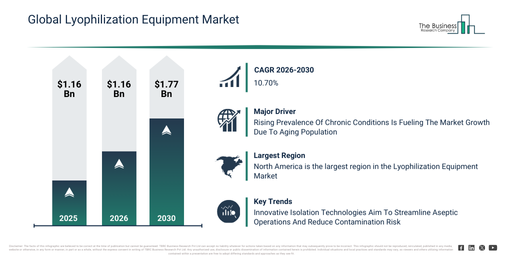
    The lyophilization equipment market is projected to experience substantial expansion over the coming years. By 2030, this market is anticipated to reach a valuation of $12.21 billion, demonstrating a compound annual growth rate (CAGR) of 10.7%. This projected growth is driven by several factors, including heightened investment within the biopharma and biotech industries, the rising need for continuous freeze-drying technologies, the expansion of contract research organizations, the increasing integration of automated lyophilization systems, and the burgeoning nutraceutical and functional food markets. Key trends during this forecast period encompass a greater need for preserving heat-sensitive drugs, the advancement of biopharmaceuticals and vaccines, the development of smaller laboratory freeze dryers, increased automation within freeze-drying procedures, and the widening application of freeze-drying in food and nutraceuticals.

    Download the Free Sample Report to Explore Key Market Insights:

    https://www.thebusinessresearchcompany.com/sample.aspx?id=25818&type=smp

    What Drivers Are Shaping The Future Growth Of The Lyophilization Equipment Market?

    The expanding occurrence of chronic health issues is projected to drive the expansion of the lyophilization equipment market in the future. These conditions are defined as health problems that endure for at least a year, frequently demanding continuous medical care or restricting routine activities. An aging demographic, more susceptible to prolonged ailments like heart disease, diabetes, and arthritis, is contributing to the rise in chronic conditions. Lyophilization equipment plays a crucial role in managing chronic conditions by allowing for the stable, extended storage of biopharmaceuticals and injectable medications often utilized in their management, thereby guaranteeing that these vital treatments stay potent, secure, and accessible for patients needing continuous attention. For example, data released in June 2024 by the National Health Service, a UK government department, revealed that 3,615,330 individuals registered with a GP were diagnosed with non-diabetic hyperglycemia, or pre-diabetes, in 2023, representing an 18% surge from 3,065,825 cases recorded in 2022. Consequently, the growing occurrence of chronic illnesses is propelling the expansion of the lyophilization equipment market.

    What Segment Groups Are Identified Within The Lyophilization Equipment Market?

    The lyophilization equipment market covered in this report is segmented –

    1) By Type Of Lyophilization Equipment: Freeze Dryers, Pharmaceutical Lyophilizers, Laboratory Freeze Dryers, Industrial Freeze Dryers, Portable Freeze Dryers

    2) By Form: Powders, Cakes, Granules, Semi-Solid Forms

    3) By Technology: Manifold Lyophilization, Tray Lyophilization, Batch Freeze Drying, Continuous Freeze Drying

    4) By Application: Autoimmune Diseases, Respiratory Diseases, Gastrointestinal Disorders, Oncology, Cardiovascular Diseases, Infectious Diseases, Metabolic Disorders, Other Applications

    5) By End User: Pharmaceutical Companies, Biotechnology Firms, Academic And Research Institutions, Food Manufacturers, Contract Research Organizations (CROs)

    Subsegments:

    1) By Freeze Dryers: Tray Freeze Dryers, Manifold Freeze Dryers, Rotary Freeze Dryers

    2) By Pharmaceutical Lyophilizers: Pilot-Scale Pharmaceutical Lyophilizers, Production-Scale Pharmaceutical Lyophilizers, GMP Pharmaceutical Lyophilizers

    3) By Laboratory Freeze Dryers: Benchtop Laboratory Freeze Dryers, Floor-Standing Laboratory Freeze Dryers, Small-Scale Research Freeze Dryers

    4) By Industrial Freeze Dryers: Food Processing Industrial Freeze Dryers, Bulk Production Industrial Freeze Dryers, Continuous Industrial Freeze Dryers

    5) By Portable Freeze Dryers: Home-Use Portable Freeze Dryers, Field-Use Portable Freeze Dryers, Compact Research Portable Freeze Dryers

    What Trends Are Advancing Progress In The Lyophilization Equipment Market?

    Leading companies in the lyophilization equipment market are concentrating on creating novel solutions like sophisticated dual-mode isolator systems, aimed at improving sterility, containment, and overall process efficiency. These dual-mode isolators are designed to facilitate both aseptic filling and containment procedures within a single apparatus, thereby minimizing the need for multiple pieces of equipment, making optimal use of space, and upholding stringent sterility standards. An example of this is Telstar, a Spain-based pharmaceutical-equipment engineering firm, which unveiled a dual-mode isolator system at Pharma Congress 2024 in March 2024. This system, engineered to boost operational flexibility and efficiency, incorporates various operational modes such as maintenance, pressure hold, biodecontamination, and both sterile and non-sterile processing. It achieves this by employing an inventive bio-decontamination mechanism that guarantees superior microbial reduction, quicker cycle durations, and lower operating expenses.

    Which Companies Hold Significant Positions In The Lyophilization Equipment Market?

    Major companies operating in the lyophilization equipment market are GEA Group AG, OPTIMA packaging group GmbH, Dara Pharmaceutical Equipment, Büchi Labortechnik AG, Tofflon Science and Technology Group Co Ltd., Spinco Biotech Pvt Ltd., Labconco Corporation, HOF Sonderanlagenbau GmbH, Harvest Right LLC, Cuddon Freeze Dry, ZIRBUS technology GmbH, MechaTech Systems Ltd., IlShin BioBase Co Ltd., SP Industries Inc., Millrock Technology Inc., Tofflon Dehui Pharmaceutical Equipment Co Ltd., Freeze Drying Systems Pvt Ltd., Martin Christ Gefriertrocknungsanlagen GmbH, Telstar Life Sciences, IMA Life, Lyomac AG, GEA Lyophil GmbH

    Read the full lyophilization equipment market report here:

    https://www.thebusinessresearchcompany.com/report/lyophilization-equipment-global-market-report

    Which Geographic Regions Are Influencing Demand In The Lyophilization Equipment Market?

    North America was the largest region in the lyophilization equipment market in 2025. Asia-Pacific is expected to be the fastest-growing region in the forecast period. The regions covered in the lyophilization equipment market report are Asia-Pacific, South East Asia, Western Europe, Eastern Europe, North America, South America, Middle East, Africa.

    Request A Tailored Lyophilization Equipment Market Research Report For Competitive Advantage:

    https://www.thebusinessresearchcompany.com/customise?id=25818&type=smp

    Browse Through More Reports Similar to the Global Lyophilization Equipment Market 2026, By The Business Research Company

    Sterilization Equipment Market Report 2026

    https://www.thebusinessresearchcompany.com/report/sterilization-equipment-global-market-report

    Cogeneration Equipment Market Report 2026

    https://www.thebusinessresearchcompany.com/report/cogeneration-equipment-global-market-report

    Lathe Machines Market Report 2026

    https://www.thebusinessresearchcompany.com/report/lathe-machines-global-market-report

    Get in touch with us:

    The Business Research Company: https://www.thebusinessresearchcompany.com/

    Americas +1 310-496-7795

    Asia +44 7882 955267 & +91 8897263534

    Europe +44 7882 955267

    Email us at info@tbrc.info

    Follow us on:

    LinkedIn: https://in.linkedin.com/company/the-business-research-company

    YouTube: https://www.youtube.com/channel/UC24_fI0rV8cR5DxlCpgmyFQ

    Global Market Model: https://www.thebusinessresearchcompany.com/global-market-model
  • Lyme Disease Testing Market Forecast 2026–2035 Highlighting Market Data Patterns and Industry Insights

    Lyme Disease Testing Market Forecast 2026–2035 Highlighting Market Data Patterns and Industry Insights

    The Business Research Company’s 2026 market reports include new capabilities such as market attractiveness scoring and analysis, total addressable market analysis, company scoring matrix, interactive excel data dashboard, improved supply chain analysis, upcoming startups in the market, and overview of key products, aimed at improving the depth, usability, and strategic value of the insights delivered.

    What Market Value Is Anticipated For The Lyme Disease Testing Market Over The Period 2026–2030?

    The market size for lyme disease testing has shown significant growth over recent years. It is anticipated to increase from $10.68 billion in 2025 to $11.67 billion in 2026, registering a compound annual growth rate (CAGR) of 9.3%. This historical expansion can be linked to several factors, including the rising occurrence of lyme disease, inadequate public knowledge concerning early detection, a reliance on conventional serological tests, an uptick in hospital-based diagnostic services, and expanding research into tick-borne illnesses.

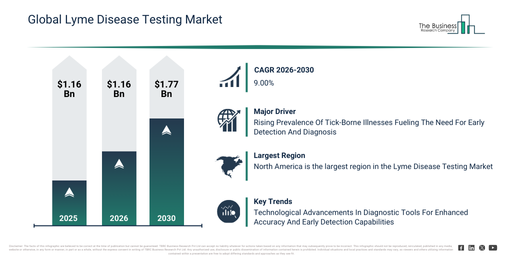
    The Lyme disease testing market is projected to experience substantial expansion over the coming years. Its size is anticipated to reach $16.46 billion by 2030, exhibiting a compound annual growth rate (CAGR) of 9.0%. This growth during the forecast period is fueled by factors such as the integration of AI-assisted diagnostics, the rise of home-testing kits, the development of multi-disease panels, increased government investment in tick-borne disease monitoring, and the adoption of cloud-based laboratory data management systems. Key developments expected during this period include the wider availability of point-of-care testing, the proliferation of home-based Lyme disease diagnostics, the emergence of multi-pathogen tick-borne panels, the increased use of rapid test kits, and the implementation of personalized diagnostic protocols.

    Download the Free Sample Report to Explore Key Market Insights:

    https://www.thebusinessresearchcompany.com/sample.aspx?id=25817&type=smp

    Which Economic Or Industry Drivers Are Impacting The Lyme Disease Testing Market?

    An increasing occurrence of tick-borne diseases is projected to drive the expansion of the lyme disease testing market in the future. These conditions encompass various diseases passed to humans via the bite of infected ticks, which are minute, blood-sucking parasites common in grassy, wooded, and rural environments. The growing need for treatments for these illnesses is intensified by the broader distribution of ticks due to climate change, resulting in increased exposure and rates of infection. As the main way Lyme disease is transmitted, tick-borne illnesses boost the demand for lyme disease testing, making early identification and diagnosis crucial for managing the increasing number of infection cases. For example, data from March 2025 by the U.S. Centers for Disease Control and Prevention (CDC), a federal public health agency in the U.S., showed that in 2023, more than 89,000 cases of Lyme disease were documented, indicating an ongoing significant impact of tick-borne illnesses when contrasted with prior years. Consequently, the increasing occurrence of tick-borne illnesses is a key factor propelling the expansion of the lyme disease testing market.

    How Is The Lyme Disease Testing Market Divided Into Its Major Segments?

    The lyme disease testing market covered in this report is segmented –

    1) By Test Type: Serological Tests, Nucleic Acid Tests, Urine Antigen Tests, Other Test Types

    2) By Testing Methodology: Enzyme-Linked Immunosorbent Assay (ELISA), Weste Blot, Polymerase Chain Reaction (PCR), Immunofluorescence Assay (IFA), Other Emerging Technologies

    3) By Disease Stage: Early Lyme Disease, Disseminated Lyme Disease, Chronic Lyme Disease, Asymptomatic Lyme Disease Detection

    4) By Sample Type: Blood, Urine, Cerebrospinal Fluid(CSF), Other Blood Samples

    5) By End-User: Hospitals And Clinics, Diagnostic Laboratories, Home Care Settings, Research Institutions, Public Health Organizations

    Subsegments:

    1) By Serological Tests: Enzyme-Linked Immunosorbent Assay, Western Blot, Immunofluorescence Assay (IFA), Line Immunoassay (LIA)

    2) By Nucleic Acid Tests: Polymerase Chain Reaction (PCR), Loop-Mediated Isothermal Amplification (LAMP), Next-Generation Sequencing (NGS)

    3) By Urine Antigen Tests: Lateral Flow Assay, Enzyme Immunoassay (EIA), Immunoblot Urine Tests

    4) By Other Test Types: Culture-Based Tests, Tick-Borne Co-Infection Panels, Artificial Intelligence-Assisted Diagnostic Tools

    How Are Trends Transforming The Lyme Disease Testing Market Landscape?

    Companies prominently involved in the Lyme disease testing market are prioritizing technological enhancements in diagnostic tools to boost test accuracy, shorten turnaround times, and allow for early disease detection. Diagnostic tools include medical devices, kits, or technologies employed to identify Lyme disease by locating specific antibodies, antigens, or genetic material connected to the Borrelia burgdorferi bacteria. As an illustration, in August 2024, EpitogenX Ltd., a biotechnology company from the UK, declared the release of an innovative Lyme Disease Diagnostic Kit. This is an ELISA-based assay created using their unique EpitoGen platform. It contains ~120 different Borrelia epitopes, delivering high specificity and sensitivity, and is designed for research use (RUO). The kit facilitates early, strain-specific detection and can be modified for various laboratory applications. Being developed for both research and diagnostic laboratories, it is well-suited for improving detection precision and yielding greater insights into Lyme disease.

    Who Are The Prominent Organizations Shaping The Lyme Disease Testing Market?

    Major companies operating in the lyme disease testing market are Roche Holding AG, Thermo Fisher Scientific Inc., Labcorp Holdings Inc., Quest Diagnostics Incorporated, Eurofins Scientific, BIOMÉRIEUX, Quidel Corporation, Bio Rad Laboratories Inc., QIAGEN N.V., DiaSorin S.p.A, Meridian Bioscience, Trinity Biotech, T2 Biosystems, IGeneX, Viramed Biotech AG, Ceres Nanosciences, Galaxy Diagnostics, Lyme Diagnostics Ltd, Abbott Laboratories, Siemens Healthineers AG, Hologic Inc., Seegene Inc.

    Read the full lyme disease testing market report here:

    https://www.thebusinessresearchcompany.com/report/lyme-disease-testing-global-market-report

    What Are The Top-Performing Regions Within The Lyme Disease Testing Market?

    North America was the largest region in the lyme disease testing market in 2025. Asia-Pacific is expected to be the fastest-growing region in the forecast period. The regions covered in the lyme disease testing market report are Asia-Pacific, South East Asia, Western Europe, Eastern Europe, North America, South America, Middle East, Africa.

    Request A Tailored Lyme Disease Testing Market Research Report For Competitive Advantage:

    https://www.thebusinessresearchcompany.com/customise?id=25817&type=smp

    Browse Through More Reports Similar to the Global Lyme Disease Testing Market 2026, By The Business Research Company

    Biologics Testing Market Report 2026

    https://www.thebusinessresearchcompany.com/report/biologics-testing-global-market-report

    Covid 19 Saliva Screening Test Potential Market Report 2026

    https://www.thebusinessresearchcompany.com/report/covid-19-saliva-screening-test-potential-global-market-report

    Typhoid Antibody Testing Market Report 2026

    https://www.thebusinessresearchcompany.com/report/typhoid-antibody-testing-global-market-report

    Get in touch with us:

    The Business Research Company: https://www.thebusinessresearchcompany.com/

    Americas +1 310-496-7795

    Asia +44 7882 955267 & +91 8897263534

    Europe +44 7882 955267

    Email us at info@tbrc.info

    Follow us on:

    LinkedIn: https://in.linkedin.com/company/the-business-research-company

    YouTube: https://www.youtube.com/channel/UC24_fI0rV8cR5DxlCpgmyFQ

    Global Market Model: https://www.thebusinessresearchcompany.com/global-market-model
  • Lung Cancer Surgery Equipment Market Outlook 2026–2030 with Major Growth Drivers and Emerging Industry Trends

    Lung Cancer Surgery Equipment Market Outlook 2026–2030 with Major Growth Drivers and Emerging Industry Trends

    The Business Research Company’s 2026 market reports include new capabilities such as market attractiveness scoring and analysis, total addressable market analysis, company scoring matrix, interactive excel data dashboard, improved supply chain analysis, upcoming startups in the market, and overview of key products, aimed at improving the depth, usability, and strategic value of the insights delivered.

    What Is The Expected Market Size Of The Lung Cancer Surgery Equipment Market From 2026 To 2030?

    The market size for lung cancer surgery equipment has experienced strong expansion in recent years. It is anticipated to increase from $3.73 billion in 2025 to $3.98 billion in 2026, exhibiting a compound annual growth rate (CAGR) of 6.7%. The observed growth during the historical period is attributable to the limited availability of advanced thoracic surgery equipment, a reliance on traditional open surgeries, the increasing prevalence of lung cancer, a rising number of hospital and surgical clinics, and the adoption of standard biopsy and imaging procedures.

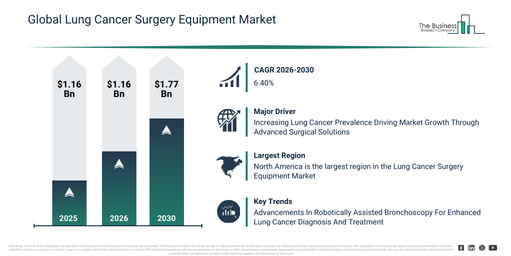
    The lung cancer surgery equipment market is anticipated to show robust expansion in the coming years, reaching **$5.1 billion in 2030 at a compound annual growth rate (CAGR) of 6.4%.** This growth during the forecast period can be attributed to the advancement of robotic-assisted and minimally invasive surgical tools, the integration of AI-enabled imaging and monitoring systems, increasing investment in research and academic institutions, the rising adoption of enhanced recovery after surgery (ERAS) protocols, and the expansion of specialized lung cancer treatment centers. Major trends expected in this period include the growing preference for minimally invasive lung surgeries, a rising demand for advanced imaging and diagnostic equipment, the integration of patient monitoring systems with surgical devices, an increasing focus on postoperative rehabilitation and aftercare, and the broader application of robotic-assisted thoracic surgery.

    Download the Free Sample Report to Explore Key Market Insights:

    https://www.thebusinessresearchcompany.com/sample.aspx?id=24594&type=smp

    What Major Drivers Are Influencing Demand In The Lung Cancer Surgery Equipment Market?

    The rising incidence of lung cancer is projected to fuel the expansion of the lung cancer surgery equipment market going forward. Lung cancer is a medical condition marked by the uncontrolled multiplication of abnormal cells within the lungs, frequently caused by smoking or adverse environmental exposure. The increase in lung cancer cases is largely attributed to heightened exposure to risk factors such as tobacco smoke, air pollution, and occupational carcinogens, coupled with an aging population. Lung cancer surgery equipment plays a crucial role in diagnosing the condition, removing cancerous tissue, and facilitating post-operative care through precise surgical interventions and continuous patient monitoring. For instance, in February 2025, according to the Cancer Council, an Australia-based non-profit organization, in 2024, an estimated 15,122 individuals were diagnosed with lung cancer in Australia, with the average age at diagnosis being 72. Lung cancer ranks as the fifth most commonly diagnosed cancer in the country, and approximately one in 20 Australians is expected to be diagnosed with it by the age of 85. Consequently, the increasing prevalence of lung cancer is driving the growth of the lung cancer surgery equipment market.

    Which Segments Are Included In The Analysis Of The Lung Cancer Surgery Equipment Market?

    The lung cancer surgery equipment market covered in this report is segmented –

    1) By Product Type: Surgical Instruments, Access Devices, Imaging Equipment, Electrosurgical Devices, Biopsy Devices, Patient Monitoring Equipment

    2) By Surgery Type: Lobectomy Surgery, Pneumonectomy Surgery, Wedge Resection, Video-Assisted Thoracoscopic Surgery (VATS), Robotic-Assisted Surgery

    3) By Application: Diagnosis, Treatment, Aftercare And Rehabilitation

    4) By End User: Hospitals, Surgical Clinics, Ambulatory Surgical Centers, Research And Academic Institutes

    Subsegments:

    1) By Surgical Instruments: Scalpels, Forceps, Retractors, Scissors, Sutures

    2) By Access Devices: Trocars, Catheters, Guidewires, Introducers

    3) By Imaging Equipment: CT Scanners, MRI Machines, PET Scanners, X-Ray Systems, Ultrasound Devices

    4) By Electrosurgical Devices: Electrosurgical Generators, Electrosurgical Probes, Electrosurgical Electrodes, Smoke Evacuation Systems

    5) By Biopsy Devices: Needle Biopsy Devices, Core Biopsy Devices, Vacuum-Assisted Biopsy Devices, Endoscopic Biopsy Devices

    6) By Patient Monitoring Equipment: Pulse Oximeters, ECG Monitors, Respiratory Monitors, Blood Pressure Monitors, Temperature Monitors

    Which Trends Are Impacting The Growth Of The Lung Cancer Surgery Equipment Market?

    Companies prominent in the **lung cancer surgery equipment market** are concentrating on creating devices for robotically assisted bronchoscopy. This focus aims to boost the accuracy and safety of tumor localization and biopsy, facilitate access to lung nodules that are difficult to reach, and support prompt and precise lung cancer diagnosis. Robotically assisted bronchoscopy is a sophisticated medical process employing robotic technology to guide a bronchoscope – a slender, adaptable tube – into the lungs with enhanced exactitude and command compared to conventional manual methods. An illustration of this trend is **Johnson and Johnson**, a US-based pharmaceutical company, which declared in **March 2025** that its **MONARCH QUEST system**, a cutting-edge robotic-assisted bronchoscopy technology, secured **U.S. FDA 510(k) clearance**. This particular system signifies the newest progression of the **MONARCH Platform**, specifically engineered to refine lung cancer diagnosis through procedures that are minimally invasive. The system is designed to connect with the **GE HealthCare OEC 3D mobile CBCT Imaging System**, enabling real-time, during-procedure 3D imaging. Such integration elevates the precision when targeting lung nodules, particularly those situated in challenging-to-access lung regions.

    Which Key Industry Participants Are Active In The Lung Cancer Surgery Equipment Market?

    Major companies operating in the lung cancer surgery equipment market are Johnson & Johnson, Medtronic plc, Siemens Healthcare AG, Fujifilm Limited, GE Healthcare Technologies Inc, Boston Scientific Corporation, Olympus Corporation, Intuitive Surgical Inc, Teleflex Incorporated, KARL STORZ GmbH & Co KG, Integra LifeSciences Corporation, Richard Wolf GmbH, Angiodynamics Inc, B Braun Melsungen AG, Sontec Instruments Inc, Novadaq Technologies Inc, Stryker Corporation, CONMED Corporation, Smith & Nephew plc, Ambu A S

    Read the full lung cancer surgery equipment market report here:

    https://www.thebusinessresearchcompany.com/report/lung-cancer-surgery-equipment-global-market-report

    Which Region Shows The Strongest Potential For Future Growth In The Lung Cancer Surgery Equipment Market?

    North America was the largest region in the lung cancer surgery equipment market in 2025. Asia-Pacific is expected to be the fastest-growing region in the forecast period. The regions covered in the lung cancer surgery equipment market report are Asia-Pacific, South East Asia, Western Europe, Eastern Europe, North America, South America, Middle East, Africa.

    Request A Tailored Lung Cancer Surgery Equipment Market Research Report For Competitive Advantage:

    https://www.thebusinessresearchcompany.com/customise?id=24594&type=smp

    Browse Through More Reports Similar to the Global Lung Cancer Surgery Equipment Market 2026, By The Business Research Company

    Lung Cancer Drugs Market Report 2026

    https://www.thebusinessresearchcompany.com/report/lung-cancer-drugs-global-market-report

    Thoracic Surgery Devices Market Report 2026

    https://www.thebusinessresearchcompany.com/report/thoracic-surgery-devices-global-market-report

    Surgical Equipment Market Report 2026

    https://www.thebusinessresearchcompany.com/report/surgical-equipment-global-market-report

    Get in touch with us:

    The Business Research Company: https://www.thebusinessresearchcompany.com/

    Americas +1 310-496-7795

    Asia +44 7882 955267 & +91 8897263534

    Europe +44 7882 955267

    Email us at info@tbrc.info

    Follow us on:

    LinkedIn: https://in.linkedin.com/company/the-business-research-company

    YouTube: https://www.youtube.com/channel/UC24_fI0rV8cR5DxlCpgmyFQ

    Global Market Model: https://www.thebusinessresearchcompany.com/global-market-model
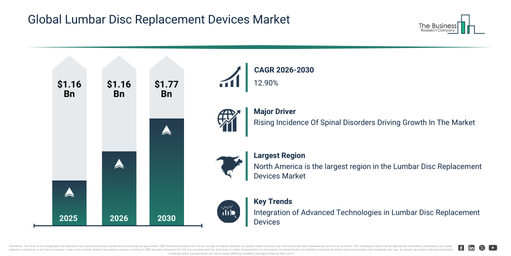
  • One of the Major Drivers of the Lumbar Disc Replacement Devices Market Is the Rising Incidence Of Spinal Disorders Driving Growth In The Market

    One of the Major Drivers of the Lumbar Disc Replacement Devices Market Is the Rising Incidence Of Spinal Disorders Driving Growth In The Market

    The Business Research Company’s 2026 market reports include new capabilities such as market attractiveness scoring and analysis, total addressable market analysis, company scoring matrix, interactive excel data dashboard, improved supply chain analysis, upcoming startups in the market, and overview of key products, aimed at improving the depth, usability, and strategic value of the insights delivered.

    What Market Valuation Is Forecasted For The Lumbar Disc Replacement Devices Market By 2030 Starting From Its 2026 Size?

    The market size for lumbar disc replacement devices has experienced swift expansion in recent years. It is projected to increase from $1.3 billion in 2025 to $1.47 billion in 2026, at a compound annual growth rate (CAGR) of 13.1%. Historically, this growth can be attributed to the rising prevalence of degenerative disc disease, an increase in spinal injury cases, the expansion of orthopedic surgical centers, broader acceptance of disc replacement procedures, and the availability of advanced implant materials.

    The market size for lumbar disc replacement devices is anticipated to undergo rapid expansion in the upcoming years. It is projected to reach $2.39 billion in 2030, demonstrating a compound annual growth rate (CAGR) of 12.9%. The projected growth during this period stems from several factors, including an escalating demand for surgical solutions that preserve motion, the increasing adoption of personalized implants, the expansion of the aging population, growing investments in spinal biomechanics research, and a rising preference for alternatives to spinal fusion. Significant trends expected during the forecast period involve the widespread adoption of motion-preserving spine implants, an increasing demand for minimally invasive spine procedures, the growing utilization of advanced biocompatible materials, an expansion in personalized spinal implant designs, and a heightened focus on long-term mobility outcomes.

    Download the Free Sample Report to Explore Key Market Insights:

    https://www.thebusinessresearchcompany.com/sample.aspx?id=20864&type=smp

    Which Market Drivers Are Supporting The Expansion Of The Lumbar Disc Replacement Devices Market?

    The rising occurrence of spinal disorders is projected to fuel the expansion of the lumbar disc replacement devices market. Spinal disorders encompass various conditions impacting the spine, such as abnormalities, injuries, or illnesses affecting vertebrae, discs, nerves, and surrounding tissues, frequently leading to discomfort, restricted movement, or other complications. The surge in spinal disorder cases stems from factors like aging populations, inactive lifestyles, obesity, and a higher prevalence of degenerative conditions including osteoarthritis and herniated discs. Lumbar disc replacement devices assist in managing spinal disorders by restoring movement and relieving pain for patients suffering from degenerative disc disease, offering a viable alternative to conventional spinal fusion surgery. For example, as reported by the World Health Organization, a Switzerland-based intergovernmental organization, in April 2024, over 15 million individuals globally are living with spinal cord injuries (SCI). Consequently, the growing incidence of spinal disorders is stimulating the growth of the lumbar disc replacement devices market. The growth of healthcare infrastructure is anticipated to drive the lumbar disc replacement devices market forward. Healthcare infrastructure refers to the collective network of hospitals, clinics, diagnostic facilities, and other medical support services that ensure access to quality healthcare for the populace. This expansion is propelled by increased government and private sector investments, a growing population, and rising demand for sophisticated medical treatments. Enhanced infrastructure facilitates the adoption of novel medical technologies, improves patient accessibility to care, and boosts the effectiveness of healthcare provision. For instance, in May 2023, a report from the Office for National Statistics, a UK-based government department, indicated that UK healthcare spending saw a 5.6% increase between 2022 and 2023, compared to a 0.9% growth in 2022. Thus, the broadening of healthcare infrastructure is stimulating the expansion of the lumbar disc replacement devices market.

    Which Segment Categories Define The Lumbar Disc Replacement Devices Market?

    The lumbar disc replacement devices market covered in this report is segmented –

    1) By Product: Metal-On-Metal, Metal-On-Biopolymer

    2) By Pain Type: Chronic, Acute, Radicular, Other Pain Types

    3) By End-User: Hospitals, Ambulatory Surgical Center, Other End Users

    Subsegments:

    1) By Metal-On-Metal: Cobalt-Chromium Alloy, Titanium Alloy

    2) By Metal-On-Biopolymer: Metal-On-PEEK (Polyether Ether Ketone), Metal-On-Polymer Composite

    What Major Market Trends Are Driving Changes In The Lumbar Disc Replacement Devices Market?

    Leading firms within the lumbar disc replacement devices market are concentrating on incorporating sophisticated technologies, like numerical code technology, into advanced lumbar total disc replacement procedures. This numerical code technology involves employing specialized algorithms and computational models to simulate and optimize the design, functionality, and surgical implantation processes of medical devices, including lumbar disc replacement devices, thereby enhancing their accuracy and efficacy in clinical settings. As an illustration, in January 2023, the American Medical Association, a professional organization based in the US, introduced a Current Procedural Terminology (CPT) code specifically for the second level of lumbar total disc replacement (TDR) procedures. Centinel Spine LLC, a US-based manufacturer of medical equipment, leveraged this code to broaden patient access to two-level lumbar TDR procedures. This development is crucial for expanding the range of treatment options accessible to patients, ultimately leading to improved clinical results and more streamlined healthcare provision.

    Who Are The Top Companies Competing In The Lumbar Disc Replacement Devices Market?

    Major companies operating in the lumbar disc replacement devices market are Medtronic Inc., Stryker Corporation, Zimmer Biomet Holdings Inc., NuVasive Inc., Globus Medical Inc., Orthofix International NV, Medacta International, Aesculap Inc., Alphatec Spine Inc., Paradigm Spine GmbH, B. Braun Melsungen AG, Neoflex Spine Inc., Centinel Spine Inc., Spineart SA, DePuy Synthes, AxioMed LLC, Spinal Stabilization Technologies LLC, NEURO FRANCE Implants SARL, SINTX Technologies Inc., SIGNUS Medizintechnik GmbH

    Read the full lumbar disc replacement devices market report here:

    https://www.thebusinessresearchcompany.com/report/lumbar-disc-replacement-devices-global-market-report

    How Is The Lumbar Disc Replacement Devices Market Distributed Across Key Geographic Regions?

    North America was the largest region in the lumbar disc replacement devices market in 2025. The regions covered in the lumbar disc replacement devices market report are Asia-Pacific, South East Asia, Western Europe, Eastern Europe, North America, South America, Middle East, Africa.

    Request A Tailored Lumbar Disc Replacement Devices Market Research Report For Competitive Advantage:

    https://www.thebusinessresearchcompany.com/customise?id=20864&type=smp

    Browse Through More Reports Similar to the Global Lumbar Disc Replacement Devices Market 2026, By The Business Research Company

    Spinal Surgery Devices And Equipment Market Report 2026

    https://www.thebusinessresearchcompany.com/report/spinal-surgery-devices-and-equipment-global-market-report

    Degenerative Disc Disease Treatment Market Report 2026

    https://www.thebusinessresearchcompany.com/report/degenerative-disc-disease-treatment-global-market-report

    Spine Implants Market Report 2026

    https://www.thebusinessresearchcompany.com/report/spine-implants-global-market-report

    Get in touch with us:

    The Business Research Company: https://www.thebusinessresearchcompany.com/

    Americas +1 310-496-7795

    Asia +44 7882 955267 & +91 8897263534

    Europe +44 7882 955267

    Email us at info@tbrc.info

    Follow us on:

    LinkedIn: https://in.linkedin.com/company/the-business-research-company

    YouTube: https://www.youtube.com/channel/UC24_fI0rV8cR5DxlCpgmyFQ

    Global Market Model: https://www.thebusinessresearchcompany.com/global-market-model
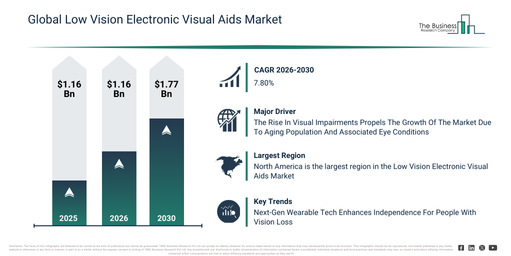
  • A key trend shaping the Low Vision Electronic Visual Aids Market involves the Next-Gen Wearable Tech Enhances Independence For People With Vision Loss

    A key trend shaping the Low Vision Electronic Visual Aids Market involves the Next-Gen Wearable Tech Enhances Independence For People With Vision Loss

    The Business Research Company’s 2026 market reports include new capabilities such as market attractiveness scoring and analysis, total addressable market analysis, company scoring matrix, interactive excel data dashboard, improved supply chain analysis, upcoming startups in the market, and overview of key products, aimed at improving the depth, usability, and strategic value of the insights delivered.

    How Is The Market Size Of The Low Vision Electronic Visual Aids Market Expected To Change Between 2026 And 2030?

    The low vision electronic visual aids market has experienced substantial expansion in recent years. It is anticipated to grow from $1.25 billion in 2025 to $1.35 billion in 2026, achieving a compound annual growth rate (CAGR) of 8.0%. This growth observed in the preceding period can be attributed to the increasing prevalence of visual impairments, the restricted availability of affordable visual aids, a rise in awareness concerning low vision aids, developments in optical magnification, and the expanding geriatric population.

    The market for low vision electronic visual aids is projected to experience substantial expansion over the upcoming years. This market is forecast to reach $1.82 billion by 2030, exhibiting a compound annual growth rate (CAGR) of 7.8%. Several factors will drive this growth during the projected period, including the integration of AI and IoT technologies, a growing desire for portable and wearable devices, supportive governmental programs, increased usage in educational settings, and the expansion of e-commerce distribution channels. Key trends anticipated during this time comprise the adoption of wearable low vision devices, the miniaturization of electronic magnifiers, the emergence of voice-controlled visual assistance, integration with smart home systems, and the development of personalized vision enhancement solutions.

    Download the Free Sample Report to Explore Key Market Insights:

    https://www.thebusinessresearchcompany.com/sample.aspx?id=25815&type=smp

    What Underlying Factors Are Accelerating The Growth Of The Low Vision Electronic Visual Aids Market?

    The anticipated expansion of the low vision electronic visual aids market is linked to the increasing occurrence of visual impairments. Visual impairments encompass various conditions of vision loss that standard corrective measures like glasses, contact lenses, medication, or surgery cannot completely rectify, thus impacting an individual’s clear sight. This rise in visual impairment cases primarily stems from the aging demographic, given that age-associated eye conditions like macular degeneration, cataracts, and glaucoma become more frequent as people get older. Low-vision electronic visual aids assist those with visual impairments by improving their residual vision via magnification, contrast modification, and digital image processing, which fosters increased autonomy in everyday tasks. As an illustration, in August 2023, the World Health Organization, a Switzerland-based specialized agency of the United Nations, reported that globally, a minimum of 2.2 billion individuals suffer from either near or distance vision impairment. Nevertheless, estimates suggest that merely 36% of individuals experiencing distance vision impairment from refractive errors and only 17% of those with vision impairment resulting from cataracts have obtained suitable treatment. Consequently, the increasing incidence of visual impairments is fueling the expansion of the low vision electronic visual aids market.

    How Is The Low Vision Electronic Visual Aids Market Structured Across Different Segments?

    The low vision electronic visual aids market covered in this report is segmented –

    1) By Type: Portable Electronic Magnifiers, Closed Circuit Television, Voice Readers, Other Types

    2) By Technology: Optical Devices, Electronic Magnifiers, Text-to-Speech Devices, Speech Recognition Systems

    3) By Application: Reading Assistance, Navigation Assistance, Social Interaction And Communication, Entertainment

    4) By Distribution Channel: Online Retail, Specialty Stores, Optical Stores, Other Distribution Channels

    5) By End-User: Individuals, Hospitals And Clinics, Rehabilitation Centers, Educational Institutions

    Subsegments:

    1) By Portable Electronic Magnifiers: Handheld Magnifiers, Stand Magnifiers, Wearable Magnifiers, Digital Magnifier Tablets

    2) By Closed Circuit Television: Desktop Closed Circuit Television Systems, Transportable Closed Circuit Television Systems, Wearable Closed Circuit Television Devices, Closed Circuit Television With Text-To-Speech Integration

    3) By Voice Readers: Screen Readers, Book Readers, Optical Character Recognition-Based Readers, Smart Audio Assistants For Reading

    4) By Other Types: Braille Notetakers, Smart Glasses, Screen Magnification Software, Navigation Aids

    Which Trends Are Shaping The Future Of The Low Vision Electronic Visual Aids Market?

    Major companies operating in the low vision electronic visual aids market are concentrating on creating novel solutions, such as artificial intelligence-powered wearable smart glasses, to enhance real-time visual interpretation and user independence. These artificial intelligence-powered wearable smart glasses represent sophisticated electronic visual aids, leveraging AI-driven image processing, object recognition, and voice output to assist individuals with low vision in better perceiving and engaging with their environment. For instance, in August 2024, Eyedaptic Inc., a US-based medical technology company, introduced EYE6 with Ivy, a cutting-edge wearable visual assistant designed specifically for individuals with age-related macular degeneration and other retinal disorders. These lightweight smart glasses integrate advanced vision enhancement capabilities with an AI-powered assistant named Ivy. It is capable of reading text, identifying objects, describing surroundings, and providing user support in 99 languages to promote greater independence. Equipped with full HD 1080p displays, hands-free voice control, and remote upgrade functionalities, the EYE6 delivers a seamless, customizable user experience for people with low vision conditions.

    Which Major Players Dominate The Low Vision Electronic Visual Aids Market?

    Major companies operating in the low vision electronic visual aids market are Eschenbach Optik GmbH, Vispero, HumanWare Group, Freedom Scientific Inc., IrisVision Global Inc., VisionAid International Ltd., Zoomax Technology Co. Ltd., HIMS Inc., LS And S Products Inc., CTECH Low Vision And Blindness Solutions, Low Vision International AB, NuEyes Technologies Inc., Optelec U.S. Inc., Reinecker Vision GmbH, OrCam Technologies Ltd., Enhanced Vision, Dolphin Computer Access, Acesight, Eyedaptic Inc., eSight Corporation, Eurobraille, Help Tech GmbH & Co. KG

    Read the full low vision electronic visual aids market report here:

    https://www.thebusinessresearchcompany.com/report/low-vision-electronic-visual-aids-global-market-report

    Which Region Is Projected To Dominate The Low Vision Electronic Visual Aids Market During The Forecast Period?

    North America was the largest region in the low vision electronic visual aids market in 2025. Asia-Pacific is expected to be the fastest-growing region in the forecast period. The regions covered in the low vision electronic visual aids market report are Asia-Pacific, South East Asia, Western Europe, Eastern Europe, North America, South America, Middle East, Africa.

    Request A Tailored Low Vision Electronic Visual Aids Market Research Report For Competitive Advantage:

    https://www.thebusinessresearchcompany.com/customise?id=25815&type=smp

    Browse Through More Reports Similar to the Global Low Vision Electronic Visual Aids Market 2026, By The Business Research Company

    Night Vision Devices Market Report 2026

    https://www.thebusinessresearchcompany.com/report/night-vision-devices-global-market-report

    Assistive Technologies For Visually Impaired Market Report 2026

    https://www.thebusinessresearchcompany.com/report/assistive-technologies-for-visually-impaired-global-market-report

    Computer Vision Market Report 2026

    https://www.thebusinessresearchcompany.com/report/computer-vision-global-market-report

    Get in touch with us:

    The Business Research Company: https://www.thebusinessresearchcompany.com/

    Americas +1 310-496-7795

    Asia +44 7882 955267 & +91 8897263534

    Europe +44 7882 955267

    Email us at info@tbrc.info

    Follow us on:

    LinkedIn: https://in.linkedin.com/company/the-business-research-company

    YouTube: https://www.youtube.com/channel/UC24_fI0rV8cR5DxlCpgmyFQ

    Global Market Model: https://www.thebusinessresearchcompany.com/global-market-model
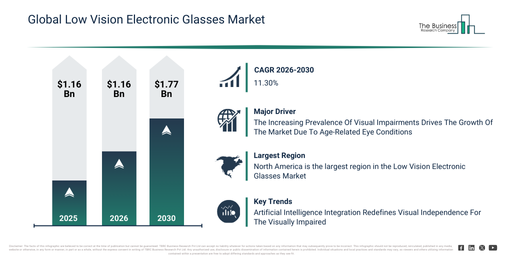
  • A significant industry trend in the Low Vision Electronic Glasses Market includes the Artificial Intelligence Integration Redefines Visual Independence For The Visually Impaired

    A significant industry trend in the Low Vision Electronic Glasses Market includes the Artificial Intelligence Integration Redefines Visual Independence For The Visually Impaired

    The Business Research Company’s 2026 market reports include new capabilities such as market attractiveness scoring and analysis, total addressable market analysis, company scoring matrix, interactive excel data dashboard, improved supply chain analysis, upcoming startups in the market, and overview of key products, aimed at improving the depth, usability, and strategic value of the insights delivered.

    What Is The Market Size Of The Low Vision Electronic Glasses Market In 2026 And What Value Is Projected For 2030?

    The low vision electronic glasses market has expanded significantly in recent years. This market is projected to grow from $0.97 billion in 2025 to $1.08 billion in 2026, exhibiting a compound annual growth rate (CAGR) of 11.6%. Historically, its growth was influenced by factors including the increasing prevalence of visual impairments, technological limitations in traditional optical aids, the high cost of early devices, limited awareness of low vision aids, and a lack of trained professionals.

    The low vision electronic glasses market is projected to experience swift expansion in the coming years. It will grow to $1.66 billion in 2030 at a compound annual growth rate (CAGR) of 11.3%. This expansion over the forecast period is fueled by several factors, including breakthroughs in AI-powered vision enhancement, the incorporation of AR/VR for more engaging experiences, lower device manufacturing costs stemming from large-scale production, wider acceptance among the elderly, and an increased emphasis on fostering independence for individuals with visual impairments. Key developments anticipated during this period encompass the shrinking of device sizes, improved real-time image processing, enhanced wearability and ergonomic design, the incorporation of voice and gesture commands, and customized vision support.

    Download the Free Sample Report to Explore Key Market Insights:

    https://www.thebusinessresearchcompany.com/sample.aspx?id=25814&type=smp

    Which Growth Drivers Are Contributing To The Progress Of The Low Vision Electronic Glasses Market?

    The increasing prevalence of visual impairments is projected to drive the growth of the low vision electronic glasses market moving forward. Visual impairments are defined as a significant reduction in vision that cannot be fully corrected through means such as glasses, contact lenses, medication, or surgery, thereby hindering an individual’s capacity to perform daily tasks. The rising incidence of visual impairments is largely linked to aging populations, given that the risk of eye conditions such as cataracts, glaucoma, and macular degeneration substantially increases with age. Low-vision electronic glasses aid those with visual impairments by amplifying their residual vision through magnification, contrast modification, and real-time image processing, thereby enabling greater independence in daily tasks. For instance, in August 2023, the World Health Organization, a specialized UN agency based in Switzerland, reported that at least 2.2 billion people globally experience near or distance vision impairment. Despite this, it is estimated that only 36% of individuals with distance vision impairment caused by refractive errors and merely 17% of those with vision impairment due to cataracts have received appropriate treatment. Therefore, the growing number of visual impairments is a key factor boosting the low vision electronic glasses market.

    What Are The Key Segments Of The Low Vision Electronic Glasses Market?

    The low vision electronic glasses market covered in this report is segmented –

    1) By Product Type: Wearable Glasses, Smart Glasses, Augmented Reality Glasses, Night Vision Glasses

    2) By Technology: Optical Technology, Digital Technology, Adaptive Technology, Artificial Intelligence Integrated Technology

    3) By Application: Personal Use, Professional Use

    4) By Distribution Channel: Online Retail, Offline Retail, Direct Sales, Healthcare Providers

    5) By End-User: Individuals With Visual Impairments, Healthcare Institutions, Educational Institutions, Occupational Rehabilitation Centers

    Subsegments:

    1) By Wearable Glasses: Head-Mounted Low Vision Glasses, Clip-on Assistive Glasses, Full-Frame Digital Glasses

    2) By Smart Glasses: Voice-Controlled Smart Glasses, Bluetooth-Enabled Visual Aid Glasses, Integrated Camera Smart Glasses

    3) By Augmented Reality Glasses: Augmented Reality Glasses For Object Recognition, Augmented Reality Navigation Assistance Glasses, Augmented Reality Text-to-Speech Glasses

    4) By Night Vision Glasses: Infrared-Based Vision Glasses, Thermal Imaging Glasses for Low Vision, Low-Light Enhancement Glasses

    What Key Trends Are Influencing The Development Of The Low Vision Electronic Glasses Market?

    Leading companies within the low vision electronic glasses market are concentrating their efforts on creating groundbreaking solutions, such as artificial intelligence-powered smart glasses, to boost visual clarity and independence for those with visual impairments. Artificial intelligence-powered smart glasses function as wearable devices that leverage artificial intelligence to improve vision by identifying objects, articulating text aloud, and dynamically modifying images in real time to support individuals with visual impairments. An illustrative instance occurred in August 2024, when Eyedaptic Inc., a US-based vision technology firm, introduced its EYE6 smart glasses, an advanced wearable device specifically designed to aid individuals experiencing central vision loss. These smart glasses incorporate augmented reality in conjunction with AI-driven vision enhancement to provide real-time image optimization, thereby improving visual clarity and contrast for their users. Key attributes of these glasses encompass a lightweight and unobtrusive construction, hands-free operation, a multilingual visual assistant compatible with 99 languages, along with capacities for text reading, environmental description, and general assistance with everyday activities.

    Who Are The Leading Companies Operating In The Low Vision Electronic Glasses Market?

    Major companies operating in the low vision electronic glasses market are OrCam Technologies Ltd., Enhanced Vision Systems Inc., Vuzix Corporation, Zoomax Technology Co. Ltd., IrisVision Global Inc., Acesight, Ceciaa SAS, Envision Technologies BV, Eyedaptic Inc., GiveVision Ltd., NuEyes Technologies Inc., OXSIGHT Ltd., Vision Buddy Inc., eSight Corporation, Everysight Labs Ltd., Nreal Technology Ltd., Rokid Corporation, Avegant Corporation, Magic Leap Inc., Lenovo Smart Glasses Division, Sony Smart Vision Systems, Epson Smart Glasses Division

    Read the full low vision electronic glasses market report here:

    https://www.thebusinessresearchcompany.com/report/low-vision-electronic-glasses-global-market-report

    What Are The Leading Geographic Regions In The Low Vision Electronic Glasses Market?

    North America was the largest region in the low vision electronic glasses market in 2025. Asia-Pacific is expected to be the fastest-growing region in the forecast period. The regions covered in the low vision electronic glasses market report are Asia-Pacific, South East Asia, Western Europe, Eastern Europe, North America, South America, Middle East, Africa.

    Request A Tailored Low Vision Electronic Glasses Market Research Report For Competitive Advantage:

    https://www.thebusinessresearchcompany.com/customise?id=25814&type=smp

    Browse Through More Reports Similar to the Global Low Vision Electronic Glasses Market 2026, By The Business Research Company

    Advanced Glass Market Report 2026

    https://www.thebusinessresearchcompany.com/report/advanced-glass-global-market-report

    Smart Glass Market Report 2026

    https://www.thebusinessresearchcompany.com/report/smart-glass-global-market-report

    Glasses Case Market Report 2026

    https://www.thebusinessresearchcompany.com/report/glasses-case-global-market-report

    Get in touch with us:

    The Business Research Company: https://www.thebusinessresearchcompany.com/

    Americas +1 310-496-7795

    Asia +44 7882 955267 & +91 8897263534

    Europe +44 7882 955267

    Email us at info@tbrc.info

    Follow us on:

    LinkedIn: https://in.linkedin.com/company/the-business-research-company

    YouTube: https://www.youtube.com/channel/UC24_fI0rV8cR5DxlCpgmyFQ

    Global Market Model: https://www.thebusinessresearchcompany.com/global-market-model
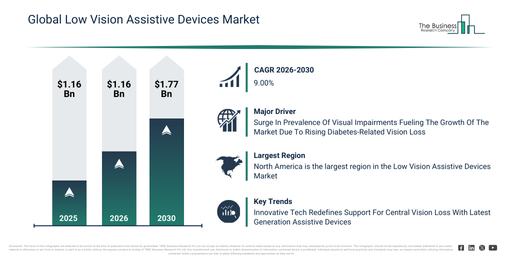
  • A key trend shaping the Low Vision Assistive Devices Market involves the Innovative Tech Redefines Support For Central Vision Loss With Latest Generation Assistive Devices

    A key trend shaping the Low Vision Assistive Devices Market involves the Innovative Tech Redefines Support For Central Vision Loss With Latest Generation Assistive Devices

    The Business Research Company’s 2026 market reports include new capabilities such as market attractiveness scoring and analysis, total addressable market analysis, company scoring matrix, interactive excel data dashboard, improved supply chain analysis, upcoming startups in the market, and overview of key products, aimed at improving the depth, usability, and strategic value of the insights delivered.

    What Will Be The Estimated Market Valuation Of The Low Vision Assistive Devices Market By The End Of 2030?

    The market size for low vision assistive devices has shown significant expansion over recent years. It is anticipated to increase from $1.23 billion in 2025 to $1.34 billion in 2026, with a compound annual growth rate (CAGR) of 8.9%. The historical development of this market is attributable to rising awareness about visual impairments, an increasing geriatric population, technological advancements in optical devices, government initiatives for disabled individuals, and the growing adoption of screen readers in education.

    The low vision assistive devices market size is poised for robust expansion over the next few years. This sector is forecast to reach $1.89 billion by 2030, growing at a compound annual growth rate (CAGR) of 9.0%. This anticipated growth is driven by various factors such as advancements in AI-powered assistive devices, the integration of AR/VR technologies tailored for low vision, increasing investments in making healthcare more accessible, a rising demand for wearable low vision devices, and the expansion of online distribution channels. Notable trends during this forecast period include the adoption of portable and wearable devices, an increasing demand for electronic magnifiers, the integration of assistive software with everyday devices, enhanced accessibility in educational and workplace environments, and the development of personalized low vision solutions.

    Download the Free Sample Report to Explore Key Market Insights:

    https://www.thebusinessresearchcompany.com/sample.aspx?id=25813&type=smp

    What Primary Drivers Are Shaping The Development Of The Low Vision Assistive Devices Market?

    The growing occurrence of visual impairments is anticipated to boost the expansion of the low vision assistive devices market in the future. These impairments encompass various forms of vision loss, such as partial sight and total blindness, which are not entirely correctable with conventional eyeglasses or contact lenses. The increase in visual impairment cases stems from the rising incidence of diabetes, a condition frequently leading to retinal damage and subsequent vision loss over time. Low-vision assistive devices play a crucial role in tackling visual impairments by amplifying existing vision, aiding in everyday tasks, and fostering greater autonomy and an improved quality of life for those affected. For example, in February 2025, Vision Australia, as reported by Developing Australia Communities, an Australian organization dedicated to empowering the disability sector, stated that 453,000 Australians suffer from blindness or low vision, with this number predicted to rise to 564,000 by 2030. Consequently, the expanding occurrence of visual impairments is a key factor propelling the development of the low vision assistive devices market.

    Which Segment Classifications Shape The Low Vision Assistive Devices Market?

    The low vision assistive devices market covered in this report is segmented –

    1) By Product Type: Magnifiers, Reading Devices, Wearable Devices, Screen Readers, Other Product Types

    2) By Application: Education, Healthcare, Personal Use

    3) By Distribution Channel: Online Stores, Specialty Stores, Optical Stores, Other Distribution Channels

    4) By End-User: Children, Adults, Elderly

    Subsegments:

    1) By Magnifiers: Handheld Magnifiers, Stand Magnifiers, Electronic Magnifiers, Pocket Magnifiers

    2) By Reading Devices: Optical Character Recognition (OCR) Devices, Text-To-Speech Devices, Desktop Video Magnifiers, Portable Reading Machines

    3) By Wearable Devices: Smart Glasses, Head-Mounted Displays (HMDs), Augmented Reality (AR)-Based Devices, Camera-Based Wearable Systems

    4) By Screen Readers: Software-Based Screen Readers, Web-Based Screen Readers, Mobile Screen Readers, Braille Display Integrated Readers

    5) By Other Product Types: Braille Embossers, Tactile Graphics Devices, Speech-To-Text Converters, Audio Books And E-Readers

    How Are Trends Impacting The Low Vision Assistive Devices Market?

    Leading companies in the low vision assistive devices market are concentrating on advanced technologies, specifically the newest generation of blind assistive devices, to enhance visual clarity, foster independence, and boost mobility for individuals with central vision loss. These cutting-edge blind assistive devices integrate high-resolution imaging, real-time image processing, and wearable organic light-emitting diode (OLED) display systems to project improved visuals that blend seamlessly with the user’s remaining vision while preserving peripheral awareness. For instance, in July 2025, eSight, a Canada-based assistive technology firm, launched its eSight Go wearable device. This device features a 12-megapixel camera with 4K capability, dual full high definition (HD) organic light emitting diode (OLED) screens, and a wide 45-degree field of view, offering a natural and immersive visual experience. Additional features include advanced image stabilization, a simplified user interface, and a neck-distributed battery pack that improves comfort for daily use. These next-generation assistive technologies are designed to enable users to maintain full mobility and participate more actively in daily life, whether at school, work, home, or in social environments, supporting over 20 different vision impairments worldwide.

    Which Companies Are Expanding Their Footprint In The Low Vision Assistive Devices Market?

    Major companies operating in the low vision assistive devices market are HIMS Inc., OrCam Technologies Ltd., HumanWare Group, Freedom Scientific Inc., eSight Corporation, IrisVision Global Inc., Zoomax Technology Co. Limited, Optelec U.S. Inc., Cobolt Systems Ltd., NuEyes Technologies Inc., Vision Buddy Inc., Acesight, Eyedaptic Inc., LVI Low Vision International AB, Reinecker Vision GmbH, Ash Technologies Ltd., RevoSight Inc., Enhanced Vision, Dolphin Computer Access, Vispero, Eurobraille, Help Tech GmbH & Co. KG

    Read the full low vision assistive devices market report here:

    https://www.thebusinessresearchcompany.com/report/low-vision-assistive-devices-global-market-report

    How Does The Low Vision Assistive Devices Market Perform Across Major Global Regions?

    North America was the largest region in the low vision assistive devices market in 2025. The regions covered in the low vision assistive devices market report are Asia-Pacific, South East Asia, Western Europe, Eastern Europe, North America, South America, Middle East, Africa.

    Request A Tailored Low Vision Assistive Devices Market Research Report For Competitive Advantage:

    https://www.thebusinessresearchcompany.com/customise?id=25813&type=smp

    Browse Through More Reports Similar to the Global Low Vision Assistive Devices Market 2026, By The Business Research Company

    Assistive Technologies For Visually Impaired Market Report 2026

    https://www.thebusinessresearchcompany.com/report/assistive-technologies-for-visually-impaired-global-market-report

    Night Vision Devices Market Report 2026

    https://www.thebusinessresearchcompany.com/report/night-vision-devices-global-market-report

    Robotic Vision Market Report 2026

    https://www.thebusinessresearchcompany.com/report/robotic-vision-global-market-report

    Get in touch with us:

    The Business Research Company: https://www.thebusinessresearchcompany.com/

    Americas +1 310-496-7795

    Asia +44 7882 955267 & +91 8897263534

    Europe +44 7882 955267

    Email us at info@tbrc.info

    Follow us on:

    LinkedIn: https://in.linkedin.com/company/the-business-research-company

    YouTube: https://www.youtube.com/channel/UC24_fI0rV8cR5DxlCpgmyFQ

    Global Market Model: https://www.thebusinessresearchcompany.com/global-market-model
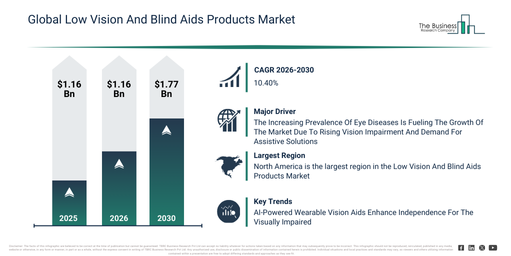
  • An Important Factor Driving the Low Vision And Blind Aids Products Market Is the The Increasing Prevalence Of Eye Diseases Is Fueling The Growth Of The Market Due To Rising Vision Impairment And Demand For Assistive Solutions

    An Important Factor Driving the Low Vision And Blind Aids Products Market Is the The Increasing Prevalence Of Eye Diseases Is Fueling The Growth Of The Market Due To Rising Vision Impairment And Demand For Assistive Solutions

    The Business Research Company’s 2026 market reports include new capabilities such as market attractiveness scoring and analysis, total addressable market analysis, company scoring matrix, interactive excel data dashboard, improved supply chain analysis, upcoming startups in the market, and overview of key products, aimed at improving the depth, usability, and strategic value of the insights delivered.

    What Market Size Growth Is Projected For The Low Vision And Blind Aids Products Market During The Forecast Period 2026–2030?

    The low vision and blind aids products market size has demonstrated rapid expansion in recent years. It is anticipated to grow from $3.32 billion in 2025 to $3.68 billion in 2026, at a compound annual growth rate (CAGR) of 10.8%. The historical growth in this market stems from the increasing prevalence of visual impairments, enhanced awareness of low vision aids, a rise in government initiatives for disabled persons, technological advancements in optical devices, and early adoption by educational institutions.

    The market for low vision and blind aids products is projected to experience substantial expansion over the upcoming years. This market is anticipated to reach **$5.46 billion by 2030**, exhibiting a compound annual growth rate (CAGR) of **10.4%**. This anticipated growth is driven by several factors, including the incorporation of AI into vision assistance tools, the broader adoption of wearable technologies, a rising need for portable electronic devices, the proliferation of online sales platforms, and an increased emphasis on opportunities for inclusive education and employment. Key developments anticipated during this forecast period encompass tailored vision improvement devices, voice-controlled assistive technologies, enhanced mobile accessibility, intelligent navigation tools for both indoor and outdoor movement, and economical, widely accessible low-vision innovations.

    Download the Free Sample Report to Explore Key Market Insights:

    https://www.thebusinessresearchcompany.com/sample.aspx?id=25812&type=smp

    Which Major Factors Are Driving The Expansion Of The Low Vision And Blind Aids Products Market?

    The anticipated expansion of the low vision and blind aids products market is significantly influenced by the rising occurrence of eye conditions. These disorders involve impairments to the eyes’ structure or operational capabilities, frequently leading to diminished sight or total blindness. A primary factor contributing to this increase in eye diseases is prolonged screen exposure, which results in ocular fatigue and the premature development of visual problems. Low vision and blind aids products provide crucial support to individuals afflicted with eye conditions by either optimizing their remaining vision or by supplying alternative non-visual methods for information access. Such instruments considerably improve daily activities, movement, and self-reliance for those experiencing permanent vision loss. For example, data from May 2024, released by the Centers for Disease Control and Prevention (CDC), a US-based federal agency, reveals that more than 90 million Americans over 40 are presently living with vision issues. Projections indicate that by 2050, vision impairment and blindness in the U.S. will surge by 150%, with diabetic retinopathy cases escalating by 72%, cataracts by 87%, and both glaucoma and macular degeneration anticipated to double. Consequently, the escalating occurrence of eye diseases acts as a significant catalyst for the expansion of the low vision and blind aid products market.

    What Market Segments Are Evaluated Within The Low Vision And Blind Aids Products Market?

    The low vision and blind aids products market covered in this report is segmented –

    1) By Product Type: Optical Aids, Non-Optical Aids, Electronic Aids, Assistive Software, Wearable Technology

    2) By Age Group: Children, Adults, Seniors, Teenagers, Middle-Aged

    3) By Distribution Channel: Online Stores, Retail Pharmacies, Specialized Medical And Assistive Device Retailers, Specialty Stores, Direct Sales

    4) By Application: Blind School, Disabled Persons Federation And Hospital, Enterprises And Social Organizations

    5) By End-User: Individuals, Healthcare Professionals, Educational Institutions, Community Organizations, Government Agencies

    Subsegments:

    1) By Optical Aids: Magnifying Glasses, Telescopic Glasses, Spectacle-Mounted Magnifiers, Handheld Magnifiers, Stand Magnifiers

    2) By Non-Optical Aids: Braille Books, Large Print Materials, Tactile Graphics, Signature Guides, Writing Templates

    3) By Electronic Aids: Video Magnifiers, Digital Readers, Screen Enlargers, Electronic Braille Displays, Talking Devices

    4) By Assistive Software: Screen Readers, Screen Magnification Software, Text-To-Speech Software, Optical Character Recognition (OCR) Tools, Navigation And Mapping Software

    5) By Wearable Technology: Smart Glasses, Artificial Intelligence (AI)-Powered Vision Aids, Wearable Cameras, Voice-Enabled Smart Devices, Haptic Feedback Wearables

    What Industry Trends Are Redefining The Low Vision And Blind Aids Products Market?

    Leading companies in the low vision and blind aids products market are concentrating on creating sophisticated products, such as AI-powered wearable vision aids, to boost functional independence and life quality for individuals with retinal disorders and vision loss. An AI-powered wearable vision aid is a smart, head-mounted device that combines artificial intelligence with vision-enhancement technologies, enabling visually impaired individuals to interpret visual information, carry out daily tasks, and move around their environments with greater autonomy. For example, in August 2024, Eyedaptic, a US-based provider of vision-enhancement solutions, introduced EYE6 with Ivy, a new AI-powered visual assistant specifically for individuals affected by age-related macular degeneration and other retinal disorders. The EYE6 incorporates advanced multimodal generative artificial intelligence and large language model capabilities to assist users by reading text, recognizing objects, and interpreting surroundings across diverse environments in 99 languages. These lightweight smart glasses, designed for those with age-related macular degeneration and other retinal disorders, merge high-definition visual augmentation with an interactive AI assistant to facilitate increased independence and everyday task management.

    Who Are The Top Market Participants Influencing The Low Vision And Blind Aids Products Market?

    Major companies operating in the low vision and blind aids products market are Eschenbach Optik GmbH, Tobii Dynavox, OrCam Inc., Vispero, HumanWare, Freedom Scientific, MaxiAids, Enhanced Vision, Dolphin Computer Access, Zoomax, IRIS Vision, SELVAS Healthcare Inc., LS&S LLC, LVI Low Vision International, VisionAid, Eurobraille, HHW Care Products India Private Limited, Nippon Telesoft Co. Ltd., Help Tech GmbH & Co. KG, eSight Corporation, Vuzix Corporation, Aira Tech Corp.

    Read the full low vision and blind aids products market report here:

    https://www.thebusinessresearchcompany.com/report/low-vision-and-blind-aids-products-global-market-report

    Which Region Currently Holds The Largest Share Of The Low Vision And Blind Aids Products Market?

    North America was the largest region in the low vision and blind aids products market in 2025. Asia-Pacific is expected to be the fastest-growing region in the forecast period. The regions covered in the low vision and blind aids products market report are Asia-Pacific, South East Asia, Western Europe, Eastern Europe, North America, South America, Middle East, Africa.

    Request A Tailored Low Vision And Blind Aids Products Market Research Report For Competitive Advantage:

    https://www.thebusinessresearchcompany.com/customise?id=25812&type=smp

    Browse Through More Reports Similar to the Global Low Vision And Blind Aids Products Market 2026, By The Business Research Company

    Blind Spot Monitor Market Report 2026

    https://www.thebusinessresearchcompany.com/report/blind-spot-monitor-global-market-report

    Assistive Technologies For Visually Impaired Market Report 2026

    https://www.thebusinessresearchcompany.com/report/assistive-technologies-for-visually-impaired-global-market-report

    Night Blindness Treatment Market Report 2026

    https://www.thebusinessresearchcompany.com/report/night-blindness-treatment-global-market-report

    Get in touch with us:

    The Business Research Company: https://www.thebusinessresearchcompany.com/

    Americas +1 310-496-7795

    Asia +44 7882 955267 & +91 8897263534

    Europe +44 7882 955267

    Email us at info@tbrc.info

    Follow us on:

    LinkedIn: https://in.linkedin.com/company/the-business-research-company

    YouTube: https://www.youtube.com/channel/UC24_fI0rV8cR5DxlCpgmyFQ

    Global Market Model: https://www.thebusinessresearchcompany.com/global-market-model
  • A Significant Growth Driver for the Low Temperature Plasma Sterilizer Market Is the Increasing Healthcare-Associated Infections Fueling The Growth Of The Market Due To Rising Use Of Invasive Medical Procedures And Need For Effective Infection Control

    A Significant Growth Driver for the Low Temperature Plasma Sterilizer Market Is the Increasing Healthcare-Associated Infections Fueling The Growth Of The Market Due To Rising Use Of Invasive Medical Procedures And Need For Effective Infection Control

    The Business Research Company’s 2026 market reports include new capabilities such as market attractiveness scoring and analysis, total addressable market analysis, company scoring matrix, interactive excel data dashboard, improved supply chain analysis, upcoming startups in the market, and overview of key products, aimed at improving the depth, usability, and strategic value of the insights delivered.

    How Will The Market Size Of The Low Temperature Plasma Sterilizer Market Evolve From 2026 To 2030?

    The low temperature plasma sterilizer market size has experienced rapid growth in recent years. It is projected to increase from $1.49 billion in 2025 to $1.65 billion in 2026, achieving a compound annual growth rate (CAGR) of 10.7%. The historical growth of this market can be attributed to several factors including reliance on conventional steam sterilizers, limited awareness of low-temperature sterilization benefits, expanding hospital and clinic infrastructure, a rise in surgical and dental procedures, and the increasing need for equipment sterilization compliance.

    The low temperature plasma sterilizer market is anticipated to experience substantial expansion over the upcoming years. This market is projected to reach $2.48 billion by 2030, exhibiting a compound annual growth rate (CAGR) of 10.7%. Factors contributing to this growth during the forecast period include technological progress in cold plasma and hydrogen peroxide sterilization, increasing demand within homecare and mobile healthcare settings, the broadening scope of pharmaceutical packaging sterilization, seamless integration with smart hospital systems, and an intensifying emphasis on patient safety and infection prevention. Key trends identified for the forecast period encompass the increasing embrace of low-temperature sterilization techniques, a heightened need for sterilizing instruments sensitive to heat and moisture, the proliferation of sterilization solutions in outpatient and mobile healthcare environments, a surge in the application of plasma sterilizers across pharmaceutical and laboratory contexts, and a strong focus on sterilization processes that are both residue-free and swift.

    Download the Free Sample Report to Explore Key Market Insights:

    https://www.thebusinessresearchcompany.com/sample.aspx?id=27330&type=smp

    What Key Drivers Are Influencing The Growth Of The Low Temperature Plasma Sterilizer Market?

    The rising incidence of healthcare-associated infections (HAIs) is anticipated to drive the future growth of the low temperature plasma sterilizer market. HAIs are infections acquired by patients within healthcare settings while undergoing treatment for other conditions. This increase in HAIs primarily results from the expanded use of invasive medical procedures and devices, which heightens the risk of pathogen transmission in clinical environments. Low-temperature plasma sterilizers contribute to the reduction of HAIs by effectively sterilizing heat-sensitive medical instruments without leaving toxic residues, thereby enabling safer equipment reuse and improving overall infection control in healthcare settings. For example, in July 2025, the UK Health Security Agency (UKHSA), a UK-based government agency, stated that the incidence rate of methicillin-resistant Staphylococcus aureus (MRSA) bacteraemia was 1.8 cases per 100,000 population between January and March 2025. This marked an increase from 1.7 cases per 100,000 population recorded during the same period in 2024. Therefore, the growing number of healthcare-associated infections is a key factor propelling the growth of the low temperature plasma sterilizer market.

    Which Segment Areas Are Covered In The Low Temperature Plasma Sterilizer Market Analysis?

    The low temperature plasma sterilizer market covered in this report is segmented –

    1) By Product Type: Tabletop Sterilizers, Large-Automated Sterilizers, Portable Sterilizers, Accessories And Consumables

    2) By Technology: Cold Plasma Technology, Atmospheric Pressure Plasma Technology, Low-Temperature Hydrogen Peroxide Plasma Technology, Radiofrequency Plasma Technology

    3) By Material Compatibility: Metal Instruments, Plastic Instruments, Glass Instruments, Textiles And Porous Materials

    4) By Application: Surgical Instrument Sterilization, Hospital Environment Sterilization, Pharmaceutical Packaging Sterilization, Dental Product Sterilization

    5) By End-User: Healthcare Facilities, Pharmaceutical Companies, Research Laboratories, Homecare Settings

    Subsegments:

    1) By Tabletop Sterilizers: Dental Clinics Use, Small Laboratory Use, Outpatient Facilities, Home Healthcare Settings

    2) By Large-Automated Sterilizers: Hospital Central Sterile Supply Department (CSSD), Pharmaceutical Manufacturing Units, Research Institutes, Industrial Sterilization Facilities

    3) By Portable Sterilizers: Field Medical Units, Emergency Response Teams, Mobile Clinics, Military Applications

    4) By Accessories And Consumables: Sterilization Trays, Indicator Strips And Tapes, Sterilant Cartridges, Filters And Replacement Parts

    What Key Developments And Trends Are Impacting The Low Temperature Plasma Sterilizer Market?

    Leading companies in the low-temperature plasma sterilizer market are concentrating on developing technologically advanced products, such as automatic medical-grade sterilization devices. This strategic focus aims to enhance efficiency, reduce the need for manual effort, and guarantee the safe sterilization of heat-sensitive medical devices. An automatic medical-grade sterilization device denotes a fully automated system specifically designed to disinfect medical instruments to high clinical standards, utilizing sophisticated technologies like plasma or hydrogen peroxide without requiring any human intervention. For instance, in April 2025, Zhejiang Sada Medical Technology Co. Ltd., a medical equipment company based in China, introduced the SD-D 100L Low-Temperature Hydrogen Peroxide Plasma Sterilizer. This particular model is a fully automatic, medical-grade sterilizer that operates at a low temperature of 50°C ± 5°C, making it highly suitable for heat-sensitive instruments such as endoscopes and precision surgical tools. The SD-D 100L further offers rapid sterilization cycles (40–60 minutes), integrated HEPA filtration, and incorporates advanced safety features including overpressure and overheating protection, thus ensuring both regulatory compliance and streamlined workflow efficiency.

    Which Global Companies Are Actively Competing In The Low Temperature Plasma Sterilizer Market?

    Major companies operating in the low temperature plasma sterilizer market are Getinge AB, Shinva Medical Instrument Co. Ltd., Belimed AG, Advanced Sterilization Products, Tuttnauer Ltd., Matachana S.A., Cisa Production S.r.l., Steelco S.p.A., Aurora Sterilisation, STERIS plc, 3M Company, Noxilizer Inc., MMM Group, Andersen Products Inc., Cantel Medical Corp., Laoken Medical Technology Co. Ltd., Mudanjiang Plasma Physical Application Technology Co. Ltd., TEKNOMAR, BeyondMedi, Zeronitec, MEDFUTURE, Heal Force Bio-Meditech Holdings Co. Ltd., BIOBASE Group Co. Ltd., Sada Medical Co. Ltd.

    Read the full low temperature plasma sterilizer market report here:

    https://www.thebusinessresearchcompany.com/report/low-temperature-plasma-sterilizer-global-market-report

    Which Region Is Expected To Register The Fastest Growth In The Low Temperature Plasma Sterilizer Market?

    North America was the largest region in the low temperature plasma sterilizer market in 2025. Asia-Pacific is expected to be the fastest-growing region in the forecast period. The regions covered in the low temperature plasma sterilizer market report are Asia-Pacific, South East Asia, Western Europe, Eastern Europe, North America, South America, Middle East, Africa.

    Request A Tailored Low Temperature Plasma Sterilizer Market Research Report For Competitive Advantage:

    https://www.thebusinessresearchcompany.com/customise?id=27330&type=smp

    Browse Through More Reports Similar to the Global Low Temperature Plasma Sterilizer Market 2026, By The Business Research Company

    Forex Brokers Market Report 2026

    https://www.thebusinessresearchcompany.com/report/forex-brokers-global-market-report

    Cryptocurrency Exchange Platform Market Report 2026

    https://www.thebusinessresearchcompany.com/report/cryptocurrency-exchange-platform-global-market-report

    Algorithmic Trading Software Market Report 2026

    https://www.thebusinessresearchcompany.com/report/algorithmic-trading-software-global-market-report

    Get in touch with us:

    The Business Research Company: https://www.thebusinessresearchcompany.com/

    Americas +1 310-496-7795

    Asia +44 7882 955267 & +91 8897263534

    Europe +44 7882 955267

    Email us at info@tbrc.info

    Follow us on:

    LinkedIn: https://in.linkedin.com/company/the-business-research-company

    YouTube: https://www.youtube.com/channel/UC24_fI0rV8cR5DxlCpgmyFQ

    Global Market Model: https://www.thebusinessresearchcompany.com/global-market-model