Month: March 2026

  • Linear Particle Accelerators Market Growth Expected to Reach $3.53 Billion by 2030 with 5.1% CAGR

    Linear Particle Accelerators Market Growth Expected to Reach $3.53 Billion by 2030 with 5.1% CAGR

    The Business Research Company’s 2026 market reports include new capabilities such as market attractiveness scoring and analysis, total addressable market analysis, company scoring matrix, interactive excel data dashboard, improved supply chain analysis, upcoming startups in the market, and overview of key products, aimed at improving the depth, usability, and strategic value of the insights delivered.

    How Is The Market Size Of The Linear Particle Accelerators Market Expected To Change Between 2026 And 2030?

    The linear particle accelerators market has shown significant expansion in recent years. It is anticipated to expand from $2.73 billion in 2025 to $2.9 billion in 2026, achieving a compound annual growth rate (CAGR) of 5.9%. This historical development can be ascribed to several factors, including the increasing global occurrence of cancer, the enhancement of radiation oncology infrastructure, greater investments in high-energy physics research, the expanding adoption of advanced radiotherapy techniques, and a rise in government funding for scientific research facilities.

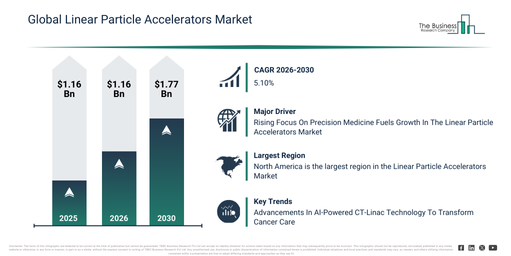
    The linear particle accelerators market is set to experience significant expansion over the next few years. It is predicted to reach a value of **$3.53 billion in 2030**, growing at a compound annual growth rate (CAGR) of **5.1%**. This projected growth during the forecast period can be attributed to several factors including an increasing demand for sophisticated cancer treatment technologies, a heightened focus on precise and targeted radiation therapy, greater investments in nuclear medicine infrastructure, the expansion of particle physics research initiatives, and rising healthcare spending on oncology services. Noteworthy trends expected during this period include the increasing integration of linear accelerators in cancer radiation therapy, wider utilization of high-energy linear accelerators in particle physics research, a growing need for accurate radiation delivery in oncology treatments, the broader application of linear accelerators in nuclear medicine, and the increasing deployment of compact and modular linear accelerator systems.

    Download the Free Sample Report to Explore Key Market Insights:

    https://www.thebusinessresearchcompany.com/sample.aspx?id=15599&type=smp

    Which Major Factors Are Driving The Expansion Of The Linear Particle Accelerators Market?

    The linear particle accelerators market is anticipated to expand due to an increasing emphasis on precision medicine in the future. This healthcare approach involves customizing medical treatments and interventions based on the distinct traits of each patient. The heightened attention on precision medicine stems from progress in genomic research and technology, an acknowledgement of conventional healthcare’s shortcomings, and the promise of personalized therapies delivering improved results. In precision medicine, linear particle accelerators are employed to administer focused radiation therapy, enabling accurate tumor targeting and reducing harm to adjacent healthy tissues. As an example, in February 2024, the US-based nonprofit organization, the Personalized Medicine Coalition, revealed that the FDA sanctioned 16 novel personalized treatments for patients with rare diseases in 2023, an increase from six in 2022. Consequently, the increased emphasis on precision medicine is fostering expansion within the linear particle accelerators market.

    How Is The Linear Particle Accelerators Market Structured Across Different Segments?

    The linear particle accelerators market covered in this report is segmented –

    1) By Type: Low-energy Machine, Medium-energy Machine, High-energy Machine

    2) By Therapy: Radio Surgery, Radiation Therapy

    3) By Applications: Prostate Cancer, Breast Cancer, Lung Cancer, Head and Neck Cancers, Colorectal Cancers, Other Applications

    4) By End User: Radiology Clinics, Hospitals, Other End Users

    Subsegments:

    1) By Low-Energy Machine: Medical Linacs (Linear Accelerators For Radiation Therapy), Research Linacs

    2) By Medium-Energy Machine: Industrial Linear Accelerators, Medical Linear Accelerators for Conventional Radiotherapy

    3) By High-Energy Machine: High-Energy Research Linear Accelerators, Proton and Heavy-Ion Linear Accelerators

    Which Trends Are Shaping The Future Of The Linear Particle Accelerators Market?

    Leading firms within the linear particle accelerators market are introducing cutting-edge solutions, notably AI-powered adaptive computed tomography linear particle accelerators (CT-Linac), aiming to transform cancer treatment by providing superior precision, tailored therapies, and live imaging functionalities for better patient results. These AI-powered adaptive CT-Linacs represent sophisticated medical equipment, merging artificial intelligence algorithms with computed tomography and particle acceleration features to deliver accurate, individualized radiation therapy, complete with real-time imaging and dynamic treatment adjustments. As an illustration, in May 2024, Elekta, a human care company from Sweden, introduced Elekta Evo, an adaptive CT-Linac utilizing AI. This specific linear particle accelerator, designed for radiation therapy, grants medical professionals unparalleled accuracy and flexibility in combating cancer. With its next-generation image quality and online adaptability features, it equips physicians with exceptional levels of exactness and flexibility in cancer therapies. The Elekta Evo employs advanced imaging technologies, algorithms tailored to anatomy, and powerful AI to refine treatment planning, reduce harm to vulnerable organs, and diminish uncertainties.

    Which Major Players Dominate The Linear Particle Accelerators Market?

    Major companies operating in the linear particle accelerators market are Elekta AB, Varian Medical Systems, Accuray Incorporated, Siemens Healthineers, Hitachi Ltd., Mitsubishi Electric Corporation, Toshiba Corporation, IBA Group, Mevion Medical Systems, ViewRay Medical Technologies Inc., RefleXion Medical, Panacea Medical Technologies Pvt. Ltd., Shinva Medical Instrument Co. Ltd., Neusoft Medical Systems, Canon Medical Systems, Advanced Oncotherapy, ProTom International, Sumitomo Heavy Industries, Thales Group, Danfysik, Research Instruments GmbH

    Read the full linear particle accelerators market report here:

    https://www.thebusinessresearchcompany.com/report/linear-particle-accelerators-global-market-report

    Which Region Currently Holds The Largest Share Of The Linear Particle Accelerators Market?

    North America was the largest region in the linear particle accelerators market in 2025. Asia-Pacific is expected to be the fastest-growing region in the forecast period. The regions covered in the linear particle accelerators market report are Asia-Pacific, South East Asia, Western Europe, Eastern Europe, North America, South America, Middle East, Africa.

    Request A Tailored Linear Particle Accelerators Market Research Report For Competitive Advantage:

    https://www.thebusinessresearchcompany.com/customise?id=15599&type=smp

    Browse Through More Reports Similar to the Global Linear Particle Accelerators Market 2026, By The Business Research Company

    Linac Devices Market Report 2026

    https://www.thebusinessresearchcompany.com/report/linac-devices-global-market-report

    Accelerator Card Market Report 2026

    https://www.thebusinessresearchcompany.com/report/accelerator-card-global-market-report

    Particle Counters Market Report 2026

    https://www.thebusinessresearchcompany.com/report/particle-counters-global-market-report

    Get in touch with us:

    The Business Research Company: https://www.thebusinessresearchcompany.com/

    Americas +1 310-496-7795

    Asia +44 7882 955267 & +91 8897263534

    Europe +44 7882 955267

    Email us at info@tbrc.info

    Follow us on:

    LinkedIn: https://in.linkedin.com/company/the-business-research-company

    YouTube: https://www.youtube.com/channel/UC24_fI0rV8cR5DxlCpgmyFQ

    Global Market Model: https://www.thebusinessresearchcompany.com/global-market-model
  • LINAC Devices Market Forecast 2026–2035 Reflecting Expansion Opportunities Across Industries

    LINAC Devices Market Forecast 2026–2035 Reflecting Expansion Opportunities Across Industries

    The Business Research Company’s 2026 market reports include new capabilities such as market attractiveness scoring and analysis, total addressable market analysis, company scoring matrix, interactive excel data dashboard, improved supply chain analysis, upcoming startups in the market, and overview of key products, aimed at improving the depth, usability, and strategic value of the insights delivered.

    What Is The Market Size Of The LINAC Devices Market In 2026 And What Value Is Projected For 2030?

    The linac devices market size has demonstrated significant expansion in recent years. This market is set to increase from $5.48 billion in 2025 to $5.96 billion in 2026, advancing at a compound annual growth rate (CAGR) of 8.9%. The historical growth of this market can be attributed to the expansion of cancer treatment infrastructure, an uptick in global cancer incidence, the uptake of advanced radiotherapy techniques, a rise in the availability of oncology specialists, and enhancements in radiation delivery accuracy.

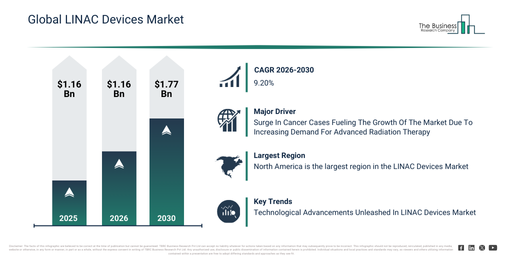
    The linac devices market size is anticipated to experience robust expansion over the coming years, growing to $8.48 billion in 2030 at a compound annual growth rate (CAGR) of 9.2%. This growth during the forecast period can be attributed to increasing investments in precision oncology, a growing demand for personalized cancer treatment, advancements in AI-driven radiotherapy planning, an expansion of radiotherapy access in emerging markets, and the rising adoption of compact linac systems. Prominent trends expected in the forecast period include the increasing adoption of image-guided radiation therapy, the rising use of high-energy linac systems, a growing integration of AI-based treatment planning, the expansion of compact and modular linac designs, and an enhanced focus on precision dose delivery.

    Download the Free Sample Report to Explore Key Market Insights:

    https://www.thebusinessresearchcompany.com/sample.aspx?id=10626&type=smp

    What Key Drivers Are Influencing The Growth Of The LINAC Devices Market?

    The increasing incidence of cancer is projected to drive expansion within the LINAC devices market in the future. Cancer prevalence denotes the aggregate count of individuals, encompassing both recent and prior diagnoses, who are currently living with a history of cancer at a given moment. This rise in cancer prevalence stems from lifestyle factors such as unhealthy eating habits, tobacco use, excessive alcohol intake, and exposure to environmental contaminants, which heighten the likelihood of developing diverse forms of cancer. LINAC devices aid in cancer treatment through the delivery of accurate, high-energy radiation beams aimed at tumors, thereby reducing harm to adjacent healthy cells. These devices enhance the precision of treatment, improve results for patients, and facilitate sophisticated radiotherapy methods for superior cancer management. As an illustration, in February 2025, Cancer Australia, an Australian government agency, reported 4,641 new cases of pancreatic cancer in 2024, comprising 2,414 cases in males and 2,227 in females. Consequently, the growing prevalence of cancer is fueling the LINAC devices market.

    What Are The Key Segments Of The LINAC Devices Market?

    The linac devices market covered in this report is segmented –

    1) By Product: High Energy, Medium Energy

    2) By Application: Breast Cancer, Colorectal Cancer, Head And Neck Cancer, Lung Cancer, Prostate Cancer, Other Applications

    3) By End User: Clinics, Hospitals

    Subsegments:

    1) By High Energy: Linear Accelerators For Radiation Therapy, Electron LINACs, Photon LINACs

    2) By Medium Energy: Medium Energy Photon LINACs, Compact LINAC Systems

    What Key Trends Are Influencing The Development Of The LINAC Devices Market?

    Leading companies in the LINAC devices market are introducing offerings built on innovative technologies, including the ViewRay MRIdian MRI-Guided Radiation Therapy System, to secure their presence in the industry. For instance, in March 2023, GenesisCare Pty Ltd., a US-based cancer and cardiac care provider, introduced an MRI-guided radiation therapy system at the Lee Health Regional Cancer Center. MRIdian refines treatment, potentially decreasing the number of required sessions, by merging precision radiation therapy with advanced, high-resolution MRI guidance. What makes this product unique is that it represents the first radiotherapy system to combine diagnostic-quality MRI with an advanced linear accelerator, also providing availability of the MRIdian Stereotactic MRI-guided Adaptive Radiotherapy (SMART) therapy.

    Who Are The Leading Companies Operating In The LINAC Devices Market?

    Major companies operating in the linac devices market are Elekta AB, Varian Medical Systems Inc, Siemens Healthineers GmbH, Hitachi Ltd, Mitsubishi Heavy Industries Ltd, Sumitomo Heavy Industries Ltd, Shinva Medical Instrument Co Ltd, Huiheng Medical Inc, IBA SA, Mevion Medical Systems Inc, ViewRay Technologies Inc, Advanced Oncotherapy PLC, RefleXion Medical Inc, ProNova Solutions LLC, Panacea Medical Technologies Pvt Ltd, Best Theratronics Ltd, P-Cure Ltd, Accuray Incorporated, CGN Dasheng Electron Accelerator Technology Co Ltd, Nordion Inc, Theragenics Corporation

    Read the full linac devices market report here:

    https://www.thebusinessresearchcompany.com/report/linac-devices-global-market-report

    Which Region Is Expected To Register The Fastest Growth In The LINAC Devices Market?

    North America was the largest region in the LINAC devices market in 2025. Asia-Pacific is expected to be the fastest-growing region in the global LINAC devices market report during the forecast period. The regions covered in the linac devices market report are Asia-Pacific, South East Asia, Western Europe, Eastern Europe, North America, South America, Middle East, Africa.

    Request A Tailored LINAC Devices Market Research Report For Competitive Advantage:

    https://www.thebusinessresearchcompany.com/customise?id=10626&type=smp

    Browse Through More Reports Similar to the Global LINAC Devices Market 2026, By The Business Research Company

    Linear Particle Accelerators Market Report 2026

    https://www.thebusinessresearchcompany.com/report/linear-particle-accelerators-global-market-report

    X Ray Systems Devices And Equipment Market Report 2026

    https://www.thebusinessresearchcompany.com/report/x-ray-systems-devices-and-equipment-global-market-report

    Nuclear Imaging Devices And Equipment Market Report 2026

    https://www.thebusinessresearchcompany.com/report/nuclear-imaging-devices-and-equipment-global-market-report

    Get in touch with us:

    The Business Research Company: https://www.thebusinessresearchcompany.com/

    Americas +1 310-496-7795

    Asia +44 7882 955267 & +91 8897263534

    Europe +44 7882 955267

    Email us at info@tbrc.info

    Follow us on:

    LinkedIn: https://in.linkedin.com/company/the-business-research-company

    YouTube: https://www.youtube.com/channel/UC24_fI0rV8cR5DxlCpgmyFQ

    Global Market Model: https://www.thebusinessresearchcompany.com/global-market-model
  • Global Limb Prosthetics Market Analysis for 2026–2030 with Strategic Forecast Insights for Businesses

    Global Limb Prosthetics Market Analysis for 2026–2030 with Strategic Forecast Insights for Businesses

    The Business Research Company’s 2026 market reports include new capabilities such as market attractiveness scoring and analysis, total addressable market analysis, company scoring matrix, interactive excel data dashboard, improved supply chain analysis, upcoming startups in the market, and overview of key products, aimed at improving the depth, usability, and strategic value of the insights delivered.

    What Will Be The Estimated Market Valuation Of The Limb Prosthetics Market By The End Of 2030?

    The limb prosthetics market size has seen significant expansion in recent years. It is anticipated to increase from $1.78 billion in 2025 to $1.92 billion in 2026, exhibiting a compound annual growth rate (CAGR) of 7.9%. The market’s historical growth can be attributed to several factors including the restricted availability of advanced prosthetic technology, a dependence on traditional prosthetic devices, the elevated cost of initial prosthetic solutions, a rise in limb loss due to accidents and injuries, and the establishment of new orthopedics and O&P clinics.

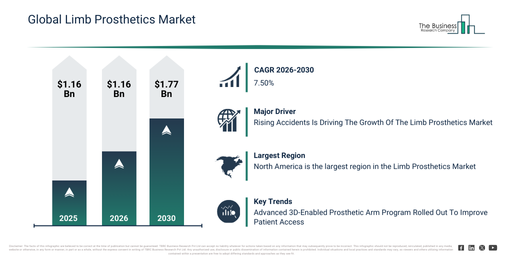
    The limb prosthetics market size is anticipated to experience substantial expansion over the upcoming years. It is projected to reach $2.56 billion in 2030, exhibiting a compound annual growth rate (CAGR) of 7.5%. This expansion during the forecast period is driven by advancements in electric and hybrid prosthetic technology, increased funding for prosthetic research and development, an expanding elderly population with evolving mobility needs, the incorporation of AI and robotics into prosthetics, and the proliferation of rehabilitation and prosthetic service centers. Key developments foreseen in this period involve a rise in the adoption of myoelectric and hybrid prosthetic devices, an escalating need for personalized prosthetics and sockets, an enhanced emphasis on rehabilitation and mobility aids, the growth of orthotics and prosthetics (O&P) clinics, and the creation of lighter yet robust prosthetic materials.

    Download the Free Sample Report to Explore Key Market Insights:

    https://www.thebusinessresearchcompany.com/sample.aspx?id=19548&type=smp

    What Major Growth Drivers Are Shaping The Outlook Of The Limb Prosthetics Market?

    The increasing occurrence of road accidents is projected to stimulate the expansion of limb prosthetics in the future. This notable increase in road accidents stems from factors such as heightened vehicle traffic, driver distraction, speeding, and inadequate road conditions. Limb prosthetics serve accident survivors by offering functional substitutes for limbs that are lost or severely damaged, thereby enhancing mobility and elevating their quality of life through sophisticated technology and bespoke fitting. For instance, in June 2025, the Transport Accident Commission, an Australia-based government agency, recorded 296 fatalities on Victorian roads. This figure indicated a 3.1% rise, corresponding to an additional 9 deaths, relative to the prior 12-month span from July 2024 to June 2025. Hence, the escalating number of accidents is a key driver for the growth of the limb prosthetics market.

    Which Segment Classifications Shape The Limb Prosthetics Market?

    The limb prosthetics market covered in this report is segmented –

    1) By Type: Lower Limb Prosthetics, Upper Limb Prosthetics

    2) By Component: Socket, Appendage, Joint, Connecting Module, Other Components

    3) By Technology: Conventional Prosthetic Devices, Electric Prosthetic Devices, Hybrid Prosthetic Devices

    4) By End-User: Orthotics And Prosthetics (O&P) Clinics, Orthopedic Clinics, Other End-Users

    Subsegments:

    1) By Lower Limb Prosthetics: Below Knee Prosthetics (BK), Above Knee Prosthetics (AK), Transfemoral Prosthetics, Transtibial Prosthetics, Knee and Ankle Prosthetics, Prosthetic Feet

    2) By Upper Limb Prosthetics: Transradial Prosthetics, Transhumeral Prosthetics, Partial Hand Prosthetics, Myoelectric Prosthetics, Body-Powered Prosthetics, Prosthetic Hands

    How Are Trends Impacting The Limb Prosthetics Market?

    Leading companies within the limb prosthetics market are innovating advanced assistive technologies, such as personalized assistive solutions, to develop highly customized mechanical prosthetic arms that offer improved speed and precision. Personalized assistive technology refers to devices or tools specifically designed and adapted to an individual’s unique needs, capabilities, and daily routines, aiming to enhance their independence and overall quality of life. An illustration of this trend is seen in October 2025, when Motorica, a medical technology company based in Russia, introduced its Digital Prosthetics Program in India. This program employs a digital-first approach, integrating 3D scanning, digital modeling, and 3D printing to provide customized prosthetic arms more rapidly and accurately. By facilitating remote limb measurement using standard smartphone cameras, the initiative eliminates the necessity for physical molds, substantially reducing production and delivery durations. The final design and manufacturing processes are carried out at Motorica’s advanced facility in Moscow, ensuring consistent quality. This undertaking empowers prosthetists with sophisticated digital instruments, allowing them to focus on more intricate aspects of their work, while simultaneously granting patients quicker access to premium prosthetics. Furthermore, it expands accessibility by mitigating geographical barriers and establishing collaborations with hospitals, clinics, and NGOs throughout India to broaden inclusive and efficient prosthetic care.

    Which Companies Are Expanding Their Footprint In The Limb Prosthetics Market?

    Major companies operating in the limb prosthetics market are Össur Kristinsson, Ottobock SE & Co. KGaA, Hanger Inc., Kare Enterprise Private Limited, Blatchford Limited, Endolite India Ltd., Trulife India Private Limited, Steeper Inc., College Park Industries, Fillauer LLC, Freedom Innovations LLC, WillowWood Global LLC, Toughware Prosthetics, ALIMCO (Artificial Limbs Manufacturing Corporation of India), Streifeneder USA, Silipos Holding LLC, ST&G Corporation, Ortho Europe Ltd., Open Bionics, Mobius Bionics, exiii Inc, Integrum AB, Motorica

    Read the full limb prosthetics market report here:

    https://www.thebusinessresearchcompany.com/report/limb-prosthetics-global-market-report

    Which Regions Are Projected To Dominate The Limb Prosthetics Market In The Coming Years?

    North America was the largest region in the limb prosthetics market in 2025. The regions covered in the limb prosthetics market report are Asia-Pacific, South East Asia, Western Europe, Eastern Europe, North America, South America, Middle East, Africa.

    Request A Tailored Limb Prosthetics Market Research Report For Competitive Advantage:

    https://www.thebusinessresearchcompany.com/customise?id=19548&type=smp

    Browse Through More Reports Similar to the Global Limb Prosthetics Market 2026, By The Business Research Company

    Orthopedic Prosthetics Market Report 2026

    https://www.thebusinessresearchcompany.com/report/orthopedic-prosthetics-global-market-report

    3D Orthpedics Prosthetics Market Report 2026

    https://www.thebusinessresearchcompany.com/report/3d-orthpedics-prosthetics-global-market-report

    Neuroprosthetics Market Report 2026

    https://www.thebusinessresearchcompany.com/report/neuroprosthetics-global-market-report

    Get in touch with us:

    The Business Research Company: https://www.thebusinessresearchcompany.com/

    Americas +1 310-496-7795

    Asia +44 7882 955267 & +91 8897263534

    Europe +44 7882 955267

    Email us at info@tbrc.info

    Follow us on:

    LinkedIn: https://in.linkedin.com/company/the-business-research-company

    YouTube: https://www.youtube.com/channel/UC24_fI0rV8cR5DxlCpgmyFQ

    Global Market Model: https://www.thebusinessresearchcompany.com/global-market-model
  • Lightweight Electric Folding Wheelchair Market Outlook 2026–2035 Driven by Key Growth Factors and Industry Projections

    Lightweight Electric Folding Wheelchair Market Outlook 2026–2035 Driven by Key Growth Factors and Industry Projections

    The Business Research Company’s 2026 market reports include new capabilities such as market attractiveness scoring and analysis, total addressable market analysis, company scoring matrix, interactive excel data dashboard, improved supply chain analysis, upcoming startups in the market, and overview of key products, aimed at improving the depth, usability, and strategic value of the insights delivered.

    What Market Size Growth Is Projected For The Lightweight Electric Folding Wheelchair Market During The Forecast Period 2026–2030?

    The lightweight electric folding wheelchair market has seen considerable growth in recent years. Its projected expansion will take it from $5.71 billion in 2025 to $6.34 billion in 2026, demonstrating a compound annual growth rate (CAGR) of 11.0%. Contributing factors to its past growth include a growing elderly demographic, an increase in mobility challenges, the presence of lightweight materials, the proliferation of home-based care solutions, and heightened awareness regarding accessibility.

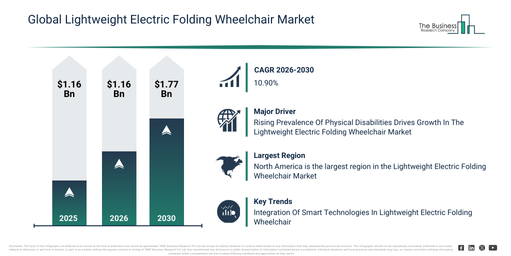
    The lightweight electric folding wheelchair market is anticipated to undergo significant expansion over the next few years, projected to achieve a size of $9.58 billion by 2030, with a compound annual growth rate (CAGR) of 10.9%. This forecasted growth stems from a combination of factors, including the increasing demand for portable mobility devices, the rising adoption of electric assist technologies, the ongoing expansion of e-commerce for medical device sales, a growing emphasis on independent living solutions, and continuous innovation in battery efficiency. Throughout this period, major trends are expected to include the increasing adoption of ultra-lightweight frame designs, a rising demand for compact folding electric wheelchairs, the growing integration of smart battery management systems, an expansion of travel-friendly mobility solutions, and an enhanced focus on user comfort and ergonomics.

    Download the Free Sample Report to Explore Key Market Insights:

    https://www.thebusinessresearchcompany.com/sample.aspx?id=19106&type=smp

    What Drivers Are Expected To Influence The Lightweight Electric Folding Wheelchair Market During The Forecast Period?

    The increasing occurrence of physical disabilities is projected to drive the expansion of the lightweight electric folding wheelchair market in the future. These disabilities are conditions that hinder an individual’s capacity to engage in physical tasks or sustain mobility. The incidence of physical disabilities escalates with age-related ailments and the rising frequency of chronic health issues, thereby leading to a greater number of physical limitations. Such wheelchairs improve mobility and self-reliance for those with physical disabilities, offering effortless transportability, decreased physical exertion due to powered motion, and adaptable comfort and support. For example, data from December 2024, provided by the Canadian Council on Rehabilitation and Work (CCRW), a not-for-profit organization located in Canada, indicated that the prevalence of disability among youth aged 15–24 experienced the most significant increase, surging by 7% to reach 20% in 2023. Consequently, the growing prevalence of physical disabilities fuels the lightweight electric folding wheelchair market.

    What Market Segments Are Evaluated Within The Lightweight Electric Folding Wheelchair Market?

    The lightweight electric folding wheelchair market covered in this report is segmented –

    1) By Type: Center Wheel Drive Chair, Front Wheel Drive Chair, Rear Wheel Drive Chair

    2) By Category: Adults, Pediatric

    3) By Application: E-Commerce, Offline

    Subsegments:

    1) By Center Wheel Drive Chair: Standard Center Wheel Drive Wheelchairs, Lightweight Folding Center Wheel Drive Wheelchairs, Compact Center Wheel Drive Wheelchairs

    2) By Front Wheel Drive Chair: Standard Front Wheel Drive Wheelchairs, Lightweight Folding Front Wheel Drive Wheelchairs, Compact Lightweight Front Wheel Drive Wheelchairs

    3) By Rear Wheel Drive Chair: Standard Rear Wheel Drive Wheelchairs, Lightweight Folding Rear Wheel Drive Wheelchairs, Compact Rear Wheel Drive Wheelchairs

    What Industry Trends Are Redefining The Lightweight Electric Folding Wheelchair Market?

    Leading companies within the lightweight electric folding wheelchair market are prioritizing the creation of advanced solutions, such as compact folding carbon fiber power wheelchairs, to address the escalating consumer requirement for portability and ease of operation. Compact folding carbon fiber power wheelchairs are light, robust mobility aids designed for effortless transport and storage, offering individuals improved convenience and self-reliance. For example, in March 2024, Sunrise Medical, a Germany-based producer of manual and electric wheelchairs, unveiled the Quickie Q700 M Mini. This pioneering power wheelchair integrates a lightweight carbon fiber frame with a folding mechanism. This inventive model is marketed as the lightest of its kind, making it simpler for users to move and control. The Quickie Q700 M Mini features a concise frame, customizable seating options, and enhanced functionality for both indoor and outdoor environments, thereby granting greater autonomy and movement to individuals facing mobility challenges. This product launch underscores Sunrise Medical’s commitment to elevating the quality of life for its clientele through the evolution of state-of-the-art assistive technologies.

    Who Are The Top Market Participants Influencing The Lightweight Electric Folding Wheelchair Market?

    Major companies operating in the lightweight electric folding wheelchair market are Dahao Smart Technology Co Ltd, Otto Bock HealthCare LP, Invacare Corporation, Permobil AB, Drive DeVilbiss Healthcare, Pride Mobility Products Corporation, Hoveround Corporation Inc, Airwheel Technology Holdings Limited, WHILL Inc., Golden Technologies Inc, KD Smart Chair Inc, Karman Healthcare Inc, SmartScoot LLC, Quickie Wheelchairs by Sunrise Medical, Wheelchair88 Limited, Tzora Active Systems Ltd, Pihsiang Machinery MFG Co Ltd, EZ Lite Cruiser LLC, eFoldi Limited, Forcemech Ltd, Mobiclinic S.L, Featherweight Wheelchair Co, Zip’r Mobility LLC

    Read the full lightweight electric folding wheelchair market report here:

    https://www.thebusinessresearchcompany.com/report/lightweight-electric-folding-wheelchair-global-market-report

    Which Region Is Forecast To Lead The Lightweight Electric Folding Wheelchair Market In Terms Of Market Size?

    North America was the largest region in the lightweight electric folding wheelchair market in 2025. The regions covered in the lightweight electric folding wheelchair market report are Asia-Pacific, South East Asia, Western Europe, Eastern Europe, North America, South America, Middle East, Africa.

    Request A Tailored Lightweight Electric Folding Wheelchair Market Research Report For Competitive Advantage:

    https://www.thebusinessresearchcompany.com/customise?id=19106&type=smp

    Browse Through More Reports Similar to the Global Lightweight Electric Folding Wheelchair Market 2026, By The Business Research Company

    Foldable Electric Scooter Market Report 2026

    https://www.thebusinessresearchcompany.com/report/foldable-electric-scooter-global-market-report

    Robotic Wheelchairs Market Report 2026

    https://www.thebusinessresearchcompany.com/report/robotic-wheelchairs-global-market-report

    Wheelchair Accessible Vehicle Converter Market Report 2026

    https://www.thebusinessresearchcompany.com/report/wheelchair-accessible-vehicle-converter-global-market-report

    Get in touch with us:

    The Business Research Company: https://www.thebusinessresearchcompany.com/

    Americas +1 310-496-7795

    Asia +44 7882 955267 & +91 8897263534

    Europe +44 7882 955267

    Email us at info@tbrc.info

    Follow us on:

    LinkedIn: https://in.linkedin.com/company/the-business-research-company

    YouTube: https://www.youtube.com/channel/UC24_fI0rV8cR5DxlCpgmyFQ

    Global Market Model: https://www.thebusinessresearchcompany.com/global-market-model
  • Life Science Tools Market Developments and Growth Opportunities Across 2026–2030

    Life Science Tools Market Developments and Growth Opportunities Across 2026–2030

    The Business Research Company’s 2026 market reports include new capabilities such as market attractiveness scoring and analysis, total addressable market analysis, company scoring matrix, interactive excel data dashboard, improved supply chain analysis, upcoming startups in the market, and overview of key products, aimed at improving the depth, usability, and strategic value of the insights delivered.

    How Will The Market Size Of The Life Science Tools Market Evolve From 2026 To 2030?

    The life science tools market has seen rapid expansion in recent years. It is forecast to grow from $201.37 billion in 2025 to $229.1 billion in 2026, achieving a compound annual growth rate (CAGR) of 13.8%. The historical growth of this market can be attributed to factors such as reliance on traditional laboratory instruments, limited access to high-quality reagents and consumables, increasing pharmaceutical and biotech research activities, growth in academic and research institutions, and the adoption of manual laboratory processes.

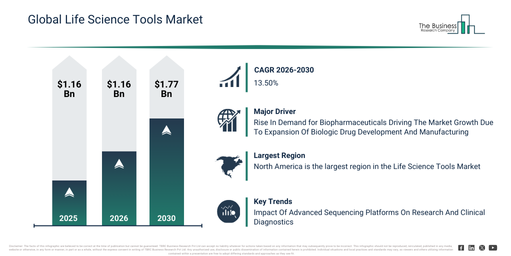
    The life science tools market size is projected for substantial expansion in the coming years. It is anticipated to achieve a valuation of $379.95 billion in 2030, exhibiting a compound annual growth rate (CAGR) of 13.5%. This anticipated growth during the forecast period is propelled by factors such as the incorporation of automation and intelligent laboratory equipment, heightened investment in genomics and proteomics investigations, a surging demand for personalized medicine, the broadening scope of clinical diagnostics and drug discovery applications, and the implementation of cloud-based data analytics and digital lab solutions. Key trends for the forecast period encompass a greater embrace of high-throughput instruments and automation, an escalating need for advanced consumables and reagents, the expansion of research in genomics, proteomics, and cell biology, an intensified focus on contract research organizations (CROs), and improved quality control and calibration services for life science tools.

    Download the Free Sample Report to Explore Key Market Insights:

    https://www.thebusinessresearchcompany.com/sample.aspx?id=27329&type=smp

    What Drivers Are Influencing The Life Science Tools Market?

    The escalating demand for biopharmaceuticals is projected to fuel the expansion of the life science tools market in the foreseeable future. Biopharmaceuticals are medical treatments created using biotechnology, utilizing biological sources like living cells or organisms to produce therapies such as proteins, antibodies, or vaccines. The increased need for biopharmaceuticals primarily stems from their efficacy in addressing intricate and persistent illnesses that traditional small-molecule drugs cannot adequately manage. Life science tools are crucial for the development and production of biopharmaceuticals, offering essential technologies for research, analysis, and quality assurance throughout the drug manufacturing process, thereby ensuring precision, efficiency, and adherence to regulatory standards. For example, as reported by Cardinal Health Inc., a US-based healthcare company, in January 2023, the US had 33 biosimilar products approved by the FDA as of January 2022, with 21 available on the market. By 2023, the count of FDA-approved biosimilars had grown to 40, with 25 commercially accessible. Consequently, the rising demand for biopharmaceuticals is a key factor propelling the growth of the life science tools market.

    Which Segment Areas Are Covered In The Life Science Tools Market Analysis?

    The life science tools market covered in this report is segmented –

    1) By Type: Instruments, Consumables, Services

    2) By Technology: Polymerase Chain Reaction(PCR) And Quantitative Polymerase Chain Reaction (qPCR), Sanger Sequencing, Separation Technologies, Flow Cytometry, Nucleic Acid Microarray, Mass Spectrometry, Other Technologies

    3) By Application: Drug Discovery And Development, Clinical Diagnostics, Genomic And Proteomic Research, Cell Biology Research, Other Applications

    4) By End-User: Academic And Research Institutions, Biotechnology And Pharmaceutical Companies, Hospitals And Diagnostic Laboratories, Contract Research Organizations (CROs), Government And Regulatory Agencies

    Subsegments:

    1) By Instruments: Microscopes, Sequencers, Analyzers, Spectrometers, Centrifuges, Chromatography Systems, Laboratory Automation Equipment

    2) By Consumables: Reagents, Kits, Culture Media, Pipettes And Tips, Plasticware, Laboratory Chemicals, Assay Kits

    3) By Services: Calibration Services, Maintenance And Repair, Laboratory Testing Services, Consulting Services, Training And Support, Research And Development Services

    What Key Developments And Trends Are Impacting The Life Science Tools Market?

    Leading companies within the life science tools market are focusing on developing advanced solutions, such as automated sequencing platforms, to improve efficiency, accuracy, and accessibility in genetic analysis, thereby accelerating research and clinical diagnostics. These automated sequencing platforms are sophisticated systems that perform DNA or RNA sequencing with minimal manual intervention through robotics and software, which helps to increase throughput, reduce errors, and enable faster, more reliable genetic research and diagnostics. For instance, in October 2024, Illumina Inc., a US-based biotechnology company, launched the MiSeq i100 series, which are its simplest and fastest benchtop sequencers designed to make next-generation sequencing more accessible to a broader range of laboratories. The new MiSeq i100 and MiSeq i100 Plus Systems allow for room-temperature kit storage and shipping, thereby eliminating delays caused by reagent thawing and enabling same-day sample-to-analysis workflows. These platforms offer rapid sequencing with run times as short as four hours, along with cost-effective consumables and user-friendly, push-button workflows that support various applications in microbiology, infectious disease, and oncology. This innovation demonstrates the market’s movement toward efficient, scalable, and easy-to-use sequencing tools that empower both researchers and clinicians.

    Which Global Companies Are Actively Competing In The Life Science Tools Market?

    Major companies operating in the life science tools market are F. Hoffmann-La Roche Ltd., Merck KGaA, Thermo Fisher Scientific Inc., Danaher Corporation, Agilent Technologies Inc., Lonza Group Ltd., Illumina Inc., Sartorius AG, Shimadzu Corporation, Revvity Inc., Waters Corporation, Bio-Rad Laboratories Inc., Bruker Corporation, Eppendorf AG, Tecan Group Ltd., Bio-Techne Corporation, Takara Bio Inc., GenScript Biotech Corporation, 10x Genomics Inc., Hamilton Company.

    Read the full life science tools market report here:

    https://www.thebusinessresearchcompany.com/report/life-science-tools-global-market-report

    Which Regions Are Expected To Experience Rapid Expansion In The Life Science Tools Market?

    North America was the largest region in the life science tools market in 2025. Asia-Pacific is expected to be the fastest-growing region in the forecast period. The regions covered in the life science tools market report are Asia-Pacific, South East Asia, Western Europe, Eastern Europe, North America, South America, Middle East, Africa.

    Request A Tailored Life Science Tools Market Research Report For Competitive Advantage:

    https://www.thebusinessresearchcompany.com/customise?id=27329&type=smp

    Browse Through More Reports Similar to the Global Life Science Tools Market 2026, By The Business Research Company

    Finance Cloud Market Report 2026

    https://www.thebusinessresearchcompany.com/report/finance-cloud-global-market-report

    Online Trading Platform Market 2026

    https://www.thebusinessresearchcompany.com/report/online-trading-platform-market

    Personal Finance Apps Market Report 2026

    https://www.thebusinessresearchcompany.com/report/personal-finance-apps-global-market-report

    Get in touch with us:

    The Business Research Company: https://www.thebusinessresearchcompany.com/

    Americas +1 310-496-7795

    Asia +44 7882 955267 & +91 8897263534

    Europe +44 7882 955267

    Email us at info@tbrc.info

    Follow us on:

    LinkedIn: https://in.linkedin.com/company/the-business-research-company

    YouTube: https://www.youtube.com/channel/UC24_fI0rV8cR5DxlCpgmyFQ

    Global Market Model: https://www.thebusinessresearchcompany.com/global-market-model

  • Implantable Loop Recorders Market Expected to Record Steady Growth and Approach $3.96 Billion by 2030

    Implantable Loop Recorders Market Expected to Record Steady Growth and Approach $3.96 Billion by 2030

    The Business Research Company’s 2026 market reports include new capabilities such as market attractiveness scoring and analysis, total addressable market analysis, company scoring matrix, interactive excel data dashboard, improved supply chain analysis, upcoming startups in the market, and overview of key products, aimed at improving the depth, usability, and strategic value of the insights delivered.

    How Large Is The Implantable Loop Recorders Market Projected To Become By 2030 Based On Its 2026 Valuation?

    The implantable loop recorders market has experienced significant growth in recent years. It is projected to expand from $1.91 billion in 2025 to $2.21 billion in 2026, exhibiting a compound annual growth rate (CAGR) of 16.0%. This market’s historical growth can be attributed to the increasing prevalence of cardiac arrhythmias, a higher adoption rate of implantable monitoring devices, the expansion of cardiac care centers, advancements in device miniaturization, and the rising application of remote patient monitoring.

    The market for implantable loop recorders is projected to experience swift expansion over the coming years. Its valuation is anticipated to reach $3.97 billion by 2030, exhibiting a compound annual growth rate (CAGR) of 15.8%. This projected increase can be attributed to several factors: a greater need for detecting arrhythmias early, the growing acceptance of telecardiology solutions, the spread of home-based cardiac monitoring, advancements in battery life technology, and increased funding in digital cardiac health. Key developments during this timeframe are expected to involve the wider uptake of remote cardiac monitoring devices, an increase in continuous rhythm monitoring systems, the growing incorporation of AI-based arrhythmia detection, the broadening of minimally invasive cardiac diagnostics, and a stronger emphasis on extended patient surveillance.

    Download the Free Sample Report to Explore Key Market Insights:

    https://www.thebusinessresearchcompany.com/sample.aspx?id=8737&type=smp

    What Primary Drivers Are Shaping The Development Of The Implantable Loop Recorders Market?

    The escalating occurrence of cardiac conditions is projected to drive growth in the implantable loop recorder market in the coming years. Cardiac disorders refer to a range of ailments affecting the heart and blood vessels, standing as a primary global cause of illness and death. The increase in cardiac disorders is fueled by elements such as an aging global demographic, inactive living habits, and a rising prevalence of concurrent health issues like diabetes and hypertension, all contributing to a greater need for continuous heart rhythm monitoring. Implantable loop recorders support heart care by allowing for extended monitoring of patients’ heart activity, which aids in timely diagnosis and treatment. As an illustration, in January 2024, data from the American Heart Association, a US-based non-profit organization, indicated that the age-adjusted death rate from cardiovascular disease rose to 233.3 per 100,000 in 2024, a 4.0% surge from 224.4 per 100,000 in 2023. Thus, the global rise in cardiac disorders is accelerating the expansion of the implantable loop recorder market.

    What Segment Groups Are Identified Within The Implantable Loop Recorders Market?

    The implantable loop recorders market covered in this report is segmented –

    1) By Product: Manual, Automatic

    2) By Application: Atrial fibrillation, Cardiac Arrhythmia, Cardiac Syncope

    3) By End Users: Hospitals, Cardiac Centers And Clinics, Ambulatory Surgical Centers

    Subsegments:

    1) By Manual: Manual Activation Loop Recorders, Handheld Programming Devices

    2) By Automatic: Continuous Monitoring Loop Recorders, Event-Triggered Loop Recorders

    What Trends Are Advancing Progress In The Implantable Loop Recorders Market?

    Major companies in the implantable loop recorder market are concentrating on developing innovative devices, specifically artificial intelligence (AI)-based cardiac monitors, to improve the detection and diagnosis of cardiac arrhythmias. An AI-based cardiac monitor is a medical device designed to continuously monitor heart activity, employing AI algorithms to analyze data in real-time, identify abnormalities, and predict potential cardiac events for timely clinical intervention. For instance, in September 2023, BIOTRONIK SE & Co. KG, a Germany-based medical device company, introduced the BIOMONITOR IV implantable cardiac monitor (ICM). This product integrates the company’s SmartECG technology with artificial intelligence (AI) to revolutionize cardiac arrhythmia monitoring, aiming to deliver unparalleled efficiency in detecting and diagnosing cardiac irregularities.

    Which Companies Hold Significant Positions In The Implantable Loop Recorders Market?

    Major companies operating in the implantable loop recorders market are Abbott Laboratories, Medtronic PLC, BIOTRONIK, Boston Scientific Corporation, Vectorious, Angel Medical Systems Inc., Implicity, EBR Systems Inc., Cardiac Insight Inc., iRhythm Technologies Inc., Acutus Medical Inc., LifeWatch AG, Osypka Medical GmbH, BioTelemetry Inc., Philips Healthcare, GE HealthCare Technologies Inc., Siemens Healthineers, ZOLL Medical Corporation, CardioNet, AliveCor

    Read the full implantable loop recorders market report here:

    https://www.thebusinessresearchcompany.com/report/implantable-loop-recorders-global-market-report

    How Does The Implantable Loop Recorders Market Perform Across Major Global Regions?

    North America was the largest region in the implantable loop recorder market in 2025. Asia-Pacific is expected to be the fastest-growing region in the forecast period. The regions covered in the implantable loop recorders market report are Asia-Pacific, South East Asia, Western Europe, Eastern Europe, North America, South America, Middle East, Africa.

    Request A Tailored Implantable Loop Recorders Market Research Report For Competitive Advantage:

    https://www.thebusinessresearchcompany.com/customise?id=8737&type=smp

    Browse Through More Reports Similar to the Global Implantable Loop Recorders Market 2026, By The Business Research Company

    Active Implantable Medical Devices Market Report 2026

    https://www.thebusinessresearchcompany.com/report/active-implantable-medical-devices-global-market-report

    Smart Implants Market Report 2026

    https://www.thebusinessresearchcompany.com/report/smart-implants-global-market-report

    Implantable Drug Delivery Devices Market Report 2026

    https://www.thebusinessresearchcompany.com/report/implantable-drug-delivery-devices-global-market-report

    Get in touch with us:

    The Business Research Company: https://www.thebusinessresearchcompany.com/

    Americas +1 310-496-7795

    Asia +44 7882 955267 & +91 8897263534

    Europe +44 7882 955267

    Email us at info@tbrc.info

    Follow us on:

    LinkedIn: https://in.linkedin.com/company/the-business-research-company

    YouTube: https://www.youtube.com/channel/UC24_fI0rV8cR5DxlCpgmyFQ

    Global Market Model: https://www.thebusinessresearchcompany.com/global-market-model

  • Implantable Insulin Pump Industry Expansion Forecast Showing Market Size of $6.08 Billion by 2030 at 9.3% CAGR

    Implantable Insulin Pump Industry Expansion Forecast Showing Market Size of $6.08 Billion by 2030 at 9.3% CAGR

    The Business Research Company’s 2026 market reports include new capabilities such as market attractiveness scoring and analysis, total addressable market analysis, company scoring matrix, interactive excel data dashboard, improved supply chain analysis, upcoming startups in the market, and overview of key products, aimed at improving the depth, usability, and strategic value of the insights delivered.

    What Market Value Is Anticipated For The Implantable Insulin Pump Market Over The Period 2026–2030?

    The implantable insulin pump market has experienced significant expansion in recent years. It is anticipated to grow from $3.88 billion in 2025 to $4.26 billion in 2026, at a compound annual growth rate (CAGR) of 9.7%. The market’s historical growth can be attributed to the increasing prevalence of type 1 diabetes, the limitations of multiple daily insulin injections, early developments in implantable pump technology, growing awareness of intensive insulin therapy, and established hospital-based diabetes management practices.

    The implantable insulin pump market is anticipated to show substantial expansion over the next few years, with its valuation expected to reach $6.09 billion in 2030, demonstrating a compound annual growth rate (CAGR) of 9.3%. This projected increase in the forecast period is driven by factors such as the growing integration of automated insulin delivery systems, improvements in the design of implantable medical devices, an escalating need for individualized diabetes care, the broadening of home-based diabetes management solutions, and supportive reimbursement and regulatory conditions. Significant developments expected during this period include the increasing uptake of implantable insulin delivery systems, a rising demand for closed-loop insulin pumps, better glycemic management via continuous insulin infusion, wider acceptance of long-term implantable devices for diabetes, and a heightened emphasis on patient comfort and adherence to treatment.

    Download the Free Sample Report to Explore Key Market Insights:

    https://www.thebusinessresearchcompany.com/sample.aspx?id=20565&type=smp

    Which Major Factors Are Driving The Expansion Of The Implantable Insulin Pump Market?

    The increasing prevalence of diabetes is anticipated to boost the implantable insulin pump market going forward. Diabetes, a chronic condition where the body struggles to manage blood sugar levels due to inadequate insulin production or inefficient cell usage, is seeing a rise in cases driven by factors such as higher obesity rates, lack of physical activity, unhealthy diets, and an older population. Implantable insulin pumps provide precise, continuous insulin delivery, stabilizing blood glucose, reducing injection frequency, and improving overall diabetes management and quality of life. A notable example from May 2024, according to the Diabetes UK, a UK-based charity for diabetes people, indicates that over 5.6 million people in the UK were living with diabetes, with 2022–23 figures showing an increase of 167,822 cases compared to the previous year. This increasing incidence of diabetes is thus driving the growth of the implantable insulin pump market.

    How Is The Implantable Insulin Pump Market Divided Into Its Major Segments?

    The implantable insulin pump market covered in this report is segmented –

    1) By Type: Fully Implantable Insulin Pump, Semi-Implantable Insulin Pump

    2) By Application: Type 1 Diabetes, Type 2 Diabetes

    3) By End-User: Hospitals, Diabetes Clinics, Home-Care

    Subsegments:

    1) By Fully Implantable Insulin Pump: Fully Automated Implantable Insulin Pump, Implantable Insulin Pump with Continuous Glucose Monitoring (CGM), Implantable Insulin Pump with Adaptive Insulin Delivery

    2) By Semi-Implantable Insulin Pump: Semi-Automated Semi-Implantable Insulin Pump, Basal-Bolus Semi-Implantable Insulin Pump, Patch-Assisted Semi-Implantable Insulin Pump, Remote-Controlled Semi-Implantable Insulin Pump

    How Are Trends Transforming The Implantable Insulin Pump Market Landscape?

    Leading companies in the implantable insulin pump market are increasingly forming strategic alliances to develop high-concentration, temperature-stable insulin formulations specifically engineered for next-generation implantable pumps. For instance, in May 2024, Arecor Therapeutics plc, a US-based biopharmaceutical company, partnered with Medtronic Diabetes, a US-based medical technology company, to create an innovative insulin using Arecor’s Arestat technology platform. This sophisticated formulation is designed for a select group of patients who have limited options with conventional insulin delivery methods. The new insulin aims to improve clinical outcomes by enabling direct hepatic absorption, minimizing pump maintenance requirements, expanding physician adoption, and potentially reducing healthcare expenses. This collaboration underscores substantial progress in diabetes care by merging advanced drug formulation with innovative implantable delivery technology to better assist patients needing intensive insulin management.

    Who Are The Prominent Organizations Shaping The Implantable Insulin Pump Market?

    Major companies operating in the implantable insulin pump market are Sanofi S.A., Abbott Laboratories, Medtronic plc, Dexcom Inc., Insulet Corporation, Tandem Diabetes Care Inc., Ypsomed Holding AG, Air Liquide Healthcare Ltd., Diabeloop SA, Glooko Inc., ViCentra B.V., Bigfoot Biomedical Inc., Beta Bionics Inc., Senseonics Holdings Inc., INREDA DIABETIC B.V., TIDEPOOL Inc., Medtrum Technologies Inc., Sernova Corp., PhysioLogic Devices Inc., EOFLOW CO. LTD., CamDiab Ltd.

    Read the full implantable insulin pump market report here:

    https://www.thebusinessresearchcompany.com/report/implantable-insulin-pump-global-market-report

    Which Region Currently Holds The Largest Share Of The Implantable Insulin Pump Market?

    North America was the largest region in the implantable insulin pump market in 2025. Asia-Pacific is expected to be the fastest-growing region in the forecast period. The regions covered in the implantable insulin pump market report are Asia-Pacific, South East Asia, Western Europe, Eastern Europe, North America, South America, Middle East, Africa.

    Request A Tailored Implantable Insulin Pump Market Research Report For Competitive Advantage:

    https://www.thebusinessresearchcompany.com/customise?id=20565&type=smp

    Browse Through More Reports Similar to the Global Implantable Insulin Pump Market 2026, By The Business Research Company

    Insulin Drugs Market Report 2026

    https://www.thebusinessresearchcompany.com/report/insulin-drugs-global-market-report

    Smart Insulin Pens Market Report 2026

    https://www.thebusinessresearchcompany.com/report/smart-insulin-pens-global-market-report

    Insulin Pens Syringes Pumps And Injectors Market Report 2026

    https://www.thebusinessresearchcompany.com/report/insulin-pens-syringes-pumps-and-injectors-global-market-report

    Get in touch with us:

    The Business Research Company: https://www.thebusinessresearchcompany.com/

    Americas +1 310-496-7795

    Asia +44 7882 955267 & +91 8897263534

    Europe +44 7882 955267

    Email us at info@tbrc.info

    Follow us on:

    LinkedIn: https://in.linkedin.com/company/the-business-research-company

    YouTube: https://www.youtube.com/channel/UC24_fI0rV8cR5DxlCpgmyFQ

    Global Market Model: https://www.thebusinessresearchcompany.com/global-market-model
  • Implantable Infusion Pumps Market Revenue Expected to Reach $28.24 Billion by 2030 with 6.8% CAGR

    Implantable Infusion Pumps Market Revenue Expected to Reach $28.24 Billion by 2030 with 6.8% CAGR

    The Business Research Company’s 2026 market reports include new capabilities such as market attractiveness scoring and analysis, total addressable market analysis, company scoring matrix, interactive excel data dashboard, improved supply chain analysis, upcoming startups in the market, and overview of key products, aimed at improving the depth, usability, and strategic value of the insights delivered.

    What Is The Expected Market Size Of The Implantable Infusion Pumps Market From 2026 To 2030?

    The implantable infusion pumps market has experienced robust expansion in recent years. It is projected to expand from $20.32 billion in 2025 to $21.73 billion in 2026, demonstrating a compound annual growth rate (CAGR) of 6.9%. Historically, this growth can be ascribed to factors such as the increasing prevalence of chronic pain conditions, a rising incidence of diabetes, an increase in oncology treatment procedures, technological advancements in implantable pumps, and the broadening of specialty clinical care.

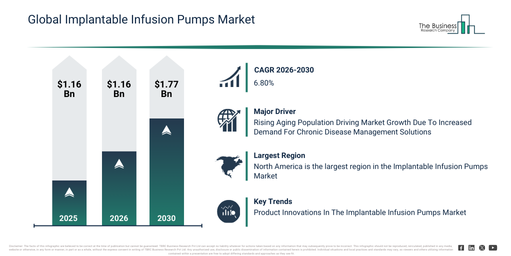
    The implantable infusion pumps market is projected to experience substantial expansion over the coming years. This market is anticipated to reach $28.25 billion by 2030, exhibiting a compound annual growth rate (CAGR) of 6.8%. This growth during the forecast period is fueled by several factors, including the rising adoption of intelligent infusion technologies, a greater need for remote patient observation, the broadening of tailored dosing regimens, increased capital allocated to digital therapeutics, and the expanded deployment of implantable pumps in homecare environments. Key trends expected during this period encompass the wider embrace of programmable infusion devices, a surge in demand for enduring pain management options, the increasing utilization of smart and networked pumps, the growth of implantable insulin delivery systems, and a heightened emphasis on precise dosage.

    Download the Free Sample Report to Explore Key Market Insights:

    https://www.thebusinessresearchcompany.com/sample.aspx?id=3347&type=smp

    What Key Drivers Are Influencing The Growth Of The Implantable Infusion Pumps Market?

    The expanding older demographic is anticipated to propel the growth of the implantable infusion pumps market in the future. This aging population is defined as the proportion of individuals 65 and older compared to the employed population between the ages of 18 and 64. The increase in this demographic results from enhanced life expectancy, a consequence of advancements in healthcare and living standards, leading to more individuals living longer. Implantable infusion pumps are commonly utilized for managing chronic conditions, meaning that a larger aging population creates a broader pool of potential patients who stand to benefit from these devices. For example, in February 2025, Eurostat, the Luxembourg statistical office of the European Union, reported that the European Union’s estimated population in 2024 was approximately 449 million people, with over one-fifth, or 21.6%, being 65 years and over, and a median age of 44.7 years. The old-age dependency ratio in the EU climbed by half a percentage point (0.5 pp) between 2023 and 2024, rising from 33.4% to 33.9%. Thus, the growth in the aging population is a primary factor driving the expansion of the implantable infusion pumps market.

    Which Segments Are Included In The Analysis Of The Implantable Infusion Pumps Market?

    The implantable infusion pumps market covered in this report is segmented –

    1) By Type: Patient-Controlled Analgesia (PCA) Pumps, Enteral Pumps, Insulin Pumps, Elastomeric Pumps, Syringe Pumps, Other Types

    2) By Applications: Oncology, Pediatrics Or Neonatology, Gastroenterology, Hematology, Diabetes, Other Applications

    3) By End User: Hospitals, Ambulatory Surgical Centers, Specialty Clinics

    Subsegments:

    1) By Patient-Controlled Analgesia (PCA) Pumps: Morphine PCA Pumps, Fentanyl PCA Pumps, Other Opioid PCA Pumps

    2) By Enteral Pumps: Tube Feeding Pumps, Syringe-based Enteral Pumps, Continuous Or Intermittent Feeding Pumps

    3) By Insulin Pumps: Insulin Delivery Pumps, Insulin Patch Pumps, Smart Insulin Pumps

    4) By Elastomeric Pumps: Disposable Elastomeric Pumps, Reusable Elastomeric Pumps

    5) By Syringe Pumps: Small Volume Syringe Pumps, Large Volume Syringe Pumps

    6) By Other Types: Chemotherapy Infusion Pumps, Antibiotic Infusion Pumps, Pain Management Pumps

    Which Trends Are Impacting The Growth Of The Implantable Infusion Pumps Market?

    Leading firms within the implantable infusion pumps market are introducing innovative products like insulin pumps, aiming to expand their customer reach, boost sales volumes, and enhance their financial returns. These insulin pumps serve as medical instruments specifically engineered to support individuals living with diabetes in regulating their blood glucose concentrations. An example of this innovation occurred in April 2023, when Medtronic, a medical device manufacturer based in Ireland, revealed that its MiniMed 780G System, featuring meal detection technology, had received FDA approval. A key characteristic of this particular product is its capacity to establish the lowest glucose target, specifically 100 mg/dL, among all automated insulin pumps currently offered, thereby mirroring the typical glucose readings found in non-diabetic individuals. This configuration allows the pump to function on a treat-to-target principle, performing automatic adjustments to basal insulin and self-corrections to achieve a predefined goal. Furthermore, it is unique as the sole pump featuring an infusion set designed for comfortable extended wear, lasting for a duration of up to 7 days. This prolonged usage is facilitated by sophisticated materials that significantly reduce the degradation of insulin preservatives and ensure a steady insulin delivery and stability, consequently lessening the likelihood of the infusion set becoming blocked.

    Which Key Industry Participants Are Active In The Implantable Infusion Pumps Market?

    Major companies operating in the implantable infusion pumps market are Medtronic plc, Boston Scientific Corporation, Baxter International Inc., B. Braun Melsungen AG, Fresenius Kabi AG, Smiths Medical a Smiths Group company, Terumo Corporation, Johnson & Johnson, Greatbatch Medical, Primetech Corporation, Flowonix Medical Inc., F. Hoffmann-La Roche Ltd, Shenzhen Mindray Bio-Medical Electronics Co. Ltd., Micrel Medical, Insulet Corporation, ICU Medical Inc., Becton Dickinson and Company (BD), Roche Diagnostics International AG, Abbott Laboratories, Hospira, Teleflex Incorporated, C. R. Bard Inc., AngioDynamics Inc., Merit Medical Systems Inc., NIPRO Medical Corporation, IRadimed Corporation, Zyno Medical, Tricumed Medizintechnik GmbH, Q Core Medical Ltd., Ivenix Inc., Tandem Diabetes Care Inc.

    Read the full implantable infusion pumps market report here:

    https://www.thebusinessresearchcompany.com/report/implantable-infusion-pumps-global-market-report

    Which Region Is Expected To Register The Fastest Growth In The Implantable Infusion Pumps Market?

    North America was the largest region in the implantable infusion pumps market in 2025. Asia-Pacific was the second-largest region in the implantable infusion pumps market. The regions covered in the implantable infusion pumps market report are Asia-Pacific, South East Asia, Western Europe, Eastern Europe, North America, South America, Middle East, Africa.

    Request A Tailored Implantable Infusion Pumps Market Research Report For Competitive Advantage:

    https://www.thebusinessresearchcompany.com/customise?id=3347&type=smp

    Browse Through More Reports Similar to the Global Implantable Infusion Pumps Market 2026, By The Business Research Company

    Infusion Pump Market Report 2026

    https://www.thebusinessresearchcompany.com/report/infusion-pump-global-market-report

    Ambulatory Iv Infusion Pumps Market Report 2026

    https://www.thebusinessresearchcompany.com/report/ambulatory-iv-infusion-pumps-global-market-report

    Intravenous Infusion Pumps Market Report 2026

    https://www.thebusinessresearchcompany.com/report/intravenous-infusion-pumps-global-market-report

    Get in touch with us:

    The Business Research Company: https://www.thebusinessresearchcompany.com/

    Americas +1 310-496-7795

    Asia +44 7882 955267 & +91 8897263534

    Europe +44 7882 955267

    Email us at info@tbrc.info

    Follow us on:

    LinkedIn: https://in.linkedin.com/company/the-business-research-company

    YouTube: https://www.youtube.com/channel/UC24_fI0rV8cR5DxlCpgmyFQ

    Global Market Model: https://www.thebusinessresearchcompany.com/global-market-model
  • Global Implantable Heart Pacemaker Market Set for Strong Expansion Reaching $6.79 Billion by 2030 at 5.7% CAGR

    Global Implantable Heart Pacemaker Market Set for Strong Expansion Reaching $6.79 Billion by 2030 at 5.7% CAGR

    The Business Research Company’s 2026 market reports include new capabilities such as market attractiveness scoring and analysis, total addressable market analysis, company scoring matrix, interactive excel data dashboard, improved supply chain analysis, upcoming startups in the market, and overview of key products, aimed at improving the depth, usability, and strategic value of the insights delivered.

    What Market Valuation Is Forecasted For The Implantable Heart Pacemaker Market By 2030 Starting From Its 2026 Size?

    The implantable heart pacemaker market has experienced robust growth in recent years. This market is projected to expand from $5.14 billion in 2025 to $5.45 billion in 2026, demonstrating a compound annual growth rate (CAGR) of 6.0%. Key factors contributing to historical growth include the increasing prevalence of cardiac arrhythmias, the aging global population, wider availability of implantable cardiac devices, the expansion of cardiac care facilities, and improved surgical implantation techniques.

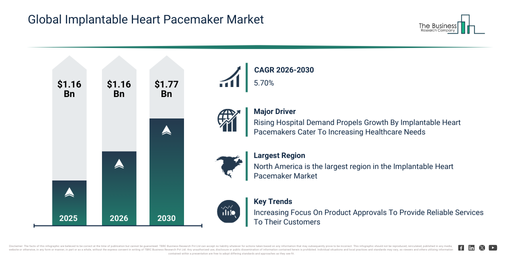
    The market size for implantable heart pacemakers is anticipated to undergo significant expansion over the coming years. It is projected to reach **$6.8 billion in 2030**, growing at a compound annual growth rate (CAGR) of **5.7%**. This expected growth during the forecast period is primarily driven by an increasing demand for minimally invasive cardiac devices, the rising adoption of connected healthcare solutions, the expansion of remote patient monitoring programs, a growing focus on personalized cardiac therapy, and advancements in battery and power management. Key trends for the forecast period include the increasing adoption of remote cardiac monitoring pacemakers, a rising use of leadless pacemaker technologies, the growing integration of wireless data transmission, the expansion of MRI-compatible pacemaker devices, and an enhanced focus on miniaturization and battery longevity.

    Download the Free Sample Report to Explore Key Market Insights:

    https://www.thebusinessresearchcompany.com/sample.aspx?id=8583&type=smp

    What Major Growth Drivers Are Shaping The Outlook Of The Implantable Heart Pacemaker Market?

    The growing need from hospitals is anticipated to propel the expansion of the implantable heart pacemaker market in the future. Hospitals are specialized facilities where medical professionals provide diagnostic, therapeutic, and preventive healthcare services to individuals who are ill or injured. Within hospitals, implantable heart pacemakers are employed to manage cardiac conditions, regulate the heart’s rhythm, enable remote monitoring of the patient’s heart activity, and improve the overall quality of life for patients by ensuring a consistent and appropriate heart rate. For instance, in August 2023, according to Interweave Textiles Limited, a UK-based company that specializes in the manufacturing of textiles and related products, there are 1148 hospitals in the UK in 2023, in which 930 are National Health Service hospitals and 218 private hospitals. Therefore, the increasing demand of hospitals is driving the growth of the implantable heart pacemaker market.

    Which Segment Categories Define The Implantable Heart Pacemaker Market?

    The implantable heart pacemaker market covered in this report is segmented –

    1) By Product Type: Single Chamber, Dual Chamber, Biventricular

    2) By Application: Heart Block, Sick Sinus Syndrome, Other Applications

    3) By End User: Hospital, Clinics, Other End Users

    Subsegments:

    1) By Single Chamber: VVI (Ventricular Demand), AAI (Atrial Demand)

    2) By Dual Chamber: DDD (Dual Chamber Demand), AVD (Atrioventricular Demand)

    3) By Biventricular: CRT-P (Cardiac Resynchronization Therapy – Pacemaker), CRT-D (Cardiac Resynchronization Therapy – Defibrillator)

    What Major Market Trends Are Driving Changes In The Implantable Heart Pacemaker Market?

    Leading companies in the implantable heart pacemaker market are concentrating on securing product approvals, such as the dual chamber (DR) leadless pacemaker system, to boost their market revenues. This dual chamber (DR) leadless pacemaker system represents a groundbreaking technology, offering a minimally invasive and leadless solution for patients experiencing a slow heart rate. For instance, in July 2023, Abbott Laboratories, a US-based healthcare company, received FDA approval for its aveir dual chamber (DR) leadless pacemaker system. This novel method utilizes the conductive properties of the body’s blood pool and cardiac tissue to generate low-energy, subthreshold pulses between the implanted devices. The system’s aim is to provide cardiac pacing therapy to the target treatment group within the implanted chamber and to sense intrinsic cardiac signals. The aveir DR system is recognized as the first dual-chamber leadless pacemaker, enabling synchronous pacing between the atrium and the ventricle.

    Who Are The Top Companies Competing In The Implantable Heart Pacemaker Market?

    Major companies operating in the implantable heart pacemaker market are Medtronic PLC, BIOTRONIK Inc., Boston Scientific Corporation, Abbott Laboratories, MEDICO SRL, Vitatron, Shree Pacetronix Ltd., Sorin Group, Osypka Medical GmbH, OSCOR Inc., Lepu Medical Technology (Beijing) Co. Ltd., LivaNova PLC., MicroPort Scientific Corporation, Cardioelectronica, Hunan Zhongyi Medical Devices Co. Ltd., Shenzhen MicroCor Medical Technology Co.Ltd., Nanjing Normative Biological Technology Co. Ltd., Beijing Huibo Cardiovascular Devices Co. Ltd., Jiangsu Kanghui Medical Devices Co. Ltd., Zhejiang Lewei Medical Instruments Co. Ltd., Shandong Weigao Medical Devices Co. Ltd., Liaoning Tianma Medical Technology Co. Ltd., Changsha Leadshine Medical Devices Co. Ltd.

    Read the full implantable heart pacemaker market report here:

    https://www.thebusinessresearchcompany.com/report/implantable-heart-pacemaker-global-market-report

    Which Regions Are Projected To Dominate The Implantable Heart Pacemaker Market In The Coming Years?

    North America was the largest region in the implantable heart pacemaker market share in 2025. Asia-Pacific is expected to be the fastest-growing region in the forecast period. The regions covered in the implantable heart pacemaker market report are Asia-Pacific, South East Asia, Western Europe, Eastern Europe, North America, South America, Middle East, Africa.

    Request A Tailored Implantable Heart Pacemaker Market Research Report For Competitive Advantage:

    https://www.thebusinessresearchcompany.com/customise?id=8583&type=smp

    Browse Through More Reports Similar to the Global Implantable Heart Pacemaker Market 2026, By The Business Research Company

    Implantable Cardiac Rhythm Management Device Market Report 2026

    https://www.thebusinessresearchcompany.com/report/implantable-cardiac-rhythm-management-device-global-market-report

    Cardiac Pacemakers Market Report 2026

    https://www.thebusinessresearchcompany.com/report/cardiac-pacemakers-global-market-report

    Cardiovascular Implants Market Report 2026

    https://www.thebusinessresearchcompany.com/report/cardiovascular-implants-global-market-report

    Get in touch with us:

    The Business Research Company: https://www.thebusinessresearchcompany.com/

    Americas +1 310-496-7795

    Asia +44 7882 955267 & +91 8897263534

    Europe +44 7882 955267

    Email us at info@tbrc.info

    Follow us on:

    LinkedIn: https://in.linkedin.com/company/the-business-research-company

    YouTube: https://www.youtube.com/channel/UC24_fI0rV8cR5DxlCpgmyFQ

    Global Market Model: https://www.thebusinessresearchcompany.com/global-market-model
  • Implantable Glucose Sensor Market Growth Expected to Reach $16.04 Billion by 2030 with 14.5% CAGR

    Implantable Glucose Sensor Market Growth Expected to Reach $16.04 Billion by 2030 with 14.5% CAGR

    The Business Research Company’s 2026 market reports include new capabilities such as market attractiveness scoring and analysis, total addressable market analysis, company scoring matrix, interactive excel data dashboard, improved supply chain analysis, upcoming startups in the market, and overview of key products, aimed at improving the depth, usability, and strategic value of the insights delivered.

    How Is The Market Size Of The Implantable Glucose Sensor Market Expected To Change Between 2026 And 2030?

    The implantable glucose sensor market has experienced substantial growth in recent years. This market is anticipated to expand from $8.14 billion in 2025 to $9.34 billion in 2026, reflecting a compound annual growth rate (CAGR) of 14.7%. The observed growth during prior periods is attributable to factors such as the increasing incidence of diabetes, the disadvantages of finger stick testing, the initial uptake of CGM devices, escalating healthcare spending, and enhancements in sensor accuracy.

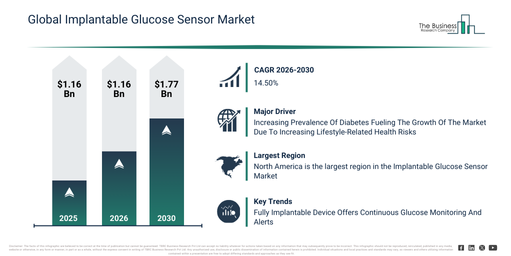
    The implantable glucose sensor market is projected to undergo significant expansion in the coming years, reaching $16.05 billion in 2030 at a compound annual growth rate (CAGR) of 14.5%. This anticipated growth is influenced by several factors, including the increasing demand for long-term monitoring solutions, their integration with insulin delivery systems, a growing global diabetic population, continuous technological miniaturization, and favorable reimbursement policies. Key trends expected during this forecast period involve the development of long-duration implantable monitoring devices, the move towards finger prick-free diabetes management, advancements in biocompatible sensor materials, the provision of continuous real-time glucose tracking, and a rising preference for home-based monitoring.

    Download the Free Sample Report to Explore Key Market Insights:

    https://www.thebusinessresearchcompany.com/sample.aspx?id=30300&type=smp

    What Drivers Are Expected To Influence The Implantable Glucose Sensor Market During The Forecast Period?

    The increasing prevalence of diabetes is anticipated to drive the expansion of the implantable glucose sensor market in the coming years. Diabetes is a chronic medical condition where the body struggles to properly regulate blood sugar or glucose levels. This rise in diabetes cases is largely due to unhealthy lifestyles, such as reduced physical activity and increased consumption of high-calorie foods, which heightens the risk of developing type 2 diabetes. Implantable glucose sensors assist in diabetes management by offering continuous and long-term monitoring of blood glucose levels, making them highly suitable for patients who require precise glucose control. They reduce the need for frequent finger-prick tests by supplying real-time data and alerts, thereby improving overall patient convenience and health outcomes. For instance, in June 2024, according to the National Health Service, a UK-based government department, 3,615,330 individuals registered with a general practitioner (GP) were diagnosed with non-diabetic hyperglycemia or pre-diabetes in 2023, marking an 18% increase from 3,065,825 cases in 2022. Therefore, the growing prevalence of diabetes is a key factor propelling the growth of the implantable glucose sensor market.

    How Is The Implantable Glucose Sensor Market Structured Across Different Segments?

    The implantable glucose sensor market covered in this report is segmented –

    1) By Product Type: Long-term Implantable Sensors, Short-term Implantable Sensors

    2) By Technology: Enzymatic, Non-Enzymatic

    3) By Application: Type 1 Diabetes, Type 2 Diabetes

    4) By End-User: Hospitals, Clinics, Homecare Settings, Other End-Users

    Subsegments:

    1) By Long-Term Implantable Sensors: Enzyme-Based, Electrochemical, Fluorescence-Based

    2) By Short-Term Implantable Sensors: Minimally Invasive, Biocompatible Hydrogel-Based

    Which Trends Are Shaping The Future Of The Implantable Glucose Sensor Market?

    Major companies operating in the implantable glucose sensor market are concentrating on developing advanced offerings, such as long-duration implantable sensors, to enhance patient convenience, improve health outcomes, and reduce the frequency of device maintenance. Long-term implantable sensors are innovative medical devices inserted under the skin to continuously measure glucose levels in the interstitial fluid for extended periods, unlike short-term sensors which necessitate frequent replacement. For instance, in September 2024, Senseonics Holdings Inc., a US-based medical technology company, obtained approval from the U.S. Food and Drug Administration (FDA) for its Eversense 365 continuous glucose monitoring system for individuals with Type 1 and Type 2 diabetes aged 18 years and older. This system features a fully implantable sensor that lasts up to 365 days, providing ongoing glucose readings and alerts for high and low glucose levels. It also integrates with a mobile app and cloud-based platform, enabling patients and healthcare providers to track glucose trends and make informed treatment decisions remotely.

    Which Major Players Dominate The Implantable Glucose Sensor Market?

    Major companies operating in the implantable glucose sensor market are Senseonics Holdings Inc., GlySens Incorporated, Profusa Inc., Abbott Laboratories, Dexcom Inc., Medtronic plc, Biolinq Inc., Nemaura Medical Inc., Integrated Sensing Systems Inc., WaveForm Technologies Inc., BioMems Solutions Inc., Echo Therapeutics Inc., Glucovation Inc., Know Labs Inc., Pacific Diabetes Technologies Inc., Metronom Health Inc., AliveCor Diabetes Inc., Pixelligent Technologies Inc., OrSense Ltd., Medtrum Technologies Inc.

    Read the full implantable glucose sensor market report here:

    https://www.thebusinessresearchcompany.com/report/global-implantable-glucose-sensor-market-report

    Which Region Is Forecast To Lead The Implantable Glucose Sensor Market In Terms Of Market Size?

    North America was the largest region in the implantable glucose sensor market in 2025. Asia-Pacific is expected to be the fastest-growing region in the forecast period. The regions covered in the implantable glucose sensor market report are Asia-Pacific, South East Asia, Western Europe, Eastern Europe, North America, South America, Middle East, Africa.

    Request A Tailored Implantable Glucose Sensor Market Research Report For Competitive Advantage:

    https://www.thebusinessresearchcompany.com/customise?id=30300&type=smp

    Browse Through More Reports Similar to the Global Implantable Glucose Sensor Market 2026, By The Business Research Company

    Continuous Glucose Monitoring Devices Market Report 2026

    https://www.thebusinessresearchcompany.com/report/continuous-glucose-monitoring-devices-global-market-report

    Blood Glucose Monitoring Systems Market Report 2026

    https://www.thebusinessresearchcompany.com/report/blood-glucose-monitoring-systems-global-market-report

    Continous Blood Glucose Monitoring Market Report 2026

    https://www.thebusinessresearchcompany.com/report/continous-blood-glucose-monitoring-global-market-report

    Get in touch with us:

    The Business Research Company: https://www.thebusinessresearchcompany.com/

    Americas +1 310-496-7795

    Asia +44 7882 955267 & +91 8897263534

    Europe +44 7882 955267

    Email us at info@tbrc.info

    Follow us on:

    LinkedIn: https://in.linkedin.com/company/the-business-research-company

    YouTube: https://www.youtube.com/channel/UC24_fI0rV8cR5DxlCpgmyFQ

    Global Market Model: https://www.thebusinessresearchcompany.com/global-market-model