Month: March 2026

  • Implantable Drug Delivery Devices Market Forecast 2026–2035 Reflecting Expansion Opportunities Across Industries

    Implantable Drug Delivery Devices Market Forecast 2026–2035 Reflecting Expansion Opportunities Across Industries

    The Business Research Company’s 2026 market reports include new capabilities such as market attractiveness scoring and analysis, total addressable market analysis, company scoring matrix, interactive excel data dashboard, improved supply chain analysis, upcoming startups in the market, and overview of key products, aimed at improving the depth, usability, and strategic value of the insights delivered.

    What Is The Market Size Of The Implantable Drug Delivery Devices Market In 2026 And What Value Is Projected For 2030?

    The implantable drug delivery devices market has experienced robust expansion in recent years. This market is expected to grow from $21.94 billion in 2025 to $23.91 billion in 2026, exhibiting a compound annual growth rate (CAGR) of 9.0%. Historically, this growth has been fueled by advancements in implantable medical device design, the increasing prevalence of chronic diseases, a rise in the use of long-term drug therapies, the growth in minimally invasive surgical procedures, and the expansion of oncology and cardiovascular treatments.

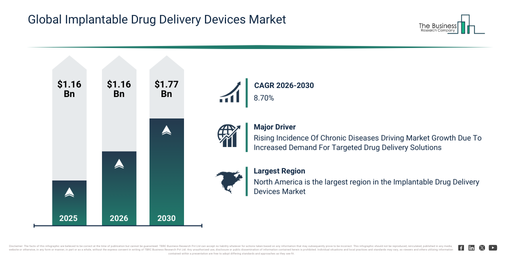
    The market for implantable drug delivery devices is projected to experience substantial expansion in the upcoming years. This market is forecast to reach a valuation of $33.39 billion in 2030, exhibiting a compound annual growth rate (CAGR) of 8.7%. Key factors driving this expansion during the projection period include the escalating creation of smart implantable devices, the growing need for tailored drug delivery, the broadening of biodegradable implant technologies, increasing investments in integrated drug-device solutions, and a rise in regulatory clearances for implantable treatments. Significant trends anticipated in the forecast timeframe encompass the expanding embrace of controlled-release implant mechanisms, the heightened utilization of bio-absorbable implant substances, an escalating requirement for localized drug delivery, the proliferation of miniaturized implantable devices, and a stronger emphasis on patient adherence.

    Download the Free Sample Report to Explore Key Market Insights:

    https://www.thebusinessresearchcompany.com/sample.aspx?id=3303&type=smp

    What Drivers Are Influencing The Implantable Drug Delivery Devices Market?

    The rising occurrence of chronic illnesses is anticipated to drive the expansion of the implantable drug delivery devices market in the foreseeable future. Chronic diseases are defined as long-term medical conditions that endure for an extended duration, typically three months or more. The increasing prevalence of these conditions is linked to widespread unhealthy lifestyle habits such as poor nutrition, physical inactivity, and tobacco use, which significantly raise the global risk of developing non-communicable diseases. Implantable drug delivery devices are increasingly employed to deliver sustained, controlled medication for chronic ailments, thereby improving patient compliance and treatment effectiveness. For instance, in August 2025, the Centers for Disease Control and Prevention, a Switzerland-based public health agency, reported that 90% of the nation’s 4.9 trillion dollars in annual health care spending is attributed to individuals with chronic and mental health conditions. Additionally, over 84,000 Americans die each year from heart disease or stroke, and the costs associated with cardiovascular diseases are projected to reach approximately 2 trillion dollars by 2050. Therefore, the growing incidence of chronic diseases is a primary driver for the growth of the implantable drug delivery devices market.

    What Are The Key Segments Of The Implantable Drug Delivery Devices Market?

    The implantable drug delivery devices market covered in this report is segmented –

    1) By Product: Contraceptive Implants, Spinal Implants, Brachytherapy Seeds, Drug-Eluting Stents, Bio-absorbable Stents, Intraocular Stents, Infusion Pumps, Other Applications

    2) By Technology: Diffusion, Osmotic, Magnetic, Other Technologies

    3) By Application: Contraception, Ophthalmology, Cardiovascular, Diabetes, Oncology, Autoimmune Diseases, Other Applications

    Subsegments:

    1) By Contraceptive Implants: Hormonal Contraceptive Implants, Non-hormonal Contraceptive Implants

    2) By Spinal Implants: Biodegradable Spinal Implants, Non-biodegradable Spinal Implants

    3) By Brachytherapy Seeds: Iodine-125 Seeds, Palladium-103 Seeds, Cesium-131 Seeds, Other Brachytherapy Seeds

    4) By Drug-Eluting Stents: Coronary Drug-Eluting Stents, Peripheral Drug-Eluting Stents

    5) By Bio-absorbable Stents: Polymer-based Bio-absorbable Stents, Metal-based Bio-absorbable Stents

    6) By Intraocular Stents: Glaucoma Intraocular Stents, Cataract Surgery Intraocular Stents

    7) By Infusion Pumps: Insulin Pumps, Chemotherapy Infusion Pumps, Pain Management Infusion Pumps, Other Infusion Pumps

    8) By Other Applications: Implantable Reservoirs, Implantable Micro-pumps, Implantable Drug Elution Devices

    What Key Trends Are Influencing The Development Of The Implantable Drug Delivery Devices Market?

    Who Are The Leading Companies Operating In The Implantable Drug Delivery Devices Market?

    Major companies operating in the implantable drug delivery devices market are AbbVie Inc., Bayer HealthCare, Medtronic Inc., Nucletron, Boston Scientific Corporation, Abbott Laboratories, Bausch and Lomb Inc., Merck & Co. Inc., Genentech Inc, EyePoint Pharmaceuticals Inc., DSM Biomedical, Delpor Inc., Teleflex Incorporated, Biotronik Inc., Alcon Inc., Terumo Corporation, Endologix Inc., Innocoll Biotherapeutics, Atossa Therapeutics Inc., Intersect ENT, Microchips Biotech, Theradaptive Inc., CollPlant, Intarcia Therapeutics, Glaukos Corporation

    Read the full implantable drug delivery devices market report here:

    https://www.thebusinessresearchcompany.com/report/implantable-drug-delivery-devices-global-market-report

    Which Regions Are Expected To Experience Rapid Expansion In The Implantable Drug Delivery Devices Market?

    North America was the largest region in the implantable drug delivery devices market in 2025. Asia-Pacific was the second-largest region in the implantable drug delivery devices market report. The regions covered in the implantable drug delivery devices market report are Asia-Pacific, South East Asia, Western Europe, Eastern Europe, North America, South America, Middle East, Africa.

    Request A Tailored Implantable Drug Delivery Devices Market Research Report For Competitive Advantage:

    https://www.thebusinessresearchcompany.com/customise?id=3303&type=smp

    Browse Through More Reports Similar to the Global Implantable Drug Delivery Devices Market 2026, By The Business Research Company

    Drug Delivery Devices Market Report 2026

    https://www.thebusinessresearchcompany.com/report/drug-delivery-devices-global-market-report

    Drug Delivery Devices Market Report 2026

    https://www.thebusinessresearchcompany.com/report/drug-delivery-devices-global-market-report

    Injectable Drug Delivery Devices Market Report 2026

    https://www.thebusinessresearchcompany.com/report/injectable-drug-delivery-devices-global-market-report

    Get in touch with us:

    The Business Research Company: https://www.thebusinessresearchcompany.com/

    Americas +1 310-496-7795

    Asia +44 7882 955267 & +91 8897263534

    Europe +44 7882 955267

    Email us at info@tbrc.info

    Follow us on:

    LinkedIn: https://in.linkedin.com/company/the-business-research-company

    YouTube: https://www.youtube.com/channel/UC24_fI0rV8cR5DxlCpgmyFQ

    Global Market Model: https://www.thebusinessresearchcompany.com/global-market-model
  • Global Implantable Defibrillators Market Analysis for 2026–2030 with Strategic Forecast Insights for Businesses

    Global Implantable Defibrillators Market Analysis for 2026–2030 with Strategic Forecast Insights for Businesses

    The Business Research Company’s 2026 market reports include new capabilities such as market attractiveness scoring and analysis, total addressable market analysis, company scoring matrix, interactive excel data dashboard, improved supply chain analysis, upcoming startups in the market, and overview of key products, aimed at improving the depth, usability, and strategic value of the insights delivered.

    What Will Be The Estimated Market Valuation Of The Implantable Defibrillators Market By The End Of 2030?

    The implantable defibrillators market has experienced robust growth in recent years. This market is projected to expand from $5.69 billion in 2025 to reach $6.03 billion in 2026, demonstrating a compound annual growth rate (CAGR) of 5.9%. Historically, this expansion has been driven by factors such as a rise in sudden cardiac arrest incidents, increased adoption of implantable defibrillators, heightened awareness regarding cardiac rhythm disorders, advancements in device miniaturization, and the introduction of advanced ICD technologies.

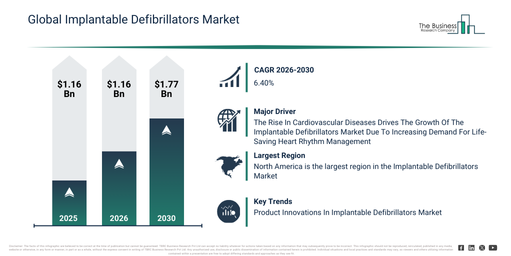
    The implantable defibrillators market is anticipated to experience substantial growth in the coming years. It is projected to expand to **$7.72 billion in 2030**, achieving a compound annual growth rate (CAGR) of **6.4%**. This anticipated growth during the forecast period is driven by factors such as the increasing demand for minimally invasive defibrillator systems, the greater integration of remote monitoring solutions, the broadening application of AI-based arrhythmia detection, a rising emphasis on the long-term reliability of devices, and increased investments in advanced cardiac care technologies. Prominent trends throughout this period include the wider adoption of advanced defibrillation algorithms, a surging demand for subcutaneous implantable defibrillators, the expanding use of leadless defibrillator technologies, the proliferation of remote device monitoring platforms, and an enhanced focus on patient safety and comfort.

    Download the Free Sample Report to Explore Key Market Insights:

    https://www.thebusinessresearchcompany.com/sample.aspx?id=10140&type=smp

    What Drivers Are Shaping The Future Growth Of The Implantable Defibrillators Market?

    The rising occurrence of cardiovascular diseases (CVDs) is anticipated to drive expansion in the implantable defibrillators market in the coming years. CVDs encompass various conditions impacting the heart and blood vessels, such as heart attacks, strokes, and high blood pressure, frequently resulting from elements like poor dietary habits, insufficient physical activity, tobacco use, and hereditary factors. The growing incidence of these diseases is mainly fueled by an aging global population, unhealthy lifestyle decisions, and an uptick in contributing risk factors like obesity, diabetes, and high blood pressure. Implantable defibrillators aid cardiovascular well-being by consistently observing heart rhythms and administering crucial electrical shocks to avert sudden cardiac arrest in individuals facing significant cardiac risks. For example, the American Heart Association, a US-based non-profit organization, reported in January 2024 that the age-adjusted death rate attributed to cardiovascular disease rose to 233.3 per 100,000 in 2024, which is a 4.0% increase from 224.4 per 100,000 in 2023. Consequently, the growing number of cardiovascular disease (CVD) cases is propelling the development of the implantable defibrillators market.

    Which Segment Classifications Shape The Implantable Defibrillators Market?

    The implantable defibrillators market covered in this report is segmented –

    1) By Product Type: Single Chambered Implantable Defibrillators, Dual Chambered Implantable Defibrillators, Biventricular Implantable Defibrillators

    2) By Procedure Type: Trans-Venous Implantable Defibrillators, Subcutaneous Implantable Defibrillators

    3) By End User: Hospitals And Clinics, Specialty Cardiac Centers, Ambulatory Surgery Centers, Other End Users

    Subsegments:

    1) By Single Chambered Implantable Defibrillators: Standard Single Chamber ICDs, Leadless Single Chamber ICDs

    2) By Dual Chambered Implantable Defibrillators: Standard Dual Chamber ICDs, Advanced Dual Chamber ICDs

    3) By Biventricular Implantable Defibrillators: Standard Biventricular ICDs, Advanced Biventricular ICDs With CRT

    How Are Trends Impacting The Implantable Defibrillators Market?

    Leading firms in the implantable defibrillators market are concentrating on creating advanced products, including extravascular ICDs and ultra-thin defibrillation leads. These innovations aim to bolster patient safety, mitigate complications, and elevate the efficacy of long-term treatment. Extravascular ICDs are a form of implantable defibrillator where the leads are positioned outside the heart and major blood vessels to minimize risks, whereas ultra-thin defibrillation leads are slender wires engineered for safer, less intrusive correction of heart rhythms. For example, in December 2023, Medtronic, an Ireland-based medical device company, introduced its latest implantable cardioverter-defibrillator. The Aurora extravascular ICD is a device implanted beneath the skin in the left armpit, differing from traditional placement under the collarbone. It shares similar dimensions, form, and battery longevity with Medtronic’s conventional transvenous ICDs, yet it offers both defibrillation for cardiac arrest patients and continuous pacemaker therapies. Its Epsila leads are then connected to the heart in a minimally invasive manner, situated below the breastbone. Furthermore, the implant incorporates Medtronic’s Smart Sense technology, designed to reduce the likelihood of unnecessary shocks, and SureScan technology, which allows patients to safely undergo an MRI scan while the device is implanted.

    Which Companies Are Expanding Their Footprint In The Implantable Defibrillators Market?

    Major companies operating in the implantable defibrillators market are Medtronic plc, Abbott Laboratories, Boston Scientific Corporation, Biotronik SE & Co KG, MicroPort Scientific Corporation, LivaNova PLC, Zhejiang Lepu Medical Technology Co Ltd, Shree Pacetronix Ltd, EBR Systems Inc, Imricor Medical Systems Inc, Carmat SA, BiVACOR Inc, Procyrion Inc, Jarvik Heart Inc, Fineheart SA, CorWave SA, NuPulseCV Inc, Calon Cardio Technology Ltd, Evaheart Inc, CH Biomedical Inc

    Read the full implantable defibrillators market report here:

    https://www.thebusinessresearchcompany.com/report/implantable-defibrillators-global-market-report

    Which Geographic Regions Are Influencing Demand In The Implantable Defibrillators Market?

    North America was the largest region in the implantable defibrillators market in 2025. Asia-Pacific is expected to be the fastest-growing region in the global implanted defibrillator market forecast period. The regions covered in the implantable defibrillators market report are Asia-Pacific, South East Asia, Western Europe, Eastern Europe, North America, South America, Middle East, Africa.

    Request A Tailored Implantable Defibrillators Market Research Report For Competitive Advantage:

    https://www.thebusinessresearchcompany.com/customise?id=10140&type=smp

    Browse Through More Reports Similar to the Global Implantable Defibrillators Market 2026, By The Business Research Company

    Defibrillator Devices And Equipment Market Report 2026

    https://www.thebusinessresearchcompany.com/report/defibrillator-devices-and-equipment-global-market-report

    Automated External Defibrillators Aed Market Report 2026

    https://www.thebusinessresearchcompany.com/report/automated-external-defibrillators-aed-global-market-report

    Implantable Heart Pacemaker Market Report 2026

    https://www.thebusinessresearchcompany.com/report/implantable-heart-pacemaker-global-market-report

    Get in touch with us:

    The Business Research Company: https://www.thebusinessresearchcompany.com/

    Americas +1 310-496-7795

    Asia +44 7882 955267 & +91 8897263534

    Europe +44 7882 955267

    Email us at info@tbrc.info

    Follow us on:

    LinkedIn: https://in.linkedin.com/company/the-business-research-company

    YouTube: https://www.youtube.com/channel/UC24_fI0rV8cR5DxlCpgmyFQ

    Global Market Model: https://www.thebusinessresearchcompany.com/global-market-model
  • Implantable Collamer Lens Market Outlook 2026–2035 Driven by Key Growth Factors and Industry Projections

    Implantable Collamer Lens Market Outlook 2026–2035 Driven by Key Growth Factors and Industry Projections

    The Business Research Company’s 2026 market reports include new capabilities such as market attractiveness scoring and analysis, total addressable market analysis, company scoring matrix, interactive excel data dashboard, improved supply chain analysis, upcoming startups in the market, and overview of key products, aimed at improving the depth, usability, and strategic value of the insights delivered.

    What Market Size Growth Is Projected For The Implantable Collamer Lens Market During The Forecast Period 2026–2030?

    The implantable collamer lens market has demonstrated substantial growth in recent years. This market is set to expand from $20.77 billion in 2025 to $22.2 billion in 2026, achieving a compound annual growth rate (CAGR) of 6.9%. The factors contributing to its historical growth include an increasing prevalence of refractive vision disorders, a rising demand for surgical vision correction, advancements in ophthalmic implant technology, the growing acceptance of ICL procedures, and the expansion of specialized ophthalmic clinics.

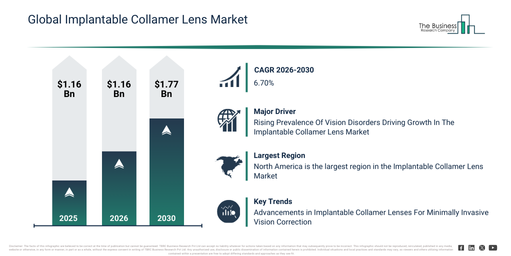
    The implantable collamer lens market is projected to experience robust expansion over the coming years, reaching a valuation of $28.74 billion by 2030, demonstrating a compound annual growth rate (CAGR) of 6.7%. This anticipated growth during the forecast period is primarily driven by several factors, including the wider acceptance of premium vision correction methods, a heightened emphasis on less invasive ophthalmic surgeries, the proliferation of elective eye care treatments, increasing financial commitments to cutting-edge ophthalmology technologies, and improved patient understanding of the advantages of ICLs. Key trends expected within this period encompass the greater uptake of EVO implantable collamer lenses, the increasing implementation of laser-guided implantation methods, a surging preference for reversible vision correction options, the development of more personalized lens designs, and an intensified focus on maintaining visual stability over extended periods.

    Download the Free Sample Report to Explore Key Market Insights:

    https://www.thebusinessresearchcompany.com/sample.aspx?id=20840&type=smp

    Which Economic Or Industry Drivers Are Impacting The Implantable Collamer Lens Market?

    The growing occurrence of vision impairments is projected to propel the implantable collamer lens market in the future. Vision disorders are defined as conditions impacting the clarity of sight, marked by a progressive reduction in visual sharpness and overall eye well-being. These disorders are escalating worldwide, influenced by factors such as an aging demographic, increased exposure to digital screens, and the rising incidence of conditions like myopia and age-related macular degeneration. Implantable Collamer Lenses (ICLs) present an efficacious remedy for correcting vision disorders, including myopia, hyperopia, and astigmatism, by serving as a secure, reversible option when compared to conventional refractive surgeries such as LASIK. For example, in August 2023, a report from the World Health Organization, a Switzerland-based specialized agency of the United Nations, indicated that over 2.2 billion individuals globally experience near or distance vision impairment, with 1 billion of these instances being either preventable or currently untreated. Consequently, the expanding prevalence of vision disorders is fueling the expansion of the implantable collamer lens market.

    What Market Segments Are Evaluated Within The Implantable Collamer Lens Market?

    The implantable collamer lens market covered in this report is segmented –

    1) By Type: Visian Implantable Collamer Lens (ICL), EVO Implantable Collamer Lens (ICL)

    2) By Technology Adoption: Laser-Assisted Techniques, Traditional Techniques

    3) By Application: Myopia, Hyperopia, Astigmatism

    4) By End User: Ophthalmic Clinics, Hospitals, Ambulatory Surgical Center, Other End User

    Subsegments:

    1) By Visian Implantable Collamer Lens (ICL): Visian ICL for Myopia, Visian ICL For Hyperopia, Visian ICL For Astigmatism, Visian ICL For Presbyopia

    2) By EVO Implantable Collamer Lens (ICL): EVO ICL For Myopia, EVO ICL For Hyperopia, EVO ICL For Astigmatism, EVO ICL For Presbyopia

    What Industry Trends Are Redefining The Implantable Collamer Lens Market?

    Leading companies in the implantable collamer lens market are prioritizing technological advancements, such as biocompatible, minimally invasive lens implants that address a wide range of refractive errors without the removal of corneal tissue. This focus aims to enhance patient outcomes and reduce their reliance on glasses and contact lenses. Biocompatible Minimally Invasive Implantable Lenses enable safe, reversible vision correction by integrating with the natural anatomy of the eye, providing rapid procedures and high patient satisfaction. For instance, in March 2024, STAAR Surgical Company, a U.S.-based ophthalmic medical device company, announced that over three million EVO ICL lenses have been implanted globally. The EVO ICL corrects myopia, with or without astigmatism, and presbyopia, via a 20–30 minute procedure that positions the lens between the iris and the natural crystalline lens. This biocompatible, removable lens offers a next-generation alternative to glasses and contacts, assisting millions of patients in achieving improved vision safely and effectively.

    Who Are The Top Market Participants Influencing The Implantable Collamer Lens Market?

    Major companies operating in the implantable collamer lens market are STAAR Surgical Company, Care Group Sight Solutions (IPCL), Ophtec (Artisan Phakic IOLs), Rayner Surgical, Hoya Surgical Optics, Alcon Inc., Johnson & Johnson Vision/Abbott Medical Optics, Bausch + Lomb, Carl Zeiss Meditec AG, Nidek Co. Ltd., Lenstec Inc., SIFI S.p.A., Optimedical, Eyeonics (now part of Santen)*, Physiol LLC, Microlens Tech Co. Ltd., HumanOptics AG, Ocular Instruments Inc., Aaren Scientific LLC, Visiogen Inc.

    Read the full implantable collamer lens market report here:

    https://www.thebusinessresearchcompany.com/report/implantable-collamer-lens-global-market-report

    What Are The Top-Performing Regions Within The Implantable Collamer Lens Market?

    North America was the largest region in the implantable collamer lens market in 2025. Asia-Pacific is expected to be the fastest-growing region in the forecast period. The regions covered in the implantable collamer lens market report are Asia-Pacific, South East Asia, Western Europe, Eastern Europe, North America, South America, Middle East, Africa.

    Request A Tailored Implantable Collamer Lens Market Research Report For Competitive Advantage:

    https://www.thebusinessresearchcompany.com/customise?id=20840&type=smp

    Browse Through More Reports Similar to the Global Implantable Collamer Lens Market 2026, By The Business Research Company

    Corneal Implants Market Report 2026

    https://www.thebusinessresearchcompany.com/report/corneal-implants-global-market-report

    Prescription Lens Market Report 2026

    https://www.thebusinessresearchcompany.com/report/prescription-lens-global-market-report

    Cataract Surgery Devices And Equipment Market Report 2026

    https://www.thebusinessresearchcompany.com/report/cataract-surgery-devices-and-equipment-global-market-report

    Get in touch with us:

    The Business Research Company: https://www.thebusinessresearchcompany.com/

    Americas +1 310-496-7795

    Asia +44 7882 955267 & +91 8897263534

    Europe +44 7882 955267

    Email us at info@tbrc.info

    Follow us on:

    LinkedIn: https://in.linkedin.com/company/the-business-research-company

    YouTube: https://www.youtube.com/channel/UC24_fI0rV8cR5DxlCpgmyFQ

    Global Market Model: https://www.thebusinessresearchcompany.com/global-market-model
  • Implantable Cardiac Rhythm Management Device Market Developments and Growth Opportunities Across 2026–2030

    Implantable Cardiac Rhythm Management Device Market Developments and Growth Opportunities Across 2026–2030

    The Business Research Company’s 2026 market reports include new capabilities such as market attractiveness scoring and analysis, total addressable market analysis, company scoring matrix, interactive excel data dashboard, improved supply chain analysis, upcoming startups in the market, and overview of key products, aimed at improving the depth, usability, and strategic value of the insights delivered.

    How Will The Market Size Of The Implantable Cardiac Rhythm Management Device Market Evolve From 2026 To 2030?

    The implantable cardiac rhythm management device market size has shown significant growth over recent years. It is anticipated to increase from $17.7 billion in 2025 to $18.89 billion in 2026, achieving a compound annual growth rate (CAGR) of 6.7%. The expansion observed in the past can be ascribed to the rising occurrence of cardiac arrhythmias, an expanding elderly population, the proliferation of cardiac care facilities, the increasing use of implantable pacemakers and defibrillators, and enhancements in the reliability of cardiac devices.

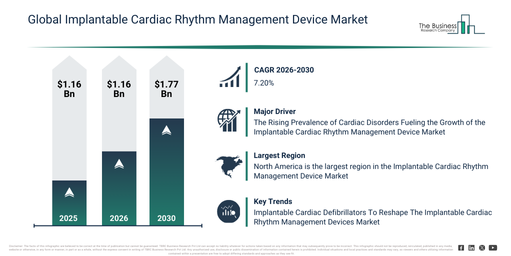
    The implantable cardiac rhythm management device market is projected to experience substantial expansion in the coming years, reaching $24.91 billion in 2030, exhibiting a compound annual growth rate (CAGR) of 7.2%. This anticipated growth during the forecast period is fueled by factors such as the increasing uptake of smart implantable devices, a heightened emphasis on remote patient monitoring, the broadening of AI-enabled rhythm analysis, the escalating demand for less invasive cardiac procedures, and greater healthcare investments in cardiac care infrastructure. Key developments expected over the forecast period encompass a wider adoption of remote cardiac monitoring functionalities, an increased utilization of sophisticated battery technologies, the expanding integration of wireless cardiac devices, the proliferation of minimally invasive implantation methods, and a stronger emphasis on the durability and dependability of these devices.

    Download the Free Sample Report to Explore Key Market Insights:

    https://www.thebusinessresearchcompany.com/sample.aspx?id=10117&type=smp

    What Major Drivers Are Influencing Demand In The Implantable Cardiac Rhythm Management Device Market?

    The rising occurrence of heart conditions is anticipated to stimulate the expansion of the implantable cardiac rhythm management devices market in the future. Cardiac disorders are health issues that impact the heart or blood vessels. These implantable devices assist individuals suffering from heart failure and diminished left ventricular function by re-synchronizing heart contractions, thereby enhancing systolic function and re-establishing a regular heart rhythm during severe ventricular arrhythmias. Consequently, the growing incidence of cardiac disorders will heighten the need for implantable cardiac rhythm management devices. For example, data from January 2024, reported by the American Heart Association, a US-based non-profit organization, showed that the age-adjusted death rate due to cardiovascular disease rose to 233.3 per 100,000 in 2024, marking a 4.0% increase from 224.4 per 100,000 in 2023. This demonstrates how the increasing prevalence of cardiac disorders is fueling the growth of the implantable cardiac rhythm management device market.

    Which Segment Areas Are Covered In The Implantable Cardiac Rhythm Management Device Market Analysis?

    The implantable cardiac rhythm management device market covered in this report is segmented –

    1) By Device: Cardiac Resynchronization Therapy, Defibrillators, Pacemakers

    2) By Application: Bradycardia, Tachycardia, Other Applications

    3) By End-Use: Hospitals, Specialty Cardiac Centers, Other End-Uses

    Subsegments:

    1) By Cardiac Resynchronization Therapy (CRT): CRT-P (Pacemaker), CRT-D (Defibrillator)

    2) By Defibrillators: Implantable Cardioverter Defibrillators (ICDs), Subcutaneous Implantable Defibrillators (S-ICDs)

    3) By Pacemakers: Single-Chamber Pacemakers, Dual-Chamber Pacemakers, Biventricular Pacemakers

    What Key Developments And Trends Are Impacting The Implantable Cardiac Rhythm Management Device Market?

    Leading companies in the implantable cardiac rhythm management devices market are prioritizing the launch of innovative products such as implantable cardiac defibrillators. These implantable cardiac defibrillators are small, battery-powered devices typically implanted under the skin, often near the collarbone. For instance, in October 2023, MicroPort CRM, a France-based implantable cardiac defibrillator manufacturer, announced the introduction of the ULYS Implantable Cardioverter Defibrillator (ICDs) and INVICTA defibrillation implantable devices. The ULYS ICD features advanced technology combined with minimal energy consumption, promising the most extended anticipated lifespan. It also incorporates an AutoMRI function and the PARAD arrhythmia discrimination algorithm, designed to automatically switch the device. The INVICTA defibrillation leads are engineered to consistently sense electrical signals from the right ventricle of the heart, thereby providing pacing therapy if the heart rate falls too low.

    Which Global Companies Are Actively Competing In The Implantable Cardiac Rhythm Management Device Market?

    Major companies operating in the implantable cardiac rhythm management device market are Medtronic plc, Abbott Laboratories, Boston Scientific Corporation, Biotronik SE & Co. KG, MicroPort Scientific Corporation, LivaNova PLC, Japan Lifeline Co Ltd, Lepu Medical Technology Beijing Co Ltd, Shree Pacetronix Ltd, Osypka Medical GmbH, Sorin Group Italia Srl, Medico SpA, Vitatron Holding BV, Pacetronix Ltd, CardioElectronica SA, Imricor Medical Systems Inc, Impulse Dynamics plc, Kardium Inc, Cortrium ApS, EBR Systems Inc

    Read the full implantable cardiac rhythm management device market report here:

    https://www.thebusinessresearchcompany.com/report/implantable-cardiac-rhythm-management-device-global-market-report

    Which Region Shows The Strongest Potential For Future Growth In The Implantable Cardiac Rhythm Management Device Market?

    North America was the largest region in the implantable cardiac rhythm management device market in 2025. The regions covered in the implantable cardiac rhythm management device market report are Asia-Pacific, South East Asia, Western Europe, Eastern Europe, North America, South America, Middle East, Africa.

    Request A Tailored Implantable Cardiac Rhythm Management Device Market Research Report For Competitive Advantage:

    https://www.thebusinessresearchcompany.com/customise?id=10117&type=smp

    Browse Through More Reports Similar to the Global Implantable Cardiac Rhythm Management Device Market 2026, By The Business Research Company

    Implantable Heart Pacemaker Market Report 2026

    https://www.thebusinessresearchcompany.com/report/implantable-heart-pacemaker-global-market-report

    Cardiac Rhythm Management Crm Devices And Equipment Market Report 2026

    https://www.thebusinessresearchcompany.com/report/cardiac-rhythm-management-crm-devices-and-equipment-global-market-report

    Cardiac Arrhythmia Monitoring Devices Market Report 2026

    https://www.thebusinessresearchcompany.com/report/cardiac-arrhythmia-monitoring-devices-global-market-report

    Get in touch with us:

    The Business Research Company: https://www.thebusinessresearchcompany.com/

    Americas +1 310-496-7795

    Asia +44 7882 955267 & +91 8897263534

    Europe +44 7882 955267

    Email us at info@tbrc.info

    Follow us on:

    LinkedIn: https://in.linkedin.com/company/the-business-research-company

    YouTube: https://www.youtube.com/channel/UC24_fI0rV8cR5DxlCpgmyFQ

    Global Market Model: https://www.thebusinessresearchcompany.com/global-market-model
  • Global Implantable Cardiac Devices Market Forecast 2026–2035 Presenting Long-Term Industry Expansion Insights

    Global Implantable Cardiac Devices Market Forecast 2026–2035 Presenting Long-Term Industry Expansion Insights

    The Business Research Company’s 2026 market reports include new capabilities such as market attractiveness scoring and analysis, total addressable market analysis, company scoring matrix, interactive excel data dashboard, improved supply chain analysis, upcoming startups in the market, and overview of key products, aimed at improving the depth, usability, and strategic value of the insights delivered.

    What Is The Forecasted Market Value Of The Implantable Cardiac Devices Market Across 2026–2030?

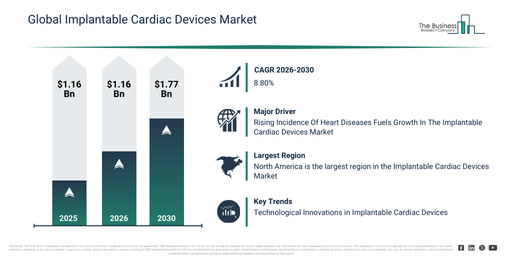
    The implantable cardiac devices market size has seen strong growth in recent years. It is projected to expand from $13.34 billion in 2025 to $14.51 billion in 2026, at a compound annual growth rate (CAGR) of 8.8%. The expansion observed in the historic period is attributable to the increasing prevalence of cardiac arrhythmias, a rising aging population, the expansion of hospital cardiac care infrastructure, the adoption of pacemaker technologies, and the availability of advanced implantable devices.

    The implantable cardiac devices market size is anticipated to undergo significant expansion in the forthcoming years, reaching **$20.33 billion in 2030, at a compound annual growth rate (CAGR) of 8.8%**. This projected growth during the forecast period is fueled by an escalating demand for remote patient monitoring, a rising emphasis on minimally invasive cardiac treatments, the broader integration of digital healthcare, ongoing advancements in battery and lead technologies, and the increasing adoption of AI-assisted cardiac diagnostics. Prominent trends expected in this period encompass the wider acceptance of miniaturized implantable devices, enhanced integration of remote cardiac monitoring, expanded use of MRI-compatible implants, the proliferation of cardiac resynchronization therapies, and a heightened focus on device longevity and reliability.

    Download the Free Sample Report to Explore Key Market Insights:

    https://www.thebusinessresearchcompany.com/sample.aspx?id=19097&type=smp

    Which Market Drivers Are Supporting The Expansion Of The Implantable Cardiac Devices Market?

    The escalating occurrence of heart diseases is anticipated to drive the expansion of the implantable cardiac devices market. The rise in these conditions can be attributed to the increasing prevalence of risk factors such as poor diet, a sedentary lifestyle, obesity, and chronic ailments like diabetes and hypertension. Moreover, an aging population and higher stress levels further contribute to the increased incidence of cardiovascular conditions. Implantable cardiac devices are utilized to manage and treat issues such as heart failure, arrhythmias, and coronary artery disease. This heightened necessity stimulates innovation and investment in developing new and improved cardiac devices to cater to the growing patient base and enhance treatment results. For instance, in May 2024, according to the Singapore Heart Foundation (SHF), a Singapore-based non-profit organization, ischemic heart disease accounted for 5,302 deaths, indicating a slight increase from 5,290 deaths in 2022. Therefore, the growing incidence of heart disease acts as a primary catalyst for the implantable cardiac devices market.

    What Segmentation Levels Are Considered In The Implantable Cardiac Devices Market?

    The implantable cardiac devices market covered in this report is segmented –

    1) By Type: Pacemaker, Implantable Cardioverter Defibrillator (ICD), Biventricular Implantable Cardioverter Defibrillator (BI-V ICD)

    2) By Application: Bradycardia, Tachycardia, Heart Failure, Other Applications

    3) By End User: Hospitals, Specialty Clinics, Other End Users

    Subsegments:

    1) By Pacemaker: Single-Chamber Pacemakers, Dual-Chamber Pacemakers, Rate-Responsive Pacemakers

    2) By Implantable Cardioverter Defibrillator (ICD): Transvenous ICDs, Subcutaneous ICDs

    3) By Biventricular Implantable Cardioverter Defibrillator (BI-V ICD): Standard BI-V ICDs, Advanced BI-V ICDs with Cardiac Resynchronization Therapy (CRT)

    What Trends Are Projected To Affect The Implantable Cardiac Devices Market?

    Leading companies in the implantable cardiac devices market are prioritizing enhanced compatibility with diagnostic tools like AutoMRI to extend device longevity and improve patient safety. The AutoMRI function in implantable cardiac defibrillators automatically adjusts device settings to ensure secure operation during MRI scans, thereby elevating patient care while providing access to advanced imaging technology. For instance, in October 2023, MicroPort CRM, a France-based medical device company, introduced the ULYS implantable cardioverter defibrillator (ICD) and INVICTA defibrillation leads in Japan, featuring advanced technology for low current consumption, leading to an extended device lifespan and MRI compatibility. The ULYS ICD incorporates the PARAD+ arrhythmia discrimination algorithm and AutoMRI functionality, while the INVICTA lead delivers precise pacing and defibrillation therapy, having demonstrated a 100% implantation success rate and 97.4% complication-free rate in clinical trials.

    Which Leading Firms Are Contributing To The Growth Of The Implantable Cardiac Devices Market?

    Major companies operating in the implantable cardiac devices market are Abbott Laboratories, Medtronic plc, Boston Scientific Corporation, Biotronik SE & Co. KG, LivaNova plc, Lepu Medical Technology, MicroPort Scientific Corporation, LifeTech Scientific Corporation, EBR Systems Inc., CVRx Inc., Medico S.p.A., Osypka Medical GmbH, Sorin Group Italia (LivaNova legacy), Shree Pacetronix Ltd., Inpace Medikal, CCC Medical Devices, Imricor Medical Systems Inc., BlueWind Medical Ltd., Vectorious Medical Technologies, Medico Electrodes International Ltd.

    Read the full implantable cardiac devices market report here:

    https://www.thebusinessresearchcompany.com/report/implantable-cardiac-devices-global-market-report

    How Is The Implantable Cardiac Devices Market Distributed Across Key Geographic Regions?

    North America was the largest region in the implantable cardiac devices market in 2025. Asia-Pacific is expected to be the fastest-growing region in the forecast period. The regions covered in the implantable cardiac devices market report are Asia-Pacific, South East Asia, Western Europe, Eastern Europe, North America, South America, Middle East, Africa.

    Request A Tailored Implantable Cardiac Devices Market Research Report For Competitive Advantage:

    https://www.thebusinessresearchcompany.com/customise?id=19097&type=smp

    Browse Through More Reports Similar to the Global Implantable Cardiac Devices Market 2026, By The Business Research Company

    Implantable Heart Pacemaker Market Report 2026

    https://www.thebusinessresearchcompany.com/report/implantable-heart-pacemaker-global-market-report

    Cardiac Prosthetic Devices Market Report 2026

    https://www.thebusinessresearchcompany.com/report/cardiac-prosthetic-devices-global-market-report

    Active Implantable Medical Devices Market Report 2026

    https://www.thebusinessresearchcompany.com/report/active-implantable-medical-devices-global-market-report

    Get in touch with us:

    The Business Research Company: https://www.thebusinessresearchcompany.com/

    Americas +1 310-496-7795

    Asia +44 7882 955267 & +91 8897263534

    Europe +44 7882 955267

    Email us at info@tbrc.info

    Follow us on:

    LinkedIn: https://in.linkedin.com/company/the-business-research-company

    YouTube: https://www.youtube.com/channel/UC24_fI0rV8cR5DxlCpgmyFQ

    Global Market Model: https://www.thebusinessresearchcompany.com/global-market-model
  • Implantable Biomaterials Market Outlook 2026–2030 Exploring New Business Opportunities

    Implantable Biomaterials Market Outlook 2026–2030 Exploring New Business Opportunities

    The Business Research Company’s 2026 market reports include new capabilities such as market attractiveness scoring and analysis, total addressable market analysis, company scoring matrix, interactive excel data dashboard, improved supply chain analysis, upcoming startups in the market, and overview of key products, aimed at improving the depth, usability, and strategic value of the insights delivered.

    What Market Size Increase Is Anticipated For The Implantable Biomaterials Market Over The 2026–2030 Period?

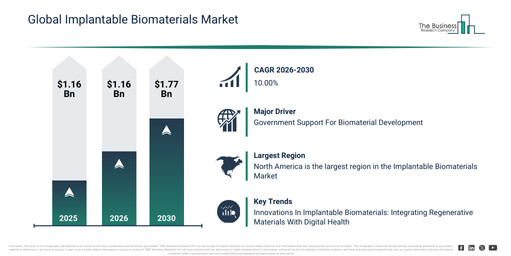
    The implantable biomaterials market has experienced robust growth in recent years. This market is projected to expand from $165.43 billion in 2025 to $180.87 billion in 2026, exhibiting a compound annual growth rate (CAGR) of 9.3%. The historic period’s growth can be attributed to several factors, including the early adoption of metallic implants, the rising prevalence of orthopedic disorders, an increase in dental implant procedures, the limited availability of bioresorbable materials, and a continued reliance on traditional surgical techniques.

    The implantable biomaterials market is projected to experience substantial expansion in the coming years. This market is anticipated to reach $264.59 billion by 2030, exhibiting a compound annual growth rate (CAGR) of 10.0%. Factors contributing to this growth during the forecast period include progress in polymer and ceramic biomaterial technologies, an expanding elderly demographic, a rise in cardiovascular and ophthalmic surgical interventions, increased research in regenerative medicine, and the proliferation of specialized clinics and surgical facilities. Key trends observed during this period encompass a growing need for biocompatible and bioactive substances, broader application of implantable biomaterials in orthopedic and dental fields, an increase in minimally invasive surgeries, enhancements in the longevity and efficacy of implants, and wider acceptance of natural and bio-resorbable biomaterials.

    Download the Free Sample Report to Explore Key Market Insights:

    https://www.thebusinessresearchcompany.com/sample.aspx?id=3274&type=smp

    What Underlying Factors Are Accelerating The Growth Of The Implantable Biomaterials Market?

    Government organizations providing financial resources for the creation of new biomaterials has positively impacted the implantable biomaterials market’s expansion. For example, Drexel University allocated USD 200,000 to the National Science Foundation to fund research focused on how biomaterials influence macrophage behavior, a factor that affects biomaterial vascularization. This kind of backing from government bodies for the development of new biomaterials is set to fuel the growth of the implantable biomaterials market.

    How Is The Implantable Biomaterials Market Segmented Across Key Categories?

    The implantable biomaterials market covered in this report is segmented –

    1) By Material: Metallic, Ceramic, Polymers, Natural

    2) By Application: Dental, Cardiovascular, Ophthalmology, Orthopedic, Other Applications

    3) By End-User: Hospitals, Ambulatory Surgical Centers, Specialty Clinics

    Subsegments:

    1) By Metallic: Stainless Steel, Titanium And Titanium Alloys, Cobalt-Chromium Alloys

    2) By Ceramic: Alumina, Hydroxyapatite, Bioactive Glass

    3) By Polymers: Polyethylene (PE), Polymethyl Methacrylate (PMMA), Polylactic Acid (PLA), Polyurethane (PU)

    4) By Natural: Collagen, Chitosan, Silk Fibroin

    Which Upcoming Trends Are Expected To Influence The Implantable Biomaterials Market?

    Major companies within the implantable biomaterials market are concentrating on developing innovative solutions, such as the TrabeculeX Continuum. These efforts aim to enhance patient outcomes, improve surgical precision, accelerate recovery times, and integrate advanced digital health monitoring with next-generation biomaterials for more personalized and effective treatments. The TrabeculeX Continuum itself is a technology platform created by Xenco Medical that integrates regenerative biomaterials with digital health, designed to bridge a patient’s surgical implantation with their post-operative recovery journey. For example, in January 2024, Xenco Medical LLC, a US-based medical technology company, launched the TrabeculeX Continuum, representing an innovative convergence of biomaterials and digital health that allows for continuous patient monitoring and individualized recovery plans. The product’s distinctive features include patient enrollment in remote therapeutic monitoring, real-time communication with healthcare providers, and advanced regenerative material architecture for optimal bone healing, marking it as a significant advancement over conventional implantable biomaterials.

    Who Are The Dominant Players Shaping The Implantable Biomaterials Market Landscape?

    Major companies operating in the implantable biomaterials market are BASF SE, 3M Company, Medtronic plc, Evonik Industries AG, Stryker Corporation, DuPont de Nemours Inc., Celanese Corporation, Zimmer Biomet Holdings Inc., Koninklijke DSM NV, Arthrex Inc., DePuy Synthes Companies, Carpenter Technology Corporation, Corbion NV, GELITA AG, CoorsTek Inc., CeramTec GmbH, Orthofix Holdings Inc., Invibio Biomaterial Solutions plc, Keystone Dental Inc., KLS Martin SE & Co., Collagen Matrix Inc., Cam Bioceramics BV, Aap Implantate AG, Berkeley Advanced Biomaterials Inc., AdvanSource Biomaterials Corporation, Collagen Solutions plc, Surgival SL, SBM France SAS.

    Read the full implantable biomaterials market report here:

    https://www.thebusinessresearchcompany.com/report/implantable-biomaterials-global-market-report

    Which Region Is Projected To Dominate The Implantable Biomaterials Market During The Forecast Period?

    North America was the largest region in the implantable biomaterials market in 2025. Western Europe was the second largest region in the global implantable biomaterials market report. The regions covered in the implantable biomaterials market report are Asia-Pacific, South East Asia, Western Europe, Eastern Europe, North America, South America, Middle East, Africa.

    Request A Tailored Implantable Biomaterials Market Research Report For Competitive Advantage:

    https://www.thebusinessresearchcompany.com/customise?id=3274&type=smp

    Browse Through More Reports Similar to the Global Implantable Biomaterials Market 2026, By The Business Research Company

    Orthopedic Biomaterials Market Report 2026

    https://www.thebusinessresearchcompany.com/report/orthopedic-biomaterials-global-market-report

    Implantable Drug Delivery Devices Market Report 2026

    https://www.thebusinessresearchcompany.com/report/implantable-drug-delivery-devices-global-market-report

    Implantable Infusion Pumps Market Report 2026

    https://www.thebusinessresearchcompany.com/report/implantable-infusion-pumps-global-market-report

    Get in touch with us:

    The Business Research Company: https://www.thebusinessresearchcompany.com/

    Americas +1 310-496-7795

    Asia +44 7882 955267 & +91 8897263534

    Europe +44 7882 955267

    Email us at info@tbrc.info

    Follow us on:

    LinkedIn: https://in.linkedin.com/company/the-business-research-company

    YouTube: https://www.youtube.com/channel/UC24_fI0rV8cR5DxlCpgmyFQ

    Global Market Model: https://www.thebusinessresearchcompany.com/global-market-model
  • Global Immunohistochemistry (IHC) Market Report 2026–2035 Highlighting Expansion Outlook and Forecast Opportunities

    Global Immunohistochemistry (IHC) Market Report 2026–2035 Highlighting Expansion Outlook and Forecast Opportunities

    The Business Research Company’s 2026 market reports include new capabilities such as market attractiveness scoring and analysis, total addressable market analysis, company scoring matrix, interactive excel data dashboard, improved supply chain analysis, upcoming startups in the market, and overview of key products, aimed at improving the depth, usability, and strategic value of the insights delivered.

    How Much Is The Immunohistochemistry (IHC) Market Expected To Grow In Terms Of Market Value Between 2026 And 2030?

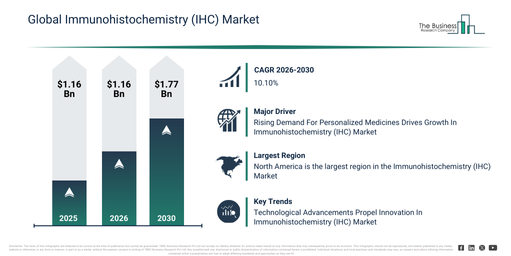
    The immunohistochemistry (ihc) market has seen substantial expansion in recent years. Its valuation is anticipated to climb from $2.76 billion in 2025 to $3.05 billion in 2026, achieving a compound annual growth rate (CAGR) of 10.3%. This historical growth can be attributed to factors such as the increasing application of ihc in cancer diagnostics, the expansion of hospital pathology laboratories, greater availability of monoclonal antibodies, a rise in the adoption of tissue-based diagnostics, and growing clinical research activities.

    The immunohistochemistry (ihc) market is projected to experience substantial expansion over the coming years. Its valuation is anticipated to reach $4.47 billion by 2030, exhibiting a compound annual growth rate (CAGR) of 10.1%. This projected increase throughout the forecast period stems from factors such as a heightened need for precision oncology diagnostics, the growing embrace of AI-powered pathology analysis, the broadening scope of biomarker-driven drug development, the escalating application of multiplex tissue profiling, and greater capital expenditure in sophisticated pathology infrastructure. Key developments expected during this period include the wider uptake of automated ihc staining systems, an increase in the utilization of multiplex ihc techniques, the deeper incorporation of digital pathology platforms, the expansion of companion diagnostic applications, and a reinforced emphasis on high-specificity antibodies.

    Download the Free Sample Report to Explore Key Market Insights:

    https://www.thebusinessresearchcompany.com/sample.aspx?id=9267&type=smp

    Which Growth Drivers Are Contributing To The Progress Of The Immunohistochemistry (IHC) Market?

    The increasing need for personalized medicines is projected to boost the expansion of the immunohistochemistry (IHC) market in the coming years. Personalized medicine represents a healthcare strategy focused on customizing medical choices, procedures, treatments, and products for each patient, considering their distinct genetic makeup, environmental factors, and lifestyle. Immunohistochemistry (IHC) is crucial in personalized medicine, as it helps identify specific protein markers essential for precise tumor classification and diagnosis. For example, in February 2024, data from the Personalized Medicine Coalition, a US-based non-profit research organization, indicated that personalized medicines constituted more than one-third of new approvals by the US Food and Drug Administration in 2023. Additionally, in the same year, the FDA granted approval for 16 new personalized treatments aimed at rare-disease patients, marking an increase from 6 in 2022. Consequently, the rising demand for personalized medicines is stimulating the growth of the immunohistochemistry (IHC) market.

    What Major Segment Divisions Exist Within The Immunohistochemistry (IHC) Market?

    The immunohistochemistry (ihc) market covered in this report is segmented –

    1) By Product: Antibodies, Equipment, Reagents, Kits

    2) By Applications: Diagnostics, Drug Testing, Other Applications

    3) By End-Users: Hospitals And Diagnostic Laboratories, Research Institutes, Other End-Users

    Subsegments:

    1) By Antibodies: Primary Antibodies, Secondary Antibodies, Conjugated Antibodies

    2) By Equipment: IHC Staining Systems, Slide Scanners, Microscopes

    3) By Reagents: Detection Reagents, Blocking Reagents, Mounting Media

    4) By Kits: Pre-prepared IHC Kits, Multiplex IHC Kits, Specialty Kits

    How Are Trends Shaping The Direction Of The Immunohistochemistry (IHC) Market?

    Leading companies in the immunohistochemistry (IHC) market are prioritizing improvements in diagnostic accuracy through innovative technologies and high-quality reagents, aiming to boost the effectiveness of tissue analysis across various clinical and research contexts. The Neoflex multiomics mass spectrometry imaging (MSI) system stands as an advanced imaging platform crafted for precise tissue analysis, enabling researchers to transition from initial discoveries to clinical applications utilizing high-resolution mass spectrometry techniques, particularly for the spatial mapping of biomolecules within tissues. For instance, in June 2024, Bruker Corporation, a US-based entity focused on developing and manufacturing scientific instruments alongside analytical and diagnostic solutions, unveiled its matrix-assisted laser desorption/ionization-time of flight (MALDI-TOF/TOF) Neoflex Imaging Profiler for mass spectrometry-based tissue imaging. The Neoflex multiomics mass spectrometry imaging (MSI) system is engineered to facilitate the advancement from discovery imaging to clinical tissue research, incorporating Bruker’s 10-kHz smartbeam 3D laser, enhanced imaging detectors, and supporting OME-TIFF file output through SCiLS Scope software.

    Which Companies Are Leading Innovation In The Immunohistochemistry (IHC) Market?

    Major companies operating in the immunohistochemistry (ihc) market are Thermo Fisher Scientific Inc., F. Hoffmann-La Roche AG, Merck Group, Danaher Corporation, PerkinElmer Inc., Bio-Rad Laboratories Inc., Cell Signaling Technology Inc., Bio SB Inc., Agilent Technologies Inc., Abcam plc, Takara Bio Inc., Biocare Medical LLC, Bio-Genex Laboratories, Diagnostic BioSystems Inc., PHC Holdings Corporation, Leica Biosystems, Vector Laboratories, Ionpath Inc., Reveal Biosciences, Akrivis Technologies Private Limited, LifeSpan BioSciences Inc., Enzo Life Sciences Inc., Epitomics Inc., GenScript Biotech

    Read the full immunohistochemistry (ihc) market report here:

    https://www.thebusinessresearchcompany.com/report/immunohistochemistry-ihc-global-market-report

    What Are The Leading Geographic Regions In The Immunohistochemistry (IHC) Market?

    North America was the largest region in the immunohistochemistry (IHC) market in 2025. Asia-Pacific is expected to be the fastest-growing region in the immunohistochemistry (IHC) market report during the forecast period. The regions covered in the immunohistochemistry (ihc) market report are Asia-Pacific, South East Asia, Western Europe, Eastern Europe, North America, South America, Middle East, Africa.

    Request A Tailored Immunohistochemistry (IHC) Market Research Report For Competitive Advantage:

    https://www.thebusinessresearchcompany.com/customise?id=9267&type=smp

    Browse Through More Reports Similar to the Global Immunohistochemistry (IHC) Market 2026, By The Business Research Company

    Immunohematology Market Report 2026

    https://www.thebusinessresearchcompany.com/report/immunohematology-global-market-report

    Immunoassay Market Report 2026

    https://www.thebusinessresearchcompany.com/report/immunoassay-global-market-report

    Immunotoxin Market Report 2026

    https://www.thebusinessresearchcompany.com/report/immunotoxin-global-market-report

    Get in touch with us:

    The Business Research Company: https://www.thebusinessresearchcompany.com/

    Americas +1 310-496-7795

    Asia +44 7882 955267 & +91 8897263534

    Europe +44 7882 955267

    Email us at info@tbrc.info

    Follow us on:

    LinkedIn: https://in.linkedin.com/company/the-business-research-company

    YouTube: https://www.youtube.com/channel/UC24_fI0rV8cR5DxlCpgmyFQ

    Global Market Model: https://www.thebusinessresearchcompany.com/global-market-model
  • Immunofluorescence Assay Market Growth Prospects 2026–2030 with Innovation Trends and Competitive Landscape

    Immunofluorescence Assay Market Growth Prospects 2026–2030 with Innovation Trends and Competitive Landscape

    The Business Research Company’s 2026 market reports include new capabilities such as market attractiveness scoring and analysis, total addressable market analysis, company scoring matrix, interactive excel data dashboard, improved supply chain analysis, upcoming startups in the market, and overview of key products, aimed at improving the depth, usability, and strategic value of the insights delivered.

    What Market Value Is Expected For The Immunofluorescence Assay Market At The End Of The 2026–2030 Forecast Period?

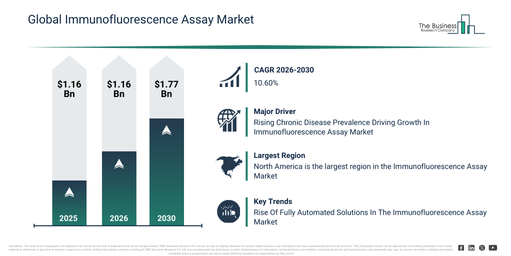
    The immunofluorescence assay market size has seen rapid growth in recent years. It is expected to expand from $3.56 billion in 2025 to $3.94 billion in 2026, at a compound annual growth rate (CAGR) of 10.6%. The historical growth in this market can be attributed to the expansion of laboratory diagnostic testing, increasing use of immunoassays in disease detection, growth in academic and clinical research activities, advancements in fluorescence labeling technologies, and rising adoption of antibody-based diagnostics.

    The immunofluorescence assay market is set to experience significant expansion in the coming years. Its valuation is projected to reach $5.89 billion by 2030, growing at a compound annual growth rate (CAGR) of 10.6%. This anticipated growth throughout the forecast period is driven by factors such as the increasing demand for precision diagnostics, higher investments in translational research, the broadening application of personalized medicine strategies, increased automation in laboratory operations, and advancements in imaging and data analysis software. Prominent trends expected during this period include the wider adoption of multiplex immunofluorescence assays, an uptick in the utilization of automated imaging and analysis systems, a growing need for high-sensitivity diagnostic reagents, the expansion of immunofluorescence applications within oncology, and a reinforced emphasis on standardized and reproducible testing.

    Download the Free Sample Report to Explore Key Market Insights:

    https://www.thebusinessresearchcompany.com/sample.aspx?id=6778&type=smp

    What Primary Drivers Are Shaping The Development Of The Immunofluorescence Assay Market?

    The immunofluorescence assay market is significantly propelled by the increasing prevalence of chronic diseases. Altered lifestyles, dietary habits, and inadequate weight management contribute to the rapid growth in chronic conditions, with certain prolonged chronic infections elevating cancerous risks. The expanding prevalence of chronic disease is projected to enhance the demand for immunofluorescence assays, given their extensive application in diagnostic and drug development initiatives. For instance, in January 2025, PubMed Central, a US-based free digital repository that archives full-text biomedical and life sciences journal articles, reported that as individuals attain greater longevity, the prevalence and associated costs of chronic disease continue to escalate. The estimated global cost of chronic disease is anticipated to reach $47 trillion by 2030. Consequently, the rising incidence of chronic diseases is expected to bolster demand for immunofluorescence assays during the forecast period.

    What Segment Types Make Up The Immunofluorescence Assay Market?

    The immunofluorescence assay market covered in this report is segmented –

    1) By Assay Method: Direct Immunofluorescence, Indirect Immunofluorescence

    2) By Product: Reagents, Instruments, Antibodies, Kits, Consumables and Accessories

    3) By Disease: Cancer, Infectious Disease, Autoimmune Diseases, Other Diseases

    4) By End User: Academic And Research Institutions, Pharmaceutical And Biotechnology Companies, Contract Research Organizations, Hospitals And Diagnostic Centers

    Subsegments:

    1) By Direct Immunofluorescence: Single-Step Direct Assays, Multiplex Direct Assays

    2) By Indirect Immunofluorescence: Standard Indirect Immunofluorescence Assays, Conventional Indirect Immunofluorescence Assays

    Which Market Trends Are Creating New Opportunities In The Immunofluorescence Assay Market?

    Leading companies in the immunofluorescense assay market are increasingly focusing on introducing fully automated solutions, such as UNIQO 160 (CE-IVDR), to maximize their market revenues. A fully automated solution serves to optimize the efficiency of the entire immunofluorescence testing process, including sample preparation, incubation, washing, and mounting of slides. For example, in June 2023, Revvity Inc., a US-based company specializing in life sciences and diagnostics, announced the release of UNIQO 160 (CE-IVDR), an automated indirect immunofluorescence test (IIFT) system designed for autoimmune disease diagnostics. The UNIQO 160 is a tabletop device that merges a completely automated processing system with a high-quality microscope. It can be easily incorporated into current diagnostic laboratory operations. The UNIQO 160 is a system capable of handling up to 160 main samples and 18 slides in a single run. It recognizes individual samples, reagents, and slides via barcode.

    Who Are The Key Players Driving Competition In The Immunofluorescence Assay Market?

    Major companies operating in the immunofluorescence assay market are Thermo Fisher Scientific Inc., Abcam plc, Bio-Rad Laboratories Inc., PerkinElmer Inc., Werfen Company, Merck KGaA, Danaher Corporation, Cell Signaling Technology Inc., Vector Laboratories Inc., INOVA Diagnostics Inc., Sino Biological Inc., Medipan GmbH, BioLegend Inc., Jackson ImmunoResearch Laboratories Inc., Rockland Immunochemicals Inc., Bethyl Laboratories Inc., Fitzgerald Industries International Inc., Creative Diagnostics, Boster Biological Technology, Acris Antibodies GmbH, RayBiotech Inc., Proteintech Group Inc., Novus Biologicals LLC, R&D Systems Inc., OriGene Technologies Inc., GenScript Biotech Corporation, MBL International Corporation, Abnova Corporation, Cellabs India Technologies Limited, J. Mitra & Co. Pvt. Ltd., EpiGentek Group Inc., Elabscience Biotechnology Co. Ltd., Aesku.Diagnostics GmbH

    Read the full immunofluorescence assay market report here:

    https://www.thebusinessresearchcompany.com/report/immunofluorescence-assay-global-market-report

    How Does The Immunofluorescence Assay Market Perform Across Major Global Regions?

    North America was the largest region in the immunofluorescence assay market in 2025. Asia-Pacific is expected to be the fastest-growing region in the forecast period. The regions covered in the immunofluorescence assay market report are Asia-Pacific, South East Asia, Western Europe, Eastern Europe, North America, South America, Middle East, Africa.

    Request A Tailored Immunofluorescence Assay Market Research Report For Competitive Advantage:

    https://www.thebusinessresearchcompany.com/customise?id=6778&type=smp

    Browse Through More Reports Similar to the Global Immunofluorescence Assay Market 2026, By The Business Research Company

    Chemiluminescence Immunoassay Analyzer Market Report 2026

    https://www.thebusinessresearchcompany.com/report/chemiluminescence-immunoassay-analyzer-global-market-report

    Immunohematology Market Report 2026

    https://www.thebusinessresearchcompany.com/report/immunohematology-global-market-report

    Immunoassay Market Report 2026

    https://www.thebusinessresearchcompany.com/report/immunoassay-global-market-report

    Get in touch with us:

    The Business Research Company: https://www.thebusinessresearchcompany.com/

    Americas +1 310-496-7795

    Asia +44 7882 955267 & +91 8897263534

    Europe +44 7882 955267

    Email us at info@tbrc.info

    Follow us on:

    LinkedIn: https://in.linkedin.com/company/the-business-research-company

    YouTube: https://www.youtube.com/channel/UC24_fI0rV8cR5DxlCpgmyFQ

    Global Market Model: https://www.thebusinessresearchcompany.com/global-market-model
  • Immunodiagnostics Market Forecast 2026–2035 Highlighting Market Data Patterns and Industry Insights

    Immunodiagnostics Market Forecast 2026–2035 Highlighting Market Data Patterns and Industry Insights

    The Business Research Company’s 2026 market reports include new capabilities such as market attractiveness scoring and analysis, total addressable market analysis, company scoring matrix, interactive excel data dashboard, improved supply chain analysis, upcoming startups in the market, and overview of key products, aimed at improving the depth, usability, and strategic value of the insights delivered.

    What Is The Estimated Market Size Of The Immunodiagnostics Market During 2026–2030?

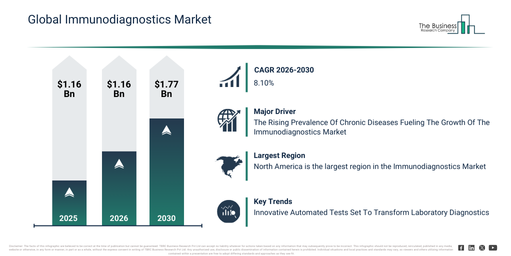
    The immunodiagnostics market size has demonstrated robust growth over the past few years. It is anticipated to expand from $24.32 billion in 2025 to $26.16 billion in 2026, achieving a compound annual growth rate (CAGR) of 7.5%. The expansion observed in the historic period was primarily driven by the increasing occurrence of infectious and chronic diseases, the enlargement of clinical laboratory networks, a rising need for early disease detection, the growing utilization of antibody-based diagnostics, and the accessibility of standardized immunoassay technologies.

    The immunodiagnostics market is anticipated to experience robust expansion in the coming years. It is projected to reach $35.76 billion in 2030, exhibiting a compound annual growth rate (CAGR) of 8.1%. This expansion over the forecast period is primarily driven by factors such as the increasing embrace of personalized diagnostics, heightened investments in automated laboratories, the broadening reach of point-of-care immunodiagnostics, the rising integration of AI-based result interpretation, and an intensified focus on preventive healthcare testing. Furthermore, significant trends during this period include a greater adoption of automated immunoassay analyzers, an escalating demand for high-sensitivity diagnostic tests, the increasing application of rapid immunodiagnostic kits, an expansion of multiplex testing capabilities, and enhanced integration of laboratory data management systems.

    Download the Free Sample Report to Explore Key Market Insights:

    https://www.thebusinessresearchcompany.com/sample.aspx?id=10093&type=smp

    Which Major Factors Are Driving The Expansion Of The Immunodiagnostics Market?

    The expanding occurrence of chronic illnesses is anticipated to drive the future growth of the immunodiagnostics market. These are enduring health conditions, including diabetes, heart disease, and arthritis, typically advancing gradually and necessitating continuous medical care and lifestyle adjustments to manage symptoms and avert complications. Their rise is primarily linked to unhealthy lifestyle choices, such as inadequate diet, lack of physical activity, and smoking, which heighten the likelihood of developing conditions like diabetes, heart disease, and obesity. Immunodiagnostic methods assist in diagnosing chronic diseases by facilitating precise identification of biomarkers and immune reactions tied to prolonged health issues. These tools improve the early recognition and tracking of conditions like diabetes, autoimmune disorders, and cardiovascular issues, leading to better patient care and informed treatment choices. As an example, in June 2024, data from the UK’s National Health Service indicated that 3,615,330 individuals registered with a general practitioner (GP) were diagnosed with non-diabetic hyperglycemia or pre-diabetes (a condition characterized by high blood sugar levels below the diabetes threshold) in 2023. This represented an 18% increase from 3,065,825 cases recorded in 2022. Consequently, the growing incidence of chronic and infectious diseases is fueling the expansion of the immunodiagnostics market.

    How Are The Various Segments Of The Immunodiagnostics Market Categorized?

    The immunodiagnostics market covered in this report is segmented –

    1) By Product: Reagents And Consumables, Instruments

    2) By Technology: Enzyme-Linked Immunosorbent Assay, Chemiluminescence Immunoassay, Fluorescent Immunoassay, Rapid Test, Other Technologies

    3) By Application: Infectious Diseases, Oncology And Endocrinology, Bone And Mineral Diseases, Autoimmunity Disorders, Cardiac Biomarkers, Drug Monitoring, Other Applications

    4) By End User: Hospitals, Clinics, Diagnostic Laboratories

    Subsegments:

    1) By Reagents And Consumables: Antibodies, Assay Kits, Buffers And Substrates

    2) By Instruments: Immunoassay Analyzers, ELISA Readers

    What Trends Are Affecting The Expansion Of The Immunodiagnostics Market?

    Key players in the immunodiagnostics market are increasingly prioritizing the creation of advanced solutions, such as automated chemiluminescence immunoassays (CLIAs), to elevate diagnostic accuracy, shorten testing periods, and optimize laboratory productivity. Automated chemiluminescence immunoassays (CLIAs) are laboratory tests that employ light-emitting chemical reactions and automation to swiftly and precisely detect specific proteins or antibodies in blood or other samples. An example of this trend is DiaSorin S.p.A., an Italy-based diagnostics company, which introduced the LIAISON® TSH-R Ab assay for autoimmune thyroid disorder assessment in September 2025. This test features enhanced antibody specificity achieved through its double-bridge assay architecture, effortless integration into existing LIAISON analyzers to streamline laboratory processes, and CE-marked compatibility, enabling its use across multiple regulated regions.

    Which Major Firms Influence Developments In The Immunodiagnostics Market?

    Major companies operating in the immunodiagnostics market are Abbott Laboratories, F. Hoffmann-La Roche Ltd., Siemens Healthineers AG, Danaher Corporation, Thermo Fisher Scientific Inc., Bio-Rad Laboratories Inc., DiaSorin S.p.A., bioMérieux SA, Sysmex Corporation, Becton Dickinson and Company, Grifols S.A., Ortho Clinical Diagnostics, Beckman Coulter Inc., Fujirebio Holdings Inc., Quidel Corporation, Luminex Corporation, Bio-Techne Corporation, PerkinElmer Inc., Merck KGaA, Gold Standard Diagnostics Corp., OraSure Technologies Inc., Immunodiagnostic Systems Holdings Plc (IDS)

    Read the full immunodiagnostics market report here:

    https://www.thebusinessresearchcompany.com/report/immunodiagnostics-global-market-report

    Which Region Currently Holds The Largest Share Of The Immunodiagnostics Market?

    North America was the largest region in the immunodiagnostics market in 2025. The regions covered in the immunodiagnostics market report are Asia-Pacific, South East Asia, Western Europe, Eastern Europe, North America, South America, Middle East, Africa.

    Request A Tailored Immunodiagnostics Market Research Report For Competitive Advantage:

    https://www.thebusinessresearchcompany.com/customise?id=10093&type=smp

    Browse Through More Reports Similar to the Global Immunodiagnostics Market 2026, By The Business Research Company

    Immunohematology Market Report 2026

    https://www.thebusinessresearchcompany.com/report/immunohematology-global-market-report

    Immunoassay Market Report 2026

    https://www.thebusinessresearchcompany.com/report/immunoassay-global-market-report

    Automated Immunoassay Analyzers Market Report 2026

    https://www.thebusinessresearchcompany.com/report/automated-immunoassay-analyzers-global-market-report

    Get in touch with us:

    The Business Research Company: https://www.thebusinessresearchcompany.com/

    Americas +1 310-496-7795

    Asia +44 7882 955267 & +91 8897263534

    Europe +44 7882 955267

    Email us at info@tbrc.info

    Follow us on:

    LinkedIn: https://in.linkedin.com/company/the-business-research-company

    YouTube: https://www.youtube.com/channel/UC24_fI0rV8cR5DxlCpgmyFQ

    Global Market Model: https://www.thebusinessresearchcompany.com/global-market-model
  • Immunochemistry Diagnostic Devices And Equipment Market Outlook 2026–2030 with Major Growth Drivers and Emerging Industry Trends

    Immunochemistry Diagnostic Devices And Equipment Market Outlook 2026–2030 with Major Growth Drivers and Emerging Industry Trends

    The Business Research Company’s 2026 market reports include new capabilities such as market attractiveness scoring and analysis, total addressable market analysis, company scoring matrix, interactive excel data dashboard, improved supply chain analysis, upcoming startups in the market, and overview of key products, aimed at improving the depth, usability, and strategic value of the insights delivered.

    What Market Size Expansion Is Predicted For The Immunochemistry Diagnostic Devices And Equipment Market Between 2026 And 2030?

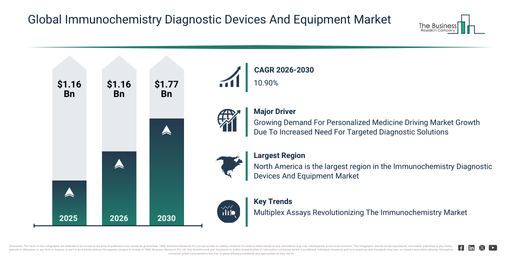
    The immunochemistry diagnostic devices and equipment market size has experienced significant expansion in recent years. This market is forecast to increase from $3.67 billion in 2025 to $4.11 billion in 2026, demonstrating a compound annual growth rate (CAGR) of 11.9%. The market’s past growth can be attributed to several factors including the rising volumes of clinical diagnostic testing, the increasing prevalence of chronic and infectious diseases, the proliferation of centralized diagnostic laboratories, the expanded application of immunoassays in oncology and endocrinology, and advancements in laboratory infrastructure.

    The immunochemistry diagnostic devices and equipment market size is anticipated to undergo rapid expansion in the upcoming years. It is forecast to reach $6.22 billion in 2030, demonstrating a compound annual growth rate (CAGR) of 10.9%. This growth during the projection period stems from an escalating demand for precision diagnostics, the increasing adoption of automated laboratory systems, the broadening of personalized medicine applications, rising investment in advanced diagnostic technologies, and a heightened emphasis on early disease detection. Significant trends expected in the forecast timeframe include the increasing integration of automated immunoassay analyzers, a surging requirement for high-sensitivity diagnostic reagents, the expanding use of multiplex testing platforms, the extension of laboratory automation solutions, and an intensified focus on workflow efficiency and accuracy.

    Download the Free Sample Report to Explore Key Market Insights:

    https://www.thebusinessresearchcompany.com/sample.aspx?id=2547&type=smp

    What Key Drivers Are Influencing The Growth Of The Immunochemistry Diagnostic Devices And Equipment Market?

    The increasing demand for personalized medicine is anticipated to fuel the expansion of the immunochemistry diagnostic devices and equipment market. Personalized medicine involves a medical strategy that tailors healthcare decisions and treatment plans based on an individual’s distinct genetic, genomic, and clinical features, aiming to enhance patient outcomes and reduce negative side effects. The escalating demand for personalized medicine stems from greater awareness and acceptance of customized treatments that factor in individual genetic, lifestyle, and environmental aspects to boost patient results. Personalized medicine requires the creation and application of sophisticated immunochemistry assays to pinpoint specific biomarkers and guide individualized treatment plans for patients. For instance, in February 2024, the Personalized Medicine Coalition, a US-based nonprofit organization advocating individualized treatment methods, reported that 20 of the 53 new therapeutic molecular entities approved by the Food and Drug Administration in 2023, along with six new gene and cell-based therapies, were categorized as personalized medicines, making up approximately 38 percent of all new molecular entities approved in the country. Consequently, the rising demand for personalized medicine is propelling the growth of the immunochemistry diagnostic devices and equipment market in the future.

    Which Market Segments Are Examined In The Immunochemistry Diagnostic Devices And Equipment Market Study?

    The immunochemistry diagnostic devices and equipment market covered in this report is segmented –

    1) By Product Type: Immunochemistry Analyzers, Immunochemistry Stainers, Incubators, Microscopes, Centrifuges, Autoclaves, Consumables

    2) By Consumables: Antibodies, Antigens, Enzymes, Reagents, Stains, Buffers, Disposables, Other Consumables

    3) By Application: Endocrinology, Oncology, Cardiology, Therapeutic Drug Development And Monitoring, Infectious Disease Testing, Drugs Of Abuse Testing, Other Applications

    4) By End Users: Hospitals And Clinics, Diagnostic Laboratories, Research Labs And Institutes, Biopharmaceutical And Biotechnology Companies, Other End Users

    Subsegments:

    1) By Immunochemistry Analyzers: Chemiluminescence Immunoassay (CLIA) Analyzers, Enzyme-Linked Immunosorbent Assay (ELISA) Analyzers, Radioimmunoassay (RIA) Analyzers, Fluorescence Immunoassay (FIA) Analyzers

    2) By Immunochemistry Stainers: Automated Stainers, Manual Stainers

    3) By Incubators: CO2 Incubators, Shaking Incubators, Heated Incubators

    4) By Microscopes: Light Microscopes, Fluorescence Microscopes, Electron Microscopes

    5) By Centrifuges: Microcentrifuges, Refrigerated Centrifuges, Ultracentrifuges

    6) By Autoclaves: Tabletop Autoclaves, Vertical Autoclaves, Horizontal Autoclaves

    7) By Consumables: Reagents and Kits, Test Plates, Filters and Membranes, Microplates and Accessories

    Which Trends Are Influencing The Immunochemistry Diagnostic Devices And Equipment Market?

    Leading companies within the immunochemistry market are actively developing novel products, including multiplex assays, to secure a competitive advantage. Multiplex assays are defined as laboratory techniques that enable the concurrent measurement and analysis of numerous analytes within a single biological sample, providing an efficient and comprehensive approach to investigate multiple factors or biomarkers in a single experiment. For example, in June 2023, Navigate BioPharma Services, Inc., a US-based biotechnology company, launched new multiplex digital PCR assays. These assays were specifically designed for the precise quantification of chimeric antigen receptor (CAR) T cells, an innovative cancer immunotherapy. Built upon the Qiagen QIAcuity digital PCR System, these assays offer the simultaneous measurement of CAR-T cell number, function, and persistence in clinical blood and bone marrow samples without requiring standard curves, capable of detecting CAR-T cells at levels as low as 0.01%. This cutting-edge assay assists clinicians in monitoring responses and safety during clinical trials, thereby facilitating the advancement of CAR-T therapies through its sensitivity, specificity, and efficiency.

    Who Are The Primary Competitors In The Immunochemistry Diagnostic Devices And Equipment Market?

    Major companies operating in the immunochemistry diagnostic devices and equipment market are Abbott Diagnostics, Roche Diagnostics, Siemens Healthcare Diagnostics, Diamond Diagnostics Inc., Dynex Technologies Inc., Grifols S.A., Hycor Biomedical LLC, Immunodiagnostic Systems, Inova Diagnostics, LabCorp, Mindray Medical International Limited, Ortho Clinical Diagnostics, Quest Diagnostics, Randox Laboratories, Sysmex Corporation, ThermoFisher Scientific Inc., Tosoh Bioscience, Danaher Corporation, Johnson & Johnson, Boditech Med Inc., Beckman Coulter Inc., Bio-Rad Laboratories, bioMérieux Clinical Diagnostics, Carolina Liquid Chemistries Corporate, DiaSorin Inc., Agilent Technologies Inc., Merck KGAA, Eagle Biosciences Inc., Biocare Medical LLC, Elabscience Biotechnology Inc., Bio-Genex Laboratories Inc., Diagnostic Biosystem, Histo-Line Laboratories, Rockland Immunochemicals Inc., Abcam plc, Becton Dickinson & Company, Cell Signaling Technology Inc., ImmunoChemistry Technologies LLC, Genemed Biotechnologies Inc., Miltenyi Biotec GmbH, PerkinElmer Inc., Takara Bio. Inc, Immucor Inc., Quidel Corporation

    Read the full immunochemistry diagnostic devices and equipment market report here:

    https://www.thebusinessresearchcompany.com/report/immunochemistry-diagnostic-devices-and-equipment-global-market-report

    Which Region Is Expected To Register The Fastest Growth In The Immunochemistry Diagnostic Devices And Equipment Market?

    North America was the largest region in the global immunochemistry diagnostic devices and equipment market in 2025. Asia-Pacific was the second-largest region in the immunochemistry diagnostic devices and equipment market. The regions covered in the immunochemistry diagnostic devices and equipment market report are Asia-Pacific, South East Asia, Western Europe, Eastern Europe, North America, South America, Middle East, Africa.

    Request A Tailored Immunochemistry Diagnostic Devices And Equipment Market Research Report For Competitive Advantage:

    https://www.thebusinessresearchcompany.com/customise?id=2547&type=smp

    Browse Through More Reports Similar to the Global Immunochemistry Diagnostic Devices And Equipment Market 2026, By The Business Research Company

    Hematology Diagnostic Devices And Equipment Market Report 2026

    https://www.thebusinessresearchcompany.com/report/hematology-diagnostic-devices-and-equipment-global-market-report

    Automated Immunoassay Analyzers Market Report 2026

    https://www.thebusinessresearchcompany.com/report/automated-immunoassay-analyzers-global-market-report

    Molecular Diagnostics Devices And Equipment Market Report 2026

    https://www.thebusinessresearchcompany.com/report/molecular-diagnostics-devices-and-equipment-global-market-report

    Get in touch with us:

    The Business Research Company: https://www.thebusinessresearchcompany.com/

    Americas +1 310-496-7795

    Asia +44 7882 955267 & +91 8897263534

    Europe +44 7882 955267

    Email us at info@tbrc.info

    Follow us on:

    LinkedIn: https://in.linkedin.com/company/the-business-research-company

    YouTube: https://www.youtube.com/channel/UC24_fI0rV8cR5DxlCpgmyFQ

    Global Market Model: https://www.thebusinessresearchcompany.com/global-market-model