Month: March 2026

  • Connected Health Personal Medical Devices Market Forecast 2026–2035 Highlighting Market Data Patterns and Industry Insights

    Connected Health Personal Medical Devices Market Forecast 2026–2035 Highlighting Market Data Patterns and Industry Insights

    The Business Research Company’s 2026 market reports include new capabilities such as market attractiveness scoring and analysis, total addressable market analysis, company scoring matrix, interactive excel data dashboard, improved supply chain analysis, upcoming startups in the market, and overview of key products, aimed at improving the depth, usability, and strategic value of the insights delivered.

    What Is The Estimated Market Size Of The Connected Health Personal Medical Devices Market During 2026–2030?

    The connected health personal medical devices market size has rapidly expanded in recent years. It is projected to grow from $45.71 billion in 2025 to $52.68 billion in 2026, achieving a compound annual growth rate (CAGR) of 15.2%. The historical growth can be attributed to elements such as the limited availability of connected health devices, a reliance on traditional in-clinic monitoring, the slow adoption of wearable technologies, the growing prevalence of chronic diseases, and a lack of standardized healthcare IT infrastructure.

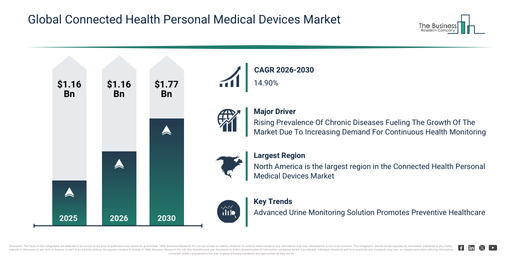
    The connected health personal medical devices market size is anticipated to undergo significant expansion in the foreseeable future. It is projected to achieve a valuation of $91.9 billion by 2030, demonstrating a compound annual growth rate (CAGR) of 14.9%. This projected increase during the forecast period is driven by factors such as the rapid evolution of smart wearable medical devices, the widening availability of home healthcare solutions, enhanced integration with cloud-based health platforms, a rise in patient participation in self-monitoring, and the incorporation of predictive and real-time analytics for personalized care. Notable trends expected within this period involve the growing adoption of remote patient monitoring devices, the combination of wearable health technologies with mobile applications, an increased deployment of smart pill dispensers and glucose monitors, a concentrated effort on chronic disease management and preventive health, and the expansion of telemedicine and home healthcare services.

    Download the Free Sample Report to Explore Key Market Insights:

    https://www.thebusinessresearchcompany.com/sample.aspx?id=24509&type=smp

    What Underlying Factors Are Accelerating The Growth Of The Connected Health Personal Medical Devices Market?

    The increasing incidence of chronic illnesses is anticipated to drive the expansion of the connected health personal medical devices market in the future. These are long-term health issues that progress gradually and persist for prolonged durations, frequently necessitating ongoing medical attention. The increasing occurrence of chronic diseases stems partly from sedentary habits, given that extended periods of sitting and insufficient physical exercise elevate the likelihood of developing conditions like heart ailments and diabetes. Connected health personal medical devices support the oversight of chronic diseases by facilitating real-time health data monitoring, thereby becoming suitable for home-based management of conditions like diabetes and hypertension. These devices diminish the necessity for regular clinic appointments through the provision of continuous data and prompt notifications, enhancing both patient results and convenience. For example, as reported by the National Health Service, a UK-based government department, in June 2024, 3,615,330 individuals registered with a general practitioner (GP) received a diagnosis of non-diabetic hyperglycemia or pre-diabetes (a condition characterized by elevated blood sugar levels, insufficient for a diabetes classification) in 2023. This represented an 18% increase from 3,065,825 cases recorded in 2022. Consequently, the expanding incidence of chronic diseases is propelling the growth of the connected health personal medical devices market.

    How Are The Various Segments Of The Connected Health Personal Medical Devices Market Categorized?

    The connected health personal medical devices market covered in this report is segmented –

    1) By Solution: Healthcare IT, Health Information Exchange, Healthcare Analytics

    2) By Product: Insulin Pumps, Blood Pressure (BP) Monitors, Portable Global Positioning System (GPS) Personal Emergency Response System (PERS), Glucose Monitor, Personal Pulse Oximeter, Smart Pill Dispenser, Personal Electrocardiogram (ECG)

    3) By Connectivity: Bluetooth, Wi-Fi, Cellular, Other Connectivities

    4) By Application: Chronic Disease Management, Fitness And Wellness, Home Healthcare, Other Applications

    5) By End User: Hospitals, Clinics, Homecare Settings, Other End Users

    Subsegments:

    1) By Healthcare IT: Electronic Health Records (EHR), Telemedicine Solutions, Mobile Health (mHealth) Applications, E-Prescribing Systems

    2) By Health Information Exchange: Directed Exchange, Query-Based Exchange, Consumer-Mediated Exchange, Cloud-Based Health Information Platforms

    3) By Healthcare Analytics: Descriptive Analytics, Predictive Analytics, Prescriptive Analytics, Real-Time Analytics

    What Trends Are Affecting The Expansion Of The Connected Health Personal Medical Devices Market?

    Companies operating within the connected health personal medical devices market are concentrating on developing advanced products, such as sophisticated in-home diagnostic systems, to enhance preventive healthcare and user convenience. In-home diagnostic systems are defined as medical devices and tools that allow individuals to monitor, test, and manage their health conditions at home without the need to visit a healthcare facility. For example, in January 2023, Withings, a France-based health technology company, launched U-Scan, a hands-free, in-home urine analysis system engineered to fit inside a toilet bowl. This system uses a replaceable cartridge that performs daily tests for up to three months, analyzing key hydration and nutrition biomarkers. The device connects to a smartphone app, providing users with real-time insights and personalized health recommendations. U-Scan aims to make routine health tracking seamless and non-invasive, fostering proactive wellness management.

    Which Major Firms Influence Developments In The Connected Health Personal Medical Devices Market?

    Major companies operating in the connected health personal medical devices market are Johnson and Johnson, F Hoffmann La Roche AG, Abbott Laboratories, Medtronic plc, Siemens Healthineers, Becton Dickinson and Company, GE HealthCare, Philips Healthcare, Omron Healthcare, Masimo Corporation, Oura Health Oy, Whoop Inc, Withings, Eko Health Inc, TytoCare Ltd, AliveCor Inc, DarioHealth Corp, iHealth Labs Inc, Samsung Electronics, Biostrap, Aktiia, Ava Science Inc, Bloomlife Inc, Movano Health, Oxitone Medical Ltd, Qardio Inc

    Read the full connected health personal medical devices market report here:

    https://www.thebusinessresearchcompany.com/report/connected-health-personal-medical-devices-global-market-report

    Which Region Is Projected To Dominate The Connected Health Personal Medical Devices Market During The Forecast Period?

    North America was the largest region in the connected health personal medical devices market in 2025. Asia-Pacific is expected to be the fastest-growing region in the forecast period. The regions covered in the connected health personal medical devices market report are Asia-Pacific, South East Asia, Western Europe, Eastern Europe, North America, South America, Middle East, Africa.

    Request A Tailored Connected Health Personal Medical Devices Market Research Report For Competitive Advantage:

    https://www.thebusinessresearchcompany.com/customise?id=24509&type=smp

    Browse Through More Reports Similar to the Global Connected Health Personal Medical Devices Market 2026, By The Business Research Company

    Corporate Wellness Solutions Market Report 2026

    https://www.thebusinessresearchcompany.com/report/corporate-wellness-solutions-global-market-report

    Health And Wellness Market Report 2026

    https://www.thebusinessresearchcompany.com/report/health-and-wellness-global-market-report

    Wellness Supplements Market Report 2026

    https://www.thebusinessresearchcompany.com/report/wellness-supplements-global-market-report

    Get in touch with us:

    The Business Research Company: https://www.thebusinessresearchcompany.com/

    Americas +1 310-496-7795

    Asia +44 7882 955267 & +91 8897263534

    Europe +44 7882 955267

    Email us at info@tbrc.info

    Follow us on:

    LinkedIn: https://in.linkedin.com/company/the-business-research-company

    YouTube: https://www.youtube.com/channel/UC24_fI0rV8cR5DxlCpgmyFQ

    Global Market Model: https://www.thebusinessresearchcompany.com/global-market-model

  • Connected Health and Wellness Solutions Market Outlook 2026–2030 with Major Growth Drivers and Emerging Industry Trends

    Connected Health and Wellness Solutions Market Outlook 2026–2030 with Major Growth Drivers and Emerging Industry Trends

    The Business Research Company’s 2026 market reports include new capabilities such as market attractiveness scoring and analysis, total addressable market analysis, company scoring matrix, interactive excel data dashboard, improved supply chain analysis, upcoming startups in the market, and overview of key products, aimed at improving the depth, usability, and strategic value of the insights delivered.

    What Market Size Expansion Is Predicted For The Connected Health and Wellness Solutions Market Between 2026 And 2030?

    The connected health and wellness solutions market size has witnessed substantial growth in recent years. It is projected to expand from $82.06 billion in 2025 to $101.69 billion in 2026, demonstrating a compound annual growth rate (CAGR) of 23.9%. This historical expansion can be attributed to factors such as the increasing prevalence of smartphones and internet access, heightened consumer health consciousness, broader adoption of wearable devices, a surge in demand for home-based monitoring, and the wider acceptance of digital health tools.

    The connected health and wellness solutions market size is projected to experience substantial growth in the upcoming years. This market is forecast to reach $238.59 billion by 2030, exhibiting a compound annual growth rate (CAGR) of 23.8%. The expansion during the forecast period is attributable to the increasing adoption of AI-driven health analytics, a rising demand for continuous health monitoring, the broadening of virtual care models, a growing emphasis on managing chronic diseases, and the increasing integration of connected devices with healthcare systems. Key trends in the forecast period include the wider deployment of remote patient monitoring devices, a growing use of wearable health technologies, the deeper incorporation of telehealth platforms, the proliferation of mobile health applications, and an enhanced focus on preventive and wellness monitoring.

    Download the Free Sample Report to Explore Key Market Insights:

    https://www.thebusinessresearchcompany.com/sample.aspx?id=6766&type=smp

    Which Growth Drivers Are Contributing To The Progress Of The Connected Health and Wellness Solutions Market?

    The rising occurrence of chronic illnesses is anticipated to drive the expansion of the connected health and wellness solutions market in the future. These are health conditions characterized by their persistence for at least a year, often requiring ongoing medical attention, limiting daily functions, or both. Such solutions play a crucial role in managing chronic diseases by offering capabilities like remote patient monitoring, ensuring adherence to medication regimens, and delivering tailored treatments to improve patient outcomes and compliance. An example highlighting this trend is seen in March 2025, where the Office for Health Improvement & Disparities (OHID), a UK-based unit of the Department of Health and Social Care, reported that general practitioners noted the prevalence of type 2 diabetes among adults aged 17 and over in England reached 7.0% in March 2024, an increase from 6.8% in March 2023. Consequently, the growing frequency of chronic conditions is set to fuel the expansion of the connected health and wellness solutions market.

    Which Market Segments Are Examined In The Connected Health and Wellness Solutions Market Study?

    The connected health and wellness solutions market covered in this report is segmented –

    1) By Product: Personal Medical Devices, Wellness Products, Software & Services

    2) By Function: Clinical Monitoring, Telehealth

    3) By Application: Diagnosis & Treatment, Wellness and prevention, Monitoring, Other Applications

    Subsegments:

    1) By Personal Medical Devices: Wearable Health Monitors, Remote Patient Monitoring Devices, Connected Inhalers and Medication Adherence Devices

    2) By Wellness Products: Smart Scales and Body Composition Monitors, Sleep Trackers and Sleep Aids, Smart Thermometers

    3) By Software & Services: Mobile Health Applications (mHealth apps), Telehealth Platforms and Services, Data Analytics and Health Management Solutions

    Which Trends Are Influencing The Connected Health and Wellness Solutions Market?

    Leading companies in the connected health and wellness solutions market are concentrating on developing technologically advanced products, such as the ZAIDYN connected health solution, to enhance remote patient monitoring and improve healthcare outcomes. This ZAIDYN connected health offering supports pharmaceutical firms, healthcare providers, and payers in their innovation efforts to better identify unmet needs, engage patients, and elevate health outcomes. As an illustration, in October 2023, ZS Associates Group, Inc., a US-based management consulting and technology firm, introduced the AI-powered ZAIDYN Connected Health solution as part of the ZAIDYN by ZS platform. This solution provides three product suites aimed at bridging healthcare gaps and fostering a patient-centric future through health insights, patient engagement, and connected research.

    Who Are The Primary Competitors In The Connected Health and Wellness Solutions Market?

    Major companies operating in the connected health and wellness solutions market are Omron Healthcare Inc., Koninklijke Philips N.V., GE Healthcare Technologies Inc., Abbott Laboratories, Apple Inc., Garmin Ltd., Masimo Corporation, ResMed Inc., Medtronic PLC, Boston Scientific Corporation, Microlife AG, AgaMatrix Inc., Dexcom Inc., Withings S.A., Polar Electro Oy, Suunto Oy, iHealth Labs Inc., AliveCor Inc., Oura Health Oy, WHOOP Inc., Samsung Electronics Co. Ltd., Xiaomi Corporation

    Read the full connected health and wellness solutions market report here:

    https://www.thebusinessresearchcompany.com/report/connected-health-and-wellness-solutions-global-market-report

    What Are The Leading Geographic Regions In The Connected Health and Wellness Solutions Market?

    North America was the largest region in the connected health and wellness solutions market in 2025. Asia-Pacific is expected to be the fastest-growing region in the forecast period. The regions covered in the connected health and wellness solutions market report are Asia-Pacific, South East Asia, Western Europe, Eastern Europe, North America, South America, Middle East, Africa.

    Request A Tailored Connected Health and Wellness Solutions Market Research Report For Competitive Advantage:

    https://www.thebusinessresearchcompany.com/customise?id=6766&type=smp

    Browse Through More Reports Similar to the Global Connected Health and Wellness Solutions Market 2026, By The Business Research Company

    Heart Blocks Treatment Devices Market Report 2026

    https://www.thebusinessresearchcompany.com/report/heart-blocks-treatment-devices-global-market-report

    Heart Defect Closure Device Market Report 2026

    https://www.thebusinessresearchcompany.com/report/heart-defect-closure-device-global-market-report

    Bradycardia Treatment Devices Market Report 2026

    https://www.thebusinessresearchcompany.com/report/bradycardia-treatment-devices-global-market-report

    Get in touch with us:

    The Business Research Company: https://www.thebusinessresearchcompany.com/

    Americas +1 310-496-7795

    Asia +44 7882 955267 & +91 8897263534

    Europe +44 7882 955267

    Email us at info@tbrc.info

    Follow us on:

    LinkedIn: https://in.linkedin.com/company/the-business-research-company

    YouTube: https://www.youtube.com/channel/UC24_fI0rV8cR5DxlCpgmyFQ

    Global Market Model: https://www.thebusinessresearchcompany.com/global-market-model

  • One of the Major Drivers of the Congestive Heart Failure Treatment Devices Market Is the Increasing Prevalence Of Cardiovascular Disorders Fuels Growth In Congestive Heart Failure Treatment Devices Market

    One of the Major Drivers of the Congestive Heart Failure Treatment Devices Market Is the Increasing Prevalence Of Cardiovascular Disorders Fuels Growth In Congestive Heart Failure Treatment Devices Market

    The Business Research Company’s 2026 market reports include new capabilities such as market attractiveness scoring and analysis, total addressable market analysis, company scoring matrix, interactive excel data dashboard, improved supply chain analysis, upcoming startups in the market, and overview of key products, aimed at improving the depth, usability, and strategic value of the insights delivered.

    How Large Is The Congestive Heart Failure Treatment Devices Market Projected To Become By 2030 Based On Its 2026 Valuation?

    The congestive heart failure treatment devices market has experienced substantial expansion in its size over recent years. Projections indicate a rise from $21.07 billion in 2025 to $22.76 billion in 2026, with a compound annual growth rate (CAGR) of 8.0%. This past growth is attributable to several key elements, such as the increasing prevalence of congestive heart failure, a greater incidence of cardiovascular diseases, the growing adoption of implantable cardiac devices, the expansion of specialized cardiac care facilities, and improved survival rates for heart failure patients.

    The congestive heart failure treatment devices market size is anticipated to experience robust growth over the coming years, with projections indicating it will reach $30.07 billion in 2030, driven by a compound annual growth rate (CAGR) of 7.2%. This expansion during the forecast period is largely attributable to an aging population facing a higher risk of heart failure, increasing demand for minimally invasive cardiac therapies, a growing focus on early intervention and disease management, expanding access to advanced heart failure treatment in emerging markets, and the rising adoption of long-term mechanical circulatory support devices. Significant trends for this period include the increasing uptake of advanced implantable heart failure devices, the expanded use of ventricular assist devices in advanced congestive heart failure, a heightened emphasis on reducing heart failure hospitalizations, the broadening of device-based therapies for long-term heart support, and an increasing need for continuous cardiac monitoring and management.

    Download the Free Sample Report to Explore Key Market Insights:

    https://www.thebusinessresearchcompany.com/sample.aspx?id=15774&type=smp

    What Primary Drivers Are Shaping The Development Of The Congestive Heart Failure Treatment Devices Market?

    The increasing occurrence of cardiovascular disorders is projected to fuel the expansion of the congestive heart failure treatment devices market. These disorders encompass a range of conditions affecting the heart and blood vessels, including coronary artery disease, hypertension, and heart failure, thereby influencing blood circulation and overall cardiac well-being. The growing incidence of cardiovascular disorders primarily stems from an uptick in risk factors such as obesity, inactive lifestyles, unhealthy diets, and an aging demographic. Congestive heart failure treatment devices play a vital role in addressing cardiovascular disorders by stabilizing heart rhythms and enhancing cardiac function, leading to significantly better patient results. For example, data from October 2024, provided by the US-based government agency, the Centers for Disease Control and Prevention, showed that in 2023, cardiovascular disease was responsible for 919,032 deaths, representing one in every three fatalities. Coronary heart disease remained the most common type of heart disease, with approximately one in six cardiovascular disease deaths occurring in individuals younger than 65 years old. Consequently, the rising prevalence of cardiovascular disorders is a key driver for the growth of the congestive heart failure (CHF) treatment devices market.

    What Segment Groups Are Identified Within The Congestive Heart Failure Treatment Devices Market?

    The congestive heart failure treatment devices market covered in this report is segmented –

    1) By Product: Cardiac Pacemaker, Implantable Cardioverter Defibrillators (ICDs), Cardiac Resynchronization Therapy Devices (CRT), Counter Pulsation Devices, Ventricular Assist Devices (VADs)

    2) By Application: Left Ventricular Assist Device (LVAD), Right Ventricular Assist Device (RVAD), Biventricular Assist Device (BIVAD)

    3) By End-User: Hospitals And Clinic, Specialized Cardiovascular Disease Treatment Centers, Ambulatory Surgery Centers

    Subsegments:

    1) By Cardiac Pacemaker: Single Chamber Pacemaker, Dual Chamber Pacemaker, Biventricular Pacemaker

    2) By Implantable Cardioverter Defibrillators (ICDs): Traditional ICDs, Subcutaneous ICDs, CRT-D (Cardiac Resynchronization Therapy Defibrillator)

    3) By Cardiac Resynchronization Therapy Devices (CRT): CRT-P (Cardiac Resynchronization Therapy Pacemaker), CRT-D (Cardiac Resynchronization Therapy Defibrillator)

    4) By Counter Pulsation Devices: Intra-Aortic Balloon Pumps (IABP), External Counterpulsation Devices (ECP)

    5) By Ventricular Assist Devices (VADs): Left Ventricular Assist Devices (LVAD), Right Ventricular Assist Devices (RVAD), Biventricular Assist Devices (BiVAD)

    What Trends Are Advancing Progress In The Congestive Heart Failure Treatment Devices Market?

    Major companies in the congestive heart failure treatment devices market are focusing on developing advanced solutions like the implant-free atrial septostomy system to improve hemodynamic relief, reduce procedural complexity, and provide less invasive treatment options for heart failure patients. An implant-free atrial septostomy system is a minimally invasive device designed to create a controlled opening in the atrial septum without leaving a permanent implant, which allows for better left atrial pressure reduction and enhanced cardiac hemodynamics in heart failure patients. For example, in January 2025, Alleviant Medical Inc., a US-based medical device company, reached significant FDA milestones for its innovative no-implant interatrial shunt device for treating heart failure. This device offers a minimally invasive solution for heart failure by creating a precise shunt that lowers elevated pressure in the left atrium without leaving a permanent implant. This approach minimizes complications associated with implanted devices, promotes lasting shunt patency, and improves symptoms, exercise capacity, and quality of life for chronic heart failure patients. Its purpose is to unload the heart, alleviate symptoms, and provide a safer, innovative treatment choice for patients with limited alternatives.

    Which Companies Hold Significant Positions In The Congestive Heart Failure Treatment Devices Market?

    Major companies operating in the congestive heart failure treatment devices market are Medtronic plc, Abbott Laboratories, Boston Scientific Corporation, Biotronik SE & Co KG, LivaNova PLC, Berlin Heart GmbH, Jarvik Heart Inc, ReliantHeart Inc, Abiomed Inc, Lepu Medical Technology Co Ltd, Magenta Medical Ltd, MicroPort Inc, EBR Systems Inc, Syncardia Systems LLC, Oscor Inc, OSYPKA Medical GmbH, Calon Cardio-Technology, CoreWave SA, Zoll Medical Corporation

    Read the full congestive heart failure treatment devices market report here:

    https://www.thebusinessresearchcompany.com/report/congestive-heart-failure-treatment-devices-global-market-report

    How Does The Congestive Heart Failure Treatment Devices Market Perform Across Major Global Regions?

    North America was the largest region in the congestive heart failure treatment devices market in 2025. Asia-Pacific is expected to be the fastest-growing region in the forecast period. The regions covered in the congestive heart failure treatment devices market report are Asia-Pacific, South East Asia, Western Europe, Eastern Europe, North America, South America, Middle East, Africa.

    Request A Tailored Congestive Heart Failure Treatment Devices Market Research Report For Competitive Advantage:

    https://www.thebusinessresearchcompany.com/customise?id=15774&type=smp

    Browse Through More Reports Similar to the Global Congestive Heart Failure Treatment Devices Market 2026, By The Business Research Company

    Heart Defect Closure Device Market Report 2026

    https://www.thebusinessresearchcompany.com/report/heart-defect-closure-device-global-market-report

    Congestive Heart Failure Treatment Devices Market Report 2026

    https://www.thebusinessresearchcompany.com/report/congestive-heart-failure-treatment-devices-global-market-report

    Structural Heart Devices Market Report 2026

    https://www.thebusinessresearchcompany.com/report/structural-heart-devices-global-market-report

    Get in touch with us:

    The Business Research Company: https://www.thebusinessresearchcompany.com/

    Americas +1 310-496-7795

    Asia +44 7882 955267 & +91 8897263534

    Europe +44 7882 955267

    Email us at info@tbrc.info

    Follow us on:

    LinkedIn: https://in.linkedin.com/company/the-business-research-company

    YouTube: https://www.youtube.com/channel/UC24_fI0rV8cR5DxlCpgmyFQ

    Global Market Model: https://www.thebusinessresearchcompany.com/global-market-model

  • A key trend shaping the Congenital Heart Defect Devices Market involves the Strategic Partnerships Driving Innovation in the Congenital Heart Defect Devices Market

    A key trend shaping the Congenital Heart Defect Devices Market involves the Strategic Partnerships Driving Innovation in the Congenital Heart Defect Devices Market

    The Business Research Company’s 2026 market reports include new capabilities such as market attractiveness scoring and analysis, total addressable market analysis, company scoring matrix, interactive excel data dashboard, improved supply chain analysis, upcoming startups in the market, and overview of key products, aimed at improving the depth, usability, and strategic value of the insights delivered.

    What Market Value Is Anticipated For The Congenital Heart Defect Devices Market Over The Period 2026–2030?

    The congenital heart defect devices market has experienced robust expansion in recent years. It is anticipated to increase from $3.11 billion in 2025 to $3.34 billion in 2026, achieving a compound annual growth rate (CAGR) of 7.4%. The historical period’s growth drivers include a rising incidence of congenital heart defects, advancements made in pediatric cardiac surgery, increasing survival rates among individuals with congenital heart conditions, the expansion of specialized cardiac care centers, and a growing awareness regarding early diagnosis of congenital defects.

    The congenital heart defect devices market is projected to experience substantial expansion in the coming years. This market is anticipated to reach $4.45 billion by 2030, demonstrating a compound annual growth rate (CAGR) of 7.4%. Several factors will drive this growth during the forecast period, including a heightened emphasis on prompt diagnosis and intervention, a growing need for less invasive pediatric cardiac procedures, wider availability of sophisticated cardiac care in developing regions, an expanding demographic of adults living with congenital heart disease, and ongoing advancements in implantable cardiac devices. Key trends expected over the forecast period encompass the increasing acceptance of minimally invasive congenital heart procedures, greater utilization of transcatheter and implantable cardiac devices, a stronger focus on cardiac interventions for infants and children, the broadening of device-based treatments for intricate heart defects, and a rising requirement for long-term cardiac monitoring and support tools.

    Download the Free Sample Report to Explore Key Market Insights:

    https://www.thebusinessresearchcompany.com/sample.aspx?id=18543&type=smp

    Which Major Factors Are Driving The Expansion Of The Congenital Heart Defect Devices Market?

    A rising count of minimally invasive procedures is projected to fuel expansion within the congenital heart defect device market. These procedures entail surgical operations conducted via small cuts or natural bodily orifices, frequently employing specific instruments and methods to lessen injury and improve recuperation. This surge in minimally invasive procedures stems from technological progress, patient inclination towards less intrusive treatments, refined surgical methods, and the advantages of shorter recovery periods and fewer complications. Devices for congenital heart defects are utilized in minimally invasive procedures, aiding in the diagnosis, therapy, and control of cardiac irregularities via methods involving smaller cuts or catheter-based interventions. As an illustration, in June 2024, data from the American Society of Plastic Surgeons, a US-based organization, indicated that in 2023, plastic surgeries saw a 5% increase, whereas minimally invasive procedures experienced a 7% rise over the preceding year. Consequently, the growing adoption of minimally invasive procedures is propelling the congenital heart defect devices market.

    How Is The Congenital Heart Defect Devices Market Divided Into Its Major Segments?

    The congenital heart defect devices market covered in this report is segmented –

    1) By Device Type: Catheters, Pacemakers, Single-Chamber Pacemakers, Dual-Chamber Pacemakers, Biventricular Pacemakers, Leadless Pacemakers, Implantable Cardioverter Defibrillators, Biventricular Devices, Implanted Cardiac Loop Recorders, Other Device Types

    2) By Defect Type: Atrial Septal Defect, Ventricular Septal Defect, Atrioventricular Septal Defect, Tricuspid Atresia, Truncus Arteriosus, Other Defect Types

    3) By End user: Hospitals, Specialty Clinics, Academic And Research Institute, Other End Users

    Subsegments:

    1) By Catheters: Balloon Catheters, Diagnostic Catheters, Guiding Catheters

    2) By Pacemakers: Single-Chamber Pacemakers, Dual-Chamber Pacemakers, Biventricular Pacemakers, Leadless Pacemakers

    3) By Implantable Cardioverter Defibrillators: Single-Chamber Icds, Dual-Chamber Icds, Subcutaneous Icds

    4) By Biventricular Devices: Crt-P (Cardiac Resynchronization Therapy Pacemakers), Crt-D (Cardiac Resynchronization Therapy Defibrillators)

    5) By Implanted Cardiac Loop Recorders: Traditional Implantable Loop Recorders, Subcutaneous Implantable Loop Recorders

    6) By Other Device Types: Transcatheter Heart Valves, Ventricular Assist Devices (VADS)

    How Are Trends Transforming The Congenital Heart Defect Devices Market Landscape?

    Leading entities within the congenital heart defect devices market are engaging in strategic partnerships to create innovative devices for congenital heart defects. These collaborative arrangements support companies in the congenital heart defect devices sector by consolidating resources and expertise, boosting research and development endeavors, expanding market access, and accelerating commercialization. This teamwork ultimately nurtures innovation and stimulates progress across the industry. For example, in May 2024, SMT (Sahajanand Medical Technologies Pvt Ltd), an India-based manufacturing company, joined forces with HeartX, an India-based MedTech firm, to improve patient care within the cardiovascular sector. Through this partnership, Sahajanand Medical Technologies (SMT) strengthens its position in the congenital heart defect (CHD) space by integrating HeartX’s innovative solutions, such as the JOVE VB Stent. This strategic alliance allows SMT to offer advanced CHD devices that enhance treatment efficacy, simplify procedures, and improve patient outcomes.

    Who Are The Prominent Organizations Shaping The Congenital Heart Defect Devices Market?

    Major companies operating in the congenital heart defect devices market are Johnson & Johnson, Abbott Laboratories, Medtronic plc, Boston Scientific Corporation, W L Gore & Associates Inc, Lepu Medical Technology Beijing Co Ltd, MicroPort Scientific Corporation, Berlin Heart GmbH, Syncardia Systems LLC, Occlutech Holding AG, Sahajanand Medical Technologies Pvt Ltd, Xeltis AG, Procyrion Inc, Heartstitch Inc, Cardia Inc, OSYPKA Medical GmbH, On-X Life Technologies Inc, Ventracor Limited, HemoFlow Technologies, NuPulseCV Inc

    Read the full congenital heart defect devices market report here:

    https://www.thebusinessresearchcompany.com/report/congenital-heart-defect-devices-global-market-report

    Which Region Currently Holds The Largest Share Of The Congenital Heart Defect Devices Market?

    North America was the largest region in the congenital heart defect devices market in 2025. Asia-Pacific is expected to be the fastest-growing region in the forecast period. The regions covered in the congenital heart defect devices market report are Asia-Pacific, South East Asia, Western Europe, Eastern Europe, North America, South America, Middle East, Africa.

    Request A Tailored Congenital Heart Defect Devices Market Research Report For Competitive Advantage:

    https://www.thebusinessresearchcompany.com/customise?id=18543&type=smp

    Browse Through More Reports Similar to the Global Congenital Heart Defect Devices Market 2026, By The Business Research Company

    Computed Tomography Ct Scanners Devices And Equipment Market Report 2026

    https://www.thebusinessresearchcompany.com/report/computed-tomography-ct-scanners-devices-and-equipment-global-market-report

    Computed Tomography Ct Scanner Market Report 2026

    https://www.thebusinessresearchcompany.com/report/computed-tomography-ct-scanner-global-market-report

    Positron Emission Tomography Pet Scanners Market Report 2026

    https://www.thebusinessresearchcompany.com/report/positron-emission-tomography-pet-scanners-global-market-report

    Get in touch with us:

    The Business Research Company: https://www.thebusinessresearchcompany.com/

    Americas +1 310-496-7795

    Asia +44 7882 955267 & +91 8897263534

    Europe +44 7882 955267

    Email us at info@tbrc.info

    Follow us on:

    LinkedIn: https://in.linkedin.com/company/the-business-research-company

    YouTube: https://www.youtube.com/channel/UC24_fI0rV8cR5DxlCpgmyFQ

    Global Market Model: https://www.thebusinessresearchcompany.com/global-market-model

  • A significant industry trend in the Cone Beam Computed Tomography Market includes the Next-Generation Dental Imaging Solutions Enhance Accuracy, Reduce Radiation, and Improve Patient Outcomes

    A significant industry trend in the Cone Beam Computed Tomography Market includes the Next-Generation Dental Imaging Solutions Enhance Accuracy, Reduce Radiation, and Improve Patient Outcomes

    The Business Research Company’s 2026 market reports include new capabilities such as market attractiveness scoring and analysis, total addressable market analysis, company scoring matrix, interactive excel data dashboard, improved supply chain analysis, upcoming startups in the market, and overview of key products, aimed at improving the depth, usability, and strategic value of the insights delivered.

    What Is The Expected Market Size Of The Cone Beam Computed Tomography Market From 2026 To 2030?

    The cone beam computed tomography market has witnessed considerable growth recently. It is anticipated to expand from $1.47 billion in 2025 to $1.65 billion in 2026, displaying a compound annual growth rate (CAGR) of 11.9%. This past growth can be attributed to factors such as the increasing occurrence of dental disorders, the rise in orthodontic and implant procedures, the wider adoption of digital dentistry, a growing demand for precise diagnostic imaging, and the availability of advanced imaging hardware.

    The cone beam computed tomography market is projected to experience substantial expansion in the coming years. This market is set to reach $2.61 billion by 2030, exhibiting a compound annual growth rate (CAGR) of 12.2%. This anticipated growth during the forecast period is fueled by factors such as greater investments in dental imaging technologies, an escalating need for minimally invasive diagnostic procedures, the proliferation of dental clinics in developing economies, the expanding application of AI-driven treatment planning, and a heightened emphasis on imaging solutions tailored to individual patients. Key trends anticipated over the forecast period encompass a growing uptake of AI-assisted image reconstruction, an increased utilization of high-resolution dental imaging systems, a rising preference for compact and in-clinic CBCT devices, the broadening of multi-application CBCT platforms, and an intensified focus on optimizing radiation dosage.

    Download the Free Sample Report to Explore Key Market Insights:

    https://www.thebusinessresearchcompany.com/sample.aspx?id=10235&type=smp

    What Key Drivers Are Influencing The Growth Of The Cone Beam Computed Tomography Market?

    The escalating incidence of dental disorders is anticipated to propel the expansion of the cone beam computed tomography market moving forward. Dental disorders encompass various oral health conditions that impact oral well-being, including gum disease, tooth erosion, and cavities. These conditions can cause pain and discomfort, potentially restrict an individual’s ability to eat, and may negatively affect self-esteem. Cone beam computed tomography is primarily utilized for the early detection of dental issues, thereby enhancing an endodontist’s capacity to identify, assess, and treat patients, as well as to evaluate problems related to the jaw, teeth, and facial skeletal structures. For instance, in March 2023, a report from the World Health Organization (WHO), a Switzerland-based health organization, revealed that nearly 3.5 billion individuals globally were affected by oral diseases. Approximately 10 percent of people worldwide have severe periodontal gum disease, which can lead to tooth loss. Moreover, 2.3 billion individuals worldwide have dental caries in their permanent teeth, and 520 million children globally suffer from primary tooth decay. Consequently, the rising cases of dental disorders are driving the growth of the cone beam computed tomography market.

    Which Segments Are Included In The Analysis Of The Cone Beam Computed Tomography Market?

    The cone beam computed tomography market covered in this report is segmented –

    1) By Patient Position: Standing, Seated, Supine

    2) By Application: Dental Implantology, Oral And Maxillofacial Surgery, Orthodontics, Endodontics, General Dentistry, Temporomandibular Joint (TMJ) Disorders, Periodontics, Forensic Dentistry, Other Applications

    3) By End User: Hospitals, Dental Clinics, Other End-Users

    Subsegments:

    1) By Standing: Upright Standing Position, Upright Standing with Head Stabilization

    2) By Seated: Upright Seated Position, Upright Seated with Head Stabilization

    3) By Supine: Standard Supine Position, Adjustable Supine Position

    Which Trends Are Impacting The Growth Of The Cone Beam Computed Tomography Market?

    Leading companies active in the cone-beam computed tomography (CBCT) market are prioritizing the creation of advanced imaging solutions. These include optimized exposure protocols, enhanced sensors, and motion-artifact correction technologies, all designed to elevate diagnostic accuracy, streamline workflows, and improve patient outcomes. These next-generation imaging advancements facilitate clearer visualization, reduced radiation dose, and greater reliability, even in complex clinical settings. For instance, in March 2025, Planmeca Oy, a Finland-based dental imaging and technology company, launched the Planmeca Viso® G1 CBCT at IDS 2025. This system boasts a field of view up to 11 × 11 cm, integrates Planmeca’s Ultra Low Dose protocol, and utilizes the CALM motion-artifact correction algorithm to produce high-quality 3D images even with patient movement, thereby supporting increased diagnostic confidence and better clinical decision-making.

    Which Key Industry Participants Are Active In The Cone Beam Computed Tomography Market?

    Major companies operating in the cone beam computed tomography market are Planmeca Group, Vatech Co. Ltd., Asahi Roentgen Industry Co. Ltd., J Morita Corporation, QR s.r.l., CurveBeam AI, PreXion Inc., Canon Medical Systems Corporation, Fussen Technology Co. Ltd., Genoray Co. Ltd., Carestream Health Inc., Villa Sistemi Medicali S.p.A., Cefla S.C., PointNix Co. Ltd., LargeV Instrument Corp., Idetec Medical Imaging, Dentsply Sirona Inc., ACTEON Group, Owandy Radiology, Ray Co. Ltd.

    Read the full cone beam computed tomography market report here:

    https://www.thebusinessresearchcompany.com/report/cone-beam-computed-tomography-global-market-report

    Which Region Is Expected To Register The Fastest Growth In The Cone Beam Computed Tomography Market?

    North America was the largest region in the cone beam computed tomography market in 2025. Asia-Pacific is expected to be the fastest-growing region in the global cone beam computed tomography market during the forecast period. The regions covered in the cone beam computed tomography market report are Asia-Pacific, South East Asia, Western Europe, Eastern Europe, North America, South America, Middle East, Africa.

    Request A Tailored Cone Beam Computed Tomography Market Research Report For Competitive Advantage:

    https://www.thebusinessresearchcompany.com/customise?id=10235&type=smp

    Browse Through More Reports Similar to the Global Cone Beam Computed Tomography Market 2026, By The Business Research Company

    Computed Tomography Ct Scanner Market Report 2026

    https://www.thebusinessresearchcompany.com/report/computed-tomography-ct-scanner-global-market-report

    Positron Emission Tomography Pet Scanners Market Report 2026

    https://www.thebusinessresearchcompany.com/report/positron-emission-tomography-pet-scanners-global-market-report

    Medical Imaging Equipment Market Report 2026

    https://www.thebusinessresearchcompany.com/report/medical-imaging-equipment-global-market-report

    Get in touch with us:

    The Business Research Company: https://www.thebusinessresearchcompany.com/

    Americas +1 310-496-7795

    Asia +44 7882 955267 & +91 8897263534

    Europe +44 7882 955267

    Email us at info@tbrc.info

    Follow us on:

    LinkedIn: https://in.linkedin.com/company/the-business-research-company

    YouTube: https://www.youtube.com/channel/UC24_fI0rV8cR5DxlCpgmyFQ

    Global Market Model: https://www.thebusinessresearchcompany.com/global-market-model

  • A key trend shaping the Computed Tomography (CT) Scanners Devices And Equipment Market involves the Philips Healthcare Launches AI-Enabled CT 5300 for Enhanced Cardiac Imaging

    A key trend shaping the Computed Tomography (CT) Scanners Devices And Equipment Market involves the Philips Healthcare Launches AI-Enabled CT 5300 for Enhanced Cardiac Imaging

    The Business Research Company’s 2026 market reports include new capabilities such as market attractiveness scoring and analysis, total addressable market analysis, company scoring matrix, interactive excel data dashboard, improved supply chain analysis, upcoming startups in the market, and overview of key products, aimed at improving the depth, usability, and strategic value of the insights delivered.

    What Market Valuation Is Forecasted For The Computed Tomography (CT) Scanners Devices And Equipment Market By 2030 Starting From Its 2026 Size?

    The computed tomography (ct) scanners devices and equipment market size has seen consistent growth in recent years. It is anticipated to expand from $8.47 billion in 2025 to $8.77 billion in 2026, exhibiting a compound annual growth rate (CAGR) of 3.6%. This historical growth can be ascribed to several factors, including the increasing prevalence of chronic diseases, the expansion of diagnostic imaging centers, a rising demand for early disease detection, advancements in x-ray detector technologies, and the wider clinical acceptance of CT imaging.

    The computed tomography (ct) scanners devices and equipment market is anticipated to show steady development over the next few years, with its size forecast to reach $10.21 billion in 2030, expanding at a compound annual growth rate (CAGR) of 3.9%. This growth during the projection period is influenced by factors such as the increasing incorporation of AI-driven diagnostic tools, higher investments in sophisticated imaging infrastructure, an escalating need for precise diagnostics, the expansion of outpatient diagnostic services, and technological advancements in low-dose imaging. Notable trends for the forecast period encompass a rising adoption of AI-assisted image reconstruction, increasing demand for high-slice CT scanners, greater integration of dose reduction technologies, the broadening of advanced 3D and 4D imaging capabilities, and an enhanced focus on workflow automation.

    Download the Free Sample Report to Explore Key Market Insights:

    https://www.thebusinessresearchcompany.com/sample.aspx?id=2397&type=smp

    What Major Growth Drivers Are Shaping The Outlook Of The Computed Tomography (CT) Scanners Devices And Equipment Market?

    The increasing occurrence of cancer and cardiovascular diseases is projected to drive expansion within the computed tomography (CT) scanner devices and equipment market moving forward. Both cancer and cardiovascular diseases (CVD) are complex conditions, sharing numerous risk factors such as smoking, metabolic syndrome, radiation exposure, age, and air pollution. This escalation in cancer and cardiovascular diseases stems from common risk factors like chronic inflammation, obesity, and lifestyle choices, which foster the onset and advancement of both conditions via similar biological pathways. CT scans serve as a diagnostic tool for identifying tumors and other irregularities within the body, including those associated with cancer and CVD. Furthermore, CT imaging aids in the planning and guidance of interventional or therapeutic procedures, including cryotherapy, radiofrequency ablation, and the insertion of radioactive seeds. An example illustrates this: in October 2024, the Centers for Disease Control and Prevention, a US-based public health institute, stated that in 2023, approximately 1 out of every 6 deaths from cardiovascular diseases involved adults under 65 years old, and overall, 919,032 individuals died from cardiovascular disease, which represented 1 in every 3 deaths. Consequently, the growing incidence of cancer and cardiovascular diseases is fueling the growth of the computed tomography (CT) scanner devices and equipment market.

    Which Segment Categories Define The Computed Tomography (CT) Scanners Devices And Equipment Market?

    The computed tomography (ct) scanners devices and equipment market covered in this report is segmented –

    1) By Product Type: Low Slice, Medium Slice, High Slice

    2) By Application: Oncology, Neurology, Cardiovascular, Musculoskeletal, Other Applications

    3) By End User: Clinics, Diagnostic Services, Hospitals

    Subsegments:

    1) By Low Slice: 4-Slice CT Scanners, 8-Slice CT Scanners, Other Low Slice CT Scanners

    2) By Medium Slice: 16-Slice CT Scanners, 32-Slice CT Scanners, Other Medium Slice CT Scanners

    3) By High Slice: 64-Slice CT Scanners, 128-Slice CT Scanners, 256-Slice CT Scanners, 320-Slice CT Scanners, Other High Slice CT Scanners

    What Major Market Trends Are Driving Changes In The Computed Tomography (CT) Scanners Devices And Equipment Market?

    Leading companies in the computed tomography (CT) scanner devices and equipment market are developing innovative products that incorporate advanced technologies, such as AI-enabled CT scanners, to better serve patients. An AI-enabled CT (Computed Tomography) scanner refers to a medical imaging device that integrates artificial intelligence (AI) technologies to enhance the quality, speed, and accuracy of CT imaging. For instance, in March 2024, Philips Healthcare, a Netherlands-based health technology company, launched the AI-enabled CT 5300, an advanced computed tomography scanner specifically designed for cardiac imaging. This innovative system incorporates artificial intelligence to boost diagnostic accuracy and streamline workflows, featuring the industry’s first nanopanel precise detector engineered for AI-based reconstruction. It significantly improves image quality while reducing radiation exposure by up to 80%, achieving lower noise levels and better low-contrast detectability. Already operational in several European hospitals, the CT 5300 aims to enhance patient care and address challenges in healthcare delivery, reflecting Philips’ commitment to advancing cardiac care through cutting-edge technology.

    Who Are The Top Companies Competing In The Computed Tomography (CT) Scanners Devices And Equipment Market?

    Major companies operating in the computed tomography (ct) scanners devices and equipment market are GE Healthcare, Koninklijke Philips N.V., Hitachi Ltd., Siemens Healthineers, Canon Medical Systems Corporation, Neusoft Medical Systems, NeuroLogica Corp., Samsung Electronics, Shimadzu Corporation, Shenzhen Anke High-Tech, Fujifilm Holdings Corporation, Koning Corporation, ScanCO Medical AG, United Imaging, Carestream Health, Planmed Oy, Dunlee, Shared Imaging, Allengers Medical Systems, Fujifilm Medical Systems, Konica Minolta Healthcare, Toshiba Medical Systems Corporation, Xoran Technologies

    Read the full computed tomography (ct) scanners devices and equipment market report here:

    https://www.thebusinessresearchcompany.com/report/computed-tomography-ct-scanners-devices-and-equipment-global-market-report

    Which Regions Are Projected To Dominate The Computed Tomography (CT) Scanners Devices And Equipment Market In The Coming Years?

    North America was the largest region in the computed tomography scanners devices and equipment market in 2025. Western Europe was the second-largest region in the global computed tomography (CT) scanners devices and equipment market share. The regions covered in the computed tomography (ct) scanners devices and equipment market report are Asia-Pacific, South East Asia, Western Europe, Eastern Europe, North America, South America, Middle East, Africa.

    Request A Tailored Computed Tomography (CT) Scanners Devices And Equipment Market Research Report For Competitive Advantage:

    https://www.thebusinessresearchcompany.com/customise?id=2397&type=smp

    Browse Through More Reports Similar to the Global Computed Tomography (CT) Scanners Devices And Equipment Market 2026, By The Business Research Company

    Computed Tomography Ct Scanner Market Report 2026

    https://www.thebusinessresearchcompany.com/report/computed-tomography-ct-scanner-global-market-report

    Cone Beam Computed Tomography Market Report 2026

    https://www.thebusinessresearchcompany.com/report/cone-beam-computed-tomography-global-market-report

    Cheese Market Report 2026

    https://www.thebusinessresearchcompany.com/report/cheese-global-market-report

    Get in touch with us:

    The Business Research Company: https://www.thebusinessresearchcompany.com/

    Americas +1 310-496-7795

    Asia +44 7882 955267 & +91 8897263534

    Europe +44 7882 955267

    Email us at info@tbrc.info

    Follow us on:

    LinkedIn: https://in.linkedin.com/company/the-business-research-company

    YouTube: https://www.youtube.com/channel/UC24_fI0rV8cR5DxlCpgmyFQ

    Global Market Model: https://www.thebusinessresearchcompany.com/global-market-model

  • An Important Factor Driving the Computed Tomography (CT) Scanner Market Is the Rising Cancer Prevalence Fueling The Growth Of The Market Due To Increasing Demand For Early Detection And Accurate Diagnosis

    An Important Factor Driving the Computed Tomography (CT) Scanner Market Is the Rising Cancer Prevalence Fueling The Growth Of The Market Due To Increasing Demand For Early Detection And Accurate Diagnosis

    The Business Research Company’s 2026 market reports include new capabilities such as market attractiveness scoring and analysis, total addressable market analysis, company scoring matrix, interactive excel data dashboard, improved supply chain analysis, upcoming startups in the market, and overview of key products, aimed at improving the depth, usability, and strategic value of the insights delivered.

    How Is The Market Size Of The Computed Tomography (CT) Scanner Market Expected To Change Between 2026 And 2030?

    The computed tomography (ct) scanner market size has shown substantial growth in recent years. It will grow from $8.22 billion in 2025 to $8.96 billion in 2026 at a compound annual growth rate (CAGR) of 9.0%. Historically, this expansion was driven by factors such as the development of sophisticated medical imaging infrastructure, an increase in chronic and acute illnesses, the expanded application of CT imaging in diagnostics, the presence of supportive reimbursement systems, and the enlargement of hospital imaging departments.

    The computed tomography (CT) scanner market size is anticipated to show robust expansion over the next few years. It is predicted to reach $12.59 billion by 2030, achieving a compound annual growth rate (CAGR) of 8.9%. This projected growth can be ascribed to several factors, including increased investments in advanced imaging technologies, a heightened demand for early disease detection, the spread of outpatient diagnostic centers, a growing emphasis on reducing radiation doses, and continuous improvements in CT scanner performance. Significant trends for the forecast period encompass the wider adoption of high-slice CT systems, the increasing integration of AI-assisted image reconstruction, a rising need for portable CT scanners, the broadening of low-dose imaging technologies, and a sharper focus on diagnostic accuracy.

    Download the Free Sample Report to Explore Key Market Insights:

    https://www.thebusinessresearchcompany.com/sample.aspx?id=24196&type=smp

    What Drivers Are Expected To Influence The Computed Tomography (CT) Scanner Market During The Forecast Period?

    The rising incidence of cancer is anticipated to boost the expansion of the computed tomography (CT) scanner market moving ahead. Cancer encompasses a range of illnesses marked by the unregulated proliferation and dissemination of atypical cells throughout the body. The surge in cancer cases is primarily attributed to the world’s aging populace, as extended life expectancies lead to more individuals reaching older age brackets where the combined impacts of genetic alterations, environmental factors, and compromised immune systems considerably elevate the risk of developing various forms of cancer. Computed tomography (CT) scanners are vital in managing cancer, offering intricate cross-sectional and 3D images that assist in prompt detection, exact localization, accurate staging, devising treatment strategies, and continuous tumor surveillance. This empowers clinicians to make well-informed choices and enhance patient results across the entire cancer care journey. For instance, in April 2024, data from the American Cancer Society, a US-based professional organization, indicated that an estimated 20 million new cancer cases were diagnosed, and 9.7 million deaths occurred worldwide in 2022, with projections showing cancer cases climbing to 35 million by 2050. Consequently, the growing prevalence of cancer is fueling the growth of the computed tomography (CT) scanner market.

    How Is The Computed Tomography (CT) Scanner Market Structured Across Different Segments?

    The computed tomography (ct) scanner market covered in this report is segmented –

    1) By Type: Stationary Computed Tomography Scanner, Portable Computed Tomography Scanner

    2) By Architecture: O-Arm, Gantry-Based CT Architecture

    3) By Technology: High-Slice Computed Tomography, Mid-Slice Computed Tomography, Low-Slice Computed Tomography, Cone Beam Computed Tomography

    4) By Application: Neurology, Oncology, Cardiovascular, Orthopedics, Other Applications

    5) By End Users: Hospitals And Diagnostics Centers, Research Laboratories, Academic Institutes And Contract Research Organizations, Ambulatory Care Centers, Veterinary Clinics And Hospitals, Other End Users

    Subsegments:

    1) By Stationary Computed Tomography Scanner: Single-Slice Computed Tomography Scanner, Multi-Slice Computed Tomography Scanner, Cone Beam Computed Tomography Scanner, Dual-Source Computed Tomography Scanner

    2) By Portable Computed Tomography Scanner: Compact Mobile CT Scanners, Mobile Computed Tomography Scanner

    Which Trends Are Shaping The Future Of The Computed Tomography (CT) Scanner Market?

    Leading companies active in the computed tomography (CT) scanner market are concentrating on developing advanced technologies, such as volume imaging technology, to improve image quality, decrease scan times, minimize radiation exposure, and enhance diagnostic accuracy for a broad spectrum of clinical applications. Volume imaging technology facilitates the capture of complete anatomical volumes in a single rotation, significantly boosting image resolution and lessening motion artifacts. For instance, in March 2025, GE Healthcare Technologies Inc., a US-based medical technology and diagnostics company, unveiled the Revolution Vibe CT system, which incorporates unlimited one-beat cardiac imaging and artificial intelligence (AI)-driven workflow enhancements. This system produces high-quality images even in difficult scenarios, such as atrial fibrillation and heavily calcified coronaries, and simplifies patient preparation by removing the requirement for ECG connections. The Revolution Vibe endeavors to increase diagnostic confidence and patient comfort while simultaneously improving workflow efficiency.

    Which Major Players Dominate The Computed Tomography (CT) Scanner Market?

    Major companies operating in the computed tomography (ct) scanner market are Siemens Healthineers AG, GE HealthCare Technologies Inc., Koninklijke Philips N.V., FUJIFILM Holdings Corporation, Canon Medical Systems Corporation, Shimadzu Corporation, Neusoft Medical Systems Co. Ltd., Shanghai United Imaging Healthcare Co. Ltd., Carestream Health Inc., Analogic Corporation, Trivitron Healthcare Private Limited, Shenzhen Anke High-tech Co. Ltd., Planmed Oy, Xoran Technologies LLC, SinoVision Technologies (Beijing) Co. Ltd., Koning Corporation, CurveBeam AI Inc., MinFound Medical Systems Co. Ltd., Hitachi Ltd. (Medical Systems), Toshiba Medical Systems Corporation, Samsung Healthcare (CT Division), Mediso Ltd., GE Precision Healthcare

    Read the full computed tomography (ct) scanner market report here:

    https://www.thebusinessresearchcompany.com/report/computed-tomography-ct-scanner-global-market-report

    Which Region Is Forecast To Lead The Computed Tomography (CT) Scanner Market In Terms Of Market Size?

    North America was the largest region in the computed tomography (CT) scanner market in 2025. Asia-Pacific is expected to be the fastest-growing region in the forecast period. The regions covered in the computed tomography (ct) scanner market report are Asia-Pacific, South East Asia, Western Europe, Eastern Europe, North America, South America, Middle East, Africa.

    Request A Tailored Computed Tomography (CT) Scanner Market Research Report For Competitive Advantage:

    https://www.thebusinessresearchcompany.com/customise?id=24196&type=smp

    Browse Through More Reports Similar to the Global Computed Tomography (CT) Scanner Market 2026, By The Business Research Company

    Compression Stockings Market Report 2026

    https://www.thebusinessresearchcompany.com/report/compression-stockings-global-market-report

    Compression Wear And Shapewear Market Report 2026

    https://www.thebusinessresearchcompany.com/report/compression-wear-and-shapewear-global-market-report

    Compression Sleeves Market Report 2026

    https://www.thebusinessresearchcompany.com/report/compression-sleeves-global-market-report

    Get in touch with us:

    The Business Research Company: https://www.thebusinessresearchcompany.com/

    Americas +1 310-496-7795

    Asia +44 7882 955267 & +91 8897263534

    Europe +44 7882 955267

    Email us at info@tbrc.info

    Follow us on:

    LinkedIn: https://in.linkedin.com/company/the-business-research-company

    YouTube: https://www.youtube.com/channel/UC24_fI0rV8cR5DxlCpgmyFQ

    Global Market Model: https://www.thebusinessresearchcompany.com/global-market-model

  • A Significant Growth Driver for the Complete Blood Count Device Market Is the Rising Obesity Rates Fuel Growth In The Compression Garments And Stockings Market

    A Significant Growth Driver for the Complete Blood Count Device Market Is the Rising Obesity Rates Fuel Growth In The Compression Garments And Stockings Market

    The Business Research Company’s 2026 market reports include new capabilities such as market attractiveness scoring and analysis, total addressable market analysis, company scoring matrix, interactive excel data dashboard, improved supply chain analysis, upcoming startups in the market, and overview of key products, aimed at improving the depth, usability, and strategic value of the insights delivered.

    What Is The Market Size Of The Compression Garments And Stockings Market In 2026 And What Value Is Projected For 2030?

    The compression garments and stockings market has experienced substantial growth in recent years. It is anticipated to expand from $3.41 billion in 2025 to $3.6 billion in 2026, with a compound annual growth rate (CAGR) of 5.6%. Historically, this expansion has been driven by factors such as the increasing prevalence of venous disorders, a greater utilization of compression therapy in post-surgical recovery, the broadening application of sports injury management techniques, a heightened awareness of circulatory health, and the widespread availability of mass-produced compression products.

    The compression garments and stockings market is set to experience robust expansion over the next few years. It is anticipated to achieve a size of $4.66 billion by 2030, growing at a compound annual growth rate (CAGR) of 6.7%. This projected growth during the forecast period can be attributed to an increased demand for home-based healthcare solutions, the rising adoption of compression wear in preventive care, the expansion of e-commerce distribution channels, a growing focus on lifestyle and wellness products, and increasing product innovation in textile technology. Key trends expected in this period include a heightened demand for medical-grade compression products, the growing application of compression therapy in sports medicine, increased utilization of advanced elastomeric fabrics, the proliferation of customized and patient-specific garments, and an enhanced focus on comfort and breathability.

    Download the Free Sample Report to Explore Key Market Insights:

    https://www.thebusinessresearchcompany.com/sample.aspx?id=13288&type=smp

    What Drivers Are Influencing The Compression Garments And Stockings Market?

    The rising prevalence of obesity is projected to boost the expansion of the compression garments and stockings market going forward. Obesity is defined as a medical state characterized by an excessive and potentially unhealthy accumulation of body fat. These garments are utilized to assist individuals who are overweight or obese in managing pain and discomfort while pursuing weight loss, and they also enhance circulation and mitigate swelling and inflammation, which are frequently observed in such individuals. For example, in March 2023, data from the World Heart Federation, a non-governmental global cardiovascular organization based in Switzerland, indicated that approximately 2.3 billion adults and children worldwide were obese or overweight. Based on current trends, this figure is estimated to climb to 2.7 billion people living with obesity by 2025. Consequently, the growing occurrence of obesity is a key factor fueling the growth of the compression garments and stockings market.

    What Are The Key Segments Of The Compression Garments And Stockings Market?

    The compression garments and stockings market covered in this report is segmented –

    1) By Product Type: Compression Garments, Compression Stockings

    2) By Distribution Channel: Hospitals, Ambulatory Surgical Centers, Clinics, Online Sales, Other Healthcare Facilities

    3) By Application Type: Varicose Veins, Wound Care, Burns, Oncology, Other Applications

    Subsegments:

    1) By Compression Garments: Compression Shirts, Compression Sleeves (Arm And Leg), Compression Shorts, Full-Body Compression Suits

    2) By Compression Stockings: Knee-High Compression Stockings, Thigh-High Compression Stockings, Waist-High Compression Stockings, Anti-Embolism Stockings

    What Key Trends Are Influencing The Development Of The Compression Garments And Stockings Market?

    Leading businesses within the compression garments and stockings market are prioritizing the introduction of medical-grade compression garments that incorporate advanced features, such as FlexFit Comfort Ankle, to boost their market earnings. The FlexFit Comfort Ankle is a distinctive foot design characterized by its sliding compression segments, which significantly aids in improving blood circulation, lymphatic drainage, and the range of motion in the ankle. An example of this trend is seen in July 2023, when The Marena Group, a US manufacturer specializing in medical-grade compression products, unveiled a new lipedema compression garment. This product notably included the pioneering FlexFit Comfort Ankle, crucial for providing comfort and alleviating discomfort throughout the recovery process. Its design was specifically tailored to assist patients recuperating from procedures to reduce lipedema. Moreover, this novel lipedema garment also integrated Marena’s exclusive TriFlex Fabric, primarily valued for its benefits in post-surgical recovery following liposuction. This fabric provides multi-directional three-dimensional stretch, wicks away moisture, offers cooling sensations, enhances body shape, and possesses antimicrobial properties.

    Who Are The Leading Companies Operating In The Compression Garments And Stockings Market?

    Major companies operating in the compression garments and stockings market are 3M Company, BSN Medical Pvt. Ltd., Medi GmBH & Co. KG, SIGVARIS Group, Medical Z, Paul Hartmann AG, Biocompression Systems, 2XU Pty Ltd., Smith & Nephew PLC, Lymphedivas, Narang Medical Limited, Sanyleg SRL, Santemol Group Medikal, Leonisa S.A., Creswell Sock Mills LLC, Spanx Inc., Julius Zorn GmbH, Comfort Plus Corporation, VIM & VIGR LLC, Tommie Copper Inc., Venosan, Tactile Medical, Design Veronique, Medico International Inc., Marena Group LLC, Therafirm LLC, Zensah Company

    Read the full compression garments and stockings market report here:

    https://www.thebusinessresearchcompany.com/report/compression-garments-and-stockings-global-market-report

    Which Regions Are Expected To Experience Rapid Expansion In The Compression Garments And Stockings Market?

    North America was the largest region in the compression garments and stockings market in 2025. Asia-Pacific is expected to be the fastest-growing region in the forecast period. The regions covered in the compression garments and stockings market report are Asia-Pacific, South East Asia, Western Europe, Eastern Europe, North America, South America, Middle East, Africa.

    Request A Tailored Compression Garments And Stockings Market Research Report For Competitive Advantage:

    https://www.thebusinessresearchcompany.com/customise?id=13288&type=smp

    Browse Through More Reports Similar to the Global Compression Garments And Stockings Market 2026, By The Business Research Company

    Blood Collection Processing Management Devices Market Report 2026

    https://www.thebusinessresearchcompany.com/report/blood-collection-processing-management-devices-global-market-report

    Blood Processing Devices And Consumables Market Report 2026

    https://www.thebusinessresearchcompany.com/report/blood-processing-devices-and-consumables-global-market-report

    Capillary Blood Collection Devices Market Report 2026

    https://www.thebusinessresearchcompany.com/report/capillary-blood-collection-devices-global-market-report

    Get in touch with us:

    The Business Research Company: https://www.thebusinessresearchcompany.com/

    Americas +1 310-496-7795

    Asia +44 7882 955267 & +91 8897263534

    Europe +44 7882 955267

    Email us at info@tbrc.info

    Follow us on:

    LinkedIn: https://in.linkedin.com/company/the-business-research-company

    YouTube: https://www.youtube.com/channel/UC24_fI0rV8cR5DxlCpgmyFQ

    Global Market Model: https://www.thebusinessresearchcompany.com/global-market-model
  • Global Complete Blood Count Device Industry Trends and Market Growth Forecast for 2026–2030

    Global Complete Blood Count Device Industry Trends and Market Growth Forecast for 2026–2030

    The Business Research Company’s 2026 market reports include new capabilities such as market attractiveness scoring and analysis, total addressable market analysis, company scoring matrix, interactive excel data dashboard, improved supply chain analysis, upcoming startups in the market, and overview of key products, aimed at improving the depth, usability, and strategic value of the insights delivered.

    What Will Be The Estimated Market Valuation Of The Complete Blood Count Device Market By The End Of 2030?

    The complete blood count device market size has experienced robust growth in recent years. Its value is projected to climb from $4.33 billion in 2025 to $4.58 billion in 2026, demonstrating a compound annual growth rate (CAGR) of 6.0%. This historical expansion can be attributed to factors such as the increased volumes of clinical diagnostic testing, heightened automation in hospital laboratories, the rising global burden of chronic diseases, the establishment of standardized blood testing protocols, and the growing demand for routine health screenings.

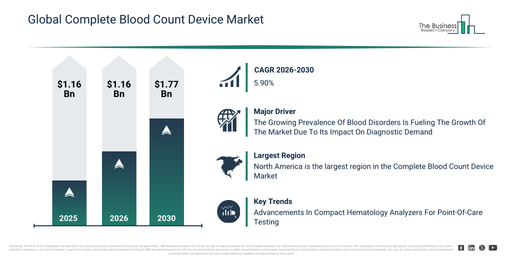
    The complete blood count device market is projected to experience substantial expansion over the upcoming years. It is forecast to reach $5.76 billion in 2030, exhibiting a compound annual growth rate (CAGR) of 5.9%. This anticipated growth is primarily driven by the escalating embrace of decentralized diagnostics, greater capital expenditure in intelligent laboratory frameworks, a heightened need for swift diagnostic outcomes, the broadened scope of preventive healthcare screening, and ongoing innovations within hematology technology. Key developments anticipated during this timeframe encompass the wider deployment of automated hematology analyzers, a surge in the need for point-of-care cbc devices, the increasing incorporation of AI-powered diagnostics, the proliferation of high-throughput laboratory setups, and a magnified emphasis on both the precision and rapidity of diagnostic procedures.

    Download the Free Sample Report to Explore Key Market Insights:

    https://www.thebusinessresearchcompany.com/sample.aspx?id=24195&type=smp

    What Drivers Are Shaping The Future Growth Of The Complete Blood Count Device Market?

    The increasing incidence of blood disorders is anticipated to propel the expansion of the complete blood count device market. These disorders are conditions that interfere with the normal production, operation, or structure of blood cells, leading to compromised blood function. The rise in blood disorders is linked to the growing occurrence of lifestyle diseases, where factors such as inadequate diet, physical inactivity, and stress contribute to conditions like anemia and coagulation issues. A complete blood count (CBC) device aids in diagnosing blood disorders by analyzing essential blood components and identifying abnormalities, thereby allowing healthcare professionals to pinpoint clotting disorders and ensure prompt and precise treatment. For instance, in May 2024, the Canadian Cancer Society, a Canada-based organization, reported 4,100 individuals diagnosed with multiple myeloma (a type of blood cancer), while 1,750 succumbed to the disease. Therefore, the growing prevalence of blood disorders is stimulating the growth of the complete blood count device market.

    Which Segment Classifications Shape The Complete Blood Count Device Market?

    The complete blood count device market covered in this report is segmented –

    1) By Device Type: Automated Blood Count Analyzers, Manual Blood Count Analyzers, Point-Of-Care Testing Devices, Hematology Analyzers

    2) By Test Type: White Blood Cell Count (WBC Or Leukocyte Count), White Blood Cell (WBC) Differential Count, Red Blood Cell Count (RBC Or Erythrocyte Count), Hematocrit (Hct), Hemoglobin (Hbg), Platelet Count, Mean Platelet Volume (MPV), Mean Corpuscular Hemoglobin (MCH), Other Test Types

    3) By Technology: Impedance Technology, Laser-Based Technology, Flow Cytometry, Microscopy

    4) By Distribution Channel: Direct Sales, Online Sales, Third-Party Distributors, Laboratory Equipment Suppliers

    5) By End-User: Hospital, Diagnostic Laboratories, Research Institutes, Other End-Users

    Subsegments:

    1) By Automated Blood Count Analyzers: 3-Part Differential Analyzers, 5-Part Differential Analyzers, 6-Part And Above Differential Analyzers, Integrated Hematology Systems, High-Throughput Lab Analyzers

    2) By Manual Blood Count Analyzers: Hemocytometers, Microscopes For Manual Differential, Manual Cell Counters, Staining Kits And Reagents

    3) By Point-of-Care Testing Devices: Portable Hematology Analyzers, Handheld Complete Blood Count (CBC) Devices, Fingerstick Blood Test Devices, Rapid Diagnostic Complete Blood Count (CBC) Kits

    4) By Hematology Analyzers: Low-Volume Hematology Analyzers, Mid-Volume Hematology Analyzers, High-Volume Hematology Analyzers, Veterinary Hematology Analyzers, Reagent-Free Analyzers

    How Are Trends Impacting The Complete Blood Count Device Market?

    Leading companies within the complete blood count device market are focusing on the development of advanced products, such as compact hematology analyzers, to offer more precise, quicker, and economical solutions for point-of-care testing. Compact hematology analyzers are portable and user-friendly instruments that deliver rapid, accurate complete blood count (CBC) results from minimal sample volumes, making them perfect for point-of-care applications by boosting diagnostic accuracy, efficiency, and ease of use, while also being cost-effective and simple to maintain. For instance, in June 2024, HORIBA, a Japan-based analytical and measurement technology company, unveiled the Yumizen H550E and H500E hematology analyzers. These compact instruments integrate erythrocyte sedimentation rate (ESR) testing with complete blood count (CBC) and 5-part differential (DIFF) analysis, employing HORIBA’s patented CoRA (correlated rouleaux analysis) technology to provide comprehensive results from whole blood samples in just 60 seconds.

    Which Companies Are Expanding Their Footprint In The Complete Blood Count Device Market?

    Major companies operating in the complete blood count device market are Abbott Laboratories, Siemens Healthineers, Mindray Medical International Limited, Beckman Coulter Inc., Sysmex Corporation, Horiba Ltd., Nihon Kohden Corporation, Agappe Diagnostics Ltd., Trivitron Healthcare Pvt. Ltd., HemoCue AB, EKF Diagnostics Holdings plc, Erba Mannheim, Boule Diagnostics AB, Biosystems S.A., Diatron MI Zrt., Labtron Equipment Ltd., Microlab Instruments Co. Pvt. Ltd., URIT Medical Electronic Co. Ltd., Roche Diagnostics, Ortho Clinical Diagnostics, BioSystems Diagnostics Pvt. Ltd., Drew Scientific (subsidiary of EKF), Analyticon Biotechnologies GmbH, Rayto Life and Analytical Sciences Co. Ltd.

    Read the full complete blood count device market report here:

    https://www.thebusinessresearchcompany.com/report/complete-blood-count-device-global-market-report

    Which Geographic Regions Are Influencing Demand In The Complete Blood Count Device Market?

    North America was the largest region in the complete blood count device market in 2025. Asia-Pacific is expected to be the fastest-growing region in the forecast period. The regions covered in the complete blood count device market report are Asia-Pacific, South East Asia, Western Europe, Eastern Europe, North America, South America, Middle East, Africa.

    Request A Tailored Complete Blood Count Device Market Research Report For Competitive Advantage:

    https://www.thebusinessresearchcompany.com/customise?id=24195&type=smp

    Browse Through More Reports Similar to the Global Complete Blood Count Device Market 2026, By The Business Research Company

    Clinical Diagnostics Market Report 2026

    https://www.thebusinessresearchcompany.com/report/clinical-diagnostics-global-market-report

    Oncology Companion Diagnostics Market Report 2026

    https://www.thebusinessresearchcompany.com/report/oncology-companion-diagnostics-global-market-report

    Nuclear Medicine Diagnostics Market Report 2026

    https://www.thebusinessresearchcompany.com/report/nuclear-medicine-diagnostics-global-market-report

    Get in touch with us:

    The Business Research Company: https://www.thebusinessresearchcompany.com/

    Americas +1 310-496-7795

    Asia +44 7882 955267 & +91 8897263534

    Europe +44 7882 955267

    Email us at info@tbrc.info

    Follow us on:

    LinkedIn: https://in.linkedin.com/company/the-business-research-company

    YouTube: https://www.youtube.com/channel/UC24_fI0rV8cR5DxlCpgmyFQ

    Global Market Model: https://www.thebusinessresearchcompany.com/global-market-model
  • Companion Diagnostics Market Size Outlook and Demand Growth Across 2026–2030

    Companion Diagnostics Market Size Outlook and Demand Growth Across 2026–2030

    The Business Research Company’s 2026 market reports include new capabilities such as market attractiveness scoring and analysis, total addressable market analysis, company scoring matrix, interactive excel data dashboard, improved supply chain analysis, upcoming startups in the market, and overview of key products, aimed at improving the depth, usability, and strategic value of the insights delivered.

    What Market Size Growth Is Projected For The Companion Diagnostics Market During The Forecast Period 2026–2030?

    The companion diagnostics market has experienced substantial growth in its size during recent years. It will grow from $8.69 billion in 2025 to $10.54 billion in 2026 at a compound annual growth rate (CAGR) of 21.3%. Historically, this expansion can be attributed to several factors such as the increasing development of targeted cancer therapies, the broadening of oncology clinical trials, greater collaboration between pharmaceutical and diagnostics firms, rising cancer incidence rates, and regulatory approvals for companion tests.

    The companion diagnostics market is projected to experience rapid expansion in the coming years. It is forecast to reach $22.7 billion by 2030, demonstrating a compound annual growth rate (CAGR) of 21.1%. This anticipated growth is driven by several factors, including the escalating need for personalized treatment options, increased funding in precision medicine initiatives, the expanding scope of immuno-oncology pipelines, the growing integration of AI in diagnostic interpretation, and a heightened regulatory focus on the collaborative development of diagnostics and drugs. Key trends anticipated during this period encompass the wider acceptance of precision oncology diagnostics, the deeper integration of companion diagnostics into the drug development process, the increasing deployment of NGS-based diagnostic platforms, the broadening of biomarker-driven therapeutic approaches, and an intensified commitment to personalized medicine.

    Download the Free Sample Report to Explore Key Market Insights:

    https://www.thebusinessresearchcompany.com/sample.aspx?id=7038&type=smp

    Which Economic Or Industry Drivers Are Impacting The Companion Diagnostics Market?

    The growing number of targeted therapies is projected to fuel the expansion of the companion diagnostics market. Targeted therapy is a pharmacological approach that specifically targets distinct characteristics of cancer cells to inhibit disease growth and spread. These medications circulate throughout the body yet exhibit a more precise effect than chemotherapy, often leading to fewer adverse effects. Companion diagnostic testing, based on biological markers, is becoming an essential component of personalized cancer care for targeted cancer therapy. For instance, in February 2024, the Personalized Medicine Coalition, a US-based hospital and health care organization, stated that in 2023, the FDA approved 16 new personalized treatments for rare disease patients, an increase from 6 in 2022. Therefore, the rise in targeted therapies is driving growth within the companion diagnostics market.

    What Market Segments Are Evaluated Within The Companion Diagnostics Market?

    The companion diagnostics market covered in this report is segmented –

    1) By Product And Service: Assays, Kits And Reagents, Software And Services

    2) By Technology: Polymerase Chain Reaction, Next-Generation Sequencing, In Situ Hybridization, Immunohistochemistry

    3) By Indication: Lung Cancer, Breast Cancer, Colorectal Cancer, Leukemia, Melanoma

    4) By End-User: Pharmaceutical And Biopharmaceutical Companies, Reference Laboratories, Contract Research Organizations

    Subsegments:

    1) By Assays: Polymerase Chain Reaction (PCR) Assays, Immunohistochemistry (IHC) Assays, Next-Generation Sequencing (NGS) Assays, In Situ Hybridization (ISH) Assays

    2) By Kits And Reagents: Diagnostic Kits, Detection Reagents, Control Reagents

    3) By Software And Services: Data Analysis Software, Interpretation Software, Custom Development Services, Consulting and Support Services

    What Industry Trends Are Redefining The Companion Diagnostics Market?

    Leading firms within the companion diagnostics market are engaging in joint efforts to create novel therapeutic approaches aimed at advancing personalized medicine, bettering patient results, and maximizing the efficacy of specific treatments. These corporate alliances are set to fast-track the creation and market introduction of companion diagnostics (CDx) for use in hematology and oncology therapies. As an illustration, in January 2024, Agilent Technologies, Inc., a US-based provider of laboratory instruments, software, services, and consumables, revealed a partnership with Incyte, which is a US-based pharmaceutical company. This arrangement combines Agilent’s proficiency and established history in companion diagnostics (CDx) development to aid the growth and market entry of Incyte’s range of hematology and oncology products. Through this joint effort, Agilent can broaden its CDx offerings with additional biomarkers, concurrently, Incyte gains from Agilent’s skill in assay creation, navigating regulatory clearances, and market launch processes to facilitate clinical trials and CDx approval in the U.S. and Europe.

    Who Are The Top Market Participants Influencing The Companion Diagnostics Market?

    Major companies operating in the companion diagnostics market are F Hoffmann-La Roche Ltd., Agilent Technologies Inc., Qiagen NV, Thermo Fisher Scientific Inc., Abbott Laboratories Inc., Amoy Diagnostics Co. Ltd., Danaher Corporation, Guardant Health Inc., Illumina Inc., Myriad Genetics Inc., Siemens Healthcare GmbH, Almac Group, Caris Life Sciences, Cepheid Inc., Diaceutics plc, Epic Sciences Inc., Foundation Medicine Inc., Genomic Health Inc., Grail Inc., Hologic Inc., HTG Molecular Diagnostics Inc., Inivata Ltd., Invivoscribe Inc., MolecularMD Corporation, Natera Inc., NeoGenomics Laboratories Inc., Personal Genome Diagnostics Inc., Precision Therapeutics Inc., Prometheus Laboratories Inc., Sysmex Corporation, Ventana Medical Systems

    Read the full companion diagnostics market report here:

    https://www.thebusinessresearchcompany.com/report/companion-diagnostics-global-market-report

    What Are The Top-Performing Regions Within The Companion Diagnostics Market?

    North America was the largest region in the companion diagnostics market in 2025. The regions covered in the companion diagnostics market report are Asia-Pacific, South East Asia, Western Europe, Eastern Europe, North America, South America, Middle East, Africa.

    Request A Tailored Companion Diagnostics Market Research Report For Competitive Advantage:

    https://www.thebusinessresearchcompany.com/customise?id=7038&type=smp

    Browse Through More Reports Similar to the Global Companion Diagnostics Market 2026, By The Business Research Company

    Contact Lenses Market Report 2026

    https://www.thebusinessresearchcompany.com/report/contact-lenses-global-market-report

    Bionic Contact Lenses Market Report 2026

    https://www.thebusinessresearchcompany.com/report/bionic-contact-lenses-global-market-report

    Smart Contact Lenses Market Report 2026

    https://www.thebusinessresearchcompany.com/report/smart-contact-lenses-global-market-report

    Get in touch with us:

    The Business Research Company: https://www.thebusinessresearchcompany.com/

    Americas +1 310-496-7795

    Asia +44 7882 955267 & +91 8897263534

    Europe +44 7882 955267

    Email us at info@tbrc.info

    Follow us on:

    LinkedIn: https://in.linkedin.com/company/the-business-research-company

    YouTube: https://www.youtube.com/channel/UC24_fI0rV8cR5DxlCpgmyFQ

    Global Market Model: https://www.thebusinessresearchcompany.com/global-market-model