Month: March 2026

  • Acellular Dermal Matrices Market Anticipated to Grow Steadily and Reach $2.55 Billion by 2030

    Acellular Dermal Matrices Market Anticipated to Grow Steadily and Reach $2.55 Billion by 2030

    The Business Research Company’s 2026 market reports include new capabilities such as market attractiveness scoring and analysis, total addressable market analysis, company scoring matrix, interactive excel data dashboard, improved supply chain analysis, upcoming startups in the market, and overview of key products, aimed at improving the depth, usability, and strategic value of the insights delivered.

    What Will Be The Estimated Market Valuation Of The Acellular Dermal Matrices Market By The End Of 2030?

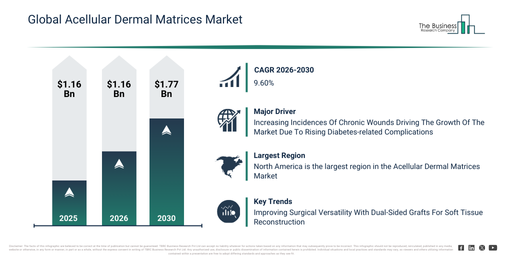
    The acellular dermal matrices market has demonstrated significant growth in recent years. This market is expected to expand from $1.61 billion in 2025 to $1.77 billion in 2026, achieving a compound annual growth rate (CAGR) of 9.8%. Historically, this growth has been driven by factors such as the increasing volume of reconstructive surgeries, a rising incidence of chronic wounds, the expanding use of biomaterials in surgical procedures, advancements in tissue processing techniques, and the growing demand for cosmetic and plastic surgery.

    The acellular dermal matrices market is projected for significant expansion over the coming years, anticipated to reach a valuation of $2.55 billion by 2030, demonstrating a compound annual growth rate (CAGR) of 9.6%. The projected growth during this period stems from several factors, including the escalating demand for regenerative medicine solutions, the increasing embrace of advanced wound care products, the proliferation of minimally invasive surgical procedures, an intensified focus on achieving quicker healing outcomes, and the growing clinical acceptance of biologic implants. Key trends identified for the forecast timeframe encompass the expanding integration of ADMs in reconstructive surgeries, the growing utilization of biologic scaffolds in wound care, an escalating preference for ready-to-use dermal matrices, the broadening of ADM applications in orthopedic procedures, and a heightened emphasis on biocompatibility and successful healing outcomes.

    Download the Free Sample Report to Explore Key Market Insights:

    https://www.thebusinessresearchcompany.com/sample.aspx?id=24130&type=smp

    What Primary Drivers Are Shaping The Development Of The Acellular Dermal Matrices Market?

    The rising prevalence of chronic wounds is anticipated to propel the growth of the acellular dermal matrices market in the future. Chronic wounds are cuts or sores that either take a long time to heal or never heal, frequently reappearing and potentially needing special attention to recover. The increase in chronic wounds is linked to a rise in people with diabetes, as diabetes can reduce blood flow and damage nerves, making the body’s wound healing process more challenging. This means even small cuts can develop into serious, long-lasting wounds. Acellular dermal matrices aid in decreasing the incidence of chronic wounds by providing a supportive layer that promotes natural skin repair and faster healing. For instance, in July 2023, according to OSF HealthCare, a US-based nonprofit healthcare system, 6.7 million people in the US currently live with chronic wounds, a number expected to grow by 2% per year over the next decade. Thus, the increasing incidences of chronic wounds are driving the expansion of the acellular dermal matrices market.

    Which Segment Classifications Shape The Acellular Dermal Matrices Market?

    The acellular dermal matrices market covered in this report is segmented –

    1) By Product Type: Human Acellular Dermal Matrices, Porcine Acellular Dermal Matrices, Other Source Acellular Dermal Matrices

    2) By Distribution Channel: Direct Sales, Online Sales, Distributor Sales

    3) By Application: Breast Reconstruction, Dental Surgery, Orthopedic Surgery, Wound Care, Other Applications

    4) By End-User: Hospitals, Ambulatory Surgical Centers, Specialty Clinics, Research Laboratories

    Subsegments:

    1) By Human Acellular Dermal Matrices: Cryopreserved Human Acellular Dermal Matrices, Freeze-dried Human Acellular Dermal Matrices, Ready-to-use Human Acellular Dermal Matrices

    2) By Porcine Acellular Dermal Matrices: Cross-linked Porcine Dermis, Non-cross-linked Porcine Dermis, Gamma-irradiated Porcine Matrices

    3) By Other Source Acellular Dermal Matrices: Bovine-derived Dermal Matrices, Fish-derived Dermal Matrices, Synthetic Or acellular Composite Matrices

    How Are Trends Impacting The Acellular Dermal Matrices Market?

    Leading companies in the acellular dermal matrices market are concentrating on developing advanced products, such as dual-sided acellular dermal matrices, to boost surgical versatility and integration efficiency. These dual-sided acellular dermal matrices are specialized grafts, engineered with surfaces suitable for multi-directional implantation, which reduces handling complexity and enhances surgical outcomes. For instance, in May 2023, AlloSource, a US-based nonprofit organization specializing in providing allografts derived from human tissue to support medical procedures, introduced AlloMend Duo Acellular Dermal Matrix (ADM). This innovative solution is designed for soft tissue reconstruction, offering surgeons a dependable tool for repairing and rebuilding soft tissue defects with enduring structural support. The deep reticular dermal allograft integrates smoothly with adjacent tissue, serving as a scaffold that promotes cell repopulation and the regeneration of natural host tissues.

    Which Companies Are Expanding Their Footprint In The Acellular Dermal Matrices Market?

    Major companies operating in the acellular dermal matrices market are Stryker Corporation, Smith & Nephew plc, ConvaTec Group plc, Integra LifeSciences Corporation, Gunze Limited, MTF Biologics, Organogenesis Inc., RTI Surgical Holdings Inc., LifeNet Health, HANS BIOMED, PolyNovo Limited, Cook Biotech Incorporated, Tissue Regenix Group plc, CG Bio Inc., Meccellis Biotech, Aziyo Biologics Inc., MiMedx Group Inc., Axogen Inc., AlloSource, Kerecis Ltd.

    Read the full acellular dermal matrices market report here:

    https://www.thebusinessresearchcompany.com/report/acellular-dermal-matrices-global-market-report

    How Does The Acellular Dermal Matrices Market Perform Across Major Global Regions?

    North America was the largest region in the acellular dermal matrices market in 2025. Asia-Pacific is expected to be the fastest-growing region in the forecast period. The regions covered in the acellular dermal matrices market report are Asia-Pacific, South East Asia, Western Europe, Eastern Europe, North America, South America, Middle East, Africa.

    Request A Tailored Acellular Dermal Matrices Market Research Report For Competitive Advantage:

    https://www.thebusinessresearchcompany.com/customise?id=24130&type=smp

    Browse Through More Reports Similar to the Global Acellular Dermal Matrices Market 2026, By The Business Research Company

    Transdermal Skin Patche Market Report 2026

    https://www.thebusinessresearchcompany.com/report/transdermal-skin-patche-global-market-report

    Dermatoscopes Market Report 2026

    https://www.thebusinessresearchcompany.com/report/dermatoscopes-global-market-report

    Hypermarkets Market Report 2026

    https://www.thebusinessresearchcompany.com/report/hypermarkets-global-market-report

    Get in touch with us:

    The Business Research Company: https://www.thebusinessresearchcompany.com/

    Americas +1 310-496-7795

    Asia +44 7882 955267 & +91 8897263534

    Europe +44 7882 955267

    Email us at info@tbrc.info

    Follow us on:

    LinkedIn: https://in.linkedin.com/company/the-business-research-company

    YouTube: https://www.youtube.com/channel/UC24_fI0rV8cR5DxlCpgmyFQ

    Global Market Model: https://www.thebusinessresearchcompany.com/global-market-model

  • Absorbent Dressings Market Expansion Forecast Indicating $15.18 Billion Market Size by 2030 at 10.4% CAGR

    Absorbent Dressings Market Expansion Forecast Indicating $15.18 Billion Market Size by 2030 at 10.4% CAGR

    The Business Research Company’s 2026 market reports include new capabilities such as market attractiveness scoring and analysis, total addressable market analysis, company scoring matrix, interactive excel data dashboard, improved supply chain analysis, upcoming startups in the market, and overview of key products, aimed at improving the depth, usability, and strategic value of the insights delivered.

    What Market Size Growth Is Projected For The Absorbent Dressings Market During The Forecast Period 2026–2030?

    The absorbent dressings market size has experienced rapid expansion in recent years. This market is projected to expand from $9.23 billion in 2025 to $10.23 billion in 2026, demonstrating a compound annual growth rate (CAGR) of 10.8%. Historically, this expansion has been driven by factors such as a rise in surgical procedures, the increasing occurrence of chronic wounds, the development of both inpatient and outpatient care facilities, greater understanding of wound hygiene, and the availability of economical dressing solutions.

    The absorbent dressings market size is projected to experience substantial growth in the next few years. It is expected to grow to $15.18 billion in 2030, achieving a compound annual growth rate (CAGR) of 10.4%. This expansion during the forecast period can be attributed to an increasing demand for advanced wound dressings, a rising adoption of home healthcare services, the broadened usage of antimicrobial dressings, a growing emphasis on patient comfort and healing efficiency, and increasing innovation in absorbent material technologies. Major trends anticipated in the forecast period include an escalating demand for high-absorbency wound dressings, the rising adoption of advanced polymer-based materials, a growing use of antimicrobial absorbent dressings, the expansion of home care wound management, and an enhanced focus on moisture balance control.

    Download the Free Sample Report to Explore Key Market Insights:

    https://www.thebusinessresearchcompany.com/sample.aspx?id=8438&type=smp

    Which Major Factors Are Driving The Expansion Of The Absorbent Dressings Market?

    The increasing elderly demographic is anticipated to stimulate the expansion of the absorbent dressings market moving forward. This phenomenon denotes a progressive rise in the proportion or total number of older individuals within a population. Seniors frequently experience delayed wound healing, making absorbent dressings indispensable for managing injuries and fostering improved outcomes. These dressings aid in wound recovery, prevent infections, and enhance overall comfort, thereby contributing to the well-being and quality of life of elderly individuals. For example, in October 2025, data from the World Health Organization (WHO), a Switzerland-based intergovernmental organization and specialized health agency of the United Nations, revealed that by 2030, 1 in 6 people globally will be aged 60 years or over, a rise from 1 billion to 1.4 billion. By 2050, the population aged 60 and over is expected to double to 2.1 billion, and the number of people aged 80 and over is projected to triple, reaching 426 million. Thus, the expanding aging population is a significant impetus behind the growth of the absorbent dressings market.

    What Market Segments Are Evaluated Within The Absorbent Dressings Market?

    The absorbent dressings market covered in this report is segmented –

    1) By Product: Non-Adherent, Adherent, Low-Adherent

    2) By Application: Hospital, Clinic, Home Care

    3) By End-User: Inpatient Facilities, Outpatient Facilities

    Subsegments:

    1) By Non-Adherent: Foam Dressings, Hydrocolloid Dressings, Alginate Dressings

    2) By Adherent: Gauze Dressings, Adhesive Dressings, Transparent Film Dressings

    3) By Low-Adherent: Semi-Permeable Dressings, Silicone Dressings, Specialized Low-Adherent Dressings

    What Industry Trends Are Redefining The Absorbent Dressings Market?

    Leading companies in the absorbent dressings market are concentrating on developing technological innovations, such as advanced foam dressings, to gain a competitive edge. These advanced foam absorbent dressings are a type of wound dressing intended for sophisticated wound care. They are highly absorbent and manage wounds with varying exudate levels, creating a moist environment conducive to healing. For example, in January 2023, Convatec Group PLC, a UK-based medical device company, announced the US launch of ConvaFoam, a new line of advanced foam dressings crafted to meet the demands of healthcare providers and patients. ConvaFoam dressings integrate AQUACEL hydrofiber technology and a superabsorbent layer, making them appropriate for handling both exuding and non-exuding wounds, as well as for safeguarding intact skin. The ConvaFoam dressing series offers a superabsorbent layer, a patterned film design that can assist with exudate monitoring, up to seven days of use, enhanced absorbency and fluid handling, and improved silicone technology for better adhesion. Additionally, these dressings can be easily cut to fit, simplifying application to areas that are challenging to dress.

    Who Are The Top Market Participants Influencing The Absorbent Dressings Market?

    Major companies operating in the absorbent dressings market are 3M Company, MPM Medical Inc., Alliqua BioMedical Inc., DeRoyal Industries Inc., Smith & Nephew PLC, Coloplast A/S, Johnson & Johnson, B. Braun Melsungen AG, Mölnlycke Health Care AB, Brightwake Limited, Hollister Incorporated, Integra LifeSciences Holdings Corporation, DermaRite Industries LLC, Birchwood Laboratories Inc., Medline Industries Inc., Acelity L.P. Inc., Argentum Medical LLC, ConvaTec Inc., Derma Sciences Inc., HARTMANN GROUP, Lohmann & Rauscher International GmbH & Co. KG, Medtronic PLC, Nitto Denko Corporation, Paul Hartmann AG, Systagenix Wound Management Ltd., Urgo Medical Ltd., Winner Medical Co. Ltd., 4L Health Co. Ltd., Aso LLC, Gentell Inc., Essity AB, Adynxx Inc., BSN Medical GmbH

    Read the full absorbent dressings market report here:

    https://www.thebusinessresearchcompany.com/report/absorbent-dressings-global-market-report

    Which Region Currently Holds The Largest Share Of The Absorbent Dressings Market?

    North America was the largest region in the absorbent dressings market in 2025. Asia-Pacific is expected to be the fastest-growing region in the forecast period. The regions covered in the absorbent dressings market report are Asia-Pacific, South East Asia, Western Europe, Eastern Europe, North America, South America, Middle East, Africa.

    Request A Tailored Absorbent Dressings Market Research Report For Competitive Advantage:

    https://www.thebusinessresearchcompany.com/customise?id=8438&type=smp

    Browse Through More Reports Similar to the Global Absorbent Dressings Market 2026, By The Business Research Company

    Traditional Radio Advertising Market Report 2026

    https://www.thebusinessresearchcompany.com/report/traditional-radio-advertising-global-market-report

    Moist Wound Dressings Market Report 2026

    https://www.thebusinessresearchcompany.com/report/moist-wound-dressings-global-market-report

    Surgical Dressing Market Report 2026

    https://www.thebusinessresearchcompany.com/report/surgical-dressing-global-market-report

    Get in touch with us:

    The Business Research Company: https://www.thebusinessresearchcompany.com/

    Americas +1 310-496-7795

    Asia +44 7882 955267 & +91 8897263534

    Europe +44 7882 955267

    Email us at info@tbrc.info

    Follow us on:

    LinkedIn: https://in.linkedin.com/company/the-business-research-company

    YouTube: https://www.youtube.com/channel/UC24_fI0rV8cR5DxlCpgmyFQ

    Global Market Model: https://www.thebusinessresearchcompany.com/global-market-model

  • Absorbable Hemostats Market Revenue Projected to Reach $4.95 Billion by 2030 with 8.1% CAGR

    Absorbable Hemostats Market Revenue Projected to Reach $4.95 Billion by 2030 with 8.1% CAGR

    The Business Research Company’s 2026 market reports include new capabilities such as market attractiveness scoring and analysis, total addressable market analysis, company scoring matrix, interactive excel data dashboard, improved supply chain analysis, upcoming startups in the market, and overview of key products, aimed at improving the depth, usability, and strategic value of the insights delivered.

    How Will The Market Size Of The Absorbable Hemostats Market Evolve From 2026 To 2030?

    The absorbable hemostats market has experienced robust expansion over the past few years. Projections indicate it will expand from $3.37 billion in 2025 to $3.63 billion in 2026, achieving a compound annual growth rate (CAGR) of 7.8%. This historical growth can be linked to several factors, including a rise in neurosurgery and orthopedic surgery procedures, an escalating need for products that control bleeding during operations, wider acceptance of oxidized regenerated cellulose and gelatin-based hemostats, the expansion of surgical facilities and operating rooms within hospitals, and increased clinical approval of absorbable biomaterial hemostats.

    The absorbable hemostats market is projected to experience substantial growth over the next few years, with an anticipated expansion to $4.96 billion by 2030, reflecting a compound annual growth rate (CAGR) of 8.1%. This projected growth within the forecast period can be attributed to several factors, including the increasing application of advanced thrombin and collagen-based formulations, a growing inclination towards minimally invasive and reconstructive surgical techniques, heightened investment in bioabsorbable and hybrid hemostat innovations, an increase in procedure volumes at ambulatory surgical centers, and a stronger focus on mitigating surgical complications and accelerating recovery times. Prominent trends for the upcoming period include the progressive development of bioengineered absorbable hemostat materials engineered for superior tissue compatibility, the expanding adoption of advanced collagen, gelatin, and thrombin-based hemostats in complex surgical interventions, a rising preference for multifunctional hemostatic products that promote rapid clot stabilization and wound healing, the broadened utilization of absorbable hemostats in minimally invasive and reconstructive surgeries, and an intensified clinical emphasis on hemostats specifically designed to reduce post-operative complications and the risks of surgical bleeding.

    Download the Free Sample Report to Explore Key Market Insights:

    https://www.thebusinessresearchcompany.com/sample.aspx?id=18777&type=smp

    What Key Drivers Are Influencing The Growth Of The Absorbable Hemostats Market?

    The absorbable hemostats market is anticipated to expand due to a rising volume of surgical procedures going forward. These procedures involve medical operations performed to treat, diagnose, or manage conditions by physically altering tissues or organs through incisions or other techniques. The increase in surgical interventions stems from a growing demand for advanced medical treatments, an aging population, and breakthroughs in surgical technology that facilitate more complex and minimally invasive operations. Absorbable hemostats are employed in surgical procedures to control bleeding and promote clot formation while being gradually absorbed by the body, thereby reducing the necessity for additional interventions and minimizing postoperative complications. For instance, in April 2025, according to the British Association of Aesthetic Plastic Surgeons, a UK-based professional organization, a total of 25,972 surgical procedures were performed in 2023, with women representing 93% of all cosmetic surgeries. Men made up the remaining 7% of these cases. Consequently, the increasing number of surgical procedures is driving the growth of the absorbable hemostats market.

    Which Segment Areas Are Covered In The Absorbable Hemostats Market Analysis?

    The absorbable hemostats market covered in this report is segmented –

    1) By Type: Thrombin-Based Hemostats, Oxidized Regenerated Cellulose-Based Hemostats, Gelatin-Based Hemostats, Collagen-Based Hemostats, Other Types

    2) By Application: Neurosurgery, Orthopedic Surgery, General Surgery, Reconstructive Surgery, Other Applications

    3) By End-User: Hospitals And Clinics, Ambulatory Surgical Centers, Other End-Users

    Subsegments:

    1) By Thrombin-Based Hemostats: Lyophilized Thrombin Hemostats, Liquid Thrombin-Based Hemostats

    2) By Oxidized Regenerated Cellulose-Based Hemostats: Pre-Packaged Oxidized Cellulose Hemostats, Customizable Oxidized Cellulose Products

    3) By Gelatin-Based Hemostats: Gelatin Sponge-Based Hemostats, Gelatin Foam-Based Hemostats

    4) By Collagen-Based Hemostats: Collagen-Based Pads or Sheets, Collagen-Based Sponges or Powder

    5) By Other Types: Fibrin-Based Hemostats, Polymeric-Based Hemostats, Other Innovative Or Hybrid Formulations

    What Key Developments And Trends Are Impacting The Absorbable Hemostats Market?

    Leading companies in the absorbable hemostats market are concentrating on the development of advanced products, such as absorbable hemostatic powder, to ensure swift and effective bleeding control during surgical procedures. Absorbable hemostatic powder is a medical solution designed to manage bleeding by fostering rapid clot formation at the injury site, which the body then naturally absorbs once its function is complete. For instance, in July 2023, Baxter International Inc., a US-based healthcare company, launched PERCLOT absorbable hemostatic powder. The unique molecular structure of PERCLOT granules allows for rapid water absorption, forming a gelled adhesive matrix that establishes a mechanical barrier to stop bleeding by promoting the aggregation of platelets, red blood cells, and coagulation proteins like thrombin and fibrinogen. This capability significantly improves clinicians’ ability to manage a wider array of intraoperative bleeding, which is critical for reducing the requirement for blood transfusions, minimizing major complications, and ultimately decreasing the overall cost of care.

    Which Global Companies Are Actively Competing In The Absorbable Hemostats Market?

    Major companies operating in the absorbable hemostats market are Johnson & Johnson, Medtronic Plc, Baxter International Inc., B. Braun Melsungen AG, Integra LifeSciences, Acelity, Meril Life Sciences Pvt. Ltd., Gelita AG, CryoLife Inc., Anika Therapeutics Inc., Z-Medica LLC, Cohera Medical Inc., Marine Polymer Technologies Inc., Curasan AG, Hemostasis LLC, Arch Therapeutics Inc., Cura Medical, FzioMed Inc., Guizhou Jin Jiu Biotech Co. Ltd., Omrix Biopharmaceuticals Inc.

    Read the full absorbable hemostats market report here:

    https://www.thebusinessresearchcompany.com/report/absorbable-hemostats-global-market-report

    Which Region Is Expected To Register The Fastest Growth In The Absorbable Hemostats Market?

    North America was the largest region in the absorbable hemostats market in 2025. The regions covered in the absorbable hemostats market report are Asia-Pacific, South East Asia, Western Europe, Eastern Europe, North America, South America, Middle East, Africa.

    Request A Tailored Absorbable Hemostats Market Research Report For Competitive Advantage:

    https://www.thebusinessresearchcompany.com/customise?id=18777&type=smp

    Browse Through More Reports Similar to the Global Absorbable Hemostats Market 2026, By The Business Research Company

    Hemostats Market Report 2026

    https://www.thebusinessresearchcompany.com/report/hemostats-global-market-report

    Hemostasis Products Market Report 2026

    https://www.thebusinessresearchcompany.com/report/hemostasis-products-global-market-report

    Hemostasis Diagnostic Devices And Equipment Market Report 2026

    https://www.thebusinessresearchcompany.com/report/hemostasis-diagnostic-devices-and-equipment-global-market-report

    Get in touch with us:

    The Business Research Company: https://www.thebusinessresearchcompany.com/

    Americas +1 310-496-7795

    Asia +44 7882 955267 & +91 8897263534

    Europe +44 7882 955267

    Email us at info@tbrc.info

    Follow us on:

    LinkedIn: https://in.linkedin.com/company/the-business-research-company

    YouTube: https://www.youtube.com/channel/UC24_fI0rV8cR5DxlCpgmyFQ

    Global Market Model: https://www.thebusinessresearchcompany.com/global-market-model
  • Global Ablation Devices Market Expected to Expand Strongly and Reach $14.01 Billion by 2030 at 8.5% CAGR

    Global Ablation Devices Market Expected to Expand Strongly and Reach $14.01 Billion by 2030 at 8.5% CAGR

    The Business Research Company’s 2026 market reports include new capabilities such as market attractiveness scoring and analysis, total addressable market analysis, company scoring matrix, interactive excel data dashboard, improved supply chain analysis, upcoming startups in the market, and overview of key products, aimed at improving the depth, usability, and strategic value of the insights delivered.

    What Is The Forecasted Market Value Of The Ablation Devices Market Across 2026–2030?

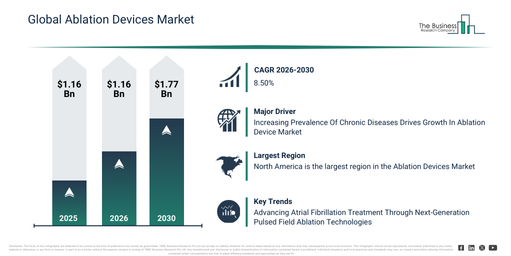
    The ablation devices market size has seen robust growth in recent years. The market is set to expand from $9.25 billion in 2025 to $10.12 billion in 2026, reflecting a compound annual growth rate (CAGR) of 9.5%. Historically, this growth has been fueled by factors such as the increasing prevalence of cancer treatment procedures, the rising adoption of ablation in cardiac arrhythmia management, the growth in hospital installation of radiofrequency and laser ablation systems, the expanding clinical acceptance of minimally invasive therapy alternatives, and the increasing usage of cryoablation and microwave ablation in specialty care.

    The ablation devices market size is projected to exhibit robust growth over the next few years. It is forecast to reach **$14.02 billion in 2030, at a compound annual growth rate (CAGR) of 8.5%.** This growth during the forecast period can be attributed to factors such as a rising demand for precision-targeted tissue ablation technologies, the increasing adoption of robotic and automated ablation systems, an expansion of ablation applications across various therapeutic areas, growing investment in outpatient and ambulatory surgical infrastructure, and an increasing preference for minimally invasive procedures that offer faster recovery. Prominent trends for the forecast period include the increasing adoption of minimally invasive ablation procedures across oncology and cardiology, a rising utilization of radiofrequency and microwave ablation systems for targeted tissue destruction, a growing preference for cryoablation and hydrothermal ablation in specialized clinical applications, the expanding clinical use of laser and ultrasound ablation devices for precise therapeutic outcomes, and the increasing deployment of ablation technologies in ambulatory and outpatient surgical settings.

    Download the Free Sample Report to Explore Key Market Insights:

    https://www.thebusinessresearchcompany.com/sample.aspx?id=17048&type=smp

    What Major Growth Drivers Are Shaping The Outlook Of The Ablation Devices Market?

    The projected expansion of the ablation device market is linked to the rising occurrence of chronic diseases. Such diseases are becoming more common due to shifts in lifestyle, an aging global populace, and longer lifespans. Ablation devices play a crucial role in managing chronic conditions by precisely eliminating diseased tissue, offering less invasive treatment options for ailments such as cardiac arrhythmias and specific types of cancer. For instance, data from January 2023, based on research published in Frontiers in Public Health, a Switzerland-based open-access scientific journal, predicts that by 2035, 35.66% of the adult population 50 years and older in the United States will suffer from at least one chronic condition, a figure anticipated to rise to 47.81% by 2050. Furthermore, the proportion of adults experiencing multimorbidity is expected to be 3.659% by 2035, climbing to 5.017% by 2050. Consequently, the increasing prevalence of chronic diseases is a key factor propelling the growth of the ablation device market.

    What Segmentation Levels Are Considered In The Ablation Devices Market?

    The ablation devices market covered in this report is segmented –

    1) By Product: Laser Ablators, Radiofrequency Ablators, Microwave Ablators, Ultrasound Ablators, Electric Ablators, Hydrothermal Ablators, Cryoablators

    2) By Technology Type: Radiofrequency Ablation, Microwave Ablation, Cryoablation, High-Intensity Focused Ultrasound, Laser Interstitial Thermal Ablation, Other Technology Types

    3) By Function: Automatic, Robotic

    4) By End-Users: Hospitals And Clinics, Ambulatory Surgical Centers, Others End-Users

    Subsegments:

    1) By Laser Ablators: Diode Laser Systems, CO2 Laser Systems, Nd-YAG Laser Systems

    2) By Radiofrequency Ablators: Monopolar Radiofrequency Ablators, Bipolar Radiofrequency Ablators

    3) By Microwave Ablators: Microwave Ablation Systems

    4) By Ultrasound Ablators: High-Intensity Focused Ultrasound (HIFU) Systems

    5) By Electric Ablators: Electrosurgical Ablators

    6) By Hydrothermal Ablators: Steam Ablation Systems

    7) By Cryoablators: Cryoablation Systems

    What Trends Are Projected To Affect The Ablation Devices Market?

    Key companies operating within the ablation devices market are concentrating on developing innovative solutions, such as pulsed field ablation systems, to enhance the safety and procedural efficiency of atrial fibrillation treatment. Pulsed field ablation (PFA) works by delivering short, high-voltage electric pulses to create non-thermal, tissue-selective lesions, which rapidly ablate myocardium while preserving adjacent structures, thus reducing the risk of collateral thermal injury. For example, in February 2024, Medtronic plc, a US-based medical device company, announced the successful completion of its initial commercial cases using the PulseSelect pulsed field ablation system alongside its bi-directional 10F FlexCath Contour sheath; physicians reported notably short procedure times, excellent signal quality for pulmonary vein validation, minimal muscle contraction, and acknowledged the system as the first FDA-approved PFA option available to treat both paroxysmal and persistent atrial fibrillation.

    Which Leading Firms Are Contributing To The Growth Of The Ablation Devices Market?

    Major companies operating in the ablation devices market are Medtronic plc, Boston Scientific Corporation, Johnson & Johnson, Abbott Laboratories, AngioDynamics Inc, CONMED Corporation, Olympus Corporation, Smith & Nephew plc, AtriCure Inc, Stryker Corporation, Biotronik SE & Co KG, BTG plc, Terumo Corporation, Varian Medical Systems Inc, Hologic Inc, Accuray Inc, Bard Inc, Elekta AB, Misonix Inc, Japan Lifeline Co Ltd

    Read the full ablation devices market report here:

    https://www.thebusinessresearchcompany.com/report/ablation-devices-global-market-report

    Which Regions Are Projected To Dominate The Ablation Devices Market In The Coming Years?

    North America was the largest region in the ablation devices market in 2025. Asia-Pacific is expected to be the fastest-growing region in the forecast period. The regions covered in the ablation devices market report are Asia-Pacific, South East Asia, Western Europe, Eastern Europe, North America, South America, Middle East, Africa.

    Request A Tailored Ablation Devices Market Research Report For Competitive Advantage:

    https://www.thebusinessresearchcompany.com/customise?id=17048&type=smp

    Browse Through More Reports Similar to the Global Ablation Devices Market 2026, By The Business Research Company

    Ablation Technology Market Report 2026

    https://www.thebusinessresearchcompany.com/report/ablation-technology-global-market-report

    Radiofrequency Ablation Devices Market Report 2026

    https://www.thebusinessresearchcompany.com/report/radiofrequency-ablation-devices-global-market-report

    Tumor Ablation Therapy Devices Market Report 2026

    https://www.thebusinessresearchcompany.com/report/tumor-ablation-therapy-devices-global-market-report

    Get in touch with us:

    The Business Research Company: https://www.thebusinessresearchcompany.com/

    Americas +1 310-496-7795

    Asia +44 7882 955267 & +91 8897263534

    Europe +44 7882 955267

    Email us at info@tbrc.info

    Follow us on:

    LinkedIn: https://in.linkedin.com/company/the-business-research-company

    YouTube: https://www.youtube.com/channel/UC24_fI0rV8cR5DxlCpgmyFQ

    Global Market Model: https://www.thebusinessresearchcompany.com/global-market-model
  • Abdominal Aortic Aneurysm (AAA) Repair Devices Market Projected to Reach $3.75 Billion by 2030 at 8% CAGR

    Abdominal Aortic Aneurysm (AAA) Repair Devices Market Projected to Reach $3.75 Billion by 2030 at 8% CAGR

    The Business Research Company’s 2026 market reports include new capabilities such as market attractiveness scoring and analysis, total addressable market analysis, company scoring matrix, interactive excel data dashboard, improved supply chain analysis, upcoming startups in the market, and overview of key products, aimed at improving the depth, usability, and strategic value of the insights delivered.

    What Market Size Increase Is Anticipated For The Abdominal Aortic Aneurysm (AAA) Repair Devices Market Over The 2026–2030 Period?

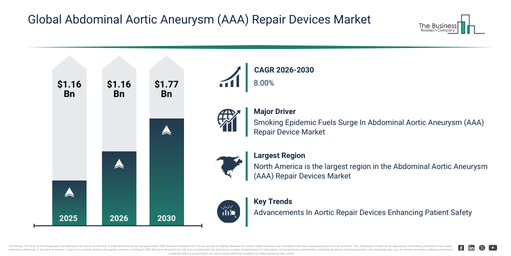
    The market for abdominal aortic aneurysm (AAA) repair devices has shown substantial growth in recent years. Forecasts indicate that the market will increase from $2.56 billion in 2025 to $2.76 billion in 2026, achieving a compound annual growth rate (CAGR) of 7.6%. Contributing to its past growth have been factors including the increasing occurrence of abdominal aortic aneurysms, wider application of endovascular repair techniques, augmented vascular surgery capacities, improvements in stent graft materials, and greater availability of diagnostic imaging.

    The abdominal aortic aneurysm (aaa) repair devices market is projected to experience substantial expansion over the coming years. Its valuation is anticipated to reach $3.75 billion in 2030, progressing at a compound annual growth rate (CAGR) of 8.0%. This anticipated expansion during the forecast period stems from factors such as a growing inclination towards minimally invasive treatments, a globally increasing elderly demographic, the proliferation of specialized vascular facilities, an escalating need for customized graft designs, and heightened investments in cardiovascular device innovation. Key developments expected within this period encompass the wider embrace of minimally invasive EVAR procedures, greater utilization of custom and fenestrated stent grafts, an intensified focus on solutions for complex anatomies, the broader implementation of imaging-guided deployment methods, and a stronger emphasis on the longevity of devices.

    Download the Free Sample Report to Explore Key Market Insights:

    https://www.thebusinessresearchcompany.com/sample.aspx?id=10636&type=smp

    What Drivers Are Expected To Influence The Abdominal Aortic Aneurysm (AAA) Repair Devices Market During The Forecast Period?

    The substantial prevalence of smoking is projected to drive the growth of the abdominal aortic aneurysm (AAA) repair device market going forward. Smoking, defined as the act of burning a substance, typically tobacco, and inhaling or tasting the smoke, leads to the absorption of nicotine and other potentially harmful chemicals into the body. Abdominal aortic aneurysm (AAA) repair devices are vital in managing the increased risk associated with smoking by providing effective interventions, reducing potential complications, and improving outcomes through advanced treatment approaches. For example, in May 2023, figures from the Centers for Disease Control and Prevention, a US-based government agency, showed that an estimated 28.3 million U.S. adults smoke cigarettes, and approximately 3.08 million U.S. middle and high school students use at least one tobacco product. Daily, about 1,600 U.S. youth under 18 smoke their first cigarette. Thus, the significant incidence of smoking is a key factor propelling the expansion of the abdominal aortic aneurysm repair devices market.

    How Is The Abdominal Aortic Aneurysm (AAA) Repair Devices Market Segmented Across Key Categories?

    The abdominal aortic aneurysm (aaa) repair devices market covered in this report is segmented –

    1) By Product Type: Endovascular Stent Graft System, Open Surgical Synthetic Vascular Grafts

    2) By Site: Infrarenal AAA, Pararenal AAA

    3) By Application: Traditional Anatomy, Complex Anatomy

    4) By End-User: Hospitals, Ambulatory Surgical Centers, Other End-Users

    Subsegments:

    1) By Endovascular Stent Graft System: Bifurcated Stent Graft, Aorto-Uni-Iliac Stent Graft

    2) By Open Surgical Synthetic Vascular Grafts: Woven Polyester (Dacron) Vascular Grafts, Knitted Polyester (Dacron) Vascular Grafts, Expanded Polytetrafluoroethylene (ePTFE) Vascular Grafts

    Which Upcoming Trends Are Expected To Influence The Abdominal Aortic Aneurysm (AAA) Repair Devices Market?

    Leading companies in the abdominal aortic aneurysm (AAA) repair devices market are prioritizing the development of technologically advanced solutions, such as an atraumatic tip, to improve patient safety. An atraumatic tip is a specific design aspect in medical devices that aims to reduce tissue damage and trauma during insertion or manipulation in surgical procedures. For instance, in June 2024, Medtronic PLC., an Ireland-based medical device company, introduced the Steerant Aortic Guidewire, a specialized medical device crafted to enhance the precision and safety of endovascular procedures for treating aortic aneurysms, particularly for endovascular aneurysm repair (EVAR) and thoracic endovascular aortic repair (TEVAR). Fabricated from PTFE-coated stainless steel, this guidewire possesses a diameter of 0.035 inches and is available in lengths of 200 cm and 260 cm, with options for single- and double-curve tip configurations. Its design incorporates a soft, atraumatic tip that smoothly transitions to a stiffer main body, providing essential protection for sensitive aortic anatomy while ensuring adequate support for the deployment of other medical devices.

    Who Are The Dominant Players Shaping The Abdominal Aortic Aneurysm (AAA) Repair Devices Market Landscape?

    Major companies operating in the abdominal aortic aneurysm (aaa) repair devices market are Medtronic plc, Cook Medical LLC, Endologix Inc, Terumo Corporation, MicroPort Scientific Corporation, Lifetech Scientific Co Ltd, Lepu Medical Technology Co Ltd, Getinge AB, B Braun Melsungen AG, Artivion Inc, LeMaitre Vascular Inc, Nipro Corporation, Hexacath SA, Endospan Ltd, Hangzhou Endonom Medtech Co Ltd, Beijing Endoncare Medical Devices Co Ltd, Beijing Advanced Cardiovascular Technologies Co Ltd, Beijing Jinyu Medical Device Co Ltd, Latecba SA, Edwards Lifesciences Corporation

    Read the full abdominal aortic aneurysm (aaa) repair devices market report here:

    https://www.thebusinessresearchcompany.com/report/abdominal-aortic-aneurysm-aaa-repair-devices-global-market-report

    Which Region Is Forecast To Lead The Abdominal Aortic Aneurysm (AAA) Repair Devices Market In Terms Of Market Size?

    North America was the largest region in the abdominal aortic aneurysm (AAA) repair devices market in 2025.Asia-Pacific is expected to be the fastest-growing region in the global abdominal aortic aneurysm (AAA) repair devices market report during the forecast period. The regions covered in the abdominal aortic aneurysm (aaa) repair devices market report are Asia-Pacific, South East Asia, Western Europe, Eastern Europe, North America, South America, Middle East, Africa.

    Request A Tailored Abdominal Aortic Aneurysm (AAA) Repair Devices Market Research Report For Competitive Advantage:

    https://www.thebusinessresearchcompany.com/customise?id=10636&type=smp

    Browse Through More Reports Similar to the Global Abdominal Aortic Aneurysm (AAA) Repair Devices Market 2026, By The Business Research Company

    Aortic Aneurysm Market Report 2026

    https://www.thebusinessresearchcompany.com/report/aortic-aneurysm-global-market-report

    Aortic Aneurysm Market Report 2026

    https://www.thebusinessresearchcompany.com/report/aortic-aneurysm-global-market-report

    Embolization Coils Market Report 2026

    https://www.thebusinessresearchcompany.com/report/embolization-coils-global-market-report

    Get in touch with us:

    The Business Research Company: https://www.thebusinessresearchcompany.com/

    Americas +1 310-496-7795

    Asia +44 7882 955267 & +91 8897263534

    Europe +44 7882 955267

    Email us at info@tbrc.info

    Follow us on:

    LinkedIn: https://in.linkedin.com/company/the-business-research-company

    YouTube: https://www.youtube.com/channel/UC24_fI0rV8cR5DxlCpgmyFQ

    Global Market Model: https://www.thebusinessresearchcompany.com/global-market-model

  • 5G Remote Surgery Market Forecast 2026–2035 Highlighting Expansion Opportunities Across Industries

    5G Remote Surgery Market Forecast 2026–2035 Highlighting Expansion Opportunities Across Industries

    The Business Research Company’s 2026 market reports include new capabilities such as market attractiveness scoring and analysis, total addressable market analysis, company scoring matrix, interactive excel data dashboard, improved supply chain analysis, upcoming startups in the market, and overview of key products, aimed at improving the depth, usability, and strategic value of the insights delivered.

    How Much Is The 5G Remote Surgery Market Expected To Grow In Terms Of Market Value Between 2026 And 2030?

    The 5g remote surgery market has experienced significant expansion over recent years. It is anticipated to increase from $1.8 billion in 2025 to $2.35 billion in 2026, demonstrating a compound annual growth rate (CAGR) of 30.8%. This historical growth can be linked to factors like the increased adoption of robotic surgery, a rising need for telemedicine, improvements in network infrastructure, the expansion of specialized surgical centers, and an escalating demand for sophisticated surgical techniques.

    The 5g remote surgery market is anticipated to experience significant expansion over the next few years. It is projected to grow to $6.83 billion in 2030, achieving a compound annual growth rate (CAGR) of 30.5%. This increase during the forecast period is primarily driven by the deployment of 5g-enabled remote surgery platforms, AI-powered surgical planning, integration with hospital IoT systems, cloud-based surgical monitoring, and an increase in cross-regional tele-surgery collaborations. Noteworthy trends expected in this timeframe include low-latency remote robotic surgery, AI-assisted surgical decision support, integration with IoT and smart hospitals, cloud-based surgical data analytics, and multi-site surgical collaboration.

    Download the Free Sample Report to Explore Key Market Insights:

    https://www.thebusinessresearchcompany.com/sample.aspx?id=28111&type=smp

    What Drivers Are Influencing The 5G Remote Surgery Market?

    The expansion of the 5G remote surgery market is anticipated to be fueled by the rising volume of surgical procedures. Surgical procedures are medical interventions performed by healthcare practitioners utilizing invasive techniques to treat illnesses, injuries, or anatomical abnormalities. This increase in surgical interventions is primarily a result of an aging demographic, which consequently heightens the demand for operations like joint replacements and heart-related surgeries. 5G remote surgery supports these procedures through its capacity to facilitate real-time manipulation of robotic devices and provide high-definition visuals, thus empowering surgeons to conduct operations from distant sites. Its benefits include improved precision during operations, fewer travel limitations, and greater patient access to specialized medical services. As an illustration, the Australian Institute of Health and Welfare, an Australia-based government agency, reported that in May 2025, 778,500 patients were admitted for surgery from public hospital elective surgery waiting lists in 2023-24, which represented a 5.8% increase over the 2022-23 period. Consequently, the expanding volume of surgical procedures is a key impetus for the growth of the 5G remote surgery market.

    What Major Segment Divisions Exist Within The 5G Remote Surgery Market?

    The 5g remote surgery market covered in this report is segmented –

    1) By Component: Hardware, Software, Services

    2) By Connectivity: Standalone 5G, Non-Standalone 5G

    3) By Application: Cardiology Surgery, Orthopedic Surgery, Neurosurgery, Gynecological Surgery, Other Applications

    4) By End-User: Hospitals, Ambulatory Surgical Centers, Specialty Clinics, Other End-Users

    Subsegments:

    1) By Hardware: Surgical Robot, Communication Equipment, Imaging Devices, Sensors

    2) By Software: Surgical Planning Software, Remote Monitoring Software, Imaging Analysis Software, Data Management Software

    3) By Services: Remote Surgical Assistance, Training And Education, Maintenance And Support, Consulting Services

    How Are Trends Shaping The Direction Of The 5G Remote Surgery Market?

    Leading companies active in the 5G remote surgery market are concentrating on developing technologically advanced offerings, such as surgical robots, to enable accurate, real-time remote operations and enhance patient outcomes. Surgical robots are defined as computer-assisted robotic systems designed to aid surgeons in performing precise and minimally invasive procedures, often with improved dexterity, accuracy, and control. For example, in May 2023, Shanghai MicroPort MedBot (Group) Co. Ltd., a China-based manufacturing firm, received marketing clearance from the Brazilian Health Surveillance Agency (ANVISA) for its Honghu orthopedic surgical robot, marketed overseas as SkyWalker. Honghu combines 5G remote capabilities with CT-guided imaging to assist surgeons in executing highly precise joint replacement surgeries, including minimally invasive procedures. It utilizes robotic arms to boost accuracy, enables thorough preoperative surgical planning, and can manage intricate cases such as severe rheumatoid arthritis or surgeries after fractures. This robot has gained approval in numerous regions and has been validated through hundreds of robot-assisted procedures, thereby demonstrating its reliability and rising adoption across various markets.

    Which Companies Are Leading Innovation In The 5G Remote Surgery Market?

    Major companies operating in the 5g remote surgery market are Verizon Communications Inc., Huawei Technologies Co. Ltd., Johnson And Johnson Ethicon Inc., Telefónica S.A., Siemens Healthineers AG, Soliton Systems Inc., PT Telekomunikasi Selular, Smith And Nephew plc, NTT DOCOMO Inc., CMR Surgical Ltd., Shanghai MicroPort MedBot (Group) Co. Ltd., Proximie Limited., Tianjin Tinavi Medical Technology Co. Ltd., Sovato Inc., Virtual Incision Corporation, Medrobotics Corporation, Avail Medsystems, SS Innovations International Inc., Shenzhen Edge Medical Co. Ltd., Sina Robotics Inc.

    Read the full 5g remote surgery market report here:

    https://www.thebusinessresearchcompany.com/report/5g-remote-surgery-global-market-report

    Which Regions Are Expected To Experience Rapid Expansion In The 5G Remote Surgery Market?

    North America was the largest region in the 5G remote surgery market in 2025. The regions covered in the 5g remote surgery market report are Asia-Pacific, South East Asia, Western Europe, Eastern Europe, North America, South America, Middle East, Africa.

    Request A Tailored 5G Remote Surgery Market Research Report For Competitive Advantage:

    https://www.thebusinessresearchcompany.com/customise?id=28111&type=smp

    Browse Through More Reports Similar to the Global 5G Remote Surgery Market 2026, By The Business Research Company

    5G Technologies Market Report 2026

    https://www.thebusinessresearchcompany.com/report/5g-technologies-global-market-report

    5G Services Market Report 2026

    https://www.thebusinessresearchcompany.com/report/5g-services-global-market-report

    5G Iot Market Report 2026

    https://www.thebusinessresearchcompany.com/report/5g-iot-global-market-report

    Get in touch with us:

    The Business Research Company: https://www.thebusinessresearchcompany.com/

    Americas +1 310-496-7795

    Asia +44 7882 955267 & +91 8897263534

    Europe +44 7882 955267

    Email us at info@tbrc.info

    Follow us on:

    LinkedIn: https://in.linkedin.com/company/the-business-research-company

    YouTube: https://www.youtube.com/channel/UC24_fI0rV8cR5DxlCpgmyFQ

    Global Market Model: https://www.thebusinessresearchcompany.com/global-market-model

  • Global 3D Printing In Healthcare Market Analysis 2026–2030 Offering Strategic Forecast Insights for Businesses

    Global 3D Printing In Healthcare Market Analysis 2026–2030 Offering Strategic Forecast Insights for Businesses

    The Business Research Company’s 2026 market reports include new capabilities such as market attractiveness scoring and analysis, total addressable market analysis, company scoring matrix, interactive excel data dashboard, improved supply chain analysis, upcoming startups in the market, and overview of key products, aimed at improving the depth, usability, and strategic value of the insights delivered.

    What Market Value Is Expected For The 3D Printing In Healthcare Market At The End Of The 2026–2030 Forecast Period?

    The 3D printing in healthcare market size has expanded rapidly in recent years. It is projected to grow from $2.47 billion in 2025 to $2.95 billion in 2026, at a compound annual growth rate (CAGR) of 19.3%. Historically, this market’s growth can be attributed to advancements in additive manufacturing technologies, the early adoption of 3D printed surgical guides, the expansion of academic research in medical printing, increased use of anatomical modeling, and the availability of diverse printable biomaterials.

    The 3D printing in healthcare market is projected to experience substantial expansion over the coming years. It is anticipated to reach $5.99 billion in 2030, demonstrating a compound annual growth rate (CAGR) of 19.4%. This expansion during the forecast period is fueled by several factors, such as increased funding for bioprinting research, a growing need for tailored healthcare options, the broader application of regenerative medicine, increased implementation of point-of-care production, and a rise in regulatory clearances for printed medical devices. Key developments expected in this period encompass the wider acceptance of medical devices designed for individual patients, an uptick in the utilization of bioprinting technologies, a heightened demand for bespoke surgical models, the proliferation of 3D printed implants and prosthetics, and improved incorporation of digital design with manufacturing processes.

    Download the Free Sample Report to Explore Key Market Insights:

    https://www.thebusinessresearchcompany.com/sample.aspx?id=13361&type=smp

    What Drivers Are Shaping The Future Growth Of The 3D Printing In Healthcare Market?

    The increasing occurrence of chronic illnesses is anticipated to boost the expansion of the 3D printing market in the future. These are prolonged health issues defined by ongoing and frequently untreatable medical states, including conditions like diabetes, high blood pressure, and arthritis. The growing prevalence of chronic diseases stems from the broad embrace of changeable behavioral risks such as inactive lifestyles, diets rich in processed items, and significant consumption of tobacco and alcohol. 3D printing aids in manufacturing tailored medical devices and implants for chronic conditions, thereby improving treatment possibilities with customized and accurate solutions. For instance, according to data from June 2024, provided by the National Health Service, a UK-based government department, 3,615,330 individuals registered with a general practitioner (GP) were diagnosed with non-diabetic hyperglycemia or pre-diabetes (a condition with elevated blood sugar levels, not high enough to be classified as diabetes) in 2023, marking an 18% increase from 3,065,825 cases in 2022. Consequently, the increased occurrence of chronic diseases is propelling the 3D printing market.

    What Segment Types Make Up The 3D Printing In Healthcare Market?

    The 3D printing in healthcare market covered in this report is segmented –

    1) By Component: System, Material, Services

    2) By Technology: Laser Beam Melting (LBM), Electron Beam Melting (EBM), Photo Polymerization, Droplet Deposition, Laminated Object Manufacturing, Wax Deposition Modeling, Bio Printing

    3) By Application: Personalized Medical Equipment, Models For Surgical Planning And Education, Prosthetics And Implants, Biomaterials, Printing Personalized Medicine, Other Applications

    4) By End User: Medical And Surgical Centers, Pharmaceutical And Biotechnology Companies, Academic Institutions

    Subsegments:

    1) By System: 3D Printers, 3D Bioprinters, Scanners, Other Systems.

    2) By Material: Plastics, Metals, Ceramics, Biomaterials, Other Materials.

    3) By Services: Custom Prosthetics, Implants, Surgical Guides, Medical Device Prototyping, Tissue Engineering.

    Which Market Trends Are Creating New Opportunities In The 3D Printing In Healthcare Market?

    Companies leading in the 3D printing in healthcare market are concentrating on technological advancements like multi-material 3D printing, which allows for the creation of intricate, patient-specific restorations with increased accuracy, efficiency, and aesthetic appeal. Multi-material printing is a 3D printing process that facilitates the concurrent production of objects utilizing two or more distinct materials, thereby enabling elaborate, functional, and customized designs to be made in one print. An example of this is Stratasys Ltd.’s introduction of the DentaJet XL in July 2024, a high-speed PolyJet 3D printer designed for digital dental laboratories. Equipped with a large print tray and 4 kg hot-swap resin cartridges, it supports the continuous printing of up to 102 crowns and bridges simultaneously. Its super high-speed mode can increase productivity by up to 50%, while the ability for simultaneous dual-material printing allows for the construction of multi-component dental restorations in a single process. The integrated software automates part arrangement and large-batch post-processing, thereby reducing labor and costs while enhancing precision, throughput, and safety in large-scale dental manufacturing operations.

    Who Are The Key Players Driving Competition In The 3D Printing In Healthcare Market?

    Major companies operating in the 3d printing in healthcare market are Hewlett-Packard Company, Stratasys Ltd., EOS GmbH – Electro Optical Systems, 3D Systems Corporation, Formlabs Inc., Materialise NV, Ultimaker BV, SLM Solutions Group AG, Arcam AB, The ExOne Company, EnvisionTEC GmbH, Concept Laser GmbH, MedPrin Regenerative Medical Technologies Co. Ltd., Medical Molding Inc., Nanoscribe GmbH & Co. KG, Oxford Performance Materials Inc., Aspect Biosystems Ltd., Cyfuse Biomedical K.K., Anatomics Pty. Ltd., Organovo Holdings Inc, 3D Bioprinting Solutions, Allevi Inc

    Read the full 3d printing in healthcare market report here:

    https://www.thebusinessresearchcompany.com/report/3d-printing-in-healthcare-global-market-report

    Which Geographic Regions Are Influencing Demand In The 3D Printing In Healthcare Market?

    North America was the largest region in the 3D printing in healthcare market in 2025. Asia Pacific is expected to be the fastest-growing region in the forecast period. The regions covered in the 3D printing in healthcare market report are Asia-Pacific, South East Asia, Western Europe, Eastern Europe, North America, South America, Middle East, Africa.

    Request A Tailored 3D Printing In Healthcare Market Research Report For Competitive Advantage:

    https://www.thebusinessresearchcompany.com/customise?id=13361&type=smp

    Browse Through More Reports Similar to the Global 3D Printing In Healthcare Market 2026, By The Business Research Company

    3D Printed Medical Devices Market Report 2026

    https://www.thebusinessresearchcompany.com/report/3d-printed-medical-devices-global-market-report

    3D Printing Services Market Report 2026

    https://www.thebusinessresearchcompany.com/report/3d-printing-services-global-market-report

    Military 3D Printing Market Report 2026

    https://www.thebusinessresearchcompany.com/report/military-3d-printing-global-market-report

    Get in touch with us:

    The Business Research Company: https://www.thebusinessresearchcompany.com/

    Americas +1 310-496-7795

    Asia +44 7882 955267 & +91 8897263534

    Europe +44 7882 955267

    Email us at info@tbrc.info

    Follow us on:

    LinkedIn: https://in.linkedin.com/company/the-business-research-company

    YouTube: https://www.youtube.com/channel/UC24_fI0rV8cR5DxlCpgmyFQ

    Global Market Model: https://www.thebusinessresearchcompany.com/global-market-model

  • 3D Printed Prosthetics Market Outlook 2026–2035 Supported by Key Growth Factors and Industry Projections

    3D Printed Prosthetics Market Outlook 2026–2035 Supported by Key Growth Factors and Industry Projections

    The Business Research Company’s 2026 market reports include new capabilities such as market attractiveness scoring and analysis, total addressable market analysis, company scoring matrix, interactive excel data dashboard, improved supply chain analysis, upcoming startups in the market, and overview of key products, aimed at improving the depth, usability, and strategic value of the insights delivered.

    What Is The Estimated Market Size Of The 3D Printed Prosthetics Market During 2026–2030?

    The market for 3D printed prosthetics has seen rapid expansion in recent years. This sector is forecast to expand from $0 billion in 2025 to $0 billion in 2026, exhibiting a compound annual growth rate (CAGR) of 15.8%. Contributing to its historical growth are factors such as a rising incidence of limb loss, difficulties in accessing traditional prosthetic manufacturing, the initial adoption of desktop 3D printing, an increase in rehabilitation centers, and enhancements in prosthetic design software.

    The 3D printed prosthetics market is projected to experience substantial expansion over the coming years, reaching a valuation of $0 billion by 2030, exhibiting a compound annual growth rate (CAGR) of 16.0%. This anticipated growth during the forecast period is driven by several factors, including the increasing need for cost-effective prosthetic options, the spread of humanitarian and outreach initiatives for prosthetics, the wider acceptance of advanced polymeric materials, the incorporation of sensor-equipped prosthetics, and enhancements in both durability and user comfort in design. Key trends anticipated during this period encompass the growing preference for affordable customized prosthetics, an escalating demand for materials that are both light and long-lasting, the expanding application of digital limb scanning methods, the development of prosthetic solutions tailored for children and individuals, and a heightened emphasis on both functional utility and aesthetic personalization.

    Download the Free Sample Report to Explore Key Market Insights:

    https://www.thebusinessresearchcompany.com/sample.aspx?id=2512&type=smp

    Which Economic Or Industry Drivers Are Impacting The 3D Printed Prosthetics Market?

    The rising incidence of bone cancer is anticipated to drive expansion in the 3D printed prosthetics market in the coming years. Bone cancer, a rare malignancy, can either start within the bone tissue itself (referred to as primary bone cancer) or metastasize to bones from elsewhere in the body. For individuals with bone cancer, 3D printed prosthetic devices serve to mend cancer-damaged bones and act as alternatives to traditional tumor prostheses, as well as autografts or allografts for bone reconstruction. To illustrate, data from January 2025 by the American Cancer Society (ACS), a US non-profit, projected around 3,770 new instances of primary bone and joint cancer for 2025 – specifically 2,150 in males and 1,620 in females – alongside approximately 2,190 associated fatalities, comprising 1,240 men and 950 women. Consequently, the growing occurrence of bone cancer is fueling the expansion of the 3D printed prosthetics market.

    How Are The Various Segments Of The 3D Printed Prosthetics Market Categorized?

    The 3D printed prosthetics market covered in this report is segmented –

    1) By Type: Sockets, Limbs, Joints, Covers

    2) By Material: Polypropylene, Polyethylene, Acrylics, Polyurethane

    3) By End-User: Hospitals, Rehabilitation Centers, Prosthetic Clinics

    Subsegments:

    1) By Sockets: Adjustable Sockets, Standard Sockets

    2) By Limbs: Upper Limb Prosthetics, Lower Limb Prosthetics

    3) By Joints: Knee Joints, Ankle Joints, Elbow Joints

    4) By Covers: Cosmetic Covers, Functional Covers

    What Trends Are Affecting The Expansion Of The 3D Printed Prosthetics Market?

    Leading businesses in the 3D-printing prosthetics sector are increasingly prioritizing sophisticated features, including internal additive manufacturing, to enhance product quality, accelerate production, and enable greater customization. This in-house additive manufacturing approach involves executing the complete production process—from design through printing, cooling, post-processing, and final finishing—within one facility, thereby facilitating stricter quality management and reduced delivery periods. An illustrative instance is WIMBA, a Polish company specializing in custom-fit 3D-printed pet orthotics and prosthetics, which inaugurated a new in-house 3D-printing plant in Kraków in February 2025. This facility incorporates integrated systems for printing, cooling, and sandblasting. Through this investment, WIMBA can uphold rigorous quality benchmarks, provide most standard orthotics within 10 working days, decrease waiting periods for veterinary practices, and continuously develop novel materials and designs to more effectively assist pets and veterinary experts worldwide.

    Which Major Firms Influence Developments In The 3D Printed Prosthetics Market?

    Major companies operating in the 3d printed prosthetics market are Open Bionics, LimbForge Inc., UNYQ Inc., Mecuris GmbH, YouBionic Srl, Create Prosthetics Inc., Bio3D Technologies Pte Ltd., Protosthetics LLC, 3T RPD Ltd., Bionicohand, Limbitless Solutions, Instalimb, Bionic Prosthetics and Orthotics, Eqwal Group (Steeper Group), Prothea, Motorica, WillowWood, Psyonic, HopeLabs

    Read the full 3d printed prosthetics market report here:

    https://www.thebusinessresearchcompany.com/report/3d-printed-prosthetics-global-market-report

    What Are The Top-Performing Regions Within The 3D Printed Prosthetics Market?

    North America was the largest region in the 3D printing medical prosthetics market in 2025. Asia-Pacific was the second-largest region in the global 3D printed prosthetics market. The regions covered in the 3D printed prosthetics market report are Asia-Pacific, South East Asia, Western Europe, Eastern Europe, North America, South America, Middle East, Africa.

    Request A Tailored 3D Printed Prosthetics Market Research Report For Competitive Advantage:

    https://www.thebusinessresearchcompany.com/customise?id=2512&type=smp

    Browse Through More Reports Similar to the Global 3D Printed Prosthetics Market 2026, By The Business Research Company

    3D Printed Implants Market Report 2026

    https://www.thebusinessresearchcompany.com/report/3d-printed-implants-global-market-report

    3D Printing In Healthcare Market Report 2026

    https://www.thebusinessresearchcompany.com/report/3d-printing-in-healthcare-global-market-report

    3D Orthpedics Prosthetics Market Report 2026

    https://www.thebusinessresearchcompany.com/report/3d-orthpedics-prosthetics-global-market-report

    Get in touch with us:

    The Business Research Company: https://www.thebusinessresearchcompany.com/

    Americas +1 310-496-7795

    Asia +44 7882 955267 & +91 8897263534

    Europe +44 7882 955267

    Email us at info@tbrc.info

    Follow us on:

    LinkedIn: https://in.linkedin.com/company/the-business-research-company

    YouTube: https://www.youtube.com/channel/UC24_fI0rV8cR5DxlCpgmyFQ

    Global Market Model: https://www.thebusinessresearchcompany.com/global-market-model
  • 3D Printed Medical Devices Market Trends and Growth Opportunities During 2026–2030

    3D Printed Medical Devices Market Trends and Growth Opportunities During 2026–2030

    The Business Research Company’s 2026 market reports include new capabilities such as market attractiveness scoring and analysis, total addressable market analysis, company scoring matrix, interactive excel data dashboard, improved supply chain analysis, upcoming startups in the market, and overview of key products, aimed at improving the depth, usability, and strategic value of the insights delivered.

    What Market Size Expansion Is Predicted For The 3D Printed Medical Devices Market Between 2026 And 2030?

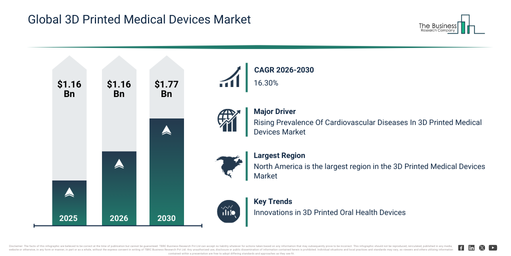
    The 3D printed medical devices market has experienced swift expansion in its size during recent years. It is anticipated to increase from $4.1 billion in 2025 to $4.83 billion in 2026, advancing at a compound annual growth rate (CAGR) of 17.7%. The observed growth in past periods is attributable to factors such as a surge in demand for personalized medical solutions, the initial clinical integration of printed surgical tools, advancements in medical imaging to print workflows, heightened academic research, and the availability of certified printing systems.

    The market for 3D printed medical devices is projected to experience swift expansion over the coming years. This sector is forecast to reach $8.83 billion by 2030, demonstrating a compound annual growth rate (CAGR) of 16.3%. Several factors will contribute to this projected growth, including the proliferation of point-of-care manufacturing models, enhanced regulatory clarity for printed medical devices, increased financial commitments to digital healthcare infrastructure, a greater need for accelerated device development cycles, and progress in bioprinting and tissue engineering. Key developments anticipated during this period encompass the wider acceptance of custom medical device fabrication, increased application of multi-material printing technologies, deeper integration of software-driven design platforms, the growth of on-demand medical device production, and an intensified focus on rapid prototyping and validation.

    Download the Free Sample Report to Explore Key Market Insights:

    https://www.thebusinessresearchcompany.com/sample.aspx?id=2503&type=smp

    What Major Drivers Are Influencing Demand In The 3D Printed Medical Devices Market?

    The increasing occurrence of cardiovascular diseases is anticipated to boost the expansion of the 3D printed medical device market moving ahead. Cardiovascular diseases (CVDs) are defined as a group of conditions impacting the heart and blood vessels, alternatively known as heart or circulatory diseases. In the context of cardiovascular diseases, 3D printed medical devices find application in developing individualized cardiac models, which are derived from medical imaging data like computed tomography (CT) scans and magnetic resonance imaging (MRI), for therapeutic purposes. For instance, in September 2025, the British Heart Foundation, a UK-based charity, reported that in the UK, over 7.6 million individuals—comprising more than 4 million men and over 3.6 million women—are currently living with cardiovascular disease. Furthermore, forecasts suggest that, owing to an aging population and improved survival rates, the population affected by these conditions could increase by approximately 1 million by 2030 and by roughly 2 million by 2040. Consequently, the growing prevalence of cardiovascular diseases is stimulating the growth of the 3D printed medical device market.

    Which Market Segments Are Examined In The 3D Printed Medical Devices Market Study?

    The 3D printed medical devices market covered in this report is segmented –

    1) By Type: Implants, Surgical instruments, Prosthetics, Tissue engineering devices

    2) By Raw Material: Plastics, Biomaterial inks, Metals and Alloys

    3) By Technology: Fused Deposition Modelling, Digital Light Processing, Stereolithography, Selective Laser melting

    4) By Application: Orthopedic, Spinal, Dental, Hearing Aids, Other Applications

    5) By End User: Hospitals, Other End Users

    Subsegments:

    1) By Implants: Orthopedic Implants, Dental Implants, Cranial Implants

    2) By Surgical Instruments: Customized Surgical Tools, 3D Printed Guides And Templates

    3) By Prosthetics: Limb Prosthetics, Facial Prosthetics

    4) By Tissue Engineering Devices: Scaffolds, Bioprinted Tissues

    Which Trends Are Influencing The 3D Printed Medical Devices Market?

    Leading firms within the 3D printed medical devices market are concentrating on launching innovative items, including oral health devices, aimed at elevating dental care through tailored patient solutions. These oral health devices encompass products specifically created for preventing, diagnosing, and treating dental problems, such as 3D-printed aligners, dentures, and surgical guides, which boost patient comfort and precision during dental operations. An example is the Custom-Jet Oral Health System introduced by Proclaim, a US-based company, in January 2024. This new Custom-Jet Oral Health System incorporates a 3D printed mouthpiece engineered to remove detrimental bacteria, specifically P.Gingivalis, in a mere seven seconds. This pioneering device has clinical validation for improving oral health, substantially diminishing symptoms of gum disease, and fostering better overall systemic health.

    Who Are The Primary Competitors In The 3D Printed Medical Devices Market?

    Major companies operating in the 3d printed medical devices market are 3D Systems Corporation, Stratasys Ltd, Materialise NV, EOS GmbH Electro Optical Systems, Renishaw plc, SLM Solutions Group AG, Arcam AB, Concept Laser GmbH, EnvisionTEC Inc, Carbon Inc, Formlabs Inc, Oxford Performance Materials Inc, Organovo Holdings Inc, Cyfuse Biomedical KK, Bio3D Technologies Pte Ltd, FabRx Ltd, Nano3D Biosciences Inc, Aspect Biosystems Ltd, Cellink AB, 3T RPD Ltd

    Read the full 3d printed medical devices market report here:

    https://www.thebusinessresearchcompany.com/report/3d-printed-medical-devices-global-market-report

    Which Region Shows The Strongest Potential For Future Growth In The 3D Printed Medical Devices Market?

    North America was the largest region in the 3D printed medical devices market in 2025. Western Europe was the second largest region in the global 3D printed medical devices market report. The regions covered in the 3D printed medical devices market report are Asia-Pacific, South East Asia, Western Europe, Eastern Europe, North America, South America, Middle East, Africa.

    Request A Tailored 3D Printed Medical Devices Market Research Report For Competitive Advantage:

    https://www.thebusinessresearchcompany.com/customise?id=2503&type=smp

    Browse Through More Reports Similar to the Global 3D Printed Medical Devices Market 2026, By The Business Research Company

    3D Printing In Healthcare Market Report 2026

    https://www.thebusinessresearchcompany.com/report/3d-printing-in-healthcare-global-market-report

    3D Printed Implants Market Report 2026

    https://www.thebusinessresearchcompany.com/report/3d-printed-implants-global-market-report

    3D Printed Wearables Market Report 2026

    https://www.thebusinessresearchcompany.com/report/3d-printed-wearables-global-market-report

    Get in touch with us:

    The Business Research Company: https://www.thebusinessresearchcompany.com/

    Americas +1 310-496-7795

    Asia +44 7882 955267 & +91 8897263534

    Europe +44 7882 955267

    Email us at info@tbrc.info

    Follow us on:

    LinkedIn: https://in.linkedin.com/company/the-business-research-company

    YouTube: https://www.youtube.com/channel/UC24_fI0rV8cR5DxlCpgmyFQ

    Global Market Model: https://www.thebusinessresearchcompany.com/global-market-model

  • Global 3D Printed Implants Market Forecast 2026–2035 Delivering Long-Term Industry Expansion Insights

    Global 3D Printed Implants Market Forecast 2026–2035 Delivering Long-Term Industry Expansion Insights

    The Business Research Company’s 2026 market reports include new capabilities such as market attractiveness scoring and analysis, total addressable market analysis, company scoring matrix, interactive excel data dashboard, improved supply chain analysis, upcoming startups in the market, and overview of key products, aimed at improving the depth, usability, and strategic value of the insights delivered.

    How Large Is The 3D Printed Implants Market Projected To Become By 2030 Based On Its 2026 Valuation?

    The 3D printed implants market has experienced significant expansion recently. Its valuation is anticipated to grow from $3.9 billion in 2025 to $4.64 billion in 2026, indicating a compound annual growth rate (CAGR) of 18.9%. The past growth in this sector can be attributed to a higher incidence of orthopedic and dental conditions, the initial adoption of additive manufacturing in healthcare, advancements in medical-grade 3D printing materials, increasing willingness among surgeons to use customized implants, and official regulatory approvals for printed implants.

    The 3D printed implants market is poised for substantial expansion over the upcoming years. It is projected to achieve a valuation of $9.51 billion by 2030, exhibiting a compound annual growth rate (CAGR) of 19.6%. This anticipated growth during the forecast timeframe stems from a rising demand for customized healthcare solutions, the broadening scope of cranio-maxillofacial and orthopedic surgical procedures, increased investment in biocompatible substances, the expanding application of digital twin technologies in implant design, and advancements in high-resolution 3D printing systems. Key developments expected in this period encompass a greater embrace of patient-specific implant configurations, increased utilization of advanced metal and polymer printing materials, a growing integration of digital surgical planning, the broadening of applications for complex anatomical implants, and a heightened emphasis on the precision and fit of implants.

    Download the Free Sample Report to Explore Key Market Insights:

    https://www.thebusinessresearchcompany.com/sample.aspx?id=2460&type=smp

    Which Market Drivers Are Supporting The Expansion Of The 3D Printed Implants Market?

    The growing volume of dental procedures is projected to fuel the expansion of the 3D-printed implants market in the foreseeable future. Dental procedures involve medical treatments and interventions carried out by dental professionals, such as dentists and dental hygienists, to diagnose, prevent, or address various oral health issues and conditions. This uptick in dental interventions is boosting the demand for customized, patient-specific 3D-printed implants, including crowns, bridges, and prosthetic devices, which are specifically designed to match a patient’s unique dental anatomy. For example, in November 2024, data from the NHS Business Services Authority (NHSBSA), a UK-based Special Health Authority, showed that dental services provided 34 million treatment courses—an increase of 4.3% from 2022/23. Total activity also rose by 3.4% to 73 million units, with 18 million adults seen over the 24 months leading up to March 2024, and 6.6 million children seen over the 12 months ending March 2024. Additionally, 31% of adult treatments included a scale and polish. Consequently, the increasing application of dental procedures is driving the development of the 3D-printed implants market.

    What Segment Groups Are Identified Within The 3D Printed Implants Market?

    The 3D printed implants market covered in this report is segmented –

    1) By Implantation Technology: Laser Beam Melting, Electronic Beam Melting

    2) By Application: Dental, Orthopedic, Cranio-maxillofacial

    3) By End Users: Medical And Surgical Centers, Medical Institution

    Subsegments:

    1) By Laser Beam Melting (LBM): Selective Laser Melting (SLM), Direct Metal Laser Sintering (DMLS)

    2) By Electronic Beam Melting (EBM): Vacuum EBM, Atmospheric EBM

    What Trends Are Advancing Progress In The 3D Printed Implants Market?

    Leading companies active in the 3D printed implants market are prioritizing the creation of advanced products, including porous PEEK implants, to foster better bone integration and optimize clinical outcomes in orthopedic and spinal operations. A porous PEEK implant is a polymer-based device, produced through additive manufacturing, that incorporates interconnected porous structures to facilitate biological ingrowth while preserving mechanical properties consistent with human bone. For example, in September 2024, Nvision Biomedical Technologies, a US-based manufacturer of medical devices and implants, declared that the U.S. Food and Drug Administration (FDA) had cleared the first 3D-printed PEEK interbody system, which is crafted from PEEK-OPTIMA. This system features an additively manufactured porous architecture engineered to stimulate multidirectional bone ingrowth and improve implant fixation during cervical and lumbar spinal fusion. It additionally delivers mechanical performance similar to natural bone and enhanced radiolucency, allowing surgeons to more accurately gauge fusion progression and lessen the likelihood of implant subsidence.

    Which Companies Hold Significant Positions In The 3D Printed Implants Market?

    Major companies operating in the 3d printed implants market are Johnson & Johnson, Medtronic plc, Stryker Corporation, Zimmer Biomet Holdings Inc, Lima Corporation, Smith & Nephew plc, Globus Medical Inc, Exactech Inc, KLS Martin Group, Materialise NV, Xilloc Medical B V, 3D LifePrints Ltd, Oxford Performance Materials, Cyfuse Medical, Cyfuse Biomedical K K, SINTX Technologies Inc, restor3d Inc, Additive Orthopaedics Inc, Conformis Inc, Anatomics Pty Ltd

    Read the full 3d printed implants market report here:

    https://www.thebusinessresearchcompany.com/report/3d-printed-implants-global-market-report

    How Is The 3D Printed Implants Market Distributed Across Key Geographic Regions?

    North America was the largest region in the 3D printed medical implants market in 2025. Asia-Pacific was the second-largest region in the global 3D printed medical implants market. The regions covered in the 3D printed implants market report are Asia-Pacific, South East Asia, Western Europe, Eastern Europe, North America, South America, Middle East, Africa.

    Request A Tailored 3D Printed Implants Market Research Report For Competitive Advantage:

    https://www.thebusinessresearchcompany.com/customise?id=2460&type=smp

    Browse Through More Reports Similar to the Global 3D Printed Implants Market 2026, By The Business Research Company

    3D Printed Prosthetics Market Report 2026

    https://www.thebusinessresearchcompany.com/report/3d-printed-prosthetics-global-market-report

    3D Printed Medical Devices Market Report 2026

    https://www.thebusinessresearchcompany.com/report/3d-printed-medical-devices-global-market-report

    3D Printing In Healthcare Market Report 2026

    https://www.thebusinessresearchcompany.com/report/3d-printing-in-healthcare-global-market-report

    Get in touch with us:

    The Business Research Company: https://www.thebusinessresearchcompany.com/

    Americas +1 310-496-7795

    Asia +44 7882 955267 & +91 8897263534

    Europe +44 7882 955267

    Email us at info@tbrc.info

    Follow us on:

    LinkedIn: https://in.linkedin.com/company/the-business-research-company

    YouTube: https://www.youtube.com/channel/UC24_fI0rV8cR5DxlCpgmyFQ

    Global Market Model: https://www.thebusinessresearchcompany.com/global-market-model