Month: March 2026

  • 3D Orthopedics/Prosthetics Market Outlook 2026–2030 Highlighting Emerging Business Opportunities

    3D Orthopedics/Prosthetics Market Outlook 2026–2030 Highlighting Emerging Business Opportunities

    The Business Research Company’s 2026 market reports include new capabilities such as market attractiveness scoring and analysis, total addressable market analysis, company scoring matrix, interactive excel data dashboard, improved supply chain analysis, upcoming startups in the market, and overview of key products, aimed at improving the depth, usability, and strategic value of the insights delivered.

    What Market Value Is Anticipated For The 3D Orthopedics/Prosthetics Market Over The Period 2026–2030?

    The 3D orthopedics/prosthetics market has experienced substantial expansion in recent years. It is anticipated to increase from $3.55 billion in 2025 to $3.75 billion in 2026, exhibiting a compound annual growth rate (CAGR) of 5.5%. The expansion observed historically is attributable to an escalating incidence of limb loss and orthopedic injuries, advancements in additive manufacturing technologies, the increasing availability of rehabilitation services, a rising acceptance of prosthetic solutions, and improvements in material science developments.

    The 3D orthopedics/prosthetics market is projected for substantial expansion in the coming years, reaching $4.77 billion by 2030, exhibiting a compound annual growth rate (CAGR) of 6.2%. This anticipated growth during the forecast period is fueled by several factors, including greater investments in intelligent prosthetic technologies, a surge in demand for tailored medical devices, the broadening of digital orthopedic design platforms, an intensifying emphasis on patient mobility results, and enhanced integration of AI in prosthetic design. Key trends expected over this period encompass a rise in the use of 3D printed customized prosthetics, an increasing call for patient-specific orthopedic solutions, deeper integration of smart and sensor-equipped prosthetics, the proliferation of hybrid and electric-powered prosthetic systems, and a sharpened focus on rapid prototyping alongside design flexibility.

    Download the Free Sample Report to Explore Key Market Insights:

    https://www.thebusinessresearchcompany.com/sample.aspx?id=6039&type=smp

    What Underlying Factors Are Accelerating The Growth Of The 3D Orthopedics/Prosthetics Market?

    The rising incidence of trauma and unintentional injuries is fueling the expansion of the 3D orthopedics/prosthetics market. Orthopedic prosthetics refers to the application of artificial limbs (prostheses) designed to enhance the capabilities and quality of life for individuals who have experienced limb loss. For a prosthesis to effectively meet an individual’s functional requirements, it necessitates a distinct combination of suitable alignment, fabrication, components, and design. As an illustration, in December 2023, the Wisconsin Department of Health Services, a US-based public health department, indicated that in 2023, Trauma System Hospitals in Wisconsin observed a 4% surge in treated traumatic injuries, accompanied by a 3% increase particularly in pediatric trauma cases. Additionally, 2023 saw 44,970 trauma system entries and 38,198 distinct injury events. Consequently, the growing volume of trauma cases and accidental injuries is a significant impetus for the 3D orthopedics/prosthetics market.

    How Is The 3D Orthopedics/Prosthetics Market Divided Into Its Major Segments?

    The 3D orthopedics/prosthetics market covered in this report is segmented –

    1) By Product Type: Upper Extremity Orthopedic And Prosthetics, Lower Extremity Orthopedic And Prosthetics, Other Product Types

    2) By Technology: Conventional, Electric-powered, Hybrid

    3) By End User: Hospitals, Orthopedic And Prosthetic Centers, Rehabilitation Center, Other End-Users

    Subsegments:

    1) By Upper Extremity Orthopedic And Prosthetics: Prosthetic Arms, Prosthetic Hands, Orthotic Braces for Arms, Shoulder and Elbow Supports

    2) By Lower Extremity Orthopedic And Prosthetics: Prosthetic Legs, Prosthetic Feet, Orthotic Braces for Legs, Knee and Ankle Supports

    3) By Other Product Types: Custom-Made Orthopedic Devices, 3D Printed Implants, Surgical Guides and Templates, Rehabilitation Devices

    How Are Trends Transforming The 3D Orthopedics/Prosthetics Market Landscape?

    Companies operating significantly within the 3D orthopedics or prosthetics market are concentrating on developing advanced solutions, like orthoses constructed from glass-fiber-reinforced thermoplastics, to elevate durability, structural integrity, and the precision of customization. A glass-fiber-reinforced thermoplastic stands as a high-performance composite material that delivers enhanced strength, flexibility, and impact resistance, rendering it ideal for manufacturing patient-specific orthopedic devices via additive manufacturing. As an example, in March 2024, CRP Technology, an Italy-based 3D-printing company, exhibited its 3D-printed orthoses during the SuperPower Design exhibition. These orthoses, fabricated using selective laser sintering and Windform GT material, showcased the capacity to generate highly customized, durable support devices specifically designed for individual anatomical needs.

    Who Are The Prominent Organizations Shaping The 3D Orthopedics/Prosthetics Market?

    Major companies operating in the 3d orthopedics/prosthetics market are Zimmer Biomet, Ottobock Inc., DJO Global Inc., Instalimb Inc., Open Bionics, Tornier Inc., Corin Group Plc., Exactech Inc., United Orthopedic Corporation, Stryker Corporation, Allegra Orthopedics, Globus Medical Inc., NEOORTHO, Smith & Nephew, Ortosintese, IMPOL Próteses Ortopédicas, Wright Medical, B. Braun, Meril Life, Matrix Medical, Lithotech Medical, 3D Systems

    Read the full 3d orthopedics/prosthetics market report here:

    https://www.thebusinessresearchcompany.com/report/3d-orthpedics-prosthetics-global-market-report

    Which Region Is Projected To Dominate The 3D Orthopedics/Prosthetics Market During The Forecast Period?

    North America was the largest region in the 3D orthopedics/prosthetics market in 2025. Asia-Pacific is expected to be the fastest-growing region in the forecast period. The regions covered in the 3D orthopedics/prosthetics market report are Asia-Pacific, South East Asia, Western Europe, Eastern Europe, North America, South America, Middle East, Africa.

    Request A Tailored 3D Orthopedics/Prosthetics Market Research Report For Competitive Advantage:

    https://www.thebusinessresearchcompany.com/customise?id=6039&type=smp

    Browse Through More Reports Similar to the Global 3D Orthopedics/Prosthetics Market 2026, By The Business Research Company

    3D Orthpedics Prosthetics Market Report 2026

    https://www.thebusinessresearchcompany.com/report/3d-orthpedics-prosthetics-global-market-report

    3D Printed Prosthetics Market Report 2026

    https://www.thebusinessresearchcompany.com/report/3d-printed-prosthetics-global-market-report

    Advanced Orthopedic Technologies Implants And Regenerative Products Market Report 2026

    https://www.thebusinessresearchcompany.com/report/advanced-orthopedic-technologies-implants-and-regenerative-products-global-market-report

    Get in touch with us:

    The Business Research Company: https://www.thebusinessresearchcompany.com/

    Americas +1 310-496-7795

    Asia +44 7882 955267 & +91 8897263534

    Europe +44 7882 955267

    Email us at info@tbrc.info

    Follow us on:

    LinkedIn: https://in.linkedin.com/company/the-business-research-company

    YouTube: https://www.youtube.com/channel/UC24_fI0rV8cR5DxlCpgmyFQ

    Global Market Model: https://www.thebusinessresearchcompany.com/global-market-model

  • Global 3D Medical Imaging Devices Market Report 2026–2035 Showing Expansion Outlook and Forecast Opportunities

    Global 3D Medical Imaging Devices Market Report 2026–2035 Showing Expansion Outlook and Forecast Opportunities

    The Business Research Company’s 2026 market reports include new capabilities such as market attractiveness scoring and analysis, total addressable market analysis, company scoring matrix, interactive excel data dashboard, improved supply chain analysis, upcoming startups in the market, and overview of key products, aimed at improving the depth, usability, and strategic value of the insights delivered.

    What Is The Expected Market Size Of The 3D Medical Imaging Devices Market From 2026 To 2030?

    The 3D medical imaging devices market has experienced substantial expansion in recent years. Its value is projected to escalate from $13.68 billion in 2025 to $14.76 billion in 2026, maintaining a compound annual growth rate (CAGR) of 7.9%. This historical growth can be ascribed to several contributing factors, such as advancements in medical imaging technologies, the expansion of diagnostic imaging centers, a heightened demand for detailed anatomical visualization, the increasing prevalence of chronic diseases, and improvements in hospital imaging infrastructure.

    The market size for 3D medical imaging devices is projected to experience substantial expansion over the coming years. This market is anticipated to reach $20.16 billion by 2030, exhibiting a compound annual growth rate (CAGR) of 8.1%. Factors contributing to this growth during the forecast period include the increasing adoption of AI-driven diagnostics, greater investments in precision medicine, the expansion of advanced imaging applications within oncology and cardiology, a rising demand for early disease detection, and the growing integration of cloud-based imaging platforms. Key trends expected during this period involve the increasing integration of AI-enabled image reconstruction, a greater embrace of high-resolution 3D imaging modalities, the expanding utilization of advanced visualization software, the development of multi-modality imaging platforms, and an intensified focus on improving diagnostic accuracy and speed.

    Download the Free Sample Report to Explore Key Market Insights:

    https://www.thebusinessresearchcompany.com/sample.aspx?id=2513&type=smp

    Which Growth Drivers Are Contributing To The Progress Of The 3D Medical Imaging Devices Market?

    The anticipated expansion of the 3D medical imaging market is linked to the rising occurrence of chronic diseases. Chronic conditions are defined as health issues that endure for an extended duration, typically three months or longer. Technologies like computed tomography (CT) scans and magnetic resonance imaging (MRI) offer detailed, three-dimensional insights into internal bodily structures, which aids healthcare providers in the early detection and diagnosis of chronic illnesses. As an illustration, the National Library of Medicine, a US-based agency, reported in January 2023 that the population in the US aged 50 and older experiencing at least one chronic condition is projected to surge by 99.5%, reaching 142.66 million, by the year 2050. Consequently, the growing frequency of chronic diseases is a significant factor boosting the development of the 3D medical imaging market.

    Which Segments Are Included In The Analysis Of The 3D Medical Imaging Devices Market?

    The 3D medical imaging devices market covered in this report is segmented –

    1) By Type: Ultrasound, X-ray, CT Scan, Other Types

    2) By Application: Gynecology and Obstetrics, Cardiology, Neurology, Orthopedics, Oncology

    3) By End User: Diagnostic Centers, Hospitals, Research Centers

    Subsegments:

    1) By Ultrasound: 3D Or 4D Ultrasound, Contrast-Enhanced Ultrasound

    2) By X-Ray: 3D Mammography Or Tomosynthesis, Cone Beam CT Or CBCT For X-Ray Imaging, Fluoroscopy

    3) By CT Scan: Spiral Or Helical CT, Cone Beam CT Or CBCT, Dual-Energy CT

    4) By Other Types: MRI Or Magnetic Resonance Imaging, Positron Emission Tomography Or PET, Single Photon Emission Computed Tomography Or SPECT, 3D Endoscopic Imaging Systems

    Which Trends Are Impacting The Growth Of The 3D Medical Imaging Devices Market?

    Major companies in the 3D medical imaging market are pioneering novel immersive learning platforms to deliver dependable services to customers. An immersive learning platform in 3D medical imaging involves a system that employs highly realistic 3D medical visuals, obtained from MRI and CT scans, to train medical professionals and students. For instance, in August 2023, GigXR, Inc., an innovative US-based firm specializing in holographic training solutions, launched its DICOM XR Library. The DICOM XR Library is a collaborative collection of 3D DICOM holograms that provides hyper-realistic 3D medical imagery originating from computed tomography (CT) scans and magnetic resonance imaging (MRI). This offers diagnostic imaging with 360-degree views, enabling instructors to better equip learners with medically accurate simulations for observation and assessment.

    Which Key Industry Participants Are Active In The 3D Medical Imaging Devices Market?

    Major companies operating in the 3d medical imaging devices market are GE Healthcare, Royal Philips, Siemens AG, Materialise NV, Toshiba Group, Samsung Medison Co. Ltd., Shimadzu Corporation, Analogic Corporation, Digirad Corporation, Del Medical Systems Group, Hologic Inc., Carestream Health Inc., Ambra Health, Fovia, Mach7 Technologies Ltd., Barco NV, TomTec Imaging Systems GmbH, Fujifilm Holdings Corporation, 3D Systems Healthcare, Canon Medical Systems Corporation, ContextVision AB, Curvebeam AI Ltd., EchoPixel Inc., EOS Imaging, Esaote SpA, Hitachi Healthcare, Intrasense, Konica Minolta Healthcare, Mobius Imaging, Neusoft Medical Systems, Pie Medical Imaging, Planmed Oy, Sectra, Shenzhen Mindray Bio-Medical Electronics, Varian Medical Systems, Ziehm Imaging GmbH

    Read the full 3d medical imaging devices market report here:

    https://www.thebusinessresearchcompany.com/report/3d-medical-imaging-devices-global-market-report

    What Are The Leading Geographic Regions In The 3D Medical Imaging Devices Market?

    Western Europe was the largest region in the 3D medical imaging market in 2025. Asia-Pacific was the second-largest region in the global 3D medical imaging devices market. The regions covered in the 3D medical imaging devices market report are Asia-Pacific, South East Asia, Western Europe, Eastern Europe, North America, South America, Middle East, Africa.

    Request A Tailored 3D Medical Imaging Devices Market Research Report For Competitive Advantage:

    https://www.thebusinessresearchcompany.com/customise?id=2513&type=smp

    Browse Through More Reports Similar to the Global 3D Medical Imaging Devices Market 2026, By The Business Research Company

    3D Printed Medical Devices Market Report 2026

    https://www.thebusinessresearchcompany.com/report/3d-printed-medical-devices-global-market-report

    3D Diagnostic Imaging Services Market Report 2026

    https://www.thebusinessresearchcompany.com/report/3d-diagnostic-imaging-services-global-market-report

    3D Imaging Market Report 2026

    https://www.thebusinessresearchcompany.com/report/3d-imaging-global-market-report

    Get in touch with us:

    The Business Research Company: https://www.thebusinessresearchcompany.com/

    Americas +1 310-496-7795

    Asia +44 7882 955267 & +91 8897263534

    Europe +44 7882 955267

    Email us at info@tbrc.info

    Follow us on:

    LinkedIn: https://in.linkedin.com/company/the-business-research-company

    YouTube: https://www.youtube.com/channel/UC24_fI0rV8cR5DxlCpgmyFQ

    Global Market Model: https://www.thebusinessresearchcompany.com/global-market-model

  • 3D Dental Scanners Market Outlook 2026–2030 Featuring Innovation Trends and Competitive Landscape

    3D Dental Scanners Market Outlook 2026–2030 Featuring Innovation Trends and Competitive Landscape

    The Business Research Company’s 2026 market reports include new capabilities such as market attractiveness scoring and analysis, total addressable market analysis, company scoring matrix, interactive excel data dashboard, improved supply chain analysis, upcoming startups in the market, and overview of key products, aimed at improving the depth, usability, and strategic value of the insights delivered.

    What Market Valuation Is Forecasted For The 3D Dental Scanners Market By 2030 Starting From Its 2026 Size?

    The market size for 3D dental scanners has demonstrated robust growth in recent years. This market is expected to expand from $2.19 billion in 2025 to $2.36 billion in 2026, at a compound annual growth rate (CAGR) of 7.9%. Historically, this growth has been fueled by factors such as increased volumes of orthodontic and prosthodontic treatments, a growing move from manual impressions to digital workflows, the rising installation of cbct systems in dental practices, expanding adoption of digital dentistry in hospitals and dental clinics, and increased usage of laboratory scanners for restoration fabrication.

    The 3D dental scanners market size is anticipated to experience robust expansion over the coming years. Projections indicate it will reach $3.19 billion in 2030, demonstrating a compound annual growth rate (CAGR) of 7.9%. This projected increase is driven by factors such as the rising demand for intraoral scanning solutions suitable for chairside use, a growing inclination towards dental procedures that are minimally invasive and precise, the increased incorporation of digital scanning into implantology planning, the wider adoption of portable and handheld dental scanners, and increased funding for advanced 3D imaging technology within dental practices. Key developments anticipated during this period include the expanding use of intraoral 3D dental scanners for in-office diagnostics and treatment planning, greater application of CBCT scanners for detailed imaging in orthodontics and implantology, an increasing need for handheld and portable dental scanners in clinical settings, broader deployment of laboratory dental scanners for accurate prosthodontic work, and a shift towards digital impressions over traditional mold-based methods.

    Download the Free Sample Report to Explore Key Market Insights:

    https://www.thebusinessresearchcompany.com/sample.aspx?id=18204&type=smp

    What Primary Drivers Are Shaping The Development Of The 3D Dental Scanners Market?

    The increasing occurrence of dental disorders is projected to boost the expansion of the global 3D dental scanner market. Dental disorders refer to any anomaly, disease, or state within the mouth that necessitates assessment, diagnosis, and frequently professional dental treatment to sustain oral health and prevent complications. The rise in these conditions is attributable to factors such as poor oral hygiene practices, elevated consumption of sugary foods and beverages, and insufficient access to dental care services. 3D dental scanners are vital for managing dental disorders, as they enable accurate diagnosis, comprehensive treatment planning, and the production of custom dental prosthetics with enhanced precision and efficiency. For example, in October 2024, the Australian Institute of Health and Welfare, an Australia-based government agency, reported that in 2022–23, there were approximately 87,400 hospitalizations for dental conditions that could have been avoided with timely treatment. The most significant rate of preventable hospitalizations, at 12.3 per 1,000 population, was recorded for children aged 5–9 years. Therefore, the growing incidence of dental disorders is a key driver for the growth of the 3D dental scanner market.

    Which Segment Categories Define The 3D Dental Scanners Market?

    The 3D dental scanners market covered in this report is segmented –

    1) By Type: Desktop Or Laboratory 3D Dental Scanners, Intraoral 3D Dental Scanners, Hand-Held 3D Dental Scanners, Cone Beam Computerized Tomography

    2) By Application: Prosthodontics, Orthodontics, Implantology

    3) By End-User: Hospitals, Dental Clinics, Research And Academic Institutes

    Subsegments:

    1) By Desktop Or Laboratory 3D Dental Scanners: Optical Laboratory Scanners, Structured Light Laboratory Scanners

    2) By Intraoral 3D Dental Scanners: Wireless Intraoral Scanners, Wired Intraoral Scanners

    3) By Hand-Held 3D Dental Scanners: Laser-Based Hand-Held Scanners, Structured Light Hand-Held Scanners

    4) By Cone Beam Computerized Tomography (CBCT): Standard Field-Of-View CBCT Scanners, Extended Field-Of-View CBCT Scanners

    What Major Market Trends Are Driving Changes In The 3D Dental Scanners Market?

    Leading companies in the dental 3D scanner industry are focusing on developing advanced technologies, such as multi-direct capture technology, to enhance scanning accuracy and efficiency, thereby enabling more precise dental treatments and streamlined workflows. Multi-direct capture technology in 3D dental scanners refers to a method where multiple images or scans are simultaneously acquired from various angles. For instance, in January 2024, Align Technology Inc., a US-based medical device company, introduced the iTero Lumina intraoral scanner. This scanner is distinguished by its unique ability to provide a 3X wider field of capture within a considerably smaller and lighter wand, ensuring faster scanning, higher precision, improved visualization, and a more comfortable user experience. It excels with an expanded capture distance of up to 25 mm, simplifying the scanning of intricate oral areas like narrow or deep palates, edentulous spaces, and partially erupted teeth with minimal adjustment. This advanced technology effortlessly captures extensive data and finer details, yielding exceptional scan quality and photorealistic 3D models, thus eliminating the need for bulky digital cameras and traditional cheek retractors.

    Who Are The Top Companies Competing In The 3D Dental Scanners Market?

    Major companies operating in the 3d dental scanners market are Danaher Corporation, Dentsply Sirona Inc., Align Technology Inc., Midmark Corp., J. Morita Corporation, 3Shape Inc., Roland DG Corp., KaVo Dental GmbH, Amann Girrbach AG, Zirkonzahn, Carestream Health India Pvt. Ltd., Imes-icore GmbH, Planmeca Group Company, Hint-ELS GmbH, Dental Wings Inc., Condor Technologies Inc., Imetric 3D SA, Medit Corporation, Owandy Radiology, 3M Co.

    Read the full 3d dental scanners market report here:

    https://www.thebusinessresearchcompany.com/report/3d-dental-scanners-global-market-report

    How Does The 3D Dental Scanners Market Perform Across Major Global Regions?

    North America was the largest region in the 3D dental scanners market in 2025. Asia-Pacific is expected to be the fastest-growing region in the forecast period. The regions covered in the 3D dental scanners market report are Asia-Pacific, South East Asia, Western Europe, Eastern Europe, North America, South America, Middle East, Africa.

    Request A Tailored 3D Dental Scanners Market Research Report For Competitive Advantage:

    https://www.thebusinessresearchcompany.com/customise?id=18204&type=smp

    Browse Through More Reports Similar to the Global 3D Dental Scanners Market 2026, By The Business Research Company

    3D Dental Scanners Market Report 2026

    https://www.thebusinessresearchcompany.com/report/3d-dental-scanners-global-market-report

    Dental Diagnostic Imaging Devices And Equipment Market Report 2026

    https://www.thebusinessresearchcompany.com/report/dental-diagnostic-imaging-devices-and-equipment-global-market-report

    3D Scanning Market Report 2026

    https://www.thebusinessresearchcompany.com/report/3d-scanning-global-market-report

    Get in touch with us:

    The Business Research Company: https://www.thebusinessresearchcompany.com/

    Americas +1 310-496-7795

    Asia +44 7882 955267 & +91 8897263534

    Europe +44 7882 955267

    Email us at info@tbrc.info

    Follow us on:

    LinkedIn: https://in.linkedin.com/company/the-business-research-company

    YouTube: https://www.youtube.com/channel/UC24_fI0rV8cR5DxlCpgmyFQ

    Global Market Model: https://www.thebusinessresearchcompany.com/global-market-model
  • 3D Bioprinting Market Forecast 2026–2035 Presenting Market Data Trends and Industry Insights

    3D Bioprinting Market Forecast 2026–2035 Presenting Market Data Trends and Industry Insights

    The Business Research Company’s 2026 market reports include new capabilities such as market attractiveness scoring and analysis, total addressable market analysis, company scoring matrix, interactive excel data dashboard, improved supply chain analysis, upcoming startups in the market, and overview of key products, aimed at improving the depth, usability, and strategic value of the insights delivered.

    How Is The Market Size Of The 3D Bioprinting Market Expected To Change Between 2026 And 2030?

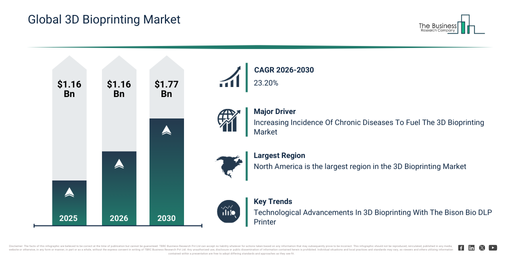
    The 3D bioprinting market has expanded significantly in recent years. It is expected to increase from $2.19 billion in 2025 to $2.7 billion in 2026, demonstrating a compound annual growth rate (CAGR) of 23.0%. This historical growth can be attributed to factors such as increased funding for biomedical research, a rising demand for in vitro drug testing models, the early adoption of regenerative medicine, progress in cell culture technologies, and the expanding application of 3D printing in healthcare.

    The 3D bioprinting market is projected to experience rapid expansion over the coming years. By 2030, its valuation is anticipated to reach $6.21 billion, exhibiting a compound annual growth rate (CAGR) of 23.2%. This anticipated growth during the forecast period stems from factors such as the rise of personalized medicine, a greater need for organ transplants, supportive regulations for bioprinted tissues, expanding biopharmaceutical research initiatives, and innovations in scalable bioprinting technologies. Key developments expected within this timeframe involve tissue engineering applied to regenerative therapies, the production of implants tailored to individual patients, progress in creating sophisticated bioink formulations, the emergence of high-resolution multi-material bioprinting, and the movement of printed tissues into clinical application.

    Download the Free Sample Report to Explore Key Market Insights:

    https://www.thebusinessresearchcompany.com/sample.aspx?id=5341&type=smp

    Which Major Factors Are Driving The Expansion Of The 3D Bioprinting Market?

    The rising occurrence of chronic illnesses is anticipated to fuel the expansion of the 3D bioprinting market in the future. A chronic disease refers to a medical condition that lasts for an extended duration, typically three months or longer, and often persists throughout an individual’s life. 3D bioprinting is employed in creating tissue models for research into chronic diseases and for potential organ replacement treatments. For example, in June 2024, the National Health Service, a UK-based government department, reported that 3,615,330 individuals registered with a general practitioner (GP) were diagnosed with non-diabetic hyperglycemia or pre-diabetes (a condition with elevated blood sugar levels, not high enough to be classified as diabetes) in 2023. This marked an 18% increase from 3,065,825 cases recorded in 2022. Consequently, the increasing incidence of chronic diseases is a primary driver for the growth of the 3D bioprinting market.

    How Is The 3D Bioprinting Market Structured Across Different Segments?

    The 3D bioprinting market covered in this report is segmented –

    1) By Component: 3D Bioprinters, Bioinks

    2) By Material: Living Cells, Hydrogels, Extracellular Matrices, Other Materials

    3) By Application: Research Applications, Clinical Application, Other Applications

    4) By End User: Research Organization And Academic Institutes, Biopharmaceutical Companies, Hospitals, Other End Users

    Subsegments:

    1) By 3D Bioprinters: Inkjet 3D Bioprinters, Microextrusion 3D Bioprinters, Laser-Assisted 3D Bioprinters, Stereolithography (SLA) Bioprinters

    2) By Bioinks: Natural Bioinks, Synthetic Bioinks, Hybrid Bioinks

    Which Trends Are Shaping The Future Of The 3D Bioprinting Market?

    Leading companies in the 3D bioprinting market are concentrating on developing technologically advanced solutions, such as 3D bioprinters, to enhance the precision and efficiency of tissue engineering and regenerative medicine. These bioprinters are devices that utilize bioinks containing living cells to create three-dimensional tissue and organ structures for medical research and various regenerative medicine applications. For example, in June 2024, Tethon 3D, a US developer of ceramic powder and metal-polymer products, unveiled the Bison Bio DLP 3D bioprinter, marking its initial entry into the bioprinting market, a product developed in collaboration with Carima. This innovative printer offers adjustable build sizes (30 × 20 mm, 57 × 32 mm, and 96 × 54 mm) and is compatible with Tethon’s proprietary LAP photoinitiator and GelMA hydrogel bioink, which are essential for bioprinting live tissues. Measuring 24 × 24 × 24 inches and weighing 75 lbs, the Bison Bio is priced at $19,950 and aims to facilitate advancements in healthcare by enabling the creation of complex tissues and organs for biomedical research, ultimately contributing to personalized medicine and regenerative therapies.

    Which Major Players Dominate The 3D Bioprinting Market?

    Major companies operating in the 3d bioprinting market are Organovo Holdings Inc., Allevi Inc., Cellink AB, Aspect Biosystems Ltd., Cyfuse Biomedical KK, Poietis SA, TeVido BioDevices, Nano3D Biosciences Inc., RegenHU Ltd., GeSiM mbH, Advanced Solutions Life Sciences LLC, Regenovo Biotechnology Co. Ltd., Regemat 3D S.L., Bio3D Technologies, ROKIT Healthcare Co. Ltd., Inventia Life Science Pvt. Ltd., Vivax Bio LLC, 3D Biotek LLC, 3D Bio Corp, 3D Bioprinting Solutions, BICO Group AB, CollPlant Biotechnologies Ltd., 3D Systems Corporation, EnvisionTEC GmbH, GE HealthCare Technologies Inc., Nuclera Nucleics Ltd.

    Read the full 3d bioprinting market report here:

    https://www.thebusinessresearchcompany.com/report/3d-bioprinting-global-market-report

    Which Region Currently Holds The Largest Share Of The 3D Bioprinting Market?

    North America was the largest region in the 3D bioprinting market in 2025. Asia-Pacific is expected to be the fastest-growing region in the 3D bioprinting market during the forecast period. The regions covered in the 3D bioprinting market report are Asia-Pacific, South East Asia, Western Europe, Eastern Europe, North America, South America, Middle East, Africa.

    Request A Tailored 3D Bioprinting Market Research Report For Competitive Advantage:

    https://www.thebusinessresearchcompany.com/customise?id=5341&type=smp

    Browse Through More Reports Similar to the Global 3D Bioprinting Market 2026, By The Business Research Company

    4D Bioprinting Market Report 2026

    https://www.thebusinessresearchcompany.com/report/4d-bioprinting-global-market-report

    3D Printing In Healthcare Market Report 2026

    https://www.thebusinessresearchcompany.com/report/3d-printing-in-healthcare-global-market-report

    3D Printing Services Market Report 2026

    https://www.thebusinessresearchcompany.com/report/3d-printing-services-global-market-report

    Get in touch with us:

    The Business Research Company: https://www.thebusinessresearchcompany.com/

    Americas +1 310-496-7795

    Asia +44 7882 955267 & +91 8897263534

    Europe +44 7882 955267

    Email us at info@tbrc.info

    Follow us on:

    LinkedIn: https://in.linkedin.com/company/the-business-research-company

    YouTube: https://www.youtube.com/channel/UC24_fI0rV8cR5DxlCpgmyFQ

    Global Market Model: https://www.thebusinessresearchcompany.com/global-market-model
  • 3D And 4D Ultrasound Devices Market Outlook 2026–2030 Highlighting Major Growth Drivers and Emerging Industry Trends

    3D And 4D Ultrasound Devices Market Outlook 2026–2030 Highlighting Major Growth Drivers and Emerging Industry Trends

    The Business Research Company’s 2026 market reports include new capabilities such as market attractiveness scoring and analysis, total addressable market analysis, company scoring matrix, interactive excel data dashboard, improved supply chain analysis, upcoming startups in the market, and overview of key products, aimed at improving the depth, usability, and strategic value of the insights delivered.

    What Is The Market Size Of The 3D And 4D Ultrasound Devices Market In 2026 And What Value Is Projected For 2030?

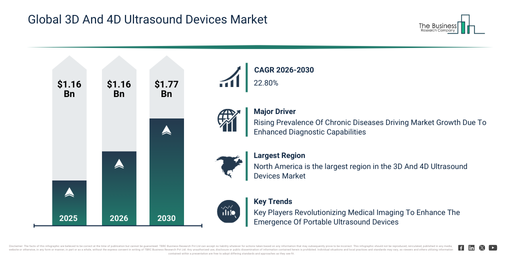
    The 3D and 4D ultrasound devices market has seen significant expansion in recent times. It is projected to increase from $14.07 billion in 2025 to $17.25 billion in 2026, exhibiting a compound annual growth rate (CAGR) of 22.6%. This historical growth can be linked to the increasing use of ultrasound imaging for prenatal care, the development of diagnostic imaging infrastructure, a greater number of skilled sonography professionals, heightened awareness about detecting diseases early, and the adoption of non-invasive diagnostic instruments.

    The 3D and 4D ultrasound devices market is anticipated to experience substantial growth over the next few years, with its valuation expected to reach $39.28 billion in 2030, demonstrating a compound annual growth rate (CAGR) of 22.8%. This expansion during the forecast period is primarily driven by an increased demand for sophisticated prenatal diagnostics, rising investments in portable imaging technologies, the proliferation of point-of-care diagnostics, the expanding application of AI-assisted image interpretation, and a heightened emphasis on detecting diseases at early stages. Key developments anticipated in this period include the wider adoption of high-resolution fetal imaging systems, a growing need for portable and point-of-care ultrasound devices, enhanced integration of advanced visualization software, the expansion of multi-specialty diagnostic applications, and a greater focus on operational efficiency and imaging accuracy.

    Download the Free Sample Report to Explore Key Market Insights:

    https://www.thebusinessresearchcompany.com/sample.aspx?id=14233&type=smp

    What Key Drivers Are Influencing The Growth Of The 3D And 4D Ultrasound Devices Market?

    The market for 3D and 4D ultrasound devices is anticipated to expand due to the rising occurrence of chronic diseases. These conditions are defined as persistent health issues requiring continuous care and management over prolonged durations. This growing prevalence is mainly linked to factors such as inactive lifestyles, poor dietary habits, and an aging demographic. Such ultrasound technologies assist in the diagnosis and tracking of chronic diseases by generating detailed 3D images, which significantly improve the visualization and evaluation of impacted organs and structures. For example, data from January 2023, reported by the US-based National Library of Medicine, indicates that by 2050, the population in the US aged 50 and older with at least one chronic condition is projected to rise by 99.5%, reaching 142.66 million individuals. Consequently, the expanding incidence of chronic diseases acts as a catalyst for the growth within the 3D and 4D ultrasound devices market.

    What Are The Key Segments Of The 3D And 4D Ultrasound Devices Market?

    The 3D and 4d ultrasound devices market covered in this report is segmented –

    1) By Type: Stationary 3D And 4D Ultrasound Devices, Portable 3D And 4D Ultrasound Devices

    2) By Display: Color Ultrasound, Black And White (B/W) Ultrasound

    3) By Portability: Trolley Or Cart-Based Ultrasound Systems, Compact Or Handheld Ultrasound Systems, Point-Of-Care (PoC) Ultrasound Systems

    4) By Application: Radiology Or General Imaging, Obstetrics Or Gynecology, Cardiology, Urology, Vascular, Orthopedic And Musculoskeletal, Pain Management, Other Applications

    5) By End-User: Hospitals, Surgical Centers And Diagnostic Centers, Maternity Centers, Ambulatory Care Centers, Other End-Users

    Subsegments:

    1) By Stationary 3D And 4D Ultrasound Devices: Console-Based Systems, High-Performance Ultrasound Machines, Advanced Imaging Systems

    2) By Portable 3D And 4D Ultrasound Devices: Handheld Ultrasound Devices, Mobile Ultrasound Systems, Compact Point-Of-Care Ultrasound Machines

    What Key Trends Are Influencing The Development Of The 3D And 4D Ultrasound Devices Market?

    Companies operating within the 3D and 4D ultrasound devices market are concentrating on developing technologically advanced offerings, such as ultrasound-on-chip technology, to improve imaging capabilities and stimulate innovation in medical diagnostics. This technology miniaturizes ultrasound components onto a single chip, enabling compact and portable ultrasound devices for a range of medical imaging applications. Such innovation enhances accessibility to ultrasound diagnostics, with potential advancements in point-of-care and wearable healthcare devices. For instance, in June 2023, Butterfly Network Inc., a US-based manufacturer of medical imaging devices, introduced the Butterfly iQ3, the latest iteration of its handheld point-of-care ultrasound (POCUS) system. It utilizes P4.3 ultrasound-on-chip technology, featuring the world’s fastest digital data transfer rate. This system is engineered to deliver enhanced high-resolution imaging and portable ultrasound imaging with advanced 3D capabilities, boasting double the processing power of its forerunner, the Butterfly iQ+.

    Who Are The Leading Companies Operating In The 3D And 4D Ultrasound Devices Market?

    Major companies operating in the 3d and 4d ultrasound devices market are Hitachi Ltd., Toshiba Corporation, Siemens Healthineers, Koninklijke Philips N.V., GE HealthCare Technologies Inc., Fujifilm Holdings Corporation, Konica Minolta Healthcare Americas Inc., Hologic Inc., Mindray Medical International Limited, Canon Medical Systems Corporation, Samsung Medison Co. Ltd., Mobisante Inc., Esaote S.p.A, Shimadzu Medical Systems USA, Terason, Alpinion Medical Systems Co. Ltd., Shenzhen Bestman Instrument Co. Ltd., Chison Medical Technologies Co. Ltd., Edan Instruments Inc., Mindray DS USA

    Read the full 3d and 4d ultrasound devices market report here:

    https://www.thebusinessresearchcompany.com/report/3d-and-4d-ultrasound-devices-global-market-report

    Which Region Is Expected To Register The Fastest Growth In The 3D And 4D Ultrasound Devices Market?

    North America was the largest region in the 3D and 4D ultrasound devices market in 2025. Asia-Pacific is expected to be the fastest-growing region in the forecast period. The regions covered in the 3D and 4D ultrasound devices market report are Asia-Pacific, South East Asia, Western Europe, Eastern Europe, North America, South America, Middle East, Africa.

    Request A Tailored 3D And 4D Ultrasound Devices Market Research Report For Competitive Advantage:

    https://www.thebusinessresearchcompany.com/customise?id=14233&type=smp

    Browse Through More Reports Similar to the Global 3D And 4D Ultrasound Devices Market 2026, By The Business Research Company

    Ultrasound Systems Devices And Equipment Market Report 2026

    https://www.thebusinessresearchcompany.com/report/ultrasound-systems-devices-and-equipment-global-market-report

    3D And 4D Technology Market Report 2026

    https://www.thebusinessresearchcompany.com/report/3d-and-4d-technology-global-market-report

    3D Medical Imaging Devices Market Report 2026

    https://www.thebusinessresearchcompany.com/report/3d-medical-imaging-devices-global-market-report

    Get in touch with us:

    The Business Research Company: https://www.thebusinessresearchcompany.com/

    Americas +1 310-496-7795

    Asia +44 7882 955267 & +91 8897263534

    Europe +44 7882 955267

    Email us at info@tbrc.info

    Follow us on:

    LinkedIn: https://in.linkedin.com/company/the-business-research-company

    YouTube: https://www.youtube.com/channel/UC24_fI0rV8cR5DxlCpgmyFQ

    Global Market Model: https://www.thebusinessresearchcompany.com/global-market-model

  • Immunoglobulin Fusion Protein Market Outlook 2026–2035: Growth Drivers and Industry Forecast

    Uncover key drivers, emerging technologies, and competitive movements shaping the immunoglobulin fusion protein market from 2026–2035 with trusted insights from The Business Research Company

    What long-term size projections exist for the Immunoglobulin Fusion Protein Market covering 2026–2035?

    The immunoglobulin fusion protein market size has experienced rapid expansion in recent years. This market is projected to expand from $46.05 billion in 2025 to $52.44 billion in 2026, exhibiting a compound annual growth rate (CAGR) of 13.9%. The historical increase in this market can be linked to factors such as biologic drug innovation, the prevalence of autoimmune disease burden, the achievements of monoclonal antibodies, the adoption of biologics in hospitals, and effective chronic disease management.

    The market for immunoglobulin fusion proteins is projected to experience substantial expansion over the upcoming years. By 2030, this market is anticipated to reach a valuation of $87.21 billion, demonstrating a compound annual growth rate (CAGR) of 13.6%. Factors driving this growth during the projected timeframe include precision biologics development, expanding rare disease drug pipelines, increasing biosimilar competition, advancements in protein engineering, and a rising demand for long-acting therapies. Key trends identified for the forecast period encompass the growing development of long-acting biologics, the increased use of fc fusion technologies, the expansion of applications for autoimmune and rare diseases, enhancements in drug stability and half-life engineering, and rising investment in protein engineering platforms.

    Access Your Free Sample Report for In-Depth Market Insights:

    https://www.thebusinessresearchcompany.com/sample.aspx?id=24568&type=smp

    Which Drivers Are Impacting The Competitive Landscape Of The Immunoglobulin Fusion Protein Market?

    The expanding occurrence of autoimmune conditions is anticipated to fuel the future expansion of the immunoglobulin fusion protein market. Autoimmune conditions are characterized by the body’s immune system incorrectly targeting its own healthy cells and tissues. This rise in autoimmune disorder prevalence stems mainly from a blend of genetic susceptibility and environmental elements, with inherited genes heightening individual risk and factors like infections or lifestyle choices contributing to their onset. Immunoglobulin fusion protein aids in managing autoimmune disorders by adjusting the immune response, thereby lessening inflammation and stopping the immune system from harming the body’s own tissues. As an illustration, in February 2024, data from Arthritis Australia, an Australia-based non-profit body, projected that by 2025, approximately 562,378 people in Australia will suffer from rheumatoid arthritis (RA), making up 14% of the entire arthritis demographic. The number of Australians living with RA is forecast to increase by 33% by 2040, reaching 748,721 individuals. This signifies an additional 186,343 people affected by RA relative to 2025 figures. Consequently, the growing occurrence of autoimmune conditions is stimulating expansion in the immunoglobulin fusion protein market.

    What Leading Segments Are Studied In The Immunoglobulin Fusion Protein Market?

    The immunoglobulin fusion protein market covered in this report is segmented –

    1) By Type: Monoclonal Antibodies, Polyclonal Antibodies, Bispecific Antibodies, Recombinant Antibodies

    2) By Drug Class: Immunosuppressive Drugs, Immunostimulatory Drugs

    3) By Mode of Administration: Intravenous, Subcutaneous, Intramuscular

    4) By Application: Autoimmune Disease, Eye Diseases, Diabetes, Hemophilia

    5) By End User: Hospitals, Clinics, Research Institutes

    Subsegments:

    1) By Monoclonal Antibodies: Human Monoclonal Antibodies, Humanized Monoclonal Antibodies, Chimeric Monoclonal Antibodies, Murine Monoclonal Antibodies

    2) By Polyclonal Antibodies: Animal-Derived Polyclonal Antibodies, Human-Derived Polyclonal Antibodies, Recombinant Polyclonal Antibodies

    3) By Bispecific Antibodies: Tandem Single-Chain Variable Fragment, Dual-Variable Domain Antibodies, Bispecific T-Cell Engagers (BiTEs), Dual-Affinity Re-Targeting Antibodies

    4) By Recombinant Antibodies: Fragment Antibodies, Full-Length Recombinant Antibodies, Antibody-Drug Conjugates (ADCs), Engineered Antibody Domains

    Which Competitive Trends Are Impacting The Structure Of The Immunoglobulin Fusion Protein Market?

    Leading companies within the immunoglobulin fusion protein market are concentrating on conducting clinical trials to create innovative products, such as bispecific antibody fusion proteins, to improve therapeutic efficacy and target multiple disease pathways. A bispecific antibody fusion protein is defined as a genetically engineered molecule capable of simultaneously binding two distinct targets, thereby enhancing targeted therapy by drawing immune cells closer to tumor cells or blocking several disease pathways concurrently. For instance, in February 2025, Innovent Biologics, Inc., a China-based biotechnology company, received its second Fast Track Designation (FTD) from the U.S. Food and Drug Administration (FDA) for IBI343, a bispecific antibody fusion protein aimed at advanced solid tumors. IBI343 is engineered to simultaneously engage tumor-associated antigens and immune effector cells, thus boosting the precision and potency of anti-tumor immune responses. This designation is expected to accelerate the clinical development and regulatory review of IBI343, highlighting its potential to address significant unmet medical needs in oncology.

    Which Key Market Players Are Investing In Expansion And Innovation Within The Immunoglobulin Fusion Protein Market?

    Major companies operating in the immunoglobulin fusion protein market are Amgen Inc., Pfizer Inc., Swedish Orphan Biovitrum AB (Sobi), Regeneron Pharmaceuticals Inc., Sanofi S.A., AbbVie Inc., Bristol-Myers Squibb Company, Roche Holding AG, Genentech Inc., UCB S.A., AstraZeneca PLC, CSL Behring, Takeda Pharmaceutical Company Limited, Novartis AG, Merck & Co. Inc., Biogen Inc., Horizon Therapeutics (Amgen subsidiary), Kyowa Kirin Co. Ltd., Ultragenyx Pharmaceutical Inc., Apellis Pharmaceuticals Inc., Alexion Pharmaceuticals (AstraZeneca subsidiary), Argenx SE, HanAll Biopharma Co. Ltd., Innovent Biologics Inc., 3SBio Inc.

    Access The Complete Report For Deeper Market Insights:

    https://www.thebusinessresearchcompany.com/report/immunoglobulin-fusion-protein-global-market-report

    Which Regions Are Poised For Strategic Growth In The Immunoglobulin Fusion Protein Market?

    North America was the largest region in the immunoglobulin fusion proteins market in 2025. Asia-Pacific is expected to be the fastest-growing region in the forecast period. The regions covered in the immunoglobulin fusion protein market report are Asia-Pacific, South East Asia, Western Europe, Eastern Europe, North America, South America, Middle East, Africa.

    Request Your Customized Immunoglobulin Fusion Protein Market Research Report for Competitive Advantage:

    https://www.thebusinessresearchcompany.com/customise?id=24568&type=smp

    Browse Through More Reports Similar to the Global Immunoglobulin Fusion Protein Market 2026, By The Business Research Company

    Immunoglobulins Market Report 2026

    https://www.thebusinessresearchcompany.com/report/immunoglobulins-global-market-report

    Monoclonal Antibodies Market Report 2026

    https://www.thebusinessresearchcompany.com/report/monoclonal-antibodies-global-market-report

    Recombinant Proteins Market Report 2026

    https://www.thebusinessresearchcompany.com/report/recombinant-proteins-global-market-report

    Get in touch with us:

    The Business Research Company: https://www.thebusinessresearchcompany.com/

    Americas +1 310-496-7795

    Asia +44 7882 955267 & +91 8897263534

    Europe +44 7882 955267

    Email us at info@tbrc.info

    Follow us on:

    LinkedIn: https://in.linkedin.com/company/the-business-research-company

    YouTube: https://www.youtube.com/channel/UC24_fI0rV8cR5DxlCpgmyFQ

    Global Market Model: https://www.thebusinessresearchcompany.com/global-market-model
  • Bradycardia Treatment Devices Market Expected to Reach $11.5 Billion by 2030 with 5% CAGR

    Bradycardia Treatment Devices Market Expected to Reach $11.5 Billion by 2030 with 5% CAGR

    The Business Research Company’s 2026 market reports include new capabilities such as market attractiveness scoring and analysis, total addressable market analysis, company scoring matrix, interactive excel data dashboard, improved supply chain analysis, upcoming startups in the market, and overview of key products, aimed at improving the depth, usability, and strategic value of the insights delivered.

    How Is The Market Size Of The Bradycardia Treatment Devices Market Expected To Change Between 2026 And 2030?

    The bradycardia treatment devices market has experienced robust expansion in recent years. This market is anticipated to expand from $8.97 billion in 2025 to $9.47 billion in 2026, exhibiting a compound annual growth rate (CAGR) of 5.6%. Historically, this growth has been influenced by factors such as the increasing prevalence of cardiac rhythm disorders, the prompt adoption of pacemakers in hospital-based cardiology units, greater availability of implantable cardiac rhythm devices, an increase in cardiovascular diagnostic and monitoring programs, and the enhancement of electrophysiology and cardiac care infrastructure.

    The bradycardia treatment devices market size is expected to see steady growth in the next few years, set to reach $11.51 billion in 2030 at a compound annual growth rate (CAGR) of 5.0%. The expansion during this forecast period is attributed to several factors, including increasing demand for MRI-conditional and biventricular pacemakers, a rise in the uptake of external and wearable defibrillators, higher treatment rates for sick sinus syndrome and heart block, greater adoption of device-based rhythm stabilization in aging patients, and the expanding use of cardiac rhythm therapy in specialty clinics. Major trends anticipated in the forecast period include the increasing development of advanced implantable pacemaker technologies, a growing application of bradycardia devices in cardiac rhythm management therapies, a rising preference for minimally invasive cardiac device implantation procedures, the expansion of device usage across multiple bradycardia-related cardiac conditions, and a strong focus on enhancing device safety, longevity, and treatment reliability.

    Download the Free Sample Report to Explore Key Market Insights:

    https://www.thebusinessresearchcompany.com/sample.aspx?id=17105&type=smp

    What Drivers Are Expected To Influence The Bradycardia Treatment Devices Market During The Forecast Period?

    The increasing occurrence of cardiovascular disease is anticipated to fuel expansion within the bradycardia treatment devices market in the coming period. This condition encompasses ailments impacting the heart and its vessels, such as coronary artery disease, stroke, and heart failure. The growing frequency of cardiovascular disease stems from elements like inactive lifestyles, unhealthy eating habits, tobacco use, and an older demographic. Devices for treating bradycardia, for instance pacemakers, serve to stabilize heart rhythm and ensure a sufficient heart rate for individuals suffering from cardiac issues. As an illustration, data from January 2024 released by the American Heart Association, a US-based non-profit organization, indicated that the age-adjusted mortality rate from cardiovascular disease rose to 233.3 per 100,000 in 2024, marking a 4.0% increase from 224.4 per 100,000 in 2023. Consequently, the expanding incidence of cardiovascular disease is set to spur the development of the bradycardia treatment devices market.

    How Is The Bradycardia Treatment Devices Market Structured Across Different Segments?

    The bradycardia treatment devices market covered in this report is segmented –

    1) By Devices: Pacemakers, Defibrillator

    2) By Treatment Type: Sinus Bradycardia, Sinus Pause, Sick Sinus Syndrome, Tachy-Brady Syndrome, Heart Block

    3) By End User: Hospitals, Specialty Clinics, Other End Users

    Subsegments:

    1) By Pacemakers: Single Chamber Pacemakers, Dual Chamber Pacemakers, Biventricular Pacemakers, MRI-Conditional Pacemakers, External Pacemakers

    2) By Defibrillator: Implantable Cardioverter Defibrillators (ICDS), External Defibrillators, Automated External Defibrillators (AEDS), Manual External Defibrillators, Wearable Defibrillators

    Which Trends Are Shaping The Future Of The Bradycardia Treatment Devices Market?

    Companies at the forefront of bradycardia treatment device manufacturing are concentrating on developing sophisticated solutions, such as leadless pacemakers, to enhance patient results and minimize complications from procedures. Leadless pacemakers are small, self-contained devices directly implanted into the heart without leads, offering a minimally invasive approach to manage heart rhythm. For example, in July 2023, Abbott Laboratories, a US-based medical device manufacturing company, secured US Food and Drug Administration (FDA) approval for its AVEIR dual chamber (DR) leadless pacemaker system. This dual-chamber leadless pacing system addresses abnormal or slow heart rhythms in patients. It provides synchronized or coordinated cardiac pacing between two leadless pacemakers, customized to meet individual clinical requirements.

    Which Major Players Dominate The Bradycardia Treatment Devices Market?

    Major companies operating in the bradycardia treatment devices market are Medtronic plc, Abbott Laboratories, Boston Scientific Corporation, Biotronik SE & Co KG, MicroPort Scientific Corporation, LivaNova PLC, Osypka Medical GmbH, Lepu Medical Technology Co Ltd, Pacetronix Ltd, Shree Pacetronix Ltd, Medico SpA, Zoll Medical Corporation, EBR Systems Inc, Impulse Dynamics NV, Cardioelectronica Company, IMZ Medical Devices, Oscor Inc, CCC Medical Devices, Atacor Medical, Koninklijke Philips NV

    Read the full bradycardia treatment devices market report here:

    https://www.thebusinessresearchcompany.com/report/bradycardia-treatment-devices-global-market-report

    Which Region Is Forecast To Lead The Bradycardia Treatment Devices Market In Terms Of Market Size?

    North America was the largest region in the bradycardia treatment devices market in 2025. The regions covered in the bradycardia treatment devices market report are Asia-Pacific, South East Asia, Western Europe, Eastern Europe, North America, South America, Middle East, Africa.

    Request A Tailored Bradycardia Treatment Devices Market Research Report For Competitive Advantage:

    https://www.thebusinessresearchcompany.com/customise?id=17105&type=smp

    Browse Through More Reports Similar to the Global Bradycardia Treatment Devices Market 2026, By The Business Research Company

    Congestive Heart Failure Treatment Devices Market Report 2026

    https://www.thebusinessresearchcompany.com/report/congestive-heart-failure-treatment-devices-global-market-report

    Heart Blocks Treatment Devices Market Report 2026

    https://www.thebusinessresearchcompany.com/report/heart-blocks-treatment-devices-global-market-report

    Cardiovascular Devices Market Report 2026

    https://www.thebusinessresearchcompany.com/report/cardiovascular-devices-global-market-report

    Get in touch with us:

    The Business Research Company: https://www.thebusinessresearchcompany.com/

    Americas +1 310-496-7795

    Asia +44 7882 955267 & +91 8897263534

    Europe +44 7882 955267

    Email us at info@tbrc.info

    Follow us on:

    LinkedIn: https://in.linkedin.com/company/the-business-research-company

    YouTube: https://www.youtube.com/channel/UC24_fI0rV8cR5DxlCpgmyFQ

    Global Market Model: https://www.thebusinessresearchcompany.com/global-market-model
  • Brachytherapy Devices Market Forecast 2026–2035 Highlighting Industry Expansion Opportunities

    Brachytherapy Devices Market Forecast 2026–2035 Highlighting Industry Expansion Opportunities

    The Business Research Company’s 2026 market reports include new capabilities such as market attractiveness scoring and analysis, total addressable market analysis, company scoring matrix, interactive excel data dashboard, improved supply chain analysis, upcoming startups in the market, and overview of key products, aimed at improving the depth, usability, and strategic value of the insights delivered.

    What Is The Market Size Of The Brachytherapy Devices Market In 2026 And What Value Is Projected For 2030?

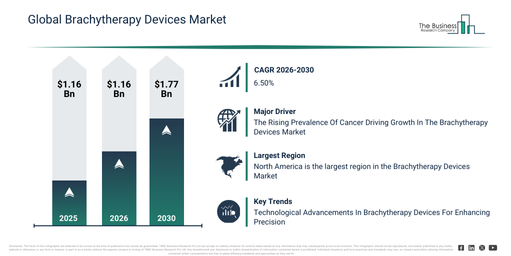
    The brachytherapy devices market size has demonstrated robust growth over recent years. Its value is anticipated to rise from $0.8 billion in 2025 to $0.85 billion in 2026, achieving a compound annual growth rate (CAGR) of 6.9%. During past periods, this expansion can be linked to several factors, including the scarce availability of brachytherapy devices, a reliance on low dose rate (ldr) treatments, the increasing frequency of prostate and cervical cancers, the slow integration of automated afterloaders, and the restricted oncology infrastructure in developing regions.

    The brachytherapy devices market is anticipated to show robust growth in the coming years. It will grow to $1.1 billion in 2030 at a compound annual growth rate (CAGR) of 6.5%. This expansion during the projection period stems from improvements in HDR and PDR brachytherapy technology, an increase in specialized cancer clinics, greater investment in oncology healthcare, the adoption of AI and digital planning tools, and increased understanding among medical professionals regarding the advantages of brachytherapy. Key trends anticipated over this period encompass a rise in the use of high dose rate (HDR) brachytherapy, an uptick in minimally invasive brachytherapy techniques, the broadening of cancer treatment facilities and specialized clinics, the incorporation of treatment planning software alongside quality assurance devices, and an enhanced emphasis on patient safety and accurate radiation application.

    Download the Free Sample Report to Explore Key Market Insights:

    https://www.thebusinessresearchcompany.com/sample.aspx?id=20518&type=smp

    What Drivers Are Influencing The Brachytherapy Devices Market?

    The rising incidence of cancer is anticipated to fuel the expansion of the brachytherapy devices market in the future. Cancer refers to a intricate collection of illnesses marked by the uncontrolled multiplication and dispersion of cells. This growing occurrence of cancer stems from an aging demographic, various lifestyle elements, inherited predispositions, and exposure to environmental elements. Brachytherapy devices provide substantial advantages for cancer sufferers by administering focused radiation precisely to the tumor, thereby optimizing the efficacy of treatment and simultaneously limiting harm to adjacent healthy tissues. Such a precise method not only boosts the therapeutic success but also lessens adverse reactions, shortens the period of treatment, and diminishes the chance of cancer returning, consequently bettering patient results and overall well-being. As an illustration, in August 2024, the UK-based Macmillan Cancer Support reported that over 3 million individuals in the UK are living with cancer in 2024, with this number forecasted to rise to 3.5 million by 2025, 4 million by 2030, and 5.3 million by 2040. Consequently, the expanding occurrence of cancer is propelling the development of the brachytherapy devices market.

    What Are The Key Segments Of The Brachytherapy Devices Market?

    The brachytherapy devices market covered in this report is segmented –

    1) By Product Type: Brachytherapy Afterloaders, Brachytherapy Applicators, Other Product Types

    2) By Indications: Prostate Cancer, Breast Cancer, Cervical Cancer, Skin Cancer, Other Indications

    3) By Dose Rate: High Dose Rate (HDR) Brachytherapy, Low Dose Rate (LDR) Brachytherapy, Pulse Dose Rate (PDR) Brachytherapy

    4) By End-User: Hospitals, Specialty Clinics, Other End-Users

    Subsegments:

    1) By Brachytherapy Afterloaders: Remote Afterloaders, Manual Afterloaders

    2) By Brachytherapy Applicators: Intravaginal Applicators, Interstitial Applicators, Intracavitary Applicators

    3) By Other Product Types: Brachytherapy Seeds, Treatment Planning Software, Quality Assurance Devices

    What Key Trends Are Influencing The Development Of The Brachytherapy Devices Market?

    Leading companies operating in the brachytherapy devices market are focusing on developing innovative solutions, such as advanced brachytherapy machines, to benefit many patients in need of specialized cancer care. An advanced brachytherapy machine is a sophisticated device designed to deliver internal radiation therapy with the highest precision, efficacy, and safety. This equipment enables the administration of a high dose of radiation directly to the cancerous tissue while minimizing exposure to the surrounding healthy tissues. For instance, in June 2024, AIIMS Nagpur, an India-based medical institute, launched a cutting-edge brachytherapy machine to enhance the accuracy of cancer treatment. This advanced technology allows for localized radiation therapy, targeting tumors more effectively while minimizing damage to surrounding healthy tissue. The device is expected to improve treatment outcomes for radiation therapy patients by providing a more accurate and controlled radiation delivery.

    Who Are The Leading Companies Operating In The Brachytherapy Devices Market?

    Major companies operating in the brachytherapy devices market are Siemens Healthineers AG, Becton Dickinson and Company, GE HealthCare Technologies Inc., Boston Scientific Corporation, Koninklijke Philips N.V., Varian Medical Systems Inc., Carl Zeiss Meditec AG, Elekta AB, Hologic Inc., Mirion Technologies Inc., Accuray Inc., Eckert & Ziegler BEBIG S.A., Theragenics Corporation, Sensus Healthcare Inc., Aetna Inc., CIVCO Medical Solutions, iCAD Inc., IsoRay Inc., BEBIG Medical GmbH, IsoAid L.L.C.

    Read the full brachytherapy devices market report here:

    https://www.thebusinessresearchcompany.com/report/brachytherapy-devices-global-market-report

    Which Regions Are Expected To Experience Rapid Expansion In The Brachytherapy Devices Market?

    North America was the largest region in the brachytherapy devices market in 2025. Asia-Pacific is expected to be the fastest-growing region in the market going forward. The regions covered in the brachytherapy devices market report are Asia-Pacific, South East Asia, Western Europe, Eastern Europe, North America, South America, Middle East, Africa.

    Request A Tailored Brachytherapy Devices Market Research Report For Competitive Advantage:

    https://www.thebusinessresearchcompany.com/customise?id=20518&type=smp

    Browse Through More Reports Similar to the Global Brachytherapy Devices Market 2026, By The Business Research Company

    Single Dose Radiotherapy Services Market Report 2026

    https://www.thebusinessresearchcompany.com/report/single-dose-radiotherapy-services-global-market-report

    Radiotherapy Devices Market Report 2026

    https://www.thebusinessresearchcompany.com/report/radiotherapy-devices-global-market-report

    Medical Irradiation Market Report 2026

    https://www.thebusinessresearchcompany.com/report/medical-irradiation-global-market-report

    Get in touch with us:

    The Business Research Company: https://www.thebusinessresearchcompany.com/

    Americas +1 310-496-7795

    Asia +44 7882 955267 & +91 8897263534

    Europe +44 7882 955267

    Email us at info@tbrc.info

    Follow us on:

    LinkedIn: https://in.linkedin.com/company/the-business-research-company

    YouTube: https://www.youtube.com/channel/UC24_fI0rV8cR5DxlCpgmyFQ

    Global Market Model: https://www.thebusinessresearchcompany.com/global-market-model

  • Global Brachytherapy Market Analysis 2026–2030 Offering Strategic Forecast Insights for Businesses

    Global Brachytherapy Market Analysis 2026–2030 Offering Strategic Forecast Insights for Businesses

    The Business Research Company’s 2026 market reports include new capabilities such as market attractiveness scoring and analysis, total addressable market analysis, company scoring matrix, interactive excel data dashboard, improved supply chain analysis, upcoming startups in the market, and overview of key products, aimed at improving the depth, usability, and strategic value of the insights delivered.

    What Will Be The Estimated Market Valuation Of The Brachytherapy Market By The End Of 2030?

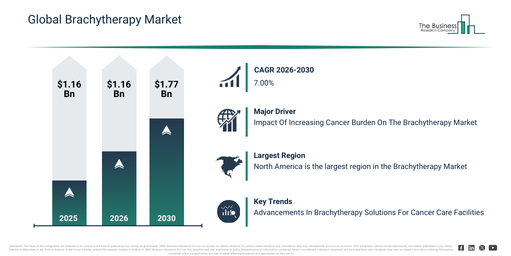
    The brachytherapy market size has demonstrated significant growth in recent years. It is anticipated to expand from a value of $1 billion in 2025 to $1.08 billion in 2026, registering a compound annual growth rate (CAGR) of 7.9%. The past growth in this market can be attributed to several factors, including an increase in prostate and gynecological cancer incidence, the prompt adoption of LDR and HDR brachytherapy systems, the growing acceptance of localized radiation therapies, the expansion of hospital-based oncology treatment programs, and the enhanced availability of radioactive seed implants.

    The brachytherapy market is expected to experience significant expansion in the next few years, with projections indicating a rise to **$1.42 billion in 2030 at a compound annual growth rate (CAGR) of 7.0%.** This growth during the forecast period can be attributed to several factors, including an increasing demand for image-guided and computer-assisted brachytherapy, the growing adoption of electronic brachytherapy solutions, higher utilization in outpatient and specialty oncology clinics, the increasing integration of precision planning and dosimetry tools, and the expanding application of brachytherapy across a wider range of cancer indications. Major trends anticipated during this period include the rising adoption of image-guided and precision-targeted brachytherapy procedures, an increase in the use of brachytherapy for prostate, gynecological, and breast cancer treatments, a growing preference for localized radiation delivery with reduced tissue exposure, the expansion of electronic brachytherapy for outpatient and dermatologic applications, and a concentrated effort on enhancing treatment accuracy, patient outcomes, and therapy safety.

    Download the Free Sample Report to Explore Key Market Insights:

    https://www.thebusinessresearchcompany.com/sample.aspx?id=17104&type=smp

    What Drivers Are Shaping The Future Growth Of The Brachytherapy Market?

    The brachytherapy market is anticipated to expand due to the escalating incidence of cancer. This surge in cancer cases stems from factors like an aging global demographic, evolving lifestyle habits, and heightened exposure to risk elements including tobacco, unhealthy diets, and environmental contaminants. Brachytherapy serves as a crucial method for addressing the cancer burden, presenting a precise and potent treatment alternative that can be customized for different cancer types, delivering localized therapy and simultaneously reducing overall treatment duration and adverse effects. As an illustration, the Institute for Health Metrics and Evaluation (IHME), a US-based population health research organization, reported in September 2025 that new cancer cases reached approximately 18.5 million in 2023, an increase from 18.0 million in 2022, underscoring a consistent annual rise in global cancer occurrences. Consequently, the expanding challenge of cancer will be a primary impetus for the brachytherapy market.

    Which Segment Classifications Shape The Brachytherapy Market?

    The brachytherapy market covered in this report is segmented –

    1) By Product Type: Seeds, Applicators And Afterloaders, Electronic Brachytherapy

    2) By Dosage Type: High-Dose Rate (HDR) Brachytherapy, Low-Dose Rate (LDR) Brachytherapy

    3) By Application: Prostate Cancer, Gynecological Cancer, Breast Cancer, Other Applications

    4) By End-User: Hospitals, Specialty Clinics, Other End-Users

    Subsegments:

    1) By Seeds: Iodine-125 Seeds, Palladium-103 Seeds, Cesium-131 Seeds, Other Radioactive Seeds

    2) By Applicators And Afterloaders: Prostate Applicators, Vaginal Applicators, Interstitial Applicators, Skin Applicators, Afterloaders

    3) By Electronic Brachytherapy: Electronic Brachytherapy Units, Electronic Brachytherapy Sources

    How Are Trends Impacting The Brachytherapy Market?

    Leading firms within the brachytherapy market are prioritizing the creation of advanced technological solutions, including standard afterloader technology, to improve the accuracy and effectiveness of treatments. Specifically, standard afterloader technology in brachytherapy involves automated systems designed to deliver radioactive material directly to tumor locations, thereby guaranteeing accurate radiation dosage. As an illustration, during April 2024, Varian Medical Systems, a US-based medical device manufacturer, collaborated with Maastro, a US-based radiotherapy clinic, to introduce a novel brachytherapy applicator. This applicator is engineered for the precise application of HDR brachytherapy when treating rectal cancer. This recently developed, partially 3D-printed applicator resulted from a joint effort between Maastro’s radiation oncologists and physicists, alongside experts from Varian, with the goal of offering enhanced treatment alternatives for patients suffering from rectal cancer. Its design aims to maximize contact with the tumor and ensure an even distribution of the radiation dose, achieving a dosage range comparable to contact X-ray brachytherapy (CXB).

    Which Companies Are Expanding Their Footprint In The Brachytherapy Market?

    Major companies operating in the brachytherapy market are Elekta AB, IsoRay Inc, CIVCO Medical Solutions, Theragenics Corporation, Eckert & Ziegler BEBIG, IsoAid LLC, Best Medical International Inc, Boston Scientific Corporation, IBA Group, Accuray Incorporated, Cook Medical, Panacea Medical Technologies Pvt Ltd, NorthStar Medical Radioisotopes LLC, International Isotopes Inc, CivaTech Oncology Inc, Huiheng Medical Inc, Radiomedix, Mevion Medical Systems Inc, Qfix, Seno Medical Instruments

    Read the full brachytherapy market report here:

    https://www.thebusinessresearchcompany.com/report/brachytherapy-global-market-report

    Which Geographic Regions Are Influencing Demand In The Brachytherapy Market?

    North America was the largest region in the brachytherapy market in 2025. Asia-Pacific is expected to be the fastest-growing region in the forecast period. The regions covered in the brachytherapy market report are Asia-Pacific, South East Asia, Western Europe, Eastern Europe, North America, South America, Middle East, Africa.

    Request A Tailored Brachytherapy Market Research Report For Competitive Advantage:

    https://www.thebusinessresearchcompany.com/customise?id=17104&type=smp

    Browse Through More Reports Similar to the Global Brachytherapy Market 2026, By The Business Research Company

    Skin Cancer Drugs Market Report 2026

    https://www.thebusinessresearchcompany.com/report/skin-cancer-drugs-global-market-report

    Pancreatic Cancer Drugs Market Report 2026

    https://www.thebusinessresearchcompany.com/report/pancreatic-cancer-drugs-global-market-report

    Breast Cancer Drugs Market Report 2026

    https://www.thebusinessresearchcompany.com/report/breast-cancer-drugs-global-market-report

    Get in touch with us:

    The Business Research Company: https://www.thebusinessresearchcompany.com/

    Americas +1 310-496-7795

    Asia +44 7882 955267 & +91 8897263534

    Europe +44 7882 955267

    Email us at info@tbrc.info

    Follow us on:

    LinkedIn: https://in.linkedin.com/company/the-business-research-company

    YouTube: https://www.youtube.com/channel/UC24_fI0rV8cR5DxlCpgmyFQ

    Global Market Model: https://www.thebusinessresearchcompany.com/global-market-model

  • Bowel Stimulators Market Outlook 2026–2035 Driven by Key Growth Drivers and Industry Projections

    Bowel Stimulators Market Outlook 2026–2035 Driven by Key Growth Drivers and Industry Projections

    The Business Research Company’s 2026 market reports include new capabilities such as market attractiveness scoring and analysis, total addressable market analysis, company scoring matrix, interactive excel data dashboard, improved supply chain analysis, upcoming startups in the market, and overview of key products, aimed at improving the depth, usability, and strategic value of the insights delivered.

    What Market Size Growth Is Projected For The Bowel Stimulators Market During The Forecast Period 2026–2030?

    The bowel stimulators market has demonstrated significant expansion in recent years. It is anticipated to grow from $1.13 billion in 2025 to $1.23 billion in 2026, at a compound annual growth rate (CAGR) of 8.8%. The increase observed in the past can be attributed to several factors including limited available treatment options for bowel dysfunction, a substantial dependence on laxatives and manual bowel care, an escalation in spinal cord injury cases, the expanding geriatric population dealing with constipation, and the slow but steady adoption of electrical stimulation therapies.

    The bowel stimulators market is anticipated to experience substantial expansion over the coming years. Its valuation is projected to reach $1.71 billion by 2030, demonstrating an 8.6% compound annual growth rate (CAGR). This expansion during the forecast period is fueled by several factors, including ongoing technological advancements in both implantable and external stimulators, a growing incidence of neurological conditions, the expansion of home care and remote therapy options, increased clinical validation and regulatory clearances, and the advancement of personalized and patient-focused bowel management approaches. Key developments expected in this period encompass a greater acceptance of neuromodulation-based bowel treatments, a rising demand for non-invasive and minimally invasive devices, the increasing deployment of home-based and wearable bowel stimulators, a decrease in reliance on laxatives and manual interventions, and improved patient understanding alongside better quality of life results.

    Download the Free Sample Report to Explore Key Market Insights:

    https://www.thebusinessresearchcompany.com/sample.aspx?id=25711&type=smp

    Which Economic Or Industry Drivers Are Impacting The Bowel Stimulators Market?

    The rising occurrence of gastrointestinal disorders is set to propel the expansion of the bowel stimulator market in the foreseeable future. Gastrointestinal disorders refer to conditions that impact the digestive system, disrupting normal digestion, nutrient absorption, or bowel function. The increase in these disorders is often linked to poor dietary habits, as highly processed, low-fiber foods can adversely affect gut health and digestive processes. Bowel stimulators assist in managing gastrointestinal disorders by activating nerves or muscles in the lower digestive tract, which helps to enhance bowel movements, relieve constipation, and support overall digestive health. For instance, in December 2023, the IBD Registry, a UK-based non-profit organization, stated that in 2023, the count of individuals with inflammatory bowel disease (IBD) enrolling in the IBD Registry reached over 5,300, marking an increase of more than 3,000 compared to 2022. Therefore, the growing prevalence of gastrointestinal disorders is anticipated to stimulate the growth of the bowel stimulator market.

    What Market Segments Are Evaluated Within The Bowel Stimulators Market?

    The bowel stimulators market covered in this report is segmented –

    1) By Product Type: Electrical Bowel Stimulators, Magnetic Bowel Stimulators, Other Product Types

    2) By Patient Type: Adult, Geriatric, Pediatric

    3) By Distribution Channel: Direct Sales, Online Sales, Retail Pharmacies, Specialized Medical Stores

    4) By Application: Chronic Constipation, Neurological Disorders, Irritable Bowel Syndrome (IBS), Post Operative Recovery

    5) By End-User: Hospitals, Clinics, Home Care Settings, Nursing Homes

    Subsegments:

    1) By Electrical Bowel Stimulators: Implantable Electrical Stimulators, External Electrical Stimulators, Sacral Nerve Stimulators, Transcutaneous Electrical Nerve Stimulation (TENS) Devices

    2) By Magnetic Bowel Stimulators: Peripheral Magnetic Nerve Stimulation Devices, Repetitive Magnetic Stimulation Devices, Wearable Magnetic Stimulators

    3) By Other Product Types: Biofeedback Devices, Vagus Nerve Stimulators, Non-Invasive Neuromodulation Devices, Percutaneous Tibial Nerve Stimulation (PTNS) Systems

    What Industry Trends Are Redefining The Bowel Stimulators Market?

    Leading companies active in the bowel stimulators market are concentrating on integrating minimally invasive bowel-management trends, such as low-volume transanal irrigation technology, to elevate patient comfort, simplify usage, and optimize treatment efficacy. Low-volume transanal irrigation systems are portable devices designed to flush the lower bowel with a controlled, small volume of water, assisting in stimulating evacuation and managing chronic constipation or faecal incontinence. These systems provide advantages like gentler bowel emptying, enhanced user independence, and more predictable bowel routines. For example, in February 2024, Coloplast, a medical device company from Denmark specializing in continence and bowel care, introduced Peristeen Light. This low-volume transanal irrigation system is engineered to support effective bowel emptying for individuals with bowel dysfunction, characterized by a compact hand-held design, a straightforward two-step setup, and a soft, flexible catheter for comfortable insertion. Peristeen Light significantly improves the ease of self-administration, promotes consistency in bowel management, and contributes to the overall quality of life for patients.

    Who Are The Top Market Participants Influencing The Bowel Stimulators Market?

    Major companies operating in the bowel stimulators market are Abbott Laboratories, Medtronic plc, Boston Scientific Corporation, Coloplast AS, LivaNova plc, Nevro Corp, Laborie Medical Technologies, North Coast Medical Inc, Neuspera Medical Inc, InCube Labs LLC, Soterix Medical Inc, Synapse Biomedical Inc, PathMaker Neurosystems Inc, InnoCon Medical Inc, Beijing PINS Medical Co Ltd, Soin Neuroscience Inc, Stimwave Technologies Inc, StimGuard LLC, General Stim Inc, Axonics Modulation Technologies Inc, Enterra Medical Inc, Nalu Medical Inc

    Read the full bowel stimulators market report here:

    https://www.thebusinessresearchcompany.com/report/bowel-stimulators-global-market-report

    What Are The Top-Performing Regions Within The Bowel Stimulators Market?

    North America was the largest region in the bowel stimulators market in 2025. Asia-Pacific is expected to be the fastest-growing region in the forecast period. The regions covered in the bowel stimulators market report are Asia-Pacific, South East Asia, Western Europe, Eastern Europe, North America, South America, Middle East, Africa.

    Request A Tailored Bowel Stimulators Market Research Report For Competitive Advantage:

    https://www.thebusinessresearchcompany.com/customise?id=25711&type=smp

    Browse Through More Reports Similar to the Global Bowel Stimulators Market 2026, By The Business Research Company

    Bowel Management Systems Market Report 2026

    https://www.thebusinessresearchcompany.com/report/bowel-management-systems-global-market-report

    Stool Softener Market Report 2026

    https://www.thebusinessresearchcompany.com/report/stool-softener-global-market-report

    Gastrointestinal Bleeding Treatment Devices Market Report 2026

    https://www.thebusinessresearchcompany.com/report/gastrointestinal-bleeding-treatment-devices-global-market-report

    Get in touch with us:

    The Business Research Company: https://www.thebusinessresearchcompany.com/

    Americas +1 310-496-7795

    Asia +44 7882 955267 & +91 8897263534

    Europe +44 7882 955267

    Email us at info@tbrc.info

    Follow us on:

    LinkedIn: https://in.linkedin.com/company/the-business-research-company

    YouTube: https://www.youtube.com/channel/UC24_fI0rV8cR5DxlCpgmyFQ

    Global Market Model: https://www.thebusinessresearchcompany.com/global-market-model