Month: March 2026

  • Blockchain Technology In Healthcare Market Outlook 2026–2030 with Major Growth Drivers and Emerging Industry Trends

    Blockchain Technology In Healthcare Market Outlook 2026–2030 with Major Growth Drivers and Emerging Industry Trends

    The Business Research Company’s 2026 market reports include new capabilities such as market attractiveness scoring and analysis, total addressable market analysis, company scoring matrix, interactive excel data dashboard, improved supply chain analysis, upcoming startups in the market, and overview of key products, aimed at improving the depth, usability, and strategic value of the insights delivered.

    What Market Size Expansion Is Predicted For The Blockchain Technology In Healthcare Market Between 2026 And 2030?

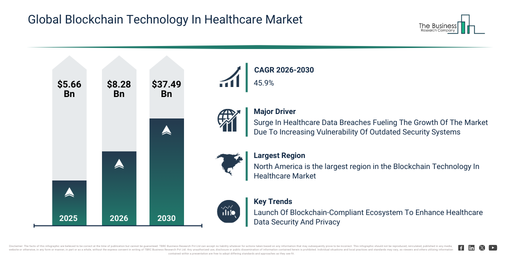
    The market for blockchain technology in healthcare has witnessed substantial expansion in recent years. This market is forecasted to increase from $5.66 billion in 2025 to $8.28 billion by 2026, demonstrating a compound annual growth rate (CAGR) of 46.3%. Historically, this growth can be attributed to several factors such as the rise in healthcare data breaches, increasing digitization of medical records, the growing complexity associated with healthcare data sharing, early blockchain pilot projects in the healthcare sector, and heightened regulatory scrutiny on data security.

    The blockchain technology in healthcare market is projected to experience substantial growth in the coming years. It is expected to expand to $37.49 billion by 2030, exhibiting a compound annual growth rate (CAGR) of 45.9%. This expansion during the forecast period is driven by factors such as the development of interoperable healthcare ecosystems, the increasing acceptance of patient-centric data ownership models, the rising integration of blockchain with AI and IoMT, a greater need for fraud reduction in healthcare billing, and the expansion of blockchain-as-a-service platforms in healthcare. Significant trends during this period include a rise in the adoption of decentralized patient data management systems, an increase in the use of smart contracts for claims and billing, the growing deployment of blockchain-based supply chain traceability, the enlargement of secure health information exchange platforms, and a heightened focus on data transparency and auditability.

    Download the Free Sample Report to Explore Key Market Insights:

    https://www.thebusinessresearchcompany.com/sample.aspx?id=24175&type=smp

    What Drivers Are Influencing The Blockchain Technology In Healthcare Market?

    The future expansion of blockchain technology within the healthcare market is anticipated to be driven by the rising incidence of healthcare data breaches. These breaches involve the unauthorized acquisition, revelation, or illicit taking of confidential patient data from healthcare infrastructures, frequently leading to privacy infringements, identity theft, and issues with compliance. The escalating number of healthcare data breaches stems from obsolete security frameworks, which typically do not incorporate contemporary encryption methods, regular software updates, or sophisticated threat identification tools, thus rendering them susceptible to cyber-attacks and unauthorized entry to sensitive patient information. Blockchain technology offers a solution to the growing problem of healthcare data breaches by providing decentralized, stronger encryption and regulated access to patient information, consequently boosting security, transparency, and confidence. For example, in March 2025, as reported by the HIPAA Journal, a US-based journal, healthcare data breaches reached an unprecedented level, with 168 million records compromised or pilfered in 2023, exceeding the 51.9 million recorded in 2022. Consequently, the proliferation of healthcare data breaches is fueling the advancement of blockchain technology in the healthcare market.

    Which Market Segments Are Examined In The Blockchain Technology In Healthcare Market Study?

    The blockchain technology in healthcare market covered in this report is segmented –

    1) By Component: Software, Hardware, Services

    2) By Network Type: Public Blockchain, Private Blockchain, Hybrid Blockchain

    3) By Application: Clinical Data Exchange And Interoperability, Claims Adjudication And Billing, Supply Chain Management, Clinical Trials And eConsent, Other Applications

    4) By End User: Healthcare Providers, Pharmaceutical Companies, Insurance Companies, Research Institutions

    Subsegments:

    1) By Software: Blockchain Platforms, Smart Contracts, Data Security And Encryption Solutions, Healthcare Information Systems

    2) By Hardware: Blockchain Nodes, Cryptographic Hardware, Internet Of Medical Things (IoMT) Devices

    3) By Services: Blockchain Consulting, Blockchain Integration And Development, Blockchain As A Service (BaaS), Managed Services, Support And Maintenance Services

    How Are Trends Shaping The Direction Of The Blockchain Technology In Healthcare Market?

    Major companies operating in the blockchain technology in healthcare market are concentrating on developing technologically advanced solutions, such as blockchain-compliant ecosystems for healthcare, with the aim of improving data security, privacy, and interoperability within healthcare systems. A blockchain-compliant ecosystem represents a digital infrastructure that adheres to the fundamental principles and technical specifications of blockchain technology, ensuring all systems and processes within it function in a decentralized, transparent, and secure manner. For instance, in March 2025, Circular Protocol, a Switzerland-based developer of an investment data management platform, partnered with Arculus by CompoSecure, a US-based manufacturer of premium financial cards. This collaboration led to the launch of the first blockchain-compliant ecosystem specifically tailored for healthcare providers, designed to enhance data security, transparency, and patient privacy. By integrating Arculus’s physical authentication card with Circular’s MedTech device and IT Lab’s Smart Share platform, healthcare professionals and patients can securely verify and digitally sign medical transactions directly on the blockchain, eliminating the need for cryptocurrency knowledge.

    Who Are The Primary Competitors In The Blockchain Technology In Healthcare Market?

    Major companies operating in the blockchain technology in healthcare market are Microsoft Corporation, International Business Machines Corporation, Oracle Corporation., Medtronic PLC., Quest Diagnostics Incorporated., Sotatek Holdings., Akiri Inc., iSolve LLC, PokitDok Inc., Avaneer HealthInc, Intellectsoft LLC., DNAtix Ltd., Equideum Health., FarmaTrust., PATIENTORY INC., Coral Health Inc., Embleema Inc., EncrypGen Inc., Factom Inc., Guardtime Limited, Hashed Health LLC, Labrys Inc., SimplyVital Health Inc., BurstIQ Inc.

    Read the full blockchain technology in healthcare market report here:

    https://www.thebusinessresearchcompany.com/report/blockchain-technology-in-healthcare-global-market-report

    Which Regions Are Expected To Experience Rapid Expansion In The Blockchain Technology In Healthcare Market?

    North America was the largest region in the blockchain technology in healthcare market in 2025. Asia-Pacific is expected to be the fastest-growing region in the forecast period. The regions covered in the blockchain technology in healthcare market report are Asia-Pacific, South East Asia, Western Europe, Eastern Europe, North America, South America, Middle East, Africa.

    Request A Tailored Blockchain Technology In Healthcare Market Research Report For Competitive Advantage:

    https://www.thebusinessresearchcompany.com/customise?id=24175&type=smp

    Browse Through More Reports Similar to the Global Blockchain Technology In Healthcare Market 2026, By The Business Research Company

    Blockchain In Healthcare Global Market Report

    https://www.thebusinessresearchcompany.com/report/blockchain-in-healthcare-global-market-report

    Blockchain Ai Global Market Report

    https://www.thebusinessresearchcompany.com/report/blockchain-ai-global-market-report

    Healthcare Technology Global Market Report

    https://www.thebusinessresearchcompany.com/report/healthcare-technology-global-market-report

    Get in touch with us:

    The Business Research Company: https://www.thebusinessresearchcompany.com/

    Americas +1 310-496-7795

    Asia +44 7882 955267 & +91 8897263534

    Europe +44 7882 955267

    Email us at info@tbrc.info

    Follow us on:

    LinkedIn: https://in.linkedin.com/company/the-business-research-company

    YouTube: https://www.youtube.com/channel/UC24_fI0rV8cR5DxlCpgmyFQ

    Global Market Model: https://www.thebusinessresearchcompany.com/global-market-model
  • Artificial Intelligence (AI)-Powered Rare Disease Diagnosis Market Outlook 2026–2035 Driven by Key Growth Factors and Industry Projections

    Artificial Intelligence (AI)-Powered Rare Disease Diagnosis Market Outlook 2026–2035 Driven by Key Growth Factors and Industry Projections

    The Business Research Company’s 2026 market reports include new capabilities such as market attractiveness scoring and analysis, total addressable market analysis, company scoring matrix, interactive excel data dashboard, improved supply chain analysis, upcoming startups in the market, and overview of key products, aimed at improving the depth, usability, and strategic value of the insights delivered.

    What Market Size Growth Is Projected For The Artificial Intelligence (AI)-Powered Rare Disease Diagnosis Market During The Forecast Period 2026–2030?

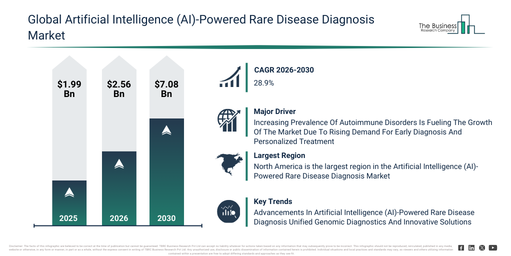
    The artificial intelligence (AI)-powered rare disease diagnosis market size has experienced significant growth in recent years. It is projected to expand from $1.99 billion in 2025 to $2.56 billion in 2026, achieving a compound annual growth rate (CAGR) of 28.9%. This historical growth can be attributed to various factors such as increasing diagnostic complexities for rare conditions, enhanced availability of genetic testing, rising investments in rare disease research, the expanding utilization of data analytics in healthcare, and the early adoption of AI-driven diagnostic tools.

    The artificial intelligence (AI)-powered rare disease diagnosis market is set to experience significant expansion over the next few years. It is forecast to attain a valuation of $7.08 billion by 2030, demonstrating a compound annual growth rate (CAGR) of 28.9%. This anticipated growth during the forecast period can be linked to a heightened focus on personalized medicine, the increasing implementation of AI-assisted clinical decision support, the broader integration of genomic sequencing, expanding investment in rare disease screening initiatives, and a rising demand for diagnostic efficiency. Prominent trends observed within this period include the expanding application of AI for pattern recognition in rare diseases, the surging adoption of genomic data analytics platforms, the growing incorporation of multi-modal patient data, the development of cloud-based diagnostic solutions, and an intensified commitment to early and accurate diagnosis.

    Download the Free Sample Report to Explore Key Market Insights:

    https://www.thebusinessresearchcompany.com/sample.aspx?id=28139&type=smp

    Which Major Factors Are Driving The Expansion Of The Artificial Intelligence (AI)-Powered Rare Disease Diagnosis Market?

    The expanding occurrence of autoimmune conditions is projected to fuel the expansion of the artificial intelligence (AI)-powered rare disease diagnosis market moving ahead. Autoimmune disorders are characterized by the immune system erroneously targeting healthy cells and tissues within the body, leading to inflammation and damage. The rise in autoimmune disorders stems from an increasing number of people facing immune system malfunctions, consequently boosting the need for prompt diagnosis, sophisticated treatments, and ongoing surveillance for effective symptom management. Artificial intelligence (AI)-powered rare disease diagnosis aids in the management of autoimmune disorders by swiftly pinpointing intricate conditions, assisting in tailored treatment choices, and enhancing general diagnostic precision. An illustrative example is provided by the Mayo Clinic, a US-based nonprofit academic medical center, which reported in January 2025 that an estimated 15 million individuals suffer from at least one of 105 autoimmune diseases. Consequently, the expanding occurrence of autoimmune conditions acts as a significant catalyst for the growth of the artificial intelligence (AI)-powered rare disease diagnosis market.

    What Market Segments Are Evaluated Within The Artificial Intelligence (AI)-Powered Rare Disease Diagnosis Market?

    The artificial intelligence (AI)-powered rare disease diagnosis market covered in this report is segmented –

    1) By Component: Software, Hardware, Services

    2) By Technology: Machine Learning, Deep Learning, Natural Language Processing, Computer Vision, Other Technologies

    3) By Deployment Mode: Cloud-Based, On-Premises

    4) By Diagnosis Type: Genetic Disorders, Autoimmune Disorders, Metabolic Disorders, Infectious Diseases, Other Diagnosis Types

    5) By End-User: Hospitals, Diagnostic Centers, Research Institutes, Specialty Clinics, Other End-Users

    Subsegments:

    1) By Software: Clinical Decision Support, Data Analytics Platforms, Genomic Interpretation Tools, Machine Learning Algorithms, Diagnostic Reporting Software

    2) By Hardware: Sequencing Instruments, Imaging Devices, Laboratory Equipment, Computational Servers, Diagnostic Sensors

    3) By Services: Consulting Services, Implementation And Integration, Training And Support, Data Management Services, Maintenance And Upgrades

    How Are Trends Shaping The Direction Of The Artificial Intelligence (AI)-Powered Rare Disease Diagnosis Market?

    Major companies operating in the artificial intelligence (AI)-powered rare disease diagnosis market are concentrating on developing innovative technologies, such as unified genomic diagnostics solutions, to enhance diagnostic accuracy, reduce turnaround time, and provide more comprehensive insights into complex genetic disorders. A unified genomic diagnostics solution is an integrated system that combines whole-genome sequencing with artificial intelligence (AI)-driven analysis to deliver complete genetic insights. For instance, in October 2023, Oxford Nanopore Technologies plc, a UK-based biotechnology company, and Fabric Genomics Inc., a US-based artificial intelligence (AI)-based company, launched an integrated whole-genome sequencing solution aimed at accelerating rare disease diagnosis by merging rapid sequencing with AI-driven variant interpretation for more accurate and actionable clinical insights. This launch integrates real-time nanopore sequencing with artificial intelligence (AI)-powered genomic analysis to rapidly identify rare genetic variants, delivering comprehensive and actionable insights to clinicians, thus enhancing diagnostic speed and accuracy for pediatric care.

    Who Are The Top Market Participants Influencing The Artificial Intelligence (AI)-Powered Rare Disease Diagnosis Market?

    Major companies operating in the artificial intelligence (AI)-powered rare disease diagnosis market are Ambry Genetics Corporation, MedGenome Inc., Sophia Genetics SA, Variantyx Inc., Atropos Health Inc., Congenica Ltd., Saventic Care Sp. z o.o., Rapid Innovation LLC, Centogene N.V., Impilo AB, ThinkGenetic Inc., ClairLabs Ltd., 3billion Inc., OpenEvidence Inc., GenomeUp S.R.L., Mendel.ai Inc., RareSum GmbH, DeepRare AI Solutions, Zebra-Llama Project

    Read the full artificial intelligence (ai)-powered rare disease diagnosis market report here:

    https://www.thebusinessresearchcompany.com/report/artificial-intelligence-ai-powered-rare-disease-diagnosis-global-market-report

    Which Region Currently Holds The Largest Share Of The Artificial Intelligence (AI)-Powered Rare Disease Diagnosis Market?

    North America was the largest region in the artificial intelligence (AI)-powered rare disease diagnosis market in 2025. Asia-Pacific is expected to be the fastest-growing region in the forecast period. The regions covered in the artificial intelligence (AI)-powered rare disease diagnosis market report are Asia-Pacific, South East Asia, Western Europe, Eastern Europe, North America, South America, Middle East, Africa.

    Request A Tailored Artificial Intelligence (AI)-Powered Rare Disease Diagnosis Market Research Report For Competitive Advantage:

    https://www.thebusinessresearchcompany.com/customise?id=28139&type=smp

    Browse Through More Reports Similar to the Global Artificial Intelligence (AI)-Powered Rare Disease Diagnosis Market 2026, By The Business Research Company

    Artificial Intelligence In The Diagnostic Global Market Report

    https://www.thebusinessresearchcompany.com/report/artificial-intelligence-in-the-diagnostic-global-market-report

    Ai In Medical Diagnostics Global Market Report

    https://www.thebusinessresearchcompany.com/report/ai-in-medical-diagnostics-global-market-report

    Artificial Intelligence In Cancer Diagnostics Global Market Report

    https://www.thebusinessresearchcompany.com/report/artificial-intelligence-in-cancer-diagnostics-global-market-report

    Get in touch with us:

    The Business Research Company: https://www.thebusinessresearchcompany.com/

    Americas +1 310-496-7795

    Asia +44 7882 955267 & +91 8897263534

    Europe +44 7882 955267

    Email us at info@tbrc.info

    Follow us on:

    LinkedIn: https://in.linkedin.com/company/the-business-research-company

    YouTube: https://www.youtube.com/channel/UC24_fI0rV8cR5DxlCpgmyFQ

    Global Market Model: https://www.thebusinessresearchcompany.com/global-market-model
  • One of the Major Drivers of the Blepharoplasty Market Is the Impact Of Renal Disease Prevalence On The Blepharoplasty Market

    One of the Major Drivers of the Blepharoplasty Market Is the Impact Of Renal Disease Prevalence On The Blepharoplasty Market

    The Business Research Company’s 2026 market reports include new capabilities such as market attractiveness scoring and analysis, total addressable market analysis, company scoring matrix, interactive excel data dashboard, improved supply chain analysis, upcoming startups in the market, and overview of key products, aimed at improving the depth, usability, and strategic value of the insights delivered.

    How Large Is The Blepharoplasty Market Projected To Become By 2030 Based On Its 2026 Valuation?

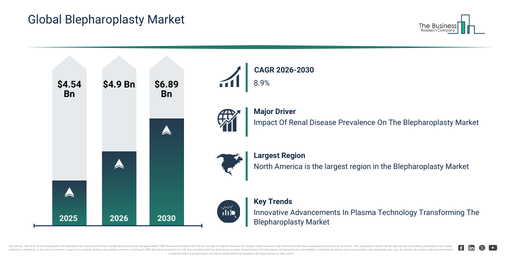
    The blepharoplasty market size has experienced strong expansion in recent years. It is projected to expand from $4.54 billion in 2025 to $4.9 billion in 2026, at a compound annual growth rate (CAGR) of 8.1%. This historic growth can be attributed to factors such as increasing aesthetic awareness, a rising aging population seeking eyelid correction, the availability of skilled cosmetic surgeons, the expansion of ambulatory surgical centers, and a growing acceptance of cosmetic procedures.

    The blepharoplasty market is predicted to experience robust expansion over the coming years. Its size is expected to reach $6.89 billion by 2030, growing at a compound annual growth rate (CAGR) of 8.9%. This projected growth during the forecast period is driven by factors such as the increasing adoption of advanced surgical technologies, a rising demand for procedures that combine both cosmetic and functional benefits, the expansion of outpatient and day-care surgeries, a heightened focus on patient safety and recovery outcomes, and the greater integration of digital tools for surgical planning. Significant trends anticipated in this period include ongoing advancements in minimally invasive surgical techniques, an increasing demand for cosmetic facial procedures, a rise in the use of laser-assisted surgeries, an intensified focus on functional vision correction, and the continued expansion of outpatient surgical services.

    Download the Free Sample Report to Explore Key Market Insights:

    https://www.thebusinessresearchcompany.com/sample.aspx?id=13119&type=smp

    What Drivers Are Shaping The Future Growth Of The Blepharoplasty Market?

    The rising incidence of renal disease is projected to drive expansion within the blepharoplasty market in the future. Renal disease, also known as chronic kidney disease (CKD), is a medical ailment defined by the progressive decline of kidney function. This condition can lead to puffy eyes and changes in eyelid positioning; hence, individuals suffering from renal disease ought to have their kidney function assessed prior to any blepharoplasty surgery. To illustrate, data from May 2023, published by the National Institutes of Health—the leading United States government agency for biomedical and public health research—indicated that around 808,000 people in the United States are presently affected by end-stage renal disease (ESRD), also known as ESKD, with 69% receiving dialysis and 31% having had a kidney transplant. Consequently, the expanding occurrence of renal disease is fueling the growth of the blepharoplasty market.

    What Segment Groups Are Identified Within The Blepharoplasty Market?

    The blepharoplasty market covered in this report is segmented –

    1) By Type: Upper Eyelid Blepharoplasty, Lower Eyelid Blepharoplasty, Combination Eyelid Surgery

    2) By Gender: Female, Male

    3) By End-User: Hospitals, Clinics, Ambulatory Surgical Centre, Other End-Users

    Subsegments:

    1) By Upper Eyelid Blepharoplasty: Traditional Upper Eyelid Surgery, Laser Upper Eyelid Surgery

    2) By Lower Eyelid Blepharoplasty: Transconjunctival Lower Eyelid Surgery, Traditional Lower Eyelid Surgery

    3) By Combination Eyelid Surgery: Upper And Lower Eyelid Surgery Together, Eyelid Surgery With Other Facial Procedures

    Which Market Trends Are Creating New Opportunities In The Blepharoplasty Market?

    Leading companies active in the blepharoplasty market are concentrating on developing advanced technologies, such as plasma technology, to establish a strong foothold in the sector. Plasma technology involves employing ionized gases, or plasmas, within a specialized medical device to achieve non-surgical skin tightening and rejuvenation for the eyelids and other facial areas. For example, in January 2023, Apyx Medical Corporation, a US-based advanced energy technology company, introduced its newest Renuvion generator, the Apyx One Console. This is a versatile energy system crafted for plastic and cosmetic surgeries, incorporating Renuvion technology (which uses helium plasma and radiofrequency technology) alongside options for monopolar and bipolar energy. The console boasts features like adaptive touchscreens, pre-set procedures, cloud connectivity, remote upgrade capabilities, gas volume monitoring, and other sophisticated functionalities that enhance cosmetic surgical procedures, including those for the eyelids.

    Which Companies Hold Significant Positions In The Blepharoplasty Market?

    Major companies operating in the blepharoplasty market are Zimmer Biomet Holdings Inc., Cynosure Technologies Pvt Ltd., Galderma SA, Bausch & Lomb Incorporated, Allergan Inc, Integra LifeSciences Inc., Merz Pharma GmbH & Co. KGaA, Corza Ophthalmology, Lumenis Ltd., Cutera Inc., Stille AB, Alma Lasers Ltd, Sciton Inc, Beaver-Visitec International Holdings Inc., Sklar Surgical Instruments, Hayden Medical Inc, Gulmaher Surgico, Luminera Derm Ltd, Jedmed Instrument Company, Xelpov Surgical, Surgitrac Instruments UK Limited, Surgical Holdings, Surgipro Inc., LightScalpel Inc., SPIRAL Surgical Co., Carnegie Surgical LLC., Ambler Surgical LLC

    Read the full blepharoplasty market report here:

    https://www.thebusinessresearchcompany.com/report/blepharoplasty-global-market-report

    Which Geographic Regions Are Influencing Demand In The Blepharoplasty Market?

    North America was the largest region in the blepharoplasty market in 2025. Asia-Pacific is expected to be the fastest-growing region in the forecast period. The regions covered in the blepharoplasty market report are Asia-Pacific, South East Asia, Western Europe, Eastern Europe, North America, South America, Middle East, Africa.

    Request A Tailored Blepharoplasty Market Research Report For Competitive Advantage:

    https://www.thebusinessresearchcompany.com/customise?id=13119&type=smp

    Browse Through More Reports Similar to the Global Blepharoplasty Market 2026, By The Business Research Company

    Vertebroplasty And Kyphoplasty Global Market Report

    https://www.thebusinessresearchcompany.com/report/vertebroplasty-and-kyphoplasty-global-market-report

    Chondroplasty Global Market Report

    https://www.thebusinessresearchcompany.com/report/chondroplasty-global-market-report

    Hydrocephalus Global Market Report

    https://www.thebusinessresearchcompany.com/report/hydrocephalus-global-market-report

    Get in touch with us:

    The Business Research Company: https://www.thebusinessresearchcompany.com/

    Americas +1 310-496-7795

    Asia +44 7882 955267 & +91 8897263534

    Europe +44 7882 955267

    Email us at info@tbrc.info

    Follow us on:

    LinkedIn: https://in.linkedin.com/company/the-business-research-company

    YouTube: https://www.youtube.com/channel/UC24_fI0rV8cR5DxlCpgmyFQ

    Global Market Model: https://www.thebusinessresearchcompany.com/global-market-model
  • Artificial Intelligence (AI)-Powered Hospital Asset Rental Market Developments and Growth Opportunities Across 2026–2030

    Artificial Intelligence (AI)-Powered Hospital Asset Rental Market Developments and Growth Opportunities Across 2026–2030

    The Business Research Company’s 2026 market reports include new capabilities such as market attractiveness scoring and analysis, total addressable market analysis, company scoring matrix, interactive excel data dashboard, improved supply chain analysis, upcoming startups in the market, and overview of key products, aimed at improving the depth, usability, and strategic value of the insights delivered.

    How Will The Market Size Of The Artificial Intelligence (AI)-Powered Hospital Asset Rental Market Evolve From 2026 To 2030?

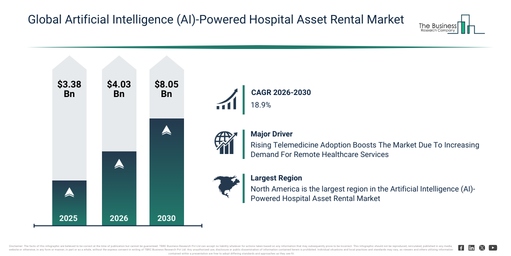
    The artificial intelligence (AI)-powered hospital asset rental market has experienced significant expansion recently. Its size is anticipated to grow from $3.38 billion in 2025 to $4.03 billion in 2026, exhibiting a compound annual growth rate (CAGR) of 19.1%. The historical increase in this market can be linked to several factors, including the rising costs of healthcare equipment, an increased demand for operational efficiency in hospitals, broader adoption of digital asset management, the expanding use of rented medical devices, and a heightened focus on managing hospital expenditures.

    The artificial intelligence (AI)-powered hospital asset rental market size is forecasted to undergo rapid expansion in the coming years. This market is expected to reach $8.05 billion by 2030, exhibiting a compound annual growth rate (CAGR) of 18.9%. The projected growth can be attributed to factors such as the expansion of AI-driven hospital operations, increasing adoption of asset-as-a-service models, greater integration with hospital information systems, rising investments in smart healthcare infrastructure, and growing demand for predictive utilization analytics. Key trends anticipated during the forecast period include the increasing uptake of AI-based asset utilization analytics, wider implementation of predictive maintenance in hospitals, escalating demand for equipment sharing platforms, the expansion of cloud-based asset rental systems, and an enhanced focus on cost optimization tools.

    Download the Free Sample Report to Explore Key Market Insights:

    https://www.thebusinessresearchcompany.com/sample.aspx?id=28929&type=smp

    What Key Drivers Are Influencing The Growth Of The Artificial Intelligence (AI)-Powered Hospital Asset Rental Market?

    The Artificial Intelligence (AI)-Powered Hospital Asset Rental Market is projected to expand due to the increasing adoption of telemedicine, which involves delivering healthcare services remotely via digital platforms. The demand for telemedicine is escalating as it provides convenient healthcare access, allowing patients to consult and follow up from home, thereby saving travel time. AI-powered hospital asset rental facilities enhance telemedicine by ensuring essential medical equipment is readily available and optimally utilized, enabling healthcare providers to conduct remote diagnostics and virtual care effectively. For instance, data from the Australian Bureau of Statistics (ABS) in September 2024 revealed that 83.5% of males used telehealth services in 2023–24, a notable increase from 78.6% in 2022–23. This upward trend in telemedicine is thus a key factor propelling the Artificial Intelligence (AI)-Powered Hospital Asset Rental Market forward. The Artificial Intelligence (AI)-Powered Hospital Asset Rental Market is anticipated to expand significantly due to increasing healthcare expenditure. This expenditure represents the total funds allocated to medical services, equipment, and technologies aimed at enhancing health outcomes. The increase in healthcare spending is driven by a heightened demand for cutting-edge medical technologies, leading hospitals and clinics to invest more in innovative equipment and digital solutions to improve patient care. Elevated healthcare expenditure facilitates the adoption of AI-powered hospital asset rental services by allowing healthcare facilities to acquire advanced, cost-efficient technologies that optimize equipment use and lower overall operational expenses. For example, the Centers for Medicare & Medicaid Services reported in June 2025 that national health expenditures (NHE) in 2023 rose by 7.5% to $4.9 trillion, averaging $14,570 per person and accounting for 17.6% of the Gross Domestic Product (GDP), with Medicare spending increasing by 8.1% to $1,029.8 billion, representing 21% of total NHE. Thus, the growth in healthcare expenditure is a primary catalyst for the Artificial Intelligence (AI)-Powered Hospital Asset Rental Market.

    Which Segment Areas Are Covered In The Artificial Intelligence (AI)-Powered Hospital Asset Rental Market Analysis?

    The artificial intelligence (AI)-powered hospital asset rental market covered in this report is segmented –

    1) By Component: Software, Hardware, Services

    2) By Asset Type: Medical Equipment, Mobility Devices, Diagnostic Devices, Other Asset Types

    3) By Deployment Mode: On-Premises, Cloud-Based

    4) By Application: Equipment Tracking, Inventory Management, Predictive Maintenance, Utilization Optimization, Other Applications

    5) By End User: Hospitals, Clinics, Diagnostic Centers, Other End-Users

    Subsegments:

    1) By Software: Artificial Intelligence-Based Asset Management Software, Predictive Maintenance Software, Hospital Information System (HIS) Integration Software

    2) By Hardware: Artificial Intelligence-Enabled Medical Equipment, Iot Sensors And Devices For Asset Tracking, Robotics And Automation Equipment

    3) By Services: Installation And Deployment Services, Maintenance And Support Services, Training And Consultation Services

    Which Global Companies Are Actively Competing In The Artificial Intelligence (AI)-Powered Hospital Asset Rental Market?

    Major companies operating in the artificial intelligence (AI)-powered hospital asset rental market are Siemens Healthineers AG, Stryker Corporation, GE Healthcare Technologies Inc., US Med-Equip, LLC, Agiliti Health, Med One Group, Hill-Rom Holdings, Baxter International, Canon Medical Systems, Fresenius Medical Care, Cardinal Health, Avante Health Solutions, Block Imaging, Owens & Minor, Rentex Medical, WestCMR, Vanguard Healthcare Solutions, Trimedx, Althea Group, Prometheus Group, Cognosos, Kontakt.io, Asset Panda, CenTrak, Zebra Technologies Corporation

    Read the full artificial intelligence (ai)-powered hospital asset rental market report here:

    https://www.thebusinessresearchcompany.com/report/artificial-intelligence-ai-powered-hospital-asset-rental-global-market-report

    Which Region Is Expected To Register The Fastest Growth In The Artificial Intelligence (AI)-Powered Hospital Asset Rental Market?

    North America was the largest region in the artificial intelligence (AI)-powered hospital asset rental market in 2025. Asia-Pacific is expected to be the fastest-growing region in the forecast period. The regions covered in the artificial intelligence (AI)-powered hospital asset rental market report are Asia-Pacific, South East Asia, Western Europe, Eastern Europe, North America, South America, Middle East, Africa.

    Request A Tailored Artificial Intelligence (AI)-Powered Hospital Asset Rental Market Research Report For Competitive Advantage:

    https://www.thebusinessresearchcompany.com/customise?id=28929&type=smp

    Browse Through More Reports Similar to the Global Artificial Intelligence (AI)-Powered Hospital Asset Rental Market 2026, By The Business Research Company

    Artificial Intelligence Ai For Insurance Global Market Report

    https://www.thebusinessresearchcompany.com/report/artificial-intelligence-ai-for-insurance-global-market-report

    Ai In Real Estate Global Market Report

    https://www.thebusinessresearchcompany.com/report/ai-in-real-estate-global-market-report

    Hospital Asset Management Systems Global Market Report

    https://www.thebusinessresearchcompany.com/report/hospital-asset-management-systems-global-market-report

    Get in touch with us:

    The Business Research Company: https://www.thebusinessresearchcompany.com/

    Americas +1 310-496-7795

    Asia +44 7882 955267 & +91 8897263534

    Europe +44 7882 955267

    Email us at info@tbrc.info

    Follow us on:

    LinkedIn: https://in.linkedin.com/company/the-business-research-company

    YouTube: https://www.youtube.com/channel/UC24_fI0rV8cR5DxlCpgmyFQ

    Global Market Model: https://www.thebusinessresearchcompany.com/global-market-model
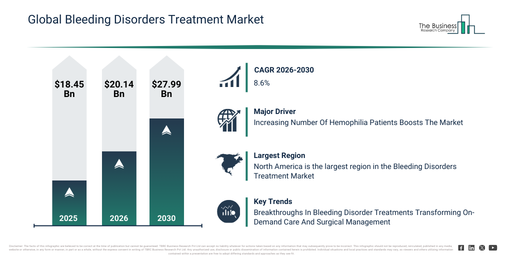
  • A key trend shaping the Bleeding Disorders Treatment Market involves the Breakthroughs In Bleeding Disorder Treatments Transforming On-Demand Care And Surgical Management

    A key trend shaping the Bleeding Disorders Treatment Market involves the Breakthroughs In Bleeding Disorder Treatments Transforming On-Demand Care And Surgical Management

    The Business Research Company’s 2026 market reports include new capabilities such as market attractiveness scoring and analysis, total addressable market analysis, company scoring matrix, interactive excel data dashboard, improved supply chain analysis, upcoming startups in the market, and overview of key products, aimed at improving the depth, usability, and strategic value of the insights delivered.

    What Market Value Is Anticipated For The Bleeding Disorders Treatment Market Over The Period 2026–2030?

    The market size for bleeding disorders treatment has experienced significant growth in recent years. This market is projected to expand from $18.45 billion in 2025 to reach $20.14 billion by 2026, exhibiting a compound annual growth rate (CAGR) of 9.2%. Historically, this expansion has been driven by factors such as a rise in the diagnosis of bleeding disorders, the widespread availability of factor replacement therapies, the proliferation of specialized treatment centers, an increase in hospital-based care services, and enhanced patient survival rates.

    The bleeding disorders treatment market size is anticipated to experience substantial growth in the forthcoming years. It is projected to expand to $27.99 billion by 2030, achieving a compound annual growth rate (CAGR) of 8.6%. This expected rise throughout the forecast period stems from factors such as the increasing creation of novel therapeutics, the growing acceptance of personalized medicine, the broader use of gene and biologic therapies, escalating investment in research for rare diseases, and improved access to specialized healthcare services. Significant developments foreseen in this period include the evolution of targeted clotting therapies, a rising trend towards prophylactic treatment strategies, the expansion of personalized treatment regimens, an increased focus on managing diseases over the long term, and the enhanced utilization of combination drug therapies.

    Download the Free Sample Report to Explore Key Market Insights:

    https://www.thebusinessresearchcompany.com/sample.aspx?id=7843&type=smp

    Which Economic Or Industry Drivers Are Impacting The Bleeding Disorders Treatment Market?

    The rising count of diagnosed hemophilia patients is projected to stimulate the expansion of the bleeding disorders treatment market in the future. Hemophilia is an inherited disorder characterized by inadequate blood clotting. Its treatment often involves replacement therapy, wherein deficient or missing blood clotting factors are substituted with human plasma concentrates or recombinant forms of clotting factors VIII or IX. As an illustration, in October 2025, the World Federation of Hemophilia, an international non-profit organization located in Canada, presented data showing a 6% increase in the worldwide identification of hemophilia cases, a 6% increase in individuals diagnosed with VWD, and a 9% increase in the discovery of other inherited bleeding disorders. Thus, the increasing prevalence of diagnosed hemophilia patients is propelling the growth of the bleeding disorders treatment market.

    How Is The Bleeding Disorders Treatment Market Divided Into Its Major Segments?

    The bleeding disorders treatment market covered in this report is segmented –

    1) By Treatment: Desmopressin (DDAVP), Hormone Replacement Therapy, Contraceptives, Anti-Fibrinolytic or Clot-Stabilizing Drugs, Fibrin Sealants, Drugs Applied To Cuts, Pipeline Analysis

    2) By Disease Type: Hemophilia A, Hemophilia B, Von Willebrand disease, Liver disease, Other Disease Types

    3) By End User: Hospitals, Clinics, Specialty Clinics, Research Institutes, Other End Users

    Subsegments:

    1) By Desmopressin (DDAVP): Intravenous Formulations, Nasal Spray Formulations

    2) By Hormone Replacement Therapy: Estrogen Therapy, Progesterone Therapy

    3) By Contraceptives: Combined Oral Contraceptives, Progestin-Only Contraceptives

    4) By Anti-Fibrinolytic or Clot-Stabilizing Drugs: Tranexamic Acid, Aminocaproic Acid

    5) By Fibrin Sealants: Tisseel, Artiss

    6) By Drugs Applied To Cuts: Antiseptics, Topical Hemostatic Agents

    7) By Pipeline Analysis: Upcoming Treatments in Development, Novel Therapeutics and Technologies

    What Trends Are Affecting The Expansion Of The Bleeding Disorders Treatment Market?

    Leading companies within the bleeding disorder treatment market are concentrating on the development of on-demand treatments to manage bleeding episodes and perioperative care (surgical management). This strategic focus aims to attract a broader customer base, drive sales, and enhance revenue. On-demand treatment represents an essential aspect of managing bleeding disorders, empowering individuals to react swiftly to bleeding incidents and ensuring secure care during surgical procedures. Continuous advancements in clotting factor therapies and treatment approaches are consistently enhancing the quality of life for those affected by bleeding disorders, enabling them to lead more active and fulfilling lives. For instance, in February 2023, Sanofi, a France-based healthcare and pharmaceutical firm, partnered with Swedish Orphan Biovitrum AB (Sobi), a Sweden-based biopharmaceutical company, for the creation of ALTUVIIIO. This first-in-class, high-sustained factor VIII replacement therapy subsequently received U.S. FDA approval. ALTUVIIIO is notable as the sole medication of its kind that, with a once-weekly administration, achieves normal to near-normal factor activity levels (exceeding 40%) for most of the week, resulting in a substantial reduction in bleeding compared to earlier factor VIII prophylaxis.

    Who Are The Prominent Organizations Shaping The Bleeding Disorders Treatment Market?

    Major companies operating in the bleeding disorders treatment market are AbbVie Inc., Bayer AG, Novo Nordisk A/S, Pfizer Inc., Biogen Inc., CSL Behring Company, Grifols SA, Octapharma AG, BDI Pharma Inc., Ferring Pharmaceuticals Ltd., Xenetic Biosciences Inc., Sanofi SA, Alnylam Pharmaceuticals Inc., Novartis AG, Shire plc, F. Hoffmann-La Roche AG, Sanofi Corporation, Takeda Pharmaceutical Company Limited, Kedrion S.p.A, Biotest AG, LFB S.A, Emergent BioSolutions Inc., Bio Products Laboratory Ltd., HEMA Biologics LLC, ADMA Biologics Inc., Grifols Biologicals Inc., Octapharma Plasma Inc., Kedrion Biopharma Inc., BPL Plasma Inc., BioLife Plasma Services, CSL Plasma Ltd., Grifols Shared Services North America Inc., Octapharma USA Inc., Shire US Inc., Pfizer Canada Inc., Grifols Canada Ltd., Octapharma Canada Inc.

    Read the full bleeding disorders treatment market report here:

    https://www.thebusinessresearchcompany.com/report/bleeding-disorders-treatment-global-market-report

    What Are The Top-Performing Regions Within The Bleeding Disorders Treatment Market?

    North America was the largest region in the bleeding disorders treatment market in 2025. Asia-Pacific is expected to be the fastest-growing region in the forecast period. The regions covered in the bleeding disorders treatment market report are Asia-Pacific, South East Asia, Western Europe, Eastern Europe, North America, South America, Middle East, Africa.

    Request A Tailored Bleeding Disorders Treatment Market Research Report For Competitive Advantage:

    https://www.thebusinessresearchcompany.com/customise?id=7843&type=smp

    Browse Through More Reports Similar to the Global Bleeding Disorders Treatment Market 2026, By The Business Research Company

    Bleeding Disorder Testing Global Market Report

    https://www.thebusinessresearchcompany.com/report/bleeding-disorder-testing-global-market-report

    Gastrointestinal Bleeding Treatment Devices Global Market Report

    https://www.thebusinessresearchcompany.com/report/gastrointestinal-bleeding-treatment-devices-global-market-report

    Anemia And Other Blood Disorder Drugs Global Market Report

    https://www.thebusinessresearchcompany.com/report/anemia-and-other-blood-disorder-drugs-global-market-report

    Get in touch with us:

    The Business Research Company: https://www.thebusinessresearchcompany.com/

    Americas +1 310-496-7795

    Asia +44 7882 955267 & +91 8897263534

    Europe +44 7882 955267

    Email us at info@tbrc.info

    Follow us on:

    LinkedIn: https://in.linkedin.com/company/the-business-research-company

    YouTube: https://www.youtube.com/channel/UC24_fI0rV8cR5DxlCpgmyFQ

    Global Market Model: https://www.thebusinessresearchcompany.com/global-market-model
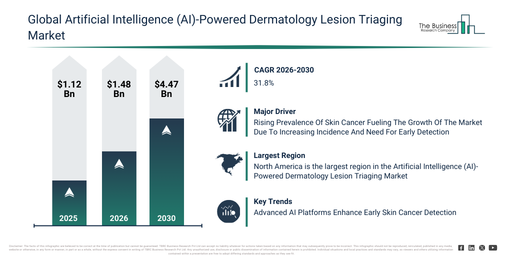
  • Global Artificial Intelligence (AI)-Powered Dermatology Lesion Triaging Market Forecast 2026–2035 Presenting Long-Term Industry Expansion Insights

    Global Artificial Intelligence (AI)-Powered Dermatology Lesion Triaging Market Forecast 2026–2035 Presenting Long-Term Industry Expansion Insights

    The Business Research Company’s 2026 market reports include new capabilities such as market attractiveness scoring and analysis, total addressable market analysis, company scoring matrix, interactive excel data dashboard, improved supply chain analysis, upcoming startups in the market, and overview of key products, aimed at improving the depth, usability, and strategic value of the insights delivered.

    What Is The Forecasted Market Value Of The Artificial Intelligence (AI)-Powered Dermatology Lesion Triaging Market Across 2026–2030?

    The artificial intelligence (AI)-powered dermatology lesion triaging market has experienced remarkable growth in recent times. Projections indicate it will expand from $1.12 billion in 2025 to $1.48 billion in 2026, demonstrating a compound annual growth rate (CAGR) of 32.1%. Historically, this growth has been fueled by factors such as the increasing prevalence of skin disorders, a rising demand for early cancer detection, the expansion of dermatology diagnostic services, the growing adoption of digital imaging tools, and increasing awareness of preventive dermatology care.

    The market for artificial intelligence (AI)-powered dermatology lesion triaging is projected to experience substantial expansion over the upcoming years. This market is anticipated to reach $4.47 billion by 2030, exhibiting a compound annual growth rate (CAGR) of 31.8%. Key factors fueling this growth during the forecast period include the expanding application of AI-assisted diagnostic tools, a surge in remote dermatology consultation uptake, the broadening of cloud-based clinical decision support systems, an escalating need for workflow automation within dermatology, and a heightened emphasis on enhancing diagnostic accuracy. Significant trends anticipated during this period encompass the growing embrace of AI-based skin image analysis, an increased utilization of automated lesion risk stratification tools, the wider integration of teledermatology platforms, the proliferation of mobile dermatology applications, and a reinforced commitment to the early detection of skin cancer.

    Download the Free Sample Report to Explore Key Market Insights:

    https://www.thebusinessresearchcompany.com/sample.aspx?id=28138&type=smp

    What Major Growth Drivers Are Shaping The Outlook Of The Artificial Intelligence (AI)-Powered Dermatology Lesion Triaging Market?

    The increasing occurrence of skin cancer is anticipated to fuel the expansion of the artificial intelligence (AI)-powered dermatology lesion triaging market going forward. This condition involves the unchecked proliferation of atypical skin cells, primarily resulting from ultraviolet radiation damage from sun exposure or tanning equipment. Its growing occurrence largely stems from excessive exposure to the sun, where detrimental ultraviolet (UV) radiation harms the DNA within skin cells. Artificial intelligence (AI)-powered dermatology lesion triaging offers a solution to skin cancer through facilitating prompt and precise identification of concerning skin lesions. This technology minimizes delays in diagnosis by offering immediate risk evaluations, simplifying referrals to specialists, and assisting clinical judgments, thereby enhancing patient results. As an illustration, in 2023, data from Cancer Australia, a government agency based in Australia, showed that roughly 8,257 new cases of melanoma of the skin were identified, making up 2.6% of all cancer-related deaths. Consequently, the increasing prevalence of skin cancer is propelling the expansion of the artificial intelligence (AI)-powered dermatology lesion triaging market.

    What Segmentation Levels Are Considered In The Artificial Intelligence (AI)-Powered Dermatology Lesion Triaging Market?

    The artificial intelligence (AI)-powered dermatology lesion triaging market covered in this report is segmented –

    1) By Component: Software, Hardware, Services

    2) By Deployment Mode: Cloud-Based, On-Premises

    3) By Lesion Type: Benign, Malignant, Pre-Malignant

    4) By Application: Skin Cancer Detection, Benign Lesion Identification, Teledermatology, Clinical Decision Support, Other Applications

    5) By End-User: Hospitals, Dermatology Clinics, Diagnostic Centers, Research Institutes, Other End Users

    Subsegments:

    1) By Software: Image Analysis Software, Diagnostic Support Software, Cloud-Based Software, Mobile Application Software, Patient Management Software

    2) By Hardware: Imaging Devices, Dermatoscopes, Cameras, Computers, Scanners

    3) By Services: Consulting Services, Implementation Services, Training And Education Services, Maintenance And Support Services, Data Management Services

    What Trends Are Affecting The Expansion Of The Artificial Intelligence (AI)-Powered Dermatology Lesion Triaging Market?

    Leading companies within the artificial intelligence (AI)-powered dermatology lesion triaging market are concentrating on creating sophisticated offerings, including AI-driven imaging platforms, with the goal of boosting diagnostic precision, facilitating earlier identification of skin cancers, and optimizing clinical procedures. These AI-powered imaging platforms represent unified systems that employ artificial intelligence algorithms for analyzing skin lesions, offering immediate diagnostic assistance, and helping categorize cases according to their malignancy risk. As an illustration, in June 2024, Enspectra Health Inc., a US-based health technology firm, was granted Food and Drug Administration Breakthrough Device Designation for its innovative artificial intelligence-powered VIO Skin Platform. This platform integrates reflectance confocal and multiphoton laser scanning microscopy to produce non-invasive, real-time, cellular-level images of skin tissues. It also incorporates VIO.ai NMSC, a computer-aided diagnosis and triage (CADx/CADt) software function, designed to categorize lesions suggestive of basal cell carcinoma (BCC) and squamous cell carcinoma (SCC) in high-risk groups, thereby supporting physicians in their clinical judgments and potentially minimizing unwarranted biopsies.

    Which Leading Firms Are Contributing To The Growth Of The Artificial Intelligence (AI)-Powered Dermatology Lesion Triaging Market?

    Major companies operating in the artificial intelligence (AI)-powered dermatology lesion triaging market are Proscia Inc., SkinVision B.V., MetaOptima Technology Inc., SkinIO Inc., Skin Analytics Ltd., DermaSensor Inc., Dxcover Ltd., Skinive, Legit.Health, Veriskin, VivoSight, BelleTorus, First Derm, CureSkin, Skinopathy, DermLens AI, Enspectra Health Inc., Dermie.AI, DermTech, FotoFinder Systems

    Read the full artificial intelligence (ai)-powered dermatology lesion triaging market report here:

    https://www.thebusinessresearchcompany.com/report/artificial-intelligence-ai-powered-dermatology-lesion-triaging-global-market-report

    Which Regions Are Projected To Dominate The Artificial Intelligence (AI)-Powered Dermatology Lesion Triaging Market In The Coming Years?

    North America was the largest region in the artificial intelligence (AI)-powered dermatology lesion triaging market in 2025. The regions covered in the artificial intelligence (AI)-powered dermatology lesion triaging market report are Asia-Pacific, South East Asia, Western Europe, Eastern Europe, North America, South America, Middle East, Africa.

    Request A Tailored Artificial Intelligence (AI)-Powered Dermatology Lesion Triaging Market Research Report For Competitive Advantage:

    https://www.thebusinessresearchcompany.com/customise?id=28138&type=smp

    Browse Through More Reports Similar to the Global Artificial Intelligence (AI)-Powered Dermatology Lesion Triaging Market 2026, By The Business Research Company

    Ai In Beauty And Cosmetics Global Market Report

    https://www.thebusinessresearchcompany.com/report/ai-in-beauty-and-cosmetics-global-market-report

    Ai In Cancer Diagnostics Global Market Report

    https://www.thebusinessresearchcompany.com/report/ai-in-cancer-diagnostics-global-market-report

    Artificial Intelligence In Cancer Diagnostics Global Market Report

    https://www.thebusinessresearchcompany.com/report/artificial-intelligence-in-cancer-diagnostics-global-market-report

    Get in touch with us:

    The Business Research Company: https://www.thebusinessresearchcompany.com/

    Americas +1 310-496-7795

    Asia +44 7882 955267 & +91 8897263534

    Europe +44 7882 955267

    Email us at info@tbrc.info

    Follow us on:

    LinkedIn: https://in.linkedin.com/company/the-business-research-company

    YouTube: https://www.youtube.com/channel/UC24_fI0rV8cR5DxlCpgmyFQ

    Global Market Model: https://www.thebusinessresearchcompany.com/global-market-model
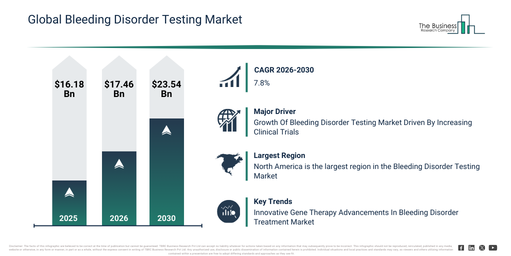
  • A significant industry trend in the Bleeding Disorder Testing Market includes the Innovative Gene Therapy Advancements In Bleeding Disorder Treatment Market

    A significant industry trend in the Bleeding Disorder Testing Market includes the Innovative Gene Therapy Advancements In Bleeding Disorder Treatment Market

    The Business Research Company’s 2026 market reports include new capabilities such as market attractiveness scoring and analysis, total addressable market analysis, company scoring matrix, interactive excel data dashboard, improved supply chain analysis, upcoming startups in the market, and overview of key products, aimed at improving the depth, usability, and strategic value of the insights delivered.

    What Is The Expected Market Size Of The Bleeding Disorder Testing Market From 2026 To 2030?

    The bleeding disorder testing market size has experienced robust growth in recent years. This market is projected to expand from $16.18 billion in 2025 to $17.46 billion in 2026, demonstrating a compound annual growth rate (CAGR) of 7.9%. Historically, this expansion has been driven by factors such as the increasing occurrence of inherited bleeding disorders, the broader utilization of laboratory diagnostics, the widespread availability of coagulation analyzers, the expansion of hospital diagnostic services, and heightened clinical awareness regarding bleeding disorders.

    The bleeding disorder testing market is projected to experience substantial expansion over the upcoming years. This market is anticipated to reach $23.54 billion by 2030, demonstrating a compound annual growth rate (CAGR) of 7.8%. This projected growth is driven by factors such as a heightened need for swift diagnostic options, the broader application of personalized medicine, increased investment in automated diagnostics, the growing popularity of point-of-care testing, and the incorporation of AI-powered diagnostic analytics. Key trends anticipated during this period encompass improvements in the precision of coagulation testing, wider utilization of point-of-care diagnostic tools, an increase in the deployment of automated blood analyzers, the expansion of genetic testing specifically for bleeding disorders, and improved integration of digital laboratory systems.

    Download the Free Sample Report to Explore Key Market Insights:

    https://www.thebusinessresearchcompany.com/sample.aspx?id=18263&type=smp

    What Major Drivers Are Influencing Demand In The Bleeding Disorder Testing Market?

    The expanding volume of clinical trials is anticipated to drive the future expansion of the bleeding disorder testing market. These trials are research endeavors evaluating the safety and effectiveness of new medical treatments, therapies, medications, or technologies for human use. The rise in clinical trials stems from progress in medical research, increased funding for healthcare innovation, and a growing need for novel treatments and therapies. In clinical trials, bleeding disorder testing serves to evaluate the effectiveness and safety of emerging medications and treatments for bleeding disorders, gauge their success in managing or correcting clotting irregularities, and track patient reactions to ensure optimal dosage and efficacy. For example, as reported by ClinicalTrials.gov, a US-based clinical trial registry, approximately 477,228 clinical trials were recorded by the close of 2023, representing an increase from 437,507 in 2022. Consequently, the rising number of clinical trials is fueling the expansion of the bleeding disorder testing market.

    Which Segments Are Included In The Analysis Of The Bleeding Disorder Testing Market?

    The bleeding disorder testing market covered in this report is segmented –

    1) By Product Type: Reagents And Consumables, Instruments

    2) By Indication: Hemophilia A, Hemophilia B, Von Willebrand Disease, Idiopathic Thrombocytopenic Purpura, Other Indications

    3) By End User: Hospitals And Clinics, Diagnostic Centers, Other End Users

    Subsegments:

    1) By Reagents And Consumables: Coagulation Reagents, Plasma And Blood Collection Consumables, Hemostasis Reagents, Factor Deficiency Assay Kits, Activated Partial Thromboplastin Time (APTT) Reagents

    2) By Instruments: Coagulation Analyzers, Platelet Function Analyzers, Hemostasis Testing Instruments, Point-Of-Care Testing Devices, Automated Blood Testing Systems

    Which Trends Are Influencing The Bleeding Disorder Testing Market?

    Leading companies within the bleeding disorder testing market are concentrating on developing innovative products, such as gene therapy for Hemophilia B, with the goal of providing long-term solutions, curing genetic bleeding conditions, enhancing treatment outcomes, and expanding their market presence. Hemophilia B is a form of bleeding disorder characterized by a deficiency of clotting factor IX, which is essential for proper blood coagulation. Gene therapy for Hemophilia B represents an emerging treatment designed to offer a lasting solution by addressing the underlying genetic defect responsible for the condition. For instance, in February 2023, CSL Limited, an Australia-based biotechnology company, along with the European Commission, granted conditional marketing authorization (CMA) for HEMGENIX, which is the first and only one-time gene therapy for treating severe and moderately severe hemophilia B. This singular treatment aims to deliver prolonged efficacy, thereby reducing or eliminating the need for regular factor replacement therapy. HEMGENIX is notable for its pioneering gene therapy approach, providing a transformative option for patients with hemophilia B and potentially altering the standard of care in the field.

    Which Key Industry Participants Are Active In The Bleeding Disorder Testing Market?

    Major companies operating in the bleeding disorder testing market are Siemens Healthineers AG, F. Hoffmann-La Roche Ltd., Abbott Laboratories, Sysmex Corporation, Diagnostica Stago, Werfen Group, Sekisui Chemical Co. Ltd., Helena Laboratories, HORIBA Ltd., Mindray Medical International Limited, Nihon Kohden Corporation, Bio-Rad Laboratories Inc., Thermo Fisher Scientific Inc., Randox Laboratories Ltd., Haemonetics Corporation, QuidelOrtho Corporation, Instrumentation Laboratory, Beckman Coulter Inc., Grifols S.A., Meridian Bioscience Inc.

    Read the full bleeding disorder testing market report here:

    https://www.thebusinessresearchcompany.com/report/bleeding-disorder-testing-global-market-report

    Which Region Shows The Strongest Potential For Future Growth In The Bleeding Disorder Testing Market?

    North America was the largest region in the bleeding disorder testing market in 2025. Asia-Pacific is expected to be the fastest-growing region in the forecast period. The regions covered in the bleeding disorder testing market report are Asia-Pacific, South East Asia, Western Europe, Eastern Europe, North America, South America, Middle East, Africa.

    Request A Tailored Bleeding Disorder Testing Market Research Report For Competitive Advantage:

    https://www.thebusinessresearchcompany.com/customise?id=18263&type=smp

    Browse Through More Reports Similar to the Global Bleeding Disorder Testing Market 2026, By The Business Research Company

    Bleeding Disorders Treatment Global Market Report

    https://www.thebusinessresearchcompany.com/report/bleeding-disorders-treatment-global-market-report

    Blood Screening Global Market Report

    https://www.thebusinessresearchcompany.com/report/blood-screening-global-market-report

    Clinical Diagnostics Global Market Report

    https://www.thebusinessresearchcompany.com/report/clinical-diagnostics-global-market-report

    Get in touch with us:

    The Business Research Company: https://www.thebusinessresearchcompany.com/

    Americas +1 310-496-7795

    Asia +44 7882 955267 & +91 8897263534

    Europe +44 7882 955267

    Email us at info@tbrc.info

    Follow us on:

    LinkedIn: https://in.linkedin.com/company/the-business-research-company

    YouTube: https://www.youtube.com/channel/UC24_fI0rV8cR5DxlCpgmyFQ

    Global Market Model: https://www.thebusinessresearchcompany.com/global-market-model
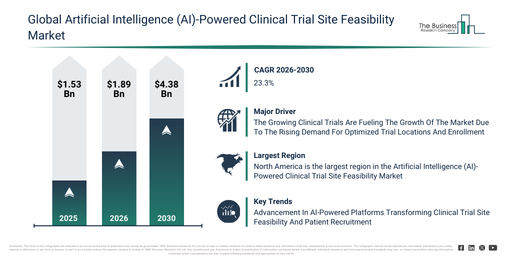
  • Artificial Intelligence (AI)-Powered Clinical Trial Site Feasibility Market Outlook 2026–2030 Exploring New Business Opportunities

    Artificial Intelligence (AI)-Powered Clinical Trial Site Feasibility Market Outlook 2026–2030 Exploring New Business Opportunities

    The Business Research Company’s 2026 market reports include new capabilities such as market attractiveness scoring and analysis, total addressable market analysis, company scoring matrix, interactive excel data dashboard, improved supply chain analysis, upcoming startups in the market, and overview of key products, aimed at improving the depth, usability, and strategic value of the insights delivered.

    What Market Size Increase Is Anticipated For The Artificial Intelligence (AI)-Powered Clinical Trial Site Feasibility Market Over The 2026–2030 Period?

    The market size for artificial intelligence (AI)-powered clinical trial site feasibility has experienced rapid expansion over recent years. This market is projected to expand from $1.53 billion in 2025 to $1.89 billion in 2026, exhibiting a compound annual growth rate (CAGR) of 23.6%. Historical growth in this sector is largely due to factors such as the increasing intricacy of clinical trial designs, heightened cost pressures affecting drug development timelines, a greater dependence on data-driven approaches for trial planning, the proliferation of global multi-site clinical trials, and the initial incorporation of predictive analytics into trial feasibility assessments.

    The market for artificial intelligence (AI)-powered solutions in clinical trial site feasibility is projected to experience substantial expansion in the coming years. This market is anticipated to reach $4.38 billion by 2030, demonstrating a compound annual growth rate (CAGR) of 23.3%. Factors contributing to this growth during the forecast period include the greater embrace of decentralized clinical trials, an escalating need for expedited site activation, the expanding utilization of real-world evidence for feasibility determinations, the proliferation of AI-enabled platforms for trial planning, and a heightened focus on mitigating trial risks. Key trends anticipated within the forecast timeframe encompass the wider adoption of AI-driven models for site selection, the increasing application of predictive analytics for patient recruitment, the deeper integration of real-world data into feasibility evaluations, the growth of cloud-based platforms for feasibility, and an intensified concentration on forecasting trial performance.

    Download the Free Sample Report to Explore Key Market Insights:

    https://www.thebusinessresearchcompany.com/sample.aspx?id=28137&type=smp

    What Drivers Are Expected To Influence The Artificial Intelligence (AI)-Powered Clinical Trial Site Feasibility Market During The Forecast Period?

    The anticipated expansion of clinical trials is set to fuel the growth of the artificial intelligence (AI)-powered clinical trial site feasibility market. Clinical trials are defined as global research investigations conducted to evaluate the safety and effectiveness of novel medical treatments, drugs, and devices. The increase in these trials is largely propelled by heightened investment in biomedical research and development, as both governmental and private entities recognize the crucial need for innovative solutions to address evolving healthcare challenges. This expansion consequently generates a need for AI-powered site feasibility tools, enabling research organizations to efficiently pinpoint optimal locations, assess site capabilities, and project enrollment success rates for their studies. For instance, data from the Multidisciplinary Digital Publishing Institute, a Switzerland-based publisher of open-access scientific journals, indicated that in April 2025, there were 404,637 interventional clinical trials accessible on the clinicaltrials.gov webpage. Thus, the escalating number of clinical trials is undeniably propelling the artificial intelligence (AI)-powered clinical trial site feasibility market forward.

    How Is The Artificial Intelligence (AI)-Powered Clinical Trial Site Feasibility Market Segmented Across Key Categories?

    The artificial intelligence (AI)-powered clinical trial site feasibility market covered in this report is segmented –

    1) By Component: Software, Services

    2) By Deployment Mode: Cloud-Based, On-Premises

    3) By Application: Site Selection, Patient Recruitment, Protocol Design, Performance Analytics, Other Applications

    4) By End-User: Pharmaceutical Companies, Contract Research Organizations, Academic Research Institutes, Hospitals, Other End-Users

    Subsegments:

    1) By Software: Predictive Analytics Software, Machine Learning (ML) Platforms, Natural Language Processing (NLP) Tools, Data Visualization Software, Clinical Trial Management System (CTMS) Integration Software, Real-World Data (RWD) Analytics Software, Risk-Based Monitoring (RBM) Software

    2) By Services: Feasibility Assessment Services, Site Selection Services, Patient Recruitment Support Services, Data Management And Analytics Services, Protocol Optimization Services, Regulatory Compliance Support Services, Consulting And Advisory Services

    Which Trends Are Influencing The Artificial Intelligence (AI)-Powered Clinical Trial Site Feasibility Market?

    Leading companies in the artificial intelligence-powered clinical trial site feasibility market are concentrating on creating sophisticated solutions, like an artificial intelligence-powered feasibility and recruitment platform, to enhance site selection and boost overall operational efficiency in clinical trials. Such a platform is a software solution that utilizes AI and machine learning to evaluate trial protocols and site information, pinpointing the most suitable clinical sites and improving patient recruitment by effectively connecting eligible participants, thereby expediting trial timelines and increasing study success. For example, in June 2023, ObjectiveHealth, a US-based integrated research and technology platform company, introduced ObjectiveScreen, an artificial intelligence-powered feasibility and recruitment platform. This platform aims to optimize clinical trial performance by improving patient identification, prequalification, and retention through its real-time integration with electronic health records (EHRs) and its application of AI and machine learning algorithms. It empowers clinical trial sites to directly access patient data, categorize health risks, and identify the most appropriate candidates to accelerate enrollment and achieve better trial outcomes.

    Who Are The Dominant Players Shaping The Artificial Intelligence (AI)-Powered Clinical Trial Site Feasibility Market Landscape?

    Major companies operating in the artificial intelligence (AI)-powered clinical trial site feasibility market are Oracle Corporation, Thermo Fisher Scientific Inc., NVIDIA Corporation, IQVIA Holdings Inc., Labcorp Holdings Inc., Dassault Systèmes SE, Parexel International Corporation, ZS Associates Inc., Veeva Systems Inc., Verily Life Sciences LLC, Signant Health Holding Corp., Saama Technologies LLC, Elligo Health Research Inc., ConcertAI Inc., Medable Inc., Science 37 Inc., Castor EDC Inc., Unlearn.AI Inc., Antidote Technologies Inc., Deep 6 AI

    Read the full artificial intelligence (ai)-powered clinical trial site feasibility market report here:

    https://www.thebusinessresearchcompany.com/report/artificial-intelligence-ai-powered-clinical-trial-site-feasibility-global-market-report

    Which Region Is Forecast To Lead The Artificial Intelligence (AI)-Powered Clinical Trial Site Feasibility Market In Terms Of Market Size?

    North America was the largest region in the artificial intelligence (AI)-powered clinical trial site feasibility market in 2025. Asia-Pacific is expected to be the fastest-growing region in the forecast period. The regions covered in the artificial intelligence (AI)-powered clinical trial site feasibility market report are Asia-Pacific, South East Asia, Western Europe, Eastern Europe, North America, South America, Middle East, Africa.

    Request A Tailored Artificial Intelligence (AI)-Powered Clinical Trial Site Feasibility Market Research Report For Competitive Advantage:

    https://www.thebusinessresearchcompany.com/customise?id=28137&type=smp

    Browse Through More Reports Similar to the Global Artificial Intelligence (AI)-Powered Clinical Trial Site Feasibility Market 2026, By The Business Research Company

    Ai Based Clinical Trial Solution Providers Global Market Report

    https://www.thebusinessresearchcompany.com/report/ai-based-clinical-trial-solution-providers-global-market-report

    Ai In Clinical Trials Global Market Report

    https://www.thebusinessresearchcompany.com/report/ai-in-clinical-trials-global-market-report

    Virtual Clinical Trials Global Market Report

    https://www.thebusinessresearchcompany.com/report/virtual-clinical-trials-global-market-report

    Get in touch with us:

    The Business Research Company: https://www.thebusinessresearchcompany.com/

    Americas +1 310-496-7795

    Asia +44 7882 955267 & +91 8897263534

    Europe +44 7882 955267

    Email us at info@tbrc.info

    Follow us on:

    LinkedIn: https://in.linkedin.com/company/the-business-research-company

    YouTube: https://www.youtube.com/channel/UC24_fI0rV8cR5DxlCpgmyFQ

    Global Market Model: https://www.thebusinessresearchcompany.com/global-market-model
  • A key trend shaping the Bladder Liners Market involves the Advancing Personal Care With Dual Absorbency Technology

    A key trend shaping the Bladder Liners Market involves the Advancing Personal Care With Dual Absorbency Technology

    The Business Research Company’s 2026 market reports include new capabilities such as market attractiveness scoring and analysis, total addressable market analysis, company scoring matrix, interactive excel data dashboard, improved supply chain analysis, upcoming startups in the market, and overview of key products, aimed at improving the depth, usability, and strategic value of the insights delivered.

    What Market Valuation Is Forecasted For The Bladder Liners Market By 2030 Starting From Its 2026 Size?

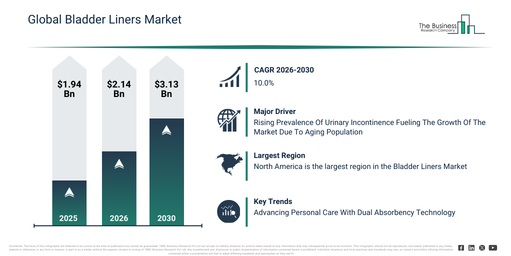
    The bladder liners market has experienced significant expansion recently. It is projected to increase from $1.94 billion in 2025 to $2.14 billion in 2026, with a compound annual growth rate (CAGR) of 10.2%. Historically, this growth has been influenced by factors such as an expanding elderly demographic, the increasing occurrence of urinary incontinence, a rise in the use of homecare products, the widespread availability of disposable hygiene items, and heightened understanding of personal hygiene solutions.

    The bladder liners market size is anticipated to undergo significant expansion in the next few years. It is expected to grow to $3.13 billion by 2030, demonstrating a compound annual growth rate (CAGR) of 10.0%. This projected growth can be attributed to several factors, including an increasing demand for sustainable incontinence products, a rising preference for reusable hygiene solutions, the expansion of e-commerce healthcare platforms, a growing emphasis on comfort-oriented product design, and continuous innovation in absorbent material technology. Prominent trends expected during this forecast period include the development of skin-friendly absorbent materials, an increasing need for discreet incontinence solutions, the rising adoption of reusable and eco-friendly liners, an enhanced focus on odor control technologies, and the expansion of online distribution channels.

    Download the Free Sample Report to Explore Key Market Insights:

    https://www.thebusinessresearchcompany.com/sample.aspx?id=24174&type=smp

    Which Market Drivers Are Supporting The Expansion Of The Bladder Liners Market?

    The expanding occurrence of urinary incontinence is projected to drive the future expansion of the bladder liners market. This condition involves the unintentional leakage of urine due to a loss of full bladder control. The increasing frequency of urinary incontinence is predominantly linked to the world’s aging populace, given its higher incidence in older individuals. Bladder liners serve to absorb and hold urine leakage for those with urinary incontinence, thereby assisting in maintaining dry skin and preventing unpleasant odors or irritation. For example, data from August 2024, released by the National Institutes of Health (NIH), a medical research agency based in the US, indicates that in the United States, approximately 13 million individuals are impacted by urinary incontinence. Among residents in nursing facilities, its occurrence surpasses 50%, rising to more than 75% for those whose stay extends beyond 100 days. Consequently, the expanding prevalence of urinary incontinence will fuel the growth of the bladder liners market.

    Which Segment Categories Define The Bladder Liners Market?

    The bladder liners market covered in this report is segmented –

    1) By Product Type: Disposable Bladder Liners, Reusable Bladder Liners, Other Product Types

    2) By Functionality: Leakage Protection, Odor Control, Skin-Friendly Options, Comfort And Flexibility

    3) By Distribution Channel: Hospital Pharmacies, Retail Pharmacies, Online Stores, Other Distribution Channels

    4) By End User: Homecare, Hospitals, Specialty Clinics, Other End Users

    Subsegments:

    1) By Disposable Bladder Liners: Light Absorbency, Moderate Absorbency, Heavy Absorbency, Scented, Unscented, Individually Wrapped, Eco-friendly Materials

    2) By Reusable Bladder Liners: Washable Cotton Liners, Bamboo Fiber Liners, Microfiber Liners, Waterproof Backing Liners, Adjustable Or Fitted Liners

    3) By Other Product Type: Insert Pads for Diapers, Booster Pads, Hybrid Liners, Gender-Specific Liners

    What Trends Are Advancing Progress In The Bladder Liners Market?

    Leading firms within the bladder liners market are prioritizing product innovation, specifically dual protection liners, aiming to cater to the combined requirements of menstruation and minor bladder leakage, improve user comfort, and broaden their customer base through more adaptable hygiene products. These dual protection liners are hygiene items created to offer concurrent protection against both menstrual flow and bladder leaks in a singular product, delivering superior absorbency, a drier feel, and effective leak avoidance. An example of this is Kimberly-Clark Corporation, a personal care firm situated in the U.S., which introduced Liv by Kotex in April 2024. This innovative product series in the U.S. provides dual protection for both menstrual and bladder leak requirements. Solely obtainable at Target, this novel collection features pads and liners engineered to maintain user dryness up to 10 times more effectively than conventional period-exclusive items, boasting absorbency capacities up to 24 milliliters and guaranteeing 100% leak-free coverage. This product line presents five absorbency choices, spanning from thong liners to overnight ultra-thin pads, and incorporates a multi-layer core along with leak-block sides to ensure swift absorption of both menstrual fluid and urine, thereby boosting comfort and confidence for women managing intertwined hygiene necessities.

    Who Are The Top Companies Competing In The Bladder Liners Market?

    Major companies operating in the bladder liners market are Cardinal Health Inc., The Procter & Gamble Company, Medline Industries LP, Kimberly-Clark Corporation, Paul Hartmann AG, Ontex Group NV, Hollister Incorporated, Abena A/S, Byram Healthcare, TENA, Attends Healthcare Group Ltd., Dynarex Corporation, Corman S.p.A., LiveDo USA Inc., Pioneer Hygiene Industries LLP, Seni, Rael Inc., Jude Health Ltd., Cora Inc., Here We Flo Ltd.

    Read the full bladder liners market report here:

    https://www.thebusinessresearchcompany.com/report/bladder-liners-global-market-report

    How Is The Bladder Liners Market Distributed Across Key Geographic Regions?

    North America was the largest region in the bladder liners market in 2025. Asia-Pacific is expected to be the fastest-growing region in the forecast period. The regions covered in the bladder liners market report are Asia-Pacific, South East Asia, Western Europe, Eastern Europe, North America, South America, Middle East, Africa.

    Request A Tailored Bladder Liners Market Research Report For Competitive Advantage:

    https://www.thebusinessresearchcompany.com/customise?id=24174&type=smp

    Browse Through More Reports Similar to the Global Bladder Liners Market 2026, By The Business Research Company

    Urinary Incontinence Global Market Report

    https://www.thebusinessresearchcompany.com/report/urinary-incontinence-global-market-report

    Urinary Drainage Bags Global Market Report

    https://www.thebusinessresearchcompany.com/report/urinary-drainage-bags-global-market-report

    Disposable Urine Bags Global Market Report

    https://www.thebusinessresearchcompany.com/report/disposable-urine-bags-global-market-report

    Get in touch with us:

    The Business Research Company: https://www.thebusinessresearchcompany.com/

    Americas +1 310-496-7795

    Asia +44 7882 955267 & +91 8897263534

    Europe +44 7882 955267

    Email us at info@tbrc.info

    Follow us on:

    LinkedIn: https://in.linkedin.com/company/the-business-research-company

    YouTube: https://www.youtube.com/channel/UC24_fI0rV8cR5DxlCpgmyFQ

    Global Market Model: https://www.thebusinessresearchcompany.com/global-market-model
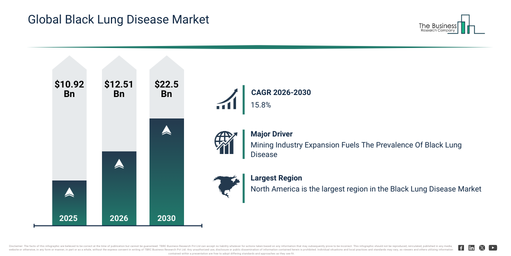
  • An Important Factor Driving the Black Lung Disease Market Is the Mining Industry Expansion Fuels The Prevalence Of Black Lung Disease

    An Important Factor Driving the Black Lung Disease Market Is the Mining Industry Expansion Fuels The Prevalence Of Black Lung Disease

    The Business Research Company’s 2026 market reports include new capabilities such as market attractiveness scoring and analysis, total addressable market analysis, company scoring matrix, interactive excel data dashboard, improved supply chain analysis, upcoming startups in the market, and overview of key products, aimed at improving the depth, usability, and strategic value of the insights delivered.

    How Is The Market Size Of The Black Lung Disease Market Expected To Change Between 2026 And 2030?

    The black lung disease market has observed substantial growth in recent years. It is anticipated to expand from $10.92 billion in 2025 to $12.51 billion in 2026, registering a compound annual growth rate (CAGR) of 14.6%. The historical growth of this market is largely due to factors such as increasing coal mining activities, prolonged exposure to coal dust among miners, limited early diagnostic access in mining regions, a rising incidence of respiratory occupational diseases, and dependence on traditional diagnostic methods.

    The market size for black lung disease is anticipated to show significant expansion in the coming years. It is projected to achieve $22.5 billion by 2030, exhibiting a compound annual growth rate (CAGR) of 15.8%. This growth throughout the forecast period can be linked to the increased implementation of cutting-edge diagnostic tools, greater financial commitments to occupational health initiatives, expanding research into stem cell and regenerative treatments, broadened availability of healthcare in mining areas, and heightened regulatory enforcement concerning worker health and safety. Dominant trends during the forecast period involve enhancements in diagnostic imaging for early discovery, an escalating focus on proactive occupational health screening, a surge in the adoption of advanced pulmonary function assessments, further development of research into regenerative therapies, and more robust monitoring of coal dust exposure.

    Download the Free Sample Report to Explore Key Market Insights:

    https://www.thebusinessresearchcompany.com/sample.aspx?id=12988&type=smp

    What Underlying Factors Are Accelerating The Growth Of The Black Lung Disease Market?

    A rise in mining activities is anticipated to drive the black lung disease market’s growth in the future. Mining involves extracting valuable minerals, ores, and other geological materials from the earth’s crust. Black lung disease arises from these activities and the inhalation of coal mine dust, which contains dangerous carbon-containing particles affecting coal miners. For instance, in July 2024, the International Energy Agency (IEA), a France-based intergovernmental organization, reported that global coal production in 2023 saw an all-time high of 8,970 Mt, increasing by 3.1%, primarily fueled by leading producers such as China, India, and Indonesia. Thus, expanding mining activities are stimulating the black lung disease market’s growth.

    How Is The Black Lung Disease Market Structured Across Different Segments?

    The black lung disease market covered in this report is segmented –

    1) By Type: Simple Coal Worker’s Pneumoconiosis, Complicated Coal Worker’s Pneumoconiosis

    2) By Treatment: Oxygen Therapy, Bronchodilators, Lung Transplant, Stem Cell Therapy, Other Treatment

    3) By Diagnosis: Biopsy, Imaging, Full Blood Count, Pulmonary Or Lung Function Tests, Physical Examination, Other Diagnosis

    4) By End Users: Hospitals And Clinics, Research Organizations And Academic Institutes, Diagnostic Centers And Labs, Other End Users

    Subsegments:

    1) By Simple Coal Worker’s Pneumoconiosis: Asymptomatic Simple Pneumoconiosis, Symptomatic Simple Pneumoconiosis

    2) By Complicated Coal Worker’s Pneumoconiosis: Progressive Massive Fibrosis (PMF), Complicated Pneumoconiosis With Respiratory Symptoms

    Which Major Players Dominate The Black Lung Disease Market?

    Major companies operating in the black lung disease market are Pfizer Inc., Johnson and Johnson, Siemens AG, General Electric, F. Hoffmann-La Roche AG, Merck and Co. Inc., Bayer AG, Novartis AG, Sanofi S.A., AstraZeneca plc, GlaxoSmithKline plc, Medtronic plc, Eli Lilly and Company, Boehringer Ingelheim International GmbH, Toshiba Corporation, Koninklijke Philips N.V., Mayo Clinic, Baxter International Inc., Teva Pharmaceutical Industries Ltd., Sun Pharmaceutical Industries Ltd., Aurobindo Pharma Limited, Hikma Pharmaceuticals plc, Lupin Limited

    Read the full black lung disease market report here:

    https://www.thebusinessresearchcompany.com/report/black-lung-disease-global-market-report

    Which Region Is Projected To Dominate The Black Lung Disease Market During The Forecast Period?

    North America was the largest region in the black lung disease market in 2025. Asia-Pacific is expected to be the fastest-growing region in the forecast period. The regions covered in the black lung disease market report are Asia-Pacific, South East Asia, Western Europe, Eastern Europe, North America, South America, Middle East, Africa.

    Request A Tailored Black Lung Disease Market Research Report For Competitive Advantage:

    https://www.thebusinessresearchcompany.com/customise?id=12988&type=smp

    Browse Through More Reports Similar to the Global Black Lung Disease Market 2026, By The Business Research Company

    Interstitial Lung Disease Global Market Report

    https://www.thebusinessresearchcompany.com/report/interstitial-lung-disease-global-market-report

    Idiopathic Pulmonary Fibrosis Global Market Report

    https://www.thebusinessresearchcompany.com/report/idiopathic-pulmonary-fibrosis-global-market-report

    Respiratory Disease Drugs Global Market Report

    https://www.thebusinessresearchcompany.com/report/respiratory-disease-drugs-global-market-report

    Get in touch with us:

    The Business Research Company: https://www.thebusinessresearchcompany.com/

    Americas +1 310-496-7795

    Asia +44 7882 955267 & +91 8897263534

    Europe +44 7882 955267

    Email us at info@tbrc.info

    Follow us on:

    LinkedIn: https://in.linkedin.com/company/the-business-research-company

    YouTube: https://www.youtube.com/channel/UC24_fI0rV8cR5DxlCpgmyFQ

    Global Market Model: https://www.thebusinessresearchcompany.com/global-market-model