Month: March 2026

  • Artificial Intelligence (AI)-Powered Acute Stroke Triage Market Outlook 2026–2030 with Major Growth Drivers and Emerging Industry Trends

    Artificial Intelligence (AI)-Powered Acute Stroke Triage Market Outlook 2026–2030 with Major Growth Drivers and Emerging Industry Trends

    The Business Research Company’s 2026 market reports include new capabilities such as market attractiveness scoring and analysis, total addressable market analysis, company scoring matrix, interactive excel data dashboard, improved supply chain analysis, upcoming startups in the market, and overview of key products, aimed at improving the depth, usability, and strategic value of the insights delivered.

    What Market Size Expansion Is Predicted For The Artificial Intelligence (AI)-Powered Acute Stroke Triage Market Between 2026 And 2030?

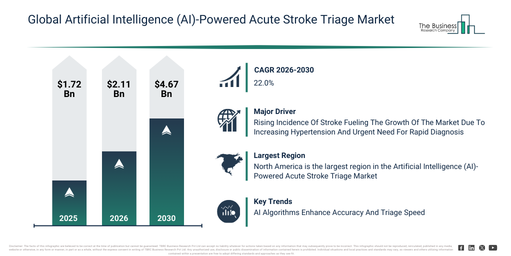
    The artificial intelligence (AI)-powered acute stroke triage market size has experienced significant growth over recent years. It is expected to expand from $1.72 billion in 2025 to $2.11 billion in 2026, exhibiting a compound annual growth rate (CAGR) of 22.3%. This growth observed in the past can be linked to the increasing incidence of acute stroke cases, the expansion of advanced imaging infrastructure, the rising adoption of clinical decision support systems, increased investments in emergency care technology, and enhancements in machine learning accuracy.

    The artificial intelligence (AI)-powered acute stroke triage market size is poised for significant expansion in the coming years, with expectations to reach $4.67 billion by 2030, growing at a compound annual growth rate (CAGR) of 22.0%. This anticipated growth can be attributed to an increasing need for quicker stroke diagnosis, growing investments in AI-supported emergency care, the expansion of telestroke networks, a heightened focus on healthcare outcomes, and advancements in real-time medical analytics. Major trends foreseen in this period include the rising adoption of AI-based imaging analysis, the increasing integration of real-time stroke alert systems, a greater utilization of predictive clinical decision tools, the expansion of cloud-based imaging platforms, and an enhanced emphasis on optimizing time-critical care.

    Download the Free Sample Report to Explore Key Market Insights:

    https://www.thebusinessresearchcompany.com/sample.aspx?id=28135&type=smp

    What Major Drivers Are Influencing Demand In The Artificial Intelligence (AI)-Powered Acute Stroke Triage Market?

    The increasing occurrence of stroke is anticipated to drive the expansion of the artificial intelligence (AI)-powered acute stroke triage market in the future. A stroke is defined as a medical event where blood supply to the brain is disrupted, resulting in cellular damage and potentially causing disability or fatality if immediate treatment is not administered. This growing incidence of stroke is linked to hypertension, given that elevated blood pressure raises the likelihood of blockages or ruptures in brain vessels. Artificial intelligence (AI)-powered acute stroke triage assists in diagnosing stroke through quick analysis of brain scans, which is vital for promptly identifying the stroke’s type and severity. Such systems minimize diagnostic delays by prioritizing critical cases, thereby enhancing the speed of treatment and improving patient results. As an illustration, in September 2024, the Stroke Foundation, an Australia-based non-profit organization, reported that in 2023, approximately 45,785 Australians suffered a stroke, equating to one stroke every 11 minutes, with 34,793 of these cases being initial events. Consequently, the escalating number of stroke cases is fueling the expansion of the artificial intelligence (AI)-powered acute stroke triage market.

    Which Market Segments Are Examined In The Artificial Intelligence (AI)-Powered Acute Stroke Triage Market Study?

    The artificial intelligence (AI)-powered acute stroke triage market covered in this report is segmented –

    1) By Component: Software, Hardware, Services

    2) By Deployment Mode: On-Premises, Cloud-Based

    3) By Application: Hospitals, Diagnostic Centers, Emergency Medical Services, Research Institutes, Other Applications

    4) By End-User: Healthcare Providers, Radiology Centers, Academic And Research Institutes, Other End-Users

    Subsegments:

    1) By Software: Clinical Decision Support Software, Imaging And Diagnostics Software, Workflow Management Software, Data Integration And Interoperability Platforms, Predictive Analytics And Machine Learning Tools

    2) By Hardware: Medical Imaging Devices, Edge Computing Devices, AI Processing Units, Workstations And Servers, Networking And Storage Devices

    3) By Services: Implementation And Integration Services, Training And Education Services, Maintenance and Support Services, Consulting Services, Cloud-Based Deployment and Managed Services

    What Major Market Trends Are Driving Changes In The Artificial Intelligence (AI)-Powered Acute Stroke Triage Market?

    Major companies operating in the artificial intelligence (AI)-powered acute stroke triage market are directing their efforts toward developing technologically advanced solutions, such as sophisticated artificial intelligence (AI) algorithms, with the goal of improving diagnostic accuracy, accelerating triage procedures, and enhancing clinical outcomes. Advanced artificial intelligence (AI) algorithms represent complex computational methodologies that learn from data to identify patterns, make predictions, and support intelligent decision-making. For instance, in April 2023, RapidAI Inc., a US-based provider of cerebrovascular imaging solutions, obtained United States Food and Drug Administration (FDA) 510(k) clearance for Rapid Noncontrast Computed Tomography (NCCT) Stroke, an artificial intelligence (AI) solution for non-contrast CT imaging capable of detecting suspected intracranial hemorrhage (ICH) and large vessel occlusion (LVO) from standard CT scans. This system autonomously analyzes NCCT images, delivering triage and prioritization alerts via PACS, email, and the Rapid mobile app, which facilitates faster door-to-imaging and door-to-decision times. Additionally, it supports swift transfer and treatment decisions, reduces delays for advanced imaging, and improves access to advanced stroke care at hospitals of all levels.

    Who Are The Primary Competitors In The Artificial Intelligence (AI)-Powered Acute Stroke Triage Market?

    Major companies operating in the artificial intelligence (AI)-powered acute stroke triage market are Siemens Healthineers AG, GE HealthCare Technologies Inc., Shanghai United Imaging Healthcare Co. Ltd., Viz.ai Inc., Aidoc Medical Ltd., RapidAI Inc., Qure.ai Technologies Private Limited, Harrison.ai Pty Ltd, Infervision Inc., Circle Cardiovascular Imaging Inc., Behold.ai Ltd., Brainomix Ltd., JLK Inc., BioMind.ai Pte. Ltd., Sevaro Health Inc., Heuron Technologies Inc., Nicolab Inc., icometrix NV, Deep01 Inc., SNAC Medical Inc., BrainScan.ai Ltd., Cercare Medical Ltd., Avicenna.AI GmbH

    Read the full artificial intelligence (ai)-powered acute stroke triage market report here:

    https://www.thebusinessresearchcompany.com/report/artificial-intelligence-ai-powered-acute-stroke-triage-global-market-report

    Which Region Shows The Strongest Potential For Future Growth In The Artificial Intelligence (AI)-Powered Acute Stroke Triage Market?

    North America was the largest region in the artificial intelligence (AI)-powered acute stroke triage market in 2025. The regions covered in the artificial intelligence (AI)-powered acute stroke triage market report are Asia-Pacific, South East Asia, Western Europe, Eastern Europe, North America, South America, Middle East, Africa.

    Request A Tailored Artificial Intelligence (AI)-Powered Acute Stroke Triage Market Research Report For Competitive Advantage:

    https://www.thebusinessresearchcompany.com/customise?id=28135&type=smp

    Browse Through More Reports Similar to the Global Artificial Intelligence (AI)-Powered Acute Stroke Triage Market 2026, By The Business Research Company

    Ai In Medical Devices Global Market Report

    https://www.thebusinessresearchcompany.com/report/ai-in-medical-devices-global-market-report

    Artificial Intelligence Or Machine Learning Ai Or Ml Medical Device Global Market Report

    https://www.thebusinessresearchcompany.com/report/artificial-intelligence-or-machine-learning-ai-or-ml-medical-device-global-market-report

    Artificial Intelligence Ai In Energy And Power Global Market Report

    https://www.thebusinessresearchcompany.com/report/artificial-intelligence-ai-in-energy-and-power-global-market-report

    Get in touch with us:

    The Business Research Company: https://www.thebusinessresearchcompany.com/

    Americas +1 310-496-7795

    Asia +44 7882 955267 & +91 8897263534

    Europe +44 7882 955267

    Email us at info@tbrc.info

    Follow us on:

    LinkedIn: https://in.linkedin.com/company/the-business-research-company

    YouTube: https://www.youtube.com/channel/UC24_fI0rV8cR5DxlCpgmyFQ

    Global Market Model: https://www.thebusinessresearchcompany.com/global-market-model
  • Biotech Flavors Market Insights Highlighting Opportunities and Drivers Supporting Growth to 2030

    Biotech Flavors Market Insights Highlighting Opportunities and Drivers Supporting Growth to 2030

    The Business Research Company’s 2026 market reports include new capabilities such as market attractiveness scoring and analysis, total addressable market analysis, company scoring matrix, interactive excel data dashboard, improved supply chain analysis, upcoming startups in the market, and overview of key products, aimed at improving the depth, usability, and strategic value of the insights delivered.

    How Will The Market Size Of The Biotech Flavors Market Evolve From 2026 To 2030?

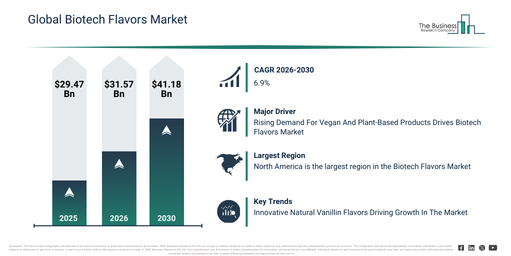
    The biotech flavors market has demonstrated significant growth over recent years. Forecasts predict it will expand from $29.47 billion in 2025 to $31.57 billion in 2026, achieving a compound annual growth rate (CAGR) of 7.1%. This historical growth is largely due to a rising consumer demand for natural flavors, developments in fermentation technology, an increase in processed food consumption, an uptick in functional food production, and the growing application of biotech ingredients.

    The biotech flavors market is projected to experience substantial expansion over the upcoming years. By 2030, this market is anticipated to reach $41.18 billion, exhibiting a compound annual growth rate (CAGR) of 6.9%. This growth during the forecast period is primarily driven by factors such as the escalating demand for plant-based and alternative food options, the proliferation of personalized nutrition products, increasing investments in sustainable flavor innovation, rising regulatory support for natural ingredients, and the wider integration of biotech-based food solutions. Significant trends expected within the same period encompass the increasing adoption of fermentation-derived flavor compounds, a rising demand for natural and clean-label flavors, the growing use of enzyme-modified flavor ingredients, the expansion of customized flavor development, and an enhanced focus on sustainable flavor production.

    Download the Free Sample Report to Explore Key Market Insights:

    https://www.thebusinessresearchcompany.com/sample.aspx?id=21116&type=smp

    What Key Drivers Are Influencing The Growth Of The Biotech Flavors Market?

    The projected expansion of the biotech flavors market is anticipated due to increasing consumer demand for vegan and plant-based products. These products are formulated exclusively from plant-derived ingredients, explicitly excluding all animal-derived components such as meat, dairy, eggs, honey, and other by-products. The surge in consumer demand for vegan and plant-based options is driven by growing health awareness, environmental sustainability concerns, and ethical considerations pertaining to animal welfare. Biotech flavors enhance the taste profile of vegan and plant-based products by sustainably replicating natural flavors, thereby ensuring authenticity and consumer appeal. For instance, a report published by ProVeg International, a Germany-based non-profit organization, in August 2024, noted that in 2023, 38% of respondents indicated they followed a flexitarian, pescatarian, vegetarian, or vegan diet. Therefore, the rising consumer demand for vegan and plant-based products is a key driver for the biotech flavors market.

    Which Segment Areas Are Covered In The Biotech Flavors Market Analysis?

    The biotech flavors market covered in this report is segmented –

    1) By Type: Vanilla And Vanillin, Fruity Flavor, Other Types

    2) By Form: Liquid, Powder, Paste

    3) By Source: Microbial, Plant, Animal

    4) By Functional: Sweeteners, Enhancers, Modifiers, Maskers

    5) By Application: Dairy Products, Beverages, Confectionery Products, Non-Dairy Ice-cream, Bakery Products, Nutraceuticals, Other Applications

    Subsegments:

    1) By Vanilla And Vanillin: Natural Vanilla Extracts, Fermentation-Derived Vanillin, Enzyme-Modified Vanillin

    2) By Fruity Flavor: Citrus-Based Flavors, Berry-Based Flavors, Tropical Fruit Flavors

    3) By Other Types: Floral Flavors, Spicy Flavors, Herbal And Mint Flavors

    What Key Trends Are Influencing The Development Of The Biotech Flavors Market?

    Leading companies within the biotech flavors market are concentrating on developing novel solutions, such as natural vanillin flavors, to satisfy the increasing demand for clean-label, sustainable, and plant-based ingredients that align with consumer preferences for healthier and environmentally conscious products. Natural vanillin flavors are defined as flavor compounds derived from natural sources, primarily from the vanilla bean or through biotechnological processes like fermentation, which replicate vanilla’s characteristic sweet, warm, and aromatic taste. For instance, in October 2023, Spero Renewables, a biotechnology company focused on sustainable flavor and fragrance ingredients, launched a next-generation natural vanillin produced from ferulic acid sourced from non-GMO corn fiber via a fermentation process. This vanillin is clean-label, traceable, and suitable for natural and organic food formulations, as it derives from a renewable agricultural feedstock rather than petroleum or vanilla beans. This innovation aligns with increasing consumer demand for environmentally friendly and plant-based flavor solutions while providing flavor manufacturers with a highly pure, sustainable vanillin ingredient that meets strict regulatory standards.

    Which Global Companies Are Actively Competing In The Biotech Flavors Market?

    Major companies operating in the biotech flavors market are The Archer-Daniels-Midland Company, International Flavors & Fragrances Inc., Kerry Group plc, dsm-firmenich AG, Givaudan S.A., Döhler GmbH, Frutarom Industries, Centrale Suiker Maatschappij (CSM) N V, Takasago International Corporation, Naturex S.A., MANE SA, Synthite Industries Ltd., Flavorchem Corporation, Bell Flavors & Fragrances Inc., Jeneil Biotech, Conagen Inc., Blue Pacific Flavors Inc., Amines BioTech Pvt. Ltd., Keva Flavours Pvt. Ltd.

    Read the full biotech flavors market report here:

    https://www.thebusinessresearchcompany.com/report/biotech-flavors-global-market-report

    Which Region Is Expected To Register The Fastest Growth In The Biotech Flavors Market?

    North America was the largest region in the biotech flavors market in 2025. Asia-Pacific is expected to be the fastest-growing region in the forecast period. The regions covered in the biotech flavors market report are Asia-Pacific, South East Asia, Western Europe, Eastern Europe, North America, South America, Middle East, Africa.

    Request A Tailored Biotech Flavors Market Research Report For Competitive Advantage:

    https://www.thebusinessresearchcompany.com/customise?id=21116&type=smp

    Browse Through More Reports Similar to the Global Biotech Flavors Market 2026, By The Business Research Company

    Food Flavors Global Market Report

    https://www.thebusinessresearchcompany.com/report/food-flavors-global-market-report

    Meat Based Flavors Global Market Report

    https://www.thebusinessresearchcompany.com/report/meat-based-flavors-global-market-report

    Flavor Enhancer Global Market Report

    https://www.thebusinessresearchcompany.com/report/flavor-enhancer-global-market-report

    Get in touch with us:

    The Business Research Company: https://www.thebusinessresearchcompany.com/

    Americas +1 310-496-7795

    Asia +44 7882 955267 & +91 8897263534

    Europe +44 7882 955267

    Email us at info@tbrc.info

    Follow us on:

    LinkedIn: https://in.linkedin.com/company/the-business-research-company

    YouTube: https://www.youtube.com/channel/UC24_fI0rV8cR5DxlCpgmyFQ

    Global Market Model: https://www.thebusinessresearchcompany.com/global-market-model
  • Anti-Snoring Treatment Market Growth Expected to Reach $3.77 Billion by 2030 with 8.2% CAGR

    Anti-Snoring Treatment Market Growth Expected to Reach $3.77 Billion by 2030 with 8.2% CAGR

    The Business Research Company’s 2026 market reports include new capabilities such as market attractiveness scoring and analysis, total addressable market analysis, company scoring matrix, interactive excel data dashboard, improved supply chain analysis, upcoming startups in the market, and overview of key products, aimed at improving the depth, usability, and strategic value of the insights delivered.

    What Is The Estimated Market Size Of The Anti-Snoring Treatment Market During 2026–2030?

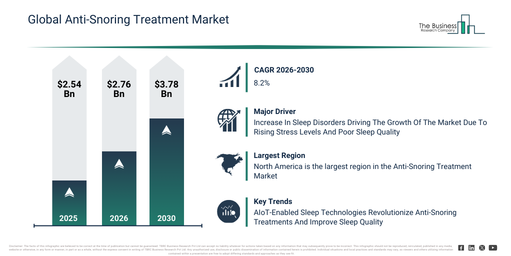
    The anti-snoring treatment market has demonstrated strong expansion in recent years. Its value is projected to climb from $2.54 billion in 2025 to $2.76 billion in 2026, achieving a compound annual growth rate (CAGR) of 8.5%. This historical growth can be attributed to the rising incidence of sleep-related breathing disorders, heightened consumer awareness of sleep health, improved accessibility of over-the-counter snoring devices, the proliferation of sleep clinics, and the increasing utilization of oral appliance therapy.

    The anti-snoring treatment market is projected for substantial expansion in the coming years. This market is anticipated to reach a valuation of $3.78 billion by 2030, exhibiting a compound annual growth rate (CAGR) of 8.2%. Factors contributing to this growth over the forecast period include the increasing integration of digital sleep monitoring technologies, the rising adoption of personalized sleep therapy solutions, the expansion of online distribution channels, a growing emphasis on preventive sleep health management, and an increasing demand for minimally invasive snoring treatments. Key trends during this period are expected to encompass the increasing adoption of smart wearable anti-snoring devices, a rising demand for non-invasive treatment options, a growing preference for home-based snoring solutions, the expansion of personalized oral appliance therapies, and an enhanced focus on improving sleep quality.

    Download the Free Sample Report to Explore Key Market Insights:

    https://www.thebusinessresearchcompany.com/sample.aspx?id=23310&type=smp

    What Drivers Are Expected To Influence The Anti-Snoring Treatment Market During The Forecast Period?

    An increase in the occurrence of sleep disorders is anticipated to fuel the expansion of the anti-snoring treatment market in the coming years. Sleep disorders are defined as conditions that interfere with typical sleep cycles, negatively impacting sleep quality, length, or schedule, resulting in hindered daily performance. The growing incidence of these disorders stems from heightened stress levels, which raise the body’s stress hormones and hinder one’s capacity to both initiate and maintain sleep. Treatments for snoring aid in enhancing sleep quality by minimizing disruptions in breathing, thereby mitigating sleep conditions like sleep apnea and averting associated health complications. For example, data from November 2023, provided by the National Health Service, a UK government health statistics organization, indicated a slight rise in the percentage of young individuals aged 17 to 23 who reported experiencing sleep issues three or more times weekly, reaching 64.9% from 64.0% in 2022. Consequently, the increasing occurrence of sleep disorders is stimulating the expansion of the anti-snoring treatment market.

    How Are The Various Segments Of The Anti-Snoring Treatment Market Categorized?

    The anti-snoring treatment market covered in this report is segmented –

    1) By Device: Mandible Advancement Devices, Tongue Stabilizing Devices, Nasal Devices, Continuous Positive Airway Pressure Devices, Chin Straps, Other Devices

    2) By Distribution Channel: Hospital Pharmacies, Retail Pharmacies, Online, Other Distribution Channels

    3) By Application: Somnoplasty, Maxillo-Mandibular And Genioglossus Advancement Surgeries, Radiofrequency Ablation Surgery, Other Applications

    4) By End-User: Hospital And Clinics, Ambulatory Surgical Centers, Day Care Centers, Other End-Users

    Subsegments:

    1) By Mandible Advancement Devices: Custom-Fitted Mandibular Advancement Devices, Semi-Custom Mandibular Advancement Devices, Over-The-Counter Mandibular Advancement Devices

    2) By Tongue Stabilizing Devices: Standard Tongue Stabilizing Devices, Custom-Fitted Tongue Stabilizing Devices

    3) By Nasal Devices: Nasal Strips, Nasal Dilators (Internal & External), Nasal Sprays

    4) By Continuous Positive Airway Pressure (CPAP) Devices: Auto-Adjusting CPAP Devices, Fixed Pressure CPAP Devices, Bi-Level Positive Airway Pressure (BiPAP) Devices

    5) By Chin Straps: Adjustable Chin Straps, Non-Adjustable Chin Straps

    6) By Other Devices: Positional Therapy Devices, Smart Wearable Anti-Snoring Devices, Vestibular Shields

    Which Trends Are Influencing The Anti-Snoring Treatment Market?

    Leading companies within the anti-snoring treatment market are prioritizing the development of advanced solutions, such as smart pillows and mattresses enabled by AIoT, to enhance sleep quality, lessen snoring, and reduce associated health risks. AIoT sleep technologies integrate artificial intelligence with the Internet of Things to track physiological parameters, analyze sleep patterns, and provide real-time adjustments for optimal rest. For instance, in December 2023, The DeRUCCI Group, a China-based public company and sleep technology brand, launched a smart anti-snore pillow featuring AI-driven monitoring and intervention. This pillow dynamically adjusts head position for maximum effectiveness, offers app-based sleep tracking, and connects with other smart home devices for a personalized sleep environment. It incorporates intelligent height adjustment to support neck curves and relieve fatigue, utilizes AI algorithms to monitor body shape, sleeping position, heart rate, and body temperature, and provides comprehensive sleep reports and health warnings.

    Which Major Firms Influence Developments In The Anti-Snoring Treatment Market?

    Major companies operating in the anti-snoring treatment market are GlaxoSmithKline plc, Medtronic plc, Koninklijke Philips N.V, Mitsui Chemicals Inc, ResMed, Fisher & Paykel Healthcare?, PANTHERA DENTAL, SomnoMed, ProSomnus Sleep Technologies, Airing Inc., Apnea Sciences Corporation, Hupnos, MEDiTAS Ltd, MPowrx Health & Wellness, Sleeping Well LLC, Smart Nora Inc., The Pure Sleep Company, The Snore Reliever Company LLC, Theravent Inc, Oscimed SA, Zzoma.

    Read the full anti-snoring treatment market report here:

    https://www.thebusinessresearchcompany.com/report/anti-snoring-treatment-global-market-report

    Which Region Is Forecast To Lead The Anti-Snoring Treatment Market In Terms Of Market Size?

    North America was the largest region in the anti-snoring treatment market in 2025. The regions covered in the anti-snoring treatment market report are Asia-Pacific, South East Asia, Western Europe, Eastern Europe, North America, South America, Middle East, Africa.

    Request A Tailored Anti-Snoring Treatment Market Research Report For Competitive Advantage:

    https://www.thebusinessresearchcompany.com/customise?id=23310&type=smp

    Browse Through More Reports Similar to the Global Anti-Snoring Treatment Market 2026, By The Business Research Company

    Phospholipid Global Market Report

    https://www.thebusinessresearchcompany.com/report/phospholipid-global-market-report

    Lipid Disorder Treatment Global Market Report

    https://www.thebusinessresearchcompany.com/report/lipid-disorder-treatment-global-market-report

    Systemic Lupus Erythematosus Treatment Global Market Report

    https://www.thebusinessresearchcompany.com/report/systemic-lupus-erythematosus-treatment-global-market-report

    Get in touch with us:

    The Business Research Company: https://www.thebusinessresearchcompany.com/

    Americas +1 310-496-7795

    Asia +44 7882 955267 & +91 8897263534

    Europe +44 7882 955267

    Email us at info@tbrc.info

    Follow us on:

    LinkedIn: https://in.linkedin.com/company/the-business-research-company

    YouTube: https://www.youtube.com/channel/UC24_fI0rV8cR5DxlCpgmyFQ

    Global Market Model: https://www.thebusinessresearchcompany.com/global-market-model
  • One of the Major Drivers of the Artificial Intelligence (AI)-Generated Voice Therapy Exercise Market Is the Increasing Investments In Digital Health Driving Growth Of The Market Due To Rising Demand For Accessible And Personalized Healthcare

    One of the Major Drivers of the Artificial Intelligence (AI)-Generated Voice Therapy Exercise Market Is the Increasing Investments In Digital Health Driving Growth Of The Market Due To Rising Demand For Accessible And Personalized Healthcare

    The Business Research Company’s 2026 market reports include new capabilities such as market attractiveness scoring and analysis, total addressable market analysis, company scoring matrix, interactive excel data dashboard, improved supply chain analysis, upcoming startups in the market, and overview of key products, aimed at improving the depth, usability, and strategic value of the insights delivered.

    How Large Is The Artificial Intelligence (AI)-Generated Voice Therapy Exercise Market Projected To Become By 2030 Based On Its 2026 Valuation?

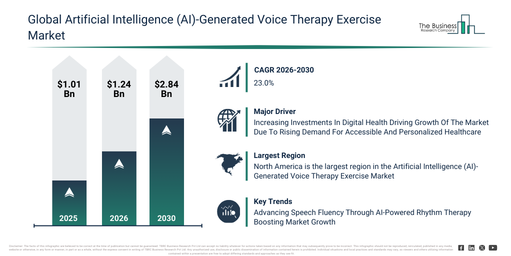
    The artificial intelligence (AI)-generated voice therapy exercise market has demonstrated significant expansion in recent years. This market is expected to expand from $1.01 billion in 2025 to $1.24 billion in 2026, achieving a compound annual growth rate (CAGR) of 23.3%. This growth during the preceding period can be linked to factors such as the rising incidence of speech and voice disorders, the broader availability of teletherapy services, an increasing deficit of speech therapists, the growing acceptance of digital therapeutics, and improvements in speech recognition accuracy.

    The artificial intelligence (AI)-generated voice therapy exercise market size is projected to experience significant growth over the coming years. This market is expected to expand to $2.84 billion by 2030, demonstrating a compound annual growth rate (CAGR) of 23.0%. The expansion during the forecast period is driven by factors such as an escalating demand for home-based speech therapy, the increasing integration of AI within rehabilitation services, the broadening of multilingual voice therapy solutions, the rising utilization of immersive therapy tools, and advancements in personalized digital rehabilitation. Prominent trends anticipated in this period encompass the growing application of adaptive voice therapy algorithms, the increasing deployment of real-time speech feedback systems, a rising adoption of remote speech rehabilitation tools, an expansion in personalized therapy content generation, and a heightened focus on patient engagement outside clinical environments.

    Download the Free Sample Report to Explore Key Market Insights:

    https://www.thebusinessresearchcompany.com/sample.aspx?id=28134&type=smp

    Which Market Drivers Are Supporting The Expansion Of The Artificial Intelligence (AI)-Generated Voice Therapy Exercise Market?

    The future expansion of the artificial intelligence (AI)-generated voice therapy exercise market is expected to be propelled by increasing investments in digital health. Investment in digital health involves allocating capital toward technology-based tools or services that assist individuals in maintaining health, receiving medical care, or managing health issues. The growing consumer demand for accessible healthcare is a key factor behind the rise in digital health investments, pushing innovation towards remote and personalized health solutions. AI-generated voice therapy exercises bolster investments in digital health by showcasing scalable, personalized, and cost-effective solutions for speech and cognitive rehabilitation, thereby promoting wider adoption and trust in healthtech innovations. For example, in January 2025, FierceHealthcare, a US-based media and information company, reported that digital health venture funding reached $10.1B in 2024 as investors focused on earlier-stage dealmaking. Thus, the increasing investments in digital health are driving the growth of the artificial intelligence (AI)-generated voice therapy exercise market.

    What Segment Groups Are Identified Within The Artificial Intelligence (AI)-Generated Voice Therapy Exercise Market?

    The artificial intelligence (AI)-generated voice therapy exercise market covered in this report is segmented –

    1) By Component: Software, Hardware, Services

    2) By Deployment Mode: Cloud Based, On Premises

    3) By Application: Speech Rehabilatation, Accent Modification, Voice Training, Stuttering Therapy, Other Applications

    4) By End-User: Hospitals And Clinics, Rehabilatation Centres, Academic And Research Institutes, Homecare, Other End-Users

    Subsegments:

    1) By Software: Mobile Applications, Web-Based Platforms, Artificial Intelligence (AI) Speech Recognition Tools, Virtual Assistants, Cloud-Based Solutions

    2) By Hardware: Microphones, Headsets, Smart Speakers, Wearable Devices, Augmented Reality (AR) Or Virtual Reality (VR) Devices

    3) By Services: Training And Education, Consulting And Integration, Support And Maintenance, Remote Therapy Services, Data Management And Security

    Which Trends Are Shaping The Future Of The Artificial Intelligence (AI)-Generated Voice Therapy Exercise Market?

    Leading firms within the artificial intelligence (AI)-generated voice therapy exercise market are prioritizing technological innovations, including AI-powered rhythm therapy delivered through wearable haptic feedback, to enhance speech fluency for individuals suffering from speech disorders. This AI-powered rhythm therapy, utilizing wearable haptic feedback, employs natural language processing (NLP) to analyze spoken language and convert it into rhythmic vibrations on the wrist. These subtle vibrations function as a neural metronome, assisting users in achieving more fluid speech patterns. As an illustration, in April 2024, Samsung Electronics, an electronics company situated in South Korea, introduced its Impulse app. The Impulse app, available for free and compatible with Android and Galaxy Watch6 devices, converts words into rhythmic, haptic signals on the wrist, incorporating over 250 progression-based rhythm and tone exercises aimed at improving articulation and fluency. This application improves speech through real-time tactile pacing, builds confidence with its discreet support, makes rhythm therapy widely available, and serves an assistive function for individuals experiencing speech disorders.

    Which Companies Hold Significant Positions In The Artificial Intelligence (AI)-Generated Voice Therapy Exercise Market?

    Major companies operating in the artificial intelligence (AI)-generated voice therapy exercise market are Directly Relevant Companies (15): Hume AI Inc., Voiceitt Ltd., CereProc Ltd., Speechly Inc., Vocal Image OÜ, BetterSpeech Inc., TalkForce AI Inc., TheraPlatform Inc., SpeechVive Inc., Whispp Inc., Vocal Trainer AI Voices Inc., Vocalis Health Inc., Aphasia.ai Inc., Elvo AI Inc., Speechzella Inc., Lingraphica, SpeechAce, Tactus Therapy Solutions, Speechmatics, Sonde Health

    Read the full artificial intelligence (ai)-generated voice therapy exercise market report here:

    https://www.thebusinessresearchcompany.com/report/artificial-intelligence-ai-generated-voice-therapy-exercise-global-market-report

    How Is The Artificial Intelligence (AI)-Generated Voice Therapy Exercise Market Distributed Across Key Geographic Regions?

    North America was the largest region in the artificial intelligence (AI)-generated voice therapy exercise market in 2025. Asia-Pacific is expected to be the fastest-growing region in the forecast period. The regions covered in the artificial intelligence (AI)-generated voice therapy exercise market report are Asia-Pacific, South East Asia, Western Europe, Eastern Europe, North America, South America, Middle East, Africa.

    Request A Tailored Artificial Intelligence (AI)-Generated Voice Therapy Exercise Market Research Report For Competitive Advantage:

    https://www.thebusinessresearchcompany.com/customise?id=28134&type=smp

    Browse Through More Reports Similar to the Global Artificial Intelligence (AI)-Generated Voice Therapy Exercise Market 2026, By The Business Research Company

    Speech Therapy Services Global Market Report

    https://www.thebusinessresearchcompany.com/report/speech-therapy-services-global-market-report

    Ai Voice Cloning Global Market Report

    https://www.thebusinessresearchcompany.com/report/ai-voice-cloning-global-market-report

    Ai In Mental Health Global Market Report

    https://www.thebusinessresearchcompany.com/report/ai-in-mental-health-global-market-report

    Get in touch with us:

    The Business Research Company: https://www.thebusinessresearchcompany.com/

    Americas +1 310-496-7795

    Asia +44 7882 955267 & +91 8897263534

    Europe +44 7882 955267

    Email us at info@tbrc.info

    Follow us on:

    LinkedIn: https://in.linkedin.com/company/the-business-research-company

    YouTube: https://www.youtube.com/channel/UC24_fI0rV8cR5DxlCpgmyFQ

    Global Market Model: https://www.thebusinessresearchcompany.com/global-market-model
  • Global Biosurgery Market Expected to Reach $24.59 Billion by 2030 with 8.3% CAGR

    Global Biosurgery Market Expected to Reach $24.59 Billion by 2030 with 8.3% CAGR

    The Business Research Company’s 2026 market reports include new capabilities such as market attractiveness scoring and analysis, total addressable market analysis, company scoring matrix, interactive excel data dashboard, improved supply chain analysis, upcoming startups in the market, and overview of key products, aimed at improving the depth, usability, and strategic value of the insights delivered.

    What Is The Forecasted Market Value Of The Biosurgery Market Across 2026–2030?

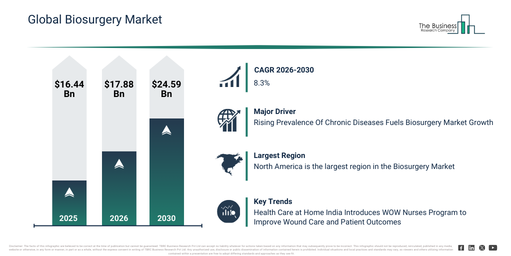
    The biosurgery market has exhibited robust growth in recent years. It is forecast to expand from $16.44 billion in 2025 to $17.88 billion in 2026, achieving a compound annual growth rate (CAGR) of 8.7%. The growth observed in the past can be attributed to an increased volume of surgical procedures, a rising prevalence of chronic wounds, the expansion of hospital infrastructure, the adoption of modern surgical materials, and improvements in biosurgical product safety profiles.

    The biosurgery market size is anticipated to experience robust expansion in the coming years, with projections indicating it will reach $24.59 billion by 2030, progressing at a compound annual growth rate (CAGR) of 8.3%. This expansion during the forecast period is primarily driven by an escalating demand for sophisticated wound care solutions, an intensified focus on reducing complications post-surgery, the increasing prevalence of outpatient surgical procedures, growing financial commitments to innovation in biosurgical products, and the rising adoption of biologics-based aids in surgery. Noteworthy trends for the forecast period include the expanding use of advanced hemostatic agents, a heightened need for synthetic surgical sealants, the broader application of bio-based adhesion barriers, the proliferation of minimally invasive surgical solutions, and a stronger emphasis on achieving faster wound healing outcomes.

    Download the Free Sample Report to Explore Key Market Insights:

    https://www.thebusinessresearchcompany.com/sample.aspx?id=9380&type=smp

    What Major Growth Drivers Are Shaping The Outlook Of The Biosurgery Market?

    The rising occurrence of chronic illnesses is anticipated to fuel the expansion of the biosurgery market in the future. Chronic conditions are defined as health issues lasting a year or more, requiring ongoing medical attention, limiting daily functions, or a combination of these factors. In the US, major contributors to mortality and impairment include chronic ailments like diabetes, cancer, and heart disease. Biosurgical methods are employed to remove necrotic tissue, reduce infection risk, and accelerate the recovery of chronic wounds. As an illustration, the World Health Organization, a specialized agency of the United Nations located in Switzerland, reported in September 2025 that noncommunicable diseases (NCDs) account for 74% of fatalities worldwide. Consequently, the growing prevalence of chronic diseases is a key factor driving the expansion of the biosurgery market.

    What Segmentation Levels Are Considered In The Biosurgery Market?

    The biosurgery market covered in this report is segmented –

    1) By Product: Bone-Graft Substitutes, Soft-Tissue Attachments, Hemostatic Agents, Surgical Sealants And Adhesives, Adhesion Barriers, Staple Line Reinforcement

    2) By Source: Natural Or Biologics Products, Synthetic Products

    3) By Application: Orthopedic Surgery, General Surgery, Neurological Surgery, Cardiovascular Surgery, Gynecological Surgery, Other Applications

    4) By End-User: Hospitals, Clinics, Other End-Users

    Subsegments:

    1) By Bone-Graft Substitutes: Synthetic Bone Grafts, Natural Bone Grafts

    2) By Soft-Tissue Attachments: Mesh Products, Biological Grafts

    3) By Hemostatic Agents: Powdered Agents, Gel-based Agents

    4) By Surgical Sealants And Adhesives: Fibrin Sealants, Synthetic Sealants

    5) By Adhesion Barriers: Absorbable Barriers, Non-absorbable Barriers

    6) By Staple Line Reinforcement: Reinforcement Devices, Surgical Staples

    What Key Trends Are Influencing The Development Of The Biosurgery Market?

    Major companies operating in the biosurgery market are harnessing technological advancements, such as advanced wound care technology, to improve healing outcomes, decrease infection rates, and accelerate patient recovery times through innovative products and techniques. This advanced wound care technology encompasses novel methods and products designed to enhance wound healing, prevent infection, and improve overall patient outcomes. For instance, in September 2024, Health Care at Home India Pvt Ltd, an India-based company specializing in medical product manufacturing, introduced WOW (Warriors of Woundcare) Nurses. The WOW Nurses initiative aims to proactively prevent and manage bedsores, which are common complications for patients with limited mobility. Bedsores have the potential to significantly delay recovery, prolong hospital stays, and heighten the risk of infection.

    Which Leading Firms Are Contributing To The Growth Of The Biosurgery Market?

    Major companies operating in the biosurgery market are Baxter International Inc., B. Braun SE, Becton, Dickinson and Company, Hemostasis LLC, Integra LifeSciences Corporation, Johnson & Johnson Services Inc., CryoLife Inc., Zimmer Biomet Holdings Inc., Kuros Biosciences AG, Orthofix Medical Inc., Smith & Nephew plc, Medtronic plc, Stryker Corp., Tissue Regenix Group plc, Aroa Biosurgery Ltd., Anika Therapeutics Inc., Arthrex Inc., B Braun Surgical SA, Biom’Up SA, Boston Scientific Corporation, Coloplast Corp., Cook Medical Inc., Genzyme Corporation

    Read the full biosurgery market report here:

    https://www.thebusinessresearchcompany.com/report/biosurgery-global-market-report

    Which Regions Are Projected To Dominate The Biosurgery Market In The Coming Years?

    North America was the largest region in the biosurgery market in 2025. Asia-Pacific is expected to be the fastest-growing region in the biosurgery market report during the forecast period. The regions covered in the biosurgery market report are Asia-Pacific, South East Asia, Western Europe, Eastern Europe, North America, South America, Middle East, Africa.

    Request A Tailored Biosurgery Market Research Report For Competitive Advantage:

    https://www.thebusinessresearchcompany.com/customise?id=9380&type=smp

    Browse Through More Reports Similar to the Global Biosurgery Market 2026, By The Business Research Company

    Biohacking Global Market Report

    https://www.thebusinessresearchcompany.com/report/biohacking-global-market-report

    Bioceramics Global Market Report

    https://www.thebusinessresearchcompany.com/report/bioceramics-global-market-report

    Bioethanol Global Market Report

    https://www.thebusinessresearchcompany.com/report/bioethanol-global-market-report

    Get in touch with us:

    The Business Research Company: https://www.thebusinessresearchcompany.com/

    Americas +1 310-496-7795

    Asia +44 7882 955267 & +91 8897263534

    Europe +44 7882 955267

    Email us at info@tbrc.info

    Follow us on:

    LinkedIn: https://in.linkedin.com/company/the-business-research-company

    YouTube: https://www.youtube.com/channel/UC24_fI0rV8cR5DxlCpgmyFQ

    Global Market Model: https://www.thebusinessresearchcompany.com/global-market-model
  • Antiphospholipid Syndrome Treatment Market Forecast 2026–2035 Reflecting Expansion Opportunities Across Industries

    Antiphospholipid Syndrome Treatment Market Forecast 2026–2035 Reflecting Expansion Opportunities Across Industries

    The Business Research Company’s 2026 market reports include new capabilities such as market attractiveness scoring and analysis, total addressable market analysis, company scoring matrix, interactive excel data dashboard, improved supply chain analysis, upcoming startups in the market, and overview of key products, aimed at improving the depth, usability, and strategic value of the insights delivered.

    What Market Size Expansion Is Predicted For The Antiphospholipid Syndrome Treatment Market Between 2026 And 2030?

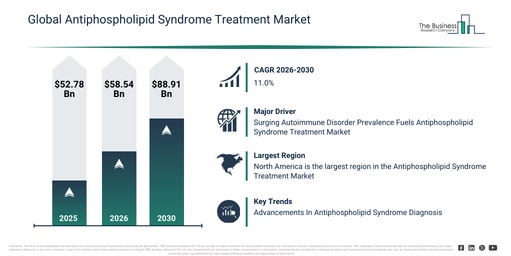
    The antiphospholipid syndrome treatment market has experienced swift expansion in recent years. Its valuation is projected to increase from $52.78 billion in 2025 to $58.54 billion in 2026, achieving a compound annual growth rate (CAGR) of 10.9%. The historical growth in this market can be attributed to heightened clinical awareness of autoimmune disorders, broader utilization of anticoagulant medications, enhanced availability of diagnostic antibody testing, the expansion of hospital-based treatment pathways, and increasing recognition of pregnancy-related complications.

    The antiphospholipid syndrome treatment market size is expected to experience significant expansion in the coming years, projected to reach $88.91 billion by 2030, driven by a compound annual growth rate (CAGR) of 11.0%. This growth during the forecast period can be attributed to several factors, including increasing investments in precision medicine research, the rising development of novel anticoagulant drugs, the growing adoption of digital patient monitoring tools, the expansion of specialty autoimmune care centers, and an increasing focus on preventive thrombosis management. Furthermore, major trends anticipated in this period encompass the increasing adoption of targeted anticoagulation therapies, the growing use of personalized treatment protocols, a rising focus on early and accurate diagnosis, the expansion of combination therapy approaches, and enhanced monitoring of long-term thrombotic risk.

    Download the Free Sample Report to Explore Key Market Insights:

    https://www.thebusinessresearchcompany.com/sample.aspx?id=13368&type=smp

    What Drivers Are Influencing The Antiphospholipid Syndrome Treatment Market?

    The growing occurrence of autoimmune disorders is set to propel the expansion of the antiphospholipid syndrome treatment market in the foreseeable future. Autoimmune disorders are defined as medical conditions where the body’s immune system mistakenly attacks its own tissues and cells. Antiphospholipid syndrome (APS) is an autoimmune disease that can affect the digestive system, including conditions like irritable bowel syndrome (IBS), which is an autoimmune disorder impacting the intestinal tract. Antiphospholipid syndrome treatment is administered to patients with inflammatory bowel diseases who are receiving anti-TNF drug therapy. For instance, according to Crohn’s and Colitis Canada in June 2023, an estimated 322,600 Canadians were living with inflammatory bowel diseases (IBD) in 2023, accounting for approximately 0.82% of the population. This number is projected to increase to around 470,000 Canadians by 2035, representing about 1.1% of the population, or 1 in every 91 people in the country. Thus, the increasing prevalence of autoimmune disorders is a significant driver for the growth of the antiphospholipid syndrome treatment market.

    Which Market Segments Are Examined In The Antiphospholipid Syndrome Treatment Market Study?

    The antiphospholipid syndrome treatment market covered in this report is segmented –

    1) By Treatment Type: Medications, Preventative (Prophylaxis) Therapy, Other Treatment Types

    2) By Indication Type: Primary Antiphospholipid Syndrome, Secondary Antiphospholipid Syndrome, Catastrophic Antiphospholipid Syndrome

    3) By Route of Administration: Oral, Parental, Other Routes of Administration

    4) By End-Users: Hospitals, Homecare, Specialty Centers, Other End-Users

    Subsegments:

    1) By Medications: Anticoagulants, Antiplatelet Agents, Immunosuppressive Drugs

    2) By Preventative (Prophylaxis) Therapy: Anticoagulation Therapy, Aspirin Therapy

    3) By Other Treatment Types: Plasma Exchange, Intravenous Immunoglobulin (IVIG)

    What Trends Are Advancing Progress In The Antiphospholipid Syndrome Treatment Market?

    Key players within the car covers market are innovating by introducing products like immunoglobulin reagents, aiming to improve the precision and dependability of diagnostic evaluations. These reagents are laboratory instruments equipped with antibodies, utilized for identifying, measuring, or examining particular antigens in both diagnostic and research contexts. An example of this is Werfen, a diagnostics specialist from Spain, which announced in February 2024 that its Aptiva Antiphospholipid Syndrome (APS) Immunoglobulin G (IgG) and Immunoglobulin M (IgM) reagents had received the CE mark. What distinguishes the Aptiva APS IgG and APS IgM reagents is their use of Aptiva particle-based multi-analyte technology (PMAT) to semi-quantitatively detect anti-cardiolipin (aCL) and anti-beta 2 glycoprotein 1 (aß2GP1) IgG and IgM autoantibodies in human serum and citrated plasma, thereby assisting significantly in the diagnosis of primary and secondary antiphospholipid syndrome (APS) when considered with other laboratory results.

    Who Are The Primary Competitors In The Antiphospholipid Syndrome Treatment Market?

    Major companies operating in the antiphospholipid syndrome treatment market are Pfizer Inc., Johnson & Johnson, F. Hoffmann-La Roche Ltd., AbbVie Inc., Bayer AG, Novartis AG, Merck & Co., Bristol Myers Squibb, Abbott Laboratories, Sanofi S.A., GlaxoSmithKline PLC, Eli Lilly and Company, Cipla Ltd., Baxter International, Teva Pharmaceutical Industries Ltd., CSL Limited, Boehringer Ingelheim International GmbH, Fresenius Kabi, Aurobindo Pharma, Dr. Reddy’s Laboratories, Hikma Pharmaceutics plc, Aspen Pharmacare, Zydus Lifesciences Limited, Leo Pharma, Daiichi Sankyo Company

    Read the full antiphospholipid syndrome treatment market report here:

    https://www.thebusinessresearchcompany.com/report/antiphospholipid-syndrome-treatment-global-market-report

    Which Regions Are Expected To Experience Rapid Expansion In The Antiphospholipid Syndrome Treatment Market?

    North America was the largest region in the antiphospholipid syndrome treatment market in 2025. The regions covered in the antiphospholipid syndrome treatment market report are Asia-Pacific, South East Asia, Western Europe, Eastern Europe, North America, South America, Middle East, Africa.

    Request A Tailored Antiphospholipid Syndrome Treatment Market Research Report For Competitive Advantage:

    https://www.thebusinessresearchcompany.com/customise?id=13368&type=smp

    Browse Through More Reports Similar to the Global Antiphospholipid Syndrome Treatment Market 2026, By The Business Research Company

    Diagnostic Specialty Antibodies Global Market Report

    https://www.thebusinessresearchcompany.com/report/diagnostic-specialty-antibodies-global-market-report

    Typhoid Antibody Testing Global Market Report

    https://www.thebusinessresearchcompany.com/report/typhoid-antibody-testing-global-market-report

    Polyclonal Antibodies Global Market Report

    https://www.thebusinessresearchcompany.com/report/polyclonal-antibodies-global-market-report

    Get in touch with us:

    The Business Research Company: https://www.thebusinessresearchcompany.com/

    Americas +1 310-496-7795

    Asia +44 7882 955267 & +91 8897263534

    Europe +44 7882 955267

    Email us at info@tbrc.info

    Follow us on:

    LinkedIn: https://in.linkedin.com/company/the-business-research-company

    YouTube: https://www.youtube.com/channel/UC24_fI0rV8cR5DxlCpgmyFQ

    Global Market Model: https://www.thebusinessresearchcompany.com/global-market-model
  • A key trend shaping the Artificial Intelligence (AI)-Generated Surgical Prep Checklist Market involves the Integration Of Artificial Intelligence(AI) Operational Assistants To Improve Surgical Workflow Efficiency

    A key trend shaping the Artificial Intelligence (AI)-Generated Surgical Prep Checklist Market involves the Integration Of Artificial Intelligence(AI) Operational Assistants To Improve Surgical Workflow Efficiency

    The Business Research Company’s 2026 market reports include new capabilities such as market attractiveness scoring and analysis, total addressable market analysis, company scoring matrix, interactive excel data dashboard, improved supply chain analysis, upcoming startups in the market, and overview of key products, aimed at improving the depth, usability, and strategic value of the insights delivered.

    What Market Value Is Anticipated For The Artificial Intelligence (AI)-Generated Surgical Prep Checklist Market Over The Period 2026–2030?

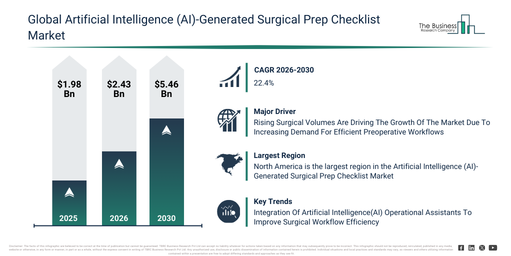
    The market for artificial intelligence (AI)-generated surgical prep checklists has experienced substantial expansion in recent years. Projections indicate a rise from $1.98 billion in 2025 to $2.43 billion in 2026, demonstrating a compound annual growth rate (CAGR) of 22.7%. Historically, this growth can be ascribed to several factors, including a heightened focus on surgical safety protocols, the increasing integration of digital hospital systems, an uptick in surgical procedure volumes, the broadening of clinical workflow automation, and a greater emphasis on compliance documentation.

    The artificial intelligence (AI)-generated surgical prep checklist market size is projected to undergo significant expansion in the coming years, reaching $5.46 billion by 2030, growing at a compound annual growth rate (CAGR) of 22.4%. This growth during the forecast period is fueled by advancements in AI-driven clinical decision support, increased investments in smart operating rooms, a rising demand for workflow optimization tools, the expansion of cloud-based surgical platforms, and the increasing integration of predictive analytics in surgery. Prominent trends for the forecast period include the expanding utilization of AI-optimized preoperative checklists, deeper integration with surgical workflow systems, a growing adoption of predictive risk identification tools, the broadening of real-time surgical readiness monitoring, and an intensified focus on solutions for error reduction.

    Download the Free Sample Report to Explore Key Market Insights:

    https://www.thebusinessresearchcompany.com/sample.aspx?id=28925&type=smp

    What Underlying Factors Are Accelerating The Growth Of The Artificial Intelligence (AI)-Generated Surgical Prep Checklist Market?

    The expanding number of surgical procedures performed is anticipated to drive the development of the artificial intelligence (AI)-generated surgical prep checklist market in the future. Surgical volumes denote the yearly count of operations conducted across various healthcare institutions. This increase in surgical volumes stems from an aging demographic, given that elderly individuals frequently need more surgical interventions for conditions linked to age, including joint replacements, cardiovascular treatments, and cancer therapies. Artificial intelligence (AI)-generated surgical prep checklists contribute to managing surgical volumes effectively by streamlining preoperative processes and minimizing hold-ups, thus facilitating quicker and more accurate preparation, which in turn permits hospitals to conduct a greater number of procedures with enhanced efficiency. As an illustration, in June 2024, data from the American Society of Plastic Surgeons, a US-based professional medical organization, revealed that in 2023, liposuction remained the most popular plastic surgery procedure, with almost 350,000 operations performed, indicating a 7% rise compared to 2022. Consequently, the increase in surgical volumes is a key factor boosting the expansion of the artificial intelligence (AI)-generated surgical prep checklist market.

    How Is The Artificial Intelligence (AI)-Generated Surgical Prep Checklist Market Divided Into Its Major Segments?

    The artificial intelligence (AI)-generated surgical prep checklist market covered in this report is segmented –

    1) By Component: Software, Services

    2) By Deployment Mode: Cloud-Based, On-Premises

    3) By Application: Hospitals, Ambulatory Surgical Centers, Specialty Clinics, Other Applications

    4) By End-User: Healthcare Providers, Surgeons, Nurses, Other End-Users

    Subsegments:

    1) By Software: Checklist Management Platforms, Data Analytics Modules, Integration Interfaces, User Dashboard Systems, Compliance Tracking Tools, Workflow Optimization Solutions

    2) By Services: Implementation Services, Training And Support Services, Consultation Services, Maintenance Services, System Upgradation Services, Workflow Customization Services

    What Key Trends Are Influencing The Development Of The Artificial Intelligence (AI)-Generated Surgical Prep Checklist Market?

    Major companies within the artificial intelligence (AI)-generated surgical prep checklist market are prioritizing the development of sophisticated products, such as AI operational assistants, to improve workflow automation, efficiency, and the monitoring of surgical readiness. These AI operational assistants are intelligent digital agents that leverage natural language processing (NLP), machine learning (ML), and predictive analytics to independently execute administrative and coordination tasks, enabling features like real-time data extraction, patient risk identification, and automated workflow orchestration. For example, in January 2025, Qventus, a US-based provider of AI-based care automation software for health systems, introduced its Perioperative Care Coordination (PCC) solution. This AI-powered solution aims to lessen the administrative burden on clinicians, particularly pre-admission testing nurses, by providing AI assistants that manage patient records, coordinate calls, and pinpoint risks. The PCC solution reduces unnecessary surgery cancellations by up to 40%, enhances the productivity of care teams by 50%, and optimizes patient preparation and follow-up before and after surgery. Developed in collaboration with leading healthcare systems, it enables better surgical outcomes and delivers significant cost savings for hospitals.

    Who Are The Prominent Organizations Shaping The Artificial Intelligence (AI)-Generated Surgical Prep Checklist Market?

    Major companies operating in the artificial intelligence (AI)-generated surgical prep checklist market are Medtronic plc, Olympus Corporation, Fortive Corporation, Epic Systems Corporation, Health Catalyst Inc., LeanTaaS Holdings Inc., Connecteam, One Mnet Health, Qventus Inc., Caresyntax Inc., Surgical Safety Technologies Inc., PeekMed S.A., Buddy Healthcare Ltd., Asensus Surgical Inc., DocSpera Inc., Force Therapeutics Inc., SeamlessMD Inc., Calcium Inc., Preop.ai Inc., Hoopcare Technologies Pvt. Ltd.

    Read the full artificial intelligence (ai)-generated surgical prep checklist market report here:

    https://www.thebusinessresearchcompany.com/report/artificial-intelligence-ai-generated-surgical-prep-checklist-global-market-report

    Which Region Is Projected To Dominate The Artificial Intelligence (AI)-Generated Surgical Prep Checklist Market During The Forecast Period?

    North America was the largest region in the artificial intelligence (AI)-generated surgical prep checklist market in 2025. Asia-Pacific is expected to be the fastest-growing region in the forecast period. The regions covered in the artificial intelligence (AI)-generated surgical prep checklist market report are Asia-Pacific, South East Asia, Western Europe, Eastern Europe, North America, South America, Middle East, Africa.

    Request A Tailored Artificial Intelligence (AI)-Generated Surgical Prep Checklist Market Research Report For Competitive Advantage:

    https://www.thebusinessresearchcompany.com/customise?id=28925&type=smp

    Browse Through More Reports Similar to the Global Artificial Intelligence (AI)-Generated Surgical Prep Checklist Market 2026, By The Business Research Company

    Surgical Robots Global Market Report

    https://www.thebusinessresearchcompany.com/report/surgical-robots-global-market-report

    Ai In Medical Diagnostics Global Market Report

    https://www.thebusinessresearchcompany.com/report/ai-in-medical-diagnostics-global-market-report

    Ai In Medical Devices Global Market Report

    https://www.thebusinessresearchcompany.com/report/ai-in-medical-devices-global-market-report

    Get in touch with us:

    The Business Research Company: https://www.thebusinessresearchcompany.com/

    Americas +1 310-496-7795

    Asia +44 7882 955267 & +91 8897263534

    Europe +44 7882 955267

    Email us at info@tbrc.info

    Follow us on:

    LinkedIn: https://in.linkedin.com/company/the-business-research-company

    YouTube: https://www.youtube.com/channel/UC24_fI0rV8cR5DxlCpgmyFQ

    Global Market Model: https://www.thebusinessresearchcompany.com/global-market-model
  • A significant industry trend in the Artificial Intelligence (AI)-Generated Personalized Medical Reminder Market includes the AI-Driven Voice Technology Enhancing Personalized Medication Reminders And Patient Engagement

    A significant industry trend in the Artificial Intelligence (AI)-Generated Personalized Medical Reminder Market includes the AI-Driven Voice Technology Enhancing Personalized Medication Reminders And Patient Engagement

    The Business Research Company’s 2026 market reports include new capabilities such as market attractiveness scoring and analysis, total addressable market analysis, company scoring matrix, interactive excel data dashboard, improved supply chain analysis, upcoming startups in the market, and overview of key products, aimed at improving the depth, usability, and strategic value of the insights delivered.

    What Is The Expected Market Size Of The Artificial Intelligence (AI)-Generated Personalized Medical Reminder Market From 2026 To 2030?

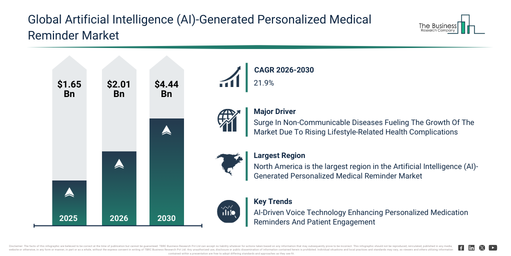
    The market for artificial intelligence (AI)-generated personalized medical reminders has experienced rapid expansion over recent years. This market is projected to expand from $1.65 billion in 2025 to $2.01 billion in 2026, demonstrating a compound annual growth rate (CAGR) of 22.2%. Factors contributing to its historical growth include the increasing prevalence of chronic diseases, greater smartphone adoption within healthcare, wider acceptance of digital health solutions, the expansion of remote patient monitoring initiatives, and an intensified focus on medication adherence.

    The market size for artificial intelligence (AI)-generated personalized medical reminders is expected to undergo substantial expansion over the next few years. It is projected to achieve a value of $4.44 billion by 2030, growing at a compound annual growth rate (CAGR) of 21.9%. The anticipated growth during this period is driven by improvements in the accuracy of AI health algorithms, increasing demand for customized healthcare solutions, the broadening of cloud-based health platforms, deeper integration with electronic health records, and the rising adoption of preventive healthcare technologies. Noteworthy trends predicted for the forecast period include the increasing uptake of AI-driven medication adherence platforms, greater integration of wearables and smart devices, the expanding application of predictive analytics for reminder optimization, the development of personalized health notification systems, and an intensified focus on tools for patient engagement.

    Download the Free Sample Report to Explore Key Market Insights:

    https://www.thebusinessresearchcompany.com/sample.aspx?id=28924&type=smp

    Which Growth Drivers Are Contributing To The Progress Of The Artificial Intelligence (AI)-Generated Personalized Medical Reminder Market?

    The growing impact of non-communicable diseases is anticipated to boost the expansion of the artificial intelligence (AI)-generated personalized medical reminder market in the future. Non-communicable diseases (NCDs) refer to chronic health issues that are non-infectious and not transmissible between people. The increase in NCDs stems from inactive lifestyles, where insufficient physical movement gradually impairs the body’s capacity to manage weight, blood pressure, and metabolic functions, resulting in protracted health problems. Artificial intelligence-generated personalized medical reminders assist in handling NCDs by offering timely notifications for medications, changes in lifestyle, and subsequent medical appointments, thereby promoting better compliance with treatment and enhanced long-term health results. As an example, in February 2024, the World Health Organization, a Switzerland-based intergovernmental body, forecast more than 35 million new cancer cases by 2050, showing a 77% rise from the approximately 20 million cases in 2022. Consequently, the growing prevalence of non-communicable diseases is propelling the expansion of the artificial intelligence (AI)-generated personalized medical reminder market.

    Which Segments Are Included In The Analysis Of The Artificial Intelligence (AI)-Generated Personalized Medical Reminder Market?

    The artificial intelligence (AI)-generated personalized medical reminder market covered in this report is segmented –

    1) By Component: Software, Hardware, Services

    2) By Deployment Mode: Cloud-Based, On-Premises

    3) By Application: Medication Adherence, Chronic Disease Management, Elderly Care, Remote Patient Monitoring, Other Applications

    4) By End-User: Hospitals And Clinics, Homecare, Pharmacies, Individuals, Other End-Users

    Subsegments:

    1) By Software: Mobile Applications, Web-Based Platforms, Cloud-Based Solutions, Integrated Healthcare Systems, Artificial Intelligence Algorithms

    2) By Hardware: Smart Wearable Devices, Smart Speakers, Voice Assistants, Smartwatches, Medication Dispensers

    3) By Services: Installation And Integration Services, Maintenance And Support Services, Training And Consultation Services, Data Analytics And Monitoring Services, Personalization And Customization Services

    What Key Trends Are Influencing The Development Of The Artificial Intelligence (AI)-Generated Personalized Medical Reminder Market?

    Leading companies in the artificial intelligence (AI)-generated personalized medical reminder market are concentrating on developing voice technology, such as AI-driven voice assistants, to deliver timely medication reminders and improve patient engagement. These AI-driven voice assistants utilize artificial intelligence to recognize, interpret, and respond to spoken commands, offering real-time guidance, reminders, and interactive assistance for hands-free tasks and health management. For instance, in April 2025, Medisafe International, a US-based medical device company, introduced Voice Intelligent Agent (VIA), an advanced artificial intelligence-powered voice assistant. This technology is engineered to address the pharmaceutical industry’s $5 billion patient support gap by streamlining patient engagement. It allows specialty brands to more effectively activate, engage, and retain patients through personalized, intelligent interactions. This innovation represents a significant step forward in enhancing patient adherence and support across treatment journeys.

    Which Key Industry Participants Are Active In The Artificial Intelligence (AI)-Generated Personalized Medical Reminder Market?

    Major companies operating in the artificial intelligence (AI)-generated personalized medical reminder market are Google LLC, Microsoft Corporation, Oracle Corporation, Philips Healthcare, Otsuka Holdings Co. Ltd., Garmin Ltd., Teladoc Health Inc., Veradigm LLC, Tempus AI Inc., Merative LLC, MedMinder Systems Inc., MedAdvisor Ltd., Artera Services LLC, Medisafe Inc., AdhereTech Inc., CarePredict Inc., AiCure Inc., WatchMinder Company, Pivotell Ltd., CareClinic.

    Read the full artificial intelligence (ai)-generated personalized medical reminder market report here:

    https://www.thebusinessresearchcompany.com/report/artificial-intelligence-ai-generated-personalized-medical-reminder-global-market-report

    What Are The Leading Geographic Regions In The Artificial Intelligence (AI)-Generated Personalized Medical Reminder Market?

    North America was the largest region in the artificial intelligence (AI)-generated personalized medical reminder market in 2025. Asia-Pacific is expected to be the fastest-growing region in the forecast period. The regions covered in the artificial intelligence (AI)-generated personalized medical reminder market report are Asia-Pacific, South East Asia, Western Europe, Eastern Europe, North America, South America, Middle East, Africa.

    Request A Tailored Artificial Intelligence (AI)-Generated Personalized Medical Reminder Market Research Report For Competitive Advantage:

    https://www.thebusinessresearchcompany.com/customise?id=28924&type=smp

    Browse Through More Reports Similar to the Global Artificial Intelligence (AI)-Generated Personalized Medical Reminder Market 2026, By The Business Research Company

    Generative Ai In Healthcare Global Market Report

    https://www.thebusinessresearchcompany.com/report/generative-ai-in-healthcare-global-market-report

    Artificial Intelligence In Healthcare Diagnosis Global Market Report

    https://www.thebusinessresearchcompany.com/report/artificial-intelligence-in-healthcare-diagnosis-global-market-report

    Artificial Intelligence Or Machine Learning Ai Or Ml Medical Device Global Market Report

    https://www.thebusinessresearchcompany.com/report/artificial-intelligence-or-machine-learning-ai-or-ml-medical-device-global-market-report

    Get in touch with us:

    The Business Research Company: https://www.thebusinessresearchcompany.com/

    Americas +1 310-496-7795

    Asia +44 7882 955267 & +91 8897263534

    Europe +44 7882 955267

    Email us at info@tbrc.info

    Follow us on:

    LinkedIn: https://in.linkedin.com/company/the-business-research-company

    YouTube: https://www.youtube.com/channel/UC24_fI0rV8cR5DxlCpgmyFQ

    Global Market Model: https://www.thebusinessresearchcompany.com/global-market-model
  • Biosimilar Testing Services Market Future Outlook Showing Expansion Toward $3.37 Billion by 2030

    Biosimilar Testing Services Market Future Outlook Showing Expansion Toward $3.37 Billion by 2030

    The Business Research Company’s 2026 market reports include new capabilities such as market attractiveness scoring and analysis, total addressable market analysis, company scoring matrix, interactive excel data dashboard, improved supply chain analysis, upcoming startups in the market, and overview of key products, aimed at improving the depth, usability, and strategic value of the insights delivered.

    What Market Size Increase Is Anticipated For The Biosimilar Testing Services Market Over The 2026–2030 Period?

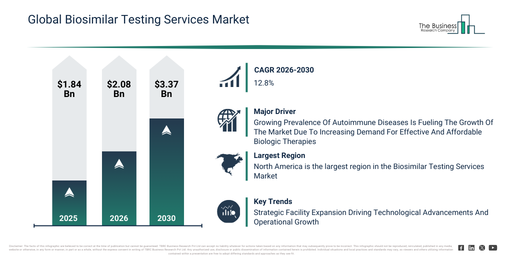
    The biosimilar testing services market has experienced significant expansion recently. This market is projected to expand from $1.84 billion in 2025 to $2.08 billion in 2026, demonstrating a compound annual growth rate (CAGR) of 13.0%. Historically, this growth can be ascribed to factors such as the broadening of biosimilar development pipelines, the increase in regulatory clearances for biosimilars, the advancement of biologics manufacturing, a greater dependence on CRO testing services, and enhancements in analytical testing technologies.

    The biosimilar testing services market is projected to experience substantial expansion in the coming years. By 2030, its valuation is anticipated to reach $3.37 billion, demonstrating a compound annual growth rate (CAGR) of 12.8%. This projected increase throughout the forecast period stems from the increasing need for economical biologic options, the expansion of worldwide biosimilar markets, the growing intricate nature of biologic molecules, a heightened emphasis on comparability evaluations, and rising investments in biosimilar research and development. Key developments anticipated during this period include a greater call for thorough analytical characterization, the increasing adoption of sophisticated bioanalytical assays, an intensified focus on testing services that comply with regulations, the broadening of outsourced support for biosimilar development, and a stronger emphasis on method validation and consistency.

    Download the Free Sample Report to Explore Key Market Insights:

    https://www.thebusinessresearchcompany.com/sample.aspx?id=27225&type=smp

    What Drivers Are Expected To Influence The Biosimilar Testing Services Market During The Forecast Period?

    The increasing incidence of autoimmune conditions is anticipated to drive expansion within the biosimilar testing services market moving ahead. These conditions occur when the body’s immune system erroneously targets its own healthy cells and tissues, resulting in inflammation and harm to those tissues. This rising prevalence stems from a greater demand for potent biologic therapies capable of managing chronic indicators, decreasing symptom exacerbations, and enhancing patient results over time. Biosimilar testing services facilitate the management of autoimmune diseases by verifying that biosimilars are safe, effective, and similar to their reference biologics, thereby contributing to the provision of affordable and readily available treatment alternatives. For example, data from February 2024 by Arthritis Australia, an Australian non-profit group, projects that 562,378 Australians will be affected by RA in 2025, constituting 14% of all arthritis cases during that period. By 2040, this figure is forecast to increase by 33% to 748,721 people. This signifies an additional 186,343 Australians living with RA when compared to 2025. Consequently, the expanding occurrence of autoimmune diseases is propelling the expansion of the biosimilar testing services market.

    How Is The Biosimilar Testing Services Market Segmented Across Key Categories?

    The biosimilar testing services market covered in this report is segmented –

    1) By Service Type: Analytical Testing, Bioanalytical Testing, Stability Testing, Method Development And Validation, Other Service Types

    2) By Technology: Cell-Based Assays, Chromatography Techniques, Mass Spectrometry, Bioassays

    3) By Molecule Type: Monoclonal Antibodies, Recombinant Hormones, Insulin, Interferons, Enzymes, Other Molecule Types

    4) By Application: Oncology, Autoimmune Diseases, Blood Disorders, Growth Hormone Deficiency, Other Applications

    5) By End User: Pharmaceutical Companies, Biotechnology Companies, Contract Research Organizations, Academic Research Institutes, Government Agencies

    Subsegments:

    1) By Analytical Testing: Protein Characterization, Impurity Profiling, Potency Testing, Glycosylation Analysis, Structural Analysis

    2) By Bioanalytical Testing: Pharmacokinetics Analysis, Immunogenicity Testing, Biomarker Analysis, Drug Concentration Measurement, Toxicokinetics Testing

    3) By Stability Testing: Long-Term Stability Testing, Accelerated Stability Testing, Stress Testing, Photostability Testing, Temperature Cycling Studies

    4) By Method Development And Validation: Analytical Method Development, Bioanalytical Method Development, Method Validation, Process Validation, Assay Development

    5) By Other Service Types: Immunogenicity Assessment, Formulation Development, Microbial Testing, Release Testing, Regulatory Consulting

    How Are Trends Impacting The Biosimilar Testing Services Market?

    Leading firms within the biosimilar testing services market are prioritizing facility expansion to integrate novel technologies and capabilities, thereby boosting their productivity and competitive edge. This expansion involves either enlarging or enhancing current physical spaces or infrastructure to meet growing operational demands or to prepare for future development. As an illustration, Tanvex BioPharma USA Inc., a biotechnology company based in the US, introduced Tanvex CDMO in October 2023. This advanced contract development and manufacturing organization, situated in San Diego, provides comprehensive biologics development and manufacturing services, encompassing areas such as cell line development, process optimization, analytical testing, and regulatory assistance. The objective of this new facility is to expedite the progression of biopharmaceutical products from their initial concept phase to commercial production, utilizing leading-edge technologies and expert teams to supply groundbreaking and transformative biologics to patients globally.

    Who Are The Dominant Players Shaping The Biosimilar Testing Services Market Landscape?

    Major companies operating in the biosimilar testing services market are Thermo Fisher Scientific Inc., IQVIA Laboratories, Laboratory Corporation of America Holdings, Eurofins Scientific SE, SGS Société Générale de Surveillance SA, WuXi AppTec Co. Ltd., Intertek Group plc, Samsung Biologics Co. Ltd., Almac Group Limited, Syngene International Limited, Shanghai Medicilon Inc., Kymos Group S.L., Pacific BioLabs Inc., Profacgen Inc., ExcellGene SA, BioPharmaSpec Ltd., Charles River Laboratories International Inc., Covance Inc., PPD Inc., ICON plc, Parexel International Corporation, Frontage Laboratories Inc.

    Read the full biosimilar testing services market report here:

    https://www.thebusinessresearchcompany.com/report/biosimilar-testing-services-global-market-report

    Which Region Is Forecast To Lead The Biosimilar Testing Services Market In Terms Of Market Size?

    North America was the largest region in the biosimilar testing services market in 2025. Asia-Pacific is expected to be the fastest-growing region in the forecast period. The regions covered in the biosimilar testing services market report are Asia-Pacific, South East Asia, Western Europe, Eastern Europe, North America, South America, Middle East, Africa.

    Request A Tailored Biosimilar Testing Services Market Research Report For Competitive Advantage:

    https://www.thebusinessresearchcompany.com/customise?id=27225&type=smp

    Browse Through More Reports Similar to the Global Biosimilar Testing Services Market 2026, By The Business Research Company

    Insulation Products Global Market Report

    https://www.thebusinessresearchcompany.com/report/insulation-products-global-market-report

    Aircraft Insulation Global Market Report

    https://www.thebusinessresearchcompany.com/report/aircraft-insulation-global-market-report

    Technical Insulation Global Market Report

    https://www.thebusinessresearchcompany.com/report/technical-insulation-global-market-report

    Get in touch with us:

    The Business Research Company: https://www.thebusinessresearchcompany.com/

    Americas +1 310-496-7795

    Asia +44 7882 955267 & +91 8897263534

    Europe +44 7882 955267

    Email us at info@tbrc.info

    Follow us on:

    LinkedIn: https://in.linkedin.com/company/the-business-research-company

    YouTube: https://www.youtube.com/channel/UC24_fI0rV8cR5DxlCpgmyFQ

    Global Market Model: https://www.thebusinessresearchcompany.com/global-market-model
  • Global Antinuclear Antibody Test Market Analysis for 2026–2030 with Strategic Forecast Insights for Businesses

    Global Antinuclear Antibody Test Market Analysis for 2026–2030 with Strategic Forecast Insights for Businesses

    The Business Research Company’s 2026 market reports include new capabilities such as market attractiveness scoring and analysis, total addressable market analysis, company scoring matrix, interactive excel data dashboard, improved supply chain analysis, upcoming startups in the market, and overview of key products, aimed at improving the depth, usability, and strategic value of the insights delivered.

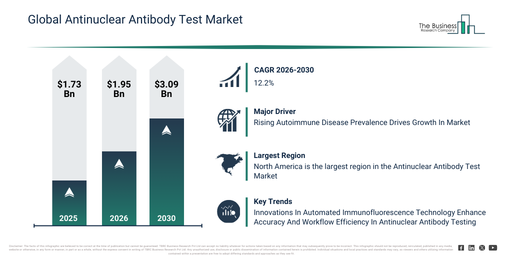
    How Large Is The Antinuclear Antibody Test Market Projected To Become By 2030 Based On Its 2026 Valuation?

    The antinuclear antibody test market has experienced rapid expansion recently. It is projected to increase from $1.73 billion in 2025 to $1.95 billion in 2026, exhibiting a compound annual growth rate (CAGR) of 12.5%. Historically, this growth can be attributed to several factors, including the rising incidence of autoimmune disorders, the expansion of clinical laboratory testing facilities, increased dependence of physicians on serological diagnostic methods, the accessibility of immunofluorescence assay technologies, and a surge in patient diagnostic test volumes.

    The antinuclear antibody test market is projected to experience swift expansion in the coming years. This market is forecast to reach $3.09 billion by 2030, exhibiting a compound annual growth rate (CAGR) of 12.2%. Key factors driving this growth during the forecast period include the escalating adoption of AI-assisted diagnostic interpretation, a surge in demand for point-of-care autoimmune testing, the broader implementation of integrated laboratory information systems, an intensifying emphasis on personalized autoimmune diagnostics, and a rise in investments towards advanced assay technologies. Noteworthy trends anticipated during the forecast period encompass the increasing embrace of multiplex and automated ANA testing, a growing need for early screening of autoimmune diseases, wider utilization of digital pathology and LIMS integration, the proliferation of high-throughput diagnostic platforms, and an intensified commitment to diagnostic accuracy and standardization.

    Download the Free Sample Report to Explore Key Market Insights:

    https://www.thebusinessresearchcompany.com/sample.aspx?id=21101&type=smp

    What Drivers Are Shaping The Future Growth Of The Antinuclear Antibody Test Market?

    The expanding prevalence of autoimmune conditions is projected to fuel the advancement of the antinuclear antibody test market in the coming years. Autoimmune diseases are characterized by the immune system mistakenly attacking the body’s own healthy cells and tissues. The rise in autoimmune disease prevalence is attributed to various elements, including genetic predispositions, environmental factors, hormonal shifts, and lifestyle choices such as diet and stress. The antinuclear antibody test assists in the prompt identification of autoimmune diseases by detecting the presence of antibodies that target the body’s own cells and tissues. For instance, in February 2024, as per Arthritis Australia, approximately 562,378 Australians are anticipated to be living with rheumatoid arthritis (RA) by 2025, constituting 14% of the overall arthritis population. Consequently, the increasing occurrence of autoimmune diseases is stimulating the growth of the antinuclear antibody test market. The increasing embrace of personalized medicine is projected to stimulate the expansion of the antinuclear antibody (ANA) test market moving forward. Personalized medicine entails customizing medical treatments and diagnostic choices based on an individual’s unique genetic makeup, environmental exposures, and lifestyle attributes, rather than applying a universal approach. The rise in personalized medicine is propelled by the demand for more precise diagnostic instruments that facilitate patient classification, early detection of autoimmune diseases, and monitoring of therapies. ANA tests hold a crucial function in precision immunology by identifying autoimmune biomarkers that are vital for guiding specific treatment strategies. For example, in February 2024, the Personalized Medicine Coalition reported that 26 new personalized therapies gained approval from the U.S. FDA in 2023, encompassing 20 new molecular entities and 6 gene- or cell-based treatments. Consequently, the intensified focus on personalized medicine is accelerating the growth of the antinuclear antibody test market.

    What Segment Groups Are Identified Within The Antinuclear Antibody Test Market?

    The antinuclear antibody test market covered in this report is segmented –

    1) By Product: Assay Kits, Reagent Kits, Software And Services

    2) By Technology: Immunofluorescence Assay, Multiplex Assay, ELISA

    3) By Application: Rheumatoid Arthritis, Systemic Lupus Erythematosus, Other Applications

    4) By End-User: Hospitals, Clinical, Physician Laboratories

    Subsegments:

    1) By Assay Kits: Enzyme-Linked Immunosorbent Assay (ELISA) Kits, Immunofluorescence Assay (IFA) Kits, Western Blot Assay Kits

    2) By Reagent Kits: Antigen Reagents, Conjugated Antibodies, Detection Reagents

    3) By Software And Services: Data Management Software, Laboratory Information Management Systems (LIMS), Technical Support And Consulting Services

    How Are Trends Transforming The Antinuclear Antibody Test Market Landscape?

    Leading companies in the antinuclear antibody test market are concentrating on developing advanced solutions, such as semi-automated image analysis, to enhance diagnostic precision and streamline laboratory workflow. This semi-automated image analysis represents a technological feature in ANA testing that captures, sorts, and pre-classifies patient specimens based on their fluorescence patterns, helping prioritize cases that require detailed review by a trained operator. For instance, in June 2023, Immuno Concepts, a US-based provider of autoimmune diagnostic reagents and instrumentation, launched the Immuno Concepts IgG Anti-nDNA Fluorescent Test System for use with its Image Navigator semi-automated microscope. This system is designed to assist laboratory technicians with both qualitative and semi-quantitative detection of anti-double-stranded DNA (dsDNA) IgG antibodies in human serum. The system utilizes indirect immunofluorescence on a C. luciliae substrate and a fluorescein-conjugated anti-human IgG reagent. The Image Navigator captures images of each specimen, categorizes them into “possible negative” and “possible positive” groups with over 97% precision, and then presents them for final review, thereby improving reproducibility, reducing hands-on time, and ensuring standardized interpretation across laboratories.

    Which Companies Hold Significant Positions In The Antinuclear Antibody Test Market?

    Major companies operating in the antinuclear antibody test market are Hoffmann-La Roche Ltd., Thermo Fisher Scientific Inc., Abbott Laboratories, Becton Dickinson and Company, LabCorp, Quest Diagnostics Incorporated, Grifols SA, PerkinElmer Inc., Bio-Rad Laboratories Inc., Werfen SA, DiaSorin SpA, EUROIMMUN AG, Abcam plc, Trinity Biotech plc, Zeus Scientific Inc., ERBA Diagnostics Inc., Quidel Corporation, Antibodies Incorporated, Immuno Concepts Inc., Inova Diagnostics

    Read the full antinuclear antibody test market report here:

    https://www.thebusinessresearchcompany.com/report/antinuclear-antibody-test-global-market-report

    Which Geographic Regions Are Influencing Demand In The Antinuclear Antibody Test Market?

    North America was the largest region in the antinuclear antibody test market in 2025. Asia-Pacific is expected to be the fastest-growing region in the forecast period. The regions covered in the antinuclear antibody test market report are Asia-Pacific, South East Asia, Western Europe, Eastern Europe, North America, South America, Middle East, Africa.

    Request A Tailored Antinuclear Antibody Test Market Research Report For Competitive Advantage:

    https://www.thebusinessresearchcompany.com/customise?id=21101&type=smp

    Browse Through More Reports Similar to the Global Antinuclear Antibody Test Market 2026, By The Business Research Company

    Giant Cell Arteritis Global Market Report

    https://www.thebusinessresearchcompany.com/report/giant-cell-arteritis-global-market-report

    Monoclonal Antibodies Global Market Report

    https://www.thebusinessresearchcompany.com/report/monoclonal-antibodies-global-market-report

    Monoclonal Antibodies Global Market Report

    https://www.thebusinessresearchcompany.com/report/monoclonal-antibodies-global-market-report

    Get in touch with us:

    The Business Research Company: https://www.thebusinessresearchcompany.com/

    Americas +1 310-496-7795

    Asia +44 7882 955267 & +91 8897263534

    Europe +44 7882 955267

    Email us at info@tbrc.info

    Follow us on:

    LinkedIn: https://in.linkedin.com/company/the-business-research-company

    YouTube: https://www.youtube.com/channel/UC24_fI0rV8cR5DxlCpgmyFQ

    Global Market Model: https://www.thebusinessresearchcompany.com/global-market-model