Month: March 2026

  • Wilms Tumor Industry Poised for Rapid Growth, Forecast to Touch $2.14 Billion by 2030 at 4.6% CAGR

    Wilms Tumor Industry Poised for Rapid Growth, Forecast to Touch $2.14 Billion by 2030 at 4.6% CAGR

    Uncover key drivers, emerging technologies, and competitive movements shaping the wilms tumor market from 2026–2035 with trusted insights from The Business Research Company

    What level of CAGR-driven expansion is anticipated in the Wilms Tumor Market between 2026 and 2030?

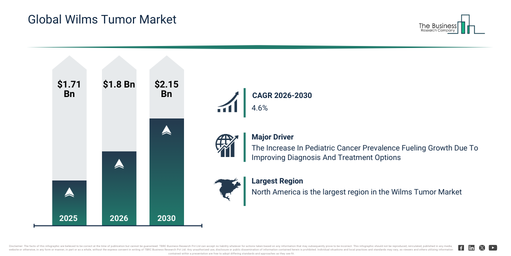
    The wilms tumor market size has experienced consistent growth in recent years. It is projected to expand from $1.71 billion in 2025 to $1.8 billion in 2026, reflecting a compound annual growth rate (CAGR) of 4.8%. Historically, this growth can be ascribed to improvements in pediatric oncology diagnostics, the expansion of chemotherapy treatment protocols, increased survival rates achieved through early intervention, wider availability of imaging technologies, and the proliferation of specialized pediatric cancer centers.

    The Wilms tumor market is anticipated to experience consistent expansion over the coming years. It is projected to reach a value of $2.15 billion by 2030, demonstrating a compound annual growth rate (CAGR) of 4.6%. This growth during the forecast period stems from the increasing adoption of personalized treatment strategies, heightened investments in pediatric cancer research, the broadening scope of advanced imaging and genetic testing, a growing availability of targeted therapies, and enhanced global awareness of childhood cancers. Key developments anticipated within this timeframe encompass a rise in the application of precision oncology protocols, a sharpened emphasis on early-stage detection methods, the proliferation of combination therapy regimens, improved integration of diagnostic and treatment planning, and advancements in multimodal diagnostic approaches.

    Access Your Free Sample Report for In-Depth Market Insights:

    https://www.thebusinessresearchcompany.com/sample.aspx?id=23582&type=smp

    What Drivers Are Affecting Demand-Supply Dynamics In The Wilms Tumor Market?

    The rising occurrence of pediatric cancer is projected to boost the expansion of the Wilms tumor market in the coming years. Pediatric cancer is defined as malignancy affecting children between 0 and 14 years of age, characterized by uncontrolled cell proliferation that can emerge in various body tissues and organs. Its prevalence stems from factors such as environmental pollutant exposure, genetic predispositions, infections, and elements of the immune system. Instances of pediatric cancer offer vital understanding for early detection, treatment approaches, and genetic components, thereby enhancing survival outcomes. This also aids in creating customized treatments, thereby improving patient outcomes and overall life quality for affected young individuals. For instance, in January 2025, according to the Cancer Network, a US-based cancer research organization, an estimated 9,550 children (aged 0–14 years) will be diagnosed with cancer, with 1,050 estimated to die from the disease. Consequently, the growing incidence of pediatric cancer is stimulating the growth of the Wilms tumor market.

    What Segments Are Included Within The Wilms Tumor Market?

    The wilms tumor market covered in this report is segmented –

    1) By Type: Favorable Histology, Anaplastic Histology

    2) By Stage: Stage I, Stage II, Stage III, Stage IV, Stage V

    3) By Diagnosis: Physical Examination, Imaging Tests, Lab Tests

    4) By Treatment: Surgery, Chemotherapy, Radiation Therapy

    5) By End-User: Cancer Research Institutes, Diagnostic Laboratories, Hospitals, Other End-Users

    Subsegments:

    1) By Favorable Histology: Unilateral Wilms Tumor, Bilateral Wilms Tumor, Nephroblastomatosis

    2) By Anaplastic Histology: Diffuse Anaplastic Wilms Tumor, Focal Anaplastic Wilms Tumor, Mixed Anaplastic Wilms Tumor

    Who Are The Primary Competitors In The Global Wilms Tumor Market?

    Major companies operating in the wilms tumor market are Thermo Fisher Scientific Inc., Agilent Technologies Inc., Exelixis Inc., Abcam plc, Sino Biological Inc., OriGene Technologies Inc., Cell Signaling Technology Inc., Proteintech Group Inc., Santa Cruz Biotechnology Inc., Novus Biologicals LLC, Pfizer Inc., Novartis AG, Bristol-Myers Squibb Company, F. Hoffmann-La Roche Ltd., GSK plc, Sanofi S A, AbbVie Inc., Amgen Inc., Takeda Pharmaceutical Company Limited, Johnson & Johnson, Bayer AG

    Access The Complete Report For Deeper Market Insights:

    https://www.thebusinessresearchcompany.com/report/wilms-tumor-global-market-report

    Which Global Regions Are Shaping The Competitive Landscape Of The Wilms Tumor Market?

    North America was the largest region in the wilms tumor market in 2025. Asia-Pacific is expected to be the fastest-growing region in the forecast period. The regions covered in the wilms tumor market report are Asia-Pacific, South East Asia, Western Europe, Eastern Europe, North America, South America, Middle East, Africa.

    Request Your Customized Wilms Tumor Market Research Report for Competitive Advantage:

    https://www.thebusinessresearchcompany.com/customise?id=23582&type=smp

    Browse Through More Reports Similar to the Global Wilms Tumor Market 2026, By The Business Research Company

    Desmoid Tumors Market Report 2026

    https://www.thebusinessresearchcompany.com/report/desmoid-tumors-global-market-report

    Germ Cell Tumor Market Report 2026

    https://www.thebusinessresearchcompany.com/report/germ-cell-tumor-global-market-report

    Emphysema Market Report 2026

    https://www.thebusinessresearchcompany.com/report/emphysema-global-market-report

    Get in touch with us:

    The Business Research Company: https://www.thebusinessresearchcompany.com/

    Americas +1 310-496-7795

    Asia +44 7882 955267 & +91 8897263534

    Europe +44 7882 955267

    Email us at info@tbrc.info

    Follow us on:

    LinkedIn: https://in.linkedin.com/company/the-business-research-company

    YouTube: https://www.youtube.com/channel/UC24_fI0rV8cR5DxlCpgmyFQ

    Global Market Model: https://www.thebusinessresearchcompany.com/global-market-model
  • Whole Slide Imaging Market Performance Outlook 2026–2030: Revenue to Hit $1.47 Billion at 10.7% CAGR

    Whole Slide Imaging Market Performance Outlook 2026–2030: Revenue to Hit $1.47 Billion at 10.7% CAGR

    Uncover key drivers, emerging technologies, and competitive movements shaping the whole slide imaging market from 2026–2035 with trusted insights from The Business Research Company

    What long-term size projections exist for the Whole Slide Imaging Market covering 2026–2035?

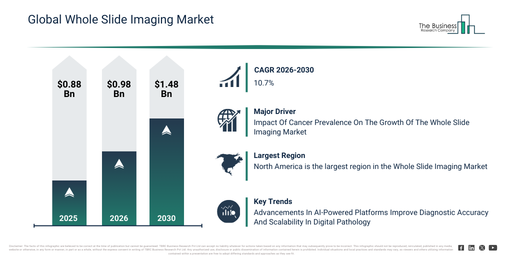
    The whole slide imaging market size has expanded significantly in recent years. It is projected to increase from $0.88 billion in 2025 to $0.98 billion in 2026, exhibiting a compound annual growth rate (CAGR) of 12.1%. This historical growth can be attributed to factors such as increasing cancer diagnosis volumes, the growing application of histopathology in clinical decision-making, rising adoption of digital imaging systems, expansion of pathology research activities, and the increasing availability of high-speed data storage.

    The whole slide imaging market is anticipated to experience significant expansion over the coming years. This market is projected to reach $1.48 billion by 2030, exhibiting a compound annual growth rate (CAGR) of 10.7%. Factors contributing to this growth during the forecast period include the increasing adoption of AI-assisted diagnostics, a rising demand for telepathology services, the expansion of cloud-based pathology platforms, growing investments in digital healthcare infrastructure, and an increasing emphasis on diagnostic accuracy and efficiency. Key trends during this period are the increasing adoption of digital pathology workflows, the rising integration of AI-based image analysis tools, a growing demand for remote diagnostic capabilities, the expansion of high-resolution slide scanning systems, and an enhanced focus on workflow automation.

    Access Your Free Sample Report for In-Depth Market Insights:

    https://www.thebusinessresearchcompany.com/sample.aspx?id=16214&type=smp

    Which Drivers Are Impacting The Competitive Landscape Of The Whole Slide Imaging Market?

    The expansion of the whole slide imaging market is anticipated to be significantly propelled by the increasing incidence of cancer. Cancer refers to a diverse collection of diseases identified by the uncontrolled proliferation and dissemination of abnormal cells. These atypical cells have the capacity to invade and obliterate normal tissue, potentially leading to severe health issues and, without intervention, death. The rise in cancer prevalence is attributed to the obesity epidemic, inherited genetic abnormalities, hepatitis B and C viruses, and human papillomavirus (HPV). Whole slide imaging (WSI) plays a vital role in the diagnosis and treatment of cancer by supplying detailed and accessible digital representations of tissue samples, thereby enhancing accuracy, efficiency, and collaborative efforts in cancer diagnosis and treatment, which ultimately contributes to improved patient outcomes. As an illustration, in May 2024, data from the American Society of Clinical Oncology, a US-based professional organization, indicated an estimated 20 million new cancer cases in 2022, with this figure expected to reach 35 million new cases globally by 2050. Thus, the escalating prevalence of cancer is a key driver for the whole slide imaging market’s growth.

    What Leading Segments Are Studied In The Whole Slide Imaging Market?

    The whole slide imaging market covered in this report is segmented –

    1) By Type: Hardware, Software, Services

    2) By Application: Telepathology, Cytopathology, Immunohistochemistry, Hematopathology

    3) By End User: Academic Institute, Research, Other End User

    Subsegments:

    1) By Hardware: Scanners, Imaging Devices

    2) By Software: Image Management, Analysis, AI Tools

    3) By Services: Installation, Maintenance, Consulting, Digital Pathology Support

    Which Trends Are Influencing The Development Of The Whole Slide Imaging Market?

    Major companies active in the whole slide imaging market are concentrating on developing advanced solutions, including artificial intelligence (AI)-powered digital pathology platforms, to meet the growing requirement for remote diagnostics. These AI-enabled digital pathology platforms are software systems that employ machine-learning algorithms to analyze high-resolution whole-slide images, thereby assisting pathologists in detecting patterns, quantifying tissue features, and prioritizing cases more swiftly and precisely. Such systems also automate routine assessments, reduce human error, enable quicker diagnostic workflows, support remote collaboration, and enhance overall diagnostic confidence. For instance, in May 2024, Indica Labs, a US-based software firm, obtained U.S. Food and Drug Administration (FDA) clearance for HALO AP Dx, its digital pathology platform specifically designed for primary diagnosis using images acquired with the Hamamatsu NanoZoomer S360MD slide scanner. HALO AP Dx functions as a browser-based, software-only system, enabling pathologists to ingest, store, and view whole-slide images from formalin-fixed, paraffin-embedded (FFPE) tissue with high precision and efficiency. The platform offers immediate remote slide access post-scanning, seamless integration with laboratory information systems (LIS/LIMS), and compatibility with numerous file formats to support a wide array of pathology workflows. Its built-in compliance with HIPAA and FDA 21 CFR Part 11 ensures secure and regulated data management, while its scalable cloud or on-premises deployment options assist laboratories in optimizing workload distribution.

    Which Key Market Players Are Investing In Expansion And Innovation Within The Whole Slide Imaging Market?

    Major companies operating in the whole slide imaging market are General Electric Company, F. Hoffmann-La Roche AG, Koninklijke Philips N.V., Olympus Corporation, Nikon Corporation, PerkinElmer Inc., Beckman Coulter Inc., Leica Biosystems GmbH, Hamamatsu Photonics KK, Huron Technologies International, Sectra AB, PathAI, Xifin Inc., OptraSCAN, Paige.AI, Indica Labs, 3DHISTECH Ltd., Visiopharm A/S, Flagship Biosciences Inc., Proscia Inc., LigoLab Information System, Aiforia Technologies plc, Inspirata Inc., Histowiz, Mikroscan Technologies Inc., Corista LLC, Glencoe Software Inc., Definiens AG

    Access The Complete Report For Deeper Market Insights:

    https://www.thebusinessresearchcompany.com/report/whole-slide-imaging-global-market-report

    Which Regions Are Poised For Strategic Growth In The Whole Slide Imaging Market?

    North America was the largest region in the whole slide imaging market in 2025. Asia-Pacific is expected to be the fastest-growing region in the forecast period. The regions covered in the whole slide imaging market report are Asia-Pacific, South East Asia, Western Europe, Eastern Europe, North America, South America, Middle East, Africa.

    Request Your Customized Whole Slide Imaging Market Research Report for Competitive Advantage:

    https://www.thebusinessresearchcompany.com/customise?id=16214&type=smp

    Browse Through More Reports Similar to the Global Whole Slide Imaging Market 2026, By The Business Research Company

    3D Imaging Market Report 2026

    https://www.thebusinessresearchcompany.com/report/3d-imaging-global-market-report

    Optical Imaging Market Report 2026

    https://www.thebusinessresearchcompany.com/report/optical-imaging-global-market-report

    Medical Imaging Market Report 2026

    https://www.thebusinessresearchcompany.com/report/medical-imaging-global-market-report

    Get in touch with us:

    The Business Research Company: https://www.thebusinessresearchcompany.com/

    Americas +1 310-496-7795

    Asia +44 7882 955267 & +91 8897263534

    Europe +44 7882 955267

    Email us at info@tbrc.info

    Follow us on:

    LinkedIn: https://in.linkedin.com/company/the-business-research-company

    YouTube: https://www.youtube.com/channel/UC24_fI0rV8cR5DxlCpgmyFQ

    Global Market Model: https://www.thebusinessresearchcompany.com/global-market-model
  • Global Whole Genome And Exome Sequencing Market Set for Strong Expansion, Reaching $7.63 Billion With 24.8% CAGR by 2030

    Global Whole Genome And Exome Sequencing Market Set for Strong Expansion, Reaching $7.63 Billion With 24.8% CAGR by 2030

    Uncover key drivers, emerging technologies, and competitive movements shaping the whole genome and exome sequencing market from 2026–2035 with trusted insights from The Business Research Company

    What total market size is anticipated for the Whole Genome And Exome Sequencing Market in 2030?

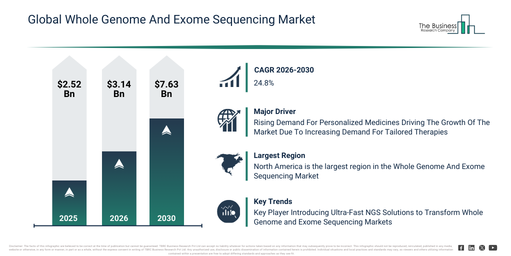
    The market size for whole genome and exome sequencing has experienced exponential growth in recent years. It is projected to expand from $2.52 billion in 2025 to $3.14 billion in 2026, achieving a compound annual growth rate (CAGR) of 24.8%. This historical growth can be attributed to advancements in next-generation sequencing technologies, the rising application of genomics in cancer research, the expansion of academic genomics initiatives, declining sequencing costs, and the development of precision medicine programs.

    The whole genome and exome sequencing market is projected to experience rapid expansion over the coming years. Its valuation is anticipated to reach $7.63 billion by 2030, exhibiting a compound annual growth rate (CAGR) of 24.8%. This anticipated growth during the forecast timeframe is primarily driven by factors such as the growing implementation of extensive genomics initiatives, the increasing incorporation of AI into genomic analysis, broader acceptance of clinical genomics, escalating investments in sequencing infrastructure, and the rising need for tailored treatment approaches. Key developments expected during the forecast period encompass the wider embrace of comprehensive genome sequencing, the expanding application of sequencing in oncology diagnostics, a heightened need for integrated WGS and WES workflows, the proliferation of population genomics research, and an intensified concentration on high-throughput sequencing technologies.

    Access Your Free Sample Report for In-Depth Market Insights:

    https://www.thebusinessresearchcompany.com/sample.aspx?id=13957&type=smp

    What Drivers Are Influencing Production Trends In The Whole Genome And Exome Sequencing Market?

    The future growth of the whole genome and exome sequencing market is projected to be driven by the increasing need for personalized medicine. Personalized medicine represents a medical treatment strategy that customizes healthcare decisions and interventions for each patient, considering their distinct genetic, environmental, and lifestyle factors. Within this approach, whole genome and exome sequencing delivers a comprehensive analysis of an individual’s genetic makeup, which facilitates tailored healthcare choices and interventions based on their unique genetic, environmental, and lifestyle aspects. As an illustration, in February 2024, the Personalized Medicine Coalition (PMC), a US-based organization focused on promoting personalized medicine, noted that the FDA approved 26 personalized medicines. These approvals encompassed 20 new molecular entities (NMEs) and 6 gene-/cell-based therapies, accounting for approximately 38% of all newly approved therapeutic NMEs. Thus, the escalating demand for personalized medicine is propelling the expansion of the whole genome and exome sequencing market.

    Which Segment Groups Are Influencing The Whole Genome And Exome Sequencing Market?

    The whole genome and exome sequencing market covered in this report is segmented –

    1) By Product Type: Kits, Instruments

    2) By Workflow: Whole Genome Sequencing (WGS), Whole Exome Sequencing (WES)

    3) By Applications: Diagnostics, Cancer, Monogenic Disorders, Diabetes, Drug Discovery And Development, Personalized Medicine, Agriculture And Animal Research, Other Applications

    4) By End user: Research Center, Academic And Government Institutions, Hospitals And Clinics, Pharmaceutical And Biotechnology Companies, Other End Users

    Subsegments:

    1) By Kits: Library Preparation Kits, Target Enrichment Kits, DNA Extraction Kits

    2) By Instruments: Next-Generation Sequencing (NGS) Systems, Sanger Sequencing Systems, Third-Generation Sequencing Systems

    What Trends Are Expected To Impact The Competitive Landscape Of The Whole Genome And Exome Sequencing Market?

    Leading companies operating in the whole genome and exome sequencing markets are increasingly focusing on developing advanced technological solutions, such as ultra-fast NGS (next-generation sequencing) analysis, to achieve a competitive advantage. Ultra-fast NGS analysis is a technological advancement that allows for the processing of next-generation sequencing (NGS) data at an exceptionally rapid pace, substantially decreasing the time needed for genomic data analysis. As an illustration, in January 2023, QIAGEN Digital Insights (QDI), a US-based bioinformatics company, introduced its ultra-fast NGS analysis platform. This platform provides functionalities such as processing a whole genome in 25 minutes for $1 in cloud computing costs, thereby encouraging efficiency, affordability, and scalability; its technological innovation considerably improves genomic data analysis speed and accessibility, making it highly significant in the whole genome and exome sequencing market by facilitating prompt decision-making and wider acceptance of personalized medicine.

    Who Are The Core Companies Influencing Trends In The Whole Genome And Exome Sequencing Market?

    Major companies operating in the whole genome and exome sequencing market are Siemens AG, Hoffmann-La Roche Ltd., Thermo Fisher Scientific Inc., Cytiva (Danaher Corporation), Laboratory Corporation of America Holdings, Eurofins Scientific SE, Agilent Technologies Inc., Illumina Inc., QIAGEN N.V, BGI Genomics, Novogene Co., Oxford Nanopore Technologies Inc., Pacific Biosciences of California Inc., GENEWIZ Inc., 10x Genomics Inc., MGI Tech Co. Ltd., Clear Labs Inc., Macrogen Inc., PierianDx Inc., Invitae Corporation, Fulgent Genetics Inc., SOPHiA GENETICS SA, Azenta US Inc., Gene by Gene Ltd.

    Access The Complete Report For Deeper Market Insights:

    https://www.thebusinessresearchcompany.com/report/whole-genome-and-exome-sequencing-global-market-report

    Which Regions Are Projected To Dominate The Whole Genome And Exome Sequencing Market In The Coming Years?

    North America was the largest region in the whole genome and exome sequencing market in 2025. Asia-Pacific is expected to be the fastest-growing region in the forecast period. The regions covered in the whole genome and exome sequencing market report are Asia-Pacific, South East Asia, Western Europe, Eastern Europe, North America, South America, Middle East, Africa.

    Request Your Customized Whole Genome And Exome Sequencing Market Research Report for Competitive Advantage:

    https://www.thebusinessresearchcompany.com/customise?id=13957&type=smp

    Browse Through More Reports Similar to the Global Whole Genome And Exome Sequencing Market 2026, By The Business Research Company

    Dna Sequencing Market Report 2026

    https://www.thebusinessresearchcompany.com/report/dna-sequencing-global-market-report

    Whole Exome Sequencing Market Report 2026

    https://www.thebusinessresearchcompany.com/report/whole-exome-sequencing-global-market-report

    Next Generation Sequencing Market 2026

    https://www.thebusinessresearchcompany.com/report/next-generation-sequencing-market

    Get in touch with us:

    The Business Research Company: https://www.thebusinessresearchcompany.com/

    Americas +1 310-496-7795

    Asia +44 7882 955267 & +91 8897263534

    Europe +44 7882 955267

    Email us at info@tbrc.info

    Follow us on:

    LinkedIn: https://in.linkedin.com/company/the-business-research-company

    YouTube: https://www.youtube.com/channel/UC24_fI0rV8cR5DxlCpgmyFQ

    Global Market Model: https://www.thebusinessresearchcompany.com/global-market-model
  • Kinase Drug Discovery Solutions Market Forecast 2026–2035: Data Trends and Industry Insights

    Kinase Drug Discovery Solutions Market Forecast 2026–2035: Data Trends and Industry Insights

    Uncover key drivers, emerging technologies, and competitive movements shaping the kinase drug discovery solutions market from 2026–2035 with trusted insights from The Business Research Company

    By how much is the Kinase Drug Discovery Solutions Market expected to grow between 2026 and 2030?

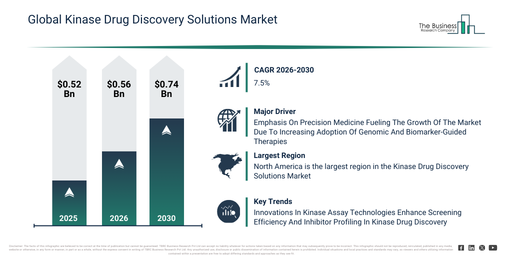
    The market size for kinase drug discovery solutions has experienced significant growth in recent years. It is projected to expand from $0.52 billion in 2025 to $0.56 billion in 2026, exhibiting a compound annual growth rate (CAGR) of 7.3%. This historical expansion can be primarily attributed to factors such as the increasing prevalence of kinase-driven diseases, the broadening of oncology research pipelines, advancements in assay development technologies, the expansion of contract research services, and increased pharmaceutical R&D investments.

    The kinase drug discovery solutions market is projected to experience substantial expansion in the coming years. This market is anticipated to reach a value of $0.74 billion by 2030, exhibiting a compound annual growth rate (CAGR) of 7.5%. Key drivers for this growth include the increasing uptake of precision oncology methods, greater incorporation of computational modeling into drug discovery, the broadening scope of biologics and gene editing applications, a rising need for quicker lead optimization, and an increase in collaborations between pharmaceutical companies and Contract Research Organizations (CROs). Significant trends expected during this period encompass the growing application of AI in identifying kinase targets, the increasing utilization of structure-based drug design platforms, a heightened demand for high-throughput screening services, the development of more integrated medicinal chemistry solutions, and a stronger emphasis on creating selective kinase inhibitors.

    Access Your Free Sample Report for In-Depth Market Insights:

    https://www.thebusinessresearchcompany.com/sample.aspx?id=33191&type=smp

    Which Drivers Are Influencing Market Acceleration In The Kinase Drug Discovery Solutions Market?

    The increased focus on precision medicine is anticipated to drive the expansion of the kinase drug discovery solutions market in the future. Precision medicine involves a developing trend in healthcare, concentrating on creating and implementing treatments customized for individual patients, leveraging genetic, molecular, and biomarker data to enhance treatment results. The uptake of personalized medicine is growing, driven by advancements in genomic and sequencing technologies that have lowered the duration, expense, and intricacy associated with genetic testing. Kinase drug discovery solutions aid precision medicine through the provision of necessary assays, screening technologies, and analytical instruments for identifying and refining kinase inhibitors that accurately target disease pathways and better treatment outcomes. As an illustration, in February 2024, data from the Personalized Medicine Coalition, a US-based nonprofit group, indicated that the FDA sanctioned 16 novel personalized therapies for rare disease patients in 2023, marking a considerable rise from only six approvals in 2022. Consequently, the heightened focus on precision medicine is propelling the expansion of the kinase drug discovery solutions market.

    What Leading Segments Are Studied In The Kinase Drug Discovery Solutions Market?

    The kinase drug discovery solutions market covered in this report is segmented –

    1) By Type: Small Molecules; Biologies; Antibodies; Gene Editing

    2) By Technology: High-Throughput Screening; Structure-Based Drug Design

    3) By Application: Cancer Research; Cardiovascular Diseases; Neurological Disorders; Metabolic Disorders; Autoimmune Diseases

    4) By End-User: Pharmaceutical Companies; Biotechnology Firms; Research Institutions; Academic Organizations

    Subsegments:

    1) By Small Molecules: Kinase Inhibitor Compounds; Allosteric Modulator Compounds; Covalent Inhibitor Compounds; Selective Kinase Modulator Compounds; Multi Target Kinase Inhibitor Compounds

    2) By Biologies: Recombinant Protein Therapeutics; Enzyme Based Therapeutics; Peptide Based Therapeutics; Fusion Protein Therapeutics; Protein Degradation Therapeutics

    3) By Antibodies: Monoclonal Antibodies; Bispecific Antibodies; Antibody Fragment Therapeutics; Conjugated Antibody Therapeutics; Humanized Antibody Therapeutics

    4) By Gene Editing: Clustered Regularly Interspaced Short Palindromic Repeats Based Editing; Transcription Activator Like Effector Nuclease Based Editing; Zinc Finger Nuclease Based Editing; Base Editing Technologies; Prime Editing Technologies

    What Trends Are Reshaping The Dynamics Of The Kinase Drug Discovery Solutions Market?

    Leading companies in the kinase drug discovery solutions market are concentrating on developing advanced products, such as ready-to-use kinase activity detection kits, to enhance assay consistency and streamline inhibitor profiling during early-stage drug discovery. A ready-to-use kinase activity detection kit is a pre-prepared assay solution that facilitates rapid measurement of kinase enzyme activity without extensive setup. It delivers sensitive and accurate detection of phosphorylation events, allowing for efficient analysis of signaling pathways in research and drug development. For instance, in January 2026, Sino Biological, a US-based biotechnology company, unveiled the SwiftFluo TR-FRET Kinase Assay Kits, a ready-to-use, high-performance solution engineered to support high-throughput screening of kinase inhibitors in drug discovery workflows. These kits utilize time-resolved fluorescence resonance energy transfer (TR-FRET) technology to provide robust signal stability, reduced background interference, and improved assay consistency, enabling faster and more precise identification of promising kinase inhibitor candidates for therapeutic development.

    Which Leading Companies Dominate The Kinase Drug Discovery Solutions Market Share?

    Major companies operating in the kinase drug discovery solutions market are Thermo Fisher Scientific Inc., Eurofins Scientific SE, Pharmaron Incorporated, KMD Bioscience Co. Ltd., GenScript Biotech Corporation, Sino Biological Inc., Reaction Biology Corp, Domainex Ltd, Creative Bioarray Inc, Carna Biosciences Inc., BPS Bioscience Inc., Syngene International Ltd, MedChemExpress LLC, Creative Biogene Inc, Kinexus Bioinformatics Corporation, Enzymlogic S.L., AssayQuant Technologies Inc., LC Sciences LLC, Luceome Biotechnologies LLC, and BOC Sciences Inc.

    Access The Complete Report For Deeper Market Insights:

    https://www.thebusinessresearchcompany.com/report/kinase-drug-discovery-solutions-market-report

    How Does The Kinase Drug Discovery Solutions Market Perform Across Major Global Regions?

    North America was the largest region in the kinase drug discovery solutions market in 2025. Asia-Pacific is expected to be the fastest-growing region in the forecast period. The regions covered in the kinase drug discovery solutions market report are Asia-Pacific, South East Asia, Western Europe, Eastern Europe, North America, South America, Middle East, Africa.

    Request Your Customized Kinase Drug Discovery Solutions Market Research Report for Competitive Advantage:

    https://www.thebusinessresearchcompany.com/customise?id=33191&type=smp

    Browse Through More Reports Similar to the Global Kinase Drug Discovery Solutions Market 2026, By The Business Research Company

    Kinase Inhibitors Market Report 2026

    https://www.thebusinessresearchcompany.com/report/kinase-inhibitors-global-market-report

    Tyrosine Kinase Inhibitors Market Report 2026

    https://www.thebusinessresearchcompany.com/report/tyrosine-kinase-inhibitors-global-market-report

    Drug Discovery Technologies Market Report 2026

    https://www.thebusinessresearchcompany.com/report/drug-discovery-technologies-global-market-report

    Get in touch with us:

    The Business Research Company: https://www.thebusinessresearchcompany.com/

    Americas +1 310-496-7795

    Asia +44 7882 955267 & +91 8897263534

    Europe +44 7882 955267

    Email us at info@tbrc.info

    Follow us on:

    LinkedIn: https://in.linkedin.com/company/the-business-research-company

    YouTube: https://www.youtube.com/channel/UC24_fI0rV8cR5DxlCpgmyFQ

    Global Market Model: https://www.thebusinessresearchcompany.com/global-market-model
  • Whole Exome Sequencing Market Growth Projection: Expected to Surpass $8.86 Billion by 2030 at 21.5% CAGR

    Whole Exome Sequencing Market Growth Projection: Expected to Surpass $8.86 Billion by 2030 at 21.5% CAGR

    Uncover key drivers, emerging technologies, and competitive movements shaping the whole exome sequencing market from 2026–2035 with trusted insights from The Business Research Company

    What is the expected shift in the Whole Exome Sequencing Market’s size between 2026 and 2030?

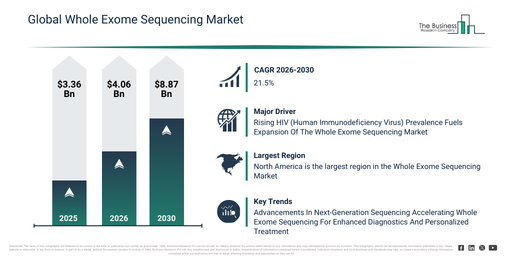
    The market for whole exome sequencing has experienced exponential growth in recent times. Forecasts indicate it will expand from $3.36 billion in 2025 to reach $4.06 billion in 2026, demonstrating a compound annual growth rate (CAGR) of 21.0%. Historically, this expansion has been driven by factors such as the greater availability of next-generation sequencing platforms, an increase in genetic disorder diagnoses, the widening scope of academic genomic research, a reduction in sequencing expenses, and the growing uptake in clinical laboratories.

    The whole exome sequencing market is projected to experience substantial expansion in the coming years, reaching $8.87 billion by 2030, exhibiting a compound annual growth rate (CAGR) of 21.5%. This anticipated growth during the forecast period is fueled by several factors, including the escalating demand for precision diagnostics, the broadening of genomic medicine initiatives, the enhanced incorporation of sequencing data into clinical decision-making processes, increasing investments in sequencing infrastructure, and its growing application in drug discovery. Key trends defining this period encompass the wider acceptance of exome-based diagnostic testing, the growing application of sequencing for rare disease identification, the increasing incorporation of bioinformatics analysis platforms, the proliferation of personalized medicine applications, and a heightened emphasis on developing cost-efficient sequencing workflows.

    Access Your Free Sample Report for In-Depth Market Insights:

    https://www.thebusinessresearchcompany.com/sample.aspx?id=10669&type=smp

    Which Drivers Are Shaping Strategic Decisions In The Whole Exome Sequencing Market?

    The rising incidence of HIV (human immunodeficiency virus) is anticipated to drive the expansion of the whole exome sequencing market in the future. HIV is defined as a virus that primarily attacks the body’s immune system. Whole exome sequencing serves to reveal the genomic structures of viruses, which are valuable for developing customized treatments and vaccines for HIV. For example, data from August 2024, provided by the US-based government agency, the Minority HIV/AIDS Fund (MHAF), indicated that around 39.9 million people globally were living with HIV in 2023, comprising 38.6 million adults and 1.4 million children, compared to previous years. Consequently, the growing prevalence of HIV is stimulating the growth of the whole exome sequencing market.

    What Segment Classifications Make Up The Whole Exome Sequencing Market?

    The whole exome sequencing market covered in this report is segmented –

    1) By Product: Systems, Kits, Services

    2) By Technology: Sequencing By Synthesis, Ion Semiconductor Sequencing, Other Technologies

    3) By Application: Diagnostics, Drug Discovery And Development, Personalized Medicine, Agriculture And Animal Research

    4) By End-User: Hospitals And Clinics, Pharmaceutical And Biotechnology Companies, Academic and Research Institutes, Clinical Laboratories, Other End-Users

    Subsegments:

    1) By Systems: Sequencing Systems, Data Analysis Systems

    2) By Kits: Library Preparation Kits, Exome Enrichment Kits, Sequencing Kits

    3) By Services: Data Analysis Services, Consulting Services, Custom Sequencing Services

    Which Trends Are Guiding The Evolution Of The Whole Exome Sequencing Market?

    Leading companies within the whole exome sequencing market are developing sophisticated next-generation sequencing (NGS) ultra-fast technology to improve the speed and precision of genetic analysis, thereby enabling quicker diagnostics and personalized treatment plans in healthcare. This next-generation sequencing (NGS) ultra-fast technology significantly enhances whole exome sequencing by rapidly analyzing exonic areas, which allows for the prompt detection of genetic mutations critical for diagnosis and research. For instance, in January 2023, Qiagen, a Germany-based medical devices and health care company, launched the CLC genomics workbench premium with lightspeed technology, facilitating efficient analysis of both whole genome sequencing (WGS) and whole exome sequencing (WES) data. This innovation processes an entire genome in just 25 minutes for approximately $1 using cloud computing, while also offering support for local hardware. By reducing both time and costs, lightSpeed substantially increases the accessibility of large-scale genetic testing within the WES market.

    Which Major Industry Participants Are Leading The Whole Exome Sequencing Market Growth?

    Major companies operating in the whole exome sequencing market are Thermo Fisher Scientific Inc., Illumina Inc., Eurofins Genomics, Azenta US Inc., CD Genomics, Psomagen Inc., Agilent Technologies, BGI Genomics, F. Hoffmann-La Roche Ltd., QIAGEN Inc., Macrogen Inc., Ambry Genetics, Bio-Rad Laboratories Inc., Bioneer Corporation, Foundation Medicine Inc., Otogenetics Corporation, Geneyx Genomex Ltd., ArcherDX Inc., Blueprint Genetics Oy, Centogene AG, Fulgent Genetics Inc., Natera Inc., GeneDx Inc., GENEWIZ Inc., Novogene Corporation, PerkinElmer Inc., Personalis Inc.

    Access The Complete Report For Deeper Market Insights:

    https://www.thebusinessresearchcompany.com/report/whole-exome-sequencing-global-market-report

    Which Region Is Expected To Experience The Fastest Growth In The Whole Exome Sequencing Market?

    North America was the largest region in the whole exome sequencing market in 2025.Asia-Pacific is expected to be the fastest-growing region in the global whole exome sequencing market report during the forecast period. The regions covered in the whole exome sequencing market report are Asia-Pacific, South East Asia, Western Europe, Eastern Europe, North America, South America, Middle East, Africa.

    Request Your Customized Whole Exome Sequencing Market Research Report for Competitive Advantage:

    https://www.thebusinessresearchcompany.com/customise?id=10669&type=smp

    Browse Through More Reports Similar to the Global Whole Exome Sequencing Market 2026, By The Business Research Company

    Protein Sequencing Market Report 2026

    https://www.thebusinessresearchcompany.com/report/protein-sequencing-global-market-report

    Whole Genome And Exome Sequencing Market Report 2026

    https://www.thebusinessresearchcompany.com/report/whole-genome-and-exome-sequencing-global-market-report

    Next Generation Sequencing Market 2026

    https://www.thebusinessresearchcompany.com/report/next-generation-sequencing-market

    Get in touch with us:

    The Business Research Company: https://www.thebusinessresearchcompany.com/

    Americas +1 310-496-7795

    Asia +44 7882 955267 & +91 8897263534

    Europe +44 7882 955267

    Email us at info@tbrc.info

    Follow us on:

    LinkedIn: https://in.linkedin.com/company/the-business-research-company

    YouTube: https://www.youtube.com/channel/UC24_fI0rV8cR5DxlCpgmyFQ

    Global Market Model: https://www.thebusinessresearchcompany.com/global-market-model
  • Kidney Transplant Rejection Market Outlook 2026–2030: Key Business Drivers and Trends

    Kidney Transplant Rejection Market Outlook 2026–2030: Key Business Drivers and Trends

    Uncover key drivers, emerging technologies, and competitive movements shaping the kidney transplant rejection market from 2026–2035 with trusted insights from The Business Research Company

    What is the estimated market size of the Kidney Transplant Rejection Market by the end of 2030?

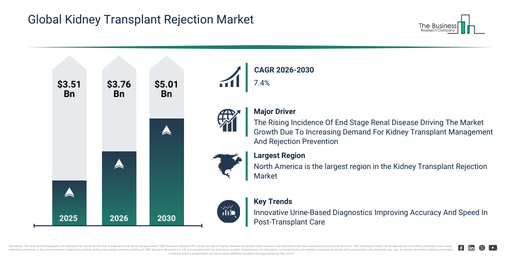
    The kidney transplant rejection market has experienced substantial expansion in recent years. This market is projected to expand from $3.51 billion in 2025 to $3.76 billion in 2026, at a compound annual growth rate (CAGR) of 7.2%. The growth observed historically can be credited to an increase in kidney transplant procedures, advancements in histopathological assessment techniques, greater availability of immunosuppressive drugs, the expansion of transplant center networks, and enhanced post-transplant patient survival rates.

    The kidney transplant rejection market is poised for significant expansion in the coming years, with projections indicating a growth to $5.01 billion by 2030, reflecting a compound annual growth rate (CAGR) of 7.4%. This anticipated growth can be linked to a surging demand for personalized immunosuppression strategies, the wider embrace of molecular diagnostics, the progression of precision medicine in transplant care, an increasing emphasis on ensuring long-term graft survival, and greater investment in transplant monitoring technologies. Notable trends expected in this period include the rising adoption of biomarker-based rejection monitoring, an increased reliance on genomics-based diagnostic approaches, ongoing optimization of immunosuppressive therapy protocols, the spread of non-invasive rejection surveillance methods, and an intensified focus on the early detection of chronic rejection.

    Access Your Free Sample Report for In-Depth Market Insights:

    https://www.thebusinessresearchcompany.com/sample.aspx?id=33190&type=smp

    What Drivers Are Shaping Future Opportunities In The Kidney Transplant Rejection Market?

    The increasing occurrence of end-stage renal disease is projected to fuel the expansion of the kidney transplant rejection market moving forward. End-stage renal disease (ESRD) signifies the ultimate, irreversible phase of chronic kidney disease where kidneys fail to perform sufficiently without either dialysis or a kidney transplant. The incidence of ESRD is escalating due to the rising rates of chronic conditions like diabetes and hypertension, which gradually damage the kidneys, leading to failure. Kidney transplant rejection mandates advanced monitoring and therapeutic interventions, directly supporting the management of end-stage renal disease by ensuring transplanted kidneys stay functional and patients maintain kidney health. For instance, in September 2024, data from the National Institute of Diabetes and Digestive and Kidney Diseases, a US-based government institute, indicated that in 2023, more than 808,000 individuals in the United States were living with end-stage kidney disease (ESKD), also known as end-stage renal disease (ESRD), with 68% receiving dialysis and 32% having undergone a kidney transplant. Therefore, the growing incidence of end-stage renal disease is stimulating the growth of the kidney transplant rejection market.

    Which Segment Groups Are Influencing The Kidney Transplant Rejection Market?

    The kidney transplant rejection market covered in this report is segmented –

    1) By Rejection Type: Chronic Rejection; Acute Rejection

    2) By Treatment: Immunosuppressive Drugs; Antibody-Mediated Rejection Therapies

    3) By Diagnostic Approach: Biomarker-Based Diagnostics; Genomics-Based Diagnostics

    4) By Therapeutics: Small Molecule Inhibitors; Biologic Therapies

    5) By End-Users: Transplant Centers Or Hospitals; Diagnostic Laboratories; Pharmacies

    Subsegments:

    1) By Chronic Rejection: Antibody Mediated Chronic Rejection; Chronic Allograft Nephropathy; Interstitial Fibrosis And Tubular Atrophy; Vascular Chronic Rejection; Mixed Chronic Rejection

    2) By Acute Rejection: Cellular Acute Rejection; Antibody Mediated Acute Rejection; Hyperacute Rejection; Mixed Acute Rejection; Vascular Acute Rejection

    How Are New Market Trends Shaping The Landscape Of The Kidney Transplant Rejection Market?

    Leading companies operating within the kidney transplant rejection market are concentrating on developing advanced diagnostic solutions, such as noninvasive urinary biomarker testing, to facilitate faster, safer, and more accurate identification of transplant rejection. This noninvasive urinary biomarker testing involves analyzing urine samples to detect molecular indicators of kidney inflammation or rejection, thereby enabling clinicians to identify transplant complications swiftly and safely without requiring invasive biopsies. For instance, in May 2024, Thermo Fisher Scientific Inc., a US-based biotechnology company, introduced its CXCL10 testing service, a novel diagnostic tool for kidney transplant recipients. The CXCL10 test identifies the CXCL10 chemokine in urine, which is linked to early transplant rejection and inflammation. It delivers results within 24 hours, promoting quicker clinical decisions, reducing the necessity for unnecessary biopsies, and enhancing patient convenience by employing noninvasive sample collection. Developed and validated by Thermo Fisher’s One Lambda Laboratories, the assay integrates high sensitivity and specificity with ease of use in clinical settings, ultimately supporting improved post-transplant care and patient outcomes.

    Who Are The Major Companies Operating In The Kidney Transplant Rejection Market?

    Major companies operating in the kidney transplant rejection market are F. Hoffmann-La Roche AG, Merck & Co. Inc., Sanofi SA, Novartis AG, Bristol-Myers Squibb Company, Thermo Fisher Scientific Inc., Takeda Pharmaceutical Company Limited, Amgen Inc., Asahi Kasei Corporation, Teva Pharmaceutical Industries Ltd., Astellas Pharma Inc., Biogen Inc., ChugAI Pharmaceutical Co. Ltd., Eurofins Scientific SE, Illumina Inc., Natera Inc., CareDx Inc., Azurity Pharmaceuticals Inc., Insight Molecular Diagnostics, and RenalytixAI plc.

    Access The Complete Report For Deeper Market Insights:

    https://www.thebusinessresearchcompany.com/report/kidney-transplant-rejection-market-report

    Which Region Is Anticipated To See The Fastest Growth In The Kidney Transplant Rejection Market?

    North America was the largest region in the kidney transplant rejection market in 2025. Asia-Pacific is expected to be the fastest-growing region in the forecast period. The regions covered in the kidney transplant rejection market report are Asia-Pacific, South East Asia, Western Europe, Eastern Europe, North America, South America, Middle East, Africa.

    Request Your Customized Kidney Transplant Rejection Market Research Report for Competitive Advantage:

    https://www.thebusinessresearchcompany.com/customise?id=33190&type=smp

    Browse Through More Reports Similar to the Global Kidney Transplant Rejection Market 2026, By The Business Research Company

    Kidney Transplant Market Report 2026

    https://www.thebusinessresearchcompany.com/report/kidney-transplant-global-market-report

    Organ Transplant Immunosuppressant Drugs Market Report 2026

    https://www.thebusinessresearchcompany.com/report/organ-transplant-immunosuppressant-drugs-global-market-report

    Continuous Renal Replacement Therapy Market Report 2026

    https://www.thebusinessresearchcompany.com/report/continuous-renal-replacement-therapy-global-market-report

    Get in touch with us:

    The Business Research Company: https://www.thebusinessresearchcompany.com/

    Americas +1 310-496-7795

    Asia +44 7882 955267 & +91 8897263534

    Europe +44 7882 955267

    Email us at info@tbrc.info

    Follow us on:

    LinkedIn: https://in.linkedin.com/company/the-business-research-company

    YouTube: https://www.youtube.com/channel/UC24_fI0rV8cR5DxlCpgmyFQ

    Global Market Model: https://www.thebusinessresearchcompany.com/global-market-model
  • White Biotechnology Market Forecast 2026–2035: How to Leverage Market Growth

    White Biotechnology Market Forecast 2026–2035: How to Leverage Market Growth

    Uncover key drivers, emerging technologies, and competitive movements shaping the white biotechnology market from 2026–2035 with trusted insights from The Business Research Company

    What growth pattern is forecast for the White Biotechnology Market size between 2026 and 2035?

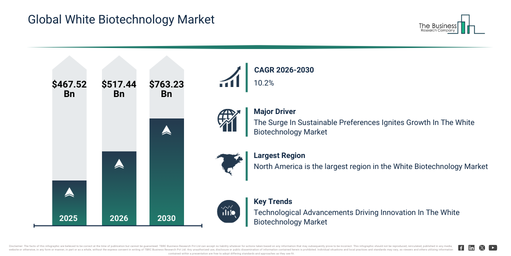
    The white biotechnology market size has experienced substantial growth in recent years. It is projected to expand from $467.52 billion in 2025 to $517.44 billion in 2026, demonstrating a compound annual growth rate (CAGR) of 10.7%. The market’s historical growth is primarily driven by factors such as increasing environmental regulations on chemical manufacturing, the widespread availability of fermentation-based production methods, the growing adoption of industrial enzymes, the expansion of biofuel blending mandates, and a rise in sustainable manufacturing initiatives.

    The white biotechnology market is poised for significant expansion in the coming years. Projections indicate it will reach $763.23 billion by 2030, exhibiting a compound annual growth rate (CAGR) of 10.2%. This anticipated growth during the forecast period stems from factors such as heightened investments in green industrial biotechnology, a surging demand for bio-based alternatives to traditional petrochemicals, the broadening implementation of circular bioeconomy models, a sharpened focus on carbon-neutral manufacturing, and the accelerated commercialization of advanced bioprocesses. Key trends for the forecast period encompass a greater embrace of bio-based industrial processes, an escalating demand for the utilization of renewable feedstocks, the wider application of enzyme-based manufacturing techniques, the expansion of both bioplastics and biofuels production, and an intensified commitment to low-emission industrial solutions.

    Access Your Free Sample Report for In-Depth Market Insights:

    https://www.thebusinessresearchcompany.com/sample.aspx?id=8625&type=smp

    Which Drivers Are Impacting Market Performance In The White Biotechnology Market?

    The increasing consumer demand for environmentally friendly products is anticipated to fuel the expansion of the white biotechnology market in the coming period. Such products are characterized by their ability to reduce negative impacts on both the environment and society, utilize resources judiciously and effectively, and maintain profitability across their entire lifespan. White biotechnology plays a crucial role in creating these sustainable goods by employing microorganisms, enzymes, and biocatalysts to yield environmentally sound and resource-optimized products and processes across diverse sectors. As an illustration, in July 2024, data from the Energy Information Administration, a US-based government Agency, indicates that the production capability for sustainable aviation fuel (SAF) in the United States is forecast to surge from approximately 2,000 barrels per day (b/d) to almost 30,000 b/d by 2024. Consequently, the expanding inclination towards sustainable solutions is a key factor propelling the development of the white biotechnology market.

    What Segment Types Are Examined In The White Biotechnology Market?

    The white biotechnology market covered in this report is segmented –

    1) By Product Type: Biofuels, Biomaterials, Biochemicals, Industrial Enzymes

    2) By Process Type: Fermentation Technology, Enzyme Technology, Biocatalysis, Synthetic Biology, Metabolic Engineering, Cell Culture Technology

    3) By Application Type: Bioenergy, Food And Feed Additives, Pharmaceutical Ingredients, Personal Care And Household Products, Other Applications

    Subsegments:

    1) By Biofuels: Ethanol, Biodiesel, Biogas

    2) By Biomaterials: Bioplastics, Bio-Based Composites, Bio-based Chemicals

    3) By Biochemicals: Organic Acids, Amino Acids, Solvents

    4) By Industrial Enzymes: Proteases, Amylases, Lipases

    What Trends Are Projected To Support The Growth Of The White Biotechnology Market?

    Major companies entering the white biotechnology market are increasingly adopting technological innovations such as advanced biopolymer and co-polymer platforms to develop sustainable and customized products for diverse applications. These platforms represent biotechnological systems that enable scientists to design and optimize polymers at a molecular level, facilitating the creation of sustainable, high-performance materials capable of replacing petroleum-based polymers and meeting evolving market and regulatory demands. For instance, in June 2023, International Flavors & Fragrances Inc., a US-based manufacturer of fragrances, flavors, and cosmetic actives, introduced Designed Enzymatic Biomaterials (DEB) technology, a Biomaterials technology platform engineered to deliver sustainable biopolymers. This technology platform empowers producers to adapt to changing market needs and regulatory changes by offering a substitute for conventional synthetic polymers derived from fossil fuels. Through the DEB technology platform, scientists can directly incorporate the properties of petroleum-based polymers into biopolymer materials, meticulously tailoring and perfecting polysaccharides to provide long-term performance improvements in selected applications.

    Who Are The Prominent Global Companies Shaping The White Biotechnology Market Landscape?

    Major companies operating in the white biotechnology market are Novozyme A/S., Koninklijke DSM N.V., BASF SE., Du Pont Danisco., Amyris Inc., Henkel AG & Co. KGaA., Kaneka Corporation., Evonik Industries AG., Evolva Holding., EUCODIS Bioscience GmbH., Lonza Group Ltd., Borregaard ASA., Codexis Inc., Deinove SA., Fermentalg SA., Gevo Inc., Global Bioenergies SA., Metabolic Explorer SA.

    Access The Complete Report For Deeper Market Insights:

    https://www.thebusinessresearchcompany.com/report/white-biotechnology-global-market-report

    Which Geographic Areas Are Emerging As Strong Markets For The White Biotechnology Market?

    North America was the largest region in the white biotechnology market in 2025. The regions covered in the white biotechnology market report are Asia-Pacific, South East Asia, Western Europe, Eastern Europe, North America, South America, Middle East, Africa.

    Request Your Customized White Biotechnology Market Research Report for Competitive Advantage:

    https://www.thebusinessresearchcompany.com/customise?id=8625&type=smp

    Browse Through More Reports Similar to the Global White Biotechnology Market 2026, By The Business Research Company

    Biotechnology Services Market Report 2026

    https://www.thebusinessresearchcompany.com/report/biotechnology-services-global-market-report

    Red Biotechnology Market Report 2026

    https://www.thebusinessresearchcompany.com/report/red-biotechnology-global-market-report

    Agricultural Biotechnology Market Report 2026

    https://www.thebusinessresearchcompany.com/report/agricultural-biotechnology-global-market-report

    Get in touch with us:

    The Business Research Company: https://www.thebusinessresearchcompany.com/

    Americas +1 310-496-7795

    Asia +44 7882 955267 & +91 8897263534

    Europe +44 7882 955267

    Email us at info@tbrc.info

    Follow us on:

    LinkedIn: https://in.linkedin.com/company/the-business-research-company

    YouTube: https://www.youtube.com/channel/UC24_fI0rV8cR5DxlCpgmyFQ

    Global Market Model: https://www.thebusinessresearchcompany.com/global-market-model
  • Global Janus Kinase (JAK) 3 Inhibitor Market Report 2026: Emerging Trends and Growth Scenarios

    Global Janus Kinase (JAK) 3 Inhibitor Market Report 2026: Emerging Trends and Growth Scenarios

    Uncover key drivers, emerging technologies, and competitive movements shaping the janus kinase (jak) 3 inhibitor market from 2026–2035 with trusted insights from The Business Research Company

    What was the valuation of the Janus Kinase (JAK) 3 Inhibitor Market in 2026, and what figure is it projected to hit by 2030?

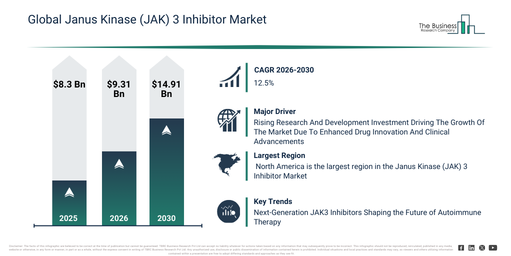
    The janus kinase (jak) 3 inhibitor market has experienced swift expansion recently. Projections indicate a rise from $8.3 billion in 2025 to $9.31 billion in 2026, demonstrating a compound annual growth rate (CAGR) of 12.2%. Historically, this growth stemmed from progress in kinase inhibitor drug discovery, a higher incidence of autoimmune conditions, initial clinical triumphs of selective JAK inhibition, the spread of oral immunomodulatory treatments, and the proliferation of targeted therapy investigations.

    The janus kinase (jak) 3 inhibitor market size is poised for substantial expansion in the next few years. It is forecast to achieve a valuation of $14.91 billion by 2030, growing at a compound annual growth rate (CAGR) of 12.5%. This anticipated growth is fueled by factors such as the proliferation of precision immunology treatments, a surging demand for safer long-term immune therapies, the increased integration of biomarker-driven treatment decisions, rising investment in next-generation jak inhibitors, and an expansion of therapeutic indications. Significant trends within this forecast period include the increasing development of highly selective jak3 inhibitors, a heightened focus on reducing off-target immunosuppression, greater utilization of companion diagnostics, the broader application of oral small molecule therapies, and augmented clinical research in autoimmune and inflammatory disorders.

    Access Your Free Sample Report for In-Depth Market Insights:

    https://www.thebusinessresearchcompany.com/sample.aspx?id=33189&type=smp

    Which Drivers Are Affecting Market Participation In The Janus Kinase (JAK) 3 Inhibitor Market?

    The growth of the Janus kinase 3 (JAK3) inhibitor market is anticipated to be driven by rising investments in research and development. Research and development (R&D) constitutes a systematic approach to investigating, innovating, and creating new offerings or processes, fostering knowledge advancement and business expansion. These investments are increasing due to heightened competition, prompting companies to innovate for product differentiation and to maintain a technological edge in dynamic markets. For Janus kinase 3 (JAK3) inhibitors, R&D funding supports comprehensive studies to elucidate drug mechanisms, optimize chemical structures for greater specificity, and conduct clinical trials to establish safety and efficacy, ultimately delivering more effective treatments with reduced side effects for conditions such as autoimmune diseases and organ transplant rejection. A notable instance is the European Union’s allocation of $475 billion (€403 billion) to research and development in 2024, representing 2.24% of the region’s GDP, as reported by Eurostat, a Luxembourg-based statistical office, in November 2025. Consequently, the increasing research and development investment is significantly contributing to the expansion of the Janus kinase 3 (JAK3) inhibitor market.

    What Segment Classifications Make Up The Janus Kinase (JAK) 3 Inhibitor Market?

    The janus kinase (jak) 3 inhibitor market covered in this report is segmented –

    1) By Product Type: Selective Janus Kinase (JAK)3 Inhibitors; Pan-Janus Kinase (JAK) Inhibitors with Janus Kinase (JAK) 3 Activity

    2) By Therapeutic Indication: Rheumatoid Arthritis; Psoriasis; Ulcerative Colitis; Hematologic Malignancies; Other Therapeutic Indications

    3) By Route of Administration: Oral Tablets and Capsules; Topical Creams and Ointments; Subcutaneous and Parenteral Injections; Transdermal Drug Delivery Systems

    4) By Distribution Channel: Direct Sales to Healthcare Providers; Pharmaceutical Distributors and Wholesalers; Online and E-Pharmacy Channels

    5) By End User: Hospitals; Specialty Clinics; Retail Pharmacies and Outpatient Centers; Academic and Research Institutions

    Subsegments:

    1) By Selective Janus Kinase (JAK)3 Inhibitors: First Generation Selective Janus Kinase Three Inhibitors; Next Generation Highly Selective Janus Kinase Three Inhibitors; Oral Small Molecule Selective Janus Kinase Three Inhibitors; Immune Targeted Selective Janus Kinase Three Inhibitors

    2) By Pan-Janus Kinase (JAK) Inhibitors with JAK3 Activity: Multi Kinase Pan Janus Kinase Inhibitors; Broad Spectrum Immune Modulating Janus Kinase Inhibitors; Oral Systemic Pan Janus Kinase Therapies; Combination Activity Janus Kinase Inhibitor Therapies

    Which Trends Are Expected To Influence The Janus Kinase (JAK) 3 Inhibitor Market In The Upcoming Years?

    Leading companies active in the janus kinase 3 (JAK3) inhibitor market are prioritizing the development of advanced solutions, such as selective oral small-molecule JAK3 inhibitors, to fulfill the increasing demand for precise treatments for autoimmune and inflammatory diseases with better safety profiles. Selective oral small-molecule JAK3 inhibitors are characterized as low-molecular-weight, orally administered drugs specifically engineered to inhibit Janus kinase 3 (JAK3) while leaving other JAK family members (JAK1, JAK2, and TYK2) unaffected. For example, in June 2023, Pfizer Inc., a US-based biopharmaceutical company, obtained U.S. Food and Drug Administration (FDA) approval for LITFULO (ritlecitinib), a groundbreaking once-daily oral JAK3-selective inhibitor for managing severe alopecia areata in adults and adolescents aged 12 years and older. Ritlecitinib selectively suppresses JAK3 and TEC family kinases, which are vital in immune-mediated inflammation affecting hair follicles. This selective action sets it apart from conventional JAK inhibitors by providing a more targeted immunomodulatory strategy. The FDA approval was underpinned by positive data from the ALLEGRO Phase 2b/3 clinical trials, which showcased considerable scalp hair regrowth and cemented LITFULO’s status as a pivotal advancement in the janus kinase 3 (JAK3) inhibitor market.

    Which Major Firms Are Strengthening Their Position In The Janus Kinase (JAK) 3 Inhibitor Market?

    Major companies operating in the janus kinase (jak) 3 inhibitor market are Merck & Co. Inc., Pfizer Inc., AbbVie Inc., Novartis AG, GlaxoSmithKline Plc, Eli Lilly and Company, Takeda Pharmaceutical Company Limited, Vertex Pharmaceuticals Incorporated, Sun Pharmaceutical Industries Limited, Incyte Corporation, LEO Pharma A/S, Alfasigma S.p.A., Karyopharm Therapeutics Inc., Rigel Pharmaceuticals Inc., Arcutis Biotherapeutics Inc., Theravance Biopharma Inc., Celon Pharma S.A., Aclaris Therapeutics Inc., Dizal Pharmaceutical Co. Ltd., Asana BioSciences LLC, Ajax Therapeutics Inc., Sareum Holdings plc, and MaxiNovel Pharmaceuticals Co. Ltd.

    Access The Complete Report For Deeper Market Insights:

    https://www.thebusinessresearchcompany.com/report/janus-kinase-jak-3-inhibitor-market-report

    Which Region Shows The Strongest Potential For Future Expansion In The Janus Kinase (JAK) 3 Inhibitor Market?

    North America was the largest region in the janus kinase 3 (JAK3) inhibitor market in 2025. Asia-Pacific is expected to be the fastest-growing region in the forecast period. The regions covered in the janus kinase (jak) 3 inhibitor market report are Asia-Pacific, South East Asia, Western Europe, Eastern Europe, North America, South America, Middle East, Africa.

    Request Your Customized Janus Kinase (JAK) 3 Inhibitor Market Research Report for Competitive Advantage:

    https://www.thebusinessresearchcompany.com/customise?id=33189&type=smp

    Browse Through More Reports Similar to the Global Janus Kinase (JAK) 3 Inhibitor Market 2026, By The Business Research Company

    Janus Kinase Jak Inhibitors Market Report 2026

    https://www.thebusinessresearchcompany.com/report/janus-kinase-jak-inhibitors-global-market-report

    Kinase Inhibitors Market Report 2026

    https://www.thebusinessresearchcompany.com/report/kinase-inhibitors-global-market-report

    Tyrosine Kinase Inhibitors Market Report 2026

    https://www.thebusinessresearchcompany.com/report/tyrosine-kinase-inhibitors-global-market-report

    Get in touch with us:

    The Business Research Company: https://www.thebusinessresearchcompany.com/

    Americas +1 310-496-7795

    Asia +44 7882 955267 & +91 8897263534

    Europe +44 7882 955267

    Email us at info@tbrc.info

    Follow us on:

    LinkedIn: https://in.linkedin.com/company/the-business-research-company

    YouTube: https://www.youtube.com/channel/UC24_fI0rV8cR5DxlCpgmyFQ

    Global Market Model: https://www.thebusinessresearchcompany.com/global-market-model
  • Internet Of Medical Things (IOMT) For Drug Delivery Market Forecast 2026: Where the Industry Is Headed

    Internet Of Medical Things (IOMT) For Drug Delivery Market Forecast 2026: Where the Industry Is Headed

    Uncover key drivers, emerging technologies, and competitive movements shaping the internet of medical things (iomt) for drug delivery market from 2026–2035 with trusted insights from The Business Research Company

    What are the forecasted starting (2026) and ending (2030) market sizes for the Internet Of Medical Things (IOMT) For Drug Delivery Market?

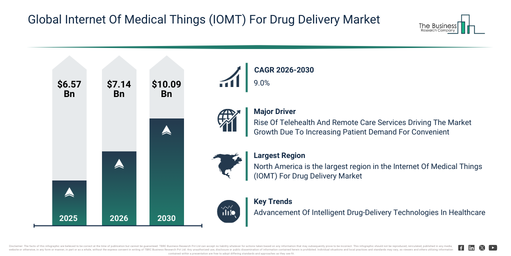
    The market size for the internet of medical things (iomt) in drug delivery has experienced robust expansion in recent years. Projections indicate continued expansion, with its value rising from $6.57 billion in 2025 to $7.14 billion in 2026, demonstrating a compound annual growth rate (CAGR) of 8.8%. This historical growth is attributable to several key factors, including the increasing prevalence of chronic diseases, the early adoption of smart infusion and monitoring devices, the expansion of home healthcare services, a heightened focus on medication adherence, and the broadening of digital health infrastructure.

    The internet of medical things (iomt) for drug delivery market is anticipated to show significant expansion over the next few years. By 2030, this market is forecasted to reach a value of $10.09 billion, exhibiting a compound annual growth rate (CAGR) of 9.0%. This projected growth during the forecast period is primarily driven by factors such as the broader implementation of personalized medicine applications, increased capital expenditure in interconnected healthcare platforms, a surge in demand for remote patient oversight, greater incorporation of AI-powered dosing algorithms, and enhanced regulatory backing for digital therapeutic solutions. Key developments expected in this period encompass a rise in the uptake of linked drug delivery devices, increased utilization of platforms for real-time patient monitoring, the growing incorporation of wearable and implantable systems for delivery, the development of individualized dosage management options, and a heightened emphasis on managing therapies remotely.

    Access Your Free Sample Report for In-Depth Market Insights:

    https://www.thebusinessresearchcompany.com/sample.aspx?id=33187&type=smp

    What Drivers Are Supporting Technological Adoption In The Internet Of Medical Things (IOMT) For Drug Delivery Market?

    The increasing adoption of telehealth and remote care services is projected to stimulate the expansion of the internet of medical things (IoMT) for drug delivery market. These services encompass healthcare provision via digital platforms, allowing individuals to obtain medical advice, supervision, and therapy from home, thereby eliminating the necessity for physical appointments. Their proliferation stems from a growing patient preference for accessible, immediate healthcare solutions, empowering them to engage with physicians, oversee their health, and manage treatments remotely, reducing the need for regular hospital visits. The internet of medical things (IoMT) for drug delivery plays a crucial role in enhancing telehealth and remote care by facilitating continuous monitoring of medication compliance, automating accurate drug delivery, and ensuring smooth information exchange with healthcare professionals. This capability allows doctors to remotely observe treatment evolution, modify prescriptions, and deliver customized care without the need for face-to-face interactions. A notable illustration is observed in April 2023, where FAIR Health Inc., a US non-profit organization, reported a 7.3% surge in national telehealth utilization, escalating from 5.5% of medical claim lines in December 2022 to 5.9% in January 2023. Consequently, the expanding uptake of telemedicine platforms is a key factor propelling the expansion of the internet of medical things (IoMT) for drug delivery market.

    What Segment Types Are Examined In The Internet Of Medical Things (IOMT) For Drug Delivery Market?

    The internet of medical things (iomt) for drug delivery market covered in this report is segmented –

    1) By Type: Wearable Drug Delivery Devices; Smart Inhalers; Injectable Drug Delivery Systems; Implantable Drug Delivery Devices; Remote Drug Monitoring

    2) By Connectivity: Bluetooth And Low Energy Connectivity; Wi Fi Connectivity; Cellular Connectivity; Near Field Communication; Cloud And Edge Based Connectivity

    3) By Application: Chronic Disease Management; Acute Care Drug Delivery; Home Based Drug Administration; Hospital And Clinical Drug Delivery; Personalized And Precision Medicine

    4) By End User: Hospitals And Clinics; Home Care Settings; Pharmaceutical And Biotechnology Companies; Research And Development Organizations; Contract Research And Clinical Trial Centers

    Subsegments:

    1) By Wearable Drug Delivery Devices: On Body Infusion Pumps; Patch Based Drug Delivery Systems; Wearable Insulin Delivery Devices; Wearable Pain Management Devices

    2) By Smart Inhalers: Connected Metered Dose Inhalers; Connected Dry Powder Inhalers; Medication Adherence Monitoring Inhalers; Dose Tracking Inhaler Systems

    3) By Injectable Drug Delivery Systems: Connected Auto Injectors; Smart Pen Injectors; Pre Filled Smart Syringes; Electronic Injection Monitoring Systems

    4) By Implantable Drug Delivery Devices: Implantable Infusion Pumps; Controlled Release Implant Systems; Programmable Drug Delivery Implants; Long Term Therapeutic Implants

    5) By Remote Drug Monitoring: Medication Adherence Monitoring Systems; Real Time Dosage Tracking Platforms; Remote Therapy Management Systems; Patient Compliance Monitoring Solutions

    What Trends Are Driving The Growth Trajectory Of The Internet Of Medical Things (IOMT) For Drug Delivery Market?

    Major companies in the internet of medical things (IoMT) for drug delivery market are concentrating on developing innovative solutions, such as connected smart drug-delivery devices with real-time monitoring, to facilitate personalized dosing, enhance treatment adherence, and improve patient outcomes. These connected smart drug-delivery devices with real-time monitoring are medical tools that automatically track medication delivery and patient data, wirelessly sharing this information with applications or healthcare systems. This capability helps optimize dosing, boost adherence, and enable timely clinical decisions. For example, in November 2024, Medtronic plc, an Ireland-based healthcare technology company, introduced its Smart MDI system, which includes the InPen app alongside Simplera CGM. This system merges a smart insulin pen with a disposable, all-in-one CGM to offer real-time, personalized insights into insulin dosing, including recommendations for detecting and correcting missed or inaccurate mealtime doses. It continuously monitors glucose levels, records insulin administration, and analyzes patient data through a mobile application to lower hyperglycemia risk and support better glycemic control. Compared to conventional insulin pens, this solution provides automated data capture, intelligent alerts, and clinical decision support, significantly reducing dosing uncertainty and improving patient results.

    Who Are The Primary Competitors In The Global Internet Of Medical Things (IOMT) For Drug Delivery Market?

    Major companies operating in the internet of medical things (iomt) for drug delivery market are Siemens AG, F. Hoffmann-La Roche AG, IBM Corporation, Bayer AG, Oracle Corporation, Abbott Laboratories, Honeywell Life Care Solutions Inc., Medtronic plc, Koninklijke Philips N.V., GE HealthCare Technologies Inc., Becton Dickinson and Company, Cognizant Technology Solutions Corporation, Biogen Inc., Omron Healthcare Co. Ltd., Dexcom Inc., Insulet Corporation, Tandem Diabetes Care Inc., Senseonics Inc., AdhereTech Inc., Adherium Limited

    Access The Complete Report For Deeper Market Insights:

    https://www.thebusinessresearchcompany.com/report/internet-of-medical-things-iomt-for-drug-delivery-market-report

    Which Global Regions Are Shaping The Competitive Landscape Of The Internet Of Medical Things (IOMT) For Drug Delivery Market?

    North America was the largest region in the internet of medical things (IOMT) for drug delivery market in 2025. The regions covered in the internet of medical things (iomt) for drug delivery market report are Asia-Pacific, South East Asia, Western Europe, Eastern Europe, North America, South America, Middle East, Africa.

    Request Your Customized Internet Of Medical Things (IOMT) For Drug Delivery Market Research Report for Competitive Advantage:

    https://www.thebusinessresearchcompany.com/customise?id=33187&type=smp

    Browse Through More Reports Similar to the Global Internet Of Medical Things (IOMT) For Drug Delivery Market 2026, By The Business Research Company

    Electrical Test Equipment Market Report 2026

    https://www.thebusinessresearchcompany.com/report/electrical-test-equipment-global-market-report

    Engineering Services Market Report 2026

    https://www.thebusinessresearchcompany.com/report/engineering-services-global-market-report

    Emc Testing Market Report 2026

    https://www.thebusinessresearchcompany.com/report/emc-testing-global-market-report

    Get in touch with us:

    The Business Research Company: https://www.thebusinessresearchcompany.com/

    Americas +1 310-496-7795

    Asia +44 7882 955267 & +91 8897263534

    Europe +44 7882 955267

    Email us at info@tbrc.info

    Follow us on:

    LinkedIn: https://in.linkedin.com/company/the-business-research-company

    YouTube: https://www.youtube.com/channel/UC24_fI0rV8cR5DxlCpgmyFQ

    Global Market Model: https://www.thebusinessresearchcompany.com/global-market-model
  • Global West Syndrome Market 2026–2030: Forecast Insights for Business Planning

    Global West Syndrome Market 2026–2030: Forecast Insights for Business Planning

    Uncover key drivers, emerging technologies, and competitive movements shaping the west syndrome market from 2026–2035 with trusted insights from The Business Research Company

    How much larger will the West Syndrome Market be in 2030 compared with 2026?

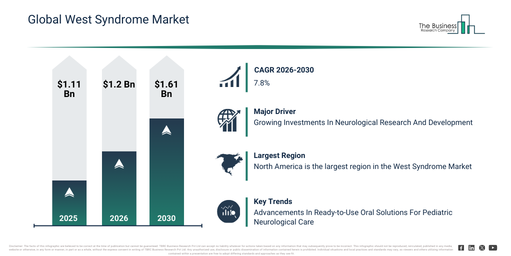
    The market size for west syndrome has shown strong expansion in recent years. It is anticipated to increase from $1.11 billion in 2025 to $1.2 billion in 2026, demonstrating a compound annual growth rate (CAGR) of 8.1%. The historical growth of this market can be linked to improved recognition of rare pediatric neurological disorders, the availability of established anticonvulsant therapies, the expansion of pediatric neurology centers, increasing hospital-based treatment access, and rising awareness among healthcare professionals.

    The west syndrome market is projected to demonstrate robust expansion in the forthcoming years, reaching a valuation of $1.61 billion by 2030, exhibiting a compound annual growth rate (CAGR) of 7.8%. This anticipated growth throughout the forecast period stems from factors such as increased investments in the development of drugs for rare diseases, a heightened focus on precision neurology treatments, the expansion of early screening initiatives, the growing adoption of new therapeutic combinations, and a rise in clinical trial activities for pediatric epilepsy. Significant trends during this period are expected to encompass an intensified focus on the early detection of infantile spasms, augmented usage of advanced neuroimaging and EEG monitoring, increasing reliance on combination drug therapies, the broadening of clinical research into rare neurological disorders, and a stronger emphasis on tracking treatment outcomes.

    Access Your Free Sample Report for In-Depth Market Insights:

    https://www.thebusinessresearchcompany.com/sample.aspx?id=21322&type=smp

    What Drivers Are Guiding Growth Patterns In The West Syndrome Market?

    Future expansion of the west syndrome market is anticipated to be driven by the substantial increase in research and development expenditure concerning neurological illnesses. This spending encompasses financial allocations and investments aimed at enhancing comprehension, diagnostic methods, and therapeutic approaches for neurological conditions. The rise in research and development funding for neurological illnesses stems from a higher incidence of neurological disorders, progress in medical technology, increased awareness and need for novel therapies, and significant funding efforts from both governmental and private entities. Elevated investments in neurological research and development facilitate progress in diagnostic tools, treatments, and therapeutic alternatives, thereby fostering growth in the west syndrome market. As an illustration, in May 2023, the National Institute of Neurological Disorders and Stroke (NINDS), a US government body under the National Institutes of Health, was allocated USD 2.809 billion in 2023, with a proposed increase to USD 2.825 billion for 2024, to support diverse neurological research projects. Consequently, the escalating research and development spending on neurological illnesses is serving as a catalyst for the expansion of the west syndrome market.

    Which Segments Are Driving Activity In The West Syndrome Market?

    The west syndrome market covered in this report is segmented –

    1) By Treatment: Anticonvulsant, Benzodiazepine, Corticosteroids, Vitamin B

    2) By Route Of Administration: Parenteral Route, Oral Route, Other Routes Of Administration

    3) By Distribution Channel: Hospitals Pharmacies, Online Pharmacies, Retail Pharmacies

    4) By End-User: Hospitals, Homecare, Clinics

    Subsegments:

    1) By Anticonvulsant: Traditional Anticonvulsants, Newer Anticonvulsants

    2) By Benzodiazepine: Diazepam, Lorazepam, Clonazepam

    3) By Corticosteroids: Prednisolone, Adrenocorticotropic Hormone (ACTH), Dexamethasone

    4) By Vitamin B: Vitamin B6 (Pyridoxine), Vitamin B12 (Cobalamin)

    Which Trends Are Influencing The Performance And Direction Of The West Syndrome Market?

    Leading companies within the west syndrome market are concentrating on creating novel solutions, including ready-to-use oral vigabatrin solutions, to facilitate easier administration, ensure precise dosing, and boost treatment adherence among infants and young children. These ready-to-use oral vigabatrin formulations are specifically designed for the patient-friendly delivery of antiepileptic medications like vigabatrin or adrenocorticotropic hormone (ACTH). As an example, Pryos Pharmaceuticals, a US-based pharmaceutical company, secured Food and Drug Administration (FDA) approval in June 2024 for a ready-to-use oral vigabatrin solution intended for infantile spasms treatment. Vigabatrin operates by permanently blocking GABA transaminase (GABA-T), an enzyme that metabolizes gamma-aminobutyric acid (GABA) within the brain. This elevated GABA acts to restrain the excitatory processes capable of triggering seizure activity.

    Which Key Players Are Driving Competition In The West Syndrome Market?

    Major companies operating in the west syndrome market are Takeda Pharmaceuticals, Jazz Pharmaceuticals, UCB S.A., H. Lundbeck A/S, Mallinckrodt Pharmaceuticals plc, Marinus Pharmaceuticals Inc., Ovid Therapeutics Inc., GW Pharmaceuticals Limited, SK Biopharmaceuticals Co Ltd, Catalyst Pharmaceuticals Inc., Eisai Co Ltd, Neurelis Inc, Ultragenyx Pharmaceutical Inc, Sanofi S.A., Novartis AG, Pfizer Inc, GlaxoSmithKline plc, Recordati Rare Diseases, Bial Portela & Ca SA, Supernus Pharmaceuticals Inc, Praxis Precision Medicines, Encodia Therapeutics, Insys Therapeutics, Orphelia Pharma SA, Valerion Therapeutics, Retrophin Inc, Medice Arzneimittel Pütter GmbH & Co KG

    Access The Complete Report For Deeper Market Insights:

    https://www.thebusinessresearchcompany.com/report/west-syndrome-global-market-report

    Which Region Is Projected To Lead The West Syndrome Market During The Forecast Period?

    North America was the largest region in the west syndrome market in 2025. Asia-Pacific is expected to be the fastest-growing region in the forecast period. The regions covered in the west syndrome market report are Asia-Pacific, South East Asia, Western Europe, Eastern Europe, North America, South America, Middle East, Africa.

    Request Your Customized West Syndrome Market Research Report for Competitive Advantage:

    https://www.thebusinessresearchcompany.com/customise?id=21322&type=smp

    Browse Through More Reports Similar to the Global West Syndrome Market 2026, By The Business Research Company

    Gardner Syndrome Treatment Market Report 2026

    https://www.thebusinessresearchcompany.com/report/gardner-syndrome-treatment-global-market-report

    Wolff Parkinson White Syndrome Market Report 2026

    https://www.thebusinessresearchcompany.com/report/wolff-parkinson-white-syndrome-global-market-report

    Dry Eye Syndrome Market Report 2026

    https://www.thebusinessresearchcompany.com/report/dry-eye-syndrome-global-market-report

    Get in touch with us:

    The Business Research Company: https://www.thebusinessresearchcompany.com/

    Americas +1 310-496-7795

    Asia +44 7882 955267 & +91 8897263534

    Europe +44 7882 955267

    Email us at info@tbrc.info

    Follow us on:

    LinkedIn: https://in.linkedin.com/company/the-business-research-company

    YouTube: https://www.youtube.com/channel/UC24_fI0rV8cR5DxlCpgmyFQ

    Global Market Model: https://www.thebusinessresearchcompany.com/global-market-model