Month: March 2026

  • Global Melatonin Market Forecast 2026–2035: Long-Term Growth Insights

    Global Melatonin Market Forecast 2026–2035: Long-Term Growth Insights

    Uncover key drivers, emerging technologies, and competitive movements shaping the melatonin market from 2026–2035 with trusted insights from The Business Research Company

    What size range is anticipated for the Melatonin Market from 2026 to 2030?

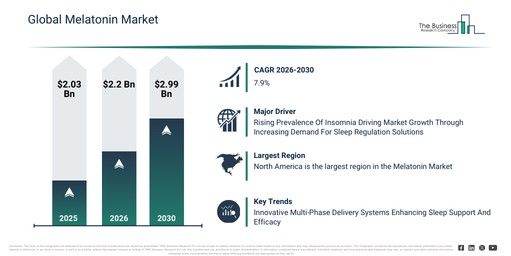
    The melatonin market has experienced significant expansion recently. Projections indicate its size will expand from $2.03 billion in 2025 to $2.2 billion in 2026, demonstrating a compound annual growth rate (CAGR) of 8.3%. Historically, this growth has been driven by factors such as the increasing occurrence of sleep disorders, elevated stress levels and lifestyle imbalances, the rising consumption of dietary supplements, enhanced understanding of circadian rhythm health, and the accessibility of over-the-counter (OTC) melatonin products.

    The melatonin market size is anticipated to undergo substantial expansion in the coming years, reaching $2.99 billion by 2030, exhibiting a compound annual growth rate (CAGR) of 7.9%. This projected growth throughout the forecast period stems from factors such as an escalating need for individualized sleep remedies, a heightened focus on mental well-being, the spread of e-commerce channels for supplement sales, wider acceptance of preventative healthcare, and increased investigation into sleep health. Key trends during this period are expected to encompass a rising consumer preference for natural sleep aids, increased utilization of over-the-counter sleep supplements, a growing inclination towards non-habit forming solutions, the diversification of dosage formats, and an amplified emphasis on circadian health.

    Access Your Free Sample Report for In-Depth Market Insights:

    https://www.thebusinessresearchcompany.com/sample.aspx?id=24603&type=smp

    What Drivers Are Affecting Demand In The Melatonin Market?

    The increasing occurrence of insomnia is projected to boost the expansion of the melatonin market in the future. Insomnia is defined as a sleep condition marked by challenges in initiating sleep, maintaining sleep, or premature awakening without the ability to return to sleep, even with ample opportunity for rest. The number of insomnia instances is escalating due to heightened stress levels, prolonged screen exposure, inconsistent sleep schedules, an aging demographic, and an increasing occurrence of chronic medical conditions. Melatonin proves beneficial for insomnia because it aids in managing the body’s natural sleep-wake rhythm, facilitating easier onset and maintenance of sleep, particularly when circadian rhythms are disturbed. As an illustration, data from Oxford University Press, a UK-based publishing company, indicated that in April 2024, an estimated 19.5% of adult females and 14.0% of adult males in the Americas experienced insomnia in 2024, amounting to roughly 123 million individuals. Consequently, the rising occurrence of insomnia is a key factor propelling the expansion of the melatonin market.

    Which Segments Are Gaining Traction In The Melatonin Market?

    The melatonin market covered in this report is segmented –

    1) By Source Type: Natural Melatonin, Synthetic Melatonin

    2) By Product Type: Tablets, Capsules, Liquid Solutions, Gummies, Sublingual Tablets

    3) By Treatment Type: Dietary Supplements, Pharmaceuticals

    4) By Application: Insomnia Treatment, Jet Lag Management, Sleep Disorders, Stress Relief, Circadian Rhythm Regulation

    5) By Distribution Channel: Online Retailers, Pharmacies, Health Food Stores, Supermarkets, Hypermarkets, Specialty Stores

    Subsegments:

    1) By Natural Melatonin: Plant-Based Melatonin, Animal-Based Melatonin

    2) By Synthetic Melatonin: Prescription-Based Synthetic Melatonin, Over-the-Counter (OTC) Synthetic Melatonin

    How Are Emerging Trends Affecting The Progression Of The Melatonin Market?

    Leading firms operating in the melatonin market are prioritizing the development of innovative technologies, such as three-in-one tablet in capsule technology, to improve controlled release, enhance absorption efficiency, and provide extended sleep support for better consumer outcomes. This three-in-one tablet-in-capsule technology integrates three tablets within a single capsule to release ingredients at varying times, thereby improving how the body absorbs them and making treatment more efficient and convenient. For instance, in September 2023, Ritual, a US-based wellness company, launched a new melatonin supplement featuring its innovative BioSeries technology, which is a three-phase release system within a single capsule, delivering melatonin in stages to align with the body’s natural sleep-wake cycle. This method enhances sleep quality by facilitating quicker sleep onset, maintaining restful sleep, and ensuring a refreshed feeling upon waking.

    Who Are The Major Companies Operating In The Melatonin Market?

    Major companies operating in the melatonin market are Church and Dwight Co Inc, Herbalife Nutrition Ltd, Zenith Nutrition, Amway Corporation, Aurobindo Pharma, Aspen Holdings, Nu Skin Enterprises Inc, GNC Holdings LLC, Pharmavite LLC, Jamieson Wellness Inc, Rexall Sundown Inc, Natures Way Brands LLC, Schiff Nutrition International, Natrol LLC, Solgar Inc, Biotics Research Corporation, Herbaland Naturals Inc, Lactonova Nutripharm Pvt Ltd, Prime Health Ltd, Nestle Health Science, Bayer Consumer Health, Abbott Nutrition

    Access The Complete Report For Deeper Market Insights:

    https://www.thebusinessresearchcompany.com/report/melatonin-global-market-report

    Which Regions Are Poised For Strategic Growth In The Melatonin Market?

    North America was the largest region in the melatonin market in 2025. Asia-Pacific is expected to be the fastest-growing region in the forecast period. The regions covered in the melatonin market report are Asia-Pacific, South East Asia, Western Europe, Eastern Europe, North America, South America, Middle East, Africa.

    Request Your Customized Melatonin Market Research Report for Competitive Advantage:

    https://www.thebusinessresearchcompany.com/customise?id=24603&type=smp

    Browse Through More Reports Similar to the Global Melatonin Market 2026, By The Business Research Company

    Melanoma Therapeutics Market Report 2026

    https://www.thebusinessresearchcompany.com/report/melanoma-therapeutics-global-market-report

    Melanoma Drugs Market Report 2026

    https://www.thebusinessresearchcompany.com/report/melanoma-drugs-global-market-report

    Dental Sleep Medicine Market Report 2026

    https://www.thebusinessresearchcompany.com/report/dental-sleep-medicine-global-market-report

    Get in touch with us:

    The Business Research Company: https://www.thebusinessresearchcompany.com/

    Americas +1 310-496-7795

    Asia +44 7882 955267 & +91 8897263534

    Europe +44 7882 955267

    Email us at info@tbrc.info

    Follow us on:

    LinkedIn: https://in.linkedin.com/company/the-business-research-company

    YouTube: https://www.youtube.com/channel/UC24_fI0rV8cR5DxlCpgmyFQ

    Global Market Model: https://www.thebusinessresearchcompany.com/global-market-model
  • Meibomian Gland Dysfunction Market 2026–2030: Forecasting Business Opportunities Ahead

    Meibomian Gland Dysfunction Market 2026–2030: Forecasting Business Opportunities Ahead

    Uncover key drivers, emerging technologies, and competitive movements shaping the meibomian gland dysfunction market from 2026–2035 with trusted insights from The Business Research Company

    How is the Meibomian Gland Dysfunction Market size predicted to change over the forecast window of 2026–2035?

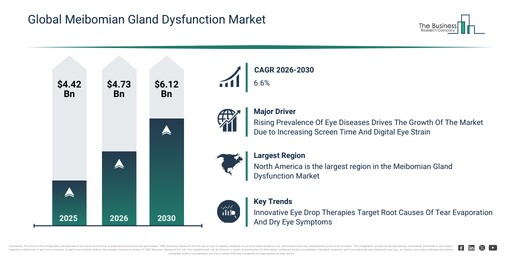
    The meibomian gland dysfunction market size has experienced robust growth in recent years. It is projected to expand from $4.42 billion in 2025 to $4.73 billion in 2026, achieving a compound annual growth rate (CAGR) of 7.0%. The expansion observed historically stems from factors such as the increasing incidence of dry eye disease, elevated screen time exposure, the growth of the aging population, wider clinical recognition of MGD, and the availability of basic treatment options.

    The meibomian gland dysfunction market is projected to experience substantial expansion over the coming years. Its valuation is anticipated to reach $6.12 billion by 2030, demonstrating a compound annual growth rate (CAGR) of 6.6%. This projected increase during the forecast period is driven by several factors, including the rising acceptance of device-assisted treatments, augmented investments in eye care, heightened public understanding of persistent eye ailments, wider availability of at-home treatment devices, and a greater emphasis on customized eye care solutions. Key developments anticipated during this period encompass the broader implementation of sophisticated diagnostic instruments, an uptick in the utilization of device-based therapeutic options, a stronger inclination towards combined treatment strategies, the proliferation of home-based management alternatives, and an intensified commitment to detecting diseases early.

    Access Your Free Sample Report for In-Depth Market Insights:

    https://www.thebusinessresearchcompany.com/sample.aspx?id=24602&type=smp

    Which Drivers Are Contributing To The Expansion Of The Meibomian Gland Dysfunction Market?

    The increasing incidence of eye disease is anticipated to drive the expansion of the meibomian gland dysfunction (MGD) market in the coming years. Eye disease refers to any condition or disorder that impacts the eye or visual system, thereby hindering its structure, function, or overall health. The rising occurrence of eye disease is linked to greater screen time and digital eye strain, which result in symptoms such as dryness, blurred vision, and long-term retinal damage from prolonged blue light exposure. Meibomian gland dysfunction contributes to eye disease by disrupting the stability of the tear film, leading to inflammation, dryness, and a heightened risk of ocular surface disorders. For example, in February 2025, according to the National Institutes of Health (NIH), a US-based government agency, the global prevalence of myopia is projected to increase to 36.59% by 2040 and 39.80% by 2050, with the total number of cases expected to exceed 740 million by 2050. Therefore, the growing number of eye disease cases is propelling the growth of the meibomian gland dysfunction (MGD) market.

    What Segment Categories Are Covered In The Meibomian Gland Dysfunction Market?

    The meibomian gland dysfunction market covered in this report is segmented –

    1) By Treatment Type: Medication, Surgery, Lifestyle Modifications

    2) By Dysfunction Type: Obstructive Meibomian Gland Dysfunction, Evaporative Meibomian Gland Dysfunction, Mixed Meibomian Gland Dysfunction

    3) By Disease Severity: Mild Meibomian Gland Dysfunction, Moderate Meibomian Gland Dysfunction, Severe Meibomian Gland Dysfunction

    4) By Distribution channel: Hospitals And Clinics, Pharmacies, Online Retailers

    5) By End-User: Hospitals, Ophthalmology Clinics, Home Care Settings

    Subsegments:

    1) By Medication: Topical Antibiotics, Topical Steroids, Lubricating Eye Drops, Topical Cyclosporine, Omega-3 Supplements

    2) By Surgery: Meibomian Gland Probing, Intense Pulsed Light (IPL) Therapy, Thermal Pulsation Treatment, BlephEx

    3) By Lifestyle Modifications: Warm Compress Therapy, Lid Hygiene, Dietary Adjustments, Blinking Exercises

    Which Innovation Trends Are Advancing Developments Within The Meibomian Gland Dysfunction Market?

    Leading companies operating in the meibomian gland dysfunction market are concentrating on developing novel treatments, such as prescription eye drop solutions, to diminish tear evaporation and alleviate dry eye symptoms. Prescription eye drop solutions, including anti-inflammatory or antibiotic varieties, help manage meibomian gland dysfunction by reducing inflammation, clearing gland blockages, and improving tear film stability. For instance, in May 2023, Bausch + Lomb Corporation, an eye health company based in Canada, introduced MIEBO (perfluorohexyloctane ophthalmic solution), a groundbreaking prescription eye drop created for treating dry eye disease (DED). As the initial and sole prescription eye drop to directly address tear evaporation, which is the primary cause of DED, MIEBO forms a protective, durable layer over the eye’s surface. Its innovative water-free formulation delivers effective and lasting relief, particularly for patients experiencing dry eye symptoms associated with Meibomian gland dysfunction.

    Which Major Firms Are Strengthening Their Position In The Meibomian Gland Dysfunction Market?

    Major companies operating in the meibomian gland dysfunction market are Johnson And Johnson, Alcon Inc., Bausch Lomb Corporation, Santen Pharmaceutical, Lumenis Ltd, Topcon Healthcare Solutions Inc, AFT Pharmaceuticals, Sight Sciences Inc, OASIS Medical Inc, OCuSOFT Inc, Novaliq GmbH, Scope Ophthalmics Ltd, Medmont International Pty Ltd, Azura Ophthalmics Ltd, BlephEx LLC, Bruder Healthcare Company, ESW Vision Inc, MiBo Medical Group Inc, Kala Pharmaceuticals Inc, Allergan Eye Care, TearScience Inc, Sun Pharmaceutical Industries Ltd

    Access The Complete Report For Deeper Market Insights:

    https://www.thebusinessresearchcompany.com/report/meibomian-gland-dysfunction-global-market-report

    Which Regions Are Projected To Dominate The Meibomian Gland Dysfunction Market In The Coming Years?

    North America was the largest region in the meibomian gland dysfunction market in 2025. The regions covered in the meibomian gland dysfunction market report are Asia-Pacific, South East Asia, Western Europe, Eastern Europe, North America, South America, Middle East, Africa.

    Request Your Customized Meibomian Gland Dysfunction Market Research Report for Competitive Advantage:

    https://www.thebusinessresearchcompany.com/customise?id=24602&type=smp

    Browse Through More Reports Similar to the Global Meibomian Gland Dysfunction Market 2026, By The Business Research Company

    Mastopexy Market Report 2026

    https://www.thebusinessresearchcompany.com/report/mastopexy-global-market-report

    Drugs For Hormonal Replacement Therapy Market Report 2026

    https://www.thebusinessresearchcompany.com/report/drugs-for-hormonal-replacement-therapy-global-market-report

    Combined Pituitary Hormone Deficiencies Market Report 2026

    https://www.thebusinessresearchcompany.com/report/combined-pituitary-hormone-deficiencies-global-market-report

    Get in touch with us:

    The Business Research Company: https://www.thebusinessresearchcompany.com/

    Americas +1 310-496-7795

    Asia +44 7882 955267 & +91 8897263534

    Europe +44 7882 955267

    Email us at info@tbrc.info

    Follow us on:

    LinkedIn: https://in.linkedin.com/company/the-business-research-company

    YouTube: https://www.youtube.com/channel/UC24_fI0rV8cR5DxlCpgmyFQ

    Global Market Model: https://www.thebusinessresearchcompany.com/global-market-model
  • Global Medications For Heart Failure Market Report 2026–2035: Key Forecasts and Growth Areas

    Global Medications For Heart Failure Market Report 2026–2035: Key Forecasts and Growth Areas

    Uncover key drivers, emerging technologies, and competitive movements shaping the medications for heart failure market from 2026–2035 with trusted insights from The Business Research Company

    What market expansion outlook does the Medications For Heart Failure Market show for the 2026–2030 period?

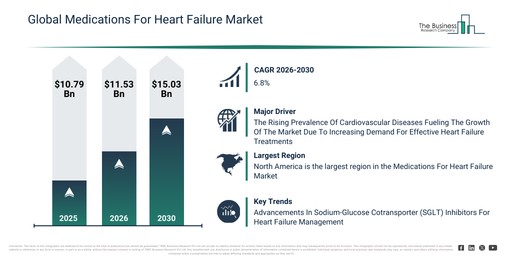
    The medications for heart failure market has demonstrated substantial growth in recent years. It is anticipated to expand from $10.79 billion in 2025 to $11.53 billion in 2026, at a compound annual growth rate (CAGR) of 6.8%. Historically, this growth can be ascribed to a rising prevalence of cardiovascular diseases, an aging global population, an increasing incidence of hypertension and diabetes, improved access to essential cardiac medications, and the expansion of hospital-based cardiac care.

    The market size for medications addressing heart failure is anticipated to show robust expansion in the coming years, projected to reach $15.03 billion by 2030, exhibiting a compound annual growth rate (CAGR) of 6.8%. This expansion during the forecast period is primarily driven by factors such as an increasing heart failure patient population, the growing adoption of novel drug classes, a heightened focus on personalized cardiovascular therapy, the expansion of outpatient and home-based care models, and a stronger emphasis on preventive cardiology. Significant trends expected during this period include the rising use of combination drug therapies, the increasing application of SGLT2 inhibitors in heart failure treatment, a greater focus on early diagnosis and long-term disease management, the broadening of evidence-based treatment guidelines, and an enhanced emphasis on reducing heart failure hospitalizations.

    Access Your Free Sample Report for In-Depth Market Insights:

    https://www.thebusinessresearchcompany.com/sample.aspx?id=24315&type=smp

    What Drivers Are Shaping The Development Of The Medications For Heart Failure Market?

    The increasing occurrence of cardiovascular diseases is projected to stimulate the expansion of the medications for the heart failure market moving forward. These conditions involve ailments impacting the heart and blood vessels, frequently resulting in severe health events like heart attacks and strokes. A primary factor contributing to the surge in cardiovascular diseases is inactive lifestyles, which gradually compromise heart and vessel health. As cardiovascular disease rates climb, the need for effective treatments intensifies, encouraging greater financial commitment to heart failure medications. Given the growing prevalence of these conditions, pharmaceutical firms are prioritizing the creation and improvement of therapies to better manage symptoms and enhance patient outcomes. For instance, data from September 2024, provided by the Heart Failure Society of America (HFSA), a US-based organization of heart failure experts, indicates that approximately 6.7 million Americans aged 20 and older currently suffer from heart failure (HF), with projections showing this number will rise to 8.7 million by 2030, 10.3 million by 2040, and 11.4 million by 2050. Consequently, the escalating occurrence of cardiovascular diseases is fueling the expansion of medications for the heart failure market.

    Which Segments Are Contributing To The Growth Of The Medications For Heart Failure Market?

    The medications for heart failure market covered in this report is segmented –

    1) By Drug Class: Angiotensin-Converting Enzyme (ACE) Inhibitors, Beta Blockers, Diuretics, Aldosterone Antagonists, Angiotensin II Receptor Blockers (ARBs), Other Drug Classes

    2) By Route Of Administration: Oral, Intravenous, Other Routes Of Administrations

    3) By Distribution Channel: Hospital Pharmacies, Retail Pharmacies, Online Pharmacies, Other Distribution Channels

    4) By Application: Hospital, Clinic, Other Applications

    Subsegments:

    1) By Angiotensin-Converting Enzyme (ACE) Inhibitors: Enalapril, Lisinopril, Ramipril, Captopril, Perindopril

    2) By Beta Blockers: Carvedilol, Metoprolol Succinate, Bisoprolol, Nebivolol

    3) By Diuretics: Loop Diuretics, Thiazide Diuretics, Potassium-Sparing Diuretics

    4) By Aldosterone Antagonists: Spironolactone, Eplerenone

    5) By Angiotensin II Receptor Blockers (ARBs): Valsartan, Losartan, Candesartan, Irbesartan

    6) By Other Drug Classes: Angiotensin Receptor-Neprilysin Inhibitors, Ivabradine, Sodium-Glucose Cotransporter-2 (SGLT2) Inhibitors, Hydralazine Or Isosorbide Dinitrate, Digoxin

    Which Competitive Trends Are Impacting The Structure Of The Medications For Heart Failure Market?

    Leading companies in the medication for heart failure market are directing their efforts toward creating sophisticated drugs, including sodium-glucose cotransporter (SGLT) inhibitors, to offer more effective long-term management of heart failure symptoms and related complications. An SGLT inhibitor represents an advanced form of medication that targets glucose reabsorption pathways to manage heart failure, boost overall efficiency, and improve cardiovascular health. For instance, in May 2023, Lexicon Pharmaceuticals, a US-based biopharmaceutical company, introduced Inpefa (sotagliflozin), which secured approval from the Food and Drug Administration (FDA). This once-daily oral tablet is formulated to reduce the likelihood of cardiovascular death, hospital admissions for heart failure, and urgent heart failure appointments in adults with heart failure or type 2 diabetes mellitus, chronic kidney disease, and other cardiovascular risk factors. This approval marks a significant achievement for Lexicon, as Inpefa is the inaugural dual SGLT1/SGLT2 inhibitor to enter the market, presenting a new therapeutic choice for heart failure patients across a diverse range of conditions.

    Who Are The Primary Competitors In The Global Medications For Heart Failure Market?

    Major companies operating in the medications for heart failure market are Merck & Co. Inc., Bayer AG, Sanofi SA, Bristol-Myers Squibb, AstraZeneca plc, Novartis AG, Eli Lilly and Company, Boehringer Ingelheim Pharmaceuticals Inc., CSPC Pharmaceutical, Hikma Pharmaceuticals PLC, Cadila Pharmaceuticals, Ionis Pharmaceuticals Inc., Hainan Poly Pharm Co Ltd, Lunan Pharmaceutical Group, Mylan Laboratories Inc., JM Laboratories, Lexicon Pharmaceuticals, Pfizer Inc, Johnson & Johnson, GlaxoSmithKline plc, Teva Pharmaceutical Industries Ltd, Amgen Inc, Otsuka Pharmaceutical Co Ltd

    Access The Complete Report For Deeper Market Insights:

    https://www.thebusinessresearchcompany.com/report/medications-for-heart-failure-global-market-report

    Which Region Is Expected To Experience The Fastest Growth In The Medications For Heart Failure Market?

    North America was the largest region in the medications for the heart failure market in 2025. Asia-Pacific is expected to be the fastest-growing region in the forecast period. The regions covered in the medications for heart failure market report are Asia-Pacific, South East Asia, Western Europe, Eastern Europe, North America, South America, Middle East, Africa.

    Request Your Customized Medications For Heart Failure Market Research Report for Competitive Advantage:

    https://www.thebusinessresearchcompany.com/customise?id=24315&type=smp

    Browse Through More Reports Similar to the Global Medications For Heart Failure Market 2026, By The Business Research Company

    Anti Hypertensive Drugs Market Report 2026

    https://www.thebusinessresearchcompany.com/report/anti-hypertensive-drugs-global-market-report

    Cardiovascular Monitoring And Diagnostic Devices And Equipment Market Report 2026

    https://www.thebusinessresearchcompany.com/report/cardiovascular-monitoring-and-diagnostic-devices-and-equipment-global-market-report

    Congestive Heart Failure Treatment Devices Market Report 2026

    https://www.thebusinessresearchcompany.com/report/congestive-heart-failure-treatment-devices-global-market-report

    Get in touch with us:

    The Business Research Company: https://www.thebusinessresearchcompany.com/

    Americas +1 310-496-7795

    Asia +44 7882 955267 & +91 8897263534

    Europe +44 7882 955267

    Email us at info@tbrc.info

    Follow us on:

    LinkedIn: https://in.linkedin.com/company/the-business-research-company

    YouTube: https://www.youtube.com/channel/UC24_fI0rV8cR5DxlCpgmyFQ

    Global Market Model: https://www.thebusinessresearchcompany.com/global-market-model
  • Medication Side-Effect Tracker App Market 2026–2030: Forecast, Innovation, and Competitive Trends

    Medication Side-Effect Tracker App Market 2026–2030: Forecast, Innovation, and Competitive Trends

    Uncover key drivers, emerging technologies, and competitive movements shaping the medication side-effect tracker app market from 2026–2035 with trusted insights from The Business Research Company

    What level of growth is expected in the Medication Side-Effect Tracker App Market between 2026 and 2030?

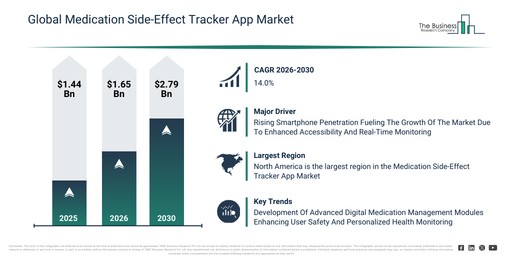
    The medication side-effect tracker app market size has seen rapid expansion in recent years. This market is set to expand from $1.44 billion in 2025 to $1.65 billion in 2026, exhibiting a compound annual growth rate (CAGR) of 14.3%. In the past, this growth was primarily driven by the increasing adoption of smartphones in healthcare, the rising use of chronic medications, a heightened awareness of adverse drug reactions, the broadening reach of digital health applications, and greater patient participation in self-monitoring.

    The medication side-effect tracker app market size is projected to undergo rapid expansion in the coming years, reaching $2.79 billion by 2030, driven by a compound annual growth rate (CAGR) of 14.0%. This significant growth in the forecast period can be attributed to several factors, including the increasing demand for personalized digital therapeutics, rising integration with electronic health records, the growing application of predictive analytics in medication management, the expanding adoption of remote patient monitoring, and a heightened focus on preventive healthcare tools. Moreover, major trends anticipated during this period encompass the increasing uptake of personalized medication monitoring tools, the rising integration of AI-driven symptom analysis, the growing use of wearable and health app integrations, an expansion of data sharing with healthcare providers, and an enhanced focus on medication safety and adherence.

    Access Your Free Sample Report for In-Depth Market Insights:

    https://www.thebusinessresearchcompany.com/sample.aspx?id=29121&type=smp

    Which Drivers Are Expected To Impact The Medication Side-Effect Tracker App Market During The Forecast Period?

    The expanding adoption of smartphones is anticipated to stimulate the growth of the medication side-effect tracker app market moving forward. These mobile devices provide users with on-the-go access to the internet, applications, and various digital services. Smartphone adoption is rising as individuals increasingly depend on these mobile tools for daily communication, information retrieval, and service access. This extensive use of smartphones facilitates easier access to medication side-effect tracker apps for a broader audience, which supports real-time monitoring of adverse reactions and enhances treatment safety. For example, in February 2023, according to a report published by Uswitch Limited, a UK-based online and telephone comparison and switching service provider, it was projected that by 2025, 95% of the 68.3 million people living in the UK are expected to own smartphones. Consequently, the increasing prevalence of smartphones is a key factor propelling the expansion of the medication side-effect tracker app market.

    How Is The Medication Side-Effect Tracker App Market Divided Into Segments?

    The medication side-effect tracker app market covered in this report is segmented –

    1) By Platform: iPhone Operating System, Android, Web-Based

    2) By Subscription Model: Free, Freemium, Paid

    3) By Functionality: Symptom Tracking, Medication Reminders, Data Analytics, Reporting And Sharing, Other Functionalities

    4) By End-User: Patients, Caregivers, Healthcare Providers, Other End-Users

    Subsegments:

    1) By iPhone Operating System: iPhone Apps, iPad Apps, Apple Watch Apps, Apple Health Integration

    2) By Android: Smartphone Apps, Tablet Apps, Wearable Device Apps, Google Fit Integration

    3) By Web-Based: Browser-Based Platforms, Cloud-Based Dashboards, Institutional Or Enterprise Solutions, Cross-Platform Access

    What Industry Trends Are Transforming The Medication Side-Effect Tracker App Market?

    Leading companies in the medication side-effect tracker app market are focusing on developing advanced solutions, such as digital medication adherence and management modules. These modules aim to enhance user safety, facilitate personalized medication management, and prevent harmful drug interactions through predictive alerts, individualized guidance, and integrated digital tracking platforms. The digital medication adherence and management module is defined as a technology-driven system that utilizes AI and machine learning algorithms to monitor medication intake, anticipate potential adverse effects, and deliver personalized safety alerts to users. For instance, in December 2023, Samsung Ltd., an electronics company based in South Korea, introduced a medication side-effect tracking feature within its Samsung Health app. This feature enables users to record their medications and access detailed information on potential side effects and drug interactions. Samsung Electronics announced that this module will enhance the Samsung Health app by empowering users to manage their health more effectively. It allows users to monitor both prescription and over-the-counter medications while providing essential guidance and tips, proving particularly beneficial for individuals who take medications regularly or use supplements for general wellness.

    Which Key Market Players Are Investing In Expansion And Innovation Within The Medication Side-Effect Tracker App Market?

    Major companies operating in the medication side-effect tracker app market are F Hoffmann La Roche Ltd., Janssen Healthcare Innovation, GoodRx Holdings Inc., Sidekick Health, WellDoc Inc., CareZone, DarioHealth, Medisafe Inc., Mango Health Inc., Ampersand Health LLC, Montuno Software LLC, Round Health, MedCoach Inc., Flaredown, EveryDose, smartpatient GmbH, CareClinic, Tiga Health, Bearable, Ada Health GmbH

    Access The Complete Report For Deeper Market Insights:

    https://www.thebusinessresearchcompany.com/report/medication-side-effect-tracker-app-global-market-report

    Which Geographic Areas Are Emerging As Strong Markets For The Medication Side-Effect Tracker App Market?

    North America was the largest region in the medication side-effect tracker app market in 2025. Asia-Pacific is expected to be the fastest-growing region in the forecast period. The regions covered in the medication side-effect tracker app market report are Asia-Pacific, South East Asia, Western Europe, Eastern Europe, North America, South America, Middle East, Africa.

    Request Your Customized Medication Side-Effect Tracker App Market Research Report for Competitive Advantage:

    https://www.thebusinessresearchcompany.com/customise?id=29121&type=smp

    Browse Through More Reports Similar to the Global Medication Side-Effect Tracker App Market 2026, By The Business Research Company

    Patient Centric Healthcare App Market Report 2026

    https://www.thebusinessresearchcompany.com/report/patient-centric-healthcare-app-global-market-report

    Pharmaceuticals Market 2026

    https://www.thebusinessresearchcompany.com/report/pharmaceuticals-market

    Therapeutic Drug Monitoring Market Report 2026

    https://www.thebusinessresearchcompany.com/report/therapeutic-drug-monitoring-global-market-report

    Get in touch with us:

    The Business Research Company: https://www.thebusinessresearchcompany.com/

    Americas +1 310-496-7795

    Asia +44 7882 955267 & +91 8897263534

    Europe +44 7882 955267

    Email us at info@tbrc.info

    Follow us on:

    LinkedIn: https://in.linkedin.com/company/the-business-research-company

    YouTube: https://www.youtube.com/channel/UC24_fI0rV8cR5DxlCpgmyFQ

    Global Market Model: https://www.thebusinessresearchcompany.com/global-market-model
  • Medication Management System Market Forecast 2026–2035: Data Trends and Industry Insights

    Medication Management System Market Forecast 2026–2035: Data Trends and Industry Insights

    Uncover key drivers, emerging technologies, and competitive movements shaping the medication management system market from 2026–2035 with trusted insights from The Business Research Company

    How much is the Medication Management System Market valued at in 2026, and what valuation is forecast for 2030?

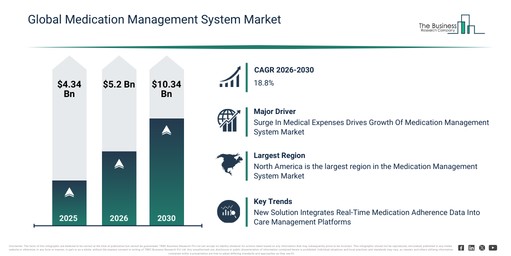
    The medication management system market has seen rapid expansion in recent years. This market is set to increase from $4.34 billion in 2025 to $5.2 billion in 2026, achieving a compound annual growth rate (CAGR) of 19.7%. Historically, this growth has been driven by several factors, including an increase in medication-related errors, a rise in hospital patient volumes, the broader expansion of electronic health records usage, the essential need for efficient prescription management, and the rising complexity of drug regimens.

    The medication management system market is projected to experience substantial expansion in the coming years, with forecasts indicating it will reach $10.34 billion by 2030, demonstrating a compound annual growth rate (CAGR) of 18.8%. This anticipated growth can be attributed to several factors, including the increasing prevalence of value-based healthcare models, the growing adoption of automation in pharmacies, an intensified focus on clinical decision support tools, the expansion of digital hospitals, and the demand for real-time medication tracking. Concurrently, major trends expected during this period involve the rising uptake of integrated medication workflow platforms, a stronger emphasis on reducing medication errors, the development of cloud-based medication management systems, an increasing need for interoperable healthcare software, and a heightened focus on patient safety and care coordination.

    Access Your Free Sample Report for In-Depth Market Insights:

    https://www.thebusinessresearchcompany.com/sample.aspx?id=7091&type=smp

    What Drivers Are Influencing The Growth Of The Medication Management System Market?

    The upward trend in medical expenses is anticipated to fuel the expansion of the medication management system market. Medical costs encompass expenditures borne by individuals for healthcare services, as well as by hospitals for equipment, treatment, and operational needs. These costs are escalating due to heightened demand for healthcare, an increasing prevalence of chronic diseases, technological progress, and elevated labor and operational outlays across health systems. Medication management systems address this need by enhancing efficiency, minimizing medication errors, optimizing workflows, and ultimately reducing overall healthcare expenditure. For example, in December 2023, data from the U.S. government agency, Centers for Medicare & Medicaid Services, indicated that national health expenditure grew by 4.1% to $4,500 billion in 2022. Furthermore, national health spending is projected to climb to $6,200 billion by 2028, underscoring a substantial rise in healthcare costs. Consequently, the escalating medical costs are a key factor propelling the growth of the medication management systems market.

    What Segments Are Included Within The Medication Management System Market?

    The medication management system market covered in this report is segmented –

    1) By Product Type: Computerized Physician Order Entry, Clinical Decision Support System Solutions, Electronic Medication Administration Record, Inventory Management Solutions, Other Product Types

    2) By Mode Of Delivery: Web-Based, Cloud-Based, On-Premise

    3) By End Users: Pharmacies, Hospitals, Other End Users

    Subsegments:

    1) By Computerized Physician Order Entry (CPOE): Standalone CPOE Systems, Integrated CPOE with EHR

    2) By Clinical Decision Support System Solutions: Drug Interaction Checkers, Dosing Assistance Tools, Clinical Guidelines And Protocols

    3) By Electronic Medication Administration Record (eMAR): Patient-Specific eMAR Solutions, Mobile eMAR Applications

    4) By Inventory Management Solutions: Automated Inventory Tracking Systems, Pharmacy Management Software

    5) By Other Product Types: Medication Reconciliation Tools, Patient Adherence Monitoring Systems, Medication Therapy Management Solutions

    What Trends Are Reshaping The Dynamics Of The Medication Management System Market?

    Major companies operating in the medication management system market are focusing on developing innovation, such as real-time data access for evaluating treatment effectiveness and making informed decisions. This real-time data access signifies the ability to retrieve and analyze data immediately as it is generated or updated, without significant delay. For instance, in June 2024, PatchRx, a US-based medication adherence technology company, launched PatchRx Connect, designed to integrate live medication adherence data into existing care management platforms. This new tool seamlessly integrates real-time medication adherence data into existing care management platforms. It allows clinical teams to gain insights into patients’ medication-taking behaviors without disrupting workflows. The solution includes a smart device that tracks medication usage, providing actionable insights for healthcare providers. Additionally, it features patient engagement tools, such as SMS alerts, to enhance adherence rates.

    Who Are The Core Companies Influencing Trends In The Medication Management System Market?

    Major companies operating in the medication management system market are McKesson Corporation, Optum Inc., Cardinal Health Inc., Cerner Corporation, Epic Systems Corporation, Omnicell Inc., Genoa Healthcare LLC, Allscripts Healthcare Solutions Inc., Swisslog Healthcare (US) Inc., QuadraMed Affinity Corporation, AdhereHealth LLC, Hero Health Inc., ARxIUM Inc., Talyst LLC, Jini Health Inc., CareRight Technologies LLC, eMARneek BIQHS, CARI Health, Healthera Ltd.

    Access The Complete Report For Deeper Market Insights:

    https://www.thebusinessresearchcompany.com/report/medication-management-system-global-market-report

    Which Region Is Projected To Lead The Medication Management System Market During The Forecast Period?

    North America was the largest region in the medication management system market in 2025. The regions covered in the medication management system market report are Asia-Pacific, South East Asia, Western Europe, Eastern Europe, North America, South America, Middle East, Africa.

    Request Your Customized Medication Management System Market Research Report for Competitive Advantage:

    https://www.thebusinessresearchcompany.com/customise?id=7091&type=smp

    Browse Through More Reports Similar to the Global Medication Management System Market 2026, By The Business Research Company

    Clinical Trial Management System Market Report 2026

    https://www.thebusinessresearchcompany.com/report/clinical-trial-management-system-global-market-report

    Pharmacy Management System Market Report 2026

    https://www.thebusinessresearchcompany.com/report/pharmacy-management-system-global-market-report

    Facility Management Services Market Report 2026

    https://www.thebusinessresearchcompany.com/report/facility-management-services-global-market-report

    Get in touch with us:

    The Business Research Company: https://www.thebusinessresearchcompany.com/

    Americas +1 310-496-7795

    Asia +44 7882 955267 & +91 8897263534

    Europe +44 7882 955267

    Email us at info@tbrc.info

    Follow us on:

    LinkedIn: https://in.linkedin.com/company/the-business-research-company

    YouTube: https://www.youtube.com/channel/UC24_fI0rV8cR5DxlCpgmyFQ

    Global Market Model: https://www.thebusinessresearchcompany.com/global-market-model
  • Medication Adherence Market Outlook 2026–2030: Key Business Drivers and Trends

    Medication Adherence Market Outlook 2026–2030: Key Business Drivers and Trends

    Uncover key drivers, emerging technologies, and competitive movements shaping the medication adherence market from 2026–2035 with trusted insights from The Business Research Company

    By how much is the Medication Adherence Market expected to grow between 2026 and 2030?

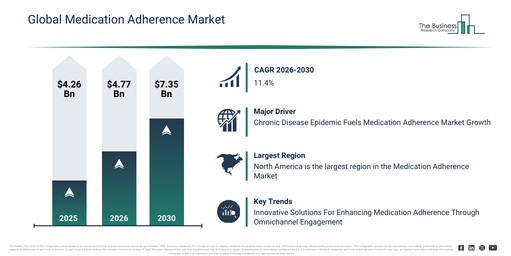
    The medication adherence market size has seen substantial growth recently. This market is expected to expand from $4.26 billion in 2025 to $4.77 billion in 2026, achieving a compound annual growth rate (CAGR) of 12.0%. During past periods, this expansion was largely influenced by factors such as widespread medication non-adherence, the increasing occurrence of chronic illnesses, higher healthcare expenses linked to poor adherence, the wider adoption of digital health solutions, and the growing demographic of older adults.

    The medication adherence market is poised for significant expansion in the foreseeable future, with projections indicating a rise to $7.35 billion by 2030, exhibiting a compound annual growth rate (CAGR) of 11.4%. This anticipated growth stems from several factors, including the increasing prevalence of remote patient monitoring programs, the rising adoption of smart healthcare devices, an enhanced focus on value-based healthcare, the expansion of telehealth services, and the growing application of data-driven patient management. Prominent trends expected during this period involve the increasing embrace of remote medication monitoring, a greater emphasis on chronic disease management, the proliferation of home-based medication adherence solutions, deeper integration into healthcare provider workflows, and an intensified focus on patient engagement and behavior change.

    Access Your Free Sample Report for In-Depth Market Insights:

    https://www.thebusinessresearchcompany.com/sample.aspx?id=4012&type=smp

    Which Drivers Are Influencing Market Acceleration In The Medication Adherence Market?

    An anticipated increase in chronic disease cases is set to boost the expansion of the medication adherence market in the future. These long-lasting conditions require ongoing medical care, restrict daily functions, or both. The growing occurrence of chronic diseases is largely linked to the elderly demographic, given that older people are more prone to conditions such as diabetes, cardiovascular diseases, and arthritis due to natural age-related bodily changes. Generally, chronic illnesses are defined as conditions lasting a year or more. For individuals with chronic diseases, adhering to medication is vital for averting disease progression and preventing fatalities. Improving medication adherence can lead to enhanced clinical outcomes, reduced healthcare expenses, improved patient understanding, and the development of sustained drug adherence programs. As an illustration, the NHS Confederation, a national association in the UK, projected in April 2025 that by 2035, approximately 17% of the UK population might be living with at least four chronic conditions. Consequently, the increasing prevalence of chronic diseases is propelling the medication adherence industry forward.

    What Leading Segments Are Studied In The Medication Adherence Market?

    The medication adherence market covered in this report is segmented –

    1) By Type: Hardware Centric, Software Centric

    2) By Medication: Cardiovascular, Central Nervous System, Diabetes, Oncology, Respiratory, Gastrointestinal, Rheumatology, Other Medications

    3) By Application: Hospital, Retail Pharmacies, Long-Term Care Facilities, Mail-Order Pharmacies

    Subsegments:

    1) By Hardware Centric: Smart Pill Dispensers, Medication Adherence Packaging, Wearable Devices, Electronic Pill Bottles, Smart Inhalers

    2) By Software Centric: Mobile Health (mHealth) Apps, Medication Reminders And Tracking Apps, Telemedicine Solutions, Electronic Health Records (EHR) Integration, Patient Management Systems With Adherence Features

    How Are New Market Trends Shaping The Landscape Of The Medication Adherence Market?

    Major companies operating in the medication adherence market are concentrating on developing innovations, such as omnichannel engagement, which aids in enhancing refill adherence and encouraging behavioral changes among patients. Omnichannel engagement refers to a cohesive and integrated strategy for interacting with customers across various channels and communication points. For instance, in May 2024, Ushur, a US-based software development company, introduced a prebuilt healthcare solution aimed at improving medication adherence for patients. A new prebuilt digital self-service solution is now accessible to help healthcare organizations automate medication adherence pathways. This innovative platform prioritizes identifying barriers to medication adherence, fostering refill compliance, and promoting positive health behaviors. It leverages advanced automation and AI to engage patients at risk of non-adherence, ensuring effective communication through secure, HIPAA-compliant channels.

    Which Major Industry Participants Are Leading The Medication Adherence Market Growth?

    Major companies operating in the medication adherence market are Omnicell Inc., Cardinal Health, McKesson Corporation, Allscripts Healthcare Solutions, Inc., DrFirst.com, Inc., AdhereTech Inc, MedMinder, Caredose, MedAdvisor International Pty Ltd., Adherium, Aardex Group, Propeller Health, Umotif, Echo, Popit, Tinylogics, Adherence Solutions LLC, SMRxT Inc., emocha, DIMAGI, INC., Seamless MD, Wisepill Technologies

    Access The Complete Report For Deeper Market Insights:

    https://www.thebusinessresearchcompany.com/report/medication-adherence-global-market-report

    Which Region Currently Holds The Largest Share Of The Medication Adherence Market?

    North America was the largest region in the medication adherence market in 2025. Western Europe was the second largest region in the global medication adherence market share. The regions covered in the medication adherence market report are Asia-Pacific, South East Asia, Western Europe, Eastern Europe, North America, South America, Middle East, Africa.

    Request Your Customized Medication Adherence Market Research Report for Competitive Advantage:

    https://www.thebusinessresearchcompany.com/customise?id=4012&type=smp

    Browse Through More Reports Similar to the Global Medication Adherence Market 2026, By The Business Research Company

    E Prescribing Market Report 2026

    https://www.thebusinessresearchcompany.com/report/e-prescribing-global-market-report

    Migraine Treatment Market Report 2026

    https://www.thebusinessresearchcompany.com/report/migraine-treatment-global-market-report

    Healthcare Compliance Software Market Report 2026

    https://www.thebusinessresearchcompany.com/report/healthcare-compliance-software-global-market-report

    Get in touch with us:

    The Business Research Company: https://www.thebusinessresearchcompany.com/

    Americas +1 310-496-7795

    Asia +44 7882 955267 & +91 8897263534

    Europe +44 7882 955267

    Email us at info@tbrc.info

    Follow us on:

    LinkedIn: https://in.linkedin.com/company/the-business-research-company

    YouTube: https://www.youtube.com/channel/UC24_fI0rV8cR5DxlCpgmyFQ

    Global Market Model: https://www.thebusinessresearchcompany.com/global-market-model
  • Global Medicated Shampoo Market Report 2026: Emerging Trends and Growth Scenarios

    Global Medicated Shampoo Market Report 2026: Emerging Trends and Growth Scenarios

    Uncover key drivers, emerging technologies, and competitive movements shaping the medicated shampoo market from 2026–2035 with trusted insights from The Business Research Company

    What is the estimated market size of the Medicated Shampoo Market by the end of 2030?

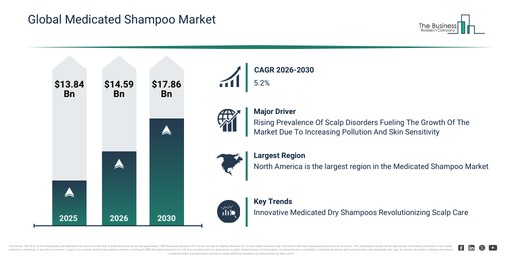
    The medicated shampoo market has experienced robust growth over recent years. It is anticipated to expand from $13.84 billion in 2025 to $14.59 billion in 2026, exhibiting a compound annual growth rate (CAGR) of 5.4%. This past growth can be linked to several factors including an increase in dandruff and scalp disorders, rising urban pollution exposure, the expansion of pharmacy retail chains, greater awareness of hair and scalp hygiene, and the availability of otc medicated shampoos.

    The medicated shampoo market is anticipated to experience robust growth in the coming years, reaching $17.86 billion by 2030, exhibiting a compound annual growth rate (CAGR) of 5.2%. This expansion is driven by the increasing prevalence of conditions such as psoriasis and fungal infections, a heightened demand for personalized scalp care, the widening reach of online sales channels, an increased emphasis on preventive hair loss treatments, and advancements in active ingredient formulations. Significant trends during this period also include a rising demand for targeted scalp treatment solutions, a growing preference for dermatologist-recommended shampoos, the increased integration of herbal and natural medicated formulations, the broader availability of over-the-counter medicated hair care products, and enhanced consumer awareness concerning scalp health and hygiene.

    Access Your Free Sample Report for In-Depth Market Insights:

    https://www.thebusinessresearchcompany.com/sample.aspx?id=24314&type=smp

    What Drivers Are Shaping Future Opportunities In The Medicated Shampoo Market?

    The expansion of the medicated shampoo market is anticipated to be driven by the rising occurrence of scalp disorders. These disorders are conditions impacting the scalp’s skin, manifesting as symptoms like itchiness, dryness, inflammation, discomfort, or hair shedding. Their growing prevalence stems from increased environmental contaminants, chemical contact, psychological stress, and various lifestyle elements that compromise the scalp’s inherent protective barrier and microbial balance. The medicated shampoo market addresses this trend by providing specialized formulations containing antifungal, anti-inflammatory, and keratolytic compounds designed to target underlying issues and facilitate scalp recovery. An illustrative example is from February 2025, when the American Academy of Dermatology Association, a US-based non-profit professional organization, stated that acne, a prevalent dermatological condition, impacts 0.05 billion people annually in the United States. This data underscores the escalating challenge posed by skin and scalp conditions that demand specific therapeutic interventions. Consequently, the increasing incidence of scalp disorders is a key factor propelling the expansion of the medicated shampoo market.

    Which Segment Groups Are Influencing The Medicated Shampoo Market?

    The medicated shampoo market covered in this report is segmented –

    1) By Type: Anti-Dandruff, Antifungal, Anti-Hair Loss, Antibacterial Or Scalp Treatment

    2) By Distribution Channel: Pharmacies Or Drugstores, Supermarkets Or Hypermarkets, Online Retail Or E-commerce, Specialty Stores

    3) By Application: Dandruff, Seborrheic Dermatitis, Psoriasis, Fungal Infections, Other Applications

    4) By End-User: Adults, Children, Men, Women

    Subsegments:

    1) By Anti-Dandruff: Zinc Pyrithione, Ketoconazole, Coal-Tar, Herbal/Natural

    2) By Antifungal: Ketoconazole-Based, Selenium Sulfide-Based, Ciclopirox-Based

    3) By Anti-Hair Loss: Minoxidil-Based, Biotin Or Natural Extracts, DHT Blockers

    4) By Antibacterial Or Scalp Treatment: Salicylic Acid, Climbazole, Tea Tree Oil

    Which Trends Are Expected To Influence The Medicated Shampoo Market In The Upcoming Years?

    Major companies in the medicated shampoo market are prioritizing the creation of innovative formulations, such as medicated dry shampoo, to meet the rising consumer demand for convenient, waterless scalp-care solutions that effectively manage dermatological conditions. Medicated dry shampoo is a specialized hair-care product that merges conventional oil-absorbing dry-shampoo features with therapeutic active ingredients to address scalp disorders like dandruff, seborrheic dermatitis, and psoriasis, enabling application without water. For instance, in November 2024, Raven Innovations LLC, a US-based pharmaceutical and personal-care company, introduced RestoraScalp, which is the world’s first medicated dry shampoo specifically formulated to treat scalp conditions including dandruff, seborrheic dermatitis, and psoriasis. This advanced product contains 2% salicylic acid as the active therapeutic ingredient, a calming botanical blend featuring chamomile, olive leaf, and green tea extracts, and boasts a vegan, cruelty-free, and fragrance-free formulation suitable for all skin types, thereby presenting an effective waterless option for scalp treatment on non-wash days.

    Who Are The Prominent Global Companies Shaping The Medicated Shampoo Market Landscape?

    Major companies operating in the medicated shampoo market are Johnson & Johnson, The Procter & Gamble Company, Unilever PLC, Kao Corporation, Cipla Limited, The Himalaya Company, Avalon Natural Products Inc., Ederma Pharma India Private Limited, Elegant Cosmed Private Limited, Luxica Pharma Inc., Yaxon Biocare Pvt. Ltd., Art Naturals Inc., Nioxin Research Laboratories Inc., Sulfur 8 Inc., Summer Laboratories Inc., Mars Medisoap Private Limited, Staple Pharmaceuticals Pvt. Ltd., Astonea Labs Limited, Ketopoz Pharmaceuticals Pvt. Ltd., Maylizz Biotech Private Limited

    Access The Complete Report For Deeper Market Insights:

    https://www.thebusinessresearchcompany.com/report/medicated-shampoo-global-market-report

    How Does The Medicated Shampoo Market Perform Across Major Global Regions?

    North America was the largest region in the medicated shampoo market in 2025. Asia-Pacific is expected to be the fastest-growing region in the forecast period. The regions covered in the medicated shampoo market report are Asia-Pacific, South East Asia, Western Europe, Eastern Europe, North America, South America, Middle East, Africa.

    Request Your Customized Medicated Shampoo Market Research Report for Competitive Advantage:

    https://www.thebusinessresearchcompany.com/customise?id=24314&type=smp

    Browse Through More Reports Similar to the Global Medicated Shampoo Market 2026, By The Business Research Company

    Medicated Bath Additive Market Report 2026

    https://www.thebusinessresearchcompany.com/report/medicated-bath-additive-global-market-report

    Protein Shampoo Market Report 2026

    https://www.thebusinessresearchcompany.com/report/protein-shampoo-global-market-report

    Therapeutic Hair Oil Market Report 2026

    https://www.thebusinessresearchcompany.com/report/therapeutic-hair-oil-global-market-report

    Get in touch with us:

    The Business Research Company: https://www.thebusinessresearchcompany.com/

    Americas +1 310-496-7795

    Asia +44 7882 955267 & +91 8897263534

    Europe +44 7882 955267

    Email us at info@tbrc.info

    Follow us on:

    LinkedIn: https://in.linkedin.com/company/the-business-research-company

    YouTube: https://www.youtube.com/channel/UC24_fI0rV8cR5DxlCpgmyFQ

    Global Market Model: https://www.thebusinessresearchcompany.com/global-market-model
  • Medicated Personal Care Products Market Forecast 2026: Where the Industry Is Headed

    Medicated Personal Care Products Market Forecast 2026: Where the Industry Is Headed

    Uncover key drivers, emerging technologies, and competitive movements shaping the medicated personal care products market from 2026–2035 with trusted insights from The Business Research Company

    What was the valuation of the Medicated Personal Care Products Market in 2026, and what figure is it projected to hit by 2030?

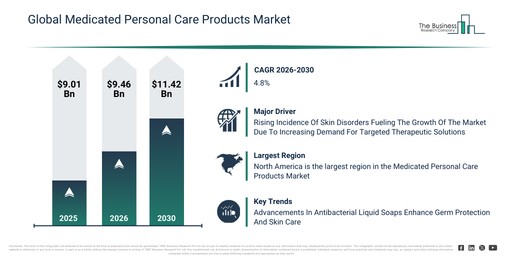
    The medicated personal care products market has experienced significant growth in recent years. Its size is projected to increase from $9.01 billion in 2025 to $9.46 billion in 2026, at a compound annual growth rate (CAGR) of 5.1%. This historical expansion can be attributed to factors such as the rising prevalence of skin and scalp disorders, increased consumer awareness of personal hygiene, the expansion of over-the-counter (OTC) healthcare products, growing urbanization and lifestyle changes, and the wider availability of medicated formulations.

    The medicated personal care products market is projected to experience consistent expansion over the upcoming years. This market is forecast to reach a valuation of $11.42 billion by 2030, demonstrating a compound annual growth rate (CAGR) of 4.8%. This anticipated growth can be attributed to several factors, including a heightened demand for preventative skin health options, a growing inclination towards clinically validated items, the widening reach of e-commerce distribution, an increased emphasis on customized personal care, and improved regulatory clarity concerning medicated cosmetics. Key trends expected during this period involve a rising demand for therapeutic-cosmetic blended formulas, greater uptake of dermatologist-endorsed products, an evolving focus on personal care solutions tailored to specific conditions, the broadening availability of over-the-counter medicated care lines, and a reinforced commitment to product safety and regulatory adherence.

    Access Your Free Sample Report for In-Depth Market Insights:

    https://www.thebusinessresearchcompany.com/sample.aspx?id=24600&type=smp

    Which Drivers Are Affecting Market Participation In The Medicated Personal Care Products Market?

    The growing prevalence of skin conditions is anticipated to fuel the expansion of the medicated personal care products market moving forward. Skin disorders encompass conditions that affect the skin’s appearance, structure, or function, including issues such as acne, eczema, and psoriasis. This increase stems from heightened exposure to environmental pollutants, which penetrate the skin barrier and cause irritation, inflammation, and chronic conditions. Medicated personal care products tackle these skin issues by delivering active ingredients to affected areas, thereby alleviating inflammation, irritation, or infection. They also facilitate healing and enhance overall skin health. For instance, data from July 2024 by Cancer Research UK, a UK-based cancer research organization, projects that the average annual number of new melanoma skin cancer cases in the UK will rise from approximately 20,800 between 2023–2025 to around 26,500 during 2038–2040. Therefore, the increasing occurrence of skin disorders is indeed driving the expansion of the medicated personal care products market.

    What Segment Classifications Make Up The Medicated Personal Care Products Market?

    The medicated personal care products market covered in this report is segmented –

    1) By Type: Oral Care, Deodorants, Feminine Care, Antiperspirants, Body Powders, Hand Sanitizers, Other Types

    2) By Beauty Care: Shampoos, Oils, Soaps, Moisturizers, Gels, Other Beauty Care

    3) By Distribution Channel: Hypermarkets And Supermarkets, Specialty Stores, E-Commerce, Other Distribution Channels

    Subsegments:

    1) By Oral Care: Medicated Toothpaste, Mouthwash, Dental Gels, Oral Sprays, Medicated Chewing Gums

    2) By Deodorants: Roll-Ons, Sprays, Sticks, Creams

    3) By Feminine Care: Medicated Wipes, Antifungal Creams, Vaginal Washes, Soothing Gels

    4) By Antiperspirants: Clinical Strength Antiperspirants, Prescription-Grade Sprays, Medicated Roll-Ons

    5) By Body Powders: Antifungal Powders, Antibacterial Powders, Medicated Talcum Powders

    6) By Hand Sanitizers: Alcohol-Based Sanitizers, Non-Alcohol-Based Sanitizers, Moisturizing Sanitizers, Foam Sanitizers

    7) By Other Types: Foot Care Creams, Medicated Shampoos, Acne Treatment Lotions, Scalp Treatment Solutions

    What Trends Are Driving The Growth Trajectory Of The Medicated Personal Care Products Market?

    Major companies in the medicated personal care products market are focused on developing advanced items, such as antibacterial liquid soap, to enhance germ protection and offer consumers a more effective and gentle cleansing experience. Antibacterial liquid soap is a specialized medicated liquid soap containing chemical ingredients specifically formulated to eradicate or impede bacterial growth on the skin, thereby diminishing the chance of infection and promoting hygiene. For example, in April 2023, Dettol, a UK-based hygiene product brand, launched a redesigned version of its original liquid hand wash. The improved formula provides both a moisture seal benefit and 99.99% germ protection, featuring enhanced ingredients and dermatological testing to ensure gentle care. This leaves hands feeling soft and nourished after every wash, with the aim of delivering a more effective and skin-friendly handwashing experience.

    Which Key Players Are Driving Competition In The Medicated Personal Care Products Market?

    Major companies operating in the medicated personal care products market are Procter and Gamble, Johnson and Johnson, Unilever PLC, L Oreal SA, Henkel AG and Co KGaA, Colgate Palmolive Company, Kenvue Inc, Reckitt Benckiser Group plc, Haleon plc, Kao Corporation, Church and Dwight Co Inc, Perrigo Company plc, Merz Pharma GmbH and Co KGaA, Topix Pharmaceuticals Inc, Kutol Products Company Inc, Cosmetic Solutions LLC, ARG Laboratories Inc, KPH Cosmos Pvt Ltd, Beiersdorf AG, Himalaya Wellness Company, Dabur India Ltd, Emami Ltd

    Access The Complete Report For Deeper Market Insights:

    https://www.thebusinessresearchcompany.com/report/medicated-personal-care-products-global-market-report

    Which Region Is Anticipated To See The Fastest Growth In The Medicated Personal Care Products Market?

    North America was the largest region in the medicated personal care products market in 2025. The regions covered in the medicated personal care products market report are Asia-Pacific, South East Asia, Western Europe, Eastern Europe, North America, South America, Middle East, Africa.

    Request Your Customized Medicated Personal Care Products Market Research Report for Competitive Advantage:

    https://www.thebusinessresearchcompany.com/customise?id=24600&type=smp

    Browse Through More Reports Similar to the Global Medicated Personal Care Products Market 2026, By The Business Research Company

    Organic Personal Care Market Report 2026

    https://www.thebusinessresearchcompany.com/report/organic-personal-care-global-market-report

    Personalized Medicine Market Report 2026

    https://www.thebusinessresearchcompany.com/report/personalized-medicine-global-market-report

    Other Health And Personal Care Stores Market Report 2026

    https://www.thebusinessresearchcompany.com/report/other-health-and-personal-care-stores-global-market-report

    Get in touch with us:

    The Business Research Company: https://www.thebusinessresearchcompany.com/

    Americas +1 310-496-7795

    Asia +44 7882 955267 & +91 8897263534

    Europe +44 7882 955267

    Email us at info@tbrc.info

    Follow us on:

    LinkedIn: https://in.linkedin.com/company/the-business-research-company

    YouTube: https://www.youtube.com/channel/UC24_fI0rV8cR5DxlCpgmyFQ

    Global Market Model: https://www.thebusinessresearchcompany.com/global-market-model
  • Medicated Bath Additive Industry Growth Insights: Revenue Forecast to 2030

    Medicated Bath Additive Industry Growth Insights: Revenue Forecast to 2030

    Uncover key drivers, emerging technologies, and competitive movements shaping the medicated bath additive market from 2026–2035 with trusted insights from The Business Research Company

    What are the forecasted starting (2026) and ending (2030) market sizes for the Medicated Bath Additive Market?

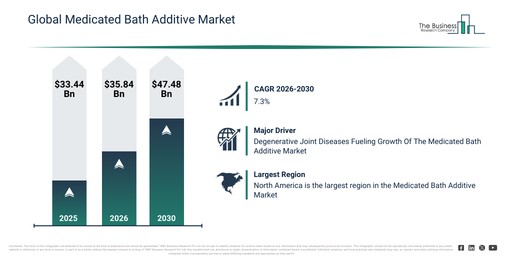
    The medicated bath additive market size has experienced considerable expansion in recent times. It is anticipated to expand from $33.44 billion in 2025 to $35.84 billion by 2026, exhibiting a compound annual growth rate (CAGR) of 7.2%. This historical growth can be attributed to an increase in skin-related disorders, growing awareness of personal hygiene, rising use of over-the-counter medicated products, the expansion of retail pharmacy networks, and a consumer shift toward preventive self-care.

    The medicated bath additive market is projected to experience substantial growth in the coming years, with its size expected to reach $47.48 billion by 2030, demonstrating a compound annual growth rate (CAGR) of 7.3%. This expansion during the forecast period is primarily attributed to the increasing popularity of wellness and self-care trends, a rising demand for premium medicated bath products, wider penetration of online sales channels, a heightened focus on relaxation and mental well-being, and continuous innovation in product formulations and ingredients. Major trends anticipated in this period include an escalating demand for therapeutic and skin-condition-specific products, a growing consumer preference for natural and herbal bath additives, the expansion of wellness-oriented personal care routines, increased utilization of medicated products for stress and muscle relief, and a stronger consumer emphasis on dermatologist-recommended bath solutions.

    Access Your Free Sample Report for In-Depth Market Insights:

    https://www.thebusinessresearchcompany.com/sample.aspx?id=13878&type=smp

    What Drivers Are Supporting Technological Adoption In The Medicated Bath Additive Market?

    An increasing incidence of degenerative joint diseases is anticipated to drive expansion in the medicated bath additive market. These chronic conditions involve the progressive breakdown of cartilage and joint components, resulting in discomfort, rigidity, and limited movement. Their occurrence is escalating owing to factors such as an aging populace, inactive habits, joint traumas, excessive weight, and inherited susceptibilities. Medicated bath additives assist those suffering from degenerative joint diseases by delivering remedial minerals and compounds that alleviate joint discomfort, diminish inflammation, and enhance range of motion via surface application and warm water benefits. For example, data from February 2025 by Springer Nature Group, a UK-based academic and professional publishing company, indicated that in 2022, approximately 12.94 million males and 18.80 million females had knee osteoarthritis. These figures are predicted to climb to 18.45 million for males and 25.60 million for females by 2046. Consequently, the rising prevalence of degenerative joint diseases is a key factor propelling the expansion of the medicated bath additive market.

    What Segment Types Are Examined In The Medicated Bath Additive Market?

    The medicated bath additive market covered in this report is segmented –

    1) By Product: Bath Bombs, Bath Soaps, Shower gel, Shampoo, Conditioner, Accessories

    2) By Form: Solid, Gels And Jellies, Liquid, Other Forms

    3) By Gender: Male, Female

    4) By Distribution Channel: Retail Pharmacies, Supermarket Or Hypermarket, Online Sales, General Stores, Cosmetic Stores

    Subsegments:

    1) By Bath Bombs: Epsom Salt Bath Bombs, Essential Oil-Infused Bath Bombs, CBD Bath Bombs, Herbal Bath Bombs

    2) By Bath Soaps: Antibacterial Soaps, Moisturizing Soaps, Exfoliating Soaps, Medicated Bar Soaps

    3) By Shower Gel: Antifungal Shower Gels, Aromatherapy Shower Gels, Moisturizing Shower Gels, Acne-Treatment Shower Gels

    4) By Shampoo: Anti-Dandruff Shampoos, Medicated Scalp Treatment Shampoos, Volumizing Shampoos, Hair Repair Shampoos

    5) By Conditioner: Deep Conditioning Treatments, Anti-Frizz Conditioners, Scalp Therapy Conditioners, Leave-In Conditioners

    6) By Accessories: Bath Sponges And Loofahs, Bath Brushes, Pumice Stones, Bath Gloves

    Who Are The Top-Performing Companies In The Medicated Bath Additive Market In Recent Years?

    Major companies operating in the medicated bath additive market are Johnson & Johnson, Unilever plc, Reckitt Benckiser Group plc, Galderma S.A., Lupin Limited, L’Occitane International S.A., Kneipp GmbH, Lush Cosmetics Ltd., Almirall S.A., Himalaya Wellness Company, Weleda AG, Tom’s of Maine Inc., Herbivore Botanicals LLC, Westlab ltd., Acure Organics, Nardo’s Naturals, Soothing Touch, The Mother Soap Co., Buff City Soap, The Body Shop, Dr Teal’s, Village Naturals Therapy, Bathclin Corporation, Witch Baby Soap, Naturobath

    Access The Complete Report For Deeper Market Insights:

    https://www.thebusinessresearchcompany.com/report/medicated-bath-additive-global-market-report

    Which Region Is Anticipated To See The Fastest Growth In The Medicated Bath Additive Market?

    North America was the largest region in the medicated bath additive market in 2025. The regions covered in the medicated bath additive market report are Asia-Pacific, South East Asia, Western Europe, Eastern Europe, North America, South America, Middle East, Africa.

    Request Your Customized Medicated Bath Additive Market Research Report for Competitive Advantage:

    https://www.thebusinessresearchcompany.com/customise?id=13878&type=smp

    Browse Through More Reports Similar to the Global Medicated Bath Additive Market 2026, By The Business Research Company

    Bath And Shower Products Market Report 2026

    https://www.thebusinessresearchcompany.com/report/bath-and-shower-products-global-market-report

    Medicated Feed Additives Market Report 2026

    https://www.thebusinessresearchcompany.com/report/medicated-feed-additives-global-market-report

    Aquafeed Additives Market Report 2026

    https://www.thebusinessresearchcompany.com/report/aquafeed-additives-global-market-report

    Get in touch with us:

    The Business Research Company: https://www.thebusinessresearchcompany.com/

    Americas +1 310-496-7795

    Asia +44 7882 955267 & +91 8897263534

    Europe +44 7882 955267

    Email us at info@tbrc.info

    Follow us on:

    LinkedIn: https://in.linkedin.com/company/the-business-research-company

    YouTube: https://www.youtube.com/channel/UC24_fI0rV8cR5DxlCpgmyFQ

    Global Market Model: https://www.thebusinessresearchcompany.com/global-market-model
  • Global Medicare Consulting Service Market Performance Report: Global Trends 2026–2030

    Global Medicare Consulting Service Market Performance Report: Global Trends 2026–2030

    Uncover key drivers, emerging technologies, and competitive movements shaping the medicare consulting service market from 2026–2035 with trusted insights from The Business Research Company

    What upper market value could the Medicare Consulting Service Market reach by 2030 starting from 2026 levels?

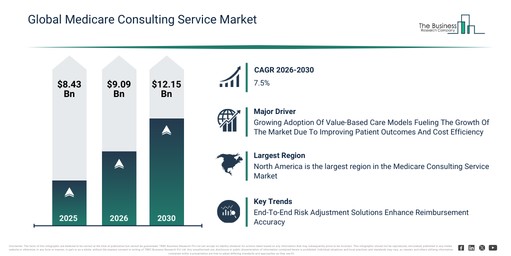
    The medicare consulting service market has experienced substantial growth recently. This market is forecast to expand from $8.43 billion in 2025 to $9.09 billion in 2026, reflecting a compound annual growth rate (CAGR) of 7.8%. The historical expansion can be attributed to increasing medicare enrollment volumes, the rising complexity of medicare plans, a growing requirement for compliance guidance, the broadening of insurance advisory services, and enhanced awareness of benefit optimization.

    The medicare consulting service market is anticipated to show robust expansion over the next few years. This market is predicted to reach $12.15 billion by 2030, exhibiting a compound annual growth rate (CAGR) of 7.5%. This expansion throughout the forecast period stems from factors such as the greater acceptance of AI-powered advisory tools, a heightened need for virtual consulting, the broadening of employer-sponsored medicare initiatives, an intensified focus on preventing fraud and ensuring compliance, and the enhanced integration of data-informed decision-making. Key developments anticipated during this period encompass a heightened requirement for individualized medicare advisory, increased utilization of digital consulting platforms, a stronger emphasis on assisting with regulatory adherence, the widening of claims optimization offerings, and a greater push for guidance on cost clarity.

    Access Your Free Sample Report for In-Depth Market Insights:

    https://www.thebusinessresearchcompany.com/sample.aspx?id=27341&type=smp

    Which Drivers Are Influencing Long-Term Growth In The Medicare Consulting Service Market?

    The increasing acceptance of value-based care models is projected to drive the expansion of the medicare consulting service market in the future. These models represent healthcare frameworks where providers’ compensation is linked to patient health results, prioritizing quality, effectiveness, and proactive care over the quantity of services provided. Their adoption is on the rise, primarily due to a transition from volume-centric to outcome-focused reimbursement, as both providers and insurers strive to enhance patient results and manage healthcare expenditures. Medicare consulting services augment value-based care by offering guidance to healthcare providers on regulatory adherence, payment structures, and operational approaches. These services improve patient outcomes and the efficiency of care by assisting organizations in adopting outcome-driven practices and streamlining healthcare provision. For example, a report released in November 2024 by the US-based Health Care Payment Learning & Action Network (HCPLAN) indicated that value-based arrangements saw growth across all business sectors, rising by nearly 4 percentage points, from 41.3% in 2022 to 45.2% in 2023. Consequently, the expanding implementation of value-based care models is fueling the growth within the medicare consulting service market.

    Which Segments Are Driving Activity In The Medicare Consulting Service Market?

    The medicare consulting service market covered in this report is segmented –

    1) By Service Type: Enrollment Assistance, Claims Assistance, Plan Selection, Compliance And Regulatory Assistance

    2) By Mode Of Delivery: Online, Offline

    3) By Application: Individual Medicare Programs, Employer Group Programs

    4) By End-User: Individuals, Insurance Companies, Healthcare Providers, Other End-Users

    Subsegments:

    1) By Enrollment Assistance: Medicare Initial Enrollment Support, Special Enrollment Period Guidance, Part D Enrollment Services, Medicare Advantage Plan Enrollment, Enrollment Education And Workshops

    2) By Claims Assistance: Billing Error Resolution Support, Claims Submission Guidance, Denied Claims Appeal Support, Out-Of-Pocket Cost Explanation, Claims Tracking And Updates

    3) By Plan Selection: Medicare Advantage Plan Comparison, Medigap Policy Evaluation, Prescription Drug Plan Matching, Cost-Benefit Plan Analysis, Personalized Coverage Recommendations

    4) By Compliance And Regulatory Assistance: Health Insurance Portability and Accountability Act of 1996 (HIPAA) Compliance Guidance, Content Management System (CMS) Regulation Updates Support, Audit Preparation And Review, Policy Documentation Assistance, Fraud Prevention Education

    Which Trends Are Shaping Activity Within The Medicare Consulting Service Market?

    Major companies within the medicare consulting service are concentrating on developing technologically advanced offerings, such as comprehensive risk adjustment workflow solutions, with the goal of improving reimbursement accuracy, compliance, and the quality of care. An end-to-end risk adjustment workflow solution defines a complete system that oversees the entire procedure of assessing, documenting, and coding patient health information to accurately predict healthcare expenses and optimize reimbursements. For instance, in March 2025, Milliman MedInsight Inc., a US-based healthcare analytics and consulting company, launched the Milliman MedInsight risk adjustment platform. This platform is a comprehensive, end-to-end solution engineered to strengthen healthcare organizations’ ability to effectively manage risk adjustment processes. It consolidates advanced analytics, retrospective chart review, and prospective encounter gap closure tools into a unified workflow, thereby streamlining operations and enhancing the precision of patient risk scores for Medicare Advantage and other payment models based on risk. The platform plays a vital role in securing fair compensation for care provided, emphasizing its strategic importance.

    Which Leading Companies Dominate The Medicare Consulting Service Market Share?

    Major companies operating in the medicare consulting service market are Accenture plc, Deloitte Touche Tohmatsu Limited, PricewaterhouseCoopers International Limited, Ernst & Young Global Limited, Klynveld Peat Marwick Goerdeler, IQVIA Holdings Inc., McKinsey & Company Inc., Boston Consulting Group Inc., L.E.K. Consulting LLC, Bain & Company Inc., Milliman Inc., Huron Consulting Group Inc., Astron Hospital And Healthcare Consultants Pvt., ATTAC Consulting, Fair Square Medicare, Healthcare Navigation LLC, Hovis & Associates LLC, Keystone Benefits Group Inc., USA Medicare Consultants LLC, Mercer LLC, Willis Towers Watson plc, Aon Hewitt LLC

    Access The Complete Report For Deeper Market Insights:

    https://www.thebusinessresearchcompany.com/report/medicare-consulting-service-global-market-report

    Which Global Regions Are Shaping The Competitive Landscape Of The Medicare Consulting Service Market?

    North America was the largest region in the medicare consulting service market in 2025. Asia-Pacific is expected to be the fastest-growing region in the forecast period. The regions covered in the medicare consulting service market report are Asia-Pacific, South East Asia, Western Europe, Eastern Europe, North America, South America, Middle East, Africa.

    Request Your Customized Medicare Consulting Service Market Research Report for Competitive Advantage:

    https://www.thebusinessresearchcompany.com/customise?id=27341&type=smp

    Browse Through More Reports Similar to the Global Medicare Consulting Service Market 2026, By The Business Research Company

    Containerboard Market Report 2026

    https://www.thebusinessresearchcompany.com/report/containerboard-global-market-report

    Distribution Board Market Report 2026

    https://www.thebusinessresearchcompany.com/report/distribution-board-global-market-report

    Particle Therapy Market Report 2026

    https://www.thebusinessresearchcompany.com/report/particle-therapy-global-market-report

    Get in touch with us:

    The Business Research Company: https://www.thebusinessresearchcompany.com/

    Americas +1 310-496-7795

    Asia +44 7882 955267 & +91 8897263534

    Europe +44 7882 955267

    Email us at info@tbrc.info

    Follow us on:

    LinkedIn: https://in.linkedin.com/company/the-business-research-company

    YouTube: https://www.youtube.com/channel/UC24_fI0rV8cR5DxlCpgmyFQ

    Global Market Model: https://www.thebusinessresearchcompany.com/global-market-model