Month: March 2026

  • A Significant Growth Driver for the Anterior Uveitis Market Is the Impact Of Autoimmune Disease Surge On Inflammatory Eye Conditions

    A Significant Growth Driver for the Anterior Uveitis Market Is the Impact Of Autoimmune Disease Surge On Inflammatory Eye Conditions

    The Business Research Company’s 2026 market reports include new capabilities such as market attractiveness scoring and analysis, total addressable market analysis, company scoring matrix, interactive excel data dashboard, improved supply chain analysis, upcoming startups in the market, and overview of key products, aimed at improving the depth, usability, and strategic value of the insights delivered.

    What Market Size Expansion Is Predicted For The Anterior Uveitis Market Between 2026 And 2030?

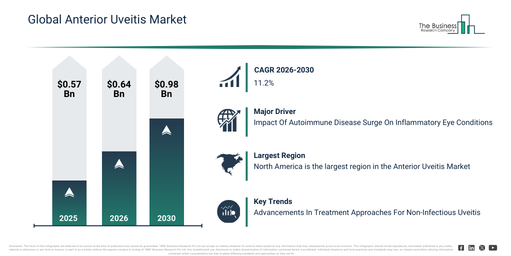
    The anterior uveitis market has grown rapidly in recent years. It is expected to increase from $0.57 billion in 2025 to $0.64 billion in 2026, achieving a CAGR of 11.6%. Growth factors include advancements in ophthalmic diagnostics, rising prevalence of autoimmune-related eye conditions, broader access to corticosteroids, expansion of eye care facilities, and increased availability of specialized ophthalmology services.

    The anterior uveitis market is forecast to experience rapid growth, reaching $0.98 billion by 2030 at a CAGR of 11.2%. This growth is driven by increasing demand for biologic eye therapies, integration of precision diagnostics, expansion of advanced ophthalmic drug pipelines, greater focus on vision preservation, and rising investment in inflammatory eye disease research. Trends include higher adoption of biologic treatments, use of advanced diagnostic biomarkers, preference for targeted immunosuppressive therapies, expansion of outpatient eye care services, and emphasis on early detection.

    Download the Free Sample Report to Explore Key Market Insights:

    https://www.thebusinessresearchcompany.com/sample.aspx?id=21099&type=smp

    What Major Drivers Are Influencing Demand In The Anterior Uveitis Market?

    The growing prevalence of autoimmune diseases is expected to drive the anterior uveitis market. Autoimmune conditions occur when the immune system mistakenly attacks healthy tissues, causing inflammation and damage. Anterior uveitis, which involves inflammation in the front part of the eye, is commonly associated with autoimmune disorders such as rheumatoid arthritis and ankylosing spondylitis. For instance, in February 2024, Arthritis Australia reported that around 562,378 Australians are expected to be living with rheumatoid arthritis by 2025, accounting for 14% of the total arthritis population. Therefore, the increasing prevalence of autoimmune diseases is fueling the anterior uveitis market.

    Which Market Segments Are Examined In The Anterior Uveitis Market Study?

    The anterior uveitis market covered in this report is segmented –

    1) By Treatment Type: Pharmacological Treatments, Surgical Treatments, Biologic Therapy

    2) By Diagnosis Method: Clinical Diagnosis, Diagnostic Imaging, Biomarkers

    3) By Cause: Infectious, Non-Infectious

    4) By End-User: Hospitals And Clinics, Ambulatory Surgical Centers

    Subsegments:

    1) By Pharmacological Treatments: Corticosteroids, Non-Steroidal Anti-Inflammatory Drugs (NSAIDs), Immunosuppressive Drugs

    2) By Surgical Treatments: Cataract Surgery, Glaucoma Surgery, Vitrectomy

    3) By Biologic Therapy: Tumor Necrosis Factor (TNF) Inhibitors, Interleukin-6 (IL-6) Inhibitors, Monoclonal Antibodies

    Which Trends Are Influencing The Anterior Uveitis Market?

    In the anterior uveitis market, companies are developing improved drug formulations such as eye drops to enhance patient compliance, optimize delivery, and reduce inflammation with fewer side effects. For example, in January 2024, Tarsier Pharma Ltd. received FDA approval under a Special Protocol Assessment for its Phase 3 Tarsier-04 trial evaluating TRS01 eye drops. This multicenter study involves up to 300 patients and aims to confirm the drug’s safety and effectiveness in treating non-infectious uveitis while minimizing glaucoma risk.

    Who Are The Primary Competitors In The Anterior Uveitis Market?

    Major companies operating in the anterior uveitis market are AbbVie Inc, Novartis AG, Bausch Health Companies Inc, EyePoint Pharmaceuticals Inc, Santen Pharmaceutical Co Ltd, Alimera Sciences Inc, Clearside Biomedical Inc, Eyegate Pharmaceuticals Inc, Horizon Therapeutics Plc, Mylan NV, Sun Pharmaceutical Industries Ltd, Regeneron Pharmaceuticals Inc, Pfizer Inc, Amgen Inc, Sanofi, Galapagos NV, Tarsier Pharma Ltd, TopiVert Ltd, Ocular Therapeutix Inc, Ophthotech Corporation, Aciont Inc, Sirion Therapeutics Inc, Aldeyra Therapeutics Inc, Kiora Pharmaceuticals Inc, UCB SA, ANI Pharmaceuticals Inc, Priovant Therapeutics, Roivant Sciences Inc, Active Biotech

    Read the full anterior uveitis market report here:

    https://www.thebusinessresearchcompany.com/report/anterior-uveitis-global-market-report

    Which Region Shows The Strongest Potential For Future Growth In The Anterior Uveitis Market?

    North America was the largest region in the anterior uveitis market in 2025. The regions covered in the anterior uveitis market report are Asia-Pacific, South East Asia, Western Europe, Eastern Europe, North America, South America, Middle East, Africa.

    Request A Tailored Anterior Uveitis Market Research Report For Competitive Advantage:

    https://www.thebusinessresearchcompany.com/customise?id=21099&type=smp

    Browse Through More Reports Similar to the Global Anterior Uveitis Market 2026, By The Business Research Company

    Bacterial Conjunctivitis Global Market Report

    https://www.thebusinessresearchcompany.com/report/bacterial-conjunctivitis-global-market-report

    Dermatitis Drugs Global Market Report

    https://www.thebusinessresearchcompany.com/report/dermatitis-drugs-global-market-report

    Intraocular Lens Global Market Report

    https://www.thebusinessresearchcompany.com/report/intraocular-lens-global-market-report

    Get in touch with us:

    The Business Research Company: https://www.thebusinessresearchcompany.com/

    Americas +1 310-496-7795

    Asia +44 7882 955267 & +91 8897263534

    Europe +44 7882 955267

    Email us at info@tbrc.info

    Follow us on:

    LinkedIn: https://in.linkedin.com/company/the-business-research-company

    YouTube: https://www.youtube.com/channel/UC24_fI0rV8cR5DxlCpgmyFQ

    Global Market Model: https://www.thebusinessresearchcompany.com/global-market-model
  • Artificial Intelligence (AI) Pathology Quality Control Market Growth Expected to Reach $4.64 Billion by 2030 with 21.1% CAGR

    Artificial Intelligence (AI) Pathology Quality Control Market Growth Expected to Reach $4.64 Billion by 2030 with 21.1% CAGR

    The Business Research Company’s 2026 market reports include new capabilities such as market attractiveness scoring and analysis, total addressable market analysis, company scoring matrix, interactive excel data dashboard, improved supply chain analysis, upcoming startups in the market, and overview of key products, aimed at improving the depth, usability, and strategic value of the insights delivered.

    What Market Value Is Anticipated For The Artificial Intelligence (AI) Pathology Quality Control Market Over The Period 2026–2030?

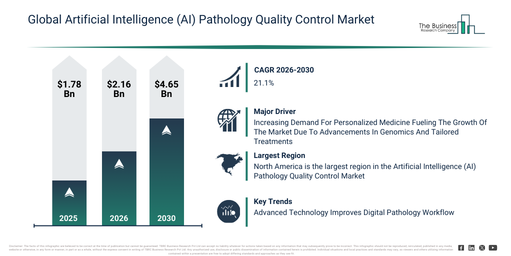
    The artificial intelligence (AI) pathology quality control market has experienced significant expansion in recent years. Projections indicate its expansion from $1.78 billion in 2025 to $2.16 billion in 2026, showcasing a compound annual growth rate (CAGR) of 21.4%. Historically, this growth has been driven by factors such as increasing pathology workload volumes, the early digitization of pathology slides, the growing complexity of cancer diagnostics, a demand for standardized reporting, and the initial adoption of AI-assisted pathology tools.

    The artificial intelligence (AI) pathology quality control market is anticipated to experience substantial growth over the next few years. It is projected to expand to $4.65 billion by 2030, with a compound annual growth rate (CAGR) of 21.1%. This projected growth is driven by factors such as increasing investments in digital pathology platforms, a rising demand for precision diagnostics, the expansion of AI validation in clinical workflows, the growing integration of pathology data analytics, and an increasing regulatory emphasis on diagnostic quality control. Key trends expected during this forecast period include the increasing deployment of AI-based slide quality assessment, a rising adoption of automated error detection tools, the growing standardization of pathology workflows, the expansion of digital pathology integration, and an enhanced focus on diagnostic accuracy assurance.

    Download the Free Sample Report to Explore Key Market Insights:

    https://www.thebusinessresearchcompany.com/sample.aspx?id=28124&type=smp

    Which Major Factors Are Driving The Expansion Of The Artificial Intelligence (AI) Pathology Quality Control Market?

    The anticipated surge in demand for personalized medicine is projected to stimulate the expansion of the artificial intelligence (AI) pathology quality control market in the future. This medical approach involves customizing treatment and prevention plans to suit an individual’s distinct genetic profile, lifestyle, and environmental factors. Its growing acceptance largely stems from progress in genomics, facilitating the accurate detection of genetic variations and the development of customized treatments. Artificial intelligence (AI) pathology quality control improves personalized medicine by offering accurate and reliable diagnostic information, thus supporting personalized therapeutic approaches. It minimizes diagnostic inaccuracies through automated quality assessments, boosting precision and dependability, which in turn elevates patient-specific care. As an illustration, in February 2024, the Personalized Medicine Coalition (PMC), a US-based nonprofit, reported that the U.S. Food and Drug Administration (FDA) approved 26 new personalized medicines in 2023, a notable rise from 12 approvals in 2022. Consequently, the heightened need for personalized medicine will propel the artificial intelligence (AI) pathology quality control market.

    How Is The Artificial Intelligence (AI) Pathology Quality Control Market Divided Into Its Major Segments?

    The artificial intelligence (AI) pathology quality control market covered in this report is segmented –

    1) By Component: Software, Hardware, Services

    2) By Deployment Mode: On-Premises, Cloud-Based

    3) By Application: Cancer Diagnostics, Infectious Disease Diagnostics, Digital Pathology, Research, Other Applications

    4) By End-User: Hospitals, Diagnostic Laboratories, Research Institutes, Pharmaceutical And Biotechnology Companies, Other End Users

    Subsegments:

    1) By Software: Image Analysis Software, Diagnostic Decision Support Software, Workflow Management Software, Reporting And Visualization Software

    2) By Hardware: Digital Pathology Scanners, Imaging Devices, Servers And Storage Systems, Laboratory Equipment

    3) By Services: Implementation Services, Training And Support Services, Maintenance And Upgrade Services, Consulting Services

    Which Trends Are Shaping The Future Of The Artificial Intelligence (AI) Pathology Quality Control Market?

    Companies prominently involved in the artificial intelligence (AI) pathology quality control market are concentrating on developing sophisticated solutions, particularly advanced AI-powered tools, to optimize diagnostic precision, streamline laboratory processes, and ensure the dependability of pathology data. These advanced AI-powered solutions signify next-generation technologies that leverage artificial intelligence to accomplish complex tasks with superior accuracy, speed, and efficiency. For instance, in November 2023, PathAI, a US-based biotechnology firm, unveiled Artifact Detect 1 on its AISight digital pathology platform. This instrument automates the identification and measurement of artifacts within whole slide images (WSI), which are irrelevant morphological characteristics capable of impairing diagnostic precision. ArtifactDetect minimizes misdiagnoses and the necessity for re-scans by automatically pre-screening slides for quality concerns, thereby boosting accuracy, laboratory operational efficiency, and overall processing capacity. This innovation supports timely corrective actions such as re-staining or re-scanning, ultimately refining the digital workflow and preserving valuable resources for both technicians and pathologists.

    Who Are The Prominent Organizations Shaping The Artificial Intelligence (AI) Pathology Quality Control Market?

    Major companies operating in the artificial intelligence (AI) pathology quality control market are Roche Diagnostics GmbH, Danaher Corporation, Philips Healthcare, Agilent Technologies Inc., Hologic Inc., Clinisys Group Ltd., Sectra AB, PathAI Inc., OptraSCAN Inc., Paige.AI Inc., Proscia Inc., Quibim S.L., 3DHISTECH Ltd., Visiopharm A/S, Indica Labs Inc., Ibex Medical Analytics Ltd., Aiosyn B.V., DeepBio Inc., Nucleai Ltd., Gestalt Diagnostics LLC

    Read the full artificial intelligence (ai) pathology quality control market report here:

    https://www.thebusinessresearchcompany.com/report/artificial-intelligence-ai-pathology-quality-control-global-market-report

    Which Region Currently Holds The Largest Share Of The Artificial Intelligence (AI) Pathology Quality Control Market?

    North America was the largest region in the artificial intelligence (AI) pathology quality control market in 2025. Asia-Pacific is expected to be the fastest-growing region in the forecast period. The regions covered in the artificial intelligence (AI) pathology quality control market report are Asia-Pacific, South East Asia, Western Europe, Eastern Europe, North America, South America, Middle East, Africa.

    Request A Tailored Artificial Intelligence (AI) Pathology Quality Control Market Research Report For Competitive Advantage:

    https://www.thebusinessresearchcompany.com/customise?id=28124&type=smp

    Browse Through More Reports Similar to the Global Artificial Intelligence (AI) Pathology Quality Control Market 2026, By The Business Research Company

    Ai In Medical Diagnostics Global Market Report

    https://www.thebusinessresearchcompany.com/report/ai-in-medical-diagnostics-global-market-report

    Ai In Cancer Diagnostics Global Market Report

    https://www.thebusinessresearchcompany.com/report/ai-in-cancer-diagnostics-global-market-report

    Artificial Intelligence In Healthcare Diagnosis Global Market Report

    https://www.thebusinessresearchcompany.com/report/artificial-intelligence-in-healthcare-diagnosis-global-market-report

    Get in touch with us:

    The Business Research Company: https://www.thebusinessresearchcompany.com/

    Americas +1 310-496-7795

    Asia +44 7882 955267 & +91 8897263534

    Europe +44 7882 955267

    Email us at info@tbrc.info

    Follow us on:

    LinkedIn: https://in.linkedin.com/company/the-business-research-company

    YouTube: https://www.youtube.com/channel/UC24_fI0rV8cR5DxlCpgmyFQ

    Global Market Model: https://www.thebusinessresearchcompany.com/global-market-model
  • Global Anosmia Industry Trends and Market Growth Forecast for 2026–2030

    Global Anosmia Industry Trends and Market Growth Forecast for 2026–2030

    The Business Research Company’s 2026 market reports include new capabilities such as market attractiveness scoring and analysis, total addressable market analysis, company scoring matrix, interactive excel data dashboard, improved supply chain analysis, upcoming startups in the market, and overview of key products, aimed at improving the depth, usability, and strategic value of the insights delivered.

    How Large Is The Anosmia Market Projected To Become By 2030 Based On Its 2026 Valuation?

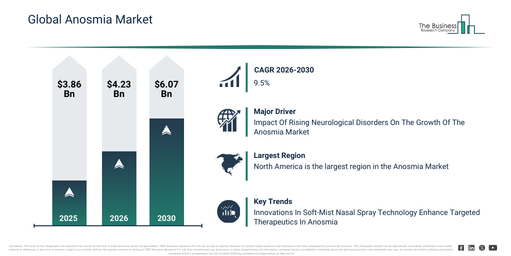
    The anosmia market has experienced strong growth in recent years. It is anticipated to grow from $3.86 billion in 2025 to $4.23 billion in 2026, at a CAGR of 9.4%. This growth is linked to a higher incidence of virus-induced anosmia, increased awareness of olfactory disorders, wider availability of diagnostic tools, expansion of ENT specialty care, and improved reporting of sensory impairments.

    The anosmia market is expected to grow strongly, reaching $6.07 billion by 2030 at a CAGR of 9.5%. Growth is attributed to increased research in olfactory nerve regeneration, adoption of new therapies, expansion of post-infectious care programs, rising demand for quality-of-life treatments, and growing clinical trial activity. Key trends include a stronger focus on regenerative treatments, increased use of smell training programs, adoption of targeted pharmacological therapies, expansion of diagnostic testing and imaging, and improved management of post-viral recovery.

    Download the Free Sample Report to Explore Key Market Insights:

    https://www.thebusinessresearchcompany.com/sample.aspx?id=18224&type=smp

    Which Market Drivers Are Supporting The Expansion Of The Anosmia Market?

    The rising occurrence of neurological disorders is anticipated to propel the growth of the anosmia market. Neurological disorders affect the brain, spinal cord, and nerves, and their prevalence is increasing due to aging populations and higher rates of chronic conditions such as diabetes and hypertension. These disorders can impair the olfactory system, leading to a loss of smell. For instance, in March 2023, the Alzheimer’s Association reported that 6.7 million Americans aged 65 and above are living with Alzheimer’s dementia, with projections rising to 13.8 million by 2060. Consequently, the increasing prevalence of neurological disorders is driving the anosmia market.

    What Segment Groups Are Identified Within The Anosmia Market?

    The anosmia market covered in this report is segmented –

    1) By Type: Idiopathic Anosmia, Congenital Anosmia

    2) By Treatment: Therapies, Medications

    3) By End User: Hospitals, Clinics, Other End Users

    Subsegments:

    1) By Idiopathic Anosmia: Partial Idiopathic Anosmia, Complete Idiopathic Anosmia

    2) By Congenital Anosmia: Isolated Congenital Anosmia, Syndromic Congenital Anosmia (Associated With Other Conditions Or Syndromes)

    What Trends Are Advancing Progress In The Anosmia Market?

    Major companies in the anosmia market are focusing on advanced delivery technologies such as soft-mist nasal sprays to improve drug absorption and target the olfactory region more effectively. This technology uses controlled droplet size and low velocity to enhance therapeutic outcomes. For instance, in April 2025, Cyrano Therapeutics completed enrollment in its Phase 2 FLAVOR trial for CYR-064, a soft-mist nasal spray designed for post-viral smell loss. The formulation includes a phosphodiesterase inhibitor and uses advanced spray systems to ensure precise delivery to the olfactory region.

    Which Companies Hold Significant Positions In The Anosmia Market?

    Major companies operating in the anosmia market are Cyrano Therapeutics, Regeneron Pharmaceuticals, Novartis AG, GlaxoSmithKline PLC, Otsuka Pharmaceutical Co Ltd, Bayer AG, AstraZeneca PLC, Eli Lilly and Company, Pfizer Inc, Sanofi SA, NeuroNascent Inc, Immunome Therapeutics, Olfactory Therapeutics Ltd, ENT Therapeutics Inc, NeuroSense Therapeutics LLC, SmellSense Bio, Olfactricity Therapeutics, Sensory Neurogenics Inc, Olfaxion Biotech, SmellGen Therapeutics, Post-Viral Sensory Recovery Inc, Hyposmia Therapeutics LLC

    Read the full anosmia market report here:

    https://www.thebusinessresearchcompany.com/report/anosmia-global-market-report

    How Is The Anosmia Market Distributed Across Key Geographic Regions?

    North America was the largest region in the anosmia market in 2025. Asia-Pacific is expected to be the fastest-growing region in the market going forward. The regions covered in the anosmia market report are Asia-Pacific, South East Asia, Western Europe, Eastern Europe, North America, South America, Middle East, Africa.

    Request A Tailored Anosmia Market Research Report For Competitive Advantage:

    https://www.thebusinessresearchcompany.com/customise?id=18224&type=smp

    Browse Through More Reports Similar to the Global Anosmia Market 2026, By The Business Research Company

    Aplastic Anemia Global Market Report

    https://www.thebusinessresearchcompany.com/report/aplastic-anemia-global-market-report

    Hyperlipidemia Global Market Report

    https://www.thebusinessresearchcompany.com/report/hyperlipidemia-global-market-report

    Anoscope Global Market Report

    https://www.thebusinessresearchcompany.com/report/anoscope-global-market-report

    Get in touch with us:

    The Business Research Company: https://www.thebusinessresearchcompany.com/

    Americas +1 310-496-7795

    Asia +44 7882 955267 & +91 8897263534

    Europe +44 7882 955267

    Email us at info@tbrc.info

    Follow us on:

    LinkedIn: https://in.linkedin.com/company/the-business-research-company

    YouTube: https://www.youtube.com/channel/UC24_fI0rV8cR5DxlCpgmyFQ

    Global Market Model: https://www.thebusinessresearchcompany.com/global-market-model
  • Biologics Testing Market Forecast 2026–2035 Highlighting Market Data Patterns and Industry Insights

    Biologics Testing Market Forecast 2026–2035 Highlighting Market Data Patterns and Industry Insights

    The Business Research Company’s 2026 market reports include new capabilities such as market attractiveness scoring and analysis, total addressable market analysis, company scoring matrix, interactive excel data dashboard, improved supply chain analysis, upcoming startups in the market, and overview of key products, aimed at improving the depth, usability, and strategic value of the insights delivered.

    What Market Size Increase Is Anticipated For The Biologics Testing Market Over The 2026–2030 Period?

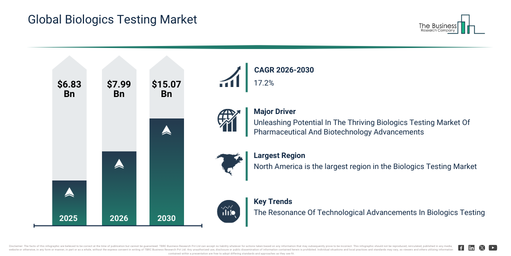
    The biologics testing market has experienced significant growth in recent years. Its value is projected to expand from $6.83 billion in 2025 to $7.99 billion in 2026, reflecting a compound annual growth rate (CAGR) of 17.0%. Historically, this growth has been driven by increased biologics manufacturing volumes, the expansion of vaccine development programs, heightened regulatory expectations regarding product safety, broader adoption of monoclonal antibody therapies, and the proliferation of contract testing laboratories.

    The biologics testing market size is anticipated to undergo significant growth in the coming years. It is projected to expand to $15.07 billion by 2030, exhibiting a compound annual growth rate (CAGR) of 17.2%. This expansion during the forecast period is driven by a heightened demand for rapid release testing, the increasing integration of automated quality control systems, the broadening scope of cell and gene therapy testing requirements, a stronger emphasis on data integrity, and increasing investments in digital laboratory infrastructure. Prominent trends observed during the forecast period encompass the wider adoption of advanced analytical testing platforms, a surging requirement for comprehensive biologics quality testing, the expanding utilization of high-sensitivity assays, the proliferation of outsourced testing services, and an intensified focus on regulatory compliance testing.

    Download the Free Sample Report to Explore Key Market Insights:

    https://www.thebusinessresearchcompany.com/sample.aspx?id=10276&type=smp

    Which Economic Or Industry Drivers Are Impacting The Biologics Testing Market?

    The expanding pharmaceutical and biotechnology sectors are projected to fuel the advancement of the biologics testing market in the future. The pharmaceutical industry primarily concentrates on creating and producing medicines for diverse ailments and health issues. Conversely, the biotechnology industry centers on applying technology to biological sciences and healthcare. Biologics testing encompasses examinations to pinpoint and measure impurities, determine stability, and gauge the immune reaction to a therapeutic agent. The expansion of these industries has also spurred progress in biologics testing technology, for instance, through the creation of novel analytical instruments and methods. This development has enabled more precise and streamlined testing, thereby lowering the duration and expense involved in launching new biologics. For example, data from July 2024, provided by Eurostat, a governing organization situated in Belgium, indicated that pharmaceutical output in the EU reached €44 billion ($46.7 billion) in 2023, signifying substantial expansion within the industry. Consequently, the swift expansion of the pharmaceutical and biotechnology industries is a key factor propelling the biologics testing market forward.

    How Is The Biologics Testing Market Segmented Across Key Categories?

    The biologics testing market covered in this report is segmented –

    1) By Product: Reagents And Kits, Instruments, Other Products

    2) By Test Type: Endotoxin Test, Sterility Test, Mycoplasma Tests, Bioburden Tests, Residual Host-Cell Proteins And DNA Detection Tests, Virus Safety Test, Other Test Types

    3) By Application: Vaccine Development And Manufacturing, Monoclonal Antibodies Development And Manufacturing, Cellular And Gene Therapy Products Development And Manufacturing, Blood And Blood Products Development And Manufacturing, Other Applications

    Subsegments:

    1) By Reagents And Kits: ELISA Kits, PCR Kits, Cell Culture Reagents

    2) By Instruments: Spectrophotometers, Chromatography Systems, Microplate Readers

    3) By Other Products: Software, Consumables, Reference Standards

    What Key Trends Are Influencing The Development Of The Biologics Testing Market?

    Key companies operating within the biological testing market are introducing novel technologies, such as protein engineering techniques, to elevate their profitability. Protein engineering pertains to the intentional design and modification of proteins to yield new or enhanced variants possessing desired attributes. For instance, in July 2023, Queensland University of Technology, an Australia-based university, unveiled an innovative protein-engineering method that facilitates the rapid and precise creation of new diagnostic tests. This technology presents a fresh approach for refining and broadening laboratory testing capabilities, promising a substantial positive influence on both public health and the economy.

    Who Are The Dominant Players Shaping The Biologics Testing Market Landscape?

    Major companies operating in the biologics testing market are Charles River Laboratories Inc., Thermo Fisher Scientific Inc., Merck KGaA, SGS Société Générale de Surveillance SA, WuXi AppTec Co. Ltd., Sartorius AG, Cytovance Biologics Inc., Pace Analytical Services Inc., Avance Biosciences Inc., Biomerieux SA, Lonza Group Ltd., Genscript Biotech Corp., Bio-Rad Laboratories Inc., Accugen Laboratories Inc., Gibraltar Laboratories Inc., Jordi Labs, Bioquell Limited, Southern Research, Promega Corporation, Lancaster Laboratories Inc., Toxikon Corporation, Eurofins BioPharma Product Testing, QIAGEN N.V., Danaher Corporation, Agilent Technologies Inc., PerkinElmer Inc., Abbott Laboratories, Beckman Coulter Inc., Becton Dickinson and Company, Roche Holding AG

    Read the full biologics testing market report here:

    https://www.thebusinessresearchcompany.com/report/biologics-testing-global-market-report

    What Are The Top-Performing Regions Within The Biologics Testing Market?

    North America was the largest region in the biologics testing market in 2025. Asia-Pacific is expected to be the fastest-growing region in the global biologics testing market duirng the forecast period. The regions covered in the biologics testing market report are Asia-Pacific, South East Asia, Western Europe, Eastern Europe, North America, South America, Middle East, Africa.

    Request A Tailored Biologics Testing Market Research Report For Competitive Advantage:

    https://www.thebusinessresearchcompany.com/customise?id=10276&type=smp

    Browse Through More Reports Similar to the Global Biologics Testing Market 2026, By The Business Research Company

    Biologics Contract Development Global Market Report

    https://www.thebusinessresearchcompany.com/report/biologics-contract-development-global-market-report

    Veterinary Biologics Global Market Report

    https://www.thebusinessresearchcompany.com/report/veterinary-biologics-global-market-report

    Biologics Cdmo Global Market Report

    https://www.thebusinessresearchcompany.com/report/biologics-cdmo-global-market-report

    Get in touch with us:

    The Business Research Company: https://www.thebusinessresearchcompany.com/

    Americas +1 310-496-7795

    Asia +44 7882 955267 & +91 8897263534

    Europe +44 7882 955267

    Email us at info@tbrc.info

    Follow us on:

    LinkedIn: https://in.linkedin.com/company/the-business-research-company

    YouTube: https://www.youtube.com/channel/UC24_fI0rV8cR5DxlCpgmyFQ

    Global Market Model: https://www.thebusinessresearchcompany.com/global-market-model
  • Artificial Intelligence (AI) Oral Health App Market Forecast 2026–2035 Reflecting Expansion Opportunities Across Industries

    Artificial Intelligence (AI) Oral Health App Market Forecast 2026–2035 Reflecting Expansion Opportunities Across Industries

    The Business Research Company’s 2026 market reports include new capabilities such as market attractiveness scoring and analysis, total addressable market analysis, company scoring matrix, interactive excel data dashboard, improved supply chain analysis, upcoming startups in the market, and overview of key products, aimed at improving the depth, usability, and strategic value of the insights delivered.

    What Is The Expected Market Size Of The Artificial Intelligence (AI) Oral Health App Market From 2026 To 2030?

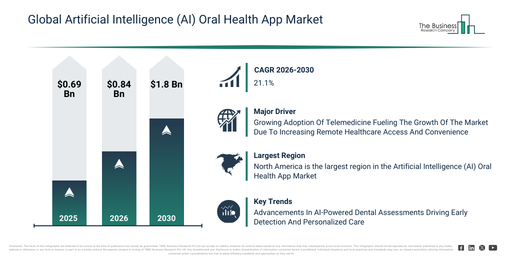
    The artificial intelligence (AI) oral health app market has experienced substantial expansion in recent years. Its valuation is expected to climb from $0.69 billion in 2025 to $0.84 billion in 2026, demonstrating a compound annual growth rate (CAGR) of 21.4%. Factors contributing to this historical growth include increasing smartphone penetration in healthcare, heightened awareness of oral hygiene, the early adoption of digital dental diagnostics, the expansion of telehealth platforms, and the availability of dental imaging data.

    The artificial intelligence (AI) oral health app market is projected to experience substantial growth in the coming years, with its size anticipated to reach $1.8 billion by 2030, exhibiting a compound annual growth rate (CAGR) of 21.1%. This expansion is primarily driven by an increasing demand for remote dental care solutions, the rising adoption of AI-driven preventive healthcare, the broadening of cloud-based health applications, a growing emphasis on personalized patient engagement, and increasing investments within digital health ecosystems. Significant trends expected during this period include a greater embrace of AI-based dental image analysis, the increasing use of personalized oral health monitoring tools, enhanced integration of remote dental diagnostics, the expansion of preventive dental care applications, and a stronger focus on the early detection of oral diseases.

    Download the Free Sample Report to Explore Key Market Insights:

    https://www.thebusinessresearchcompany.com/sample.aspx?id=28122&type=smp

    What Key Drivers Are Influencing The Growth Of The Artificial Intelligence (AI) Oral Health App Market?

    The increasing use of telemedicine is poised to drive the expansion of the artificial intelligence (AI) oral health app market. Telemedicine refers to the provision of clinical healthcare services remotely through digital communication technologies, allowing patients to consult medical professionals, receive diagnoses, and manage treatments without requiring in-person visits to a facility. Its increasing prevalence is due to the greater convenience it offers, enabling patients to access healthcare services from a distance, thereby saving time and removing the necessity for travel, which ultimately enhances accessibility and efficiency. Artificial intelligence (AI) oral health apps further integrate into telemedicine ecosystems by providing remote dental monitoring, making them highly suitable for individuals with limited access to traditional in-person care. They streamline diagnostic efforts through immediate analysis of oral images, thereby improving healthcare convenience and facilitating early detection of dental problems. For example, in February 2025, according to the PubMed Central, a US-based government-run digital repository, it was reported that in March 2023, 29% of all mental health care visits and 21% of substance use disorder care were delivered via telemedicine. Furthermore, payment parity mandates were linked to a 2.5 percentage point increase in telemedicine use in the first quarter of 2023 compared to states lacking such mandates. Thus, the increasing uptake of telemedicine is indeed stimulating the expansion of the artificial intelligence (AI) oral health app market.

    Which Segments Are Included In The Analysis Of The Artificial Intelligence (AI) Oral Health App Market?

    The artificial intelligence (AI) oral health app market covered in this report is segmented –

    1) By Component: Software, Services

    2) By Deployment Mode: Cloud-Based, On-Premises

    3) By Application: Dental Diagnostics, Oral Health Monitoring, Patient Education, Other Applications

    4) By End User: Dental Clinics, Hospitals, Individual Users, Other End-Users

    Subsegments:

    1) By Software: Diagnostic Software, Monitoring Software, Treatment Planning Software, Imaging Software

    2) By Services: Consultation Services, Data Analytics Services, Maintenance And Support Services, Integration Services

    What Key Trends Are Influencing The Development Of The Artificial Intelligence (AI) Oral Health App Market?

    Leading companies within the artificial intelligence (AI) oral health app market are concentrating on creating sophisticated solutions, such as AI-powered dental assessments. These solutions aim to improve early detection, personalize care, boost patient involvement, and make oral healthcare more accessible. Specifically, AI-powered dental assessments involve artificial intelligence algorithms analyzing images of teeth and gums. Their purpose is to pinpoint potential oral health problems and offer immediate, practical recommendations to users. An example of this is seen in May 2025, when Mars Inc., a US-based global pet nutrition and healthcare company, introduced GREENIES Canine Dental Check. This AI-powered dental assessment tool examines photographs of dogs’ teeth and gums to identify tartar buildup and gum irritation, delivering results in seconds, accompanied by subsequent advice. Furthermore, the tool connects users with licensed veterinary technicians via the PETconnect by GREENIES service. This exemplifies a contemporary method of utilizing AI for ongoing, home-based oral health surveillance and assistance. Such innovation enables pet owners to spot dental issues proactively, thereby decreasing the chances of serious oral diseases and expensive veterinary interventions.

    Which Key Industry Participants Are Active In The Artificial Intelligence (AI) Oral Health App Market?

    Major companies operating in the artificial intelligence (AI) oral health app market are Dentsply Sirona Inc., Align Technology Inc., Straumann Group, Planmeca Oy, 3Shape A/S, Dexis Corp., Dandy Inc., Carestream Health Inc., Dental Monitoring SAS, Pearl Inc., Overjet Inc., VideaHealth Inc., Zenyum Pte. Ltd., Candid Care Co., MouthWatch LLC, Dentem Inc., Denti.AI Technology Inc., OraQ AI Inc., Oryx Dental Software LLC, SOTA Imaging, Denota Ltd.

    Read the full artificial intelligence (ai) oral health app market report here:

    https://www.thebusinessresearchcompany.com/report/artificial-intelligence-ai-oral-health-app-global-market-report

    Which Region Is Expected To Register The Fastest Growth In The Artificial Intelligence (AI) Oral Health App Market?

    North America was the largest region in the artificial intelligence (AI) oral health app market in 2025. Asia-Pacific is expected to be the fastest-growing region in the forecast period. The regions covered in the artificial intelligence (AI) oral health app market report are Asia-Pacific, South East Asia, Western Europe, Eastern Europe, North America, South America, Middle East, Africa.

    Request A Tailored Artificial Intelligence (AI) Oral Health App Market Research Report For Competitive Advantage:

    https://www.thebusinessresearchcompany.com/customise?id=28122&type=smp

    Browse Through More Reports Similar to the Global Artificial Intelligence (AI) Oral Health App Market 2026, By The Business Research Company

    Oral Care Global Market Report

    https://www.thebusinessresearchcompany.com/report/oral-care-global-market-report

    Womens Health App Global Market Report

    https://www.thebusinessresearchcompany.com/report/womens-health-app-global-market-report

    Artificial Intelligence Ai Software Global Market Report

    https://www.thebusinessresearchcompany.com/report/artificial-intelligence-ai-software-global-market-report

    Get in touch with us:

    The Business Research Company: https://www.thebusinessresearchcompany.com/

    Americas +1 310-496-7795

    Asia +44 7882 955267 & +91 8897263534

    Europe +44 7882 955267

    Email us at info@tbrc.info

    Follow us on:

    LinkedIn: https://in.linkedin.com/company/the-business-research-company

    YouTube: https://www.youtube.com/channel/UC24_fI0rV8cR5DxlCpgmyFQ

    Global Market Model: https://www.thebusinessresearchcompany.com/global-market-model
  • Anorectal Disorders Treatment Market Size Outlook and Demand Growth Across 2026–2030

    Anorectal Disorders Treatment Market Size Outlook and Demand Growth Across 2026–2030

    The Business Research Company’s 2026 market reports include new capabilities such as market attractiveness scoring and analysis, total addressable market analysis, company scoring matrix, interactive excel data dashboard, improved supply chain analysis, upcoming startups in the market, and overview of key products, aimed at improving the depth, usability, and strategic value of the insights delivered.

    What Market Value Is Anticipated For The Anorectal Disorders Treatment Market Over The Period 2026–2030?

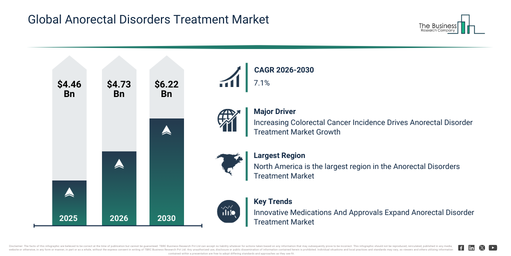
    The anorectal disorders treatment market has also grown steadily. It is projected to increase from $4.46 billion in 2025 to $4.73 billion in 2026 at a CAGR of 6.1%. Key drivers include a higher prevalence of conditions such as hemorrhoids and fistulas, improved access to surgical procedures, availability of topical medications, expansion of healthcare infrastructure, and increased awareness of anorectal health.

    The anorectal disorders treatment market is projected to grow to $6.22 billion by 2030 at a CAGR of 7.1%. Growth drivers include rising demand for minimally invasive therapies, increased use of combination drug treatments, expansion of specialty clinics, a growing focus on patient-centered care, and innovation in rectal drug delivery systems. Trends include greater adoption of minimally invasive procedures, increased use of topical and rectal formulations, preference for outpatient care, expansion of lifestyle and dietary management strategies, and enhanced focus on early diagnosis and symptom management.

    Download the Free Sample Report to Explore Key Market Insights:

    https://www.thebusinessresearchcompany.com/sample.aspx?id=12986&type=smp

    What Underlying Factors Are Accelerating The Growth Of The Anorectal Disorders Treatment Market?

    The growing incidence of colorectal cancer is expected to boost the anorectal disorders treatment market in the future. Colorectal cancer originates in the colon or rectum and often leads to symptoms such as pain, fistulas, and bowel complications. Treatments for anorectal disorders help manage these symptoms, improving patient comfort and quality of life. For example, in May 2023, the American Society of Clinical Oncology reported that approximately 153,020 adults in the US are expected to be diagnosed with colorectal cancer, including 106,970 cases of colon cancer and 46,050 cases of rectal cancer. Therefore, the increasing incidence of colorectal cancer is driving the growth of the anorectal disorders treatment market.

    How Is The Anorectal Disorders Treatment Market Divided Into Its Major Segments?

    The anorectal disorders treatment market covered in this report is segmented –

    1) By Treatment: Drugs, Surgery, Other Treatment

    2) By Disease: Diarrhea, Hemorrhoid, Abscesse, Fistula, Itching, Other Disease

    3) By Route Of Administration: Oral, Parenteral, Rectal, Other Route of administration

    4) By End-Users: Hospitals, Specialty Clinics, Other End-Users

    Subsegments:

    1) By Drugs: Topical Agents, Oral Medications, Rectal Suppositories

    2) By Surgery: Hemorrhoidectomy, Fistulotomy, Sphincterotomy, Other Surgical Procedures

    3) By Other Treatment: Lifestyle Modifications, Dietary Changes, Physical Therapy, Minimally Invasive Procedures

    How Are Trends Transforming The Anorectal Disorders Treatment Market Landscape?

    Companies in the anorectal disorders treatment market are introducing new drugs and securing approvals to strengthen their market position. These developments expand treatment options and improve patient outcomes. For example, in April 2023, Padagis US LLC launched Budesonide 2 mg Rectal Foam, a generic version of Uceris, approved by the FDA. This corticosteroid medication is used to treat mild-to-moderate ulcerative colitis, a chronic inflammatory bowel disease affecting the rectum and large intestine.

    Who Are The Prominent Organizations Shaping The Anorectal Disorders Treatment Market?

    Major companies operating in the anorectal disorders treatment market are Boston Scientific Corporation, Medtronic plc, Johnson And Johnson, Cook Medical, Olympus Corporation, Becton Dickinson And Company, Smith And Nephew plc, Karl Storz SE And Co KG, Applied Medical Resources Corporation, Hologic Inc, Conmed Corporation, Privi Medical, Integra LifeSciences, Bayer AG, Boehringer Ingelheim GmbH, GlaxoSmithKline plc, Pfizer Inc, Takeda Pharmaceutical Company Limited, Ironwood Pharmaceuticals, Edesa Biotech

    Read the full anorectal disorders treatment market report here:

    https://www.thebusinessresearchcompany.com/report/anorectal-disorders-treatment-global-market-report

    Which Region Is Projected To Dominate The Anorectal Disorders Treatment Market During The Forecast Period?

    North America was the largest region in the anorectal disorders treatment market in 2025. North America is expected to be the fastest-growing region in the forecast period. The regions covered in the anorectal disorders treatment market report are Asia-Pacific, South East Asia, Western Europe, Eastern Europe, North America, South America, Middle East, Africa.

    Request A Tailored Anorectal Disorders Treatment Market Research Report For Competitive Advantage:

    https://www.thebusinessresearchcompany.com/customise?id=12986&type=smp

    Browse Through More Reports Similar to the Global Anorectal Disorders Treatment Market 2026, By The Business Research Company

    Lipid Disorder Treatment Global Market Report

    https://www.thebusinessresearchcompany.com/report/lipid-disorder-treatment-global-market-report

    Bleeding Disorders Treatment Global Market Report

    https://www.thebusinessresearchcompany.com/report/bleeding-disorders-treatment-global-market-report

    Constipation Treatment Global Market Report

    https://www.thebusinessresearchcompany.com/report/constipation-treatment-global-market-report

    Get in touch with us:

    The Business Research Company: https://www.thebusinessresearchcompany.com/

    Americas +1 310-496-7795

    Asia +44 7882 955267 & +91 8897263534

    Europe +44 7882 955267

    Email us at info@tbrc.info

    Follow us on:

    LinkedIn: https://in.linkedin.com/company/the-business-research-company

    YouTube: https://www.youtube.com/channel/UC24_fI0rV8cR5DxlCpgmyFQ

    Global Market Model: https://www.thebusinessresearchcompany.com/global-market-model
  • Biologics Outsourcing Market Outlook 2026–2030 with Major Growth Drivers and Emerging Industry Trends

    Biologics Outsourcing Market Outlook 2026–2030 with Major Growth Drivers and Emerging Industry Trends

    The Business Research Company’s 2026 market reports include new capabilities such as market attractiveness scoring and analysis, total addressable market analysis, company scoring matrix, interactive excel data dashboard, improved supply chain analysis, upcoming startups in the market, and overview of key products, aimed at improving the depth, usability, and strategic value of the insights delivered.

    How Much Is The Biologics Outsourcing Market Expected To Grow In Terms Of Market Value Between 2026 And 2030?

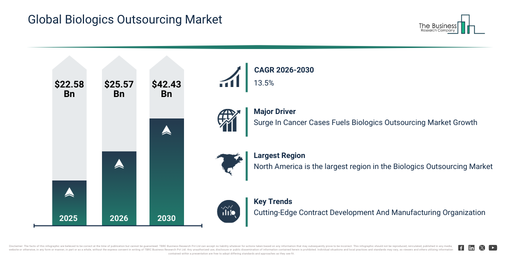
    The size of the biologics outsourcing market has experienced rapid expansion in recent years. It is projected to grow from $22.58 billion in 2025 to $25.57 billion in 2026, exhibiting a compound annual growth rate (CAGR) of 13.2%. This historical growth can be attributed to several factors, including rising biologics commercialization activities, increasing capital intensity of biologics facilities, the expansion of biosimilar development programs, the growing complexity of regulatory compliance, and enhanced collaboration between pharmaceutical companies and CDMOs.

    The biologics outsourcing market is anticipated to experience substantial expansion over the upcoming years. Its valuation is projected to reach $42.43 billion by 2030, demonstrating a compound annual growth rate (CAGR) of 13.5%. This projected growth during the forecast period is driven by factors such as a surge in demand for extensive biologics production, increased capital expenditure in manufacturing facilities capable of handling multiple products, the broadening scope of cell and gene therapy outsourcing activities, a heightened emphasis on the robustness of supply chains, and the wider integration of digital manufacturing solutions. Key trends anticipated during this period encompass a rise in the strategic contracting out of biologic manufacturing, an escalating need for comprehensive, end-to-end outsourcing solutions, a growing inclination towards adaptable manufacturing collaborations, the expansion of worldwide CDMO networks, and a heightened commitment to optimizing costs and mitigating risks.

    Download the Free Sample Report to Explore Key Market Insights:

    https://www.thebusinessresearchcompany.com/sample.aspx?id=12573&type=smp

    What Major Drivers Are Influencing Demand In The Biologics Outsourcing Market?

    The increasing incidence of cancer is anticipated to boost the expansion of the biologics outsourcing market in the future. Cancer encompasses a wide range of diseases that can emerge in almost any organ or tissue when abnormal cells multiply without control, extending beyond their normal limits, and either metastasizing to other organs or infiltrating adjacent body areas. The biologics outsourcing sector is crucial in addressing cancer by offering specialized knowledge, facilities, and frameworks for the creation, production, and clinical provision of biologic treatments. These include monoclonal antibodies, immunotherapies, and other targeted biologics employed for the identification, therapy, and management of various cancer types. For example, in January 2023, data from the National Center for Biotechnology Information, a US-based intergovernmental organization, indicated 1,958,310 new cancer cases in the United States, with an estimated 609,820 cancer deaths projected for 2023. Additionally, new cancer cases annually are forecast to climb to 29.5 million, and cancer-related fatalities to 16.4 million by 2040. Consequently, the growing prevalence of cancer cases is propelling the growth of the biologics outsourcing market.

    What Major Segment Divisions Exist Within The Biologics Outsourcing Market?

    The biologics outsourcing market covered in this report is segmented –

    1) By Product Type: Antibodies, Recombinant, Vaccines, Protein, Other Products

    2) By Source: Human, Microbial, Other Sources

    3) By Application: Oncology, Cellular And Gene Therapy, Blood And Blood-Related Products Development, Vaccine Development, Stem Cell Research, Other Applications

    4) By End User: Pharmaceutical Industries, Biotechnology Industries, Contract Development And Manufacturing Organization (CDMO)

    Subsegments:

    1) By Antibodies: Monoclonal Antibodies, Polyclonal Antibodies

    2) By Recombinant: Recombinant Proteins, Recombinant DNA Products

    3) By Vaccines: Therapeutic Vaccines, Preventive Vaccines

    4) By Protein: Enzymes, Hormones, Cytokines

    5) By Other Products: Gene Therapies, Cell Therapies, Biosimilars

    How Are Trends Impacting The Biologics Outsourcing Market?

    Leading companies in the biologics outsourcing market are concentrating on developing new Contract Development and Manufacturing Organizations (CDMOs) to maintain their market presence. A CDMO is an entity that offers a range of services to pharmaceutical and biotechnology firms, covering the development and production of drugs and other therapeutic products. For example, in October 2023, Tanvex BioPharma USA Inc., a US-based biopharmaceutical developer and manufacturer, launched Tanvex CDMO. This new division of the company delivers comprehensive services for the development and production of biologics, addressing the requirements of the biopharmaceutical industry. Situated in San Diego’s Sorrento Valley biotech hub, Tanvex CDMO features a 100,000-square-foot facility equipped with a cutting-edge Research and Development (R&D) center, two mammalian Good Manufacturing Practice (GMP) manufacturing suites, one microbial GMP manufacturing suite, Quality Control (QC) laboratories, and a GMP warehouse. Building on Tanvex BioPharma USA Inc.’s established expertise, Tanvex CDMO intends to support emerging companies in progressing mammalian and microbial-derived biologics from concept to commercialization, thus significantly bolstering the domain of novel biologics and biosimilars.

    Which Companies Are Leading Innovation In The Biologics Outsourcing Market?

    Major companies operating in the biologics outsourcing market are AbbVie Inc., Thermo Fisher Scientific Inc., Boehringer Ingelheim GmbH, Lonza Group Ag, Catalent Inc., Sartorius Stedim Biotech S.A., Charles River Laboratories International Inc., WuXi Biologics Inc., Samsung Biologics Co. Ltd., Emergent BioSolutions Inc., CordenPharma GmbH, Ajinomoto Bio-Pharma Services, Syngene International Limited, Rentschler Biopharma SE, Albany Molecular Research Inc., KBI Biopharma Inc., Fujifilm Diosynth Biotechnologies Inc., Avid Bioservices Inc., BioVectra Inc., ProBioGen AG, ABL Inc., Vibalogics GmbH, JHL Biotech Inc., Goodwin Biotechnology Inc., Crown Bioscience Inc., Cytovance Biologics Inc., LakePharma Inc., AGC Biologics GmbH, Biomay AG, Polpharma Biologics S.A.

    Read the full biologics outsourcing market report here:

    https://www.thebusinessresearchcompany.com/report/biologics-outsourcing-global-market-report

    Which Region Shows The Strongest Potential For Future Growth In The Biologics Outsourcing Market?

    North America was the largest region in the biologics outsourcing market in 2025. The regions covered in the biologics outsourcing market report are Asia-Pacific, South East Asia, Western Europe, Eastern Europe, North America, South America, Middle East, Africa.

    Request A Tailored Biologics Outsourcing Market Research Report For Competitive Advantage:

    https://www.thebusinessresearchcompany.com/customise?id=12573&type=smp

    Browse Through More Reports Similar to the Global Biologics Outsourcing Market 2026, By The Business Research Company

    Biologics Contract Development Global Market Report

    https://www.thebusinessresearchcompany.com/report/biologics-contract-development-global-market-report

    Advanced Therapeutics Pharmaceutical Outsourcing Global Market Report

    https://www.thebusinessresearchcompany.com/report/advanced-therapeutics-pharmaceutical-outsourcing-global-market-report

    Medical Device Outsourcing Global Market Report

    https://www.thebusinessresearchcompany.com/report/medical-device-outsourcing-global-market-report

    Get in touch with us:

    The Business Research Company: https://www.thebusinessresearchcompany.com/

    Americas +1 310-496-7795

    Asia +44 7882 955267 & +91 8897263534

    Europe +44 7882 955267

    Email us at info@tbrc.info

    Follow us on:

    LinkedIn: https://in.linkedin.com/company/the-business-research-company

    YouTube: https://www.youtube.com/channel/UC24_fI0rV8cR5DxlCpgmyFQ

    Global Market Model: https://www.thebusinessresearchcompany.com/global-market-model
  • Global Artificial Intelligence (AI) In Wound Care Market Analysis for 2026–2030 with Strategic Forecast Insights for Businesses

    Global Artificial Intelligence (AI) In Wound Care Market Analysis for 2026–2030 with Strategic Forecast Insights for Businesses

    The Business Research Company’s 2026 market reports include new capabilities such as market attractiveness scoring and analysis, total addressable market analysis, company scoring matrix, interactive excel data dashboard, improved supply chain analysis, upcoming startups in the market, and overview of key products, aimed at improving the depth, usability, and strategic value of the insights delivered.

    What Market Valuation Is Forecasted For The Artificial Intelligence (AI) In Wound Care Market By 2030 Starting From Its 2026 Size?

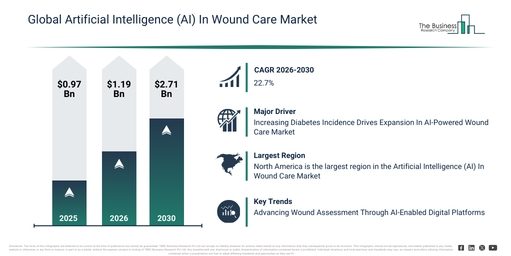
    The market size for artificial intelligence (AI) in wound care has seen remarkable expansion in recent years. Projections indicate it will expand from $0.97 billion in 2025 to $1.19 billion in 2026, demonstrating a compound annual growth rate (CAGR) of 23.0%. Historically, this growth stemmed from factors such as the increasing occurrence of chronic wounds, a rise in diabetes-related ulcers, the integration of digital wound documentation, the expansion of hospital-based wound care initiatives, and the availability of tools for imaging-based assessment.

    The artificial intelligence (AI) in wound care market is projected to experience substantial growth in the coming years, with its size forecast to reach $2.71 billion by 2030, demonstrating a compound annual growth rate (CAGR) of 22.7%. This expansion during the forecast period is attributed to several factors including a heightened demand for personalized wound treatment, the increasing uptake of remote patient monitoring, the broadening of AI-enabled clinical decision support, a growing emphasis on cost-effective wound management, and more extensive integration of AI with telehealth platforms. Key trends anticipated in the forecast period encompass the increasing deployment of AI-based wound assessment tools, a rise in the adoption of predictive healing analytics, greater integration of remote wound monitoring solutions, the expansion of personalized wound care algorithms, and enhanced automation of clinical documentation.

    Download the Free Sample Report to Explore Key Market Insights:

    https://www.thebusinessresearchcompany.com/sample.aspx?id=19316&type=smp

    What Major Growth Drivers Are Shaping The Outlook Of The Artificial Intelligence (AI) In Wound Care Market?

    Future expansion of the artificial intelligence (AI) in wound care market is anticipated due to the increasing occurrence of diabetes. This chronic condition, marked by elevated blood glucose, often results in complications like heart disease, kidney failure, neuropathy, and vision loss. The growing prevalence of diabetes is largely influenced by rising obesity rates, which heighten the risk of type 2 diabetes, and by an aging demographic, given that the likelihood of developing the condition increases with age. Artificial intelligence in wound care supports diabetes management through precise wound evaluations and customized treatment strategies, thereby improving the effectiveness and efficiency of care for diabetic ulcers. For example, data from May 2024 by the Centers for Disease Control and Prevention, a U.S. governmental body, indicated that 38.4 million Americans, representing 11.6% of the U.S. population, were living with diabetes. This prevalence rose considerably to 29.2% among adults aged 65 and above. Consequently, the increasing occurrence of diabetes is propelling the expansion of the artificial intelligence (AI) in wound care market.

    Which Segment Categories Define The Artificial Intelligence (AI) In Wound Care Market?

    The artificial intelligence (AI) in wound care market covered in this report is segmented –

    1) By Type Of Wound: Acute Wounds, Chronic Wounds

    2) By Technology: Deep Learning, Machine Learning, Other Technologies

    3) By End User: Clinical Trials And Research Centers, Home Health Agencies, Hospitals, Nursing Facilities, Other End Users

    Subsegments:

    1) By Acute Wounds: Surgical Wounds, Traumatic Wounds, Burns

    2) By Chronic Wounds: Diabetic Foot Ulcers, Pressure Ulcers (Bedsores), Venous Leg Ulcers, Arterial Ulcers

    What Key Trends Are Influencing The Development Of The Artificial Intelligence (AI) In Wound Care Market?

    Key entities in the artificial intelligence (AI) in wound care market are prioritizing the integration of innovative solutions, such as artificial intelligence (AI)-driven digital wound management solutions, to boost clinical effectiveness, enhance wound monitoring, improve documentation accuracy, and predict healing outcomes. Artificial intelligence (AI)-driven digital wound management solutions represent software systems that leverage computer vision and machine learning to analyze wound images and associated clinical data, facilitating real-time wound measurement, automated documentation, and tracking of healing progression. As an illustration, in October 2024, Swift Medical, a digital wound-care technology company based in Canada, introduced Skin & Wound 2. This AI-based digital wound-care platform is engineered to assist clinicians across various care settings, incorporating capabilities like sub-millimetre-accuracy imaging, electronic medical record (EMR) integration through fast healthcare interoperability resources (FHIR), and automated monitoring of healing timelines. Skin & Wound 2 contributes to more consistent wound assessment, diminishes the documentation workload, and supports care decisions informed by data.

    Who Are The Top Companies Competing In The Artificial Intelligence (AI) In Wound Care Market?

    Major companies operating in the artificial intelligence (AI) in wound care market are Medtronic plc, Stryker Corporation, Smith & Nephew plc, Convatec Group plc, Mölnlycke Health Care AB, Derma Sciences Inc., Implicity Inc., Cecelia Health, Swift Medical Inc., Spectral MD Inc., PolarityTE Inc., eKare Inc., KroniKare Pte Ltd, Perceptive Solutions Inc., Tissue Analytics Inc., WoundZoom Inc., Intellicure Inc., WoundMatrix Inc., WoundVision LLC, The Wound Pros LLC

    Read the full artificial intelligence (ai) in wound care market report here:

    https://www.thebusinessresearchcompany.com/report/artificial-intelligence-ai-in-wound-care-global-market-report

    Which Regions Are Projected To Dominate The Artificial Intelligence (AI) In Wound Care Market In The Coming Years?

    North America was the largest region in the artificial intelligence (AI) in wound care market in 2025. The regions covered in the artificial intelligence (AI) in wound care market report are Asia-Pacific, South East Asia, Western Europe, Eastern Europe, North America, South America, Middle East, Africa.

    Request A Tailored Artificial Intelligence (AI) In Wound Care Market Research Report For Competitive Advantage:

    https://www.thebusinessresearchcompany.com/customise?id=19316&type=smp

    Browse Through More Reports Similar to the Global Artificial Intelligence (AI) In Wound Care Market 2026, By The Business Research Company

    Ai In Construction Global Market Report

    https://www.thebusinessresearchcompany.com/report/ai-in-construction-global-market-report

    Ai In Manufacturing Global Market Report

    https://www.thebusinessresearchcompany.com/report/ai-in-manufacturing-global-market-report

    Ai In Real Estate Global Market Report

    https://www.thebusinessresearchcompany.com/report/ai-in-real-estate-global-market-report

    Get in touch with us:

    The Business Research Company: https://www.thebusinessresearchcompany.com/

    Americas +1 310-496-7795

    Asia +44 7882 955267 & +91 8897263534

    Europe +44 7882 955267

    Email us at info@tbrc.info

    Follow us on:

    LinkedIn: https://in.linkedin.com/company/the-business-research-company

    YouTube: https://www.youtube.com/channel/UC24_fI0rV8cR5DxlCpgmyFQ

    Global Market Model: https://www.thebusinessresearchcompany.com/global-market-model
  • Ankylosing Spondylitis Market Insights Highlighting Opportunities and Drivers Supporting Growth to 2030

    Ankylosing Spondylitis Market Insights Highlighting Opportunities and Drivers Supporting Growth to 2030

    The Business Research Company’s 2026 market reports include new capabilities such as market attractiveness scoring and analysis, total addressable market analysis, company scoring matrix, interactive excel data dashboard, improved supply chain analysis, upcoming startups in the market, and overview of key products, aimed at improving the depth, usability, and strategic value of the insights delivered.

    What Is The Expected Market Size Of The Ankylosing Spondylitis Market From 2026 To 2030?

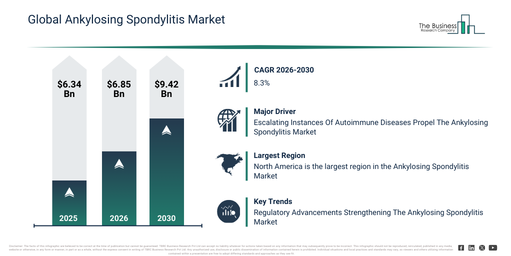
    The ankylosing spondylitis market has recorded strong growth in recent years. It is expected to grow from $6.34 billion in 2025 to $6.85 billion in 2026, at a CAGR of 8.0%. This growth is supported by improved awareness and diagnosis, broader availability of NSAIDs and DMARDs, increased access to rheumatology specialists, expansion of hospital-based treatments, and greater use of imaging technologies for disease monitoring.

    The ankylosing spondylitis market is expected to see strong growth, reaching $9.42 billion by 2030 at a CAGR of 8.3%. This growth is driven by increased adoption of biologics and biosimilars, a growing focus on personalized medicine, expansion of advanced biologic pipelines, rising demand for long-term disease management, and increased investment in autoimmune research. Major trends include wider use of biologic therapies, growing adoption of targeted DMARDs, increased emphasis on early diagnosis, expansion of personalized treatment strategies, and stronger integration of physical therapy programs.

    Download the Free Sample Report to Explore Key Market Insights:

    https://www.thebusinessresearchcompany.com/sample.aspx?id=11962&type=smp

    Which Growth Drivers Are Contributing To The Progress Of The Ankylosing Spondylitis Market?

    The rising occurrence of autoimmune diseases is expected to support the growth of the ankylosing spondylitis market going forward. Autoimmune diseases involve abnormal immune responses where the body attacks its own tissues, leading to inflammation and damage. Ankylosing spondylitis, a type of autoimmune arthritis affecting the spine and pelvis, develops due to a combination of genetic and environmental factors. For instance, in September 2023, the Impact of IBD Report 2023 by the IBD Clinical and Research Centre, a Canada-based organization, indicated that over 320,000 Canadians were living with inflammatory bowel disease (IBD) in 2023, with a prevalence of 825 per 100,000, projected to rise annually by 2.44% to reach 470,000 cases (1.1% of the population) by 2035. Thus, the increasing incidence of autoimmune diseases is driving the ankylosing spondylitis market.

    Which Segments Are Included In The Analysis Of The Ankylosing Spondylitis Market?

    The ankylosing spondylitis market covered in this report is segmented –

    1) By Treatment Type: Painkillers And Non-Steroidal Anti-Inflammatory Drugs (NSAIDs), Disease-Modifying Anti-Rheumatic Drugs (DMARDS), Biological Therapies, Steroids, Physical Therapies, Surgery

    2) By Molecule: Biologics, Biosimilar, Small Molecules

    3) By Route Of Administration: Parenteral, Oral, Other Routes

    4) By Application: Juveniles, Adults

    5) By End User: Hospitals, Clinics

    Subsegments:

    1) By Painkillers And Non-Steroidal Anti-Inflammatory Drugs (NSAIDs): Over-The-Counter NSAIDs, Prescription NSAIDs

    2) By Disease-Modifying Anti-Rheumatic Drugs (DMARDs): Conventional DMARDs, Targeted DMARDs

    3) By Biological Therapies: TNF Inhibitors, IL-17 Inhibitors

    4) By Steroids: Oral Steroids, Injectable Steroids

    5) By Physical Therapies: Physiotherapy, Exercise Programs

    6) By Surgery: Joint Replacement Surgery, Spinal Surgery

    Which Trends Are Impacting The Growth Of The Ankylosing Spondylitis Market?

    Key companies in the ankylosing spondylitis market are focusing on advanced biologic treatments such as biosimilars to improve patient access, lower costs, and provide familiar treatment options. Biosimilars use established active ingredients from reference biologics while maintaining comparable safety and effectiveness. For instance, in August 2025, Amgen Biotechnology Singapore received approval for its biosimilar adalimumab (Amgevita) in 40 mg/0.4 mL autoinjector and 20 mg/0.2 mL prefilled syringe formats. This treatment is designed for adults with active ankylosing spondylitis who have not responded adequately to standard therapies, offering a cost-effective alternative with convenient administration.

    Which Key Industry Participants Are Active In The Ankylosing Spondylitis Market?

    Major companies operating in the ankylosing spondylitis market are Pfizer Inc., Johnson & Johnson Pvt. Ltd., Merck & Co. Inc., AbbVie Inc., Novartis AG, Bristol-Myers Squibb, Eli Lilly and Company, Gilead Sciences Inc., Boehringer Ingelheim International GmbH, Amgen Inc., Viatris Inc., Astellas Pharma Inc., AstraZeneca plc, UCB Inc., Cipla Inc., Zydus Lifesciences Limited, Celltrion Inc., Hetero Labs Ltd., Janssen Biotech Inc., Reliance Life Sciences Pvt. Ltd.

    Read the full ankylosing spondylitis market report here:

    https://www.thebusinessresearchcompany.com/report/ankylosing-spondylitis-global-market-report

    What Are The Leading Geographic Regions In The Ankylosing Spondylitis Market?

    North America was the largest region in the ankylosing spondylitis market in 2025. Asia-Pacific is expected to be the fastest-growing region in the forecast period. The regions covered in the ankylosing spondylitis market report are Asia-Pacific, South East Asia, Western Europe, Eastern Europe, North America, South America, Middle East, Africa.

    Request A Tailored Ankylosing Spondylitis Market Research Report For Competitive Advantage:

    https://www.thebusinessresearchcompany.com/customise?id=11962&type=smp

    Browse Through More Reports Similar to the Global Ankylosing Spondylitis Market 2026, By The Business Research Company

    Cervical Spondylosis Treatment Global Market Report

    https://www.thebusinessresearchcompany.com/report/cervical-spondylosis-treatment-global-market-report

    Axial Spondyloarthritis Axspa Global Market Report

    https://www.thebusinessresearchcompany.com/report/axial-spondyloarthritis-axspa-global-market-report

    Osteoarthritis Global Market Report

    https://www.thebusinessresearchcompany.com/report/osteoarthritis-global-market-report

    Get in touch with us:

    The Business Research Company: https://www.thebusinessresearchcompany.com/

    Americas +1 310-496-7795

    Asia +44 7882 955267 & +91 8897263534

    Europe +44 7882 955267

    Email us at info@tbrc.info

    Follow us on:

    LinkedIn: https://in.linkedin.com/company/the-business-research-company

    YouTube: https://www.youtube.com/channel/UC24_fI0rV8cR5DxlCpgmyFQ

    Global Market Model: https://www.thebusinessresearchcompany.com/global-market-model
  • One of the Major Drivers of the Biologics Contract Development Market Is the Surge In Chronic Diseases Drives Demand, Fueling Growth In The Biologics Contract Development Market

    One of the Major Drivers of the Biologics Contract Development Market Is the Surge In Chronic Diseases Drives Demand, Fueling Growth In The Biologics Contract Development Market

    The Business Research Company’s 2026 market reports include new capabilities such as market attractiveness scoring and analysis, total addressable market analysis, company scoring matrix, interactive excel data dashboard, improved supply chain analysis, upcoming startups in the market, and overview of key products, aimed at improving the depth, usability, and strategic value of the insights delivered.

    What Market Value Is Expected For The Biologics Contract Development Market At The End Of The 2026–2030 Forecast Period?

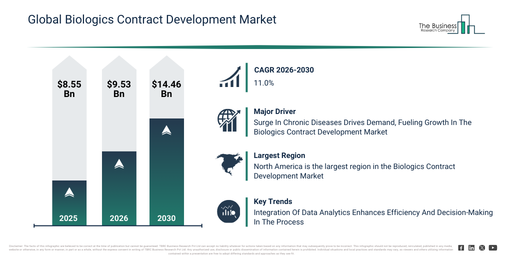
    The biologics contract development market has experienced rapid expansion in recent years. Its value is forecast to increase from $8.55 billion in 2025 to $9.53 billion in 2026, with a compound annual growth rate (CAGR) of 11.4%. The growth observed in the historic period can be attributed to the increasing biologics pipeline complexity, rising costs of in-house manufacturing, expansion of monoclonal antibody development, growth of early-stage biologics research, and an increasing reliance on specialized cdmos.

    The biologics contract development market size is anticipated to experience substantial growth in the upcoming years. It is forecast to expand to $14.46 billion in 2030, achieving a compound annual growth rate (CAGR) of 11.0%. This projected expansion during the forecast period stems from factors such as increasing demand for rapid biologics scale-up, greater investments in advanced mammalian cell platforms, the broadening of oncology biologics pipelines, a heightened focus on flexible manufacturing capacity, and the rising adoption of digital bioprocess optimization. Significant trends expected in this period include increased outsourcing of biologics process development, growing demand for scalable cell line development, wider integration of single-use bioprocessing systems, the expansion of integrated CDMO service models, and an intensified emphasis on accelerating speed-to-clinic development.

    Download the Free Sample Report to Explore Key Market Insights:

    https://www.thebusinessresearchcompany.com/sample.aspx?id=8219&type=smp

    Which Market Drivers Are Supporting The Expansion Of The Biologics Contract Development Market?

    The increasing occurrence of chronic illnesses is anticipated to propel the biologics contract development market into the future. Chronic diseases are defined as conditions persisting for a year or more, necessitating continuous medical care. An uptick in chronic illness instances escalates the need for creating new medications, such as biologics, consequently fostering the biologics contract development market. As an illustration, reports released by the Office for Health Improvement & Disparities, a UK-based government, in September 2024, indicated that during the first half of 2023, 3,940 excess deaths were linked to chronic lower respiratory diseases, representing a 30% rise over anticipated figures. Over the full year, this figure climbed to 5,363, demonstrating a 22% overall surge. Consequently, the growing frequency of chronic diseases is set to fuel the expansion of the biologics contract development market.

    What Segment Types Make Up The Biologics Contract Development Market?

    The biologics contract development market covered in this report is segmented –

    1) By Source: Microbial, Mammalian, Other Sources

    2) By Indication: Oncology, Immunological Disorders, Cardiovascular Disorders, Hematological Disorders, Other Indications

    3) By Product Service: Cell Line Development, Process Development, Other Product Services

    Subsegments:

    1) By Microbial: Bacterial Sources, Yeast Sources, Fungal Sources

    2) By Mammalian: Chinese Hamster Ovary (CHO) Cells, Human Embryonic Kidney (HEK) Cells, Hybridoma Cells

    3) By Other Sources: Plant-Based Systems, Insect Cell Systems, Algal Sources

    What Industry Trends Are Redefining The Biologics Contract Development Market?

    Major companies engaged in biologics contract development are increasingly concentrating on embedding data analytics into their development processes. These firms are integrating digital technologies and data analytics within biologics development to improve process monitoring, data analysis, and informed decision-making, which consequently enhances efficiency and productivity. A notable example occurred in October 2023, when WuXi Biologics, a China-based biologics contract development and manufacturing company, introduced its WuXiUI high-productivity bioprocessing platform. WuXiUI represents WuXi Biologics’ proprietary ultra-intensified intermittent-perfusion fed-batch platform, which has been successfully developed and applied both internally and in biologics development and manufacturing projects for clients. This platform notably enables real-time observation of critical process parameters via integrated Process Analytical Technology tools, optimizes cell culture productivity, and predicts product quality and yield profiles under various process conditions, contingent on suitable process data inputs.

    Who Are The Key Players Driving Competition In The Biologics Contract Development Market?

    Major companies operating in the biologics contract development market are WuXi Biologics, Abzena Ltd., Fujifilm Diosynth Biotechnologies, KBI Biopharma, AGC Biologics, Thermo Fisher Scientific Inc, LakePharma Inc., GenScript Biotech Corporation, Bionova Scientific Inc., Boehringer Ingelheim GmbH, Samsung BioLogics, Forge Biologics, Lonza Group, Catalent Inc., Cytovance Biologics, Emergent BioSolutions, Eurofins CDMO, Merck Group, Patheon N.V., ProBioGen AG, Rentschler Biopharma SE, Syngene International Limited, Vibalogics GmbH, Yposkesi

    Read the full biologics contract development market report here:

    https://www.thebusinessresearchcompany.com/report/biologics-contract-development-global-market-report

    How Is The Biologics Contract Development Market Distributed Across Key Geographic Regions?

    North America was the largest region in the biologics contract development market share in 2025. Asia-Pacific is expected to be the fastest-growing region in the forecast period. The regions covered in the biologics contract development market report are Asia-Pacific, South East Asia, Western Europe, Eastern Europe, North America, South America, Middle East, Africa.

    Request A Tailored Biologics Contract Development Market Research Report For Competitive Advantage:

    https://www.thebusinessresearchcompany.com/customise?id=8219&type=smp

    Browse Through More Reports Similar to the Global Biologics Contract Development Market 2026, By The Business Research Company

    Biologics Outsourcing Global Market Report

    https://www.thebusinessresearchcompany.com/report/biologics-outsourcing-global-market-report

    Biologics Testing Global Market Report

    https://www.thebusinessresearchcompany.com/report/biologics-testing-global-market-report

    Biopharmaceuticals Contract Manufacturing Global Market Report

    https://www.thebusinessresearchcompany.com/report/biopharmaceuticals-contract-manufacturing-global-market-report

    Get in touch with us:

    The Business Research Company: https://www.thebusinessresearchcompany.com/

    Americas +1 310-496-7795

    Asia +44 7882 955267 & +91 8897263534

    Europe +44 7882 955267

    Email us at info@tbrc.info

    Follow us on:

    LinkedIn: https://in.linkedin.com/company/the-business-research-company

    YouTube: https://www.youtube.com/channel/UC24_fI0rV8cR5DxlCpgmyFQ

    Global Market Model: https://www.thebusinessresearchcompany.com/global-market-model