Month: March 2026

  • Biopharmaceutical CMO And CRO Market Forecast 2026–2035 Reflecting Expansion Opportunities Across Industries

    Biopharmaceutical CMO And CRO Market Forecast 2026–2035 Reflecting Expansion Opportunities Across Industries

    The Business Research Company’s 2026 market reports include new capabilities such as market attractiveness scoring and analysis, total addressable market analysis, company scoring matrix, interactive excel data dashboard, improved supply chain analysis, upcoming startups in the market, and overview of key products, aimed at improving the depth, usability, and strategic value of the insights delivered.

    What Is The Expected Market Size Of The Biopharmaceutical CMO And CRO Market From 2026 To 2030?

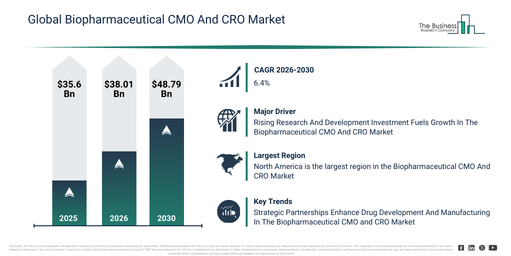
    The biopharmaceutical contract manufacturing organization (CMO) and contract research organization (CRO) market has experienced robust expansion in recent times. This market is projected to expand from $35.6 billion in 2025 to $38.01 billion by 2026, demonstrating a compound annual growth rate (CAGR) of 6.8%. Historically, this growth has been driven by factors such as the increasing intricacy of developing biologic drugs, escalating research and development (R&D) expenses for biopharmaceutical firms, the broadening of clinical trial operations, the surge in biosimilar product development, and the presence of dedicated contract service providers.

    The biopharmaceutical cmo and cro market is projected to experience substantial expansion in the coming years. By 2030, its size is anticipated to reach $48.79 billion, demonstrating a compound annual growth rate (CAGR) of 6.4%. This projected growth is driven by several factors, including a heightened demand for advanced biologics production, increased investments in cell and gene therapies, the expansion of global clinical trial pipelines, a greater emphasis on strategies for faster market entry, and the increasing uptake of digitalized CRO services. Key trends for the forecast period encompass a rise in the outsourcing of biologic drug manufacturing, a growing need for comprehensive end-to-end contract research services, an increased focus on adaptable manufacturing capabilities, expanded support for cell and gene therapy development, and a stronger emphasis on regulatory compliance assistance.

    Download the Free Sample Report to Explore Key Market Insights:

    https://www.thebusinessresearchcompany.com/sample.aspx?id=19337&type=smp

    Which Growth Drivers Are Contributing To The Progress Of The Biopharmaceutical CMO And CRO Market?

    Increased spending on research and development is projected to boost the expansion of the biopharmaceutical CMO and CRO market in the coming period. Such investments in R&D are escalating due to several reasons, including the demand for innovation, competitive pressures, the necessity to address evolving market requirements, and government incentives. Research and development funding empowers CMOs and CROs to develop advanced manufacturing methods and research protocols, thereby enhancing their capabilities and operational effectiveness. This commitment to innovation attracts and retains clients by delivering cutting-edge solutions while consistently ensuring regulatory compliance. For instance, Eurostat, the Luxembourg-based statistical agency, indicated in September 2025 that the EU spent approximately $456 billion USD on research and development (R&D) in 2023 (€389 billion), with R&D expenditure relative to GDP rising to 2.26%, up from 2.22% in the preceding year. Hence, the growing investment in research and development is fueling the growth of the biopharmaceutical CMO and CRO market.

    Which Segments Are Included In The Analysis Of The Biopharmaceutical CMO And CRO Market?

    The biopharmaceutical cmo and cro market covered in this report is segmented –

    1) By Product: Biologics, Biosimilars

    2) By Service Type: Contract Manufacturing, Contract Research

    3) By Source: Mammalian, Non-Mammalian

    Subsegments:

    1) By Biologics: Monoclonal Antibodies (mAbs), Vaccines, Recombinant Proteins, Cell and Gene Therapies, Antibody-Drug Conjugates (ADCs), Therapeutic Enzymes

    2) By Biosimilars: Biosimilar Monoclonal Antibodies, Biosimilar Insulins, Biosimilar Growth Hormones, Biosimilar Erythropoietins, Biosimilar Granulocyte Colony-Stimulating Factors (G-CSFs)

    What Trends Are Affecting The Expansion Of The Biopharmaceutical CMO And CRO Market?

    Leading companies within the biopharmaceutical CMO and CRO market are forming strategic alliances to bolster services, improve operational efficiencies, and accelerate the drug development process for biopharmaceutical firms. Strategic partnerships involve companies utilizing each other’s strengths and resources to achieve mutual benefits and success. As an illustration, in June 2024, Abzena plc., a UK-based biopharmaceutical company, collaborated with Argonaut Manufacturing Services Inc., a US-based contract manufacturing organization (CMO), to integrate drug development and manufacturing solutions for clients. Through this partnership, they aim to provide accelerated, end-to-end drug development and manufacturing solutions that enhance efficiency, reduce costs, and streamline biopharmaceutical production for clients.

    Which Key Industry Participants Are Active In The Biopharmaceutical CMO And CRO Market?

    Major companies operating in the biopharmaceutical cmo and cro market are Thermo Fisher Scientific Inc., Boehringer Ingelheim International GmbH, Eurofins Scientific SE, Lonza Group AG, Syneos Health Inc., Catalent Inc., Charles River Laboratories International Inc., Parexel International (MA) Corporation, Samsung Biologics Co. Ltd., CELLTRION INC., Medpace Holdings Inc., Fujifilm Diosynth Biotechnologies UK Limited, Almac Group, Pharmaron Beijing Co. Ltd., Worldwide Clinical Trials, KBI Biopharma, Inotiv Inc., Caidya, Rentschler Biopharma SE, Celerion Inc., TFS HEALTHCARE LIMITED

    Read the full biopharmaceutical cmo and cro market report here:

    https://www.thebusinessresearchcompany.com/report/biopharmaceutical-cmo-and-cro-global-market-report

    What Are The Leading Geographic Regions In The Biopharmaceutical CMO And CRO Market?

    North America was the largest region in the biopharmaceutical CMO and CRO market in 2025. Asia-Pacific is expected to be the fastest-growing region in the forecast period. The regions covered in the biopharmaceutical cmo and cro market report are Asia-Pacific, South East Asia, Western Europe, Eastern Europe, North America, South America, Middle East, Africa.

    Request A Tailored Biopharmaceutical CMO And CRO Market Research Report For Competitive Advantage:

    https://www.thebusinessresearchcompany.com/customise?id=19337&type=smp

    Browse Through More Reports Similar to the Global Biopharmaceutical CMO And CRO Market 2026, By The Business Research Company

    Medical Biomimetics Global Market Report

    https://www.thebusinessresearchcompany.com/report/medical-biomimetics-global-market-report

    Biosimilar Global Market Report

    https://www.thebusinessresearchcompany.com/report/biosimilar-global-market-report

    Pharmaceuticals Market

    https://www.thebusinessresearchcompany.com/report/pharmaceuticals-market

    Get in touch with us:

    The Business Research Company: https://www.thebusinessresearchcompany.com/

    Americas +1 310-496-7795

    Asia +44 7882 955267 & +91 8897263534

    Europe +44 7882 955267

    Email us at info@tbrc.info

    Follow us on:

    LinkedIn: https://in.linkedin.com/company/the-business-research-company

    YouTube: https://www.youtube.com/channel/UC24_fI0rV8cR5DxlCpgmyFQ

    Global Market Model: https://www.thebusinessresearchcompany.com/global-market-model
  • Artificial Intelligence (AI)-Driven Virtual Nursing Assistants Market Future Outlook Showing Expansion Toward $5.19 Billion by 2030

    Artificial Intelligence (AI)-Driven Virtual Nursing Assistants Market Future Outlook Showing Expansion Toward $5.19 Billion by 2030

    The Business Research Company’s 2026 market reports include new capabilities such as market attractiveness scoring and analysis, total addressable market analysis, company scoring matrix, interactive excel data dashboard, improved supply chain analysis, upcoming startups in the market, and overview of key products, aimed at improving the depth, usability, and strategic value of the insights delivered.

    What Market Size Increase Is Anticipated For The Artificial Intelligence (AI)-Driven Virtual Nursing Assistants Market Over The 2026–2030 Period?

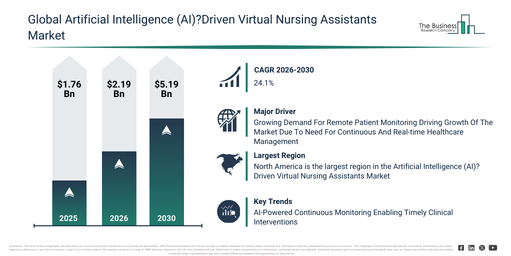
    The artificial intelligence (AI)-driven virtual nursing assistants market has experienced substantial growth in recent years. It is anticipated to expand from $1.76 billion in 2025 to $2.19 billion in 2026, at a compound annual growth rate (CAGR) of 24.4%. This historical growth can be attributed to several factors, including increasing healthcare staff shortages, the early adoption of telehealth services, a growing demand for patient self-management tools, the expansion of digital health platforms, and the availability of conversational AI technologies.

    The artificial intelligence (AI)-driven virtual nursing assistants market is anticipated to show significant expansion in the upcoming years, with its size expected to reach $5.19 billion by 2030, demonstrating a compound annual growth rate (CAGR) of 24.1%. This projected growth throughout the forecast period stems from factors such as increasing investments in virtual care infrastructure, a rising demand for continuous patient support, the expansion of AI-assisted clinical workflows, a growing focus on cost-efficient healthcare delivery, and the increasing adoption of remote patient monitoring solutions. Additionally, major trends during this period include the increasing adoption of virtual nursing support tools, the rising use of AI-powered patient engagement platforms, the growing integration of remote monitoring capabilities, the expansion of 24/7 digital care assistance, and an enhanced focus on care coordination automation.

    Download the Free Sample Report to Explore Key Market Insights:

    https://www.thebusinessresearchcompany.com/sample.aspx?id=28131&type=smp

    Which Economic Or Industry Drivers Are Impacting The Artificial Intelligence (AI)-Driven Virtual Nursing Assistants Market?

    The increasing requirement for remote patient monitoring is anticipated to propel the expansion of the artificial intelligence (AI)-driven virtual nursing assistants market going forward. Remote patient monitoring (RPM) involves the application of digital technologies to collect patients’ health data from outside conventional healthcare environments and transmit it to healthcare providers for assessment and care management. The rising demand for remote patient monitoring stems from the escalating need for continuous, real-time healthcare management beyond traditional clinical settings. Artificial intelligence (AI)-driven virtual nursing assistants, in the context of remote patient monitoring, aid in tracking patients’ health data in real time, delivering timely alerts, and supporting personalized care, thereby reducing the burden on healthcare staff. For instance, in August 2025, data from the US Department of Health and Human Services, a US-based government administration, revealed that in 2024, nearly 1 million enrollees received remote patient monitoring, marking a 27% increase compared to 2023. Consequently, the growing demand for remote patient monitoring is driving the growth of the artificial intelligence (AI)-driven virtual nursing assistants market.

    How Is The Artificial Intelligence (AI)-Driven Virtual Nursing Assistants Market Segmented Across Key Categories?

    The artificial intelligence (AI)-driven virtual nursing assistants market covered in this report is segmented –

    1) By Component: Software, Services

    2) By Technology: Automatic Speech Recognition(ASR), Text-To-Speech(TTS), Text-Based Interface, Natural Language Processing (NLP), Other Technologies

    3) By Deployment: Cloud Based, On-Premise, Hybrid

    4) By Application: Symptom Checking And Virtual Triage, Appointment Scheduling And Reminders, Medication Management, Medical Information Retrieval, Patient Engagement And Education, Clinical Decision Support, Administrative Support, Remote Monitoring

    5) By End User: Hospitals And Clinics, Patients, Healthcare Payers Pharmaceutical And Life Sciences Companies, Other End Users

    Subsegments:

    1) By Software: Clinical Decision Support, Patient Monitoring And Engagement, Workflow And Care Coordination, Medication Management, Predictive Analytics And Risk Assessment, Communication And Chat Interfaces

    2) By Services: Training And Education, Consulting And Advisory, Support And Maintenance, Managed Services, Data Management And Security, Implementation And Integration

    What Trends Are Affecting The Expansion Of The Artificial Intelligence (AI)-Driven Virtual Nursing Assistants Market?

    Major companies operating in the artificial intelligence (AI)-driven virtual nursing assistants market are developing new technologies, such as LIDAR-based spatial intelligence, to facilitate real-time patient monitoring, improve safety through early detection of risks like falls or sudden health deterioration, and support virtual nursing models. Light detection and ranging (LIDAR) is an advanced remote sensing technology that uses laser light pulses to measure distances with exceptional accuracy. For instance, in March 2025, Emory Healthcare, a US-based healthcare system, launched a virtual nursing initiative employing AI-driven technology to enhance patient care. This initiative utilizes Llght detection and ranging (LIDAR) technology in patient rooms to track movements and detect falls up to 30 seconds before they happen, complemented by automated voice alerts that prompt patients to stay in bed. It enables nurses located in a central control room to remotely conduct admissions paperwork, manage medications, provide patient education, and oversee discharge activities, thereby allowing bedside nurses to dedicate more attention to direct patient care. Furthermore, it continuously analyzes patient data to identify early indicators of clinical decline or emergencies, facilitating timely alerts to bedside care teams.

    Who Are The Dominant Players Shaping The Artificial Intelligence (AI)-Driven Virtual Nursing Assistants Market Landscape?

    Major companies operating in the artificial intelligence (AI)-driven virtual nursing assistants market are Microsoft Corporation, HealthTap Inc., Artera Inc., Caregility LLC, Luma Health Inc., Infermedica Sp. z o.o., Memora Health Inc., Buoy Health Inc., Hyro AI Ltd., Care Angel Inc., Sensely Inc., Artisight Inc., K Health Inc., Mediktor International S.L., Corti ApS, AvaSure LLC, Care.AI Inc., Tap Health Inc., GetWellNetwork Inc., Biofourmis Inc.

    Read the full artificial intelligence (ai)-driven virtual nursing assistants market report here:

    https://www.thebusinessresearchcompany.com/report/artificial-intelligence-ai-driven-virtual-nursing-assistants-global-market-report

    What Are The Top-Performing Regions Within The Artificial Intelligence (AI)-Driven Virtual Nursing Assistants Market?

    North America was the largest region in the artificial intelligence (AI)-driven virtual nursing assistants market in 2025. Asia-Pacific is expected to be the fastest-growing region in the forecast period. The regions covered in the artificial intelligence (AI)-driven virtual nursing assistants market report are Asia-Pacific, South East Asia, Western Europe, Eastern Europe, North America, South America, Middle East, Africa.

    Request A Tailored Artificial Intelligence (AI)-Driven Virtual Nursing Assistants Market Research Report For Competitive Advantage:

    https://www.thebusinessresearchcompany.com/customise?id=28131&type=smp

    Browse Through More Reports Similar to the Global Artificial Intelligence (AI)-Driven Virtual Nursing Assistants Market 2026, By The Business Research Company

    Intelligent Virtual Assistant Global Market Report

    https://www.thebusinessresearchcompany.com/report/intelligent-virtual-assistant-global-market-report

    Virtual Assistant Global Market Report

    https://www.thebusinessresearchcompany.com/report/virtual-assistant-global-market-report

    Ai As A Service Global Market Report

    https://www.thebusinessresearchcompany.com/report/ai-as-a-service-global-market-report

    Get in touch with us:

    The Business Research Company: https://www.thebusinessresearchcompany.com/

    Americas +1 310-496-7795

    Asia +44 7882 955267 & +91 8897263534

    Europe +44 7882 955267

    Email us at info@tbrc.info

    Follow us on:

    LinkedIn: https://in.linkedin.com/company/the-business-research-company

    YouTube: https://www.youtube.com/channel/UC24_fI0rV8cR5DxlCpgmyFQ

    Global Market Model: https://www.thebusinessresearchcompany.com/global-market-model
  • Global Biopharmaceutical CMO Market Analysis for 2026–2030 with Strategic Forecast Insights for Businesses

    Global Biopharmaceutical CMO Market Analysis for 2026–2030 with Strategic Forecast Insights for Businesses

    The Business Research Company’s 2026 market reports include new capabilities such as market attractiveness scoring and analysis, total addressable market analysis, company scoring matrix, interactive excel data dashboard, improved supply chain analysis, upcoming startups in the market, and overview of key products, aimed at improving the depth, usability, and strategic value of the insights delivered.

    What Market Valuation Is Forecasted For The Biopharmaceutical CMO Market By 2030 Starting From Its 2026 Size?

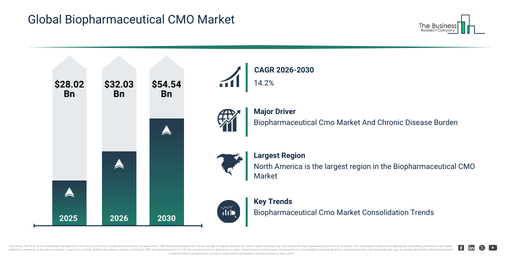
    The biopharmaceutical cmo market has experienced rapid growth in its size over recent years. It is projected to expand from $28.02 billion in 2025 to $32.03 billion in 2026, achieving a compound annual growth rate (CAGR) of 14.3%. This historic expansion can be linked to increasing biologics pipeline development, expansion of clinical trial activity, a rising demand for flexible manufacturing capacity, the growth of biosimilar approvals, and the availability of specialized biomanufacturing expertise.

    The biopharmaceutical CMO market size is anticipated to undergo substantial growth over the next few years. It is projected to expand to $54.54 billion by 2030, achieving a compound annual growth rate (CAGR) of 14.2%. The expansion throughout the forecast period is attributable to several factors, including increased investments in cutting-edge biologics, a surging need for accelerated scale-up manufacturing, the proliferation of personalized therapies, the increasing adoption of continuous bioprocessing, and a greater emphasis on risk-sharing manufacturing models. Noteworthy trends for the forecast period comprise an increase in the outsourcing of biologics manufacturing, a rising call for biosimilar production services, the growing application of single-use bioprocessing systems, the expansion of cell and gene therapy manufacturing, and an enhanced concentration on comprehensive CMO capabilities.

    Download the Free Sample Report to Explore Key Market Insights:

    https://www.thebusinessresearchcompany.com/sample.aspx?id=7771&type=smp

    What Primary Drivers Are Shaping The Development Of The Biopharmaceutical CMO Market?

    The increasing prevalence of chronic diseases is set to drive the expansion of the biopharmaceutical CMO market in the future. These long-term health conditions persist throughout an individual’s life, often progressing slowly and requiring continuous medical attention. Biopharmaceutical CMOs are instrumental in addressing chronic diseases by accelerating the development of drugs, providing cost-effective manufacturing solutions, and upholding high-quality benchmarks, thereby making life-saving medications more accessible and affordable. As an illustration, in January 2024, the World Health Organization, a Switzerland-based intergovernmental body, reported that the burden of noncommunicable diseases, including cardiovascular disease, cancer, chronic respiratory disease, and diabetes, continues to grow. These diseases are responsible for 41 million deaths every year, representing 74% of all deaths and the majority of premature mortality globally, with the most significant consequences observed in low- and middle-income countries. Hence, the rising burden of chronic diseases is a key driver for the biopharmaceutical CMOs market.

    Which Segment Categories Define The Biopharmaceutical CMO Market?

    The biopharmaceutical cmo market covered in this report is segmented –

    1) By Product: Biologics, Biosimilars

    2) By Source: Mammalian, Non-Mammalian

    3) By Service: Manufacturing, Fill And Finish Operations, Analytical And QC Studies, Packaging

    Subsegments:

    1) By Biologics: Monoclonal Antibodies, Recombinant Proteins, Vaccines, Cell And Gene Therapies

    2) By Biosimilars: Biosimilar Monoclonal Antibodies, Biosimilar Recombinant Proteins, Biosimilar Insulins, Biosimilar Growth Hormones

    Which Trends Are Influencing The Biopharmaceutical CMO Market?

    Leading entities within the biopharmaceutical CMO market are increasingly engaging in strategic collaborations to advance the creation of novel biopharmaceutical offerings. Such alliances prove beneficial for biopharmaceutical CMO organizations by facilitating the pooling of assets and specialized knowledge, thereby boosting research and development capacities, broadening market presence, and hastening product commercialization. This ultimately propels innovation and expansion across the biopharmaceutical CMO sector. An illustrative example occurred in May 2024, when BioConnection, a Netherlands-based contract manufacturing company, formed a partnership with AGC Biologics, a US-based contract development and manufacturing company. Through this collaboration, their objective is to offer an integrated and efficient solution for biopharmaceutical development and manufacturing, thereby shortening project durations and streamlining procedures for drug innovators.

    Who Are The Top Companies Competing In The Biopharmaceutical CMO Market?

    Major companies operating in the biopharmaceutical cmo market are Lonza Group AG, Fujifilm Diosynth Biotechnologies USA Inc., Thermo Fisher Scientific Inc., Samsung Biologics, WuXi AppTec, Catalent, Inc., Rentschler Biopharma SE, Boehringer Ingelheim, Recipharm AB, AGC Biologics, CMC Biologics, KBI Biopharma, Vetter Pharma International GmbH, Emergent BioSolutions Inc., Aenova Group, Bio-Xcellence (Boehringer Ingelheim), AbbVie Contract Manufacturing, PCI Pharma Services, Evonik Industries AG

    Read the full biopharmaceutical cmo market report here:

    https://www.thebusinessresearchcompany.com/report/biopharmaceutical-cmo-global-market-report

    How Does The Biopharmaceutical CMO Market Perform Across Major Global Regions?

    North America was the largest region in the biopharmaceutical CMO market in 2025. Asia-Pacific is expected to be the fastest-growing region in the forecast period. The regions covered in the biopharmaceutical cmo market report are Asia-Pacific, South East Asia, Western Europe, Eastern Europe, North America, South America, Middle East, Africa.

    Request A Tailored Biopharmaceutical CMO Market Research Report For Competitive Advantage:

    https://www.thebusinessresearchcompany.com/customise?id=7771&type=smp

    Browse Through More Reports Similar to the Global Biopharmaceutical CMO Market 2026, By The Business Research Company

    Biopharmaceuticals Contract Manufacturing Global Market Report

    https://www.thebusinessresearchcompany.com/report/biopharmaceuticals-contract-manufacturing-global-market-report

    Lyophilization Services For Biopharmaceuticals Global Market Report

    https://www.thebusinessresearchcompany.com/report/lyophilization-services-for-biopharmaceuticals-global-market-report

    Biopharmaceutical Third Party Logistics Global Market Report

    https://www.thebusinessresearchcompany.com/report/biopharmaceutical-third-party-logistics-global-market-report

    Get in touch with us:

    The Business Research Company: https://www.thebusinessresearchcompany.com/

    Americas +1 310-496-7795

    Asia +44 7882 955267 & +91 8897263534

    Europe +44 7882 955267

    Email us at info@tbrc.info

    Follow us on:

    LinkedIn: https://in.linkedin.com/company/the-business-research-company

    YouTube: https://www.youtube.com/channel/UC24_fI0rV8cR5DxlCpgmyFQ

    Global Market Model: https://www.thebusinessresearchcompany.com/global-market-model
  • Antibody Production Market Outlook 2026–2030 with Major Growth Drivers and Emerging Industry Trends

    Antibody Production Market Outlook 2026–2030 with Major Growth Drivers and Emerging Industry Trends

    The Business Research Company’s 2026 market reports include new capabilities such as market attractiveness scoring and analysis, total addressable market analysis, company scoring matrix, interactive excel data dashboard, improved supply chain analysis, upcoming startups in the market, and overview of key products, aimed at improving the depth, usability, and strategic value of the insights delivered.

    How Will The Market Size Of The Antibody Production Market Evolve From 2026 To 2030?

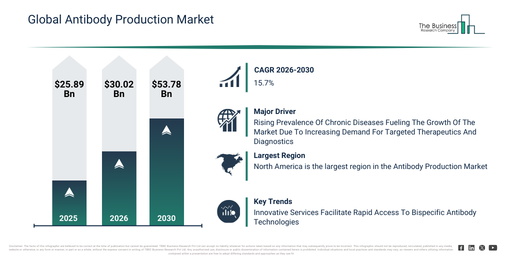
    The antibody production market size has experienced significant expansion in recent years. This market is expected to expand from $25.89 billion in 2025 to $30.02 billion in 2026, demonstrating a compound annual growth rate (CAGR) of 16.0%. The historical growth of this market can be linked to factors such as the increasing scope of pharmaceutical and biotechnology research, a greater adoption of monoclonal antibodies in therapeutic applications, ongoing advancements in bioprocessing technologies, a surging demand for research-grade antibodies, and the expansion of CRO and CDMO services.

    The antibody production market size is anticipated to experience substantial expansion in the coming years. This market is projected to reach $53.78 billion by 2030, exhibiting a compound annual growth rate (CAGR) of 15.7%. This projected growth is driven by factors such as increased investments in biologics manufacturing, the growing embrace of continuous bioprocessing, the widening scope of therapeutic antibody pipelines, a burgeoning need for cost-effective antibody production, and the escalating integration of digital biomanufacturing systems. Key trends anticipated during this period encompass the increasing use of recombinant antibody production techniques, an escalating need for high-yield expression systems, greater automation in both upstream and downstream processing, an expansion of contract antibody manufacturing services, and a heightened emphasis on scalability and reproducibility.

    Download the Free Sample Report to Explore Key Market Insights:

    https://www.thebusinessresearchcompany.com/sample.aspx?id=30192&type=smp

    What Key Drivers Are Influencing The Growth Of The Antibody Production Market?

    The increasing incidence of chronic illnesses is anticipated to drive the expansion of the antibody production market in the future. Chronic diseases are persistent health conditions that progress slowly and persist over an extended duration, frequently demanding continuous medical management. The growing occurrence of chronic diseases can be partly attributed to inactive lifestyles, as prolonged sitting and insufficient physical activity elevate the risk of developing conditions such as heart disease and diabetes. Antibody production assists in managing chronic diseases by offering targeted therapeutic and diagnostic solutions, making them essential for conditions like cancer, autoimmune disorders, and diabetes. They enhance treatment effectiveness and patient monitoring by enabling precise intervention and early detection, thereby improving overall healthcare outcomes. For instance, in June 2024, according to the National Health Service, a UK-based government department, 3,615,330 individuals registered with a general practitioner (GP) were diagnosed with non-diabetic hyperglycemia or pre-diabetes (a condition with elevated blood sugar levels, not high enough to be classified as diabetes) in 2023, marking an 18% increase from 3,065,825 cases in 2022. Consequently, the rising prevalence of chronic diseases is propelling the growth of the antibody production market.

    Which Segment Areas Are Covered In The Antibody Production Market Analysis?

    The antibody production market covered in this report is segmented –

    1) By Type: Monoclonal Antibody, Polyclonal Antibody

    2) By Process: Upstream Processing, Downstream Processing

    3) By End-User: Pharmaceutical and Biotechnology Companies, Research Laboratories, Contract Research Organizations And Contract Development And Manufacturing Organizations

    Subsegments:

    1) By Monoclonal Antibody: Mouse Monoclonal Antibody, Human Monoclonal Antibody, Rabbit Monoclonal Antibody, Rat Monoclonal Antibody

    2) By Polyclonal Antibody: Rabbit Polyclonal Antibody, Goat Polyclonal Antibody, Sheep Polyclonal Antibody, Donkey Polyclonal Antibody

    What Key Developments And Trends Are Impacting The Antibody Production Market?

    Prominent companies within the antibody production market are concentrating on evolving sophisticated service models, including rapid-access platforms, with the goal of expediting research, fostering greater collaboration, and compressing development timelines. Rapid-access platforms signify streamlined service provisions that empower partner organizations to promptly assess and integrate a proprietary technology into their individual drug development programs. As an illustration, in April 2025, Invenra Inc., a biotechnology company based in the US, introduced the B-Body Express Service. This service offers immediate entry to Invenra’s advanced B-Body bispecific antibody platform, thereby allowing researchers to hasten the preliminary phases of therapeutic discovery. The service package encompasses a standardized procedure for creating functional bispecific antibodies against a partner’s desired targets, considerably decreasing the customary waiting period before initiating tests on new drug candidates.

    Which Global Companies Are Actively Competing In The Antibody Production Market?

    Major companies operating in the antibody production market are Johnson & Johnson, Roche Holding AG, Merck & Co. Inc., Pfizer Inc., AbbVie Inc., Bayer AG, Novartis AG, Thermo Fisher Scientific Inc., Amgen Inc., Danaher Corporation, Agilent Technologies Inc., Bio-Rad Laboratories Inc., Azenta Inc., GenScript Biotech Corporation, Sino Biological Inc., Proteintech Group Inc., Rapid Novor, Rockland Immunochemicals Inc., Biorbyt Ltd., Invenra Inc

    Read the full antibody production market report here:

    https://www.thebusinessresearchcompany.com/report/global-antibody-production-market-report

    Which Region Is Expected To Register The Fastest Growth In The Antibody Production Market?

    North America was the largest region in the antibody production market in 2025. Asia-Pacific is expected to be the fastest-growing region in the forecast period. The regions covered in the antibody production market report are Asia-Pacific, South East Asia, Western Europe, Eastern Europe, North America, South America, Middle East, Africa.

    Request A Tailored Antibody Production Market Research Report For Competitive Advantage:

    https://www.thebusinessresearchcompany.com/customise?id=30192&type=smp

    Browse Through More Reports Similar to the Global Antibody Production Market 2026, By The Business Research Company

    Vaccine Contract Manufacturing Global Market Report

    https://www.thebusinessresearchcompany.com/report/vaccine-contract-manufacturing-global-market-report

    Biopharmaceuticals Contract Manufacturing Global Market Report

    https://www.thebusinessresearchcompany.com/report/biopharmaceuticals-contract-manufacturing-global-market-report

    Antibody Discovery Global Market Report

    https://www.thebusinessresearchcompany.com/report/antibody-discovery-global-market-report

    Get in touch with us:

    The Business Research Company: https://www.thebusinessresearchcompany.com/

    Americas +1 310-496-7795

    Asia +44 7882 955267 & +91 8897263534

    Europe +44 7882 955267

    Email us at info@tbrc.info

    Follow us on:

    LinkedIn: https://in.linkedin.com/company/the-business-research-company

    YouTube: https://www.youtube.com/channel/UC24_fI0rV8cR5DxlCpgmyFQ

    Global Market Model: https://www.thebusinessresearchcompany.com/global-market-model
  • Biometric As A Service In Healthcare Market Outlook 2026–2035 Driven by Key Growth Factors and Industry Projections

    Biometric As A Service In Healthcare Market Outlook 2026–2035 Driven by Key Growth Factors and Industry Projections

    The Business Research Company’s 2026 market reports include new capabilities such as market attractiveness scoring and analysis, total addressable market analysis, company scoring matrix, interactive excel data dashboard, improved supply chain analysis, upcoming startups in the market, and overview of key products, aimed at improving the depth, usability, and strategic value of the insights delivered.

    How Is The Market Size Of The Biometric As A Service In Healthcare Market Expected To Change Between 2026 And 2030?

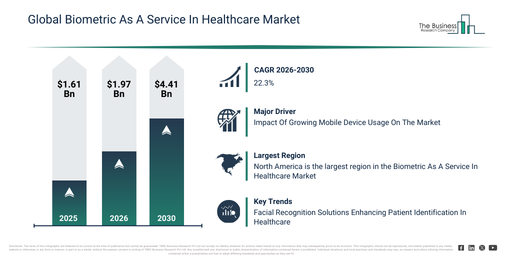
    The market size for biometric as a service in healthcare has witnessed significant expansion in recent years. It is anticipated to grow from $1.61 billion in 2025 to $1.97 billion in 2026, demonstrating a compound annual growth rate (CAGR) of 22.7%. Historically, this market expansion can be linked to the increasing digitization of healthcare records, a rising need for patient identification accuracy, the expansion of telehealth services, growing concerns around healthcare data breaches, and the adoption of cloud-based healthcare platforms.

    The biometric as a service in healthcare market is projected to experience substantial expansion in the coming years. Its valuation is anticipated to reach $4.41 billion by 2030, exhibiting a compound annual growth rate (CAGR) of 22.3%. This expansion during the forecast period can be attributed to factors such as a heightened need for secure remote healthcare access, increased capital allocation towards digital health infrastructure, the proliferation of AI-driven biometric analytics, greater regulatory scrutiny on data privacy compliance, and the growing application of biometric-enabled patient monitoring. Key developments expected in this period include broader uptake of cloud-based biometric authentication, increased utilization of multimodal biometric systems, deeper integration of remote patient monitoring biometrics, the growth of secure digital identity platforms, and an intensified focus on safeguarding healthcare data.

    Download the Free Sample Report to Explore Key Market Insights:

    https://www.thebusinessresearchcompany.com/sample.aspx?id=20720&type=smp

    Which Major Factors Are Driving The Expansion Of The Biometric As A Service In Healthcare Market?

    The expanding adoption of mobile devices is projected to stimulate the growth of biometric as a service within the healthcare market. These portable electronic gadgets, encompassing smartphones, tablets, and smartwatches, are designed for wireless communication, internet connectivity, and various applications. The surge in mobile device utilization is primarily attributed to advancements in wireless technology, the availability of more affordable smartphones, enhanced internet access, and the proliferation of mobile-centric applications in healthcare. Mobile devices empower Biometric as a Service (BaaS) in healthcare by facilitating secure, real-time access to sensitive health data and patient records through sophisticated biometric authentication methods, thereby ensuring both user convenience and adherence to healthcare regulations. For instance, in November 2024, the Mobility Report from Ericsson, a Sweden-based telecommunications company, indicated that global smartphone subscriptions increased from 6,930 million units in 2023 to 7,160 million units in 2024. Consequently, the increasing usage of mobile devices is a significant catalyst for the expansion of biometric as a service in the healthcare market.

    How Is The Biometric As A Service In Healthcare Market Structured Across Different Segments?

    The biometric as a service in healthcare market covered in this report is segmented –

    1) By Modality: Unimodal, Multimodal

    2) By Component: Software, Services

    3) By Scanner Type: Fingerprint Recognition, Iris Recognition, Palm Recognition, Facial Recognition, Voice Recognition, Other Scanner Types

    4) By Application: Pharmacy Dispensing, Care Provider Authentication, Medical Record Security And Data Centre Security, Patient Identification And Tracking, Home Or Remote Patient Access, Narcotic Security, Counter Insurance Frauds, Other Applications

    5) By End Use: Hospitals, Long Term Care Centers, Ambulatory Surgical Centers, Other End-Users

    Subsegments:

    1) By Unimodal: Fingerprint Recognition, Facial Recognition, Iris Recognition, Voice Recognition, Hand Geometry Recognition

    2) By Multimodal: Fingerprint And Facial Recognition, Fingerprint And Iris Recognition, Facial And Voice Recognition, Multi-Factor Biometric Systems

    What Trends Are Advancing Progress In The Biometric As A Service In Healthcare Market?

    Leading companies within the biometric as a service in healthcare market are concentrating on introducing innovative solutions, such as facial recognition, to enhance patient identification, streamline access control, and improve security in healthcare facilities. Facial recognition solutions are technology systems that identify or verify individuals by analyzing and comparing facial features from images or video footage, often employed for security, authentication, or surveillance purposes. For instance, in February 2024, Imprivata Inc., a US-based software company, launched Imprivata Biometric Patient Identity, a pioneering solution leveraging facial recognition technology. This solution utilizes cutting-edge biometric technologies, including facial and fingerprint recognition, to ensure accurate patient identification across care settings. It integrates seamlessly with existing Electronic Health Records (EHR) systems, enabling real-time authentication while maintaining strict compliance with healthcare privacy regulations like HIPAA.

    Which Major Players Dominate The Biometric As A Service In Healthcare Market?

    Major companies operating in the biometric as a service in healthcare market are Hitachi Ltd., Qualcomm Technologies Inc., Fujitsu Limited, IDEMIA Group, NICE Ltd., HID Global Corporation, Imprivata Inc., NEC Corporation, Cognitec Systems GmbH, Aware Inc., Aratek Biometric Technology Co. Ltd., Integrated Biometrics LLC, IRITECH Inc., Thales Group, Suprema Inc., Innovatrics s.r.o., BIO-key International Inc., Cenmetrix (Pvt) Ltd., ImageWare Systems Inc., Idex Biometrics ASA, SecuGen Corporation

    Read the full biometric as a service in healthcare market report here:

    https://www.thebusinessresearchcompany.com/report/biometric-as-a-service-in-healthcare-global-market-report

    Which Region Currently Holds The Largest Share Of The Biometric As A Service In Healthcare Market?

    North America was the largest region in the biometric as a service in healthcare market in 2025. Asia-Pacific is expected to be the fastest-growing region in the forecast period. The regions covered in the biometric as a service in healthcare market report are Asia-Pacific, South East Asia, Western Europe, Eastern Europe, North America, South America, Middle East, Africa.

    Request A Tailored Biometric As A Service In Healthcare Market Research Report For Competitive Advantage:

    https://www.thebusinessresearchcompany.com/customise?id=20720&type=smp

    Browse Through More Reports Similar to the Global Biometric As A Service In Healthcare Market 2026, By The Business Research Company

    Biometrics Global Market Report

    https://www.thebusinessresearchcompany.com/report/biometrics-global-market-report

    Biometric Technologies Global Market Report

    https://www.thebusinessresearchcompany.com/report/biometric-technologies-global-market-report

    Biometric Sensor Global Market Report

    https://www.thebusinessresearchcompany.com/report/biometric-sensor-global-market-report

    Get in touch with us:

    The Business Research Company: https://www.thebusinessresearchcompany.com/

    Americas +1 310-496-7795

    Asia +44 7882 955267 & +91 8897263534

    Europe +44 7882 955267

    Email us at info@tbrc.info

    Follow us on:

    LinkedIn: https://in.linkedin.com/company/the-business-research-company

    YouTube: https://www.youtube.com/channel/UC24_fI0rV8cR5DxlCpgmyFQ

    Global Market Model: https://www.thebusinessresearchcompany.com/global-market-model
  • One of the Major Drivers of the Antibody Contract Manufacturing Market Is the Surge In Clinical Trials Fuels The Antibody Contract Manufacturing Market Growth

    One of the Major Drivers of the Antibody Contract Manufacturing Market Is the Surge In Clinical Trials Fuels The Antibody Contract Manufacturing Market Growth

    The Business Research Company’s 2026 market reports include new capabilities such as market attractiveness scoring and analysis, total addressable market analysis, company scoring matrix, interactive excel data dashboard, improved supply chain analysis, upcoming startups in the market, and overview of key products, aimed at improving the depth, usability, and strategic value of the insights delivered.

    What Is The Forecasted Market Value Of The Antibody Contract Manufacturing Market Across 2026–2030?

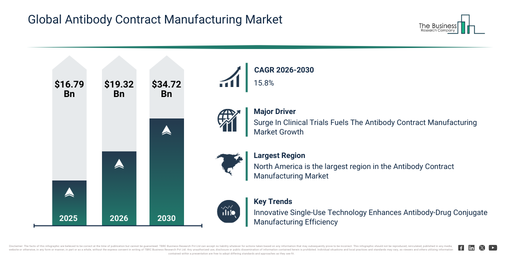
    The antibody contract manufacturing market has experienced significant growth in recent years. It is anticipated to expand from $16.79 billion in 2025 to $19.32 billion in 2026, demonstrating a compound annual growth rate (CAGR) of 15.0%. This historical growth can be attributed to factors such as the increasing number of biologics development pipelines, heightened outsourcing by biopharmaceutical companies, the expansion of mammalian cell culture platforms, growing clinical trial activity for antibodies, and the availability of specialized cmo infrastructure.

    The antibody contract manufacturing market is projected to experience swift expansion in the coming years. This market is anticipated to reach a valuation of $34.72 billion by 2030, exhibiting a compound annual growth rate (CAGR) of 15.8%. This expansion during the forecast period can be attributed to several factors, including the increasing need for commercial-scale antibody production, heightened investments in advanced biologics, a greater emphasis on manufacturing models that are cost-effective, the widening scope of personalized medicine pipelines, and a rise in regulatory green lights for antibody-based treatments. Key trends anticipated during this period encompass an increase in large-scale antibody manufacturing capabilities, the growing acceptance of single-use bioprocessing systems, an escalating demand for bispecific antibodies and ADCs, a stronger focus on adaptable and scalable manufacturing approaches, and an elevated commitment to regulatory adherence and quality management.

    Download the Free Sample Report to Explore Key Market Insights:

    https://www.thebusinessresearchcompany.com/sample.aspx?id=12665&type=smp

    What Major Growth Drivers Are Shaping The Outlook Of The Antibody Contract Manufacturing Market?

    The increasing volume of clinical trials is anticipated to fuel the expansion of the antibody contract manufacturing market in the future. These trials are research studies involving human subjects, designed to assess the safety and efficacy of novel medical treatments, interventions, or diagnostic methods. As the count of clinical trials utilizing antibody-based therapeutics or diagnostics grows, there is an escalating demand for high-quality antibodies, necessitating a prompt and compliant supply for these trials. A notable example is data from May 2023, where ClinicalTrials.gov, an entity of the National Institutes of Health (NIH), a US-based government agency tasked with medical research, reported a rise in registered clinical trial studies across all 50 states of the United States and 221 countries. The number increased from 399,499 in 2022 to 437,533 in 2023. Furthermore, approximately 241,498 studies, constituting 53% of the overall total, were registered beyond the United States, in contrast to 140,492 studies (31%) that were registered solely within the United States. Consequently, the increasing volume of clinical trials is a key factor propelling the expansion of the antibody contract manufacturing market.

    What Segmentation Levels Are Considered In The Antibody Contract Manufacturing Market?

    The antibody contract manufacturing market covered in this report is segmented –

    1) By Product: Monoclonal Antibodies, Polyclonal Antibodies, Other Products

    2) By Source: Mammalian, Microbial

    3) By Scale Of Operation: Preclinical, Clinical, Commercial

    4) By End-User: Biopharmaceutical Companies, Research Laboratories, Other End Users

    Subsegments:

    1) By Monoclonal Antibodies: Therapeutic Monoclonal Antibodies, Diagnostic Monoclonal Antibodies

    2) By Polyclonal Antibodies: Research Polyclonal Antibodies, Therapeutic Polyclonal Antibodies

    3) By Other Products: Bispecific Antibodies, Antibody-Drug Conjugates (ADCs), Fusion Proteins

    What Trends Are Projected To Affect The Antibody Contract Manufacturing Market?

    Companies prominent in the antibody contract manufacturing market are prioritizing the development of innovations, like single-use technology, which serves to lessen cross-contamination dangers and cut down operational expenditures. Single-use technology (SUT) refers to components and systems that are disposable, employed in biopharmaceutical production processes. For example, in September 2024, Merck & Co., a US-based pharmaceutical company, introduced the Mobius ADC Reactor, engineered to improve the manufacturing of antibody-drug conjugates. This novel single-use reactor, specifically created for antibody drug conjugate manufacturing, significantly elevates production efficiency by 70% when compared to conventional stainless steel or glass techniques. Its disposable architecture lowers cross-contamination risks and operational costs, enabling faster project turnovers. Moreover, advanced film technology boosts bag durability and leak resistance, safeguarding the integrity of highly potent active pharmaceutical ingredients. This innovation assists biopharmaceutical firms in producing vital therapies more securely and effectively.

    Which Leading Firms Are Contributing To The Growth Of The Antibody Contract Manufacturing Market?

    Major companies operating in the antibody contract manufacturing market are Lonza Group AG, Catalent Inc, Samsung Biologics Co Ltd, Wuxi Biologics Cayman Inc, Thermo Fisher Scientific Inc, Boehringer Ingelheim BioXcellence, AGC Biologics, FUJIFILM Diosynth Biotechnologies, AbbVie Inc, Charles River Laboratories International Inc, mAbxience, KBI Biopharma Inc, Abzena Ltd, Just-Evotec Biologics, Northway Biotech, Cerbios-Pharma, Scorpius BioManufacturing, Lotte Biologics, Rentschler Biopharma SE, Cytiva (Life Sciences CDMO), Xcellon Biologics, Celonic AG, Syngene International Ltd

    Read the full antibody contract manufacturing market report here:

    https://www.thebusinessresearchcompany.com/report/antibody-contract-manufacturing-global-market-report

    Which Regions Are Projected To Dominate The Antibody Contract Manufacturing Market In The Coming Years?

    North America was the largest region in the antibody contract manufacturing market in 2025. Asia-Pacific is expected to be the fastest-growing region in the forecast period. The regions covered in the antibody contract manufacturing market report are Asia-Pacific, South East Asia, Western Europe, Eastern Europe, North America, South America, Middle East, Africa.

    Request A Tailored Antibody Contract Manufacturing Market Research Report For Competitive Advantage:

    https://www.thebusinessresearchcompany.com/customise?id=12665&type=smp

    Browse Through More Reports Similar to the Global Antibody Contract Manufacturing Market 2026, By The Business Research Company

    Biosimilar Monoclonal Antibodie Global Market Report

    https://www.thebusinessresearchcompany.com/report/biosimilar-monoclonal-antibodie-global-market-report

    Research Antibodie And Reagent Global Market Report

    https://www.thebusinessresearchcompany.com/report/research-antibodie-and-reagent-global-market-report

    Conjugated Monoclonal Antibodie Global Market Report

    https://www.thebusinessresearchcompany.com/report/conjugated-monoclonal-antibodie-global-market-report

    Get in touch with us:

    The Business Research Company: https://www.thebusinessresearchcompany.com/

    Americas +1 310-496-7795

    Asia +44 7882 955267 & +91 8897263534

    Europe +44 7882 955267

    Email us at info@tbrc.info

    Follow us on:

    LinkedIn: https://in.linkedin.com/company/the-business-research-company

    YouTube: https://www.youtube.com/channel/UC24_fI0rV8cR5DxlCpgmyFQ

    Global Market Model: https://www.thebusinessresearchcompany.com/global-market-model
  • Artificial Intelligence (AI)-Driven Remote Cardiac Rehab Market Revenue Growth Expected to Reach $3.66 Billion by 2030 with 21.1% CAGR

    Artificial Intelligence (AI)-Driven Remote Cardiac Rehab Market Revenue Growth Expected to Reach $3.66 Billion by 2030 with 21.1% CAGR

    The Business Research Company’s 2026 market reports include new capabilities such as market attractiveness scoring and analysis, total addressable market analysis, company scoring matrix, interactive excel data dashboard, improved supply chain analysis, upcoming startups in the market, and overview of key products, aimed at improving the depth, usability, and strategic value of the insights delivered.

    How Much Is The Artificial Intelligence (AI)-Driven Remote Cardiac Rehab Market Expected To Grow In Terms Of Market Value Between 2026 And 2030?

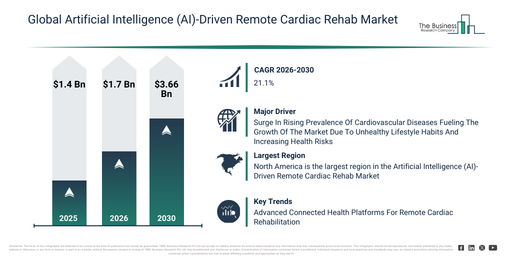
    The artificial intelligence (AI)-driven remote cardiac rehab market has experienced substantial growth in recent years. This market is set to expand from $1.4 billion in 2025 to $1.7 billion in 2026, at a compound annual growth rate (CAGR) of 21.4%. Its historical expansion can be attributed to factors such as the broadening of cardiac rehabilitation programs, the increasing prevalence of cardiovascular diseases, the greater adoption of telehealth services, the development of wearable cardiac devices, and enhanced remote monitoring capabilities.

    The artificial intelligence (AI)-driven remote cardiac rehab market size is projected for rapid expansion over the coming years. This market is anticipated to reach $3.66 billion by 2030, exhibiting a compound annual growth rate (CAGR) of 21.1%. Several factors contribute to this growth during the projected timeframe, including heightened investments in AI-powered cardiac care, a surging need for at-home rehabilitation, the proliferation of cloud-enabled cardiac analytics platforms, an intensified emphasis on proactive cardiac wellness, and greater integration with electronic health records. Key developments expected within the forecast period encompass a wider deployment of AI-powered cardiac monitoring algorithms, increased uptake of portable heart monitoring devices, a growing call for customized rehabilitation plans, the broadening availability of remote patient interaction instruments, and a stronger commitment to ongoing outcome assessment.

    Download the Free Sample Report to Explore Key Market Insights:

    https://www.thebusinessresearchcompany.com/sample.aspx?id=28913&type=smp

    What Major Drivers Are Influencing Demand In The Artificial Intelligence (AI)-Driven Remote Cardiac Rehab Market?

    The increasing occurrence of cardiovascular conditions is anticipated to fuel the expansion of the artificial intelligence (AI)-driven remote cardiac rehab market in the future. These conditions involve abnormalities of the heart and blood vessels, encompassing ailments such as heart attack, stroke, and high blood pressure. The surge in cardiovascular diseases is primarily attributable to unhealthy habits contributing to overweight, elevated blood pressure, and high cholesterol, which put a strain on the heart and arteries. AI-powered remote cardiac rehabilitation assists individuals with cardiovascular diseases through remote heart health monitoring, customized exercise and medication regimens, and instant feedback, thereby enhancing recovery, boosting compliance, and decreasing rehospitalizations. As an illustration, in August 2025, data from the National Institutes of Health, a US-based government agency, indicated that from 2025 to 2050, cardiovascular prevalence is projected to rise by 90%, mortality by 73%, and DALYs by 55%, with deaths increasing from 20.5 million to 35.6 million. Consequently, the growing incidence of cardiovascular diseases is propelling the expansion of the artificial intelligence (AI)-driven remote cardiac rehab market.

    What Major Segment Divisions Exist Within The Artificial Intelligence (AI)-Driven Remote Cardiac Rehab Market?

    The artificial intelligence (AI)-driven remote cardiac rehab market covered in this report is segmented –

    1) By Component: Software, Hardware, Services

    2) By Delivery Mode: Web-Based, App-Based, Telehealth Platforms

    3) By Deployment Mode: Cloud-Based, On-Premises

    4) By Application: Chronic Heart Failure, Post-Myocardial Infarction, Post-Cardiac Surgery, Hypertension Management, Other Applications

    5) By End-User: Hospitals And Clinics, Homecare Settings, Rehabilitation Centers, Other End-Users

    Subsegments:

    1) By Software: Remote Monitoring Software, Patient Engagement Software, Data Analytics Software

    2) By Hardware: Wearable Devices, Sensors And Monitors, Mobile Devices

    3) By Services: Telehealth Services, Consultation Services, Training And Support Services

    Which Trends Are Influencing The Artificial Intelligence (AI)-Driven Remote Cardiac Rehab Market?

    Leading companies in the artificial intelligence (AI)-driven remote cardiac rehab market are concentrating on developing innovative solutions, such as advanced connected health platforms. These platforms aim to enable continuous remote monitoring, personalized rehabilitation programs, and enhanced patient engagement, ultimately leading to improved cardiovascular outcomes. An advanced connected health platform is defined as a digital system that integrates wearable devices, sensors, mobile applications, and cloud-based analytics to remotely oversee patients’ health, deliver tailored care, and facilitate real-time communication between patients and healthcare providers. For instance, in July 2025, OMRON Healthcare, a Japan-based healthcare company, collaborated with Tricog Health Services Pvt Limited, an India-based medtech company. This partnership resulted in the launch of KeeboHealth, a platform designed to address India’s cardiac crisis and advance OMRON’s Going for Zero vision, which is a goal to eliminate cardiovascular events like heart attacks and strokes. KeeboHealth facilitates real-time monitoring by combining OMRON’s home ECG and blood pressure devices with Tricog’s AI cardiac analysis, thereby allowing for the early detection of heart issues and timely medical intervention. This platform helps in reducing hospitalizations, improving adherence to therapy, and supporting personalized heart health management.

    Which Companies Are Leading Innovation In The Artificial Intelligence (AI)-Driven Remote Cardiac Rehab Market?

    Major companies operating in the artificial intelligence (AI)-driven remote cardiac rehab market are Medtronic PLC, Philips Healthcare, Biofourmis Inc., Neurosoft Ltd., Cadence Health Solutions, Wellframe Inc., Amwell, Datos Health Ltd., VivaLNK Inc., Carda Health Inc., Heartbeat Health Inc., Cardihab Pty Ltd., Chanl Health Inc., HealthSnap Inc., Kento Health Inc., Lyfe by Lupin Digital Health, Movn Health Inc., RecoveryPlus Health, Wellinks Inc., CardioCare Fit.

    Read the full artificial intelligence (ai)-driven remote cardiac rehab market report here:

    https://www.thebusinessresearchcompany.com/report/artificial-intelligence-ai-driven-remote-cardiac-rehab-global-market-report

    Which Region Shows The Strongest Potential For Future Growth In The Artificial Intelligence (AI)-Driven Remote Cardiac Rehab Market?

    North America was the largest region in the artificial intelligence (AI)-driven remote cardiac rehab market in 2025. Asia-Pacific is expected to be the fastest-growing region in the forecast period. The regions covered in the artificial intelligence (AI)-driven remote cardiac rehab market report are Asia-Pacific, South East Asia, Western Europe, Eastern Europe, North America, South America, Middle East, Africa.

    Request A Tailored Artificial Intelligence (AI)-Driven Remote Cardiac Rehab Market Research Report For Competitive Advantage:

    https://www.thebusinessresearchcompany.com/customise?id=28913&type=smp

    Browse Through More Reports Similar to the Global Artificial Intelligence (AI)-Driven Remote Cardiac Rehab Market 2026, By The Business Research Company

    Cardiac Ai Monitoring And Diagnostics Global Market Report

    https://www.thebusinessresearchcompany.com/report/cardiac-ai-monitoring-and-diagnostics-global-market-report

    Artificial Intelligence Ai In Remote Patient Monitoring Global Market Report

    https://www.thebusinessresearchcompany.com/report/artificial-intelligence-ai-in-remote-patient-monitoring-global-market-report

    Rehabilitation Robotics Global Market Report

    https://www.thebusinessresearchcompany.com/report/rehabilitation-robotics-global-market-report

    Get in touch with us:

    The Business Research Company: https://www.thebusinessresearchcompany.com/

    Americas +1 310-496-7795

    Asia +44 7882 955267 & +91 8897263534

    Europe +44 7882 955267

    Email us at info@tbrc.info

    Follow us on:

    LinkedIn: https://in.linkedin.com/company/the-business-research-company

    YouTube: https://www.youtube.com/channel/UC24_fI0rV8cR5DxlCpgmyFQ

    Global Market Model: https://www.thebusinessresearchcompany.com/global-market-model
  • BioMEMS And Microsystem In Healthcare Market Developments and Growth Opportunities Across 2026–2030

    BioMEMS And Microsystem In Healthcare Market Developments and Growth Opportunities Across 2026–2030

    The Business Research Company’s 2026 market reports include new capabilities such as market attractiveness scoring and analysis, total addressable market analysis, company scoring matrix, interactive excel data dashboard, improved supply chain analysis, upcoming startups in the market, and overview of key products, aimed at improving the depth, usability, and strategic value of the insights delivered.

    What Is The Market Size Of The BioMEMS And Microsystem In Healthcare Market In 2026 And What Value Is Projected For 2030?

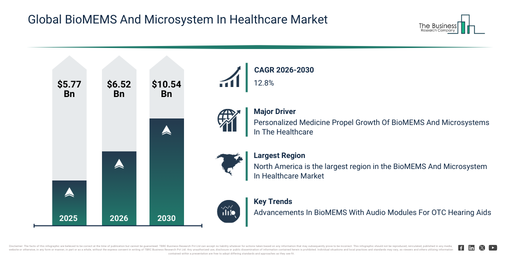
    The market size for biomems and microsystems in healthcare has experienced rapid expansion in recent years. It is projected to grow from $5.77 billion in 2025 to $6.52 billion in 2026, achieving a compound annual growth rate (CAGR) of 12.9%. The market’s historical growth can be ascribed to advancements in microfabrication techniques, an increasing demand for point-of-care diagnostics, the expansion of biomedical research funding, the rising adoption of minimally invasive devices, and improvements in sensor integration technologies.

    The biomems and microsystem in healthcare market is projected to experience substantial expansion over the coming years, reaching a valuation of $10.54 billion by 2030, propelled by a compound annual growth rate (CAGR) of 12.8%. This anticipated growth stems from factors such as the escalating demand for continuous health monitoring, increased investments in customized healthcare devices, the proliferation of wearable and implantable technologies, the expanding application of AI-powered diagnostics, and a heightened emphasis on remote patient services. Key developments expected during this period involve the wider implementation of lab-on-a-chip devices, greater uptake of implantable biomems sensors, the broader integration of microfluidic diagnostic systems, the growth of real-time patient monitoring solutions, and a stronger focus on compact therapeutic systems.

    Download the Free Sample Report to Explore Key Market Insights:

    https://www.thebusinessresearchcompany.com/sample.aspx?id=18975&type=smp

    What Key Drivers Are Influencing The Growth Of The BioMEMS And Microsystem In Healthcare Market?

    The future expansion of the BioMEMS and microsystems in healthcare market is anticipated to be driven by the rising need for personalized medicine. This medical approach involves customizing healthcare services and treatments to align with each patient’s unique characteristics. The focus on personalized medicine is enhanced by improved comprehension of genetic variations, alongside progress in diagnostic tools, data analysis, bioinformatics, and precision medicine technologies. Within healthcare, BioMEMS and microsystems facilitate accurate, real-time monitoring and diagnostic capabilities, thereby supporting the escalating demand for personalized medicine through the provision of customized treatments derived from individual health information. As an illustration, information from the Personalized Medicine Coalition (PMC), a US-based nonprofit umbrella organization, revealed in February 2024 that the FDA had sanctioned 16 novel personalized treatments for rare diseases in 2023, marking a substantial rise from six approvals in 2022. Consequently, the growing requirement for personalized medicine is a key driver for the expansion of the BioMEMS and microsystems in healthcare market.

    What Are The Key Segments Of The BioMEMS And Microsystem In Healthcare Market?

    The biomems and microsystem in healthcare market covered in this report is segmented –

    1) By Type: Biomedical Microelectromechanical Systems (BioMEMS), Microsystem

    2) By Application: Clinical Diagnostics, Therapeutic Devices, Surgical Devices, Other Applications

    3) By End-User: Hospitals, Diagnostic Centers, Research Laboratories, Other End-Users

    Subsegments:

    1) By Biomedical Microelectromechanical Systems (BioMEMS): Sensors, Actuators, Lab-On-A-Chip Devices

    2) By Microsystem: Microfluidic Devices, Microarray Systems, Implantable Devices

    How Are Trends Transforming The BioMEMS And Microsystem In Healthcare Market Landscape?

    Leading companies active in the BioMEMS and microsystems in healthcare markets are concentrating on developing advanced products, such as integrated audio modules for over-the-counter hearing aids, to address the escalating demand for compact audio solutions across various electronic devices. Integrated audio modules for over-the-counter hearing aids are compact systems that combine microelectromechanical systems (MEMS) speakers with electronics, offering enhanced sound quality and accessibility without requiring a prescription. For instance, in March 2023, USound GmbH, an innovation company based in Germany, launched Kore 4.0, an integrated audio module that incorporates the advanced Tarvos ultra-low power audio amplifier and the latest Conamara MEMS drivers. This module delivers exceptional audio performance and low power consumption within a small form factor, making it an ideal choice for wearables and Over-the-Counter (OTC) hearing aids. It features USound’s patented technology, integrates seamlessly with any Bluetooth System-on-a-Chip (SoC), and can be adapted for medium- to high-volume production. Its design also supports further miniaturization, providing additional space for sensors and components.

    Who Are The Leading Companies Operating In The BioMEMS And Microsystem In Healthcare Market?

    Major companies operating in the biomems and microsystem in healthcare market are Johnson & Johnson, Robert Bosch GmbH, Danaher Corporation, Koninklijke Philips NV, Infineon Technologies AG, TDK Corporation, TE Connectivity Ltd, STMicroelectronics NV, Murata Manufacturing Co Ltd, NXP Semiconductors NV, Boston Micro Fabrication, Analog Devices Inc, Microchip Technology Incorporated, Renishaw plc, Teledyne DALSA Semiconductor Inc, Sensirion AG, SPTS Technologies Ltd, Silex Microsystems AB, Amphenol Advanced Sensors Puerto Rico LLC, Tronics Microsystems SA, xMEMS Labs Inc., Bluechiip Limited

    Read the full biomems and microsystem in healthcare market report here:

    https://www.thebusinessresearchcompany.com/report/biomems-and-microsystem-in-healthcare-global-market-report

    Which Region Is Expected To Register The Fastest Growth In The BioMEMS And Microsystem In Healthcare Market?

    North America was the largest region in the BioMEMS and microsystem in healthcare market in 2025. The regions covered in the biomems and microsystem in healthcare market report are Asia-Pacific, South East Asia, Western Europe, Eastern Europe, North America, South America, Middle East, Africa.

    Request A Tailored BioMEMS And Microsystem In Healthcare Market Research Report For Competitive Advantage:

    https://www.thebusinessresearchcompany.com/customise?id=18975&type=smp

    Browse Through More Reports Similar to the Global BioMEMS And Microsystem In Healthcare Market 2026, By The Business Research Company

    Biostimulants Global Market Report

    https://www.thebusinessresearchcompany.com/report/biostimulants-global-market-report

    Biosimulation Global Market Report

    https://www.thebusinessresearchcompany.com/report/biosimulation-global-market-report

    Small Scale Bioreactors Global Market Report

    https://www.thebusinessresearchcompany.com/report/small-scale-bioreactors-global-market-report

    Get in touch with us:

    The Business Research Company: https://www.thebusinessresearchcompany.com/

    Americas +1 310-496-7795

    Asia +44 7882 955267 & +91 8897263534

    Europe +44 7882 955267

    Email us at info@tbrc.info

    Follow us on:

    LinkedIn: https://in.linkedin.com/company/the-business-research-company

    YouTube: https://www.youtube.com/channel/UC24_fI0rV8cR5DxlCpgmyFQ

    Global Market Model: https://www.thebusinessresearchcompany.com/global-market-model
  • A key trend shaping the Antibodies Market involves the CelSelect Validated Antibodies Enhance Precision In Cancer Research And Diagnostics

    A key trend shaping the Antibodies Market involves the CelSelect Validated Antibodies Enhance Precision In Cancer Research And Diagnostics

    The Business Research Company’s 2026 market reports include new capabilities such as market attractiveness scoring and analysis, total addressable market analysis, company scoring matrix, interactive excel data dashboard, improved supply chain analysis, upcoming startups in the market, and overview of key products, aimed at improving the depth, usability, and strategic value of the insights delivered.

    What Market Size Increase Is Anticipated For The Antibodies Market Over The 2026–2030 Period?

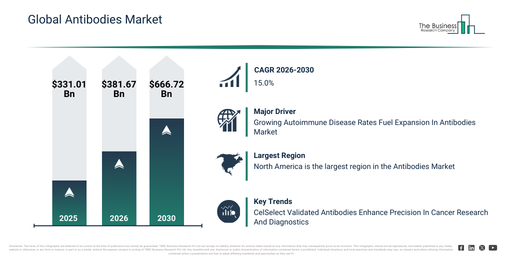
    The antibodies market size has experienced rapid growth over recent years. It is forecast to expand from $331.01 billion in 2025 to $381.67 billion in 2026, achieving a compound annual growth rate (CAGR) of 15.3%. This historic growth can be attributed to advancements in immunology research, an increase in investment in biologics development, the expansion of oncology treatment programs, the growing prevalence of autoimmune diseases, and improved antibody production technologies.

    The antibodies market is projected to experience substantial expansion in the coming years. By 2030, its size is anticipated to reach $666.72 billion, exhibiting a compound annual growth rate (CAGR) of 15.0%. This projected increase during the forecast period is fueled by several factors, including the rising acceptance of precision immunotherapies, the escalating need for innovative antibody formats, the broadening scope of biosimilar antibody creation, a heightened emphasis on personalized medical treatments, and an expansion in global biologics production capacity. Key developments expected within this period encompass the widening of monoclonal antibody research and development pipelines, an increasing demand for antibody-drug conjugates, a sharper focus on immunotherapies that target specific conditions, the greater application of antibodies in managing chronic diseases, and a reinforced commitment to scalable biomanufacturing processes.

    Download the Free Sample Report to Explore Key Market Insights:

    https://www.thebusinessresearchcompany.com/sample.aspx?id=19292&type=smp

    What Drivers Are Expected To Influence The Antibodies Market During The Forecast Period?

    The increasing occurrence of autoimmune conditions is projected to boost the expansion of the antibodies market in the future. Autoimmune diseases are defined as conditions where the immune system erroneously targets and damages its own tissues, encompassing disorders such as rheumatoid arthritis, lupus, and multiple sclerosis. The escalating rate of autoimmune diseases is linked to environmental factors, genetic susceptibility, and shifts in lifestyle. Antibodies function by targeting and neutralizing specific immune cells or inflammatory molecules that mistakenly attack the body’s own tissues, thereby reducing inflammation and alleviating symptoms. For example, in May 2024, the Multiple Sclerosis International Federation, a UK-based non-profit organization, reported that the global number of individuals with multiple sclerosis rose from 2.8 million in 2020 to 2.9 million in 2023. Consequently, the rising prevalence of autoimmune diseases is a key driver for the antibodies market.

    How Is The Antibodies Market Segmented Across Key Categories?

    The antibodies market covered in this report is segmented –

    1) By Product Type: Monoclonal Antibodies, Polyclonal Antibodies, Antibody Drug Complexes

    2) By Disease Indication: Cardiovascular Diseases, Central Nervous System (CNS) Disorders, Cancer, Autoimmune Disorders, Other Indications

    3) By End User: Hospitals, Long Term Care Facilities, Research Institutes, Other End Users

    Subsegments:

    1) By Monoclonal Antibodies: IgG Monoclonal Antibodies, IgM Monoclonal Antibodies, IgA Monoclonal Antibodies, Other Isotypes

    2) By Polyclonal Antibodies: Serum-derived Polyclonal Antibodies, Purified Polyclonal Antibodies, Antibody Fractionation Products

    3) By Antibody Drug Complexes: Conjugated Antibodies, Bispecific Antibodies, Antibody-Drug Conjugates (ADCs)

    Which Upcoming Trends Are Expected To Influence The Antibodies Market?

    Major companies operating in the antibodies market are actively developing validated antibodies to enhance accuracy and ensure consistent results in both diagnostics and therapeutics. Validated antibodies are those that have been rigorously tested and confirmed for their accuracy and specificity in detecting target proteins, thereby increasing the credibility of research outcomes and guaranteeing the quality and effectiveness of antibody-based products. For instance, in March 2024, Bio-Rad Laboratories, a US-based life science research and clinical diagnostics manufacturing company, launched Celselect slides validated antibodies specifically for rare cell and circulating tumor cell (CTC) enumeration, significantly improving the study of tumor heterogeneity and disease progression. These antibodies, which are compatible with Bio-Rad’s Celselect Slides Enumeration Stain Kits, enable precise CTC detection and signify a crucial advancement in supporting sophisticated cancer research and diagnostics.

    Who Are The Dominant Players Shaping The Antibodies Market Landscape?

    Major companies operating in the antibodies market are Pfizer Inc., Johnson & Johnson Services Inc., F. Hoffmann-La Roche Ltd., Merck & Co Inc., AbbVie Inc., Sanofi S.A., Bristol Myers Squibb Company, Novartis AG, GSK plc, Takeda Pharmaceutical Company Limited, Eli Lilly and Company, Amgen Inc., Regeneron Pharmaceuticals Inc., Biogen Inc., Alexion Pharmaceuticals Inc., Incyte Corporation, Kyowa Kirin Co Ltd, Ultragenyx Pharmaceutical Inc, Xencor Inc., MacroGenics Inc., ImmunoGen Inc., Sorrento Therapeutics Inc., Beam Therapeutics Inc., SAB Biotherapeutics Inc., bluebird bio Inc., Iovance Biotherapeutics Inc.

    Read the full antibodies market report here:

    https://www.thebusinessresearchcompany.com/report/antibodies-global-market-report

    Which Region Is Forecast To Lead The Antibodies Market In Terms Of Market Size?

    North America was the largest region in the antibodies market in 2025. Asia-Pacific is expected to be the fastest-growing region in the forecast period. The regions covered in the antibodies market report are Asia-Pacific, South East Asia, Western Europe, Eastern Europe, North America, South America, Middle East, Africa.

    Request A Tailored Antibodies Market Research Report For Competitive Advantage:

    https://www.thebusinessresearchcompany.com/customise?id=19292&type=smp

    Browse Through More Reports Similar to the Global Antibodies Market 2026, By The Business Research Company

    Biosimilar Monoclonal Antibodie Global Market Report

    https://www.thebusinessresearchcompany.com/report/biosimilar-monoclonal-antibodie-global-market-report

    Research Antibodie And Reagent Global Market Report

    https://www.thebusinessresearchcompany.com/report/research-antibodie-and-reagent-global-market-report

    Conjugated Monoclonal Antibodie Global Market Report

    https://www.thebusinessresearchcompany.com/report/conjugated-monoclonal-antibodie-global-market-report

    Get in touch with us:

    The Business Research Company: https://www.thebusinessresearchcompany.com/

    Americas +1 310-496-7795

    Asia +44 7882 955267 & +91 8897263534

    Europe +44 7882 955267

    Email us at info@tbrc.info

    Follow us on:

    LinkedIn: https://in.linkedin.com/company/the-business-research-company

    YouTube: https://www.youtube.com/channel/UC24_fI0rV8cR5DxlCpgmyFQ

    Global Market Model: https://www.thebusinessresearchcompany.com/global-market-model
  • Artificial Intelligence (AI)-Driven Rare Disease Patient Finder Market Expected to Record Steady Growth and Approach $5.95 Billion by 2030

    Artificial Intelligence (AI)-Driven Rare Disease Patient Finder Market Expected to Record Steady Growth and Approach $5.95 Billion by 2030

    The Business Research Company’s 2026 market reports include new capabilities such as market attractiveness scoring and analysis, total addressable market analysis, company scoring matrix, interactive excel data dashboard, improved supply chain analysis, upcoming startups in the market, and overview of key products, aimed at improving the depth, usability, and strategic value of the insights delivered.

    What Market Value Is Expected For The Artificial Intelligence (AI)-Driven Rare Disease Patient Finder Market At The End Of The 2026–2030 Forecast Period?

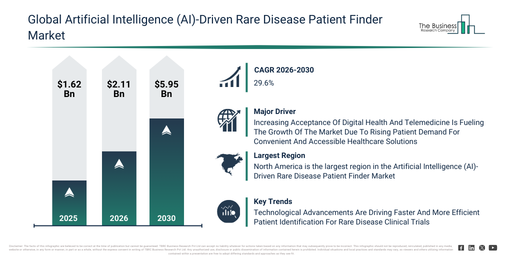
    The artificial intelligence (AI)-driven rare disease patient finder market has experienced substantial expansion in recent years. This market is expected to increase from $1.62 billion in 2025 to $2.11 billion in 2026, demonstrating a compound annual growth rate (CAGR) of 29.9%. The historical growth within this sector can be linked to factors such as the growing availability of electronic health records, the early integration of data analytics in clinical research, the expansion of genomic databases, an increased focus on orphan diseases, and the initial deployment of AI in trial recruitment.

    The artificial intelligence (AI)-driven rare disease patient finder market size is projected to experience substantial expansion over the upcoming years. This market is anticipated to reach $5.95 billion by 2030, exhibiting a compound annual growth rate (CAGR) of 29.6%. Several factors are contributing to this growth during the forecast period, including higher investments in precision medicine research, an increasing need for more rapid clinical trial enrollment, the broadened scope of real-world evidence analytics, enhanced collaboration among healthcare and life sciences entities, and greater regulatory encouragement for innovations in rare diseases. Key trends foreseen for this period encompass the expanded deployment of AI-based patient identification algorithms, the growing incorporation of multi-source health data, increased automation in clinical trial recruitment processes, the development of precision patient matching platforms, and a heightened emphasis on facilitating rare disease research.

    Download the Free Sample Report to Explore Key Market Insights:

    https://www.thebusinessresearchcompany.com/sample.aspx?id=28129&type=smp

    Which Market Drivers Are Supporting The Expansion Of The Artificial Intelligence (AI)-Driven Rare Disease Patient Finder Market?

    The market for artificial intelligence (AI)-driven rare disease patient finders is anticipated to expand, driven by the growing adoption of digital health and telemedicine. Digital health encompasses the application of technology, software, and electronic instruments to oversee, control, and enhance health and well-being. Meanwhile, telemedicine involves providing healthcare remotely through telecommunications, utilizing tools like video consultations, mobile applications, and web platforms. This rising acceptance stems from both patients and healthcare providers seeking convenient, efficient, and easily accessible healthcare options. Artificial intelligence (AI)-driven rare disease patient finders bolster digital health and telemedicine efforts by precisely identifying patients, facilitating remote oversight, prompt virtual consultations, and tailored treatment plans. For example, in November 2025, the France-based intergovernmental organization, Organisation for Economic Co operation and Development, reported advancements in EHR access within OECD countries. Data from comparable countries showed that in 2024, the average availability of online digital health services reached 82%, an increase from 79% in 2023. Consequently, the growing embrace of digital health and telemedicine is fueling the expansion of the artificial intelligence (AI)-driven rare disease patient finder market.

    What Segment Types Make Up The Artificial Intelligence (AI)-Driven Rare Disease Patient Finder Market?

    The artificial intelligence (AI)-driven rare disease patient finder market covered in this report is segmented –

    1) By Component: Software, Services

    2) By Deployment Mode: Cloud-Based, On-Premises

    3) By Application: Hospitals, Clinics, Research Institutes, Pharmaceutical Companies, Other Applications

    4) By End-User: Healthcare Providers, Life Sciences Companies, Payers, Other End-Users

    Subsegments:

    1) By Software: Electronic Data Capture, Data Management Platform, Analytics And Reporting Tools, Patient Engagement Tools, Clinical Trial Management System

    2) By Services: Implementation And Integration, Training And Support, Data Hosting And Security, Consulting Services, Maintenance And Upgrades

    What Trends Are Advancing Progress In The Artificial Intelligence (AI)-Driven Rare Disease Patient Finder Market?

    Major companies operating in the AI-driven rare disease patient finder market are prioritizing the creation of innovative technologies, specifically precision patient recruitment solutions. These efforts aim to improve the accuracy, speed, and efficiency with which suitable participants are located for rare disease clinical trials, thereby simultaneously shortening recruitment periods and elevating trial success rates. A precision patient recruitment solution represents a technology-led method that leverages sophisticated algorithms and real-world data to precisely pinpoint and connect with patients who meet specific clinical trial eligibility requirements. An example of this innovation is found in April 2024, when Citeline, a US-based business intelligence and data analytics company, introduced Citeline PatientMatch. This platform integrates advanced algorithms with extensive real-world data, including lab results, biomarkers, and electronic medical records sourced from over 400 hospitals and health systems. Its purpose is to assist sponsors and researchers in identifying eligible patients for clinical trials expeditiously and effectively, simplify patient onboarding, and facilitate intricate and varied research designs across multiple therapeutic areas.

    Who Are The Key Players Driving Competition In The Artificial Intelligence (AI)-Driven Rare Disease Patient Finder Market?

    Major companies operating in the artificial intelligence (AI)-driven rare disease patient finder market are UnitedHealth Group Incorporated, Dassault Systèmes SE, GeneDx Holdings Corp., HealthVerity Inc., ConcertAI Inc., Komodo Health Inc., Unlearn.AI Inc., Antidote Technologies Inc., Healx Ltd., FDNA Inc., Saventic Health Sp. z o.o., Digital Pharma Lab SAS, AnnieGuard Ltd., Rapid Innovation Labs Inc., Sqilline EOOD, TrialX Inc., enGenome Srl, EveryCure Inc., ThinkGenetic Inc., RareSum Inc.

    Read the full artificial intelligence (ai)-driven rare disease patient finder market report here:

    https://www.thebusinessresearchcompany.com/report/artificial-intelligence-ai-driven-rare-disease-patient-finder-global-market-report

    How Is The Artificial Intelligence (AI)-Driven Rare Disease Patient Finder Market Distributed Across Key Geographic Regions?

    North America was the largest region in the artificial intelligence (AI)-driven rare disease patient finder market in 2025. Asia-Pacific is expected to be the fastest-growing region in the forecast period. The regions covered in the artificial intelligence (AI)-driven rare disease patient finder market report are Asia-Pacific, South East Asia, Western Europe, Eastern Europe, North America, South America, Middle East, Africa.

    Request A Tailored Artificial Intelligence (AI)-Driven Rare Disease Patient Finder Market Research Report For Competitive Advantage:

    https://www.thebusinessresearchcompany.com/customise?id=28129&type=smp

    Browse Through More Reports Similar to the Global Artificial Intelligence (AI)-Driven Rare Disease Patient Finder Market 2026, By The Business Research Company

    Ai In Medical Diagnostics Global Market Report

    https://www.thebusinessresearchcompany.com/report/ai-in-medical-diagnostics-global-market-report

    Artificial Intelligence Ai In Clinical Trials Global Market Report

    https://www.thebusinessresearchcompany.com/report/artificial-intelligence-ai-in-clinical-trials-global-market-report

    Artificial Intelligence In Cancer Diagnostics Global Market Report

    https://www.thebusinessresearchcompany.com/report/artificial-intelligence-in-cancer-diagnostics-global-market-report

    Get in touch with us:

    The Business Research Company: https://www.thebusinessresearchcompany.com/

    Americas +1 310-496-7795

    Asia +44 7882 955267 & +91 8897263534

    Europe +44 7882 955267

    Email us at info@tbrc.info

    Follow us on:

    LinkedIn: https://in.linkedin.com/company/the-business-research-company

    YouTube: https://www.youtube.com/channel/UC24_fI0rV8cR5DxlCpgmyFQ

    Global Market Model: https://www.thebusinessresearchcompany.com/global-market-model