Month: March 2026

  • Salivary Gland Infection Market Dynamics 2026: Future Outlook and Key Insights

    Salivary Gland Infection Market Dynamics 2026: Future Outlook and Key Insights

    Uncover key drivers, emerging technologies, and competitive movements shaping the salivary gland infection market from 2026–2035 with trusted insights from The Business Research Company

    Starting from its 2026 valuation, what market size is the Salivary Gland Infection Market expected to reach by 2030?

    The salivary gland infection market has experienced significant growth in recent years. It is anticipated to increase from $4.45 billion in 2025 to $4.81 billion in 2026, achieving a compound annual growth rate (CAGR) of 8.1%. This historical expansion can be attributed to several factors including an increased occurrence of bacterial and viral salivary infections, improved accessibility to diagnostic imaging, the widespread availability of broad-spectrum antibiotics, the expansion of hospital-based ENT services, and a heightened clinical awareness of gland disorders.

    The salivary gland infection market is anticipated to experience substantial growth in the coming years, projected to reach $6.5 billion by 2030, exhibiting a compound annual growth rate (CAGR) of 7.8%. This expansion during the forecast period is primarily driven by increasing demand for advanced diagnostic accuracy, rising investments in ENT diagnostic tools, the expansion of outpatient diagnostic services, a growing focus on patient-centric treatment pathways, and the increasing integration of imaging and laboratory diagnostics. Key trends observed in this period include the increasing use of advanced imaging diagnostics, a rising adoption of targeted antibiotic therapies, a growing emphasis on early infection detection, the expansion of minimally invasive treatment approaches, and an enhanced focus on comprehensive diagnostic pathways.

    Access Your Free Sample Report for In-Depth Market Insights:

    https://www.thebusinessresearchcompany.com/sample.aspx?id=21281&type=smp

    What Drivers Are Driving Adoption Within The Salivary Gland Infection Market?

    An increase in oral health problems is projected to fuel the expansion of the salivary gland infections market. These problems encompass conditions such as tooth decay, gum diseases, and other conditions affecting the mouth. Factors contributing to the surge in oral health problems include insufficient oral hygiene, unhealthy dietary habits, and limited access to dental care. Elevated instances of oral health concerns heighten the likelihood of salivary gland infections by fostering bacterial proliferation and obstructions within the salivary ducts. For example, in May 2024, data from the National Health Service (NHS), a UK-based government body, revealed that 32.5 million dental treatments were administered in 2022-23, marking a 23.2% rise from the prior year. Consequently, the increasing prevalence of oral health issues is propelling the growth of the salivary gland infections market.

    What Segments Are Included Within The Salivary Gland Infection Market?

    The salivary gland infection market covered in this report is segmented –

    1) By Diagnosis: Plain Radiography, Sialography, Computed Tomography (CT), Magnetic Resonance Imaging (MRI), Radionuclide Scintigraphy, High-resolution Ultrasonography, Other Diagnoses

    2) By Treatment: Medications, Surgery, Aspiration, Home Care, Other Treatments

    3) By End User: Hospitals And Clinics, Medical Research Centers, Academic Institutes, Other End User

    Subsegments:

    1) By Plain Radiography: X-ray Of Salivary Glands, Sialography With X-ray

    2) By Sialography: Conventional Sialography, Digital Subtraction Sialography (DSS)

    3) By Computed Tomography (CT): Non-contrast CT, Contrast-enhanced CT

    4) By Magnetic Resonance Imaging (MRI): MRI without contrast, MRI With contrast (Dynamic MRI)

    5) By Radionuclide Scintigraphy: Planar Scintigraphy, SPECT (Single Photon Emission Computed Tomography)

    6) By High-resolution Ultrasonography: Standard Ultrasonography, Doppler Ultrasonography

    7) By Other Diagnoses: Fine Needle Aspiration (FNA) Biopsy, Endoscopy, Salivary Flow Test

    What Trends Are Expected To Impact The Competitive Landscape Of The Salivary Gland Infection Market?

    Major companies in the salivary gland infections market are prioritizing technological advancements, particularly in minimally invasive procedures, to enhance treatment outcomes, speed up patient recovery, and improve overall healthcare efficiency. Minimally invasive procedures involve smaller incisions and specialized tools, which results in less tissue damage and promotes quicker healing. For instance, in March 2024, Amrita Hospital, an India-based healthcare institution, established the Amrita Centre for minimally invasive salivary gland surgery, providing an innovative endoscopic treatment for salivary disorders that reduces the need for extensive surgery and preserves glandular function. The launch was further emphasized by a two-day workshop featuring expert demonstrations.

    Who Are The Top-Performing Companies In The Salivary Gland Infection Market In Recent Years?

    Major companies operating in the salivary gland infection market are Pfizer Inc., Johnson And Johnson, Roche Holding AG, Merck And Co Inc, AbbVie Inc, AstraZeneca plc, Novartis AG, GSK plc, Eli Lilly And Company, FUJIFILM Holdings Corporation, Teva Pharmaceutical Industries Ltd, Boehringer Ingelheim GmbH, Astellas Pharma Inc, Sandoz International GmbH, Hikma Pharmaceuticals PLC, Lupin Pharmaceuticals Inc, Mylan NV, Zydus Cadila Healthcare Ltd, Sun Pharmaceutical Industries Ltd, Dr Reddys Laboratories Ltd, Cipla Limited, Sanofi SA, Bayer AG, Perrigo Company plc

    Access The Complete Report For Deeper Market Insights:

    https://www.thebusinessresearchcompany.com/report/salivary-gland-infection-global-market-report

    Which Region Currently Holds The Largest Share Of The Salivary Gland Infection Market?

    North America was the largest region in the salivary gland infection market in 2025. The regions covered in the salivary gland infection market report are Asia-Pacific, South East Asia, Western Europe, Eastern Europe, North America, South America, Middle East, Africa.

    Request Your Customized Salivary Gland Infection Market Research Report for Competitive Advantage:

    https://www.thebusinessresearchcompany.com/customise?id=21281&type=smp

    Browse Through More Reports Similar to the Global Salivary Gland Infection Market 2026, By The Business Research Company

    Ear Infection Market Report 2026

    https://www.thebusinessresearchcompany.com/report/ear-infection-global-market-report

    Covid 19 Saliva Screening Test Potential Market Report 2026

    https://www.thebusinessresearchcompany.com/report/covid-19-saliva-screening-test-potential-global-market-report

    Oral Hygiene Market Report 2026

    https://www.thebusinessresearchcompany.com/report/oral-hygiene-global-market-report

    Get in touch with us:

    The Business Research Company: https://www.thebusinessresearchcompany.com/

    Americas +1 310-496-7795

    Asia +44 7882 955267 & +91 8897263534

    Europe +44 7882 955267

    Email us at info@tbrc.info

    Follow us on:

    LinkedIn: https://in.linkedin.com/company/the-business-research-company

    YouTube: https://www.youtube.com/channel/UC24_fI0rV8cR5DxlCpgmyFQ

    Global Market Model: https://www.thebusinessresearchcompany.com/global-market-model

  • Pharmaceutical Warehousing Market Insights Report: Opportunities and Drivers 2030

    Pharmaceutical Warehousing Market Insights Report: Opportunities and Drivers 2030

    Uncover key drivers, emerging technologies, and competitive movements shaping the pharmaceutical warehousing market from 2026–2035 with trusted insights from The Business Research Company

    How much is the Pharmaceutical Warehousing Market valued at in 2026, and what valuation is forecast for 2030?

    The pharmaceutical warehousing market has shown strong expansion in recent years. It is anticipated to expand from $65.24 billion in 2025 to $70.99 billion in 2026, achieving a compound annual growth rate (CAGR) of 8.8%. The increase observed in previous periods is attributable to the expansion of pharmaceutical manufacturing output, increasing demand for controlled storage environments, growth in vaccine and biologics distribution, strengthening regulatory storage requirements, and expansion of distribution networks.

    The pharmaceutical warehousing market is projected to experience substantial expansion over the coming years. Its valuation is anticipated to reach $98.29 billion by 2030, exhibiting a compound annual growth rate (CAGR) of 8.5%. This projected growth stems from factors such as heightened investment in intelligent pharmaceutical storage facilities, an escalating need for ultra-low temperature preservation, the broadening of supply networks for personalized medicine, a sharpened emphasis on environmentally friendly warehousing solutions, and wider implementation of real-time inventory oversight. Key developments expected during this timeframe involve the increased integration of automated warehouse management systems, a surge in the utilization of temperature-regulated storage environments, the growing incorporation of inventory tracking innovations, the expansion of dedicated cold chain storage sites, and an elevated commitment to ensuring adherence to regulations.

    Access Your Free Sample Report for In-Depth Market Insights:

    https://www.thebusinessresearchcompany.com/sample.aspx?id=25878&type=smp

    What Drivers Are Influencing The Growth Of The Pharmaceutical Warehousing Market?

    The pharmaceutical warehousing market is projected to grow due to the increasing need for temperature-sensitive pharmaceutical products. These products, which include medications, vaccines, and biologics, require specific controlled temperature conditions to maintain their effectiveness and safety. The surge in demand for these sensitive pharmaceuticals is primarily linked to the rising usage of biologics, which necessitate strict cold chain storage and transportation to preserve their stability, efficacy, and shelf life. Pharmaceutical warehousing provides essential support for these products by ensuring they are stored in controlled environments, thereby safeguarding their stability, effectiveness, and adherence to regulatory standards throughout the entire supply chain. For instance, in July 2024, the World Health Organization (WHO), a Switzerland-based intergovernmental organization, reported that in 2023, global coverage for the first dose of measles-containing vaccine (MCV1) reached 83%, while coverage for the third dose of diphtheria-tetanus-pertussis vaccine (DTP3) was 84%, which underscores the continuous demand for vaccine cold-chain logistics. Thus, the escalating demand for temperature-sensitive pharmaceutical products is a significant driver for the growth of the pharmaceutical warehousing market.

    How Is The Pharmaceutical Warehousing Market Organized Into Various Segments?

    The pharmaceutical warehousing market covered in this report is segmented –

    1) By Temperature Control Type: Cold Chain Warehouse, Non-Cold Chain Warehouse

    2) By Product Type: Raw Materials, Finished Goods, Other Product Types

    3) By Service Type: Storage, Distribution, Inventory Management, Packaging, Other Service Types

    4) By Application: Pharmaceutical Factory, Pharmacy, Hospital, Other Applications

    5) By End User: Pharmaceutical Manufacturers, Distributors, Retailers, Other End Users

    Subsegments:

    1) By Cold Chain Warehouse: Refrigerated Storage (2°C to 8°C), Frozen Storage (-20°C), Ultra-Low Temperature Storage (-80°C), Cryogenic Storage (Below -150°C)

    2) By Non-Cold Chain Warehouse: Ambient Storage (15°C to 25°C), Bulk Drug Storage, Finished Goods Storage, Hazardous Material Storage

    What Trends Are Reshaping The Dynamics Of The Pharmaceutical Warehousing Market?

    Leading companies in the pharmaceutical warehousing market are concentrating on integrating innovative systems, such as advanced warehouse management systems (WMS), to elevate inventory precision, enhance compliance, and streamline distribution processes. Advanced warehouse management systems (WMS) are software solutions that optimize warehouse operations by overseeing inventory, tracking shipments, and coordinating order fulfillment, helping pharmaceutical companies guarantee regulatory adherence, maintain accurate inventory control, enable real-time tracking of temperature-sensitive products, and achieve efficient order processing. For instance, in February 2025, Cadila Pharmaceuticals Limited, an India-based pharmaceutical company, inaugurated an advanced pharmaceutical warehouse in Ahmedabad that features a state-of-the-art warehouse management system (WMS). This new facility spans approximately 30,000 sq. ft. and includes storage for 3,888 pallets, along with a temperature-controlled cold room offering a 75-pallet capacity. The integrated WMS improves inventory accuracy, ensures real-time tracking, and optimizes distribution operations for sensitive healthcare products like vaccines and insulin.

    Who Are The Prominent Global Companies Shaping The Pharmaceutical Warehousing Market Landscape?

    Major companies operating in the pharmaceutical warehousing market are Deutsche Post AG, United Parcel Service Inc., Kuehne + Nagel International AG, GEODIS S.A., XPO Logistics Inc., Penske Logistics LLC, Hellmann Worldwide Logistics SE & Co. KG, Agility Public Warehousing Company K.S.C.P., Yusen Logistics Co. Ltd., Allcargo Logistics Limited, Nippon Express Holdings Inc., CJ Logistics America LLC, DACHSER SE, Broekman Logistics B.V., Atlanta Bonded Warehouse Corporation, S.F. Holding Co. Ltd., Almac Group Limited, SK Pharma Logistics AG, CEVA Logistics, DB Schenker, GXO Logistics, Lineage Logistics

    Access The Complete Report For Deeper Market Insights:

    https://www.thebusinessresearchcompany.com/report/pharmaceutical-warehousing-global-market-report

    Which Geographic Areas Are Emerging As Strong Markets For The Pharmaceutical Warehousing Market?

    North America was the largest region in the pharmaceutical warehousing market in 2025. Asia-Pacific is expected to be the fastest-growing region in the forecast period. The regions covered in the pharmaceutical warehousing market report are Asia-Pacific, South East Asia, Western Europe, Eastern Europe, North America, South America, Middle East, Africa.

    Request Your Customized Pharmaceutical Warehousing Market Research Report for Competitive Advantage:

    https://www.thebusinessresearchcompany.com/customise?id=25878&type=smp

    Browse Through More Reports Similar to the Global Pharmaceutical Warehousing Market 2026, By The Business Research Company

    Pharmaceuticals Market 2026

    https://www.thebusinessresearchcompany.com/report/pharmaceuticals-market

    Pharmaceutical Continuous Manufacturing Market Report 2026

    https://www.thebusinessresearchcompany.com/report/pharmaceutical-continuous-manufacturing-global-market-report

    Pharmaceutical Packaging Equipment Market Report 2026

    https://www.thebusinessresearchcompany.com/report/pharmaceutical-packaging-equipment-global-market-report

    Get in touch with us:

    The Business Research Company: https://www.thebusinessresearchcompany.com/

    Americas +1 310-496-7795

    Asia +44 7882 955267 & +91 8897263534

    Europe +44 7882 955267

    Email us at info@tbrc.info

    Follow us on:

    LinkedIn: https://in.linkedin.com/company/the-business-research-company

    YouTube: https://www.youtube.com/channel/UC24_fI0rV8cR5DxlCpgmyFQ

    Global Market Model: https://www.thebusinessresearchcompany.com/global-market-model
  • Pharmaceutical Manufacturing Global Forecast: Market to Scale Up to $923.46 Billion by 2030 at 10% CAGR

    Pharmaceutical Manufacturing Global Forecast: Market to Scale Up to $923.46 Billion by 2030 at 10% CAGR

    Uncover key drivers, emerging technologies, and competitive movements shaping the pharmaceutical manufacturing market from 2026–2035 with trusted insights from The Business Research Company

    By how much is the Pharmaceutical Manufacturing Market expected to grow between 2026 and 2030?

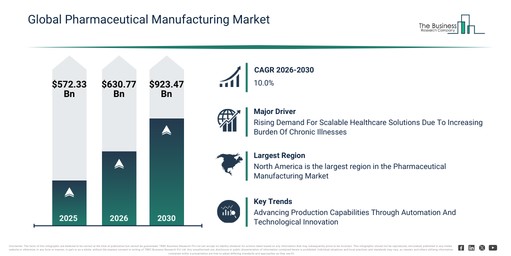
    The pharmaceutical manufacturing market size has experienced swift expansion in recent years. It is projected to grow from $572.33 billion in 2025 to $630.77 billion in 2026, demonstrating a compound annual growth rate (CAGR) of 10.2%. The historical growth can be attributed to several factors including the expansion of global drug demand, an increase in chronic disease prevalence, growing investments in manufacturing capacity, advancements in formulation technologies, and the strengthening of regulatory quality standards.

    The pharmaceutical manufacturing market is anticipated to experience substantial growth over the next few years. It is projected to expand to $923.47 billion by 2030, achieving a compound annual growth rate (CAGR) of 10.0%. This growth during the forecast period can be attributed to several factors, including increasing investments in smart manufacturing facilities, a rising adoption of advanced biologics production, the expansion of personalized medicine manufacturing, a growing focus on cost-efficient production models, and the increasing integration of digital quality management systems. Significant trends expected during this period involve the increasing adoption of continuous manufacturing technologies, a heightened focus on biologics and biosimilars production, the expansion of advanced quality control systems, growing integration of automation and robotics, and an enhanced emphasis on regulatory compliance.

    Access Your Free Sample Report for In-Depth Market Insights:

    https://www.thebusinessresearchcompany.com/sample.aspx?id=24375&type=smp

    Which Drivers Are Influencing Market Acceleration In The Pharmaceutical Manufacturing Market?

    The projected expansion of the pharmaceutical manufacturing market is anticipated due to the rising occurrence of chronic illnesses. These are enduring health conditions characterized by gradual progression and a duration of at least a year, frequently necessitating continuous medical care or restricting daily life. The growing frequency of chronic diseases stems from factors such as increased life expectancy, inactive lifestyles, and poor eating habits, thereby fueling the need for sustained healthcare interventions and preventative health strategies. In the context of chronic diseases, pharmaceutical manufacturing plays a crucial role by guaranteeing a consistent provision of vital drugs, fostering advancements in medication creation, and addressing the escalating requirement for efficacious long-term treatments. As an illustration, data from September 2024, supplied by the National Health Service, a UK-based government department, indicates that 11% of adults aged 35 and older suffer from advanced chronic kidney disease, with its occurrence and intensity escalating with age. Close to 48% of those aged 75 and above are afflicted with some manifestation of the condition, while 36% experience more advanced forms. Consequently, the expanding incidence of chronic illnesses is stimulating growth within the pharmaceutical manufacturing market.

    What Segments Are Identified Within The Structure Of The Pharmaceutical Manufacturing Market?

    The pharmaceutical manufacturing market covered in this report is segmented –

    1) By Molecule Type: Biologics And Biosimilars, Conventional Drugs

    2) By Formulation: Tablets, Capsules, Injectable, Sprays, Suspensions, Powders, Other Formulations

    3) By Route Of Administration: Oral, Topical, Parenteral, Inhalations, Other Route Of Administrations

    4) By Therapy Area: Cardiovascular Diseases (CVDs), Pain, Diabetes, Cancer, Respiratory Diseases, Other Diseases

    5) By Sales Channel: Retail, Non-retail

    Subsegments:

    1) By Biologics And Biosimilars: Monoclonal Antibodies, Vaccines, Recombinant Proteins, Cell Therapies, Gene Therapies, Hormones, Blood And Plasma Products

    2) By Conventional Drugs: Analgesics, Antipyretics, Antibiotics, Antivirals, Antifungals, Antihypertensives, Antidepressants, Antidiabetics

    How Are New Market Trends Shaping The Landscape Of The Pharmaceutical Manufacturing Market?

    Leading pharmaceutical manufacturing companies are prioritizing the creation of advanced solutions, such as fully automated radioligand therapy (RLT) manufacturing facilities. This focus aims to boost production efficiency, maintain high-quality standards, and address the growing requirement for targeted cancer treatments. An automated RLT manufacturing facility is a cutting-edge production site that utilizes sophisticated automation technologies to streamline and optimize the manufacture of radioligand therapies, thereby ensuring consistent, efficient, and scalable production. For example, in January 2024, Novartis AG, a pharmaceutical corporation based in Switzerland, obtained US Food and Drug Administration (FDA) approval for Pluvicto production at its state-of-the-art radioligand therapy (RLT) manufacturing facility in Indianapolis. This development will significantly expand the production capacity for its radioligand therapy medicines, including Pluvicto and Lutathera. This strategic expansion is part of Novartis’ wider initiative to meet the increasing worldwide demand for targeted cancer therapies and enhance patient access globally.

    Which Key Players Are Driving Competition In The Pharmaceutical Manufacturing Market?

    Major companies operating in the pharmaceutical manufacturing market are Pfizer Inc., Johnson & Johnson Services Inc., F. Hoffmann-La Roche Ltd., Merck & Co. Inc., AbbVie Inc., Sanofi SA, Bristol Myers Squibb Company, AstraZeneca plc, Abbott Laboratories, Novartis AG, GlaxoSmithKline plc, Takeda Pharmaceuticals Inc., Eli Lilly and Company, Gilead Sciences Inc., Novo Nordisk A/S, Lonza Group AG, Sun Pharmaceutical Industries Ltd., Dr. Reddy’s Laboratories, Cipla Limited, Samsung Biologics, FUJIFILM Diosynth Biotechnologies U.S.A. Inc., Lupin Limited, Jubilant Pharmova Limited.

    Access The Complete Report For Deeper Market Insights:

    https://www.thebusinessresearchcompany.com/report/pharmaceutical-manufacturing-global-market-report

    Which Region Is Projected To Lead The Pharmaceutical Manufacturing Market During The Forecast Period?

    North America was the largest region in the pharmaceutical manufacturing market in 2025. Asia-Pacific is expected to be the fastest-growing region in the forecast period. The regions covered in the pharmaceutical manufacturing market report are Asia-Pacific, South East Asia, Western Europe, Eastern Europe, North America, South America, Middle East, Africa.

    Request Your Customized Pharmaceutical Manufacturing Market Research Report for Competitive Advantage:

    https://www.thebusinessresearchcompany.com/customise?id=24375&type=smp

    Browse Through More Reports Similar to the Global Pharmaceutical Manufacturing Market 2026, By The Business Research Company

    Pharmaceutical Chemicals Market Report 2026

    https://www.thebusinessresearchcompany.com/report/pharmaceutical-chemicals-global-market-report

    Pharmaceuticals Market 2026

    https://www.thebusinessresearchcompany.com/report/pharmaceuticals-market

    Pharmaceutical Logistics Market Report 2026

    https://www.thebusinessresearchcompany.com/report/pharmaceutical-logistics-global-market-report

    Get in touch with us:

    The Business Research Company: https://www.thebusinessresearchcompany.com/

    Americas +1 310-496-7795

    Asia +44 7882 955267 & +91 8897263534

    Europe +44 7882 955267

    Email us at info@tbrc.info

    Follow us on:

    LinkedIn: https://in.linkedin.com/company/the-business-research-company

    YouTube: https://www.youtube.com/channel/UC24_fI0rV8cR5DxlCpgmyFQ

    Global Market Model: https://www.thebusinessresearchcompany.com/global-market-model
  • Pharmaceutical Logistics Market Future Outlook: Strong Growth Expected Toward $156.08 Billion by 2030

    Pharmaceutical Logistics Market Future Outlook: Strong Growth Expected Toward $156.08 Billion by 2030

    Uncover key drivers, emerging technologies, and competitive movements shaping the pharmaceutical logistics market from 2026–2035 with trusted insights from The Business Research Company

    What is the estimated market size of the Pharmaceutical Logistics Market by the end of 2030?

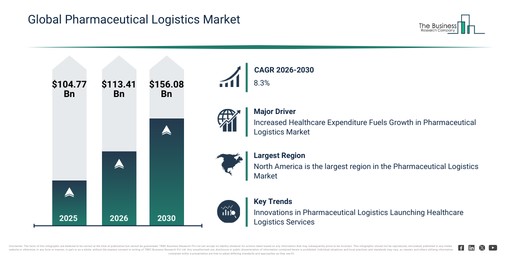
    The pharmaceutical logistics market size has seen significant expansion in recent years. Its value is expected to rise from $104.77 billion in 2025 to $113.41 billion in 2026, growing at a compound annual growth rate (CAGR) of 8.2%. The growth observed in the past can be attributed to the widespread expansion of global pharmaceutical trade, the growing distribution of biologics and vaccines, increased regulatory requirements for drug storage, the proliferation of international clinical trials, and the adoption of specialized pharmaceutical logistics providers.

    The pharmaceutical logistics market is anticipated to experience substantial growth over the next few years. It is forecast to expand to $156.08 billion by 2030, growing at a compound annual growth rate (CAGR) of 8.3%. This expansion during the projection period stems from increased investments in intelligent cold chain infrastructure, a rising need for specialty drug distribution, the broadening of digital supply chain platforms, a heightened focus on sustainability in logistics, and the enhanced utilization of predictive analytics for inventory management. Prominent trends for the forecast duration encompass a greater uptake of cold chain monitoring solutions, an increasing demand for temperature-controlled transportation, the development of real-time logistics tracking platforms, an amplified emphasis on end-to-end supply chain visibility, and the integration of automated warehousing systems.

    Access Your Free Sample Report for In-Depth Market Insights:

    https://www.thebusinessresearchcompany.com/sample.aspx?id=7302&type=smp

    What Drivers Are Shaping Future Opportunities In The Pharmaceutical Logistics Market?

    Future expansion of the pharmaceutical logistics market is anticipated to be propelled by rising healthcare spending. Healthcare expenditure is defined as the aggregate financial outlay by individuals, entities, or governmental bodies on health-related products and services over a defined period. A rise in healthcare spending facilitates better pharmaceutical logistics through investments in cutting-edge supply chain technologies, guaranteeing prompt and safe medication delivery, and boosting the overall effectiveness of the distribution network. As an illustration, a report in April 2025 from the American Medical Association, a U.S.-based professional group, revealed that health spending in the U.S. increased by 7.5% in 2023, totaling $4.9 trillion, or $14,570 per person. This marked a considerable surge compared to the 4.6% growth documented in 2022. Consequently, the expansion of healthcare expenditure is a key factor propelling the pharmaceutical logistics market’s development.

    Which Segments Are Gaining Traction In The Pharmaceutical Logistics Market?

    The pharmaceutical logistics market covered in this report is segmented –

    1) By Type: Cold Chain Logistics, Non-Cold Chain Logistics

    2) By Component: Storage, Transportation, Monitoring Components

    3) By Procedure: Picking, Storage, Retrieval Systems, Handling Systems

    4) By Transportation: Sea Freight, Air Freight, Overland

    5) By Application: Bio Pharma, Chemical Pharma, Specialty Pharma

    Subsegments:

    1) By Cold Chain Logistics: Refrigerated Transport, Temperature-Controlled Warehousing, Cold Chain Monitoring Systems, Packaging Solutions For Cold Chain

    2) By Non-Cold Chain Logistics: Standard Transport Services, Ambient Warehousing, General Packaging Solutions, Supply Chain Management Services

    Which Trends Are Expected To Influence The Pharmaceutical Logistics Market In The Upcoming Years?

    Leading companies in the pharmaceutical logistics market are developing innovations, such as healthcare logistics services, to cater to broader customer bases, boost sales, and increase revenue. Healthcare logistics services involve the planning, execution, and management of the efficient and secure movement of healthcare-related goods, equipment, and information throughout the supply chain. For example, in October 2023, UPS Healthcare, a US-based provider of healthcare logistics, launched UPS Pickup Point locations. The UPS Pickup Points locations introduce a new reverse logistics service specifically designed for health laboratory customers across the UK, Germany, Italy, France, and Spain. This distinctive feature establishes a comprehensive reverse logistics solution, providing collection confirmation and real-time visibility for time-sensitive specimens. The service innovatively streamlines operations for healthcare companies, reducing the number of collection sites while concurrently enhancing reliability, control, and the efficient shipment of samples to a central laboratory.

    Who Are The Top-Performing Companies In The Pharmaceutical Logistics Market In Recent Years?

    Major companies operating in the pharmaceutical logistics market are McKesson Corporation, AmerisourceBergen Corp, Cardinal Health Inc., Deutsche Post AG, FedEx Corp, Kuehne + Nagel International AG, SF Holding Co Ltd., CR Pharmaceutical Group Ltd., DSV Panalpina A/S, Schenker AG, C.H. Robinson Worldwide Inc., Alfresa Holdings Corp, Nippon Express Co Ltd., Kerry Logistics Network Limited, Lineage Logistics Holding LLC., Flexport Inc., Nichirei Logistics Group Inc., Mainfreight Ltd., Americold Logistics LLC., NFI Industries Inc., Agility Public Warehousing Company K.S.C.P., Profarma Distribuidora de Produtos Farmaceuticos S.A., United States Cold Storage Inc., NewCold Advanced Cold Logistics BV, Cloverleaf Cold Storage Co, Kingworld Medicines Group Ltd, CEVA Logistics AG, Kloosterboer Group BV., MEDIPAL HOLDINGS Corp, B.C. Ice & Cold Storage Co

    Access The Complete Report For Deeper Market Insights:

    https://www.thebusinessresearchcompany.com/report/pharmaceutical-logistics-global-market-report

    Which Region Currently Holds The Largest Share Of The Pharmaceutical Logistics Market?

    North America was the largest region in the pharmaceutical logistics market in 2025. Asia-Pacific is expected to be the fastest-growing region in the forecast period. The regions covered in the pharmaceutical logistics market report are Asia-Pacific, South East Asia, Western Europe, Eastern Europe, North America, South America, Middle East, Africa.

    Request Your Customized Pharmaceutical Logistics Market Research Report for Competitive Advantage:

    https://www.thebusinessresearchcompany.com/customise?id=7302&type=smp

    Browse Through More Reports Similar to the Global Pharmaceutical Logistics Market 2026, By The Business Research Company

    Chemical Logistics Market Report 2026

    https://www.thebusinessresearchcompany.com/report/chemical-logistics-global-market-report

    Biopharmaceutical Third Party Logistics Market Report 2026

    https://www.thebusinessresearchcompany.com/report/biopharmaceutical-third-party-logistics-global-market-report

    Pharmaceutical Supply Chain Management Market Report 2026

    https://www.thebusinessresearchcompany.com/report/pharmaceutical-supply-chain-management-global-market-report

    Get in touch with us:

    The Business Research Company: https://www.thebusinessresearchcompany.com/

    Americas +1 310-496-7795

    Asia +44 7882 955267 & +91 8897263534

    Europe +44 7882 955267

    Email us at info@tbrc.info

    Follow us on:

    LinkedIn: https://in.linkedin.com/company/the-business-research-company

    YouTube: https://www.youtube.com/channel/UC24_fI0rV8cR5DxlCpgmyFQ

    Global Market Model: https://www.thebusinessresearchcompany.com/global-market-model
  • Revenue of the Pharmaceutical Fluid Handling Market Predicted to Achieve $16.63 Billion by 2030, Driven by 6.2% CAGR

    Revenue of the Pharmaceutical Fluid Handling Market Predicted to Achieve $16.63 Billion by 2030, Driven by 6.2% CAGR

    Uncover key drivers, emerging technologies, and competitive movements shaping the pharmaceutical fluid handling market from 2026–2035 with trusted insights from The Business Research Company

    What was the valuation of the Pharmaceutical Fluid Handling Market in 2026, and what figure is it projected to hit by 2030?

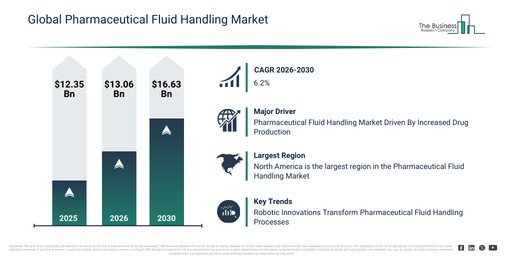
    The pharmaceutical fluid handling market has demonstrated substantial growth in recent years. Its valuation is projected to rise from $12.35 billion in 2025 to $13.06 billion in 2026, reflecting a compound annual growth rate (CAGR) of 5.8%. The increase observed historically can be attributed to factors such as elevated biologics manufacturing activities, a heightened requirement for precise fluid dosing, the expansion of sterile drug production, the adoption of modular manufacturing designs, and an intensified focus on ensuring product quality.

    The pharmaceutical fluid handling market is projected to experience substantial expansion in the coming years, reaching $16.63 billion by 2030, driven by a compound annual growth rate (CAGR) of 6.2%. This growth during the forecast period can be attributed to several factors, including greater investments in continuous manufacturing, the increasing adoption of automation in fluid processing, the expansion of personalized medicine production, a growing need for scalable fluid handling solutions, and a heightened regulatory emphasis on preventing contamination. Key trends anticipated for this period involve the rising uptake of single-use fluid handling systems, an increasing need for high-purity tubing and components, the wider integration of automated fluid management solutions, the expansion of closed-system processing technologies, and a stronger focus on contamination control.

    Access Your Free Sample Report for In-Depth Market Insights:

    https://www.thebusinessresearchcompany.com/sample.aspx?id=11947&type=smp

    Which Drivers Are Affecting Market Participation In The Pharmaceutical Fluid Handling Market?

    The anticipated rise in pharmaceutical drug manufacturing is poised to drive the expansion of the pharmaceutical fluid handling market. Drug production is defined as the process of manufacturing pharmaceutical substances, medications, or drugs. Pharmaceutical fluid handling supports drug production by ensuring the accurate and efficient handling, transfer, and containment of liquids and fluids throughout the manufacturing process. For instance, data from June 2023, released by the European Federation of Pharmaceutical Industries and Associations (EFPIA), a Belgium-based trade association representing the pharmaceutical industry in Europe, indicated that the total pharmaceutical production in Europe amounted to €390,000 million ($422,803 million) in 2023, an increase from €363,300 million ($393,857 million) in 2022. This demonstrates that the escalating demand for pharmaceutical drugs is a key driver for the growth of the pharmaceutical fluid handling market.

    What Segment Categories Are Covered In The Pharmaceutical Fluid Handling Market?

    The pharmaceutical fluid handling market covered in this report is segmented –

    1) By Offering: Equipment And Solutions, Services

    2) By Tubing: Thermoplastic Elastomers, Polyvinyl Chloride, Silicone

    3) By Usage: Cough Syrup, Intravenous Product, Complex Active Pharmaceutical Ingredients, Other Usage

    4) By Application: Fluid Handling And Management, Fluid Preparation, Integration And Automation, Buffer Management, Other Applications

    5) By End User: Biotechnology Companies, Pharmaceutical And Medical Companies, Other End Users

    Subsegments:

    1) By Equipment And Solutions: Pumps, Valves, Tubing, Filters, Flow Meters

    2) By Services: Installation, Maintenance And Repair, Consulting, Training

    What Trends Are Driving The Growth Trajectory Of The Pharmaceutical Fluid Handling Market?

    Leading firms within the pharmaceutical fluid handling market are increasingly prioritizing the creation of robotics specifically for this sector. This involves embedding automation and robotic solutions into fluid handling setups to boost the effectiveness, precision, and consistency of pharmaceutical production workflows. An example is observed in May 2023, when Cellular Origins, a UK-based producer of automated solutions for cell and gene therapy, introduced Constellation, which is a self-contained, completely automated, and customizable robotic platform designed for cell therapy. This platform enables thorough end-to-end digital connectivity, offering full remote digital management, analytical capabilities, and integrated quality control mechanisms.

    Which Leading Companies Dominate The Pharmaceutical Fluid Handling Market Share?

    Major companies operating in the pharmaceutical fluid handling market are Thermo Fisher Scientific Inc., Danaher Corporation, Parker Hannifin Corporation, Corning Incorporated, Agilent Technologies Inc., Alfa Laval AB, PerkinElmer Inc., Spirax Sarco Engineering plc, Eppendorf AG, Tecan Trading AG, CIRCOR International Inc., Raumedic AG, Borosil Glass Works Ltd., BioTek Instruments Inc., Labcyte Inc., Gilson Company Inc., Aurora Biomed Inc., Tef Cap Industries Inc., Labnet International Inc., Australian Fluid Handling Pty Ltd., Fraser Ross Ltd., Sartorius AG, Watson-Marlow Fluid Technology Group, Saint-Gobain Life Sciences, IDEX Corporation

    Access The Complete Report For Deeper Market Insights:

    https://www.thebusinessresearchcompany.com/report/pharmaceutical-fluid-handling-global-market-report

    How Does The Pharmaceutical Fluid Handling Market Perform Across Major Global Regions?

    North America was the largest region in the pharmaceutical fluid handling market in 2025. Asia-Pacific is expected to be the fastest-growing region in the forecast period. The regions covered in the pharmaceutical fluid handling market report are Asia-Pacific, South East Asia, Western Europe, Eastern Europe, North America, South America, Middle East, Africa.

    Request Your Customized Pharmaceutical Fluid Handling Market Research Report for Competitive Advantage:

    https://www.thebusinessresearchcompany.com/customise?id=11947&type=smp

    Browse Through More Reports Similar to the Global Pharmaceutical Fluid Handling Market 2026, By The Business Research Company

    Pharmaceutical Filtration Market Report 2026

    https://www.thebusinessresearchcompany.com/report/pharmaceutical-filtration-global-market-report

    Liquid Handling Systems Market Report 2026

    https://www.thebusinessresearchcompany.com/report/liquid-handling-systems-global-market-report

    Pharmaceutical Drug Delivery Market Report 2026

    https://www.thebusinessresearchcompany.com/report/pharmaceutical-drug-delivery-global-market-report

    Get in touch with us:

    The Business Research Company: https://www.thebusinessresearchcompany.com/

    Americas +1 310-496-7795

    Asia +44 7882 955267 & +91 8897263534

    Europe +44 7882 955267

    Email us at info@tbrc.info

    Follow us on:

    LinkedIn: https://in.linkedin.com/company/the-business-research-company

    YouTube: https://www.youtube.com/channel/UC24_fI0rV8cR5DxlCpgmyFQ

    Global Market Model: https://www.thebusinessresearchcompany.com/global-market-model
  • Pharmaceutical Fill and Finish Outsourcing Sector Forecast Shows Robust Momentum, Climbing to $5.76 Billion With 9% CAGR

    Pharmaceutical Fill and Finish Outsourcing Sector Forecast Shows Robust Momentum, Climbing to $5.76 Billion With 9% CAGR

    Uncover key drivers, emerging technologies, and competitive movements shaping the pharmaceutical fill and finish outsourcing market from 2026–2035 with trusted insights from The Business Research Company

    What are the forecasted starting (2026) and ending (2030) market sizes for the Pharmaceutical Fill and Finish Outsourcing Market?

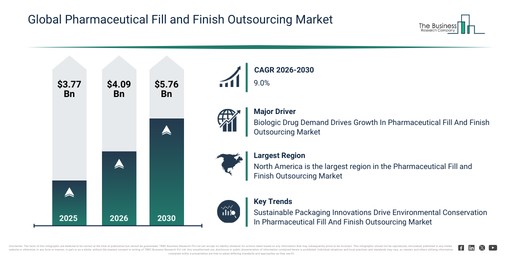
    The pharmaceutical fill and finish outsourcing market size has seen robust expansion in recent years. It is projected to increase from $3.77 billion in 2025 to $4.09 billion in 2026, demonstrating a compound annual growth rate (CAGR) of 8.3%. The growth observed in prior periods can be attributed to several factors, including the rising production volumes of biologics, the increasing complexity of injectable formulations, limited internal manufacturing capacity, the significant capital expenditure for fill and finish equipment, and an escalating demand for contract manufacturing services.

    The pharmaceutical fill and finish outsourcing market is projected to experience substantial expansion in the coming years. Its valuation is anticipated to reach $5.76 billion by 2030, exhibiting a compound annual growth rate (CAGR) of 9.0%. This anticipated growth during the forecast period stems from factors such as the expanding pipeline of vaccines and biologics, a growing inclination towards scalable outsourcing frameworks, increased investments in sophisticated aseptic technologies, the broadening of personalized medicine manufacturing, and intensified regulatory oversight regarding manufacturing quality. Key trends identified for the forecast period encompass a rise in the outsourcing of sterile fill and finish activities, a surging need for automated high-speed filling systems, the proliferation of single-use filling solutions, an intensified emphasis on regulatory compliance proficiency, and the integration of adaptable manufacturing capacity approaches.

    Access Your Free Sample Report for In-Depth Market Insights:

    https://www.thebusinessresearchcompany.com/sample.aspx?id=12069&type=smp

    What Drivers Are Supporting Technological Adoption In The Pharmaceutical Fill and Finish Outsourcing Market?

    The escalating requirement for biologic drugs is anticipated to drive the expansion of the pharmaceutical fill and finish outsourcing market in the coming years. Biologic drugs, also referred to as biologics or biosimilars, represent a category of pharmaceutical products originating from living organisms or containing their components. By externalizing the fill and finish production stage, drug manufacturers can leverage the expertise and facilities of contract manufacturing organizations (CMOs). This enables pharmaceutical firms to prioritize the development, research, and scaling up of their biologic drugs, while depending on CMOs for streamlined and economical fill and finish processes. As an illustration, Hardman and Co., a UK-based independent investment research and corporate advisory business company, announced in April 2025 that the U.S. Food and Drug Administration had approved 63 new chemical entities and biologics in 2024, an increase from 53 in 2023. Consequently, the increased demand for biologic drugs will stimulate the pharmaceutical fill and finish outsourcing market.

    Which Segments Are Contributing To The Growth Of The Pharmaceutical Fill and Finish Outsourcing Market?

    The pharmaceutical fill and finish outsourcing market covered in this report is segmented –

    1) By State Of Finished Products: Liquid, Solids, Semi Solids

    2) By Content: Organic Substances Isolated From Animal Origin, Organic Substances Isolated From Microorganisms, Inorganic Substances

    3) By End-Users: Biopharmaceutical Companies, Pharmaceutical Companies

    Subsegments:

    1) By Liquid: Injectables, Solutions, Suspensions

    2) By Solids: Tablets, Capsules, Powders

    3) By Semi-Solids: Ointments, Creams, Gels

    What Upcoming Trends Are Likely To Define The Future Path Of The Pharmaceutical Fill and Finish Outsourcing Market?

    Leading companies in the pharmaceutical fill and finish outsourcing market are concentrating on developing eco-friendly packaging materials and methods to lessen their carbon footprint and protect the environment. Sustainable packaging involves the creation and application of packaging that minimizes its environmental impact throughout its entire lifespan. For instance, in November 2023, Amcor, an Australia-based pharmaceutical packaging company, introduced its advanced Healthcare Recycle-Ready Medical Laminates. Amcor is developing all-film packaging designed to meet device application performance standards while simultaneously reducing the finished package’s carbon footprint and allowing it to be recycled in the polyethylene stream. The innovation is a monomaterial polyethylene (PE) laminate suitable for a range of packaging formats. This laminate can serve as a replacement for non-recyclable lidding on 3D thermoformed packages that are currently not recyclable, enabling the use of recyclable lidding for products such as drapes, protective materials, catheters, injections, and tubing systems.

    Who Are The Major Companies Operating In The Pharmaceutical Fill and Finish Outsourcing Market?

    Major companies operating in the pharmaceutical fill and finish outsourcing market are Groninger and Co. GmbH, Wockhardt Limited, Boehringer Ingelheim International GmbH, Teva Pharmaceuticals Industries Ltd., Recipharm AB, Lonza Group AG, Catalent Inc., Dr. Reddys Laboratories Ltd., West Pharmaceutical Services Inc., Sun Pharmaceutical Industries Ltd., Patheon N.V., Piramal Enterprises Ltd., Gerresheimer AG, CordenPharma International, Fujifilm Diosynth Biotechnologies, Optima Packaging Group GmbH, Jubilant HollisterStier LLC., Ajinomoto Bio-Pharma Services, Cytovance Biologics Inc., Grand River Aseptic Manufacturing, Baxter Pharmaceutical Solutions LLC., Halo Pharma Inc., MabPlex Inc., August Bioservices, Siegfried Holding AG, Aenova Group, SK Pharmteco, Recro Pharma

    Access The Complete Report For Deeper Market Insights:

    https://www.thebusinessresearchcompany.com/report/pharmaceutical-fill-and-finish-outsourcing-global-market-report

    Which Region Is Anticipated To See The Fastest Growth In The Pharmaceutical Fill and Finish Outsourcing Market?

    North America was the largest region in the pharmaceutical fill and finish outsourcing market in 2025. The regions covered in the pharmaceutical fill and finish outsourcing market report are Asia-Pacific, South East Asia, Western Europe, Eastern Europe, North America, South America, Middle East, Africa.

    Request Your Customized Pharmaceutical Fill and Finish Outsourcing Market Research Report for Competitive Advantage:

    https://www.thebusinessresearchcompany.com/customise?id=12069&type=smp

    Browse Through More Reports Similar to the Global Pharmaceutical Fill and Finish Outsourcing Market 2026, By The Business Research Company

    Pharmaceutical Continuous Manufacturing Market Report 2026

    https://www.thebusinessresearchcompany.com/report/pharmaceutical-continuous-manufacturing-global-market-report

    Fill Finish Pharmaceutical Contract Manufacturing Market Report 2026

    https://www.thebusinessresearchcompany.com/report/fill-finish-pharmaceutical-contract-manufacturing-global-market-report

    Advanced Therapeutics Pharmaceutical Outsourcing Market Report 2026

    https://www.thebusinessresearchcompany.com/report/advanced-therapeutics-pharmaceutical-outsourcing-global-market-report

    Get in touch with us:

    The Business Research Company: https://www.thebusinessresearchcompany.com/

    Americas +1 310-496-7795

    Asia +44 7882 955267 & +91 8897263534

    Europe +44 7882 955267

    Email us at info@tbrc.info

    Follow us on:

    LinkedIn: https://in.linkedin.com/company/the-business-research-company

    YouTube: https://www.youtube.com/channel/UC24_fI0rV8cR5DxlCpgmyFQ

    Global Market Model: https://www.thebusinessresearchcompany.com/global-market-model
  • Pharmaceutical Cold Chain Packaging Market Anticipated to Record Steady Gains, Advancing to $55.75 Billion by 2030

    Pharmaceutical Cold Chain Packaging Market Anticipated to Record Steady Gains, Advancing to $55.75 Billion by 2030

    Uncover key drivers, emerging technologies, and competitive movements shaping the pharmaceutical cold chain packaging market from 2026–2035 with trusted insights from The Business Research Company

    What upper market value could the Pharmaceutical Cold Chain Packaging Market reach by 2030 starting from 2026 levels?

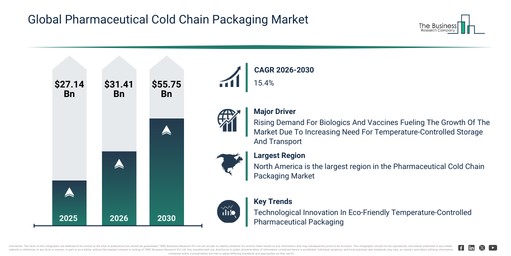
    The pharmaceutical cold chain packaging market size has seen rapid expansion in recent years. This market is expected to expand from $27.14 billion in 2025 to $31.41 billion in 2026, achieving a compound annual growth rate (CAGR) of 15.7%. The growth observed in prior periods can be attributed to the expansion of global vaccine distribution, rising production of biologics and insulin, increasing clinical trial activities, growth of specialty pharmaceuticals, and strengthening pharmaceutical quality standards.

    The pharmaceutical cold chain packaging market is projected to experience substantial expansion over the upcoming years. This market is set to reach $55.75 billion by 2030, exhibiting a compound annual growth rate (CAGR) of 15.4%. This anticipated growth is driven by several factors, including the rising need for personalized medicines, increased investments in cold chain logistics infrastructure, the widening scope of biologics pipelines, a heightened focus on sustainable packaging materials, and the greater uptake of real-time temperature tracking. Key developments foreseen during this period encompass the wider deployment of advanced insulated packaging solutions, an uptick in the utilization of phase change materials, a surge in the need for reusable cold chain packaging, broadening integration of temperature monitoring systems, and a sharpened emphasis on regulatory adherence.

    Access Your Free Sample Report for In-Depth Market Insights:

    https://www.thebusinessresearchcompany.com/sample.aspx?id=25875&type=smp

    Which Drivers Are Influencing Long-Term Growth In The Pharmaceutical Cold Chain Packaging Market?

    The expanding need for biologics and vaccines is anticipated to drive the future growth of the pharmaceutical cold chain packaging market. Biologics and vaccines are therapeutic products derived from living organisms; biologics address various diseases, while vaccines are specifically formulated to stimulate immunity against infections. The demand for these advanced therapies is increasing due to the rising prevalence of chronic conditions like cancer, autoimmune disorders, and diabetes, for which they provide targeted and effective treatment options. Pharmaceutical cold chain packaging is vital for biologics and vaccines, ensuring their storage and transport within precise temperature ranges to preserve their stability, potency, and safety from manufacturing through administration. For example, in June 2025, data from GOV.UK, a UK government website, showed that coverage for the first dose of the measles, mumps, and rubella (MMR1) vaccine rose across all regions compared to the first quarter of 2025. The East of England, London, and the Southwest each experienced a 0.5 percentage point increase. The Southeast and the Midlands recorded more modest increases of 0.1 percentage points, while the Northeast and Yorkshire, as well as the Northwest, observed increases of 0.2 percentage points. Consequently, the growing demand for biologics and vaccines is propelling the expansion of the pharmaceutical cold chain packaging market.

    How Is The Pharmaceutical Cold Chain Packaging Market Divided Into Segments?

    The pharmaceutical cold chain packaging market covered in this report is segmented –

    1) By Product Type: Insulated Shippers, Insulated Containers, Gel Packs And Ice Packs, Phase Change Materials, Dry Ice

    2) By Packaging Format: Active Packaging, Passive Packaging

    3) By Distribution Channel: Direct Sales, Distributors, Online Sales, Retail Pharmacies, Cold Chain Logistics Providers

    4) By Application: Vaccines, Biologics, Pharmaceuticals, Clinical Trials, Laboratory Samples

    5) By End Use: Biopharmaceutical Companies, Clinical Research Organizations, Hospitals, Research Institutes, Logistics And Distribution Companies, Other End Uses

    Subsegments:

    1) By Insulated Shippers: Passive Insulated Shippers, Active Insulated Shippers, Single-Use Shippers, Reusable Shippers

    2) By Insulated Containers: Small Payload Containers, Medium Payload Containers, Large Payload Containers, Pallet-Sized Containers

    3) By Gel Packs And Ice Packs: Water-Based Gel Packs, Polymer-Based Ice Packs, Foam Brick Refrigerants, Reusable Cold Packs

    4) By Phase Change Materials: Organic Phase Change Materials, Inorganic Phase Change Materials, Eutectic Mixtures, Bio-Based Phase Change Materials

    5) By Dry Ice: Dry Ice Pellets, Dry Ice Blocks, Dry Ice Slabs, Dry Ice Slices For Small Parcel Use

    Which Trends Are Shaping Activity Within The Pharmaceutical Cold Chain Packaging Market?

    Leading companies in the pharmaceutical cold chain packaging market are concentrating on introducing technologically advanced solutions, such as environmentally friendly temperature-controlled packaging, to improve the stability, safety, and effectiveness of temperature-sensitive pharmaceutical products during their storage and transport. These eco-friendly temperature-controlled packaging solutions are sustainable systems designed to maintain product temperatures while minimizing environmental impact through the use of recyclable, biodegradable, or reusable materials. For instance, in April 2025, Cold Chain Technologies, LLC, a US-based packaging company, unveiled TailorTemp, a fiber-based, temperature-controlled packaging solution specifically designed for the pharmaceutical industry. Manufactured entirely from recyclable, corrugated cardboard and completely plastic-free, TailorTemp serves as an eco-friendly alternative to expanded polystyrene (EPS) containers. The solution employs a computer-based parametric algorithm, co-developed with a thermal transfer laboratory, to optimize its dimensions, insulation, and coolant requirements for each customer, helping maintain product temperature for up to 36 hours and enabling quick prototyping and rigorous validation. Flat-pack shipping further enhances its efficiency and sustainability benefits, with ongoing research aimed at extending its performance and further strengthening its cold chain logistics capabilities.

    Which Major Firms Are Strengthening Their Position In The Pharmaceutical Cold Chain Packaging Market?

    Major companies operating in the pharmaceutical cold chain packaging market are Sonoco Products Company, Sealed Air Corporation, Biobase Group, Csafe Global LLC, Cryoport Systems LLC, Cold Chain Technologies LLC, Topa Thermal BV, Envirotainer AB, Haier Biomedical Co. Ltd., Peli BioThermal Limited, SkyCell AG, Cryopak Industries Inc., Sofrigam SAS, Intelsius LLC, Softbox Systems Ltd., Inmark Global Holdings LLC, Insulated Products Corporation, Chill-Pak, CoolPac Pty Ltd, Practical Packaging Solutions Inc., Thermal Energy Service Solutions Pvt. Ltd., Thermal Packaging Solutions Ltd.

    Access The Complete Report For Deeper Market Insights:

    https://www.thebusinessresearchcompany.com/report/pharmaceutical-cold-chain-packaging-global-market-report

    Which Region Is Anticipated To See The Fastest Growth In The Pharmaceutical Cold Chain Packaging Market?

    North America was the largest region in the pharmaceutical cold chain packaging market in 2025. Asia-Pacific is expected to be the fastest-growing region in the forecast period. The regions covered in the pharmaceutical cold chain packaging market report are Asia-Pacific, South East Asia, Western Europe, Eastern Europe, North America, South America, Middle East, Africa.

    Request Your Customized Pharmaceutical Cold Chain Packaging Market Research Report for Competitive Advantage:

    https://www.thebusinessresearchcompany.com/customise?id=25875&type=smp

    Browse Through More Reports Similar to the Global Pharmaceutical Cold Chain Packaging Market 2026, By The Business Research Company

    Pharmaceutical Packaging Testing Equipment Market Report 2026

    https://www.thebusinessresearchcompany.com/report/pharmaceutical-packaging-testing-equipment-global-market-report

    Pharmaceutical Contract Packaging Market Report 2026

    https://www.thebusinessresearchcompany.com/report/pharmaceutical-contract-packaging-global-market-report

    Pharmaceutical Packaging Equipment Market Report 2026

    https://www.thebusinessresearchcompany.com/report/pharmaceutical-packaging-equipment-global-market-report

    Get in touch with us:

    The Business Research Company: https://www.thebusinessresearchcompany.com/

    Americas +1 310-496-7795

    Asia +44 7882 955267 & +91 8897263534

    Europe +44 7882 955267

    Email us at info@tbrc.info

    Follow us on:

    LinkedIn: https://in.linkedin.com/company/the-business-research-company

    YouTube: https://www.youtube.com/channel/UC24_fI0rV8cR5DxlCpgmyFQ

    Global Market Model: https://www.thebusinessresearchcompany.com/global-market-model
  • Pharmaceutical Analytical Testing Industry Poised for Rapid Growth, Forecast to Touch $12.45 Billion by 2030 at 8.7% CAGR

    Pharmaceutical Analytical Testing Industry Poised for Rapid Growth, Forecast to Touch $12.45 Billion by 2030 at 8.7% CAGR

    Uncover key drivers, emerging technologies, and competitive movements shaping the pharmaceutical analytical testing market from 2026–2035 with trusted insights from The Business Research Company

    What level of CAGR-driven expansion is anticipated in the Pharmaceutical Analytical Testing Market between 2026 and 2030?

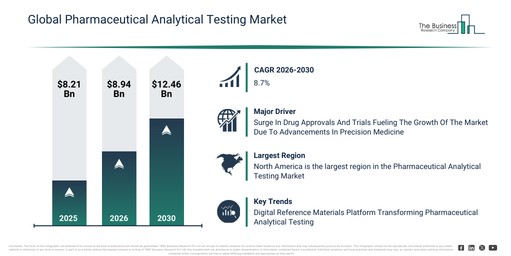
    The pharmaceutical analytical testing market size has seen robust expansion in recent years. This market is set to expand from $8.21 billion in 2025 to $8.94 billion in 2026, exhibiting a compound annual growth rate (CAGR) of 8.9%. Factors contributing to its historical growth include the expansion of pharmaceutical manufacturing activities, increasing regulatory scrutiny on drug quality, growth in generic drug development, rising investments in R&D pipelines, and the expansion of global testing laboratory networks.

    The pharmaceutical analytical testing market is projected to experience robust expansion over the coming years. This market is anticipated to reach $12.46 billion by 2030, exhibiting a compound annual growth rate (CAGR) of 8.7%. Factors driving this growth during the forecast period include a heightened need for intricate biologics testing, a greater uptake of automated analytical platforms, the expansion of personalized medicine initiatives, an increased emphasis on accelerating regulatory approvals, and a growing dependence on contract testing organizations. Key trends anticipated during the forecast timeframe encompass a wider embrace of sophisticated analytical testing methods, an escalating demand for outsourced testing provisions, a reinforced commitment to regulatory-adherent testing procedures, an expansion in stability and bioanalytical testing, and an improved incorporation of automation within testing laboratories.

    Access Your Free Sample Report for In-Depth Market Insights:

    https://www.thebusinessresearchcompany.com/sample.aspx?id=27378&type=smp

    What Drivers Are Affecting Demand-Supply Dynamics In The Pharmaceutical Analytical Testing Market?

    The escalating number of drug approvals and clinical trials is anticipated to drive the expansion of the pharmaceutical analytical testing market. This involves a regulated process of rigorously testing new medications for safety and effectiveness through clinical trials, followed by official authorization from health authorities for public availability. The increase in drug approvals and trials stems from advances in precision medicine, which facilitates the development of highly targeted therapies customized to individual genetic profiles, thereby improving their efficacy and prospects for regulatory success. Pharmaceutical analytical testing is vital for both drug approvals and clinical trials, as it ensures the safety, efficacy, and quality of pharmaceutical products by supplying validated data on stability, impurities, bioavailability, and pharmacokinetics, thereby supporting regulatory compliance and informed decision-making. For instance, in December 2024, the Association of the British Pharmaceutical Industry, a UK-based pharmaceutical industry trade body, reported that the total number of industry-sponsored clinical trials initiated in the United Kingdom rose from 411 in 2022 to 426 in 2023. Concurrently, Phase III trial initiations experienced a 16.5 percent growth over the same period, increasing from 182 to 212. Thus, the growing volume of drug approvals and trials is clearly stimulating the growth of the pharmaceutical analytical testing market.

    What Segments Are Included Within The Pharmaceutical Analytical Testing Market?

    The pharmaceutical analytical testing market covered in this report is segmented –

    1) By Service Type: Bioanalytical Testing, Method Development And Validation, Stability Testing, Drug Substances Testing, Microbial Testing, Physical Characterization, Other Service Types

    2) By Technique Used: Chromatography, Spectroscopy, Mass Spectrometry, Electrophoresis, Microscopy

    3) By Application: Quality Control, Research And Development, Regulatory Compliance, Drug Approval And Registration, Post-Marketing Surveillance

    4) By End User: Pharmaceutical Companies, Contract Research Organizations (CROs), Academic Institutions, Regulatory Bodies, Testing Laboratories

    Subsegments:

    1) By Bioanalytical Testing: Pharmacokinetics Testing, Biomarker Testing, Immunogenicity Testing, Toxicokinetics Testing

    2) By Method Development And Validation: Analytical Method Development, Analytical Method Validation, Method Transfer

    3) By Stability Testing: Long-Term Stability Testing, Accelerated Stability Testing, Stress Stability Testing, Photostability Testing

    4) By Drug Substances Testing: Raw Material Testing, Intermediate Testing, Final Drug Substance Testing

    5) By Microbial Testing: Bioburden Testing, Sterility Testing, Endotoxin Testing, Microbial Limit Testing

    6) By Physical Characterization: Particle Size Analysis, Polymorphism Analysis, Rheology Testing, Thermal Analysis

    7) By Other Service Types: Impurity Testing, Elemental Impurity Testing, Extractables And Leachables Testing, Packaging Testing

    Which Trends Are Influencing The Development Of The Pharmaceutical Analytical Testing Market?

    Leading companies in the pharmaceutical analytical testing market are concentrating on introducing novel solutions, such as digital reference materials platforms, to boost the precision, trackability, and effectiveness of laboratory testing processes. This approach aims to guarantee regulatory adherence and enhance overall data integrity. A digital reference materials platform is defined as an online or software-driven system that supplies authenticated, standardized digital datasets or models, which are used for calibrating, validating, and verifying analytical testing procedures within pharmaceutical laboratories. For instance, in November 2023, Merck Group, a Germany-based pharmaceutical company, unveiled ChemisTwin, the first-ever digital reference materials platform specifically designed for analytical testing. This platform automates the analysis of sample purity, compound identification, and degradation by utilizing calibrated, algorithm-based digital references. With digital signatures for over 1,500 reference materials, ChemisTwin streamlines and accelerates workflows in pharmaceutical quality control, quality assurance, and research and development by providing traceable digital records linked to physical reference materials. This innovative platform minimizes manual tasks like weighing and documentation, increases sampling rates, and refines the detection of sample inconsistencies, thereby ensuring the production of safer and more reliable products.

    Who Are The Primary Competitors In The Global Pharmaceutical Analytical Testing Market?

    Major companies operating in the pharmaceutical analytical testing market are Thermo Fisher Scientific Inc., Merck KGaA, IQVIA Holdings Inc., Laboratory Corporation of America Holdings, ICON Public Limited Company, Eurofins Scientific SE, Pharmaceutical Product Development LLC, WuXi AppTec Co. Ltd., Syneos Health Inc., Steris plc, Catalent Inc., Charles River Laboratories International Inc., Intertek Group plc, SGS Société Générale de Surveillance SA, Almac Group Limited, Pace Analytical Services LLC, Neotron S.p.A., Toxikon Corporation, Element Materials Technology Group Limited, Boston Analytical Inc., ALS Limited, Frontage Laboratories Inc.

    Access The Complete Report For Deeper Market Insights:

    https://www.thebusinessresearchcompany.com/report/pharmaceutical-analytical-testing-global-market-report

    Which Global Regions Are Shaping The Competitive Landscape Of The Pharmaceutical Analytical Testing Market?

    North America was the largest region in the pharmaceutical analytical testing market in 2025. Asia-Pacific is expected to be the fastest-growing region in the forecast period. The regions covered in the pharmaceutical analytical testing market report are Asia-Pacific, South East Asia, Western Europe, Eastern Europe, North America, South America, Middle East, Africa.

    Request Your Customized Pharmaceutical Analytical Testing Market Research Report for Competitive Advantage:

    https://www.thebusinessresearchcompany.com/customise?id=27378&type=smp

    Browse Through More Reports Similar to the Global Pharmaceutical Analytical Testing Market 2026, By The Business Research Company

    Electric Light Commercial Vehicle Market Report 2026

    https://www.thebusinessresearchcompany.com/report/electric-light-commercial-vehicle-global-market-report

    Portable Power Stations Market Report 2026

    https://www.thebusinessresearchcompany.com/report/portable-power-stations-global-market-report

    Electric Lighting Equipment Market Report 2026

    https://www.thebusinessresearchcompany.com/report/electric-lighting-equipment-global-market-report

    Get in touch with us:

    The Business Research Company: https://www.thebusinessresearchcompany.com/

    Americas +1 310-496-7795

    Asia +44 7882 955267 & +91 8897263534

    Europe +44 7882 955267

    Email us at info@tbrc.info

    Follow us on:

    LinkedIn: https://in.linkedin.com/company/the-business-research-company

    YouTube: https://www.youtube.com/channel/UC24_fI0rV8cR5DxlCpgmyFQ

    Global Market Model: https://www.thebusinessresearchcompany.com/global-market-model
  • Pharma And Biotech CRM Software Market Performance Outlook 2026–2030: Revenue to Hit $7.11 Billion at 8.5% CAGR

    Pharma And Biotech CRM Software Market Performance Outlook 2026–2030: Revenue to Hit $7.11 Billion at 8.5% CAGR

    Uncover key drivers, emerging technologies, and competitive movements shaping the pharma and biotech crm software market from 2026–2035 with trusted insights from The Business Research Company

    What long-term size projections exist for the Pharma And Biotech CRM Software Market covering 2026–2035?

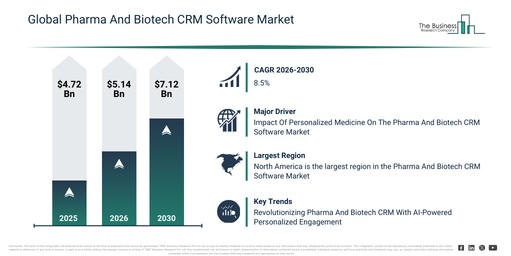
    The pharma and biotech crm software market size has shown significant growth in recent years. It is anticipated to increase from $4.72 billion in 2025 to $5.14 billion in 2026, exhibiting a compound annual growth rate (CAGR) of 8.7%. This historical expansion can be attributed to several factors, including the increasing complexity of pharmaceutical sales operations, the growing necessity for centralized customer data management, the broadening of biotech commercialization initiatives, heightened regulatory documentation requirements, and the rising adoption of digital engagement tools.

    The pharma and biotech crm software market is anticipated to experience substantial expansion over the coming years. This market is projected to reach $7.12 billion by 2030, exhibiting a compound annual growth rate (CAGR) of 8.5%. The projected growth is driven by several factors, including escalating investments in AI-powered CRM solutions, a heightened need for real-time customer intelligence, the expanding embrace of cloud technology within pharmaceutical firms, a stronger emphasis on data-centric decision-making, and increased integration with sophisticated analytics platforms. Furthermore, key developments expected include the wider implementation of AI-driven sales analytics, the expanding utilization of platforms for personalized customer engagement, a proliferation of cloud-based CRM systems, an elevated focus on seamless omnichannel customer experiences, and the incorporation of enhanced compliance and data security functionalities.

    Access Your Free Sample Report for In-Depth Market Insights:

    https://www.thebusinessresearchcompany.com/sample.aspx?id=15442&type=smp

    Which Drivers Are Impacting The Competitive Landscape Of The Pharma And Biotech CRM Software Market?

    The increasing requirement for personalized medicine is anticipated to fuel the expansion of the pharma and biotech CRM software market in the future. Personalized medicine represents a healthcare strategy that tailors medical choices and therapies to specific patients, taking into account their unique genetic composition, environmental influences, and lifestyle habits. The rising call for personalized medicines stems from the elevated prevalence of cancer and the growing occurrence of chronic illnesses within the population. This need for customized medicine makes the use of pharma and biotech CRM software essential for handling patient information, monitoring treatment results, and streamlining the effective provision of personalized healthcare. As an illustration, in February 2024, the Personalized Medicine Coalition, a US-based nonprofit advocacy organization, disclosed that during 2023, the Food and Drug Administration (FDA) sanctioned 16 novel personalized therapies for rare disease patients, marking an increase from six in 2022. Among the newly approved personalized treatments for 2023 were also seven cancer drugs and three for other diseases and conditions. Consequently, the expanding demand for personalized medicine is acting as a primary impetus for the growth of the pharma and biotech CRM software market.

    What Leading Segments Are Studied In The Pharma And Biotech CRM Software Market?

    The pharma and biotech crm software market covered in this report is segmented –

    1) By Technology: Artificial Intelligence Customer Relationship Management (CRM), Conventional Customer Relationship Management (CRM)

    2) By Deployment: On-Premises, Cloud Based

    3) By Enterprise Size: Large Enterprise, Small And Medium Enterprise (SMEs)

    4) By Industry: Pharmaceuticals, Biotech

    Subsegments:

    1) By Artificial Intelligence Customer Relationship Management (CRM): AI-Powered Sales Automation, AI-Driven Customer Insights And Analytics, Predictive Analytics For Lead Scoring, Chatbots And Virtual Assistants, Natural Language Processing (NLP) For Customer Interaction, Personalized Marketing And Campaign Management, Sentiment Analysis And Customer Feedback Analysis, Machine Learning For Sales Forecasting

    2) By Conventional Customer Relationship Management (CRM): Contact And Lead Management, Sales Pipeline And Opportunity Management, Marketing Automation And Campaign Management, Customer Service And Support Modules, Email Marketing And Communication Tools, Customer Segmentation And Targeting, Activity Tracking And Reporting, Integration With ERP And Other Business Systems

    What Trends Are Expected To Impact The Competitive Landscape Of The Pharma And Biotech CRM Software Market?

    Leading firms within the pharma and biotech CRM software market are progressively integrating artificial intelligence (AI) and machine learning functionalities into their platforms, like the AI-powered personalized engagement platform, to satisfy the rising need for sophisticated customer relationship management instruments specifically designed for the pharmaceutical and biotechnology sectors. Such AI-driven personalized engagement allows businesses to provide precise and pertinent communications to healthcare professionals (HCPs), patients, and various other interested parties. As an illustration, in October 2023, Salesforce, Inc., a US-based cloud software provider, introduced its new life sciences cloud, aiming to optimize patient engagement and clinical operations through data, automation, and reliable AI. This innovation empowers pharmaceutical and medical technology entities to enhance patient engagement, clinical operations, commercial lifecycle management, and customized stakeholder experiences throughout the entirety of the drug and device development process.

    Which Key Market Players Are Investing In Expansion And Innovation Within The Pharma And Biotech CRM Software Market?

    Major companies operating in the pharma and biotech crm software market are Oracle Corporation, Salesforce.com Inc., IQVIA Holdings Inc., Cirrius Solutions Inc., Veeva Systems Inc., Aurea Software Inc., Indegene Private Limited, Close-Up International Limited, Interactive Medica S.A., StayinFront Inc., Axtria Inc., Navicon Consulting LLC, Aktana Inc., Bpmonline, Media-Soft Inc., Zephyr Health Inc., Synergistix Inc., Euris S.A., Inova Software Inc., Prolifiq Software Inc., Infonis International Corp., Ivy Software Development Services Pvt. Ltd., Pegasystems Inc., Microsoft Dynamics 365

    Access The Complete Report For Deeper Market Insights:

    https://www.thebusinessresearchcompany.com/report/pharma-and-biotech-crm-software-global-market-report

    Which Regions Are Poised For Strategic Growth In The Pharma And Biotech CRM Software Market?

    North America was the largest region in the pharma and biotech CRM software market in 2025. Asia-Pacific is expected to be the fastest-growing region in the forecast period. The regions covered in the pharma and biotech crm software market report are Asia-Pacific, South East Asia, Western Europe, Eastern Europe, North America, South America, Middle East, Africa.

    Request Your Customized Pharma And Biotech CRM Software Market Research Report for Competitive Advantage:

    https://www.thebusinessresearchcompany.com/customise?id=15442&type=smp

    Browse Through More Reports Similar to the Global Pharma And Biotech CRM Software Market 2026, By The Business Research Company

    Mobile Crm Software Market Report 2026

    https://www.thebusinessresearchcompany.com/report/mobile-crm-software-global-market-report

    Crm Software Market Report 2026

    https://www.thebusinessresearchcompany.com/report/crm-software-global-market-report

    Auto Dealership Crm Software Market Report 2026

    https://www.thebusinessresearchcompany.com/report/auto-dealership-crm-software-global-market-report

    Get in touch with us:

    The Business Research Company: https://www.thebusinessresearchcompany.com/

    Americas +1 310-496-7795

    Asia +44 7882 955267 & +91 8897263534

    Europe +44 7882 955267

    Email us at info@tbrc.info

    Follow us on:

    LinkedIn: https://in.linkedin.com/company/the-business-research-company

    YouTube: https://www.youtube.com/channel/UC24_fI0rV8cR5DxlCpgmyFQ

    Global Market Model: https://www.thebusinessresearchcompany.com/global-market-model
  • Global Pharma ADMET Testing Market Set for Strong Expansion, Reaching $19.27 Billion With 12.6% CAGR by 2030

    Global Pharma ADMET Testing Market Set for Strong Expansion, Reaching $19.27 Billion With 12.6% CAGR by 2030

    Uncover key drivers, emerging technologies, and competitive movements shaping the pharma admet testing market from 2026–2035 with trusted insights from The Business Research Company

    What total market size is anticipated for the Pharma ADMET Testing Market in 2030?

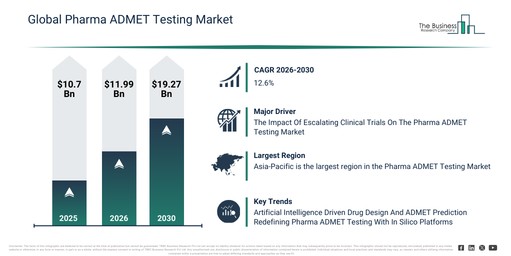
    The pharma admet testing market size has experienced substantial expansion in recent years. It is anticipated to increase from $10.7 billion in 2025 to $11.99 billion in 2026, exhibiting a compound annual growth rate (CAGR) of 12.1%. The upward trend observed historically can be attributed to various elements, including escalating pharmaceutical r&d investments, the broadening requirements for preclinical drug testing, the increasing complexity of drug molecules, a heightened regulatory emphasis on safety profiling, and the availability of advanced laboratory technologies.

    The pharma admet testing market is poised for significant expansion in the coming years. It is projected to reach $19.27 billion by 2030, demonstrating a compound annual growth rate (CAGR) of 12.6%. This growth throughout the forecast period is driven by factors such as the escalating demand for cost-efficient drug development, the increasing adoption of predictive ADMET analytics, the expansion of personalized medicine pipelines, the growing integration of machine learning in drug testing, and a rise in the outsourcing of ADMET testing services. Major trends anticipated during this period include a broader uptake of in silico ADMET modeling tools, an increased utilization of high-throughput screening technologies, the development of AI-based toxicity prediction platforms, a greater incorporation of omics data in drug testing, and a sharpened focus on early-stage drug safety evaluation.

    Access Your Free Sample Report for In-Depth Market Insights:

    https://www.thebusinessresearchcompany.com/sample.aspx?id=12024&type=smp

    What Drivers Are Influencing Production Trends In The Pharma ADMET Testing Market?

    An anticipated rise in the number of clinical trials is projected to propel the expansion of the pharma ADMET testing market in the future. A clinical trial represents a scientific investigation involving human subjects, primarily aimed at assessing the safety, effectiveness, and possible adverse reactions of a medical intervention, including novel drugs, medical devices, diagnostic methods, or therapeutic approaches. This surge in clinical trials significantly heightens the requirement for comprehensive evaluations of drug safety and efficacy within the pharma ADMET testing market, underscoring the vital importance of customized assessments for various drug candidates and patient demographics. For instance, data from December 2024, as reported by the Association of the British Pharmaceutical Industry, a UK-based nonprofit organization, indicated that industry-initiated clinical trials in the UK expanded from 411 trials in 2022 to 426 trials in 2023, which constitutes a 3.7% increase. Consequently, the observed growth in clinical trials is a primary driver for the development of the pharma ADMET testing market.

    Which Segment Groups Are Influencing The Pharma ADMET Testing Market?

    The pharma admet testing market covered in this report is segmented –

    1) By Testing Type: In Vivo ADMET Testing, In Vitro ADMET Testing, In Silico ADMET Testing

    2) By Technology: Cell Culture, High Throughput, Molecular Imaging, OMICS Technology

    3) By Application: Systemic Toxicity, Renal Toxicity, Hepatotoxicity, Neurotoxicity, Other Applications

    Subsegments:

    1) By In Vivo ADMET Testing: Animal Studies, Pharmacokinetics Studies, Toxicology Studies, Biodistribution Studies

    2) By In Vitro ADMET Testing: Metabolism Studies, Drug-Drug Interaction Studies, Absorption Studies, Cytotoxicity And Safety Testing

    3) By In Silico ADMET Testing: Predictive Modeling and Simulation, Quantitative Structure-Activity Relationship (QSAR) Analysis, Machine Learning Algorithms For ADMET Predictions, Software Tools For ADMET Profiling

    Which Trends Are Guiding The Evolution Of The Pharma ADMET Testing Market?

    Leading companies in the pharma ADMET testing market are bringing in innovative products, including artificial intelligence-driven drug design, which allows for the automated creation of novel small molecule structures from the ground up. Artificial intelligence-driven drug design refers to the application of artificial intelligence (AI) to design and optimize drug molecules without relying exclusively on traditional lab-based screening or manual medicinal chemistry. For example, in June 2025, Simulations Plus Inc., a US-based firm specializing in cheminformatics software for the pharmaceutical sector, launched ADMET Predictor 13. This is an advanced artificial intelligence-driven platform for drug design and ADMET prediction, which integrates enhanced high-throughput PBPK simulations and a generative AI-enabled drug-design engine (AIDD). Additionally, it offers optimized workflows that enable faster and more informed decision-making in drug development.

    Who Are The Core Companies Influencing Trends In The Pharma ADMET Testing Market?

    Major companies operating in the pharma admet testing market are Thermo Fisher Scientific Inc., The Merck Group, Laboratory Corporation of America Holdings, IQVIA Inc., PPD ICON plc, Agilent Technologies Inc., Wuxi AppTec Co. Ltd., Catalent Inc., Covance Inc., Charles River Laboratories International Inc., Eurofins Scientific SE, Beckman Coulter Inc., Perkinelmer Inc., Albany Molecular Research Inc., Evotec A.G., CMIC Holdings Co. Ltd., Promega Corporation, Aptuit LLC, Symeres B.V., Biovia Corp., BioIVT LLC, Cyprotex Limited, InSphero AG, Admescope Ltd., Accelrys Inc.

    Access The Complete Report For Deeper Market Insights:

    https://www.thebusinessresearchcompany.com/report/pharma-admet-testing-global-market-report

    Which Regions Are Projected To Dominate The Pharma ADMET Testing Market In The Coming Years?

    Asia-Pacific was the largest region in the pharma ADMET testing market in 2025. The regions covered in the pharma admet testing market report are Asia-Pacific, South East Asia, Western Europe, Eastern Europe, North America, South America, Middle East, Africa.

    Request Your Customized Pharma ADMET Testing Market Research Report for Competitive Advantage:

    https://www.thebusinessresearchcompany.com/customise?id=12024&type=smp

    Browse Through More Reports Similar to the Global Pharma ADMET Testing Market 2026, By The Business Research Company

    Software Testing Market Report 2026

    https://www.thebusinessresearchcompany.com/report/software-testing-global-market-report

    Adme Toxicology Testing Market Report 2026

    https://www.thebusinessresearchcompany.com/report/adme-toxicology-testing-global-market-report

    Testing Software Market Report 2026

    https://www.thebusinessresearchcompany.com/report/testing-software-global-market-report

    Get in touch with us:

    The Business Research Company: https://www.thebusinessresearchcompany.com/

    Americas +1 310-496-7795

    Asia +44 7882 955267 & +91 8897263534

    Europe +44 7882 955267

    Email us at info@tbrc.info

    Follow us on:

    LinkedIn: https://in.linkedin.com/company/the-business-research-company

    YouTube: https://www.youtube.com/channel/UC24_fI0rV8cR5DxlCpgmyFQ

    Global Market Model: https://www.thebusinessresearchcompany.com/global-market-model