Month: March 2026

  • Medication Side-Effect Tracker App Market 2026–2030: Forecast, Innovation, and Competitive Trends

    Medication Side-Effect Tracker App Market 2026–2030: Forecast, Innovation, and Competitive Trends

    Uncover key drivers, emerging technologies, and competitive movements shaping the medication side-effect tracker app market from 2026–2035 with trusted insights from The Business Research Company

    What level of growth is expected in the Medication Side-Effect Tracker App Market between 2026 and 2030?

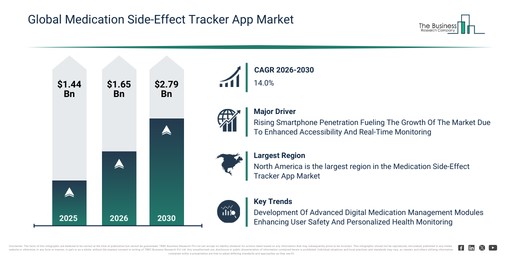
    The medication side-effect tracker app market size has seen rapid expansion in recent years. This market is set to expand from $1.44 billion in 2025 to $1.65 billion in 2026, exhibiting a compound annual growth rate (CAGR) of 14.3%. In the past, this growth was primarily driven by the increasing adoption of smartphones in healthcare, the rising use of chronic medications, a heightened awareness of adverse drug reactions, the broadening reach of digital health applications, and greater patient participation in self-monitoring.

    The medication side-effect tracker app market size is projected to undergo rapid expansion in the coming years, reaching $2.79 billion by 2030, driven by a compound annual growth rate (CAGR) of 14.0%. This significant growth in the forecast period can be attributed to several factors, including the increasing demand for personalized digital therapeutics, rising integration with electronic health records, the growing application of predictive analytics in medication management, the expanding adoption of remote patient monitoring, and a heightened focus on preventive healthcare tools. Moreover, major trends anticipated during this period encompass the increasing uptake of personalized medication monitoring tools, the rising integration of AI-driven symptom analysis, the growing use of wearable and health app integrations, an expansion of data sharing with healthcare providers, and an enhanced focus on medication safety and adherence.

    Access Your Free Sample Report for In-Depth Market Insights:

    https://www.thebusinessresearchcompany.com/sample.aspx?id=29121&type=smp

    Which Drivers Are Expected To Impact The Medication Side-Effect Tracker App Market During The Forecast Period?

    The expanding adoption of smartphones is anticipated to stimulate the growth of the medication side-effect tracker app market moving forward. These mobile devices provide users with on-the-go access to the internet, applications, and various digital services. Smartphone adoption is rising as individuals increasingly depend on these mobile tools for daily communication, information retrieval, and service access. This extensive use of smartphones facilitates easier access to medication side-effect tracker apps for a broader audience, which supports real-time monitoring of adverse reactions and enhances treatment safety. For example, in February 2023, according to a report published by Uswitch Limited, a UK-based online and telephone comparison and switching service provider, it was projected that by 2025, 95% of the 68.3 million people living in the UK are expected to own smartphones. Consequently, the increasing prevalence of smartphones is a key factor propelling the expansion of the medication side-effect tracker app market.

    How Is The Medication Side-Effect Tracker App Market Divided Into Segments?

    The medication side-effect tracker app market covered in this report is segmented –

    1) By Platform: iPhone Operating System, Android, Web-Based

    2) By Subscription Model: Free, Freemium, Paid

    3) By Functionality: Symptom Tracking, Medication Reminders, Data Analytics, Reporting And Sharing, Other Functionalities

    4) By End-User: Patients, Caregivers, Healthcare Providers, Other End-Users

    Subsegments:

    1) By iPhone Operating System: iPhone Apps, iPad Apps, Apple Watch Apps, Apple Health Integration

    2) By Android: Smartphone Apps, Tablet Apps, Wearable Device Apps, Google Fit Integration

    3) By Web-Based: Browser-Based Platforms, Cloud-Based Dashboards, Institutional Or Enterprise Solutions, Cross-Platform Access

    What Industry Trends Are Transforming The Medication Side-Effect Tracker App Market?

    Leading companies in the medication side-effect tracker app market are focusing on developing advanced solutions, such as digital medication adherence and management modules. These modules aim to enhance user safety, facilitate personalized medication management, and prevent harmful drug interactions through predictive alerts, individualized guidance, and integrated digital tracking platforms. The digital medication adherence and management module is defined as a technology-driven system that utilizes AI and machine learning algorithms to monitor medication intake, anticipate potential adverse effects, and deliver personalized safety alerts to users. For instance, in December 2023, Samsung Ltd., an electronics company based in South Korea, introduced a medication side-effect tracking feature within its Samsung Health app. This feature enables users to record their medications and access detailed information on potential side effects and drug interactions. Samsung Electronics announced that this module will enhance the Samsung Health app by empowering users to manage their health more effectively. It allows users to monitor both prescription and over-the-counter medications while providing essential guidance and tips, proving particularly beneficial for individuals who take medications regularly or use supplements for general wellness.

    Which Key Market Players Are Investing In Expansion And Innovation Within The Medication Side-Effect Tracker App Market?

    Major companies operating in the medication side-effect tracker app market are F Hoffmann La Roche Ltd., Janssen Healthcare Innovation, GoodRx Holdings Inc., Sidekick Health, WellDoc Inc., CareZone, DarioHealth, Medisafe Inc., Mango Health Inc., Ampersand Health LLC, Montuno Software LLC, Round Health, MedCoach Inc., Flaredown, EveryDose, smartpatient GmbH, CareClinic, Tiga Health, Bearable, Ada Health GmbH

    Access The Complete Report For Deeper Market Insights:

    https://www.thebusinessresearchcompany.com/report/medication-side-effect-tracker-app-global-market-report

    Which Geographic Areas Are Emerging As Strong Markets For The Medication Side-Effect Tracker App Market?

    North America was the largest region in the medication side-effect tracker app market in 2025. Asia-Pacific is expected to be the fastest-growing region in the forecast period. The regions covered in the medication side-effect tracker app market report are Asia-Pacific, South East Asia, Western Europe, Eastern Europe, North America, South America, Middle East, Africa.

    Request Your Customized Medication Side-Effect Tracker App Market Research Report for Competitive Advantage:

    https://www.thebusinessresearchcompany.com/customise?id=29121&type=smp

    Browse Through More Reports Similar to the Global Medication Side-Effect Tracker App Market 2026, By The Business Research Company

    Patient Centric Healthcare App Market Report 2026

    https://www.thebusinessresearchcompany.com/report/patient-centric-healthcare-app-global-market-report

    Pharmaceuticals Market 2026

    https://www.thebusinessresearchcompany.com/report/pharmaceuticals-market

    Therapeutic Drug Monitoring Market Report 2026

    https://www.thebusinessresearchcompany.com/report/therapeutic-drug-monitoring-global-market-report

    Get in touch with us:

    The Business Research Company: https://www.thebusinessresearchcompany.com/

    Americas +1 310-496-7795

    Asia +44 7882 955267 & +91 8897263534

    Europe +44 7882 955267

    Email us at info@tbrc.info

    Follow us on:

    LinkedIn: https://in.linkedin.com/company/the-business-research-company

    YouTube: https://www.youtube.com/channel/UC24_fI0rV8cR5DxlCpgmyFQ

    Global Market Model: https://www.thebusinessresearchcompany.com/global-market-model
  • Presbyopia Market Forecast 2026: Where the Industry Is Headed

    Presbyopia Market Forecast 2026: Where the Industry Is Headed

    Uncover key drivers, emerging technologies, and competitive movements shaping the presbyopia market from 2026–2035 with trusted insights from The Business Research Company

    What level of CAGR-driven expansion is anticipated in the Presbyopia Market between 2026 and 2030?

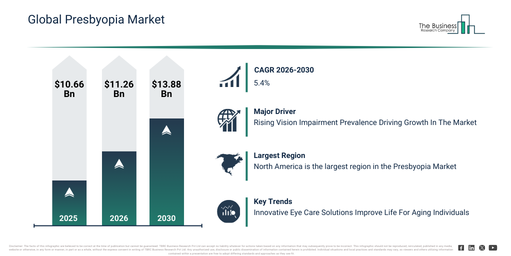
    The presbyopia market has experienced substantial growth in recent years. This market is projected to expand from $10.66 billion in 2025 to $11.26 billion in 2026, achieving a compound annual growth rate (CAGR) of 5.6%. The expansion observed during past periods is attributable to an aging global population, the increasing occurrence of age-related vision conditions, the widespread access to corrective eyewear, the establishment of more ophthalmology clinics, and enhancements in vision correction technologies.

    The presbyopia market is set for significant expansion in the foreseeable future, with projections indicating it will attain a value of $13.88 billion by 2030, demonstrating a compound annual growth rate (CAGR) of 5.4%. This anticipated growth throughout the forecast period stems from factors such as the increasing embrace of premium vision correction solutions, a growing need for surgical interventions for presbyopia, the enlargement of outpatient eye care offerings, rising investments in ophthalmic research and development, and a heightened understanding of vision health management. Noteworthy trends expected during this period include the increased adoption of cutting-edge lens implant technologies, an escalating demand for progressive and multifocal vision correction options, the wider application of minimally invasive surgical procedures, the diversification of personalized vision correction choices, and a stronger emphasis on overall visual comfort and quality.

    Access Your Free Sample Report for In-Depth Market Insights:

    https://www.thebusinessresearchcompany.com/sample.aspx?id=21261&type=smp

    What Drivers Are Affecting Demand-Supply Dynamics In The Presbyopia Market?

    The expansion of the presbyopia market is anticipated to be fueled by the rising occurrence of vision impairment in the future. Vision impairment is defined as a state where an individual experiences either a partial or total loss of eyesight that cannot be entirely rectified by eyewear, contact lenses, or medical interventions. The increasing incidence of vision impairment stems from an aging global demographic, a rise in diabetes and various eye conditions, prolonged periods of screen exposure, and limited availability of eye care in specific regions. Presbyopia contributes to vision impairment by hindering the eye’s capacity to focus on close objects due to age-related stiffening of the lens, thereby making daily activities such as reading and using screens more difficult without corrective aids. For instance, in February 2025, the American Foundation for the Blind (AFB), a US-based non-profit organization, reported that in the United States, approximately 625,000 children had vision problems, as per the 2023 American Community Survey (ACS). Consequently, the growing prevalence of vision impairment is propelling the development of the presbyopia market.

    How Is The Presbyopia Market Organized Into Various Segments?

    The presbyopia market covered in this report is segmented –

    1) By Treatment: Eyeglasses, Contact Lenses, Refractive Surgery, Lens Implants, Other Treatments

    2) By Symptoms: Eye Strain, Headaches, Fatigue, Blurred Vision, Other Symptoms

    3) By End-Users: Hospitals, Specialty Clinics, Homecare, Other End-Users

    Subsegments:

    1) By Eyeglasses: Bifocal Eyeglasses, Progressive Lenses, Reading Glasses, Photochromic Lenses

    2) By Contact Lenses: Bifocal Contact Lenses, Multifocal Contact Lenses, Monovision Contact Lenses, Scleral Lenses

    3) By Refractive Surgery: LASIK (Laser-Assisted In Situ Keratomileusis), PRK (Photorefractive Keratectomy), Conductive Keratoplasty (CK), Corneal Inlays

    4) By Lens Implants: Multifocal Intraocular Lenses (IOLs), Accommodative IOLs, Extended Depth of Focus (EDOF) IOLs

    5) By Other Treatments: Pharmaceutical Treatments, Corneal Cross-Linking, Near-vision Presbyopia Correction Surgery

    How Are New Market Trends Shaping The Landscape Of The Presbyopia Market?

    Leading firms within the presbyopia market are prioritizing sophisticated breakthroughs, including eye-responsive progressive lenses, aimed at improving sight and comfort for older adults. These eye-responsive progressive lenses represent sophisticated multifocal solutions that adjust to the wearer’s eye movements, ensuring smooth vision correction for presbyopia across all viewing ranges. As an illustration, Essilor, a France-based company specializing in the design, production, and sale of ophthalmic lenses, introduced Varilux in August 2023. Varilux is a line of progressive lenses specifically for individuals with presbyopia. This particular innovation integrates artificial intelligence (AI) to forecast visual patterns using unique real-life data, thereby establishing an advanced benchmark for customized vision correction. These kinds of technological developments are significantly reshaping the presbyopia market, providing patients with superior options to manage this age-related ailment and consequently elevating their overall quality of life.

    Who Are The Primary Competitors In The Global Presbyopia Market?

    Major companies operating in the presbyopia market are Johnson & Johnson Private Limited, AbbVie Inc., Abbott Laboratories, Novartis AG, Essilor International SAS, Carl Zeiss Meditec AG, Alcon Vision LLC, Bausch + Lomb Corporation, CooperVision Inc., Santen Pharmaceutical Co. Ltd., Glaukos Corporation, STAAR Surgical Company, Ziemer Ophthalmic Systems AG, LENZ Therapeutics Inc., InSight Vision Incorporated, Oculis Holding AG, Orasis Pharmaceuticals Inc., Visus Therapeutics Inc., Eyenovia Inc., Atia Vision Inc.

    Access The Complete Report For Deeper Market Insights:

    https://www.thebusinessresearchcompany.com/report/presbyopia-global-market-report

    Which Global Regions Are Shaping The Competitive Landscape Of The Presbyopia Market?

    North America was the largest region in the presbyopia market in 2025. The regions covered in the presbyopia market report are Asia-Pacific, South East Asia, Western Europe, Eastern Europe, North America, South America, Middle East, Africa.

    Request Your Customized Presbyopia Market Research Report for Competitive Advantage:

    https://www.thebusinessresearchcompany.com/customise?id=21261&type=smp

    Browse Through More Reports Similar to the Global Presbyopia Market 2026, By The Business Research Company

    Diphtheria Market Report 2026

    https://www.thebusinessresearchcompany.com/report/diphtheria-global-market-report

    Amblyopia Market Report 2026

    https://www.thebusinessresearchcompany.com/report/amblyopia-global-market-report

    Preeclampsia Drugs Market Report 2026

    https://www.thebusinessresearchcompany.com/report/preeclampsia-drugs-global-market-report

    Get in touch with us:

    The Business Research Company: https://www.thebusinessresearchcompany.com/

    Americas +1 310-496-7795

    Asia +44 7882 955267 & +91 8897263534

    Europe +44 7882 955267

    Email us at info@tbrc.info

    Follow us on:

    LinkedIn: https://in.linkedin.com/company/the-business-research-company

    YouTube: https://www.youtube.com/channel/UC24_fI0rV8cR5DxlCpgmyFQ

    Global Market Model: https://www.thebusinessresearchcompany.com/global-market-model
  • Medication Management System Market Forecast 2026–2035: Data Trends and Industry Insights

    Medication Management System Market Forecast 2026–2035: Data Trends and Industry Insights

    Uncover key drivers, emerging technologies, and competitive movements shaping the medication management system market from 2026–2035 with trusted insights from The Business Research Company

    How much is the Medication Management System Market valued at in 2026, and what valuation is forecast for 2030?

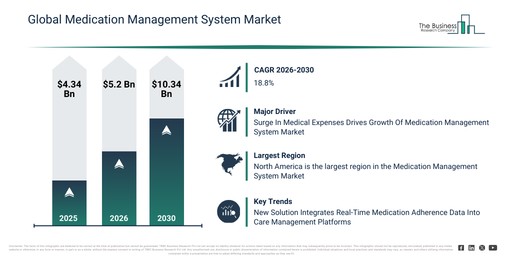
    The medication management system market has seen rapid expansion in recent years. This market is set to increase from $4.34 billion in 2025 to $5.2 billion in 2026, achieving a compound annual growth rate (CAGR) of 19.7%. Historically, this growth has been driven by several factors, including an increase in medication-related errors, a rise in hospital patient volumes, the broader expansion of electronic health records usage, the essential need for efficient prescription management, and the rising complexity of drug regimens.

    The medication management system market is projected to experience substantial expansion in the coming years, with forecasts indicating it will reach $10.34 billion by 2030, demonstrating a compound annual growth rate (CAGR) of 18.8%. This anticipated growth can be attributed to several factors, including the increasing prevalence of value-based healthcare models, the growing adoption of automation in pharmacies, an intensified focus on clinical decision support tools, the expansion of digital hospitals, and the demand for real-time medication tracking. Concurrently, major trends expected during this period involve the rising uptake of integrated medication workflow platforms, a stronger emphasis on reducing medication errors, the development of cloud-based medication management systems, an increasing need for interoperable healthcare software, and a heightened focus on patient safety and care coordination.

    Access Your Free Sample Report for In-Depth Market Insights:

    https://www.thebusinessresearchcompany.com/sample.aspx?id=7091&type=smp

    What Drivers Are Influencing The Growth Of The Medication Management System Market?

    The upward trend in medical expenses is anticipated to fuel the expansion of the medication management system market. Medical costs encompass expenditures borne by individuals for healthcare services, as well as by hospitals for equipment, treatment, and operational needs. These costs are escalating due to heightened demand for healthcare, an increasing prevalence of chronic diseases, technological progress, and elevated labor and operational outlays across health systems. Medication management systems address this need by enhancing efficiency, minimizing medication errors, optimizing workflows, and ultimately reducing overall healthcare expenditure. For example, in December 2023, data from the U.S. government agency, Centers for Medicare & Medicaid Services, indicated that national health expenditure grew by 4.1% to $4,500 billion in 2022. Furthermore, national health spending is projected to climb to $6,200 billion by 2028, underscoring a substantial rise in healthcare costs. Consequently, the escalating medical costs are a key factor propelling the growth of the medication management systems market.

    What Segments Are Included Within The Medication Management System Market?

    The medication management system market covered in this report is segmented –

    1) By Product Type: Computerized Physician Order Entry, Clinical Decision Support System Solutions, Electronic Medication Administration Record, Inventory Management Solutions, Other Product Types

    2) By Mode Of Delivery: Web-Based, Cloud-Based, On-Premise

    3) By End Users: Pharmacies, Hospitals, Other End Users

    Subsegments:

    1) By Computerized Physician Order Entry (CPOE): Standalone CPOE Systems, Integrated CPOE with EHR

    2) By Clinical Decision Support System Solutions: Drug Interaction Checkers, Dosing Assistance Tools, Clinical Guidelines And Protocols

    3) By Electronic Medication Administration Record (eMAR): Patient-Specific eMAR Solutions, Mobile eMAR Applications

    4) By Inventory Management Solutions: Automated Inventory Tracking Systems, Pharmacy Management Software

    5) By Other Product Types: Medication Reconciliation Tools, Patient Adherence Monitoring Systems, Medication Therapy Management Solutions

    What Trends Are Reshaping The Dynamics Of The Medication Management System Market?

    Major companies operating in the medication management system market are focusing on developing innovation, such as real-time data access for evaluating treatment effectiveness and making informed decisions. This real-time data access signifies the ability to retrieve and analyze data immediately as it is generated or updated, without significant delay. For instance, in June 2024, PatchRx, a US-based medication adherence technology company, launched PatchRx Connect, designed to integrate live medication adherence data into existing care management platforms. This new tool seamlessly integrates real-time medication adherence data into existing care management platforms. It allows clinical teams to gain insights into patients’ medication-taking behaviors without disrupting workflows. The solution includes a smart device that tracks medication usage, providing actionable insights for healthcare providers. Additionally, it features patient engagement tools, such as SMS alerts, to enhance adherence rates.

    Who Are The Core Companies Influencing Trends In The Medication Management System Market?

    Major companies operating in the medication management system market are McKesson Corporation, Optum Inc., Cardinal Health Inc., Cerner Corporation, Epic Systems Corporation, Omnicell Inc., Genoa Healthcare LLC, Allscripts Healthcare Solutions Inc., Swisslog Healthcare (US) Inc., QuadraMed Affinity Corporation, AdhereHealth LLC, Hero Health Inc., ARxIUM Inc., Talyst LLC, Jini Health Inc., CareRight Technologies LLC, eMARneek BIQHS, CARI Health, Healthera Ltd.

    Access The Complete Report For Deeper Market Insights:

    https://www.thebusinessresearchcompany.com/report/medication-management-system-global-market-report

    Which Region Is Projected To Lead The Medication Management System Market During The Forecast Period?

    North America was the largest region in the medication management system market in 2025. The regions covered in the medication management system market report are Asia-Pacific, South East Asia, Western Europe, Eastern Europe, North America, South America, Middle East, Africa.

    Request Your Customized Medication Management System Market Research Report for Competitive Advantage:

    https://www.thebusinessresearchcompany.com/customise?id=7091&type=smp

    Browse Through More Reports Similar to the Global Medication Management System Market 2026, By The Business Research Company

    Clinical Trial Management System Market Report 2026

    https://www.thebusinessresearchcompany.com/report/clinical-trial-management-system-global-market-report

    Pharmacy Management System Market Report 2026

    https://www.thebusinessresearchcompany.com/report/pharmacy-management-system-global-market-report

    Facility Management Services Market Report 2026

    https://www.thebusinessresearchcompany.com/report/facility-management-services-global-market-report

    Get in touch with us:

    The Business Research Company: https://www.thebusinessresearchcompany.com/

    Americas +1 310-496-7795

    Asia +44 7882 955267 & +91 8897263534

    Europe +44 7882 955267

    Email us at info@tbrc.info

    Follow us on:

    LinkedIn: https://in.linkedin.com/company/the-business-research-company

    YouTube: https://www.youtube.com/channel/UC24_fI0rV8cR5DxlCpgmyFQ

    Global Market Model: https://www.thebusinessresearchcompany.com/global-market-model
  • Prenatal Testing & Newborn Screening Industry Growth Insights: Revenue Forecast to 2030

    Prenatal Testing & Newborn Screening Industry Growth Insights: Revenue Forecast to 2030

    Uncover key drivers, emerging technologies, and competitive movements shaping the prenatal testing & newborn screening market from 2026–2035 with trusted insights from The Business Research Company

    What long-term size projections exist for the Prenatal Testing & Newborn Screening Market covering 2026–2035?

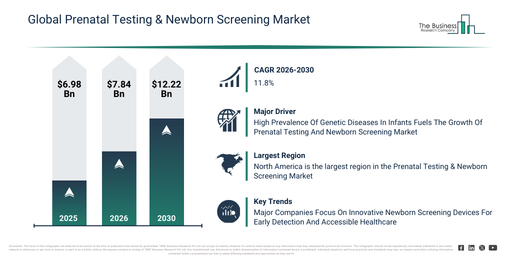
    The prenatal testing & newborn screening market size has seen substantial growth recently. It is anticipated to expand from $6.98 billion in 2025 to $7.84 billion in 2026, achieving a compound annual growth rate (CAGR) of 12.3%. This historical growth can be linked to the broadening of public health screening initiatives, an increase in institutional births, the presence of neonatal care facilities, a heightened focus on early disease detection, and improvements in diagnostic testing coverage.

    The prenatal testing & newborn screening market is anticipated to experience substantial growth over the coming years, with its size projected to reach $12.22 billion by 2030, achieving a compound annual growth rate (CAGR) of 11.8%. This expansion during the forecast period is driven by several factors, including the increasing reach of national screening mandates, the rising incorporation of digital diagnostic platforms, augmented investments in maternal and child healthcare, a heightened emphasis on preventive healthcare models, and the expanding utilization of AI-assisted diagnostics. Significant trends anticipated for this period involve the increasing integration of prenatal and newborn screening programs, a growing use of combined screening and diagnostic technologies, the wider implementation of early intervention protocols, the expansion of automated screening workflows, and an intensified focus on population-wide screening efforts.

    Access Your Free Sample Report for In-Depth Market Insights:

    https://www.thebusinessresearchcompany.com/sample.aspx?id=3350&type=smp

    Which Drivers Are Impacting The Competitive Landscape Of The Prenatal Testing & Newborn Screening Market?

    The high incidence of genetic conditions in infants has been a contributing factor to the expansion of the prenatal testing & newborn screening market. The World Health Organization identifies various genetic diseases, including Thalassemia, Sickle Cell Anemia, Hemophilia, Cystic Fibrosis, Tay Sachs disease, Fragile X Syndrome, and Huntington’s disease. Sickle cell anemia, a genetic disorder, impacts millions globally and is particularly common among individuals whose ancestors originate from Africa, America, Cuba, Central America, Saudi Arabia, and India. For instance, in February 2023, a study conducted at Rady Children’s Hospital by the US-based Rady Children’s Institute for Genomic Medicine reported that 41% of infant deaths were attributed to single-locus (Mendelian) genetic diseases. This significant prevalence of genetic diseases in infants has boosted the demand for the growth of the prenatal testing and newborn screening market. Prenatal Testing & Newborn Screening Market Driver: Rising Birth Rate Fuels Growth Of Prenatal Testing And Newborn Screening Market

    What Segments Are Identified Within The Structure Of The Prenatal Testing & Newborn Screening Market?

    The prenatal testing & newborn screening market covered in this report is segmented –

    1) By Diagnostic Type: Non-Invasive, Invasive

    2) By Technology: Screening Technology, Diagnostic Technology

    3) By End User: Hospitals, Diagnostic centers

    Subsegments:

    1) By Non-Invasive: Blood Tests (Cell-Free DNA Testing), Ultrasound, Maternal Serum Screening

    2) By Invasive: Amniocentesis, Chorionic Villus Sampling (CVS), Cordocentesis

    Which Trends Are Expected To Influence The Prenatal Testing & Newborn Screening Market In The Upcoming Years?

    Leading companies within the prenatal testing & newborn screening market are prioritizing the development of newborn screening devices to improve the early identification of genetic, metabolic, and other health conditions. This focus enables prompt interventions and enhances health outcomes for newborns. Newborn screening point-of-care devices are specifically designed to offer quicker, more accessible, and economical screening for infants, capable of performing the seven globally recognized standard newborn screening tests. As an illustration, in September 2023, Mylab Discovery Solutions Pvt. Ltd., an Indian company, introduced MyNeoShield, a new newborn screening point-of-care device. MyNeoShield is intended to be cost-effective, with an estimated price of about one-fifth of existing solutions, which typically cost between ?50 lakhs and ?7 crores. By making testing directly available to healthcare providers, MyNeoShield seeks to expand access to crucial health services for newborns, especially in areas with limited resources.

    Which Key Market Players Are Investing In Expansion And Innovation Within The Prenatal Testing & Newborn Screening Market?

    Major companies operating in the prenatal testing & newborn screening market are PerkinElmer Inc, Laboratory Corporation Of America Holdings, Natera Inc, Invitae Corporation, Centogene AG, Cradle Genomics Inc, Roche Diagnostics International AG, Quest Diagnostics Incorporated, Baebies Inc, Progenity Inc, Ravgen Inc, Strand Life Sciences Pvt Ltd, Eurofins Scientific, Illumina Inc, Agilent Technologies Inc, Thermo Fisher Scientific Inc, F Hoffmann La Roche Ltd, Bio Rad Laboratories Inc, Siemens Healthineers AG, BGI Group, QIAGEN NV, Ariosa Diagnostics Inc, Verinata Health Inc, Counsyl A Myriad Company, GenPath Diagnostics, Sonic Healthcare Limited, Cepheid A Danaher Company

    Access The Complete Report For Deeper Market Insights:

    https://www.thebusinessresearchcompany.com/report/prenatal-testing-and-newborn-screening-global-market-report

    Which Regions Are Poised For Strategic Growth In The Prenatal Testing & Newborn Screening Market?

    North America was the largest region in the prenatal testing & newborn screening market in 2025. Western Europe was the second largest region in the prenatal testing and newborn screening market. The regions covered in the prenatal testing & newborn screening market report are Asia-Pacific, South East Asia, Western Europe, Eastern Europe, North America, South America, Middle East, Africa.

    Request Your Customized Prenatal Testing & Newborn Screening Market Research Report for Competitive Advantage:

    https://www.thebusinessresearchcompany.com/customise?id=3350&type=smp

    Browse Through More Reports Similar to the Global Prenatal Testing & Newborn Screening Market 2026, By The Business Research Company

    Pediatric And Neonatal Testing Kit Market Report 2026

    https://www.thebusinessresearchcompany.com/report/pediatric-and-neonatal-testing-kit-global-market-report

    Prenatal And Newborn Genetic Testing Market Report 2026

    https://www.thebusinessresearchcompany.com/report/prenatal-and-newborn-genetic-testing-global-market-report

    Non Invasive Prenatal Testing Market Report 2026

    https://www.thebusinessresearchcompany.com/report/non-invasive-prenatal-testing-global-market-report

    Get in touch with us:

    The Business Research Company: https://www.thebusinessresearchcompany.com/

    Americas +1 310-496-7795

    Asia +44 7882 955267 & +91 8897263534

    Europe +44 7882 955267

    Email us at info@tbrc.info

    Follow us on:

    LinkedIn: https://in.linkedin.com/company/the-business-research-company

    YouTube: https://www.youtube.com/channel/UC24_fI0rV8cR5DxlCpgmyFQ

    Global Market Model: https://www.thebusinessresearchcompany.com/global-market-model
  • Global Prenatal DNA Sequencing Market Performance Report: Global Trends 2026–2030

    Global Prenatal DNA Sequencing Market Performance Report: Global Trends 2026–2030

    Uncover key drivers, emerging technologies, and competitive movements shaping the prenatal dna sequencing market from 2026–2035 with trusted insights from The Business Research Company

    What total market size is anticipated for the Prenatal DNA Sequencing Market in 2030?

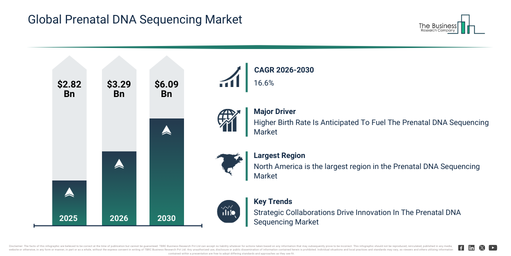
    The prenatal dna sequencing market has experienced rapid expansion in recent years. It is anticipated to increase from $2.82 billion in 2025 to $3.29 billion in 2026, achieving a compound annual growth rate (CAGR) of 16.7%. This historical growth can be credited to improvements in next-generation sequencing technologies, a rise in clinical research within prenatal genomics, increased public understanding of inherited disorders, the accessibility of specialized sequencing laboratories, and early acceptance by academic institutions.

    The prenatal dna sequencing market is projected to experience substantial expansion in the coming years. This market is anticipated to reach $6.09 billion by 2030, exhibiting a compound annual growth rate (CAGR) of 16.6%. This growth during the forecast period is fueled by several factors, including a heightened demand for extensive prenatal diagnostics, increased investments in precision medicine research, the broadening of clinical sequencing applications, the expanding adoption of AI-driven genomic interpretation, and augmented collaboration between healthcare and biotechnology companies. Key trends characterizing this period encompass the wider embrace of cell-free fetal dna sequencing, an uptick in the utilization of whole-genome prenatal sequencing, the deeper integration of bioinformatics platforms, the proliferation of high-accuracy sequencing technologies, and a sharper emphasis on identifying rare diseases.

    Access Your Free Sample Report for In-Depth Market Insights:

    https://www.thebusinessresearchcompany.com/sample.aspx?id=9015&type=smp

    What Drivers Are Influencing Production Trends In The Prenatal DNA Sequencing Market?

    An elevated birth rate is expected to drive the expansion of the prenatal DNA sequencing market in the coming years. The birth rate signifies the number of live births per 1,000 people within a specific population over a defined period, generally reported annually. Prenatal DNA sequencing helps in identifying genetic abnormalities in unborn fetuses, contributing to informed reproductive decisions during birth through targeted interventions. For instance, in January 2023, a report from the Centers for Disease Control and Prevention, a US-based national public health organization, showed that the United States recorded a 1% increase in registered births, totaling 3,664,292, compared to the previous year. Therefore, the higher birth rate is significantly influencing the prenatal DNA sequencing market.

    Which Segments Are Gaining Traction In The Prenatal DNA Sequencing Market?

    The prenatal dna sequencing market covered in this report is segmented –

    1) By Type: Genetic Diseases, Nonhereditary Diseases

    2) By Application: Hemophilia, Down Syndrome, Cystic Fibrosis, Autism, DiGeorge Syndrome, Inherited Immunodeficiency Disorders, Cancer, Other Applications

    3) By End User: Academic Research, Clinical Research, Hospitals And Clinics, Pharmaceutical And Biotechnology Companies, Other End Users

    Subsegments:

    1) By Genetic Diseases: Monogenic Disorders, Chromosomal Abnormalities

    2) By Nonhereditary Diseases: Infectious Diseases, Maternal Health Conditions

    What Trends Are Driving The Growth Trajectory Of The Prenatal DNA Sequencing Market?

    Leading companies within the prenatal DNA sequencing market are adopting a strategic alliance strategy to improve technology integration and broaden their market reach. Such a strategic partnership typically signifies a collaborative arrangement between two or more organizations, where they combine their respective resources, expertise, and efforts to achieve shared goals or objectives. For example, in December 2023, BillionToOne, a US-based precision diagnostics company, joined forces with a Johnson & Johnson company, a US-based pharmaceutical company, for the AZALEA Phase 3 clinical trial of nipocalimab. This trial specifically targets pregnancies at risk for severe hemolytic disease of the fetus and newborn (HDFN). BillionToOne will contribute its UNITY Fetal Antigen Non-invasive Prenatal Test (UNITY Fetal Antigen CTA) to screen individuals and ascertain their eligibility for participation. HDFN is a rare condition arising from blood type incompatibility between the pregnant individual and the fetus, potentially leading to life-threatening anemia.

    Who Are The Core Companies Influencing Trends In The Prenatal DNA Sequencing Market?

    Major companies operating in the prenatal dna sequencing market are Agilent Technologies Inc, BGI Group, F Hoffmann La Roche Ltd, Illumina Inc, Laboratory Corporation Of America Holdings, Natera Inc, Myriad Genetics Inc, Invitae Corporation, PerkinElmer Inc, Macrogen Inc, Pacific Biosciences Of California Inc, Genewiz LLC, Oxford Nanopore Technologies Limited, Thermo Fisher Scientific Inc, Eurofins LifeCodexx AG, GeneDx Inc, Genoma SA, Helix OpCo LLC, Igenomix SL, Integrated DNA Technologies Inc, Roche Diagnostics GmbH, Berry Genomics Co Ltd

    Access The Complete Report For Deeper Market Insights:

    https://www.thebusinessresearchcompany.com/report/prenatal-dna-sequencing-global-market-report

    Which Regions Are Projected To Dominate The Prenatal DNA Sequencing Market In The Coming Years?

    North America was the largest region in the prenatal DNA sequencing market in 2025. The regions covered in the prenatal dna sequencing market report are Asia-Pacific, South East Asia, Western Europe, Eastern Europe, North America, South America, Middle East, Africa.

    Request Your Customized Prenatal DNA Sequencing Market Research Report for Competitive Advantage:

    https://www.thebusinessresearchcompany.com/customise?id=9015&type=smp

    Browse Through More Reports Similar to the Global Prenatal DNA Sequencing Market 2026, By The Business Research Company

    Protein Sequencing Market Report 2026

    https://www.thebusinessresearchcompany.com/report/protein-sequencing-global-market-report

    Dna Sequencing Market Report 2026

    https://www.thebusinessresearchcompany.com/report/dna-sequencing-global-market-report

    Next Generation Sequencing Market 2026

    https://www.thebusinessresearchcompany.com/report/next-generation-sequencing-market

    Get in touch with us:

    The Business Research Company: https://www.thebusinessresearchcompany.com/

    Americas +1 310-496-7795

    Asia +44 7882 955267 & +91 8897263534

    Europe +44 7882 955267

    Email us at info@tbrc.info

    Follow us on:

    LinkedIn: https://in.linkedin.com/company/the-business-research-company

    YouTube: https://www.youtube.com/channel/UC24_fI0rV8cR5DxlCpgmyFQ

    Global Market Model: https://www.thebusinessresearchcompany.com/global-market-model
  • Medication Adherence Market Outlook 2026–2030: Key Business Drivers and Trends

    Medication Adherence Market Outlook 2026–2030: Key Business Drivers and Trends

    Uncover key drivers, emerging technologies, and competitive movements shaping the medication adherence market from 2026–2035 with trusted insights from The Business Research Company

    By how much is the Medication Adherence Market expected to grow between 2026 and 2030?

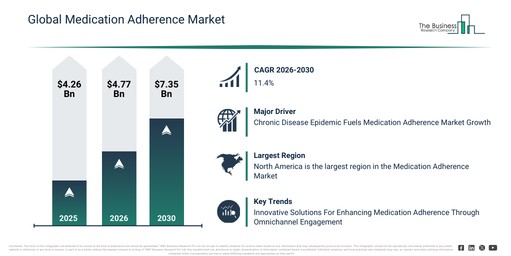
    The medication adherence market size has seen substantial growth recently. This market is expected to expand from $4.26 billion in 2025 to $4.77 billion in 2026, achieving a compound annual growth rate (CAGR) of 12.0%. During past periods, this expansion was largely influenced by factors such as widespread medication non-adherence, the increasing occurrence of chronic illnesses, higher healthcare expenses linked to poor adherence, the wider adoption of digital health solutions, and the growing demographic of older adults.

    The medication adherence market is poised for significant expansion in the foreseeable future, with projections indicating a rise to $7.35 billion by 2030, exhibiting a compound annual growth rate (CAGR) of 11.4%. This anticipated growth stems from several factors, including the increasing prevalence of remote patient monitoring programs, the rising adoption of smart healthcare devices, an enhanced focus on value-based healthcare, the expansion of telehealth services, and the growing application of data-driven patient management. Prominent trends expected during this period involve the increasing embrace of remote medication monitoring, a greater emphasis on chronic disease management, the proliferation of home-based medication adherence solutions, deeper integration into healthcare provider workflows, and an intensified focus on patient engagement and behavior change.

    Access Your Free Sample Report for In-Depth Market Insights:

    https://www.thebusinessresearchcompany.com/sample.aspx?id=4012&type=smp

    Which Drivers Are Influencing Market Acceleration In The Medication Adherence Market?

    An anticipated increase in chronic disease cases is set to boost the expansion of the medication adherence market in the future. These long-lasting conditions require ongoing medical care, restrict daily functions, or both. The growing occurrence of chronic diseases is largely linked to the elderly demographic, given that older people are more prone to conditions such as diabetes, cardiovascular diseases, and arthritis due to natural age-related bodily changes. Generally, chronic illnesses are defined as conditions lasting a year or more. For individuals with chronic diseases, adhering to medication is vital for averting disease progression and preventing fatalities. Improving medication adherence can lead to enhanced clinical outcomes, reduced healthcare expenses, improved patient understanding, and the development of sustained drug adherence programs. As an illustration, the NHS Confederation, a national association in the UK, projected in April 2025 that by 2035, approximately 17% of the UK population might be living with at least four chronic conditions. Consequently, the increasing prevalence of chronic diseases is propelling the medication adherence industry forward.

    What Leading Segments Are Studied In The Medication Adherence Market?

    The medication adherence market covered in this report is segmented –

    1) By Type: Hardware Centric, Software Centric

    2) By Medication: Cardiovascular, Central Nervous System, Diabetes, Oncology, Respiratory, Gastrointestinal, Rheumatology, Other Medications

    3) By Application: Hospital, Retail Pharmacies, Long-Term Care Facilities, Mail-Order Pharmacies

    Subsegments:

    1) By Hardware Centric: Smart Pill Dispensers, Medication Adherence Packaging, Wearable Devices, Electronic Pill Bottles, Smart Inhalers

    2) By Software Centric: Mobile Health (mHealth) Apps, Medication Reminders And Tracking Apps, Telemedicine Solutions, Electronic Health Records (EHR) Integration, Patient Management Systems With Adherence Features

    How Are New Market Trends Shaping The Landscape Of The Medication Adherence Market?

    Major companies operating in the medication adherence market are concentrating on developing innovations, such as omnichannel engagement, which aids in enhancing refill adherence and encouraging behavioral changes among patients. Omnichannel engagement refers to a cohesive and integrated strategy for interacting with customers across various channels and communication points. For instance, in May 2024, Ushur, a US-based software development company, introduced a prebuilt healthcare solution aimed at improving medication adherence for patients. A new prebuilt digital self-service solution is now accessible to help healthcare organizations automate medication adherence pathways. This innovative platform prioritizes identifying barriers to medication adherence, fostering refill compliance, and promoting positive health behaviors. It leverages advanced automation and AI to engage patients at risk of non-adherence, ensuring effective communication through secure, HIPAA-compliant channels.

    Which Major Industry Participants Are Leading The Medication Adherence Market Growth?

    Major companies operating in the medication adherence market are Omnicell Inc., Cardinal Health, McKesson Corporation, Allscripts Healthcare Solutions, Inc., DrFirst.com, Inc., AdhereTech Inc, MedMinder, Caredose, MedAdvisor International Pty Ltd., Adherium, Aardex Group, Propeller Health, Umotif, Echo, Popit, Tinylogics, Adherence Solutions LLC, SMRxT Inc., emocha, DIMAGI, INC., Seamless MD, Wisepill Technologies

    Access The Complete Report For Deeper Market Insights:

    https://www.thebusinessresearchcompany.com/report/medication-adherence-global-market-report

    Which Region Currently Holds The Largest Share Of The Medication Adherence Market?

    North America was the largest region in the medication adherence market in 2025. Western Europe was the second largest region in the global medication adherence market share. The regions covered in the medication adherence market report are Asia-Pacific, South East Asia, Western Europe, Eastern Europe, North America, South America, Middle East, Africa.

    Request Your Customized Medication Adherence Market Research Report for Competitive Advantage:

    https://www.thebusinessresearchcompany.com/customise?id=4012&type=smp

    Browse Through More Reports Similar to the Global Medication Adherence Market 2026, By The Business Research Company

    E Prescribing Market Report 2026

    https://www.thebusinessresearchcompany.com/report/e-prescribing-global-market-report

    Migraine Treatment Market Report 2026

    https://www.thebusinessresearchcompany.com/report/migraine-treatment-global-market-report

    Healthcare Compliance Software Market Report 2026

    https://www.thebusinessresearchcompany.com/report/healthcare-compliance-software-global-market-report

    Get in touch with us:

    The Business Research Company: https://www.thebusinessresearchcompany.com/

    Americas +1 310-496-7795

    Asia +44 7882 955267 & +91 8897263534

    Europe +44 7882 955267

    Email us at info@tbrc.info

    Follow us on:

    LinkedIn: https://in.linkedin.com/company/the-business-research-company

    YouTube: https://www.youtube.com/channel/UC24_fI0rV8cR5DxlCpgmyFQ

    Global Market Model: https://www.thebusinessresearchcompany.com/global-market-model
  • Prenatal And Newborn Genetic Testing Market Future Outlook 2026: Key Drivers and Growth Potential

    Prenatal And Newborn Genetic Testing Market Future Outlook 2026: Key Drivers and Growth Potential

    Uncover key drivers, emerging technologies, and competitive movements shaping the prenatal and newborn genetic testing market from 2026–2035 with trusted insights from The Business Research Company

    What is the expected shift in the Prenatal And Newborn Genetic Testing Market’s size between 2026 and 2030?

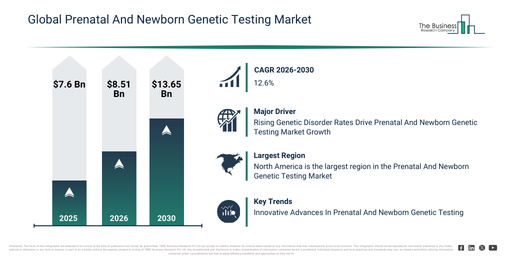
    The market size for prenatal and newborn genetic testing has experienced rapid growth in recent years. This market is expected to expand from $7.6 billion in 2025 to $8.51 billion in 2026, achieving a compound annual growth rate (CAGR) of 12.0%. The historical growth of this market can be attributed to various factors such as increased awareness of genetic disorders, the expansion of maternal and neonatal healthcare services, the emergence of more institutional screening programs, the greater availability of diagnostic laboratories, and enhancements in the accuracy of genetic testing.

    The prenatal and newborn genetic testing market is anticipated to experience substantial expansion over the next few years. This market is projected to reach $13.65 billion by 2030, exhibiting a compound annual growth rate (CAGR) of 12.6%. The growth during the forecast period can be attributed to the increasing adoption of personalized medicine approaches, a rising demand for early-stage disease detection, the expansion of newborn screening mandates, growing investments in genomics infrastructure, and the increasing use of digital health platforms. Prominent trends expected in this period include the increasing adoption of non-invasive prenatal testing, a rising use of advanced genetic screening panels, the growing integration of AI in genetic risk analysis, the expansion of high-throughput sequencing platforms, and an enhanced focus on the early detection of congenital disorders.

    Access Your Free Sample Report for In-Depth Market Insights:

    https://www.thebusinessresearchcompany.com/sample.aspx?id=13158&type=smp

    Which Drivers Are Shaping Strategic Decisions In The Prenatal And Newborn Genetic Testing Market?

    The anticipated expansion of the prenatal and newborn genetic testing market is linked to the increasing occurrence of genetic disorders. These conditions are defined as health issues stemming from alterations or defects in a person’s DNA or genetic makeup. Such testing, conducted both prenatally and in newborns, facilitates the early detection of genetic disorders, frequently prior to symptom onset, allowing medical professionals to implement prompt interventions and treatment approaches. As an illustration, the Centers for Disease Control and Prevention (CDC), a US public health agency, reported in May 2024 that approximately 100,000 individuals in the United States are affected by sickle cell disease (SCD). Over 90% of those impacted are non-Hispanic Black or African American, and an estimated 3%-9% are Hispanic or Latino. Consequently, the growing frequency of genetic disorders is a key driver for the prenatal and newborn genetic testing market.

    What Segment Categories Are Covered In The Prenatal And Newborn Genetic Testing Market?

    The prenatal and newborn genetic testing market covered in this report is segmented –

    1) By Product Type: Consumables, Instruments

    2) By Screening: Non-Invasive Prenatal Testing, Chronic Villus Sampling, Amniocentesis, Maternal Serum Screening, Other Screenings

    3) By Disease: Down Syndrome, Phenylketonuria, Cystic Fibrosis, Sickle Cell Anemia

    4) By End User: Hospital, Maternity And Specialty Clinics, Diagnostic Centers

    Subsegments:

    1) By Consumables: Reagents And Assays, Sample Collection Kits, Test Kits

    2) By Instruments: Polymerase Chain Reaction (PCR) Machines, Sequencers, Microarray Analyzers

    What Upcoming Trends Are Likely To Define The Future Path Of The Prenatal And Newborn Genetic Testing Market?

    Leading companies operating within the prenatal and newborn genetic testing markets are primarily focused on developing innovative screening tests, such as noninvasive prenatal screening tests, enhancing their accessibility and affordability to deliver dependable services to consumers. Noninvasive prenatal screening (NIPS), also known as noninvasive prenatal testing (NIPT), represents a highly advanced and secure genetic screening methodology conducted during pregnancy to assess the likelihood of specific fetal chromosomal abnormalities. As an illustration, in January 2024, Natera, Inc., a genetic testing company based in the US, launched a fetal RhD NIPT designed to determine fetal RhD status, thereby assisting obstetricians in managing patient care during prevalent Rho(D) immune globulin (RhIg) shortages across the nation. This particular test is underpinned by a comprehensive clinical validation study that included more than 650 RhD-negative patients with verified outcomes, achieving a 100% sensitivity and >99% specificity. Furthermore, Natera’s test offers the advantage of early pregnancy performance, supporting timely clinical decisions and improving patient management.

    Which Major Industry Participants Are Leading The Prenatal And Newborn Genetic Testing Market Growth?

    Major companies operating in the prenatal and newborn genetic testing market are F Hoffmann La Roche AG, Thermo Fisher Scientific Inc, Abbott Laboratories, Danaher Corporation, Siemens Healthineers AG, Becton Dickinson And Company, Quest Diagnostic Incorporated, Agilent Technologies Inc, Illumina Inc, PerkinElmer Genomics, Quidel Corporation, Bio Rad Laboratories Inc, Qiagen NV, Werfen SA, DiaSorin SpA, BGI Group, Natera Inc, Trinity Biotech plc, Meridian Bioscience Inc, Sekisui Diagnostics, Ariosa Diagnostics Inc, AccuBioTech Co Ltd, Sequenom Inc, Roche Diagnostics International AG

    Access The Complete Report For Deeper Market Insights:

    https://www.thebusinessresearchcompany.com/report/prenatal-and-newborn-genetic-testing-global-market-report

    Which Region Is Expected To Experience The Fastest Growth In The Prenatal And Newborn Genetic Testing Market?

    North America was the largest region in the prenatal and newborn genetic testing market in 2025. Asia-Pacific is expected to be the fastest-growing region in the forecast period. The regions covered in the prenatal and newborn genetic testing market report are Asia-Pacific, South East Asia, Western Europe, Eastern Europe, North America, South America, Middle East, Africa.

    Request Your Customized Prenatal And Newborn Genetic Testing Market Research Report for Competitive Advantage:

    https://www.thebusinessresearchcompany.com/customise?id=13158&type=smp

    Browse Through More Reports Similar to the Global Prenatal And Newborn Genetic Testing Market 2026, By The Business Research Company

    Non Invasive Prenatal Testing Market Report 2026

    https://www.thebusinessresearchcompany.com/report/non-invasive-prenatal-testing-global-market-report

    Prenatal Testing And Newborn Screening Market Report 2026

    https://www.thebusinessresearchcompany.com/report/prenatal-testing-and-newborn-screening-global-market-report

    Genetic Testing Market Report 2026

    https://www.thebusinessresearchcompany.com/report/genetic-testing-global-market-report

    Get in touch with us:

    The Business Research Company: https://www.thebusinessresearchcompany.com/

    Americas +1 310-496-7795

    Asia +44 7882 955267 & +91 8897263534

    Europe +44 7882 955267

    Email us at info@tbrc.info

    Follow us on:

    LinkedIn: https://in.linkedin.com/company/the-business-research-company

    YouTube: https://www.youtube.com/channel/UC24_fI0rV8cR5DxlCpgmyFQ

    Global Market Model: https://www.thebusinessresearchcompany.com/global-market-model
  • Global Medicated Shampoo Market Report 2026: Emerging Trends and Growth Scenarios

    Global Medicated Shampoo Market Report 2026: Emerging Trends and Growth Scenarios

    Uncover key drivers, emerging technologies, and competitive movements shaping the medicated shampoo market from 2026–2035 with trusted insights from The Business Research Company

    What is the estimated market size of the Medicated Shampoo Market by the end of 2030?

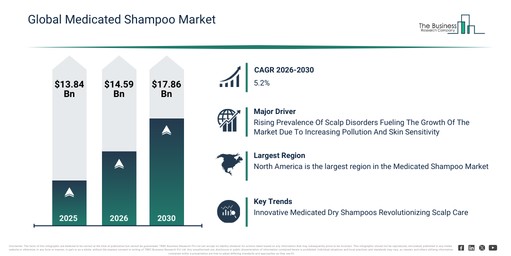
    The medicated shampoo market has experienced robust growth over recent years. It is anticipated to expand from $13.84 billion in 2025 to $14.59 billion in 2026, exhibiting a compound annual growth rate (CAGR) of 5.4%. This past growth can be linked to several factors including an increase in dandruff and scalp disorders, rising urban pollution exposure, the expansion of pharmacy retail chains, greater awareness of hair and scalp hygiene, and the availability of otc medicated shampoos.

    The medicated shampoo market is anticipated to experience robust growth in the coming years, reaching $17.86 billion by 2030, exhibiting a compound annual growth rate (CAGR) of 5.2%. This expansion is driven by the increasing prevalence of conditions such as psoriasis and fungal infections, a heightened demand for personalized scalp care, the widening reach of online sales channels, an increased emphasis on preventive hair loss treatments, and advancements in active ingredient formulations. Significant trends during this period also include a rising demand for targeted scalp treatment solutions, a growing preference for dermatologist-recommended shampoos, the increased integration of herbal and natural medicated formulations, the broader availability of over-the-counter medicated hair care products, and enhanced consumer awareness concerning scalp health and hygiene.

    Access Your Free Sample Report for In-Depth Market Insights:

    https://www.thebusinessresearchcompany.com/sample.aspx?id=24314&type=smp

    What Drivers Are Shaping Future Opportunities In The Medicated Shampoo Market?

    The expansion of the medicated shampoo market is anticipated to be driven by the rising occurrence of scalp disorders. These disorders are conditions impacting the scalp’s skin, manifesting as symptoms like itchiness, dryness, inflammation, discomfort, or hair shedding. Their growing prevalence stems from increased environmental contaminants, chemical contact, psychological stress, and various lifestyle elements that compromise the scalp’s inherent protective barrier and microbial balance. The medicated shampoo market addresses this trend by providing specialized formulations containing antifungal, anti-inflammatory, and keratolytic compounds designed to target underlying issues and facilitate scalp recovery. An illustrative example is from February 2025, when the American Academy of Dermatology Association, a US-based non-profit professional organization, stated that acne, a prevalent dermatological condition, impacts 0.05 billion people annually in the United States. This data underscores the escalating challenge posed by skin and scalp conditions that demand specific therapeutic interventions. Consequently, the increasing incidence of scalp disorders is a key factor propelling the expansion of the medicated shampoo market.

    Which Segment Groups Are Influencing The Medicated Shampoo Market?

    The medicated shampoo market covered in this report is segmented –

    1) By Type: Anti-Dandruff, Antifungal, Anti-Hair Loss, Antibacterial Or Scalp Treatment

    2) By Distribution Channel: Pharmacies Or Drugstores, Supermarkets Or Hypermarkets, Online Retail Or E-commerce, Specialty Stores

    3) By Application: Dandruff, Seborrheic Dermatitis, Psoriasis, Fungal Infections, Other Applications

    4) By End-User: Adults, Children, Men, Women

    Subsegments:

    1) By Anti-Dandruff: Zinc Pyrithione, Ketoconazole, Coal-Tar, Herbal/Natural

    2) By Antifungal: Ketoconazole-Based, Selenium Sulfide-Based, Ciclopirox-Based

    3) By Anti-Hair Loss: Minoxidil-Based, Biotin Or Natural Extracts, DHT Blockers

    4) By Antibacterial Or Scalp Treatment: Salicylic Acid, Climbazole, Tea Tree Oil

    Which Trends Are Expected To Influence The Medicated Shampoo Market In The Upcoming Years?

    Major companies in the medicated shampoo market are prioritizing the creation of innovative formulations, such as medicated dry shampoo, to meet the rising consumer demand for convenient, waterless scalp-care solutions that effectively manage dermatological conditions. Medicated dry shampoo is a specialized hair-care product that merges conventional oil-absorbing dry-shampoo features with therapeutic active ingredients to address scalp disorders like dandruff, seborrheic dermatitis, and psoriasis, enabling application without water. For instance, in November 2024, Raven Innovations LLC, a US-based pharmaceutical and personal-care company, introduced RestoraScalp, which is the world’s first medicated dry shampoo specifically formulated to treat scalp conditions including dandruff, seborrheic dermatitis, and psoriasis. This advanced product contains 2% salicylic acid as the active therapeutic ingredient, a calming botanical blend featuring chamomile, olive leaf, and green tea extracts, and boasts a vegan, cruelty-free, and fragrance-free formulation suitable for all skin types, thereby presenting an effective waterless option for scalp treatment on non-wash days.

    Who Are The Prominent Global Companies Shaping The Medicated Shampoo Market Landscape?

    Major companies operating in the medicated shampoo market are Johnson & Johnson, The Procter & Gamble Company, Unilever PLC, Kao Corporation, Cipla Limited, The Himalaya Company, Avalon Natural Products Inc., Ederma Pharma India Private Limited, Elegant Cosmed Private Limited, Luxica Pharma Inc., Yaxon Biocare Pvt. Ltd., Art Naturals Inc., Nioxin Research Laboratories Inc., Sulfur 8 Inc., Summer Laboratories Inc., Mars Medisoap Private Limited, Staple Pharmaceuticals Pvt. Ltd., Astonea Labs Limited, Ketopoz Pharmaceuticals Pvt. Ltd., Maylizz Biotech Private Limited

    Access The Complete Report For Deeper Market Insights:

    https://www.thebusinessresearchcompany.com/report/medicated-shampoo-global-market-report

    How Does The Medicated Shampoo Market Perform Across Major Global Regions?

    North America was the largest region in the medicated shampoo market in 2025. Asia-Pacific is expected to be the fastest-growing region in the forecast period. The regions covered in the medicated shampoo market report are Asia-Pacific, South East Asia, Western Europe, Eastern Europe, North America, South America, Middle East, Africa.

    Request Your Customized Medicated Shampoo Market Research Report for Competitive Advantage:

    https://www.thebusinessresearchcompany.com/customise?id=24314&type=smp

    Browse Through More Reports Similar to the Global Medicated Shampoo Market 2026, By The Business Research Company

    Medicated Bath Additive Market Report 2026

    https://www.thebusinessresearchcompany.com/report/medicated-bath-additive-global-market-report

    Protein Shampoo Market Report 2026

    https://www.thebusinessresearchcompany.com/report/protein-shampoo-global-market-report

    Therapeutic Hair Oil Market Report 2026

    https://www.thebusinessresearchcompany.com/report/therapeutic-hair-oil-global-market-report

    Get in touch with us:

    The Business Research Company: https://www.thebusinessresearchcompany.com/

    Americas +1 310-496-7795

    Asia +44 7882 955267 & +91 8897263534

    Europe +44 7882 955267

    Email us at info@tbrc.info

    Follow us on:

    LinkedIn: https://in.linkedin.com/company/the-business-research-company

    YouTube: https://www.youtube.com/channel/UC24_fI0rV8cR5DxlCpgmyFQ

    Global Market Model: https://www.thebusinessresearchcompany.com/global-market-model
  • Premature Ejaculation Treatment Market Trends and Insights: Global Forecast to 2030

    Premature Ejaculation Treatment Market Trends and Insights: Global Forecast to 2030

    Uncover key drivers, emerging technologies, and competitive movements shaping the premature ejaculation treatment market from 2026–2035 with trusted insights from The Business Research Company

    What growth pattern is forecast for the Premature Ejaculation Treatment Market size between 2026 and 2035?

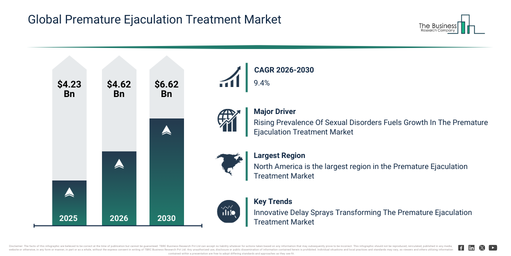
    The premature ejaculation treatment market size has experienced robust expansion over recent years. It is projected to grow from $4.23 billion in 2025 to $4.62 billion in 2026, representing a compound annual growth rate (CAGR) of 9.2%. Historically, this growth can be attributed to increased awareness of male sexual health, the availability of SSRI-based treatments, the expansion of retail pharmacy access, a growing acceptance of pharmacological therapies, and improvements in treatment efficacy.

    The premature ejaculation treatment market size is expected to show robust expansion in the upcoming years. It is forecast to grow to $6.62 billion in 2030, demonstrating a compound annual growth rate (CAGR) of 9.4%. The increase during this period can be attributed to a rising demand for personalized treatment regimens, an uptick in the use of digital health platforms for sexual wellness, the broadening of non-invasive treatment approaches, a heightened focus on holistic sexual health management, and the increased adoption of telemedicine consultations. Significant trends for the forecast duration include a growing embrace of combination drug therapies, an elevated demand for topical and oral treatment options, wider acceptance of behavioral therapy integration, an expansion of direct-to-consumer treatment channels, and an enhanced emphasis on patient privacy and discretion.

    Access Your Free Sample Report for In-Depth Market Insights:

    https://www.thebusinessresearchcompany.com/sample.aspx?id=13518&type=smp

    Which Drivers Are Impacting Market Performance In The Premature Ejaculation Treatment Market?

    The expanding occurrence of sexual disorders is anticipated to fuel the expansion of the premature ejaculation treatment market in the coming years. A sexual disorder or dysfunction describes challenges encountered by both males and females at any point during normal intimate activity. Premature ejaculation itself is a sexual disorder, with its treatment encompassing medications or therapeutic strategies aimed at managing and resolving the condition. For example, data from September 2024, released by NHS England Digital, a UK-based government agency, indicated a significant rise in contacts for sexual and reproductive health (SRH) services, totaling 2.08 million, which marks a 16% increase from the 1.79 million recorded in 2022-23. Furthermore, the British Association for Sexual Health and HIV (BASHH) reported that sexual health services in England delivered a record 4.61 million consultations in 2023, showing a 5% growth compared to the previous year. Consequently, the rising incidence of sexual disorders is propelling the growth of the premature ejaculation treatment market.

    Which Segments Are Contributing To The Growth Of The Premature Ejaculation Treatment Market?

    The premature ejaculation treatment market covered in this report is segmented –

    1) By Type: Antidepressants (SSRIs), Phosphodiesterase-5 Inhibitors, Topical Anesthetics, Analgesics, Other Treatment

    2) By Route of Administration: Oral, Topical

    3) By Distribution Channel: Retail, Direct-To-Consumer

    4) By Application: Hospital, Retail Pharmacy, Online Pharmacy, Other Applications

    Subsegments:

    1) By Antidepressants (Ssris): Paroxetine, Sertraline, Dapoxetine, Fluoxetine, Citalopram

    2) By Phosphodiesterase-5 Inhibitors: Sildenafil, Tadalafil, Vardenafil, Avanafil

    3) By Topical Anesthetics: Lidocaine-Based Creams, Prilocaine-Based Creams, Benzocaine-Based Sprays

    4) By Analgesics: Oral Pain Relievers, Topical Pain Relievers

    5) By Other Treatment: Behavioral Therapy, Counseling And Psychotherapy, Pelvic Floor Exercises, Mechanical Devices

    Which Trends Are Shaping Activity Within The Premature Ejaculation Treatment Market?

    Major companies active in the premature ejaculation treatment market are developing novel solutions, including delay sprays, to boost their earnings within the sector. These delay sprays are specifically formulated products applied to the penis before sexual activity, designed to help men last longer during intercourse by momentarily dulling penile nerves, thereby reducing sensitivity and postponing ejaculation. For instance, in August 2023, Maude, a US-based sexual wellness company, launched Stay, a delay spray expressly created to target premature ejaculation. This product contains 10% lidocaine, a fast-evaporating local anesthetic that decreases sensitivity in the male genital area. Additionally, Stay is compatible with both latex and polyisoprene condoms, as well as various lubricants and devices. It is also vegan-friendly, fragrance-free, and devoid of sulfates, silicones, and parabens.

    Who Are The Prominent Global Companies Shaping The Premature Ejaculation Treatment Market Landscape?

    Major companies operating in the premature ejaculation treatment market are Pfizer Inc, Johnson & Johnson, Merck & Co Inc, AbbVie Inc, Bayer AG, Novartis AG, GlaxoSmithKline plc, Takeda Pharmaceutical Company Limited, Eli Lilly And Company, Teva Pharmaceutical Industries Ltd, Sandoz International GmbH, Sun Pharmaceutical Industries Ltd, Menarini Group, Lupin Limited, Amneal Pharmaceuticals Inc, Mankind Pharma Ltd, Cipla Limited, Alembic Pharmaceuticals Limited, Torrent Pharmaceuticals Ltd, ANI Pharmaceuticals Inc, Vivus Inc, Innovus Pharmaceuticals Inc, Apricus Biosciences Inc, Endurance RP Ltd

    Access The Complete Report For Deeper Market Insights:

    https://www.thebusinessresearchcompany.com/report/premature-ejaculation-treatment-global-market-report

    Which Geographic Areas Are Emerging As Strong Markets For The Premature Ejaculation Treatment Market?

    North America was the largest region in the premature ejaculation treatment market in 2025, and is expected to be the fastest-growing region in the forecast period. The regions covered in the premature ejaculation treatment market report are Asia-Pacific, South East Asia, Western Europe, Eastern Europe, North America, South America, Middle East, Africa.

    Request Your Customized Premature Ejaculation Treatment Market Research Report for Competitive Advantage:

    https://www.thebusinessresearchcompany.com/customise?id=13518&type=smp

    Browse Through More Reports Similar to the Global Premature Ejaculation Treatment Market 2026, By The Business Research Company

    Fertility Treatments Market Report 2026

    https://www.thebusinessresearchcompany.com/report/fertility-treatments-global-market-report

    Infertility Treatment Market Report 2026

    https://www.thebusinessresearchcompany.com/report/infertility-treatment-global-market-report

    Precocious Puberty Treatment Market Report 2026

    https://www.thebusinessresearchcompany.com/report/precocious-puberty-treatment-global-market-report

    Get in touch with us:

    The Business Research Company: https://www.thebusinessresearchcompany.com/

    Americas +1 310-496-7795

    Asia +44 7882 955267 & +91 8897263534

    Europe +44 7882 955267

    Email us at info@tbrc.info

    Follow us on:

    LinkedIn: https://in.linkedin.com/company/the-business-research-company

    YouTube: https://www.youtube.com/channel/UC24_fI0rV8cR5DxlCpgmyFQ

    Global Market Model: https://www.thebusinessresearchcompany.com/global-market-model
  • Global Preimplantation Genetic Testing Market Report 2026–2030: Data-Driven Growth Insights

    Global Preimplantation Genetic Testing Market Report 2026–2030: Data-Driven Growth Insights

    Uncover key drivers, emerging technologies, and competitive movements shaping the preimplantation genetic testing market from 2026–2035 with trusted insights from The Business Research Company

    How much larger will the Preimplantation Genetic Testing Market be in 2030 compared with 2026?

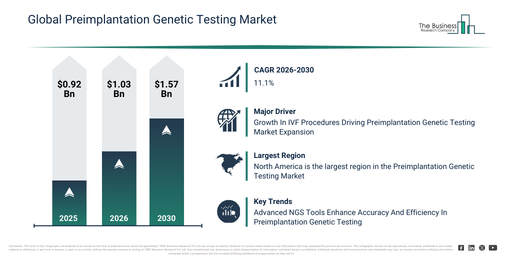
    The preimplantation genetic testing market has seen significant expansion in recent years. It is forecast to grow from $0.92 billion in 2025 to $1.03 billion in 2026, demonstrating a compound annual growth rate (CAGR) of 11.4%. The growth observed in the past can be attributed to several factors, including the increasing application of assisted reproductive technologies, improvements in embryo biopsy techniques, a heightened awareness regarding the prevention of genetic diseases, the expansion of fertility clinics, and better success rates for IVF.

    The preimplantation genetic testing market is projected for significant expansion in the coming years, reaching $1.57 billion by 2030, driven by a compound annual growth rate (CAGR) of 11.1%. This anticipated growth stems from several factors, including the escalating demand for personalized reproductive medicine, the expanding embrace of cutting-edge genomic technologies, the broadening of fertility preservation services, a rise in investment within reproductive health infrastructure, and a greater regulatory acceptance of genetic screening. Key trends foreseen during this period involve a greater uptake of embryo screening procedures, an increased application of next-generation sequencing in IVF, the wider integration of genetic testing into fertility treatments, a heightened desire for better implantation success rates, and a sharpened emphasis on mitigating genetic disorders.

    Access Your Free Sample Report for In-Depth Market Insights:

    https://www.thebusinessresearchcompany.com/sample.aspx?id=20596&type=smp

    What Drivers Are Guiding Growth Patterns In The Preimplantation Genetic Testing Market?

    An anticipated rise in in vitro fertilization (IVF) procedures is poised to drive the expansion of the preimplantation genetic testing market in the future. IVF involves the process of fertilizing an egg with sperm externally to create an embryo, which is then transferred into the uterus. Advancements in reproductive technology, higher infertility rates, and enhanced public knowledge are fueling the rise in IVF procedures. This surge in in vitro fertilization (IVF) procedures is stimulating the preimplantation genetic testing market, as it generates greater demand for genetic screening of embryos prior to implantation. For example, the Human Fertilisation & Embryology Authority, an independent UK-based fertility treatment regulator, stated in June 2025 that 52,400 patients underwent more than 77,500 in vitro fertilization (IVF) cycles at licensed UK fertility clinics in 2023. Furthermore, egg freezing cycles grew from 4,700 in 2022 to 6,900 in 2023, representing 7% of total cycles. Consequently, the expanding number of in vitro fertilization (IVF) procedures is a key factor propelling the preimplantation genetic testing market.

    How Is The Preimplantation Genetic Testing Market Divided Into Segments?

    The preimplantation genetic testing market covered in this report is segmented –

    1) By Procedure: Preimplantation Genetic Screening, Preimplantation Genetic Diagnosis

    2) By Product: Reagents And Consumables, Instruments, Software

    3) By Technology: Next Generation Sequencing (NGS), Polymerase Chain Reaction (PCR), Fluorescent In Situ Hybridization (FISH), Other Technologies

    4) By Application: Chromosomal Abnormalities, Aneuploidy Screening, X-Linked Diseases, Embryo Testing, Human Leukocyte Antigen (HLA) Typing, Other Applications

    5) By End User: Hospitals, Fertility Centers, Diagnostic Centers, Research Centers And Academic Labs

    Subsegments:

    1) By Preimplantation Genetic Screening (PGS): Array Comparative Genomic Hybridization (aCGH), Next-Generation Sequencing (NGS), Fluorescence In Situ Hybridization (FISH)

    2) By Preimplantation Genetic Diagnosis (PGD): Monogenic Disorders Testing, Chromosomal Abnormalities Testing, HLA Typing for Stem Cell Transplantation

    Which Trends Are Influencing The Development Of The Preimplantation Genetic Testing Market?

    Leading firms within the preimplantation genetic testing market are creating sophisticated next-generation sequencing (NGS) instruments aimed at boosting the precision, effectiveness, and swiftness of genetic screening, facilitating a broader analysis and more informed choices for future parents. These next-generation sequencing (NGS) instruments quicken genetic research through fast, high-volume examination of deoxyribonucleic acid (DNA) and ribonucleic acid (RNA). They offer in-depth understanding of genetic differences and gene activity, thereby enhancing precision and making personalized medicine possible. As an illustration, in July 2023, Thermo Fisher Scientific, a US-based biotechnology company, introduced the Ion ReproSeq PGT-A Kit and the Ion AmpliSeq Polyploidy Kit, which are advanced next-generation sequencing tools developed to improve IVF and ICSI research. These assays simplify processes from sample handling to aneuploidy analysis, utilizing advanced technology on the Ion Torrent Genexus integrated sequencer. This represents a substantial step forward in the preimplantation genetic testing market by improving embryo screening and elevating success rates in assisted reproductive technologies.

    Which Key Players Are Driving Competition In The Preimplantation Genetic Testing Market?

    Major companies operating in the preimplantation genetic testing market are Thermo Fisher Scientific, Abbott Laboratories, Laboratory Corporation of America Holdings, Agilent Technologies Inc., Illumina Inc., Revvity Health Science Inc., CooperSurgical Inc., Natera Inc., Myriad Genetics Inc., Fulgent Genetics Inc., Invitae Corporation, Takara Bio Inc., MedGenome Labs Ltd., Genea Limited, Ovation Fertility, Juno Genetics Ltd, Invicta Genetics, Progenesis, Bioarray SL, PacGenomics, Reproductive Genetic Innovations LLC, SEQUENCE46 LLC

    Access The Complete Report For Deeper Market Insights:

    https://www.thebusinessresearchcompany.com/report/preimplantation-genetic-testing-global-market-report

    Which Region Is Projected To Lead The Preimplantation Genetic Testing Market During The Forecast Period?

    North America was the largest region in the preimplantation genetic testing market in 2025. Asia-Pacific is expected to be the fastest-growing region in the forecast period. The regions covered in the preimplantation genetic testing market report are Asia-Pacific, South East Asia, Western Europe, Eastern Europe, North America, South America, Middle East, Africa.

    Request Your Customized Preimplantation Genetic Testing Market Research Report for Competitive Advantage:

    https://www.thebusinessresearchcompany.com/customise?id=20596&type=smp

    Browse Through More Reports Similar to the Global Preimplantation Genetic Testing Market 2026, By The Business Research Company

    Genetically Modified Animal Products Market Report 2026

    https://www.thebusinessresearchcompany.com/report/genetically-modified-animal-products-global-market-report

    Genetically Modified Fruits Market Report 2026

    https://www.thebusinessresearchcompany.com/report/genetically-modified-fruits-global-market-report

    Optogenetics Market Report 2026

    https://www.thebusinessresearchcompany.com/report/optogenetics-global-market-report

    Get in touch with us:

    The Business Research Company: https://www.thebusinessresearchcompany.com/

    Americas +1 310-496-7795

    Asia +44 7882 955267 & +91 8897263534

    Europe +44 7882 955267

    Email us at info@tbrc.info

    Follow us on:

    LinkedIn: https://in.linkedin.com/company/the-business-research-company

    YouTube: https://www.youtube.com/channel/UC24_fI0rV8cR5DxlCpgmyFQ

    Global Market Model: https://www.thebusinessresearchcompany.com/global-market-model