Month: May 2026

  • Rising Cases Of Bacterial Infection Is Supporting Development Across The Interleukin Inhibitors Market

    Rising Cases Of Bacterial Infection Is Supporting Development Across The Interleukin Inhibitors Market

    The Business Research Company’s 2026 market reports feature advanced enhancements such as market attractiveness analysis, total addressable market evaluation, company benchmarking matrices, interactive Excel dashboards, expanded supply chain intelligence, emerging startup coverage, and detailed product insights, delivering more actionable and strategically valuable research.

    How Is The Interleukin Inhibitors Market’s Market Value Anticipated To Evolve From 2026 To 2030?

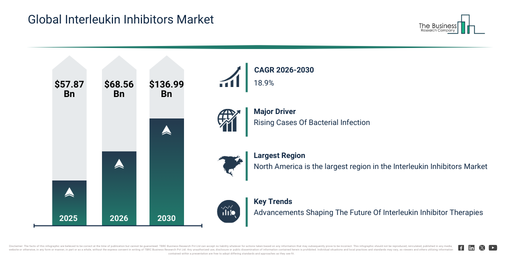
    The market for interleukin inhibitors has expanded significantly in recent years. It is anticipated to increase from $57.87 billion in 2025 to $68.56 billion in 2026, demonstrating a compound annual growth rate (CAGR) of 18.5%. The expansion witnessed in the historic period was fueled by factors including the limited availability of interleukin inhibitors, the rising incidence of autoimmune diseases, heightened physician awareness and prescribing patterns, the reliance on conventional therapies, and the growth of hospital pharmacies and specialty clinics.

    The interleukin inhibitors market is projected to experience substantial expansion over the upcoming years. Its valuation is set to reach $136.99 billion by 2030, exhibiting a compound annual growth rate (CAGR) of 18.9%. This projected growth during the forecast timeframe is primarily driven by the advancement of next-generation biologics, increasing funding for personalized immunotherapies, the spread of online pharmacies and telemedicine services, a rise in regulatory clearances for new interleukin inhibitors, and expanding governmental and healthcare programs aimed at managing chronic diseases. Key trends anticipated during this period encompass the increasing use of interleukin inhibitors for treating autoimmune conditions, the development of biologic treatments designed to target IL-17, IL-23, IL-1, IL-5, and IL-6, a greater emphasis on customized and specific immunotherapies, the broadening of distribution networks through hospitals and specialized clinics, and the incorporation of telemedicine and digital tools into the management of chronic illnesses.

    Download A Free Sample Report For Comprehensive Market Insights:

    https://www.thebusinessresearchcompany.com/sample.aspx?id=3469&type=smp

    What Important Drivers Are Powering The Interleukin Inhibitors Market Growth?

    The increasing occurrence of bacterial infections is anticipated to propel the interleukin inhibitors market in the future. Bacterial infections are defined as illnesses resulting from bacteria, which are microscopic, single-celled organisms. Interleukin inhibitors prove highly beneficial in managing and preventing bacterial illnesses due to their ability to impede bacterial proliferation. An illustration of this trend is observed in March 2024, when the Centers for Disease Control and Prevention, a US-based government agency, reported an increase in tuberculosis cases from 8,320 in 2022 to 9,615 in 2023, marking an increment of 1,295 cases. Consequently, the growing incidence of bacterial infections is a key factor driving the interleukin inhibitors market.

    How Is Segment Classification Applied In The Interleukin Inhibitors Market?

    The interleukin inhibitors market covered in this report is segmented –

    1) By Type: IL-17, IL-23, IL-1, IL-5, IL-6

    2) By Application: Psoriasis, Psoriatic Arthritis, Rheumatoid Arthritis, Asthma, Inflammatory Bowel Disease, Other Applications

    3) By Distribution Channel: Hospital Pharmacies, Retail Pharmacies, Online Pharmacies

    Subsegments:

    1) By IL-17: Secukinumab, Ixekizumab, Brodalumab

    2) By IL-23: Ustekinumab, Guselkumab, Tildrakizumab

    3) By IL-1: Anakinra, Canakinumab

    4) By IL-5: Mepolizumab, Reslizumab, Benralizumab

    5) By IL-6: Tocilizumab, Sarilumab

    What Trends Are Influencing The Future Of The Interleukin Inhibitors Market?

    Companies operating in the interleukin inhibitors market are prioritizing the development of innovative therapies, such as monoclonal antibody biosimilars, to boost treatment effectiveness, cut costs, and improve patient accessibility. A monoclonal antibody biosimilar is a biologic product that is highly similar to an approved reference antibody, showing no clinically meaningful differences in safety or efficacy. For example, in October 2025, Celltrion Inc., a South Korea-based biopharmaceutical company, launched the AVTOZMA (tocilizumab-anoh) intravenous (IV) formulation in the United States. This therapy targets interleukin-6 receptors to manage conditions including rheumatoid arthritis and other inflammatory disorders. The launch aims to improve patient access and clinical outcomes by expanding the availability of advanced biologic treatments.

    Which Firms Are Competing In The Interleukin Inhibitors Market?

    Major companies operating in the interleukin inhibitors market are Sanofi S.A., GlaxoSmithKline plc, Novartis International AG, Johnson & Johnson Services Inc., F. Hoffmann-La Roche Ltd., Eli Lilly and Company, AstraZeneca plc, Teva Pharmaceutical Industries Ltd., Regeneron Pharmaceuticals Inc., Bausch Health Companies Inc., AbbVie Inc., Sun Pharmaceutical Industries Limited, Boehringer Ingelheim International GmbH, Janssen Biotech Inc., Ortho Dermatologics, Amgen Inc., Celgene Corporation, Bristol-Myers Squibb Company, Pfizer Inc., Merck & Co. Inc., Takeda Pharmaceutical Company Limited, Biogen Inc., Incyte Corporation, Kyowa Kirin Co Ltd., Astellas Pharma Inc., Ipsen Biopharmaceuticals Inc.

    Access The Complete Interleukin Inhibitors Market Report:

    https://www.thebusinessresearchcompany.com/report/interleukin-inhibitor-global-market-report

    Which Region Has The Strongest Presence In The Interleukin Inhibitors Market?

    North America was the largest region in the interleukin inhibitors market in 2025. The regions covered in the interleukin inhibitors market report are Asia-Pacific, South East Asia, Western Europe, Eastern Europe, North America, South America, Middle East, Africa.

    Access Interleukin Inhibitors Market Report for Deeper Competitive Insights

    https://www.thebusinessresearchcompany.com/sample.aspx?id=3469&type=smp

    Browse Through More Reports Similar to the Global Interleukin Inhibitors Market 2026, By The Business Research Company

    Anti Hypertensive Drugs Market Report 2026

    https://www.thebusinessresearchcompany.com/report/anti-hypertensive-drugs-global-market-report

    Dermatitis Drugs Market Report 2026

    https://www.thebusinessresearchcompany.com/report/dermatitis-drugs-global-market-report

    Psoriasis Drugs Market Report 2026

    https://www.thebusinessresearchcompany.com/report/psoriasis-drugs-global-market-report

    Get in touch with us:

    The Business Research Company: https://www.thebusinessresearchcompany.com/

    Americas: +1 310-496-7795

    Asia: +44 7882 955267 & +91 8897263534

    Europe: +44 7882 955267

    Email us at: marketing@tbrc.info

    Follow us on:

    LinkedIn: https://in.linkedin.com/company/the-business-research-company

    YouTube: https://www.youtube.com/channel/UC24_fI0rV8cR5DxlCpgmyFQ

    Global Market Model: https://www.thebusinessresearchcompany.com/global-market-model
  • Elevated Incidence Of Cancer Propels Growth In The Interferon Market Is Supporting Development Across The Interferons Market

    Elevated Incidence Of Cancer Propels Growth In The Interferon Market Is Supporting Development Across The Interferons Market

    The Business Research Company’s 2026 market reports feature advanced enhancements such as market attractiveness analysis, total addressable market evaluation, company benchmarking matrices, interactive Excel dashboards, expanded supply chain intelligence, emerging startup coverage, and detailed product insights, delivering more actionable and strategically valuable research.

    By 2030, How Much Growth In Market Size Is Expected For The Interferons Market?

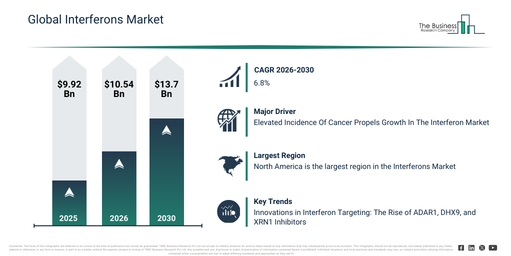
    The interferons market has experienced robust growth over recent years. It will grow from $9.92 billion in 2025 to $10.54 billion in 2026 at a compound annual growth rate (CAGR) of 6.3%. The historical growth of the market was driven by several factors, including the limited availability of recombinant interferons, the increasing prevalence of hepatitis b and c, the rising incidence of melanoma and leukemia, the reliance on conventional interferon therapies, and the expansion of hospital pharmacy networks.

    The interferons market is poised for significant expansion in the coming years. It is forecast to grow to $13.7 billion in 2030, demonstrating a compound annual growth rate (CAGR) of 6.8%. This anticipated growth during the forecast period is influenced by the advancement of pegylated and long-acting interferons, their increasing application in multiple sclerosis and renal cell carcinoma, the widening access through online and retail pharmacies, the rising adoption of combination therapies, and increasing government assistance for immunotherapy programs. Prominent trends for the forecast period include the escalating use of interferon therapies for viral infections, their expanded role in oncology treatments, the broader application of interferon beta in multiple sclerosis treatment, the growth in hospital and online pharmacy distribution channels, and a concentrated effort on developing long-acting and improved formulations.

    Download A Free Sample Report For Comprehensive Market Insights:

    https://www.thebusinessresearchcompany.com/sample.aspx?id=2836&type=smp

    Which Major Factors Are Contributing To The Development Of The Interferons Market?

    The anticipated increase in cancer incidence is expected to stimulate the growth of the interferon market going forward. Cancer encompasses a range of diseases defined by the uncontrolled proliferation of abnormal cells that can spread throughout the body. Interferons are utilized in the treatment of various cancer types, including melanoma, Kaposi’s sarcoma, and certain leukemias. They are frequently included in combination therapies, assisting in boosting the body’s immune response against cancer cells. For instance, in July 2024, according to the Australian Institute of Health and Welfare, an Australia-based government agency, an estimated 165,000 Australians were newly diagnosed with cancer in 2023, equating to over 450 cases daily, with males representing about 55% of these diagnoses. Therefore, the rise in cancer is a significant factor driving the expansion of the interferon market.

    What Are The Core Segment Classifications In The Interferons Market?

    The interferons market covered in this report is segmented –

    1) By Type: Interferon Alpha, Interferon Beta, Interferon Gamma

    2) By Application: Hepatitis B, Hepatitis C, Melanoma, Leukemia, Multiple Sclerosis, Renal Cell Carcinoma

    3) By Distribution Channel: Hospital Pharmacies, Online Pharmacies, Retail Pharmacies, Other Distribution Channels

    Subsegments:

    1) By Interferon Alpha: Interferon Alpha-2a, Interferon Alpha-2b

    2) By Interferon Beta: Interferon Beta-1a, Interferon Beta-1b

    3) By Interferon Gamma: Interferon Gamma-1b, Interferon Gamma Receptor 2

    Which Trends Are Contributing To Changes In The Interferons Market?

    Leading companies within the interferon market are pursuing novel programs, including ADAR1 and DHX9 inhibitors, designed to trigger replication stress and apoptosis in tumors characterized by microsatellite instability. ADAR1 inhibitors primarily aim to block ADAR1, a molecular target associated with immune system activation within cancer cells. Research indicates that suppressing ADAR1 can lead to cell demise in cells exhibiting strong type I interferon signaling. DHX9 inhibitors are small-molecule compounds that target DHX9, an RNA helicase crucial for preserving genomic integrity in various cancers. Blocking DHX9 has the potential to induce replication stress and programmed cell death in certain kinds of tumors. An example is Accent Therapeutics, a biopharmaceutical firm from the US, which introduced its XRN1 program in October 2023. This XRN1 initiative is dedicated to developing small molecule inhibitors for the XRN1 enzyme, an enzyme vital for RNA degradation and a contributor to innate immunity. The goal of this program is to combat tumors displaying heightened interferon signaling, potentially improving the rate of cancer cell death. In line with Accent Therapeutics’ commitment to creating precise cancer treatments, recent presentations at the 35th AACR-NCI-EORTC Symposium highlighted preclinical validation data and advancements in crafting selective inhibitors for this important cancer-related target.

    Who Are The Major Companies Operating In The Interferons Market?

    Major companies operating in the interferons market are Roche Holding AG, Merck & Co. Inc., Bristol-Myers Squibb Company, Biogen Inc., Bayer AG, Zydus Cadila Health Care Limited, Biosidus S.A., Nanogen Biopharmaceutical Co. Ltd., Amega Biotech Inc., Rhein Minapharm Biogenetics S.A.E., PROBIOMED S.A. de C.V., Schering-Plough Corporation, 3SBio Inc., Genentech Inc., Teva Pharmaceutical Industries Ltd., Biocad, Cipla Limited, Dr. Reddy’s Laboratories Ltd., Hetero Drugs Limited

    Access The Complete Interferons Market Report:

    https://www.thebusinessresearchcompany.com/report/interferon-global-market-report

    Which Region Stands As The Largest Contributor To The Interferons Market?

    North America was the largest region in the interferons market in 2025. Middle East is expected to be the fastest-growing region in the interferons market during the forecast period. The regions covered in the interferons market report are Asia-Pacific, South East Asia, Western Europe, Eastern Europe, North America, South America, Middle East, Africa.

    Access Interferons Market Report for Deeper Competitive Insights

    https://www.thebusinessresearchcompany.com/sample.aspx?id=2836&type=smp

    Browse Through More Reports Similar to the Global Interferons Market 2026, By The Business Research Company

    Drugs For Immunotherapy Market Report 2026

    https://www.thebusinessresearchcompany.com/report/drugs-for-immunotherapy-global-market-report

    Multiple Sclerosis Drugs Market Report 2026

    https://www.thebusinessresearchcompany.com/report/multiple-sclerosis-drugs-global-market-report

    Coronavirus Covid 19 Current Therapy Market 2026

    https://www.thebusinessresearchcompany.com/report/coronavirus-covid-19-current-therapy-market

    Get in touch with us:

    The Business Research Company: https://www.thebusinessresearchcompany.com/

    Americas: +1 310-496-7795

    Asia: +44 7882 955267 & +91 8897263534

    Europe: +44 7882 955267

    Email us at: marketing@tbrc.info

    Follow us on:

    LinkedIn: https://in.linkedin.com/company/the-business-research-company

    YouTube: https://www.youtube.com/channel/UC24_fI0rV8cR5DxlCpgmyFQ

    Global Market Model: https://www.thebusinessresearchcompany.com/global-market-model
  • The Growing Prevalence Of Lifestyle-Related Disorders Driving The Growth Of The Market Due To Increasing Obesity And Chronic Conditions Is Supporting Development Across The Intelligent Pills Market

    The Growing Prevalence Of Lifestyle-Related Disorders Driving The Growth Of The Market Due To Increasing Obesity And Chronic Conditions Is Supporting Development Across The Intelligent Pills Market

    The Business Research Company’s 2026 market reports feature advanced enhancements such as market attractiveness analysis, total addressable market evaluation, company benchmarking matrices, interactive Excel dashboards, expanded supply chain intelligence, emerging startup coverage, and detailed product insights, delivering more actionable and strategically valuable research.

    What Market Value Trend Is Expected For The Intelligent Pills Market From 2026 To 2030?

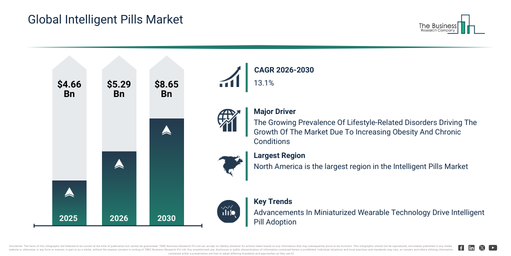
    The intelligent pills market has experienced rapid expansion in recent years. It is anticipated to increase from $4.66 billion in 2025 to $5.29 billion in 2026, achieving a compound annual growth rate (CAGR) of 13.4%. The growth observed in prior periods can be attributed to several factors, including advancements in medical imaging, the heightened demand for gastrointestinal disease diagnosis, the rise of minimally invasive diagnostics, broader hospital technology adoption, and innovation in wireless sensors.

    The intelligent pills market is poised for significant expansion in the coming years. It is projected to reach $8.65 billion by 2030, demonstrating a compound annual growth rate (CAGR) of 13.1%. This growth during the forecast period is driven by factors such as the expansion of remote healthcare, AI-enabled diagnostics, the development of the digital health ecosystem, the necessity for chronic disease monitoring, and advancements in smart medical devices. Key trends for the forecast period include the increasing application of capsule endoscopy technologies, a rise in the adoption of ingestible sensors, the broadening of remote patient monitoring applications, a growing need for non-invasive diagnostic tools, and the incorporation of wireless data transmission in diagnostics.

    Download A Free Sample Report For Comprehensive Market Insights:

    https://www.thebusinessresearchcompany.com/sample.aspx?id=24573&type=smp

    What Key Growth Drivers Are Influencing The Intelligent Pills Market?

    An increasing prevalence of lifestyle-driven health issues is anticipated to fuel the expansion of the intelligent pills market in the future. These disorders are non-infectious conditions predominantly shaped by individuals’ everyday routines, actions, and decisions. The rise in lifestyle-related disorders is largely due to unhealthy eating patterns, leading to conditions such as obesity, heart disease, diabetes, and other long-term ailments. Intelligent pills offer customized treatment for these conditions by facilitating continuous health tracking, offering insights based on data, enhancing patient compliance with medication, and refining treatment results. For instance, in May 2025, the Office for Health Improvement and Disparities, a UK-based government body, reported that an estimated 64.5% of adults aged 18 and over in England were overweight or living with obesity between 2023 and 2024, an increase from 64.0% observed from 2022 to 2023. Consequently, the increasing incidence of lifestyle-related disorders is propelling the intelligent pills market.

    How Is The Intelligent Pills Market Structured Across Different Market Segments?

    The intelligent pills market covered in this report is segmented –

    1) By Type: Occult GI Bleeding, Chron’s Disease, Small Bowel Tumors, Celiac Disease, Inherited Polyposis Syndromes

    2) By Target Area: Esophagus, Stomach, Small Intestine, Large Intestine

    3) By Application: Capsule Endoscopy, Drug Delivery, Patient Monitoring

    4) By End-User: Hospital Pharmacy, Clinics, Research Institutes, Home Healthcare

    Subsegments:

    1) By Occult GI Bleeding: Detection Of Hidden Gastrointestinal Bleeding, Non-Invasive Diagnosis Of Occult Blood Loss

    2) By Crohn’s Disease: Monitoring Disease Progression, Assessment Of Intestinal Inflammation

    3) By Small Bowel Tumors: Tumor Identification In The Small Intestine, Tumor Monitoring And Diagnosis

    4) By Celiac Disease: Detection Of Gluten-Induced Damage In The Intestine, Monitoring Adherence To Gluten-Free Diet

    5) By Inherited Polyposis Syndromes: Detection Of Polyps In The Gastrointestinal Tract, Risk Assessment And Monitoring For Genetic Polyposis

    What Trends Are Shaping The Intelligent Pills Market Structure?

    Major companies operating in the Intelligent Pills market are prioritizing the implementation of innovative technologies, such as wearable ingestion tracking devices, to enhance medication adherence and patient monitoring. These wearable ingestion tracking devices are wrist-worn or body-mounted gadgets that track when patients take their medication, thereby ensuring timely doses, improving compliance, and providing real-time data to healthcare providers for better treatment outcomes. For instance, in November 2023, etectRx Inc., a US-based digital health company, introduced the Wrist-Worn Reader, a groundbreaking technology augmenting the ID-Cap System. This device seamlessly integrates with the existing ID-Cap medication monitoring capsule, offering a convenient wrist-worn format instead of the previous necklace-style reader, which significantly increases comfort and usability. The Wrist-Worn Reader continuously logs ingestion events, issues alerts for missed doses, and supports clinical studies like HIV PrEP trials, ultimately improving adherence and patient outcomes. Its capacity to adapt to diverse lifestyles and user preferences distinguishes it from conventional monitoring solutions.

    Which Companies Are Influencing The Intelligent Pills Market?

    Major companies operating in the intelligent pills market are RF Co. Ltd., OMOMED S.A., Shangxian Minimal Invasive Inc., Medtronic Given Imaging (PillCam Division), Shenzhen ANX Robotica, Capsovision Europe GmbH, BDD (Bio-Medical Device Development Ltd.), SmartPill Corporation, ReX Medical, Sensilize Ltd., HQ Inc., JIFU Medical, Chongqing Jinshan Capsule Endoscopy, CapsoVision Asia, NaviCam Medical Systems, IntroMedic Europe, EBS Medical, Check-Cap Imaging, Biora Therapeutics, etectRx Digital Health

    Access The Complete Intelligent Pills Market Report:

    https://www.thebusinessresearchcompany.com/report/intelligent-pills-global-market-report

    What Is The Largest Regional Market In The Intelligent Pills Market?

    North America was the largest region in the intelligent pills market in 2025. The regions covered in the intelligent pills market report are Asia-Pacific, South East Asia, Western Europe, Eastern Europe, North America, South America, Middle East, Africa.

    Access Intelligent Pills Market Report for Deeper Competitive Insights

    https://www.thebusinessresearchcompany.com/sample.aspx?id=24573&type=smp

    Browse Through More Reports Similar to the Global Intelligent Pills Market 2026, By The Business Research Company

    Smart Pills Market Report 2026

    https://www.thebusinessresearchcompany.com/report/smart-pills-global-market-report

    Diet Pills Market Report 2026

    https://www.thebusinessresearchcompany.com/report/diet-pills-global-market-report

    Ethical Pharmaceuticals Market Report 2026

    https://www.thebusinessresearchcompany.com/report/ethical-pharmaceuticals-global-market-report

    Get in touch with us:

    The Business Research Company: https://www.thebusinessresearchcompany.com/

    Americas: +1 310-496-7795

    Asia: +44 7882 955267 & +91 8897263534

    Europe: +44 7882 955267

    Email us at: marketing@tbrc.info

    Follow us on:

    LinkedIn: https://in.linkedin.com/company/the-business-research-company

    YouTube: https://www.youtube.com/channel/UC24_fI0rV8cR5DxlCpgmyFQ

    Global Market Model: https://www.thebusinessresearchcompany.com/global-market-model
  • Role Of Rising Obesity Fueling The Insulin Drugs Market Is Supporting Development Across The Insulin Drugs Market

    Role Of Rising Obesity Fueling The Insulin Drugs Market Is Supporting Development Across The Insulin Drugs Market

    The Business Research Company’s 2026 market reports feature advanced enhancements such as market attractiveness analysis, total addressable market evaluation, company benchmarking matrices, interactive Excel dashboards, expanded supply chain intelligence, emerging startup coverage, and detailed product insights, delivering more actionable and strategically valuable research.

    How Does The Forecasted Market Size Of The Insulin Drugs Market Compare Between 2026 And 2030?

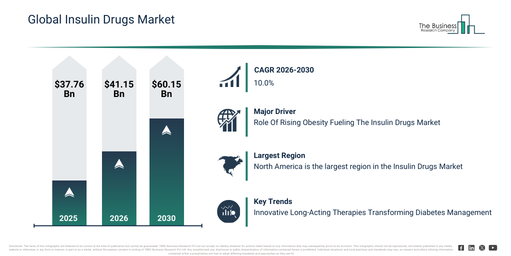
    The insulin drugs market has experienced significant expansion in recent years. It is anticipated to increase from $37.76 billion in 2025 to $41.15 billion in 2026, at a compound annual growth rate (CAGR) of 9.0%. The past growth in this sector was driven by elements such as the restricted access to insulin analogs, the dependence on human insulin, the rising prevalence of type 2 diabetes, the expansion of hospital and retail pharmacy networks, and an enhanced understanding of diabetes management.

    The insulin drugs market size is poised for substantial growth in the upcoming years, with projections indicating it will reach $60.15 billion in 2030, demonstrating a compound annual growth rate (CAGR) of 10.0%. This expansion during the forecast period is attributed to advancements in ultra-long-acting and fast-acting insulins, the spread of digital health monitoring solutions, the growing acceptance of pre-mixed insulin therapies, escalating governmental initiatives for diabetes management, and the integration of insulin treatment with personalized medicine. Notable trends for this period encompass the increasing adoption of insulin analogs and branded pharmaceuticals, a rise in the application of pre-mixed and combination insulin formulations, the expanding prevalence of diabetes and improvements in type 2 diabetes management, the enlargement of online pharmacies and retail distribution channels, and the incorporation of continuous glucose monitoring into digital health platforms.

    Download A Free Sample Report For Comprehensive Market Insights:

    https://www.thebusinessresearchcompany.com/sample.aspx?id=2674&type=smp

    Which Core Factors Are Supporting The Expansion Of The Insulin Drugs Market?

    The increasing incidence of obesity is anticipated to fuel the expansion of the insulin drugs market in the future. Obesity is defined as a state where an individual possesses an excessive amount of body fat, potentially detrimental to health, usually assessed via body mass index (BMI). This surge in obesity is driven by inactive lifestyles and greater intake of high-calorie, processed diets, elevating the likelihood of developing type 2 diabetes. The insulin drugs market addresses this trend by offering therapeutic options that aid in regulating blood glucose and averting diabetes-associated complications among obese individuals. As an illustration, a report released in May 2025 by the Office for Health Improvement & Disparities (OHID), a UK government public health body, indicated that in 2023–2024, the proportion of obese adults stood at 26.5%, a minor rise from 26.2% in 2022–2023; the rate of obesity was greater among women (26.9%) compared to men (26.2%), reached its highest at 32.5% for those aged 55–64, and varied from 11.0–37.9% across different local authorities. Consequently, the increasing prevalence of obesity is acting as a catalyst for the expansion of the insulin drugs market.

    Which Segment-Based Categories Are Covered In The Insulin Drugs Market?

    The insulin drugs market covered in this report is segmented –

    1) By Product Type: Basal Or Long-Acting Insulins, Bolus Or Fast-Acting Insulins, Pre-Mixed, Intermediate And Short Acting Insulins

    2) By Source Type: Insulin Analogs, And Human Insulin

    3) By Drug Classification: Branded Drugs, And Generic Drugs

    4) By Application: Type 2 Diabetes, Type 1 Diabetes, And Gestational Diabetes

    5) By Distribution Channel: Hospital Pharmacies, Retail Pharmacies, And Online

    Subsegments:

    1) By Basal Or Long-Acting Insulins: Insulin Glargine, Insulin Detemir, Insulin Degludec

    2) By Bolus Or Fast-Acting Insulins: Insulin Aspart, Insulin Lispro, Insulin Glulisine

    3) By Pre-Mixed: Biphasic Insulin Formulations, Pre-Mixed Combinations Of Long-Acting And Fast-Acting Insulins

    4) By Intermediate And Short-Acting Insulins: Insulin NPH (Neutral Protamine Hagedorn), Regular Insulin (Short-Acting)

    Which Trends Are Supporting The Evolution Of The Insulin Drugs Market?

    Leading companies within the insulin drug market are concentrating on innovations in diabetes treatment, such as long-acting insulin, which delivers sustained blood glucose control through reduced injection frequency and enhanced patient adherence. Long-acting insulin refers to formulations designed for gradual release over an extended duration, thus maintaining stable blood glucose levels throughout the day. An illustration of this is the launch of Soliqua in India by Sanofi S.A., a France-based pharmaceutical company, in November 2023. Soliqua, a fixed-ratio combination of long-acting insulin glargine and lixisenatide, is administered via a once-daily pre-filled pen. It enables type 2 diabetes patients, who are not sufficiently managed by oral or injectable therapies, to more effectively control both fasting and post-meal blood glucose levels, simplifying their treatment while mitigating the risk of hypoglycemia and weight gain.

    Who Are The Companies Shaping The Insulin Drugs Market Landscape?

    Major companies operating in the insulin drugs market are Novo Nordisk, Sanofi S.A., Eli Lilly And Company, Biocon Ltd, and Gan & Lee Pharmaceuticals, Bioton, Wockhardt Ltd, Julphar, Tonghua Dongbao Pharmaceutical, AJA Pharma, SEDICO Pharmaceutical Company, Pfizer.

    Access The Complete Insulin Drugs Market Report:

    https://www.thebusinessresearchcompany.com/report/insulin-drugs-global-market-report

    Which Region Contributes The Most To The Insulin Drugs Market?

    North America was the largest region in the insulin drugs market in 2025. Middle East is expected to be the largest growing region in the global insulin drugs market share during the forecast period. The regions covered in the insulin drugs market report are Asia-Pacific, South East Asia, Western Europe, Eastern Europe, North America, South America, Middle East, Africa.

    Access Insulin Drugs Market Report for Deeper Competitive Insights

    https://www.thebusinessresearchcompany.com/sample.aspx?id=2674&type=smp

    Browse Through More Reports Similar to the Global Insulin Drugs Market 2026, By The Business Research Company

    Central Nervous System Drug Market Report 2026

    https://www.thebusinessresearchcompany.com/report/central-nervous-system-drug-global-market-report

    Electrophysiology Devices And Equipment Market Report 2026

    https://www.thebusinessresearchcompany.com/report/electrophysiology-devices-and-equipment-global-market-report

    Neurostimulation Devices Market Report 2026

    https://www.thebusinessresearchcompany.com/report/neurostimulation-devices-global-market-report

    Get in touch with us:

    The Business Research Company: https://www.thebusinessresearchcompany.com/

    Americas: +1 310-496-7795

    Asia: +44 7882 955267 & +91 8897263534

    Europe: +44 7882 955267

    Email us at: marketing@tbrc.info

    Follow us on:

    LinkedIn: https://in.linkedin.com/company/the-business-research-company

    YouTube: https://www.youtube.com/channel/UC24_fI0rV8cR5DxlCpgmyFQ

    Global Market Model: https://www.thebusinessresearchcompany.com/global-market-model
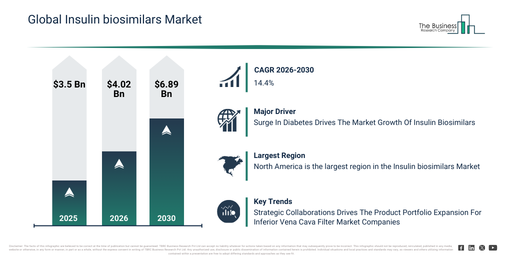
  • Surge In Diabetes Drives The Market Growth Of Insulin Biosimilars Is Supporting Development Across The Insulin biosimilars Market

    Surge In Diabetes Drives The Market Growth Of Insulin Biosimilars Is Supporting Development Across The Insulin biosimilars Market

    The Business Research Company’s 2026 market reports feature advanced enhancements such as market attractiveness analysis, total addressable market evaluation, company benchmarking matrices, interactive Excel dashboards, expanded supply chain intelligence, emerging startup coverage, and detailed product insights, delivering more actionable and strategically valuable research.

    What Increase In Market Value Is Predicted For The Insulin biosimilars Market During The 2026–2030 Period?

    The insulin biosimilars market has seen substantial growth in recent years. It is forecast to increase from $3.5 billion in 2025 to $4.02 billion in 2026, achieving a compound annual growth rate (CAGR) of 14.8%. This historical growth can be attributed to factors such as the rising prevalence of diabetes, the high cost of originator insulin, increased awareness regarding biosimilars, the expiration of patents for reference insulin products, and governmental initiatives aimed at promoting biosimilars.

    The insulin biosimilars market size is anticipated to experience substantial growth over the next few years. It is projected to expand to $6.89 billion by 2030, achieving a compound annual growth rate (CAGR) of 14.4%. This expansion throughout the forecast period stems from technological progress in biosimilar manufacturing, the enlargement of healthcare infrastructure, advantageous regulatory structures, increasing integration of telemedicine, and escalating demand within emerging markets. Significant patterns foreseen in this period encompass the rising uptake of biosimilar insulins, the escalating global occurrence of diabetes, affordable options for diabetes care, the proliferation of online and retail pharmacy avenues, and a heightened emphasis on patient-focused treatment.

    Download A Free Sample Report For Comprehensive Market Insights:

    https://www.thebusinessresearchcompany.com/sample.aspx?id=10661&type=smp

    What Are The Main Drivers Accelerating The Growth Of The Insulin biosimilars Market?

    The rising incidence of diabetes is projected to fuel the expansion of the insulin biosimilars market in the future. Diabetes encompasses a set of enduring metabolic conditions marked by elevated blood glucose levels for an extended duration. Insulin biosimilars are vital in managing diabetes by offering an alternative therapeutic choice; consequently, the growing prevalence of diabetes boosts the demand for the insulin biosimilars market. As an illustration, data from March 2024, sourced from the Office for Health Improvement and Disparities, a UK-based government department, indicated that from March 2022 to March 2023, there was a 22% increase in the proportion of individuals with type 1 diabetes receiving all eight recommended care processes, and a 21% increase for those with type 2 diabetes. Furthermore, the percentage reaching target HbA1c levels climbed to 37.9%, representing the highest figure ever recorded by the National Diabetes Audit (NDA). Thus, the expanding prevalence of diabetes is a key driver for the insulin biosimilar market.

    What Are The Major Segment Categories Within The Insulin biosimilars Market?

    The insulin biosimilars market covered in this report is segmented –

    1) By Biosimilars Type: Rapid Acting biosimilars, Long Acting biosimilars, Premixed Acting biosimilars

    2) By Disease Indication Type: Type I Diabetes, Type II Diabetes

    3) By Distribution Channel: Hospital Pharmacies, Retail Pharmacies, Online Pharmacies

    4) By End User: Hospitals, Ambulatory Surgical Centers, Other End Users

    Subsegments:

    1) By Rapid Acting Biosimilars: Insulin Aspart Biosimilars, Insulin Lispro Biosimilars, Insulin Glulisine Biosimilars

    2) By Long Acting Biosimilars: Insulin Glargine Biosimilars, Insulin Detemir Biosimilars, Insulin Degludec Biosimilars

    3) By Premixed Acting Biosimilars: Insulin Aspart Protamine Biosimilars, Insulin Lispro Protamine Biosimilars, Biphasic Insulin Biosimilars

    What Trends Are Affecting The Growth Of The Insulin biosimilars Market?

    Leading companies active in the insulin biosimilar market are forging alliances to develop novel products and reinforce their market positions. Strategic partnerships signify a process where organizations leverage one another’s strengths and resources to achieve mutual benefits and success. For example, in September 2023, Meitheal Pharmaceuticals, Inc., a US-based pharmaceutical entity, entered into a partnership with Tonghua Dongbao Pharmaceutical Co. Ltd., a China-based Active Pharmaceutical Ingredients (API) manufacturing company. This collaboration was established to facilitate the commercialization of its three insulin biosimilars, including insulin lispro, insulin glargine, and insulin aspart. Through this alliance, Meitheal Pharmaceuticals intends to expand its product offerings and bolster its international reach.

    Which Industry Players Are Present In The Insulin biosimilars Market?

    Major companies operating in the insulin biosimilars market are Eli Lilly and Company, Biocon Ltd., Mylan N.V., NOVO Nordisk A/S, Sanofi S.A, Sandoz International GmbH, Dr. Reddy’s Laboratories Ltd., Samsungbioepis Co. Ltd., Teva Pharmaceutical Industries Ltd., Stada Arzneimittel AG, Celltrion Inc., Fujifilm Kyowa Kirin Biologics Co. Ltd., Green Cross Corporation, Aurobindo Pharma Ltd., Intas Pharmaceuticals Ltd., Lupin Limited, Torrent Pharmaceuticals Ltd., Zydus Lifescience Ltd., Boehringer Ingelheim GmbH, Wockhardt Limited, Cadila Pharmaceuticals Ltd.

    Access The Complete Insulin biosimilars Market Report:

    https://www.thebusinessresearchcompany.com/report/insulin-biosimilars-global-market-report

    Which Regional Market Leads The Insulin biosimilars Market?

    North America was the largest region in the insulin biosimilars market in 2025. Asia-Pacific is expected to be the fastest-growing region in the global insulin biosimilars market report during the forecast period. The regions covered in the insulin biosimilars market report are Asia-Pacific, South East Asia, Western Europe, Eastern Europe, North America, South America, Middle East, Africa.

    Access Insulin biosimilars Market Report for Deeper Competitive Insights

    https://www.thebusinessresearchcompany.com/sample.aspx?id=10661&type=smp

    Browse Through More Reports Similar to the Global Insulin biosimilars Market 2026, By The Business Research Company

    Biosimilar Market Report 2026

    https://www.thebusinessresearchcompany.com/report/biosimilar-global-market-report

    Biosimilar Market Report 2026

    https://www.thebusinessresearchcompany.com/report/biosimilar-global-market-report

    Insuman Market Report 2026

    https://www.thebusinessresearchcompany.com/report/insuman-global-market-report

    Get in touch with us:

    The Business Research Company: https://www.thebusinessresearchcompany.com/

    Americas: +1 310-496-7795

    Asia: +44 7882 955267 & +91 8897263534

    Europe: +44 7882 955267

    Email us at: marketing@tbrc.info

    Follow us on:

    LinkedIn: https://in.linkedin.com/company/the-business-research-company

    YouTube: https://www.youtube.com/channel/UC24_fI0rV8cR5DxlCpgmyFQ

    Global Market Model: https://www.thebusinessresearchcompany.com/global-market-model
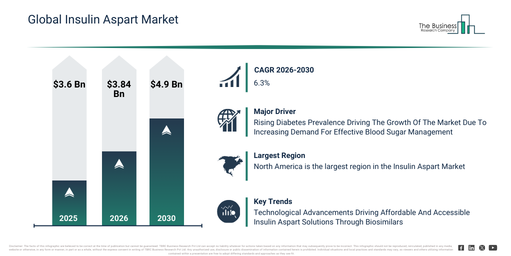
  • Rising Diabetes Prevalence Driving The Growth Of The Market Due To Increasing Demand For Effective Blood Sugar Management Is Supporting Development Across The Insulin Aspart Market

    Rising Diabetes Prevalence Driving The Growth Of The Market Due To Increasing Demand For Effective Blood Sugar Management Is Supporting Development Across The Insulin Aspart Market

    The Business Research Company’s 2026 market reports feature advanced enhancements such as market attractiveness analysis, total addressable market evaluation, company benchmarking matrices, interactive Excel dashboards, expanded supply chain intelligence, emerging startup coverage, and detailed product insights, delivering more actionable and strategically valuable research.

    How Will The Market Size Of The Insulin Aspart Market Progress Through 2030?

    The insulin aspart market size has experienced significant expansion in recent years. Its valuation is projected to increase from $3.6 billion in 2025 to $3.84 billion in 2026, reflecting a compound annual growth rate (CAGR) of 6.6%. This growth observed in the past can be attributed to factors such as the rising prevalence of diabetes, the standardization of insulin therapy, improved hospital-based diabetes management, the demand for postprandial glucose control, and the adoption of endocrinology guidelines.

    The insulin aspart market is anticipated to experience substantial expansion over the coming years. It is projected to reach $4.9 billion in 2030, exhibiting a compound annual growth rate (CAGR) of 6.3%. This expansion during the forecast period is largely due to factors such as the increasing global prevalence of diabetes, the rising need for fast-acting insulin, the development of advanced insulin delivery systems, the shift towards personalized diabetes management, and the growth of outpatient insulin therapy. Key developments expected in this period include a greater uptake of rapid-acting insulin analogs, more widespread use of pre-filled insulin delivery devices, the broadening of intensive insulin therapy approaches, an increasing preference for managing blood sugar levels at mealtimes, and enhanced patient adherence through more adaptable dosing schedules.

    Download A Free Sample Report For Comprehensive Market Insights:

    https://www.thebusinessresearchcompany.com/sample.aspx?id=24572&type=smp

    Which Growth Drivers Are Expected To Support The Insulin Aspart Market Forward?

    The growing incidence of diabetes is projected to fuel the expansion of the insulin aspart market in the future. Diabetes, a persistent health issue marked by elevated blood sugar levels resulting from insufficient insulin production or utilization, is becoming more common. This increase in diabetes cases is linked to inactive lifestyles and diets rich in sugar and processed foods, leading to obesity and insulin resistance. Insulin aspart aids in managing this increasing prevalence by providing fast-acting insulin, which effectively regulates post-meal blood sugar surges, thus enhancing overall blood glucose control for diabetic individuals. For example, a report from March 2025 by the Office for Health Improvement and Disparities, a UK-based government body, indicated that the prevalence of type 2 diabetes among English adults aged 17 and above reached 7.0% by March 2024, an increase from 6.8% in March 2023. Consequently, the rising occurrence of diabetes is propelling the insulin aspart market.

    How Is The Insulin Aspart Market Distributed Across Key Segments?

    The insulin aspart market covered in this report is segmented –

    1) By Insulin Type: Human Insulin, Analog Insulin

    2) By Product Type: Vials, Pre-Filled Pens, Cartridges

    3) By Application: Type 1 Diabetes, Type 2 Diabetes, Gestational Diabetes

    4) By End User: Hospitals, Home Care, Specialty Clinics, Diabetes Care Centers, Other End Users

    Subsegments:

    1) By Human Insulin: Regular Insulin, Neutral Protamine Hagedorn (NPH) Insulin, Other Human Insulin Types

    2) By Analog Insulin: Rapid-Acting Analog Insulin, Long-Acting Analog Insulin, Other Analog Insulin Types

    Which Trends Are Influencing The Direction Of The Insulin Aspart Market?

    Leading companies in the insulin aspart market are increasingly focusing on creating innovative products, including biosimilars, to offer more economical options and improve patient access to high-quality insulin therapies. A biosimilar is defined as a biologic medical product that is highly similar to an already approved reference biologic, with no meaningful clinical differences in terms of safety, purity, or effectiveness. For instance, in November 2023, USV Pvt Ltd, an India-based pharmaceutical company, launched INSUQUICK, India’s first biosimilar insulin aspart, marking a significant achievement in diabetes care within the country. INSUQUICK is a rapid-acting insulin analog, developed and manufactured completely in India utilizing 100% indigenous technology, and has successfully completed a rigorous clinical program to meet global quality standards. The pens are designed with a legible scale and audible clicks for precise dosing, and the product is widely available across all metropolitan areas as well as tier I and II cities. INSUQUICK aims to enhance treatment accessibility for India’s large diabetic population by providing a high-quality, locally manufactured, and more affordable rapid-acting insulin alternative, representing a vital step in improving diabetes care in the nation.

    Which Organizations Are Involved In The Insulin Aspart Market?

    Major companies operating in the insulin aspart market are Sanofi S.A., AstraZeneca plc, Novo Nordisk A/S, Cipla Limited, Lupin Limited, Zhejiang Hisun Pharmaceutical Co Ltd., Biocon Limited, Amphastar Pharmaceuticals Inc., Civica Inc., Wockhardt Limited, Gulf Pharmaceutical Industries PSC (Julphar), GEROPHARM LLC, HEC Pharm Co Ltd., USV Private Limited, Aqlivia Private Limited, Gan & Lee Pharmaceuticals Co Ltd., GeneSys Biologics Private Limited, Biogenomics Limited, MJ Biopharma Private Limited, Paras Biopharmaceuticals Finland Oy.

    Access The Complete Insulin Aspart Market Report:

    https://www.thebusinessresearchcompany.com/report/insulin-aspart-global-market-report

    Which Region Holds The Largest Share In The Insulin Aspart Market?

    North America was the largest region in the insulin aspart market in 2025. Asia-Pacific is expected to be the fastest-growing region in the forecast period. The regions covered in the insulin aspart market report are Asia-Pacific, South East Asia, Western Europe, Eastern Europe, North America, South America, Middle East, Africa.

    Access Insulin Aspart Market Report for Deeper Competitive Insights

    https://www.thebusinessresearchcompany.com/sample.aspx?id=24572&type=smp

    Browse Through More Reports Similar to the Global Insulin Aspart Market 2026, By The Business Research Company

    Clinical Nutrition For Diabetes Care Market Report 2026

    https://www.thebusinessresearchcompany.com/report/clinical-nutrition-for-diabetes-care-global-market-report

    Diabetes Care Devices Market Report 2026

    https://www.thebusinessresearchcompany.com/report/diabetes-care-devices-global-market-report

    Insulin Delivery Devices Market Report 2026

    https://www.thebusinessresearchcompany.com/report/insulin-delivery-devices-global-market-report

    Get in touch with us:

    The Business Research Company: https://www.thebusinessresearchcompany.com/

    Americas: +1 310-496-7795

    Asia: +44 7882 955267 & +91 8897263534

    Europe: +44 7882 955267

    Email us at: marketing@tbrc.info

    Follow us on:

    LinkedIn: https://in.linkedin.com/company/the-business-research-company

    YouTube: https://www.youtube.com/channel/UC24_fI0rV8cR5DxlCpgmyFQ

    Global Market Model: https://www.thebusinessresearchcompany.com/global-market-model
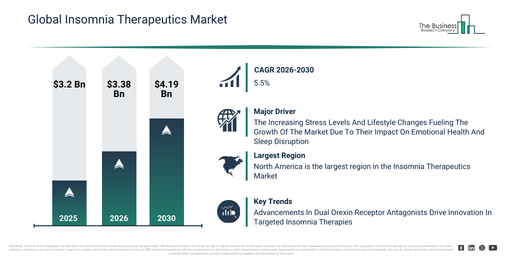
  • The Increasing Stress Levels And Lifestyle Changes Fueling The Growth Of The Market Due To Their Impact On Emotional Health And Sleep Disruption Is Supporting Development Across The Insomnia Therapeutics Market

    The Increasing Stress Levels And Lifestyle Changes Fueling The Growth Of The Market Due To Their Impact On Emotional Health And Sleep Disruption Is Supporting Development Across The Insomnia Therapeutics Market

    The Business Research Company’s 2026 market reports feature advanced enhancements such as market attractiveness analysis, total addressable market evaluation, company benchmarking matrices, interactive Excel dashboards, expanded supply chain intelligence, emerging startup coverage, and detailed product insights, delivering more actionable and strategically valuable research.

    What Is The Expected Market Size Of The Insomnia Therapeutics Market In 2026 And How Much Will It Reach By 2030?

    The insomnia therapeutics market size has experienced strong growth in recent years. It is projected to expand from $3.2 billion in 2025 to $3.38 billion in 2026, at a compound annual growth rate (CAGR) of 5.7%. The historical increase in this market can be attributed to factors such as the rising prevalence of sleep disorders, heightened stress and lifestyle-related insomnia, extensive use of prescription sleep aids, broadened retail pharmacy access, and increasing awareness of sleep health.

    The insomnia therapeutics market is projected to experience substantial expansion over the upcoming years. It is anticipated to reach $4.19 billion in 2030, exhibiting a compound annual growth rate (CAGR) of 5.5%. Factors contributing to this growth during the forecast period include the rise of digital sleep therapeutics, a growing preference for non-pharmacological interventions, an expanding aging population, the increasing integration of wearable sleep devices, and the broader availability of telehealth-based insomnia management. Key trends observed within this period encompass the increasing embrace of cognitive behavioral therapy for insomnia, a heightened demand for sleep medications that are not habit-forming, the greater application of orexin receptor antagonists, the development of home-based sleep therapy options, and the enhanced incorporation of sleep tracking into treatment strategies.

    Download A Free Sample Report For Comprehensive Market Insights:

    https://www.thebusinessresearchcompany.com/sample.aspx?id=24255&type=smp

    What Influential Factors Are Boosting The Insomnia Therapeutics Market Demand?

    Elevated stress levels and evolving lifestyle patterns are projected to drive the expansion of the insomnia therapeutics market in the coming years. These refer to the psychological and behavioral modifications in daily routines and obligations that result in emotional strain and disrupted sleep. The rise in stress and lifestyle changes is largely propelled by constant digital connectivity, which blurs work-life boundaries and curtails time for genuine mental rest. Insomnia therapeutics plays a vital role by offering effective, science-backed treatment solutions designed to restore healthy sleep patterns, reduce sleep-related anxiety, and foster mental well-being amidst modern stressors. For instance, in May 2024, the American Psychiatric Association (APA), a US-based organization of psychiatrists, reported that the percentage of U.S. adults feeling more anxious increased from 32% in 2022 to 37% in 2023, reaching 43% in 2024. This indicates that the rising stress levels and lifestyle changes are significantly contributing to the growth of the insomnia therapeutics market.

    How Does Segment Analysis Break Down The Insomnia Therapeutics Market Structure?

    The insomnia therapeutics market covered in this report is segmented –

    1) By Treatment Type: Drugs, Medical Devices

    2) By Formulation: Tablets, Capsules, Liquid Solutions, Patches

    3) By Route Of Administration: Oral, Intravenous, Transdermal, Other Routes Of Administration

    4) By Distribution Channel: Hospital Pharmacies, Retail Pharmacies, Online Pharmacies, Clinics, Wellness Centers

    Subsegments:

    1) By Drugs: Benzodiazepines, Nonbenzodiazepines, Antidepressants, Orexin Antagonists, Melatonin Antagonists, Other Drugs

    2) By Medical Devices: Cognitive Behavioral Therapy Devices (CBT-I Devices), Polysomnography Devices, Sleep Tracking Devices, Neurostimulation Devices, Light Therapy Devices

    What Trends Are Driving Changes In The Insomnia Therapeutics Market?

    Leading companies in the insomnia therapeutics market are prioritizing the development of advanced therapies, such as dual orexin receptor antagonists (DORAs), to offer targeted treatment options with fewer adverse effects and enhanced safety profiles. A DORA is a category of medicine that works by blocking both orexin-1 and orexin-2 receptors in the brain to facilitate sleep by inhibiting the wakefulness signaling pathway, commonly employed in managing insomnia. For instance, in June 2023, Idorsia Pharmaceuticals Ltd., a Switzerland-based pharmaceutical company, launched QUVIVIQ (daridorexant), a first-in-class dual orexin receptor antagonist (DORA) intended for treating chronic insomnia disorder. This therapy is formulated to lessen nighttime wakefulness without disrupting natural sleep architecture, providing patients with improved sleep initiation, duration, and daytime functionality. Its authorization represents a notable progression in insomnia treatment, delivering a precise mechanism of action unlike traditional sedative-hypnotics and addressing the demand for sustained, non-habit-forming therapeutic solutions.

    Who Are The Firms Contributing To The Insomnia Therapeutics Market Ecosystem?

    Major companies operating in the insomnia therapeutics market are Pfizer Inc., Sanofi S.A., Takeda Pharmaceutical Company Limited, Eli Lilly and Company, Merck KGaA, Eisai Co. Ltd., Sumitomo Pharma Co. Ltd., Astellas Pharma Inc., Acadia Pharmaceuticals Inc., Vanda Pharmaceuticals Inc., Idorsia Ltd., Minerva Neurosciences, Neurim Pharmaceuticals Ltd., Big Health, Cerêve Inc., Innovative Neurological Devices, Neurovalens, Electromedical Products International Inc., Pear Therapeutics, ResMed Inc.

    Access The Complete Insomnia Therapeutics Market Report:

    https://www.thebusinessresearchcompany.com/report/insomnia-therapeutics-global-market-report

    Which Region Is The Dominant Market In The Insomnia Therapeutics Market?

    North America was the largest region in the insomnia therapeutics market in 2025. Asia-Pacific is expected to be the fastest-growing region in the forecast period. The regions covered in the insomnia therapeutics market report are Asia-Pacific, South East Asia, Western Europe, Eastern Europe, North America, South America, Middle East, Africa.

    Access Insomnia Therapeutics Market Report for Deeper Competitive Insights

    https://www.thebusinessresearchcompany.com/sample.aspx?id=24255&type=smp

    Browse Through More Reports Similar to the Global Insomnia Therapeutics Market 2026, By The Business Research Company

    Insomnia Market Report 2026

    https://www.thebusinessresearchcompany.com/report/insomnia-global-market-report

    Dental Sleep Medicine Market Report 2026

    https://www.thebusinessresearchcompany.com/report/dental-sleep-medicine-global-market-report

    Sleep Testing Services Market Report 2026

    https://www.thebusinessresearchcompany.com/report/sleep-testing-services-global-market-report

    Get in touch with us:

    The Business Research Company: https://www.thebusinessresearchcompany.com/

    Americas: +1 310-496-7795

    Asia: +44 7882 955267 & +91 8897263534

    Europe: +44 7882 955267

    Email us at: marketing@tbrc.info

    Follow us on:

    LinkedIn: https://in.linkedin.com/company/the-business-research-company

    YouTube: https://www.youtube.com/channel/UC24_fI0rV8cR5DxlCpgmyFQ

    Global Market Model: https://www.thebusinessresearchcompany.com/global-market-model
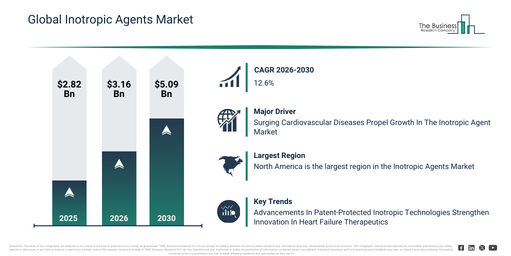
  • Surging Cardiovascular Diseases Propel Growth In The Inotropic Agent Market Is Supporting Development Across The Inotropic Agents Market

    Surging Cardiovascular Diseases Propel Growth In The Inotropic Agent Market Is Supporting Development Across The Inotropic Agents Market

    The Business Research Company’s 2026 market reports feature advanced enhancements such as market attractiveness analysis, total addressable market evaluation, company benchmarking matrices, interactive Excel dashboards, expanded supply chain intelligence, emerging startup coverage, and detailed product insights, delivering more actionable and strategically valuable research.

    What Market Size Is Forecasted For The Inotropic Agents Market By 2030 Based On Its 2026 Value?

    The inotropic agents market has observed rapid expansion in recent years. It is anticipated to expand from $2.82 billion in 2025 to $3.16 billion in 2026, recording a compound annual growth rate (CAGR) of 11.8%. The increase observed in previous periods is linked to advancements in cardiac research, the rising incidence of heart failure, improved hospital infrastructure, the availability of positive inotropic drugs, and greater awareness about cardiovascular diseases.

    The inotropic agents market size is projected for substantial expansion over the next few years. It is expected to attain a value of $5.09 billion by 2030, demonstrating a compound annual growth rate (CAGR) of 12.6%. This anticipated growth throughout the forecast period is propelled by the emergence of personalized medicine, the development of innovative inotropic agents, the integration of digital health technologies, the extension of homecare services, and the adoption of minimally invasive drug delivery systems. Noteworthy trends during the forecast period include personalized inotropic therapy, the development of novel drug formulations, the expansion of home-based cardiac care, an increased emphasis on heart failure management, and the utilization of minimally invasive drug delivery.

    Download A Free Sample Report For Comprehensive Market Insights:

    https://www.thebusinessresearchcompany.com/sample.aspx?id=10711&type=smp

    Which Drivers Are Advancing The Inotropic Agents Market Growth?

    The increasing incidence of cardiovascular diseases is propelling the inotropic agent market. Cardiovascular diseases, or CVDs, are conditions affecting the heart’s function and the vascular system. These agents are utilized in managing CVDs to enhance the heart’s contractility and overall function, address cardiac shock, and regulate heart rate by enabling stronger heart contractions, which in turn boosts blood flow. This application consequently supports the growth of the inotropic agent market. For example, the British Heart Foundation, a UK-based charity, reported in September 2025 that over 7.6 million people in the UK—comprising more than 4 million men and over 3.6 million women—are currently living with cardiovascular disease. Furthermore, projections suggest that this figure could increase by approximately 1 million by 2030 and about 2 million by 2040, primarily due to an an aging population and better survival rates. Thus, the escalating prevalence of cardiovascular diseases is significantly advancing the inotropic agent market.

    Inotropic Agents Market Driver: The Impact Of Rising Healthcare Expenditure On The Inotropic Agents Market

    An increase in healthcare spending is anticipated to stimulate the future expansion of the inotropic agents market. Healthcare expenditure defines the overall sum allocated to healthcare services, associated goods, and activities within a given healthcare system or economy during a specific timeframe. Increased healthcare spending positively affects the use of inotropic agents by cultivating an environment that encourages innovation, backs research and development, improves diagnostic capacities, and guarantees wider availability of sophisticated cardiac care. For example, the Office for National Statistics (ONS), an independent UK-based statistics producer, reported in April 2025 that total healthcare expenditure experienced a 6.5% rise in nominal terms and a 2.4% increase in real terms from 2023 to 2024, with healthcare’s proportion of GDP remaining stable at 11.1% in 2024. Consequently, increasing healthcare expenditures are fueling the growth of the inotropic agents market.

    What Segment Types Are Included In The Inotropic Agents Market Analysis?

    The inotropic agents market covered in this report is segmented –

    1) By Type: Positive Inotropic Drugs, Negative Inotropic Drugs, Other Types

    2) By Route Of Administration: Oral, Parenteral, Other Routes Of Administration

    3) By Indication: Heart Attack, Heart Failure, Angina, Arrhythmia, Other Indications

    4) By Distribution Channel: Hospital Pharmacy, Retail Pharmacy, Other Distribution Channels

    5) By End User: Hospital, Homecare, Specialty Centers, Other End Users

    Subsegments:

    1) By Positive Inotropic Drugs: Cardiac Glycosides, Catecholamines, Phosphodiesterase Inhibitors

    2) By Negative Inotropic Drugs: Beta Blockers, Calcium Channel Blockers

    3) By Other Types: Mixed Inotropic Drugs, Experimental Inotropic Agents

    Which Trends Are Shaping The Inotropic Agents Market Landscape?

    Leading companies within the inotropic agents market are prioritizing the expansion of their intellectual property holdings to improve product differentiation, safeguard novel drug mechanisms, and accelerate innovation in advanced cardiac therapies. This patent expansion involves the strategic filing and securing of patents, regulatory protections, as well as formulation claims that are critical for supporting the development and future commercialization of next-generation inotropic compounds. For instance, in October 2024, Windtree Therapeutics Inc., a U.S.-based biotechnology company, announced significant progress in the patent landscape for istaroxime, its first-in-class investigational inotropic drug candidate with a dual mechanism that enhances both systolic contraction and diastolic relaxation. The company further submitted national-phase patent applications across major global regions, including the United States, Germany, France, Italy, Japan, and China, for an intravenous formulation of istaroxime intended for the treatment of pre-cardiogenic shock and cardiogenic shock, underscoring its commitment to advancing innovative therapies for acute cardiovascular conditions.

    Which Key Players Are Active In The Inotropic Agents Market?

    Major companies operating in the inotropic agents market are Pfizer Inc., Novartis AG, Boehringer Ingelheim International GmbH, AstraZeneca plc, Johnson & Johnson, Bayer AG, Merck & Co. Inc., Bristol-Myers Squibb Company, Cipla Ltd., Eli Lilly and Company, Sanofi S.A., Baxter International Inc., Hikma Pharmaceuticals plc, Sun Pharmaceuticals Industries Ltd., Cadila Pharmaceuticals Ltd., AbbVie Inc., Amgen Inc., Daiichi Sankyo Company Limited, Eisai Co. Ltd., Fresenius Kabi AG, GlaxoSmithKline plc, Intas Pharmaceuticals Ltd., Lupin Limited, Regeneron Pharmaceuticals Inc., Roche Holding AG

    Access The Complete Inotropic Agents Market Report:

    https://www.thebusinessresearchcompany.com/report/inotropic-agents-global-market-report

    Which Area Represents The Largest Portion Of The Inotropic Agents Market?

    North America was the largest region in the inotropic agents market in 2025. Asia-Pacific is expected to be the fastest-growing region in the global inotropic agents market report during the forecast period. The regions covered in the inotropic agents market report are Asia-Pacific, South East Asia, Western Europe, Eastern Europe, North America, South America, Middle East, Africa.

    Access Inotropic Agents Market Report for Deeper Competitive Insights

    https://www.thebusinessresearchcompany.com/sample.aspx?id=10711&type=smp

    Browse Through More Reports Similar to the Global Inotropic Agents Market 2026, By The Business Research Company

    Inotropic Agents Market Report 2026

    https://www.thebusinessresearchcompany.com/report/inotropic-agents-global-market-report

    Inoculants Market Report 2026

    https://www.thebusinessresearchcompany.com/report/inoculants-global-market-report

    Otic Drugs Market Report 2026

    https://www.thebusinessresearchcompany.com/report/otic-drugs-global-market-report

    Get in touch with us:

    The Business Research Company: https://www.thebusinessresearchcompany.com/

    Americas: +1 310-496-7795

    Asia: +44 7882 955267 & +91 8897263534

    Europe: +44 7882 955267

    Email us at: marketing@tbrc.info

    Follow us on:

    LinkedIn: https://in.linkedin.com/company/the-business-research-company

    YouTube: https://www.youtube.com/channel/UC24_fI0rV8cR5DxlCpgmyFQ

    Global Market Model: https://www.thebusinessresearchcompany.com/global-market-model
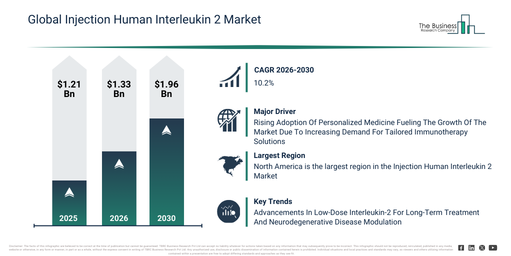
  • Rising Adoption Of Personalized Medicine Fueling The Growth Of The Market Due To Increasing Demand For Tailored Immunotherapy Solutions Is Supporting Development Across The Injection Human Interleukin 2 Market

    Rising Adoption Of Personalized Medicine Fueling The Growth Of The Market Due To Increasing Demand For Tailored Immunotherapy Solutions Is Supporting Development Across The Injection Human Interleukin 2 Market

    The Business Research Company’s 2026 market reports feature advanced enhancements such as market attractiveness analysis, total addressable market evaluation, company benchmarking matrices, interactive Excel dashboards, expanded supply chain intelligence, emerging startup coverage, and detailed product insights, delivering more actionable and strategically valuable research.

    How Is The Market Value Of The Injection Human Interleukin 2 Market Projected To Expand During 2026–2030?

    The injection human interleukin 2 market has experienced rapid expansion in recent years. It is projected to grow from $1.21 billion in 2025 to $1.33 billion in 2026, at a compound annual growth rate (CAGR) of 10.2%. This historical growth can be attributed to the early successes of cytokine-based immunotherapy, an increasing incidence of cancer, advancements in recombinant protein production, a rise in hospital-based oncology treatments, and regulatory approvals for IL-2 therapies.

    The injection human interleukin 2 market is predicted to undergo significant expansion in the coming years. It is projected to climb to $1.96 billion in 2030, demonstrating a compound annual growth rate (CAGR) of 10.2%. The anticipated growth during the forecast period stems from factors such as the expansion of cancer immunotherapy pipelines, greater utilization of IL-2 with checkpoint inhibitors, advancements in precise immune activation, increased investment in biologic oncology drugs, and the widening application of precision immunotherapy approaches. Noteworthy trends during this period include the rising incorporation of IL-2 in combination immunotherapies, increasing adoption of recombinant human interleukin 2, the broadening of IL-2 applications in oncology, a heightened emphasis on dose optimization to lessen toxicity, and a surge in clinical research concerning immune modulation.

    Download A Free Sample Report For Comprehensive Market Insights:

    https://www.thebusinessresearchcompany.com/sample.aspx?id=24254&type=smp

    What Primary Factors Are Fueling The Expansion Of The Injection Human Interleukin 2 Market?

    The increasing emphasis on personalized medicine is anticipated to propel the expansion of the injection human interleukin 2 market. Personalized medicine represents a medical approach that tailors treatment and prevention strategies to an individual’s distinct genetic makeup, lifestyle, and environment. The heightened demand for personalized medicine is driven by progress in genetic testing, which allows for more accurate diagnoses and targeted treatments adapted to specific patient profiles, thereby improving outcomes and reducing side effects. Injection Human Interleukin 2 aids personalized medicine by enabling its use in custom-designed immunotherapy regimens, where IL-2 is administered based on a patient’s unique immune profile to maximize therapeutic effectiveness and minimize adverse effects. For example, in February 2024, a report from the Personalized Medicine Coalition, a US-based non-profit organization, revealed that the FDA authorized 16 novel customized medicines for patients with rare diseases in 2023, a notable rise from only six in 2022. Therefore, the growing focus on personalized medicine will stimulate the growth of the injection human interleukin 2 market.

    Which Segment Divisions Form The Structure Of The Injection Human Interleukin 2 Market?

    The injection human interleukin 2 market covered in this report is segmented –

    1) By Product Type: Recombinant Human Interleukin 2, Natural Human Interleukin 2

    2) By Route Of Administration: Subcutaneous Injection, Intravenous Injection, Intramuscular Injection

    3) By Distribution Channel: Direct Sales, Pharmacies, Online Sales

    4) By Application: Oncology, Immunotherapy, Autoimmune Diseases

    5) By End-User: Hospitals, Clinics, Research Institutes, Other End-Users

    Subsegments:

    1) By Recombinant Human Interleukin 2: Escherichia Coli Derived Interleukin 2, Yeast Derived Interleukin 2, Mammalian Cell Derived Interleukin 2

    2) By Natural Human Interleukin 2: Plasma Derived Interleukin 2, Peripheral Blood Mononuclear Cell Derived Interleukin 2

    What Trends Are Influencing The Injection Human Interleukin 2 Market Outlook?

    Leading companies in the injection human interleukin-2 market are concentrating on developing innovative solutions, such as low-dose interleukin-2, to facilitate longer-term treatment regimens. This therapeutic approach involves administering small quantities of IL-2 to specifically stimulate regulatory T cells, thereby enhancing immune tolerance while minimizing inflammation and adverse effects. For instance, in October 2024, Coya Therapeutics Inc., a US-based biotechnology company, released the findings of a double-blind investigation into the impact of subcutaneous low-dose interleukin-2 (LD IL-2) in Alzheimer’s disease (AD). The study successfully achieved its primary and secondary objectives, improving regulatory T cells (Tregs) without affecting T effector lymphocytes. Exploratory results indicated that low-dose IL-2 (LD IL-2) administered every four weeks stabilized cognition, raised cerebrospinal fluid (CSF) soluble Aß42 levels, and stabilized CSF Neurofilament Light Chain (NfL). These findings reinforce the confidence in employing Treg modulation for neurodegenerative diseases, particularly Alzheimer’s. COYA 301, an investigational low-dose IL-2, aims to boost Treg function through subcutaneous administration for inflammatory modulation.

    Who Are The Leading Firms Participating In The Injection Human Interleukin 2 Market?

    Major companies operating in the injection human interleukin 2 market are F. Hoffmann-La Roche AG, Novartis AG, Merck & Co. Inc., Bristol Myers Squibb, Sanofi S.A., Pfizer Inc., Amgen Inc., Nektar Therapeutics, Synthekine Inc., Xilio Therapeutics Inc., Iovance Biotherapeutics Inc., Clinigen Group plc, BeiGene Ltd., Shanghai Fosun Pharmaceutical Group Co. Ltd., Beijing SL Pharmaceutical Co. Ltd., Shandong Quangang Pharmaceutical Co. Ltd., PeproTech Inc., Qkine Ltd., Akron Biotechnology LLC, Thermo Fisher Scientific Inc.

    Access The Complete Injection Human Interleukin 2 Market Report:

    https://www.thebusinessresearchcompany.com/report/injection-human-interleukin-2-global-market-report

    Which Region Commands The Largest Share Of The Injection Human Interleukin 2 Market?

    North America was the largest region in the injection human interleukin 2 market in 2025. Asia-Pacific is expected to be the fastest-growing region in the forecast period. The regions covered in the injection human interleukin 2 market report are Asia-Pacific, South East Asia, Western Europe, Eastern Europe, North America, South America, Middle East, Africa.

    Access Injection Human Interleukin 2 Market Report for Deeper Competitive Insights

    https://www.thebusinessresearchcompany.com/sample.aspx?id=24254&type=smp

    Browse Through More Reports Similar to the Global Injection Human Interleukin 2 Market 2026, By The Business Research Company

    Anti Inflammatory Therapeutics Market Report 2026

    https://www.thebusinessresearchcompany.com/report/anti-inflammatory-therapeutics-global-market-report

    Patient Controlled Injectors Market Report 2026

    https://www.thebusinessresearchcompany.com/report/patient-controlled-injectors-global-market-report

    Immunotoxin Market Report 2026

    https://www.thebusinessresearchcompany.com/report/immunotoxin-global-market-report

    Get in touch with us:

    The Business Research Company: https://www.thebusinessresearchcompany.com/

    Americas: +1 310-496-7795

    Asia: +44 7882 955267 & +91 8897263534

    Europe: +44 7882 955267

    Email us at: marketing@tbrc.info

    Follow us on:

    LinkedIn: https://in.linkedin.com/company/the-business-research-company

    YouTube: https://www.youtube.com/channel/UC24_fI0rV8cR5DxlCpgmyFQ

    Global Market Model: https://www.thebusinessresearchcompany.com/global-market-model

  • Increasing Demand For Personalized Medicine Driving The Market Due To Advances In Genomics And Tailored Treatment Approaches Is Supporting Development Across The Injectable Targeted Therapy Market

    Increasing Demand For Personalized Medicine Driving The Market Due To Advances In Genomics And Tailored Treatment Approaches Is Supporting Development Across The Injectable Targeted Therapy Market

    The Business Research Company’s 2026 market reports feature advanced enhancements such as market attractiveness analysis, total addressable market evaluation, company benchmarking matrices, interactive Excel dashboards, expanded supply chain intelligence, emerging startup coverage, and detailed product insights, delivering more actionable and strategically valuable research.

    What Are The Forecasted Market Size Figures For The Injectable Targeted Therapy Market In 2026 And 2030?

    The injectable targeted therapy market has experienced swift expansion recently. It will grow from $64.22 billion in 2025 to $71.03 billion in 2026 at a compound annual growth rate (CAGR) of 10.6%. This historical growth can be attributed to factors such as rising cancer incidence rates, advancements in monoclonal antibody development, increasing adoption of biologic therapies, the expansion of oncology treatment centers, and enhanced clinical research activity in targeted drugs.

    The injectable targeted therapy market is anticipated to experience substantial growth over the next few years, with its size projected to reach **$105.2 billion in 2030, demonstrating a compound annual growth rate (CAGR) of 10.3%.** This expansion during the forecast period is primarily driven by factors such as the increasing number of approvals for targeted injectable therapies, escalating investments in personalized medicine, an expansion of biologics manufacturing capacity, a growing focus on immunotherapy development, and a rising demand for precision treatment protocols. Key trends observed during this period include the increasing development of precision oncology injectables, a rising adoption of antibody-based therapeutics, a heightened emphasis on targeted drug delivery systems, the expansion of combination injectable therapies, and an enhanced focus on minimizing off-target toxicity.

    Download A Free Sample Report For Comprehensive Market Insights:

    https://www.thebusinessresearchcompany.com/sample.aspx?id=28250&type=smp

    Which Strategic Drivers Are Supporting The Injectable Targeted Therapy Market Development?

    The increasing demand for personalized medicine is projected to stimulate the growth of the injectable targeted therapy market moving forward. Personalized medicine signifies a healthcare approach that tailors prevention, diagnosis, and treatment according to an individual’s genetic, environmental, and lifestyle elements. The rise in personalized medicine is propelled by developments in genomics, which allow for a deeper understanding of individual genetic variations, thereby enabling more precise, targeted treatments that enhance patient outcomes and minimize trial-and-error in therapies. Injectable targeted therapy supports personalized medicine by delivering medications that specifically target a patient’s unique molecular or genetic disease profile, boosting efficacy and reducing side effects. For instance, in February 2024, as per the Personalized Medicine Coalition, a US-based non-profit organization, in 2023, the FDA sanctioned 16 new personalized treatments for rare disease patients, an increase from six in 2022. The newly authorized personalized treatments for 2023 also encompassed seven cancer drugs and three for other diseases and conditions. Consequently, the rising demand for personalized medicine is propelling the expansion of the injectable targeted therapy market.

    How Are Different Segment Groups Identified Within The Injectable Targeted Therapy Market?

    The injectable targeted therapy market covered in this report is segmented –

    1) By Type: Monoclonal Antibodies, Small-Molecules, Immunotoxins, Other Types

    2) By Mechanism Of Action: Targeted Inhibition of Signal Transduction Pathways, Targeted Delivery Of Cytotoxic Agents, Immunomodulation

    3) By Route Of Administration: Intravenous, Subcutaneous, Intramuscular

    4) By Application: Oncology, Cardiometabolism, Immunology, Infectious Diseases, Neuroscience, Ophthalmology, Other Applications

    5) By End User: Hospitals, Specialty Clinics, Research Laboratories

    Subsegments:

    1) By Monoclonal Antibodies: Fully Human Antibodies, Humanized Antibodies, Chimeric Antibodies

    2) By Small-Molecules: Tyrosine Kinase Inhibitors, Proteasome Inhibitors, Mtor Inhibitors

    3) By Immunotoxins: Recombinant Immunotoxins, Chemical Conjugates, Fusion Proteins

    4) By Other Types: Antibody-Drug Conjugates, Bispecific Antibodies, Peptide-Based Therapeutics

    Which Trends Are Expected To Shape The Injectable Targeted Therapy Market?

    Leading companies in the injectable targeted therapy market are focusing on creating advanced solutions, such as subcutaneous injections, to enhance drug delivery efficiency, improve patient adherence, and more effectively target specific disease pathways. A subcutaneous injection involves delivering medication beneath the skin into the fatty tissue, allowing the drug to be slowly absorbed into the bloodstream. For instance, in August 2025, Eisai Co., Ltd., a pharmaceutical company from Japan, partnered with Biogen Inc., a biotechnology firm from the US, to receive FDA approval for LEQEMBI IQLIK, a treatment for early Alzheimer’s disease. This convenient, once-weekly subcutaneous injection is for the maintenance treatment of early Alzheimer’s disease, enabling patients to self-administer it at home after their initial intravenous therapy. It works by slowing cognitive decline through targeting and clearing amyloid beta plaques and protofibrils, which are primary contributors to Alzheimer’s progression. This formulation reduces the overall treatment time, minimizes systemic side effects compared to IV infusions, and decreases the frequency of infusion center visits, thereby providing greater independence for patients and their care partners.

    Which Companies Are Engaged In The Injectable Targeted Therapy Market Environment?

    Major companies operating in the injectable targeted therapy market are Johnson & Johnson Services Inc., F. Hoffmann-La Roche Ltd., Merck & Co. Inc., Pfizer Inc., AbbVie Inc., Bayer AG, Sanofi SA, Novartis AG, AstraZeneca plc, Bristol-Myers Squibb Company, GlaxoSmithKline plc, Eli Lilly and Company, Amgen Inc., Gilead Sciences Inc., Regeneron Pharmaceuticals Inc., Biogen Inc., Eisai Co. Ltd., Genentech Inc., Beigene Ltd., Agenus Inc., Xilio Therapeutics Inc.

    Access The Complete Injectable Targeted Therapy Market Report:

    https://www.thebusinessresearchcompany.com/report/injectable-targeted-therapy-global-market-report

    Which Region Accounts For The Highest Share Of The Injectable Targeted Therapy Market?

    North America was the largest region in the injectable targeted therapy market in 2025. Asia-Pacific is expected to be the fastest-growing region in the forecast period. The regions covered in the injectable targeted therapy market report are Asia-Pacific, South East Asia, Western Europe, Eastern Europe, North America, South America, Middle East, Africa.

    Access Injectable Targeted Therapy Market Report for Deeper Competitive Insights

    https://www.thebusinessresearchcompany.com/sample.aspx?id=28250&type=smp

    Browse Through More Reports Similar to the Global Injectable Targeted Therapy Market 2026, By The Business Research Company

    Targeted Therapy Market Report 2026

    https://www.thebusinessresearchcompany.com/report/targeted-therapy-global-market-report

    Patient Controlled Injectors Market Report 2026

    https://www.thebusinessresearchcompany.com/report/patient-controlled-injectors-global-market-report

    Injectable Drug Delivery Devices Market Report 2026

    https://www.thebusinessresearchcompany.com/report/injectable-drug-delivery-devices-global-market-report

    Get in touch with us:

    The Business Research Company: https://www.thebusinessresearchcompany.com/

    Americas: +1 310-496-7795

    Asia: +44 7882 955267 & +91 8897263534

    Europe: +44 7882 955267

    Email us at: marketing@tbrc.info

    Follow us on:

    LinkedIn: https://in.linkedin.com/company/the-business-research-company

    YouTube: https://www.youtube.com/channel/UC24_fI0rV8cR5DxlCpgmyFQ

    Global Market Model: https://www.thebusinessresearchcompany.com/global-market-model