Month: May 2026

  • Rising Adoption Of Regenerative Medicine Is Driving The Cell Therapy Human Raw Materials Market Is Supporting Development Across The Cell Therapy Human Raw Materials Market

    Rising Adoption Of Regenerative Medicine Is Driving The Cell Therapy Human Raw Materials Market Is Supporting Development Across The Cell Therapy Human Raw Materials Market

    The Business Research Company’s 2026 market reports feature advanced enhancements such as market attractiveness analysis, total addressable market evaluation, company benchmarking matrices, interactive Excel dashboards, expanded supply chain intelligence, emerging startup coverage, and detailed product insights, delivering more actionable and strategically valuable research.

    What Is The Expected Market Size Of The Cell Therapy Human Raw Materials Market In 2026 And How Much Will It Reach By 2030?

    The market size for cell therapy human raw materials has experienced rapid expansion over recent years. It is projected to increase from $3.36 billion in 2025 to $4.03 billion in 2026, demonstrating a compound annual growth rate (CAGR) of 19.8%. This historical growth is attributable to factors such as the early embrace of stem cell therapies, the broadening scope of academic research in cell therapy, an increase in clinical trials for cell-based treatments, greater access to human-derived biological materials, and a rise in funding allocated to regenerative medicine research.

    The market size for cell therapy human raw materials is anticipated to experience substantial expansion in the coming years. This market is projected to reach $7.71 billion by 2030, exhibiting a compound annual growth rate (CAGR) of 17.6%. Drivers for this projected growth include a significant increase in approved cell therapy products, a growing need for both allogeneic and autologous treatments, enhanced regulatory oversight concerning raw material quality, the scaling up of commercial cell therapy production, and the proliferation of oncology-specific cell therapies. Key trends anticipated during this period encompass an elevated demand for xeno-free and human-derived raw materials, a heightened focus on GMP-grade and clinical-grade components, progressing standardization in the sourcing and processing of human cells, an broadening of raw material needs for innovative cell therapies, and the establishment of long-term supply agreements for essential human raw materials.

    Download A Free Sample Report For Comprehensive Market Insights:

    https://www.thebusinessresearchcompany.com/sample.aspx?id=15759&type=smp

    Which Drivers Are Advancing The Cell Therapy Human Raw Materials Market Growth?

    The increasing utilization of regenerative medicine is anticipated to propel the cell therapy human raw materials market in the future. Regenerative medicine encompasses therapeutic strategies aimed at mending, substituting, or regrowing compromised tissues and organs through the application of stem cells, gene therapy, tissue engineering, or various biological processes to reinstate regular functionality. The uptake of regenerative medicine is expanding, driven by progress in biotechnology, enhanced comprehension of cellular operations, a rising need for personalized treatment, and its capacity to meet previously unfulfilled medical requirements. This cell therapy human raw materials market plays a crucial role in backing regenerative medicine by providing vital biological ingredients necessary for manufacturing consistent, efficacious, and dependable cell-based treatments. As an illustration, in August 2023, data from the Alliance for Regenerative Medicine, a US-based non-profit entity, indicated that the global count of cell, gene, and tissue-engineering therapeutic developers reached 2,760 in Q1 2023, marking a 101% increase from 1,369 developers in Q1 2022. Consequently, the growing acceptance of regenerative medicine is fueling the cell therapy human raw materials market.

    Which Segment-Based Categories Are Covered In The Cell Therapy Human Raw Materials Market?

    The cell therapy human raw materials market covered in this report is segmented –

    1) By Product: Cell Culture Media, Cell Culture Sera, Cell Culture Supplements, Reagents And Buffers, Other Raw Materials

    2) By Type Of Cell Therapy: Dendritic Cell Therapy, Natural Killer (NK) Cell Therapy, Stem Cell Therapy, T-Cell Therapy

    3) By End-Use: Biopharmaceutical And Pharmaceutical Companies, Contract Research Organizations (CROs) And Contract Manufacturing Organization (CMOs), Academic And Research Institutions

    Subsegments:

    1) By Cell Culture Media: Serum-Free Media, Serum-Based Media, Defined Media, Specialized Media (E.G., For Stem Cells)

    2) By Cell Culture Sera: Human Serum

    3) By Cell Culture Supplements: Growth Factors, Cytokines, Peptides

    4) By Reagents And Buffers: Enzymes (E.G., Trypsin), Ph Buffers, Cryoprotectants

    5) By Other Raw Materials: Cell-Free DNA, Plasma And Platelet-Rich Plasma (PRP)

    Which Trends Are Guiding The Development Of The Cell Therapy Human Raw Materials Market?

    Leading companies active in the cell therapy human raw materials market are increasingly prioritizing the development of chemically defined cell culture mediums to expedite advancements in cell therapy. A cell culture medium is a nutrient-dense solution crafted to deliver crucial nutrients, growth factors, and appropriate environmental conditions essential for the in vitro growth and reproduction of cells outside their natural surroundings. For instance, in May 2023, Lonza Group AG, a Switzerland-based healthcare manufacturing organization, unveiled TheraPEAK T-VIVO Cell Culture Medium. This launch highlights a chemically defined, serum-free, and animal component-free formulation, incorporating recombinant proteins, offering enhanced support for culture and expansion, and providing application guidance, which ensures consistency, safety, and regulatory conformity in cell therapy production. This medium marks substantial technological strides through the elimination of animal components, its chemically defined nature, and regulatory-favorable characteristics, collectively contributing to improved safety, quality, and compliance with regulations.

    Which Key Players Are Active In The Cell Therapy Human Raw Materials Market?

    Major companies operating in the cell therapy human raw materials market are Thermo Fisher Scientific Inc., Merck KGaA, Lonza Group Ltd., Sartorius AG, Miltenyi Biotec, Bio-Techne Corporation, STEMCELL Technologies, PromoCell GmbH, AllCells LLC, BioIVT LLC, ACROBiosystems, Sartorius CellGenix GmbH, RoosterBio Inc., Takara Bio Inc., Grifols S.A., Charles River Laboratories, WuXi AppTec, Catalent Inc., Fujifilm Cellular Dynamics Inc., Orgenesis Inc.

    Access The Complete Cell Therapy Human Raw Materials Market Report:

    https://www.thebusinessresearchcompany.com/report/cell-therapy-human-raw-materials-global-market-report

    Which Region Contributes The Most To The Cell Therapy Human Raw Materials Market?

    North America was the largest region in the cell therapy human raw materials market in 2025. Asia-Pacific is expected to be the fastest-growing region in the forecast period. The regions covered in the cell therapy human raw materials market report are Asia-Pacific, South East Asia, Western Europe, Eastern Europe, North America, South America, Middle East, Africa.

    Access Cell Therapy Human Raw Materials Market Report for Deeper Competitive Insights

    https://www.thebusinessresearchcompany.com/sample.aspx?id=15759&type=smp

    Browse Through More Reports Similar to the Global Cell Therapy Human Raw Materials Market 2026, By The Business Research Company

    Cell Therapy Human Raw Materials Market Report 2026

    https://www.thebusinessresearchcompany.com/report/cell-therapy-human-raw-materials-global-market-report

    Cell Therapy Technologies Market Report 2026

    https://www.thebusinessresearchcompany.com/report/cell-therapy-technologies-global-market-report

    Cells Therapy Market Report 2026

    https://www.thebusinessresearchcompany.com/report/cells-therapy-global-market-report

    Get in touch with us:

    The Business Research Company: https://www.thebusinessresearchcompany.com/

    Americas: +1 310-496-7795

    Asia: +44 7882 955267 & +91 8897263534

    Europe: +44 7882 955267

    Email us at: marketing@tbrc.info

    Follow us on:

    LinkedIn: https://in.linkedin.com/company/the-business-research-company

    YouTube: https://www.youtube.com/channel/UC24_fI0rV8cR5DxlCpgmyFQ

    Global Market Model: https://www.thebusinessresearchcompany.com/global-market-model
  • The Soaring Prevalence Of Chronic Diseases Fuels Expansion In The Cell Therapy Market Is Supporting Development Across The Cell Therapy Market

    The Soaring Prevalence Of Chronic Diseases Fuels Expansion In The Cell Therapy Market Is Supporting Development Across The Cell Therapy Market

    The Business Research Company’s 2026 market reports feature advanced enhancements such as market attractiveness analysis, total addressable market evaluation, company benchmarking matrices, interactive Excel dashboards, expanded supply chain intelligence, emerging startup coverage, and detailed product insights, delivering more actionable and strategically valuable research.

    What Market Size Is Forecasted For The Cell Therapy Market By 2030 Based On Its 2026 Value?

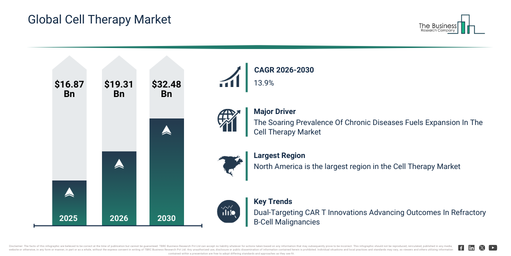
    The cell therapy market size has seen rapid expansion in recent years. This market is forecast to expand from $16.87 billion in 2025 to $19.31 billion in 2026, exhibiting a compound annual growth rate (CAGR) of 14.5%. The historical growth of this market can be attributed to the high cost associated with autologous therapies, constraints in donor availability, the absence of standardized manufacturing processes, early successes in clinical trials, and an increasing incidence of chronic diseases.

    The cell therapy market is projected to experience substantial expansion in the upcoming years, with its valuation expected to reach $32.48 billion in 2030, demonstrating a compound annual growth rate (CAGR) of 13.9%. This predicted rise over the forecast period is primarily driven by advances in gene editing techniques, increased automation in cell manufacturing, a surge in investments directed towards cell therapy startups, the rising demand for regenerative medicine solutions, and the broadening application of these therapies across oncology and cardiovascular diseases. Significant trends during this period are anticipated to include the development of personalized cell therapies, advancements in allogeneic therapies, improvements in cell storage and transportation methods, innovations in regulatory and compliance protocols, and the emergence of new clinical applications.

    Download A Free Sample Report For Comprehensive Market Insights:

    https://www.thebusinessresearchcompany.com/sample.aspx?id=3393&type=smp

    What Primary Factors Are Fueling The Expansion Of The Cell Therapy Market?

    The increasing occurrence of chronic illnesses supported the growth of the cell therapy sector. The US Centers for Disease Control and Prevention (CDC) defines chronic disease as a long-term ailment, lasting a year or longer, often needing medical care, restricting daily activities, or both, encompassing conditions such as heart disease, cancer, diabetes, and Parkinson’s disease. Stem cell applications offer advantages for individuals afflicted with spinal cord injuries, type 1 diabetes, Parkinson’s disease (PD), heart disease, cancer, and osteoarthritis. For example, in July 2024, the Centers for Disease Control and Prevention (CDC), a national public health agency based in the US, issued important updates concerning public health programs. Annually, more than 944,800 Americans succumb to heart disease or stroke, making up over one-third of all fatalities. In the U.S., 1.7 million people are diagnosed with cancer each year, with over 600,000 deaths, positioning it as the second principal cause of mortality. Furthermore, over 38 million Americans suffer from diabetes, and an additional 98 million adults are prediabetic, elevating their susceptibility to type 2 diabetes. Diabetes has the potential to result in serious complications such as heart disease, kidney failure, and blindness. Obesity impacts 20% of children and 42% of adults, intensifying the likelihood of chronic conditions including type 2 diabetes, heart disease, and specific cancers. The expanding occurrence of chronic illnesses boosted the need for cell therapies and supported the development of the cell therapy market.

    What Are The Major Segment Categories Within The Cell Therapy Market?

    The cell therapy market covered in this report is segmented –

    1) By Technique: Stem Cell Therapy, Cell Vaccine, Adoptive Cell Transfer (ACT), Fibroblast Cell Therapy, Chondrocyte Cell Therapy

    2) By Therapy Type: Allogeneic Therapies, Autologous Therapies

    3) By Application: Oncology, Cardiovascular Disease (CVD), Orthopedic, Wound Healing, Other Applications

    Subsegments:

    1) By Stem Cell Therapy: Hematopoietic Stem Cell Transplantation, Mesenchymal Stem Cell Therapy, Embryonic Stem Cell Therapy, Induced Pluripotent Stem Cell Therapy

    2) By Cell Vaccine: Dendritic Cell Vaccine, Tumor-Infiltrating Lymphocyte (TIL) Vaccine, Antigen-Specific Cell Vaccine

    3) By Adoptive Cell Transfer (ACT): CAR T-Cell Therapy, T-Cell Receptor (TCR) Therapy, Natural Killer (NK) Cell Therapy

    4) By Fibroblast Cell Therapy: Dermal Fibroblast Therapy, Adipose-Derived Stem Cell Therapy

    5) By Chondrocyte Cell Therapy: Autologous Chondrocyte Implantation (ACI), Chondral Graft Therapy

    What Trends Are Influencing The Future Of The Cell Therapy Market?

    Major companies within the cell therapy market are engaged in the development of advanced, multi-targeted treatments, leveraging robust early-stage clinical findings to boost efficacy and address unmet medical demands in challenging cancers. An illustrative example occurred in June 2025, when Johnson & Johnson, a US-based pharmaceutical entity, disclosed encouraging preliminary outcomes from its Phase 1b investigation of JNJ-4496. This specific therapy is a dual-targeting CAR T-cell therapy engineered to attach to both CD19 and CD20, intended for individuals with relapsed or refractory large B-cell lymphoma. Initial data, unveiled at the 2025 EHA Congress, demonstrated impressive response rates, achieving 75–80% complete responses at the optimized Phase 2 dosage, alongside an absence of Grade 3–4 cytokine release syndrome. The treatment exhibited promising safety characteristics, manageable neurotoxicity, and considerable activity even among patients who had undergone extensive prior treatments. These discoveries highlight the promise inherent in future dual-targeting CAR T methodologies and reaffirm Johnson & Johnson’s commitment to pioneering innovative therapies for B-cell malignancies.

    Who Are The Leading Firms Participating In The Cell Therapy Market?

    Major companies operating in the cell therapy market are Stempeutics Research Pvt. Ltd., Osiris Therapeutics Inc., Vericel Corporation, AlloSource, Anterogen Co. Ltd., MediPost Co. Ltd., Pharmicell Co. Ltd., Corestem Inc., Stemedica Cell Technologies Inc., Adaptimmune Therapeutics plc, Mesoblast Ltd., Cell Medica Ltd., Cellerant Therapeutics Inc., Kolon TissueGene Inc., Athersys Inc., Forticell Bioscience Inc., Bone Therapeutics, Holostem Terapie Avanzate S.r.l, Fibrocell Science Inc., AlloCure Inc., TiGenix NV, Cells for Cells, Cellular Biomedicine Group Inc.

    Access The Complete Cell Therapy Market Report:

    https://www.thebusinessresearchcompany.com/report/cells-therapy-global-market-report

    Which Regional Market Leads The Cell Therapy Market?

    North America was the largest region in the cell therapy market in 2025. The regions covered in the cell therapy market report are Asia-Pacific, South East Asia, Western Europe, Eastern Europe, North America, South America, Middle East, Africa.

    Access Cell Therapy Market Report for Deeper Competitive Insights

    https://www.thebusinessresearchcompany.com/sample.aspx?id=3393&type=smp

    Browse Through More Reports Similar to the Global Cell Therapy Market 2026, By The Business Research Company

    Cells Therapy Market Report 2026

    https://www.thebusinessresearchcompany.com/report/cells-therapy-global-market-report

    Cell Therapy Technologies Market Report 2026

    https://www.thebusinessresearchcompany.com/report/cell-therapy-technologies-global-market-report

    Autologous Cell Therapy Market Report 2026

    https://www.thebusinessresearchcompany.com/report/autologous-cell-therapy-global-market-report

    Get in touch with us:

    The Business Research Company: https://www.thebusinessresearchcompany.com/

    Americas: +1 310-496-7795

    Asia: +44 7882 955267 & +91 8897263534

    Europe: +44 7882 955267

    Email us at: marketing@tbrc.info

    Follow us on:

    LinkedIn: https://in.linkedin.com/company/the-business-research-company

    YouTube: https://www.youtube.com/channel/UC24_fI0rV8cR5DxlCpgmyFQ

    Global Market Model: https://www.thebusinessresearchcompany.com/global-market-model

  • Widespread Adoption Of Organ Transplantation Fueling The Growth Of The Market Due To Rising Need For Advanced Tissue And Organ Repair Solutions Is Supporting Development Across The Cell Regeneration Medicine Market

    Widespread Adoption Of Organ Transplantation Fueling The Growth Of The Market Due To Rising Need For Advanced Tissue And Organ Repair Solutions Is Supporting Development Across The Cell Regeneration Medicine Market

    The Business Research Company’s 2026 market reports feature advanced enhancements such as market attractiveness analysis, total addressable market evaluation, company benchmarking matrices, interactive Excel dashboards, expanded supply chain intelligence, emerging startup coverage, and detailed product insights, delivering more actionable and strategically valuable research.

    How Is The Market Value Of The Cell Regeneration Medicine Market Projected To Expand During 2026–2030?

    The cell regeneration medicine market has seen swift expansion in recent years. Its valuation is anticipated to climb from $47.83 billion in 2025 to $54.45 billion in 2026, achieving a compound annual growth rate (CAGR) of 13.8%. The historical rise of this market can be linked to the early acceptance of stem cell therapies, the introduction of fundamental tissue engineering products, an increasing prevalence of chronic conditions, governmental financial backing for regenerative medicine, and improvements in methods for cell isolation.

    The cell regeneration medicine market is projected to experience substantial expansion over the coming years. Its valuation is anticipated to reach $94.61 billion by 2030, demonstrating a compound annual growth rate (CAGR) of 14.8%. This projected expansion during the forecast period is driven by several factors, including the advancement of gene therapy applications, the incorporation of AI into cell therapy research, a rising need for personalized medicine, the global increase in clinical trials, and the innovation of scalable bioreactor technologies. Key developments expected during this period encompass personalized cell therapies, regenerative tissue engineering, sophisticated cell culture methods, automated laboratory solutions, and broadened clinical trial activities.

    Download A Free Sample Report For Comprehensive Market Insights:

    https://www.thebusinessresearchcompany.com/sample.aspx?id=12884&type=smp

    Which Strategic Drivers Are Supporting The Cell Regeneration Medicine Market Development?

    The expanding adoption of organ transplantation is projected to boost the growth of the cell regeneration medicine market in the future. Organ transplantation is a medical intervention where a diseased or missing organ in a recipient is replaced by an organ removed from another body. This procedure has gained traction due to its ability to offer extended lives and help patients avoid medical interventions like dialysis. Cell regenerative medicine provides potential breakthroughs in organ transplantation through its focus on repairing and regenerating damaged tissues or organs. For example, in January 2025, the Organ Procurement and Transplantation Network, an independent US-based non-profit organization, announced that organ transplants surpassed 48,000 in 2024, showing a 3.3% increase compared to the number performed in 2023. Thus, the broad acceptance of organ transplants is propelling the cell regeneration medicine market.

    How Is The Cell Regeneration Medicine Market Distributed Across Key Segments?

    The cell regeneration medicine market covered in this report is segmented –

    1) By Product: Therapeutics, Tools, Banks, Services

    2) By Therapeutic Category: Dermatology, Musculoskeletal, Immunology And Inflammation, Oncology, Cardiovascular, Ophthalmology, Other Therapeutic Categories

    3) By End-User: Hospitals And Clinics, Commercial Industries, Government And Academic Research Institutes

    Subsegments:

    1) By Therapeutics: Stem Cell Therapies, Gene Therapies, Tissue Engineering Products

    2) By Tools: Cell Culture Equipment, Bioreactors, Imaging Systems

    3) By Banks: Stem Cell Banks, Tissue Banks, Cord Blood Banks

    4) By Services: Cell Processing Services, Research And Development Services, Clinical Trial Services

    Which Trends Are Contributing To Changes In The Cell Regeneration Medicine Market?

    Leading companies operating within the cell regeneration medicine market are concentrating on developing medical-grade bioink to achieve a competitive advantage. Medical-grade bioink denotes a specifically engineered ink employed in bioprinting that satisfies rigorous regulatory benchmarks for safety and biocompatibility, making it suitable for applications in tissue engineering, regenerative medicine, and the creation of biological structures for medical use. For instance, in October 2023, CELLINK, a company based in Sweden specializing in products and technologies for cell regeneration medicine, unveiled CELLINK Vivoink. CELLINK Vivoink represents the first medical-grade bioink specifically designed for clinical applications in regenerative medicine and tissue engineering, optimized for excellent printability, mechanical stability, and cell viability.

    Which Companies Are Engaged In The Cell Regeneration Medicine Market Environment?

    Major companies operating in the cell regeneration medicine market are Pfizer Inc., Johnson & Johnson, Novartis AG, Bristol-Myers Squibb Company, Medtronic Plc, Amgen Inc., ViaCord LLC, Stryker Corporation, Zimmer Biomet Holdings Inc., Cook Biotech Inc., Integra LifeSciences Holdings Corporation, NuVasive Inc., Organogenesis Holdings Inc., Takara Bio Inc., MiMedx Group Inc., Vericel Corporation, Mesoblast Limited, Osiris Therapeutics Inc., Guanhao Biotech Co. Ltd., CordLife Group Limited, FUJIFILM Cellular Dynamics Inc., Cesca Therapeutics Inc., U.S. Stem Cell Inc., Cytori Therapeutics Inc.

    Access The Complete Cell Regeneration Medicine Market Report:

    https://www.thebusinessresearchcompany.com/report/cell-regeneration-medicine-global-market-report

    Which Region Holds The Largest Share In The Cell Regeneration Medicine Market?

    North America was the largest region in the cell regeneration medicine market in 2025. The regions covered in the cell regeneration medicine market report are Asia-Pacific, South East Asia, Western Europe, Eastern Europe, North America, South America, Middle East, Africa.

    Access Cell Regeneration Medicine Market Report for Deeper Competitive Insights

    https://www.thebusinessresearchcompany.com/sample.aspx?id=12884&type=smp

    Browse Through More Reports Similar to the Global Cell Regeneration Medicine Market 2026, By The Business Research Company

    Cell Regeneration Medicine Market Report 2026

    https://www.thebusinessresearchcompany.com/report/cell-regeneration-medicine-global-market-report

    Regenerative Medicine Market 2026

    https://www.thebusinessresearchcompany.com/report/regenerative-medicine-market

    Cells Therapy Market Report 2026

    https://www.thebusinessresearchcompany.com/report/cells-therapy-global-market-report

    Get in touch with us:

    The Business Research Company: https://www.thebusinessresearchcompany.com/

    Americas: +1 310-496-7795

    Asia: +44 7882 955267 & +91 8897263534

    Europe: +44 7882 955267

    Email us at: marketing@tbrc.info

    Follow us on:

    LinkedIn: https://in.linkedin.com/company/the-business-research-company

    YouTube: https://www.youtube.com/channel/UC24_fI0rV8cR5DxlCpgmyFQ

    Global Market Model: https://www.thebusinessresearchcompany.com/global-market-model

  • Rising Cancer Prevalence Propels Growth of Cell Line Development Market Is Supporting Development Across The Cell Line Development Market

    Rising Cancer Prevalence Propels Growth of Cell Line Development Market Is Supporting Development Across The Cell Line Development Market

    The Business Research Company’s 2026 market reports feature advanced enhancements such as market attractiveness analysis, total addressable market evaluation, company benchmarking matrices, interactive Excel dashboards, expanded supply chain intelligence, emerging startup coverage, and detailed product insights, delivering more actionable and strategically valuable research.

    What Are The Forecasted Market Size Figures For The Cell Line Development Market In 2026 And 2030?

    The cell line development market size has seen rapid expansion in recent years. Its value is expected to increase from $9.36 billion in 2025 to $10.7 billion in 2026, achieving a compound annual growth rate (CAGR) of 14.4%. This historical growth can be attributed to factors such as an increase in monoclonal antibody development, the expansion of biopharmaceutical research activities, the growing use of mammalian expression systems, an escalating demand for in vitro toxicity testing, and advancements in academic and industrial life science research.

    The cell line development market is projected to experience significant expansion over the coming years, with its size forecast to reach $16.99 billion by 2030, demonstrating a compound annual growth rate (CAGR) of 12.3%. This anticipated growth is primarily driven by a surge in biologics and biosimilar pipelines, an increasing demand for scalable bioproduction platforms, growing investment in cell and gene therapies, the rising adoption of continuous cell lines, and the expansion of tissue engineering and regenerative medicine research. Major trends expected during this period include the rising adoption of stable and high-yield cell lines, growing demand for serum-free and chemically defined media, an increased focus on cell line stability and genetic integrity, the expansion of mammalian cell line usage in bioproduction, and an increase in the outsourcing of cell line development activities.

    Download A Free Sample Report For Comprehensive Market Insights:

    https://www.thebusinessresearchcompany.com/sample.aspx?id=15536&type=smp

    What Major Growth Factors Are Impacting The Cell Line Development Market?

    The expansion of the cell line development market is anticipated to be driven by the rising incidence of cancer in the future. Cancer is defined as a collection of illnesses marked by the uncontrolled multiplication and dispersion of atypical cells throughout the organism. Factors contributing to the escalating prevalence of cancer include an aging population, lifestyle-associated hazards, excessive weight, and inherited susceptibilities. This market segment facilitates cancer research through the provision of dependable cellular models, essential for screening drugs, evaluating their effectiveness, and pinpointing potential therapeutic options. As an illustration, in February 2024, the World Health Organization (WHO), a Switzerland-based United Nations agency, reported that worldwide cancer instances are forecast to surpass 0.035 billion by 2050, indicating a 77% surge compared to the 0.02 billion cases recorded in 2022. Consequently, the growing occurrence of cancer is a key impetus for the expansion of the cell line development market.

    How Does Segment Analysis Break Down The Cell Line Development Market Structure?

    The cell line development market covered in this report is segmented –

    1) By Product: Reagents And Media, Equipment, Accessories And Consumables

    2) By Source: Mammalian, Non-Mammalian

    3) By Cell Line: Recombinant, Hybridomas, Continuous Cell Line, Primary Cell Line

    4) By Application: Bioproduction, Drug Discovery, Toxicity Testing, Tissue Engineering, Research

    Subsegments:

    1) By Reagents And Media: Cell Culture Media, Serum-Free Media, Recombinant Protein Supplements, Growth Factors, Cytokines And Hormones, Buffers And Salts

    2) By Equipment: Bioreactors And Fermenters, Incubators, Cell Counters And Analyzers, Cell Sorters, Cryopreservation Equipment, Filtration And Separation Equipment

    3) By Accessories And Consumables: Culture Vessels (Flasks, Plates), Pipettes And Pipette Tips, Cell Culture Inserts, Syringes And Needles, Cryovials And Freezing Containers, Petri Dishes

    What Trends Are Shaping The Cell Line Development Market Structure?

    Prominent companies in the cell line development market are actively working on establishing groundbreaking platforms aimed at streamlining processes, boosting output, and accelerating the creation of biologic drugs. These pioneering cell line development platforms are advanced, engineered systems crafted to optimize the formation of cell lines by improving selection accuracy, increasing protein expression levels, and shortening the overall development timelines for biologic therapeutics. For instance, in January 2023, Abzena, a UK-based company specializing in outsourced research, development, and manufacturing services, unveiled AbZelect and AbZelectPro. These two next-generation platforms were developed to expedite the cell line development process for biologic drug programs, offering superior productivity per manufacturing run, enhanced capacity, lower operational costs, and quicker provision of vital therapies to patients.

    Who Are The Prominent Players Across The Cell Line Development Market?

    Major companies operating in the cell line development market are Thermo Fisher Scientific Inc., Danaher Corporation, Merck KGaA, GE Health Care, Corning Inc., Lonza Group Ltd., WuXi AppTec, Sartorius AG, GenScript Biotech Corporation, FUJIFILM Diosynth Biotechnologies, KBI Biopharma Inc., Advanced Instruments LLC, Cyagen, Horizon Discovery Group Plc, Probiogen AG, PromoCell GmbH, Premas Biotech, Eurofins Scientific SE, Promega Corporation, Rentschler Biopharma SE

    Access The Complete Cell Line Development Market Report:

    https://www.thebusinessresearchcompany.com/report/cell-line-development-global-market-report

    Which Region Is The Dominant Market In The Cell Line Development Market?

    North America was the largest region in the cell line development market in 2025. The regions covered in the cell line development market report are Asia-Pacific, South East Asia, Western Europe, Eastern Europe, North America, South America, Middle East, Africa.

    Access Cell Line Development Market Report for Deeper Competitive Insights

    https://www.thebusinessresearchcompany.com/sample.aspx?id=15536&type=smp

    Browse Through More Reports Similar to the Global Cell Line Development Market 2026, By The Business Research Company

    Cell Line Development Market Report 2026

    https://www.thebusinessresearchcompany.com/report/cell-line-development-global-market-report

    Cell Cultures Market Report 2026

    https://www.thebusinessresearchcompany.com/report/cell-cultures-global-market-report

    Cell Cultures Market Report 2026

    https://www.thebusinessresearchcompany.com/report/cell-cultures-global-market-report

    Get in touch with us:

    The Business Research Company: https://www.thebusinessresearchcompany.com/

    Americas: +1 310-496-7795

    Asia: +44 7882 955267 & +91 8897263534

    Europe: +44 7882 955267

    Email us at: marketing@tbrc.info

    Follow us on:

    LinkedIn: https://in.linkedin.com/company/the-business-research-company

    YouTube: https://www.youtube.com/channel/UC24_fI0rV8cR5DxlCpgmyFQ

    Global Market Model: https://www.thebusinessresearchcompany.com/global-market-model
  • Growing Focus On Personalized Medicine Is Fuelling The Growth Of Market Due To Rising Demand For Targeted And Rare Disease Therapies Is Supporting Development Across The Cell Culture Media Market For Regenerative Medicines Market

    Growing Focus On Personalized Medicine Is Fuelling The Growth Of Market Due To Rising Demand For Targeted And Rare Disease Therapies Is Supporting Development Across The Cell Culture Media Market For Regenerative Medicines Market

    The Business Research Company’s 2026 market reports feature advanced enhancements such as market attractiveness analysis, total addressable market evaluation, company benchmarking matrices, interactive Excel dashboards, expanded supply chain intelligence, emerging startup coverage, and detailed product insights, delivering more actionable and strategically valuable research.

    How Much Larger Will The Cell Culture Media Market For Regenerative Medicines Market Become By 2030 Compared To 2026?

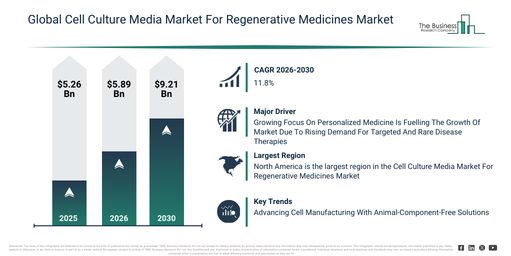
    The cell culture media market for regenerative medicines has witnessed substantial growth in recent years. It is anticipated to expand from $5.26 billion in 2025 to $5.89 billion in 2026, achieving a compound annual growth rate (CAGR) of 12.0%. This historical growth can be attributed to the rising utilization of cell culture in academic research, escalating investments in regenerative medicine, the continued reliance on traditional basal media formulations, the broadening scope of pharmaceutical and biotechnology research and development, and the increasing prevalence of chronic and degenerative diseases.

    The cell culture media market dedicated to regenerative medicines is poised for substantial growth in the upcoming years, with projections indicating it will reach **$9.21 billion by 2030**, driven by a compound annual growth rate (CAGR) of **11.8%**. This expansion during the forecast period is primarily due to advancements in stem cell and gene therapy development, a rising need for personalized regenerative treatments, the proliferation of cell therapy manufacturing facilities, increased adoption of chemically defined and specialty media, and a growing number of regulatory approvals for regenerative medicine products. Noteworthy trends for this period encompass a surge in demand for serum-free and chemically defined media, wider integration of cell culture media in stem cell and cell therapy applications, heightened focus on optimizing media for cell differentiation and proliferation, an increase in regenerative medicine research and clinical trials, and the growing necessity for scalable and reproducible cell culture solutions.

    Download A Free Sample Report For Comprehensive Market Insights:

    https://www.thebusinessresearchcompany.com/sample.aspx?id=27241&type=smp

    What Market Drivers Are Helping Shape The Cell Culture Media Market For Regenerative Medicines Market Expansion?

    The increasing emphasis on personalized medicine is projected to fuel the expansion of the cell culture media market for regenerative medicines. Personalized medicine is defined as a medical strategy that customizes treatment and prevention approaches based on an individual’s genetic makeup, environment, and lifestyle. The rising focus on personalized medicine is attributed to the growing necessity for targeted therapies in rare and complex diseases, a demand that is increasing due to enhancements in genomic research and access to precision diagnostics. The cell culture media market for regenerative medicines supports personalized medicine by enabling the development of specialized cell culture media designed to cultivate patient-specific cells for individualized regenerative therapies. For instance, in February 2024, as reported by the Personalized Medicine Coalition, a US-based nonprofit organization, the FDA approved 16 new personalized treatments for rare disease patients in 2023, an increase from 6 in 2022. Therefore, the expanding focus on personalized medicine is a significant driver of the cell culture media market for regenerative medicines.

    What Segment Types Are Included In The Cell Culture Media Market For Regenerative Medicines Market Analysis?

    The cell culture media market for regenerative medicines market covered in this report is segmented –

    1) By Type: Liquid Media, Semi-Solid And Solid Media

    2) By Application: Tissue Engineering, Stem Cell Research, Cell Therapy, Drug Discovery And Development, Other Applications

    3) By End User: Pharmaceutical And Biotechnology Companies, Academic And Research Institutes, Hospitals And Diagnostic Laboratories, Cell Banks, Other End Users

    Subsegments:

    1) By Liquid Media: Basal Media, Serum-Free Media, Chemically Defined Media, Protein-Free Media, Specialty Media

    2) By Semi-Solid And Solid Media: Agar-Based Media, Gelatin-Based Media, Collagen-Based Media, Methylcellulose Media

    Which Trends Are Supporting The Evolution Of The Cell Culture Media Market For Regenerative Medicines Market?

    Leading companies within the cell culture media market for regenerative medicines are concentrating on developing innovative products, such as animal-component-free mediums, to improve cell growth consistency, enhance safety, meet regulatory requirements, and support scalable clinical manufacturing. An animal-component-free medium refers to a cell culture solution formulated without any animal-derived materials, specifically designed to boost consistency, safety, and regulatory compliance in both research and therapeutic applications. As an illustration, in May 2023, Lonza Group AG, a Switzerland-based life sciences company, introduced TheraPEAK T-VIVO Cell Culture Medium. This novel, chemically defined, animal-component-free formulation is engineered to optimize CAR T-cell manufacturing. By eliminating the reliance on animal or human serum, which is traditionally linked to high variability, the risk of adventitious agents, and the necessity for extensive safety testing and batch stockpiling, the new medium significantly enhances process consistency, improves control, and streamlines regulatory compliance, ultimately cutting costs and accelerating time-to-market. Delivering high performance without the need for human serum supplementation, TheraPEAK T-VIVO signifies a strategic advancement in Lonza’s mission to expedite and simplify cell therapy commercialization for its global customer base.

    Which Companies Form The Competitive Landscape Of The Cell Culture Media Market For Regenerative Medicines Market?

    Major companies operating in the cell culture media market for regenerative medicines market are Thermo Fisher Scientific Inc., Danaher Corporation, Merck KGaA, Avantor Inc., Lonza Group AG, Cytiva Life Sciences, Sartorius AG, Bio-Techne Corporation, Miltenyi Biotec B.V. & Co. KG, STEMCELL Technologies Inc., FUJIFILM Irvine Scientific Inc., PromoCell GmbH, Cell Biologics Inc., Xcell Biosciences Inc.

    Access The Complete Cell Culture Media Market For Regenerative Medicines Market Report:

    https://www.thebusinessresearchcompany.com/report/cell-culture-media-market-for-regenerative-medicines-global-market-report

    Which Area Represents The Largest Portion Of The Cell Culture Media Market For Regenerative Medicines Market?

    North America was the largest region in the cell culture media market for regenerative medicines market in 2025. Asia-Pacific is expected to be the fastest-growing region in the forecast period. The regions covered in the cell culture media market for regenerative medicines market report are Asia-Pacific, South East Asia, Western Europe, Eastern Europe, North America, South America, Middle East, Africa.

    Access Cell Culture Media Market For Regenerative Medicines Market Report for Deeper Competitive Insights

    https://www.thebusinessresearchcompany.com/sample.aspx?id=27241&type=smp

    Browse Through More Reports Similar to the Global Cell Culture Media Market For Regenerative Medicines Market 2026, By The Business Research Company

    Quick Response Qr Codes Payment Market Report 2026

    https://www.thebusinessresearchcompany.com/report/quick-response-qr-codes-payment-global-market-report

    Digital Gift Card Market Report 2026

    https://www.thebusinessresearchcompany.com/report/digital-gift-card-global-market-report

    Pay Per Click Ppc Software Market Report 2026

    https://www.thebusinessresearchcompany.com/report/pay-per-click-ppc-software-global-market-report

    Get in touch with us:

    The Business Research Company: https://www.thebusinessresearchcompany.com/

    Americas: +1 310-496-7795

    Asia: +44 7882 955267 & +91 8897263534

    Europe: +44 7882 955267

    Email us at: marketing@tbrc.info

    Follow us on:

    LinkedIn: https://in.linkedin.com/company/the-business-research-company

    YouTube: https://www.youtube.com/channel/UC24_fI0rV8cR5DxlCpgmyFQ

    Global Market Model: https://www.thebusinessresearchcompany.com/global-market-model

  • Rising Pharmaceutical Drug Manufacturing Fuels Growth In The Cell Culture Media Market Is Supporting Development Across The Cell Culture Media Market

    Rising Pharmaceutical Drug Manufacturing Fuels Growth In The Cell Culture Media Market Is Supporting Development Across The Cell Culture Media Market

    The Business Research Company’s 2026 market reports feature advanced enhancements such as market attractiveness analysis, total addressable market evaluation, company benchmarking matrices, interactive Excel dashboards, expanded supply chain intelligence, emerging startup coverage, and detailed product insights, delivering more actionable and strategically valuable research.

    What Growth In Market Value Is Anticipated For The Cell Culture Media Market Between 2026 And 2030?

    The cell culture media market has experienced significant growth in recent times. It is anticipated to expand from $6.13 billion in 2025 to $6.9 billion in 2026, showing a compound annual growth rate (CAGR) of 12.6%. This historical expansion can be linked to factors such as increased demand for biopharmaceutical production, a surge in academic and clinical research activities, the advent of stem cell research, the evolution of classical media formulations, and a rising awareness of drug screening techniques.

    The cell culture media market is projected to experience substantial expansion over the upcoming years. Its valuation is anticipated to reach $10.41 billion by 2030, demonstrating a compound annual growth rate (CAGR) of 10.8%. This anticipated growth during the forecast timeframe is primarily driven by progress in precision medicine, the rising implementation of automated liquid handling systems, the expansion of applications in tissue engineering and regenerative medicine, the increasing need for serum-free and chemically defined media, and the broadening scope of cell-based diagnostics and therapies. Key trends identified for this period encompass customized cell culture media formulations, the broadening of stem cell research applications, the ongoing development of serum-free and chemically defined media, the integration of automation and high-throughput screening, and continued expansion within tissue engineering and regenerative medicine.

    Download A Free Sample Report For Comprehensive Market Insights:

    https://www.thebusinessresearchcompany.com/sample.aspx?id=14871&type=smp

    Which Significant Factors Are Encouraging Growth In The Cell Culture Media Market?

    The expanding manufacturing of pharmaceutical drugs is projected to propel the cell culture media market in the coming years. Pharmaceutical drugs refer to medicines or substances utilized for the prevention, treatment, or diagnosis of medical conditions in both humans and animals. The rise in pharmaceutical drug production is driven by the growing prevalence of chronic and infectious diseases, alongside an aging global population that requires more medications to manage age-related ailments. Cell culture media provide the essential nutrients and a suitable environment for the growth and maintenance of cells used during pharmaceutical drug manufacturing, ensuring optimal cell development and the creation of desired therapeutic proteins or molecules. For instance, in December 2024, the Association of the British Pharmaceutical Industry (ABPI), a UK-based organization, reported that the total number of clinical trials for drugs initiated in the UK saw an increase from 411 in 2022 to 426 in 2023. Thus, the increased production of pharmaceutical drugs is a key driver for the growth of the cell culture media market.

    Which Segment Divisions Form The Structure Of The Cell Culture Media Market?

    The cell culture media market covered in this report is segmented –

    1) By Media Format: Liquid Media, Semi-Solid And Solid Media

    2) By Product: Serum Free Media, Classical Media, Stem Cell Culture Media, Specialty Media, Chemically Defined Media, Other Cell Culture Media

    3) By Application: Biopharmaceutical Production, Diagnostics, Drug Screening And Development, Tissue Engineering And Regenerative Medicine, Other Applications

    4) By End User: Biotechnology And Pharmaceutical Industry, Academic Institute, Research Laboratory, Other End Users

    Subsegments:

    1) By Liquid Media: Classical Media, Chemically Defined Media, Serum-Free Media, Specialty Media (Protein-Free, Low-Glucose Media)

    2) By Semi-Solid And Solid Media: Semi-Solid Media (Agar-Based), Solid Media (Petri Dishes, Agar Plates For Colony Formation)

    What Trends Are Affecting The Growth Of The Cell Culture Media Market?

    Leading companies operating within the cell culture media market are concentrating on developing novel culture cell media, such as chemically defined and animal-component-free formulations, to secure a competitive advantage in the market. These chemically defined and animal-component-free formulations aim to enhance cell growth and protein production, ultimately boosting the scalability and efficiency of biopharmaceutical manufacturing processes. For instance, in July 2023, Lonza Group Ltd., a Switzerland-based healthcare company, unveiled TheraPRO CHO Media System, an innovative cell culture platform engineered to improve productivity and quality in therapeutic protein manufacture. This new system is specifically designed to optimize therapeutic monoclonal antibody production and features a chemically defined, animal-component-free, two-part production process, which simplifies media preparation and ensures scalability.

    Who Are The Key Market Participants In The Cell Culture Media Market?

    Major companies operating in the cell culture media market are Thermo Fisher Scientific Inc., Danaher Corporation, Merck KGaA, Becton Dickinson and Company, Corning Incorporated, Lonza Group AG, Sartorius AG, CYTIVA Lifesciences, Bio-Rad Laboratories Inc., STEMCELL Technologies Inc., Miltenyi Biotec, Takara Bio, MP Biomedicals, FUJIFILM Irvine Scientific Inc., Promocell Inc., InSphero AG, PeproTech Inc., HiMedia Laboratories Pvt. Ltd., Elabscience Biotechnology Inc., Capricorn Scientific GmbH, CAISSON Laboratories Inc., Cell Biologics Inc., Nucleus Biologics LLC

    Access The Complete Cell Culture Media Market Report:

    https://www.thebusinessresearchcompany.com/report/cell-culture-media-global-market-report

    Which Region Commands The Largest Share Of The Cell Culture Media Market?

    North America was the largest region in the cell culture media market in 2025. Asia-Pacific is expected to be the fastest-growing region in the forecast period. The regions covered in the cell culture media market report are Asia-Pacific, South East Asia, Western Europe, Eastern Europe, North America, South America, Middle East, Africa.

    Access Cell Culture Media Market Report for Deeper Competitive Insights

    https://www.thebusinessresearchcompany.com/sample.aspx?id=14871&type=smp

    Browse Through More Reports Similar to the Global Cell Culture Media Market 2026, By The Business Research Company

    Cell Culture Media Market Report 2026

    https://www.thebusinessresearchcompany.com/report/cell-culture-media-global-market-report

    Cell Cultures Market Report 2026

    https://www.thebusinessresearchcompany.com/report/cell-cultures-global-market-report

    Cell Culture Media Storage Containers Market Report 2026

    https://www.thebusinessresearchcompany.com/report/cell-culture-media-storage-containers-global-market-report

    Get in touch with us:

    The Business Research Company: https://www.thebusinessresearchcompany.com/

    Americas: +1 310-496-7795

    Asia: +44 7882 955267 & +91 8897263534

    Europe: +44 7882 955267

    Email us at: marketing@tbrc.info

    Follow us on:

    LinkedIn: https://in.linkedin.com/company/the-business-research-company

    YouTube: https://www.youtube.com/channel/UC24_fI0rV8cR5DxlCpgmyFQ

    Global Market Model: https://www.thebusinessresearchcompany.com/global-market-model
  • Surge In Demand For Personalized Medicine Driving Market Growth Due To Increased Need For Advanced Cell-Based Research Is Supporting Development Across The Cell Culture Market

    Surge In Demand For Personalized Medicine Driving Market Growth Due To Increased Need For Advanced Cell-Based Research Is Supporting Development Across The Cell Culture Market

    The Business Research Company’s 2026 market reports feature advanced enhancements such as market attractiveness analysis, total addressable market evaluation, company benchmarking matrices, interactive Excel dashboards, expanded supply chain intelligence, emerging startup coverage, and detailed product insights, delivering more actionable and strategically valuable research.

    What Is The Expected Market Value Outlook For The Cell Culture Market Through 2030?

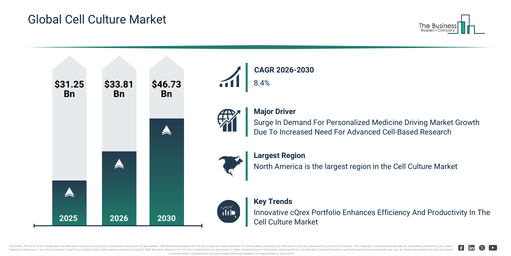
    The cell culture market has experienced substantial growth in recent years. It is forecast to expand from $31.25 billion in 2025 to $33.81 billion in 2026, at a compound annual growth rate (CAGR) of 8.2%. This historical expansion can be primarily attributed to developments like increased life science research, a rise in academic funding, the growth of the biopharmaceutical industry, the widespread application of cell lines, and a greater demand for in vitro testing.

    The cell culture market is poised for robust expansion in the coming years. It is projected to reach $46.73 billion by 2030, progressing at a compound annual growth rate (CAGR) of 8.4%. This anticipated growth is attributed to developments in regenerative medicine, increasing biologics development, innovations in cell culture media, the expansion of personalized medicine, and rising investments in research and development. Prominent trends for the forecast period include a growing demand for biopharmaceutical production, an increase in stem cell research, broader applications in cancer research, greater adoption of advanced cell lines, and a focus on the use of serum-free media.

    Download A Free Sample Report For Comprehensive Market Insights:

    https://www.thebusinessresearchcompany.com/sample.aspx?id=3392&type=smp

    What Core Drivers Are Transforming The Cell Culture Market?

    The increasing need for personalized medicine is projected to fuel the expansion of the cell culture market in the coming period. Personalized medicine, alternatively called precision medicine, refers to a type of medical treatment and therapy customized to the unique traits of individual patients. The surge in demand for personalized medicine stems from patients’ desire for healthcare aligned with their distinct genetic, molecular, and environmental profiles, resulting in better treatment results and fewer adverse reactions. Within personalized medicine, cell culture holds a vital position, acting as a fundamental instrument for research, drug creation, disease simulation, and patient-specific therapeutic uses. As an illustration, in February 2024, the Personalized Medicine Coalition, a US-based nonprofit organization advocating for individualized treatment strategies, reported that 20 out of 53 novel therapeutic molecular entities sanctioned by the Food and Drug Administration in 2023, coupled with six new gene and cell-based therapies, were categorized as personalized medicines. This constituted about 38% of all new molecular entities approved nationally. Consequently, the escalating demand for personalized medicine is a key impetus for the expansion of the cell culture market.

    How Are Different Segment Groups Identified Within The Cell Culture Market?

    The cell culture market covered in this report is segmented –

    1) By Type: Primary Cell Culture, Secondary Cell Culture, Cell Line

    2) By Media: Natural, Artificial

    3) By Applications: Stem Cell Technologies, Cancer Research, Biopharmaceutical, Tissue Engineering & Regenerative Medicine, Other Applications

    Subsegments:

    1) By Primary Cell Culture: Adherent Cell Culture, Suspension Cell Culture

    2) By Secondary Cell Culture: Continuous Cell Lines, Finite Cell Lines

    3) By Cell Line: Immortalized Cell Lines, Transformed Cell Lines

    Which Trends Are Influencing The Direction Of The Cell Culture Market?

    Leading companies within the cell culture market are actively developing innovative solutions, such as the cQrex portfolio, to enhance the efficiency and productivity of cell cultures and tackle associated challenges. The cQrex portfolio of cell culture ingredients is specifically designed to boost both efficiency and productivity. This portfolio comprises a suite of peptides and the keto acid AKG, engineered to optimize the supply of vital nutrients by improving their stability or solubility, thereby increasing overall productivity. For instance, in June 2023, Evonik Industries AG, a Germany-based specialty chemicals company, introduced the cQrex portfolio of cell culture ingredients to improve efficiency and productivity. It serves as an invaluable tool for cell culture scientists dedicated to refining the efficiency and productivity of their cell cultures. Its utility is particularly significant for cultures employed in generating high-value products, including monoclonal antibodies and vaccines. Its adoption stems from its exceptional purity, extensive range of applications, and ease of use. Furthermore, these ingredients empower cell culture scientists to elevate the efficiency and output of their cell cultures.

    Which Organizations Are Operating Within The Cell Culture Market?

    Major companies operating in the cell culture market are Becton Dickinson, Corning Incorporation, Eppendorf, GE Healthcare, Merck KGaA, Thermo Fisher Scientific, Lonza Group, HiMedia Laboratories, Agilent Technologies Inc., PromoCell GmbH, CellGenix GmbH, InvivoGen, Greiner Bio-One, Irvine Scientific, Cell Culture Company (CCC) LLC, Sera Care Life Sciences Incorporation, American Type Culture Collection, Miltenyi Biotec, Bel-Art Products Inc., Sumitomo Bakelite, EMD Millipore, VWR International LLC, WHEATON IndustriesInc, Sartorius AG, Nunc Systems, Pall Corporation

    Access The Complete Cell Culture Market Report:

    https://www.thebusinessresearchcompany.com/report/cell-cultures-global-market-report

    Which Region Accounts For The Highest Share Of The Cell Culture Market?

    North America was the largest region in the cell culture market in 2025. The Middle East is expected to be the fastest-growing region in the global cell culture market share during the forecast period. The regions covered in the cell culture market report are Asia-Pacific, South East Asia, Western Europe, Eastern Europe, North America, South America, Middle East, Africa.

    Access Cell Culture Market Report for Deeper Competitive Insights

    https://www.thebusinessresearchcompany.com/sample.aspx?id=3392&type=smp

    Browse Through More Reports Similar to the Global Cell Culture Market 2026, By The Business Research Company

    Cell Cultures Market Report 2026

    https://www.thebusinessresearchcompany.com/report/cell-cultures-global-market-report

    Cell Culture Media Market Report 2026

    https://www.thebusinessresearchcompany.com/report/cell-culture-media-global-market-report

    Primary Cell Culture Market Report 2026

    https://www.thebusinessresearchcompany.com/report/primary-cell-culture-global-market-report

    Get in touch with us:

    The Business Research Company: https://www.thebusinessresearchcompany.com/

    Americas: +1 310-496-7795

    Asia: +44 7882 955267 & +91 8897263534

    Europe: +44 7882 955267

    Email us at: marketing@tbrc.info

    Follow us on:

    LinkedIn: https://in.linkedin.com/company/the-business-research-company

    YouTube: https://www.youtube.com/channel/UC24_fI0rV8cR5DxlCpgmyFQ

    Global Market Model: https://www.thebusinessresearchcompany.com/global-market-model

  • Driving Growth Of Cell Banking Outsourcing Market Amid Rising Burden Of Chronic Diseases Is Supporting Development Across The Cell Banking Outsourcing Market

    Driving Growth Of Cell Banking Outsourcing Market Amid Rising Burden Of Chronic Diseases Is Supporting Development Across The Cell Banking Outsourcing Market

    The Business Research Company’s 2026 market reports feature advanced enhancements such as market attractiveness analysis, total addressable market evaluation, company benchmarking matrices, interactive Excel dashboards, expanded supply chain intelligence, emerging startup coverage, and detailed product insights, delivering more actionable and strategically valuable research.

    How Will The Market Value Of The Cell Banking Outsourcing Market Increase Between 2026 And 2030?

    The cell banking outsourcing market has experienced substantial growth in recent years. Its value is expected to increase from $12.86 billion in 2025 to $14.76 billion in 2026, with a compound annual growth rate (CAGR) of 14.8%. This historic expansion can be attributed to factors such as the rise in biologics manufacturing, a growing reliance on outsourced bioprocessing services, the development of vaccine production programs, an increased requirement for standardized cell line storage, and cost optimization strategies employed by pharmaceutical companies.

    Projections indicate significant expansion for the cell banking outsourcing market in the coming years. This sector is anticipated to reach a valuation of $24.12 billion in 2030, exhibiting a robust compound annual growth rate (CAGR) of 13.1%. Several factors are contributing to this forecasted expansion, including a significant increase in cell and gene therapy development pipelines, a heightened need for viral vector production, a greater emphasis from regulators on ensuring cell line traceability, the progression of personalized medicine, and the proliferation of contract development and manufacturing organizations. Key trends defining this period involve an uptick in outsourcing for GMP-compliant cell banking, a growing requirement for multi-species cell banking capacities, efforts to standardize cell line documentation and traceability, the broadening scope of viral and vector cell banking for advanced therapeutic applications, and a stronger inclination towards extended cell bank storage contracts.

    Download A Free Sample Report For Comprehensive Market Insights:

    https://www.thebusinessresearchcompany.com/sample.aspx?id=15754&type=smp

    Which Growth Factors Are Strengthening The Cell Banking Outsourcing Market Landscape?

    The cell banking outsourcing market is projected to expand due to the escalating prevalence of chronic diseases. These are enduring health conditions that manifest slowly and endure for lengthy durations, frequently necessitating continuous care. The growing impact of chronic diseases stems from evolving lifestyles, an aging global demographic, and inherited genetic factors. In its role, the cell banking outsourcing market aids chronic disease research through the provision of dedicated facilities, cutting-edge technologies, and skilled expertise, facilitating the effective storage, maintenance, and handling of cellular materials crucial for therapeutic advancements. For example, the NHS Confederation, a UK-based national association, reported in April 2025 that projections indicate 17% of the UK population might be afflicted with four or more chronic conditions by 2035. Consequently, the expanding burden of chronic illnesses is a primary catalyst for the growth of the cell banking outsourcing market.

    What Segment Categories Are Evaluated In The Cell Banking Outsourcing Market Study?

    The cell banking outsourcing market covered in this report is segmented –

    1) By Type: Master Cell Banking, Working Cell Banking, Viral Cell Banking

    2) By Cell Type: Stem Cell Banking, Non-Stem Cell Banking

    3) By Phase: Bank Storage, Bank Characterization And Testing, Bank Preparation

    Subsegments:

    1) By Master Cell Banking: Human Master Cell Bank, Animal Master Cell Bank

    2) By Working Cell Banking: Human Working Cell Bank, Animal Working Cell Bank

    3) By Viral Cell Banking: Virus Bank For Vaccine Production, Viral Vector Bank For Gene Therapy, Adenovirus Bank

    What Trends Are Driving Changes In The Cell Banking Outsourcing Market?

    Companies operating in the cell banking outsourcing market are prioritizing the development of sophisticated solutions, including single-cell potency characterization platforms. These platforms aim to deliver more precise potency assessments and support the creation of high-quality cell therapies. A single-cell potency characterization platform is defined as an advanced analytical system engineered to assess the functional capabilities and therapeutic potential of individual cells within heterogeneous cell populations, thereby offering enhanced insight into cell behavior, potency, and mechanism of action for both research and clinical development. Illustrating this trend, in January 2024, Cellply Srl, an Italy-based biotechnology company, unveiled VivaCyte. This comprehensive single-cell potency characterization platform integrates potency analysis with immunophenotyping, features fully automated operation, single-cell resolution, and rapid multi-parameter functional assessment, all designed to mitigate development time, cost, and risk while enabling an exhaustive evaluation of multiple cell therapy candidates across diverse process options.

    Who Are The Businesses Driving Activity In The Cell Banking Outsourcing Market?

    Major companies operating in the cell banking outsourcing market are Lonza Group Ltd., WuXi AppTec, Charles River Laboratories, Labcorp Drug Development, Covance Inc., SGS Life Sciences, Sartorius AG, BioReliance, Cleancells, Clean Biologics, Texcell, Goodwin Biotechnology Inc., Perfectus Biomed Limited, BioStorage Technologies Inc., Toxikon Corp., PX’Therapeutics SA, Sigma-Aldrich Co. Ltd., Transcell Biolife Pvt Ltd, Eurofins Scientific SE, ViruSure GmbH

    Access The Complete Cell Banking Outsourcing Market Report:

    https://www.thebusinessresearchcompany.com/report/cell-banking-outsourcing-global-market-report

    Which Region Is The Primary Market For The Cell Banking Outsourcing Market?

    North America was the largest region in the cell banking outsourcing market in 2025. Asia-Pacific is expected to be the fastest-growing region in the forecast period. The regions covered in the cell banking outsourcing market report are Asia-Pacific, South East Asia, Western Europe, Eastern Europe, North America, South America, Middle East, Africa.

    Access Cell Banking Outsourcing Market Report for Deeper Competitive Insights

    https://www.thebusinessresearchcompany.com/sample.aspx?id=15754&type=smp

    Browse Through More Reports Similar to the Global Cell Banking Outsourcing Market 2026, By The Business Research Company

    Cell Banking Outsourcing Market Report 2026

    https://www.thebusinessresearchcompany.com/report/cell-banking-outsourcing-global-market-report

    Hospital Outsourcing Market Report 2026

    https://www.thebusinessresearchcompany.com/report/hospital-outsourcing-global-market-report

    Call Center Outsourcing Market Report 2026

    https://www.thebusinessresearchcompany.com/report/call-center-outsourcing-global-market-report

    Get in touch with us:

    The Business Research Company: https://www.thebusinessresearchcompany.com/

    Americas: +1 310-496-7795

    Asia: +44 7882 955267 & +91 8897263534

    Europe: +44 7882 955267

    Email us at: marketing@tbrc.info

    Follow us on:

    LinkedIn: https://in.linkedin.com/company/the-business-research-company

    YouTube: https://www.youtube.com/channel/UC24_fI0rV8cR5DxlCpgmyFQ

    Global Market Model: https://www.thebusinessresearchcompany.com/global-market-model
  • Growing Number Of Clinical Trials Fuels Cell And Gene Therapy Market Growth Is Supporting Development Across The Cell and Gene Therapy Market

    Growing Number Of Clinical Trials Fuels Cell And Gene Therapy Market Growth Is Supporting Development Across The Cell and Gene Therapy Market

    The Business Research Company’s 2026 market reports feature advanced enhancements such as market attractiveness analysis, total addressable market evaluation, company benchmarking matrices, interactive Excel dashboards, expanded supply chain intelligence, emerging startup coverage, and detailed product insights, delivering more actionable and strategically valuable research.

    What Will Be The Estimated Market Size Of The Cell and Gene Therapy Market By 2030?

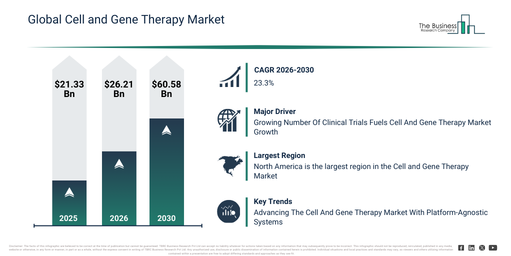
    The market for cell and gene therapy has witnessed significant expansion over recent years. It is projected to grow from $21.33 billion in 2025 to $26.21 billion in 2026, demonstrating a compound annual growth rate (CAGR) of 22.9%. Historically, this growth can be attributed to factors such as the limited availability of cell and gene therapies, reliance on conventional treatment modalities, the high cost of early-generation therapies, the growing incidence of oncology and neurological disorders, and a lack of specialized treatment centers.

    The cell and gene therapy market size is anticipated to experience substantial growth in the upcoming years. It is predicted to expand to $60.58 billion in 2030, demonstrating a compound annual growth rate (CAGR) of 23.3%. This expansion over the forecast period can be attributed to the progression of advanced CAR-T and genome editing therapies, an increase in clinical trials and research programs, the growing embrace of personalized medicine, enhanced government support and funding for rare disease treatments, and the incorporation of digital platforms for therapy monitoring and patient management. Significant trends during this period are expected to involve the increased adoption of CAR-T and stem cell therapies, a rise in investment for gene therapy in oncology and rare diseases, the development of personalized and targeted cell-based treatments, the expansion of hospitals and ambulatory surgical centers providing advanced therapies, and the integration of genome editing and viral vector-based technologies into clinical practice.

    Download A Free Sample Report For Comprehensive Market Insights:

    https://www.thebusinessresearchcompany.com/sample.aspx?id=3472&type=smp

    What Important Drivers Are Powering The Cell and Gene Therapy Market Growth?

    The increasing number of ongoing clinical trials is projected to fuel the expansion of the cell and gene therapy market moving forward. Clinical trials are investigative studies carried out with human participants to determine the safety and effectiveness of novel medical treatments, interventions, or diagnostic methods. These trials are fundamental to the progress and development of cell and gene therapy, offering a secure and regulated environment to test new therapies and acquire data concerning their safety and efficacy. For example, in December 2024, the Association of the British Pharmaceutical Industry (ABPI), a UK-based entity, indicated that the quantity of pharmaceutical industry trials initiated in the UK grew for the second successive year, climbing from 411 in 2022 to 426 in 2023. Thus, a rising volume of active clinical trials is stimulating the growth of the cell and gene therapy market.

    How Is The Cell and Gene Therapy Market Examined Through Segment Analysis?

    The cell and gene therapy market covered in this report is segmented –

    1) By Product: Cell Therapy, Gene Therapy

    2) By Application: Oncology, Neurological Disorders, Other Applications

    3) By End User: Hospitals, Ambulatory Surgical Centers, Cancer Care Centers, Wound Care Centers, Other End-Users

    Subsegments:

    1) By Cell Therapy: Autologous Cell Therapy, Allogeneic Cell Therapy, Stem Cell Therapy, CAR-T Cell Therapy

    2) By Gene Therapy: Viral Vector-Based Gene Therapy, Non-Viral Vector-Based Gene Therapy, Genome Editing Technologies, Antisense Oligonucleotide Therapy

    Which Trends Are Shaping The Cell and Gene Therapy Market Landscape?

    Leading companies in the cell and gene therapy market are intensifying their efforts to introduce agnostic systems, aiming to secure a competitive advantage. Agnostic systems are defined as those capable of integrating with various cell and gene therapy (CGT) software platforms, alongside biopharmaceutical or provider-facing platforms. For example, in April 2023, AmerisourceBergen, a US-based healthcare company, unveiled the Cell and Gene Therapy Integration Hub. This novel platform-agnostic system seeks to enhance connectivity throughout the cell and gene therapy (CGT) treatment journey, thereby improving the patient and provider experience. The hub operates using the company’s customer relationship management system and is built to accelerate the benefits investigation process, provide real-time visibility into therapy development and transportation status, and aid in coordinating patient support.

    Which Firms Are Competing In The Cell and Gene Therapy Market?

    Major companies operating in the cell and gene therapy market are Biogen Inc., Novartis AG, Gilead Sciences, Ionis Pharmaceuticals Inc., Alnylam Pharmaceuticals Inc., ArrowHead Pharmaceuticals Inc., Spark Therapeutics, Bluebird Bio Inc., RegenexBio, Mesoblast Limited, Stempeutics Research Pvt. Ltd., EdiGene Inc., Takara Bio, Oxford Biomedica plc, Merck, GenScript, Cellular Biomedicine Group, inStem, Bristol-Myers Squibb, Amgen, Pfizer, Kite Pharma, Freeline Therapeutics, PsiOxus Therapeutics, Herantis Pharma Plc, AstraZeneca

    Access The Complete Cell and Gene Therapy Market Report:

    https://www.thebusinessresearchcompany.com/report/cell-and-genes-therapy-global-market-report

    Which Geographic Region Represents The Largest Cell and Gene Therapy Market Share?

    North America was the largest region in the cell and gene therapy market in 2025. The regions covered in the cell and gene therapy market report are Asia-Pacific, South East Asia, Western Europe, Eastern Europe, North America, South America, Middle East, Africa.

    Access Cell and Gene Therapy Market Report for Deeper Competitive Insights

    https://www.thebusinessresearchcompany.com/sample.aspx?id=3472&type=smp

    Browse Through More Reports Similar to the Global Cell and Gene Therapy Market 2026, By The Business Research Company

    Cancer Biologics Market Report 2026

    https://www.thebusinessresearchcompany.com/report/cancer-biologics-global-market-report

    Nucleic Acid Based Gene Therapy Market Report 2026

    https://www.thebusinessresearchcompany.com/report/nucleic-acid-based-gene-therapy-global-market-report

    Genes Therapy Market Report 2026

    https://www.thebusinessresearchcompany.com/report/genes-therapy-global-market-report

    Get in touch with us:

    The Business Research Company: https://www.thebusinessresearchcompany.com/

    Americas: +1 310-496-7795

    Asia: +44 7882 955267 & +91 8897263534

    Europe: +44 7882 955267

    Email us at: marketing@tbrc.info

    Follow us on:

    LinkedIn: https://in.linkedin.com/company/the-business-research-company

    YouTube: https://www.youtube.com/channel/UC24_fI0rV8cR5DxlCpgmyFQ

    Global Market Model: https://www.thebusinessresearchcompany.com/global-market-model
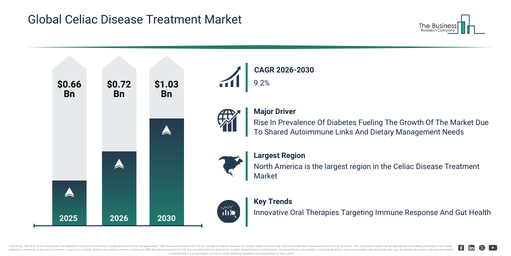
  • Rise In Prevalence Of Diabetes Fueling The Growth Of The Market Due To Shared Autoimmune Links And Dietary Management Needs Is Supporting Development Across The Celiac Disease Treatment Market

    Rise In Prevalence Of Diabetes Fueling The Growth Of The Market Due To Shared Autoimmune Links And Dietary Management Needs Is Supporting Development Across The Celiac Disease Treatment Market

    The Business Research Company’s 2026 market reports feature advanced enhancements such as market attractiveness analysis, total addressable market evaluation, company benchmarking matrices, interactive Excel dashboards, expanded supply chain intelligence, emerging startup coverage, and detailed product insights, delivering more actionable and strategically valuable research.

    What Is The Estimated Growth In Market Size Of The Celiac Disease Treatment Market During 2026–2030?

    The celiac disease treatment market has witnessed substantial growth in recent years. Its value is projected to increase from $0.66 billion in 2025 to $0.72 billion in 2026, at a compound annual growth rate (CAGR) of 9.3%. The historic growth in this market can be attributed to various factors, including limited pharmacological treatment options, a strong reliance on gluten-free diet management, rising diagnosis rates, increased awareness of autoimmune disorders, and the growing availability of diagnostic testing.

    The celiac disease treatment market size is anticipated to undergo significant expansion in the coming years. It is forecast to reach $1.03 billion in 2030, exhibiting a compound annual growth rate (CAGR) of 9.2%. This projected growth is driven by the emergence of non-dietary therapeutic solutions, the broadening of enzyme and immunotherapy development pipelines, the increasing worldwide incidence of celiac disease, enhanced diagnostic accuracy, and increased financial investment in healthcare for chronic autoimmune conditions. Notable trends for the forecast period include the increasing acceptance of gluten-free dietary management, advancements in enzyme-based therapies, a heightened focus on early detection and screening, the expansion of nutritional supplement-based treatments, and greater patient understanding and education about the disease.

    Download A Free Sample Report For Comprehensive Market Insights:

    https://www.thebusinessresearchcompany.com/sample.aspx?id=24186&type=smp

    Which Major Factors Are Contributing To The Development Of The Celiac Disease Treatment Market?

    The increasing occurrence of diabetes is projected to fuel the expansion of the celiac disease treatment market in the future. Diabetes, a chronic health condition, involves the body’s inability to properly manage blood sugar or glucose levels. The growing incidence of diabetes stems from common dietary management requirements, given that both diabetes and celiac disease necessitate precise food intake regulation to control blood sugar levels and avoid complications. Celiac disease treatment assists in managing diabetes by encouraging a gluten-free diet, which contributes to better digestive health and nutrient absorption. This approach helps achieve superior blood sugar regulation and lessens complications for people dealing with both ailments. As an illustration, in June 2024, data from the National Health Service, a UK-based government department, indicated that approximately 3,615,330 individuals registered with a general practitioner (GP) received a diagnosis of non-diabetic hyperglycemia or pre-diabetes in 2023. This represented an 18% rise from 3,065,825 cases recorded in 2022. Consequently, the escalating prevalence of diabetes is propelling the development of the celiac disease treatment market.

    Which Segment Groups Define The Celiac Disease Treatment Market Landscape?

    The celiac disease treatment market covered in this report is segmented –

    1) By Treatment Type: Vitamins And Minerals, Gluten Degrading Enzymes, Symptomatic Treatment, Other Treatments

    2) By Diagnosis: Serological Tests, Genetic Testing, Biopsy

    3) By Distribution Channel: Hospitals, Research Centres, Clinics, Other Distribution Channels

    Subsegments:

    1) By Vitamins and Minerals: Iron Supplements, Calcium Supplements, Vitamin D, Vitamin B12, Multivitamins

    2) By Gluten Degrading Enzymes: Endopeptidases, Exopeptidases, Combination Enzyme Formulations

    3) By Symptomatic Treatment: Antidiarrheal Medications, Antidepressants, Anti-inflammatory Drugs, Immunosuppressive Agents

    4) By Other Treatments: Probiotics, Immunotherapy, Experimental Therapies

    What Trends Are Influencing The Celiac Disease Treatment Market Outlook?

    Leading companies operating in the celiac disease treatment market are focusing on creating oral therapies, including small molecule therapies. These aim to provide precise relief by inhibiting immune reactions to gluten, improving patient compliance, and offering alternatives to rigorous gluten-free diets. Small molecule therapies are tiny medications designed to readily enter cells to target and treat proteins or enzymes that cause disease. For instance, in February 2025, Immunic Inc., a US-based biotechnology company, launched IMU-856. IMU-856 is a small molecule that works by increasing endogenous glucagon-like peptide-1 (GLP-1) levels, which helps enhance intestinal barrier function in celiac disease patients. It also improves nutrient absorption and alleviates symptoms without suppressing immune activity.

    Who Are The Major Companies Operating In The Celiac Disease Treatment Market?

    Major companies operating in the celiac disease treatment market are Pfizer Inc., Johnson And Johnson, F. Hoffmann-La Roche Ltd., Merck And Co. Inc., Sanofi S.A., Novartis AG, Takeda Pharmaceuticals Company Ltd., Amgen Inc., General Mills Inc., Viatris Inc., Teva Pharmaceutical Inc., Nestlé Health Science, Hikma Pharmaceuticals PLC, Amneal Pharmaceuticals LLC, Zydus Pharmaceuticals Inc., Glenmark Pharmaceuticals Company Ltd., West-Ward Pharmaceuticals Company Ltd, Innovate Biopharmaceutical, Acto Biosciences, ImmunogenX

    Access The Complete Celiac Disease Treatment Market Report:

    https://www.thebusinessresearchcompany.com/report/celiac-disease-treatment-global-market-report

    Which Region Leads The Celiac Disease Treatment Market By Size?

    North America was the largest region in the celiac disease treatment market in 2025. Asia-Pacific is expected to be the fastest-growing region in the forecast period. The regions covered in the celiac disease treatment market report are Asia-Pacific, South East Asia, Western Europe, Eastern Europe, North America, South America, Middle East, Africa.

    Access Celiac Disease Treatment Market Report for Deeper Competitive Insights

    https://www.thebusinessresearchcompany.com/sample.aspx?id=24186&type=smp

    Browse Through More Reports Similar to the Global Celiac Disease Treatment Market 2026, By The Business Research Company

    Constipation Treatment Market Report 2026

    https://www.thebusinessresearchcompany.com/report/constipation-treatment-global-market-report

    Inflammatory Bowel Disease Treatment Market Report 2026

    https://www.thebusinessresearchcompany.com/report/inflammatory-bowel-disease-treatment-global-market-report

    Crohns Disease Treatment Market Report 2026

    https://www.thebusinessresearchcompany.com/report/crohns-disease-treatment-global-market-report

    Get in touch with us:

    The Business Research Company: https://www.thebusinessresearchcompany.com/

    Americas: +1 310-496-7795

    Asia: +44 7882 955267 & +91 8897263534

    Europe: +44 7882 955267

    Email us at: marketing@tbrc.info

    Follow us on:

    LinkedIn: https://in.linkedin.com/company/the-business-research-company

    YouTube: https://www.youtube.com/channel/UC24_fI0rV8cR5DxlCpgmyFQ

    Global Market Model: https://www.thebusinessresearchcompany.com/global-market-model