Month: May 2026

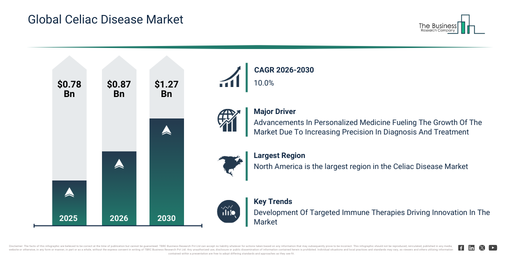
  • Advancements In Personalized Medicine Fueling The Growth Of The Market Due To Increasing Precision In Diagnosis And Treatment Is Supporting Development Across The Celiac Disease Market

    Advancements In Personalized Medicine Fueling The Growth Of The Market Due To Increasing Precision In Diagnosis And Treatment Is Supporting Development Across The Celiac Disease Market

    The Business Research Company’s 2026 market reports feature advanced enhancements such as market attractiveness analysis, total addressable market evaluation, company benchmarking matrices, interactive Excel dashboards, expanded supply chain intelligence, emerging startup coverage, and detailed product insights, delivering more actionable and strategically valuable research.

    What Market Value Expansion Is Expected For The Celiac Disease Market Over The Forecast Period?

    The celiac disease market has seen substantial growth recently. It is projected to increase from $0.78 billion in 2025 to $0.87 billion in 2026, reflecting a compound annual growth rate (CAGR) of 10.3%. This historical expansion can be attributed to several factors including greater awareness of autoimmune diseases, advancements in diagnostics, the uptake of dietary management strategies, comprehensive hospital gastroenterology care, and robust patient advocacy.

    The celiac disease market is projected to experience substantial expansion over the coming years. Its valuation is anticipated to reach $1.27 billion in 2030, demonstrating a compound annual growth rate (CAGR) of 10.0%. This anticipated growth during the forecast period is driven by factors such as the development of new drugs, advancements in gluten-free food products, personalized nutrition approaches, improved early screening initiatives, and ongoing microbiome research. Key developments expected during this period include an increase in the adoption of gluten-free diets, the expansion of packaged gluten-free food options, the proliferation of drug-based treatments, enhanced awareness and diagnosis of the disease, and a greater emphasis on microbiome-focused therapies.

    Download A Free Sample Report For Comprehensive Market Insights:

    https://www.thebusinessresearchcompany.com/sample.aspx?id=24497&type=smp

    What Key Growth Drivers Are Influencing The Celiac Disease Market?

    The expansion of personalized medicine is projected to propel the growth of the celiac disease market going forward. This approach to healthcare customizes medical care based on an individual’s genetic profile, environment, and lifestyle. The demand for personalized medicine is increasing due to the growing availability of genetic testing, which facilitates more accurate diagnoses and treatments specifically tailored to individual patient needs. Its advancement supports celiac disease treatment by enabling precise identification of genetic markers and individual immune responses, thereby leading to more targeted and effective management strategies for each patient. For instance, in February 2024, the US-based nonprofit organization, Personalized Medicine Coalition, stated that the FDA authorized 16 personalized therapies in 2023 targeting rare diseases, representing a rise compared to the 6 approved in 2022. Consequently, the growth of personalized medicine will boost the growth of the celiac disease market.

    What Key Segment Areas Are Included In The Celiac Disease Market Assessment?

    The celiac disease market covered in this report is segmented –

    1) By Treatment: Larazotide Acetate, Gluten Free Diet, Other Treatments

    2) By Route Of Administration: Oral, Parenteral

    3) By End Users: Hospitals, Homecare, Other End-Users

    Subsegments:

    1) By Larazotide Acetate: Clinical Trial Phase Products, Oral Capsule Formulation, Adult Celiac Patients, Pediatric Investigational Use, Monotherapy And Combination Therapy

    2) By Gluten Free Diet: Packaged Gluten-Free Foods, Gluten-Free Bakery Products, Gluten-Free Snacks, Gluten-Free Nutritional Supplements, Gluten-Free Beverages

    3) By Other Treatments: Corticosteroids, Immunosuppressive Drugs, Enzyme Therapies, Monoclonal Antibodies, Probiotics And Microbiome Modulators

    Which Trends Are Expected To Shape The Celiac Disease Market?

    Leading companies in the celiac disease market are concentrating on developing advanced solutions, such as anti-interleukin-15 (IL-15) antibodies, to mitigate tissue damage by curbing hyperactive immune cell activity. Anti-interleukin-15 (IL-15) antibodies are specialized proteins designed to inhibit the function of the IL-15 cytokine, thereby assisting in managing immune system responses and inflammation. For instance, in May 2025, Teva Pharmaceutical Industries, an Israel-based pharmaceutical company, announced that the U.S. Food and Drug Administration had granted Fast Track status for TEV-53408, an investigational anti-interleukin-15 (IL-15) antibody. This is an investigational monoclonal antibody created for individuals with celiac disease who maintain a gluten-free diet. It operates by blocking interleukin-15 (IL-15), a molecule involved in triggering the immune reaction that causes intestinal harm in celiac patients. The therapy is currently being assessed in a Phase 2a clinical trial to determine its safety and effectiveness.

    Which Companies Are Influencing The Celiac Disease Market?

    Major companies operating in the celiac disease market are Pfizer Inc., Sanofi SA, Novartis AG, Takeda Pharmaceutical Company Ltd., Chugai Pharmaceutical Co. Ltd., Dr Falk Pharma GmbH, Theriva Biologics Inc., Equillium Inc., Immunic Inc., Barinthus Biotherapeutics Plc, Allero Therapeutics, Anokion SA, Mozart Therapeutics, ImmunogenX, Topas Therapeutics GmbH, Parvus Therapeutics Inc., AMYRA Biotech AG, Provention Limited, Precigen Inc., Zedira GmbH, AnTolRx Inc., Nemysis Ltd., Entero Therapeutics Inc.

    Access The Complete Celiac Disease Market Report:

    https://www.thebusinessresearchcompany.com/report/celiac-disease-global-market-report

    Which Region Has The Strongest Presence In The Celiac Disease Market?

    North America was the largest region in the celiac disease market in 2025. Asia-Pacific is expected to be the fastest-growing region in the forecast period. The regions covered in the celiac disease market report are Asia-Pacific, South East Asia, Western Europe, Eastern Europe, North America, South America, Middle East, Africa.

    Access Celiac Disease Market Report for Deeper Competitive Insights

    https://www.thebusinessresearchcompany.com/sample.aspx?id=24497&type=smp

    Browse Through More Reports Similar to the Global Celiac Disease Market 2026, By The Business Research Company

    Rare Diseases Treatment Market Report 2026

    https://www.thebusinessresearchcompany.com/report/rare-diseases-treatment-global-market-report

    Rare Disease Diagnostics Market Report 2026

    https://www.thebusinessresearchcompany.com/report/rare-disease-diagnostics-global-market-report

    Rare Inflammatory Disease Treatment Market Report 2026

    https://www.thebusinessresearchcompany.com/report/rare-inflammatory-disease-treatment-global-market-report

    Get in touch with us:

    The Business Research Company: https://www.thebusinessresearchcompany.com/

    Americas: +1 310-496-7795

    Asia: +44 7882 955267 & +91 8897263534

    Europe: +44 7882 955267

    Email us at: marketing@tbrc.info

    Follow us on:

    LinkedIn: https://in.linkedin.com/company/the-business-research-company

    YouTube: https://www.youtube.com/channel/UC24_fI0rV8cR5DxlCpgmyFQ

    Global Market Model: https://www.thebusinessresearchcompany.com/global-market-model
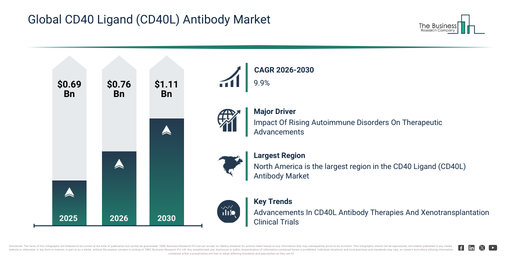
  • Impact Of Rising Autoimmune Disorders On Therapeutic Advancements Is Supporting Development Across The CD40 Ligand (CD40L) Antibody Market

    Impact Of Rising Autoimmune Disorders On Therapeutic Advancements Is Supporting Development Across The CD40 Ligand (CD40L) Antibody Market

    The Business Research Company’s 2026 market reports feature advanced enhancements such as market attractiveness analysis, total addressable market evaluation, company benchmarking matrices, interactive Excel dashboards, expanded supply chain intelligence, emerging startup coverage, and detailed product insights, delivering more actionable and strategically valuable research.

    How Will The Market Value Of The CD40 Ligand (CD40L) Antibody Market Change Between 2026 And 2030?

    The cd40 ligand (cd40l) antibody market has experienced rapid expansion in recent years. Its value is projected to increase from $0.69 billion in 2025 to $0.76 billion in 2026, demonstrating a compound annual growth rate (CAGR) of 10.0%. The factors contributing to this past growth include breakthroughs in immunology research, a rising prevalence of autoimmune diseases, advancements in biologics development, an increase in research funding, and enhancements in antibody engineering.

    The cd40 ligand (cd40l) antibody market size is anticipated to expand significantly over the next few years. It is projected to achieve a valuation of $1.11 billion by 2030, with a compound annual growth rate (CAGR) of 9.9%. This expansion during the forecast period is attributable to the growth in immunotherapy pipelines, a rise in transplant procedures, the broadening of targeted immune therapies, increasing clinical trial engagement, and growing investments in biotechnology. Prominent trends for the forecast period include escalating research in immune modulation therapies, the increasing creation of monoclonal cd40l antibodies, a heightened focus on autoimmune and transplant indications, the expansion of preclinical and clinical studies, and augmented collaboration between pharmaceutical companies and research institutions.

    Download A Free Sample Report For Comprehensive Market Insights:

    https://www.thebusinessresearchcompany.com/sample.aspx?id=21132&type=smp

    Which Core Factors Are Supporting The Expansion Of The CD40 Ligand (CD40L) Antibody Market?

    The CD40 ligand (CD40L) antibody market is projected to grow in the future due to the increasing prevalence of autoimmune disorders. Autoimmune disorders develop when the immune system mistakenly attacks the body’s own cells, causing damage, including conditions such as rheumatoid arthritis, lupus, and type 1 diabetes. The rising incidence of these disorders can be attributed to several factors, including environmental triggers, genetic predisposition, lifestyle modifications, and enhanced diagnostic awareness, all contributing to higher detection and occurrence rates. CD40 Ligand (CD40L) antibodies are emerging as a potential therapeutic option for managing autoimmune disorders by modulating the immune system’s overactive response. For instance, in May 2023, according to the University of Oxford, a UK-based research university, autoimmune disorders affect about one in ten individuals, with 13% of women and 7% of men impacted across 19 studied autoimmune diseases. Therefore, the increasing occurrences of autoimmune disorders are driving the expansion of the CD40 ligand (CD40L) antibody market.

    How Is Segment Classification Applied In The CD40 Ligand (CD40L) Antibody Market?

    The cd40 ligand (cd40l) antibody market covered in this report is segmented –

    1) By Type: Monoclonal Antibody, Polyclonal Antibody

    2) By Application: Flow Cytometry, Enzyme-Linked Immunosorbent Assay (ELISA), Western Blot, Immunoprecipitation, Immunofluorescence, Other Applications

    3) By End-User: Hospitals, Research Institutes, Specialty Clinics, Other End-Users

    Subsegments:

    1) By Monoclonal Antibody: Fully Human Monoclonal Antibodies, Humanized Monoclonal Antibodies, Chimeric Monoclonal Antibodies

    2) By Polyclonal Antibody: Rabbit Polyclonal Antibodies, Goat Polyclonal Antibodies, Mouse Polyclonal Antibodies

    What Trends Are Affecting The CD40 Ligand (CD40L) Antibody Market Dynamics?

    Leading firms within the CD40 ligand (CD40L) antibody market are concentrating their efforts on progressing clinical trials and broadening the range of therapeutic uses, such as CD40L-targeted immunomodulated xenotransplantation to improve graft survival in genetically modified porcine-to-human heart transplants. This particular method, CD40L-targeted immunomodulated xenotransplantation, involves interspecies transplantation of organs, tissues, or cells, where specific therapies inhibiting the CD40 ligand (CD40L) pathway are employed to regulate the recipient’s immune response, thereby diminishing organ rejection and enhancing graft survival. Illustratively, in September 2023, the US-based biotechnology firm Eledon Pharmaceuticals Inc. disclosed the inclusion of its Tegoprubart anti-CD40L antibody in a clinical trial subsequent to the second successful genetically modified pig heart transplant. The objective of this trial was to evaluate its effectiveness in averting organ rejection and extending therapeutic applications within organ transplantation. Furthermore, Tegoprubart has demonstrated promise in addressing autoimmune conditions by modulating immune system responses.

    Who Are The Companies Shaping The CD40 Ligand (CD40L) Antibody Market Landscape?

    Major companies operating in the cd40 ligand (cd40l) antibody market are Thermo Fisher Scientific Co. Ltd., Amgen Inc., Bio-Rad Laboratories Inc., Bio-Techne Corporation, Kiniksa Pharmaceuticals Ltd., BioLegend, Cytek Biosciences Inc., Sino Biological Inc., ACROBiosystems, Elabscience Biotechnology Inc., Cayman Chemical, Eledon Pharmaceuticals, Cell Signaling Technology, Enzo Biochem, GeneTex, GeminiBio, Creative Biolabs, BPS Bioscience Inc., LSBio, MyBiosource Inc., Boster Biological Technology, Bio X Cell, Assay Genie, Abeomics, Leinco Technologies Inc.

    Access The Complete CD40 Ligand (CD40L) Antibody Market Report:

    https://www.thebusinessresearchcompany.com/report/cd40-ligand-cd40l-antibody-global-market-report

    Which Region Stands As The Largest Contributor To The CD40 Ligand (CD40L) Antibody Market?

    North America was the largest region in the CD40 ligand (CD40L) antibody market in 2025. Asia-Pacific is expected to be the fastest-growing region in the forecast period. The regions covered in the cd40 ligand (cd40l) antibody market report are Asia-Pacific, South East Asia, Western Europe, Eastern Europe, North America, South America, Middle East, Africa.

    Access CD40 Ligand (CD40L) Antibody Market Report for Deeper Competitive Insights

    https://www.thebusinessresearchcompany.com/sample.aspx?id=21132&type=smp

    Browse Through More Reports Similar to the Global CD40 Ligand (CD40L) Antibody Market 2026, By The Business Research Company

    Monoclonal Antibodies Market Report 2026

    https://www.thebusinessresearchcompany.com/report/monoclonal-antibodies-global-market-report

    Next Generation Antibody Therapeutics Market Report 2026

    https://www.thebusinessresearchcompany.com/report/next-generation-antibody-therapeutics-global-market-report

    Monoclonal Antibodies Market Report 2026

    https://www.thebusinessresearchcompany.com/report/monoclonal-antibodies-global-market-report

    Get in touch with us:

    The Business Research Company: https://www.thebusinessresearchcompany.com/

    Americas: +1 310-496-7795

    Asia: +44 7882 955267 & +91 8897263534

    Europe: +44 7882 955267

    Email us at: marketing@tbrc.info

    Follow us on:

    LinkedIn: https://in.linkedin.com/company/the-business-research-company

    YouTube: https://www.youtube.com/channel/UC24_fI0rV8cR5DxlCpgmyFQ

    Global Market Model: https://www.thebusinessresearchcompany.com/global-market-model
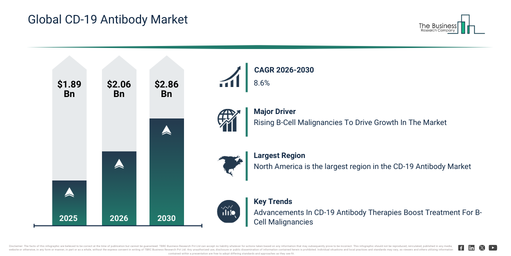
  • Rising B-Cell Malignancies To Drive Growth In The Market Is Supporting Development Across The CD-19 Antibody Market

    Rising B-Cell Malignancies To Drive Growth In The Market Is Supporting Development Across The CD-19 Antibody Market

    The Business Research Company’s 2026 market reports feature advanced enhancements such as market attractiveness analysis, total addressable market evaluation, company benchmarking matrices, interactive Excel dashboards, expanded supply chain intelligence, emerging startup coverage, and detailed product insights, delivering more actionable and strategically valuable research.

    What Is The Forecasted Rise In Market Size Of The CD-19 Antibody Market During The Forecast Period?

    The cd-19 antibody market has experienced significant expansion in recent years. It is projected to increase from $1.89 billion in 2025 to $2.06 billion in 2026, exhibiting a compound annual growth rate (CAGR) of 8.7%. This historic growth is attributable to advances in monoclonal antibody technology, the increasing incidence of leukemia and lymphoma, the expansion of immunotherapy approvals, growth in oncology research, and increased funding in hematology.

    The cd-19 antibody market size is projected for substantial expansion in the coming years. This market is anticipated to reach $2.86 billion by 2030, demonstrating a compound annual growth rate (CAGR) of 8.6%. The anticipated growth during the forecast period stems from factors such as advancements in cell and gene therapies, broader adoption of precision oncology, the widening scope of combination immunotherapies, a surge in cancer prevalence, and the proliferation of specialty oncology centers. Key developments expected over this period encompass a heightened utilization of cd19-targeted immunotherapies, increased application in treating b-cell malignancies, deeper integration with CAR-T cell therapies, accelerated development of monoclonal antibodies, and a sharpened focus on precision hematologic oncology.

    Download A Free Sample Report For Comprehensive Market Insights:

    https://www.thebusinessresearchcompany.com/sample.aspx?id=21130&type=smp

    What Are The Main Drivers Accelerating The Growth Of The CD-19 Antibody Market?

    The increasing occurrence of B-cell malignancies is anticipated to boost the expansion of the CD-19 antibody market in the future. These malignancies are a category of cancers stemming from irregular B lymphocytes, encompassing conditions like B-cell lymphomas and leukemias, which impact the immune system and can result in unregulated cellular proliferation. The growing incidence of B-cell malignancies is linked to various elements, including an aging demographic, genetic predispositions, environmental influences, lifestyle choices, enhanced diagnostic methods, and alterations in the immune system. The CD19 antibody offers a therapeutic approach for B-cell malignancies by precisely targeting the CD19 protein found on the exterior of cancerous B cells, which facilitates their elimination while preserving healthy cells and strengthening the body’s immune defense. To illustrate, the American Cancer Society, a US-based non-profit organization, projected that in the USA in January 2024, approximately 80,620 individuals would be diagnosed with non-Hodgkin lymphoma, and an estimated 20,240 fatalities, consisting of 44,590 males and 36,030 females, would occur from this condition. Consequently, the increasing prevalence of B-cell malignancies is propelling the expansion of the CD-19 antibody market.

    What Are The Core Segment Classifications In The CD-19 Antibody Market?

    The cd-19 antibody market covered in this report is segmented –

    1) By Disease Type: B-Cell Non-Hodgkin Lymphoma, Chronic Lymphocytic Leukemia, Acute Lymphoblastic Leukemia, Other Disease Types

    2) By Type: Polyclonal, Monoclonal

    3) By Route Of Administration: Intravenous, Subcutaneous

    4) By Application: Enzyme Linked Immunosorbent Assay, Flow Cytometry, Immunohistochemistry Frozen, Immunohistochemistry Paraffin, Other Applications

    Subsegments:

    1) By B-Cell Non-Hodgkin Lymphoma: Diffuse Large B-Cell Lymphoma (DLBCL), Follicular Lymphoma, Mantle Cell Lymphoma

    2) By Chronic Lymphocytic Leukemia: Relapsed Or Refractory CLL, Treatment-Naïve CLL

    3) By Acute Lymphoblastic Leukemia: B-Cell Precursor ALL, Philadelphia Chromosome-Positive ALL

    4) By Other Disease Types: Hairy Cell Leukemia, Waldenström’s Macroglobulinemia, Marginal Zone Lymphoma

    Which Trends Are Influencing The Expansion Of The CD-19 Antibody Market?

    Leading firms within the CD-19 antibody market are concentrating on advancing technological breakthroughs, like genetically modified autologous T-cell immunotherapy, to improve the effectiveness of cancer therapies, especially for blood cancers. This type of immunotherapy involves genetically altering a patient’s own T cells to identify and target cancer cells, subsequently reinfusing them into the patient to boost the body’s immune defense against the illness. As an illustration, in November 2024, Autolus Therapeutics plc, a US-based biopharmaceutical firm, declared the U.S. FDA’s authorization of AUCATZYL (obecabtagene autoleucel) for managing adult patients suffering from relapsed or refractory B-cell precursor acute lymphoblastic leukemia (ALL). The formulation is designed to mitigate excessive T-cell activation, consequently reducing toxicity and prolonging the viability of the therapeutic cells. Administration occurs through a split-dose infusion on days 1 and 10, with dosage tailored according to a bone marrow evaluation conducted before therapy.

    Which Industry Players Are Present In The CD-19 Antibody Market?

    Major companies operating in the cd-19 antibody market are Pfizer Inc., F. Hoffmann-La Roche Ltd., AstraZeneca plc, Novartis AG, Thermo Fisher Scientific Inc., Amgen Inc., Bio-Rad Laboratories Inc., Miltenyi Biotec GmbH, Abcam Plc, Kite Pharma Inc., BioLegend Inc., Xencor Inc., Juno Therapeutics Inc., BD Biosciences, Zenas BioPharma Inc., Cell Signaling Technology Inc., Santa Cruz Biotechnology Inc., Novus Biologicals LLC, Tonbo Biosciences Inc., Bio X Cell Inc.

    Access The Complete CD-19 Antibody Market Report:

    https://www.thebusinessresearchcompany.com/report/cd-19-antibody-global-market-report

    What Is The Largest Regional Market In The CD-19 Antibody Market?

    North America was the largest region in the CD-19 antibody market in 2025. The regions covered in the cd-19 antibody market report are Asia-Pacific, South East Asia, Western Europe, Eastern Europe, North America, South America, Middle East, Africa.

    Access CD-19 Antibody Market Report for Deeper Competitive Insights

    https://www.thebusinessresearchcompany.com/sample.aspx?id=21130&type=smp

    Browse Through More Reports Similar to the Global CD-19 Antibody Market 2026, By The Business Research Company

    Monoclonal Antibodies Market Report 2026

    https://www.thebusinessresearchcompany.com/report/monoclonal-antibodies-global-market-report

    Next Generation Antibody Therapeutics Market Report 2026

    https://www.thebusinessresearchcompany.com/report/next-generation-antibody-therapeutics-global-market-report

    Polyclonal Antibodies Market Report 2026

    https://www.thebusinessresearchcompany.com/report/polyclonal-antibodies-global-market-report

    Get in touch with us:

    The Business Research Company: https://www.thebusinessresearchcompany.com/

    Americas: +1 310-496-7795

    Asia: +44 7882 955267 & +91 8897263534

    Europe: +44 7882 955267

    Email us at: marketing@tbrc.info

    Follow us on:

    LinkedIn: https://in.linkedin.com/company/the-business-research-company

    YouTube: https://www.youtube.com/channel/UC24_fI0rV8cR5DxlCpgmyFQ

    Global Market Model: https://www.thebusinessresearchcompany.com/global-market-model

  • Rising B-Cell Malignancies To Drive Growth In The Market Is Supporting Development Across The CD-19 Antibody Market

    The Business Research Company’s 2026 market reports feature advanced enhancements such as market attractiveness analysis, total addressable market evaluation, company benchmarking matrices, interactive Excel dashboards, expanded supply chain intelligence, emerging startup coverage, and detailed product insights, delivering more actionable and strategically valuable research.

    What Is The Forecasted Rise In Market Size Of The CD-19 Antibody Market During The Forecast Period?

    The cd-19 antibody market has experienced significant expansion in recent years. It is projected to increase from $1.89 billion in 2025 to $2.06 billion in 2026, exhibiting a compound annual growth rate (CAGR) of 8.7%. This historic growth is attributable to advances in monoclonal antibody technology, the increasing incidence of leukemia and lymphoma, the expansion of immunotherapy approvals, growth in oncology research, and increased funding in hematology.

    The cd-19 antibody market size is projected for substantial expansion in the coming years. This market is anticipated to reach $2.86 billion by 2030, demonstrating a compound annual growth rate (CAGR) of 8.6%. The anticipated growth during the forecast period stems from factors such as advancements in cell and gene therapies, broader adoption of precision oncology, the widening scope of combination immunotherapies, a surge in cancer prevalence, and the proliferation of specialty oncology centers. Key developments expected over this period encompass a heightened utilization of cd19-targeted immunotherapies, increased application in treating b-cell malignancies, deeper integration with CAR-T cell therapies, accelerated development of monoclonal antibodies, and a sharpened focus on precision hematologic oncology.

    Download A Free Sample Report For Comprehensive Market Insights:

    https://www.thebusinessresearchcompany.com/sample.aspx?id=21130&type=smp

    What Are The Main Drivers Accelerating The Growth Of The CD-19 Antibody Market?

    The increasing occurrence of B-cell malignancies is anticipated to boost the expansion of the CD-19 antibody market in the future. These malignancies are a category of cancers stemming from irregular B lymphocytes, encompassing conditions like B-cell lymphomas and leukemias, which impact the immune system and can result in unregulated cellular proliferation. The growing incidence of B-cell malignancies is linked to various elements, including an aging demographic, genetic predispositions, environmental influences, lifestyle choices, enhanced diagnostic methods, and alterations in the immune system. The CD19 antibody offers a therapeutic approach for B-cell malignancies by precisely targeting the CD19 protein found on the exterior of cancerous B cells, which facilitates their elimination while preserving healthy cells and strengthening the body’s immune defense. To illustrate, the American Cancer Society, a US-based non-profit organization, projected that in the USA in January 2024, approximately 80,620 individuals would be diagnosed with non-Hodgkin lymphoma, and an estimated 20,240 fatalities, consisting of 44,590 males and 36,030 females, would occur from this condition. Consequently, the increasing prevalence of B-cell malignancies is propelling the expansion of the CD-19 antibody market.

    What Are The Core Segment Classifications In The CD-19 Antibody Market?

    The cd-19 antibody market covered in this report is segmented –

    1) By Disease Type: B-Cell Non-Hodgkin Lymphoma, Chronic Lymphocytic Leukemia, Acute Lymphoblastic Leukemia, Other Disease Types

    2) By Type: Polyclonal, Monoclonal

    3) By Route Of Administration: Intravenous, Subcutaneous

    4) By Application: Enzyme Linked Immunosorbent Assay, Flow Cytometry, Immunohistochemistry Frozen, Immunohistochemistry Paraffin, Other Applications

    Subsegments:

    1) By B-Cell Non-Hodgkin Lymphoma: Diffuse Large B-Cell Lymphoma (DLBCL), Follicular Lymphoma, Mantle Cell Lymphoma

    2) By Chronic Lymphocytic Leukemia: Relapsed Or Refractory CLL, Treatment-Naïve CLL

    3) By Acute Lymphoblastic Leukemia: B-Cell Precursor ALL, Philadelphia Chromosome-Positive ALL

    4) By Other Disease Types: Hairy Cell Leukemia, Waldenström’s Macroglobulinemia, Marginal Zone Lymphoma

    Which Trends Are Influencing The Expansion Of The CD-19 Antibody Market?

    Leading firms within the CD-19 antibody market are concentrating on advancing technological breakthroughs, like genetically modified autologous T-cell immunotherapy, to improve the effectiveness of cancer therapies, especially for blood cancers. This type of immunotherapy involves genetically altering a patient’s own T cells to identify and target cancer cells, subsequently reinfusing them into the patient to boost the body’s immune defense against the illness. As an illustration, in November 2024, Autolus Therapeutics plc, a US-based biopharmaceutical firm, declared the U.S. FDA’s authorization of AUCATZYL (obecabtagene autoleucel) for managing adult patients suffering from relapsed or refractory B-cell precursor acute lymphoblastic leukemia (ALL). The formulation is designed to mitigate excessive T-cell activation, consequently reducing toxicity and prolonging the viability of the therapeutic cells. Administration occurs through a split-dose infusion on days 1 and 10, with dosage tailored according to a bone marrow evaluation conducted before therapy.

    Which Industry Players Are Present In The CD-19 Antibody Market?

    Major companies operating in the cd-19 antibody market are Pfizer Inc., F. Hoffmann-La Roche Ltd., AstraZeneca plc, Novartis AG, Thermo Fisher Scientific Inc., Amgen Inc., Bio-Rad Laboratories Inc., Miltenyi Biotec GmbH, Abcam Plc, Kite Pharma Inc., BioLegend Inc., Xencor Inc., Juno Therapeutics Inc., BD Biosciences, Zenas BioPharma Inc., Cell Signaling Technology Inc., Santa Cruz Biotechnology Inc., Novus Biologicals LLC, Tonbo Biosciences Inc., Bio X Cell Inc.

    Access The Complete CD-19 Antibody Market Report:

    https://www.thebusinessresearchcompany.com/report/cd-19-antibody-global-market-report

    What Is The Largest Regional Market In The CD-19 Antibody Market?

    North America was the largest region in the CD-19 antibody market in 2025. The regions covered in the cd-19 antibody market report are Asia-Pacific, South East Asia, Western Europe, Eastern Europe, North America, South America, Middle East, Africa.

    Access CD-19 Antibody Market Report for Deeper Competitive Insights

    https://www.thebusinessresearchcompany.com/sample.aspx?id=21130&type=smp

    Browse Through More Reports Similar to the Global CD-19 Antibody Market 2026, By The Business Research Company

    Monoclonal Antibodies Market Report 2026

    https://www.thebusinessresearchcompany.com/report/monoclonal-antibodies-global-market-report

    Next Generation Antibody Therapeutics Market Report 2026

    https://www.thebusinessresearchcompany.com/report/next-generation-antibody-therapeutics-global-market-report

    Polyclonal Antibodies Market Report 2026

    https://www.thebusinessresearchcompany.com/report/polyclonal-antibodies-global-market-report

    Get in touch with us:

    The Business Research Company: https://www.thebusinessresearchcompany.com/

    Americas: +1 310-496-7795

    Asia: +44 7882 955267 & +91 8897263534

    Europe: +44 7882 955267

    Email us at: marketing@tbrc.info

    Follow us on:

    LinkedIn: https://in.linkedin.com/company/the-business-research-company

    YouTube: https://www.youtube.com/channel/UC24_fI0rV8cR5DxlCpgmyFQ

    Global Market Model: https://www.thebusinessresearchcompany.com/global-market-model

  • Growing Prevalence Of Allergies Fueling The Growth Of The Market Due To Rising Environmental Pollution And Increasing Asthma Cases Is Supporting Development Across The Anti-Allergy Medicine Market

    Growing Prevalence Of Allergies Fueling The Growth Of The Market Due To Rising Environmental Pollution And Increasing Asthma Cases Is Supporting Development Across The Anti-Allergy Medicine Market

    The Business Research Company’s 2026 market reports feature advanced enhancements such as market attractiveness analysis, total addressable market evaluation, company benchmarking matrices, interactive Excel dashboards, expanded supply chain intelligence, emerging startup coverage, and detailed product insights, delivering more actionable and strategically valuable research.

    What Are The Forecasted Market Size Figures For The Anti-Allergy Medicine Market In 2026 And 2030?

    The anti-allergy medicine market has experienced robust growth in recent years. It is projected to expand from $42.25 billion in 2025 to $45.92 billion in 2026, exhibiting a compound annual growth rate (CAGR) of 8.7%. Historically, this growth can be attributed to several factors including seasonal allergies, urban pollution, greater access to OTC drugs, specialized hospital allergy treatment, and the broad availability of antihistamines.

    The anti-allergy medicine market is projected to experience substantial expansion over the upcoming years. By 2030, this market is anticipated to reach a valuation of $63.27 billion, exhibiting a compound annual growth rate (CAGR) of 8.3%. This anticipated expansion during the forecast period stems from factors such as an increase in climate-related allergies, the rise of digital pharmacies, advancements in biologic allergy treatments, heightened pediatric allergy awareness, and broader healthcare access. Key trends expected during this period involve the increasing prevalence of allergic conditions, the proliferation of over-the-counter (OTC) allergy medications, greater utilization of second-generation antihistamines, an expansion in online pharmacy sales, and a concentrated effort on developing pediatric and geriatric formulations.

    Download A Free Sample Report For Comprehensive Market Insights:

    https://www.thebusinessresearchcompany.com/sample.aspx?id=24463&type=smp

    Which Growth Drivers Are Expected To Support The Anti-Allergy Medicine Market Forward?

    The increasing incidence of allergies is anticipated to fuel the expansion of the anti-allergy medicine market in the future. Allergies are defined as overly sensitive immune reactions to substances like pollen, dust mites, food, or pet dander, leading to symptoms from minor discomfort to serious, potentially fatal responses. These conditions encompass hay fever, asthma, eczema, food sensitivities, and allergic rhinitis. The rising occurrence of allergies stems from increasing environmental contamination, which compromises the immune system and increases susceptibility to common allergens. Anti-allergy medicines aid in managing allergic reactions by offering specific relief from allergens, rendering them crucial for those suffering from ailments like hay fever, asthma, and eczema. These medications mitigate excessive immune responses by inhibiting histamines and other instigators, thereby enhancing daily comfort and overall quality of life. As an illustration, in May 2025, the UK Parliament, a government entity based in the UK, reported that 3,886,879 individuals aged over six had an asthma diagnosis in 2023-24, representing 6.5% of England’s population. Consequently, the increasing prevalence of allergies is fueling the expansion of the anti-allergy medicine market.

    How Is Segment Classification Applied In The Anti-Allergy Medicine Market?

    The anti-allergy medicine market covered in this report is segmented –

    1) By Drug Class: Antihistamines, Corticosteroids, Decongestants, Leukotriene Inhibitors, Mast Cell Stabilizers, Other Drug Classes

    2) By Type Of Allergy: Seasonal Allergies, Perennial Allergies, Food Allergies, Skin Allergies, Insect Sting Allergies

    3) By Formulation: Tablets, Capsules, Syrups, Nasal Sprays, Eye Drops, Injectables

    4) By Application: Online Pharmacy, Hospital, Offline Pharmacy, Clinic, Other Applications

    5) By End User: Children, Adults, Geriatric Population, Pregnant Women

    Subsegments:

    1) By Antihistamines: First-Generation Antihistamines, Second-Generation Antihistamines, Third-Generation Antihistamines

    2) By Corticosteroids: Oral Corticosteroids, Nasal Corticosteroids, Inhaled Corticosteroids, Topical Corticosteroids

    3) By Decongestants: Oral Decongestants, Nasal Spray Decongestants, Topical Decongestants

    4) By Leukotriene Inhibitors: Leukotriene Receptor Antagonists, Leukotriene Synthesis Inhibitors

    5) By Mast Cell Stabilizers: Cromolyn Sodium, Nedocromil Sodium

    6) By Other Drug Classes: Immunotherapy Agents, Biologics, Monoclonal Antibodies

    What Trends Are Influencing The Future Of The Anti-Allergy Medicine Market?

    Leading companies in the anti-allergy medicine market are concentrating on developing novel treatments and securing approvals, such as monoclonal antibody therapies, with the goal of delivering targeted care, boosting effectiveness, minimizing side effects, and addressing chronic and severe allergic ailments. Monoclonal antibody therapies are laboratory-produced proteins designed to emulate the immune system’s capacity to combat harmful allergens by specifically targeting and inhibiting immune pathways involved in allergic responses, providing precise and sustained relief. For instance, in December 2024, Galderma SA, a pharmaceutical company based in Switzerland, received approval from the Food and Drug Administration (FDA) for Nemluvio (nemolizumab-ilto) for treating adults and pediatric patients 12 years of age and older with moderate to severe atopic dermatitis when used in combination with topical corticosteroids and/or calcineurin inhibitors. This monoclonal antibody acts as an interleukin-31 receptor antagonist, operating by blocking IL-31 signaling, a primary contributor to inflammation and itching in atopic dermatitis, thereby diminishing symptoms and improving skin condition.

    Which Organizations Are Involved In The Anti-Allergy Medicine Market?

    Major companies operating in the anti-allergy medicine market are Pfizer Inc., Johnson & Johnson, F. Hoffmann-La Roche AG, Merck & Co. Inc., Bayer AG, Sanofi S.A., AstraZeneca plc, Novartis AG, GSK plc, Amgen Inc., Teva Pharmaceutical Industries Ltd., Regeneron Pharmaceuticals Inc., Perrigo Company plc, Cipla Limited, Dr. Reddy’s Laboratories, Lupin Limited, Zydus Lifesciences Limited, Takeda Pharmaceutical Company Limited, Torrent Pharmaceuticals Ltd., ALK-Abelló A/S, Torii Pharmaceutical Co. Ltd., Biomay Aktiengesellschaft, Kaléo Inc., Immunomic Therapeutics Inc., Circassia Group plc, Sun Pharmaceutical Industries Ltd., Anergis S.A., Aravax Pty Ltd., DBV Technologies S.A., Desentum Oy.

    Access The Complete Anti-Allergy Medicine Market Report:

    https://www.thebusinessresearchcompany.com/report/anti-allergy-medicine-global-market-report

    Which Region Stands As The Largest Contributor To The Anti-Allergy Medicine Market?

    North America was the largest region in the anti-allergy medicine market in 2025. Asia-Pacific is expected to be the fastest-growing region in the forecast period. The regions covered in the anti-allergy medicine market report are Asia-Pacific, South East Asia, Western Europe, Eastern Europe, North America, South America, Middle East, Africa.

    Access Anti-Allergy Medicine Market Report for Deeper Competitive Insights

    https://www.thebusinessresearchcompany.com/sample.aspx?id=24463&type=smp

    Browse Through More Reports Similar to the Global Anti-Allergy Medicine Market 2026, By The Business Research Company

    Allergy Treatment Market Report 2026

    https://www.thebusinessresearchcompany.com/report/allergy-treatment-global-market-report

    Allergy Immunotherapy Market Report 2026

    https://www.thebusinessresearchcompany.com/report/allergy-immunotherapy-global-market-report

    Food Allergy Treatment Market Report 2026

    https://www.thebusinessresearchcompany.com/report/food-allergy-treatment-global-market-report

    Get in touch with us:

    The Business Research Company: https://www.thebusinessresearchcompany.com/

    Americas: +1 310-496-7795

    Asia: +44 7882 955267 & +91 8897263534

    Europe: +44 7882 955267

    Email us at: marketing@tbrc.info

    Follow us on:

    LinkedIn: https://in.linkedin.com/company/the-business-research-company

    YouTube: https://www.youtube.com/channel/UC24_fI0rV8cR5DxlCpgmyFQ

    Global Market Model: https://www.thebusinessresearchcompany.com/global-market-model
  • Emphasis On Preventive Healthcare Fueling The Growth Of The Market Due To Rising Focus On Healthier Aging And Cost-Effective Disease Prevention Is Supporting Development Across The Anti-Aging Supplements Market

    Emphasis On Preventive Healthcare Fueling The Growth Of The Market Due To Rising Focus On Healthier Aging And Cost-Effective Disease Prevention Is Supporting Development Across The Anti-Aging Supplements Market

    The Business Research Company’s 2026 market reports feature advanced enhancements such as market attractiveness analysis, total addressable market evaluation, company benchmarking matrices, interactive Excel dashboards, expanded supply chain intelligence, emerging startup coverage, and detailed product insights, delivering more actionable and strategically valuable research.

    How Much Larger Will The Anti-Aging Supplements Market Become By 2030 Compared To 2026?

    The anti-aging supplements market has observed strong expansion in recent years. It is forecast to grow from $3.76 billion in 2025 to $4.05 billion in 2026, achieving a compound annual growth rate (CAGR) of 7.7%. The historical growth in this market can be attributed to an increasing aging population, greater awareness of cosmetic wellness, a rise in vitamin supplementation usage, ongoing research into oxidative stress, and enhanced retail availability of supplements.

    The anti-aging supplements market is projected to experience substantial expansion in the coming years. This sector is anticipated to reach a valuation of $5.45 billion by 2030, demonstrating a compound annual growth rate (CAGR) of 7.7%. Such growth during the forecast period is largely driven by factors like the increasing embrace of preventive healthcare, advancements in bioactive ingredients, the rising need for personalized nutrition, a stronger focus on healthy aging, and greater consumption of premium supplements. Significant trends expected in this period encompass a growing appetite for longevity-focused nutritional products, the development of more antioxidant-based formulations, wider use of collagen and peptide supplements, the proliferation of preventive aging wellness initiatives, and a move towards natural and herbal anti-aging solutions.

    Download A Free Sample Report For Comprehensive Market Insights:

    https://www.thebusinessresearchcompany.com/sample.aspx?id=24144&type=smp

    What Influential Factors Are Boosting The Anti-Aging Supplements Market Demand?

    The anti-aging supplements market is anticipated to experience growth, propelled by an intensifying focus on preventive healthcare. This form of healthcare encompasses measures adopted to avert illness and enhance overall well-being, such as vaccinations, various screenings, and changes to lifestyle. The heightened emphasis on preventive healthcare arises from its potential to curtail long-term healthcare expenditures by forestalling advanced medical conditions, thereby circumventing expensive therapies and reducing total medical costs. Anti-aging supplements contribute to preventive healthcare by fostering healthier aging, diminishing the risk of age-related ailments, and supporting general well-being through targeted nutritional aid. For instance, in December 2024, according to a report published by the Office for National Statistics, a UK-based government department, between 2021 and 2023, males in England had a healthy life expectancy of 61.5 years, slightly higher than the 60.3 years observed in Wales. For females, the figures were 61.9 years in England compared to 59.6 years in Wales. Therefore, a growing emphasis on preventive healthcare is driving the growth of the anti-aging supplements market.

    What Are The Core Segment Classifications In The Anti-Aging Supplements Market?

    The anti-aging supplements market covered in this report is segmented –

    1) By Type: Oral Supplements, Powdered Supplements

    2) By Ingredient Type: Vitamins And Minerals, Antioxidants, Enzymes, Herbal Extracts, Amino Acids, Other Ingredient Types

    3) By Distribution Channel: Online Stores, Supermarkets Or Hypermarkets, Specialty Stores, Other Distribution Channels

    4) By Application: Hair, Skin, And Nail Care, Bone And Joint Health, Energy And Stamina, Other Applications

    5) By End-User: Men, Women

    Subsegments:

    1) By Oral Supplements: Collagen Peptides, Omega-3 Fatty Acids, Resveratrol, Coenzyme Q10, Nicotinamide Adenine Dinucleotide Precursors

    2) By Powdered Supplements: Protein And Collagen Powders, Antioxidant Blend Powders, Greens And Phytonutrient Powders, Amino Acid Complexes

    Which Trends Are Contributing To Changes In The Anti-Aging Supplements Market?

    Leading companies within the anti-aging supplements market are concentrating on developing advanced products, such as sophisticated anti-aging supplements, to offer improved solutions for boosting cellular health and promoting healthy aging. These advanced anti-aging supplements are specialized formulations containing ingredients designed to slow the aging process, enhance skin health, and support overall vitality by targeting cellular health, reducing oxidative stress, and improving regeneration. For example, in November 2024, Eternum Labs, an Australia-based health supplement company, launched NAD+ Ultra and NMN Ultra, a new line of cellular health boosters specifically engineered to support healthy aging and longevity. These supplements are scientifically formulated to enhance cellular energy production, improve DNA repair mechanisms, and strengthen the body’s resilience to oxidative stress. Leveraging bioavailable forms of nicotinamide adenine dinucleotide (NAD?) and nicotinamide mononucleotide (NMN), these products aim to provide targeted and effective anti-aging benefits, marking a significant advancement in supplement formulation.

    Who Are The Firms Contributing To The Anti-Aging Supplements Market Ecosystem?

    Major companies operating in the anti-aging supplements market are Nestlé S.A., Amway Corporation, Herbalife Nutrition Ltd., Glanbia plc, Shaklee Corporation, Unicity International Inc., Nature’s Bounty Co., Blackmores Limited, NOW Foods, Vitabiotics Ltd., Niagen Bioscience, Life Extension, Solgar Inc., Kinohimitsu Pte. Ltd., DSM-Firmenich AG, BASF SE, Archer Daniels Midland Company, Cargill Incorporated, Evonik Industries AG, Bayer Aktiengesellschaft

    Access The Complete Anti-Aging Supplements Market Report:

    https://www.thebusinessresearchcompany.com/report/anti-aging-supplements-global-market-report

    What Is The Largest Regional Market In The Anti-Aging Supplements Market?

    North America was the largest region in the anti-aging supplements market in 2025. Asia-Pacific is expected to be the fastest-growing region in the forecast period. The regions covered in the anti-aging supplements market report are Asia-Pacific, South East Asia, Western Europe, Eastern Europe, North America, South America, Middle East, Africa.

    Access Anti-Aging Supplements Market Report for Deeper Competitive Insights

    https://www.thebusinessresearchcompany.com/sample.aspx?id=24144&type=smp

    Browse Through More Reports Similar to the Global Anti-Aging Supplements Market 2026, By The Business Research Company

    Anti Parkinson Drugs Market Report 2026

    https://www.thebusinessresearchcompany.com/report/anti-parkinson-drugs-global-market-report

    Anti Jamming Market Report 2026

    https://www.thebusinessresearchcompany.com/report/anti-jamming-global-market-report

    Nutritional Supplements Market Report 2026

    https://www.thebusinessresearchcompany.com/report/nutritional-supplements-global-market-report

    Get in touch with us:

    The Business Research Company: https://www.thebusinessresearchcompany.com/

    Americas: +1 310-496-7795

    Asia: +44 7882 955267 & +91 8897263534

    Europe: +44 7882 955267

    Email us at: marketing@tbrc.info

    Follow us on:

    LinkedIn: https://in.linkedin.com/company/the-business-research-company

    YouTube: https://www.youtube.com/channel/UC24_fI0rV8cR5DxlCpgmyFQ

    Global Market Model: https://www.thebusinessresearchcompany.com/global-market-model
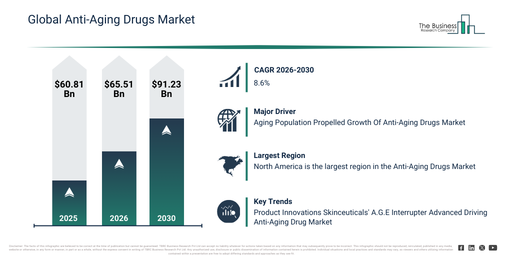
  • Aging Population Propelled Growth Of Anti-Aging Drugs Market Is Supporting Development Across The Anti-Aging Drugs Market

    Aging Population Propelled Growth Of Anti-Aging Drugs Market Is Supporting Development Across The Anti-Aging Drugs Market

    The Business Research Company’s 2026 market reports feature advanced enhancements such as market attractiveness analysis, total addressable market evaluation, company benchmarking matrices, interactive Excel dashboards, expanded supply chain intelligence, emerging startup coverage, and detailed product insights, delivering more actionable and strategically valuable research.

    What Growth In Market Value Is Anticipated For The Anti-Aging Drugs Market Between 2026 And 2030?

    The anti-aging drugs market has experienced robust growth in recent years. This market is projected to expand from $60.81 billion in 2025 to $65.51 billion by 2026, exhibiting a compound annual growth rate (CAGR) of 7.7%. Historically, the market’s expansion has been fueled by a growing geriatric population, increased understanding of skin aging, the flourishing wellness and beauty industry, the widespread availability of anti-aging supplements, and significant advancements in dermatology treatments.

    The anti-aging drugs market is projected to experience substantial expansion over the coming years, reaching a valuation of $91.23 billion by 2030, demonstrating a compound annual growth rate (CAGR) of 8.6%. This anticipated growth can be linked to several factors, including the increasing integration of technology into anti-aging solutions, a rising demand for customized medicine, the proliferation of home-based anti-aging treatments, the growth within nutraceutical markets, and greater investment in stem cell and regenerative therapies. Key developments expected during this period involve tailored anti-aging treatments, the adoption of natural and plant-based components, the incorporation of nutraceuticals, advanced minimally invasive delivery techniques, and a stronger emphasis on preventive health and wellness.

    Download A Free Sample Report For Comprehensive Market Insights:

    https://www.thebusinessresearchcompany.com/sample.aspx?id=10231&type=smp

    Which Drivers Are Advancing The Anti-Aging Drugs Market Growth?

    The expanding elderly demographic is projected to drive the growth of the anti-aging drugs market moving ahead. This increase in the aging population signifies a higher proportion of individuals aged 60 years or more relative to other age categories within a populace. This shift in demographics stems from improvements in healthcare extending lifespans, reduced birth rates, and evolving social and economic frameworks. Anti-aging medications are employed to prolong the healthy lifespan of individuals who retain youthful characteristics. As an illustration, data from January 2024 by the Population Reference Bureau, a Kenya-based Nonprofit organization, indicates that the number of Americans aged 65 and older is anticipated to climb from 58 million in 2022 to 82 million by 2050, representing a 47% increase. Concurrently, this group’s proportion of the total population is also forecast to expand from 17% to 23% over the identical timeframe. Consequently, the increasing aging population acts as a primary catalyst for the expansion of the anti-aging drugs market.

    How Is The Anti-Aging Drugs Market Structured Across Different Market Segments?

    The anti-aging drugs market covered in this report is segmented –

    1) By Product Form: Serums, Creams, Gels, Other Products

    2) By Drug Class: Hormonal Therapy, Antioxidants, Enzymes, Stem Cells

    3) By Type: Injectable, Oral, Topical

    4) By Ingredient: Retinoid, Hyaluronic Acid, Alpha Hydroxy Acid, Other Ingredients

    5) By Drug Application: Skin And Hair, Skeletal And Muscles, Age Related Disorders, Other Applications

    Subsegments:

    1) By Serums: Anti-Aging Vitamin C Serums, Retinol Serums, Peptide Serums

    2) By Creams: Moisturizing Anti-Aging Creams, Night Creams, Eye Creams

    3) By Gels: Hydrating Anti-Aging Gels, Firming Gels, Exfoliating Gels

    4) By Other Products: Masks, Supplements, Treatments

    What Trends Are Shaping The Anti-Aging Drugs Market Structure?

    Major companies operating in the anti-aging drug markets are concentrating on creating sophisticated skincare solutions designed to tackle age-related issues, promote longevity, and boost overall health and wellness. These advanced skincare solutions for anti-aging encompass inventive products and treatments engineered to target and lessen the visible signs of aging, thereby improving skin health and appearance through state-of-the-art technologies and formulations. As an illustration, in April 2023, SkinCeuticals, a US-based advanced skincare company, introduced A.G.E Interrupter Advanced, a novel corrective cream. This product enhances the integrity of the collagen matrix. Its formula includes wild fruit flavonoids, glycyrrhetinic acid, and concentrated proxylane, which is 20% more than found in the initial A.G.E Interrupter. A.G.E. Interrupter Advanced surpasses typical anti-aging offerings by addressing every phase of the glycation process, rectifying existing signs of aging, and safeguarding against both novel and recurring damage stemming from A.G.E. development.

    Which Key Players Are Active In The Anti-Aging Drugs Market?

    Major companies operating in the anti-aging drugs market are L’Oréal S.A., Galderma S.A., Merz Pharma GmbH & Co. KGaA, Sanofi S.A., Elysium Health Inc., Estée Lauder Companies Inc., AbbVie Inc., Nu Skin Enterprises Inc., Dermafix Biotech Private Limited, The Procter & Gamble Company, Johnson & Johnson Services Inc., Sun Pharmaceutical Industries Ltd., BioTime Inc., PT. Daewoong Pharmaceutical Co. Ltd., Allergan plc, MMJ PhytoTech Limited, Revitacare, SciVision Biotech, Canbex Therapeutics Ltd., Lumenis Ltd., Cynosure Inc., Age Sciences Inc., ALMA LASERS Ltd., Bausch Health Companies Inc., Hansen Supplements, Ponce De Leon Health Inc., Youth & Earth, Vitality Pro

    Access The Complete Anti-Aging Drugs Market Report:

    https://www.thebusinessresearchcompany.com/report/anti-aging-drugs-global-market-report

    Which Region Contributes The Most To The Anti-Aging Drugs Market?

    North America was the largest region in the anti-aging drugs market in 2025. The regions covered in the anti-aging drugs market report are Asia-Pacific, South East Asia, Western Europe, Eastern Europe, North America, South America, Middle East, Africa.

    Access Anti-Aging Drugs Market Report for Deeper Competitive Insights

    https://www.thebusinessresearchcompany.com/sample.aspx?id=10231&type=smp

    Browse Through More Reports Similar to the Global Anti-Aging Drugs Market 2026, By The Business Research Company

    Anti Parkinson Drugs Market Report 2026

    https://www.thebusinessresearchcompany.com/report/anti-parkinson-drugs-global-market-report

    Anti Jamming Market Report 2026

    https://www.thebusinessresearchcompany.com/report/anti-jamming-global-market-report

    Alzheimers Drugs Market Report 2026

    https://www.thebusinessresearchcompany.com/report/alzheimers-drugs-global-market-report

    Get in touch with us:

    The Business Research Company: https://www.thebusinessresearchcompany.com/

    Americas: +1 310-496-7795

    Asia: +44 7882 955267 & +91 8897263534

    Europe: +44 7882 955267

    Email us at: marketing@tbrc.info

    Follow us on:

    LinkedIn: https://in.linkedin.com/company/the-business-research-company

    YouTube: https://www.youtube.com/channel/UC24_fI0rV8cR5DxlCpgmyFQ

    Global Market Model: https://www.thebusinessresearchcompany.com/global-market-model

  • Rising Disposable Income To Drive Market Growth Is Supporting Development Across The Anti-Aging Market

    Rising Disposable Income To Drive Market Growth Is Supporting Development Across The Anti-Aging Market

    The Business Research Company’s 2026 market reports feature advanced enhancements such as market attractiveness analysis, total addressable market evaluation, company benchmarking matrices, interactive Excel dashboards, expanded supply chain intelligence, emerging startup coverage, and detailed product insights, delivering more actionable and strategically valuable research.

    What Is The Expected Market Value Outlook For The Anti-Aging Market Through 2030?

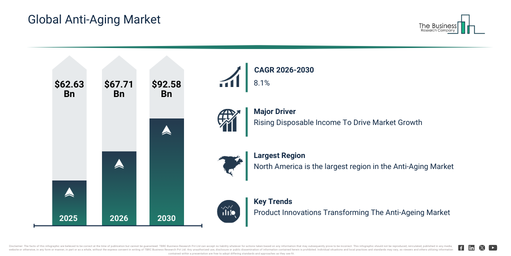
    The anti-aging market has experienced robust growth in recent years. It is projected to expand from $62.63 billion in 2025 to reach $67.71 billion by 2026, demonstrating a compound annual growth rate (CAGR) of 8.1%. Historically, this market’s expansion can be ascribed to a rising aging population, increasing disposable income, a growing awareness of aesthetic appearance, the expansion of dermatology clinics, and the early adoption of cosmetic injectables.

    The anti-aging market is projected to experience robust expansion over the coming years. This market is forecast to reach $92.58 billion by 2030, exhibiting a compound annual growth rate (CAGR) of 8.1%. This anticipated growth during the forecast period is largely driven by developments in peptide and regenerative therapies, an increasing preference for non-surgical interventions, greater involvement of male consumers, the proliferation of anti-aging devices for home use, and the escalating impact of social media and beauty influencers. Key trends identified for this period encompass tailored anti-aging solutions, the increasing popularity of minimally invasive cosmetic procedures, the expansion of medical aesthetic clinics, a focus on preventive anti-aging among younger demographics, and the blending of wellness with aesthetic care.

    Download A Free Sample Report For Comprehensive Market Insights:

    https://www.thebusinessresearchcompany.com/sample.aspx?id=5842&type=smp

    What Primary Factors Are Fueling The Expansion Of The Anti-Aging Market?

    The rising disposable income is anticipated to fuel the expansion of the anti-ageing market in the future. A greater disposable income equips households with more funds for expenditure or saving, typically resulting in increased consumption. This enhanced financial capacity allows consumers to dedicate a larger portion of their finances to high-end anti-aging products and treatments, thereby escalating the market’s demand. For example, in October 2024, data from the Bureau of Economic Analysis, a US-based government agency, indicated that disposable personal income in the United States reached $21,782 billion in August 2024, an increase from $20,666 billion recorded in August 2023. Consequently, the upward trend in disposable income is propelling the growth of the anti-ageing market.

    Which Segment-Based Categories Are Covered In The Anti-Aging Market?

    The anti-aging market covered in this report is segmented –

    1) By Product Type: UV Absorbers, Anti-Wrinkle Products, Dermal Fillers, Botox, Anti-Stretch Mark Products

    2) By Treatment: Chemical Peel, Other Treatments

    3) By Demographic: Generation X, Baby Boomers, Generation Y, Generation Z

    4) By Application: Anti-Wrinkle Treatment, Anti-Pigmentation, Skin Resurfacing, Other Applications

    5) By End-User: Hospitals, Clinics, Home Healthcare

    Subsegments:

    1) By UV Absorbers: Chemical UV Filters, Physical UV Filters, Sunscreen Formulations

    2) By Anti-Wrinkle Products: Creams And Serums, Eye Care Products, Retinoids

    3) By Dermal Fillers: Hyaluronic Acid Fillers, Calcium Hydroxylapatite Fillers, Poly-L-lactic Acid Fillers

    4) By Botox: Botox Cosmetic, Dysport, Xeomin

    5) By Anti-Stretch Mark Products: Creams And Lotions, Oils, Treatments With Active Ingredients

    Which Trends Are Supporting The Evolution Of The Anti-Aging Market?

    Leading companies in the anti-ageing market are creating new anti-ageing masks to gain a competitive edge. These skincare products are designed to lessen visible signs of aging, such as fine lines, wrinkles, and loss of firmness, by providing targeted ingredients and hydration to the skin. For example, in March 2023, Christian Dior SE, a fashion company based in France, introduced an anti-aging LED mask known as Dior Skin Light, which was developed in collaboration with French LED technology specialist Lucibel. This mask incorporates photobiomodulation technology, using red light to stimulate skin cells, which ultimately enhances collagen and elastin production for improved skin rejuvenation. Dior asserts that just twelve minutes of mask usage can target issues like redness, enlarged pores, and excessive sebum, resulting in skin that is radiant, plumped, and smoother.

    Who Are The Leading Firms Participating In The Anti-Aging Market?

    Major companies operating in the anti-aging market are L’Oréal SA, Beiersdorf AG, Estée Lauder Companies Inc., Procter & Gamble Company, Shiseido Co. Ltd., Unilever plc, Nu Skin Enterprises Inc., Galderma SA, AbbVie Inc., Johnson & Johnson Services Inc., ZO Skin Health Inc., Clarins Group, Revlon Inc., Avon Products Inc., Lancôme Parfums et Beauté & Cie SA, Clinique Laboratories LLC, Elizabeth Arden Inc., Natura Bissé International S.A., Pierre Fabre SA, Lumenis Ltd., Alma Lasers Ltd., Candela Corporation, PhotoMedex Inc., Home Skinovations Ltd., Koninklijke Philips NV, Hologic Inc.

    Access The Complete Anti-Aging Market Report:

    https://www.thebusinessresearchcompany.com/report/anti-aging-global-market-report

    Which Regional Market Leads The Anti-Aging Market?

    North America was the largest region in the anti-aging market in 2025. Asia-Pacific is expected to be the fastest-growing region in the forecast period. The regions covered in the anti-aging market report are Asia-Pacific, South East Asia, Western Europe, Eastern Europe, North America, South America, Middle East, Africa.

    Access Anti-Aging Market Report for Deeper Competitive Insights

    https://www.thebusinessresearchcompany.com/sample.aspx?id=5842&type=smp

    Browse Through More Reports Similar to the Global Anti-Aging Market 2026, By The Business Research Company

    Anti Jamming Market Report 2026

    https://www.thebusinessresearchcompany.com/report/anti-jamming-global-market-report

    Anti Parkinson Drugs Market Report 2026

    https://www.thebusinessresearchcompany.com/report/anti-parkinson-drugs-global-market-report

    Elderly Care Market Report 2026

    https://www.thebusinessresearchcompany.com/report/elderly-care-global-market-report

    Get in touch with us:

    The Business Research Company: https://www.thebusinessresearchcompany.com/

    Americas: +1 310-496-7795

    Asia: +44 7882 955267 & +91 8897263534

    Europe: +44 7882 955267

    Email us at: marketing@tbrc.info

    Follow us on:

    LinkedIn: https://in.linkedin.com/company/the-business-research-company

    YouTube: https://www.youtube.com/channel/UC24_fI0rV8cR5DxlCpgmyFQ

    Global Market Model: https://www.thebusinessresearchcompany.com/global-market-model
  • Impact Of Rising Infectious Diseases On Antimicrobial Peptides Is Supporting Development Across The Anti Microbial Peptides Market

    Impact Of Rising Infectious Diseases On Antimicrobial Peptides Is Supporting Development Across The Anti Microbial Peptides Market

    The Business Research Company’s 2026 market reports feature advanced enhancements such as market attractiveness analysis, total addressable market evaluation, company benchmarking matrices, interactive Excel dashboards, expanded supply chain intelligence, emerging startup coverage, and detailed product insights, delivering more actionable and strategically valuable research.

    How Will The Market Value Of The Anti Microbial Peptides Market Increase Between 2026 And 2030?

    The anti microbial peptides market size has shown significant growth in recent years. It is anticipated to expand from $7.03 billion in 2025 to $7.62 billion in 2026, achieving a compound annual growth rate (CAGR) of 8.4%. Factors contributing to this historical growth include increasing concerns regarding antimicrobial resistance, academic research focusing on innate immunity peptides, the initiation of early-stage clinical studies, greater financial backing for alternative antimicrobials, and an expansion in peptide synthesis capabilities.

    The anti microbial peptides market size is projected for substantial growth in the coming years, set to reach $10.4 billion by 2030, demonstrating a compound annual growth rate (CAGR) of 8.1%. This expansion during the forecast period is fueled by several factors, including the increasing commercialization of AMP-based therapeutics, their growing application in antiviral and antifungal treatments, the broadening of agricultural and veterinary uses, rising investment in peptide drug platforms, and increasing regulatory support for novel antimicrobials. Key trends expected in this period include intensified research into antibiotic alternatives, the escalating development of broad-spectrum AMPs, the expansion of clinical applications beyond bacterial infections, a growing focus on resistance-resilient therapies, and enhanced peptide engineering techniques.

    Download A Free Sample Report For Comprehensive Market Insights:

    https://www.thebusinessresearchcompany.com/sample.aspx?id=20465&type=smp

    Which Strategic Drivers Are Supporting The Anti Microbial Peptides Market Development?

    The rising occurrence of infectious diseases is anticipated to boost the expansion of the antimicrobial peptide market in the future. These diseases are defined as ailments resulting from detrimental organisms like bacteria, viruses, fungi, or parasites. The escalating frequency of infectious diseases stems from factors including climate change, the emergence of drug-resistant pathogens, and poor dietary practices. Antimicrobial peptides present a promising method for tackling infectious diseases, offering innovative treatment alternatives that combat the increasing problem of antibiotic resistance and the drawbacks of traditional therapies. For example, as reported by Gov.UK, a UK-based public sector information website, in February 2025, HIV diagnoses in England stood at 2,451 in 2022, subsequently increasing by 15% to 2,810 in 2023. Consequently, the growing occurrence of infectious diseases fuels the antimicrobial peptide market.

    What Are The Major Segment Categories Within The Anti Microbial Peptides Market?

    The anti microbial peptides market covered in this report is segmented –

    1) By Type: Plant Antimicrobial Peptides, Bacterial Antimicrobial Peptides, Animal Antimicrobial Peptides, Insect Antimicrobial Peptides

    2) By Ailments: Pneumonia, Hepatitis, Bacterial infections, Human Immunodeficiency Viruses

    3) By Route of Administration: Topical, Subcutaneous, Intravenous

    4) By Distribution Channel: Hospital, Research Institutes, Specialty Clinic, Pharmacies

    5) By End-User: Pharma And Healthcare, Agriculture Industry, Biological Engineering

    Subsegments:

    1) By Plant Antimicrobial Peptides: Defensins, Thionins, Hevein-Like Peptides, Plant Defensin-Like Peptides, Lipid Transfer Proteins (LTPs)

    2) By Bacterial Antimicrobial Peptides: Bacitracin, Nisin, Magainins, Protegrins, Bacillocins

    3) By Animal Antimicrobial Peptides: Cathelicidins, Defensins, Histatins, Lactoferrin, Cationic Antimicrobial Peptides (CAMPs)

    4) By Insect Antimicrobial Peptides: Cecropins, Defensins, Attacins, Diptericins, Melittin

    What Trends Are Affecting The Growth Of The Anti Microbial Peptides Market?

    Companies at the forefront of the anti-microbial peptides market are actively developing inventive offerings, such as biodegradable antimicrobial peptides, specifically designed to confront emerging challenges posed by antimicrobial resistance and improve treatment success. Biodegradable antimicrobial peptides are concise proteins capable of naturally decomposing into innocuous byproducts once they have fulfilled their role of eliminating or inhibiting harmful microorganisms like bacteria, viruses, and fungi. For example, in September 2024, Beiersdorf AG, a Germany-based manufacturer of personal care items, entered into a collaboration with Macro Biologics, a US-based bioengineering company, for the purpose of developing antimicrobial peptides. This partnership aims to formulate innovative remedies utilizing biodegradable antimicrobial peptides, which signifies an expanding inclination within the cosmetics industry to adopt advanced biotechnological breakthroughs for achieving both operational effectiveness and environmental responsibility.

    Which Companies Are Engaged In The Anti Microbial Peptides Market Environment?

    Major companies operating in the anti microbial peptides market are Wuxi AppTec, Sigma Aldrich Chemicals Private Limited, Ipsen S.A., Novozymes A/S, GenScript Biotech, Bachem Holding AG, Basilea Pharmaceutica Ltd., Probiotec Limited, Migenix Inc., Zymeworks Inc., Venatorx Pharmaceuticals Inc., AMPS Biotech Pvt. Ltd., AnaSpec Inc., MediGene AG, Hycult Biotech, Phoenix Biotechnology Inc., Shenzhen Sunsmile Biotechnology Co. Ltd., WatsonBio Sciences, Helix BioMedix, Jiangsu ProteLight Pharmaceutical and Biotechnology Co Ltd.

    Access The Complete Anti Microbial Peptides Market Report:

    https://www.thebusinessresearchcompany.com/report/anti-microbial-peptides-global-market-report

    Which Region Holds The Largest Share In The Anti Microbial Peptides Market?

    North America was the largest region in the anti-microbial Peptides market in 2025. Asia-Pacific is expected to be the fastest-growing region in the forecast period. The regions covered in the anti microbial peptides market report are Asia-Pacific, South East Asia, Western Europe, Eastern Europe, North America, South America, Middle East, Africa.

    Access Anti Microbial Peptides Market Report for Deeper Competitive Insights

    https://www.thebusinessresearchcompany.com/sample.aspx?id=20465&type=smp

    Browse Through More Reports Similar to the Global Anti Microbial Peptides Market 2026, By The Business Research Company

    Biosimilar Therapeutic Peptide Market Report 2026

    https://www.thebusinessresearchcompany.com/report/biosimilar-therapeutic-peptide-global-market-report

    Oral Proteins And Peptides Market Report 2026

    https://www.thebusinessresearchcompany.com/report/oral-proteins-and-peptides-global-market-report

    Bacterial And Plasmid Vector Market Report 2026

    https://www.thebusinessresearchcompany.com/report/bacterial-and-plasmid-vector-global-market-report

    Get in touch with us:

    The Business Research Company: https://www.thebusinessresearchcompany.com/

    Americas: +1 310-496-7795

    Asia: +44 7882 955267 & +91 8897263534

    Europe: +44 7882 955267

    Email us at: marketing@tbrc.info

    Follow us on:

    LinkedIn: https://in.linkedin.com/company/the-business-research-company

    YouTube: https://www.youtube.com/channel/UC24_fI0rV8cR5DxlCpgmyFQ

    Global Market Model: https://www.thebusinessresearchcompany.com/global-market-model

  • Rising Infectious Diseases Fueling Growth In The Anthrax Vaccine Market Is Supporting Development Across The Anthrax Vaccine Market

    Rising Infectious Diseases Fueling Growth In The Anthrax Vaccine Market Is Supporting Development Across The Anthrax Vaccine Market

    The Business Research Company’s 2026 market reports feature advanced enhancements such as market attractiveness analysis, total addressable market evaluation, company benchmarking matrices, interactive Excel dashboards, expanded supply chain intelligence, emerging startup coverage, and detailed product insights, delivering more actionable and strategically valuable research.

    What Will Be The Estimated Market Size Of The Anthrax Vaccine Market By 2030?

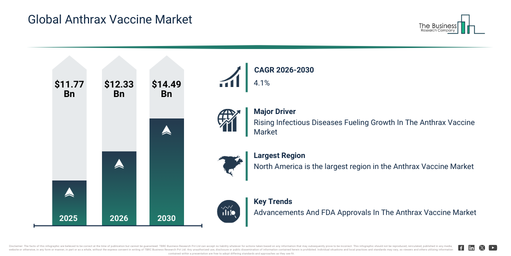
    The anthrax vaccine market size has demonstrated consistent growth in recent years. It is anticipated to expand from a valuation of $11.77 billion in 2025 to $12.33 billion in 2026, exhibiting a compound annual growth rate (CAGR) of 4.7%. The expansion observed in previous periods is attributable to the widespread presence of anthrax among livestock, vaccination programs organized by governments, advancements in immunology research, certain limitations in vaccine production capacity, and a heightened understanding of risks associated with occupational exposure.

    The anthrax vaccine market is anticipated to experience consistent expansion over the upcoming years. This market is projected to reach $14.49 billion by 2030, exhibiting a compound annual growth rate (CAGR) of 4.1%. This growth during the projection period stems from factors such as the creation of recombinant and next-generation vaccines, an increasing need for both human and animal prophylaxis, progress in vaccine delivery systems, the broadening of biodefense initiatives, and partnerships between pharmaceutical companies and defense agencies. Key trends for the forecast period encompass refined vaccine formulations, extended immunization campaigns, breakthroughs in cold chain and storage, improved biodefense and pandemic readiness, and vaccination efforts led by governments and militaries.

    Download A Free Sample Report For Comprehensive Market Insights:

    https://www.thebusinessresearchcompany.com/sample.aspx?id=15511&type=smp

    What Major Growth Factors Are Impacting The Anthrax Vaccine Market?

    The increasing occurrence of infectious diseases is projected to drive the expansion of the anthrax vaccine market in the future. These diseases are health conditions stemming from pathogenic microorganisms such as bacteria, viruses, parasites, or fungi, which can transmit directly or indirectly between individuals. Symptoms can range from mild to severe, and in some cases, be fatal, depending on the pathogen and the individual’s immune response. The widespread presence of infectious diseases is attributed to global demographic shifts, urbanization, changes in environment and land use, and evolving human behavior. The anthrax vaccine is primarily administered for protection against anthrax, and investigations into its immunogenic properties and adaptability are exploring its potential for broader application in preventing other infectious diseases. For instance, in February 2023, the Council on Foreign Relations, a US-based nonprofit organization, reported that up to 75% of newly identified or emerging infectious diseases (EIDs) and 60% of known infectious diseases originated from animals. Moreover, zoonoses worldwide lead to 2.7 million human deaths and 2.5 billion disease episodes in people annually. Thus, the growing prevalence of diseases is a key factor propelling the anthrax vaccine market’s growth.

    How Is The Anthrax Vaccine Market Distributed Across Key Segments?

    The anthrax vaccine market covered in this report is segmented –

    1) By Vaccine Type: Cell-Free Protective Antigen (PA) Vaccine, Live Attenuated Vaccine

    2) By Application Type: Animal Use, Human Use

    3) By Distribution Channel: Hospitals, Pharmacies, Other Distribution Channels

    Subsegments:

    1) By Cell-Free Protective Antigen (PA) Vaccine: Recombinant Protective Antigen (rPA) Vaccine, Adjuvanted rPA Vaccine

    2) By Live Attenuated Vaccine: Live Attenuated Bacillus anthracis Vaccine, Genetically Modified Live Attenuated Vaccine

    Which Trends Are Influencing The Direction Of The Anthrax Vaccine Market?

    Leading companies within the anthrax vaccine market are concentrating on developing innovative products and obtaining FDA approvals for their vaccines to ensure safety, efficacy, and availability for individuals at risk of anthrax exposure. Such FDA endorsement guarantees that a vaccine has undergone rigorous testing in clinical trials and is proven safe for public use, thereby shielding individuals from potential adverse effects. A notable instance occurred in July 2023, when Emergent BioSolutions Inc., a US-based biopharmaceutical company, received approval for CYFENDUS (Anthrax Vaccine Adsorbed, Adjuvanted), formerly identified as AV7909, from the U.S. Food and Drug Administration (FDA). This approval was contingent upon information from a Phase 2 trial assessing Cyfendus’s non-interference with antibacterial medications and Phase 3 clinical research comparing the immunogenicity and safety of the vaccine to BioThrax, the previous anthrax vaccine. Furthermore, the imperative lies in creating safer and more effective adjuvants to address reactogenicity-related challenges and enhance the general efficiency of anthrax vaccines.

    Who Are The Prominent Players Across The Anthrax Vaccine Market?

    Major companies operating in the anthrax vaccine market are Emergent BioSolutions Inc., Indian Immunologicals Limited, GC Biopharma, Valneva SE, PharmAthene Inc., Porton Biopharma Limited, Choong Ang Vaccine Laboratories Co. Ltd., Colorado Serum Company Inc., Botswana Vaccine Institute, VECOL S.A., Biological E Limited, Serum Institute of India Pvt. Ltd., Panacea Biotec Ltd., China National Biotec Group, Sinovac Biotech Ltd., Instituto Butantan, Razi Vaccine and Serum Research Institute, Federal State Unitary Enterprise Microgen, KM Biologics Co. Ltd., Haffkine Bio-Pharmaceutical Corporation Ltd.

    Access The Complete Anthrax Vaccine Market Report:

    https://www.thebusinessresearchcompany.com/report/anthrax-vaccine-global-market-report

    Which Region Is The Dominant Market In The Anthrax Vaccine Market?

    North America was the largest region in the anthrax vaccine market in 2025. Asia-Pacific is expected to be the fastest-growing region in the forecast period. The regions covered in the anthrax vaccine market report are Asia-Pacific, South East Asia, Western Europe, Eastern Europe, North America, South America, Middle East, Africa.

    Access Anthrax Vaccine Market Report for Deeper Competitive Insights

    https://www.thebusinessresearchcompany.com/sample.aspx?id=15511&type=smp

    Browse Through More Reports Similar to the Global Anthrax Vaccine Market 2026, By The Business Research Company

    Anthrax Vaccine Market Report 2026

    https://www.thebusinessresearchcompany.com/report/anthrax-vaccine-global-market-report

    Anthrax Vaccine Market Report 2026

    https://www.thebusinessresearchcompany.com/report/anthrax-vaccine-global-market-report

    Anthracycline Market Report 2026

    https://www.thebusinessresearchcompany.com/report/anthracycline-global-market-report

    Get in touch with us:

    The Business Research Company: https://www.thebusinessresearchcompany.com/

    Americas: +1 310-496-7795

    Asia: +44 7882 955267 & +91 8897263534

    Europe: +44 7882 955267

    Email us at: marketing@tbrc.info

    Follow us on:

    LinkedIn: https://in.linkedin.com/company/the-business-research-company

    YouTube: https://www.youtube.com/channel/UC24_fI0rV8cR5DxlCpgmyFQ

    Global Market Model: https://www.thebusinessresearchcompany.com/global-market-model