Month: May 2026

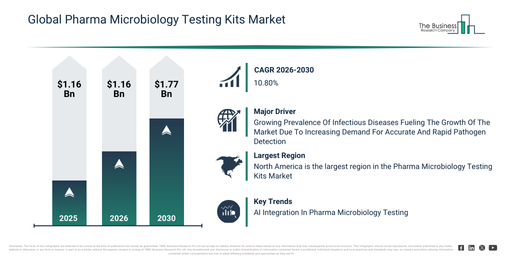
  • Growing Prevalence Of Infectious Diseases Fueling The Growth Of The Market Due To Increasing Demand For Accurate And Rapid Pathogen Detection Is Supporting Development Across The Pharma Microbiology Testing Kits Market

    Growing Prevalence Of Infectious Diseases Fueling The Growth Of The Market Due To Increasing Demand For Accurate And Rapid Pathogen Detection Is Supporting Development Across The Pharma Microbiology Testing Kits Market

    The Business Research Company’s 2026 market reports feature advanced enhancements such as market attractiveness analysis, total addressable market evaluation, company benchmarking matrices, interactive Excel dashboards, expanded supply chain intelligence, emerging startup coverage, and detailed product insights, delivering more actionable and strategically valuable research.

    What Is The Expected Market Size Of The Pharma Microbiology Testing Kits Market In 2026 And How Much Will It Reach By 2030?

    The pharma microbiology testing kits market has experienced substantial growth in recent years. Projections indicate it will expand from $7.26 billion in 2025 to $7.94 billion in 2026, reflecting a compound annual growth rate (CAGR) of 9.4%. The historical increase in this market can be linked to pharmaceutical quality regulations, the rise in biologics production, greater awareness of contamination risks, the expansion of vaccine manufacturing, and requirements for GMP compliance.

    The pharma microbiology testing kits market is projected to experience swift expansion over the coming years. This market is anticipated to reach $11.98 billion by 2030, demonstrating a compound annual growth rate (CAGR) of 10.8%. This expansion during the forecast timeframe is primarily driven by factors such as the growth of the biopharmaceutical pipeline, the widespread adoption of rapid testing technologies, heightened regulatory requirements, the expansion of contract manufacturing, and increased automation in quality control processes. Key developments anticipated in the forecast period involve a rise in the frequency of sterility testing, growing acceptance of rapid microbial detection methods, the broadening of environmental monitoring initiatives, an increased need for ready-to-use test kits, and the outsourcing of microbiology testing services.

    Download A Free Sample Report For Comprehensive Market Insights:

    https://www.thebusinessresearchcompany.com/sample.aspx?id=2487&type=smp

    Which Growth Drivers Are Expected To Support The Pharma Microbiology Testing Kits Market Forward?

    The increasing occurrence of infectious diseases is anticipated to boost the expansion of the pharma microbiology testing kits market moving ahead. These diseases represent conditions resulting from disease-causing microorganisms, including bacteria, viruses, fungi, or parasites, which possess the capability of spreading either directly or indirectly between individuals. The frequency of infectious disease occurrences is escalating, largely attributed to heightened global travel, a factor that contributes to the swift transmission of pathogens across national boundaries. Pharma microbiology testing kits play a crucial role in diagnosing infectious diseases by offering precise and quick identification of pathogens, thereby proving indispensable for prompt medical judgments. These kits enhance the operational effectiveness of laboratories through dependable testing capabilities and by assisting in successful treatment strategies and the control of outbreaks. As an illustration, in February 2024, reports from the UK Health Security Agency, a UK-based government body, indicated that tuberculosis (a communicable bacterial infection primarily impacting the lungs) instances in England climbed to 4,850 in 2023, marking a rise of 10.7% from the 4,380 cases recorded in 2022. Consequently, the expanding prevalence of infectious diseases is fueling the development of the pharma microbiology testing kits market.

    What Are The Major Segment Categories Within The Pharma Microbiology Testing Kits Market?

    The pharma microbiology testing kits market covered in this report is segmented –

    1) By Product: Consumables, Equipment

    2) By Test: Endotoxin Testing, Sterility Testing, Microbial Examination, Environmental Monitoring, Other Tests

    3) By End User: Hospitals And Diagnostic Centers, Custom Lab Service Providers, Academic And Research Institutes

    Subsegments:

    1) By Consumables: Media and Reagents, Test Kits, Sample Collection Containers

    2) By Equipment: Incubators, Autoclaves, Microbial Identification Systems

    What Trends Are Influencing The Future Of The Pharma Microbiology Testing Kits Market?

    Major companies operating in the pharma microbiology testing kits market are concentrating on employing innovative technologies, such as artificial intelligence-powered software, to improve efficiency, boost diagnostic accuracy, and streamline laboratory workflows. Within this domain, artificial intelligence-powered software signifies advanced algorithms that interpret intricate data from diagnostic instruments to assist in the detection and identification of pathogens. For instance, in May 2023, Becton, Dickinson, and Company, a US-based medical device company, secured 510(k) clearance from the U.S. Food and Drug Administration (FDA) for its new BD Kiestra MRSA Imaging Application, which uses artificial intelligence (AI) to enhance the diagnosis of Methicillin-resistant Staphylococcus aureus (MRSA). This application automates the examination of Petri dishes, a task typically requiring considerable labor and time. It analyzes bacterial growth on BBL CHROMagar MRSA II plates and can swiftly identify specimens demonstrating no significant growth, enabling quicker processing and the release of negative results more promptly.

    Which Organizations Are Involved In The Pharma Microbiology Testing Kits Market?

    Major companies operating in the pharma microbiology testing kits market are F. Hoffmann-La Roche AG, Becton Dickinson and Company, Abbott Laboratories, ThermoFisher Scientific, SGS SA, Toxikon Corp., Pace Analytical Services, Boston Analytics, Charles River Laboratories International, Nelson Laboratories, Siemens healthcare AG, Hologic Inc., Neogen Corporation, Shimadzu Corporation, Merck KGaA, Agilent TechnologiesInc., QIAGEN N.V., Bruker Corporation, bioMérieux SA, Lucideon, Lonza Group AG, MilliporeSigma, Hardy Diagnostics, Sartorius AG, 3M Company, Waters Corporation, PerkinElmer Inc., Luminex Corporation

    Access The Complete Pharma Microbiology Testing Kits Market Report:

    https://www.thebusinessresearchcompany.com/report/pharma-microbiology-testing-kits-global-market-report

    Which Region Is The Primary Market For The Pharma Microbiology Testing Kits Market?

    North America was the largest region in the pharma microbiology testing kits market in 2025. Western Europe was the second-largest region in the global pharma microbiology testing kits market report. The regions covered in the pharma microbiology testing kits market report are Asia-Pacific, South East Asia, Western Europe, Eastern Europe, North America, South America, Middle East, Africa.

    Access a Customized Pharma Microbiology Testing Kits Market Report for Deeper Competitive Insights

    https://www.thebusinessresearchcompany.com/report/pharma-microbiology-testing-kits-global-market-report

    Browse Through More Reports Similar to the Global Pharma Microbiology Testing Kits Market 2026, By The Business Research Company

    Rapid Microbiology Testing Kits Market Report 2026

    https://www.thebusinessresearchcompany.com/report/rapid-microbiology-testing-kits-global-market-report

    Drug Screening Market Report 2026

    https://www.thebusinessresearchcompany.com/report/drug-screening-global-market-report

    Antimicrobial Susceptibility Testing Market Report 2026

    https://www.thebusinessresearchcompany.com/report/antimicrobial-susceptibility-testing-global-market-report

    Get in touch with us:

    The Business Research Company: https://www.thebusinessresearchcompany.com/

    Americas: +1 310-496-7795

    Asia: +44 7882 955267 & +91 8897263534

    Europe: +44 7882 955267

    Email us at: marketing@tbrc.info

    Follow us on:

    LinkedIn: https://in.linkedin.com/company/the-business-research-company

    YouTube: https://www.youtube.com/channel/UC24_fI0rV8cR5DxlCpgmyFQ

    Global Market Model: https://www.thebusinessresearchcompany.com/global-market-model
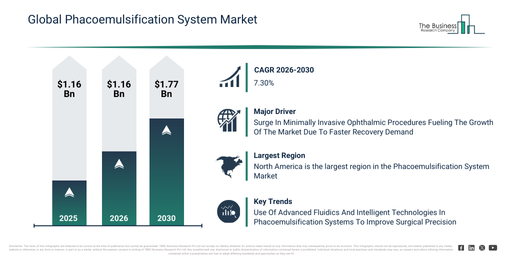
  • Use Of Advanced Fluidics And Intelligent Technologies In Phacoemulsification Systems To Improve Surgical Precision Is Affecting The Direction Of The Phacoemulsification System Market

    Use Of Advanced Fluidics And Intelligent Technologies In Phacoemulsification Systems To Improve Surgical Precision Is Affecting The Direction Of The Phacoemulsification System Market

    The Business Research Company’s 2026 market reports feature advanced enhancements such as market attractiveness analysis, total addressable market evaluation, company benchmarking matrices, interactive Excel dashboards, expanded supply chain intelligence, emerging startup coverage, and detailed product insights, delivering more actionable and strategically valuable research.

    What Market Size Is Forecasted For The Phacoemulsification System Market By 2030 Based On Its 2026 Value?

    The phacoemulsification system market has experienced strong expansion in recent years. It is forecast to grow from $1.51 billion in 2025 to $1.63 billion in 2026, reflecting a compound annual growth rate (CAGR) of 7.6%. This historical growth has been driven by factors such as the increasing prevalence of cataracts, the expansion of the aging population, the adoption of phaco techniques, the development of ophthalmic infrastructure, and surgeons’ inclination towards minimally invasive tools.

    The phacoemulsification system market size is anticipated to experience substantial growth in the upcoming years. This market is projected to reach $2.16 billion by 2030, exhibiting a compound annual growth rate (CAGR) of 7.3%. This expansion over the forecast period is attributable to several factors, including an increase in outpatient eye procedures, advancements in ultrasound system technology, a growing need for premium intraocular lenses (IOLs), market penetration in developing regions, and a heightened awareness of vision care. Key trends anticipated during this period encompass sophisticated fluidics control systems, the wider adoption of minimally invasive cataract surgery, highly precise ultrasonic energy delivery, reduced surgical duration, and enhanced patient safety outcomes.

    Download A Free Sample Report For Comprehensive Market Insights:

    https://www.thebusinessresearchcompany.com/sample.aspx?id=30352&type=smp

    What Influential Factors Are Boosting The Phacoemulsification System Market Demand?

    The phacoemulsification system market is anticipated to grow with the increasing adoption of minimally invasive ophthalmic procedures. These advanced eye care techniques employ small incisions, micro-instruments, or laser-based methods to diagnose or treat eye conditions, causing minimal tissue disruption. The surge in these procedures is driven by a preference for faster recovery, as they reduce surgical trauma and allow patients to resume daily activities more quickly. A phacoemulsification system supports minimally invasive ophthalmic procedures by utilizing ultrasonic energy to break down and remove cataracts through a tiny incision, facilitating quicker healing, reduced tissue damage, and enhanced surgical precision. For instance, in May 2024, figures from Gov.UK, a UK government agency, indicated 516,073 hospital admissions for cataract surgery in England among individuals aged 65 and above, a rate of 4,679 per 100,000 population in 2023. Therefore, the rising adoption of minimally invasive ophthalmic procedures is propelling the growth of the phacoemulsification system market.

    How Is The Phacoemulsification System Market Distributed Across Key Segments?

    The phacoemulsification system market covered in this report is segmented –

    1) By Product Type: Standalone Phacoemulsification Systems, Portable Phacoemulsification Systems

    2) By Application: Cataract Surgery, Refractive Lens Exchange (RLE), Secondary Lens Removal Procedures

    3) By End-User: Hospitals, Ophthalmic Clinics, Ambulatory Surgical Centers, Other End-Users

    Subsegments:

    1) By Standalone Phacoemulsification Systems: Ultrasonic Handpiece Units, Control Console Units, Fluid Management Units, Illumination Module Units

    2) By Portable Phacoemulsification Systems: Battery Powered Units, Compact Console Units, Handheld Operation Units, Mobile Surgical Kits

    Which Trends Are Contributing To Changes In The Phacoemulsification System Market?

    Leading companies in the phacoemulsification system market are concentrating on integrating femtosecond laser technology, such as the novel fluidics concept, to maintain stable intraocular pressure (IOP), enhance chamber stability, and ensure consistent fluid control throughout all stages of cataract surgery, thereby boosting surgical precision and patient safety. The novel fluidics concept describes an advanced fluid management technology in phacoemulsification systems that precisely regulates the balance between irrigation and aspiration during eye surgery. For instance, in September 2025, Beaver-Visitec International, Inc. (BVI), a US-based ophthalmic medical device company, introduced Virtuoso, a new dual-function phaco-vitrectomy surgical platform designed for both cataract and vitreoretinal procedures. This system features a novel fluidics concept that maintains target intraocular pressure (IOP) throughout all surgical steps, a hybrid flow and pressure pump design for superior chamber stability, and Load Sensing Phaco technology that automatically adjusts ultrasound energy based on lens resistance to improve precision and surgical efficiency.

    Who Are The Firms Contributing To The Phacoemulsification System Market Ecosystem?

    Major companies operating in the phacoemulsification system market are Alcon, Johnson & Johnson, Bausch + Lomb, NIDEK, Oertli Instrumente, Optikon, Geuder, Appasamy Associates, Biotech Visioncare, Meda, SIFI, Ziemer Ophthalmic Systems, Topcon, Carl Zeiss Meditec, Huvitz, Rumex International, DORC International, MicroSurgical Technology, LIGHTMED, Aurolab, MTP Medical Technical Products

    Access The Complete Phacoemulsification System Market Report:

    https://www.thebusinessresearchcompany.com/report/global-phacoemulsification-system-market-report

    Which Geographic Region Represents The Largest Phacoemulsification System Market Share?

    North America was the largest region in the phacoemulsification system market in 2025. Asia-Pacific is expected to be the fastest-growing region in the forecast period. The regions covered in the phacoemulsification system market report are Asia-Pacific, South East Asia, Western Europe, Eastern Europe, North America, South America, Middle East, Africa.

    Access a Customized Phacoemulsification System Market Report for Deeper Competitive Insights

    https://www.thebusinessresearchcompany.com/report/global-phacoemulsification-system-market-report

    Browse Through More Reports Similar to the Global Phacoemulsification System Market 2026, By The Business Research Company

    Food Emulsifiers Market Report 2026

    https://www.thebusinessresearchcompany.com/report/food-emulsifiers-global-market-report

    Powered Air Purifying Respirator Papr Market Report 2026

    https://www.thebusinessresearchcompany.com/report/powered-air-purifying-respirator-papr-global-market-report

    Phosphoric Acid Market Report 2026

    https://www.thebusinessresearchcompany.com/report/phosphoric-acid-global-market-report

    Get in touch with us:

    The Business Research Company: https://www.thebusinessresearchcompany.com/

    Americas: +1 310-496-7795

    Asia: +44 7882 955267 & +91 8897263534

    Europe: +44 7882 955267

    Email us at: marketing@tbrc.info

    Follow us on:

    LinkedIn: https://in.linkedin.com/company/the-business-research-company

    YouTube: https://www.youtube.com/channel/UC24_fI0rV8cR5DxlCpgmyFQ

    Global Market Model: https://www.thebusinessresearchcompany.com/global-market-model
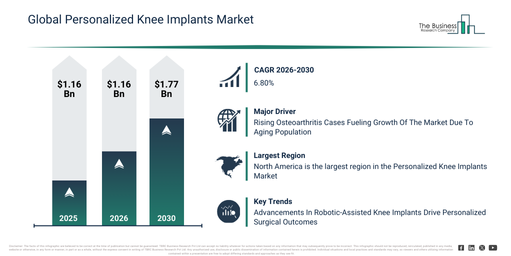
  • The Personalized Knee Implants Market Is Advancing With Support From Rising Osteoarthritis Cases Fueling Growth Of The Market Due To Aging Population

    The Personalized Knee Implants Market Is Advancing With Support From Rising Osteoarthritis Cases Fueling Growth Of The Market Due To Aging Population

    The Business Research Company’s 2026 market reports feature advanced enhancements such as market attractiveness analysis, total addressable market evaluation, company benchmarking matrices, interactive Excel dashboards, expanded supply chain intelligence, emerging startup coverage, and detailed product insights, delivering more actionable and strategically valuable research.

    How Is The Market Value Of The Personalized Knee Implants Market Projected To Expand During 2026–2030?

    The personalized knee implants market has experienced robust expansion in recent years. It is anticipated to grow from $2.45 billion in 2025 to $2.62 billion in 2026, achieving a compound annual growth rate (CAGR) of 6.9%. The historical growth of this market can be attributed to an increasing geriatric population, a rise in osteoarthritis prevalence, enhanced awareness regarding personalized healthcare, advancements in imaging technologies, and a growing number of orthopedic surgeries.

    The personalized knee implants market size is projected to experience robust growth over the coming years. This market is expected to expand to $3.41 billion by 2030, demonstrating a compound annual growth rate (CAGR) of 6.8%. The expansion throughout the forecast period is attributable to the increasing embrace of 3D printing, the incorporation of AI into surgical planning, a rising demand for minimally invasive procedures, ongoing technological advancements in implant materials, and the development in emerging markets. Significant trends anticipated during the forecast period include custom 3D-printed implants, surgical planning specific to individual patients, minimally invasive knee replacement techniques, improved post-operative rehabilitation solutions, and the integration of wearable technology.

    Download A Free Sample Report For Comprehensive Market Insights:

    https://www.thebusinessresearchcompany.com/sample.aspx?id=25874&type=smp

    Which Drivers Are Advancing The Personalized Knee Implants Market Growth?

    The rising incidence of osteoarthritis is projected to boost the expansion of the personalized knee implants market in the future. Osteoarthritis is defined as a degenerative condition affecting joints where the protective cartilage at bone ends gradually erodes, resulting in discomfort, rigidity, and limited joint mobility. The heightened prevalence of osteoarthritis is linked to an aging demographic, as the likelihood increases with age due to the gradual degeneration of joint cartilage. Personalized knee implants offer a solution for osteoarthritis by delivering a custom fit tailored to each patient’s distinct anatomical structure, thereby enhancing joint alignment, alleviating pain, and improving mobility more efficiently than conventional implants. For example, in June 2024, a report from the Australian Institute of Health and Welfare, an Australian government body, indicated that in Australia, osteoarthritis was responsible for 143,410 disability-adjusted life years (DALYs) (4.46 per 1,000 people) in 2023 and 2,314 deaths (8.9 per 100,000) in 2022, constituting 2.5% of the overall disease burden and 1.2% of all deaths, respectively. Consequently, the growing occurrence of osteoarthritis is propelling the development of the personalized knee implants market.

    How Does Segment Analysis Break Down The Personalized Knee Implants Market Structure?

    The personalized knee implants market covered in this report is segmented –

    1) By Type: Femoral, Tibia, Patella

    2) By Fixation Material: Cemented, Cementless, Hybrid

    3) By Material: Metal-On-Plastic, Ceramic-On-Plastic

    4) By Procedure: Primary, Partial, Revision

    5) By End Use: Hospitals, Ambulatory Surgical Centers, Other End Uses

    Subsegments:

    1) By Femoral Type: Standard Femoral Implants, Customized Femoral Implants, Gender-Specific Femoral Implants

    2) By Tibia Type: Standard Tibial Implants, Customized Tibial Implants, Modular Tibial Baseplates

    3) By Patella Type: Standard Patellar Implants, Customized Patellar Implants, Patellar Resurfacing Implants

    What Trends Are Shaping The Personalized Knee Implants Market Structure?

    Major companies operating in the personalized knee implants market are primarily focusing on technological advancements like robotic-assisted total knee arthroplasty to enhance surgical precision, improve implant alignment accuracy, offer patient-specific customization, and achieve better overall clinical outcomes. Robotic-assisted total knee arthroplasty refers to a knee replacement surgery where a robotic system assists the surgeon in planning and performing the procedure with greater exactness. For instance, in April 2025, THINK Surgical, Inc., a US-based provider of robotic surgical systems, launched and first utilized the Freedom Total Knee Implant, representing the first application by Maxx Orthopedics using the TMINI miniature robotic system. The Freedom total knee implant offers a high degree of patient-specific customization while maintaining surgical efficiency. It features a bone-preserving design, allowing for reduced bone removal during implantation, and provides multiple sizing and configuration options to match individual patient anatomy. The system supports both cemented and cementless fixation and incorporates an optimized polyethylene insert for improved wear resistance and smooth articulation. Its design aims to deliver natural knee kinematics, consistent stability throughout the range of motion, and long-term durability.

    Which Key Players Are Active In The Personalized Knee Implants Market?

    Major companies operating in the personalized knee implants market are Stryker Corporation, DePuy Synthes Inc., Zimmer Biomet Holdings Inc., Smith & Nephew plc, Stanmore Implants Worldwide Ltd, Exactech Inc., Medacta International SA, Corin Group PLC, MicroPort Orthopedics Inc., B. Braun Melsungen AG, LimaCorporate S.p.A., Waldemar Link GmbH & Co. KG, THINK Surgical Inc., Signature Orthopaedics Pty Ltd, Maxx Orthopedics Inc., restor3d Inc., NanoKnee LLC, Conformis Inc., Aesculap Implant Systems LLC, United Orthopedic Corporation, Kyocera Medical Corporation, Mathys Ltd Bettlach

    Access The Complete Personalized Knee Implants Market Report:

    https://www.thebusinessresearchcompany.com/report/personalized-knee-implants-global-market-report

    Which Region Leads The Personalized Knee Implants Market By Size?

    North America was the largest region in the personalized knee implants market in 2025. Asia-Pacific is expected to be the fastest-growing region in the forecast period. The regions covered in the personalized knee implants market report are Asia-Pacific, South East Asia, Western Europe, Eastern Europe, North America, South America, Middle East, Africa.

    Access a Customized Personalized Knee Implants Market Report for Deeper Competitive Insights

    https://www.thebusinessresearchcompany.com/report/personalized-knee-implants-global-market-report

    Browse Through More Reports Similar to the Global Personalized Knee Implants Market 2026, By The Business Research Company

    Advanced Orthopedic Technologies Implants And Regenerative Products Market Report 2026

    https://www.thebusinessresearchcompany.com/report/advanced-orthopedic-technologies-implants-and-regenerative-products-global-market-report

    Pediatric Orthopedic Implants Market Report 2026

    https://www.thebusinessresearchcompany.com/report/pediatric-orthopedic-implants-global-market-report

    Dental Implants Market Report 2026

    https://www.thebusinessresearchcompany.com/report/dental-implants-global-market-report

    Get in touch with us:

    The Business Research Company: https://www.thebusinessresearchcompany.com/

    Americas: +1 310-496-7795

    Asia: +44 7882 955267 & +91 8897263534

    Europe: +44 7882 955267

    Email us at: marketing@tbrc.info

    Follow us on:

    LinkedIn: https://in.linkedin.com/company/the-business-research-company

    YouTube: https://www.youtube.com/channel/UC24_fI0rV8cR5DxlCpgmyFQ

    Global Market Model: https://www.thebusinessresearchcompany.com/global-market-model
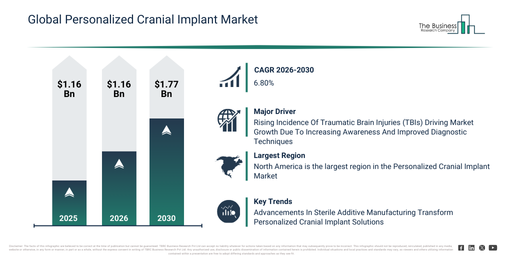
  • Increasing Adoption Of Rising Incidence Of Traumatic Brain Injuries (TBIs) Driving Market Growth Due To Increasing Awareness And Improved Diagnostic Techniques Is Influencing The Personalized Cranial Implant Market

    Increasing Adoption Of Rising Incidence Of Traumatic Brain Injuries (TBIs) Driving Market Growth Due To Increasing Awareness And Improved Diagnostic Techniques Is Influencing The Personalized Cranial Implant Market

    The Business Research Company’s 2026 market reports feature advanced enhancements such as market attractiveness analysis, total addressable market evaluation, company benchmarking matrices, interactive Excel dashboards, expanded supply chain intelligence, emerging startup coverage, and detailed product insights, delivering more actionable and strategically valuable research.

    What Are The Forecasted Market Size Figures For The Personalized Cranial Implant Market In 2026 And 2030?

    The market for personalized cranial implants has experienced significant expansion recently. This market is projected to expand from $0.96 billion in 2025 to reach $1.03 billion by 2026, demonstrating a compound annual growth rate (CAGR) of 7.3%. Historically, this growth can be linked to an increase in traumatic brain injury cases, a rising number of tumor resection surgeries, progress in cranial imaging technologies, an expansion in neurosurgical procedure volumes, and enhanced availability of biocompatible implant materials.

    The personalized cranial implant market is anticipated to experience substantial expansion over the next few years, with its size projected to climb to $1.34 billion by 2030, demonstrating a compound annual growth rate (CAGR) of 6.8%. This foreseen growth during the forecast period is propelled by the integration of personalized medicine approaches, the expansion of 3D printing infrastructure within hospitals, an escalating requirement for custom cosmetic correction, technological enhancements in implant design software, and increased healthcare expenditure on advanced neurosurgery. Prominent trends throughout this period include the rising adoption of patient-specific cranial reconstruction, the growing utilization of 3D printing in neurosurgical implants, an increasing preference for minimally invasive cranial procedures, the broader application of personalized implants in complex trauma cases, and improved aesthetic and functional outcomes influencing surgeon preferences.

    Download A Free Sample Report For Comprehensive Market Insights:

    https://www.thebusinessresearchcompany.com/sample.aspx?id=25873&type=smp

    What Primary Factors Are Fueling The Expansion Of The Personalized Cranial Implant Market?

    The personalized cranial implant market is anticipated to expand due to the increasing occurrence of traumatic brain injuries (TBIs). TBIs are defined as damage inflicted upon the brain resulting from external mechanical impacts. This increase in TBI incidence can be attributed to heightened public understanding of head injury dangers and improvements in medical diagnostic techniques. For traumatic brain injuries, personalized cranial implants are crucial because they facilitate accurate, custom-made skull reconstruction, thereby enhancing brain protection, aesthetic outcomes, and patient recuperation. An example of this trend is seen in 2024, where data from the Tennessee Department of Health, a US-based government agency, showed a 2.4% increase in the traumatic brain injury (TBI) registry patient count in 2023 compared to 2022. Consequently, the growing frequency of traumatic brain injuries (TBIs) and cranial abnormalities is a key factor propelling expansion within the personalized cranial implants market.

    What Segment Types Are Included In The Personalized Cranial Implant Market Analysis?

    The personalized cranial implant market covered in this report is segmented –

    1) By Implant Material: Titanium, Polymethylmethacrylate (PMMA), Polyether Ether Ketone (PEEK), Other Implant Materials

    2) By Indication: Traumatic Brain Injury, Oncology (Tumor Resection), Congenital Disorders, Infections, Cosmetic Or Deformity Correction

    3) By End Use: Hospitals, Ambulatory Surgical Centers, Other End Uses

    Subsegments:

    1) By Titanium: Pure Titanium, Titanium Alloy, Mesh Titanium Implants, Solid Titanium Plates

    2) By Polymethylmethacrylate: Preformed Polymethylmethacrylate Implants, Hand-Molded Polymethylmethacrylate, Custom Molded Polymethylmethacrylate, Antibiotic-Impregnated Polymethylmethacrylate

    3) By Polyether Ether Ketone: Standard Polyether Ether Ketone Implants, Reinforced Polyether Ether Ketone Implants, Three-Dimensionally Printed Polyether Ether Ketone Implants, Patient-Specific Polyether Ether Ketone Implants

    4) By Other Implant Materials: Ceramic Implants, Composite Material Implants, Bioactive Glass Implants, Bioresorbable Polymer Implants

    Which Trends Are Supporting The Evolution Of The Personalized Cranial Implant Market?

    Leading companies within the personalized cranial implant market are prioritizing sophisticated technologies, such as hospital-site sterile 3D printing, to optimize production and enhance the delivery of patient-specific implants. This hospital-site sterile 3D printing technology utilizes specialized cleanroom-compatible 3D printers, enabling the fabrication of medical-grade implants directly within healthcare facilities, thereby minimizing contamination risks and improving turnaround times. For instance, in April 2024, 3D Systems, a US-based additive manufacturing company, introduced the VSP PEEK Cranial Implant. This implant offers a patient-specific cranial solution, leveraging high-performance PEEK material and an FDA-cleared 3D printing workflow, which includes modeling software, a sterile-environment 3D printer, and an efficient post-processing system. It is engineered to replicate the mechanical properties of human bone, providing superior biocompatibility, radiolucency, and resistance to bodily fluids. The system reduces material usage by up to 85% compared to traditional machining, leading to significantly lower costs. Its sterile, hospital-site implementation allows for faster surgical planning and improved patient outcomes, positioning it as a transformative tool in neurosurgery and cranioplasty.

    Who Are The Leading Firms Participating In The Personalized Cranial Implant Market?

    Major companies operating in the personalized cranial implant market are Medtronic PLC, Stryker Corporation, Zimmer Biomet Holdings Inc., Renishaw PLC, KLS Martin Group, B. Braun Melsungen AAG, Medartis Holding AG, CranioTech GmbH, evonos GmbH & Co. KG, Matrix Surgical USA LLC, Jeil Medical Corporation, Anatomics Pty Ltd., Calavera Surgical Design Inc., KELYNIAM Global Incorporated, Xilloc Medical B.V., INCREDIBLE AM Private Limited, LUCID Implants Private Limited, Ortho Baltic Joint Stock Company, OssDsign AB, 3D Systems Healthcare, Materialise NV, Oxford Performance Materials

    Access The Complete Personalized Cranial Implant Market Report:

    https://www.thebusinessresearchcompany.com/report/personalized-cranial-implant-global-market-report

    Which Region Has The Strongest Presence In The Personalized Cranial Implant Market?

    North America was the largest region in the personalized cranial implant market in 2025. Asia-Pacific is expected to be the fastest-growing region in the forecast period. The regions covered in the personalized cranial implant market report are Asia-Pacific, South East Asia, Western Europe, Eastern Europe, North America, South America, Middle East, Africa.

    Access a Customized Personalized Cranial Implant Market Report for Deeper Competitive Insights

    https://www.thebusinessresearchcompany.com/report/personalized-cranial-implant-global-market-report

    Browse Through More Reports Similar to the Global Personalized Cranial Implant Market 2026, By The Business Research Company

    Neural Implants Market Report 2026

    https://www.thebusinessresearchcompany.com/report/neural-implants-global-market-report

    Facial Implants Market Report 2026

    https://www.thebusinessresearchcompany.com/report/facial-implants-global-market-report

    Cosmetic Implants Market Report 2026

    https://www.thebusinessresearchcompany.com/report/cosmetic-implants-global-market-report

    Get in touch with us:

    The Business Research Company: https://www.thebusinessresearchcompany.com/

    Americas: +1 310-496-7795

    Asia: +44 7882 955267 & +91 8897263534

    Europe: +44 7882 955267

    Email us at: marketing@tbrc.info

    Follow us on:

    LinkedIn: https://in.linkedin.com/company/the-business-research-company

    YouTube: https://www.youtube.com/channel/UC24_fI0rV8cR5DxlCpgmyFQ

    Global Market Model: https://www.thebusinessresearchcompany.com/global-market-model

  • Rising Incidence Of Infectious Diseases Fueling The Growth Of The Market Due To Increasing Transmission Risks Continues To Impact The Growth Of The Personal Protective Equipment For Infection Control Market

    Rising Incidence Of Infectious Diseases Fueling The Growth Of The Market Due To Increasing Transmission Risks Continues To Impact The Growth Of The Personal Protective Equipment For Infection Control Market

    The Business Research Company’s 2026 market reports feature advanced enhancements such as market attractiveness analysis, total addressable market evaluation, company benchmarking matrices, interactive Excel dashboards, expanded supply chain intelligence, emerging startup coverage, and detailed product insights, delivering more actionable and strategically valuable research.

    How Much Larger Will The Personal Protective Equipment For Infection Control Market Become By 2030 Compared To 2026?

    The personal protective equipment for infection control market size has experienced robust expansion in recent years. This market is projected to expand from $26.64 billion in 2025 to $28.25 billion in 2026, demonstrating a compound annual growth rate (CAGR) of 6.0%. The upward trend observed historically stems from a pandemic-driven surge in ppe demand, an increase in healthcare-associated infection rates, greater awareness of occupational safety, government-led infection control mandates, and the ongoing expansion of hospital infrastructure.

    The personal protective equipment for infection control market size is projected to experience robust expansion over the next few years. It is expected to grow to $35.31 billion in 2030, achieving a compound annual growth rate (CAGR) of 5.7%. The anticipated growth within this forecast period can be attributed to several factors, including the expansion of outpatient and ambulatory care centers, an increasing incidence of infectious disease outbreaks, stricter global safety compliance norms, rising healthcare expenditure in emerging markets, and demand from non-healthcare sectors such as public safety. Major trends identified for the forecast period encompass the expansion of antimicrobial and self-sterilizing PPE, a shift towards reusable and cost-optimized PPE, growth in stockpiling and emergency preparedness programs, a rising demand for comfort-focused and ergonomic PPE, and the standardization and regulatory harmonization of PPE.

    Download A Free Sample Report For Comprehensive Market Insights:

    https://www.thebusinessresearchcompany.com/sample.aspx?id=25872&type=smp

    Which Strategic Drivers Are Supporting The Personal Protective Equipment For Infection Control Market Development?

    The increasing occurrence of infectious diseases is anticipated to drive the expansion of the personal protective equipment for infection control market in the future. Infectious diseases, defined as conditions arising from pathogenic microorganisms like bacteria, viruses, fungi, or parasites, are transmissible either directly or indirectly among individuals, or from animals or the environment to humans. This rise in infectious disease cases stems from a preference for dense urban populations and increased international travel, both of which accelerate disease dissemination. Personal protective equipment (PPE) for infection control plays a crucial role in lowering the rates of infectious diseases by enabling healthcare professionals and the public to establish a physical barrier against pathogens, thereby stopping direct exposure to infectious agents. For example, a report from the UK Health Security Agency in March 2025 indicated that in England, from 2023 to 2024, hospital admissions for infectious diseases were almost twice as high for people in the most deprived 20% of regions compared to those in the least deprived areas. Furthermore, GOV.UK reported in February 2024 that tuberculosis (TB) cases in England saw an increase from 4,380 in 2022 to 4,850 in 2023, marking a 10.7% rise. Consequently, the escalating incidence of infectious diseases is a primary driver for the expansion of the personal protective equipment for infection control market.

    Which Segment Divisions Form The Structure Of The Personal Protective Equipment For Infection Control Market?

    The personal protective equipment for infection control market covered in this report is segmented –

    1) By Product Type: Gloves, Face Masks, Gowns And Coveralls, Eye Protection, Respirators

    2) By Material Type: Latex, Nitrile, Polyethylene, Polypropylene, Other Advanced Materials

    3) By Distribution Channel: Direct Sales, Online Retail, Traditional Retail, Catalog Sales, Wholesalers And Distributors

    4) By Application Area: Infection Prevention, Occupational Safety, Emergency Response, Aerosol Transmission Protection, Healthcare Settings

    5) By End-User: Hospitals, Ambulatory Surgical Centers, Pharmacies, Diagnostic Laboratories, Public Health Institutions

    Subsegments:

    1) By Gloves: Disposable Gloves, Sterile Gloves, Non-Sterile Gloves, Latex Gloves, Nitrile Gloves, Vinyl Gloves, Polyethylene Gloves

    2) By Face Masks: Surgical Masks, N95 Respirators, KN95 Masks, Face Shields

    3) By Gowns And Coveralls: Isolation Gowns, Surgical Gowns, Coveralls, Reusable Gowns, Disposable Gowns, Fluid-Resistant Gowns

    4) By Eye Protection: Safety Goggles, Face Shields, Protective Glasses

    5) By Respirators: Half-Face Respirators, Full-Face Respirators, Powered Air-Purifying Respirators (PAPR), Reusable Respirators, Disposable Respirators

    What Trends Are Affecting The Growth Of The Personal Protective Equipment For Infection Control Market?

    Major companies operating in the personal protective equipment for infection control market are concentrating on developing innovative solutions, such as next-generation personal protective shields, to elevate user safety, enhance comfort, and offer improved protection against airborne pathogens. Next-generation personal protective shields refer to advanced face and body shielding equipment engineered with superior materials, ergonomic designs, and enhanced protective features to provide optimal defense against infectious agents. For instance, in March 2025, Stryker Corporation, a US-based medical technology company, launched the Steri-Shield 8 personal protection system, a next-generation personal protective equipment (PPE) specifically designed for healthcare professionals. This system features a customizable helmet with three points of contact for a secure and adjustable fit, including a unique ponytail path to accommodate long-haired users. It offers improved visibility with a 22% wider field of vision and a brighter helmet light, alongside a redesigned fan system that cools the front and back of the neck for enhanced comfort. The system includes three toga styles that provide AAMI level 4 (2012) protection, ensuring the highest fluid and microbial barrier. Additionally, it comes with a sleeker battery and a more efficient charging station, reflecting Stryker’s commitment to innovation and user-centric design in PPE.

    Which Companies Are Engaged In The Personal Protective Equipment For Infection Control Market Environment?

    Major companies operating in the personal protective equipment for infection control market are Cardinal Health Inc., Honeywell International Inc., 3M Company, Kimberly Clark Corporation, DuPont de Nemours Inc., STERIS plc, ELIS UK Limited, Ansell Limited, SHOWA Group, SAS Safety Corp., Moldex Metric Inc., Uvex Arbeitsschutz GmbH, Alpha Pro Tech Ltd., Polyco Healthline Ltd., Gateway Safety Inc., Plasti Surge Industries Pvt. Ltd., Franz Mensch GmbH, Univet S.p.A., Dastex Reinraumzubehör GmbH & Co. KG, Medline Industries LP, Hartalega Holdings Berhad, Top Glove Corporation Berhad, Supermax Corporation Berhad

    Access The Complete Personal Protective Equipment For Infection Control Market Report:

    https://www.thebusinessresearchcompany.com/report/personal-protective-equipment-for-infection-control-global-market-report

    Which Region Stands As The Largest Contributor To The Personal Protective Equipment For Infection Control Market?

    North America was the largest region in the personal protective equipment for infection control market in 2025. Asia-Pacific is expected to be the fastest-growing region in the forecast period. The regions covered in the personal protective equipment for infection control market report are Asia-Pacific, South East Asia, Western Europe, Eastern Europe, North America, South America, Middle East, Africa.

    Access a Customized Personal Protective Equipment For Infection Control Market Report for Deeper Competitive Insights

    https://www.thebusinessresearchcompany.com/report/personal-protective-equipment-for-infection-control-global-market-report

    Browse Through More Reports Similar to the Global Personal Protective Equipment For Infection Control Market 2026, By The Business Research Company

    Infection Control Market Report 2026

    https://www.thebusinessresearchcompany.com/report/infection-control-global-market-report

    Law Enforcement Personal Protective Equipment Market Report 2026

    https://www.thebusinessresearchcompany.com/report/law-enforcement-personal-protective-equipment-global-market-report

    Military Personal Protective Equipment Market Report 2026

    https://www.thebusinessresearchcompany.com/report/military-personal-protective-equipment-global-market-report

    Get in touch with us:

    The Business Research Company: https://www.thebusinessresearchcompany.com/

    Americas: +1 310-496-7795

    Asia: +44 7882 955267 & +91 8897263534

    Europe: +44 7882 955267

    Email us at: marketing@tbrc.info

    Follow us on:

    LinkedIn: https://in.linkedin.com/company/the-business-research-company

    YouTube: https://www.youtube.com/channel/UC24_fI0rV8cR5DxlCpgmyFQ

    Global Market Model: https://www.thebusinessresearchcompany.com/global-market-model

  • Personal Mobility Devices Market Outlook Through 2030 With Analysis Of Industry Trends And Developments

    Personal Mobility Devices Market Outlook Through 2030 With Analysis Of Industry Trends And Developments

    The Business Research Company’s 2026 market reports feature advanced enhancements such as market attractiveness analysis, total addressable market evaluation, company benchmarking matrices, interactive Excel dashboards, expanded supply chain intelligence, emerging startup coverage, and detailed product insights, delivering more actionable and strategically valuable research.

    What Growth In Market Value Is Anticipated For The Personal Mobility Devices Market Between 2026 And 2030?

    The personal mobility devices market has shown substantial growth in recent years. It is anticipated to expand from $12.57 billion in 2025 to $13.53 billion in 2026, achieving a compound annual growth rate (CAGR) of 7.6%. This historical expansion can be attributed to factors such as the limited availability of electric mobility options, a high dependency on traditional walking aids, a growing urban population with mobility needs, increasing hospital and clinic mobility requirements, and nascent awareness of smart mobility devices.

    The personal mobility devices market is projected to experience substantial growth in the forthcoming years. It is set to expand to $18.03 billion by 2030, achieving a compound annual growth rate (CAGR) of 7.4%. This anticipated growth during the forecast period is driven by factors such as technological advancements in electric and hybrid PMDs, increasing investment in smart and connected mobility solutions, a rise in government initiatives for accessible urban transport, the expansion of homecare and outpatient services, and the growing adoption of IoT-enabled and autonomous mobility devices. Key trends emerging in this period include the rising use of personal mobility devices for urban commuting, an increasing demand for compact and lightweight mobility solutions, a heightened focus on accessibility for elderly and differently-abled individuals, the integration of smart features and IoT connectivity in PMDs, and the expansion of homecare and outpatient mobility services.

    Download A Free Sample Report For Comprehensive Market Insights:

    https://www.thebusinessresearchcompany.com/sample.aspx?id=24362&type=smp

    What Major Growth Factors Are Impacting The Personal Mobility Devices Market?

    The increasing occurrence of disabilities is projected to fuel the expansion of the personal mobility devices market in the future. Disabilities are defined as enduring physical, mental, intellectual, or sensory limitations which, when confronted with various obstacles, can impede an individual’s complete and meaningful involvement in society on an equitable footing with others. This growth in disability prevalence is predominantly attributed to an aging demographic, given that age-associated conditions like arthritis, impaired vision, and dementia are increasingly common alongside extended lifespans. For people with disabilities, personal mobility devices, including wheelchairs and scooters, are crucial because they boost self-reliance, facilitate access to everyday tasks, and foster more engagement in social and professional spheres. As an illustration, in June 2025, a report from the Department for Work and Pensions, a UK government body, indicated that for the 2023-24 period, there was an increase of 300,000 (2.0%) in working-age individuals reporting a long-term health condition, a rise of 290,000 (3.1%) in those classified as disabled, and a jump of 170,000 (4.4%) in those significantly limited in their daily activities. Consequently, the expanding occurrence of disabilities is a key factor propelling the development of the personal mobility devices market.

    How Are Different Segment Groups Identified Within The Personal Mobility Devices Market?

    The personal mobility devices market covered in this report is segmented –

    1) By Product Type: Walking Aids, Handbikes, Mobility Scooters, Medical Beds, Stair-lifts, Power Add On Products, Wheelchairs, Other Product Types

    2) By Distribution Channel: Wholesalers Or Distributors, Online Retailers, Multi-Brand Stores, Specialty Stores

    3) By End User: Hospital And Clinics, Ambulatory Surgical Centers, Rehabilitation Centers, Homecare Setting, Other End Users

    Subsegments:

    1) By Walking Aids: Canes, Crutches, Walkers, Rollators

    2) By Handbikes: Manual Handbikes, Electric Handbikes, Hybrid Handbikes

    3) By Mobility Scooters: 3-Wheel Scooters, 4-Wheel Scooters, Foldable Or Portable Scooters, Heavy-Duty Scooters

    4) By Medical Beds: Manual Beds, Semi-Electric Beds, Fully Electric Beds, Bariatric Beds

    5) By Stair-Lifts: Straight Stair-Lifts, Curved Stair-Lifts, Outdoor Stair-Lifts, Platform Stair-Lifts

    6) By Power Add On Products: Power Assist Wheels, Power Drive Units, Motorized Attachments

    7) By Wheelchairs: Manual Wheelchairs, Power Wheelchairs, Transport Wheelchairs, Sports Wheelchairs

    8) By Other Product Types: Patient Lifts, Transfer Aids, Standing Frames, Mobility Accessories

    Which Trends Are Influencing The Direction Of The Personal Mobility Devices Market?

    Leading companies within the personal mobility devices market are prioritizing the development of sophisticated products, such as hands-free personal mobility devices, to improve personal movement by integrating assistance with immersive digital experiences for wider applications. A hands-free personal mobility device serves as a self-balancing, motorized transport solution that enables users to travel without engaging their hands, typically operated by body movements or posture control for short-distance, individual journeys. For instance, in February 2024, Honda Motor Co., Ltd., a Japan-based automotive manufacturer, announced the launch of the UNI-ONE, a hands-free personal mobility device engineered to enhance user interaction and mobility through advanced self-balancing technology and intuitive control mechanisms. The UNI-ONE incorporates a seat that can be adjusted in height, allowing users to maintain eye-level communication with both standing and seated individuals, thereby encouraging more natural social interactions. Additionally, the device is fitted with Honda’s Omni Traction Drive Systems, which facilitates smooth, multi-directional movement guided by the user’s body posture, providing a seamless mobility experience and expanding accessibility for individuals with diverse mobility requirements.

    Who Are The Prominent Players Across The Personal Mobility Devices Market?

    Major companies operating in the personal mobility devices market are Medline Industries Inc., Stryker Corporation, Hill Rom Holdings Inc., Ottobock, Arjo AB, Invacare Holdings Corporation, NOVA Medical Products, Permobil, Sunrise Medical LLC, DRIVE MEDICAL GMBH & CO. KG, Performance Health Supply Inc., Pride Mobility Products Corp., Carex Health Brands Inc., Compass Health Brands, GF Health Products Inc., Handicare Group, Golden Technologies, Falcon Mobility Singapore, Rehabilitation Manufacturing Services Limited (RMS), Karman Healthcare, Triride srl, Eurovema Mobility AB, Rollz International.

    Access The Complete Personal Mobility Devices Market Report:

    https://www.thebusinessresearchcompany.com/report/personal-mobility-devices-global-market-report

    What Is The Largest Regional Market In The Personal Mobility Devices Market?

    North America was the largest region in the personal mobility devices market in 2025. Asia-Pacific is expected to be the fastest-growing region in the forecast period. The regions covered in the personal mobility devices market report are Asia-Pacific, South East Asia, Western Europe, Eastern Europe, North America, South America, Middle East, Africa.

    Access a Customized Personal Mobility Devices Market Report for Deeper Competitive Insights

    https://www.thebusinessresearchcompany.com/report/personal-mobility-devices-global-market-report

    Browse Through More Reports Similar to the Global Personal Mobility Devices Market 2026, By The Business Research Company

    Ultra Mobile Devices Market Report 2026

    https://www.thebusinessresearchcompany.com/report/ultra-mobile-devices-global-market-report

    Managed Mobility Services Market Report 2026

    https://www.thebusinessresearchcompany.com/report/managed-mobility-services-global-market-report

    Mobility As A Service Market Report 2026

    https://www.thebusinessresearchcompany.com/report/mobility-as-a-service-global-market-report

    Get in touch with us:

    The Business Research Company: https://www.thebusinessresearchcompany.com/

    Americas: +1 310-496-7795

    Asia: +44 7882 955267 & +91 8897263534

    Europe: +44 7882 955267

    Email us at: marketing@tbrc.info

    Follow us on:

    LinkedIn: https://in.linkedin.com/company/the-business-research-company

    YouTube: https://www.youtube.com/channel/UC24_fI0rV8cR5DxlCpgmyFQ

    Global Market Model: https://www.thebusinessresearchcompany.com/global-market-model

  • Personal Emergency Response Systems (PERS) Market Revenue Anticipated To Reach $12.59 Billion By 2030 With 8.8% CAGR

    Personal Emergency Response Systems (PERS) Market Revenue Anticipated To Reach $12.59 Billion By 2030 With 8.8% CAGR

    The Business Research Company’s 2026 market reports feature advanced enhancements such as market attractiveness analysis, total addressable market evaluation, company benchmarking matrices, interactive Excel dashboards, expanded supply chain intelligence, emerging startup coverage, and detailed product insights, delivering more actionable and strategically valuable research.

    What Is The Expected Market Value Outlook For The Personal Emergency Response Systems (PERS) Market Through 2030?

    The market size for personal emergency response systems (pers) has experienced significant growth in recent years. It is projected to expand from $8.23 billion in 2025 to $8.97 billion in 2026, at a compound annual growth rate (CAGR) of 9.0%. This historical growth can be linked to factors such as the increasing aging population, a rise in independent living among seniors, the demand for emergency healthcare, a shortage of caregivers, and heightened awareness of elderly safety.

    The personal emergency response systems (pers) market is anticipated to experience robust expansion over the next few years, projected to reach $12.6 billion by 2030, demonstrating a compound annual growth rate (CAGR) of 8.8%. This growth during the forecast period is fueled by several factors, including the integration of smart home technologies, AI-based emergency detection capabilities, the increasing reach of home healthcare services, government-sponsored elderly care programs, and the rising adoption of mobile health. Key trends expected in this period involve the proliferation of wearable emergency devices, the widespread uptake of GPS-enabled mobile PERS, the incorporation of fall detection sensors, the development of home-based safety solutions for the elderly, and the implementation of voice-activated emergency systems.

    Download A Free Sample Report For Comprehensive Market Insights:

    https://www.thebusinessresearchcompany.com/sample.aspx?id=22095&type=smp

    What Market Drivers Are Helping Shape The Personal Emergency Response Systems (PERS) Market Expansion?

    The market for personal emergency response systems (PERS) is projected to expand due to the increasing prevalence of chronic diseases. These are enduring health conditions, such as diabetes, heart disease, and arthritis, which progress gradually and require continuous management. This rise in chronic illness can be attributed to an aging population and unhealthy lifestyle choices, which elevate the risk of obesity, insulin resistance, and inflammation, all crucial factors in the development of chronic conditions. The growing incidence of chronic diseases consequently drives the demand for personal emergency response systems (PERS), as these systems offer continuous monitoring and rapid access to medical assistance. PERS serves as an essential tool, empowering users to notify emergency services or caregivers during health emergencies, thereby ensuring patient safety and peace of mind. For instance, in June 2024, the National Health Service, a UK-based government department, reported that in 2023, an additional half a million (549,000) individuals in England were at risk of developing type 2 diabetes. This brought the total number of people with non-diabetic hyperglycemia, or pre-diabetes, registered with a GP to 3,615,330, a considerable increase from 3,065,825 in 2022, representing a rise of nearly 20%. Therefore, the increasing prevalence of chronic diseases is a key factor propelling the growth of the personal emergency response systems (PERS) market.

    What Segment Categories Are Evaluated In The Personal Emergency Response Systems (PERS) Market Study?

    The personal emergency response systems (pers) market covered in this report is segmented –

    1) By Type: Landline Personal Emergency Response System (PERS), Mobile Personal Emergency Response System (PERS)

    2) By Component: Smoke Detectors, Bed Sensors, Pull-Cord Residential, Fall Detection Sensors, Flood Detectors

    3) By End-User: Nursing Home, Home-Based User, Assisted Living Facilities, Hospices, Senior Living Facilities

    Subsegments:

    1) By Landline Personal Emergency Response System (PERS): Basic Landline PERS, Auto-Alert Landline PERS, Voice-Activated Landline PERS

    2) By Mobile Personal Emergency Response System (PERS): GPS-enabled Mobile PERS, Non-GPS Mobile PERS, Wearable Mobile PERS, Smartphone-based Mobile PERS

    What Trends Are Driving Changes In The Personal Emergency Response Systems (PERS) Market?

    Major companies operating in the personal emergency response systems (PERS) market are concentrating on creating sophisticated products, such as medical alert devices, to improve real-time oversight for more effective emergency response and proactive healthcare management. A medical alert device represents an electronic system offering prompt assistance during medical emergencies, typically featuring a wearable help button that links individuals to emergency response services. For instance, in February 2025, LogicMark, Inc., a US-based medical equipment manufacturing company, launched its new Guardian Alert 911 Plus. This advanced personal emergency response device incorporates fall detection, 4G LTE technology, and a sleek, discreet design, providing crucial hands-free fall detection and direct access to emergency services, thereby offering aging adults and individuals with medical conditions enhanced safety and independence without the concern of recurring costs.

    Which Companies Form The Competitive Landscape Of The Personal Emergency Response Systems (PERS) Market?

    Major companies operating in the personal emergency response systems (pers) market are ADT Inc, Tunstall Healthcare, Lifeline Systems Company, Medical Guardian, LifeStation, LifeFone Medical Alert Services, LifeWatch, Rescue Alert, AlertOne Services LLC, GreatCall, Bay Alarm Medical, Lifelink USA, Galaxy Medical Alert Systems, Alarm Systems, MediPendant, QMedic, Life Guardian LLC, Philips Lifeline, Bay Alarm Medical (Expanded Division), Philips Personal Emergency Response Solutions

    Access The Complete Personal Emergency Response Systems (PERS) Market Report:

    https://www.thebusinessresearchcompany.com/report/personal-emergency-response-systems-pers-global-market-report

    Which Region Contributes The Most To The Personal Emergency Response Systems (PERS) Market?

    North America was the largest region in the personal emergency response systems market in 2025. The regions covered in the personal emergency response systems (pers) market report are Asia-Pacific, South East Asia, Western Europe, Eastern Europe, North America, South America, Middle East, Africa.

    Access a Customized Personal Emergency Response Systems (PERS) Market Report for Deeper Competitive Insights

    https://www.thebusinessresearchcompany.com/report/personal-emergency-response-systems-pers-global-market-report

    Browse Through More Reports Similar to the Global Personal Emergency Response Systems (PERS) Market 2026, By The Business Research Company

    Emergency Department Information System Market Report 2026

    https://www.thebusinessresearchcompany.com/report/emergency-department-information-system-global-market-report

    Emergency Medical Services Products Market Report 2026

    https://www.thebusinessresearchcompany.com/report/emergency-medical-services-products-global-market-report

    Incident And Emergency Management Market Report 2026

    https://www.thebusinessresearchcompany.com/report/incident-and-emergency-management-global-market-report

    Get in touch with us:

    The Business Research Company: https://www.thebusinessresearchcompany.com/

    Americas: +1 310-496-7795

    Asia: +44 7882 955267 & +91 8897263534

    Europe: +44 7882 955267

    Email us at: marketing@tbrc.info

    Follow us on:

    LinkedIn: https://in.linkedin.com/company/the-business-research-company

    YouTube: https://www.youtube.com/channel/UC24_fI0rV8cR5DxlCpgmyFQ

    Global Market Model: https://www.thebusinessresearchcompany.com/global-market-model

  • Personal Care Robotics Market Outlook Assessing Future Opportunities And Growth Prospects

    Personal Care Robotics Market Outlook Assessing Future Opportunities And Growth Prospects

    The Business Research Company’s 2026 market reports feature advanced enhancements such as market attractiveness analysis, total addressable market evaluation, company benchmarking matrices, interactive Excel dashboards, expanded supply chain intelligence, emerging startup coverage, and detailed product insights, delivering more actionable and strategically valuable research.

    How Will The Market Value Of The Personal Care Robotics Market Increase Between 2026 And 2030?

    The personal care robotics market has experienced rapid expansion in recent years. It is projected to increase from $16.69 billion in 2025 to $18.92 billion in 2026, reflecting a compound annual growth rate (CAGR) of 13.3%. The market’s historical development can be attributed to factors such as the initial limited availability of personal care robots, a reliance on semi-automated devices, the increasing elderly population, growing awareness of assisted living solutions, and the early adoption of AI-based healthcare devices.

    The personal care robotics market is projected for significant expansion shortly, reaching $31.02 billion by 2030, demonstrating a compound annual growth rate (CAGR) of 13.2%. This anticipated growth stems from progress in AI and machine learning for robotics, a rise in smart home adoption, increased funding for home care and nursing facilities, wider application of sensor and actuator technologies, and a greater need for customized care solutions for the elderly and disabled. Key trends anticipated during this period involve the increasing use of personal care robots in senior care, an amplified emphasis on health monitoring and remote support, the expanding incorporation of robotic wearables for everyday tasks, the growth of companion robots for mental health, and improved automation for hygiene and cleaning within home care settings.

    Download A Free Sample Report For Comprehensive Market Insights:

    https://www.thebusinessresearchcompany.com/sample.aspx?id=24361&type=smp

    Which Significant Factors Are Encouraging Growth In The Personal Care Robotics Market?

    The rising occurrence of disabilities is expected to boost the expansion of the personal care robotics market over the next few years. Disabilities encompass physical, mental, sensory, or cognitive limitations that may hinder a person’s ability to perform everyday activities or interact with their environment. The escalation in disabilities stems from aging populations, where extended life spans elevate the likelihood of developing conditions like mobility impairments, cognitive decline, and chronic illnesses. Personal care robotics assists people with disabilities by improving their independence, safety, and overall quality of life via assistive technologies. Such robots are capable of executing routine tasks that might be difficult or unachievable for certain individuals, including feeding, dressing, grooming, or providing mobility aid. For example, in October 2024, a report released by the House of Commons Library, a UK-based research division within the British Parliament, indicated that during the 2022–2023 fiscal year, 16.1 million persons in the UK had a disability, constituting approximately 24% of the entire population. The incidence of disability escalated with age, affecting approximately 11% of children, 23% of working-age individuals, and 45% of those beyond the State Pension age. Consequently, the rising occurrence of disabilities is poised to propel the growth of the personal care robotics market.

    How Is The Personal Care Robotics Market Examined Through Segment Analysis?

    The personal care robotics market covered in this report is segmented –

    1) By Product: Smart Robots, Half Smart Robots

    2) By Technology: Artificial Intelligence (AI) And Machine Learning, Sensors And Actuators, Speech Recognition, Other Technologies

    3) By Application: Elderly Care, Disabled Assistance, Personal Hygiene, Others Applications

    4) By End-User: Hospitals, Nursing Homes, Home Care Settings, Other End-Users

    Subsegments:

    1) By Smart Robots: Personal Assistants, Health Monitoring Robots, Cleaning Robots, Robotic Wearables, Companion Robots

    2) By Half Smart Robots: Semi-Automated Cleaning Robots, Semi-Automated Health Monitoring Devices, Semi-Automated Personal Care Robots

    Which Trends Are Shaping The Personal Care Robotics Market Landscape?

    Leading companies within the personal care robotics market are prioritizing the creation of advanced products, such as artificial intelligence (AI)-powered caregiver solutions, which aim to continuously monitor and address a person’s requirements in real-time. These AI-driven caregiver solutions represent technology-based systems that utilize machine learning and other AI technologies to assist with caregiving duties, thereby improving efficiency and offering support to individuals with disabilities or age-related needs. For instance, in January 2025, Intuition Robotics Inc., an Israel-based company specializing in digital companion technology, introduced the ElliQ Caregiver Solution. This system integrates the ElliQ companion robot with a dedicated Caregiver App for remote care management, collectively forming a complete platform that employs artificial intelligence to support senior citizens’ care. The solution enables caregivers to stay connected, informed, and actively involved in their loved one’s care, even from a distance. ElliQ contributes by monitoring health and activity, setting individualized care goals, and delivering proactive, AI-driven updates, ensuring caregivers are always aware of important changes. By functioning as both a companion and a care assistant, ElliQ alerts caregivers to significant shifts in behavior or health, thereby making effective remote care possible without the need for physical presence.

    Who Are The Key Market Participants In The Personal Care Robotics Market?

    Major companies operating in the personal care robotics market are SoftBank Robotics, Blue Ocean Robotics, Aethon Inc, Toyota Motor Corporation, Omron Corporation, Cyberdyne Care Robotics GmbH, ReWalk Robotics Ltd, REX Bionics Ltd, Paro Therapeutic Robots, Blue Frog Robotics, Labrador Systems Inc, Pillo Health, KOMPAÏ Robotics, Service Robotics Limited, PAL Robotics, Ekso Bionics Holdings Inc, Sarcos Technology and Robotics Corporation, Honda Robotics, Focal Meditech BV, Intuition Robotics, Ubtech Robotics, Giraff Technologies AB

    Access The Complete Personal Care Robotics Market Report:

    https://www.thebusinessresearchcompany.com/report/personal-care-robotics-global-market-report

    Which Regional Market Leads The Personal Care Robotics Market?

    North America was the largest region in the personal care robotics market in 2025. Asia-Pacific is expected to be the fastest-growing region in the forecast period. The regions covered in the personal care robotics market report are Asia-Pacific, South East Asia, Western Europe, Eastern Europe, North America, South America, Middle East, Africa.

    Access a Customized Personal Care Robotics Market Report for Deeper Competitive Insights

    https://www.thebusinessresearchcompany.com/report/personal-care-robotics-global-market-report

    Browse Through More Reports Similar to the Global Personal Care Robotics Market 2026, By The Business Research Company

    Healthcare Companion Robots Market Report 2026

    https://www.thebusinessresearchcompany.com/report/healthcare-companion-robots-global-market-report

    Healthcare Mobile Robots Market Report 2026

    https://www.thebusinessresearchcompany.com/report/healthcare-mobile-robots-global-market-report

    Robotic Surgery Services Market Report 2026

    https://www.thebusinessresearchcompany.com/report/robotic-surgery-services-global-market-report

    Get in touch with us:

    The Business Research Company: https://www.thebusinessresearchcompany.com/

    Americas: +1 310-496-7795

    Asia: +44 7882 955267 & +91 8897263534

    Europe: +44 7882 955267

    Email us at: marketing@tbrc.info

    Follow us on:

    LinkedIn: https://in.linkedin.com/company/the-business-research-company

    YouTube: https://www.youtube.com/channel/UC24_fI0rV8cR5DxlCpgmyFQ

    Global Market Model: https://www.thebusinessresearchcompany.com/global-market-model

  • Peripherally Inserted Central Catheter (PICC) Market Industry Forecast Reflecting Growth To $1.32 Billion By 2030

    Peripherally Inserted Central Catheter (PICC) Market Industry Forecast Reflecting Growth To $1.32 Billion By 2030

    The Business Research Company’s 2026 market reports feature advanced enhancements such as market attractiveness analysis, total addressable market evaluation, company benchmarking matrices, interactive Excel dashboards, expanded supply chain intelligence, emerging startup coverage, and detailed product insights, delivering more actionable and strategically valuable research.

    What Will Be The Estimated Market Size Of The Peripherally Inserted Central Catheter (PICC) Market By 2030?

    The peripherally inserted central catheter (picc) market size has experienced consistent expansion over recent years. This market is projected to increase from $1.07 billion in 2025 to $1.12 billion in 2026, at a compound annual growth rate (CAGR) of 4.4%. The historical development of this market can be linked to the rising occurrence of chronic illnesses demanding prolonged intravenous therapy, the growing adoption of picc lines by hospitals for chemotherapy and antibiotic administration, early clinical acceptance of conventional single and double lumen kits, the expansion of catheterization laboratory services supporting vascular access, and the increasing use of piccs in inpatient and critical care settings.

    The peripherally inserted central catheter (PICC) market size is anticipated to experience consistent expansion over the coming years. This market is projected to reach $1.32 billion by 2030, exhibiting a compound annual growth rate (CAGR) of 4.3%. This growth during the forecast period can be attributed to several factors, including a heightened demand for power-injectable and multi-lumen PICC systems, the increased adoption of tip-placement kits for enhanced procedural accuracy, an uptick in procedure volumes within ambulatory surgical centers, the broadened application of PICCs in home infusion and outpatient therapy settings, and an intensified focus on mitigating complications and achieving better long-term vascular access results. Key trends anticipated during this period encompass the growing acceptance of power-injectable PICC lines for advanced diagnostic and therapeutic interventions, greater utilization of multi-lumen PICCs for intricate long-term IV therapy, a rising preference for tip-placement and navigation-assisted PICC insertion kits, the expanded deployment of PICCs in oncology nutrition support and chronic infection management, and their increased implementation across hospitals, ASCs, and catheterization laboratories.

    Download A Free Sample Report For Comprehensive Market Insights:

    https://www.thebusinessresearchcompany.com/sample.aspx?id=13908&type=smp

    What Core Drivers Are Transforming The Peripherally Inserted Central Catheter (PICC) Market?

    The increasing incidence of chronic diseases is anticipated to drive expansion in the peripherally inserted central catheter market over the foreseeable future. These conditions encompass persistent, slowly advancing health issues like cancer, diabetes, hypertension, stroke, heart disease, respiratory diseases, arthritis, obesity, and oral diseases. Peripherally inserted central catheters (PICCs) find application in chronic illness management, facilitating sustained intravenous access for medications, fluids, parenteral nutrition, and blood sampling. An illustrative example from January 2023, based on data from the National Library of Medicine, a US-based agency, indicates that the population aged 50 years and older with at least one chronic ailment is forecast to escalate by 99.5%, reaching 142.66 million by 2050, an increase from 71.522 million in 2022 in the United States. Consequently, the expanding occurrence of chronic diseases is fueling the development of the peripherally inserted central catheter (PICC) market.

    Which Segment Groups Define The Peripherally Inserted Central Catheter (PICC) Market Landscape?

    The peripherally inserted central catheter (picc) market covered in this report is segmented –

    1) By Device Type: Power-Injectable, Non-Power Injectable

    2) By Lumen Type: Single, Double, Triple

    3) By Kit Type: Tip-Placement Kit, Conventional Kit

    4) By End User: Hospitals and Clinics, Ambulatory Surgical Centers, Catheterization Laboratories

    Subsegments:

    1) By Power-Injectable PICCs: Single Lumen Power-Injectable PICCs, Double Lumen Power-Injectable PICCs, Triple Lumen Power-Injectable PICCs

    2) By Non-Power Injectable PICCs: Single Lumen Non-Power Injectable PICCs, Double Lumen Non-Power Injectable PICCs, Triple Lumen Non-Power Injectable PICCs

    What Trends Are Influencing The Peripherally Inserted Central Catheter (PICC) Market Outlook?

    Leading companies within the peripherally inserted central catheter (PICC) market are prioritizing groundbreaking technologies, such as peripherally inserted central catheter insertion devices, to enhance customer offerings with sophisticated functionalities. Peripherally inserted central catheter insertion devices are specialized medical tools designed for the placement of peripherally inserted central catheters (PICCs); they facilitate insertion into a peripheral vein, typically located in the arm, and guide them through the vascular system until the tip reaches a major vein close to the heart. For instance, in May 2023, Teleflex Incorporated, a US-based medical device company, unveiled two novel peripherally inserted central catheter insertion devices: the Arrow VPS Rhythm DLX Device and the NaviCurve Stylet. The VPS Rhythm DLX Device leverages cardiac electrical activity to provide real-time information on catheter tip placement. This device also incorporates an optional integrated ultrasonography, complete with a catheter-to-vessel ratio tool, which aids in consistent vessel dimensioning. When combined with the Arrow PICC featuring the NaviCurve Stylet, this instrument delivers advanced tip navigation and location capabilities. The VPS Rhythm DLX Device, which incorporates TipTracker Technology, obviates the requirement for a corroborative x-ray, thereby empowering physicians to execute insertions seamlessly through ultrasound vascular assessment, peripherally inserted central catheter navigation, and precise tip confirmation within the lower third of the superior vena cava.

    Which Organizations Are Operating Within The Peripherally Inserted Central Catheter (PICC) Market?

    Major companies operating in the peripherally inserted central catheter (picc) market are Cardinal Health Inc., Medtronic plc, Becton Dickinson and Company, B. Braun Medical Ltd, Teleflex Incorporated, ICU Medical Inc., Cook Medical, AngioDynamics, Argon Medical, PFM Medical Inc., Poly Medicure Ltd., Kimal Plc, Utah Medical Products Inc., Martech Medical Products, NeoMedical, Medical Components Inc, DeltaMed Solutions Inc., Access Vascular Inc., Medi-Tech Devices, Footprint Medical Incorporated, Biowy Corporation, Husk Medical B.V., Medcomp, Vygon Ltd, Haolang Technology (Foshan) Limited Co. Ltd

    Access The Complete Peripherally Inserted Central Catheter (PICC) Market Report:

    https://www.thebusinessresearchcompany.com/report/peripherally-inserted-central-catheter-picc-global-market-report

    Which Region Holds The Largest Share In The Peripherally Inserted Central Catheter (PICC) Market?

    North America was the largest region in the peripherally inserted central catheter (PICC) market in 2025. Asia-Pacific is expected to be the fastest-growing region in the forecast period. The regions covered in the peripherally inserted central catheter (picc) market report are Asia-Pacific, South East Asia, Western Europe, Eastern Europe, North America, South America, Middle East, Africa.

    Access a Customized Peripherally Inserted Central Catheter (PICC) Market Report for Deeper Competitive Insights

    https://www.thebusinessresearchcompany.com/report/peripherally-inserted-central-catheter-picc-global-market-report

    Browse Through More Reports Similar to the Global Peripherally Inserted Central Catheter (PICC) Market 2026, By The Business Research Company

    Peripheral Iv Catheters Market Report 2026

    https://www.thebusinessresearchcompany.com/report/peripheral-iv-catheters-global-market-report

    Central Venous Catheters Market Report 2026

    https://www.thebusinessresearchcompany.com/report/central-venous-catheters-global-market-report

    Intravascular Catheters Market Report 2026

    https://www.thebusinessresearchcompany.com/report/intravascular-catheters-global-market-report

    Get in touch with us:

    The Business Research Company: https://www.thebusinessresearchcompany.com/

    Americas: +1 310-496-7795

    Asia: +44 7882 955267 & +91 8897263534

    Europe: +44 7882 955267

    Email us at: marketing@tbrc.info

    Follow us on:

    LinkedIn: https://in.linkedin.com/company/the-business-research-company

    YouTube: https://www.youtube.com/channel/UC24_fI0rV8cR5DxlCpgmyFQ

    Global Market Model: https://www.thebusinessresearchcompany.com/global-market-model

  • Peripheral Vascular Devices And Equipment Market Forecast Analysis Through 2030 With Insights On Industry Expansion

    Peripheral Vascular Devices And Equipment Market Forecast Analysis Through 2030 With Insights On Industry Expansion

    The Business Research Company’s 2026 market reports feature advanced enhancements such as market attractiveness analysis, total addressable market evaluation, company benchmarking matrices, interactive Excel dashboards, expanded supply chain intelligence, emerging startup coverage, and detailed product insights, delivering more actionable and strategically valuable research.

    What Is The Estimated Growth In Market Size Of The Peripheral Vascular Devices And Equipment Market During 2026–2030?

    The peripheral vascular devices and equipment market size has shown consistent expansion in recent years. This market is anticipated to increase from $10.29 billion in 2025 to $10.56 billion in 2026, with a compound annual growth rate (CAGR) of 2.5%. The historical growth experienced by this market is attributable to a rising prevalence of peripheral artery disease, an aging global population, the expansion of interventional cardiology practices, increased adoption of catheter-based therapies, and growing investments in hospital infrastructure.

    The peripheral vascular devices and equipment market is projected to experience substantial growth in the coming years, with its size expected to reach $13.15 billion by 2030, driven by a compound annual growth rate (CAGR) of 5.7%. This expansion during the forecast period can be attributed to a surge in demand for minimally invasive vascular treatments, the increasing adoption of bioresorbable materials, the proliferation of outpatient vascular procedures, a heightened focus on precision-guided interventions, and continuous innovation in peripheral stent technologies. Notable trends expected during this period include the wider acceptance of drug-coated vascular devices, a rise in minimally invasive endovascular procedures, an escalating need for advanced atherectomy systems, the broadening application of image-guided peripheral interventions, and an increased emphasis on ensuring long-term device patency.

    Download A Free Sample Report For Comprehensive Market Insights:

    https://www.thebusinessresearchcompany.com/sample.aspx?id=2408&type=smp

    Which Growth Factors Are Strengthening The Peripheral Vascular Devices And Equipment Market Landscape?

    The expanding outlay on healthcare is anticipated to invigorate the peripheral vascular devices and equipment market in the coming period. Healthcare expenditure refers to the aggregate sum of money disbursed by individuals, entities, or governments for healthcare-related commodities and services within a defined timeframe. An uptick in healthcare spending generally translates into heightened demand for peripheral vascular devices and equipment, as healthcare infrastructures allocate resources to advanced medical technologies. This investment aims to refine the diagnosis and management of ailments like peripheral artery disease, ultimately elevating patient care and outcomes. For instance, in April 2025, data from The Office for National Statistics (ONS), a UK-based producer of official statistics and the government’s principal source of data, indicated that government-financed healthcare attained USD 2.91 billion (£258 billion) in 2024. This marked a real-terms increment of 2.5% from 2023, signifying augmented financial support for healthcare provision and equipment. Thus, the escalating healthcare expenditure will propel the peripheral vascular devices and equipment market forward.

    What Key Segment Areas Are Included In The Peripheral Vascular Devices And Equipment Market Assessment?

    The peripheral vascular devices and equipment market covered in this report is segmented –

    1) By Type: Peripheral vascular stents, Percutaneous transluminal angioplasty balloons, Catheters, PTA guide wires, Atherectomy devices, Chronic total acclusion devices, Aortic stents, Synthetic surgical grafts, Embolic protection devices, Inferior vena cava filters

    2) By Application: Treatment of Peripheral Blood Vessels Damaged, Treatment of Peripheral Blood Vessels Blockage

    3) By End User: Hospital applications, Clinic applications

    Subsegments:

    1) By Peripheral Vascular Stents: Balloon-expandable Stents, Self-expanding Stents

    2) By Percutaneous Transluminal Angioplasty Balloons: Drug-coated Balloons, Non-drug-Coated Balloons

    3) By Catheters: Diagnostic Catheters, Therapeutic Catheters

    4) By PTA Guide Wires: Hydrophilic Guide Wires, Non-hydrophilic Guide Wires

    5) By Atherectomy Devices: Rotational Atherectomy Devices, Orbital Atherectomy Devices, Laser Atherectomy Devices, Directional Atherectomy Devices

    6) By Chronic Total Occlusion Devices: CTO crossing devices, CTO re-entry devices

    7) By Aortic Stents: Self-expanding Aortic Stents, Balloon-expandable Aortic Stents

    8) By Synthetic Surgical Grafts: Polyester Grafts, Polytetrafluoroethylene (PTFE) Grafts, Dacron Grafts

    9) By Embolic Protection Devices: Distal Protection Devices, Proximal Protection Devices

    10) By Inferior Vena Cava Filters: Permanent Filters, Retrievable Filters

    Which Trends Are Expected To Shape The Peripheral Vascular Devices And Equipment Market?

    Leading companies operating within the peripheral vascular devices and equipment market are concentrating on developing advanced products, such as larger-diameter catheters, to improve the treatment of peripheral artery diseases. These larger-diameter catheters are medical instruments designed to facilitate the drainage or administration of fluids, medications, or other substances. For instance, in March 2023, Shockwave Medical Inc., a US-based medical device company, introduced the peripheral intravascular lithotripsy (IVL) catheter. The distinctive characteristic of the Shockwave L6 Peripheral IVL catheter lies in its specialized design to effectively modify calcification within challenging lesions in large peripheral vessels, including the iliac and common femoral arteries. This targeted strategy addresses the common problem of calcification in these arteries, which is often associated with reduced procedural success and higher complication rates when using standard endovascular techniques.

    Who Are The Businesses Driving Activity In The Peripheral Vascular Devices And Equipment Market?

    Major companies operating in the peripheral vascular devices and equipment market are Medtronic plc, Boston Scientific Corporation, Abbott Laboratories, Cook Group, Angiomed GmbH & Co. Medizintechnik KG, Terumo Corporation, ENDOLOGIX Inc., Bolton Medical Inc., JOTEC GmbH, Clearstream Technologies, Aesculap AG, Curative Medical Devices, Lepu Medical Technology, MicroPort, Bioteque Corporation Co.Ltd., Cardinal Health, iVascular, B. Braun Group, Biosensors International Group, BIOTRONIK SE & Co., COVIDien, Volcano Corporation, AngioScore, Edwards Lifesciences Corporation, Cordis Corporation, Koninklijke Philips N.V., Nipro Corporation, Bluesail Medical Co. Ltd, Rex Medical, Teleflex Incorporated, Penumbra Inc., Lombard Medical Technologies PLC, W.L. Gore & Associates Inc., Merit Medical Systems Inc., Vascular Solutions Inc., LeMaitre Vascular Inc., Spectranetics Corporation

    Access The Complete Peripheral Vascular Devices And Equipment Market Report:

    https://www.thebusinessresearchcompany.com/report/peripheral-vascular-devices-and-equipment-global-market-report

    Which Region Is The Dominant Market In The Peripheral Vascular Devices And Equipment Market?

    North America was the largest region in global peripheral vascular devices and equipment market in 2025. Western Europe was the second-largest region in global peripheral vascular devices and equipment market. The regions covered in the peripheral vascular devices and equipment market report are Asia-Pacific, South East Asia, Western Europe, Eastern Europe, North America, South America, Middle East, Africa.

    Access a Customized Peripheral Vascular Devices And Equipment Market Report for Deeper Competitive Insights

    https://www.thebusinessresearchcompany.com/report/peripheral-vascular-devices-and-equipment-global-market-report

    Browse Through More Reports Similar to the Global Peripheral Vascular Devices And Equipment Market 2026, By The Business Research Company

    Vascular Access Devices Market Report 2026

    https://www.thebusinessresearchcompany.com/report/vascular-access-devices-global-market-report

    Vascular Closure Devices Market Report 2026

    https://www.thebusinessresearchcompany.com/report/vascular-closure-devices-global-market-report

    Biopsy Devices Market Report 2026

    https://www.thebusinessresearchcompany.com/report/biopsy-devices-global-market-report

    Get in touch with us:

    The Business Research Company: https://www.thebusinessresearchcompany.com/

    Americas: +1 310-496-7795

    Asia: +44 7882 955267 & +91 8897263534

    Europe: +44 7882 955267

    Email us at: marketing@tbrc.info

    Follow us on:

    LinkedIn: https://in.linkedin.com/company/the-business-research-company

    YouTube: https://www.youtube.com/channel/UC24_fI0rV8cR5DxlCpgmyFQ

    Global Market Model: https://www.thebusinessresearchcompany.com/global-market-model