Month: May 2026

  • Artificial Intelligence In Life Sciences Market Trends And Growth Outlook Across The 2026–2030 Forecast Period

    Artificial Intelligence In Life Sciences Market Trends And Growth Outlook Across The 2026–2030 Forecast Period

    The Business Research Company’s 2026 market reports feature enhanced tools like market attractiveness analysis, TAM assessment, and company scoring matrices, along with interactive dashboards, deeper supply chain insights, and startup coverage strengthening the depth, usability, and strategic value of insights.

    How Will The Market Size Of The Artificial Intelligence In Life Sciences Market Progress Through 2030?

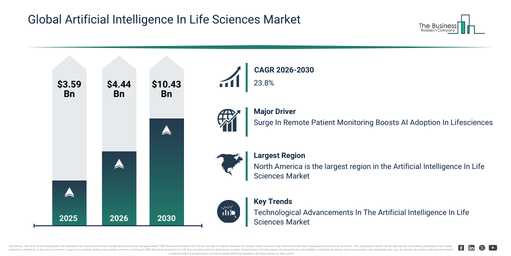
    The artificial intelligence in life sciences market size has experienced significant expansion in recent years. It is anticipated to increase from $3.59 billion in 2025 to $4.44 billion in 2026, demonstrating a compound annual growth rate (CAGR) of 23.6%. The historical growth of this market can be attributed to the increasing complexity of biological datasets, the expansion of genomics research, the rising adoption of digital lab technologies, the early integration of AI in biotechnology research, and the growing demand for faster research cycles.

    The artificial intelligence in life sciences market size is set to experience significant expansion in the upcoming years. It is anticipated to grow to $10.43 billion by 2030, achieving a compound annual growth rate (CAGR) of 23.8%. This expected growth during the forecast period can be attributed to increased investments in personalized medicine, the rising deployment of AI-enabled laboratory automation, the expansion of cloud-based life science platforms, growing collaboration between tech and life science firms, and increasing regulatory acceptance of AI-driven insights. Major trends for the forecast period include the increasing integration of AI across life science workflows, a rising adoption of AI-driven data analytics platforms, the growing use of automation in laboratory operations, the expansion of AI-based precision medicine applications, and an enhanced focus on accelerating research outcomes.

    Download A Free Sample Report For Comprehensive Market Insights:

    https://www.thebusinessresearchcompany.com/sample.aspx?id=13587&type=smp

    Which Strategic Drivers Are Supporting The Artificial Intelligence In Life Sciences Market Development?

    A growing focus on real-time remote patient monitoring (RPM) systems is anticipated to drive the expansion of artificial intelligence in the life sciences market in the future. Such a system represents a technologically advanced healthcare approach aimed at tracking patient well-being beyond conventional medical environments. Artificial intelligence in life sciences plays a crucial role in remote patient monitoring by delivering ongoing, tailored, and insight-driven information, which facilitates proactive healthcare strategies. For example, in April 2025, the Peterson Center on Healthcare, a US-based non-profit organization, documented that expenditures for remote therapeutic monitoring (RTM) within Traditional Medicare increased significantly, from $2.2 million in 2022 to $10.4 million in 2023. Additionally, in 2023, remote patient monitoring (RPM) services were utilized by 451,000 patients covered by Traditional Medicare. Consequently, the rising adoption of real-time remote patient monitoring (RPM) systems is fueling the expansion of artificial intelligence in the life sciences market.

    How Are Different Segment Groups Identified Within The Artificial Intelligence In Life Sciences Market?

    The artificial intelligence in life sciences market covered in this report is segmented –

    1) By Offering: Software, Hardware, Services

    2) By Deployment: On-Premises, Cloud-Based

    3) By Application: Drug Discovery, Medical Diagnosis, Biotechnology, Clinical Trials, Precision And Personalized Medicine, Patient Monitoring

    Subsegments:

    1) By Software: Drug Discovery Software, Genomic Analysis Software, Clinical Trial Management Software, Personalized Medicine Software, Laboratory Information Management Systems (LIMS)

    2) By Hardware: AI-Enabled Laboratory Equipment, Robotics And Automation Systems, Imaging Devices And Equipment, Sensor Technologies

    3) By Services: Consulting Services, Data Analytics Services, Research And Development Services, Implementation And Integration Services, Training And Support Services

    Which Trends Are Supporting The Evolution Of The Artificial Intelligence In Life Sciences Market?

    Leading companies in the artificial intelligence in the life sciences market are concentrating on advanced products, such as drug discovery software, to maintain their market standing. Drug discovery software represents a group of computer programs and applications developed to support pharmaceutical and biotechnology researchers in identifying new medications. For example, in December 2023, Merck, a Germany-based science and technology company, introduced AIDDISON, an innovative drug discovery software. Being the first of its kind, it integrates virtual molecule design with real-world manufacturability, utilizing generative AI, machine learning, and computer-aided drug design. AIDDISON effectively pinpoints drug candidates from extensive possibilities, taking into account essential properties like non-toxicity and solubility. This capability to bridge the divide between virtual molecule design and real-world manufacturability highlights a significant application of artificial intelligence in the life sciences industry.

    Which Companies Are Engaged In The Artificial Intelligence In Life Sciences Market Environment?

    Major companies operating in the artificial intelligence in life sciences market are Google LLC, Microsoft Corporation, Intel Corporation, IBM Corporation, Medtronic PLC, Nvidia Corporation, Novo Nordisk A/S, Siemens Healthineers AG, Philips Healthcare, Babylon Healthcare Services Ltd., Komodo Health Inc., Modernizing Medicine Inc., Viz.ai Inc., Butterfly Network Inc., Augmedix, AiCure LLC, HealthTap Inc., Welltok Inc., Enlitic Inc., PathAI Inc., Nano-X Imaging Ltd., Berg LLC, Insitro, Sense.ly Inc., Subtle Medical Inc., Medasense Biometrics Limited, Immunai, Atomwise Inc., Freenome Holdings Inc., CloudMedX Inc.

    Access The Complete Artificial Intelligence In Life Sciences Market Report:

    https://www.thebusinessresearchcompany.com/report/artificial-intelligence-in-life-sciences-global-market-report

    Which Region Stands As The Largest Contributor To The Artificial Intelligence In Life Sciences Market?

    North America was the largest region in the Artificial Intelligence In Life Sciences market in 2025. Asia-Pacific is expected to be the fastest-growing region in the forecast period. The regions covered in the artificial intelligence in life sciences market report are Asia-Pacific, South East Asia, Western Europe, Eastern Europe, North America, South America, Middle East, Africa.

    Access Artificial Intelligence In Life Sciences Market Report for Deeper Competitive Insights

    https://www.thebusinessresearchcompany.com/customise?id=13587&type=smp

    Browse Through More Reports Similar to the Global Artificial Intelligence In Life Sciences Market 2026, By The Business Research Company

    Ai In Life Science Analytics Global Market Report 2026

    https://www.thebusinessresearchcompany.com/report/ai-in-life-science-analytics-global-market-report

    Artificial Intelligence In Medicine Global Market Report 2026

    https://www.thebusinessresearchcompany.com/report/artificial-intelligence-in-medicine-global-market-report

    Life Science Analytics Global Market Report 2026

    https://www.thebusinessresearchcompany.com/report/life-science-analytics-global-market-report

    Get in touch with us:

    The Business Research Company: https://www.thebusinessresearchcompany.com/

    Americas: +1 310-496-7795

    Asia: +44 7882 955267 & +91 8897263534

    Europe: +44 7882 955267

    Email us at: marketing@tbrc.info

    Follow us on:

    LinkedIn: https://in.linkedin.com/company/the-business-research-company

    YouTube: https://www.youtube.com/channel/UC24_fI0rV8cR5DxlCpgmyFQ

    Global Market Model: https://www.thebusinessresearchcompany.com/global-market-model
  • Artificial Intelligence For Healthcare Payer Market Expansion Outlook Through 2030 With Revenue Growth Insights

    Artificial Intelligence For Healthcare Payer Market Expansion Outlook Through 2030 With Revenue Growth Insights

    The Business Research Company’s 2026 market reports feature enhanced tools like market attractiveness analysis, TAM assessment, and company scoring matrices, along with interactive dashboards, deeper supply chain insights, and startup coverage strengthening the depth, usability, and strategic value of insights.

    What Is The Expected Market Size Of The Artificial Intelligence For Healthcare Payer Market In 2026 And How Much Will It Reach By 2030?

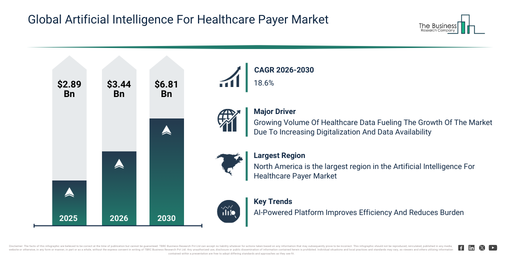
    The artificial intelligence for healthcare payer market has experienced significant expansion in recent years. It is projected to increase from $2.89 billion in 2025 to $3.44 billion in 2026, achieving a compound annual growth rate (CAGR) of 18.9%. This market’s historical growth can be attributed to rising healthcare claims volumes, increasing complexity of reimbursement processes, growth of digital health data availability, early adoption of analytics-driven payer platforms, and increasing pressure to reduce administrative costs.

    The artificial intelligence for healthcare payer market is projected to expand rapidly over the coming years, reaching $6.81 billion by 2030 with a compound annual growth rate (CAGR) of 18.6%. This anticipated growth is driven by several factors, including an increasing transition towards value-based care models, greater investments in cloud-based solutions for payers, a stronger focus on predictive risk adjustment, the broadening of AI-driven member personalization, and intensified regulatory efforts concerning fraud prevention. Key trends expected in the forecast period involve the rising adoption of AI-based claims automation platforms, increased utilization of fraud detection and risk analytics tools, wider deployment of predictive cost management solutions, the expansion of personalized member engagement systems, and an enhanced emphasis on optimizing administrative workflows.

    Download A Free Sample Report For Comprehensive Market Insights:

    https://www.thebusinessresearchcompany.com/sample.aspx?id=30199&type=smp

    What Major Growth Factors Are Impacting The Artificial Intelligence For Healthcare Payer Market?

    The increasing quantity of healthcare information is anticipated to fuel the expansion of artificial intelligence for the healthcare payer market in the future. This data encompasses all details pertaining to health conditions, past medical records, therapeutic interventions, and medical services delivered to individuals or populations. Digitalization is a key factor behind this surge in healthcare data, with electronic health records and networked devices facilitating quicker and more precise collection and examination of patient details. Artificial intelligence (AI) designed for healthcare payers capitalizes on this expanding pool of healthcare data, drawing upon extensive datasets from sources like electronic health records, claims, and wearable technology. This AI improves decision-making by offering data-informed insights, which in turn facilitates precise risk evaluations, identification of fraudulent activities, and streamlined claims processing. As an illustration, figures from June 2022, released by the Department of Health and Social Care, a UK government department, indicate that 90% of National Health Service (NHS) trusts had implemented electronic health records by December 2023, with a full 100% adoption anticipated by March 2025. Consequently, the expanding amount of healthcare data is a primary impetus for the advancement of artificial intelligence for the healthcare payer market.

    What Segment Categories Are Evaluated In The Artificial Intelligence For Healthcare Payer Market Study?

    The artificial intelligence for healthcare payer market covered in this report is segmented –

    1) By Component: Software, Services

    2) By Technology: Machine Learning (ML), Natural Language Processing (NLP), Other Technologies

    3) By Deployment: Cloud, On-Premises

    4) By Application: Claims Processing Optimization, Fraud Detection and Prevention, Revenue Management and Billing, Member Engagement and Personalization, Risk Adjustment And Predictive Analytics, Administrative Workflow Automation, Other Applications

    Subsegments:

    1) By Software: Predictive Analytics Platforms, Claims Management Solutions, Fraud Detection Systems, Risk Assessment Tools, Member Engagement Solutions

    2) By Services: Implementation And Integration Services, Consulting Services, Support And Maintenance Services, Training And Education Services, Managed Services

    What Trends Are Affecting The Growth Of The Artificial Intelligence For Healthcare Payer Market?

    Major companies operating in the artificial intelligence for healthcare payer market are concentrating on developing advanced digital solutions, including AI-driven patient navigation instruments, to enhance operational efficiency, improve the member experience, and alleviate administrative burdens. Artificial intelligence (AI)-powered patient navigation tools are defined as sophisticated digital platforms that utilize artificial intelligence to help patients understand their benefits, locate in-network care providers, and estimate costs. For instance, in April 2024, CVS Health Corporation, a US-based health solutions company, unveiled a suite of new AI and digital tools. These tools feature an AI-powered member experience designed to simplify finding in-network care and comprehending expenses. It specifically includes a personalized patient navigation tool that directs members to the most suitable site of care, such as primary care, urgent care, or a specialist, based on their symptoms, benefits, and local availability, thereby enabling smooth access to care with reduced effort.

    Who Are The Prominent Players Across The Artificial Intelligence For Healthcare Payer Market?

    Major companies operating in the artificial intelligence for healthcare payer market are Amazon Web Services Inc., Google LLC, Microsoft Corporation, Accenture plc, Oracle Corporation, Cognizant Technology Solutions Corporation, Wipro Limited, SAS Institute Inc., Hexaware Technologies Limited, Firstsource Solutions Limited, Innovaccer Incorporated, Cohere Health Incorporated, Softheon, MST Solutions LLC, Lyric AI Incorporated, Inovaare Corporation, Codoxo, Iatros Health Incorporated, Optum Inc., Cerner Corporation

    Access The Complete Artificial Intelligence For Healthcare Payer Market Report:

    https://www.thebusinessresearchcompany.com/report/global-artificial-intelligence-for-healthcare-payer-market-report

    What Is The Largest Regional Market In The Artificial Intelligence For Healthcare Payer Market?

    North America was the largest region in the artificial intelligence for healthcare payer market in 2025. Asia-Pacific is expected to be the fastest-growing region in the forecast period. The regions covered in the artificial intelligence for healthcare payer market report are Asia-Pacific, South East Asia, Western Europe, Eastern Europe, North America, South America, Middle East, Africa.

    Access Artificial Intelligence For Healthcare Payer Market Report for Deeper Competitive Insights

    https://www.thebusinessresearchcompany.com/customise?id=30199&type=smp

    Browse Through More Reports Similar to the Global Artificial Intelligence For Healthcare Payer Market 2026, By The Business Research Company

    Artificial Intelligence Ai For Insurance Global Market Report 2026

    https://www.thebusinessresearchcompany.com/report/artificial-intelligence-ai-for-insurance-global-market-report

    Healthcare Payer Solution Global Market Report 2026

    https://www.thebusinessresearchcompany.com/report/healthcare-payer-solution-global-market-report

    Artificial Intelligence In Healthcare Diagnosis Global Market Report 2026

    https://www.thebusinessresearchcompany.com/report/artificial-intelligence-in-healthcare-diagnosis-global-market-report

    Get in touch with us:

    The Business Research Company: https://www.thebusinessresearchcompany.com/

    Americas: +1 310-496-7795

    Asia: +44 7882 955267 & +91 8897263534

    Europe: +44 7882 955267

    Email us at: marketing@tbrc.info

    Follow us on:

    LinkedIn: https://in.linkedin.com/company/the-business-research-company

    YouTube: https://www.youtube.com/channel/UC24_fI0rV8cR5DxlCpgmyFQ

    Global Market Model: https://www.thebusinessresearchcompany.com/global-market-model
  • Artificial Intelligence Clinical Trial Protocol Feasibility Tool Market Industry Analysis Covering Trends, Drivers, And Future Outlook

    Artificial Intelligence Clinical Trial Protocol Feasibility Tool Market Industry Analysis Covering Trends, Drivers, And Future Outlook

    The Business Research Company’s 2026 market reports feature enhanced tools like market attractiveness analysis, TAM assessment, and company scoring matrices, along with interactive dashboards, deeper supply chain insights, and startup coverage strengthening the depth, usability, and strategic value of insights.

    What Market Size Is Forecasted For The Artificial Intelligence Clinical Trial Protocol Feasibility Tool Market By 2030 Based On Its 2026 Value?

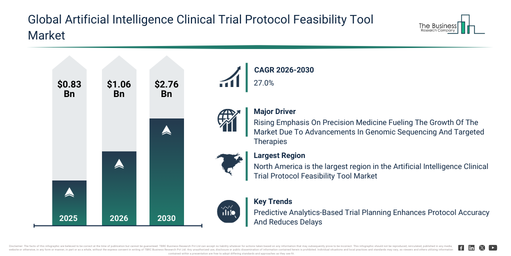
    The artificial intelligence clinical trial protocol feasibility tool market size has experienced significant expansion in recent years. Its valuation is anticipated to climb from $0.83 billion in 2025 to $1.06 billion by 2026, reflecting a compound annual growth rate (CAGR) of 27.3%. This historical growth can be attributed to several factors, including the increasing complexity of protocols in clinical trials, a rise in trial failure rates, a growing reliance on data-driven feasibility analysis, the expansion of global clinical research activities, and the early adoption of AI-based planning tools.

    The market for artificial intelligence clinical trial protocol feasibility tools is anticipated to experience substantial growth over the coming years. This market is projected to reach a size of $2.76 billion by 2030, exhibiting a compound annual growth rate (CAGR) of 27.0%. Factors contributing to this growth during the forecast period include a heightened demand for quicker trial approvals, the increasing embrace of decentralized trial designs, the proliferation of AI-enabled platforms for protocol optimization, a stronger emphasis on reducing trial costs, and a growing focus on predictive feasibility modeling. Key trends anticipated during this period encompass the expanded application of AI for assessing protocol risks, a surge in the adoption of predictive recruitment modeling, greater incorporation of historical trial data, the broadening availability of cloud-based feasibility tools, and a sharpened focus on optimizing trial design.

    Download A Free Sample Report For Comprehensive Market Insights:

    https://www.thebusinessresearchcompany.com/sample.aspx?id=28142&type=smp

    What Market Drivers Are Helping Shape The Artificial Intelligence Clinical Trial Protocol Feasibility Tool Market Expansion?

    The growing focus on precision medicine is projected to stimulate the growth of the artificial intelligence clinical trial protocol feasibility tool market moving forward. Precision medicine describes a customized healthcare approach that utilizes a patient’s genetics, environment, and lifestyle to deliver more accurate and effective treatments. The increased emphasis on precision medicine arises from breakthroughs in genomic sequencing and biomarker identification, which allow for precise detection and targeted therapies. Artificial intelligence clinical trial protocol feasibility tools bolster precision medicine by facilitating data-driven trial designs, making them ideal for tailoring treatments to specific patient demographics. These tools decrease trial inefficiencies through predictions of patient recruitment, timelines, and risks, thereby enhancing the accuracy and outcomes of clinical research. For instance, in March 2024, Novotech, an Australia-based biotechnology company, reported that in 2023, 43% of the 217 FDA-approved oncology therapies were precision oncology treatments, with 78 incorporating DNA or NGS-detectable biomarkers. Therefore, the increasing significance of precision medicine is fueling the expansion of the artificial intelligence clinical trial protocol feasibility tool market.

    How Is The Artificial Intelligence Clinical Trial Protocol Feasibility Tool Market Examined Through Segment Analysis?

    The artificial intelligence clinical trial protocol feasibility tool market covered in this report is segmented –

    1) By Component: Software, Services

    2) By Deployment Mode: Cloud-Based, On-Premises

    3) By Application: Protocol Design, Site Selection, Patient Recruitment, Risk Assessment, Other Applications

    4) By End-User: Pharmaceutical And Biotechnology Companies, Contract Research Organizations, Academic And Research Institutes, Other End-Users

    Subsegments:

    1) By Software: Predictive Analytics, Machine Learning, Natural Language Processing, Data Integration

    2) By Services: Consulting, Implementation, Training And Support, Managed Services

    Which Trends Are Influencing The Direction Of The Artificial Intelligence Clinical Trial Protocol Feasibility Tool Market?

    Leading companies in the artificial intelligence clinical trial protocol feasibility tool market are focusing on developing innovative solutions, such as predictive analytics-based trial planning software, to enhance protocol design accuracy and reduce trial delays. This predictive analytics-based trial planning software is a solution that uses historical and real-time clinical trial data to forecast timelines, identify potential risks, and optimize study design for more efficient and cost-effective trials. For instance, in June 2024, Lokavant Inc., a US-based clinical intelligence company, launched Spectrum, the first artificial intelligence clinical trial feasibility solution aimed at optimizing trials from strategic planning through mid-study re-forecasting. The platform features predictive analytics-based trial planning software that enables continuous, real-time feasibility analysis, timeline and cost prediction, and financial forecasting without manual intervention. Spectrum delivers dynamic, real-time (re)forecasting by integrating live trial data, allowing study teams to monitor progress, explore alternative scenarios, and optimize enrollment outcomes. This solution also provides highly accurate predictions for timelines, costs, and operational risks, supporting faster, data-driven decision-making throughout the clinical trial lifecycle.

    Which Companies Form The Competitive Landscape Of The Artificial Intelligence Clinical Trial Protocol Feasibility Tool Market?

    Major companies operating in the artificial intelligence clinical trial protocol feasibility tool market are IQVIA Holdings Inc., SAS Institute Inc., Veeva Systems Inc., Tempus AI Inc., Cytel Inc., ArisGlobal LLC., Saama Technologies Inc., Norstella, ConcertAI, Komodo Health Inc., H1 Inc., TriNetX Inc., ObjectiveHealth LLC, Lokavant Inc., Inato Inc., Clinerion Ltd., Faro Health Inc., Lantern Pharma Inc., Ryght AI, BEKHealth Corporation

    Access The Complete Artificial Intelligence Clinical Trial Protocol Feasibility Tool Market Report:

    https://www.thebusinessresearchcompany.com/report/artificial-intelligence-clinical-trial-protocol-feasibility-tool-global-market-report

    Which Region Contributes The Most To The Artificial Intelligence Clinical Trial Protocol Feasibility Tool Market?

    North America was the largest region in the artificial intelligence clinical trial protocol feasibility tool market in 2025. Asia-Pacific is expected to be the fastest-growing region in the forecast period. The regions covered in the artificial intelligence clinical trial protocol feasibility tool market report are Asia-Pacific, South East Asia, Western Europe, Eastern Europe, North America, South America, Middle East, Africa.

    Access Artificial Intelligence Clinical Trial Protocol Feasibility Tool Market Report for Deeper Competitive Insights

    https://www.thebusinessresearchcompany.com/customise?id=28142&type=smp

    Browse Through More Reports Similar to the Global Artificial Intelligence Clinical Trial Protocol Feasibility Tool Market 2026, By The Business Research Company

    Ai Based Clinical Trial Solution Providers Global Market Report 2026

    https://www.thebusinessresearchcompany.com/report/ai-based-clinical-trial-solution-providers-global-market-report

    Ai In Clinical Trials Global Market Report 2026

    https://www.thebusinessresearchcompany.com/report/ai-in-clinical-trials-global-market-report

    Clinical Trial Management Systems Global Market Report 2026

    https://www.thebusinessresearchcompany.com/report/clinical-trial-management-systems-global-market-report

    Get in touch with us:

    The Business Research Company: https://www.thebusinessresearchcompany.com/

    Americas: +1 310-496-7795

    Asia: +44 7882 955267 & +91 8897263534

    Europe: +44 7882 955267

    Email us at: marketing@tbrc.info

    Follow us on:

    LinkedIn: https://in.linkedin.com/company/the-business-research-company

    YouTube: https://www.youtube.com/channel/UC24_fI0rV8cR5DxlCpgmyFQ

    Global Market Model: https://www.thebusinessresearchcompany.com/global-market-model

  • Artificial Intelligence Clinical Genomics Interpretation Market Forecast Assessing Growth Potential And Industry Direction

    Artificial Intelligence Clinical Genomics Interpretation Market Forecast Assessing Growth Potential And Industry Direction

    The Business Research Company’s 2026 market reports feature enhanced tools like market attractiveness analysis, TAM assessment, and company scoring matrices, along with interactive dashboards, deeper supply chain insights, and startup coverage strengthening the depth, usability, and strategic value of insights.

    How Is The Market Value Of The Artificial Intelligence Clinical Genomics Interpretation Market Projected To Expand During 2026–2030?

    The artificial intelligence clinical genomics interpretation market has seen significant expansion in recent years. Its valuation is anticipated to increase from $1.74 billion in 2025 to $2.23 billion in 2026, exhibiting a compound annual growth rate (CAGR) of 28.3%. This historical development can be ascribed to the increasing availability of genomic sequencing data, the proliferation of precision medicine initiatives, the growing adoption of bioinformatics platforms, the rising clinical use of genomic insights, and the early integration of AI in genomics workflows.

    The artificial intelligence clinical genomics interpretation market is projected to experience significant expansion in the next few years, reaching $5.99 billion by 2030 at a compound annual growth rate (CAGR) of 28.0%. This anticipated growth is driven by the increasing demand for tailored healthcare solutions, growing investments in genomic data analytics, the widening application of oncology-focused genomics, the rising adoption of cloud-based interpretation platforms, and an enhanced focus on clinical-grade genomic reporting. Key trends expected in the forecast period include the increasing integration of AI-based tools for variant interpretation, greater fusion of genomics with clinical decision support systems, the expanding use of predictive modeling in genomic analysis, the proliferation of cloud-based genomics platforms, and a stronger emphasis on personalized treatment planning.

    Download A Free Sample Report For Comprehensive Market Insights:

    https://www.thebusinessresearchcompany.com/sample.aspx?id=28141&type=smp

    Which Significant Factors Are Encouraging Growth In The Artificial Intelligence Clinical Genomics Interpretation Market?

    The increasing need for personalized medicine is anticipated to fuel the expansion of the artificial intelligence clinical genomics interpretation market moving ahead. This medical strategy, known as personalized medicine, involves customizing diagnosis, therapy, and preventive measures based on a person’s unique genetic makeup, environmental influences, and lifestyle choices. The heightened demand for personalized medicine stems from its capacity for more effective treatments, given that therapies are precisely matched to an individual’s genetic profile, leading to better results and fewer negative reactions. Artificial intelligence clinical genomics interpretation supports the surge in personalized medicine by swiftly processing intricate genomic data to pinpoint accurate, patient-specific therapeutic choices, thereby enhancing the efficacy of treatment and minimizing experimental methodologies. As an example, the Personalized Medicine Coalition, a US-based non-profit organization, reported in February 2024 that the U.S. Food and Drug Administration (FDA) sanctioned 16 new personalized treatments for individuals with rare diseases in 2023. This marks a substantial rise from the six approved in 2022. Consequently, the growing requirement for personalized medicine is projected to stimulate the expansion of the artificial intelligence clinical genomics interpretation market.

    Which Segment Groups Define The Artificial Intelligence Clinical Genomics Interpretation Market Landscape?

    The artificial intelligence clinical genomics interpretation market covered in this report is segmented –

    1) By Component: Software, Services

    2) By Deployment Mode: Cloud Based, On Premises

    3) By Application: Oncology, Rare Diseases, Pharmacogenomics, Infectious Diseases, Other Applications

    4) By End User: Hospitals And Clinics, Research Institutes, Diagnostic Laboratories, Other End User

    Subsegments:

    1) By Software: Genomic Data Analysis, Variant Interpretation, Clinical Decision Support, Predictive Modeling, Reporting And Visualization

    2) By Services: Implementation And Integration, Consulting And Advisory, Training And Support, Data Management, Maintenance And Upgrades

    What Trends Are Driving Changes In The Artificial Intelligence Clinical Genomics Interpretation Market?

    Leading firms within the artificial intelligence clinical genomics interpretation market are concentrating on developing advancements that boost scalability for extensive genomic research, facilitating efficient processing of large datasets, refining the precision of genomic findings, and accelerating the identification of biomarkers and potential therapeutic targets. Scalability denotes the capability of AI technologies to effectively process enormous and intricate genomic datasets while maintaining both speed and accuracy, an attribute essential given the continuous expansion in the volume and intricacy of sequencing data. As an illustration, in December 2024, QIAGEN, a life sciences company based in Germany, unveiled an AI-driven addition to its Ingenuity Pathway Analysis (IPA) platform, designed to automate the interpretation of intricate biological information. This improvement employs AI to pinpoint crucial genes, pathways, and molecular networks implicated in various diseases, and integrates QIAGEN’s Biomedical Knowledge Base, which holds hundreds of millions of AI-generated relationships, thereby fostering more precise and empirically supported understandings.

    Who Are The Key Market Participants In The Artificial Intelligence Clinical Genomics Interpretation Market?

    Major companies operating in the artificial intelligence clinical genomics interpretation market are F. Hoffmann-La Roche AG, NVIDIA Corporation, Illumina Inc., QIAGEN N.V., Tempus Labs Inc., GeneDx Inc., Freenome Inc., NantHealth Inc., SOPHiA GENETICS SA, Genomenon Inc., DNAnexus Inc., Lifebit Biotech Ltd., Deep Genomics Inc., SpeeDx Pty Ltd, PierianDx Inc., Genuity Science Inc., Karius Inc., FDNA Inc., SeqOne Genomics Inc., Nostos Genomics Inc.

    Access The Complete Artificial Intelligence Clinical Genomics Interpretation Market Report:

    https://www.thebusinessresearchcompany.com/report/artificial-intelligence-clinical-genomics-interpretation-global-market-report

    Which Regional Market Leads The Artificial Intelligence Clinical Genomics Interpretation Market?

    North America was the largest region in the artificial intelligence clinical genomics interpretation market in 2025. Asia-Pacific is expected to be the fastest-growing region in the forecast period. The regions covered in the artificial intelligence clinical genomics interpretation market report are Asia-Pacific, South East Asia, Western Europe, Eastern Europe, North America, South America, Middle East, Africa.

    Access Artificial Intelligence Clinical Genomics Interpretation Market Report for Deeper Competitive Insights

    https://www.thebusinessresearchcompany.com/customise?id=28141&type=smp

    Browse Through More Reports Similar to the Global Artificial Intelligence Clinical Genomics Interpretation Market 2026, By The Business Research Company

    Artificial Intelligence In Healthcare Diagnosis Global Market Report 2026

    https://www.thebusinessresearchcompany.com/report/artificial-intelligence-in-healthcare-diagnosis-global-market-report

    Artificial Intelligence Ai In Clinical Trials Global Market Report 2026

    https://www.thebusinessresearchcompany.com/report/artificial-intelligence-ai-in-clinical-trials-global-market-report

    Artificial Intelligence In Medicine Global Market Report 2026

    https://www.thebusinessresearchcompany.com/report/artificial-intelligence-in-medicine-global-market-report

    Get in touch with us:

    The Business Research Company: https://www.thebusinessresearchcompany.com/

    Americas: +1 310-496-7795

    Asia: +44 7882 955267 & +91 8897263534

    Europe: +44 7882 955267

    Email us at: marketing@tbrc.info

    Follow us on:

    LinkedIn: https://in.linkedin.com/company/the-business-research-company

    YouTube: https://www.youtube.com/channel/UC24_fI0rV8cR5DxlCpgmyFQ

    Global Market Model: https://www.thebusinessresearchcompany.com/global-market-model

  • Artificial Intelligence (AI)-Powered Tele-Intensive Care Unit (ICU) Monitoring Market Expected To Witness Revenue Growth Toward $10.57 Billion By 2030

    Artificial Intelligence (AI)-Powered Tele-Intensive Care Unit (ICU) Monitoring Market Expected To Witness Revenue Growth Toward $10.57 Billion By 2030

    The Business Research Company’s 2026 market reports feature enhanced tools like market attractiveness analysis, TAM assessment, and company scoring matrices, along with interactive dashboards, deeper supply chain insights, and startup coverage strengthening the depth, usability, and strategic value of insights.

    What Are The Forecasted Market Size Figures For The Artificial Intelligence (AI)-Powered Tele-Intensive Care Unit (ICU) Monitoring Market In 2026 And 2030?

    The artificial intelligence (AI)-powered tele-intensive care unit (icu) monitoring market has experienced significant expansion in recent years. It is projected to increase from $3.82 billion in 2025 to $4.69 billion in 2026, achieving a compound annual growth rate (CAGR) of 22.8%. This market’s historical growth can be attributed to factors such as increasing critical care patient volumes, a scarcity of intensivists in hospitals, the early adoption of remote patient monitoring systems, the development of digital health infrastructure, and rising investment in hospital IT systems.

    The artificial intelligence (AI)-powered tele-intensive care unit (icu) monitoring market size is projected to undergo significant growth in the upcoming years. It is anticipated to expand to $10.58 billion by 2030, demonstrating a compound annual growth rate (CAGR) of 22.6%. This projected growth can be attributed to the rising demand for data-driven critical care management, the increasing adoption of cloud-based telehealth platforms, the expansion of AI-enabled clinical analytics, a greater focus on reducing ICU mortality rates, and growing investments in virtual care models. Noteworthy trends during this forecast period include the increasing implementation of AI-driven predictive patient monitoring, the growing integration of remote ICU surveillance platforms, enhanced utilization of real-time clinical decision support systems, the expansion of centralized tele-ICU command centers, and a heightened emphasis on early complication detection.

    Download A Free Sample Report For Comprehensive Market Insights:

    https://www.thebusinessresearchcompany.com/sample.aspx?id=28932&type=smp

    What Core Drivers Are Transforming The Artificial Intelligence (AI)-Powered Tele-Intensive Care Unit (ICU) Monitoring Market?

    The increasing need for remote patient monitoring is projected to stimulate the expansion of the artificial intelligence (AI)-powered tele-intensive care unit (ICU) monitoring market moving forward. Remote patient monitoring (RPM) involves the application of digital technologies to gather and transmit patients’ health data from their respective locations to healthcare providers for evaluation and management. The escalation in demand for RPM arises from the aging demographic in developed countries, which necessitates continuous oversight of chronic conditions such as diabetes, cardiovascular diseases, and respiratory illnesses, requiring ongoing management between hospital visits. Artificial intelligence (AI)-powered tele-intensive care unit (ICU) monitoring supports RPM by leveraging real-time data and advanced algorithms to track vital signs, identify early signs of deterioration, and empower centralized teams to remotely manage multiple critically ill patients, thereby enhancing response times and access to critical care expertise. For instance, in August 2023, Vivalink, a US-based healthcare technology company, indicated in a recent survey that 84% of respondents currently using RPM plan to increase their usage in 2024, 45% of providers utilize RPM for acute monitoring, including hospital-at-home programs, and 77% foresee RPM-based care outstripping traditional inpatient hospital care within the next five years. Therefore, the heightened demand for remote patient monitoring is fueling the growth of the artificial intelligence (AI)-powered tele-intensive care unit (ICU) monitoring market.

    What Key Segment Areas Are Included In The Artificial Intelligence (AI)-Powered Tele-Intensive Care Unit (ICU) Monitoring Market Assessment?

    The artificial intelligence (AI)-powered tele-intensive care unit (icu) monitoring market covered in this report is segmented –

    1) By Component: Software, Hardware, Services

    2) By Deployment Mode: Cloud-Based, On-Premises

    3) By Application: Patient Monitoring, Clinical Decision Support, Workflow Automation, Predictive Analytics, Other Applications

    4) By End-User: Hospitals, Specialty Clinics, Ambulatory Surgical Centers, Other End-Users

    Subsegments:

    1) By Software: Predictive Analytics Software, Clinical Decision Support Software, Data Management Software, Remote Patient Monitoring Software, Visualization And Dashboard Software

    2) By Hardware: Patient Monitoring Devices, Communication And Display Systems, Networking And Connectivity Devices, Servers And Storage Systems, Cameras And Sensors

    3) By Services: Implementation And Integration Services, Training And Education Services, Maintenance And Support Services, Remote Monitoring Services, Consulting Services

    Which Trends Are Shaping The Artificial Intelligence (AI)-Powered Tele-Intensive Care Unit (ICU) Monitoring Market Landscape?

    Leading firms within the artificial intelligence (AI)-powered tele-intensive care unit (ICU) monitoring market are prioritizing the adoption of novel solutions, including predictive analytics for patient deterioration, with the aim of enhancing patient outcomes and streamlining ICU operations. This approach, predictive analytics for patient deterioration, employs AI and data analysis techniques to pinpoint patients susceptible to declining health states prior to the onset of critical incidents, thereby allowing healthcare professionals to intervene promptly, improve patient results, and mitigate ICU complications. As an illustration, in February 2023, CLEW Medical Ltd., an Israeli medical technology firm, introduced the CLEW ICU Conversion and Accelerator program, which is an AI-driven Tele-ICU platform incorporating predictive analytics for patient deterioration. This initiative facilitates healthcare systems’ smooth transition from existing Tele-ICU solutions, simultaneously offering real-time surveillance, workflow enhancement, and integrated EMR alongside bedside monitoring capabilities. By utilizing CLEW’s FDA-cleared AI models, hospitals are able to pinpoint patients at the highest risk of clinical decline, streamline both communication and decision-making processes, and potentially elevate clinical outcomes while simultaneously decreasing operational expenditures. Furthermore, the program extends consulting and implementation assistance, allowing hospitals to deploy the system within 12 weeks with negligible interruption to their current operations. Its central integration hub demonstrates compatibility with prominent EMR systems like Epic and Cerner, thereby guaranteeing an uninterrupted flow of patient data from existing hospital infrastructure to the AI platform.

    Which Organizations Are Operating Within The Artificial Intelligence (AI)-Powered Tele-Intensive Care Unit (ICU) Monitoring Market?

    Major companies operating in the artificial intelligence (AI)-powered tele-intensive care unit (icu) monitoring market are Koninklijke Philips N.V., GE HealthCare Technologies Inc., Inova Health System, Teladoc Health Inc., Apollo Telehealth Services Private Limited, Masimo Corporation, UCSF Health, Spacelabs Healthcare Inc., AvaSure Holdings Inc., Hicuity Health Inc., Ceiba Healthcare US Inc., Cloudphysician Healthcare Private Limited, Equum Management Inc., RemoteICU Inc., INTeleICU Inc., Etiometry Inc., Clew Medical Ltd., Ambient Clinical Analytics Inc., DocBox Inc., HelloCare Inc.

    Access The Complete Artificial Intelligence (AI)-Powered Tele-Intensive Care Unit (ICU) Monitoring Market Report:

    https://www.thebusinessresearchcompany.com/report/artificial-intelligence-ai-powered-tele-intensive-care-unit-icu-monitoring-global-market-report

    Which Region Holds The Largest Share In The Artificial Intelligence (AI)-Powered Tele-Intensive Care Unit (ICU) Monitoring Market?

    North America was the largest region in the artificial intelligence (AI)-powered tele-intensive care unit (ICU) monitoring market in 2025. Asia-Pacific is expected to be the fastest-growing region in the forecast period. The regions covered in the artificial intelligence (AI)-powered tele-intensive care unit (icu) monitoring market report are Asia-Pacific, South East Asia, Western Europe, Eastern Europe, North America, South America, Middle East, Africa.

    Access Artificial Intelligence (AI)-Powered Tele-Intensive Care Unit (ICU) Monitoring Market Report for Deeper Competitive Insights

    https://www.thebusinessresearchcompany.com/customise?id=28932&type=smp

    Browse Through More Reports Similar to the Global Artificial Intelligence (AI)-Powered Tele-Intensive Care Unit (ICU) Monitoring Market 2026, By The Business Research Company

    Tele Intensive Care Global Market Report 2026

    https://www.thebusinessresearchcompany.com/report/tele-intensive-care-global-market-report

    Artificial Intelligence Ai In Remote Patient Monitoring Global Market Report 2026

    https://www.thebusinessresearchcompany.com/report/artificial-intelligence-ai-in-remote-patient-monitoring-global-market-report

    Ai In Medical Devices Global Market Report 2026

    https://www.thebusinessresearchcompany.com/report/ai-in-medical-devices-global-market-report

    Get in touch with us:

    The Business Research Company: https://www.thebusinessresearchcompany.com/

    Americas: +1 310-496-7795

    Asia: +44 7882 955267 & +91 8897263534

    Europe: +44 7882 955267

    Email us at: marketing@tbrc.info

    Follow us on:

    LinkedIn: https://in.linkedin.com/company/the-business-research-company

    YouTube: https://www.youtube.com/channel/UC24_fI0rV8cR5DxlCpgmyFQ

    Global Market Model: https://www.thebusinessresearchcompany.com/global-market-model

  • Artificial Intelligence (AI)-Powered Spinal Surgery Market Industry Outlook 2026–2030 Highlighting Growth Momentum And Market Trends

    Artificial Intelligence (AI)-Powered Spinal Surgery Market Industry Outlook 2026–2030 Highlighting Growth Momentum And Market Trends

    The Business Research Company’s 2026 market reports feature enhanced tools like market attractiveness analysis, TAM assessment, and company scoring matrices, along with interactive dashboards, deeper supply chain insights, and startup coverage strengthening the depth, usability, and strategic value of insights.

    How Much Larger Will The Artificial Intelligence (AI)-Powered Spinal Surgery Market Become By 2030 Compared To 2026?

    The artificial intelligence (AI)-powered spinal surgery market has demonstrated significant expansion in recent years. Its valuation is anticipated to climb from $1.06 billion in 2025 to $1.16 billion in 2026, reflecting a compound annual growth rate (CAGR) of 9.6%. The historical growth of this market can be attributed to several factors, including the rising incidence of spinal disorders, the increasing adoption of robotic-assisted spine surgeries, continuous improvements in medical imaging technologies, a growing acceptance of digital surgical tools by surgeons, and the broader availability of minimally invasive spine procedures.

    The artificial intelligence (AI)-powered spinal surgery market is projected to experience robust expansion over the coming years, with its size anticipated to reach $1.66 billion by 2030, demonstrating a compound annual growth rate (CAGR) of 9.3%. This significant growth during the forecast period is attributable to a heightened demand for precision-based spine surgery, escalating investments in AI-enabled surgical platforms, the expansion of data-driven clinical decision support, an increased focus on reducing surgical complications, and a growing integration of AI with robotic spine systems. Major trends expected in this period include the increasing adoption of AI-guided surgical navigation systems, a rising use of predictive analytics for surgical outcomes, the growing incorporation of imaging-based decision support tools, the expansion of minimally invasive AI-assisted procedures, and an enhanced emphasis on personalized spine treatment planning.

    Download A Free Sample Report For Comprehensive Market Insights:

    https://www.thebusinessresearchcompany.com/sample.aspx?id=30198&type=smp

    Which Growth Factors Are Strengthening The Artificial Intelligence (AI)-Powered Spinal Surgery Market Landscape?

    The increasing demand for less invasive surgical options is projected to boost the expansion of the artificial intelligence (AI)-powered spinal surgery market in the future. These solutions involve operations conducted through small cuts instead of the larger incisions characteristic of conventional open surgery. The growing preference for such solutions is driven by the quicker patient recovery times they provide. The artificial intelligence (AI)-powered spinal surgery market facilitates this trend by allowing for greater surgical accuracy and less tissue harm, thereby speeding up patient recuperation and enhancing medical results. As an illustration, Intuitive Surgical, a US-based biotechnology company, reported in June 2025 that the volume of procedures executed using its “da Vinci” robotic systems (a key technology supporting minimally invasive surgery) climbed from 1,532,000 in 2023 to 1,757,000 in 2024. Consequently, the growing inclination towards minimally invasive surgical techniques is fueling the expansion of the artificial intelligence (AI)-powered spinal surgery market.

    How Is Segment Classification Applied In The Artificial Intelligence (AI)-Powered Spinal Surgery Market?

    The artificial intelligence (AI)-powered spinal surgery market covered in this report is segmented –

    1) By Type Of Surgery: Spinal Fusion Surgery, Microdiscectomy, Laminectomy, Laminotomy, Lumbar Decompression Surgery, Transforaminal Lumbar Interbody Fusion, Oblique Lumbar Interbody Fusion, Vertebroplasty

    2) By Anatomy: Cervical, Thoracic, Lumbar

    3) By Indication: Degenerative, Trauma, Deformity, Tumor Or Oncologic, Infection, Other Indications

    4) By End User: Hospitals, Ambulatory Surgery Centers (ASCs), Orthopedic Centers

    Subsegments:

    1) By Spinal Fusion Surgery: Posterior Spinal Fusion, Anterior Spinal Fusion, Lateral Spinal Fusion, Cervical Spinal Fusion, Thoracic Spinal Fusion, Lumbar Spinal Fusion

    2) By Microdiscectomy: Open Microdiscectomy, Minimally Invasive Microdiscectomy, Endoscopic Microdiscectomy

    3) By Laminectomy: Cervical Laminectomy, Thoracic Laminectomy, Lumbar Laminectomy, Minimally Invasive Laminectomy

    4) By Laminotomy: Unilateral Laminotomy, Bilateral Laminotomy, Cervical Laminotomy, Lumbar Laminotomy

    5) By Lumbar Decompression Surgery: Open Lumbar Decompression, Minimally Invasive Lumbar Decompression, Microsurgical Lumbar Decompression

    6) By Transforaminal Lumbar Interbody Fusion: Open Transforaminal Lumbar Interbody Fusion, Minimally Invasive Transforaminal Lumbar Interbody Fusion, Endoscopic Transforaminal Lumbar Interbody Fusion

    7) By Oblique Lumbar Interbody Fusion: Anterior To Psoas Oblique Lumbar Interbody Fusion, Lateral Oblique Lumbar Interbody Fusion, Single Level Oblique Lumbar Interbody Fusion, Multilevel Oblique Lumbar Interbody Fusion

    8) By Vertebroplasty: Percutaneous Vertebroplasty, Balloon-Assisted Vertebroplasty, Image-Guided Vertebroplasty, Cement-Augmented Vertebroplasty

    What Trends Are Influencing The Artificial Intelligence (AI)-Powered Spinal Surgery Market Outlook?

    Leading companies within the artificial intelligence (AI)-powered spinal surgery market are concentrating on integrating technological advancements, such as 3D surgical planning, to improve surgical precision, workflow efficiency, and patient outcomes. 3D surgical planning is an advanced technology that utilizes patient-specific 3D anatomical models, derived from imaging data, to simulate surgical procedures and optimize implant placement, enabling capabilities like preoperative visualization, personalized treatment planning, and intraoperative alignment optimization. For instance, in July 2024, Alphatec Holdings, Inc. (ATEC), a US-based medical technology company specializing in spinal surgery solutions, introduced EOS Insight. This 3D surgical planning platform, powered by EOS imaging and artificial intelligence (AI), is designed to streamline the entire spine surgery workflow, from preoperative planning to postoperative assessment, through intelligent imaging and data integration. The platform’s features include AI-driven alignment assessment, web-based 3D surgical simulation, and patient-specific rod design, all aimed at enhancing clinical decision-making, surgical accuracy, and overall efficiency in spine care.

    Who Are The Businesses Driving Activity In The Artificial Intelligence (AI)-Powered Spinal Surgery Market?

    Major companies operating in the artificial intelligence (AI)-powered spinal surgery market are Johnson and Johnson, Medtronic plc, Stryker Corporation, Zimmer Biomet Holdings Inc., Globus Medical Inc., Orthofix Holdings Inc., Alphatec Holdings Inc., Brainlab AG, Spineart SA, Surgalign Holdings Inc, TINAVI Medical Technologies Co Ltd, Augmedics Inc., Proprio Inc., Surgical Theater Inc., Medivis Inc., Ortoma AB, OnPoint Surgical Inc., Katomed Inc., Surglasses, Illuminant Surgical Inc.

    Access The Complete Artificial Intelligence (AI)-Powered Spinal Surgery Market Report:

    https://www.thebusinessresearchcompany.com/report/global-artificial-intelligence-ai-powered-spinal-surgery-market-report

    Which Region Is The Dominant Market In The Artificial Intelligence (AI)-Powered Spinal Surgery Market?

    North America was the largest region in the artificial intelligence (AI)-powered spinal surgery market in 2025. Asia-Pacific is expected to be the fastest-growing region in the forecast period. The regions covered in the artificial intelligence (AI)-powered spinal surgery market report are Asia-Pacific, South East Asia, Western Europe, Eastern Europe, North America, South America, Middle East, Africa.

    Access Artificial Intelligence (AI)-Powered Spinal Surgery Market Report for Deeper Competitive Insights

    https://www.thebusinessresearchcompany.com/customise?id=30198&type=smp

    Browse Through More Reports Similar to the Global Artificial Intelligence (AI)-Powered Spinal Surgery Market 2026, By The Business Research Company

    Spinal Surgery Devices And Equipment Global Market Report 2026

    https://www.thebusinessresearchcompany.com/report/spinal-surgery-devices-and-equipment-global-market-report

    Ai In Medical Devices Global Market Report 2026

    https://www.thebusinessresearchcompany.com/report/ai-in-medical-devices-global-market-report

    Artificial Intelligence Or Machine Learning Ai Or Ml Medical Device Global Market Report 2026

    https://www.thebusinessresearchcompany.com/report/artificial-intelligence-or-machine-learning-ai-or-ml-medical-device-global-market-report

    Get in touch with us:

    The Business Research Company: https://www.thebusinessresearchcompany.com/

    Americas: +1 310-496-7795

    Asia: +44 7882 955267 & +91 8897263534

    Europe: +44 7882 955267

    Email us at: marketing@tbrc.info

    Follow us on:

    LinkedIn: https://in.linkedin.com/company/the-business-research-company

    YouTube: https://www.youtube.com/channel/UC24_fI0rV8cR5DxlCpgmyFQ

    Global Market Model: https://www.thebusinessresearchcompany.com/global-market-model

  • Artificial Intelligence (AI)-Powered Sleep Apnea Monitoring Market Growth Forecast With Analysis Of Industry Progress Through 2030

    Artificial Intelligence (AI)-Powered Sleep Apnea Monitoring Market Growth Forecast With Analysis Of Industry Progress Through 2030

    The Business Research Company’s 2026 market reports feature enhanced tools like market attractiveness analysis, TAM assessment, and company scoring matrices, along with interactive dashboards, deeper supply chain insights, and startup coverage strengthening the depth, usability, and strategic value of insights.

    What Growth In Market Value Is Anticipated For The Artificial Intelligence (AI)-Powered Sleep Apnea Monitoring Market Between 2026 And 2030?

    The artificial intelligence (AI)-powered sleep apnea monitoring market has seen substantial expansion in recent years. It is forecast to increase from $1.84 billion in 2025 to $2.24 billion in 2026, achieving a compound annual growth rate (CAGR) of 21.6%. The growth observed historically can be linked to the increasing occurrence of sleep apnea, greater public understanding of sleep health, the spread of wearable health technology adoption, the rising use of home-based diagnostics, and the enhanced availability of digital sleep data.

    The artificial intelligence (AI)-powered sleep apnea monitoring market is projected to experience substantial expansion in the coming years. This market is anticipated to reach $4.84 billion by 2030, demonstrating a compound annual growth rate (CAGR) of 21.3%. This projected growth during the forecast period is primarily driven by developments in AI-driven respiratory analytics, the increasing embrace of tele-sleep medicine, the proliferation of cloud-based sleep monitoring platforms, an escalating need for ongoing health monitoring, and a heightened emphasis on proactive sleep disorder management. Key trends expected within this period encompass the wider acceptance of AI-based methods for sleep disorder detection, the expanding integration of wearable sleep monitoring devices, the increasing reliance on remote sleep diagnostics, the broadening availability of home-based monitoring solutions, and a stronger emphasis on identifying apnea at early stages.

    Download A Free Sample Report For Comprehensive Market Insights:

    https://www.thebusinessresearchcompany.com/sample.aspx?id=28931&type=smp

    What Important Drivers Are Powering The Artificial Intelligence (AI)-Powered Sleep Apnea Monitoring Market Growth?

    The increasing occurrence of sleep disorders is projected to fuel the expansion of the artificial intelligence (AI)-powered sleep apnea monitoring market in the future. These are health issues that consistently impair an individual’s capacity to achieve restful sleep, including conditions like insomnia, sleep apnea, and restless legs syndrome. The rise in sleep disorders is attributed to excessive screen exposure prior to bedtime, given that blue light disrupts melatonin synthesis and postpones the initiation of sleep. Artificial intelligence (AI)-powered sleep apnea monitoring assists with sleep disorders through continuous observation of breathing patterns, oxygen saturation, and sleep cycles, thereby pinpointing apnea occurrences immediately. This allows for prompt diagnosis and customized treatment, in addition to facilitating remote oversight and enhancing overall sleep quality. For example, data from November 2023, provided by the National Health Service, a UK government body for health statistics, showed that the percentage of young individuals aged 17 to 23 years who reported sleep issues three or more times during the previous week slightly increased to 64.9% from 64.0% in 2022. Consequently, the growing incidence of sleep disorders is stimulating the expansion of the artificial intelligence (AI)-powered sleep apnea monitoring market.

    What Are The Core Segment Classifications In The Artificial Intelligence (AI)-Powered Sleep Apnea Monitoring Market?

    The artificial intelligence (AI)-powered sleep apnea monitoring market covered in this report is segmented –

    1) By Product Type: Wearable Devices, Non-Wearable Devices, Software Solutions

    2) By Technology: Machine Learning, Deep Learning, Natural Language Processing, Other Technologies

    3) By Distribution Channel: Online, Offline

    4) By Application: Home Care, Hospitals And Clinics, Sleep Centers, Other Applications

    5) By End-User: Adults, Pediatrics, Geriatrics

    Subsegments:

    1) By Wearable Devices: Wrist Worn Sleep Trackers, Finger Oximeter Rings, Adhesive Respiratory Patches, Chest Belt Respiratory Monitors, Headband Sleep Sensors, Smart Clothing Garments

    2) By Non-Wearable Devices: Bedside Radar Respiratory Monitors, Under Mattress Sensor Mats, Smart Bed Platforms With Physiological Monitoring, Pillow Embedded Acoustic Sensors, Nightstand Radio Frequency Sensing Units

    3) By Software Solutions: Event Detection And Scoring Platforms, Remote Monitoring And Adherence Portals, Clinical Decision Support Dashboards, Patient Engagement And Coaching Applications, Population Health Screening And Triage Modules, Care Coordination And Teleconsultation Tools, Data Management And Cloud Storage Services

    Which Trends Are Expected To Shape The Artificial Intelligence (AI)-Powered Sleep Apnea Monitoring Market?

    Leading companies active in the artificial intelligence (AI)-powered sleep apnea monitoring market are concentrating on developing advanced at-home sleep assessment solutions to offer personalized management of sleep apnea and enhance patient outcomes. These at-home sleep examination solutions allow individuals to track their sleep patterns and breathing from their residence, collecting real-time physiological data for precise detection of sleep disorders and minimizing clinical visits. For instance, in January 2025, APNEAL, a France-based healthcare technology company, launched the world’s first AI-powered smartphone app specifically for detecting sleep apnea during CES 2025. The application transforms a regular smartphone into a clinical-grade diagnostic instrument capable of analyzing respiratory patterns, heartbeats, and breathing sounds by utilizing its built-in sensors, such as the accelerometer, gyroscope, and microphone. It employs advanced artificial intelligence to achieve a 90% accuracy rate when benchmarked against polysomnography, thereby enabling at-home sleep apnea screening without the necessity for specialized equipment or hospital visits.

    Which Firms Are Competing In The Artificial Intelligence (AI)-Powered Sleep Apnea Monitoring Market?

    Major companies operating in the artificial intelligence (AI)-powered sleep apnea monitoring market are Koninklijke Philips N.V., ResMed Inc., Nihon Kohden Corporation, Fisher & Paykel Healthcare Corporation Limited, Inspire Medical Systems Inc., Vyaire Medical Inc., BioSerenity, SomnoMed Limited, BMC Medical Co. Ltd., Compumedics Limited, Sibel Health, Sleepiz AG, EnsoData Inc., Onera Health B.V., SleepScore Labs LLC, SleepImage, Beacon Biosignals, Acurable, Wesper, Hexoskin.

    Access The Complete Artificial Intelligence (AI)-Powered Sleep Apnea Monitoring Market Report:

    https://www.thebusinessresearchcompany.com/report/artificial-intelligence-ai-powered-sleep-apnea-monitoring-global-market-report

    Which Area Represents The Largest Portion Of The Artificial Intelligence (AI)-Powered Sleep Apnea Monitoring Market?

    North America was the largest region in the artificial intelligence (AI)-powered sleep apnea monitoring market in 2025. Asia-Pacific is expected to be the fastest-growing region in the forecast period. The regions covered in the artificial intelligence (AI)-powered sleep apnea monitoring market report are Asia-Pacific, South East Asia, Western Europe, Eastern Europe, North America, South America, Middle East, Africa.

    Access Artificial Intelligence (AI)-Powered Sleep Apnea Monitoring Market Report for Deeper Competitive Insights

    https://www.thebusinessresearchcompany.com/customise?id=28931&type=smp

    Browse Through More Reports Similar to the Global Artificial Intelligence (AI)-Powered Sleep Apnea Monitoring Market 2026, By The Business Research Company

    Smart Sleep Monitor Global Market Report 2026

    https://www.thebusinessresearchcompany.com/report/smart-sleep-monitor-global-market-report

    Sleep Monitoring Apps Global Market Report 2026

    https://www.thebusinessresearchcompany.com/report/sleep-monitoring-apps-global-market-report

    Sleep Tech Devices Global Market Report 2026

    https://www.thebusinessresearchcompany.com/report/sleep-tech-devices-global-market-report

    Get in touch with us:

    The Business Research Company: https://www.thebusinessresearchcompany.com/

    Americas: +1 310-496-7795

    Asia: +44 7882 955267 & +91 8897263534

    Europe: +44 7882 955267

    Email us at: marketing@tbrc.info

    Follow us on:

    LinkedIn: https://in.linkedin.com/company/the-business-research-company

    YouTube: https://www.youtube.com/channel/UC24_fI0rV8cR5DxlCpgmyFQ

    Global Market Model: https://www.thebusinessresearchcompany.com/global-market-model

  • Actinic Keratosis Market Insights Exploring Expansion Opportunities Through 2030

    Actinic Keratosis Market Insights Exploring Expansion Opportunities Through 2030

    The Business Research Company’s 2026 market reports feature enhanced tools like market attractiveness analysis, TAM assessment, and company scoring matrices, along with interactive dashboards, deeper supply chain insights, and startup coverage strengthening the depth, usability, and strategic value of insights.

    How Much Larger Will The Actinic Keratosis Market Become By 2030 Compared To 2026?

    The actinic keratosis market has experienced substantial growth in recent years. It is anticipated to increase from $8.42 billion in 2025 to $8.91 billion in 2026, demonstrating a compound annual growth rate (CAGR) of 5.8%. This historical expansion can be attributed to rising uv exposure and sunburn incidence, limited availability of effective topical agents, increasing skin cancer prevalence, growing dermatology infrastructure, and adoption of conventional surgical procedures.

    The actinic keratosis market is projected to experience robust expansion in the upcoming years. This market is anticipated to reach a value of $11.06 billion by 2030, exhibiting a compound annual growth rate (CAGR) of 5.6%. Several factors are expected to fuel this growth during the forecast period, including the advancement of photodynamic therapies, a rise in the application of combined topical and procedural treatments, the broadening of hospital and dermatology clinic infrastructures, growing consumer understanding of the importance of early intervention, and the launch of novel homecare treatment options. Key trends anticipated during this period encompass heightened awareness concerning sun protection and overall skin health, an uptick in the adoption of non-invasive photodynamic therapy, an increase in the use of topical therapeutics for early-stage actinic keratosis, the expansion of dermatology clinics and homecare solutions, and a growing inclination towards combination therapies.

    Download A Free Sample Report For Comprehensive Market Insights:

    https://www.thebusinessresearchcompany.com/sample.aspx?id=21077&type=smp

    Which Growth Drivers Are Expected To Support The Actinic Keratosis Market Forward?

    A rise in severe sunburn instances is anticipated to stimulate the expansion of the actinic keratosis market moving ahead. These are intense skin burns that occur from overexposure to ultraviolet (UV) radiation, leading to symptoms like redness, discomfort, swelling, and occasionally blisters. Factors contributing to sunburns include extended exposure to ultraviolet (UV) radiation, inadequate sun protection, greater engagement in outdoor pursuits during peak UV times, and warmer temperatures from climate change. Sunburns contribute to actinic keratosis by inflicting DNA damage in skin cells via ultraviolet (UV) radiation, which generates mutations that impair typical cell function and pave the way for precancerous lesions, particularly with recurrent or extended sun exposure. As an illustration, data from May 2024 by Melanoma Focus, a UK-based charity, indicated that during 2022-23, 201 hospital admissions were linked to sunburn, comprising 89 children and 25 babies less than a year old. Furthermore, the charity discovered that 66% of UK adults aged 16-65 recalled experiencing sunburn during childhood, with 65% of these individuals having suffered severe sunburns accompanied by blisters on at least one occasion. This proportion climbed to 77% for individuals possessing light, pale, or white skin. Consequently, the growing prevalence of severe sunburns is fueling the expansion of the actinic keratosis market.

    Which Segment-Based Categories Are Covered In The Actinic Keratosis Market?

    The actinic keratosis market covered in this report is segmented –

    1) By Treatment Type: Topical Treatment, Surgical Procedure, Photodynamic Therapy, Other Treatment Types

    2) By Distribution Channels: Hospital Pharmacies, Drug Stores And Retail Pharmacies

    3) By End-User: Hospitals, Dermatology Clinics, Homecare Settings, Other End-Users

    Subsegments:

    1) By Topical Treatment: 5-Fluorouracil (5-FU), Imiquimod, Diclofenac

    2) By Surgical Procedure: Cryotherapy, Curettage And Electrodessication

    3) By Photodynamic Therapy: Aminolevulinic Acid (ALA) Plus Light Therapy, Methyl Aminolevulinate (MAL) Plus Light Therapy

    4) By Other Treatment Types: Laser Therapy, Combination Therapies

    Which Trends Are Supporting The Evolution Of The Actinic Keratosis Market?

    Major companies operating in the actinic keratosis market are focusing on developing topical ointments to effectively target and eliminate precancerous lesions, reduce recurrence rates, and enhance patient compliance with shorter treatment durations and improved safety profiles. Topical ointments are medicated creams or gels applied directly to the affected skin with active ingredients such as tirbanibulin, which work by targeting abnormal keratinocytes to treat precancerous lesions. For instance, in June 2024, Almirall SA, a Spain-based biopharmaceutical company, received approval from the US Food and Drug Administration (FDA) for a supplemental new drug application (sNDA) to expand the use area for its drug, Klisyri, to up to 100 cm2. Klisyri (tirbanibulin) 1% ointment is a microtubule inhibitor, designed to prevent the proliferation of abnormal keratinocytes, effectively reducing the number and size of precancerous lesions for the treatment of actinic keratosis (AK) on the face or scalp.

    Which Organizations Are Involved In The Actinic Keratosis Market?

    Major companies operating in the actinic keratosis market are Galderma SA, LEO Pharma A/S, Almirall S.A., Bausch Health Companies Inc., Perrigo Company plc, Pfizer Inc, F. Hoffmann-La Roche AG, Merck & Co. Inc., AbbVie Inc., Sanofi S.A., Novartis AG, GSK plc, Amgen Inc., Incyte Corporation, Aclaris Therapeutics Inc., Biofrontera AG, Hill Dermaceuticals Inc., Sun Pharmaceutical Industries Ltd., Dr. Reddy’s Laboratories Ltd., Viatris Inc.

    Access The Complete Actinic Keratosis Market Report:

    https://www.thebusinessresearchcompany.com/report/actinic-keratosis-global-market-report

    Which Region Commands The Largest Share Of The Actinic Keratosis Market?

    North America was the largest region in the actinic keratosis market in 2025. Asia-Pacific is expected to be the fastest-growing region in the forecast period. The regions covered in the actinic keratosis market report are Asia-Pacific, South East Asia, Western Europe, Eastern Europe, North America, South America, Middle East, Africa.

    Access Actinic Keratosis Market Report for Deeper Competitive Insights

    https://www.thebusinessresearchcompany.com/customise?id=21077&type=smp

    Browse Through More Reports Similar to the Global Actinic Keratosis Market 2026, By The Business Research Company

    Neurotrophic Keratitis Treatment Global Market Report 2026

    https://www.thebusinessresearchcompany.com/report/neurotrophic-keratitis-treatment-global-market-report

    Scleroderma Global Market Report 2026

    https://www.thebusinessresearchcompany.com/report/scleroderma-global-market-report

    Keloids Treatment Global Market Report 2026

    https://www.thebusinessresearchcompany.com/report/keloids-treatment-global-market-report

    Get in touch with us:

    The Business Research Company: https://www.thebusinessresearchcompany.com/

    Americas: +1 310-496-7795

    Asia: +44 7882 955267 & +91 8897263534

    Europe: +44 7882 955267

    Email us at: marketing@tbrc.info

    Follow us on:

    LinkedIn: https://in.linkedin.com/company/the-business-research-company

    YouTube: https://www.youtube.com/channel/UC24_fI0rV8cR5DxlCpgmyFQ

    Global Market Model: https://www.thebusinessresearchcompany.com/global-market-model

  • Acromegaly Market Developments Influencing Industry Expansion Through 2030

    Acromegaly Market Developments Influencing Industry Expansion Through 2030

    The Business Research Company’s 2026 market reports feature enhanced tools like market attractiveness analysis, TAM assessment, and company scoring matrices, along with interactive dashboards, deeper supply chain insights, and startup coverage strengthening the depth, usability, and strategic value of insights.

    What Growth In Market Value Is Anticipated For The Acromegaly Market Between 2026 And 2030?

    The market for acromegaly treatments has seen rapid expansion in recent years. It is anticipated to increase from $2.56 billion in 2025 to $3.01 billion in 2026, exhibiting a compound annual growth rate (CAGR) of 17.5%. Historically, this growth can be ascribed to the limited availability of acromegaly diagnostic tools, a rising prevalence of growth hormone disorders, an expanding hospital and specialty clinic infrastructure, the adoption of conventional treatment methods, and increasing awareness of rare endocrine disorders.

    The acromegaly market is projected to experience substantial expansion over the upcoming years. It is anticipated to reach a valuation of $5.84 billion by 2030, exhibiting a compound annual growth rate (CAGR) of 18.1%. This projected growth is driven by factors such as the advancement of sophisticated somatostatin analogues, an increase in parenteral treatment alternatives, the growing embrace of precision medicine strategies, the rise of homecare and outpatient treatment paradigms, and the incorporation of digital health and remote monitoring technologies. Key trends anticipated within this period encompass the increased uptake of growth hormone measurement and IGF-I testing, a surge in the utilization of somatostatin analogues and dopamine agonists, the broadening scope of minimally invasive surgery and radiation therapy, an intensifying emphasis on tailored treatment regimens for patients, and improved awareness and initiatives for early diagnosis.

    Download A Free Sample Report For Comprehensive Market Insights:

    https://www.thebusinessresearchcompany.com/sample.aspx?id=12913&type=smp

    What Influential Factors Are Boosting The Acromegaly Market Demand?

    The rising occurrence of hormonal ailments, such as diabetes, is projected to stimulate expansion within the acromegaly market. Hormonal diseases, also termed endocrine disorders, represent health conditions that emerge from a malfunction in the endocrine system. Diabetes is recognized as one of the most widespread and significant hormonal diseases. Acromegaly and various other endocrine conditions can arise from the excessive production of certain hormones, including growth hormone or cortisol. Additionally, due to the influence of high levels of growth hormone on insulin synthesis, around 50% of individuals suffering from acromegaly may develop insulin resistance or type 2 diabetes mellitus. For instance, in March 2024, data from the Office for Health Improvement and Disparities, a UK-based government department, indicated that from March 2022 to March 2023, the percentage of people with type 1 diabetes who received all eight recommended care processes increased by 22%, while for type 2 diabetes, this percentage grew by 21%. During the same period, the percentage achieving target HbA1c levels climbed to 37.9%, representing the highest value ever reported by the National Diabetes Audit (NDA). Therefore, the increasing number of hormonal diseases is propelling the growth of the acromegaly market.

    What Are The Major Segment Categories Within The Acromegaly Market?

    The acromegaly market covered in this report is segmented –

    1) By Type: Ectopic Acromegaly, Acromegaly Due To Growth Hormone

    2) By Diagnosis: GH And IGF-I Measurement, Growth Hormone Suppression Test, Imaging, Other Diagnosis

    3) By Route Of Administration: Oral, Parental, Other Routes Of Administration

    4) By Treatment: Medication, Somatostatin analogues, Dopamine Agonists, Growth Hormone Antagonist, Surgery, Radiation, Other Treatments

    5) By End Users: Hospitals, Specialty Clinics, Other End Users

    Subsegments:

    1) By Ectopic Acromegaly: Tumor-Induced Ectopic Acromegaly, Non-Tumor-Induced Ectopic Acromegaly

    2) By Acromegaly Due To Growth Hormone: Primary Growth Hormone Excess, Secondary Growth Hormone Excess

    What Trends Are Affecting The Growth Of The Acromegaly Market?

    Companies operating within the acromegaly market are primarily focused on developing innovative products and solutions, such as generic lanreotide, to improve treatment options and patient outcomes. Generic lanreotide refers to an unbranded formulation of the medicine used for treating acromegaly and certain neuroendocrine tumors. It functions as a somatostatin analogue, effectively reducing growth hormone secretion and enhancing patient accessibility to effective treatment options. For example, in October 2024, Teva Pharmaceutical Industries Ltd., an Israel-based pharmaceutical company concentrating on generic drugs, launched the first and only generic version of Sandostatin LAR Depot in the United States. This injectable suspension, octreotide acetate, is indicated for addressing acromegaly and severe diarrhea associated with carcinoid syndrome. This launch significantly improves access to crucial therapy for patients requiring these treatments.

    Who Are The Firms Contributing To The Acromegaly Market Ecosystem?

    Major companies operating in the acromegaly market are Pfizer Inc., Johnson & Johnson Private Limited, Merck & Co Inc., AbbVie Inc., Bayer AG, Novartis AG, Sanofi S.A., AstraZeneca plc, GlaxoSmithKline plc, Eli Lilly and Company, Gilead Sciences Inc., Boehringer Ingelheim International GmbH., Amgen Inc., Allergan Inc., Teva Pharmaceutical Industries Ltd., Mylan N.V., Ipsen Pharma S.A., Hikma Pharmaceuticals PLC, Lupin Ltd., Recordati S.p.A., Ionis Pharmaceuticals Inc., Amryt Pharma plc , Strongbridge Biopharma plc, Aquestive Therapeutics Inc., Peptron Inc., Crinetics Pharmaceuticals, Chiasma Inc.

    Access The Complete Acromegaly Market Report:

    https://www.thebusinessresearchcompany.com/report/acromegaly-global-market-report

    Which Region Accounts For The Highest Share Of The Acromegaly Market?

    North America was the largest region in the acromegaly market in 2025. The regions covered in the acromegaly market report are Asia-Pacific, South East Asia, Western Europe, Eastern Europe, North America, South America, Middle East, Africa.

    Access Acromegaly Market Report for Deeper Competitive Insights

    https://www.thebusinessresearchcompany.com/customise?id=12913&type=smp

    Browse Through More Reports Similar to the Global Acromegaly Market 2026, By The Business Research Company

    Thrombophilia Global Market Report 2026

    https://www.thebusinessresearchcompany.com/report/thrombophilia-global-market-report

    Hormone Therapy Global Market Report 2026

    https://www.thebusinessresearchcompany.com/report/hormone-therapy-global-market-report

    Mastopexy Global Market Report 2026

    https://www.thebusinessresearchcompany.com/report/mastopexy-global-market-report

    Get in touch with us:

    The Business Research Company: https://www.thebusinessresearchcompany.com/

    Americas: +1 310-496-7795

    Asia: +44 7882 955267 & +91 8897263534

    Europe: +44 7882 955267

    Email us at: marketing@tbrc.info

    Follow us on:

    LinkedIn: https://in.linkedin.com/company/the-business-research-company

    YouTube: https://www.youtube.com/channel/UC24_fI0rV8cR5DxlCpgmyFQ

    Global Market Model: https://www.thebusinessresearchcompany.com/global-market-model

  • Global Affinity Chromatography Market Forecast Highlighting Expansion And Competitive Dynamics

    Global Affinity Chromatography Market Forecast Highlighting Expansion And Competitive Dynamics

    The Business Research Company’s 2026 market reports feature enhanced tools like market attractiveness analysis, TAM assessment, and company scoring matrices, along with interactive dashboards, deeper supply chain insights, and startup coverage strengthening the depth, usability, and strategic value of insights.

    What Is The Forecasted Rise In Market Size Of The Affinity Chromatography Market During The Forecast Period?

    The affinity chromatography market has demonstrated strong expansion in recent years. This market is set to expand from $3.68 billion in 2025 to $3.93 billion in 2026, progressing at a compound annual growth rate (CAGR) of 6.8%. Over the past period, this growth can be ascribed to an increase in biopharmaceutical manufacturing endeavors, escalating research into recombinant proteins, the broader uptake of affinity-based separation methodologies, the development of academic and research institutions, and the accessibility of advanced chromatography materials.

    The affinity chromatography market is projected to experience substantial expansion over the coming years, with its valuation anticipated to reach $5.07 billion by 2030, demonstrating a compound annual growth rate (CAGR) of 6.5%. This growth throughout the forecast period can be primarily attributed to the escalating demand for monoclonal antibodies, increased investments in biologics development, the broadening scope of personalized medicine research, an amplified focus on optimizing downstream processes, and the rising integration of single-use chromatography systems. Furthermore, significant trends expected during this period include the increasing application of high-specificity purification techniques, the rising adoption of protein-based therapeutics, the expanding need for pre-packed chromatography columns, the proliferation of biopharmaceutical research activities, and a heightened emphasis on process scalability and reproducibility.

    Download A Free Sample Report For Comprehensive Market Insights:

    https://www.thebusinessresearchcompany.com/sample.aspx?id=24455&type=smp

    Which Major Factors Are Contributing To The Development Of The Affinity Chromatography Market?

    The increasing demand for biopharmaceuticals is poised to drive the growth of the affinity chromatography market in the future. Biopharmaceuticals are medical substances derived from biological sources, such as living organisms or cells, employed for treating, preventing, or diagnosing ailments. This surge in demand for biopharmaceuticals is largely due to their ability to provide highly targeted and effective treatments for complex conditions like cancer and autoimmune disorders, significantly enhancing patient outcomes where traditional medicines often prove insufficient. The affinity chromatography technique allows for the precise and efficient purification of intricate biomolecules, including antibodies and proteins, which is vital for creating high-quality biopharmaceutical products. For instance, in July 2025, Sartorius, a Germany-based international life science technology company, reported that global sales of biopharmaceutical drugs increased by approximately 9% to reach USD 458 billion in 2024, an uptick from the previous year, representing 41% of the total pharmaceutical market, a rise from 40% in 2023. Hence, the escalating need for biopharmaceuticals will invigorate the expansion of the affinity chromatography market.

    What Segment Categories Are Evaluated In The Affinity Chromatography Market Study?

    The affinity chromatography market covered in this report is segmented –

    1) By Product: Resins Or Gels, Columns, Magnetic Beads, Reagents And Consumables, Accessories

    2) By Technique: Immobilized Metal Affinity Chromatography, Protein A Or G Or L Affinity Chromatography, Bio-Specific Affinity Chromatography, Other Techniques

    3) By Application: Biomolecule Purification, Chromatographic Separation

    4) By End User: Pharmaceutical And Biotechnology Companies, Research Institutes, Academic Institutions

    Subsegments:

    1) By Resins Or Gels: Agarose-Based resins, Polystyrene-Based resins, Silica-Based resins, Sepharose-Based gels, Dextran-Based resins, Cellulose-Based resins

    2) By Columns: Pre-Packed Columns, Empty Columns, Mini-Spin Columns, Gravity Flow Columns, High-Performance Columns

    3) By Magnetic Beads: Streptavidin-Coated Beads, Protein A Or G Or L-Coated Beads, Ni-NTA Magnetic Beads, Glutathione Magnetic Beads, Custom Ligand-Conjugated Beads

    4) By Reagents And Consumables: Ligands, Elution Buffers, Binding Buffers, Wash Buffers, Coupling Reagents

    5) By Accessories: Tubing And Connectors, Frits And Filters, Column Holders, Sample Loops, Flow Restrictors

    What Trends Are Shaping The Affinity Chromatography Market Structure?

    Major companies in the affinity chromatography market are concentrating on developing sophisticated solutions, such as next-generation affinity chromatography units, to facilitate rapid, flexible, and efficient antibody purification within laboratory environments. These advanced units represent a considerable advancement in purification systems, offering enhanced specificity, scalability, and automation, often integrating novel ligands and improved resin materials to meet the changing demands of biopharmaceutical research and production. For instance, in October 2024, Sartorius, a pharmaceutical company headquartered in Germany, introduced the Sartobind Rapid A Lab, which is a protein A unit. This affinity chromatography unit features the fastest Protein A matrix available, delivering exceptional productivity and revolutionizing antibody purification. Designed specifically for research scientists, it provides a plug-and-play system suitable for benchtop purification and swift cycling, without requiring buffer degassing. Its membrane resists blocking and maintains consistent backpressure, allowing for reliable use with syringes, pumps, or chromatography systems for up to 100 purification cycles. Over its consumable lifetime, it achieves up to 17 times higher antibody yields than traditional resin columns.

    Who Are The Major Companies Operating In The Affinity Chromatography Market?

    Major companies operating in the affinity chromatography market are Thermo Fisher Scientific, Merck KGaA, GE Healthcare Life Sciences, MilliporeSigma, Lonza Group Ltd., Agilent Technologies, Cytiva, Sartorius AG, Tosoh Bioscience, Waters Corporation, Bio-Rad Laboratories, Pall Corporation, Promega Corporation, Biotage, KNAUER Wissenschaftliche Geräte GmbH, BioWorks Inc., BIA Separation, JNC Corporation

    Access The Complete Affinity Chromatography Market Report:

    https://www.thebusinessresearchcompany.com/report/affinity-chromatography-global-market-report

    Which Geographic Region Represents The Largest Affinity Chromatography Market Share?

    North America was the largest region in the affinity chromatography market in 2025. The regions covered in the affinity chromatography market report are Asia-Pacific, South East Asia, Western Europe, Eastern Europe, North America, South America, Middle East, Africa.

    Access Affinity Chromatography Market Report for Deeper Competitive Insights

    https://www.thebusinessresearchcompany.com/customise?id=24455&type=smp

    Browse Through More Reports Similar to the Global Affinity Chromatography Market 2026, By The Business Research Company

    High Performance Liquid Chromatography Global Market Report 2026

    https://www.thebusinessresearchcompany.com/report/high-performance-liquid-chromatography-global-market-report

    Nutraceutical Excipients Global Market Report 2026

    https://www.thebusinessresearchcompany.com/report/nutraceutical-excipients-global-market-report

    Liquid Chromatography Instruments Global Market Report 2026

    https://www.thebusinessresearchcompany.com/report/liquid-chromatography-instruments-global-market-report

    Get in touch with us:

    The Business Research Company: https://www.thebusinessresearchcompany.com/

    Americas: +1 310-496-7795

    Asia: +44 7882 955267 & +91 8897263534

    Europe: +44 7882 955267

    Email us at: marketing@tbrc.info

    Follow us on:

    LinkedIn: https://in.linkedin.com/company/the-business-research-company

    YouTube: https://www.youtube.com/channel/UC24_fI0rV8cR5DxlCpgmyFQ

    Global Market Model: https://www.thebusinessresearchcompany.com/global-market-model