Month: May 2026

  • Assistive Technologies For Visually Impaired Market Forecast Through 2030 Featuring Industry Drivers And Opportunities

    Assistive Technologies For Visually Impaired Market Forecast Through 2030 Featuring Industry Drivers And Opportunities

    The Business Research Company’s 2026 market reports feature enhanced tools like market attractiveness analysis, TAM assessment, and company scoring matrices, along with interactive dashboards, deeper supply chain insights, and startup coverage strengthening the depth, usability, and strategic value of insights.

    What Increase In Market Value Is Predicted For The Assistive Technologies For Visually Impaired Market During The 2026–2030 Period?

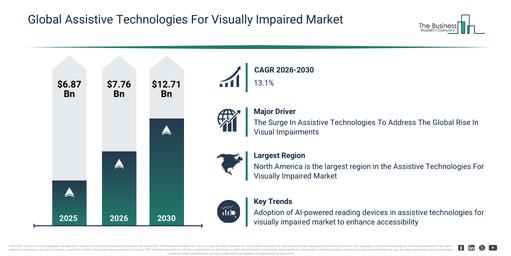
    The market size for assistive technologies designed for the visually impaired has seen rapid expansion in recent years. This sector is predicted to increase from $6.87 billion in 2025 to $7.76 billion in 2026, exhibiting a compound annual growth rate (CAGR) of 12.9%. The historic period’s growth can be attributed to heightened awareness of accessibility needs for visual impairment, the expansion of special education programs, an increase in the availability of assistive devices, growing institutional support for disability inclusion, and the widespread adoption of screen reader technologies.

    The assistive technologies for visually impaired market is projected to experience substantial growth over the next few years. This market is expected to reach $12.71 billion by 2030, advancing at a compound annual growth rate (CAGR) of 13.1%. The anticipated expansion during the forecast period is primarily fueled by the increasing integration of AI and computer vision, greater investments in inclusive technology development, the broadening of smart city accessibility initiatives, a rising demand for personalized assistive solutions, and the growing adoption of wearable assistive devices. Significant trends for the forecast period include the increasing uptake of AI-powered assistive software, a rising utilization of smart and wearable navigation devices, an expanding demand for accessible digital learning tools, the proliferation of connected mobility aids, and an enhanced focus on user-centric assistive design.

    Download A Free Sample Report For Comprehensive Market Insights:

    https://www.thebusinessresearchcompany.com/sample.aspx?id=13598&type=smp

    What Are The Main Drivers Accelerating The Growth Of The Assistive Technologies For Visually Impaired Market?

    The increasing occurrence of visual impairments and blindness is anticipated to drive the expansion of the assistive technologies for the visually impaired market in the future. These conditions, visual impairment and blindness, denote states where an individual experiences restricted or complete loss of sight, impacting their vision to different extents. Such assistive technologies improve accessibility for people with visual impairments and blindness, offering crucial aid like Braille displays, which facilitate better navigation, access to information, and communication. To illustrate, data from August 2023, provided by the World Health Organization, a specialized UN agency based in Switzerland focused on global public health, indicates that globally, an astonishing 2.2 billion people suffer from vision impairment, with 1 billion of these cases being either preventable or lacking sufficient intervention. Furthermore, refractive errors impact 36% of these individuals, while cataracts are responsible for impairment in 17% of cases. Consequently, the rising prevalence of visual impairments and blindness is a significant factor boosting the growth of the assistive technologies for the visually impaired market.

    Which Segment-Based Categories Are Covered In The Assistive Technologies For Visually Impaired Market?

    The assistive technologies for visually impaired market covered in this report is segmented –

    1) By Type: Educational Devices And Software, Mobility Devices, Low Vision Devices

    2) By Distribution Channel: Hospital Pharmacies, Retail Pharmacies, Optical Stores, Online Pharmacies

    3) By End User: Blind Schools, Enterprises And Social Organizations, Personal Use, Hospitals, Other End Users

    Subsegments:

    1) By Educational Devices And Software: Braille Notetakers, Screen Readers, Accessible Learning Software

    2) By Mobility Devices: Canes (Traditional And Smart Canes), GPS Navigation Devices, Wearable Technology For Navigation

    3) By Low Vision Devices: Magnifiers (Handheld And Electronic), Telescopic Lenses, Digital Magnification Devices

    Which Trends Are Guiding The Development Of The Assistive Technologies For Visually Impaired Market?

    Leading companies in the assistive technologies for visually impaired market are concentrating on developing technological advancements, particularly AI-powered handheld reading devices. These innovations aim to provide real-time text recognition and scene understanding, thereby boosting reading independence, enhancing usability, and reducing reliance on sighted assistance. An AI-powered handheld reading device utilizes a combination of computer vision and optical character recognition (OCR) to instantly convert printed, handwritten, or digital text into spoken feedback, much like having a personal reader. This functionality facilitates smoother and faster access to information, offers greater language support, and diminishes the need for additional assistive tools. For example, in November 2023, OrCam Technologies, an Israel-based assistive technology company, unveiled the OrCam Read 3, an AI-powered handheld reading device. This product is capable of vocalizing text from books, menus, screens, or any printed surface, supports 17 languages, provides point-and-click guidance for text selection, and delivers real-time audio through its integrated speaker or headphones. This enables visually impaired users to read independently, quickly, and accurately, further reducing their dependence on other assistive devices.

    Which Industry Players Are Present In The Assistive Technologies For Visually Impaired Market?

    Major companies operating in the assistive technologies for visually impaired market are OrCam Technologies Ltd., Vispero, Freedom Scientific Inc., Humanware Pty. Ltd., Amedia Corporation, Aira Tech Corp., LVI Low Vision International AB, Maxi-Aids, Dolphin Computer Access Ltd., Eschenbach Optik GmbH, eSight Corporation, Zoomax Inc., Ash Technologies, ViewPlus Technologies Inc., Envision AI, Ai Squared Inc., Eyedaptic Inc., ABiSee Inc., American Thermoform Corporation, Boundless Assistive Technology, Torchit

    Access The Complete Assistive Technologies For Visually Impaired Market Report:

    https://www.thebusinessresearchcompany.com/report/assistive-technologies-for-visually-impaired-global-market-report

    Which Area Represents The Largest Portion Of The Assistive Technologies For Visually Impaired Market?

    North America was the largest region in the assistive technologies for visually impaired market in 2025. Asia-Pacific is expected to be the fastest-growing region in the forecast period. The regions covered in the assistive technologies for visually impaired market report are Asia-Pacific, South East Asia, Western Europe, Eastern Europe, North America, South America, Middle East, Africa.

    Access Assistive Technologies For Visually Impaired Market Report for Deeper Competitive Insights

    https://www.thebusinessresearchcompany.com/customise?id=13598&type=smp

    Browse Through More Reports Similar to the Global Assistive Technologies For Visually Impaired Market 2026, By The Business Research Company

    Disabled And Elderly Assistive Technology Global Market Report 2026

    https://www.thebusinessresearchcompany.com/report/disabled-and-elderly-assistive-technology-global-market-report

    Elderly And Disabled Assistive Devices Global Market Report 2026

    https://www.thebusinessresearchcompany.com/report/elderly-and-disabled-assistive-devices-global-market-report

    Vision Care Devices And Equipment Global Market Report 2026

    https://www.thebusinessresearchcompany.com/report/vision-care-devices-and-equipment-global-market-report

    Get in touch with us:

    The Business Research Company: https://www.thebusinessresearchcompany.com/

    Americas: +1 310-496-7795

    Asia: +44 7882 955267 & +91 8897263534

    Europe: +44 7882 955267

    Email us at: marketing@tbrc.info

    Follow us on:

    LinkedIn: https://in.linkedin.com/company/the-business-research-company

    YouTube: https://www.youtube.com/channel/UC24_fI0rV8cR5DxlCpgmyFQ

    Global Market Model: https://www.thebusinessresearchcompany.com/global-market-model
  • Rising Infertility Cases Fuelling The Growth Of Assisted Reproductive Technology Market Is Supporting Development Across The Assisted Reproductive Technology Market

    Rising Infertility Cases Fuelling The Growth Of Assisted Reproductive Technology Market Is Supporting Development Across The Assisted Reproductive Technology Market

    The Business Research Company’s 2026 market reports feature enhanced tools like market attractiveness analysis, TAM assessment, and company scoring matrices, along with interactive dashboards, deeper supply chain insights, and startup coverage strengthening the depth, usability, and strategic value of insights.

    How Will The Market Size Of The Assisted Reproductive Technology Market Progress Through 2030?

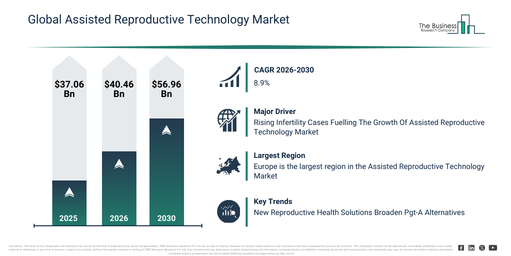
    The assisted reproductive technology market has demonstrated substantial growth in recent years. Its valuation is anticipated to climb from $37.06 billion in 2025 to $40.46 billion in 2026, achieving a compound annual growth rate (CAGR) of 9.2%. The expansion observed in prior periods was largely influenced by factors such as an increase in the prevalence of infertility, the rising trend of maternal age, the expansion of fertility clinics, the wider availability of assisted reproductive procedures, and the growing societal acceptance of ART treatments.

    The assisted reproductive technology market is anticipated to experience substantial expansion in the coming years. It is projected to reach $56.96 billion by 2030, exhibiting a compound annual growth rate (CAGR) of 8.9%. This growth during the forecast period can be primarily attributed to factors such as the increasing embrace of precision fertility diagnostics, greater investments in fertility treatment facilities, the broadening of genetic testing applications, a rising preference for minimally invasive procedures, and enhanced healthcare expenditure on reproductive health. Key trends expected over the forecast period encompass the increasing integration of advanced embryo screening techniques, a surge in the utilization of frozen embryo and egg banking, an escalating need for personalized fertility solutions, the extended application of genetic testing within ART procedures, and an intensified emphasis on improving treatment success rates.

    Download A Free Sample Report For Comprehensive Market Insights:

    https://www.thebusinessresearchcompany.com/sample.aspx?id=5489&type=smp

    Which Growth Drivers Are Expected To Support The Assisted Reproductive Technology Market Forward?

    An increasing incidence of infertility is projected to boost the assisted reproductive technology market in the foreseeable future. Infertility is characterized by the inability to conceive after one year of regular, unprotected sexual activity. This condition impacts both genders and is commonly identified when conception is unsuccessful. Assisted reproductive technology (ART) serves as a treatment for infertility, with such therapies encompassing methods involving both female eggs and male sperm. For example, the World Health Organization (WHO), an international public health body headquartered in Switzerland, reported in April 2023 that millions globally of reproductive age face infertility, impacting their families and communities. Globally, approximately 1 in 6 adults, equating to about 17.5% of the worldwide adult population, contend with infertility. Consequently, the growing prevalence of infertility cases propels the expansion of the assisted reproductive technology market.

    What Are The Major Segment Categories Within The Assisted Reproductive Technology Market?

    The assisted reproductive technology market covered in this report is segmented –

    1) By Diagnosis: Hysterosalpingography, Ovarian Reserve Testing, Genetic Testing

    2) By Procedure Type: Fresh Non-Donor, Fresh Donor, Frozen Donor, Frozen Non-Donor, Embryo Or Egg Banking

    3) By End-User: Hospitals, Fertility Clinics, Other End-Users

    Subsegments:

    1) By Hysterosalpingography (HSG): X-ray HSG, Sonohysterography (SHG)

    2) By Ovarian Reserve Testing: Follicle Stimulating Hormone (FSH) Testing, Anti-Müllerian Hormone (AMH) Testing, Antral Follicle Count (AFC) via Ultrasound

    3) By Genetic Testing: Preimplantation Genetic Testing (PGT), Carrier Screening Tests, Genetic Compatibility Testing

    What Trends Are Influencing The Future Of The Assisted Reproductive Technology Market?

    Major companies in the assisted reproductive technology market are concentrating on creating advanced solutions, such as next-generation sequencing (NGS)-based testing kits, to enhance chromosomal analysis, improve embryo selection, and boost the success rates of fertility treatments. NGS-based preimplantation genetic testing involves research-use technologies that allow for a comprehensive assessment of chromosomal abnormalities in embryos, thereby supporting informed decision-making during IVF and ICSI procedures. For instance, in July 2023, Thermo Fisher Scientific Inc., a US-based biotechnology company, introduced two next-generation sequencing-based products, the Ion ReproSeq PGT-A Kit and the Ion AmpliSeq Polyploidy Kit, to support preimplantation genetic testing for aneuploidy (PGT-A). Developed for reproductive health laboratories, these assays are the initial research-use products of their kind and are compatible with the Ion Torrent Genexus Integrated Sequencer, facilitating a simplified workflow from sample processing to aneuploidy analysis. PGT-A testing aids in detecting chromosomal abnormalities in embryo samples, and these new solutions aim to advance scientific understanding, improve pregnancy success rates, and promote healthier outcomes for future generations. The Genexus platform further streamlines the research process through its integrated templating, sequencing, and data analysis, while the Ion AmpliSeq Polyploidy Panel kit offers improved quality control features to detect contamination, avoid sample mix-ups, and identify triploidy in embryos, thus reinforcing technological progress within the assisted reproductive technology market.

    Which Organizations Are Involved In The Assisted Reproductive Technology Market?

    Major companies operating in the assisted reproductive technology market are Cooper Surgical Inc., Ferring Pharmaceuticals Ltd., Hamilton Thorne Ltd., Merck KGaA, Genea Limited, California Cryobank, European Sperm Bank, OvaScience Inc., Bloom IVF Centre, Vitrolife AB, FUJIFILM Irvine Scientific Inc., Nidacon International AB, Monash IVF Group Ltd., Cook Medical, INVO Bioscience Inc., Thermo Fisher Scientific Inc., Anecova Sa, Carolinas Fertility Institute, Microm Ltd., Inception Sciences Inc., Progyny Inc., Oxford Gene Technology IP Ltd., IVI-RMA Global, Boston IVF, CARE Fertility Group, Virtus Health, Reproductive Medicine Associates of New York, Shady Grove Fertility, CCRM Fertility, New Hope Fertility Center, Houston Fertility Institute, Pacific Fertility Center, RMA of New Jersey, Sher Fertility Institute, IVF Florida, ORM Fertility, HRC Fertility, Arizona Center for Reproductive Endocrinology & Infertility, San Diego Fertility Center, Fertility Centers of Illinois

    Access The Complete Assisted Reproductive Technology Market Report:

    https://www.thebusinessresearchcompany.com/report/assisted-reproductive-technology-global-market-report

    Which Region Commands The Largest Share Of The Assisted Reproductive Technology Market?

    Europe was the largest region in the assisted reproductive technology market in 2025. North America was the second-largest region in assisted reproductive technology market. The regions covered in the assisted reproductive technology market report are Asia-Pacific, South East Asia, Western Europe, Eastern Europe, North America, South America, Middle East, Africa.

    Access Assisted Reproductive Technology Market Report for Deeper Competitive Insights

    https://www.thebusinessresearchcompany.com/customise?id=5489&type=smp

    Browse Through More Reports Similar to the Global Assisted Reproductive Technology Market 2026, By The Business Research Company

    Fertility Treatments Global Market Report 2026

    https://www.thebusinessresearchcompany.com/report/fertility-treatments-global-market-report

    Fertility Services Global Market Report 2026

    https://www.thebusinessresearchcompany.com/report/fertility-services-global-market-report

    Infertility Treatment Global Market Report 2026

    https://www.thebusinessresearchcompany.com/report/infertility-treatment-global-market-report

    Get in touch with us:

    The Business Research Company: https://www.thebusinessresearchcompany.com/

    Americas: +1 310-496-7795

    Asia: +44 7882 955267 & +91 8897263534

    Europe: +44 7882 955267

    Email us at: marketing@tbrc.info

    Follow us on:

    LinkedIn: https://in.linkedin.com/company/the-business-research-company

    YouTube: https://www.youtube.com/channel/UC24_fI0rV8cR5DxlCpgmyFQ

    Global Market Model: https://www.thebusinessresearchcompany.com/global-market-model
  • Revolutionizing Remote Patient Monitoring With Cutting-Edge Multi-Vital Technology Is Affecting The Direction Of The Assisted Living Technologies Market

    Revolutionizing Remote Patient Monitoring With Cutting-Edge Multi-Vital Technology Is Affecting The Direction Of The Assisted Living Technologies Market

    The Business Research Company’s 2026 market reports feature enhanced tools like market attractiveness analysis, TAM assessment, and company scoring matrices, along with interactive dashboards, deeper supply chain insights, and startup coverage strengthening the depth, usability, and strategic value of insights.

    What Is The Expected Market Size Of The Assisted Living Technologies Market In 2026 And How Much Will It Reach By 2030?

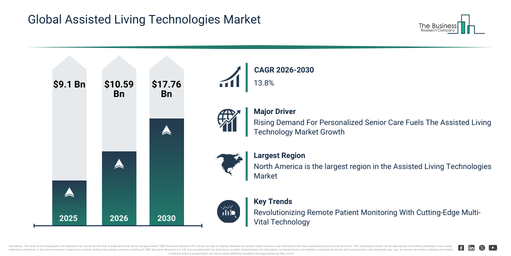
    The assisted living technologies market has seen rapid expansion in recent years. Its value is expected to grow from $9.1 billion in 2025 to $10.59 billion in 2026, exhibiting a compound annual growth rate (CAGR) of 16.4%. Historically, this growth can be attributed to an aging population’s increase, the rising prevalence of chronic conditions, the expansion of home care services, a heightened demand for elderly independence, and the availability of basic assistive devices.

    The assisted living technologies market is projected to undergo rapid expansion in the coming years, with its size expected to reach $17.76 billion in 2030, exhibiting a compound annual growth rate (CAGR) of 13.8%. This growth throughout the forecast period is fueled by increasing investments in smart assisted living infrastructure, the rising adoption of telehealth and remote monitoring, the expansion of AI-enabled care solutions, a growing emphasis on preventive healthcare, and increasing consumer acceptance of digital health tools. Significant trends anticipated during this period encompass the increasing adoption of smart home safety systems, the rising use of wearable health monitoring devices, the growing integration of remote care platforms, the expansion of data-driven assisted living solutions, and an enhanced focus on supporting independent living.

    Download A Free Sample Report For Comprehensive Market Insights:

    https://www.thebusinessresearchcompany.com/sample.aspx?id=15515&type=smp

    What Influential Factors Are Boosting The Assisted Living Technologies Market Demand?

    The increasing need for tailored senior care solutions is anticipated to drive expansion in the assisted living technology market moving ahead. These customized senior care services encompass a broad spectrum of offerings aimed at supporting older adults in their daily lives. The rising demand for personalized senior care stems from the expanding elderly demographic, their specific requirements, and the desire for high-quality assistance. Assisted living technologies facilitate the remote observation of seniors’ health metrics, including vital signs, activity patterns, medication compliance, and detection of falls. Such tools assist older individuals in maintaining medication schedules, minimizing mistakes, and enhancing their general health results. For example, reports from October 2025 by the Australian Institute of Health and Welfare, an Australian government body, indicated approximately 275,600 admissions to home care and residential aged care for individuals aged 65 and above during 2023–24. These admissions comprised about 102,000 (37%) for home care and 173,600 (63%) for residential aged care, with roughly 75,600 (44%) of the latter being for permanent care and about 98,000 (56%) for respite care. Consequently, the increasing need for personalized senior care services is propelling the expansion of the assisted living technology market.

    How Is The Assisted Living Technologies Market Distributed Across Key Segments?

    The assisted living technologies market covered in this report is segmented –

    1) By Component: Hardware, Software And Apps, Services

    2) By Facility Type: Adult Family Home, Community-Based Residential Facility, Residential Care Apartment Complex

    3) By End-User: Assisted Living Facilities, Nursing Homes, Rehabilitation Centers, Home Care Settings, Hospices, Other End-Users

    Subsegments:

    1) By Hardware: Wearable Devices (Smartwatches, Health Trackers), Sensors (Motion, Pressure, Temperature), Home Automation Systems (Smart Lights, Smart Thermostats), Monitoring Devices (Fall Detection Systems, Emergency Alert Systems)

    2) By Software And Apps: Health Monitoring Apps, Remote Patient Monitoring Software, Medication Management Software, Communication And Coordination Software, Emergency Response Apps

    3) By Services: Remote Monitoring Services, Personal Care Assistance, Telehealth Services, Maintenance And Support Services, Data Analytics And Reporting Services

    Which Trends Are Contributing To Changes In The Assisted Living Technologies Market?

    Leading companies within the assisted living technologies market are actively developing multi-sensor remote patient monitoring platforms. These innovations aim to offer convenient and continuous tracking of vital signs, thereby enhancing patient care. Such platforms empower healthcare providers to maintain closer surveillance over patients’ health status and deliver more tailored care, ultimately leading to superior patient outcomes and more effective management of chronic conditions. An illustrative example occurred in January 2024, when Blue Spark Technologies, a health technology provider based in the US, introduced VitalTraq, its own multi-sensor remote patient monitoring platform. VitalTraq employs remote photoplethysmography (rPPG), a contactless method capable of assessing heart rate, variability, blood pressure, and respiration rate through a swift 30- to 60-second facial scan. Furthermore, VitalTraq incorporates Blue Spark’s FDA-cleared TempTraq, a Bluetooth-enabled patch designed to monitor patient temperature and provide real-time alerts for any increases. This combination of contactless scanning and a wearable temperature sensor delivers a comprehensive remote monitoring solution.

    Who Are The Firms Contributing To The Assisted Living Technologies Market Ecosystem?

    Major companies operating in the assisted living technologies market are Samsung Electronics Co. Ltd., Siemens AG, General Electric Company, Panasonic Corporation, Honeywell International Inc., Medtronic plc, ABB Ltd., Koninklijke Philips N.V., Legrand SA, Resideo Technologies Inc., ADT Inc., Tunstall Group Holdings Limited, WellSky, Lively, Essence Group, Possum Limited, GrandCare Systems, Vitaphone GmbH, Tynetec Limited, 2PCS Solutions GmbH, Assisted Living Technologies Inc., Bay Alarm Medical, Gnomon Informatics S.A., Independa Inc., Alcove

    Access The Complete Assisted Living Technologies Market Report:

    https://www.thebusinessresearchcompany.com/report/assisted-living-technologies-global-market-report

    Which Region Accounts For The Highest Share Of The Assisted Living Technologies Market?

    North America was the largest region in the assisted living technologies market in 2025. The regions covered in the assisted living technologies market report are Asia-Pacific, South East Asia, Western Europe, Eastern Europe, North America, South America, Middle East, Africa.

    Access Assisted Living Technologies Market Report for Deeper Competitive Insights

    https://www.thebusinessresearchcompany.com/customise?id=15515&type=smp

    Browse Through More Reports Similar to the Global Assisted Living Technologies Market 2026, By The Business Research Company

    Assisted Living Facility And Neurorehabilitation Global Market Report 2026

    https://www.thebusinessresearchcompany.com/report/assisted-living-facility-and-neurorehabilitation-global-market-report

    Assisted Living Facility And Neurorehabilitation Global Market Report 2026

    https://www.thebusinessresearchcompany.com/report/assisted-living-facility-and-neurorehabilitation-global-market-report

    Assisted Living Facility And Neurorehabilitation Global Market Report 2026

    https://www.thebusinessresearchcompany.com/report/assisted-living-facility-and-neurorehabilitation-global-market-report

    Get in touch with us:

    The Business Research Company: https://www.thebusinessresearchcompany.com/

    Americas: +1 310-496-7795

    Asia: +44 7882 955267 & +91 8897263534

    Europe: +44 7882 955267

    Email us at: marketing@tbrc.info

    Follow us on:

    LinkedIn: https://in.linkedin.com/company/the-business-research-company

    YouTube: https://www.youtube.com/channel/UC24_fI0rV8cR5DxlCpgmyFQ

    Global Market Model: https://www.thebusinessresearchcompany.com/global-market-model
  • The Assisted Living Facility And Neurorehabilitation Market Is Advancing With Support From Rising Demand For Personalized Senior Care Fuels The Assisted Living Facility And Neurorehabilitation Market Growth

    The Assisted Living Facility And Neurorehabilitation Market Is Advancing With Support From Rising Demand For Personalized Senior Care Fuels The Assisted Living Facility And Neurorehabilitation Market Growth

    The Business Research Company’s 2026 market reports feature enhanced tools like market attractiveness analysis, TAM assessment, and company scoring matrices, along with interactive dashboards, deeper supply chain insights, and startup coverage strengthening the depth, usability, and strategic value of insights.

    What Market Size Is Forecasted For The Assisted Living Facility And Neurorehabilitation Market By 2030 Based On Its 2026 Value?

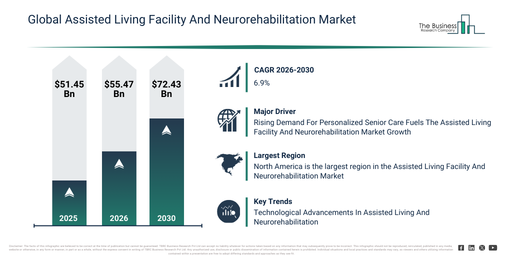
    The assisted living facility and neurorehabilitation market size has experienced strong growth in recent years. This market is projected to expand from $51.45 billion in 2025 to $55.47 billion in 2026, demonstrating a compound annual growth rate (CAGR) of 7.8%. The historical growth can be attributed to several factors, including the increasing aging population, the rising prevalence of neurological disorders, the expansion of assisted living facilities, an increased demand for long-term care services, and the availability of rehabilitation professionals.

    The assisted living facility and neurorehabilitation market is projected to experience significant expansion over the next few years. This market is set to reach $72.43 billion by 2030, demonstrating a compound annual growth rate (CAGR) of 6.9%. The anticipated growth during this period can be attributed to factors such as increased investments in neurorehabilitation infrastructure, a rising demand for integrated care models, the expansion of technology-enabled therapy solutions, a growing emphasis on patient-centered care, and increased healthcare spending on elderly care. Prominent trends expected in the forecast period include the increasing integration of neurorehabilitation services within assisted living, a rising adoption of personalized care programs, the growing use of remote monitoring technologies, the broadening of multidisciplinary rehabilitation models, and an enhanced focus on cognitive and mobility recovery.

    Download A Free Sample Report For Comprehensive Market Insights:

    https://www.thebusinessresearchcompany.com/sample.aspx?id=15726&type=smp

    Which Drivers Are Advancing The Assisted Living Facility And Neurorehabilitation Market Growth?

    The increasing need for individualized senior care solutions is anticipated to boost expansion in the assisted living facility and neurorehabilitation market moving ahead. These services encompass a broad spectrum of assistance, tailored to support elderly individuals in their daily lives. The rising elderly demographic, coupled with their distinct requirements and a desire for high-quality care, is fueling this surge in demand for personalized senior care services. By integrating assisted living facilities and neurorehabilitation into personalized senior care, a holistic support system is provided, blending aid for daily activities with specific therapeutic interventions customized for individual neurological requirements. For instance, data from March 2023, reported by the Australian Institute of Health and Welfare, an Australia-based government agency, indicated that aged care government expenditure reached $24.8 billion in 2021–22. This spending is projected to escalate from 1.1% of GDP in 2021–22 to 2.5% by 2062–63, driven by the aging population. Consequently, the heightened demand for personalized senior care services is propelling the expansion of the assisted living facility and neurorehabilitation market.

    How Does Segment Analysis Break Down The Assisted Living Facility And Neurorehabilitation Market Structure?

    The assisted living facility and neurorehabilitation market covered in this report is segmented –

    1) By Type: Women, Men

    2) By Age: Less Than 65, 65-74, 75-84, More Than 85

    3) By Application: Hospitals, Clinics, Personal Care, Other Applications

    Subsegments:

    1) By Women: Elderly Women, Women With Cognitive Disorders, Women With Physical Disabilities

    2) By Men: Elderly Men, Men With Cognitive Disorders, Men With Physical Disabilities

    What Trends Are Shaping The Assisted Living Facility And Neurorehabilitation Market Structure?

    Major companies operating within the assisted living facilities and neurorehabilitation market are strategically focusing on technological advancements, particularly smart peripheral devices, to gain a competitive advantage. A smart peripheral device is defined as a hyper-sensitive controller designed to capture the precise grasp forces and wrist movements required for everyday activities. It possesses the capability to detect finger and hand forces at a sub-newton level, thus enabling treatment for even the most severely impaired patients. For instance, in February 2023, MindMaze, a digital therapeutics company based in Switzerland, unveiled Izar, which is a pioneering FDA-listed and CE-marked smart peripheral device intended for patients with compromised hand motor function. Izar is engineered to address a crucial gap in neurological care and aims to serve as the most effective treatment for improving hand dexterity and strength across a spectrum of conditions, including stroke, Parkinson’s disease, Alzheimer’s disease, and traumatic brain injury.

    Which Key Players Are Active In The Assisted Living Facility And Neurorehabilitation Market?

    Major companies operating in the assisted living facility and neurorehabilitation market are Community Health Systems Inc., Sevita Health, Encompass Health Corporation, Kindred Healthcare LLC, Brookdale Senior Living, Atria Senior Living Inc., SCA Health, Belmont VillAge L.P., Aegis Living, Craig Hospital, NeuroRestorative, Centre For Neuro Skills, Bioness Inc., Texas NeuroRehab Center, Catholic Eldercare, Moody Neurorehabilitation Institute, ResCare Inc., Sukino Healthcare Solutions Pvt. Ltd., TeamHealth, Mary Lee Foundation, Sanctus Rehabilitation Care Foundation

    Access The Complete Assisted Living Facility And Neurorehabilitation Market Report:

    https://www.thebusinessresearchcompany.com/report/assisted-living-facility-and-neurorehabilitation-global-market-report

    Which Region Is The Primary Market For The Assisted Living Facility And Neurorehabilitation Market?

    North America was the largest region in the assisted living facility and neurorehabilitation market in 2025. Asia-Pacific is expected to be the fastest growing region in the market. The regions covered in the assisted living facility and neurorehabilitation market report are Asia-Pacific, South East Asia, Western Europe, Eastern Europe, North America, South America, Middle East, Africa.

    Access Assisted Living Facility And Neurorehabilitation Market Report for Deeper Competitive Insights

    https://www.thebusinessresearchcompany.com/customise?id=15726&type=smp

    Browse Through More Reports Similar to the Global Assisted Living Facility And Neurorehabilitation Market 2026, By The Business Research Company

    Assisted Living Facility And Neurorehabilitation Global Market Report 2026

    https://www.thebusinessresearchcompany.com/report/assisted-living-facility-and-neurorehabilitation-global-market-report

    Assisted Living Facility And Neurorehabilitation Global Market Report 2026

    https://www.thebusinessresearchcompany.com/report/assisted-living-facility-and-neurorehabilitation-global-market-report

    Assisted Living Technologies Global Market Report 2026

    https://www.thebusinessresearchcompany.com/report/assisted-living-technologies-global-market-report

    Get in touch with us:

    The Business Research Company: https://www.thebusinessresearchcompany.com/

    Americas: +1 310-496-7795

    Asia: +44 7882 955267 & +91 8897263534

    Europe: +44 7882 955267

    Email us at: marketing@tbrc.info

    Follow us on:

    LinkedIn: https://in.linkedin.com/company/the-business-research-company

    YouTube: https://www.youtube.com/channel/UC24_fI0rV8cR5DxlCpgmyFQ

    Global Market Model: https://www.thebusinessresearchcompany.com/global-market-model
  • Increasing Adoption Of Increasing Healthcare Expenditures Boosting The Aspergillosis Treatment Market  Is Influencing The Aspergillosis Treatment Market

    Increasing Adoption Of Increasing Healthcare Expenditures Boosting The Aspergillosis Treatment Market Is Influencing The Aspergillosis Treatment Market

    The Business Research Company’s 2026 market reports feature enhanced tools like market attractiveness analysis, TAM assessment, and company scoring matrices, along with interactive dashboards, deeper supply chain insights, and startup coverage strengthening the depth, usability, and strategic value of insights.

    How Is The Market Value Of The Aspergillosis Treatment Market Projected To Expand During 2026–2030?

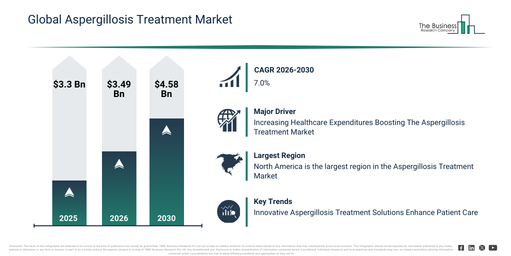
    The aspergillosis treatment market size has shown strong growth over recent years. It is forecast to increase from $3.3 billion in 2025 to $3.49 billion in 2026, at a compound annual growth rate (CAGR) of 5.8%. This historical expansion can be attributed to an increasing occurrence of immunocompromised patient populations, a rise in hospital-acquired fungal infections, the availability of conventional antifungal drugs, enhanced clinical awareness of aspergillosis, and the broadening of hospital treatment capabilities.

    The market for aspergillosis treatment is projected to experience robust expansion in the coming years. Its valuation is set to reach $4.58 billion by 2030, demonstrating a compound annual growth rate (CAGR) of 7.0%. This anticipated growth during the forecast period stems from factors such as heightened research into resistant fungal strains, an increasing need for personalized treatment methods, the expansion of antifungal drug development pipelines, greater uptake of early diagnostic tests, and rising healthcare spending on infectious diseases. Key trends anticipated for this period encompass the escalating development of new antifungal therapies, an increase in the use of precision diagnostics for prompt detection, a heightened emphasis on targeted treatment plans, the broadened application of combination antifungal treatments, and improved monitoring of patient outcomes.

    Download A Free Sample Report For Comprehensive Market Insights:

    https://www.thebusinessresearchcompany.com/sample.aspx?id=12987&type=smp

    What Primary Factors Are Fueling The Expansion Of The Aspergillosis Treatment Market?

    The increase in healthcare expenditures is anticipated to fuel the expansion of the aspergillosis treatment market moving forward. Health expenditures comprise all costs involved in providing health services, family planning activities, nutrition programs, and health-focused emergency assistance. An elevation in healthcare spending is expected to facilitate the creation of more effective therapies and medical technologies for aspergillosis treatment. For instance, in May 2023, the Office for National Statistics, a UK-based statistics authority, reported that in 2023, healthcare expenditure in the UK was approximately $362.08 billion (£292 billion), showing a nominal increase of 5.6%. Consequently, the rise in healthcare expenditures is propelling the growth of the aspergillosis treatment market.

    What Segment Types Are Included In The Aspergillosis Treatment Market Analysis?

    The aspergillosis treatment market covered in this report is segmented –

    1) By Type: Allergic Aspergillosis, Chronic Aspergillosis, Invasive Aspergillosis

    2) By Drug Class: Corticosteroids, Antifungal drugs, Other Drug Classes

    3) By Route of Administration: Oral, Injectable, Other Routes Of Administration

    4) By Distribution Channel: Hospital pharmacies, Retail pharmacies, Other Distribution Channels

    Subsegments:

    1) By Allergic Aspergillosis: Allergic Fungal Sinusitis, Allergic Bronchopulmonary Aspergillosis (ABPA)

    2) By Chronic Aspergillosis: Chronic Pulmonary Aspergillosis, Chronic Cavitary Aspergillosis

    3) By Invasive Aspergillosis: Pulmonary Invasive Aspergillosis, Disseminated Invasive Aspergillosis

    Which Trends Are Supporting The Evolution Of The Aspergillosis Treatment Market?

    Major companies engaged in the aspergillosis treatment market are prioritizing the introduction of innovative aspergillosis drugs and solutions to maintain their standing. The advancement in drug development expands the range of treatment options for aspergillosis, with examples like posaconazole oral suspension offering more targeted and effective therapies for patients. For instance, in April 2023, Hikma Pharmaceuticals PLC, a UK-based pharmaceutical company, launched posaconazole oral suspension in the US specifically for aspergillosis treatment. These drugs are applicable to patients at a high risk of acquiring invasive Aspergillus and Candida infections, especially those with severely compromised immune systems, such as hematopoietic stem cell transplant (HSCT) recipients experiencing graft-versus-host disease (GVHD). Additionally, oropharyngeal candidiasis (OPC), particularly OPC refractory to itraconazole and fluconazole, represents another condition for which posaconazole oral suspension is recommended.

    Who Are The Leading Firms Participating In The Aspergillosis Treatment Market?

    Major companies operating in the aspergillosis treatment market are Basilea Pharmaceutica Ltd., Pfizer Inc., Johnson and Johnson, AbbVie Inc., Bayer AG, Novartis AG, Merck and Co. Inc., Sanofi S.A., Bristol Myers Squibb Company, AstraZeneca plc, GSK plc, Takeda Pharmaceutical Company, Eli Lilly and Company, Gilead Sciences Inc., Boehringer Ingelheim International GmbH, Teva Pharmaceutical Industries, Astellas Pharma Inc., Regeneron Pharmaceuticals, Mylan N.V. , Sun Pharmaceutical Industries, Jazz Pharmaceuticals, Dr. Reddy’s Laboratories, Cipla Ltd., Hikma Pharmaceuticals PLC

    Access The Complete Aspergillosis Treatment Market Report:

    https://www.thebusinessresearchcompany.com/report/aspergillosis-treatment-global-market-report

    Which Geographic Region Represents The Largest Aspergillosis Treatment Market Share?

    North America was the largest region in the aspergillosis treatment market in 2025. The regions covered in the aspergillosis treatment market report are Asia-Pacific, South East Asia, Western Europe, Eastern Europe, North America, South America, Middle East, Africa.

    Access Aspergillosis Treatment Market Report for Deeper Competitive Insights

    https://www.thebusinessresearchcompany.com/customise?id=12987&type=smp

    Browse Through More Reports Similar to the Global Aspergillosis Treatment Market 2026, By The Business Research Company

    Systemic Aspergillosis And Systemic Candidiasis Global Market Report 2026

    https://www.thebusinessresearchcompany.com/report/systemic-aspergillosis-and-systemic-candidiasis-global-market-report

    Fungal Protein Global Market Report 2026

    https://www.thebusinessresearchcompany.com/report/fungal-protein-global-market-report

    Invasive Fungal Infections Global Market Report 2026

    https://www.thebusinessresearchcompany.com/report/invasive-fungal-infections-global-market-report

    Get in touch with us:

    The Business Research Company: https://www.thebusinessresearchcompany.com/

    Americas: +1 310-496-7795

    Asia: +44 7882 955267 & +91 8897263534

    Europe: +44 7882 955267

    Email us at: marketing@tbrc.info

    Follow us on:

    LinkedIn: https://in.linkedin.com/company/the-business-research-company

    YouTube: https://www.youtube.com/channel/UC24_fI0rV8cR5DxlCpgmyFQ

    Global Market Model: https://www.thebusinessresearchcompany.com/global-market-model
  • Increasing Prevalence Of Neurological Disorders Fueling The Growth Of The Market Due To Their Impact On Brain Development And Function Continues To Impact The Growth Of The Asperger Syndrome Market

    Increasing Prevalence Of Neurological Disorders Fueling The Growth Of The Market Due To Their Impact On Brain Development And Function Continues To Impact The Growth Of The Asperger Syndrome Market

    The Business Research Company’s 2026 market reports feature enhanced tools like market attractiveness analysis, TAM assessment, and company scoring matrices, along with interactive dashboards, deeper supply chain insights, and startup coverage strengthening the depth, usability, and strategic value of insights.

    What Are The Forecasted Market Size Figures For The Asperger Syndrome Market In 2026 And 2030?

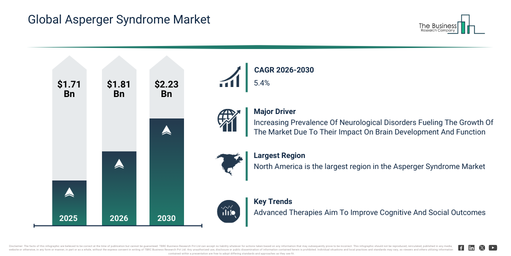
    The asperger syndrome market has experienced substantial growth in recent years. It is anticipated to expand from $1.71 billion in 2025 to $1.81 billion in 2026, achieving a compound annual growth rate (CAGR) of 5.7%. Historically, this expansion has been driven by factors such as increased awareness of autism spectrum disorders, the expansion of diagnostic frameworks, a rise in behavioral therapy adoption, the availability of specialized clinical services, and escalating diagnosis rates among children.

    The asperger syndrome market is projected to experience substantial expansion in the coming years. By 2030, this market is anticipated to reach $2.23 billion, demonstrating a compound annual growth rate (CAGR) of 5.4%. This growth during the forecast period is fueled by several factors, including heightened investments in digital mental health solutions, an increased emphasis on adult autism care services, the broader adoption of telehealth for behavioral therapy, the growing integration of AI into diagnostic tools, and the rising need for customized intervention programs. Key trends expected during this period encompass the wider embrace of early diagnostic screening tools, the increased utilization of digital platforms for behavioral assessment, the proliferation of personalized therapy programs, the greater incorporation of assistive technologies for social skill development, and a stronger focus on managing the condition throughout life.

    Download A Free Sample Report For Comprehensive Market Insights:

    https://www.thebusinessresearchcompany.com/sample.aspx?id=24471&type=smp

    Which Strategic Drivers Are Supporting The Asperger Syndrome Market Development?

    The rising occurrence of neurological disorders is anticipated to drive expansion in the asperger syndrome market. These disorders are health issues impacting the brain, spinal cord, and nerves, resulting in various symptoms such as cognitive, motor, and sensory difficulties. This growing prevalence is associated with an older global population, since aging progressively diminishes neuronal activity, decreases brain adaptability, and increases oxidative stress, all of which foster the emergence and advancement of these conditions. Neurological conditions play a role in asperger syndrome by influencing brain development and its functions, especially in regions critical for social engagement and communication. They impact behavioral characteristics, resulting in difficulties with social signals, repetitive behaviors, and intense, specific interests, all of which are hallmarks of asperger syndrome. For example, data from the National Health Service, a UK government body, indicated that as of June 30, 2024, there were 487,432 patients diagnosed with dementia (a progressive brain disorder impacting memory, thought, and daily functions), marking an increase of 3,155 cases since May 31, 2024, as reported in July 2024. Consequently, the rising incidence of neurological disorders is a key factor propelling the expansion of the asperger syndrome market.

    Which Segment Divisions Form The Structure Of The Asperger Syndrome Market?

    The asperger syndrome market covered in this report is segmented –

    1) By Type: Asperger Syndrome, Pervasive Developmental Disorder, Autistic Disorder, Disintegrative Disorder

    2) By Treatment: Drug Therapies, Antipsychotic Drugs, Selective Serotonin Reuptake Inhibitors (SSRIs), Stimulants, Sleep Medication

    3) By Diagnosis: Diagnostic And Statistical Manual Of Mental Disorders (DSM)-IV, Differential Diagnosis, Childhood Asperger Syndrome Test, Gilliam Asperger’s Disorder Scale (Gads), Krug Asperger’s Disorder Index (Kadi), Other Diagnosis

    4) By Age Group: Children, Adolescents, Adults

    5) By End-User: Hospitals, Clinics, Diagnostic Centres, Drug Stores, Pharmacies, Other End-Users

    Subsegments:

    1) By Asperger Syndrome: Mild Asperger Syndrome, Moderate Asperger Syndrome, Severe Asperger Syndrome

    2) By Pervasive Developmental Disorder: Pervasive Developmental Disorder-Not Otherwise Specified (PDD-NOS), Rett Syndrome, Childhood Disintegrative Disorder

    3) By Autistic Disorder: High-functioning Autism, Low-functioning Autism, Classic Autism

    4) By Disintegrative Disorder: Late-Onset Autism, Regressive Autism, Behavioral Disintegration Subtypes

    What Trends Are Affecting The Growth Of The Asperger Syndrome Market?

    Leading companies within the asperger syndrome market are prioritizing the development of sophisticated therapies, specifically gene therapies. These treatments aim to address the foundational genetic factors, improve cognitive and social results, and allow for tailored patient care strategies. Such therapies involve modifying an individual’s genes to prevent or manage illnesses. An illustration of this trend occurred in January 2024, when Jaguar Gene Therapy, a US-based biotechnology firm, secured U.S. Food and Drug Administration (FDA) clearance for its investigational new drug (IND) application. This clearance is for evaluating JAG201, an innovative gene therapy formulated for a genetic variant of autism spectrum disorder (ASD) and Phelan-McDermid syndrome (PMS). This approval facilitates clinical trials to assess JAG201’s capacity to rectify SHANK3 deficiency, a primary genetic contributor to these disorders. It also highlights Jaguar’s dedication to creating transformative treatments for severe neurodevelopmental conditions where therapeutic options are currently limited.

    Which Companies Are Engaged In The Asperger Syndrome Market Environment?

    Major companies operating in the asperger syndrome market are Pfizer Inc., Johnson & Johnson, F Hoffmann-La Roche Ltd., Bristol-Myers Squibb Company, Novartis AG, Eli Lilly and Company, Otsuka Pharmaceutical Co Ltd, Neurocrine Biosciences Inc, Acadia Pharmaceuticals Inc, PsychoGenics Inc, Sage Therapeutics Inc, Curemark LLC, Jazz Pharmaceuticals, Axial Therapeutics Inc, Q BioMed Inc, STALICLA, Lundbeck A/S, Merck & Co Inc, AstraZeneca, Zynerba Pharmaceuticals Inc, Teva Pharmaceutical Industries Ltd, MapLight Therapeutics Inc.

    Access The Complete Asperger Syndrome Market Report:

    https://www.thebusinessresearchcompany.com/report/asperger-syndrome-global-market-report

    Which Region Leads The Asperger Syndrome Market By Size?

    North America was the largest region in the asperger syndrome market in 2025. The regions covered in the asperger syndrome market report are Asia-Pacific, South East Asia, Western Europe, Eastern Europe, North America, South America, Middle East, Africa.

    Access Asperger Syndrome Market Report for Deeper Competitive Insights

    https://www.thebusinessresearchcompany.com/customise?id=24471&type=smp

    Browse Through More Reports Similar to the Global Asperger Syndrome Market 2026, By The Business Research Company

    Autism Spectrum Disorders Treatment Global Market Report 2026

    https://www.thebusinessresearchcompany.com/report/autism-spectrum-disorders-treatment-global-market-report

    Major Depressive Disorder Global Market Report 2026

    https://www.thebusinessresearchcompany.com/report/major-depressive-disorder-global-market-report

    Speech And Language Disorder Global Market Report 2026

    https://www.thebusinessresearchcompany.com/report/speech-and-language-disorder-global-market-report

    Get in touch with us:

    The Business Research Company: https://www.thebusinessresearchcompany.com/

    Americas: +1 310-496-7795

    Asia: +44 7882 955267 & +91 8897263534

    Europe: +44 7882 955267

    Email us at: marketing@tbrc.info

    Follow us on:

    LinkedIn: https://in.linkedin.com/company/the-business-research-company

    YouTube: https://www.youtube.com/channel/UC24_fI0rV8cR5DxlCpgmyFQ

    Global Market Model: https://www.thebusinessresearchcompany.com/global-market-model
  • Aseptic Sampling Market Outlook Through 2030 With Analysis Of Industry Trends And Developments

    Aseptic Sampling Market Outlook Through 2030 With Analysis Of Industry Trends And Developments

    The Business Research Company’s 2026 market reports feature enhanced tools like market attractiveness analysis, TAM assessment, and company scoring matrices, along with interactive dashboards, deeper supply chain insights, and startup coverage strengthening the depth, usability, and strategic value of insights.

    How Much Larger Will The Aseptic Sampling Market Become By 2030 Compared To 2026?

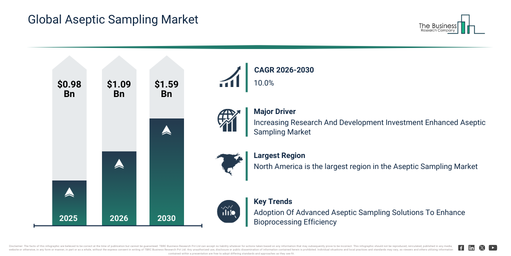
    The aseptic sampling market has experienced significant expansion recently. It is projected to expand from $0.98 billion in 2025 to $1.09 billion in 2026, demonstrating a compound annual growth rate (CAGR) of 11.3%. This historical growth is linked to factors such as the expansion of biopharmaceutical manufacturing, a heightened emphasis on product quality assurance, more stringent regulatory scrutiny in life sciences, the proliferation of sterile processing environments, and the adoption of manual aseptic techniques.

    The aseptic sampling market is projected to experience robust expansion over the coming years, anticipated to reach $1.59 billion by 2030, exhibiting a compound annual growth rate (CAGR) of 10.0%. This significant growth during the forecast period can be primarily attributed to increasing investments in automated bioprocessing, a rising adoption of continuous manufacturing practices, the growing demand for contamination-free sampling, the expansion of biologics production capacity, and the increasing utilization of smart sampling systems. Furthermore, key trends observed within this forecast timeframe include the wider adoption of automated aseptic sampling systems, an escalating demand for single-use sterile sampling solutions, the growing integration of robotic sampling technologies, the broader application of in-line and on-line sampling techniques, and an enhanced focus on reducing contamination risks.

    Download A Free Sample Report For Comprehensive Market Insights:

    https://www.thebusinessresearchcompany.com/sample.aspx?id=15725&type=smp

    What Major Growth Factors Are Impacting The Aseptic Sampling Market?

    Increasing allocation of funds towards research and development initiatives is projected to drive expansion within the aseptic sampling market. These investments represent financial commitments directed at scientific inquiry and innovative endeavors, with the goal of improving products, processes, or technologies. This uptick in R&D spending stems from various factors, including heightened market competition, progress in technology, evolving regulatory mandates, and companies’ pursuit of growth strategies focused on innovation. Enhanced investment in R&D improves aseptic sampling methodologies, leading to greater accuracy, sterility, and adherence to standards in pharmaceutical production. A notable example is the report from October 2025 by the European Federation of Pharmaceutical Industries and Associations (EFPIA), a pharmaceutical industry body based in Belgium, which indicated a substantial rise in R&D spending, escalating from $60,365 million (€52,373 million) in 2023 to $63,415 million (€55,000 million) in 2024. Consequently, the expanding investments in research and development initiatives are a key catalyst for the growth of the aseptic sampling market.

    How Are Different Segment Groups Identified Within The Aseptic Sampling Market?

    The aseptic sampling market covered in this report is segmented –

    1) By Type: Manual Aseptic Sampling, Automated Aseptic Sampling

    2) By Technique: Off-Line Sampling Technique, On-Line Sampling Technique, In-Line Sampling Technique

    3) By Application: Downstream Processing, Upstream Processing

    4) By End-User: Biotechnology And Pharmaceutical Manufacturers, Research And Development Departments, Contract Research And Manufacturing Organizations, Other End Users

    Subsegments:

    1) By Manual Aseptic Sampling: Single-Use Manual Sampling, Reusable Manual Sampling

    2) By Automated Aseptic Sampling: Robotic Sampling Systems, Automated Sample Collection Systems

    Which Trends Are Influencing The Direction Of The Aseptic Sampling Market?

    Within the aseptic sampling market, prominent companies are actively engaged in developing advanced technologies, such as pre-engineered PUPSIT (pre-use, post-sterilization integrity testing) assemblies and closed-path sampling systems. Their objective is to enhance sterility, mitigate contamination risks, and boost sampling efficiency in biopharmaceutical production. A PUPSIT-enabled aseptic sampling system integrates pre-sterilized, single-use fluid pathways with integrated integrity testing capabilities. This allows for secure, automated sample collection without compromising the integrity of closed systems, a significant improvement over conventional manual stainless-steel or fixed-path sampling methods, which carry a greater risk of contamination and necessitate separate validation. Illustrating this trend, in October 2025, Avantor, a U.S.-based life sciences firm, introduced its Next-Generation Sterile Sampling Platform tailored for biopharma applications. This platform features the Exact Volume Sampling System (EVSS), Needle-Based Sampling System (NBSS), Needle-Free Sampling System (NFSS), and OmniTop assemblies. These components collectively facilitate precise micro-volume sampling, minimize product waste, and provide entirely closed, pre-sterilized pathways, thereby streamlining process monitoring and guaranteeing sterility in advanced therapy medicinal product (ATMP) manufacturing.

    Who Are The Prominent Players Across The Aseptic Sampling Market?

    Major companies operating in the aseptic sampling market are Merck & Co. Inc., Saint-Gobain Performance Plastics, Thermo Fisher Scientific Inc., 3M Company, Danaher Corporation, Parker-Hannifin Corporation, Corning Incorporated, Avantor Inc., Lonza Group AG, GEA Group AG, W. L. Gore & Associates Inc., Sartorius AG, Charles River Laboratories International Inc., QualiTest Group, Eppendorf AG, Repligen Corporation, Gemü Group, Watson-Marlow Fluid Technology Group, Cole-Parmer Instrument Company LLC, LabVantage Solutions Inc., Advanced Microdevices Pvt. Ltd., TRACE Analytics GmbH, QualiTru Sampling Systems, KEOFITT A/S, Bbi-biotech GmbH

    Access The Complete Aseptic Sampling Market Report:

    https://www.thebusinessresearchcompany.com/report/aseptic-sampling-global-market-report

    Which Region Has The Strongest Presence In The Aseptic Sampling Market?

    North America was the largest region in the aseptic sampling market in 2025. Asia-Pacific is expected to be the fastest-growing region in the forecast period. The regions covered in the aseptic sampling market report are Asia-Pacific, South East Asia, Western Europe, Eastern Europe, North America, South America, Middle East, Africa.

    Access Aseptic Sampling Market Report for Deeper Competitive Insights

    https://www.thebusinessresearchcompany.com/customise?id=15725&type=smp

    Browse Through More Reports Similar to the Global Aseptic Sampling Market 2026, By The Business Research Company

    Aseptic Processing Global Market Report 2026

    https://www.thebusinessresearchcompany.com/report/aseptic-processing-global-market-report

    Sample Preparation Global Market Report 2026

    https://www.thebusinessresearchcompany.com/report/sample-preparation-global-market-report

    Real World Evidence Solutions Global Market Report 2026

    https://www.thebusinessresearchcompany.com/report/real-world-evidence-solutions-global-market-report

    Get in touch with us:

    The Business Research Company: https://www.thebusinessresearchcompany.com/

    Americas: +1 310-496-7795

    Asia: +44 7882 955267 & +91 8897263534

    Europe: +44 7882 955267

    Email us at: marketing@tbrc.info

    Follow us on:

    LinkedIn: https://in.linkedin.com/company/the-business-research-company

    YouTube: https://www.youtube.com/channel/UC24_fI0rV8cR5DxlCpgmyFQ

    Global Market Model: https://www.thebusinessresearchcompany.com/global-market-model
  • Artificial Saliva Market Revenue Anticipated To Reach $3.97 Billion By 2030 With 12.2% CAGR

    Artificial Saliva Market Revenue Anticipated To Reach $3.97 Billion By 2030 With 12.2% CAGR

    The Business Research Company’s 2026 market reports feature enhanced tools like market attractiveness analysis, TAM assessment, and company scoring matrices, along with interactive dashboards, deeper supply chain insights, and startup coverage strengthening the depth, usability, and strategic value of insights.

    What Growth In Market Value Is Anticipated For The Artificial Saliva Market Between 2026 And 2030?

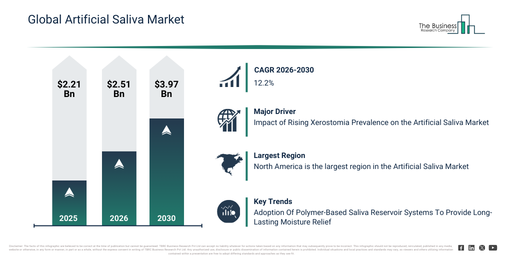
    The artificial saliva market has experienced significant growth in recent years. It is anticipated to expand from $2.21 billion in 2025 to $2.51 billion in 2026, at a compound annual growth rate (CAGR) of 13.6%. This historical growth can be attributed to several factors including the increasing prevalence of dry mouth conditions, the growing use of medications causing xerostomia, the expansion of cancer radiation therapies, rising awareness of oral health management, and the availability of over-the-counter saliva substitutes.

    The artificial saliva market is projected to experience substantial growth in the coming years. It is anticipated to reach $3.97 billion by 2030, demonstrating a compound annual growth rate (CAGR) of 12.2%. This expansion during the forecast period can be attributed to factors such as escalating demand from an aging population, a rising focus on quality-of-life improvement therapies, the development of pediatric-friendly formulations, continuous innovation in bio-mimetic saliva products, and increased distribution via healthcare and retail outlets. Key trends for the forecast period include a growing demand for xerostomia management solutions, an increase in the development of alcohol-free oral formulations, a greater emphasis on patient-friendly dosage forms, the wider availability of ready-to-use artificial saliva products, and a heightened focus on oral comfort and hydration.

    Download A Free Sample Report For Comprehensive Market Insights:

    https://www.thebusinessresearchcompany.com/sample.aspx?id=16592&type=smp

    What Market Drivers Are Helping Shape The Artificial Saliva Market Expansion?

    The increasing occurrence of dry mouth syndrome is projected to stimulate the expansion of the artificial saliva market moving forward. Dry mouth syndrome, alternatively known as xerostomia, defines a condition characterized by a persistent sensation of dryness in the mouth. The prevalence of dry mouth syndrome has risen partly due to an aging demographic and the widespread consumption of prescription and over-the-counter medications that can trigger the xerostomia effect. Artificial saliva delivers moisture to the oral tissues, aiding in relieving the dry, sticky feeling commonly linked with xerostomia. For instance, in 2025, according to PubMed, the US-based National Institutes of Health, reported that the pooled prevalence of xerostomia was 38% (95% CI: 22-57%). Consequently, the growing incidence of dry mouth syndrome is driving the growth of the artificial saliva market.

    What Segment Categories Are Evaluated In The Artificial Saliva Market Study?

    The artificial saliva market covered in this report is segmented –

    1) By Product: Oral Spray, Oral Solution, Oral Liquid, Dissolving Tablets, Gel, Powder

    2) By Distribution Channel: Supermarkets, Hypermarkets, Other Distribution Channels

    3) By End-User: Adult, Pediatric

    Subsegments:

    1) By Oral Spray: Non-Alcoholic Oral Spray, Alcohol-Based Oral Spray

    2) By Oral Solution: Ready-To-Use Oral Solution, Concentrated Oral Solution

    3) By Oral Liquid: Viscous Oral Liquid, Non-Viscous Oral Liquid

    4) By Dissolving Tablets: Fast-Dissolving Tablets, Slow-Dissolving Tablets

    5) By Gel: High-Viscosity Gel, Low-Viscosity Gel

    6) By Powder: Ready-To-Use Powder, Powder Requiring Mixing

    What Trends Are Driving Changes In The Artificial Saliva Market?

    Leading companies in the artificial saliva market are concentrating on developing advanced solutions, such as poly(hydroxyethyl methacrylate) (pHEMA)–based in-mouth hydrogels, to provide sustained moisture release for individuals experiencing xerostomia. A pHEMA hydrogel functions as a biocompatible polymer matrix that absorbs synthetic saliva, expands considerably, and then gradually releases moisture, a distinct advantage over traditional artificial saliva sprays that offer only short-term lubrication and require frequent reapplication. For instance, in August 2025, a US-based research team comprising Debnath, Malandraki, and Boudouris engineered a pHEMA artificial-saliva reservoir hydrogel intended for intraoral placement. This hydrogel is capable of expanding up to four times its dry volume, storing saliva substitute solutions, releasing moisture progressively over several hours, and maintaining its performance across multiple swelling–release cycles. Additionally, it showcased strong biocompatibility and delivered more consistent lubrication, making it a promising next-generation alternative for managing chronic dry mouth.

    Which Companies Form The Competitive Landscape Of The Artificial Saliva Market?

    Major companies operating in the artificial saliva market are Pfizer Inc., Viatris Inc., Bausch Health Companies Inc., Perrigo Company plc, Cipla Ltd., Aurobindo Pharma Ltd., Hikma Pharmaceuticals plc, Recordati S.p.A., Mission Pharmacal Company, DENTAID S.L., Forward Science Holdings LLC, Saliwell Ltd., Sun Pharmaceutical Industries Ltd., GlaxoSmithKline plc, Johnson & Johnson, Colgate-Palmolive Company, Church & Dwight Co. Inc., Prestige Consumer Healthcare Inc., Thornton & Ross Ltd., Roquette Frères

    Access The Complete Artificial Saliva Market Report:

    https://www.thebusinessresearchcompany.com/report/artificial-saliva-global-market-report

    Which Region Stands As The Largest Contributor To The Artificial Saliva Market?

    North America was the largest region in the artificial saliva market in 2025. Asia-Pacific is expected to be the fastest-growing region in the forecast period. The regions covered in the artificial saliva market report are Asia-Pacific, South East Asia, Western Europe, Eastern Europe, North America, South America, Middle East, Africa.

    Access Artificial Saliva Market Report for Deeper Competitive Insights

    https://www.thebusinessresearchcompany.com/customise?id=16592&type=smp

    Browse Through More Reports Similar to the Global Artificial Saliva Market 2026, By The Business Research Company

    Mouthwash Global Market Report 2026

    https://www.thebusinessresearchcompany.com/report/mouthwash-global-market-report

    Oral Hygiene Global Market Report 2026

    https://www.thebusinessresearchcompany.com/report/oral-hygiene-global-market-report

    Artificial Tears Global Market Report 2026

    https://www.thebusinessresearchcompany.com/report/artificial-tears-global-market-report

    Get in touch with us:

    The Business Research Company: https://www.thebusinessresearchcompany.com/

    Americas: +1 310-496-7795

    Asia: +44 7882 955267 & +91 8897263534

    Europe: +44 7882 955267

    Email us at: marketing@tbrc.info

    Follow us on:

    LinkedIn: https://in.linkedin.com/company/the-business-research-company

    YouTube: https://www.youtube.com/channel/UC24_fI0rV8cR5DxlCpgmyFQ

    Global Market Model: https://www.thebusinessresearchcompany.com/global-market-model
  • Artificial Pancreas Device System Market Outlook Assessing Future Opportunities And Growth Prospects

    Artificial Pancreas Device System Market Outlook Assessing Future Opportunities And Growth Prospects

    The Business Research Company’s 2026 market reports feature enhanced tools like market attractiveness analysis, TAM assessment, and company scoring matrices, along with interactive dashboards, deeper supply chain insights, and startup coverage strengthening the depth, usability, and strategic value of insights.

    What Is The Expected Market Value Outlook For The Artificial Pancreas Device System Market Through 2030?

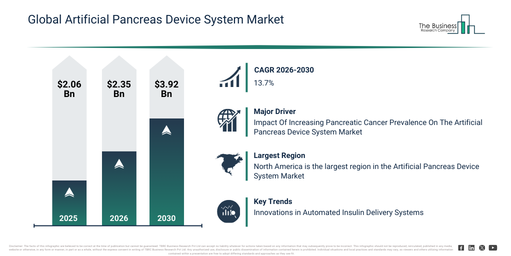
    The artificial pancreas device system market size has experienced rapid expansion in recent years. It is anticipated to increase from $2.06 billion in 2025 to $2.35 billion in 2026, showing a compound annual growth rate (CAGR) of 13.9%. The market’s past growth can be ascribed to several factors, including the rising incidence of diabetes, the initial adoption of insulin pump technologies, the wider application of continuous glucose monitoring, advancements in the accuracy of medical sensors, and a heightened awareness of automated diabetes management.

    The artificial pancreas device system market size is projected to experience substantial expansion in the coming years, anticipated to reach a valuation of $3.92 billion by 2030, exhibiting a compound annual growth rate (CAGR) of 13.7%. This projected growth is driven by several factors, including the escalating demand for fully automated glucose regulation, rising investments in digital diabetes care, the broadening scope of remote patient monitoring, a growing focus on personalized insulin therapy, and increasing regulatory support for advanced diabetes devices. Key trends anticipated during this period involve a wider uptake of closed-loop glucose control systems, the increasing integration of continuous glucose monitors (CGM) with insulin pumps, the evolving use of predictive algorithms for insulin delivery, the expansion of wearable diabetes management devices, and an enhanced commitment to patient-centric automation.

    Download A Free Sample Report For Comprehensive Market Insights:

    https://www.thebusinessresearchcompany.com/sample.aspx?id=18229&type=smp

    Which Significant Factors Are Encouraging Growth In The Artificial Pancreas Device System Market?

    The increasing prevalence of pancreatic cancer is expected to propel the growth of the artificial pancreas device system market going forward. Pancreatic cancer is a malignant tumor that originates in the pancreas, a gland located behind the stomach. This condition is influenced by a combination of lifestyle, genetic, medical, and environmental factors, alongside genetic mutations leading to hereditary pancreatitis, which can cause chronic inflammation of the pancreas. An artificial pancreas device system (APDS) is primarily designed to help individuals with diabetes manage their blood sugar levels by automatically monitoring glucose and delivering the appropriate amount of insulin. For instance, in March 2024, Cancer Australia, a government agency, estimated that 4,506 new cases of pancreatic cancer were diagnosed in 2023, an increase from the 3,751 cases reported over the past five years. Therefore, the increasing prevalence of pancreatic cancer is driving the growth of the artificial pancreas device system market.

    How Is The Artificial Pancreas Device System Market Examined Through Segment Analysis?

    The artificial pancreas device system market covered in this report is segmented –

    1) By Device Type: Threshold Suspend Device Systems, Control-To-Range Systems, Control-To-Target Systems

    2) By Treatment Type: Bi-Hormonal, Insulin Only, Hybrid

    3) By End-User: Hospitals, Medical Centers, Other End-Users

    Subsegments:

    1) By Threshold Suspend Device Systems: Insulin Pump with Threshold Suspend, Continuous Glucose Monitoring (CGM) Integrated Systems

    2) By Control-To-Range Systems: Hybrid Closed-Loop Systems, Insulin Delivery Systems with Range Control, Real-Time Glucose Adjustment Systems

    3) By Control-To-Target Systems: Fully Closed-Loop Artificial Pancreas Systems, Insulin Pumps with Targeted Glucose Control, Automated Glucose Regulation Systems

    Which Trends Are Shaping The Artificial Pancreas Device System Market Landscape?

    Leading entities within the artificial pancreas device system market are creating automated insulin delivery solutions to improve diabetes care through the automatic observation of blood glucose levels and dispensing of suitable insulin quantities. These automated systems seek to mimic a healthy pancreas’s function, thereby alleviating the continuous requirement for blood sugar checks and the manual self-administration of insulin for those living with diabetes. An example of this advancement occurred in May 2023, when Beta Bionics, a medical equipment manufacturer based in the US, secured FDA 510(k) clearance for its iLet Insulin-Only Bionic Pancreas System, which is an automated insulin delivery apparatus. This particular system operates as an artificial pancreas, engineered to independently calculate and dispense insulin doses to manage blood glucose effectively. Functioning as a closed-loop mechanism, it automatically modifies insulin dispensation according to the user’s glucose readings, obtained from an integrated continuous glucose monitor (CGM). For automatic insulin delivery adjustments, it solely needs the user’s body weight and an estimation of meal size.

    Who Are The Key Market Participants In The Artificial Pancreas Device System Market?

    Major companies operating in the artificial pancreas device system market are Medtronic plc, Abbott Laboratories, DexCom Inc., Insulet Corporation, Tandem Diabetes Care Inc., Roche Diabetes Care, Ypsomed, SOOIL Development, Beta Bionics Inc., Bigfoot Biomedical Inc., Diabeloop SA, Inreda Diabetic B.V., Defymed SAS, DreaMed Diabetes Ltd., Medtrum Technologies Inc., EOFlow Co. Ltd., Cellnovo, Pancreum Inc., Admetsys Corporation, GlucoModicum, MicroTech Medical

    Access The Complete Artificial Pancreas Device System Market Report:

    https://www.thebusinessresearchcompany.com/report/artificial-pancreas-device-system-global-market-report

    What Is The Largest Regional Market In The Artificial Pancreas Device System Market?

    North America was the largest region in the artificial pancreas device system market in 2025. Asia-Pacific is expected to be the fastest-growing region in the forecast period. The regions covered in the artificial pancreas device system market report are Asia-Pacific, South East Asia, Western Europe, Eastern Europe, North America, South America, Middle East, Africa.

    Access Artificial Pancreas Device System Market Report for Deeper Competitive Insights

    https://www.thebusinessresearchcompany.com/customise?id=18229&type=smp

    Browse Through More Reports Similar to the Global Artificial Pancreas Device System Market 2026, By The Business Research Company

    Diabetes Care Devices Market 2026

    https://www.thebusinessresearchcompany.com/report/diabetes-care-devices-market

    Gastrointestinal Devices Global Market Report 2026

    https://www.thebusinessresearchcompany.com/report/gastrointestinal-devices-global-market-report

    Hepato Pancreatico Biliary Hpb Surgeries Surgical Devices Global Market Report 2026

    https://www.thebusinessresearchcompany.com/report/hepato-pancreatico-biliary-hpb-surgeries-surgical-devices-global-market-report

    Get in touch with us:

    The Business Research Company: https://www.thebusinessresearchcompany.com/

    Americas: +1 310-496-7795

    Asia: +44 7882 955267 & +91 8897263534

    Europe: +44 7882 955267

    Email us at: marketing@tbrc.info

    Follow us on:

    LinkedIn: https://in.linkedin.com/company/the-business-research-company

    YouTube: https://www.youtube.com/channel/UC24_fI0rV8cR5DxlCpgmyFQ

    Global Market Model: https://www.thebusinessresearchcompany.com/global-market-model
  • Artificial Neural Network Market Industry Forecast Reflecting Growth To $1.27 Billion By 2030

    Artificial Neural Network Market Industry Forecast Reflecting Growth To $1.27 Billion By 2030

    The Business Research Company’s 2026 market reports feature enhanced tools like market attractiveness analysis, TAM assessment, and company scoring matrices, along with interactive dashboards, deeper supply chain insights, and startup coverage strengthening the depth, usability, and strategic value of insights.

    How Will The Market Value Of The Artificial Neural Network Market Increase Between 2026 And 2030?

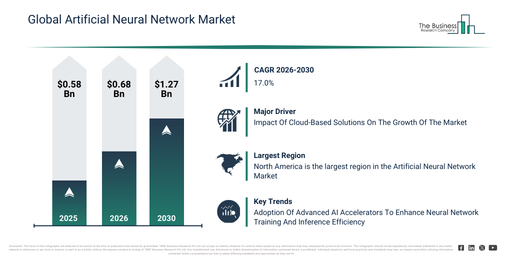
    The artificial neural network market size has seen substantial growth in recent years. It is forecast to increase from $0.58 billion in 2025 to $0.68 billion in 2026, achieving a compound annual growth rate (CAGR) of 17.4%. This historical expansion can be attributed to several factors, including the increasing availability of extensive datasets, enhanced computational processing capabilities, the proliferation of open-source neural network frameworks, early adoption of machine learning by enterprises, and a rising demand for solutions in pattern recognition.

    The artificial neural network market is projected for substantial expansion in the coming years. Its valuation is anticipated to reach $1.27 billion by 2030, exhibiting a robust compound annual growth rate (CAGR) of 17.0%. This anticipated growth during the forecast period stems from factors such as increasing demand for real-time AI applications, growing investments in cloud-based AI platforms, wider expansion of edge AI deployments, the escalating adoption of neural networks in automation processes, and the heightened integration of ANN models into enterprise systems. Key developments expected over the forecast horizon encompass a greater embrace of deep learning architectures, an increase in the application of neural networks for image and signal processing, the expanding deployment of cloud-based ANN platforms, the broadened application of ANN across various industries, and an intensified focus on optimizing models and improving scalability.

    Download A Free Sample Report For Comprehensive Market Insights:

    https://www.thebusinessresearchcompany.com/sample.aspx?id=20716&type=smp

    What Core Drivers Are Transforming The Artificial Neural Network Market?

    The future expansion of the artificial neural network market is anticipated to be driven by the rising need for cloud-based solutions. A cloud-based solution is defined as a service or application that operates on distant servers accessed through the internet, rather than being hosted on local hardware or devices. This growing demand for cloud-based solutions stems from their benefits such as scalability, economic efficiency, improved data access, and support for remote collaboration, which cater to the evolving requirements of modern enterprises. Artificial neural networks enhance cloud solutions by enabling advanced data processing, predictive analytics, and intelligent decision-making capabilities for optimized performance and scalability. For instance, Eurostat, a European government agency, reported in December 2023 that, in 2023, 45.2% of EU enterprises purchased cloud computing services. Consequently, the escalating requirement for cloud-based solutions is a key driver for the growth of the artificial neural network (ANN) market.

    Which Segment Groups Define The Artificial Neural Network Market Landscape?

    The artificial neural network market covered in this report is segmented –

    1) By Component: Solutions, Platform Or Application Programming Interface (API), Services

    2) By Deployment Mode: On-Premises, Cloud

    3) By Enterprise: Large Enterprises, Small And Medium Enterprises

    4) By Application: Image Recognition, Signal Recognition, Data Mining

    5) By End-User: Banking, Financial Services, and Insurance (BFSI), Retail And E-Commerce, IT And Telecom, Manufacturing, Healthcare, Automotive

    Subsegments:

    1) By Solutions: Software Solutions, Hardware Solutions, Deployment Solutions, Data Management Solutions

    2) By Platform Or Application Programming Interface (API): Cloud-Based Platforms, On-Premise Platforms, Open-Source APIs, Proprietary APIs

    3) By Services: Consulting Services, Integration And Deployment Services, Support And Maintenance Services, Managed Services

    What Trends Are Influencing The Artificial Neural Network Market Outlook?

    Leading companies in the artificial neural network market are concentrating on developing innovative solutions, such as advanced AI training and inference GPUs, to meet the increasing demand for generative AI, large language models, and high-performance deep learning workloads. AI GPUs are specialized processors that leverage massively parallel computation, mixed-precision operations, and high-bandwidth memory to execute neural network calculations much more efficiently than traditional CPUs. For example, in November 2023, NVIDIA Corporation, a US-based semiconductor and AI computing company, introduced the NVIDIA H200 Tensor Core GPU, designed for next-generation AI training and inference. This product features 141 GB of HBM3e memory, considerably enhancing bandwidth for large neural network models, and includes the Transformer Engine to accelerate transformer-based architectures. The H200 provides increased throughput, reduced inference latency, and improved energy efficiency for large-scale AI applications, enabling data centers to train and deploy advanced AI models with superior performance.

    Which Organizations Are Operating Within The Artificial Neural Network Market?

    Major companies operating in the artificial neural network market are Medtronic plc, Abbott Laboratories, DexCom Inc., Insulet Corporation, Tandem Diabetes Care Inc., Roche Diabetes Care, Ypsomed, SOOIL Development, Beta Bionics Inc., Bigfoot Biomedical Inc., Diabeloop SA, Inreda Diabetic B.V., Defymed SAS, DreaMed Diabetes Ltd., Medtrum Technologies Inc., EOFlow Co. Ltd., Cellnovo, Pancreum Inc., Admetsys Corporation, GlucoModicum, MicroTech Medical

    Access The Complete Artificial Neural Network Market Report:

    https://www.thebusinessresearchcompany.com/report/artificial-neural-network-global-market-report

    Which Region Contributes The Most To The Artificial Neural Network Market?

    North America was the largest region in the artificial neural network market in 2025. Asia-Pacific is expected to be the fastest-growing region in the forecast period. The regions covered in the artificial neural network market report are Asia-Pacific, South East Asia, Western Europe, Eastern Europe, North America, South America, Middle East, Africa.

    Access Artificial Neural Network Market Report for Deeper Competitive Insights

    https://www.thebusinessresearchcompany.com/customise?id=20716&type=smp

    Browse Through More Reports Similar to the Global Artificial Neural Network Market 2026, By The Business Research Company

    Artificial Intelligence Ai Image Recognition Global Market Report 2026

    https://www.thebusinessresearchcompany.com/report/artificial-intelligence-ai-image-recognition-global-market-report

    Artificial Intelligence Global Market Report 2026

    https://www.thebusinessresearchcompany.com/report/artificial-intelligence-global-market-report

    Artificial Intelligence Ai Software Global Market Report 2026

    https://www.thebusinessresearchcompany.com/report/artificial-intelligence-ai-software-global-market-report

    Get in touch with us:

    The Business Research Company: https://www.thebusinessresearchcompany.com/

    Americas: +1 310-496-7795

    Asia: +44 7882 955267 & +91 8897263534

    Europe: +44 7882 955267

    Email us at: marketing@tbrc.info

    Follow us on:

    LinkedIn: https://in.linkedin.com/company/the-business-research-company

    YouTube: https://www.youtube.com/channel/UC24_fI0rV8cR5DxlCpgmyFQ

    Global Market Model: https://www.thebusinessresearchcompany.com/global-market-model