Month: May 2026

  • Artificial Intelligence (AI) For De Novo Drug Design Market Outlook Highlighting Expansion Trends Across Industries Through 2030

    Artificial Intelligence (AI) For De Novo Drug Design Market Outlook Highlighting Expansion Trends Across Industries Through 2030

    The Business Research Company’s 2026 market reports feature enhanced tools like market attractiveness analysis, TAM assessment, and company scoring matrices, along with interactive dashboards, deeper supply chain insights, and startup coverage strengthening the depth, usability, and strategic value of insights.

    What Are The Market Size Estimates For The Artificial Intelligence (AI) For De Novo Drug Design Market In 2026 And 2030?

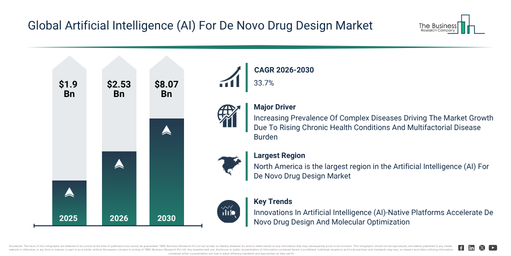
    The artificial intelligence (AI) for de novo drug design market has experienced substantial growth in recent years. It is forecast to increase from $1.9 billion in 2025 to $2.53 billion in 2026, achieving a compound annual growth rate (CAGR) of 33.4%. The expansion observed in prior periods can be linked to high R&D costs in traditional drug discovery, a growing need for faster drug development processes, the adoption of computational chemistry tools, increasing investments within the pharmaceutical sector, and the broadening of academic and research collaborations.

    The artificial intelligence (AI) for de novo drug design market size is anticipated to undergo significant growth in the upcoming years, with projections indicating an expansion to $8.07 billion by 2030, exhibiting a compound annual growth rate (CAGR) of 33.7%. This forecasted growth is largely driven by the increasing integration of AI-powered lead compound generation, a rise in the utilization of ADMET prediction models, the growing adoption of both cloud and on-premises deployment strategies, the expansion of model development and data annotation services, and enhanced collaboration between pharmaceutical and biotech companies. Prominent trends expected in this period encompass the greater adoption of cloud-based AI platforms, an escalating demand for deep learning-based drug design software, the increasing incorporation of workflow automation in drug discovery, the advancement of molecular property prediction tools, and a heightened emphasis on targeted therapeutic area applications.

    Access Your Free Sample Report For In-Depth Market Analysis:

    https://www.thebusinessresearchcompany.com/sample_request?id=11733339&type=smp&name=Artificial%20Intelligence%20%28AI%29%20For%20De%20Novo%20Drug%20Design%20Market%20Report%202026

    Which Strong Drivers Are Impacting The Artificial Intelligence (AI) For De Novo Drug Design Market Growth?

    The increasing occurrence of complex diseases is anticipated to boost the expansion of the artificial intelligence (AI) for the de novo drug design market moving forward. Complex diseases are defined as health conditions stemming from a combination of genetic, environmental, and lifestyle elements, frequently impacting multiple bodily systems and necessitating sophisticated or prolonged medical care. The rise in complex disease prevalence is attributed to unhealthy lifestyle choices, which elevate the likelihood of chronic ailments such as diabetes, cardiovascular diseases, and specific cancers. Artificial intelligence (AI) for de novo drug design facilitates the discovery of new therapies by examining intricate biological data and forecasting viable drug candidates, thereby addressing the challenges presented by these multifactorial and chronic complex diseases. For example, in February 2024, the World Health Organization, an international organization based in Switzerland, forecast over 35 million new cancer cases by 2050, signifying a 77% increase compared to the estimated 20 million cases reported in 2022. Consequently, the growing prevalence of complex diseases is fueling the development of the artificial intelligence (AI) for de novo drug design market.

    Which Segment Categories Are Included In The Artificial Intelligence (AI) For De Novo Drug Design Market Segment Analysis?

    The artificial intelligence (AI) for de novo drug design market covered in this report is segmented –

    1) By Component: Software, Services

    2) By Therapeutic Area: Oncology, Neurological Disorders, Infectious Diseases, Cardiovascular Diseases, Rare Diseases, Metabolic Disorders, Other Therapeutic Areas

    3) By Deployment Mode: On-Premises, Cloud-Based

    4) By Application: Target Identification, Lead Compound Generation, Molecular Property Prediction, Absorption, Distribution, Metabolism, Excretion, And Toxicity (ADMET Prediction), Other Applications

    5) By End User: Pharmaceutical Companies, Biotechnology Companies, Academic And Research Institutes, Contract Research Organizations, Other End Users

    Subsegments:

    1) By Software: Cloud Based Software, On Premise Software, Machine Learning Software, Deep Learning Software, Molecular Modeling Software, Data Analytics Software, Workflow Automation Software

    2) By Services: Consulting Services, Integration Services, Maintenance And Support Services, Training And Education Services, Managed Services, Data Annotation Services, Model Development Services

    Which Trends Are Contributing To Changes In The Artificial Intelligence (AI) For De Novo Drug Design Market?

    Leading companies within the artificial intelligence (AI) for de novo drug design market are prioritizing the development of innovative solutions, such as AI-native drug discovery platforms, to accelerate the creation and refinement of novel small molecules. These AI-native platforms function as integrated systems, utilizing AI models to generate, predict, and select new molecules from the ground up, thereby speeding up drug discovery by identifying promising compounds more quickly and efficiently than traditional trial-and-error approaches. For example, in November 2025, Terray Therapeutics, a US-based biotechnology company, unveiled EMMI (Experimentation Meets Machine Intelligence), an AI-native drug discovery platform specifically engineered for de novo small molecule design. It integrates Terray’s proprietary ultra-miniaturized experimental hardware with an extensively automated laboratory and the Chemistry-Oriented AI Transformer Interface, third generation (COATI3) chemistry foundation model. This integration allows it to generate millions of novel molecules, predict their potency, select the most promising candidates, and iteratively optimize them. The platform’s generative AI employs reinforcement learning to propose synthetically accessible molecules, while predictive AI models swiftly evaluate properties like potency, selectivity, solubility, metabolism, and clearance. Concurrently, the selection AI optimizes which molecules to synthesize, aiming to reduce time and cost by up to threefold compared to industry standards. EMMI is applicable across internal immunology programs and partnerships exploring previously untouched chemical spaces, positioning it as a transformative instrument for de novo drug design.

    Who Are The Active Companies Shaping The Artificial Intelligence (AI) For De Novo Drug Design Market?

    Major companies operating in the artificial intelligence (AI) for de novo drug design market are Schrödinger Inc., XtalPi Holdings Ltd., Owkin Inc., Insilico Medicine Inc., Recursion Pharmaceuticals Inc., Deep Genomics Inc., Iktos SA, Atomwise Inc., Terray Therapeutics Inc., Evogene Ltd., Genesis Therapeutics Inc., Insitro Inc., Verge Genomics Inc., DeepCure Inc., Cloud Pharmaceuticals Inc., Gero LLC, Chai Discovery Inc., Latent Labs Ltd., BioAge Labs Inc., Peptone Ltd., Generate Biomedicines Inc.

    Get The Full Artificial Intelligence (AI) For De Novo Drug Design Market Report:

    https://www.thebusinessresearchcompany.com/report/artificial-intelligence-ai-for-de-novo-drug-design-market-report

    Where Is The Artificial Intelligence (AI) For De Novo Drug Design Market Primarily Concentrated By Region?

    North America was the largest region in the artificial intelligence (AI) for de novo drug design market in 2025. Asia-Pacific is expected to be the fastest-growing region in the forecast period. The regions covered in the artificial intelligence (AI) for de novo drug design market report are Asia-Pacific, South East Asia, Western Europe, Eastern Europe, North America, South America, Middle East, Africa.

    Request A Customized Artificial Intelligence (AI) For De Novo Drug Design Market Report For Competitive Insights:

    https://www.thebusinessresearchcompany.com/Customise?id=11733339&name=Artificial%20Intelligence%20%28AI%29%20For%20De%20Novo%20Drug%20Design%20Market%20Report%202026&type=smp

    Browse Through More Reports Similar to the Global Artificial Intelligence (AI) For De Novo Drug Design Market 2026, By The Business Research Company

    adeno-associated virus (avv) vectors in gene therapy market report 2026

    https://www.thebusinessresearchcompany.com/report/adeno-associated-virus-avv-vectors-in-gene-therapy-global-market-report

    gastric cancer therapy market report 2026

    https://www.thebusinessresearchcompany.com/report/gastric-cancer-therapy-global-market-report

    over the counter (otc) drugs market report 2026

    https://www.thebusinessresearchcompany.com/report/over-the-counter-otc-drugs-global-market-report

    Get in touch with us:

    The Business Research Company: https://www.thebusinessresearchcompany.com/

    Americas +1 310-496-7795

    Asia +44 7882 955267 & +91 8897263534

    Europe +44 7882 955267

    Email us at marketing@tbrc.info

    Follow us on:

    LinkedIn: https://in.linkedin.com/company/the-business-research-company

    YouTube: https://www.youtube.com/channel/UC24_fI0rV8cR5DxlCpgmyFQ

    Global Market Model: https://www.thebusinessresearchcompany.com/global-market-model

  • Global Artificial Intelligence (AI) Dermatology Imaging Market Forecast Through 2030 With Strategic Industry Perspectives

    Global Artificial Intelligence (AI) Dermatology Imaging Market Forecast Through 2030 With Strategic Industry Perspectives

    The Business Research Company’s 2026 market reports feature enhanced tools like market attractiveness analysis, TAM assessment, and company scoring matrices, along with interactive dashboards, deeper supply chain insights, and startup coverage strengthening the depth, usability, and strategic value of insights.

    What Expansion In Market Value Is Forecasted For The Artificial Intelligence (AI) Dermatology Imaging Market Between 2026 And 2030?

    The artificial intelligence (AI) dermatology imaging market has experienced significant expansion in recent years. This market is anticipated to increase from $1.12 billion in 2025 to $1.36 billion in 2026, achieving a compound annual growth rate (CAGR) of 20.7%. The historical growth can be attributed to the growing prevalence of skin disorders, increasing demand for accurate dermatology diagnosis, the adoption of dermatoscopic imaging and clinical imaging, the expansion of dermatology clinics and hospital networks, and a rising interest in telehealth platforms.

    The artificial intelligence (AI) dermatology imaging market is anticipated to experience substantial growth in the coming years. Projections indicate it will expand to $2.9 billion by 2030, exhibiting a compound annual growth rate (CAGR) of 21.0%. This growth during the forecast period is driven by the increasing integration of AI-enabled analytics, the rising adoption of cloud-based deployment models, a greater demand for automated disease screening and triage, the expansion of research applications in dermatology imaging, and an intensifying focus on teledermatology and remote patient monitoring. Significant trends expected in this period include the wider embrace of cloud-based AI dermatology platforms, an increasing need for multispectral and total body imaging solutions, the growing incorporation of teledermatology services, the development of AI-enabled treatment monitoring tools, and an elevated emphasis on workflow automation and data management solutions.

    Access Your Free Sample Report For In-Depth Market Analysis:

    https://www.thebusinessresearchcompany.com/sample_request?id=56790262&type=smp&name=Artificial%20Intelligence%20%28AI%29%20Dermatology%20Imaging%20Market%20Report%202026

    What Key Factors Are Shaping The Artificial Intelligence (AI) Dermatology Imaging Market Landscape?

    The escalating incidence of skin cancer is expected to drive the growth of the artificial intelligence (AI) dermatology imaging market moving forward. Skin cancer is characterized by the irregular multiplication of skin cells, frequently stemming from UV radiation exposure, leading to malignant tumors such as melanoma and non-melanoma varieties. The frequency of skin cancer is climbing owing to increased exposure to ultraviolet (UV) radiation from the sun and artificial tanning beds, which damages skin cells and heightens the chance of malignant developments. AI in dermatology imaging significantly improves the early detection and precise diagnosis of skin cancer by examining images of skin lesions with advanced algorithms, identifying subtle characteristics and abnormalities that might be overlooked by the human eye, thereby enabling faster, more reliable clinical choices for timely treatment. For instance, in January 2026, according to the Skin Cancer Foundation, a US-based non-profit organization, the number of new melanoma cases diagnosed is projected to rise by 10.6 percent. Consequently, the increasing incidence of skin cancer is fueling the expansion of the artificial intelligence (AI) dermatology imaging market.

    How Is The Artificial Intelligence (AI) Dermatology Imaging Market Broken Down By Segment Categories?

    The artificial intelligence (AI) dermatology imaging market covered in this report is segmented –

    1) By Component: Software, Hardware, Services

    2) By Imaging Modality: Dermatoscopic Imaging, Clinical Imaging, Reflectance Confocal Microscopy, Optical Coherence Tomography, Total Body Photography, Multispectral Imaging

    3) By Deployment Mode: Cloud-Based, On-Premises

    4) By Application: Disease Diagnosis, Treatment Monitoring, Screening And Triage, Teledermatology, Research Applications

    5) By End User: Dermatology Clinics, Hospitals, Telehealth Platforms, Primary Care Networks, Other End Users

    Subsegments:

    1) By Software: Cloud Based Solutions, On Premise Solutions, Artificial Intelligence Enabled Analytics Platforms, Image Processing And Visualization Tools, Data Management And Integration Platforms, Workflow And Reporting Solutions

    2) By Hardware: Imaging Devices And Scanners, High Performance Computing Systems, Storage And Data Servers, Display And Visualization Systems, Networking And Connectivity Equipment, Peripheral Input And Output Devices

    3) By Services: System Integration And Deployment Services, Maintenance And Technical Support Services, Consulting And Implementation Services, Training And Education Services, Managed And Cloud Hosting Services, Upgradation And Optimization Services

    What Market Trends Are Affecting The Artificial Intelligence (AI) Dermatology Imaging Market?

    Major companies within the artificial intelligence (AI) dermatology imaging market are focusing on developing innovative solutions, such as AI-powered clinical imaging platforms, to improve diagnostic accuracy, streamline clinical trials, and offer objective, real-time skin assessments. These AI-powered clinical imaging platforms are systems that integrate advanced skin imaging with artificial intelligence algorithms to automatically capture, analyze, and score dermatological conditions, providing clinicians and researchers with faster, more objective, and standardized assessments compared to traditional manual evaluation. For instance, in September 2025, QuantifiCare, a France-based medical imaging company, partnered with Legit.Health, a Spain-based AI healthcare company, to introduce the first AI-powered dermatology imaging platform specifically for clinical trials. This platform combines QuantifiCare’s 2D and 3D imaging systems with Legit.Health’s AI algorithms to deliver immediate severity grading, real-time insights into treatment response, and automated scoring for over 300 skin conditions. Key features include standardized imaging workflows, high reproducibility, reduced administrative workload, and enhanced reliability of clinical endpoints, making it a potent tool for sponsors, CROs, and investigators looking to accelerate dermatology research.

    Which Players Are Present In The Artificial Intelligence (AI) Dermatology Imaging Market Space?

    Major companies operating in the artificial intelligence (AI) dermatology imaging market are Google LLC, Microsoft Corporation, Perfect Corp., Canfield Scientific Inc., Proscia Inc., Behold.ai Inc., FotoFinder Systems GmbH, SmartSkin AI Inc., MetaOptima Technology Inc., QuantifiCare SA, SkinVision B.V., DermaSensor Inc., Skin Analytics Ltd, Haut.AI Inc., First Derm Inc., Enspectra Health Inc., SkinIO Inc., SciBase Holding AB, SkinIO LLC, GlamAR Group Inc., IQONIC.AI Inc., TeleSkin d.o.o., DermAI Inc.

    Get The Full Artificial Intelligence (AI) Dermatology Imaging Market Report:

    https://www.thebusinessresearchcompany.com/report/artificial-intelligence-ai-dermatology-imaging-market-report

    Which Region Has The Greatest Market Share In The Artificial Intelligence (AI) Dermatology Imaging Market?

    North America was the largest region in the artificial intelligence (AI) dermatology imaging market in 2025. Asia-Pacific is expected to be the fastest-growing region in the forecast period. The regions covered in the artificial intelligence (AI) dermatology imaging market report are Asia-Pacific, South East Asia, Western Europe, Eastern Europe, North America, South America, Middle East, Africa.

    Request A Customized Artificial Intelligence (AI) Dermatology Imaging Market Report For Competitive Insights:

    https://www.thebusinessresearchcompany.com/Customise?id=56790262&name=Artificial%20Intelligence%20%28AI%29%20Dermatology%20Imaging%20Market%20Report%202026&type=smp

    Browse Through More Reports Similar to the Global Artificial Intelligence (AI) Dermatology Imaging Market 2026, By The Business Research Company

    pruritus therapeutic market report 2026

    https://www.thebusinessresearchcompany.com/report/pruritus-therapeutic-global-market-report

    genomic urine testing market report 2026

    https://www.thebusinessresearchcompany.com/report/genomic-urine-testing-global-market-report

    ocular genetic diagnostic market report 2026

    https://www.thebusinessresearchcompany.com/report/ocular-genetic-diagnostic-global-market-report

    Get in touch with us:

    The Business Research Company: https://www.thebusinessresearchcompany.com/

    Americas +1 310-496-7795

    Asia +44 7882 955267 & +91 8897263534

    Europe +44 7882 955267

    Email us at marketing@tbrc.info

    Follow us on:

    LinkedIn: https://in.linkedin.com/company/the-business-research-company

    YouTube: https://www.youtube.com/channel/UC24_fI0rV8cR5DxlCpgmyFQ

    Global Market Model: https://www.thebusinessresearchcompany.com/global-market-model
  • Arenavirus Diagnostics Market Analysis 2026–2030 Driven By Technological Advancements And Growth Factors

    Arenavirus Diagnostics Market Analysis 2026–2030 Driven By Technological Advancements And Growth Factors

    The Business Research Company’s 2026 market reports feature enhanced tools like market attractiveness analysis, TAM assessment, and company scoring matrices, along with interactive dashboards, deeper supply chain insights, and startup coverage strengthening the depth, usability, and strategic value of insights.

    How Large Will The Arenavirus Diagnostics Market Be By 2030 Compared To Its 2026 Market Size?

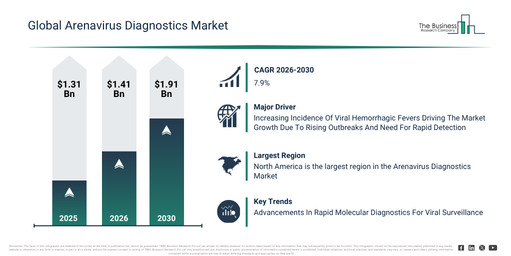
    The arenavirus diagnostics market has demonstrated significant growth in recent years. It is anticipated to increase from $1.31 billion in 2025 to $1.41 billion in 2026, expanding at a compound annual growth rate (CAGR) of 7.7%. This historical market expansion is primarily due to the increasing frequency of arenavirus infections, the integration of molecular diagnostic approaches, the development of hospital and clinical laboratory infrastructure, a growing requirement for serological testing, and the broadening scope of research into hemorrhagic fevers.

    The arenavirus diagnostics market is projected to experience substantial expansion over the coming years. Its valuation is anticipated to reach $1.91 billion by 2030, exhibiting a compound annual growth rate (CAGR) of 7.9%. This projected growth is driven by several factors, including the increasing implementation of automated PCR and ELISA systems, a heightened need for swift point-of-care diagnostic solutions, the proliferation of research institutions dedicated to viral illnesses, the growing incorporation of AI-powered diagnostic analytics, and increased financial support for infectious disease diagnostics. Key developments expected during this period involve a greater embrace of PCR-based arenavirus diagnostics, a surge in demand for rapid diagnostic testing equipment, the broader integration of next-generation sequencing systems, an enlargement of diagnostic testing offerings, and an intensified emphasis on laboratory validation and quality assurance.

    Access Your Free Sample Report For In-Depth Market Analysis:

    https://www.thebusinessresearchcompany.com/sample_request?id=98050164&type=smp&name=Arenavirus%20Diagnostics%20Market%20Report%202026

    Which Factors Are Influencing The Growth Of The Arenavirus Diagnostics Market?

    The increasing occurrence of viral hemorrhagic fevers (VHFs) is anticipated to boost the expansion of the arenavirus diagnostics market. These severe illnesses, caused by viruses, damage blood vessels, hinder the body’s clotting ability, and can lead to extensive bleeding, multi-organ failure, and significant mortality. The growing number of VHFs stems from increased human interaction with wildlife and natural reservoirs, elevating the danger of virus transmission from animals to humans. Arenavirus diagnostics offer prompt and precise detection of arenaviruses, enabling medical professionals to identify VHFs early, administer timely care, and efficiently manage outbreaks. For example, in May 2023, the World Health Organization, a Switzerland-based international organization, reported that Nigeria registered 877 confirmed cases of Lassa fever, a form of viral hemorrhagic fever, resulting in 152 fatalities. This represented a 20% surge in cases compared to the 733 confirmed cases noted during the equivalent timeframe in 2022. Consequently, the rising incidence of viral hemorrhagic fevers is fueling the growth of the arenavirus diagnostics market.

    What Are The Different Segment Types In The Arenavirus Diagnostics Market Segment Breakdown?

    The arenavirus diagnostics market covered in this report is segmented –

    1) By Product Type: Instruments, Reagents And Kits, Services

    2) By Technology: Polymerase Chain Reaction, Enzyme-Linked Immunosorbent Assay, Immunofluorescence Assay, Rapid Diagnostic Tests, Other Technologies

    3) By Application: Clinical Diagnostics, Research, Other Applications

    4) By End-User: Hospitals And Clinics, Diagnostic Laboratories, Research Institutes, Other End-Users

    Subsegments:

    1) By Instruments: Polymerase Chain Reaction Instruments, Enzyme-Linked Immunosorbent Assay Analyzers, Next-Generation Sequencing Systems, Rapid Diagnostic Testing Devices

    2) By Reagents And Kits: Polymerase Chain Reaction Reagents And Kits, Enzyme-Linked Immunosorbent Assay Reagents And Kits, Antigen Detection Kits, Antibody Detection Kits

    3) By Services: Diagnostic Testing Services, Laboratory Validation Services, Quality Control And Assurance Services, Technical Support And Maintenance Services

    Which Trends Are Influencing Demand In The Arenavirus Diagnostics Market?

    Leading companies in the arenavirus diagnostics market are concentrating on creating innovative solutions, such as molecular diagnostic kits for swift virus detection, to enhance early outbreak management and improve patient health. These molecular diagnostic kits are instruments that identify viral genetic material (RNA or DNA) quickly and precisely, thus aiding in the prompt detection of infections, guiding appropriate treatment, and curbing further transmission. For instance, in March 2024, the Gorgas Commemorative Institute for Health Studies (ICGES), a public health research institute located in Panama, collaborated with the Centers for Disease Control and Prevention (CDC) of the United States and the Pan American Health Organization (PAHO) to bolster regional capabilities for arenavirus surveillance through molecular diagnostic efforts. These endeavors involved establishing and standardizing molecular methods for detecting the virus, including RNA sequencing, field sampling of rodents, and instructing regional laboratory staff. The initiative significantly enhanced the accuracy, speed, and utility of arenavirus diagnostics across multiple nations, facilitating early outbreak identification, improved epidemiological monitoring, and informed public health strategies.

    Who Are The Well-Known Companies In The Arenavirus Diagnostics Market?

    Major companies operating in the arenavirus diagnostics market are Thermo Fisher Scientific Inc., Merck KGaA, Danaher Corporation, bioMérieux SA, Hologic Inc., PerkinElmer Inc., Sysmex Corporation, Bio-Rad Laboratories Inc., DiaSorin S.p.A., Chembio Diagnostic Systems Inc., BioPerfectus Technologies Inc., Amerigo Scientific Inc., Altona Diagnostics GmbH, Creative Diagnostics Inc., Novacyt Group, QIAGEN N.V., Aldatu Biosciences Ltd, GenMark Diagnostics Inc., Zalgen Labs Inc., Shanghai ZJ Bio-Tech Co. Ltd., Luminex Corporation.

    Get The Full Arenavirus Diagnostics Market Report:

    https://www.thebusinessresearchcompany.com/report/arenavirus-diagnostics-market-report

    Which Region Accounts For The Largest Portion Of The Arenavirus Diagnostics Market?

    North America was the largest region in the arenavirus diagnostics market in 2025. Asia-Pacific is expected to be the fastest-growing region in the forecast period. The regions covered in the arenavirus diagnostics market report are Asia-Pacific, South East Asia, Western Europe, Eastern Europe, North America, South America, Middle East, Africa.

    Request A Customized Arenavirus Diagnostics Market Report For Competitive Insights:

    https://www.thebusinessresearchcompany.com/Customise?id=98050164&name=Arenavirus%20Diagnostics%20Market%20Report%202026&type=smp

    Browse Through More Reports Similar to the Global Arenavirus Diagnostics Market 2026, By The Business Research Company

    pruritus therapeutic market report 2026

    https://www.thebusinessresearchcompany.com/report/pruritus-therapeutic-global-market-report

    genomic urine testing market report 2026

    https://www.thebusinessresearchcompany.com/report/genomic-urine-testing-global-market-report

    ocular genetic diagnostic market report 2026

    https://www.thebusinessresearchcompany.com/report/ocular-genetic-diagnostic-global-market-report

    Get in touch with us:

    The Business Research Company: https://www.thebusinessresearchcompany.com/

    Americas +1 310-496-7795

    Asia +44 7882 955267 & +91 8897263534

    Europe +44 7882 955267

    Email us at marketing@tbrc.info

    Follow us on:

    LinkedIn: https://in.linkedin.com/company/the-business-research-company

    YouTube: https://www.youtube.com/channel/UC24_fI0rV8cR5DxlCpgmyFQ

    Global Market Model: https://www.thebusinessresearchcompany.com/global-market-model
  • Aptamer Diagnostic Kits Market Forecast Highlighting Emerging Opportunities And Industry Developments Through 2030

    Aptamer Diagnostic Kits Market Forecast Highlighting Emerging Opportunities And Industry Developments Through 2030

    The Business Research Company’s 2026 market reports feature enhanced tools like market attractiveness analysis, TAM assessment, and company scoring matrices, along with interactive dashboards, deeper supply chain insights, and startup coverage strengthening the depth, usability, and strategic value of insights.

    What Is The Projected Increase In Market Value Of The Aptamer Diagnostic Kits Market During 2026–2030?

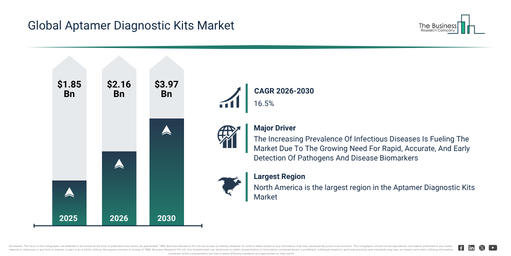
    The aptamer diagnostic kits market has experienced substantial expansion in recent years. This market is projected to grow from $1.85 billion in 2025 to $2.16 billion in 2026, achieving a compound annual growth rate (CAGR) of 16.2%. Historically, this growth can be attributed to several factors, including the increasing prevalence of infectious diseases, a rising demand for sensitive diagnostic tools, the expansion of hospital and laboratory infrastructure, the adoption of enzyme-linked and colorimetric kits, and technological advances in aptamer synthesis.

    The aptamer diagnostic kits market is projected to experience swift expansion over the coming years, reaching a valuation of $3.97 billion by 2030, exhibiting a compound annual growth rate (CAGR) of 16.5%. This anticipated growth during the forecast period is propelled by factors such as the increasing utilization of RNA and peptide aptamer kits, enhanced integration with AI-based diagnostic analytics, a surge in demand for personalized medicine applications, the broadening scope of point-of-care and rapid diagnostic testing, and its expanding adoption in diagnosing cancer and cardiovascular diseases. Key trends anticipated during the forecast timeframe encompass the wider embrace of high-sensitivity aptamer kits, an escalating need for multiplex diagnostic functionalities, the deepening integration of fluorescence and electrochemical technologies, the extension into infectious disease diagnostic applications, and an intensified focus on swift point-of-care testing.

    Access Your Free Sample Report For In-Depth Market Analysis:

    https://www.thebusinessresearchcompany.com/sample_request?id=11090099&type=smp&name=Aptamer%20Diagnostic%20Kits%20Market%20Report%202026

    What Leading Drivers Are Supporting The Aptamer Diagnostic Kits Market Expansion?

    The escalating occurrence of infectious diseases is projected to propel the expansion of the aptamer diagnostic kits market. These diseases, which are ailments stemming from pathogenic microorganisms like bacteria, viruses, fungi, or parasites, possess the capability to transfer from one individual, animal, or environment to another. Aptamer diagnostic kits play a vital role in addressing infectious diseases by facilitating swift, highly sensitive, and precise detection of either pathogens or disease biomarkers within patient specimens. This capability allows for early diagnosis, prompt therapeutic interventions, and enhanced disease management and control. As an illustration, the Centers for Disease Control and Prevention reported in March 2024 that tuberculosis cases climbed from 8,320 in 2022 to 9,615 in 2023, indicating an increase of 1,295 cases. Thus, the increasing prevalence of infectious diseases is a key factor driving the growth of the aptamer diagnostic kits market.

    Which Segment Classifications Are Used In The Aptamer Diagnostic Kits Market Segment Analysis?

    The aptamer diagnostic kits market covered in this report is segmented –

    1) By Product Type: Deoxyribonucleic Acid (DNA) Aptamer Kits, Ribonucleic Acid (RNA) Aptamer Kits, Peptide Aptamer Kits

    2) By Technology: Electrochemical, Optical, Colorimetric, Fluorescent, Other Technologies

    3) By Application: Infectious Disease Diagnosis, Cancer Diagnosis, Cardiovascular Disease Diagnosis, Neurological Disorders, Other Applications

    4) By End-User: Hospitals And Clinics, Diagnostic Laboratories, Research Institutes, Other End-Users

    Subsegments:

    1) By Deoxyribonucleic Acid (DNA) Aptamer Kits: Enzyme-Linked Deoxyribonucleic Acid (DNA) Aptamer Kits, Fluorescence-Based Deoxyribonucleic Acid (DNA) Aptamer Kits, Colorimetric Deoxyribonucleic Acid (DNA) Aptamer Kits, Electrochemical Deoxyribonucleic Acid (DNA) Aptamer Kits

    2) By Ribonucleic Acid (RNA) Aptamer Kits: Fluorescence-Based Ribonucleic Acid (RNA) Aptamer Kits, Electrochemical Ribonucleic Acid (RNA) Aptamer Kits, Colorimetric Ribonucleic Acid (RNA) Aptamer Kits, High-Sensitivity Ribonucleic Acid (RNA) Aptamer Kits

    3) By Peptide Aptamer Kits: Fluorescence-Based Peptide Aptamer Kits, Enzyme-Linked Peptide Aptamer Kits, Electrochemical Peptide Aptamer Kits, Multiplex Peptide Aptamer Kits

    Which Firms Are Contributing To The Aptamer Diagnostic Kits Market Ecosystem?

    Major companies operating in the aptamer diagnostic kits market are Kaneka Corporation, Maravai LifeSciences, Nexus Dx Inc, Creative Biolabs, Aptitude Medical Systems Inc, Aptamer Group Limited, Base Pair Biotechnologies Inc, Aptamer Sciences Inc, Aptagen LLC, Vivonics Inc, AptaMatrix Inc, Aptus Biosciences, AuramerBio Ltd, Neoncorte Bio, Bio-Connect B.V, Aptarion Biotech AG, SB Bioscience Co. Ltd, NeoVentures Biotechnology Inc, AM Biotechnologies LLC, NeoVentures Biotechnology Inc.

    Get The Full Aptamer Diagnostic Kits Market Report:

    https://www.thebusinessresearchcompany.com/report/aptamer-diagnostic-kits-market-report

    Which Region Holds The Highest Market Share In The Aptamer Diagnostic Kits Market?

    North America was the largest region in the aptamer diagnostic kits market in 2025. Asia-Pacific is expected to be the fastest-growing region in the forecast period. The regions covered in the aptamer diagnostic kits market report are Asia-Pacific, South East Asia, Western Europe, Eastern Europe, North America, South America, Middle East, Africa.

    Request A Customized Aptamer Diagnostic Kits Market Report For Competitive Insights:

    https://www.thebusinessresearchcompany.com/Customise?id=11090099&name=Aptamer%20Diagnostic%20Kits%20Market%20Report%202026&type=smp

    Browse Through More Reports Similar to the Global Aptamer Diagnostic Kits Market 2026, By The Business Research Company

    connected health personal medical devices market report 2026

    https://www.thebusinessresearchcompany.com/report/connected-health-personal-medical-devices-global-market-report

    contract sterilization market report 2026

    https://www.thebusinessresearchcompany.com/report/contract-sterilization-global-market-report

    orthotic insole 3-d printer market report 2026

    https://www.thebusinessresearchcompany.com/report/orthotic-insole-3-d-printer-global-market-report

    Get in touch with us:

    The Business Research Company: https://www.thebusinessresearchcompany.com/

    Americas +1 310-496-7795

    Asia +44 7882 955267 & +91 8897263534

    Europe +44 7882 955267

    Email us at marketing@tbrc.info

    Follow us on:

    LinkedIn: https://in.linkedin.com/company/the-business-research-company

    YouTube: https://www.youtube.com/channel/UC24_fI0rV8cR5DxlCpgmyFQ

    Global Market Model: https://www.thebusinessresearchcompany.com/global-market-model
  • Allergy Clinical Trial Services Market Analysis Through 2030 Presenting Long-Term Industry Opportunities

    Allergy Clinical Trial Services Market Analysis Through 2030 Presenting Long-Term Industry Opportunities

    The Business Research Company’s 2026 market reports feature enhanced tools like market attractiveness analysis, TAM assessment, and company scoring matrices, along with interactive dashboards, deeper supply chain insights, and startup coverage strengthening the depth, usability, and strategic value of insights.

    How Is The Market Size Of The Allergy Clinical Trial Services Market Expected To Change From 2026 To 2030?

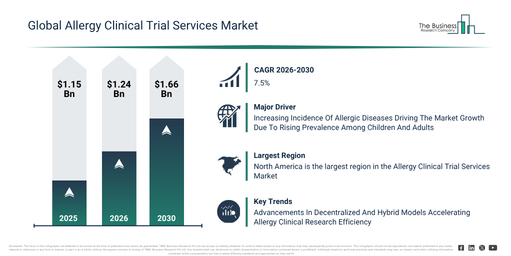
    The allergy clinical trial services market size has experienced strong growth in recent years. It is projected to expand from $1.15 billion in 2025 to $1.24 billion in 2026, achieving a compound annual growth rate (CAGR) of 7.3%. This historical growth can be attributed to the increasing prevalence of allergic diseases, a rising investment in clinical research, the adoption of structured study protocols, the expansion of laboratory testing infrastructure, and the growth of pharmaceutical and biotechnology companies.

    The allergy clinical trial services market size is projected for substantial expansion in the coming years, reaching $1.66 billion by 2030, driven by a compound annual growth rate (CAGR) of 7.5%. This anticipated growth is attributable to several factors, including an increased emphasis on precision medicine approaches, greater integration of AI-driven analytics, a rising need for remote monitoring and decentralized trials, the expansion of phase II and III allergy studies, and a heightened focus on regulatory compliance and data management. Key trends identified for the forecast period encompass a wider embrace of remote clinical monitoring services, an increasing demand for solutions in patient recruitment and retention, enhanced integration of electronic data capture (EDC) systems, the expansion of bioanalytical and laboratory testing capabilities, and a heightened focus on regulatory compliance and medical writing services.

    Access Your Free Sample Report For In-Depth Market Analysis:

    https://www.thebusinessresearchcompany.com/sample_request?id=15489922&type=smp&name=Allergy%20Clinical%20Trial%20Services%20Market%20Report%202026

    Which Key Factors Are Driving The Allergy Clinical Trial Services Market Growth?

    The increasing occurrence of allergic diseases is projected to boost the expansion of the allergy clinical trial services market in the future. Allergic diseases are hypersensitivity conditions mediated by the immune system, encompassing conditions such as seasonal allergic rhinitis, eczema, and food allergies. The frequency of these conditions is on the rise, primarily due to heightened exposure to environmental allergens like pollen, dust, and air pollutants, which are commonly linked to an amplified immune response in vulnerable individuals. Allergy clinical trial services are vital for managing and treating allergic diseases by facilitating the creation, testing, and evaluation of new therapies and interventions, thereby helping healthcare providers identify effective solutions and improve patient outcomes. For instance, according to the 2024 National Health Interview Survey (NHIS) by the Centers for Disease Control and Prevention, a US-based government agency, approximately 29.5% of children in the United States had been diagnosed with a seasonal allergy, eczema, or a food allergy, which is an increase from 20.6% in the previous survey year. Consequently, the growing prevalence of allergic diseases is fueling the growth of the allergy clinical trial services market.

    How Is The Allergy Clinical Trial Services Market Organized By Segment Classification?

    The allergy clinical trial services market covered in this report is segmented –

    1) By Service Type: Study Design And Protocol Development, Site Management And Patient Recruitment, Clinical Operations And Monitoring, Bioanalytical And Laboratory Services, Data Management And Biostatistics, Regulatory Affairs And Medical Writing

    2) By Clinical Trial: Phase I, Phase II, Phase III, Phase IV or Post-Marketing

    3) By Therapeutic Indication: Allergic Rhinitis, Allergic Asthma, Atopic Dermatitis, Food Allergies, Drug Hypersensitivity

    4) By End User: Pharmaceutical Companies, Biotechnology Firms, Academic Research Institutions, Government Organizations

    Subsegments:

    1) By Study Design And Protocol Development: Clinical Protocol Development Services, Trial Design Consulting Services, Feasibility Assessment Services, Endpoint Definition And Selection Services

    2) By Site Management And Patient Recruitment: Investigator Site Management Services, Patient Recruitment And Retention Services, Site Training And Support Services, Clinical Site Feasibility Assessment Services

    3) By Clinical Operations And Monitoring: On-Site Clinical Monitoring Services, Remote Clinical Monitoring Services, Study Progress Tracking Services, Compliance And Quality Assurance Services

    4) By Bioanalytical And Laboratory Services: Pharmacokinetic And Pharmacodynamic Analysis Services, Immunogenicity Testing Services, Biomarker Assay Development Services, Sample Processing And Analysis Services

    5) By Data Management And Biostatistics: Electronic Data Capture (EDC) Services, Data Cleaning And Validation Services, Statistical Analysis And Modeling Services, Report Generation And Interpretation Services

    6) By Regulatory Affairs And Medical Writing: Regulatory Submission Preparation Services, Clinical Study Reports Writing Services, Investigator Brochure Development Services, Regulatory Consulting And Compliance Services

    Which Trends Are Guiding The Direction Of The Allergy Clinical Trial Services Market?

    Leading companies in the allergy clinical trial services market are concentrating on conducting clinical studies to develop innovative products, such as new anti-inflammatory drugs, aimed at improving symptom control and reducing disease severity in allergy patients. These novel anti-inflammatory drugs are recently developed medications designed to target specific immune pathways responsible for inflammation, thereby helping to more effectively reduce allergic reactions, alleviate symptoms, and prevent disease flare-ups compared to traditional treatments. For instance, in December 2023, Innovaderm Research, a Canada-based clinical research organization, highlighted its significant role as a collaborator in the clinical and study development of a recently published Phase 1 atopic dermatitis study. This study evaluated the safety, tolerability, and preliminary efficacy of an investigational therapy in patients with moderate-to-severe atopic dermatitis, a chronic inflammatory skin condition often linked to allergic responses. Innovaderm contributed to protocol development, regulatory strategy, site selection, patient recruitment, and overall operational management, ensuring adherence to clinical and scientific standards. The company leveraged its expertise focused on dermatology, a specialized investigator network, and integrated data management capabilities to support accurate data collection and efficient trial execution.

    Who Are The Industry Participants Involved In The Allergy Clinical Trial Services Market?

    Major companies operating in the allergy clinical trial services market are Johnson & Johnson, Merck & Co. Inc., Sanofi S.A., Novartis International AG, GlaxoSmithKline plc, Teva Pharmaceutical Industries Ltd, Stallergenes Greer International AG, Torii Pharmaceutical Co. Ltd., ALK-Abelló A/S, Allergopharma GmbH & Co. KG, Circassia Group plc, Inmunotek S.L., Biomay AG, Laboratorios LETI S.A., Alerje Inc., Inimmune Corporation, Siolta Therapeutics Inc., Allovate Therapeutics Inc., DBV Technologies S.A., Camallergy S.L.

    Get The Full Allergy Clinical Trial Services Market Report:

    https://www.thebusinessresearchcompany.com/report/allergy-clinical-trial-services-market-report

    Where Is The Allergy Clinical Trial Services Market Most Concentrated Geographically?

    North America was the largest region in the allergy clinical trial services market in 2025. Asia-Pacific is expected to be the fastest-growing region in the forecast period. The regions covered in the allergy clinical trial services market report are Asia-Pacific, South East Asia, Western Europe, Eastern Europe, North America, South America, Middle East, Africa.

    Request A Customized Allergy Clinical Trial Services Market Report For Competitive Insights:

    https://www.thebusinessresearchcompany.com/Customise?id=15489922&name=Allergy%20Clinical%20Trial%20Services%20Market%20Report%202026&type=smp

    Browse Through More Reports Similar to the Global Allergy Clinical Trial Services Market 2026, By The Business Research Company

    pruritus therapeutic market report 2026

    https://www.thebusinessresearchcompany.com/report/pruritus-therapeutic-global-market-report

    genomic urine testing market report 2026

    https://www.thebusinessresearchcompany.com/report/genomic-urine-testing-global-market-report

    ocular genetic diagnostic market report 2026

    https://www.thebusinessresearchcompany.com/report/ocular-genetic-diagnostic-global-market-report

    Get in touch with us:

    The Business Research Company: https://www.thebusinessresearchcompany.com/

    Americas +1 310-496-7795

    Asia +44 7882 955267 & +91 8897263534

    Europe +44 7882 955267

    Email us at marketing@tbrc.info

    Follow us on:

    LinkedIn: https://in.linkedin.com/company/the-business-research-company

    YouTube: https://www.youtube.com/channel/UC24_fI0rV8cR5DxlCpgmyFQ

    Global Market Model: https://www.thebusinessresearchcompany.com/global-market-model
  • Airborne Pathogen Detector Market Forecast 2026–2030 Covering Innovation Trends And Competitive Insights

    Airborne Pathogen Detector Market Forecast 2026–2030 Covering Innovation Trends And Competitive Insights

    The Business Research Company’s 2026 market reports feature enhanced tools like market attractiveness analysis, TAM assessment, and company scoring matrices, along with interactive dashboards, deeper supply chain insights, and startup coverage strengthening the depth, usability, and strategic value of insights.

    From Its 2026 Market Size, What Value Is The Airborne Pathogen Detector Market Projected To Reach By 2030?

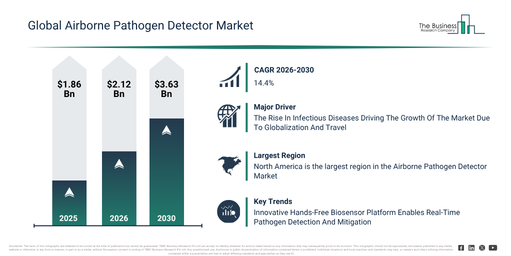
    The airborne pathogen detector market size has seen swift expansion in recent years. It is anticipated to increase from $1.86 billion in 2025 to $2.12 billion in 2026, exhibiting a compound annual growth rate (CAGR) of 14.1%. The expansion observed in the historical period is attributable to an elevated understanding of airborne diseases, the rise in public health surveillance efforts, the widespread use of fixed and stationary detection systems, advancements in pathogen sensing technologies, and the strengthening of healthcare infrastructure.

    The airborne pathogen detector market size is projected to experience swift expansion in the coming years. By 2030, it is anticipated to reach $3.63 billion, demonstrating a compound annual growth rate (CAGR) of 14.4%. This anticipated growth can be linked to several factors, including the increasing demand for IoT-enabled detection devices, greater integration with AI-driven analytics, a growing requirement for portable and wearable pathogen monitors, the broadening of industrial and commercial air safety regulations, and expanded implementation in transportation hubs and public venues. Key trends for the forecast period encompass a surge in the adoption of portable and wearable detectors, heightened demand for real-time pathogen monitoring, increased integration with cloud-based systems, an expansion of multi-pathogen detection functionalities, and an elevated emphasis on healthcare and public safety applications.

    Access Your Free Sample Report For In-Depth Market Analysis:

    https://www.thebusinessresearchcompany.com/sample_request?id=17020023&type=smp&name=Airborne%20Pathogen%20Detector%20Market%20Report%202026

    What Primary Drivers Are Shaping The Airborne Pathogen Detector Market?

    A rise in infectious diseases is anticipated to fuel the expansion of the airborne pathogen detector market throughout the forecast period. These illnesses originate from pathogenic microorganisms capable of spreading via environmental routes, notably airborne transmission. The growing frequency of such diseases stems from several factors, such as heightened globalization and global travel, increasing urbanization and population density, the emergence of antimicrobial resistance, and climate change’s effects on pathogen survival and transmission. Airborne pathogen detectors facilitate prompt detection and ongoing surveillance of infectious agents indoors and outdoors, enabling swift public health responses, preventing outbreaks, and strengthening infection control in hospitals, transport hubs, and public areas. For example, in March 2024, the Centers for Disease Control and Prevention, a US-based government agency, reported that tuberculosis cases in the United States rose from 8,320 in 2022 to 9,615 in 2023, marking an increase of 1,295 cases. Consequently, the increasing prevalence of infectious diseases is propelling the growth of the airborne pathogen detector market.

    Which Segments Define The Airborne Pathogen Detector Market Segment Structure?

    The airborne pathogen detector market covered in this report is segmented –

    1) By Product Type: Fixed Or Stationary Systems, Portable Devices, Handheld Detectors, Wearable Detectors

    2) By Pathogen Type: Viral Pathogen Detection, Bacterial Pathogen Detection, Fungal Pathogen Detection, Multi-Pathogen Detection

    3) By Connectivity: Standalone Systems, Cloud-Based Systems, Internet Of Things Enabled Systems

    4) By Application: Healthcare Facilities, Airports And Transportation Hubs, Industrial And Commercial Buildings, Military And Defense, Public Spaces, Other Applications

    5) By End-User: Hospitals And Clinics, Government And Public Health Agencies, Research Institutes, Commercial And Industrial, Other End-Users

    Subsegments:

    1) By Fixed Or Stationary Systems: Room Air Monitors, Duct Mounted Detectors, Facility Wide Surveillance Systems, Centralized Laboratory Based Systems, Industrial Grade Air Samplers

    2) By Portable Devices: Battery Operated Air Samplers, Backpack Mounted Detectors, Transportable Laboratory Systems, Field Deployable Units

    3) By Handheld Detectors: Single Pathogen Testers, Multiplex Assay Devices, Real Time Polymerase Chain Reaction Analyzers, Immunoassay Based Testers

    4) By Wearable Detectors: Personal Exposure Monitors, Badge Style Detectors, Clip On Sensors, Smart Clothing Integrated Sensors

    What Trends Are Affecting The Growth Of The Airborne Pathogen Detector Market?

    Leading companies in the airborne pathogen detector market are concentrating on developing innovative solutions, such as hands-free biosensor platforms, for the rapid, real-time identification and mitigation of airborne pathogens. A hands-free biosensor platform is an automated device designed to continuously sample and analyze air or surfaces for pathogens without requiring manual handling or intervention. For instance, in July 2025, SafeTraces, Inc., a U.S. based biotechnology company, unveiled PathogenSentinel, which is the first integrated qPCR-based biosensor and software platform engineered for the quick detection and mitigation of airborne pathogens, marking a significant advancement in airborne pathogen detection technology. The system integrates a compact, desktop-sized device with a high-flow air sampler and replaceable cartridges, capable of automatically detecting up to four user-specified pathogens. Supplemented by a web-based application, it offers near real-time alerts, API integration, and data trending for proactive risk management. Its hands-free operation and laboratory-quality results considerably improve responsiveness and scalability in settings like biosafety laboratories and other high-risk indoor environments.

    Who Are The Established Players Within The Airborne Pathogen Detector Market?

    Major companies operating in the airborne pathogen detector market are Thermo Fisher Scientific Inc., Honeywell International Inc., 3M Company, Charles River Laboratories International Inc., Smiths Detection Group Limited, Sartorius Aktiengesellschaft, Shimadzu Corporation, Teledyne FLIR LLC, TSI Incorporated, Particle Measuring Systems Inc., Bertin Technologies SAS, Kanomax USA Inc., RION Co Ltd., Kromek Group plc, Climet Instruments Company Inc., Varro Life Sciences Inc., Aerosol Devices Inc., SafeTraces Inc., Health Enviro Testing Inc., Scanit Technologies Pvt. Ltd.

    Get The Full Airborne Pathogen Detector Market Report:

    https://www.thebusinessresearchcompany.com/report/airborne-pathogen-detector-market-report

    Which Region Dominates The Airborne Pathogen Detector Market By Market Share?

    North America was the largest region in the airborne pathogen detector market in 2025. Asia-Pacific is expected to be the fastest-growing region in the forecast period. The regions covered in the airborne pathogen detector market report are Asia-Pacific, South East Asia, Western Europe, Eastern Europe, North America, South America, Middle East, Africa.

    Request A Customized Airborne Pathogen Detector Market Report For Competitive Insights:

    https://www.thebusinessresearchcompany.com/Customise?id=17020023&name=Airborne%20Pathogen%20Detector%20Market%20Report%202026&type=smp

    Browse Through More Reports Similar to the Global Airborne Pathogen Detector Market 2026, By The Business Research Company

    connected health personal medical devices market report 2026

    https://www.thebusinessresearchcompany.com/report/connected-health-personal-medical-devices-global-market-report

    contract sterilization market report 2026

    https://www.thebusinessresearchcompany.com/report/contract-sterilization-global-market-report

    orthotic insole 3-d printer market report 2026

    https://www.thebusinessresearchcompany.com/report/orthotic-insole-3-d-printer-global-market-report

    Get in touch with us:

    The Business Research Company: https://www.thebusinessresearchcompany.com/

    Americas +1 310-496-7795

    Asia +44 7882 955267 & +91 8897263534

    Europe +44 7882 955267

    Email us at marketing@tbrc.info

    Follow us on:

    LinkedIn: https://in.linkedin.com/company/the-business-research-company

    YouTube: https://www.youtube.com/channel/UC24_fI0rV8cR5DxlCpgmyFQ

    Global Market Model: https://www.thebusinessresearchcompany.com/global-market-model
  • Affinity Ligands Market Outlook Through 2030 Featuring Market Trends And Industry Developments

    Affinity Ligands Market Outlook Through 2030 Featuring Market Trends And Industry Developments

    The Business Research Company’s 2026 market reports feature enhanced tools like market attractiveness analysis, TAM assessment, and company scoring matrices, along with interactive dashboards, deeper supply chain insights, and startup coverage strengthening the depth, usability, and strategic value of insights.

    How Much Growth In Market Value Is Expected For The Affinity Ligands Market Between 2026 And 2030?

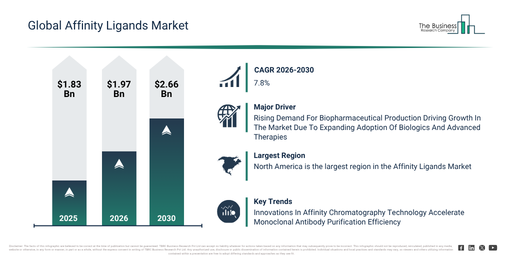
    The affinity ligands market has experienced substantial growth in recent years. It is projected to increase from $1.83 billion in 2025 to $1.97 billion in 2026, exhibiting a compound annual growth rate (CAGR) of 7.6%. This historical expansion can be attributed to the rising need for targeted purification techniques, the development of pharmaceutical and biotech research, the adoption of protein-based ligands, the increasing utilization of antibodies in diagnostics, and the proliferation of academic and research institutes.

    The affinity ligands market is projected to experience substantial expansion over the upcoming years. This market is anticipated to reach $2.66 billion by 2030, exhibiting a compound annual growth rate (CAGR) of 7.8%. Factors driving this growth during the forecast period include the increasing adoption of aptamers and synthetic ligands, a surge in demand for high-throughput drug discovery, the rising integration of biosensors in diagnostic procedures, the broadening scope of environmental and food testing applications, and an escalating emphasis on personalized medicine and therapeutics. Key trends anticipated for this period encompass the growing uptake of synthetic and peptide ligands, an increasing need for affinity chromatography applications, enhanced integration within drug discovery and diagnostics, the development of high-specificity biosensor platforms, and a heightened focus on protein and enzyme purification methods.

    Access Your Free Sample Report For In-Depth Market Analysis:

    https://www.thebusinessresearchcompany.com/sample_request?id=13838527&type=smp&name=Affinity%20Ligands%20Market%20Report%202026

    Which Major Drivers Are Influencing The Expansion Of The Affinity Ligands Market?

    The increasing need for biopharmaceutical manufacturing is projected to fuel the expansion of the affinity ligands market in the future. Biopharmaceutical production involves the large-scale creation of intricate biological therapeutic items, like monoclonal antibodies, vaccines, and recombinant proteins, utilizing systems and processes derived from biological sources. The growth in biopharmaceutical production demand stems from the increasing incidence of chronic and infectious diseases, necessitating more advanced therapies, vaccines, and biologic medications for effective management and treatment of these ailments. Affinity ligands improve biopharmaceutical manufacturing by offering very specific binding sites that isolate target biomolecules from diverse mixtures, leading to quick, efficient purification and reliable product quality. As an illustration, in June 2023, data from the European Federation of Pharmaceutical Industries and Associations (EFPIA), a Belgium-based trade group representing Europe’s pharmaceutical industry, indicated that total pharmaceutical production in Europe reached €390,000 million ($422,803 million) in 2023, an increase from €363,300 million ($393,857 million) in 2022. Consequently, the escalating demand for biopharmaceutical production is stimulating the expansion of the affinity ligands market.

    How Is The Affinity Ligands Market Segmented Across Different Segment Categories?

    The affinity ligands market covered in this report is segmented –

    1) By Product Type: Protein-Based Ligands, Synthetic Ligands, Peptide Ligands, Aptamers, Other Product Types

    2) By Target Molecule: Antibodies, Proteins, Enzymes, Nucleic Acids, Small Molecules

    3) By Application: Affinity Chromatography, Biosensors, Diagnostics, Therapeutics, Research And Development, Drug Discovery

    4) By End-Use Industry: Pharmaceutical And Biotechnology Companies, Academic And Research Institutes, Diagnostic Laboratories, Contract Research Organizations, Food And Beverage Industry, Environmental Testing

    Subsegments:

    1) By Protein-Based Ligands: Antibodies, Enzymes, Lectins, Albumins

    2) By Synthetic Ligands: Small Molecules, Polymers, Dendrimers, Magnetic Particles

    3) By Peptide Ligands: Linear Peptides, Cyclic Peptides, Modified Peptides, Functionalized Peptides

    4) By Aptamers: Deoxyribonucleic Acid Aptamers, Ribonucleic Acid Aptamers, Peptide Aptamers, Spiegelmers

    5) By Other Product Types: Carbohydrate Ligands, Lipid Ligands, Nucleic Acid Ligands, Hybrid Ligands

    Which Trends Are Shaping The Affinity Ligands Market?

    Major companies operating in the affinity ligands market are focusing on developing advanced purification solutions, such as membrane-based protein A chromatography platforms, with the objective of enhancing processing speed, improving binding capacity, and streamlining downstream bioprocessing workflows. These membrane-based protein chromatography platforms represent advanced purification technologies that embed protein A affinity ligands within membrane structures to specifically bind and isolate monoclonal antibodies from complex bioprocess fluids, thereby enabling faster throughput and enhanced efficiency in downstream biomanufacturing operations. For instance, in October 2024, Sartorius AG, a Germany-based biopharmaceutical solutions provider, launched Sartobind Rapid A Lab, a laboratory-scale membrane chromatography device engineered for the swift and efficient capture of monoclonal antibodies. This solution leverages Protein A affinity ligands integrated into membrane adsorbers to deliver high binding capacity, short cycle times, and scalability from lab to manufacturing, supporting process intensification and accelerating biologics development.

    Which Organizations Play A Role In The Affinity Ligands Market Landscape?

    Major companies operating in the affinity ligands market are Thermo Fisher Scientific Inc., Merck KGaA, Cube Biotech GmbH, Tosoh Corporation, Avantor Inc., Agilent Technologies Inc., Kaneka Corporation, Sartorius AG, PerkinElmer Inc., Waters Corporation, Bio-Rad Laboratories Inc., QIAGEN N.V., Repligen Corporation, GenScript Biotech Corporation, Purolite Corporation, Promega Corporation, Takara Bio Inc., BioWorks Inc., Biotage AB, BIA Separation d.o.o., KNAUER Wissenschaftliche Geräte GmbH, JNC Corporation, Aptamer Group.

    Get The Full Affinity Ligands Market Report:

    https://www.thebusinessresearchcompany.com/report/affinity-ligands-market-report

    Which Region Is The Largest In The Affinity Ligands Market?

    North America was the largest region in the affinity ligands market in 2025. Asia-Pacific is expected to be the fastest-growing region in the forecast period. The regions covered in the affinity ligands market report are Asia-Pacific, South East Asia, Western Europe, Eastern Europe, North America, South America, Middle East, Africa.

    Request A Customized Affinity Ligands Market Report For Competitive Insights:

    https://www.thebusinessresearchcompany.com/Customise?id=13838527&name=Affinity%20Ligands%20Market%20Report%202026&type=smp

    Browse Through More Reports Similar to the Global Affinity Ligands Market 2026, By The Business Research Company

    adeno-associated virus (avv) vectors in gene therapy market report 2026

    https://www.thebusinessresearchcompany.com/report/adeno-associated-virus-avv-vectors-in-gene-therapy-global-market-report

    gastric cancer therapy market report 2026

    https://www.thebusinessresearchcompany.com/report/gastric-cancer-therapy-global-market-report

    over the counter (otc) drugs market report 2026

    https://www.thebusinessresearchcompany.com/report/over-the-counter-otc-drugs-global-market-report

    Get in touch with us:

    The Business Research Company: https://www.thebusinessresearchcompany.com/

    Americas +1 310-496-7795

    Asia +44 7882 955267 & +91 8897263534

    Europe +44 7882 955267

    Email us at marketing@tbrc.info

    Follow us on:

    LinkedIn: https://in.linkedin.com/company/the-business-research-company

    YouTube: https://www.youtube.com/channel/UC24_fI0rV8cR5DxlCpgmyFQ

    Global Market Model: https://www.thebusinessresearchcompany.com/global-market-model
  • Adeno-Associated Virus (AAV) Packaging Services Market Forecast 2026–2030 Highlighting Growth Trends And Industry Opportunities

    Adeno-Associated Virus (AAV) Packaging Services Market Forecast 2026–2030 Highlighting Growth Trends And Industry Opportunities

    The Business Research Company’s 2026 market reports feature enhanced tools like market attractiveness analysis, TAM assessment, and company scoring matrices, along with interactive dashboards, deeper supply chain insights, and startup coverage strengthening the depth, usability, and strategic value of insights.

    What Is The Estimated Market Size Of The Adeno-Associated Virus (AAV) Packaging Services Market In 2026, And How Will Its Value Evolve By 2030?

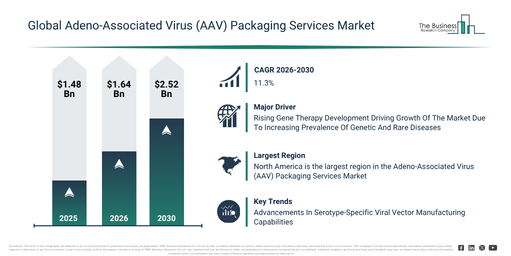
    The adeno-associated virus (AAV) packaging services market has experienced substantial expansion in recent years. It is forecast to rise from $1.48 billion in 2025 to $1.64 billion in 2026, at a compound annual growth rate (CAGR) of 11.1%. This growth witnessed during the historical period stems from increasing gene therapy research, greater funding for rare disease investigations, an expanding array of preclinical and clinical trials, the emergence of more biotechnology startups, and innovations in viral vector production technologies.

    The adeno-associated virus (AAV) packaging services market is projected for substantial expansion in the coming years, reaching $2.52 billion by 2030, driven by an 11.3% compound annual growth rate (CAGR). This anticipated growth during the forecast period is fueled by several factors, including the increasing number of gene therapy approvals, a growing need for commercial-scale Good Manufacturing Practice (GMP) production, increased capital directed towards precision medicine, the broadening pipelines of cell and gene therapies, and more strategic collaborations between biotechnology companies and Contract Development and Manufacturing Organizations (CDMOs). Key trends expected over this period involve a heightened demand for high-titer and high-purity AAV production, the expansion of GMP-compliant clinical-grade AAV packaging, an intensified focus on scalable large-scale manufacturing solutions, greater uptake of advanced analytical and release testing services, and an increase in the outsourcing of AAV vector manufacturing to CDMOs.

    Access Your Free Sample Report For In-Depth Market Analysis:

    https://www.thebusinessresearchcompany.com/sample_request?id=97919076&type=smp&name=Adeno-Associated%20Virus%20%28AAV%29%20Packaging%20Services%20Market%20Report%202026

    What Key Drivers Are Fueling The Growth Of The Adeno-Associated Virus (AAV) Packaging Services Market?

    The increasing need for gene therapy development is projected to boost the future expansion of the adeno-associated virus (AAV) packaging services market. Gene therapy development involves creating treatments that modify or replace faulty genes to treat diseases. The growing prevalence of genetic and rare diseases is driving the demand for gene therapy development, as it necessitates advanced treatments targeting the underlying genetic causes of these conditions. Adeno-associated virus (AAV) packaging services contribute to gene therapy development by offering specialized viral vector production and purification, which ensures a scalable, high-quality AAV supply for clinical research and therapeutic applications. For instance, in July 2023, according to the American Society of Gene & Cell Therapy (ASGCT), a US-based professional membership organization, there were 247 gene therapies in Phase II at the end of the first quarter of 2023, a number that rose by 5% to reach 260 by the end of the second quarter. Consequently, the rising demand for gene therapy development is a key driver for the growth of the adeno-associated virus (AAV) packaging services market.

    What Are The Main Segments Within The Adeno-Associated Virus (AAV) Packaging Services Market Segment Structure?

    The adeno-associated virus (AAV) packaging services market covered in this report is segmented –

    1) By Service Type: Research-Grade Adeno-Associated Virus (AAV) Packaging (RUO), Good Manufacturing Practice (GMP) Clinical Adeno-Associated Virus (AAV) Packaging, Good Manufacturing Practice (GMP) Late-Stage And Commercial Supply, Analytical And Release Testing, Process Development And Tech Transfer

    2) By Vector Type: Adeno-Associated Virus (AAV) 2, Adeno-Associated Virus (AAV) 5, Adeno-Associated Virus (AAV) 8, Adeno-Associated Virus (AAV) 9

    3) By Scale Of Production: Small-Scale Production, Mid-Scale Production, Large-Scale Production

    4) By Therapeutic Application: Ophthalmology, Neuromuscular And Central Nervous System, Metabolic Or Rare Genetic Disorders, Oncology, Cardiovascular, Other Indications

    5) By End User: Biotechnology And Biopharmaceutical Companies, Academic And Research Institutes, Contract Research Organizations, Contract Manufacturing Organizations, Healthcare And Diagnostic Laboratories

    Subsegments:

    1) By Research-Grade Adeno-Associated Virus (AAV) Packaging (RUO): Small Scale Production, Pilot Scale Production, Custom Vector Design, Preclinical Study Supply

    2) By GMP Clinical Adeno-Associated Virus (AAV) Packaging: Phase One Clinical Supply, Phase Two Clinical Supply, Phase Three Clinical Supply, Patient Specific Batch Production

    3) By GMP Late-Stage And Commercial Supply: Commercial Batch Production, Technology Transfer Support, Large Scale Manufacturing, Regulatory Submission Support

    4) By Analytical And Release Testing: Potency Testing, Purity Testing, Identity Testing, Safety Testing, Stability Testing

    5) By Process Development And Tech Transfer: Upstream Process Development, Downstream Process Development, Scale-Up Process Optimization, Technology Transfer To Manufacturing, Process Characterization

    What Trends Are Influencing The Adeno-Associated Virus (AAV) Packaging Services Market?

    Leading businesses within the adeno-associated virus (AAV) packaging services sector are concentrating on creating novel offerings, including on-demand AAV viral vector packaging systems. This aims to improve adaptability, speed up research schedules, and guarantee reliable, top-tier viral vector manufacturing. These on-demand AAV viral vector packaging platforms offer tailored AAV production for specific serotypes, complete with quality assurance. This assists researchers in conserving time and acquiring dependable, high-titer vectors suitable for gene delivery purposes. As an illustration, in January 2025, Addgene Inc., a US-based nonprofit scientific organization, introduced “Packaged on Request,” a pioneering AAV packaging service. This service enables scientists to select from more than 3,000 AAV plasmids available in Addgene’s collection and request packaging into serotypes such as AAV1, AAV2, AAV5, AAV8, and AAV Retrograde capsids. Every preparation undergoes extensive quality control protocols, covering ddPCR titering, purity checks, sterility assessments, and viral genome sequencing, thereby guaranteeing research-grade quality comparable to existing viral preparations. Furthermore, the service simplifies legal authorizations and technology transfer procedures, decreasing the administrative workload while still providing high titers appropriate for various in vivo and in vitro applications.

    Who Are The Companies Participating In The Adeno-Associated Virus (AAV) Packaging Services Market?

    Major companies operating in the adeno-associated virus (AAV) packaging services market are Thermo Fisher Scientific Inc., AGC Biologics Inc., Lonza Group AG, Charles River Laboratories International Inc., Resilience Biotechnologies Inc., GenScript Biotech Corporation, Takara Bio Inc., OxB CDMO Inc., 3PBIOVIAN, VectorBuilder, Genezen Labs, Addgene Inc., PackGene Biotech Inc., Porton Advanced Solutions Ltd., Creative Biogene, Yposkesi SAS, AAVnerGene Inc., Virovek Inc., WuXi Advanced Therapies Co. Ltd., BioInnovatise Inc.

    Get The Full Adeno-Associated Virus (AAV) Packaging Services Market Report:

    https://www.thebusinessresearchcompany.com/report/adeno-associated-virus-aav-packaging-services-market-report

    Which Region Leads The Adeno-Associated Virus (AAV) Packaging Services Market In Terms Of Market Share?

    North America was the largest region in the adeno-associated virus (AAV) packaging services market in 2025. Asia-Pacific is expected to be the fastest-growing region in the forecast period. The regions covered in the adeno-associated virus (AAV) packaging services market report are Asia-Pacific, South East Asia, Western Europe, Eastern Europe, North America, South America, Middle East, Africa.

    Request A Customized Adeno-Associated Virus (AAV) Packaging Services Market Report For Competitive Insights:

    https://www.thebusinessresearchcompany.com/Customise?id=97919076&name=Adeno-Associated%20Virus%20%28AAV%29%20Packaging%20Services%20Market%20Report%202026&type=smp

    Browse Through More Reports Similar to the Global Adeno-Associated Virus (AAV) Packaging Services Market 2026, By The Business Research Company

    pruritus therapeutic market report 2026

    https://www.thebusinessresearchcompany.com/report/pruritus-therapeutic-global-market-report

    genomic urine testing market report 2026

    https://www.thebusinessresearchcompany.com/report/genomic-urine-testing-global-market-report

    ocular genetic diagnostic market report 2026

    https://www.thebusinessresearchcompany.com/report/ocular-genetic-diagnostic-global-market-report

    Get in touch with us:

    The Business Research Company: https://www.thebusinessresearchcompany.com/

    Americas +1 310-496-7795

    Asia +44 7882 955267 & +91 8897263534

    Europe +44 7882 955267

    Email us at marketing@tbrc.info

    Follow us on:

    LinkedIn: https://in.linkedin.com/company/the-business-research-company

    YouTube: https://www.youtube.com/channel/UC24_fI0rV8cR5DxlCpgmyFQ

    Global Market Model: https://www.thebusinessresearchcompany.com/global-market-model
  • Wound Skin Substitutes Market Future Outlook Showing Growth Toward $1.9 Billion By 2030

    Wound Skin Substitutes Market Future Outlook Showing Growth Toward $1.9 Billion By 2030

    The Business Research Company’s 2026 market reports feature enhanced tools like market attractiveness analysis, TAM assessment, and company scoring matrices, along with interactive dashboards, deeper supply chain insights, and startup coverage strengthening the depth, usability, and strategic value of insights.

    How Much Will The Market Value Of The Wound Skin Substitutes Market Grow Between 2026 And 2030?

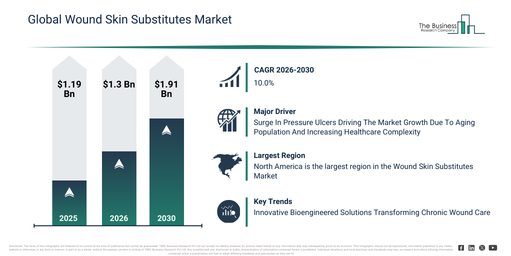
    The wound skin substitutes market has demonstrated significant expansion in recent years. Its valuation is projected to rise from $1.19 billion in 2025 to $1.3 billion in 2026, achieving a compound annual growth rate (CAGR) of 9.7%. This past growth can be attributed to factors such as an increase in burn injury cases, the growing prevalence of diabetic ulcers, an uptick in surgical procedures, the established use of collagen dressings, and the proliferation of wound care centers.

    The wound skin substitutes market is anticipated to experience significant expansion over the next few years. It is projected to achieve a size of $1.91 billion by 2030, growing at a compound annual growth rate (CAGR) of 10.0%. This forecasted growth is primarily driven by an aging population suffering from chronic wounds, the increasing prevalence of diabetes, developments in regenerative medicine, higher spending on advanced wound care, and the increasing number of outpatient wound clinics. Prominent trends expected during this period include bioengineered regenerative skin matrices, advanced cell-based wound covers, composite biosynthetic skin substitutes, dressings enriched with growth factors, and smart moisture-balancing wound covers.

    Access Your Free Sample Report For In-Depth Market Analysis:

    https://www.thebusinessresearchcompany.com/sample.aspx?id=33363&type=smp

    What Key Factors Are Affecting The Wound Skin Substitutes Market Demand?

    The increasing occurrence of pressure ulcers is anticipated to stimulate the expansion of the wound skin substitutes market. These ulcers constitute localized damage to the skin and underlying tissues, primarily resulting from prolonged pressure, frequently observed over bony areas. The frequency of pressure ulcers is escalating, largely attributable to an aging demographic, given that elderly individuals often experience decreased mobility, delicate skin, and chronic conditions that heighten their vulnerability to skin damage. Wound skin substitutes offer a solution by safeguarding the skin, fostering tissue regeneration, ensuring adequate moisture balance, and improving skin integrity. Collectively, these actions diminish the likelihood of skin deterioration in susceptible regions. A notable example highlights this trend: in November 2023, the National Health Service (NHS) England, a UK-based government department, reported that between October 1, 2022, and October 1, 2023, 193 inpatients had developed bedsores, pressure sores, or pressure ulcers during their hospitalization. Consequently, the growing prevalence of pressure ulcers is a key factor driving the expansion of the wound skin substitutes market.

    How Is Segmentation Applied In The Wound Skin Substitutes Market Segment Analysis?

    The wound skin substitutes market covered in this report is segmented –

    1) By Product Type: Biologic Skin Substitutes; Synthetic Skin Substitutes; Biosynthetic Skin Substitutes; Collagen Dressings; Acellular Dermal Matrices; Cultured Epithelial Autografts; Allograft Skin; Xenograft Skin; Hydrogel Dressings; Foam Dressings

    2) By Technology: Static Skin Substitutes; Dynamic; Smart

    3) By Application Or Indication: Diabetic Foot Ulcers; Pressure Ulcers; Burns; Surgical Wounds; Trauma Wounds; Chronic Wounds

    4) By Distribution Channel: Direct Sales Or Institutional Sales; Medical Device Distributors; Online Retail Or E-commerce

    5) By End User: Hospitals And Burn Centers; Ambulatory Surgical Centers (ASCs); Specialty Wound Care Clinics; Academic And Research Institute

    Subsegments:

    1) By Biologic Skin Substitutes: Human Derived Skin Substitutes; Animal Derived Skin Substitutes; Cellular Based Skin Substitutes; Growth Factor Enriched Skin Substitutes

    2) By Synthetic Skin Substitutes: Polymer Based Skin Substitutes; Silicone Based Skin Substitutes; Polyurethane Based Skin Substitutes; Synthetic Composite Skin Substitutes

    3) By Biosynthetic Skin Substitutes: Collagen And Silicone Based Skin Substitutes; Polymer And Collagen Composite Skin Substitutes; Semi Synthetic Skin Substitutes

    4) By Collagen Dressings: Native Collagen Dressings; Oxidized Regenerated Collagen Dressings; Collagen With Antimicrobial Agents; Collagen With Silver

    5) By Acellular Dermal Matrices: Human Acellular Dermal Matrices; Animal Acellular Dermal Matrices; Cross Linked Dermal Matrices; Non Cross Linked Dermal Matrices

    6) By Cultured Epithelial Autografts: Keratinocyte Based Autografts; Epidermal Sheet Autografts; Spray On Cultured Epithelial Cells

    7) By Allograft Skin: Fresh Allograft Skin; Cryopreserved Allograft Skin; Lyophilized Allograft Skin

    8) By Xenograft Skin: Porcine Derived Xenograft Skin; Bovine Derived Xenograft Skin; Processed Xenograft Skin

    9) By Hydrogel Dressings: Amorphous Hydrogel Dressings; Sheet Hydrogel Dressings; Impregnated Hydrogel Dressings

    10) By Foam Dressings: Polyurethane Foam Dressings; Silicone Foam Dressings; Adhesive Foam Dressings; Non Adhesive Foam Dressings

    What Trends Are Influencing The Wound Skin Substitutes Market?

    Companies prominent in the wound skin substitutes market are concentrating on creating innovative solutions, such as advanced bioengineered skin grafts, to hasten wound recovery, lessen infection risks, and enhance tissue regeneration. These advanced bioengineered skin grafts are skin alternatives developed in laboratories or through tissue engineering, designed to emulate the natural structure of skin. They supply living cells and structural frameworks that facilitate quicker wound healing, aid tissue regeneration, and diminish the likelihood of infection more effectively than conventional dressings. For instance, in May 2025, the US-based medical device firm Tides Medical introduced Artacent Wound. This next-generation wound skin substitute employs an Arta-Pure Process to gently maintain the complete structure of amniotic tissue, including its vital spongy intermediate layer, thereby optimizing the graft’s inherent integrity. The product incorporates a dual-layer design, allowing application on either surface, and remains securely in place without requiring sutures. It assists clinicians in addressing chronic wounds by sustaining a biologically active matrix that promotes tissue repair and mitigates inflammation, distinguishing it from conventional dehydrated or heavily processed grafts.

    Who Are The Companies Participating In The Wound Skin Substitutes Market Environment?

    Major companies operating in the wound skin substitutes market are 3M Company, Stryker Corporation, Essity Aktiebolag, Smith & Nephew plc, B. Braun Melsungen AG, Coloplast A/S, ConvaTec Group plc, Mallinckrodt Pharmaceuticals, Integra LifeSciences Corporation, AVITA Medical Inc., MTF Biologics, Organogenesis Inc., MiMedx Group Inc., Vericel Corporation, LifeNet Health, Anika Therapeutics Inc., AlloSource, BioTissue Inc., Tissue Regenix Group plc, Gunze Medical Co. Ltd., and Molecular Biologicals Inc.

    Get The Full Wound Skin Substitutes Market Report:

    https://www.thebusinessresearchcompany.com/report/wound-skin-substitutes-market-report

    Which Region Is The Largest In The Wound Skin Substitutes Market?

    North America was the largest region in the wound skin substitutes market in 2025. Asia-Pacific is expected to be the fastest-growing region in the forecast period. The regions covered in the wound skin substitutes market report are Asia-Pacific, South East Asia, Western Europe, Eastern Europe, North America, South America, Middle East, Africa.

    Request A Customized Wound Skin Substitutes Market Report For Competitive Insights:

    https://www.thebusinessresearchcompany.com/customise?id=33363&type=smp

    Browse Through More Reports Similar to the Global Wound Skin Substitutes Market 2026, By The Business Research Company

    Topical Wound Agents Market Report 2026

    https://www.thebusinessresearchcompany.com/report/topical-wound-agents-global-market-report

    Skin Care Products Market Report 2026

    https://www.thebusinessresearchcompany.com/report/skin-care-products-global-market-report

    Biomaterial Wound Dressing Market Report 2026

    https://www.thebusinessresearchcompany.com/report/biomaterial-wound-dressing-global-market-report

    Get in touch with us:

    The Business Research Company: https://www.thebusinessresearchcompany.com/

    Americas +1 310-496-7795

    Asia +44 7882 955267 & +91 8897263534

    Europe +44 7882 955267

    Email us at info@tbrc.info

    Follow us on:

    LinkedIn: https://in.linkedin.com/company/the-business-research-company

    YouTube: https://www.youtube.com/channel/UC24_fI0rV8cR5DxlCpgmyFQ

    Global Market Model: https://www.thebusinessresearchcompany.com/global-market-model
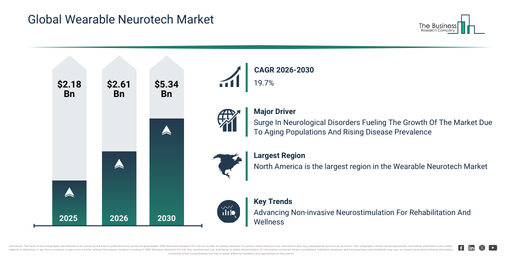
  • Wearable Neurotech Market Revenue Growth Forecast To Reach $5.34 Billion By 2030 At 19.7% CAGR

    Wearable Neurotech Market Revenue Growth Forecast To Reach $5.34 Billion By 2030 At 19.7% CAGR

    The Business Research Company’s 2026 market reports feature enhanced tools like market attractiveness analysis, TAM assessment, and company scoring matrices, along with interactive dashboards, deeper supply chain insights, and startup coverage strengthening the depth, usability, and strategic value of insights.

    What Changes In Market Value Are Expected For The Wearable Neurotech Market Over The 2026–2030 Period?

    The wearable neurotech market has experienced significant expansion in recent years. Its projected growth will take it from $2.18 billion in 2025 to $2.61 billion in 2026, at a compound annual growth rate (CAGR) of 19.4%. This historical growth can be attributed to advancements in EEG miniaturization, the increasing presence of digital health devices, an expansion of brain computer interface research, the emergence of mental wellness technology, and a higher rate of wearable sensor adoption.

    The wearable neurotech market is projected to experience substantial expansion in the coming years. By 2030, its valuation is expected to reach $5.34 billion, growing at a compound annual growth rate (CAGR) of 19.7%. This anticipated growth can be attributed to several factors, including an increase in remote neuro monitoring, a growing need for cognitive enhancement solutions, the spread of neuro digital therapeutics, greater application of sports performance analytics, and the proliferation of personalized brain health initiatives. Additionally, major trends in this period will involve the rise of consumer brain-computer interfaces, increasing uptake of neurofeedback wearables, the availability of more portable EEG devices, the incorporation of cognitive monitoring applications, and a surge in home-based neurostimulation devices.

    Access Your Free Sample Report For In-Depth Market Analysis:

    https://www.thebusinessresearchcompany.com/sample.aspx?id=33359&type=smp

    Which Primary Drivers Are Impacting The Wearable Neurotech Market Growth?

    The increasing occurrence of neurological conditions is anticipated to drive the expansion of the wearable neurotech market in the future. These conditions are medical ailments impacting the brain, spinal cord, or nerves, thereby influencing aspects such as movement, sensation, cognitive functions, or behavior. The rise in neurological disorders stems from an aging global demographic, which in turn elevates the incidence of age-associated neurological conditions. Wearable neurotech offers assistance in managing neurological disorders through continuous monitoring of brain and nerve activity, facilitating prompt diagnosis, tailored therapeutic approaches, and immediate symptom control. For example, in March 2023, the Alzheimer’s Association, a US-based nonprofit voluntary health organization, stated that 6.7 million Americans aged 65+ suffer from Alzheimer’s, a figure expected to climb to 13.8 million by 2060. Consequently, the growing prevalence of neurological conditions is a significant factor boosting the development of the wearable neurotech market.

    What Segment Categories Shape The Wearable Neurotech Market Segment Landscape?

    The wearable neurotech market covered in this report is segmented –

    1) By Product Type: Electroencephalography Headsets; Brain Computer Interface Devices; Neurostimulation Wearables; Neurofeedback Wearable Devices; Wearable Neural Sensors

    2) By Technology: Electroencephalography Technology; Functional Near Infrared Spectroscopy Technology; Magnetoencephalography Technology; Transcranial Direct Current Stimulation Technology; Other Neural Sensing and Stimulation Technologies

    3) By Distribution Channel: Online Stores; Specialty Retail Stores; Direct Sales; Other Distribution Channels

    4) By Application: Healthcare; Consumer Electronics; Sports and Fitness; Other Applications

    5) By End User: Hospitals and Clinics; Research Institutes and Laboratories; Consumer End Users; Sports and Fitness Centers; Academic and Educational Institutions

    Subsegments:

    1) By Electroencephalography Headsets: Portable Electroencephalography Headsets; Wireless Electroencephalography Headsets; Clinical Electroencephalography Headsets

    2) By Brain Computer Interface Devices: Non Invasive Brain Computer Interface Devices; Invasive Brain Computer Interface Devices; Hybrid Brain Computer Interface Devices

    3) By Neurostimulation Wearables: Transcranial Direct Current Stimulation Wearables; Transcranial Magnetic Stimulation Wearables; Vagus Nerve Stimulation Wearables

    4) By Neurofeedback Wearable Devices: Real Time Neurofeedback Wearable Devices; Home Use Neurofeedback Wearable Devices; Clinical Neurofeedback Wearable Devices

    5) By Wearable Neural Sensors: Electroencephalography Sensors; Functional Near-Infrared Spectroscopy Sensors; Magnetoencephalography Sensors; Electromyography Sensors; Cognitive Monitoring Sensors; Brain Computer Interface Sensors

    Which Trends Are Expected To Impact The Wearable Neurotech Market?

    Key companies operating within the wearable neurotech market are focusing on innovations in non-invasive neurostimulation technologies, including wearable vagus nerve and electrical muscle stimulation devices, to facilitate rehabilitation, enhance wellness, or support neural recovery. Wearable vagus nerve devices are non-invasive systems worn on the body that deliver electrical stimulation to the vagus nerve, aiming to support health, well-being, or therapeutic results. For instance, in February 2025, Neuvotion Inc., a US medical device company, unveiled NeuStim, an FDA-cleared, non-invasive, wearable neurostimulation system that precisely stimulates muscles to aid hand movement recovery after stroke or spinal cord injury. This device boasts a lightweight, wrist-worn design, a clinician-friendly touchscreen for targeting stimulation, and customizable programs accessible through a mobile interface. Similarly, in 2025, Lithuania-based Pulsetto introduced or expanded its wearable vagus nerve stimulation device designed for stress reduction and sleep support. This neck-worn device provides low-frequency transcutaneous stimulation, offers multiple preset programs via a companion app, and is intended for daily, drug-free use. Both devices highlight the increasing trend of noninvasive, wearable neurotechnologies for health and rehabilitation.

    Who Are The Companies Operating Across The Wearable Neurotech Market Value Chain?

    Major companies operating in the wearable neurotech market are Kernel Labs Inc., Nuro Corporation, NeuroSky Inc., BrainCo Inc., Emotiv Inc., Cognito Therapeutics Inc., Neuroelectrics Barcelona S.L.U, Q30 Innovations Inc., Halo Neuroscience, Thync, Neurable Inc., Neurovalens Ltd., Neurovalens Ltd., Bitbrain Technologies S.L., Muse (InteraXon), OpenBCI Inc., BrainBit, Nexstem Technologies Pvt. Ltd, Nalu Medical Inc., Alphabeats, Motif Neurotech.

    Get The Full Wearable Neurotech Market Report:

    https://www.thebusinessresearchcompany.com/report/wearable-neurotech-market-report

    Which Region Leads The Wearable Neurotech Market In Terms Of Market Share?

    North America was the largest region in the wearable neurotech market in 2025. Asia-Pacific is expected to be the fastest-growing region in the forecast period. The regions covered in the wearable neurotech market report are Asia-Pacific, South East Asia, Western Europe, Eastern Europe, North America, South America, Middle East, Africa.

    Request A Customized Wearable Neurotech Market Report For Competitive Insights:

    https://www.thebusinessresearchcompany.com/customise?id=33359&type=smp

    Browse Through More Reports Similar to the Global Wearable Neurotech Market 2026, By The Business Research Company

    Wearable Medical Devices Market 2026

    https://www.thebusinessresearchcompany.com/report/wearable-medical-devices-market

    Wearable Computing Market Report 2026

    https://www.thebusinessresearchcompany.com/report/wearable-computing-global-market-report

    Neurotechnology Market Report 2026

    https://www.thebusinessresearchcompany.com/report/neurotechnology-global-market-report

    Get in touch with us:

    The Business Research Company: https://www.thebusinessresearchcompany.com/

    Americas +1 310-496-7795

    Asia +44 7882 955267 & +91 8897263534

    Europe +44 7882 955267

    Email us at info@tbrc.info

    Follow us on:

    LinkedIn: https://in.linkedin.com/company/the-business-research-company

    YouTube: https://www.youtube.com/channel/UC24_fI0rV8cR5DxlCpgmyFQ

    Global Market Model: https://www.thebusinessresearchcompany.com/global-market-model