Month: May 2026

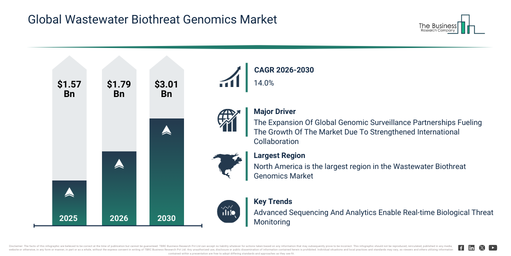
  • Wastewater Biothreat Genomics Market Expected To Grow Steadily And Approach $3.01 Billion By 2030

    Wastewater Biothreat Genomics Market Expected To Grow Steadily And Approach $3.01 Billion By 2030

    The Business Research Company’s 2026 market reports feature enhanced tools like market attractiveness analysis, TAM assessment, and company scoring matrices, along with interactive dashboards, deeper supply chain insights, and startup coverage strengthening the depth, usability, and strategic value of insights.

    By 2030, What Market Size Is The Wastewater Biothreat Genomics Market Expected To Reach Based On Its 2026 Value?

    The wastewater biothreat genomics market size has experienced rapid growth in recent years. This market is expected to expand from $1.57 billion in 2025 to $1.79 billion in 2026, at a compound annual growth rate (CAGR) of 13.7%. The historical increase in this market can be ascribed to elements such as covid era wastewater surveillance, an expansion in genomic sequencing labs, the broadening of public health monitoring, the emergence of pathogen tracking programs, and a rise in molecular diagnostics.

    The wastewater biothreat genomics market is anticipated to experience substantial growth in the upcoming years, with projections indicating it will climb to $3.01 billion by 2030, exhibiting a compound annual growth rate (CAGR) of 14.0%. This expansion during the forecast period is primarily driven by heightened biosecurity investments, the proliferation of early outbreak detection systems, advancements in automated sample processing, increasing government surveillance programs, and the growth of AI genomic analytics. Noteworthy trends expected over this period involve the expansion of sewage-based pathogen surveillance, a rise in metagenomic wastewater testing, the adoption of rapid field sequencing kits, the integration of bioinformatics threat dashboards, and increased community-level pathogen monitoring.

    Access Your Free Sample Report For In-Depth Market Analysis:

    https://www.thebusinessresearchcompany.com/sample.aspx?id=33358&type=smp

    What Significant Factors Are Influencing The Wastewater Biothreat Genomics Market Expansion?

    The future expansion of worldwide genomic surveillance collaborations is projected to stimulate the growth of the wastewater biothreat genomics market. These collaborations are cooperative structures that bring together governments, international health bodies, and research facilities to share genomic information and improve the early identification of biological threats. The increase in genomic surveillance partnerships stems from a heightened awareness among governmental bodies and health agencies regarding the necessity for synchronized, international monitoring to promptly identify nascent biological threats. In this context, wastewater biothreat genomics facilitates global genomic surveillance by allowing for the standardized identification and comparison of pathogens found in wastewater samples, thereby enhancing international data integration and early warning systems. As an illustration, in July 2025, the World Health Organization (WHO), an intergovernmental body headquartered in Switzerland, reported that its International Pathogen Surveillance Network expanded significantly, growing from approximately 35 partner organizations across 18 countries to nearly 350 partners spread across more than 100 countries. Consequently, the broadening of global genomic surveillance collaborations is a key factor propelling the expansion of the wastewater biothreat genomics market.

    Which Segment Types Are Examined In The Wastewater Biothreat Genomics Market Segment Study?

    The wastewater biothreat genomics market covered in this report is segmented –

    1) By Product Type: Portable Genomic Detection Devices; Laboratory Based Sequencing Instruments; Sample Collection and Preparation Kits; Consumables and Reagents; Software and Analytical Platforms

    2) By Technology: Polymerase Chain Reaction Systems; Next Generation Sequencing Systems; Microarray Based Detection Systems; Biosensor Based Detection Systems; Other Molecular Detection Technologies

    3) By Application: Pathogen Detection; Antimicrobial Resistance Surveillance; Environmental Monitoring; Other Applications

    4) By End-User: Municipal Utilities; Industrial Facilities; Academic and Research Institutes; Government Agencies; Other End-Users

    Subsegments:

    1) By Portable Genomic Detection Devices: Handheld Nucleic Acid Sequencers; Field Deployable Polymerase Chain Reaction Systems; Portable Isothermal Amplification Devices; Mobile Biosensor Based Genomic Detectors

    2) By Laboratory Based Sequencing Instruments: Next Generation Sequencing Systems; High Throughput Whole Genome Sequencers; Targeted Gene Sequencing Platforms; Metagenomic Sequencing Instruments

    3) By Sample Collection and Preparation Kits: Wastewater Sampling Kits; Nucleic Acid Extraction Kits; Pathogen Enrichment and Concentration Kits; Library Preparation Kits

    4) By Consumables and Reagents: Enzymes for Nucleic Acid Amplification; Sequencing Reagent Cartridges; Primers and Probes; Buffers and Chemical Solutions

    5) By Software and Analytical Platforms: Bioinformatics Data Analysis Software; Pathogen Identification and Surveillance Platforms; Genomic Data Management Systems; Artificial Intelligence Based Threat Detection Tools

    What Trends Are Influencing Changes In The Wastewater Biothreat Genomics Market?

    Leading companies in the wastewater biothreat genomics market are concentrating on creating sophisticated tools, such as genomic pathogen surveillance systems, to improve the prompt identification of biological dangers, bolster public health responses, and aid in environmental oversight. These systems utilize technologies that scrutinize wastewater samples through genomic sequencing and bioinformatics to pinpoint viruses, bacteria, and various microbial hazards, thereby allowing for real-time tracking of health risks across populations. As an illustration, in January 2023, the Canadian biotechnology firm, Fusion Genomics Corporation, initiated a pioneering wastewater surveillance pilot program at Toronto Pearson International Airport. This particular system combines high-throughput genomic sequencing with advanced analytical methods to identify and measure potential biothreats present in wastewater flows. This methodology allows for quicker identification of new pathogens, facilitates public health interventions guided by data, and offers practical intelligence for reducing biological risks, surpassing the capabilities of traditional monitoring techniques. Through the integration of genomics, bioinformatics, and environmental sample collection, this solution contributes to heightened situational awareness, reinforced biosecurity protocols, and superior early warning capacities for communities and essential infrastructure.

    Which Players Are Part Of The Competitive Landscape Of The Wastewater Biothreat Genomics Market?

    Major companies operating in the wastewater biothreat genomics market are Miniature Brain Stimulator, Danaher Corporation, Thermo Fisher Scientific Inc., Eurofins Scientific SE, Illumina Inc., IDEXX Laboratories Inc., Bio-Rad Laboratories Inc., QIAGEN N.V., Randox Laboratories Ltd., Promega Corporation, OraSure Technologies Inc., Verily Life Sciences LLC, Twist Bioscience Corporation, Ginkgo Bioworks Holdings Inc., Oxford Nanopore Technologies plc, Pacific Biosciences of California Inc., New England Biolabs Inc., LuminUltra Technologies Ltd., BaseClear B.V., Biobot Analytics Inc., GT Molecular Inc., Ceres Nanosciences Inc.

    Get The Full Wastewater Biothreat Genomics Market Report:

    https://www.thebusinessresearchcompany.com/report/wastewater-biothreat-genomics-market-report

    Which Region Leads The Wastewater Biothreat Genomics Market In Overall Market Size?

    North America was the largest region in the wastewater biothreat genomics market in 2025. Asia-Pacific is expected to be the fastest-growing region in the forecast period. The regions covered in the wastewater biothreat genomics market report are Asia-Pacific, South East Asia, Western Europe, Eastern Europe, North America, South America, Middle East, Africa.

    Request A Customized Wastewater Biothreat Genomics Market Report For Competitive Insights:

    https://www.thebusinessresearchcompany.com/customise?id=33358&type=smp

    Browse Through More Reports Similar to the Global Wastewater Biothreat Genomics Market 2026, By The Business Research Company

    Biological Wastewater Treatment Market Report 2026

    https://www.thebusinessresearchcompany.com/report/biological-wastewater-treatment-global-market-report

    Wastewater Treatment Service Market Report 2026

    https://www.thebusinessresearchcompany.com/report/wastewater-treatment-service-global-market-report

    Upstream Bioprocessing Market Report 2026

    https://www.thebusinessresearchcompany.com/report/upstream-bioprocessing-global-market-report

    Get in touch with us:

    The Business Research Company: https://www.thebusinessresearchcompany.com/

    Americas +1 310-496-7795

    Asia +44 7882 955267 & +91 8897263534

    Europe +44 7882 955267

    Email us at info@tbrc.info

    Follow us on:

    LinkedIn: https://in.linkedin.com/company/the-business-research-company

    YouTube: https://www.youtube.com/channel/UC24_fI0rV8cR5DxlCpgmyFQ

    Global Market Model: https://www.thebusinessresearchcompany.com/global-market-model
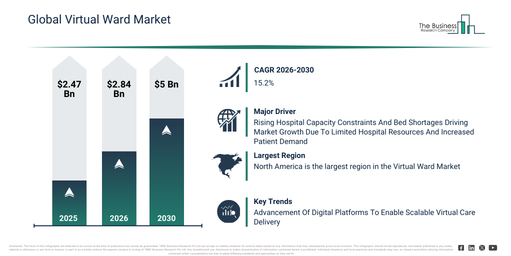
  • Virtual Ward Market Expansion Forecast Reaching $5 Billion By 2030 At 15.2% CAGR

    Virtual Ward Market Expansion Forecast Reaching $5 Billion By 2030 At 15.2% CAGR

    The Business Research Company’s 2026 market reports feature enhanced tools like market attractiveness analysis, TAM assessment, and company scoring matrices, along with interactive dashboards, deeper supply chain insights, and startup coverage strengthening the depth, usability, and strategic value of insights.

    What Is The Anticipated Rise In Market Value Of The Virtual Ward Market During The Forecast Period?

    The virtual ward market has seen swift expansion in recent years. It is forecast to grow from $2.47 billion in 2025 to $2.84 billion in 2026, registering a compound annual growth rate (CAGR) of 14.9%. The market’s past growth can be attributed to several factors, including hospital capacity constraints, an uptick in remote monitoring pilots, the proliferation of telehealth services, an increase in chronic disease admissions, and the early adoption of home care digitization.

    The virtual ward market is anticipated to experience significant expansion in the coming years. Projections indicate it will reach $5 billion by 2030, demonstrating a compound annual growth rate (CAGR) of 15.2%. Key factors contributing to this growth include escalating healthcare cost pressures, an expanding elderly demographic, wider reimbursement options for home care services, increased uptake of connected medical devices, and enhanced governmental backing for home-based treatment approaches. Prominent trends expected during this period involve the increasing embrace of hospital-at-home models, a surge in the utilization of continuous remote patient monitoring, the broadening of virtual nursing services, greater incorporation of clinical decision support tools, and the expanded implementation of home-based acute care initiatives.

    Access Your Free Sample Report For In-Depth Market Analysis:

    https://www.thebusinessresearchcompany.com/sample.aspx?id=33354&type=smp

    Which Important Drivers Are Guiding The Virtual Ward Market Growth?

    The expansion of the virtual ward market is anticipated in the upcoming years, driven by increasing hospital capacity limitations and a lack of available beds. These constraints emerge when healthcare systems lack adequate beds, personnel, or infrastructure to cater to patient needs. An aging demographic, requiring extended hospitalizations and more intricate care, is intensifying these pressures, leading to slower bed turnover and a heightened demand for inpatient services. Virtual wards mitigate these difficulties by allowing patients to access hospital-grade care at home, thus liberating physical beds, enhancing patient movement, and decreasing pressure on hospital resources. As an illustration, in January 2026, the Australian Institute of Health and Welfare (AIHW), an Australian-based government agency, reported an average of 67,300 public hospital beds available in 2023–24, which translates to 2.5 beds per 1,000 people. This limited bed availability, coupled with increasing healthcare demand, underscores the persistent capacity issues within the hospital framework. Consequently, increasing hospital capacity limitations and bed scarcity are projected to fuel the expansion of the virtual ward market.

    How Are Different Segments Classified In The Virtual Ward Market Segment Analysis?

    The virtual ward market covered in this report is segmented –

    1) By Component: Hardware; Software; Services

    2) By Service Type: Chronic Disease Management; Post-Operative Care; Preventive Care; Acute Care at Home; Virtual Nursing Services; Care Coordination Services

    3) By Patient Demographics: Children; Adults; Senior Citizens

    4) By Application: Cardiology; Neurology; Pulmonology; Oncology; Orthopedics; General Medicine; Geriatric Care

    5) By End User: Patients; Hospitals; Clinics; Home Healthcare Providers; Insurance Companies; Government Healthcare Agencies

    Subsegments:

    1) By Hardware: Remote Patient Monitoring Devices; Wearable Health Sensors; Vital Sign Monitoring Equipment; Mobile Medical Tablets; Home Diagnostic Devices

    2) By Software: Virtual Ward Management Platforms; Remote Monitoring Software; Patient Data Management Systems; Clinical Decision Support Software; Telehealth Integration Software

    3) By Services: Remote Patient Monitoring Services; Virtual Clinical Care Services; Technical Support Services; Data Management Services; Care Coordination Services

    Which Trends Are Shaping Growth In The Virtual Ward Market?

    Leading companies in the virtual ward market are concentrating on developing advanced offerings, such as digital platforms. These platforms aim to enhance remote patient observation, facilitate real-time clinical decision-making, improve care coordination among healthcare teams, and reduce hospital admissions by delivering continuous, hospital-quality care in home-based environments. A digital platform is fundamentally a technology-driven system, typically accessed online, designed to enable interactions, transactions, or value exchange between two or more interdependent groups, including users, businesses, developers, or service providers. For example, in June 2025, Medway NHS Foundation Trust, a UK-based public healthcare provider, launched a new digital platform in partnership with health tech firm Feebris to scale its virtual hospital and virtual ward services, extending digital care beyond initial pilot programs. This platform incorporates configurable technology that supports virtual monitoring and hospital-at-home services across all clinical specialties, enables the remote capture of patient data, and considerably reduces hospital bed days and associated costs by facilitating recovery at home. It also supports the submission of pseudonymised data to national health data systems, fostering broader adoption and evidence generation for virtual care models. This solution enhances traditional care models by shifting service delivery from physical wards to digitally enabled patient environments, thereby improving efficiency and the overall patient experience.

    Who Are The Companies Driving Activity In The Virtual Ward Market?

    Major companies operating in the virtual ward market are Amazon.com Inc., UnitedHealth Group Incorporated, CVS Health Corporation, The Cigna Group Inc., Elevance Health Inc., Siemens AG, Roche Holding AG, HCA Healthcare Inc., Best Buy Co. Inc., Abbott Laboratories, Medtronic plc, Stryker Corporation, Koninklijke Philips N.V, GE Healthcare Technologies Inc., Boston Scientific Corporation, Baxter International Inc., ResMed Inc., DexCom Inc., Teladoc Health Inc., Masimo Corporation, iRhythm Technologies Inc.

    Get The Full Virtual Ward Market Report:

    https://www.thebusinessresearchcompany.com/report/virtual-ward-market-report

    Which Region Is The Top Contributor To The Virtual Ward Market By Share?

    North America was the largest region in the virtual ward market in 2025. Asia-Pacific is expected to be the fastest-growing region in the forecast period. The regions covered in the virtual ward market report are Asia-Pacific, South East Asia, Western Europe, Eastern Europe, North America, South America, Middle East, Africa.

    Request A Customized Virtual Ward Market Report For Competitive Insights:

    https://www.thebusinessresearchcompany.com/customise?id=33354&type=smp

    Browse Through More Reports Similar to the Global Virtual Ward Market 2026, By The Business Research Company

    Vertical Market Software Market Report 2026

    https://www.thebusinessresearchcompany.com/report/vertical-market-software-global-market-report

    Market Research Services Market Report 2026

    https://www.thebusinessresearchcompany.com/report/market-research-services-global-market-report

    Virtual Tourism Market Report 2026

    https://www.thebusinessresearchcompany.com/report/virtual-tourism-global-market-report

    Get in touch with us:

    The Business Research Company: https://www.thebusinessresearchcompany.com/

    Americas +1 310-496-7795

    Asia +44 7882 955267 & +91 8897263534

    Europe +44 7882 955267

    Email us at info@tbrc.info

    Follow us on:

    LinkedIn: https://in.linkedin.com/company/the-business-research-company

    YouTube: https://www.youtube.com/channel/UC24_fI0rV8cR5DxlCpgmyFQ

    Global Market Model: https://www.thebusinessresearchcompany.com/global-market-model
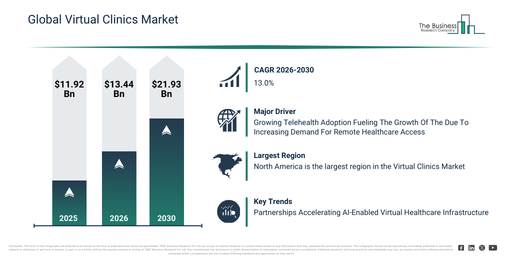
  • Virtual Clinics Market Revenue Projected To Hit $21.92 Billion By 2030 With 13% CAGR

    Virtual Clinics Market Revenue Projected To Hit $21.92 Billion By 2030 With 13% CAGR

    The Business Research Company’s 2026 market reports feature enhanced tools like market attractiveness analysis, TAM assessment, and company scoring matrices, along with interactive dashboards, deeper supply chain insights, and startup coverage strengthening the depth, usability, and strategic value of insights.

    How Is The Market Size Of The Virtual Clinics Market Expected To Scale Between 2026 And 2030?

    The virtual clinics market size has experienced rapid expansion in recent years. It is projected to increase from $11.92 billion in 2025 to $13.44 billion in 2026, achieving a compound annual growth rate (CAGR) of 12.8%. This historical growth can be ascribed to a surge in telemedicine usage, the expansion of broadband access, the proliferation of digital health apps, rising patient demand for convenience, and the initial wave of pandemic-driven virtual visits.

    The virtual clinics market is poised for substantial growth in the upcoming years. It is forecast to expand to $21.93 billion by 2030, achieving a compound annual growth rate (CAGR) of 13.0%. This projected expansion is attributed to the increasing prevalence of hybrid care models, the emergence of digital-first healthcare policies, the broader application of remote diagnostics, enhanced insurer coverage for virtual appointments, and the rise in cross-border teleconsultations. Significant trends within this period include the growing embrace of video consultation platforms, a surge in the use of virtual follow-up services, the proliferation of integrated EHR teleclinic systems, the increased deployment of remote diagnostic kiosks, and a heightened demand for mobile-first virtual clinics.

    Access Your Free Sample Report For In-Depth Market Analysis:

    https://www.thebusinessresearchcompany.com/sample.aspx?id=33351&type=smp

    What Major Factors Are Driving The Virtual Clinics Market Forward?

    The increasing acceptance of telehealth is anticipated to propel the expansion of the virtual clinics market moving forward. Telehealth adoption refers to the degree to which patients, providers, and healthcare systems implement and routinely utilize digital technologies for delivering clinical care and health services remotely. This rise in telehealth adoption is primarily due to the growing need for convenient access to healthcare without requiring in-person visits. Virtual clinics, acting as a key delivery model within telehealth, provide structured platforms that enable patients to receive consultations, diagnoses, and follow-up care entirely online. For instance, in July 2025, according to the International Trade Administration (ITA), digital treatment penetration in the U.S. stood at 18.1% in 2024 and is projected to increase to 28.08% by 2029, reflecting the expanding use of digital and remote healthcare services. Therefore, the growing telehealth adoption is driving growth of the virtual clinics market.

    How Is The Virtual Clinics Market Categorized Across Its Segment Groups?

    The virtual clinics market covered in this report is segmented –

    1) By Type: Teleconsultation Platforms; Virtual Primary Care; Specialty E-Clinics; Artificial Intelligence-Based Symptom Checkers; Mobile Health Services

    2) By Application: Primary Care; Mental Health; Dermatology; Pediatrics; Chronic Care

    3) By End Users: Healthcare Providers; Patients; Pharmaceutical Companies; Insurance Companies; Employers

    Subsegments:

    1) By Teleconsultation Platforms: Video Consultation Platforms; Audio Consultation Platforms; Chat-Based Consultation Platforms; Integrated Scheduling and Consultation Platforms

    2) By Virtual Primary Care: Preventive Care Platforms; Routine Checkup Platforms; Family Medicine Virtual Platforms; General Practice Virtual Platforms

    3) By Specialty E-Clinics: Cardiology Virtual Clinics; Dermatology Virtual Clinics; Endocrinology Virtual Clinics; Orthopedic Virtual Clinics; Neurology Virtual Clinics

    4) By Artificial Intelligence-Based Symptom Checkers: Rule Based Symptom Assessment Tools; Machine Learning Driven Symptom Analysis Tools; Natural Language Processing Based Triage Tools; Predictive Diagnostic Support Tools

    5) By Mobile Health Services: Mobile Consultation Applications; Remote Health Monitoring Applications; Medication Management Applications; Wellness and Preventive Care Applications

    What Trends Are Affecting The Direction Of The Virtual Clinics Market?

    Major entities within the virtual clinics market are increasingly adopting a strategic partnership strategy to enhance technological integration and broaden their market presence. A strategic partnership typically denotes a collaborative relationship between multiple organizations where they combine resources, specialized knowledge, and efforts to achieve shared objectives. For instance, in January 2026, VSee Health, Inc., a US-based telehealth technology provider, formed a strategic alliance with DocBox, a US-based augmented intelligence platform for critical care, to create a cutting-edge virtual ICU operating system for healthcare facilities globally. This collaboration merges VSee’s telehealth and AI-driven workflows with DocBox’s vendor-agnostic bedside data infrastructure, allowing hospitals to utilize real-time, structured clinical data from ICU devices and monitoring systems. The resulting integrated solution is engineered as a reimbursement-ready, AI-native virtual ICU platform that facilitates scalable remote critical care delivery, boosts revenue capture via automated billing processes, enables the deployment of AI decision-support tools on live physiological data, ensures hospitals retain ownership of clinical data, and embeds VSee’s functionalities directly into core clinical operations.

    Which Firms Are Influencing Competition In The Virtual Clinics Market?

    Major companies operating in the virtual clinics market are Optum Inc., The Cigna Group, Siemens Healthineers AG, Koninklijke Philips N.V., SSM Health Care Group, Teladoc Health Inc., Babylon Healthcare Services Limited, Hims & Hers Health Inc., Ping An Healthcare and Technology Company Limited, Kry International AB, American Well Corporation, MDLIVE Inc., Doctor On Demand Inc., CallHealth Services Private Limited, HealthTap Inc., Ada Health GmbH, Virinchi Hospitals Private Limited, Practo Technologies Private Limited, 98point6 Inc., PlushCare Inc.

    Get The Full Virtual Clinics Market Report:

    https://www.thebusinessresearchcompany.com/report/virtual-clinics-market-report

    Which Region Represents The Largest Share Of The Virtual Clinics Market?

    North America was the largest region in the virtual clinics market in 2025. Asia-Pacific is expected to be the fastest-growing region in the forecast period. The regions covered in the virtual clinics market report are Asia-Pacific, South East Asia, Western Europe, Eastern Europe, North America, South America, Middle East, Africa.

    Request A Customized Virtual Clinics Market Report For Competitive Insights:

    https://www.thebusinessresearchcompany.com/customise?id=33351&type=smp

    Browse Through More Reports Similar to the Global Virtual Clinics Market 2026, By The Business Research Company

    Virtual Clinical Trials Market Report 2026

    https://www.thebusinessresearchcompany.com/report/virtual-clinical-trials-global-market-report

    Retail Clinics Market Report 2026

    https://www.thebusinessresearchcompany.com/report/retail-clinics-global-market-report

    Virtual Reality In Healthcare Market Report 2026

    https://www.thebusinessresearchcompany.com/report/virtual-reality-in-healthcare-global-market-report

    Get in touch with us:

    The Business Research Company: https://www.thebusinessresearchcompany.com/

    Americas +1 310-496-7795

    Asia +44 7882 955267 & +91 8897263534

    Europe +44 7882 955267

    Email us at info@tbrc.info

    Follow us on:

    LinkedIn: https://in.linkedin.com/company/the-business-research-company

    YouTube: https://www.youtube.com/channel/UC24_fI0rV8cR5DxlCpgmyFQ

    Global Market Model: https://www.thebusinessresearchcompany.com/global-market-model
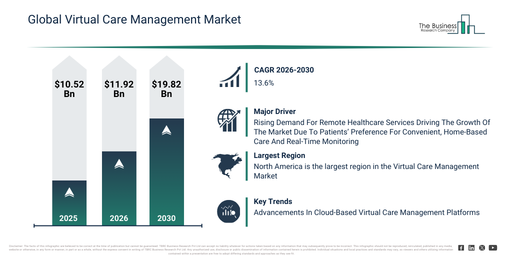
  • Global Virtual Care Management Market Set To Expand To $19.81 Billion By 2030 At 13.6% CAGR

    Global Virtual Care Management Market Set To Expand To $19.81 Billion By 2030 At 13.6% CAGR

    The Business Research Company’s 2026 market reports feature enhanced tools like market attractiveness analysis, TAM assessment, and company scoring matrices, along with interactive dashboards, deeper supply chain insights, and startup coverage strengthening the depth, usability, and strategic value of insights.

    What Level Of Market Value Growth Is Predicted For The Virtual Care Management Market From 2026 To 2030?

    The virtual care management market has experienced rapid expansion recently. It is anticipated to increase from $10.52 billion in 2025 to $11.92 billion in 2026, achieving a compound annual growth rate (CAGR) of 13.3%. This historic growth is largely due to factors such as increased telehealth adoption, the escalating burden of chronic diseases, the broader implementation of digital health records, a surge in remote monitoring pilot initiatives, and early backing for virtual care from insurers.

    Significant expansion is projected for the virtual care management market size in the coming years. By 2030, this market is forecasted to reach a valuation of $19.82 billion, demonstrating a compound annual growth rate (CAGR) of 13.6%. This anticipated growth during the forecast period stems from several factors, including the proliferation of value-based care models, a demographic shift towards an older population, the broadening scope of home-based monitoring initiatives, improved payer reimbursement rates for virtual services, and increased budgetary allocations by providers for digital transformation. Key trends defining this forecast period encompass the increasing uptake of remote care coordination platforms, a surge in continuous chronic care monitoring applications, the evolution and wider availability of digital care plan management instruments, enhanced incorporation of patient engagement platforms, and a greater implementation of virtual care analytics solutions.

    Access Your Free Sample Report For In-Depth Market Analysis:

    https://www.thebusinessresearchcompany.com/sample.aspx?id=33350&type=smp

    Which Key Drivers Are Affecting The Virtual Care Management Market Development?

    The increasing need for remote medical services is anticipated to fuel the expansion of the virtual care management market over the next few years. Remote healthcare services encompass providing medical attention, consultations, and patient oversight remotely via digital platforms and telecommunications. This escalating demand is primarily propelled by patients’ desire for convenient and easily accessible care, enabling them to obtain medical services from their residences, thereby cutting down on travel duration, waiting periods, and related expenses. Virtual care management facilitates remote healthcare provision through coordinated, instantaneous monitoring, communication, and systematic care planning involving both providers and patients. These functionalities bolster the uninterrupted provision of care, elevate patient involvement, and boost the overall efficiency of the healthcare system. Telehealth adoption patterns serve as an indicator of this heightened demand. For example, data from the U.S. Department of Health and Human Services (HHS), a US-based national health policy, reveals that approximately 25% of medicare fee-for-service beneficiaries used a telehealth service, a rise from 18% in March 2023, marking a considerable 7 percentage point increase year-over-year. Consequently, the increased demand for remote healthcare services is propelling the expansion of the virtual care management market.

    How Are Segments Identified Within The Virtual Care Management Market Segment Framework?

    The virtual care management market covered in this report is segmented –

    1) By Component: Software; Hardware; Services

    2) By Deployment Mode: On-Premises; Cloud

    3) By Application: Telehealth; Remote Patient Monitoring; Chronic Disease Management; Behavioral Health; Other Applications

    4) By End-Users: Hospitals; Clinics; Home Care Settings; Other End-Users

    Subsegments:

    1) By Software: Care Coordination Platforms; Patient Engagement Applications; Clinical Decision Support Systems; Population Health Management Tools

    2) By Hardware: Remote Monitoring Devices; Wearable Health Tracking Devices; Connected Diagnostic Equipment; Home Care Medical Devices

    3) By Services: Remote Care Coordination Services; Chronic Care Management Services; Virtual Patient Monitoring Services

    What Trends Are Influencing The Evolution Of The Virtual Care Management Market?

    Companies operating within the virtual care management market are prioritizing developments in cloud and teleconferencing technologies, such as virtual care management (VCM) platforms, to bolster remote patient engagement, enable immediate clinician–patient interactions, optimize care coordination, and facilitate the scalable, secure delivery of healthcare services across diverse care environments. Virtual care management (VCM) refers to the synchronized delivery, oversight, and administration of patient care utilizing digital and remote healthcare technologies, rather than relying on in-person visits. For instance, in march 2023, Royal Philips, a Netherlands-based health technology company, introduced Philips virtual care management, featuring condition-specific protocols (including diabetes and hypertension), connected devices and engagement tools on a secure interoperable cloud-based platform, and licensed clinical professional monitoring with personalized health coaching.

    Who Are The Companies Competing Within The Virtual Care Management Market?

    Major companies operating in the virtual care management market are Amazon.web service Inc., UnitedHealth Group Incorporated, CVS Health Corporation, The Cigna Group Inc., Elevance Health Inc., Centene Corporation, Humana Inc., HCA Healthcare Inc., Best Buy Co. Inc., Koninklijke Philips N.V., Boston Scientific Corporation, ResMed Inc., Agilon Health Inc., DexCom Inc., Teladoc Health Inc., Masimo Corporation, Evolent Health Inc., Privia Health Group Inc., Hims & Hers Health Inc., Doximity Inc., American Well Corporation, LifeMD Inc., Talkspace Inc.

    Get The Full Virtual Care Management Market Report:

    https://www.thebusinessresearchcompany.com/report/virtual-care-management-market-report

    Which Geographic Region Dominates The Virtual Care Management Market?

    North America was the largest region in the virtual care management market in 2025. Asia-Pacific is expected to be the fastest-growing region in the forecast period. The regions covered in the virtual care management market report are Asia-Pacific, South East Asia, Western Europe, Eastern Europe, North America, South America, Middle East, Africa.

    Request A Customized Virtual Care Management Market Report For Competitive Insights:

    https://www.thebusinessresearchcompany.com/customise?id=33350&type=smp

    Browse Through More Reports Similar to the Global Virtual Care Management Market 2026, By The Business Research Company

    Virtual Reality In Healthcare Market Report 2026

    https://www.thebusinessresearchcompany.com/report/virtual-reality-in-healthcare-global-market-report

    Virtual Clinical Trials Market Report 2026

    https://www.thebusinessresearchcompany.com/report/virtual-clinical-trials-global-market-report

    Care Management Solutions Market Report 2026

    https://www.thebusinessresearchcompany.com/report/care-management-solutions-global-market-report

    Get in touch with us:

    The Business Research Company: https://www.thebusinessresearchcompany.com/

    Americas +1 310-496-7795

    Asia +44 7882 955267 & +91 8897263534

    Europe +44 7882 955267

    Email us at info@tbrc.info

    Follow us on:

    LinkedIn: https://in.linkedin.com/company/the-business-research-company

    YouTube: https://www.youtube.com/channel/UC24_fI0rV8cR5DxlCpgmyFQ

    Global Market Model: https://www.thebusinessresearchcompany.com/global-market-model

  • Viral Arthritis Vaccine Market Growth Expected To Reach $11.09 Billion By 2030 At 10.8% CAGR

    Viral Arthritis Vaccine Market Growth Expected To Reach $11.09 Billion By 2030 At 10.8% CAGR

    The Business Research Company’s 2026 market reports feature enhanced tools like market attractiveness analysis, TAM assessment, and company scoring matrices, along with interactive dashboards, deeper supply chain insights, and startup coverage strengthening the depth, usability, and strategic value of insights.

    How Will The Market Value Of The Viral Arthritis Vaccine Market Progress Between 2026 And 2030?

    The viral arthritis vaccine market has experienced significant expansion in recent times. This market is anticipated to increase from $6.66 billion in 2025 to $7.36 billion in 2026, demonstrating a compound annual growth rate (CAGR) of 10.6%. The historical growth of this market can be linked to the past occurrences of chikungunya outbreaks, innovations in vaccine platforms, worldwide immunization programs, studies on zoonotic viruses, and strategies for public health readiness.

    The market for viral arthritis vaccines is projected to experience swift expansion over the coming years. By 2030, its valuation is anticipated to reach $11.09 billion, demonstrating a compound annual growth rate (CAGR) of 10.8%. This anticipated expansion during the forecast period is driven by factors such as advanced vaccine technologies, increasing dangers from arboviruses, quicker clinical trial processes, risks associated with international travel, and the wider adoption of preventive immunization. Key developments expected in this timeframe encompass mRNA-based viral arthritis vaccines, recombinant vector vaccine systems, multi-target arthritogenic virus vaccines, innovative rapid response vaccine approaches, and enhanced adjuvanted formulations for better immune response.

    Access Your Free Sample Report For In-Depth Market Analysis:

    https://www.thebusinessresearchcompany.com/sample.aspx?id=33349&type=smp

    What Factors Are Contributing To The Growth Of The Viral Arthritis Vaccine Market?

    The growth of the viral arthritis vaccine market is anticipated to be propelled by an increasing incidence of mosquito-borne viral infections. These infections refer to diseases transmitted to humans through the bite of infected mosquitoes, including chikungunya, Zika, and dengue viruses, which can cause symptoms such as fever, joint pain, rash, and, in some cases, long-term complications like viral arthritis. The rise in mosquito-borne viral infections is attributed to climate change, which creates warmer temperatures and altered rainfall patterns, thereby expanding mosquito habitats and breeding seasons. A viral arthritis vaccine helps reduce mosquito-borne viral infections by preventing infection and disease progression from viruses that cause joint inflammation, ultimately lowering transmission risk and disease burden in affected populations. For instance, in 2024, according to the World Health Organization (WHO), a Switzerland-based intergovernmental organization, over 7.6 million cases were reported globally by April, tripling the number recorded during the same period in 2023, with transmission continuing to spread across more than 90 countries. Consequently, the rising incidence of mosquito-borne viral infections is driving the growth of the viral arthritis vaccine market.

    What Are The Key Segment Divisions In The Viral Arthritis Vaccine Market Segment Structure?

    The viral arthritis vaccine market covered in this report is segmented –

    1) By Type: Viral Arthritis Vaccine, Live; Viral Arthritis Vaccine, Inactivated

    2) By Virus Targeted: Chikungunya Virus; Rubella Virus; Parvovirus; Other Viral Arthritis-Causing Viruses

    3) By Application: Farms; Individual

    4) By End-User: Hospitals And Clinics; Vaccination Centers; Homecare; Government Programs

    Subsegments:

    1) By Viral Arthritis Vaccine, Live: Single Dose; Combination Dose; Recombinant Live Vaccine

    2) By Viral Arthritis Vaccine, Inactivated: Whole Virus Inactivated Vaccine; Split Virus Inactivated Vaccine; Adjuvanted Inactivated Vaccine

    Which Trends Are Impacting The Progress Of The Viral Arthritis Vaccine Market?

    Major companies in the viral arthritis vaccine market are concentrating on developing innovative vaccine candidates, such as live-attenuated and next-generation chikungunya vaccines, to meet the rising demand for effective prevention of viral-induced joint pain and long-term arthritic complications, particularly for vulnerable populations. Live-attenuated and next-generation chikungunya vaccines are advanced formulations designed to prevent chikungunya virus infection by stimulating strong and lasting immune responses. Live-attenuated vaccines achieve this by using weakened forms of the virus to closely mimic natural infection and provide durable protection, while next-generation vaccines utilize modern platforms like viral vectors, recombinant proteins, or novel attenuation technologies to enhance safety, immunogenicity, and broader applicability across populations. For instance, in June 2025, Bavarian Nordic A/S, a Denmark-based biotechnology company, initiated a Phase 3 clinical study of its chikungunya vaccine in children. This aims to extend protection to pediatric populations in endemic regions, where early-life exposure can lead to significant disease burden. This move to late-stage clinical evaluation demonstrates increasing confidence in the vaccine’s safety and immunogenicity profile, underscoring efforts to expand age indications, strengthen population-level immunity, and reduce the global long-term impact of chikungunya-associated viral arthritis.

    Which Organizations Are Engaged In The Viral Arthritis Vaccine Market?

    Major companies operating in the viral arthritis vaccine market are Bavarian Nordic A/S, Serum Institute of India Private Limited, Valneva SE, Bharat Biotech International Limited, Panacea Biotec Ltd., The Biologicals and Vaccines Institute of Southern Africa (Pty) Ltd.

    Get The Full Viral Arthritis Vaccine Market Report:

    https://www.thebusinessresearchcompany.com/report/viral-arthritis-vaccine-market-report

    Which Region Is The Leading Market For The Viral Arthritis Vaccine Market?

    North America was the largest region in the viral arthritis vaccine market in 2025. Asia-Pacific is expected to be the fastest-growing region in the forecast period. The regions covered in the viral arthritis vaccine market report are Asia-Pacific, South East Asia, Western Europe, Eastern Europe, North America, South America, Middle East, Africa.

    Request A Customized Viral Arthritis Vaccine Market Report For Competitive Insights:

    https://www.thebusinessresearchcompany.com/customise?id=33349&type=smp

    Browse Through More Reports Similar to the Global Viral Arthritis Vaccine Market 2026, By The Business Research Company

    Therapeutic Bcg Vaccines Market Report 2026

    https://www.thebusinessresearchcompany.com/report/therapeutic-bcg-vaccines-global-market-report

    Vaccine Contract Manufacturing Market Report 2026

    https://www.thebusinessresearchcompany.com/report/vaccine-contract-manufacturing-global-market-report

    Rotavirus Vaccine Market Report 2026

    https://www.thebusinessresearchcompany.com/report/rotavirus-vaccine-global-market-report

    Get in touch with us:

    The Business Research Company: https://www.thebusinessresearchcompany.com/

    Americas +1 310-496-7795

    Asia +44 7882 955267 & +91 8897263534

    Europe +44 7882 955267

    Email us at info@tbrc.info

    Follow us on:

    LinkedIn: https://in.linkedin.com/company/the-business-research-company

    YouTube: https://www.youtube.com/channel/UC24_fI0rV8cR5DxlCpgmyFQ

    Global Market Model: https://www.thebusinessresearchcompany.com/global-market-model
  • Vibrating Mesh Nebulizer Market Forecast 2026–2030 Highlighting Expansion Across Industries

    Vibrating Mesh Nebulizer Market Forecast 2026–2030 Highlighting Expansion Across Industries

    The Business Research Company’s 2026 market reports feature enhanced tools like market attractiveness analysis, TAM assessment, and company scoring matrices, along with interactive dashboards, deeper supply chain insights, and startup coverage strengthening the depth, usability, and strategic value of insights.

    What Are The Market Size Estimates For The Vibrating Mesh Nebulizer Market In 2026 And 2030?

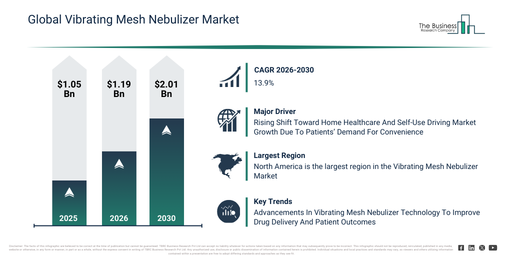
    The vibrating mesh nebulizer market has observed substantial expansion in recent years. Its valuation is anticipated to climb from $1.05 billion in 2025 to $1.19 billion in 2026, demonstrating a compound annual growth rate (CAGR) of 13.7%. The market’s past growth can be ascribed to an increase in asthma prevalence, the expansion of the COPD patient population, the rising need for home respiratory care, innovations in portable devices, and the requirements for pediatric inhalation therapy.

    The vibrating mesh nebulizer market size is projected to experience substantial growth over the next few years. It is forecast to reach $2.01 billion in 2030, expanding at a compound annual growth rate (CAGR) of 13.9%. This anticipated growth during the forecast period is fueled by the increased adoption of connected respiratory devices, the expansion of home-based chronic care, innovations in wearable inhalation monitoring, the demand for personalized drug delivery, and the necessity for respiratory care for an aging population. Key trends identified for the forecast period include portable handheld mesh nebulizers, ultra-quiet nebulization devices, smart connected inhalation systems, high-efficiency aerosol delivery, and rechargeable mesh nebulizer units.

    Access Your Free Sample Report For In-Depth Market Analysis:

    https://www.thebusinessresearchcompany.com/sample.aspx?id=33348&type=smp

    Which Strong Drivers Are Impacting The Vibrating Mesh Nebulizer Market Growth?

    The increasing trend toward home healthcare and self-use is anticipated to fuel the expansion of the vibrating mesh nebulizer market in the coming years. Home healthcare and self-use encompass medical interventions and devices that empower patients to manage their health autonomously in non-clinical environments. This transition is largely driven by patients’ desire for convenient, cost-effective care, as home-based treatment reduces hospital visits, lowers overall healthcare costs, and enhances comfort and adherence to therapy. Vibrating mesh nebulizers are particularly well-suited for home healthcare and self-use due to their compact design, quiet operation, portability, and capacity to efficiently deliver precise respiratory drug doses. For instance, in July 2025, according to the Department of Health and Social Care (DHSC), a UK-based government body, in July 2025, approximately 489,000 people in England received community-based support in 2024, equivalent to 1,070 per 100,000 adults, representing year-on-year growth in home-based care utilization. Consequently, the rising shift toward home healthcare and self-use is driving the growth of the vibrating mesh nebulizer market.

    Which Segment Categories Are Included In The Vibrating Mesh Nebulizer Market Segment Analysis?

    The vibrating mesh nebulizer market covered in this report is segmented –

    1) By Product Type: Active Mesh Nebulizer; Passive Mesh Nebulizer

    2) By Age Group: Adults; Paediatrics

    3) By Distribution Channel: Online; Offline

    4) By Application: Chronic Obstructive Pulmonary Disease; Asthma; Cystic Fibrosis; Other Applications

    5) By End User: Hospitals; Clinics; Home Healthcare; Emergency Medical Centres; Other End Users

    Subsegments:

    1) By Active Mesh Nebulizer: Portable Active Mesh Nebulizers; Handheld Active Mesh Nebulizers; Battery Operated Active Mesh Nebulizers; Rechargeable Active Mesh Nebulizers; High Frequency Vibration Active Mesh Nebulizers

    2) By Passive Mesh Nebulizer: Compact Passive Mesh Nebulizers; Tabletop Passive Mesh Nebulizers; Low Noise Passive Mesh Nebulizers; Single Patient Use Passive Mesh Nebulizers; Continuous Use Passive Mesh Nebulizers

    What Trends Are Transforming The Vibrating Mesh Nebulizer Market?

    Major companies in the vibrating mesh nebulizer market are concentrating on technological innovation, specifically in vibrating mesh nebulizers, to improve drug delivery efficiency, patient compliance, and overall treatment outcomes. A vibrating mesh nebulizer is a medical device engineered to deliver medication in the form of a fine aerosol directly into the lungs. For instance, in March 2025, Loxim, a China-based medical technology company, unveiled the LX8201-0B chip, a dedicated drive solution for vibrating mesh nebulizers designed to enhance device performance. The LX8201-0B chip optimizes vibration frequency and amplitude to ensure uniform aerosol particle size, supports low power consumption for portable applications, and integrates seamlessly into existing nebulizer systems. Its key benefits include improved medication delivery efficiency, a longer device lifespan, and adaptability for a variety of therapeutic uses, including asthma, COPD, and other respiratory treatments. This launch highlights the industry’s progression towards miniaturized, energy-efficient, and high-precision nebulizer solutions.

    Who Are The Active Companies Shaping The Vibrating Mesh Nebulizer Market?

    Major companies operating in the vibrating mesh nebulizer market are McKesson Corporation, Medtronic plc, Koninklijke Philips N.V, Henry Schein Inc., OMRON Corporation, Jiangsu Yuyue Medical Equipment & Supply Co. Ltd., Beurer GmbH, Drive DeVilbiss Healthcare, AptarGroup Inc., Aerogen Ltd., PARI GmbH, BPL Medical Technologies Private Limited, GF Health Products Inc., Rossmax International Ltd., Shenzhen Feellife Health Technology Co. Ltd., Labtron Equipment Ltd., Honsun (Nantong) Co. Ltd., Well Lead Medical Co. Ltd., Medline Industries LP

    Get The Full Vibrating Mesh Nebulizer Market Report:

    https://www.thebusinessresearchcompany.com/report/vibrating-mesh-nebulizer-market-report

    Where Is The Vibrating Mesh Nebulizer Market Primarily Concentrated By Region?

    North America was the largest region in the vibrating mesh nebulizer market in 2025. Asia-Pacific is expected to be the fastest-growing region in the forecast period. The regions covered in the vibrating mesh nebulizer market report are Asia-Pacific, South East Asia, Western Europe, Eastern Europe, North America, South America, Middle East, Africa.

    Request A Customized Vibrating Mesh Nebulizer Market Report For Competitive Insights:

    https://www.thebusinessresearchcompany.com/customise?id=33348&type=smp

    Browse Through More Reports Similar to the Global Vibrating Mesh Nebulizer Market 2026, By The Business Research Company

    Nebulizers Market 2026

    https://www.thebusinessresearchcompany.com/report/nebulizers-market

    Noise Vibration Harshness Testing Market Report 2026

    https://www.thebusinessresearchcompany.com/report/noise-vibration-harshness-testing-global-market-report

    Vibration System Market Report 2026

    https://www.thebusinessresearchcompany.com/report/vibration-system-global-market-report

    Get in touch with us:

    The Business Research Company: https://www.thebusinessresearchcompany.com/

    Americas +1 310-496-7795

    Asia +44 7882 955267 & +91 8897263534

    Europe +44 7882 955267

    Email us at info@tbrc.info

    Follow us on:

    LinkedIn: https://in.linkedin.com/company/the-business-research-company

    YouTube: https://www.youtube.com/channel/UC24_fI0rV8cR5DxlCpgmyFQ

    Global Market Model: https://www.thebusinessresearchcompany.com/global-market-model
  • Global Thermal Cyclers Market Analysis For 2026–2030 With Strategic Insights

    Global Thermal Cyclers Market Analysis For 2026–2030 With Strategic Insights

    The Business Research Company’s 2026 market reports feature enhanced tools like market attractiveness analysis, TAM assessment, and company scoring matrices, along with interactive dashboards, deeper supply chain insights, and startup coverage strengthening the depth, usability, and strategic value of insights.

    What Expansion In Market Value Is Forecasted For The Thermal Cyclers Market Between 2026 And 2030?

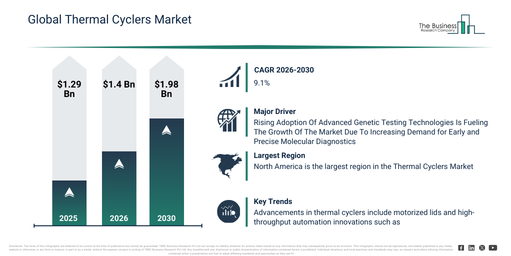
    The thermal cyclers market has demonstrated robust expansion in recent years. It is forecast to grow from $1.29 billion in 2025 to $1.4 billion in 2026, at a compound annual growth rate (CAGR) of 8.9%. This historical growth can be linked to the rise of molecular diagnostics, the broadening of genomics research, an increase in infectious disease testing, advancements in forensic analysis, and the expansion of academic research laboratories.

    The thermal cyclers market size is projected to experience substantial expansion over the upcoming years, reaching $1.98 billion by 2030, with a compound annual growth rate (CAGR) of 9.1%. Key factors contributing to this growth during the forecast period include the expansion of point-of-care testing, the advancement of precision medicine, the growing demand for rapid diagnostics, increased biotech research funding, and the wider adoption of digital PCR. Prominent trends expected in the forecast period are high-throughput PCR cycler systems, portable field-deployable cyclers, AI-assisted temperature optimization, cloud-connected PCR platforms, and rapid-cycling thermal blocks.

    Access Your Free Sample Report For In-Depth Market Analysis:

    https://www.thebusinessresearchcompany.com/sample.aspx?id=33341&type=smp

    What Key Factors Are Shaping The Thermal Cyclers Market Landscape?

    The expanding integration of sophisticated genetic testing methods is anticipated to boost the growth of the thermal cyclers market moving forward. Molecular diagnostics encompasses advanced laboratory procedures for accurately detecting and analyzing genetic material (DNA and RNA) to pinpoint diseases, infections, and inherited conditions. The growth in molecular diagnostics stems from a greater need for early and accurate disease identification, promoting the application of advanced genetic testing techniques for quicker and more dependable clinical results. Thermal cyclers aid molecular diagnostics by facilitating precise DNA amplification via regulated temperature changes, thereby guaranteeing accurate, swift, and dependable molecular tests. As an example, reports from Ellume, an Australia-based rapid digital diagnostic test developer, indicated that in May 2025, more than 96,215 molecular diagnostic tests were performed weekly in the US in 2023. This demonstrates widespread clinical application and the sustained relevance of molecular diagnostics in monitoring diseases and informing clinical decisions. Consequently, the increased adoption of advanced genetic testing methods is fueling the expansion of the thermal cyclers market.

    How Is The Thermal Cyclers Market Broken Down By Segment Categories?

    The thermal cyclers market covered in this report is segmented –

    1) By Product Type: Standard Polymerase Chain Reaction (PCR) Thermal Cyclers; Real-Time Polymerase Chain Reaction (PCR) (qPCR) Systems; Digital Polymerase Chain Reaction (dPCR) Systems; High-Throughput Thermal Cyclers; Portable Or Compact Thermal Cyclers

    2) By Technology: Gradient Polymerase Chain Reaction (PCR); Touchdown Polymerase Chain Reaction (PCR); Fast Polymerase Chain Reaction (PCR); Reverse Transcription Polymerase Chain Reaction (RT-PCR); Other Technologies

    3) By Application: Clinical Diagnostics; Research And Academic Use; Forensic Applications; Agricultural Biotechnology; Environmental Testing

    4) By Distribution Channel: Direct Sales; Distributors Or Resellers; Online Sales

    5) By End User: Hospitals And Diagnostic Centers; Academic And Research Institutions; Biotechnology And Pharmaceutical Companies; Forensic Laboratories; Contract Research Organizations (CROs)

    Subsegments:

    1) By Standard Polymerase Chain Reaction (PCR) Thermal Cyclers: Conventional Block Thermal Cyclers; Gradient Thermal Cyclers; Touchscreen Controlled Thermal Cyclers; Multi Block Thermal Cyclers

    2) By Real-Time Polymerase Chain Reaction (PCR) (qPCR) Systems: Dye Based Detection Systems; Probe Based Detection Systems; Multiplex Real Time Systems; Fast Cycling Real Time Systems

    3) By Digital Polymerase Chain Reaction (dPCR) Systems: Droplet Based Digital Systems; Chip Based Digital Systems; Microfluidic Digital Systems; High Precision Quantification Systems

    4) By High-Throughput Thermal Cyclers: Ninety Six Well Thermal Cyclers; Three Hundred Eighty Four Well Thermal Cyclers; Automated High Capacity Thermal Cyclers; Parallel Processing Thermal Cyclers

    5) By Portable Or Compact Thermal Cyclers: Battery Operated Thermal Cyclers; Handheld Thermal Cyclers; Field Deployable Thermal Cyclers; Point Of Care Thermal Cyclers

    What Trends Are Shaping The Future Of The Thermal Cyclers Market?

    Leading companies within the **thermal cyclers market** are increasingly prioritizing advanced innovations, such as **deep-well thermal cyclers**, to secure a competitive edge. These specialized laboratory instruments facilitate temperature-controlled reactions, like **PCR**, on samples contained in deep-well plates, which accommodate greater volumes compared to standard **PCR** tubes or plates. For example, in **March 2025**, Bio-Rad Laboratories, a US-based research firm, introduced its **PTC Tempo 384 Thermal Cycler**, the latest addition to its **PTC Tempo** series. This sophisticated device is specifically engineered for high-throughput **PCR** applications across fundamental research, translational studies, process development, and quality control. The **PTC Tempo 384** incorporates a **384-well** reaction module featuring a motorized lid, which enables seamless automation and robotic integration. It boasts exceptional thermal uniformity (**±0.3°C at 95°C**), dynamic ramp rates reaching up to **5°C per second**, and multizone gradient programming, rendering it more effective for demanding, scalable workflows than alternative models such as the dual-block **PTC Tempo 48/48**. Constructed upon the reliable **C1000 Touch** platform, the **PTC Tempo 384** comes equipped with an enhanced, user-friendly interface, versatile connectivity options including **BR.io** cloud monitoring, and the recent software update **v3.0.0.8** that improves API support. Consequently, the **PTC Tempo 384** stands as an ideal solution for academic, commercial, and biopharma laboratories, delivering unparalleled reproducibility and usability.

    Which Players Are Present In The Thermal Cyclers Market Space?

    Major companies operating in the thermal cyclers market are Roche Diagnostics, Thermo Fisher Scientific Inc., Agilent Technologies, Bio-Rad Laboratories, QIAGEN, Eppendorf, Cepheid, Bio-Techne, Hamilton Company, Heal Force Bio-Meditech, Takara Bio, Hangzhou Bioer Technology, Analytik Jena, Esco Lifesciences, ELITechGroup, Benchmark Scientific, Cole-Parmer Instrument Company, Biomeme, GNA Biosolutions, Cleaver Scientific, Starlab International, and Scilogex.

    Get The Full Thermal Cyclers Market Report:

    https://www.thebusinessresearchcompany.com/report/thermal-cyclers-market-report

    Which Region Has The Greatest Market Share In The Thermal Cyclers Market?

    North America was the largest region in the thermal cyclers market in 2025. Asia-Pacific is expected to be the fastest-growing region in the forecast period. The regions covered in the thermal cyclers market report are Asia-Pacific, South East Asia, Western Europe, Eastern Europe, North America, South America, Middle East, Africa.

    Request A Customized Thermal Cyclers Market Report For Competitive Insights:

    https://www.thebusinessresearchcompany.com/customise?id=33341&type=smp

    Browse Through More Reports Similar to the Global Thermal Cyclers Market 2026, By The Business Research Company

    Automotive Heat Exchanger Market Report 2026

    https://www.thebusinessresearchcompany.com/report/automotive-heat-exchanger-global-market-report

    Automotive Thermal System Market Report 2026

    https://www.thebusinessresearchcompany.com/report/automotive-thermal-system-global-market-report

    Battery Cyclers Market Report 2026

    https://www.thebusinessresearchcompany.com/report/battery-cyclers-global-market-report

    Get in touch with us:

    The Business Research Company: https://www.thebusinessresearchcompany.com/

    Americas +1 310-496-7795

    Asia +44 7882 955267 & +91 8897263534

    Europe +44 7882 955267

    Email us at info@tbrc.info

    Follow us on:

    LinkedIn: https://in.linkedin.com/company/the-business-research-company

    YouTube: https://www.youtube.com/channel/UC24_fI0rV8cR5DxlCpgmyFQ

    Global Market Model: https://www.thebusinessresearchcompany.com/global-market-model
  • Teleultrasound System Market Outlook 2026–2030 Driven By Growth Factors And Projections

    Teleultrasound System Market Outlook 2026–2030 Driven By Growth Factors And Projections

    The Business Research Company’s 2026 market reports feature enhanced tools like market attractiveness analysis, TAM assessment, and company scoring matrices, along with interactive dashboards, deeper supply chain insights, and startup coverage strengthening the depth, usability, and strategic value of insights.

    How Large Will The Teleultrasound System Market Be By 2030 Compared To Its 2026 Market Size?

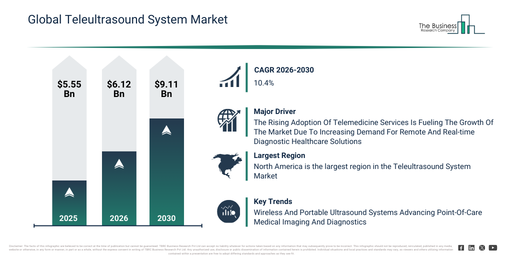
    The teleultrasound system market size has shown substantial growth in recent years. This market is anticipated to expand from $5.55 billion in 2025 to $6.12 billion in 2026, achieving a compound annual growth rate (CAGR) of 10.2%. The historical increase in market size is linked to factors such as the rising adoption of telemedicine, a deficiency of imaging specialists, the broadening of rural healthcare initiatives, the proliferation of portable ultrasound devices, and the demand for quicker diagnoses.

    The teleultrasound system market is projected to experience substantial growth over the next few years. Forecasts show it will expand to $9.11 billion by 2030, achieving a compound annual growth rate (CAGR) of 10.4%. This anticipated growth during the forecast period is driven by factors such as the expansion of remote diagnostics, an increase in connected medical devices, a rising demand for point of care imaging, intensified healthcare digitization, and broader reimbursement options for telehealth services. Significant trends expected in this period include AI-enabled remote ultrasound guidance, cloud-based image transmission platforms, portable connected ultrasound devices, real-time specialist collaboration tools, and secure tele-imaging workflows.

    Access Your Free Sample Report For In-Depth Market Analysis:

    https://www.thebusinessresearchcompany.com/sample.aspx?id=33339&type=smp

    Which Factors Are Influencing The Growth Of The Teleultrasound System Market?

    The increasing utilization of telemedicine services is anticipated to fuel the expansion of the teleultrasound system market moving forward. Telemedicine services involve delivering healthcare consultations, diagnoses, and monitoring through digital communication technologies, eliminating the need for in-person visits. The surge in telemedicine adoption is attributed to the growing demand for convenient and remote access to healthcare, particularly in regions that are underserved or geographically isolated. The teleultrasound system plays a crucial role in broadening access to diagnostic imaging by enabling real-time remote guidance, image acquisition, and interpretation by specialists, especially beneficial in remote or underserved healthcare environments. As an illustration, in June 2025, a report from Harmony Healthcare IT, a US-based data management firm, revealed that 62% of Americans had used telehealth services for their medical requirements, while more than 77% considered telehealth to be the future of healthcare, showcasing robust consumer confidence and sustained growth in usage. Thus, the growing adoption of telemedicine services is a primary driver for the teleultrasound system market’s growth.

    What Are The Different Segment Types In The Teleultrasound System Market Segment Breakdown?

    The teleultrasound system market covered in this report is segmented –

    1) By Component: Hardware; Software; Services

    2) By Technology: Two-Dimensional (2D) Ultrasound; Three-Dimensional (3D) Or Four Dimensional (4D) Ultrasound; Artificial Intelligence-Enabled Ultrasound; Cloud-Based Imaging Platforms

    3) By Product Type: Portable Teleultrasound Systems; Handheld Teleultrasound Systems; Cart-Based Teleultrasound Systems

    4) By Application: Cardiology; Obstetrics Or Gynecology; Radiology; Vascular; Musculoskeletal; Other Applications

    5) By End-User: Hospitals; Diagnostic Centers; Ambulatory Surgical Centers; Other End-Users

    Subsegments:

    1) By Hardware: Ultrasound Imaging Devices; Ultrasound Probes And Transducers; Communication And Transmission Modules; Display And Control Units; Peripheral And Accessory Equipment

    2) By Software: Image Processing Software; Real Time Image Transmission Software; Remote Collaboration And Guidance Software; Data Storage And Management Software; Integration And Workflow Management Software

    3) By Services: Installation And System Integration Services; Maintenance And Technical Support Services; Training And Education Services; Calibration And Quality Assurance Services; Operational And Consulting Services

    Which Trends Are Contributing To Changes In The Teleultrasound System Market?

    Companies operating within the medical imaging and diagnostic ultrasound market are concentrating on developing innovative solutions, such as wireless and portable ultrasound systems. This focus aims to enhance point-of-care diagnostics, improve clinical workflow efficiency, and expand access to imaging across various care settings. Wireless ultrasound systems are defined as compact, cable-free imaging devices that wirelessly transmit ultrasound data to smartphones, tablets, or workstations, thereby offering enhanced mobility, ease of use, and quick deployment in hospitals, clinics, emergency care, and remote environments. As an illustration, in November 2025, Mindray Bio-Medical Electronics Co. Ltd., a China-based medical device manufacturer, unveiled a new wireless ultrasound system. This system is engineered to provide high-quality imaging through flexible, handheld operation, supporting real-time imaging, seamless wireless connectivity, and compatibility with numerous clinical applications, enabling healthcare professionals to conduct rapid and accurate assessments at the bedside or in the field. This release emphasizes the growing demand for portable, user-friendly diagnostic technologies that contribute to better clinical decision-making while boosting efficiency and accessibility across healthcare environments.

    Who Are The Well-Known Companies In The Teleultrasound System Market?

    Major companies operating in the teleultrasound system market are Siemens Healthineers AG, FUJIFILM Holdings Corporation, Koninklijke Philips N.V., GE HealthCare Technologies Inc., Mindray Medical International Limited, Canon Medical Systems Corporation, DeepEcho Inc., Esaote S.p.A., TELSONIC AG, Butterfly Network Inc., EchoNous Inc., Clarius Mobile Health Corp., Telemed Medical Systems S.r.l., Healcerion Co. Ltd., Interson Corporation, Remote Medical Technologies LLC, Pulsenmore Ltd., e-Medical Systems Pty Ltd, Alpinion Medical Systems Co. Ltd., TeleGuidance Systems Inc.

    Get The Full Teleultrasound System Market Report:

    https://www.thebusinessresearchcompany.com/report/teleultrasound-system-market-report

    Which Region Accounts For The Largest Portion Of The Teleultrasound System Market?

    North America was the largest region in the teleultrasound system market in 2025. Asia-Pacific is expected to be the fastest-growing region in the forecast period. The regions covered in the teleultrasound system market report are Asia-Pacific, South East Asia, Western Europe, Eastern Europe, North America, South America, Middle East, Africa.

    Request A Customized Teleultrasound System Market Report For Competitive Insights:

    https://www.thebusinessresearchcompany.com/customise?id=33339&type=smp

    Browse Through More Reports Similar to the Global Teleultrasound System Market 2026, By The Business Research Company

    Consumer Telematics Market Report 2026

    https://www.thebusinessresearchcompany.com/report/consumer-telematics-global-market-report

    Commercial Telematics Market Report 2026

    https://www.thebusinessresearchcompany.com/report/commercial-telematics-global-market-report

    Commercial Vehicle Telematics Market Report 2026

    https://www.thebusinessresearchcompany.com/report/commercial-vehicle-telematics-global-market-report

    Get in touch with us:

    The Business Research Company: https://www.thebusinessresearchcompany.com/

    Americas +1 310-496-7795

    Asia +44 7882 955267 & +91 8897263534

    Europe +44 7882 955267

    Email us at info@tbrc.info

    Follow us on:

    LinkedIn: https://in.linkedin.com/company/the-business-research-company

    YouTube: https://www.youtube.com/channel/UC24_fI0rV8cR5DxlCpgmyFQ

    Global Market Model: https://www.thebusinessresearchcompany.com/global-market-model

  • Targeted LNPs For Extrahepatic Delivery Market Developments And Opportunities Across 2026–2030

    Targeted LNPs For Extrahepatic Delivery Market Developments And Opportunities Across 2026–2030

    The Business Research Company’s 2026 market reports feature enhanced tools like market attractiveness analysis, TAM assessment, and company scoring matrices, along with interactive dashboards, deeper supply chain insights, and startup coverage strengthening the depth, usability, and strategic value of insights.

    What Is The Projected Increase In Market Value Of The Targeted LNPs For Extrahepatic Delivery Market During 2026–2030?

    The targeted lnps for extrahepatic delivery market has experienced significant growth over recent years. It is anticipated to expand from $1.81 billion in 2025 to $2.19 billion in 2026, exhibiting a compound annual growth rate (CAGR) of 20.7%. This historical progression can be attributed to several factors, including the accomplishments of hepatic LNP delivery systems, the expansion of mRNA vaccine platforms, increased nanomedicine research, the growing number of gene therapy trials, and the rising complexities associated with biologic drug delivery.

    The targeted lnps for extrahepatic delivery market size is expected to undergo substantial expansion in the coming years, projected to reach $4.68 billion by 2030, demonstrating a compound annual growth rate (CAGR) of 20.9%. This growth during the forecast period is driven by factors such as a burgeoning pipeline of RNA therapeutics, increasing demand for tissue-targeted delivery solutions, the evolution of precision drug delivery platforms, intensified oncology nanoparticle research, and a rise in biotech delivery partnerships. Key trends anticipated in this period include the development of extrahepatic targeted LNP formulations, ligand-directed nanoparticle delivery methods, tissue-specific RNA delivery systems, advanced ionizable lipid designs, and modular targeted nanocarrier platforms.

    Access Your Free Sample Report For In-Depth Market Analysis:

    https://www.thebusinessresearchcompany.com/sample.aspx?id=33338&type=smp

    What Leading Drivers Are Supporting The Targeted LNPs For Extrahepatic Delivery Market Expansion?

    A projected expansion of the targeted lipid nanoparticles (LNPs) for extrahepatic delivery market is anticipated, driven by the increasing need for personalized medicine (PM). Personalized medicine (PM) involves therapeutic approaches customized to an individual’s unique genetic makeup, disease attributes, or biological markers, aiming to optimize treatment effectiveness and reduce adverse reactions. The adoption of personalized therapies is being expedited by progress in molecular diagnostics, the discovery of biomarkers, and the development of precision-oriented drugs. Targeted lipid nanoparticles are instrumental in facilitating personalized medicine through their ability to precisely deliver therapeutic agents to particular tissues or cell types, including extrahepatic targets, thereby boosting therapeutic efficacy and ensuring safety. For example, data from the Personalized Medicine Coalition, a US-based hospital and health care organization, indicates that the U.S. Food and Drug Administration sanctioned 16 novel personalized treatments for rare disease patients in 2023, an increase from six in 2022. Consequently, the heightened demand for personalized medicine (PM) is fueling the expansion of the targeted lipid nanoparticles (LNPs) for extrahepatic delivery market.

    Which Segment Classifications Are Used In The Targeted LNPs For Extrahepatic Delivery Market Segment Analysis?

    The targeted lnps for extrahepatic delivery market covered in this report is segmented –

    1) By Product Type: Ionizable Lipid-Based Lipid Nanoparticles; Cationic Lipid-Based Lipid Nanoparticles; Polyethylene Glycol-Coated Lipid Nanoparticles; Other Lipid Nanoparticle Formulations

    2) By Therapeutic Area: Oncology; Infectious Diseases; Genetic Disorders; Metabolic Diseases; Other Therapeutic Area

    3) By Application: Gene Therapy; Messenger Ribonucleic Acid Vaccines; Small Interfering Ribonucleic Acid Delivery; Protein Delivery; Other Application

    4) By End-User: Pharmaceutical Companies; Biotechnology Companies; Academic and Research Institutes; Other End-Users

    Subsegments:

    1) By Ionizable Lipid-Based Lipid Nanoparticles: Single Chain Ionizable Lipids; Multi-Chain Ionizable Lipids; Functionalized Ionizable Lipids

    2) By Cationic Lipid-Based Lipid Nanoparticles: Quaternary Ammonium Cationic Lipids; Permanent Cationic Lipids; Helper Lipids in Cationic Formulations

    3) By Polyethylene Glycol-Coated Lipid Nanoparticles: Polyethylene Glycolylated Lipids with Different Chain Lengths; Polyethylene Glycol-Lipid Conjugates with Targeting Ligands; Polyethylene Glycolylated Lipid Combinations for Stability

    4) By Other Lipid Nanoparticle Formulations: Sphingomyelin-Based Lipid Nanoparticles; Biodegradable Lipid Nanoparticles; Modular or Hybrid Lipid Nanoparticles; Stimulus-Responsive Lipid Nanoparticles

    What Market Trends Are Affecting The Targeted LNPs For Extrahepatic Delivery Market?

    Major companies engaged in the targeted lipid nanoparticles (LNPs) for extrahepatic delivery market are concentrating on technological improvements in targeted LNP platforms, including DARPin-conjugated systems, to achieve selective delivery to immune and tissue-specific cells. DARPin-conjugated lipid nanoparticles refer to LNPs functionalized with Designed Ankyrin Repeat Proteins (DARPins), which are engineered binding proteins capable of highly specific interactions with chosen cell surface receptors. This specific targeting capability enables improved uptake by particular cell types, thereby supporting extrahepatic applications such as immune cell modulation and tissue-specific gene delivery. As an example, in November 2025, Acuitas Therapeutics Inc., a Canada-based biotechnology company, introduced next-generation LNP technologies specifically designed for extrahepatic targeting. These included platforms aimed at T-lymphocyte delivery, mucous-penetrant formulations for airway epithelial cells, and a pre-formed vesicle manufacturing approach intended to improve scalability, cost efficiency, and storage stability. These advancements expand the potential applications of mRNA-LNP therapeutics beyond the liver and support broader use cases in gene editing, vaccines, and personalized medicine.

    Which Firms Are Contributing To The Targeted LNPs For Extrahepatic Delivery Market Ecosystem?

    Major companies operating in the targeted lnps for extrahepatic delivery market are Pfizer Inc., Sanofi S.A., Merck KGaA, FUJIFILM Pharmaceuticals U.S.A. Inc., Evonik Industries AG, Recipharm, CordenPharma International GmbH, Ardena Nanomedicines, Arcturus Therapeutics Holdings Inc., BIOVECTRA Inc., Ascendia Pharmaceuticals Inc., ABITEC Corporation, Creative Biolabs, Genevant Sciences GmbH, Polymun Scientific Immunbiologische Forschung GmbH, ST Pharm, eTheRNA immunotherapies NV, NanoVation Therapeutics, DIANT Pharma, Curapath, Phosphorex Inc.

    Get The Full Targeted LNPs For Extrahepatic Delivery Market Report:

    https://www.thebusinessresearchcompany.com/report/targeted-lnps-for-extrahepatic-delivery-market-report

    Which Region Holds The Highest Market Share In The Targeted LNPs For Extrahepatic Delivery Market?

    North America was the largest region in the targeted lipid nanoparticles (LNPs) for extrahepatic delivery market in 2025. Asia-Pacific is expected to be the fastest-growing region in the forecast period. The regions covered in the targeted lnps for extrahepatic delivery market report are Asia-Pacific, South East Asia, Western Europe, Eastern Europe, North America, South America, Middle East, Africa.

    Request A Customized Targeted LNPs For Extrahepatic Delivery Market Report For Competitive Insights:

    https://www.thebusinessresearchcompany.com/customise?id=33338&type=smp

    Browse Through More Reports Similar to the Global Targeted LNPs For Extrahepatic Delivery Market 2026, By The Business Research Company

    Liver Health Supplements Market Report 2026

    https://www.thebusinessresearchcompany.com/report/liver-health-supplements-global-market-report

    Liver Diseases Therapeutics Market Report 2026

    https://www.thebusinessresearchcompany.com/report/liver-diseases-therapeutics-global-market-report

    Fatty Liver Treatment Market Report 2026

    https://www.thebusinessresearchcompany.com/report/fatty-liver-treatment-global-market-report

    Get in touch with us:

    The Business Research Company: https://www.thebusinessresearchcompany.com/

    Americas +1 310-496-7795

    Asia +44 7882 955267 & +91 8897263534

    Europe +44 7882 955267

    Email us at info@tbrc.info

    Follow us on:

    LinkedIn: https://in.linkedin.com/company/the-business-research-company

    YouTube: https://www.youtube.com/channel/UC24_fI0rV8cR5DxlCpgmyFQ

    Global Market Model: https://www.thebusinessresearchcompany.com/global-market-model
  • Systemic Amyloidosis Therapeutic Market Forecast 2026–2030 Presenting Long-Term Industry Insights

    Systemic Amyloidosis Therapeutic Market Forecast 2026–2030 Presenting Long-Term Industry Insights

    The Business Research Company’s 2026 market reports feature enhanced tools like market attractiveness analysis, TAM assessment, and company scoring matrices, along with interactive dashboards, deeper supply chain insights, and startup coverage strengthening the depth, usability, and strategic value of insights.

    How Is The Market Size Of The Systemic Amyloidosis Therapeutic Market Expected To Change From 2026 To 2030?

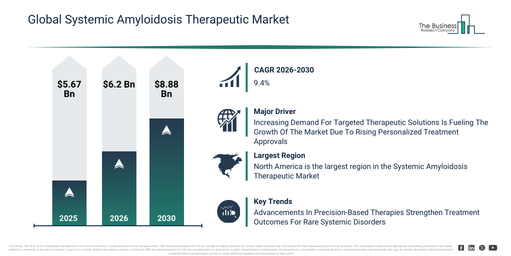
    The systemic amyloidosis therapeutic market has experienced robust expansion recently. Projections indicate its expansion from $5.67 billion in 2025 to $6.2 billion in 2026, demonstrating a compound annual growth rate (CAGR) of 9.2%. Several factors contributed to this historic growth, including the past underdiagnosis of amyloidosis, a dependence on chemotherapy treatments, the rise in hematology treatment centers, heightened awareness of rare diseases, and the initial uptake of proteasome inhibitors.

    The systemic amyloidosis therapeutic market is projected to experience substantial expansion over the coming years. This market is forecast to reach $8.88 billion by 2030, demonstrating a compound annual growth rate (CAGR) of 9.4%. Factors contributing to this growth during the forecast period include an increase in rare disease diagnosis rates, the proliferation of targeted biologic medications, a rise in gene silencing therapy approvals, the expansion of specialized clinic networks, and more robust orphan drug incentives. Key trends anticipated during this period encompass the development of targeted amyloid protein stabilizer drugs, gene silencing amyloidosis therapies, treatments based on monoclonal antibodies, combination regimen treatment protocols, and organ-specific supportive drug strategies.

    Access Your Free Sample Report For In-Depth Market Analysis:

    https://www.thebusinessresearchcompany.com/sample.aspx?id=33337&type=smp

    Which Key Factors Are Driving The Systemic Amyloidosis Therapeutic Market Growth?

    The expansion in the use of personalized medicine strategies is anticipated to boost the growth of the systemic amyloidosis therapeutic market in the future. This medical method involves tailoring treatment and prevention plans to an individual’s genetic makeup, biomarkers, and specific disease traits. The increasing need for personalized medicine stems from advancements in genomic and biomarker technologies, which enable medical professionals to accurately pinpoint disease causes and customize therapies, thereby enhancing effectiveness and minimizing side effects for individual patients. The integration of personalized medicine elevates the demand for systemic amyloidosis therapeutics because individuals suffering from systemic amyloidosis exhibit distinct amyloid subtypes (e.g., AL, ATTR) and genetic variations. Consequently, successful treatment necessitates therapies precisely engineered to address the patient’s particular disease profile, guaranteeing optimal efficacy and reduced adverse reactions. For instance, in April 2025, as reported by the Personalized Medicine Coalition (PMC), a US-based based nonprofit advocacy and educational organization, the FDA sanctioned 16 new personalized treatments for rare disease patients in 2023, marking an increase from six in 2022. Thus, the increasing embrace of personalized medicine approaches is fueling the expansion of the systemic amyloidosis therapeutic market.

    How Is The Systemic Amyloidosis Therapeutic Market Organized By Segment Classification?

    The systemic amyloidosis therapeutic market covered in this report is segmented –

    1) By Product Type: Small Molecule Drugs; Biologic Therapies; Monoclonal Antibodies; Chemotherapy Based Regimens; Targeted Therapies; Supportive Treatments

    2) By Formulation: Tablets; Capsules; Injection

    3) By Route of Administration: Oral; Intravenous; Subcutaneous

    4) By Distribution Channel: Hospital Pharmacies; Retail Pharmacies; Online Pharmacies

    5) By End User: Hospitals; Specialty Clinics; Specialty Pharmacies; Research and Academic Institutes; Other End Users

    Subsegments:

    1) By Small Molecule Drugs: Proteasome Inhibitors; Stabilizers of Transthyretin Protein; Amyloid Fibril Disruptors; Immunomodulatory Small Molecules

    2) By Biologic Therapies: Recombinant Protein Therapies; Gene Silencing Biologic Agents; Plasma Derived Biologic Products

    3) By Monoclonal Antibodies: Anti Amyloid Fibril Antibodies; Anti Light Chain Antibodies; Targeted Clearance Antibodies

    4) By Chemotherapy Based Regimens: Alkylating Agent Based Regimens; Proteasome Inhibitor Based Chemotherapy; Combination Chemotherapy Protocols

    5) By Targeted Therapies: Targeted Light Chain Suppression Therapies; Targeted Transthyretin Reduction Therapies; Organ Specific Targeted Treatments

    6) By Supportive Treatments: Cardiac Supportive Therapies; Renal Supportive Therapies; Neurological Symptom Management Therapies; Nutritional and Palliative Care Therapies

    Which Trends Are Influencing Demand In The Systemic Amyloidosis Therapeutic Market?

    Leading companies in the systemic amyloidosis therapeutic market are increasingly concentrating on developing advanced, targeted treatment strategies, particularly RNA interference-based therapies. These approaches aim to tackle the fundamental genetic factors contributing to protein misfolding conditions, slow down disease progression, and enhance long-term health outcomes for patients. RNA interference-based therapies function by specifically deactivating genes that cause disease, thereby diminishing the creation of detrimental proteins responsible for systemic organ damage. As an illustration, in March 2025, Alnylam Pharmaceuticals, a biotechnology firm based in the US, introduced AMVUTTRA. AMVUTTRA provides a focused, disease-modifying therapy for adults experiencing transthyretin amyloidosis with cardiomyopathy (ATTR-CM). This therapeutic, developed by Alnylam Pharmaceuticals, marks the first RNAi treatment proven to lessen cardiovascular fatalities, hospital admissions, and urgent heart failure incidents in this patient demographic. AMVUTTRA operates by swiftly inhibiting transthyretin production at its origin, addressing the root cause of amyloid accumulation. It exhibits steady positive effects on cardiovascular health indicators, physical capability, and overall quality of life.

    Who Are The Industry Participants Involved In The Systemic Amyloidosis Therapeutic Market?

    Major companies operating in the systemic amyloidosis therapeutic market are Johnson & Johnson Services Inc., Sanofi SA, Novartis Plc, AstraZeneca Plc, GSK Plc, Novo Nordisk A/S, Takeda Pharmaceutical Company Limited, Regeneron Pharmaceuticals Inc., Alnylam Pharmaceuticals Inc., Ionis Pharmaceuticals, Arcturus Therapeutics Inc, Prothena Biosciences, Fortress Biotech Inc., Intellia Therapeutics Inc., Zentalis Pharmaceuticals Inc., BridgeBio Pharma Inc., Neurimmune AG, HaemaLogix Pty Ltd., Attralus Inc., and Oncopeptides AB.

    Get The Full Systemic Amyloidosis Therapeutic Market Report:

    https://www.thebusinessresearchcompany.com/report/systemic-amyloidosis-therapeutic-market-report

    Where Is The Systemic Amyloidosis Therapeutic Market Most Concentrated Geographically?

    North America was the largest region in the systemic amyloidosis therapeutic market in 2025. Asia-Pacific is expected to be the fastest-growing region in the forecast period. The regions covered in the systemic amyloidosis therapeutic market report are Asia-Pacific, South East Asia, Western Europe, Eastern Europe, North America, South America, Middle East, Africa.

    Request A Customized Systemic Amyloidosis Therapeutic Market Report For Competitive Insights:

    https://www.thebusinessresearchcompany.com/customise?id=33337&type=smp

    Browse Through More Reports Similar to the Global Systemic Amyloidosis Therapeutic Market 2026, By The Business Research Company

    Transthyretin Amyloidosis Treatment Market Report 2026

    https://www.thebusinessresearchcompany.com/report/transthyretin-amyloidosis-treatment-global-market-report

    Atrophic Glossitis Treatment Market Report 2026

    https://www.thebusinessresearchcompany.com/report/atrophic-glossitis-treatment-global-market-report

    Rare Neurological Disease Treatment Market Report 2026

    https://www.thebusinessresearchcompany.com/report/rare-neurological-disease-treatment-global-market-report

    Get in touch with us:

    The Business Research Company: https://www.thebusinessresearchcompany.com/

    Americas +1 310-496-7795

    Asia +44 7882 955267 & +91 8897263534

    Europe +44 7882 955267

    Email us at info@tbrc.info

    Follow us on:

    LinkedIn: https://in.linkedin.com/company/the-business-research-company

    YouTube: https://www.youtube.com/channel/UC24_fI0rV8cR5DxlCpgmyFQ

    Global Market Model: https://www.thebusinessresearchcompany.com/global-market-model