Month: May 2026

  • Micro-Surgical Robot Market Expected To Grow Steadily And Approach $2.7 Billion By 2030

    Micro-Surgical Robot Market Expected To Grow Steadily And Approach $2.7 Billion By 2030

    The Business Research Company’s 2026 market reports feature enhanced tools like market attractiveness analysis, TAM assessment, and company scoring matrices, along with interactive dashboards, deeper supply chain insights, and startup coverage strengthening the depth, usability, and strategic value of insights.

    How Much Will The Market Value Of The Micro-Surgical Robot Market Grow Between 2026 And 2030?

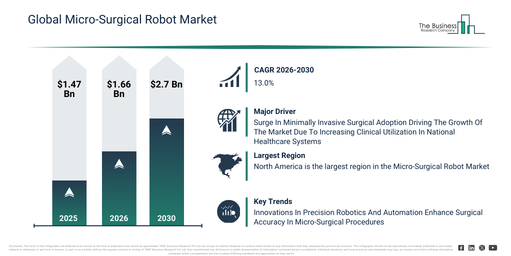
    The micro-surgical robot market size has experienced significant expansion recently. This market is projected to expand from $1.47 billion in 2025 to $1.66 billion by 2026, demonstrating a compound annual growth rate (CAGR) of 12.8%. The expansion witnessed in the past can be ascribed to several factors, including the increasing prevalence of minimally invasive surgery, the early integration of surgical robots, a surge in neurosurgery procedures, improvements in medical imaging systems, and substantial hospital investment in precision surgery.

    The micro-surgical robot market is poised for significant expansion in the coming years, projected to reach $2.7 billion by 2030, demonstrating a compound annual growth rate (CAGR) of 13.0%. This anticipated growth is driven by the escalating demand for ultra precise surgery, an increase in ophthalmic microsurgeries, the wider availability of robotic operating rooms, enhanced surgeon training in robotics, and greater adoption within specialty clinics. Key trends for the forecast period comprise motion scaling robotic micro manipulators, high precision robotic end effectors, imaging guided micro surgery platforms, haptic feedback assisted micro procedures, and robot assisted microsurgical workflows.

    Access Your Free Sample Report For In-Depth Market Analysis:

    https://www.thebusinessresearchcompany.com/sample.aspx?id=33220&type=smp

    What Primary Drivers Are Shaping The Micro-Surgical Robot Market?

    The increasing adoption of minimally invasive surgeries is anticipated to drive the expansion of the micro-surgical robot market in the future. Minimally invasive surgery utilizes specialized instruments and advanced technologies to perform procedures through small incisions, effectively reducing tissue trauma, postoperative pain, and recovery time compared to traditional open surgeries. The rise in minimally invasive surgeries is attributed to advancements in surgical robotics and imaging technologies, which enable procedures with smaller incisions and faster patient recovery. A micro-surgical robot is employed in minimally invasive surgeries to facilitate ultraprecise, tremor-free manipulation of tiny instruments within confined anatomical spaces, thereby improving surgical accuracy while minimizing tissue damage and recovery time. For instance, in June 2024, according to the American Society of Plastic Surgeons (ASPS), a US-based professional association, roughly 25.4 million cosmetic minimally invasive procedures were performed in 2023, reflecting a 7% increase from 2022. Therefore, the growing preference for minimally invasive surgeries is propelling the growth of the micro-surgical robot market.

    Which Segment Categories Are Included In The Micro-Surgical Robot Market Segment Analysis?

    The micro-surgical robot market covered in this report is segmented –

    1) By Component: Hardware; Software; Services

    2) By Technology: Tele-Robotics; Artificial Intelligence (AI)-Assisted Robotics; Imaging-Guided Robotic Systems; Haptic Feedback Systems; Autonomous Surgical Robots

    3) By Sales Channel: Direct Sales; Distributors; Online Sales

    4) By Application: Neurosurgery; Ophthalmology; Ear, Nose, and Throat (ENT) Surgery; Cardiovascular; Urology; Gynecology; Orthopedics; Other Applications

    5) By End-User: Hospitals; Ambulatory Surgical Centers; Research Institutes

    Subsegments:

    1) By Hardware: Robotic Arms; Surgical Instruments; Vision Systems; Control Consoles; Navigation Systems

    2) By Software: Surgical Planning Software; Real-Time Monitoring Software; Robotic Control Software; Image Processing Software; Data Analytics Software

    3) By Services: Installation Services; Maintenance Services; Training Services; Technical Support Services; System Upgradation Services

    What Trends Are Affecting The Growth Of The Micro-Surgical Robot Market?

    Major companies in the microsurgical robot market are concentrating on creating advanced solutions, such as microsurgery assistance robots, to improve surgical precision, reduce manual variability, and facilitate highly delicate procedures involving tiny anatomical structures. Microsurgery assistance robots are robotic systems designed to aid surgeons during ultra-fine surgical tasks by incorporating high-precision motion control, automation features, and advanced imaging, enabling stable and accurate manipulation beyond human hand capabilities. For instance, in May 2024, Sony Group Corporation, a Japan-based technology and electronics company, unveiled a prototype microsurgery assistance robot intended to support intricate surgical procedures through automatic surgical instrument exchange and high-precision robotic control. This system aims to help surgeons perform complex microsurgical tasks, such as microvascular anastomosis, by enhancing operational accuracy, lessening the workload for surgeons, and advancing the use of robotics in microsurgery.

    Who Are The Active Companies Shaping The Micro-Surgical Robot Market?

    Major companies operating in the micro-surgical robot market are Medtronic plc, Zimmer Biomet Holdings Inc., Smith & Nephew plc, Renishaw plc, Ethicon Inc., Brainlab AG, Meerecompany Inc., Medrobotics Corporation, IotaMotion Inc., Medical Microinstruments S.p.A., Distalmotion SA, Vicarious Surgical Inc., Neocis Inc., ForSight Robotics Ltd., THINK Surgical Inc., ShanghAI MicroPort MedBot (Group) Co. Ltd., Virtual Incision Corporation, MicroSure B.V., Meril Life Sciences Pvt. Ltd., Panda Surgical Co. Ltd.

    Get The Full Micro-Surgical Robot Market Report:

    https://www.thebusinessresearchcompany.com/report/micro-surgical-robot-market-report

    Which Region Holds The Highest Market Share In The Micro-Surgical Robot Market?

    North America was the largest region in the micro-surgical robot market in 2025. Asia-Pacific is expected to be the fastest-growing region in the forecast period. The regions covered in the micro-surgical robot market report are Asia-Pacific, South East Asia, Western Europe, Eastern Europe, North America, South America, Middle East, Africa.

    Request A Customized Micro-Surgical Robot Market Report For Competitive Insights:

    https://www.thebusinessresearchcompany.com/customise?id=33220&type=smp

    Browse Through More Reports Similar to the Global Micro-Surgical Robot Market 2026, By The Business Research Company

    Surgical Robots Market Report 2026

    https://www.thebusinessresearchcompany.com/report/surgical-robots-global-market-report

    Surgical Robot Accessories Market Report 2026

    https://www.thebusinessresearchcompany.com/report/surgical-robot-accessories-global-market-report

    Robotic Surgery Services Market Report 2026

    https://www.thebusinessresearchcompany.com/report/robotic-surgery-services-global-market-report

    Get in touch with us:

    The Business Research Company: https://www.thebusinessresearchcompany.com/

    Americas +1 310-496-7795

    Asia +44 7882 955267 & +91 8897263534

    Europe +44 7882 955267

    Email us at info@tbrc.info

    Follow us on:

    LinkedIn: https://in.linkedin.com/company/the-business-research-company

    YouTube: https://www.youtube.com/channel/UC24_fI0rV8cR5DxlCpgmyFQ

    Global Market Model: https://www.thebusinessresearchcompany.com/global-market-model
  • Messenger Ribonucleic Acid (MRNA) Manufacturing Service Market Expansion Forecast Reaching $12.96 Billion By 2030 At 16.2% CAGR

    Messenger Ribonucleic Acid (MRNA) Manufacturing Service Market Expansion Forecast Reaching $12.96 Billion By 2030 At 16.2% CAGR

    The Business Research Company’s 2026 market reports feature enhanced tools like market attractiveness analysis, TAM assessment, and company scoring matrices, along with interactive dashboards, deeper supply chain insights, and startup coverage strengthening the depth, usability, and strategic value of insights.

    What Changes In Market Value Are Expected For The Messenger Ribonucleic Acid (MRNA) Manufacturing Service Market Over The 2026–2030 Period?

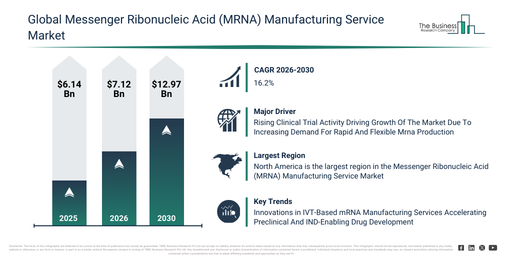
    Recent years have witnessed a rapid expansion in the messenger ribonucleic acid (mrna) manufacturing service market size. This market is projected to expand from $6.14 billion in 2025 to $7.12 billion in 2026, demonstrating a compound annual growth rate (CAGR) of 15.9%. Several factors contributed to this historical growth, including the surge in mrna therapeutics research, the necessity for emergency vaccine manufacturing, restricted in-house mrna production capabilities, an increase in CDMO collaborations, and the enlargement of biotech product portfolios.

    The messenger ribonucleic acid (mrna) manufacturing service market is anticipated to experience significant expansion over the coming years. Its valuation is projected to reach $12.97 billion by 2030, demonstrating a compound annual growth rate (CAGR) of 16.2%. This projected growth throughout the forecast period stems from factors such as a rise in mRNA therapy trials, an increase in contract manufacturing demand, the advancement of personalized medicine, greater outsourcing activities by biotechnology companies, and the scaling up of commercial mRNA products. Key trends anticipated during this period encompass integrated mRNA process development services, large-scale in vitro transcription production, comprehensive LNP encapsulation services, accelerated technology transfer initiatives, and GMP-grade mRNA batch manufacturing.

    Access Your Free Sample Report For In-Depth Market Analysis:

    https://www.thebusinessresearchcompany.com/sample.aspx?id=33216&type=smp

    Which Major Drivers Are Influencing The Expansion Of The Messenger Ribonucleic Acid (MRNA) Manufacturing Service Market?

    The increasing clinical trial activity is anticipated to drive the expansion of the messenger ribonucleic acid (mRNA) manufacturing service market in the future. Clinical trial activity pertains to all operations involved in carrying out and overseeing clinical studies to evaluate medical interventions in humans. This activity is on the rise primarily due to the growing adoption of digital and decentralized trial models, which enable more rapid patient recruitment, remote supervision, and more streamlined data collection across diverse populations. Messenger ribonucleic acid (mRNA) manufacturing services bolster clinical trial activity by guaranteeing swift and adaptable production of mRNA-based therapies, thus ensuring timely delivery for various trial stages and accelerating overall drug development. For instance, in December 2024, data from the Association of the British Pharmaceutical Industry (ABPI), a UK-based trade association, indicated that the number of industry clinical trials launched in the UK climbed to 426 in 2023, from 411 in 2022. Consequently, the surge in clinical trial activity is fueling the growth of the messenger ribonucleic acid (mRNA) manufacturing service market.

    How Is The Messenger Ribonucleic Acid (MRNA) Manufacturing Service Market Broken Down By Segment Categories?

    The messenger ribonucleic acid (mrna) manufacturing service market covered in this report is segmented –

    1) By Service Type: Process Development; Analytical Testing; Manufacturing; Fill-Finish; Other Service Types

    2) By Scale of Operation: Research And Preclinical Scale; Clinical Scale; Commercial Scale

    3) By Application: Vaccines; Therapeutics; Research; Other Applications

    4) By End-User: Pharmaceutical And Biotechnology Companies; Academic And Research Institutes; Other End-Users

    Subsegments:

    1) By Process Development: Template Design And Optimization; In Vitro Transcription Process Design; Formulation Development; Process Scale-Up And Technology Transfer; Process Validation Support

    2) By Analytical Testing: Identity And Purity Testing; Potency And Functional Assays; Impurity And Contaminant Analysis; Stability And Shelf Life Studies; Quality Control Release Testing

    3) By Manufacturing: Plasmid Deoxyribonucleic Acid Production; In Vitro Transcription Manufacturing; Enzymatic Capping And Tailoring; Purification And Concentration; Large-Scale Batch Production

    4) By Fill-Finish: Aseptic Filling Services; Vial And Syringe Filling; Lyophilization Services; Labeling And Packaging; Cold Chain Handling And Storage

    5) By Other Service Types: Regulatory Support Services; Quality Assurance And Documentation; Supply Chain And Logistics Support; Technology Consulting Services; Custom Manufacturing Solutions

    Which Trends Are Shaping The Messenger Ribonucleic Acid (MRNA) Manufacturing Service Market?

    Leading firms within the messenger ribonucleic acid (mRNA) manufacturing service market are prioritizing the creation of advanced techniques, such as in vitro transcription (IVT), to speed up the output of top-tier, therapeutic-grade mRNA for vaccines and personalized therapies. In vitro transcription (IVT) is a lab-based method wherein mRNA is synthesized from a DNA blueprint using RNA polymerase enzymes, allowing for mRNA creation external to biological cells for purposes spanning research, therapy, or vaccination. A pertinent example is that in May 2025, GenScript Biotech Corporation, a China-based biotechnology company, introduced a manufacturing service for mRNA adhering to GMP-like standards, designed to facilitate early-stage clinical investigations and research supporting investigational new drug applications. This offering delivers highly pure and scalable in vitro transcription (IVT) processes, ensuring strict oversight of key quality metrics like capping efficiency, poly(A) tail length, and impurity profiles. It aids in a swift progression from initial research phases to clinical trials through facilitating uniform production across batches, adaptable tailoring for various mRNA designs, and shortened development periods. Furthermore, the GMP-comparable structure guarantees preparedness for regulatory scrutiny by means of improved tracking, uniform operational procedures, and thorough quality records, assisting developers in mitigating risks associated with advanced manufacturing stages and expediting advancement in clinical trials.

    Which Players Are Present In The Messenger Ribonucleic Acid (MRNA) Manufacturing Service Market Space?

    Major companies operating in the messenger ribonucleic acid (mrna) manufacturing service market are Thermo Fisher Scientific Inc., Merck KGaA, FUJIFILM Biotechnologies, Evonik Industries AG, Lonza Group AG, Charles River Laboratories International Inc., Samsung Biologics Co. Ltd., WuXi Biologics Inc., Recipharm AB, Curia Global Inc., Emergent BioSolutions Inc., AGC Biologics Inc., Corden Pharma International GmbH, Rentschler Biopharma SE, GenScript ProBio, ST Pharm Co. Ltd., etherna Immunotherapies NV, BIOMAY AG., Porton Advanced Solutions Ltd., Wacker Biotech GmbH.

    Get The Full Messenger Ribonucleic Acid (MRNA) Manufacturing Service Market Report:

    https://www.thebusinessresearchcompany.com/report/messenger-ribonucleic-acid-mrna-manufacturing-service-market-report

    Where Is The Messenger Ribonucleic Acid (MRNA) Manufacturing Service Market Most Concentrated Geographically?

    North America was the largest region in the mRNA manufacturing service market in 2025. Asia-Pacific is expected to be the fastest-growing region in the forecast period. The regions covered in the messenger ribonucleic acid (mrna) manufacturing service market report are Asia-Pacific, South East Asia, Western Europe, Eastern Europe, North America, South America, Middle East, Africa.

    Request A Customized Messenger Ribonucleic Acid (MRNA) Manufacturing Service Market Report For Competitive Insights:

    https://www.thebusinessresearchcompany.com/customise?id=33216&type=smp

    Browse Through More Reports Similar to the Global Messenger Ribonucleic Acid (MRNA) Manufacturing Service Market 2026, By The Business Research Company

    Messenger Ribonucleic Acid Mrna Synthesis Raw Materials Market Report 2026

    https://www.thebusinessresearchcompany.com/report/messenger-ribonucleic-acid-mrna-synthesis-raw-materials-global-market-report

    Ribonucleic Acid Rna Sequencing Market Report 2026

    https://www.thebusinessresearchcompany.com/report/ribonucleic-acid-rna-sequencing-global-market-report

    Nucleic Acid Therapeutics Market Report 2026

    https://www.thebusinessresearchcompany.com/report/nucleic-acid-therapeutics-global-market-report

    Get in touch with us:

    The Business Research Company: https://www.thebusinessresearchcompany.com/

    Americas +1 310-496-7795

    Asia +44 7882 955267 & +91 8897263534

    Europe +44 7882 955267

    Email us at info@tbrc.info

    Follow us on:

    LinkedIn: https://in.linkedin.com/company/the-business-research-company

    YouTube: https://www.youtube.com/channel/UC24_fI0rV8cR5DxlCpgmyFQ

    Global Market Model: https://www.thebusinessresearchcompany.com/global-market-model
  • Messenger Ribonucleic Acid (mRNA) And Next-Generation Vaccine Platforms Market Revenue Projected To Hit $82.6 Billion By 2030 With 15.8% CAGR

    Messenger Ribonucleic Acid (mRNA) And Next-Generation Vaccine Platforms Market Revenue Projected To Hit $82.6 Billion By 2030 With 15.8% CAGR

    The Business Research Company’s 2026 market reports feature enhanced tools like market attractiveness analysis, TAM assessment, and company scoring matrices, along with interactive dashboards, deeper supply chain insights, and startup coverage strengthening the depth, usability, and strategic value of insights.

    By 2030, What Market Size Is The Messenger Ribonucleic Acid (mRNA) And Next-Generation Vaccine Platforms Market Expected To Reach Based On Its 2026 Value?

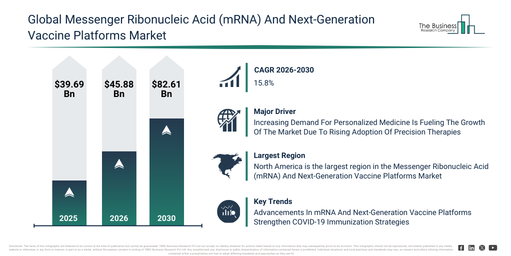
    The messenger ribonucleic acid (mrna) and next-generation vaccine platforms market size has expanded significantly in recent years. Projections indicate it will advance from $39.69 billion in 2025 to $45.88 billion in 2026, achieving a compound annual growth rate (CAGR) of 15.6%. This historical growth can be attributed to various factors, including covid 19 vaccine breakthroughs, prior viral vector research, global pandemic preparedness programs, advances in genomic sequencing, and early nucleic acid vaccine trials.

    The messenger ribonucleic acid (mrna) and next-generation vaccine platforms market is anticipated to experience significant expansion in the upcoming years. It is projected to achieve a size of $82.61 billion by 2030, exhibiting a compound annual growth rate (CAGR) of 15.8%. This growth during the forecast period can be attributed to factors such as the development of personalized cancer vaccines, the broadening of infectious disease pipelines, more rapid platform-based approvals, increased funding in biotechnology, and the wider application of therapeutic vaccines. Prominent trends expected in the forecast period include self-amplifying mrna platforms, optimized lipid nanoparticle delivery, modular vaccine platform designs, swift adaptation to pathogen targets, and innovative next-generation adjuvant systems.

    Access Your Free Sample Report For In-Depth Market Analysis:

    https://www.thebusinessresearchcompany.com/sample.aspx?id=33215&type=smp

    What Key Drivers Are Fueling The Growth Of The Messenger Ribonucleic Acid (mRNA) And Next-Generation Vaccine Platforms Market?

    Future expansion of the messenger ribonucleic acid (mRNA) and next-generation vaccine platforms market is anticipated due to the rising need for personalized medicine. Personalized medicine involves a healthcare strategy that customizes disease prevention and treatment plans according to an individual’s unique genetic makeup, molecular traits, and particular health circumstances. The escalating requirement for personalized medicine stems from the increasing occurrence of intricate and long-term illnesses, which necessitate precise and individualized therapeutic approaches to enhance both the effectiveness and safety of treatment. Messenger ribonucleic acid (mRNA) and next-generation vaccine platforms facilitate personalized medicine by allowing for quick, adaptable, and highly precise designs for vaccines and therapies, which can be adapted to specific genetic and disease profiles of individuals, thereby aiding in the provision of precision healthcare. As an illustration, the Personalized Medicine Coalition, a US-based hospital and health care organization, reported in February 2024 that the FDA cleared 16 novel personalized treatments for patients with rare diseases in 2023, an increase from six in 2022. Consequently, the expanding need for personalized medicine is fueling the expansion of the messenger ribonucleic acid (mRNA) and next-generation vaccine platforms market.

    What Are The Different Segment Types In The Messenger Ribonucleic Acid (mRNA) And Next-Generation Vaccine Platforms Market Segment Breakdown?

    The messenger ribonucleic acid (mrna) and next-generation vaccine platforms market covered in this report is segmented –

    1) By Vaccine Type: Messenger Ribonucleic Acid Vaccines; Deoxyribonucleic Acid (DNA) Vaccines; Viral Vector Vaccines; Protein Subunit Vaccines; Peptide Vaccines; Other Vaccine Types

    2) By Technology or Platform: Lipid Nanoparticle (LNP) Delivery; Self-Amplifying Messenger Ribonucleic Acid; Circular Messenger Ribonucleic Acid; Replicon or Non-replicating Platforms; Viral Vector Technologies

    3) By Disease Indication: Infectious Diseases; Oncology; Rare Diseases; Other Disease Indications

    4) By End User: Pharmaceutical and Biotechnology Companies; Contract Research Organizations (CROs); Academic and Research Institutes; Hospitals and Clinics

    Subsegments:

    1) By Messenger Ribonucleic Acid Vaccines: Conventional Messenger Ribonucleic Acid Vaccines; Self Amplifying Messenger Ribonucleic Acid Vaccines; Modified Messenger Ribonucleic Acid Vaccines; Circular Messenger Ribonucleic Acid Vaccines

    2) By Deoxyribonucleic Acid Vaccines: Plasmid Deoxyribonucleic Acid Vaccines; Viral Assisted Deoxyribonucleic Acid Vaccines; Synthetic Deoxyribonucleic Acid Vaccines; Gene Based Deoxyribonucleic Acid Vaccines

    3) By Viral Vector Vaccines: Adenovirus Based Viral Vector Vaccines; Lentivirus Based Viral Vector Vaccines; Poxvirus Based Viral Vector Vaccines; Measles Virus Based Viral Vector Vaccines

    4) By Protein Subunit Vaccines: Recombinant Protein Vaccines; Virus Like Particle Vaccines; Toxoid Based Protein Vaccines; Polysaccharide Conjugate Vaccines

    5) By Peptide Vaccines: Synthetic Peptide Vaccines; Personalized Peptide Vaccines; Multi Epitope Peptide Vaccines; Long Peptide Vaccines

    6) By Other Vaccine Types: Protein Subunit Vaccines, Virus-Like Particle Vaccines, Inactivated Vaccines, Live Attenuated Vaccines, Recombinant Vector Vaccines

    What Trends Are Influencing The Messenger Ribonucleic Acid (mRNA) And Next-Generation Vaccine Platforms Market?

    Leading companies operating in the mRNA and next-generation vaccine platforms market are concentrating their efforts on the creation of advanced mRNA-based COVID-19 vaccines. This focus aims to boost immune durability, expand variant coverage, and elevate overall vaccine efficacy. These innovative mRNA-based COVID-19 vaccines harness enhanced mRNA engineering and sophisticated delivery technologies, providing more extensive and lasting protection against both current and emerging SARS-CoV-2 variants. Furthermore, they offer improved safety, greater stability, and enhanced storage convenience, alongside the capability for swift adaptation to viral evolution. As an illustration, in June 2025, Moderna Inc., a US-based biotechnology company, launched mNEXSPIKE, its next-generation COVID-19 vaccine. This vaccine is engineered to enhance protection against both circulating and newly emerging SARS-CoV-2 variants. mNEXSPIKE features an updated spike protein antigen, which more closely aligns with recent variants, and is intended to deliver superior immune durability and effectiveness, thereby bolstering ongoing COVID-19 prevention initiatives and future booster strategies.

    Who Are The Well-Known Companies In The Messenger Ribonucleic Acid (mRNA) And Next-Generation Vaccine Platforms Market?

    Major companies operating in the messenger ribonucleic acid (mrna) and next-generation vaccine platforms market are Pfizer Inc., Sanofi S.A., AstraZeneca PLC, Thermo Fisher Scientific Inc., GSK plc, Takeda Pharmaceutical Company Limited, Daiichi Sankyo Company Limited, Moderna Inc., BioNTech SE, Novavax Inc., Walvax Biotechnology Co Ltd, Arcturus Therapeutics Inc, Gennova Biopharmaceuticals Ltd, Vaxxas Pty Ltd, Vaxart Inc, Ethris GmbH, The Biologicals and Vaccines Institute of Southern Africa Proprietary Limited, eTheRNA Immunotherapies NV, Stemirna Therapeutics Co Ltd, Primrose Bio Inc, Acuitas Therapeutics Inc, and Incepta Vaccine Ltd.

    Get The Full Messenger Ribonucleic Acid (mRNA) And Next-Generation Vaccine Platforms Market Report:

    https://www.thebusinessresearchcompany.com/report/messenger-ribonucleic-acid-mrna-and-next-generation-vaccine-platforms-market-report

    Which Region Dominates The Messenger Ribonucleic Acid (mRNA) And Next-Generation Vaccine Platforms Market By Market Share?

    North America was the largest region in the messenger ribonucleic acid (mRNA) and next-generation vaccine platforms market in 2025. Asia-Pacific is expected to be the fastest-growing region in the forecast period. The regions covered in the messenger ribonucleic acid (mrna) and next-generation vaccine platforms market report are Asia-Pacific, South East Asia, Western Europe, Eastern Europe, North America, South America, Middle East, Africa.

    Request A Customized Messenger Ribonucleic Acid (mRNA) And Next-Generation Vaccine Platforms Market Report For Competitive Insights:

    https://www.thebusinessresearchcompany.com/customise?id=33215&type=smp

    Browse Through More Reports Similar to the Global Messenger Ribonucleic Acid (mRNA) And Next-Generation Vaccine Platforms Market 2026, By The Business Research Company

    Mrna Cancer Vaccines And Therapeutics Market Report 2026

    https://www.thebusinessresearchcompany.com/report/mrna-cancer-vaccines-and-therapeutics-global-market-report

    Therapeutic Bcg Vaccines Market Report 2026

    https://www.thebusinessresearchcompany.com/report/therapeutic-bcg-vaccines-global-market-report

    Vaccines Market Report 2026

    https://www.thebusinessresearchcompany.com/report/vaccines-global-market-report

    Get in touch with us:

    The Business Research Company: https://www.thebusinessresearchcompany.com/

    Americas +1 310-496-7795

    Asia +44 7882 955267 & +91 8897263534

    Europe +44 7882 955267

    Email us at info@tbrc.info

    Follow us on:

    LinkedIn: https://in.linkedin.com/company/the-business-research-company

    YouTube: https://www.youtube.com/channel/UC24_fI0rV8cR5DxlCpgmyFQ

    Global Market Model: https://www.thebusinessresearchcompany.com/global-market-model

  • Global Messenger Ribo Nucleic Acid (mRNA) Vaccine Contract Development And Manufacturing Organization (CDMO) Market Set To Expand To $17.09 Billion By 2030 At 15.3% CAGR

    Global Messenger Ribo Nucleic Acid (mRNA) Vaccine Contract Development And Manufacturing Organization (CDMO) Market Set To Expand To $17.09 Billion By 2030 At 15.3% CAGR

    The Business Research Company’s 2026 market reports feature enhanced tools like market attractiveness analysis, TAM assessment, and company scoring matrices, along with interactive dashboards, deeper supply chain insights, and startup coverage strengthening the depth, usability, and strategic value of insights.

    What Is The Anticipated Rise In Market Value Of The Messenger Ribo Nucleic Acid (mRNA) Vaccine Contract Development And Manufacturing Organization (CDMO) Market During The Forecast Period?

    The market for messenger ribo nucleic acid (mrna) vaccine contract development and manufacturing organizations (cdmo) has experienced significant expansion recently. This market is projected to expand from $8.41 billion in 2025 to reach $9.68 billion by 2026, exhibiting a compound annual growth rate (CAGR) of 15.1%. Historically, this expansion was driven by several factors, including covid 19 vaccine programs, a surge in biotech startups, insufficient in-house manufacturing capabilities, an uptick in contract manufacturing, and accelerated mrna platform validation.

    The messenger ribo nucleic acid (mrna) vaccine contract development and manufacturing organization (cdmo) market size is anticipated to expand rapidly in the upcoming years. It is projected to achieve $17.1 billion by 2030, exhibiting a compound annual growth rate (CAGR) of 15.3%. This growth during the forecast period can be attributed to the increasing use of mRNA cancer vaccines, the emergence of personalized vaccines, a rise in CDMO partnerships, the demand for quick scale manufacturing, and an expanding pipeline of mRNA therapies. Significant trends for the forecast period include lipid nanoparticle formulation services, expedited mRNA process scale-up, integrated fill-finish outsourcing, flexible modular vaccine manufacturing suites, and comprehensive end-to-end mRNA development services.

    Access Your Free Sample Report For In-Depth Market Analysis:

    https://www.thebusinessresearchcompany.com/sample.aspx?id=33214&type=smp

    Which Drivers Are Supporting The Messenger Ribo Nucleic Acid (mRNA) Vaccine Contract Development And Manufacturing Organization (CDMO) Market Growth?

    The increasing occurrence of infectious and newly developing diseases is projected to drive the expansion of the mRNA vaccine CDMO market in the future. These diseases are defined as ailments stemming from pathogenic microbes that disseminate quickly or appear afresh, influenced by elements like environmental shifts, increasing urbanization, and greater worldwide connections. Enhanced international travel, higher population concentrations, and intertwined supply networks have accelerated the spread of pathogens, leading to more frequent, extensive, and challenging-to-contain disease outbreaks. mRNA vaccine CDMOs are vital in confronting these issues by facilitating the swift development, mass-producible manufacturing, and adaptable production of vaccines essential for countering evolving infectious dangers. The specialized manufacturing infrastructure and technical know-how required by mRNA technologies lead vaccine developers to partner with contract development and manufacturing organizations to speed up project timelines and guarantee production capability during epidemics. As an example, in May 2024, the World Health Organization (WHO), a specialized global health agency of the United Nations based in Switzerland, reported that by 30 April 2024, over 7.6 million dengue cases were registered worldwide with WHO, comprising 3.4 million confirmed cases, upwards of 16,000 severe cases, and exceeding 3,000 fatalities. This surge was notably prominent in the Region of the Americas, where the count of cases surpassed seven million by April 2024, which was higher than the 2023 annual total of 4.6 million cases. Consequently, the increasing incidence of infectious and emerging diseases is fueling the expansion of the mRNA vaccine CDMO market.

    Which Segment Classifications Are Used In The Messenger Ribo Nucleic Acid (mRNA) Vaccine Contract Development And Manufacturing Organization (CDMO) Market Segment Analysis?

    The messenger ribo nucleic acid (mrna) vaccine contract development and manufacturing organization (cdmo) market covered in this report is segmented –

    1) By Service Type: Process Development; Manufacturing; Analytical And Quality Control; Fill Finish; Packaging; Other Service Types

    2) By Vaccine Type: COVID-19 Vaccines; Cancer Vaccines; Infectious Disease Vaccines; Other Vaccine Types

    3) By Scale of Operation: Preclinical; Clinical; Commercial

    4) By End-User: Pharmaceutical Companies; Biotechnology Companies; Research Institutes; Other End-Users

    Subsegments:

    1) By Process Development: Formulation Optimization; Cell Line Development; Upstream Process Development; Process Scale-Up

    2) By Manufacturing: Lipid Nanoparticle Production; Enzymatic Capping; Purification Process

    3) By Analytical And Quality Control: Potency Testing; Purity Analysis; Stability Testing; Identity Testing; Microbial Testing

    4) By Fill Finish: Aseptic Filling; Vial Filling; Syringe Filling; Lyophilization

    5) By Packaging: Primary Packaging; Secondary Packaging; Labeling Operations; Cold Chain Packaging; Unit Dose Packaging

    6) By Other Service Types: Regulatory Support Services; Technology Transfer Services; Contract Development Services; Consulting Services; Supply Chain Management

    Which Trends Are Expected To Impact The Messenger Ribo Nucleic Acid (mRNA) Vaccine Contract Development And Manufacturing Organization (CDMO) Market?

    Major companies operating in the mRNA vaccine CDMO market are increasingly focusing on advanced innovations like phase-appropriate GMP mRNA contract development and manufacturing services to accelerate preclinical and IND-enabling development, all while maintaining regulatory-aligned quality standards and shorter timelines. Phase-appropriate GMP-like mRNA manufacturing refers to a production approach designed to deliver high-quality, regulatory-aware mRNA material suitable for preclinical and early development stages, without the cost and operational complexity associated with full GMP manufacturing. For instance, in May 2025, GenScript Biotech Corporation, a China-based global biotechnology reagents and services provider, launched a GMP-like mRNA manufacturing service aimed at supporting preclinical and IND-enabling development. The service delivers high-quality, regulatory-aware mRNA with reduced lead times and lower costs compared to traditional full GMP manufacturing, reflecting the growing demand for flexible, phase-appropriate CDMO solutions in the mRNA vaccine market.

    Which Firms Are Contributing To The Messenger Ribo Nucleic Acid (mRNA) Vaccine Contract Development And Manufacturing Organization (CDMO) Market Ecosystem?

    Major companies operating in the messenger ribo nucleic acid (mrna) vaccine contract development and manufacturing organization (cdmo) market are Sanofi S.A., Thermo Fisher Scientific Inc., FUJIFILM Diosynth Biotechnologies U.S.A. Inc., Danaher Corporation, Boehringer Ingelheim BioXcellence GmbH & Co. KG, AGC Biologics A/S, Eurofins Scientific SE, Lonza Group AG, BioNTech SE, Samsung Biologics Co. Ltd., WuXi Biologics (Cayman) Inc., Siegfried Holding AG, Recipharm AB, Vetter Pharma International GmbH, CordenPharma GmbH & Co. KG, Ajinomoto Bio-Pharma Services Inc., Novasep Holding S.A.S., Rentschler Biopharma SE, IDT Biologika GmbH, Wacker Biotech GmbH

    Get The Full Messenger Ribo Nucleic Acid (mRNA) Vaccine Contract Development And Manufacturing Organization (CDMO) Market Report:

    https://www.thebusinessresearchcompany.com/report/messenger-ribo-nucleic-acid-mrna-vaccine-contract-development-and-manufacturing-organization-cdmo-market-report

    Which Region Is The Largest In The Messenger Ribo Nucleic Acid (mRNA) Vaccine Contract Development And Manufacturing Organization (CDMO) Market?

    North America was the largest region in the mRNA vaccine contract development and manufacturing organization (CDMO) market in 2025. Asia-Pacific is expected to be the fastest-growing region in the forecast period. The regions covered in the messenger ribo nucleic acid (mrna) vaccine contract development and manufacturing organization (cdmo) market report are Asia-Pacific, South East Asia, Western Europe, Eastern Europe, North America, South America, Middle East, Africa.

    Request A Customized Messenger Ribo Nucleic Acid (mRNA) Vaccine Contract Development And Manufacturing Organization (CDMO) Market Report For Competitive Insights:

    https://www.thebusinessresearchcompany.com/customise?id=33214&type=smp

    Browse Through More Reports Similar to the Global Messenger Ribo Nucleic Acid (mRNA) Vaccine Contract Development And Manufacturing Organization (CDMO) Market 2026, By The Business Research Company

    Vaccine Contract Manufacturing Market Report 2026

    https://www.thebusinessresearchcompany.com/report/vaccine-contract-manufacturing-global-market-report

    Mrna Cancer Vaccines And Therapeutics Market Report 2026

    https://www.thebusinessresearchcompany.com/report/mrna-cancer-vaccines-and-therapeutics-global-market-report

    Therapeutic Bcg Vaccines Market Report 2026

    https://www.thebusinessresearchcompany.com/report/therapeutic-bcg-vaccines-global-market-report

    Get in touch with us:

    The Business Research Company: https://www.thebusinessresearchcompany.com/

    Americas +1 310-496-7795

    Asia +44 7882 955267 & +91 8897263534

    Europe +44 7882 955267

    Email us at info@tbrc.info

    Follow us on:

    LinkedIn: https://in.linkedin.com/company/the-business-research-company

    YouTube: https://www.youtube.com/channel/UC24_fI0rV8cR5DxlCpgmyFQ

    Global Market Model: https://www.thebusinessresearchcompany.com/global-market-model

  • Memory-Augmenting Neural Devices Market Growth Expected To Reach $2.89 Billion By 2030 At 15.4% CAGR

    Memory-Augmenting Neural Devices Market Growth Expected To Reach $2.89 Billion By 2030 At 15.4% CAGR

    The Business Research Company’s 2026 market reports feature enhanced tools like market attractiveness analysis, TAM assessment, and company scoring matrices, along with interactive dashboards, deeper supply chain insights, and startup coverage strengthening the depth, usability, and strategic value of insights.

    How Is The Market Size Of The Memory-Augmenting Neural Devices Market Expected To Scale Between 2026 And 2030?

    The memory-augmenting neural devices market size has observed significant growth in recent years. It is projected to expand from $1.42 billion in 2025 to $1.63 billion in 2026, exhibiting a compound annual growth rate (CAGR) of 15.2%. This historical growth can be attributed to the development of neurostimulation tools, early cognitive enhancement studies, the adoption of wearable neuro devices, the growth in bci prototypes, and academic brain research programs.

    The market size for memory-augmenting neural devices is projected to undergo substantial expansion in the upcoming years. It is anticipated to reach $2.89 billion by 2030, exhibiting a compound annual growth rate (CAGR) of 15.4%. This expansion during the forecast period can be attributed to factors such as the increasing needs of an aging population, a rising demand for cognitive enhancement, the broadening scope of wearable neurotechnology, augmented AI-driven neural analysis, and more extensive clinical validation trials. Significant trends for the forecast period include noninvasive brain stimulation wearables, AI-driven memory enhancement algorithms, portable neurostimulation devices, hybrid implant and wearable systems, and closed-loop cognitive support devices.

    Access Your Free Sample Report For In-Depth Market Analysis:

    https://www.thebusinessresearchcompany.com/sample.aspx?id=33212&type=smp

    What Key Factors Are Affecting The Memory-Augmenting Neural Devices Market Demand?

    The increasing occurrence of neurological conditions is anticipated to fuel the expansion of the memory-augmenting neural devices market in the future. A neurological disorder refers to any illness or ailment impacting the regular structure or operation of the central nervous system (comprising the brain and spinal cord) or the peripheral nervous system (nerves across the body). These disorders are becoming more common, largely because of the expanding global senior population, which leads to a higher frequency of age-associated neurological issues. Memory-augmenting neural devices address neurological disorders by improving or recovering cognitive abilities, like memory and learning, through specific neural stimulation and advanced interface technologies. As an illustration, the Alzheimer’s Association, a US-based nonprofit voluntary health organization, reported in March 2023 that around 6.7 million Americans aged 65 and above were suffering from Alzheimer’s dementia in 2023, with projections indicating this figure will climb to 13.8 million by 2060. Consequently, the increasing incidence of neurological disorders is a primary driver for the expansion of the memory-augmenting neural devices market.

    How Is The Memory-Augmenting Neural Devices Market Organized By Segment Classification?

    The memory-augmenting neural devices market covered in this report is segmented –

    1) By Device Type: Implantable Neural Devices; Noninvasive Brain Stimulation Devices; Other Device Types

    2) By Technology: Artificial Intelligence (AI) And Machine Learning-Based Memory Enhancement; Neural Implants & Electrodes; Transcranial Stimulation; Other Technologies

    3) By Application: Cognitive Enhancement; Neurodegenerative Disease Treatment; Brain-Computer Interfaces (BCIs); Other Applications

    4) By End User: Healthcare And Medical Institutions; Research And Academic Centers; Defense And Military; Other End Users

    Subsegments:

    1) By Implantable Neural Devices: Deep Brain Stimulation Systems; Cortical Microelectrode Arrays; Hippocampal Memory Prostheses; Neural Recording And Stimulation Implants; Closed Loop Neuromodulation Implants

    2) By Noninvasive Brain Stimulation Devices: Transcranial Magnetic Stimulation Systems; Transcranial Direct Current Stimulation Devices; Transcranial Alternating Current Stimulation Devices; Transcranial Random Noise Stimulation Devices; Focused Ultrasound Brain Stimulation Systems

    3) By Other Device Types: Wearable Neurofeedback Devices; Brain Computer Interface Headsets; Cognitive Enhancement Headgear; Portable Neurostimulation Devices; Hybrid Neural Modulation Systems

    What Trends Are Influencing Changes In The Memory-Augmenting Neural Devices Market?

    Leading companies within the memory augmenting neural devices market are concentrating on developing advanced solutions, such as implantable brain computer interfaces, to boost cognitive abilities and memory retention. An implantable brain computer interface (BCI) is a device surgically placed in the brain that directly interprets neural signals and translates them into digital commands to operate computers or external equipment. For example, in July 2025, Neuralink Corp., a US-based neurotechnology company, implanted its high-channel-count fully implantable brain computer interface (BCI) into a ninth human participant as part of its ongoing clinical trials. This implant is engineered to record and decode neural signals through ultra-thin electrode threads embedded in the brain, enabling direct, real-time communication between neural activity and external digital devices. The system supports wireless data transmission, extended implantation without external hardware, and high-resolution signal capture, allowing users to control computers or interfaces purely through thought. This significant event, which also marked the company’s first instance of performing two implant surgeries in a single day, underscores improved surgical efficiency and increasing clinical readiness for widespread human application.

    Who Are The Industry Participants Involved In The Memory-Augmenting Neural Devices Market?

    Major companies operating in the memory-augmenting neural devices market are Medtronic plc, Bitbrain Technologies S.L., NeuroLutions Inc., CorTec GmbH, FinalSpark Inc., Kernel Inc., Neuralink Corporation, NeuroPace Inc., Blackrock Neurotech Inc., NeuroSky Inc., Emotiv Inc., mBrainTrain Inc., BrainChip Holdings Ltd., BrainCo Inc., INBRAIN Neuroelectronics S.L., Merge Labs Inc., InBrain Neuroelectronics S.L., Axoft Inc., Motif Neurotech Inc., MintNeuro Inc.

    Get The Full Memory-Augmenting Neural Devices Market Report:

    https://www.thebusinessresearchcompany.com/report/memory-augmenting-neural-devices-market-report

    Which Region Leads The Memory-Augmenting Neural Devices Market In Terms Of Market Share?

    North America was the largest region in the memory-augmenting neural devices market in 2025. Asia-Pacific is expected to be the fastest-growing region in the forecast period. The regions covered in the memory-augmenting neural devices market report are Asia-Pacific, South East Asia, Western Europe, Eastern Europe, North America, South America, Middle East, Africa.

    Request A Customized Memory-Augmenting Neural Devices Market Report For Competitive Insights:

    https://www.thebusinessresearchcompany.com/customise?id=33212&type=smp

    Browse Through More Reports Similar to the Global Memory-Augmenting Neural Devices Market 2026, By The Business Research Company

    Memory Chips Market Report 2026

    https://www.thebusinessresearchcompany.com/report/memory-chips-global-market-report

    Semiconductor Memory Market Report 2026

    https://www.thebusinessresearchcompany.com/report/semiconductor-memory-global-market-report

    Deep Learning Chipset Market Report 2026

    https://www.thebusinessresearchcompany.com/report/deep-learning-chipset-global-market-report

    Get in touch with us:

    The Business Research Company: https://www.thebusinessresearchcompany.com/

    Americas +1 310-496-7795

    Asia +44 7882 955267 & +91 8897263534

    Europe +44 7882 955267

    Email us at info@tbrc.info

    Follow us on:

    LinkedIn: https://in.linkedin.com/company/the-business-research-company

    YouTube: https://www.youtube.com/channel/UC24_fI0rV8cR5DxlCpgmyFQ

    Global Market Model: https://www.thebusinessresearchcompany.com/global-market-model
  • Memory Implants Market Forecast 2026–2030 Highlighting Expansion Across Industries

    Memory Implants Market Forecast 2026–2030 Highlighting Expansion Across Industries

    The Business Research Company’s 2026 market reports feature enhanced tools like market attractiveness analysis, TAM assessment, and company scoring matrices, along with interactive dashboards, deeper supply chain insights, and startup coverage strengthening the depth, usability, and strategic value of insights.

    What Level Of Market Value Growth Is Predicted For The Memory Implants Market From 2026 To 2030?

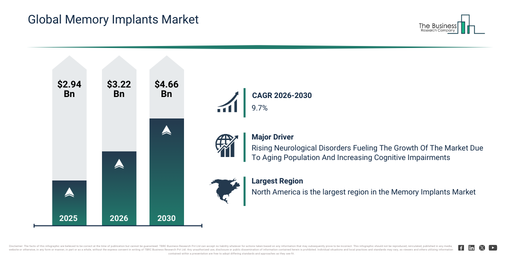
    The memory implants market has experienced significant expansion in recent years. This market is projected to grow from $2.94 billion in 2025 to $3.22 billion by 2026, demonstrating a compound annual growth rate (CAGR) of 9.4%. Historically, this growth has been driven by several factors, including advancements in neuroscience research, initial trials of brain implants, the expansion of neuromodulation therapies, an increase in neurodegenerative disorders, and neural interface programs funded by defense initiatives.

    The memory implants market is set to experience substantial growth in the upcoming years. It is projected to reach $4.66 billion by 2030, expanding at a compound annual growth rate (CAGR) of 9.7%. This anticipated growth during the forecast period stems from an increase in cognitive disorder cases, advancements in brain computer interfaces, increased funding for neural engineering, the broadening scope of clinical neurotech trials, and the demand for memory restoration therapies. Significant trends for this period encompass implantable memory prosthetic systems, hippocampal signal encoding devices, closed loop neural memory stimulation, high density neural electrode arrays, and adaptive memory restoration implants.

    Access Your Free Sample Report For In-Depth Market Analysis:

    https://www.thebusinessresearchcompany.com/sample.aspx?id=33211&type=smp

    Which Primary Drivers Are Impacting The Memory Implants Market Growth?

    The increasing occurrence of neurological disorders is anticipated to drive expansion in the memory implants market. These conditions, which impact the brain, spinal cord, or nervous system, cause deficits in movement, sensation, cognition, behavior, or autonomic processes. The surge in neurological disorders is linked to a quickly expanding aging demographic, which elevates the incidence of age-associated ailments like Alzheimer’s disease, Parkinson’s disease, and stroke, as neurological susceptibility rises with greater longevity. Memory implants assist individuals suffering from these growing neurological disorders by enhancing cognitive abilities and overall quality of life. For example, the Alzheimer’s Association, a US-based nonprofit voluntary health organization, reported in March 2023 that roughly 6.7 million Americans aged 65 and above had Alzheimer’s dementia in 2023, a figure expected to increase to 13.8 million by 2060. Consequently, the escalating prevalence of neurological disorders is fostering the growth of the memory implants market. An increase in clinical trials is projected to fuel the expansion of the memory implants market. Clinical trials are organized research investigations involving human participants, designed to assess the safety, efficacy, and best application of medical devices, drugs, or treatments prior to their regulatory endorsement. The growth in clinical trials stems from greater financial commitment by governments and life science firms, aiming to hasten the creation and regulatory clearance of novel therapies, devices, and digital health innovations. Memory implants support clinical trials by facilitating accurate monitoring and adjustment of neural activity, which enables researchers to impartially evaluate cognitive reactions, treatment effectiveness, and neurological results instantly. For instance, the Association of the British Pharmaceutical Industry, a UK-based trade association, stated in December 2024 that the total number of industry clinical trials started in the UK reached 426 in 2023, up from 411 trials in 2022, marking a second year of continuous growth. Thus, the expansion of clinical trials is a key driver for the memory implants market.

    Which Segments Define The Memory Implants Market Segment Structure?

    The memory implants market covered in this report is segmented –

    1) By Product Type: Deep Brain Stimulation Devices; Vagus Nerve Stimulation Devices; Implantable Memory Prosthetics; Electrode Arrays; Neural Signal Sensors; Brain–Computer Interface Hardware; Neuromodulation Devices; Wearable Neural Headsets; Other Product Types

    2) By Application: Alzheimer’s Disease; Parkinson’s Disease; Epilepsy; Traumatic Brain Injury; Memory Loss due to Aging; Other Cognitive Disorders; Other Applications

    3) By End-User: Hospitals; Clinics; Research Institutes; Rehabilitation Centers; Other End-Users

    Subsegments:

    1) By Deep Brain Stimulation Devices: Single Target Stimulation Systems; Multi Target Stimulation Systems; Closed Loop Stimulation Systems; Adaptive Stimulation Systems

    2) By Vagus Nerve Stimulation Devices: Implantable Vagus Nerve Stimulators; Transcutaneous Vagus Nerve Stimulation Systems; Programmable Vagus Nerve Modulation Devices

    3) By Implantable Memory Prosthetics: Hippocampal Memory Restoration Systems; Cortical Memory Enhancement Implants; Neural Memory Encoding Devices; Memory Recall Support Implants

    4) By Electrode Arrays: Depth Electrode Arrays; Surface Cortical Electrode Arrays; Flexible Neural Electrode Arrays; High Density Electrode Arrays

    5) By Neural Signal Sensors: Intracranial Neural Signal Sensors; Implantable Bioelectric Signal Sensors; Real Time Neural Monitoring Sensors

    6) By Brain–Computer Interface Hardware: Implantable Brain Signal Processing Units; External Neural Signal Interface Devices; Hybrid Brain Interface Systems

    7) By Neuromodulation Devices: Electrical Neuromodulation Systems; Magnetic Neuromodulation Systems; Targeted Neural Modulation Devices

    8) By Wearable Neural Headsets: Electroencephalography Based Neural Headsets; Cognitive Monitoring Neural Wearables; Noninvasive Neurostimulation Headsets

    9) By Other Product Types: Hybrid Memory Implant Systems; Experimental Neural Augmentation Devices; Integrated Cognitive Enhancement Platforms

    Who Are The Established Players Within The Memory Implants Market?

    Major companies operating in the memory implants market are Abbott Laboratories, Medtronic plc, Boston Scientific Corporation, LivaNova PLC, Renishaw plc, NeuroPace Inc., Beijing PINS Medical Co Ltd., FHC Inc., electroCore Inc., SetPoint Medical Corporation, Parasym Ltd., MicroTransponder Inc., ReShape Lifesciences Inc., Adriakaim Inc., Evren Technologies Inc., Soterix Medical Inc., Aleva Neurotherapeutics SA, SceneRay Corporation Ltd., NeuroSigma Inc., BioControl Medical Ltd.

    Get The Full Memory Implants Market Report:

    https://www.thebusinessresearchcompany.com/report/memory-implants-market-report

    Which Region Leads The Memory Implants Market In Overall Market Size?

    North America was the largest region in the memory implants market in 2025. Asia-Pacific is expected to be the fastest-growing region in the forecast period. The regions covered in the memory implants market report are Asia-Pacific, South East Asia, Western Europe, Eastern Europe, North America, South America, Middle East, Africa.

    Request A Customized Memory Implants Market Report For Competitive Insights:

    https://www.thebusinessresearchcompany.com/customise?id=33211&type=smp

    Browse Through More Reports Similar to the Global Memory Implants Market 2026, By The Business Research Company

    Microelectronic Medical Implants Market Report 2026

    https://www.thebusinessresearchcompany.com/report/microelectronic-medical-implants-global-market-report

    Bio Implants Market Report 2026

    https://www.thebusinessresearchcompany.com/report/bio-implants-global-market-report

    Smart Implants Market Report 2026

    https://www.thebusinessresearchcompany.com/report/smart-implants-global-market-report

    Get in touch with us:

    The Business Research Company: https://www.thebusinessresearchcompany.com/

    Americas +1 310-496-7795

    Asia +44 7882 955267 & +91 8897263534

    Europe +44 7882 955267

    Email us at info@tbrc.info

    Follow us on:

    LinkedIn: https://in.linkedin.com/company/the-business-research-company

    YouTube: https://www.youtube.com/channel/UC24_fI0rV8cR5DxlCpgmyFQ

    Global Market Model: https://www.thebusinessresearchcompany.com/global-market-model
  • Global Medical Imaging Outsourcing Market Analysis For 2026–2030 With Strategic Insights

    Global Medical Imaging Outsourcing Market Analysis For 2026–2030 With Strategic Insights

    The Business Research Company’s 2026 market reports feature enhanced tools like market attractiveness analysis, TAM assessment, and company scoring matrices, along with interactive dashboards, deeper supply chain insights, and startup coverage strengthening the depth, usability, and strategic value of insights.

    How Will The Market Value Of The Medical Imaging Outsourcing Market Progress Between 2026 And 2030?

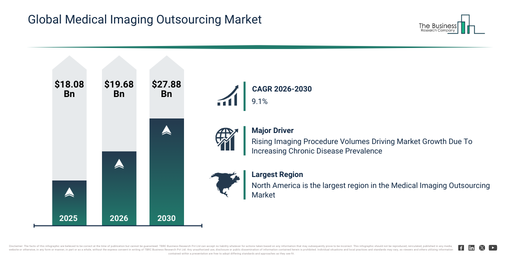
    The medical imaging outsourcing market has demonstrated robust growth recently. This market is projected to expand from $18.08 billion in 2025 to $19.68 billion by 2026, achieving a compound annual growth rate (CAGR) of 8.9%. Historically, this expansion has stemmed from factors such as a scarcity of radiologists, an increase in diagnostic imaging procedures, hospital efforts to reduce costs, the early integration of teleradiology, and the proliferation of digital imaging systems.

    The medical imaging outsourcing market is poised for significant expansion in the coming years. Its valuation is projected to reach $27.88 billion by 2030, exhibiting a compound annual growth rate (CAGR) of 9.1%. This anticipated growth during the forecast period is primarily driven by an increasing demand for cross-border reporting, a surge in imaging backlogs, the proliferation of remote diagnostics models, greater reliance on outsourcing by hospitals, and a need for quicker report turnarounds. Key developments shaping the market over this period encompass global teleradiology reporting networks, 24 by 7 remote image interpretation, streamlined centralized imaging workflow management, cloud based image archiving services, and specialized subspecialty radiology outsourcing.

    Access Your Free Sample Report For In-Depth Market Analysis:

    https://www.thebusinessresearchcompany.com/sample.aspx?id=33210&type=smp

    What Significant Factors Are Influencing The Medical Imaging Outsourcing Market Expansion?

    The anticipated increase in imaging procedure volumes is poised to drive the expansion of the medical imaging outsourcing market in the future. Imaging procedure volumes signify the overall count of diagnostic imaging examinations carried out by healthcare providers within a specific timeframe. This surge in volumes stems from the increasing incidence of chronic illnesses, which necessitates regular diagnostic imaging for prompt discovery, tracking disease advancement, and informing treatment choices. Medical imaging outsourcing aids in accommodating these growing volumes by allowing healthcare providers to manage heightened diagnostic needs effectively. This is achieved via remote radiology specialists, adaptable resources, quicker report delivery, and a lighter operational load, all without requiring an expansion of internal facilities. For instance, data from the National Health Service, a UK government body, in November 2023 indicated that England performed 45.0 million imaging tests in the year concluding March 2023. This represented a 2.2% increase from the 44.0 million recorded the prior year, encompassing 10.3 million diagnostic ultrasound tests (a 1.8% rise), 7.1 million CT scans (up 5.5%), and 4.1 million MRI scans (an increase of 6.2%). Consequently, the upward trend in imaging procedure volumes is a key factor propelling the expansion of the medical imaging outsourcing market. The ongoing development of healthcare infrastructure is projected to fuel the future expansion of the medical imaging outsourcing market. Healthcare infrastructure refers to the facilities, apparatus, and personnel necessary for the efficient provision of medical services to a community. This infrastructure is growing primarily because of an expanding population, which requires more hospitals, clinics, medical equipment, and skilled healthcare practitioners to deliver sufficient services and safeguard public health. The growth in healthcare infrastructure boosts the need for sophisticated diagnostic services, allowing medical imaging outsourcing to offer specialized knowledge, quicker processing, and economical solutions that support the expanding network of healthcare facilities. For example, in May 2023, the American Health Care Association, a US non-profit group, reported that the count of hospitals in the United States grew by 0.591% compared to the prior year, moving from 6,093 to 6,129. Thus, the broadening of healthcare infrastructure is a significant factor propelling the growth of the medical imaging outsourcing market.

    How Is The Medical Imaging Outsourcing Market Segmented Across Different Segment Categories?

    The medical imaging outsourcing market covered in this report is segmented –

    1) By Product Type: Computed Tomography (CT); Magnetic Resonance Imaging (MRI); Ultrasound; X-Ray; Nuclear Medicine; Other Modalities

    2) By Delivery Mode: Onsite Outsourcing Services; Offsite Outsourcing Services; Hybrid Outsourcing Services

    3) By Application: Cardiology; Diagnostic Imaging; Orthopedic; Diagnostic Testing Systems; Drug Delivery; Diabetes Care; Other Application

    4) By End Use: Hospitals And Clinics; Interventional Imaging Centers; Other End Uses

    Subsegments:

    1) By Computed Tomography: High Resolution Computed Tomography; Low Dose Computed Tomography; Contrast Enhanced Computed Tomography; Cardiac Computed Tomography; Whole Body Computed Tomography

    2) By Magnetic Resonance Imaging: Functional Magnetic Resonance Imaging; Diffusion Weighted Imaging; Magnetic Resonance Angiography; Magnetic Resonance Spectroscopy; Cardiac Magnetic Resonance Imaging

    3) By Ultrasound: Diagnostic Ultrasound Imaging; Doppler Ultrasound Imaging; Three Dimensional Ultrasound Imaging; Four Dimensional Ultrasound Imaging; Point Of Care Ultrasound

    4) By X-Ray: Digital Radiography; Computed Radiography; Mobile X-Ray Imaging; Fluoroscopy Imaging; Dental X-Ray Imaging

    5) By Nuclear Medicine: Positron Emission Tomography; Single Photon Emission Computed Tomography; Hybrid Nuclear Imaging; Radionuclide Imaging; Molecular Imaging

    6) By Other Modalities: Optical Imaging; Thermal Imaging; Elastography Imaging; Photoacoustic Imaging; Molecular Diagnostic Imaging

    Which Organizations Play A Role In The Medical Imaging Outsourcing Market Landscape?

    Major companies operating in the medical imaging outsourcing market are Sonic Healthcare Limited, RadNet Inc., Agfa HealthCare NV, Flatworld Solutions Pvt. Ltd., Radiology Partners Inc., Envision Radiology, ProScan Imaging, Alliance Medical Limited, Teleradiology Solutions, Everlight Radiology Limited, ONRAD Inc., RamSoft Inc., StatRad LLC, Sirona Medical Inc., Candelis Inc., MedWeb LLC, MetaMed, Shields Health Care Group, Diagnostic Imaging Services, MEDNAX Services Inc., 3DR Laboratories Inc., and American Imaging Consultants.

    Get The Full Medical Imaging Outsourcing Market Report:

    https://www.thebusinessresearchcompany.com/report/medical-imaging-outsourcing-market-report

    Which Region Is The Top Contributor To The Medical Imaging Outsourcing Market By Share?

    North America was the largest region in the medical imaging outsourcing market in 2025. Asia-Pacific is expected to be the fastest-growing region in the forecast period. The regions covered in the medical imaging outsourcing market report are Asia-Pacific, South East Asia, Western Europe, Eastern Europe, North America, South America, Middle East, Africa.

    Request A Customized Medical Imaging Outsourcing Market Report For Competitive Insights:

    https://www.thebusinessresearchcompany.com/customise?id=33210&type=smp

    Browse Through More Reports Similar to the Global Medical Imaging Outsourcing Market 2026, By The Business Research Company

    Medical Device Outsourcing Market Report 2026

    https://www.thebusinessresearchcompany.com/report/medical-device-outsourcing-global-market-report

    Medical Imaging Market Report 2026

    https://www.thebusinessresearchcompany.com/report/medical-imaging-global-market-report

    Medical Imaging Equipment Market Report 2026

    https://www.thebusinessresearchcompany.com/report/medical-imaging-equipment-global-market-report

    Get in touch with us:

    The Business Research Company: https://www.thebusinessresearchcompany.com/

    Americas +1 310-496-7795

    Asia +44 7882 955267 & +91 8897263534

    Europe +44 7882 955267

    Email us at info@tbrc.info

    Follow us on:

    LinkedIn: https://in.linkedin.com/company/the-business-research-company

    YouTube: https://www.youtube.com/channel/UC24_fI0rV8cR5DxlCpgmyFQ

    Global Market Model: https://www.thebusinessresearchcompany.com/global-market-model
  • Medical Fiber Optics Market Outlook 2026–2030 Driven By Growth Factors And Projections

    Medical Fiber Optics Market Outlook 2026–2030 Driven By Growth Factors And Projections

    The Business Research Company’s 2026 market reports feature enhanced tools like market attractiveness analysis, TAM assessment, and company scoring matrices, along with interactive dashboards, deeper supply chain insights, and startup coverage strengthening the depth, usability, and strategic value of insights.

    What Are The Market Size Estimates For The Medical Fiber Optics Market In 2026 And 2030?

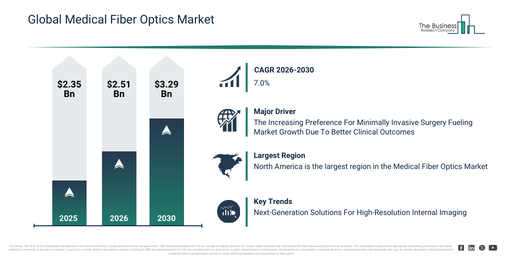
    The medical fiber optics market size has demonstrated robust growth in recent years. It is projected to expand from $2.35 billion in 2025 to $2.51 billion in 2026, showing a compound annual growth rate (CAGR) of 6.8%. The historical growth witnessed in this market can be attributed to several factors such as a rise in endoscopic procedures, an increase in laser based therapies, the expansion of minimally invasive diagnostics, hospital demand for better visualization tools, and progress in optical materials.

    The medical fiber optics market size is anticipated to undergo significant expansion in the upcoming years. It is projected to reach $3.29 billion by 2030, exhibiting a compound annual growth rate (CAGR) of 7.0%. This growth during the forecast period is propelled by factors such as an increase in image guided surgeries, a rising demand for precision diagnostics, the expansion of outpatient procedures, the proliferation of biomedical sensing applications, and a higher adoption of disposable optical devices. Prominent trends expected in the forecast period include high resolution endoscopic fiber systems, laser energy delivery fibers, miniaturized optical sensing probes, disposable fiber optic surgical tools, and advanced imaging fiber bundles.

    Access Your Free Sample Report For In-Depth Market Analysis:

    https://www.thebusinessresearchcompany.com/sample.aspx?id=33209&type=smp

    Which Important Drivers Are Guiding The Medical Fiber Optics Market Growth?

    The expanding preference for minimally invasive surgery is projected to boost the medical fiber optics market’s growth in the coming years. Minimally invasive surgery encompasses performing operations through small incisions with specialized instruments and advanced visualization systems, which contribute to less tissue damage, reduced postoperative discomfort, and quicker recovery times. The adoption of these procedures is increasing due to faster patient recuperation, lower complication rates, and shorter hospital stays. This trend directly fuels the demand for medical fiber optics, as flexible and high-precision fiber-optic components are crucial for illumination and imaging in endoscopic, laparoscopic, and robotic-assisted surgeries, enabling surgeons to visualize internal structures clearly and perform complex procedures through minimal access points. For instance, in November 2025, according to Intuitive Surgical Inc., a US-based medical device company, customers used da Vinci robotic surgical systems in approximately 2.29 million surgical procedures worldwide in 2023, representing an increase of about 22% compared with 2022, with cumulative procedures on da Vinci platforms exceeding 14 million. Therefore, the rising adoption of minimally invasive surgical procedures is a key factor driving the growth of the medical fiber optics market.

    What Are The Main Segments Within The Medical Fiber Optics Market Segment Structure?

    The medical fiber optics market covered in this report is segmented –

    1) By Type: Single Mode Optical Fiber; Multimode Optical Fiber

    2) By Usage: Disposable; Reusable

    3) By Application: Endoscopic Imaging; Laser Signal Delivery; Biomedical Sensing; Illumination; Other Applications

    4) By End User: Hospital; Specialty Clinics; Ambulatory Surgical Centers; Diagnostic Laboratories; Other End Users

    Subsegments:

    1) By Single Mode Optical Fiber: Long Distance Signal Transmission; High Precision Laser Energy Delivery; Advanced Biomedical Sensing

    2) By Multimode Optical Fiber: Short Distance Image Transmission; Endoscopic Imaging Bundles; Medical Illumination Systems

    What Trends Are Influencing The Evolution Of The Medical Fiber Optics Market?

    Major companies operating in the medical fiber optics market are focusing on developing innovative products such as imaging fiber assemblies to support high-resolution, minimally invasive diagnostic imaging applications. These assemblies consist of specialized bundles of optical fibers designed for integration into medical imaging catheters and systems, enabling the transmission and collection of light to produce high-quality internal images. These assemblies offer greater flexibility and precision compared with traditional rigid endoscopes, supporting a wide range of minimally invasive diagnostic and interventional procedures. For instance, in January 2025, Coherent Corp., a US-based photonics company, announced the introduction of its AxioView imaging fiber assemblies, designed for use in optical coherence tomography (OCT), near-infrared spectroscopy (NIRS), and multimodal catheter-based imaging applications. AxioView features specialty fiber designs optimized for medical imaging, catheter-ready distal geometries such as ball-tip and side-fire configurations, vertically integrated manufacturing for consistent optical performance, and ISO 13485-certified production to support regulatory requirements.

    Who Are The Companies Participating In The Medical Fiber Optics Market?

    Major companies operating in the medical fiber optics market are Heraeus Holding GmbH, Boston Scientific Corporation, Fujikura Ltd., Coherent Medical Group, Smiths Group plc, MKS Instruments Inc., Carl Zeiss Meditec AG, Integra Lifesciences Corporation, IPG Photonics Corporation, SCHOTT AG, Radiall America Inc., OZ Optics Ltd., HEINE Optotechnik GmbH & Co. KG, ForTec Medical Corporation, Thorlabs Inc., Fiberoptics Technology Incorporated (FTI), Biolitec AG, Laser Mechanisms Inc., LEONI AG, Beijing L.H.H. Medical Devices Co. Ltd.

    Get The Full Medical Fiber Optics Market Report:

    https://www.thebusinessresearchcompany.com/report/medical-fiber-optics-market-report

    Which Region Represents The Largest Share Of The Medical Fiber Optics Market?

    North America was the largest region in the medical fiber optics market in 2025. The regions covered in the medical fiber optics market report are Asia-Pacific, South East Asia, Western Europe, Eastern Europe, North America, South America, Middle East, Africa.

    Request A Customized Medical Fiber Optics Market Report For Competitive Insights:

    https://www.thebusinessresearchcompany.com/customise?id=33209&type=smp

    Browse Through More Reports Similar to the Global Medical Fiber Optics Market 2026, By The Business Research Company

    Fiber Optics Market Report 2026

    https://www.thebusinessresearchcompany.com/report/fiber-optics-global-market-report

    Fiber Optical Cable Market Report 2026

    https://www.thebusinessresearchcompany.com/report/fiber-optical-cable-global-market-report

    Fiber Optic Components Market Report 2026

    https://www.thebusinessresearchcompany.com/report/fiber-optic-components-global-market-report

    Get in touch with us:

    The Business Research Company: https://www.thebusinessresearchcompany.com/

    Americas +1 310-496-7795

    Asia +44 7882 955267 & +91 8897263534

    Europe +44 7882 955267

    Email us at info@tbrc.info

    Follow us on:

    LinkedIn: https://in.linkedin.com/company/the-business-research-company

    YouTube: https://www.youtube.com/channel/UC24_fI0rV8cR5DxlCpgmyFQ

    Global Market Model: https://www.thebusinessresearchcompany.com/global-market-model

  • Magnetic Navigation Surgical Robot Market Developments And Opportunities Across 2026–2030

    Magnetic Navigation Surgical Robot Market Developments And Opportunities Across 2026–2030

    The Business Research Company’s 2026 market reports feature enhanced tools like market attractiveness analysis, TAM assessment, and company scoring matrices, along with interactive dashboards, deeper supply chain insights, and startup coverage strengthening the depth, usability, and strategic value of insights.

    What Expansion In Market Value Is Forecasted For The Magnetic Navigation Surgical Robot Market Between 2026 And 2030?

    The market size for magnetic navigation surgical robots has experienced rapid expansion over recent years. Projections indicate a rise from $0.88 billion in 2025 to $1.01 billion in 2026, demonstrating a compound annual growth rate (CAGR) of 13.9%. Historically, this expansion is a result of several factors, including the increasing prevalence of minimally invasive surgery, the early embrace of surgical robotics, the demand for greater procedural precision, a rise in intricate cardiac interventions, and hospitals allocating funds for sophisticated operating rooms.

    The magnetic navigation surgical robot market size is projected for significant expansion in the coming years. This market is anticipated to reach $1.71 billion by 2030, exhibiting a compound annual growth rate (CAGR) of 14.1%. Key drivers for this growth during the forecast period include an increase in robotic-assisted surgeries, the broadening scope of image-guided interventions, a greater need for precision navigation systems, the proliferation of specialty surgical centers, and enhanced surgeon training on robotic platforms. Noteworthy trends expected during the same period encompass magnetic-guided minimally invasive procedures, integrated surgical planning software solutions, robotic catheter navigation systems, advanced high-precision instrument control modules, and sophisticated procedure simulation and planning tools.

    Access Your Free Sample Report For In-Depth Market Analysis:

    https://www.thebusinessresearchcompany.com/sample.aspx?id=33207&type=smp

    What Major Factors Are Driving The Magnetic Navigation Surgical Robot Market Forward?

    The magnetic navigation surgical robot market is anticipated to grow in the future, propelled by the increasing demand for minimally invasive surgeries. These medical procedures are conducted through small incisions, utilizing specialized instruments and techniques to lessen tissue damage, reduce pain, and accelerate patient recovery when contrasted with traditional open operations. The adoption of minimally invasive surgery is expanding due to advances in surgical instruments and imaging technologies, which allow for greater precision, less patient trauma, and quicker recovery periods. Magnetic navigation surgical robots improve minimally invasive surgeries by offering surgeons accurate, real-time control over instruments through tiny cuts, thereby boosting accuracy, decreasing tissue damage, and enabling complex procedures that would be challenging or risky with conventional methods. For example, in June 2024, information from the American Society of Plastic Surgeons, a US-based non-profit organization, indicated that in 2023, 347,782 liposuction procedures were carried out, showing a 7% increase compared to 2022. Minimally invasive procedures also saw a 7% growth during the year, exceeding the growth of surgical procedures by 2 percentage points. Taken together, plastic surgeries increased 5% year-over-year, while minimally invasive treatments experienced a 7% rise. This escalating demand for minimally invasive surgeries is consequently stimulating the expansion of the magnetic navigation surgical robot market.

    How Is Segmentation Applied In The Magnetic Navigation Surgical Robot Market Segment Analysis?

    The magnetic navigation surgical robot market covered in this report is segmented –

    1) By Component: Hardware; Software; Services

    2) By Technology: Active Magnetic Navigation; Passive Magnetic Navigation

    3) By Distribution Channel: Direct Sales; Distributors

    4) By Application: Spine Surgery; Orthopedic Surgery; Neurosurgery; Interventional Cardiology; Ear, Nose, And Throat (ENT) Surgery; Other Surgical Applications

    5) By End-User: Hospitals; Ambulatory Surgical Centers; Specialty Clinics

    Subsegments:

    1) By Hardware: Robotic Manipulation Units; Magnetic Field Generation Systems; Surgical Instrument Navigation Components; Sensor And Imaging Hardware; Control And Power Supply Units

    2) By Software: Navigation And Guidance Software; Imaging Integration Software; Motion Control And Planning Software; User Interface And Visualization Software; Data Processing And Analytics Software

    3) By Services: Installation And System Integration Services; Clinical Training And Education Services; Maintenance And Technical Support Services; Calibration And Performance Optimization Services; Regulatory Compliance And Validation Services

    Which Trends Are Impacting The Progress Of The Magnetic Navigation Surgical Robot Market?

    Leading companies within the magnetic navigation surgical robot market are prioritizing the creation of innovative solutions, such as sophisticated endovascular robotic surgery systems, aimed at enhancing surgical accuracy and minimizing procedural dangers. These advanced endovascular robotic surgery solutions consist of robotic setups that utilize precise, computer-controlled navigation to guide instruments through blood vessels, empowering surgeons to conduct intricate operations with greater exactness, less invasiveness, and improved patient well-being. For example, in November 2025, Stereotaxis Inc., a US-based medical technology company, secured U.S. FDA 510(k) clearance for its GenesisX Robotic Magnetic Navigation System, a pioneering surgical robot crafted to simplify installation and extend access to magnetic navigation technology in endovascular surgeries, underscoring continuous progress in this domain. These robotic systems heighten procedural precision and reduce recovery durations by facilitating surgeons to execute complex procedures with superior control. As healthcare facilities and surgical centers progressively seek technologies that enhance patient outcomes while optimizing infrastructure and operational effectiveness, magnetic navigation surgical robots are emerging as a pivotal enabling technology.

    Who Are The Companies Participating In The Magnetic Navigation Surgical Robot Market Environment?

    Major companies operating in the magnetic navigation surgical robot market are Medtronic plc, Stereotaxis Inc., Globus Medical Inc., MicroPort Scientific Corporation, Genesis Robotic Magnetic Navigation System, ZimVie Inc., Northern Digital Inc., Brain Navi Biotechnology Co. Ltd., Synaptive Medical Inc., ClearPoint Neuro Inc., Naviq Inc., Polhemus Incorporated, Levita Magnetics International Corp., Flux Robotics Inc., Radwave Technologies Inc., Magnetecs Corporation, EndoQuest Robotics Inc., Nanoflex Robotics AG, Theranautilus Private Limited, Magnendo Corp.

    Get The Full Magnetic Navigation Surgical Robot Market Report:

    https://www.thebusinessresearchcompany.com/report/magnetic-navigation-surgical-robot-market-report

    Which Geographic Region Dominates The Magnetic Navigation Surgical Robot Market?

    North America was the largest region in the magnetic navigation surgical robot market in 2025. Asia-Pacific is expected to be the fastest-growing region in the forecast period. The regions covered in the magnetic navigation surgical robot market report are Asia-Pacific, South East Asia, Western Europe, Eastern Europe, North America, South America, Middle East, Africa.

    Request A Customized Magnetic Navigation Surgical Robot Market Report For Competitive Insights:

    https://www.thebusinessresearchcompany.com/customise?id=33207&type=smp

    Browse Through More Reports Similar to the Global Magnetic Navigation Surgical Robot Market 2026, By The Business Research Company

    Surgical Navigation Systems Market Report 2026

    https://www.thebusinessresearchcompany.com/report/surgical-navigation-systems-global-market-report

    Robotic Surgery Services Market Report 2026

    https://www.thebusinessresearchcompany.com/report/robotic-surgery-services-global-market-report

    Surgical Robots Market Report 2026

    https://www.thebusinessresearchcompany.com/report/surgical-robots-global-market-report

    Get in touch with us:

    The Business Research Company: https://www.thebusinessresearchcompany.com/

    Americas +1 310-496-7795

    Asia +44 7882 955267 & +91 8897263534

    Europe +44 7882 955267

    Email us at info@tbrc.info

    Follow us on:

    LinkedIn: https://in.linkedin.com/company/the-business-research-company

    YouTube: https://www.youtube.com/channel/UC24_fI0rV8cR5DxlCpgmyFQ

    Global Market Model: https://www.thebusinessresearchcompany.com/global-market-model
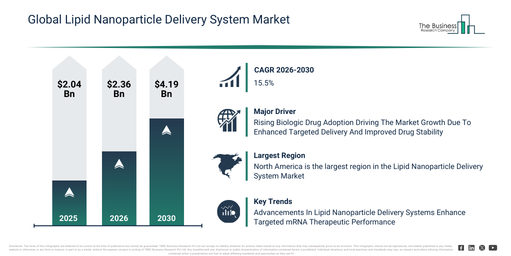
  • Lipid Nanoparticle Delivery System Market Forecast 2026–2030 Presenting Long-Term Industry Insights

    Lipid Nanoparticle Delivery System Market Forecast 2026–2030 Presenting Long-Term Industry Insights

    The Business Research Company’s 2026 market reports feature enhanced tools like market attractiveness analysis, TAM assessment, and company scoring matrices, along with interactive dashboards, deeper supply chain insights, and startup coverage strengthening the depth, usability, and strategic value of insights.

    How Large Will The Lipid Nanoparticle Delivery System Market Be By 2030 Compared To Its 2026 Market Size?

    The lipid nanoparticle delivery system market has experienced significant expansion in recent years. This market is expected to grow from $2.04 billion in 2025 to $2.36 billion in 2026, at a compound annual growth rate (CAGR) of 15.3%. The historical increase can be attributed to advancements in lipid chemistry research, the growth of nucleic acid therapeutics, the expansion of vaccine development programs, increased funding for gene therapy research, and the establishment of nanoparticle manufacturing capabilities.

    The lipid nanoparticle delivery system market is projected to experience substantial expansion in the coming years. This market is forecast to reach a valuation of $4.19 billion by 2030, exhibiting a compound annual growth rate (CAGR) of 15.5%. Key drivers for this anticipated growth include an expanding pipeline of RNA-based drugs, increasing financial commitments towards precision medicine, the wider availability of personalized therapeutics, an escalating need for scalable delivery platforms, and a rise in regulatory approvals for gene therapies. Significant trends expected during this period involve the increasing integration of mRNA-based therapeutics delivery, a heightened demand for ionizable lipid formulations, a sharpened focus on drug delivery systems that are precisely targeted, the expansion of manufacturing processes for scalable nanoparticles, and a greater emphasis on improving both delivery efficiency and stability.

    Access Your Free Sample Report For In-Depth Market Analysis:

    https://www.thebusinessresearchcompany.com/sample.aspx?id=33202&type=smp

    Which Key Drivers Are Affecting The Lipid Nanoparticle Delivery System Market Development?

    The increasing utilization of biologic drugs is projected to fuel the expansion of the lipid nanoparticle delivery system market moving forward. Biologic drugs are therapeutic substances created from living systems, such as proteins, antibodies, or cells, designed to manage illnesses that cannot be effectively treated by conventional chemical drugs. The adoption of biologic drugs is growing due to the escalating prevalence of chronic and complex diseases that demand targeted interventions. Lipid nanoparticle delivery systems improve the effectiveness of biologic drugs by encapsulating them to avoid degradation, promoting cellular absorption, and enabling precise delivery to specific tissues. For instance, in January 2023, according to Cardinal Health Inc., a US-based healthcare company, as of January 2022, the US had 33 biosimilar products approved by the FDA, with 21 available on the market. By 2023, FDA-approved biosimilars had increased to 40, with 25 commercially available. Thus, the rising acceptance of biologic drugs is a significant driver for the growth of the lipid nanoparticle delivery system market.

    What Segment Categories Shape The Lipid Nanoparticle Delivery System Market Segment Landscape?

    The lipid nanoparticle delivery system market covered in this report is segmented –

    1) By Product Type: Solid Lipid Nanoparticles; Nanostructured Lipid Carriers; Liposomes; Other Product Types

    2) By Route Of Administration: Oral; Injectable; Topical; Other Route Of Administrations

    3) By Application: Drug Delivery; Gene Therapy; Vaccines; Cosmetics; Other Applications

    4) By End-User: Pharmaceutical And Biotechnology Companies; Research Institutes; Hospitals And Clinics; Other End Users

    Subsegments:

    1) By Solid Lipid Nanoparticles: Glyceryl Monostearate Based; Glyceryl Behenate Based; Stearic Acid Based; Compritol Based

    2) By Nanostructured Lipid Carriers: Type I Nanostructured Lipid Carriers; Type II Nanostructured Lipid Carriers; Type III Nanostructured Lipid Carriers

    3) By Liposomes: Multilamellar Vesicles; Small Unilamellar Vesicles; Large Unilamellar Vesicles; Giant Unilamellar Vesicles

    4) By Other Product Types: Polymeric Lipid Nanoparticles; Lipid Polymer Hybrids; Micelles

    What Trends Are Transforming The Lipid Nanoparticle Delivery System Market?

    Leading firms within the lipid nanoparticle delivery system market are prioritizing the creation of sophisticated solutions, such as targeted mRNA delivery systems, with the aim of boosting the accuracy, efficacy, and safety of both gene therapies and vaccines. A targeted mRNA delivery system is defined as a technology employing lipid nanoparticles or other carriers to transport messenger RNA (mRNA) precisely to intended cells or tissues, thereby ensuring efficient protein production while reducing off-target effects and immune responses. For example, in November 2025, Acuitas Therapeutics Inc., a biotechnology company based in Canada, introduced Next-Generation Lipid Nanoparticle Advancements, designed to enhance the precise delivery and efficacy of mRNA therapeutics. This innovation offers up to fourfold potency gains for gene editing and vaccines, includes optimized lipids that limit liver exposure while sustaining effectiveness in mouse models, and incorporates DARPin-conjugated LNPs for specific T-lymphocyte delivery. These advancements improve ALC-315, a component of Pfizer-BioNTech’s COMIRNATY vaccine, by facilitating superior intramuscular mRNA delivery for cancer vaccines at reduced doses, with wider potential uses in CAR T-cell therapies, epigenetic treatments, multivalent vaccines for malaria or HIV or TB, and personalized oncology, thereby accelerating the development of safer, more effective mRNA therapies beyond hepatic applications.

    Who Are The Companies Operating Across The Lipid Nanoparticle Delivery System Market Value Chain?

    Major companies operating in the lipid nanoparticle delivery system market are Johnson and Johnson, Pfizer Inc, AstraZeneca plc, Avanti Polar Lipids Inc, Evonik Industries AG, Moderna Inc, Sanofi SA, BioNTech SE, Alnylam Pharmaceuticals Inc, Ascendia Pharmaceuticals Inc, Arcturus Therapeutics Holdings Inc, Lipoid GmbH, Creative Biolabs Inc, Acuitas Therapeutics Inc, Genevant Sciences GmbH, Polymun Scientific Immunbiologische Forschung GmbH, Carcell Biopharma Inc, Integrated Nanotherapeutics Inc, Sinopeg Biotech Co Ltd, CureVac NV, ReCode Therapeutics Inc, and Intellia Therapeutics Inc.

    Get The Full Lipid Nanoparticle Delivery System Market Report:

    https://www.thebusinessresearchcompany.com/report/lipid-nanoparticle-delivery-system-market-report

    Which Region Is The Leading Market For The Lipid Nanoparticle Delivery System Market?

    North America was the largest region in the lipid nanoparticle delivery system market in 2025. Asia-Pacific is expected to be the fastest-growing region in the forecast period. The regions covered in the lipid nanoparticle delivery system market report are Asia-Pacific, South East Asia, Western Europe, Eastern Europe, North America, South America, Middle East, Africa.

    Request A Customized Lipid Nanoparticle Delivery System Market Report For Competitive Insights:

    https://www.thebusinessresearchcompany.com/customise?id=33202&type=smp

    Browse Through More Reports Similar to the Global Lipid Nanoparticle Delivery System Market 2026, By The Business Research Company

    Lipid Nanoparticles Market Report 2026

    https://www.thebusinessresearchcompany.com/report/lipid-nanoparticles-global-market-report

    Liposomal Drug Delivery Devices Market Report 2026

    https://www.thebusinessresearchcompany.com/report/liposomal-drug-delivery-devices-global-market-report

    Advanced Drug Delivery Systems Market Report 2026

    https://www.thebusinessresearchcompany.com/report/advanced-drug-delivery-systems-global-market-report

    Get in touch with us:

    The Business Research Company: https://www.thebusinessresearchcompany.com/

    Americas +1 310-496-7795

    Asia +44 7882 955267 & +91 8897263534

    Europe +44 7882 955267

    Email us at info@tbrc.info

    Follow us on:

    LinkedIn: https://in.linkedin.com/company/the-business-research-company

    YouTube: https://www.youtube.com/channel/UC24_fI0rV8cR5DxlCpgmyFQ

    Global Market Model: https://www.thebusinessresearchcompany.com/global-market-model