Month: May 2026

  • Neuroendocrine Prostate Cancer Market Developments Shaping Growth Across The Forecast Period

    Neuroendocrine Prostate Cancer Market Developments Shaping Growth Across The Forecast Period

    The Business Research Company’s 2026 market reports feature enhanced tools like market attractiveness analysis, TAM assessment, and company scoring matrices, along with interactive dashboards, deeper supply chain insights, and startup coverage strengthening the depth, usability, and strategic value of insights.

    What Are The Market Size Estimates For The Neuroendocrine Prostate Cancer Market In 2026 And 2030?

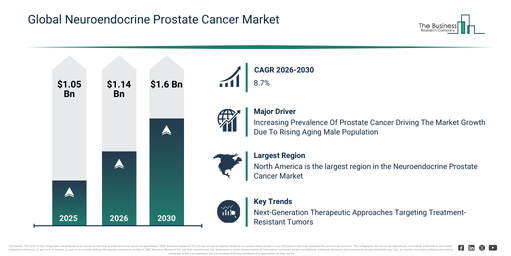
    The market for neuroendocrine prostate cancer has demonstrated robust expansion over recent years. This market is expected to increase from $1.05 billion in 2025 to $1.14 billion in 2026, achieving a compound annual growth rate (CAGR) of 8.5%. The historical growth can be linked to several factors, including an increase in prostate cancer diagnoses, the emergence of resistance to long-term hormone therapy, the diversification of oncology drug pipelines, the advancement of molecular pathology testing, and a greater specialization among cancer centers.

    The neuroendocrine prostate cancer market size is projected to experience robust growth over the next few years. It is expected to expand to $1.6 billion by 2030, demonstrating a compound annual growth rate (CAGR) of 8.7%. This anticipated growth during the forecast period can be attributed to factors such as the increasing adoption of precision oncology, a rise in biomarker-based treatment methods, the broadening of targeted therapies, augmented funding for rare cancer research, and more extensive use of genomic testing. Significant trends predicted for this period include patient segmentation driven by biomarkers, the application of combination oncology therapy protocols, sophisticated molecular diagnostic testing, the expansion of rare cancer clinical trials, and innovative targeted radiopharmaceutical approaches.

    Access Your Free Sample Report For In-Depth Market Analysis:

    https://www.thebusinessresearchcompany.com/sample.aspx?id=33242&type=smp

    What Significant Factors Are Influencing The Neuroendocrine Prostate Cancer Market Expansion?

    The rising incidence of prostate cancer is anticipated to drive the expansion of the neuroendocrine prostate cancer market in the coming years. This condition, a malignant tumor forming in the prostate gland, primarily impacts males aged 50 and above. Its increasing occurrence is largely attributable to the expanding elderly male demographic, as old age represents a significant risk factor for developing the illness. The widespread presence of prostate cancer fosters the development of neuroendocrine prostate cancer by enlarging the total patient population, prolonging exposure to androgen-deprivation treatments, and thereby heightening the probability of therapy-induced neuroendocrine differentiation in advanced and castration-resistant disease forms. As an illustration, the Centers for Disease Control and Prevention (CDC), a U.S. federal public health agency, stated in January 2025 that 255,395 new prostate cancer diagnoses were made in the United States in 2023, with 33,881 men succumbing to the illness. Consequently, the growing occurrence of prostate cancer is fueling the expansion of the neuroendocrine prostate cancer market.

    Which Segments Define The Neuroendocrine Prostate Cancer Market Segment Structure?

    The neuroendocrine prostate cancer market covered in this report is segmented –

    1) By Treatment: Chemotherapy; Hormonal Therapy

    2) By Therapeutics: Immunotherapy; Targeted Therapy

    3) By Disease Stage: Localized Disease; Advanced Disease; Metastatic Disease

    4) By End Users: Hospitals; Oncology Specialty Clinics; Cancer Research Institutes

    Subsegments:

    1) By Chemotherapy: Platinum Based Chemotherapy; Taxane Based Chemotherapy; Combination Chemotherapy; Second Line Chemotherapy

    2) By Hormonal Therapy: Androgen Deprivation Therapy; Androgen Receptor Inhibition; Hormone Synthesis Inhibition; Combined Hormonal Therapy

    What Trends Are Affecting The Direction Of The Neuroendocrine Prostate Cancer Market?

    Leading firms within the neuroendocrine prostate cancer market are prioritizing the creation of novel medications, specifically immune-modulating small-molecule therapies, with the aim of boosting immune responses and achieving better patient results. These immune-modulating small-molecule therapies are compounds taken orally, designed to activate the body’s natural immune system to identify and combat cancer cells. This mechanism assists in overcoming resistance often encountered with conventional therapies like hormone therapy or chemotherapy, by strengthening the immune system’s attack on tumors. A notable example occurred in February 2024, when BioXcel Therapeutics, a US-based clinical-stage biopharmaceutical company, obtained Fast Track Designation from the U.S. Food and Drug Administration for BXCL701. This drug is an immune-modulating small-molecule therapy specifically for neuroendocrine prostate cancer. BXCL701 functions by activating the NLRP3 inflammasome, promoting increased cytokine release, and preparing the immune system to target cancerous cells, thus providing an innovative strategy that works alongside immune checkpoint inhibitors. This Fast Track Designation is anticipated to expedite the clinical progression and regulatory assessment of BXCL701, highlighting its promise in addressing substantial unmet medical requirements in forms of prostate cancer that are aggressive and resistant to current treatments.

    Who Are The Established Players Within The Neuroendocrine Prostate Cancer Market?

    Major companies operating in the neuroendocrine prostate cancer market are Novartis AG, Amgen Inc., Phanes Therapeutics Inc., and BioXcel Therapeutics Inc.

    Get The Full Neuroendocrine Prostate Cancer Market Report:

    https://www.thebusinessresearchcompany.com/report/neuroendocrine-prostate-cancer-market-report

    Which Region Is The Largest In The Neuroendocrine Prostate Cancer Market?

    North America was the largest region in the neuroendocrine prostate cancer market in 2025. Asia-Pacific is expected to be the fastest-growing region in the forecast period. The regions covered in the neuroendocrine prostate cancer market report are Asia-Pacific, South East Asia, Western Europe, Eastern Europe, North America, South America, Middle East, Africa.

    Request A Customized Neuroendocrine Prostate Cancer Market Report For Competitive Insights:

    https://www.thebusinessresearchcompany.com/customise?id=33242&type=smp

    Browse Through More Reports Similar to the Global Neuroendocrine Prostate Cancer Market 2026, By The Business Research Company

    Neuroendocrine Tumor Treatment Market Report 2026

    https://www.thebusinessresearchcompany.com/report/neuroendocrine-tumor-treatment-global-market-report

    Prostate Cancer Drugs Market Report 2026

    https://www.thebusinessresearchcompany.com/report/prostate-cancer-drugs-global-market-report

    Prostate Cancer Nuclear Medicine Diagnostics Market Report 2026

    https://www.thebusinessresearchcompany.com/report/prostate-cancer-nuclear-medicine-diagnostics-global-market-report

    Get in touch with us:

    The Business Research Company: https://www.thebusinessresearchcompany.com/

    Americas +1 310-496-7795

    Asia +44 7882 955267 & +91 8897263534

    Europe +44 7882 955267

    Email us at info@tbrc.info

    Follow us on:

    LinkedIn: https://in.linkedin.com/company/the-business-research-company

    YouTube: https://www.youtube.com/channel/UC24_fI0rV8cR5DxlCpgmyFQ

    Global Market Model: https://www.thebusinessresearchcompany.com/global-market-model
  • Neural Control Market Forecast With Insights On Demand And Industry Growth

    Neural Control Market Forecast With Insights On Demand And Industry Growth

    The Business Research Company’s 2026 market reports feature enhanced tools like market attractiveness analysis, TAM assessment, and company scoring matrices, along with interactive dashboards, deeper supply chain insights, and startup coverage strengthening the depth, usability, and strategic value of insights.

    What Expansion In Market Value Is Forecasted For The Neural Control Market Between 2026 And 2030?

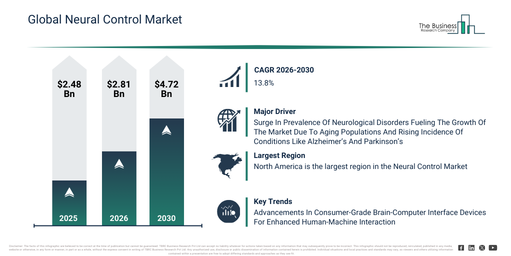
    The neural control market has experienced rapid expansion in recent years. Its value is projected to climb from $2.48 billion in 2025 to $2.81 billion in 2026, achieving a compound annual growth rate (CAGR) of 13.6%. This historical market growth can be attributed to several factors, including the advancement of neuroprosthetics research, the broadening scope of rehabilitation robotics, an increasing demand for paralysis treatment, significant progress in neural electrodes, and a rise in neurostimulation therapies.

    The neural control market size is projected to experience substantial expansion in the coming years. By 2030, this market is anticipated to reach a valuation of $4.72 billion, expanding at a compound annual growth rate (CAGR) of 13.8%. Factors contributing to this anticipated growth include an increasing demand for BCI solutions, the proliferation of assistive exoskeletons, advancements in neural rehabilitation technology, a surge in neurotech funding, and wider adoption of clinical neural interfaces. Key trends expected during this period encompass the integration of brain-computer interfaces, the development of implantable neural interface devices, the use of wearable neuro-signal sensors, the advent of closed-loop neurostimulation systems, and neuro-controlled assistive robotics.

    Access Your Free Sample Report For In-Depth Market Analysis:

    https://www.thebusinessresearchcompany.com/sample.aspx?id=33241&type=smp

    Which Important Drivers Are Guiding The Neural Control Market Growth?

    The escalating occurrence of neurological disorders is anticipated to significantly boost the expansion of the neural control market in the future. These conditions involve the brain, spinal cord, or nerves, resulting in deficits across movement, sensation, thought processes, or other bodily functions. The rise in neurological disorders stems from an aging global demographic, which elevates the risk of diseases such as Alzheimer’s and Parkinson’s, thereby intensifying the worldwide healthcare burden. Neural control offers a valuable solution to the growing incidence of neurological disorders by facilitating accurate monitoring, adjustment, and recovery of neural activity, which in turn enhances patient results and effectively manages symptoms. For example, in March 2023, the Alzheimer’s Association, a US-based nonprofit voluntary health organization, stated that 6.7 million Americans aged 65 and older were living with Alzheimer’s, a figure expected to climb to 13.8 million by 2060. Consequently, the increasing prevalence of neurological disorders is a key impetus for the growth of the neural control treatment market.

    How Is The Neural Control Market Segmented Across Different Segment Categories?

    The neural control market covered in this report is segmented –

    1) By Component: Hardware; Software; Services

    2) By Mode Of Operation: Invasive; Non Invasive

    3) By Technology: Brain Computer Interface; Neurostimulation; Neuroprosthetics

    4) By Application: Healthcare; Robotics; Automotive; Consumer Electronics; Other Applications

    5) By End-User: Medical Institutions; Research Organizations; Industrial; Other End-Users

    Subsegments:

    1) By Hardware: Electrodes; Sensors; Stimulators; Wearable Devices; Implants

    2) By Software: Signal Processing Platforms; Neurofeedback Applications; Brain Computer Interface Platforms; Data Analytics Tools; Simulation Software

    3) By Services: Installation And Integration; Maintenance And Support; Training And Consultation; Custom Development; Research And Testing

    What Trends Are Influencing The Evolution Of The Neural Control Market?

    Leading firms within the neural control sector are concentrating on progress in neural interface innovations, including consumer-grade devices featuring Brain-Computer Interface (BCI) technology, with the goal of improving interaction between humans and machines, boosting cognitive abilities, and enabling effortless management of digital and real-world surroundings. A BCI-enabled consumer device is an electronic item intended for daily use by general users, which integrates BCI technology to sense, understand, and react to brain signals originating from the user. As an illustration, in September 2024, Neurable Inc., a neurotechnology company based in the US, introduced the MW75 Neuro, a pair of smart headphones that incorporate its AI-driven BCI technology, developed in collaboration with high-end audio company Master & Dynamic. The MW75 Neuro features EEG sensors embedded within its ear pads to collect brainwave information, providing capabilities such as tracking focus, assisting with burnout prevention, and delivering customized productivity advice through the Neurable mobile application. Its advanced AI platform offers laboratory-grade precision in interpreting brain signals, while concurrently, the headphones offer superior audio fidelity, adaptable noise cancellation, and ergonomic comfort. This offering signifies a substantial advancement in bringing noninvasive BCI technology into routine consumer products.

    Which Organizations Play A Role In The Neural Control Market Landscape?

    Major companies operating in the neural control market are Boston Scientific Corporation, Synchron Inc., Neuralink Corp., NeuroSky Inc., Emotiv Inc., BrainCo Inc., Brain Products GmbH, Paradromics Inc., Neuroelectrics S.L.U., g.tec medical engineering GmbH, Neurable Inc., Advanced Brain Monitoring Inc., Bitbrain Technologies S.L., Cortec GmbH, BrainGate Inc., OpenBCI LLC, Cognixion Inc., Alea Neurotherapeutics SA, Nexstem Technologies Pvt. Ltd., AAVAA Inc.

    Get The Full Neural Control Market Report:

    https://www.thebusinessresearchcompany.com/report/neural-control-market-report

    Which Region Leads The Neural Control Market In Terms Of Market Share?

    North America was the largest region in the neural control market in 2025. Asia-Pacific is expected to be the fastest-growing region in the forecast period. The regions covered in the neural control market report are Asia-Pacific, South East Asia, Western Europe, Eastern Europe, North America, South America, Middle East, Africa.

    Request A Customized Neural Control Market Report For Competitive Insights:

    https://www.thebusinessresearchcompany.com/customise?id=33241&type=smp

    Browse Through More Reports Similar to the Global Neural Control Market 2026, By The Business Research Company

    Neural Network Software Market Report 2026

    https://www.thebusinessresearchcompany.com/report/neural-network-software-global-market-report

    Industrial Controls Market Report 2026

    https://www.thebusinessresearchcompany.com/report/industrial-controls-global-market-report

    Ai Processing Control Market Report 2026

    https://www.thebusinessresearchcompany.com/report/ai-processing-control-global-market-report

    Get in touch with us:

    The Business Research Company: https://www.thebusinessresearchcompany.com/

    Americas +1 310-496-7795

    Asia +44 7882 955267 & +91 8897263534

    Europe +44 7882 955267

    Email us at info@tbrc.info

    Follow us on:

    LinkedIn: https://in.linkedin.com/company/the-business-research-company

    YouTube: https://www.youtube.com/channel/UC24_fI0rV8cR5DxlCpgmyFQ

    Global Market Model: https://www.thebusinessresearchcompany.com/global-market-model
  • Nervous System Active Pharmaceutical Ingredients Market Outlook Highlighting Key Drivers And Market Evolution

    Nervous System Active Pharmaceutical Ingredients Market Outlook Highlighting Key Drivers And Market Evolution

    The Business Research Company’s 2026 market reports feature enhanced tools like market attractiveness analysis, TAM assessment, and company scoring matrices, along with interactive dashboards, deeper supply chain insights, and startup coverage strengthening the depth, usability, and strategic value of insights.

    How Large Will The Nervous System Active Pharmaceutical Ingredients Market Be By 2030 Compared To Its 2026 Market Size?

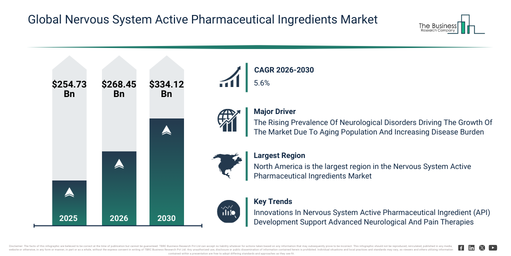
    The nervous system active pharmaceutical ingredients market has experienced significant growth in recent years. This market is anticipated to expand from $254.73 billion in 2025 to $268.45 billion in 2026, reflecting a compound annual growth rate (CAGR) of 5.4%. Historically, this expansion can be linked to several factors, including the increasing prevalence of neurological disorders, the broader application of psychiatric drugs, the growth in generic API manufacturing, a greater number of CNS drug approvals, and the expansion of contract API production.

    The nervous system active pharmaceutical ingredients market is projected to experience substantial expansion in the coming years, anticipated to reach $334.12 billion by 2030, exhibiting a compound annual growth rate (CAGR) of 5.6%. The growth during the forecast period is primarily attributed to the increasing burden of neurodegenerative diseases, the proliferation of specialty cns therapies, a rising demand for high purity apis, an uptick in outsourced api manufacturing, and the development of biologic neuro drugs. Key trends expected in this period include the advancement of high potency neurology api development, the synthesis of complex cns molecules, the emergence of peptide based neuro apis, the introduction of controlled release neuro api formats, and the formation of specialized neuro api cdmo partnerships.

    Access Your Free Sample Report For In-Depth Market Analysis:

    https://www.thebusinessresearchcompany.com/sample.aspx?id=33240&type=smp

    What Major Factors Are Driving The Nervous System Active Pharmaceutical Ingredients Market Forward?

    The expansion of the nervous system active pharmaceutical ingredients market is anticipated to be driven by the increasing incidence of neurological disorders in the future. These disorders encompass a wide array of medical conditions that impair the normal operation of the central and peripheral nervous systems, frequently leading to symptoms like seizures, paralysis, memory loss, or issues with coordination. The primary reason for the rise in neurological disorders is the global aging population, given that elderly individuals are more susceptible to neurodegenerative illnesses such as Alzheimer’s and Parkinson’s disease due to the natural decline and increased vulnerability of nerve cells to damage over time. Nervous system active pharmaceutical ingredients assist in managing neurological disorders by modifying neural signals and safeguarding nerve cells, consequently decelerating disease progression and improving symptom management in conditions including epilepsy, multiple sclerosis, and neurodegenerative diseases. For example, data from the Australian Institute of Health and Welfare, an Australia-based government agency, indicated that in 2024, approximately 425,000 Australians were affected by dementia. This number is anticipated to increase by 2.5 times, exceeding 1.1 million by 2065, with around 662,000 women and 390,000 men included in this projection. Consequently, the increasing occurrence of neurological disorders is a significant factor propelling the expansion of the nervous system active pharmaceutical ingredients market.

    What Are The Main Segments Within The Nervous System Active Pharmaceutical Ingredients Market Segment Structure?

    The nervous system active pharmaceutical ingredients market covered in this report is segmented –

    1) By Product: Cytokines; Vaccines; Fusion Proteins; Therapeutic Enzymes

    2) By Expression System: Mammalian; Microbial Yeast

    3) By Application: Diabetes; Cardiovascular Diseases; Oncology; Neurological Disorder

    4) By End User: Pharmaceutical Companies; Biopharmaceutical Companies; Contract Development And Manufacturing Organizations; Research And Development Laboratories; Generic Drug Manufacturers

    Subsegments:

    1) By Cytokines: Interleukin Cytokines; Interferon Cytokines; Tumor Necrosis Factor Cytokines; Growth Factor Cytokines; Chemokine Cytokines

    2) By Vaccines: Inactivated Vaccines; Live Attenuated Vaccines; Subunit Vaccines; Recombinant Vaccines; Conjugate Vaccines

    3) By Fusion Proteins: Antibody Fusion Proteins; Receptor Fusion Proteins; Enzyme Fusion Proteins; Ligand Fusion Proteins; Multifunctional Fusion Proteins

    4) By Therapeutic Enzymes: Replacement Enzymes; Digestive Enzymes; Metabolic Enzymes; Detoxifying Enzymes; Neuroprotective Enzymes

    Which Trends Are Impacting The Progress Of The Nervous System Active Pharmaceutical Ingredients Market?

    Major companies operating within the nervous system active pharmaceutical ingredients market are concentrating on developing novel solutions, such as cannabinoid-based active pharmaceutical ingredients, to boost the efficacy, safety, and precise delivery of treatments for neurological disorders. Cannabinoid-based active pharmaceutical ingredients (APIs) are highly purified natural or synthetic compounds that deliver therapeutic effects by targeting the body’s endocannabinoid system to aid in managing pain, epilepsy, nausea, and various neurological conditions. For instance, in March 2024, Brains Bioceutical Corp., a Canada-based pharmaceutical company, introduced solid D9 Tetrahydrocannabinol (THC), a cannabinoid-based active pharmaceutical ingredient designed to advance pharmaceutical research and drug development in neurological and pain management applications. This solid D9-THC API exhibits a crystalline structure that enhances storage stability and dosing accuracy compared to traditional cannabinoid extracts, thereby facilitating its use in research and formulation development across therapeutic areas where CNS-active agents are essential. The development of this product underscores the ongoing shift toward more sophisticated API formats capable of supporting precise, scalable pharmaceutical manufacturing.

    Who Are The Companies Participating In The Nervous System Active Pharmaceutical Ingredients Market?

    Major companies operating in the nervous system active pharmaceutical ingredients market are F. Hoffmann-La Roche Ltd., Pfizer Inc., Novartis AG., Thermo Fisher Scientific Inc., GSK plc, Eli Lilly and Company, Boehringer Ingelheim International GmbH, Teva Pharmaceutical Industries Ltd., Cipla Limited, Zydus Lifesciences Limited, Biocon Ltd., Siegfried Holding AG., Alkem Laboratories Ltd., Almac Group, Torrent Pharmaceuticals Ltd., Granules India Ltd., Wockhardt Ltd., Neuland Laboratories Ltd., Hetero Labs Ltd., MSN Laboratories Pvt. Ltd., and Piramal Pharma.

    Get The Full Nervous System Active Pharmaceutical Ingredients Market Report:

    https://www.thebusinessresearchcompany.com/report/nervous-system-active-pharmaceutical-ingredients-market-report

    Which Region Leads The Nervous System Active Pharmaceutical Ingredients Market In Overall Market Size?

    North America was the largest region in the nervous system active pharmaceutical ingredients market in 2025. Asia-Pacific is expected to be the fastest-growing region in the forecast period The regions covered in the nervous system active pharmaceutical ingredients market report are Asia-Pacific, South East Asia, Western Europe, Eastern Europe, North America, South America, Middle East, Africa.

    Request A Customized Nervous System Active Pharmaceutical Ingredients Market Report For Competitive Insights:

    https://www.thebusinessresearchcompany.com/customise?id=33240&type=smp

    Browse Through More Reports Similar to the Global Nervous System Active Pharmaceutical Ingredients Market 2026, By The Business Research Company

    Active Pharmaceutical Ingredients Market Report 2026

    https://www.thebusinessresearchcompany.com/report/active-pharmaceutical-ingredients-global-market-report

    Central Nervous System Drug Market Report 2026

    https://www.thebusinessresearchcompany.com/report/central-nervous-system-drug-global-market-report

    Generic Central Nervous System Drugs Market Report 2026

    https://www.thebusinessresearchcompany.com/report/generic-central-nervous-system-drugs-global-market-report

    Get in touch with us:

    The Business Research Company: https://www.thebusinessresearchcompany.com/

    Americas +1 310-496-7795

    Asia +44 7882 955267 & +91 8897263534

    Europe +44 7882 955267

    Email us at info@tbrc.info

    Follow us on:

    LinkedIn: https://in.linkedin.com/company/the-business-research-company

    YouTube: https://www.youtube.com/channel/UC24_fI0rV8cR5DxlCpgmyFQ

    Global Market Model: https://www.thebusinessresearchcompany.com/global-market-model
  • Multiport Surgical Robot Market Overview 2026–2030 With Insights On Industry Developments

    Multiport Surgical Robot Market Overview 2026–2030 With Insights On Industry Developments

    The Business Research Company’s 2026 market reports feature enhanced tools like market attractiveness analysis, TAM assessment, and company scoring matrices, along with interactive dashboards, deeper supply chain insights, and startup coverage strengthening the depth, usability, and strategic value of insights.

    What Is The Projected Increase In Market Value Of The Multiport Surgical Robot Market During 2026–2030?

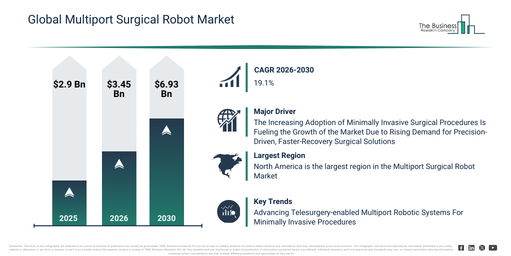
    The multiport surgical robot market size has experienced swift expansion in recent years. It is forecast to rise from $2.9 billion in 2025 to $3.45 billion in 2026, exhibiting a compound annual growth rate (CAGR) of 18.8%. The historical growth in this market can be attributed to the increase in minimally invasive surgery, the early embrace of robotic surgery, a growing demand for surgical precision, the expansion of tertiary care hospitals, and improvements in surgeon ergonomics.

    The multiport surgical robot market is anticipated to experience substantial growth in the next few years. It is projected to expand to $6.93 billion by 2030, achieving a compound annual growth rate (CAGR) of 19.1%. This expansion during the forecast period is attributed to an increase in complex robotic procedures, rising investments in healthcare automation, the development of surgical robotics training, the demand for quicker patient recovery, and the proliferation of specialty robotic centers. Key trends for the forecast period include high-definition 3D surgical visualization, multi-arm robotic coordination, advanced minimally invasive robotics, AI-assisted surgical planning, and integrated robotic navigation systems.

    Access Your Free Sample Report For In-Depth Market Analysis:

    https://www.thebusinessresearchcompany.com/sample.aspx?id=33239&type=smp

    Which Key Drivers Are Affecting The Multiport Surgical Robot Market Development?

    The rising prevalence of minimally invasive surgical procedures is projected to boost the expansion of the multiport surgical robot in the coming years. Minimally invasive surgical procedures are operations carried out through small incisions utilizing specialized instruments or robotic systems, thereby lessening patient trauma, reducing recovery time, and mitigating complications while sustaining clinical effectiveness. The increasing acceptance of minimally invasive surgical procedures is attributed to shorter hospital stays, as these approaches allow for faster recovery and earlier discharge compared to traditional open surgeries. The multiport surgical robots facilitate minimally invasive surgical procedures by delivering the precision, dexterity, and visualization essential for performing complex minimally invasive surgeries safely and efficiently. For instance, in June 2024, according to the American Society of Plastic Surgeons, a US-based non-profit organization, hyaluronic acid filler minimally invasive procedures totaled 5.29 million in 2023, an 8% increase over 2022. Therefore, the expanding adoption of minimally invasive surgical procedures is propelling the growth of the multiport surgical robot market.

    How Is Segmentation Applied In The Multiport Surgical Robot Market Segment Analysis?

    The multiport surgical robot market covered in this report is segmented –

    1) By Component: Robotic Systems; Instruments And Accessories; Software; Services

    2) By Surgery Type: General Surgery; Urological Surgery; Gynecological Surgery

    3) By Type: Floor Standing; Desktop

    4) By Application: Open Surgery; Minimally Invasive Surgery

    5) By End-User: Hospitals; Ambulatory Surgical Centers; Specialty Clinics; Academic Research Centers

    Subsegments:

    1) By Robotic Systems: Robotic Arms; Control Consoles; Vision Systems; Energy Delivery Units; Navigation and Tracking Modules

    2) By Instruments And Accessories: Surgical Staplers; Needle Holders; Forceps; Scissors; Graspers; Endoscopic Tools

    3) By Software: Surgical Planning Software; Real-Time Imaging Software; Motion Control Software; Data Management Software; System Integration Software

    4) By Services: Installation Services; Maintenance Services; System Upgradation Services; Training Services; Technical Support Services

    What Trends Are Transforming The Multiport Surgical Robot Market?

    Leading companies within the multiport surgical robot market are concentrating on developing sophisticated multiport robotic systems, such as telesurgery-enabled platforms, with the goal of improving surgical precision, boosting procedural efficiency, and expanding the availability of minimally invasive surgery. Telesurgery-enabled platforms are advanced surgical systems that empower surgeons to conduct robotic-assisted procedures remotely in real-time by using high-speed, low-latency network connectivity to manage surgical instruments from a distant location. For instance, in June 2024, SS Innovations International Inc., an India-based surgical robotics company, introduced SSI Mantra 3, its next-generation indigenous multiport surgical robotic system, and successfully completed India’s first human telesurgery trial. The system, engineered with five slimmer robotic arms, an immersive 3D HD surgeon console, and 3D 4K vision for the operating team, aims to better clinical outcomes while providing cost-effective access to advanced robotic surgery, thereby supporting broader adoption.

    Who Are The Companies Participating In The Multiport Surgical Robot Market Environment?

    Major companies operating in the multiport surgical robot market are Medtronic plc, Johnson & Johnson, Stryker Corporation, Zimmer Biomet Holdings Inc., Intuitive Surgical Inc., Meril Life Sciences Private Limited, Globus Medical Inc., MicroPort Scientific Corporation, Meerecompany Inc., CMR Surgical Ltd., Cornerstone Robotics Limited, Distalmotion SA, Ronovo Surgical Co. Ltd., EndoRobotics S.r.l., SS Innovations International Inc., Moon Surgical SAS, Medicaroid Corporation, Edge Medical Robot Co. Ltd., AcuSurgical Inc., Momentis Surgical Inc., Sina Robotics and Medical Innovators Co. Ltd., Aimooe Technology Co. Ltd., Harbin Sagebot Intelligent Medical Equipment Co. Ltd., WEGO Holding Company Limited, Sinovation (Beijing) Medical Technology Co. Ltd.

    Get The Full Multiport Surgical Robot Market Report:

    https://www.thebusinessresearchcompany.com/report/multiport-surgical-robot-market-report

    Which Region Is The Top Contributor To The Multiport Surgical Robot Market By Share?

    North America was the largest region in the multiport surgical robot market in 2025. Asia-Pacific is expected to be the fastest-growing region in the forecast period. The regions covered in the multiport surgical robot market report are Asia-Pacific, South East Asia, Western Europe, Eastern Europe, North America, South America, Middle East, Africa.

    Request A Customized Multiport Surgical Robot Market Report For Competitive Insights:

    https://www.thebusinessresearchcompany.com/customise?id=33239&type=smp

    Browse Through More Reports Similar to the Global Multiport Surgical Robot Market 2026, By The Business Research Company

    Surgical Robot Accessories Market Report 2026

    https://www.thebusinessresearchcompany.com/report/surgical-robot-accessories-global-market-report

    Surgical Robots Market Report 2026

    https://www.thebusinessresearchcompany.com/report/surgical-robots-global-market-report

    Robotic Surgery Services Market Report 2026

    https://www.thebusinessresearchcompany.com/report/robotic-surgery-services-global-market-report

    Get in touch with us:

    The Business Research Company: https://www.thebusinessresearchcompany.com/

    Americas +1 310-496-7795

    Asia +44 7882 955267 & +91 8897263534

    Europe +44 7882 955267

    Email us at info@tbrc.info

    Follow us on:

    LinkedIn: https://in.linkedin.com/company/the-business-research-company

    YouTube: https://www.youtube.com/channel/UC24_fI0rV8cR5DxlCpgmyFQ

    Global Market Model: https://www.thebusinessresearchcompany.com/global-market-model
  • Multimodal Imaging Market Forecast Highlighting Key Trends And Expansion Potential

    Multimodal Imaging Market Forecast Highlighting Key Trends And Expansion Potential

    The Business Research Company’s 2026 market reports feature enhanced tools like market attractiveness analysis, TAM assessment, and company scoring matrices, along with interactive dashboards, deeper supply chain insights, and startup coverage strengthening the depth, usability, and strategic value of insights.

    How Is The Market Size Of The Multimodal Imaging Market Expected To Change From 2026 To 2030?

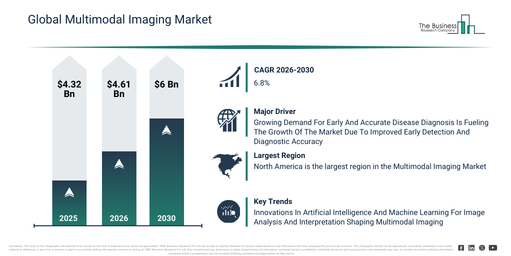
    The multimodal imaging market has demonstrated strong growth in recent years. It is anticipated to expand from $4.32 billion in 2025 to $4.61 billion in 2026, at a compound annual growth rate (CAGR) of 6.6%. The expansion observed historically can be attributed to the rise of advanced diagnostic imaging, an increase in cancer screening programs, the broadening of hospital imaging infrastructure, enhancements in detector technology, and greater clinical imaging demand.

    The multimodal imaging market is set to experience significant growth in the coming years. It is projected to reach $6 billion by 2030, demonstrating a compound annual growth rate (CAGR) of 6.8%. This expansion during the forecast period can be attributed to factors such as increased demand for precision diagnostics, a rising burden of chronic diseases, the adoption of AI imaging analytics, the proliferation of hybrid imaging systems, and the broadening of imaging as a service. Key trends expected in the forecast period include hybrid PET/MR imaging systems, integrated multi-modality diagnostics, AI-assisted image fusion, cloud-based imaging analytics, and advanced multimodal visualization software.

    Access Your Free Sample Report For In-Depth Market Analysis:

    https://www.thebusinessresearchcompany.com/sample.aspx?id=33234&type=smp

    What Factors Are Contributing To The Growth Of The Multimodal Imaging Market?

    The increasing need for prompt and precise disease identification is projected to fuel the expansion of the multimodal imaging market in the future. This refers to the process of identifying diseases in their initial phases with high accuracy, leveraging medical data and advanced technologies to facilitate prompt treatment and improve patient outcomes. The impetus behind this trend stems from individuals’ desire for timely and precise disease detection, aiming for improved treatment and results, which empowers healthcare providers to identify conditions significantly earlier. Multimodal imaging aids in this by permitting the integration of various medical imaging methods, leading to more precise disease detection. For example, in October 2024, data from the National Health Service England, a UK public body, indicated that by March 2024, early diagnosis rates had surpassed pre-pandemic levels by 2.4% points and were 0.8% points higher than the prior year, according to Rapid Cancer Registration Data. Consequently, the escalating demand for early and accurate disease diagnosis is a key driver for the growth of the multimodal imaging market.

    What Segment Categories Shape The Multimodal Imaging Market Segment Landscape?

    The multimodal imaging market covered in this report is segmented –

    1) By Product: Multimodal Imaging Equipment; Reagents; Software

    2) By Technology: Positron Emission Tomography (PET) Or Computed Tomography (CT) Systems; Single Photon Emission Computed Tomography Or Computed Tomography (CT) Systems; Positron Emission Tomography (PET) Or Magnetic Resonance (MR) Systems; Other Technologies

    3) By Application: Oncology; Cardiology; Neurology; Ophthalmology; Musculoskeletal Disorders; Other Applications

    4) By End-User: Hospitals; Diagnostic Imaging Centers; Other End-Users

    Subsegments:

    1) By Multimodal Imaging Equipment: Magnetic Resonance Imaging Scanner; Computed Tomography Scanner; Positron Emission Tomography Scanner; Single Photon Emission Computed Tomography Scanner; Optical Imaging System; Photoacoustic Imaging System; Hybrid Imaging System

    2) By Reagents: Contrast Agents; Radiopharmaceuticals; Fluorescent Dyes; Molecular Probes

    3) By Software: Image Processing Software; Analysis And Visualization Software; Data Management Software; Workflow And Reporting Software

    What Trends Are Shaping The Future Of The Multimodal Imaging Market?

    Leading companies operating in the multimodal imaging market are heavily investing in artificial intelligence and machine learning advancements for image analysis and interpretation. A key area is AI-assisted image segmentation, which allows for the automated identification of anatomical structures and specific regions of interest across diverse imaging modalities. This technique employs artificial intelligence algorithms to automatically divide images into meaningful parts, a task traditionally performed manually by human experts. For example, in September 2025, Revvity, Inc., a US-based firm specializing in preclinical imaging solutions, unveiled its Living Image Synergy AI multimodal analysis software. This software delivers a unified, AI-enabled platform for the seamless analysis of in vivo imaging data, covering optical, microCT, ultrasound, and other modalities. It diminishes data inconsistencies by centralizing workflows and eliminating the need for several separate tools. Moreover, it incorporates advanced AI algorithms to automate image segmentation and the quantification of regions of interest, thereby improving accuracy and reproducibility. Its intuitive co-registration and automated processes further reduce manual effort and analysis time.

    Who Are The Companies Operating Across The Multimodal Imaging Market Value Chain?

    Major companies operating in the multimodal imaging market are Samsung Medison Co. Ltd., Analogic Corporation, Alcon Inc., Hologic Inc., Sofie Biosciences Inc., ShanghAI United Imaging Healthcare Co. Ltd., Topcon Corporation, Agfa-Gevaert Group, Heidelberg Engineering GmbH, Optos plc, RefleXion Medical Inc., Neusoft Corporation, Infraredx Inc., MinFound Medical Systems Co. Ltd., Neusoft Medical Systems Co. Ltd., Spectrum Dynamics Medical LLC, Konica Minolta Healthcare Americas Inc., Esaote S.p.A., MR Solutions Ltd., MILabs B.V., NIDEK Co. Ltd., Kowa Company Ltd., and Positron Corporation.

    Get The Full Multimodal Imaging Market Report:

    https://www.thebusinessresearchcompany.com/report/multimodal-imaging-market-report

    Which Region Represents The Largest Share Of The Multimodal Imaging Market?

    North America was the largest region in the multimodal imaging market in 2025. Asia-Pacific is expected to be the fastest-growing region in the forecast period. The regions covered in the multimodal imaging market report are Asia-Pacific, South East Asia, Western Europe, Eastern Europe, North America, South America, Middle East, Africa.

    Request A Customized Multimodal Imaging Market Report For Competitive Insights:

    https://www.thebusinessresearchcompany.com/customise?id=33234&type=smp

    Browse Through More Reports Similar to the Global Multimodal Imaging Market 2026, By The Business Research Company

    Multimodal Ai Market Report 2026

    https://www.thebusinessresearchcompany.com/report/multimodal-ai-global-market-report

    Generative Ai In Media And Entertainment Market Report 2026

    https://www.thebusinessresearchcompany.com/report/generative-ai-in-media-and-entertainment-global-market-report

    Generative Ai In Media Market Report 2026

    https://www.thebusinessresearchcompany.com/report/generative-ai-in-media-global-market-report

    Get in touch with us:

    The Business Research Company: https://www.thebusinessresearchcompany.com/

    Americas +1 310-496-7795

    Asia +44 7882 955267 & +91 8897263534

    Europe +44 7882 955267

    Email us at info@tbrc.info

    Follow us on:

    LinkedIn: https://in.linkedin.com/company/the-business-research-company

    YouTube: https://www.youtube.com/channel/UC24_fI0rV8cR5DxlCpgmyFQ

    Global Market Model: https://www.thebusinessresearchcompany.com/global-market-model
  • Monogenetic Disease Therapy Market Analysis Covering Growth Drivers And Future Outlook

    Monogenetic Disease Therapy Market Analysis Covering Growth Drivers And Future Outlook

    The Business Research Company’s 2026 market reports feature enhanced tools like market attractiveness analysis, TAM assessment, and company scoring matrices, along with interactive dashboards, deeper supply chain insights, and startup coverage strengthening the depth, usability, and strategic value of insights.

    From Its 2026 Market Size, What Value Is The Monogenetic Disease Therapy Market Projected To Reach By 2030?

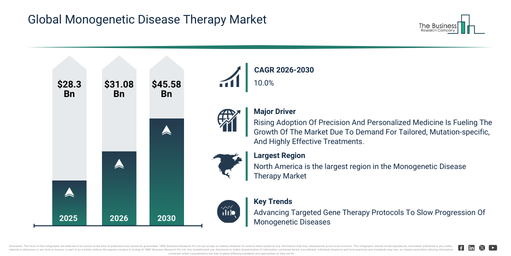
    The monogenetic disease therapy market has experienced substantial growth in recent years. Projections indicate its expansion from $28.3 billion in 2025 to $31.08 billion in 2026, exhibiting a compound annual growth rate (CAGR) of 9.8%. Historically, this growth can be attributed to progress in human genome research, the initiation of early gene therapy trials, an increase in rare disease diagnoses, orphan drug incentives, and advancements in viral vectors.

    The monogenetic disease therapy market size is anticipated to undergo swift expansion over the next few years. It is forecast to achieve a valuation of $45.58 billion by 2030, exhibiting a compound annual growth rate (CAGR) of 10.0%. This projected growth during the forecast period is primarily driven by the advancement of gene editing platforms, the proliferation of rare disease pipelines, higher rates of genetic screening, increased financing for personalized therapy, and wider regulatory approvals. Significant developments expected in this period encompass single gene targeted therapies, programs for gene replacement treatment, RNA-based genetic treatments, gene correction for rare diseases, and the design of precision genetic drugs.

    Access Your Free Sample Report For In-Depth Market Analysis:

    https://www.thebusinessresearchcompany.com/sample.aspx?id=33229&type=smp

    Which Strong Drivers Are Impacting The Monogenetic Disease Therapy Market Growth?

    The monogenetic disease therapy market is projected to see growth driven by the increasing adoption of precision and personalized medicine. This medical approach customizes disease prevention, diagnosis, and treatment according to an individual’s unique genetic, molecular, or lifestyle characteristics to optimize therapeutic efficacy and reduce adverse effects. The rising demand for precision and personalized medicine comes from healthcare providers and patients who seek tailored treatments that achieve maximum therapeutic benefit, minimize side effects, and address individual genetic, molecular, or lifestyle traits. Monogenetic disease therapy supports this by targeting a patient’s specific genetic mutation, enabling highly customized and effective interventions. For example, in February 2024, the Personalized Medicine Coalition, a US-based hospital and health care organization, stated that in 2023, the FDA approved 16 new personalized treatments for rare disease patients, a significant rise from six in 2022. Therefore, the expanding embrace of precision and personalized medicine is fueling the expansion of the monogenetic disease therapy market.

    Which Segment Types Are Examined In The Monogenetic Disease Therapy Market Segment Study?

    The monogenetic disease therapy market covered in this report is segmented –

    1) By Therapy Type: Pharmacological; Surgical; Blood Transfusion; Gene Therapies; Other Therapy Types

    2) By Inheritance Pattern: Autosomal; Chromosomal

    3) By Application: Cystic Fibrosis; Sickle Cell Anemia; Phenylketonuria; Other Applications

    4) By Distribution Channel: Hospital Pharmacy; Retail Pharmacy; Online Pharmacy

    5) By End-Users: Clinics; Hospitals; Diagnostic Centres; Home Healthcare; Other End-Users

    Subsegments:

    1) By Pharmacological: Small Molecule Drugs; Enzyme Replacement Therapies; Protein Replacement Therapies; Immunomodulatory Drugs; Targeted Molecular Therapies

    2) By Surgical: Organ Transplant Procedures; Tissue Repair Surgeries; Gene Editing Assisted Surgeries; Minimally Invasive Surgeries; Corrective Surgical Interventions

    3) By Blood Transfusion: Red Blood Cell Transfusions; Platelet Transfusions; Plasma Transfusions; Stem Cell Infusions; Autologous Blood Transfusions

    4) By Gene Therapies: Ex Vivo Gene Therapy; In Vivo Gene Therapy; Viral Vector Based Gene Therapy; Non Viral Vector Gene Therapy; Genome Editing Based Therapy

    5) By Other Therapy Types: Cell Based Therapies; RNA Based Therapies; Protein Based Therapies; Combination Therapies; Experimental Therapies

    Which Trends Are Contributing To Changes In The Monogenetic Disease Therapy Market?

    Major companies in the monogenetic disease therapy market are concentrating on developing innovative gene therapies, such as Duchenne muscular dystrophy (DMD)–targeted protocols, to slow disease progression and improve long-term patient outcomes. Duchenne muscular dystrophy–targeted protocols are structured clinical or therapeutic guidelines specifically designed to diagnose, monitor, and manage patients with Duchenne muscular dystrophy, focusing on slowing disease progression, improving muscle function, and addressing associated complications. As an example, in January 2026, Sarepta Therapeutics Inc, a US-based biopharmaceutical company, launched Elevidys for ambulatory patients aged four and older with DMD, reporting up to a 73% reduction in the rate of functional decline over three years compared with an external control group, underscoring the importance of early intervention to alter the disease course and improve quality of life.

    Which Players Are Part Of The Competitive Landscape Of The Monogenetic Disease Therapy Market?

    Major companies operating in the monogenetic disease therapy market are Pfizer Inc., Sanofi S.A., Astellas Pharma Inc., Vertex Pharmaceuticals Incorporated, Sarepta Therapeutics Inc., Ptc therapeutics inc., Crispr therapeutics ag, CRISPR Therapeutics, Voyager Therapeutics Inc., Oxford Biomedica plc, REGENXBIO INC., Arcturus therapeutics holdings inc., Editas medicine Inc., American Gene Technologies, UniQure NV., MeiraGTx Limited, Prime medicine, Abeona therapeutics Inc., Blue Cross Blue Shield Association, Rocket pharmaceuticals Inc.

    Get The Full Monogenetic Disease Therapy Market Report:

    https://www.thebusinessresearchcompany.com/report/monogenetic-disease-therapy-market-report

    Which Geographic Region Dominates The Monogenetic Disease Therapy Market?

    North America was the largest region in the monogenetic disease therapy market in 2025. Asia-Pacific is expected to be the fastest-growing region in the forecast period. The regions covered in the monogenetic disease therapy market report are Asia-Pacific, South East Asia, Western Europe, Eastern Europe, North America, South America, Middle East, Africa.

    Request A Customized Monogenetic Disease Therapy Market Report For Competitive Insights:

    https://www.thebusinessresearchcompany.com/customise?id=33229&type=smp

    Browse Through More Reports Similar to the Global Monogenetic Disease Therapy Market 2026, By The Business Research Company

    Cell And Gene Therapy Clinical Trial Services Market Report 2026

    https://www.thebusinessresearchcompany.com/report/cell-and-gene-therapy-clinical-trial-services-global-market-report

    Genes Therapy Market Report 2026

    https://www.thebusinessresearchcompany.com/report/genes-therapy-global-market-report

    Cell And Gene Therapy Supply Chain Or Logistics Market Report 2026

    https://www.thebusinessresearchcompany.com/report/cell-and-gene-therapy-supply-chain-or-logistics-global-market-report

    Get in touch with us:

    The Business Research Company: https://www.thebusinessresearchcompany.com/

    Americas +1 310-496-7795

    Asia +44 7882 955267 & +91 8897263534

    Europe +44 7882 955267

    Email us at info@tbrc.info

    Follow us on:

    LinkedIn: https://in.linkedin.com/company/the-business-research-company

    YouTube: https://www.youtube.com/channel/UC24_fI0rV8cR5DxlCpgmyFQ

    Global Market Model: https://www.thebusinessresearchcompany.com/global-market-model
  • Mobile Health Monitoring Diagnostic Medical Device Market Insights Highlighting Opportunities Supporting Growth To 2030

    Mobile Health Monitoring Diagnostic Medical Device Market Insights Highlighting Opportunities Supporting Growth To 2030

    The Business Research Company’s 2026 market reports feature enhanced tools like market attractiveness analysis, TAM assessment, and company scoring matrices, along with interactive dashboards, deeper supply chain insights, and startup coverage strengthening the depth, usability, and strategic value of insights.

    How Much Growth In Market Value Is Expected For The Mobile Health Monitoring Diagnostic Medical Device Market Between 2026 And 2030?

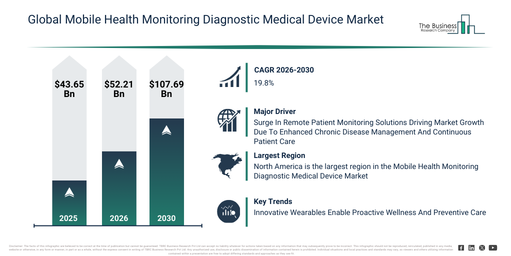
    The mobile health monitoring diagnostic medical device market has shown significant growth in recent years. Its size is expected to expand from $43.65 billion in 2025 to $52.21 billion in 2026, achieving a compound annual growth rate (CAGR) of 19.6%. This historical expansion can be linked to several factors, including the increase in remote diagnostics, the emergence of early portable monitoring devices, the broader application of wireless medical sensors, the introduction of hospital telemonitoring pilots, and a rise in the use of home testing devices.

    The mobile health monitoring diagnostic medical device market size is projected to experience swift expansion over the coming years. It is anticipated to reach $107.69 billion by 2030, exhibiting a compound annual growth rate (CAGR) of 19.8%. This expansion during the projection period stems from rising demand for chronic disease monitoring, the growth of virtual care programs, increased adoption of connected diagnostics, integration with clinical analytics platforms, and an uptick in home based diagnostics. Key trends anticipated for this forecast timeframe encompass mobile connected diagnostic sensors, real time remote diagnostic monitoring, cloud linked medical devices, portable multi parameter monitors, and wireless clinical monitoring systems.

    Access Your Free Sample Report For In-Depth Market Analysis:

    https://www.thebusinessresearchcompany.com/sample.aspx?id=33226&type=smp

    What Key Factors Are Shaping The Mobile Health Monitoring Diagnostic Medical Device Market Landscape?

    The expanding integration of remote patient monitoring (RPM) solutions is anticipated to drive the growth of the mHealth monitoring diagnostic medical device market. These RPM solutions encompass technologies designed to remotely track patients’ health data, thereby enabling effective care and intervention without the necessity of in-person visits. The surge in their adoption is primarily propelled by improvements in chronic disease management, given that RPM allows for continuous monitoring of patients’ health data and facilitates timely interventions, obviating the need for frequent physical appointments. Furthermore, mHealth monitoring diagnostic medical devices play a crucial role in supporting remote patient monitoring by offering real-time, wearable, and connected tools that consistently gather patients’ vital signs and health data. This capability empowers healthcare providers to closely track conditions, detect anomalies swiftly, and deliver personalized, timely care from a distance. For instance, an illustration from January 2025, based on data from the Independent Health and Aged Care Pricing Authority, an Australia-based government agency, indicates that in 2022–23, virtual care (which includes telehealth and RPM) accounted for around ~24% of non admitted care within public services. Hence, the increasing embrace of remote patient monitoring solutions is clearly a significant factor in the expansion of the mHealth monitoring diagnostic medical device market.

    How Are Different Segments Classified In The Mobile Health Monitoring Diagnostic Medical Device Market Segment Analysis?

    The mobile health monitoring diagnostic medical device market covered in this report is segmented –

    1) By Type: Glucose Monitor; Blood Pressure Monitor; Pulse Oximeter; Cardiac Monitor; Sleep Apnea Monitor; Multi Parameter Monitoring Device; Other Devices

    2) By Device Type: Wearable Devices; Handheld Devices; Implantable Devices; Mobile Applications; Remote Monitoring Devices

    3) By Application: Diabetes; Cardiovascular Diseases; Central Nervous System Disease; Respiratory Diseases; Musculoskeletal Diseases; Smoking Cessation; Medication Adherence; Other Applications

    4) By End User: Hospitals; Ambulatory Surgical Centers; Homecare Settings; Diagnostic Centers; Research and Academic Institutes

    Subsegments:

    1) By Glucose Monitor: Continuous Glucose Monitoring Devices; Self Monitoring Blood Glucose Meters; Flash Glucose Monitoring Devices; Implantable Glucose Sensors; Non Invasive Glucose Monitoring Devices

    2) By Blood Pressure Monitor: Upper Arm Blood Pressure Monitors; Wrist Blood Pressure Monitors; Ambulatory Blood Pressure Monitors; Wearable Blood Pressure Monitors; Home Blood Pressure Monitors

    3) By Pulse Oximeter: Fingertip Pulse Oximeters; Handheld Pulse Oximeters; Wearable Pulse Oximeters; Tabletop Pulse Oximeters; Pediatric Pulse Oximeters

    4) By Cardiac Monitor: Holter Cardiac Monitors; Event Cardiac Monitors; Mobile Cardiac Telemetry Devices; Implantable Cardiac Monitors; Wearable Cardiac Monitors

    5) By Sleep Apnea Monitor: Polysomnography Devices; Portable Sleep Monitoring Devices; Wearable Sleep Apnea Monitors; Home Sleep Testing Devices; Positive Airway Pressure Monitoring Devices

    6) By Multi Parameter Monitoring Device: Vital Signs Monitoring Devices; Bedside Multi Parameter Monitors; Wearable Multi Parameter Monitors; Remote Patient Monitoring Devices; Home Multi Parameter Monitoring Devices

    7) By Other Devices Including Fetal Monitors and Neurological Monitors: Fetal Heart Rate Monitors; Uterine Contraction Monitors; Electroencephalography Monitoring Devices; Intracranial Pressure Monitors; Neuromuscular Monitoring Devices

    What Market Trends Are Affecting The Mobile Health Monitoring Diagnostic Medical Device Market?

    Major companies within the mHealth monitoring diagnostic medical device market are concentrating on creating inventive solutions, such as the initial over-the-counter (OTC) glucose biosensor, to boost access to ongoing health monitoring, foster preventive healthcare, and propel wider acceptance of diagnostic technologies centered on consumers. The pioneering OTC glucose biosensor functions as a non-prescription wearable device that continually assesses glucose levels, supplying users with immediate, tailored data to assist in managing blood sugar and lifestyle habits independently, without the need for clinical oversight. For instance, in August 2024, Dexcom Inc., a US-based medical device firm, unveiled Stelo by Dexcom, which is the first over-the-counter continuous glucose biosensor available in the United States without a prescription. It is designed for adults aged 18 years and older who do not rely on insulin therapy. Stelo is a compact, wearable sensor positioned on the back of the upper arm, continuously tracking glucose levels for a period of up to 15 days and transmitting this information directly to a user’s smartphone application, thereby enabling individuals to better comprehend and control their glucose patterns for enhanced health and well-being.

    Who Are The Companies Driving Activity In The Mobile Health Monitoring Diagnostic Medical Device Market?

    Major companies operating in the mobile health monitoring diagnostic medical device market are Apple Inc., Garmin Ltd., ResMed Inc., Drägerwerk AG & Co. KGaA, Dexcom Inc., Masimo Corporation, Nonin Medical Inc., Biofourmis Inc., AliveCor Inc., iHealth Labs Inc., AirStrip Technologies Inc., Qardio Inc., Fora Care Inc., Sunfox Technologies, VitalConnect Inc., BioIntelliSense Inc., Sempulse Corporation, Turtle Shell Technologies Private Limited, Cardiotrack Pvt. Ltd., and Startoon Labs Private Limited.

    Get The Full Mobile Health Monitoring Diagnostic Medical Device Market Report:

    https://www.thebusinessresearchcompany.com/report/mobile-health-monitoring-diagnostic-medical-device-market-report

    Which Region Is The Leading Market For The Mobile Health Monitoring Diagnostic Medical Device Market?

    North America was the largest region in the mhealth monitoring diagnostic medical device market in 2025. Asia-Pacific is expected to be the fastest-growing region in the forecast period. The regions covered in the mobile health monitoring diagnostic medical device market report are Asia-Pacific, South East Asia, Western Europe, Eastern Europe, North America, South America, Middle East, Africa.

    Request A Customized Mobile Health Monitoring Diagnostic Medical Device Market Report For Competitive Insights:

    https://www.thebusinessresearchcompany.com/customise?id=33226&type=smp

    Browse Through More Reports Similar to the Global Mobile Health Monitoring Diagnostic Medical Device Market 2026, By The Business Research Company

    Mobile Healthcare Market Report 2026

    https://www.thebusinessresearchcompany.com/report/mobile-healthcare-global-market-report

    Patient Monitoring Devices Market 2026

    https://www.thebusinessresearchcompany.com/report/patient-monitoring-devices-market

    Medical Device Testing Services Market Report 2026

    https://www.thebusinessresearchcompany.com/report/medical-device-testing-services-global-market-report

    Get in touch with us:

    The Business Research Company: https://www.thebusinessresearchcompany.com/

    Americas +1 310-496-7795

    Asia +44 7882 955267 & +91 8897263534

    Europe +44 7882 955267

    Email us at info@tbrc.info

    Follow us on:

    LinkedIn: https://in.linkedin.com/company/the-business-research-company

    YouTube: https://www.youtube.com/channel/UC24_fI0rV8cR5DxlCpgmyFQ

    Global Market Model: https://www.thebusinessresearchcompany.com/global-market-model
  • Global Mobile Health (mHealth) Device Market Expected To Reach $105.16 Billion By 2030 With 14.7% CAGR

    Global Mobile Health (mHealth) Device Market Expected To Reach $105.16 Billion By 2030 With 14.7% CAGR

    The Business Research Company’s 2026 market reports feature enhanced tools like market attractiveness analysis, TAM assessment, and company scoring matrices, along with interactive dashboards, deeper supply chain insights, and startup coverage strengthening the depth, usability, and strategic value of insights.

    What Is The Estimated Market Size Of The Mobile Health (mHealth) Device Market In 2026, And How Will Its Value Evolve By 2030?

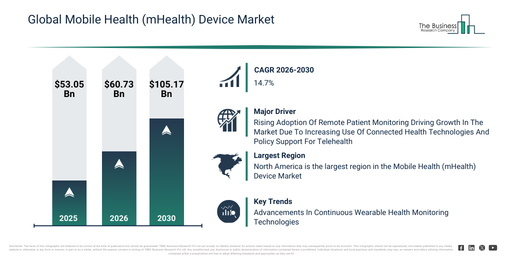
    The mobile health (mhealth) device market size has witnessed rapid expansion in recent years. It is set to grow from $53.05 billion in 2025 to $60.73 billion in 2026, achieving a compound annual growth rate (CAGR) of 14.5%. The historical growth can be linked to the increased adoption of fitness trackers, initial health functionalities in smartwatches, the proliferation of telehealth services, a rise in chronic disease instances, and the broadened availability of mobile health applications.

    The mobile health (mhealth) device market size is expected to witness substantial expansion in the upcoming years. It is projected to increase to $105.17 billion by 2030, exhibiting a compound annual growth rate (CAGR) of 14.7%. This projected growth can be attributed to the rise in remote patient monitoring, increasing demand for preventive care, the expansion of connected care models, heightened consumer health awareness, and integration with digital health platforms. Significant trends for the forecast period include wearable vital sign tracking devices, multi sensor health smartwatches, connected home diagnostic kits, continuous remote health monitoring, and app integrated medical wearables.

    Access Your Free Sample Report For In-Depth Market Analysis:

    https://www.thebusinessresearchcompany.com/sample.aspx?id=33225&type=smp

    Which Factors Are Influencing The Growth Of The Mobile Health (mHealth) Device Market?

    The increasing adoption of remote patient monitoring is anticipated to fuel the expansion of the mHealth devices market in the future. Remote patient monitoring involves leveraging interconnected medical devices and digital innovations to constantly gather, send, and examine patient health information beyond conventional healthcare environments, facilitating prompt medical judgments and enhanced care results. The expansion of remote patient monitoring is driven by the wider acceptance of digital health solutions that allow for ongoing, real-time tracking of individuals outside standard clinical environments. mHealth devices play a crucial role in remote patient monitoring by facilitating the continuous collection and live transmission of patient health data, empowering healthcare providers to monitor conditions from a distance, implement prompt interventions, and boost overall care effectiveness. For example, in August 2025, data from the U.S. Department of Health & Human Services (OIG), a US-based government body, indicated that in 2024, Medicare payments for remote patient monitoring (RPM) exceeded US$536 million, showing a 31% rise from the previous year. Close to one million beneficiaries accessed RPM services, representing a 27% increase compared to 2023, with around 4,600 medical practices regularly submitting claims for RPM. Consequently, the increased prevalence of remote patient monitoring is projected to stimulate the growth of the mHealth devices market.

    How Is The Mobile Health (mHealth) Device Market Categorized Across Its Segment Groups?

    The mobile health (mhealth) device market covered in this report is segmented –

    1) By Product Type: Blood Pressure Monitor; Blood Glucose Meter; Pulse Oximeter; Neurological Monitor; Heart Rate Meter; Electrocardiogram (ECG) Monitor; Cardiac Monitor; Peak Flow Meter; Multiparameter Tracker; Fitbit Or Smart Watches; Sleep Apnea Meter; Other Product Types

    2) By Technology: Bluetooth And Bluetooth Low Energy (BLE); Wireless Fidelity (Wi-Fi); Cellular (4G Or 5G); Near Field Communication (NFC); Radio Frequency Identification (RFID)

    3) By Application: Chronic Care Management; Diabetes Management; Cancer Management; General Health; Fitness; Mental Health Behavioral Disorders Management; Blood Pressure Monitoring; Nutrition; Medical Management; Women’s Health; Other Applications

    4) By End Users: Home Healthcare; Hospitals; Diagnostic Laboratories; Clinics; Academic Research Institutions

    Subsegments:

    1) By Blood Pressure Monitor: Upper Arm; Wrist; Finger

    2) By Blood Glucose Meter: Continuous Glucose Monitor; Self-Monitoring Blood Glucose Device; Flash Glucose Monitor

    3) By Pulse Oximeter: Fingertip; Handheld; Wrist; Tabletop

    4) By Neurological Monitor: Electroencephalogram; Intracranial Pressure Monitor; Cerebral Oxygen Monitor; Evoked Potential Monitor

    5) By Heart Rate Meter: Chest Strap; Wrist-Based; Finger-Based

    6) By Electrocardiogram (ECG) Monitor: Resting; Ambulatory; Stress; Wireless

    7) By Cardiac Monitor: Holter Monitor; Event Monitor; Telemetry Monitor; Implantable Loop Recorder

    8) By Peak Flow Meter: Mechanical; Digital; Portable

    9) By Multiparameter Tracker: Fitness Tracker; Health Tracker; Activity Tracker; Wellness Tracker

    10) By Other Product Types: Temperature Monitor; Respiratory Monitor; Oxygen Concentration Monitor; Blood Gas Monitor

    Which Trends Are Influencing Demand In The Mobile Health (mHealth) Device Market?

    Leading companies in the mHealth devices market are concentrating on developing innovative solutions, such as advanced wearable health monitoring devices, to fulfill the increasing demand for remote patient oversight, preventive healthcare, and real-time health data analytics, driven by the rising prevalence of chronic diseases and growing consumer wellness awareness. These advanced wearable health monitoring devices typically incorporate a suite of sensors that continuously collect physiological data and transmit it via connected mobile applications or cloud services, enabling users and healthcare providers to monitor health outside conventional clinical settings; unlike traditional intermittent check-ups or standalone medical devices, these wearables facilitate 24/7 data capture, trend analysis, and proactive health interventions. For example, in May 2025, WHOOP Inc., a US-based wearable technology company, launched WHOOP 5.0 and WHOOP MG, a next-generation wearable health and fitness platform that integrates an extended 14+ day battery life, advanced sensors for tracking sleep, recovery, strain, and stress, alongside new blood pressure insights and on-demand ECG heart screening through the WHOOP MG variant, offering continuous healthspan and cardiovascular monitoring beyond typical consumer fitness trackers; these devices are designed as a slim, screen-free strap to be worn 24/7, with data delivered through the companion app, providing deeper health analytics and personalized recommendations to optimize performance and wellness.

    Which Firms Are Influencing Competition In The Mobile Health (mHealth) Device Market?

    Major companies operating in the mobile health (mhealth) device market are Apple Inc., Google LLC, Samsung Electronics Co. Ltd., Abbott Laboratories, Koninklijke Philips N.V., Garmin Health Inc., OMRON Healthcare Inc., ResMed Inc., Garmin Ltd., DexCom Inc., Masimo Corporation, iRhythm Technologies Inc., BioTelemetry Inc., Biofourmis Pte. Ltd., Withings S.A.S., BPL Medical Technologies Private Limited, AliveCor Inc., iHealth Labs Inc., WellDoc Inc., Qardio Inc.

    Get The Full Mobile Health (mHealth) Device Market Report:

    https://www.thebusinessresearchcompany.com/report/mobile-health-mhealth-device-market-report

    Where Is The Mobile Health (mHealth) Device Market Primarily Concentrated By Region?

    North America was the largest region in the mHealth devices market in 2025. Asia-Pacific is expected to be the fastest-growing region in the forecast period. The regions covered in the mobile health (mhealth) device market report are Asia-Pacific, South East Asia, Western Europe, Eastern Europe, North America, South America, Middle East, Africa.

    Request A Customized Mobile Health (mHealth) Device Market Report For Competitive Insights:

    https://www.thebusinessresearchcompany.com/customise?id=33225&type=smp

    Browse Through More Reports Similar to the Global Mobile Health (mHealth) Device Market 2026, By The Business Research Company

    Mobile Healthcare Market Report 2026

    https://www.thebusinessresearchcompany.com/report/mobile-healthcare-global-market-report

    Mhealth Apps Market Report 2026

    https://www.thebusinessresearchcompany.com/report/mhealth-apps-global-market-report

    Mobile Point Of Sale Devices Market Report 2026

    https://www.thebusinessresearchcompany.com/report/mobile-point-of-sale-devices-global-market-report

    Get in touch with us:

    The Business Research Company: https://www.thebusinessresearchcompany.com/

    Americas +1 310-496-7795

    Asia +44 7882 955267 & +91 8897263534

    Europe +44 7882 955267

    Email us at info@tbrc.info

    Follow us on:

    LinkedIn: https://in.linkedin.com/company/the-business-research-company

    YouTube: https://www.youtube.com/channel/UC24_fI0rV8cR5DxlCpgmyFQ

    Global Market Model: https://www.thebusinessresearchcompany.com/global-market-model
  • Mitogen-Activated Protein Kinase Inhibitors Market Future Outlook Showing Growth Toward $5.21 Billion By 2030

    Mitogen-Activated Protein Kinase Inhibitors Market Future Outlook Showing Growth Toward $5.21 Billion By 2030

    The Business Research Company’s 2026 market reports feature enhanced tools like market attractiveness analysis, TAM assessment, and company scoring matrices, along with interactive dashboards, deeper supply chain insights, and startup coverage strengthening the depth, usability, and strategic value of insights.

    How Does The Market Size Of The Mitogen-Activated Protein Kinase Inhibitors Market Compare Between 2026 And 2030?

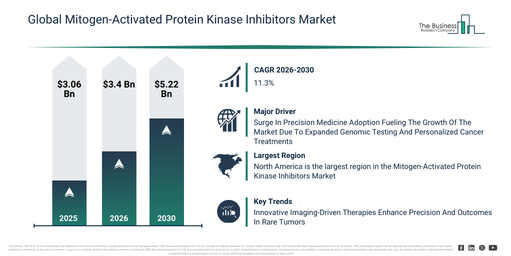
    The mitogen-activated protein kinase inhibitors market has observed rapid expansion in recent years. Its valuation is anticipated to climb from $3.06 billion in 2025 to $3.4 billion in 2026, reflecting a compound annual growth rate (CAGR) of 11.1%. Historically, this growth can be credited to the emergence of targeted cancer therapy, the discovery of MAPK pathway mutations, early BRAF and RAS research, the progression of precision oncology, and initial MEK drug approvals.

    The mitogen-activated protein kinase inhibitors market is anticipated to experience significant expansion over the next few years. It is projected to achieve a valuation of $5.22 billion by 2030, progressing at a compound annual growth rate (CAGR) of 11.3%. This growth during the forecast period is attributable to the proliferation of combination oncology trials, elevated biomarker testing rates, the advancement of personalized cancer care, broader approvals for various indications, and an increase in oncology drug pipelines. Prominent trends anticipated in the forecast period encompass selective MEK targeted therapies, combination targeted oncology regimens, biomarker-guided MEK treatment, oral targeted cancer inhibitors, and the development of next-generation MEK molecules.

    Access Your Free Sample Report For In-Depth Market Analysis:

    https://www.thebusinessresearchcompany.com/sample.aspx?id=33222&type=smp

    What Leading Drivers Are Supporting The Mitogen-Activated Protein Kinase Inhibitors Market Expansion?

    The mitogen-activated protein kinase kinase (MEK) inhibitors market is projected to expand due to the increasing integration of precision medicine. Precision medicine represents a healthcare strategy that customizes disease prevention, diagnosis, and treatment based on an individual’s genetic composition, lifestyle, and environmental factors. The rising acceptance of precision medicine is fueled by its improved treatment effectiveness, as therapies are specifically tailored to a patient’s genetic and molecular profile, leading to superior clinical outcomes and reduced trial-and-error in medical care. MEK inhibitors contribute to precision medicine by selectively targeting particular genetic mutations within the MAPK/ERK pathway, enabling personalized cancer treatments that enhance efficacy while minimizing harm to healthy cells. For instance, in February 2025, the National Health Service, a UK-based government agency, reported that in 2024, the NHS Genomic Medicine Service administered over 810,000 genomic tests across the life course in England, an 8% increase compared to 2023. These tests facilitate early diagnosis, patient stratification, and personalized treatment, which are essential components of precision medicine. Therefore, the broader adoption of precision medicine is propelling the growth of the mitogen-activated protein kinase kinase (MEK) inhibitors market.

    How Are Segments Identified Within The Mitogen-Activated Protein Kinase Inhibitors Market Segment Framework?

    The mitogen-activated protein kinase inhibitors market covered in this report is segmented –

    1) By Product Type: Allosteric Mitogen Activated Protein Kinase Kinase Inhibitors; Adenosine Triphosphate Competitive Mitogen Activated Protein Kinase Kinase Inhibitors

    2) By Target: Mitogen Activated Protein Kinase Kinase 1; Mitogen Activated Protein Kinase Kinase 2

    3) By Route Of Administration: Oral; Injectable

    4) By Application: Non Small Cell Lung Cancer; Metastatic Melanoma; Kirsten Rat Sarcoma Viral Oncogene Homolog And Neuroblastoma RAS Viral Oncogene Homolog Mutated Tumors; Thyroid Carcinoma; Lung Carcinoma; Other Applications

    5) By Distribution Channel: Hospital Pharmacy; Retail Pharmacy; Online Pharmacy

    Subsegments:

    1) By Allosteric Mitogen Activated Protein Kinase Kinase Inhibitors: First Generation Allosteric Inhibitors; Second Generation Allosteric Inhibitors; Highly Selective Allosteric Inhibitors; Dual Pathway Allosteric Inhibitors; Orally Active Allosteric Inhibitors

    2) By Adenosine Triphosphate Competitive Mitogen Activated Protein Kinase Kinase Inhibitors: First Generation Competitive Inhibitors; Second Generation Competitive Inhibitors; Highly Potent Competitive Inhibitors; Broad Spectrum Competitive Inhibitors; Targeted Competitive Inhibitors

    What Emerging Trends Are Seen In The Mitogen-Activated Protein Kinase Inhibitors Market?

    Major companies within the mitogen-activated protein kinase kinase (MEK) inhibitors market are prioritizing the development of efficacy through volumetric MRI with central review, aiming to enhance treatment precision, optimize patient outcomes, and expedite regulatory approvals for rare and difficult-to-treat tumors. This method involves measuring tumor response using precise 3D MRI-derived tumor volumes, with evaluations independently verified by a centralized expert panel to ensure accuracy and consistency. For instance, in February 2025, SpringWorks Therapeutics Inc., a US-based biopharmaceutical company, introduced Gomekli (mirdametinib), an orally administered MEK inhibitor that received approval from the U.S. Food and Drug Administration (FDA) for treating adult and pediatric patients aged 2 years and older suffering from neurofibromatosis type 1 (NF1)-associated symptomatic plexiform neurofibromas (PN); Gomekli functions by selectively inhibiting MEK enzymes within the MAPK signaling cascade, which leads to reduced tumor growth and symptomatic relief in the context of a rare genetic disorder where surgical interventions are frequently restricted, and it also enhances treatment accessibility by offering both capsule and dispersible tablet formulations, catering to patient populations experiencing swallowing difficulties.

    Who Are The Companies Competing Within The Mitogen-Activated Protein Kinase Inhibitors Market?

    Major companies operating in the mitogen-activated protein kinase inhibitors market are ShanghAI Fosun Pharmaceutical (Group) Co. Ltd., F. Hoffmann-La Roche AG, Pfizer Inc., Bayer AG, Novartis AG, AstraZeneca PLC, GlaxoSmithKline plc, Takeda Pharmaceutical Company Limited, Merck KGaA, Boehringer Ingelheim International GmbH, Ono Pharmaceutical Co. Ltd., Exelixis Inc., Laboratoires Pierre Fabre S.A., Day One Biopharmaceuticals Inc., CStone Pharmaceuticals Co. Ltd., Chia TAI Tianqing Pharmaceutical Group Co. Ltd., Immuneering Corporation, Atriva Therapeutics GmbH, ShanghAI Kechow Pharmaceutical Co. Ltd., NFlection Therapeutics Inc., and Verastem Inc.

    Get The Full Mitogen-Activated Protein Kinase Inhibitors Market Report:

    https://www.thebusinessresearchcompany.com/report/mitogen-activated-protein-kinase-inhibitors-market-report

    Which Region Has The Greatest Market Share In The Mitogen-Activated Protein Kinase Inhibitors Market?

    North America was the largest region in the mitogen-activated protein kinase kinase (MEK) inhibitors market in 2025. Asia-Pacific is expected to be the fastest-growing region in the forecast period. The regions covered in the mitogen-activated protein kinase inhibitors market report are Asia-Pacific, South East Asia, Western Europe, Eastern Europe, North America, South America, Middle East, Africa.

    Request A Customized Mitogen-Activated Protein Kinase Inhibitors Market Report For Competitive Insights:

    https://www.thebusinessresearchcompany.com/customise?id=33222&type=smp

    Browse Through More Reports Similar to the Global Mitogen-Activated Protein Kinase Inhibitors Market 2026, By The Business Research Company

    Kinase Inhibitors Market Report 2026

    https://www.thebusinessresearchcompany.com/report/kinase-inhibitors-global-market-report

    Tyrosine Kinase Inhibitors Market Report 2026

    https://www.thebusinessresearchcompany.com/report/tyrosine-kinase-inhibitors-global-market-report

    Janus Kinase Jak Inhibitors Market Report 2026

    https://www.thebusinessresearchcompany.com/report/janus-kinase-jak-inhibitors-global-market-report

    Get in touch with us:

    The Business Research Company: https://www.thebusinessresearchcompany.com/

    Americas +1 310-496-7795

    Asia +44 7882 955267 & +91 8897263534

    Europe +44 7882 955267

    Email us at info@tbrc.info

    Follow us on:

    LinkedIn: https://in.linkedin.com/company/the-business-research-company

    YouTube: https://www.youtube.com/channel/UC24_fI0rV8cR5DxlCpgmyFQ

    Global Market Model: https://www.thebusinessresearchcompany.com/global-market-model

  • Miniature Brain Stimulator Market Revenue Growth Forecast To Reach $1.56 Billion By 2030 At 9.2% CAGR

    Miniature Brain Stimulator Market Revenue Growth Forecast To Reach $1.56 Billion By 2030 At 9.2% CAGR

    The Business Research Company’s 2026 market reports feature enhanced tools like market attractiveness analysis, TAM assessment, and company scoring matrices, along with interactive dashboards, deeper supply chain insights, and startup coverage strengthening the depth, usability, and strategic value of insights.

    What Is The Forecasted Market Size Trajectory Of The Miniature Brain Stimulator Market From 2026 To 2030?

    The miniature brain stimulator market size has demonstrated strong expansion over recent years. It is anticipated to increase from $1.01 billion in 2025 to $1.1 billion in 2026, achieving a compound annual growth rate (CAGR) of 8.9%. The market’s historic growth is largely attributable to the clinical adoption of DBS therapy, a rise in epilepsy treatments, growth in neuromodulation research, the introduction of early implantable stimulator devices, and an increase in movement disorder diagnoses.

    The miniature brain stimulator market is anticipated to experience robust expansion over the next few years. Its valuation is projected to reach $1.57 billion by 2030, progressing at a compound annual growth rate (CAGR) of 9.2%. The momentum of this growth throughout the forecast period stems from the increasing burden of neurological disorders, the broadening application of psychiatric stimulation therapy, developments in miniaturized electronics, the rising utilization of outpatient neurotherapy, and an increase in clinical trials focused on neuromodulation. Significant developments expected during this timeframe include compact implantable neurostimulators, closed-loop brain stimulation systems, rechargeable pulse generator devices, wearable brain stimulation units, and multi-mode neurostimulation platforms.

    Access Your Free Sample Report For In-Depth Market Analysis:

    https://www.thebusinessresearchcompany.com/sample.aspx?id=33221&type=smp

    Which Key Factors Are Driving The Miniature Brain Stimulator Market Growth?

    The increasing occurrence of neurological disorders is expected to boost the growth of the miniature brain stimulator market during the forecast period. Neurological disorders encompass conditions affecting the brain, spinal cord, and nervous system, including Parkinson’s disease, epilepsy, chronic pain, and movement disorders, which frequently necessitate long-term and precise therapeutic interventions. The rising incidence of these disorders is attributed to factors such as aging populations, extended life expectancy, lifestyle modifications, and improved diagnostic capabilities leading to higher rates of disease detection. Miniature brain stimulators address this growing disease burden by providing targeted electrical stimulation to specific brain regions, assisting in regulating abnormal neural activity and enhancing symptom control when traditional drug therapies prove ineffective. For example, in March 2023, the Alzheimer’s Association, a US-based nonprofit voluntary health organization, reported that in 2023, approximately 6.7 million Americans aged 65 and older were living with Alzheimer’s dementia, a figure projected to increase to 13.8 million by 2060. Therefore, the increasing prevalence of neurological disorders is driving the growth of the miniature brain stimulator market.

    What Are The Key Segment Divisions In The Miniature Brain Stimulator Market Segment Structure?

    The miniature brain stimulator market covered in this report is segmented –

    1) By Product Type: Implantable; Portable; Battery Operated; Handheld; Wearable; Cap; Headband

    2) By Technology: Deep Brain Stimulation; Transcranial Direct Current Stimulation; Transcranial Magnetic Stimulation

    3) By Application: Depression Therapy; Epilepsy Treatment; Neuromodulation Research; Parkinson’s Disease

    4) By Distribution Channel: Direct Sales; Online Sales; Third Party Distributors

    5) By End User: Home Healthcare Facilities; Hospitals And Clinics; Research Laboratories

    Subsegments:

    1) By Implantable: Deep Brain Stimulator; Cortical Implant; Subdural Electrode; Neural Probe

    2) By Portable: Portable Neurostimulator; Mobile Brain Device; Compact Stimulation Unit; Transportable Monitoring Device

    3) By Battery Operated: Rechargeable Neurostimulator; Long Life Battery Device; Replaceable Battery Module; Standalone Stimulation Unit

    4) By Handheld: Handheld Programming Device; Handheld Neurofeedback Unit; Handheld Stimulation Controller; Handheld Diagnostic Tool

    5) By Wearable: Wearable Neurostimulator; Wearable Headband Device; Wearable Monitoring Sensor; Wearable Electrode Array

    6) By Cap: Stimulation Cap; Monitoring Cap; Electrode Cap; Neurofeedback Cap

    7) By Headband: Cognitive Headband; Sleep Monitoring Headband; Brainwave Tracking Headband; Stimulation Headband

    Which Trends Are Guiding The Direction Of The Miniature Brain Stimulator Market?

    Leading companies active in the miniature brain stimulator market are concentrating on creating innovative solutions, such as artificial intelligence-enabled adaptive brain stimulation systems, to meet the increasing demand for personalized, efficient, and responsive neurological therapies for intricate disorders like Parkinson’s disease and epilepsy. AI-integrated brain stimulation systems employ real-time neural signal sensing, machine learning algorithms, and closed-loop feedback mechanisms to automatically fine-tune stimulation parameters based on a patient’s brain activity, a departure from traditional open-loop systems that provide fixed stimulation regardless of evolving neurological conditions. For example, in February 2025, Medtronic, a US based healthcare technology company, obtained U.S. Food and Drug Administration approval for the world’s first adaptive deep brain stimulation system designed for people with Parkinson’s disease. This approved system continually monitors neural activity and automatically adjusts stimulation in real time to enhance symptom control and minimize side effects. It integrates implantable sensing electrodes, advanced software analytics, and intelligent control algorithms to personalize therapy for individual patients. This regulatory landmark highlights the growing significance of AI-driven optimization in advancing precision neuromodulation and improving long-term clinical outcomes in miniature brain stimulation therapies.

    Which Organizations Are Engaged In The Miniature Brain Stimulator Market?

    Major companies operating in the miniature brain stimulator market are Abbott Laboratories, Medtronic plc, Boston Scientific Corporation, Renishaw PLC, Neuronetics Inc, NeuroPace Inc., FHC Inc, BrainsWay Ltd, eNeura Inc, Magventure A S, Alpha Omega Engineering Ltd, SceneRay Corporation Ltd, Neuroelectrics SL, Soterix Medical Inc, Synapse Biomedical Inc, Theranica Bioelectronics Ltd, Flow Neuroscience AB, Magstim Inc, NeuroSigma Inc, Newronika S P A, Ybrain Inc, Neurometrix Inc, Helius Medical Technologies Inc

    Get The Full Miniature Brain Stimulator Market Report:

    https://www.thebusinessresearchcompany.com/report/miniature-brain-stimulator-market-report

    Which Region Accounts For The Largest Portion Of The Miniature Brain Stimulator Market?

    North America was the largest region in the miniature brain stimulator market in 2025. Asia-Pacific is expected to be the fastest-growing region in the forecast period. The regions covered in the miniature brain stimulator market report are Asia-Pacific, South East Asia, Western Europe, Eastern Europe, North America, South America, Middle East, Africa.

    Request A Customized Miniature Brain Stimulator Market Report For Competitive Insights:

    https://www.thebusinessresearchcompany.com/customise?id=33221&type=smp

    Browse Through More Reports Similar to the Global Miniature Brain Stimulator Market 2026, By The Business Research Company

    Transcranial Magnetic Stimulator Market Report 2026

    https://www.thebusinessresearchcompany.com/report/transcranial-magnetic-stimulator-global-market-report

    Implantable Neurostimulation Devices Market Report 2026

    https://www.thebusinessresearchcompany.com/report/implantable-neurostimulation-devices-global-market-report

    Neurostimulation Devices Market Report 2026

    https://www.thebusinessresearchcompany.com/report/neurostimulation-devices-global-market-report

    Get in touch with us:

    The Business Research Company: https://www.thebusinessresearchcompany.com/

    Americas +1 310-496-7795

    Asia +44 7882 955267 & +91 8897263534

    Europe +44 7882 955267

    Email us at info@tbrc.info

    Follow us on:

    LinkedIn: https://in.linkedin.com/company/the-business-research-company

    YouTube: https://www.youtube.com/channel/UC24_fI0rV8cR5DxlCpgmyFQ

    Global Market Model: https://www.thebusinessresearchcompany.com/global-market-model