Month: May 2026

  • Rising Prevalence Of Brain Diseases Boosts Brain Health Supplements Is Supporting Expansion In The mTOR Inhibitors Market

    Rising Prevalence Of Brain Diseases Boosts Brain Health Supplements Is Supporting Expansion In The mTOR Inhibitors Market

    The Business Research Company’s 2026 market reports feature enhanced tools like market attractiveness analysis, TAM assessment, and company scoring matrices, along with interactive dashboards, deeper supply chain insights, and startup coverage strengthening the depth, usability, and strategic value of insights.

    How Is The Market Size Of The mTOR Inhibitors Market Expected To Change From 2026 To 2030?

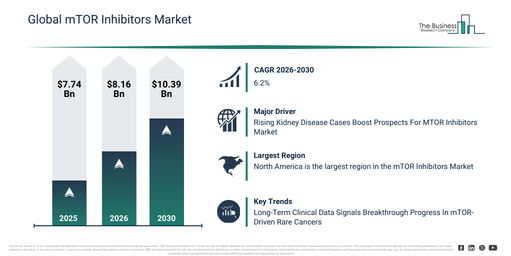
    The mtor inhibitors market has shown substantial growth in recent years. This market is projected to expand from $7.74 billion in 2025 to $8.16 billion in 2026, achieving a compound annual growth rate (CAGR) of 5.5%. Historically, this growth can be attributed to several factors including the rising prevalence of cancer, increasing demand for targeted therapies, the early adoption of rapamycin-based treatments, a rise in clinical trials, and advancements in molecular biology research.

    The mtor inhibitors market size is anticipated to undergo significant expansion over the next few years. It is forecast to achieve a valuation of $10.39 billion by 2030, demonstrating a compound annual growth rate (CAGR) of 6.2%. This anticipated growth during the forecast period is propelled by an increasing focus on precision medicine, the expansion of combination therapies, a rise in organ transplantation procedures, the increasing adoption of oral and intravenous mtor inhibitors, and sustained investment in research and development for novel mtor inhibitors. Prominent developments for the forecast period include the advancement of personalized cancer therapies, new combination therapy approaches, the emergence of targeted drug delivery systems, an expansion into various oncology and transplant indications, and enhanced R&D in oral and intravenous formulations.

    Access Your Free Sample Report For In-Depth Market Analysis:

    https://www.thebusinessresearchcompany.com/sample.aspx?id=10860&type=smp

    What Key Factors Are Affecting The mTOR Inhibitors Market Demand?

    The increasing incidence of kidney diseases is anticipated to propel the expansion of the mTOR inhibitors market going forward. Kidney disease refers to a state where the organs gradually deteriorate and lose their functional ability. mTOR inhibitors are utilized in the treatment of various kidney illnesses. Immunosuppressive therapies, including mTOR inhibitors such as sirolimus and everolimus, are employed to prevent renal allograft rejection. As the worldwide prevalence of kidney diseases continues to climb, the demand for mTOR inhibitors is rising. For instance, in May 2024, the American Cancer Society, a US-based non-profit organization, estimated approximately 81,610 new kidney cancer cases (52,380 men and 29,230 women) are expected in the United States in 2024, along with an estimated 14,390 deaths (9,450 men and 4,940 women). Therefore, the growth of the mTOR inhibitors market will be driven by the escalating prevalence of kidney diseases.

    How Is Segmentation Applied In The mTOR Inhibitors Market Segment Analysis?

    The mtor inhibitors market covered in this report is segmented –

    1) By Product Type: Rapamune, Afinitor, Torisel, Zortress, Other Product Types

    2) By Indication: Oncology, Immunosuppressant, Organ Transplantation, Other Indications

    3) By Route of Administration: Oral, Intravenous

    4) By Application: Tumor Treatment, Kidney Transplant, Other Applications

    5) By Distribution Channel: Hospital Pharmacies, Retail Pharmacies, Online Pharmacies

    What Market Trends Are Affecting The mTOR Inhibitors Market?

    Leading companies within the mTOR inhibitor market are concentrating on developing long-term clinical information to enhance the effectiveness and sustained benefits of treatments for extremely rare cancers, such as malignant perivascular epithelioid cell tumors (PEComa). Extended follow-up studies furnish insights into ongoing responses and overall survival, aiding in the optimization of therapeutic strategies for patients with limited options. For example, in March 2024, Aadi Bioscience, Inc., a U.S.-based biopharmaceutical company, made public the three-year follow-up results from its Phase 2 AMPECT trial concerning FYARRO (nab-sirolimus) in malignant PEComa. As per Aadi, the findings showed a median duration of response of approximately 40 months and a median overall survival surpassing 53 months, indicating a substantial improvement over historical outcomes. These discoveries emphasize an expanding inclination in the mTOR inhibitor market: companies are prioritizing sustained clinical benefit and prolonged patient outcomes to reinforce the therapeutic approach for metastatic PEComa.

    Who Are The Companies Participating In The mTOR Inhibitors Market Environment?

    Major companies operating in the mtor inhibitors market are Novartis AG, Pfizer Inc., Teva Pharmaceutical Industries Ltd., Hikma Pharmaceuticals plc, Exelixis Inc., Dr. Reddy’s Laboratories Ltd., Zydus Lifesciences Limited, Accord Healthcare Inc., Par Pharmaceutical, AbbVie Inc., GlaxoSmithKline plc, Biocon Limited, Alkem Laboratories Ltd., Gland Pharma Ltd., Apotex Inc., Glenmark Pharmaceuticals Ltd., AstraZeneca plc, Bristol-Myers Squibb Company, Eli Lilly and Company, Merck & Co. Inc., Bayer AG, Boehringer Ingelheim International GmbH

    Get The Full mTOR Inhibitors Market Report:

    https://www.thebusinessresearchcompany.com/report/mtor-inhibitors-global-market-report

    Which Region Has The Greatest Market Share In The mTOR Inhibitors Market?

    North America was the largest region in the mTOR inhibitors market in 2025. Asia-Pacific is expected to be the fastest-growing region in the forecast period. The regions covered in the mtor inhibitors market report are Asia-Pacific, South East Asia, Western Europe, Eastern Europe, North America, South America, Middle East, Africa.

    Request A Customized mTOR Inhibitors Market Report For Competitive Insights:

    https://www.thebusinessresearchcompany.com/report/mtor-inhibitors-global-market-report

    Browse Through More Reports Similar to the Global mTOR Inhibitors Market 2026, By The Business Research Company

    Mtor Inhibitors Market Report 2026

    https://www.thebusinessresearchcompany.com/report/mtor-inhibitors-global-market-report

    Kinase Inhibitors Market Report 2026

    https://www.thebusinessresearchcompany.com/report/kinase-inhibitors-global-market-report

    Ace Inhibitors Market Report 2026

    https://www.thebusinessresearchcompany.com/report/ace-inhibitors-global-market-report

    Get in touch with us:

    The Business Research Company: https://www.thebusinessresearchcompany.com/

    Americas +1 310-496-7795

    Asia +44 7882 955267 & +91 8897263534

    Europe +44 7882 955267

    Email us at: marketing@tbrc.info

    Follow us on:

    LinkedIn: https://in.linkedin.com/company/the-business-research-company

    YouTube: https://www.youtube.com/channel/UC24_fI0rV8cR5DxlCpgmyFQ

    Global Market Model: https://www.thebusinessresearchcompany.com/global-market-model
  • Male Infertility Market Insights Highlighting Opportunities Supporting Growth To 2030

    Male Infertility Market Insights Highlighting Opportunities Supporting Growth To 2030

    The Business Research Company’s 2026 market reports feature enhanced tools like market attractiveness analysis, TAM assessment, and company scoring matrices, along with interactive dashboards, deeper supply chain insights, and startup coverage strengthening the depth, usability, and strategic value of insights.

    How Much Growth In Market Value Is Expected For The Male Infertility Market Between 2026 And 2030?

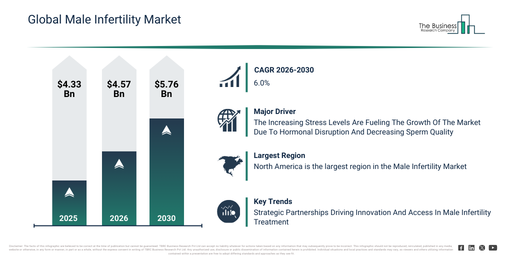
    The male infertility market size has seen substantial growth recently. It is set to expand from $4.33 billion in 2025 to $4.57 billion in 2026, achieving a compound annual growth rate (CAGR) of 5.6%. This historical expansion can be attributed to a global decline in sperm quality, the heightened prevalence of lifestyle-related infertility, the proliferation of fertility clinics, increasing acceptance of ART procedures, and advancements in semen analysis techniques.

    The male infertility market size is projected to experience substantial expansion over the upcoming years. This market is projected to reach $5.76 billion by 2030, exhibiting a compound annual growth rate (CAGR) of 6.0%. This anticipated growth is driven by several factors, including an increase in infertility rates linked to environmental elements, a heightened demand for IVF and ICSI procedures, innovations in fertility diagnostics, a growing understanding of male reproductive health, and wider availability of fertility treatments in developing regions. Key trends during this period encompass the increasing embrace of assisted reproductive technologies, a greater reliance on sophisticated sperm diagnostic tests, an escalating emphasis on hormonal and targeted drug therapies, the broadening of microsurgical interventions for male infertility, and enhanced recognition leading to earlier diagnosis of male infertility.

    Access Your Free Sample Report For In-Depth Market Analysis:

    https://www.thebusinessresearchcompany.com/sample.aspx?id=24286&type=smp

    Which Key Drivers Are Affecting The Male Infertility Market Development?

    Elevated stress levels are projected to drive the expansion of the male infertility market in the future. Stress levels refer to the degree of emotional, physical, or mental strain encountered in demanding situations or pressures. The rise in stress levels primarily stems from escalating work demands, where constant pressure and high expectations lead to burnout, disrupting mental well-being and work-life balance. Heightened stress can interfere with hormone balance, reduce sperm quality, and impair sexual function, contributing to male infertility. Chronic stress disrupts cortisol and testosterone levels, leading to an increase in infertility cases. For instance, in May 2024, according to the American Psychiatric Association, a US-based professional organization of psychologists, 43% of adults in the US reported feeling more anxious in 2024, compared to 37% in 2023 and 32% in 2022, indicating a consistent upward trend in anxiety levels. Thus, increasing stress levels are a key driver for the growth of the male infertility market.

    How Is The Male Infertility Market Broken Down By Segment Categories?

    The male infertility market covered in this report is segmented –

    1) By Treatment Type: Medication, Surgery, Assisted Reproductive Technology

    2) By Test Type: Sperm Agglutination, Deoxyribonucleic Acid Fragmentation Technique, Oxidative Stress Analysis, Computer Assisted Semen Analysis, Sperm Penetration Assay, Other Test Types

    3) By Distribution Channel: Hospitals Pharmacies, Pharmacies And Drug Stores, Online Pharmacies

    4) By End-User: Hospitals And Clinics, Fertility Centers, Research Institutes, Other End-Users

    Subsegments:

    1) By Medication: Hormone Treatments, Gonadotropins, Antibiotics, Antiestrogens, Dopamine Agonists

    2) By Surgery: Varicocelectomy, Vasovasostomy, Epididymovasostomy, Transurethral Resection of the Ejaculatory Duct (TURED), Sperm Retrieval Procedures

    3) By Assisted Reproductive Technology (ART): In Vitro Fertilization (IVF), Intracytoplasmic Sperm Injection (ICSI), Intrauterine Insemination (IUI), Sperm Donation, Cryopreservation Of Sperm

    What Trends Are Transforming The Male Infertility Market?

    Leading companies within the male infertility market are prioritizing strategic partnership approaches to broaden the availability of cutting-edge fertility treatments across worldwide markets. Such partnerships represent collaborative efforts between entities, combining their respective resources and specialized knowledge to accomplish mutual objectives, thereby stimulating innovation, extending market presence, and strengthening research and development activities. As an illustration, in June 2024, Ferring Pharmaceuticals, a pharmaceutical company based in Switzerland, formed a partnership with Posterity Health, a US-based male fertility clinic, to introduce a male fertility program on Ferring’s Fertility Out Loud platform designed to inform men about their fertility. This initiative provides a confidential online assessment and educational materials crafted by reproductive urologists to help men gain insight into their fertility status and diminish the societal stigma associated with male infertility, which contributes to as much as 50% of all infertility cases. The program endeavors to enable men to act proactively, potentially enhancing a couple’s journey to parenthood by addressing male fertility concerns earlier and more conveniently through digital tools and telehealth services.

    Which Players Are Present In The Male Infertility Market Space?

    Major companies operating in the male infertility market are Novartis AG, Amgen Inc., Teva Pharmaceutical Industries Ltd., Intas Pharmaceuticals Ltd., NYU Langone Hospitals, Sun Pharmaceutical Industries Ltd., Cipla Limited, Ferring Pharmaceuticals, Fortis Healthcare, Vitrolife, Max Healthcare, CinnaGen Co., Aytu BioScience Inc., Zydus Hospitals and Healthcare Research Private Limited, Apricus Biosciences Inc., SCSA Diagnostics Inc., Andrology Solutions, Halotech DNA, Indira IVF, Conduit Pharmaceuticals, Shree IVF Clinics

    Get The Full Male Infertility Market Report:

    https://www.thebusinessresearchcompany.com/report/male-infertility-global-market-report

    Which Region Accounts For The Largest Portion Of The Male Infertility Market?

    North America was the largest region in the male infertility market in 2025. The regions covered in the male infertility market report are Asia-Pacific, South East Asia, Western Europe, Eastern Europe, North America, South America, Middle East, Africa.

    Request A Customized Male Infertility Market Report For Competitive Insights:

    https://www.thebusinessresearchcompany.com/report/male-infertility-global-market-report

    Browse Through More Reports Similar to the Global Male Infertility Market 2026, By The Business Research Company

    Male Fertility Market Report 2026

    https://www.thebusinessresearchcompany.com/report/male-fertility-global-market-report

    Infertility Treatment Market Report 2026

    https://www.thebusinessresearchcompany.com/report/infertility-treatment-global-market-report

    Fertility Drugs Market Report 2026

    https://www.thebusinessresearchcompany.com/report/fertility-drugs-global-market-report

    Get in touch with us:

    The Business Research Company: https://www.thebusinessresearchcompany.com/

    Americas +1 310-496-7795

    Asia +44 7882 955267 & +91 8897263534

    Europe +44 7882 955267

    Email us at: marketing@tbrc.info

    Follow us on:

    LinkedIn: https://in.linkedin.com/company/the-business-research-company

    YouTube: https://www.youtube.com/channel/UC24_fI0rV8cR5DxlCpgmyFQ

    Global Market Model: https://www.thebusinessresearchcompany.com/global-market-model
  • Global Male Hypogonadism Market Expected To Reach $1.38 Billion By 2030 With 9.2% CAGR

    Global Male Hypogonadism Market Expected To Reach $1.38 Billion By 2030 With 9.2% CAGR

    The Business Research Company’s 2026 market reports feature enhanced tools like market attractiveness analysis, TAM assessment, and company scoring matrices, along with interactive dashboards, deeper supply chain insights, and startup coverage strengthening the depth, usability, and strategic value of insights.

    What Is The Estimated Market Size Of The Male Hypogonadism Market In 2026, And How Will Its Value Evolve By 2030?

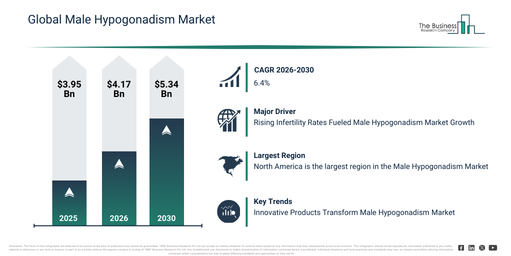
    The male hypogonadism market size has demonstrated robust growth in recent years. It is anticipated to expand from $3.95 billion in 2025 to $4.17 billion in 2026, at a compound annual growth rate (CAGR) of 5.6%. This historical increase can be attributed to the rising prevalence of hypogonadism, increased awareness regarding testosterone deficiency, the growing aging male population, continuous advancements in hormone replacement therapies, and a greater adoption of diagnostic testing by physicians.

    The male hypogonadism market is projected to experience substantial expansion over the upcoming years. It is anticipated to reach $5.34 billion by 2030, exhibiting a compound annual growth rate (CAGR) of 6.4%. This anticipated growth during the forecast period stems from factors such as the broadening of personalized medicine, the incorporation of AI into diagnosis and treatment, an increase in telehealth services, the growing embrace of advanced drug delivery systems, and enhanced investment in male hormonal research. Key developments expected during this period encompass personalized testosterone therapy, the development of minimally invasive drug delivery systems, initiatives for male hormonal health awareness, the incorporation of telemedicine into hormonal treatment, and the widening of chronic disease management services.

    Access Your Free Sample Report For In-Depth Market Analysis:

    https://www.thebusinessresearchcompany.com/sample.aspx?id=9969&type=smp

    What Factors Are Contributing To The Growth Of The Male Hypogonadism Market?

    The escalating infertility rates are anticipated to propel the growth of the male hypogonadism market in the future. Infertility is defined as a condition impacting the male or female reproductive system, characterized by the inability to achieve pregnancy after a minimum of 12 months of consistent, unprotected sexual activity. Male hypogonadism, which can result in diminished sperm production and infertility, is recognized as a potential contributor to male infertility. Consequently, the rising incidence of male infertility is projected to drive the growth of the male hypogonadism market. For instance, in February 2023, the Office for National Statistics, a UK-based government department, reported that 31.8% of all live births in England and Wales were to non-UK-born mothers, an increase from 30.3% in 2022. Additionally, 37.3% of live births had at least one parent born outside the UK, up from 35.8% in 2022. Therefore, an increase in the infertility rate is driving the growth of the male hypogonadism market.

    What Are The Different Segment Types In The Male Hypogonadism Market Segment Breakdown?

    The male hypogonadism market covered in this report is segmented –

    1) By Type: Klinefelters Syndrome, Kallmann Syndrome, Pituitary Disorders, Other Types

    2) By Drug Delivery: Topical Gels, Injectables, Transdermal Patches, Other Drug Deliveries

    3) By Therapy: Testosterone Therapy, Gonadotropin-Releasing Hormone Therapy

    Subsegments:

    1) By Klinefelter’s Syndrome: 47,XXY Syndrome, Other Variants

    2) By Kallmann Syndrome: Isolated Kallmann Syndrome, Syndromic Kallmann Syndrome

    3) By Pituitary Disorders: Hypopituitarism, Pituitary Tumors, Other Pituitary Disorders

    4) By Other Types: Androgen Insensitivity Syndrome, Testicular Dysgenesis Syndrome, Genetic Mutations And Disorders

    What Trends Are Shaping The Future Of The Male Hypogonadism Market?

    Leading companies active in the male hypogonadism market are dedicating efforts to creating innovative products, such as digital-first platforms. These platforms aim to engage patients through telemedicine, provide educational resources, and streamline access to treatments, thereby transforming care for male hypogonadism while enhancing patient support and ease of therapy access. As an illustration, in October 2024, LifeMD, Inc., a US-based provider of virtual primary care services, launched TestoRx, a direct-to-consumer telehealth service for testosterone replacement therapy, offered under its Rex MD men’s health brand. This program encompasses an initial virtual consultation and requisite blood testing, treatment choices including both testosterone replacement and alternative therapies to boost endogenous hormone production, and ongoing telehealth visits with follow-up care.

    Who Are The Well-Known Companies In The Male Hypogonadism Market?

    Major companies operating in the male hypogonadism market are Pfizer Inc., Bayer AG, Eli Lilly and Company Ltd., Endo International plc., Merck & Co. Inc., Teva Pharmaceutical Industries Ltd., AbbVie Inc., Perrigo Company plc, IBSA Institut Biochimique SA, Sun Pharmaceutical Industries Limited, Antares Pharma Inc., Besins Healthcare Ltd., Clarus Therapeutics Holdings Inc., Lipocine Inc., Myovant Sciences Ltd., Sandoz International GmbH, TherapeuticsMD Inc., Viking Therapeutics Inc., Shionogi & Co. Ltd., Ferring Pharmaceuticals

    Get The Full Male Hypogonadism Market Report:

    https://www.thebusinessresearchcompany.com/report/male-hypogonadism-global-market-report

    Which Region Holds The Highest Market Share In The Male Hypogonadism Market?

    North America was the largest region in the male hypogonadism market in 2025. Asia-Pacific is expected to be the fastest-growing region in the male hypogonadism market report during the forecast period. The regions covered in the male hypogonadism market report are Asia-Pacific, South East Asia, Western Europe, Eastern Europe, North America, South America, Middle East, Africa.

    Request A Customized Male Hypogonadism Market Report For Competitive Insights:

    https://www.thebusinessresearchcompany.com/report/male-hypogonadism-global-market-report

    Browse Through More Reports Similar to the Global Male Hypogonadism Market 2026, By The Business Research Company

    Male Hypogonadism Market Report 2026

    https://www.thebusinessresearchcompany.com/report/male-hypogonadism-global-market-report

    Male Fertility Market Report 2026

    https://www.thebusinessresearchcompany.com/report/male-fertility-global-market-report

    Human Chorionic Gonadotropin Market Report 2026

    https://www.thebusinessresearchcompany.com/report/human-chorionic-gonadotropin-global-market-report

    Get in touch with us:

    The Business Research Company: https://www.thebusinessresearchcompany.com/

    Americas +1 310-496-7795

    Asia +44 7882 955267 & +91 8897263534

    Europe +44 7882 955267

    Email us at: marketing@tbrc.info

    Follow us on:

    LinkedIn: https://in.linkedin.com/company/the-business-research-company

    YouTube: https://www.youtube.com/channel/UC24_fI0rV8cR5DxlCpgmyFQ

    Global Market Model: https://www.thebusinessresearchcompany.com/global-market-model
  • Rising Neurological Disorders Fueling The Growth Of The Due To Aging Population And Increasing Motor Impairments Is Contributing To Changes In The MSI-H And dMMR Market

    Rising Neurological Disorders Fueling The Growth Of The Due To Aging Population And Increasing Motor Impairments Is Contributing To Changes In The MSI-H And dMMR Market

    The Business Research Company’s 2026 market reports feature enhanced tools like market attractiveness analysis, TAM assessment, and company scoring matrices, along with interactive dashboards, deeper supply chain insights, and startup coverage strengthening the depth, usability, and strategic value of insights.

    From Its 2026 Market Size, What Value Is The MSI-H And dMMR Market Projected To Reach By 2030?

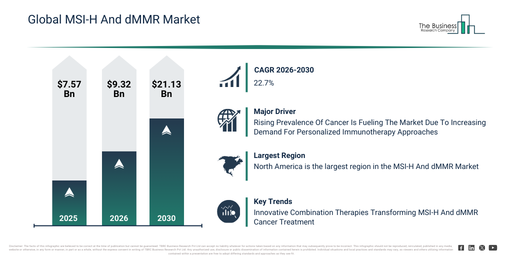
    The market size for msi-h and dmmr has seen substantial growth in recent years. It is projected to expand from $7.57 billion in 2025 to $9.32 billion in 2026, exhibiting a compound annual growth rate (CAGR) of 23.1%. The increase observed in the past can be credited to the discovery of msi-h and dmmr biomarkers, the initial success of immune checkpoint inhibitors, the escalating incidence of colorectal and endometrial cancer, the broadening scope of molecular diagnostics, and regulatory approvals for therapies based on biomarkers.

    The msi-h and dmmr market size is anticipated to experience substantial growth in the coming years. It is projected to reach $21.13 billion by 2030, demonstrating a compound annual growth rate (CAGR) of 22.7%. This expansion during the forecast period is fueled by factors such as the increasing adoption of precision oncology, the growing application of genomic testing in cancer care, the broadening of immunotherapy indications, rising investments in biomarker research, and the accumulation of clinical evidence supporting tumor-agnostic approaches. Prominent trends within this period are expected to include the heightened use of immunotherapy for msi-h and dmmr tumors, increased reliance on companion diagnostics for patient stratification, an elevated focus on tumor-agnostic cancer treatments, the proliferation of combination immunotherapy regimens, and enhanced awareness of biomarker-driven oncology.

    Access Your Free Sample Report For In-Depth Market Analysis:

    https://www.thebusinessresearchcompany.com/sample.aspx?id=24324&type=smp

    Which Primary Drivers Are Impacting The MSI-H And dMMR Market Growth?

    The MSI-H and dMMR market is expected to experience growth due to the increasing prevalence of cancer. Cancer is a group of diseases defined by the uncontrolled multiplication and spread of abnormal cells within the body. This escalation in cancer cases is primarily linked to aging populations, as the risk of developing cancer significantly rises with age, owing to the cumulative impact of genetic mutations and prolonged exposure to various risk factors over time. In cancer treatment, MSI-H and dMMR are utilized to identify tumors that exhibit high mutation rates due to deficiencies in DNA repair mechanisms. These biomarkers are crucial for guiding immunotherapy decisions, given that such tumors often respond better to immune checkpoint inhibitors, and they also provide insights into patient prognosis and potential genetic syndromes. For example, in January 2024, the American Cancer Society, a US-based non-profit organization, indicated that in 2023, the United States was estimated to have 1,958,310 new cancer cases and 609,820 cancer-related deaths. These figures are projected to climb in 2024, with approximately 2,001,140 new cancer cases and 611,720 deaths anticipated, thereby highlighting a continuous rise in cancer incidence and mortality. Hence, the growing prevalence of cancer is a key driver for the expansion of the MSI-H and dMMR market.

    What Segment Categories Shape The MSI-H And dMMR Market Segment Landscape?

    The msi-h and dmmr market covered in this report is segmented –

    1) By Treatment Type: Immune Checkpoint Inhibitors (ICIs), Combination Therapy

    2) By Indication: Endometrial, Gastric, Colorectal Cancer, Small Intestine Cancer, Cervical Cancer, Other Indications

    3) By Stage: Early Stages, Advanced Stages

    4) By End User: Hospitals, Oncology Clinics, Research Institutions, Homecare

    Subsegments:

    1) By Immune Checkpoint Inhibitors (ICIs): Programmed Cell Death Protein 1 Inhibitors, Programmed Cell Death Ligand 1 Inhibitors, Cytotoxic T-Lymphocyte Antigen 4 Inhibitors

    2) By Combination Therapy: Immune Checkpoint Inhibitor + Chemotherapy, Immune Checkpoint Inhibitor + Targeted Therapy, Immune Checkpoint Inhibitor + Radiation Therapy, Immune Checkpoint Inhibitor + Other Immunotherapies

    Which Trends Are Influencing Demand In The MSI-H And dMMR Market?

    Leading companies in the MSI-H and dMMR market are concentrating on developing innovative treatments, such as combination therapy, to boost treatment effectiveness and improve patient outcomes. Combination therapy for MSI-H and dMMR cancers involves utilizing two or more treatment methods, frequently immunotherapy agents like checkpoint inhibitors, or integrating immunotherapy with chemotherapy, targeted therapy, or radiation. This strategy aims to enhance treatment response, overcome resistance, and extend survival for patients with tumors that exhibit high microsatellite instability or deficient mismatch repair. For instance, in April 2025, Bristol-Myers Squibb Company, a US-based pharmaceutical firm, secured United States Food and Drug Administration (FDA) approval for the combination of nivolumab (Opdivo) and ipilimumab (Yervoy) as a first-line therapy for metastatic colorectal cancer (mCRC) with microsatellite instability-high (MSI-H) or mismatch repair deficient (dMMR) features, thereby advancing treatment options for this challenging cancer subtype. This approval signifies a major milestone in the management of MSI-H and dMMR cancers, as it introduces an effective new therapeutic choice that targets multiple pathways to enhance patient survival and response rates, addressing unmet medical needs in this patient population.

    Who Are The Companies Operating Across The MSI-H And dMMR Market Value Chain?

    Major companies operating in the msi-h and dmmr market are Pfizer Inc., F. Hoffmann-La Roche Ltd, Merck & Co. Inc., AbbVie Inc., Bayer AG, Novartis International AG, AstraZeneca PLC, Bristol-Myers Squibb Company, GSK plc., Takeda Pharmaceutical Company, Incyte Corporation, Exact Sciences Corp., BeiGene LTD., Summit Therapeutics Inc., Tempus Labs Inc., Guardant Health, NeoGenomics Laboratories Inc., Promega Corporation, Caris Life Sciences, and Owkin.

    Get The Full MSI-H And dMMR Market Report:

    https://www.thebusinessresearchcompany.com/report/msi-h-and-dmmr-global-market-report

    Which Region Accounts For The Largest Portion Of The MSI-H And dMMR Market?

    North America was the largest region in the MSI-H and dMMR market in 2025. The regions covered in the msi-h and dmmr market report are Asia-Pacific, South East Asia, Western Europe, Eastern Europe, North America, South America, Middle East, Africa.

    Request A Customized MSI-H And dMMR Market Report For Competitive Insights:

    https://www.thebusinessresearchcompany.com/report/msi-h-and-dmmr-global-market-report

    Browse Through More Reports Similar to the Global MSI-H And dMMR Market 2026, By The Business Research Company

    Automotive Human Machine Interface Hmi Market Report 2026

    https://www.thebusinessresearchcompany.com/report/automotive-human-machine-interface-hmi-global-market-report

    Electronic Data Interchange Edi Software Market Report 2026

    https://www.thebusinessresearchcompany.com/report/electronic-data-interchange-edi-software-global-market-report

    Digital Aerospace Mro Market Report 2026

    https://www.thebusinessresearchcompany.com/report/digital-aerospace-mro-global-market-report

    Get in touch with us:

    The Business Research Company: https://www.thebusinessresearchcompany.com/

    Americas +1 310-496-7795

    Asia +44 7882 955267 & +91 8897263534

    Europe +44 7882 955267

    Email us at: marketing@tbrc.info

    Follow us on:

    LinkedIn: https://in.linkedin.com/company/the-business-research-company

    YouTube: https://www.youtube.com/channel/UC24_fI0rV8cR5DxlCpgmyFQ

    Global Market Model: https://www.thebusinessresearchcompany.com/global-market-model
  • The mRNA Therapeutics CDMO Market Is Evolving Due To Surging Demand For Aesthetic Procedures Fuels Growth In The Botulinum Toxin

    The mRNA Therapeutics CDMO Market Is Evolving Due To Surging Demand For Aesthetic Procedures Fuels Growth In The Botulinum Toxin

    The Business Research Company’s 2026 market reports feature enhanced tools like market attractiveness analysis, TAM assessment, and company scoring matrices, along with interactive dashboards, deeper supply chain insights, and startup coverage strengthening the depth, usability, and strategic value of insights.

    How Much Growth In Market Value Is Expected For The mRNA Therapeutics CDMO Market Between 2026 And 2030?

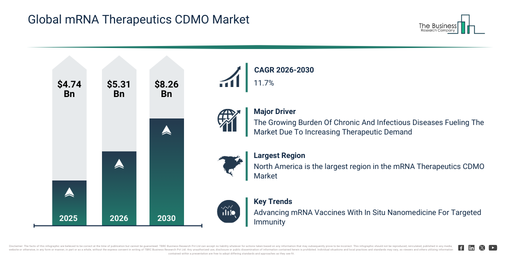
    The mrna therapeutics cdmo market has seen rapid expansion in recent years. It is projected to grow from $4.74 billion in 2025 to $5.31 billion in 2026, at a compound annual growth rate (CAGR) of 12.0%. The market’s historic growth was influenced by the restricted availability of specialized mrna cdmo services, a dependence on in-house pharmaceutical manufacturing, an increase in infectious disease outbreaks, the implementation of early-stage analytical testing, and the broadening of academic and research collaborations.

    The mrna therapeutics cdmo market is projected to experience swift expansion over the coming years. By 2030, its valuation is anticipated to reach $8.26 billion, demonstrating a compound annual growth rate (CAGR) of 11.7%. This projected growth is driven by several factors, including increasing investments in mrna therapeutics development, innovations in plasmid DNA and mrna synthesis technologies, the expansion of cancer immunotherapy and protein replacement treatments, a growing need for fill-finish solutions, and the broadening of collaborations between biotechnology firms and CDMOs. Key trends anticipated during this period encompass a surge in the outsourcing of mrna development and production, a heightened emphasis on lipid nanoparticle (LNP) formulation techniques, the enlargement of viral vaccine and cancer immunotherapy portfolios, improved regulatory adherence and quality control protocols, and the wider uptake of analytical and bioanalytical laboratory provisions.

    Access Your Free Sample Report For In-Depth Market Analysis:

    https://www.thebusinessresearchcompany.com/sample.aspx?id=25841&type=smp

    What Significant Factors Are Influencing The mRNA Therapeutics CDMO Market Expansion?

    The increasing prevalence of chronic and infectious diseases is anticipated to fuel the expansion of the mRNA therapeutics CDMO market in the coming years. These diseases refer to enduring medical conditions like diabetes, cardiovascular disorders, and asthma, alongside illnesses stemming from harmful microorganisms such as viruses, bacteria, and parasites, which can transmit between individuals directly or indirectly. The rise in chronic and infectious diseases is attributable to an aging global population, which is more vulnerable to both prolonged illnesses and infections. The mRNA therapeutics CDMO supports the fight against chronic and infectious diseases by offering comprehensive development and manufacturing services, thus speeding up the delivery of precise, customized mRNA treatments to patients. As an illustration, in October 2024, the World Health Organization, a Switzerland-based international public health organization, reported that around 8.2 million individuals received a new tuberculosis diagnosis in 2023, an increase from approximately 7.5 million in 2022, underscoring the escalating global impact of infectious diseases. Consequently, the rising occurrence of chronic and infectious diseases is a key factor propelling the growth of the mRNA therapeutics CDMO market.

    Which Segment Types Are Examined In The mRNA Therapeutics CDMO Market Segment Study?

    The mrna therapeutics cdmo market covered in this report is segmented –

    1) By Type Of Service: Development Services, Manufacturing Services, Laboratory Services

    2) By Indication: Infectious Diseases, Metabolic And Genetic Diseases, Cardiovascular And Cerebrovascular Diseases

    3) By Application: Viral Vaccines, Protein Replacement Therapies, Cancer Immunotherapies

    4) By End User: Pharmaceutical Companies, Biotechnology Companies, Academic Institutions, Research Organizations

    Subsegments:

    1) By Development Services: Process Development, Analytical Method Development, Formulation Development, Regulatory Support

    2) By Manufacturing Services: Plasmid DNA Manufacturing, mRNA Synthesis, Lipid Nanoparticle (LNP) Formulation, Fill-Finish Services

    3) By Laboratory Services: Quality Control Testing, Stability Testing, Bioanalytical Testing, Preclinical Testing

    What Emerging Trends Are Seen In The mRNA Therapeutics CDMO Market?

    Major companies operating in the mRNA therapeutics CDMO market are prioritizing the development of innovative solutions, such as in situ nanomedicine vaccines, to enhance the effectiveness and precision of mRNA-based vaccines through targeted immune stimulation. An in situ nanomedicine vaccine is a next-generation mRNA-based therapeutic designed to generate nanomedicines within the patient’s body, facilitating targeted delivery and customized immune activation via engineered transgene expression. For instance, in January 2025, Esphera SynBio Inc., a Canada-based biotechnology company, launched a new project supported by the CQDM Quantum Leap program. This initiative aims to improve first-generation lipid nanoparticle or messenger RNA (LNP/mRNA) vaccines by incorporating proprietary transgene designs that induce in vivo production of immunostimulatory nanomedicines. This approach enables precise antigen delivery and tailored immune responses, positioning the technology as a potential breakthrough in vaccine innovation.

    Which Players Are Part Of The Competitive Landscape Of The mRNA Therapeutics CDMO Market?

    Major companies operating in the mrna therapeutics cdmo market are Thermo Fisher Scientific Inc., Danaher Corporation, Merck KGaA, FUJIFILM Holdings Corporation, Evonik Industries AG, AGC Biologics GmbH, Eurofins Scientific SA, Samsung Biologics Co. Ltd., Wuxi Biologics, Recipharm AB, EMERGENT BioSolutions Inc., Genscript Biotech, Ginkgo Bioworks Holdings Inc., Corden Pharma Corp., TriLink BioTechnologies LLC, Biocina Pty Ltd., Aldevron LLC, Synbio Technologies LLC, etherna manufacturing, Bio-Synthesis Inc., Biomay AG.

    Get The Full mRNA Therapeutics CDMO Market Report:

    https://www.thebusinessresearchcompany.com/report/mrna-therapeutics-cdmo-global-market-report

    Which Region Holds The Highest Market Share In The mRNA Therapeutics CDMO Market?

    North America was the largest region in the mRNA therapeutics CDMO market in 2025. Asia-Pacific is expected to be the fastest-growing region in the forecast period. The regions covered in the mrna therapeutics cdmo market report are Asia-Pacific, South East Asia, Western Europe, Eastern Europe, North America, South America, Middle East, Africa.

    Request A Customized mRNA Therapeutics CDMO Market Report For Competitive Insights:

    https://www.thebusinessresearchcompany.com/report/mrna-therapeutics-cdmo-global-market-report

    Browse Through More Reports Similar to the Global mRNA Therapeutics CDMO Market 2026, By The Business Research Company

    Mrna Therapeutics Market Report 2026

    https://www.thebusinessresearchcompany.com/report/mrna-therapeutics-global-market-report

    Mrna Cancer Vaccines And Therapeutics Market Report 2026

    https://www.thebusinessresearchcompany.com/report/mrna-cancer-vaccines-and-therapeutics-global-market-report

    Peptide And Oligonucleotide Cdmo Market Report 2026

    https://www.thebusinessresearchcompany.com/report/peptide-and-oligonucleotide-cdmo-global-market-report

    Get in touch with us:

    The Business Research Company: https://www.thebusinessresearchcompany.com/

    Americas +1 310-496-7795

    Asia +44 7882 955267 & +91 8897263534

    Europe +44 7882 955267

    Email us at: marketing@tbrc.info

    Follow us on:

    LinkedIn: https://in.linkedin.com/company/the-business-research-company

    YouTube: https://www.youtube.com/channel/UC24_fI0rV8cR5DxlCpgmyFQ

    Global Market Model: https://www.thebusinessresearchcompany.com/global-market-model
  • Malaria Treatment Market Future Outlook Showing Growth Toward $5.73 Billion By 2030

    Malaria Treatment Market Future Outlook Showing Growth Toward $5.73 Billion By 2030

    The Business Research Company’s 2026 market reports feature enhanced tools like market attractiveness analysis, TAM assessment, and company scoring matrices, along with interactive dashboards, deeper supply chain insights, and startup coverage strengthening the depth, usability, and strategic value of insights.

    How Does The Market Size Of The Malaria Treatment Market Compare Between 2026 And 2030?

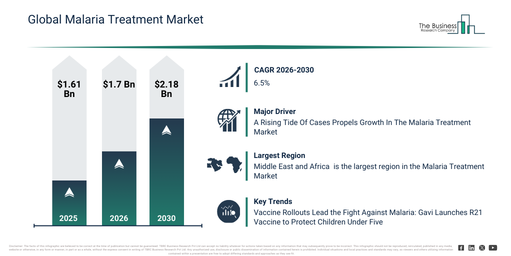
    The market for malaria treatments has shown significant growth in recent years. This market is forecast to increase from $1.61 billion in 2025 to $1.7 billion in 2026, achieving a compound annual growth rate (CAGR) of 5.6%. The historical expansion can be attributed to the high prevalence of malaria in tropical regions, the extensive use of chloroquine and artemisinin, global health initiatives such as WHO malaria programs, increased funding for malaria research, and improvements in diagnostic technologies.

    The malaria treatment market is projected to experience substantial expansion over the upcoming years. It is anticipated to reach $2.18 billion in 2030, exhibiting a compound annual growth rate (CAGR) of 6.5%. This projected increase during the forecast period is driven by factors such as the creation of novel antimalarial vaccines, an increase in drug-resistant malaria strains, the implementation of digital health monitoring systems, the development of healthcare infrastructure across Africa and Asia, and the proliferation of public-private collaborations aimed at malaria elimination. Key developments expected during this period involve the widespread adoption of rapid diagnostic technologies, the broadening of the antimalarial drug development pipeline, the acceleration of vaccine development initiatives, heightened awareness and preventative actions, and the incorporation of telemedicine for managing malaria cases.

    Access Your Free Sample Report For In-Depth Market Analysis:

    https://www.thebusinessresearchcompany.com/sample.aspx?id=11939&type=smp

    Which Strong Drivers Are Impacting The Malaria Treatment Market Growth?

    The increasing occurrence of malaria is projected to drive the expansion of the malaria treatment market in the foreseeable future. Malaria is defined as a potentially fatal mosquito-borne illness caused by the Plasmodium parasite, manifesting as recurrent fever and other influenza-like symptoms. This escalation in cases is attributed to factors such as poverty, limited availability of healthcare services, climate change, inadequate malaria control measures, and drug resistance. Malaria treatment serves to effectively manage and cure the infection induced by the Plasmodium parasite. For instance, in December 2024, data from the UK Health Security Agency, a government department based in the UK, revealed that imported malaria cases in the UK reached 2,106 in 2023, indicating a 26% rise from 2022. Of these, England reported 1,977 cases, with the remaining distributed across Scotland, Wales, and Northern Ireland. Thus, the high incidence of malaria is fueling the growth of the malaria treatment market. The increase in healthcare spending is anticipated to propel the growth of the malaria treatment market moving forward. Healthcare spending represents the total financial resources allocated to the healthcare sector within a specific geographical area, nation, or organization. Healthcare expenditure on malaria treatment is vital for effectively managing and preventing the spread of the disease, ensuring prompt diagnosis, access to antimalarial medications, and implementation of preventive strategies. For example, in April 2025, according to the Office for National Statistics (ONS), an independent producer of official statistics based in the UK, total healthcare expenditure increased by 6.5% in nominal terms and 2.4% in real terms between 2023 and 2024, while healthcare’s proportion of GDP held steady at 11.1% in 2024. Therefore, augmented healthcare spending is driving the growth of the malaria treatment market.

    Which Segment Classifications Are Used In The Malaria Treatment Market Segment Analysis?

    The malaria treatment market covered in this report is segmented –

    1) By Treatment: Prescription Medications, Vaccines, Diagnostic Tests, Other Treatments

    2) By Route Of Administration: Oral, Parenteral, Intravenous

    3) By Distribution Channel: Direct Tender, Hospital Pharmacies, Retail Pharmacies, Online Pharmacies, Other Distribution Channels

    4) By End User: Hospitals, Specialty Clinics, Homecare, Other End Users

    Subsegments:

    1) By Prescription Medications: Antimalarial Drugs, Prophylactic Medications

    2) By Vaccines: RTS,S Or AS01, Other Experimental Vaccines

    3) By Diagnostic Tests: Rapid Diagnostic Tests, Microscopy-Based Tests, Polymerase Chain Reaction (PCR) Tests

    4) By Other Treatments: Supportive Care, Herbal Remedies, Vector Control Measures

    Which Trends Are Contributing To Changes In The Malaria Treatment Market?

    Leading companies in the malaria treatment market are concentrating on implementing vaccine programs to strengthen preventative actions and alleviate the global impact of malaria. A vaccine rollout signifies the systematic distribution and administration of vaccines to a populace, typically on a wide scale. For example, in July 2024, Gavi, a Sweden-based vaccine alliance, commenced the R21 malaria vaccine rollout. The R21 vaccine is projected to substantially reduce the occurrence of malaria cases in children under five. This R21 malaria vaccine marks a pivotal achievement in public health initiatives aimed at combating malaria among children, with expectations that it will lead to a distinct decrease in the disease burden and mortality rates linked to this preventable condition.

    Which Firms Are Contributing To The Malaria Treatment Market Ecosystem?

    Major companies operating in the malaria treatment market are Pfizer Inc., Merck & Co., Johnson & Johnson, Roche Holding AG, Bayer AG, Novartis AG, Sanofi SA, AstraZeneca Plc, GlaxoSmithKline PLC, Takeda Pharmaceutical Company Limited, Viatris Inc., Sun Pharmaceutical Industries Ltd., Serum Institute of India, Cipla Ltd., Amneal Pharmaceuticals LLC, Lupin Ltd., Zydus Lifesciences Limited, Ipca Laboratories Ltd., Chongqing Holley Pharmaceutical Co. Ltd., Strides Pharma Science Limited, AdvaCare Pharma USA LLC, Actiza Pharmaceutical Private Limited

    Get The Full Malaria Treatment Market Report:

    https://www.thebusinessresearchcompany.com/report/malaria-treatment-global-market-report

    Where Is The Malaria Treatment Market Most Concentrated Geographically?

    Middle East and Africa was the largest region in the malaria treatment market in 2025. Asia-Pacific is expected to be the fastest-growing region in the forecast period. The regions covered in the malaria treatment market report are Asia-Pacific, South East Asia, Western Europe, Eastern Europe, North America, South America, Middle East, Africa.

    Request A Customized Malaria Treatment Market Report For Competitive Insights:

    https://www.thebusinessresearchcompany.com/report/malaria-treatment-global-market-report

    Browse Through More Reports Similar to the Global Malaria Treatment Market 2026, By The Business Research Company

    Malaria Treatment Market Report 2026

    https://www.thebusinessresearchcompany.com/report/malaria-treatment-global-market-report

    Malaria Vaccines Market Report 2026

    https://www.thebusinessresearchcompany.com/report/malaria-vaccines-global-market-report

    Rare Diseases Treatment Market Report 2026

    https://www.thebusinessresearchcompany.com/report/rare-diseases-treatment-global-market-report

    Get in touch with us:

    The Business Research Company: https://www.thebusinessresearchcompany.com/

    Americas +1 310-496-7795

    Asia +44 7882 955267 & +91 8897263534

    Europe +44 7882 955267

    Email us at: marketing@tbrc.info

    Follow us on:

    LinkedIn: https://in.linkedin.com/company/the-business-research-company

    YouTube: https://www.youtube.com/channel/UC24_fI0rV8cR5DxlCpgmyFQ

    Global Market Model: https://www.thebusinessresearchcompany.com/global-market-model
  • Machine Learning (ML) in The Pharmaceutical Industry Market Revenue Growth Forecast To Reach $22.59 Billion By 2030 At 14.1% CAGR

    Machine Learning (ML) in The Pharmaceutical Industry Market Revenue Growth Forecast To Reach $22.59 Billion By 2030 At 14.1% CAGR

    The Business Research Company’s 2026 market reports feature enhanced tools like market attractiveness analysis, TAM assessment, and company scoring matrices, along with interactive dashboards, deeper supply chain insights, and startup coverage strengthening the depth, usability, and strategic value of insights.

    What Is The Forecasted Market Size Trajectory Of The Machine Learning (ML) in The Pharmaceutical Industry Market From 2026 To 2030?

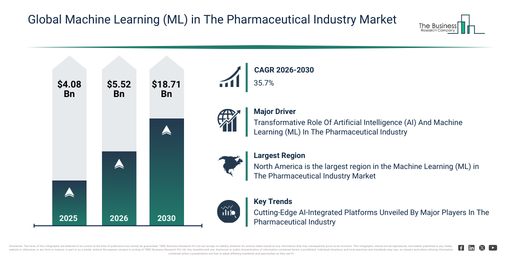
    The market size for machine learning (ml) in the pharmaceutical industry has seen significant expansion in recent years. It is anticipated to increase from $4.08 billion in 2025 to $5.52 billion in 2026, achieving a compound annual growth rate (CAGR) of 35.4%. The historical growth of this market can be attributed to several factors, including heightened research and development investment in pharmaceuticals, the adoption of AI and ML in drug discovery processes, an increasing prevalence of chronic diseases, advancements in computational biology, and strategic collaborations between pharmaceutical and technology companies.

    The market size for machine learning (ML) in the pharmaceutical industry is anticipated to demonstrate significant growth in the upcoming years. It is projected to expand to $18.71 billion by 2030, driven by a compound annual growth rate (CAGR) of 35.7%. This increase over the forecast period stems from the increasing integration of AI in clinical trials, the widening scope of precision medicine, the growing adoption of real-world data analytics, developments in cloud-based pharmaceutical platforms, and the creation of personalized therapeutics. Prominent trends for this period include predictive models for drug discovery, optimization of clinical trials, utilization of real-world evidence data, implementation of personalized medicine, and automation of regulatory compliance.

    Access Your Free Sample Report For In-Depth Market Analysis:

    https://www.thebusinessresearchcompany.com/sample.aspx?id=13872&type=smp

    What Key Factors Are Shaping The Machine Learning (ML) in The Pharmaceutical Industry Market Landscape?

    The growing implementation of artificial intelligence (AI) is a key factor driving machine learning (ML) within the pharmaceutical industry. AI refers to computer software designed to emulate human cognitive functions for executing complex operations such as analysis, reasoning, and learning, while ML is a subset of AI that employs algorithms trained on data to create models capable of performing intricate tasks. Both AI and ML have been applied in pharmaceutical technology and drug delivery system design, offering rapid solutions to complex problems. These technologies hold the potential to revolutionize the drug delivery process, enhance tools for decision-making, and manage extensive data volumes for more effective outcomes. For instance, in June 2023, according to Forbes, a US-based business magazine, approximately 432,000 UK organizations, or one in six, had integrated at least one AI technology. Furthermore, a minimum of one AI technology was adopted by 68% of large businesses, 33% of medium-sized businesses, and 15% of small businesses. Consequently, the increasing adoption of artificial intelligence (AI) is poised to propel machine learning (ML) forward in the pharmaceutical industry.

    How Is The Machine Learning (ML) in The Pharmaceutical Industry Market Organized By Segment Classification?

    The machine learning (ml) in the pharmaceutical industry market covered in this report is segmented –

    1) By Component: Solution, Services

    2) By Deployment: Cloud, On-premise

    3) By Enterprise Size: Small and Medium Enterprises (SMEs), Large Enterprises

    Subsegments:

    1) By Solution: Drug Discovery Platforms, Predictive Analytics Tools, Clinical Trial Optimization Solutions, Patient Data Management Systems, Personalized Medicine Applications

    2) By Services: Consulting Services, Implementation And Integration Services, Data Analysis And Modeling Services, Training And Support Services, Managed Services

    What Market Trends Are Affecting The Machine Learning (ML) in The Pharmaceutical Industry Market?

    Prominent companies operating with machine learning in the pharmaceutical industry are concentrating on creating user-friendly software platforms, like drug discovery software, to boost their capabilities in drug development. Drug discovery software is a comprehensive term that encompasses various specialized tools and platforms employed across the entire process of identifying and developing novel pharmaceutical drugs. As an illustration, in December 2023, Merck & Co. Inc., a US-based pharmaceutical company, unveiled the AIDDISON drug discovery software. This platform is recognized as the first software-as-a-service offering that combines drug discovery and synthesis by utilizing generative AI, machine learning, and computer-aided drug design. It empowers laboratories to identify appropriate drug candidates within a vast chemical space, virtually screen compounds from a universe of over 60 billion chemical targets, and assess synthesis routes for drug manufacturing that is safer, more cost-effective, and achieves higher yields.

    Who Are The Industry Participants Involved In The Machine Learning (ML) in The Pharmaceutical Industry Market?

    Major companies operating in the machine learning (ml) in the pharmaceutical industry market are Amazon.com Inc., Alphabet Inc., Microsoft Corporation, Dell Technologies Inc., Hitachi Ltd., International Business Machines Corporation, Cisco Systems Inc., Oracle Corporation, Honeywell International Inc., Hewlett Packard Enterprise, NVIDIA Corporation, Thales SA, Atos SE, Hexagon AB, Palantir Technologies Inc., Alteryx Inc., Comet ML Inc., GAVS Technologies, NEC Corporation, Veritone Inc., H2O.ai Inc., Sparkcognition Inc., Akira AI, Deep Genomics Inc., Cloud Pharmaceuticals Inc., Atomwise Inc., Cyclica Inc., BioSymetrics Inc., Neptune Labs

    Get The Full Machine Learning (ML) in The Pharmaceutical Industry Market Report:

    https://www.thebusinessresearchcompany.com/report/machine-learning-ml-in-the-pharmaceutical-industry-global-market-report

    Which Region Dominates The Machine Learning (ML) in The Pharmaceutical Industry Market By Market Share?

    North America was the largest region in the machine learning in the pharmaceutical industry market in 2025. Asia-Pacific is expected to be the fastest-growing region in the forecast period. The regions covered in the machine learning (ml) in the pharmaceutical industry market report are Asia-Pacific, South East Asia, Western Europe, Eastern Europe, North America, South America, Middle East, Africa.

    Request A Customized Machine Learning (ML) in The Pharmaceutical Industry Market Report For Competitive Insights:

    https://www.thebusinessresearchcompany.com/report/machine-learning-ml-in-the-pharmaceutical-industry-global-market-report

    Browse Through More Reports Similar to the Global Machine Learning (ML) in The Pharmaceutical Industry Market 2026, By The Business Research Company

    Machine Learning Ml In The Pharmaceutical Industry Market Report 2026

    https://www.thebusinessresearchcompany.com/report/machine-learning-ml-in-the-pharmaceutical-industry-global-market-report

    Artificial Intelligence In Drug Discovery Market Report 2026

    https://www.thebusinessresearchcompany.com/report/artificial-intelligence-in-drug-discovery-global-market-report

    Artificial Intelligence Ai In Biopharmaceuticals Market Report 2026

    https://www.thebusinessresearchcompany.com/report/artificial-intelligence-ai-in-biopharmaceuticals-global-market-report

    Get in touch with us:

    The Business Research Company: https://www.thebusinessresearchcompany.com/

    Americas +1 310-496-7795

    Asia +44 7882 955267 & +91 8897263534

    Europe +44 7882 955267

    Email us at: marketing@tbrc.info

    Follow us on:

    LinkedIn: https://in.linkedin.com/company/the-business-research-company

    YouTube: https://www.youtube.com/channel/UC24_fI0rV8cR5DxlCpgmyFQ

    Global Market Model: https://www.thebusinessresearchcompany.com/global-market-model
  • The Rise Of Innovations in Botanical Supplements: Enhancing Health with Plant-Derived Ingredients Is Influencing The mRNA Therapeutics Market

    The Rise Of Innovations in Botanical Supplements: Enhancing Health with Plant-Derived Ingredients Is Influencing The mRNA Therapeutics Market

    The Business Research Company’s 2026 market reports feature enhanced tools like market attractiveness analysis, TAM assessment, and company scoring matrices, along with interactive dashboards, deeper supply chain insights, and startup coverage strengthening the depth, usability, and strategic value of insights.

    What Is The Estimated Market Size Of The mRNA Therapeutics Market In 2026, And How Will Its Value Evolve By 2030?

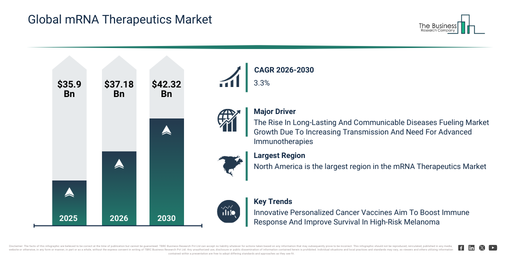
    The mrna therapeutics market has experienced consistent expansion over recent years. It is projected to increase from $35.9 billion in 2025 to $37.18 billion in 2026, demonstrating a compound annual growth rate (CAGR) of 3.6%. The historical rise can be ascribed to the significant achievements of mrna vaccines in treating infectious diseases, advancements in nucleic acid delivery technologies, a deeper comprehension of gene expression control, early research confirming mrna-based protein synthesis, and robust public financial backing for mrna research platforms.

    The mrna therapeutics market is projected to experience consistent expansion over the upcoming years. Its valuation is anticipated to reach $42.32 billion by 2030, achieving a compound annual growth rate (CAGR) of 3.3%. This anticipated growth during the forecast period stems from factors such as an escalating need for targeted and individualized treatments, the broader application of mrna technologies in areas like oncology and rare diseases, increased biopharmaceutical funding for mrna development pipelines, a growing volume of mrna medications advancing into clinical trials, and crucial alliances formed between biotechnology companies and research institutions. Key trends expected within this period encompass the diversification of mrna therapeutics beyond vaccine development, an intensified focus on mrna-based protein replacement therapies, a burgeoning clinical development pipeline for mrna drugs not intended as vaccines, heightened financial commitments to lipid nanoparticle delivery technologies, and the rapid enhancement of comprehensive mrna manufacturing infrastructures.

    Access Your Free Sample Report For In-Depth Market Analysis:

    https://www.thebusinessresearchcompany.com/sample.aspx?id=17205&type=smp

    Which Important Drivers Are Guiding The mRNA Therapeutics Market Growth?

    The expanding occurrence of chronic and transmissible illnesses is projected to fuel the expansion of the mRNA therapeutics market in the future. These long-lasting and communicable diseases are conditions that endure for prolonged durations and can be transmitted from person to person, encompassing ailments like tuberculosis, HIV/AIDS, and hepatitis. The escalation of these diseases stems from factors such as enhanced global travel and deficiencies in healthcare systems, which promote higher transmission rates and impede efficient disease management. mRNA therapeutics aid in better disease control by swiftly enabling the body to generate proteins that bolster immune responses, thereby accelerating the creation of specific vaccines and treatments. For example, in March 2024, data from the Centers for Disease Control and Prevention, a US-based government agency, showed that tuberculosis cases rose from 8,320 in 2022 to 9,615 in 2023, marking an increase of 1,295 cases. Consequently, the growing prevalence of long-lasting and communicable diseases is propelling the growth of the mRNA therapeutics market.

    How Are Different Segments Classified In The mRNA Therapeutics Market Segment Analysis?

    The mrna therapeutics market covered in this report is segmented –

    1) By Product: Vaccines, Drugs

    2) By Application: Infectious Diseases, Oncology, Rare Genetic Diseases, Respiratory Diseases, Other Applications

    3) By End Use: Hospitals And Clinics, Research Organizations, Other End Uses

    Subsegments:

    1) By Vaccines: Infectious Disease Vaccines, Cancer Vaccines, Other Therapeutic Vaccines

    2) By Drugs: Oncology Drugs, Cardiovascular Drugs, Autoimmune Disease Drugs, Other mRNA-Based Drugs

    Which Trends Are Guiding The Direction Of The mRNA Therapeutics Market?

    Leading companies operating within the mRNA therapeutics market are concentrating on the development of innovative solutions, such as personalized neoantigen vaccines, to improve immune responses and enhance survival outcomes for cancer patients. These personalized neoantigen vaccines are cancer therapies uniquely crafted for each patient, utilizing specific tumor mutations to stimulate the immune system to identify and eliminate cancer cells. For example, in July 2023, Merck & Co., Inc., a US-based research-intensive biopharmaceutical company, collaborated with Moderna Therapeutics, Inc., a US-based biotechnology company, to launch a Phase 3 randomized clinical trial (V940-001). This trial aims to evaluate mRNA-4157 (V940) in conjunction with KEYTRUDA® (pembrolizumab) for use as an adjuvant treatment in patients with resected high-risk (Stage IIB-IV) melanoma. This particular study follows the positive results obtained from the Phase 2b KEYNOTE-942/mRNA-4157-P201 trial, which indicated a significant benefit of the combination over KEYTRUDA alone in decreasing the risk of recurrence and distant metastasis. The Phase 3 trial seeks to confirm these findings by assessing relapse-free survival and distant metastasis-free survival as its primary and secondary endpoints, respectively.

    Who Are The Companies Driving Activity In The mRNA Therapeutics Market?

    Major companies operating in the mrna therapeutics market are Pfizer Inc., Novartis AG, Sanofi AG, AstraZeneca plc, GlaxoSmithKline plc, Hoffmann-La Roche AG, Moderna Therapeutics Inc, BioNTech SE, Vertex Pharmaceuticals Incorporated, Catalent Inc, Alnylam Pharmaceuticals Inc, Sarepta Therapeutics Inc, Arcturus Therapeutics Holdings Inc, CureVac N.V, Ethris GMBH, eTheRNA immunotherapies NV, In-Cell-Art S.A.S., Nutcracker Therapeutics Inc, SCM LifeScience Co Ltd, Suzhou Abogen Biosciences Co Ltd, Tiba Biotech LLC, CSPC Pharmaceutical Group, CRISPR Therapeutics AG

    Get The Full mRNA Therapeutics Market Report:

    https://www.thebusinessresearchcompany.com/report/mrna-therapeutics-global-market-report

    Where Is The mRNA Therapeutics Market Most Concentrated Geographically?

    North America was the largest region in the mRNA therapeutics market in 2025. Asia-Pacific is expected to be the fastest-growing region in the forecast period. The regions covered in the mrna therapeutics market report are Asia-Pacific, South East Asia, Western Europe, Eastern Europe, North America, South America, Middle East, Africa.

    Request A Customized mRNA Therapeutics Market Report For Competitive Insights:

    https://www.thebusinessresearchcompany.com/report/mrna-therapeutics-global-market-report

    Browse Through More Reports Similar to the Global mRNA Therapeutics Market 2026, By The Business Research Company

    Mrna Therapeutics Market Report 2026

    https://www.thebusinessresearchcompany.com/report/mrna-therapeutics-global-market-report

    Ribose Nucleic Acid Rna Based Therapeutics Market Report 2026

    https://www.thebusinessresearchcompany.com/report/ribose-nucleic-acid-rna-based-therapeutics-global-market-report

    Rna Targeting Small Molecules Therapeutics Market Report 2026

    https://www.thebusinessresearchcompany.com/report/rna-targeting-small-molecules-therapeutics-global-market-report

    Get in touch with us:

    The Business Research Company: https://www.thebusinessresearchcompany.com/

    Americas +1 310-496-7795

    Asia +44 7882 955267 & +91 8897263534

    Europe +44 7882 955267

    Email us at: marketing@tbrc.info

    Follow us on:

    LinkedIn: https://in.linkedin.com/company/the-business-research-company

    YouTube: https://www.youtube.com/channel/UC24_fI0rV8cR5DxlCpgmyFQ

    Global Market Model: https://www.thebusinessresearchcompany.com/global-market-model
  • Lysosomal Enzyme Market Expected To Grow Steadily And Approach $104.57 Billion By 2030

    Lysosomal Enzyme Market Expected To Grow Steadily And Approach $104.57 Billion By 2030

    The Business Research Company’s 2026 market reports feature enhanced tools like market attractiveness analysis, TAM assessment, and company scoring matrices, along with interactive dashboards, deeper supply chain insights, and startup coverage strengthening the depth, usability, and strategic value of insights.

    How Much Will The Market Value Of The Lysosomal Enzyme Market Grow Between 2026 And 2030?

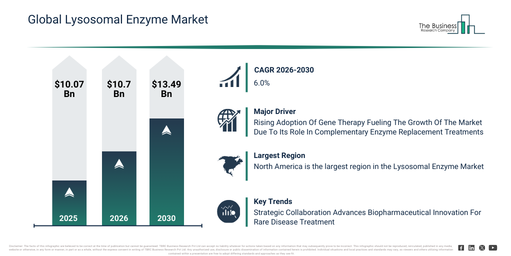
    The lysosomal enzyme market has experienced significant expansion in recent years. This market is expected to increase from $10.07 billion in 2025 to $10.7 billion in 2026, achieving a compound annual growth rate (CAGR) of 6.3%. The drivers behind this growth in previous periods include heightened lysosomal storage disease awareness, the implementation of orphan drug programs, the availability of hospital-based genetic treatment, advancements in recombinant enzyme development, and financial support for rare disease research.

    The lysosomal enzyme market size is projected to experience robust expansion over the coming years. By 2030, its value is anticipated to reach $13.49 billion, exhibiting a compound annual growth rate (CAGR) of 6.0%. This projected growth throughout the forecast period stems from factors such as the incorporation of gene therapy, the broadened scope of newborn screening, the emergence of personalized enzyme therapies, an increase in biopharmaceutical manufacturing capabilities, and worldwide initiatives targeting rare diseases. Significant developments anticipated during this period encompass the wider availability of enzyme replacement therapies, an intensified focus on rare genetic conditions, augmented investment in recombinant enzymes, progress in both gene and enzyme therapy, and an increase in the diagnosis rates for lysosomal diseases.

    Access Your Free Sample Report For In-Depth Market Analysis:

    https://www.thebusinessresearchcompany.com/sample.aspx?id=24595&type=smp

    Which Factors Are Influencing The Growth Of The Lysosomal Enzyme Market?

    A projected expansion of the lysosomal enzymes market is anticipated, driven by the growing integration of gene therapy. Gene therapy, as a medical intervention, focuses on modifying or substituting genes inside an individual’s cells to manage or preclude illnesses. Its uptake is on the rise, primarily because advancements in delivery methods and proven long-term effectiveness have positioned gene therapy as a feasible and potentially curative approach for genetic conditions. Frequently, gene therapy necessitates initial or supplementary enzyme replacement therapies to alleviate symptoms and stabilize patients during the period until gene therapy becomes fully effective, thereby ensuring a continued demand for lysosomal enzyme products. An example illustrating this trend is data from April 2024, reported by the American Society of Gene & Cell Therapy, a US-based non-profit organization, which indicated that phase III gene therapy clinical trials saw a 10% increase in 2023, representing the initial quarterly rise observed since 2022. Consequently, the expanding use of gene therapy is set to stimulate the expansion of the lysosomal enzymes market.

    Which Segments Define The Lysosomal Enzyme Market Segment Structure?

    The lysosomal enzyme market covered in this report is segmented –

    1) By Type: Acid Alpha-Glucosidase, Acid Sphingomyelinase, Beta-Glucocerebrosidase, Hexosaminidase

    2) By Indication: Gaucher Disease, Mucopolysaccharidosis, Pompe Disease, Other Indications

    3) By Source: Recombinant Enzymes, Natural Enzymes, Synthetic Enzymes

    4) By Application: Enzyme Replacement Therapy, Research And Development, Diagnostics, Gene Therapy

    5) By End-Use: Hospitals, Diagnostic Laboratories, Research Institutions, Pharmaceutical Companies

    Subsegments:

    1) By Acid Alpha-Glucosidase: Pompe Disease Enzymes, Glycogen Storage Disease Type II Enzymes

    2) By Acid Sphingomyelinase: Niemann-Pick Disease Type A, Niemann-Pick Disease Type B

    3) By Beta-Glucocerebrosidase: Gaucher Disease Type I, Gaucher Disease Type II, Gaucher Disease Type III

    4) By Hexosaminidase: Tay-Sachs Disease Enzymes, Sandhoff Disease Enzymes

    Which Trends Are Influencing Demand In The Lysosomal Enzyme Market?

    Leading firms within the lysosomal enzymes market are concentrating on employing a strategic partnerships model to broaden diagnostic capacities and expedite the creation of innovative therapies. These collaborations represent formal agreements among multiple organizations, pooling their resources or expertise to fulfill shared objectives and bolster their competitive standing. As an illustration, during February 2024, a biotechnology firm based in Spain entered into a partnership with Biosidus, an Argentinian biotechnology company, for the production of the active enzyme component, Agalsidase Beta. This collaborative effort signifies a notable leap forward in both the development and manufacturing of treatments for rare conditions, especially Fabry disease, which stems from a deficiency in lysosomal enzymes. Furthermore, it establishes a regional benchmark in addressing rare diseases and underscores the participating companies’ dedication to global well-being and pioneering accessible biopharmaceutical solutions.

    Who Are The Established Players Within The Lysosomal Enzyme Market?

    Major companies operating in the lysosomal enzyme market are Sanofi SA, BioMarin Pharmaceutical Inc., Amicus Therapeutics Inc., JCR Pharmaceuticals Co. Ltd., Protalix BioTherapeutics Inc., Takeda Rare Diseases (Shire), Ultragenyx Pharmaceutical Inc., Orchard Therapeutics plc, Sangamo Therapeutics Inc., Avrobio Inc., Greenovation Biotech GmbH, Chiesi Global Rare Diseases, GC Pharma, Pfizer Rare Disease (through Spark & partnered LSD programs), Idorsia Pharmaceuticals Ltd., Abeona Therapeutics Inc., Selecta Biosciences Inc., Denali Therapeutics Inc., Passage Bio Inc., Freeline Therapeutics plc, REGENXBIO Inc., Homology Medicines Inc., LogicBio Therapeutics Inc., Allievex Corporation, Reneo Pharmaceuticals Inc., Lysogene SAS, Sio Gene Therapies Inc., Anika Therapeutics Inc., ArmaGen Inc., PerkinElmer Inc., Thermo Fisher Scientific Inc., Merck KGaA (MilliporeSigma), Agilent Technologies Inc.,

    Get The Full Lysosomal Enzyme Market Report:

    https://www.thebusinessresearchcompany.com/report/lysosomal-enzyme-global-market-report

    Which Region Is The Largest In The Lysosomal Enzyme Market?

    North America was the largest region in the lysosomal enzymes market in 2025. Asia-Pacific is expected to be the fastest-growing region in the forecast period. The regions covered in the lysosomal enzyme market report are Asia-Pacific, South East Asia, Western Europe, Eastern Europe, North America, South America, Middle East, Africa.

    Request A Customized Lysosomal Enzyme Market Report For Competitive Insights:

    https://www.thebusinessresearchcompany.com/report/lysosomal-enzyme-global-market-report

    Browse Through More Reports Similar to the Global Lysosomal Enzyme Market 2026, By The Business Research Company

    Lysosomal Disease Treatment Market Report 2026

    https://www.thebusinessresearchcompany.com/report/lysosomal-disease-treatment-global-market-report

    Enzyme Market Report 2026

    https://www.thebusinessresearchcompany.com/report/enzyme-global-market-report

    Enzyme Replacement Therapy Market Report 2026

    https://www.thebusinessresearchcompany.com/report/enzyme-replacement-therapy-global-market-report

    Get in touch with us:

    The Business Research Company: https://www.thebusinessresearchcompany.com/

    Americas +1 310-496-7795

    Asia +44 7882 955267 & +91 8897263534

    Europe +44 7882 955267

    Email us at: marketing@tbrc.info

    Follow us on:

    LinkedIn: https://in.linkedin.com/company/the-business-research-company

    YouTube: https://www.youtube.com/channel/UC24_fI0rV8cR5DxlCpgmyFQ

    Global Market Model: https://www.thebusinessresearchcompany.com/global-market-model
  • The Increasing Prevalence Of Osteoporosis Is Driving The Growth Of The Due To Its Impact On Bone Density And Fracture Risk Is Playing A Role In Shaping The mRNA Cancer Vaccines And Therapeutics Market

    The Increasing Prevalence Of Osteoporosis Is Driving The Growth Of The Due To Its Impact On Bone Density And Fracture Risk Is Playing A Role In Shaping The mRNA Cancer Vaccines And Therapeutics Market

    The Business Research Company’s 2026 market reports feature enhanced tools like market attractiveness analysis, TAM assessment, and company scoring matrices, along with interactive dashboards, deeper supply chain insights, and startup coverage strengthening the depth, usability, and strategic value of insights.

    How Does The Market Size Of The mRNA Cancer Vaccines And Therapeutics Market Compare Between 2026 And 2030?

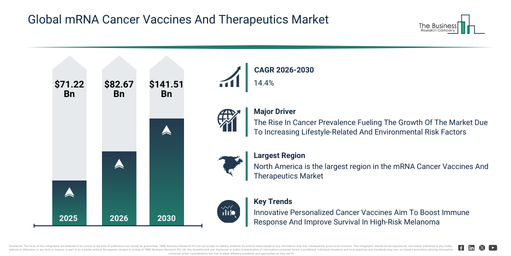
    The mrna cancer vaccines and therapeutics market size has experienced significant expansion in recent years. This market is set to expand from $71.22 billion in 2025 to $82.67 billion in 2026, reflecting a compound annual growth rate (CAGR) of 16.1%. The expansion observed in the past period is attributable to the triumphs of mrna platforms in infectious disease vaccines, progress in cancer immunology research, a deepening comprehension of tumor antigens, initial clinical validation of mrna cancer therapies, and increasing public and private investments in oncology innovation.

    The mrna cancer vaccines and therapeutics market size is expected to undergo rapid expansion over the next few years. This market is projected to grow to $141.51 billion by 2030, achieving a compound annual growth rate (CAGR) of 14.4%. The anticipated growth during this forecast period can be linked to the increasing global prevalence of cancer, the escalating need for personalized and targeted cancer treatments, an expansion in mrna manufacturing capabilities, a rise in oncology clinical trials utilizing mrna platforms, and strategic collaborations among biotech and pharmaceutical enterprises. Significant trends for the forecast timeframe include the increasing adoption of personalized cancer vaccines, the extension of mrna-based therapeutics beyond oncology applications, a heightened focus on developing neoantigen-specific vaccines, an enlarged clinical pipeline for mrna cancer immunotherapies, and greater investment in scalable mrna manufacturing platforms.

    Access Your Free Sample Report For In-Depth Market Analysis:

    https://www.thebusinessresearchcompany.com/sample.aspx?id=17204&type=smp

    What Major Factors Are Driving The mRNA Cancer Vaccines And Therapeutics Market Forward?

    The growing incidence of cancer is anticipated to fuel the expansion of the mRNA cancer vaccine and therapeutic market in the future. Cancer represents a collection of illnesses marked by the unregulated proliferation and dissemination of atypical cells, which can infiltrate and harm healthy tissues. This heightened occurrence of cancer is primarily linked to elements like inactive lifestyles, inadequate nutrition, and exposure to environmental contaminants, each contributing to an elevated risk for diverse forms of malignancy. mRNA cancer vaccines and therapeutics are pivotal in advancing cancer treatment, facilitating tailored, precise immune reactions that aid the body in more efficiently recognizing and eradicating cancer cells, consequently enhancing therapeutic results. As an illustration, in January 2024, data from the American Cancer Society, Inc., a US-based cancer advocacy organization, projects that the United States will experience over 611,000 cancer-related deaths in 2024, equating to more than 1,600 fatalities daily. Consequently, the expanding prevalence of cancer is propelling the growth of the mRNA cancer vaccine and therapeutic market.

    How Is The mRNA Cancer Vaccines And Therapeutics Market Categorized Across Its Segment Groups?

    The mrna cancer vaccines and therapeutics market covered in this report is segmented –

    1) By Type: Adeno Carcinomas, Mucinous Carcinomas, Adenosquamous Carcinomas

    2) By Application: Cancer, Other Applications

    3) By End User: Hospitals And Clinics, Ambulatory Surgical Centers, Research Institutes, Other End Users

    Subsegments:

    1) By Adeno Carcinomas: Lung Adenocarcinomas, Colon Adenocarcinomas, Prostate Adenocarcinomas

    2) By Mucinous Carcinomas: Mucinous Ovarian Cancer, Mucinous Breast Cancer, Mucinous Colorectal Cancer

    3) By Adenosquamous Carcinomas: Pancreatic Adenosquamous Carcinoma, Cervical Adenosquamous Carcinoma, Esophageal Adenosquamous Carcinoma

    What Trends Are Affecting The Growth Of The mRNA Cancer Vaccines And Therapeutics Market?

    Major companies operating in the mRNA cancer vaccines and therapeutics market are focusing on developing innovative solutions, such as personalized neoantigen vaccines, to enhance immune response and improve survival outcomes in cancer patients. Personalized neoantigen vaccines are cancer therapies designed for each patient, utilizing unique tumor-specific mutations to stimulate the immune system to target and destroy cancer cells. For instance, in July 2023, Merck & Co., Inc., a US-based research-intensive biopharmaceutical company, partnered with Moderna Therapeutics, Inc., a US-based biotechnology company, to initiate a Phase 3 randomized clinical trial (V940-001) to evaluate mRNA-4157 (V940) in combination with KEYTRUDA (pembrolizumab) as an adjuvant treatment for patients with resected high-risk (Stage IIB-IV) melanoma. This study follows positive results from the Phase 2b KEYNOTE-942/mRNA-4157-P201 trial, which showed a meaningful benefit of the combination over KEYTRUDA alone in reducing recurrence and distant metastasis risk. The Phase 3 trial aims to confirm these findings by assessing relapse-free survival and distant metastasis-free survival as primary and secondary endpoints, respectively.

    Which Firms Are Influencing Competition In The mRNA Cancer Vaccines And Therapeutics Market?

    Major companies operating in the mrna cancer vaccines and therapeutics market are BioNTech SE, Moderna Therapeutics Inc., CureVac N.V., Arcturus Therapeutics Holdings Inc., Immatics Biotechnologies GmbH, Argos Therapeutics Inc., Anima Biotech, Translate Bio, eTheRNA Immunotherapies NV, Gritstone bio Inc., Neon Therapeutics, Codiak BioSciences, Cartesian Therapeutics, Replimune Group Inc., Precision BioSciences, Acuitas Therapeutics, Ethris GmbH, Strand Therapeutics, Crown Bioscience, Roche (Hoffmann-La Roche AG)

    Get The Full mRNA Cancer Vaccines And Therapeutics Market Report:

    https://www.thebusinessresearchcompany.com/report/mrna-cancer-vaccines-and-therapeutics-global-market-report

    Which Region Dominates The mRNA Cancer Vaccines And Therapeutics Market By Market Share?

    North America was the largest region in the mRNA cancer vaccination and therapeutics market in 2025. Asia-Pacific is expected to be the fastest-growing region in the forecast period. The regions covered in the mrna cancer vaccines and therapeutics market report are Asia-Pacific, South East Asia, Western Europe, Eastern Europe, North America, South America, Middle East, Africa.

    Request A Customized mRNA Cancer Vaccines And Therapeutics Market Report For Competitive Insights:

    https://www.thebusinessresearchcompany.com/report/mrna-cancer-vaccines-and-therapeutics-global-market-report

    Browse Through More Reports Similar to the Global mRNA Cancer Vaccines And Therapeutics Market 2026, By The Business Research Company

    Mrna Cancer Vaccines And Therapeutics Market Report 2026

    https://www.thebusinessresearchcompany.com/report/mrna-cancer-vaccines-and-therapeutics-global-market-report

    Therapeutic Bcg Vaccines Market Report 2026

    https://www.thebusinessresearchcompany.com/report/therapeutic-bcg-vaccines-global-market-report

    Mrna Therapeutics Market Report 2026

    https://www.thebusinessresearchcompany.com/report/mrna-therapeutics-global-market-report

    Get in touch with us:

    The Business Research Company: https://www.thebusinessresearchcompany.com/

    Americas +1 310-496-7795

    Asia +44 7882 955267 & +91 8897263534

    Europe +44 7882 955267

    Email us at: marketing@tbrc.info

    Follow us on:

    LinkedIn: https://in.linkedin.com/company/the-business-research-company

    YouTube: https://www.youtube.com/channel/UC24_fI0rV8cR5DxlCpgmyFQ

    Global Market Model: https://www.thebusinessresearchcompany.com/global-market-model