Month: June 2026

  • Automated Next-Generation Sequencing (NGS) Library Preparation Market Forecast Signals New Revenue Opportunities Through 2030

    Automated Next-Generation Sequencing (NGS) Library Preparation Market Forecast Signals New Revenue Opportunities Through 2030

    Enhanced with market attractiveness analysis, total addressable market evaluation, company benchmarking matrices, interactive Excel dashboards, expanded supply chain intelligence, emerging startup coverage, and detailed product insights, The Business Research Company’s 2026 market reports deliver more actionable and strategically valuable research.

    Automated Next-Generation Sequencing (NGS) Library Preparation Market Growth From $0.82 Billion In 2026 To $1.35 Billion By 2030 At A CAGR Of 13.3%

    The market for automated next-generation sequencing (NGS) library preparation has experienced swift expansion, projecting a rise from $0.72 billion in 2025 to $0.82 billion in 2026, signifying a compound annual growth rate of 13.9%. This progression in the preceding period was fueled by several key factors, including the burgeoning scope of genomic research, a greater embrace of NGS within clinical studies, advancements in precision medicine efforts, the escalating need for scalable sequencing solutions, and enhancements in sequencing chemistry.

    The market for automated next-generation sequencing (NGS) library preparation is poised for substantial expansion over the coming years, projected to reach $1.35 billion by 2030, reflecting a compound annual growth rate (CAGR) of 13.3%. This anticipated surge in growth during the forecast period is fueled by several key factors, including the expanding application of NGS in diagnostic procedures, escalating investments in sophisticated laboratory infrastructure, the proliferation of population genomics initiatives, a heightened need for expedited sequencing results, and the increasing incorporation of single-cell sequencing methodologies. Furthermore, significant trends shaping this market landscape over the forecast horizon involve the growing embrace of entirely automated library preparation systems, a rising demand for high-throughput sequencing capabilities, a greater integration of robotic technologies in sample processing, the wider implementation of standardized and reproducible NGS pipelines, and a strengthened emphasis on minimizing errors and ensuring consistent workflow execution.

    Download A Free Sample Report For Comprehensive Market Insights:

    https://www.thebusinessresearchcompany.com/sample.aspx?id=27216&type=smp

    Automated Next-Generation Sequencing (NGS) Library Preparation Market Growth Momentum: Which Factors Are Influencing Demand?

    The expansion of gene therapy applications is poised to stimulate the advancement of the automated next-generation sequencing (NGS) library preparation sector. Gene therapy, a medical approach focused on modifying an individual’s genetic makeup to address or avert illness, is experiencing a surge in adoption driven by the escalating incidence of hereditary conditions necessitating precise and enduring therapeutic interventions. Automated NGS library preparation plays a crucial role in gene therapy by facilitating the meticulous examination and verification of genetic alterations, achieved through the meticulous preparation of superior DNA or RNA specimens for subsequent sequencing. Illustratively, data from April 2024, as reported by the American Society of Gene and Cell Therapy, indicated a 10% uptick in phase III gene therapy clinical trials during the final quarter of 2023, representing the initial quarterly expansion observed since the third quarter of 2022. Consequently, the burgeoning field of gene therapy is a significant catalyst for the growth trajectory of the automated NGS library preparation market.

    Automated Next-Generation Sequencing (NGS) Library Preparation Market Segmentation Trends And Revenue Drivers

    The automated next-generation sequencing (ngs) library preparation market covered in this report is segmented –

    1) By Type: Targeted Genome Sequencing, Whole Genome Sequencing, Whole Exome Sequencing, Other Sequencing Types

    2) By Workflow: Nucleic Acid Extraction, Fragmentation, Adapter Ligation, Purification And Quantification

    3) By Application: Drug And Biomarker Discovery, Disease Diagnostics, Other Applications

    4) By End-Use: Hospitals And Clinics, Academic And Research Institutions, Pharmaceutical And Biotechnology Companies, Other End-Users

    Subsegments:

    1) By Targeted Genome Sequencing: Amplicon-Based Targeted Sequencing, Hybridization Capture-Based Targeted Sequencing, Custom Targeted Panels, Pre-designed Gene Panels

    2) By Whole Genome Sequencing: Human Whole Genome Sequencing, Animal Whole Genome Sequencing, Plant Whole Genome Sequencing, Microbial Whole Genome Sequencing

    3) By Whole Exome Sequencing: Standard Exome Sequencing, Clinical Exome Sequencing, Custom Exome Panels, Ultra-Rapid Exome Sequencing

    4) By Other Sequencing Types: RNA Sequencing (RNA-Seq), Epigenome Sequencing, Metagenomic Sequencing, Single-Cell Sequencing

    Automated Next-Generation Sequencing (NGS) Library Preparation Market Trends Reshaping Industry Growth

    Leading entities within the automated next-generation sequencing (NGS) library preparation sector are heavily invested in pioneering sophisticated techniques, exemplified by Xpandomer technology, aiming to accelerate sequencing, bolster data precision, and achieve greater scalability. This strategic focus on innovation is geared towards optimizing operational workflows and fostering more robust and dependable genomic investigations. Fundamentally, Xpandomer technology represents a sophisticated approach to deoxyribonucleic acid (DNA) or ribonucleic acid (RNA) sequencing, distinguished by its capacity to transform a targeted nucleic acid molecule into an artificually created, elongated polymer, termed an Xpandomer, which boasts a length roughly fiftyfold that of the initial deoxyribonucleic acid (DNA) or ribonucleic acid (RNA) segment. As a concrete illustration of this advancement, Roche AG, a biotechnology firm headquartered in Switzerland, introduced Sequencing by Expansion in February 2025. This state-of-the-art sequencing platform is engineered to elevate genomic resolution, proving instrumental for cutting-edge diagnostics, the study of diseases, and the implementation of precision medicine across various fields. This progressive automated next-generation sequencing (NGS) library preparation framework simplifies intricate processes, elevates the caliber of generated data, and expedites genomic examinations, thereby facilitating sophisticated research endeavors and the advancement of personalized healthcare. The inherent adaptability of the sequencing by expansion platform allows for meticulous examination of diverse genomic variations pertinent to a broad spectrum of ailments, encompassing oncological conditions and uncommon inherited disorders, by refining resolution and accuracy to yield profound biological understanding.

    #Automated Next-Generation Sequencing (NGS) Library Preparation Market Industry Leaders: Which Organizations Are Driving Competition?

    Major companies operating in the automated next-generation sequencing (ngs) library preparation market are F. Hoffmann-La Roche Ltd., Thermo Fisher Scientific Inc., Agilent Technologies India Private Limited, Illumina Inc., Beckman Coulter Inc., Bio-Rad Laboratories Inc., IDT Corporation, Tecan Group AG, Hamilton Company, Takara Bio Inc., 10x Genomics Inc., Oxford Nanopore Technologies plc, Twist Bioscience Corporation, New England Biolabs Inc., SPT Labtech Limited, Watchmaker Genomics Inc., Pillar Biosciences Inc., Aurora Biomed Inc., BGI Group, SEQWELL INC., Hudson Robotics Inc.

    Access The Complete Automated Next-Generation Sequencing (NGS) Library Preparation Market Report:

    https://www.thebusinessresearchcompany.com/report/automated-next-generation-sequencing-ngs-library-preparation-global-market-report

    Automated Next-Generation Sequencing (NGS) Library Preparation Market Leading Geography: Which Region Generates The Most Revenue?

    North Americawas the largest region in the automated next-generation sequencing (NGS) library preparation market in 2025. Asia-Pacificis expected to be the fastest-growing region in the forecast period. The regions covered in the automated next-generation sequencing (ngs) library preparation market report are Asia-Pacific, South East Asia, Western Europe, Eastern Europe, North America, South America, Middle East, Africa.

    Get in touch with us:

    The Business Research Company: https://www.thebusinessresearchcompany.com/

    Americas: +1 310-496-7795

    Asia: +44 7882 955267 & +91 8897263534

    Europe: +44 7882 955267

    Email us at: marketing@tbrc.info

    Follow us on:

    LinkedIn: https://in.linkedin.com/company/the-business-research-company

    YouTube: https://www.youtube.com/channel/UC24_fI0rV8cR5DxlCpgmyFQ

    Global Market Model: https://www.thebusinessresearchcompany.com/global-market-model
  • Automated Microscopy Market Growth Is Accelerating As Industry Transformation Continues

    Automated Microscopy Market Growth Is Accelerating As Industry Transformation Continues

    Through market attractiveness analysis, total addressable market evaluation, company benchmarking matrices, interactive Excel dashboards, expanded supply chain intelligence, emerging startup coverage, and detailed product insights, The Business Research Company’s 2026 market reports provide more actionable and strategically valuable research.

    Automated Microscopy Market Expansion Outlook: What Revenue Opportunities Lie Ahead?

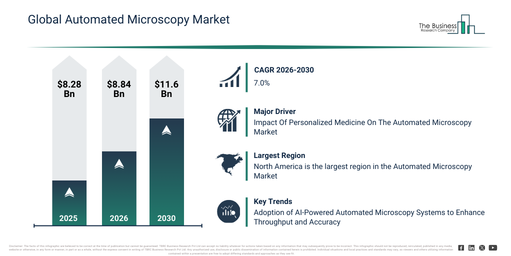
    The worldwide market for automated microscopy solutions has experienced substantial expansion, with projections indicating continued robust growth. This sector is expected to transition from an evaluation of $8.28 billion in 2025 to approximately $8.84 billion by 2026, reflecting a calculated compound annual growth rate of 6.8%. The expansion observed during the preceding period was propelled by several key factors, including the escalating utilization of microscopy techniques within life sciences investigations, the broadening scope of imaging in clinical diagnostic applications, significant strides in both optical and electron microscopy technologies, an upswing in materials science research endeavors, and a heightened need for consistently reliable imaging outcomes.

    The market for automated microscopy is poised for significant expansion over the upcoming years, projected to reach $11.6 billion by 2030, driven by a compound annual growth rate of 7.0%. This anticipated growth is fueled by several key factors, including the escalating use of AI in diagnostic procedures, broader application of automated microscopy in semiconductor inspection, increased financial backing for automated research facilities, a rising need for imaging solutions that can scale effectively, and the growing integration of microscopy platforms accessible via the cloud. Within this forecast period, prominent developments are expected to include a greater implementation of AI for image analysis, a surge in the adoption of platforms designed for high-throughput imaging, more extensive integration of systems for automated sample manipulation, the continued expansion of remote and digital microscopy capabilities, and an intensified emphasis on achieving superior accuracy in high-resolution imaging.

    Download A Free Sample Report For Comprehensive Market Insights:

    https://www.thebusinessresearchcompany.com/sample.aspx?id=14259&type=smp

    Automated Microscopy Market Expansion Drivers: What Is Shaping Future Growth?

    The expansion of automated microscopy is anticipated to be significantly influenced by the increasing need for personalized medicine, a healthcare paradigm focused on tailoring treatments based on an individual’s unique genetic makeup, environmental influences, and lifestyle choices. This trend toward personalized medicine is gaining momentum, fueled by a heightened understanding of genetic diversity, progress in genomic technologies, and the escalating rate of chronic illnesses. Automated microscopy equips scientists and medical practitioners with essential instruments and capabilities to further personalized medicine, aiding in the elucidation of disease processes, the discovery of prognostic biomarkers, and the refinement of therapeutic approaches. As an illustration, the Personalized Medicine Coalition reported in February 2024 that the FDA sanctioned 16 novel personalized therapies for individuals with rare conditions in 2023, a notable increase from the previous year’s figure of six. Consequently, the rising demand for personalized medicine is a key catalyst for the growth observed in the automated microscopy market.

    Automated Microscopy Market Segment Analysis Highlighting Growth Areas

    The automated microscopy market covered in this report is segmented –

    1) By Product Type: Optical Microscopes, Electron Microscopes, Scanning Probe Microscopes

    2) By Application: Medical Diagnostics, Nanotechnology, Material Science, Life Sciences, Semiconductors

    3) By End User: Hospitals, Research Facilities, Diagnostic Clinics

    Subsegments:

    1) By Optical Microscopes: Automated Light Microscopes, Confocal Microscopes, Fluorescence Microscopes

    2) By Electron Microscopes: Scanning Electron Microscopes (SEM), Transmission Electron Microscopes (TEM), Scanning Transmission Electron Microscopes (STEM)

    3) By Scanning Probe Microscopes: Atomic Force Microscopes (AFM), Scanning Tunneling Microscopes (STM)

    Automated Microscopy Market Strategic Trends: What Is Defining The Next Phase Of Growth?

    Leading entities within the automated microscopy sector are prioritizing the innovation of technologies like AI-driven automated fluorescence microscopes. This strategic focus aims to boost processing capacity, enhance image precision, and diminish the need for manual effort in processes such as cell examination and drug discovery. An AI-enhanced automated microscope incorporates features such as automated stage movement, autofocus capabilities, the capacity for multi-channel imaging, and sophisticated image analysis software. These integrated components facilitate tasks like automatic cell enumeration, confluency evaluation, and time-lapse imaging, all while requiring very little human input. Illustrating this trend, in August of 2024, Leica Microsystems, a prominent German manufacturer of scientific equipment, introduced the Mateo FL. This AI-powered digital fluorescence microscope is specifically engineered for the automated analysis of cell cultures, merging transmitted-light imaging for observing cells without labels with multi-channel fluorescence imaging. It leverages artificial intelligence algorithms to perform automated evaluations of confluency and count cells, delivering results with a high degree of consistency and accelerating experimental timelines in contrast to conventional manual microscopy methods.

    Automated Microscopy Market Leading Companies: Who Holds Significant Market Presence?

    Major companies operating in the automated microscopy market are Thermo Fisher Scientific Inc., Zeiss Group, Agilent Technologies Inc., Keyence Corporation, Hitachi High-Tech Corporation, PerkinElmer Inc., Nikon Corporation, Bruker Corporation, Hamamatsu Photonics K.K., Jenoptik AG, HORIBA Scientific, Molecular Devices LLC, JEOL Ltd., Olympus Corporation, Prior Scientific Instruments Ltd., Phase Holographic Imaging PHI AB, Andor Technology Ltd., Crest Optics S.p.A, Delmic B.V., Nanolive SA, Nanosurf AG, Photometrics

    Access The Complete Automated Microscopy Market Report:

    https://www.thebusinessresearchcompany.com/report/automated-microscopy-global-market-report

    Automated Microscopy Market Regional Outlook: Where Are The Largest Opportunities Located?

    North Americawas the largest region in the automated microscopy market in 2025. Asia-Pacificis expected to be the fastest-growing region in the forecast period. The regions covered in the automated microscopy market report are Asia-Pacific, South East Asia, Western Europe, Eastern Europe, North America, South America, Middle East, Africa.

    Get in touch with us:

    The Business Research Company: https://www.thebusinessresearchcompany.com/

    Americas: +1 310-496-7795

    Asia: +44 7882 955267 & +91 8897263534

    Europe: +44 7882 955267

    Email us at: marketing@tbrc.info

    Follow us on:

    LinkedIn: https://in.linkedin.com/company/the-business-research-company

    YouTube: https://www.youtube.com/channel/UC24_fI0rV8cR5DxlCpgmyFQ

    Global Market Model: https://www.thebusinessresearchcompany.com/global-market-model
  • Automated Microbiology Market Outlook Highlights The Next Major Growth Opportunities

    Automated Microbiology Market Outlook Highlights The Next Major Growth Opportunities

    Delivering more actionable and strategically valuable research, The Business Research Company’s 2026 market reports feature market attractiveness analysis, total addressable market evaluation, company benchmarking matrices, interactive Excel dashboards, expanded supply chain intelligence, emerging startup coverage, and detailed product insights.

    Automated Microbiology Market Growth Potential: How Will Market Size Change Through 2030?

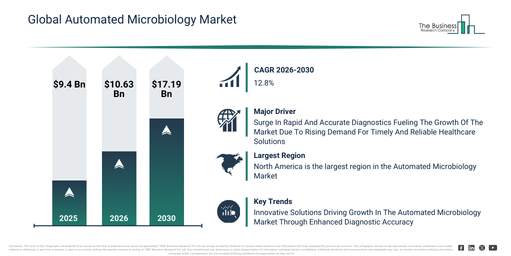
    The automated microbiology sector has experienced significant expansion lately, with projections indicating a jump from $9.4 billion in 2025 to $10.63 billion in 2026, reflecting a compound annual growth rate of 13.0%. This historical growth trajectory has been propelled by several key factors, including a surge in clinical testing, the escalating need for prompt diagnostic outcomes, enhancements in hospital laboratory facilities, a scarcity of qualified laboratory staff, and the widespread implementation of uniform diagnostic procedures.

    The automated microbiology sector is poised for considerable expansion over the coming years, projecting an increase to $17.19 billion by 2030, driven by a compound annual growth rate (CAGR) of 12.8%. This projected increase stems from several key factors, including amplified investments in intelligent laboratory setups, a heightened demand for prompt diagnostic solutions for infectious diseases, broadening applications within molecular microbiology, greater acceptance of laboratory systems integrated with data, and a consequential emphasis on improving diagnostic precision. Prominent developments anticipated within this timeframe are the increasing embrace of fully automated microbiology solutions, a surge in the utilization of artificial intelligence for identifying pathogens, closer integration with LIMS (Laboratory Information Management System) platforms, the expansion of high-volume diagnostic testing capabilities, and an intensified effort towards automating laboratory operations.

    Download A Free Sample Report For Comprehensive Market Insights:

    https://www.thebusinessresearchcompany.com/sample.aspx?id=24163&type=smp

    Automated Microbiology Market Development Factors: Which Trends Are Supporting Demand?

    The automated microbiology sector is poised for expansion, largely fueled by an escalating need for swift and precise diagnostic tools. These advanced diagnostic methods are crucial for the rapid and exact identification of ailments, thereby facilitating prompt and efficient therapeutic interventions. This heightened demand stems from the growing imperative for early disease identification, which is essential for averting adverse outcomes, enhancing patient recovery, and significantly reducing turnaround times for test results. Automated microbiology systems are instrumental in meeting this demand through their capacity for high-volume, consistent, and mistake-reduced testing, ultimately leading to quicker insights and superior patient management, as evidenced by the World Health Organization’s findings that preliminary diagnostic tests were utilized for 54% (4.5 million) of the 8.3 million new tuberculosis diagnoses in 2024, a notable increase from 48% (8.2 million cases) in 2023, thus underscoring the market’s upward trajectory due to the pursuit of rapid and accurate diagnostic capabilities.

    Automated Microbiology Market Segment Performance And Strategic Opportunities

    The automated microbiology market covered in this report is segmented –

    1) By Product: Instruments, Reagents And Kits, Software

    2) By Automation Type: Fully Automated, Semi-Automated

    3) By Diagnostic Technology: DNA And RNA Probe Technology, Detection Techniques

    4) By Application: Biopharmaceutical Production, Clinical Diagnostics, Environmental And Water Testing, Food And Beverage Testing, Other Applications

    5) By End Use: Pharmaceutical And Biotechnology Companies, Hospitals And Diagnostic Laboratories, Academic And Research Institutes, Other End Uses

    Subsegments:

    1) By Instruments: Automated Gram Stainers, Microbial Detection Systems, Automated ID/AST Systems, Blood Culture Systems, Sample Preparation Systems

    2) By Reagents And Kits: Culture Media, Identification Kits, Susceptibility Testing Kits, Staining Reagents, Molecular Diagnostic Reagents

    3) By Software: Data Analysis And Interpretation Tools, Laboratory Workflow Management Software, Integration And Connectivity Solutions, Quality Control And Compliance Software

    Automated Microbiology Market Transformation Trends: Which Innovations Are Driving Change?

    Key players within the automated microbiology sector are concentrating their efforts on pioneering sophisticated technologies, such as MALDI biotyper systems, with the objective of elevating both the rapidity and precision of microbial characterization. This methodology, which relies on mass spectrometry, enables the identification of microbes, encompassing bacteria and fungi, through the examination of their distinct protein signatures. As an illustration, in April of 2024, Bruker Corporation, an American enterprise specializing in scientific instrumentation for research into molecules and materials, introduced the MBT Pathfinder IVD robot, designed for the automated preparation of targets used in MALDI Biotyper analysis. This advancement automates the crucial step of target preparation for MALDI biotyper examinations, thereby augmenting the effectiveness of clinical laboratory processes. It simplifies the procedures for loading samples, applying matrix substances, and preparing plates, which ultimately facilitates quicker and more precise identification of microorganisms.

    Automated Microbiology Market Key Players: Which Companies Shape Industry Competition?

    Major companies operating in the automated microbiology market are Thermo Fisher Scientific Inc, Danaher Corporation, Becton Dickinson and Company, bioMérieux SA, Abbott Laboratories, Merck KGaA, Agilent Technologies Inc, Sysmex Corporation, Bio-Rad Laboratories Inc, PerkinElmer Inc, HORIBA Ltd, DiaSorin SpA, Neogen Corporation, Rapid Micro Biosystems Inc, Bruker Corporation, Tecan Group AG, Roche Diagnostics International AG, QIAGEN NV, Illumina Inc, Luminex Corporation

    Access The Complete Automated Microbiology Market Report:

    https://www.thebusinessresearchcompany.com/report/automated-microbiology-global-market-report

    Automated Microbiology Market Geographic Landscape: Which Region Dominates Industry Growth?

    North Americawas the largest region in the automated microbiology market in 2025. The regions covered in the automated microbiology market report are Asia-Pacific, South East Asia, Western Europe, Eastern Europe, North America, South America, Middle East, Africa.

    Get in touch with us:

    The Business Research Company: https://www.thebusinessresearchcompany.com/

    Americas: +1 310-496-7795

    Asia: +44 7882 955267 & +91 8897263534

    Europe: +44 7882 955267

    Email us at: marketing@tbrc.info

    Follow us on:

    LinkedIn: https://in.linkedin.com/company/the-business-research-company

    YouTube: https://www.youtube.com/channel/UC24_fI0rV8cR5DxlCpgmyFQ

    Global Market Model: https://www.thebusinessresearchcompany.com/global-market-model

  • Automated Cell Cultures Market Trends And Growth Drivers Point To Strong Future Potential

    Automated Cell Cultures Market Trends And Growth Drivers Point To Strong Future Potential

    Enhanced with market attractiveness analysis, total addressable market evaluation, company benchmarking matrices, interactive Excel dashboards, expanded supply chain intelligence, emerging startup coverage, and detailed product insights, The Business Research Company’s 2026 market reports deliver more actionable and strategically valuable research.

    Automated Cell Cultures Market Value Analysis: What Growth Is Expected Over The Forecast Period?

    The market for automated cell cultures has experienced significant expansion lately, with projections indicating a substantial increase from $7.02 billion in 2025 to $7.78 billion in 2026, reflecting a compound annual growth rate of 10.8%. This robust growth trajectory is underpinned by several key factors that fueled its development historically: a surge in biopharmaceutical research endeavors, a growing need for consistent and repeatable cell culture methodologies, the acceleration of drug discovery initiatives, the accessibility of adaptable automation systems, and the flourishing of life science investigations within academic institutions.

    The automated cell cultures sector is poised for significant expansion in the coming years, projected to reach a market valuation of $11.58 billion by the year 2030, driven by a compound annual growth rate of 10.5%. This anticipated growth during the forecast period is underpinned by several key factors, including escalating investments in the production of cell and gene therapies, a heightened demand for efficient high-throughput screening processes, the burgeoning field of personalized medicine research, the increasing integration of automation within laboratory environments, and an intensified emphasis on enabling the scalable manufacturing of biologics. Furthermore, prominent trends anticipated to shape this market include the greater implementation of completely automated cell culture platforms, the wider adoption of robotic systems for liquid handling, the expanding utilization of scalable automation solutions for cell culture, the advancement of closed-system cell processing techniques, and a strengthened focus on ensuring reproducibility and maintaining stringent sterility controls.

    Download A Free Sample Report For Comprehensive Market Insights:

    https://www.thebusinessresearchcompany.com/sample.aspx?id=20499&type=smp

    Automated Cell Cultures Market Industry Drivers: What Is Driving Revenue Growth?

    The expansion of biopharmaceutical manufacturing is anticipated to fuel the advancement of the automated cell culture sector moving ahead. Biopharmaceuticals, which are medications developed through biotechnological means such as recombinant DNA technology and cell cultivation, are seeing elevated demand due to their capacity for precise, potent therapies with minimized adverse effects compared to conventional treatments. Automated cell culture systems contribute to improved efficiency and uniformity in biopharmaceutical output by optimizing the stages of cell proliferation, surveillance, and collection. Substantiating this trend, Sartorius, a German entity specializing in life science technologies, reported in July 2025 that worldwide revenues from biopharmaceutical medications ascended by approximately 9% to USD 458 billion in 2024, a rise from the prior year, representing 41% of the overall pharmaceutical market share, up from 40% in 2023. Consequently, the escalating output of biopharmaceuticals is acting as a catalyst for the growth observed in the automated cell culture market.

    #Automated Cell Cultures Market Segment Landscape And Growth Potential

    The automated cell cultures market covered in this report is segmented –

    1) By Type: Modular Automation, Whole Label Automation

    2) By Equipment Type: Automated Liquid Handling Systems, Microplate Readers, Robotic Systems, Automated Storage And Retrieval Systems, Other Equipment Types

    3) By Application: Biopharmaceuticals Production, Diagnostics, Gene Therapy, Drug Screening And Development, Toxicity Testing, Stem Cell Research, Tissue Engineering And Regenerative Medicine, Personalized Medicine, Other Applications

    4) By End User: Pharmaceuticals And Biotechnology Companies, Hospital And Diagnostic Laboratories, Research Institutes, Cell Banks

    Subsegments:

    1) By Modular Automation: Automated Cell Culture Systems, Robotic Workstations, Modular Bioreactors

    2) By Whole Label Automation: Fully Automated Cell Culture Systems, Integrated Cell Culture Platforms, Automated Cell Handling Solutions

    #Automated Cell Cultures Market Growth Trends: What Is Influencing The Future Outlook?

    The leading entities within the automated cell cultures sector are prioritizing innovation through sophisticated technologies, including artificial intelligence (AI) driven software, as a strategic means to secure market prominence. This integration of AI software in automated cell culture systems serves to refine experimental parameters and boost operational effectiveness by processing live data, thereby promoting superior cell proliferation and output. A notable development occurred in October 2023 when Molecular Devices LLC, a prominent biotechnology firm headquartered in the United States, introduced its CellXpress.ai Automated Cell Culture System, a pioneering solution engineered to accelerate drug discovery initiatives via cutting-edge automation and AI capabilities. This platform is specifically developed to simplify intricate cell culture procedures, liberating scientists to concentrate on more vital aspects of their research while simultaneously elevating both efficiency and dependability.

    Automated Cell Cultures Market Competitive Landscape: Who Are The Leading Companies?

    Major companies operating in the automated cell cultures market are Hitachi Ltd., Panasonic Holdings Corporation, Thermo Fisher Scientific Inc., Danaher Corporation, Corning Incorporated, Lonza Group AG, Nikon healthcare, Sartorius AG, Beckman Coulter Inc., Celltrio Inc., Eppendorf AG, Tecan Trading AG, Shibuya Corp, Hamilton Company, Molecular Devices LLC, FORMULATRIX, Highres Biosolutions, Biotron Healthcare, Agilent Technologies, Miltenyi Biotec

    Access The Complete Automated Cell Cultures Market Report:

    https://www.thebusinessresearchcompany.com/report/automated-cell-cultures-global-market-report

    #Automated Cell Cultures Market Largest Region: Which Geography Holds The Highest Market Share?

    North Americawas the largest region in the automated cell cultures market in 2025. Asia-Pacificis expected to be the fastest-growing region in the forecast period. The regions covered in the automated cell cultures market report are Asia-Pacific, South East Asia, Western Europe, Eastern Europe, North America, South America, Middle East, Africa.

    Get in touch with us:

    The Business Research Company: https://www.thebusinessresearchcompany.com/

    Americas: +1 310-496-7795

    Asia: +44 7882 955267 & +91 8897263534

    Europe: +44 7882 955267

    Email us at: marketing@tbrc.info

    Follow us on:

    LinkedIn: https://in.linkedin.com/company/the-business-research-company

    YouTube: https://www.youtube.com/channel/UC24_fI0rV8cR5DxlCpgmyFQ

    Global Market Model: https://www.thebusinessresearchcompany.com/global-market-model
  • Automated Cell Culture Equipment Market Expansion Is Reshaping Competitive Dynamics Across The Industry

    Automated Cell Culture Equipment Market Expansion Is Reshaping Competitive Dynamics Across The Industry

    Through market attractiveness analysis, total addressable market evaluation, company benchmarking matrices, interactive Excel dashboards, expanded supply chain intelligence, emerging startup coverage, and detailed product insights, The Business Research Company’s 2026 market reports provide more actionable and strategically valuable research.

    Automated Cell Culture Equipment Market Size Forecast: How Large Could The Market Become By 2030?

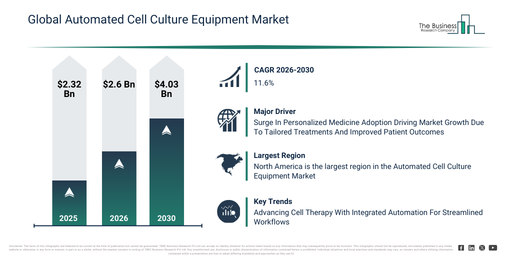
    The market for automated cell culture systems has experienced substantial expansion lately, projected to advance from $2.32 billion in 2025 to $2.6 billion in 2026, reflecting an 11.9% combined annual growth rate. This upward trajectory in the past was fueled by increased investment in pharmaceutical and biologics research, a growing need for reliable cell culture results, the broadening scope of drug discovery initiatives, the escalating intricacy of cell-based testing methods, and the early integration of automation in laboratories.

    The market for automated cell culture systems is projected for substantial expansion in the upcoming years, anticipated to reach a value of $4.03 billion by 2030. This upward trajectory, reflecting a compound annual growth rate of 11.6%, is fueled by several key factors including escalating investments in regenerative medicine, a widening array of cell and gene therapy initiatives, the pressing need for scalable cell culture methods, a heightened emphasis on minimizing inconsistencies within laboratory procedures, and the growing incorporation of AI-powered laboratory automation. Key developments expected during this forecast period involve the increased implementation of comprehensive automated cell culture platforms, a greater acceptance of systems designed for high-volume cell processing, the synergistic integration of robotics and advanced imaging techniques, the proliferation of closed-system and contamination-controlled operational frameworks, and a strengthened commitment to ensuring process reproducibility and standardization.

    Download A Free Sample Report For Comprehensive Market Insights:

    https://www.thebusinessresearchcompany.com/sample.aspx?id=30201&type=smp

    #Automated Cell Culture Equipment Market Growth Factors: Which Forces Are Supporting Market Expansion?

    An expansion in the utilization of individualized medical treatments is anticipated to fuel the advancement of the automated cell culture equipment sector in the future. Personalized medicine offers tailored health interventions based on an individual’s unique genetic makeup, lifestyle choices, and environmental influences, leading to more accurate and successful medical care. This increasing embrace of personalized medicine is fueled by superior treatment efficacy, as therapies are customized to an individual’s genetic and biological characteristics, thereby enhancing patient results. Automated cell culture equipment facilitates personalized medicine by delivering accurate, high-volume, and consistently repeatable cell cultivation procedures that underpin the creation of patient-specific treatments and customized drug evaluations. As an illustration, the Personalized Medicine Coalition, a nonprofit entity based in the United States, noted in February 2024 that the FDA sanctioned 16 novel personalized therapies for individuals with rare conditions in 2023, a notable surge from the six approvals seen in 2022. Consequently, the growing acceptance of personalized medicine is a key factor contributing to the expansion of the automated cell culture equipment market.

    Automated Cell Culture Equipment Market Categorization By Product Type And Application

    The automated cell culture equipment market covered in this report is segmented –

    1) By Product Type: Instruments, Consumables, Software

    2) By Automation Level: Fully Automated Systems, Semi-Automated Systems, Manual Systems With Automation Features

    3) By Application: Drug Discovery And Development, Regenerative Medicine, Toxicology Testing, Vaccine Development, Stem Cell Research

    4) By End-User: Pharmaceutical Companies, Biotechnology Companies, Academic And Research Institutions, Contract Research Organizations (CROs), Diagnostics And Testing Laboratories

    Subsegments:

    1) By Instruments: Automated Cell Culture Systems, Bioreactors, Incubators, Centrifuges, Cell Counters And Analyzers, Liquid Handling Systems, Cell Imaging Systems, Robotic Arms And Manipulators, Cell Harvesting Systems, Filtration And Separation Devices

    2) By Consumables: Culture Media, Reagents And Supplements, Microplates And Culture Dishes, Flasks And Bottles, Single-Use Bags And Tubing, Filters And Membranes, Pipette Tips And Cartridges, Cell Culture Inserts, Sterile Connectors And Clamps

    3) By Software: Data Management Software, Process Control And Monitoring Software, Laboratory Information Management Systems (LIMS), Image Analysis Software, Workflow Automation Software, Quality Control And Compliance Software, Remote Monitoring And Cloud Integration Tools

    Automated Cell Culture Equipment Market Industry Trends: What Changes Are Reshaping Demand?

    In the realm of automated cell culture equipment, leading entities are prioritizing advancements in fluid and integrated workflow solutions, exemplified by closed single-use consumable platforms. These innovative systems are designed to bolster process consistency, mitigate contamination hazards, decrease manual intervention, and facilitate effective scaling from early-stage research through to commercial production. A closed single-use consumable system represents a disposable, sterile environment that consolidates various cell culture operations into a singular apparatus, thereby minimizing contamination risks and fostering scalable, repeatable operational sequences. Illustrating this trend, Limula SA, a Swiss biotechnology firm dedicated to automated cell therapy production, introduced LimONE in March 2025. This comprehensive solution harmonizes hardware, software, and disposable consumables, streamlining and standardizing the processes involved in cell culture and subsequent manipulation. The debut of LimONE signifies the market entry of a commercial offering aimed at both research applications and Good Manufacturing Practice (GMP) compliant manufacturing environments. The benefits of LimONE include accelerated technology transfer, reduced operational expenditures related to labor and infrastructure, and support for the scaled production of sophisticated cell therapies, such as CAR-T and genetically modified stem cells. Ultimately, this new system elevates workflow productivity and guarantees consistent outcomes across a spectrum of cell therapy protocols, reinforcing Limula’s position within the automated cell culture equipment sector and aiding adherence to regulatory standards.

    Automated Cell Culture Equipment Market Company Landscape And Strategic Competition

    Major companies operating in the automated cell culture equipment market are F. Hoffmann-La Roche Ltd, Hitachi Ltd., Merck KGaA, Panasonic Holdings Corporation, Thermo Fisher Scientific Inc., Danaher Corporation, Becton Dickinson and Company, Corning Incorporated, Lonza Group AG, Olympus Corporation, Sartorius AG, Eppendorf SE, Tecan Group Ltd., STEMCELL Technologies Inc., Miltenyi Biotec B.V. & Co. KG, Hamilton Company, Greiner Bio-One International GmbH, Solida Biotech GmbH, Biostream International B.V., HiMedia Laboratories Pvt. Ltd., Kuhner Shaker AG, Cellexus International Ltd.

    Access The Complete Automated Cell Culture Equipment Market Report:

    https://www.thebusinessresearchcompany.com/report/global-automated-cell-culture-equipment-market-report

    Automated Cell Culture Equipment Market Regional Analysis: Which Region Leads By Revenue?

    North Americawas the largest region in the automated cell culture equipment market in 2025. Asia-Pacificis expected to be the fastest-growing region in the forecast period. The regions covered in the automated cell culture equipment market report are Asia-Pacific, South East Asia, Western Europe, Eastern Europe, North America, South America, Middle East, Africa.

    Get in touch with us:

    The Business Research Company: https://www.thebusinessresearchcompany.com/

    Americas: +1 310-496-7795

    Asia: +44 7882 955267 & +91 8897263534

    Europe: +44 7882 955267

    Email us at: marketing@tbrc.info

    Follow us on:

    LinkedIn: https://in.linkedin.com/company/the-business-research-company

    YouTube: https://www.youtube.com/channel/UC24_fI0rV8cR5DxlCpgmyFQ

    Global Market Model: https://www.thebusinessresearchcompany.com/global-market-model

  • Autologous Cell Therapy Market Forecast Reveals Where Future Industry Value Will Be Created

    Autologous Cell Therapy Market Forecast Reveals Where Future Industry Value Will Be Created

    Delivering more actionable and strategically valuable research, The Business Research Company’s 2026 market reports feature market attractiveness analysis, total addressable market evaluation, company benchmarking matrices, interactive Excel dashboards, expanded supply chain intelligence, emerging startup coverage, and detailed product insights.

    Autologous Cell Therapy Market Revenue Outlook: What CAGR Is Expected Through 2030?

    The market for autologous cell therapy has experienced substantial expansion lately; projected figures indicate a rise from $12.14 billion in 2025 to $14.28 billion by 2026, reflecting a compound annual growth rate of 17.6%. This growth trajectory during the past period stems from breakthroughs in stem cell investigations, initial positive outcomes from autologous treatments, a growing incidence of long-term illnesses, broader therapeutic choices for cancer, and escalating funding for regenerative medicine initiatives.

    The market for autologous cell therapy is projected to experience substantial expansion imminently, reaching an estimated $27.31 billion by the year 2030, driven by a compound annual growth rate of 17.6%. This upward trajectory through the projected period is anticipated due to a confluence of factors, including a rise in the number of approved cell-based treatments, a heightened demand for customized medical approaches, the widening implementation of automated manufacturing processes within cell therapy, an increase in clinical research endeavors, and escalating healthcare expenditures dedicated to sophisticated therapeutic interventions. Key developments shaping this market in the coming years will likely involve a greater embrace of CAR T-cell therapies, a more widespread application of personalized regenerative treatments, the increasing incorporation of automated cell processing technologies, a broadening scope for autologous stem cell uses, and a intensified concentration on outcomes tailored to individual patients.

    Download A Free Sample Report For Comprehensive Market Insights:

    https://www.thebusinessresearchcompany.com/sample.aspx?id=10771&type=smp

    Autologous Cell Therapy Market Demand Drivers: What Is Fueling Industry Growth?

    The escalating incidence of long-term health conditions is anticipated to fuel the expansion of autologous cell therapy as a market. These chronic conditions, defined as illnesses persisting for over a year and necessitating continuous medical attention, find a potential solution in autologous cell therapy, a method that utilizes a patient’s own cells. These cells are nurtured and multiplied ex vivo before being returned to the individual. A compelling projection from the National Library of Medicine in January 2023 indicated that by the year 2050, the United States will see a rise to 142.66 million individuals aged 50 and above experiencing at least one chronic ailment. Consequently, the widespread nature of chronic diseases is acting as a significant catalyst for the development of the autologous cell therapy sector.

    Autologous Cell Therapy Market Segment Analysis And Revenue Opportunities

    The autologous cell therapy market covered in this report is segmented –

    1) By Therapy: Autologous Stem Cell Therapy, Autologous Cellular Immunotherapies

    2) By Source: Bone Marrow, Epidermis, Mesenchymal Stem Cells, Hematopoietic Stem Cells, Chondrocytes, Other Sources

    3) By Application: Cancer, Neurodegenerative Disorders, Cardiovascular Disorders, Autoimmune Disorders, Orthopedics, Wound Healing, Other Applications

    4) By End User: Hospitals And Clinics, Ambulatory Centers, Academics And Research, Other End-Users

    Subsegments:

    1) By Autologous Stem Cell Therapy: Hematopoietic Stem Cell Transplantation, Mesenchymal Stem Cell Therapy, Adipose-Derived Stem Cell Therapy

    2) By Autologous Cellular Immunotherapies: Chimeric Antigen Receptor (CAR) T-Cell Therapy, Tumor-Infiltrating Lymphocyte (TIL) Therapy, Dendritic Cell Therapy

    Autologous Cell Therapy Market Innovation Trends: Which Developments Are Transforming The Industry?

    Within the autologous cell therapy sector, key industry players are actively pursuing innovation, particularly through the creation of automated, complete manufacturing systems intended for customized patient treatments. These advanced platforms aim to standardize processes, minimize the likelihood of contamination, and shorten the period required to deliver therapies to patients. Such integrated manufacturing solutions encompass a series of cell processing stages, from isolation and activation to transduction, expansion, formulation, and harvest, all within a single, contained environment. This contrasts with conventional open-system approaches using flasks or bags, thereby decreasing the need for manual handling. Illustratively, Cellares, an American organization specializing in integrated development and manufacturing, introduced its Cell Shuttle system in April 2025. This system is engineered to automate the entire process within a closed modular unit, thereby boosting consistency, significantly lowering contamination risks, and facilitating scalable, individualized manufacturing to expedite the development and accessibility of personalized treatments.

    Autologous Cell Therapy Market Leading Players Shaping Industry Direction

    Major companies operating in the autologous cell therapy market are Novartis AG, Bristol-Myers Squibb Company, Gilead Sciences Inc., Johnson & Johnson, F. Hoffmann-La Roche Ltd., Vericel Corporation, Dendreon Pharmaceuticals LLC, Brainstorm Cell Therapeutics Inc., Caladrius Biosciences Inc., Castle Creek Biosciences Inc., Pharmicell Co. Ltd., Medipost Co. Ltd., Tego Science AB, Holostem Terapie Avanzate S.r.l., Opexa Therapeutics Inc., CORESTEM Inc., Takeda Pharmaceutical Company Limited, CSL Limited, AstraZeneca plc, Iovance Biotherapeutics Inc., Adaptimmune Therapeutics plc, Autolus Therapeutics plc

    Access The Complete Autologous Cell Therapy Market Report:

    https://www.thebusinessresearchcompany.com/report/autologous-cell-therapy-global-market-report

    Autologous Cell Therapy Market Geographic Distribution And Regional Opportunities

    North Americawas the largest region in the autologous cell therapy market in 2025.Asia-pacificis expected to be the fastest-growing region in the forecast period. The regions covered in the autologous cell therapy market report are Asia-Pacific, South East Asia, Western Europe, Eastern Europe, North America, South America, Middle East, Africa.

    Get in touch with us:

    The Business Research Company: https://www.thebusinessresearchcompany.com/

    Americas: +1 310-496-7795

    Asia: +44 7882 955267 & +91 8897263534

    Europe: +44 7882 955267

    Email us at: marketing@tbrc.info

    Follow us on:

    LinkedIn: https://in.linkedin.com/company/the-business-research-company

    YouTube: https://www.youtube.com/channel/UC24_fI0rV8cR5DxlCpgmyFQ

    Global Market Model: https://www.thebusinessresearchcompany.com/global-market-model
  • Autoimmune Treatment Market Growth Through 2030 Creates New Strategic Opportunities

    Autoimmune Treatment Market Growth Through 2030 Creates New Strategic Opportunities

    Enhanced with market attractiveness analysis, total addressable market evaluation, company benchmarking matrices, interactive Excel dashboards, expanded supply chain intelligence, emerging startup coverage, and detailed product insights, The Business Research Company’s 2026 market reports deliver more actionable and strategically valuable research.

    Autoimmune Treatment Market Growth Analysis: How Will Revenue Expand During The Forecast Period?

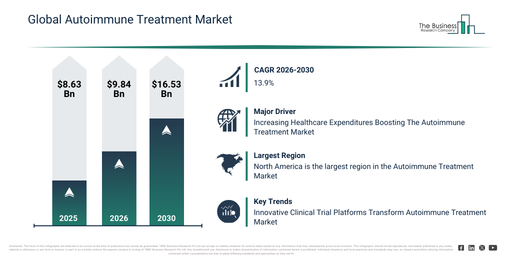
    The market for autoimmune disorder treatments has experienced significant expansion lately, with projections indicating a rise from $8.63 billion in 2025 to $9.84 billion in 2026, reflecting a compound annual growth rate of 14.0%. Key factors contributing to this upward trajectory during the past period include greater accessibility to immunosuppressive therapies, the broadening scope of rheumatology and immunology care, accumulating clinical expertise in managing autoimmune conditions, a higher incidence of patient diagnoses, and more comprehensive access to specialized pharmaceutical interventions.

    The market for autoimmune treatments is poised for significant expansion. Projections indicate a market valuation of $16.53 billion by the year 2030, reflecting a compound annual growth rate of 13.9%. This upward trajectory is fueled by several key factors: heightened investment in innovative biologic treatments, a surge in the demand for individualized autoimmune therapy approaches, the broader implementation of digital tools for patient monitoring and ongoing care, a greater emphasis on mitigating the prolonged complications associated with these diseases, and intensified research efforts focused on regulating the immune system. During this projected period, several prominent trends are anticipated to shape the market landscape, including a greater embrace of biologic therapies, increased utilization of targeted immunomodulatory agents, deeper integration of chronic disease management initiatives, the wider adoption of customized treatment plans, and a stronger emphasis on the use of combination drug regimens.

    Download A Free Sample Report For Comprehensive Market Insights:

    https://www.thebusinessresearchcompany.com/sample.aspx?id=7863&type=smp

    Autoimmune Treatment Market Growth Drivers: What Factors Are Accelerating Expansion?

    An upswing in spending on healthcare is anticipated to fuel the expansion of the autoimmune treatment sector. Healthcare spending encompasses all outlays related to health services, reproductive health initiatives, nutritional support, and urgent medical aid. Elevated levels of healthcare investment are likely to foster advancements in more potent treatments and medical innovations for autoimmune conditions. By way of illustration, projections from the UK’s Office for Budget Responsibility and Treasury suggest a rise in the nation’s health spending to £192 billion ($244.43 billion) for 2024/25, an increase from the £182 billion ($231.70 billion) recorded in 2022/23. Concurrently, data from the US-based National Health Expenditures Accounts via KFF reveals an expected 5% growth in American health expenditures between 2023 and 2024, reaching a total of $4.9 trillion. Consequently, augmented healthcare spending is a key factor propelling the autoimmune treatment market forward.

    Autoimmune Treatment Market Segmentation And Category Breakdown

    The autoimmune treatment market covered in this report is segmented –

    1) By Service Type: Consultation And Diagnosis, Therapy And Monitoring, Drug development

    2) By Disease: Rheumatoid Arthritis, Systemic Lupus Erythematosus, Sjögren’s Syndrome, Thyroiditis, Scleroderma, Other Diseases

    3) By Application: Disease Management and Symptom Control, Disease Diagnosis and Monitoring, Immune Modulation and Targeted Therapy, Long-Term Care and Relapse Prevention

    Subsegments:

    1) By Consultation and Diagnosis: Clinical Evaluation and Medical Consultation, Autoimmune Biomarker Testing and Serological Assays, Imaging and Functional Diagnostic Services, Disease Severity Assessment and Risk Stratification

    2) By Therapy and Monitoring: Pharmacological Treatment Management, Biologic and Immunotherapy Administration, Disease Activity Monitoring and Follow-Up Services, Adverse Event and Safety Monitoring, Patient Support and Adherence Programs

    3) By Drug Development: Preclinical Research and Target Identification, Clinical Trial Services (Phase I–IV), Regulatory Affairs and Compliance Services, Pharmacovigilance and Post-Marketing Surveillance

    Autoimmune Treatment Market Trends: What Is Shaping Future Industry Growth?

    In the realm of autoimmune disease therapies, leading corporations are prioritizing the development of pioneering clinical trial frameworks to solidify their market standing. These cutting-edge platforms utilize sophisticated technological advancements and tailored methodologies to boost treatment effectiveness, bolster safety profiles, and improve patient results. A notable example occurred in August 2023 when the Scleroderma Research Foundation, a charitable organization based in the United States, unveiled the CONQUEST trial platform. This initiative is dedicated to accelerating research and therapeutic development for scleroderma, a rare autoimmune condition impacting connective tissues, while also tackling significant challenges in the clinical development process and facilitating progress in scleroderma treatments. The CONQUEST platform’s clinical trial represents a groundbreaking approach within the field of rare autoimmune diseases, engineered for the rapid assessment of prospective interventions for interstitial lung disease linked to systemic sclerosis (SSc-ILD), alongside comprehensive global SSc outcomes, encompassing aspects like skin involvement and other disease manifestations.

    Autoimmune Treatment Market Competitive Analysis Of Major Industry Participants

    Major companies operating in the autoimmune treatment market are Abbott Laboratories, Amgen Inc., Eli Lilly and Company, Pfizer Inc., F Hoffmann-La Roche AG, AstraZeneca PLC, Bristol-Myers Squibb Company, Thermo Fisher Scientific Inc., Biogen Idec Inc., GSK PLC, Genentech Inc., AbbVie Inc., Celgene Corporation, Gilead Sciences Inc., Merck & Co. Inc., Novartis International AG, Sanofi SA, Takeda Pharmaceutical Company Limited, Teva Pharmaceutical Industries Ltd., UCB SA, Alexion Pharmaceuticals Inc., AnaptysBio Inc., Apellis Pharmaceuticals Inc., Arena Pharmaceuticals Inc., Aurinia Pharmaceuticals Inc., BioCryst Pharmaceuticals Inc., Cabaletta Bio Inc., ChemoCentryx Inc., Corbus Pharmaceuticals Holdings Inc., CSL Limited

    Access The Complete Autoimmune Treatment Market Report:

    https://www.thebusinessresearchcompany.com/report/autoimmune-treatment-global-market-report

    Autoimmune Treatment Market Largest Region By Revenue And Market Share

    North Americawas the largest region in the autoimmune treatment market in 2025. The regions covered in the autoimmune treatment market report are Asia-Pacific, South East Asia, Western Europe, Eastern Europe, North America, South America, Middle East, Africa.

    Get in touch with us:

    The Business Research Company: https://www.thebusinessresearchcompany.com/

    Americas: +1 310-496-7795

    Asia: +44 7882 955267 & +91 8897263534

    Europe: +44 7882 955267

    Email us at: marketing@tbrc.info

    Follow us on:

    LinkedIn: https://in.linkedin.com/company/the-business-research-company

    YouTube: https://www.youtube.com/channel/UC24_fI0rV8cR5DxlCpgmyFQ

    Global Market Model: https://www.thebusinessresearchcompany.com/global-market-model
  • Autoimmune Disease Diagnosis Market Size Projected To Increase From $6.74 Billion To $9.37 Billion During The Forecast Period

    Autoimmune Disease Diagnosis Market Size Projected To Increase From $6.74 Billion To $9.37 Billion During The Forecast Period

    Through market attractiveness analysis, total addressable market evaluation, company benchmarking matrices, interactive Excel dashboards, expanded supply chain intelligence, emerging startup coverage, and detailed product insights, The Business Research Company’s 2026 market reports provide more actionable and strategically valuable research.

    Autoimmune Disease Diagnosis Market Forecast: What Market Value Is Expected By 2030?

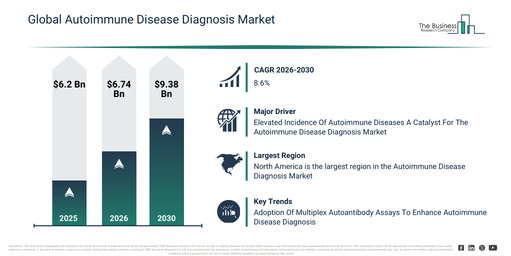
    In the realm of autoimmune disease diagnostics, a robust expansion has been observed recently, with the market projected to ascend from $6.2 billion in 2025 to $6.74 billion by 2026, reflecting a compound annual growth rate of 8.8%. This notable growth trajectory in the preceding period is largely attributable to several key factors, including the escalating incidence of autoimmune disorders, enhanced accessibility of immunoassay technologies, the broadening of clinical laboratory infrastructures, heightened physician understanding of these complex conditions, and a more widespread implementation of routine screening protocols.

    The market for diagnosing autoimmune conditions is poised for substantial expansion in the upcoming years, projected to reach $9.38 billion by 2030 with a compound annual growth rate of 8.6%. This anticipated growth stems from several key drivers: a heightened need for prompt and precise diagnostic tools, the escalating application of artificial intelligence in diagnostic analytics, the broader implementation of tailored diagnostic strategies, increased financial backing for autoimmune disease research, and the greater incorporation of point-of-care testing methodologies. Furthermore, significant trends expected to shape this period include a greater uptake of sophisticated immunological tests, a rise in the utilization of autoantibody test panels, enhanced integration of multi-analyte diagnostic platforms, advancements in laboratory automation, and a stronger emphasis on identifying diseases at their earliest stages.

    Download A Free Sample Report For Comprehensive Market Insights:

    https://www.thebusinessresearchcompany.com/sample.aspx?id=3231&type=smp

    Autoimmune Disease Diagnosis Market Growth Factors Supporting Long-Term Expansion

    The rising prevalence of autoimmune disorders significantly propelled the expansion of the market focused on diagnosing these conditions, which are characterized by the immune system erroneously targeting the body’s own healthy components. This upward trend in autoimmune conditions is attributed to heightened exposure to environmental factors like pollution and infections, coupled with lifestyle adjustments that can interfere with immune system regulation. The accurate identification of specific immune disorders through diagnostic methods is crucial for initiating effective treatments and managing disease progression. For example, data from the Society for Women’s Health Research in March 2023 indicated that autoimmune diseases affect an estimated 23.5 million to 50 million individuals in the U.S., with global incidence rates climbing by 3-9% annually, thereby fueling market growth for diagnostic tools.

    Increased spending on healthcare is anticipated to be a major catalyst for the autoimmune disease diagnosis market. Healthcare expenditure, representing the aggregate financial investment in health products and services, serves as a vital indicator of public health status and healthcare system efficacy. Greater financial investment in healthcare facilitates more timely interventions, leading to improved detection, management, and outcomes for individuals suffering from autoimmune conditions. Illustrating this, the Office for National Statistics in the UK reported in May 2024 that overall healthcare expenditure experienced a substantial 5.6% nominal increase between 2022 and 2023, a marked acceleration from the 0.9% rise observed in 2022, underscoring the influence of escalating healthcare spending on the autoimmune disease diagnosis market.

    Autoimmune Disease Diagnosis Market Segment Outlook: Which Categories Are Expanding The Fastest?

    The autoimmune disease diagnosis market covered in this report is segmented –

    1) By Product: Consumables And Assay Kits, Instruments

    2) By Test Type: Routine Laboratory Tests, Autoantibodies Tests, Immunologic Tests, Other Tests

    3) By End User: Clinical Laboratories, Hospitals, Other End Users

    Subsegments:

    1) By Consumables And Assay Kits: ELISA Kits, Reagents And Test Kits, Sample Collection And Preservation Devices, Control And Calibration Materials

    2) By Instruments: Immunoassay Analyzers, Flow Cytometers, Luminometers, Microscopes

    Autoimmune Disease Diagnosis Market Industry Trends Shaping Future Revenue Growth

    Numerous corporations are actively participating in the autoimmune disease diagnostics sector, dedicating their efforts to pioneering technological innovations, specifically multiplex autoantibody assay platforms, which aim to facilitate thorough, prompt, and exact identification of autoimmune conditions, thereby enhancing diagnostic precision and refining patient care strategies. Such a multiplex autoantibody assay platform offers the capability to concurrently identify a variety of disease-specific autoantibodies within a single patient specimen, consequently boosting both sensitivity and specificity when contrasted with conventional single-analyte ELISA or immunofluorescence methodologies, all while necessitating less sample material and diminishing the time required for results. Illustratively, in January 2025, Exagen Inc., a diagnostic entity headquartered in the United States, introduced its AVISE CTD platform, incorporating novel biomarker assays for systemic lupus erythematosus (SLE) and rheumatoid arthritis (RA). This platform is designed to detect emerging biomarkers including TIgG, TIgM, and TC4d, empowering healthcare providers to more accurately differentiate between various overlapping autoimmune conditions and expedite patient diagnosis, all while integrating effortlessly into established laboratory testing processes.

    Autoimmune Disease Diagnosis Market Key Companies And Competitive Benchmarking

    Major companies operating in the autoimmune disease diagnosis market are Siemens Healthineers AG, Abbott Laboratories, Thermo Fisher Scientific Inc, Bio-Rad Laboratories Inc, F. Hoffmann-La Roche Ltd, Danaher Corporation, AESKU Diagnostics GmbH & Co. KG, Trinity Biotech plc, bioMérieux SA, SQI Diagnostics, Philips Healthcare India, Agappe Diagnostics Ltd, Lepu Medical Technology Company (Beijing) Co., Ltd, Shanghai Runda Medical Technology Co., Ltd, GE Healthcare China Co., Ltd, Roche Holding AG, Koninklijke Philips, Theradiag, Becton Dickinson and Company, Ortho Clinical Diagnostics

    Access The Complete Autoimmune Disease Diagnosis Market Report:

    https://www.thebusinessresearchcompany.com/report/autoimmune-disease-diagnosis-global-market-report

    Autoimmune Disease Diagnosis Market Regional Analysis And Leading Geography

    North Americawas the largest region in the autoimmune disease diagnosis market in 2025. Western Europewas the second largest region in the autoimmune disease diagnosis market share. The regions covered in the autoimmune disease diagnosis market report are Asia-Pacific, South East Asia, Western Europe, Eastern Europe, North America, South America, Middle East, Africa.

    Get in touch with us:

    The Business Research Company: https://www.thebusinessresearchcompany.com/

    Americas: +1 310-496-7795

    Asia: +44 7882 955267 & +91 8897263534

    Europe: +44 7882 955267

    Email us at: marketing@tbrc.info

    Follow us on:

    LinkedIn: https://in.linkedin.com/company/the-business-research-company

    YouTube: https://www.youtube.com/channel/UC24_fI0rV8cR5DxlCpgmyFQ

    Global Market Model: https://www.thebusinessresearchcompany.com/global-market-model
  • Autism Spectrum Disorders Treatment Market Growth Outlook Reveals A CAGR Of 7.6% And A Market Value Of $4.42 Billion By 2030

    Autism Spectrum Disorders Treatment Market Growth Outlook Reveals A CAGR Of 7.6% And A Market Value Of $4.42 Billion By 2030

    Delivering more actionable and strategically valuable research, The Business Research Company’s 2026 market reports feature market attractiveness analysis, total addressable market evaluation, company benchmarking matrices, interactive Excel dashboards, expanded supply chain intelligence, emerging startup coverage, and detailed product insights.

    Autism Spectrum Disorders Treatment Market Size Outlook: How Fast Will Revenue Grow Through 2030?

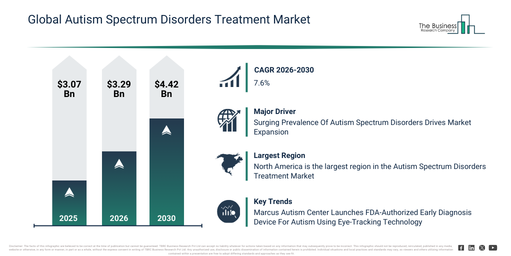
    The market for autism spectrum disorder treatments has experienced substantial expansion recently, projecting a growth from $3.07 billion in 2025 to $3.29 billion by 2026, indicating a compound annual growth rate (CAGR) of 7.1%. This upward trend during the past period is largely due to a deeper comprehension of autism treatment approaches, the proliferation of behavioral therapy services, the accessibility of validated pharmaceutical interventions, heightened involvement from caregivers, and the proliferation of dedicated treatment facilities.

    The treatment market for autism spectrum disorders is poised for substantial expansion over the coming years, projected to reach $4.42 billion by 2030, sustaining a compound annual growth rate (CAGR) of 7.6%. This anticipated growth is fueled by several key factors, including a heightened demand for individualized autism therapies, the escalating utilization of digital and remote therapeutic tools, a broader adoption of integrated care models, an increasing emphasis on comprehensive, lifelong management of autism, and augmented investment in therapeutic innovation. During the forecast period, prominent trends will include the growing application of multimodal therapeutic strategies, a greater embrace of early intervention initiatives, the increasing convergence of behavioral and pharmacological treatment approaches, the wider implementation of personalized therapy plans, and an elevated focus on achieving positive long-term outcomes.

    Download A Free Sample Report For Comprehensive Market Insights:

    https://www.thebusinessresearchcompany.com/sample.aspx?id=11925&type=smp

    #Autism Spectrum Disorders Treatment Market Demand Drivers Creating New Revenue Opportunities

    The expanding incidence of autism spectrum disorders (ASD) is anticipated to be a significant catalyst for the advancement of the autism spectrum disorders market in the future. Autism spectrum disorders represent a collection of medical conditions characterized by varying degrees of difficulty in social interactions and communication abilities. The growing number of youngsters diagnosed with ASDs significantly contributes to the development of diverse therapeutic approaches for these children. For example, as of June 2024, the UK’s National Health Service reported that 193,203 individuals had an open referral for a suspected autism diagnosis. Among these, a substantial 168,399 individuals, comprising 87.2%, had referrals open for a minimum of 13 weeks. Furthermore, during this same timeframe, only 5.1%, or 8,519 patients with referrals open for over 13 weeks, received their initial appointment within the stipulated 13-week timeframe. Consequently, the escalating prevalence of ASDs is poised to drive the expansion of the market for autism spectrum disorder treatments.

    Autism Spectrum Disorders Treatment Market Segment Landscape: Which Areas Lead Market Development?

    The autism spectrum disorders treatment market covered in this report is segmented –

    1) By Drug Therapy: Antipsychotic Drugs, SSRIs Or Antidepressants, Stimulants, Sleep Medications

    2) By Treatment Approach: Behavioral Approaches, Early Intervention, Medication

    3) By Application: Autistic Disorder, Asperger Syndrome, Pervasive Developmental Disorder, Other Applications

    4) By Distribution Channel: Hospital Pharmacies, Drug Stores And Retail Pharmacies, Online Pharmacies

    Subsegments:

    1) By Antipsychotic Drugs: Atypical Antipsychotics, Typical Antipsychotics

    2) By SSRIs Or Antidepressants: Selective Serotonin Reuptake Inhibitors, Serotonin–Norepinephrine Reuptake Inhibitors, Atypical Antidepressants

    3) By Stimulants: Methylphenidate, Amphetamines

    4) By Sleep Medications: Melatonin, Benzodiazepines

    Autism Spectrum Disorders Treatment Market Trends Driving Strategic Industry Expansion

    Driving innovation within the autism spectrum disorder treatment sector, prominent industry players are concentrating their efforts on pioneering solutions that enable the early identification of ASD in children, with a specific emphasis on diagnostic devices. These early diagnosis tools are engineered to detect the initial indicators of autism, generally before a child reaches three years of age. Illustrating this trend, the Marcus Autism Center, a US entity, introduced EarliPoint Evaluation in September 2023. This FDA-approved device leverages sophisticated eye-tracking technology to facilitate the prompt and objective diagnosis of autism spectrum disorder in infants and toddlers between 16 and 30 months old. The EarliPoint Evaluation assesses a child’s social engagement by quantifying objective biomarkers, thereby enabling a swift evaluation lasting approximately 12 minutes. The overarching objective of this cutting-edge device is to expedite and refine the diagnostic process for autism, thereby paving the way for earlier therapeutic interventions and ultimately improving developmental trajectories for children affected by ASD.

    Autism Spectrum Disorders Treatment Market Industry Leaders And Market Competition

    Major companies operating in the autism spectrum disorders treatment market are PaxMedica, Otsuka Pharmaceutical Co. Ltd., Curemark LLC, Zynerba Pharmaceuticals Inc., Axial Therapeutics, Novartis AG, STALICLA, H. Lundbeck A/S, Janssen Pharmaceuticals Inc., Yamo Pharmaceuticals, F. Hoffmann-La Roche Ltd, Q BioMed Inc., Bristol-Myers Squibb Company, Merck & Co. Inc., Eli Lilly and Company, Pfizer Inc., Johnson & Johnson Services Inc., AbbVie Inc., NeuroRx Inc., Intra-Cellular Therapies Inc., MedinCell, Sorrento Therapeutics Inc., Aytu BioPharma Inc., Harmony Biosciences, Acadia Pharmaceuticals, Aeglea BioTherapeutics

    Access The Complete Autism Spectrum Disorders Treatment Market Report:

    https://www.thebusinessresearchcompany.com/report/autism-spectrum-disorders-treatment-global-market-report

    Autism Spectrum Disorders Treatment Market Geographic Analysis: Where Is Demand Growing The Fastest?

    North America was the largest region in the autism spectrum disorders treatment market in 2025. The regions covered in the autism spectrum disorders treatment market report are Asia-Pacific, South East Asia, Western Europe, Eastern Europe, North America, South America, Middle East, Africa.

    Get in touch with us:

    The Business Research Company: https://www.thebusinessresearchcompany.com/

    Americas: +1 310-496-7795

    Asia: +44 7882 955267 & +91 8897263534

    Europe: +44 7882 955267

    Email us at: marketing@tbrc.info

    Follow us on:

    LinkedIn: https://in.linkedin.com/company/the-business-research-company

    YouTube: https://www.youtube.com/channel/UC24_fI0rV8cR5DxlCpgmyFQ

    Global Market Model: https://www.thebusinessresearchcompany.com/global-market-model

  • Autism Spectrum Disorder Diagnostics Market Forecast Highlights Expansion From $30.37 Billion To $36.75 Billion Through 2030

    Autism Spectrum Disorder Diagnostics Market Forecast Highlights Expansion From $30.37 Billion To $36.75 Billion Through 2030

    Enhanced with market attractiveness analysis, total addressable market evaluation, company benchmarking matrices, interactive Excel dashboards, expanded supply chain intelligence, emerging startup coverage, and detailed product insights, The Business Research Company’s 2026 market reports deliver more actionable and strategically valuable research.

    Autism Spectrum Disorder Diagnostics Market Size, Value And Growth Trends Through 2030

    The market for autism spectrum disorder diagnostics has experienced robust expansion lately, projected to increase from $28.87 billion in 2025 to $30.37 billion in 2026, reflecting a compound annual growth rate of 5.2%. This preceding growth phase has been fueled by heightened public awareness of ASD, the broadening scope of early childhood developmental screening initiatives, a rise in the number of qualified professionals capable of performing diagnoses, the increasing adoption of behavioral assessment methodologies, and enhanced accessibility to diagnostic services.

    The market for autism spectrum disorder diagnostics is poised for consistent expansion over the coming years, projecting to reach a value of $36.76 billion by 2030, driven by a compound annual growth rate of 4.9%. This anticipated growth throughout the forecast period is underpinned by several key factors, including a surge in the demand for early intervention services, the increasing deployment of artificial intelligence-powered diagnostic instruments, the broadening reach of tele-diagnostics platforms, augmented investments in neurodevelopmental research, and advancements in the standardization of diagnostic criteria. Reflecting the prevailing trends within this domain, the forecast period is characterized by a greater embrace of digital screening tools, heightened utilization of recognized behavioral assessment scales, an expansion of diagnostic programs aimed at very young children, a more integrated approach to multidisciplinary diagnostics, and a stronger emphasis on achieving early and precise detection.

    Download A Free Sample Report For Comprehensive Market Insights:

    https://www.thebusinessresearchcompany.com/sample.aspx?id=16593&type=smp

    Autism Spectrum Disorder Diagnostics Market Expansion Supported By Key Demand Factors

    The expansion of dedicated diagnostic facilities is poised to be a significant driver for the autism spectrum disorders diagnostic market’s advancement. These centers, equipped with a multidisciplinary team of healthcare providers, psychologists, and experts, are instrumental in performing thorough evaluations and assessments essential for identifying autism spectrum disorder. Factors contributing to the increase in these specialized centers include leaps in diagnostic techniques, a growing need for integrated care approaches, enhanced professional development, ongoing research initiatives, and the increasing acknowledgment of autism as a crucial public health concern. By offering specialized knowledge, sophisticated diagnostic instruments, in-depth assessments, customized intervention strategies, support systems for families, and avenues for collaborative research, these centers significantly contribute to refining diagnostic precision, enabling prompt interventions, and ultimately improving the prognosis for individuals affected by ASD. Illustratively, in the United Kingdom, NHS England reported in July 2025 that its national Community Diagnostic Centre (CDC) Programme had greenlit 170 CDC locations throughout England. By August 2024, 165 of these sites were actively functioning across diverse environments, with 135 established within their permanent CDC structures and the remaining operating from temporary setups while their permanent facilities are finalized. Consequently, the proliferation of these specialized diagnostic centers is directly fueling the growth trajectory of the autism spectrum disorders diagnostic market.

    Autism Spectrum Disorder Diagnostics Market Segments: Where Are The Largest Growth Opportunities?

    The autism spectrum disorder diagnostics market covered in this report is segmented –

    1) By Diagnostic Method: Behavioral And Developmental Screening Tools, Standardized Diagnostic Assessments, Genetic And Molecular Testing, Digital And AI-Based Diagnostic Tools

    2) By Test Type: Observational And Questionnaire-Based Tests, Cognitive And Neurodevelopmental Assessments, Biomarker And Genetic Tests, Eye-Tracking And Sensor-Based Tests

    3) By Age Group: Infants And Toddlers (0–3 years), Children (4–12 years), Adolescents And Adults

    4) By End User: Hospitals And Specialty Clinics, Diagnostic And Reference Laboratories, Academic And Research Institutes

    Subsegments:

    1) By Behavioral And Developmental Screening Tools: Parent-Reported Screening Questionnaires, Clinician-Administered Developmental Checklists

    2) By Standardized Diagnostic Assessments: Structured Behavioral Observation Assessments, Standardized Diagnostic Interviews

    3) By Genetic And Molecular Testing: Chromosomal Microarray Analysis (CMA), Next-Generation Sequencing (NGS) Panels

    4) By Digital And AI-Based Diagnostic Tools: AI-Driven Behavioral Analysis Platforms, Digital Biomarker & Eye-Tracking Systems

    Autism Spectrum Disorder Diagnostics Market Growth Trends Influencing Competitive Dynamics

    Leading entities within the autism spectrum disorder diagnostics sector are engineering sophisticated technologies, including apparatuses employing Dynamic Quantification of Social-Visual Engagement (DQSVE), to enhance their market standing and offer superior diagnostic capabilities; this system meticulously records and scrutinizes a child’s visual engagement patterns at an impressive frequency of 120 observations each second, and as a notable illustration, the Marcus Autism Center, a US-based non-profit health and research institution, introduced the EarliPoint™ Evaluation in September 2023, a groundbreaking device that has received FDA authorization for the early detection of ASD in toddlers between 16 and 30 months of age, employing advanced eye-tracking to evaluate social interactions and drastically condensing the diagnostic process from multiple hours down to a mere 12 minutes.

    Autism Spectrum Disorder Diagnostics Market Major Participants And Competitive Dynamics

    Major companies operating in the autism spectrum disorder diagnostics market are Quest Diagnostics, Laboratory Corporation of America LabCorp, ARUP Laboratories, Invitae, Natera, Fulgent Genetics, Myriad Genetics, Sema4, PreventionGenetics, Color Genomics, Cognoa, EarliTec Diagnostics, Eurofins Scientific, Sonic Healthcare, Cerba HealthCare, Baylor Genetics, Mayo Clinic Laboratories, Bionano Genomics, Genomind, Blueprint Genetics

    Access The Complete Autism Spectrum Disorder Diagnostics Market Report:

    https://www.thebusinessresearchcompany.com/report/autism-spectrum-disorder-diagnostics-global-market-report

    Autism Spectrum Disorder Diagnostics Market Global Footprint: Which Region Holds Market Leadership?

    Asia-Pacificwas the largest region in the autism spectrum disorder diagnostics market in 2025. The regions covered in the autism spectrum disorder diagnostics market report are Asia-Pacific, South East Asia, Western Europe, Eastern Europe, North America, South America, Middle East, Africa.

    Get in touch with us:

    The Business Research Company: https://www.thebusinessresearchcompany.com/

    Americas: +1 310-496-7795

    Asia: +44 7882 955267 & +91 8897263534

    Europe: +44 7882 955267

    Email us at: marketing@tbrc.info

    Follow us on:

    LinkedIn: https://in.linkedin.com/company/the-business-research-company

    YouTube: https://www.youtube.com/channel/UC24_fI0rV8cR5DxlCpgmyFQ

    Global Market Model: https://www.thebusinessresearchcompany.com/global-market-model