Month: June 2026

  • Ambient Digital Pharmacy Kiosk Market Growth Is Accelerating As Industry Transformation Continues

    Ambient Digital Pharmacy Kiosk Market Growth Is Accelerating As Industry Transformation Continues

    Through market attractiveness analysis, total addressable market evaluation, company benchmarking matrices, interactive Excel dashboards, expanded supply chain intelligence, emerging startup coverage, and detailed product insights, The Business Research Company’s 2026 market reports provide more actionable and strategically valuable research.

    Ambient Digital Pharmacy Kiosk Market Size, Value And Growth Trends Through 2030

    The marketplace for unmanned digital pharmacy terminals has experienced substantial expansion lately, projecting a rise from $2.04 billion in 2025 to $2.42 billion in 2026, a trajectory marked by a compound annual growth rate of 18.6%. This upward trend in the past owes much to the proliferation of automated retail pharmacy solutions, the increasing preference for remote healthcare options, a greater need for accessible healthcare in urban settings, the integration of electronic prescription platforms, and the burgeoning popularity of patient-driven healthcare service models.

    The market for ambient digital pharmacy kiosks is poised for significant expansion, projected to reach $4.74 billion by 2030, reflecting a compounded annual growth rate of 18.3%. This anticipated surge is fueled by several key factors, including heightened investments in advanced pharmacy infrastructure, a growing consumer need for localized and accessible medication solutions, the liberalization of telepharmacy regulations, deeper incorporation with hospital data systems, and a heightened emphasis on safeguarding sensitive information and adhering to industry standards. Furthermore, prominent developments expected within this timeframe involve a greater proliferation of self-service kiosk installations, an increasing inclination towards contactless prescription fulfillment, the seamless integration of remote pharmacy services, the advancement of secure digital transaction platforms, and a concentrated effort on optimizing automated stock control procedures.

    Download A Free Sample Report For Comprehensive Market Insights:

    https://www.thebusinessresearchcompany.com/sample.aspx?id=28902&type=smp

    Ambient Digital Pharmacy Kiosk Market Expansion Drivers: What Is Shaping Future Growth?

    The increasing prevalence of telehealth is anticipated to foster the expansion of the ambient digital pharmacy kiosk market. Telehealth encompasses technology-enabled services that facilitate remote healthcare delivery, such as virtual doctor visits and ongoing patient oversight, through digital communication. This trend is fueled by a greater need for accessible healthcare, as individuals desire convenient, prompt, and remote medical attention, circumventing the necessity for physical appointments. Ambient digital pharmacy kiosks bolster telehealth capabilities by offering accessible, on-location access to prescriptions, diagnostic tools, and medical services, thereby connecting virtual consultations with tangible healthcare provision. Highlighting this trend, FAIR Health Inc. reported in April 2023 that national telehealth utilization saw a 7.3% increase in 2023, escalating from 5.5% of medical claim lines in December 2022 to 5.9% in January 2023. Consequently, the expanding use of telehealth is a key factor contributing to the growth of the ambient digital pharmacy kiosk market.

    Growing investments in sophisticated patient monitoring technologies are poised to spur the expansion of the ambient digital pharmacy kiosk sector. Increased spending within the healthcare domain, encompassing medical services, devices, and technologies aimed at enhancing health outcomes, is a significant contributor to this market’s upward trajectory. This rise in healthcare expenditure is driven by a burgeoning demand for cutting-edge medical technologies, prompting healthcare facilities to allocate greater resources towards innovative equipment and digital advancements to elevate the quality of patient care and clinical results. The heightened healthcare spending facilitates the integration of ambient digital pharmacy kiosks by permitting investments in advanced automated systems that amplify medication accessibility, optimize pharmacy workflows, and refine the overall patient experience. For example, data from the Centers for Medicare & Medicaid Services indicated in June 2025 that in 2023, national health expenditures climbed by 7.5% to reach $4.9 trillion, averaging $14,570 per individual and constituting 17.6% of the Gross Domestic Product. Medicare spending alone rose by 8.1% to $1,029.8 billion, accounting for 21% of the aggregate national health expenditures. Thus, the upward trend in healthcare expenditure is a primary driver for the ambient digital pharmacy kiosk market’s growth.

    Ambient Digital Pharmacy Kiosk Market Segment Performance And Strategic Opportunities

    The ambient digital pharmacy kiosk market covered in this report is segmented –

    1) By Component: Hardware, Software, Services

    2) By Deployment Mode: Standalone, Integrated

    3) By Application: Prescription Dispensing, Over-the-Counter Medication, Telepharmacy, Health Monitoring, Other Applications

    4) By End User: Hospitals, Retail Pharmacies, Clinics, Long-Term Care Facilities, Other End Users

    Subsegments:

    1) By Hardware: Touchscreen Display, Payment Module, Barcode Scanner, Automated Dispensing Unit, Refrigeration Unit

    2) By Software: Prescription Management Software, Inventory Management Software, User Interface Software, Telehealth Integration Software, Data Analytics Software

    3) By Services: Installation Services, Maintenance And Support Services, Software Update Services, Training Services, Remote Assistance Services

    Ambient Digital Pharmacy Kiosk Market Key Players: Which Companies Shape Industry Competition?

    Major companies operating in the ambient digital pharmacy kiosk market are Rite Aid Corporation, Zebra Technologies Corporation, Omnicell Inc., Elo Touch Solutions Inc., ScriptPro LLC, Parata Systems LLC, Kiosk Information Systems Inc., XIPHIAS Software Technologies Private Limited., Medicap Pharmacy Inc., Amazon Pharmacy Inc., RedyRef Interactive Kiosks Inc., PharmaTrust Inc., ImageHOLDERS Inc., Pharmabox Inc., InstyMeds Corporation, Smart Rx Systems Inc., MedifriendRx Inc., Pickpoint Corporation, VendRx Inc., PARTTEAM And OEMKIOSKS,S.A.

    Access The Complete Ambient Digital Pharmacy Kiosk Market Report:

    https://www.thebusinessresearchcompany.com/report/ambient-digital-pharmacy-kiosk-global-market-report

    Ambient Digital Pharmacy Kiosk Market Geographic Landscape: Which Region Dominates Industry Growth?

    North Americawas the largest region in the ambient digital pharmacy kiosk market in 2025. Asia-Pacificis expected to be the fastest-growing region in the forecast period. The regions covered in the ambient digital pharmacy kiosk market report are Asia-Pacific, South East Asia, Western Europe, Eastern Europe, North America, South America, Middle East, Africa.

    Get in touch with us:

    The Business Research Company: https://www.thebusinessresearchcompany.com/

    Americas: +1 310-496-7795

    Asia: +44 7882 955267 & +91 8897263534

    Europe: +44 7882 955267

    Email us at: marketing@tbrc.info

    Follow us on:

    LinkedIn: https://in.linkedin.com/company/the-business-research-company

    YouTube: https://www.youtube.com/channel/UC24_fI0rV8cR5DxlCpgmyFQ

    Global Market Model: https://www.thebusinessresearchcompany.com/global-market-model
  • Alzheimer’s Disease Diagnostic Market Outlook Highlights The Next Major Growth Opportunities

    Alzheimer’s Disease Diagnostic Market Outlook Highlights The Next Major Growth Opportunities

    Delivering more actionable and strategically valuable research, The Business Research Company’s 2026 market reports feature market attractiveness analysis, total addressable market evaluation, company benchmarking matrices, interactive Excel dashboards, expanded supply chain intelligence, emerging startup coverage, and detailed product insights.

    Alzheimer’s Disease Diagnostic Market CAGR Analysis And Future Market Development

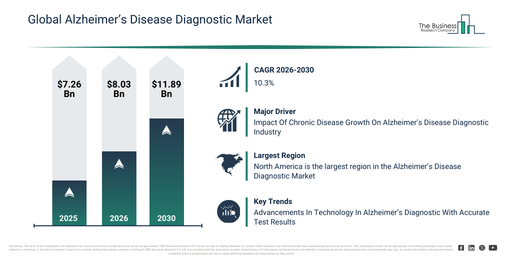
    The global market for Alzheimer’s disease diagnostics has experienced significant expansion, projected to increase from \$7.26 billion in 2025 to \$8.03 billion in 2026, reflecting a compound annual growth rate of 10.6%. This upward trajectory in the historical period is largely due to the escalating incidence of Alzheimer’s disease, heightened public consciousness regarding neurodegenerative conditions, the expanding use of MRI and PET imaging techniques, the proliferation of diagnostic facilities and healthcare institutions, and increased funding dedicated to research in cognitive assessment.

    The market for Alzheimer’s disease diagnostics is poised for significant expansion, projected to reach $11.89 billion by the year 2030, reflecting a compound annual growth rate of 10.3%. This anticipated surge is fueled by advancements in novel biomarkers and imaging tracers, the incorporation of artificial intelligence for earlier identification, increased governmental and private investment in Alzheimer’s research, broader adoption of personalized medicine strategies, and an uptick in multi-center clinical trials. Key developments anticipated during this forecast period encompass a greater reliance on diagnostics that utilize biomarkers, enhanced application of neuroimaging techniques for early detection, an escalation in cognitive assessment testing, expanded genetic testing to evaluate Alzheimer’s risk, and the integration of comprehensive, multi-modal diagnostic methodologies.

    Download A Free Sample Report For Comprehensive Market Insights:

    https://www.thebusinessresearchcompany.com/sample.aspx?id=21093&type=smp

    Alzheimer’s Disease Diagnostic Market Development Factors: Which Trends Are Supporting Demand?

    Anticipated expansion in the prevalence of chronic illnesses is poised to spur the advancement of the Alzheimer’s disease diagnostic market. Conditions like heart disease, diabetes, and high blood pressure are significantly linked to a heightened susceptibility to Alzheimer’s and other forms of dementia, consequently boosting the need for diagnostic tools that offer early and precise identification. A primary contributor to this surge in chronic ailments is the pervasive adoption of sedentary habits, as substantial public health studies consistently reveal substantially elevated incidences of conditions such as diabetes and cardiovascular issues within populations that are not physically active. Diagnostic tools for Alzheimer’s offer valuable support to healthcare frameworks by permitting early identification, enabling prompt therapeutic actions, and assisting in the management of patients to potentially decelerate the disease’s advancement. To illustrate, in November 2023, data from Heritage Health Services, a US non-profit health research entity, indicated that 6.7 million individuals over 65 in the United States were coping with Alzheimer’s dementia, with the condition becoming more widespread with advancing age, affecting 5.0% of those aged 65–74, 13.1% of those aged 75–84, and 33.3% of those aged 85 and older. This figure is forecasted to approach 13 million by the year 2050, underscoring how the increasing burden of chronic disease is fueling the growth trajectory of the Alzheimer’s disease diagnostic market.

    #Alzheimer’s Disease Diagnostic Market Segment Landscape And Growth Potential

    The alzheimer’s disease diagnostic market covered in this report is segmented –

    1) By Type: Triage, Diagnosis, Screening

    2) By Diagnostic Technique: Biomarkers, Imaging Techniques, Genetic Testing, Cognitive Assessment Tests

    3) By End User: Clinics, Hospitals, Diagnostic Centers, Pharmaceutical Companies, Academic Research Center

    Subsegments:

    1) By Triage: Cognitive Testing, Imaging Techniques

    2) By Diagnosis: Biomarker Testing, Neuroimaging

    3) By Screening: Neuropsychological Testing, Genetic Testing

    Alzheimer’s Disease Diagnostic Market Transformation Trends: Which Innovations Are Driving Change?

    Key players within the Alzheimer’s disease diagnostics sector are directing their efforts toward the development of blood-based biomarker assays, a strategic move anticipated to streamline the diagnostic pathway for Alzheimer’s, thereby lessening the dependence on more intrusive methods and enhancing the availability of prompt therapeutic interventions for individuals affected. Illustrating this trend, Quanterix, a biotechnology firm based in the United States, introduced the LucentAD p-Tau 217 test in October 2023, a blood-based indicator of Alzheimer’s pathology that exhibits considerable clinical sensitivity and specificity. Conventional diagnostic avenues for cerebrospinal fluid (CSF) biomarkers, such as positron emission tomography (PET) scans or lumbar punctures, are characterized by their expense, invasive nature, and limited accessibility. The LucentAD test further integrates Quanterix’s highly sensitive SimoaÒ technology with well-validated p-Tau 217 antibodies sourced from J&J Innovative Medicine, ensuring superior precision and a more user-friendly procedure.

    Alzheimer’s Disease Diagnostic Market Competitive Landscape: Who Are The Leading Companies?

    Major companies operating in the alzheimer’s disease diagnostic market are Hoffmann-La Roche, Eli Lilly and Company, Quest Diagnostics Incorporated, Laboratory Corporation of America Holdings, Lantheus, Quanterix, C2N Diagnostics, Sysmex, Royal Philips, Bruker Corporation, Revvity, Alamar Biosciences, ADx Neurosciences, Randox Laboratories, DiaSorin, Shenzhen Mindray Bio-Medical Electronics, Nipro Corporation, Canon Inc, Hitachi Ltd, Eisai Co Ltd

    Access The Complete Alzheimer’s Disease Diagnostic Market Report:

    https://www.thebusinessresearchcompany.com/report/alzheimers-disease-diagnostic-global-market-report

    #Alzheimer’s Disease Diagnostic Market Largest Region: Which Geography Holds The Highest Market Share?

    North Americawas the largest region in the alzheimer’s disease diagnostic market in 2025. Asia-Pacificis expected to be the fastest-growing region in the forecast period. The regions covered in the alzheimer’s disease diagnostic market report are Asia-Pacific, South East Asia, Western Europe, Eastern Europe, North America, South America, Middle East, Africa.

    Get in touch with us:

    The Business Research Company: https://www.thebusinessresearchcompany.com/

    Americas: +1 310-496-7795

    Asia: +44 7882 955267 & +91 8897263534

    Europe: +44 7882 955267

    Email us at: marketing@tbrc.info

    Follow us on:

    LinkedIn: https://in.linkedin.com/company/the-business-research-company

    YouTube: https://www.youtube.com/channel/UC24_fI0rV8cR5DxlCpgmyFQ

    Global Market Model: https://www.thebusinessresearchcompany.com/global-market-model

  • Alpha-1 Antitrypsin Deficiency Augmentation Therapy Market Trends And Growth Drivers Point To Strong Future Potential

    Alpha-1 Antitrypsin Deficiency Augmentation Therapy Market Trends And Growth Drivers Point To Strong Future Potential

    Enhanced with market attractiveness analysis, total addressable market evaluation, company benchmarking matrices, interactive Excel dashboards, expanded supply chain intelligence, emerging startup coverage, and detailed product insights, The Business Research Company’s 2026 market reports deliver more actionable and strategically valuable research.

    Alpha-1 Antitrypsin Deficiency Augmentation Therapy Market Expansion From $1.93 Billion In 2026 To $2.67 Billion In 2030

    The market for alpha-1 antitrypsin deficiency augmentation therapy has experienced significant expansion lately, with projections indicating continued robust growth. Valued at $1.8 billion in 2025, this market is anticipated to reach $1.93 billion by 2026, reflecting a compound annual growth rate (CAGR) of 7.3%. Factors contributing to the growth observed in the historical period include the scarcity of therapeutic interventions for Alpers disease, a heightened understanding of uncommon genetic conditions, a prevailing dependence on hospital settings for treatment, a rising number of pediatric patients, and the broader accessibility of supportive care initiatives.

    The market for alpha-1 antitrypsin deficiency augmentation therapy is poised for substantial expansion over the coming years, projecting a reach of $2.68 billion by 2030 with a compound annual growth rate of 8.5%. This anticipated growth is fueled by advancements in gene-targeted therapies, escalating investments in rare disease research, heightened collaboration between healthcare institutions and biotechnology companies, the embrace of innovative drug delivery systems, and the proliferation of specialized clinics for pediatric neurology. Key developments anticipated during this forecast period encompass a growing need for treatments that address symptoms and provide support, a concentrated effort on researching rare genetic disorders, an increase in therapeutic options for pediatric neurology, the wider availability of specialized clinics and hospital services, and the integration of new drug formulations and delivery approaches.

    Download A Free Sample Report For Comprehensive Market Insights:

    https://www.thebusinessresearchcompany.com/sample.aspx?id=13006&type=smp

    Alpha-1 Antitrypsin Deficiency Augmentation Therapy Market Industry Drivers: What Is Driving Revenue Growth?

    The expanding landscape of clinical trials is poised to be a significant catalyst for the advancement of the alpha-1 antitrypsin deficiency augmentation therapy market. These trials, which are essentially research investigations involving human subjects, are crucial for assessing the safety, effectiveness, and ideal application of emerging treatments like novel recombinant therapies, gene-based interventions, and extended-duration augmentation products. The upward trend in study initiation is fueled by increased funding for research, a heightened focus on cutting-edge treatment approaches, and the pressing necessity to mitigate the substantial health challenges posed by alpha-1 antitrypsin deficiency. Augmentation therapy for this condition operates by re-establishing adequate levels of the functional alpha-1 antitrypsin protein in both the bloodstream and the respiratory system, thereby decelerating the disease’s advancement, lessening pulmonary tissue deterioration, and ultimately enhancing long-term respiratory health for those afflicted, with a notable example being the increase in registered trials on ClinicalTrials.gov from 477,203 in early 2024 to 558,474 by late 2025, signifying a substantial influx of new research initiatives annually, consequently bolstering the growth trajectory of the alpha-1 antitrypsin deficiency augmentation therapy market.

    Alpha-1 Antitrypsin Deficiency Augmentation Therapy Market Categorization By Product Type And Application

    The alpha-1 antitrypsin deficiency augmentation therapy market covered in this report is segmented –

    1) By Treatment Type: Symptomatic Drug Therapy, Supportive Care Therapy, Palliative Care

    2) By Symptom Management: Seizure Management, Liver Dysfunction Management, Neurodevelopmental Support, Metabolic and Nutritional Support

    3) By Drug Class: Antiepileptic Drugs (excluding valproate), Hepatoprotective and Liver Support Medications, Metabolic Cofactor and Vitamin Therapies, Supportive Adjunct Medications

    4) By Route of Administration: Oral, Injectable

    5) By End User: Hospitals, Specialty Neurology and Metabolic Clinics, Palliative Care Centers

    Subsegments:

    1) By Symptomatic Drug Therapy: Antiepileptic Drug Therapy (non-valproate based), Acute Seizure Control Medications, Management of Movement Disorders and Spasticity, Supportive Medications for Gastrointestinal Symptoms, Infection Management and Prophylactic Medications

    2) By Supportive Care Therapy: Liver Function Monitoring and Support, Nutritional Support and Metabolic Supplementation, Respiratory Support and Assisted Ventilation, Physical, Occupational, and Speech Therapy, Management of Metabolic Decompensation

    3) By Palliative Care: Pain and Symptom Relief Management, End-of-Life Supportive Care, Psychological and Family Counseling

    #Alpha-1 Antitrypsin Deficiency Augmentation Therapy Market Growth Trends: What Is Influencing The Future Outlook?

    Within the alpha-1 antitrypsin deficiency augmentation therapy sector, key players are actively pursuing the creation of novel solutions, including augmentation therapy vials, aimed at simplifying dosage administration, enhancing infusion processes, and elevating the patient treatment journey. These augmentation therapy vials, containing plasma-derived alpha-1 antitrypsin, are presented in measured amounts designed for precise weight-based dosing and consistent AAT protein replenishment. As an illustration, in February of 2024, Grifols, a manufacturer of plasma-derived pharmaceuticals based in Spain, introduced PROLASTIN vials in both 4-gram and 5-gram sizes. The availability of these larger vial capacities allows healthcare providers to more adeptly meet weekly dosage needs, concurrently minimizing packaging waste and simplifying storage requirements. These enhanced choices contribute to a more efficient treatment preparation process and bolster the enduring PROLASTIN product line for individuals suffering from severe alpha-1 antitrypsin deficiency.

    Alpha-1 Antitrypsin Deficiency Augmentation Therapy Market Company Landscape And Strategic Competition

    Major companies operating in the alpha-1 antitrypsin deficiency augmentation therapy market are Pfizer Inc., Sanofi S.A., Takeda Pharmaceutical Company Limited, Biogen Inc., UCB S.A., Eisai Co. Ltd., Jazz Pharmaceuticals plc, GW Pharmaceuticals plc, BioMarin Pharmaceutical Inc., Ultragenyx Pharmaceutical Inc., PTC Therapeutics Inc., Alexion Pharmaceuticals Inc., Ionis Pharmaceuticals Inc., Vertex Pharmaceuticals Incorporated, Roche Holding AG, Novartis AG, Merck & Co. Inc., AbbVie Inc., Bristol Myers Squibb Company, Lundbeck A/S

    Access The Complete Alpha-1 Antitrypsin Deficiency Augmentation Therapy Market Report:

    https://www.thebusinessresearchcompany.com/report/alpha-1-antitrypsin-deficiency-augmentation-therapy-global-market-report

    Alpha-1 Antitrypsin Deficiency Augmentation Therapy Market Regional Analysis: Which Region Leads By Revenue?

    North Americawas the largest region in the alpha-1 antitrypsin deficiency augmentation therapy market in 2025. The regions covered in the alpha-1 antitrypsin deficiency augmentation therapy market report are Asia-Pacific, South East Asia, Western Europe, Eastern Europe, North America, South America, Middle East, Africa.

    Get in touch with us:

    The Business Research Company: https://www.thebusinessresearchcompany.com/

    Americas: +1 310-496-7795

    Asia: +44 7882 955267 & +91 8897263534

    Europe: +44 7882 955267

    Email us at: marketing@tbrc.info

    Follow us on:

    LinkedIn: https://in.linkedin.com/company/the-business-research-company

    YouTube: https://www.youtube.com/channel/UC24_fI0rV8cR5DxlCpgmyFQ

    Global Market Model: https://www.thebusinessresearchcompany.com/global-market-model
  • Maprotiline Hydrochloride API Market Expected To Reach $1.64 Billion By 2030 As Growth Accelerates At 6.4% CAGR

    Maprotiline Hydrochloride API Market Expected To Reach $1.64 Billion By 2030 As Growth Accelerates At 6.4% CAGR

    Through market attractiveness analysis, total addressable market evaluation, company benchmarking matrices, interactive Excel dashboards, expanded supply chain intelligence, emerging startup coverage, and detailed product insights, The Business Research Company’s 2026 market reports provide more actionable and strategically valuable research.

    Maprotiline Hydrochloride API Market CAGR Analysis And Future Market Development

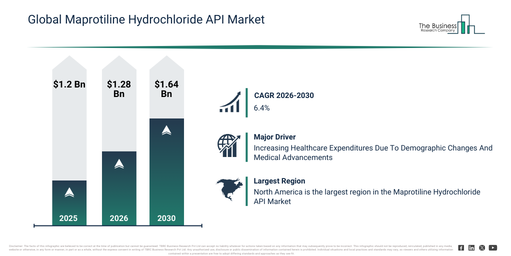
    The market for maprotiline hydrochloride active pharmaceutical ingredients (API) has experienced robust expansion recently, projecting a rise from $1.2 billion in 2025 to $1.28 billion in 2026, sustained by a compound annual growth rate (CAGR) of 6.4%. This historical growth trajectory is largely due to the established history of maprotiline-based antidepressants in clinical practice, the increasing capacity of pharmaceutical manufacturing, a notable uptick in the diagnosis of depression and anxiety disorders, the existence of economical synthesis methodologies, and the broader expansion within the generic pharmaceutical sector.

    The market for maprotiline hydrochloride active pharmaceutical ingredients (APIs) is poised for substantial expansion in the coming years, projected to reach $1.64 billion by 2030 with a compound annual growth rate (CAGR) of 6.4%. This anticipated growth is underpinned by several key factors, including sustained demand for cost-effective mental health solutions, a growing preference for contract API manufacturing, escalating emphasis on stringent quality and compliance standards, an increase in pharmaceutical output from developing nations, and a consistent need from established antidepressant formulations. During this forecast period, significant market trends are expected to emerge, such as a heightened demand for well-established tricyclic and tetracyclic antidepressant APIs, an amplified focus on maintaining uniform API quality and adherence to regulatory mandates, a greater tendency to outsource API production to Contract Manufacturing Organizations (CMOs), sustained demand from the generic antidepressant manufacturing sector, and the expanding application of APIs in combination therapies and reformulated treatments.

    Download A Free Sample Report For Comprehensive Market Insights:

    https://www.thebusinessresearchcompany.com/sample.aspx?id=24287&type=smp

    Maprotiline Hydrochloride API Market Development Factors: Which Trends Are Supporting Demand?

    Escalating healthcare expenditures are anticipated to fuel the expansion of the Maprotiline Hydrochloride API market; these comprehensive outlays on medical services, encompassing hospitalizations, pharmaceuticals, and health insurance, are witnessing a substantial ascent primarily due to an aging demographic that necessitates more frequent and intricate medical interventions, consequently elevating overall health costs. This burgeoning healthcare spending bolsters the demand for Maprotiline Hydrochloride API, particularly for treating psychiatric conditions like depression, aligning with a significant rise in National Health Expenditures, which reached $4.9 trillion in 2023, representing 17.6% of GDP, with Medicare spending alone climbing 8.1% to $1,029.8 billion, underscoring the market’s growth trajectory.

    A heightened prevalence of depression and anxiety is poised to stimulate the Maprotiline Hydrochloride API market’s progression; these mental health conditions, marked by persistent sadness, worry, and fear that impede daily life, are increasingly linked to growing social isolation stemming from modern lifestyles, remote work arrangements, and diminishing community ties, fostering a sense of loneliness and emotional distress. Maprotiline Hydrochloride API plays a crucial role in managing these conditions by functioning as a tetracyclic antidepressant that modulates neurotransmitter balance within the brain, notably norepinephrine. Evidence from the American Psychiatric Association indicated a surge in adult anxiety levels in 2024, rising to 43% compared to previous years, accentuating the therapeutic need driving market expansion.

    The burgeoning pharmaceutical production landscape is expected to be a significant catalyst for the Maprotiline Hydrochloride API market’s advancement; this encompasses the manufacturing and processing of drug products, including active pharmaceutical ingredients and finished formulations designed for therapeutic application. Such growth is predominantly propelled by escalating global demand for chronic disease treatments and support for aging populations, alongside expanded access to essential medicines and increased manufacturing capacities by pharmaceutical firms to meet growing prescription volumes. Enhanced pharmaceutical production directly correlates with a greater demand for active pharmaceutical ingredients like Maprotiline Hydrochloride, the core components of antidepressant medications, as exemplified by the EU’s 6.1% increase in medicinal and pharmaceutical product imports in 2023, reaching $137.4 billion, thus contributing to the market’s upward trend.

    Maprotiline Hydrochloride API Market Segment Analysis Highlighting Growth Areas

    The maprotiline hydrochloride api market covered in this report is segmented –

    1) By Product Type: Powder, Granules, Other Product Types

    2) By Formulation Type: Tablets, Capsules, Injectables, Oral Solutions

    3) By Distribution Channel: Direct Sales, Pharmacy Chains, Online Pharmacies, Hospital Pharmacies

    4) By Application: Antidepressant, Anxiolytic, Sleep Aid, Neuropathic Pain Management

    5) By End-User: Pharmaceutical Companies, Research Institutions, Healthcare Providers, Contract Manufacturing Organizations (CMOs)

    Subsegments:

    1) By Powder: Fine Crystalline Powder, Micronized Powder, Spray-Dried Powder

    2) By Granules: Direct Compressible Granules, Wet Granulated Form, Effervescent Granules

    3) By Other Product Types: Liquid Concentrate, Pelletized Form, Lyophilized (Freeze-Dried) Form

    Maprotiline Hydrochloride API Market Leading Companies: Who Holds Significant Market Presence?

    Major companies operating in the maprotiline hydrochloride api market are Thermo Fisher Scientific Inc., Lupin Limited, Olon Società per Azioni, Cayman Chemical Company, Koa Shoji Co. Ltd., Simson Pharma Limited, Zydus Cadila, Conscientia Industrial Co. Ltd., Alsachim Société par Actions Simplifiée, Pharmaoffer B.V., SynZeal Research Private Limited, Jigs Chemical, Chem-Impex International Inc., Pharma Compass, Allmpus Corporation, Glentham Life Sciences Limited, LKT Laboratories Inc., Qingdao Fengchen Technology and Trade Co. Ltd., Beijing Merson Pharmaceutical, Enomark Pharma

    Access The Complete Maprotiline Hydrochloride API Market Report:

    https://www.thebusinessresearchcompany.com/report/maprotiline-hydrochloride-api-global-market-report

    Maprotiline Hydrochloride API Market Leading Geography: Which Region Generates The Most Revenue?

    North Americawas the largest region in the maprotiline hydrochloride API market in 2025. Asia-Pacificis expected to be the fastest-growing region in the forecast period. The regions covered in the maprotiline hydrochloride api market report are Asia-Pacific, South East Asia, Western Europe, Eastern Europe, North America, South America, Middle East, Africa.

    Get in touch with us:

    The Business Research Company: https://www.thebusinessresearchcompany.com/

    Americas: +1 310-496-7795

    Asia: +44 7882 955267 & +91 8897263534

    Europe: +44 7882 955267

    Email us at: marketing@tbrc.info

    Follow us on:

    LinkedIn: https://in.linkedin.com/company/the-business-research-company

    YouTube: https://www.youtube.com/channel/UC24_fI0rV8cR5DxlCpgmyFQ

    Global Market Model: https://www.thebusinessresearchcompany.com/global-market-model
  • Mammography Market Set To Grow From $3.16 Billion In 2026 To $4.65 Billion By 2030 At A CAGR Of 10.1%

    Mammography Market Set To Grow From $3.16 Billion In 2026 To $4.65 Billion By 2030 At A CAGR Of 10.1%

    Delivering more actionable and strategically valuable research, The Business Research Company’s 2026 market reports feature market attractiveness analysis, total addressable market evaluation, company benchmarking matrices, interactive Excel dashboards, expanded supply chain intelligence, emerging startup coverage, and detailed product insights.

    Mammography Market Expansion From $3.16 Billion In 2026 To $4.65 Billion In 2030

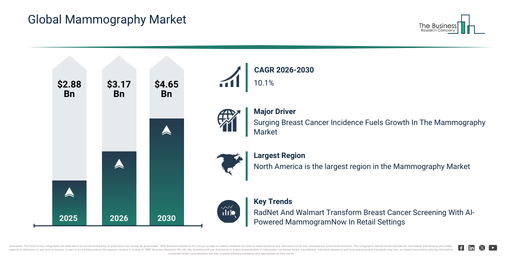
    The mammography sector experienced robust expansion recently, projecting a rise from $2.88 billion in 2025 to $3.17 billion in 2026, fueled by a compound annual growth rate of 9.8%. Factors contributing to this historical surge include escalating breast cancer occurrence rates, the broad assimilation of x-ray imaging technologies, governmental initiatives promoting breast cancer awareness, the accessibility of film screen mammography units, and the proliferation of diagnostic imaging services within hospitals.

    The mammography sector is poised for substantial expansion in the coming years, projecting a market value of $4.65 billion by 2030, fueled by a compound annual growth rate (CAGR) of 10.1%. This projected growth is underpinned by several key factors, including the proliferation of population-wide screening programs, heightened financial commitments to diagnostic tools for women’s health, a growing emphasis on prompt and precise diagnosis, the technological transition towards digital and tomosynthesis imaging techniques, and enhancements in healthcare facilities within developing nations. Significant developments anticipated during this forecast period encompass a greater embrace of digital and 3D mammography devices, an intensified concentration on proactive breast cancer detection initiatives, increased utilization of mobile mammography units in underserved areas, a surge in demand for combined minimally invasive biopsy capabilities, and the broadening of diagnostic services within nascent healthcare markets.

    Download A Free Sample Report For Comprehensive Market Insights:

    https://www.thebusinessresearchcompany.com/sample.aspx?id=10047&type=smp

    Mammography Market Industry Drivers: What Is Driving Revenue Growth?

    The escalating rate of breast cancer diagnoses is anticipated to be a primary catalyst for the expansion of the mammography market, given that breast cancer involves uncontrolled proliferation of breast cells. With a global rise in breast cancer prevalence, mammography stands out as a critically important and extensively utilized screening method for detecting the disease in its early stages. For example, Breastcancer.org reported in 2023 that an estimated 297,790 invasive breast cancer cases and 55,720 cases of DCIS were projected for U.S. women that year. Additionally, figures from the American Cancer Society in January 2023 indicated that approximately 287,850 new invasive breast cancer cases and 51,400 new non-invasive (in situ) breast cancer cases were identified in U.S. women during 2022. Consequently, the growing occurrence of breast cancer is demonstrably fueling the mammography market.

    Mammography Market Segment Performance And Strategic Opportunities

    The mammography market covered in this report is segmented –

    1) By Product: Film Screen Systems, Digital Systems, Analog Systems, Other Products

    2) By Modality: Portable Mammography Systems, Non-Portable Mammography Systems

    3) By Technology: Breast Tomosynthesis, CAD Mammography

    4) By End-User: Hospitals, Specialty Clinics, Diagnosis Centers, Other End-Users

    Subsegments:

    1) By Film Screen Systems: Standard Film Screen Systems, High-Resolution Film Screen Systems

    2) By Digital Systems: Full-Field Digital Mammography (FFDM), Digital Breast Tomosynthesis (DBT)

    3) By Analog Systems: Conventional Analog Mammography Systems

    4) By Other Products: Accessories And Consumables, Software Solutions

    #Mammography Market Growth Trends: What Is Influencing The Future Outlook?

    Leading corporations within the mammography sector are prioritizing the development of innovative solutions, including trial mammography service programs designed to boost early breast cancer identification, elevate patient results, and broaden availability

    Mammography Market Key Players: Which Companies Shape Industry Competition?

    Major companies operating in the mammography market are Hologic Inc., Fujifilm Corporation, Siemens Healthcare AG, Canon Medical Systems Corporation, GE Healthcare Company, Koninklijke Philips N.V., Metaltronica S.p.A., PLANMED OY, Villa Sistemi Medicali S.p.A., Carestream Health, Konica Minolta Inc., Agfa-Gevaert N.V., Delphinus Medical Technologies Inc., Micrima Limited, Koning Corporation, Allengers Medical Systems Ltd., Trivitron Healthcare Pvt. Ltd., Genoray Co. Ltd., Analogic Corporation, BMI Biomedical International s.r.l., General Medical Merate S.p.A., IMS Srl, Medi-Future Co. Ltd., PerkinElmer Inc., QView Medical Inc., Radmirtech Co. Ltd.

    Access The Complete Mammography Market Report:

    https://www.thebusinessresearchcompany.com/report/mammography-global-market-report

    Mammography Market Regional Outlook: Where Are The Largest Opportunities Located?

    North Americawas the largest region in the mammography market in 2025. The regions covered in the mammography market report are Asia-Pacific, South East Asia, Western Europe, Eastern Europe, North America, South America, Middle East, Africa.

    Get in touch with us:

    The Business Research Company: https://www.thebusinessresearchcompany.com/

    Americas: +1 310-496-7795

    Asia: +44 7882 955267 & +91 8897263534

    Europe: +44 7882 955267

    Email us at: marketing@tbrc.info

    Follow us on:

    LinkedIn: https://in.linkedin.com/company/the-business-research-company

    YouTube: https://www.youtube.com/channel/UC24_fI0rV8cR5DxlCpgmyFQ

    Global Market Model: https://www.thebusinessresearchcompany.com/global-market-model

  • Mammalian Polyclonal Immunoglobulin G (IgG) Antibody Market Opportunities Are Emerging Beyond Traditional Growth Areas

    Mammalian Polyclonal Immunoglobulin G (IgG) Antibody Market Opportunities Are Emerging Beyond Traditional Growth Areas

    Enhanced with market attractiveness analysis, total addressable market evaluation, company benchmarking matrices, interactive Excel dashboards, expanded supply chain intelligence, emerging startup coverage, and detailed product insights, The Business Research Company’s 2026 market reports deliver more actionable and strategically valuable research.

    Mammalian Polyclonal Immunoglobulin G (IgG) Antibody Market Forecast Highlighting Growth From $1.51 Billion To $1.96 Billion

    The global market for mammalian polyclonal immunoglobulin G (IgG) antibodies has experienced robust expansion, projecting a rise from $1.41 billion in 2025 to $1.51 billion in 2026, reflecting a compound annual growth rate (CAGR) of 7.5%. This past expansion was fueled by several key factors, including the escalating demand for immunodiagnostic testing, the broad integration of ELISA methodologies, augmented investment in biomedical research, the sustained utilization of antibodies derived from animal sources, and a growing incidence of both chronic and infectious ailments.

    The market for mammalian polyclonal immunoglobulin G (IgG) antibodies is projected to experience substantial expansion, reaching an estimated $1.96 billion by the year 2030, reflecting a compound annual growth rate (CAGR) of 6.7% over the projected period. This upward trajectory is anticipated to be fueled by several key factors, including the escalating adoption of precision diagnostics, a surge in biomarker-driven testing methodologies, augmented investments in pharmaceutical research and development, burgeoning demand from developing healthcare sectors, and ongoing advancements in sophisticated immunoassay technologies. During this forecast horizon, several significant market trends are expected to shape the landscape, such as the expanded utilization of polyclonal IgG in diagnostic assays, a heightened need for versatile, broad-spectrum antibody reagents, a wider application of immunoassay-based testing, increased integration into translational and preclinical research initiatives

    Download A Free Sample Report For Comprehensive Market Insights:

    https://www.thebusinessresearchcompany.com/sample.aspx?id=16111&type=smp

    Mammalian Polyclonal Immunoglobulin G (IgG) Antibody Market Growth Factors: Which Forces Are Supporting Market Expansion?

    The expansion of the market for mammalian polyclonal immunoglobulin G (IgG) antibodies is anticipated to be driven by amplified investments in animal health. This encompasses comprehensive care and management strategies focused on ensuring the welfare and extended lifespans of various animals, from domestic pets to farm animals and wildlife. Escalating expenditures in this sector are attributable to a rise in pet ownership, augmented demand for animal-derived products, improvements in veterinary services, stronger connections between humans and animals, and more stringent regulatory frameworks. Consequently, heightened spending on animal health fuels a greater need for specialized mammalian polyclonal IgG antibodies, which in turn stimulates innovation, fosters customer loyalty, enhances collaboration with veterinarians, and contributes to market expansion within the pet care industry. As an illustration, data released in March 2023 by the American Pet Products Association, an industry association based in the United States, indicated that pet foods and treats commanded the highest expenditure at $58.1 billion, representing a substantial 16.2% surge and emerging as the category with the most significant growth. Therefore, the upward trend in animal health spending is projected to be a key catalyst for the growth of the mammalian polyclonal immunoglobulin G (IgG) antibody market.

    Mammalian Polyclonal Immunoglobulin G (IgG) Antibody Market Segment Landscape And Growth Potential

    The mammalian polyclonal immunoglobulin g (igg) antibody market covered in this report is segmented –

    1) By Product: Cardiac Markers, Metabolic Markers, Renal Markers, Other Products

    2) By Source Animal: Goat, Rabbit, Horse, Mouse, Other Source Animals

    3) By Application: Enzyme Linked Immuno Absorbent Assay (ELISA), Immunoturbidimetry, Immunoelectrophoresis, Antibody Identification, Immunohistochemistry, Immunocytochemistry, Western Blotting

    4) By End User: Pharmaceutical And Biotechnology Companies, Hospitals, Diagnostic Centers, Academic And Research Centers

    Subsegments:

    1) By Cardiac Markers: Troponin, BNP (B-Type Natriuretic Peptide), CK-MB (Creatine Kinase-MB), Myoglobin

    2) By Metabolic Markers: Glucose, Lipids, Insulin, HbA1c (Glycated Hemoglobin), Cholesterol

    3) By Renal Markers: Creatinine, Albumin, Urea, BUN (Blood Urea Nitrogen), Cystatin C

    4) By Other Products: Infectious Disease Markers, Tumor Markers, Autoimmune Disease Markers, Hormonal Markers, Inflammation Markers

    Mammalian Polyclonal Immunoglobulin G (IgG) Antibody Market Industry Trends: What Changes Are Reshaping Demand?

    To expedite research and the creation of new treatments, leading players within the mammalian polyclonal immunoglobulin G (IgG) Antibody market are concentrating on the introduction of novel offerings, with a particular emphasis on high-throughput antibodies. These specialized antibodies are manufactured efficiently and in large quantities through automated processes, enabling scientists to rapidly assess a multitude of targets, thereby shortening development timelines and speeding up the discovery of potential therapies. As an illustration, in July 2024, the American synthetic biology and genomics firm, Twist Bioscience Corporation, unveiled Twist Express Antibodies, CHO, a cutting-edge technology engineered to optimize antibody development. Harnessing Twist’s silicon-based DNA synthesis capabilities, these antibodies are synthesized from sequences specified by the user, subsequently integrated into IgG scaffold vectors, and then produced in CHO cells, with completion times commencing from just 13 business days. Each production run comes equipped with yield information crucial for screening and quality verification, rendering the entire procedure economically viable, adaptable to specific needs, and well-suited for the selection of high-volume candidates. Ultimately, these antibodies offer a dependable and streamlined substitute to conventional laboratory methods for antibody production, proving valuable in the arenas of biotherapeutic drug discovery, research-focused screening, and the validation of experimental findings.

    Mammalian Polyclonal Immunoglobulin G (IgG) Antibody Market Competitive Landscape: Who Are The Leading Companies?

    Major companies operating in the mammalian polyclonal immunoglobulin g (igg) antibody market are Thermo Fisher Scientific Inc., Merck KGaA, PerkinElmer Inc., Bio-Rad Laboratories Inc., GeneTex, GenScript Biotech Corporation, Jackson ImmunoResearch Laboratories, Abcam Inc., R&D Systems, Sino Biological, Fortis Life Sciences, OriGene Technologies, Cell Signaling Technology Inc., Cedarlane Labs, Capralogics Inc, Proteintech Group, ProSci LLC, Santa Cruz Biotechnology Inc., Rockland Immunochemicals Inc., Novus Biologicals LLC, Creative Diagnostics, Fitzgerald Industries International Inc.

    Access The Complete Mammalian Polyclonal Immunoglobulin G (IgG) Antibody Market Report:

    https://www.thebusinessresearchcompany.com/report/mammalian-polyclonal-immunoglobulin-g-igg-antibody-global-market-report

    Mammalian Polyclonal Immunoglobulin G (IgG) Antibody Market Geographic Landscape: Which Region Dominates Industry Growth?

    North Americawas the largest region in the mammalian polyclonal immunoglobulin G (IgG) antibody market in 2025. The regions covered in the mammalian polyclonal immunoglobulin g (igg) antibody market report are Asia-Pacific, South East Asia, Western Europe, Eastern Europe, North America, South America, Middle East, Africa.

    Get in touch with us:

    The Business Research Company: https://www.thebusinessresearchcompany.com/

    Americas: +1 310-496-7795

    Asia: +44 7882 955267 & +91 8897263534

    Europe: +44 7882 955267

    Email us at: marketing@tbrc.info

    Follow us on:

    LinkedIn: https://in.linkedin.com/company/the-business-research-company

    YouTube: https://www.youtube.com/channel/UC24_fI0rV8cR5DxlCpgmyFQ

    Global Market Model: https://www.thebusinessresearchcompany.com/global-market-model

  • Mammalian Cell Fermentation Technology Market Expansion Is Opening New Pathways For Strategic Investment

    Mammalian Cell Fermentation Technology Market Expansion Is Opening New Pathways For Strategic Investment

    Through market attractiveness analysis, total addressable market evaluation, company benchmarking matrices, interactive Excel dashboards, expanded supply chain intelligence, emerging startup coverage, and detailed product insights, The Business Research Company’s 2026 market reports provide more actionable and strategically valuable research.

    Mammalian Cell Fermentation Technology Market Revenue Growth Supported By A CAGR Of 94.88% Through 2030

    The market for mammalian cell fermentation technology has experienced significant expansion recently. Projections indicate a rise from $57.37 billion in 2025 to $64.07 billion by 2026, reflecting a compound annual growth rate of 11.7%. This accelerated growth during the preceding period was driven by several factors, including the increasing prevalence of monoclonal antibody-based therapies, the proven effectiveness of mammalian cell expression systems, a growing number of biopharmaceutical product approvals, the established use of batch fermentation methods, and the expanding scope of academic exploration in cell culture innovations.

    The sector focused on mammalian cell fermentation technology is poised for substantial expansion over the upcoming years, with projections indicating a market valuation reaching $94.89 billion by 2030, driven by a compound annual growth rate of 10.3%. This upward trajectory is fueled by several key factors, including a surge in demand for biologics and their generic counterparts, biosimilars, alongside increased financial commitment to cell line engineering innovations. Furthermore, the burgeoning field of personalized medicine, the continuous growth in vaccine development programs, and the expanding biomanufacturing capabilities within developing economies are all contributing significantly to this anticipated market growth. Key developments expected to shape this period encompass a greater embrace of CHO cell-based manufacturing solutions, a heightened need for efficient and scalable bioprocessing methods, a trend toward outsourcing biologic production to Contract Development and Manufacturing Organizations (CDMOs), the proliferation of single-use and modular bioreactor systems, and an intensified concentration on enhancing process efficiency and ensuring consistent product yields.

    Download A Free Sample Report For Comprehensive Market Insights:

    https://www.thebusinessresearchcompany.com/sample.aspx?id=16473&type=smp

    Mammalian Cell Fermentation Technology Market Demand Drivers: What Is Fueling Industry Growth?

    The expansion of the mammalian cell fermentation technology market will likely be driven by the increasing need for biologics, which are medicinal products originating from living organisms or their constituents, frequently employed in the treatment of conditions like cancer, autoimmune diseases, and infections. This heightened requirement for biologics is a consequence of progress in biotechnology, demonstrating efficacy in managing widespread chronic ailments such as cancer and autoimmune disorders, alongside favorable regulatory decisions and augmented investments in research and development initiatives. Mammalian cell fermentation excels at producing intricate biologics, thereby satisfying the escalating demand for customized and precision therapies. Its capacity for scaled production, adaptability, and consistent generation of superior proteins significantly contribute to advancements within the biopharmaceutical sector. To illustrate, data from the National Library of Medicine indicated that in 2023, the US Food and Drug Administration (FDA) authorized 55 new medications, encompassing 29 novel chemical entities (NCEs) and 25 novel biological entities (NBEs), representing a substantial 50% rise from the 37 approvals recorded in 2022. Consequently, the expanding market for biologics is anticipated to fuel the growth of the mammalian cell fermentation technology market.

    Mammalian Cell Fermentation Technology Market Categorization By Product Type And Application

    The mammalian cell fermentation technology market covered in this report is segmented –

    1) By Type: Chinese Hamster Ovary Cell Fermentation, Human Embryonic Kidney Cell Fermentation, Baby Hamster Kidney Cell Fermentation, Murine Myeloma Cell Fermentation, Other Types

    2) By Application: Monoclonal Antibodies, Recombinant Proteins, Vaccines, Hormones, Enzymes, Other Applications

    3) By End-Use: Biopharmaceutical Companies, Contract Research Organizations And Contract Development and Manufacturing Organizations, Academic And Research Institutes

    Subsegments:

    1) By Chinese Hamster Ovary (CHO) Cell Fermentation: Suspension CHO Cell Lines, Serum-Free CHO Fermentation, High-Yield Recombinant Protein Production

    2) By Human Embryonic Kidney (HEK) Cell Fermentation: Transient Transfection-Based Fermentation, Viral Vector Production Systems, Serum-Free HEK Cell Cultures

    3) By Baby Hamster Kidney (BHK) Cell Fermentation: Vaccine Antigen Production, Stable Cell Line Fermentation, Suspension BHK Cell Cultures

    4) By Murine Myeloma Cell Fermentation: Monoclonal Antibody Production, Hybridoma-Based Fermentation, Serum-Free Antibody Expression Systems

    5) By Other Types: Insect Cell Line Fermentation, Stem Cell–Derived Mammalian Cells, Custom Engineered Cell Line Fermentation

    Mammalian Cell Fermentation Technology Market Innovation Trends: Which Developments Are Transforming The Industry?

    To bolster their standing in the mammalian cell fermentation technology sector, leading corporations are prioritizing the enhancement of novel techniques, specifically mammalian cell culture. This method is indispensable across diverse domains such as biomanufacturing, scientific inquiry, and regenerative therapies, facilitating the creation of vital therapeutic proteins, vaccines, and cellular or tissue equivalents. In a notable development in June 2024, Syntegon, a German life sciences firm, unveiled its novel Modular Bioprocessing Platform (MBP) at Achema 2024, engineered to address primary obstacles within biopharmaceutical manufacturing. This advanced system provides a highly adaptable, seamlessly integrated, and automated approach suitable for a broad spectrum of uses, encompassing microbial and mammalian cell cultivation, protein production, peptide synthesis, oligonucleotide manufacturing, plasmid DNA generation, and recombinant vaccine development. The modular architecture of the MBP contributes to reduced deployment times and lower expenses while upholding superior performance and quality, reflecting the esteemed “made in Germany” benchmark. Furthermore, its pre-engineered cleanroom configuration situates all ancillary equipment beyond the cleanroom environment, thereby improving operational efficiency and streamlining upkeep procedures.

    Mammalian Cell Fermentation Technology Market Company Landscape And Strategic Competition

    Major companies operating in the mammalian cell fermentation technology market are AbbVie Inc., Thermo Fisher Scientific Inc, AstraZeneca PLC, Roche Holdings Inc., Merck KGaA, AGC Group, Lonza Group Ltd., Boehringer Ingelheim GmbH, Catalent Inc., Sartorius AG, Samsung Biologics Co. Ltd., WuXi Biologics, Biocon Limited, Eppendorf AG, KBI Biopharma Inc., Fujifilm Diosynth Biotechnologies, Avid Bioservices Inc., BiOZEEN, Nordmark Pharma GmbH, Scorpius BioManufacturing Inc

    Access The Complete Mammalian Cell Fermentation Technology Market Report:

    https://www.thebusinessresearchcompany.com/report/mammalian-cell-fermentation-technology-global-market-report

    Mammalian Cell Fermentation Technology Market Largest Region: Which Geography Holds The Highest Market Share?

    North Americawas the largest region in the mammalian cell fermentation technology market in 2025. Asia-Pacificis expected to be the fastest-growing region in the forecast period. The regions covered in the mammalian cell fermentation technology market report are Asia-Pacific, South East Asia, Western Europe, Eastern Europe, North America, South America, Middle East, Africa.

    Get in touch with us:

    The Business Research Company: https://www.thebusinessresearchcompany.com/

    Americas: +1 310-496-7795

    Asia: +44 7882 955267 & +91 8897263534

    Europe: +44 7882 955267

    Email us at: marketing@tbrc.info

    Follow us on:

    LinkedIn: https://in.linkedin.com/company/the-business-research-company

    YouTube: https://www.youtube.com/channel/UC24_fI0rV8cR5DxlCpgmyFQ

    Global Market Model: https://www.thebusinessresearchcompany.com/global-market-model
  • Mammalian Cell Culture Market Trends Are Creating New Opportunities For Industry Leaders

    Mammalian Cell Culture Market Trends Are Creating New Opportunities For Industry Leaders

    Delivering more actionable and strategically valuable research, The Business Research Company’s 2026 market reports feature market attractiveness analysis, total addressable market evaluation, company benchmarking matrices, interactive Excel dashboards, expanded supply chain intelligence, emerging startup coverage, and detailed product insights.

    Mammalian Cell Culture Market Value Expansion And Long-Term Growth Outlook

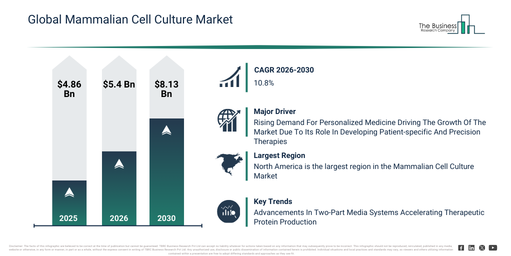
    The market for mammalian cell cultures has experienced significant expansion recently, projecting a rise from $4.86 billion in 2025 to $5.4 billion in 2026, reflecting an 11.1% compound annual growth rate. Factors contributing to this historical growth trajectory include the increased production of monoclonal antibodies, bolstered vaccine manufacturing capabilities, a greater integration of mammalian cells in the drug discovery process, enhanced accessibility of sophisticated culture equipment, and the burgeoning field of biopharmaceutical research.

    The market for mammalian cell cultures is poised for substantial expansion in the upcoming years, projected to reach $8.13 billion by 2030, driven by a compound annual growth rate of 10.8%. This anticipated growth is fueled by several key factors, including augmented investments in cell and gene therapies, a heightened demand for biological product manufacturing, the broadening scope of regenerative medicine research, an intensified emphasis on adaptable cell culture technologies, and the increasing integration of continuous bioprocessing methods. Significant trends anticipated within this period involve a greater acceptance of mammalian cell culture media free from animal serum, a surging need for the large-scale production of biopharmaceuticals, the widespread adoption of automated cell culture systems, the growth of facilities for manufacturing cell-based vaccines, and a more pronounced focus on achieving consistent processes and maximizing product yields.

    Download A Free Sample Report For Comprehensive Market Insights:

    https://www.thebusinessresearchcompany.com/sample.aspx?id=30318&type=smp

    Mammalian Cell Culture Market Growth Drivers: What Factors Are Accelerating Expansion?

    The expanding need for individualized medical solutions is anticipated to be a primary catalyst for the advancement of the mammalian cell culture sector in the future. This trend towards personalized medicine involves tailoring therapies to an individual’s unique genetic makeup, environmental influences, and lifestyle choices, thereby facilitating more effective and targeted healthcare interventions. The heightened requirement for such customized treatments stems from their superior efficacy, as treatments are specifically adapted to individual genetic and biological characteristics, leading to better results for patients. Mammalian cell culture plays a crucial role in realizing personalized medicine by offering a regulated setting for the examination of patient-specific cells, which in turn supports the creation of bespoke therapies and the evaluation of drug reactions for enhanced precision and effectiveness in treatment. Illustrating this point, a report from the Personalized Medicine Coalition, a non-profit entity based in the United States, indicated that in 2023, the FDA granted approval for 16 novel personalized treatments aimed at individuals suffering from rare conditions, marking a substantial jump from the six approvals recorded in 2022. Consequently, the escalating demand for personalized medicine is a significant factor contributing to the growth trajectory of the mammalian cell culture market.

    Mammalian Cell Culture Market Segment Analysis And Revenue Opportunities

    The mammalian cell culture market covered in this report is segmented –

    1) By Product: Media, Sera, Reagents, Equipment

    2) By Cell Line: Chinese Hamster Ovary (CHO), Wistar Institute-38 (WI-38), Rat Glial Tumor Cell Line (C6), Human Embryonic Kidney 293 (HEK293), Henrietta Lacks (HeLa)

    3) By Application: Biopharmaceutical Production, Vaccine Production, Toxicity Testing, Drug Screening and Development, Tissue Engineering And Regenerative Medicine

    4) By End-Use: Pharmaceutical And Biotechnology Companies, Hospitals And Diagnostic Laboratories, Research And Academic Institutes, Contract Research Organizations (CROs)

    Subsegments:

    1) By Media: Serum-free Media, Chemically Defined Media, Classical Media, Protein-free Media, Specialty Media, Custom Media Formulations

    2) By Sera: Fetal Bovine Serum (FBS), Newborn Calf Serum, Adult Bovine Serum, Donor Horse Serum

    3) By Reagents: Growth Factors And Cytokines, Cell Dissociation Reagents, Supplements And Additives, Cryoprotective Agents, Buffers And Salt Solutions, Antibiotics And Antimycotics

    4) By Equipment: Bioreactors And Fermenters, Culture Vessels, Filtration Systems, Centrifuges, Cell Counters And Analyzers, Incubators, Biosafety Cabinets, Microscopes, Refrigeration And Cryostorage Equipment

    Mammalian Cell Culture Market Trends: What Is Shaping Future Industry Growth?

    In the realm of mammalian cell culture, leading entities are prioritizing advancements in cell culture media, specifically the adoption of two-part production systems, with the goals of augmenting protein output, bolstering cell survival rates, and optimizing manufacturing processes for therapeutic purposes that can be scaled up. A two-part production system represents a method for cultivating cells that involves utilizing two separate media formulations: one designed for overall cell proliferation and the other specifically formulated to boost protein synthesis, thereby leading to greater overall efficiency. Illustratively, Lonza Group Ltd., a contract development and manufacturing organization headquartered in Switzerland, introduced the TheraPRO CHO Media System in July 2023. This cutting-edge solution is a cell culture medium that is chemically defined and free from animal-derived components, meticulously crafted for GS-CHO mammalian cell lines. Its objective is to elevate the manufacturing of therapeutic proteins and monoclonal antibodies by ensuring superior cell viability and increased protein yields. Furthermore, its inherent scalability accommodates every phase of bioprocess production, ranging from initial cell line development through to extensive manufacturing. Through this release, Lonza aims to simplify operational procedures, elevate the caliber of manufactured goods, and expedite the market entry for biopharmaceutical producers.

    Mammalian Cell Culture Market Leading Players Shaping Industry Direction

    Major companies operating in the mammalian cell culture market are Novartis AG, Thermo Fisher Scientific Inc., Merck KGaA, Danaher Corporation, GE Healthcare, Becton Dickinson and Company, Lonza Group AG, Avantor Inc., Agilent Technologies Inc., Charles river laboratories, Sartorius AG, Samsung biologics, Wuxi biologics, Bio-Techne Corporation, Miltenyi Biotec, STEMCELL Technologies, Takara Bio Inc., Goodwin biotechnology, HiMedia Laboratories Private Limited, Promocell GmbH, Eppendorf AG, Cell Culture Company LLC, Cell X Technologies.

    Access The Complete Mammalian Cell Culture Market Report:

    https://www.thebusinessresearchcompany.com/report/global-mammalian-cell-culture-market-report

    Mammalian Cell Culture Market Regional Analysis: Which Region Leads By Revenue?

    North Americawas the largest region in the mammalian cell culture market in 2025. Asia-Pacificis expected to be the fastest-growing region in the forecast period. The regions covered in the mammalian cell culture market report are Asia-Pacific, South East Asia, Western Europe, Eastern Europe, North America, South America, Middle East, Africa.

    Get in touch with us:

    The Business Research Company: https://www.thebusinessresearchcompany.com/

    Americas: +1 310-496-7795

    Asia: +44 7882 955267 & +91 8897263534

    Europe: +44 7882 955267

    Email us at: marketing@tbrc.info

    Follow us on:

    LinkedIn: https://in.linkedin.com/company/the-business-research-company

    YouTube: https://www.youtube.com/channel/UC24_fI0rV8cR5DxlCpgmyFQ

    Global Market Model: https://www.thebusinessresearchcompany.com/global-market-model
  • Malignant Pleural Effusion Market Growth Is Reshaping Competitive Advantage Across The Industry

    Malignant Pleural Effusion Market Growth Is Reshaping Competitive Advantage Across The Industry

    Enhanced with market attractiveness analysis, total addressable market evaluation, company benchmarking matrices, interactive Excel dashboards, expanded supply chain intelligence, emerging startup coverage, and detailed product insights, The Business Research Company’s 2026 market reports deliver more actionable and strategically valuable research.

    Malignant Pleural Effusion Market Expected To Reach $6.51 Billion By 2030 At 6.6% CAGR

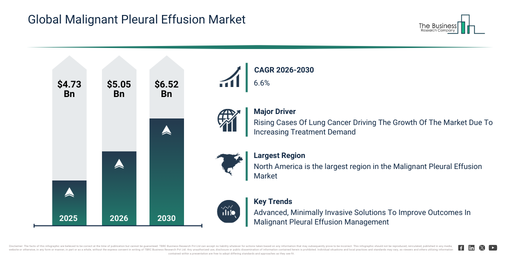
    The malignant pleural effusion sector experienced robust expansion lately. Projections indicate a rise from $4.73 billion in 2025 to $5.05 billion in 2026, reflecting a compound annual growth rate of 6.8%. Historical expansion drivers included a greater occurrence of metastatic cancers, a scarcity of treatment methodologies offering cures, the necessity for frequent thoracentesis to alleviate symptoms, the expansion of inpatient cancer treatment facilities, and the progressive acceptance of pleurodesis procedures.

    The market for malignant pleural effusion is poised for substantial expansion over the coming years, projected to reach $6.52 billion by 2030, reflecting a compound annual growth rate of 6.6%. This anticipated growth trajectory is fueled by an increasing incidence of cancer globally, coupled with ongoing innovations in pleural catheter technology, a discernible shift towards outpatient and home-care models, enhanced precision in diagnostic imaging techniques, and a heightened demand for therapeutic interventions prioritizing patient quality of life. Key developments anticipated within this period involve a greater adoption of indwelling pleural catheters for sustained management, a trend favoring less invasive procedures for pleural conditions, the increasing incorporation of systemic cancer treatments into MPE management strategies, a stronger emphasis on relief of symptoms and palliative care, and the broader application of imaging-guided methods for both diagnosis and treatment.

    Download A Free Sample Report For Comprehensive Market Insights:

    https://www.thebusinessresearchcompany.com/sample.aspx?id=22047&type=smp

    Malignant Pleural Effusion Market Growth Factors Supporting Long-Term Expansion

    An escalation in lung cancer diagnoses is anticipated to fuel the expansion of the malignant pleural effusion market. Lung cancer, defined by the uncontrolled proliferation of aberrant cells within the lungs, can manifest as tumors that disrupt normal pulmonary function. Factors such as smoking and tobacco consumption are primary contributors to the increasing incidence of lung cancer, as extended exposure to cigarette constituents inflicts damage on lung tissues, instigates genetic alterations, and fosters the unrestrained growth of malignant cells, thereby substantially elevating the risk of developing the ailment. Malignant pleural effusion signifies a more advanced stage of lung cancer, characterized by the dissemination of the tumor into the pleural space, leading to compromised respiratory capacity and a less favorable prognosis. Illustratively, the American Cancer Society Facts and Figures reported that in the United States, estimated new cases of lung and bronchus cancer were 236,740 in 2022 and projected to be 238,340 in 2023, with corresponding death estimates of 130,180 in 2022 and 127,070 in 2023. Consequently, the growing prevalence of lung cancer is directly stimulating the growth of the malignant pleural effusion market.

    Advances in healthcare infrastructure are poised to catalyze the expansion of the malignant pleural effusion market. This infrastructure encompasses the physical, technological, and organizational frameworks essential for healthcare delivery, including medical facilities, sophisticated equipment, robust IT systems, and skilled personnel. Such improvements are driven by the imperative for more effective disease management, collectively enhancing accessibility to healthcare, operational efficiency, and the overall caliber of medical services. By providing access to cutting-edge medical technologies, well-resourced healthcare settings, and specialized medical expertise, enhanced healthcare infrastructure facilitates more accurate diagnosis, effective treatment, and proficient management of malignant pleural effusion, ultimately leading to improved patient health outcomes. As an illustration, the American Health Care Association noted a rise in the number of hospitals across the United States, increasing by 0.591% from 6,093 to 6,129 between May 2022 and May 2023. Therefore, the ongoing enhancements in healthcare infrastructure are acting as a key driver for the growth observed in the malignant pleural effusion market.

    Malignant Pleural Effusion Market Segmentation And Category Breakdown

    The malignant pleural effusion market covered in this report is segmented –

    1) By Treatment: Systemic Therapy, Therapeutic Thoracentesis, Thoracic Drainage And Pleurodesis, Indwelling Pleural Catheter

    2) By Diagnosis: Pleural Fluid Cytology, Immunohistochemical Tests, Imaging Tests, Pleural Thoracentosis, Pleuroscopy, Pleural Biopsy

    3) By End Users: Hospitals, Ambulatory Clinics, Other End Users

    Subsegments:

    1) By Systemic Therapy: Chemotherapy, Targeted Therapy, Immunotherapy

    2) By Therapeutic Thoracentesis: Single-Time Thoracentesis, Repeated Thoracentesis

    3) By Thoracic Drainage And Pleurodesis: Chemical Pleurodesis, Mechanical Pleurodesis

    4) By Indwelling Pleural Catheter: Tunneled Pleural Catheter, Non-Tunneled Pleural Catheter

    Malignant Pleural Effusion Market Industry Trends Shaping Future Revenue Growth

    In the realm of the malignant pleural effusion market, leading enterprises are concentrating their efforts on pioneering novel solutions, exemplified by the creation of fully implantable automatic fluid-shunt devices, aiming to enhance patient well-being and decrease the frequency of hospitalizations. These sophisticated medical devices, once surgically placed within the body, possess the capability to autonomously evacuate surplus pleural fluid from the lungs into the abdominal cavity or an alternative location, thereby alleviating symptoms such as shortness of breath, diminishing the necessity for repeated medical interventions, and ultimately elevating the patient’s overall quality of life. A notable illustration of this advancement is the introduction of the ACES Automatic Continuous Effusion Shunt System by Pleural Dynamics, a medical device firm based in the United States, in October of 2023. This ingenious system incorporates a flexible, durable pump chamber designed for subcutaneous implantation between the patient’s ribs, connected by catheters to both the pleural space and the peritoneal space. The patient’s natural breathing motion alternately compresses and expands the internal pump extension situated between the ribs, propelling fluid from the pleural cavity into the abdomen for natural reabsorption; furthermore, the system includes an external compression extension that permits manual activation when needed. The primary advantages of this innovative technology encompass its completely internal placement, dispensing with external drainage apparatus or collection containers, its automatic fluid transfer mechanism powered by the patient’s respiration, a brief hospital stay requirement for the implantation procedure, and the provision of persistent relief from the discomfort associated with recurring effusions.

    Malignant Pleural Effusion Market Competitive Analysis Of Major Industry Participants

    Major companies operating in the malignant pleural effusion market are Becton Dickinson and Company, Cook Medical LLC, Merit Medical Systems Inc, Argon Medical Devices Inc, B Braun SE, Medtronic plc, Smiths Medical, Teleflex Incorporated, Cardinal Health Inc, Getinge AB, AngioDynamics Inc, Rocket Medical plc, Redax SpA, Atrium Medical Corporation, PolyMedicure Ltd, Troge Medical GmbH, Vygon SA, ICU Medical Inc, ConvaTec Group plc, Baxter International Inc

    Access The Complete Malignant Pleural Effusion Market Report:

    https://www.thebusinessresearchcompany.com/report/malignant-pleural-effusion-global-market-report

    Malignant Pleural Effusion Market Geographic Distribution And Regional Opportunities

    North Americawas the largest region in the malignant pleural effusion market in 2025. Asia-Pacificis expected to be the fastest-growing region in the forecast period. The regions covered in the malignant pleural effusion market report are Asia-Pacific, South East Asia, Western Europe, Eastern Europe, North America, South America, Middle East, Africa.

    Get in touch with us:

    The Business Research Company: https://www.thebusinessresearchcompany.com/

    Americas: +1 310-496-7795

    Asia: +44 7882 955267 & +91 8897263534

    Europe: +44 7882 955267

    Email us at: marketing@tbrc.info

    Follow us on:

    LinkedIn: https://in.linkedin.com/company/the-business-research-company

    YouTube: https://www.youtube.com/channel/UC24_fI0rV8cR5DxlCpgmyFQ

    Global Market Model: https://www.thebusinessresearchcompany.com/global-market-model
  • Malignant Mesothelioma Market Forecast Signals New Revenue Opportunities Through 2030

    Malignant Mesothelioma Market Forecast Signals New Revenue Opportunities Through 2030

    Through market attractiveness analysis, total addressable market evaluation, company benchmarking matrices, interactive Excel dashboards, expanded supply chain intelligence, emerging startup coverage, and detailed product insights, The Business Research Company’s 2026 market reports provide more actionable and strategically valuable research.

    Malignant Mesothelioma Market Size And Revenue Forecast Through 2030

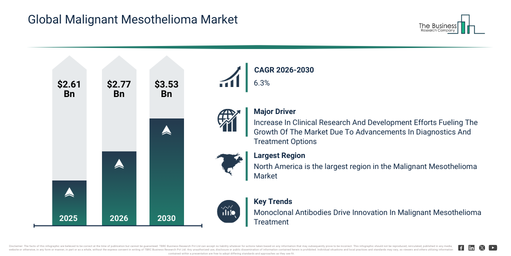
    The market for malignant mesothelioma has experienced robust expansion lately. Projections indicate a rise from $2.61 billion in 2025 to $2.77 billion in 2026, reflecting a compound annual growth rate of 6.3%. Factors contributing to this expansion during the historical period include widespread asbestos exposure historically within the construction and manufacturing sectors, the prolonged incubation period of the disease, a scarcity of effective early-stage treatment choices, heightened awareness regarding occupational health, and incremental advancements in diagnostic imaging technologies.

    The market for malignant mesothelioma is poised for remarkable expansion over the upcoming years, projecting a rise to $3.53 billion by 2030. This growth trajectory is underpinned by a compound annual growth rate (CAGR) of 6.3%, fueled by key developments such as progress in immunotherapy and targeted drug treatments, increased funding for rare cancer research, a greater number of ongoing clinical trials, enhancements in diagnostic capabilities, and escalating healthcare expenditures dedicated to oncology. Furthermore, the forecast period is anticipated to witness significant trends including a broader embrace of immunotherapy and targeted therapies, a heightened emphasis on integrated treatment strategies, a growing need for prompt and precise diagnoses, the proliferation of dedicated mesothelioma treatment facilities, and a surge in participation within clinical trials for uncommon cancers.

    Download A Free Sample Report For Comprehensive Market Insights:

    https://www.thebusinessresearchcompany.com/sample.aspx?id=22046&type=smp

    Malignant Mesothelioma Market Demand Drivers Creating New Revenue Opportunities

    Advancing clinical investigations and development initiatives are poised to propel the malignant mesothelioma market forward. These endeavors encompass rigorous scientific studies and trials aimed at pioneering novel pharmaceuticals, therapeutic interventions, and medical apparatus, meticulously assessing their safety profiles, effectiveness, and potential adverse reactions via structured clinical assessments. The surge in these research and development activities stems from an escalating need for superior treatment modalities, particularly in light of the augmenting incidence of persistent ailments and intricate medical conditions. Such commitment to research and development fuels progress in the realm of malignant mesothelioma by hastening breakthroughs in diagnostic capabilities, treatment strategies, and precision medicine, thereby cultivating innovative methodologies to refine early identification, bolster survival statistics, and formulate more potent yet less intrusive therapeutic avenues. Illustratively, as reported by the Anadolu Agency, a Turkish state-owned news outlet, in January 2025, clinical trials constitute a substantial portion, approximately 40%, of the research expenditure within the U.S. pharmaceutical sector, representing an annual investment close to $7 billion. Consequently, the intensified focus on research and development serves as a significant catalyst for the expansion of the malignant mesothelioma market.

    Malignant Mesothelioma Market Segment Outlook: Which Categories Are Expanding The Fastest?

    The malignant mesothelioma market covered in this report is segmented –

    1) By Treatment Type: Chemotherapy, Radiation Therapy, Surgery, Immunotherapy, Targeted Therapy

    2) By Route Of Administration: Oral, Intravenous, Injectable

    3) By Distribution Channel: Hospital Pharmacies, Specialty Pharmacies

    4) By End-User: Hospitals, Oncology Clinics

    Subsegments:

    1) By Chemotherapy: Alkylating Agents, Antimetabolites, Combination Therapy

    2) By Radiation Therapy: External Beam Radiation Therapy (EBRT), Intensity-Modulated Radiation Therapy (IMRT), Stereotactic Body Radiation Therapy (SBRT), Proton Therapy

    3) By Surgery: Pleurectomy Or Decortication (P/D), Extrapleural Pneumonectomy (EPP), Cytoreductive Surgery, Palliative Surgery

    4) By Immunotherapy: Immune Checkpoint Inhibitors, Monoclonal Antibodies, Tumor Vaccines, Adoptive Cell Therapy

    5) By Targeted Therapy: Tyrosine Kinase Inhibitors (TKIs), Angiogenesis Inhibitors, Mesothelin-Targeted Agents, Gene Therapy-Based Approaches

    Malignant Mesothelioma Market Trends Driving Strategic Industry Expansion

    Within the malignant mesothelioma market, leading corporations are directing their efforts towards creating sophisticated therapeutic approaches, including monoclonal antibody therapies, aimed at suppressing tumor progression and enhancing treatment accuracy. These laboratory-generated proteins are designed to replicate the body’s natural defenses in identifying and attacking particular targets, like the antigens present on malignant cells. A notable development occurred in November 2023 when Ono Pharmaceutical Co. Ltd., headquartered in Japan, secured supplementary approval within Japan for an expanded application of Opdivo, identified chemically as nivolumab. This specific formulation is a human anti-human PD-1 monoclonal antibody and is now indicated for the treatment of malignant mesothelioma, with the exception of the malignant pleural form. This regulatory milestone positions Opdivo as a novel therapeutic choice for this particular ailment, especially given the prior absence of established treatment protocols, further underscored by its designation as an orphan drug for this use, emphasizing its critical role in meeting an unmet medical demand.

    Malignant Mesothelioma Market Key Companies And Competitive Benchmarking

    Major companies operating in the malignant mesothelioma market are AstraZeneca PLC, Bristol Myers Squibb Company, Merck & Co. Inc., F. Hoffmann-La Roche Ltd, Novartis AG, Pfizer Inc., Eli Lilly and Company, Johnson & Johnson, AbbVie Inc., Amgen Inc., Regeneron Pharmaceuticals Inc., Sanofi S.A., Gilead Sciences Inc., Takeda Pharmaceutical Company Limited, Boehringer Ingelheim International GmbH, Bayer AG, Eisai Co. Ltd., Astellas Pharma Inc., Ono Pharmaceutical Co. Ltd., PharmaMar S.A.

    Access The Complete Malignant Mesothelioma Market Report:

    https://www.thebusinessresearchcompany.com/report/malignant-mesothelioma-global-market-report

    Malignant Mesothelioma Market Largest Region By Revenue And Market Share

    North Americawas the largest region in the malignant mesothelioma market in 2025. Asia-Pacificis expected to be the fastest-growing region in the forecast period. The regions covered in the malignant mesothelioma market report are Asia-Pacific, South East Asia, Western Europe, Eastern Europe, North America, South America, Middle East, Africa.

    Get in touch with us:

    The Business Research Company: https://www.thebusinessresearchcompany.com/

    Americas: +1 310-496-7795

    Asia: +44 7882 955267 & +91 8897263534

    Europe: +44 7882 955267

    Email us at: marketing@tbrc.info

    Follow us on:

    LinkedIn: https://in.linkedin.com/company/the-business-research-company

    YouTube: https://www.youtube.com/channel/UC24_fI0rV8cR5DxlCpgmyFQ

    Global Market Model: https://www.thebusinessresearchcompany.com/global-market-model