Month: June 2026

  • Lung Cancer Surgery Market Set To Grow From $5.6 Billion In 2026 To $6.73 Billion By 2030 At A CAGR Of 4.7%

    Lung Cancer Surgery Market Set To Grow From $5.6 Billion In 2026 To $6.73 Billion By 2030 At A CAGR Of 4.7%

    Enhanced with market attractiveness analysis, total addressable market evaluation, company benchmarking matrices, interactive Excel dashboards, expanded supply chain intelligence, emerging startup coverage, and detailed product insights, The Business Research Company’s 2026 market reports deliver more actionable and strategically valuable research.

    Lung Cancer Surgery Market CAGR Analysis And Future Market Development

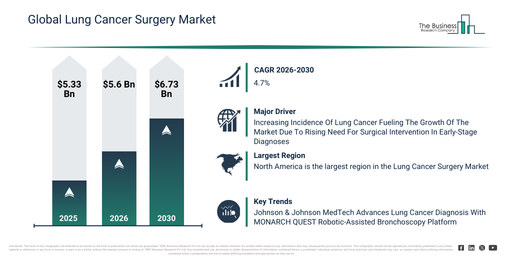
    The market for lung cancer surgeries has experienced robust expansion over the past few years, and this upward trajectory is projected to continue. Specifically, the market is anticipated to increase from $5.33 billion in 2025 to $5.6 billion in 2026, reflecting a compound annual growth rate of 5.1%. This historical growth can be attributed to several key factors, including a rise in the incidence of lung cancer, enhancement of surgical capacities within healthcare facilities, a sufficient supply of skilled thoracic surgeons, the increasing utilization of minimally invasive video-assisted thoracoscopic surgery techniques, and heightened public awareness regarding the benefits of early-stage lung cancer treatment.

    The market for lung cancer surgical procedures is projected for consistent expansion over the upcoming years, with an anticipated valuation of $6.73 billion by 2030. This growth trajectory is underpinned by a compound annual growth rate (CAGR) of 4.7%, driven by several key factors: the increasing integration of robotic surgical systems, a heightened demand for precise surgical results, the proliferation of specialized cancer treatment facilities, escalating investments in surgical technology, and the broader adoption of enhanced recovery protocols following surgery. During this projected period, prominent trends are expected to shape the market, including a greater emphasis on minimally invasive surgical approaches, a rise in robotic-assisted thoracic surgeries, a preference for surgical methods that preserve lung function, expanded utilization of advanced surgical instruments, and a heightened concentration on optimizing outcomes in the period after surgery.

    Download A Free Sample Report For Comprehensive Market Insights:

    https://www.thebusinessresearchcompany.com/sample.aspx?id=25816&type=smp

    Lung Cancer Surgery Market Growth Factors Supporting Long-Term Expansion

    An observable surge in lung cancer cases is anticipated to drive the expansion of the lung cancer surgery market. This condition, characterized by the unchecked proliferation of aberrant cells within the lungs, impairs their regular operation. Factors contributing to the rising prevalence of lung cancer include extended exposure to environmental pollutants, particularly fine particulate matter (PM2.5). These minuscule particles are capable of reaching deep within the pulmonary tissues, triggering inflammation, cellular harm, and genetic alterations that can initiate the development of cancer. Lung cancer surgery plays a crucial role in mitigating mortality rates associated with the disease by facilitating the prompt excision of cancerous growths before they metastasize or advance. Illustratively, data from the Centers for Disease Control and Prevention indicate that in 2023, lung cancer accounted for 131,584 fatalities in the United States, subsequent to 218,893 new diagnoses in 2022. Consequently, the escalating rates of lung cancer are acting as a catalyst for the growth of the lung cancer surgery market.

    Lung Cancer Surgery Market Segment Analysis And Revenue Opportunities

    The lung cancer surgery market covered in this report is segmented –

    1) By Surgical Approach: Thoracotomy, Minimally Invasive Surgeries

    2) By Procedure: Lobectomy, Segmentectomy, Pneumonectomy, Sleeve Resection, Extended Reserction

    3) By Product: Thoracoscopes, Mediastinoscopes, Bronchoscopes, Robotic-Assistes Thoracic Surgery Systems, Surgical Staplers, Surgical Energy Instruments, Advanced Energy Instruments, Advanced Bipolar Instruments, Ultrasonic Instruments

    4) By Distribution Channels: Direct Tender, Retail Sales, Online Sales, Other Channels

    5) By End User: Hospitals, Ambulatory And Surgical Centres, Academic And Research Institutes, Specialiaty Cancer Care Centre, Other End Users

    Subsegments:

    1) By Thoracotomy: Lobectomy, Pneumonectomy, Segmentectomy, Wedge Resection

    2) By Minimally Invasive Surgeries: Video-Assisted Thoracoscopic Surgery (VATS), Robotic-Assisted Surgery

    Lung Cancer Surgery Market Industry Trends Shaping Future Revenue Growth

    Leading entities within the lung cancer surgery sector are directing their efforts toward pioneering advancements, with robotic-assisted procedures being a key area of focus aimed at elevating surgical accuracy, accelerating patient recuperation periods, and ultimately achieving superior health results. Robotic-assisted surgery encompasses less invasive operations executed with the aid of robotic equipment, which surgeons skillfully operate to boost exactness, lessen adverse events, and foster better patient recovery. A prime illustration of this trend occurred in March 2025 when Johnson & Johnson MedTech, a prominent American innovator in medical equipment and technology, revealed that its MONARCH QUEST system had secured regulatory approval via the U.S. 510(k) pathway. This MONARCH QUEST robotic-assisted bronchoscopy system is engineered to provide superior reach and stability, enabling access to minuscule and challenging-to-reach lung nodules, thereby facilitating the earlier detection of lung cancer. Furthermore, its sophisticated maneuverability, coupled with seamless integration with imaging systems, permits more precise tissue sampling with diminished patient discomfort. The system’s design is intended to broaden the scope of usable procedures and optimize operational efficiency, consequently promoting increased clinical assurance and uniformity throughout a diverse array of bronchoscopic interventions.

    Lung Cancer Surgery Market Leading Players Shaping Industry Direction

    Major companies operating in the lung cancer surgery market are Johnson And Johnson, Medtronic plc, Fujifilm Holdings Corporation, B Braun Melsungen AG, Olympus Corporation, Intuitive Surgical Inc, Teleflex Incorporated, Karl Storz SE, Lepu Medical Technology Beijing Co Ltd, Ambu AS, KLS Martin Group, Richard Wolf GmbH, Ethicon Inc, Ackermann Instrument GmbH, Scanlan International Inc, Sontec Instruments Inc, Covidien LLC, Stryker Corporation, Smith And Nephew plc, CONMED Corporation, Erbe Elektromedizin GmbH

    Access The Complete Lung Cancer Surgery Market Report:

    https://www.thebusinessresearchcompany.com/report/lung-cancer-surgery-global-market-report

    Lung Cancer Surgery Market Largest Region By Revenue And Market Share

    North Americawas the largest region in the lung cancer surgery market in 2025. Asia-Pacificis expected to be the fastest-growing region in the forecast period. The regions covered in the lung cancer surgery market report are Asia-Pacific, South East Asia, Western Europe, Eastern Europe, North America, South America, Middle East, Africa.

    Get in touch with us:

    The Business Research Company: https://www.thebusinessresearchcompany.com/

    Americas: +1 310-496-7795

    Asia: +44 7882 955267 & +91 8897263534

    Europe: +44 7882 955267

    Email us at: marketing@tbrc.info

    Follow us on:

    LinkedIn: https://in.linkedin.com/company/the-business-research-company

    YouTube: https://www.youtube.com/channel/UC24_fI0rV8cR5DxlCpgmyFQ

    Global Market Model: https://www.thebusinessresearchcompany.com/global-market-model

  • Lung Cancer Screening Market Opportunities Are Emerging Beyond Traditional Growth Areas

    Lung Cancer Screening Market Opportunities Are Emerging Beyond Traditional Growth Areas

    Through market attractiveness analysis, total addressable market evaluation, company benchmarking matrices, interactive Excel dashboards, expanded supply chain intelligence, emerging startup coverage, and detailed product insights, The Business Research Company’s 2026 market reports provide more actionable and strategically valuable research.

    Lung Cancer Screening Market Expansion From $3.65 Billion In 2026 To $5.24 Billion In 2030

    Throughout recent history, the lung cancer screening market has experienced robust expansion, projecting a rise from $3.33 billion in 2025 to $3.65 billion in 2026, marking a compound annual growth rate of 9.6%. This historical growth trajectory has been significantly influenced by a confluence of factors including the escalating rates of lung cancer within aging demographics, a heightened public understanding of the advantages associated with early detection through screening, the broadening availability of diagnostic imaging facilities, advancements in CT imaging technology, and the consistent implementation of screening guidelines.

    The market for lung cancer screening is poised for substantial expansion in the coming years, projected to reach $5.24 billion by 2030, reflecting a compound annual growth rate of 9.5%. This anticipated growth during the forecast period is driven by several key factors, including the widening use of AI-enhanced diagnostic processes, a broader rollout of population-wide screening initiatives, a heightened emphasis on individualized risk evaluations, increased financial backing for technologies aimed at early cancer detection, and augmented governmental healthcare policies that endorse screening practices. Prominent trends expected to shape this market over the forecast period encompass a greater uptake of low-dose CT screening programs, a more significant incorporation of artificial intelligence in interpreting medical images, a concentrated effort on screening high-risk demographics, the expansion of proactive oncology efforts, and a reinforced commitment to identifying lung cancer in its earliest stages.

    Download A Free Sample Report For Comprehensive Market Insights:

    https://www.thebusinessresearchcompany.com/sample.aspx?id=27331&type=smp

    Lung Cancer Screening Market Demand Drivers Creating New Revenue Opportunities

    An increase in smoking prevalence is anticipated to fuel the expansion of the lung cancer screening market. Smoking, characterized by the inhalation of smoke from burning materials, commonly tobacco, into the mouth and lungs, is becoming more common as individuals grapple with escalating stress levels and utilize it as a method for coping. Lung cancer screening plays a crucial role in mitigating the impact of rising smoking rates by facilitating the early identification of health issues linked to smoking, thereby encouraging cessation and contributing to public health initiatives aimed at curbing tobacco consumption. As an illustration, data from October 2024 revealed that the Office for Health Improvement & Disparities in the UK reported 19.5% of individuals in routine and manual occupations (aged 18-64) were current smokers in 2023. This upward trend in smoking directly correlates with the projected growth within the lung cancer screening market.

    Lung Cancer Screening Market Segmentation And Category Breakdown

    The lung cancer screening market covered in this report is segmented –

    1) By Diagnosis Type: Low Dose Spiral Computed Tomography Scan, Chest-X-Ray

    2) By Cancer Type: Non-Small Cell Lung Cancer, Small Cell Lung Cancer

    3) By Age Group: 50 And Older, Below 50

    4) By End-User: Hospitals And Clinics, Diagnostic Centers, Other End-Users

    Subsegments:

    1) By Low Dose Spiral Computed Tomography Scan: Screening, Diagnostic, Follow-Up

    2) By Chest X-Ray: Posterior Anterior, Lateral, Portable

    Lung Cancer Screening Market Trends Driving Strategic Industry Expansion

    Within the lung cancer screening sector, prominent entities are concentrating their efforts on creating sophisticated capabilities, such as “normal flagging,” to elevate the precision of diagnoses, mitigate incorrect positive results, and bolster the early identification of cancerous nodules. Normal flagging is essentially a safety mechanism within lung cancer screening systems that automatically identifies scans showing no concerning signs, thereby streamlining the process of focusing on cases that warrant additional scrutiny. As an illustration, in May 2025, Lunit Inc., a medical technology firm hailing from South Korea, unveiled INSIGHT CXR4, its cutting-edge AI-driven system for analyzing chest X-rays, which has since obtained CE MDR certification for implementation throughout Europe. This system, engineered to aid radiologists by enhancing diagnostic precision and operational speed, is capable of identifying a dozen different chest conditions, including lung nodules, pneumonia, and acute bone fractures, and incorporates functionalities like comparing current and previous images to aid in the early detection of disease and informed clinical judgments.

    Lung Cancer Screening Market Competitive Analysis Of Major Industry Participants

    Major companies operating in the lung cancer screening market are Abbott Laboratories Inc., Canon Inc., Siemens Healthineers AG, Koninklijke Philips N.V., GE Healthcare Technologies Inc., Quest Diagnostics Incorporated, Shimadzu Corporation, NeoGenomics Laboratories Inc., Freenome Holdings Inc., Biodesix Inc., Lunit Inc., Infervision, Riverain Technologies, VisionGate, Delfi Diagnostics Inc., Hologic Inc., Fujifilm Holdings Corporation, United Imaging Healthcare Co. Ltd., Samsung Medison Co. Ltd., Carestream Health Inc., Analogic Corporation, Toshiba Medical Systems Corporation

    Access The Complete Lung Cancer Screening Market Report:

    https://www.thebusinessresearchcompany.com/report/lung-cancer-screening-global-market-report

    Lung Cancer Screening Market Regional Analysis And Leading Geography

    North Americawas the largest region in the lung cancer screening market in 2025. Asia-Pacificis expected to be the fastest-growing region in the forecast period. The regions covered in the lung cancer screening market report are Asia-Pacific, South East Asia, Western Europe, Eastern Europe, North America, South America, Middle East, Africa.

    Get in touch with us:

    The Business Research Company: https://www.thebusinessresearchcompany.com/

    Americas: +1 310-496-7795

    Asia: +44 7882 955267 & +91 8897263534

    Europe: +44 7882 955267

    Email us at: marketing@tbrc.info

    Follow us on:

    LinkedIn: https://in.linkedin.com/company/the-business-research-company

    YouTube: https://www.youtube.com/channel/UC24_fI0rV8cR5DxlCpgmyFQ

    Global Market Model: https://www.thebusinessresearchcompany.com/global-market-model

  • Lung Cancer Liquid Biopsy Market Expansion Is Opening New Pathways For Strategic Investment

    Lung Cancer Liquid Biopsy Market Expansion Is Opening New Pathways For Strategic Investment

    Delivering more actionable and strategically valuable research, The Business Research Company’s 2026 market reports feature market attractiveness analysis, total addressable market evaluation, company benchmarking matrices, interactive Excel dashboards, expanded supply chain intelligence, emerging startup coverage, and detailed product insights.

    Lung Cancer Liquid Biopsy Market Forecast Highlighting Growth From $1.3 Billion To $2.42 Billion

    The market for liquid biopsies targeting lung cancer has experienced substantial expansion lately. Projections indicate a rise from $1.12 billion in 2025 to $1.31 billion by 2026, demonstrating a compound annual growth rate of 17.0%. This historical growth trajectory is supported by factors such as a rising prevalence of lung cancer, the inherent challenges associated with traditional tissue biopsy methods, progress made in molecular diagnostic techniques, the accessibility of technologies for detecting circulating biomarkers, and a surge in research endeavors within the field of oncology.

    The market for liquid biopsies in lung cancer diagnosis is poised for substantial expansion in the coming years, projected to reach $2.42 billion by 2030 with a compound annual growth rate (CAGR) of 16.7%. This upward trajectory is fueled by several key factors, including a heightened demand for personalized cancer treatment strategies, the broadening scope of liquid biopsy applications in clinical settings, an increasing reliance on companion diagnostics, the growing integration of artificial intelligence for data analysis, and a stronger emphasis on early cancer detection initiatives. Furthermore, significant trends shaping this market during the forecast period involve a greater acceptance of non-invasive diagnostic methods, a rise in the utilization of next-generation sequencing (NGS) for liquid biopsy testing, a surging need for early cancer identification, the continuous development of personalized diagnostic tools for oncology, and improved integration of bioinformatics platforms.

    Download A Free Sample Report For Comprehensive Market Insights:

    https://www.thebusinessresearchcompany.com/sample.aspx?id=24593&type=smp

    Lung Cancer Liquid Biopsy Market Expansion Supported By Key Demand Factors

    The anticipated rise in lung cancer cases is poised to be a significant catalyst for the expansion of the lung cancer liquid biopsy market. This malignancy, defined by the aberrant proliferation of cellular material within the pulmonary tissues and frequently linked to tobacco consumption and exposure to harmful environmental agents, is experiencing a surge primarily attributed to persistent tobacco usage. The carcinogenic elements inhaled through smoking initiate aberrant cellular development, thereby fueling the escalating rates of lung cancer. Liquid biopsies for lung cancer offer a crucial advantage by identifying specific genetic alterations associated with cancer and circulating tumor DNA from a simple blood draw, thereby facilitating prompt diagnosis, guiding therapeutic choices, and enabling the tracking of disease advancement or the efficacy of treatments. For illustration, recent data from the American Cancer Society, a research organization based in the United States, projected that in 2023, approximately 238,340 diagnoses of lung cancer would be made, with 117,550 among men and 120,790 among women, and an estimated 127,070 fatalities from the disease. Consequently, the growing prevalence of lung cancer is directly stimulating the market for liquid biopsy solutions.

    Lung Cancer Liquid Biopsy Market Segment Outlook: Which Categories Are Expanding The Fastest?

    The lung cancer liquid biopsy market covered in this report is segmented –

    1) By Product: Instruments, Consumables, Kits And Reagents, Software And Services

    2) By Technology: Multi-Gene-Parallel Analysis (Ngs), Single-Gene Analysis (PCR Microarrays)

    3) By Biomarker: Cell-Free Deoxyribonucleic Acid, Circulating Tumor Deoxyribonucleic Acid, Extracellular Vesicles, Circulating Tumor Cells, Other Biomarkers

    4) By Clinical Application: Therapy Selection, Treatment Monitoring, Early Cancer Screening, Recurrence Monitoring, Other Applications

    5) By End User: Diagnostics And Imaging Centres, Hospitals, Academics And Research Centers, Other End Users

    Subsegments:

    1) By Instruments: PCR Instruments, Microarray Instruments, Next-Generation Sequencing (NGS) Instruments

    2) By Consumables Kits And Reagents: Sample Collection Kits, Amplification Reagents, Sequencing Reagents

    3) By Software And Services: Data Analysis Software, Cloud-Based Services, Bioinformatics Tools

    Lung Cancer Liquid Biopsy Market Growth Trends Influencing Competitive Dynamics

    Companies leading the lung cancer liquid biopsy sector are prioritizing innovation in technologies like blood-based screening for lung cancer to bolster early detection, refine diagnostic precision, and facilitate unobtrusive, continuous tracking of disease advancement and therapeutic effectiveness. This non-invasive method of screening for lung cancer involves examining biological markers within the blood to identify the disease in its nascent stages. As an illustration, DELFI Diagnostics Inc., a US biotechnology firm, introduced FirstLook Lung in October 2023, a liquid biopsy blood test engineered for the early identification of lung cancer. This test utilizes fragmentomics, achieving high sensitivity in detecting early lung cancer and boasting a 99.8% negative predictive value, positioning it as a practical and readily available initial assessment for individuals at risk, with the aim of enhancing early detection rates, promoting greater screening participation, and guiding imaging resources toward those most likely to gain from them.

    Lung Cancer Liquid Biopsy Market Key Companies And Competitive Benchmarking

    Major companies operating in the lung cancer liquid biopsy market are F. Hoffmann-La Roche Ltd, Thermo Fisher Scientific Inc., Biocept Inc., Agilent Technologies Inc., Eurofins Scientific, Illumina Inc., Sysmex Corporation, Bio-Rad Laboratories Inc., QIAGEN N.V., Natera Inc., Myriad Genetics Inc., NeoGenomics Laboratories Inc., Guardant Health Inc., Exosome Diagnostics Inc., Menarini Silicon Biosystems S.p.A., Inivata Ltd, Lucence Diagnostics Pte Ltd, LungLife AI Inc., Biodesix Inc., Oncocyte Corporation

    Access The Complete Lung Cancer Liquid Biopsy Market Report:

    https://www.thebusinessresearchcompany.com/report/lung-cancer-liquid-biopsy-global-market-report

    Lung Cancer Liquid Biopsy Market Geographic Analysis: Where Is Demand Growing The Fastest?

    North Americawas the largest region in the lung cancer liquid biopsy market in 2025. Asia-Pacificis expected to be the fastest-growing region in the forecast period. The regions covered in the lung cancer liquid biopsy market report are Asia-Pacific, South East Asia, Western Europe, Eastern Europe, North America, South America, Middle East, Africa.

    Get in touch with us:

    The Business Research Company: https://www.thebusinessresearchcompany.com/

    Americas: +1 310-496-7795

    Asia: +44 7882 955267 & +91 8897263534

    Europe: +44 7882 955267

    Email us at: marketing@tbrc.info

    Follow us on:

    LinkedIn: https://in.linkedin.com/company/the-business-research-company

    YouTube: https://www.youtube.com/channel/UC24_fI0rV8cR5DxlCpgmyFQ

    Global Market Model: https://www.thebusinessresearchcompany.com/global-market-model

  • Lung Cancer Diagnostic And Screening Market Trends Are Creating New Opportunities For Industry Leaders

    Lung Cancer Diagnostic And Screening Market Trends Are Creating New Opportunities For Industry Leaders

    Enhanced with market attractiveness analysis, total addressable market evaluation, company benchmarking matrices, interactive Excel dashboards, expanded supply chain intelligence, emerging startup coverage, and detailed product insights, The Business Research Company’s 2026 market reports deliver more actionable and strategically valuable research.

    Lung Cancer Diagnostic And Screening Market Revenue Growth Supported By A CAGR Of 4.03% Through 2030

    The market dedicated to the diagnosis and screening of lung cancer has experienced considerable expansion lately. Projections indicate a rise from $2.56 billion in 202

    The market for lung cancer diagnostics and screening is poised for substantial expansion over the coming years, with projections indicating a rise to $4.04 billion by 2030, driven by a compound annual growth rate of 9.6%. This anticipated growth trajectory is fueled by several key factors, including the broadening reach of nationwide lung cancer screening programs, a greater acceptance of low-dose CT screening technologies, an escalating demand for both biomarker and blood-based testing solutions, increased financial commitments within the healthcare sector towards oncology diagnostics, and enhanced accessibility to diagnostic imaging facilities. Furthermore, prominent developments anticipated during this forecast period encompass a rise in the implementation of early lung cancer screening initiatives, increased utilization of sophisticated imaging and biomarker assays, a concentrated effort on screening high-risk demographic groups, the further development and deployment of non-invasive diagnostic methods, and a growing trend toward the combined use of various diagnostic approaches.

    Download A Free Sample Report For Comprehensive Market Insights:

    https://www.thebusinessresearchcompany.com/sample.aspx?id=12043&type=smp

    Lung Cancer Diagnostic And Screening Market Growth Drivers And Industry Catalysts

    The accelerating incidence of lung cancer is poised to be a significant catalyst for the expansion of the lung cancer diagnostic and screening market. Lung cancer, characterized by the uncontrolled multiplication of aberrant cells within the lung tissue, manifests with distressing symptoms like persistent coughing, chest discomfort, and labored breathing. Detection and screening methods play a crucial role in the early identification of this condition, employing diverse diagnostic procedures such as incisional biopsies and bronchoscopies. To illustrate, data from January 2023, as reported by the American Cancer Society, a governmental entity in the U.S., indicated an estimated 238,340 new lung cancer diagnoses across the United States, comprising 117,550 males and 120,790 females. Additionally, this report detailed approximately 127,070 fatalities attributed to lung cancer, with 67,160 deaths occurring among men and 59,910 among women. Consequently, the escalating occurrence of lung cancer is a primary driver fueling the growth trajectory of the market dedicated to its diagnosis and screening.

    Lung Cancer Diagnostic And Screening Market Segment Landscape: Which Areas Lead Market Development?

    The lung cancer diagnostic and screening market covered in this report is segmented –

    1) By Product: Instruments, Consumables And Accessories

    2) By Test: Biomarkers Tests, Imaging Test, Biopsy, Blood Test, Other Tests

    3) By Cancer Type: Non-Small Cell Lung Cancer, Small Cell Lung Cancer

    4) By End User: Hospital, Independent Diagnostic Laboratories, Diagnostic Imaging Centers, Cancer Research Institutes, Other End-Users

    Subsegments:

    1) By Instruments: Imaging Devices, Biopsy Devices, Bronchoscopy Systems

    2) By Consumables And Accessories: Biopsy Needles, Reagents And Assays, Imaging Contrast Agents, Sample Collection Kits

    #Lung Cancer Diagnostic And Screening Market Trends Influencing Long-Term Demand

    Several key players within the lung cancer diagnostic and screening sector are concentrating their efforts on pioneering a blood-based testing solution powered by machine learning technologies, specifically whole-genome machine learning, with the overarching goals of enhancing accessibility and convenience in lung cancer screening and securing a stronger market position. The concept of whole-genome machine learning involves the implementation of sophisticated algorithms to scrutinize and interpret the complete spectrum of an organism’s genetic data, covering its entire genome. As an illustrative example, in the month of October in 2023, DELFI Diagnostics Inc., a company based in the United States and known for its work on accessible blood tests, introduced FirstLook Lung. This groundbreaking blood test leverages whole-genome machine learning to examine fragments of cell-free DNA, thereby significantly improving lung cancer screening with an impressive negative predictive value of 99.7%. Developed with the intention of integration into standard blood work procedures, this test is capable of detecting individuals who may have lung cancer, including those in the initial stages of the disease. By aiming to overcome the challenge of low participation rates in low-dose computed tomography (LDCT) screening, this innovative test seeks to contribute positively to the overall health of the population.

    Lung Cancer Diagnostic And Screening Market Industry Leaders And Market Competition

    Major companies operating in the lung cancer diagnostic and screening market are Thermo Fisher Scientific Inc., Abbott Laboratories Inc., Danaher Corporation, Siemens Healthcare GmbH, FUJIFILM Corporation, Koninklijke Philips N.V., GE Healthcare Bio Sciences AB, Quest Diagnostics Incorporated, Agilent Technologies Inc., Illumina Inc., Qiagen Inc., Myriad Genetic Laboratories Inc., NeoGenomics Laboratories Inc., Canon Medical Systems Corporation, Oncimmune Holdings Plc, Riverain Technologies LLC, VisionGate, Foundation Medicine Inc., Biodesix, OncoCyte, Broncus Medical Inc.

    Access The Complete Lung Cancer Diagnostic And Screening Market Report:

    https://www.thebusinessresearchcompany.com/report/lung-cancer-diagnostic-and-screening-global-market-report

    Lung Cancer Diagnostic And Screening Market Global Footprint: Which Region Holds Market Leadership?

    North America was the largest region in the lung cancer diagnostic and screening market in 2025. The regions covered in the lung cancer diagnostic and screening market report are Asia-Pacific, South East Asia, Western Europe, Eastern Europe, North America, South America, Middle East, Africa.

    Get in touch with us:

    The Business Research Company: https://www.thebusinessresearchcompany.com/

    Americas: +1 310-496-7795

    Asia: +44 7882 955267 & +91 8897263534

    Europe: +44 7882 955267

    Email us at: marketing@tbrc.info

    Follow us on:

    LinkedIn: https://in.linkedin.com/company/the-business-research-company

    YouTube: https://www.youtube.com/channel/UC24_fI0rV8cR5DxlCpgmyFQ

    Global Market Model: https://www.thebusinessresearchcompany.com/global-market-model

  • Low-Grade Glioma Market Growth Is Reshaping Competitive Advantage Across The Industry

    Low-Grade Glioma Market Growth Is Reshaping Competitive Advantage Across The Industry

    Through market attractiveness analysis, total addressable market evaluation, company benchmarking matrices, interactive Excel dashboards, expanded supply chain intelligence, emerging startup coverage, and detailed product insights, The Business Research Company’s 2026 market reports provide more actionable and strategically valuable research.

    Low-Grade Glioma Market Value Expansion And Long-Term Growth Outlook

    The global market for low-grade glioma treatments has experienced significant expansion recently, projected to increase from $1.47 billion in 2025 to $1.56 billion in 2026, reflecting a compound annual growth rate of 5.9%. This upward trajectory during the historical period has been fueled by several key factors, including breakthroughs in neuroimaging technology, enhanced survival outcomes for individuals diagnosed with low-grade gliomas, a rise in the frequency of neurosurgical procedures, heightened public and medical recognition of brain tumor indicators, and the proliferation of specialized oncology treatment facilities.

    The market for low-grade gliomas is poised for considerable expansion over the coming years, projecting a market value of $1.94 billion by 2030, driven by a compound annual growth rate (CAGR) of 5.6%. This anticipated growth during the forecast period is largely fueled by a heightened emphasis on molecular tumor profiling, escalating investments in targeted oncology pharmaceuticals, a burgeoning need for less invasive therapeutic interventions, broader availability of specialized neuro-oncology services, and the continuous progression of clinical studies evaluating innovative treatments. Key developments shaping this market in the upcoming period involve an increasing concentration on prompt disease detection and ongoing observation, a greater embrace of targeted drug treatments, a growing inclination towards multifaceted therapeutic strategies, the wider implementation of individualized treatment plans, and the development of sustained approaches to disease management.

    Download A Free Sample Report For Comprehensive Market Insights:

    https://www.thebusinessresearchcompany.com/sample.aspx?id=21215&type=smp

    Low-Grade Glioma Market Opportunity Drivers: What Is Creating New Revenue Potential?

    The expanding prevalence of brain tumors is anticipated to be a primary catalyst for the advancement of the low-grade glioma market. Brain tumors, characterized as aberrant cellular growths within or adjacent to the brain, can manifest as either benign or malignant. Factors contributing to the increasing occurrence of brain tumors include heightened exposure to radiation, environmental toxins, inherited susceptibilities, and the aging demographic. Low-grade glioma plays a significant role in managing brain tumors through the application of sophisticated diagnostic methods and specialized treatments, encompassing surgical intervention, radiation therapy, and chemotherapy. These therapeutic approaches are instrumental in decelerating tumor advancement, safeguarding cognitive functions, and enhancing patient prognoses. Consequently, the early identification and individualized treatment strategies are paramount for effectively handling other brain tumors that exhibit comparable growth characteristics. To illustrate, data from Cancer Australia, an Australian governmental body, indicated that in 2023, there were 1,597 fatalities attributed to brain cancer in Australia, comprising 956 males and 641 females. Projections suggest a modest increase to 1,639 deaths by 2025, with an estimated 979 deaths among males and 660 among females. The anticipated likelihood of succumbing to brain cancer by the age of 85 in 2025 stands at 0.51% (1 in 195), with males facing a greater risk at 0.61% (1 in 165) and females a lesser risk at 0.42% (1 in 240). Therefore, the escalating rates of brain tumors are directly fueling the expansion of the low-grade glioma market.

    Low-Grade Glioma Market Segments: Where Are The Largest Growth Opportunities?

    The low-grade glioma market covered in this report is segmented –

    1) By Drug Type: Trametinib, Dabrafenib, Ivosidenib, Mirdametinib

    2) By Treatment: Surgery, Chemotherapy, Radiation

    3) By Distribution Channel: Online Pharmacies, Hospital Pharmacies, Retail Pharmacies

    Subsegments:

    1) By Trametinib: MEK Inhibitor Monotherapy, Combination Therapy (with BRAF Inhibitors)

    2) By Dabrafenib: BRAF V600E–Mutant Low-Grade Glioma, Combination Therapy (with MEK Inhibitors)

    3) By Ivosidenib: IDH1-Mutant Low-Grade Glioma, Oral Targeted Monotherapy

    4) By Mirdametinib: NF1-Associated Low-Grade Glioma, MEK Inhibitor Monotherapy

    Low-Grade Glioma Market Innovation Trends Driving Future Development

    Leading firms within the low-grade glioma sector are prioritizing the implementation of combined treatment approaches and precision medicine, including remedies targeting genetic modifications, to secure a stronger market position and improve outcomes for pediatric patients afflicted with this condition. These genetic modification drugs represent a form of targeted therapy aimed at altering or suppressing particular genetic mutations or defects within cells, thereby combating diseases like cancer by disrupting the biological processes that fuel aberrant cellular proliferation. As an illustration, in May 2024, Day One Biopharmaceuticals, a biotechnical enterprise situated in the United States, introduced Tovorafenib (Ojemda) subsequent to a swift endorsement from the FDA. This precision therapeutic is formulated for pediatric individuals aged six months and above diagnosed with unresectable or recurring low-grade glioma (LGG) that exhibits BRAF gene mutations. Providing a simplified weekly oral dosage regimen, it fulfills a critical requirement for young LGG patients who have historically faced restricted therapeutic choices.

    Low-Grade Glioma Market Major Participants And Competitive Dynamics

    Major companies operating in the low-grade glioma market are F Hoffmann La Roche Ltd, Novartis AG, AstraZeneca PLC, Bristol Myers Squibb Company, Merck & Co Inc, Ipsen SA, Agios Pharmaceuticals Inc, Day One Biopharmaceuticals Inc, Les Laboratoires Servier, BeiGene Ltd, Daiichi Sankyo Company Limited, AnHeart Therapeutics Inc, Apollomics Inc, CStone Pharmaceuticals Co Ltd, Avistone Biotechnology Co Ltd, Blueprint Medicines Corporation, Revolution Medicines Inc, SpringWorks Therapeutics Inc, Exelixis Inc, Genentech Inc

    Access The Complete Low-Grade Glioma Market Report:

    https://www.thebusinessresearchcompany.com/report/low-grade-glioma-global-market-report

    Low-Grade Glioma Market Regional Distribution: Which Areas Drive Market Expansion?

    North Americawas the largest region in the low-grade glioma market in 2025. Asia-Pacificis expected to be the fastest-growing region in the forecast period. The regions covered in the low-grade glioma market report are Asia-Pacific, South East Asia, Western Europe, Eastern Europe, North America, South America, Middle East, Africa.

    Get in touch with us:

    The Business Research Company: https://www.thebusinessresearchcompany.com/

    Americas: +1 310-496-7795

    Asia: +44 7882 955267 & +91 8897263534

    Europe: +44 7882 955267

    Email us at: marketing@tbrc.info

    Follow us on:

    LinkedIn: https://in.linkedin.com/company/the-business-research-company

    YouTube: https://www.youtube.com/channel/UC24_fI0rV8cR5DxlCpgmyFQ

    Global Market Model: https://www.thebusinessresearchcompany.com/global-market-model

  • Lower Respiratory Tract Therapeutics Market Forecast Signals New Revenue Opportunities Through 2030

    Lower Respiratory Tract Therapeutics Market Forecast Signals New Revenue Opportunities Through 2030

    Delivering more actionable and strategically valuable research, The Business Research Company’s 2026 market reports feature market attractiveness analysis, total addressable market evaluation, company benchmarking matrices, interactive Excel dashboards, expanded supply chain intelligence, emerging startup coverage, and detailed product insights.

    Lower Respiratory Tract Therapeutics Market Expected To Reach $57.96 Billion By 2030 At 8.4% CAGR

    The market for treatments targeting the lower respiratory tract has experienced robust expansion, projecting a substantial increase from $38.84 billion in 2025 to $41.94 billion by 2026, reflecting a compound annual growth rate of 8.0%. This upward trajectory during the preceding period was fueled by several key factors, including a higher occurrence of conditions such as asthma and COPD, a greater number of lower respiratory infections, extensive utilization of medications like antibiotics and bronchodilators, escalating concerns regarding air quality, and the advancement of respiratory care services within hospital settings.

    The market for therapies targeting the lower respiratory tract is poised for considerable expansion in the upcoming years, projecting a reach of $57.97 billion by 2030, fueled by a compound annual growth rate (CAGR) of 8.4%. This anticipated growth stems from several key factors, including an aging global demographic, escalating rates of tobacco use and exposure to environmental pollutants, heightened consciousness regarding the importance of early intervention for respiratory ailments, improved healthcare accessibility in developing nations, and the proliferation of outpatient and home-based respiratory care solutions. Key developments anticipated within this timeframe involve an increasing prevalence of chronic respiratory conditions, a greater emphasis on comprehensive, long-term disease management strategies, a burgeoning demand for therapeutic combinations, an expanded scope of respiratory care services tailored for the elderly, and a notable rise in the utilization of home respiratory treatment options.

    Download A Free Sample Report For Comprehensive Market Insights:

    https://www.thebusinessresearchcompany.com/sample.aspx?id=12591&type=smp

    Lower Respiratory Tract Therapeutics Market Growth Momentum: Which Factors Are Influencing Demand?

    The increasing occurrence of respiratory ailments is poised to elevate the market for lower respiratory tract therapeutics in the future. These conditions impact various parts of the respiratory system, encompassing the lungs, airways, and upper respiratory passages. Therapies targeting the lower respiratory tract are crucial for identifying and diagnosing respiratory issues early, facilitating prompt intervention and more effective management. Such proactive measures can impede disease advancement, are vital for containing the transmission of contagious respiratory illnesses, and mitigate the likelihood of serious complications. For illustration, the National Asthma Council, a non-profit entity in Australia, reported in October 2024 that the nation observed a total of 474 fatalities linked to asthma in 2023, with 325 being female and 149 male. This statistic closely mirrors the 473 asthma-related deaths documented in 2022, indicating a stable pattern in asthma mortality across those two years. Consequently, the growing incidence of respiratory diseases is expected to propel the growth of the lower respiratory tract therapeutics market.

    Lower Respiratory Tract Therapeutics Market Segment Analysis: What Are The Major Market Categories?

    The lower respiratory tract therapeutics market covered in this report is segmented –

    1) By Disease Type: Asthma, Chronic Obstructive Pulmonary Disease, Pneumonia, Tuberculosis, Bronchitis, Other Diseases

    2) By Drug Class: Antibiotics, Non-Steroidal Anti-Inflammatory Drug, Cough Suppressant, Other Drug Classes

    3) By Distribution Channel: Hospital Pharmacies, Retail Pharmacies, Online Pharmacies

    Subsegments:

    1) By Asthma: Allergic Asthma, Non-allergic Asthma

    2) By Chronic Obstructive Pulmonary Disease (COPD): Chronic Bronchitis, Emphysema

    3) By Pneumonia: Bacterial Pneumonia, Viral Pneumonia

    4) By Tuberculosis: Drug-sensitive Tuberculosis, Drug-resistant Tuberculosis

    5) By Bronchitis: Acute Bronchitis, Chronic Bronchitis

    6) By Other Diseases: Interstitial Lung Disease, Cystic Fibrosis, Pulmonary Hypertension

    Lower Respiratory Tract Therapeutics Market Trends Reshaping Industry Growth

    In the competitive landscape of the lower respiratory tract therapeutics sector, key players are emphasizing the development and promotion of advanced treatment options, notably triple combination medications aimed at effectively managing Chronic Obstructive Pulmonary Disease (COPD) and bolstering their market share. This therapeutic approach combines three types of inhaled drugs: long-acting muscarinic antagonists (LAMA), long-acting beta-agonists (LABA), and inhaled corticosteroids (ICS). A prime example of this strategy is the November 2023 launch of Vilfuro-G by Lupin Limited, an Indian pharmaceutical firm. Administered once daily in a singular strength, Vilfuro-G is expected to significantly enhance the quality of life for individuals suffering from COPD and simultaneously expand Lupin’s existing portfolio of respiratory treatments, underscoring the company’s commitment to offering pioneering therapeutic solutions to both patients and healthcare providers. Notably, Vilfuro-G stands out as the sole fixed-dose combination (FDC) specifically formulated to integrate glycopyrronium bromide, vilanterol, and fluticasone furoate, providing a comprehensive long-term management strategy for moderate to severe COPD.

    Lower Respiratory Tract Therapeutics Market Leading Companies Driving Competitive Growth

    Major companies operating in the lower respiratory tract therapeutics market are Pfizer Inc., Johnson & Johnson, F. Hoffmann-La Roche Ltd., Merck & Co. Inc., AbbVie Inc., Novartis AG, Sanofi S.A., Bristol-Myers Squibb Company, AstraZeneca PLC, GlaxoSmithKline plc., Eli Lilly and Co Ltd., Boehringer Ingelheim International GmbH, Teva Pharmaceutical Industries Ltd., Regeneron Pharmaceuticals Inc., Vertex Pharmaceuticals Incorporated, Grifols S.A., Menarini Group, Chiesi Farmaceutici S.p.A., Cipla Limited, Mundipharma International Limited, Orion Corporation, Sunovion Pharmaceuticals Inc., Innoviva Inc., Insmed Incorporated, Vectura Group plc, Theravance Biopharma Inc., Verona Pharma plc, Circassia Pharmaceuticals plc

    Access The Complete Lower Respiratory Tract Therapeutics Market Report:

    https://www.thebusinessresearchcompany.com/report/lower-respiratory-tract-therapeutics-global-market-report

    Lower Respiratory Tract Therapeutics Market Leading Geography: Which Region Generates The Most Revenue?

    North Americawas the largest region in the lower respiratory tract therapeutics market in 2025. Asia-Pacificis expected to be the fastest-growing region in the forecast period. The regions covered in the lower respiratory tract therapeutics market report are Asia-Pacific, South East Asia, Western Europe, Eastern Europe, North America, South America, Middle East, Africa.

    Get in touch with us:

    The Business Research Company: https://www.thebusinessresearchcompany.com/

    Americas: +1 310-496-7795

    Asia: +44 7882 955267 & +91 8897263534

    Europe: +44 7882 955267

    Email us at: marketing@tbrc.info

    Follow us on:

    LinkedIn: https://in.linkedin.com/company/the-business-research-company

    YouTube: https://www.youtube.com/channel/UC24_fI0rV8cR5DxlCpgmyFQ

    Global Market Model: https://www.thebusinessresearchcompany.com/global-market-model

  • Low-Density Lipoprotein Test Market Growth Is Accelerating As Industry Transformation Continues

    Low-Density Lipoprotein Test Market Growth Is Accelerating As Industry Transformation Continues

    Enhanced with market attractiveness analysis, total addressable market evaluation, company benchmarking matrices, interactive Excel dashboards, expanded supply chain intelligence, emerging startup coverage, and detailed product insights, The Business Research Company’s 2026 market reports deliver more actionable and strategically valuable research.

    Low-Density Lipoprotein Test Market Size And Revenue Forecast Through 2030

    In the realm of low-density lipoprotein testing, a robust expansion has been observed. Projections indicate a significant surge for this market, escalating from an estimated valuation of $8.83 billion in 2025 to $9.32 billion by 2026, reflecting a compound annual growth rate of 5.5%. The momentum witnessed during the preceding period is largely attributable to a confluence of factors, including the escalating prevalence of cardiovascular ailments, an established early reliance on LDL-C testing within clinical practice, a rise in the incidence of conditions such as obesity and diabetes, the proliferation of diagnostic laboratories situated within hospital settings, and a heightened public consciousness regarding the importance of cholesterol management.

    The market for low-density lipoprotein testing is poised for significant expansion in the coming years, projected to reach $11.47 billion by 2030, driven by a compound annual growth rate of 5.3%. This upward trajectory is largely fueled by a heightened emphasis on proactive health management, a surge in diagnostic procedures for lipid abnormalities, the broader implementation of sophisticated lipid analysis techniques, an escalating need for early identification of stroke and cardiac risks, and increased investment in diagnostic healthcare solutions. Key developments anticipated during this period involve a greater focus on preventative screening for cardiovascular conditions, an increase in the utilization of extensive lipid profile analyses, a growing requirement for regular cholesterol check-ups, the extended application of LDL testing in managing metabolic ailments, and a rise in the adoption of rapid point-of-care lipid testing solutions.

    Download A Free Sample Report For Comprehensive Market Insights:

    https://www.thebusinessresearchcompany.com/sample.aspx?id=9395&type=smp

    Low-Density Lipoprotein Test Market Expansion Drivers: What Is Shaping Future Growth?

    The increasing incidence of heart-related ailments is anticipated to be a significant driver for the expansion of the low-density lipoprotein (LDL) testing sector. Such ailments, encompassing conditions affecting the heart and vascular system, are directly addressed through LDL tests, which quantify the amount of low-density lipoprotein in the bloodstream. Reflecting the severity of this health challenge, official data from the UK Parliament in February 2024 indicated that cardiovascular and circulatory diseases were responsible for roughly one-quarter of all deaths in England, leading to over 140,000 deaths annually, an average of 480 per day, or one fatality every three minutes. Consequently, the escalating rates of cardiovascular diseases are fueling the growth trajectory of the market for LDL tests.

    Low-Density Lipoprotein Test Market Segment Breakdown: Which Categories Generate The Most Revenue?

    The low-density lipoprotein test market covered in this report is segmented –

    1) By Product Type: Low-Density Lipoprotein Cholesterol (LDL-C), Low-Density Lipoprotein Particle Number (LDL-P), Low-Density Lipoprotein Particle Size (LDL-B), Other Product Types

    2) By Component: Kits, Reagents, Devices, Other Components

    3) By Disease Type: Diabetes, Stroke, Atherosclerosis, Obesity, Dyslipidaemia, Carotid Artery Disease, Peripheral Arterial Disease, Angina, Other Disease Types

    4) By Distribution Channel: Direct Tenders, Retail

    5) By End User: Hospitals, Clinics, Ambulatory Care, Research Laboratory, Other End Users

    Subsegments:

    1) By Low-Density Lipoprotein Cholesterol (LDL-C): Direct Measurement Tests, Calculated LDL-C Tests

    2) By Low-Density Lipoprotein Particle Number (LDL-P): NMR (Nuclear Magnetic Resonance) Tests, Other Particle Counting Methods

    3) By Low-Density Lipoprotein Particle Size (LDL-B): Gradient Gel Electrophoresis, Other Size Measurement Techniques

    4) By Other Product Types: Lipid Panel Tests: Genetic Testing For Dyslipidemia, Point-Of-Care Testing Devices

    Low-Density Lipoprotein Test Market Strategic Trends: What Is Defining The Next Phase Of Growth?

    Leading entities within the LDL testing arena are prioritizing the development of pioneering diagnostic approaches, encompassing sophisticated lipoprotein assessment frameworks, with the objective of refining cardiovascular risk stratification, bolstering diagnostic precision, and optimizing patient care strategies. These advanced lipoprotein analysis frameworks leverage methodologies such as nuclear magnetic resonance (NMR) spectroscopy alongside algorithm-enabled interpretation to deliver comprehensive lipid profile data that surpasses conventional LDL-C quantifications, thereby augmenting therapeutic judgments for individuals confronting cardiometabolic vulnerabilities. Exemplifying this trend, a July 2023 initiative saw Numares Health, a health diagnostics firm headquartered in Germany, introduce the AXINON LDL-p Test System, an FDA-cleared diagnostic instrument designed to furnish a more granular evaluation of lipoproteins, yielding insights into cardiac performance that extend beyond conventional LDL-C metrics. By employing nuclear magnetic resonance (NMR) spectroscopy, this system integrates sophisticated diagnostic algorithms to elevate its precision, thereby aiding healthcare providers in more effectively overseeing the care of patients exhibiting heightened risks for cardiovascular ailments, especially those with underlying cardiometabolic risk determinants.

    Low-Density Lipoprotein Test Market Key Players And Strategic Industry Positioning

    Major companies operating in the low-density lipoprotein test market are Abbott Laboratories, Siemens Healthineers, F Hoffmann La Roche Ltd, Danaher Corporation, Thermo Fisher Scientific Inc, Bio Rad Laboratories Inc, DiaSorin SpA, Randox Laboratories Ltd, Sekisui Diagnostics, DiaSys Diagnostic Systems GmbH, Eurolyser Diagnostica GmbH, Diazyme Laboratories Inc, OPKO Health Inc, Merck KGaA, Agilent Technologies Inc, Becton Dickinson and Company, Quest Diagnostics Incorporated, Laboratory Corporation of America Holdings, Eurofins Scientific SE, Home Access Health Corporation

    Access The Complete Low-Density Lipoprotein Test Market Report:

    https://www.thebusinessresearchcompany.com/report/low-density-lipoprotein-test-global-market-report

    Low-Density Lipoprotein Test Market Regional Outlook: Where Are The Largest Opportunities Located?

    North Americawas the largest region in the Low-Density Lipoprotein Test market in 2025. The regions covered in the low-density lipoprotein test market report are Asia-Pacific, South East Asia, Western Europe, Eastern Europe, North America, South America, Middle East, Africa.

    Get in touch with us:

    The Business Research Company: https://www.thebusinessresearchcompany.com/

    Americas: +1 310-496-7795

    Asia: +44 7882 955267 & +91 8897263534

    Europe: +44 7882 955267

    Email us at: marketing@tbrc.info

    Follow us on:

    LinkedIn: https://in.linkedin.com/company/the-business-research-company

    YouTube: https://www.youtube.com/channel/UC24_fI0rV8cR5DxlCpgmyFQ

    Global Market Model: https://www.thebusinessresearchcompany.com/global-market-model

  • Low Molecular Weight Heparin Market Outlook Highlights The Next Major Growth Opportunities

    Low Molecular Weight Heparin Market Outlook Highlights The Next Major Growth Opportunities

    Through market attractiveness analysis, total addressable market evaluation, company benchmarking matrices, interactive Excel dashboards, expanded supply chain intelligence, emerging startup coverage, and detailed product insights, The Business Research Company’s 2026 market reports provide more actionable and strategically valuable research.

    Low Molecular Weight Heparin Market Growth From $5.79 Billion In 2026 To $8.05 Billion By 2030 At A CAGR Of 8.6%

    The market for low molecular weight heparin has experienced robust expansion lately, with projections indicating continued growth from $5.29 billion in 2025 to $5.8 billion in 2026, reflecting a compound annual growth rate of 9.5%. This upward trend in the historical period is largely driven by a rise in venous thromboembolism cases, the therapeutic drawbacks associated with unfractionated heparin, the broad clinical adoption of enoxaparin, its increasing application in post-operative settings, and the enhanced safety characteristics inherent to low molecular weight heparins.

    The low molecular weight heparin sector is poised for significant expansion over the upcoming years, projected to reach a market valuation of $8.06 billion by 2030, driven by a compound annual growth rate (CAGR) of 8.6%. This anticipated growth trajectory is facilitated by several key factors, including an increasing elderly demographic, a rise in cardiovascular ailment instances, a heightened need for reliable anticoagulation strategies, the broadening availability of anticoagulant treatments administered at home, and a greater utilization in managing thrombosis linked to cancer. Key developments anticipated during this forecast period encompass a discernible shift towards low molecular weight heparin from unfractionated heparin, augmented application in both thromboprophylaxis and acute medical environments, the proliferation of generic low molecular weight heparin offerings, a greater acceptance of prefilled syringes, and an escalating use in outpatient and home healthcare settings.

    Download A Free Sample Report For Comprehensive Market Insights:

    https://www.thebusinessresearchcompany.com/sample.aspx?id=16468&type=smp

    Low Molecular Weight Heparin Market Development Factors: Which Trends Are Supporting Demand?

    The expanding incidence of hematological conditions is anticipated to be a primary catalyst for the expansion of the low molecular weight heparin market. These conditions encompass various ailments that affect blood constituents like erythrocytes, leukocytes, thrombocytes, and plasma proteins, impacting people across all life stages and backgrounds and including conditions such as anemia, hemophilia, and thrombosis. An aging global population, enhanced diagnostic capabilities, and greater exposure to environmental hazards are contributing factors to the surge in these blood-related ailments. Low molecular weight heparin plays a crucial role in managing blood disorders by preventing and treating thromboembolism through its clot-inhibiting properties. Illustratively, the Leukemia Foundation reported in May 2024 that an estimated 19,403 Australians were projected to receive new diagnoses for blood cancers like leukemia, lymphoma, and myeloma in 2022, translating to approximately 53 new cases daily or one diagnosis every 27 minutes; presently, about 135,000 individuals in Australia are managing a blood cancer or disorder, a figure expected to surpass 275,000 by 2035, underscoring the significant impact of rising blood disorder prevalence on the low molecular weight heparin market’s growth trajectory.

    Low Molecular Weight Heparin Market Segmentation: How Is The Market Structured Across Key Categories?

    The low molecular weight heparin market covered in this report is segmented –

    1) By Product Type: Enoxaparin, Dalteparin, Tinzaparin, Fraxiparine, Nadroparin, Other Product Types

    2) By Packaging: Multi-Vials, Prefilled Syringes

    3) By Application: Deep Vein Thrombosis, Acute Coronary Syndrome, Pulmonary Embolism, Other Applications

    Subsegments:

    1) By Enoxaparin: Generic Enoxaparin, Branded Enoxaparin

    2) By Dalteparin: Generic Dalteparin, Branded Dalteparin

    3) By Tinzaparin: Generic Tinzaparin, Branded Tinzaparin

    4) By Fraxiparine: Generic Fraxiparine, Branded Fraxiparine

    5) By Nadroparin: Generic Nadroparin, Branded Nadroparin

    6) By Other Product Types: Bemiparin, Parnaparin

    Low Molecular Weight Heparin Market Transformation Trends: Which Innovations Are Driving Change?

    Key players in the low molecular weight heparin sector are prioritizing the development of novel offerings, like prefilled syringes that omit preservatives, aiming to bolster both patient safety and user-friendliness. These preservative-free prefilled syringes contain the blood-thinning drug enoxaparin and are formulated without any added preservatives, thereby guaranteeing their safety and effectiveness. By eliminating preservatives, the likelihood of adverse allergic responses is reduced, presenting a more secure choice for individuals undergoing anticoagulant treatment. As an illustration, Techdow USA Inc., a generic injectable manufacturer based in the United States, launched preservative-free generic enoxaparin sodium prefilled syringes in 30 mg, 40 mg, 60 mg, 80 mg, 100 mg, 120 mg, and 150 mg dosages in June of 2023, intended for the prophylaxis of thrombosis. This generic alternative to Lovenox, a low molecular weight heparin employed in the prevention and management of blood clots, is anticipated to offer greater affordability, improved therapeutic outcomes, enhanced availability, and a superior patient experience.

    Low Molecular Weight Heparin Market Competitive Landscape And Leading Companies

    Major companies operating in the low molecular weight heparin market are Pfizer Inc., Sanofi SA, Boehringer Ingelheim International GmbH, Teva Pharmaceutical Industries Ltd., Eisai Co. Ltd., Sun Pharmaceutical Industries Ltd., Cipla Inc., Apotex Inc., Intas Pharmaceuticals Ltd, Hikma Pharmaceuticals PLC, Dr. Reddy’s Laboratories Ltd., Lupin Limited, Alkem Laboratories Limited, Torrent Pharmaceuticals Ltd., Emcure Pharmaceuticals Limited, Biocon Limited, Aspen Pharmacare Holdings Limited, Ajanta Pharma Ltd., Zydus Pharmaceuticals, Gland Pharma Limited, Beximco Pharmaceuticals Ltd

    Access The Complete Low Molecular Weight Heparin Market Report:

    https://www.thebusinessresearchcompany.com/report/low-molecular-weight-heparin-global-market-report

    Low Molecular Weight Heparin Market Geographic Landscape: Which Region Dominates Industry Growth?

    North Americawas the largest region in the low molecular weight heparin market in 2025. Asia-Pacificis expected to be the fastest-growing region in the forecast period. The regions covered in the low molecular weight heparin market report are Asia-Pacific, South East Asia, Western Europe, Eastern Europe, North America, South America, Middle East, Africa.

    Get in touch with us:

    The Business Research Company: https://www.thebusinessresearchcompany.com/

    Americas: +1 310-496-7795

    Asia: +44 7882 955267 & +91 8897263534

    Europe: +44 7882 955267

    Email us at: marketing@tbrc.info

    Follow us on:

    LinkedIn: https://in.linkedin.com/company/the-business-research-company

    YouTube: https://www.youtube.com/channel/UC24_fI0rV8cR5DxlCpgmyFQ

    Global Market Model: https://www.thebusinessresearchcompany.com/global-market-model
  • Losartan Market Trends And Growth Drivers Point To Strong Future Potential

    Losartan Market Trends And Growth Drivers Point To Strong Future Potential

    Delivering more actionable and strategically valuable research, The Business Research Company’s 2026 market reports feature market attractiveness analysis, total addressable market evaluation, company benchmarking matrices, interactive Excel dashboards, expanded supply chain intelligence, emerging startup coverage, and detailed product insights.

    Losartan Market Expansion Outlook: What Revenue Opportunities Lie Ahead?

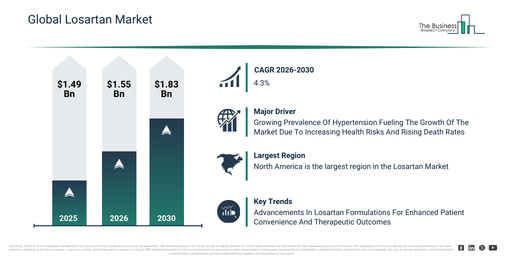
    The market for losartan has experienced consistent expansion, projected to increase from $1.49 billion in 2025 to $1.55 billion in 2026, reflecting a compound annual growth rate of 4.2%. This growth trajectory in the historical period is largely attributable to the escalating global prevalence of hypertension, the broad clinical acceptance of angiotensin II receptor blockers (ARBs), a rise in diabetes-induced kidney illnesses, heightened public consciousness regarding cardiovascular risk mitigation, and a discernible shift from ACE inhibitors to ARBs for treatment.

    The global losartan market is projected to experience consistent expansion, reaching an estimated value of $1.83 billion by 2030 with a compound annual growth rate of 4.3%. This anticipated growth trajectory is fueled by several key factors, including an increasing elderly demographic, a heightened demand for antihypertensive medications that safeguard kidney function, broadened availability of cost-effective generic versions, a greater emphasis on preventing strokes, and increased healthcare expenditures dedicated to managing chronic conditions. Within this forecast period, significant market dynamics are expected to include a rise in hypertension and cardiovascular ailments, a discernible shift favoring angiotensin II receptor blockers (ARBs) over angiotensin-converting enzyme (ACE) inhibitors, a surge in prescriptions for generic losartan, its growing application in managing diabetic nephropathy, and a greater adoption of long-term blood pressure management strategies.

    Download A Free Sample Report For Comprehensive Market Insights:

    https://www.thebusinessresearchcompany.com/sample.aspx?id=24284&type=smp

    Losartan Market Industry Drivers: What Is Driving Revenue Growth?

    The increasing frequency of hypertension is anticipated to drive the expansion of the losartan market in the future, as this condition, characterized by consistently elevated blood pressure, significantly heightens the risk of cardiovascular ailments, cerebrovascular incidents, and other grave health issues, with its rising occurrence often associated with diets high in sodium and processed items that promote fluid retention and cardiac stress, and losartan functions to manage hypertension by obstructing angiotensin II, a hormone responsible for blood vessel constriction, thereby facilitating vessel relaxation and dilation, consequently reducing blood pressure and alleviating the heart’s exertion; for example, data from the Centers for Disease Control and Prevention indicated that in 2023, hypertension was a direct or contributing factor in 664,470 fatalities within the United States, underscoring the direct correlation between the escalating prevalence of hypertension and the burgeoning losartan market.

    Losartan Market Segmentation Trends And Revenue Drivers

    The losartan market covered in this report is segmented –

    1) By Dosage: Tablet, Powder, Suspension

    2) By Source: Contract Manufacturing Organizations, In-House

    3) By Distribution Channel: Online, Offline

    4) By Application: Hypertension, Stroke, Diabetic Nephropathy, Other Applications

    5) By End-User: Adult, Pediatric

    Subsegments:

    1) By Tablet: 25 Milligrams (mg), 50 Milligrams (mg), 100 Milligrams (mg)

    2) By Powder: 25 Milligrams (mg), 50 Milligrams (mg), 100 Milligrams (mg)

    3) By Suspension: 5 Milligrams (mg) Per 5 Milliliters (mL), 10 Milligrams (mg) Per 5 Milliliters (mL), 25 Milligrams (mg) Per 5 Milliliters (mL)

    #Losartan Market Growth Trends: What Is Influencing The Future Outlook?

    To address patient needs and broaden treatment possibilities within the losartan market, leading manufacturers are prioritizing the creation of novel products and securing necessary authorizations, exemplified by the introduction of losartan potassium oral suspension. This liquid rendition of losartan potassium is designed specifically for those who find swallowing pills challenging. A case in point is Scienture Holdings Inc., a pharmaceutical enterprise based in the United States, which obtained approval from the Food and Drug Administration (FDA) in March 2025 for Arbli. This pre-prepared liquid treatment targets hypertension, aims to decrease stroke risk in hypertensive individuals experiencing left ventricular hypertrophy, and addresses diabetic nephropathy in patients with type 2 diabetes, providing accurate dosages without the need for specialized preparation and maintaining an eighteen-month stability at ambient temperatures in a 165 mL peppermint-flavored suspension containing 10 mg/mL.

    Losartan Market Industry Leaders: Which Organizations Are Driving Competition?

    Major companies operating in the losartan market are Viatris Inc., Teva Pharmaceutical Industries Ltd, Intas Pharmaceuticals Ltd., Sun Pharmaceutical Industries Ltd., Apotex Inc., Aurobindo Pharma Ltd., Dr. Reddy’s Laboratories Ltd., Cipla Ltd., Cadila Pharmaceuticals Ltd., Lupin Ltd., Zydus Lifesciences Ltd., Torrent Pharmaceuticals Ltd., Alembic Pharmaceuticals Ltd., Vasudha Pharma Chem Ltd., Unichem Laboratories Ltd., Global Pharma Tek, Manus Aktteva Biopharma LLP, Emcure Pharmaceuticals Ltd., Wellona Pharma, JPM Pharma & Chemicals Pvt. Ltd.

    Access The Complete Losartan Market Report:

    https://www.thebusinessresearchcompany.com/report/losartan-global-market-report

    Losartan Market Largest Region: Which Geography Holds The Highest Market Share?

    North Americawas the largest region in the losartan market in 2025. Asia-Pacificis expected to be the fastest-growing region in the forecast period. The regions covered in the losartan market report are Asia-Pacific, South East Asia, Western Europe, Eastern Europe, North America, South America, Middle East, Africa.

    Get in touch with us:

    The Business Research Company: https://www.thebusinessresearchcompany.com/

    Americas: +1 310-496-7795

    Asia: +44 7882 955267 & +91 8897263534

    Europe: +44 7882 955267

    Email us at: marketing@tbrc.info

    Follow us on:

    LinkedIn: https://in.linkedin.com/company/the-business-research-company

    YouTube: https://www.youtube.com/channel/UC24_fI0rV8cR5DxlCpgmyFQ

    Global Market Model: https://www.thebusinessresearchcompany.com/global-market-model

  • Long-Read Sequencing Services Market Expansion Is Reshaping Competitive Dynamics Across The Industry

    Long-Read Sequencing Services Market Expansion Is Reshaping Competitive Dynamics Across The Industry

    Enhanced with market attractiveness analysis, total addressable market evaluation, company benchmarking matrices, interactive Excel dashboards, expanded supply chain intelligence, emerging startup coverage, and detailed product insights, The Business Research Company’s 2026 market reports deliver more actionable and strategically valuable research.

    Long-Read Sequencing Services Market Growth Potential: How Will Market Size Change Through 2030?

    The sector for long-read sequencing services has experienced substantial expansion recently. Projections indicate a progression from $1.18 billion in 2025 to $1.41 billion by 2026, reflecting a compound annual growth rate of 18.9%. Key drivers behind this growth in the preceding years include significant leaps in sequencing chemistry and instrumentation, augmented investment in genomic research initiatives, a mounting need for detailed genome analysis, the proliferation of large-scale academic genomics endeavors, and the emergence of dedicated providers offering specialized sequencing solutions.

    The market for long-read sequencing services is poised for substantial expansion over the upcoming years, projected to reach $2.79 billion by 2030, signifying a compound annual growth rate of 18.6%. This anticipated surge is fueled by several key factors, including the escalating integration of long-read sequencing in clinical settings, augmented investments directed towards population genomics initiatives, the broadening scope of precision oncology research, a heightened requirement for novel genome assembly capabilities, and the incorporation of artificial intelligence for genomic interpretation. Throughout this forecast period, prominent trends are expected to shape the market, such as a greater emphasis on services for analyzing structural variations, increased utilization of nanopore sequencing technologies, a growing application of long-read sequencing in investigating rare diseases, the proliferation of clinical-grade long-read sequencing solutions, and a more concentrated effort on achieving thorough genome assembly.

    Download A Free Sample Report For Comprehensive Market Insights:

    https://www.thebusinessresearchcompany.com/sample.aspx?id=28260&type=smp

    Long-Read Sequencing Services Market Growth Factors: Which Forces Are Supporting Market Expansion?

    The increasing incidence of genetic conditions is anticipated to fuel the expansion of the long-read sequencing services sector. Genetic ailments, stemming from alterations or mutations in DNA that can be passed down or arise anew, impact an individual’s health, development, or bodily functions. This surge in genetic disease prevalence can be attributed to heightened public awareness and sophisticated diagnostic tools, which facilitate earlier and more precise identification of conditions previously overlooked. Long-read sequencing services play a crucial role in managing genetic disorders by delivering exceptionally accurate, extensive genomic information, thereby allowing for the exact identification of structural variations and intricate mutations. For example, as of April 2024, the National Institutes of Health (NIH), a leading American biomedical research institution, reported that approximately 6.9 million individuals aged 65 and above in the United States are presently affected by Alzheimer’s dementia, a number expected to approach 13.8 million by the year 2060. Consequently, the escalating occurrence of genetic disorders is a key driver for the growth observed in the long-read sequencing services market.

    Long-Read Sequencing Services Market Segment Analysis Highlighting Growth Areas

    The long-read sequencing services market covered in this report is segmented –

    1) By Service Type: Whole Genome Sequencing, Targeted Sequencing, De Novo Sequencing, Other Services

    2) By Technology: Single-Molecule Real-Time Sequencing, Nanopore Sequencing, Other Technologies

    3) By Application: Clinical Diagnostics, Genomic Research, Oncology, Rare Disease Detection, Other Applications

    4) By End User: Academic And Research Institutes, Hospitals And Clinics, Pharmaceutical And Biotechnology Companies, Other End-Users

    Subsegments:

    1) By Whole Genome Sequencing: Complete Genome Mapping, Comprehensive Variant Detection, Structural Variation Analysis, Comparative Genomics

    2) By Targeted Sequencing: Gene Panel Sequencing, Exome Sequencing, Transcriptome Sequencing, Custom Target Region Sequencing

    3) By De Novo Sequencing: Novel Genome Assembly, Structural Variant Characterization, Complex Genome Reconstruction, Non-Model Organism Sequencing

    4) By Other Services: Data Analysis And Interpretation, Library Preparation Services, Bioinformatics Support Services, Validation And Quality Control Services

    Long-Read Sequencing Services Market Industry Trends: What Changes Are Reshaping Demand?

    Companies at the forefront of the long-read sequencing services sector are concentrating their efforts on pioneering advancements, including the development of primary template-directed amplification (PTA). This method facilitates high-accuracy, consistent amplification of the entire genome from solitary cells, thereby allowing for the sensitive identification of single-nucleotide variants (SNVs). Primary template-directed amplification represents a unique whole-genome amplification strategy engineered to precisely and uniformly amplify deoxyribonucleic acid (DNA) originating from trace amounts of sample material by reducing errors and safeguarding the integrity of the native DNA sequence. As an illustration, in October 2025, BioSkryb Genomics, Inc., a United States-based entity specializing in extended read sequencing technologies, introduced the ResolveSEQ LongRead Early Access Program. This state-of-the-art platform for single-cell whole-genome long-read sequencing combines primary template-directed amplification (PTA) with sophisticated long-read library preparation techniques to achieve thorough and consistent amplification from individual cells. Furthermore, this platform facilitates the precise detection of single-nucleotide variants (SNVs) and repeat expansions, while simultaneously offering haplotype phasing at the level of single cells.

    Long-Read Sequencing Services Market Leading Companies: Who Holds Significant Market Presence?

    Major companies operating in the long-read sequencing services market are Thermo Fisher Scientific Inc., Danaher Corporation, Agilent Technologies Inc., Illumina Inc., Revvity Inc., QIAGEN N.V., BGI Genomics Co. Ltd., Takara Bio Inc., Oxford Nanopore Technologies plc, Pacific Biosciences of California Inc., GENEWIZ Inc., Macrogen Inc., Novogene Co. Ltd., DNAnexus Inc., Zymo Research Corp., CD Genomics Inc., Genotypic Technology Pvt. Ltd., Plasmidsaurus Inc., BaseClear B.V., GrandOmics Biosciences Co. Ltd., Arima Genomics Inc., Wuhan Benagen Technology Co. Ltd.

    Access The Complete Long-Read Sequencing Services Market Report:

    https://www.thebusinessresearchcompany.com/report/long-read-sequencing-services-global-market-report

    Long-Read Sequencing Services Market Regional Analysis: Which Region Leads By Revenue?

    North Americawas the largest region in the long-read sequencing services market in 2025. Asia-Pacific is expected to be the fastest-growing region in the forecast period. The regions covered in the long-read sequencing services market report are Asia-Pacific, South East Asia, Western Europe, Eastern Europe, North America, South America, Middle East, Africa.

    Get in touch with us:

    The Business Research Company: https://www.thebusinessresearchcompany.com/

    Americas: +1 310-496-7795

    Asia: +44 7882 955267 & +91 8897263534

    Europe: +44 7882 955267

    Email us at: marketing@tbrc.info

    Follow us on:

    LinkedIn: https://in.linkedin.com/company/the-business-research-company

    YouTube: https://www.youtube.com/channel/UC24_fI0rV8cR5DxlCpgmyFQ

    Global Market Model: https://www.thebusinessresearchcompany.com/global-market-model