Month: June 2026

  • Mammalian Polyclonal Immunoglobulin G (IgG) Antibody Market Opportunities Are Emerging Beyond Traditional Growth Areas

    Mammalian Polyclonal Immunoglobulin G (IgG) Antibody Market Opportunities Are Emerging Beyond Traditional Growth Areas

    Enhanced with market attractiveness analysis, total addressable market evaluation, company benchmarking matrices, interactive Excel dashboards, expanded supply chain intelligence, emerging startup coverage, and detailed product insights, The Business Research Company’s 2026 market reports deliver more actionable and strategically valuable research.

    Mammalian Polyclonal Immunoglobulin G (IgG) Antibody Market Forecast Highlighting Growth From $1.51 Billion To $1.96 Billion

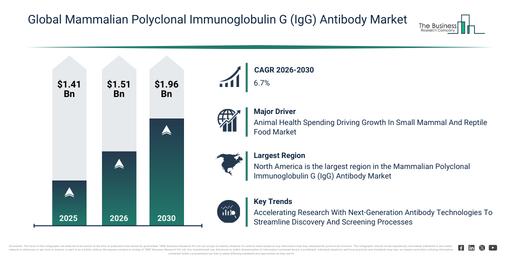
    The global market for mammalian polyclonal immunoglobulin G (IgG) antibodies has experienced robust expansion, projecting a rise from $1.41 billion in 2025 to $1.51 billion in 2026, reflecting a compound annual growth rate (CAGR) of 7.5%. This past expansion was fueled by several key factors, including the escalating demand for immunodiagnostic testing, the broad integration of ELISA methodologies, augmented investment in biomedical research, the sustained utilization of antibodies derived from animal sources, and a growing incidence of both chronic and infectious ailments.

    The market for mammalian polyclonal immunoglobulin G (IgG) antibodies is projected to experience substantial expansion, reaching an estimated $1.96 billion by the year 2030, reflecting a compound annual growth rate (CAGR) of 6.7% over the projected period. This upward trajectory is anticipated to be fueled by several key factors, including the escalating adoption of precision diagnostics, a surge in biomarker-driven testing methodologies, augmented investments in pharmaceutical research and development, burgeoning demand from developing healthcare sectors, and ongoing advancements in sophisticated immunoassay technologies. During this forecast horizon, several significant market trends are expected to shape the landscape, such as the expanded utilization of polyclonal IgG in diagnostic assays, a heightened need for versatile, broad-spectrum antibody reagents, a wider application of immunoassay-based testing, increased integration into translational and preclinical research initiatives

    Download A Free Sample Report For Comprehensive Market Insights:

    https://www.thebusinessresearchcompany.com/sample.aspx?id=16111&type=smp

    Mammalian Polyclonal Immunoglobulin G (IgG) Antibody Market Growth Factors: Which Forces Are Supporting Market Expansion?

    The expansion of the market for mammalian polyclonal immunoglobulin G (IgG) antibodies is anticipated to be driven by amplified investments in animal health. This encompasses comprehensive care and management strategies focused on ensuring the welfare and extended lifespans of various animals, from domestic pets to farm animals and wildlife. Escalating expenditures in this sector are attributable to a rise in pet ownership, augmented demand for animal-derived products, improvements in veterinary services, stronger connections between humans and animals, and more stringent regulatory frameworks. Consequently, heightened spending on animal health fuels a greater need for specialized mammalian polyclonal IgG antibodies, which in turn stimulates innovation, fosters customer loyalty, enhances collaboration with veterinarians, and contributes to market expansion within the pet care industry. As an illustration, data released in March 2023 by the American Pet Products Association, an industry association based in the United States, indicated that pet foods and treats commanded the highest expenditure at $58.1 billion, representing a substantial 16.2% surge and emerging as the category with the most significant growth. Therefore, the upward trend in animal health spending is projected to be a key catalyst for the growth of the mammalian polyclonal immunoglobulin G (IgG) antibody market.

    Mammalian Polyclonal Immunoglobulin G (IgG) Antibody Market Segment Landscape And Growth Potential

    The mammalian polyclonal immunoglobulin g (igg) antibody market covered in this report is segmented –

    1) By Product: Cardiac Markers, Metabolic Markers, Renal Markers, Other Products

    2) By Source Animal: Goat, Rabbit, Horse, Mouse, Other Source Animals

    3) By Application: Enzyme Linked Immuno Absorbent Assay (ELISA), Immunoturbidimetry, Immunoelectrophoresis, Antibody Identification, Immunohistochemistry, Immunocytochemistry, Western Blotting

    4) By End User: Pharmaceutical And Biotechnology Companies, Hospitals, Diagnostic Centers, Academic And Research Centers

    Subsegments:

    1) By Cardiac Markers: Troponin, BNP (B-Type Natriuretic Peptide), CK-MB (Creatine Kinase-MB), Myoglobin

    2) By Metabolic Markers: Glucose, Lipids, Insulin, HbA1c (Glycated Hemoglobin), Cholesterol

    3) By Renal Markers: Creatinine, Albumin, Urea, BUN (Blood Urea Nitrogen), Cystatin C

    4) By Other Products: Infectious Disease Markers, Tumor Markers, Autoimmune Disease Markers, Hormonal Markers, Inflammation Markers

    Mammalian Polyclonal Immunoglobulin G (IgG) Antibody Market Industry Trends: What Changes Are Reshaping Demand?

    To expedite research and the creation of new treatments, leading players within the mammalian polyclonal immunoglobulin G (IgG) Antibody market are concentrating on the introduction of novel offerings, with a particular emphasis on high-throughput antibodies. These specialized antibodies are manufactured efficiently and in large quantities through automated processes, enabling scientists to rapidly assess a multitude of targets, thereby shortening development timelines and speeding up the discovery of potential therapies. As an illustration, in July 2024, the American synthetic biology and genomics firm, Twist Bioscience Corporation, unveiled Twist Express Antibodies, CHO, a cutting-edge technology engineered to optimize antibody development. Harnessing Twist’s silicon-based DNA synthesis capabilities, these antibodies are synthesized from sequences specified by the user, subsequently integrated into IgG scaffold vectors, and then produced in CHO cells, with completion times commencing from just 13 business days. Each production run comes equipped with yield information crucial for screening and quality verification, rendering the entire procedure economically viable, adaptable to specific needs, and well-suited for the selection of high-volume candidates. Ultimately, these antibodies offer a dependable and streamlined substitute to conventional laboratory methods for antibody production, proving valuable in the arenas of biotherapeutic drug discovery, research-focused screening, and the validation of experimental findings.

    Mammalian Polyclonal Immunoglobulin G (IgG) Antibody Market Competitive Landscape: Who Are The Leading Companies?

    Major companies operating in the mammalian polyclonal immunoglobulin g (igg) antibody market are Thermo Fisher Scientific Inc., Merck KGaA, PerkinElmer Inc., Bio-Rad Laboratories Inc., GeneTex, GenScript Biotech Corporation, Jackson ImmunoResearch Laboratories, Abcam Inc., R&D Systems, Sino Biological, Fortis Life Sciences, OriGene Technologies, Cell Signaling Technology Inc., Cedarlane Labs, Capralogics Inc, Proteintech Group, ProSci LLC, Santa Cruz Biotechnology Inc., Rockland Immunochemicals Inc., Novus Biologicals LLC, Creative Diagnostics, Fitzgerald Industries International Inc.

    Access The Complete Mammalian Polyclonal Immunoglobulin G (IgG) Antibody Market Report:

    https://www.thebusinessresearchcompany.com/report/mammalian-polyclonal-immunoglobulin-g-igg-antibody-global-market-report

    Mammalian Polyclonal Immunoglobulin G (IgG) Antibody Market Geographic Landscape: Which Region Dominates Industry Growth?

    North Americawas the largest region in the mammalian polyclonal immunoglobulin G (IgG) antibody market in 2025. The regions covered in the mammalian polyclonal immunoglobulin g (igg) antibody market report are Asia-Pacific, South East Asia, Western Europe, Eastern Europe, North America, South America, Middle East, Africa.

    Get in touch with us:

    The Business Research Company: https://www.thebusinessresearchcompany.com/

    Americas: +1 310-496-7795

    Asia: +44 7882 955267 & +91 8897263534

    Europe: +44 7882 955267

    Email us at: marketing@tbrc.info

    Follow us on:

    LinkedIn: https://in.linkedin.com/company/the-business-research-company

    YouTube: https://www.youtube.com/channel/UC24_fI0rV8cR5DxlCpgmyFQ

    Global Market Model: https://www.thebusinessresearchcompany.com/global-market-model
  • Mammalian Cell Fermentation Technology Market Expansion Is Opening New Pathways For Strategic Investment

    Mammalian Cell Fermentation Technology Market Expansion Is Opening New Pathways For Strategic Investment

    Through market attractiveness analysis, total addressable market evaluation, company benchmarking matrices, interactive Excel dashboards, expanded supply chain intelligence, emerging startup coverage, and detailed product insights, The Business Research Company’s 2026 market reports provide more actionable and strategically valuable research.

    Mammalian Cell Fermentation Technology Market Revenue Growth Supported By A CAGR Of 94.88% Through 2030

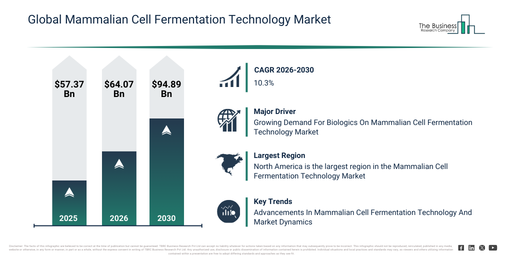
    The market for mammalian cell fermentation technology has experienced significant expansion recently. Projections indicate a rise from $57.37 billion in 2025 to $64.07 billion by 2026, reflecting a compound annual growth rate of 11.7%. This accelerated growth during the preceding period was driven by several factors, including the increasing prevalence of monoclonal antibody-based therapies, the proven effectiveness of mammalian cell expression systems, a growing number of biopharmaceutical product approvals, the established use of batch fermentation methods, and the expanding scope of academic exploration in cell culture innovations.

    The sector focused on mammalian cell fermentation technology is poised for substantial expansion over the upcoming years, with projections indicating a market valuation reaching $94.89 billion by 2030, driven by a compound annual growth rate of 10.3%. This upward trajectory is fueled by several key factors, including a surge in demand for biologics and their generic counterparts, biosimilars, alongside increased financial commitment to cell line engineering innovations. Furthermore, the burgeoning field of personalized medicine, the continuous growth in vaccine development programs, and the expanding biomanufacturing capabilities within developing economies are all contributing significantly to this anticipated market growth. Key developments expected to shape this period encompass a greater embrace of CHO cell-based manufacturing solutions, a heightened need for efficient and scalable bioprocessing methods, a trend toward outsourcing biologic production to Contract Development and Manufacturing Organizations (CDMOs), the proliferation of single-use and modular bioreactor systems, and an intensified concentration on enhancing process efficiency and ensuring consistent product yields.

    Download A Free Sample Report For Comprehensive Market Insights:

    https://www.thebusinessresearchcompany.com/sample.aspx?id=16473&type=smp

    Mammalian Cell Fermentation Technology Market Demand Drivers: What Is Fueling Industry Growth?

    The expansion of the mammalian cell fermentation technology market will likely be driven by the increasing need for biologics, which are medicinal products originating from living organisms or their constituents, frequently employed in the treatment of conditions like cancer, autoimmune diseases, and infections. This heightened requirement for biologics is a consequence of progress in biotechnology, demonstrating efficacy in managing widespread chronic ailments such as cancer and autoimmune disorders, alongside favorable regulatory decisions and augmented investments in research and development initiatives. Mammalian cell fermentation excels at producing intricate biologics, thereby satisfying the escalating demand for customized and precision therapies. Its capacity for scaled production, adaptability, and consistent generation of superior proteins significantly contribute to advancements within the biopharmaceutical sector. To illustrate, data from the National Library of Medicine indicated that in 2023, the US Food and Drug Administration (FDA) authorized 55 new medications, encompassing 29 novel chemical entities (NCEs) and 25 novel biological entities (NBEs), representing a substantial 50% rise from the 37 approvals recorded in 2022. Consequently, the expanding market for biologics is anticipated to fuel the growth of the mammalian cell fermentation technology market.

    Mammalian Cell Fermentation Technology Market Categorization By Product Type And Application

    The mammalian cell fermentation technology market covered in this report is segmented –

    1) By Type: Chinese Hamster Ovary Cell Fermentation, Human Embryonic Kidney Cell Fermentation, Baby Hamster Kidney Cell Fermentation, Murine Myeloma Cell Fermentation, Other Types

    2) By Application: Monoclonal Antibodies, Recombinant Proteins, Vaccines, Hormones, Enzymes, Other Applications

    3) By End-Use: Biopharmaceutical Companies, Contract Research Organizations And Contract Development and Manufacturing Organizations, Academic And Research Institutes

    Subsegments:

    1) By Chinese Hamster Ovary (CHO) Cell Fermentation: Suspension CHO Cell Lines, Serum-Free CHO Fermentation, High-Yield Recombinant Protein Production

    2) By Human Embryonic Kidney (HEK) Cell Fermentation: Transient Transfection-Based Fermentation, Viral Vector Production Systems, Serum-Free HEK Cell Cultures

    3) By Baby Hamster Kidney (BHK) Cell Fermentation: Vaccine Antigen Production, Stable Cell Line Fermentation, Suspension BHK Cell Cultures

    4) By Murine Myeloma Cell Fermentation: Monoclonal Antibody Production, Hybridoma-Based Fermentation, Serum-Free Antibody Expression Systems

    5) By Other Types: Insect Cell Line Fermentation, Stem Cell–Derived Mammalian Cells, Custom Engineered Cell Line Fermentation

    Mammalian Cell Fermentation Technology Market Innovation Trends: Which Developments Are Transforming The Industry?

    To bolster their standing in the mammalian cell fermentation technology sector, leading corporations are prioritizing the enhancement of novel techniques, specifically mammalian cell culture. This method is indispensable across diverse domains such as biomanufacturing, scientific inquiry, and regenerative therapies, facilitating the creation of vital therapeutic proteins, vaccines, and cellular or tissue equivalents. In a notable development in June 2024, Syntegon, a German life sciences firm, unveiled its novel Modular Bioprocessing Platform (MBP) at Achema 2024, engineered to address primary obstacles within biopharmaceutical manufacturing. This advanced system provides a highly adaptable, seamlessly integrated, and automated approach suitable for a broad spectrum of uses, encompassing microbial and mammalian cell cultivation, protein production, peptide synthesis, oligonucleotide manufacturing, plasmid DNA generation, and recombinant vaccine development. The modular architecture of the MBP contributes to reduced deployment times and lower expenses while upholding superior performance and quality, reflecting the esteemed “made in Germany” benchmark. Furthermore, its pre-engineered cleanroom configuration situates all ancillary equipment beyond the cleanroom environment, thereby improving operational efficiency and streamlining upkeep procedures.

    Mammalian Cell Fermentation Technology Market Company Landscape And Strategic Competition

    Major companies operating in the mammalian cell fermentation technology market are AbbVie Inc., Thermo Fisher Scientific Inc, AstraZeneca PLC, Roche Holdings Inc., Merck KGaA, AGC Group, Lonza Group Ltd., Boehringer Ingelheim GmbH, Catalent Inc., Sartorius AG, Samsung Biologics Co. Ltd., WuXi Biologics, Biocon Limited, Eppendorf AG, KBI Biopharma Inc., Fujifilm Diosynth Biotechnologies, Avid Bioservices Inc., BiOZEEN, Nordmark Pharma GmbH, Scorpius BioManufacturing Inc

    Access The Complete Mammalian Cell Fermentation Technology Market Report:

    https://www.thebusinessresearchcompany.com/report/mammalian-cell-fermentation-technology-global-market-report

    Mammalian Cell Fermentation Technology Market Largest Region: Which Geography Holds The Highest Market Share?

    North Americawas the largest region in the mammalian cell fermentation technology market in 2025. Asia-Pacificis expected to be the fastest-growing region in the forecast period. The regions covered in the mammalian cell fermentation technology market report are Asia-Pacific, South East Asia, Western Europe, Eastern Europe, North America, South America, Middle East, Africa.

    Get in touch with us:

    The Business Research Company: https://www.thebusinessresearchcompany.com/

    Americas: +1 310-496-7795

    Asia: +44 7882 955267 & +91 8897263534

    Europe: +44 7882 955267

    Email us at: marketing@tbrc.info

    Follow us on:

    LinkedIn: https://in.linkedin.com/company/the-business-research-company

    YouTube: https://www.youtube.com/channel/UC24_fI0rV8cR5DxlCpgmyFQ

    Global Market Model: https://www.thebusinessresearchcompany.com/global-market-model
  • Mammalian Cell Culture Market Trends Are Creating New Opportunities For Industry Leaders

    Mammalian Cell Culture Market Trends Are Creating New Opportunities For Industry Leaders

    Delivering more actionable and strategically valuable research, The Business Research Company’s 2026 market reports feature market attractiveness analysis, total addressable market evaluation, company benchmarking matrices, interactive Excel dashboards, expanded supply chain intelligence, emerging startup coverage, and detailed product insights.

    Mammalian Cell Culture Market Value Expansion And Long-Term Growth Outlook

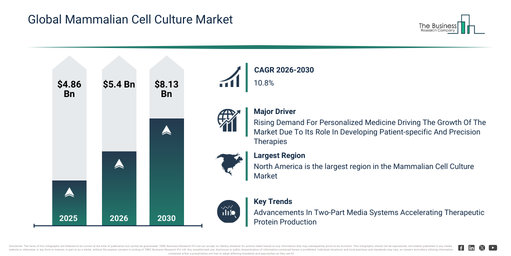
    The market for mammalian cell cultures has experienced significant expansion recently, projecting a rise from $4.86 billion in 2025 to $5.4 billion in 2026, reflecting an 11.1% compound annual growth rate. Factors contributing to this historical growth trajectory include the increased production of monoclonal antibodies, bolstered vaccine manufacturing capabilities, a greater integration of mammalian cells in the drug discovery process, enhanced accessibility of sophisticated culture equipment, and the burgeoning field of biopharmaceutical research.

    The market for mammalian cell cultures is poised for substantial expansion in the upcoming years, projected to reach $8.13 billion by 2030, driven by a compound annual growth rate of 10.8%. This anticipated growth is fueled by several key factors, including augmented investments in cell and gene therapies, a heightened demand for biological product manufacturing, the broadening scope of regenerative medicine research, an intensified emphasis on adaptable cell culture technologies, and the increasing integration of continuous bioprocessing methods. Significant trends anticipated within this period involve a greater acceptance of mammalian cell culture media free from animal serum, a surging need for the large-scale production of biopharmaceuticals, the widespread adoption of automated cell culture systems, the growth of facilities for manufacturing cell-based vaccines, and a more pronounced focus on achieving consistent processes and maximizing product yields.

    Download A Free Sample Report For Comprehensive Market Insights:

    https://www.thebusinessresearchcompany.com/sample.aspx?id=30318&type=smp

    Mammalian Cell Culture Market Growth Drivers: What Factors Are Accelerating Expansion?

    The expanding need for individualized medical solutions is anticipated to be a primary catalyst for the advancement of the mammalian cell culture sector in the future. This trend towards personalized medicine involves tailoring therapies to an individual’s unique genetic makeup, environmental influences, and lifestyle choices, thereby facilitating more effective and targeted healthcare interventions. The heightened requirement for such customized treatments stems from their superior efficacy, as treatments are specifically adapted to individual genetic and biological characteristics, leading to better results for patients. Mammalian cell culture plays a crucial role in realizing personalized medicine by offering a regulated setting for the examination of patient-specific cells, which in turn supports the creation of bespoke therapies and the evaluation of drug reactions for enhanced precision and effectiveness in treatment. Illustrating this point, a report from the Personalized Medicine Coalition, a non-profit entity based in the United States, indicated that in 2023, the FDA granted approval for 16 novel personalized treatments aimed at individuals suffering from rare conditions, marking a substantial jump from the six approvals recorded in 2022. Consequently, the escalating demand for personalized medicine is a significant factor contributing to the growth trajectory of the mammalian cell culture market.

    Mammalian Cell Culture Market Segment Analysis And Revenue Opportunities

    The mammalian cell culture market covered in this report is segmented –

    1) By Product: Media, Sera, Reagents, Equipment

    2) By Cell Line: Chinese Hamster Ovary (CHO), Wistar Institute-38 (WI-38), Rat Glial Tumor Cell Line (C6), Human Embryonic Kidney 293 (HEK293), Henrietta Lacks (HeLa)

    3) By Application: Biopharmaceutical Production, Vaccine Production, Toxicity Testing, Drug Screening and Development, Tissue Engineering And Regenerative Medicine

    4) By End-Use: Pharmaceutical And Biotechnology Companies, Hospitals And Diagnostic Laboratories, Research And Academic Institutes, Contract Research Organizations (CROs)

    Subsegments:

    1) By Media: Serum-free Media, Chemically Defined Media, Classical Media, Protein-free Media, Specialty Media, Custom Media Formulations

    2) By Sera: Fetal Bovine Serum (FBS), Newborn Calf Serum, Adult Bovine Serum, Donor Horse Serum

    3) By Reagents: Growth Factors And Cytokines, Cell Dissociation Reagents, Supplements And Additives, Cryoprotective Agents, Buffers And Salt Solutions, Antibiotics And Antimycotics

    4) By Equipment: Bioreactors And Fermenters, Culture Vessels, Filtration Systems, Centrifuges, Cell Counters And Analyzers, Incubators, Biosafety Cabinets, Microscopes, Refrigeration And Cryostorage Equipment

    Mammalian Cell Culture Market Trends: What Is Shaping Future Industry Growth?

    In the realm of mammalian cell culture, leading entities are prioritizing advancements in cell culture media, specifically the adoption of two-part production systems, with the goals of augmenting protein output, bolstering cell survival rates, and optimizing manufacturing processes for therapeutic purposes that can be scaled up. A two-part production system represents a method for cultivating cells that involves utilizing two separate media formulations: one designed for overall cell proliferation and the other specifically formulated to boost protein synthesis, thereby leading to greater overall efficiency. Illustratively, Lonza Group Ltd., a contract development and manufacturing organization headquartered in Switzerland, introduced the TheraPRO CHO Media System in July 2023. This cutting-edge solution is a cell culture medium that is chemically defined and free from animal-derived components, meticulously crafted for GS-CHO mammalian cell lines. Its objective is to elevate the manufacturing of therapeutic proteins and monoclonal antibodies by ensuring superior cell viability and increased protein yields. Furthermore, its inherent scalability accommodates every phase of bioprocess production, ranging from initial cell line development through to extensive manufacturing. Through this release, Lonza aims to simplify operational procedures, elevate the caliber of manufactured goods, and expedite the market entry for biopharmaceutical producers.

    Mammalian Cell Culture Market Leading Players Shaping Industry Direction

    Major companies operating in the mammalian cell culture market are Novartis AG, Thermo Fisher Scientific Inc., Merck KGaA, Danaher Corporation, GE Healthcare, Becton Dickinson and Company, Lonza Group AG, Avantor Inc., Agilent Technologies Inc., Charles river laboratories, Sartorius AG, Samsung biologics, Wuxi biologics, Bio-Techne Corporation, Miltenyi Biotec, STEMCELL Technologies, Takara Bio Inc., Goodwin biotechnology, HiMedia Laboratories Private Limited, Promocell GmbH, Eppendorf AG, Cell Culture Company LLC, Cell X Technologies.

    Access The Complete Mammalian Cell Culture Market Report:

    https://www.thebusinessresearchcompany.com/report/global-mammalian-cell-culture-market-report

    Mammalian Cell Culture Market Regional Analysis: Which Region Leads By Revenue?

    North Americawas the largest region in the mammalian cell culture market in 2025. Asia-Pacificis expected to be the fastest-growing region in the forecast period. The regions covered in the mammalian cell culture market report are Asia-Pacific, South East Asia, Western Europe, Eastern Europe, North America, South America, Middle East, Africa.

    Get in touch with us:

    The Business Research Company: https://www.thebusinessresearchcompany.com/

    Americas: +1 310-496-7795

    Asia: +44 7882 955267 & +91 8897263534

    Europe: +44 7882 955267

    Email us at: marketing@tbrc.info

    Follow us on:

    LinkedIn: https://in.linkedin.com/company/the-business-research-company

    YouTube: https://www.youtube.com/channel/UC24_fI0rV8cR5DxlCpgmyFQ

    Global Market Model: https://www.thebusinessresearchcompany.com/global-market-model
  • Malignant Pleural Effusion Market Growth Is Reshaping Competitive Advantage Across The Industry

    Malignant Pleural Effusion Market Growth Is Reshaping Competitive Advantage Across The Industry

    Enhanced with market attractiveness analysis, total addressable market evaluation, company benchmarking matrices, interactive Excel dashboards, expanded supply chain intelligence, emerging startup coverage, and detailed product insights, The Business Research Company’s 2026 market reports deliver more actionable and strategically valuable research.

    Malignant Pleural Effusion Market Expected To Reach $6.51 Billion By 2030 At 6.6% CAGR

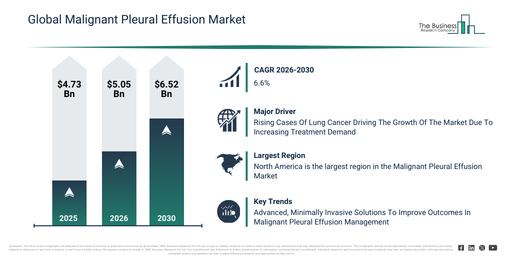
    The malignant pleural effusion sector experienced robust expansion lately. Projections indicate a rise from $4.73 billion in 2025 to $5.05 billion in 2026, reflecting a compound annual growth rate of 6.8%. Historical expansion drivers included a greater occurrence of metastatic cancers, a scarcity of treatment methodologies offering cures, the necessity for frequent thoracentesis to alleviate symptoms, the expansion of inpatient cancer treatment facilities, and the progressive acceptance of pleurodesis procedures.

    The market for malignant pleural effusion is poised for substantial expansion over the coming years, projected to reach $6.52 billion by 2030, reflecting a compound annual growth rate of 6.6%. This anticipated growth trajectory is fueled by an increasing incidence of cancer globally, coupled with ongoing innovations in pleural catheter technology, a discernible shift towards outpatient and home-care models, enhanced precision in diagnostic imaging techniques, and a heightened demand for therapeutic interventions prioritizing patient quality of life. Key developments anticipated within this period involve a greater adoption of indwelling pleural catheters for sustained management, a trend favoring less invasive procedures for pleural conditions, the increasing incorporation of systemic cancer treatments into MPE management strategies, a stronger emphasis on relief of symptoms and palliative care, and the broader application of imaging-guided methods for both diagnosis and treatment.

    Download A Free Sample Report For Comprehensive Market Insights:

    https://www.thebusinessresearchcompany.com/sample.aspx?id=22047&type=smp

    Malignant Pleural Effusion Market Growth Factors Supporting Long-Term Expansion

    An escalation in lung cancer diagnoses is anticipated to fuel the expansion of the malignant pleural effusion market. Lung cancer, defined by the uncontrolled proliferation of aberrant cells within the lungs, can manifest as tumors that disrupt normal pulmonary function. Factors such as smoking and tobacco consumption are primary contributors to the increasing incidence of lung cancer, as extended exposure to cigarette constituents inflicts damage on lung tissues, instigates genetic alterations, and fosters the unrestrained growth of malignant cells, thereby substantially elevating the risk of developing the ailment. Malignant pleural effusion signifies a more advanced stage of lung cancer, characterized by the dissemination of the tumor into the pleural space, leading to compromised respiratory capacity and a less favorable prognosis. Illustratively, the American Cancer Society Facts and Figures reported that in the United States, estimated new cases of lung and bronchus cancer were 236,740 in 2022 and projected to be 238,340 in 2023, with corresponding death estimates of 130,180 in 2022 and 127,070 in 2023. Consequently, the growing prevalence of lung cancer is directly stimulating the growth of the malignant pleural effusion market.

    Advances in healthcare infrastructure are poised to catalyze the expansion of the malignant pleural effusion market. This infrastructure encompasses the physical, technological, and organizational frameworks essential for healthcare delivery, including medical facilities, sophisticated equipment, robust IT systems, and skilled personnel. Such improvements are driven by the imperative for more effective disease management, collectively enhancing accessibility to healthcare, operational efficiency, and the overall caliber of medical services. By providing access to cutting-edge medical technologies, well-resourced healthcare settings, and specialized medical expertise, enhanced healthcare infrastructure facilitates more accurate diagnosis, effective treatment, and proficient management of malignant pleural effusion, ultimately leading to improved patient health outcomes. As an illustration, the American Health Care Association noted a rise in the number of hospitals across the United States, increasing by 0.591% from 6,093 to 6,129 between May 2022 and May 2023. Therefore, the ongoing enhancements in healthcare infrastructure are acting as a key driver for the growth observed in the malignant pleural effusion market.

    Malignant Pleural Effusion Market Segmentation And Category Breakdown

    The malignant pleural effusion market covered in this report is segmented –

    1) By Treatment: Systemic Therapy, Therapeutic Thoracentesis, Thoracic Drainage And Pleurodesis, Indwelling Pleural Catheter

    2) By Diagnosis: Pleural Fluid Cytology, Immunohistochemical Tests, Imaging Tests, Pleural Thoracentosis, Pleuroscopy, Pleural Biopsy

    3) By End Users: Hospitals, Ambulatory Clinics, Other End Users

    Subsegments:

    1) By Systemic Therapy: Chemotherapy, Targeted Therapy, Immunotherapy

    2) By Therapeutic Thoracentesis: Single-Time Thoracentesis, Repeated Thoracentesis

    3) By Thoracic Drainage And Pleurodesis: Chemical Pleurodesis, Mechanical Pleurodesis

    4) By Indwelling Pleural Catheter: Tunneled Pleural Catheter, Non-Tunneled Pleural Catheter

    Malignant Pleural Effusion Market Industry Trends Shaping Future Revenue Growth

    In the realm of the malignant pleural effusion market, leading enterprises are concentrating their efforts on pioneering novel solutions, exemplified by the creation of fully implantable automatic fluid-shunt devices, aiming to enhance patient well-being and decrease the frequency of hospitalizations. These sophisticated medical devices, once surgically placed within the body, possess the capability to autonomously evacuate surplus pleural fluid from the lungs into the abdominal cavity or an alternative location, thereby alleviating symptoms such as shortness of breath, diminishing the necessity for repeated medical interventions, and ultimately elevating the patient’s overall quality of life. A notable illustration of this advancement is the introduction of the ACES Automatic Continuous Effusion Shunt System by Pleural Dynamics, a medical device firm based in the United States, in October of 2023. This ingenious system incorporates a flexible, durable pump chamber designed for subcutaneous implantation between the patient’s ribs, connected by catheters to both the pleural space and the peritoneal space. The patient’s natural breathing motion alternately compresses and expands the internal pump extension situated between the ribs, propelling fluid from the pleural cavity into the abdomen for natural reabsorption; furthermore, the system includes an external compression extension that permits manual activation when needed. The primary advantages of this innovative technology encompass its completely internal placement, dispensing with external drainage apparatus or collection containers, its automatic fluid transfer mechanism powered by the patient’s respiration, a brief hospital stay requirement for the implantation procedure, and the provision of persistent relief from the discomfort associated with recurring effusions.

    Malignant Pleural Effusion Market Competitive Analysis Of Major Industry Participants

    Major companies operating in the malignant pleural effusion market are Becton Dickinson and Company, Cook Medical LLC, Merit Medical Systems Inc, Argon Medical Devices Inc, B Braun SE, Medtronic plc, Smiths Medical, Teleflex Incorporated, Cardinal Health Inc, Getinge AB, AngioDynamics Inc, Rocket Medical plc, Redax SpA, Atrium Medical Corporation, PolyMedicure Ltd, Troge Medical GmbH, Vygon SA, ICU Medical Inc, ConvaTec Group plc, Baxter International Inc

    Access The Complete Malignant Pleural Effusion Market Report:

    https://www.thebusinessresearchcompany.com/report/malignant-pleural-effusion-global-market-report

    Malignant Pleural Effusion Market Geographic Distribution And Regional Opportunities

    North Americawas the largest region in the malignant pleural effusion market in 2025. Asia-Pacificis expected to be the fastest-growing region in the forecast period. The regions covered in the malignant pleural effusion market report are Asia-Pacific, South East Asia, Western Europe, Eastern Europe, North America, South America, Middle East, Africa.

    Get in touch with us:

    The Business Research Company: https://www.thebusinessresearchcompany.com/

    Americas: +1 310-496-7795

    Asia: +44 7882 955267 & +91 8897263534

    Europe: +44 7882 955267

    Email us at: marketing@tbrc.info

    Follow us on:

    LinkedIn: https://in.linkedin.com/company/the-business-research-company

    YouTube: https://www.youtube.com/channel/UC24_fI0rV8cR5DxlCpgmyFQ

    Global Market Model: https://www.thebusinessresearchcompany.com/global-market-model
  • Malignant Mesothelioma Market Forecast Signals New Revenue Opportunities Through 2030

    Malignant Mesothelioma Market Forecast Signals New Revenue Opportunities Through 2030

    Through market attractiveness analysis, total addressable market evaluation, company benchmarking matrices, interactive Excel dashboards, expanded supply chain intelligence, emerging startup coverage, and detailed product insights, The Business Research Company’s 2026 market reports provide more actionable and strategically valuable research.

    Malignant Mesothelioma Market Size And Revenue Forecast Through 2030

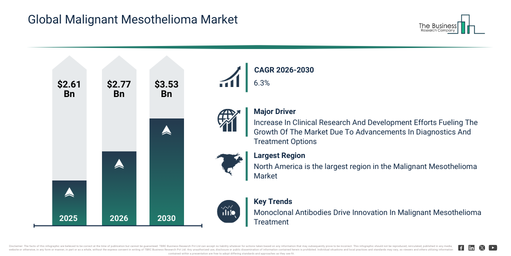
    The market for malignant mesothelioma has experienced robust expansion lately. Projections indicate a rise from $2.61 billion in 2025 to $2.77 billion in 2026, reflecting a compound annual growth rate of 6.3%. Factors contributing to this expansion during the historical period include widespread asbestos exposure historically within the construction and manufacturing sectors, the prolonged incubation period of the disease, a scarcity of effective early-stage treatment choices, heightened awareness regarding occupational health, and incremental advancements in diagnostic imaging technologies.

    The market for malignant mesothelioma is poised for remarkable expansion over the upcoming years, projecting a rise to $3.53 billion by 2030. This growth trajectory is underpinned by a compound annual growth rate (CAGR) of 6.3%, fueled by key developments such as progress in immunotherapy and targeted drug treatments, increased funding for rare cancer research, a greater number of ongoing clinical trials, enhancements in diagnostic capabilities, and escalating healthcare expenditures dedicated to oncology. Furthermore, the forecast period is anticipated to witness significant trends including a broader embrace of immunotherapy and targeted therapies, a heightened emphasis on integrated treatment strategies, a growing need for prompt and precise diagnoses, the proliferation of dedicated mesothelioma treatment facilities, and a surge in participation within clinical trials for uncommon cancers.

    Download A Free Sample Report For Comprehensive Market Insights:

    https://www.thebusinessresearchcompany.com/sample.aspx?id=22046&type=smp

    Malignant Mesothelioma Market Demand Drivers Creating New Revenue Opportunities

    Advancing clinical investigations and development initiatives are poised to propel the malignant mesothelioma market forward. These endeavors encompass rigorous scientific studies and trials aimed at pioneering novel pharmaceuticals, therapeutic interventions, and medical apparatus, meticulously assessing their safety profiles, effectiveness, and potential adverse reactions via structured clinical assessments. The surge in these research and development activities stems from an escalating need for superior treatment modalities, particularly in light of the augmenting incidence of persistent ailments and intricate medical conditions. Such commitment to research and development fuels progress in the realm of malignant mesothelioma by hastening breakthroughs in diagnostic capabilities, treatment strategies, and precision medicine, thereby cultivating innovative methodologies to refine early identification, bolster survival statistics, and formulate more potent yet less intrusive therapeutic avenues. Illustratively, as reported by the Anadolu Agency, a Turkish state-owned news outlet, in January 2025, clinical trials constitute a substantial portion, approximately 40%, of the research expenditure within the U.S. pharmaceutical sector, representing an annual investment close to $7 billion. Consequently, the intensified focus on research and development serves as a significant catalyst for the expansion of the malignant mesothelioma market.

    Malignant Mesothelioma Market Segment Outlook: Which Categories Are Expanding The Fastest?

    The malignant mesothelioma market covered in this report is segmented –

    1) By Treatment Type: Chemotherapy, Radiation Therapy, Surgery, Immunotherapy, Targeted Therapy

    2) By Route Of Administration: Oral, Intravenous, Injectable

    3) By Distribution Channel: Hospital Pharmacies, Specialty Pharmacies

    4) By End-User: Hospitals, Oncology Clinics

    Subsegments:

    1) By Chemotherapy: Alkylating Agents, Antimetabolites, Combination Therapy

    2) By Radiation Therapy: External Beam Radiation Therapy (EBRT), Intensity-Modulated Radiation Therapy (IMRT), Stereotactic Body Radiation Therapy (SBRT), Proton Therapy

    3) By Surgery: Pleurectomy Or Decortication (P/D), Extrapleural Pneumonectomy (EPP), Cytoreductive Surgery, Palliative Surgery

    4) By Immunotherapy: Immune Checkpoint Inhibitors, Monoclonal Antibodies, Tumor Vaccines, Adoptive Cell Therapy

    5) By Targeted Therapy: Tyrosine Kinase Inhibitors (TKIs), Angiogenesis Inhibitors, Mesothelin-Targeted Agents, Gene Therapy-Based Approaches

    Malignant Mesothelioma Market Trends Driving Strategic Industry Expansion

    Within the malignant mesothelioma market, leading corporations are directing their efforts towards creating sophisticated therapeutic approaches, including monoclonal antibody therapies, aimed at suppressing tumor progression and enhancing treatment accuracy. These laboratory-generated proteins are designed to replicate the body’s natural defenses in identifying and attacking particular targets, like the antigens present on malignant cells. A notable development occurred in November 2023 when Ono Pharmaceutical Co. Ltd., headquartered in Japan, secured supplementary approval within Japan for an expanded application of Opdivo, identified chemically as nivolumab. This specific formulation is a human anti-human PD-1 monoclonal antibody and is now indicated for the treatment of malignant mesothelioma, with the exception of the malignant pleural form. This regulatory milestone positions Opdivo as a novel therapeutic choice for this particular ailment, especially given the prior absence of established treatment protocols, further underscored by its designation as an orphan drug for this use, emphasizing its critical role in meeting an unmet medical demand.

    Malignant Mesothelioma Market Key Companies And Competitive Benchmarking

    Major companies operating in the malignant mesothelioma market are AstraZeneca PLC, Bristol Myers Squibb Company, Merck & Co. Inc., F. Hoffmann-La Roche Ltd, Novartis AG, Pfizer Inc., Eli Lilly and Company, Johnson & Johnson, AbbVie Inc., Amgen Inc., Regeneron Pharmaceuticals Inc., Sanofi S.A., Gilead Sciences Inc., Takeda Pharmaceutical Company Limited, Boehringer Ingelheim International GmbH, Bayer AG, Eisai Co. Ltd., Astellas Pharma Inc., Ono Pharmaceutical Co. Ltd., PharmaMar S.A.

    Access The Complete Malignant Mesothelioma Market Report:

    https://www.thebusinessresearchcompany.com/report/malignant-mesothelioma-global-market-report

    Malignant Mesothelioma Market Largest Region By Revenue And Market Share

    North Americawas the largest region in the malignant mesothelioma market in 2025. Asia-Pacificis expected to be the fastest-growing region in the forecast period. The regions covered in the malignant mesothelioma market report are Asia-Pacific, South East Asia, Western Europe, Eastern Europe, North America, South America, Middle East, Africa.

    Get in touch with us:

    The Business Research Company: https://www.thebusinessresearchcompany.com/

    Americas: +1 310-496-7795

    Asia: +44 7882 955267 & +91 8897263534

    Europe: +44 7882 955267

    Email us at: marketing@tbrc.info

    Follow us on:

    LinkedIn: https://in.linkedin.com/company/the-business-research-company

    YouTube: https://www.youtube.com/channel/UC24_fI0rV8cR5DxlCpgmyFQ

    Global Market Model: https://www.thebusinessresearchcompany.com/global-market-model
  • Malignant Melanoma Treatment Market Growth Is Accelerating As Industry Transformation Continues

    Malignant Melanoma Treatment Market Growth Is Accelerating As Industry Transformation Continues

    Delivering more actionable and strategically valuable research, The Business Research Company’s 2026 market reports feature market attractiveness analysis, total addressable market evaluation, company benchmarking matrices, interactive Excel dashboards, expanded supply chain intelligence, emerging startup coverage, and detailed product insights.

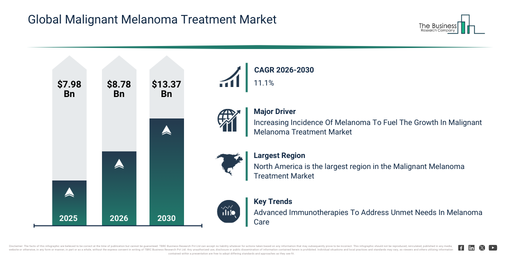
    Malignant Melanoma Treatment Market Growth From $8.78 Billion In 2026 To $13.36 Billion By 2030 At A CAGR Of 11.1%

    The global market for malignant melanoma treatments has experienced substantial expansion, with projections indicating continued robust growth. Forecasts estimate the market value to increase from $7.98 billion in 2025 to $8.78 billion by 2026, reflecting a compound annual growth rate (CAGR) of 10.1%. This preceding period of expansion was fueled by several contributing factors, including an escalating global rate of skin cancer diagnoses, heightened exposure to ultraviolet radiation, the early establishment of chemotherapy as a treatment modality for melanoma, increased public understanding of melanoma’s warning signs, and the initial efficacy demonstrated by surgical interventions for melanoma management.

    Worldwide, the market for treating malignant melanoma is projected to undergo substantial expansion in the forthcoming years, anticipating a surge to $13.37 billion by 2030, fueled by a compound annual growth rate of 11.1%. This anticipated growth from 2023 to 2030 is underpinned by several key factors: a greater number of advanced immunotherapies gaining regulatory approval, a heightened focus on tailoring cancer treatments to individual patients, increased financial commitments towards oncology research and development initiatives, the broadening of programs designed for melanoma detection, and improved access to healthcare services within developing economies. Furthermore, several significant trends are expected to shape this market during the forecast period, including a greater embrace of treatments centered on immunotherapy, increased utilization of combined treatment strategies, a stronger emphasis on addressing melanoma in its early stages, an expansion in the number of clinical trials exploring innovative melanoma therapies, and a growing demand for specialized centers dedicated to cancer care.

    Download A Free Sample Report For Comprehensive Market Insights:

    https://www.thebusinessresearchcompany.com/sample.aspx?id=13252&type=smp

    Malignant Melanoma Treatment Market Expansion Supported By Key Demand Factors

    The rising number of melanoma cases is anticipated to be a significant catalyst for the expansion of the malignant melanoma treatment market. Melanoma, a type of skin cancer originating in melanocytes which are the cells that produce skin pigment, is typically managed through surgical excision of the cancerous growth, with further treatments such as immunotherapy or targeted therapy being considered depending on the cancer’s severity and spread. As an illustration, the Melanoma Research Foundation reported that in the United States, the count of melanoma cases rose by 7.3% from 1,87,000 in 2023 to 2,00,651 in 2024, a trend clearly indicating that the escalating prevalence of melanoma is fueling the advancement of its treatment market.

    Malignant Melanoma Treatment Market Segment Landscape: Which Areas Lead Market Development?

    The malignant melanoma treatment market covered in this report is segmented –

    1) By Treatment: Immunotherapy, Radiation Therapy, Chemotherapy, Other Treatments

    2) By Disease Type: Lentigo Maligna Melanoma, Acral Lentiginous Melanoma, Nodular Melanoma, Superficial Spreading Melanoma

    3) By End-User: Hospitals, Specialty Clinics, Other End Users

    Subsegments:

    1) By Immunotherapy: Checkpoint Inhibitors, Cytokine Therapy, Oncolytic Virus Therapy

    2) By Radiation Therapy: External Beam Radiation Therapy, Stereotactic Radiation Therapy

    3) By Chemotherapy: Traditional Chemotherapy Agents, Combination Chemotherapy Regimens

    4) By Other Treatments: Targeted Therapy, Surgical Interventions, Clinical Trials For Novel Therapies

    Malignant Melanoma Treatment Market Growth Trends Influencing Competitive Dynamics

    In the realm of malignant melanoma treatment, key players are dedicating their efforts to pioneering novel approaches, including autologous tumor-infiltrating lymphocyte (TIL) therapies, as a response to the escalating need for advanced post-checkpoint immunotherapies and tailored cellular treatments for individuals experiencing progression despite PD-1 inhibitors and targeted therapies. This specialized immunotherapy, autologous TIL therapy, involves isolating the patient’s own immune cells that have infiltrated their tumor, cultivating them in a laboratory setting, and then reintroducing them to bolster the body’s capacity to identify and eliminate cancerous cells. Illustrating this trend, Iovance Biotherapeutics, a pharmaceutical entity based in the United States, introduced AMTAGVI (lifileucel) in February 2024, marking the launch of an autologous TIL therapy specifically indicated for adult patients diagnosed with unresectable or metastatic melanoma who have not responded to prior PD-1 therapy or targeted therapies (if applicable for BRAF V600-mutant cases). AMTAGVI (lifileucel) consists of these patient-derived, expanded tumor-infiltrating lymphocytes, which are administered following a conditioning regimen and are designed to enhance the proliferation of tumor-specific T cells responsible for tumor cell destruction. Distinctive attributes of this treatment comprise its personalized manufacturing process, a simplified single-dose administration, and its inherent ability to target a diverse array of tumor antigens.

    Malignant Melanoma Treatment Market Industry Leaders And Market Competition

    Major companies operating in the malignant melanoma treatment market are Johnson & Johnson Private Limited, Pfizer Inc., Hoffmann-La Roche AG, Bayer AG, Novartis AG, Merck & Co. Inc., GlaxoSmithKline plc, Bristol-Myers Squibb Company, Sanofi S.A., AstraZeneca plc, Takeda Pharmaceutical Company Limited, Eli Lilly and Company, Amgen Inc., Daiichi Sankyo Company Limited, Mylan N.V., Chugai Pharmaceutical Co. Ltd., Sun Pharmaceutical Industries Limited, Ono Pharmaceutical Co. Ltd., Exelixis Inc., Array BioPharma Inc., Pierre Fabre Group, Clinigen Group, Iovance Biotherapeutics Inc., X4 Pharmaceuticals Inc., Mirati Therapeutics Inc., Moleculin Biotech Inc., Polynoma LLC, Enzon Pharmaceuticals Inc., Northwest Biotherapeutics Inc.

    Access The Complete Malignant Melanoma Treatment Market Report:

    https://www.thebusinessresearchcompany.com/report/malignant-melanoma-treatment-global-market-report

    Malignant Melanoma Treatment Market Regional Analysis And Leading Geography

    North Americawas the largest region in the malignant melanoma treatment market in 2025. Asia-Pacificis expected to be the fastest-growing region in the forecast period. The regions covered in the malignant melanoma treatment market report are Asia-Pacific, South East Asia, Western Europe, Eastern Europe, North America, South America, Middle East, Africa.

    Get in touch with us:

    The Business Research Company: https://www.thebusinessresearchcompany.com/

    Americas: +1 310-496-7795

    Asia: +44 7882 955267 & +91 8897263534

    Europe: +44 7882 955267

    Email us at: marketing@tbrc.info

    Follow us on:

    LinkedIn: https://in.linkedin.com/company/the-business-research-company

    YouTube: https://www.youtube.com/channel/UC24_fI0rV8cR5DxlCpgmyFQ

    Global Market Model: https://www.thebusinessresearchcompany.com/global-market-model
  • Male Fertility Market Outlook Highlights The Next Major Growth Opportunities

    Male Fertility Market Outlook Highlights The Next Major Growth Opportunities

    Enhanced with market attractiveness analysis, total addressable market evaluation, company benchmarking matrices, interactive Excel dashboards, expanded supply chain intelligence, emerging startup coverage, and detailed product insights, The Business Research Company’s 2026 market reports deliver more actionable and strategically valuable research.

    Male Fertility Market Expansion Outlook: What Revenue Opportunities Lie Ahead?

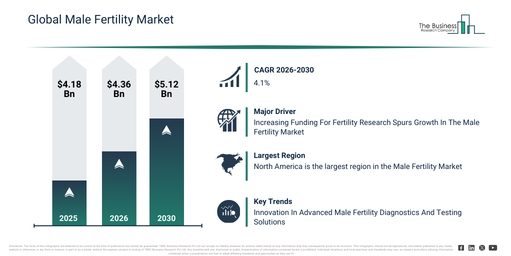
    The male fertility market, valued at $4.18 billion in 2025, anticipates a continued upward trajectory, reaching $4.36 billion by 2026 with a compound annual growth rate of 4.3%. This expansion during the preceding period was propelled by several key factors, including individuals delaying the decision to have children, a rise in infertility cases linked to lifestyle choices, a greater occurrence of conditions like varicocele and hormonal imbalances, the early integration of advanced reproductive technologies such as IVF and ICSI, and an increasing public consciousness regarding male reproductive health.

    The global male fertility market is projected for consistent expansion, anticipated to reach a valuation of $5.12 billion by 2030, reflecting a compound annual growth rate of 4.1%. This projected uptick in the coming years is fueled by several key factors, including a heightened diagnosis rate of male infertility, increasing comfort levels among men concerning fertility assessments, the broadening availability of fertility treatments in developing economies, augmented investments in research pertaining to reproductive health, and a greater uptake of supplements aimed at preserving fertility. Over the same projection period, significant market shifts are expected, characterized by heightened public awareness surrounding male infertility issues, wider application of sophisticated semen analysis methodologies, escalating demand for assisted reproductive procedures, increased expenditure on male fertility supplements, and the proliferation of dedicated male fertility clinics.

    Download A Free Sample Report For Comprehensive Market Insights:

    https://www.thebusinessresearchcompany.com/sample.aspx?id=13699&type=smp

    Male Fertility Market Growth Drivers And Industry Catalysts

    Heightened financial investment in fertility research is anticipated to significantly boost the male fertility market’s trajectory. Fertility research involves the scientific exploration and analysis of elements impacting reproductive well-being, covering aspects from conception to pregnancy and enhancing fertility results. A key focus within this research funding is dedicated to male fertility studies, aiming for a deep understanding of reproductive health, better fertility outcomes, and acknowledging the crucial contribution of male factors to successful conception. Illustratively, in October 2023, the Eunice Kennedy Shriver National Institute of Child Health and Human Development, a prominent US health agency, allocated $2.26 million towards researching fertility-preserving therapies, underscoring the pivotal role of extended financial support for fertility research in stimulating the expansion of the male fertility sector.

    Male Fertility Market Segments: Where Are The Largest Growth Opportunities?

    The male fertility market covered in this report is segmented –

    1) By Test Type: Sperm Agglutination, DNA Fragmentation Technique, Oxidative Stress Analysis, Computer Assisted Semen Analysis, Sperm Penetration Assay, Other Test Types

    2) By Treatment Type: Assisted Reproductive Technology, Varicocele Surgery, Medication

    3) By Supplement: Antioxidants, Vitamins, Minerals, Amino Acids, Enzymes

    4) By End User: Hospitals And Clinics, Fertility Centers, Research Institutes, Other End Users

    Subsegments:

    1) By Sperm Agglutination: Seminal Plasma Agglutination Test, Sperm-Bound Antibody Tests

    2) By DNA Fragmentation Technique: Sperm DNA Fragmentation Index (DFI) Tests, Comet Assay

    3) By Oxidative Stress Analysis: Reactive Oxygen Species (ROS) Measurement, Antioxidant Capacity Tests

    4) By Computer Assisted Semen Analysis (CASA): Motility Analysis, Morphology Assessment

    5) By Sperm Penetration Assay: Sperm-oocyte Interaction Tests, In Vitro Fertilization (IVF) Models

    6) By Other Test Types: Hormonal Tests, Genetic Testing, Semen Culture Tests

    #Male Fertility Market Trends Influencing Long-Term Demand

    In the male fertility sector, leading players are channeling their efforts into pioneering advancements like portable computer-assisted semen analysis (CASA) devices, a response to escalating demand stemming from postponed childbearing, heightened consciousness around male infertility factors, and the increasing need for localized, user-friendly diagnostic tools. A portable CASA system represents a handheld or mobile instrument that employs sophisticated software and imaging capabilities for the automated assessment of sperm characteristics, such as concentration, movement, and shape, thereby facilitating swift, precise, and in-situ fertility evaluations. Illustrating this trend, ExSeed Health, a UK-based private entity specializing in medical devices and digital health, introduced the ExSeed CASA Lite in November 2023, a compact computer-assisted semen analysis apparatus engineered for clinical settings and auxiliary laboratories. This ExSeed CASA Lite integrates a straightforward brightfield microscopy module with high-definition video recording and cloud-based analytical software; it is presented as an IVD-compliant solution designated for quantifying crucial metrics—namely, sperm concentration, motility, and specific morphological indicators—accompanied by automated reporting. The system distinguishes itself with features such as a broad field-of-view high-resolution camera capable of capturing images of the entire sample, a web-based platform for swift result delivery and seamless clinic integration, and a minimal laboratory footprint, thereby extending the availability of sophisticated semen analysis beyond major assisted reproductive technology (ART) hubs.

    Male Fertility Market Major Participants And Competitive Dynamics

    Major companies operating in the male fertility market are Bayer Healthcare Inc., Sanofi S.A., MERCK KGaA, Essity AB, Laboratory Corporation Of America Holdings, Endo International plc., Cook Medical, Zydus Lifesciences Ltd., Intas Pharmaceuticals Ltd., ASKA Pharmaceutical Co. Ltd, EMD Serono Inc., Dendreon Pharmaceuticals LLC, Vitrolife, CinnaGen Co., Aytu BioScience Inc., Kindbody, Cryos International, AdvaCare Pharma USA, Ferring Pharmaceuticals, Apricus Biosciences, Reprotech Ltd., Vios Fertility Institute, Andrology Solutions, DxNow, INVO Bioscience

    Access The Complete Male Fertility Market Report:

    https://www.thebusinessresearchcompany.com/report/male-fertility-global-market-report

    Male Fertility Market Geographic Analysis: Where Is Demand Growing The Fastest?

    North Americawas the largest region in the male fertility market in 2025. Asia-Pacificis expected to be the fastest-growing region in the forecast period. The regions covered in the male fertility market report are Asia-Pacific, South East Asia, Western Europe, Eastern Europe, North America, South America, Middle East, Africa.

    Get in touch with us:

    The Business Research Company: https://www.thebusinessresearchcompany.com/

    Americas: +1 310-496-7795

    Asia: +44 7882 955267 & +91 8897263534

    Europe: +44 7882 955267

    Email us at: marketing@tbrc.info

    Follow us on:

    LinkedIn: https://in.linkedin.com/company/the-business-research-company

    YouTube: https://www.youtube.com/channel/UC24_fI0rV8cR5DxlCpgmyFQ

    Global Market Model: https://www.thebusinessresearchcompany.com/global-market-model
  • Malaria Vaccines Market Trends And Growth Drivers Point To Strong Future Potential

    Malaria Vaccines Market Trends And Growth Drivers Point To Strong Future Potential

    Through market attractiveness analysis, total addressable market evaluation, company benchmarking matrices, interactive Excel dashboards, expanded supply chain intelligence, emerging startup coverage, and detailed product insights, The Business Research Company’s 2026 market reports provide more actionable and strategically valuable research.

    Malaria Vaccines Market Growth Potential: How Will Market Size Change Through 2030?

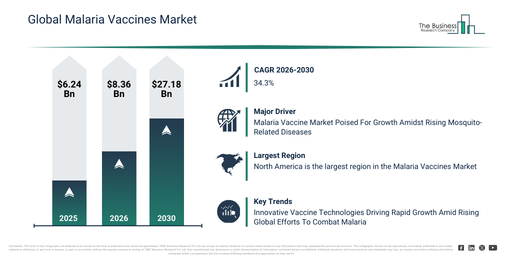
    The global market for malaria vaccines has experienced remarkable expansion lately. Projections indicate a significant increase, moving from $6.24 billion in 2025 to $8.36 billion in 2026, reflecting a robust compound annual growth rate of 33.9%. This surge in growth during the preceding period can be attributed to several key factors: the substantial prevalence of malaria in areas where it is endemic, persistent worldwide efforts aimed at eradicating the disease, financial backing provided by international health organizations, the growing challenge posed by resistance to antimalarial drugs, and the promising early outcomes observed with the initial generation of malaria vaccines.

    The global market for malaria vaccines is projected for substantial expansion in the coming years, reaching an estimated $27.18 billion by 2030 with a compound annual growth rate (CAGR) of 34.3%. This projected surge is fueled by several key factors, including heightened government investment in preventing infectious diseases, the geographical spread of malaria-prone areas due to climate change, a greater need for vaccines that provide sustained immunity, progress in vaccine development and testing, and broader vaccination initiatives in economically disadvantaged nations. Over the forecast period, significant trends are anticipated to shape the market, such as the introduction of advanced malaria vaccines, an increased focus on immunizing children, enhanced collaborations between public and private entities for vaccine distribution, a growing preference for vaccines targeting multiple antigens or in combination, and intensified efforts to conduct widespread vaccination drives in regions where malaria is prevalent.

    Download A Free Sample Report For Comprehensive Market Insights:

    https://www.thebusinessresearchcompany.com/sample.aspx?id=13698&type=smp

    Malaria Vaccines Market Opportunity Drivers: What Is Creating New Revenue Potential?

    The increasing prevalence of illnesses transmitted by mosquitoes is anticipated to be a key driver for the expansion of the malaria vaccine market. These mosquito-borne diseases encompass a wide spectrum of health conditions transmitted through the bite of infected mosquitoes. Specifically, the malaria vaccine, such as the RTS, S/AS01 (RTS, S) formulation, plays a crucial role in averting and mitigating the effects of these infectious diseases by preparing the body’s immune system to identify and combat the malaria parasite. As an illustration, data from the UK Health Security Agency (UKHSA), a governmental body in the United Kingdom, revealed in December 2024 that the UK recorded 2,106 instances of imported malaria in 2023, marking a 26% increase compared to the figures from 2022. Consequently, the upward trend in mosquito-related disease occurrences is directly fueling the growth trajectory of the malaria vaccine market.

    Malaria Vaccines Market Segment Analysis: What Are The Major Market Categories?

    The malaria vaccines market covered in this report is segmented –

    1) By Agent: Plasmodium Falciparum, Plasmodium Vivax

    2) By Vaccine Type: Pre-Erythrocytic, Erythrocytic, Multi-antigen, Other Vaccines

    3) By Route Of Administration: Intramuscular, Subcutaneous, Intradermal, Other Routes Of Administration

    4) By Distribution Channel: Public, Private

    Subsegments:

    1) By Plasmodium Falciparum: RTS,S/AS01 Vaccine, Experimental Vaccines

    2) By Plasmodium Vivax: Candidate Vaccines In Development, Combination Vaccines

    Malaria Vaccines Market Innovation Trends Driving Future Development

    Leading players within the malaria vaccine sector are prioritizing the creation of groundbreaking treatments, specifically next-generation recombinant vaccines, to address the escalating need fueled by growing malaria incidence, governmental backing, and the broadening of vaccination initiatives. These advanced recombinant vaccines employ sophisticated genetic modification methods to target diverse phases of the malaria parasite’s life cycle, thereby eliciting stronger immune reactions and offering more enduring protection than conventional vaccines, which typically target a solitary phase and deliver restricted effectiveness. To illustrate, in October 2025, Zambia’s government initiated the rollout of the R21/Matrix-M malaria vaccine, integrating it into its comprehensive immunization schedule. This vaccine, a product of joint efforts by the University of Oxford and the Serum Institute of India, utilizes a recombinant protein approach coupled with the Matrix-M adjuvant to amplify the immune system’s response; it is administered through a four-dose regimen commencing at six months of age and is intended to supplement current malaria prevention strategies. With superior effectiveness, it aims to safeguard children in Zambian regions experiencing high and moderate malaria transmission, playing a crucial role in the broader objective of eradicating malaria.

    Malaria Vaccines Market Leading Companies Driving Competitive Growth

    Major companies operating in the malaria vaccines market are GlaxoSmithKline Plc, Bharat Biotech International Limited, Serum Institute of India Private Limited, Sanaria Inc, BioNTech SE, Moderna Inc, Pfizer Inc, Novavax Inc, Takeda Pharmaceutical Company Limited, Sanofi SA, Zydus Lifesciences Limited, Valneva SE, GeoVax Labs Inc, Inovio Pharmaceuticals Inc, Vaxart Inc, CanSino Biologics Inc, Sinovac Biotech Ltd, Clover Biopharmaceuticals Inc, Biological E Limited, Emergent BioSolutions Inc

    Access The Complete Malaria Vaccines Market Report:

    https://www.thebusinessresearchcompany.com/report/malaria-vaccines-global-market-report

    Malaria Vaccines Market Global Footprint: Which Region Holds Market Leadership?

    North Americawas the largest region in the malaria vaccines market in 2025. Asia-Pacificis expected to be the fastest growing region in the forecast period. The regions covered in the malaria vaccines market report are Asia-Pacific, South East Asia, Western Europe, Eastern Europe, North America, South America, Middle East, Africa.

    Get in touch with us:

    The Business Research Company: https://www.thebusinessresearchcompany.com/

    Americas: +1 310-496-7795

    Asia: +44 7882 955267 & +91 8897263534

    Europe: +44 7882 955267

    Email us at: marketing@tbrc.info

    Follow us on:

    LinkedIn: https://in.linkedin.com/company/the-business-research-company

    YouTube: https://www.youtube.com/channel/UC24_fI0rV8cR5DxlCpgmyFQ

    Global Market Model: https://www.thebusinessresearchcompany.com/global-market-model
  • Major Depressive Disorder Market Expansion Is Reshaping Competitive Dynamics Across The Industry

    Major Depressive Disorder Market Expansion Is Reshaping Competitive Dynamics Across The Industry

    Delivering more actionable and strategically valuable research, The Business Research Company’s 2026 market reports feature market attractiveness analysis, total addressable market evaluation, company benchmarking matrices, interactive Excel dashboards, expanded supply chain intelligence, emerging startup coverage, and detailed product insights.

    Major Depressive Disorder Market Value Analysis: What Growth Is Expected Over The Forecast Period?

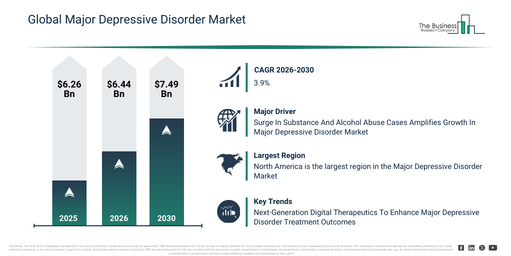
    The global market for major depressive disorder treatments has experienced consistent expansion recently. Projections indicate a rise from $6.26 billion in 2025 to $6.44 billion by 2026, reflecting a compound annual growth rate of 2.9%. This upward trajectory during the past period is largely due to a rise in diagnosed depressive disorders, heightened public consciousness surrounding mental well-being, a greater accessibility of antidepressant pharmaceuticals, the broadening of mental health service provisions, and enhanced diagnostic criteria for mood-related conditions.

    The market for major depressive disorder is poised for consistent expansion within the upcoming years, projected to reach $7.49 billion by 2030 with a CAGR of 3.9%. This anticipated growth trajectory is underpinned by several key factors, including the escalating mental health challenges stemming from lifestyle-related stress, the increasing integration of digital mental health solutions, a burgeoning need for tailored depression therapies, broader insurance accessibility for mental health services, and ongoing advancements in neuromodulation treatments. Furthermore, significant market trends to observe during this period encompass a greater embrace of combined therapeutic strategies, a heightened interest in non-invasive brain stimulation techniques, improved recognition and diagnosis rates for depression, the wider availability of telepsychiatry and remote mental healthcare, and a growing acceptance of innovative and swift-acting antidepressant medications.

    Download A Free Sample Report For Comprehensive Market Insights:

    https://www.thebusinessresearchcompany.com/sample.aspx?id=13042&type=smp

    Major Depressive Disorder Market Growth Momentum: Which Factors Are Influencing Demand?

    Increased instances of addiction to drugs and alcohol are anticipated to be a primary catalyst for the expansion of the major depressive disorder market. Patterns of substance and alcohol consumption that are both excessive and detrimental, resulting in adverse effects on physical, psychological, and social well-being, are encompassed by the terms “substance abuse” and “alcohol abuse.” Major depressive disorder frequently coexists with these issues, creating a cycle where each condition exacerbates the other, thereby substantially elevating the potential for physical and mental health deterioration. Illustrating this point, data released in July 2024 by the Substance Abuse and Mental Health Services Administration, a U.S. governmental body focused on health and human services, revealed that 3.1 percent of individuals, amounting to 8.9 million people, engaged in opioid misuse during 2023, and a notable 21.8 percent of the population aged 12 and above consumed marijuana, establishing it as the most prevalent illicit substance. Furthermore, nicotine vaping among individuals aged 12 and over in the preceding month was reported by 9.4 percent, indicating a rise from the 8.3 percent recorded in 2022. Consequently, the increasing prevalence of substance and alcohol abuse is a significant factor contributing to the growth trajectory of the major depressive disorder market.

    Major Depressive Disorder Market Segment Breakdown: Which Categories Generate The Most Revenue?

    The major depressive disorder market covered in this report is segmented –

    1) By Treatment: Psychotherapy, Medications, Electroconvulsive Therapy (ECT), Transcranial Magnetic Stimulation (TMS), Other Treatments

    2) By Diagnosis: Psychiatric Evaluations, Diagnostic And Statistical Manual of Mental Disorders (DSM-5)

    3) By End-User: Clinics, Hospitals, Other End-Users

    Subsegments:

    1) By Psychotherapy: Cognitive Behavioral Therapy (CBT), Interpersonal Therapy (IPT), Dialectical Behavior Therapy (DBT), Psychodynamic Therapy

    2) By Medications: Selective Serotonin Reuptake Inhibitors (SSRIs), Serotonin and Norepinephrine Reuptake Inhibitors (SNRIs), Tricyclic Antidepressants (TCAs), Monoamine Oxidase Inhibitors (MAOIs), Atypical Antidepressants

    3) By Electroconvulsive Therapy (ECT): Unilateral ECT, Bilateral ECT, Modified ECT

    4) By Transcranial Magnetic Stimulation (TMS): Repetitive Transcranial Magnetic Stimulation (rTMS), Deep Transcranial Magnetic Stimulation (dTMS), Theta Burst Stimulation (TBS), Navigated Brain Stimulation (nTMS)

    5) By Other Treatments: Cognitive Behavioral Therapy (CBT), Psychodynamic Therapy, Interpersonal Therapy (IPT), Vagus Nerve Stimulation (VNS), Ketamine Therapy, Bright Light Therapy, Psychedelic-Assisted Therapy, Medication (Antidepressants)

    Major Depressive Disorder Market Trends Reshaping Industry Growth

    Leading pharmaceutical entities participating in the major depressive disorder (MDD) space are prioritizing the creation of novel approaches, including prescription digital therapeutics (PDTs), to address the growing need for accessible, evidence-based psychotherapy, supplementary treatments for individuals with residual symptoms, and care models that leverage remote monitoring and data. PDTs represent software-based medical interventions that, once prescribed, deliver therapeutically validated content alongside tools for remote patient engagement, adherence tracking, and data collection for healthcare providers, offering a standardized, repeatable, and remotely supervised alternative to traditional medications or in-person therapy, particularly beneficial where access to specialized care is restricted. As an illustration, Otsuka Pharmaceutical Co., in collaboration with Click Therapeutics, introduced Rejoyn (initially designated CT-152) in April 2024, a PDT endorsed by the U.S. FDA as a complementary therapy for adults diagnosed with MDD currently undergoing pharmacotherapy, which involves a six-week, mobile-based regimen incorporating scientifically validated cognitive-emotional exercises (the Emotional Faces Memory Task/EFMT) and concise educational modules aimed at improving emotional regulation. This application operates through a prescribed channel where patients install and engage with scheduled sessions on their mobile devices, while clinicians oversee prescription and track patient progress, demonstrating efficacy in symptom reduction compared to a control group in the MIRAI randomized trial, distinguishing itself with a neuromodulatory framework targeting emotion-related neural circuits, personalized remote adherence prompts, and its classification as a regulated medical device.

    Major Depressive Disorder Market Key Players And Strategic Industry Positioning

    Major companies operating in the major depressive disorder market are Pfizer Inc., Janssen Research and Development LLC, Merck and Co. Inc., Novartis AG, Sanofi-Aventis US LLC, Bristol Myers Squibb Co., AstraZeneca plc, GlaxoSmithKline plc, Takeda Pharmaceutical Company Limited, Eli Lilly and Company, Biogen Inc., Otsuka Pharmaceuticals Co. Ltd., Forest Laboratories Inc., H. Lundbeck A/S, Richter Gedeon plc, Allergan plc, Neurocrine Biosciences Inc., BlackThorn Therapeutics Inc., Intra-Cellular Therapies Inc., Axsome Therapeutics Inc., Luye Pharma Group, BrainsWay Ltd., Neumora Therapeutics Inc., Chase Therapeutics Corporation, SAGE Therapeutics Inc., Relmada Therapeutics Inc., Fabre-Kramer Pharmaceuticals Inc., Vistagen Therapeutics Inc.

    Access The Complete Major Depressive Disorder Market Report:

    https://www.thebusinessresearchcompany.com/report/major-depressive-disorder-global-market-report

    Major Depressive Disorder Market Regional Distribution: Which Areas Drive Market Expansion?

    North Americawas the largest region in the major depressive disorder market in 2025. The regions covered in the major depressive disorder market report are Asia-Pacific, South East Asia, Western Europe, Eastern Europe, North America, South America, Middle East, Africa.

    Get in touch with us:

    The Business Research Company: https://www.thebusinessresearchcompany.com/

    Americas: +1 310-496-7795

    Asia: +44 7882 955267 & +91 8897263534

    Europe: +44 7882 955267

    Email us at: marketing@tbrc.info

    Follow us on:

    LinkedIn: https://in.linkedin.com/company/the-business-research-company

    YouTube: https://www.youtube.com/channel/UC24_fI0rV8cR5DxlCpgmyFQ

    Global Market Model: https://www.thebusinessresearchcompany.com/global-market-model
  • Mail Order Pharmacy Market Forecast Reveals Where Future Industry Value Will Be Created

    Mail Order Pharmacy Market Forecast Reveals Where Future Industry Value Will Be Created

    Enhanced with market attractiveness analysis, total addressable market evaluation, company benchmarking matrices, interactive Excel dashboards, expanded supply chain intelligence, emerging startup coverage, and detailed product insights, The Business Research Company’s 2026 market reports deliver more actionable and strategically valuable research.

    Mail Order Pharmacy Market Size Forecast: How Large Could The Market Become By 2030?

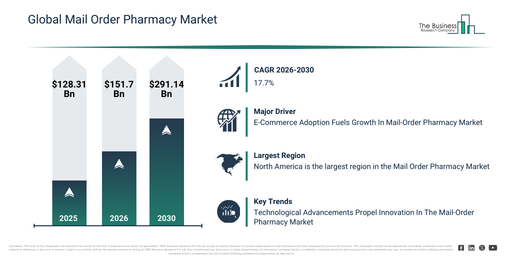
    The retail pharmacy market has experienced substantial expansion lately. Projections indicate a rise from $128.31 billion in 2025 to $151.7 billion in 2026, reflecting a compound annual growth rate (CAGR) of 18.2%. Factors contributing to this historical growth include the proliferation of e-commerce within the healthcare sector, heightened accessibility to the internet and smartphones, a growing consumer preference for convenient prescription refill options, the broader availability of insurance-backed mail-order pharmacy programs, and the economic advantages derived from dispensing medications in larger quantities.

    The mail order pharmacy sector is poised for substantial expansion over the upcoming years, projecting to reach a market valuation of $291.14 billion by 2030, driven by a compound annual growth rate of 17.7%. This significant development is underpinned by several key factors including the escalating incidence of chronic illnesses, an increasing elderly demographic necessitating ongoing pharmaceutical care, the growing embrace of digital health solutions, the seamless integration of telemedicine with pharmaceutical services, and advancements in logistical networks and final-mile delivery systems. Furthermore, prominent trends anticipated within this timeframe involve a heightened uptake of online prescription services, a surge in home delivery for chronic disease treatments, greater utilization of specialized pharmacy mobile applications, an expanded model of direct-to-consumer pharmaceutical distribution, and a growing demand for non-contact methods of obtaining medications.

    Download A Free Sample Report For Comprehensive Market Insights:

    https://www.thebusinessresearchcompany.com/sample.aspx?id=12137&type=smp

    Mail Order Pharmacy Market Expansion Drivers: What Is Shaping Future Growth?

    The burgeoning growth of e-commerce is a significant catalyst propelling the mail-order pharmacy sector forward. E-commerce broadly encompasses the transaction of goods and services via electronic networks, including the transmission of funds and data. Mail-order pharmacies leverage these e-commerce capabilities to enable individuals to conveniently order medications and renew prescriptions from their residences or even while traveling through mobile applications on smartphones or tablets. Illustrating this trend, the U.S. Census Bureau reported in May 2024 that during the initial quarter of 2024, e-commerce sales experienced an 8.5% surge compared to the same quarter in the preceding year. These online sales constituted 15.6% of overall retail transactions, which themselves saw a year-over-year increase of 2.8%. Consequently, this expanding e-commerce landscape is a primary driver for the mail-order pharmacy market.

    Mail Order Pharmacy Market Segmentation: How Is The Market Structured Across Key Categories?

    The mail order pharmacy market covered in this report is segmented –

    1) By Product Type: Dermal Care, Diabetes, Cardiovascular Medicines, Blood Pressure, Asthma, Cold And Flu, Painkillers, Antacids, Other Products

    2) By Drug Type: Non-Prescription Drugs, Prescription Drugs

    3) By Mode Of Order: Online Store, Pharmacy Apps

    Subsegments:

    1) By Dermal Care: Moisturizers, Acne Treatments, Skin Condition Treatments

    2) By Diabetes: Insulin, Oral Hypoglycemic Agents, Blood Glucose Monitoring Supplies

    3) By Cardiovascular Medicines: Antihypertensives, Statins, Anticoagulants

    4) By Blood Pressure: Prescription Medications, Monitoring Devices

    5) By Asthma: Inhalers, Asthma Control Medications

    6) By Cold And Flu: Decongestants, Cough Syrups, Antihistamines

    7) By Painkillers: Prescription Opioids, Over-The-Counter Analgesics

    8) By Antacids: OTC Antacids, Prescription Antacid Medications

    9) By Other Products: Vitamins And Supplements, Home Health Care Products

    Mail Order Pharmacy Market Strategic Trends: What Is Defining The Next Phase Of Growth?

    Leading participants in the mail-order pharmacy sector are prioritizing the creation of cutting-edge technological instruments, including cloud-based analytical frameworks, to boost operational transparency, streamline delivery processes, and elevate patient services. Such a cloud-based analytics suite functions as an internet-accessible software solution that gathers, processes, and scrutinizes information from diverse origins, empowering entities to oversee their operations, pinpoint emerging patterns, expedite decision-making, and refine effectiveness dynamically. As an illustrative example, in April of 2023, Innovation Associates, Inc., a pharmaceutical development firm situated in the United States, introduced NEXiA Enterprise Analytics, which marked the debut cloud-based offering for its NEXiA pharmacy fulfillment software. This particular analytical tool enables clients to gain near real-time visual insights into pharmacy functions across different fulfillment sites, thereby facilitating quicker identification of trends and contributing to the swift and efficient provision of medications to individuals.

    Mail Order Pharmacy Market Competitive Landscape And Leading Companies

    Major companies operating in the mail order pharmacy market are CVS Health Corporation, UnitedHealth Group Inc., Accredo Health Group Inc., McKesson Corporation, Cigna, Cardinal Health, Walgreen Co., OptumRx Inc., Humana Pharmacy, Aetna Inc., Wellcare Health Plans Inc., Prime Therapeutics LLC., Express Scripts Inc., Zur Rose Group AG, MedImpact, Remedi SeniorCare Holding Corporation, RxAdvance Corporation, WellDyneRx Inc., PillPack Inc., BeneCard Services Inc., DocMorris N.V., EnvisionPharmacies, Freedom Fertility Pharmacy, Canada Drugs Online, Elixir Rx Solutions LLC., eDrugstore, Simple Meds LLC., SANICARE, Apex Specialty Pharmacy

    Access The Complete Mail Order Pharmacy Market Report:

    https://www.thebusinessresearchcompany.com/report/mail-order-pharmacy-global-market-report

    Mail Order Pharmacy Market Leading Geography: Which Region Generates The Most Revenue?

    North America was the largest region in the mail-order pharmacy market in 2025. Asia Pacific is expected to be the fastest-growing region in the forecast period. The regions covered in the mail order pharmacy market report are Asia-Pacific, South East Asia, Western Europe, Eastern Europe, North America, South America, Middle East, Africa.

    Get in touch with us:

    The Business Research Company: https://www.thebusinessresearchcompany.com/

    Americas: +1 310-496-7795

    Asia: +44 7882 955267 & +91 8897263534

    Europe: +44 7882 955267

    Email us at: marketing@tbrc.info

    Follow us on:

    LinkedIn: https://in.linkedin.com/company/the-business-research-company

    YouTube: https://www.youtube.com/channel/UC24_fI0rV8cR5DxlCpgmyFQ

    Global Market Model: https://www.thebusinessresearchcompany.com/global-market-model